EP4170630A1 - Sensor system and method for assisted food preparation - Google Patents
Sensor system and method for assisted food preparation Download PDFInfo
- Publication number
- EP4170630A1 EP4170630A1 EP22202871.4A EP22202871A EP4170630A1 EP 4170630 A1 EP4170630 A1 EP 4170630A1 EP 22202871 A EP22202871 A EP 22202871A EP 4170630 A1 EP4170630 A1 EP 4170630A1
- Authority
- EP
- European Patent Office
- Prior art keywords
- motion
- recipe
- food preparation
- controller
- response
- Prior art date
- Legal status (The legal status is an assumption and is not a legal conclusion. Google has not performed a legal analysis and makes no representation as to the accuracy of the status listed.)
- Granted
Links
Images



Classifications
-
- G—PHYSICS
- G09—EDUCATION; CRYPTOGRAPHY; DISPLAY; ADVERTISING; SEALS
- G09B—EDUCATIONAL OR DEMONSTRATION APPLIANCES; APPLIANCES FOR TEACHING, OR COMMUNICATING WITH, THE BLIND, DEAF OR MUTE; MODELS; PLANETARIA; GLOBES; MAPS; DIAGRAMS
- G09B19/00—Teaching not covered by other main groups of this subclass
- G09B19/0092—Nutrition
-
- G—PHYSICS
- G01—MEASURING; TESTING
- G01P—MEASURING LINEAR OR ANGULAR SPEED, ACCELERATION, DECELERATION, OR SHOCK; INDICATING PRESENCE, ABSENCE, OR DIRECTION, OF MOVEMENT
- G01P15/00—Measuring acceleration; Measuring deceleration; Measuring shock, i.e. sudden change of acceleration
- G01P15/02—Measuring acceleration; Measuring deceleration; Measuring shock, i.e. sudden change of acceleration by making use of inertia forces using solid seismic masses
- G01P15/08—Measuring acceleration; Measuring deceleration; Measuring shock, i.e. sudden change of acceleration by making use of inertia forces using solid seismic masses with conversion into electric or magnetic values
- G01P15/0891—Measuring acceleration; Measuring deceleration; Measuring shock, i.e. sudden change of acceleration by making use of inertia forces using solid seismic masses with conversion into electric or magnetic values with indication of predetermined acceleration values
-
- G—PHYSICS
- G09—EDUCATION; CRYPTOGRAPHY; DISPLAY; ADVERTISING; SEALS
- G09B—EDUCATIONAL OR DEMONSTRATION APPLIANCES; APPLIANCES FOR TEACHING, OR COMMUNICATING WITH, THE BLIND, DEAF OR MUTE; MODELS; PLANETARIA; GLOBES; MAPS; DIAGRAMS
- G09B19/00—Teaching not covered by other main groups of this subclass
- G09B19/003—Repetitive work cycles; Sequence of movements
-
- A—HUMAN NECESSITIES
- A47—FURNITURE; DOMESTIC ARTICLES OR APPLIANCES; COFFEE MILLS; SPICE MILLS; SUCTION CLEANERS IN GENERAL
- A47J—KITCHEN EQUIPMENT; COFFEE MILLS; SPICE MILLS; APPARATUS FOR MAKING BEVERAGES
- A47J43/00—Implements for preparing or holding food, not provided for in other groups of this subclass
- A47J43/04—Machines for domestic use not covered elsewhere, e.g. for grinding, mixing, stirring, kneading, emulsifying, whipping or beating foodstuffs, e.g. power-driven
- A47J43/044—Machines for domestic use not covered elsewhere, e.g. for grinding, mixing, stirring, kneading, emulsifying, whipping or beating foodstuffs, e.g. power-driven with tools driven from the top side
- A47J2043/04409—Apparatus of hand held type
-
- A—HUMAN NECESSITIES
- A47—FURNITURE; DOMESTIC ARTICLES OR APPLIANCES; COFFEE MILLS; SPICE MILLS; SUCTION CLEANERS IN GENERAL
- A47J—KITCHEN EQUIPMENT; COFFEE MILLS; SPICE MILLS; APPARATUS FOR MAKING BEVERAGES
- A47J43/00—Implements for preparing or holding food, not provided for in other groups of this subclass
- A47J43/04—Machines for domestic use not covered elsewhere, e.g. for grinding, mixing, stirring, kneading, emulsifying, whipping or beating foodstuffs, e.g. power-driven
- A47J43/044—Machines for domestic use not covered elsewhere, e.g. for grinding, mixing, stirring, kneading, emulsifying, whipping or beating foodstuffs, e.g. power-driven with tools driven from the top side
-
- A—HUMAN NECESSITIES
- A47—FURNITURE; DOMESTIC ARTICLES OR APPLIANCES; COFFEE MILLS; SPICE MILLS; SUCTION CLEANERS IN GENERAL
- A47J—KITCHEN EQUIPMENT; COFFEE MILLS; SPICE MILLS; APPARATUS FOR MAKING BEVERAGES
- A47J43/00—Implements for preparing or holding food, not provided for in other groups of this subclass
- A47J43/10—Egg-whisks; Cream-beaters, i.e. hand implements or hand-driven devices
- A47J43/1087—Whisks or similar tools comprising mixing wires
- A47J43/1093—Whisks or similar tools comprising mixing wires the wires being of the closed-loop type mounted at the end of a shaft
Definitions
- the motion detection device(s) discussed herein are operable to capture inertial data or motion data comprising at least one of a linear velocity or acceleration data as well as angular rate data identifying the movements of the monitoring device 12 in connection with the user 18 and/or the handheld implement 15 or appliance 30.
- the linear velocity or acceleration data may be detected by an accelerometer, and the angular rate data may be captured by a gyroscope.
- the motion data may include directional data that may be recorded by a magnetometer, which may identify the direction of a magnetic pole or field of the Earth.
- the determination of whether the motion data detected by the monitoring device 12 conforms to the motion profile defined in the recipe step may be accomplished based on a variety of comparisons.
- the quantitative assessment of the motion data may be identified based on a comparison of the linear acceleration to a target acceleration rate to determine whether the movement of the user 18 conforms to the motion profile for the recipe step.
- the linear acceleration may be identified along a motion path in reference to the translational axes 58a of the coordinate system 58.
- the motion path may be compared to the target motion profile based on the peak acceleration in each of the translational axes 58a, which may be monitored as an average of the peak acceleration of the repetitive movement detection over a predetermined time (e.g., 2, 5, 8, etc. seconds).
- the average peak acceleration may be compared to a predetermined value of the average peak acceleration defined in the motion profile for the recipe step. Based on the comparison between the motion data detected for the user 18 by the monitoring device 12 and the predetermined values stored for the motion profile, the controller 50 may determine the extent to which the average peak acceleration or the acceleration range of the motion data matches the target motion profile.
- the controller 50 may monitor the motion data detected by the monitoring device 12 to determine the vector along which the acceleration occurs and the conformance to the vector over time. More specifically, the controller 50 may detect a recurring, alternating direction of the linear acceleration of the user 18 to identify conformance with a linear path for the linear stirring motion. The conformance of the acceleration to the linear path may similarly be communicated by the system 10 to the user 18 via the display devices 16. Similarly, movement that does not conform to the linear path may vary among multiple axes or may include components of rotational acceleration that are not indicative of a linear stirring motion.
- the monitoring of the sensor data captured by the monitoring device 12 may be applied in a variety of ways as discussed in the following exemplary use cases.
- the sensor data may be applied by the system 10 to provide feedback to the user 18, track the progress of completion of each recipe step, and determine or estimate a quality of the finished food product produced with the recipe based on the performance of the user 18 relative to the predefined movements and steps of the recipe.
- the system 10 may provide tracking and feedback for each step of the recipe as well as make qualitative assessments of the movement identified in the sensor data.
- the system 10 may similarly be applied to control one or more appliance(s) 30 to complete various preheating, temperature adjustment, or more generally, setting adjustments required to complete one or more of the steps of the recipe.
- one or more of the steps controlled by the system 10 may communicate a control instruction to one of more appliance(s) 30.
- the communication interface(s) 40 of the system 10 may provide for communication between the controller 50 and the one or more appliance(s) 30.
- the controller 50 may adjust or control an oven 30c or burner setting of a range 30b.
- the monitoring system 10 may be configured to control or receive motion data and inputs from a variety of sensors 22, IMUs 22a, appliance(s) 30, and handheld implements 15 to support the food preparation operation.
- the controller 50 may correspond to a distributed control structure (e.g., multiple processors or controllers) that can be manually or automatically controlled via the communication interface(s) 40 in response to the sensor data detected via the monitoring device 12 and the IMU(s) 22a.
- the communication interface 40 may correspond to a plurality of communication interfaces 40, which may be implemented using various communication protocols.
- the communication interfaces 40 may include a first communication interface 40a, which may provide communication between the monitoring device 12 and the display device 16.
- the display device 16 may be in communication with a remote database 54 (e.g., cloud database) via a second communication interface 40b, which may be in communication with the internet or an internet-connected device.
- the second communication interface 40b may correspond to a local network and may be implemented to provide for distributed communication among the appliance(s) 30 and display devices 16, as well as additional monitoring devices 12 or other connected devices 52 via a hub or router 56.
- the second communication interface 40b may include a combination of wired connections (e.g., Ethernet ® ) as well as wireless networks interfaces.
- the IMU 22a may include a plurality of inertial sensors configured to monitor the orientation and inertial states of the monitoring device 12 in a coordinate system 58 comprising a plurality of translational axes 58a and rotational axes 58b.
- the IMU 22a may be operable to measure and communicate a direction and magnitude of movement along and/or about each of the axes 58a/58b and communicate such information to the processing unit of the monitoring device 12.
- the IMU 22a may further comprise a magnetometer or magnetic field detector.
- the magnetometer may correspond to one or more magnetometers.
- the IMU 22a of the monitoring device 12 may correspond to various forms of accelerometers, gyroscopes, and/or magnetometers, which may be implemented separately or as integrated circuits.
- the IMU 22a may correspond to accelerometers, gyroscopes, and magnetometers based on Micro-ElectroMechanical Systems (MEMS) technology, Fiber Optic Gyros (FOG), and/or Ring Laser Gyros (RLG).
- MEMS Micro-ElectroMechanical Systems
- FOG Fiber Optic Gyros
- RLG Ring Laser Gyros
- Some exemplary devices that may be suitable for at least some applications as discussed herein may include devices from a variety of manufacturers including: Analog Devices, Inc.; ST Microelectronics, N.V.; Kionix, Inc.; etc. It will be appreciated that IMUs 22a may vary in quality, grade, performance, and/or durability across manufacturers and product lines.
- the monitoring device 12 may include additional sensors 22, which may include, but are not limited to, a temperature sensor 22b, a humidity sensor 22c, an altimeter 22d or pressure sensor, etc.
- Each of the sensors 22 may be incorporated in the monitoring device 12, which may be in connection with the wearable accessory 14 (e.g., a wristband) of a user 18 and/or the handheld implement 15 (e.g., a handheld appliance or cooking utensil).
- the temperature sensor 22b and humidity sensor 22c may be implemented to detect ambient conditions and adjust the recipe instructions in the food preparation application. For example, timing for an instruction to thaw a frozen food product may be adjusted by the controller 50 based on the ambient temperature of the environment of the cooking system 10.
- the altimeter 22d may correspond to a pressure sensor that detects variations in pressure and corresponding pressure changes that may indicate that the height of the monitoring device 12 and the corresponding portion of the user 18 has changed. Such detections of height may be implemented to track movements of the user 18 and/or detect the altitude of the cooking environment to adjust cooking times and recipe instructions. Additional examples of applications of the sensor data provided by the IMU 22a and additional sensors 22 are discussed in the following examples.
- control signals from the monitoring device 12 may be communicated to control a speed or intensity setting or limit that may be activated by the user 18 to complete the corresponding step of the recipe.
- the appliance interface 62 may engage the wearable accessory 14 and/or the handheld implement via a snap-fit, magnetic, or other various mechanical connections, which may align the terminals of the appliance interface 62 with corresponding terminals of the handheld implement 15.
- FIG. 4 an example of a whipping operation is shown demonstrating a step of the recipe according to the food preparation method instructed by the food preparation application.
- the user 18 has been provided an instruction 70 by at least one of a text instruction, video or animated demonstration, or audible command output from the display device 16, which is depicted as a tablet.
- the instructions for the recipe may be accessed by the app via the second communication interface 40b (e.g., a home Wi-Fi connection) that accesses the remote database 54.
- a user profile may be linked to food preparation application and multiple devices (e.g., the connected devices 52) may access and provide interactive notifications to the user 18 to provide instructions for each step of the recipe.
- the monitoring device 12 applied as an implement tracking device 12b in connection with the handheld implement 15 in the form of an inverted blender.
- the handheld implement 15 is shown blending a mixture 80.
- the monitoring device 12 may be integrated in the handheld implement 15, for example, in permanent communication with the operating circuitry of the inverted blender.
- the monitoring device 12 may be implemented in the modular tracking accessory 60 configuration.
- the modular tracking accessory 60 may be configured to selectively connect to the handheld implement 15, or various kitchen or food preparation items.
- the tracking accessory 60 may communicate control signals and operating instructions to the handheld implement 15 (i.e., the handheld appliance) via the appliance interface 62.
- the control signals from the monitoring device 12 may be communicated to control a speed or intensity setting or limit that may be activated by the user 18 to complete the corresponding step of the recipe.
- the controller 50 may monitor an accumulation of the food preparation movement (e.g., motion data that matches the blending motion profile) and determine a completion of the blending step of the recipe in response to the accumulation of the food preparation movement meeting or exceeding predefined accumulated motion total associated with the blending step.
- the activation of the appliance may be detected or controlled by the monitoring device 12 and the movement of the user 18 may be monitored.
- the movement of the user 18 may be compared by the controller 50 to the motion profile in order to provide corrective instructions and detect an accumulated or effective level or amount of the blending applied. Once the detected blending level meets or exceeds a total defined for the step of the recipe, the controller 50 may determine that the blending step is completed and move forward to the next step in the recipe and/or provide the user 18 with instructions to move to the next step in the recipe.
- the controller 50 may detect whether the consistency of the mixture 80 is too thin or thick. For example, if a mixture does not include adequate moisture, the intensity of the vibrations reported by the monitoring device 12 may not decrease over time at an expected rate. For example, if the variation in vibrational intensity does not decrease at a predetermined rate associated with the recipe (e.g., the intended consistency of the mixture 80) and the mixing utility (e.g., the handheld implement 15), the controller 50 may infer that the mixture is too thick. In response to such a determination, the controller 50 may output an instruction 82 to the user 18 indicating that more moisture (e.g., milk, water, oil, etc.) should be added to the recipe.
- more moisture e.g., milk, water, oil, etc.
- the controller 50 may include in the instruction 82 that the user should review the ingredients added and the previous recipe steps to ensure that ingredients were added in appropriate proportions as instructed.
- the sensor data detected in relation to the operation of the handheld implement 15 or appliance 30 may be processed by the controller 50 to determine a quality of the mixture 80 or food product associated with or processed in the current step of the recipe.
- the same attributes of the vibrations reported by the monitoring device could be applied to conversely identify if too much liquid is included in the mixture 80.
- quality determinations may be predicted by the controller 50 based on the sensor data reported by the IMU 22a in one or more of the steps of recipe and corresponding notifications may be communicated to the user 18 as warnings to prevent completed food products that do not conform to the target quality associated with the recipe.
- the system 10 may provide feedback to the user 18 not only to adjust techniques and time associated with various recipe steps but also to indicate the potential adverse results or changes in quality that may result if the proper technique is not performed for each step of the recipe.
- the quality assessment may further be applied by the controller 50 to adjust instructions or automated steps associated with one or more of the appliances 30.
- the quality assessment may further be evaluated to adjust recipe instructions or settings of one or more of the appliances 30.
- the quality assessment may be implemented to adjust the temperature of a refrigerator for storage or a baking temperature of the oven 30c in order to optimize the resulting quality of the food product.
- the controller 50 may adjust a recipe instruction or automated command to the oven 30c to increase or decrease a baking temperature or time.
- the controller 50 of the system 10 may record the food preparation performance of the user 18 as one or more of the recipes are performed on the food preparation application. For example, the ability of the user 18 to conform to the movements, techniques, and instructions communicated from the food preparation application (i.e., from the display device 16), may be tracked by the controller 50 and stored in a profile associated with the user in the remote database 54. In response to the ability or willingness of the user 18 to conform to the instructions provided by the food preparation application and the conformance of the corresponding sensor data to predefined motion profiles for each of the recipes, the system 10 may identify a skill level of the user 18.
- the monitoring device 12 and/or various connected devices 52 of the system 10 may communicate instructions to the user indicating when the height H aligns with an inventory location of a recipe ingredient 90 of a plurality of inventory items 92 that is necessary for a step of the recipe.
- the controller 50 of the system 10 may be configured to access an inventory map indicating the locations or at least the elevation of the inventory of the refrigerator 30d.
- Such functionality may be provided by an inventory tracking system as disclosed by U.S. Patent No. 10,157,308 B2 , titled, "INTERACTION RECOGNITION AND ANALYSIS SYSTEM," and U.S. Patent No.
- the monitoring device 12 may increase a notification frequency of the audible or tactile feedback provided to the user 18 in response to the height H of the monitoring device 12 getting closer to the height of the inventory location 94.
- the monitoring device may output a notification communicating the location of the recipe ingredient 90.
- the monitoring device 12 or the display device 16 may output a notification that the recipe ingredient is located on a shelf 96 (e.g., top shelf of a refrigerator compartment) via a speaker to instruct the user where to locate the recipe ingredient.
- the system 10 may provide for various instructions to support the preparation of a food product via the food preparation application.
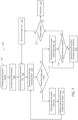
- step 110 if the motion is within the target range, the controller 50 may monitor the time or an accumulation of a food preparation movement (e.g., motion data that matches the first motion profile) within the target range (116). Based on the accumulated motion identified from the sensor data, the controller 50 may determine if the accumulated motion meets or exceeds a target accumulated motion for the recipe step to determine a recipe step completion (118). If the total motion within the target range is less than the target accumulated motion for the recipe step, the controller 50 may update the recipe instruction to indicate a remaining time, steps, or modified techniques necessary to complete the recipe step and return to step 116 to monitor the sensor data (120).
- a food preparation movement e.g., motion data that matches the first motion profile
- the memory 134 may correspond to a dedicated memory (e.g. RAM, ROM, Flash, etc.) and may further include a non-transient, computer readable medium, such as electronic memory or other storage medium such as hard disk, optical disk, flash drive, etc., for use with the processing unit 132.
- a dedicated memory e.g. RAM, ROM, Flash, etc.
- non-transient, computer readable medium such as electronic memory or other storage medium such as hard disk, optical disk, flash drive, etc.
- an operating system may be stored in the storage medium and provide for the monitoring device 12 to control and manage system resources, enable functions of application software (e.g., the food preparation application), and interface application programs with other software and functions of the monitoring device 12.
- the I/O interface 136 may correspond to a variety of interfaces configured to provide communication to and from the processing unit.
- the monitoring device 12 may comprise a wireless communication circuit 150.
- the communication circuit 150 provides the operating functionality of the communication interface 40 as previously discussed. That is, wireless communication circuit 150 may provide for communication via the first communication interface 40a and/or the second communication interface 40b via one or more circuits.
- the first communication interface 40a may provide for a first communication protocol including, but not limited to, Bluetooth ® , Bluetooth ® Low Energy (BLE), Thread, Ultra-Wideband, Z-Wave ® , ZigBee ® , or similar communication protocols.
- the system and methods discussed herein provide for the monitoring of the sensor data captured by a monitoring device that may be applied in a variety of ways.
- the sensor data may track the progress of steps of a recipe completed by a user as well as track the movement or vibrational feedback of an appliance or handheld implement used to prepare a food product.
- the system may provide feedback to the user, track the progress of completion of each recipe step, and/or determine or estimate a quality of the finished food product produced with the recipe based on the performance of the user relative to the predefined movements and steps of the recipe.
- the system may provide tracking and feedback for each step of the recipe as well as make qualitative assessments of the movement identified in the sensor data.
- the disclosure may be applied in a variety of ways to assess and improve a food preparation or cooking operation based on the sensor data and methods discussed herein.
- controllers or processors of the disclosed system may correspond to devices that perform computer-implemented processes and apparatuses for practicing those processes.
- Implementations also may be embodied in the form of a computer program product having computer program code containing instructions embodied in non-transitory and/or tangible media, such as hard drives, USB (universal serial bus) drives, or any other machine readable storage medium, where computer program code is loaded into and executed by a computer, which provides forthe configuration of a special-purpose control device, controller, or computer that implements the disclosed subject matter.
- Implementations also may be embodied in the form of computer program code, for example, whether stored in a storage medium, loaded into and/or executed by a computer/controller, or transmitted over some transmission medium or communication interfaces, wherein when the computer program code is loaded into and executed by controller, the controller becomes an apparatus for practicing implementations of the disclosed subject matter.
- the computer program code segments configure the microprocessor to create specific logic circuits.
- the disclosure provides for a motion analysis apparatus for food preparation comprising at least one motion detection device configured to capture motion data, wherein the motion detection device comprises at least one of a linear acceleration sensor and an angular rate sensor; and a controller in communication with the motion detection device, wherein the controller is configured to: compare the motion data to a food preparation movement; and initiate a motion instruction for a first step of a recipe in response to a comparison of the motion data to the food preparation movement.
- a method for providing a food preparation instruction comprising: accessing recipe in a food preparation application; capturing motion data in response to a first step of the recipe; comparing the motion data to a food preparation movement defined by a first motion profile for the first step of the recipe; and output a motion instruction for the first step in response to a comparison of the motion data to the food preparation movement.
- the term "coupled” in all of its forms, couple, coupling, coupled, etc. generally means the joining of two components (electrical or mechanical) directly or indirectly to one another. Such joining may be stationary in nature or movable in nature. Such joining may be achieved with the two components (electrical or mechanical) and any additional intermediate members being integrally formed as a single unitary body with one another or with the two components. Such joining may be permanent in nature or may be removable or releasable in nature unless otherwise stated.
- elements shown as integrally formed may be constructed of multiple parts or elements shown as multiple parts may be integrally formed, the operation of the interfaces may be reversed or otherwise varied, the length or width of the structures and/or members or connector or other elements of the system may be varied, the nature or number of adjustment positions provided between the elements may be varied.
- the elements and/or assemblies of the system may be constructed from any of a wide variety of materials that provide sufficient strength or durability, in any of a wide variety of colors, textures, and combinations. Accordingly, all such modifications are intended to be included within the scope of the present innovations. Other substitutions, modifications, changes, and omissions may be made in the design, operating conditions, and arrangement of the desired and other exemplary embodiments without departing from the spirit of the present innovations.
Landscapes
- Business, Economics & Management (AREA)
- Engineering & Computer Science (AREA)
- Physics & Mathematics (AREA)
- General Physics & Mathematics (AREA)
- Entrepreneurship & Innovation (AREA)
- Educational Administration (AREA)
- Educational Technology (AREA)
- Theoretical Computer Science (AREA)
- Health & Medical Sciences (AREA)
- General Health & Medical Sciences (AREA)
- Nutrition Science (AREA)
- General Preparation And Processing Of Foods (AREA)
Abstract
Description
- The present disclosure generally relates to a sensor system for a food preparation environment and, more specifically, to a system that provides interactive feedback to assist in recipe preparation.
- According to one aspect of the present disclosure, a motion analysis apparatus for food preparation includes at least one motion detection device configured to capture motion data. A controller is in communication with the motion detection device. The controller is configured to compare the motion data to a food preparation movement and initiate a motion instruction for a first step of a recipe in response to a comparison of the motion data to the food preparation movement.
- According to another aspect of the present disclosure, a method for providing a food preparation instruction is disclosed. The method includes accessing a recipe in a food preparation application and capturing motion data in response to a first step of the recipe. The method further includes comparing the motion data to a food preparation movement defined by a first motion profile for the first step of the recipe. In response to a comparison of the motion data to the food preparation movement, the method outputs a motion instruction for the first step.
- According to yet another aspect of the present disclosure, a motion analysis apparatus for a handheld appliance is disclosed. The apparatus includes at least one motion detection device configured to capture motion data in connection with the handheld appliance. A controller is in communication with the motion detection device and is configured to access a recipe from a food preparation application and access a motion profile defining the food preparation movement based on a step of the recipe. The controller further receives an operational setting configured to control the handheld appliance based on the step of the recipe and compares the motion data based on movement of the handheld appliance to the food preparation movement. In response to the comparison of the motion data to the food preparation movement, the controller initiates a motion instruction for the step of a recipe.
- These and other features, advantages, and objects of the present disclosure will be further understood and appreciated by those skilled in the art by reference to the following specification, claims, and appended drawings.
- In the drawings:
-
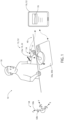
FIG. 1 is a projected view of a food preparation environment demonstrating a monitoring system comprising a monitoring device for a food preparation routine; -
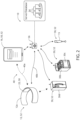
FIG. 2 is a schematic diagram of a monitoring system comprising a monitoring device for a food preparation routine; -
FIG. 3A is a projected view of a monitoring device in connection with a wearable device; -
FIG. 3B is a projected view of a monitoring device in connection with a handheld implement or appliance; -
FIG. 4 is a projected view of a food preparation environment demonstrating a monitoring device implemented in an exemplary food preparation routine; -
FIG. 5 is a projected view of a food preparation environment demonstrating a monitoring device implemented in an exemplary food preparation routine with a handheld implement or appliance; -
FIG. 6 is a projected view of a food preparation environment demonstrating a monitoring device implemented in an exemplary food preparation routine; -
FIG. 7 is a flow chart demonstrating a method for controlling a food preparation routine with the monitoring system; and -
FIG. 8 is a block diagram of a monitoring device for a food preparation routine in accordance with the disclosure. - The components in the figures are not necessarily to scale, emphasis instead being placed upon illustrating the principles described herein.
- The present illustrated embodiments reside primarily in combinations of method steps and apparatus components related to a monitoring device and feedback system. Accordingly, the apparatus components and method steps have been represented, where appropriate, by conventional symbols in the drawings, showing only those specific details that are pertinent to understanding the embodiments of the present disclosure so as not to obscure the disclosure with details that will be readily apparent to those of ordinary skill in the art having the benefit of the description herein. Further, like numerals in the description and drawings represent like elements.
- For purposes of description herein, the terms "upper," "lower," "right," "left," "rear," "front," "vertical," "horizontal," and derivatives thereof shall relate to the disclosure as oriented in
FIG. 1 . Unless stated otherwise, the term "front" shall refer to the surface of the element closer to an intended viewer, and the term "rear" shall refer to the surface of the element further from the intended viewer. However, it is to be understood that the disclosure may assume various alternative orientations, except where expressly specified to the contrary. It is also to be understood that the specific devices and processes illustrated in the attached drawings and described in the following specification are simply exemplary embodiments of the inventive concepts defined in the appended claims. Hence, specific dimensions and other physical characteristics relating to the embodiments disclosed herein are not to be considered as limiting, unless the claims expressly state otherwise. - The terms "including," "comprises," "comprising," or any other variation thereof, are intended to cover a non-exclusive inclusion, such that a process, method, article, or apparatus that comprises a list of elements does not include only those elements but may include other elements not expressly listed or inherent to such process, method, article, or apparatus. An element proceeded by "comprises a ... " does not, without more constraints, preclude the existence of additional identical elements in the process, method, article, or apparatus that comprises the element.
- Referring generally to
FIGS. 1-3 , a monitoring system is generally designated asreference numeral 10. As shown inFIG. 1 , in various embodiments, themonitoring system 10 comprises a motion recording and analysis apparatus that is generally referred to herein as a monitoring device 12. The monitoring device 12 is shown inFIGS. 1 and3A as awearable device 12a in connection with a wearable accessory 14 (e.g., a wristband). Additionally, the monitoring device 12 is shown inFIGS. 3B and5 as an implement tracking device 12b in connection with a handheld implement 15 (e.g., a handheld appliance or cooking utensil). Though various exemplary implementations are discussed, themonitoring system 10 may generally implement the monitoring device 12 in a food preparation environment to provide an interactive cooking experience via one or more computerized display devices 16 (e.g. tablet, computer, smartphone) in communication with the monitoring device 12. As elaborated in various detailed examples, thesystem 10 provides feedback to auser 18 and may also control of one or more appliance(s) 30. In this way, thesystem 10 may provide for an assisted food preparation experience that not only improves the resulting food products but also instructs theuser 18 how to improve cooking and food preparation techniques through interactive instructions. - As depicted in
FIG. 1 , the monitoring device 12 is shown in connection with thewearable accessory 14 of theuser 18. The monitoring capability of the device 12 may be provided by a plurality ofsensors 22. Thesensors 22 are generally demonstrated in the figures asreference numeral 22 and are demonstrated in further detail inFIG. 8 . In many instances, thesensors 22 may include an inertial measurement unit (IMU) 22a. The IMU 22a may capture motion data indicative of movements of theuser 18. The motion or kinematic sensor data may correspond to inertial and/or directional data. The IMU 22a may include an accelerometer, a gyroscope, and/or a magnetometer as well as other suitable devices for measuring the motion and orientation of the monitoring device 12. These devices may generally be referred to as motion sensors or motion detection devices for clarity. In general, the motion detection device(s) discussed herein are operable to capture inertial data or motion data comprising at least one of a linear velocity or acceleration data as well as angular rate data identifying the movements of the monitoring device 12 in connection with theuser 18 and/or thehandheld implement 15 orappliance 30. The linear velocity or acceleration data may be detected by an accelerometer, and the angular rate data may be captured by a gyroscope. Additionally, the motion data may include directional data that may be recorded by a magnetometer, which may identify the direction of a magnetic pole or field of the Earth. - In the examples discussed herein, the monitoring device 12 may be coupled to the
user 18 or thehandheld implement 15, such that the movement of the monitoring device 12 is indicative of the movement of theuser 18 and/or thehandheld implement 15. In this configuration, a controller 50 (FIG. 2 ) of themonitoring system 10 may monitor the motion data corresponding to various food preparation steps of a recipe processed by theuser 18. Based on the motion data, thecontroller 50 of themonitoring system 10 may compare the motion data captured by the monitoring device 12 with food preparation movements associated with the recipe. In some cases, the motion data or sensor data detected by the monitoring device 12 may also be identified by thecontroller 50 as a manual command or input providing a cue or trigger to select a recipe step. Accordingly, thecontroller 50 may monitor the sensor data for movements of theuser 18 indicative of food preparation techniques as well as gestures to progress through the steps of a recipe. - In general, the
monitoring system 10 may provide for visual, audible, and/or tactile cues that lead theuser 18 through a recipe accessed via a food preparation application (e.g., a software application or app). Depending on the capability of the monitoring device 12, the display device 16, and anappliance 30, the food preparation application may be displayed on a corresponding display screen 140 (FIG. 8 ). For example, the food preparation application may provide audible and/or visual instructions (e.g., videos, animations, text descriptions) of each step of a recipe on the monitoring device 12, the display device 16, or theappliance 30 depending on the capability of each of the corresponding devices. In order to synchronize the operation of the food preparation application, each of the devices may be in communication via one or more communication interfaces 40 (FIGS. 1 and2 ) as later discussed in reference toFIG. 2 . In this way, thesystem 10 may provide interactive cues and instructions to theuser 18 via the monitoring device 12, the display device 16, and/or theappliance 30 in response to the motion data detected via the monitoring device 12. - In operation, the
system 10 may monitor the motion data or sensor data captured by the monitoring device 12 in reference to a food preparation movement. The food preparation movement may correspond to a motion profile that may change for each step of a recipe. Examples of motion profiles may include a kneading motion, a stirring motion, a whipping motion, a rolling motion, and various movements that may be associated with one or more steps of the recipe accessed via the food preparation application. Such movements may be defined based on experimental data providing ranges of motion data corresponding to the preferred or best techniques for each step of the recipe. Based on the sensor data reported by the monitoring device 12, the monitoring system may provide feedback in a number of ways. For example, in some instances, feedback and instructions may be communicated to theuser 18 via one or more display devices 16 (e.g., tablet, computer, smartphone, smart home hub, etc.). In some case, the feedback or instructions may be communicated directly from the monitoring device 12. - For example, in response to the comparison of the motion data to the predefined motion profile, a
controller 50 or processor of the monitoring device 12 may provide feedback to theuser 18 indicating whether the detected motion matches the predefined movement or motion profile for the recipe instruction. An exemplary block diagram of the monitoring device is discussed later in reference toFIG. 8 . The feedback can include audible or visual instructions displayed on the monitoring device 12 in cases where a display and speaker are implemented in thewearable device 12a (e.g., a smart watch). In other cases, the feedback may be communicated via audible or force feedback (e.g., vibrations) via a force feedback device 32 (e.g., vibration motor) of the monitoring device 12. Accordingly, the monitoring device 12 may provide for real-time feedback and coaching to improve the practice of various food preparation techniques through intuitive instructions. - In some cases a recipe may include a number of steps that require one or more movements of the
user 18, the handheld implement 15, and/or settings of the appliance(s) 30 required to complete the preparation of a food product. In order to guide or orchestrate each of the steps of the recipe, thesystem 10 may monitor the sensor data captured by the monitoring device 12. Based on the sensor data, thesystem 10 may provide feedback to theuser 18 regarding a movement or technique associated with each of the preparation steps. For example, in a stirring step of a recipe, thesystem 10 may detect that motion of a user is too abrupt or changes too rapidly. Based on this detection,system 10 may output an instruction to theuser 18 to slow or elongate the movements associated with the monitoring device 12. Similarly, in a whipping step, thesystem 10 may detect that the movement of the user is less than a desired rate or intensity. In response to such a condition, thesystem 10 may instruct the user to increase a rate of motion. In this way, thesystem 10 may provide for feedback and coaching of theuser 18 via interactive instructions communicated from the monitoring device 12, the display device 16, and/or theappliance 30. - In some implementations, the
controller 50 of thesystem 10 on which the food preparation application is operating may automatically proceed through steps of the recipe in response to the sensor data detected via the monitoring device 12. For example, thecontroller 50 may begin a recipe by initiating or displaying a motion instruction for a first step of a recipe. Once initiated, thecontroller 50 may monitor the sensor or motion data identified by the monitoring device 12 and compare the sensor data to a food preparation movement associated with the first step of the recipe. More specifically, thecontroller 50 may access a first motion profile defining the food preparation movement based on the first step of the recipe. The step and associated information may be stored in a local memory or theremote database 54. Based on the sensor data, thecontroller 50 may monitor an accumulation (e.g., summation, integration of numeric model, etc.) of the food preparation movement (e.g., motion data that matches the first motion profile) and determine a completion of the first step of the recipe in response to the accumulation of the food preparation movement meeting or exceeding predefined accumulated motion total associated with the first step. Accordingly, thesystem 10 monitors the sensor data for motion (e.g., acceleration, velocity, range, variation, etc.) and compares the motion of theuser 18 to motion profiles for various recipe steps. - As discussed herein, each of the motion profiles may be defined based on experimental results captured with the monitoring device 12 or similar motion detection devices (e.g., accelerometers, gyroscopes, magnetometers, etc.). In operation, the motion data is captured in terms of linear and/or rotational acceleration. In order to define the motion profiles for each of the food preparation movements (e.g., kneading, stirring, whipping, rolling, etc.), the motion data may be measured and recorded in terms of linear acceleration (e.g. meters per second squared (m/s2) or in G-forces (g)) and rotational acceleration (e.g., degrees per second). For example, in order to define a whipping motion for a particular recipe step, the motion data of the monitoring device 12 may be measured or simulated with a kinematic model of the
user 18 having an ideal or model movement, which may be measured from one or more professional chefs or skilled food preparation professionals. Based on the experimental motion data, ranges of acceleration for each of thetranslational axes 58a androtational axes 58b defined relative to the coordinatesystem 58 may be identified for each of the food preparation movements. - In operation, each of the food preparation movements may be defined both quantitatively and qualitatively, and the
system 10 may monitor the motion data separately to identify the conformance of the movement generated by theuser 18 based on the information reported by the monitoring device 12. That is, the rate of movement of the whisk in connection with theuser 18 or directly connected to the monitoring device 12 may be compared to corresponding target rates to identify whether the movement of theuser 18 undertaking the food preparation task is at a target intensity or within a target acceleration range. That is, thecontroller 50 may process the motion data to identify the average peak acceleration and frequency of periodic movements (e.g., back and forth repetitive movements) of the monitoring device 12 in connection with theuser 18 and/or the handheld implement 15. Based on the motion data from the monitoring device 12, thecontroller 50 may determine and discriminate between occurrence of a whipping motion, stirring motion, or various movements of the whisk as defined for different food preparation movements according to a recipe step. The stirring motion may be defined by the recipe step as linear stirring primarily extending along one axis, a rotational stirring creating acceleration in multiple axes, or a beating motion that may correspond to similar motion in multiple axes that is more abrupt (e.g., including greater changes in acceleration direction) than rotational stirring. For each case, the controller may determine whether the food preparation motion conforms to the motion profile defined in the recipe step by comparing the motion data captured by the monitoring device 12 to the motion profile defined in the recipe step. - The determination of whether the motion data detected by the monitoring device 12 conforms to the motion profile defined in the recipe step may be accomplished based on a variety of comparisons. For example, the quantitative assessment of the motion data may be identified based on a comparison of the linear acceleration to a target acceleration rate to determine whether the movement of the
user 18 conforms to the motion profile for the recipe step. More specifically, the linear acceleration may be identified along a motion path in reference to thetranslational axes 58a of the coordinatesystem 58. The motion path may be compared to the target motion profile based on the peak acceleration in each of thetranslational axes 58a, which may be monitored as an average of the peak acceleration of the repetitive movement detection over a predetermined time (e.g., 2, 5, 8, etc. seconds). The average peak acceleration may be compared to a predetermined value of the average peak acceleration defined in the motion profile for the recipe step. Based on the comparison between the motion data detected for theuser 18 by the monitoring device 12 and the predetermined values stored for the motion profile, thecontroller 50 may determine the extent to which the average peak acceleration or the acceleration range of the motion data matches the target motion profile. - The level of conformance of the motion of the
user 18 to the predetermined motion profile may be identified in response to the average peak acceleration matching the target acceleration defined by the motion profile. In cases wherein the average peak acceleration is less or greater than the target, thecontroller 50 may control thesystem 10 to output an instruction to increase or decrease the intensity of the motion. Additionally, thecontroller 50 may calculate the percent difference between the target acceleration and the motion reported by the monitoring device 12. The percent difference may be communicated to theuser 18 via the display devices 16 in the form of an instruction (e.g., "slow down, your motion exceeds the target intensity or acceleration by X%"). Similarly, the duration of the recipe step may be modified by thecontroller 50 in response to the difference in the intensity of the motion of theuser 18 over time compared to the target rate or intensity identified in the motion profile. For example, if theuser 18 achieves an average rate of acceleration that is 20% less than the target average acceleration, thecontroller 50 may extend the time for the recipe step by a corresponding time (e.g., increase from 5 minutes to 6 minutes for a recipe step.) In this way, thecontroller 50 of thesystem 10 may monitor the motion data reported by the monitoring device to identify whether the motion qualitatively conforms to the motion profile associate with the recipe step. - In addition to the quantitative assessment, the
controller 50 may monitor the motion data from the monitoring device 12 to qualitatively assess the motion data relative to the motion profile. Continuing with the same example, the whipping motion may be defined as a linear stirring motion, a rotational stirring motion, or a beating motion. In order to qualitatively assess the quality of the movement of theuser 18 during the recipe step, thecontroller 50 may compare the motion data to the motion profile based on the variations of the linear or rotation motion. For example, a linear stirring motion may be defined by the motion profile of the recipe as extending along a line or arc, which may correspond to acceleration data that occurs repetitively along a line or vector measured among thetranslational axes 58a. According, thecontroller 50 may monitor the motion data detected by the monitoring device 12 to determine the vector along which the acceleration occurs and the conformance to the vector over time. More specifically, thecontroller 50 may detect a recurring, alternating direction of the linear acceleration of theuser 18 to identify conformance with a linear path for the linear stirring motion. The conformance of the acceleration to the linear path may similarly be communicated by thesystem 10 to theuser 18 via the display devices 16. Similarly, movement that does not conform to the linear path may vary among multiple axes or may include components of rotational acceleration that are not indicative of a linear stirring motion. - The detection of such non-conforming movements may be identified by the
controller 50 and communicated to theuser 18 to correct the movement associated with the current recipe step. For example, in response to the motion data failing to conform to a linear path, thecontroller 50 may output instructions to theuser 18 via the display devices 16 instructing the user to, "Adjust motion to a linear path. The current motion includes more circular or rotational motion than desired." In addition to the text or audible instructions, detailed figures may be displayed demonstrating the linear path in relation to a hand of a representative user completing the movement. In some examples, an example video clip or animated graphic (e.g. GIF) of the target movement associated with the predetermined motion profile for the recipe step may be displayed on one or more of the display devices 16. In this way, thecontroller 50 of the system may monitor the motion data to determine whether movement of theuser 18 qualitatively conforms to the model technique instructed for each recipe step. As discussed throughout the disclosure, the motion profiles or predefined movements associated with each of the recipe steps may be defined based on experimental data providing ranges of motion data (average acceleration, range of acceleration, linear versus rotational motion, jerk/abruptness or rate of change of direction of the acceleration, frequency, stroke length, etc.) corresponding to the preferred or best techniques for each step of the recipe. Based on the sensor data reported by the monitoring device 12, the monitoring system may provide feedback to the user in a number of ways to assist theuser 18 in conforming to the recipes steps. - The monitoring of the sensor data captured by the monitoring device 12 may be applied in a variety of ways as discussed in the following exemplary use cases. For example, the sensor data may be applied by the
system 10 to provide feedback to theuser 18, track the progress of completion of each recipe step, and determine or estimate a quality of the finished food product produced with the recipe based on the performance of theuser 18 relative to the predefined movements and steps of the recipe. In this way, thesystem 10 may provide tracking and feedback for each step of the recipe as well as make qualitative assessments of the movement identified in the sensor data. Based on the motion or sensor data, thesystem 10 may be operable to distinguish effective movements that corresponds to an ideal or model food preparation technique (e.g., stirring, whipping, kneading, etc.) from movements that are not associated with the preparation techniques and motion profile associated with the pending step of the recipe. Based on this comparative assessment, thesystem 10 may monitor the rate of completion or time necessary to complete each step of the recipe and provide instructions as to how the technique of theuser 18 can be improved to conform to the motion profile. - The quality assessment may further be applied by the
controller 50 to adjust instructions or automated steps associated with one or more of theappliances 30. For example, based on the performance of theuser 18 relative to the target or predefined motion profiles, thesystem 10 may estimate a resulting quality of the resulting food product (e.g., product less airy or fluffy as a result of poor whipping form). The quality assessment may further be evaluated to adjust recipe instructions or settings of one or more of theappliances 30. In some cases, the quality assessment may be implemented to adjust the temperature of arefrigerator 30d for storage or a baking temperature of theoven 30c in order to optimize the resulting quality of the food product. Accordingly, the disclosure provides for a wide range of corrective instructions and tracking operations that are applied by thesystem 10 to improve the interactive operation with the food preparation application. - As previously discussed, the movement detected via the monitoring device 12 during the first step of the recipe may be tracked by the
controller 50 to detect whether the accumulated motion that conforms to the motion profile for the food preparation motion of the first step is sufficient to indicate that the first step is complete. For example, if the first step is a whipping step, thecontroller 50 may track the detected movement associated with an effective whipping technique based on the predefined motion profile to determine a rate at which the whipping is completed. Based on the determination, a duration of the whipping step may be increased or decreased. Once the accumulated motion associated with effective whipping is determined by thecontroller 50 to be complete, thecontroller 50 may identify the completion of the first step of the recipe and move forward to a second step of the recipe. Upon completion of the first step, thecontroller 50 may output an instruction identifying the second step to theuser 18 to indicate the next step required to complete the cooking operation as defined by the recipe. - In addition to providing instructions for manual user operations, the
system 10 may similarly be applied to control one or more appliance(s) 30 to complete various preheating, temperature adjustment, or more generally, setting adjustments required to complete one or more of the steps of the recipe. For example, one or more of the steps controlled by thesystem 10 may communicate a control instruction to one of more appliance(s) 30. For example, the communication interface(s) 40 of thesystem 10 may provide for communication between thecontroller 50 and the one or more appliance(s) 30. In some cases, thecontroller 50 may adjust or control anoven 30c or burner setting of arange 30b. For example, based on a recipe step, thecontroller 50 may automatically set the temperatures and cooking cycles needed for cooking the recipe with acooktop 30a,freestanding range 30b,oven 30c or similar heating devices or appliances. Similarly, thecontroller 50 may communicate a temperature setting to arefrigerator 30d, which may adjust the temperature of therefrigerator 30d to support a pending cooling action required for the recipe. In addition to or as a trigger to select the step associated with the automatic control of the appliance(s) 30, thecontroller 50 may monitor the sensor data for movements of theuser 18 indicative of one or more gestures (e.g. a page turn motion, pointing motion, a swipe, a twist of the hand or wrist, etc.) to activate the automated control of the appliance(s) 30. Accordingly, the motion data may be monitored by thecontroller 50 of thesystem 10 to determine the completion of a step in the recipe and/or the system may monitor the sensor data for various cues or gestures to trigger the activation of one or more recipe steps. - As shown in
FIG. 1 , theuser 18 is shown undertaking a stirring operation and the monitoring device 12 is connected to or incorporated in thewearable accessory 14. In this configuration, the movement and orientation of thedistal portion 34 of an arm of theuser 18 is monitored by the monitoring device 12. The scenario depicted inFIG. 1 may correspond to a stirring or saute step of a recipe accessed by themonitoring system 10 that is processed on thecooktop 30a. In such an example, thecontroller 50 of themonitoring system 10 may monitor the sensor data reported from the monitoring device 12 and compare the stirring motion of theuser 18 to a stirring motion profile. Additionally, thecontroller 50 of thesystem 10 may communicate with the cooktop to adjust a heat setting of a hob or burner. In some cases, thecontroller 50 may be configured to control the heat setting in response to the sensor data detected by the monitoring device 12. That is, if the stirring is more rigorous or rapid, thecontroller 50 may increase the heat setting. Alternatively, if the stirring motion slows or stops altogether, thecontroller 50 may decrease or even deactivate the heat output fromcooktop 30a. Additionally, similar to the previously described examples, thesystem 10 may output audible, visual, and/or tactile instructions to guide theuser 18 to conform to a target motion profile for the stirring operation or return to thecooktop 30a to begin or recommence a stirring activity. - Referring to
FIG. 2 , exemplary control structures for themonitoring system 10 are discussed in further detail. As discussed in various examples, acontroller 50 of thesystem 10 may be implemented in one or more devices associated with themonitoring system 10. For example, thecontroller 50 may be included in the monitoring device 12, which may correspond to a dedicated accessory comprising theIMU 22a and a communication circuit in some cases or may correspond to a wearable smart device, which may include a display, speaker, microphone, and user interface, in addition to theIMU 22a. Additionally,multiple IMUs 22a may be incorporated in the handheld implement 15 (e.g., cooking implement, handheld appliance, etc.) and communicate sensor/motion data to thecontroller 50 from multiple sources. Thecontroller 50 may additionally or alternatively be incorporated in the display device (e.g., tablet, computer, smartphone, smart home hub, mobile device, etc.) in communication with the monitoring device 12. - In some cases the
controller 50 or a control module/processor in communication with thecontroller 50 may be incorporated in one or more of the appliance(s) 30. In such cases, the operation (e.g., heating, cooling, control settings, etc.) of the appliance(s) 30 may be controlled by thecontroller 50 and notifications from thesystem 10 may be communicated via one or more user interfaces (e.g., digital displays, audible indicators, etc.) of the appliance(s) 30. In this configuration, the appliance(s) 30 may be controlled by thesystem 10 to output instructions, notifications, or automated controls associated with the recipes of the food preparation application. Accordingly, themonitoring system 10 may be configured to control or receive motion data and inputs from a variety ofsensors 22,IMUs 22a, appliance(s) 30, and handheld implements 15 to support the food preparation operation. In cases where thesystem 10 implements various connected devices 52 as demonstrated inFIG. 2 , thecontroller 50 may correspond to a distributed control structure (e.g., multiple processors or controllers) that can be manually or automatically controlled via the communication interface(s) 40 in response to the sensor data detected via the monitoring device 12 and the IMU(s) 22a. - Still referring to
FIG. 2 , thecommunication interface 40 may correspond to a plurality ofcommunication interfaces 40, which may be implemented using various communication protocols. In some implementations, the communication interfaces 40 may include afirst communication interface 40a, which may provide communication between the monitoring device 12 and the display device 16. Additionally, the display device 16 may be in communication with a remote database 54 (e.g., cloud database) via asecond communication interface 40b, which may be in communication with the internet or an internet-connected device. Thesecond communication interface 40b may correspond to a local network and may be implemented to provide for distributed communication among the appliance(s) 30 and display devices 16, as well as additional monitoring devices 12 or other connected devices 52 via a hub orrouter 56. Additionally, thesecond communication interface 40b may include a combination of wired connections (e.g., Ethernet®) as well as wireless networks interfaces. - In various examples, the
first communication interface 40a may correspond to a first communication protocol that communicatively couples with the second communication interface via one or more of the connected devices 52. In such implementations, thefirst communication interface 40a may utilize Bluetooth", Bluetooth" Low Energy (BLE), Thread, Ultra-Wideband, Z-Wave®, ZigBee®, or similar communication protocols. Thesecond communication interface 40b may correspond to different wireless communication protocol than the first communication interface including, but not limited to, global system for mobile communication (GSM), general packet radio services (GPRS), code division multiple access (CDMA), enhanced data GSM environment (EDGE), fourth-generation (4G) wireless, fifth-generation (5G) wireless, Wi-Fi, world interoperability for microwave access (WiMAX), local area network (LAN), Ethernet", etc. Though discussed as implementing different wireless communication protocols, the first andsecond communication interfaces - As discussed herein, the
IMU 22a may include a plurality of inertial sensors configured to monitor the orientation and inertial states of the monitoring device 12 in a coordinatesystem 58 comprising a plurality oftranslational axes 58a androtational axes 58b. In this configuration, theIMU 22a may be operable to measure and communicate a direction and magnitude of movement along and/or about each of theaxes 58a/58b and communicate such information to the processing unit of the monitoring device 12. In some embodiments, theIMU 22a may further comprise a magnetometer or magnetic field detector. The magnetometer may correspond to one or more magnetometers. Magnetometers may be configured to detect magnetic fields and may be utilized to orient the monitoring device 12 to provide a bearing or azimuthal direction of a magnetic pole relative to the monitoring device 12. In this configuration, a magnetometer may be operable to measure the azimuthal direction of the monitoring device 12 and communicate the directional data to the processing unit. - As discussed herein the
IMU 22a of the monitoring device 12 may correspond to various forms of accelerometers, gyroscopes, and/or magnetometers, which may be implemented separately or as integrated circuits. As non-limiting examples, theIMU 22a may correspond to accelerometers, gyroscopes, and magnetometers based on Micro-ElectroMechanical Systems (MEMS) technology, Fiber Optic Gyros (FOG), and/or Ring Laser Gyros (RLG). Some exemplary devices that may be suitable for at least some applications as discussed herein may include devices from a variety of manufacturers including: Analog Devices, Inc.; ST Microelectronics, N.V.; Kionix, Inc.; etc. It will be appreciated thatIMUs 22a may vary in quality, grade, performance, and/or durability across manufacturers and product lines. - As further discussed in reference to
FIG. 8 , the monitoring device 12 may includeadditional sensors 22, which may include, but are not limited to, atemperature sensor 22b, ahumidity sensor 22c, analtimeter 22d or pressure sensor, etc. Each of thesensors 22 may be incorporated in the monitoring device 12, which may be in connection with the wearable accessory 14 (e.g., a wristband) of auser 18 and/or the handheld implement 15 (e.g., a handheld appliance or cooking utensil). Thetemperature sensor 22b andhumidity sensor 22c may be implemented to detect ambient conditions and adjust the recipe instructions in the food preparation application. For example, timing for an instruction to thaw a frozen food product may be adjusted by thecontroller 50 based on the ambient temperature of the environment of thecooking system 10. Additionally, thealtimeter 22d may correspond to a pressure sensor that detects variations in pressure and corresponding pressure changes that may indicate that the height of the monitoring device 12 and the corresponding portion of theuser 18 has changed. Such detections of height may be implemented to track movements of theuser 18 and/or detect the altitude of the cooking environment to adjust cooking times and recipe instructions. Additional examples of applications of the sensor data provided by theIMU 22a andadditional sensors 22 are discussed in the following examples. - Referring now to
FIGS. 3A and 3B , the monitoring device 12 is shown incorporated in thewearable accessory 14 inFIG. 3A and the handheld implement 15 (e.g., a handheld appliance or cooking utensil) inFIG. 3b . For example, the monitoring device 12 may correspond to a modular trackingaccessory 60 configured to selectively connect to thewearable accessory 14, the handheld implement 15, or various kitchen orfood preparation items. As shown, the trackingaccessory 60 includes anappliance communication interface 40 orappliance interface 62 that may communicate instructions from the monitoring device 12 to the handheld implement 15. Thecommunication interface 40 may comprise one or more power or data or communication terminals that align with corresponding terminals of the handheld implement 15 (e.g., inverted blender, hand mixer, etc.). In operation, control signals from the monitoring device 12 may be communicated to control a speed or intensity setting or limit that may be activated by theuser 18 to complete the corresponding step of the recipe. In various instances, theappliance interface 62 may engage thewearable accessory 14 and/or the handheld implement via a snap-fit, magnetic, or other various mechanical connections, which may align the terminals of theappliance interface 62 with corresponding terminals of the handheld implement 15. - Though various exemplary applications are discussed, the
monitoring system 10 may generally implement the monitoring device 12 in a food preparation environment to provide an interactive cooking experience via one or more computerized display devices 16 (e.g. tablet, computer, smartphone) in communication with the monitoring device 12. As elaborated in various detailed examples, thesystem 10 provides feedback to auser 18 as well as control of one or more appliance(s) 30. In this way, thesystem 10 may provide for an assisted cooking experience that not only improves the resulting food products but also instructs theuser 18 to improve cooking and food preparation techniques through interactive instructions. - Referring now to
FIG. 4 , an example of a whipping operation is shown demonstrating a step of the recipe according to the food preparation method instructed by the food preparation application. In the situation depicted, theuser 18 has been provided aninstruction 70 by at least one of a text instruction, video or animated demonstration, or audible command output from the display device 16, which is depicted as a tablet. The instructions for the recipe may be accessed by the app via thesecond communication interface 40b (e.g., a home Wi-Fi connection) that accesses theremote database 54. In this configuration, a user profile may be linked to food preparation application and multiple devices (e.g., the connected devices 52) may access and provide interactive notifications to theuser 18 to provide instructions for each step of the recipe. Additionally, the food preparation application may control one or more of the appliance(s) 30 to activate an automated instruction to prepare for a pending recipe step. For example, as theuser 18 is instructed to whipeggs 72 as shown inFIG. 4 , thesystem 10 may activate the oven 30c to preheat to a desired temperature for the recipe. In this way, thesystem 10 may provide for automated control of various appliance(s) 30 in addition to tracking the sensor data detected by the monitoring device 12. - Once the
user 18 has received theinstruction 70, thecontroller 50 may activate the monitoring device 12 to compare the movement of theuser 18 detected with theIMU 22a to a predefined motion profile. As previously discussed, in order to monitor a manual food preparation step, such as whipping theeggs 72, thecontroller 50 of thesystem 10 may compare the sensor or motion data recorded by theIMU 22a to the motion profile accessed via theremote database 54. The motion profile may comprise acceleration data ranges as well as periodic cycles of the translational and/or rotational motion data for each of theaxes 58a/58b that correspond to a targeted whipping operation. If the movement of theuser 18 conforms to the motion profile, the food preparation application may respond by confirming that the motion detected by theIMU 22a conforms to the proper technique for the whipping operation. If the motion detected by theIMU 22a differs, thecontroller 50 may communicate aninstruction 70 to theuser 18 to adjust speed, adjust a length or direction of stroke, or adjust a technique (e.g., a wrist rotation). As shown inFIG. 4 , the instruction is communicated via the display device 16. However, theinstruction 70 may similarly be communicated by providing force or tactile feedback or an audible command via the monitoring device 12 or other connected devices 52. For example, the instruction may be communicated in the form of an audible tone from a speaker or a tactile indication from a vibration motor (e.g., feedback device 32) of the monitoring device 12. The tone or vibration may be set to a rhythm or tempo associated with the cyclical movement motion profile that may cue theuser 18 how quickly or how intensely to whip theeggs 72. Such cues may be accompanied with visual instructions including animation or videos demonstrating the technique and targeted motion properties monitored by the monitoring device 12. - Based on the
instructions 70, including audible cues, visual cues and tips, and tactile feedback, theuser 18 may continue to complete each step of the recipe as guided by the food preparation application. Throughout the various steps of the recipe, thecontroller 50 of thesystem 10 may identify various user inputs to various connected devices 52 (e.g., the monitoring device 12, to the display device 16, anappliance 30, etc.). Thecontroller 50 may selectively increment through each step of a recipe and access future steps and corresponding data (e.g. motion profiles, instructions, etc.) via theremote database 54. In the specific example of whipping theeggs 72, thecontroller 50 of thesystem 10 may identify that the whipping process is complete based on the sensor data reported from theIMU 22a. For example, thecontroller 50 may monitor the sensor or motion data identified by the monitoring device 12 and compare the sensor data to the motion profile for the whipping movement. Based on the sensor data, thecontroller 50 may monitor an accumulation of the food preparation movement (e.g., motion data that matches the whipping motion profile) and determine a completion of the first step of the recipe in response to the accumulation of the food preparation movement meeting or exceeding predefined accumulated motion total associated with the whipping step. - Once the movement total meets or exceeds the motion total indicated for the recipe, the
controller 50 may prompt theuser 18 to activate the next step via the display device 16 or the monitoring device 12 or automatically increment the recipe to the next step in the food preparation application. As previously discussed, the user input may be received via a touchscreen or button of the user interface of the display device 16, the monitoring device 12, or other connected devices 52. Alternatively, thecontroller 50 may be configured to detect a gesture (e.g. a page turn motion, pointing motion, a swipe, etc.) to indicate that the recipe should continue to the next step. In this way, thesystem 10 may provide for automatic and/or intuitive operation of the food preparation program by theuser 18. - Referring now to
FIG. 5 , an example of a blending operation is shown with the monitoring device 12 applied as an implement tracking device 12b in connection with the handheld implement 15 in the form of an inverted blender. In the example, the handheld implement 15 is shown blending amixture 80. In some cases, the monitoring device 12 may be integrated in the handheld implement 15, for example, in permanent communication with the operating circuitry of the inverted blender. Alternatively, the monitoring device 12 may be implemented in the modular trackingaccessory 60 configuration. As previously discussed, the modular trackingaccessory 60 may be configured to selectively connect to the handheld implement 15, or various kitchen or food preparation items. In this configuration, the trackingaccessory 60 may communicate control signals and operating instructions to the handheld implement 15 (i.e., the handheld appliance) via theappliance interface 62. The control signals from the monitoring device 12 may be communicated to control a speed or intensity setting or limit that may be activated by theuser 18 to complete the corresponding step of the recipe. - In addition to communicating the operating instructions or control commands to the handheld implement 15 (i.e., the handheld appliance in this example), the
controller 50 may monitor the sensor data captured by the implement tracking device 12b to determine whether the device is activated (e.g., by vibrations identified via theIMU 22a) and to compare the movement of theuser 18 to a motion profile for the corresponding blending step of the recipe. Similar to the manual whipping operation discussed previously, thecontroller 50 may compare the sensor data to the motion profile for the blending movement. Based on the sensor data, thecontroller 50 may monitor an accumulation of the food preparation movement (e.g., motion data that matches the blending motion profile) and determine a completion of the blending step of the recipe in response to the accumulation of the food preparation movement meeting or exceeding predefined accumulated motion total associated with the blending step. In this way, the activation of the appliance may be detected or controlled by the monitoring device 12 and the movement of theuser 18 may be monitored. As previously discussed, the movement of theuser 18 may be compared by thecontroller 50 to the motion profile in order to provide corrective instructions and detect an accumulated or effective level or amount of the blending applied. Once the detected blending level meets or exceeds a total defined for the step of the recipe, thecontroller 50 may determine that the blending step is completed and move forward to the next step in the recipe and/or provide theuser 18 with instructions to move to the next step in the recipe. - In some cases, the sensors (e.g., the
IMU 22a) of the monitoring device 12 may be configured to detect a quality of a substance or themixture 80 being blended or mixed by the handheld implement 15. For example, when coupled to the handheld implement 15, the vibrations measured by theIMU 22a of the monitoring device 12 may differ significantly when the blender or mixer initially mixes ingredients as compared to the vibrations measured once the ingredients have been mixed together into a homogenous or evenly distributed mixture. That is, the initial mixing of various batters or mixtures for food preparation may include drastic variations in vibrations associated with the operation of churning blades or mixing heads as a result of passing through substances that are unevenly distributed or unevenly mixed. By comparison, once themixture 80 of ingredients reaches an even consistency or evenly mixed combination, the variations in vibration diminish significantly. For example, thoroughly mixed substances generally provide for consistent vibrations when compared to ingredients that are unevenly distributed. Similarly, the vibrations associated with substances that change states (e.g., melting to liquid, whipping fluffing from liquid) also result in changes in vibrational frequency and intensity that may be reported by the monitoring device 12 and detected by thecontroller 50. In response to the changes in the vibration or force response of the operation of the handheld implement 15 (e.g., the blender, mixer, etc.) orappliance 30, thecontroller 50 may detect a state of the substance being processed. Based on the response, thecontroller 50 may detect whether the blending or mixing operation is complete. - Additionally, in some cases, the
controller 50 may detect whether the consistency of themixture 80 is too thin or thick. For example, if a mixture does not include adequate moisture, the intensity of the vibrations reported by the monitoring device 12 may not decrease over time at an expected rate. For example, if the variation in vibrational intensity does not decrease at a predetermined rate associated with the recipe (e.g., the intended consistency of the mixture 80) and the mixing utility (e.g., the handheld implement 15), thecontroller 50 may infer that the mixture is too thick. In response to such a determination, thecontroller 50 may output aninstruction 82 to theuser 18 indicating that more moisture (e.g., milk, water, oil, etc.) should be added to the recipe. Additionally or alternatively, thecontroller 50 may include in theinstruction 82 that the user should review the ingredients added and the previous recipe steps to ensure that ingredients were added in appropriate proportions as instructed. In this way, the sensor data detected in relation to the operation of the handheld implement 15 orappliance 30 may be processed by thecontroller 50 to determine a quality of themixture 80 or food product associated with or processed in the current step of the recipe. Though discussed in reference to the mixture being too thick, it shall be understood that the same attributes of the vibrations reported by the monitoring device could be applied to conversely identify if too much liquid is included in themixture 80. - Referring now to
FIGS. 4 and5 , the sensor data reported by the monitoring device 12 may be processed, tracked, and compared through various steps of the recipe in order to predict a completed state of the associated food product. For example, at the end at any step in the recipe, thecontroller 50 may compare the sensor data to the target motion data as defined by the model or exemplary motion profile for each preparation step and corresponding technique. Based on the comparison, thecontroller 50 may be configured to predict a quality state of the finished product prepared by theuser 18. For example, in a kneading step for dough, thecontroller 50 of the system may identify that the dough has been kneaded more or less than a target level. That is, based on the sensor data from the monitoring device 12, thecontroller 50 may identify that the accumulated motion conforming to a kneading motion profile as reported by theIMU 22a is greater than or less than a target level of kneading. Based on this information, the controller may determine that the resulting bread will be chewy as a result of over-development of gluten or too fluffy as a result of under-development. Similarly, thecontroller 50 may be configured to predict whether a cake will be too dense as a result of under-whipped eggs. These quality determinations may be predicted by thecontroller 50 based on the sensor data reported by theIMU 22a in one or more of the steps of recipe and corresponding notifications may be communicated to theuser 18 as warnings to prevent completed food products that do not conform to the target quality associated with the recipe. In this way, thesystem 10 may provide feedback to theuser 18 not only to adjust techniques and time associated with various recipe steps but also to indicate the potential adverse results or changes in quality that may result if the proper technique is not performed for each step of the recipe. - The quality assessment may further be applied by the
controller 50 to adjust instructions or automated steps associated with one or more of theappliances 30. For example, the quality assessment may further be evaluated to adjust recipe instructions or settings of one or more of theappliances 30. In some cases, the quality assessment may be implemented to adjust the temperature of a refrigerator for storage or a baking temperature of theoven 30c in order to optimize the resulting quality of the food product. For example, in response to a dough being processed or kneaded greater than or less than a target level, thecontroller 50 may adjust a recipe instruction or automated command to theoven 30c to increase or decrease a baking temperature or time. That is, thecontroller 50 may infer the consistency of the dough based on the sensor data reported by the monitoring device 12 and adjust the baking time or baking temperature to bake the dough for a different duration and/or temperature identified according to the consistency. In this way, the sensor data may be applied by thecontroller 50 to adjust the recipe instructions and/or automated commands fortheappliances 30 to optimize the resulting quality of the food product. - Still referring to
FIGS. 4 and5 , in some cases thecontroller 50 of thesystem 10 may record the food preparation performance of theuser 18 as one or more of the recipes are performed on the food preparation application. For example, the ability of theuser 18 to conform to the movements, techniques, and instructions communicated from the food preparation application (i.e., from the display device 16), may be tracked by thecontroller 50 and stored in a profile associated with the user in theremote database 54. In response to the ability or willingness of theuser 18 to conform to the instructions provided by the food preparation application and the conformance of the corresponding sensor data to predefined motion profiles for each of the recipes, thesystem 10 may identify a skill level of theuser 18. Based on the skill or performance level of theuser 18, thesystem 10 may suggest recipes with a corresponding level of difficulty for theuser 18 for future food preparation tasks. Over time, as theuser 18 improves in conformance to the instructions, techniques, and associated target motion profiles for the food preparation tasks, the designated skill level for theuser 18 associated with the user profile may increase and more challenging recipes may be suggested by thesystem 10. In this way, thesystem 10 may provide for an incremental training and guidance utility that allows theuser 18 to try more challenging recipes in response to the sensor data indicating that the skill level is improving. - Referring now to
FIG. 6 , a representative application of themonitoring system 10 is shown in a recipe ingredient guidance step. The recipe guidance step is shown in reference to therefrigerator 30d. As previously discussed, therefrigerator 30d may correspond to one of the connected devices 52 of thesystem 10 with a controller or processor configured to communicate with thecontroller 50 of thesystem 10. In such cases, the monitoring device 12 may detect a relative elevation or height H of thedistal portion 34 of an arm of theuser 18 in relation to the location of one or more ingredients 90 stored in therefrigerator 30d. When applied in combination with an inventory tracking system of therefrigerator 30d, the monitoring device 12 and/or various connected devices 52 of thesystem 10 may communicate instructions to the user indicating when the height H aligns with an inventory location of a recipe ingredient 90 of a plurality ofinventory items 92 that is necessary for a step of the recipe. In order to provide such feedback, thecontroller 50 of thesystem 10 may be configured to access an inventory map indicating the locations or at least the elevation of the inventory of therefrigerator 30d. Such functionality may be provided by an inventory tracking system as disclosed byU.S. Patent No. 10,157,308 B2 U.S. Patent No. 10,474,987 B2 refrigerator 30d, the inventory tracking operations and feedback communicated via thesystem 10 may similarly be provided in reference to a pantry, cupboard or various storage locations where the ingredients may be stored and the inventory tracked. - In the example shown in
FIG. 6 , theuser 18 may have received an instruction via the food preparation application (e.g., via the display device 16) to retrieve the recipe ingredient 90 for the recipe. In response to the activation of the ingredient retrieval step, thesystem 10 may access an inventory location 94 including the height of the recipe ingredient 90 from an inventory management database or system of therefrigerator 30d. Once the inventory location 94 is identified, thecontroller 50 of thesystem 10 may activate the monitoring device 12 to output one or more tones or alerts (e.g., via a speaker) or provide tactile feedback (e.g., via a vibration motor) to indicate a proximity of the monitoring device 12 to the inventory location 94. For example, the monitoring device 12 may increase a notification frequency of the audible or tactile feedback provided to theuser 18 in response to the height H of the monitoring device 12 getting closer to the height of the inventory location 94. Similarly, the monitoring device may output a notification communicating the location of the recipe ingredient 90. For example, the monitoring device 12 or the display device 16 may output a notification that the recipe ingredient is located on a shelf 96 (e.g., top shelf of a refrigerator compartment) via a speaker to instruct the user where to locate the recipe ingredient. Accordingly, thesystem 10 may provide for various instructions to support the preparation of a food product via the food preparation application. - Referring now to
FIG. 7 , a flow chart is shown demonstrating arecipe assistance routine 100 for operation with themonitoring system 10. In operation, therecipe assistance routine 100 may be initiated in response to the selection of a recipe in the food preparation application, which may be manually selected via the display device 16 (102). Once selected, thecontroller 50 of thesystem 10 may access the recipe via the remote database 54 (104). The recipe may include a plurality of recipe steps that are selected based on various factors including an elapsed time, information inferred or interpreted from the sensor data, manual inputs, and various information that may be captured by the monitoring device 12 and/or communicated to thesystem 10 via the connected devices 52. In this way, therecipe assistance routine 100 may provide for broad applications that may change based on the needs of the specific recipe undertaken by theuser 18. - Once the recipe is selected or accessed in
step 104, the recipe may be communicated to theuser 18 by the system 10 (106). As discussed in various examples, the recipe instruction may be communicated to theuser 18 via the display device 16, the monitoring device 12, or other connected devices 52. Once the instruction is communicated, the routine 100 may continue to activate the monitoring device 12 to capture sensor data indicative of the movement of the user 18 (108). Based on the recipe instruction, thecontroller 50 may access a predefined motion profile identifying a target range or multi-axis translational and rotational acceleration profile associated with the pending step of the recipe. More specifically, the controller may access a first motion profile defining the food preparation movement based on the first step of the recipe. The step and associated information may be stored in a local memory or aremote database 54. - Based on the sensor data, the controller may determine if the sensor data indicates that the motion of the
user 18 is within a target range (110). If the motion is not within the target range, thecontroller 50 may update or output a control instruction from the display device 16, monitoring device 12 or various connected device 52 to provide a corrective motion instruction to the user 18 (112). Based on the response of theuser 18 to the corrective motion instruction as detected from the sensor data, thecontroller 50 may update the recipe instruction. For example, the controller may increase a time for a whipping instruction, instruct additional rolling or kneading, or provide updated technique or movement instructions based on the motion identified by the monitoring device 12 (114). Following the updating of the recipe instruction, the routine 100 may return to step 108 to monitor the sensor data. - In
step 110, if the motion is within the target range, thecontroller 50 may monitor the time or an accumulation of a food preparation movement (e.g., motion data that matches the first motion profile) within the target range (116). Based on the accumulated motion identified from the sensor data, thecontroller 50 may determine if the accumulated motion meets or exceeds a target accumulated motion for the recipe step to determine a recipe step completion (118). If the total motion within the target range is less than the target accumulated motion for the recipe step, thecontroller 50 may update the recipe instruction to indicate a remaining time, steps, or modified techniques necessary to complete the recipe step and return to step 116 to monitor the sensor data (120). If the accumulated motion is greater than or equal to the total for the recipe instruction instep 118, thecontroller 50 may continue to determine if the recipe is complete or if the recipe includes further instructions (122). If the recipe includes further instructions, the routine 100 may move to the next recipe step (124). If the recipe step analyzed instep 122 is the final step, thecontroller 50 may end the routine for the food preparation application (126). Though described in the routine 100 as an automated recipe step initiation, theuser 18 may be prompted or otherwise use one of the connected devices 52 to manually select a recipe step as discussed in various examples. - Referring now to
FIG. 8 , a block diagram of an exemplary embodiment of the monitoring device 12 is shown. The monitoring device 12 may comprise aprocessing unit 132, amemory 134, an input/output (I/O) interface 136. The I/O interface 136 may comprise one or more circuits (analog-to-digital converters, etc.) configured to communicate and/or convert the sensor data communicated from thesensors 22 to theprocessing unit 132. Theprocessing unit 132 may correspond to one or more microprocessors, central processing units (CPUs), or other processors which run software programs for the monitoring device 12 or for other applications related to the functionality of monitoring device 12. For example, different software application programs such as menu navigation software, and/or a wide variety of other software and functional interfaces can be provided. In some embodiments, multiple different applications can be provided on a single monitoring device 12, and in some of those embodiments, multiple applications can run simultaneously on the monitoring device 12. In general, the control structure or thecontroller 50 of thesystem 10 may be distributed among one or more of the connected device(s) 52. However, generally, theprocessing unit 132 and thememory 134 of the monitoring device 12 may provide for a representative implementation of thecontroller 50 of thesystem 10 as discussed herein. - The
memory 134 may correspond to a dedicated memory (e.g. RAM, ROM, Flash, etc.) and may further include a non-transient, computer readable medium, such as electronic memory or other storage medium such as hard disk, optical disk, flash drive, etc., for use with theprocessing unit 132. For example, an operating system may be stored in the storage medium and provide for the monitoring device 12 to control and manage system resources, enable functions of application software (e.g., the food preparation application), and interface application programs with other software and functions of the monitoring device 12. The I/O interface 136 may correspond to a variety of interfaces configured to provide communication to and from the processing unit. For example, the I/O interface may correspond to one or more of a variety of I/O interfaces including, but not limited to, PCIe ports, SATA interface ports, Intel® QuickPath Interconnect® (QPI) ports, USB 2.0, USB 3.0, or Thunderbolt™ interfaces (10 Gbps), Firewire, Fire800, Express Card, serial memory interfaces, etc. - As previously discussed, the functionality or extent of operating features of the monitoring device 12 may vary for different applications. In some cases, the monitoring device 12 may correspond to a wearable smart device (e.g., smart watch), which may include a
display screen 140,speaker 142,microphone 144, and/or a user interface 146 (e.g., pushbuttons or touchscreen of display screen 140). Accordingly, the monitoring device 12 may be implemented by thesystem 10 to varying extents based on the features available in the monitoring device 12. That is, in some instances, the monitoring device 12 may passively detect and communicate the sensor data to thesystem 10 while in other cases, the monitoring device may additionally provide one or more audible, visual, and/or tactile alerts as well as receiving user input to control the operation or provide feedback to the food preparation application operated on thesystem 10 via theuser interface 146. Accordingly, the monitoring device may be flexibly implemented in thesystem 10 to suit a desired application. - In various applications, the monitoring device 12 may comprise a wireless communication circuit 150. The communication circuit 150 provides the operating functionality of the
communication interface 40 as previously discussed. That is, wireless communication circuit 150 may provide for communication via thefirst communication interface 40a and/or thesecond communication interface 40b via one or more circuits. Thefirst communication interface 40a may provide for a first communication protocol including, but not limited to, Bluetooth®, Bluetooth® Low Energy (BLE), Thread, Ultra-Wideband, Z-Wave®, ZigBee®, or similar communication protocols. Thesecond communication interface 40b may provide for a second communication protocol including, but not limited to, global system for mobile communication (GSM), general packet radio services (GPRS), code division multiple access (CDMA), enhanced data GSM environment (EDGE), fourth-generation (4G) wireless, fifth-generation (5G) wireless, Wi-Fi, world interoperability for microwave access (WiMAX), local area network (LAN), Ethernet®, etc. Though discussed as implementing different wireless communication protocols, the first andsecond communication interfaces - Accordingly, the system and methods discussed herein provide for the monitoring of the sensor data captured by a monitoring device that may be applied in a variety of ways. In various cases, the sensor data may track the progress of steps of a recipe completed by a user as well as track the movement or vibrational feedback of an appliance or handheld implement used to prepare a food product. In this way, the system may provide feedback to the user, track the progress of completion of each recipe step, and/or determine or estimate a quality of the finished food product produced with the recipe based on the performance of the user relative to the predefined movements and steps of the recipe. In this way, the system may provide tracking and feedback for each step of the recipe as well as make qualitative assessments of the movement identified in the sensor data. Accordingly, the disclosure may be applied in a variety of ways to assess and improve a food preparation or cooking operation based on the sensor data and methods discussed herein.
- As discussed herein, the controllers or processors of the disclosed system may correspond to devices that perform computer-implemented processes and apparatuses for practicing those processes. Implementations also may be embodied in the form of a computer program product having computer program code containing instructions embodied in non-transitory and/or tangible media, such as hard drives, USB (universal serial bus) drives, or any other machine readable storage medium, where computer program code is loaded into and executed by a computer, which provides forthe configuration of a special-purpose control device, controller, or computer that implements the disclosed subject matter. Implementations also may be embodied in the form of computer program code, for example, whether stored in a storage medium, loaded into and/or executed by a computer/controller, or transmitted over some transmission medium or communication interfaces, wherein when the computer program code is loaded into and executed by controller, the controller becomes an apparatus for practicing implementations of the disclosed subject matter. When implemented on a general-purpose microprocessor, the computer program code segments configure the microprocessor to create specific logic circuits. Implementations of the controller may be implemented using hardware that may include a processor, for example, circuits such as an ASIC (Application Specific Integrated Circuit), portions or circuits of individual processor cores, entire processor cores, individual processors, programmable hardware devices such as a field programmable gate arrays (FPGA), and/or larger portions of systems that include multiple processors or multiple controllers that may operate in coordination.
- It will be understood by one having ordinary skill in the art that construction of the described disclosure and other components is not limited to any specific material. Other exemplary embodiments of the disclosure disclosed herein may be formed from a wide variety of materials, unless described otherwise herein.
- In some implementations, the disclosure provides for a motion analysis apparatus for food preparation comprising at least one motion detection device configured to capture motion data, wherein the motion detection device comprises at least one of a linear acceleration sensor and an angular rate sensor; and a controller in communication with the motion detection device, wherein the controller is configured to: compare the motion data to a food preparation movement; and initiate a motion instruction for a first step of a recipe in response to a comparison of the motion data to the food preparation movement.
- In various implementations, the systems and methods described in the application may comprise one or more of the following features or steps alone or in combination:
- the controller of the motion analysis apparatus is in communication with a display device operating a food preparation application, wherein the food preparation application displays the motion instruction on the display;
- the controller is further configured to access a first motion profile defining the food preparation movement based on the first step of the recipe;
- the controller is further configured to monitor an accumulation of the food preparation movement from the motion data and determine a completion of the first step of the recipe in response to the accumulation of the food preparation movement;
- the controller is further configured to, in response to the completion of the first step, access a second step of the recipe and output a second step of the recipe;
- the controller is further configured to in response to the completion of the first step, update the food preparation movement to a second motion profile based on the second step of the recipe;
- the controller is further configured to identify an improper technique in response to the comparison of the motion data to the food preparation movement;
- the controller is further configured to generate a corrective motion instruction in response to the improper technique;
- the controller is further configured to update a step of the recipe in response to the improper technique (e.g., increase whipping or stirring time due to inefficiency);
- the corrective motion instruction comprises at least one of a rate of motion instruction, a directional instruction, and a technique instruction that directs a user to move in conformance with the food preparation movement;
- the controller is further configured to identify a performance rating of a user profile based on the comparison of the motion data to the food preparation movement associated with a plurality of steps of the recipe;
- the controller is further configured to, in response to the performance rating, identify recipes appropriate for the performance rating of the user;
- the controller is further configured to, in response to the performance rating, identify training exercises and instructional videos forthe user to improve the performance rating for one or more techniques implemented in the recipe; and/or
- the controller is further configured to estimate a completion state of a food product produced with the recipe in response to the comparison of the motion data to the food preparation movement.
- In some implementations, a method for providing a food preparation instruction comprising: accessing recipe in a food preparation application; capturing motion data in response to a first step of the recipe; comparing the motion data to a food preparation movement defined by a first motion profile for the first step of the recipe; and output a motion instruction for the first step in response to a comparison of the motion data to the food preparation movement.
- In various implementations, the systems and methods described in the application may comprise one or more of the following features or steps alone or in combination:
- monitoring an accumulation of the food preparation movement from the motion data and determining a completion of the first step of the recipe in response to the accumulation of the food preparation movement;
- in response to the completion of the first step, accessing a second step of the recipe and outputting a second step of the recipe;
- in response to the completion of the first step, updating the food preparation movement to a second motion profile based on the second step of the recipe; and/or
- identifying an improper technique in response to the comparison of the motion data to the food preparation movement and generating a corrective instruction that directs a user to move in conformance with the food preparation movement.
- In some implementations, a motion analysis apparatus for a handheld appliance comprising: at least one motion detection device configured to capture motion data in connection with the handheld appliance; and a controller in communication with the motion detection device, wherein the controller is configured to: access a recipe from a food preparation application for a food product; access a motion profile defining the food preparation movement based on a step of the recipe; receive an operational setting configured to control the handheld appliance based on the step of the recipe; compare the motion data based on movement of the handheld appliance to the food preparation movement; and initiate a motion instruction for the step of a recipe in response to the comparison of the motion data to the food preparation movement.
- In various implementations, the systems and methods described in the application may comprise one or more of the following features or steps alone or in combination:
- the controller is further configured to access a control setting for an appliance based on the recipe;
- the controller is further configured to communicate the control setting for the appliance in response to the recipe;
- the control setting is at least one of a temperature and time for processing, baking, or storage of the food product;
- the controller is further configured to assess a quality of the food product in response to the motion data; and/or
- the controller is further configured to, in response to the quality assessed for the food product, adjust the control setting for the appliance.
- For purposes of this disclosure, the term "coupled" (in all of its forms, couple, coupling, coupled, etc.) generally means the joining of two components (electrical or mechanical) directly or indirectly to one another. Such joining may be stationary in nature or movable in nature. Such joining may be achieved with the two components (electrical or mechanical) and any additional intermediate members being integrally formed as a single unitary body with one another or with the two components. Such joining may be permanent in nature or may be removable or releasable in nature unless otherwise stated.
- It is also important to note that the construction and arrangement of the elements of the disclosure as shown in the exemplary embodiments is illustrative only. Although only a few embodiments of the present innovations have been described in detail in this disclosure, those skilled in the art who review this disclosure will readily appreciate that many modifications are possible (e.g., variations in sizes, dimensions, structures, shapes and proportions of the various elements, values of parameters, mounting arrangements, use of materials, colors, orientations, etc.) without materially departing from the novel teachings and advantages of the subject matter recited. For example, elements shown as integrally formed may be constructed of multiple parts or elements shown as multiple parts may be integrally formed, the operation of the interfaces may be reversed or otherwise varied, the length or width of the structures and/or members or connector or other elements of the system may be varied, the nature or number of adjustment positions provided between the elements may be varied. It should be noted that the elements and/or assemblies of the system may be constructed from any of a wide variety of materials that provide sufficient strength or durability, in any of a wide variety of colors, textures, and combinations. Accordingly, all such modifications are intended to be included within the scope of the present innovations. Other substitutions, modifications, changes, and omissions may be made in the design, operating conditions, and arrangement of the desired and other exemplary embodiments without departing from the spirit of the present innovations.
- It will be understood that any described processes or steps within described processes may be combined with other disclosed processes or steps to form structures within the scope of the present disclosure. The exemplary structures and processes disclosed herein are for illustrative purposes and are not to be construed as limiting.
Claims (15)
- A motion analysis apparatus (12) for food preparation comprising:at least one motion detection device (22) configured to capture motion data, wherein the motion detection device (22) comprises at least one of a linear acceleration sensor and an angular rate sensor; anda controller (50) in communication with the motion detection device (22), wherein the controller (50) is configured to:compare the motion data to a food preparation movement; andinitiate a motion instruction for a first step of a recipe in response to a comparison of the motion data to the food preparation movement.
- The apparatus (12) according to claim 1, wherein the controller (50) of the motion analysis apparatus (12) is in communication with a display device (16) operating a food preparation application (126), wherein the food preparation application (126) displays the motion instruction on the display device (16).
- The apparatus (12) according to any one of claims 1-2, wherein the controller (50) is further configured to:
access a first motion profile defining the food preparation movement based on the first step of the recipe. - The apparatus (12) according to any one of claims 1-3, wherein the controller (50) is further configured to:monitor an accumulation of the food preparation movement from the motion data; anddetermine a completion of the first step of the recipe in response to the accumulation of the food preparation movement.
- The apparatus (12) according to claim 4, wherein the controller (50) is further configured to:in response to the completion of the first step, access a second step of the recipe; andoutput a second step of the recipe.
- The apparatus (12) according to claim 5, wherein the controller (50) is further configured to:
in response to the completion of the first step, update the food preparation movement to a second motion profile based on the second step of the recipe. - The apparatus (12) according to any one of claims 1-6, wherein the controller (50) is further configured to:
identify an improper technique in response to the comparison of the motion data to the food preparation movement. - The apparatus (12) according to claim 7, wherein the controller (50) is further configured to:
generate a corrective motion instruction in response to the improper technique, wherein the corrective motion instruction comprises at least one of a rate of motion instruction, a directional instruction, and a technique instruction that directs a user (18) to move in conformance with the food preparation movement. - The apparatus (12) according to claim 7, wherein the controller (50) is further configured to:
update a step of the recipe in response to the improper technique. - The apparatus (12) according to any one of claims 1-9, wherein the controller (50) is further configured to:
identify a performance rating of a user profile based on the comparison of the motion data to the food preparation movement associated with a plurality of steps of the recipe. - The apparatus (12) according to claim 10, wherein the controller (50) is further configured to:
in response to the performance rating, identify recipes appropriate for the performance rating of the user (18). - The apparatus (12) according to claim 10, wherein the controller (50) is further configured to:
in response to the performance rating, identify training exercises and instructional videos for the user (18) to improve the performance rating for one or more techniques implemented in the recipe. - A method (100) for providing a food preparation instruction comprising:accessing a recipe (104) in a food preparation application;capturing motion data (108) in response to a first step of the recipe;comparing the motion data to a food preparation movement (110) defined by a first motion profile for the first step of the recipe; andoutput a motion instruction (112) for the first step in response to a comparison of the motion data to the food preparation movement.
- The method according to claim 13, further comprising:monitoring an accumulation of the food preparation movement from the motion data (116); anddetermining a completion of the first step of the recipe in response to the accumulation of the food preparation movement (118).
- The method according to claim 14, further comprising:in response to the completion of the first step (118), accessing a second step of the recipe; andoutputting a second step of the recipe (120) and updating the food preparation movement to a second motion profile based on the second step of the recipe.
Applications Claiming Priority (2)
| Application Number | Priority Date | Filing Date | Title |
|---|---|---|---|
| US202163262819P | 2021-10-21 | 2021-10-21 | |
| US17/960,951 US20230128890A1 (en) | 2021-10-21 | 2022-10-06 | Sensor system and method for assisted food preparation |
Publications (2)
| Publication Number | Publication Date |
|---|---|
| EP4170630A1 true EP4170630A1 (en) | 2023-04-26 |
| EP4170630B1 EP4170630B1 (en) | 2026-02-25 |
Family
ID=83903257
Family Applications (1)
| Application Number | Title | Priority Date | Filing Date |
|---|---|---|---|
| EP22202871.4A Active EP4170630B1 (en) | 2021-10-21 | 2022-10-20 | Sensor system and method for assisted food preparation |
Country Status (2)
| Country | Link |
|---|---|
| US (1) | US20230128890A1 (en) |
| EP (1) | EP4170630B1 (en) |
Citations (4)
| Publication number | Priority date | Publication date | Assignee | Title |
|---|---|---|---|---|
| US20160059412A1 (en) * | 2014-09-02 | 2016-03-03 | Mark Oleynik | Robotic manipulation methods and systems for executing a domain-specific application in an instrumented environment with electronic minimanipulation libraries |
| US20180081449A1 (en) * | 2016-09-21 | 2018-03-22 | Kyocera Corporation | Electronic device, recording medium, and control method |
| US10157308B2 (en) | 2016-11-30 | 2018-12-18 | Whirlpool Corporation | Interaction recognition and analysis system |
| US10474987B2 (en) | 2015-08-05 | 2019-11-12 | Whirlpool Corporation | Object recognition system for an appliance and method for managing household inventory of consumables |
Family Cites Families (1)
| Publication number | Priority date | Publication date | Assignee | Title |
|---|---|---|---|---|
| US9610476B1 (en) * | 2016-05-02 | 2017-04-04 | Bao Tran | Smart sport device |
-
2022
- 2022-10-06 US US17/960,951 patent/US20230128890A1/en active Pending
- 2022-10-20 EP EP22202871.4A patent/EP4170630B1/en active Active
Patent Citations (4)
| Publication number | Priority date | Publication date | Assignee | Title |
|---|---|---|---|---|
| US20160059412A1 (en) * | 2014-09-02 | 2016-03-03 | Mark Oleynik | Robotic manipulation methods and systems for executing a domain-specific application in an instrumented environment with electronic minimanipulation libraries |
| US10474987B2 (en) | 2015-08-05 | 2019-11-12 | Whirlpool Corporation | Object recognition system for an appliance and method for managing household inventory of consumables |
| US20180081449A1 (en) * | 2016-09-21 | 2018-03-22 | Kyocera Corporation | Electronic device, recording medium, and control method |
| US10157308B2 (en) | 2016-11-30 | 2018-12-18 | Whirlpool Corporation | Interaction recognition and analysis system |
Also Published As
| Publication number | Publication date |
|---|---|
| US20230128890A1 (en) | 2023-04-27 |
| EP4170630B1 (en) | 2026-02-25 |
Similar Documents
| Publication | Publication Date | Title |
|---|---|---|
| US20240008674A1 (en) | Cooking system with error detection | |
| CN102665496B (en) | kitchen equipment | |
| US11869332B2 (en) | Remote cooking systems and methods | |
| TWI654958B (en) | Wirelessly controlled cooking system | |
| US10025282B1 (en) | Smart cooking device and system with cookware identification | |
| CN102651991B (en) | Kitchen appliance | |
| JP2019528525A (en) | Cooking system for induction heating and wireless power supply of kitchen utensils | |
| CN105979832B (en) | Kitchen appliances with contactless operation | |
| KR20180018548A (en) | Recipe System | |
| AU2012272554A1 (en) | System for automating cooking steps | |
| WO2015135031A1 (en) | Method and apparatus for food preparation | |
| JP2019534061A5 (en) | ||
| TR201906874T4 (en) | Procedure and kitchen tool for operating a kitchen appliance. | |
| WO2019209371A1 (en) | Cooking system for tracking a cooking device | |
| KR20190043830A (en) | System and method for creating recipe based on cooking machine | |
| WO2016142415A2 (en) | Method and system comprising a controller for the preparation of dishes | |
| EP4170630B1 (en) | Sensor system and method for assisted food preparation | |
| US20210035463A1 (en) | Methods of remote user engagement and instructional cooking demonstrations | |
| CN121311148A (en) | Integrated kitchen system | |
| WO2019077591A1 (en) | System and method for real-time synchronization of set of instructions using iot devices | |
| CN205338567U (en) | Low temperature cooking machine | |
| US12564291B2 (en) | Method of operating a stand mixer | |
| JP7593318B2 (en) | Information processing device, information processing method, cooking system, and cooking method | |
| US11324083B1 (en) | Apparatus for intelligent and selective heating using sensor array | |
| EP3473935B1 (en) | Cooking appliance with user-selectable sear feature |
Legal Events
| Date | Code | Title | Description |
|---|---|---|---|
| PUAI | Public reference made under article 153(3) epc to a published international application that has entered the european phase |
Free format text: ORIGINAL CODE: 0009012 |
|
| STAA | Information on the status of an ep patent application or granted ep patent |
Free format text: STATUS: THE APPLICATION HAS BEEN PUBLISHED |
|
| AK | Designated contracting states |
Kind code of ref document: A1 Designated state(s): AL AT BE BG CH CY CZ DE DK EE ES FI FR GB GR HR HU IE IS IT LI LT LU LV MC ME MK MT NL NO PL PT RO RS SE SI SK SM TR |
|
| STAA | Information on the status of an ep patent application or granted ep patent |
Free format text: STATUS: REQUEST FOR EXAMINATION WAS MADE |
|
| 17P | Request for examination filed |
Effective date: 20231026 |
|
| RBV | Designated contracting states (corrected) |
Designated state(s): AL AT BE BG CH CY CZ DE DK EE ES FI FR GB GR HR HU IE IS IT LI LT LU LV MC ME MK MT NL NO PL PT RO RS SE SI SK SM TR |
|
| P01 | Opt-out of the competence of the unified patent court (upc) registered |
Effective date: 20231110 |
|
| GRAP | Despatch of communication of intention to grant a patent |
Free format text: ORIGINAL CODE: EPIDOSNIGR1 |
|
| STAA | Information on the status of an ep patent application or granted ep patent |
Free format text: STATUS: GRANT OF PATENT IS INTENDED |
|
| INTG | Intention to grant announced |
Effective date: 20250924 |
|
| GRAS | Grant fee paid |
Free format text: ORIGINAL CODE: EPIDOSNIGR3 |
|
| GRAA | (expected) grant |
Free format text: ORIGINAL CODE: 0009210 |
|
| STAA | Information on the status of an ep patent application or granted ep patent |
Free format text: STATUS: THE PATENT HAS BEEN GRANTED |
|
| AK | Designated contracting states |
Kind code of ref document: B1 Designated state(s): AL AT BE BG CH CY CZ DE DK EE ES FI FR GB GR HR HU IE IS IT LI LT LU LV MC ME MK MT NL NO PL PT RO RS SE SI SK SM TR |
|
| REG | Reference to a national code |
Ref country code: CH Ref legal event code: F10 Free format text: ST27 STATUS EVENT CODE: U-0-0-F10-F00 (AS PROVIDED BY THE NATIONAL OFFICE) Effective date: 20260225 Ref country code: GB Ref legal event code: FG4D |
|
| REG | Reference to a national code |
Ref country code: DE Ref legal event code: R096 Ref document number: 602022031040 Country of ref document: DE |
|
| REG | Reference to a national code |
Ref country code: IE Ref legal event code: FG4D |