EP4170344A2 - Lösungsmittelbasierte tinten und beschichtungen für lebensmittelkontaktanwendungen - Google Patents
Lösungsmittelbasierte tinten und beschichtungen für lebensmittelkontaktanwendungen Download PDFInfo
- Publication number
- EP4170344A2 EP4170344A2 EP21824419.2A EP21824419A EP4170344A2 EP 4170344 A2 EP4170344 A2 EP 4170344A2 EP 21824419 A EP21824419 A EP 21824419A EP 4170344 A2 EP4170344 A2 EP 4170344A2
- Authority
- EP
- European Patent Office
- Prior art keywords
- ink
- converter control
- coating composition
- migration
- food contact
- Prior art date
- Legal status (The legal status is an assumption and is not a legal conclusion. Google has not performed a legal analysis and makes no representation as to the accuracy of the status listed.)
- Granted
Links
Images



Classifications
-
- G—PHYSICS
- G01—MEASURING; TESTING
- G01N—INVESTIGATING OR ANALYSING MATERIALS BY DETERMINING THEIR CHEMICAL OR PHYSICAL PROPERTIES
- G01N33/00—Investigating or analysing materials by specific methods not covered by groups G01N1/00 - G01N31/00
- G01N33/26—Oils; Viscous liquids; Paints; Inks
- G01N33/32—Paints; Inks
-
- A—HUMAN NECESSITIES
- A23—FOODS OR FOODSTUFFS; TREATMENT THEREOF, NOT COVERED BY OTHER CLASSES
- A23L—FOODS, FOODSTUFFS OR NON-ALCOHOLIC BEVERAGES, NOT OTHERWISE PROVIDED FOR; PREPARATION OR TREATMENT THEREOF
- A23L5/00—Preparation or treatment of foods or foodstuffs, in general; Food or foodstuffs obtained thereby; Materials therefor
- A23L5/40—Colouring or decolouring of foods
- A23L5/42—Addition of dyes or pigments, e.g. in combination with optical brighteners
-
- C—CHEMISTRY; METALLURGY
- C09—DYES; PAINTS; POLISHES; NATURAL RESINS; ADHESIVES; COMPOSITIONS NOT OTHERWISE PROVIDED FOR; APPLICATIONS OF MATERIALS NOT OTHERWISE PROVIDED FOR
- C09D—COATING COMPOSITIONS, e.g. PAINTS, VARNISHES OR LACQUERS; FILLING PASTES; CHEMICAL PAINT OR INK REMOVERS; INKS; CORRECTING FLUIDS; WOODSTAINS; PASTES OR SOLIDS FOR COLOURING OR PRINTING; USE OF MATERIALS THEREFOR
- C09D11/00—Inks
- C09D11/30—Inkjet printing inks
- C09D11/32—Inkjet printing inks characterised by colouring agents
- C09D11/322—Pigment inks
-
- C—CHEMISTRY; METALLURGY
- C09—DYES; PAINTS; POLISHES; NATURAL RESINS; ADHESIVES; COMPOSITIONS NOT OTHERWISE PROVIDED FOR; APPLICATIONS OF MATERIALS NOT OTHERWISE PROVIDED FOR
- C09D—COATING COMPOSITIONS, e.g. PAINTS, VARNISHES OR LACQUERS; FILLING PASTES; CHEMICAL PAINT OR INK REMOVERS; INKS; CORRECTING FLUIDS; WOODSTAINS; PASTES OR SOLIDS FOR COLOURING OR PRINTING; USE OF MATERIALS THEREFOR
- C09D11/00—Inks
- C09D11/30—Inkjet printing inks
- C09D11/36—Inkjet printing inks based on non-aqueous solvents
-
- C—CHEMISTRY; METALLURGY
- C09—DYES; PAINTS; POLISHES; NATURAL RESINS; ADHESIVES; COMPOSITIONS NOT OTHERWISE PROVIDED FOR; APPLICATIONS OF MATERIALS NOT OTHERWISE PROVIDED FOR
- C09D—COATING COMPOSITIONS, e.g. PAINTS, VARNISHES OR LACQUERS; FILLING PASTES; CHEMICAL PAINT OR INK REMOVERS; INKS; CORRECTING FLUIDS; WOODSTAINS; PASTES OR SOLIDS FOR COLOURING OR PRINTING; USE OF MATERIALS THEREFOR
- C09D11/00—Inks
- C09D11/30—Inkjet printing inks
- C09D11/40—Ink-sets specially adapted for multi-colour inkjet printing
-
- G—PHYSICS
- G01—MEASURING; TESTING
- G01N—INVESTIGATING OR ANALYSING MATERIALS BY DETERMINING THEIR CHEMICAL OR PHYSICAL PROPERTIES
- G01N33/00—Investigating or analysing materials by specific methods not covered by groups G01N1/00 - G01N31/00
- G01N33/02—Food
Definitions
- the present invention relates to printing inks and coatings suitable for food contact, particularly solvent-based inks comprising organic colourants.
- the inks and coatings have a wide colour gamut (preferably a gamut value of 400% higher than inks formulated with iron oxide pigments) and have good thixotropic, adhesion and resistance properties.
- the inks and coatings are suitable in food packaging applications, particularly for direct food contact.
- the invention further relates to methods of printing substrates with such inks and coatings, methods of packaging utilizing such inks and coatings, methods of identifying such inks, and ink sets comprising a plurality of such inks.
- Printed applications have long been used for food and pharma packaging.
- One specific application is aluminum coffee capsules, which have seen increasing use in recent years.
- the current scenario in this and other applications is that the pigments used are not DFC (Direct Food Contact) pigments.
- Direct food contact (DFC) inks are inks which are intended to be in direct physical contact with food, for instance in food packaging or other articles intended to come into contact with food.
- DFC inks may be used on the inside of food packaging.
- non-DFC inks have a greater potential for migration into the food compared to non-direct food contact (non-DFC) inks, which are used on the non-food contact surfaces of food packaging or other articles.
- non-direct food contact is also referred to herein as “indirect food contact”, and describes a material (such as an ink or coating) which has a functional barrier layer between it and the food substance, wherein there is potential for the material to come into contact with the food substance.
- An example of an indirect food contact ink is an ink applied to the outside of food packaging or to an intermediate layer of food packaging. Although there is a potential for migration from non-DFC inks, it is lower than the risk with DFC inks.
- DFC inks are advantageous in food packaging applications as they reduce the number of layers required in the packaging, thereby increasing sustainability and recyclability. For example, additional laminate layers between the food and ink are not required since the ink can be in direct contact with the food. DFC inks may also be printed directly onto the food product, which means less packaging is required overall.
- the food packager has a relatively small number of materials from which to choose, and therefore has limited options for the design of images and information to be displayed on the surfaces of food packaging, particularly those surfaces which are in direct contact with the food.
- the food packager is limited to inks formulated with iron oxide pigments and/or other inorganic pigments.
- inks or coatings or sets thereof exhibit a broad colour gamut in order to enable the printing of more vibrant colours and/or more varied designs than is currently possible using the inks and coatings conventional in the art, particularly wherein the colour gamut value is 400% higher than inks formulated with iron oxide pigments. It is a further object of the invention that such inks or coatings, or sets thereof, exhibit good adhesion to the substrate and good physical resistance properties.
- the invention is directed to inks and coatings that are suitable for both direct and indirect food contact, and particularly for direct food contact.
- the invention is directed to colourants (e.g. pigments) and inks.
- the present invention provides colourants and inks with a large colour gamut, especially for use in DFC applications. As well as having the properties of extended colour gamut, the inks have improved dot printability, and improved physical and chemical resistance properties. This allows brand owners to market packaging containing DFC inks with complex graphics, one example of which is graphics for Nespresso style coffee capsules.
- the present invention further provides methods of printing or packaging which utilize such colourants and inks, as well as a method for identifying such colourants and inks.
- the present invention further provides a set of inks comprising a plurality of such inks.
- Non-pigmented coatings are also encompassed by the present invention. Colour gamut is not a concern with the non-pigmented coatings, but it would be advantageous that the coatings be suitable for DFC applications by using raw materials that are safe for such applications.
- the present invention provides:
- a typical multilayer printed structure has the following layer structure: Overprint varnish / Coloured ink / White ink / Primer / Substrate, in that order.
- the colourants used in the present invention are preferably pigments, rather than dyes.
- the choice of colourants is a key aspect to the present invention.
- the colourants used in the present invention are preferably organic colourants.
- a plurality of colourants according to the present invention constitute a DFC ink set.
- FCMs food contact materials
- NIASs non-intentionally added substances
- NIASs include impurities in materials used in a food packaging ink; a decomposition or reaction product formed during the production of a food packaging ink; or a decomposition or reaction product formed during the life-cycle of the printed food packaging.
- the European regulations have a list of approved food colourants and there are a number of existing direct food contact inks that utilize these food colourants.
- EFSA European Food Safety Agency
- being a food colourant is not sufficient to guarantee safety in use in DFC printing inks.
- the use of these food colourants in DFC inks leads to a limited colour gamut, and in most cases to reduced resistance properties including both lightfastness and chemical resistance.
- FCM main food contact material
- the inventors used their knowledge of pigment chemistry along with their analytical capability and regulatory risk assessment skills to identify colourants which can be used in DFC inks and which do not contain substances that will migrate into food at levels which could endanger human health or become unintentional food additives at levels which could endanger human health.
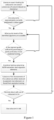
- the inventors are able to make a decision about safe use of the colourant in the ink. If the colourant is determined to be not safe for use in the ink then the process is repeated. If the colourant is determined to be safe, then it is used in ink, preferably a DFC ink.
- the inventors were advantageously able to show that the materials used do not contain substances that will migrate into food at levels which could endanger human health, with a significant margin for safety.
- an extraction test preferably involves preparing a solution of the pigment and an appropriate internal standard or calibrant (i.e. a known compound which is added to a sample in a known amount to determine the quantity of the unknown compound(s) in an analytical technique; also referred to as a reference standard), such as tributyl phosphate, in a suitable solvent.
- an analytical technique also referred to as a reference standard
- Suitable solvents include ethanol (preferably absolute ethanol) and dichloromethane.
- the solution is then analysed using any suitable analytical technique, preferably gas chromatography-mass spectrometry (GC-MS).
- migration testing is preferably performed using one or more food simulants selected from 10% ethanol at 20°C; 50% ethanol at 20°C; 100% water at 100 °C; and the 3% acetic acid test at 20°C.
- the inventive ink set comprises, as a minimum, the following individual inks:
- the inks are made from a blend formulation of two intermediates (i.e. a pigment concentrate and a technology varnish), in which case, the pigment concentrate would provide the correct shade and colour strength, while the technology varnish provides the chemical and physical resistance properties.
- inks without first making a pigment concentrate and varnish by simply grinding the pigment into a base and blending the resultant material with the remaining ink formulation ingredients.
- a primer and overprint varnish if necessary, is added to the print construct to enhance resistance properties of the final structure.
- the inks may also be used with or without an OPV, and preferably still retain their overall resistance properties.
- Examples of the types of materials that would be typically used in the inks of the present invention include (but are not limited to) those discussed below.
- the inks or coating of the present invention comprise one or more pigment(s) (typically, the pigments are not dyes).
- the inks and coatings of the present invention may also include one or more of the following resins: vinyl, polyurethane, polyurea, polyurethane urea, polyester, polyisocyanate, polyvinylidene chloride (PVDC), cellulosic resins (e.g. cellulose acetate butyrate (CAB) or cellulose acetate propionate (CAP)), acrylic, ketonic resins, maleic resins.
- the resins are food safe and/or have low migration levels and are therefore suitable for use in direct food contact inks.
- one or more resins is a polyurethane urea. More preferably, one or more resins is a polyurethane urea derived from a polyurethane pre-polymer being the reaction product of: a diisocyanate component; and, a diol component having (i) a first diol having a molecular weight below 2000; and (ii) a polymeric diol having a molecular weight below 3000; wherein the -NCO/-OH ratio is less than 2; the polyurethane pre-polymer contains 1.3 to 6.0 wt. % of unreacted -NCO groups; and 80 to 120% of a diamine, based on the equivalents of the unreacted -NCO groups; and whereby the resulting poly(urethane/urea) resin is soluble in organic solvent.
- a reference to "molecular weight” or “average molecular weight” is preferably to the weight average molecular weight (M w ).
- the molecular weight can be measured by those techniques known in the art such as gel permeation chromatography. For instance, molecular weight determination may be conducted on a Hewlett-Packard 1050 series HPLC system equipped with two GPC Ultrastyragel columns, 103 and 104 ⁇ (5 ⁇ m mixed, 300 mm ⁇ 19 mm, Waters Millipore Corporation, Milford, MA, USA) and THF as mobile phase. Preferably, molecular weight is calculated by comparison with a polystyrene standard.
- solvents such as esters (ethyl acetate and propyl acetate), ketones (methyl ethyl ketone and acetone), alcohol (ethanol, n-propanol and isopropanol), glycol (ethoxy propanol and methoxy propanol), and water.
- additives may be incorporated to enhance various properties.
- a partial list of such additives includes but is not limited to adhesion promoters, silicones, light stabilizers, flow promoters, defoamers, antioxidants, stabilizers, surfactants, dispersants, plasticizers (monomeric such as acetyl tributyl citrate (ATBC) and dibutyl sebacate (DBS) or polymeric such as polyvinyl butyral (PVB)), rheological additives, waxes, silicones, etc.
- the printing ink may also include waxes such as but not limited to amide wax, erucamide wax, polypropylene wax, paraffin wax, polyethylene wax, Teflon ® , carnauba wax and the like.
- the wax may be a combination of said waxes.
- inventive inks are preferably suitable for printing on aluminum, PET (polyethylene terephthalate), coated PET, metallized PET, OPP (oriented polypropylene), metalized OPP, OPA (oriented polyamide) or paper, but not limited to these.
- inks there is no restriction on the type of inks that could be formulated according to the present method. Inks for lithographic, screen, flexo, gravure, inkjet, etc. would all be within the scope of the present invention.
- CIE International Commission of Illumination
- CIELab (1976) system Figure 2
- CIE L*a*b* colour space colours are arranged in a "sphere". The lightness / darkness of the colour is described by a vertical axis running though the center, from black at 0 to white at 100. The lighter the colour, the higher the lightness value. If we take a horizontal slice though the "sphere", we get a circle of colour.
- the redness / greenness of a colour is expressed by the value of the "a" axis, running from right to left: + (positive) "a” indicates a red, - (negative) "a” indicates a green.
- the blueness / yellowness of a colour is expressed by the value of the "b" axis, running from top to the bottom: + (positive) "b” indicates a yellower colour, - (negative) "b” indicates a bluer colour.
- colour gamut could be described as volume, area or solid in a colour space, consisting of all those colours that are either:
- colour gamut is defined as the range of colours which a particular device can produce or record.
- One very important aspect of colour gamuts is that they are three dimensional, not two dimensional.
- gamut is a three-dimensional measurement of colour, measuring the lightness (L*), redness / greenness (a*), and blueness / yellowness (b*).
- L* lightness
- a* redness / greenness
- b* blueness / yellowness
- Colour gamut of the inks described herein is the range of colours which the inks exhibit.
- the volume is calculated as a sum of all the volumes of the cubes (each cube is 1 unit of L*a*b*) filling the gamut space.
- gamut is measured herein using an X-Rite Exact spectrophotometer (illuminant D50; observer angle 2°) which a number which represents the volume (using L*a*b* cubes) in which all the possible colours that can be made are enclosed. The higher the number, the bigger the amount of colours that can be created.
- Example 1A-1D pigment concentrates (bases): Raw materials (wt%) Ex 1A Yellow base SA1183 Ex 1B Red base SA1166 Ex 1C Cyan base SA1178 Ex 1D Black base SA1471 PALIOTOL YELLOW D 1819 19 IRGAZIN RUBINE L 4025 18 HELIOGEN BLUE D6840 18 C472222.
- PU-1171 is a solvent-soluble poly(urethane/urea) resin derived from a polyurethane pre-polymer being the reaction product of: a diisocyanate component; and a diol component having (i) a first diol having a molecular weight below 2000; and (ii) a polymeric diol having a molecular weight below 3000; wherein the -NCO/-OH ratio is less than 2; the polyurethane pre-polymer contains 1.3 to 6.0 wt.
- Table 3 Example 3A Technology Varnish coded as SA1385 Raw materials wt% PU-1171 poly urethane urea resin 40.5 MOWITAL B 16H 2.1 CAB 381-0.5 4 CERETAN MX 9820 2.5 Aerosil 200 2.5 Nitrocellulose Varnish grade 30A 12 ETHANOL 10.4 ETHYL ACETATE 26 Total 100 Table 4: Example 4A-4D Finished Inks: Inks (wt%) Ex.
- the inventive ink set also includes the following Extender Varnishes (EV) that are noncolourant versions of the finished inks.
- EV Extender Varnishes
- the varnishes could be used either as overprint varnishes (OPVs) or as "letdown” varnishes (i.e. added to the finished inks to lower the colourant concentration for specific customer colour requirements).
- Extender varnish (SBDEV978:TEST DFC S1 EXTENDER VSH) for the 4A-4D inks: Raw materials wt% PU-1171 poly urethane urea resin 33 MOWITAL B 16H 1.8 CAB 381-0.5 1.6 CERETAN MX 9820 1.0 ETHANOL 26.6 ETHYL ACETATE 36 Total 100
- Table 7 Extender varnish (BDEV1294: TEST DFC S2 EXTENDER VSH) for the 5A-5D inks: Raw materials wt% PU-1171 poly urethane urea resin 24.3 MOWITAL B 16H 1.8 CAB 381-0.5 1.6 CERETAN MX 9820 1.0 Aerosil 200 1 Nitrocellulose Varnish grade 30A 7.7 ETHANOL 26.6 ETHYL ACETATE 36 Total 100
- Thixotropy is defined as the progressive decrease in viscosity with time for a constant applied shear stress, followed by a gradual recovery when the stress is removed. (See, for example, Science Direct, The Interstitial Environment, A. McLachlan, A.C. Brown, in The Ecology of Sandy Shores (Second Edition), 2006.) Thixotropy refers to the recovery of structure following shear. The speed of structural recovery and the thoroughness define a material's thixotropic behavior. Viscosity (specifically, thixotropy) is measured prior to, during, and after shear to characterize recovery after shear.
- results are graded on a 1-5 basis with 1 being very high thixotropy, and 5 being very low thixotropy. A grade of 3-5 is considered a pass. In order to assign a 1-5 value, it is necessary to determine the viscosity ranges, which are assigned as follows:
- the viscosity of each of the finished ink compositions described hereinabove was reduced to 14-16 seconds using Ford 4 Cup, at 22°C and printed on a substrate (e.g. aluminium foil) using a gravure printing machine (Soldan) using different plates, as in Figure 3 , to a dry coating weight of 2.0 ⁇ 0.2 g/m 2 .
- a gravure printing machine soldan
- the substrate is placed on the roller and the inks are placed on the printing plate.
- the roller is moved, and the substrate is printed with the corresponding inks.
- the ink film is dried thoroughly with a hair drier and the ink residue is cleaned from the printing plate.
- the printed substrate is used for TESTS 2 to 6 below.
- the dry coating weight of the ink may be varied to the desired value by an appropriate combination / selection of the plates, as the skilled person is aware.
- suitable printing plates for use in the present invention are shown in Table 8. Table 8. Plates and the corresponding characteristic of the cells. Plate Volume (cm 3 /m 2 ) Cell opening [ ⁇ m] Cell depth [ ⁇ m] 70/0 17 180 50 70/2 10 130 40 70/3 20 190 55 70/4 12 120 35
- Adhesion was tested after printing using adhesive tape TESA 4101PV2.
- the tape is adhered firmly to the printed surface and smoothed down, leaving a free end.
- the free end of the tape is then pulled back at an angle of approximately 90° with the tape being removed quickly with a steady pull.
- the print is then checked visually for ink removal. Results are graded qualitatively on a 1-5 basis with 1-2 being poor (extensive ink removal); 3 being a marginal failure (moderate ink removal); and 4-5 being good-excellent (slight or no ink removal). A grade of 4 or 5 is considered a pass.
- the felt pads are placed over the printed side of the substrate and the print area is rubbed for 300 cycles. Once the cycles have finished, the print is checked visually for ink removal. Results are graded qualitatively on a 1-5 basis with 1-2 being poor (extensive ink removal); 3 being a marginal failure (moderate ink removal); and 4-5 being good-excellent (slight or no ink removal). A grade of 4 or 5 is considered a pass.
- the print is laid on a hard surface.
- the back of the nail of the index finger is scratched vigorously across the printed surface.
- the print is then checked visually for ink removal. Results are graded qualitatively on a 1-5 basis with 1-2 being poor (extensive ink removal); 3 being a marginal failure (moderate ink removal); and 4-5 being good-excellent (slight or no ink removal). A grade of 4 or 5 is considered a pass.
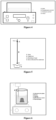
- the impact test equipment used is shown schematically in Figure 5 .
- the test can be done using different drop heights (75cm is the most aggressive one).
- the print is placed in the bottom of the equipment, in "area "D", with the printed side of the substrate face down, just below the aluminium head (C) which is going to make the mark.
- the stick (A) is set to a desired height and allowed to drop.
- the stick impacts with the aluminium head (C) (diameter of 20mm and weight of 33 g), which makes a mark in the substrate.
- the printed side of the substrate is visually checked for ink cracking / ink film failure.
- One is the diameter of the aluminium head, and the other one is the height. Results are graded on a 1-5 basis with 1 being poor and 5 being excellent, and wherein a grade of 3-5 is considered a pass:
- Printed and shaped capsules are placed in solvent under the following conditions: Solvent: 20% ethanol in water.
- TEST 7 & TEST 8 A suitable assembly for TEST 7 & TEST 8 is shown schematically in Figure 6 .
- solvent resistance tests are performed using the following steps:
- the capsule is visually checked for ink peeling / delamination. Results are graded on a 1-5 basis with 1 being poor and 5 being excellent, and wherein a grade of 3-5 is considered a pass:
- Table 9 presents the results from TESTS 1 to 8 and demonstrates that the inks of the present invention have the required performance properties needed in various food packaging applications.
- Table 10 Colour property measurements of inventive inks in TEST 9 Inks / colour parameters L ⁇ a ⁇ b ⁇ Ex. 4D Black ink SBDEV979 2.09 0.05 -0.49 Ex. 4B Red ink SBDEV980 39.48 74.01 44.4 Ex. 4C Cyan ink SBDEV976 35.31 -17.08 -59.43 Ex. 4A Yellow ink SBDEV977 79.25 15.78 113.4
- the inventors Having established the corresponding colour parameters at these conditions for each of the SBDEV976, SBDEV977, SBDEV979 and SBDEV980 inks, the inventors calculated the colour gamut of the ink set (i.e. the SBDEV976, SBDEV977, SBDEV979 and SBDEV980 inks together) based on the primary L*, a*, b* values.
- colour gamut can be calculated using conventional software packages (the "Sun Chemical Gamut Viewer" software was used in this work) which create 3D models representing an estimated gamut shape and size of a set of measurements on a given substrate and printing process.
- the volume of the colour space contained in the gamut is calculated.
- the first step of the gamut calculation is shown in Figure 9 , in which the L*a*b* values for each ink are plotted in the 3-dimensional CIELab colour space.
- the gamut view of the volume created by the SBDEV976, SBDEV977, SBDEV979 and SBDEV980 inventive inks is shown in Figure 10 .
- the colour gamut of the inventive inks can be compared with that of the iron oxide inks.
- the gamut volume created by the SBDEV976, SBDEV977, SBDEV979 and SBDEV980 inventive inks can be compared with the three iron oxide-based ELT inks (black, red and yellow) described above.
- the cyan SBDEV976 inventive ink is not considered in this comparison of the gamut volume in order to directly compare three inks according to the invention against three conventional inks.
- Figure 11 shows the gamut view of the volume created by the three iron oxide-based inks, for which the gamut volume was calculated to be 38413 units.
- Figure 12 shows the gamut view of the volume created by the three inventive inks, for which the gamut volume was calculated to be 155750 units.
- the inventive inks create a volume in CIELab colourspace which is over 400% greater than that of the inks formulated with iron oxide pigments (155750 units vs 38413 units).
- the units of gamut volume are CIELab L*, a*, b* colour cubes.
- the underlying requirement in the present invention is that the ink and coating compositions and substances contained therein should be safe for food contact, particularly direct food contact.
- the provision of ink and coating compositions according to the present invention is underpinned by a "Basis for Safety" outcome. This is based on an assumption that 100% of any given substance in an ink or coating composition migrates into the foodstuff, thereby allowing a "worst-case calculation" for the concentration of the substance in the foodstuff.
- Variables which affect the result of the worst-case calculation include (or may consist of) the concentration of each substance in the printing ink, the dry ink coating weight, the extent of coverage of the substrate surface with an ink on a % basis, the surface area of print in contact with food, and the weight of the food.
- the value of said variables are selected depending on the endapplications for which the compositions will be used.
- the values selected for each variable are reported in the exposure scenarios which are used for the safety determination.
- the resulting worse-case calculation is then compared to the specific migration limit (SML) for the substance.
- SML specific migration limit
- Converter Control Some substances, such as solvents, are volatile and therefore evaporate during the ink drying process. Thus, the residual concentration of these substances in the dried ink film will be low. As the residual concentration of these substances is directly influenced by the actions of the converter (in how well the ink is dried), the converter can determine whether the drying process is fit for purpose. This can be done by subjecting such substances by migration testing. In the exemplified inks described hereinbelow, migration testing on such volatile substances revealed that the amounts thereof are not detectable. Thus, a converter of ordinary skill, following reasonable industry practices, will readily be able to reduce residual amounts to levels safe for DFC.
- additives In addition to the substance responsible for the colour, many commercial products contain other chemicals (generally referred to as additives) that are present in order to improve the application properties of the product, such as the dispersibility, flow and flocculation resistance of pigments (dyes often contain significant amounts of diluents). In all cases, the essential colourant is the portion of the material responsible for the colour and excludes any additives.
- the preferred basis for safety of such substances used in the provision of ink and coating compositions in the present invention is a hazard assessment-based approach, as discussed below.
- the substance hazard assessment approach follows the process as set out in the EuPIA (European Printing Ink Trade Association) document: EuPIA Guidance for Risk Assessment of Non-Intentionally Added Substances (NIAS) and Non-Evaluated or Non-Listed Substances (NLS) in printing inks for food contact materials (May 2021).
- This approach in turn follows EFSA (European Food Safety Authority) methodology.
- the substance hazard assessment approach involves reviewing toxicological data to determine if the substance is genotoxic or has genotoxic potential. If there is no known toxicological data available for the substance then Qualitative Structure Activity Relationship (QSAR) toxicology prediction models are used to establish if the substance is genotoxic.
- QSAR Qualitative Structure Activity Relationship
- EFSA "Guidance on the use of the Threshold of Toxicology Concern approach in food safety assessment”
- VEGA QSAR version 1.1.5 was used in the present invention to establish genotoxicity.
- a substance is not genotoxic it may be suitable for analysis using the Threshold for Toxicological Concern (TCC) approach and assigned a Cramer Class. If the absence of mutagenicity is the only information available then the applicable limit should be no more than Cramer Class III (corresponding to self-derived SML of up to 90 ppb).
- TCC Threshold for Toxicological Concern
- the organic pigments used in the inks are not identified in the tables hereinbelow of potentially migrating substances, as it is not the organic pigments themselves that migrate, but rather other substances (residual starting substances, impurities, additives) that are present in the pigment.
- the pigments identified herein contain substances for which the risk of consumption is low.
- Tables 13 and 14 below show how all of the materials chosen for the inks according to the present invention are within the guidelines for migration, even under strict conditions and worst-case scenarios that exceed the various regulatory requirements.
- the data in Tables 13 and 14 include information on the substances present in the pigments and inks, including substance name, CAS number, the source of the specific migration limit or restriction, and the amount of substance permitted in food.
- Article 11 of this Regulation indicates that "For substances for which no specific migration limit or other restrictions are provided in Annex I, a generic specific migration limit of 60 mg/kg shall apply".
- the inventors have demonstrated that, following the approach described above, the inks detailed in this invention are suitable for use in direct food contact applications.
- the level of substance being demonstrated by either worst-case calculation or by migration testing, and the hazard of the substance being demonstrated either by reference to regulatory positive lists or by substance hazard assessment.
- the standard EU exposure scenario makes the assumption that 1 kg of food is consumed daily by a person of 60 kg bodyweight and that the food is packaged in a 10 cm ⁇ 10 cm ⁇ 10 cm cubic container, giving 1 kg of food wrapped in 0.06 m 2 of packaging (EU Regulation 10/2011; recitals 34 and 35). 100% of the interior surface of the cube is taken to be printed with the ink composition.
- This scenario is normally referred to as the EU Cube exposure scenario (see Figure 13a ). Having an exposure model such as the EU cube exposure scenario allows a Worst-Case Calculation for how much substance would migrate into 1 kg of food if all of the substance in the ink layer migrated into the food.
- EU Regulation 10/2011 the specific migration limits for the various substances recited in EU Regulation 10/2011 are therefore associated with the EU Cube exposure model.
- This exposure scenario gives between 61% and 152% of the exposure of the EU Cube.
- a dry coat weight of 2.0 g/m 2 for the printed ink layer is adopted in all these exposure models.
- the worst-case calculation assumes 100% migration of the substance to the foodstuff.
- Table 13 below presents the data generated according to the present invention, in which the worst-case calculation (WCC) is expressed as a percentage of the specific migration limit (SMI,; i.e. the maximum amount permitted) in each of the standard EU Cube model and Applications 1 to 3 above.
- SMI specific migration limit
- the SMI,s whether they are derived from the EU Plastics Regulation or from the Swiss Ordinance or are self-derived SMI,s, are absolute values of the maximum amount (in mg) of a substance which is allowed to migrate into 1 kg food. Thus, SMI,s are expressed in units of mg substance/kg food. SMLs are based on the toxicology of that substance.
- the SMI,s referred to herein are all based on a regulatory assumption that a 60 kg adult consumes 1 kg of food per day and that the food is packaged in a cubic container (10 cm ⁇ 10 cm ⁇ 10 cm) which has a surface area of 6 dm 2 and which releases the substance into the food.
- the substances in Table 13 were identified by extraction testing as follows.
- the raw materials were dissolved in several solvents to establish which solvent would be best to use for the analysis. Absolute ethanol and dichloromethane were found to be the best solvent for analysis.
- 0.1g of each of the raw material samples were dissolved in 10mL of absolute ethanol or dichloromethane with an internal standard of a known concentration added to each.
- the 10mL extracts were sonicated at ambient temperature for 10 minutes to allow full dissolution of the raw material into the solvent. Once sonicated, 1mL was taken from each raw material extract and syringe filtered using a 0.45 ⁇ m PTFE syringe filter into a 2mL GC vial, ready for analysis on a GC-MS instrument.
- GC-MS was performed on a Thermo ISQ GC-MS system with a PTV injection port and a TG-5SILMS, 30m column having 0.25mm internal diameter and 0.25 ⁇ m thickness.
- the injection temperature was from 70°C to 320°C according to the table below: Temp. ramp (°C/min) Temp. (°C) Time (min) - 70 0.05 14.5 240 1.00 14.5 320 2.00
- the GC oven temperature is increased from 45°C to 320°C (with a flow rate of 1mL/min) according to the table below: Temp. ramp (°C/min) Temp. (°C) Hold Time (min) - 45 2 20 130 0 7.5 190 0 7.5 280 0 15 320 6
- SBDEV976 0004098-71-9 IPDI (isophorone diisocyanate) 1 PR 2,386 10,410 1300 511,3 1872,0 790,8 1978,2 SBDEV976 0004744-11-0 Propane, 1,1-dipropoxy- 0,09 HA 0,509 2,221 3000 1180.0 4320,0 1825,0 4565,0 SBDEV976 0000120-93-4 2-Imidazolidinone 4,98 HA 0,147 0,640 16 6,3 23,0 9,7 24,3 SBDEV976 0002396-43-2 2,4,6-tripropyl-1,3,5-Trioxane 0,09 HA 0,010 0,045 61 24,0 87,8 37,1 92,8 SBDEV976 0000077-90-7 Tributyl acetyl citrate 60 PR 0,014 0,063 0,12 0,05 0,17 0,07 0,18 SBDEV976
- Table 13 represents a hypothetical migration analysis calculated on the basis of worst-case scenarios. Two categories of cells in Table 13 are of particular note:
- the true level of migration is determined analytically by migration testing of the ink or coating composition in which the substance is contained.
- the true migration levels for volatile substances whose concentration in the final dried ink may be dependent on the downstream user (e.g. the convertor) are optionally also determined.
- Table 14 contains the results of the migration testing of the ink composition, in particular the results of the GC-MS analysis for each of the 4 different food simulant/temperature/time scenarios, namely the 10% ethanol test at 20°C, the 50% ethanol test at 20°C, the hot fill boiled water test and the 3% acetic acid test at 20°C.
- Migration testing was performed as follows: Printed substrates (with a dry coat weight of 2.0 g/m 2 for the printed layer) were placed into migration cells with the printed side of the samples facing into the cell. The cells were then filled with the required food simulants, sealed and stored for 10 days at 20°C. Thus, the food simulants are contacted with the printed surfaces in the migration cells. Though the print areas differed between each test, they remained a consistent 1:1 ratio of print surface area to simulant volume; 10cm 2 of print in contact with 10mL of 10% ethanol; 50cm 2 of print in contact with 50mL of 50% ethanol; and 100cm 2 of print in contact with 100mL of 3% Acetic Acid. A control sample of unprinted substrate was also prepared in the same manner for each test simulant. All samples were tested in duplicate for reproducibility purposes.
- the simulant was removed from the cells and the total volumes extracted with 2x10mL of dichloromethane.
- a control sample of unprinted substrate was extracted in the same manner.
- the 20mL dichloromethane was then concentrated down to 1mL using a Buchi solvent evaporator using a temperature of 50°C and a pressure between 60-80bar.
- the 1mL extract was then syringe filtered using a 0.2 ⁇ m PTFE syringe filter into a 2mL GC vial. A known concentration of internal standard was then added to each vial.
- the GC-MS used for analysis of these migration extracts was a Thermo ISQ 1300 with a CT splitless injection.
- the column used was a Thermo TG-5SILMS, 30m, 0.25mm internal diameter and 0.25 ⁇ m film thickness.
- the instrument parameters were as follows: • Injection temperature was constant at 280°C; • GC Oven temperature programme (with a flow rate of 1.2mL/min): Temp. ramp (°C/min) Temp. (°C) Hold Time (min) - 60 4 40 200 0 40 300 0 • MS parameters:
- the results of the migration testing allow calculation of the mg of substance migrating per m 2 of print, and hence allow the measured migration levels (M L ) to be correlated to, and contextualized within, the EU Cube exposure model (having a surface of 0.06 m 2 and containing 1 kg of food).
- the true migration levels M L may then be compared directly with the Specific Migration Limits (SML).
- SML Specific Migration Limits
- analytically measured migration values are reported in the units of % of the SMI,; as such, a substance which is reported as having a value of 100% or more presents a food-contact risk.
- Table 14 provides results of analytic testing for detectable materials in four of the inks described herein, namely the SBDEV976, SBDEV977, SBDEV979 and SBDEV980 ink compositions (Examples 4A-4D).
- Table 14 incorporates the information from Table 13 regarding the relevant substances, their SML/restriction, the source of the SML/restriction, and the WCCs (expressed as a percentage of the SML) of each substance in the standard EU Cube model.
- ND means not detected (defined as a signal to noise ratio of less than 3: 1)
- the measured value in this empirical migration testing should be below 100% of the SMI, for any given substance in order for an ink composition which contains that substance to be considered acceptable for unrestricted use in food contact applications, and in particular direct food contact applications.
- Table 14 Product containing substance CAS No of substance Name of substance SML or Restriction (mg substance/kg food) Source of SML or restriction Worst Case Calculation of migration in EU Cube model (as a percentage of SML) Analytically measured migration (%SML) 10% EtOH 20°C 50% EtOH 20°C Hot fill boiled water 3% acetic acid 20°C SBDEV976 0009004-36-8 cellulose acetate butyrate 60 PR 14 ND ND ND ND SBDEV976 0009002-88-4 polyethylene wax 60 PR 5 ND ND ND ND SBDEV976 0008002-74-2 waxes, refined, derived from petroleum based or synthetic hydrocarbon feedstocks, high viscosity 60 PR 5 ND ND ND ND SBDEV
- the empirical evidence of true migration levels in Table 14 therefore informs the selection of the inks and their end applications.
- the inks SBDEV976, SBDEV979 and SBDEV980 contain no substances for which the migration limit exceeds the SMI, of the standard EU Cube model, and are therefore acceptable for direct food contact in that packaging scenario.
- the yellow ink (SBDEV977) to be acceptable on packaging for food contact (and in particular direct food contact)
- the use of the ink needs to be restricted in the final application, and in particular the coverage of the packaging surface(s) with the ink needs to be restricted.
- the degree of restriction can be calculated using the different exposure scenarios:
Landscapes
- Chemical & Material Sciences (AREA)
- Life Sciences & Earth Sciences (AREA)
- Engineering & Computer Science (AREA)
- Health & Medical Sciences (AREA)
- Materials Engineering (AREA)
- Organic Chemistry (AREA)
- Wood Science & Technology (AREA)
- Food Science & Technology (AREA)
- Medicinal Chemistry (AREA)
- General Health & Medical Sciences (AREA)
- General Physics & Mathematics (AREA)
- Immunology (AREA)
- Pathology (AREA)
- Biochemistry (AREA)
- Analytical Chemistry (AREA)
- Physics & Mathematics (AREA)
- Nutrition Science (AREA)
- Polymers & Plastics (AREA)
- Inks, Pencil-Leads, Or Crayons (AREA)
- Application Of Or Painting With Fluid Materials (AREA)
Applications Claiming Priority (2)
| Application Number | Priority Date | Filing Date | Title |
|---|---|---|---|
| US202063081440P | 2020-09-22 | 2020-09-22 | |
| PCT/ES2021/070689 WO2022064090A2 (es) | 2020-09-22 | 2021-09-22 | Tintas basadas en disolvente y recubrimientos para aplicaciones de contacto con alimentos |
Publications (3)
| Publication Number | Publication Date |
|---|---|
| EP4170344A2 true EP4170344A2 (de) | 2023-04-26 |
| EP4170344B1 EP4170344B1 (de) | 2024-05-01 |
| EP4170344C0 EP4170344C0 (de) | 2024-05-01 |
Family
ID=78851331
Family Applications (1)
| Application Number | Title | Priority Date | Filing Date |
|---|---|---|---|
| EP21824419.2A Active EP4170344B1 (de) | 2020-09-22 | 2021-09-22 | Lösungsmittelbasierte tinten und beschichtungen für lebensmittelkontaktanwendungen |
Country Status (4)
| Country | Link |
|---|---|
| US (1) | US11927585B2 (de) |
| EP (1) | EP4170344B1 (de) |
| BR (1) | BR112023002606A2 (de) |
| WO (1) | WO2022064090A2 (de) |
Families Citing this family (1)
| Publication number | Priority date | Publication date | Assignee | Title |
|---|---|---|---|---|
| WO2023067226A1 (es) | 2021-10-22 | 2023-04-27 | Sun Chemical Corporation | Estructuras impresas o recubiertas para aplicaciones de contacto directo con alimentos |
Family Cites Families (7)
| Publication number | Priority date | Publication date | Assignee | Title |
|---|---|---|---|---|
| ES2059096T3 (es) * | 1990-03-02 | 1994-11-01 | Ciba Geigy Ag | Procedimiento para la determinacion de recetas de tintura e impresion segun una muestra de color. |
| EP2872947B1 (de) * | 2012-07-13 | 2020-02-05 | Sun Chemical Corporation | Erweiterte farbskala |
| US9714355B2 (en) | 2013-02-15 | 2017-07-25 | Sun Chemical Corporation | Low migration energy curable inks |
| WO2015023487A1 (en) * | 2013-08-12 | 2015-02-19 | Sun Chemical Corporation | Digitally printed color cards |
| EP3274323A4 (de) * | 2015-03-25 | 2018-12-12 | Arkema, Inc. | Gefärbte organische peroxidzusammensetzungen |
| EP3260505B1 (de) * | 2016-06-22 | 2019-11-06 | Agfa Nv | Verfahren zur herstellung von verpackungen für lebensmittel, kosmetika und pharmazeutika |
| EP3491080B1 (de) | 2016-07-27 | 2026-04-29 | Sun Chemical Corporation | Elektrisch isolierende energiehärtbare flüssigkeiten auf wasserbasis |
-
2021
- 2021-09-22 US US18/024,218 patent/US11927585B2/en active Active
- 2021-09-22 WO PCT/ES2021/070689 patent/WO2022064090A2/es not_active Ceased
- 2021-09-22 BR BR112023002606A patent/BR112023002606A2/pt unknown
- 2021-09-22 EP EP21824419.2A patent/EP4170344B1/de active Active
Also Published As
| Publication number | Publication date |
|---|---|
| EP4170344B1 (de) | 2024-05-01 |
| BR112023002606A2 (pt) | 2023-04-04 |
| WO2022064090A2 (es) | 2022-03-31 |
| US11927585B2 (en) | 2024-03-12 |
| US20230243805A1 (en) | 2023-08-03 |
| EP4170344C0 (de) | 2024-05-01 |
| WO2022064090A3 (es) | 2022-06-23 |
Similar Documents
| Publication | Publication Date | Title |
|---|---|---|
| CN108699362B (zh) | 红外荧光涂料 | |
| US20240336813A1 (en) | Kit for improved oxygen barrier coating and product comprising an improved oxygen barrier coating | |
| EP4170344B1 (de) | Lösungsmittelbasierte tinten und beschichtungen für lebensmittelkontaktanwendungen | |
| JP2025113255A (ja) | 直接食品接触インク | |
| Luo et al. | Detection of primary aromatic amines content in food packaging ink and migration from printed plastic bags | |
| US7042566B2 (en) | Method of verifying color and strength properties of batches of wood stains | |
| Hanzer et al. | Mechanical and chemical resistance of thermochromic packaging prints | |
| Pace | Printing inks for food contact packaging and articles | |
| US12007278B2 (en) | Method and system for ascertaining a hue | |
| JP2021066817A (ja) | リキッド印刷インキ、印刷物、及び包装材料 | |
| EP4379006B1 (de) | Gedruckte oder beschichtete strukturen für anwendungen mit direktem lebensmittelkontakt | |
| US11514050B2 (en) | Method and system for ascertaining a hue | |
| Izdebska-Podsiadly et al. | Influence of biodegradable solvent-based ink on the flexography print quality of compostable films | |
| BR112022000114B1 (pt) | Tinta de impressão segura para contato direto com alimentos, conjunto de tintas de impressão, artigo impresso, método de preparação de um substrato impresso e uso de uma tinta de impressão | |
| EP3772737A1 (de) | Verfahren zur bestimmung der zusammensetzung eines mehrschichtsystems mit vorbestimmter farb-flip-flop-wirkung | |
| EP4373893B1 (de) | Hitzebeständige wässrige tinten | |
| Nikam et al. | Assessment of the factors affecting the weathering properties of Pigment Yellow 74 in decorative paint | |
| Hancock | Gravure inks | |
| JP7423285B2 (ja) | 発泡性積層体及び断熱容器 | |
| Wyatt | Flexographic inks | |
| WO2004009721A2 (en) | Coloured labels | |
| EP4644130A2 (de) | Zusammensetzung | |
| WO2024127011A1 (en) | Plastic substrate & method of removing a mark or image therefrom | |
| TW202530342A (zh) | 水性油墨組成物、水性油墨組、具油墨層之膜、其製造方法、層合膜以及包裝材料 | |
| BR112021000955B1 (pt) | Processo e sistema para determinar um matiz |
Legal Events
| Date | Code | Title | Description |
|---|---|---|---|
| STAA | Information on the status of an ep patent application or granted ep patent |
Free format text: STATUS: UNKNOWN |
|
| STAA | Information on the status of an ep patent application or granted ep patent |
Free format text: STATUS: THE INTERNATIONAL PUBLICATION HAS BEEN MADE |
|
| PUAI | Public reference made under article 153(3) epc to a published international application that has entered the european phase |
Free format text: ORIGINAL CODE: 0009012 |
|
| STAA | Information on the status of an ep patent application or granted ep patent |
Free format text: STATUS: REQUEST FOR EXAMINATION WAS MADE |
|
| 17P | Request for examination filed |
Effective date: 20230119 |
|
| AK | Designated contracting states |
Kind code of ref document: A2 Designated state(s): AL AT BE BG CH CY CZ DE DK EE ES FI FR GB GR HR HU IE IS IT LI LT LU LV MC MK MT NL NO PL PT RO RS SE SI SK SM TR |
|
| GRAP | Despatch of communication of intention to grant a patent |
Free format text: ORIGINAL CODE: EPIDOSNIGR1 |
|
| P01 | Opt-out of the competence of the unified patent court (upc) registered |
Effective date: 20230521 |
|
| STAA | Information on the status of an ep patent application or granted ep patent |
Free format text: STATUS: GRANT OF PATENT IS INTENDED |
|
| DAV | Request for validation of the european patent (deleted) | ||
| DAX | Request for extension of the european patent (deleted) | ||
| INTG | Intention to grant announced |
Effective date: 20230629 |
|
| GRAJ | Information related to disapproval of communication of intention to grant by the applicant or resumption of examination proceedings by the epo deleted |
Free format text: ORIGINAL CODE: EPIDOSDIGR1 |
|
| STAA | Information on the status of an ep patent application or granted ep patent |
Free format text: STATUS: REQUEST FOR EXAMINATION WAS MADE |
|
| GRAP | Despatch of communication of intention to grant a patent |
Free format text: ORIGINAL CODE: EPIDOSNIGR1 |
|
| STAA | Information on the status of an ep patent application or granted ep patent |
Free format text: STATUS: GRANT OF PATENT IS INTENDED |
|
| INTC | Intention to grant announced (deleted) | ||
| INTG | Intention to grant announced |
Effective date: 20231129 |
|
| GRAS | Grant fee paid |
Free format text: ORIGINAL CODE: EPIDOSNIGR3 |
|
| RAP1 | Party data changed (applicant data changed or rights of an application transferred) |
Owner name: SUN CHEMICAL B.V. |
|
| GRAA | (expected) grant |
Free format text: ORIGINAL CODE: 0009210 |
|
| STAA | Information on the status of an ep patent application or granted ep patent |
Free format text: STATUS: THE PATENT HAS BEEN GRANTED |
|
| AK | Designated contracting states |
Kind code of ref document: B1 Designated state(s): AL AT BE BG CH CY CZ DE DK EE ES FI FR GB GR HR HU IE IS IT LI LT LU LV MC MK MT NL NO PL PT RO RS SE SI SK SM TR |
|
| REG | Reference to a national code |
Ref country code: GB Ref legal event code: FG4D |
|
| REG | Reference to a national code |
Ref country code: CH Ref legal event code: EP |
|
| REG | Reference to a national code |
Ref country code: DE Ref legal event code: R096 Ref document number: 602021012859 Country of ref document: DE |
|
| REG | Reference to a national code |
Ref country code: IE Ref legal event code: FG4D |
|
| U01 | Request for unitary effect filed |
Effective date: 20240523 |
|
| P04 | Withdrawal of opt-out of the competence of the unified patent court (upc) registered |
Effective date: 20240529 |
|
| U07 | Unitary effect registered |
Designated state(s): AT BE BG DE DK EE FI FR IT LT LU LV MT NL PT SE SI Effective date: 20240604 |
|
| U20 | Renewal fee for the european patent with unitary effect paid |
Year of fee payment: 4 Effective date: 20240820 |
|
| PG25 | Lapsed in a contracting state [announced via postgrant information from national office to epo] |
Ref country code: IS Free format text: LAPSE BECAUSE OF FAILURE TO SUBMIT A TRANSLATION OF THE DESCRIPTION OR TO PAY THE FEE WITHIN THE PRESCRIBED TIME-LIMIT Effective date: 20240901 |
|
| PG25 | Lapsed in a contracting state [announced via postgrant information from national office to epo] |
Ref country code: HR Free format text: LAPSE BECAUSE OF FAILURE TO SUBMIT A TRANSLATION OF THE DESCRIPTION OR TO PAY THE FEE WITHIN THE PRESCRIBED TIME-LIMIT Effective date: 20240501 |
|
| PG25 | Lapsed in a contracting state [announced via postgrant information from national office to epo] |
Ref country code: GR Free format text: LAPSE BECAUSE OF FAILURE TO SUBMIT A TRANSLATION OF THE DESCRIPTION OR TO PAY THE FEE WITHIN THE PRESCRIBED TIME-LIMIT Effective date: 20240802 |
|
| PG25 | Lapsed in a contracting state [announced via postgrant information from national office to epo] |
Ref country code: ES Free format text: LAPSE BECAUSE OF FAILURE TO SUBMIT A TRANSLATION OF THE DESCRIPTION OR TO PAY THE FEE WITHIN THE PRESCRIBED TIME-LIMIT Effective date: 20240501 |
|
| PG25 | Lapsed in a contracting state [announced via postgrant information from national office to epo] |
Ref country code: PL Free format text: LAPSE BECAUSE OF FAILURE TO SUBMIT A TRANSLATION OF THE DESCRIPTION OR TO PAY THE FEE WITHIN THE PRESCRIBED TIME-LIMIT Effective date: 20240501 |
|
| PG25 | Lapsed in a contracting state [announced via postgrant information from national office to epo] |
Ref country code: PL Free format text: LAPSE BECAUSE OF FAILURE TO SUBMIT A TRANSLATION OF THE DESCRIPTION OR TO PAY THE FEE WITHIN THE PRESCRIBED TIME-LIMIT Effective date: 20240501 Ref country code: NO Free format text: LAPSE BECAUSE OF FAILURE TO SUBMIT A TRANSLATION OF THE DESCRIPTION OR TO PAY THE FEE WITHIN THE PRESCRIBED TIME-LIMIT Effective date: 20240801 Ref country code: IS Free format text: LAPSE BECAUSE OF FAILURE TO SUBMIT A TRANSLATION OF THE DESCRIPTION OR TO PAY THE FEE WITHIN THE PRESCRIBED TIME-LIMIT Effective date: 20240901 Ref country code: HR Free format text: LAPSE BECAUSE OF FAILURE TO SUBMIT A TRANSLATION OF THE DESCRIPTION OR TO PAY THE FEE WITHIN THE PRESCRIBED TIME-LIMIT Effective date: 20240501 Ref country code: GR Free format text: LAPSE BECAUSE OF FAILURE TO SUBMIT A TRANSLATION OF THE DESCRIPTION OR TO PAY THE FEE WITHIN THE PRESCRIBED TIME-LIMIT Effective date: 20240802 Ref country code: ES Free format text: LAPSE BECAUSE OF FAILURE TO SUBMIT A TRANSLATION OF THE DESCRIPTION OR TO PAY THE FEE WITHIN THE PRESCRIBED TIME-LIMIT Effective date: 20240501 Ref country code: RS Free format text: LAPSE BECAUSE OF FAILURE TO SUBMIT A TRANSLATION OF THE DESCRIPTION OR TO PAY THE FEE WITHIN THE PRESCRIBED TIME-LIMIT Effective date: 20240801 |
|
| P05 | Withdrawal of opt-out of the competence of the unified patent court (upc) changed |
Free format text: CASE NUMBER: APP_31949/2024 Effective date: 20240604 |
|
| PG25 | Lapsed in a contracting state [announced via postgrant information from national office to epo] |
Ref country code: CZ Free format text: LAPSE BECAUSE OF FAILURE TO SUBMIT A TRANSLATION OF THE DESCRIPTION OR TO PAY THE FEE WITHIN THE PRESCRIBED TIME-LIMIT Effective date: 20240501 |
|
| PG25 | Lapsed in a contracting state [announced via postgrant information from national office to epo] |
Ref country code: RO Free format text: LAPSE BECAUSE OF FAILURE TO SUBMIT A TRANSLATION OF THE DESCRIPTION OR TO PAY THE FEE WITHIN THE PRESCRIBED TIME-LIMIT Effective date: 20240501 Ref country code: SK Free format text: LAPSE BECAUSE OF FAILURE TO SUBMIT A TRANSLATION OF THE DESCRIPTION OR TO PAY THE FEE WITHIN THE PRESCRIBED TIME-LIMIT Effective date: 20240501 |
|
| PG25 | Lapsed in a contracting state [announced via postgrant information from national office to epo] |
Ref country code: SM Free format text: LAPSE BECAUSE OF FAILURE TO SUBMIT A TRANSLATION OF THE DESCRIPTION OR TO PAY THE FEE WITHIN THE PRESCRIBED TIME-LIMIT Effective date: 20240501 |
|
| PG25 | Lapsed in a contracting state [announced via postgrant information from national office to epo] |
Ref country code: SM Free format text: LAPSE BECAUSE OF FAILURE TO SUBMIT A TRANSLATION OF THE DESCRIPTION OR TO PAY THE FEE WITHIN THE PRESCRIBED TIME-LIMIT Effective date: 20240501 Ref country code: SK Free format text: LAPSE BECAUSE OF FAILURE TO SUBMIT A TRANSLATION OF THE DESCRIPTION OR TO PAY THE FEE WITHIN THE PRESCRIBED TIME-LIMIT Effective date: 20240501 Ref country code: RO Free format text: LAPSE BECAUSE OF FAILURE TO SUBMIT A TRANSLATION OF THE DESCRIPTION OR TO PAY THE FEE WITHIN THE PRESCRIBED TIME-LIMIT Effective date: 20240501 Ref country code: CZ Free format text: LAPSE BECAUSE OF FAILURE TO SUBMIT A TRANSLATION OF THE DESCRIPTION OR TO PAY THE FEE WITHIN THE PRESCRIBED TIME-LIMIT Effective date: 20240501 |
|
| REG | Reference to a national code |
Ref country code: DE Ref legal event code: R097 Ref document number: 602021012859 Country of ref document: DE |
|
| PLBE | No opposition filed within time limit |
Free format text: ORIGINAL CODE: 0009261 |
|
| STAA | Information on the status of an ep patent application or granted ep patent |
Free format text: STATUS: NO OPPOSITION FILED WITHIN TIME LIMIT |
|
| 26N | No opposition filed |
Effective date: 20250204 |
|
| PG25 | Lapsed in a contracting state [announced via postgrant information from national office to epo] |
Ref country code: MC Free format text: LAPSE BECAUSE OF FAILURE TO SUBMIT A TRANSLATION OF THE DESCRIPTION OR TO PAY THE FEE WITHIN THE PRESCRIBED TIME-LIMIT Effective date: 20240501 |
|
| REG | Reference to a national code |
Ref country code: CH Ref legal event code: PL |
|
| PG25 | Lapsed in a contracting state [announced via postgrant information from national office to epo] |
Ref country code: CH Free format text: LAPSE BECAUSE OF NON-PAYMENT OF DUE FEES Effective date: 20240930 |
|
| PG25 | Lapsed in a contracting state [announced via postgrant information from national office to epo] |
Ref country code: IE Free format text: LAPSE BECAUSE OF NON-PAYMENT OF DUE FEES Effective date: 20240922 |
|
| U20 | Renewal fee for the european patent with unitary effect paid |
Year of fee payment: 5 Effective date: 20250820 |
|
| PGFP | Annual fee paid to national office [announced via postgrant information from national office to epo] |
Ref country code: GB Payment date: 20250822 Year of fee payment: 5 |
|
| PG25 | Lapsed in a contracting state [announced via postgrant information from national office to epo] |
Ref country code: CY Free format text: LAPSE BECAUSE OF FAILURE TO SUBMIT A TRANSLATION OF THE DESCRIPTION OR TO PAY THE FEE WITHIN THE PRESCRIBED TIME-LIMIT; INVALID AB INITIO Effective date: 20210922 |
|
| PG25 | Lapsed in a contracting state [announced via postgrant information from national office to epo] |
Ref country code: HU Free format text: LAPSE BECAUSE OF FAILURE TO SUBMIT A TRANSLATION OF THE DESCRIPTION OR TO PAY THE FEE WITHIN THE PRESCRIBED TIME-LIMIT; INVALID AB INITIO Effective date: 20210922 |