EP4166452B1 - Solenoidzünder für eine steuerventilanordnung einer druckmittelquelle - Google Patents
Solenoidzünder für eine steuerventilanordnung einer druckmittelquelle Download PDFInfo
- Publication number
- EP4166452B1 EP4166452B1 EP22200805.4A EP22200805A EP4166452B1 EP 4166452 B1 EP4166452 B1 EP 4166452B1 EP 22200805 A EP22200805 A EP 22200805A EP 4166452 B1 EP4166452 B1 EP 4166452B1
- Authority
- EP
- European Patent Office
- Prior art keywords
- fluid
- poppet
- channel
- valve assembly
- regulator valve
- Prior art date
- Legal status (The legal status is an assumption and is not a legal conclusion. Google has not performed a legal analysis and makes no representation as to the accuracy of the status listed.)
- Active
Links
Images



Classifications
-
- B—PERFORMING OPERATIONS; TRANSPORTING
- B64—AIRCRAFT; AVIATION; COSMONAUTICS
- B64D—EQUIPMENT FOR FITTING IN OR TO AIRCRAFT; FLIGHT SUITS; PARACHUTES; ARRANGEMENT OR MOUNTING OF POWER PLANTS OR PROPULSION TRANSMISSIONS IN AIRCRAFT
- B64D25/00—Emergency apparatus or devices, not otherwise provided for
- B64D25/08—Ejecting or escaping means
- B64D25/14—Inflatable escape chutes
-
- F—MECHANICAL ENGINEERING; LIGHTING; HEATING; WEAPONS; BLASTING
- F16—ENGINEERING ELEMENTS AND UNITS; GENERAL MEASURES FOR PRODUCING AND MAINTAINING EFFECTIVE FUNCTIONING OF MACHINES OR INSTALLATIONS; THERMAL INSULATION IN GENERAL
- F16K—VALVES; TAPS; COCKS; ACTUATING-FLOATS; DEVICES FOR VENTING OR AERATING
- F16K11/00—Multiple-way valves, e.g. mixing valves; Pipe fittings incorporating such valves
- F16K11/10—Multiple-way valves, e.g. mixing valves; Pipe fittings incorporating such valves with two or more closure members not moving as a unit
- F16K11/20—Multiple-way valves, e.g. mixing valves; Pipe fittings incorporating such valves with two or more closure members not moving as a unit operated by separate actuating members
- F16K11/24—Multiple-way valves, e.g. mixing valves; Pipe fittings incorporating such valves with two or more closure members not moving as a unit operated by separate actuating members with an electromagnetically-operated valve, e.g. for washing machines
-
- F—MECHANICAL ENGINEERING; LIGHTING; HEATING; WEAPONS; BLASTING
- F16—ENGINEERING ELEMENTS AND UNITS; GENERAL MEASURES FOR PRODUCING AND MAINTAINING EFFECTIVE FUNCTIONING OF MACHINES OR INSTALLATIONS; THERMAL INSULATION IN GENERAL
- F16K—VALVES; TAPS; COCKS; ACTUATING-FLOATS; DEVICES FOR VENTING OR AERATING
- F16K17/00—Safety valves; Equalising valves, e.g. pressure relief valves
- F16K17/20—Excess-flow valves
- F16K17/22—Excess-flow valves actuated by the difference of pressure between two places in the flow line
-
- F—MECHANICAL ENGINEERING; LIGHTING; HEATING; WEAPONS; BLASTING
- F16—ENGINEERING ELEMENTS AND UNITS; GENERAL MEASURES FOR PRODUCING AND MAINTAINING EFFECTIVE FUNCTIONING OF MACHINES OR INSTALLATIONS; THERMAL INSULATION IN GENERAL
- F16K—VALVES; TAPS; COCKS; ACTUATING-FLOATS; DEVICES FOR VENTING OR AERATING
- F16K35/00—Means to prevent accidental or unauthorised actuation
- F16K35/02—Means to prevent accidental or unauthorised actuation to be locked or disconnected by means of a pushing or pulling action
Definitions
- the present disclosure relates to compressed fluid sources and, in particular, to a regulator valve assembly having a solenoid initiator valve for a compressed fluid source of an evacuation assembly.
- An emergency evacuation assembly may be used to exit an aircraft absent a jet way or other suitable means of egress for passengers.
- the evacuation assembly may include an inflatable slide and one or more compressed fluid source(s) configured to inflate the slide.
- Current compressed fluid sources may include a regulator valve unit, which generally includes a cam actuator attached to a valve rod. The cam actuator is configured to mechanically translate the pull rod in response to deployment of the evacuation slide, thereby allowing fluid to flow to the evacuation slide.
- a valve assembly including a valve housing defining therein a fluid flow channel between a first end arranged to be connected to a source of pressurised fluid, and an outlet; a frangible member disposed within and across the fluid flow channel, rupture means for rupturing the frangible member and biasing means for biasing the means for rupturing into contact with the frangible member to cause rupture thereof.
- the assembly also includes retaining means for retaining the rupture means out of contact with the frangible member to prevent rupture thereof and release means configured to release the retaining means to allow the biasing means to bias the rupture means into contact with the frangible member.
- the retaining means includes a bearing extending to engage the biasing means and hold it in a compressed state and the assembly includes also includes securing means for securing the bearing in the engaged state.
- the regulator valve assembly may comprise a valve housing defining a main fluid channel, a secondary fluid channel, a primary outlet, a primary inlet, and a secondary inlet.
- a poppet may be located in the main fluid channel.
- the poppet defines a poppet channel and a poppet outlet.
- the poppet channel is fluidly connected to the secondary inlet.
- a rod is configured to translate in and out the poppet outlet.
- a pin is biased toward the secondary fluid channel.
- the pin is configured to translate into a translation path of the rod.
- a solenoid valve is configured to control a flow of fluid into the secondary fluid channel.
- a first biasing member is configured to bias the rod away from the poppet.
- a second biasing is configured to bias the poppet away from a first end of the valve housing. The first end of the valve housing defines the secondary inlet.
- a venting cap including an elastomeric check valve is coupled is coupled to the valve housing.
- the elastomeric check valve may comprise a vent body and an elastomeric sleeve.
- the vent body defines a vent port and a vent volume.
- the vent volume is fluidly coupled to the secondary fluid channel.
- the elastomeric sleeve is located around the vent body and over the vent port.
- valve housing further defines a solenoid feed channel fluidly coupled to the primary inlet.
- a fluid fitting is coupled to the valve housing, the fluid fitting defining a fluid path. The fluid path is configured to fluidly connect the solenoid feed channel and the secondary fluid channel.
- the solenoid valve in a closed position, is configured to seal an outlet of the fluid path defined by the fluid fitting from an inlet of the fluid path defined by the fluid fitting.
- the compressed fluid source may comprise a bottle and a regulator valve assembly fluidly coupled to the bottle.
- the regulator valve assembly includes a valve housing, a poppet, a rod, a pin, and a solenoid valve.
- the valve housing defines a main fluid channel, a secondary fluid channel, a primary outlet, a primary inlet, and a secondary inlet.
- the poppet is located in the main fluid channel.
- the poppet defines a poppet channel and a poppet outlet.
- the poppet channel is fluidly connected to the secondary inlet.
- the rod is configured to translate in and out the poppet outlet.
- the pin is biased toward the secondary fluid channel, wherein the pin is configured to translate into a translation path of the rod.
- the solenoid valve is configured to control a flow of fluid into the secondary fluid channel.
- the regulator valve assembly further comprises a first biasing member configured to bias the rod away from the poppet, and a second biasing member configured to bias the poppet away from a first end of the valve housing.
- the first end of the valve housing defines the secondary inlet.
- the first biasing member is located between a floor of the secondary fluid channel and an upper collar of the rod.
- valve housing further defines a solenoid feed channel fluidly coupled to the primary inlet.
- regulator valve assembly further comprises a fluid fitting coupled to the valve housing. The fluid fitting defines a fluid path. The fluid path is configured to fluidly connect the solenoid feed channel and the secondary fluid channel.
- the solenoid valve when the regulator valve assembly is in a closed position, seals an outlet of the fluid path defined by the fluid fitting from an inlet of the fluid path defined by the fluid fitting.
- the solenoid valve further comprises a valve seal configured to form a sealing interface with the fluid fitting when the regulator valve assembly is in the closed position. In an open position, a gap is created between the fluid fitting and the valve seal, the gap being configured to allow fluid to flow from the inlet of the fluid path to the outlet of the fluid path.
- the regulator valve assembly further comprises a venting cap coupled to the valve housing.
- the venting cap may comprise a vent body and an elastomeric sleeve.
- the vent body defines a vent port and a vent volume.
- the vent volume is fluidly coupled to the secondary fluid channel.
- the elastomeric sleeve is located around the vent body and over the vent port.
- the evacuation assembly may comprise an inflatable and a compressed fluid source fluidly coupled to the inflatable.
- the compressed fluid source includes a regulator valve assembly configured to control a flow of fluid from the compressed fluid source to the inflatable.
- the regulator valve assembly comprises a valve housing, a poppet, a rod, a pin, and a solenoid valve.
- the valve housing defines a main fluid channel, a secondary fluid channel, a primary outlet, a primary inlet, and a secondary inlet.
- the poppet is located in the main fluid channel.
- the poppet defines a poppet channel and a poppet outlet.
- the poppet channel is fluidly connected to the secondary inlet.
- the rod is configured to translate in and out the poppet outlet.
- the pin is biased toward the secondary fluid channel, wherein the pin is configured to translate into a translation path of the rod.
- the solenoid valve is configured to control a flow of fluid into the secondary fluid channel.
- the regulator valve assembly further comprises a first biasing member configured to bias the rod away from the poppet. In various embodiments, the regulator valve assembly further comprises a second biasing member configured to bias the poppet away from a first end of the valve housing, the first end of the valve housing defining the secondary inlet. In various embodiments, the first biasing member is located between a floor of the secondary fluid channel and an upper collar of the rod.
- the regulator valve assembly further comprises a fluid fitting coupled to the valve housing,
- the fluid fitting defines a fluid path configured to fluidly connect the secondary fluid channel and a solenoid feed channel defined by the valve housing.
- any reference to singular includes plural embodiments, and any reference to more than one component or step may include a singular embodiment or step. Also, any reference to attached, fixed, connected or the like may include permanent, removable, temporary, partial, full and/or any other possible attachment option.
- the systems and methods disclosed herein may find particular use in connection with aircraft evacuation assemblies. However, various aspects of the disclosed systems and methods may be adapted for performance in a variety of other inflatable assemblies, for example, inflatable raft assemblies, and/or any other assemblies having charged cylinders. As such, numerous applications of the present disclosure may be realized.
- Aircraft 100 may include a fuselage 102 having plurality of exit doors, including exit door 104. Aircraft 100 may include one or more evacuation assemblies positioned near a corresponding exit door. For example, aircraft 100 includes an evacuation assembly 106 positioned near exit door 104. In the event of an emergency, exit door 104 may be opened by a passenger or crew member of aircraft 100. In various embodiments, evacuation assembly 106 may deploy in response to exit door 104 being opened or in response to another action taken by a passenger or crew member, such as the depression of a button, the actuation of a lever, or the like.
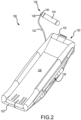
- evacuation assembly 106 is illustrated in a deployed position.
- evacuation assembly 106 includes an evacuation slide 120 and a compressed fluid source 130.
- evacuation slide 120 includes a toe end 122 and a head end 124 opposite toe end 122. Head end 124 may be coupled to an aircraft structure (e.g., fuselage 102 in FIG. 1 ).
- evacuation slide 120 is an inflatable slide.
- Evacuation slide 120 includes a sliding surface 126 and an underside surface 128 opposite sliding surface 126. Sliding surface 126 extends from head end 124 to toe end 122.
- underside surface 128 may be oriented toward an exit surface (e.g., toward the ground or toward a body of water).
- Evacuation slide 120 is illustrated as a single lane slide; however, evacuation slide 120 may comprise any number of lanes.
- Evacuation assembly 106 includes compressed fluid source 130 (also referred to as a charge cylinder).
- Compressed fluid source 130 is configured to deliver a pressurized fluid (e.g., gas) to inflate evacuation slide 120.
- Compressed fluid source 130 is fluidly coupled to evacuation slide 120.
- compressed fluid source 130 may be fluidly coupled to evacuation slide 120 via a hose, or conduit, 132.
- evacuation slide 120 begins to inflate.
- compressed fluid source 130 includes a bottle 134 and a regulator valve assembly 140.
- Conduit 132 may be connected to a primary outlet 138 of regulator valve assembly 140.
- regulator valve assembly 140 is fluidly coupled between bottle 134 and conduit 132.
- regulator valve assembly 140 is configured to discharge and regulate the flow of fluid from compressed fluid source 130 to evacuation slide 120.
- evacuation slide 120 is in a stowed (or deflated) state
- regulator valve assembly 140 is in a closed position.
- regulator valve assembly 140 In response to deployment of evacuation assembly 106, regulator valve assembly 140 translates to an open position, thereby allowing fluid to flow from bottle 134 of compressed fluid source 130 to evacuation slide 120.
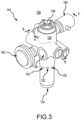
- regulator valve assembly 140 includes a valve housing 150 (also referred to as a valve manifold).
- Valve housing 150 may define primary outlet 138, one or more primary inlets 152, and a secondary inlet 154.
- Regulator valve assembly 140 is configured to receive fluid from bottle 134 through primary inlets 152 and secondary inlet 154.
- a venting cap 156 may be coupled to valve housing 150.
- venting cap 156 may be configured to vent fluid to an ambient environment 158 (i.e., to an environment exterior to valve housing 150).
- Regulator valve assembly 140 further includes a solenoid valve 160.
- a pressure gauge 162 may be operatively coupled to compressed fluid source 130 ( FIG. 2 ) via regulator valve assembly 140. Pressure gauge 162 may be configured to measure a pressure of compressed fluid source 130 (with brief reference to FIG. 2 ).
- valve housing 150 may define primary inlets 152.
- Primary inlets 152 may be located between a threaded portion 172 of outer circumferential surface 170 and a first end 174 of valve housing 150.
- First end 174 may be opposite venting cap 156.
- Threaded portion 172 of outer circumferential surface 170 may be configured to engage a threaded surface of bottle 134 ( FIG. 2 ).
- Valve housing 150 may further define a main fluid channel 164.
- Main fluid channel 164 is configured to fluidly connect primary inlets 152 and primary outlet 138. In various embodiments, main fluid channel 164 extends from first end 174 to, at least, primary outlet 138.
- a poppet 166 is located in main fluid channel 164. In the closed position, poppet 166 is located over primary inlets 152, such that poppet 166 blocks, or otherwise prevents, fluid from flowing into main fluid channel 164 via primary inlets 152.
- a biasing member 182 e.g., a compressed coil spring applies a biasing load L to poppet 166. Biasing member 182 may bias poppet 166 toward venting cap 156 and away from first end 174.
- an end cap 184 may be coupled to first end 174 of valve housing 150.
- End cap 184 may define secondary inlet 154.
- Secondary inlet 154 is fluidly coupled to a poppet channel 186 defined by poppet 166.
- poppet channel 186 may be defined by a bushing 188 located in poppet 166. Fluid from bottle 134 may flow through secondary inlet 154 and into poppet channel 186. In the closed position, the fluid in poppet channel 186 tends to generate a force in the direction of venting cap 156 (i.e., away from first end 174). This force, along with the biasing load L, forces poppet 166 toward primary outlet 138 and venting cap 156, and into contact with a poppet interface surface 178 ( FIG. 5A ) of valve housing 151.
- a rod 190 is located in a poppet outlet 192 defined by poppet 166.
- rod 190 forms a sealing interface with poppet 166, such that fluid is blocked from flowing through poppet outlet 192 and into main fluid channel 164.
- poppet 166 may include a poppet-rod seal 194.
- Poppet-rod seal 194 may form the sealing interface with rod 190, thereby preventing fluid from flowing out poppet outlet 192 and into main fluid channel 164.
- Rod 190 extends through main fluid channel 164 and into a secondary fluid channel 200.
- Secondary fluid channel 200 is also defined by valve housing 150. Secondary fluid channel 200 is located closer to venting cap 156, as compared to main fluid channel 164.
- a bulkhead 201 of valve housing 150 may generally separate secondary fluid channel 200 from main fluid channel 164.
- Rod 190 may extend through bulkhead 201.
- a bulkhead seal 203 may be located in a seal cavity defined by bulkhead 201. Bulkhead seal 203 may form sealing interfaces with rod 190 and bulkhead 201, thereby blocking, or otherwise preventing, fluid flow between secondary fluid channel 200 and main fluid channel 164.
- a pin 202 is located in the path of rod 190.
- Pin 202 generates an interference with rod 190 and blocks rod 190 from translating away from poppet 166.
- pin 202 prevents rod 190 from translating out poppet outlet 192.
- pin 202 being located in the translation path of rod 190 maintains the sealing interface between rod 190 and poppet-rod seal 194, thereby preventing fluid from flowing into main fluid channel 164 via poppet outlet 192.
- a biasing member 204 may apply a biasing load L2 to rod 190.
- Biasing member 204 (also referred to as rod biasing member) may be located between an upper collar 206 of rod 190 and a surface 208 of valve housing 150.
- surface 208 of valve housing 150 may form a floor of secondary fluid channel 200 opposite venting cap 156.
- Surface 208 may be formed by bulkhead 201.
- Biasing member 204 biases upper collar 206 away from surface 208. In this regard, biasing member 204 biases rod 190 away from poppet 166.
- pin 202 may be biased toward secondary fluid channel 200.
- Pin 202 may be biased in a direction perpendicular to the direction in which rod 190 translates.
- Pin 202 is located in a pin orifice 210 defined by valve housing 150.
- a coil spring 212 biases pin 202 toward secondary fluid channel 200 and into the path of rod 190.
- Coil spring 212 may be located in pin orifice 210 and between pin 202 and a pin cap 214 coupled to valve housing 150.
- the force applied to pin 202 by fluid within secondary fluid channel 200 (e.g., the fluid force) is less than the biasing force applied by coil spring 212 to pin 202.
- the biasing force applied by coil spring 212 being greater than the fluid force results in pin 202 being located in the path of rod 190.
- valve housing 150 may further define a solenoid feed channel 220.
- Solenoid feed channel 220 is fluidly connected between a primary inlet 152 of valve housing 150 and of a fluid path 224 defined by a fluid fitting 226.
- Solenoid feed channel 220 extends from primary inlet 152 to a fluid path inlet 222 of fluid path 224. Fluid may flow from solenoid feed channel 220 and into fluid path 224 via fluid path inlet 222.
- Fluid fitting 226, which defines fluid path 224 and fluid path inlet 222, may be coupled to valve housing 150.
- a fluid path outlet 228 of fluid path 224 is configured to provide fluid to secondary fluid channel 200. Fluid may flow from fluid path 224 and into secondary fluid channel 200 via fluid path outlet 228.
- solenoid valve 160 when solenoid valve 160 is in the open position ( FIG. 5A ), fluid may flow from solenoid feed channel 220, through fluid path 224, and into secondary fluid channel 200.
- a valve seal 230 of solenoid valve 160 in the closed position, forms a fluid tight seal (i.e., a sealing interface) with fluid fitting 226, thereby fluidly sealing fluid path inlet 222 from fluid path outlet 228.
- the sealing interface formed between valve seal 230 and fluid fitting 226 prevents fluid from bottle 134 from flowing into secondary fluid channel 200.
- venting cap 156 may be configured to vent leaked fluid within secondary fluid channel 200 into an ambient environment 158, thereby reducing or eliminating an undesired pressure increase in secondary fluid channel 200.
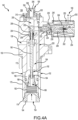
- venting cap 156 may be an elastomeric check valve that includes one or more vent port(s) 302 covered by an elastomeric sleeve 304.
- venting cap 156 includes a vent body 306 defining vent port(s) 302 and a vent volume 308.
- fluid leaked into the secondary fluid channel 200 may flow into vent volume 308 via a housing port 310 defined by valve housing 150.
- Elastomeric sleeve 304 surrounds the vent body 306 such that elastomeric sleeve 304 covers or is in close proximity to vent ports 302.
- Elastomeric sleeve 304 generates a sealing force to make the vent ports 302 leak tight and isolate the vent volume 308 from the surrounding ambient environment 158.
- the elastomeric sleeve 304 can serve to keep water or other contaminants out of the vent volume 308.
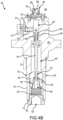
- elastomeric sleeve 304 When the pressure within vent volume 308 is less than a threshold, elastomeric sleeve 304 is compressed on vent body 306, as shown in FIGs. 4A , such that fluid in vent volume 308 cannot exit venting cap 156. When the pressure within vent volume 308 is greater than the threshold, elastomeric sleeve 304 expands (e.g., deflects) away from the vent body 306 proximate vent ports 302 such that fluid within in vent volume 308 can exit venting cap 156 as indicated by arrows A in FIG. 4B .
- fluid leaked into secondary fluid channel 200 flows into the vent volume 308 of vent body 306. Accumulation of the leaked fluid eventually develops a fluid pressure greater than the pressure of ambient environment 158. This increased pressure starts to radially push out elastomeric sleeve 304 causing elastomeric sleeve 304 to deflect radially (e.g., away from vent volume 308) as shown in FIG. 4B . The radial deflection of elastomeric sleeve 304 increases with pressure build up. The increased deflection eventually develops narrow gaps at the interface between elastomeric sleeve 304 and vent body 306, thereby allowing fluid to be discharged to the ambient environment 158.
- Elastomeric sleeve 304 contracts back to the configuration shown in FIG. 4A , in response to the pressure within vent volume 308 decreasing below the threshold. In this manner, elastomeric sleeve 304 operates as a check valve to vent the leaked fluid to ambient environment 158.
- Elastomeric sleeve 304 can be formed of materials such as nitrile or ethylene propylene diene methylene (EPDM).
- the material properties, elastomeric sleeve dimensions, and the initial stretch decide the initial sealing force and should be less than the force applied by coil spring 212, such that elastomeric sleeve 304 will deform and vent fluid to ambient environment 158 prior to leaked fluid within secondary fluid channel 200 forcing pin 202 to translate out of the path of rod 190.
- solenoid valve 160 includes a core 240 and a bobbin 242.
- Core 240 may engage fluid fitting 226.
- Bobbin 242 may engage a core fitting 244.
- Core fitting 244 is formed of a non-magnetic material.
- Core 240 and bobbin 242 are made of a magnetic material, such as a ferrous metal.
- a solenoid coil 250 is wrapped helically around core 240, bobbin 242, and core fitting 244.
- a set of lead wires 252 e.g., a positive lead wire and a ground lead wire
- Solenoid coil 250 is configured to generate a magnetic field in response to receiving a current via wires 252.
- a cover 254 may be located around solenoid coil 250. Cover 254 may be coupled, via adhesive, welding, fasteners, or any other suitable attachment to bobbin 242 and/or to core 240.
- Solenoid valve 160 further includes a plunger 260.
- Plunger 260 comprises a ferrous metal. Plunger 260 is configured such that plunger 260 will translate in response to the magnetic field generated by solenoid coil 250. In this regard, the magnetic field generated by solenoid coil 250 forces plunger 260 away from fluid fitting 226.
- Valve seal 230 may be coupled to plunger 260 such that valve seal 230 translates with plunger 260 relative to fluid fitting 226. Plunger 260 is biased toward fluid fitting 226.
- a coil spring 262 may bias plunger 260 toward fluid fitting 226. In the closed position, the biasing load applied by coil spring 262 to plunger 260 maintains a fluid tight seal between fluid fitting 226 and valve seal 230.
- solenoid coil 250 In response to receiving current via lead wires 252, solenoid coil 250 generates a magnetic field. In various embodiments, current begins to flow to solenoid coil 250 in response to activation of a power source.
- the power source may be activated in response to deployment of evacuation assembly 106 ( FIG. 1 ), for example, in response to opening exit door 104 ( FIG. 1 ).
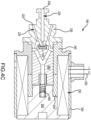
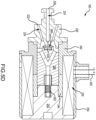
- the electromagnetic force being greater than the biasing load applied by coil spring 262, causes plunger 260 and valve seal 230 to translate away from fluid fitting 226, thereby creating a gap 268 ( FIG. 5D ) between valve seal 230 and fluid fitting 226.
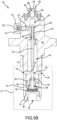
- regulator valve assembly 140 is illustrated in the open position.
- the gap 268 ( FIG. 5D ) between valve seal 230 and fluid fitting 226 fluidly connects fluid path inlet 222 and fluid path outlet 228 of fluid fitting 226, thereby allowably fluid from bottle 134 ( FIG. 2 ) to flow into to secondary fluid channel 200.
- fluid from bottle 134 may flow from primary inlet 152, through solenoid feed channel 220, into fluid path 224 in fluid fitting 226, and then into secondary fluid channel 200.
- a pressure within secondary fluid channel 200 and the fluid force applied to pin 202 increase.
- Pin 202 translates toward pin cap 214 in response to fluid force applied to pin 202 exceeding the biasing force applied by coil spring 212.
- the flow of fluid into secondary fluid channel 200 forces pin 202 to translates out the path of rod 190.
- fluid from bottle 134 flows into poppet channel 186 via secondary inlet 154, and then into main fluid channel 164 via poppet outlet 192.
- the flow of fluid into main fluid channel 164 decreases the pressure in poppet channel 186.
- the decreased pressure is such that the force applied by the fluid flowing through primary inlets 152 exceeds the biasing force of biasing member 182, thereby causing poppet 166 to translate toward first end 174.
- poppet 166 translates away from primary outlet 138 in response to rod 190 translating out of poppet outlet 192.
- poppet 166 does not block the fluid connection between primary inlets 152 and main fluid channel 164.
- fluid from bottle 134 may flow through primary inlets 152, into main fluid channel 164, out primary outlet 138, and into evacuation slide 120 ( FIG. 2 ).
- solenoid valve 160 to control the flow of fluid into secondary fluid channel 200 and thus, the translation of rod 190, allows the translation of regulator valve assembly 140 to the open position to be electrically controlled. Electrically controlling the opening of regulator valve assembly 140 tends to allow for increased timing accuracy and/or more precise control of the inflation of evacuation slide 120 ( FIG. 2 ).
- references to "various embodiments”, “one embodiment”, “an embodiment”, “an example embodiment”, etc. indicate that the embodiment described may include a particular feature, structure, or characteristic, but every embodiment may not necessarily include the particular feature, structure, or characteristic. Moreover, such phrases are not necessarily referring to the same embodiment. Further, when a particular feature, structure, or characteristic is described in connection with an embodiment, it is submitted that it is within the knowledge of one skilled in the art to affect such feature, structure, or characteristic in connection with other embodiments whether or not explicitly described. After reading the description, it will be apparent to one skilled in the relevant art(s) how to implement the disclosure in alternative embodiments.
Landscapes
- Engineering & Computer Science (AREA)
- General Engineering & Computer Science (AREA)
- Mechanical Engineering (AREA)
- Physics & Mathematics (AREA)
- Electromagnetism (AREA)
- Business, Economics & Management (AREA)
- Emergency Management (AREA)
- Aviation & Aerospace Engineering (AREA)
- Lift Valve (AREA)
Claims (15)
- Steuerventilanordnung einer Druckmittelquelle, wobei die Steuerventilanordnung umfasst:ein Ventilgehäuse (150), das einen Hauptfluidkanal (164), einen sekundären Fluidkanal (200), einen primären Auslass (138), einen primären Einlass (152) und einen sekundären Einlass (154) definiert;ein Tellerventil (166), das in dem Hauptfluidkanal (164) angeordnet ist, wobei das Tellerventil einen Tellerventilkanal (186) und einen Tellerventilauslass (192) definiert, wobei der Tellerventilkanal (186) mit dem sekundären Einlass (154) fluidmäßig verbunden ist;eine Stange (190), die konfiguriert ist, um sich in den Tellerventilauslass (192) hinein- und herauszubewegen;einen Stift (202), der in Richtung des sekundären Fluidkanals (200) vorgespannt ist, wobei der Stift konfiguriert ist, um sich in einen Translationspfad der Stange zu bewegen; undein Solenoidventil (160), das konfiguriert ist, um einen Fluidstrom in den sekundären Fluidkanal (200) zu steuern.
- Steuerventilanordnung nach Anspruch 1, ferner umfassend ein erstes Vorspannelement (182), das konfiguriert ist, um die Stange von dem Tellerventil weg vorzuspannen.
- Steuerventilanordnung nach Anspruch 2, ferner umfassend ein zweites Vorspannelement (204), das konfiguriert ist, um das Tellerventil von einem ersten Ende des Ventilgehäuses weg vorzuspannen, wobei das erste Ende des Ventilgehäuses den sekundären Einlass definiert.
- Steuerventilanordnung nach Anspruch 3, ferner umfassend eine Entlüftungskappe (156), die ein elastomeres Rückschlagventil beinhaltet, das mit dem Ventilgehäuse gekoppelt ist, wobei das elastomere Rückschlagventil umfasst:einen Entlüftungskörper (306), der eine Entlüftungsöffnung (302) und ein Entlüftungsvolumen (308) definiert, wobei das Entlüftungsvolumen mit dem sekundären Fluidkanal (200) fluidmäßig gekoppelt ist; undeine elastomere Hülle (304), die um den Entlüftungskörper (306) und über der Entlüftungsöffnung (302) angeordnet ist.
- Steuerventilanordnung nach einem der vorhergehenden Ansprüche, wobei das Ventilgehäuse (150) ferner einen Solenoidzuführungskanal (220) definiert, der mit dem primären Einlass (152) fluidmäßig gekoppelt ist.
- Steuerventilanordnung nach Anspruch 5, ferner umfassend ein Fluidanschlussstück (226), das mit dem Ventilgehäuse (150) gekoppelt ist, wobei das Fluidanschlussstück (226) einen Fluidpfad (224) definiert, wobei der Fluidpfad (224) konfiguriert ist, um den Solenoidzuführungskanal (220) und den sekundären Fluidkanal (200) fluidmäßig zu verbinden.
- Steuerventilanordnung nach Anspruch 6, wobei das Solenoidventil (160) in einer geschlossenen Position konfiguriert ist, um einen Auslass des Fluidpfades (224), der durch das Fluidanschlussstück definiert ist, gegenüber einem Einlass des Fluidpfades, der durch das Fluidanschlussstück (226) definiert ist, abzudichten.
- Druckmittelquelle, umfassend:eine Flasche (134); undeine Steuerventilanordnung (140) nach Anspruch 1, die mit der Flasche (134) fluidmäßig gekoppelt ist.
- Druckmittelquelle nach Anspruch 8, wobei die Steuerventilanordnung (140) ferner umfasst:ein erstes Vorspannelement (182), das konfiguriert ist, um die Stange vom Tellerventil weg vorzuspannen; undein zweites Vorspannelement (204), das konfiguriert ist, um das Tellerventil von einem ersten Ende des Ventilgehäuses weg vorzuspannen, wobei das erste Ende des Ventilgehäuses den sekundären Einlass definiert.
- Druckmittelquelle nach Anspruch 9, wobei das erste Vorspannelement (182) zwischen einem Boden des sekundären Fluidkanals (200) und einem oberen Bund der Stange (190) angeordnet ist.
- Druckmittelquelle nach Anspruch 10, wobei das Ventilgehäuse (150) ferner einen Solenoidzuführungskanal (220) definiert, der mit dem primären Einlass (152) fluidmäßig gekoppelt ist.
- Druckmittelquelle nach Anspruch 11, wobei die Steuerventilanordnung (140) ferner umfasst: ein Fluidanschlussstück (226), das mit dem Ventilgehäuse (150) gekoppelt ist, wobei das Fluidanschlussstück (116) einen Fluidpfad (224) definiert, wobei der Fluidpfad (224) konfiguriert ist, um den Solenoidzuführungskanal (220) und den sekundären Fluidkanal (200) fluidmäßig zu verbinden, und vorzugsweise, wenn die Steuerventilanordnung (140) in einer geschlossenen Position ist, das Solenoidventil einen Auslass des Fluidpfades (224), der durch das Fluidanschlussstück (226) definiert ist, gegenüber einem Einlass des Fluidpfades (224), der durch das Fluidanschlussstück (226) definiert ist, abdichtet, und noch bevorzugter, wobei das Solenoidventil ferner eine Ventildichtung umfasst, die konfiguriert ist, um eine Dichtungsschnittstelle mit dem Fluidanschlussstück (226) zu bilden, wenn die Steuerventilanordnung (140) in der geschlossenen Position ist, und wobei in einer offenen Position ein Spalt zwischen dem Fluidanschlussstück (226) und der Ventildichtung erzeugt wird, wobei der Spalt konfiguriert ist, um Fluid zu erlauben, von dem Einlass des Fluidpfades zu dem Auslass des Fluidpfades zu fließen, und wobei die Steuerventilanordnung (140) vorzugsweise ferner eine Entlüftungskappe (156) umfasst, die mit dem Ventilgehäuse gekoppelt ist und umfasst:einen Entlüftungskörper (306), der eine Entlüftungsöffnung (302) und ein Entlüftungsvolumen (308) definiert, wobei das Entlüftungsvolumen mit dem sekundären Fluidkanal (200) fluidmäßig gekoppelt ist; undeine elastomere Hülle (304), die um den Entlüftungskörper (306) und über der Entlüftungsöffnung (302) angeordnet ist.
- Evakuierungsanordnung, umfassend:einen aufblasbaren Gegenstand; undeine Druckmittelquelle, die mit dem aufblasbaren Gegenstand fluidmäßig gekoppelt ist, wobei die Druckmittelquelle eine Steuerventilanordnung (140) nach Anspruch 1 beinhaltet, die konfiguriert ist, um einen Fluidstrom von der Druckmittelquelle zu dem aufblasbaren Gegenstand zu steuern.
- Evakuierungsanordnung nach Anspruch 13, wobei die Steuerventilanordnung ferner ein erstes Vorspannelement (182) umfasst, das konfiguriert ist, um die Stange von dem Tellerventil weg vorzuspannen.
- Evakuierungsanordnung nach Anspruch 14, wobei die Steuerventilanordnung ferner ein zweites Vorspannelement (204) umfasst, das konfiguriert ist, um das Tellerventil von einem ersten Ende des Ventilgehäuses weg vorzuspannen, wobei das erste Ende des Ventilgehäuses den sekundären Einlass definiert; und/oderwobei das erste Vorspannelement (182) zwischen einem Boden des sekundären Fluidkanals (200) und einem oberen Bund der Stange angeordnet ist; und/oderwobei die Steuerventilanordnung ferner ein Fluidanschlussstück (226) umfasst, das mit dem Ventilgehäuse gekoppelt ist, wobei das Fluidanschlussstück (226) einen Fluidpfad (224) definiert, wobei der Fluidpfad konfiguriert ist, um den sekundären Fluidkanal (200) und einen Solenoidzuführungskanal (220), der durch das Ventilgehäuse (150) definiert ist, fluidmäßig zu verbinden.
Applications Claiming Priority (2)
| Application Number | Priority Date | Filing Date | Title |
|---|---|---|---|
| IN202141047243 | 2021-10-18 | ||
| US17/836,376 US12066847B2 (en) | 2021-10-18 | 2022-06-09 | Solenoid initiator for compressed fluid source regulator valve assembly |
Publications (2)
| Publication Number | Publication Date |
|---|---|
| EP4166452A1 EP4166452A1 (de) | 2023-04-19 |
| EP4166452B1 true EP4166452B1 (de) | 2024-08-07 |
Family
ID=83690434
Family Applications (1)
| Application Number | Title | Priority Date | Filing Date |
|---|---|---|---|
| EP22200805.4A Active EP4166452B1 (de) | 2021-10-18 | 2022-10-11 | Solenoidzünder für eine steuerventilanordnung einer druckmittelquelle |
Country Status (1)
| Country | Link |
|---|---|
| EP (1) | EP4166452B1 (de) |
Family Cites Families (3)
| Publication number | Priority date | Publication date | Assignee | Title |
|---|---|---|---|---|
| US10612723B2 (en) * | 2017-02-13 | 2020-04-07 | Goodrich Corporation | Solenoid valve for inflation system |
| EP3597971B1 (de) * | 2018-07-16 | 2022-05-04 | Goodrich Corporation | Ventilanordnung |
| US11119516B2 (en) * | 2019-12-11 | 2021-09-14 | Goodrich Coproration | Solenoid-operated pressure-regulator modules for inflation systems and methods thereof |
-
2022
- 2022-10-11 EP EP22200805.4A patent/EP4166452B1/de active Active
Also Published As
| Publication number | Publication date |
|---|---|
| EP4166452A1 (de) | 2023-04-19 |
Similar Documents
| Publication | Publication Date | Title |
|---|---|---|
| EP3569921B1 (de) | Pneumatisches tellerventil für ein aufblassystem | |
| EP3835211B1 (de) | Elektromagnetisch betätigte module für aufblassysteme und deren montageverfahren | |
| US11169552B2 (en) | Solenoid initiator with a manual override for inflation system | |
| EP3360773B1 (de) | Magnetventil für aufpumpsystem | |
| US20200326014A1 (en) | Inflation valve assembly | |
| EP3360772B1 (de) | Magnetventil für aufpumpsystem | |
| US10914396B2 (en) | Electro-pneumatic valve with pressurized container | |
| US12066847B2 (en) | Solenoid initiator for compressed fluid source regulator valve assembly | |
| US11198514B2 (en) | Aspirator with pressure relief flaps | |
| US20220196181A1 (en) | Inflatable systems with electro-pneumatic valve modules | |
| EP4166452B1 (de) | Solenoidzünder für eine steuerventilanordnung einer druckmittelquelle | |
| EP3323729B1 (de) | Saugeranordnung mit integriertem druckentlastungsventil | |
| US11879562B2 (en) | Solenoid operated pressure regulator cum shut off valve for inflation system | |
| US20220196179A1 (en) | Dual solenoid initiator valve for compressed fluid sources | |
| EP2439433B1 (de) | Sicherheitsventil und elektromagnetisches Ventil | |
| EP4279781B1 (de) | Elektromagnetisch betätigter druckregler für ein aufblassystem | |
| US12297926B2 (en) | Solenoid operated pressure cartridge for inflation system | |
| EP4279389A1 (de) | Solenoidbetätigte druckpatrone für ein aufblassystem | |
| US11802629B1 (en) | Solenoid actuated pressure regulator for inflation system | |
| EP4027050B1 (de) | Doppelmagnetinitiatorventil für druckfluidquellen | |
| EP4163533B1 (de) | Elektromagnetisch betätigtes druckregelventil für ein aufblassystem | |
| EP4019826A1 (de) | Aufblasbare systeme mit elektro-pneumatischen ventilmodulen | |
| US11591095B2 (en) | Pressure relief valve with deflecting disks for inflatable | |
| US20190368517A1 (en) | Device for pilot valve | |
| US20240001576A1 (en) | Electro-pneumatic cable cutter assembly for aircraft hoist |
Legal Events
| Date | Code | Title | Description |
|---|---|---|---|
| PUAI | Public reference made under article 153(3) epc to a published international application that has entered the european phase |
Free format text: ORIGINAL CODE: 0009012 |
|
| STAA | Information on the status of an ep patent application or granted ep patent |
Free format text: STATUS: THE APPLICATION HAS BEEN PUBLISHED |
|
| AK | Designated contracting states |
Kind code of ref document: A1 Designated state(s): AL AT BE BG CH CY CZ DE DK EE ES FI FR GB GR HR HU IE IS IT LI LT LU LV MC ME MK MT NL NO PL PT RO RS SE SI SK SM TR |
|
| STAA | Information on the status of an ep patent application or granted ep patent |
Free format text: STATUS: REQUEST FOR EXAMINATION WAS MADE |
|
| 17P | Request for examination filed |
Effective date: 20230925 |
|
| P01 | Opt-out of the competence of the unified patent court (upc) registered |
Effective date: 20230922 |
|
| RBV | Designated contracting states (corrected) |
Designated state(s): AL AT BE BG CH CY CZ DE DK EE ES FI FR GB GR HR HU IE IS IT LI LT LU LV MC ME MK MT NL NO PL PT RO RS SE SI SK SM TR |
|
| GRAP | Despatch of communication of intention to grant a patent |
Free format text: ORIGINAL CODE: EPIDOSNIGR1 |
|
| STAA | Information on the status of an ep patent application or granted ep patent |
Free format text: STATUS: GRANT OF PATENT IS INTENDED |
|
| INTG | Intention to grant announced |
Effective date: 20240312 |
|
| GRAS | Grant fee paid |
Free format text: ORIGINAL CODE: EPIDOSNIGR3 |
|
| GRAA | (expected) grant |
Free format text: ORIGINAL CODE: 0009210 |
|
| STAA | Information on the status of an ep patent application or granted ep patent |
Free format text: STATUS: THE PATENT HAS BEEN GRANTED |
|
| AK | Designated contracting states |
Kind code of ref document: B1 Designated state(s): AL AT BE BG CH CY CZ DE DK EE ES FI FR GB GR HR HU IE IS IT LI LT LU LV MC ME MK MT NL NO PL PT RO RS SE SI SK SM TR |
|
| REG | Reference to a national code |
Ref country code: GB Ref legal event code: FG4D |
|
| REG | Reference to a national code |
Ref country code: CH Ref legal event code: EP |
|
| REG | Reference to a national code |
Ref country code: IE Ref legal event code: FG4D |
|
| REG | Reference to a national code |
Ref country code: DE Ref legal event code: R096 Ref document number: 602022005144 Country of ref document: DE |
|
| REG | Reference to a national code |
Ref country code: LT Ref legal event code: MG9D |
|
| REG | Reference to a national code |
Ref country code: NL Ref legal event code: MP Effective date: 20240807 |
|
| PG25 | Lapsed in a contracting state [announced via postgrant information from national office to epo] |
Ref country code: NO Free format text: LAPSE BECAUSE OF FAILURE TO SUBMIT A TRANSLATION OF THE DESCRIPTION OR TO PAY THE FEE WITHIN THE PRESCRIBED TIME-LIMIT Effective date: 20241107 |
|
| REG | Reference to a national code |
Ref country code: AT Ref legal event code: MK05 Ref document number: 1710665 Country of ref document: AT Kind code of ref document: T Effective date: 20240807 |
|
| PG25 | Lapsed in a contracting state [announced via postgrant information from national office to epo] |
Ref country code: FI Free format text: LAPSE BECAUSE OF FAILURE TO SUBMIT A TRANSLATION OF THE DESCRIPTION OR TO PAY THE FEE WITHIN THE PRESCRIBED TIME-LIMIT Effective date: 20240807 Ref country code: NL Free format text: LAPSE BECAUSE OF FAILURE TO SUBMIT A TRANSLATION OF THE DESCRIPTION OR TO PAY THE FEE WITHIN THE PRESCRIBED TIME-LIMIT Effective date: 20240807 Ref country code: PL Free format text: LAPSE BECAUSE OF FAILURE TO SUBMIT A TRANSLATION OF THE DESCRIPTION OR TO PAY THE FEE WITHIN THE PRESCRIBED TIME-LIMIT Effective date: 20240807 Ref country code: GR Free format text: LAPSE BECAUSE OF FAILURE TO SUBMIT A TRANSLATION OF THE DESCRIPTION OR TO PAY THE FEE WITHIN THE PRESCRIBED TIME-LIMIT Effective date: 20241108 Ref country code: PT Free format text: LAPSE BECAUSE OF FAILURE TO SUBMIT A TRANSLATION OF THE DESCRIPTION OR TO PAY THE FEE WITHIN THE PRESCRIBED TIME-LIMIT Effective date: 20241209 |
|
| PG25 | Lapsed in a contracting state [announced via postgrant information from national office to epo] |
Ref country code: BG Free format text: LAPSE BECAUSE OF FAILURE TO SUBMIT A TRANSLATION OF THE DESCRIPTION OR TO PAY THE FEE WITHIN THE PRESCRIBED TIME-LIMIT Effective date: 20240807 |
|
| PG25 | Lapsed in a contracting state [announced via postgrant information from national office to epo] |
Ref country code: LV Free format text: LAPSE BECAUSE OF FAILURE TO SUBMIT A TRANSLATION OF THE DESCRIPTION OR TO PAY THE FEE WITHIN THE PRESCRIBED TIME-LIMIT Effective date: 20240807 |
|
| PG25 | Lapsed in a contracting state [announced via postgrant information from national office to epo] |
Ref country code: IS Free format text: LAPSE BECAUSE OF FAILURE TO SUBMIT A TRANSLATION OF THE DESCRIPTION OR TO PAY THE FEE WITHIN THE PRESCRIBED TIME-LIMIT Effective date: 20241207 Ref country code: AT Free format text: LAPSE BECAUSE OF FAILURE TO SUBMIT A TRANSLATION OF THE DESCRIPTION OR TO PAY THE FEE WITHIN THE PRESCRIBED TIME-LIMIT Effective date: 20240807 |
|
| PG25 | Lapsed in a contracting state [announced via postgrant information from national office to epo] |
Ref country code: HR Free format text: LAPSE BECAUSE OF FAILURE TO SUBMIT A TRANSLATION OF THE DESCRIPTION OR TO PAY THE FEE WITHIN THE PRESCRIBED TIME-LIMIT Effective date: 20240807 |
|
| PG25 | Lapsed in a contracting state [announced via postgrant information from national office to epo] |
Ref country code: RS Free format text: LAPSE BECAUSE OF FAILURE TO SUBMIT A TRANSLATION OF THE DESCRIPTION OR TO PAY THE FEE WITHIN THE PRESCRIBED TIME-LIMIT Effective date: 20241107 Ref country code: ES Free format text: LAPSE BECAUSE OF FAILURE TO SUBMIT A TRANSLATION OF THE DESCRIPTION OR TO PAY THE FEE WITHIN THE PRESCRIBED TIME-LIMIT Effective date: 20240807 |
|
| PG25 | Lapsed in a contracting state [announced via postgrant information from national office to epo] |
Ref country code: RS Free format text: LAPSE BECAUSE OF FAILURE TO SUBMIT A TRANSLATION OF THE DESCRIPTION OR TO PAY THE FEE WITHIN THE PRESCRIBED TIME-LIMIT Effective date: 20241107 Ref country code: PT Free format text: LAPSE BECAUSE OF FAILURE TO SUBMIT A TRANSLATION OF THE DESCRIPTION OR TO PAY THE FEE WITHIN THE PRESCRIBED TIME-LIMIT Effective date: 20241209 Ref country code: PL Free format text: LAPSE BECAUSE OF FAILURE TO SUBMIT A TRANSLATION OF THE DESCRIPTION OR TO PAY THE FEE WITHIN THE PRESCRIBED TIME-LIMIT Effective date: 20240807 Ref country code: NO Free format text: LAPSE BECAUSE OF FAILURE TO SUBMIT A TRANSLATION OF THE DESCRIPTION OR TO PAY THE FEE WITHIN THE PRESCRIBED TIME-LIMIT Effective date: 20241107 Ref country code: NL Free format text: LAPSE BECAUSE OF FAILURE TO SUBMIT A TRANSLATION OF THE DESCRIPTION OR TO PAY THE FEE WITHIN THE PRESCRIBED TIME-LIMIT Effective date: 20240807 Ref country code: LV Free format text: LAPSE BECAUSE OF FAILURE TO SUBMIT A TRANSLATION OF THE DESCRIPTION OR TO PAY THE FEE WITHIN THE PRESCRIBED TIME-LIMIT Effective date: 20240807 Ref country code: IS Free format text: LAPSE BECAUSE OF FAILURE TO SUBMIT A TRANSLATION OF THE DESCRIPTION OR TO PAY THE FEE WITHIN THE PRESCRIBED TIME-LIMIT Effective date: 20241207 Ref country code: HR Free format text: LAPSE BECAUSE OF FAILURE TO SUBMIT A TRANSLATION OF THE DESCRIPTION OR TO PAY THE FEE WITHIN THE PRESCRIBED TIME-LIMIT Effective date: 20240807 Ref country code: GR Free format text: LAPSE BECAUSE OF FAILURE TO SUBMIT A TRANSLATION OF THE DESCRIPTION OR TO PAY THE FEE WITHIN THE PRESCRIBED TIME-LIMIT Effective date: 20241108 Ref country code: FI Free format text: LAPSE BECAUSE OF FAILURE TO SUBMIT A TRANSLATION OF THE DESCRIPTION OR TO PAY THE FEE WITHIN THE PRESCRIBED TIME-LIMIT Effective date: 20240807 Ref country code: ES Free format text: LAPSE BECAUSE OF FAILURE TO SUBMIT A TRANSLATION OF THE DESCRIPTION OR TO PAY THE FEE WITHIN THE PRESCRIBED TIME-LIMIT Effective date: 20240807 Ref country code: BG Free format text: LAPSE BECAUSE OF FAILURE TO SUBMIT A TRANSLATION OF THE DESCRIPTION OR TO PAY THE FEE WITHIN THE PRESCRIBED TIME-LIMIT Effective date: 20240807 Ref country code: AT Free format text: LAPSE BECAUSE OF FAILURE TO SUBMIT A TRANSLATION OF THE DESCRIPTION OR TO PAY THE FEE WITHIN THE PRESCRIBED TIME-LIMIT Effective date: 20240807 |
|
| PG25 | Lapsed in a contracting state [announced via postgrant information from national office to epo] |
Ref country code: SM Free format text: LAPSE BECAUSE OF FAILURE TO SUBMIT A TRANSLATION OF THE DESCRIPTION OR TO PAY THE FEE WITHIN THE PRESCRIBED TIME-LIMIT Effective date: 20240807 Ref country code: DK Free format text: LAPSE BECAUSE OF FAILURE TO SUBMIT A TRANSLATION OF THE DESCRIPTION OR TO PAY THE FEE WITHIN THE PRESCRIBED TIME-LIMIT Effective date: 20240807 |
|
| PG25 | Lapsed in a contracting state [announced via postgrant information from national office to epo] |
Ref country code: EE Free format text: LAPSE BECAUSE OF FAILURE TO SUBMIT A TRANSLATION OF THE DESCRIPTION OR TO PAY THE FEE WITHIN THE PRESCRIBED TIME-LIMIT Effective date: 20240807 |
|
| PG25 | Lapsed in a contracting state [announced via postgrant information from national office to epo] |
Ref country code: CZ Free format text: LAPSE BECAUSE OF FAILURE TO SUBMIT A TRANSLATION OF THE DESCRIPTION OR TO PAY THE FEE WITHIN THE PRESCRIBED TIME-LIMIT Effective date: 20240807 |
|
| PG25 | Lapsed in a contracting state [announced via postgrant information from national office to epo] |
Ref country code: SK Free format text: LAPSE BECAUSE OF FAILURE TO SUBMIT A TRANSLATION OF THE DESCRIPTION OR TO PAY THE FEE WITHIN THE PRESCRIBED TIME-LIMIT Effective date: 20240807 |
|
| REG | Reference to a national code |
Ref country code: DE Ref legal event code: R097 Ref document number: 602022005144 Country of ref document: DE |
|
| PLBE | No opposition filed within time limit |
Free format text: ORIGINAL CODE: 0009261 |
|
| STAA | Information on the status of an ep patent application or granted ep patent |
Free format text: STATUS: NO OPPOSITION FILED WITHIN TIME LIMIT |
|
| PG25 | Lapsed in a contracting state [announced via postgrant information from national office to epo] |
Ref country code: MC Free format text: LAPSE BECAUSE OF FAILURE TO SUBMIT A TRANSLATION OF THE DESCRIPTION OR TO PAY THE FEE WITHIN THE PRESCRIBED TIME-LIMIT Effective date: 20240807 |
|
| PG25 | Lapsed in a contracting state [announced via postgrant information from national office to epo] |
Ref country code: BE Free format text: LAPSE BECAUSE OF NON-PAYMENT OF DUE FEES Effective date: 20241031 Ref country code: LU Free format text: LAPSE BECAUSE OF NON-PAYMENT OF DUE FEES Effective date: 20241011 |
|
| 26N | No opposition filed |
Effective date: 20250508 |
|
| REG | Reference to a national code |
Ref country code: BE Ref legal event code: MM Effective date: 20241031 |
|
| PG25 | Lapsed in a contracting state [announced via postgrant information from national office to epo] |
Ref country code: SE Free format text: LAPSE BECAUSE OF FAILURE TO SUBMIT A TRANSLATION OF THE DESCRIPTION OR TO PAY THE FEE WITHIN THE PRESCRIBED TIME-LIMIT Effective date: 20240807 |
|
| PGFP | Annual fee paid to national office [announced via postgrant information from national office to epo] |
Ref country code: FR Payment date: 20250923 Year of fee payment: 4 |
|
| PG25 | Lapsed in a contracting state [announced via postgrant information from national office to epo] |
Ref country code: IE Free format text: LAPSE BECAUSE OF NON-PAYMENT OF DUE FEES Effective date: 20241011 |
|
| PG25 | Lapsed in a contracting state [announced via postgrant information from national office to epo] |
Ref country code: RO Free format text: LAPSE BECAUSE OF FAILURE TO SUBMIT A TRANSLATION OF THE DESCRIPTION OR TO PAY THE FEE WITHIN THE PRESCRIBED TIME-LIMIT Effective date: 20240807 |
|
| PGFP | Annual fee paid to national office [announced via postgrant information from national office to epo] |
Ref country code: DE Payment date: 20250923 Year of fee payment: 4 |
|
| PG25 | Lapsed in a contracting state [announced via postgrant information from national office to epo] |
Ref country code: IT Free format text: LAPSE BECAUSE OF FAILURE TO SUBMIT A TRANSLATION OF THE DESCRIPTION OR TO PAY THE FEE WITHIN THE PRESCRIBED TIME-LIMIT Effective date: 20240807 Ref country code: CY Free format text: LAPSE BECAUSE OF FAILURE TO SUBMIT A TRANSLATION OF THE DESCRIPTION OR TO PAY THE FEE WITHIN THE PRESCRIBED TIME-LIMIT; INVALID AB INITIO Effective date: 20221011 |