EP4166445A1 - Automatic ship handling system, ship control device, ship control method, and program - Google Patents
Automatic ship handling system, ship control device, ship control method, and program Download PDFInfo
- Publication number
- EP4166445A1 EP4166445A1 EP21822994.6A EP21822994A EP4166445A1 EP 4166445 A1 EP4166445 A1 EP 4166445A1 EP 21822994 A EP21822994 A EP 21822994A EP 4166445 A1 EP4166445 A1 EP 4166445A1
- Authority
- EP
- European Patent Office
- Prior art keywords
- ship
- automatic
- relative distance
- detection unit
- unit
- Prior art date
- Legal status (The legal status is an assumption and is not a legal conclusion. Google has not performed a legal analysis and makes no representation as to the accuracy of the status listed.)
- Withdrawn
Links
Images





Classifications
-
- B—PERFORMING OPERATIONS; TRANSPORTING
- B63—SHIPS OR OTHER WATERBORNE VESSELS; RELATED EQUIPMENT
- B63C—LAUNCHING, HAULING-OUT, OR DRY-DOCKING OF VESSELS; LIFE-SAVING IN WATER; EQUIPMENT FOR DWELLING OR WORKING UNDER WATER; MEANS FOR SALVAGING OR SEARCHING FOR UNDERWATER OBJECTS
- B63C9/00—Life-saving in water
- B63C9/0005—Life-saving in water by means of alarm devices for persons falling into the water, e.g. by signalling, by controlling the propulsion or manoeuvring means of the boat
- B63C9/0011—Life-saving in water by means of alarm devices for persons falling into the water, e.g. by signalling, by controlling the propulsion or manoeuvring means of the boat enabling persons in the water to control the propulsion or manoeuvring means of the boat
-
- B—PERFORMING OPERATIONS; TRANSPORTING
- B63—SHIPS OR OTHER WATERBORNE VESSELS; RELATED EQUIPMENT
- B63C—LAUNCHING, HAULING-OUT, OR DRY-DOCKING OF VESSELS; LIFE-SAVING IN WATER; EQUIPMENT FOR DWELLING OR WORKING UNDER WATER; MEANS FOR SALVAGING OR SEARCHING FOR UNDERWATER OBJECTS
- B63C9/00—Life-saving in water
- B63C9/0005—Life-saving in water by means of alarm devices for persons falling into the water, e.g. by signalling, by controlling the propulsion or manoeuvring means of the boat
-
- B—PERFORMING OPERATIONS; TRANSPORTING
- B63—SHIPS OR OTHER WATERBORNE VESSELS; RELATED EQUIPMENT
- B63C—LAUNCHING, HAULING-OUT, OR DRY-DOCKING OF VESSELS; LIFE-SAVING IN WATER; EQUIPMENT FOR DWELLING OR WORKING UNDER WATER; MEANS FOR SALVAGING OR SEARCHING FOR UNDERWATER OBJECTS
- B63C9/00—Life-saving in water
- B63C9/08—Life-buoys, e.g. rings; Life-belts, jackets, suits, or the like
- B63C9/20—Life-buoys, e.g. rings; Life-belts, jackets, suits, or the like characterised by signalling means, e.g. lights
-
- B—PERFORMING OPERATIONS; TRANSPORTING
- B63—SHIPS OR OTHER WATERBORNE VESSELS; RELATED EQUIPMENT
- B63H—MARINE PROPULSION OR STEERING
- B63H21/00—Use of propulsion power plant or units on vessels
- B63H21/21—Control means for engine or transmission, specially adapted for use on marine vessels
-
- B—PERFORMING OPERATIONS; TRANSPORTING
- B63—SHIPS OR OTHER WATERBORNE VESSELS; RELATED EQUIPMENT
- B63H—MARINE PROPULSION OR STEERING
- B63H25/00—Steering; Slowing-down otherwise than by use of propulsive elements; Dynamic anchoring, i.e. positioning vessels by means of main or auxiliary propulsive elements
- B63H25/02—Initiating means for steering, for slowing down, otherwise than by use of propulsive elements, or for dynamic anchoring
-
- B—PERFORMING OPERATIONS; TRANSPORTING
- B63—SHIPS OR OTHER WATERBORNE VESSELS; RELATED EQUIPMENT
- B63H—MARINE PROPULSION OR STEERING
- B63H25/00—Steering; Slowing-down otherwise than by use of propulsive elements; Dynamic anchoring, i.e. positioning vessels by means of main or auxiliary propulsive elements
- B63H25/02—Initiating means for steering, for slowing down, otherwise than by use of propulsive elements, or for dynamic anchoring
- B63H25/04—Initiating means for steering, for slowing down, otherwise than by use of propulsive elements, or for dynamic anchoring automatic, e.g. reacting to compass
-
- B—PERFORMING OPERATIONS; TRANSPORTING
- B63—SHIPS OR OTHER WATERBORNE VESSELS; RELATED EQUIPMENT
- B63C—LAUNCHING, HAULING-OUT, OR DRY-DOCKING OF VESSELS; LIFE-SAVING IN WATER; EQUIPMENT FOR DWELLING OR WORKING UNDER WATER; MEANS FOR SALVAGING OR SEARCHING FOR UNDERWATER OBJECTS
- B63C9/00—Life-saving in water
- B63C2009/0017—Life-saving in water characterised by making use of satellite radio beacon positioning systems, e.g. the Global Positioning System [GPS]
Definitions
- the present invention relates to an automatic ship handling system, a ship control device, a ship control method, and a program.
- a personal watercraft (PWC) auto-return system is known (see, for example, Patent Document 1).
- the PWC auto-return system described in Patent Document 1 includes a user device and an autopilot unit disposed within the PWC.
- the user device includes an occupant positioning unit, a user interface, and a communication unit.
- the PWC receives a request from the user interface and proceeds to a position of the user device by automatic ship handling.
- Patent Document 1 does not describe a speed of the PWC during the automatic ship handling. During the automatic ship handling, in a case where the speed of the PWC is not appropriately controlled, it may cause danger to the occupant carrying the user device.
- Patent Document 1 United States Patent Application, Publication No. 2018/0335780
- an object of the present invention is to provide an automatic ship handling system, a ship control device, a ship control method, and a program capable of appropriately controlling a speed of a ship in an automatic ship handling mode.
- an automatic ship handling system that includes a ship and a communication device, wherein the ship includes an actuator that has a function of generating a propulsion force for the ship and a function of generating a turning moment on the ship, an operation unit that receives an input operation for activating the actuator, and a ship control device that activates the actuator on the basis of at least the input operation received by the operation unit, wherein the ship control device has a manual ship handling mode in which the actuator is activated on the basis of the input operation received by the operation unit, and an automatic ship handling mode in which the actuator is activated without a need for the operation unit to receive the input operation, and wherein, in the automatic ship handling mode, the ship control device controls a speed of the ship on the basis of a relative distance between the ship and the communication device.
- a ship control device including, in a ship: an actuator that has a function of generating a propulsion force for the ship and a function of generating a turning moment on the ship; and an operation unit that receives an input operation for activating the actuator, wherein the ship control device has a manual ship handling mode in which the actuator is activated on the basis of the input operation received by the operation unit, and an automatic ship handling mode in which the actuator is activated without a need for the operation unit to receive the input operation, and wherein, in the automatic ship handling mode, the ship control device controls a speed of the ship on the basis of a relative distance between the ship and a communication device.
- a ship control method for controlling a ship including an actuator that has a function of generating a propulsion force for the ship and a function of generating a turning moment on the ship, and an operation unit that receives an input operation for activating the actuator
- the method including: a ship control step of activating the actuator on the basis of at least the input operation received by the operation unit, wherein the ship control step includes a manual ship handling step of activating the actuator on the basis of the input operation received by the operation unit, and an automatic ship handling step of activating the actuator without a need for the operation unit to receive the input operation, and wherein, in the automatic ship handling step, a speed of the ship is controlled on the basis of a relative distance between the ship and a communication device.
- a program for causing a computer installed in a ship to execute a ship control step the ship including an actuator that has a function of generating a propulsion force for the ship and a function of generating a turning moment on the ship, and an operation unit that receives an input operation for activating the actuator, the ship control step being a step of activating the actuator on the basis of at least the input operation received by the operation unit, wherein the ship control step includes a manual ship handling step of activating the actuator on the basis of the input operation received by the operation unit, and an automatic ship handling step of activating the actuator without a need for the operation unit to receive the input operation, and wherein, in the automatic ship handling step, a speed of the ship is controlled on the basis of a relative distance between the ship and a communication device.
- an automatic ship handling system a ship control device, a ship control method, and a program capable of appropriately controlling a speed of a ship in an automatic ship handling mode.
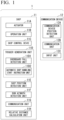
- FIG. 1 is a diagram schematically showing an example of an automatic ship handling system 1 according to the first embodiment.
- the automatic ship handling system 1 includes a ship 11 and a communication device 12.
- the ship 11 of the first embodiment is a personal watercraft (PWC, a water motorcycle) having the same functions as a PWC described in FIG. 1 of Japanese Patent No. 5196649 , for example.
- the ship 11 includes an actuator 11A, an operation unit 11B, a ship control device 11C, a trigger generation unit 11D, a ship position detection unit 11E, a bow azimuth detection unit 11F, a communication unit 11G, and a relative distance calculation unit 11H.
- the actuator 11A has a function of generating a propulsion force for the ship 11 and a function of generating a turning moment on the ship 11.
- the actuator 11A includes an engine, a nozzle, a deflector, a trim actuator, a bucket, a bucket actuator, and the like described in FIG. 1 of Japanese Unexamined Patent Application, First Publication No. 2019-171925 , for example.
- the operation unit 11B receives an input operation of a ship operator for activating the actuator 11A.
- the operation unit 11B has the same configuration as a steering handlebar device described in FIG. 1 of Japanese Patent No. 5196649 , a steering unit described in FIG. 1 of Japanese Unexamined Patent Application, First Publication No. 2019-171925 , or the like, for example.
- the ship control device 11C performs control for activating the actuator 11A on the basis of the input operation of the ship operator received by the operation unit 11B.
- the ship control device 11C has a manual ship handling mode in which the actuator 11A is activated on the basis of the input operation of the ship operator received by the operation section 11B and an automatic ship handling mode in which the actuator 11A is activated without a need for the operation unit 11B to receive the input operation.
- the trigger generation unit 11D generates a trigger for switching a ship handling mode of the ship control device 11C from the manual ship handling mode to the automatic ship handling mode.
- the trigger generation unit 11D includes an overboard fall detection unit 11D1 and an automatic ship handling start instruction unit 11D2.
- the overboard fall detection unit 11D1 detects that an occupant of the ship 11 (for example, the ship operator, an occupant other than the ship operator, or the like) has fallen overboard.
- the overboard fall detection unit 11D1 of the first embodiment has the same configuration as a lanyard cord and a switch described in paragraph 0002 of Japanese Patent No. 4205261 , for example. Specifically, one end of the lanyard cord is connected to a person for whom falling overboard is to be detected (for example, the ship operator, the occupant other than the ship operator, or the like). The other end of the lanyard cord is connected to a switch (not shown) disposed in the ship 11.
- the trigger generation unit 11D When the person to be detected falls overboard from the ship 11, the other end of the lanyard cord is disconnected from the switch, and the switch detects that the person to be detected has fallen overboard. As a result, the trigger generation unit 11D generates a trigger, and the ship control device 11C switches the ship handling mode from the manual ship handling mode to the automatic ship handling mode.
- the automatic ship handling start instruction unit 11D2 outputs an automatic ship handling start instruction on the basis of an automatic ship handling start request transmitted from the communication device 12 (the "automatic ship handling start request" will be described later).
- the ship control device 11C starts control to activate the actuator 11A (control in the automatic ship handling mode) without the need for the operation unit 11B to receive the input operation.
- the ship control device 11C controls the actuator 11A on the basis of a relative position between the ship 11 and the communication device 12 and a bow azimuth of the ship 11.
- the trigger generation unit 11D may not include the automatic ship handling start instruction unit 11D2.
- the trigger generation unit 11D when the overboard fall detection unit 11D1 detects that the occupant of the ship 11 has fallen overboard, the trigger generation unit 11D generates a trigger, and the ship control device 11C switches the ship handling mode from the manual ship handling mode to the automatic ship handling mode and starts control in the automatic ship handling mode.
- the ship position detection unit 11E detects a position of the ship 11.
- the ship position detection unit 11E includes, for example, a Global Positioning System (GPS) device.
- GPS Global Positioning System
- the GPS device calculates the position coordinates of the ship 11 by receiving signals from a plurality of GPS satellites.
- the position of the ship 11 detected by the ship position detection unit 11E is used for the control in the automatic ship handling mode of the ship control device 11C described above.
- the bow azimuth detection unit 11F detects the bow azimuth of the ship 11.
- the bow azimuth detection unit 11F includes, for example, an azimuth sensor.
- the azimuth sensor calculates the bow azimuth of the ship 11 using geomagnetism, for example.
- the bow azimuth of the ship 11 detected by the bow azimuth detection unit 11F is used for the control in the automatic ship handling mode of the ship control device 11C.
- the azimuth sensor may be a device (a gyrocompass) in which a north pointing device and a damping device are added to a rapidly rotating gyroscope to always indicate north.
- a gyrocompass a device in which a north pointing device and a damping device are added to a rapidly rotating gyroscope to always indicate north.
- the azimuth sensor may be a GPS compass that includes a plurality of GPS antennas and calculates a bow azimuth from a relative positional relationship of the plurality of GPS antennas.
- the communication unit 11G communicates with the communication device 12.
- the communication device 12 is carried by the person for whom falling overboard is to be detected (the occupant) described above.
- the communication device 12 includes a communication device position detection unit 12A, a communication unit 12B, and an input unit 12C.
- the communication device position detection unit 12A detects a position of the communication device 12.
- the communication device position detection unit 12A includes a GPS device, for example.
- the GPS device calculates the position coordinates of the communication device 12 by receiving signals from a plurality of GPS satellites.
- the input unit 12C receives, for example, an automatic ship handling start request from the ship operator of the ship 11 (for example, an automatic ship handling start request from the ship operator who has fallen overboard from the ship 11 while carrying the communication device 12).
- the communication unit 12B transmits information indicating the position of the communication device 12 detected by the communication device position detection unit 12A to the ship 11.
- the communication unit 11G of the ship 11 receives the information indicating the position of the communication device 12 transmitted by the communication unit 12B.
- the position of the communication device 12 detected by the communication device position detection unit 12A is used for the control in the automatic ship handling mode of the ship control device 11C.
- the communication unit 12B transmits the automatic ship handling start request received by the input unit 12C to the ship 11.
- the communication unit 11G of the ship 11 receives the automatic ship handling start request transmitted by the communication unit 12B.
- the automatic ship handling start instruction unit 11D2 of the ship 11 outputs the automatic ship handling start instruction on the basis of the automatic ship handling start request transmitted from the communication device 12.
- the communication device 12 may not include the input unit 12C.
- the communication unit 12B does not transmit the automatic ship handling start request to the ship 11, and the ship control device 11C starts the control in the automatic ship handling mode on the basis of the trigger generated by the trigger generation unit 11D.
- the relative distance calculation unit 11H calculates a relative distance between the ship 11 and the communication device 12 on the basis of the position of the communication device 12 detected by the communication device position detection unit 12A and the position of the ship 11 detected by the ship position detection unit 11E.
- the ship control device 11C controls the speed of the ship 11 on the basis of the relative distance between the ship 11 and the communication device 12 calculated by the relative distance calculation unit 11H. That is, the ship control device 11C autonomously controls the speed of the ship 11 in the automatic ship handling mode.
- FIG. 2 is a diagram for explaining an example of a relationship between the relative distance between the ship 11 and the communication device 12 and the speed of the ship 11 in the automatic ship handling mode of the automatic ship handling system 1 of the first embodiment.
- FIG. 2(A) shows an example of a moving direction of the ship 11 in the automatic ship handling mode of the automatic ship handling system 1 of the first embodiment
- FIG. 2(B) shows an example of a relationship between the relative distance between the ship 11 and the communication device 12 and the speed of the ship 11 in the automatic ship handling mode of the automatic ship handling system 1 of the first embodiment.
- the ship control device 11C activates the actuator 11A such that the relative distance between the ship 11 and the communication device 12 decreases in the automatic ship handling mode. That is, in the automatic ship handling mode, the ship control device 11C moves the ship 11 such that the ship 11 approaches the communication device 12.
- the ship control device 11C controls the speed of the ship 11 to a smaller value as the relative distance between the ship 11 and the communication device 12 becomes smaller in the automatic ship handling mode. Specifically, the ship control device 11C controls the speed of the ship 11 to zero in a case where the relative distance between the ship 11 and the communication device 12 is equal to or less than a threshold value DTH.
- the actuator 11A stops generating a propulsion force for the ship 11 (for example, an engine stop state, a neutral state, or the like).
- the actuator 11A generates a propulsion force for the ship 11 moving away from the communication device 12 (that is, makes an inertial force of the ship 11 approaching the communication device 12 zero), and thus the ship 11 may be stopped at a position where the relative distance between the ship 11 and the communication device 12 is the threshold value DTH.
- the actuator 11A may generate a force for holding the ship 11 at a fixed point.
- FIG. 3 is a diagram for explaining another example of the relationship between the relative distance between the ship 11 and the communication device 12 and the speed of the ship 11 in the automatic ship handling mode of the automatic ship handling system 1 of the first embodiment.
- the speed of the ship 11 becomes smaller as the relative distance between the ship 11 and the communication device 12 becomes smaller.
- the speed of the ship 11 becomes larger as the relative distance between the ship 11 and the communication device 12 becomes larger.
- the speed of the ship 11 increases linearly.
- the speed of the ship 11 becomes smaller as the relative distance between the ship 11 and the communication device 12 becomes smaller.
- the speed of the ship 11 becomes larger as the relative distance between the ship 11 and the communication device 12 becomes larger.
- the speed of the ship 11 increases stepwise.
- the ship control device 11C controls the speed of the ship 11 to zero in a case where the relative distance between the ship 11 and the communication device 12 is equal to or less than a threshold value DTH.
- FIG. 4 is a sequence diagram for explaining an example of processing executed in the automatic ship handling system 1 of the first embodiment.
- step S11 the overboard fall detection unit 11D1 of the ship 11 detects that the occupant of the ship 11 has fallen overboard.
- step S12 the input unit 12C of the communication device 12 receives the automatic ship handling start request from the ship operator who has fallen overboard from the ship 11 while carrying the communication device 12.
- step S13 the communication unit 12B of the communication device 12 transmits the automatic ship handling start request received in step S12, and the communication unit 11G of the ship 11 receives the automatic ship handling start request.
- step S14 the automatic ship handling start instruction unit 11D2 of the ship 11 outputs the automatic ship handling start instruction on the basis of the automatic ship handling start request.
- step S15 the ship control device 11C of the ship 11 starts control to activate the actuator 11A (control in the automatic ship handling mode) without the need for the operation unit 11B to receive the input operation.
- step S16 the communication device position detection unit 12A of the communication device 12 detects the position of the communication device 12.
- step S17 the communication unit 12B of the communication device 12 transmits the information indicating the position of the communication unit 12 detected in step S16, and the communication unit 11G of the ship 11 receives the information.
- step S18 the ship position detection unit 11E of the ship 11 detects the position of the ship 11.
- step S19 the bow azimuth detection unit 11F of the ship 11 detects the bow azimuth of the ship 11.
- step S20 the relative distance calculation unit 11H of the ship 11 calculates the relative distance between the ship 11 and the communication device 12 on the basis of the position of the communication device 12 detected in step S16 and the position of the ship 11 detected in step S18.
- step S21 the ship control device 11C of the ship 11 controls the speed of the ship 11 on the basis of the relative distance between the ship 11 and the communication device 12 calculated in step S20.
- An automatic ship handling system 1 of the second embodiment has the same configuration as the automatic ship handling system 1 of the first embodiment described above, except for the points which will be described later. Therefore, according to the automatic ship handling system 1 of the second embodiment, the same effect as that of the automatic ship handling system 1 of the first embodiment described above can be obtained except for the points which will be described later.
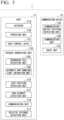
- FIG. 5 is a diagram schematically showing an example of the automatic ship handling system 1 according to the second embodiment.
- the automatic ship handling system 1 includes a ship 11 and a communication device 12.
- the ship 11 includes an actuator 11A, an operation unit 11B, a ship control device 11C, a trigger generation unit 11D, a ship position detection unit 11E, a bow azimuth detection unit 11F, a communication unit 11G, and a relative distance detection unit 111.
- the actuator 11A has the same configuration as the actuator 11A shown in FIG. 1 .
- the operation unit 11B has the same configuration as the operation unit 11B shown in FIG. 1 .
- the ship control device 11C has the same configuration as the ship control device 11C shown in FIG. 1 .
- the trigger generation unit 11D has the same configuration as the trigger generation unit 11D shown in FIG. 1 and includes an overboard fall detection unit 11D1 and an automatic ship handling start instruction unit 11D2.
- the ship position detection unit 11E has the same configuration as the ship position detection unit 11E shown in FIG. 1 .
- the ship 11 may not include the ship position detection unit 11E.
- the bow azimuth detection unit 11F has the same configuration as the bow azimuth detection unit 11F shown in FIG. 1 .
- the ship 11 may not include the bow azimuth detection unit 11F.
- the communication unit 11G has the same configuration as the communication unit 11G shown in FIG. 1 .
- the communication device 12 is carried by the person for whom falling overboard is to be detected (the occupant) as in the communication device 12 shown in FIG. 1 .
- the communication device 12 includes a communication device position detection unit 12A, a communication unit 12B, and an input unit 12C.
- the communication device position detection unit 12A has the same configuration as the communication device position detection unit 12A shown in FIG. 1 .
- the communication unit 12B has the same configuration as the communication unit 12B shown in FIG. 1 .
- the input unit 12C has the same configuration as the input unit 12C shown in FIG. 1 .
- the communication device 12 may not have the communication device position detection unit 12A, and the communication unit 12B may not transmit the information indicating the position of the communication device 12 to the ship 11.
- the relative distance detection unit 11I includes, for example, a camera that captures an image of the communication device 12 and detects a relative distance between the ship 11 and the communication device 12 (specifically, estimates the relative distance between the ship 11 and the communication device 12 on the basis of the image of the communication device 12).
- the ship control device 11C controls the speed of the ship 11 on the basis of the relative distance between the ship 11 and the communication device 12 detected by the relative distance detection unit 11I.
- FIG. 6 is a sequence diagram for explaining an example of processing executed in the automatic ship handling system 1 of the second embodiment.
- step S31 the overboard fall detection unit 11D1 of the ship 11 detects that the occupant of the ship 11 has fallen overboard.
- step S32 the input unit 12C of the communication device 12 receives the automatic ship handling start request from the ship operator who has fallen overboard from the ship 11 while carrying the communication device 12.
- step S33 the communication unit 12B of the communication device 12 transmits the automatic ship handling start request received in step S32, and the communication unit 11G of the ship 11 receives the automatic ship handling start request.
- step S34 the automatic ship handling start instruction unit 11D2 of the ship 11 outputs the automatic ship handling start instruction on the basis of the automatic ship handling start request.
- step S35 the ship control device 11C of the ship 11 starts control to activate the actuator 11A (control in the automatic ship handling mode) without the need for the operation unit 11B to receive the input operation.
- step S36 the relative distance detection unit 111 of the ship 11 detects the relative distance between the ship 11 and the communication device 12.
- step S37 the ship control device 11C of the ship 11 controls the speed of the ship 11 on the basis of the relative distance between the ship 11 and the communication device 12 detected in step S36.
- An automatic ship handling system 1 of the third embodiment has the same configuration as the automatic ship handling system 1 of the second embodiment described above, except for the points which will be described later. Therefore, according to the automatic ship handling system 1 of the third embodiment, the same effect as that of the automatic ship handling system 1 of the second embodiment described above can be obtained except for the points which will be described later.
- the relative distance detection unit 11I includes, for example, a camera that captures an image of the communication device 12 and detects the relative distance between the ship 11 and the communication device 12.
- the relative distance detection unit 111 includes, for example, a radar and detects the relative distance between the ship 11 and the communication device 12 (specifically, measures the relative distance between the ship 11 and the communication device 12 on the basis of a reflected wave from the communication device 12).
- An automatic ship handling system 1 of the fourth embodiment has the same configuration as the automatic ship handling system 1 of the first embodiment described above, except for the points which will be described later. Therefore, according to the automatic ship handling system 1 of the fourth embodiment, the same effect as that of the automatic ship handling system 1 of the first embodiment described above can be obtained except for the points which will be described later.
- the overboard fall detection unit 11D1 of the ship 11 has the same configuration as the lanyard cord and the switch described in paragraph 0002 of Japanese Patent No. 4205261 , for example, and detects that the occupant of the ship 11 (for example, the ship operator, the occupant other than the ship operator, or the like) has fallen overboard in a case where the other end of the lanyard cord is come off from the switch.
- the overboard fall detection unit 11D1 detects that the occupant of the ship 11 has fallen overboard on the basis of the relative distance between the ship 11 and the communication device 12 calculated by the relative distance calculation unit 11H. Specifically, the overboard fall detection unit 11D1 estimates that the occupant of the ship 11 has fallen overboard in a case where the relative distance between the ship 11 and the communication device 12 calculated by the relative distance calculation unit 11H becomes larger than a predetermined threshold value. As a result, the trigger generation unit 11D generates a trigger, and the ship control device 11C switches the ship handling mode from the manual ship handling mode to the automatic ship handling mode. Further, in a case where the input unit 12C of the communication device 12 receives the automatic ship handling start request, the ship control device 11C controls the speed of the ship 11 on the basis of the relative distance between the ship 11 and the communication device 12.
- An automatic ship handling system 1 of the fifth embodiment has the same configuration as the automatic ship handling system 1 of the first embodiment described above, except for the points which will be described later. Therefore, according to the automatic ship handling system 1 of the fifth embodiment, the same effect as that of the automatic ship handling system 1 of the first embodiment described above can be obtained except for the points which will be described later.
- the ship 11 of each of the first to fourth embodiments is a personal watercraft (PWC, a water motorcycle) having the same functions as a PWC described in FIG. 1 of Japanese Patent No. 5196649 , for example.
- PWC personal watercraft
- the ship 11 of the fifth embodiment is a ship having the same functions as a ship described in FIG. 1 of Japanese Patent No. 6198192 , for example.
- the actuator 11A of the ship 11 of the fifth embodiment has a function of generating a propulsion force for the ship 11 and a function of generating a turning moment on the ship 11.
- the actuator 11A includes an outboard motor, an engine, an actuator, a shift mechanism, and the like described in FIG. 1 of Japanese Patent No. 6198192 , for example.
- the operation unit 11B of the ship 11 of the fifth embodiment receives an input operation of a ship operator for activating the actuator 11A.
- the operation unit 11B has the same configuration as a steering wheel, a remote control device, an operation lever, and the like described in FIG. 1 of Japanese Patent No. 6198192 , for example.
- the operation unit 11B of the ship 11 of the fifth embodiment may include a joystick or the like.
- the speed of the ship 11 is controlled on the basis of the relative distance between the ship 11 and the communication device 12.
- the burden on the person who has fallen overboard can be reduced more than in a case where the person who has fallen overboard is required to perform an operation to control the speed of the ship 11.
- the speed of the ship 11 is controlled to a smaller value as the relative distance between the ship 11 and the communication device 12 becomes smaller, and the ship 11 approaches the communication device 12. Therefore, in the automatic ship handling system 1 of each of the first to fifth embodiments, it is possible to achieve both safety and convenience (ease of use of the ship 11) for the person who has fallen overboard from the ship 11.
- An automatic ship handling system 1 of the sixth embodiment has the same configuration as the automatic ship handling system 1 of the first embodiment described above, except for the points which will be described later. Therefore, according to the automatic ship handling system 1 of the sixth embodiment, the same effect as that of the automatic ship handling system 1 of the first embodiment described above can be obtained except for the points which will be described later.
- FIG. 7 is a diagram schematically showing an example of the automatic ship handling system 1 according to the sixth embodiment.
- the automatic ship handling system 1 includes a ship 11 and a communication device 12.
- the ship 11 of the sixth embodiment is a PWC having the same functions as a PWC described in FIG. 1 of Japanese Patent No. 5196649 , for example.
- the ship 11 includes an actuator 11A having the same configuration as the actuator 11A of the first embodiment, an operation unit 11B having the same configuration as the operation unit 11B of the first embodiment, a ship control device 11C, a trigger generation unit 11D, a ship position detection unit 11E having the same configuration as the ship position detection unit 11E of the first embodiment, a bow azimuth detection unit 11F having the same configuration as the bow azimuth detection unit 11F of the first embodiment, a communication unit 11G having the same configuration as the communication unit 11G of the first embodiment, and a relative distance calculation unit 11H having the same configuration as the relative distance calculation unit 11H of the first embodiment.
- the ship control device 11C performs control for activating the actuator 11A on the basis of the input operation of the ship operator received by the operation unit 11B.
- the ship control device 11C has a manual ship handling mode in which the actuator 11A is activated on the basis of the input operation of the ship operator received by the operation section 11B and an automatic ship handling mode in which the actuator 11A is activated without a need for the operation unit 11B to receive the input operation.
- the trigger generation unit 11D generates a trigger for switching a ship handling mode of the ship control device 11C from the manual ship handling mode to the automatic ship handling mode.
- the trigger generation unit 11D includes a disembarkation detection unit 11D3 and an automatic ship handling start instruction unit 11D2.
- the disembarkation detection unit 11D3 detects disembarkation of the occupant of the ship 11.
- the disembarkation of the occupant of the ship 11 detected by the disembarkation detection unit 11D3 includes disembarkation for snorkeling around the ship 11 or the like, for example.
- the disembarkation detection unit 11D3 detects the disembarkation of the occupant of the ship 11 by detecting an operation that the occupant of the ship 11 turns on a switch (not shown) or the like, for example.
- the disembarkation detection unit 11D3 detects the disembarkation of the occupant of the ship 11
- the trigger generation unit 11D generates a trigger
- the ship control device 11C switches the ship handling mode from the manual ship handling mode to the automatic ship handling mode.
- the automatic ship handling start instruction unit 11D2 outputs the automatic ship handling start instruction on the basis of the automatic ship handling start request transmitted from the communication device 12.
- the ship control device 11C starts control to activate the actuator 11A (control in the automatic ship handling mode) without the need for the operation unit 11B to receive the input operation.
- the ship control device 11C controls the actuator 11A on the basis of a relative position between the ship 11 and the communication device 12 and a bow azimuth of the ship 11.
- the communication device 12 of the sixth embodiment includes a communication device position detection unit 12A having the same configuration as the communication device position detection unit 12A of the first embodiment, a communication unit 12B having the same configuration as the communication unit 12B of the first embodiment, and an input unit 12C having the same configuration as the input unit 12C of the first embodiment.
- the input unit 12C receives, for example, an automatic ship handling start request from the ship operator of the ship 11 (for example, an automatic ship handling start request from the ship operator who has disembarked from the ship 11 while carrying the communication device 12).
- the relative distance calculation unit 11H calculates a relative distance between the ship 11 and the communication device 12 on the basis of the position of the communication device 12 detected by the communication device position detection unit 12A and the position of the ship 11 detected by the ship position detection unit 11E.
- the ship control device 11C controls the speed of the ship 11 on the basis of the relative distance between the ship 11 and the communication device 12 calculated by the relative distance calculation unit 11H.
- FIG. 8 is a sequence diagram for explaining an example of processing executed in the automatic ship handling system 1 of the sixth embodiment.
- step S41 the disembarkation detection unit 11D3 of the ship 11 detects the disembarkation of the occupant of the ship 11.
- step S42 the input unit 12C of the communication device 12 receives the automatic ship handling start request from the ship operator who has disembarked from the ship 11 while carrying the communication device 12.
- step S43 the communication unit 12B of the communication device 12 transmits the automatic ship handling start request received in step S42, and the communication unit 11G of the ship 11 receives the automatic ship handling start request.
- step S44 the automatic ship handling start instruction unit 11D2 of the ship 11 outputs the automatic ship handling start instruction on the basis of the automatic ship handling start request.
- step S45 the ship control device 11C of the ship 11 starts control to activate the actuator 11A (control in the automatic ship handling mode) without the need for the operation unit 11B to receive the input operation.
- step S46 the communication device position detection unit 12A of the communication device 12 detects the position of the communication device 12.
- step S47 the communication unit 12B of the communication device 12 transmits the information indicating the position of the communication unit 12 detected in step S46, and the communication unit 11G of the ship 11 receives the information.
- step S48 the ship position detection unit 11E of the ship 11 detects the position of the ship 11.
- step S49 the bow azimuth detection unit 11F of the ship 11 detects the bow azimuth of the ship 11.
- step S50 the relative distance calculation unit 11H of the ship 11 calculates the relative distance between the ship 11 and the communication device 12 on the basis of the position of the communication device 12 detected in step S46 and the position of the ship 11 detected in step S48.
- step S51 the ship control device 11C of the ship 11 controls the speed of the ship 11 on the basis of the relative distance between the ship 11 and the communication device 12 calculated in step S50.
- An automatic ship handling system 1 of the seventh embodiment has the same configuration as the automatic ship handling system 1 of the first embodiment described above, except for the points which will be described later. Therefore, according to the automatic ship handling system 1 of the seventh embodiment, the same effect as that of the automatic ship handling system 1 of the first embodiment described above can be obtained except for the points which will be described later.
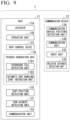
- FIG. 9 is a diagram schematically showing an example of the automatic ship handling system 1 according to the seventh embodiment.
- the automatic ship handling system 1 includes a ship 11 and a communication device 12.
- the ship 11 includes an actuator 11A, an operation unit 11B, a ship control device 11C, a trigger generation unit 11D, a ship position detection unit 11E, a bow azimuth detection unit 11F, and a communication unit 11G.
- the actuator 11A has the same configuration as the actuator 11A shown in FIG. 1 .
- the operation unit 11B has the same configuration as the operation unit 11B shown in FIG. 1 .
- the ship control device 11C has the same configuration as the ship control device 11C shown in FIG. 1 .
- the trigger generation unit 11D has the same configuration as the trigger generation unit 11D shown in FIG. 1 and includes an overboard fall detection unit 11D1 and an automatic ship handling start instruction unit 11D2.
- the ship position detection unit 11E has the same configuration as the ship position detection unit 11E shown in FIG. 1 .
- the ship 11 may not include the ship position detection unit 11E.
- the bow azimuth detection unit 11F has the same configuration as the bow azimuth detection unit 11F shown in FIG. 1 .
- the ship 11 may not include the bow azimuth detection unit 11F.
- the communication unit 11G has the same configuration as the communication unit 11G shown in FIG. 1 .
- the communication device 12 is carried by the person for whom falling overboard is to be detected (the occupant) as in the communication device 12 shown in FIG. 1 .
- the communication device 12 includes a communication device position detection unit 12A, a communication unit 12B, an input unit 12C, and a relative distance detection unit 12D.
- the communication device position detection unit 12A has the same configuration as the communication device position detection unit 12A shown in FIG. 1 .
- the communication unit 12B has the same configuration as the communication unit 12B shown in FIG. 1 .
- the input unit 12C has the same configuration as the input unit 12C shown in FIG. 1 .
- the communication device 12 may not have the communication device position detection unit 12A, and the communication unit 12B may not transmit the information indicating the position of the communication device 12 to the ship 11.
- the relative distance detection unit 12D includes, for example, a camera that captures an image of the ship 11 and detects a relative distance between the ship 11 and the communication device 12 (specifically, estimates the relative distance between the ship 11 and the communication device 12 on the basis of the image of the ship 11). Further, the relative distance detection unit 12D estimates an angle formed by the bow azimuth of the ship 11 and the communication device 12 using an image processing technique which is the same as a technique which will be described below, for example. In other words, the relative distance detection unit 12D estimates a direction in which the ship 11 should proceed in order for the ship 11 to approach the communication device 12.
- the relative distance detection unit 12D can estimate the direction, in which the ship 11 should proceed in order for the ship 11 to approach the communication device 12, with high accuracy on the basis of the image of the ship 11 and the shape data of the ship 11. https://www.jstage.jst.go.jp/article/jsaeronbun/48/5/48_20174759/_pdf/-char/en
- the ship control device 11C controls the speed of the ship 11 on the basis of the relative distance between the ship 11 and the communication device 12 detected by the relative distance detection unit 12D. Specifically, in the automatic ship handling mode, the ship control device 11C controls to activate the actuator 11A such that the ship 11 proceeds in the direction estimated by the relative distance detection unit 12D.
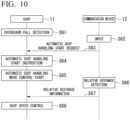
- FIG. 10 is a sequence diagram for explaining an example of processing executed in the automatic ship handling system 1 of the seventh embodiment.
- step S61 the overboard fall detection unit 11D1 of the ship 11 detects that the occupant of the ship 11 has fallen overboard.
- step S62 the input unit 12C of the communication device 12 receives the automatic ship handling start request from the ship operator who has fallen overboard from the ship 11 while carrying the communication device 12.
- step S63 the communication unit 12B of the communication device 12 transmits the automatic ship handling start request received in step S62, and the communication unit 11G of the ship 11 receives the automatic ship handling start request.
- step S64 the automatic ship handling start instruction unit 11D2 of the ship 11 outputs the automatic ship handling start instruction on the basis of the automatic ship handling start request.
- step S65 the ship control device 11C of the ship 11 starts control to activate the actuator 11A (control in the automatic ship handling mode) without the need for the operation unit 11B to receive the input operation.
- step S66 the relative distance detection unit 12D of the communication device 12 detects the relative distance between the ship 11 and the communication device 12.
- step S67 the communication unit 12B of the communication device 12 transmits the information indicating the relative distance between the ship 11 and the communication device 12 detected in step S66, and the communication unit 11G of the ship 11 receives the information.
- step S68 the ship control device 11C of the ship 11 controls the speed of the ship 11 on the basis of the relative distance between the ship 11 and the communication device 12 detected in step S66.
- An automatic ship handling system 1 of the eighth embodiment has the same configuration as the automatic ship handling system 1 of the first embodiment described above, except for the points which will be described later. Therefore, according to the automatic ship handling system 1 of the eighth embodiment, the same effect as that of the automatic ship handling system 1 of the first embodiment described above can be obtained except for the points which will be described later.
- FIG. 11 is a diagram schematically showing an example of the automatic ship handling system 1 according to the eighth embodiment.
- the automatic ship handling system 1 includes a ship 11 and a communication device 12.
- the ship 11 includes an actuator 11A, an operation unit 11B, a ship control device 11C, a trigger generation unit 11D, a ship position detection unit 11E, a bow azimuth detection unit 11F, and a communication unit 11G.
- the actuator 11A has the same configuration as the actuator 11A shown in FIG. 1 .
- the operation unit 11B has the same configuration as the operation unit 11B shown in FIG. 1 .
- the ship control device 11C has the same configuration as the ship control device 11C shown in FIG. 1 .
- the trigger generation unit 11D generates a trigger for switching a ship handling mode of the ship control device 11C from the manual ship handling mode to the automatic ship handling mode.
- the trigger generation unit 11D includes a disembarkation detection unit 11D3 and an automatic ship handling start instruction unit 11D2.
- the disembarkation detection unit 11D3 detects disembarkation of the occupant of the ship 11.
- the disembarkation of the occupant of the ship 11 detected by the disembarkation detection unit 11D3 includes disembarkation for snorkeling around the ship 11 or the like, for example.
- the disembarkation detection unit 11D3 detects the disembarkation of the occupant of the ship 11 by detecting an operation that the occupant of the ship 11 turns on a switch (not shown) or the like, for example.
- the disembarkation detection unit 11D3 detects the disembarkation of the occupant of the ship 11
- the trigger generation unit 11D generates a trigger
- the ship control device 11C switches the ship handling mode from the manual ship handling mode to the automatic ship handling mode.
- the automatic ship handling start instruction unit 11D2 outputs the automatic ship handling start instruction on the basis of the automatic ship handling start request transmitted from the communication device 12.
- the ship control device 11C starts control to activate the actuator 11A (control in the automatic ship handling mode) without the need for the operation unit 11B to receive the input operation.
- the ship position detection unit 11E has the same configuration as the ship position detection unit 11E shown in FIG. 1 .
- the ship 11 may not include the ship position detection unit 11E.
- the bow azimuth detection unit 11F has the same configuration as the bow azimuth detection unit 11F shown in FIG. 1 .
- the ship 11 may not include the bow azimuth detection unit 11F.
- the communication unit 11G has the same configuration as the communication unit 11G shown in FIG. 1 .
- the communication device 12 of the eighth embodiment includes a communication device position detection unit 12A having the same configuration as the communication device position detection unit 12A of the first embodiment, a communication unit 12B having the same configuration as the communication unit 12B of the first embodiment, an input unit 12C having the same configuration as the input unit 12C of the first embodiment, and a relative distance detection unit 12D having the same configuration as the relative distance detection unit 12D of the seventh embodiment.
- the input unit 12C receives, for example, an automatic ship handling start request from the ship operator of the ship 11 (for example, an automatic ship handling start request from the ship operator who has disembarked from the ship 11 while carrying the communication device 12).
- the ship control device 11C controls the speed of the ship 11 on the basis of the relative distance between the ship 11 and the communication device 12 detected by the relative distance detection unit 12D. Specifically, in the automatic ship handling mode, the ship control device 11C controls to activate the actuator 11A such that the ship 11 proceeds in the direction estimated by the relative distance detection unit 12D.
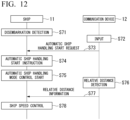
- FIG. 12 is a sequence diagram for explaining an example of processing executed in the automatic ship handling system 1 of the eighth embodiment.
- step S71 the disembarkation detection unit 11D3 of the ship 11 detects the disembarkation of the occupant of the ship 11.
- step S72 the input unit 12C of the communication device 12 receives the automatic ship handling start request from the ship operator who has disembarked from the ship 11 while carrying the communication device 12.
- step S73 the communication unit 12B of the communication device 12 transmits the automatic ship handling start request received in step S72, and the communication unit 11G of the ship 11 receives the automatic ship handling start request.
- step S74 the automatic ship handling start instruction unit 11D2 of the ship 11 outputs the automatic ship handling start instruction on the basis of the automatic ship handling start request.
- step S75 the ship control device 11C of the ship 11 starts control to activate the actuator 11A (control in the automatic ship handling mode) without the need for the operation unit 11B to receive the input operation.
- step S76 the relative distance detection unit 12D of the communication device 12 detects the relative distance between the ship 11 and the communication device 12.
- step S77 the communication unit 12B of the communication device 12 transmits the information indicating the relative distance between the ship 11 and the communication device 12 detected in step S76, and the communication unit 11G of the ship 11 receives the information.
- step S78 the ship control device 11C of the ship 11 controls the speed of the ship 11 on the basis of the relative distance between the ship 11 and the communication device 12 detected in step S76.
- each part of the automatic ship handling system 1 in each of the above-described embodiments may be realized by recording a program for realizing these functions on a computer-readable recording medium, loading the program recorded on the recording medium into a computer system, and executing the program.
- the term "computer system” as used herein includes an OS and hardware such as peripheral devices.
- the "computer-readable recording medium” refers to a portable medium such as a flexible disk, a magneto-optical disk, a ROM, and a CD-ROM, or a storage unit such as a hard disk built in a computer system.
- a “computer-readable recording medium” may include a medium that dynamically holds a program for a short period of time, for example, a communication line for transmitting a program via a network such as the Internet or a communication channel such as a telephone line, and a medium that holds a program for a certain period of time, for example, a volatile memory inside a computer system serving as a server or a client in that case.
- the above-described program may be a program for realizing some of the above-mentioned functions and may be a program for realizing the above-mentioned functions in combination with a program already recorded in the computer system.
Landscapes
- Engineering & Computer Science (AREA)
- Mechanical Engineering (AREA)
- Ocean & Marine Engineering (AREA)
- Chemical & Material Sciences (AREA)
- Combustion & Propulsion (AREA)
- Traffic Control Systems (AREA)
- Control Of Position, Course, Altitude, Or Attitude Of Moving Bodies (AREA)
Abstract
Description
- The present invention relates to an automatic ship handling system, a ship control device, a ship control method, and a program.
- Priority is claimed on
Japanese Patent Application No. 2020-101115, filed June 10, 2020 - In the related art, a personal watercraft (PWC) auto-return system is known (see, for example, Patent Document 1). The PWC auto-return system described in
Patent Document 1 includes a user device and an autopilot unit disposed within the PWC. The user device includes an occupant positioning unit, a user interface, and a communication unit. In the technology described inPatent Document 1, when an occupant carrying the user device leaves the PWC (falls overboard), the PWC receives a request from the user interface and proceeds to a position of the user device by automatic ship handling. - Incidentally,
Patent Document 1 does not describe a speed of the PWC during the automatic ship handling. During the automatic ship handling, in a case where the speed of the PWC is not appropriately controlled, it may cause danger to the occupant carrying the user device. - [Patent Document 1]
United States Patent Application, Publication No. 2018/0335780 - In view of the problems described above, an object of the present invention is to provide an automatic ship handling system, a ship control device, a ship control method, and a program capable of appropriately controlling a speed of a ship in an automatic ship handling mode.
- According to an aspect of the present invention, there is provided an automatic ship handling system that includes a ship and a communication device, wherein the ship includes an actuator that has a function of generating a propulsion force for the ship and a function of generating a turning moment on the ship, an operation unit that receives an input operation for activating the actuator, and a ship control device that activates the actuator on the basis of at least the input operation received by the operation unit, wherein the ship control device has a manual ship handling mode in which the actuator is activated on the basis of the input operation received by the operation unit, and an automatic ship handling mode in which the actuator is activated without a need for the operation unit to receive the input operation, and wherein, in the automatic ship handling mode, the ship control device controls a speed of the ship on the basis of a relative distance between the ship and the communication device.
- According to another aspect of the present invention, there is provided a ship control device including, in a ship: an actuator that has a function of generating a propulsion force for the ship and a function of generating a turning moment on the ship; and an operation unit that receives an input operation for activating the actuator, wherein the ship control device has a manual ship handling mode in which the actuator is activated on the basis of the input operation received by the operation unit, and an automatic ship handling mode in which the actuator is activated without a need for the operation unit to receive the input operation, and wherein, in the automatic ship handling mode, the ship control device controls a speed of the ship on the basis of a relative distance between the ship and a communication device.
- According to still another aspect of the present invention, there is provided a ship control method for controlling a ship, the ship including an actuator that has a function of generating a propulsion force for the ship and a function of generating a turning moment on the ship, and an operation unit that receives an input operation for activating the actuator, the method including: a ship control step of activating the actuator on the basis of at least the input operation received by the operation unit, wherein the ship control step includes a manual ship handling step of activating the actuator on the basis of the input operation received by the operation unit, and an automatic ship handling step of activating the actuator without a need for the operation unit to receive the input operation, and wherein, in the automatic ship handling step, a speed of the ship is controlled on the basis of a relative distance between the ship and a communication device.
- According to yet still another aspect of the present invention, there is provided a program for causing a computer installed in a ship to execute a ship control step, the ship including an actuator that has a function of generating a propulsion force for the ship and a function of generating a turning moment on the ship, and an operation unit that receives an input operation for activating the actuator, the ship control step being a step of activating the actuator on the basis of at least the input operation received by the operation unit, wherein the ship control step includes a manual ship handling step of activating the actuator on the basis of the input operation received by the operation unit, and an automatic ship handling step of activating the actuator without a need for the operation unit to receive the input operation, and wherein, in the automatic ship handling step, a speed of the ship is controlled on the basis of a relative distance between the ship and a communication device.
- According to the present invention, it is possible to provide an automatic ship handling system, a ship control device, a ship control method, and a program capable of appropriately controlling a speed of a ship in an automatic ship handling mode.
-
-
FIG. 1 is a diagram schematically showing an example of an automatic ship handling system according to a first embodiment. -
FIG. 2 is a diagram for explaining an example of a relationship between a relative distance between a ship and a communication device and a speed of the ship in an automatic ship handling mode of the automatic ship handling system of the first embodiment. -
FIG. 3 is a diagram for explaining another example of the relationship between the relative distance between the ship and the communication device and the speed of the ship in the automatic ship handling mode of the automatic ship handling system of the first embodiment. -
FIG. 4 is a sequence diagram for explaining an example of processing executed in the automatic ship handling system of the first embodiment. -
FIG. 5 is a diagram schematically showing an example of an automatic ship handling system according to a second embodiment. -
FIG. 6 is a sequence diagram for explaining an example of processing executed in the automatic ship handling system of the second embodiment. -
FIG. 7 is a diagram schematically showing an example of an automatic ship handling system according to a sixth embodiment. -
FIG. 8 is a sequence diagram for explaining an example of processing executed in the automatic ship handling system of the sixth embodiment. -
FIG. 9 is a diagram schematically showing an example of an automatic ship handling system according to a seventh embodiment. -
FIG. 10 is a sequence diagram for explaining an example of processing executed in the automatic ship handling system of the seventh embodiment. -
FIG. 11 is a diagram schematically showing an example of an automatic ship handling system according to an eighth embodiment. -
FIG. 12 is a sequence diagram for explaining an example of processing executed in the automatic ship handling system of the eighth embodiment. - Hereinafter, a first embodiment of an automatic ship handling system, a ship control device, a ship control method, and a program of the present invention will be described.
-
FIG. 1 is a diagram schematically showing an example of an automaticship handling system 1 according to the first embodiment. - In the example shown in
FIG. 1 , the automaticship handling system 1 includes aship 11 and acommunication device 12. - The
ship 11 of the first embodiment is a personal watercraft (PWC, a water motorcycle) having the same functions as a PWC described inFIG. 1 ofJapanese Patent No. 5196649 ship 11 includes anactuator 11A, anoperation unit 11B, aship control device 11C, atrigger generation unit 11D, a shipposition detection unit 11E, a bowazimuth detection unit 11F, acommunication unit 11G, and a relativedistance calculation unit 11H. - The
actuator 11A has a function of generating a propulsion force for theship 11 and a function of generating a turning moment on theship 11. Theactuator 11A includes an engine, a nozzle, a deflector, a trim actuator, a bucket, a bucket actuator, and the like described inFIG. 1 ofJapanese Unexamined Patent Application, First Publication No. 2019-171925 - The
operation unit 11B receives an input operation of a ship operator for activating theactuator 11A. Theoperation unit 11B has the same configuration as a steering handlebar device described inFIG. 1 ofJapanese Patent No. 5196649 FIG. 1 ofJapanese Unexamined Patent Application, First Publication No. 2019-171925 - The
ship control device 11C performs control for activating theactuator 11A on the basis of the input operation of the ship operator received by theoperation unit 11B. Theship control device 11C has a manual ship handling mode in which theactuator 11A is activated on the basis of the input operation of the ship operator received by theoperation section 11B and an automatic ship handling mode in which theactuator 11A is activated without a need for theoperation unit 11B to receive the input operation. - The
trigger generation unit 11D generates a trigger for switching a ship handling mode of theship control device 11C from the manual ship handling mode to the automatic ship handling mode. Thetrigger generation unit 11D includes an overboard fall detection unit 11D1 and an automatic ship handling start instruction unit 11D2. - The overboard fall detection unit 11D1 detects that an occupant of the ship 11 (for example, the ship operator, an occupant other than the ship operator, or the like) has fallen overboard. The overboard fall detection unit 11D1 of the first embodiment has the same configuration as a lanyard cord and a switch described in paragraph 0002 of
Japanese Patent No. 4205261 ship 11. - When the person to be detected falls overboard from the
ship 11, the other end of the lanyard cord is disconnected from the switch, and the switch detects that the person to be detected has fallen overboard. As a result, thetrigger generation unit 11D generates a trigger, and theship control device 11C switches the ship handling mode from the manual ship handling mode to the automatic ship handling mode. - The automatic ship handling start instruction unit 11D2 outputs an automatic ship handling start instruction on the basis of an automatic ship handling start request transmitted from the communication device 12 (the "automatic ship handling start request" will be described later).
- When the automatic ship handling start instruction unit 11D2 outputs the automatic ship handling start instruction, the
ship control device 11C starts control to activate theactuator 11A (control in the automatic ship handling mode) without the need for theoperation unit 11B to receive the input operation. In the automatic ship handling mode, theship control device 11C controls theactuator 11A on the basis of a relative position between theship 11 and thecommunication device 12 and a bow azimuth of theship 11. - In another example, the
trigger generation unit 11D may not include the automatic ship handling start instruction unit 11D2. In this example, when the overboard fall detection unit 11D1 detects that the occupant of theship 11 has fallen overboard, thetrigger generation unit 11D generates a trigger, and theship control device 11C switches the ship handling mode from the manual ship handling mode to the automatic ship handling mode and starts control in the automatic ship handling mode. - In the example shown in
FIG. 1 , the shipposition detection unit 11E detects a position of theship 11. The shipposition detection unit 11E includes, for example, a Global Positioning System (GPS) device. The GPS device calculates the position coordinates of theship 11 by receiving signals from a plurality of GPS satellites. The position of theship 11 detected by the shipposition detection unit 11E is used for the control in the automatic ship handling mode of theship control device 11C described above. - The bow
azimuth detection unit 11F detects the bow azimuth of theship 11. The bowazimuth detection unit 11F includes, for example, an azimuth sensor. The azimuth sensor calculates the bow azimuth of theship 11 using geomagnetism, for example. The bow azimuth of theship 11 detected by the bowazimuth detection unit 11F is used for the control in the automatic ship handling mode of theship control device 11C. - In another example, the azimuth sensor may be a device (a gyrocompass) in which a north pointing device and a damping device are added to a rapidly rotating gyroscope to always indicate north.
- In yet another example, the azimuth sensor may be a GPS compass that includes a plurality of GPS antennas and calculates a bow azimuth from a relative positional relationship of the plurality of GPS antennas.
- In the example shown in
FIG. 1 , thecommunication unit 11G communicates with thecommunication device 12. - The
communication device 12 is carried by the person for whom falling overboard is to be detected (the occupant) described above. Thecommunication device 12 includes a communication deviceposition detection unit 12A, acommunication unit 12B, and aninput unit 12C. - The communication device
position detection unit 12A detects a position of thecommunication device 12. The communication deviceposition detection unit 12A includes a GPS device, for example. The GPS device calculates the position coordinates of thecommunication device 12 by receiving signals from a plurality of GPS satellites. - The
input unit 12C receives, for example, an automatic ship handling start request from the ship operator of the ship 11 (for example, an automatic ship handling start request from the ship operator who has fallen overboard from theship 11 while carrying the communication device 12). - The
communication unit 12B transmits information indicating the position of thecommunication device 12 detected by the communication deviceposition detection unit 12A to theship 11. Thecommunication unit 11G of theship 11 receives the information indicating the position of thecommunication device 12 transmitted by thecommunication unit 12B. The position of thecommunication device 12 detected by the communication deviceposition detection unit 12A is used for the control in the automatic ship handling mode of theship control device 11C. - Further, the
communication unit 12B transmits the automatic ship handling start request received by theinput unit 12C to theship 11. Thecommunication unit 11G of theship 11 receives the automatic ship handling start request transmitted by thecommunication unit 12B. As described above, the automatic ship handling start instruction unit 11D2 of theship 11 outputs the automatic ship handling start instruction on the basis of the automatic ship handling start request transmitted from thecommunication device 12. - In another example, the
communication device 12 may not include theinput unit 12C. In this example, thecommunication unit 12B does not transmit the automatic ship handling start request to theship 11, and theship control device 11C starts the control in the automatic ship handling mode on the basis of the trigger generated by thetrigger generation unit 11D. - In the example shown in
FIG. 1 , the relativedistance calculation unit 11H calculates a relative distance between theship 11 and thecommunication device 12 on the basis of the position of thecommunication device 12 detected by the communication deviceposition detection unit 12A and the position of theship 11 detected by the shipposition detection unit 11E. - In the automatic ship handling mode, the
ship control device 11C controls the speed of theship 11 on the basis of the relative distance between theship 11 and thecommunication device 12 calculated by the relativedistance calculation unit 11H. That is, theship control device 11C autonomously controls the speed of theship 11 in the automatic ship handling mode. -
FIG. 2 is a diagram for explaining an example of a relationship between the relative distance between theship 11 and thecommunication device 12 and the speed of theship 11 in the automatic ship handling mode of the automaticship handling system 1 of the first embodiment. Specifically,FIG. 2(A) shows an example of a moving direction of theship 11 in the automatic ship handling mode of the automaticship handling system 1 of the first embodiment, andFIG. 2(B) shows an example of a relationship between the relative distance between theship 11 and thecommunication device 12 and the speed of theship 11 in the automatic ship handling mode of the automaticship handling system 1 of the first embodiment. - In the example shown in
FIG. 2(A) , theship control device 11C activates theactuator 11A such that the relative distance between theship 11 and thecommunication device 12 decreases in the automatic ship handling mode. That is, in the automatic ship handling mode, theship control device 11C moves theship 11 such that theship 11 approaches thecommunication device 12. - In the example shown in
FIGS. 2(A) and 2(B) , theship control device 11C controls the speed of theship 11 to a smaller value as the relative distance between theship 11 and thecommunication device 12 becomes smaller in the automatic ship handling mode. Specifically, theship control device 11C controls the speed of theship 11 to zero in a case where the relative distance between theship 11 and thecommunication device 12 is equal to or less than a threshold value DTH. - In the example shown in
FIG. 2 , at a time point when the relative distance between theship 11 and thecommunication device 12 decreases from a value larger than the threshold value DTH to the threshold value DTH, theactuator 11A stops generating a propulsion force for the ship 11 (for example, an engine stop state, a neutral state, or the like). - In another example, at the time point when the relative distance between the
ship 11 and thecommunication device 12 decreases from a value greater than the threshold value DTH to the threshold value DTH, theactuator 11A generates a propulsion force for theship 11 moving away from the communication device 12 (that is, makes an inertial force of theship 11 approaching thecommunication device 12 zero), and thus theship 11 may be stopped at a position where the relative distance between theship 11 and thecommunication device 12 is the threshold value DTH. - In yet another example, when the speed of the
ship 11 is controlled to zero (that is, when the relative distance between theship 11 and thecommunication device 12 is equal to or greater than zero and equal to or less than the threshold value DTH), theactuator 11A may generate a force for holding theship 11 at a fixed point. -
FIG. 3 is a diagram for explaining another example of the relationship between the relative distance between theship 11 and thecommunication device 12 and the speed of theship 11 in the automatic ship handling mode of the automaticship handling system 1 of the first embodiment. - As described above, in the example shown in
FIG. 2(B) , the speed of theship 11 becomes smaller as the relative distance between theship 11 and thecommunication device 12 becomes smaller. In other words, the speed of theship 11 becomes larger as the relative distance between theship 11 and thecommunication device 12 becomes larger. Specifically, in the relationship between the relative distance between theship 11 and thecommunication device 12 and the speed of theship 11 shown inFIG. 2(B) , when the relative distance between theship 11 and thecommunication device 12 increases, the speed of theship 11 increases linearly. - In the example shown in
FIG. 3 , as in the example shown inFIG. 2(B) , the speed of theship 11 becomes smaller as the relative distance between theship 11 and thecommunication device 12 becomes smaller. In other words, the speed of theship 11 becomes larger as the relative distance between theship 11 and thecommunication device 12 becomes larger. Specifically, in the relationship between the relative distance between theship 11 and thecommunication device 12 and the speed of theship 11 shown inFIG. 3 , when the relative distance between theship 11 and thecommunication device 12 increases, the speed of theship 11 increases stepwise. - In the example shown in
FIG. 3 , as in the example shown inFIGS. 2(A) and 2(B) , theship control device 11C controls the speed of theship 11 to zero in a case where the relative distance between theship 11 and thecommunication device 12 is equal to or less than a threshold value DTH. -
FIG. 4 is a sequence diagram for explaining an example of processing executed in the automaticship handling system 1 of the first embodiment. - In the example shown in
FIG. 4 , in step S11, the overboard fall detection unit 11D1 of theship 11 detects that the occupant of theship 11 has fallen overboard. - Next, in step S12, the
input unit 12C of thecommunication device 12 receives the automatic ship handling start request from the ship operator who has fallen overboard from theship 11 while carrying thecommunication device 12. - Next, in step S13, the
communication unit 12B of thecommunication device 12 transmits the automatic ship handling start request received in step S12, and thecommunication unit 11G of theship 11 receives the automatic ship handling start request. - Next, in step S14, the automatic ship handling start instruction unit 11D2 of the
ship 11 outputs the automatic ship handling start instruction on the basis of the automatic ship handling start request. - Next, in step S15, the
ship control device 11C of theship 11 starts control to activate theactuator 11A (control in the automatic ship handling mode) without the need for theoperation unit 11B to receive the input operation. - Next, in step S16, the communication device
position detection unit 12A of thecommunication device 12 detects the position of thecommunication device 12. - Next, in step S17, the
communication unit 12B of thecommunication device 12 transmits the information indicating the position of thecommunication unit 12 detected in step S16, and thecommunication unit 11G of theship 11 receives the information. - Further, in step S18, the ship
position detection unit 11E of theship 11 detects the position of theship 11. - Further, in step S19, the bow
azimuth detection unit 11F of theship 11 detects the bow azimuth of theship 11. - Next, in step S20, the relative
distance calculation unit 11H of theship 11 calculates the relative distance between theship 11 and thecommunication device 12 on the basis of the position of thecommunication device 12 detected in step S16 and the position of theship 11 detected in step S18. - Next, in step S21, the
ship control device 11C of theship 11 controls the speed of theship 11 on the basis of the relative distance between theship 11 and thecommunication device 12 calculated in step S20. - Hereinafter, a second embodiment of an automatic ship handling system, a ship control device, a ship control method, and a program of the present invention will be described.
- An automatic
ship handling system 1 of the second embodiment has the same configuration as the automaticship handling system 1 of the first embodiment described above, except for the points which will be described later. Therefore, according to the automaticship handling system 1 of the second embodiment, the same effect as that of the automaticship handling system 1 of the first embodiment described above can be obtained except for the points which will be described later. -
FIG. 5 is a diagram schematically showing an example of the automaticship handling system 1 according to the second embodiment. - In the example shown in
FIG. 5 , the automaticship handling system 1 includes aship 11 and acommunication device 12. - The
ship 11 includes anactuator 11A, anoperation unit 11B, aship control device 11C, atrigger generation unit 11D, a shipposition detection unit 11E, a bowazimuth detection unit 11F, acommunication unit 11G, and a relative distance detection unit 111. - The
actuator 11A has the same configuration as theactuator 11A shown inFIG. 1 . Theoperation unit 11B has the same configuration as theoperation unit 11B shown inFIG. 1 . Theship control device 11C has the same configuration as theship control device 11C shown inFIG. 1 . - The
trigger generation unit 11D has the same configuration as thetrigger generation unit 11D shown inFIG. 1 and includes an overboard fall detection unit 11D1 and an automatic ship handling start instruction unit 11D2. - In the example shown in
FIG. 5 , the shipposition detection unit 11E has the same configuration as the shipposition detection unit 11E shown inFIG. 1 . - In another example, the
ship 11 may not include the shipposition detection unit 11E. - In the example shown in
FIG. 5 , the bowazimuth detection unit 11F has the same configuration as the bowazimuth detection unit 11F shown inFIG. 1 . - In another example, the
ship 11 may not include the bowazimuth detection unit 11F. - In the example shown in
FIG. 5 , thecommunication unit 11G has the same configuration as thecommunication unit 11G shown inFIG. 1 . - The
communication device 12 is carried by the person for whom falling overboard is to be detected (the occupant) as in thecommunication device 12 shown inFIG. 1 . Thecommunication device 12 includes a communication deviceposition detection unit 12A, acommunication unit 12B, and aninput unit 12C. - The communication device
position detection unit 12A has the same configuration as the communication deviceposition detection unit 12A shown inFIG. 1 . Thecommunication unit 12B has the same configuration as thecommunication unit 12B shown inFIG. 1 . Theinput unit 12C has the same configuration as theinput unit 12C shown inFIG. 1 . - In another example, the
communication device 12 may not have the communication deviceposition detection unit 12A, and thecommunication unit 12B may not transmit the information indicating the position of thecommunication device 12 to theship 11. - In the example shown in
FIG. 5 , the relativedistance detection unit 11I includes, for example, a camera that captures an image of thecommunication device 12 and detects a relative distance between theship 11 and the communication device 12 (specifically, estimates the relative distance between theship 11 and thecommunication device 12 on the basis of the image of the communication device 12). - In the automatic ship handling mode, the
ship control device 11C controls the speed of theship 11 on the basis of the relative distance between theship 11 and thecommunication device 12 detected by the relativedistance detection unit 11I. -
FIG. 6 is a sequence diagram for explaining an example of processing executed in the automaticship handling system 1 of the second embodiment. - In the example shown in
FIG. 6 , in step S31, the overboard fall detection unit 11D1 of theship 11 detects that the occupant of theship 11 has fallen overboard. - Next, in step S32, the
input unit 12C of thecommunication device 12 receives the automatic ship handling start request from the ship operator who has fallen overboard from theship 11 while carrying thecommunication device 12. - Next, in step S33, the
communication unit 12B of thecommunication device 12 transmits the automatic ship handling start request received in step S32, and thecommunication unit 11G of theship 11 receives the automatic ship handling start request. - Next, in step S34, the automatic ship handling start instruction unit 11D2 of the
ship 11 outputs the automatic ship handling start instruction on the basis of the automatic ship handling start request. - Next, in step S35, the
ship control device 11C of theship 11 starts control to activate theactuator 11A (control in the automatic ship handling mode) without the need for theoperation unit 11B to receive the input operation. - Next, in step S36, the relative distance detection unit 111 of the
ship 11 detects the relative distance between theship 11 and thecommunication device 12. - Next, in step S37, the
ship control device 11C of theship 11 controls the speed of theship 11 on the basis of the relative distance between theship 11 and thecommunication device 12 detected in step S36. - Hereinafter, a third embodiment of an automatic ship handling system, a ship control device, a ship control method, and a program of the present invention will be described.
- An automatic
ship handling system 1 of the third embodiment has the same configuration as the automaticship handling system 1 of the second embodiment described above, except for the points which will be described later. Therefore, according to the automaticship handling system 1 of the third embodiment, the same effect as that of the automaticship handling system 1 of the second embodiment described above can be obtained except for the points which will be described later. - As described above, in the automatic
ship handling system 1 of the second embodiment, the relativedistance detection unit 11I includes, for example, a camera that captures an image of thecommunication device 12 and detects the relative distance between theship 11 and thecommunication device 12. - On the other hand, in the automatic
ship handling system 1 of the third embodiment, the relative distance detection unit 111 includes, for example, a radar and detects the relative distance between theship 11 and the communication device 12 (specifically, measures the relative distance between theship 11 and thecommunication device 12 on the basis of a reflected wave from the communication device 12). - Hereinafter, a fourth embodiment of an automatic ship handling system, a ship control device, a ship control method, and a program of the present invention will be described.
- An automatic
ship handling system 1 of the fourth embodiment has the same configuration as the automaticship handling system 1 of the first embodiment described above, except for the points which will be described later. Therefore, according to the automaticship handling system 1 of the fourth embodiment, the same effect as that of the automaticship handling system 1 of the first embodiment described above can be obtained except for the points which will be described later. - As described above, in the automatic
ship handling system 1 of the first embodiment, the overboard fall detection unit 11D1 of theship 11 has the same configuration as the lanyard cord and the switch described in paragraph 0002 ofJapanese Patent No. 4205261 - On the other hand, in the automatic
ship handling system 1 of the fourth embodiment, the overboard fall detection unit 11D1 detects that the occupant of theship 11 has fallen overboard on the basis of the relative distance between theship 11 and thecommunication device 12 calculated by the relativedistance calculation unit 11H. Specifically, the overboard fall detection unit 11D1 estimates that the occupant of theship 11 has fallen overboard in a case where the relative distance between theship 11 and thecommunication device 12 calculated by the relativedistance calculation unit 11H becomes larger than a predetermined threshold value. As a result, thetrigger generation unit 11D generates a trigger, and theship control device 11C switches the ship handling mode from the manual ship handling mode to the automatic ship handling mode. Further, in a case where theinput unit 12C of thecommunication device 12 receives the automatic ship handling start request, theship control device 11C controls the speed of theship 11 on the basis of the relative distance between theship 11 and thecommunication device 12. - Hereinafter, a fifth embodiment of an automatic ship handling system, a ship control device, a ship control method, and a program of the present invention will be described.
- An automatic
ship handling system 1 of the fifth embodiment has the same configuration as the automaticship handling system 1 of the first embodiment described above, except for the points which will be described later. Therefore, according to the automaticship handling system 1 of the fifth embodiment, the same effect as that of the automaticship handling system 1 of the first embodiment described above can be obtained except for the points which will be described later. - As described above, the
ship 11 of each of the first to fourth embodiments is a personal watercraft (PWC, a water motorcycle) having the same functions as a PWC described inFIG. 1 ofJapanese Patent No. 5196649 - On the other hand, the
ship 11 of the fifth embodiment is a ship having the same functions as a ship described inFIG. 1 ofJapanese Patent No. 6198192 - The
actuator 11A of theship 11 of the fifth embodiment has a function of generating a propulsion force for theship 11 and a function of generating a turning moment on theship 11. Theactuator 11A includes an outboard motor, an engine, an actuator, a shift mechanism, and the like described inFIG. 1 ofJapanese Patent No. 6198192 - The
operation unit 11B of theship 11 of the fifth embodiment receives an input operation of a ship operator for activating theactuator 11A. Theoperation unit 11B has the same configuration as a steering wheel, a remote control device, an operation lever, and the like described inFIG. 1 ofJapanese Patent No. 6198192 operation unit 11B of theship 11 of the fifth embodiment may include a joystick or the like. - In the automatic
ship handling system 1 of each of the first to fifth embodiments, even if a person who has fallen overboard from theship 11 does not perform an operation with respect to theoperation unit 11B of theship 11 or thecommunication device 12, the speed of theship 11 is controlled on the basis of the relative distance between theship 11 and thecommunication device 12. - Therefore, in the automatic
ship handling system 1 of each of the first to fifth embodiments, the burden on the person who has fallen overboard can be reduced more than in a case where the person who has fallen overboard is required to perform an operation to control the speed of theship 11. - Further, in the automatic
ship handling system 1 of each of the first to fifth embodiments, since the person who has fallen overboard is not required to perform an operation to control the speed of theship 11, it is possible to avoid a situation in which the person who has fallen overboard is in danger due to an operational error of the person who has fallen overboard. - Furthermore, in the automatic
ship handling system 1 of each of the first to fifth embodiments, the speed of theship 11 is controlled to a smaller value as the relative distance between theship 11 and thecommunication device 12 becomes smaller, and theship 11 approaches thecommunication device 12. Therefore, in the automaticship handling system 1 of each of the first to fifth embodiments, it is possible to achieve both safety and convenience (ease of use of the ship 11) for the person who has fallen overboard from theship 11. - Hereinafter, a sixth embodiment of an automatic ship handling system, a ship control device, a ship control method, and a program of the present invention will be described.
- An automatic
ship handling system 1 of the sixth embodiment has the same configuration as the automaticship handling system 1 of the first embodiment described above, except for the points which will be described later. Therefore, according to the automaticship handling system 1 of the sixth embodiment, the same effect as that of the automaticship handling system 1 of the first embodiment described above can be obtained except for the points which will be described later. -
FIG. 7 is a diagram schematically showing an example of the automaticship handling system 1 according to the sixth embodiment. - In the example shown in
FIG. 7 , the automaticship handling system 1 includes aship 11 and acommunication device 12. - The
ship 11 of the sixth embodiment is a PWC having the same functions as a PWC described inFIG. 1 ofJapanese Patent No. 5196649 ship 11 includes anactuator 11A having the same configuration as theactuator 11A of the first embodiment, anoperation unit 11B having the same configuration as theoperation unit 11B of the first embodiment, aship control device 11C, atrigger generation unit 11D, a shipposition detection unit 11E having the same configuration as the shipposition detection unit 11E of the first embodiment, a bowazimuth detection unit 11F having the same configuration as the bowazimuth detection unit 11F of the first embodiment, acommunication unit 11G having the same configuration as thecommunication unit 11G of the first embodiment, and a relativedistance calculation unit 11H having the same configuration as the relativedistance calculation unit 11H of the first embodiment. - The
ship control device 11C performs control for activating theactuator 11A on the basis of the input operation of the ship operator received by theoperation unit 11B. Theship control device 11C has a manual ship handling mode in which theactuator 11A is activated on the basis of the input operation of the ship operator received by theoperation section 11B and an automatic ship handling mode in which theactuator 11A is activated without a need for theoperation unit 11B to receive the input operation. - The
trigger generation unit 11D generates a trigger for switching a ship handling mode of theship control device 11C from the manual ship handling mode to the automatic ship handling mode. Thetrigger generation unit 11D includes a disembarkation detection unit 11D3 and an automatic ship handling start instruction unit 11D2. - The disembarkation detection unit 11D3 detects disembarkation of the occupant of the
ship 11. The disembarkation of the occupant of theship 11 detected by the disembarkation detection unit 11D3 includes disembarkation for snorkeling around theship 11 or the like, for example. The disembarkation detection unit 11D3 detects the disembarkation of the occupant of theship 11 by detecting an operation that the occupant of theship 11 turns on a switch (not shown) or the like, for example. - When the disembarkation detection unit 11D3 detects the disembarkation of the occupant of the
ship 11, thetrigger generation unit 11D generates a trigger, and theship control device 11C switches the ship handling mode from the manual ship handling mode to the automatic ship handling mode. - The automatic ship handling start instruction unit 11D2 outputs the automatic ship handling start instruction on the basis of the automatic ship handling start request transmitted from the
communication device 12. - When the automatic ship handling start instruction unit 11D2 outputs the automatic ship handling start instruction, the
ship control device 11C starts control to activate theactuator 11A (control in the automatic ship handling mode) without the need for theoperation unit 11B to receive the input operation. In the automatic ship handling mode, theship control device 11C controls theactuator 11A on the basis of a relative position between theship 11 and thecommunication device 12 and a bow azimuth of theship 11. - The
communication device 12 of the sixth embodiment includes a communication deviceposition detection unit 12A having the same configuration as the communication deviceposition detection unit 12A of the first embodiment, acommunication unit 12B having the same configuration as thecommunication unit 12B of the first embodiment, and aninput unit 12C having the same configuration as theinput unit 12C of the first embodiment. - The
input unit 12C receives, for example, an automatic ship handling start request from the ship operator of the ship 11 (for example, an automatic ship handling start request from the ship operator who has disembarked from theship 11 while carrying the communication device 12). - The relative
distance calculation unit 11H calculates a relative distance between theship 11 and thecommunication device 12 on the basis of the position of thecommunication device 12 detected by the communication deviceposition detection unit 12A and the position of theship 11 detected by the shipposition detection unit 11E. - In the automatic ship handling mode, the
ship control device 11C controls the speed of theship 11 on the basis of the relative distance between theship 11 and thecommunication device 12 calculated by the relativedistance calculation unit 11H. -
FIG. 8 is a sequence diagram for explaining an example of processing executed in the automaticship handling system 1 of the sixth embodiment. - In the example shown in
FIG. 8 , in step S41, the disembarkation detection unit 11D3 of theship 11 detects the disembarkation of the occupant of theship 11. - Next, in step S42, the
input unit 12C of thecommunication device 12 receives the automatic ship handling start request from the ship operator who has disembarked from theship 11 while carrying thecommunication device 12. - Next, in step S43, the
communication unit 12B of thecommunication device 12 transmits the automatic ship handling start request received in step S42, and thecommunication unit 11G of theship 11 receives the automatic ship handling start request. - Next, in step S44, the automatic ship handling start instruction unit 11D2 of the
ship 11 outputs the automatic ship handling start instruction on the basis of the automatic ship handling start request. - Next, in step S45, the
ship control device 11C of theship 11 starts control to activate theactuator 11A (control in the automatic ship handling mode) without the need for theoperation unit 11B to receive the input operation. - Next, in step S46, the communication device
position detection unit 12A of thecommunication device 12 detects the position of thecommunication device 12. - Next, in step S47, the
communication unit 12B of thecommunication device 12 transmits the information indicating the position of thecommunication unit 12 detected in step S46, and thecommunication unit 11G of theship 11 receives the information. - Further, in step S48, the ship
position detection unit 11E of theship 11 detects the position of theship 11. - Further, in step S49, the bow
azimuth detection unit 11F of theship 11 detects the bow azimuth of theship 11. - Next, in step S50, the relative
distance calculation unit 11H of theship 11 calculates the relative distance between theship 11 and thecommunication device 12 on the basis of the position of thecommunication device 12 detected in step S46 and the position of theship 11 detected in step S48. - Next, in step S51, the
ship control device 11C of theship 11 controls the speed of theship 11 on the basis of the relative distance between theship 11 and thecommunication device 12 calculated in step S50. - Hereinafter, a seventh embodiment of an automatic ship handling system, a ship control device, a ship control method, and a program of the present invention will be described.
- An automatic
ship handling system 1 of the seventh embodiment has the same configuration as the automaticship handling system 1 of the first embodiment described above, except for the points which will be described later. Therefore, according to the automaticship handling system 1 of the seventh embodiment, the same effect as that of the automaticship handling system 1 of the first embodiment described above can be obtained except for the points which will be described later. -
FIG. 9 is a diagram schematically showing an example of the automaticship handling system 1 according to the seventh embodiment. - In the example shown in
FIG. 9 , the automaticship handling system 1 includes aship 11 and acommunication device 12. - The
ship 11 includes anactuator 11A, anoperation unit 11B, aship control device 11C, atrigger generation unit 11D, a shipposition detection unit 11E, a bowazimuth detection unit 11F, and acommunication unit 11G. - The
actuator 11A has the same configuration as theactuator 11A shown inFIG. 1 . Theoperation unit 11B has the same configuration as theoperation unit 11B shown inFIG. 1 . Theship control device 11C has the same configuration as theship control device 11C shown inFIG. 1 . - The
trigger generation unit 11D has the same configuration as thetrigger generation unit 11D shown inFIG. 1 and includes an overboard fall detection unit 11D1 and an automatic ship handling start instruction unit 11D2. - In the example shown in
FIG. 9 , the shipposition detection unit 11E has the same configuration as the shipposition detection unit 11E shown inFIG. 1 . - In another example, the
ship 11 may not include the shipposition detection unit 11E. - In the example shown in
FIG. 9 , the bowazimuth detection unit 11F has the same configuration as the bowazimuth detection unit 11F shown inFIG. 1 . - In another example, the
ship 11 may not include the bowazimuth detection unit 11F. - In the example shown in
FIG. 9 , thecommunication unit 11G has the same configuration as thecommunication unit 11G shown inFIG. 1 . - The
communication device 12 is carried by the person for whom falling overboard is to be detected (the occupant) as in thecommunication device 12 shown inFIG. 1 . Thecommunication device 12 includes a communication deviceposition detection unit 12A, acommunication unit 12B, aninput unit 12C, and a relativedistance detection unit 12D. - The communication device
position detection unit 12A has the same configuration as the communication deviceposition detection unit 12A shown inFIG. 1 . Thecommunication unit 12B has the same configuration as thecommunication unit 12B shown inFIG. 1 . Theinput unit 12C has the same configuration as theinput unit 12C shown inFIG. 1 . - In another example, the
communication device 12 may not have the communication deviceposition detection unit 12A, and thecommunication unit 12B may not transmit the information indicating the position of thecommunication device 12 to theship 11. - In the example shown in
FIG. 9 , the relativedistance detection unit 12D includes, for example, a camera that captures an image of theship 11 and detects a relative distance between theship 11 and the communication device 12 (specifically, estimates the relative distance between theship 11 and thecommunication device 12 on the basis of the image of the ship 11). Further, the relativedistance detection unit 12D estimates an angle formed by the bow azimuth of theship 11 and thecommunication device 12 using an image processing technique which is the same as a technique which will be described below, for example. In other words, the relativedistance detection unit 12D estimates a direction in which theship 11 should proceed in order for theship 11 to approach thecommunication device 12. For example, by storing shape data of theship 11 in advance in a storage unit (not shown) of thecommunication device 12, the relativedistance detection unit 12D can estimate the direction, in which theship 11 should proceed in order for theship 11 to approach thecommunication device 12, with high accuracy on the basis of the image of theship 11 and the shape data of theship 11.
https://www.jstage.jst.go.jp/article/jsaeronbun/48/5/48_20174759/_pdf/-char/en - In the automatic ship handling mode, the
ship control device 11C controls the speed of theship 11 on the basis of the relative distance between theship 11 and thecommunication device 12 detected by the relativedistance detection unit 12D. Specifically, in the automatic ship handling mode, theship control device 11C controls to activate theactuator 11A such that theship 11 proceeds in the direction estimated by the relativedistance detection unit 12D. -
FIG. 10 is a sequence diagram for explaining an example of processing executed in the automaticship handling system 1 of the seventh embodiment. - In the example shown in
FIG. 10 , in step S61, the overboard fall detection unit 11D1 of theship 11 detects that the occupant of theship 11 has fallen overboard. - Next, in step S62, the
input unit 12C of thecommunication device 12 receives the automatic ship handling start request from the ship operator who has fallen overboard from theship 11 while carrying thecommunication device 12. - Next, in step S63, the
communication unit 12B of thecommunication device 12 transmits the automatic ship handling start request received in step S62, and thecommunication unit 11G of theship 11 receives the automatic ship handling start request. - Next, in step S64, the automatic ship handling start instruction unit 11D2 of the
ship 11 outputs the automatic ship handling start instruction on the basis of the automatic ship handling start request. - Next, in step S65, the
ship control device 11C of theship 11 starts control to activate theactuator 11A (control in the automatic ship handling mode) without the need for theoperation unit 11B to receive the input operation. - Next, in step S66, the relative
distance detection unit 12D of thecommunication device 12 detects the relative distance between theship 11 and thecommunication device 12. - Next, in step S67, the
communication unit 12B of thecommunication device 12 transmits the information indicating the relative distance between theship 11 and thecommunication device 12 detected in step S66, and thecommunication unit 11G of theship 11 receives the information. - Next, in step S68, the
ship control device 11C of theship 11 controls the speed of theship 11 on the basis of the relative distance between theship 11 and thecommunication device 12 detected in step S66. - Hereinafter, an eighth embodiment of an automatic ship handling system, a ship control device, a ship control method, and a program of the present invention will be described.
- An automatic
ship handling system 1 of the eighth embodiment has the same configuration as the automaticship handling system 1 of the first embodiment described above, except for the points which will be described later. Therefore, according to the automaticship handling system 1 of the eighth embodiment, the same effect as that of the automaticship handling system 1 of the first embodiment described above can be obtained except for the points which will be described later. -
FIG. 11 is a diagram schematically showing an example of the automaticship handling system 1 according to the eighth embodiment. - In the example shown in
FIG. 11 , the automaticship handling system 1 includes aship 11 and acommunication device 12. - The
ship 11 includes anactuator 11A, anoperation unit 11B, aship control device 11C, atrigger generation unit 11D, a shipposition detection unit 11E, a bowazimuth detection unit 11F, and acommunication unit 11G. - The
actuator 11A has the same configuration as theactuator 11A shown inFIG. 1 . Theoperation unit 11B has the same configuration as theoperation unit 11B shown inFIG. 1 . Theship control device 11C has the same configuration as theship control device 11C shown inFIG. 1 . - The
trigger generation unit 11D generates a trigger for switching a ship handling mode of theship control device 11C from the manual ship handling mode to the automatic ship handling mode. Thetrigger generation unit 11D includes a disembarkation detection unit 11D3 and an automatic ship handling start instruction unit 11D2. - The disembarkation detection unit 11D3 detects disembarkation of the occupant of the
ship 11. The disembarkation of the occupant of theship 11 detected by the disembarkation detection unit 11D3 includes disembarkation for snorkeling around theship 11 or the like, for example. The disembarkation detection unit 11D3 detects the disembarkation of the occupant of theship 11 by detecting an operation that the occupant of theship 11 turns on a switch (not shown) or the like, for example. - When the disembarkation detection unit 11D3 detects the disembarkation of the occupant of the
ship 11, thetrigger generation unit 11D generates a trigger, and theship control device 11C switches the ship handling mode from the manual ship handling mode to the automatic ship handling mode. - The automatic ship handling start instruction unit 11D2 outputs the automatic ship handling start instruction on the basis of the automatic ship handling start request transmitted from the
communication device 12. - When the automatic ship handling start instruction unit 11D2 outputs the automatic ship handling start instruction, the
ship control device 11C starts control to activate theactuator 11A (control in the automatic ship handling mode) without the need for theoperation unit 11B to receive the input operation. - In the example shown in
FIG. 11 , the shipposition detection unit 11E has the same configuration as the shipposition detection unit 11E shown inFIG. 1 . - In another example, the
ship 11 may not include the shipposition detection unit 11E. - In the example shown in
FIG. 11 , the bowazimuth detection unit 11F has the same configuration as the bowazimuth detection unit 11F shown inFIG. 1 . - In another example, the
ship 11 may not include the bowazimuth detection unit 11F. - In the example shown in
FIG. 11 , thecommunication unit 11G has the same configuration as thecommunication unit 11G shown inFIG. 1 . - The
communication device 12 of the eighth embodiment includes a communication deviceposition detection unit 12A having the same configuration as the communication deviceposition detection unit 12A of the first embodiment, acommunication unit 12B having the same configuration as thecommunication unit 12B of the first embodiment, aninput unit 12C having the same configuration as theinput unit 12C of the first embodiment, and a relativedistance detection unit 12D having the same configuration as the relativedistance detection unit 12D of the seventh embodiment. - The
input unit 12C receives, for example, an automatic ship handling start request from the ship operator of the ship 11 (for example, an automatic ship handling start request from the ship operator who has disembarked from theship 11 while carrying the communication device 12). - In the automatic ship handling mode, the
ship control device 11C controls the speed of theship 11 on the basis of the relative distance between theship 11 and thecommunication device 12 detected by the relativedistance detection unit 12D. Specifically, in the automatic ship handling mode, theship control device 11C controls to activate theactuator 11A such that theship 11 proceeds in the direction estimated by the relativedistance detection unit 12D. -
FIG. 12 is a sequence diagram for explaining an example of processing executed in the automaticship handling system 1 of the eighth embodiment. - In the example shown in
FIG. 12 , in step S71, the disembarkation detection unit 11D3 of theship 11 detects the disembarkation of the occupant of theship 11. - Next, in step S72, the
input unit 12C of thecommunication device 12 receives the automatic ship handling start request from the ship operator who has disembarked from theship 11 while carrying thecommunication device 12. - Next, in step S73, the
communication unit 12B of thecommunication device 12 transmits the automatic ship handling start request received in step S72, and thecommunication unit 11G of theship 11 receives the automatic ship handling start request. - Next, in step S74, the automatic ship handling start instruction unit 11D2 of the
ship 11 outputs the automatic ship handling start instruction on the basis of the automatic ship handling start request. - Next, in step S75, the
ship control device 11C of theship 11 starts control to activate theactuator 11A (control in the automatic ship handling mode) without the need for theoperation unit 11B to receive the input operation. - Next, in step S76, the relative
distance detection unit 12D of thecommunication device 12 detects the relative distance between theship 11 and thecommunication device 12. - Next, in step S77, the
communication unit 12B of thecommunication device 12 transmits the information indicating the relative distance between theship 11 and thecommunication device 12 detected in step S76, and thecommunication unit 11G of theship 11 receives the information. - Next, in step S78, the
ship control device 11C of theship 11 controls the speed of theship 11 on the basis of the relative distance between theship 11 and thecommunication device 12 detected in step S76. - Although the forms for carrying out the present invention have been described above using the embodiments, the present invention is not limited to these embodiments, and it is possible to make various modifications and substitutions without departing from the gist of the present invention. The configurations described in the above-described embodiments and examples may be combined.
- All of some of the functions of each part of the automatic
ship handling system 1 in each of the above-described embodiments may be realized by recording a program for realizing these functions on a computer-readable recording medium, loading the program recorded on the recording medium into a computer system, and executing the program. The term "computer system" as used herein includes an OS and hardware such as peripheral devices. - The "computer-readable recording medium" refers to a portable medium such as a flexible disk, a magneto-optical disk, a ROM, and a CD-ROM, or a storage unit such as a hard disk built in a computer system. Further, a "computer-readable recording medium" may include a medium that dynamically holds a program for a short period of time, for example, a communication line for transmitting a program via a network such as the Internet or a communication channel such as a telephone line, and a medium that holds a program for a certain period of time, for example, a volatile memory inside a computer system serving as a server or a client in that case. Further, the above-described program may be a program for realizing some of the above-mentioned functions and may be a program for realizing the above-mentioned functions in combination with a program already recorded in the computer system.
-
- 1 Automatic ship handling system
- 11 Ship
- 11A Actuator
- 11B Operation unit
- 11C Ship control device
- 11D Trigger generation unit
- 11D1 Overboard fall detection unit
- 11D2 Automatic ship handling start instruction unit
- 11D3 Disembarkation detection unit
- 11E Ship position detection unit
- 11F Bow azimuth detection unit
- 11G Communication unit
- 11H Relative distance calculation unit
- 111 Relative distance detection unit
- 12 Communication device
- 12A Communication device position detection unit
- 12B Communication unit
- 12C Input unit
- 12D Relative distance detection unit
Claims (13)
- An automatic ship handling system that includes a ship and a communication device,wherein the ship includesan actuator that has a function of generating a propulsion force for the ship and a function of generating a turning moment on the ship,an operation unit that receives an input operation for activating the actuator, anda ship control device that activates the actuator on the basis of at least the input operation received by the operation unit,wherein the ship control device hasa manual ship handling mode in which the actuator is activated on the basis of the input operation received by the operation unit, andan automatic ship handling mode in which the actuator is activated without a need for the operation unit to receive the input operation, andwherein, in the automatic ship handling mode, the ship control device controls a speed of the ship on the basis of a relative distance between the ship and the communication device.
- The automatic ship handling system according to claim 1,
wherein, in the automatic ship handling mode, the ship control device activates the actuator such that the relative distance decreases and controls the speed of the ship to a smaller value as the relative distance becomes smaller. - The automatic ship handling system according to claim 2,wherein the communication device includesa communication device position detection unit that detects a position of the communication device, anda first communication unit that transmits information indicating the position of the communication device detected by the communication device position detection unit to the ship,wherein the ship includesa ship position detection unit that detects a position of the ship,a second communication unit that receives the information indicating the position of the communication device transmitted by the first communication unit, anda relative distance calculation unit that calculates the relative distance on the basis of the position of the communication device detected by the communication device position detection unit and the position of the ship detected by the ship position detection unit, andwherein, in the automatic ship handling mode, the ship control device controls the speed of the ship on the basis of the relative distance calculated by the relative distance calculation unit.
- The automatic ship handling system according to claim 3,wherein the ship includes an overboard fall detection unit that detects that an occupant of the ship has fallen overboard, andwherein, after the occupant of the ship is detected to have fallen overboard by the overboard fall detection unit, the relative distance calculation unit calculates the relative distance.
- The automatic ship handling system according to claim 2,wherein the ship includes a relative distance detection unit that detects the relative distance, andwherein, in the automatic ship handling mode, the ship control device controls the speed of the ship on the basis of the relative distance detected by the relative distance detection unit.
- The automatic ship handling system according to claim 5,wherein the ship includes an overboard fall detection unit that detects that an occupant of the ship has fallen overboard, andwherein, after the occupant of the ship is detected to have fallen overboard by the overboard fall detection unit, the relative distance detection unit detects the relative distance.
- The automatic ship handling system according to claim 2,wherein the ship includes a disembarkation detection unit that detects disembarkation of an occupant of the ship, andwherein, after the disembarkation of the occupant of the ship is detected by the disembarkation detection unit, calculating or detecting the relative distance is performed.
- The automatic ship handling system according to claim 2,wherein the communication device includesa relative distance detection unit that detects the relative distance, anda first communication unit that transmits information indicating the relative distance detected by the relative distance detection unit to the ship, andwherein, in the automatic ship handling mode, the ship control device controls the speed of the ship on the basis of the relative distance detected by the relative distance detection unit.
- The automatic ship handling system according to claim 8,wherein the ship includes an overboard fall detection unit that detects that an occupant of the ship has fallen overboard, andwherein, after the occupant of the ship is detected to have fallen overboard by the overboard fall detection unit, the relative distance detection unit detects the relative distance.
- The automatic ship handling system according to claim 8,wherein the ship includes a disembarkation detection unit that detects disembarkation of an occupant of the ship, andwherein, after the disembarkation of the occupant of the ship is detected by the disembarkation detection unit, the relative distance detection unit detects the relative distance.
- A ship control device comprising, in a ship:an actuator that has a function of generating a propulsion force for the ship and a function of generating a turning moment on the ship; andan operation unit that receives an input operation for activating the actuator,wherein the ship control device hasa manual ship handling mode in which the actuator is activated on the basis of the input operation received by the operation unit, andan automatic ship handling mode in which the actuator is activated without a need for the operation unit to receive the input operation, andwherein, in the automatic ship handling mode, the ship control device controls a speed of the ship on the basis of a relative distance between the ship and a communication device.
- A ship control method for controlling a ship,the ship includingan actuator that has a function of generating a propulsion force for the ship and a function of generating a turning moment on the ship, andan operation unit that receives an input operation for activating the actuator,the method comprising:a ship control step of activating the actuator on the basis of at least the input operation received by the operation unit,wherein the ship control step includesa manual ship handling step of activating the actuator on the basis of the input operation received by the operation unit, andan automatic ship handling step of activating the actuator without a need for the operation unit to receive the input operation, andwherein, in the automatic ship handling step, a speed of the ship is controlled on the basis of a relative distance between the ship and a communication device.
- A program for causing a computer installed in a ship to execute a ship control step,the ship includingan actuator that has a function of generating a propulsion force for the ship and a function of generating a turning moment on the ship, andan operation unit that receives an input operation for activating the actuator,the ship control step being a step of activating the actuator on the basis of at least the input operation received by the operation unit,wherein the ship control step includesa manual ship handling step of activating the actuator on the basis of the input operation received by the operation unit, andan automatic ship handling step of activating the actuator without a need for the operation unit to receive the input operation, andwherein, in the automatic ship handling step, a speed of the ship is controlled on the basis of a relative distance between the ship and a communication device.
Applications Claiming Priority (2)
| Application Number | Priority Date | Filing Date | Title |
|---|---|---|---|
| JP2020101115A JP7130015B2 (en) | 2020-06-10 | 2020-06-10 | AUTOMATIC SHIPMANOPERATION SYSTEM, SHIP CONTROL DEVICE, SHIP CONTROL METHOD AND PROGRAM |
| PCT/JP2021/021762 WO2021251388A1 (en) | 2020-06-10 | 2021-06-08 | Automatic ship handling system, ship control device, ship control method, and program |
Publications (2)
| Publication Number | Publication Date |
|---|---|
| EP4166445A1 true EP4166445A1 (en) | 2023-04-19 |
| EP4166445A4 EP4166445A4 (en) | 2023-12-13 |
Family
ID=78845768
Family Applications (1)
| Application Number | Title | Priority Date | Filing Date |
|---|---|---|---|
| EP21822994.6A Withdrawn EP4166445A4 (en) | 2020-06-10 | 2021-06-08 | AUTOMATIC SHIP MANEUVERING SYSTEM, SHIP CONTROL DEVICE, SHIP CONTROL METHOD AND PROGRAM |
Country Status (4)
| Country | Link |
|---|---|
| US (1) | US20230211859A1 (en) |
| EP (1) | EP4166445A4 (en) |
| JP (1) | JP7130015B2 (en) |
| WO (1) | WO2021251388A1 (en) |
Families Citing this family (1)
| Publication number | Priority date | Publication date | Assignee | Title |
|---|---|---|---|---|
| US20250282460A1 (en) * | 2024-03-08 | 2025-09-11 | Kawasaki Motors, Ltd. | Small watercraft and control method of watercraft |
Family Cites Families (16)
| Publication number | Priority date | Publication date | Assignee | Title |
|---|---|---|---|---|
| JP4205261B2 (en) | 1999-07-14 | 2009-01-07 | ヤマハモーターエレクトロニクス株式会社 | Engine stop device |
| US20020052159A1 (en) * | 2000-10-31 | 2002-05-02 | Takeshi Eguchi | Life-saving system |
| JP3962236B2 (en) * | 2001-10-25 | 2007-08-22 | ヤマハマリン株式会社 | Ship control system, ship control input system, ship control device |
| JP5196649B2 (en) | 2008-07-02 | 2013-05-15 | 日本発條株式会社 | Water motorcycle steering handle device |
| JP6198192B2 (en) | 2014-03-04 | 2017-09-20 | 日本発條株式会社 | Operation lever and remote control device |
| JP6605363B2 (en) * | 2016-03-07 | 2019-11-13 | 本田技研工業株式会社 | Emergency stop device for small vessels |
| US10259555B2 (en) * | 2016-08-25 | 2019-04-16 | Brunswick Corporation | Methods for controlling movement of a marine vessel near an object |
| JP6965506B2 (en) * | 2016-10-06 | 2021-11-10 | 富士フイルムビジネスイノベーション株式会社 | Underwater mobile and underwater communication systems |
| US20180335780A1 (en) | 2017-05-17 | 2018-11-22 | John Stevens | Personal watercraft auto-return system |
| DK3838734T3 (en) * | 2018-02-13 | 2024-01-08 | Zelim Ltd | LIFEBOAT |
| EP3527480A1 (en) * | 2018-02-14 | 2019-08-21 | BAE SYSTEMS plc | Transmitter and receiver |
| JP2019171925A (en) | 2018-03-27 | 2019-10-10 | ヤマハ発動機株式会社 | Small ship and personal watercraft |
| JP2020019424A (en) * | 2018-08-02 | 2020-02-06 | スズキ株式会社 | Rescue signal dispatching system |
| KR102116563B1 (en) * | 2018-11-07 | 2020-06-09 | 주식회사 마린테크노코리아 | System and method for detecting distress passenger of vessel |
| JP7290416B2 (en) | 2018-12-21 | 2023-06-13 | 古河産機システムズ株式会社 | Impeller, pump equipped with the same, and impeller manufacturing method |
| JP2022113366A (en) * | 2021-01-25 | 2022-08-04 | 本田技研工業株式会社 | rescue system |
-
2020
- 2020-06-10 JP JP2020101115A patent/JP7130015B2/en active Active
-
2021
- 2021-06-08 EP EP21822994.6A patent/EP4166445A4/en not_active Withdrawn
- 2021-06-08 WO PCT/JP2021/021762 patent/WO2021251388A1/en not_active Ceased
- 2021-06-08 US US18/008,845 patent/US20230211859A1/en active Pending
Also Published As
| Publication number | Publication date |
|---|---|
| WO2021251388A1 (en) | 2021-12-16 |
| JP7130015B2 (en) | 2022-09-02 |
| JP2021194959A (en) | 2021-12-27 |
| US20230211859A1 (en) | 2023-07-06 |
| EP4166445A4 (en) | 2023-12-13 |
Similar Documents
| Publication | Publication Date | Title |
|---|---|---|
| EP3865395B1 (en) | Automatic docking device | |
| US9594375B2 (en) | Heading control using multiple autopilots | |
| KR20210016565A (en) | Method, device and apparatus for autonomous docking of marine vessels | |
| JP2017094976A (en) | Navigation control system, surface navigation vehicle, underwater vehicle, navigation control method, tracking suspension processing method, destination determination method and program | |
| US12428115B2 (en) | Automatic maneuvering system, watercraft control device, watercraft control method, and program | |
| JP7130015B2 (en) | AUTOMATIC SHIPMANOPERATION SYSTEM, SHIP CONTROL DEVICE, SHIP CONTROL METHOD AND PROGRAM | |
| US20230303233A1 (en) | Marine vessel, heading control method, heading control device, and program | |
| US20240227993A1 (en) | Vessel, vessel control device, vessel control method, and nonvolatile storage medium storing program | |
| US12275508B2 (en) | Watercraft control system, watercraft control method, program, and vehicle control system | |
| EP4166443A1 (en) | Ship, ship control device, ship control method, and program | |
| US20240166324A1 (en) | Ship control system, ship control device, ship control method, and a non-transitory computer readable medium | |
| US20250181070A1 (en) | Remote ship maneuvering system, ship control device, input device, remote ship maneuvering method, and program | |
| JP2018131028A (en) | Position holding method and moving body | |
| Pai et al. | Autonomous initial capture system for AUV recovery | |
| US20240239468A1 (en) | Watercraft maneuvering system, watercraft control device, watercraft control method, and non-volatile storage medium storing program | |
| JP2022188937A (en) | Automatic maneuvering system, vessel control device, and method and program for vessel control | |
| US11958583B2 (en) | Automatic setting device, automatic setting method, and program |
Legal Events
| Date | Code | Title | Description |
|---|---|---|---|
| STAA | Information on the status of an ep patent application or granted ep patent |
Free format text: STATUS: THE INTERNATIONAL PUBLICATION HAS BEEN MADE |
|
| PUAI | Public reference made under article 153(3) epc to a published international application that has entered the european phase |
Free format text: ORIGINAL CODE: 0009012 |
|
| STAA | Information on the status of an ep patent application or granted ep patent |
Free format text: STATUS: REQUEST FOR EXAMINATION WAS MADE |
|
| 17P | Request for examination filed |
Effective date: 20221208 |
|
| AK | Designated contracting states |
Kind code of ref document: A1 Designated state(s): AL AT BE BG CH CY CZ DE DK EE ES FI FR GB GR HR HU IE IS IT LI LT LU LV MC MK MT NL NO PL PT RO RS SE SI SK SM TR |
|
| DAV | Request for validation of the european patent (deleted) | ||
| DAX | Request for extension of the european patent (deleted) | ||
| A4 | Supplementary search report drawn up and despatched |
Effective date: 20231109 |
|
| RIC1 | Information provided on ipc code assigned before grant |
Ipc: B63H 25/18 20060101ALI20231103BHEP Ipc: B63H 25/02 20060101ALI20231103BHEP Ipc: B63H 21/21 20060101ALI20231103BHEP Ipc: B63C 9/20 20060101ALI20231103BHEP Ipc: B63C 9/00 20060101AFI20231103BHEP |
|
| STAA | Information on the status of an ep patent application or granted ep patent |
Free format text: STATUS: EXAMINATION IS IN PROGRESS |
|
| 17Q | First examination report despatched |
Effective date: 20250527 |
|
| STAA | Information on the status of an ep patent application or granted ep patent |
Free format text: STATUS: THE APPLICATION IS DEEMED TO BE WITHDRAWN |
|
| 18D | Application deemed to be withdrawn |
Effective date: 20250930 |