EP4166142A1 - Methyl-substituted benzobisoxazole compound and use thereof - Google Patents
Methyl-substituted benzobisoxazole compound and use thereof Download PDFInfo
- Publication number
- EP4166142A1 EP4166142A1 EP21822762.7A EP21822762A EP4166142A1 EP 4166142 A1 EP4166142 A1 EP 4166142A1 EP 21822762 A EP21822762 A EP 21822762A EP 4166142 A1 EP4166142 A1 EP 4166142A1
- Authority
- EP
- European Patent Office
- Prior art keywords
- compound
- added
- present disclosure
- mmol
- μmol
- Prior art date
- Legal status (The legal status is an assumption and is not a legal conclusion. Google has not performed a legal analysis and makes no representation as to the accuracy of the status listed.)
- Pending
Links
Images


Classifications
-
- C—CHEMISTRY; METALLURGY
- C07—ORGANIC CHEMISTRY
- C07D—HETEROCYCLIC COMPOUNDS
- C07D495/00—Heterocyclic compounds containing in the condensed system at least one hetero ring having sulfur atoms as the only ring hetero atoms
- C07D495/02—Heterocyclic compounds containing in the condensed system at least one hetero ring having sulfur atoms as the only ring hetero atoms in which the condensed system contains two hetero rings
- C07D495/04—Ortho-condensed systems
-
- A—HUMAN NECESSITIES
- A61—MEDICAL OR VETERINARY SCIENCE; HYGIENE
- A61P—SPECIFIC THERAPEUTIC ACTIVITY OF CHEMICAL COMPOUNDS OR MEDICINAL PREPARATIONS
- A61P3/00—Drugs for disorders of the metabolism
- A61P3/08—Drugs for disorders of the metabolism for glucose homeostasis
- A61P3/10—Drugs for disorders of the metabolism for glucose homeostasis for hyperglycaemia, e.g. antidiabetics
-
- C—CHEMISTRY; METALLURGY
- C07—ORGANIC CHEMISTRY
- C07D—HETEROCYCLIC COMPOUNDS
- C07D513/00—Heterocyclic compounds containing in the condensed system at least one hetero ring having nitrogen and sulfur atoms as the only ring hetero atoms, not provided for in groups C07D463/00, C07D477/00 or C07D499/00 - C07D507/00
- C07D513/02—Heterocyclic compounds containing in the condensed system at least one hetero ring having nitrogen and sulfur atoms as the only ring hetero atoms, not provided for in groups C07D463/00, C07D477/00 or C07D499/00 - C07D507/00 in which the condensed system contains two hetero rings
- C07D513/04—Ortho-condensed systems
-
- C—CHEMISTRY; METALLURGY
- C07—ORGANIC CHEMISTRY
- C07D—HETEROCYCLIC COMPOUNDS
- C07D519/00—Heterocyclic compounds containing more than one system of two or more relevant hetero rings condensed among themselves or condensed with a common carbocyclic ring system not provided for in groups C07D453/00 or C07D455/00
Definitions
- the present disclosure relates to a class of methyl-substituted benzodioxazole compounds and a use thereof in the manufacture of a medicament for the treatment of related diseases, and specifically relates to a compound represented by formula (P) or a pharmaceutically acceptable salt thereof.
- Glucagon-like peptide-1 (GLP-l) receptor belongs to the G-protein-coupled glucagon receptor family, which is a peptide hormone secreted by intestinal L cells, widely distributed in the mucosa of the pancreas, stomach and small intestine, as well as the heart, lung and central nervous system. GLP-1 specifically binds to its receptor to activate the cyclic adenosine monophosphate (cAMP) and mitogen-activated protein kinase (MAPK) pathways in the cytoplasm membrane. After the activation of cAMP, cAMP synergizes with glucose stimulate insulin synthesis and secretion, and inhibit glucagon secretion.
- cAMP cyclic adenosine monophosphate
- MAPK mitogen-activated protein kinase
- GLP-1 can produce a variety of physiological functions, such as: inhibiting the apoptosis of islet ⁇ cells, improving the function of islet ⁇ cells; inhibiting the secretion of glucagon; delaying the emptying of gastric contents, suppressing appetite and food intake, etc.
- GLP-l receptor agonists have mild adverse reactions (mainly gastrointestinal symptoms (such as nausea, vomiting, etc.)), and have clinical benefits such as cardiovascular benefits, renal benefits, improvement of heart failure, weight reduction, and improvement of liver fibrosis/liver function indicators in addition to glucose decline, and have gradually become the priority recommended drug for diabetes guidelines at home and abroad.
- the GLP-l receptor agonists currently on the market are all polypeptide macromolecule drugs, which need to be administered by injection, so the patient compliance is poor.
- the technical conditions of polypeptide macromolecule drugs also lead to expensive drugs and high storage requirements.
- small molecule GLP-l receptor agonists with oral activity can facilitate the use of patients, reduce medical burden, and improve compliance.
- Small molecule GLP-l receptor agonists are expected to become safer and more effective new hypoglycemic drugs to meet the therapeutic needs of diabetes.
- the present disclosure provides a compound represented by formula (P) or a pharmaceutically acceptable salt thereof, wherein,
- the R 2 is selected from and are optionally substituted by 1, 2 or 3 R a , and the other variables are as defined in the present disclosure.
- the R 2 is selected from and and the other variables are as defined in the present disclosure.
- the L 1 is selected from the single bond and -CH 2 -, and the other variables are as defined in the present disclosure.
- the m is selected from 0, 1 and 2, and the other variables are as defined in the present disclosure.
- the R b is selected from OH, CN, CH 3 , CF 3 and OCH 3 , and the other variables are as defined in the present disclosure.
- the ring B is selected from and the other variables are as defined in the present disclosure.
- the structural moiety is selected from and the other variables are as defined in the present disclosure.
- the present disclosure provides a compound represented by formula (III) or a pharmaceutically acceptable salt thereof, wherein,
- the present disclosure provides a compound represented by formula (I) or a pharmaceutically acceptable salt thereof, wherein,
- the present disclosure provides a compound represented by formula (I) or a pharmaceutically acceptable salt thereof, wherein,
- the R 2 is selected from and are optionally substituted by 1, 2 or 3 R a , and the other variables are as defined in the present disclosure.
- the R 2 is selected from are optionally substituted by 1, 2 or 3 R a , and the other variables are as defined in the present disclosure.
- the R 2 is selected from and and the other variables are as defined in the present disclosure.
- the R 2 is selected from and the other variables are as defined in the present disclosure.
- the L 1 is selected from the single bond and -CH 2 -, and the other variables are as defined in the present disclosure.
- the m is selected from 0, 1 and 2, and the other variables are as defined in the present disclosure.
- the R b is selected from OH, CN, CH 3 , CF 3 and OCH 3 , and the other variables are as defined in the present disclosure.
- the structural moiety is selected from and the other variables are as defined in the present disclosure.
- the structural moiety is selected from and and the other variables are as defined in the present disclosure.
- the structural moiety is selected from and the other variables are as defined in the present disclosure.
- the compound or the pharmaceutically acceptable salt thereof is selected from: wherein,
- the compound or the pharmaceutically acceptable salt thereof is selected from: wherein,
- the compound or the pharmaceutically acceptable salt thereof is selected from: wherein,
- the present disclosure also provides a compound represented by the following formula or a pharmaceutically acceptable salt thereof,
- the compound or the pharmaceutically acceptable salt thereof is selected from:
- a use of the compound or the pharmaceutically acceptable salt thereof in the manufacture of a medicament for the treatment of a disease related to a GLP-1 receptor agonist is disclosed.
- the use is characterized in, that the medicament related to the GLP-1 receptor agonist is a medicament for the treatment of diabetes.
- the compounds of the present disclosure show a better agonistic ability to GLP-1 receptor; the compounds of the present disclosure have a weak inhibitory effect on human liver microsomal cytochrome P450 isoenzymes and a low risk of "drug-drug interaction", and have no time-dependent inhibitory effect on P450 isoenzyme 2C19; the compounds of the present disclosure show a higher oral exposure in cynomolgus monkeys in vivo and have good pharmacokinetic properties.
- pharmaceutically acceptable is used herein in terms of those compounds, materials, compositions, and/or dosage forms, which are suitable for use in contact with human and animal tissues within the scope of reliable medical judgment, with no excessive toxicity, irritation, an allergic reaction or other problems or complications, commensurate with a reasonable benefit/risk ratio.
- pharmaceutically acceptable salt refers to a salt of the compound of the present disclosure that is prepared by reacting the compound having a specific substituent of the present disclosure with a relatively non-toxic acid or base.
- a base addition salt may be obtained by bringing the compound into contact with a sufficient amount of base in a pure solution or a suitable inert solvent.
- the pharmaceutically acceptable base addition salt includes a salt of sodium, potassium, calcium, ammonium, organic amine or magnesium, or similar salts.
- an acid addition salt may be obtained by bringing the compound into contact with a sufficient amount of acid in a pure solution or a suitable inert solvent.
- the pharmaceutically acceptable acid addition salt examples include an inorganic acid salt, wherein the inorganic acid includes, for example, hydrochloric acid, hydrobromic acid, nitric acid, carbonic acid, bicarbonate, phosphoric acid, monohydrogen phosphate, dihydrogen phosphate, sulfuric acid, hydrogen sulfate, hydroiodic acid, phosphorous acid, and the like; and an organic acid salt, wherein the organic acid includes, for example, acetic acid, propionic acid, isobutyric acid, maleic acid, malonic acid, benzoic acid, succinic acid, suberic acid, fumaric acid, lactic acid, mandelic acid, phthalic acid, benzenesulfonic acid, p-toluenesulfonic acid, citric acid, tartaric acid, and methanesulfonic acid, and the like; and salts of amino acid (such as arginine and the like), and a salt of an organic acid such as glucuronic acid and the
- the pharmaceutically acceptable salt of the present disclosure can be prepared from the parent compound that contains an acidic or basic moiety by conventional chemical method.
- such salt can be prepared by reacting the free acid or base form of the compound with a stoichiometric amount of an appropriate base or acid in water or an organic solvent or a mixture thereof.
- the term “isomer” is intended to include geometric isomer, cis-trans isomer, stereoisomer, enantiomer, optical isomer, diastereomer and tautomer.
- the compounds of the present disclosure may exist in specific geometric or stereoisomeric forms.
- the present disclosure contemplates all such compounds, including cis and trans isomers, (-)- and (+)-enantiomers, ( R )- and ( S )-enantiomers, diastereomers, ( D )-isomers, ( L )-isomers, and racemic and other mixtures thereof, such as enantiomers or diastereomeric enriched mixtures, all of which are within the scope of the present disclosure.
- Additional asymmetric carbon atoms may be present in substituents such as alkyl. All these isomers and their mixtures are included within the scope of the present disclosure.
- enantiomer or “optical isomer” refers to stereoisomers that are mirror images of each other.
- cis-trans isomer or “geometric isomer” is caused by the inability to rotate freely of double bonds or single bonds of ring-forming carbon atoms.
- diastereomer refers to a stereoisomer in which a molecule has two or more chiral centers and the relationship between the molecules is not mirror images.
- the absolute configuration of a stereogenic center is represented by a wedged solid bond ( ) and a wedged dashed bond ( )
- the relative configuration of a stereogenic center is represented by a straight solid bond ( ) and a straight dashed bond ( )
- a wave line ( ) is used to represent a wedged solid bond ( ) or a wedged dashed bond ( )
- the wave line ( ) is used to represent a straight solid bond ( ) or a straight dashed bond ( ).
- the terms “enriched in one isomer”, “enriched in isomers”, “enriched in one enantiomer” or “enriched in enantiomers” refer to the content of one of the isomers or enantiomers is less than 100%, and the content of the isomer or enantiomer is greater than or equal to 60%, or greater than or equal to 70%, or greater than or equal to 80%, or greater than or equal to 90%, or greater than or equal to 95%, or greater than or equal to 96%, or greater than or equal to 97%, or greater than or equal to 98%, or greater than or equal to 99%, or greater than or equal to 99.5%, or greater than or equal to 99.6%, or greater than or equal to 99.7%, or greater than or equal to 99.8%, or greater than or equal to 99.9%.
- the term “isomer excess” or “enantiomeric excess” refers to the difference between the relative percentages of two isomers or two enantiomers. For example, if the content of one isomer or enantiomer is 90%, and the content of the other isomer or enantiomer is 10%, the isomer or enantiomer excess (ee value) is 80%.
- Optically active ( R )- and ( S )-isomers, as well as D and L isomers can be prepared using chiral synthesis or chiral reagents or other conventional techniques. If one kind of enantiomer of certain compound of the present disclosure is to be obtained, the pure desired enantiomer can be obtained by asymmetric synthesis or derivative action of chiral auxiliary followed by separating the resulting diastereomeric mixture and cleaving the auxiliary group.
- the compound when the molecule contains a basic functional group (such as amino) or an acidic functional group (such as carboxyl), the compound reacts with an appropriate optically active acid or base to form a salt of the diastereomeric isomer which is then subjected to diastereomeric resolution through the conventional method in the art to obtain the pure enantiomer.
- the enantiomer and the diastereoisomer are generally isolated through chromatography which uses a chiral stationary phase and optionally combines with a chemical derivative method (such as carbamate generated from amine).
- the compound of the present disclosure may contain an unnatural proportion of atomic isotope at one or more than one atom(s) that constitute the compound.
- the compound can be radiolabeled with a radioactive isotope, such as tritium ( 3 H), iodine-125 ( 125 I) or C-14 ( 14 C).
- deuterated drugs can be formed by replacing hydrogen with heavy hydrogen, the bond formed by deuterium and carbon is stronger than that of ordinary hydrogen and carbon, compared with non-deuterated drugs, deuterated drugs have the advantages of reduced toxic and side effects, increased drug stability, enhanced efficacy, extended biological half-life of drugs and the like. All isotopic variations of the compound of the present disclosure, whether radioactive or not, are encompassed within the scope of the present disclosure.
- substituted means one or more than one hydrogen atom(s) on a specific atom are substituted with the substituent, including deuterium and hydrogen variables, as long as the valence of the specific atom is normal and the substituted compound is stable.
- it means two hydrogen atoms are substituted.
- Positions on an aromatic ring cannot be substituted with a ketone.
- optionally substituted means an atom can be substituted with a substituent or not, unless otherwise specified, the type and number of the substituent may be arbitrary as long as is chemically achievable.
- variable such as R
- the definition of the variable at each occurrence is independent.
- the group can be optionally substituted with up to two R, wherein the definition of R at each occurrence is independent.
- a combination of the substituent and/or the variant thereof is allowed only when the combination results in a stable compound.
- linking group When the number of a linking group is 0, such as -(CRR) 0 -, it means that the linking group is a single bond.
- one of the variables When one of the variables is selected from a single bond, it means that the two groups linked by the single bond are connected directly. For example, when L in A-L-Z represents a single bond, the structure of A-L-Z is actually A-Z.
- a structural moiety means that a substituent R can be substituted at any position on cyclohexyl or cyclohexadiene.
- the enumerative substituent does not indicate by which atom it is linked to the group to be substituted, such substituent can be bonded by any atom thereof.
- pyridyl acts as a substituent, it can be linked to the group to be substituted by any carbon atom on the pyridine ring.
- the direction for linking is arbitrary, for example, the linking group L contained in is -M-W-, then -M-W- may link ring A and ring B to form in the direction same as left-to-right reading order, and form in the direction contrary to left-to-right reading order.
- a combination of the linking groups, substituents and/or variables thereof is allowed only when such combination can result in a stable compound.
- any one or more sites of the group can be linked to other groups through chemical bonds.
- the linking site of the chemical bond is not positioned, and there is H atom at the linkable site, then the number of H atom at the site will decrease correspondingly with the number of chemical bond linking thereto so as to meet the corresponding valence.
- the chemical bond between the site and other groups can be represented by a straight solid bond a straight dashed bond or a wavy line
- the straight solid bond in -OCH 3 means that it is linked to other groups through the oxygen atom in the group
- the straight dashed bonds in means that it is linked to other groups through the two ends of nitrogen atom in the group
- the wave lines in means that the phenyl group is linked to other groups through carbon atoms at position 1 and position 2
- the number of atoms on a ring is usually defined as the number of atoms of the ring.
- “5- to 7-membered ring” refers to a "ring” that surrounds 5-7 atoms.
- C 1-3 alkyl refers to a linear or branched saturated hydrocarbon group consisting of 1 to 3 carbon atoms.
- the C 1-3 alkyl includes C 1-2 and C 2-3 alkyl, etc.; it can be monovalent (such as methyl), divalent (such as methylene) or multivalent (such as methine).
- Examples of C 1-3 alkyl include but are not limited to methyl (Me), ethyl (Et), propyl (including n-propyl and isopropyl), etc.
- C 1-3 alkoxy refers to an alkyl group containing 1 to 3 carbon atoms that are connected to the rest of the molecule through an oxygen atom.
- the C 1-3 alkoxy includes C 1-2 , C 2-3 , C 3 and C 2 alkoxy, etc.
- Examples of C 1-3 alkoxy include, but are not limited to, methoxy, ethoxy, propoxy (including n-propoxy and isopropoxy), etc.
- C 1-3 alkylamino refers to an alkyl group containing 1 to 3 carbon atoms that are connected to the rest of the molecule through an amino group.
- the C 1-3 alkylamino includes C 1-2 , C 3 and C 2 alkylamino, etc.
- Examples of C 1-3 alkylamino include, but are not limited to -NHCH 3 , -N(CH 3 ) 2 , -NHCH 2 CH 3 , -N(CH 3 )CH 2 CH 3 , -NHCH 2 CH 2 CH 3 and -NHCH 2 (CH 3 ) 2 , etc.
- C 3-5 cycloalkyl refers to a saturated cyclic hydrocarbon group consisting of 3 to 5 carbon atoms, which is a monocyclic system, and the C 3-5 cycloalkyl includes C 3-4 and C 4-5 cycloalkyl, etc.; it can be monovalent, divalent or polyvalent.
- Examples of C 3-5 cycloalkyl include, but are not limited to, cyclopropyl, cyclobutyl, cyclopentyl, etc.
- protecting group includes, but is not limited to "amino protecting group", “hydroxyl protecting group” or “mercapto protecting group”.
- amino protecting group refers to a protecting group suitable for preventing the side reactions occurring at the nitrogen of an amino.
- Representative amino protecting groups include, but are not limited to: formyl; acyl, such as alkanoyl (e.g., acetyl, trichloroacetyl or trifluoroacetyl); alkoxycarbonyl, such as tert -butoxycarbonyl (Boc); arylmethoxycarbonyl such as benzyloxycarbonyl (Cbz) and 9-fluorenylmethoxycarbonyl (Fmoc); arylmethyl, such as benzyl (Bn), trityl (Tr), 1,1-bis-(4'-methoxyphenyl)methyl; silyl, such as trimethylsilyl (TMS) and tert -butyldimethylsilyl (TBS), etc.
- alkanoyl e.g., acetyl, trichloroacetyl or trifluoroacetyl
- alkoxycarbonyl such as tert
- hydroxyl protecting group refers to a protecting group suitable for preventing the side reactions of hydroxyl.
- Representative hydroxyl protecting groups include, but are not limited to: alkyl, such as methyl, ethyl, and tert -butyl; acyl, such as alkanoyl (e.g., acetyl); arylmethyl, such as benzyl (Bn), p -methoxybenzyl (PMB), 9-fluorenylmethyl (Fm), and diphenylmethyl (benzhydryl, DPM); silyl, such as trimethylsilyl (TMS) and tert -butyl dimethyl silyl (TBS), etc.
- alkyl such as methyl, ethyl, and tert -butyl
- acyl such as alkanoyl (e.g., acetyl)
- arylmethyl such as benzyl (Bn), p -methoxybenzyl
- the compounds of the present disclosure can be prepared by a variety of synthetic methods known to those skilled in the art, including the specific embodiments listed below, the embodiments formed by their combination with other chemical synthesis methods, and equivalent alternatives known to those skilled in the art, preferred implementations include but are not limited to the embodiments of the present disclosure.
- the structure of the compounds of the present disclosure can be confirmed by conventional methods known to those skilled in the art, and if the disclosure involves an absolute configuration of a compound, then the absolute configuration can be confirmed by means of conventional techniques in the art.
- the absolute configuration can be confirmed by collecting diffraction intensity data from the cultured single crystal using a Bruker D8 venture diffractometer with CuK ⁇ radiation as the light source and scanning mode: ⁇ / ⁇ scan, and after collecting the relevant data, the crystal structure can be further analyzed by direct method (Shelxs97).
- the solvents used in the present disclosure are commercially available.
- aq represents water, eq represents equivalent;
- DMF represents N , N -dimethylformamide;
- DMSO represents dimethyl sulfoxide;
- EtOAc represents ethyl acetate;
- EtOH represents ethanol;
- MeOH represents methanol;
- Cbz represents benzyloxycarbonyl, which is an amine protection group;
- BOC represents tert -butoxycarbonyl, which is an amine protection group;
- HOAc represents acetic acid; r.t.
- THF tetrahydrofuran
- BoczO di- tert -butyl dicarbonate
- TFA trifluoroacetic acid
- DIPEA diisopropylethylamine
- TEA triethylamine
- iPrOH 2-propanol
- mp melting point
- AcOH acetic acid
- the compounds of the present disclosure are named according to the conventional naming principles in the art or by ChemDraw ® software, and the commercially available compounds use the supplier catalog names.
- Lithium aluminum hydride (6.04 g, 159.21 mmol, 1.5 eq) was dispersed into anhydrous tetrahydrofuran (1000 mL) in batches, cooled to 0°C under the protection of nitrogen, stirred for 15 minutes, and then compound B-2-2 (28.7 g, 106.14 mmol, 1 eq) was added thereto in batches at 0°C. After the addition was completed, the temperature was raised to 25°C, and the mixture was reacted for 0.5 hours. After the reaction was completed, the mixture was cooled to 0°C, then added with 6 mL of water, 6 mL of 15% sodium hydroxide aqueous solution and 18 mL of water in turn to quench the reaction.
- N -bromosuccinimide 25.17 g, 141.40 mmol, 44.18 ⁇ L, 3 eq
- anhydrous tetrahydrofuran (440 mL) solution of compound B-2-4 22 g, 47.13 mmol, 1 eq
- the mixture was heated to 25°C and reacted for 12 hours.
- the mixture was added with water (440 mL) to quench, and extracted with ethyl acetate (2200 mL*2).
- i -PrMgCl-LiCl (1.3 M, 8.13 mL, 1.1 eq ) was added dropwise to an anhydrous tetrahydrofuran (60 mL) solution of compound B-2-5 (6 g, 9.61 mmol, 1 eq ) at -40°C stirred for 1.5 hours after the dropwise addition was completed, and then DMF (61.62 g, 843.09 mmol, 64.86 mL, 87.76 eq) was added dropwise thereto. The reaction temperature was raised to 25°C and the mixture was continued to stir for 30 minutes.
- 001-3 (0.68 g, 1.98 mmol, 1 eq ), 001-4 (660 mg, 2.13 mmol, 1.08 eq), trakis(triphenylphosphine)palladium (114.35 mg, 98.96 ⁇ mol, 0.05 eq ), potassium carbonate (547.07 mg, 3.96 mmol, 2 eq ), water (1.4 mL) and 1,4-dioxane (7 mL) were added to a reaction flask, and the system was replaced with nitrogen, and the mixture was reacted for 16 hours at 100°C under the protection of nitrogen. After the reaction was completed, the reaction solution was evaporated to dryness by rotary evaporation obtain a crude product.
- 001-5 was purified and separated by supercritical fluid separation (chromatographic column: DAICEL CHIRALCEL OJ (250 mm * 50 mm, 10 ⁇ m); mobile phase: phase A was CO 2 ; phase B was [0.1% ammonia water - isopropanol]; B%: 15% - 15%) to obtain B-3 (retention time: 2.474 min) and B-4 (retention time: 2.771 min).
- B-5-2 (220 g, 669.76 mmol, 12.82 mL, 1 eq ) was added to a methanol solution of ammonia (7 M, 1.58 L, 16.5 eq), and the mixture was stirred at 50°C for 10 hours.
- B-5-4 (68.5 g, 291.37 mmol, 1 eq), B-5-3 (100.47 g, 320.51 mmol, 1.1 eq), cesium carbonate (142.4 g, 437.06 mmol, 1.5 eq), anhydrous 1,4-dioxane (1 L) were added to a reaction flask, and then tris(dibenzylideneacetone)dipalladium (26.68 g, 29.14 mmol, 0.1 eq), 4,5-bis(diphenylphosphino)-9,9-dimethylxanthene (16.86 g, 29.14 mmo1, 0.1 eq) were added thereto under nitrogen atmosphere, and the reaction system was stirred at 110°C for 1 hour.
- B-5-9 (2 g, 3.15 mmol, purity of 84.334%, 1 eq ) was added to tetrahydrofuran (20 mL), and then triethylamine trihydrofluoride (2.54 g, 15.77 mmol, 2.57 mL, 5 eq ) was added thereto, and the mixture was stirred at 20°C for 10 hours.
- Water (30 mL) was added for dilution, and ethyl acetate (30 mL*3) was added for extraction.
- reaction solution was filtered, and water (50 mL) was added to the filtrate, and the mixture was extract with ethyl acetate (50 mL*3).
- organic phases were combined, washed with saturated brine (50 mL), dried with anhydrous sodium sulfate, filtered, and the filtrate was concentrated to obtain a crude product.
- Step 1 Synthesis of compounds 003A-1 and 003B-1
- Step 2 Synthesis of compounds 003A-2 and 003B-2
- Step 3 Synthesis of compounds 003A-3, 003B-3, 003C-3 and 003D-3
- Step 4 Synthesis of compounds 003A, 003B, 003C and 003D
- Step 1 Synthesis of compounds 005A-2 and 005B-2
- 001-3 (0.61 g, 1.78 mmol, 1 eq), 005-1 (436.51 mg, 1.96 mmol, 1.1 eq), cesium carbonate (852.18 mg, 2.62 mmol, 1.47 eq), 2,2-bis(diphenylphosphino)-1,1-binaphthyl (83.21 mg, 133.64 ⁇ mol, 7.51e -2 eq ) and palladium acetate (20.05 mg, 89.31 ⁇ mol, 0.05 eq ) were suspended in toluene (20 mL), protected by nitrogen atmosphere, reacted at 100°C for 16 hours.
- Step 2 Synthesis of compounds 005A-3 and 005B-3
- 005A-2 (210.00 mg, 467.80 ⁇ mol, 1 eq ) was added to ethyl acetate (5 mL), and added withp-toluenesulfonic acid monohydrate (0.1 g, 525.72 ⁇ mol, 1.12 eq ), protected by nitrogen atmosphere, reacted at 50°C for 18 hours.
- the reaction solution was washed with saturated sodium carbonate aqueous solution (5 mL), water (10 mL) and saturated brine (10 mL) respectively.
- the organic phase was dried with anhydrous sodium sulfate, filtered, and evaporated to dryness by rotary evaporation to obtain compound 005A-3.
- LCMS: m/z 348.9 [M+1] + .
- 005B-2 (180.00 mg, 400.97 ⁇ mol, 1 eq ) was dissolved in ethyl acetate (5 mL), and added with p-toluenesulfonic acid monohydrate (0.1 g, 525.72 ⁇ mol, 1.31 eq ), protected by nitrogen atmosphere, reacted at 50°C for 34 hours.
- the reaction solution was washed with saturated sodium carbonate aqueous solution (5 mL), water (10 mL) and saturated brine (10 mL) respectively.
- the organic phase was dried with anhydrous sodium sulfate, filtered, and evaporated to dryness by rotary evaporation to obtain compound 005B-3 .
- LCMS: m/z 348.9 [M+1] + .
- Step 4 Synthesis of compounds 005A and 005B
- 001-3 300 mg, 873.17 ⁇ mol, 1.0 eq
- 009-1 203.90 mg, 960.49 ⁇ mol, 1.1 eq
- 2,2'-bis(diphenylphosphino)-1,1'-binaphthyl 38.06 mg, 61.12 ⁇ mol, 0.07 eq
- palladium acetate 9.80 mg, 43.66 ⁇ moL, 0.05 eq
- cesium carbonate 426.74 mg, 1.31 mmol, 1.5 eq
- the reaction solution was added with water (20 mL) and ethyl acetate (20 mL*3). After the phases were separated, the organic phases were collected, washed with saturated brine solution (20 mL*3) in turn, dried with anhydrous sodium sulfate, and concentrated under reduced pressure to obtain a crude product.
- LCMS: m/z 475.1 [M+1] + .
- 010-2 (90.00 mg, 189.49 ⁇ mol, 1.00 eq ) was added to ethyl acetate (3.6 mL), and added with p -toluenesulfonic acid monohydrate (39.65 mg, 208.44 ⁇ mol, 1.10 eq ), reacted at 60°C for 6 hours.
- Water and ethyl acetate (2 mL) were added thereto, and the mixture was stirred for 5 min, then the pH was adjusted to 8 by adding sodium bicarbonate solid, and the mixture was stood for phase separation.
- the aqueous phase was extracted once with ethyl acetate (2 mL).
- the organic phases were combined, and dried with anhydrous sodium sulfate, filtered, and concentrated to obtain 010-3.
- LCMS: m/z 375.0 [M+1] + .
- 010-4 (0.10 g, 153.10 ⁇ mol, 1.00 eq ) was dissolved in a mixture of tetrahydrofuran (0.5 mL), methanol (0.5 mL) and water (0.5 mL), and added with lithium hydroxide (18.33 mg, 765.50 ⁇ mol, 5.00 eq ), reacted at 20°C for 24 hours.
- the pH was adjusted to about 5 by adding citric acid, and the mixture was concentrated to obtain a crude product.
- chromatographic column: DAICEL CHIRALPAK IG 250 mm*30 mm, 10 ⁇ m
- mobile phase phase A was supercritical CO 2
- phase B was [0.1% ammonia water-methanol]
- B% 45% - 45%, 10 min
- 010A retention time: 1.307 min
- ee% 99.42%
- 010B retention time: 1.657 min
- ee% 93.36%.
- the molecular docking process was carried out by using the Glide SP [1] and a default option in Maestro (Schrödinger version 2017-2).
- a co-crystal structure of GLP-1R (PDBID code: 5NX2) was selected as a docking template.
- PDBID code: 5NX2 a co-crystal structure of GLP-1R
- LigPrep was used to generate the three-dimensional structure of the molecule, and the energy minimization [3] was performed.
- a ligand in a 5NX2 crystal structure as a center of mass, a cubic docking grid with a side length of 30 ⁇ was generated.
- the ligand was then removed and the embodiment compound was placed during molecular docking process.
- the interaction type between protein receptor and ligand was analyzed, and then the reasonable docking conformation was selected and saved according to the calculated binding mode and docking score.
- the binding mode of compound 3 - compound 6 to GLP-1 receptor is shown in FIG. 4 to FIG. 7 of the drawings.
- Antagonist binds to the extracellular regions of the 5th, 6th and 7th helical protein surfaces ( FIG. 3 Antagonist binds to the 5th, 6th and 7th helical protein surfaces).
- OptiPlate-384 White, PerkinElmer (Cat # 6007290); 384 well plate for Echo, Labcyte (Cat#P-05525); EnVision, PerkinElmer; Vi-cell counter, Beckman (Cat# Vi-CELL TM XR Cell Viability Analyzer)
- the compound was formulated with DMSO to a working concentration of 30 ⁇ M. In this test, the usage amount of each sample was 5 ⁇ L.
- the pH was adjusted to 7.4 and the volume was fixed to 25 mL with HBSS 1 ⁇ .
- cAMP detection reagent 250 ⁇ L of cAMP-D2 and 250 ⁇ L of anti-cAMP cryptate reagent were added to 4 mL of lysis buffer, and mixed gently.
- the compound of the present disclosure shows a better agonistic ability to GLP-1 receptor.
- the test compound (10.0 mM) was diluted in gradient to prepare a working solution (100 ⁇ final concentration), and the working solution concentrations were 5.00, 1.50, 0.500, 0.150, 0.0500, 0.0150 and 0.00500 mM respectively.
- the working solution of each positive inhibitor and its specific substrate mixture of P450 isoenzymes (CYP1A2, CYP2C9, CYP2C19, CYP2D6 and CYP3A4) was prepared; the human liver microsomes stored in the refrigerator below -60°C were thawed on ice. When the human liver microsomes were completely dissolved, then diluted with potassium phosphate buffer (PB) to prepare a working solution with a certain concentration (0.253 mg/mL).
- PB potassium phosphate buffer
- a coenzyme factor (NADPH) solution was added to the reaction plate and incubated in 37°C water bath for 10 minutes. Then 400 ⁇ L of pre-cooled acetonitrile solution (internal standard containing 200 ng/mL tolbutamide and labetalol) was added to stop the reaction; the reaction plate was placed in a shaker and shaken for 10 min to mix evenly. Then the reaction plate was centrifuged at 4°C and 4000 rpm for 20 min. 200 ⁇ L of supernatant was taken and added to 100 ⁇ L of water for sample dilution.
- NADPH coenzyme factor
- the compound of the present disclosure has a weak inhibitory effect on human liver microsomal cytochrome P450 isoenzymes and a low risk of "drug-drug interaction".
- test compounds To test the time-dependent inhibitory effect of the test compounds on the activity of human liver microsomal cytochrome P450 isoenzyme CYP2C19.
- HMM human liver microsomes
- NADPH coenzyme factor
- the second group of reactions was to use human liver microsomes (HLM) as the incubation system, and a series of concentrations of test samples were added to the incubation system, and then potassium phosphate buffer was added, and pre-incubated at 37°C for 30 minutes. After pre-incubation, a mixed solution of NADPH and probe substrate was added. After incubation for a certain time, the reaction was terminated, the amount of probe substrate metabolites produced in the incubation solution was measured, and the enzyme activity was calculated.
- HLM human liver microsomes
- the test compound (10.0 mM) was diluted in gradient to prepare a working solution (100 ⁇ final concentration), and the working solution concentrations were 5.00, 1.65, 0.500, 0.165, 0.0500, 0.0165 and 0.00500 mM respectively.
- the positive inhibitor of P450 isoenzyme CYP2C19, probe substrate and NADPH working solution were prepared; the human liver microsomes stored in the refrigerator below -60°C were thawed on ice. When the human liver microsomes were completely dissolved, then diluted with potassium phosphate buffer (PB) to prepare a working solution with a certain concentration (0.169 mg/mL).
- PB potassium phosphate buffer
- 50.0 ⁇ L of NADPH solution or potassium phosphate buffer solution was added to the first group or the second group of reaction wells respectively to start the reaction.
- the reaction plate was placed at 37°C and pre-incubated for 30 minutes; 50 ⁇ L of substrate solution or a mixed solution of NADPH and substrate were added to the first group or the second group of reaction wells respectively to start the reaction. After 20 minutes, 250 ⁇ L of pre-cooled acetonitrile solution (internal standard containing 200 ng/mL tolbutamide and labetalol) was added to terminate the reaction. The reaction plate was placed on the shaker, shaken for 10 minutes to mix well; then centrifugated at 4°C and 4000 rpm for 20 minutes.
- the compound of the present disclosure has no time-dependent inhibitory effect on human liver microsomal cytochrome P450 isoenzyme 2C19.
- Oral vehicle was 20% hydroxypropyl- ⁇ -cyclodextrin aqueous solution. After the test compound was mixed with the vehicle, vortexed and sonicated to prepare 0.1 mg/mL approximately clear solution. The oral dosage of cynomolgus monkey was 0.5 mg/kg. After oral administration, whole blood was collected for a certain time to prepare plasma. The drug concentration was analyzed by LC-MS/MS method, and the pharmacokinetic parameters were calculated by Phoenix WinNonlin 6.3. See Table 4 for the results.
- the compound of the present disclosure has a higher oral exposure in cynomolgus monkeys in vivo.
Landscapes
- Chemical & Material Sciences (AREA)
- Organic Chemistry (AREA)
- Health & Medical Sciences (AREA)
- Diabetes (AREA)
- Emergency Medicine (AREA)
- Endocrinology (AREA)
- Engineering & Computer Science (AREA)
- Bioinformatics & Cheminformatics (AREA)
- Hematology (AREA)
- Obesity (AREA)
- Chemical Kinetics & Catalysis (AREA)
- General Chemical & Material Sciences (AREA)
- Medicinal Chemistry (AREA)
- Nuclear Medicine, Radiotherapy & Molecular Imaging (AREA)
- Pharmacology & Pharmacy (AREA)
- Life Sciences & Earth Sciences (AREA)
- Animal Behavior & Ethology (AREA)
- General Health & Medical Sciences (AREA)
- Public Health (AREA)
- Veterinary Medicine (AREA)
- Pharmaceuticals Containing Other Organic And Inorganic Compounds (AREA)
Abstract
Description
- The present application claims the following priorities:
-
CN202010524591.8, filing date: June 10, 2020 -
CN202010878829.7, filing date: August 27, 2020 -
CN202110573980.4, filing date: May 25, 2021 - The present disclosure relates to a class of methyl-substituted benzodioxazole compounds and a use thereof in the manufacture of a medicament for the treatment of related diseases, and specifically relates to a compound represented by formula (P) or a pharmaceutically acceptable salt thereof.
- The latest data released in the 9th edition of the IDF Global Diabetes Overview show that 463 million adults (20-79 years old) are currently living with diabetes. Three out of every four people with diabetes (352 million) are of working age (i.e., 20-64 years old). That number is expected to rise to 478 million by 2030 and to 700 million by 2045. Furthermore, 1.1 million children and adolescents under the age of 20 have type I diabetes. The 2017 guideline for the prevention and treatment of type II diabetes in China mentioned that the prevalence rate of type II diabetes in the national survey in 2013 was 10.4%, which was higher in males than in females (11.1% vs. 96%), and the undiagnosed diabetes patients accounted for 63% of the total.
- Glucagon-like peptide-1 (GLP-l) receptor belongs to the G-protein-coupled glucagon receptor family, which is a peptide hormone secreted by intestinal L cells, widely distributed in the mucosa of the pancreas, stomach and small intestine, as well as the heart, lung and central nervous system. GLP-1 specifically binds to its receptor to activate the cyclic adenosine monophosphate (cAMP) and mitogen-activated protein kinase (MAPK) pathways in the cytoplasm membrane. After the activation of cAMP, cAMP synergizes with glucose stimulate insulin synthesis and secretion, and inhibit glucagon secretion. At the same time, activation of the protein kinase, phosphatidylinositol-3-kinase (PI3K) and MAPK pathway can slow down the apoptosis of β cells and promote the differentiation and proliferation of islet β cells. Thus, GLP-1 can produce a variety of physiological functions, such as: inhibiting the apoptosis of islet β cells, improving the function of islet β cells; inhibiting the secretion of glucagon; delaying the emptying of gastric contents, suppressing appetite and food intake, etc. Since Exenatide was approved for marketing in 2005, GLP-l receptor agonists have mild adverse reactions (mainly gastrointestinal symptoms (such as nausea, vomiting, etc.)), and have clinical benefits such as cardiovascular benefits, renal benefits, improvement of heart failure, weight reduction, and improvement of liver fibrosis/liver function indicators in addition to glucose decline, and have gradually become the priority recommended drug for diabetes guidelines at home and abroad. However, the GLP-l receptor agonists currently on the market are all polypeptide macromolecule drugs, which need to be administered by injection, so the patient compliance is poor. The technical conditions of polypeptide macromolecule drugs also lead to expensive drugs and high storage requirements.
- The development of small molecule GLP-l receptor agonists with oral activity can facilitate the use of patients, reduce medical burden, and improve compliance. Small molecule GLP-l receptor agonists are expected to become safer and more effective new hypoglycemic drugs to meet the therapeutic needs of diabetes.
- The present disclosure provides a compound represented by formula (P) or a pharmaceutically acceptable salt thereof,

- ring B is selected from


-


- T1 and T2 are selected from N and CH;
- X1 and X2 are each independently selected from CH, N, O and S, and the CH is optionally substituted by one F, Cl, Br and CH3;
- Li is selected from a single bond and -C1-3 alkyl-;
- R1 is selected from F, Cl, Br, I, OH, NH2 and CN;
- u, v, w, r, s and t are each independently 0 or 1;
- m is selected from 0, 1, 2, 3, 4 and 5;
- R2 is selected from

- Y1 and Y2 are each independently selected from CH, CH2, N, NH and O;
- o and p are each independently selected from 0, 1, 2 and 3;
- R3 is selected from -C(=O)-NH-Rb, -C(=O)-Rb, -C(=O)-NH-S(=O)2-Rb, -S(=O)2-NH-
- Rb, -S(=O)2-Rb, -P(=O)(Rb)2, C1-3 alkyl, tetrazolyl, isoxazolyl,


- R5 is selected from F, Cl, Br, I and C1-3 alkyl;
- R4 is selected from H, F, Cl, Br, I and CH3;
- Ra is selected from F, Cl, Br and I;
- Rb is selected from OH, CN, C1-3 alkyl, C1-3 alkoxy, C1-3 alkylamino and oxazolyl, and the C1-3 alkyl, C1-3 alkoxy and oxazolyl are optionally substituted by 1, 2 or 3 R;
- R is selected from F, Cl and Br.
- In some embodiments of the present disclosure, the R2 is selected from


- In some embodiments of the present disclosure, the R2 is selected from


- In some embodiments of the present disclosure, the L1 is selected from the single bond and -CH2-, and the other variables are as defined in the present disclosure.
- In some embodiments of the present disclosure, the m is selected from 0, 1 and 2, and the other variables are as defined in the present disclosure.
- In some embodiments of the present disclosure, the Rb is selected from OH, CN, CH3, CF3 and OCH3, and the other variables are as defined in the present disclosure.
- In some embodiments of the present disclosure, the R3 is selected from -COOH, - C(=O)-NH-CN, -C(=O)-NH-OH, -C(=O)-NH-OCH3, -C(=O)-CF3, -S(=O)2-NH-CH3 and - S(=O)2-OH, and the other variables are as defined in the present disclosure.
- In some embodiments of the present disclosure, the ring B is selected from


- In some embodiments of the present disclosure, the structural moiety


- The present disclosure provides a compound represented by formula (III) or a pharmaceutically acceptable salt thereof,

-


- T1 and T2 are selected from N and CH;
- X1 and X2 are each independently selected from CH, N, O and S, and the CH is optionally substituted by one F, Cl, Br and CH3;
- Li is selected from a single bond and -C1-3 alkyl-;
- R1 is selected from F, Cl, Br, I, OH, NH2 and CN;
- m is selected from 0, 1, 2, 3, 4 and 5;
- R2 is selected from

- Y1 and Y2 are each independently selected from CH, CH2, N, NH and O;
- o and p are each independently selected from 0, 1, 2 and 3;
- R3 is selected from -C(=O)-NH-Rb, -C(=O)-Rb, -C(=O)-NH-S(=O)2-Rb, -S(=O)2-NH-
- Rb, -S(=O)2-Rb, -P(=O)(Rb)2, C1-3 alkyl, tetrazolyl, isoxazolyl,


- R5 is selected from F, Cl, Br, I and C1-3 alkyl;
- n is selected from 0, 1 and 2;
- alternatively, two adjacent R5 together form a C3-5 cycloalkyl;
- R4 is selected from H, F, Cl, Br, I and CH3;
- Ra is selected from F, Cl, Br and I;
- Rb is selected from OH, CN, C1-3 alkyl, C1-3 alkoxy, C1-3 alkylamino and oxazolyl, and the C1-3 alkyl, C1-3 alkoxy and oxazolyl are optionally substituted by 1, 2 or 3 R;
- R is selected from F, Cl and Br.
- The present disclosure provides a compound represented by formula (I) or a pharmaceutically acceptable salt thereof,

-


- T1 and T2 are selected from N and CH;
- X1 and X2 are each independently selected from CH, N, O and S;
- X3 is selected from a single bond, CH and N;
- Li is selected from a single bond and -C1-3 alkyl-;
- R1 is selected from F, Cl, Br, I, OH, NH2 and CN;
- m is selected from 0, 1, 2, 3, 4 and 5;
- R2 is selected from

- Y1 and Y2 are each independently selected from CH, CH2, N, NH and O;
- o and p are each independently selected from 0, 1, 2, and 3;
- R3 is selected from -C(=O)-NH-Rb, -C(=O)-Rb, -C(=O)-NH-S(=O)2-Rb, -S(=O)2-NH-Rb, -S(=O)2-Rb, -P(=O)(Rb)2, C1-3 alkyl, tetrazolyl, isoxazolyl,


- R5 is selected from F, Cl, Br, I and C1-3 alkyl;
- n is selected from 0, 1 and 2;
- alternatively, two adjacent R5 together form a C3-5 cycloalkyl;
- R4 is selected from H, F, Cl, Br, I and CH3;
- Ra is selected from F, Cl, Br and I;
- Rb is selected from OH, CN, C1-3 alkyl, C1-3 alkoxy, C1-3 alkylamino and oxazolyl, and the C1-3 alkyl, C1-3 alkoxy and oxazolyl are optionally substituted by 1, 2 or 3 R;
- R is selected from F, Cl and Br;
- when X3, X4 and X5 are simultaneously selected from CH or at least one of X3, X4 and X5 is selected from N, then

- The present disclosure provides a compound represented by formula (I) or a pharmaceutically acceptable salt thereof,

-


- T1 and T2 are selected from N and CH;
- X1 and X2 are each independently selected from CH, N, O and S;
- X3 is selected from a single bond, CH and N;
- Li is selected from a single bond and -C1-3 alkyl-;
- R1 is selected from F, Cl, Br, I, OH, NH2 and CN;
- m is selected from 0, 1, 2, 3, 4 and 5;
- R2 is selected from

- Y1 and Y2 are each independently selected from CH, CH2, N, NH and O;
- o and p are each independently selected from 0, 1, 2 and 3;
- R3 is selected from -C(=O)-NH-Rb, -C(=O)-Rb, -S(=O)2-NH-Rb and -S(=O)2-Rb;
- R5 is selected from F, Cl, Br, I and C1-3 alkyl;
- n is selected from 0, 1 and 2;
- alternatively, two adjacent R5 together form a C3-5 cycloalkyl;
- R4 is selected from H, F, Cl, Br, I and CH3;
- Ra is selected from F, Cl, Br and I;
- Rb is selected from OH, CN, C1-3 alkyl and C1-3 alkoxy, and the C1-3 alkyl and C1-3 alkoxy are optionally substituted by 1, 2 or 3 R;
- R is selected from F, Cl and Br;
- when X3, X4 and X5 are simultaneously selected from CH or at least one of X3, X4 and X5 is selected from N, then

- In some embodiments of the present disclosure, the R2 is selected from


- In some embodiments of the present disclosure, the R2 is selected from


- In some embodiments of the present disclosure, the R2 is selected from


- In some embodiments of the present disclosure, the R2 is selected from


- In some embodiments of the present disclosure, the L1 is selected from the single bond and -CH2-, and the other variables are as defined in the present disclosure.
- In some embodiments of the present disclosure, the m is selected from 0, 1 and 2, and the other variables are as defined in the present disclosure.
- In some embodiments of the present disclosure, the Rb is selected from OH, CN, CH3, CF3 and OCH3, and the other variables are as defined in the present disclosure.
- In some embodiments of the present disclosure, the R3 is selected from -COOH, - C(=O)-NH-CN, -C(=O)-NH-OH, -C(=O)-NH-OCH3, -C(=O)-CF3, -S(=O)2-NH-CH3 and - S(=O)2-OH, and the other variables are as defined in the present disclosure.
- In some embodiments of the present disclosure, the structural moiety


- In some embodiments of the present disclosure, the structural moiety


- In some embodiments of the present disclosure, the structural moiety


- There are still some embodiments of the present disclosure which are obtained by any combination of the above variables.
- In some embodiments of the present disclosure, the compound or the pharmaceutically acceptable salt thereof is selected from:


-


- s and v are each independently 0 or 1;
- R1, R2, R3, L1, T1, T2, X1, X2 and m are as defined in the present disclosure.
- In some embodiments of the present disclosure, the compound or the pharmaceutically acceptable salt thereof is selected from:

-


- R1, R2, R3, L1, T1, T2, X1, X2 and m are as defined in the present disclosure.
- In some embodiments of the present disclosure, the compound or the pharmaceutically acceptable salt thereof is selected from:

-


- R1, T2, X1 and X2 are as defined in the present disclosure.
- The present disclosure also provides a compound represented by the following formula or a pharmaceutically acceptable salt thereof,


- In some embodiments of the present disclosure, the compound or the pharmaceutically acceptable salt thereof is selected from:


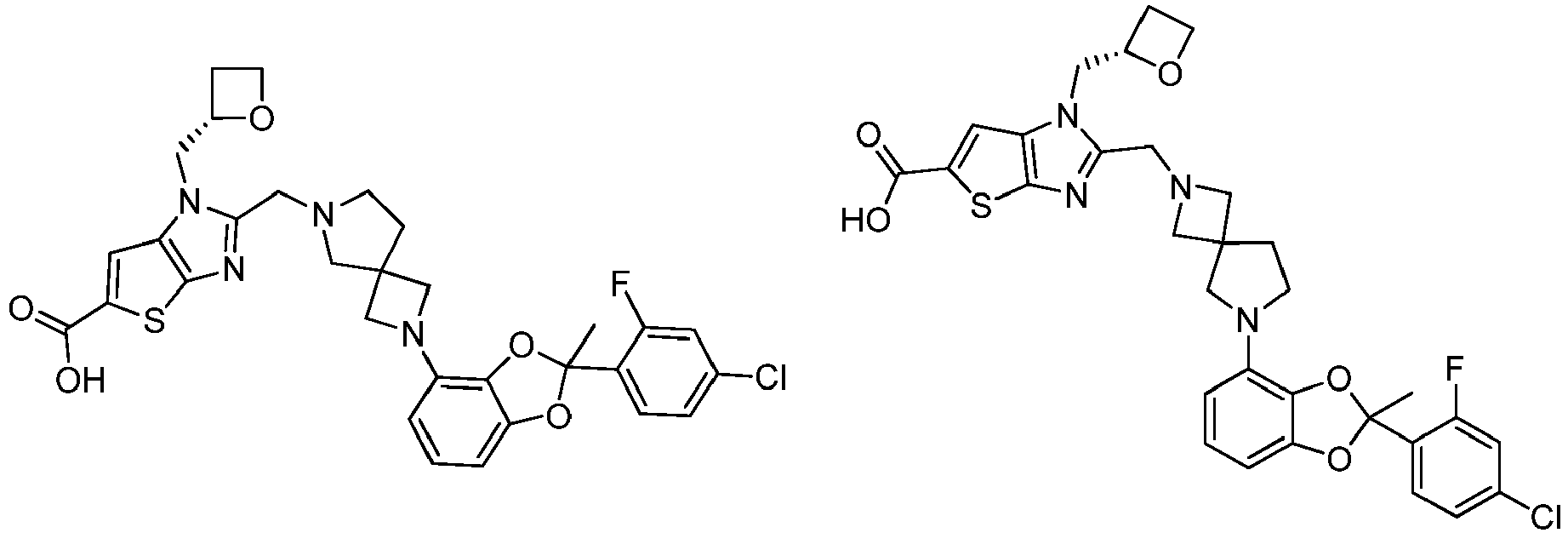

- In some embodiments of the present disclosure, disclosed is a use of the compound or the pharmaceutically acceptable salt thereof in the manufacture of a medicament for the treatment of a disease related to a GLP-1 receptor agonist.
- In some embodiments of the present disclosure, the use is characterized in, that the medicament related to the GLP-1 receptor agonist is a medicament for the treatment of diabetes.
- The compounds of the present disclosure show a better agonistic ability to GLP-1 receptor; the compounds of the present disclosure have a weak inhibitory effect on human liver microsomal cytochrome P450 isoenzymes and a low risk of "drug-drug interaction", and have no time-dependent inhibitory effect on P450 isoenzyme 2C19; the compounds of the present disclosure show a higher oral exposure in cynomolgus monkeys in vivo and have good pharmacokinetic properties.
- Unless otherwise specified, the following terms and phrases when used herein have the following meanings. A specific term or phrase should not be considered indefinite or unclear in the absence of a particular definition, but should be understood in the ordinary sense. When a trading name appears herein, it is intended to refer to its corresponding commodity or active ingredient thereof.
- The term "pharmaceutically acceptable" is used herein in terms of those compounds, materials, compositions, and/or dosage forms, which are suitable for use in contact with human and animal tissues within the scope of reliable medical judgment, with no excessive toxicity, irritation, an allergic reaction or other problems or complications, commensurate with a reasonable benefit/risk ratio.
- The term "pharmaceutically acceptable salt" refers to a salt of the compound of the present disclosure that is prepared by reacting the compound having a specific substituent of the present disclosure with a relatively non-toxic acid or base. When the compound of the present disclosure contains a relatively acidic functional group, a base addition salt may be obtained by bringing the compound into contact with a sufficient amount of base in a pure solution or a suitable inert solvent. The pharmaceutically acceptable base addition salt includes a salt of sodium, potassium, calcium, ammonium, organic amine or magnesium, or similar salts. When the compound of the present disclosure contains a relatively basic functional group, an acid addition salt may be obtained by bringing the compound into contact with a sufficient amount of acid in a pure solution or a suitable inert solvent. Examples of the pharmaceutically acceptable acid addition salt include an inorganic acid salt, wherein the inorganic acid includes, for example, hydrochloric acid, hydrobromic acid, nitric acid, carbonic acid, bicarbonate, phosphoric acid, monohydrogen phosphate, dihydrogen phosphate, sulfuric acid, hydrogen sulfate, hydroiodic acid, phosphorous acid, and the like; and an organic acid salt, wherein the organic acid includes, for example, acetic acid, propionic acid, isobutyric acid, maleic acid, malonic acid, benzoic acid, succinic acid, suberic acid, fumaric acid, lactic acid, mandelic acid, phthalic acid, benzenesulfonic acid, p-toluenesulfonic acid, citric acid, tartaric acid, and methanesulfonic acid, and the like; and salts of amino acid (such as arginine and the like), and a salt of an organic acid such as glucuronic acid and the like. Certain specific compounds of the present disclosure contain both basic and acidic functional groups, thus can be converted to any base or acid addition salt.
- The pharmaceutically acceptable salt of the present disclosure can be prepared from the parent compound that contains an acidic or basic moiety by conventional chemical method. Generally, such salt can be prepared by reacting the free acid or base form of the compound with a stoichiometric amount of an appropriate base or acid in water or an organic solvent or a mixture thereof.
- Unless otherwise specified, the term "isomer" is intended to include geometric isomer, cis-trans isomer, stereoisomer, enantiomer, optical isomer, diastereomer and tautomer.
- The compounds of the present disclosure may exist in specific geometric or stereoisomeric forms. The present disclosure contemplates all such compounds, including cis and trans isomers, (-)- and (+)-enantiomers, (R)- and (S)-enantiomers, diastereomers, (D)-isomers, (L)-isomers, and racemic and other mixtures thereof, such as enantiomers or diastereomeric enriched mixtures, all of which are within the scope of the present disclosure. Additional asymmetric carbon atoms may be present in substituents such as alkyl. All these isomers and their mixtures are included within the scope of the present disclosure.
- Unless otherwise specified, the term "enantiomer" or "optical isomer" refers to stereoisomers that are mirror images of each other.
- Unless otherwise specified, the term "cis-trans isomer" or "geometric isomer" is caused by the inability to rotate freely of double bonds or single bonds of ring-forming carbon atoms.
- Unless otherwise specified, the term "diastereomer" refers to a stereoisomer in which a molecule has two or more chiral centers and the relationship between the molecules is not mirror images.
- Unless otherwise specified, "(+)" refers to dextrorotation, or "(-)" refers to levorotation, and or "(±)" refers to racemic.
- Unless otherwise specified, the absolute configuration of a stereogenic center is represented by a wedged solid bond () and a wedged dashed bond (
 ), and the relative configuration of a stereogenic center is represented by a straight solid bond (
 ) and a straight dashed bond (
 ), a wave line (
 ) is used to represent a wedged solid bond (
 ) or a wedged dashed bond (), or the wave line () is used to represent a straight solid bond () or a straight dashed bond ().
 - Unless otherwise specified, the terms "enriched in one isomer", "enriched in isomers", "enriched in one enantiomer" or "enriched in enantiomers" refer to the content of one of the isomers or enantiomers is less than 100%, and the content of the isomer or enantiomer is greater than or equal to 60%, or greater than or equal to 70%, or greater than or equal to 80%, or greater than or equal to 90%, or greater than or equal to 95%, or greater than or equal to 96%, or greater than or equal to 97%, or greater than or equal to 98%, or greater than or equal to 99%, or greater than or equal to 99.5%, or greater than or equal to 99.6%, or greater than or equal to 99.7%, or greater than or equal to 99.8%, or greater than or equal to 99.9%.
- Unless otherwise specified, the term "isomer excess" or "enantiomeric excess" refers to the difference between the relative percentages of two isomers or two enantiomers. For example, if the content of one isomer or enantiomer is 90%, and the content of the other isomer or enantiomer is 10%, the isomer or enantiomer excess (ee value) is 80%.
- Optically active (R)- and (S)-isomers, as well as D and L isomers can be prepared using chiral synthesis or chiral reagents or other conventional techniques. If one kind of enantiomer of certain compound of the present disclosure is to be obtained, the pure desired enantiomer can be obtained by asymmetric synthesis or derivative action of chiral auxiliary followed by separating the resulting diastereomeric mixture and cleaving the auxiliary group. Alternatively, when the molecule contains a basic functional group (such as amino) or an acidic functional group (such as carboxyl), the compound reacts with an appropriate optically active acid or base to form a salt of the diastereomeric isomer which is then subjected to diastereomeric resolution through the conventional method in the art to obtain the pure enantiomer. In addition, the enantiomer and the diastereoisomer are generally isolated through chromatography which uses a chiral stationary phase and optionally combines with a chemical derivative method (such as carbamate generated from amine).
- The compound of the present disclosure may contain an unnatural proportion of atomic isotope at one or more than one atom(s) that constitute the compound. For example, the compound can be radiolabeled with a radioactive isotope, such as tritium (3H), iodine-125 (125I) or C-14 (14C). For another example, deuterated drugs can be formed by replacing hydrogen with heavy hydrogen, the bond formed by deuterium and carbon is stronger than that of ordinary hydrogen and carbon, compared with non-deuterated drugs, deuterated drugs have the advantages of reduced toxic and side effects, increased drug stability, enhanced efficacy, extended biological half-life of drugs and the like. All isotopic variations of the compound of the present disclosure, whether radioactive or not, are encompassed within the scope of the present disclosure.
- The term "optional" or "optionally" means that the subsequent event or condition may occur but not requisite, that the term includes the instance in which the event or condition occurs and the instance in which the event or condition does not occur.
- The term "substituted" means one or more than one hydrogen atom(s) on a specific atom are substituted with the substituent, including deuterium and hydrogen variables, as long as the valence of the specific atom is normal and the substituted compound is stable. When the substituent is an oxygen (i.e., =O), it means two hydrogen atoms are substituted. Positions on an aromatic ring cannot be substituted with a ketone. The term "optionally substituted" means an atom can be substituted with a substituent or not, unless otherwise specified, the type and number of the substituent may be arbitrary as long as is chemically achievable.
- When any variable (such as R) occurs in the constitution or structure of the compound more than once, the definition of the variable at each occurrence is independent. Thus, for example, if a group is substituted with 0-2 R, the group can be optionally substituted with up to two R, wherein the definition of R at each occurrence is independent. Moreover, a combination of the substituent and/or the variant thereof is allowed only when the combination results in a stable compound.
- When the number of a linking group is 0, such as -(CRR)0-, it means that the linking group is a single bond.
- When the number of a substituent is 0, it means that the substituent does not exist, for example, -A-(R)0 means that the structure is actually -A.
- When a substituent is vacant, it means that the substituent does not exist, for example, when X is vacant in A-X, the structure of A-X is actually A.
- When one of the variables is selected from a single bond, it means that the two groups linked by the single bond are connected directly. For example, when L in A-L-Z represents a single bond, the structure of A-L-Z is actually A-Z.
- When a bond of a substituent can be cross-linked to two or more atoms on a ring, such a substituent can be bonded to any atom on the ring, for example, a structural moiety

- When the enumerative linking group does not indicate the direction for linking, the direction for linking is arbitrary, for example, the linking group L contained in


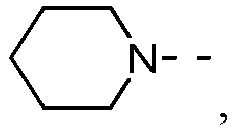
- Unless otherwise specified, when a group has one or more linkable sites, any one or more sites of the group can be linked to other groups through chemical bonds. When the linking site of the chemical bond is not positioned, and there is H atom at the linkable site, then the number of H atom at the site will decrease correspondingly with the number of chemical bond linking thereto so as to meet the corresponding valence. The chemical bond between the site and other groups can be represented by a straight solid bond


- Unless otherwise specified, the number of atoms on a ring is usually defined as the number of atoms of the ring. For example, "5- to 7-membered ring" refers to a "ring" that surrounds 5-7 atoms.
- Unless otherwise specified, the term "C1-3 alkyl" refers to a linear or branched saturated hydrocarbon group consisting of 1 to 3 carbon atoms. The C1-3 alkyl includes C1-2 and C2-3 alkyl, etc.; it can be monovalent (such as methyl), divalent (such as methylene) or multivalent (such as methine). Examples of C1-3 alkyl include but are not limited to methyl (Me), ethyl (Et), propyl (including n-propyl and isopropyl), etc.
- Unless otherwise specified, the term "C1-3 alkoxy" refers to an alkyl group containing 1 to 3 carbon atoms that are connected to the rest of the molecule through an oxygen atom. The C1-3 alkoxy includes C1-2, C2-3, C3 and C2 alkoxy, etc. Examples of C1-3 alkoxy include, but are not limited to, methoxy, ethoxy, propoxy (including n-propoxy and isopropoxy), etc.
- Unless otherwise specified, the term "C1-3 alkylamino" refers to an alkyl group containing 1 to 3 carbon atoms that are connected to the rest of the molecule through an amino group. The C1-3 alkylamino includes C1-2, C3 and C2 alkylamino, etc. Examples of C1-3 alkylamino include, but are not limited to -NHCH3, -N(CH3)2, -NHCH2CH3, -N(CH3)CH2CH3, -NHCH2CH2CH3 and -NHCH2(CH3)2, etc.
- Unless otherwise specified, "C3-5 cycloalkyl" refers to a saturated cyclic hydrocarbon group consisting of 3 to 5 carbon atoms, which is a monocyclic system, and the C3-5 cycloalkyl includes C3-4 and C4-5 cycloalkyl, etc.; it can be monovalent, divalent or polyvalent. Examples of C3-5 cycloalkyl include, but are not limited to, cyclopropyl, cyclobutyl, cyclopentyl, etc.
- The term "protecting group" includes, but is not limited to "amino protecting group", "hydroxyl protecting group" or "mercapto protecting group". The term "amino protecting group" refers to a protecting group suitable for preventing the side reactions occurring at the nitrogen of an amino. Representative amino protecting groups include, but are not limited to: formyl; acyl, such as alkanoyl (e.g., acetyl, trichloroacetyl or trifluoroacetyl); alkoxycarbonyl, such as tert-butoxycarbonyl (Boc); arylmethoxycarbonyl such as benzyloxycarbonyl (Cbz) and 9-fluorenylmethoxycarbonyl (Fmoc); arylmethyl, such as benzyl (Bn), trityl (Tr), 1,1-bis-(4'-methoxyphenyl)methyl; silyl, such as trimethylsilyl (TMS) and tert-butyldimethylsilyl (TBS), etc. The term "hydroxyl protecting group" refers to a protecting group suitable for preventing the side reactions of hydroxyl. Representative hydroxyl protecting groups include, but are not limited to: alkyl, such as methyl, ethyl, and tert-butyl; acyl, such as alkanoyl (e.g., acetyl); arylmethyl, such as benzyl (Bn), p-methoxybenzyl (PMB), 9-fluorenylmethyl (Fm), and diphenylmethyl (benzhydryl, DPM); silyl, such as trimethylsilyl (TMS) and tert-butyl dimethyl silyl (TBS), etc.
- The compounds of the present disclosure can be prepared by a variety of synthetic methods known to those skilled in the art, including the specific embodiments listed below, the embodiments formed by their combination with other chemical synthesis methods, and equivalent alternatives known to those skilled in the art, preferred implementations include but are not limited to the embodiments of the present disclosure.
- The structure of the compounds of the present disclosure can be confirmed by conventional methods known to those skilled in the art, and if the disclosure involves an absolute configuration of a compound, then the absolute configuration can be confirmed by means of conventional techniques in the art. For example, in the case of single crystal X-ray diffraction (SXRD), the absolute configuration can be confirmed by collecting diffraction intensity data from the cultured single crystal using a Bruker D8 venture diffractometer with CuKα radiation as the light source and scanning mode: ϕ/ω scan, and after collecting the relevant data, the crystal structure can be further analyzed by direct method (Shelxs97).
- The solvents used in the present disclosure are commercially available.
- The present disclosure adopts the following abbreviations: aq represents water, eq represents equivalent; DCM represents dichloromethane; PE represents petroleum ether; DMF represents N,N-dimethylformamide; DMSO represents dimethyl sulfoxide; EtOAc represents ethyl acetate; EtOH represents ethanol; MeOH represents methanol; Cbz represents benzyloxycarbonyl, which is an amine protection group; BOC represents tert-butoxycarbonyl, which is an amine protection group; HOAc represents acetic acid; r.t. represents room temperature; O/N represents overnight; THF represents tetrahydrofuran; BoczO represents di-tert-butyl dicarbonate; TFA represents trifluoroacetic acid; DIPEA represents diisopropylethylamine; TEA represents triethylamine; iPrOH represents 2-propanol; mp represents melting point, and AcOH represents acetic acid.
- The compounds of the present disclosure are named according to the conventional naming principles in the art or by ChemDraw® software, and the commercially available compounds use the supplier catalog names.
-
-
FIG. 1 is the three-dimensional structure of GLP-1/GLP-1 receptor complex. -
FIG. 2 is binding site between agonist and GLP-1 receptor. -
FIG. 3 is binding site between antagonist and GLP-1 receptor. -
FIG. 4 is prediction of the binding mode of compound 3. -
FIG.5 is prediction of the binding mode of compound 4. -
FIG. 6 is prediction of the binding mode of compound 5. -
FIG. 7 is prediction of the binding mode of compound 6. - The present disclosure is described in detail by the embodiments below, but it does not mean that there are any adverse restrictions on the present disclosure. The present disclosure has been described in detail herein, and its specific embodiments have also been disclosed; for one skilled in the art, it is obvious to make various modifications and improvements to the embodiments of the present disclosure without departing from the spirit and scope of the present disclosure.
-

-

- Under the protection of nitrogen, at 0°C, sodium hydride (9.85 g, 246.18 mmol, content of 60%, 1.5 eq) was added to a solution of compound B-2-1 (23 g, 164.12 mmol, 1 eq) in DMF (115 mL). 2-(Trimethylsilyl)ethoxymethyl chloride (41.04 g, 246.18 mmol, 43.57 mL, 1.5 eq) was added dropwise thereto. After the dropwise addition was completed, the reaction was heated to 25°C and reacted for 12 hours. After the reaction was completed, the reaction was quenched with ice water (500 mL), extracted with ethyl acetate (200 mL*3), and the organic phases were combined, washed with saturated brine (200 mL*2), dried with anhydrous sodium sulfate, and concentrated under reduced pressure to obtain a crude product. The crude product was separated and purified by column chromatography (PE: EA=1:0 to 1:1) to obtain B-2-2. 1H NMR (400 MHz, CDCl3) δ ppm -0.07 - -0.04 (m, 9 H), 0.86 - 0.93 (m, 2 H), 1.40 (t, J=7.13 Hz, 3 H), 3.49 - 3.56 (m, 2 H), 4.39 (q, J=7.13 Hz, 2 H), 7.17 (s, 1 H), 5.76 (s, 2 H), 7.24 (d, J=0.63 Hz, 1 H).
- Lithium aluminum hydride (6.04 g, 159.21 mmol, 1.5 eq) was dispersed into anhydrous tetrahydrofuran (1000 mL) in batches, cooled to 0°C under the protection of nitrogen, stirred for 15 minutes, and then compound B-2-2 (28.7 g, 106.14 mmol, 1 eq) was added thereto in batches at 0°C. After the addition was completed, the temperature was raised to 25°C, and the mixture was reacted for 0.5 hours. After the reaction was completed, the mixture was cooled to 0°C, then added with 6 mL of water, 6 mL of 15% sodium hydroxide aqueous solution and 18 mL of water in turn to quench the reaction. The mixture was heated to 25°C and stirred for 15 minutes, then anhydrous magnesium sulfate was added thereto and stirred for 15 minutes, then filtered. The filtrate was washed with saturated brine (500 mL), dried with anhydrous sodium sulfate and concentrated under reduced pressure to obtain compound B-2-3. 1H-NMR (400MHz, CDCl3) δ ppm -0.02 - -0.01 (m, 9 H), 0.89 - 0.95 (m, 2 H), 3.52 (dd, J=8.76, 7.75 Hz, 2 H), 4.72 (s, 2 H), 5.37 (s, 2 H), 6.93 (d, J=1.13 Hz, 1 H), 6.98 (d, J=1.13 Hz, 1 H).
- Under the protection of nitrogen, a mixed solution of compound B-2-3 (18.81 g, 82.37 mmol, 1 eq), tert-butylchlorodiphenylsilane (27.17 g, 98.84 mmol, 25.39 mL, 1.2 eq) and imidazole (14.02 g, 205.92 mmol, 2.5 eq) in DMF (188 mL) was reacted for 16 hours at 25°C. After the reaction was completed, the reaction solution was poured into water (1000 mL) to quench the reaction, and ethyl acetate (200 mL*3) was added for extraction. The organic phases were combined, washed with saturated brine (200 mL*3), dried with anhydrous sodium sulfate, and then concentrated under reduced pressure to obtain a crude product. The crude product was separated and purified by column chromatography (PE: EA=1:0 to 1:1) to obtain B-2-4. 1H NMR (400 MHz, CDCl3) δ ppm 0.03 (s, 9 H), 0.85 - 0.91 (m, 2 H), 1.06 (s, 9 H), 3.41 - 3.48 (m, 2 H), 4.84 (s, 2 H), 5.41 (s, 2 H), 6.96 - 7.02 (m, 2 H), 7.37 - 7.46 (m, 6 H), 7.66 - 7.72 (m, 4 H).
- Under the protection of nitrogen, N-bromosuccinimide (25.17 g, 141.40 mmol, 44.18 µL, 3 eq) was added to an anhydrous tetrahydrofuran (440 mL) solution of compound B-2-4 (22 g, 47.13 mmol, 1 eq) in batches, and after the addition was completed, the mixture was heated to 25°C and reacted for 12 hours. After the reaction was completed, the mixture was added with water (440 mL) to quench, and extracted with ethyl acetate (2200 mL*2). After the organic phases were combined, the organic phase was washed with saturated brine (2200 mL), dried with anhydrous sodium sulfate, and concentrated under reduced pressure to obtain a crude product. The crude product was separated and purified by column chromatography (PE: EA=1: 1 to 2:1) to obtain B-2-5. 1H NMR (400 MHz, CDCl3) δ ppm 0.02 (s, 9 H), 0.85 - 0.90 (m, 2 H), 1.07 (s, 9 H), 3.45 - 3.51 (m, 2 H), 4.80 (s, 2 H), 5.44 (s, 2 H), 7.37 - 7.48 (m, 6 H), 7.64 - 7.67 (m, 4 H).
- Under the protection of nitrogen, i-PrMgCl-LiCl (1.3 M, 8.13 mL, 1.1 eq) was added dropwise to an anhydrous tetrahydrofuran (60 mL) solution of compound B-2-5 (6 g, 9.61 mmol, 1 eq) at -40°C stirred for 1.5 hours after the dropwise addition was completed, and then DMF (61.62 g, 843.09 mmol, 64.86 mL, 87.76 eq) was added dropwise thereto. The reaction temperature was raised to 25°C and the mixture was continued to stir for 30 minutes. After the reaction was completed, water (120 mL) was added to quench the reaction, and the mixture was extracted with ethyl acetate (50 mL*2). The organic phase was washed with saturated brine (100 mL) after the organic phases were combined, and dried with anhydrous sodium sulfate. The organic phase was concentrated under reduced pressure to obtain a crude product. The crude product was separated and purified by column chromatography (PE: EA=1:0 to 10:1) to obtain B-2-6. 1H NMR (400 MHz, CDCl3) δ ppm -0.03 (s, 9 H), 0.84 - 0.88 (m, 2 H), 1.07 (s, 9 H), 3.49 - 3.54 (m, 2 H), 4.86 (s, 2 H), 5.85 (s, 2 H), 7.38 - 7.42 (m, 5 H), 7.64 - 7.68 (m, 5 H), 9.76 (s, 1 H).
- Compound B-2-6 (1.23 g, 2.14 mmol, 1 eq) was dissolved in ethanol (61.5 mL), and then sodium ethoxide (2.19 g, 6.43 mmol, content of 20%, 3 eq) and ethyl thioglycolate (273.10 mg, 2.57 mmol, 233.42 µL, 1.2 eq) were added thereto in turn, and the reaction was stirred at 20°C for 2 hours, then heated to 80°C and stirred for 12 hours. After the reaction was completed, the mixture was added with water (50 mL) to quench, and extracted with ethyl acetate (25 mL*2). After the organic phases were combined, the organic phase was washed with saturated brine (50 mL), and dried with anhydrous sodium sulfate, and then concentrated under reduced pressure to obtain a crude product. The crude product was separated and purified by column chromatography (PE: EA=1:0 to 10:1) to obtain compound B-2-7. 1H NMR (400 MHz, CDCl3) δ ppm -0.02 (s, 9 H), 0.91 - 0.96 (m, 2 H), 1.40 (t, J=7.13 Hz, 3 H), 2.30 - 2.64 (m, 1 H), 3.55 - 3.61 (m, 2 H), 4.39 (q, J=7.13 Hz, 2 H), 4.91 (s, 2 H), 5.54 (s, 2 H), 7.72 (s, 1 H).
- Under the protection of nitrogen, methanesulfonyl chloride (57.84 mg, 504.89 µmol, 39.08 µL, 1.5 eq) was added to a solution of compound B-2-7 (120 mg, 336.59 µmol, 1 eq) and triethylamine (102.18 mg, 1.01 mmol, 140.55 µL, 3 eq) in dichloromethane (2 mL) in batches, and the temperature was raised to 25°C and the mixture was reacted for 12 hours. After the reaction was completed, the mixture was concentrated under reduced pressure to obtain a crude product. The crude product was separated and purified by preparative thin layer chromatography (DCM: MeOH=20:1) to obtain compound B-2. 1H NMR (400 MHz, CDCl3) δ ppm -0.02 (s, 9 H), 0.92 - 0.97 (m, 2 H), 1.40 (t, J=7.13 Hz, 3 H), 3.56 - 3.61 (m, 2 H), 4.39 (q, J=7.13 Hz, 2 H), 4.85 (s, 2 H), 5.57 (s, 2 H), 7.72 (s, 1 H)
-

-
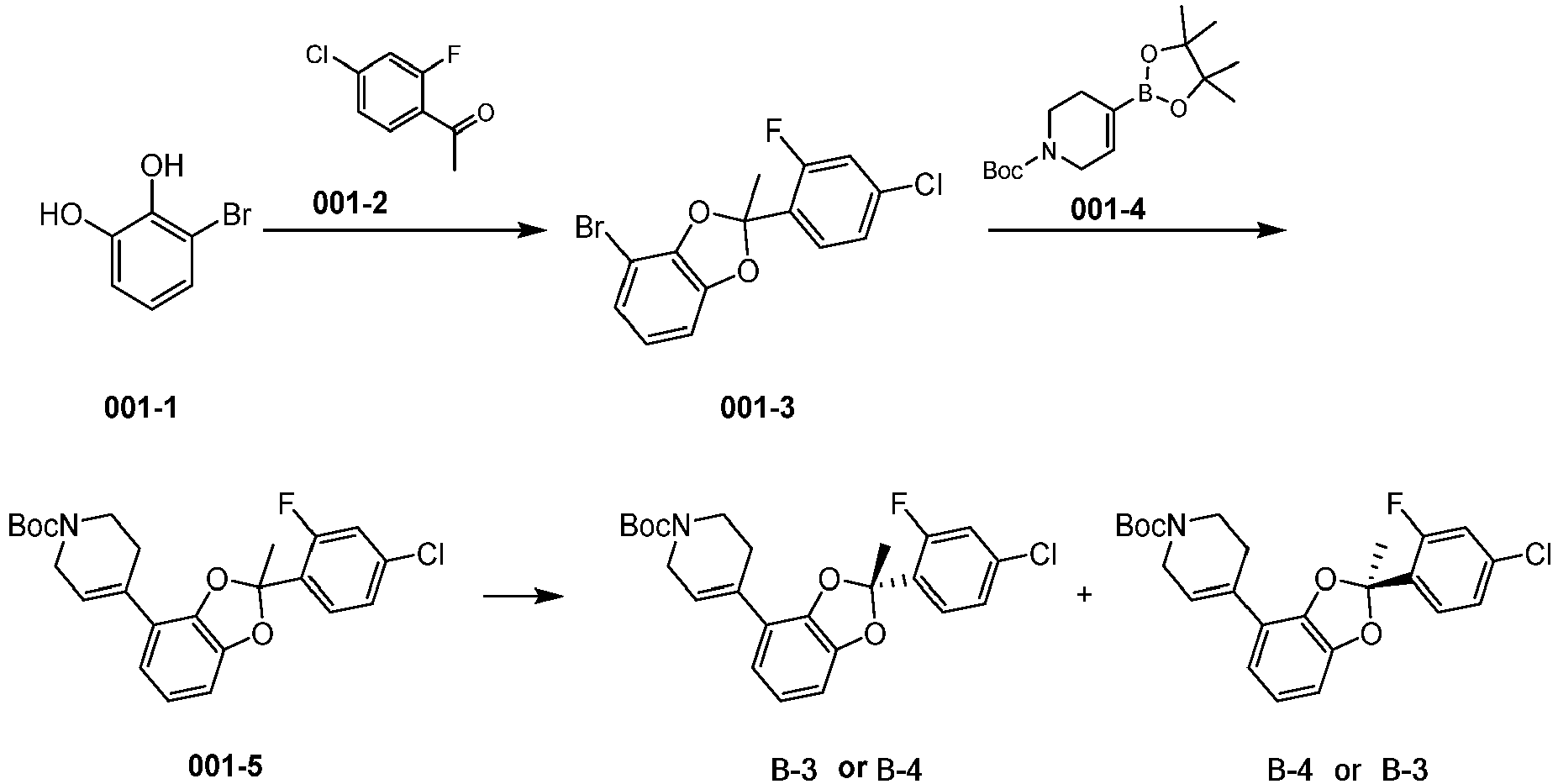
- 001-1 (4 g, 21.16 mmol, 1 eq), toluene (60 mL), 001-2 (3.84 g, 22.25 mmol, 1.05 eq), p-toluenesulfonic acid monohydrate (200.00 mg, 1.05 mmol, 0.05 eq) were added to a reaction flask, and water segregator was used to build a water separator, and the mixture was refluxed at 140-145°C for 60 hours. After the reaction was completed, the reaction solution was evaporated to dryness by rotary evaporation to obtain a crude product. The crude product was purified by column chromatography (petroleum ether) to obtain 001-3. 1H NMR (400 MHz, CDCl3) δ ppm 2.12 (d, J=1.2 Hz, 3 H), 6.68 - 6.79 (m, 2 H), 6.96 (dd, J=8.0, 1.6 Hz, 1 H), 7.12 - 7.19 (m, 2 H), 7.52 - 7.59 (m, 1 H).
- 001-3 (0.68 g, 1.98 mmol, 1 eq), 001-4 (660 mg, 2.13 mmol, 1.08 eq), trakis(triphenylphosphine)palladium (114.35 mg, 98.96 µmol, 0.05 eq), potassium carbonate (547.07 mg, 3.96 mmol, 2 eq), water (1.4 mL) and 1,4-dioxane (7 mL) were added to a reaction flask, and the system was replaced with nitrogen, and the mixture was reacted for 16 hours at 100°C under the protection of nitrogen. After the reaction was completed, the reaction solution was evaporated to dryness by rotary evaporation obtain a crude product. The crude product was purified by column chromatography (PE: EA = 27:1) to obtain 001-5. 1H NMR (400 MHz, CDCl3) δ ppm 1.50 (s, 9 H), 2.08 (s, 3 H), 2.46 - 2.66 (m, 2 H), 3.57 - 3.70 (m, 2 H), 4.09 - 4.13 (m, 2 H), 6.37 (br s, 1 H), 6.72 - 6.78 (m, 1 H), 6.78 - 6.84 (m, 2 H), 7.10 - 7.18 (m, 2 H), 7.51 (t, J=8.4 Hz, 1 H).
- 001-5 was purified and separated by supercritical fluid separation (chromatographic column: DAICEL CHIRALCEL OJ (250 mm * 50 mm, 10 µm); mobile phase: phase A was CO2; phase B was [0.1% ammonia water - isopropanol]; B%: 15% - 15%) to obtain B-3 (retention time: 2.474 min) and B-4 (retention time: 2.771 min).
-

-

- B-5-1 (10.00 g, 111.02 mmol, 8.55 mL, 1 eq), tert-butylchlorodiphenylsilane (36.62 g, 133.22 mmol, 34.22 mL, 1.2 eq), imidazole (8.92 g, 131.00 mmol, 1.18 eq), anhydrous DMF (150.00 mL) were added to a reaction flask, and the reaction system was stirred at 0°C for 3 hours. The reaction solution was concentrated to obtain a crude product, dissolved with ethyl acetate (200 mL). The mixture was washed with water (200 mL*2) and saturated brine (30 mL) in turn, dried with anhydrous sodium sulfate, filtered, and the filtrate was concentrated to obtain a crude product. The crude product was separated and purified by column chromatography (PE: EA=1:0 to 10:1) to obtain compound B-5-2. 1H NMR (400 MHz, CDCl3) δ ppm 1.10 (s, 9 H), 3.69 (s, 3 H), 4.26 (s, 2 H), 7.37 - 7.45 (m, 6 H), 7.69 (dd, J=7.88, 1.38 Hz, 4 H).
- In a dry reaction flask, B-5-2 (220 g, 669.76 mmol, 12.82 mL, 1 eq) was added to a methanol solution of ammonia (7 M, 1.58 L, 16.5 eq), and the mixture was stirred at 50°C for 10 hours. The reaction solution was concentrated, and then separated and purified by column chromatography (PE: EA=1:0 to 3:1) to obtain compound B-5-3. 1H NMR (400 MHz, DMSO-d 6) δ ppm 1.02 (s, 9 H), 3.94 (s, 2 H), 7.11 (br s, 1 H), 7.40 (br s, 1 H), 7.42 - 7.52 (m, 6 H), 7.64 (dd, J=7.91, 1.63 Hz, 4 H).
- B-5-4 (68.5 g, 291.37 mmol, 1 eq), B-5-3 (100.47 g, 320.51 mmol, 1.1 eq), cesium carbonate (142.4 g, 437.06 mmol, 1.5 eq), anhydrous 1,4-dioxane (1 L) were added to a reaction flask, and then tris(dibenzylideneacetone)dipalladium (26.68 g, 29.14 mmol, 0.1 eq), 4,5-bis(diphenylphosphino)-9,9-dimethylxanthene (16.86 g, 29.14 mmo1, 0.1 eq) were added thereto under nitrogen atmosphere, and the reaction system was stirred at 110°C for 1 hour. Water (1 L) was added for dilution, and the mixture was extracted with ethyl acetate (1 L*3). After the phases were separated, the organic phase was collected, washed with saturated brine solution (1 L*3) in turn, dried with anhydrous sodium sulfate, and concentrated under reduced pressure to obtain a product. The product was purified by column chromatography (PE: EA=1:0 to 10:1) to obtain compound B-5-5.
- In a dry reaction flask, B-5-5 (25 g, 53.46 mmol, 1 eq) was added to tetrahydrofuran (250 mL), and then N-bromosuccinimide (9.99 g, 56.13 mmol, 1.05 eq) was added thereto, and stirred at 20°C for 2 hours. The reaction solution was poured into 1.2 L of sodium bicarbonate aqueous solution, added with ethyl acetate (1.2 L*2) for extraction. The organic phases were combined, washed with saturated brine (1.2 L*2), and after the phases were separated, the organic phase was dried with anhydrous sodium sulfate, filtered, and the filtrate was evaporated to dryness by rotary evaporation under reduced pressure. Compound B-5-6 was obtained.
- In a dry reaction flask, B-5-6 (100 g, 182.97 mmol, 1 eq) was added to 1,4-dioxane (11 L), and Lawesson reagent (74.00 g, 182.97 mmol, 1 eq) was added thereto, and the mixture was heated to 110°C and stirred for 3 hours. The reaction solution was concentrated, and then separated and purified by column chromatography (PE: EA=1:0 to 3:1) to obtain compound B-5-7. 1H NMR (400 MHz, CDCl3) δ ppm 1.20 (s, 9 H), 1.39 (t, J=7.15 Hz, 3 H), 4.37 (q, J=7.11 Hz, 2 H), 4.63 (s, 2 H), 7.39 - 7.52 (m, 6 H), 7.67 (dd, J=8.03, 1.25 Hz, 4 H), 7.73 (s, 1 H), 11.24 (br s, 1 H).
- In a dry reaction flask, B-5-7 (5 g, 8.89 mmol, 1 eq) was added to DMF (1 mL), and then silver acetate (2.97 g, 17.77 mmol, 910.03 µL, 2 eq) and B-1-8 (1.55 g, 17.77 mmol, 2 eq) was added thereto, and the mixture was stirred at 30°C for 10 hours. The reaction solution was filtered, added with water (100 mL) to dilute the filtrate, and then ethyl acetate (100 mL*3) was added for extraction. After the phases were separated, the organic phase was collected, washed with saturated brine solution (100 mL*3) in turn, dried with anhydrous sodium sulfate, and concentrated under reduced pressure. The residue was separated and purified by column chromatography (PE: EA=1:0 to 3:1) to obtain compound B-5-8. LCMS, m/z = 617.0 [M+1]+.
- In a dry reaction flask, B-5-8 (3.8 g, 6.17 mmol, 1 eq) was added to DMF (40 mL), and then cuprous iodide (352.66 mg, 1.85 mmol, 0.3 eq), N,N'-dimethylethylenediamine (326.45 mg, 3.70 mmol, 398.60 µL, 0.6 eq), cesium carbonate (2.01 g, 6.17 mmol, 1 eq) were added thereto, and the mixture was stirred at 60°C for 10 hours. Additional cuprous iodide (352.66 mg, 1.85 mmol, 0.3 eq), N,N'-dimethylethylenediamine (326.46 mg, 3.70 mmol, 398.61 µL, 0.6 eq) were added thereto, and the mixture was continued to stir for 4 hours. Water (100 mL) was added for dilution, and ethyl acetate (100 mL*3) was added for extraction. After the phases were separated, the organic phase was collected, washed with saturated brine solution (100 mL*3) in turn, dried with anhydrous sodium sulfate, and concentrated under reduced pressure. Compound B-5-9 was obtained. LCMS, m/z=535.3 [M+1]+.
- In a dry reaction flask, B-5-9 (2 g, 3.15 mmol, purity of 84.334%, 1 eq) was added to tetrahydrofuran (20 mL), and then triethylamine trihydrofluoride (2.54 g, 15.77 mmol, 2.57 mL, 5 eq) was added thereto, and the mixture was stirred at 20°C for 10 hours. Water (30 mL) was added for dilution, and ethyl acetate (30 mL*3) was added for extraction. After the phases were separated, the organic phase was collected, washed with saturated sodium bicarbonate aqueous solution (30 mL), saturated brine solution (30 mL*3) in turn, dried with anhydrous sodium sulfate, and concentrated under reduced pressure. tert-Butyl methyl ether (10 mL) and ethyl acetate (1 mL) were added to slurry, filtered, and the filter cake was washed with tert-butyl methyl ether (10 mL), and the filter cake was concentrated under reduced pressure. Compound B-5-10 was obtained. LCMS, m/z=297.1 [M+1]+.
- B-5-10 (0.8 g, 2.70 mmol, 1 eq), dichloromethane (10 mL) and triethylamine (819.51 mg, 8.10 mmol, 1.13 mL, 3 eq) were added to a dry reaction flask, and the system was replaced with nitrogen, cooled to 0°C, and added with methanesulfonyl chloride (463.86 mg, 4.05 mmol, 313.42 µL, 1.5 eq), then the mixture was stirred at 20°C for 3 hours. The reaction solution was poured into water (20 mL) for quenching, added with dichloromethane (20 mL*3) for extraction. After the phases were separated, the organic phase was collected, washed with saturated brine solution (20 mL*3) in turn, dried with anhydrous sodium sulfate, concentrated under reduced pressure, and separated and purified by column chromatography (PE: EA=1:0 to 3:1). Compound B-5 was obtained. LCMS, m/z=315.1 [M+1]+.
-

-
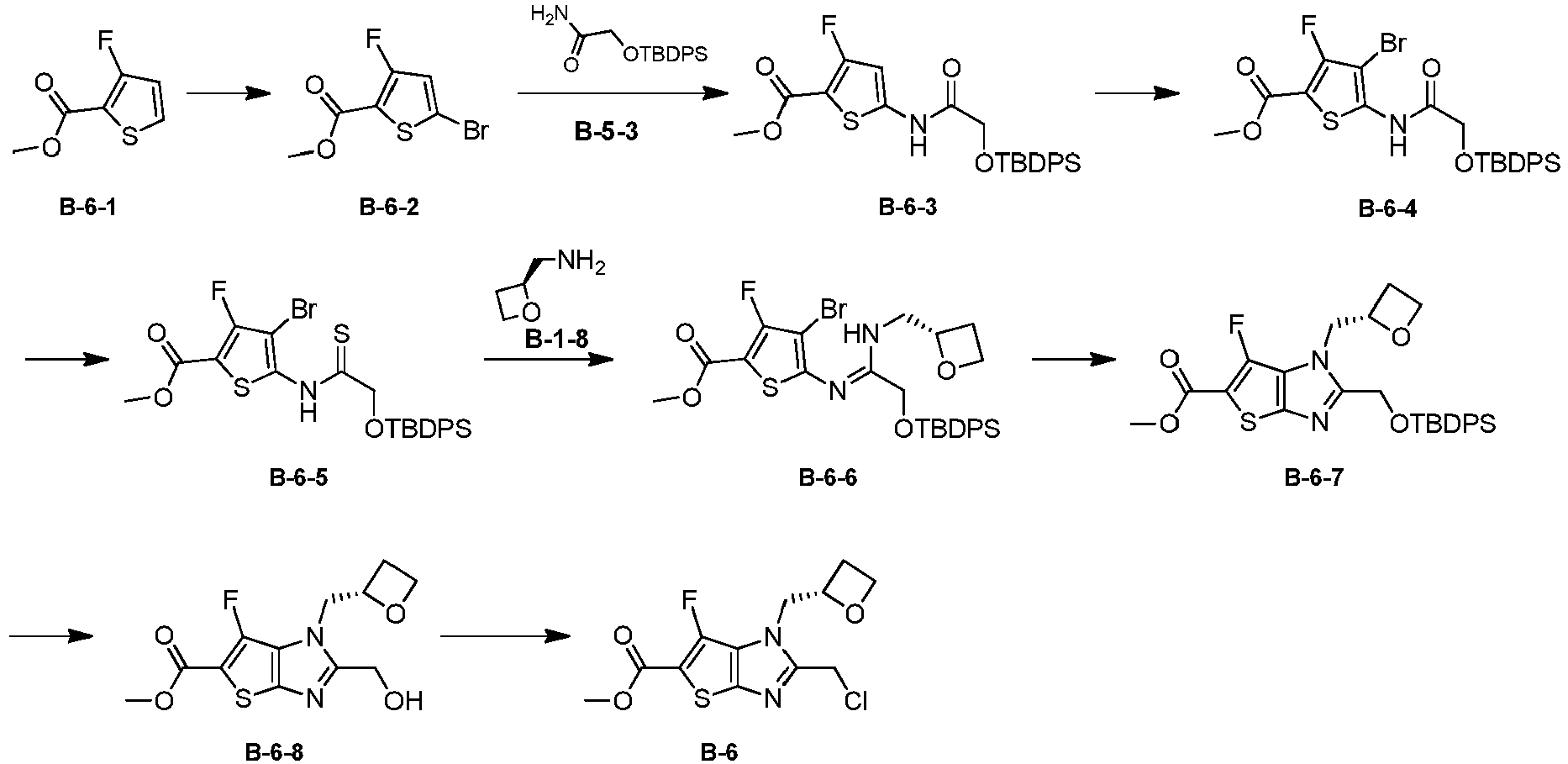
- B-6-1 (2.00 g, 12.49 mmol, 1 eq) and anhydrous tetrahydrofuran (100 mL) were added to a reaction flask, and then 2,2,6,6-tetramethylpiperidinylmagnesium chloride lithium chloride complex (1 M, 24.00 mL, 1.92 eq) was added thereto at -40°C, and the reaction system was stirred at -40°C for 0.5 hours. Carbon tetrabromide (4.14 g, 12.49 mmol, 1 eq) was added thereto, and the reaction system was stirred at -40°C for 0.5 hours, and the reaction system was stirred at 20°C for 11 hours. Hydrochloric acid (0.5 M, 10 mL) was added to the reaction solution to quench the reaction, and the mixture was extracted with ethyl acetate (50 mL*3). The organic phases were combined, washed with saturated brine (50 mL), dried over anhydrous sodium sulfate, filtered, and the filtrate was concentrated to obtain a crude product. The crude product was separated and purified by column chromatography (PE: EA=1:0-20:1) to obtain compound B-6-2. 1H NMR (400 MHz, CDCl3) δ ppm 3.88 (s, 3 H), 6.89 (s, 1 H).
- B-6-2 (1.70 g, 7.11 mmol, 1 eq), B-5-3 (2.23 g, 7.11 mmol, 1.0 eq), potassium carbonate (1.97 g, 14.22 mmol, 2 eq), anhydrous toluene (50 mL) were added to a reaction flask, and then tris(dibenzylideneacetone)dipalladium (0.65 g, 709.82 µmol, 0.10 eq), 4,5-bis(diphenylphosphino)-9,9-dimethylxanthene (0.82 g, 1.42 mmol, 1.99e-1 eq) were added thereto under nitrogen atmosphere, and then the reaction system was stirred at 100°C for 12 hours. The reaction solution was filtered, and water (50 mL) was added to the filtrate, and the mixture was extract with ethyl acetate (50 mL*3). The organic phases were combined, washed with saturated brine (50 mL), dried with anhydrous sodium sulfate, filtered, and the filtrate was concentrated to obtain a crude product. The crude product was separated and purified by column chromatography (PE: EA=1:0-4:1) to obtain compound B-6-3. 1H NMR (400 MHz, CDCl3) δ ppm 1.16 (s, 9 H), 3.87 (s, 3 H), 4.31 (s, 2 H), 6.42 (s, 1 H), 7.41 - 7.47 (m, 5 H), 7.57 - 7.68 (m, 5 H), 9.28 (br s, 1 H).
- B-6-3 (2.60 g, 2.84 mmol, purity of 51.53%, 1 eq), N-bromosuccinimide (1.00 g, 5.62 mmol, 1.98 eq) and anhydrous THF (50 mL) were added to a reaction flask, and the reaction system was stirred at 20°C for 12 hours. Saturated sodium bicarbonate solution (50 mL) was added to the reaction solution, and the mixture was extracted with ethyl acetate (50 mL*3). The organic phases were combined, washed with saturated brine (50 mL), dried with anhydrous sodium sulfate, filtered, and the filtrate was concentrated to obtain a crude product. The crude product was separated and purified by column chromatography (PE: EA=1:0-10:1) to obtain compound B-6-4. 1H NMR (400 MHz, CDCl3) δ ppm 1.19 (s, 9 H), 3.89 (s, 3 H), 4.31 (s, 2 H), 7.42 - 7.50 (m, 6 H), 7.66 (br d, J=6.78 Hz, 4 H), 9.65 (br s, 1 H).
- B-6-4 (1.80 g, 3.27 mmol, 1 eq), Lawesson reagent (1.35 g, 3.34 mmol, 1.02 eq) and anhydrous dioxane (30 mL) were added to a reaction flask, and the reaction system was stirred at 110°C for 6 hours. The reaction solution was cooled to room temperature and concentrated to obtain a crude product. The crude product was separated and purified by column chromatography (PE: EA= 1:0-10:1) to obtain compound B-6-5. 1H NMR (400 MHz, CDCl3) δ ppm 1.20 (s, 9 H), 3.91 (s, 3 H), 4.60 (s, 2 H), 7.40 - 7.51 (m, 6 H), 7.66 (dd, J=7.91, 1.38 Hz, 4H), 11.18 (br s, 1 H).
- B-6-5 (1.50 g, 2.65 mmol, 1 eq), B-1-8 (0.60 g, 6.89 mmol, 2.60 eq), silver acetate (0.90 g, 5.39 mmol, 276.07 µL, 2.04 eq), anhydrous DMF (20 mL) were added to a reaction flask, and the reaction system was stirred at 20°C for 16 hours. The reaction solution was filtered, and water (50 mL) was added to the filtrate, and the mixture was extracted with ethyl acetate (50 mL*3). The organic phases were combined, washed with saturated brine (50 mL*3), dried with anhydrous sodium sulfate, filtered, and the filtrate was concentrated to obtain a crude product. The crude product was separated and purified by column chromatography (PE: EA=1:0-5:1) to obtain compound B-6-6. 1H NMR (400 MHz, CDCl3) δ ppm 1.10 (s, 9 H), 2.55 - 2.66 (m, 1 H), 2.67 - 2.78 (m, 1 H), 3.56 - 3.66 (m, 1 H), 3.77 - 3.88 (m, 4 H), 4.31 - 4.45 (m, 2 H), 4.53 (dt, J=9.22, 5.93 Hz, 1 H), 4.68 - 4.78 (m, 1 H), 5.05 - 5.17 (m, 1 H), 6.95 (br s, 1 H), 7.39 - 7.52 (m, 6 H), 7.63 (br t, J=5.65 Hz, 4 H).
- B-6-6 (0.80 g, 1.29 mmol, 1 eq), N,N'-dimethylethylenediamine (0.16 g, 1.82 mmol, 195.36 µL, 1.41 eq), acetonitrile (10 mL) were added to a reaction flask, and cuprous iodide (0.16 g, 840.12 µmol, 0.65 eq) was added thereto under nitrogen atmosphere, and the reaction system was stirred at 80°C for 10 hours. The reaction solution was filtered, added with water (20 mL), and extracted with ethyl acetate (20 mL*3). The organic phases were combined, washed with saturated brine (20 mL*3), dried with anhydrous sodium sulfate, filtered, and the filtrate was concentrated to obtain a crude product. The crude product was separated and purified by thin layer chromatography silica gel plate (PE: EA=3:1) to obtain compound B-6-7.
- B-6-7 (0.40 g, 742.52 µmol, 1 eq) and anhydrous tetrahydrofuran (5 mL) were added to a reaction flask, then tetrabutylammonium fluoride (1 M, 1.00 mL, 1.35 eq) was added thereto, and the reaction system was stirred at 20°C for 1 hour. The reaction solution was added with water (20 mL) and extracted with ethyl acetate (20 mL*3). The organic phases were combined, washed with saturated brine (20 mL*3), dried with anhydrous sodium sulfate, filtered, and the filtrate was concentrated to obtain a crude product. The crude product was separated and purified by column chromatography (PE: EA=1:0-0:1) to obtain compound B-6-8. 1H NMR (400 MHz, CDCl3) δ ppm 2.48 - 2.58 (m, 1 H), 2.78 - 2.89 (m, 1 H), 3.91 (s, 3 H), 4.40 - 4.56 (m, 3 H), 4.67 - 4.74 (m, 1 H), 4.80 - 4.90 (m, 2 H), 5.19 (qd, J=6.90, 2.89 Hz, 1H).
- B-6-8 (30 mg, 99.90 µmol, 1 eq) and anhydrous dichloromethane (2 mL) were added to a reaction flask, and methanesulfonyl chloride (30 mg, 261.89 µmol, 20.27 µL, 2.62 eq) and triethylamine (30 mg, 296.47 µmol, 41.27 µL, 2.97 eq) were added thereto at 0°C, then the reaction system was stirred at 20°C for 1 hour. Saturated sodium bicarbonate solution (0.5 mL) was added to the reaction solution for quenching the reaction, and the mixture was concentrated to obtain compound B-6. LCMS: m/z = 318.8 [M+1]+.
-

-

- 001-5 (0.76 g, 1.70 mmol, 1 eq), Zn(CN)2 (340 mg, 2.90 mmol, 183.78 µL, 1.70 eq), tetrakis(triphenylphosphine)palladium (197 mg, 170.48 µmol, 0.1 eq), DMF (8 mL) were added to a reaction flask, reacted for 16 hours at 120°C under the protection of nitrogen. After the reaction was completed, the reaction solution was filtered, and the filtrate was added with 25 mL of water, extracted with ethyl acetate (25 mL*3). The organic phases were combined, washed with 25 mL of saturated brine, dried with anhydrous sodium sulfate, filtered and evaporated to dryness by rotary evaporation to obtain a crude product. The crude product was purified by column chromatography (PE: EA=19:1) to obtain 001-6.
- 001-6 (520 mg, 1.19 mmol, 1 eq) was separated by supercritical fluid (chromatographic column: DAICEL CHIRALPAK AD (250 mm * 30 mm, 10 µm); mobile phase: phase A was CO2, phase B was [0.1% NH3H2O EtOH]; B%: 15%-15%) to obtain compound B-7 (the retention time was 0.742 min) and compound B-8 (the retention time was 0.846 min). LCMS: m/z = 381.0 [M-55]+.
-


-

- Compound B-3 (130 mg, 346.71 µmol, 1 eq), compound B-2 (150 mg, 433.78 µmol, 1.25 eq), potassium carbonate (143.00 mg, 1.03 mmol, 2.98 eq) and acetonitrile (4 mL) were added to a reaction flask, heated to 50°C and stirred for 16 hours. After the reaction was completed, the reaction solution was filtered, and the filter cake was washed with dichloromethane (10 mL*2), and then the filtrate was concentrated under reduced pressure to obtain a crude product. The crude product was purified and separated by preparative thin layer chromatography silica gel plate separation (PE: EA=3:1) to obtain compound 003A-1. LCMS: m/z = 684.3 [M+1]+.
- Compound B-4 (140 mg, 373.38 µmol, 1 eq), compound B-2 (160 mg, 462.70 µmol, 1.24 eq), potassium carbonate (155 mg, 1.12 mmol, 3.00 eq) and acetonitrile (3 mL) were added to a reaction flask, heated to 50°C and stirred for 3 hours. After the reaction was completed, the reaction solution was filtered, and the filter cake was washed with dichloromethane (10 mL*2), and the filtrate was concentrated under reduced pressure to obtain a crude product. The crude product was purified and separated by preparative thin layer chromatography silica gel plate separation (PE: EA=3:1) to obtain compound 003B-1. LCMS: m/z = 684.3 [M+1]+.
- Compound 003A-1 (140 mg, 204.59 µmol, 1 eq), tetrabutylammonium fluoride (1 M, 1.02 mL, 5 eq) and tetrahydrofuran (4 mL) were added to a reaction flask, stirred at 50°C for 24 hours. After the reaction was completed, the reaction solution was concentrated under reduced pressure to obtain a crude product. The crude product was purified and separated by preparative thin layer chromatography silica gel plate (EA: PE = 10/90-60/40) to obtain compound 003A-2. LCMS: m/z = 554.1 [M+1]+.
- Compound 003B-1 (180.00 mg, 263.05 µmoL 1 eq), tetrabutylammonium fluoride (1 M, 2.5 mL, 9.50 eq) and tetrahydrofuran (3 mL) were added to a reaction flask, stirred at 60°C for 24 hours. After the reaction was completed, the reaction solution was concentrated under reduced pressure. The residue was added with water (10 mL), and then extracted with ethyl acetate (20 mL*3). The organic phases were combined and washed with saturated brine (10 mL), and concentrated under reduced pressure to obtain a crude product. The crude product was purified and separated by preparative thin layer chromatography silica gel plate (PE: EA =1:1) to obtain compound 003B-2. LCMS: m/z = 554.3 [M+1]+.
- Compound 003A-2 (120 mg, 216.59 µmol, 1 eq), (S)-oxetan-2-yl methanesulfonate (108.00 mg, 649.84 µmol, 3 eq), cesium carbonate (211.71 mg, 649.78 µmol, 3 eq) and acetonitrile (1.5 mL) were added to a reaction flask, stirred at 80°C for 16 hours. After the reaction was completed, the reaction solution was concentrated under reduced pressure. The residue was added with water (10 mL), and then extracted with ethyl acetate (10 mL*3). The organic phases were combined and concentrated under reduced pressure to obtain a crude product. The crude product was purified and separated by preparative thin layer chromatography silica gel plate (DCM: MeOH=20:1) to obtain a mixture of compounds 003A-3 and 003C-3. LCMS: m/z=624.1 [M+1]+.
- Compound 003B-2 (107.00 mg, 193.13 µmol, 1 eq), (S)-oxetan-2-yl methanesulfonate (96.30 mg, 579.39 µmol, 3 eq), cesium carbonate (188.78 mg, 579.39 µmol, 3 eq) and acetonitrile (2 mL) were added to a reaction flask, stirred at 80°C for 11 hours. After the reaction was completed, the reaction solution was filtered, and the filter cake was washed with ethyl acetate (20 mL), then the filtrate and the washing solution were combined, and concentrated under reduced pressure to obtain a crude product. The crude product was purified and separated by preparative thin layer chromatography silica gel plate (DCM: MeOH=20:1) to obtain a mixture of compounds 003D-3A and 003B-3. LCMS: m/z=624.3 [M+1]+.
- The mixture of compounds 003A-3 and 003C-3 (82 mg, 131.38 µmol, 1 eq), 1,5,7-triazabicyclo[4.4.0]dec-5-ene (37 mg, 265.81 µmol, 2.02 eq), acetonitrile (1 mL) and water (0.2 mL) were added to a reaction flask, stirred at 25°C for 16 hours. After the reaction was completed, the pH was adjusted to about 6 by adding citric acid, and the mixture was concentrated under reduced pressure to obtain a crude product. The crude product was purified and separated by preparative thin layer chromatography silica gel plate (DCM: MeOH=10:1) to collect a crude product, and the crude product was purified and separated by preparative chiral separation (chromatographic column: DAICEL CHIRALPAK IG (250 mm * 30 mm, 10 µm); mobile phase: phase A was CO2, phase B was [0.1% NH3H2O-EtOH]; B%: 50%-50%) to obtain 003A (retention time: 2.282 min) and 003C (retention time: 2.818 min).
- 003A: LCMS: m/z=596.1 [M+1]+; 1H NMR (400 MHz, CDCl3) δ ppm 2.05 (s, 3 H), 2.38 (br s, 2 H), 2.60 - 2.62 (m, 1 H), 2.66 (br s, 1 H), 3.05 (br s, 2 H), 3.52 (br s, 2 H), 4.02 - 4.19 (m, 2 H), 4.35 (br s, 1 H), 4.47 - 4.66 (m, 3 H), 5.11 (br s, 1 H), 6.42 (br s, 1 H), 6.68 - 6.84 (m, 3 H), 7.04 - 7.17 (m, 2 H), 7.43 - 7.63 (m, 2 H).
- 003C: LCMS: m/z=596.1 [M+1]+; 1H NMR (400 MHz, CDCl3) δ ppm 2.04 (s, 3 H), 2.43 (br s, 1 H), 2.52 - 2.66 (m, 4 H), 2.90 (br s, 1 H), 3.36 (br s, 2 H), 4.01 (br s, 2 H), 4.43 (br d, J=16.31 Hz, 2 H), 4.55 (br d, J=18.32 Hz, 2 H), 5.18 (br s, 1 H), 6.39 (br s, 1 H), 6.65 - 6.83 (m, 3 H), 7.02 - 7.18 (m, 2 H), 7.48 (t, J=8.28 Hz, 1 H), 7.82 (br s, 1 H).
- The mixture of compounds 003D-3 and 003B-3 (90 mg, 144.20 µmol, 1 eq), 1,5,7-triazabicyclo[4.4.0]dec-5-ene (40.61 mg, 291.74 µmol, 2.02 eq), acetonitrile (2 mL) and water (0.4 mL) were added to a reaction flask, stirred at 25°C for 15 hours. After the reaction was completed, the pH was adjusted to about 6 by adding citric acid, and the mixture was concentrated under reduced pressure to obtain a crude product. The crude product was purified and separated by preparative thin layer chromatography silica gel plate (DCM: MeOH=20:1) to collect a crude product, and the crude product was purified and separated by preparative chiral separation (chromatographic column: DAICEL CHIRALPAK IG (250 mm * 30 mm, 10 µm); mobile phase: phase A was CO2; phase B was [0.1% NH3H2O-EtOH]; B%: 50%-50%) to obtain 003D (retention time: 2.236 min) and 003B (retention time: t=2.679 min).
- 003D: LCMS: m/z=596.1 [M+1]+; 1H NMR (400 MHz, CDCl3) δ ppm 2.05 (s, 3 H), 2.40 (br s, 1 H), 2.65 (br s, 3 H), 2.94 (br s, 2 H), 3.41 (br s, 2 H), 4.02 (br s, 2 H), 4.34 (br s, 1 H), 4.54 (br s, 3 H), 5.13 (br s, 1 H), 6.41 (br s, 1 H), 6.70 - 6.82 (m, 3 H), 7.05 - 7.16 (m, 2 H), 7.44 - 7.54 (m, 1 H), 7.63 (br s, 1 H).
- 003B: LCMS: m/z=596.1 [M+1]+; 1H NMR (400 MHz, CDCl3) δ ppm 2.05 (br s, 3 H), 2.35 - 2.75 (m, 4 H), 2.86 (br s, 2 H), 3.32 (br s, 2 H), 3.97 (br s, 2 H), 4.27 - 4.74 (m, 4 H), 5.20 (br s, 1 H), 6.39 (br s, 1 H), 6.69 - 6.86 (m, 3 H), 7.04 - 7.17 (m, 2 H), 7.49 (t, J=8.28 Hz, 1 H), 7.85 (br s, 1 H).
- With reference to the synthetic steps of embodiment 4, the starting material in step 1 was replaced with B-7/B-8, and the following compounds 011A, 011B, 011C and 011D were synthesized.
Embodiment 12Structure Spectrogram 011A 
LCMS: m/z = 587.1 [M+1]+; 1H NMR (400MHz, CDCl3) δ ppm 2.08 (s, 3 H) 2.34 - 2.48 (m, 1 H) 2.60 - 2.77 (m, 3 H) 3.04 (br d, J=4.4 Hz, 2 H) 3.51 (br s, 2 H) 4.04 - 4.16 (m, 2 H) 4.32 - 4.43 (m, 1 H) 4.50 - 4.66 (m, 3 H) 5.14 (br s, 1 H) 6.42 (br s, 1 H) 6.73 - 6.84 (m, 3 H) 7.41 (t, J=7.2 Hz, 2 H) 7.58 (s, 1 H) 7.66 - 7.73 (m, 1 H); the retention time was 2.145 min. 011B 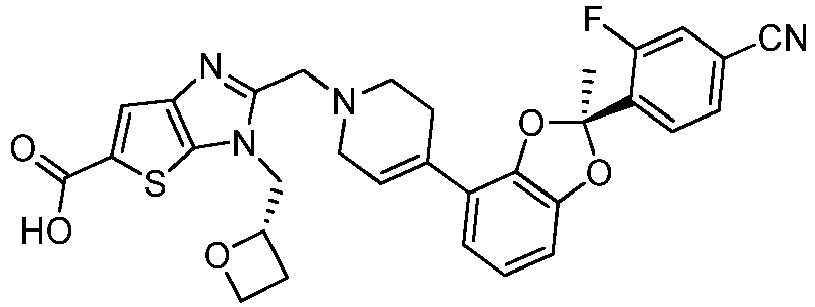
LCMS: m/z = 587.1 [M+1]+; 1H NMR (400MHz, CDCl3) δ ppm 2.08 (s, 3 H) 2.40 - 2.79 (m, 4 H) 2.88 (br s, 2 H) 3.35 (br s, 2 H) 4.00 (s, 2 H) 4.38 - 4.70 (m, 4 H) 5.23 (br s, 1 H) 6.40 (br s, 1 H) 6.72 - 6.85 (m, 3 H) 7.36 - 7.47 (m, 2 H) 7.70 (t, J=7.6 Hz, 1 H) 7.86 (s, 1 H); the retention time was 4.335 min. 011C 
LCMS: m/z=587.1 [M+1]+; 1H NMR (400 MHz, CDCl3) δ ppm 2.07 (s, 3 H) 2.31 -2.45 (m, 1 H) 2.59 - 2.74 (m, 3 H) 3.09 (br s, 2 H) 3.56 (br s, 2 H) 4.08 - 4.22 (m, 2 H) 4.29 - 4.42 (m, 1 H) 4.47 - 4.69 (m, 3 H) 5.12 (br s, 1 H) 6.41 (br s, 1 H) 6.70 - 6.85 (m, 3 H) 7.33 - 7.45 (m, 2 H) 7.51 (s, 1 H) 7.69 (t, J=8.0 Hz, 1 H); the retention time was 0.754 min. 011D 
LCMS: m/z=587.1 [M+1]+; 1H NMR (400 MHz, CDCl3) δ ppm 2.08 (s, 3 H) 2.40 - 2.77 (m, 4 H) 2.88 (br s, 2 H) 3.35 (br s, 2 H) 4.00 (br s, 2 H) 4.38 - 4.69 (m, 4 H) 5.22 (br s, 1 H) 6.40 (br s, 1 H) 6.70 - 6.86 (m, 3 H) 7.41 (brt, J=8.0 Hz, 2 H) 7.70 (br t, J=7.2 Hz, 1 H) 7.86 (br s, 1 H); the retention time was 1.304 min. -

-

-

- Under the protection of nitrogen, wet palladium carbon (0.2 g, purity of 10%) was added to a solution of B-3 (retention time: 2.474 min) (2 g, 4.49 mmol, 1 eq) in ethyl acetate (40 mL), and reacted at 25°C for 18 hours under hydrogen atmosphere (15 psi). The reaction solution was filtered, and the filter cake was washed with ethyl acetate (5 mL*3), and then the filtrate was combined and evaporated to dryness by rotary evaporation to obtain a crude product. The crude product was purified and separated by column chromatography (EA/PE=0-5%) to obtain compound 004-1. LCMS: m/z=392.2 [M-55]+.
-

- 004-1 (0.5 g, 1.12 mmol, 1 eq) was dissolved in ethyl acetate (10 mL), and then added with p-toluenesulfonic acid monohydrate (0.25 g, 1.31 mmol, 1.18 eq), protected by nitrogen, and reacted at 50°C for 18 hours. Saturated sodium bicarbonate aqueous solution (25 mL) was added to the reaction solution, stirred for 2 minutes. The phases were separated, and the organic phase was washed with water (25 mL) and saturated brine (25 mL) respectively, dried with anhydrous sodium sulfate, filtered, and evaporated to dryness by rotary evaporation to obtain compound 004-2. LCMS: m/z=347.9 [M+1]+.
-

- 004-2 (80 mg, 230.01 µmol, 1.19 eq) and B-5 (61 mg, 193.78 µmol, 1 eq) were dissolved in acetonitrile (2 mL), and then added with potassium carbonate (80 mg, 578.85 µmol, 2.99 eq), protected by nitrogen atmosphere, and reacted at 50°C for 16 hours. The reaction solution was filtered, and the filtrate was concentrated to obtain a crude product. The crude product was purified by preparative thin layer chromatography silica gel plate (DCM: MeOH = 20:1) to obtain compound 004-3. LCMS, m/z=626.2 [M+1]+.
-

- 004-3 (40 mg, 63.88 µmol, 1 eq) was dissolved in a mixture of tetrahydrofuran (0.25 mL), methanol (0.25 mL) and water (0.5 mL), and added with lithium hydroxide (7.65 mg, 319.42 µmol, 5 eq), protected by nitrogen atmosphere, and reacted at 25°C for 1 hour. The pH was adjusted to about 6 by adding citric acid to the reaction solution, and the mixture was concentrated to obtain a crude product. The crude product was separated by preparative high performance liquid chromatography (chromatographic column: Phenomenex Gemini-NX 80*40 mm*3 µm; mobile phase: [water (0.05% ammonia water)-acetonitrile]; B (acetonitrile)%: 21%-51%, 8 min) to obtain 004. LCMS, m/z= 598.1 [M+1]+; 1H NMR (400 MHz, DMSO-d 6) δ ppm 7.55 (t, J=8.4 Hz, 1 H), 7.45 - 7.51 (m, 2 H), 7.30 (br d, J=7.0 Hz, 1 H), 6.73 - 6.78 (m, 2 H), 6.67 - 6.73 (m, 1 H), 5.08 (br d, J=3.5 Hz, 1 H), 4.52 - 4.59 (m, 1 H), 4.43 - 4.50 (m, 2 H), 4.32 - 4.39 (m, 1 H), 3.73 - 3.79 (m, 1 H), 3.67 (br d, J=13.6 Hz, 1 H), 2.97 (br d, J=10.5 Hz, 1 H), 2.87 (br d, J=10.5 Hz, 1 H), 2.58 - 2.71 (m, 2 H), 2.43 (br d, J=8.8 Hz, 1 H), 2.13 (br d, J=11.5 Hz, 2 H), 2.01 (s, 3 H), 1.65 - 1.78 (m, 4 H).
-

-

- 001-3 (0.61 g, 1.78 mmol, 1 eq), 005-1 (436.51 mg, 1.96 mmol, 1.1 eq), cesium carbonate (852.18 mg, 2.62 mmol, 1.47 eq), 2,2-bis(diphenylphosphino)-1,1-binaphthyl (83.21 mg, 133.64 µmol, 7.51e-2 eq) and palladium acetate (20.05 mg, 89.31 µmol, 0.05 eq) were suspended in toluene (20 mL), protected by nitrogen atmosphere, reacted at 100°C for 16 hours. The solvent was evaporated to dryness by rotary evaporation, then dichloromethane (40 mL) was added to fully dissolve the residue, and the mixture was filtered, and the filtrate was evaporated to dryness by rotary evaporation to obtain a crude product. The crude product was separated by column chromatography (PE: EA=20:1) to obtain a racemate. The racemate was separated and purified by supercritical fluid chromatography (DAICEL CHIRALPAK AD (250 mm * 30 mm, 10 µm): mobile phase: phase A was CO2, phase B was [0.1% ammonia water-ethanol]; B%: 15%-15%) to obtain 005A-2 (retention time: 2.836 min), LCMS: m/z = 449.0 [M+1]+; and 005B-2 (retention time: 2.664 min), LCMS: m/z = 449.0 [M+1]+.
- 005A-2 (210.00 mg, 467.80 µmol, 1 eq) was added to ethyl acetate (5 mL), and added withp-toluenesulfonic acid monohydrate (0.1 g, 525.72 µmol, 1.12 eq), protected by nitrogen atmosphere, reacted at 50°C for 18 hours. The reaction solution was washed with saturated sodium carbonate aqueous solution (5 mL), water (10 mL) and saturated brine (10 mL) respectively. The organic phase was dried with anhydrous sodium sulfate, filtered, and evaporated to dryness by rotary evaporation to obtain compound 005A-3. LCMS: m/z = 348.9 [M+1]+.
- 005B-2 (180.00 mg, 400.97 µmol, 1 eq) was dissolved in ethyl acetate (5 mL), and added with p-toluenesulfonic acid monohydrate (0.1 g, 525.72 µmol, 1.31 eq), protected by nitrogen atmosphere, reacted at 50°C for 34 hours. The reaction solution was washed with saturated sodium carbonate aqueous solution (5 mL), water (10 mL) and saturated brine (10 mL) respectively. The organic phase was dried with anhydrous sodium sulfate, filtered, and evaporated to dryness by rotary evaporation to obtain compound 005B-3. LCMS: m/z = 348.9 [M+1]+.
- 005A-3 (150.00 mg, 430.05 µmol, 1.2 eq), B-5 (0.11 g, 349.41 µmol, 0.98 eq) and potassium carbonate (0.15 g, 1.09 mmol, 3.03 eq) were suspended in acetonitrile (4 mL), protected by nitrogen atmosphere, and reacted at 50°C for 16 hours. The reaction solution was filtered, and the filtrate was evaporated to dryness by rotary evaporation to obtain a crude product. The crude product was separated by column chromatography (DCM: MeOH=20:1) to obtain compound 005A-4. LCMS: m/z = 627.1 [M+1]+.
- 005B-3 (100 mg, 286.70 µmol, 1.2 eq), B-5 (75 mg, 238.20 µmol, 1.00 eq) and potassium carbonate (0.1 g, 723.56 µmol, 3.03 eq) were suspended in acetonitrile (3 mL), protected by nitrogen, and reacted at 50°C for 16 hours. The reaction solution was filtered, and the filtrate was evaporated to dryness by rotary evaporation to obtain a crude product. The crude product was separated by column chromatography (DCM: MeOH=40:1) to obtain compound 005B-4. LCMS: m/z = 627.0 [M+1]+.
- 005A-4 (0.18 g, 287.02 µmol, 1 eq) was dissolved in tetrahydrofuran (2 mL), and then lithium hydroxide monohydrate (60.00 mg, 1.43 mmol, 4.98 eq), water (1 mL) and methanol (1 mL) were added thereto, and the mixture was stirred at 25°C for 1 hour. The pH was adjusted to about 6 by adding citric acid to the reaction solution, and the mixture was concentrated to obtain a crude product. The crude product was separated by preparative high performance liquid chromatography (chromatographic column: Phenomenex Gemini-NX 80*40 mm*3 µm: mobile phase: [water (0.05% ammonia water) - acetonitrile]; B (acetonitrile)%: 23% - 53%, 8 min) to obtain compound 005A. ee%=97.08%; LCMS: m/z= 599.1 [M+1]+; 1H NMR (400 MHz, DMSO-d 6) δ ppm 7.51 - 7.58 (m, 2 H), 7.33 (dd, J=8.5, 2.0 Hz, 1 H), 7.22 (s, 1 H), 6.72 - 6.78 (m, 1 H), 6.54 (d, J=7.8 Hz, 1 H), 6.43 (d, J=8.3 Hz, 1 H), 5.00 - 5.09 (m, 1 H), 4.40 - 4.55 (m, 3 H), 4.33 - 4.40 (m, 1 H), 3.78 (d, J=13.3 Hz, 1 H), 3.65 (d, J=13.3 Hz, 1 H), 3.15 (br s, 2 H), 3.05 (br s, 2 H), 2.63 - 2.70 (m, 1 H), 2.54 (br s, 4 H), 2.34 - 2.43 (m, 1 H), 2.01 (s, 3 H).
- 005B-4 (0.12 g, 191.35 µmol, 1 eq) was dissolved in tetrahydrofuran (2 mL), and then lithium hydroxide monohydrate (40.00 mg, 953.21 µmol, 4.98 eq), water (1 mL) and methanol (1 mL) were added thereto, and the mixture was stirred at 25°C for 1 hour. The pH was adjusted to about 6 by adding citric acid to the reaction solution, and the mixture was concentrated to obtain a crude product. The crude product was separated by preparative high performance liquid chromatography (chromatographic column: Phenomenex Gemini-NX 80*40 mm*3 µm: mobile phase: [water (0.05% ammonia water) - acetonitrile]; B (acetonitrile)%: 23% - 53%, 8 min) to obtain compound 005B. ee% = 100%; LCMS: m/z =599.1 [M+1]+; 1H NMR (400 MHz, DMSO-d 6) δ ppm 7.51 - 7.58 (m, 2 H), 7.33 (dd, J=8.5, 1.8 Hz, 1 H), 7.28 (s, 1 H), 6.71 - 6.78 (m, 1 H), 6.54 (d, J=7.5 Hz, 1 H), 6.43 (d, J=8.3 Hz, 1 H), 5.02 - 5.09 (m, 1 H), 4.40 - 4.55 (m, 3 H), 4.34 (dt, J=9.1, 6.0 Hz, 1 H), 3.69 - 3.77 (m, 2 H), 3.13 (br s, 2 H), 3.04 (br d, J=11.0 Hz, 2 H), 2.62 - 2.70 (m, 1 H), 2.55 (br s, 4 H), 2.35 - 2.43 (m, 1 H), 2.00 (s, 3 H).
-

-

-
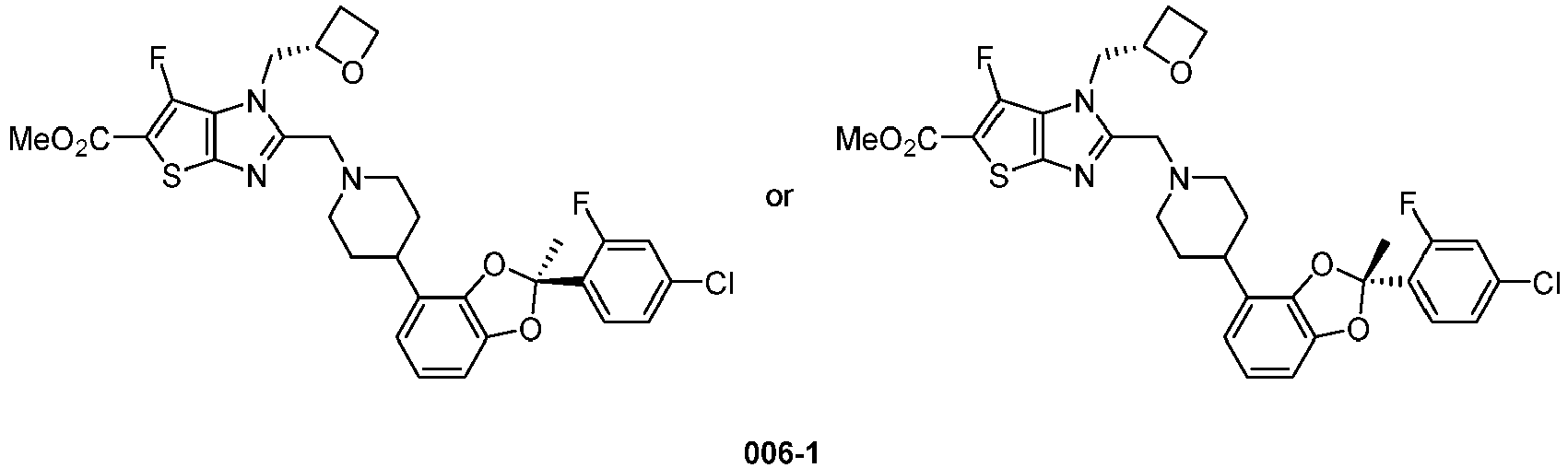
- 004-2 (60.00 mg, 172.51 µmol, 1.10 eq) and B-6 (50 mg, 156.86 µmol, 1 eq) were dissolved in acetonitrile (2 mL), and added with potassium carbonate (64.29 mg, 465.13 µmol, 2.97 eq), protected by nitrogen atmosphere, reacted at 50°C for 16 hours. The reaction solution was filtered and the filtrate was concentrated to obtain a crude product. The crude product was purified by column chromatography (DCM: MeOH=10:1) to obtain compound 006-1. LCMS: m/z = 630.0 [M+1]+.
-

- 006-1 (50 mg, 79.35 µmol, 1 eq) was dissolved in a mixture of tetrahydrofuran (1 mL), methanol (0.5 mL) and water (0.5 mL), and added with lithium hydroxide (9.50 mg, 396.76 µmol, 5 eq), protected by nitrogen atmosphere, reacted at 25°C for 1 hour. The pH was adjusted to about 6 by adding citric acid to the reaction solution, and the mixture was concentrated to obtain a crude product. The crude product was separated by preparative high performance liquid chromatography (chromatographic column: Phenomenex Gemini-NX 80*40 mm*3 µm: mobile phase: [water (0.05% ammonia water) - acetonitrile]; B (acetonitrile)%: 24% - 54%, 8 min) to obtain compound 006. LCMS, m/z= 616.0 [M+1]+; 1H NMR (400 MHz, DMSO-d 6) δ ppm 7.53 - 7.59 (m, 2 H), 7.34 (dd, J=8.4, 1.9 Hz, 1 H), 6.79 (d, J=4.3 Hz, 2 H), 6.71 - 6.76 (m, 1 H), 5.02 - 5.10 (m, 1 H), 4.45 - 4.63 (m, 3 H), 4.39 (dt, J=9.0, 6.1 Hz, 1 H), 3.82 (br d, J=13.6 Hz, 1 H), 3.69 (br d, J=13.6 Hz, 1 H), 2.98 (br d, J=11.0 Hz, 1 H), 2.88 (br d, J=11.3 Hz, 1 H), 2.58 - 2.76 (m, 2 H), 2.39 - 2.46 (m, 1 H), 2.09 - 2.23 (m, 2 H), 2.02 (s, 3 H), 1.66 - 1.79 (m, 4 H).
-
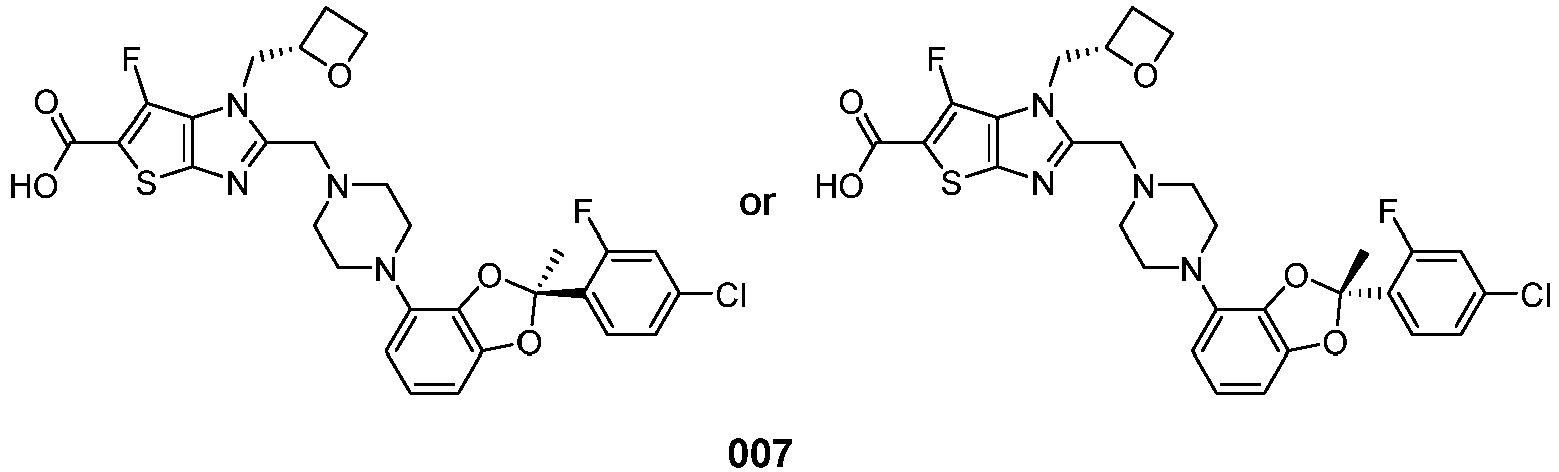
-

-

-

-
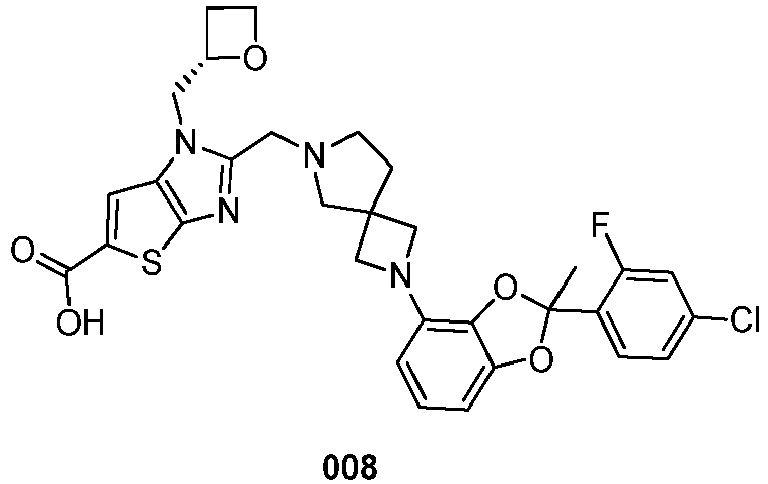
-

- 001-3 (140.00 mg, 407.48 µmol, 1 eq), 008-1 (98.61 mg, 464.53 µmol, 1.14 eq), toluene (3 mL) and cesium carbonate (195.16 mg, 599.00 µmol, 1.47 eq) were added to a dry reaction flask in turn, and the system was replaced with nitrogen atmosphere, then palladium acetate (4.57 mg, 20.37 µmol, 0.05 eq) and 2,2'-bis(diphenylphosphino)-1,1'-binaphthyl (17.76 mg, 28.52 µmol, 0.07 eq) were added thereto, and then the system was replaced with nitrogen again. The temperature was raised to 100°C, and the mixture was stirred for 10 hours. The mixture was diluted with water (20 mL), extracted with ethyl acetate (20 mL*3). After the phases were separated, the organic phases were collected, washed with saturated brine solution (20 mL*3) in turn, dried with anhydrous sodium sulfate, and concentrated under reduced pressure. The residue was purified by thin layer chromatography silica gel plate (DCM: MeOH=20:1) to obtain compound 008-2. 1H NMR (400 MHz, CDCl3) δ ppm 7.52 (t, J = 8.3 Hz, 1H), 7.17 - 7.09 (m, 2H), 6.72 (t, J= 8.0 Hz, 1H), 6.39 (br d, J= 7.9 Hz, 1H), 6.04 (br d, J = 7.8 Hz, 1H), 3.97 - 3.81 (m, 4H), 3.53 (s, 2H), 3.47 - 3.35 (m, 2H), 2.20 - 2.08 (m, 2H), 2.04 (s, 3H), 1.48 (s, 9H).
- 008-2 (100.00 mg, 210.55 µmol, 1 eq), dichloromethane (1 mL) and trifluoroacetic acid (0.1 mL) were added to a dry reaction flask, stirred at 20°C for 1 hour. Sodium bicarbonate aqueous solution (20 mL) was added for neutralization, and ethyl acetate (20 mL*3) was added for extraction. After the phases were separated, the organic phases were collected, washed with saturated brine solution (20 mL*3) in turn, dried with anhydrous sodium sulfate, and concentrated under reduced pressure to obtain compound 008-3. LCMS: m/z = 375.0 [M+1]+.
- 008-3 (92.38 mg, 293.46 µmol, 1 eq), acetonitrile (3 mL) and potassium carbonate (60.84 mg, 440.19 µmol, 1.5 eq) were added to a dry reaction flask, stirred at 60°C for 10 hours. Water (10 mL) was added for dilution, and ethyl acetate (10 mL*3) was added for extraction. After the phases were separated, the organic phases were collected, washed with saturated brine solution (10 mL*3) in turn, dried with anhydrous sodium sulfate, and concentrated under reduced pressure. The residue was purified by thin layer chromatography silica gel plate (DCM: MeOH=20:1) to obtain compound 008-4. LCMS: m/z = 653.3 [M+1]+.
- 008-4 (10 mg, 15.31 µmol, 1 eq), water (0.5 mL), methanol (0.5 mL), tetrahydrofuran (0.5 mL) and lithium hydroxide monohydrate (1.93 mg, 45.93 µmol, 3 eq) were added to a dry reaction flask, stirred at 20°C for 1 hour. The reaction solution was directly concentrated under reduced pressure. The residue was separated by high performance liquid chromatography (chromatographic column: Phenomenex C18 75*30 mm*3 µm; mobile phase: [water (ammonia water + ammonium bicarbonate) acetonitrile]; B (acetonitrile)%: 30% - 60%, 8 min) to obtain compound 008. LCMS: m/z = 625.1 [M+1]+; 1H NMR (400 MHz, CD3OD) δ 7.68 (s, 1H), 7.56 (t, J = 8.3 Hz, 1H), 7.29 - 7.23 (m, 1H), 7.19 (dd, J= 1.5, 8.5 Hz, 1H), 6.69 (t, J= 8.0 Hz, 1H), 6.35 (d, J = 7.8 Hz, 1H), 6.07 (d, J= 8.1 Hz, 1H), 5.17 (dq, J= 2.6, 7.0 Hz, 1H), 4.68 - 4.60 (m, 2H), 4.55 (d, J = 2.6 Hz, 1H), 4.45 - 4.38 (m, 1H), 4.27 - 4.14 (m, 2H), 3.95 - 3.92 (m, 1H), 3.88 (s, 2H), 3.82 (d, J= 7.4 Hz, 1H), 3.23 - 3.15 (m, 2H), 3.02 - 2.96 (m, 2H), 2.83 - 2.72 (m, 1H), 2.51 - 2.43 (m, 1H), 2.23 (t, J= 7.1 Hz, 2H), 1.99 (s, 3H).
-

-

- 001-3 (300 mg, 873.17 µmol, 1.0 eq), 009-1 (203.90 mg, 960.49 µmol, 1.1 eq), 2,2'-bis(diphenylphosphino)-1,1'-binaphthyl (38.06 mg, 61.12 µmol, 0.07 eq), palladium acetate (9.80 mg, 43.66 µmoL, 0.05 eq) and cesium carbonate (426.74 mg, 1.31 mmol, 1.5 eq) were added to toluene (10 mL), and reacted for 12 hours at 100°C under the protection of nitrogen atmosphere. The reaction solution was added with water (20 mL) and ethyl acetate (20 mL*3). After the phases were separated, the organic phases were collected, washed with saturated brine solution (20 mL*3) in turn, dried with anhydrous sodium sulfate, and concentrated under reduced pressure to obtain a crude product. The crude product was purified by thin layer chromatography silica gel plate (DCM: MeOH=20:1) to obtain compound 009-2. LCMS: m/z = 475.1 [M+1]+.
- 009-2 (230 mg, 484.26 µmol, 1 eq) was dissolved in dichloromethane (5 mL), added with trifluoroacetic acid (924.00 mg, 8.10 mmol, 0.6 mL, 16.73 eq), protected by nitrogen atmosphere, reacted for 0.5 hours at 25°C. The reaction solution was directly evaporated to dryness by rotary evaporation to obtain compound 009-3. LCMS: m/z = 375.1 [M+1]+.
- 009-3 (170 mg, 453.53 µmol, 1 eq) and B-5 (142.77 mg, 453.53 µmol, 1 eq) were dissolved in acetonitrile (4 mL), added with potassium carbonate (94.02 mg, 680.30 µmol, 1.5 eq) and reacted at 60°C for 4 hours. The reaction solution was poured into saturated ammonium chloride (20 mL) aqueous solution, and ethyl acetate (20 mL*3) was added for extraction. The organic phases were combined, washed with saturated brine solution (20 mL*2) in turn, dried with anhydrous sodium sulfate, and evaporated to dryness by rotary evaporation under reduced pressure to obtain compound 009-4. LCMS: m/z = 653.3 [M+1]+.
- 009-4 (230 mg, 352.13 µmol, 1 eq), tetrahydrofuran (2 mL), methanol (2 mL) and lithium hydroxide monohydrate (44.33 mg, 1.06 mmol, 3 eq) were added to a dry reaction flask, stirred at 20°C for 2 hours. The reaction solution was directly concentrated under reduced pressure to obtain a crude product. The crude product was separated and purified by high performance liquid chromatography separation (chromatographic column: Phenomenex C18 75*30 mm*3 µm; mobile phase: [water (ammonia water + ammonium bicarbonate) acetonitrile]; B (acetonitrile)%: 30% - 60%) to obtain 009. LCMS: m/z = 625.2 [M+1]+; 1H NMR (400 MHz,CD3OD) δ 7.58 - 7.48 (m, 1H), 7.27 - 7.23 (m, 1H), 7.17 - 7.06 (m, 2H), 6.80 - 6.63 (m, 1H), 6.35 (d, J = 7.5 Hz, 1H), 6.13 (br d, J = 8.0 Hz, 1H), 5.10 - 4.96 (m, 1H), 4.61 - 4.53 (m, 2H), 4.50 - 4.40 (m, 2H), 4.38 - 4.29 (m, 2H), 4.04 (br s, 4H), 3.72 - 3.63 (m, 2H), 3.54 - 3.47 (m, 1H), 3.45 - 3.39 (m, 1H), 2.72 - 2.55 (m, 1H), 2.36 - 2.17 (m, 3H), 2.03 (s, 3H).
-
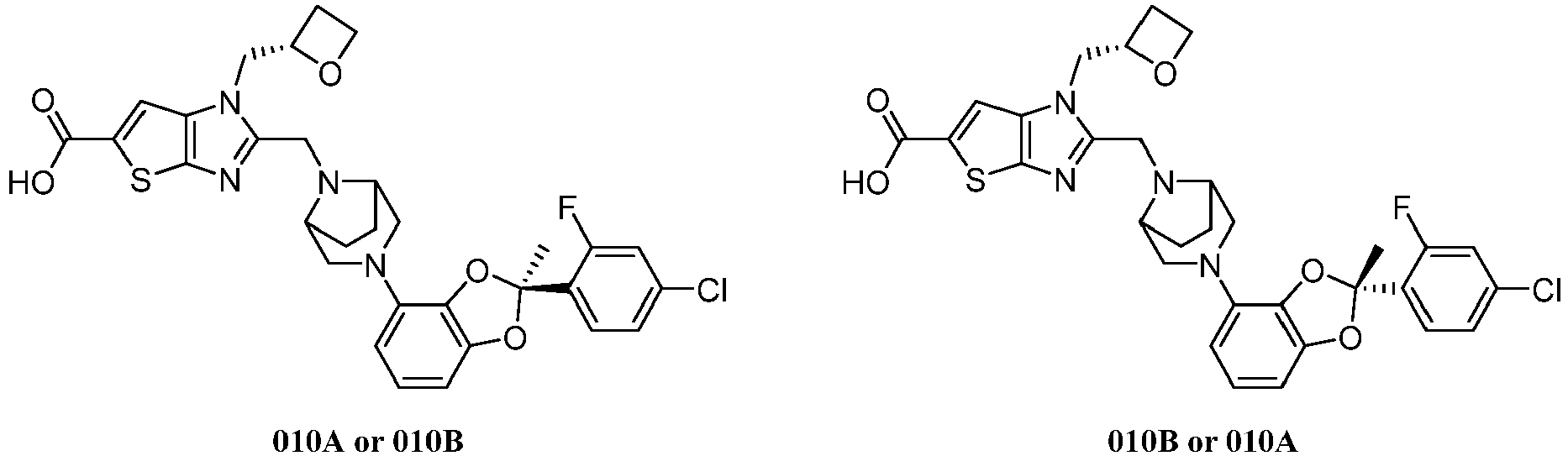
-

- 001-3 (0.20 g, 582.11 µmol, 1.00 eq), 010-1 (135.93 mg, 640.33 µmol, 1.10 eq), 2,2-bis(diphenylphosphino)-1,1-binaphthyl (18.12 mg, 29.11 µmol, 0.05 eq), palladium acetate (6.53 mg, 29.11 µmol, 0.05 eq) and cesium carbonate (284.50 mg, 873.17 mmol, 1.50 eq) were suspended in toluene (4 mL) and reacted for 4 hours at 100°C under the protection of nitrogen. The reaction solution was added with water (5 mL) and ethyl acetate (5 mL) for extraction, and the organic phase was concentrated under reduced pressure to obtain a crude product. The crude product was separated by column chromatography (PE: EA=3:1) to obtain 010-2. LCMS: m/z = 475.1 [M+1]+.
- 010-2 (90.00 mg, 189.49 µmol, 1.00 eq) was added to ethyl acetate (3.6 mL), and added with p-toluenesulfonic acid monohydrate (39.65 mg, 208.44 µmol, 1.10 eq), reacted at 60°C for 6 hours. Water and ethyl acetate (2 mL) were added thereto, and the mixture was stirred for 5 min, then the pH was adjusted to 8 by adding sodium bicarbonate solid, and the mixture was stood for phase separation. The aqueous phase was extracted once with ethyl acetate (2 mL). The organic phases were combined, and dried with anhydrous sodium sulfate, filtered, and concentrated to obtain 010-3. LCMS: m/z = 375.0 [M+1]+.
- B-5 (60.00 mg, 110.49 µmol, 1.00 eq), 010-3 (38.26 mg, 121.54 µmol, 1.10 eq) and potassium carbonate (45.81 mg, 331.46 µmol, 3.00 eq) were suspended in acetonitrile (1.5 mL), reacted at 50°C for 5 hours. The mixture was filtered, and the filtrate was concentrated to obtain compound 010-4. LCMS: m/z = 653.3 [M+1]+.
- 010-4 (0.10 g, 153.10 µmol, 1.00 eq) was dissolved in a mixture of tetrahydrofuran (0.5 mL), methanol (0.5 mL) and water (0.5 mL), and added with lithium hydroxide (18.33 mg, 765.50 µmol, 5.00 eq), reacted at 20°C for 24 hours. The pH was adjusted to about 5 by adding citric acid, and the mixture was concentrated to obtain a crude product. The crude product was separated by preparative high performance liquid chromatography (chromatographic column: Waters Xbridge Prep OBD C18 150*40 mm∗10 µm: mobile phase: [water (0.05% ammonia water + 10 mM ammonium bicarbonate) - acetonitrile]; B (acetonitrile)%: 10% - 65%, 8 min) to obtain a racemate. The racemate was separated and purified by prep-SFC (chromatographic column: DAICEL CHIRALPAK IG (250 mm*30 mm, 10 µm); mobile phase: phase A was supercritical CO2, phase B was [0.1% ammonia water-methanol]; B%: 45% - 45%, 10 min) to obtain 010A(retention time: 1.307 min), ee% = 99.42%; 010B (retention time: 1.657 min), ee% = 93.36%.
- 010A: LCMS: m/z = 625.1 [M+1]+; 1H NMR (400 MHz, DMSO-d 6) δ ppm 7.8 (br s, 1 H), 7.5 - 7.6 (m, 2 H), 7.3 - 7.4 (m, 1 H), 6.7 - 6.8 (m, 1 H), 6.5 (d, J=7.8 Hz, 1 H), 6.3 (d, J=8.5 Hz, 1 H), 5.2 (br d, J=4.3 Hz, 1 H), 4.7 - 4.7 (m, 1 H), 4.6 - 4.7 (m, 1 H), 4.5 - 4.5 (m, 1 H), 4.4 (dt, J=8.9, 6.0 Hz, 1 H), 3.7 - 3.8 (m, 2 H), 3.4 (br d, J=10.4 Hz, 2 H), 2.7 - 2.9 (m, 2 H), 2.3 - 2.4 (m, 2 H), 2.0 (m, 5 H), 1.8 (br d, J=8.4 Hz, 2 H), 1.1 - 1.3 (m, 2 H)
- 010B: LCMS: m/z = 625.1 [M+1]+; 1H NMR (400 MHz, DMSO-d6) δ ppm 7.7 (br s, 1 H), 7.5 - 7.6 (m, 2 H), 7.3 (dd, J=8.4, 1.9 Hz, 1 H), 6.7 - 6.7 (m, 1 H), 6.5 (d, J=7.8 Hz, 1 H), 6.3 (d, J=8.4 Hz, 1 H), 5.1 - 5.2 (m, 1 H), 4.7 - 4.8 (m, 1 H), 4.5 - 4.6 (m, 1 H), 4.4 - 4.5 (m, 1 H), 4.4 (dt, J=8.9, 6.1 Hz, 1 H), 3.7 - 3.8 (m, 2 H), 3.4 (br d, J=10.9 Hz, 2 H), 2.7 - 2.9 (m, 2 H), 2.3 - 2.4 (m, 2 H), 2.0 (s, 5 H), 1.8 (br d, J=7.5 Hz, 2 H), 1.1 - 1.3 (m, 2 H).
-


- The molecular docking process was carried out by using the Glide SP [1] and a default option in Maestro (Schrödinger version 2017-2). A co-crystal structure of GLP-1R (PDBID code: 5NX2) was selected as a docking template. To prepare proteins, a hydrogen atom was added using a protein preparation guide module of Maestro [2], and an OPLS3 force field was used. For the preparation of ligands, LigPrep was used to generate the three-dimensional structure of the molecule, and the energy minimization [3] was performed. Using a ligand in a 5NX2 crystal structure as a center of mass, a cubic docking grid with a side length of 30 Å was generated. The ligand was then removed and the embodiment compound was placed during molecular docking process. The interaction type between protein receptor and ligand was analyzed, and then the reasonable docking conformation was selected and saved according to the calculated binding mode and docking score. The binding mode of compound 3 - compound 6 to GLP-1 receptor is shown in
FIG. 4 to FIG. 7 of the drawings. - [1] Glide, Schrödinger, LLC, New York, NY, 2017.
- [2] Maestro, Schrödinger, LLC, New York, NY, 2017.
- [3] LigPrep, Schrödinger, LLC, New York, NY, 2017.
- GLP-1 receptor three-dimensional structure (
FIG. 1 GLP-1-GLP-lr complex); - GLP-1 binding site of the agonist (
FIG. 2 Polypeptide agonist-GLP-lr complex); the protein has a larger flexibility. - Antagonist binds to the extracellular regions of the 5th, 6th and 7th helical protein surfaces (
FIG. 3 Antagonist binds to the 5th, 6th and 7th helical protein surfaces). - The cells were constructed by Wuxi New Drug Development Co., Ltd. Shanghai. Details are shown in the following table.
Target Host cell GLP-1 HEK293 -
cAMP Detection Kit, Cisbio (Cat # 62AM4PEJ) 1M HEPES, Invitrogen (Cat # 15630-106) 1X HBSS, Invitrogen (Cat # 14025) BSA, Sigma (Cat # B2064) IBMX, Sigma (Cat # I5879) Exenatide, Hao Yuan (HY-13443A) - OptiPlate-384, White, PerkinElmer (Cat # 6007290); 384 well plate for Echo, Labcyte (Cat#P-05525); EnVision, PerkinElmer; Vi-cell counter, Beckman (Cat# Vi-CELL™ XR Cell Viability Analyzer)
- The compound was formulated with DMSO to a working concentration of 30 µM. In this test, the usage amount of each sample was 5 µL.
-
Volume Final concentration 24.5 mL of Hanks Buffer Saline Solution (HBSS) 1x 125 µL of HEPES 1M 5 mM 333 µL of 7.5% BSA Solution 0.1% 25 µL of IBMX 500 mmol/L 0.5 mmol/L - The pH was adjusted to 7.4 and the volume was fixed to 25 mL with HBSS 1×.
- Preparation of cAMP detection reagent: 250 µL of cAMP-D2 and 250 µL of anti-cAMP cryptate reagent were added to 4 mL of lysis buffer, and mixed gently.
-
- a) Preparation of compound plates:
The test compound was diluted 3 times by 10 points with a starting concentration of 30 µM, and the dilutions were completed by Bravo.
The reference compound exenatide was diluted 3 times by 10 points with a starting concentration of 500 nM, and the dilutions were completed by Bravo. - b) Transfer of compounds:
- 1) 100 nL of compound was transferred to OptiPlate-384 plate using Echo.
- 2) OptiPlate-384 plate was centrifuged at 1000 rpm for 5 seconds.
- c) Preparation of cell suspension
- 1) A GLP-1 cell cryopreservation tube was quickly thawed in 37°C warm water.
- 2) The cell suspension was transferred to a Transfer 15 mL of centrifuge tube and gently rinsed with 10 mL of HBSS.
- 3) The centrifuge tube was centrifuged at 1000 rpm at room temperature for 1 minute.
- 4) The supernatant was discarded.
- 5) The cells at the bottom were gently dispersed and gently rinsed with 10 mL of HBSS, then the cells were centrifuged for sedimentation, and finally the cells were resuspended in experimental buffer.
- 6) Cell density and activity were measured by using Vi-cell.
- 7) The concentration of GLP-1 cells was diluted to 2.0∗105/mL with the experimental buffer.
- 8) 100 nL of diluted cell suspension was transferred into OptiPlate-384 plate.
- 9) The cells were incubated at room temperature for 30 minutes.
- d) Addition of detection reagents:
- 1) 10 µL of 800 nM gradient diluted cAMP standard was added to the empty well of OptiPlate-384 plate.
- 2) 10 µL of cAMP detection reagent was added.
- 3) OptiPlate-384 plate was covered with TopSeal-A film and incubated for 60 min at room temperature.
- The TopSeal-A was removed, and the EnVision reading was performed.
-
Table 1 In vitro cell activity test results Compound Human-GLP 1, EC50 (nM) 003A 1.16 003C 8.63 004 0.20 005A 0.15 006 0.39 011A 0.33 0011B 1.52 - Conclusion: The compound of the present disclosure shows a better agonistic ability to GLP-1 receptor.
- To test the inhibitory effects of the test compounds on the activities of human liver microsomal cytochrome P450 isoenzymes (CYP1A2, CYP2C9, CYP2C19, CYP2D6 and CYP3A4).
- Firstly, the test compound (10.0 mM) was diluted in gradient to prepare a working solution (100 × final concentration), and the working solution concentrations were 5.00, 1.50, 0.500, 0.150, 0.0500, 0.0150 and 0.00500 mM respectively. At the same time, the working solution of each positive inhibitor and its specific substrate mixture of P450 isoenzymes (CYP1A2, CYP2C9, CYP2C19, CYP2D6 and CYP3A4) was prepared; the human liver microsomes stored in the refrigerator below -60°C were thawed on ice. When the human liver microsomes were completely dissolved, then diluted with potassium phosphate buffer (PB) to prepare a working solution with a certain concentration (0.253 mg/mL).
- Firstly, 20.0 µL of substrate mixture was added to the reaction plate (20.0 µL of PB was added to the blank well), then 158 µL of human liver microsome working solution was added to the reaction plate, and the reaction plate was placed on ice for later use. At this time, 2.00 µL of test compound (N =1) and specific inhibitor (N = 2) of each concentration were added to the corresponding well, and the group without inhibitor (test compound or positive inhibitor) was added with the corresponding organic solvent as a of control sample (control sample of test compound was dimethyl sulfoxide: methanol = 1:1, positive control samples were all dimethyl sulfoxide: methanol = 1:9). After pre-incubation in 37°C water bath for 10 minutes, 20.0 µL of a coenzyme factor (NADPH) solution was added to the reaction plate and incubated in 37°C water bath for 10 minutes. Then 400 µL of pre-cooled acetonitrile solution (internal standard containing 200 ng/mL tolbutamide and labetalol) was added to stop the reaction; the reaction plate was placed in a shaker and shaken for 10 min to mix evenly. Then the reaction plate was centrifuged at 4°C and 4000 rpm for 20 min. 200 µL of supernatant was taken and added to 100 µL of water for sample dilution. Finally, the plate was sealed, shaken for 10 minutes to mix evenly for LC/MS/MS detection.
Table 2 Results of the inhibitory effect of the compound of the present disclosure on the activity of human liver microsomal cytochrome P450 isoenzymes Compound IC50 (µM) CYP1A2 CYP2C9 CYP2C19 CYP2D6 CYP3A4-M 004 43.7 31.9 23.6 >50 40.8 005A >50 30.8 >50 >50 >50 006 38.8 21.6 >50 >50 48.7 - Conclusion: The compound of the present disclosure has a weak inhibitory effect on human liver microsomal cytochrome P450 isoenzymes and a low risk of "drug-drug interaction".
- To test the time-dependent inhibitory effect of the test compounds on the activity of human liver microsomal cytochrome P450 isoenzyme CYP2C19.
- The experiment was divided into two groups. In the first group, human liver microsomes (HLM) were used as the incubation system, and a series of concentrations of test samples were added to the incubation system, and then coenzyme factor (NADPH) solution was added, and pre-incubated at 37°C for 30 minutes. After pre-incubation, the probe substrate solution was added, and after incubation for a certain time, the reaction was terminated; the amount of probe substrate metabolites produced in the incubation solution was measured, and the enzyme activity was calculated. The second group of reactions was to use human liver microsomes (HLM) as the incubation system, and a series of concentrations of test samples were added to the incubation system, and then potassium phosphate buffer was added, and pre-incubated at 37°C for 30 minutes. After pre-incubation, a mixed solution of NADPH and probe substrate was added. After incubation for a certain time, the reaction was terminated, the amount of probe substrate metabolites produced in the incubation solution was measured, and the enzyme activity was calculated.
- Firstly, the test compound (10.0 mM) was diluted in gradient to prepare a working solution (100 × final concentration), and the working solution concentrations were 5.00, 1.65, 0.500, 0.165, 0.0500, 0.0165 and 0.00500 mM respectively. At the same time, the positive inhibitor of P450 isoenzyme CYP2C19, probe substrate and NADPH working solution were prepared; the human liver microsomes stored in the refrigerator below -60°C were thawed on ice. When the human liver microsomes were completely dissolved, then diluted with potassium phosphate buffer (PB) to prepare a working solution with a certain concentration (0.169 mg/mL).
- Then 147.5 µL of human liver microsome working solution was added to the reaction plate, and the reaction plate was placed on ice for use. At this time, 2.50 µL of test compound (N = 1) and the working solution of the positive control inhibitor (N = 2) of each concentration were added to the corresponding well, and the corresponding organic solvent was added to the group without inhibitor (test compound or positive inhibitor). After incubating the reaction plate at 37°C for 10 minutes, 50.0 µL of NADPH solution or potassium phosphate buffer solution was added to the first group or the second group of reaction wells respectively to start the reaction. The reaction plate was placed at 37°C and pre-incubated for 30 minutes; 50 µL of substrate solution or a mixed solution of NADPH and substrate were added to the first group or the second group of reaction wells respectively to start the reaction. After 20 minutes, 250 µL of pre-cooled acetonitrile solution (internal standard containing 200 ng/mL tolbutamide and labetalol) was added to terminate the reaction. The reaction plate was placed on the shaker, shaken for 10 minutes to mix well; then centrifugated at 4°C and 4000 rpm for 20 minutes. 200 µL of supernatant was taken and added to 200 µL of water for sample dilution; finally, the plate was sealed, shaken for 10 min to mix well for LC/MS/MS detection.
Table 3 Time-dependent inhibition of the compound of the present disclosure on human liver microsomal cytochrome P450 isoenzyme Compound CYP IC50 (µM) IC50 offset multiple Time-dependent inhibition (Yes or No) -NADPH +NADPH 005A CYP2C19 44.3 >50 <0.886 No - Conclusion: The compound of the present disclosure has no time-dependent inhibitory effect on human liver microsomal cytochrome P450 isoenzyme 2C19.
- Male cynomolgus monkeys were used as test animals, and the plasma concentration of the compound was determined after a single oral administration and the pharmacokinetic behavior was evaluated.
- Two healthy male cynomolgus monkeys (fasting) were selected as the oral group. Oral vehicle was 20% hydroxypropyl-β-cyclodextrin aqueous solution. After the test compound was mixed with the vehicle, vortexed and sonicated to prepare 0.1 mg/mL approximately clear solution. The oral dosage of cynomolgus monkey was 0.5 mg/kg. After oral administration, whole blood was collected for a certain time to prepare plasma. The drug concentration was analyzed by LC-MS/MS method, and the pharmacokinetic parameters were calculated by Phoenix WinNonlin 6.3. See Table 4 for the results.
Table 4 PK test results of the compound of the present disclosure Compound Cmax (nM) Oral DNAUC (nM.h/mpk) T1/2 (h) 004 132 1056 3.94 Note: Cmax was the maximum concentration; DNAUC= AUCPO/Dose, AUCPO was the oral exposure, Dose was the drug dose; T1/2 was the half-life. - Conclusion: The compound of the present disclosure has a higher oral exposure in cynomolgus monkeys in vivo.
Claims (15)
- A compound represented by formula (P) or a pharmaceutically acceptable salt thereof,
 ring B is selected from

 is selected from a single bond and a double bond, and when T2 is selected from N,
 T1 and T2 are selected from N and CH;X1 and X2 are each independently selected from CH, N, O and S, and the CH is optionally substituted by one F, Cl, Br and CH3;Li is selected from a single bond and -C1-3 alkyl-;R1 is selected from F, Cl, Br, I, OH, NH2 and CN;u, v, w, r, s and t are each independently 0 or 1;m is selected from 0, 1, 2, 3, 4 and 5;R2 is selected from
 Y1 and Y2 are each independently selected from CH, CH2, N, NH and O;o and p are each independently selected from 0, 1, 2 and 3;R3 is selected from -C(=O)-NH-Rb, -C(=O)-Rb, -C(=O)-NH-S(=O)2-Rb, -S(=O)2-NH-Rb, -S(=O)2-Rb, -P(=O)(Rb)2, C1-3 alkyl, tetrazolyl, isoxazolyl,
 R5 is selected from F, Cl, Br, I and C1-3 alkyl;R4 is selected from H, F, Cl, Br, I and CH3;Ra is selected from F, Cl, Br and I;Rb is selected from OH, CN, C1-3 alkyl, C1-3 alkoxy, C1-3 alkylamino and oxazolyl, and the C1-3 alkyl, C1-3 alkoxy and oxazolyl are optionally substituted by 1, 2 or 3 R;R is selected from F, Cl and Br.
 - The compound or the pharmaceutically acceptable salt thereof according to claim 1, wherein R2 is selected from

- The compound or the pharmaceutically acceptable salt thereof according to claim 2, wherein R2 is selected from

- The compound or the pharmaceutically acceptable salt thereof according to claim 1, wherein Li is selected from the single bond and -CH2-.
- The compound or the pharmaceutically acceptable salt thereof according to claim 1, wherein m is selected from 0, 1 and 2.
- The compound or the pharmaceutically acceptable salt thereof according to claim 1, wherein Rb is selected from OH, CN, CH3, CF3 and OCH3.
- The compound or the pharmaceutically acceptable salt thereof according to claim 6, wherein R3 is selected from -COOH, -C(=O)-NH-CN, -C(=O)-NH-OH, -C(=O)-NH-OCH3, - C(=O)-CF3, -S(=O)2-NH-CH3 and -S(=O)2-OH.
- The compound or the pharmaceutically acceptable salt thereof according to claim 1, wherein ring B is selected from


- The compound or the pharmaceutically acceptable salt thereof according to claim 1, wherein the structural moiety


- The compound or the pharmaceutically acceptable salt thereof according to any one of claims 1-9, which is selected from:


 is selected from a single bond and a double bond, and when T2 is selected from N,
 s and v are each independently 0 or 1;R1, R2, R3, L1, T1, T2, X1, X2 and m are as defined in any one of claims 1-9.
 - The compound or the pharmaceutically acceptable salt thereof according to claim 10, which is selected from:

 is selected from a single bond and a double bond, and when T2 is selected from N,
 R1, T2, X1 and X2 are as defined in claim 10.
 - A compound represented by the following formula or a pharmaceutically acceptable salt thereof,


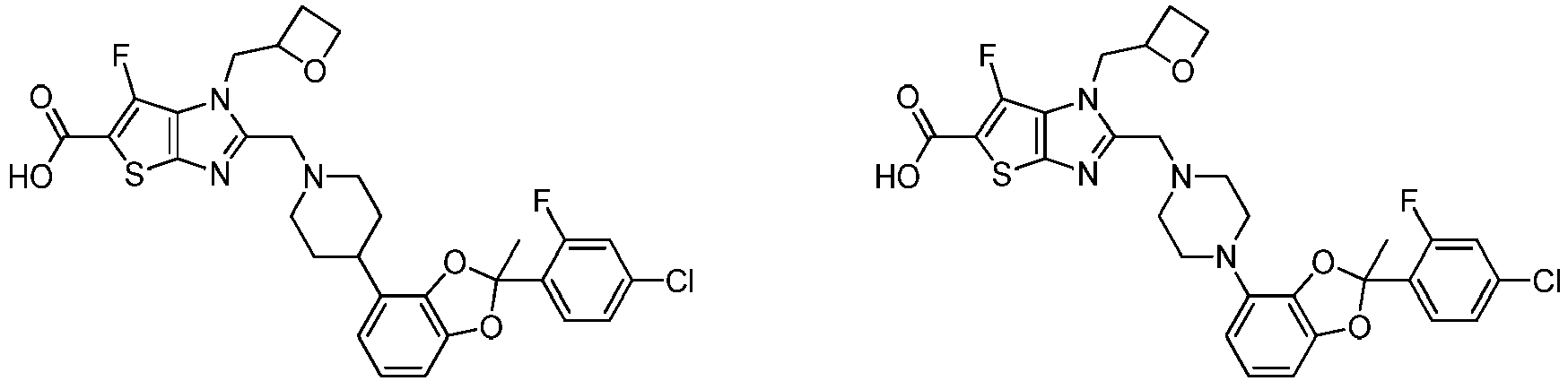


- The compound or the pharmaceutically acceptable salt thereof according to claim 12, which is selected from:


- Use of the compound or the pharmaceutically acceptable salt thereof according to any one of claims 1-13 in the manufacture of a medicament for the treatment of a disease related to a GLP-1 receptor agonist.
- The use according to claim 14, wherein the medicament related to the GLP-1 receptor agonist is a medicament for the treatment of diabetes.
Applications Claiming Priority (4)
| Application Number | Priority Date | Filing Date | Title |
|---|---|---|---|
| CN202010524591 | 2020-06-10 | ||
| CN202010878829 | 2020-08-27 | ||
| CN202110573980 | 2021-05-25 | ||
| PCT/CN2021/099432 WO2021249492A1 (en) | 2020-06-10 | 2021-06-10 | Methyl-substituted benzobisoxazole compound and use thereof |
Publications (2)
| Publication Number | Publication Date |
|---|---|
| EP4166142A1 true EP4166142A1 (en) | 2023-04-19 |
| EP4166142A4 EP4166142A4 (en) | 2024-06-26 |
Family
ID=78846841
Family Applications (1)
| Application Number | Title | Priority Date | Filing Date |
|---|---|---|---|
| EP21822762.7A Pending EP4166142A4 (en) | 2020-06-10 | 2021-06-10 | METHYL-SUBSTITUTED BENZOBISOXAZOLE COMPOUND AND USE THEREOF |
Country Status (4)
| Country | Link |
|---|---|
| US (1) | US20230234968A1 (en) |
| EP (1) | EP4166142A4 (en) |
| CN (1) | CN115697338B (en) |
| WO (1) | WO2021249492A1 (en) |
Cited By (1)
| Publication number | Priority date | Publication date | Assignee | Title |
|---|---|---|---|---|
| WO2025158275A1 (en) | 2024-01-24 | 2025-07-31 | Pfizer Inc. | Combination therapy using glucose-dependent insulinotropic polypeptide receptor antagonist compounds and glp-1 receptor agonist compounds |
Families Citing this family (30)
| Publication number | Priority date | Publication date | Assignee | Title |
|---|---|---|---|---|
| EP4143183B1 (en) | 2020-04-29 | 2025-10-22 | Gasherbrum Bio, Inc. | Heterocyclic glp-1 agonists |
| WO2022028572A1 (en) | 2020-08-06 | 2022-02-10 | Gasherbrum Bio, Inc. | Heterocyclic glp-1 agonists |
| CN116406360A (en) | 2020-08-28 | 2023-07-07 | 加舒布鲁姆生物公司 | Heterocyclic GLP-1 agonists |
| AU2021405918A1 (en) * | 2020-12-25 | 2023-07-20 | Xizang Haisco Pharmaceutical Co., Ltd. | Five-membered ring derivative and medical use thereof |
| JP7772778B2 (en) | 2021-03-24 | 2025-11-18 | 塩野義製薬株式会社 | Pharmaceutical composition containing a GLP-1 receptor agonist having a fused ring |
| WO2022228490A1 (en) * | 2021-04-30 | 2022-11-03 | 上海翰森生物医药科技有限公司 | Polycyclic derivative modulator, and preparation method therefor and use thereof |
| TWI843104B (en) | 2021-05-20 | 2024-05-21 | 美商美國禮來大藥廠 | Glucagon-like peptide 1 receptor agonists |
| WO2023029380A1 (en) | 2021-08-30 | 2023-03-09 | 杭州德睿智药科技有限公司 | Novel aryl ether substituted heterocyclic compound as glp1r agonist |
| AU2022344074A1 (en) | 2021-09-08 | 2024-02-29 | Shionogi & Co., Ltd. | Medicine for prevention and treatment of diseases linked to anti-obesity activity |
| FI4408840T3 (en) | 2021-09-27 | 2025-11-04 | Terns Pharmaceuticals Inc | BENZIMIDAZOLE CARBOXYLIC ACIDS AS GLP-1R AGONISTS |
| WO2023057414A1 (en) | 2021-10-05 | 2023-04-13 | Astrazeneca Ab | Certain octahydrofuro[3,4- b]pyrazines as glp-1 receptor modulators |
| EP4412707A1 (en) | 2021-10-05 | 2024-08-14 | Astrazeneca AB | Certain 2,5-diazabicyclo[4.2.0]octanes as glp-1 receptor modulators |
| WO2023057429A1 (en) | 2021-10-05 | 2023-04-13 | Astrazeneca Ab | Certain 2,5-diazabicyclo[4.2.0]octanes and octahydrofuro[3,4- b]pyrazines as glp-1 receptor modulators |
| IL312364A (en) | 2021-10-25 | 2024-06-01 | Luehr Gary W | Compounds as glp-1r agonists |
| US20250042882A1 (en) | 2021-12-16 | 2025-02-06 | Astrazeneca Ab | Certain 3-azabicyclo[3.1.0]hexanes as glp-1 receptor modulators |
| US20250066338A1 (en) | 2021-12-16 | 2025-02-27 | Astrazeneca Ab | Certain 3-azabicyclo[3.1.0]hexanes as glp-1 receptor modulators |
| EP4455141B1 (en) * | 2021-12-23 | 2026-03-25 | Jiangsu Hengrui Pharmaceuticals Co., Ltd. | Pharmaceutically acceptable salt and crystalline form of a glp-1 receptor agonist for the treatment of diabetes |
| CN118401528A (en) * | 2021-12-31 | 2024-07-26 | 西藏海思科制药有限公司 | GLP-1 agonist intermediate, preparation method thereof and application thereof in medicines |
| US12410163B2 (en) | 2022-02-23 | 2025-09-09 | Terns Pharmaceuticals, Inc. | Compounds as GLP-IR agonists |
| CN119730852A (en) * | 2022-06-23 | 2025-03-28 | 西藏海思科制药有限公司 | Pharmaceutical composition of penta-penta ring derivative and application of pharmaceutical composition in medicine |
| WO2023246839A1 (en) * | 2022-06-23 | 2023-12-28 | 西藏海思科制药有限公司 | Salt of thieno[2,3-d]imidazole compound, crystal form thereof and pharmaceutical use thereof |
| EP4592285A1 (en) | 2022-09-22 | 2025-07-30 | Shionogi & Co., Ltd. | Fused ring compound having glp-1 receptor agonist effect |
| KR20250105662A (en) | 2022-11-11 | 2025-07-08 | 일라이 릴리 앤드 캄파니 | Glucagon-like peptide 1 receptor agonist |
| EP4619098A1 (en) | 2022-11-16 | 2025-09-24 | Eli Lilly and Company | Glucagon-like peptide 1 receptor agonists |
| WO2024211898A1 (en) | 2023-04-07 | 2024-10-10 | Terns Pharmaceuticals, Inc. | Combination comprising a thrbeta agonist anda glp-1r agonist for use in treating a liver disorder or a cardiometabolic disease |
| AU2024340407A1 (en) | 2023-09-14 | 2026-04-23 | Ascletis Pharma (China) Co., Limited | Glp-1r agonist and therapeutic method thereof |
| WO2025109387A1 (en) | 2023-11-24 | 2025-05-30 | Ascletis Pharma (China) Co., Limited | Glp-1r agonist and therapeutic method thereof |
| KR20250125490A (en) * | 2024-02-14 | 2025-08-22 | 주식회사 종근당 | GLP-1 receptor agonist, and Uses thereof |
| WO2025189141A1 (en) | 2024-03-08 | 2025-09-12 | Annapurna Bio, Inc. | Methods for treating obesity and increasing weight loss |
| KR20260032385A (en) * | 2024-08-28 | 2026-03-09 | 주식회사유한양행 | Thienoimidazole compounds having GLP-1 receptor agonist activity, methods for preparing same, and medical uses thereof |
Family Cites Families (7)
| Publication number | Priority date | Publication date | Assignee | Title |
|---|---|---|---|---|
| JOP20190060A1 (en) * | 2016-09-26 | 2019-03-26 | Chugai Pharmaceutical Co Ltd | Pyrazolopyridine derivative having glp-1 receptor agonist effect |
| CN110325530B (en) * | 2016-12-16 | 2022-01-11 | 辉瑞大药厂 | GLP-1 receptor agonists and uses thereof |
| WO2019223791A1 (en) * | 2018-05-25 | 2019-11-28 | 正大天晴药业集团股份有限公司 | 2,3-dihydro-1h-pyrrolizine-7-formamide derivative and application thereof |
| US10934279B2 (en) * | 2018-06-13 | 2021-03-02 | Pfizer Inc. | GLP-1 receptor agonists and uses thereof |
| SG11202011704XA (en) * | 2018-06-15 | 2020-12-30 | Pfizer | Glp-1 receptor agonists and uses thereof |
| AU2021405918A1 (en) * | 2020-12-25 | 2023-07-20 | Xizang Haisco Pharmaceutical Co., Ltd. | Five-membered ring derivative and medical use thereof |
| WO2022228490A1 (en) * | 2021-04-30 | 2022-11-03 | 上海翰森生物医药科技有限公司 | Polycyclic derivative modulator, and preparation method therefor and use thereof |
-
2021
- 2021-06-10 EP EP21822762.7A patent/EP4166142A4/en active Pending
- 2021-06-10 US US18/009,481 patent/US20230234968A1/en active Pending
- 2021-06-10 WO PCT/CN2021/099432 patent/WO2021249492A1/en not_active Ceased
- 2021-06-10 CN CN202180041386.9A patent/CN115697338B/en active Active
Cited By (1)
| Publication number | Priority date | Publication date | Assignee | Title |
|---|---|---|---|---|
| WO2025158275A1 (en) | 2024-01-24 | 2025-07-31 | Pfizer Inc. | Combination therapy using glucose-dependent insulinotropic polypeptide receptor antagonist compounds and glp-1 receptor agonist compounds |
Also Published As
| Publication number | Publication date |
|---|---|
| EP4166142A4 (en) | 2024-06-26 |
| CN115697338B (en) | 2024-08-09 |
| US20230234968A1 (en) | 2023-07-27 |
| CN115697338A (en) | 2023-02-03 |
| WO2021249492A1 (en) | 2021-12-16 |
Similar Documents
| Publication | Publication Date | Title |
|---|---|---|
| US20230234968A1 (en) | Methyl-substituted benzobisoxazole compound and use thereof | |
| EP4155313B1 (en) | Five-membered heteroaromatic imidazole compound and use thereof | |
| JP7165270B2 (en) | Compounds for retinal diseases | |
| JP4373097B2 (en) | Deuterated 3-piperidinopropiophenone and pharmaceuticals containing the compound | |
| CN114846009B (en) | Compounds with KHK inhibitory effect | |
| US20240239761A1 (en) | Bicyclic phenol compounds and use thereof | |
| JP7734827B2 (en) | Imidazo ring compounds and their uses | |
| TW202509024A (en) | A sulfonamide compound and its preparation method and medical use | |
| EP3747881A1 (en) | Nitrogen-containing benzoheterocycle compound comprising carboxylic acid group, preparation method and use thereof | |
| US20250034099A1 (en) | Benzoxazinone derivatives | |
| WO2022194287A1 (en) | Bicyclic pyridinone compound and use thereof | |
| CN116178368A (en) | Thyroid hormone receptor agonist and preparation method and application thereof | |
| EP3889133B1 (en) | 4-[[2-[[5-[1-(1h-indol-2-yl)-2-(phenyl)-1-ethen-1-yl]-2-pyridinyl]oxy]ethyl]amino]-2-butenamide derivatives for the treatment of estrogen receptor positive breast cancer | |
| JP2004529982A (en) | Novel compound effective for reflux disease | |
| JP7227427B2 (en) | SGLT2/DPP4 inhibitors and uses thereof | |
| EP3816158B1 (en) | Benzimidazole derivatives and use thereof as idh1 inhibitors | |
| WO2022053028A1 (en) | 1,2,4-triazine-3,5(2h,4h)-diketone compound and application thereof | |
| RU2832735C2 (en) | Oestrogen receptor antagonist | |
| WO2026032382A1 (en) | Substituted 1,2,4-triazole derivatives and use thereof | |
| RU2832735C9 (en) | Oestrogen receptor antagonist | |
| HK40107721A (en) | Imidazocyclic compound and application thereof | |
| EA049628B1 (en) | IMIDAZOCYCLIC COMPOUND AND ITS APPLICATION | |
| HK40062570A (en) | Estrogen receptor antagonist | |
| EA049085B1 (en) | BENZOXAZINONE DERIVATIVES | |
| BR112022023879B1 (en) | FIVE-MEMBRED HETEROAROMATIC IMIDAZOLE COMPOUND AND ITS USE |
Legal Events
| Date | Code | Title | Description |
|---|---|---|---|
| STAA | Information on the status of an ep patent application or granted ep patent |
Free format text: STATUS: THE INTERNATIONAL PUBLICATION HAS BEEN MADE |
|
| PUAI | Public reference made under article 153(3) epc to a published international application that has entered the european phase |
Free format text: ORIGINAL CODE: 0009012 |
|
| STAA | Information on the status of an ep patent application or granted ep patent |
Free format text: STATUS: REQUEST FOR EXAMINATION WAS MADE |
|
| 17P | Request for examination filed |
Effective date: 20230110 |
|
| AK | Designated contracting states |
Kind code of ref document: A1 Designated state(s): AL AT BE BG CH CY CZ DE DK EE ES FI FR GB GR HR HU IE IS IT LI LT LU LV MC MK MT NL NO PL PT RO RS SE SI SK SM TR |
|
| DAV | Request for validation of the european patent (deleted) | ||
| DAX | Request for extension of the european patent (deleted) | ||
| REG | Reference to a national code |
Ref country code: DE Ref legal event code: R079 Free format text: PREVIOUS MAIN CLASS: A61K0031496000 Ipc: C07D0495040000 |
|
| A4 | Supplementary search report drawn up and despatched |
Effective date: 20240528 |
|
| RIC1 | Information provided on ipc code assigned before grant |
Ipc: A61P 3/10 20060101ALI20240522BHEP Ipc: A61K 31/4995 20060101ALI20240522BHEP Ipc: A61K 31/496 20060101ALI20240522BHEP Ipc: C07D 519/00 20060101ALI20240522BHEP Ipc: C07D 513/04 20060101ALI20240522BHEP Ipc: C07D 495/04 20060101AFI20240522BHEP |
|
| RAP1 | Party data changed (applicant data changed or rights of an application transferred) |
Owner name: DONGBAO PURPLE STAR (HANGZHOU) BIOPHARMACEUTICALCO., LTD. |
|
| RAP1 | Party data changed (applicant data changed or rights of an application transferred) |
Owner name: TONGHUA DONGBAO PHARMACEUTICAL CO., LTD. |