EP4166115A1 - Bewegliches lager mit anatomischem glenoid - Google Patents
Bewegliches lager mit anatomischem glenoid Download PDFInfo
- Publication number
- EP4166115A1 EP4166115A1 EP22201630.5A EP22201630A EP4166115A1 EP 4166115 A1 EP4166115 A1 EP 4166115A1 EP 22201630 A EP22201630 A EP 22201630A EP 4166115 A1 EP4166115 A1 EP 4166115A1
- Authority
- EP
- European Patent Office
- Prior art keywords
- bearing
- facing surface
- component
- implant system
- glenoid implant
- Prior art date
- Legal status (The legal status is an assumption and is not a legal conclusion. Google has not performed a legal analysis and makes no representation as to the accuracy of the status listed.)
- Pending
Links
- 241001653121 Glenoides Species 0.000 title claims abstract description 77
- 239000007943 implant Substances 0.000 claims abstract description 84
- 210000004095 humeral head Anatomy 0.000 claims abstract description 18
- 230000002093 peripheral effect Effects 0.000 claims description 21
- 210000000988 bone and bone Anatomy 0.000 claims description 11
- 239000011148 porous material Substances 0.000 claims description 9
- 229920000785 ultra high molecular weight polyethylene Polymers 0.000 claims description 8
- 229920010741 Ultra High Molecular Weight Polyethylene (UHMWPE) Polymers 0.000 claims description 4
- 239000002184 metal Substances 0.000 claims description 4
- 229910052751 metal Inorganic materials 0.000 claims description 4
- 229920000642 polymer Polymers 0.000 claims description 4
- 239000002639 bone cement Substances 0.000 claims description 3
- 238000000034 method Methods 0.000 description 4
- 210000000323 shoulder joint Anatomy 0.000 description 3
- 239000004698 Polyethylene Substances 0.000 description 2
- 230000000295 complement effect Effects 0.000 description 2
- 230000008878 coupling Effects 0.000 description 2
- 238000010168 coupling process Methods 0.000 description 2
- 238000005859 coupling reaction Methods 0.000 description 2
- 230000007774 longterm Effects 0.000 description 2
- 239000007769 metal material Substances 0.000 description 2
- -1 polyethylene Polymers 0.000 description 2
- 229920000573 polyethylene Polymers 0.000 description 2
- 210000001991 scapula Anatomy 0.000 description 2
- 239000004696 Poly ether ether ketone Substances 0.000 description 1
- 229910001069 Ti alloy Inorganic materials 0.000 description 1
- 229910000883 Ti6Al4V Inorganic materials 0.000 description 1
- RTAQQCXQSZGOHL-UHFFFAOYSA-N Titanium Chemical compound [Ti] RTAQQCXQSZGOHL-UHFFFAOYSA-N 0.000 description 1
- JUPQTSLXMOCDHR-UHFFFAOYSA-N benzene-1,4-diol;bis(4-fluorophenyl)methanone Chemical compound OC1=CC=C(O)C=C1.C1=CC(F)=CC=C1C(=O)C1=CC=C(F)C=C1 JUPQTSLXMOCDHR-UHFFFAOYSA-N 0.000 description 1
- 238000005422 blasting Methods 0.000 description 1
- 230000000694 effects Effects 0.000 description 1
- 239000000017 hydrogel Substances 0.000 description 1
- 238000002513 implantation Methods 0.000 description 1
- 210000001503 joint Anatomy 0.000 description 1
- 229910001092 metal group alloy Inorganic materials 0.000 description 1
- 229920002530 polyetherether ketone Polymers 0.000 description 1
- 238000000926 separation method Methods 0.000 description 1
- 238000009331 sowing Methods 0.000 description 1
Images




Classifications
-
- A—HUMAN NECESSITIES
- A61—MEDICAL OR VETERINARY SCIENCE; HYGIENE
- A61F—FILTERS IMPLANTABLE INTO BLOOD VESSELS; PROSTHESES; DEVICES PROVIDING PATENCY TO, OR PREVENTING COLLAPSING OF, TUBULAR STRUCTURES OF THE BODY, e.g. STENTS; ORTHOPAEDIC, NURSING OR CONTRACEPTIVE DEVICES; FOMENTATION; TREATMENT OR PROTECTION OF EYES OR EARS; BANDAGES, DRESSINGS OR ABSORBENT PADS; FIRST-AID KITS
- A61F2/00—Filters implantable into blood vessels; Prostheses, i.e. artificial substitutes or replacements for parts of the body; Appliances for connecting them with the body; Devices providing patency to, or preventing collapsing of, tubular structures of the body, e.g. stents
- A61F2/02—Prostheses implantable into the body
- A61F2/30—Joints
- A61F2/40—Joints for shoulders
- A61F2/4081—Glenoid components, e.g. cups
-
- A—HUMAN NECESSITIES
- A61—MEDICAL OR VETERINARY SCIENCE; HYGIENE
- A61L—METHODS OR APPARATUS FOR STERILISING MATERIALS OR OBJECTS IN GENERAL; DISINFECTION, STERILISATION OR DEODORISATION OF AIR; CHEMICAL ASPECTS OF BANDAGES, DRESSINGS, ABSORBENT PADS OR SURGICAL ARTICLES; MATERIALS FOR BANDAGES, DRESSINGS, ABSORBENT PADS OR SURGICAL ARTICLES
- A61L27/00—Materials for grafts or prostheses or for coating grafts or prostheses
- A61L27/14—Macromolecular materials
- A61L27/16—Macromolecular materials obtained by reactions only involving carbon-to-carbon unsaturated bonds
-
- A—HUMAN NECESSITIES
- A61—MEDICAL OR VETERINARY SCIENCE; HYGIENE
- A61F—FILTERS IMPLANTABLE INTO BLOOD VESSELS; PROSTHESES; DEVICES PROVIDING PATENCY TO, OR PREVENTING COLLAPSING OF, TUBULAR STRUCTURES OF THE BODY, e.g. STENTS; ORTHOPAEDIC, NURSING OR CONTRACEPTIVE DEVICES; FOMENTATION; TREATMENT OR PROTECTION OF EYES OR EARS; BANDAGES, DRESSINGS OR ABSORBENT PADS; FIRST-AID KITS
- A61F2/00—Filters implantable into blood vessels; Prostheses, i.e. artificial substitutes or replacements for parts of the body; Appliances for connecting them with the body; Devices providing patency to, or preventing collapsing of, tubular structures of the body, e.g. stents
- A61F2/02—Prostheses implantable into the body
- A61F2/30—Joints
- A61F2002/30001—Additional features of subject-matter classified in A61F2/28, A61F2/30 and subgroups thereof
- A61F2002/30108—Shapes
- A61F2002/3011—Cross-sections or two-dimensional shapes
- A61F2002/30112—Rounded shapes, e.g. with rounded corners
- A61F2002/30131—Rounded shapes, e.g. with rounded corners horseshoe- or crescent- or C-shaped or U-shaped
-
- A—HUMAN NECESSITIES
- A61—MEDICAL OR VETERINARY SCIENCE; HYGIENE
- A61F—FILTERS IMPLANTABLE INTO BLOOD VESSELS; PROSTHESES; DEVICES PROVIDING PATENCY TO, OR PREVENTING COLLAPSING OF, TUBULAR STRUCTURES OF THE BODY, e.g. STENTS; ORTHOPAEDIC, NURSING OR CONTRACEPTIVE DEVICES; FOMENTATION; TREATMENT OR PROTECTION OF EYES OR EARS; BANDAGES, DRESSINGS OR ABSORBENT PADS; FIRST-AID KITS
- A61F2/00—Filters implantable into blood vessels; Prostheses, i.e. artificial substitutes or replacements for parts of the body; Appliances for connecting them with the body; Devices providing patency to, or preventing collapsing of, tubular structures of the body, e.g. stents
- A61F2/02—Prostheses implantable into the body
- A61F2/30—Joints
- A61F2002/30001—Additional features of subject-matter classified in A61F2/28, A61F2/30 and subgroups thereof
- A61F2002/30108—Shapes
- A61F2002/30199—Three-dimensional shapes
- A61F2002/302—Three-dimensional shapes toroidal, e.g. rings
-
- A—HUMAN NECESSITIES
- A61—MEDICAL OR VETERINARY SCIENCE; HYGIENE
- A61F—FILTERS IMPLANTABLE INTO BLOOD VESSELS; PROSTHESES; DEVICES PROVIDING PATENCY TO, OR PREVENTING COLLAPSING OF, TUBULAR STRUCTURES OF THE BODY, e.g. STENTS; ORTHOPAEDIC, NURSING OR CONTRACEPTIVE DEVICES; FOMENTATION; TREATMENT OR PROTECTION OF EYES OR EARS; BANDAGES, DRESSINGS OR ABSORBENT PADS; FIRST-AID KITS
- A61F2/00—Filters implantable into blood vessels; Prostheses, i.e. artificial substitutes or replacements for parts of the body; Appliances for connecting them with the body; Devices providing patency to, or preventing collapsing of, tubular structures of the body, e.g. stents
- A61F2/02—Prostheses implantable into the body
- A61F2/30—Joints
- A61F2002/30001—Additional features of subject-matter classified in A61F2/28, A61F2/30 and subgroups thereof
- A61F2002/30316—The prosthesis having different structural features at different locations within the same prosthesis; Connections between prosthetic parts; Special structural features of bone or joint prostheses not otherwise provided for
- A61F2002/30317—The prosthesis having different structural features at different locations within the same prosthesis
- A61F2002/30322—The prosthesis having different structural features at different locations within the same prosthesis differing in surface structures
-
- A—HUMAN NECESSITIES
- A61—MEDICAL OR VETERINARY SCIENCE; HYGIENE
- A61F—FILTERS IMPLANTABLE INTO BLOOD VESSELS; PROSTHESES; DEVICES PROVIDING PATENCY TO, OR PREVENTING COLLAPSING OF, TUBULAR STRUCTURES OF THE BODY, e.g. STENTS; ORTHOPAEDIC, NURSING OR CONTRACEPTIVE DEVICES; FOMENTATION; TREATMENT OR PROTECTION OF EYES OR EARS; BANDAGES, DRESSINGS OR ABSORBENT PADS; FIRST-AID KITS
- A61F2/00—Filters implantable into blood vessels; Prostheses, i.e. artificial substitutes or replacements for parts of the body; Appliances for connecting them with the body; Devices providing patency to, or preventing collapsing of, tubular structures of the body, e.g. stents
- A61F2/02—Prostheses implantable into the body
- A61F2/30—Joints
- A61F2002/30001—Additional features of subject-matter classified in A61F2/28, A61F2/30 and subgroups thereof
- A61F2002/30316—The prosthesis having different structural features at different locations within the same prosthesis; Connections between prosthetic parts; Special structural features of bone or joint prostheses not otherwise provided for
- A61F2002/30329—Connections or couplings between prosthetic parts, e.g. between modular parts; Connecting elements
- A61F2002/30331—Connections or couplings between prosthetic parts, e.g. between modular parts; Connecting elements made by longitudinally pushing a protrusion into a complementarily-shaped recess, e.g. held by friction fit
- A61F2002/30354—Cylindrically-shaped protrusion and recess, e.g. cylinder of circular basis
-
- A—HUMAN NECESSITIES
- A61—MEDICAL OR VETERINARY SCIENCE; HYGIENE
- A61F—FILTERS IMPLANTABLE INTO BLOOD VESSELS; PROSTHESES; DEVICES PROVIDING PATENCY TO, OR PREVENTING COLLAPSING OF, TUBULAR STRUCTURES OF THE BODY, e.g. STENTS; ORTHOPAEDIC, NURSING OR CONTRACEPTIVE DEVICES; FOMENTATION; TREATMENT OR PROTECTION OF EYES OR EARS; BANDAGES, DRESSINGS OR ABSORBENT PADS; FIRST-AID KITS
- A61F2/00—Filters implantable into blood vessels; Prostheses, i.e. artificial substitutes or replacements for parts of the body; Appliances for connecting them with the body; Devices providing patency to, or preventing collapsing of, tubular structures of the body, e.g. stents
- A61F2/02—Prostheses implantable into the body
- A61F2/30—Joints
- A61F2002/30001—Additional features of subject-matter classified in A61F2/28, A61F2/30 and subgroups thereof
- A61F2002/30316—The prosthesis having different structural features at different locations within the same prosthesis; Connections between prosthetic parts; Special structural features of bone or joint prostheses not otherwise provided for
- A61F2002/30329—Connections or couplings between prosthetic parts, e.g. between modular parts; Connecting elements
- A61F2002/30331—Connections or couplings between prosthetic parts, e.g. between modular parts; Connecting elements made by longitudinally pushing a protrusion into a complementarily-shaped recess, e.g. held by friction fit
- A61F2002/30362—Connections or couplings between prosthetic parts, e.g. between modular parts; Connecting elements made by longitudinally pushing a protrusion into a complementarily-shaped recess, e.g. held by friction fit with possibility of relative movement between the protrusion and the recess
-
- A—HUMAN NECESSITIES
- A61—MEDICAL OR VETERINARY SCIENCE; HYGIENE
- A61F—FILTERS IMPLANTABLE INTO BLOOD VESSELS; PROSTHESES; DEVICES PROVIDING PATENCY TO, OR PREVENTING COLLAPSING OF, TUBULAR STRUCTURES OF THE BODY, e.g. STENTS; ORTHOPAEDIC, NURSING OR CONTRACEPTIVE DEVICES; FOMENTATION; TREATMENT OR PROTECTION OF EYES OR EARS; BANDAGES, DRESSINGS OR ABSORBENT PADS; FIRST-AID KITS
- A61F2/00—Filters implantable into blood vessels; Prostheses, i.e. artificial substitutes or replacements for parts of the body; Appliances for connecting them with the body; Devices providing patency to, or preventing collapsing of, tubular structures of the body, e.g. stents
- A61F2/02—Prostheses implantable into the body
- A61F2/30—Joints
- A61F2002/30001—Additional features of subject-matter classified in A61F2/28, A61F2/30 and subgroups thereof
- A61F2002/30316—The prosthesis having different structural features at different locations within the same prosthesis; Connections between prosthetic parts; Special structural features of bone or joint prostheses not otherwise provided for
- A61F2002/30329—Connections or couplings between prosthetic parts, e.g. between modular parts; Connecting elements
- A61F2002/30331—Connections or couplings between prosthetic parts, e.g. between modular parts; Connecting elements made by longitudinally pushing a protrusion into a complementarily-shaped recess, e.g. held by friction fit
- A61F2002/30362—Connections or couplings between prosthetic parts, e.g. between modular parts; Connecting elements made by longitudinally pushing a protrusion into a complementarily-shaped recess, e.g. held by friction fit with possibility of relative movement between the protrusion and the recess
- A61F2002/30369—Limited lateral translation of the protrusion within a larger recess
-
- A—HUMAN NECESSITIES
- A61—MEDICAL OR VETERINARY SCIENCE; HYGIENE
- A61F—FILTERS IMPLANTABLE INTO BLOOD VESSELS; PROSTHESES; DEVICES PROVIDING PATENCY TO, OR PREVENTING COLLAPSING OF, TUBULAR STRUCTURES OF THE BODY, e.g. STENTS; ORTHOPAEDIC, NURSING OR CONTRACEPTIVE DEVICES; FOMENTATION; TREATMENT OR PROTECTION OF EYES OR EARS; BANDAGES, DRESSINGS OR ABSORBENT PADS; FIRST-AID KITS
- A61F2/00—Filters implantable into blood vessels; Prostheses, i.e. artificial substitutes or replacements for parts of the body; Appliances for connecting them with the body; Devices providing patency to, or preventing collapsing of, tubular structures of the body, e.g. stents
- A61F2/02—Prostheses implantable into the body
- A61F2/30—Joints
- A61F2002/30001—Additional features of subject-matter classified in A61F2/28, A61F2/30 and subgroups thereof
- A61F2002/30316—The prosthesis having different structural features at different locations within the same prosthesis; Connections between prosthetic parts; Special structural features of bone or joint prostheses not otherwise provided for
- A61F2002/30329—Connections or couplings between prosthetic parts, e.g. between modular parts; Connecting elements
- A61F2002/30518—Connections or couplings between prosthetic parts, e.g. between modular parts; Connecting elements with possibility of relative movement between the prosthetic parts
-
- A—HUMAN NECESSITIES
- A61—MEDICAL OR VETERINARY SCIENCE; HYGIENE
- A61F—FILTERS IMPLANTABLE INTO BLOOD VESSELS; PROSTHESES; DEVICES PROVIDING PATENCY TO, OR PREVENTING COLLAPSING OF, TUBULAR STRUCTURES OF THE BODY, e.g. STENTS; ORTHOPAEDIC, NURSING OR CONTRACEPTIVE DEVICES; FOMENTATION; TREATMENT OR PROTECTION OF EYES OR EARS; BANDAGES, DRESSINGS OR ABSORBENT PADS; FIRST-AID KITS
- A61F2/00—Filters implantable into blood vessels; Prostheses, i.e. artificial substitutes or replacements for parts of the body; Appliances for connecting them with the body; Devices providing patency to, or preventing collapsing of, tubular structures of the body, e.g. stents
- A61F2/02—Prostheses implantable into the body
- A61F2/30—Joints
- A61F2002/30001—Additional features of subject-matter classified in A61F2/28, A61F2/30 and subgroups thereof
- A61F2002/30316—The prosthesis having different structural features at different locations within the same prosthesis; Connections between prosthetic parts; Special structural features of bone or joint prostheses not otherwise provided for
- A61F2002/30329—Connections or couplings between prosthetic parts, e.g. between modular parts; Connecting elements
- A61F2002/30518—Connections or couplings between prosthetic parts, e.g. between modular parts; Connecting elements with possibility of relative movement between the prosthetic parts
- A61F2002/30528—Means for limiting said movement
-
- A—HUMAN NECESSITIES
- A61—MEDICAL OR VETERINARY SCIENCE; HYGIENE
- A61F—FILTERS IMPLANTABLE INTO BLOOD VESSELS; PROSTHESES; DEVICES PROVIDING PATENCY TO, OR PREVENTING COLLAPSING OF, TUBULAR STRUCTURES OF THE BODY, e.g. STENTS; ORTHOPAEDIC, NURSING OR CONTRACEPTIVE DEVICES; FOMENTATION; TREATMENT OR PROTECTION OF EYES OR EARS; BANDAGES, DRESSINGS OR ABSORBENT PADS; FIRST-AID KITS
- A61F2/00—Filters implantable into blood vessels; Prostheses, i.e. artificial substitutes or replacements for parts of the body; Appliances for connecting them with the body; Devices providing patency to, or preventing collapsing of, tubular structures of the body, e.g. stents
- A61F2/02—Prostheses implantable into the body
- A61F2/30—Joints
- A61F2002/30001—Additional features of subject-matter classified in A61F2/28, A61F2/30 and subgroups thereof
- A61F2002/30316—The prosthesis having different structural features at different locations within the same prosthesis; Connections between prosthetic parts; Special structural features of bone or joint prostheses not otherwise provided for
- A61F2002/30535—Special structural features of bone or joint prostheses not otherwise provided for
- A61F2002/30604—Special structural features of bone or joint prostheses not otherwise provided for modular
- A61F2002/30606—Sets comprising both cemented and non-cemented endoprostheses
-
- A—HUMAN NECESSITIES
- A61—MEDICAL OR VETERINARY SCIENCE; HYGIENE
- A61F—FILTERS IMPLANTABLE INTO BLOOD VESSELS; PROSTHESES; DEVICES PROVIDING PATENCY TO, OR PREVENTING COLLAPSING OF, TUBULAR STRUCTURES OF THE BODY, e.g. STENTS; ORTHOPAEDIC, NURSING OR CONTRACEPTIVE DEVICES; FOMENTATION; TREATMENT OR PROTECTION OF EYES OR EARS; BANDAGES, DRESSINGS OR ABSORBENT PADS; FIRST-AID KITS
- A61F2/00—Filters implantable into blood vessels; Prostheses, i.e. artificial substitutes or replacements for parts of the body; Appliances for connecting them with the body; Devices providing patency to, or preventing collapsing of, tubular structures of the body, e.g. stents
- A61F2/02—Prostheses implantable into the body
- A61F2/30—Joints
- A61F2/30767—Special external or bone-contacting surface, e.g. coating for improving bone ingrowth
- A61F2/30771—Special external or bone-contacting surface, e.g. coating for improving bone ingrowth applied in original prostheses, e.g. holes or grooves
- A61F2002/30772—Apertures or holes, e.g. of circular cross section
- A61F2002/30784—Plurality of holes
-
- A—HUMAN NECESSITIES
- A61—MEDICAL OR VETERINARY SCIENCE; HYGIENE
- A61F—FILTERS IMPLANTABLE INTO BLOOD VESSELS; PROSTHESES; DEVICES PROVIDING PATENCY TO, OR PREVENTING COLLAPSING OF, TUBULAR STRUCTURES OF THE BODY, e.g. STENTS; ORTHOPAEDIC, NURSING OR CONTRACEPTIVE DEVICES; FOMENTATION; TREATMENT OR PROTECTION OF EYES OR EARS; BANDAGES, DRESSINGS OR ABSORBENT PADS; FIRST-AID KITS
- A61F2/00—Filters implantable into blood vessels; Prostheses, i.e. artificial substitutes or replacements for parts of the body; Appliances for connecting them with the body; Devices providing patency to, or preventing collapsing of, tubular structures of the body, e.g. stents
- A61F2/02—Prostheses implantable into the body
- A61F2/30—Joints
- A61F2/30767—Special external or bone-contacting surface, e.g. coating for improving bone ingrowth
- A61F2/30771—Special external or bone-contacting surface, e.g. coating for improving bone ingrowth applied in original prostheses, e.g. holes or grooves
- A61F2002/30878—Special external or bone-contacting surface, e.g. coating for improving bone ingrowth applied in original prostheses, e.g. holes or grooves with non-sharp protrusions, for instance contacting the bone for anchoring, e.g. keels, pegs, pins, posts, shanks, stems, struts
-
- A—HUMAN NECESSITIES
- A61—MEDICAL OR VETERINARY SCIENCE; HYGIENE
- A61F—FILTERS IMPLANTABLE INTO BLOOD VESSELS; PROSTHESES; DEVICES PROVIDING PATENCY TO, OR PREVENTING COLLAPSING OF, TUBULAR STRUCTURES OF THE BODY, e.g. STENTS; ORTHOPAEDIC, NURSING OR CONTRACEPTIVE DEVICES; FOMENTATION; TREATMENT OR PROTECTION OF EYES OR EARS; BANDAGES, DRESSINGS OR ABSORBENT PADS; FIRST-AID KITS
- A61F2/00—Filters implantable into blood vessels; Prostheses, i.e. artificial substitutes or replacements for parts of the body; Appliances for connecting them with the body; Devices providing patency to, or preventing collapsing of, tubular structures of the body, e.g. stents
- A61F2/02—Prostheses implantable into the body
- A61F2/30—Joints
- A61F2/30767—Special external or bone-contacting surface, e.g. coating for improving bone ingrowth
- A61F2/30771—Special external or bone-contacting surface, e.g. coating for improving bone ingrowth applied in original prostheses, e.g. holes or grooves
- A61F2002/30878—Special external or bone-contacting surface, e.g. coating for improving bone ingrowth applied in original prostheses, e.g. holes or grooves with non-sharp protrusions, for instance contacting the bone for anchoring, e.g. keels, pegs, pins, posts, shanks, stems, struts
- A61F2002/30889—Arcuate pegs
-
- A—HUMAN NECESSITIES
- A61—MEDICAL OR VETERINARY SCIENCE; HYGIENE
- A61F—FILTERS IMPLANTABLE INTO BLOOD VESSELS; PROSTHESES; DEVICES PROVIDING PATENCY TO, OR PREVENTING COLLAPSING OF, TUBULAR STRUCTURES OF THE BODY, e.g. STENTS; ORTHOPAEDIC, NURSING OR CONTRACEPTIVE DEVICES; FOMENTATION; TREATMENT OR PROTECTION OF EYES OR EARS; BANDAGES, DRESSINGS OR ABSORBENT PADS; FIRST-AID KITS
- A61F2/00—Filters implantable into blood vessels; Prostheses, i.e. artificial substitutes or replacements for parts of the body; Appliances for connecting them with the body; Devices providing patency to, or preventing collapsing of, tubular structures of the body, e.g. stents
- A61F2/02—Prostheses implantable into the body
- A61F2/30—Joints
- A61F2/30767—Special external or bone-contacting surface, e.g. coating for improving bone ingrowth
- A61F2/30771—Special external or bone-contacting surface, e.g. coating for improving bone ingrowth applied in original prostheses, e.g. holes or grooves
- A61F2002/30878—Special external or bone-contacting surface, e.g. coating for improving bone ingrowth applied in original prostheses, e.g. holes or grooves with non-sharp protrusions, for instance contacting the bone for anchoring, e.g. keels, pegs, pins, posts, shanks, stems, struts
- A61F2002/30891—Plurality of protrusions
-
- A—HUMAN NECESSITIES
- A61—MEDICAL OR VETERINARY SCIENCE; HYGIENE
- A61F—FILTERS IMPLANTABLE INTO BLOOD VESSELS; PROSTHESES; DEVICES PROVIDING PATENCY TO, OR PREVENTING COLLAPSING OF, TUBULAR STRUCTURES OF THE BODY, e.g. STENTS; ORTHOPAEDIC, NURSING OR CONTRACEPTIVE DEVICES; FOMENTATION; TREATMENT OR PROTECTION OF EYES OR EARS; BANDAGES, DRESSINGS OR ABSORBENT PADS; FIRST-AID KITS
- A61F2/00—Filters implantable into blood vessels; Prostheses, i.e. artificial substitutes or replacements for parts of the body; Appliances for connecting them with the body; Devices providing patency to, or preventing collapsing of, tubular structures of the body, e.g. stents
- A61F2/02—Prostheses implantable into the body
- A61F2/30—Joints
- A61F2/30767—Special external or bone-contacting surface, e.g. coating for improving bone ingrowth
- A61F2002/3092—Special external or bone-contacting surface, e.g. coating for improving bone ingrowth having an open-celled or open-pored structure
-
- A—HUMAN NECESSITIES
- A61—MEDICAL OR VETERINARY SCIENCE; HYGIENE
- A61F—FILTERS IMPLANTABLE INTO BLOOD VESSELS; PROSTHESES; DEVICES PROVIDING PATENCY TO, OR PREVENTING COLLAPSING OF, TUBULAR STRUCTURES OF THE BODY, e.g. STENTS; ORTHOPAEDIC, NURSING OR CONTRACEPTIVE DEVICES; FOMENTATION; TREATMENT OR PROTECTION OF EYES OR EARS; BANDAGES, DRESSINGS OR ABSORBENT PADS; FIRST-AID KITS
- A61F2/00—Filters implantable into blood vessels; Prostheses, i.e. artificial substitutes or replacements for parts of the body; Appliances for connecting them with the body; Devices providing patency to, or preventing collapsing of, tubular structures of the body, e.g. stents
- A61F2/02—Prostheses implantable into the body
- A61F2/30—Joints
- A61F2/30767—Special external or bone-contacting surface, e.g. coating for improving bone ingrowth
- A61F2002/3093—Special external or bone-contacting surface, e.g. coating for improving bone ingrowth for promoting ingrowth of bone tissue
-
- A—HUMAN NECESSITIES
- A61—MEDICAL OR VETERINARY SCIENCE; HYGIENE
- A61L—METHODS OR APPARATUS FOR STERILISING MATERIALS OR OBJECTS IN GENERAL; DISINFECTION, STERILISATION OR DEODORISATION OF AIR; CHEMICAL ASPECTS OF BANDAGES, DRESSINGS, ABSORBENT PADS OR SURGICAL ARTICLES; MATERIALS FOR BANDAGES, DRESSINGS, ABSORBENT PADS OR SURGICAL ARTICLES
- A61L2430/00—Materials or treatment for tissue regeneration
- A61L2430/24—Materials or treatment for tissue regeneration for joint reconstruction
Definitions
- the present disclosure generally relates to glenoid implants for shoulder prosthesis.
- a shoulder prosthesis includes a glenoid implant intended to replace the glenoid cavity of the scapula and/or a humeral implant intended to replace the humeral head.
- the glenoid implant generally includes an articular body intended to articulate with the humeral head, and a fixation means to stabilize the articular body with respect to the scapula.
- a glenoid implant system comprising a tray component that comprises a bone-facing surface and a bearing-facing surface on opposite side of the bone-facing surface; and a bearing component that comprises an articulating surface that is generally concave and a back side on opposite side of the articulating surface that is generally convex, wherein the articulating surface is configured for engaging a convex humeral head and the back side is configured for engaging the bearing-facing surface of the tray component enabling the bearing component to slide about on the tray component while the convex humeral head articulates against the articulating surface.
- the glenoid implant system comprises a motion limiting feature that limits the range of motion of the bearing component sliding about the bearing-facing surface of the tray component.
- the motion limiting feature can comprise the bearing-facing surface being defined by more than one radii of curvature wherein the bearing-facing surface comprises: a central region that is a spherical surface having a curvature defined by the first radius of curvature; and a peripheral portion that is a spherical surface having a curvature defined by a second radius of curvature that is smaller than the first radius of curvature.
- the motion limiting feature can comprise a continuous ridge that extends along the bearing-facing surface's perimeter and is raised from the bearing-facing surface away from the bone-facing surface.
- the motion limiting feature can comprise two or more ridge segments that extend along the bearing-facing surface's perimeter and are raised from the bearing-facing surface away from the bone-facing surface.
- the motion limiting feature wherein the motion limiting feature comprises a boss provided on the back side of the articulating component and a pocket provided on the bearing-facing surface of the tray component, wherein the pocket has an opening that is larger than the boss.
- the motion limiting feature comprises a pocket provided on the back side of the articulating component and a boss provided on the bearing-facing surface of the tray component, wherein the pocket has an opening that is larger than the boss.
- the glenoid implant system of Claim 14 comprising a motion limiting feature that limits the range of motion of the bearing component sliding about the bearing-facing surface of the tray component.
- references to "a humeral head” as used herein should be construed to include both an anatomical humeral head as well as implant humeral head.
- the improved glenoid bearing implant system disclosed herein comprises a tray component that is configured to be secured to a surface on a glenoid of a patient that is appropriately prepared and a bearing component that is not afixed to the tray component but rather configured to slidingly engage the tray component so that the bearing component is positioned between the tray component and the patient's humeral head when the glenoid implant system is implanted in the patient's shoulder.
- the bearing component in this position is relatively unconstrained while in engagement with the humeral head and the tray component and can slide about against the tray component through the patient's articulation of the shoulder joint.
- the implant components can be configured to limit the range of motion for the bearing component.
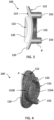
- the glenoid implant system 100 comprises the tray component 120 and the bearing component 130.
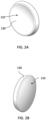
- the tray component 120 includes a bone-facing surface 122 and a bearing-facing surface 123 on the opposite side of the bone-facing surface 122.
- the bearing component 130 includes an articulating surface 132 and a back side 133 on the opposite side of the articulating surface 132.
- the backside 133 of the bearing component 130 and the bearing-facing surface 123 of the tray component 120 have surfaces that are configured to engage each other in a sliding manner.
- the surface of the backside 133 has a generally convex contour and the bearing-facing surface 123 has a corresponding generally concave surface contour.
- the articulating surface 132 of the bearing component 130 is generally concave.
- the articulating surface 132 is configured for engaging a convex humeral head and the back side 133 is generally convex and is configured for engaging the bearing-facing surface.
- the back side 133 of the bearing component 130 can be a spherical surface having a curvature defined by a first radius of curvature.
- the bearing-facing surface 123 of the tray component can be a spherical surface having a curvature defined by the first radius of curvature.
- the glenoid implant system 100 can be provided with a motion limiting feature that limits the range of motion of the bearing component 130 while the bearing component 130 slides about on the tray component 120 while a convex humeral head articulates against the articulating surface after the glenoid implant system 100 has been implanted in a patient.
- the bearing-facing surface 123 has a complex contour defined by more than one radii of curvature.
- the bearing-facing surface 123 in the central region can be defined by the first radius of curvature and the bearing-facing surface 123 along the periphery surrounding the central region can be defined by a second radius of curvature that is smaller than the first radius of curvature. This results in the central region that is flatter than the periphery and the surface of the periphery form a steeper curved surface surrounding the central region.
- the central region of the bearing-facing surface 123 is where the bearing component 130 is generally engaged and slides about relative to the tray component 120.
- the bearing-facing surface 123 presents a steeper curvature surface and hinders or prevents the bearing component 130 from sliding further. Therefore, the smaller radius of curvature along the periphery of the bearing-facing surface 123 functions to limit the range of motion for the bearing component 130 to keep the bearing component 130 engaged to the tray component 120 during a patient's shoulder joint articulation after the glenoid implant system 100 is implanted in the patient's shoulder.
- the bearing-facing surface 123 of the tray component 120 comprises a ridge 125 that extends along the bearing-facing surface's perimeter and is raised from the bearing-facing surface 123 in the direction leading away from the bone-facing surface 123 as shown.
- the ridge 125 functions as a retaining wall or a bumper that keeps the bearing component 130 engaging the bearing-facing surface 123 and keep the bearing component 130 from sliding off the surface of the tray component 120 when the glenoid implant system 100 is installed in a patient.
- the ridge 125 can extend completely around the perimeter of the bearing-facing surface 123 without any breaks as shown in the example shown in FIGS. 5 and 6 .
- the ridge 125 can be discontinuous.
- the ridge 125 can include one or more breaks. If there are more than one break, the ridge 125 will comprise two or more ridge segments that extend along the perimeter of the bearing-facing surface 123.
- the glenoid implant system 200 comprises a bearing component 230 and a tray component 220.
- the tray component 220 includes a bone-facing surface 222 and a bearing-facing surface 223 on the opposite side of the bone-facing surface 222.
- the bearing component 230 includes an articulating surface 232 and a back side 233 on the opposite side of the articulating surface 232.
- the backside 233 of the bearing component 230 and the bearing-facing surface 223 of the tray component 220 have surfaces that are configured to engage each other in a sliding manner but with a predefined limited range of motion for the bearing component 230 so that the outer edges of the bearing component 230 does not travel beyond the perimeter of the tray component 220.
- the surface of the backside 233 has a generally convex contour and the bearing-facing surface 223 has a complementary generally concave surface contour but each is provided with a motion limiting feature that cooperate with one another.
- the motion limiting feature on the backside 233 of the bearing component is a boss 235.
- the motion limiting feature on the bearing-facing surface 223 of the tray component 220 is a corresponding pocket 225.
- the pocket 225 has an opening that is larger than the boss 235 so that when the backside 233 of the bearing component 230 engages the bearing-facing surface 223 of the tray component, the boss 235 is completely received in the pocket 225 and allow the bearing component 230 to slide about against the bearing-facing surface 223.
- FIGS. 8A-8C show cross-sectional views of the bearing component 230 engaged with the tray component 220 where the boss 235 is received within the pocket 225.
- the bearing component 230 is situated so that the boss 235 is inside the pocket 225 without contacting the edges of the pocket 225.
- the bearing component 230 is slid upward in the maximum amount possible until the boss 235 is in contact with the edge of the pocket 225.
- the direction “up” in “upward” refers to the direct toward the top of the page containing FIG. 8B .
- FIG. 8C the bearing component 230 is slid downward in the maximum amount possible until the boss 235 is in contact with the edge of the pocket 225.
- the direction “down” in “downward” refers to the direction toward the bottom of the page containing FIG. 8C .
- the glenoid implant system 300 comprises a bearing component 330 and a tray component 320.
- the tray component 320 includes a bone-facing surface 322 and a bearing-facing surface 323 on the opposite side of the bone-facing surface 322.
- the bearing component 330 includes an articulating surface 332 and a back side 333 on the opposite side of the articulating surface 332.
- the backside 333 of the bearing component 330 and the bearing-facing surface 323 of the tray component 320 have surfaces that are configured to engage each other in a sliding manner but with a predefined limited range of motion for the bearing component 330 so that the outer edges of the bearing component 330 does not travel beyond the perimeter of the tray component 320.
- the surface of the backside 333 has a generally convex contour and the bearing-facing surface 323 has a complementary generally concave surface contour but each is provided with a motion limiting feature that cooperate with one another.
- the motion limiting features on the bearing component 330 and the tray component 320 are opposite of those in the glenoid implant system 200.
- the motion limiting feature on the backside 333 of the bearing component is a pocket 335.
- the motion limiting feature on the bearing-facing surface 323 of the tray component 320 is a corresponding boss 325.
- the pocket 335 has an opening that is larger than the boss 325 so that when the backside 333 of the bearing component 330 engages the bearing-facing surface 323 of the tray component, the boss 325 is completely received in the pocket 335 and allow the bearing component 330 to slide about against the bearing-facing surface 323.
- FIGS. 10A-10C show cross-sectional views of the bearing component 330 engaged with the tray component 320 where the boss 325 is received within the pocket 335.
- the bearing component 330 is situated so that the boss 325 is inside the pocket 335 without contacting the edges of the pocket 335.
- the bearing component 330 is slid upward in the maximum amount possible until the boss 325 is in contact with the edge of the pocket 335.
- the direction “up” in “upward” refers to the direct toward the top of the page containing FIG. 10B .
- FIG. 10C the bearing component 330 is slid downward in the maximum amount possible until the boss 325 is in contact with the edge of the pocket 335.
- the direction “down” in “downward” refers to the direction toward the bottom of the page containing FIG. 10C .
- the boss 235, 325 and the pocket 225, 335 are circular in shape. This would provide the boss 235, 325 with a maximum range of motion within the respective pocket 225, 335 that is defined by the circular shape of the pocket 225, 335. This results in the maximum range of motion for the bearing component 230, 330 that is also circular shaped so that the bearing component 230, 330 is able to be move about equally in 360° of direction about the center CT of the pocket 225, 335.
- the shape of the pocket 225, 335 and/or the boss 235, 325 can be customized in non-circular shape to define a range of motion for the bearing component 230, 330 that is something other than a circular shape.
- the pocket 225, 335 can be configured in an oval shape.
- the bearing components 130, 230, 330 can be formed of a high-modulus polymer.
- the bearing component can be formed of high-modulus polyethylene (HMPE), ultra-high-molecular-weight polyethylene (UHMWPE), or any of the known polyethylene.
- HMPE high-modulus polyethylene
- UHMWPE ultra-high-molecular-weight polyethylene
- the bone-facing surface 122, 222, 322 of the tray component 120, 220, 320 can be treated or otherwise configured to enhance adherence to the bone.
- the bone-facing surface 122, 222, 322 comprises at least a portion that has a layer of a porous material P that can promote bone in-growth.
- porous material are porous metallic materials such as Tritanium ® and ADAPTIS TM by Stryker Corporation. Another option can be plasma sprayed porous metallic materials.
- the bone-facing surface 122, 222, 322 comprises at least a portion that is a roughened surface (formed by grit blasting or mechanically engraving) and bone cement can be used to bond the tray component 120, 220, 320 to the bone.
- the bone-facing surface 122, 222, 322 further comprises one or more peripheral fixation features 150, 155, 250, 255, 350, 355.
- the peripheral fixation features extend from the bone-facing surface 122, 222, 322 in a direction that is away from the bearing-facing surface as shown in FIGS. 3, 4 , 8A , and 10A .
- the one or more peripheral fixation features can be posts 150, 250, 350. In other embodiments, the one or more peripheral fixation features can be provided in other structural forms such as rings, keels, screws, center post, etc. In some embodiments, the bone-facing surface 122, 222, 322 can be configured with one or more posts as at least part of the one or more peripheral fixation features.
- the one or more peripheral fixation features is an annular ring 155, 255, 355.
- the annular ring 155, 255, 355 can be configured into two or more segments.
- the annular ring 155 structure is interrupted by two posts 150 and defines the annular ring 155 into two segments 155A and 155B.
- the one or more posts 150 can extend from the annular ring 155.
- the annular ring 255 of the tray component 220, and the annular ring 355 of the tray component 320 are configured in a similar manner.
- the one or more peripheral fixation features 150, 155, 250, 255, 350, 355 also can comprise a layer of a porous material so that at least some portion of the bone-facing surface 122, 222, 322 that comprises a layer P of a porous material can include the surfaces of the one or more peripheral fixation features 150, 155, 250, 255, 350, 355 that comprise a layer of porous material.
- the bearing component 130, 230, 330 can be formed of a high-modulus polymer.
- the bearing component can be formed of high-modulus polyethylene (HMPE), ultra-high-molecular-weight polyethylene (UHMWPE), or any of the known polyethylene.
- HMPE high-modulus polyethylene
- UHMWPE ultra-high-molecular-weight polyethylene
- the tray component 120, 220, 320 can be formed of a biocompatible metal alloys well known in the art.
- the bearing-facing surface 123, 223, 323 of the tray component can be a polished and hardened surface.
- the tray component 120, 220, 320 can be formed of a titanium alloy such as Ti-6Al-4V (also known as TC4 or Ti64).
- the tray component 120, 220, 320 can be formed of a cemented PEEK.
- a surgical kit that includes one or more of the glenoid implant systems embodiments described herein.
Landscapes
- Health & Medical Sciences (AREA)
- General Health & Medical Sciences (AREA)
- Public Health (AREA)
- Veterinary Medicine (AREA)
- Animal Behavior & Ethology (AREA)
- Oral & Maxillofacial Surgery (AREA)
- Transplantation (AREA)
- Life Sciences & Earth Sciences (AREA)
- Chemical & Material Sciences (AREA)
- Orthopedic Medicine & Surgery (AREA)
- Cardiology (AREA)
- Engineering & Computer Science (AREA)
- Biomedical Technology (AREA)
- Heart & Thoracic Surgery (AREA)
- Vascular Medicine (AREA)
- Epidemiology (AREA)
- Chemical Kinetics & Catalysis (AREA)
- Medicinal Chemistry (AREA)
- Dermatology (AREA)
- Prostheses (AREA)
Applications Claiming Priority (2)
| Application Number | Priority Date | Filing Date | Title |
|---|---|---|---|
| US202163262567P | 2021-10-15 | 2021-10-15 | |
| US18/046,297 US20230119337A1 (en) | 2021-10-15 | 2022-10-13 | Mobile bearing anatomic glenoid |
Publications (1)
| Publication Number | Publication Date |
|---|---|
| EP4166115A1 true EP4166115A1 (de) | 2023-04-19 |
Family
ID=83847835
Family Applications (1)
| Application Number | Title | Priority Date | Filing Date |
|---|---|---|---|
| EP22201630.5A Pending EP4166115A1 (de) | 2021-10-15 | 2022-10-14 | Bewegliches lager mit anatomischem glenoid |
Country Status (2)
| Country | Link |
|---|---|
| US (1) | US20230119337A1 (de) |
| EP (1) | EP4166115A1 (de) |
Citations (4)
| Publication number | Priority date | Publication date | Assignee | Title |
|---|---|---|---|---|
| GB2297257A (en) * | 1995-01-24 | 1996-07-31 | Corin Medical Ltd | Shoulder prosthesis with meniscal component |
| FR2821545A1 (fr) * | 2001-03-02 | 2002-09-06 | Aston Medical Ltd | Ensemble prothetique pour l'articulation de l'epaule |
| FR2825263A1 (fr) * | 2001-05-30 | 2002-12-06 | Tecknimed | Prothese de glene d'epaule a plateau mobile |
| FR2955248A1 (fr) * | 2010-01-21 | 2011-07-22 | Tornier Sa | Composant glenoidien de prothese d'epaule |
-
2022
- 2022-10-13 US US18/046,297 patent/US20230119337A1/en active Pending
- 2022-10-14 EP EP22201630.5A patent/EP4166115A1/de active Pending
Patent Citations (4)
| Publication number | Priority date | Publication date | Assignee | Title |
|---|---|---|---|---|
| GB2297257A (en) * | 1995-01-24 | 1996-07-31 | Corin Medical Ltd | Shoulder prosthesis with meniscal component |
| FR2821545A1 (fr) * | 2001-03-02 | 2002-09-06 | Aston Medical Ltd | Ensemble prothetique pour l'articulation de l'epaule |
| FR2825263A1 (fr) * | 2001-05-30 | 2002-12-06 | Tecknimed | Prothese de glene d'epaule a plateau mobile |
| FR2955248A1 (fr) * | 2010-01-21 | 2011-07-22 | Tornier Sa | Composant glenoidien de prothese d'epaule |
Also Published As
| Publication number | Publication date |
|---|---|
| US20230119337A1 (en) | 2023-04-20 |
Similar Documents
| Publication | Publication Date | Title |
|---|---|---|
| US12053389B2 (en) | Shoulder arthroplasty systems and configurations for components thereof | |
| US8663335B2 (en) | Shoulder prosthetic | |
| JP5769320B2 (ja) | 連動式逆股関節および再置換プロテーゼ | |
| US8591596B2 (en) | Semi-constrained ankle prosthesis having a rotating bearing insert | |
| CA2343206C (en) | Elbow prosthesis | |
| EP2566417B1 (de) | Bewegliche schultergelenkstützprothese | |
| EP2775963B1 (de) | Prothesenteil | |
| US20100100190A1 (en) | Tibial tray having a reinforcing member | |
| US8142511B2 (en) | Bi-material prosthesis component | |
| EP2379015B1 (de) | Medizinische vorrichtung | |
| EP4166115A1 (de) | Bewegliches lager mit anatomischem glenoid | |
| EP4598481A1 (de) | Prothese mit doppelter beweglichkeit zur implantation in die hüftgelenkpfanne | |
| US20240074864A1 (en) | Dual mobility acetabular implant for hip revision surgery | |
| JP2023528062A (ja) | 股関節インプラントシステム |
Legal Events
| Date | Code | Title | Description |
|---|---|---|---|
| PUAI | Public reference made under article 153(3) epc to a published international application that has entered the european phase |
Free format text: ORIGINAL CODE: 0009012 |
|
| STAA | Information on the status of an ep patent application or granted ep patent |
Free format text: STATUS: REQUEST FOR EXAMINATION WAS MADE |
|
| 17P | Request for examination filed |
Effective date: 20221014 |
|
| AK | Designated contracting states |
Kind code of ref document: A1 Designated state(s): AL AT BE BG CH CY CZ DE DK EE ES FI FR GB GR HR HU IE IS IT LI LT LU LV MC ME MK MT NL NO PL PT RO RS SE SI SK SM TR |
|
| RBV | Designated contracting states (corrected) |
Designated state(s): AL AT BE BG CH CY CZ DE DK EE ES FI FR GB GR HR HU IE IS IT LI LT LU LV MC ME MK MT NL NO PL PT RO RS SE SI SK SM TR |
|
| STAA | Information on the status of an ep patent application or granted ep patent |
Free format text: STATUS: EXAMINATION IS IN PROGRESS |
|
| 17Q | First examination report despatched |
Effective date: 20240917 |