EP4163303A1 - Synthetic multi-epitope chimera as a vaccine and treatment for leishmaniasis in mammals - Google Patents
Synthetic multi-epitope chimera as a vaccine and treatment for leishmaniasis in mammals Download PDFInfo
- Publication number
- EP4163303A1 EP4163303A1 EP21822305.5A EP21822305A EP4163303A1 EP 4163303 A1 EP4163303 A1 EP 4163303A1 EP 21822305 A EP21822305 A EP 21822305A EP 4163303 A1 EP4163303 A1 EP 4163303A1
- Authority
- EP
- European Patent Office
- Prior art keywords
- seq
- chimera
- epitope
- mhc
- leishmaniasis
- Prior art date
- Legal status (The legal status is an assumption and is not a legal conclusion. Google has not performed a legal analysis and makes no representation as to the accuracy of the status listed.)
- Pending
Links
- 241000124008 Mammalia Species 0.000 title claims abstract description 8
- 229960005486 vaccine Drugs 0.000 title description 23
- 208000004554 Leishmaniasis Diseases 0.000 title description 16
- 238000011282 treatment Methods 0.000 title description 7
- 108090000765 processed proteins & peptides Proteins 0.000 claims abstract description 32
- 241000222722 Leishmania <genus> Species 0.000 claims abstract description 29
- 102000004196 processed proteins & peptides Human genes 0.000 claims abstract description 25
- 241000222697 Leishmania infantum Species 0.000 claims abstract description 17
- 239000008194 pharmaceutical composition Substances 0.000 claims abstract description 10
- 229940021747 therapeutic vaccine Drugs 0.000 claims abstract description 9
- 241000282472 Canis lupus familiaris Species 0.000 claims abstract description 8
- 230000000069 prophylactic effect Effects 0.000 claims abstract description 8
- 229940021993 prophylactic vaccine Drugs 0.000 claims abstract description 8
- 239000001397 quillaja saponaria molina bark Substances 0.000 claims description 17
- 229930182490 saponin Natural products 0.000 claims description 17
- 150000007949 saponins Chemical group 0.000 claims description 17
- 150000001413 amino acids Chemical class 0.000 claims description 12
- 239000002671 adjuvant Substances 0.000 claims description 9
- FWMNVWWHGCHHJJ-SKKKGAJSSA-N 4-amino-1-[(2r)-6-amino-2-[[(2r)-2-[[(2r)-2-[[(2r)-2-amino-3-phenylpropanoyl]amino]-3-phenylpropanoyl]amino]-4-methylpentanoyl]amino]hexanoyl]piperidine-4-carboxylic acid Chemical compound C([C@H](C(=O)N[C@H](CC(C)C)C(=O)N[C@H](CCCCN)C(=O)N1CCC(N)(CC1)C(O)=O)NC(=O)[C@H](N)CC=1C=CC=CC=1)C1=CC=CC=C1 FWMNVWWHGCHHJJ-SKKKGAJSSA-N 0.000 claims description 6
- 239000000546 pharmaceutical excipient Substances 0.000 claims description 2
- 238000012986 modification Methods 0.000 claims 1
- 230000004048 modification Effects 0.000 claims 1
- 108090000623 proteins and genes Proteins 0.000 abstract description 23
- 102000004169 proteins and genes Human genes 0.000 abstract description 19
- 108010033040 Histones Proteins 0.000 abstract description 7
- 102000006947 Histones Human genes 0.000 abstract description 5
- 206010047505 Visceral leishmaniasis Diseases 0.000 description 21
- 241001465754 Metazoa Species 0.000 description 19
- 108700028369 Alleles Proteins 0.000 description 18
- 235000018102 proteins Nutrition 0.000 description 18
- 241001529936 Murinae Species 0.000 description 15
- 108700018351 Major Histocompatibility Complex Proteins 0.000 description 11
- 230000028993 immune response Effects 0.000 description 11
- 230000020382 suppression by virus of host antigen processing and presentation of peptide antigen via MHC class I Effects 0.000 description 11
- 235000001014 amino acid Nutrition 0.000 description 10
- 239000000427 antigen Substances 0.000 description 10
- 108091007433 antigens Proteins 0.000 description 10
- 102000036639 antigens Human genes 0.000 description 10
- 208000015181 infectious disease Diseases 0.000 description 9
- 238000004519 manufacturing process Methods 0.000 description 9
- 102000004127 Cytokines Human genes 0.000 description 8
- 108090000695 Cytokines Proteins 0.000 description 8
- 102000043129 MHC class I family Human genes 0.000 description 8
- 108091054437 MHC class I family Proteins 0.000 description 8
- 238000002649 immunization Methods 0.000 description 8
- 244000045947 parasite Species 0.000 description 8
- 206010011668 Cutaneous leishmaniasis Diseases 0.000 description 7
- 108091054438 MHC class II family Proteins 0.000 description 7
- 238000004458 analytical method Methods 0.000 description 7
- 201000010099 disease Diseases 0.000 description 7
- 208000037265 diseases, disorders, signs and symptoms Diseases 0.000 description 7
- 210000004988 splenocyte Anatomy 0.000 description 7
- 102000043131 MHC class II family Human genes 0.000 description 6
- 241000699670 Mus sp. Species 0.000 description 6
- 210000004027 cell Anatomy 0.000 description 6
- 241000282412 Homo Species 0.000 description 5
- 108010074328 Interferon-gamma Proteins 0.000 description 5
- 108010065805 Interleukin-12 Proteins 0.000 description 5
- 102000013462 Interleukin-12 Human genes 0.000 description 5
- 230000000724 leishmaniacidal effect Effects 0.000 description 5
- 230000000770 proinflammatory effect Effects 0.000 description 5
- 101710163595 Chaperone protein DnaK Proteins 0.000 description 4
- 101710178376 Heat shock 70 kDa protein Proteins 0.000 description 4
- 101710152018 Heat shock cognate 70 kDa protein Proteins 0.000 description 4
- 230000003834 intracellular effect Effects 0.000 description 4
- 210000004185 liver Anatomy 0.000 description 4
- 238000000034 method Methods 0.000 description 4
- 230000004044 response Effects 0.000 description 4
- 210000000952 spleen Anatomy 0.000 description 4
- 241000282465 Canis Species 0.000 description 3
- 102100028972 HLA class I histocompatibility antigen, A alpha chain Human genes 0.000 description 3
- 108010075704 HLA-A Antigens Proteins 0.000 description 3
- 102000008949 Histocompatibility Antigens Class I Human genes 0.000 description 3
- 108010088652 Histocompatibility Antigens Class I Proteins 0.000 description 3
- 102000018713 Histocompatibility Antigens Class II Human genes 0.000 description 3
- 102100037850 Interferon gamma Human genes 0.000 description 3
- 210000001744 T-lymphocyte Anatomy 0.000 description 3
- 125000003275 alpha amino acid group Chemical group 0.000 description 3
- 238000013528 artificial neural network Methods 0.000 description 3
- 238000011161 development Methods 0.000 description 3
- 230000002163 immunogen Effects 0.000 description 3
- 238000012405 in silico analysis Methods 0.000 description 3
- 229920001184 polypeptide Polymers 0.000 description 3
- 238000002360 preparation method Methods 0.000 description 3
- 230000001681 protective effect Effects 0.000 description 3
- GOJUJUVQIVIZAV-UHFFFAOYSA-N 2-amino-4,6-dichloropyrimidine-5-carbaldehyde Chemical group NC1=NC(Cl)=C(C=O)C(Cl)=N1 GOJUJUVQIVIZAV-UHFFFAOYSA-N 0.000 description 2
- 102100028976 HLA class I histocompatibility antigen, B alpha chain Human genes 0.000 description 2
- 102100028971 HLA class I histocompatibility antigen, C alpha chain Human genes 0.000 description 2
- 108010058607 HLA-B Antigens Proteins 0.000 description 2
- 108010052199 HLA-C Antigens Proteins 0.000 description 2
- 108010010378 HLA-DP Antigens Proteins 0.000 description 2
- 102000015789 HLA-DP Antigens Human genes 0.000 description 2
- 108010062347 HLA-DQ Antigens Proteins 0.000 description 2
- 108010027412 Histocompatibility Antigens Class II Proteins 0.000 description 2
- 102000008070 Interferon-gamma Human genes 0.000 description 2
- 108090000978 Interleukin-4 Proteins 0.000 description 2
- 241000222727 Leishmania donovani Species 0.000 description 2
- 101000827750 Pleurodeles waltl Fibroblast growth factor receptor 1 Proteins 0.000 description 2
- 108030006420 Sterol 24-C-methyltransferases Proteins 0.000 description 2
- 230000003110 anti-inflammatory effect Effects 0.000 description 2
- 238000007622 bioinformatic analysis Methods 0.000 description 2
- 210000001185 bone marrow Anatomy 0.000 description 2
- 238000004590 computer program Methods 0.000 description 2
- 210000004443 dendritic cell Anatomy 0.000 description 2
- 208000000498 diffuse cutaneous leishmaniasis Diseases 0.000 description 2
- 230000000694 effects Effects 0.000 description 2
- 239000012634 fragment Substances 0.000 description 2
- 108010015750 fucose-binding lectin Proteins 0.000 description 2
- 230000002068 genetic effect Effects 0.000 description 2
- 230000036541 health Effects 0.000 description 2
- 230000036039 immunity Effects 0.000 description 2
- 230000005847 immunogenicity Effects 0.000 description 2
- 238000011081 inoculation Methods 0.000 description 2
- 230000003993 interaction Effects 0.000 description 2
- 229960003130 interferon gamma Drugs 0.000 description 2
- 201000000626 mucocutaneous leishmaniasis Diseases 0.000 description 2
- 238000000926 separation method Methods 0.000 description 2
- 239000000243 solution Substances 0.000 description 2
- 241000894007 species Species 0.000 description 2
- 210000004989 spleen cell Anatomy 0.000 description 2
- 208000024891 symptom Diseases 0.000 description 2
- 241000283690 Bos taurus Species 0.000 description 1
- 210000001266 CD8-positive T-lymphocyte Anatomy 0.000 description 1
- 241000824799 Canis lupus dingo Species 0.000 description 1
- 238000002965 ELISA Methods 0.000 description 1
- 101000978703 Escherichia virus Qbeta Maturation protein A2 Proteins 0.000 description 1
- 102000005289 Eukaryotic Initiation Factor-4A Human genes 0.000 description 1
- 108010056472 Eukaryotic Initiation Factor-4A Proteins 0.000 description 1
- 108010058597 HLA-DR Antigens Proteins 0.000 description 1
- 102000006354 HLA-DR Antigens Human genes 0.000 description 1
- 102000002812 Heat-Shock Proteins Human genes 0.000 description 1
- 108010004889 Heat-Shock Proteins Proteins 0.000 description 1
- 241000238631 Hexapoda Species 0.000 description 1
- 102000017286 Histone H2A Human genes 0.000 description 1
- 108050005231 Histone H2A Proteins 0.000 description 1
- 101001052490 Homo sapiens Mitogen-activated protein kinase 3 Proteins 0.000 description 1
- 108060003951 Immunoglobulin Proteins 0.000 description 1
- 101710181124 Inosine-uridine preferring nucleoside hydrolase Proteins 0.000 description 1
- 102000010638 Kinesin Human genes 0.000 description 1
- 108010063296 Kinesin Proteins 0.000 description 1
- 229910012258 LiPO Inorganic materials 0.000 description 1
- 241000215452 Lotus corniculatus Species 0.000 description 1
- 102000043136 MAP kinase family Human genes 0.000 description 1
- 108091054455 MAP kinase family Proteins 0.000 description 1
- 241000282553 Macaca Species 0.000 description 1
- 102100024192 Mitogen-activated protein kinase 3 Human genes 0.000 description 1
- 102000010722 N-Glycosyl Hydrolases Human genes 0.000 description 1
- 108010063372 N-Glycosyl Hydrolases Proteins 0.000 description 1
- 241000282577 Pan troglodytes Species 0.000 description 1
- 102000007079 Peptide Fragments Human genes 0.000 description 1
- 108010033276 Peptide Fragments Proteins 0.000 description 1
- 241000255129 Phlebotominae Species 0.000 description 1
- 108010026552 Proteome Proteins 0.000 description 1
- 108010008281 Recombinant Fusion Proteins Proteins 0.000 description 1
- 102000007056 Recombinant Fusion Proteins Human genes 0.000 description 1
- 102000002278 Ribosomal Proteins Human genes 0.000 description 1
- 108010000605 Ribosomal Proteins Proteins 0.000 description 1
- 101000924393 Saccharomyces cerevisiae (strain ATCC 204508 / S288c) Vacuolar aminopeptidase 1 Proteins 0.000 description 1
- 238000012300 Sequence Analysis Methods 0.000 description 1
- 241000282898 Sus scrofa Species 0.000 description 1
- 108010008038 Synthetic Vaccines Proteins 0.000 description 1
- 210000000447 Th1 cell Anatomy 0.000 description 1
- 101710133460 Tubulin alpha chain Proteins 0.000 description 1
- 101710117021 Tyrosine-protein phosphatase YopH Proteins 0.000 description 1
- 101710201961 Virion infectivity factor Proteins 0.000 description 1
- 230000002141 anti-parasite Effects 0.000 description 1
- 239000003096 antiparasitic agent Substances 0.000 description 1
- 238000013459 approach Methods 0.000 description 1
- 230000001363 autoimmune Effects 0.000 description 1
- 210000003719 b-lymphocyte Anatomy 0.000 description 1
- 238000002869 basic local alignment search tool Methods 0.000 description 1
- 239000000090 biomarker Substances 0.000 description 1
- 229960000074 biopharmaceutical Drugs 0.000 description 1
- 239000000969 carrier Substances 0.000 description 1
- 230000036755 cellular response Effects 0.000 description 1
- 238000005119 centrifugation Methods 0.000 description 1
- 238000003501 co-culture Methods 0.000 description 1
- 230000000295 complement effect Effects 0.000 description 1
- 238000010276 construction Methods 0.000 description 1
- XUJNEKJLAYXESH-UHFFFAOYSA-N cysteine Natural products SCC(N)C(O)=O XUJNEKJLAYXESH-UHFFFAOYSA-N 0.000 description 1
- 235000018417 cysteine Nutrition 0.000 description 1
- 230000016396 cytokine production Effects 0.000 description 1
- 238000003745 diagnosis Methods 0.000 description 1
- 239000012895 dilution Substances 0.000 description 1
- 238000010790 dilution Methods 0.000 description 1
- 231100000676 disease causative agent Toxicity 0.000 description 1
- 238000006073 displacement reaction Methods 0.000 description 1
- 238000009826 distribution Methods 0.000 description 1
- 229940079593 drug Drugs 0.000 description 1
- 239000003814 drug Substances 0.000 description 1
- 230000029142 excretion Effects 0.000 description 1
- 230000004927 fusion Effects 0.000 description 1
- 108020001507 fusion proteins Proteins 0.000 description 1
- 102000037865 fusion proteins Human genes 0.000 description 1
- 102000054766 genetic haplotypes Human genes 0.000 description 1
- 208000035474 group of disease Diseases 0.000 description 1
- 244000144993 groups of animals Species 0.000 description 1
- 230000008348 humoral response Effects 0.000 description 1
- 210000000987 immune system Anatomy 0.000 description 1
- 230000002998 immunogenetic effect Effects 0.000 description 1
- 102000018358 immunoglobulin Human genes 0.000 description 1
- 229940072221 immunoglobulins Drugs 0.000 description 1
- 229960001438 immunostimulant agent Drugs 0.000 description 1
- 239000003022 immunostimulating agent Substances 0.000 description 1
- 230000003308 immunostimulating effect Effects 0.000 description 1
- 230000001024 immunotherapeutic effect Effects 0.000 description 1
- 238000009169 immunotherapy Methods 0.000 description 1
- 238000001727 in vivo Methods 0.000 description 1
- 238000011534 incubation Methods 0.000 description 1
- 230000006698 induction Effects 0.000 description 1
- 230000001524 infective effect Effects 0.000 description 1
- 239000002917 insecticide Substances 0.000 description 1
- 229940117681 interleukin-12 Drugs 0.000 description 1
- 210000000265 leukocyte Anatomy 0.000 description 1
- 230000007774 longterm Effects 0.000 description 1
- 210000003071 memory t lymphocyte Anatomy 0.000 description 1
- 244000005700 microbiome Species 0.000 description 1
- 238000010172 mouse model Methods 0.000 description 1
- 239000013642 negative control Substances 0.000 description 1
- 238000000399 optical microscopy Methods 0.000 description 1
- 210000000056 organ Anatomy 0.000 description 1
- 230000002265 prevention Effects 0.000 description 1
- 238000012545 processing Methods 0.000 description 1
- 239000000047 product Substances 0.000 description 1
- 230000035755 proliferation Effects 0.000 description 1
- 244000000040 protozoan parasite Species 0.000 description 1
- 229940124551 recombinant vaccine Drugs 0.000 description 1
- 230000009467 reduction Effects 0.000 description 1
- 239000005871 repellent Substances 0.000 description 1
- 230000002940 repellent Effects 0.000 description 1
- 238000011160 research Methods 0.000 description 1
- 238000012552 review Methods 0.000 description 1
- 230000028327 secretion Effects 0.000 description 1
- 238000002864 sequence alignment Methods 0.000 description 1
- 230000000405 serological effect Effects 0.000 description 1
- 238000000527 sonication Methods 0.000 description 1
- 230000007480 spreading Effects 0.000 description 1
- 238000003892 spreading Methods 0.000 description 1
- 230000004936 stimulating effect Effects 0.000 description 1
- 230000000638 stimulation Effects 0.000 description 1
- 239000006228 supernatant Substances 0.000 description 1
- 230000000699 topical effect Effects 0.000 description 1
- 231100000331 toxic Toxicity 0.000 description 1
- 230000002588 toxic effect Effects 0.000 description 1
- 208000037972 tropical disease Diseases 0.000 description 1
Images

Classifications
-
- C—CHEMISTRY; METALLURGY
- C07—ORGANIC CHEMISTRY
- C07K—PEPTIDES
- C07K19/00—Hybrid peptides, i.e. peptides covalently bound to nucleic acids, or non-covalently bound protein-protein complexes
-
- A—HUMAN NECESSITIES
- A61—MEDICAL OR VETERINARY SCIENCE; HYGIENE
- A61K—PREPARATIONS FOR MEDICAL, DENTAL OR TOILETRY PURPOSES
- A61K39/00—Medicinal preparations containing antigens or antibodies
- A61K39/002—Protozoa antigens
- A61K39/008—Leishmania antigens
-
- A—HUMAN NECESSITIES
- A61—MEDICAL OR VETERINARY SCIENCE; HYGIENE
- A61P—SPECIFIC THERAPEUTIC ACTIVITY OF CHEMICAL COMPOUNDS OR MEDICINAL PREPARATIONS
- A61P33/00—Antiparasitic agents
- A61P33/02—Antiprotozoals, e.g. for leishmaniasis, trichomoniasis, toxoplasmosis
-
- A—HUMAN NECESSITIES
- A61—MEDICAL OR VETERINARY SCIENCE; HYGIENE
- A61P—SPECIFIC THERAPEUTIC ACTIVITY OF CHEMICAL COMPOUNDS OR MEDICINAL PREPARATIONS
- A61P37/00—Drugs for immunological or allergic disorders
- A61P37/02—Immunomodulators
-
- C—CHEMISTRY; METALLURGY
- C07—ORGANIC CHEMISTRY
- C07K—PEPTIDES
- C07K14/00—Peptides having more than 20 amino acids; Gastrins; Somatostatins; Melanotropins; Derivatives thereof
- C07K14/435—Peptides having more than 20 amino acids; Gastrins; Somatostatins; Melanotropins; Derivatives thereof from animals; from humans
- C07K14/44—Peptides having more than 20 amino acids; Gastrins; Somatostatins; Melanotropins; Derivatives thereof from animals; from humans from protozoa
-
- C—CHEMISTRY; METALLURGY
- C12—BIOCHEMISTRY; BEER; SPIRITS; WINE; VINEGAR; MICROBIOLOGY; ENZYMOLOGY; MUTATION OR GENETIC ENGINEERING
- C12N—MICROORGANISMS OR ENZYMES; COMPOSITIONS THEREOF; PROPAGATING, PRESERVING, OR MAINTAINING MICROORGANISMS; MUTATION OR GENETIC ENGINEERING; CULTURE MEDIA
- C12N15/00—Mutation or genetic engineering; DNA or RNA concerning genetic engineering, vectors, e.g. plasmids, or their isolation, preparation or purification; Use of hosts therefor
- C12N15/09—Recombinant DNA-technology
- C12N15/11—DNA or RNA fragments; Modified forms thereof; Non-coding nucleic acids having a biological activity
- C12N15/117—Nucleic acids having immunomodulatory properties, e.g. containing CpG-motifs
-
- A—HUMAN NECESSITIES
- A61—MEDICAL OR VETERINARY SCIENCE; HYGIENE
- A61K—PREPARATIONS FOR MEDICAL, DENTAL OR TOILETRY PURPOSES
- A61K39/00—Medicinal preparations containing antigens or antibodies
- A61K2039/55—Medicinal preparations containing antigens or antibodies characterised by the host/recipient, e.g. newborn with maternal antibodies
- A61K2039/552—Veterinary vaccine
-
- A—HUMAN NECESSITIES
- A61—MEDICAL OR VETERINARY SCIENCE; HYGIENE
- A61K—PREPARATIONS FOR MEDICAL, DENTAL OR TOILETRY PURPOSES
- A61K39/00—Medicinal preparations containing antigens or antibodies
- A61K2039/555—Medicinal preparations containing antigens or antibodies characterised by a specific combination antigen/adjuvant
- A61K2039/55511—Organic adjuvants
- A61K2039/55577—Saponins; Quil A; QS21; ISCOMS
-
- A—HUMAN NECESSITIES
- A61—MEDICAL OR VETERINARY SCIENCE; HYGIENE
- A61K—PREPARATIONS FOR MEDICAL, DENTAL OR TOILETRY PURPOSES
- A61K39/00—Medicinal preparations containing antigens or antibodies
- A61K2039/70—Multivalent vaccine
-
- C—CHEMISTRY; METALLURGY
- C07—ORGANIC CHEMISTRY
- C07K—PEPTIDES
- C07K2319/00—Fusion polypeptide
- C07K2319/40—Fusion polypeptide containing a tag for immunodetection, or an epitope for immunisation
Definitions
- the present invention falls within the sector of human and animal health. More specifically, the invention relates to a synthetic multi-epitope chimera and its use in the preparation of a vaccine and an immunotherapeutic treatment against infection by Leishmania spp.
- Leishmaniasis constitutes a group of diseases with worldwide distribution and caused by intracellular protozoan parasites of the genus Leishmania, which are transmitted by an insect vector known as sandfly. This disease exhibits several clinical and epidemiological patterns. According to data from the WHO, the prevalence of the disease is 12 million cases and it currently threatens 350 million people in 88 different countries, mainly in developing countries (Sudan, India, Bangladesh, Nepal and Brazil) located in tropical and subtropical areas, although it is also relevant in the Mediterranean basin.
- VL visceral leishmaniasis
- CL cutaneous leishmaniasis
- DCL diffuse cutaneous leishmaniasis
- MCL mucocutaneous leishmaniasis
- Leishmania infantum is the main causative agent of VL in the Mediterranean region where, furthermore, the domestic dog is considered the main reservoir, playing a key role in the onset of the disease in humans.
- L. major is one of the species with the greatest impact on CL in Europe.
- leishmaniasis continues to be the fourth most common cause of death and disease, respectively, among tropical diseases. Furthermore, several studies on leishmaniasis have recently been published showing how the parasites are spreading to new geographical areas around the world by adapting to changing environments.
- immunisation seems to be the best approach to control leishmaniasis in the long term, since current treatments are highly toxic and very expensive. Added to this is the possible development of resistance.
- successful immunisation against Leishmania spp. will depend on the generation of specific memory T lymphocytes that can be maintained over time.
- An effective vaccine must also induce the development of CD8+ and CD4+ Th1 cellmediated antiparasitic immunity, which is characterised by the production of interferon- ⁇ (IFN- ⁇ ) and IL-12, among other proinflammatory cytokines.
- IFN- ⁇ interferon- ⁇
- IL-12 interferon- ⁇
- VL visceral leishmaniasis
- WO2006122382A1 discloses the vaccine that was marketed in Brazil under the name Leishmune ® and that was subsequently withdrawn because its efficacy could not be demonstrated in phase III trials. It is a second generation vaccine, composed of the fucose-mannose ligand (FML) of L. donovani and saponin as an adjuvant.
- FML fucose-mannose ligand
- LeishTec ® is the currently approved vaccine in Brazil for dogs. It comprises a L. donovani amastigote recombinant protein (A2 protein) and saponin as an adjuvant.
- A2 protein L. donovani amastigote recombinant protein
- saponin saponin
- CaniLeish ® has been marketed in Europe since 2011, composed of antigens secreted and excreted from L. infantum promastigotes, also with saponin as an adjuvant.
- ES2595207T3 discloses a therapeutic vaccine complex for the prevention or treatment of leishmaniasis, said complex composed of excretion and secretion molecules from Leishmania spp. amastigotes and/or promastigotes produced in a defined medium.
- the fourth cited vaccine is LetiFend ® . It is a recombinant vaccine that contains a chimeric protein (Q protein) made up of five antigen fragments of four different L. infantum proteins (ribosomal proteins LiP2a, LiP2b and LiPO and histone H2A), described in ES2133236B1 and in ES2326174T3 .
- Q protein chimeric protein
- WO2014160987A2 discloses a fusion polypeptide comprising a non-specific nucleoside hydrolase (NH), a sterol 24-c-methyltransferase (SMT) and a polypeptide selected from the group consisting of HSP70, a cysteine polypeptidase B (CpB), a histone H2BN, a polypeptide A2 and a p21 antigen, or a eukaryotic initiation factor 4a (Leif), of Leishmania spp. as an immunostimulant.
- NH non-specific nucleoside hydrolase
- SMT sterol 24-c-methyltransferase
- WO2014102471A1 discloses a vaccine based on antigen/peptide fragments selected from the Leishmania soluble PSA (Promastigote Surface Antigen) virulence protein.
- WO2014091463A1 discloses a vaccine against Leishmania comprising at least one of the proteins HSP 83-1, MAPK and MAPK3.
- WO2013011184A1 discloses a vaccine based on a chimeric molecule comprising the L. infantum PFR1 protein or a fragment of PFR1 with specific immunodominant epitopes, and which may also include HSP70.
- ES2415516B2 relates to a multi-component chimera for use as a vaccine against infection by Leishmania spp. in mammals, including cutaneous leishmaniasis and visceral leishmaniasis, comprising 6 genes from Leishmania infantum: H2A, H2B, H3, H4, A2 and HSP70.
- BR102014031331A2 proposes a recombinant immunogenic protein that contains immunogenic epitopes of several Leishmania proteins: tubulin alpha chain, heat shock proteins HSP83.1 and HSP70 and kinesin, for use in the production of vaccines, drugs and biopharmaceuticals to prevent and treat leishmaniasis.
- the invention relates to a synthetic multi-epitope chimera as a vaccine and treatment against leishmaniasis in mammals.
- One aspect of the present invention relates to a synthetic multi-epitope chimera which includes multiple epitopes with four Leishmania spp. proteins previously described as immunogenic. More specifically, these epitopes are four nucleosomal histones: H2A, H2B, H3 and H4, which accession numbers in GenBank are: XP003392461, XP001263598, XP001463740 and XP001464339, respectively.
- a selection of epitopes has been made using algorithms from sequence analysis programs available on the Web, to choose epitopes with high binding affinity to major histocompatibility complex (MHC) class I and class II molecules from different mammal species (promiscuous epitopes).
- MHC major histocompatibility complex
- MHC molecules are proteins that are encoded by more than 200 genes.
- the different loci that encode the MHC in each mammal species are highly polymorphic; in fact, they have the greatest intra-species genetic variability detected in Population Genetics.
- each specific locus that participates in the encoding of the MHC complex has a multitude of allelic variants within the natural populations of each species.
- the set of alleles that define a certain MHC combination in an individual is called a haplotype. In humans, these genes are found in different regions or loci depending on whether they encode MHC class I (loci HLA-A, HLA-B and HLA-C) or MHC class II (loci HLA-DR, HLA-DP and HLA-DQ).
- mice In mice they are found in the H-2 region with the loci (K, D and L) and (I-A and I-E)) for class I and II, respectively.
- loci K, D and L
- I-A and I-E The polymorphism of MHC molecules will determine differences in the capacity and affinity to bind to different epitopes.
- MHC-I is understood to be major histocompatibility complex class I
- MHC-II is understood to be major histocompatibility complex class II
- HLA is understood to be human leukocyte antigens (human MHC).
- H-2 is understood to be mice MHC.
- a first analysis was based on two criteria: high affinity for MHC-I and maintained affinity for the largest possible number of alleles different from the loci that encode human and murine MHC-I.
- a second analysis was used to identify, for each of the four proteins, high-affinity epitopes for the alleles of the loci that encode human and murine MHC-II.
- affinity is understood to be the force of interaction between each of the epitopes with the different alleles of the problem loci
- high affinity is understood to be values of ⁇ 0.5% for MHC-I and ⁇ 2% for MHC-II, following the criteria established by the programs used in the bioinformatic analysis and which compare this affinity with a set of 400,000 random natural peptides.
- the next step was a detailed study of the preselected sequences to identify those that bound with high affinity to the largest number of alleles of the loci that encode human and murine MHC class I molecules and that simultaneously encompass sequences with high binding affinity to a large number of alleles of the human and murine loci that encode MHC class II.
- the peptides selected up to that moment were modified by adding amino acids at their ends until 4 peptides with, at least, one high-affinity epitope with a large number of alleles of the loci that encode for human and murine MHC class I and II were obtained.
- the selected peptides, one for each protein, are shown in Table 1 and are characterised by SEQ ID NO: 1-4, with a length of 15-24 amino acids.
- One aspect of the present invention relates to a synthetic multi-epitope chimera including, in a continuous sequence, the peptides characterised by SEQ ID NO: 1, SEQ ID NO: 2, SEQ ID NO: 3 and SEQ ID NO: 4 arranged in any order.
- Continuous sequence is understood to mean when the sequences of the four peptides are located one after the other without separation between them or with a maximum separation of two amino acids that allow the spatial configuration of the chimera to be improved for its processing and subsequent binding to the MHCs.
- the synthetic multi-epitope chimera may have, therefore, between 70 and 76 amino acids.
- the synthetic multi-epitope chimera includes the peptides characterised by SEQ ID NO: 1, SEQ ID NO: 2, SEQ ID NO: 3 and SEQ ID NO: 4 in the order characterised by SEQ ID NO: 5, or in the same order but including up to 2 amino acids between peptides, or a sequence with 95% identity to SEQ ID NO: 5, or a sequence with 95% identity to the sequence that includes the peptides characterised by SEQ ID NO: 1, SEQ ID NO: 2, SEQ ID NO: 3 and SEQ ID NO: 4 in the same order and includes up to 2 amino acids between them.
- percentage identity of a sequence is understood to mean the percentage of matches of the same amino acids between two aligned sequences, along the entire length of both sequences.
- These synthetic multi-epitope chimeras are able to protect animals against infection by Leishmania, as shown in the examination of the immune response generated in mice after immunisation with one of the synthetic multi-epitope chimeras with regard to the main biomarkers of protection, such as proinflammatory cytokines, the production of immunoglobulins specific to IgG1/IgG2 isotypes and the responses of CD4+ and CD8+ T cells.
- Leishmaniasis occurs when there is an imbalance between an (inadequate) immune response and the parasite, which favours the appearance of clinical symptoms and/or the proliferation of the microorganism.
- the induction or modulation of an adequate immune response enables remission of the clinical pattern and enables the effectiveness of the treatment against the disease.
- another aspect of the invention relates to a pharmaceutical composition
- a pharmaceutical composition comprising a synthetic multi-epitope chimera among those described above, for use in mammals and, more specifically, for use in a prophylactic and/or therapeutic vaccine against Leishmania spp., especially in humans and dogs.
- the pharmaceutical composition may include other elements such as pharmacologically acceptable excipients, or carriers or adjuvants that improve or enhance their effect.
- the adjuvants saponin is preferably used.
- Another aspect of the invention relates to a prophylactic and/or therapeutic vaccine against Leishmania spp. comprising a synthetic multi-epitope chimera or a pharmaceutical composition as described in the preceding paragraphs.
- This vaccine protects against leishmaniasis produced by L. infantum, which causes both VL and CL; therefore the synthetic multi-epitope chimeras described in this specification and the pharmaceutical compositions containing them are of interest for use in the preparation of a prophylactic and/or therapeutic vaccine in humans and/or dogs.
- multi-epitope peptide chimera To obtain the multi-epitope peptide chimera, firstly, multiple epitopes that are able to bind with high affinity to human and murine MHC-I and MHC-II molecules were selected. To do so, artificial neural networks were used to predict high-binding epitopes to human and murine MHC-I and MHC-II molecules and an in silico analysis was performed from four Leishmania antigens, the four histones: H2A, H2B, H3 and H4.
- Example 2 Construction of a synthetic multi-epitope chimera.
- the chimera characterised by SEQ ID NO: 5 was analysed in depth, verifying that it conserved the MHC class I and II epitopes. Furthermore, it was analysed using a new software prediction of epitopes with affinity for binding to T lymphocytes and B lymphocytes (NetTepi, version 1.0) ( Trolle T, Nielsen M. NetTepi: an integrated method for the prediction of T cell epitopes. Immunogenetics (2014). 66(7-8):449-56 ). The chimera characterised by SEQ ID NO: 5 was positive for 9 of the 13 different alleles of the human MHC (HLA) of the common supertypes HLA-A and B.
- HLA human MHC
- Common supertypes are considered to be clusters of allelic variations with common structural and functional characteristics that enable them to recognise very similar peptide epitopes.
- This chimera exhibited, furthermore, a high-affinity 9-mer epitope for, at least, one allelic variant of the loci that encode the chimpanzee, macaque, cow and pig MHC-I molecules.
- an analysis of the multi-epitope chimera was carried out using the BLAST tool ( Basic Local Alignment Search Tool ) to rule out the existence of an identity greater than 90% to the human and murine proteome.
- the animals of one group referred to as Seq5
- the animals of one group were inoculated with 50 ⁇ g of the synthetic chimera characterised by SEQ ID NO: 5 and 25 ⁇ g of saponin, as an adjuvant
- the animals of another group, saponin control group were inoculated with 25 ⁇ g of saponin
- the PBS control group was inoculated with PBS (buffer in which both the synthetic multi-epitope chimera characterised by SEQ ID NO: 5 and the adjuvant were transported).
- the inoculation was carried out on the left rear plantar pad on days 60, 45 and 30, with respect to day zero of infection, with a total volume of 50 ⁇ l.
- the predominance of the Th1-type response coincides with a redirection of the specific humoral response against the synthetic multi-epitope chimera to the IgG2a isotype related to a Th1 response.
- the displacement of the immune response in the group immunised with the chimera characterised by SEQ ID NO: 5 correlates with increased leishmanicidal activity in target cells infected with Leishmania.
- Figure 1 shows the production of specific cytokines against restimulation with the chimera characterised by SEQ ID NO: 5 (indicated in the figure as Seq5) in animals immunised as described in example 3.
- Use was made of virgin bone marrow-derived dendritic cells (BMDC) stimulated with soluble Leishmania antigen (SLA; produced with the supernatants obtained after having lysed cultures of Leishmania promastigotes obtained after sonication and subsequent centrifugation), grey bars; or stimulated with the chimera characterised by SEQ ID NO: 5, white bars; unstimulated BMDC was used as negative control, indicated as N-E with black bars.
- BMDC virgin bone marrow-derived dendritic cells
- SLA soluble Leishmania antigen
- the BMDCs were co-cultured with spleen cells, splenocytes, of the animals previously immunised as indicated in example 3. Cytokine production (pg/ml) was quantified using the ELISA technique. The data are presented as the mean ⁇ standard deviation (SD). The hash marks indicate statistically significant differences (#, P ⁇ 0.05; ##, P ⁇ 0.001) between the immunised groups and the two control groups (Saponin and PBS). The asterisk indicates statistically significant differences (*, P ⁇ 0.05; **, P ⁇ 0.001).
- Figure 1 shows how the splenocytes from the group immunised with the chimera characterised by SEQ ID NO: 5 produce a greater amount of IFN- ⁇ , IL-12 and that this production is specific, in response to a previous stimulation with the chimera characterised by SEQ ID NO: 5 or with a set of total Leishmania antigens (SLA), but this does not occur when stimulating with PBS.
- Splenocytes from animals immunised with Saponin or PBS do not show this production of proinflammatory cytokines under any of the stimuli (SLA or chimera characterised by SEQ ID NO: 5).
- Figure 2 shows the percentage of infected target cells (% BMDC) and the number of intracellular amastigotes detected per cell (No./BMDC) at 24 and 72 hours of postinfection incubation.
- the leishmanicidal activity of the chimera characterised by SEQ ID NO: 5 was assessed in BMDC.
- Virgin BMDCs infected with L. infantum were co-cultured with splenocytes from animals previously immunised with the chimera characterised by SEQ ID NO: 5 as indicated in example 3, and with splenocytes from animals previously inoculated with the two controls used according to example 5.
- the parameters of infected cells and number of intracellular amastigotes were determined by optical microscopy.
- Example 5 Protection against L. infantum in the murine model of visceral leishmaniasis.
Landscapes
- Health & Medical Sciences (AREA)
- Life Sciences & Earth Sciences (AREA)
- Chemical & Material Sciences (AREA)
- Organic Chemistry (AREA)
- Genetics & Genomics (AREA)
- General Health & Medical Sciences (AREA)
- Engineering & Computer Science (AREA)
- Immunology (AREA)
- Medicinal Chemistry (AREA)
- Molecular Biology (AREA)
- Veterinary Medicine (AREA)
- Tropical Medicine & Parasitology (AREA)
- Biochemistry (AREA)
- Pharmacology & Pharmacy (AREA)
- Bioinformatics & Cheminformatics (AREA)
- Public Health (AREA)
- Biomedical Technology (AREA)
- Animal Behavior & Ethology (AREA)
- Microbiology (AREA)
- Biophysics (AREA)
- Zoology (AREA)
- Wood Science & Technology (AREA)
- Biotechnology (AREA)
- General Engineering & Computer Science (AREA)
- Epidemiology (AREA)
- Chemical Kinetics & Catalysis (AREA)
- Mycology (AREA)
- Proteomics, Peptides & Aminoacids (AREA)
- Nuclear Medicine, Radiotherapy & Molecular Imaging (AREA)
- General Chemical & Material Sciences (AREA)
- Physics & Mathematics (AREA)
- Plant Pathology (AREA)
- Toxicology (AREA)
- Gastroenterology & Hepatology (AREA)
- Medicines Containing Antibodies Or Antigens For Use As Internal Diagnostic Agents (AREA)
- Peptides Or Proteins (AREA)
- Medicines That Contain Protein Lipid Enzymes And Other Medicines (AREA)
Abstract
Description
- The present invention falls within the sector of human and animal health. More specifically, the invention relates to a synthetic multi-epitope chimera and its use in the preparation of a vaccine and an immunotherapeutic treatment against infection by Leishmania spp.
- Leishmaniasis constitutes a group of diseases with worldwide distribution and caused by intracellular protozoan parasites of the genus Leishmania, which are transmitted by an insect vector known as sandfly. This disease exhibits several clinical and epidemiological patterns. According to data from the WHO, the prevalence of the disease is 12 million cases and it currently threatens 350 million people in 88 different countries, mainly in developing countries (Sudan, India, Bangladesh, Nepal and Brazil) located in tropical and subtropical areas, although it is also relevant in the Mediterranean basin.
- Based on the clinical symptoms of the disease, leishmaniasis has been classified into several types. On the one hand, visceral leishmaniasis (VL) and, on the other, other leishmaniasis with cutaneous manifestations: cutaneous leishmaniasis (CL), diffuse cutaneous leishmaniasis (DCL) and mucocutaneous leishmaniasis (MCL). Leishmania infantum is the main causative agent of VL in the Mediterranean region where, furthermore, the domestic dog is considered the main reservoir, playing a key role in the onset of the disease in humans. Moreover, L. major is one of the species with the greatest impact on CL in Europe.
- Despite its long history, leishmaniasis continues to be the fourth most common cause of death and disease, respectively, among tropical diseases. Furthermore, several studies on leishmaniasis have recently been published showing how the parasites are spreading to new geographical areas around the world by adapting to changing environments.
- In this context, immunisation seems to be the best approach to control leishmaniasis in the long term, since current treatments are highly toxic and very expensive. Added to this is the possible development of resistance. Interestingly, while an infection by this parasite builds immunity, successful immunisation against Leishmania spp. will depend on the generation of specific memory T lymphocytes that can be maintained over time. An effective vaccine must also induce the development of CD8+ and CD4+ Th1 cellmediated antiparasitic immunity, which is characterised by the production of interferon-γ (IFN-γ) and IL-12, among other proinflammatory cytokines.
- Despite extensive research to make progress towards the development of vaccines and better understand the immunopathogenesis of visceral leishmaniasis (VL), there is no approved vaccine for immunoprophylaxis or immunotherapy against human VL. There are, however, three vaccines available on the market for immunisation against canine leishmaniasis (LeishTec®, CaniLeish® and LetiFend®) and, until 2014, there was another one that is now withdrawn (Leishmune®).
-
WO2006122382A1 discloses the vaccine that was marketed in Brazil under the name Leishmune® and that was subsequently withdrawn because its efficacy could not be demonstrated in phase III trials. It is a second generation vaccine, composed of the fucose-mannose ligand (FML) of L. donovani and saponin as an adjuvant. - LeishTec® is the currently approved vaccine in Brazil for dogs. It comprises a L. donovani amastigote recombinant protein (A2 protein) and saponin as an adjuvant. There are several patents and patent applications that propose A2 as the protein of choice for the preparation of vaccines against Leishmania:
WO2009089605A1 ,WO2002078735A2 ,US5733778 ,WO2019160971A1 , among them. - CaniLeish® has been marketed in Europe since 2011, composed of antigens secreted and excreted from L. infantum promastigotes, also with saponin as an adjuvant.
ES2595207T3 - The fourth cited vaccine is LetiFend®. It is a recombinant vaccine that contains a chimeric protein (Q protein) made up of five antigen fragments of four different L. infantum proteins (ribosomal proteins LiP2a, LiP2b and LiPO and histone H2A), described in
ES2133236B1 ES2326174T3 - However, after several years on the market, doubts remain regarding the efficacy and effectiveness of these vaccines, the potential infectivity of vaccinated and infected animals, or the interference of vaccine-induced antibodies in the serological diagnosis of L. infantum (Velez, R.; Gallego, M. Commercially approved vaccines for canine leishmaniosis: a review of available data on their safety and efficacy. Trop Med Int Health. (2020) 25, 5:540-557.), such that the most widely used method to prevent the disease in dogs living in endemic areas continues to be the topical application of treatments with repellents and insecticides. However, even when used correctly, these products cannot fully protect dogs and further control measures must be adopted. In this regard, other possible vaccines seeking a solution to this problem have been described. Several examples are included below.
-
WO2014160987A2 discloses a fusion polypeptide comprising a non-specific nucleoside hydrolase (NH), a sterol 24-c-methyltransferase (SMT) and a polypeptide selected from the group consisting of HSP70, a cysteine polypeptidase B (CpB), a histone H2BN, a polypeptide A2 and a p21 antigen, or a eukaryotic initiation factor 4a (Leif), of Leishmania spp. as an immunostimulant. -
WO2014102471A1 discloses a vaccine based on antigen/peptide fragments selected from the Leishmania soluble PSA (Promastigote Surface Antigen) virulence protein.WO2014091463A1 discloses a vaccine against Leishmania comprising at least one of the proteins HSP 83-1, MAPK and MAPK3. -
WO2013011184A1 discloses a vaccine based on a chimeric molecule comprising the L. infantum PFR1 protein or a fragment of PFR1 with specific immunodominant epitopes, and which may also include HSP70. -
ES2415516B2 -
BR102014031331A2 - It therefore considers the need for new solutions and new strategies to develop vaccines for human use or to prevent canine leishmaniasis.
- The invention relates to a synthetic multi-epitope chimera as a vaccine and treatment against leishmaniasis in mammals.
- One aspect of the present invention relates to a synthetic multi-epitope chimera which includes multiple epitopes with four Leishmania spp. proteins previously described as immunogenic. More specifically, these epitopes are four nucleosomal histones: H2A, H2B, H3 and H4, which accession numbers in GenBank are: XP003392461, XP001263598, XP001463740 and XP001464339, respectively. A selection of epitopes has been made using algorithms from sequence analysis programs available on the Web, to choose epitopes with high binding affinity to major histocompatibility complex (MHC) class I and class II molecules from different mammal species (promiscuous epitopes).
- MHC molecules are proteins that are encoded by more than 200 genes. The different loci that encode the MHC in each mammal species are highly polymorphic; in fact, they have the greatest intra-species genetic variability detected in Population Genetics. In other words, each specific locus that participates in the encoding of the MHC complex has a multitude of allelic variants within the natural populations of each species. The set of alleles that define a certain MHC combination in an individual is called a haplotype. In humans, these genes are found in different regions or loci depending on whether they encode MHC class I (loci HLA-A, HLA-B and HLA-C) or MHC class II (loci HLA-DR, HLA-DP and HLA-DQ). However, in mice they are found in the H-2 region with the loci (K, D and L) and (I-A and I-E)) for class I and II, respectively. The polymorphism of MHC molecules will determine differences in the capacity and affinity to bind to different epitopes.
- In this specification, MHC-I is understood to be major histocompatibility complex class I; MHC-II is understood to be major histocompatibility complex class II. HLA is understood to be human leukocyte antigens (human MHC). H-2 is understood to be mice MHC.
- The wide range of parasite epitopes that become visible to the host's immune system stimulates leishmanicidal immune responses in superior models (such as dogs, mice and humans), constituting an essential tool in the fight against different forms of leishmaniasis. After an in silico analysis of the sequences of the four histones mentioned above, not all the epitopes behave, in vivo, as predicted by the algorithms. Therefore, it is essential that the epitopes be correctly selected to obtain an adequate immune response to protect against leishmaniasis. To that end, the peptides obtained as a result of the in silico analysis of the sequences of the four selected proteins were analysed and modified to obtain four peptides that are able to generate a protective immune response against Leishmania.
- A first analysis was based on two criteria: high affinity for MHC-I and maintained affinity for the largest possible number of alleles different from the loci that encode human and murine MHC-I. A second analysis was used to identify, for each of the four proteins, high-affinity epitopes for the alleles of the loci that encode human and murine MHC-II.
- In this specification, affinity is understood to be the force of interaction between each of the epitopes with the different alleles of the problem loci, and high affinity is understood to be values of <0.5% for MHC-I and <2% for MHC-II, following the criteria established by the programs used in the bioinformatic analysis and which compare this affinity with a set of 400,000 random natural peptides.
- The next step was a detailed study of the preselected sequences to identify those that bound with high affinity to the largest number of alleles of the loci that encode human and murine MHC class I molecules and that simultaneously encompass sequences with high binding affinity to a large number of alleles of the human and murine loci that encode MHC class II.
- To end, the peptides selected up to that moment were modified by adding amino acids at their ends until 4 peptides with, at least, one high-affinity epitope with a large number of alleles of the loci that encode for human and murine MHC class I and II were obtained. The selected peptides, one for each protein, are shown in Table 1 and are characterised by SEQ ID NO: 1-4, with a length of 15-24 amino acids.
- One aspect of the present invention relates to a synthetic multi-epitope chimera including, in a continuous sequence, the peptides characterised by SEQ ID NO: 1, SEQ ID NO: 2, SEQ ID NO: 3 and SEQ ID NO: 4 arranged in any order. Continuous sequence is understood to mean when the sequences of the four peptides are located one after the other without separation between them or with a maximum separation of two amino acids that allow the spatial configuration of the chimera to be improved for its processing and subsequent binding to the MHCs. The synthetic multi-epitope chimera may have, therefore, between 70 and 76 amino acids. It also relates to synthetic multi-epitope chimeras that exhibit 95% identity to any of the synthetic multi-epitope chimeras obtained by arranging in any order, and continuously, the peptides characterised by SEQ ID NO: 1, SEQ ID NO: 2, SEQ ID NO: 3 and SEQ ID NO: 4, giving rise to chimeras having 70-76 amino acids. Preferably, the synthetic multi-epitope chimera includes the peptides characterised by SEQ ID NO: 1, SEQ ID NO: 2, SEQ ID NO: 3 and SEQ ID NO: 4 in the order characterised by SEQ ID NO: 5, or in the same order but including up to 2 amino acids between peptides, or a sequence with 95% identity to SEQ ID NO: 5, or a sequence with 95% identity to the sequence that includes the peptides characterised by SEQ ID NO: 1, SEQ ID NO: 2, SEQ ID NO: 3 and SEQ ID NO: 4 in the same order and includes up to 2 amino acids between them.
- In this specification, percentage identity of a sequence is understood to mean the percentage of matches of the same amino acids between two aligned sequences, along the entire length of both sequences.
- These synthetic multi-epitope chimeras are able to protect animals against infection by Leishmania, as shown in the examination of the immune response generated in mice after immunisation with one of the synthetic multi-epitope chimeras with regard to the main biomarkers of protection, such as proinflammatory cytokines, the production of immunoglobulins specific to IgG1/IgG2 isotypes and the responses of CD4+ and CD8+ T cells.
- Leishmaniasis occurs when there is an imbalance between an (inadequate) immune response and the parasite, which favours the appearance of clinical symptoms and/or the proliferation of the microorganism. The induction or modulation of an adequate immune response enables remission of the clinical pattern and enables the effectiveness of the treatment against the disease.
- Therefore, another aspect of the invention relates to a pharmaceutical composition comprising a synthetic multi-epitope chimera among those described above, for use in mammals and, more specifically, for use in a prophylactic and/or therapeutic vaccine against Leishmania spp., especially in humans and dogs. Furthermore, the pharmaceutical composition may include other elements such as pharmacologically acceptable excipients, or carriers or adjuvants that improve or enhance their effect. Among the adjuvants, saponin is preferably used.
- Another aspect of the invention relates to a prophylactic and/or therapeutic vaccine against Leishmania spp. comprising a synthetic multi-epitope chimera or a pharmaceutical composition as described in the preceding paragraphs. This vaccine protects against leishmaniasis produced by L. infantum, which causes both VL and CL; therefore the synthetic multi-epitope chimeras described in this specification and the pharmaceutical compositions containing them are of interest for use in the preparation of a prophylactic and/or therapeutic vaccine in humans and/or dogs.
- As a complement to the present description, and for the purpose of helping to make the features of the invention more readily understandable, said description is accompanied by a set of drawings constituting an integral part of the same, which by way of illustration and not limitation represent the following:
-
Figure 1 shows the production (pg/ml) of specific proinflammatory cytokines (interferon-γ, IFN-γ; interleukin-12, IL-12) or anti-inflammatory cytokines (IL-10 and IL-4) in animals immunised with the synthetic multi-epitope chimera characterised by SEQ ID NO: 5 (Seq5) or inoculated with the Saponin or PBS controls and restimulated with the synthetic multi-epitope chimera characterised by SEQ ID NO: 5, with soluble Leishmania antigen (SLA) or with PBS. -
Figure 2 shows the percentage of infected target cells (% BMDC, bone marrow-derived dendritic cells) and the number of Leishmania amastigotes present per cell (No./BMDC) in co-cultures of virgin BMDCs infected with L. infantum and, subsequently, co-cultured with spleen cells from animals immunised with the synthetic multi-epitope chimera characterised by SEQ ID NO: 5 (Seq5), and from animals inoculated with Saponin or PBS controls. -
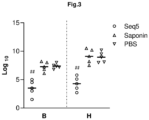
Figure 3 shows the parasite load (Log10) in animals immunised with the synthetic multi-epitope chimera characterised by SEQ ID NO: 5 (Seq5) and the animals inoculated with the Saponin and PBS controls and, subsequently, infected with L. infantum, both in the spleen (B) and the liver (H). - The present invention is illustrated by means of the following examples that are not intended to limit the scope thereof.
- To obtain the multi-epitope peptide chimera, firstly, multiple epitopes that are able to bind with high affinity to human and murine MHC-I and MHC-II molecules were selected. To do so, artificial neural networks were used to predict high-binding epitopes to human and murine MHC-I and MHC-II molecules and an in silico analysis was performed from four Leishmania antigens, the four histones: H2A, H2B, H3 and H4.
- Since the human population has great genetic diversity in the loci that encode MHCs, we analysed the proteins to be studied with respect to all the allelic variations that encode the human MHCs available in the NetMHC program databases (version 4.0) (Andreatta M, Nielsen M Gapped sequence alignment using artificial neural networks: application to the MHC class I system. Bioinformatics (2016) 15;32(4):511-7; Nielsen M. et al. Reliable prediction of T-cell epitopes using neural networks with novel sequence representations. Protein Sci., (2003) 12:1007-17) and NetMHCll (version 2.3) (Jensen KK, et al. Improved methods for predicting peptide binding affinity to MHC class II molecules. Immunology (2018) 154(3):394-406) for MHC-I and MHC-II, respectively. The different human alleles of the loci HLA (A, B, D and E) were checked for the class I epitopes, and the human alleles of the loci HLA (DR, DP and DQ) were checked for the class II epitopes, in addition to the murine alleles of the loci H-2 for class I molecules (K, D and L) and II (IA, I-E) of the MHC.
- The analysis was carried out with each of the four proteins used following a similar protocol, which is summarised below. Firstly, an analysis was carried out on the entire sequence of each protein divided into epitopes with a size of 9 mer (amino acids) that meet two criteria: that they exhibit high affinity for MHC-I (understanding affinity as the force of interaction between each of the epitopes with the different alleles of the problem loci), and that this affinity is maintained for the largest possible number of alleles different from the loci that encode human and murine MHC-I. Next, a search was carried out, from the sequence of each protein, for 15-mer epitopes with high affinity for the alleles of the loci that encode human and murine MHC-II. Between 100 and 133 different and potentially useful peptides were obtained from each protein from the computer program.
- Subsequently, a detailed study was conducted on the 15 amino acid sequences obtained. An analysis was carried out on which ones bound with high affinity to the largest number of alleles of the loci that encode human and murine MHC class I molecules, considering high affinity to be values <0.5%, following the criteria established by the programs used in the bioinformatic analysis and which compare this affinity with a set of 400,000 random natural peptides. Furthermore, it was established that said sequences had to encompass, simultaneously, 9 amino acid sequences that also exhibited high binding affinity to a large number of alleles of the human and murine loci that encode MHC class II (values <2% in this case). Lastly, some sequences were lengthened by manually adding amino acids to one or both ends, adding adjacent amino acids one by one to the preselected peptides of the protein in a variable number until each peptide had, at least, one high-affinity epitope with a large number of alleles (Table 2) of the loci where all the genes that encode human and murine MHC class I and class II are found.
Table 1. Selected peptide of each histone and SEQ ID NO that characterises it. Protein Selected peptide SEQ ID NO: H2A TAVLEYLTAELLELS 1 H2B RSLKAINAQMSMHRTMKIVNSYV 2 H3 EGLRFQSSAIMALQE 3 H4 ITRGCVRRMARRGGVK 4 Table 2. Number of allelic variants of each loci with which each of the peptides shows high affinity. MHC-I MHC-II SEQ ID NO: HLA-A HLA-B HLA-C and E H-2 HLA 17R HLA-DP HLA-DQ H-2 1 13 6 8 1 5 9 15 - 2 16 12 9 - 16 2 11 4 3 10 3 8 - 17 5 12 3 4 - 6 - - 6 1 3 2 - As a result, we selected four peptides (one for each protein, as shown in Table 1), characterised by SEQ ID NO: 1-4 and with a length of 15-24 amino acids, having the largest number of high-affinity epitopes with restrictive binding to MHC-I (restricted being understood to mean essentially binding to MHC-I), as well as at least one adjacent or overlapping MHC-II epitope also restricted by its high score, according to the affinity values described above, and with high values in terms of their affinity for the largest number of human and murine alleles in the analyses of the bioinformatic programs. These characteristics are shown in Table 2.
- Once the four multi-epitope peptides had been selected according to example 1, they were combined in a chimera according to the order: SEQ ID NO: 1 - 2 - 3 - 4, giving rise to the amino acid sequence TAVLEYLTAELLELSRSLKAINAQMSHRTMKIVNSYVEGL RFQSSAIMALQEITRGCVRRMARRGGVK, characterised by SEQ ID NO: 5, containing high-binding epitopes of the four histones H2A, H2B, H3 and H4.
- Using the computer programs described in example 1, the chimera characterised by SEQ ID NO: 5 was analysed in depth, verifying that it conserved the MHC class I and II epitopes. Furthermore, it was analysed using a new software prediction of epitopes with affinity for binding to T lymphocytes and B lymphocytes (NetTepi, version 1.0) (Trolle T, Nielsen M. NetTepi: an integrated method for the prediction of T cell epitopes. Immunogenetics (2014). 66(7-8):449-56). The chimera characterised by SEQ ID NO: 5 was positive for 9 of the 13 different alleles of the human MHC (HLA) of the common supertypes HLA-A and B. Common supertypes are considered to be clusters of allelic variations with common structural and functional characteristics that enable them to recognise very similar peptide epitopes. This chimera exhibited, furthermore, a high-affinity 9-mer epitope for, at least, one allelic variant of the loci that encode the chimpanzee, macaque, cow and pig MHC-I molecules. Lastly, and to rule out possible autoimmune side effects, an analysis of the multi-epitope chimera was carried out using the BLAST tool (Basic Local Alignment Search Tool) to rule out the existence of an identity greater than 90% to the human and murine proteome.
- To assess the immunogenicity of the synthetic multi-epitope chimera characterised by SEQ ID NO: 5, inoculations were performed subcutaneously in three groups of mice (n=8/group). The animals of one group, referred to as Seq5, were inoculated with 50 µg of the synthetic chimera characterised by SEQ ID NO: 5 and 25 µg of saponin, as an adjuvant; the animals of another group, saponin control group, were inoculated with 25 µg of saponin; and the PBS control group was inoculated with PBS (buffer in which both the synthetic multi-epitope chimera characterised by SEQ ID NO: 5 and the adjuvant were transported). The inoculation was carried out on the left rear plantar pad on
days 60, 45 and 30, with respect to day zero of infection, with a total volume of 50 µl. - Mice immunised with the chimera characterised by SEQ ID NO: 5, following the instructions of example 3, exhibited an immune response characterised by a protective Th1 cell response profile with the production of proinflammatory cytokines (IFN-y, IL-12) against the profile exhibited by the Saponin and PBS controls that had a predominantly Th2-type immune response, compatible with a susceptibility profile against infection by Leishmania and characterised by the production of anti-inflammatory cytokines (IL-4, IL-10). The predominance of the Th1-type response coincides with a redirection of the specific humoral response against the synthetic multi-epitope chimera to the IgG2a isotype related to a Th1 response. The displacement of the immune response in the group immunised with the chimera characterised by SEQ ID NO: 5 correlates with increased leishmanicidal activity in target cells infected with Leishmania.
-
Figure 1 shows the production of specific cytokines against restimulation with the chimera characterised by SEQ ID NO: 5 (indicated in the figure as Seq5) in animals immunised as described in example 3. Use was made of virgin bone marrow-derived dendritic cells (BMDC) stimulated with soluble Leishmania antigen (SLA; produced with the supernatants obtained after having lysed cultures of Leishmania promastigotes obtained after sonication and subsequent centrifugation), grey bars; or stimulated with the chimera characterised by SEQ ID NO: 5, white bars; unstimulated BMDC was used as negative control, indicated as N-E with black bars. The BMDCs were co-cultured with spleen cells, splenocytes, of the animals previously immunised as indicated in example 3. Cytokine production (pg/ml) was quantified using the ELISA technique. The data are presented as the mean ± standard deviation (SD). The hash marks indicate statistically significant differences (#, P < 0.05; ##, P <0.001) between the immunised groups and the two control groups (Saponin and PBS). The asterisk indicates statistically significant differences (*, P < 0.05; **, P < 0.001).Figure 1 shows how the splenocytes from the group immunised with the chimera characterised by SEQ ID NO: 5 produce a greater amount of IFN-γ, IL-12 and that this production is specific, in response to a previous stimulation with the chimera characterised by SEQ ID NO: 5 or with a set of total Leishmania antigens (SLA), but this does not occur when stimulating with PBS. Splenocytes from animals immunised with Saponin or PBS do not show this production of proinflammatory cytokines under any of the stimuli (SLA or chimera characterised by SEQ ID NO: 5). -
Figure 2 shows the percentage of infected target cells (% BMDC) and the number of intracellular amastigotes detected per cell (No./BMDC) at 24 and 72 hours of postinfection incubation. The leishmanicidal activity of the chimera characterised by SEQ ID NO: 5 (indicated in the figure as Seq5) was assessed in BMDC. Virgin BMDCs infected with L. infantum were co-cultured with splenocytes from animals previously immunised with the chimera characterised by SEQ ID NO: 5 as indicated in example 3, and with splenocytes from animals previously inoculated with the two controls used according to example 5. The parameters of infected cells and number of intracellular amastigotes were determined by optical microscopy. The data are presented as the mean ± SD. The hash marks indicate statistically significant differences (#, P < 0.05; ##, P < 0.001) between the immunised groups (black bars) and the two control groups: Saponin (grey bars) and PBS (white bars). As shown inFigure 2 , a significant increase is observed in the leishmanicidal potential that they induce in the BMDCs infected with L. infantum in the splenocytes from animals immunised with the chimera SEQ ID NO: 5 compared to the splenocytes of the animals in the control groups. The increase in leishmanicidal capacity is observed with a notable reduction in the percentage of infected BMDCs at 24 and 72 hours, as well as a lower number of intracellular amastigotes. This result correlates with the predominant protective immune response in the group immunised with SEQ ID NO: 5 as described above in this example andfigure 1 . - 30 days after the last immunisation carried out as described in example 3, an infection was intravenously performed with 5×10⁵ infective L. infantum promastigotes in the 3 groups of animals (which we have named Seq5, Saponin and PBS). 6 weeks after infection, the animals were euthanised and the parasite load in the VL target organs was assessed. The parasite count was carried out by decimal dilutions of spleen and liver macerates, separately, and their subsequent observation under a microscope. As shown
Figure 3 , it was observed that the animals immunised with the chimera characterised by SEQ ID NO: 5 (Seq5) exhibited a lower parasite load both in the spleen (B) and in the liver (H), compared to the Saponin and PBS groups. In other words, immunisation with SEQ NO: 5 is able to drastically decrease the amount of Leishmania that is present in the liver and spleen compared to the control groups. - Therefore, we conclude that the immune response induced during immunisation with the chimera characterised by SEQ ID NO: 5 is able to protect against infection with Leishmania and, more specifically, with L. infantum.
-
- Artificial sequence
- Multi-epitope chimera composed of SEQ ID NO: 1, 2, 3 and 4 of Leishmania infantum
Claims (9)
- A synthetic multi-epitope chimera comprising:a.- the peptides characterised by SEQ ID NO: 1, SEQ ID NO: 2, SEQ ID NO: 3 and SEQ ID NO: 4, arranged in any order and separated by 0-2 amino acids, giving rise to a sequence of 70-76 amino acids; orb.- modifications of the peptides characterised by SEQ ID NO: 1, SEQ ID NO: 2, SEQ ID NO: 3 and SEQ ID NO: 4, arranged in any order and separated by 0-2 amino acids, giving rise to a sequence of 70-76 amino acids with, at least, 95% identity to the sequence defined in a.-.
- The chimera according to claim 1 characterised by SEQ ID NO: 5 or with, at least, 95% identity to SEQ ID NO: 5.
- A pharmaceutical composition comprising a synthetic multi-epitope chimera defined in any of claims 1-2, for use in mammals.
- The pharmaceutical composition according to claim 3 comprising a pharmacologically acceptable excipient, carrier and/or adjuvant.
- The pharmaceutical composition according to claim 4, wherein the adjuvant is saponin.
- The pharmaceutical composition according to any of claims 3-5 for use in a prophylactic and/or therapeutic vaccine against Leishmania spp.
- A prophylactic and/or therapeutic vaccine against Leishmania spp. comprising a synthetic multi-epitope chimera according to any of claims 1-2 or a pharmaceutical composition according to any of claims 3-6.
- The prophylactic and/or therapeutic vaccine according to claim 7 for use against Leishmania infantum.
- The prophylactic and/or therapeutic vaccine according to any of claims 7-8 for use in humans and/or dogs.
Applications Claiming Priority (2)
| Application Number | Priority Date | Filing Date | Title |
|---|---|---|---|
| ES202030547A ES2795149B2 (en) | 2020-06-08 | 2020-06-08 | SYNTHETIC MULTIEPITOPIC CHIMERA AS A VACCINE AND TREATMENT AGAINST LEISHMANIOSIS IN MAMMALS |
| PCT/ES2021/070377 WO2021250299A1 (en) | 2020-06-08 | 2021-05-26 | Synthetic multi-epitope chimera as a vaccine and treatment for leishmaniasis in mammals |
Publications (2)
| Publication Number | Publication Date |
|---|---|
| EP4163303A1 true EP4163303A1 (en) | 2023-04-12 |
| EP4163303A4 EP4163303A4 (en) | 2024-09-25 |
Family
ID=73401255
Family Applications (1)
| Application Number | Title | Priority Date | Filing Date |
|---|---|---|---|
| EP21822305.5A Pending EP4163303A4 (en) | 2020-06-08 | 2021-05-26 | SYNTHETIC MULTIPLE EPITOPE CHIMERA AS VACCINE AND TREATMENT OF LEISHMANIASIS IN MAMMALS |
Country Status (5)
| Country | Link |
|---|---|
| EP (1) | EP4163303A4 (en) |
| BR (1) | BR112022025045A2 (en) |
| ES (1) | ES2795149B2 (en) |
| IL (1) | IL298918A (en) |
| WO (1) | WO2021250299A1 (en) |
Family Cites Families (14)
| Publication number | Priority date | Publication date | Assignee | Title |
|---|---|---|---|---|
| JPH09502091A (en) | 1993-09-03 | 1997-03-04 | マックギル ユニヴァーシティー | Leishmania genes and proteins that are specifically expressed |
| ES2133236B1 (en) | 1997-06-27 | 2000-04-16 | Leti Lab | CHEMICAL GENE FORMED BY THE DNA SEQUENCES CODING THE ANTIGENIC DETERMINANTS OF FOUR L. INFANTUM PROTEINS, APPLICABLE FOR THE SEROLOGICAL DIAGNOSIS OF CANINE LEISHMANIOSIS AND OBTAINED PROTEIN. |
| ES2273519T3 (en) | 1998-12-23 | 2007-05-01 | C.B.F. Leti S.A. | CHEMICAL GENE THAT CODIFIES THE FOUR PROTEIN ANTIGENIC DETERMINANTS OF L. INFANTUM. |
| MXPA03008832A (en) | 2001-03-29 | 2004-05-05 | Univ Mcgill | Leishmania vaccines. |
| BRPI0503187B8 (en) | 2005-05-16 | 2021-05-25 | Univ Rio De Janeiro | composition comprising fucose mannose ligand (fml) and saponin, for use as a blocking vaccine against the transmission of canine visceral leishmaniasis |
| BRPI0800485B8 (en) | 2008-01-17 | 2021-05-25 | Univ Minas Gerais | recombinant viral vectors, leishmaniasis vaccine composition and leishmaniasis vaccination method |
| BR112014001086A2 (en) | 2011-07-21 | 2017-02-21 | Consejo Superior De Investig Cientificas/Csic | chimeric molecule useful in leishmaniasis immunotherapy, which comprises a fragment of the leishmania infantum pfr1 protein with immunodominant specific epitopes |
| ES2415516B2 (en) * | 2011-12-23 | 2014-01-28 | Universidad Complutense De Madrid | CHEMERA MULTICOMPONENT FOR USE AS A VACCINE AGAINST INFECTION BY LEISHMANIA SPP. IN MAMMALS. |
| WO2014091463A1 (en) | 2012-12-14 | 2014-06-19 | Universidade Federal De Minas Gerais - Ufmg | Method for producing leishmania recombinant proteins and use in a diagnostic kit and vaccine against leishmaniases |
| FR3000402A1 (en) | 2012-12-28 | 2014-07-04 | Vibrac | MONO-OR MULTI-EPITOPIC PEPTIDE COMPOUNDS FOR THE PREVENTION AND TREATMENT OF LEISHMANIOSES |
| WO2014160987A2 (en) | 2013-03-28 | 2014-10-02 | Infectious Disease Research Institute | Vaccines comprising leishmania polypeptides for the treatment and diagnosis of leishmaniasis |
| ES2681227T3 (en) * | 2013-07-02 | 2018-09-12 | Institut De Recherche Pour Le Développement | Peptides and methods for the detection of leishmaniasis |
| BR102014031331A2 (en) | 2014-12-15 | 2018-08-14 | Universidade Federal De São João Del-Rei | recombinant multiepitope protein, its procurement process and its applications related to leishmaniasis |
| WO2019160971A1 (en) | 2018-02-13 | 2019-08-22 | University Of Iowa Research Foundation | Immunotherapy of leishmaniasis |
-
2020
- 2020-06-08 ES ES202030547A patent/ES2795149B2/en active Active
-
2021
- 2021-05-26 BR BR112022025045A patent/BR112022025045A2/en unknown
- 2021-05-26 WO PCT/ES2021/070377 patent/WO2021250299A1/en not_active Ceased
- 2021-05-26 IL IL298918A patent/IL298918A/en unknown
- 2021-05-26 EP EP21822305.5A patent/EP4163303A4/en active Pending
Also Published As
| Publication number | Publication date |
|---|---|
| IL298918A (en) | 2023-02-01 |
| ES2795149B2 (en) | 2022-07-04 |
| WO2021250299A1 (en) | 2021-12-16 |
| ES2795149A1 (en) | 2020-11-20 |
| BR112022025045A2 (en) | 2023-02-23 |
| EP4163303A4 (en) | 2024-09-25 |
Similar Documents
| Publication | Publication Date | Title |
|---|---|---|
| Dinc | Leishmania vaccines: the current situation with its promising aspect for the future | |
| Doolan et al. | Circumventing genetic restriction of protection against malaria with multigene DNA immunization: CD8+ cell-, interferon gamma-, and nitric oxide-dependent immunity. | |
| Casares et al. | Immune evasion by malaria parasites: a challenge for vaccine development | |
| Doolan et al. | DNA-based vaccines against malaria: status and promise of the Multi-Stage Malaria DNA Vaccine Operation | |
| RU2356577C9 (en) | Methods of malaria vaccination | |
| US20030138454A1 (en) | Vaccination method | |
| Cecílio et al. | Vaccines for human leishmaniasis: where do we stand and what is still missing? | |
| Damfo et al. | In silico design of knowledge-based Plasmodium falciparum epitope ensemble vaccines | |
| JP5623995B2 (en) | Use of specific histones for the treatment of parasitic diseases | |
| US8734806B2 (en) | Immunogenic composition and use thereof | |
| De Oliveira et al. | Challenges and perspectives in vaccination against leishmaniasis | |
| Rosado-Vallado et al. | Aluminium phosphate potentiates the efficacy of DNA vaccines against Leishmania mexicana | |
| US10919946B2 (en) | Chimeric molecule useful in immunotherapy for leishmaniasis, which includes a fragment of the PFR1 protein of leishmania infantum with specific immunodominant epitopes | |
| Bhalerao et al. | Exploring malaria parasite surface proteins to devise highly immunogenic multi-epitope subunit vaccine for Plasmodium falciparum | |
| Blake et al. | Genetic identification of antigens protective against coccidia | |
| Richie | High road, low road? Choices and challenges on the pathway to a malaria vaccine | |
| Tshilwane et al. | A multi-epitope DNA vaccine co-administered with monophosphoryl lipid A adjuvant provides protection against tick transmitted Ehrlichia ruminantium in sheep | |
| ES2546301T3 (en) | Composition containing Leishmania Lip2a | |
| ES2795149B2 (en) | SYNTHETIC MULTIEPITOPIC CHIMERA AS A VACCINE AND TREATMENT AGAINST LEISHMANIOSIS IN MAMMALS | |
| US8968749B2 (en) | Vaccine composition and immunization method | |
| US7749519B2 (en) | Unique DNA and polypeptide sequences based on the circumsporozoite protein of Plasmodium vivax | |
| Badhwar et al. | Essentials in Leishmaniasis Elimination | |
| US20110229514A1 (en) | Vaccine and immunization method using plasmodium antigen 2 | |
| Scorza et al. | Vaccination with a Plasmodium chabaudi adami multivalent DNA vaccine cross-protects A/J mice against challenge with P. c. adami DK and virulent Plasmodium chabaudi chabaudi AS parasites | |
| Dobaño et al. | Identification of minimal CD8+ and CD4+ T cell epitopes in the Plasmodium yoelii hepatocyte erythrocyte protein 17 kDa |
Legal Events
| Date | Code | Title | Description |
|---|---|---|---|
| STAA | Information on the status of an ep patent application or granted ep patent |
Free format text: STATUS: THE INTERNATIONAL PUBLICATION HAS BEEN MADE |
|
| PUAI | Public reference made under article 153(3) epc to a published international application that has entered the european phase |
Free format text: ORIGINAL CODE: 0009012 |
|
| STAA | Information on the status of an ep patent application or granted ep patent |
Free format text: STATUS: REQUEST FOR EXAMINATION WAS MADE |
|
| 17P | Request for examination filed |
Effective date: 20221221 |
|
| AK | Designated contracting states |
Kind code of ref document: A1 Designated state(s): AL AT BE BG CH CY CZ DE DK EE ES FI FR GB GR HR HU IE IS IT LI LT LU LV MC MK MT NL NO PL PT RO RS SE SI SK SM TR |
|
| P01 | Opt-out of the competence of the unified patent court (upc) registered |
Effective date: 20230802 |
|
| DAV | Request for validation of the european patent (deleted) | ||
| DAX | Request for extension of the european patent (deleted) | ||
| REG | Reference to a national code |
Ref country code: DE Ref legal event code: R079 Free format text: PREVIOUS MAIN CLASS: C07K0019000000 Ipc: A61K0039008000 |
|
| A4 | Supplementary search report drawn up and despatched |
Effective date: 20240823 |
|
| RIC1 | Information provided on ipc code assigned before grant |
Ipc: A61P 33/02 20060101ALI20240819BHEP Ipc: C07K 14/44 20060101ALI20240819BHEP Ipc: A61P 37/02 20060101ALI20240819BHEP Ipc: C12N 15/30 20060101ALI20240819BHEP Ipc: C07K 19/00 20060101ALI20240819BHEP Ipc: A61K 39/00 20060101ALI20240819BHEP Ipc: A61K 39/008 20060101AFI20240819BHEP |