EP4160490A2 - Verfahren und vorrichtung zur wissensbasierter beantwortung, verfahren und vorrichtung zur erzeugung eines wissensbasierten beantwortungssystems - Google Patents
Verfahren und vorrichtung zur wissensbasierter beantwortung, verfahren und vorrichtung zur erzeugung eines wissensbasierten beantwortungssystems Download PDFInfo
- Publication number
- EP4160490A2 EP4160490A2 EP22216308.1A EP22216308A EP4160490A2 EP 4160490 A2 EP4160490 A2 EP 4160490A2 EP 22216308 A EP22216308 A EP 22216308A EP 4160490 A2 EP4160490 A2 EP 4160490A2
- Authority
- EP
- European Patent Office
- Prior art keywords
- insurance
- rules
- user question
- rule
- question
- Prior art date
- Legal status (The legal status is an assumption and is not a legal conclusion. Google has not performed a legal analysis and makes no representation as to the accuracy of the status listed.)
- Withdrawn
Links
Images


Classifications
-
- G—PHYSICS
- G06—COMPUTING OR CALCULATING; COUNTING
- G06N—COMPUTING ARRANGEMENTS BASED ON SPECIFIC COMPUTATIONAL MODELS
- G06N5/00—Computing arrangements using knowledge-based models
- G06N5/04—Inference or reasoning models
-
- G—PHYSICS
- G06—COMPUTING OR CALCULATING; COUNTING
- G06F—ELECTRIC DIGITAL DATA PROCESSING
- G06F16/00—Information retrieval; Database structures therefor; File system structures therefor
- G06F16/30—Information retrieval; Database structures therefor; File system structures therefor of unstructured textual data
- G06F16/33—Querying
- G06F16/332—Query formulation
- G06F16/3329—Natural language query formulation
-
- G—PHYSICS
- G06—COMPUTING OR CALCULATING; COUNTING
- G06F—ELECTRIC DIGITAL DATA PROCESSING
- G06F16/00—Information retrieval; Database structures therefor; File system structures therefor
- G06F16/30—Information retrieval; Database structures therefor; File system structures therefor of unstructured textual data
- G06F16/33—Querying
- G06F16/3331—Query processing
- G06F16/334—Query execution
- G06F16/3344—Query execution using natural language analysis
-
- G—PHYSICS
- G06—COMPUTING OR CALCULATING; COUNTING
- G06F—ELECTRIC DIGITAL DATA PROCESSING
- G06F16/00—Information retrieval; Database structures therefor; File system structures therefor
- G06F16/30—Information retrieval; Database structures therefor; File system structures therefor of unstructured textual data
- G06F16/35—Clustering; Classification
-
- G—PHYSICS
- G06—COMPUTING OR CALCULATING; COUNTING
- G06F—ELECTRIC DIGITAL DATA PROCESSING
- G06F16/00—Information retrieval; Database structures therefor; File system structures therefor
- G06F16/30—Information retrieval; Database structures therefor; File system structures therefor of unstructured textual data
- G06F16/36—Creation of semantic tools, e.g. ontology or thesauri
- G06F16/367—Ontology
-
- G—PHYSICS
- G06—COMPUTING OR CALCULATING; COUNTING
- G06F—ELECTRIC DIGITAL DATA PROCESSING
- G06F40/00—Handling natural language data
- G06F40/20—Natural language analysis
- G06F40/279—Recognition of textual entities
- G06F40/289—Phrasal analysis, e.g. finite state techniques or chunking
-
- G—PHYSICS
- G06—COMPUTING OR CALCULATING; COUNTING
- G06F—ELECTRIC DIGITAL DATA PROCESSING
- G06F40/00—Handling natural language data
- G06F40/30—Semantic analysis
-
- G—PHYSICS
- G06—COMPUTING OR CALCULATING; COUNTING
- G06N—COMPUTING ARRANGEMENTS BASED ON SPECIFIC COMPUTATIONAL MODELS
- G06N5/00—Computing arrangements using knowledge-based models
- G06N5/02—Knowledge representation; Symbolic representation
-
- G—PHYSICS
- G06—COMPUTING OR CALCULATING; COUNTING
- G06N—COMPUTING ARRANGEMENTS BASED ON SPECIFIC COMPUTATIONAL MODELS
- G06N5/00—Computing arrangements using knowledge-based models
- G06N5/02—Knowledge representation; Symbolic representation
- G06N5/022—Knowledge engineering; Knowledge acquisition
- G06N5/025—Extracting rules from data
-
- G—PHYSICS
- G06—COMPUTING OR CALCULATING; COUNTING
- G06Q—INFORMATION AND COMMUNICATION TECHNOLOGY [ICT] SPECIALLY ADAPTED FOR ADMINISTRATIVE, COMMERCIAL, FINANCIAL, MANAGERIAL OR SUPERVISORY PURPOSES; SYSTEMS OR METHODS SPECIALLY ADAPTED FOR ADMINISTRATIVE, COMMERCIAL, FINANCIAL, MANAGERIAL OR SUPERVISORY PURPOSES, NOT OTHERWISE PROVIDED FOR
- G06Q30/00—Commerce
- G06Q30/01—Customer relationship services
- G06Q30/015—Providing customer assistance, e.g. assisting a customer within a business location or via helpdesk
-
- G—PHYSICS
- G06—COMPUTING OR CALCULATING; COUNTING
- G06Q—INFORMATION AND COMMUNICATION TECHNOLOGY [ICT] SPECIALLY ADAPTED FOR ADMINISTRATIVE, COMMERCIAL, FINANCIAL, MANAGERIAL OR SUPERVISORY PURPOSES; SYSTEMS OR METHODS SPECIALLY ADAPTED FOR ADMINISTRATIVE, COMMERCIAL, FINANCIAL, MANAGERIAL OR SUPERVISORY PURPOSES, NOT OTHERWISE PROVIDED FOR
- G06Q40/00—Finance; Insurance; Tax strategies; Processing of corporate or income taxes
- G06Q40/08—Insurance
-
- G—PHYSICS
- G06—COMPUTING OR CALCULATING; COUNTING
- G06N—COMPUTING ARRANGEMENTS BASED ON SPECIFIC COMPUTATIONAL MODELS
- G06N3/00—Computing arrangements based on biological models
- G06N3/02—Neural networks
- G06N3/04—Architecture, e.g. interconnection topology
- G06N3/0499—Feedforward networks
Definitions
- the invention provides a method and an apparatus for knowledge answering, a method and an apparatus for generating a knowledge answering system, which relates to the field of artificial intelligence, in particular to the fields of intelligent search, knowledge graph, and natural language processing.
- the invention provides a method and an apparatus for knowledge answering, a method and an apparatus for generating a knowledge answering system, a device and a storage medium, so as to clarify the user intent and further provide a more precise answer.
- a knowledge answering method is performed by an electronic device.
- the method includes: receiving a user question entered by a client, and obtaining a target insurance rule matching the user question from a plurality of insurance rules; searching for an answer in an insurance knowledge graph based on the target insurance rule, in which the insurance knowledge graph is generated based on the plurality of insurance rules; and returning the answer to the client.
- a method for generating a knowledge answering system is performed by an electronic device.
- the method includes: extracting a plurality of insurance rules based on insurance information by using a pre-trained extraction model; generating an insurance knowledge graph based on the plurality of insurance rules, in which each of the insurance rules is presented as a triplet in the insurance knowledge graph; and generating a reasoning engine based on the plurality of insurance rules, in which the reasoning engine is configured to: receive a user question entered by a client, and obtain a target insurance rule matching the user question from the plurality of insurance rules; search for an answer in the insurance knowledge graph based on the target insurance rule; and return the answer to the client.
- a knowledge answering apparatus includes: a match module, a search module and a feedback module.
- the match module is configured to receive a user question entered by a client, and obtain a target insurance rule matching the user question from a plurality of insurance rules.
- the search module is configured to search for an answer in an insurance knowledge graph based on the target insurance rule, in which the insurance knowledge graph is generated based on the plurality of insurance rules.
- the feedback module is configured to return the answer to the client.
- an apparatus for generating a knowledge answering system includes: an extract module, a graph generation module and an engine generation module.
- the extract module is configured to extract a plurality of insurance rules based on insurance information by using a pre-trained extraction model.
- the graph generation module is configured to generate an insurance knowledge graph based on the plurality of insurance rules, in which each of the insurance rules is presented as a triplet in the insurance knowledge graph.
- the engine generation module is configured to generate a reasoning engine based on the plurality of insurance rules, in which the reasoning engine is configured to: receive a user question entered by a client, and obtain a target insurance rule matching the user question from the plurality of insurance rules; search for an answer in the insurance knowledge graph based on the target insurance rule; and return the answer to the client.
- an electronic device includes: at least one processor and a memory communicatively coupled to the at least one processor.
- the memory stores instructions executable by the at least one processor, and when the instructions are executed by the at least one processor, the at least one processor is caused to implement the method according to the first aspect of the invention or the method according to the second aspect of the invention.
- a non-transitory computer-readable storage medium storing computer instructions.
- the computer instructions are configured to cause a computer to implement the method according to the first aspect of the invention or the method according to the second aspect of the invention.
- a computer program product including computer programs is provided.
- the computer programs are executed by a processor, the method according to the first aspect of the invention or the method according to the second aspect of the invention is implemented.
- the user's intention can be clarified, to further provide a more accurate answer.
- the technical solution used in the existing customer scenarios includes: retrieving a historical question and answer database using retrieval techniques or Deep Neural Networks (DNN), determining a similarity, obtaining the first K relevant questions ranked according to the similarity, returning the relevant questions and answers to the user for selection.
- DNN Deep Neural Networks
- the disadvantages of this technical solution are that it has high requirements on data of the historical question and answer database, e.g., it cannot be used in a scene without historical question and answer data; the returned answers are not accurate, e.g., the returned questions do not match the user question; and multiple rounds of questions and answers cannot be resolved.
- the invention provides a method and an apparatus for knowledge answering, a method and an apparatus for generating a knowledge answering system, a device and a storage medium, to clarify the user intent and further provide a more precise answer in multiple rounds of questions and answers.
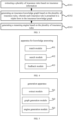
- FIG. 1 is a flowchart of the knowledge answering method according to the embodiment of the invention. It is noted that the knowledge answering method of the invention may be applied to a knowledge answering apparatus of the invention.
- the knowledge answering apparatus may be configured on an electronic device. As illustrated in FIG. 1 , the knowledge answering method may include the following steps at S101-S103.
- a user question entered by a client is obtained, and a target insurance rule matching the user question is obtained from a plurality of insurance rules.
- the plurality of insurance rules are extracted from massive insurance documents.
- the key information is extracted from the insurance documents, such as the insurance name, the cooling-off period, the policy period and the scope of exclusion.
- the extracted key information is manually formed into the form of insurance rules.
- the insurance rules are divided into primary rules and sub-rules to generate interrelationship or subordination relation between the insurance rules, and a triplet is generated based on a relationship among the subjects of each insurance rule.
- Obtaining the target insurance rule matching the user question from the plurality of insurance rules refers to locating an insurance rule involving in the user question from the plurality of insurance rules.
- a certain insurance rule can be directly determined through matching.
- the user question is ambiguous and initially matches to multiple insurance rules in all the insurance rules.
- multiple questions are provided for the user based on a portion of the matched insurance rules that is irrelevant the user question, and in the process of asking multiple questions, the actual meaning/ intention of the user question is further clarified. After the user intention is clear, the answer can be searched.
- an answer is searched in an insurance knowledge graph based on the target insurance rule, in which the insurance knowledge graph is generated based on the plurality of insurance rules.
- each insurance rule is presented as a Subject-Predication-Object (SPO) triplet.
- SPO Subject-Predication-Object
- Multiple SPO triplets are connected one by one and are written to a graph database corresponding to the insurance knowledge graph. That is, all the insurance rules together constitute a triplet network structure including primary rules and sub-rules.
- the relevant answers to the user question are searched in the insurance knowledge graph based on the matched insurance rule.
- the answer obtained by searching the insurance knowledge graph is fed back to the client through a reasoning engine.
- the insurance rules matching the user question are obtained from the plurality of insurance rules, a more accurate answer is obtained by querying based on the matched insurance rule, the insurance knowledge graph generated based on the insurance rules, and the answer is fed back to the client.
- FIG. 2 is a flowchart of the method for knowledge answering according to the embodiment of the invention. As illustrated in FIG. 2 , the method for knowledge answering may include the following steps at S201-S205.
- the user question entered by the client is obtained, and a match result is obtained by matching the user question with the plurality of insurance rules, in which the match result includes at least one insurance rule involving in the user question.
- the user question entered by the client is obtained, and invalid contents in the user question are filtered, and the target insurance rule matching the user question is obtained from the plurality of insurance rules based on the filtered user question.
- the match result is obtained by matching the user question with the plurality of insurance rules, in which the match result includes at least one insurance rule. That is, multiple insurance rules can be matched based on the user question.
- the insurance rule library includes 10 kinds of insurance. Since each kind of insurance has a hundred insurance rules, 10 kinds of insurance have 1000 insurance rules. At first, the user question is matched with these 1000 insurance rules.
- Example 1 the user question is "How long is the cooling-off period?", since the user question is ambiguous, 10 matched insurance rules that contain the term "cooling-off period" are obtained.
- the user question is very precise.
- the user question is "How long is the cooling-off period of XX comprehensive personal accident insurance I?”
- the user question contains the exact type of insurance, so it is possible to filter 100 insurance rules out of the 1000 insurance rules and locate one of the 100 insurance rules based on the term "cooling-off period". In this case, an insurance rule matching the user question is directly obtained.
- the user question entered by the client has nothing to do with the insurance. For example, if the user is just chatting and the user question entered by the client does not address any insurance rule, for example, "what time do you get to work?", the user question may be ignored and unaddressed, or "This system does not involve this question" is automatically replied. The user may not be questioned based on the contents included in the insurance rule until at least one insurance rule is mentioned in the user question raised by the client.
- the method for determining whether the user question matches with the insurance rule can include simple judgment and deep judgment.
- the simple judgment method includes: obtaining a plurality of regularized insurance rules by performing a regular process on the plurality of insurance rules, and obtaining the match result by matching the user question with the plurality of regularized insurance rules.
- the regular process is performed on all the existing insurance rules in the insurance rule library. Matching the user question entered by the client with the plurality of insurance rules is that, re.match function of regular expression is directly used to determine whether the user question is matched to an insurance rule.
- the input of re.match function is the user question, and the processing logic is to match the user question directly to an insurance rule character string, which is simple and efficient.
- the user question entered by the client is: "how long is an effectiveness reinstatement period of XX comprehensive personal accident insurance I?"
- the following insurance rule can be matched accurately by using the simple judgment method: ⁇ type of insurance: XX comprehensive personal accident insurance I, reinstatement period: within 2 years after the suspension of this contract, the policyholder can apply for reinstatement of the contract ⁇ .
- the depth judgment method includes: obtaining the match result by determining whether the user question matches each insurance rule through a preset question-answer model, in which the preset question-answer model is configured to perform binary classification determining on inputs consisted of the user question and each insurance rule, i.e., yes if the user question matches the insurance rule, or no if the user question does not match the insurance rule.
- the preset question-answer model can segment the natural language, and convert the segmented words into a sequence, and determine the semantic similarity based on the sequence, which can produce deep understanding of the words, and lead to a larger matching range.
- a structure of the preset question-answer model has a pre-trained Enhanced Representation through Knowledge Integration (ERNIE) model and a full connection (FC) structure.
- ERNIE Enhanced Representation through Knowledge Integration
- FC full connection
- the effectiveness of the ERNIE model is verified on a number of public Chinese datasets, and the effects of the ERNIE model on natural language processing tasks such as language inference, semantic similarity, named entity recognition, sentiment analysis and question answering, are all good.
- FC can be understood as a fully connected layer, or some multilayer perceptron.
- the simple judgment method is performed at first, and if there is no match, the deep judgment method is then performed.
- a system question is sent to the client in a preset order based on portions irrelevant to the user question of the insurance rules in the match result, and a current match result is obtained by continuing to match a user reply feedback by the client with the match result until an insurance rule is included in the current match result.
- 10 insurance rules are obtained by matching firstly based on the user question. Further, the user is questioned in an order from the primary rule to the sub-rule according to the unmentioned portions of the 10 matched insurance rules.
- the primary rule in the 10 insurance rules are the type of insurance or the name of insurance, that is, it is not clear what kind of insurance the "Cooling-off period" belongs to.
- the first question sent to the client is "What kind of insurance are you talking about?", and if the client reply is "XX accident insurance 1", an insurance rule including the cooling-off period of XX accident insurance 1 is determined from the 10 insurance rules based on the client reply.
- the implementation method is judgment, which is implemented through an if-while sentence.
- the questions are continued to send to the client, such as, "accident insurance 1 or 2?”, until a complete insurance rule is matched.
- the system question is sent to the client in the preset order.
- the preset order here is in turn. That is, according to the portions of the initially matched insurance rules that do not involve the user question, questions are sent to the client in the order from primary nodes to sub-nodes. It can also be that questions are raised in multiple rounds based on the initially matched insurance rules until one matched insurance rule is obtained, that is, an accurate insurance rule is located.
- the user question from the client may be terminated.
- the user question from the client is "swimming insurance”, but the insurance type does not include the swimming insurance, that is, the user question from the client does not match any insurance rule, then "This question is not included” or other replies is returned, and the question and answer process is terminated.
- the insurance rule included in the current match result is determined as the target insurance rule.
- the final matched insurance rule is selected and determined as the target insurance rule, and the target insurance rule is the search basis of the insurance knowledge graph.
- an answer is searched in an insurance knowledge graph based on the target insurance rule, in which the insurance knowledge graph is generated based on the plurality of insurance rules.
- the target insurance rule is transformed into a graph query sentence that is written via gremlin (i.e., the graph traversal language) and the answer is searched in the insurance knowledge graph based on the graph query sentence.
- gremlin i.e., the graph traversal language
- the matched insurance rule is: insurance name - cooling-off period - time.
- the answer can be searched directly in the insurance knowledge graph and the answer, such as, "10 days" can be fed back to the client.
- the query result fed back from the insurance knowledge graph is determined as the answer of the user question for the client, and the answer after processing is returned to the client.
- the searched answer is processed, i.e., it is tuned, and the tuned answer is fed back to the client.
- the user question is "How long is the cooling-off period for XX insurance?", and the answer after searching the insurance knowledge graph is "10 days”. At this time, instead of sending the answer directly to the client, the user question is combined with the answer to generate a complete answer "The cooling-off period of XX insurance is 10 days", and the complete answer is then fed back to the client.
- the insurance rule matching the user question is obtained from the plurality of insurance rules through multiple rounds of question and answer, thus the specific meaning of the user question can be clarified through the multiple rounds of question and answer. Then, the only answer can be obtained by querying the insurance knowledge graph generated according to the insurance rules based on the matched insurance rule, and the obtained more accurate answer is returned to the client.
- FIG. 3 is a flowchart of the method for generating a knowledge answering system according to the embodiment of the invention. It is to be noted that the method may be applied to an apparatus for generating a knowledge answering system according to the embodiment of the invention.
- the apparatus may be configured/integrated in an electronic device. As illustrated in FIG. 3 , the method may include the following steps.
- a plurality of insurance rules are extracted based on insurance information.
- an extraction model is used to extract the insurance rules based on a large number of insurance documents.
- the process of extracting the insurance rules from multiple insurance entries by using the extraction model is provided as follows.
- annotated insurance contracts which are obtained by annotating a first type of insurance contracts with locations of key information, i.e., selecting the locations throughout the whole insurance contract.
- the extraction model is trained based on the multiple annotated insurance contracts to obtain the trained extraction model.
- the extraction of insurance rules is performed on a second type of insurance contracts by using the trained extraction model.
- the trained extraction model is used to select information corresponding to the locations in the second type of insurance contracts, such as, "insurance name”, "cooling-off period", and "10 days”.
- manual filtering e.g., manually checking and making up deficiency
- manual filtering e.g., manually checking and making up deficiency
- the extracted information is also processed manually in the form of insurance rules, and the plurality of insurance rules are divided into the primary rules and sub-rules, so as to generate interrelated or subordinate relationships between the plurality of insurance rules, and generate a triplet based on the relationships among the subjects of each insurance rule.
- the extracted insurance rules are provided as follows through examples.
- Example 1 ⁇ "from_file”: “Insurance Annotation Data - Wang.xlsx”, “paragraph_text”: “The cooling-off period is 10 days from the date you sign this additional contract”, “complete”: 1.0, "object”: ["10 days”], “predicate”: “cooling-off_period”, “label”: “yes”, “query_text”: “cooling-off_period”, “subject”: “” ⁇ .
- each insurance rule is stored in a JavaScript Object Notation (JSON) form, that is, the insurance rule is stored as a dictionary in python, with many Key-Value pairs.
- JSON JavaScript Object Notation
- an insurance rule is: Insurance name: XX Comprehensive Personal Accident Insurance I; cooling-off period: 10 days.
- Python is an interpreted, object-oriented, dynamic data high-level programming design language.
- an insurance knowledge graph is generated based on the plurality of insurance rules, in which each insurance rule is presented in a triplet in the insurance knowledge graph.
- the insurance knowledge graph is generated based on the obtained insurance rules, which are presented by the SPO triplet. Multiple SPO triplets are connected one by one and written to the graph database corresponding to the insurance knowledge graph.
- the triplet is provided as follows through examples.
- Example 1 S: XX comprehensive personal accident insurance I, P: statute of limitation, O: two years.
- Example 2 S: XX comprehensive personal accident insurance I, P: General approval time for benefit payment, O: 5 days.
- the identical S is determined as the same node to generate the insurance knowledge graph.
- each insurance rule is represented by SPO, and S in the primary rule is the insurance name, i.e., the type of insurance. It is possible that S in a sub-rule is O in the primary rule.
- an insurance rule is: S is XX comprehensive personal accident insurance I, P is not covered by the insurance, O represents an ID that points to the next insurance rule. Since there are many situations that are not covered by the insurance and cannot be reflected in one insurance rule, the next insurance rule that is pointed includes: those that are not covered/insured, such as alcoholism, and drug addiction, which are sub-rules. Then, an association relationship similar to the relationship between the primary rule and the sub-rule is formed.
- a reasoning engine is generated based on the plurality of insurance rules, in which the reasoning engine is configured to: obtain a user question entered by a client, and obtain a target insurance rule matching the user question from the plurality of insurance rules; search for an answer in the insurance knowledge graph based on the target insurance rule; and return the answer to the client.
- the whole working process of the reasoning engine includes:
- the insurance rules are extracted from massive existing insurance documents, the insurance graph is generated based on the insurance rules, and the reasoning engine is generated based on the insurance rules.
- the reasoning engine can understand the user intention clearly in the multiple rounds of question and answer, and provide a more precise answer, thereby greatly reducing labor costs
- FIG. 4 is a schematic diagram of an apparatus for knowledge answering according to the embodiment of the invention. As illustrated in FIG. 4 , the apparatus includes: a match module 401, a search module 402 and a feedback module 403.
- the match module 401 is configured to obtain a user question entered by a client, and obtain a target insurance rule matching the user question from a plurality of insurance rules.
- the search module 402 is configured to search for an answer in an insurance knowledge graph based on the target insurance rule, in which the insurance knowledge graph is generated based on the plurality of insurance rules.
- the feedback module 403 is configured to return the answer to the client.
- the match module 401 is further configured to:
- the match module 401 when obtaining the match result by matching the user question with the plurality of insurance rules, is configured to:
- the match module 401 when obtaining the match result by matching the user question with the plurality of insurance rules, is configured to: obtain the match result by determining whether the user question matches each insurance rule through a preset question-answer model, in which the preset question-answer model is configured to perform binary classification determining on inputs consisted of the user question and each insurance rule.
- the match module 401 is further configured to:
- the insurance rule matching the user question is obtained from the plurality of insurance rules through multiple rounds of question and answer, thus the specific meaning of the user question can be clarified through the multiple rounds of question and answer. Then, the only answer can be obtained by querying the insurance knowledge graph generated according to the insurance rules based on the matched insurance rule, and the obtained more accurate answer is returned to the client.
- FIG. 5 is a schematic diagram of the apparatus for generating a knowledge answering system according to the embodiment of the invention. As illustrated in FIG. 5 , the apparatus includes: an extract module 501, a graph generation module 502 and an engine generation module 503.
- the extract module 501 is configured to extract a plurality of insurance rules based on insurance information.
- the graph generation module 502 is configured to generate an insurance knowledge graph based on the plurality of insurance rules, in which each insurance rule is presented as a triplet in the insurance knowledge graph.
- the engine generation module 503 is configured to generate a reasoning engine based on the plurality of insurance rules, wherein the reasoning engine is configured to:
- the insurance rules are extracted from massive existing insurance documents, the insurance graph is generated based on the insurance rules, and the reasoning engine is generated based on the insurance rules.
- the reasoning engine can understand the user intention clearly in the multiple rounds of question and answer, and provide a more precise answer, thereby greatly reducing labor costs
- the invention also provides an electronic device and a readable storage medium.
- FIG. 6 is a block diagram of an electronic device used to implement a knowledge answering method or a method for generating a knowledge answering system according to the embodiments of the invention.
- Electronic devices are intended to represent various forms of digital computers, such as laptop computers, desktop computers, workbenches, personal digital assistants, servers, blade servers, mainframe computers, and other suitable computers.
- Electronic devices may also represent various forms of mobile devices, such as personal digital processing, cellular phones, smart phones, wearable devices, and other similar computing devices.
- the components shown here, their connections and relations, and their functions are merely examples, and are not intended to limit the implementation of the invention described and/or required herein.
- the electronic device includes: one or more processors 601, a memory 602, and interfaces for connecting various components, including a high-speed interface and a low-speed interface.
- the various components are interconnected using different buses and can be mounted on a common mainboard or otherwise installed as required.
- the processor may process instructions executed within the electronic device, including instructions stored in or on the memory to display graphical information of the GUI on an external input/output device such as a display device coupled to the interface.
- a plurality of processors and/or buses can be used with a plurality of memories and processors, if desired.
- a plurality of electronic devices can be connected, each providing some of the necessary operations (for example, as a server array, a group of blade servers, or a multiprocessor system).
- a processor 601 is taken as an example in FIG. 6 .
- the memory 602 is a non-transitory computer-readable storage medium according to the invention.
- the memory stores instructions executable by at least one processor, so that the at least one processor executes the knowledge answering method or the method for generating a knowledge answering system according to the invention.
- the non-transitory computer-readable storage medium of the invention stores computer instructions, which are used to cause a computer to execute the knowledge answering method or the method for generating a knowledge answering system according to the invention.
- the memory 602 is configured to store non-transitory software programs, non-transitory computer-executable programs and modules, such as program instructions/modules (e.g., the match module 401, the search module 402 and the feedback module 403 shown in FIG. 4 , or the extraction module 501, the graph generation module 502 and the engine generation module 503 shown in FIG. 5 ) corresponding to the knowledge answering method or the method for generating a knowledge answering system according to the embodiments of the invention.
- the processor 601 executes various functional applications and data processing of the server by running the non-transitory software programs, instructions, and modules stored in the memory 602, to implement the knowledge answering method or the method for generating a knowledge answering system in the above method embodiments.
- the memory 602 may include a storage program area and a storage data area, where the storage program area may store an operating system and application programs required for at least one function.
- the storage data area may store data created according to the use of the electronic device for implementing the knowledge answering method or the method for generating a knowledge answering system.
- the memory 602 may include a high-speed random access memory, and a non-transitory memory, such as at least one magnetic disk storage device, a flash memory device, or other non-transitory solid-state storage device.
- the memory 602 may optionally include a memory remotely disposed with respect to the processor 601, and these remote memories may be connected to the electronic device for implementing the knowledge answering method or the method for generating a knowledge answering system through a network. Examples of the above network include, but are not limited to, the Internet, an intranet, a local area network, a mobile communication network, and combinations thereof.
- the electronic device for implementing the knowledge answering method or the method for generating a knowledge answering system through a network may further include: an input device 603 and an output device 604.
- the processor 601, the memory 602, the input device 603 and the output device 604 may be connected by a bus or in other ways, and the connection by a bus is taken as an example in FIG. 6 .
- the input device 603 may receive inputted numeric or character information, and generate key signal inputs related to user settings and function control of an electronic device for implementing the knowledge answering method or the method for generating a knowledge answering system, such as a touch screen, a keypad, a mouse, a trackpad, a touchpad, an indication rod, one or more mouse buttons, trackballs, joysticks and other input devices.
- the output device 604 may include a display device, an auxiliary lighting device (for example, an LED), a haptic feedback device (for example, a vibration motor), and the like.
- the display device may include, but is not limited to, a Liquid Crystal Display (LCD), a Light Emitting Diode (LED) display, and a plasma display. In some embodiments, the display device may be a touch screen.
- Various embodiments of the systems and technologies described herein may be implemented in digital electronic circuit systems, integrated circuit systems, Application Specific Integrated Circuits (ASICs), computer hardware, firmware, software, and/or combinations thereof. These various embodiments may be implemented in one or more computer programs, which may be executed and/or interpreted on a programmable system including at least one programmable processor.
- the programmable processor may be dedicated or general purpose programmable processor that receives data and instructions from a storage system, at least one input device, and at least one output device, and transmits the data and instructions to the storage system, the at least one input device, and the at least one output device.
- machine-readable medium and “computer-readable medium” refer to any computer program product, device, and/or device used to provide machine instructions and/or data to a programmable processor (for example, magnetic disks, optical disks, memories, Programmable Logic Devices (PLDs), including machine-readable media that receive machine instructions as machine-readable signals.
- machine-readable signal refers to any signal used to provide machine instructions and/or data to a programmable processor.
- the systems and techniques described herein may be implemented on a computer having a display device (e.g., a Cathode Ray Tube (CRT) or a LCD monitor for displaying information to a user); and a keyboard and pointing device (such as a mouse or trackball) through which the user can provide input to the computer.
- a display device e.g., a Cathode Ray Tube (CRT) or a LCD monitor for displaying information to a user
- a keyboard and pointing device such as a mouse or trackball
- Other kinds of devices may also be used to provide interaction with the user.
- the feedback provided to the user may be any form of sensory feedback (e.g., visual feedback, auditory feedback, or haptic feedback), and the input from the user may be received in any form (including acoustic input, voice input, or tactile input).
- the systems and technologies described herein can be implemented in a computing system that includes background components (for example, a data server), or a computing system that includes middleware components (for example, an application server), or a computing system that includes front-end components (for example, a user computer with a graphical user interface or a web browser, through which the user can interact with the implementation of the systems and technologies described herein), or a computing system that includes any combination of such background components, intermediate computing components, or front-end components.
- the components of the system may be interconnected by any form or medium of digital data communication (e.g., a communication network). Examples of communication networks include: a Local Area Network (LAN), a Wide Area Network (WAN), the Internet and the block-chain network.
- LAN Local Area Network
- WAN Wide Area Network
- the Internet the block-chain network.
- the computer system may include a client and a server.
- the client and server are generally remote from each other and interacting through a communication network.
- the client-server relation is generated by computer programs running on the respective computers and having a client-server relation with each other.
- the server may be a cloud server, also known as a cloud computing server or a cloud host, which is a host product in the cloud computing service system, to solve the defects of difficult management and weak business scalability in the traditional physical host and Virtual Private Server (VPS) service.
- the server can also be a server of distributed system or a server combined with block-chain.
Landscapes
- Engineering & Computer Science (AREA)
- Theoretical Computer Science (AREA)
- Physics & Mathematics (AREA)
- General Physics & Mathematics (AREA)
- General Engineering & Computer Science (AREA)
- Computational Linguistics (AREA)
- Artificial Intelligence (AREA)
- Data Mining & Analysis (AREA)
- Mathematical Physics (AREA)
- Business, Economics & Management (AREA)
- Finance (AREA)
- Accounting & Taxation (AREA)
- Databases & Information Systems (AREA)
- Evolutionary Computation (AREA)
- Computing Systems (AREA)
- Software Systems (AREA)
- Economics (AREA)
- General Business, Economics & Management (AREA)
- Strategic Management (AREA)
- Marketing (AREA)
- Development Economics (AREA)
- General Health & Medical Sciences (AREA)
- Audiology, Speech & Language Pathology (AREA)
- Health & Medical Sciences (AREA)
- Technology Law (AREA)
- Human Computer Interaction (AREA)
- Life Sciences & Earth Sciences (AREA)
- Animal Behavior & Ethology (AREA)
- Financial Or Insurance-Related Operations Such As Payment And Settlement (AREA)
- Information Retrieval, Db Structures And Fs Structures Therefor (AREA)
Applications Claiming Priority (1)
| Application Number | Priority Date | Filing Date | Title |
|---|---|---|---|
| CN202111608492.9A CN114416935A (zh) | 2021-12-24 | 2021-12-24 | 知识问答处理方法及知识问答系统的构建方法、装置 |
Publications (2)
| Publication Number | Publication Date |
|---|---|
| EP4160490A2 true EP4160490A2 (de) | 2023-04-05 |
| EP4160490A3 EP4160490A3 (de) | 2023-05-03 |
Family
ID=81269117
Family Applications (1)
| Application Number | Title | Priority Date | Filing Date |
|---|---|---|---|
| EP22216308.1A Withdrawn EP4160490A3 (de) | 2021-12-24 | 2022-12-23 | Verfahren und vorrichtung zur wissensbasierter beantwortung, verfahren und vorrichtung zur erzeugung eines wissensbasierten beantwortungssystems |
Country Status (3)
| Country | Link |
|---|---|
| US (1) | US20230127654A1 (de) |
| EP (1) | EP4160490A3 (de) |
| CN (1) | CN114416935A (de) |
Cited By (2)
| Publication number | Priority date | Publication date | Assignee | Title |
|---|---|---|---|---|
| CN118505237A (zh) * | 2024-05-27 | 2024-08-16 | 江苏思行达信息技术股份有限公司 | 基于国产大模型的电力营业厅智能客服系统及使用方法 |
| US12271498B2 (en) | 2023-08-21 | 2025-04-08 | Optum, Inc. | Graph-based data compliance using natural language text |
Families Citing this family (5)
| Publication number | Priority date | Publication date | Assignee | Title |
|---|---|---|---|---|
| US11741305B2 (en) * | 2019-10-07 | 2023-08-29 | The Toronto-Dominion Bank | Systems and methods for automatically assessing fault in relation to motor vehicle collisions |
| CN115269804A (zh) * | 2022-08-03 | 2022-11-01 | 中国银行股份有限公司 | 一种答复方法、装置、设备及存储介质 |
| CN115422334A (zh) * | 2022-08-26 | 2022-12-02 | 网易(杭州)网络有限公司 | 信息处理方法、装置、电子设备及存储介质 |
| CN115357687A (zh) * | 2022-09-14 | 2022-11-18 | 阳光保险集团股份有限公司 | 保险产品的数据处理方法、装置以及电子设备 |
| US20240427918A1 (en) * | 2023-06-21 | 2024-12-26 | Cisco Technology, Inc. | Systems and methods for injecting failures across a stack |
Family Cites Families (4)
| Publication number | Priority date | Publication date | Assignee | Title |
|---|---|---|---|---|
| CN110399457B (zh) * | 2019-07-01 | 2023-02-03 | 吉林大学 | 一种智能问答方法和系统 |
| CN111046154A (zh) * | 2019-11-20 | 2020-04-21 | 泰康保险集团股份有限公司 | 信息检索方法、装置、介质及电子设备 |
| CN111026842B (zh) * | 2019-11-29 | 2023-09-12 | 微民保险代理有限公司 | 自然语言处理方法、自然语言处理装置及智能问答系统 |
| CN111125309A (zh) * | 2019-12-23 | 2020-05-08 | 中电云脑(天津)科技有限公司 | 自然语言处理方法、装置及计算设备、存储介质 |
-
2021
- 2021-12-24 CN CN202111608492.9A patent/CN114416935A/zh active Pending
-
2022
- 2022-12-23 EP EP22216308.1A patent/EP4160490A3/de not_active Withdrawn
- 2022-12-23 US US18/088,165 patent/US20230127654A1/en active Pending
Cited By (2)
| Publication number | Priority date | Publication date | Assignee | Title |
|---|---|---|---|---|
| US12271498B2 (en) | 2023-08-21 | 2025-04-08 | Optum, Inc. | Graph-based data compliance using natural language text |
| CN118505237A (zh) * | 2024-05-27 | 2024-08-16 | 江苏思行达信息技术股份有限公司 | 基于国产大模型的电力营业厅智能客服系统及使用方法 |
Also Published As
| Publication number | Publication date |
|---|---|
| US20230127654A1 (en) | 2023-04-27 |
| EP4160490A3 (de) | 2023-05-03 |
| CN114416935A (zh) | 2022-04-29 |
Similar Documents
| Publication | Publication Date | Title |
|---|---|---|
| EP4160490A2 (de) | Verfahren und vorrichtung zur wissensbasierter beantwortung, verfahren und vorrichtung zur erzeugung eines wissensbasierten beantwortungssystems | |
| US20240135106A1 (en) | Semantic map generation from natural-language-text documents | |
| US12340288B2 (en) | Method of training classification model, method of classifying sample, and device | |
| US20230142217A1 (en) | Model Training Method, Electronic Device, And Storage Medium | |
| EP3910492A2 (de) | Eventextraktionsverfahren, -vorrichtung und -speichermedium | |
| US20220129448A1 (en) | Intelligent dialogue method and apparatus, and storage medium | |
| AU2018261160B2 (en) | Systems and methods of applying pragmatics principles for interaction with visual analytics | |
| EP3958145A1 (de) | Verfahren und gerät zur semantischen abfrage, vorrichtung und speichermedium | |
| CN116737908A (zh) | 知识问答方法、装置、设备和存储介质 | |
| US11321370B2 (en) | Method for generating question answering robot and computer device | |
| CN113792154B (zh) | 故障关联关系的确定方法、装置、电子设备及存储介质 | |
| US20220237376A1 (en) | Method, apparatus, electronic device and storage medium for text classification | |
| JP7295200B2 (ja) | 汎化処理方法、装置、デバイス、コンピュータ記憶媒体及びプログラム | |
| CN112269884B (zh) | 信息抽取方法、装置、设备及存储介质 | |
| RU2544739C1 (ru) | Способ преобразования структурированного массива данных | |
| US12596737B2 (en) | Method for generating user interest profile, electronic device and storage medium | |
| CN118673038B (zh) | 指标获取方法、装置、电子设备及计算机可读存储介质 | |
| WO2016200667A1 (en) | Identifying relationships using information extracted from documents | |
| CN114117189B (zh) | 一种问题解析方法、装置、电子设备及存储介质 | |
| CN110717025A (zh) | 一种问答方法、装置、电子设备及存储介质 | |
| CN112558966B (zh) | 深度模型可视化数据的处理方法、装置及电子设备 | |
| US20250094441A1 (en) | Extensible data objects for use in machine learning models | |
| US20240362062A1 (en) | Task clustering model | |
| CN114116996B (zh) | 问题判定方法、装置、设备和存储介质 | |
| US20260087250A1 (en) | Generative model assisted library generation and deconflicting |
Legal Events
| Date | Code | Title | Description |
|---|---|---|---|
| PUAI | Public reference made under article 153(3) epc to a published international application that has entered the european phase |
Free format text: ORIGINAL CODE: 0009012 |
|
| STAA | Information on the status of an ep patent application or granted ep patent |
Free format text: STATUS: THE APPLICATION HAS BEEN PUBLISHED |
|
| REG | Reference to a national code |
Ref country code: DE Ref legal event code: R079 Free format text: PREVIOUS MAIN CLASS: G06N0005020000 Ipc: G06N0005025000 |
|
| PUAL | Search report despatched |
Free format text: ORIGINAL CODE: 0009013 |
|
| AK | Designated contracting states |
Kind code of ref document: A2 Designated state(s): AL AT BE BG CH CY CZ DE DK EE ES FI FR GB GR HR HU IE IS IT LI LT LU LV MC ME MK MT NL NO PL PT RO RS SE SI SK SM TR |
|
| AK | Designated contracting states |
Kind code of ref document: A3 Designated state(s): AL AT BE BG CH CY CZ DE DK EE ES FI FR GB GR HR HU IE IS IT LI LT LU LV MC ME MK MT NL NO PL PT RO RS SE SI SK SM TR |
|
| RIC1 | Information provided on ipc code assigned before grant |
Ipc: G06F 16/338 20190101ALI20230330BHEP Ipc: G06F 16/33 20190101ALI20230330BHEP Ipc: G06F 16/332 20190101ALI20230330BHEP Ipc: G06Q 40/08 20120101ALI20230330BHEP Ipc: G06N 5/04 20230101ALI20230330BHEP Ipc: G06N 5/025 20230101AFI20230330BHEP |
|
| STAA | Information on the status of an ep patent application or granted ep patent |
Free format text: STATUS: THE APPLICATION IS DEEMED TO BE WITHDRAWN |
|
| 18D | Application deemed to be withdrawn |
Effective date: 20231104 |