EP4159613A1 - Evaluation device, evaluation method, and navigation control device - Google Patents
Evaluation device, evaluation method, and navigation control device Download PDFInfo
- Publication number
- EP4159613A1 EP4159613A1 EP21817574.3A EP21817574A EP4159613A1 EP 4159613 A1 EP4159613 A1 EP 4159613A1 EP 21817574 A EP21817574 A EP 21817574A EP 4159613 A1 EP4159613 A1 EP 4159613A1
- Authority
- EP
- European Patent Office
- Prior art keywords
- evaluation
- data
- deposit
- probability
- computing unit
- Prior art date
- Legal status (The legal status is an assumption and is not a legal conclusion. Google has not performed a legal analysis and makes no representation as to the accuracy of the status listed.)
- Pending
Links
Images



Classifications
-
- G—PHYSICS
- G01—MEASURING; TESTING
- G01V—GEOPHYSICS; GRAVITATIONAL MEASUREMENTS; DETECTING MASSES OR OBJECTS; TAGS
- G01V9/00—Prospecting or detecting by methods not provided for in groups G01V1/00 - G01V8/00
- G01V9/02—Determining existence or flow of underground water
-
- B—PERFORMING OPERATIONS; TRANSPORTING
- B63—SHIPS OR OTHER WATERBORNE VESSELS; RELATED EQUIPMENT
- B63C—LAUNCHING, HAULING-OUT, OR DRY-DOCKING OF VESSELS; LIFE-SAVING IN WATER; EQUIPMENT FOR DWELLING OR WORKING UNDER WATER; MEANS FOR SALVAGING OR SEARCHING FOR UNDERWATER OBJECTS
- B63C11/00—Equipment for dwelling or working underwater; Means for searching for underwater objects
- B63C11/48—Means for searching for underwater objects
-
- B—PERFORMING OPERATIONS; TRANSPORTING
- B63—SHIPS OR OTHER WATERBORNE VESSELS; RELATED EQUIPMENT
- B63B—SHIPS OR OTHER WATERBORNE VESSELS; EQUIPMENT FOR SHIPPING
- B63B35/00—Vessels or similar floating structures specially adapted for specific purposes and not otherwise provided for
-
- B—PERFORMING OPERATIONS; TRANSPORTING
- B63—SHIPS OR OTHER WATERBORNE VESSELS; RELATED EQUIPMENT
- B63B—SHIPS OR OTHER WATERBORNE VESSELS; EQUIPMENT FOR SHIPPING
- B63B49/00—Arrangements of nautical instruments or navigational aids
-
- G—PHYSICS
- G01—MEASURING; TESTING
- G01V—GEOPHYSICS; GRAVITATIONAL MEASUREMENTS; DETECTING MASSES OR OBJECTS; TAGS
- G01V9/00—Prospecting or detecting by methods not provided for in groups G01V1/00 - G01V8/00
-
- G—PHYSICS
- G06—COMPUTING OR CALCULATING; COUNTING
- G06N—COMPUTING ARRANGEMENTS BASED ON SPECIFIC COMPUTATIONAL MODELS
- G06N20/00—Machine learning
Definitions
- AI artificial intelligence
- the hydrothermal plume probability can be used as an evaluation index for an action taken in deposit exploration.
- the non-buoyant plume probability is information indicating a probability that the measurement point is in a non-buoyant plume in a hydrothermal plume. This non-buoyant plume probability can be used as an evaluation index for an action taken in deposit exploration.
- control information generation unit is configured to generate the navigation control information by reinforcement learning based on the deposit evaluation data.
- hydrothermal vent As an energy supply source, unlike the sea surface that depends on photosynthesis based on solar energy.
- Hydrothermal water jetted from the hydrothermal vent contains a high concentration of sulfides, and bacteria called sulfur bacteria synthesize and discharge carbohydrates from the sulfides.
- living organisms that can survive without using solar energy gather in the vicinity of a seabed deposit and form an ecosystem different from that on the ground by symbiosis with the sulfur bacteria as a primary producer in the body or on the body surface or predation of the sulfur bacteria.
- the ocean topography data means topography data related to the ocean, such as data indicating a seabed topography in a certain sea area or data indicating a coastline topography.
- the fine particle component measurement data means data obtained by measurement of the fine particle component performed on seawater.
- water quality data examples include gas concentrations of specific gases such as methane, hydrogen, helium, and the like, and metal concentrations of specific metals such as manganese, iron, and the like, in addition to the electrical conductivity, temperature, and pH described above.
- gases such as methane, hydrogen, helium, and the like
- metal concentrations of specific metals such as manganese, iron, and the like
- the deposit evaluation data is data indicating evaluation regarding a seabed deposit, and examples thereof include a deposit existence probability indicating an existence probability of a deposit, a hydrothermal plume probability indicating a probability that the measurement point is in a hydrothermal plume, an estimated ore type indicating the type of ore that may exist in the deposit, and the like.
- a learning data set for a deposit sea area and a learning data set for a non-deposit sea area are used as an input data set for learning.
- the deposit area means a sea area in which existence of a seabed deposit is confirmed
- the non-deposit sea area means a sea area in which non-existence of a seabed deposit is confirmed.
- the function having the highest Q value when the change at of the AUV control data by machine learning device is taken is set as the value function (Q-function), and the value function is repeatedly updated so that the Q-value becomes high.
- the seawater measurement unit 31 has a configuration of including various sensors for measuring seawater, a microcomputer, and the like.
- the seawater measurement unit 31 includes an imaging sensor (imaging element) as a sensor for performing measurement regarding microorganisms.
- the seawater measurement unit 31 is configured to take seawater into a flow cell as a sample, and the imaging sensor can obtain a captured image of microorganisms by imaging the seawater taken into the flow cell. On the basis of this captured image, the seawater measurement unit 31 can obtain the microorganism data described above.
- the microorganism data is data such as the number, type, size, and the like of the microorganisms.
- the power supply unit 35 includes, for example, a battery, and supplies power to each unit of the AUV 30.
- step S103 the computing unit 36 proceeds to step S110 to reduce the reward (R), and then proceeds to step S111 to update the value function. That is, by performing the processing as the reward calculation unit 42 and the value function calculation unit 41 as described above, a value function (Q-value when navigation control as the action a is performed in the state S t+1 ) is calculated.
- the deposit existence probability is used as the state S.
- the computing unit 36 calculates the deposit existence probability by processing as the evaluation computing unit 12 using, as input data, ocean topography data, fine particle component measurement data, and measurement location data acquired from the memory 37, the seawater measurement unit 31, and the sensor unit 32, respectively, by processing as the data acquisition unit 11.
- step S106 determines whether or not the buoyant plume probability at the measurement point exceeds a threshold. That is, in step S106, the computing unit 36 first causes the seawater measurement unit 31 to execute measurement operation to acquire fine particle component measurement data, and causes the sensor unit 32 to execute detection of the latitude and longitude and the water depth to acquire measurement location data. Then, the evaluation model for the buoyant plume probability is used to calculate the buoyant plume probability by using the fine particle component measurement data and the measurement location data as input data, and it is determined whether or not the buoyant plume probability that has been calculated exceeds the predetermined threshold.
- step S106 determines that the buoyant plume probability at the measurement point does not exceed the threshold.
- the computing unit 36 proceeds to step S110 to reduce the reward. Note that, since the flow of the processing in step S110 and thereafter has been described above, redundant description is avoided.
- step S108 in a case where it is determined that a hydrothermal vent is not detected, the computing unit 36 proceeds to step S110.
- step S105 the search phase is the third exploration phase
- the computing unit 36 advances the processing to step S108.
- step S114 the processing in steps S110, Sill, S112, and S113 are repeated, and navigation control during the third exploration phase is realized.
- step S108 determines that a hydrothermal vent is detected
- the computing unit 36 increases the reward in step S109 and then advances the processing to step Sill.
- the computing unit 36 ends the series of processes illustrated in Fig. 7 in response to the determination to end the exploration in step S114.
- steps S203 to S205 subsequent to step S202 is processing related to reinforcement learning by Q-learning.
- the computing unit 36 calculates the highest reward for an action (navigation control) that can be taken at that time, learned from the past under the current situation, and in subsequent step S204, the computing unit 36 calculates the value function in a case where navigation control setting that is the basis of the reward calculation is made (update of the value function). That is, the Q-value obtained when the navigation control as the action a is performed in the state S t+1 is calculated.
- step S205 subsequent to step S204, the computing unit 36 performs processing of recording the value function Q-value, the state S, and the action a in the memory 37.
- step S206 subsequent to step S205, the computing unit 36 generates navigation control information with the maximum value function on the basis of the value function that has been updated and outputs the navigation control information to the power control unit 34.
- Fig. 9 is a diagram illustrating a configuration example of a deposit exploration system as the second modification.
- the deposit existence probability can be used as an evaluation index for an action taken in deposit exploration.
- the non-buoyant plume probability can be used as an evaluation index for an action taken in deposit exploration.
- the evaluation computing unit learns to output deposit evaluation data by machine learning using ocean topography data and fine particle component measurement data for a known seabed deposit as input data for learning.
- the evaluation method as an embodiment is an evaluation method including calculating deposit evaluation data for an evaluation target sea area by inputting at least one of ocean topography data or fine particle component measurement data for the evaluation target sea area to an evaluation computing unit that learns to obtain the deposit evaluation data as an output by machine learning using at least one of ocean topography data or fine particle component measurement data for a known seabed deposit as input data for learning.
Landscapes
- Engineering & Computer Science (AREA)
- Physics & Mathematics (AREA)
- Ocean & Marine Engineering (AREA)
- Mechanical Engineering (AREA)
- General Physics & Mathematics (AREA)
- Life Sciences & Earth Sciences (AREA)
- General Life Sciences & Earth Sciences (AREA)
- Geophysics (AREA)
- Combustion & Propulsion (AREA)
- Chemical & Material Sciences (AREA)
- Acoustics & Sound (AREA)
- Theoretical Computer Science (AREA)
- Software Systems (AREA)
- Radar, Positioning & Navigation (AREA)
- Remote Sensing (AREA)
- Medical Informatics (AREA)
- Evolutionary Computation (AREA)
- Data Mining & Analysis (AREA)
- Computer Vision & Pattern Recognition (AREA)
- Computing Systems (AREA)
- General Engineering & Computer Science (AREA)
- Mathematical Physics (AREA)
- Artificial Intelligence (AREA)
- Hydrology & Water Resources (AREA)
- Geophysics And Detection Of Objects (AREA)
- Testing Or Calibration Of Command Recording Devices (AREA)
Abstract
Description
- The present technology relates to a technical field of an evaluation device and a method thereof for making an evaluation regarding a seabed deposit, and a navigation control device that performs navigation control for deposit exploration on the basis of the evaluation regarding the seabed deposit.
- For example, as disclosed in Patent Document 1 below, various technologies for exploration of a seabed deposit have been proposed.
- Patent Document 1:
Japanese Patent Application Laid-Open No. 2011-158343 - Here, in deposit exploration, improvement of exploration efficiency is desired. This is because a low exploration efficiency leads to an increase in the number of navigation days, resulting in an increase in cost required for exploration.
- Furthermore, in conventional deposit exploration, exploration (acoustic survey) by a sound Doppler method is often performed for rough deposit position estimation. In this acoustic survey, for example, a wave motion is emitted from a research ship or the like by using an air gun, and sound wave measurement is performed to analyze reflection from the seabed. However, the possibility that this wave motion would adversely affect the ecology of zooplankton such as larvae of krill or copepods which serve as prey for fishes, and a risk of environmental destruction is considered.
- The present technology has been made in view of the above circumstances, and an object thereof is to reduce the risk of environmental destruction while reducing the cost related to deposit exploration.
- An evaluation device according to the present technology includes an evaluation computing unit that learns to obtain deposit evaluation data as an output by machine learning using at least one of ocean topography data or fine particle component measurement data for a known seabed deposit as input data for learning, the evaluation computing unit calculating the deposit evaluation data for an evaluation target sea area by using at least one of the ocean topography data or the fine particle component measurement data for the evaluation target sea area as an input.
- The ocean topography data means topography data regarding the ocean, such as data indicating a seabed topography in a certain sea area or data indicating a coastline topography. Furthermore, the fine particle component measurement data means data obtained by measurement of fine particle components performed on seawater, and examples of the fine particle component measurement data include microorganism data which is measurement data regarding microorganisms such as plankton, bacteria, and the like in seawater, electrical conductivity, temperature, potential of hydrogen (pH), gas concentrations of specific gases such as methane, hydrogen, helium, and the like, metal concentrations of specific metals such as manganese, iron, and the like in seawater, and the like. Furthermore, the deposit evaluation data is data indicating evaluation regarding a seabed deposit, and examples thereof include a deposit existence probability indicating an existence probability of a deposit, a hydrothermal plume probability indicating a probability that a measurement point is in a hydrothermal plume, an estimated ore type indicating a type of ore that may exist in the deposit, and the like.
- According to the above configuration, it is possible to improve evaluation accuracy by using artificial intelligence (AI) as a computing unit for making an evaluation regarding a seabed deposit.
- Furthermore, by causing the evaluation computing unit as described above to calculate deposit evaluation data, it is possible to realize a survey with less risk of environmental destruction in place of an acoustic survey in evaluating a deposit in an evaluation target sea area.
- In the evaluation device according to the present technology described above, it is conceivable that the evaluation computing unit is configured to learn to output the deposit existence probability as the deposit evaluation data.
- As a result, in the case of evaluating the deposit existence probability in the evaluation target sea area, it is possible to improve evaluation accuracy. Furthermore, in evaluating the deposit existence probability, a survey with less risk of environmental destruction in place of an acoustic survey is realized.
- In addition, the deposit existence probability can be used as an evaluation index for an action taken in deposit exploration.
- In the evaluation device according to the present technology described above, it is conceivable that the evaluation computing unit is configured to learn to output a hydrothermal plume probability as the deposit evaluation data by machine learning using at least fine particle component measurement data for a known seabed deposit as input data for learning.
- The hydrothermal plume probability can be used as an evaluation index for an action taken in deposit exploration.
- In the evaluation device according to the present technology described above, it is conceivable that the evaluation computing unit is configured to learn to output a non-buoyant plume probability as the hydrothermal plume probability.
- The non-buoyant plume probability is information indicating a probability that the measurement point is in a non-buoyant plume in a hydrothermal plume. This non-buoyant plume probability can be used as an evaluation index for an action taken in deposit exploration.
- In the evaluation device according to the present technology described above, it is conceivable that the evaluation computing unit is configured to learn to output a buoyant plume probability as the hydrothermal plume probability.
- The buoyant plume probability is information indicating a probability that the measurement point is in a buoyant plume in a hydrothermal plume. This buoyant plume probability can be used as an evaluation index for an action taken in deposit exploration.
- In the evaluation device according to the present technology described above, it is conceivable that the evaluation computing unit is configured to learn to obtain deposit evaluation data as an output by machine learning using ocean topography data and fine particle component measurement data for a known seabed deposit as input data for learning.
- It is possible to improve the accuracy of deposit evaluation data by using learning based on a plurality of input elements regarding a seabed deposit.
- In the evaluation device according to the present technology described above, it is conceivable that the evaluation computing unit is configured to learn to output the hydrothermal plume probability by machine learning using fine particle component measurement data for a known seabed deposit and measurement location data indicating a measurement point as input data for learning.
- Examples of the measurement location data include data indicating latitude and longitude and data indicating the water depth. The accuracy of the hydrothermal plume probability can be improved by learning using not only the fine particle component measurement data but also such measurement location data in combination.
- An evaluation method according to the present technology is an evaluation method including calculating deposit evaluation data for an evaluation target sea area by inputting at least one of ocean topography data or fine particle component measurement data for the evaluation target sea area to an evaluation computing unit that learns to obtain the deposit evaluation data as an output by machine learning using at least one of the ocean topography data or the fine particle component measurement data for a known seabed deposit as input data for learning.
- Also by such an evaluation method, the effects similar to those of the evaluation device according to the present technology described above can be obtained.
- Furthermore, a navigation control device according to the present technology includes an evaluation computing unit that learns to obtain deposit evaluation data as an output by machine learning using at least one of ocean topography data or fine particle component measurement data for a known seabed deposit as input data for learning, and a control information generation unit that generates navigation control information which is control information regarding navigation on the basis of the deposit evaluation data for an evaluation target sea area by using at least one of the ocean topography data or the fine particle component measurement data for the evaluation target sea area as an input.
- As a result, in a case where navigation control information for deposit exploration is generated on the basis of deposit evaluation data, since AI is used as the computing unit for evaluation, it is possible to make a highly accurate evaluation as evaluation regarding a seabed deposit.
- Furthermore, according to the above configuration, it is possible to realize a survey with less risk of environmental destruction in place of an acoustic survey in calculating the deposit evaluation data.
- In the navigation control device according to the present technology described above, it is conceivable that the evaluation computing unit is configured to learn to output a hydrothermal plume probability as the deposit evaluation data by machine learning using at least fine particle component measurement data for a known seabed deposit as input data for learning, and the control information generation unit is configured to generate the navigation control information on the basis of the hydrothermal plume probability output by the evaluation computing unit by using at least the fine particle component measurement data for the evaluation target sea area as an input.
- As a result, it is possible to generate navigation control information by using the hydrothermal plume probability as an action evaluation index in navigation.
- It is conceivable that the navigation control device according to the present technology described above includes as the evaluation computing unit, an evaluation computing unit that learns to output a non-buoyant plume probability and an evaluation computing unit that learns to output a buoyant plume probability, in which the control information generation unit generates the navigation control information for increasing the non-buoyant plume probability in a case where the non-buoyant plume probability is a predetermined value or less, and generates the navigation control information for increasing the buoyant plume probability in a case where the non-buoyant plume probability exceeds the predetermined value and the buoyant plume probability is a predetermined value or less.
- As a result, it is possible to guide a device which is a navigation control target stepwise from the outside of a hydrothermal plume to the inside of a non-buoyant plume and from the inside of the non-buoyant plume to the inside of a buoyant plume.
- In the navigation control device according to the present technology described above, it is conceivable that the control information generation unit is configured to generate the navigation control information by reinforcement learning based on the deposit evaluation data.
- As a result, it is possible to generate navigation control information for maximizing an evaluation value (reward) for an action.
-
-
Fig. 1 is an explanatory view of a seabed deposit. -
Fig. 2 is a diagram illustrating a configuration example of an evaluation system as a first embodiment. -
Fig. 3 is a diagram for describing an example of a machine learning method for generating an evaluation model in the first embodiment. -
Fig. 4 is a schematic view of deposit exploration in a second embodiment. -
Fig. 5 is a diagram illustrating an internal configuration example of a navigation control device as the second embodiment. -
Fig. 6 is a diagram for describing an example of a machine learning method for generating an evaluation model for a hydrothermal plume probability. -
Fig. 7 is a flowchart illustrating a processing procedure for realizing navigation control as the second embodiment. -
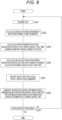
Fig. 8 is a flowchart illustrating a processing example of navigation control as a first modification. -
Fig. 9 is a diagram illustrating a configuration example of a deposit exploration system as a second modification. -
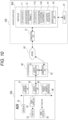
Fig. 10 is a diagram illustrating another configuration example of the deposit exploration system. - Hereinafter, the embodiments will be described in the following order.
- <1. First embodiment>
- [1-1. Regarding seabed deposit]
- [1-2. Configuration of evaluation system]
- [1-3. First example]
- [1-4. Second example]
- <2. Second embodiment>
- <3. Modifications>
- [3-1. First modification]
- [3-2. Second modification]
- [3-3. Other modifications]
- <4. Summary of embodiments>
- <5. Present technology>
- First, a seabed deposit will be described with reference to
Fig. 1 . - A seabed deposit (also referred to as a seabed hydrothermal deposit) is a deposit formed by precipitation of minerals as copper, lead, zinc, gold, silver, rare metals, or the like in a process in which seawater that has penetrated a deep portion of the underground is heated by heat of magma or the like and jetted into the sea.
- In the vicinity of a seabed deposit, there is a special ecosystem using a hydrothermal vent as an energy supply source, unlike the sea surface that depends on photosynthesis based on solar energy. Hydrothermal water jetted from the hydrothermal vent contains a high concentration of sulfides, and bacteria called sulfur bacteria synthesize and discharge carbohydrates from the sulfides. In addition, living organisms that can survive without using solar energy gather in the vicinity of a seabed deposit and form an ecosystem different from that on the ground by symbiosis with the sulfur bacteria as a primary producer in the body or on the body surface or predation of the sulfur bacteria.
- As illustrated, the hydrothermal vent is formed at a top portion of a chimney raised from the seabed, and hydrothermal water from the hydrothermal vent rises from the hydrothermal vent and spreads like a mushroom cloud. Such a water mass affected by the hydrothermal water is called a hydrothermal plume.
- In seawater in the hydrothermal plume, there is a food chain from chemically-synthesized bacteria as primary producers to plankton that preys on the chemically-synthesized bacteria, and further to fishes that feed on the plankton.
- The hydrothermal plume has characteristics such as a higher water temperature, a lower potential of hydrogen (pH), and a higher electrical conductivity although slightly compared to normal seawater at the same water depth not affected by hydrothermal water. Furthermore, it has been found that the microbial cell density also increases in the hydrothermal plume as well as various chemical components, and it has been revealed that the microbial cell density increases up to several times compared to that in the surrounding seawater. Therefore, by examining these characteristics, it is possible to estimate existence or non-existence of a hydrothermal plume, and it is possible to conduct a survey of a seabed deposit (primary exploration for roughly searching a sea area).
- The hydrothermal water jetted into the seawater from the hydrothermal vent rises until the density becomes equal to that of the surrounding seawater, and then spreads in the horizontal direction on a deep current. In the hydrothermal plume, a plume rising in seawater is called a "buoyant plume", and a plume spreading in the horizontal direction is called a "non-buoyant plume".
-
Fig. 2 is a diagram illustrating a configuration example of an evaluation system as a first embodiment for making an evaluation regarding a seabed deposit. - As illustrated, the evaluation system includes an evaluation device 1 and an operation/
display terminal 2. - The evaluation device 1 includes a
computing unit 10 and acommunication unit 15. Thecomputing unit 10 has a configuration of including, for example, a microcomputer including a central processing unit (CPU), a read only memory (ROM), and a random access memory (RAM), and performs various computations and control for realizing various operations of the evaluation device 1. Thecommunication unit 15 performs data communication with an external device, particularly the operation/display terminal 2 in the present example. - The operation/
display terminal 2 is a device that receives an operation input for various operation instructions to the evaluation device 1, transmits operation input information to the evaluation device 1, and displays received information from the evaluation device 1, and an example thereof is a personal computer (PC), a tablet terminal, a smartphone, or the like. - The
computing unit 10 has functions as adata acquisition unit 11 and anevaluation computing unit 12. - The
evaluation computing unit 12 computes deposit evaluation data for an evaluation target sea area by using at least one of the ocean topography data or the fine particle component measurement data for the evaluation target sea area as an input. Thedata acquisition unit 11 is a functional unit that acquires input data to theevaluation computing unit 12. - Here, the ocean topography data means topography data related to the ocean, such as data indicating a seabed topography in a certain sea area or data indicating a coastline topography.
- Furthermore, the fine particle component measurement data means data obtained by measurement of the fine particle component performed on seawater.
- Examples of the fine particle component measurement data include microorganism data that is measurement data regarding microorganisms such as plankton, bacteria, and the like in seawater, and water quality data that is measurement data (excluding measurement regarding microorganisms) related to water quality of seawater, such as electrical conductivity, temperature, pH, and the like in seawater.
- Examples of the microorganism data include the number, type, size, and the like of microorganisms that have been measured. Here, the size may be a plurality of types of data such as a size in the minimum direction and a size in the maximum direction, or a size in the thickness direction.
- Examples of the water quality data include gas concentrations of specific gases such as methane, hydrogen, helium, and the like, and metal concentrations of specific metals such as manganese, iron, and the like, in addition to the electrical conductivity, temperature, and pH described above.
- Here, the fine particle component measurement data is associated with measurement location data that is data indicating the measurement point. The measurement location data includes latitude and longitude data and water depth data.
- The deposit evaluation data is data indicating evaluation regarding a seabed deposit, and examples thereof include a deposit existence probability indicating an existence probability of a deposit, a hydrothermal plume probability indicating a probability that the measurement point is in a hydrothermal plume, an estimated ore type indicating the type of ore that may exist in the deposit, and the like.
- The
evaluation computing unit 12 includes an evaluation model (learned evaluation model) learned to obtain deposit evaluation data as an output by machine learning using at least one of ocean topography data or fine particle component measurement data for a known seabed deposit as input data for learning, and calculates deposit evaluation data for a sea area which is an evaluation target (hereinafter referred to as "evaluation target sea area" by using at least one of the ocean topography data or the fine particle component measurement data for the evaluation target sea area as an input. In the present example, since the measurement location data is associated with the fine particle component measurement data, in a case where the fine particle component measurement data is used as the input data, the measurement location data is also used as the input data. - In the first embodiment, an example (first example) in which the
evaluation computing unit 12 calculates the deposit existence probability as deposit evaluation data and an example (second example) in which theevaluation computing unit 12 calculates the estimated ore type as deposit evaluation data will be described. - The first example will be described.
- Here, an example in which the
evaluation computing unit 12 calculates the deposit existence probability by using ocean topography data, fine particle component measurement data, and measurement location data associated with the fine particle component measurement data as input data for evaluation as will be described. - An example of a machine learning method for generating an evaluation model in the
evaluation computing unit 12 will be described with reference toFig. 3 . - First, a
machine learning device 20 is used for learning. In the present example, a machine learning device compatible with supervised learning is used as themachine learning device 20. - As an input data set for learning, a learning data set for a deposit sea area and a learning data set for a non-deposit sea area are used. Here, the deposit area means a sea area in which existence of a seabed deposit is confirmed, and the non-deposit sea area means a sea area in which non-existence of a seabed deposit is confirmed.
- As described above, in the present example, since the ocean topography data, the fine particle component measurement data, and the measurement location data are used as inputs, the ocean topography data, the fine particle component measurement data of the deposit sea area, and the measurement location data are used as the learning data set for the deposit sea area. In addition, as a learning data set for the non-deposit sea area, ocean topography data and fine particle component measurement data of the non-deposit sea area, and measurement location data are used.
- In this case, as training data, data indicating existence or non-existence of a seabed deposit is used as a ground truth label of learning data. That is, in a case where learning data for a deposit sea area is input as input data for learning, data indicating the presence of a seabed deposit (that is, deposit existence probability = 100%) is provided as training data for the
machine learning device 20, and in a case where learning data for a non-deposit sea area is input as input data for learning, data indicating the absence of a seabed deposit (that is, the deposit existence probability = 0%) is provided as training data for themachine learning device 20. - By machine learning using the learning data set for the deposit sea area and the non-deposit sea area and the training data as described above, the
machine learning device 20 can generate an evaluation model using the ocean topography data, the fine particle component measurement data, and the measurement location data as inputs to obtain the deposit existence probability as an output. - Note that the machine learning here can be realized using a machine learning engine that handles a known supervised regression problem. As an example, the machine learning can be realized by using a learning engine of logistic regression which is often used as a learning engine for predicting the probability of occurrence of one specific event from a plurality of factors.
- Here, it has been found that in the hydrothermal plume described above, the content of nutrient salts serving as feed for plankton to be measured, minerals affecting the growth of microorganisms, and the like is characteristic. Furthermore, in the hydrothermal plume, since the species and density of microorganisms are unique, it is known that an ecological environment in the hydrothermal plume is different from that in other sea areas. It is considered that the characteristic ecological environment in the hydrothermal plume affects the outside of the hydrothermal plume due to the food chain or the sea current. By taking statistics of this relationship by machine learning, it is possible to estimate the deposit existence probability in the evaluation sea area only by using the fine particle component measurement data to be described later in the surface layer of the sea surface and the intermediate and deep layer without submerging to the deep sea, and to perform safer, more efficient, and lower-cost exploration of seabed resources in terms of environmental conservation as compared with the conventional acoustic survey.
- The evaluation model obtained by the
machine learning device 20 conducting the machine learning as described above is used as the evaluation model of theevaluation computing unit 12 illustrated inFig. 2 . As a result, theevaluation computing unit 12 in this case can calculate the deposit existence probability for an evaluation target sea area by using the ocean topography data and the fine particle component measurement data for the evaluation target sea area and the measurement location data as inputs. - The second example is an example in which the
evaluation computing unit 12 calculates the estimated ore type by setting the ocean topography data, the fine particle component measurement data, and the measurement location data to be input data. - Also in the second example, the
machine learning device 20 compatible with supervised learning is used. - In the second example, as the input data set for learning, only a learning data set for a deposit sea area is used. Specifically, ocean topography data and fine particle component measurement data of the deposit sea area, and measurement location data are used.
- In the case of the second example, information indicating the type of ore existing in the deposit is used as training data to be provided to the
machine learning device 20. Specifically, in a case where learning data for the deposit sea area as input data for learning is input, data indicating the type of ore that actually existed in the seabed deposit is provided as training data for themachine learning device 20. - Through machine learning using the learning data set for the deposit sea area as described above and the training data, the
machine learning device 20 can generate an evaluation model using the ocean topography data, the fine particle component measurement data, and the measurement location data as inputs to obtain the estimated ore type as an output. - Here, in the first example and the second example described above, examples have been described in which the ocean topography data, the fine particle component measurement data, and the measurement location data are set to the input data in calculating the deposit existence probability and the estimated ore type; however, the deposit existence probability and the estimated ore type can also be calculated on the basis of only the ocean topography data. In that case, as the machine learning for generating the evaluation model, only the ocean topography data is used as the input data set for learning in the learning method described above.
- For the fine particle component measurement data, it is necessary to actually navigate to a predetermined sea area to perform measurement; however, for the ocean topography data, known topography data can be used. For this reason, if an evaluation based only on the ocean topography data is made as described above, it is possible not to conduct a survey or it is possible to conduct a survey with lower priority in the sea area where the deposit existence probability is low, and there is an advantage that the efficiency of the exploration can be improved.
- Note that the evaluation device 1 can also be configured to calculate the hydrothermal plume probability as the deposit evaluation data, and an evaluation model generation method of a hydrothermal plume probability will be described in the following second embodiment.
- In a second embodiment, navigation control for deposit exploration is performed on the basis of deposit evaluation data.
- Hereinafter, as an example of navigation control, an example of performing navigation control of an autonomous underwater vehicle (AUV) will be described.
- Note that, for confirmation, in the present Description, the term "navigation" is used as a broad term including not only movement over water but also movement under water.
-
Fig. 4 is a schematic view of deposit exploration in the second embodiment. - The deposit exploration here is performed in a mode in which navigation control is performed by using a non-buoyant plume probability and a buoyant plume probability as hydrothermal plume probabilities as indices of control, and the position of a seabed deposit is specified. Specifically, the deposit exploration in this case is realized by stepwise navigation control according to values of the non-buoyant plume probability and the buoyant plume probability, and a search divided into a first search phase, a second search phase, and a third search phase as illustrated in the drawing is performed.
- The first search phase is a search phase for searching for a non-buoyant plume, and is a search phase for performing navigation control looking for a non-buoyant plume probability exceeding a predetermined value.
- The second search phase is a search phase for performing navigation control looking for a buoyant plume probability exceeding a predetermined value after the non-buoyant plume probability exceeds the predetermined value.
- The third search phase is a search phase for performing navigation control aiming at recognizing a hydrothermal vent after the buoyant plume probability exceeds the predetermined value.
- In the present example, navigation control for exploration is performed on the basis of the result of performing action learning from an action taken by the AUV itself in the past and the result thereof. Reinforcement learning is used for this action learning.
- Hereinafter, a method for deriving an optimal action in a case where Q-learning is adopted as reinforcement learning will be described.
- Q-learning is one of machine learning methods for learning an action for "maximizing reward (score) obtained from now on" from trial and error. In order to control the AUV and guide the AUV to a deposit by using the concept of Q-learning, machine learning is performed in which trial and error and learning are automatically performed so that the Q-value, which is the action evaluation value of the AUV, becomes the highest.
- The Q-value is defined by Q (St, at) as a value function when an action at that becomes a state St is taken at time t.
- The following [Expression 1] is a mathematical model of Q-learning.
[Mathematical Expression 1]
- In [Expression 1], the state St represents state information (deposit existence probability) at the time t, and the action at represents control data (navigation control information) of the AUV as an action at the time t. The state changes to St+1 by a change of the control data of the AUV, that is, change of the action at. Rt+1 represents a reward obtained by this change in the state. Furthermore, maxQ (St+1, a) of the second term at the right side represents a future ideal value. The Q-value in a case where the ideal action a in the future having the highest Q-value under the state St+1 is selected, is multiplied by a discount factor γ. Here, γ is a parameter of 0 < γ ≤ 1, and 0.9 to 0.99 is used in many cases. Furthermore, α is a learning coefficient and is in a range of 0 < a ≤ 1, and a value of about 0.1 is usually used.
- As described above, in the state St of the AUV, the function having the highest Q value when the change at of the AUV control data by machine learning device is taken is set as the value function (Q-function), and the value function is repeatedly updated so that the Q-value becomes high.
-
Fig. 5 is a diagram illustrating an internal configuration example of theAUV 30 that performs automatic navigation by using the action learning function as described above. - Note that in the following description, the same reference numerals are given to portions similar to those already described, and description thereof is omitted.
- As illustrated, the
AVU 30 includes aseawater measurement unit 31, asensor unit 32, apower unit 33, apower control unit 34, apower supply unit 35, acomputing unit 36, amemory 37, and abus 38. Theseawater measurement unit 31, thesensor unit 32, thepower control unit 34, and thecomputing unit 36 are connected to thebus 38 and can perform data communication with one another. - The
seawater measurement unit 31 has a configuration of including various sensors for measuring seawater, a microcomputer, and the like. Specifically, theseawater measurement unit 31 includes an imaging sensor (imaging element) as a sensor for performing measurement regarding microorganisms. Theseawater measurement unit 31 is configured to take seawater into a flow cell as a sample, and the imaging sensor can obtain a captured image of microorganisms by imaging the seawater taken into the flow cell. On the basis of this captured image, theseawater measurement unit 31 can obtain the microorganism data described above. Specifically, the microorganism data is data such as the number, type, size, and the like of the microorganisms. Here, detection of microorganisms and recognition of the type thereof can be performed on the basis of image analysis of the captured image. For example, detection of microorganisms and recognition of the type thereof can be performed by image matching using a template image of microorganisms, or the like. - Furthermore, the
seawater measurement unit 31 also includes various sensors for measuring the water quality data described above. Examples of the various sensors include a sensor for measuring electrical conductivity, temperature, pH, gas concentrations of specific gases such as methane, hydrogen, helium, and the like, and metal concentrations of specific metals such as manganese, iron, and the like. - Note that as the
seawater measurement unit 31, it is also possible to use an in-situ type measuring machine that does not include a flow cell and directly images seawater. - The
sensor unit 32 comprehensively represents a sensor for detecting the position of theAUV 30 and a sensor for recognizing the external environment of theAUV 30. Here, regarding the position information, it is conceivable to provide a global navigation satellite system (GNSS) sensor that detects latitude and longitude information and a sensor that detects water depth information. - Furthermore, as a sensor for recognizing the external environment, for example, a camera (image sensor) or the like can be provided.
- The
power unit 33 comprehensively represents a portion that generates power for navigation. Examples thereof include a motor for driving a screw for propulsion, an actuator for adjusting a propulsion direction, and the like. - The
power control unit 34 controls thepower unit 33 on the basis of navigation control information. - The
power supply unit 35 includes, for example, a battery, and supplies power to each unit of theAUV 30. - The
computing unit 36 has a configuration of including a microcomputer including, for example, a CPU, a ROM, and a RAM, and performs various computations and control for realizing various operations of theAUV 30. - The
memory 37 is configured as a nonvolatile storage device such as a solid state drive (SSD), a hard disk drive (HDD), or the like, and is used as a storage area of data used by thecomputing unit 36 in various processes. - Here, the
computing unit 36 has functions as thedata acquisition unit 11 and theevaluation computing unit 12 as described above. In this case, similarly to that described as the first example of the first embodiment, theevaluation computing unit 12 that learns to output a deposit existence probability by using ocean topography data, fine particle component measurement data, and measurement location data as inputs is used. As the ocean topography data, for example, data stored in thememory 37 is used. Specifically, thedata acquisition unit 11 in this case acquires ocean topography data of the sea area corresponding to information of the position of theAUV 30 detected by thesensor unit 32 as input data of the ocean topography data to theevaluation computing unit 12, and supplies the acquired data to theevaluation computing unit 12. - Furthermore, regarding the fine particle component measurement data, the
data acquisition unit 11 in this case acquires measurement data obtained by theseawater measurement unit 31, and supplies the measurement data to theevaluation computing unit 12. - In addition, the
computing unit 36 has functions as adata acquisition unit 11A and anevaluation computing unit 12A. - The
evaluation computing unit 12A has an evaluation model learned to calculate a hydrothermal plume probability. Specifically, theevaluation computing unit 12A in the present example learns to calculate the non-buoyant plume probability and the buoyant plume probability as described above by using fine particle component measurement data and measurement location data as inputs. - Here, in individually calculating the non-buoyant plume probability and the buoyant plume probability, an evaluation model for the non-buoyant plume probability and an evaluation model for the buoyant plume probability are separately provided; however, here, in order to avoid complication of illustration, these evaluation models are collectively treated as the
evaluation computing unit 12A. - An example of the machine learning method for generating an evaluation model for the hydrothermal plume probability will be described with reference to
Fig. 6 . - A
machine learning device 20A is used to generate the evaluation model in this case. Also as themachine learning device 20A, similarly to themachine learning device 20, one having a machine learning engine that handles a known supervised regression problem such as a learning engine of logistic regression is used. - As an input data set for learning, a learning data set for a hydrothermal plume and a learning data set for a sea area other than the hydrothermal plume are used. Specifically, in the case of generation of the evaluation model for the non-buoyant plume probability, fine particle component measurement data in the sea area as a non-buoyant plume and measurement location data are used as the learning data set for the hydrothermal plume, and fine particle component measurement data in the sea area other than the non-buoyant plume and the buoyant plume and measurement location data are used as the learning data set for the sea area other than the hydrothermal plume.
- As the training data in this case, data indicating whether it is a hydrothermal plume or not is used. That is, in generation of the evaluation model for the non-buoyant plume probability, in a case where fine particle component measurement data in the sea area as a non-buoyant plume and measurement location data are used as input data for learning, data indicating that it is a non-buoyant plume (that is, the non-buoyant plume probability is 100%) is given as training data for the
machine learning device 20A, and in a case where fine particle component measurement data in the sea area other than a hydrothermal plume and measurement location data are used as input data for learning, data indicating that it is not a non-buoyant plume (non-buoyant plume probability is 0%) is given. - Furthermore, in generation of the evaluation model for the buoyant plume probability, in a case where fine particle component measurement data in the sea area as a buoyant plume and measurement location data are used as input data for learning, data indicating that it is a buoyant plume (that is, the buoyant plume probability is 100%) is given as training data for the
machine learning device 20A, and in a case where fine particle component measurement data in the sea area other than a hydrothermal plume and measurement location data are used as input data for learning, data indicating that it is not a buoyant plume (buoyant plume probability is 0%) is given. - By performing machine learning by the
machine learning device 20A using the learning data set and the training data as described above for each of the non-buoyant plume and the buoyant plume, it is possible to generate an evaluation model using ocean topography data and measurement location data as inputs to obtain a non-buoyant plume probability or a buoyant plume probability as an output. - In
Fig. 5 , thedata acquisition unit 11A acquires input data of theevaluation computing unit 12A. Specifically, thedata acquisition unit 11A of the present example acquires measurement data obtained by theseawater measurement unit 31 as fine particle component measurement data and supplies the measurement data to theevaluation computing unit 12, and acquires detection data obtained by thesensor unit 32 as measurement location data and supplies the detection data to theevaluation computing unit 12. - Furthermore, the
computing unit 36 includes a navigation controlinformation generation unit 40, a valuefunction calculation unit 41, and areward calculation unit 42 as functional units for the reinforcement learning described above. - The
reward calculation unit 42 calculates a highest reward for an action (navigation control) that can be taken at that time, learned from the past under the current situation. - The value
function calculation unit 41 calculates a value function (Q-value when navigation control as the action a is performed in the state St+1) in a case where a navigation control setting that is the basis of reward calculation is made. - The navigation control
information generation unit 40 generates navigation control information with the maximum value function (Q-value) on the basis of the value function calculated (updated) by the valuefunction calculation unit 41. Here, in the present example, the navigation control information is, for example, information related to control of the above-described propulsion motor or actuator for propulsion direction adjustment. The navigation controlinformation generation unit 40 outputs the navigation control information that has been generated to thepower control unit 34. - Here, in order to enable learning from the past data, the
computing unit 36 performs processing of recording the value function calculated by the valuefunction calculation unit 41, the Q-value obtained from the value function that has been calculated, the state S (deposit existence probability), and the action a (navigation control information) in thememory 37. -
Fig. 7 is a flowchart illustrating a processing procedure for realizing navigation control as the second embodiment. - Note that the processing illustrated in
Fig. 7 is executed by thecomputing unit 36 on the basis of a program stored in a storage device such as a built-in ROM, thememory 37, or the like. - First, in step S101, the
computing unit 36 determines whether or not the exploration phase is a first exploration phase. - In a case where the exploration phase is the first exploration phase, the
computing unit 36 proceeds to step S102 to start the first exploration phase, and further determines whether or not the non-buoyant plume probability at the measurement point exceeds a threshold in subsequent step S103. Specifically, in step S103, thecomputing unit 36 first causes theseawater measurement unit 31 to execute measurement operation to acquire fine particle component measurement data, and causes thesensor unit 32 to execute detection of the latitude and longitude and the water depth to acquire measurement location data. Then, the evaluation model for the non-buoyant plume probability is used to calculate the non-buoyant plume probability by using the fine particle component measurement data and the measurement location data as input data. It is determined whether or not the non-buoyant plume probability calculated in this manner exceeds the predetermined threshold. - In a case where it is determined in step S103 that the non-buoyant plume probability at the measurement point does not exceed the threshold, the
computing unit 36 proceeds to step S110 to reduce the reward (R), and then proceeds to step S111 to update the value function. That is, by performing the processing as thereward calculation unit 42 and the valuefunction calculation unit 41 as described above, a value function (Q-value when navigation control as the action a is performed in the state St+1) is calculated. - In calculation of this value function, in the present example, the deposit existence probability is used as the state S. As understood from the above description, the
computing unit 36 calculates the deposit existence probability by processing as theevaluation computing unit 12 using, as input data, ocean topography data, fine particle component measurement data, and measurement location data acquired from thememory 37, theseawater measurement unit 31, and thesensor unit 32, respectively, by processing as thedata acquisition unit 11. - In step S112 subsequent to step Sill, the
computing unit 36 performs processing of recording the value function Q-value, the state S, and the action a in thememory 37 for each exploration phase. For each exploration phase here means for each of the first exploration phase, a second exploration phase, and a third exploration phase. The value function Q-value means a Q-value obtained from the value function that has been updated. - In step S113 subsequent to step S112, the
computing unit 36 generates navigation control information with the maximum value function on the basis of the value function that has been updated and outputs the navigation control information to thepower control unit 34. - In step S114 subsequent to step S113, the
computing unit 36 determines whether or not to end the exploration. That is, it is determined whether or not a predetermined condition set in advance as an exploration end condition is satisfied. - In a case where it is determined that the exploration end condition is not satisfied and the exploration is not to be ended, the
computing unit 36 returns to step S101. As a result, during the first exploration phase (situation in which the non-buoyant plume probability does not exceed the threshold), unless it is determined in step S114 that the exploration is to be ended, the processing in steps S110, Sill, S112, and S113 described above are repeated, and navigation control during the first exploration phase is realized. - In a case where it is determined in step S103 that the non-buoyant plume probability at the measurement point exceeds the threshold, the
computing unit 36 proceeds to step S104 to increase the reward (R), and then starts the second exploration phase. - In response to start of the second exploration phase in step S104, the
computing unit 36 proceeds to step S106 and determines whether or not the buoyant plume probability at the measurement point exceeds a threshold. That is, in step S106, thecomputing unit 36 first causes theseawater measurement unit 31 to execute measurement operation to acquire fine particle component measurement data, and causes thesensor unit 32 to execute detection of the latitude and longitude and the water depth to acquire measurement location data. Then, the evaluation model for the buoyant plume probability is used to calculate the buoyant plume probability by using the fine particle component measurement data and the measurement location data as input data, and it is determined whether or not the buoyant plume probability that has been calculated exceeds the predetermined threshold. - In a case where it is determined in step S106 that the buoyant plume probability at the measurement point does not exceed the threshold, the
computing unit 36 proceeds to step S110 to reduce the reward. Note that, since the flow of the processing in step S110 and thereafter has been described above, redundant description is avoided. - Here, in a case where it is determined in step S101 that the exploration phase is not the first exploration phase, the
computing unit 36 proceeds to step S105 and determines whether or not the search phase is the third exploration phase. In a case where it is determined that the search phase is not the third exploration phase (that is, in a case where the exploration phase is the second exploration phase), thecomputing unit 36 advances the processing to step S106. - As a result, during the second exploration phase (situation in which the buoyant plume probability does not exceed the threshold), unless it is determined in step S114 that the exploration is to be ended, the processing in steps S110, Sill, S112, and S113 described above are repeated, and navigation control during the second exploration phase is realized.
- In a case where it is determined in step S106 that the buoyant plume probability at the measurement point exceeds the threshold, the
computing unit 36 proceeds to step S107 to increase the reward, and then starts the third exploration phase. - Then, in step S108 subsequent to step S107, the
computing unit 36 determines whether or not a hydrothermal vent is detected. This determination can be made by image analysis of the image captured by the camera in thesensor unit 32. Note that the detection target in step S108 is not limited to a hydrothermal vent hole, and it is sufficient if part of the deposit such as part of the chimney or the like is a detection target. - In step S108, in a case where it is determined that a hydrothermal vent is not detected, the
computing unit 36 proceeds to step S110. - Here, in a case where it is determined in aforementioned step S105 that the search phase is the third exploration phase, the
computing unit 36 advances the processing to step S108. As a result, during the third exploration phase (situation in which a hydrothermal vent is not detected), unless it is determined in step S114 that the exploration is to be ended, the processing in steps S110, Sill, S112, and S113 are repeated, and navigation control during the third exploration phase is realized. - Note that in a case where it is determined in step S108 that a hydrothermal vent is detected, the
computing unit 36 increases the reward in step S109 and then advances the processing to step Sill. - Furthermore, the
computing unit 36 ends the series of processes illustrated inFig. 7 in response to the determination to end the exploration in step S114. - Here, the embodiments are not limited to the specific examples described above, and configurations as various modifications can be adopted.
- For example, in the second embodiment, an example has been described in which the non-buoyant plume probability and the buoyant plume probability are used as indices of exploration phase switching to perform navigation control divided into a plurality of exploration phases. However, it is not essential to explicitly divide the exploration phase.
-
Fig. 8 is a flowchart illustrating a processing example of navigation control corresponding to a case where the exploration phase is not explicitly divided. - Note that, in the example of
Fig. 7 above, an example of using only the deposit existence probability as the state S in the value function has been described. However,Fig. 8 illustrates an example of using the deposit existence probability and the hydrothermal plume probability as the state S. In this case, the value of the state S is a value reflecting both the deposit existence probability and the hydrothermal plume probability such as an average value of the deposit existence probability and the hydrothermal plume probability or the like. - In this case, the
computing unit 36 performs processing of acquiring input data of theevaluation computing units - Then, in step S202 subsequent to step S201, the
computing unit 36 calculates the deposit existence probability and the hydrothermal plume probability by using the evaluation models as theevaluation computing units - The processing of steps S203 to S205 subsequent to step S202 is processing related to reinforcement learning by Q-learning. Specifically, in step S203, the
computing unit 36 calculates the highest reward for an action (navigation control) that can be taken at that time, learned from the past under the current situation, and in subsequent step S204, thecomputing unit 36 calculates the value function in a case where navigation control setting that is the basis of the reward calculation is made (update of the value function). That is, the Q-value obtained when the navigation control as the action a is performed in the state St+1 is calculated. - Then, in step S205 subsequent to step S204, the
computing unit 36 performs processing of recording the value function Q-value, the state S, and the action a in thememory 37. - In step S206 subsequent to step S205, the
computing unit 36 generates navigation control information with the maximum value function on the basis of the value function that has been updated and outputs the navigation control information to thepower control unit 34. - Moreover, in step S207 subsequent to step S206, the
computing unit 36 determines whether or not to end the exploration (determines whether or not the exploration end condition is satisfied similarly to aforementioned step S114), and returns to step S201 in the case of determining not to end the exploration. - In contrast, in a case where it is determined in step S207 that the exploration is to be ended, the
computing unit 36 ends the series of processes illustrated inFig. 8 . - A second modification is a modification related to a configuration for deposit exploration.
-
Fig. 9 is a diagram illustrating a configuration example of a deposit exploration system as the second modification. - As illustrated in the drawing, the deposit exploration system as the second modification includes at least an
AUV 30A, anavigation control device 50, and anoffshore repeater 60. It can be said that in this deposit exploration system, each function of thecomputing unit 36 included in theAUV 30 illustrated inFig. 5 is relocated to the externalnavigation control device 50. - The
AUV 30A is different from theAUV 30 in that thecomputing unit 36 is omitted and anacoustic communication unit 39 for enabling communication in the sea is provided. - The
navigation control device 50 includes acommunication unit 51 in addition to thecomputing unit 36 and thememory 37. It is conceivable that thenavigation control device 50 is disposed, for example, on a vessel navigating on the ocean or on the ground. - The
offshore repeater 60 is disposed on the sea and includes anacoustic communication unit 61 and acommunication unit 62. Thecommunication unit 62 performs data communication with thecommunication unit 51 in thenavigation control device 50 via a network NT, which is a communication network such as the Internet, a local area network (LAN), a satellite communication network, or the like. - With such a configuration, the
computing unit 36 in thenavigation control device 50 can acquire, from theAUV 30A, data such as fine particle component measurement data required for generating navigation control information by the reinforcement learning described above, and furthermore can output the navigation control information that has been generated to theAUV 30A to perform navigation control of theAUV 30A. - Note that, in the navigation control system illustrated in
Fig. 9 , the navigation controlinformation generation unit 40 can also be provided on anAUV 30B side as illustrated inFig. 10 . AnAUV 30B is different from theAUV 30A in that the navigation controlinformation generation unit 40 is connected to thebus 38. InFig. 10 , thecomputing unit 36 from which the navigation controlinformation generation unit 40 is omitted is denoted as acomputing unit 36B, and thenavigation control device 50 provided with thecomputing unit 36B instead of thecomputing unit 36 is denoted as anavigation control device 50B. - In the above description, an example has been described in which the evaluation model for the hydrothermal plume probability is generated by machine learning using only fine particle component measurement data and measurement location data; however, the evaluation model for the hydrothermal plume probability can also be generated by machine learning using fine particle component measurement data, measurement location data, and ocean topography data.
- Furthermore, the AUV has been described above as an example of the navigation device used for deposit exploration. However, as the navigation device, other device forms such as a remotely operated vehicle (ROV), a manned submersible, an underwater drone, a water drone, an underwater glider, a towing navigation device, a research vessel, and the like can be adopted.
- Furthermore, depending on the type of seabed deposit, there may be a case where habitat data of microorganisms and characteristic seawater component data estimated to be related to deposits are measured even though there is no water mass like a hydrothermal plume. As a result of learning based on data measured in such a sea area, it is also assumed that only the deposit existence probability is a high value even though the hydrothermal plume probability is low.
- In such a case, in both the first and second embodiments, only the deposit existence probability is used as reference data for exploration or reference data for navigation control in some cases.
- As described, the evaluation device (1,
AUV 30,navigation control device - According to the above configuration, it is possible to improve evaluation accuracy by using artificial intelligence (AI) as a computing unit for making an evaluation regarding a seabed deposit.
- Therefore, it is possible to improve the efficiency of deposit exploration and to reduce cost related to the deposit exploration.
- Furthermore, by causing the evaluation computing unit as described above to calculate deposit evaluation data, it is possible to realize a survey with less risk of environmental destruction in place of an acoustic survey in evaluating a deposit in an evaluation target sea area.
- Therefore, the risk of environmental destruction can be reduced.
- Here, it has been understood that conducting research for environmental impact assessment in a sea area to be developed before and after development of seabed resources in order to achieve both the development of seabed resources and environmental conservation will be an international standardization rule in the future. It has been considered to conduct environment assessment by measuring the habitat situation of microorganisms such as plankton as an index of environment assessment and comparing the habitat situation before and after resource development. In the present technology, in a case where fine particle component measurement data is used as input data for calculating deposit evaluation data, measurement of microorganisms has not only an advantage that it is a resource exploration method with a low risk of environmental destruction, but also has a large efficient and cost advantage that it can also serve as measurement of the environment assessment described above performed at the time of resource development.
- Furthermore, in the evaluation device as an embodiment, the evaluation computing unit (12) learns to output the deposit existence probability as the deposit evaluation data.
- As a result, in the case of evaluating the deposit existence probability in the evaluation target sea area, it is possible to improve evaluation accuracy. Furthermore, in evaluating the deposit existence probability, a survey with less risk of environmental destruction in place of an acoustic survey is realized.
- Therefore, it is possible to reduce the risk of environmental destruction while improving the efficiency of deposit exploration.
- In addition, the deposit existence probability can be used as an evaluation index for an action taken in deposit exploration.
- Therefore, an output of the evaluation computing unit can be used as an action evaluation index in deposit exploration, which can contribute to improvement of the efficiency of exploration.
- Moreover, in the evaluation device as an embodiment, the evaluation computing unit (12A) is configured to learn to output a hydrothermal plume probability as the deposit evaluation data by machine learning using at least fine particle component measurement data for a known seabed deposit as input data for learning.
- The hydrothermal plume probability can be used as an evaluation index for an action taken in deposit exploration.
- Therefore, an output of the evaluation computing unit can be used as an action evaluation index in deposit exploration, which can contribute to improvement of the efficiency of exploration.
- Furthermore, in the evaluation device as an embodiment, the evaluation computing unit learns to output a non-buoyant plume probability as the hydrothermal plume probability.
- The non-buoyant plume probability can be used as an evaluation index for an action taken in deposit exploration.
- Therefore, an output of the evaluation computing unit can be used as an action evaluation index, which can contribute to improvement of the efficiency of exploration.
- Furthermore, in the evaluation device as an embodiment, the evaluation computing unit learns to output a buoyant plume probability as the hydrothermal plume probability.
- The buoyant plume probability can be used as an evaluation index for an action taken in deposit exploration.
- Therefore, an output of the evaluation computing unit can be used as an action evaluation index, which can contribute to improvement of the efficiency of exploration.
- Moreover, in the evaluation device as an embodiment, the evaluation computing unit learns to output deposit evaluation data by machine learning using ocean topography data and fine particle component measurement data for a known seabed deposit as input data for learning.
- It is possible to improve the accuracy of deposit evaluation data by using learning based on a plurality of input elements regarding a seabed deposit.
- Therefore, it is possible to improve accuracy of the evaluation regarding a seabed deposit.
- Furthermore, in the evaluation device as an embodiment, the evaluation computing unit learns to output a hydrothermal plume probability by machine learning using fine particle component measurement data for a known seabed deposit and measurement location data indicating a measurement point as input data for learning.
- The accuracy of the hydrothermal plume probability can be improved by learning using not only the fine particle component measurement data but also the measurement location data in combination.
- It is possible to improve accuracy of the evaluation regarding a seabed deposit.
- Furthermore, the evaluation method as an embodiment is an evaluation method including calculating deposit evaluation data for an evaluation target sea area by inputting at least one of ocean topography data or fine particle component measurement data for the evaluation target sea area to an evaluation computing unit that learns to obtain the deposit evaluation data as an output by machine learning using at least one of ocean topography data or fine particle component measurement data for a known seabed deposit as input data for learning.
- Also by such an evaluation method, it is possible to obtain similar operations and effects as those of the evaluation device as an embodiment described above.
- The navigation control device (
AUV 30, navigation control device 50) as an embodiment includes an evaluation computing unit (12, 12A) that learns to obtain deposit evaluation data as an output by machine learning using at least one of ocean topography data or fine particle component measurement data for a known seabed deposit as input data for learning, and a control information generation unit (navigation control information generation unit 40) that generates navigation control information which is control information regarding navigation on the basis of the deposit evaluation data for an evaluation target sea area output by the evaluation computing unit by using at least one of the ocean topography data or the fine particle component measurement data for the evaluation target sea area as an input. - As a result, in a case where navigation control information for deposit exploration is generated on the basis of deposit evaluation data, since AI is used as the computing unit for evaluation, it is possible to make a highly accurate evaluation as evaluation regarding a seabed deposit.
- Therefore, improvement in accuracy of navigation control enables improvement in efficiency of deposit exploration and reduction of cost related to the deposit exploration.
- Furthermore, according to the above configuration, it is possible to realize a survey with less risk of environmental destruction in place of an acoustic survey in calculating the deposit evaluation data.
- Therefore, the risk of environmental destruction can be reduced.
- Furthermore, in the navigation control device as an embodiment, the evaluation computing unit (12A) learns to output a hydrothermal plume probability as the deposit evaluation data by machine learning using at least fine particle component measurement data for a known seabed deposit as input data for learning, and the control information generation unit generates the navigation control information on the basis of the hydrothermal plume probability output by the evaluation computing unit by using at least the fine particle component measurement data for an evaluation target sea area as an input.
- As a result, it is possible to generate navigation control information by using the hydrothermal plume probability as an action evaluation index in navigation.
- Therefore, efficiency of deposit exploration can be improved.
- Moreover, the navigation control device as an embodiment further includes as the evaluation computing unit, an evaluation computing unit that learns to output a non-buoyant plume probability and an evaluation computing unit that learns to output a buoyant plume probability, in which the control information generation unit generates the navigation control information for increasing the non-buoyant plume probability in a case where the non-buoyant plume probability is a predetermined value or less, and generates the navigation control information for increasing the buoyant plume probability in a case where the non-buoyant plume probability exceeds the predetermined value and the buoyant plume probability is a predetermined value or less.
- As a result, it is possible to guide a device which is a navigation control target stepwise from the outside of a hydrothermal plume to the inside of a non-buoyant plume and from the inside of the non-buoyant plume to the inside of a buoyant plume.
- Therefore, efficiency of deposit exploration can be improved.
- Furthermore, in the navigation control device as an embodiment, the control information generation unit generates the navigation control information by reinforcement learning based on the deposit evaluation data.
- As a result, it is possible to generate navigation control information for maximizing an evaluation value (reward) for an action.
- Therefore, efficiency of deposit exploration can be improved.
- Note that the effects described in the present Description are illustrations only and not limited, and may have other effects.
- The present technology can also be configured as follows.
- (1) An evaluation device including: an evaluation computing unit that learns to obtain deposit evaluation data as an output by machine learning using at least one of ocean topography data or fine particle component measurement data for a known seabed deposit as input data for learning,
the evaluation computing unit calculating the deposit evaluation data for an evaluation target sea area by using at least one of the ocean topography data or the fine particle component measurement data for the evaluation target sea area as an input. - (2) The evaluation device according to the (1),
in which the evaluation computing unit learns to output a deposit existence probability as the deposit evaluation data. - (3) The evaluation device according to the (1) or (2),
in which the evaluation computing unit learns to output a hydrothermal plume probability as the deposit evaluation data by machine learning using at least fine particle component measurement data for a known seabed deposit as input data for learning. - (4) The evaluation device according to the (3),
in which the evaluation computing unit learns to output a non-buoyant plume probability as the hydrothermal plume probability. - (5) The evaluation device according to the (3),
in which the evaluation computing unit learns to output a buoyant plume probability as the hydrothermal plume probability. - (6) The evaluation device according to any one of the (1) to (5),
in which the evaluation computing unit learns to obtain deposit evaluation data as an output by machine learning using ocean topography data and fine particle component measurement data for a known seabed deposit as input data for learning. - (7) The evaluation device according to any one of the (3) to (6),
in which the evaluation computing unit learns to output the hydrothermal plume probability by machine learning using fine particle component measurement data for a known seabed deposit and measurement location data indicating a measurement point as input data for learning. - (8) An evaluation method including
calculating deposit evaluation data for an evaluation target sea area by inputting at least one of ocean topography data or fine particle component measurement data for the evaluation target sea area to an evaluation computing unit that learns to obtain the deposit evaluation data as an output by machine learning using at least one of the ocean topography data or the fine particle component measurement data for a known seabed deposit as input data for learning. - (9) A navigation control device including:
- an evaluation computing unit that learns to obtain deposit evaluation data as an output by machine learning using at least one of ocean topography data or fine particle component measurement data for a known seabed deposit as input data for learning; and
- a control information generation unit that generates navigation control information which is control information regarding navigation on the basis of the deposit evaluation data for an evaluation target sea area output by the evaluation computing unit by using at least one of the ocean topography data or the fine particle component measurement data for the evaluation target sea area as an input.
- (10) The navigation control device according to the (9),
- in which the evaluation computing unit learns to output a hydrothermal plume probability as the deposit evaluation data by machine learning using at least fine particle component measurement data for a known seabed deposit as input data for learning, and
- the control information generation unit generates the navigation control information on the basis of the hydrothermal plume probability output by the evaluation computing unit by using at least the fine particle component measurement data for the evaluation target sea area as an input.
- (11) The navigation control device according to the (10) further including as the evaluation computing unit, an evaluation computing unit that learns to output a non-buoyant plume probability and an evaluation computing unit that learns to output a buoyant plume probability,
- in which the control information generation unit
- generates the navigation control information for increasing the non-buoyant plume probability in a case where the non-buoyant plume probability is a predetermined value or less, and
- generates the navigation control information for increasing the buoyant plume probability in a case where the non-buoyant plume probability exceeds the predetermined value and the buoyant plume probability is a predetermined value or less.
- (12) The navigation control device according to any one of the (9) to (11),
in which the control information generation unit generates the navigation control information by reinforcement learning based on the deposit evaluation data. -
- 1
- Evaluation device
- 2
- Operation/display terminal
- 10
- Computing unit
- 11, 11A
- Data acquisition unit
- 12, 12A
- Evaluation computing unit
- 15
- Communication unit
- 20, 20A
- Machine learning device
- 30, 30A, 30B
- AUV
- 31
- Seawater measurement unit
- 32
- Sensor unit
- 33
- Power unit
- 34
- Power control unit
- 35
- Power supply unit
- 36, 36B
- Computing unit
- 37
- Memory
- 38
- Bus
- 39, 61
- Acoustic communication unit
- 40
- Navigation control information generation unit
- 41
- Value function calculation unit
- 42
- Reward calculation unit
- 50, 50B
- Navigation control device
- 51, 62
- Communication unit
- 60
- Offshore repeater
- NT
- Network
Claims (12)
- An evaluation device comprising an evaluation computing unit that learns to obtain deposit evaluation data as an output by machine learning using at least one of ocean topography data or fine particle component measurement data for a known seabed deposit as input data for learning,
the evaluation computing unit calculating the deposit evaluation data for an evaluation target sea area by using at least one of the ocean topography data or the fine particle component measurement data for the evaluation target sea area as an input. - The evaluation device according to claim 1,
wherein the evaluation computing unit learns to output a deposit existence probability as the deposit evaluation data. - The evaluation device according to claim 1,
wherein the evaluation computing unit learns to output a hydrothermal plume probability as the deposit evaluation data by machine learning using at least fine particle component measurement data for a known seabed deposit as input data for learning. - The evaluation device according to claim 3,
wherein the evaluation computing unit learns to output a non-buoyant plume probability as the hydrothermal plume probability. - The evaluation device according to claim 3,
wherein the evaluation computing unit learns to output a buoyant plume probability as the hydrothermal plume probability. - The evaluation device according to claim 1,
wherein the evaluation computing unit learns to obtain deposit evaluation data as an output by machine learning using ocean topography data and fine particle component measurement data for a known seabed deposit as input data for learning. - The evaluation device according to claim 3,
wherein the evaluation computing unit learns to output the hydrothermal plume probability by machine learning using fine particle component measurement data for a known seabed deposit and measurement location data indicating a measurement point as input data for learning. - An evaluation method comprising
calculating deposit evaluation data for an evaluation target sea area by inputting at least one of ocean topography data or fine particle component measurement data for the evaluation target sea area to an evaluation computing unit that learns to obtain the deposit evaluation data as an output by machine learning using at least one of the ocean topography data or the fine particle component measurement data for a known seabed deposit as input data for learning. - A navigation control device comprising:an evaluation computing unit that learns to obtain deposit evaluation data as an output by machine learning using at least one of ocean topography data or fine particle component measurement data for a known seabed deposit as input data for learning; anda control information generation unit that generates navigation control information which is control information regarding navigation on a basis of the deposit evaluation data for an evaluation target sea area output by the evaluation computing unit by using at least one of the ocean topography data or the fine particle component measurement data for the evaluation target sea area as an input.
- The navigation control device according to claim 9,wherein the evaluation computing unit learns to output a hydrothermal plume probability as the deposit evaluation data by machine learning using at least fine particle component measurement data for a known seabed deposit as input data for learning, andthe control information generation unit generates the navigation control information on a basis of the hydrothermal plume probability output by the evaluation computing unit by using at least the fine particle component measurement data for the evaluation target sea area as an input.
- The navigation control device according to claim 10 further comprising as the evaluation computing unit, an evaluation computing unit that learns to output a non-buoyant plume probability and an evaluation computing unit that learns to output a buoyant plume probability,wherein the control information generation unitgenerates the navigation control information for increasing the non-buoyant plume probability in a case where the non-buoyant plume probability is a predetermined value or less, andgenerates the navigation control information for increasing the buoyant plume probability in a case where the non-buoyant plume probability exceeds the predetermined value and the buoyant plume probability is a predetermined value or less.
- The navigation control device according to claim 9,
wherein the control information generation unit generates the navigation control information by reinforcement learning based on the deposit evaluation data.
Applications Claiming Priority (2)
| Application Number | Priority Date | Filing Date | Title |
|---|---|---|---|
| JP2020095144 | 2020-05-30 | ||
| PCT/JP2021/011767 WO2021246027A1 (en) | 2020-05-30 | 2021-03-22 | Evaluation device, evaluation method, and navigation control device |
Publications (2)
| Publication Number | Publication Date |
|---|---|
| EP4159613A1 true EP4159613A1 (en) | 2023-04-05 |
| EP4159613A4 EP4159613A4 (en) | 2023-11-29 |
Family
ID=78830779
Family Applications (1)
| Application Number | Title | Priority Date | Filing Date |
|---|---|---|---|
| EP21817574.3A Pending EP4159613A4 (en) | 2020-05-30 | 2021-03-22 | EVALUATION DEVICE, EVALUATION METHOD AND NAVIGATION CONTROL DEVICE |
Country Status (7)
| Country | Link |
|---|---|
| US (1) | US12246806B2 (en) |
| EP (1) | EP4159613A4 (en) |
| JP (1) | JP7810106B2 (en) |
| KR (1) | KR20230017172A (en) |
| CN (1) | CN115698775A (en) |
| TW (1) | TW202201041A (en) |
| WO (1) | WO2021246027A1 (en) |
Cited By (1)
| Publication number | Priority date | Publication date | Assignee | Title |
|---|---|---|---|---|
| US20230174206A1 (en) * | 2020-05-30 | 2023-06-08 | Sony Group Corporation | Evaluation device, evaluation method, and navigation control device |
Families Citing this family (2)
| Publication number | Priority date | Publication date | Assignee | Title |
|---|---|---|---|---|
| KR20250082981A (en) | 2023-11-30 | 2025-06-09 | 주식회사 지오제니컨설턴트 | A Method for Analyzing an Integrated Information of Rare Metal Deposit and an Integrated Analysis System to perform the same |
| CN117871822B (en) | 2024-01-10 | 2024-09-24 | 青岛海洋地质研究所 | In-situ quantitative differentiation of deep-sea hydrothermal sulfides and surrounding rocks by drilling and measurement analysis |
Family Cites Families (10)
| Publication number | Priority date | Publication date | Assignee | Title |
|---|---|---|---|---|
| JP2011013209A (en) * | 2009-06-01 | 2011-01-20 | Koichi Mizumura | Seafloor hydrothermal deposit searching/measuring device |
| JP2011158343A (en) | 2010-01-29 | 2011-08-18 | Central Res Inst Of Electric Power Ind | Exploration method of undiscovered sea-floor hydrothermal deposit and exploration system of undiscovered sea-floor hydrothermal deposit |
| US11137338B2 (en) * | 2017-04-24 | 2021-10-05 | Sony Corporation | Information processing apparatus, particle sorting system, program, and particle sorting method |
| WO2018216623A1 (en) * | 2017-05-25 | 2018-11-29 | 日本電気株式会社 | Earth science data analyzing device, earth science data analyzing method, and computer-readable recording medium |
| CN107729953B (en) * | 2017-09-18 | 2019-09-27 | 清华大学 | Robot Plume Tracking Method Based on Reinforcement Learning in Continuous State Behavior Domain |
| JP7172400B2 (en) * | 2018-10-03 | 2022-11-16 | 株式会社大林組 | Geological evaluation system, geological evaluation method and geological evaluation program |
| JP6675693B2 (en) * | 2019-03-22 | 2020-04-01 | 国立研究開発法人海洋研究開発機構 | Resource estimation system and resource estimation method |
| JP2021032674A (en) * | 2019-08-23 | 2021-03-01 | ソニー株式会社 | Information processing equipment, display methods, programs and information processing systems |
| EP4159613A4 (en) * | 2020-05-30 | 2023-11-29 | Sony Group Corporation | EVALUATION DEVICE, EVALUATION METHOD AND NAVIGATION CONTROL DEVICE |
| JP7508353B2 (en) * | 2020-12-07 | 2024-07-01 | 五洋建設株式会社 | Submarine topography estimation method, trained model generation method, submarine topography estimation device and program |
-
2021
- 2021-03-22 EP EP21817574.3A patent/EP4159613A4/en active Pending
- 2021-03-22 CN CN202180037611.1A patent/CN115698775A/en not_active Withdrawn
- 2021-03-22 JP JP2022528452A patent/JP7810106B2/en active Active
- 2021-03-22 US US17/921,980 patent/US12246806B2/en active Active
- 2021-03-22 KR KR1020227038729A patent/KR20230017172A/en not_active Withdrawn
- 2021-03-22 WO PCT/JP2021/011767 patent/WO2021246027A1/en not_active Ceased
- 2021-05-21 TW TW110118396A patent/TW202201041A/en unknown
Cited By (2)
| Publication number | Priority date | Publication date | Assignee | Title |
|---|---|---|---|---|
| US20230174206A1 (en) * | 2020-05-30 | 2023-06-08 | Sony Group Corporation | Evaluation device, evaluation method, and navigation control device |
| US12246806B2 (en) * | 2020-05-30 | 2025-03-11 | Sony Group Corporation | Evaluation device, evaluation method, and navigation control device |
Also Published As
| Publication number | Publication date |
|---|---|
| TW202201041A (en) | 2022-01-01 |
| CN115698775A (en) | 2023-02-03 |
| JPWO2021246027A1 (en) | 2021-12-09 |
| US12246806B2 (en) | 2025-03-11 |
| KR20230017172A (en) | 2023-02-03 |
| WO2021246027A1 (en) | 2021-12-09 |
| JP7810106B2 (en) | 2026-02-03 |
| EP4159613A4 (en) | 2023-11-29 |
| US20230174206A1 (en) | 2023-06-08 |
Similar Documents
| Publication | Publication Date | Title |
|---|---|---|
| US12246806B2 (en) | Evaluation device, evaluation method, and navigation control device | |
| Zhang et al. | Data-driven ship energy efficiency analysis and optimization model for route planning in ice-covered Arctic waters | |
| Benoit‐Bird et al. | Equipping an underwater glider with a new echosounder to explore ocean ecosystems | |
| Schwing | Modern technologies and integrated observing systems are “instrumental” to fisheries oceanography: A brief history of ocean data collection | |
| CN117198330A (en) | Sound source identification method and system and electronic equipment | |
| CN119160350A (en) | Ship motion prediction method, device, electronic device and readable storage medium | |
| Ennasr et al. | Characterization of acoustic detection efficiency using a gliding robotic fish as a mobile receiver platform | |
| Mishra et al. | Online informative path planning using sparse gaussian processes | |
| Berget et al. | Adaptive sampling of ocean processes using an AUV with a Gaussian proxy model | |
| Fu et al. | Autonomous net inspection and cleaning in sea-based fish farms: A review | |
| CN120495861A (en) | Underwater target intelligent recognition system based on multi-sensor fusion | |
| Hollinger | Long-horizon Robotic Search and Classification using Sampling-based Motion Planning. | |
| US20250341163A1 (en) | Mechanisms for optimal offshore mineral mining | |
| Santiago et al. | Buoy derived abundance indices of tropical tunas in the Indian Ocean | |
| Yuan et al. | Submarine navigation and communication model based on hmm and tda | |
| CN119146976A (en) | Dynamic path autonomous planning system and method for offshore mobile unmanned platform | |
| CN113381824B (en) | Underwater acoustic channel measurement method, device, unmanned underwater vehicle and storage medium | |
| Berget et al. | Adaptive underwater robotic sampling of dispersal dynamics in the coastal ocean | |
| Ferri et al. | Sampling on-demand with fleets of underwater gliders | |
| Gokulnath et al. | Analysis of early warning tsunami prediction system using the Arduino uno R3 and DNN | |
| Liu et al. | A-KNN: An adaptive method for constructing high-resolution ocean models | |
| Liu et al. | A Study of Submersible Positioning Based on Deep Reinforcement Learning and Automatic Control Algorithms | |
| Nadeem et al. | Presenting the Methodologies, Challenges, and Opportunities in Underwater Target Recognition | |
| CN119984232B (en) | An automatic positioning method and system for intelligent maritime emergency rescue equipment | |
| von Dewitz et al. | Use of existing hydrographic infrastructure to forecast the environmental spawning conditions for eastern Baltic cod |
Legal Events
| Date | Code | Title | Description |
|---|---|---|---|
| STAA | Information on the status of an ep patent application or granted ep patent |
Free format text: STATUS: THE INTERNATIONAL PUBLICATION HAS BEEN MADE |
|
| PUAI | Public reference made under article 153(3) epc to a published international application that has entered the european phase |
Free format text: ORIGINAL CODE: 0009012 |
|
| STAA | Information on the status of an ep patent application or granted ep patent |
Free format text: STATUS: REQUEST FOR EXAMINATION WAS MADE |
|
| 17P | Request for examination filed |
Effective date: 20221219 |
|
| AK | Designated contracting states |
Kind code of ref document: A1 Designated state(s): AL AT BE BG CH CY CZ DE DK EE ES FI FR GB GR HR HU IE IS IT LI LT LU LV MC MK MT NL NO PL PT RO RS SE SI SK SM TR |
|
| DAV | Request for validation of the european patent (deleted) | ||
| DAX | Request for extension of the european patent (deleted) | ||
| A4 | Supplementary search report drawn up and despatched |
Effective date: 20231027 |
|
| RIC1 | Information provided on ipc code assigned before grant |
Ipc: G01V 9/02 20060101ALI20231023BHEP Ipc: B63B 35/00 20200101ALI20231023BHEP Ipc: G01V 9/00 20060101ALI20231023BHEP Ipc: B63C 11/48 20060101AFI20231023BHEP |
|
| STAA | Information on the status of an ep patent application or granted ep patent |
Free format text: STATUS: EXAMINATION IS IN PROGRESS |
|
| 17Q | First examination report despatched |
Effective date: 20240624 |