EP4158625B1 - Detektion der eigenen sprachaktivität in einem hörgerät/kopfhörer und verfahren hierzu - Google Patents
Detektion der eigenen sprachaktivität in einem hörgerät/kopfhörer und verfahren hierzu Download PDFInfo
- Publication number
- EP4158625B1 EP4158625B1 EP20733686.8A EP20733686A EP4158625B1 EP 4158625 B1 EP4158625 B1 EP 4158625B1 EP 20733686 A EP20733686 A EP 20733686A EP 4158625 B1 EP4158625 B1 EP 4158625B1
- Authority
- EP
- European Patent Office
- Prior art keywords
- signal
- vac
- pitch
- voice
- microphone signals
- Prior art date
- Legal status (The legal status is an assumption and is not a legal conclusion. Google has not performed a legal analysis and makes no representation as to the accuracy of the status listed.)
- Active
Links
Images



Classifications
-
- G—PHYSICS
- G10—MUSICAL INSTRUMENTS; ACOUSTICS
- G10L—SPEECH ANALYSIS TECHNIQUES OR SPEECH SYNTHESIS; SPEECH RECOGNITION; SPEECH OR VOICE PROCESSING TECHNIQUES; SPEECH OR AUDIO CODING OR DECODING
- G10L25/00—Speech or voice analysis techniques not restricted to a single one of groups G10L15/00 - G10L21/00
- G10L25/78—Detection of presence or absence of voice signals
-
- G—PHYSICS
- G10—MUSICAL INSTRUMENTS; ACOUSTICS
- G10L—SPEECH ANALYSIS TECHNIQUES OR SPEECH SYNTHESIS; SPEECH RECOGNITION; SPEECH OR VOICE PROCESSING TECHNIQUES; SPEECH OR AUDIO CODING OR DECODING
- G10L25/00—Speech or voice analysis techniques not restricted to a single one of groups G10L15/00 - G10L21/00
- G10L25/48—Speech or voice analysis techniques not restricted to a single one of groups G10L15/00 - G10L21/00 specially adapted for particular use
- G10L25/51—Speech or voice analysis techniques not restricted to a single one of groups G10L15/00 - G10L21/00 specially adapted for particular use for comparison or discrimination
-
- H—ELECTRICITY
- H04—ELECTRIC COMMUNICATION TECHNIQUE
- H04R—LOUDSPEAKERS, MICROPHONES, GRAMOPHONE PICK-UPS OR LIKE ACOUSTIC ELECTROMECHANICAL TRANSDUCERS; ELECTRIC HEARING AIDS; PUBLIC ADDRESS SYSTEMS
- H04R1/00—Details of transducers, loudspeakers or microphones
- H04R1/10—Earpieces; Attachments therefor ; Earphones; Monophonic headphones
- H04R1/1083—Reduction of ambient noise
-
- G—PHYSICS
- G10—MUSICAL INSTRUMENTS; ACOUSTICS
- G10L—SPEECH ANALYSIS TECHNIQUES OR SPEECH SYNTHESIS; SPEECH RECOGNITION; SPEECH OR VOICE PROCESSING TECHNIQUES; SPEECH OR AUDIO CODING OR DECODING
- G10L17/00—Speaker identification or verification techniques
- G10L17/06—Decision making techniques; Pattern matching strategies
-
- G—PHYSICS
- G10—MUSICAL INSTRUMENTS; ACOUSTICS
- G10L—SPEECH ANALYSIS TECHNIQUES OR SPEECH SYNTHESIS; SPEECH RECOGNITION; SPEECH OR VOICE PROCESSING TECHNIQUES; SPEECH OR AUDIO CODING OR DECODING
- G10L21/00—Speech or voice signal processing techniques to produce another audible or non-audible signal, e.g. visual or tactile, in order to modify its quality or its intelligibility
- G10L21/02—Speech enhancement, e.g. noise reduction or echo cancellation
- G10L21/0208—Noise filtering
- G10L21/0216—Noise filtering characterised by the method used for estimating noise
- G10L2021/02161—Number of inputs available containing the signal or the noise to be suppressed
- G10L2021/02166—Microphone arrays; Beamforming
-
- H—ELECTRICITY
- H04—ELECTRIC COMMUNICATION TECHNIQUE
- H04R—LOUDSPEAKERS, MICROPHONES, GRAMOPHONE PICK-UPS OR LIKE ACOUSTIC ELECTROMECHANICAL TRANSDUCERS; ELECTRIC HEARING AIDS; PUBLIC ADDRESS SYSTEMS
- H04R1/00—Details of transducers, loudspeakers or microphones
- H04R1/10—Earpieces; Attachments therefor ; Earphones; Monophonic headphones
- H04R1/1016—Earpieces of the intra-aural type
-
- H—ELECTRICITY
- H04—ELECTRIC COMMUNICATION TECHNIQUE
- H04R—LOUDSPEAKERS, MICROPHONES, GRAMOPHONE PICK-UPS OR LIKE ACOUSTIC ELECTROMECHANICAL TRANSDUCERS; ELECTRIC HEARING AIDS; PUBLIC ADDRESS SYSTEMS
- H04R1/00—Details of transducers, loudspeakers or microphones
- H04R1/10—Earpieces; Attachments therefor ; Earphones; Monophonic headphones
- H04R1/1041—Mechanical or electronic switches, or control elements
-
- H—ELECTRICITY
- H04—ELECTRIC COMMUNICATION TECHNIQUE
- H04R—LOUDSPEAKERS, MICROPHONES, GRAMOPHONE PICK-UPS OR LIKE ACOUSTIC ELECTROMECHANICAL TRANSDUCERS; ELECTRIC HEARING AIDS; PUBLIC ADDRESS SYSTEMS
- H04R25/00—Electric hearing aids
- H04R25/40—Arrangements for obtaining a desired directivity characteristic
- H04R25/407—Circuits for combining signals of a plurality of transducers
-
- H—ELECTRICITY
- H04—ELECTRIC COMMUNICATION TECHNIQUE
- H04R—LOUDSPEAKERS, MICROPHONES, GRAMOPHONE PICK-UPS OR LIKE ACOUSTIC ELECTROMECHANICAL TRANSDUCERS; ELECTRIC HEARING AIDS; PUBLIC ADDRESS SYSTEMS
- H04R3/00—Circuits for transducers
- H04R3/005—Circuits for transducers for combining the signals of two or more microphones
Definitions
- the present disclosure relates to the field of hearables.
- the disclosure relates to a voice detector for a hearing device, and to a method for voice detection.
- the disclosure also relates to the hearing device itself, and to a hearing system comprising multiple such hearing devices.
- augmented hearing means using hearables similarly as hearing aids.
- anyone can benefit from augmented hearing because it offers a possibility to control outside voice levels. For example, if one person is speaking too loudly to another person, the other person can adjust the person's voice to a tolerable level.
- hearables can be used to boost the voice of that person.
- boost everything
- boost would boost also the own voice of the user and the background noise.
- the own voice of the user may, thus, become too loud.
- the simple boost applies a gain to a microphone signal (possibly modified by natural hearthrough) and plays the resulting modified microphone signal on the loudspeaker of the hearables.
- this boost amplifies also the low level background noise, which could subsequently be reduced by using a noise suppressor.
- the own voice of the user is amplified, or in case of negative gain, reduced.
- More sophisticated methods that involve own voice detection of the user have been studied for hearing aids. For instance, one method uses two microphones and the detection of the own voice of the user is done by means of an adaptive filter between two microphone signals. Another method assumes that a sensor is implanted into the head of the user. The detection is then based on comparing signal strengths.
- the present disclosure aims to improve voice detection in hearing devices, e.g., hearables.
- An object is thereby to provide a voice detector for a hearing device that can reliably and in an easy manner detect a voice, in particular an own voice of a user of the hearing device.
- the improved voice detector should overcome the above mentioned disadvantages.
- the disclosure relates to a voice detector for a hearing device, the voice detector being configured to obtain one or more microphone signals, obtain a voice accelerometer, VAC, signal, identify the presence of a pitch in the VAC signal with a sensitivity by using a signal power of the one or more microphone signals, and, if the presence of a pitch with the sensitivity is identified in the VAC signal, determine whether the pitch is associated with a user own voice signal.
- VAC voice accelerometer
- the voice accelerometer can, for example, be a tree-axis Micro-Electro-Mechanical Systems, MEMS, accelerometer with low-noise, high-bandwidth and Time-Division Multiplexing (TDM). Due to its high bandwidth, it is particularly suitable for hearables or smart headphones, where it can significantly improve the audio quality, especially in systems using MEMS microphones.
- the hearing device can be a headset.
- the VAC signal may be a signal that corresponds to vibrations caused by a propagation of waves through the human body when a user of the hearing device speaks. A VAC may be used to pick up such vibrations and convert them into the VAC signal.
- Each of the microphone signals is a signal that corresponds to acoustic waves propagating in the air, picked up by one or more microphones, and converted into the microphone signals.
- the VAC may be immune to such acoustic waves propagating the air, and may, thus, be specifically configured to detect the own voice of the user inside the ear.
- the voice detector of the first aspect provides the advantage that the own voice of the user can be detected reliably and in an easy manner. Moreover, it provides the advantage that environmental sounds may be amplified or reduced, while the own voice of the user may be kept in its original level (or at least close). Furthermore, the voice detector also provides the advantage that it can be configured to adapt the voice volume of the user to how she hears her own voice, and to the environment voice volume, respectively.
- the voice detector is configured to determine a first VAC threshold based on the one or more microphone signals, and identify the presence of the pitch in the VAC signal based on the first VAC threshold.
- the pitch may be computed in a lowered sampling rate (e.g., 2 kHz), and only when the signal strength of the VAC signal is high enough (first VAC threshold), in order to have moderate complexity.
- a lowered sampling rate e.g., 2 kHz
- this implementation provides the advantage that the pitch can be detected in a simple and reliable way.
- the voice detector is further configured to determine whether the pitch is associated with the voice signal based on a determined second VAC threshold.
- the voice detector is further configured to determine that the pitch is associated with the voice signal, if additionally a frequency of the pitch is within a predefined frequency range.
- a current frame of each microphone signal may be compared with the average over multiple frames of the same microphone signal.
- average over the current frames of multiple microphone signals may be compared with an average over the average of multiple frames of multiple microphone signals.
- the first VAC threshold has a higher value, if the signal power of the current frame of the microphone signal is higher than the average signal power of the one or more microphone signals; and/or the first VAC threshold has a lower value, if the signal power of the current frame of the one or more microphone signals is equal to or lower than the average signal power of the one or more microphone signals.
- the threshold for the pitch detection is lower, and when there is no signal present in the one or more microphones, the threshold for the pitch detection is higher. This is because only such own voice is to be attenuated that is audible in the one or more microphones.
- the voice detector for identifying the presence of the pitch in the VAC signal, is configured to determine whether a pitch detected in at least one frame of the VAC signal is a male pitch or a female pitch.
- the voice detector for identifying the presence of the pitch in the VAC signal, is further configured to search for the determined male pitch in other frames of the VAC signal or search for the determined female pitch in other frames of the VAC signal.
- the voice detector for identifying the presence of the pitch in the VAC signal, is further configured to compute one or more cepstral coefficients from the VAC signal, and compute the pitch from the one or more cepstral coefficients based on the first VAC threshold and on the second VAC threshold.
- the voice detector for identifying the presence of the pitch in the VAC signal, is further configured to determine a maximum cepstral coefficient corresponding to a certain frequency range, identify that the pitch is present in the VAC signal, if the maximum cepstral coefficient divided by the signal power is larger than the first VAC threshold.
- the disclosure relates to a hearing device comprising a voice detector according to the first aspect and one of the implementation forms thereof, and a noise suppressor configured to produce one or more modified microphone signals by selectively applying a gain to a speech signal in the one or more microphone signals, wherein the speech signal corresponds to the user own voice signal in the VAC signal detected by the voice detector.
- the disclosure relates to a system comprising a first hearing device according to the second aspect and one of the implementation forms thereof, wherein the first hearing device comprises a first voice detector according to the first aspect and one of the implementation forms thereof configured to obtain one or more first microphone signals, and comprises a first noise suppressor, a second hearing device according to the second aspect and one of the implementation forms thereof, wherein the second hearing device comprises a second voice according to the first aspect and one of the implementation forms thereof configured to obtain one or more second microphone signals, and comprises a second noise suppressor; wherein the first noise suppressor and the second noise suppressor are configured to cooperate to process the one or more first microphone signals and the one or more second microphone signals, in order to obtain a merged microphone signal, and produce a modified merged microphone signal by selectively applying a gain to a speech signal in the merged microphone signal.
- the first hearing device may be for one ear of the user, and the second hearing device may be for the other ear of the user.
- the system of the third aspect can ensure the best hearing experience for the user.
- the first noise suppressor and the second noise suppressor are configured to form a single noise suppressor.
- the system can amplify or reduce environmental sounds, but keep the own voice of the user at its original level (or close), by means of the noise suppressors that are configured to attenuate, e.g., a low level hum.
- the disclosure relates to a method for voice detection, the method comprising obtaining one or more microphone signals, obtaining a voice accelerometer, VAC, signal, identifying the presence of a pitch in the VAC signal with a sensitivity by using a signal power of the one or more microphone signals and, if a pitch is detected in the VAC signal, determining whether the pitch is associated with a user own voice signal.
- the method of the fourth aspect achieves the same advantages as the voice detector of the first aspect, and may be extended by respective implementation forms as described above for the voice detector of the first aspect.
- the disclosure relates to a computer program comprising a program code for performing the method according to the fourth aspect or any implementation form thereof, when executed on a computer.
- FIG. 1 shows a schematic representation of a voice detector 100 according to an embodiment of the invention.
- the voice detector 100 is for a hearing device 400 (see FIG. 4 ), and may particularly be part of the hearing device 400.
- the voice detector 100 may be a supplemental device connected to the hearing device 400.
- the voice detector 100 is configured to obtain one or more microphone signals 201a from one or more microphones 201.
- the one or more microphones 201 may be part of the hearing device 400.
- each microphone 201 may provide one microphone signal 201a to the voice detector 100.
- the voice detector 100 is configured to obtain a VAC signal 202a from a VAC 202.
- the VAC 202 may be a part of the hearing device 400.
- the voice detector 100 is configured to identify the presence of a pitch in the VAC signal 202a based on the one or more microphone signals (indicated by unit 101). That is, the voice detector 100 may derive information from the one or more microphone signals 201a that can be used in the pitch detection (in unit 102). For instance, as described below, depending on a signal power of the one or more microphone signals 201a, the detection of the pitch in the VAC signal 202a may be performed with different sensitivity.
- the voice detector 100 may specifically be configured to determine the first VAC threshold based on comparing a signal power of a current frame of the one or more microphone signals 201a with an average signal power of multiple frames of the one or more microphone signals 201a (in unit 101, which receives the one or more microphone signals 201a as input from the one or more microphones 201).
- the first VAC threshold may be higher. This is because the own voice should in the further processing be attenuated only if it is audible in the one or more microphones 201. In other words, this advantageously lowers the possibility for a false voice detection.
- the pitch may further be computed in a lowered sampling rate (e.g., 2 kHz), and only when the signal power of the VAC signal is high enough (i.e., when it is above the first VAC threshold), in order to have moderate complexity.
- a lowered sampling rate e.g., 2 kHz
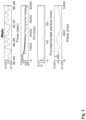
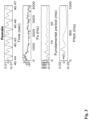
- the computation of the cepstral coefficients is illustrated in Fig. 2 and Fig. 3 for a male and a female speech, respectively.
- the maximum cepstral coefficient if it lies in the frequency range of [65 Hz, 320 Hz], is divided by the signal power c(0) (the first element of vector c that corresponds to log(0) or infinite pitch), and is compared to the first VAC threshold.
- Very low pitch i.e., frequencies below 65 Hz
- the voice detector 100 since hearables are for personal use and the pitch for a male user is relatively low, and for a female speaker is relative high, there are two counters in the voice detector 100 that count percentages of frames of the VAC signal 202a, in which there is a clear pitch, in order to decide if the pitch is a male or female pitch.
- the female pitch or the male pitch is only searched for further. That is, if a female pitch is determined, it may be searched for further only in the frequency range of [120 Hz, 320 Hz], for example. Alternatively, if a male pitch is determined, it may be searched for further only in the frequency range of [65 Hz, 160 Hz], for example.
- the pitch is usually not constant, but varies.
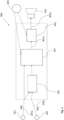
- FIG. 4 shows a schematic representation of a hearing device 400 comprising the voice detector 100 according to an embodiment, e.g. as shown in FIG. 1 .
- the hearing device 400 thus comprises the voice detector 100, and further comprises a noise suppressor 401, which is configured to produce one or more modified microphone signals 401a by selectively applying a gain to a speech signal present in the one or more microphone signals 201.
- the speech signal corresponds to the voice signal in the VAC signal 202a detected by the voice detector 100. That is, only if the voice detector 100 detects a voice signal in the VAC signal 202a, and thus implicitly a speech signal in the one or more microphone signals 201, does the noise suppressor 401 selectively apply the gain to that speech signal.
- the noise suppressor 401 can further be configured to produce the one or more modified microphone signals 401a by suppressing a background noise signal in the one or more microphone signals 201a.
- the hearing device 400 can further comprise a booster 402 configured to apply a boost to the one or more modified microphone signals, in particular a boost determined on the basis of a user input. That is, by means of the booster 402, the user can control an overall signal power output by the hearing device 400, i.e., the user can adjust a loudness.
- a booster 402 configured to apply a boost to the one or more modified microphone signals, in particular a boost determined on the basis of a user input. That is, by means of the booster 402, the user can control an overall signal power output by the hearing device 400, i.e., the user can adjust a loudness.
- the hearing device 400 can thus amplify or reduce environmental sounds, but keep the own voice of the user in the original level by means of the noise suppressor 401 that is configured to attenuate the low level hum.
- the booster 402 is operated manually by the user through a user interface UI 203.
- the user interface 203 may be of the hearing device 400 or may be in connection or communication with the hearing device 400.
- the user can also adjust the level of the environmental noise.
- the hearing device 400 can be configured to keep the own voice of the user in the original level and push low level background noise in predefined level that makes it practically inaudible.
- the noise suppressor 401 is operated manually by the user through a user interface UI 203.
- the desired boost can be given from the user interface UI 203. For instance, if the boost is zero (0 dB), the signal power is not changed and the own voice control or boost is not needed. In the case of negative boost, the signal is attenuated and, in the case of positive boost, its power is increased.
- the gain is zero if no boost is applied, the gain is positive if a negative boost is applied, and the gain is negative if a positive boost is applied.
- the boosted modified microphone signal 402a is given as input to a loudspeaker 204 to be reproduced to the user.
- the loudspeaker may be part of the hearing device 400 or connected to the hearing device (in which case the hearing device 400 may be an auxiliary device connectable to any sort of loudspeaker 204).
- the own voice control can be implemented efficiently by means of the voice detector 100. Whenever the boost is changed, the noise suppressor 401 is retuned and the relevant gain parameters are reinitialized. This provides the advantage that it is computationally efficient, because most of the computation takes place in the initialization.
- the voice signal can be the own voice of a user, which is typically louder than any other signal and, when amplified, it can become too loud.
- the user may also adapt her voice volume to how she hears her own voice and to the environment voice volume.
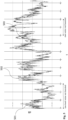
- the curve 501 represents the original signal as detected by the voice detector 100, while the curves 502 and 503 represent the signals boosted by ⁇ 6 dB by the booster 402.
- the low level noise is not boosted (20-32 sec) and own voice of the user in not boosted (38-40 sec).
- FIG. 5 shows the curve values (in dB, on the y-axis) over time (in seconds, on the x-axis).
- FIG. 6 shows a schematic representation of the hearing device 400 according to an embodiment, in particular of noise suppressor 401 and booster 402.
- the microphone signal x is processed by the noise suppressor 401 e.g., in 10 ms frames.
- the noise suppressor 401 can be configured to transfer each frame to frequency domain via FFT, multiplied by a gain G(t, ⁇ ) and transferred back via inverse FFT.
- the gain G(t, ⁇ ) depends on power spectral density (PSD) P(t, ⁇ ), computed by the noise suppressor 401 from the FFT of the said frame, a noise N(t, ⁇ ) at a time t and a frequency ⁇ .
- PSD power spectral density
- the gain is limited below and, in an embodiment, it is 0.25. In decibels, this corresponds to 0 dB attenuation for speech and -12 dB attenuation of pure noise, wherein the maximum attenuation parameter or noise suppressor parameter m is, in this case, 12 dB.
- the noise suppressor 401 parameter m may be modified if the voice signal is boosted.
- the gain is limited below by -(x + m) dB
- the gain is limited below by (x - m) dB, otherwise the hearing device 400 can be configured to switch off the noise reduction.
- the hearing device 400 when the own voice control flags the own voice activity, the hearing device 400 can be configured to further modify the noise suppressor 401 parameters.
- the signal power of the one or more microphone signals 201a from the one or more microphones 201 may then be adjusted based on the gain parameter (in the booster 402), and the boosted modified microphone signal 402a may be given as an input to a loudspeaker 204.
- FIG. 7 shows a schematic representation of a system 700 according to an embodiment of the invention.
- the system 700 comprises a first hearing device 400a (e.g., for one ear of the user) and a second hearing device 400b (e.g., for another ear of the user), wherein the first and second hearing device 400a and 400b are illustrated to be connected mechanically.
- the hearing devices 400a and 400b can also be separate from another.
- the first hearing device 400a comprises a first voice detector 100a, which is configured to obtain one or more first microphone signals 201a, and comprises a first noise suppressor 401a.
- the second hearing device 400b comprises a second voice detector 100b configured to obtain one or more second microphone signals 201, and comprises a second noise suppressor 401b.
- the functionality of the voice detectors 100a and 100b may be identical.
- the functionality of the voice detectors 100a and 100b may be as explained above in association with the voice detector 100.
- first noise suppressor 401a and the second noise suppressor 401b are respectively configured to cooperate to process the one or more first microphone signals 201a and the one or more second microphone signals 201a, in order to obtain a merged microphone signal, and to produce a modified merged microphone signal 401a by selectively applying a gain to a speech signal in the merged microphone signal.
- the merged microphone signal is obtained by combining the one or more first microphone signals 201a with the one or more second microphone signals 201a, or is obtained by beamforming, or is obtained by selecting either the one or more first microphone signals 201a or the one or more second microphone signals 201a as the merged microphone signal based on which has higher signal quality (or power).
- the first noise suppressor 401a and the second noise suppressor 401b are configured to form a single noise suppressor 401.
Landscapes
- Engineering & Computer Science (AREA)
- Physics & Mathematics (AREA)
- Acoustics & Sound (AREA)
- Signal Processing (AREA)
- Computational Linguistics (AREA)
- Health & Medical Sciences (AREA)
- Audiology, Speech & Language Pathology (AREA)
- Human Computer Interaction (AREA)
- Multimedia (AREA)
- Circuit For Audible Band Transducer (AREA)
Claims (15)
- Sprachdetektor (100) für eine Hörvorrichtung (400), wobei der Sprachdetektor (100) konfiguriert ist zum:Erhalten eines oder mehrerer Mikrofonsignale (201a);Erhalten eines Sprachbeschleunigungsmesser(VAC)-Signals (202a);Identifizieren des Vorhandenseins einer Tonhöhe im VAC-Signal (202a) mit einer unterschiedlichen Empfindlichkeit, abhängig von einer Signalleistung des einen oder der mehreren Mikrofonsignale (202a); undfalls das Vorhandensein einer Tonhöhe im VAC-Signal (202a) identifiziert wird, Bestimmen, ob die Tonhöhe mit einem eigenen Sprachsignal eines Benutzers verknüpft ist.
- Sprachdetektor (100) nach Anspruch 1, der ferner konfiguriert ist zum:Bestimmen einer ersten VAC-Schwelle basierend auf dem einen oder den mehreren Mikrofonsignalen (201a); undIdentifizieren des Vorhandenseins der Tonhöhe im VAC-Signal (202a) basierend auf der ersten VAC-Schwelle.
- Sprachdetektor (100) nach Anspruch 1 oder 2, der ferner konfiguriert ist zum:
Bestimmen, ob die Tonhöhe mit dem Sprachsignal verknüpft ist, basierend auf einer bestimmten zweiten VAC-Schwelle. - Sprachdetektor (100) nach einem der Ansprüche 1 bis 3, der konfiguriert ist zum:
Bestimmen, dass die Tonhöhe mit dem Sprachsignal verknüpft ist, falls zusätzlich eine Frequenz der Tonhöhe innerhalb eines vordefinierten Frequenzbereichs liegt. - Sprachdetektor (100) nach einem der Ansprüche 2 bis 4, wobei:
die erste VAC-Schwelle basierend auf einem Vergleichen einer Signalleistung eines aktuellen Rahmens eines oder mehrerer Mikrofonsignale mit einer durchschnittlichen Signalleistung mehrerer Rahmen des einen oder der mehreren Mikrofonsignale bestimmt wird. - Sprachdetektor (100) nach Anspruch 5, wobei:die erste VAC-Schwelle einen höheren Wert aufweist, falls die Signalleistung des aktuellen Rahmens des einen oder der mehreren Mikrofonsignale höher als die durchschnittliche Signalleistung des einen oder der mehreren Mikrofonsignale ist; und/oderdie erste VAC-Schwelle einen niedrigeren Wert aufweist, falls die Signalleistung des aktuellen Rahmens des einen oder der mehreren Mikrofonsignale gleich oder niedriger als die durchschnittliche Signalleistung des einen oder der mehreren Mikrofonsignale ist.
- Sprachdetektor (100) nach einem der Ansprüche 1 bis 6, wobei der Sprachdetektor (100) zum Identifizieren des Vorhandenseins der Tonhöhe im VAC-Signal (202a) konfiguriert ist zum:
Bestimmen, ob eine in mindestens einem Rahmen des VAC-Signals (202a) erkannte Tonhöhe eine männliche Tonhöhe oder eine weibliche Tonhöhe ist. - Sprachdetektor (100) nach Anspruch 7, wobei der Sprachdetektor (100) zum Identifizieren des Vorhandenseins der Tonhöhe im VAC-Signal (202a) ferner konfiguriert ist zum:Suchen nach der bestimmten männlichen Tonhöhe in anderen Rahmen des VAC-Signals (202a); oderSuchen nach der bestimmten weiblichen Tonhöhe in anderen Rahmen des VAC-Signals (202a).
- Sprachdetektor (100) nach einem der Ansprüche 1 bis 8, wobei der Sprachdetektor (100) zum Identifizieren des Vorhandenseins der Tonhöhe im VAC-Signal ferner konfiguriert ist zum:Berechnen eines oder mehrerer Cepstralkoeffizienten aus dem VAC-Signal (202a); undBerechnen der Tonhöhe aus dem einen oder den mehreren Cepstralkoeffizienten basierend auf der ersten VAC-Schwelle und auf der zweiten VAC-Schwelle.
- Sprachdetektor (100) nach Anspruch 9, wobei:der eine oder die mehreren Cepstralkoeffizienten berechnet werden gemäß der Formel:
 wobei x für das VAC-Signal steht, FFT für eine schnelle Fourier-Transformation steht und IFFT für eine inverse FFT steht.
 - Sprachdetektor (100) nach Anspruch 9 oder 10, wenn abhängig von Anspruch 2, wobei der Sprachdetektor (100) zum Identifizieren des Vorhandenseins der Tonhöhe im VAC-Signal (202a) ferner konfiguriert ist zum:Bestimmen eines maximalen Cepstralkoeffizienten, der einem gewissen Frequenzbereich entspricht;Identifizieren, dass die Tonhöhe im VAC-Signal (202a) vorhanden ist, falls der maximale Cepstralkoeffizient geteilt durch die Signalleistung größer als die erste VAC-Schwelle ist.
- Hörvorrichtung (400), die umfasst:einen Sprachdetektor (100) nach einem der Ansprüche 1 bis 11; undeinen Rauschunterdrücker (401), der konfiguriert ist, um ein oder mehrere modifizierte Mikrofonsignale (401a) durch selektives Anlegen einer Verstärkung auf ein Sprachsignal in dem einen oder den mehreren Mikrofonsignalen (201a) zu erzeugen,wobei das Sprachsignal dem durch den Sprachdetektor (100) erkannten eigenen Sprachsignal des Benutzers im VAC-Signal (202a) entspricht.
- System (700), das umfasst:eine erste Hörvorrichtung (400a) nach Anspruch 12, wobei die erste Hörvorrichtung (400a) einen ersten Sprachdetektor (100a) nach einem der Ansprüche 1 bis 11 umfasst, der konfiguriert ist, um ein oder mehrere erste Mikrofonsignale (201a) zu erhalten, und einen ersten Rauschunterdrücker (401a) umfasst;eine zweite Hörvorrichtung (400b) nach Anspruch 12, wobei die zweite Hörvorrichtung (400b) einen zweiten Sprachdetektor (100b) nach einem der Ansprüche 1 bis 11 umfasst, der konfiguriert ist, um ein oder mehrere zweite Mikrofonsignale (201a) zu erhalten, und einen zweiten Rauschunterdrücker (401b) umfasst; wobei der erste Rauschunterdrücker (401a) und der zweite Rauschunterdrücker (401b) zum Zusammenarbeiten konfiguriert sind zum:- Verarbeiten des einen oder der mehreren ersten Mikrofonsignale (201a) und des einen oder der mehreren zweiten Mikrofonsignale (201a), um ein zusammengeführtes Mikrofonsignal zu erhalten; und- Erzeugen eines modifizierten zusammengeführten Mikrofonsignals (401a) durch selektives Anlegen einer Verstärkung an ein Sprachsignal im zusammengeführten Mikrofonsignal.
- Verfahren (800) für eine Spracherkennung, wobei das Verfahren (800) umfasst:Erhalten (801) eines oder mehrerer Mikrofonsignale (201a);Erhalten (802) eines Sprachbeschleunigungsmesser(VAC)-Signals (202a);Identifizieren (803) des Vorhandenseins einer Tonhöhe im VAC-Signal (201a) mit einer unterschiedlichen Empfindlichkeit, abhängig von einer Signalleistung des einen oder der mehreren Mikrofonsignale (201a); undfalls eine Tonhöhe im VAC-Signal (202a) erkannt wird, Bestimmen (804), ob die Tonhöhe mit einem eigenen Sprachsignal des Benutzers verknüpft ist.
- Computerprogramm, das einen Programmcode zum Durchführen des Verfahrens (800) nach Anspruch 14 umfasst, wenn es auf einem Computer ausgeführt wird.
Applications Claiming Priority (1)
| Application Number | Priority Date | Filing Date | Title |
|---|---|---|---|
| PCT/EP2020/065014 WO2021239254A1 (en) | 2020-05-29 | 2020-05-29 | A own voice detector of a hearing device |
Publications (2)
| Publication Number | Publication Date |
|---|---|
| EP4158625A1 EP4158625A1 (de) | 2023-04-05 |
| EP4158625B1 true EP4158625B1 (de) | 2025-04-23 |
Family
ID=71108550
Family Applications (1)
| Application Number | Title | Priority Date | Filing Date |
|---|---|---|---|
| EP20733686.8A Active EP4158625B1 (de) | 2020-05-29 | 2020-05-29 | Detektion der eigenen sprachaktivität in einem hörgerät/kopfhörer und verfahren hierzu |
Country Status (3)
| Country | Link |
|---|---|
| EP (1) | EP4158625B1 (de) |
| CN (1) | CN115668370B (de) |
| WO (1) | WO2021239254A1 (de) |
Families Citing this family (1)
| Publication number | Priority date | Publication date | Assignee | Title |
|---|---|---|---|---|
| US20250048020A1 (en) * | 2023-07-31 | 2025-02-06 | Apple Inc. | Own voice audio processing for hearing loss |
Family Cites Families (6)
| Publication number | Priority date | Publication date | Assignee | Title |
|---|---|---|---|---|
| US9767817B2 (en) * | 2008-05-14 | 2017-09-19 | Sony Corporation | Adaptively filtering a microphone signal responsive to vibration sensed in a user's face while speaking |
| US9438985B2 (en) * | 2012-09-28 | 2016-09-06 | Apple Inc. | System and method of detecting a user's voice activity using an accelerometer |
| EP3274993B1 (de) * | 2015-04-23 | 2019-06-12 | Huawei Technologies Co. Ltd. | Audiosignalverarbeitungsvorrichtung zur verarbeitung eines hörmuschelaudioeingangssignals auf basis eines mikrofonaudiosignals |
| US9997173B2 (en) * | 2016-03-14 | 2018-06-12 | Apple Inc. | System and method for performing automatic gain control using an accelerometer in a headset |
| US10313782B2 (en) * | 2017-05-04 | 2019-06-04 | Apple Inc. | Automatic speech recognition triggering system |
| US10535362B2 (en) * | 2018-03-01 | 2020-01-14 | Apple Inc. | Speech enhancement for an electronic device |
-
2020
- 2020-05-29 EP EP20733686.8A patent/EP4158625B1/de active Active
- 2020-05-29 WO PCT/EP2020/065014 patent/WO2021239254A1/en not_active Ceased
- 2020-05-29 CN CN202080101014.6A patent/CN115668370B/zh active Active
Also Published As
| Publication number | Publication date |
|---|---|
| WO2021239254A1 (en) | 2021-12-02 |
| CN115668370B (zh) | 2025-07-15 |
| EP4158625A1 (de) | 2023-04-05 |
| CN115668370A (zh) | 2023-01-31 |
Similar Documents
| Publication | Publication Date | Title |
|---|---|---|
| CN102007776B (zh) | 助听装置 | |
| US10535362B2 (en) | Speech enhancement for an electronic device | |
| US10218327B2 (en) | Dynamic enhancement of audio (DAE) in headset systems | |
| US8488803B2 (en) | Wind suppression/replacement component for use with electronic systems | |
| US8452023B2 (en) | Wind suppression/replacement component for use with electronic systems | |
| EP2643834B1 (de) | Vorrichtung und verfahren zur erzeugung eines tonsignals | |
| CN111935584A (zh) | 用于无线耳机组件的风噪处理方法、装置以及耳机 | |
| EP3757993B1 (de) | Vorverarbeitung zur automatischen spracherkennung | |
| CN108235181B (zh) | 在音频处理装置中降噪的方法 | |
| WO2011140110A1 (en) | Wind suppression/replacement component for use with electronic systems | |
| WO2020023856A1 (en) | Forced gap insertion for pervasive listening | |
| US20200280809A1 (en) | Sound level control for hearing assistive devices | |
| EP4158625B1 (de) | Detektion der eigenen sprachaktivität in einem hörgerät/kopfhörer und verfahren hierzu | |
| CN113963699A (zh) | 一种金融设备智能语音交互方法 | |
| CN116419111A (zh) | 耳机的控制方法、参数生成方法、装置、存储介质及耳机 | |
| CN108141694A (zh) | 音频设备中的回放管理的事件检测 | |
| HK1187757A (en) | Hearing assistance apparatus |
Legal Events
| Date | Code | Title | Description |
|---|---|---|---|
| STAA | Information on the status of an ep patent application or granted ep patent |
Free format text: STATUS: UNKNOWN |
|
| STAA | Information on the status of an ep patent application or granted ep patent |
Free format text: STATUS: THE INTERNATIONAL PUBLICATION HAS BEEN MADE |
|
| PUAI | Public reference made under article 153(3) epc to a published international application that has entered the european phase |
Free format text: ORIGINAL CODE: 0009012 |
|
| STAA | Information on the status of an ep patent application or granted ep patent |
Free format text: STATUS: REQUEST FOR EXAMINATION WAS MADE |
|
| 17P | Request for examination filed |
Effective date: 20221228 |
|
| AK | Designated contracting states |
Kind code of ref document: A1 Designated state(s): AL AT BE BG CH CY CZ DE DK EE ES FI FR GB GR HR HU IE IS IT LI LT LU LV MC MK MT NL NO PL PT RO RS SE SI SK SM TR |
|
| DAV | Request for validation of the european patent (deleted) | ||
| DAX | Request for extension of the european patent (deleted) | ||
| GRAP | Despatch of communication of intention to grant a patent |
Free format text: ORIGINAL CODE: EPIDOSNIGR1 |
|
| STAA | Information on the status of an ep patent application or granted ep patent |
Free format text: STATUS: GRANT OF PATENT IS INTENDED |
|
| INTG | Intention to grant announced |
Effective date: 20241203 |
|
| GRAS | Grant fee paid |
Free format text: ORIGINAL CODE: EPIDOSNIGR3 |
|
| GRAA | (expected) grant |
Free format text: ORIGINAL CODE: 0009210 |
|
| STAA | Information on the status of an ep patent application or granted ep patent |
Free format text: STATUS: THE PATENT HAS BEEN GRANTED |
|
| AK | Designated contracting states |
Kind code of ref document: B1 Designated state(s): AL AT BE BG CH CY CZ DE DK EE ES FI FR GB GR HR HU IE IS IT LI LT LU LV MC MK MT NL NO PL PT RO RS SE SI SK SM TR |
|
| REG | Reference to a national code |
Ref country code: GB Ref legal event code: FG4D |
|
| REG | Reference to a national code |
Ref country code: CH Ref legal event code: EP |
|
| REG | Reference to a national code |
Ref country code: DE Ref legal event code: R096 Ref document number: 602020049939 Country of ref document: DE |
|
| REG | Reference to a national code |
Ref country code: IE Ref legal event code: FG4D |
|
| PGFP | Annual fee paid to national office [announced via postgrant information from national office to epo] |
Ref country code: DE Payment date: 20250408 Year of fee payment: 6 |
|
| PGFP | Annual fee paid to national office [announced via postgrant information from national office to epo] |
Ref country code: GB Payment date: 20250430 Year of fee payment: 6 |
|
| REG | Reference to a national code |
Ref country code: NL Ref legal event code: MP Effective date: 20250423 |
|
| PG25 | Lapsed in a contracting state [announced via postgrant information from national office to epo] |
Ref country code: NL Free format text: LAPSE BECAUSE OF FAILURE TO SUBMIT A TRANSLATION OF THE DESCRIPTION OR TO PAY THE FEE WITHIN THE PRESCRIBED TIME-LIMIT Effective date: 20250423 |
|
| REG | Reference to a national code |
Ref country code: AT Ref legal event code: MK05 Ref document number: 1788610 Country of ref document: AT Kind code of ref document: T Effective date: 20250423 |
|
| PG25 | Lapsed in a contracting state [announced via postgrant information from national office to epo] |
Ref country code: FI Free format text: LAPSE BECAUSE OF FAILURE TO SUBMIT A TRANSLATION OF THE DESCRIPTION OR TO PAY THE FEE WITHIN THE PRESCRIBED TIME-LIMIT Effective date: 20250423 Ref country code: PT Free format text: LAPSE BECAUSE OF FAILURE TO SUBMIT A TRANSLATION OF THE DESCRIPTION OR TO PAY THE FEE WITHIN THE PRESCRIBED TIME-LIMIT Effective date: 20250825 Ref country code: ES Free format text: LAPSE BECAUSE OF FAILURE TO SUBMIT A TRANSLATION OF THE DESCRIPTION OR TO PAY THE FEE WITHIN THE PRESCRIBED TIME-LIMIT Effective date: 20250423 |
|
| REG | Reference to a national code |
Ref country code: LT Ref legal event code: MG9D |
|
| PG25 | Lapsed in a contracting state [announced via postgrant information from national office to epo] |
Ref country code: NO Free format text: LAPSE BECAUSE OF FAILURE TO SUBMIT A TRANSLATION OF THE DESCRIPTION OR TO PAY THE FEE WITHIN THE PRESCRIBED TIME-LIMIT Effective date: 20250723 Ref country code: GR Free format text: LAPSE BECAUSE OF FAILURE TO SUBMIT A TRANSLATION OF THE DESCRIPTION OR TO PAY THE FEE WITHIN THE PRESCRIBED TIME-LIMIT Effective date: 20250724 |
|
| PG25 | Lapsed in a contracting state [announced via postgrant information from national office to epo] |
Ref country code: PL Free format text: LAPSE BECAUSE OF FAILURE TO SUBMIT A TRANSLATION OF THE DESCRIPTION OR TO PAY THE FEE WITHIN THE PRESCRIBED TIME-LIMIT Effective date: 20250423 |
|
| PG25 | Lapsed in a contracting state [announced via postgrant information from national office to epo] |
Ref country code: BG Free format text: LAPSE BECAUSE OF FAILURE TO SUBMIT A TRANSLATION OF THE DESCRIPTION OR TO PAY THE FEE WITHIN THE PRESCRIBED TIME-LIMIT Effective date: 20250423 |
|
| PG25 | Lapsed in a contracting state [announced via postgrant information from national office to epo] |
Ref country code: HR Free format text: LAPSE BECAUSE OF FAILURE TO SUBMIT A TRANSLATION OF THE DESCRIPTION OR TO PAY THE FEE WITHIN THE PRESCRIBED TIME-LIMIT Effective date: 20250423 |
|
| PG25 | Lapsed in a contracting state [announced via postgrant information from national office to epo] |
Ref country code: AT Free format text: LAPSE BECAUSE OF FAILURE TO SUBMIT A TRANSLATION OF THE DESCRIPTION OR TO PAY THE FEE WITHIN THE PRESCRIBED TIME-LIMIT Effective date: 20250423 |
|
| PG25 | Lapsed in a contracting state [announced via postgrant information from national office to epo] |
Ref country code: RS Free format text: LAPSE BECAUSE OF FAILURE TO SUBMIT A TRANSLATION OF THE DESCRIPTION OR TO PAY THE FEE WITHIN THE PRESCRIBED TIME-LIMIT Effective date: 20250723 |
|
| PG25 | Lapsed in a contracting state [announced via postgrant information from national office to epo] |
Ref country code: IS Free format text: LAPSE BECAUSE OF FAILURE TO SUBMIT A TRANSLATION OF THE DESCRIPTION OR TO PAY THE FEE WITHIN THE PRESCRIBED TIME-LIMIT Effective date: 20250823 |
|
| PG25 | Lapsed in a contracting state [announced via postgrant information from national office to epo] |
Ref country code: LV Free format text: LAPSE BECAUSE OF FAILURE TO SUBMIT A TRANSLATION OF THE DESCRIPTION OR TO PAY THE FEE WITHIN THE PRESCRIBED TIME-LIMIT Effective date: 20250423 |
|
| REG | Reference to a national code |
Ref country code: CH Ref legal event code: H13 Free format text: ST27 STATUS EVENT CODE: U-0-0-H10-H13 (AS PROVIDED BY THE NATIONAL OFFICE) Effective date: 20251223 |
|
| PG25 | Lapsed in a contracting state [announced via postgrant information from national office to epo] |
Ref country code: DK Free format text: LAPSE BECAUSE OF FAILURE TO SUBMIT A TRANSLATION OF THE DESCRIPTION OR TO PAY THE FEE WITHIN THE PRESCRIBED TIME-LIMIT Effective date: 20250423 Ref country code: SM Free format text: LAPSE BECAUSE OF FAILURE TO SUBMIT A TRANSLATION OF THE DESCRIPTION OR TO PAY THE FEE WITHIN THE PRESCRIBED TIME-LIMIT Effective date: 20250423 |
|
| PG25 | Lapsed in a contracting state [announced via postgrant information from national office to epo] |
Ref country code: LU Free format text: LAPSE BECAUSE OF NON-PAYMENT OF DUE FEES Effective date: 20250529 |
|
| PG25 | Lapsed in a contracting state [announced via postgrant information from national office to epo] |
Ref country code: CH Free format text: LAPSE BECAUSE OF NON-PAYMENT OF DUE FEES Effective date: 20250531 |
|
| PG25 | Lapsed in a contracting state [announced via postgrant information from national office to epo] |
Ref country code: CZ Free format text: LAPSE BECAUSE OF FAILURE TO SUBMIT A TRANSLATION OF THE DESCRIPTION OR TO PAY THE FEE WITHIN THE PRESCRIBED TIME-LIMIT Effective date: 20250423 |
|
| PG25 | Lapsed in a contracting state [announced via postgrant information from national office to epo] |
Ref country code: EE Free format text: LAPSE BECAUSE OF FAILURE TO SUBMIT A TRANSLATION OF THE DESCRIPTION OR TO PAY THE FEE WITHIN THE PRESCRIBED TIME-LIMIT Effective date: 20250423 |
|
| REG | Reference to a national code |
Ref country code: DE Ref legal event code: R097 Ref document number: 602020049939 Country of ref document: DE |
|
| PG25 | Lapsed in a contracting state [announced via postgrant information from national office to epo] |
Ref country code: SK Free format text: LAPSE BECAUSE OF FAILURE TO SUBMIT A TRANSLATION OF THE DESCRIPTION OR TO PAY THE FEE WITHIN THE PRESCRIBED TIME-LIMIT Effective date: 20250423 |
|
| PG25 | Lapsed in a contracting state [announced via postgrant information from national office to epo] |
Ref country code: IT Free format text: LAPSE BECAUSE OF FAILURE TO SUBMIT A TRANSLATION OF THE DESCRIPTION OR TO PAY THE FEE WITHIN THE PRESCRIBED TIME-LIMIT Effective date: 20250423 |
|
| REG | Reference to a national code |
Ref country code: BE Ref legal event code: MM Effective date: 20250531 |
|
| PG25 | Lapsed in a contracting state [announced via postgrant information from national office to epo] |
Ref country code: MC Free format text: LAPSE BECAUSE OF FAILURE TO SUBMIT A TRANSLATION OF THE DESCRIPTION OR TO PAY THE FEE WITHIN THE PRESCRIBED TIME-LIMIT Effective date: 20250423 |
|
| PG25 | Lapsed in a contracting state [announced via postgrant information from national office to epo] |
Ref country code: RO Free format text: LAPSE BECAUSE OF FAILURE TO SUBMIT A TRANSLATION OF THE DESCRIPTION OR TO PAY THE FEE WITHIN THE PRESCRIBED TIME-LIMIT Effective date: 20250423 |
|
| PLBE | No opposition filed within time limit |
Free format text: ORIGINAL CODE: 0009261 |
|
| STAA | Information on the status of an ep patent application or granted ep patent |
Free format text: STATUS: NO OPPOSITION FILED WITHIN TIME LIMIT |
|
| REG | Reference to a national code |
Ref country code: CH Ref legal event code: L10 Free format text: ST27 STATUS EVENT CODE: U-0-0-L10-L00 (AS PROVIDED BY THE NATIONAL OFFICE) Effective date: 20260304 |