EP4158220B1 - Low profile shock isolating mount - Google Patents
Low profile shock isolating mount Download PDFInfo
- Publication number
- EP4158220B1 EP4158220B1 EP21769832.3A EP21769832A EP4158220B1 EP 4158220 B1 EP4158220 B1 EP 4158220B1 EP 21769832 A EP21769832 A EP 21769832A EP 4158220 B1 EP4158220 B1 EP 4158220B1
- Authority
- EP
- European Patent Office
- Prior art keywords
- mount
- isolator
- payload
- support leg
- mounting assembly
- Prior art date
- Legal status (The legal status is an assumption and is not a legal conclusion. Google has not performed a legal analysis and makes no representation as to the accuracy of the status listed.)
- Active
Links
Images









Classifications
-
- F—MECHANICAL ENGINEERING; LIGHTING; HEATING; WEAPONS; BLASTING
- F16—ENGINEERING ELEMENTS AND UNITS; GENERAL MEASURES FOR PRODUCING AND MAINTAINING EFFECTIVE FUNCTIONING OF MACHINES OR INSTALLATIONS; THERMAL INSULATION IN GENERAL
- F16F—SPRINGS; SHOCK-ABSORBERS; MEANS FOR DAMPING VIBRATION
- F16F15/00—Suppression of vibrations in systems; Means or arrangements for avoiding or reducing out-of-balance forces, e.g. due to motion
- F16F15/02—Suppression of vibrations of non-rotating, e.g. reciprocating systems; Suppression of vibrations of rotating systems by use of members not moving with the rotating systems
- F16F15/04—Suppression of vibrations of non-rotating, e.g. reciprocating systems; Suppression of vibrations of rotating systems by use of members not moving with the rotating systems using elastic means
- F16F15/08—Suppression of vibrations of non-rotating, e.g. reciprocating systems; Suppression of vibrations of rotating systems by use of members not moving with the rotating systems using elastic means with rubber springs ; with springs made of rubber and metal
-
- F—MECHANICAL ENGINEERING; LIGHTING; HEATING; WEAPONS; BLASTING
- F16—ENGINEERING ELEMENTS AND UNITS; GENERAL MEASURES FOR PRODUCING AND MAINTAINING EFFECTIVE FUNCTIONING OF MACHINES OR INSTALLATIONS; THERMAL INSULATION IN GENERAL
- F16F—SPRINGS; SHOCK-ABSORBERS; MEANS FOR DAMPING VIBRATION
- F16F15/00—Suppression of vibrations in systems; Means or arrangements for avoiding or reducing out-of-balance forces, e.g. due to motion
- F16F15/02—Suppression of vibrations of non-rotating, e.g. reciprocating systems; Suppression of vibrations of rotating systems by use of members not moving with the rotating systems
- F16F15/022—Suppression of vibrations of non-rotating, e.g. reciprocating systems; Suppression of vibrations of rotating systems by use of members not moving with the rotating systems using dampers and springs in combination
-
- B—PERFORMING OPERATIONS; TRANSPORTING
- B60—VEHICLES IN GENERAL
- B60K—ARRANGEMENT OR MOUNTING OF PROPULSION UNITS OR OF TRANSMISSIONS IN VEHICLES; ARRANGEMENT OR MOUNTING OF PLURAL DIVERSE PRIME-MOVERS IN VEHICLES; AUXILIARY DRIVES FOR VEHICLES; INSTRUMENTATION OR DASHBOARDS FOR VEHICLES; ARRANGEMENTS IN CONNECTION WITH COOLING, AIR INTAKE, GAS EXHAUST OR FUEL SUPPLY OF PROPULSION UNITS IN VEHICLES
- B60K5/00—Arrangement or mounting of internal-combustion or jet-propulsion units
- B60K5/12—Arrangement of engine supports
- B60K5/1208—Resilient supports
-
- F—MECHANICAL ENGINEERING; LIGHTING; HEATING; WEAPONS; BLASTING
- F16—ENGINEERING ELEMENTS AND UNITS; GENERAL MEASURES FOR PRODUCING AND MAINTAINING EFFECTIVE FUNCTIONING OF MACHINES OR INSTALLATIONS; THERMAL INSULATION IN GENERAL
- F16F—SPRINGS; SHOCK-ABSORBERS; MEANS FOR DAMPING VIBRATION
- F16F1/00—Springs
- F16F1/36—Springs made of rubber or other material having high internal friction, e.g. thermoplastic elastomers
- F16F1/42—Springs made of rubber or other material having high internal friction, e.g. thermoplastic elastomers characterised by the mode of stressing
- F16F1/52—Springs made of rubber or other material having high internal friction, e.g. thermoplastic elastomers characterised by the mode of stressing loaded in combined stresses
- F16F1/54—Springs made of rubber or other material having high internal friction, e.g. thermoplastic elastomers characterised by the mode of stressing loaded in combined stresses loaded in compression and shear
-
- F—MECHANICAL ENGINEERING; LIGHTING; HEATING; WEAPONS; BLASTING
- F42—AMMUNITION; BLASTING
- F42B—EXPLOSIVE CHARGES, e.g. FOR BLASTING, FIREWORKS, AMMUNITION
- F42B15/00—Self-propelled projectiles or missiles, e.g. rockets; Guided missiles
-
- F—MECHANICAL ENGINEERING; LIGHTING; HEATING; WEAPONS; BLASTING
- F16—ENGINEERING ELEMENTS AND UNITS; GENERAL MEASURES FOR PRODUCING AND MAINTAINING EFFECTIVE FUNCTIONING OF MACHINES OR INSTALLATIONS; THERMAL INSULATION IN GENERAL
- F16F—SPRINGS; SHOCK-ABSORBERS; MEANS FOR DAMPING VIBRATION
- F16F2234/00—Shape
- F16F2234/04—Shape conical
Definitions
- a payload such as an electronics component
- a payload such as a servo motor
- a missile body It is important to have a mounting system that secures the payload to the structure to prevent uncontrolled movement during use.
- a rigid coupling may transmit shock loads between the mounting system and the payload, potentially damaging the payload.
- a servo motor in a multi-stage missile may require a secure mount to the missile body structure, but depending upon the type of mounting system used to secure the payload, the payload can be damaged if not isolated from shock loads induced within the missile and propagated to the mounting system during operation, such as the shock loads induced when the missile transitions between stages.
- Other devices, systems, and vehicle types other than a missile carrying a payload may also operate under conditions in which significant shock loads are present, and which may be transferred to the payload if the payload is not sufficiently isolated.
- GB 543 917 A discloses anti-vibration mountings of machines and instruments in which vibration is set up by more or less rapidly moving parts.
- JP 6 355547 B2 discloses a vibration control device which inhibits interference between a vibration stopper part and a peripheral member of the vibration control device in a more secure manner, and to provide a refrigeration cycle device including the vibration control device.
- JP 2019 065887 A discloses a vibration control mount which is downsized, lightweight and inexpensive but well absorbs horizontal and twisted displacement, further, is structured to be immune to overturn or the like, reduces cost and improves riding comfort.
- the term “substantially” refers to the complete or nearly complete extent or degree of an action, characteristic, property, state, structure, item, or result.
- an object that is “substantially” enclosed would mean that the object is either completely enclosed or nearly completely enclosed.
- the exact allowable degree of deviation from absolute completeness may in some cases depend on the specific context. However, generally speaking the nearness of completion will be so as to have the same overall result as if absolute and total completion were obtained.
- the use of “substantially” is equally applicable when used in a negative connotation to refer to the complete or near complete lack of an action, characteristic, property, state, structure, item, or result.
- a low-profile shock isolating payload mounting assembly comprising a first mount, a second mount, and an isolator.
- the second mount is movable relative to the first mount and comprises at least one riser comprising at least one inclined surface.
- the isolator comprises an inner frame and an outer frame.
- the inner frame is configured to couple to the first mount and comprises a platform and at least one isolator support leg extending from the platform.
- the at least one isolator support leg is inclined so as to be complementary to the at least one inclined surface of the second mount.
- the outer frame is configured to couple to the second mount and comprises an opening configured to facilitate access to the platform of the inner frame, and at least one rail being inclined so as to be complementary to the at least one isolator support leg.
- the outer frame operates to capture the at least one isolator support leg between the at least one rail of the outer frame and the at least one inclined surface of the second mount.
- the at least one riser can comprise a plurality of inclined surfaces
- the inner frame can comprise a plurality of isolator support legs extending from the platform
- the outer frame can comprise a plurality of rails.
- the isolator can further comprise at least one inner isolator pad situated between an inclined surface of the at least one inclined surface of the second mount and an isolator support leg of the at least one isolator support leg, and at least one outer isolator pad situated between a rail of the at least one rail of the outer frame and the isolator support leg.
- At least one of the inner isolator pad and the outer isolator pad can comprise, or in other words can be formed of, an elastomeric material.
- the inner frame can be configured to nest within the outer frame, or in other words, the inner and outer frames can comprise respective structural configurations that facilitate these being able to nest with one another.
- one of the first mount and the second mount can be operable to mount to a payload support surface and the other of the first mount and the second mount can be operable to mount a payload to be supported by the payload support surface.
- the first mount can be secured to the inner frame by one or more (e.g., a first plurality of) fasteners and the second mount can be secured to the outer frame by one or more (e.g., a second plurality of) fasteners.
- the at least one isolator support leg can comprise a frustoconical shape.
- the at least one isolator support leg can comprise a plurality of support legs.
- the payload system comprises a body, a payload, and a low-profile shock isolating payload mounting assembly.
- the body has a payload support surface.
- the body and the payload support surface can be subject to vibration and shock type of loads.
- the payload is supported by the payload support surface.
- the low-profile shock isolating payload mounting assembly couples the payload to the payload support surface.
- the low-profile shock isolating payload mounting assembly comprises a first mount and a second mount.
- the first mount is coupled to one of the body and the payload.
- the second mount is movable relative to the first mount and coupled to the other of the body and the payload.
- the second mount comprises at least one riser comprising at least one inclined surface.
- the isolator comprises an inner frame and an outer frame.
- the inner frame is configured to couple to the first mount.
- the inner frame comprises a platform and at least one isolator support leg extending from the platform.
- the at least one isolator support leg is inclined so as to be complementary to the at least one inclined surface of the second mount.
- the outer frame is configured to couple to the second mount and comprises an opening configured to facilitate access to the platform of the inner frame and at least one rail being inclined so as to be complementary to the at least one isolator support leg.
- the outer frame operates to capture the at least one isolator support leg between the at least one rail of the outer frame and the at least one inclined surface of the second mount.
- the body can comprise an elongate cylindrical body and the payload support surface can comprise an interior cylindrical surface of the elongate cylindrical body.
- the body can comprise other shapes or configurations other than cylindrical.
- the isolator can further comprise at least one inner isolator pad situated between an inclined surface of the at least one inclined surface of the second mount and an isolator support leg of the at least one isolator support leg and at least one outer pad situated between a rail of the at least one rail of the outer frame and the isolator support leg.
- the at least one isolator support leg can comprise an inner isolator pad and an outer isolator pad.
- the inner frame can nest within the outer frame.
- the at least one isolator support leg can comprise a frustoconical shape.
- the at least one isolator support leg can comprise a plurality of support legs.
- the method includes forming a first mount to be operable to couple to a support surface, forming a second mount to be operable to couple to a payload and to have at least one riser comprising at least one inclined surface, forming a second mount movable relative to the first mount, the second mount comprising at least one riser comprising at least one inclined surface, forming an inner frame to have a platform operable to couple to the first mount and at least one isolator support leg extending from the platform, the at least one isolator support leg being inclined so as to be complementary to the at least one incline surface of the second mount, and forming an outer frame operable to couple to the second mount and to have an opening configured to facilitate access to the platform of the inner frame to be operable to couple to the first mount and to have at least one rail inclined so as to be complementary to the at least one isolator support leg.
- the method can further comprise forming the at least one isolator support leg to comprise a plurality of support legs.
- the method can further comprise attaching at least one isolator support pad to the at least one isolator support leg.
- FIG. 1 illustrates an example payload system 10 comprising a body 12, a payload 14, and a low-profile shock isolating payload mounting assembly 16.
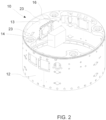
- FIG. 2 illustrates the example payload system 10 of FIG. 1 in an exploded view.
- the body 12 can be any body to which a payload 14 is mounted.
- the body 12 is a tubular structure such as a missile segment.
- the body 12 can comprise a payload support surface 13 for supporting the payload 14.
- the payload support surface 13 is a cylindrical interior surface of the body 12.
- payload support surfaces can be irregular or a flat mounting surface.
- the payload 14 can be any payload requiring mounting to the body 12 and that would benefit from being vibrationally isolated from the body 12.
- the payload 14 can be electronics equipment that is sensitive to vibration and shock loads, such as a servo motor assembly.
- the body 12 can comprise other shapes or configurations other than cylindrical.
- the payload 14 can comprise a variety of different types of payloads. As such, those illustrated in the drawings and discussed herein are not intended to be limiting in any way.
- FIG. 3 illustrates the low-profile shock isolating payload mounting assembly 16 of FIG. 1 separated from the body 12 and the payload 14.
- FIG. 4 illustrates the low-profile shock isolating payload mounting assembly 16 reversed from the view of FIG. 3 .
- the low-profile shock isolating payload mounting assembly 16 comprises a first mount 18, a second mount 20, and an isolator 28 (see FIG. 5 ).
- Each of the first and second mounts 18, 20 can be configured to mount to either the body 12 or the payload 14.
- the first mount 18 is configured to mount to the body 12 at the payload support surface 13 and the second mount 20 is configured to mount to the payload 14.
- the roles can be reversed, with the first mount 18 configured to mount to the payload 14 and the second mount 20 configured to mount to the payload support surface 13 of the body 12.
- the first mount 18 can be configured to mount to the body 12 using conventional means such as threaded fasteners, weldments, adhesives, and rivets. Although not intended to be limiting in any way, the first mount 18 can be mounted to the body 12 using threaded fasteners (not shown).
- the first mount 18 can have threaded sockets 22 and the body 12 can have corresponding apertures 23 for receiving a shaft of a threaded fastener.
- the first mount 18 can be secured to the body 12 by passing a shaft of a threaded fastener through an aperture 23 of the body 12 and into a corresponding threaded socket 22 of the first mount 18 and tightening the fastener.
- the first mount 18 can be configured to mount to the payload support surface 13 of the body 12 by suitably configuring the shape of the first mount 18.
- the first mount 18 can have at least one curved surface 24 that complements the payload support surface 13 of the body 12.
- the term "complement" is intended to mean that the surfaces are designed and configured to work together to perform an intended function.
- the complementary surfaces can be configured to directly interface with one another, such as in the example of the curved surface 24 of the first mount 18 interfacing directly with (i.e., mounting to) the payload support surface 13 of the body 12.
- the complementary surfaces can be configured to indirectly interface with one another, such as in the example of the inclined surface 36 of the second mount 20 indirectly interfacing with the isolator support leg 44 of the inner frame 38 by way of the inner isolator pad 54 situated between them.
- complementary surfaces can comprise two surfaces that are oriented along parallel planes, two surfaces that have the same or similar curvature, two surfaces that are non-parallel to one another, and others.
- the threaded sockets 22 can be angled relative to one another to account for the curvature of the body 12 and the distance between the apertures 23.
- the first mount 18 can be modified as necessary to conform to the shape of the payload support surface 13 to which the first mount 18 is being secured.
- the second mount 20 can be configured to mount to the payload 14 using conventional means such as threaded fasteners, weldments, adhesives, and rivets. Again, not intending to be limiting in any way, the second mount 20 can be mounted to the body 12 using threaded fasteners (not shown).
- the payload 14 can have threaded sockets for receiving a threaded end of a fastener and the second mount 20 can have apertures 26 that correspond to the threaded sockets of the payload 14.
- the second mount 20 can be secured to the payload 14 by passing a threaded fastener through an aperture 26 and into a corresponding threaded socket of the payload 14 and tightening the threaded fastener.
- the low-profile shock isolating payload mounting assembly 16 comprises the first mount 18, the second mount 20, and an isolator 28.
- the first and second mounts 18, 20 are movable relative to one another and are connected by the isolator 28.
- the isolator 28 operates to dampen vibration and shock propagating between the first and second mounts 18, 20.
- the inner frame 38 can comprise a platform 42 and at least one isolator support leg 44 extending from the platform 42.
- the at least one isolator support leg 44 can be inclined so as to be complementary to the at least one inclined surface 36 of the second mount 20. For example, if the at least one inclined surface 36 had an angle of 45 degrees relative to axis 8 of FIG. 5 the at least one isolator support leg 44 can also have an angle of 45 degrees relative to axis 8 of FIG. 6 .
- the at least one isolator support leg can have a planar shape that is substantially flat. In other examples, such as that of FIGS. 12-22 described below, an isolator support leg can have a curved shape, or any other shape or configuration as will be apparent to those skilled in the art.
- the isolator support legs 44 can be configured to as to flex about and relative to the platform 42, thus the isolator support legs 44 can be considered as compliant isolator support legs 44 capable of flexing under an applied load.
- the amount of flex can be tuned by configuring various properties of the isolator support legs 44, such as their length and thickness, and the way they attach or are formed with the platform 42.
- the example platform 38 comprises four isolator support legs 44, but in other examples, more or less isolator support legs are contemplated. In some examples a platform 38 can have three isolator support legs arranged in a triangular shape. In other examples, a platform can have greater than four isolator support legs 44 arranged in a regular pattern.
- the inner frame 38 can be configured to couple to the first mount 18 using conventional means.
- the inner frame 38 can couple to the first mount 18 by way of threaded fasteners 46 (see FIG. 6 ) that thread into corresponding threaded sockets 47 of the platform 42.
- the threaded fasteners 46 pass through apertures of the first mount 18 and are secured within the the threaded sockets 47 of the platform 42 to secure the first mount 18 to the inner frame 38.
- the isolator 28 can further comprises an inner isolator pad 54, an outer isolator pad 56, or both.
- the inner and outer isolator pads 54, 56 can each fasten or otherwise secure to the at least one isolator support leg 44 using conventional means such as an adhesives, rivets, other fasteners, or in some examples they can be separate from the at least one isolator support leg 44.
- Each isolator support leg of the at least one isolator support legs 44 can have a corresponding inner and outer isolator pad 54, 56.
- the inner isolator pad 54 can be situated between at least one inclined surface 36 of the second mount 20 and at least one isolator support leg 44, and the outer isolator support pad 56 can be situated between a at least one rail 58 (see FIG. 11 ) of the outer frame 40 and the at least one isolator support leg 44.
- the inner and outer isolator pads 54, 56 can comprise an elastomeric material such as rubber, polyurethane, nitrile, and silicone.
- each of the inner and outer isolator pads 54, 56 can comprise the same material, while in other examples different materials or durometers may be used.
- the inner and outer isolator pads 54, 56 can be formed of any material or combination of materials capable of attenuating and absorbing shock loads propagating between the first and second mounts and within the low-profile shock isolating payload mounting assembly 16 that could cause damage, malfunction or undesirable performance in or to the payload 14.
- different sizes, shapes, configurations, types and makeup of the inner and outer isolator pads 54, 56 can be used to tune the isolator 28 to sufficiently attenuate shock loads in different applications or under different operating conditions.
- the outer frame 40 can be configured to couple to the second mount 20 using conventional means.
- the outer frame 40 couples to the second mount 20 by way of threaded fasteners 48 that thread into corresponding threaded sockets of the second mount 20.
- the threaded fasteners 48 pass through apertures of the outer frame 40 and are secured within the threaded sockets of the second mount 20.
- the outer frame 40 comprises at least one rail 58 that is complementary to the at least one isolator support leg 44.
- the outer frame can comprise three rails 58 that are each complementary to an isolator support leg, and if an angle of the at least one isolator support leg 44 is orientated at an angle of 45 degrees from axis 8, then the at least one rail 50 can similarly be inclined at 45 degrees relative to axis 8.
- the at least one isolator support leg 44 when assembled, is captured between the at least one rail 50 of the outer frame 40 and the at least one inclined surface 36 of the second mount 20.
- the outer frame 40 can further comprise an opening 52 to facilitate access to the platform of the inner frame 38.
- the outer frame 40 can be placed over the inner frame 38 and the threaded fasteners 46 of the inner frame 38 can be accessed and manipulated to secure the inner frame 38 to the second mount 20.
- the inner frame 38 can be secured by the interaction of the second mount 20 and the outer frame 40 (see FIG. 11 ). When assembled (see FIG. 10 ), the inner frame 38 can nest within the opening of the outer frame 40 to reduce the axial profile of the isolator 28.
- a gap 60 is created between the at least one inclined surface 36 of the second mount 20 and the at least one rail 58 of the outer frame 40 (see FIG. 11 ).
- the at least one isolator support leg 44 extends from the platform 42 and into the gap 60.
- the inner isolator pad 54, the at least one isolator support leg 44, and the outer isolator pad 56 can have a thickness that is slightly greater than a width of the gap 60.
- the inner isolator pad 54, the at least one isolator support leg 44, and the outer isolator pad 56 can be compressed between the at least one rail 58 and the at least one inclined surface 36 of the second mount 20.
- the inner frame 38 is secured by the outer frame 40 being coupled to the second mount 20.
- the inner frame 38 is moveable relative to the outer frame 40 and the second mount 20 which operates to deform the isolator pads 54, 56, This deformation acts to isolate relative movement between the first and second mounts 18, 20.
- a low frequency vibration or large displacement can transfer between the second mount 20 and the inner frame 38, while the inner and outer isolator pads 54, 56 can dampen relative movement between the second mount 20 and the inner frame 38 at higher frequencies.
- the relative amount of dampening provided by the isolator 28 can be tuned by varying one or more of the geometry of the at least one isolator support leg 44, the geometry, configuration, type and/or durometer of the inner and outer isolator pads 54, 56, the thickness of the inner and outer isolator pads 54, 56, and/or the material used to make the inner frame. For example, if a greater degree of isolation is required the inner and outer isolator pads 54, 56 may be increased in thickness or a more suitable durometer may be used. If lesser degree of isolation is required, the inner and outer isolator pads 54, 56 may be reduced in thickness, a harder material used, or these may be eliminated altogether relying on the compliance of the at least one isolator support leg 44 to provide isolation.
- the flat design of the low-profile shock isolating payload mounting assembly 16 reduces the axial height compared to a conventional mount while providing isolation between the body 12 and the payload 14. Additionally, the design does not rely on the inner and outer isolator pads 54, 56 being bonded to a structure to handle the load. Indeed, since the inner and outer isolator pads 54, 56 are captured by the at least one inclined surface 36 of the second mount 20 and the rail 58, the inner and outer isolator pads 54, 56 do not need to be bonded to the at least one isolator support leg 44. Furthermore, the inner frame 38 can be completely captured by the outer frame 40 such that the inner frame 38 cannot be displaced from the low-profile shock isolating payload mounting assembly 16 without the outer frame 40 being removed.
- FIGS. 12-22 illustrate another example payload system 110 comprising a body 112, a payload 114, and a low-profile shock isolating payload mounting assembly 116.
- the body 112 of FIGS. 12-22 is a generic panel generally representing a different body configuration than the one discussed above.
- the body 112 could be the side, top, or bottom of a vehicle or other structure.
- a first mount 118 (see FIG. 14 ) is configured to couple to the payload 114 and a second mount 120 (see FIG. 14 ) is configured to couple to the body 112.
- the low-profile shock isolating payload mounting assembly 116 comprises a first mount 118, a second mount 120, and an isolator 128 (see FIGS. 16 and 17 ).
- Each of the first and second mounts 118, 120 can be configured to mount to either the body 112 or the payload 114.
- the first mount 118 is configured to mount to the payload 114 and the second mount 120 is configured to mount the body 112 at a payload support surface 113.
- the roles can be reversed, with the first mount 118 configured to mount to the payload support surface 113 of the body 112 and the second mount 120 configured to mount to the payload 114.
- the second mount 120 can be configured to mount to the body 112 using conventional means such as threaded fasteners, weldments, adhesives, and rivets.
- the second mount 118 is mounted to the body 112 using threaded fasteners 121.
- the body 112 can have threaded sockets 122 and the second mount 118 can have corresponding apertures 123 for receiving a shaft of a threaded fastener 121.
- the second mount 120 can be secured to the body 112 by passing a shaft of the threaded fastener 121 through the aperture 123 of the second mount 120 and into a corresponding threaded socket 122 of the body 112 and tightening the threaded fastener 121.
- the second mount 120 can be configured to mount to the payload support surface 113 of the body 12 by suitably configuring the shape of the second mount 120.
- the second mount 120 can have at least one surface 124 (e.g., a flat surface) that complements the payload support surface 113 of the body 112.
- the first mount 118 can be configured to mount to the payload 114 using conventional means such as threaded fasteners, weldments, adhesives, and rivets. Again, not intending to be limiting in any way, the first mount 118 can be mounted to the payload 114 using threaded fasteners (not shown).
- the payload 114 can have threaded sockets (not shown) for receiving a threaded end of a fastener and the first mount 118 can have apertures 126 that correspond to the threaded sockets of the payload 114.
- the first mount 118 can be secured to the payload 114 by passing a threaded fastener through an aperture 126 and into a corresponding threaded socket of the payload 114 and tightening the threaded fastener.
- the low-profile shock isolating payload mounting assembly 116 comprises the second mount 120, the first mount 118, and an isolator 128.
- the first and second mounts 118, 120 are movable relative to one another and are connected by the isolator 128.
- the isolator 128 operates to dampen vibrations and shocks propagating between the first and second mounts 118, 120.
- first and second mounts 118, 120 can be configured to be secured to one of the body 112 and the payload 114 using conventional means.
- the second mount 120 can comprise a first side 130 configured to couple to one of the body 112 and the payload 114 and a second side 132 opposing the first side 130.
- a riser 134 can extend from the second side 132 and is offset axially from the second side 132.
- the riser 134 can have a frustoconical shape having an inclined surface 136 extending to the second side 132.
- Tile isolator 128 can comprise an inner frame 138 and an outer frame 140.
- the inner frame 138 can comprise a platform 142 and an isolator support leg 144 extending from the platform 142.
- the isolator support leg 144 is a conical leg.
- the isolator support leg 144 can be inclined so as to be complementary to the inclined surface 136 of the first mount 118. For example, if the inclined surface 136 had an angle of 45 degrees relative to axis 108 of FIG. 16 , the isolator support leg 144 can also have an angle of 45 degrees relative to axis 108 of FIG. 17 .
- the inner frame 138 can be configured to couple to the first mount 118 using conventional means.
- the inner frame 138 can couple to the first mount 118 by way of threaded fasteners 146 (see FIG. 17 ) that thread into corresponding threaded sockets 147 of the platform 142.
- the threaded fasteners 146 pass through apertures of the first mount and are secured within the threaded sockets 147 of the platform 142 to secure the first mount 118 to the inner frame 138.
- the isolator 128 can further comprises an inner isolator pad 154, (see FIG. 21 ) an outer isolator pad 156, or both.
- the inner and outer isolator pads 154, 156 can each fastened to the isolator support leg 144 using conventional means such as an adhesives, rivets, other fasteners, or in some examples they may not be fastened to the isolator support leg 144.
- the inner isolator pad 154 can be situated between an inclined surface 136 of the first mount 118 and an isolator support leg 144
- the outer isolator pad 156 can be situated between a rail 158 (see FIG.
- the inner and outer isolator pads 154, 156 can comprise an elastomeric material such as rubber, polyurethane, nitrile, and silicone.
- each of the inner and outer isolator pads 154, 156 can comprise the same material, while in other examples different materials or durometers may be used.
- the isolator pads 154, 156 are intended to be formed of any material capable of absorbing and attenuating shock loads propagating between the first and second mounts and through the low-profile shock isolating payload mounting assembly 116 and the isolator 128.
- the outer frame 140 can be configured to couple to the second mount 120 using conventional means.
- the outer frame 140 couples to the second mount 120 by way of threaded fasteners 148 that thread into corresponding threaded sockets of the second mount 120.
- the threaded fasteners 148 pass through apertures 148 of the outer frame 140 and are secured within the threaded sockets of the second mount 120.
- the outer frame 140 comprises a rail 158 that can be inclined to be complementary to the isolator support leg 144. For example, if the isolator support leg 144 is orientated at an angle of 45 degrees from axis 108, then the rail 158 can similarly be inclined at 45 degrees relative to axis 108. As will be shown in FIG.
- the isolator support leg 144 when assembled, is captured between the rail 158 of the outer frame 140 and the inclined surface 136 of the second mount 120.
- the outer frame 140 can further comprise an opening 152 to facilitate access to the platform 142 of the inner frame 138.
- the outer frame 140 when assembling the low-profile shock isolating payload mounting assembly 116, the outer frame 140 can be placed over the inner frame 138 and the threaded apertures 147 of the inner frame 138 can accessed and manipulated to secure the inner frame 138 to the first mount 118.
- the inner frame 138 being secured by the interaction of the second mount 120 and the outer frame 140 (see FIG. 22 ). When assembled (see FIG. 21 ), the inner frame 138 can nest within the opening of the outer frame 140 to reduce the axial profile of the isolator 128.
- a gap 160 is created between the at least one inclined surface 136 of the second mount 120 and the rail 158 of the outer frame 140.
- the isolator support leg 144 extends from the platform 142 and into the gap 160. Together, the inner isolator pad 154, the isolator support leg 144, and the outer isolator pad 156 can have a thickness that is slightly greater than a width of the gap 160.
- the inner isolator pad 154, the isolator support leg 144, and the outer isolator pad 156 can be compressed between the rail 158 and the inclined surface 136.
- the inner frame 138 is secured by the outer frame 140 being coupled to the second mount 120.
- the inner frame 138 remains moveable relative to the outer frame 140 and the second mount 120 which operates to deform the isolator pads 154, 156. This deformation acts to isolate relative movement between the first and second mounts 118, 120.
- a low frequency vibration or large displacement can transfer between the second mount 120 and the inner frame 138, while the inner and outer isolator pads 154, 156 can dampen relative movement between the second mount 120 and the inner frame 138 at higher frequencies.
- a low-profile shock isolating payload mounting assembly can be configured using conventional techniques such as machining, casting, additive manufacturing, etc.
- a low-profile shock isolating payload mounting assembly can be configured by forming a first mount to be operable to couple to a support surface, forming a second mount to be operable to couple to a payload and to have at least one riser comprising at least one inclined surface, forming a second mount movable relative to the first mount, the second mount comprising at least one riser comprising at least one inclined surface, forming an inner frame to have a platform operable to couple to the first mount and at least one isolator support leg extending from the platform, the at least one isolator support leg being inclined so as to be complementary to the at least one incline surface of the second mount, and forming an outer frame operable to couple to the second mount and to have an opening for facilitating access to the platform of the inner frame to be operable to couple to the first mount and to have at least one rail inclined so as to be complementary to the
- the low-profile shock isolating payload mounting assembly can be further configured by forming the at least one isolator support leg to have a frustoconical shape. In another example, the low-profile shock isolating payload mounting assembly can be further configured by forming the at least one isolator support leg to comprise a plurality of support legs. In some examples, the low-profile shock isolating payload mounting assembly can be further configured by attaching at least one isolator support pad to the at least one isolator support leg.
Landscapes
- Engineering & Computer Science (AREA)
- General Engineering & Computer Science (AREA)
- Mechanical Engineering (AREA)
- Chemical & Material Sciences (AREA)
- Combustion & Propulsion (AREA)
- Aviation & Aerospace Engineering (AREA)
- Physics & Mathematics (AREA)
- Acoustics & Sound (AREA)
- Transportation (AREA)
- Health & Medical Sciences (AREA)
- Child & Adolescent Psychology (AREA)
- Vibration Prevention Devices (AREA)
Description
- A payload, such as an electronics component, can be mounted to a structure that may be subject to shock loads. For example, a payload such as a servo motor, may be mounted to a missile body. It is important to have a mounting system that secures the payload to the structure to prevent uncontrolled movement during use. However, a rigid coupling may transmit shock loads between the mounting system and the payload, potentially damaging the payload. For example, a servo motor in a multi-stage missile may require a secure mount to the missile body structure, but depending upon the type of mounting system used to secure the payload, the payload can be damaged if not isolated from shock loads induced within the missile and propagated to the mounting system during operation, such as the shock loads induced when the missile transitions between stages. Other devices, systems, and vehicle types other than a missile carrying a payload may also operate under conditions in which significant shock loads are present, and which may be transferred to the payload if the payload is not sufficiently isolated.
-
GB 543 917 A -
JP 6 355547 B2 -
JP 2019 065887 A - Features and advantages of the invention will be apparent from the detailed description which follows, taken in conjunction with the accompanying drawings, which together illustrate, by way of example, features of the invention; and, wherein,
-
FIG. 1 illustrates a perspective view of a payload system showing a low-profile shock isolating payload mounting assembly coupling a payload to a cylindrical body in accordance with an example of the present disclosure. -
FIG. 2 illustrates an exploded view of the payload system and the low-profile shock isolating payload mounting assembly ofFIG. 1 . -
FIG. 3 illustrates a first perspective view of the low-profile shock isolating payload mounting assembly ofFIG. 1 isolated from other components of the payload system. -
FIG. 4 illustrates a second perspective view of the low-profile shock isolating payload mounting assembly ofFIG. 1 isolated from other components of the payload system. -
FIG. 5 illustrates top view of the low-profile shock isolating payload mounting assembly ofFIG. 3 . -
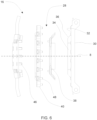
FIG. 6 illustrates an exploded top view of the low-profile shock isolating payload mounting assembly ofFIG. 3 . -
FIG. 7 illustrates a perspective view of an inner frame of an isolator of the low-profile shock isolating payload mounting assembly ofFIG. 3 . -
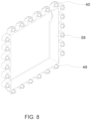
FIG. 8 illustrates a perspective view of an outer frame of an isolator of the low-profile shock isolating payload mounting assembly ofFIG. 3 . -
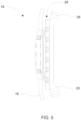
FIG. 9 illustrates a side view of the low-profile shock isolating payload mounting assembly ofFIG. 3 . -
FIG. 10 illustrates a cross-sectional view of the low-profile shock isolating payload mounting assembly ofFIG. 3 taken about line AA ofFIG. 9 . -
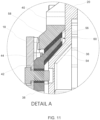
FIG. 11 illustrates a detailed cross-sectional view of the low-profile shock isolating payload mounting assembly ofFIG. 3 taken about Detail A ofFIG. 10 . -
FIG. 12 illustrates a perspective view of a payload system showing a low-profile shock isolating payload mounting assembly coupling a payload to a generic body in accordance with an example of the present disclosure. -
FIG. 13 illustrates an exploded view of the payload system and the low-profile shock isolating payload mounting assembly ofFIG. 12 . -
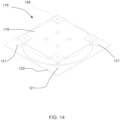
FIG. 14 illustrates a first perspective view of the low-profile shock isolating payload mounting assembly ofFIG. 12 isolated from other components of the payload system. -
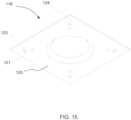
FIG. 15 illustrates a second perspective view of the low-profile shock isolating payload mounting assembly ofFIG. 12 isolated from other components of the payload system. -
FIG. 16 illustrates a top view of the low-profile shock isolating payload mounting assembly ofFIG. 14 . -
FIG. 17 illustrates an exploded top view of the low-profile shock isolating payload mounting assembly ofFIG. 14 . -
FIG. 18 illustrates a perspective view of an inner frame of an isolator of the low-profile shock isolating payload mounting assembly ofFIG. 14 . -
FIG. 19 illustrates a perspective view of an outer frame of an isolator of the low-profile shock isolating payload mounting assembly ofFIG. 14 . -
FIG. 20 illustrates a side view of the low-profile shock isolating payload mounting assembly ofFIG. 14 . -
FIG. 21 illustrates a cross-sectional view of the low-profile shock isolating payload mounting assembly ofFIG. 14 taken about line AA ofFIG. 20 . -
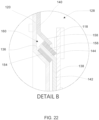
FIG. 22 illustrates a detailed cross-sectional view of the low-profile shock isolating payload mounting assembly ofFIG. 14 taken about Detail B ofFIG. 21 . - Reference will now be made to the examples illustrated, and specific language will be used herein to describe the same. It will nevertheless be understood that no limitation of the scope of the invention is thereby intended.
- As used herein, the term "substantially" refers to the complete or nearly complete extent or degree of an action, characteristic, property, state, structure, item, or result. For example, an object that is "substantially" enclosed would mean that the object is either completely enclosed or nearly completely enclosed. The exact allowable degree of deviation from absolute completeness may in some cases depend on the specific context. However, generally speaking the nearness of completion will be so as to have the same overall result as if absolute and total completion were obtained. The use of "substantially" is equally applicable when used in a negative connotation to refer to the complete or near complete lack of an action, characteristic, property, state, structure, item, or result.
- An initial overview of the inventive concepts is provided below, and then specific examples are described in further detail later. This initial summary is intended to aid readers in understanding the examples more quickly but is not intended to identify key features or essential features of the examples, nor is it intended to limit the scope of the claimed subject matter.
- In one example, disclosed is a low-profile shock isolating payload mounting assembly. The low-profile shock isolating payload mounting assembly comprises a first mount, a second mount, and an isolator. The second mount is movable relative to the first mount and comprises at least one riser comprising at least one inclined surface. The isolator comprises an inner frame and an outer frame. The inner frame is configured to couple to the first mount and comprises a platform and at least one isolator support leg extending from the platform. The at least one isolator support leg is inclined so as to be complementary to the at least one inclined surface of the second mount. The outer frame is configured to couple to the second mount and comprises an opening configured to facilitate access to the platform of the inner frame, and at least one rail being inclined so as to be complementary to the at least one isolator support leg. The outer frame operates to capture the at least one isolator support leg between the at least one rail of the outer frame and the at least one inclined surface of the second mount. Upon at least one of the first mount and the second mount being subjected to vibrations and shocks, the isolator operates to dampen vibrations and shocks propagating between the first and second mounts.
- In accordance with a more detailed aspect, the at least one riser can comprise a plurality of inclined surfaces, the inner frame can comprise a plurality of isolator support legs extending from the platform, and the outer frame can comprise a plurality of rails.
- In accordance with a more detailed aspect, the isolator can further comprise at least one inner isolator pad situated between an inclined surface of the at least one inclined surface of the second mount and an isolator support leg of the at least one isolator support leg, and at least one outer isolator pad situated between a rail of the at least one rail of the outer frame and the isolator support leg.
- In accordance with a more detailed aspect, at least one of the inner isolator pad and the outer isolator pad can comprise, or in other words can be formed of, an elastomeric material.
- In accordance with a more detailed aspect, the inner frame can be configured to nest within the outer frame, or in other words, the inner and outer frames can comprise respective structural configurations that facilitate these being able to nest with one another.
- In accordance with a more detailed aspect, one of the first mount and the second mount can be operable to mount to a payload support surface and the other of the first mount and the second mount can be operable to mount a payload to be supported by the payload support surface.
- In accordance with a more detailed aspect, the first mount can be secured to the inner frame by one or more (e.g., a first plurality of) fasteners and the second mount can be secured to the outer frame by one or more (e.g., a second plurality of) fasteners.
- In accordance with a more detailed aspect, the at least one isolator support leg can comprise a frustoconical shape.
- In accordance with a more detailed aspect, the at least one isolator support leg can comprise a plurality of support legs.
- Also disclosed is a payload system. The payload system comprises a body, a payload, and a low-profile shock isolating payload mounting assembly. The body has a payload support surface. The body and the payload support surface can be subject to vibration and shock type of loads. The payload is supported by the payload support surface. The low-profile shock isolating payload mounting assembly couples the payload to the payload support surface. The low-profile shock isolating payload mounting assembly comprises a first mount and a second mount. The first mount is coupled to one of the body and the payload. The second mount is movable relative to the first mount and coupled to the other of the body and the payload. The second mount comprises at least one riser comprising at least one inclined surface. The isolator comprises an inner frame and an outer frame. The inner frame is configured to couple to the first mount. The inner frame comprises a platform and at least one isolator support leg extending from the platform. The at least one isolator support leg is inclined so as to be complementary to the at least one inclined surface of the second mount. The outer frame is configured to couple to the second mount and comprises an opening configured to facilitate access to the platform of the inner frame and at least one rail being inclined so as to be complementary to the at least one isolator support leg. The outer frame operates to capture the at least one isolator support leg between the at least one rail of the outer frame and the at least one inclined surface of the second mount. When at least one of the body and the payload are subjected to vibrations and shocks, the isolator is operable to dampen vibrations and shocks propagating between the body and the payload.
- In accordance with a more detailed aspect, the body can comprise an elongate cylindrical body and the payload support surface can comprise an interior cylindrical surface of the elongate cylindrical body. The body can comprise other shapes or configurations other than cylindrical.
- In accordance with a more detailed aspect, the isolator can further comprise at least one inner isolator pad situated between an inclined surface of the at least one inclined surface of the second mount and an isolator support leg of the at least one isolator support leg and at least one outer pad situated between a rail of the at least one rail of the outer frame and the isolator support leg.
- In accordance with a more detailed aspect, the at least one isolator support leg can comprise an inner isolator pad and an outer isolator pad.
- In accordance with a more detailed aspect, the inner frame can nest within the outer frame.
- In accordance with a more detailed aspect, the at least one isolator support leg can comprise a frustoconical shape.
- In accordance with a more detailed aspect, the at least one isolator support leg can comprise a plurality of support legs.
- Also is disclosed is a method for configuring a low-profile shock isolating payload mounting assembly. The method includes forming a first mount to be operable to couple to a support surface, forming a second mount to be operable to couple to a payload and to have at least one riser comprising at least one inclined surface, forming a second mount movable relative to the first mount, the second mount comprising at least one riser comprising at least one inclined surface, forming an inner frame to have a platform operable to couple to the first mount and at least one isolator support leg extending from the platform, the at least one isolator support leg being inclined so as to be complementary to the at least one incline surface of the second mount, and forming an outer frame operable to couple to the second mount and to have an opening configured to facilitate access to the platform of the inner frame to be operable to couple to the first mount and to have at least one rail inclined so as to be complementary to the at least one isolator support leg.
- In accordance with a more detailed aspect, the method can further comprise forming the at least one isolator support leg to have a frustoconical shape.
- In accordance with a more detailed aspect, the method can further comprise forming the at least one isolator support leg to comprise a plurality of support legs.
- In accordance with a more detailed aspect, the method can further comprise attaching at least one isolator support pad to the at least one isolator support leg.
- To further describe the present technology, examples are now provided with reference to the figures.
FIG. 1 illustrates anexample payload system 10 comprising abody 12, apayload 14, and a low-profile shock isolatingpayload mounting assembly 16.FIG. 2 illustrates theexample payload system 10 ofFIG. 1 in an exploded view. Thebody 12 can be any body to which apayload 14 is mounted. In the example ofFIG. 1 , thebody 12 is a tubular structure such as a missile segment. Thebody 12 can comprise apayload support surface 13 for supporting thepayload 14. In the example ofFIGS. 1 and2 , thepayload support surface 13 is a cylindrical interior surface of thebody 12. In other examples, payload support surfaces can be irregular or a flat mounting surface. Thepayload 14 can be any payload requiring mounting to thebody 12 and that would benefit from being vibrationally isolated from thebody 12. For example, thepayload 14 can be electronics equipment that is sensitive to vibration and shock loads, such as a servo motor assembly. Those skilled in the art will recognize that thebody 12 can comprise other shapes or configurations other than cylindrical. In addition, those skilled in the art will recognize that thepayload 14 can comprise a variety of different types of payloads. As such, those illustrated in the drawings and discussed herein are not intended to be limiting in any way. -
FIG. 3 illustrates the low-profile shock isolatingpayload mounting assembly 16 ofFIG. 1 separated from thebody 12 and thepayload 14.FIG. 4 illustrates the low-profile shock isolatingpayload mounting assembly 16 reversed from the view ofFIG. 3 . With reference toFIGS. 1-11 , the low-profile shock isolatingpayload mounting assembly 16 comprises afirst mount 18, asecond mount 20, and an isolator 28 (seeFIG. 5 ). Each of the first andsecond mounts body 12 or thepayload 14. Thefirst mount 18 is configured to mount to thebody 12 at thepayload support surface 13 and thesecond mount 20 is configured to mount to thepayload 14. However, in other examples the roles can be reversed, with thefirst mount 18 configured to mount to thepayload 14 and thesecond mount 20 configured to mount to thepayload support surface 13 of thebody 12. - The
first mount 18 can be configured to mount to thebody 12 using conventional means such as threaded fasteners, weldments, adhesives, and rivets. Although not intended to be limiting in any way, thefirst mount 18 can be mounted to thebody 12 using threaded fasteners (not shown). Thefirst mount 18 can have threadedsockets 22 and thebody 12 can havecorresponding apertures 23 for receiving a shaft of a threaded fastener. Thus, thefirst mount 18 can be secured to thebody 12 by passing a shaft of a threaded fastener through anaperture 23 of thebody 12 and into a corresponding threadedsocket 22 of thefirst mount 18 and tightening the fastener. Thefirst mount 18 can be configured to mount to thepayload support surface 13 of thebody 12 by suitably configuring the shape of thefirst mount 18. In this example, thefirst mount 18 can have at least onecurved surface 24 that complements thepayload support surface 13 of thebody 12. As used herein, with respect to two complementary surfaces, the term "complement" is intended to mean that the surfaces are designed and configured to work together to perform an intended function. In one aspect, the complementary surfaces can be configured to directly interface with one another, such as in the example of thecurved surface 24 of thefirst mount 18 interfacing directly with (i.e., mounting to) thepayload support surface 13 of thebody 12. In another aspect, the complementary surfaces can be configured to indirectly interface with one another, such as in the example of theinclined surface 36 of thesecond mount 20 indirectly interfacing with theisolator support leg 44 of theinner frame 38 by way of theinner isolator pad 54 situated between them. Those skilled in the art will recognize that complementary surfaces can comprise two surfaces that are oriented along parallel planes, two surfaces that have the same or similar curvature, two surfaces that are non-parallel to one another, and others. Additionally, the threadedsockets 22 can be angled relative to one another to account for the curvature of thebody 12 and the distance between theapertures 23. In other examples, thefirst mount 18 can be modified as necessary to conform to the shape of thepayload support surface 13 to which thefirst mount 18 is being secured. - The
second mount 20 can be configured to mount to thepayload 14 using conventional means such as threaded fasteners, weldments, adhesives, and rivets. Again, not intending to be limiting in any way, thesecond mount 20 can be mounted to thebody 12 using threaded fasteners (not shown). For example, thepayload 14 can have threaded sockets for receiving a threaded end of a fastener and thesecond mount 20 can haveapertures 26 that correspond to the threaded sockets of thepayload 14. Thus, thesecond mount 20 can be secured to thepayload 14 by passing a threaded fastener through anaperture 26 and into a corresponding threaded socket of thepayload 14 and tightening the threaded fastener. - The low-profile shock isolating
payload mounting assembly 16 comprises thefirst mount 18, thesecond mount 20, and anisolator 28. The first andsecond mounts isolator 28. Theisolator 28 operates to dampen vibration and shock propagating between the first andsecond mounts - As described previously, the first and
second mounts body 12 and thepayload 14 using conventional means. Thesecond mount 20 can comprise afirst side 30 configured to couple to one of thebody 12 and thepayload 14 and asecond side 32 opposing thefirst side 30. At least oneriser 34 can extend from thesecond side 32 and is offset axially from thesecond side 32. The at least oneriser 34 can have at least oneinclined surface 36 extending to thesecond side 32. Theisolator 28 can comprise aninner frame 38 and anouter frame 40. - The
inner frame 38 can comprise aplatform 42 and at least oneisolator support leg 44 extending from theplatform 42. The at least oneisolator support leg 44 can be inclined so as to be complementary to the at least oneinclined surface 36 of thesecond mount 20. For example, if the at least oneinclined surface 36 had an angle of 45 degrees relative toaxis 8 ofFIG. 5 the at least oneisolator support leg 44 can also have an angle of 45 degrees relative toaxis 8 ofFIG. 6 . The at least one isolator support leg can have a planar shape that is substantially flat. In other examples, such as that ofFIGS. 12-22 described below, an isolator support leg can have a curved shape, or any other shape or configuration as will be apparent to those skilled in the art. In some examples, theisolator support legs 44 can be configured to as to flex about and relative to theplatform 42, thus theisolator support legs 44 can be considered as compliantisolator support legs 44 capable of flexing under an applied load. The amount of flex can be tuned by configuring various properties of theisolator support legs 44, such as their length and thickness, and the way they attach or are formed with theplatform 42. - The
example platform 38 comprises fourisolator support legs 44, but in other examples, more or less isolator support legs are contemplated. In some examples aplatform 38 can have three isolator support legs arranged in a triangular shape. In other examples, a platform can have greater than fourisolator support legs 44 arranged in a regular pattern. - The
inner frame 38 can be configured to couple to thefirst mount 18 using conventional means. In some examples, theinner frame 38 can couple to thefirst mount 18 by way of threaded fasteners 46 (seeFIG. 6 ) that thread into corresponding threadedsockets 47 of theplatform 42. The threadedfasteners 46 pass through apertures of thefirst mount 18 and are secured within the the threadedsockets 47 of theplatform 42 to secure thefirst mount 18 to theinner frame 38. - The
isolator 28 can further comprises aninner isolator pad 54, anouter isolator pad 56, or both. The inner andouter isolator pads isolator support leg 44 using conventional means such as an adhesives, rivets, other fasteners, or in some examples they can be separate from the at least oneisolator support leg 44. Each isolator support leg of the at least oneisolator support legs 44 can have a corresponding inner andouter isolator pad FIG. 9 ), theinner isolator pad 54 can be situated between at least oneinclined surface 36 of thesecond mount 20 and at least oneisolator support leg 44, and the outerisolator support pad 56 can be situated between a at least one rail 58 (seeFIG. 11 ) of theouter frame 40 and the at least oneisolator support leg 44. In some examples, the inner andouter isolator pads outer isolator pads outer isolator pads payload mounting assembly 16 that could cause damage, malfunction or undesirable performance in or to thepayload 14. In addition, different sizes, shapes, configurations, types and makeup of the inner andouter isolator pads isolator 28 to sufficiently attenuate shock loads in different applications or under different operating conditions. - The
outer frame 40 can be configured to couple to thesecond mount 20 using conventional means. In some examples, theouter frame 40 couples to thesecond mount 20 by way of threadedfasteners 48 that thread into corresponding threaded sockets of thesecond mount 20. The threadedfasteners 48 pass through apertures of theouter frame 40 and are secured within the threaded sockets of thesecond mount 20. Theouter frame 40 comprises at least onerail 58 that is complementary to the at least oneisolator support leg 44. For example, if the at least oneisolator support leg 44 comprises three isolator support legs, then the outer frame can comprise threerails 58 that are each complementary to an isolator support leg, and if an angle of the at least oneisolator support leg 44 is orientated at an angle of 45 degrees fromaxis 8, then the at least one rail 50 can similarly be inclined at 45 degrees relative toaxis 8. As will be shown inFIG. 10 , when assembled, the at least oneisolator support leg 44 is captured between the at least one rail 50 of theouter frame 40 and the at least oneinclined surface 36 of thesecond mount 20. Theouter frame 40 can further comprise an opening 52 to facilitate access to the platform of theinner frame 38. For example, when assembling the low profile isolating payload mounting assembly, theouter frame 40 can be placed over theinner frame 38 and the threadedfasteners 46 of theinner frame 38 can be accessed and manipulated to secure theinner frame 38 to thesecond mount 20. - The
inner frame 38 can be secured by the interaction of thesecond mount 20 and the outer frame 40 (seeFIG. 11 ). When assembled (seeFIG. 10 ), theinner frame 38 can nest within the opening of theouter frame 40 to reduce the axial profile of theisolator 28. When theouter frame 40 is secured to thesecond mount 20, agap 60 is created between the at least oneinclined surface 36 of thesecond mount 20 and the at least onerail 58 of the outer frame 40 (seeFIG. 11 ). The at least oneisolator support leg 44 extends from theplatform 42 and into thegap 60. Together, theinner isolator pad 54, the at least oneisolator support leg 44, and theouter isolator pad 56 can have a thickness that is slightly greater than a width of thegap 60. Thus, when theouter frame 40 is secured to thesecond mount 20, theinner isolator pad 54, the at least oneisolator support leg 44, and theouter isolator pad 56 can be compressed between the at least onerail 58 and the at least oneinclined surface 36 of thesecond mount 20. Thus, theinner frame 38 is secured by theouter frame 40 being coupled to thesecond mount 20. Additionally, theinner frame 38 is moveable relative to theouter frame 40 and thesecond mount 20 which operates to deform theisolator pads second mounts second mount 20 and theinner frame 38, while the inner andouter isolator pads second mount 20 and theinner frame 38 at higher frequencies. - The relative amount of dampening provided by the
isolator 28 can be tuned by varying one or more of the geometry of the at least oneisolator support leg 44, the geometry, configuration, type and/or durometer of the inner andouter isolator pads outer isolator pads outer isolator pads outer isolator pads isolator support leg 44 to provide isolation. - The flat design of the low-profile shock isolating
payload mounting assembly 16 reduces the axial height compared to a conventional mount while providing isolation between thebody 12 and thepayload 14. Additionally, the design does not rely on the inner andouter isolator pads outer isolator pads inclined surface 36 of thesecond mount 20 and therail 58, the inner andouter isolator pads isolator support leg 44. Furthermore, theinner frame 38 can be completely captured by theouter frame 40 such that theinner frame 38 cannot be displaced from the low-profile shock isolatingpayload mounting assembly 16 without theouter frame 40 being removed. -
FIGS. 12-22 illustrate anotherexample payload system 110 comprising abody 112, apayload 114, and a low-profile shock isolatingpayload mounting assembly 116. In contrast to the cylindrical body ofFIG. 1 , thebody 112 ofFIGS. 12-22 is a generic panel generally representing a different body configuration than the one discussed above. For example, thebody 112 could be the side, top, or bottom of a vehicle or other structure. Additionally, in this example, a first mount 118 (seeFIG. 14 ) is configured to couple to thepayload 114 and a second mount 120 (seeFIG. 14 ) is configured to couple to thebody 112. - The low-profile shock isolating
payload mounting assembly 116 comprises afirst mount 118, asecond mount 120, and an isolator 128 (seeFIGS. 16 and17 ). Each of the first andsecond mounts body 112 or thepayload 114. In the example shown, thefirst mount 118 is configured to mount to thepayload 114 and thesecond mount 120 is configured to mount thebody 112 at apayload support surface 113. However, in other examples the roles can be reversed, with thefirst mount 118 configured to mount to thepayload support surface 113 of thebody 112 and thesecond mount 120 configured to mount to thepayload 114. - Although not intending to be limiting in any way, the
second mount 120 can be configured to mount to thebody 112 using conventional means such as threaded fasteners, weldments, adhesives, and rivets. In the example shown, thesecond mount 118 is mounted to thebody 112 using threadedfasteners 121. Thebody 112 can have threadedsockets 122 and thesecond mount 118 can havecorresponding apertures 123 for receiving a shaft of a threadedfastener 121. Thus, thesecond mount 120 can be secured to thebody 112 by passing a shaft of the threadedfastener 121 through theaperture 123 of thesecond mount 120 and into a corresponding threadedsocket 122 of thebody 112 and tightening the threadedfastener 121. Thesecond mount 120 can be configured to mount to thepayload support surface 113 of thebody 12 by suitably configuring the shape of thesecond mount 120. Thus, thesecond mount 120 can have at least one surface 124 (e.g., a flat surface) that complements thepayload support surface 113 of thebody 112. - The
first mount 118 can be configured to mount to thepayload 114 using conventional means such as threaded fasteners, weldments, adhesives, and rivets. Again, not intending to be limiting in any way, thefirst mount 118 can be mounted to thepayload 114 using threaded fasteners (not shown). For example, thepayload 114 can have threaded sockets (not shown) for receiving a threaded end of a fastener and thefirst mount 118 can haveapertures 126 that correspond to the threaded sockets of thepayload 114. Thus, thefirst mount 118 can be secured to thepayload 114 by passing a threaded fastener through anaperture 126 and into a corresponding threaded socket of thepayload 114 and tightening the threaded fastener. - The low-profile shock isolating
payload mounting assembly 116 comprises thesecond mount 120, thefirst mount 118, and anisolator 128. The first andsecond mounts isolator 128. Theisolator 128 operates to dampen vibrations and shocks propagating between the first andsecond mounts - As described previously, the first and
second mounts body 112 and thepayload 114 using conventional means. Thesecond mount 120 can comprise afirst side 130 configured to couple to one of thebody 112 and thepayload 114 and asecond side 132 opposing thefirst side 130. Ariser 134 can extend from thesecond side 132 and is offset axially from thesecond side 132. Theriser 134 can have a frustoconical shape having aninclined surface 136 extending to thesecond side 132.Tile isolator 128 can comprise aninner frame 138 and anouter frame 140. - The
inner frame 138 can comprise aplatform 142 and anisolator support leg 144 extending from theplatform 142. In the example shown, theisolator support leg 144 is a conical leg. Theisolator support leg 144 can be inclined so as to be complementary to theinclined surface 136 of thefirst mount 118. For example, if theinclined surface 136 had an angle of 45 degrees relative toaxis 108 ofFIG. 16 , theisolator support leg 144 can also have an angle of 45 degrees relative toaxis 108 ofFIG. 17 . - The
inner frame 138 can be configured to couple to thefirst mount 118 using conventional means. In some examples, theinner frame 138 can couple to thefirst mount 118 by way of threaded fasteners 146 (seeFIG. 17 ) that thread into corresponding threadedsockets 147 of theplatform 142. The threadedfasteners 146 pass through apertures of the first mount and are secured within the threadedsockets 147 of theplatform 142 to secure thefirst mount 118 to theinner frame 138. - The
isolator 128 can further comprises aninner isolator pad 154, (seeFIG. 21 ) anouter isolator pad 156, or both. The inner andouter isolator pads isolator support leg 144 using conventional means such as an adhesives, rivets, other fasteners, or in some examples they may not be fastened to theisolator support leg 144. When assembled, as shown inFIG. 21 , theinner isolator pad 154 can be situated between aninclined surface 136 of thefirst mount 118 and anisolator support leg 144, and theouter isolator pad 156 can be situated between a rail 158 (seeFIG. 19 ) of theouter frame 140 and theisolator support leg 144. In some examples, the inner andouter isolator pads outer isolator pads isolator pads payload mounting assembly 116 and theisolator 128. - The
outer frame 140 can be configured to couple to thesecond mount 120 using conventional means. In some examples, theouter frame 140 couples to thesecond mount 120 by way of threadedfasteners 148 that thread into corresponding threaded sockets of thesecond mount 120. The threadedfasteners 148 pass throughapertures 148 of theouter frame 140 and are secured within the threaded sockets of thesecond mount 120. Theouter frame 140 comprises arail 158 that can be inclined to be complementary to theisolator support leg 144. For example, if theisolator support leg 144 is orientated at an angle of 45 degrees fromaxis 108, then therail 158 can similarly be inclined at 45 degrees relative toaxis 108. As will be shown inFIG. 21 , when assembled, theisolator support leg 144 is captured between therail 158 of theouter frame 140 and theinclined surface 136 of thesecond mount 120. Theouter frame 140 can further comprise anopening 152 to facilitate access to theplatform 142 of theinner frame 138. For example, when assembling the low-profile shock isolatingpayload mounting assembly 116, theouter frame 140 can be placed over theinner frame 138 and the threadedapertures 147 of theinner frame 138 can accessed and manipulated to secure theinner frame 138 to thefirst mount 118. - The
inner frame 138 being secured by the interaction of thesecond mount 120 and the outer frame 140 (seeFIG. 22 ). When assembled (seeFIG. 21 ), theinner frame 138 can nest within the opening of theouter frame 140 to reduce the axial profile of theisolator 128. When theouter frame 140 is secured to thesecond mount 120, agap 160 is created between the at least oneinclined surface 136 of thesecond mount 120 and therail 158 of theouter frame 140. Theisolator support leg 144 extends from theplatform 142 and into thegap 160. Together, theinner isolator pad 154, theisolator support leg 144, and theouter isolator pad 156 can have a thickness that is slightly greater than a width of thegap 160. Thus, when theouter frame 140 is secured to thesecond mount 120, theinner isolator pad 154, theisolator support leg 144, and theouter isolator pad 156 can be compressed between therail 158 and theinclined surface 136. Thus, theinner frame 138 is secured by theouter frame 140 being coupled to thesecond mount 120. Additionally, theinner frame 138 remains moveable relative to theouter frame 140 and thesecond mount 120 which operates to deform theisolator pads second mounts second mount 120 and theinner frame 138, while the inner andouter isolator pads second mount 120 and theinner frame 138 at higher frequencies. - A low-profile shock isolating payload mounting assembly can be configured using conventional techniques such as machining, casting, additive manufacturing, etc. A low-profile shock isolating payload mounting assembly can be configured by forming a first mount to be operable to couple to a support surface, forming a second mount to be operable to couple to a payload and to have at least one riser comprising at least one inclined surface, forming a second mount movable relative to the first mount, the second mount comprising at least one riser comprising at least one inclined surface, forming an inner frame to have a platform operable to couple to the first mount and at least one isolator support leg extending from the platform, the at least one isolator support leg being inclined so as to be complementary to the at least one incline surface of the second mount, and forming an outer frame operable to couple to the second mount and to have an opening for facilitating access to the platform of the inner frame to be operable to couple to the first mount and to have at least one rail inclined so as to be complementary to the at least one isolator support leg.
- In some examples, the low-profile shock isolating payload mounting assembly can be further configured by forming the at least one isolator support leg to have a frustoconical shape. In another example, the low-profile shock isolating payload mounting assembly can be further configured by forming the at least one isolator support leg to comprise a plurality of support legs. In some examples, the low-profile shock isolating payload mounting assembly can be further configured by attaching at least one isolator support pad to the at least one isolator support leg.
- It is to be understood that the examples set forth herein are not limited to the particular structures, process steps, or materials disclosed, but are extended to equivalents thereof as would be recognized by those ordinarily skilled in the relevant arts. It should also be understood that terminology employed herein is used for the purpose of describing particular examples only and is not intended to be limiting.
- Furthermore, the described features, structures, or characteristics may be combined in any suitable manner in one or more examples. In the description, numerous specific details are provided, such as examples of lengths, widths, shapes, etc., to provide a thorough understanding of the technology being described. One skilled in the relevant art will recognize, however, that the invention can be practiced without one or more of the specific details, or with other methods, components, materials, etc. In other instances, well-known structures, materials, or operations are not shown or described in detail to avoid obscuring aspects of the invention.
- Although the disclosure may not expressly disclose that some embodiments or features described herein may be combined with other embodiments or features described herein, this disclosure should be read to describe any such combinations that would be practicable by one of ordinary skill in the art. The use of "or" in this disclosure should be understood to mean non-exclusive or, i.e., "and/or," unless otherwise indicated herein.
- While the foregoing examples are illustrative of the principles of the invention in one or more particular applications, it will be apparent to those of ordinary skill in the art that numerous modifications in form, usage and details of implementation can be made without the exercise of inventive faculty, and without departing from the principles and concepts described herein. Accordingly, it is not intended that the invention be limited, except as by the claims set forth below.
Claims (15)
- A payload mounting assembly (16, 116), comprising:a first mount (18, 118);a second mount (20, 120) movable relative to the first mount (18, 118),the second mount (20, 120) comprising at least one riser (34, 134) comprising at least one inclined surface (36, 136);an isolator (28, 128) comprising:an inner frame (38, 138) configured to couple to the first mount (18, 118), the inner frame (38, 138) comprising a platform (42, 142) and at least one isolator support leg (44, 144) extending from the platform (42, 142), the at least one isolator support leg (44, 144) being inclined so as to be complementary to the at least one inclined surface (36, 136) of the second mount (20, 120); andan outer frame (40, 140) configured to couple to the second mount (20, 120) and comprising an opening (52, 152) configured to facilitate access to the platform (42, 142) of the inner frame (38, 138), and at least one rail (58, 158) being inclined so as to be complementary to the at least one isolator support leg (44, 144), the outer frame (40, 140) operating to capture the at least one isolator support leg (44, 144) between the at least one rail (58, 158) of the outer frame (40, 140) and the at least one inclined surface (36, 136) of the second mount (20, 120),wherein, upon at least one of the first mount (18, 118) and the second mount (20, 120) being subjected to vibrations and shocks, the isolator operates to dampen vibrations and shocks propagating between the first (18, 118) and second mounts (20, 120).
- The payload mounting assembly (16, 116) of claim 1, wherein the at least one riser (34, 134) comprises a plurality of inclined surfaces (36, 136), the inner frame (38, 138) comprises a plurality of isolator support legs (44, 144) extending from the platform (42, 142), and the outer frame (40, 140) comprises a plurality of rails (58, 158).
- The payload mounting assembly (16, 116) of claim 1, wherein the isolator further comprises at least one inner isolator pad (54, 154) situated between an inclined surface (36, 136) of the at least one inclined surface (36, 136) of the second mount (20, 120), and an isolator support leg (44, 144) of the at least one isolator support leg (44, 144) and at least one outer isolator pad (56, 156) situated between a rail (58, 158) of the at least one rail (58, 158) of the outer frame (40, 140) and the isolator support leg (44, 144).
- The payload mounting assembly (16, 116) of claim 3, wherein at least one of the inner isolator pad (54, 154) or the outer isolator pad (56, 156) is formed of an elastomeric material.
- The payload mounting assembly (16, 116) of claim 1, wherein the inner frame (38, 138) is configured to nest within the outer frame (40, 140).
- The payload mounting assembly (16, 116) of claim 1, wherein one of the first mount (18, 118) and the second mount (20, 120) is operable to mount to a payload support surface and the other of the first mount (18, 118) and the second mount (20, 120) is operable to mount a payload to be supported by the payload support surface.
- The payload mounting assembly (16, 116) of claim 1, wherein the first mount (18, 118) is secured to the inner frame (38, 138) by a first plurality of fasteners and the second mount is secured to the outer frame (40, 140) by a second plurality of fasteners.
- The payload mounting assembly (16, 116) of claim 1, wherein the at least one isolator support leg (44, 144) comprises a frustoconical shape.
- The payload mounting assembly (16, 116) of claim 1, wherein the at least one isolator support leg (44, 144) comprises a plurality of support legs.
- A payload system comprising:a body having a payload support surface, wherein the body and the payload support surface are subject to vibration and shock;a payload supported by the payload support surface;a low-profile shock isolating payload mounting assembly (16, 116) coupling the payload to the payload support surface, the low-profile shock isolating payload mounting assembly (16, 116) comprising:a first mount (18, 118) coupled to one of the body and the payload;a second mount (20, 120) movable relative to the first mount (18, 118) and coupled to the other of the body and the payload, the second mount (20, 120) comprising at least one riser comprising at least one inclined surface (36, 136);an isolator (28, 128) comprising:an inner frame (38, 138) configured to couple to the first mount (18, 118), the inner frame (38, 138) comprising a platform (42, 142) and at least one isolator support leg (44, 144) extending from the platform (42, 142), the at least one isolator support leg (44, 144) being inclined so as to be complementary to the at least one inclined surface (36, 136) of the second mount (20, 120); andan outer frame (40, 140) configured to couple to the second mount (20, 120) and comprising an opening (52, 152) configured to facilitate access to the platform (42, 142) of the inner frame (38, 138), and at least one rail (58, 158) being inclined so as to be complementary to the at least one isolator support leg (44, 144), the outer frame (40, 140) operating to capture the at least one isolator support leg (44, 144) between the at least one rail (58, 158) of the outer frame (40, 140) and the at least one inclined surface (36, 136) of the second mount (20, 120),wherein, upon at least one of the body and the payload being subjected to vibrations and shocks, the isolator (28, 128) is operable to dampen vibrations and shocks propagating between the body and the payload.
- The payload system of claim 10, wherein the body comprises an elongate cylindrical body and the payload support surface comprises an interior cylindrical surface, orwherein the isolator (28, 128) further comprises at least one inner isolator pad (54, 154) situated between an inclined surface (36, 136) of the at least one inclined surface (36, 136) of the second mount (20, 120) and an isolator support leg (44, 144) of the at least one isolator support leg (44, 144), and at least one outer pad situated between a rail (58, 158) of the at least one rail (58, 158) of the outer frame (40, 140) and the isolator support leg (44, 144), orwherein the at least one isolator support leg (44, 144) comprises an inner isolator pad (54, 154) and an outer isolator pad (56, 156), orwherein the inner frame (38, 138) nests within the outer frame (40, 140), orwherein the at least one isolator support leg (44, 144) comprises a frustoconical shape, orwherein the at least one isolator support leg (44, 144) comprises a plurality of support legs.
- A method for a configuring a low-profile shock isolating payload mounting assembly (16, 116), comprising:forming a first mount (18, 118) to be operable to couple to a support surface;forming a second mount (20, 120) to be operable to couple to a payload and to have at least one riser comprising at least one inclined surface (36, 136);the second mount (20, 120) being movable relative to the first mount (18, 118);forming an inner frame (38, 138) to have a platform (42, 142) operable to couple to the first mount (18, 118) and at least one isolator support leg (44, 144) extending from the platform (42, 142), the at least one isolator support leg (44, 144) being inclined so as to be complementary to the at least one incline surface of the second mount (20, 120); andforming an outer frame (40, 140) operable to couple to the second mount (20, 120) and to have an opening (52, 152) configured to facilitate access to the platform (42, 142) of the inner frame (38, 138) to be operable to couple to the first mount (18, 118) and to have at least one rail (58, 158) inclined so as to be complementary to the at least one isolator support leg (44, 144).
- The method of claim 12, further comprising forming the at least one isolator support leg (44, 144) to have a frustoconical shape.
- The method of claim 12, further comprising forming the at least one isolator support leg (44, 144) to comprise a plurality of support legs.
- The method of claim 12, further comprising attaching at least one isolator support pad to the at least one isolator support leg (44, 144).
Applications Claiming Priority (2)
| Application Number | Priority Date | Filing Date | Title |
|---|---|---|---|
| US16/883,912 US11506254B2 (en) | 2020-05-26 | 2020-05-26 | Low profile shock isolating mount |
| PCT/US2021/024457 WO2021242387A2 (en) | 2020-05-26 | 2021-03-26 | Low profile shock isolating mount |
Publications (2)
| Publication Number | Publication Date |
|---|---|
| EP4158220A2 EP4158220A2 (en) | 2023-04-05 |
| EP4158220B1 true EP4158220B1 (en) | 2025-04-30 |
Family
ID=77739122
Family Applications (1)
| Application Number | Title | Priority Date | Filing Date |
|---|---|---|---|
| EP21769832.3A Active EP4158220B1 (en) | 2020-05-26 | 2021-03-26 | Low profile shock isolating mount |
Country Status (3)
| Country | Link |
|---|---|
| US (1) | US11506254B2 (en) |
| EP (1) | EP4158220B1 (en) |
| WO (1) | WO2021242387A2 (en) |
Family Cites Families (13)
| Publication number | Priority date | Publication date | Assignee | Title |
|---|---|---|---|---|
| GB543917A (en) | 1940-10-19 | 1942-03-19 | Metalastik Ltd | Improvements relating to resilient mountings for machines and instruments |
| GB553793A (en) | 1941-11-29 | 1943-06-07 | Metalastik Ltd | Improvements relating to resilient mountings for instruments and machines |
| US5551661A (en) * | 1994-10-11 | 1996-09-03 | Bunker; Donald D. | Automotive transmission mount |
| SE512770C2 (en) | 1998-02-19 | 2000-05-08 | Alfa Laval Ab | support device |
| US6902157B2 (en) * | 2003-04-08 | 2005-06-07 | Raytheon Company | Vibration isolator |
| US8711223B2 (en) * | 2011-06-21 | 2014-04-29 | Flir Systems, Inc. | Vehicle-mounted camera stabilized passively by vibration isolators |
| US9348197B2 (en) * | 2013-12-24 | 2016-05-24 | Pv Labs Inc. | Platform stabilization system |
| JP6355547B2 (en) | 2014-12-18 | 2018-07-11 | 三菱電機株式会社 | Anti-vibration device and refrigeration cycle apparatus provided with anti-vibration device |
| US10375311B2 (en) * | 2015-03-16 | 2019-08-06 | Flir Systems, Inc. | Anti-rotation mount |
| US9739568B2 (en) * | 2015-09-10 | 2017-08-22 | The Boeing Company | Methods of connecting testing equipment to a missile system |
| JP2019065887A (en) | 2017-09-28 | 2019-04-25 | 株式会社フコク | Anti-vibration mount |
| US10480613B2 (en) * | 2018-04-11 | 2019-11-19 | Raytheon Company | Metal isolator with tunable resonant frequencies |
| FR3083279B1 (en) * | 2018-06-27 | 2020-07-03 | Centre National D'etudes Spatiales | SHOCK ABSORBER FOR AN OBJECT PLACED IN AN ENVIRONMENT SUBJECT TO VIBRATIONS AND CORRESPONDING DAMPING SYSTEM |
-
2020
- 2020-05-26 US US16/883,912 patent/US11506254B2/en active Active
-
2021
- 2021-03-26 EP EP21769832.3A patent/EP4158220B1/en active Active
- 2021-03-26 WO PCT/US2021/024457 patent/WO2021242387A2/en not_active Ceased
Also Published As
| Publication number | Publication date |
|---|---|
| US20210372501A1 (en) | 2021-12-02 |
| EP4158220A2 (en) | 2023-04-05 |
| US11506254B2 (en) | 2022-11-22 |
| WO2021242387A3 (en) | 2022-03-10 |
| WO2021242387A2 (en) | 2021-12-02 |
Similar Documents
| Publication | Publication Date | Title |
|---|---|---|
| US10041622B2 (en) | Vibration suspension system | |
| US8474804B2 (en) | Elastomeric pin isolator | |
| EP2095986A1 (en) | Engine mounting structure | |
| US6676116B2 (en) | Elastomeric suspension and mounting system | |
| JP7502018B2 (en) | Seismic isolation joint for a structural assembly and method for attenuating loads - Patents.com | |
| CN110608256A (en) | Vibration isolator assembly | |
| CN107949722A (en) | Payload portion shock and vibration isolator | |
| US9353825B2 (en) | Vibration absorbing apparatus | |
| US11015669B2 (en) | Bi-directional non-linear spring | |
| EP3037322B1 (en) | Telescopic shaft and steering system | |
| WO2007077350A3 (en) | Elastomer-based modular multi-axis vibration/shock isolation device | |
| EP4158220B1 (en) | Low profile shock isolating mount | |
| KR100498462B1 (en) | A damping apparatus | |
| CN100591971C (en) | Mechanical dynamic damping system for equipment | |
| CN115853964B (en) | Vibration isolation device | |
| CN108730391B (en) | Tensioning and compression damper, vehicle including the same, and method of damping | |
| JP2025091631A (en) | Anti-vibration device | |
| JP2004210057A (en) | Transport trolley | |
| CN220726950U (en) | Load self-adaptive elastic vibration isolator | |
| KR20240122660A (en) | Robot bolting system | |
| CN209943422U (en) | Vibration damping mechanism, vibration damping device and electronic equipment | |
| CN105299131B (en) | Antihunting device | |
| JP6837926B2 (en) | Bracket for anti-vibration device | |
| JP2017077748A (en) | Vehicle front structure | |
| CN117108664A (en) | Load self-adaptive elastic vibration isolator |
Legal Events
| Date | Code | Title | Description |
|---|---|---|---|
| STAA | Information on the status of an ep patent application or granted ep patent |
Free format text: STATUS: UNKNOWN |
|
| STAA | Information on the status of an ep patent application or granted ep patent |
Free format text: STATUS: THE INTERNATIONAL PUBLICATION HAS BEEN MADE |
|
| PUAI | Public reference made under article 153(3) epc to a published international application that has entered the european phase |
Free format text: ORIGINAL CODE: 0009012 |
|
| STAA | Information on the status of an ep patent application or granted ep patent |
Free format text: STATUS: REQUEST FOR EXAMINATION WAS MADE |
|
| 17P | Request for examination filed |
Effective date: 20221223 |
|
| AK | Designated contracting states |
Kind code of ref document: A2 Designated state(s): AL AT BE BG CH CY CZ DE DK EE ES FI FR GB GR HR HU IE IS IT LI LT LU LV MC MK MT NL NO PL PT RO RS SE SI SK SM TR |
|
| DAV | Request for validation of the european patent (deleted) | ||
| DAX | Request for extension of the european patent (deleted) | ||
| GRAP | Despatch of communication of intention to grant a patent |
Free format text: ORIGINAL CODE: EPIDOSNIGR1 |
|
| STAA | Information on the status of an ep patent application or granted ep patent |
Free format text: STATUS: GRANT OF PATENT IS INTENDED |
|
| GRAS | Grant fee paid |
Free format text: ORIGINAL CODE: EPIDOSNIGR3 |
|
| INTG | Intention to grant announced |
Effective date: 20250224 |
|
| GRAA | (expected) grant |
Free format text: ORIGINAL CODE: 0009210 |
|
| STAA | Information on the status of an ep patent application or granted ep patent |
Free format text: STATUS: THE PATENT HAS BEEN GRANTED |
|
| AK | Designated contracting states |
Kind code of ref document: B1 Designated state(s): AL AT BE BG CH CY CZ DE DK EE ES FI FR GB GR HR HU IE IS IT LI LT LU LV MC MK MT NL NO PL PT RO RS SE SI SK SM TR |
|
| REG | Reference to a national code |
Ref country code: CH Ref legal event code: EP Ref country code: GB Ref legal event code: FG4D |
|
| REG | Reference to a national code |
Ref country code: IE Ref legal event code: FG4D |
|
| REG | Reference to a national code |
Ref country code: DE Ref legal event code: R096 Ref document number: 602021030068 Country of ref document: DE |
|
| REG | Reference to a national code |
Ref country code: NL Ref legal event code: MP Effective date: 20250430 |
|
| REG | Reference to a national code |
Ref country code: AT Ref legal event code: MK05 Ref document number: 1790265 Country of ref document: AT Kind code of ref document: T Effective date: 20250430 |
|
| PG25 | Lapsed in a contracting state [announced via postgrant information from national office to epo] |
Ref country code: PT Free format text: LAPSE BECAUSE OF FAILURE TO SUBMIT A TRANSLATION OF THE DESCRIPTION OR TO PAY THE FEE WITHIN THE PRESCRIBED TIME-LIMIT Effective date: 20250901 Ref country code: ES Free format text: LAPSE BECAUSE OF FAILURE TO SUBMIT A TRANSLATION OF THE DESCRIPTION OR TO PAY THE FEE WITHIN THE PRESCRIBED TIME-LIMIT Effective date: 20250430 Ref country code: FI Free format text: LAPSE BECAUSE OF FAILURE TO SUBMIT A TRANSLATION OF THE DESCRIPTION OR TO PAY THE FEE WITHIN THE PRESCRIBED TIME-LIMIT Effective date: 20250430 |
|
| REG | Reference to a national code |
Ref country code: LT Ref legal event code: MG9D |
|
| PG25 | Lapsed in a contracting state [announced via postgrant information from national office to epo] |
Ref country code: GR Free format text: LAPSE BECAUSE OF FAILURE TO SUBMIT A TRANSLATION OF THE DESCRIPTION OR TO PAY THE FEE WITHIN THE PRESCRIBED TIME-LIMIT Effective date: 20250731 |
|
| PG25 | Lapsed in a contracting state [announced via postgrant information from national office to epo] |
Ref country code: PL Free format text: LAPSE BECAUSE OF FAILURE TO SUBMIT A TRANSLATION OF THE DESCRIPTION OR TO PAY THE FEE WITHIN THE PRESCRIBED TIME-LIMIT Effective date: 20250430 Ref country code: NL Free format text: LAPSE BECAUSE OF FAILURE TO SUBMIT A TRANSLATION OF THE DESCRIPTION OR TO PAY THE FEE WITHIN THE PRESCRIBED TIME-LIMIT Effective date: 20250430 |
|
| PG25 | Lapsed in a contracting state [announced via postgrant information from national office to epo] |
Ref country code: BG Free format text: LAPSE BECAUSE OF FAILURE TO SUBMIT A TRANSLATION OF THE DESCRIPTION OR TO PAY THE FEE WITHIN THE PRESCRIBED TIME-LIMIT Effective date: 20250430 |
|
| PG25 | Lapsed in a contracting state [announced via postgrant information from national office to epo] |
Ref country code: HR Free format text: LAPSE BECAUSE OF FAILURE TO SUBMIT A TRANSLATION OF THE DESCRIPTION OR TO PAY THE FEE WITHIN THE PRESCRIBED TIME-LIMIT Effective date: 20250430 |
|
| PG25 | Lapsed in a contracting state [announced via postgrant information from national office to epo] |
Ref country code: AT Free format text: LAPSE BECAUSE OF FAILURE TO SUBMIT A TRANSLATION OF THE DESCRIPTION OR TO PAY THE FEE WITHIN THE PRESCRIBED TIME-LIMIT Effective date: 20250430 |
|
| PG25 | Lapsed in a contracting state [announced via postgrant information from national office to epo] |
Ref country code: RS Free format text: LAPSE BECAUSE OF FAILURE TO SUBMIT A TRANSLATION OF THE DESCRIPTION OR TO PAY THE FEE WITHIN THE PRESCRIBED TIME-LIMIT Effective date: 20250731 |
|
| PG25 | Lapsed in a contracting state [announced via postgrant information from national office to epo] |
Ref country code: IS Free format text: LAPSE BECAUSE OF FAILURE TO SUBMIT A TRANSLATION OF THE DESCRIPTION OR TO PAY THE FEE WITHIN THE PRESCRIBED TIME-LIMIT Effective date: 20250830 |
|
| PG25 | Lapsed in a contracting state [announced via postgrant information from national office to epo] |
Ref country code: LV Free format text: LAPSE BECAUSE OF FAILURE TO SUBMIT A TRANSLATION OF THE DESCRIPTION OR TO PAY THE FEE WITHIN THE PRESCRIBED TIME-LIMIT Effective date: 20250430 |
|
| PG25 | Lapsed in a contracting state [announced via postgrant information from national office to epo] |
Ref country code: SM Free format text: LAPSE BECAUSE OF FAILURE TO SUBMIT A TRANSLATION OF THE DESCRIPTION OR TO PAY THE FEE WITHIN THE PRESCRIBED TIME-LIMIT Effective date: 20250430 Ref country code: DK Free format text: LAPSE BECAUSE OF FAILURE TO SUBMIT A TRANSLATION OF THE DESCRIPTION OR TO PAY THE FEE WITHIN THE PRESCRIBED TIME-LIMIT Effective date: 20250430 |
|
| PG25 | Lapsed in a contracting state [announced via postgrant information from national office to epo] |
Ref country code: CZ Free format text: LAPSE BECAUSE OF FAILURE TO SUBMIT A TRANSLATION OF THE DESCRIPTION OR TO PAY THE FEE WITHIN THE PRESCRIBED TIME-LIMIT Effective date: 20250430 |
|
| PG25 | Lapsed in a contracting state [announced via postgrant information from national office to epo] |
Ref country code: EE Free format text: LAPSE BECAUSE OF FAILURE TO SUBMIT A TRANSLATION OF THE DESCRIPTION OR TO PAY THE FEE WITHIN THE PRESCRIBED TIME-LIMIT Effective date: 20250430 |
|
| PG25 | Lapsed in a contracting state [announced via postgrant information from national office to epo] |
Ref country code: SK Free format text: LAPSE BECAUSE OF FAILURE TO SUBMIT A TRANSLATION OF THE DESCRIPTION OR TO PAY THE FEE WITHIN THE PRESCRIBED TIME-LIMIT Effective date: 20250430 |
|
| PG25 | Lapsed in a contracting state [announced via postgrant information from national office to epo] |
Ref country code: IT Free format text: LAPSE BECAUSE OF FAILURE TO SUBMIT A TRANSLATION OF THE DESCRIPTION OR TO PAY THE FEE WITHIN THE PRESCRIBED TIME-LIMIT Effective date: 20250430 |
|
| REG | Reference to a national code |
Ref country code: DE Ref legal event code: R097 Ref document number: 602021030068 Country of ref document: DE |
|
| PLBE | No opposition filed within time limit |
Free format text: ORIGINAL CODE: 0009261 |
|
| STAA | Information on the status of an ep patent application or granted ep patent |
Free format text: STATUS: NO OPPOSITION FILED WITHIN TIME LIMIT |
|
| REG | Reference to a national code |
Ref country code: CH Ref legal event code: L10 Free format text: ST27 STATUS EVENT CODE: U-0-0-L10-L00 (AS PROVIDED BY THE NATIONAL OFFICE) Effective date: 20260311 |
|
| 26N | No opposition filed |
Effective date: 20260202 |
|
| PGFP | Annual fee paid to national office [announced via postgrant information from national office to epo] |
Ref country code: GB Payment date: 20260220 Year of fee payment: 6 |
|
| PGFP | Annual fee paid to national office [announced via postgrant information from national office to epo] |
Ref country code: NO Payment date: 20260223 Year of fee payment: 6 Ref country code: DE Payment date: 20260219 Year of fee payment: 6 |
|
| PGFP | Annual fee paid to national office [announced via postgrant information from national office to epo] |
Ref country code: FR Payment date: 20260219 Year of fee payment: 6 |