EP4156853A1 - Übertragungsfehler bei musim-sr-verfahren - Google Patents
Übertragungsfehler bei musim-sr-verfahren Download PDFInfo
- Publication number
- EP4156853A1 EP4156853A1 EP22197723.4A EP22197723A EP4156853A1 EP 4156853 A1 EP4156853 A1 EP 4156853A1 EP 22197723 A EP22197723 A EP 22197723A EP 4156853 A1 EP4156853 A1 EP 4156853A1
- Authority
- EP
- European Patent Office
- Prior art keywords
- request message
- service request
- network
- usim
- signaling connection
- Prior art date
- Legal status (The legal status is an assumption and is not a legal conclusion. Google has not performed a legal analysis and makes no representation as to the accuracy of the status listed.)
- Withdrawn
Links
Images




Classifications
-
- H—ELECTRICITY
- H04—ELECTRIC COMMUNICATION TECHNIQUE
- H04W—WIRELESS COMMUNICATION NETWORKS
- H04W76/00—Connection management
- H04W76/30—Connection release
- H04W76/34—Selective release of ongoing connections
-
- H—ELECTRICITY
- H04—ELECTRIC COMMUNICATION TECHNIQUE
- H04W—WIRELESS COMMUNICATION NETWORKS
- H04W76/00—Connection management
- H04W76/10—Connection setup
- H04W76/18—Management of setup rejection or failure
-
- H—ELECTRICITY
- H04—ELECTRIC COMMUNICATION TECHNIQUE
- H04W—WIRELESS COMMUNICATION NETWORKS
- H04W76/00—Connection management
- H04W76/30—Connection release
-
- H—ELECTRICITY
- H04—ELECTRIC COMMUNICATION TECHNIQUE
- H04W—WIRELESS COMMUNICATION NETWORKS
- H04W60/00—Affiliation to network, e.g. registration; Terminating affiliation with the network, e.g. de-registration
- H04W60/005—Multiple registrations, e.g. multihoming
-
- H—ELECTRICITY
- H04—ELECTRIC COMMUNICATION TECHNIQUE
- H04W—WIRELESS COMMUNICATION NETWORKS
- H04W68/00—User notification, e.g. alerting and paging, for incoming communication, change of service or the like
-
- H—ELECTRICITY
- H04—ELECTRIC COMMUNICATION TECHNIQUE
- H04W—WIRELESS COMMUNICATION NETWORKS
- H04W68/00—User notification, e.g. alerting and paging, for incoming communication, change of service or the like
- H04W68/02—Arrangements for increasing efficiency of notification or paging channel
-
- H—ELECTRICITY
- H04—ELECTRIC COMMUNICATION TECHNIQUE
- H04W—WIRELESS COMMUNICATION NETWORKS
- H04W8/00—Network data management
- H04W8/18—Processing of user or subscriber data, e.g. subscribed services, user preferences or user profiles; Transfer of user or subscriber data
- H04W8/183—Processing at user equipment or user record carrier
-
- H—ELECTRICITY
- H04—ELECTRIC COMMUNICATION TECHNIQUE
- H04W—WIRELESS COMMUNICATION NETWORKS
- H04W88/00—Devices specially adapted for wireless communication networks, e.g. terminals, base stations or access point devices
- H04W88/02—Terminal devices
- H04W88/06—Terminal devices adapted for operation in multiple networks or having at least two operational modes, e.g. multi-mode terminals
Definitions
- the disclosed embodiments relate generally to wireless communication systems, and, more particularly, to release NAS signaling connection or rejection of paging for MUSIM UEs upon transmission failure.
- LTE Long-Term Evolution
- 4G Long-Term Evolution
- UMTS Universal Mobile Telecommunication System
- E-UTRAN an evolved universal terrestrial radio access network
- UEs user equipments
- 3GPP 3rd generation partner project
- 3GPP 3rd generation partner project
- the Next Generation Mobile Network (NGMN) board has decided to focus the future NGMN activities on defining the end-to-end requirements for 5G new radio (NR) systems.
- the base stations in 5G NR systems are referred to as Next Generation Node-Bs (e.g., gNodeBs or gNBs).
- Non-access stratum is used to convey non-radio signalling between UE and the Mobility Management Entity (MME) or the Access and Mobility Management Function (AMF) for an LTE/NR access.
- MME Mobility Management Entity
- AMF Access and Mobility Management Function
- a NAS signaling connection can be established via an NAS procedure in 4G/LTE or in 5GS/NR.
- the universal subscriber identity module is one of several software applications that resides in the UE, called the universal integrated circuit card (UICC).
- UICC universal integrated circuit card
- USIM cards mobile subscriptions
- Many UEs now support multiple USIM cards (MUSIM) for registration and operation over different USIM simultaneously.
- the UE may need to switch a second USIM due to more important activities on the second USIM. If the UE supports MUSIM and requests the network to release the NAS signaling connection or reject the paging over the first USIM, the UE can initiate a service request procedure and send a (control plane/extended) service request message to the network.
- the UE can set the request type to "NAS Signaling connection release" or "Rejection of paging" in an EXTENDED SERVICE REQUEST message, a CONTROL PLANE SERVICE REQUEST message, or a SERVICE REQUEST message. Subsequently, the UE should then receive an indication from the network that the NAS signaling connection is released over the first USIM.
- the signal quality over the first USIM may not always be good for successful transmission.
- UE When UE encounters transmission failure of an uplink NAS message indication from lower layers, UE knows that the request to release the NAS signaling connection or reject the paging over the first USIM is not successfully delivered to the network. Typically, UE would want to restart the service request procedure upon a transmission failure. Under this specific scenario, however, the service request procedure may keep failing if the signal quality over the first USIM does not improve. More importantly, the purpose of the service request is to terminate the NAS signaling connection or to reject the paging over the first USIM.
- a method of handling NAS signaling connection release and rejection of paging under transmission failure for MUSIM UE is proposed.
- UE has established a NAS signaling connection on a first USIM (connected mode), or has received a paging from the network on the first USIM (idle mode or inactive mode).
- UE has more important job to be started or ongoing on the second USIM.
- UE initiates a service request procedure by transmitting a service request to the network, to release the NAS signaling connection or to reject the paging on the first USIM. Due to e.g., suddenly dropped poor radio signal quality, a transmission failure occurred. In one novel aspect, UE does not restart the service request procedure.
- UE aborts the service request procedure (also stop the associated timer, release the associated resource allocated for the procedure, or enter REGISTERED sate) and locally releases the NAS signaling connection on the first USIM and enters idle mode.
- UE is able to start the more important job on the second USIM, or the user experience on the second USIM is improved.
- a UE establishes a non-access stratum (NAS) signaling connection in a wireless communication network.
- the UE supports multiple universal subscriber identity module (MUSIM) and the NAS signaling connection is established on a first USIM.
- MUSIM universal subscriber identity module
- the UE initiates a service request procedure by transmitting a service request message to the network over the first USIM.
- the service request message has a request type indicating to release the NAS signaling connection.
- the UE aborts the service request procedure upon detecting a transmission failure from lower layers on delivery of the service request message.
- the UE locally releases the NAS signaling connection on the first USIM.
- a UE receives a paging on a first universal subscriber identity module (USIM) in a wireless communication network.
- the UE supports multiple USIM (MUSIM) and is in an IDLE (or INACTIVE) mode on the first USIM.
- the UE initiates a service request procedure by transmitting a request message to the network over the first USIM.
- the request message has a request type indicating rejection of the paging.
- the UE detects a transmission failure from lower layers on delivery of the request message.
- the UE establishes a non-access stratum (NAS) signaling connection in response to the paging.
- the UE locally releases the established NAS signaling connection on the first USIM upon the transmission failure.
- the UE re-enters the IDLE mode on the first USIM.
- NAS non-access stratum
- FIG. 1 illustrates a user equipment (UE) handling NAS signaling connection release or rejection of paging for supporting Multiple USIM (MUSIM) in an EPS/5GS network 100 in accordance with one novel aspect.
- 5G NR access network a plurality of base stations, e.g., Next Generation Node-Bs (gNBs), communicating with a plurality of mobile stations referred as user equipment (UEs).
- OFDMA Orthogonal Frequency Division Multiple Access
- DL downlink
- DL downlink
- PDCCH Physical Downlink Control Channel
- Physical Downlink Shared Channel (PDSCH) is used for downlink data.
- Physical Uplink Control Channel (PUCCH) is used for carrying uplink (UL) control information.
- Physical Uplink Shared Channel (PUSCH) is used for uplink data.
- physical random-access channel (PRACH) is used for non-contention-based RACH.
- non-access stratum is used to convey non-radio signalling between UE and the Mobility Management Entity (MME) or the Access and Mobility Management Function (AMF) for an LTE/NR access.
- MME Mobility Management Entity
- AMF Access and Mobility Management Function
- UE 101 supports multiple universal subscriber identity module (MUSIM) for registration and operation with EPC/5GC 110 over different USIM simultaneously.
- the two or more different USIMs can register to same EPS, same 5Gs, different EPSs, different 5GSs, or one or more EPS and one or more 5GS.
- UE 101 When UE 101 receives paging and/or establishes a NAS signaling connection over on a first USIM1 (121), UE 101 may need to switch its limited hardware resource (e.g., transceiver) to a second USIM2 due to more important activities are started or ongoing on the second USIM2 (122) with better performance and user experience.
- a limited hardware resource e.g., transceiver
- UE with multiple USIMs is capable of maintaining a separate registration state with a PLMN/SNPN for each USIM at least over 3GPP Access and supporting one or more of the MUSIM features: Connection Release Supported, Paging Cause Indication for Voice Service Supported, Reject Paging Request Supported, Paging Timing Collision Control, and Paging Restriction Supported. If UE 101 requests the network to release the NAS signaling connection or reject the paging over the first USIM, UE 101 can initiate a service request procedure and send a service request message to the network (as depicted in step 131).
- the UE 101 can set the request type to "NAS Signaling connection release" or "Rejection of paging" in an EXTENDED SERVICE REQUEST message, a CONTROL PLANE SERVICE REQUEST message, or a SERVICE REQUEST message. Subsequently, the UE 101 expects the network send one or more response messages e.g., SERVICE ACCEPT message and/or CONFIGURATION UPDATE COMMAND; and then receive an indication from the network that the NAS signaling connection is released over the first USIM.
- response messages e.g., SERVICE ACCEPT message and/or CONFIGURATION UPDATE COMMAND
- the signal quality over the first USIM may not always be good for successful transmission.
- UE encounters transmission failure (132) of an uplink NAS message indication from lower layers, UE knows that the request to release the NAS signaling connection or reject the paging over the first USIM is not successfully delivered to the network.
- UE would want to restart the service request procedure upon a transmission failure.
- the service request procedure may keep failing if the signal quality over the first USIM does not improve.
- the purpose of the service request is to terminate the NAS signaling connection or to reject the paging over the first USIM (not actually want to get "more service” from the network). Therefore, it is not necessary to keep restarting the service request procedure upon transmission failure under such scenarios.
- a method of handling NAS signaling connection release and rejection of paging under transmission failure for MUSIM UE is proposed.
- UE 101 has established a NAS signaling connection on USIM1 (connected mode), or has received a paging from the network on USIM1 (idle or inactive mode).
- UE 101 has more important job to be started or ongoing on USIM2.
- UE 101 initiates a service request procedure by transmitting a service request to the network (step 131), to release the NAS signaling connection or to reject the paging on USIM1. Due to e.g., suddenly dropped poor radio signal quality, a transmission failure occurred.
- UE 101 does not restart the service request procedure.
- UE 101 aborts the service request procedure and locally releases the NAS signaling connection on USIM1 and (re)enters idle mode (141). As a result, UE 101 is able to start the more important job on USIM2, or the user experience on USIM2 is improved.
- FIG. 2 is a simplified block diagram of wireless devices 201 and 211 in accordance with embodiments of the present invention.
- wireless device 201 e.g., a base station
- antennae 207 and 208 transmit and receive radio signal.
- RF transceiver module 206 coupled with the antennae, receives RF signals from the antennae, converts them to baseband signals and sends them to processor 203.
- RF transceiver 206 also converts received baseband signals from the processor, converts them to RF signals, and sends out to antennae 207 and 208.
- Processor 203 processes the received baseband signals and invokes different functional modules and circuits to perform features in wireless device 201.
- Memory 202 stores program instructions and data 210 to control the operations of device 201.
- antennae 217 and 218 transmit and receive RF signals.
- RF transceiver module 216 coupled with the antennae, receives RF signals from the antennae, converts them to baseband signals and sends them to processor 213.
- the RF transceiver 216 also converts received baseband signals from the processor, converts them to RF signals, and sends out to antennae 217 and 218.
- Processor 213 processes the received baseband signals and invokes different functional modules and circuits to perform features in wireless device 211.
- Memory 212 stores program instructions and data 220 and multiple USIM cards 225 to control the operations of the wireless device 211.
- wireless devices 201 and 211 also include several functional modules and circuits that can be implemented and configured to perform embodiments of the present invention.
- wireless device 201 is a base station that includes an RRC connection handling module 205, a scheduler 204, a paging and mobility management module 209, and a control and configuration circuit 221.
- Wireless device 211 is a UE that includes a connection handling module 215, a registration module 214, a paging and mobility handling module 219, and a control and configuration circuit 231.
- a wireless device may be both a transmitting device and a receiving device.
- the different functional modules and circuits can be implemented and configured by software, firmware, hardware, and any combination thereof.
- the function modules and circuits when executed by the processors 203 and 213 (e.g., via executing program codes 210 and 220), allow base station 201 and UE 211 to perform embodiments of the present invention.
- the base station 201 establishes signaling connection with the UE 211 via connection handling circuit 205, schedules downlink and uplink transmission for UEs via scheduler 204, performs paging, mobility, and handover management via mobility management module 209, and provides control and configuration information to UEs via configuration circuit 221.
- the UE 211 performs registration with the network via registration module 214, establishes signaling connection via connection handling circuit 215, maintains timer 219, and obtains configuration information via control and configuration circuit 231.
- UE 211 supports MUSIM and handles releasing of a NAS signaling connection or rejection of paging over one USIM to improve the service of another USIM.
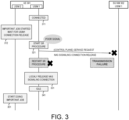
- FIG. 3 illustrates one embodiment of handling NAS signaling connection release under service request procedure with transmission failure for MUSIM UE in 5GS network in accordance with one novel aspect.
- UE 301 is equipped with multiple USIMs including USIM1 and USIM2.
- step 311 UE 301 has registered to the network and established a NAS signaling connection and is in connected mode over USIM1.
- step 312 UE 301 determines that an important job is to be started on USIM2 and is expecting USIM1 to release the NAS signaling connection.
- USIM2 is starting to do a very import job like mobile originated voice call while USIM1 is occupying the RF hardware resource doing non-urgent jobs like background download a new version of Android OS image.
- UE 301 initiates a service request procedure by transmitting a SERVICE REQUEST message or a CONTROL PLANE SERVICE REQUEST message to the 5GS network 302.
- the request type of the message is set to NAS signaling connection release.
- the radio signal quality may be poor at this time and the message cannot be successfully delivered to the network.
- UE 301 receives an indication from the low layer indicating such transmission failure with or without tracking area identifier (TAI) change.
- TAI tracking area identifier
- UE 301 in response to the transmission failure, UE 301 does NOT restart the service request procedure. This is because the purpose of the service request procedure is to release the NAS signaling on USIM1 to facilitate the operation on USIM2.
- step 331 UE 301 aborts the service request procedure, enters state 5GMM-REGISTERED, locally releases the N1 NAS signaling connection, stops timer T3517 and locally releases any resources allocated for the service request procedure over USIM1.
- step 341 UE 301 is in IDLE mode on USIM1.
- step 351 UE 301 starts to perform the more important job on USIM2.
- FIG. 4 illustrates one embodiment of handling rejection of paging under service request procedure with transmission failure for MUSIM UE in 5GS network in accordance with one novel aspect.
- UE 401 is equipped with multiple USIMs including USIM1 and USIM2.
- step 411 UE 401 has not established any NAS signaling connection and is in IDLE mode over USIM1; or in INACTIVE mode over USIM1.
- step 412 UE 401 has an important job that is ongoing on USIM2 and is expecting USIM1 to not use any NAS signaling connection.
- USIM2 is currently doing a very import job like mobile originated voice call while USIM1 receives a paging in step 413.
- UE 401 If UE 401 accepts the paging and enters connected mode over USIM1, then the user experience on USIM2 (the voice call) will become worse (or even the voice call will be dropped/terminated). Therefore, UE 401 should reject the paging on USIM1.
- UE 401 initiates a service request procedure by transmitting a SERVICE REQUEST message or a CONTROL PLANE SERVICE REQUEST message to the 5GS network 402.
- the request type of the message is set to rejection of paging.
- the radio signal quality may be poor at this time and the message cannot be successfully delivered to the network.
- UE 401 receives an indication from the low layer indicating such transmission failure with or without tracking area identifier (TAI) change.
- TAI tracking area identifier
- UE 401 established a NAS signaling connection and is in connected mode on USIM1.
- the user experience on USIM2 becomes poor.
- UE 401 does NOT restart the service request procedure.
- step 431 UE 401 aborts the service request procedure, enters state 5GMM-REGISTERED, locally releases the N1 NAS signaling connection, stops timer T3517 and locally releases any resources allocated for the service request procedure.
- step 441 UE 401 is in IDLE mode on USIM1.
- step 451 the user experience on USIM2 becomes better.
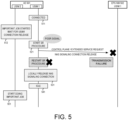
- FIG. 5 illustrates one embodiment of handling NAS signaling connection release under service request procedure with transmission failure for MUSIM UE in EPS network in accordance with one novel aspect.
- UE 501 is equipped with multiple USIMs including USIM1 and USIM2.
- step 511 UE 501 has registered to the network and established a NAS signaling connection and is in connected mode over USIM1.
- step 512 UE 501 determines that an important job is to be started on USIM2 and is expecting USIM1 to release the NAS signaling connection.
- USIM2 is starting to do a very import job like mobile originated voice call while USIM1 is occupying the RF hardware resource doing non-urgent jobs like background download a new version of Android OS image.
- UE 501 initiates a service request procedure by transmitting a SERVICE REQUEST message, an EXTENDED SERVICE REQUEST message, or a CONTROL PLANE SERVICE REQUEST message to the EPS network 502.
- the request type of the message is set to NAS signaling connection release.
- the radio signal quality may be poor at this time and the message cannot be successfully delivered to the network.
- a transmission failure occurs, and UE 501 receives an indication from the low layer indicating such transmission failure with or without tracking area identifier (TAI) change.
- TAI tracking area identifier
- UE 501 does NOT restart the service request procedure.
- step 531 UE 501 aborts the service request procedure, enters state EMM-REGISTERED, locally releases the NAS signaling connection, stops timer T3417 and locally releases any resources allocated for the service request procedure over USIM1.
- step 541 UE 501 is in IDLE mode on USIM1.
- step 551 UE 501 starts to perform the more important job on USIM2.
- FIG. 6 illustrates one embodiment of handling rejection of paging under service request procedure with transmission failure for MUSIM UE in EPS network in accordance with one novel aspect.
- UE 601 is equipped with multiple USIMs including USIM1 and USIM2.
- step 611 UE 601 has not established any NAS signaling connection and is in IDLE mode over USIM1.
- step 612 UE 601 has an important job that is ongoing on USIM2 and is expecting USIM1 to not use any NAS signaling connection.
- USIM2 is currently doing a very import job like mobile originated voice call while USIM1 receives a paging in step 613. If UE 601 accepts the paging and enters connected mode over USIM1, then the user experience on USIM2 (the voice call) will become worse. Therefore, UE 601 should reject the paging on USIM1.
- UE 601 initiates a service request procedure by transmitting a SERVICE REQUEST message, an EXTENDED SERVICE REQUEST message, or a CONTROL PLANE SERVICE REQUEST message to the EPS network 602.
- the request type of the message is set to rejection of paging.
- the radio signal quality may be poor at this time and the message cannot be successfully delivered to the network.
- a transmission failure occurs, and UE 601 receives an indication from the low layer indicating such transmission failure with or without tracking area identifier (TAI) change.
- TAI tracking area identifier
- UE 601 established a NAS signaling connection and is in connected mode on USIM1.
- the user experience on USIM2 becomes poor.
- UE 601 in response to the transmission failure, does NOT restart the service request procedure. This is because the purpose of the service request procedure is to reject the paging on USIM1 (and to release the established NAS signaling connection) to facilitate the operation on USIM2. Therefore, in step 631, UE 601 aborts the service request procedure, enters state EMM-REGISTERED, locally releases the NAS signaling connection, stops timer T3417 and locally releases any resources allocated for the service request procedure. In step 641, UE 601 is in IDLE mode on USIM1. In step 651, the user experience on USIM2 becomes better.
- FIG. 7 is a flow chart of a method of handling NAS signaling connection release for MUSIM UE in accordance with one novel aspect of the present invention.
- a UE maintains s a non-access stratum (NAS) signaling connection in a wireless communication network.
- the UE supports multiple universal subscriber identity module (MUSIM) and the NAS signaling connection is established.
- MUSIM universal subscriber identity module
- the UE initiates a service request procedure by transmitting a request message to the network over the first USIM.
- the request message has a request type indicating to release the NAS signaling connection.
- the UE aborts the service request procedure upon detecting a transmission failure from lower layers on delivery of the request message.
- the UE locally releases the NAS signaling connection.
- FIG. 8 is a flow chart of a method of handling rejection of paging for MUSIM UE in accordance with one novel aspect of the present invention.
- a UE receives a paging on a first universal subscriber identity module (USIM) in a wireless communication network.
- the UE supports multiple USIM (MUSIM).
- MUSIM USIM
- the UE initiates a service request procedure by transmitting a request message to the network.
- the request message has a request type indicating rejection of the paging.
- the UE aborts the service request procedure upon detecting a transmission failure from lower layers on delivery of the request message.
- the UE locally releases a NAS signaling connection.
Landscapes
- Engineering & Computer Science (AREA)
- Computer Networks & Wireless Communication (AREA)
- Signal Processing (AREA)
- Mobile Radio Communication Systems (AREA)
Applications Claiming Priority (2)
| Application Number | Priority Date | Filing Date | Title |
|---|---|---|---|
| US202163249076P | 2021-09-28 | 2021-09-28 | |
| US17/901,842 US20230111055A1 (en) | 2021-09-28 | 2022-09-01 | Musim sr procedure transmission failure |
Publications (1)
| Publication Number | Publication Date |
|---|---|
| EP4156853A1 true EP4156853A1 (de) | 2023-03-29 |
Family
ID=83457435
Family Applications (1)
| Application Number | Title | Priority Date | Filing Date |
|---|---|---|---|
| EP22197723.4A Withdrawn EP4156853A1 (de) | 2021-09-28 | 2022-09-26 | Übertragungsfehler bei musim-sr-verfahren |
Country Status (4)
| Country | Link |
|---|---|
| US (1) | US20230111055A1 (de) |
| EP (1) | EP4156853A1 (de) |
| CN (1) | CN115884290A (de) |
| TW (1) | TWI819810B (de) |
Families Citing this family (2)
| Publication number | Priority date | Publication date | Assignee | Title |
|---|---|---|---|---|
| WO2022204232A1 (en) * | 2021-03-25 | 2022-09-29 | Parsa Wireless Communications, Llc | Apparatus and methods for improving multi-sim devices performance and operation |
| CN117178618A (zh) * | 2021-04-06 | 2023-12-05 | 三星电子株式会社 | 用于确定向无线网络中的网络装置的资源请求的方法及ue |
Citations (1)
| Publication number | Priority date | Publication date | Assignee | Title |
|---|---|---|---|---|
| WO2022182204A1 (en) * | 2021-02-26 | 2022-09-01 | Samsung Electronics Co., Ltd. | Method and musim ue for handling retry of nas procedure in network |
Family Cites Families (6)
| Publication number | Priority date | Publication date | Assignee | Title |
|---|---|---|---|---|
| EP3799488B1 (de) * | 2016-02-10 | 2023-07-12 | Intel Corporation | Verbindung ohne pdn-konnektivität |
| US11419006B2 (en) * | 2019-07-29 | 2022-08-16 | Nokia Technologies Oy | User data transport over control plane in communication system using designated payload container types |
| CN121126580A (zh) * | 2019-09-06 | 2025-12-12 | 联想(新加坡)私人有限公司 | 多个sim的连接暂停 |
| CN114451028B (zh) * | 2019-10-11 | 2024-05-17 | 联想(新加坡)私人有限公司 | 用于多sim的寻呼的网络设备和方法 |
| US11751279B2 (en) * | 2020-01-07 | 2023-09-05 | Mediatek Inc. | Apparatuses and methods for multi-radio access technology (RAT) coordination |
| US11310661B2 (en) * | 2020-02-14 | 2022-04-19 | Mediatek Inc. | Security key synchronization method and associated communications apparatus |
-
2022
- 2022-09-01 US US17/901,842 patent/US20230111055A1/en not_active Abandoned
- 2022-09-19 CN CN202211140201.2A patent/CN115884290A/zh not_active Withdrawn
- 2022-09-22 TW TW111135900A patent/TWI819810B/zh active
- 2022-09-26 EP EP22197723.4A patent/EP4156853A1/de not_active Withdrawn
Patent Citations (1)
| Publication number | Priority date | Publication date | Assignee | Title |
|---|---|---|---|---|
| WO2022182204A1 (en) * | 2021-02-26 | 2022-09-01 | Samsung Electronics Co., Ltd. | Method and musim ue for handling retry of nas procedure in network |
Non-Patent Citations (5)
| Title |
|---|
| "3rd Generation Partnership Project; Technical Specification Group Core Network and Terminals; Non-Access-Stratum (NAS) protocol for 5G System (5GS); Stage 3; (Release 17)", vol. CT WG1, no. V17.4.1, 27 September 2021 (2021-09-27), pages 1 - 863, XP052056832, Retrieved from the Internet <URL:https://ftp.3gpp.org/Specs/archive/24_series/24.501/24501-h41.zip 24501-h41.docx> [retrieved on 20210927] * |
| "3rd Generation Partnership Project; Technical Specification Group Core Network and Terminals; Non-Access-Stratum (NAS) protocol for Evolved Packet System (EPS); Stage 3 (Release 17))", vol. CT WG1, no. V17.4.1, 24 September 2021 (2021-09-24), pages 1 - 569, XP052056742, Retrieved from the Internet <URL:https://ftp.3gpp.org/Specs/archive/24_series/24.301/24301-h41.zip 24301-h41.docx> [retrieved on 20210924] * |
| "3rd Generation Partnership Project; Technical Specification Group Services and System Aspects; Study on system enablers for devices having multiple Universal Subscriber Identity Modules (USIM) (Release 17)", 4 June 2021 (2021-06-04), XP052021972, Retrieved from the Internet <URL:https://ftp.3gpp.org/tsg_sa/TSG_SA/TSGs_92E_Electronic_2021_06/Docs/SP-210369.zip 23761-200.zip 23761-200.docx> [retrieved on 20210604] * |
| QUALCOMM INCORPORATED ET AL: "Conditions for the completion of the leaving procedure", vol. CT WG1, no. E-meeting; 20210819 - 20210827, 12 August 2021 (2021-08-12), XP052040533, Retrieved from the Internet <URL:https://ftp.3gpp.org/tsg_ct/WG1_mm-cc-sm_ex-CN1/TSGC1_131e/Docs/C1-214558.zip C1-214558_C1-214159-24.501-MUSIM_service_request.docx> [retrieved on 20210812] * |
| QUALCOMM INCORPORATED ET AL: "Conditions for the completion of the leaving procedure", vol. CT WG1, no. E-meeting; 20210819 - 20210827, 12 August 2021 (2021-08-12), XP052040534, Retrieved from the Internet <URL:https://ftp.3gpp.org/tsg_ct/WG1_mm-cc-sm_ex-CN1/TSGC1_131e/Docs/C1-214559.zip C1-214559_C1-214160-24.301-MUSIM_service_request.docx> [retrieved on 20210812] * |
Also Published As
| Publication number | Publication date |
|---|---|
| US20230111055A1 (en) | 2023-04-13 |
| TWI819810B (zh) | 2023-10-21 |
| CN115884290A (zh) | 2023-03-31 |
| TW202315452A (zh) | 2023-04-01 |
Similar Documents
| Publication | Publication Date | Title |
|---|---|---|
| US11569906B2 (en) | Communications device, infrastructure equipment and method | |
| US12446109B2 (en) | MUSIM SR procedure and MM congestion control | |
| EP4125302A1 (de) | Verfahren und vorrichtungen zur implementierung von musim-schutztimern für eine freigabe einer nas-signalisierungsverbindung und funkrufzurückweisung | |
| US12309742B2 (en) | MUSIM IMSI offset value handling for paging timing collision control | |
| JP7616382B2 (ja) | 方法、musim端末装置及びマスタノード(mn) | |
| JP2025013983A (ja) | Rrc非アクティブ状態におけるueのデータ送信およびrnau手順の方法および装置 | |
| EP4156853A1 (de) | Übertragungsfehler bei musim-sr-verfahren | |
| US20230012119A1 (en) | Method and apparatus for data transmission | |
| EP4161177A1 (de) | Musim-paging-einschränkung in eps | |
| US12439375B2 (en) | MUSIM paging restriction in 5GS | |
| WO2021170907A1 (en) | Method, apparatus and computer program | |
| EP4188032A1 (de) | Verfahren und vorrichtung zur verringerung des stromverbrauchs für vorrichtung mit mehreren sim-karten |
Legal Events
| Date | Code | Title | Description |
|---|---|---|---|
| PUAI | Public reference made under article 153(3) epc to a published international application that has entered the european phase |
Free format text: ORIGINAL CODE: 0009012 |
|
| STAA | Information on the status of an ep patent application or granted ep patent |
Free format text: STATUS: THE APPLICATION HAS BEEN PUBLISHED |
|
| AK | Designated contracting states |
Kind code of ref document: A1 Designated state(s): AL AT BE BG CH CY CZ DE DK EE ES FI FR GB GR HR HU IE IS IT LI LT LU LV MC MK MT NL NO PL PT RO RS SE SI SK SM TR |
|
| P01 | Opt-out of the competence of the unified patent court (upc) registered |
Effective date: 20230607 |
|
| STAA | Information on the status of an ep patent application or granted ep patent |
Free format text: STATUS: REQUEST FOR EXAMINATION WAS MADE |
|
| 17P | Request for examination filed |
Effective date: 20230927 |
|
| RBV | Designated contracting states (corrected) |
Designated state(s): AL AT BE BG CH CY CZ DE DK EE ES FI FR GB GR HR HU IE IS IT LI LT LU LV MC MK MT NL NO PL PT RO RS SE SI SK SM TR |
|
| STAA | Information on the status of an ep patent application or granted ep patent |
Free format text: STATUS: EXAMINATION IS IN PROGRESS |
|
| STAA | Information on the status of an ep patent application or granted ep patent |
Free format text: STATUS: THE APPLICATION HAS BEEN WITHDRAWN |
|
| 17Q | First examination report despatched |
Effective date: 20251215 |
|
| 18W | Application withdrawn |
Effective date: 20251230 |