EP4156720B1 - Method and system for measuring and tracking ear characteristics - Google Patents
Method and system for measuring and tracking ear characteristics Download PDFInfo
- Publication number
- EP4156720B1 EP4156720B1 EP22196545.2A EP22196545A EP4156720B1 EP 4156720 B1 EP4156720 B1 EP 4156720B1 EP 22196545 A EP22196545 A EP 22196545A EP 4156720 B1 EP4156720 B1 EP 4156720B1
- Authority
- EP
- European Patent Office
- Prior art keywords
- ear
- user
- headset
- model
- microphone
- Prior art date
- Legal status (The legal status is an assumption and is not a legal conclusion. Google has not performed a legal analysis and makes no representation as to the accuracy of the status listed.)
- Active
Links
Images




Classifications
-
- A—HUMAN NECESSITIES
- A61—MEDICAL OR VETERINARY SCIENCE; HYGIENE
- A61B—DIAGNOSIS; SURGERY; IDENTIFICATION
- A61B5/00—Measuring for diagnostic purposes; Identification of persons
- A61B5/12—Audiometering
- A61B5/121—Audiometering evaluating hearing capacity
- A61B5/123—Audiometering evaluating hearing capacity subjective methods
-
- H—ELECTRICITY
- H04—ELECTRIC COMMUNICATION TECHNIQUE
- H04S—STEREOPHONIC SYSTEMS
- H04S7/00—Indicating arrangements; Control arrangements, e.g. balance control
- H04S7/30—Control circuits for electronic adaptation of the sound field
- H04S7/301—Automatic calibration of stereophonic sound system, e.g. with test microphone
-
- G—PHYSICS
- G10—MUSICAL INSTRUMENTS; ACOUSTICS
- G10K—SOUND-PRODUCING DEVICES; METHODS OR DEVICES FOR PROTECTING AGAINST, OR FOR DAMPING, NOISE OR OTHER ACOUSTIC WAVES IN GENERAL; ACOUSTICS NOT OTHERWISE PROVIDED FOR
- G10K11/00—Methods or devices for transmitting, conducting or directing sound in general; Methods or devices for protecting against, or for damping, noise or other acoustic waves in general
- G10K11/16—Methods or devices for protecting against, or for damping, noise or other acoustic waves in general
- G10K11/175—Methods or devices for protecting against, or for damping, noise or other acoustic waves in general using interference effects; Masking sound
- G10K11/178—Methods or devices for protecting against, or for damping, noise or other acoustic waves in general using interference effects; Masking sound by electro-acoustically regenerating the original acoustic waves in anti-phase
- G10K11/1781—Methods or devices for protecting against, or for damping, noise or other acoustic waves in general using interference effects; Masking sound by electro-acoustically regenerating the original acoustic waves in anti-phase characterised by the analysis of input or output signals, e.g. frequency range, modes, transfer functions
- G10K11/17813—Methods or devices for protecting against, or for damping, noise or other acoustic waves in general using interference effects; Masking sound by electro-acoustically regenerating the original acoustic waves in anti-phase characterised by the analysis of input or output signals, e.g. frequency range, modes, transfer functions characterised by the analysis of the acoustic paths, e.g. estimating, calibrating or testing of transfer functions or cross-terms
- G10K11/17817—Methods or devices for protecting against, or for damping, noise or other acoustic waves in general using interference effects; Masking sound by electro-acoustically regenerating the original acoustic waves in anti-phase characterised by the analysis of input or output signals, e.g. frequency range, modes, transfer functions characterised by the analysis of the acoustic paths, e.g. estimating, calibrating or testing of transfer functions or cross-terms between the output signals and the error signals, i.e. secondary path
-
- G—PHYSICS
- G10—MUSICAL INSTRUMENTS; ACOUSTICS
- G10K—SOUND-PRODUCING DEVICES; METHODS OR DEVICES FOR PROTECTING AGAINST, OR FOR DAMPING, NOISE OR OTHER ACOUSTIC WAVES IN GENERAL; ACOUSTICS NOT OTHERWISE PROVIDED FOR
- G10K11/00—Methods or devices for transmitting, conducting or directing sound in general; Methods or devices for protecting against, or for damping, noise or other acoustic waves in general
- G10K11/16—Methods or devices for protecting against, or for damping, noise or other acoustic waves in general
- G10K11/175—Methods or devices for protecting against, or for damping, noise or other acoustic waves in general using interference effects; Masking sound
- G10K11/178—Methods or devices for protecting against, or for damping, noise or other acoustic waves in general using interference effects; Masking sound by electro-acoustically regenerating the original acoustic waves in anti-phase
- G10K11/1783—Methods or devices for protecting against, or for damping, noise or other acoustic waves in general using interference effects; Masking sound by electro-acoustically regenerating the original acoustic waves in anti-phase handling or detecting of non-standard events or conditions, e.g. changing operating modes under specific operating conditions
- G10K11/17833—Methods or devices for protecting against, or for damping, noise or other acoustic waves in general using interference effects; Masking sound by electro-acoustically regenerating the original acoustic waves in anti-phase handling or detecting of non-standard events or conditions, e.g. changing operating modes under specific operating conditions by using a self-diagnostic function or a malfunction prevention function, e.g. detecting abnormal output levels
-
- G—PHYSICS
- G10—MUSICAL INSTRUMENTS; ACOUSTICS
- G10K—SOUND-PRODUCING DEVICES; METHODS OR DEVICES FOR PROTECTING AGAINST, OR FOR DAMPING, NOISE OR OTHER ACOUSTIC WAVES IN GENERAL; ACOUSTICS NOT OTHERWISE PROVIDED FOR
- G10K11/00—Methods or devices for transmitting, conducting or directing sound in general; Methods or devices for protecting against, or for damping, noise or other acoustic waves in general
- G10K11/16—Methods or devices for protecting against, or for damping, noise or other acoustic waves in general
- G10K11/175—Methods or devices for protecting against, or for damping, noise or other acoustic waves in general using interference effects; Masking sound
- G10K11/178—Methods or devices for protecting against, or for damping, noise or other acoustic waves in general using interference effects; Masking sound by electro-acoustically regenerating the original acoustic waves in anti-phase
- G10K11/1785—Methods, e.g. algorithms; Devices
-
- G—PHYSICS
- G10—MUSICAL INSTRUMENTS; ACOUSTICS
- G10K—SOUND-PRODUCING DEVICES; METHODS OR DEVICES FOR PROTECTING AGAINST, OR FOR DAMPING, NOISE OR OTHER ACOUSTIC WAVES IN GENERAL; ACOUSTICS NOT OTHERWISE PROVIDED FOR
- G10K11/00—Methods or devices for transmitting, conducting or directing sound in general; Methods or devices for protecting against, or for damping, noise or other acoustic waves in general
- G10K11/16—Methods or devices for protecting against, or for damping, noise or other acoustic waves in general
- G10K11/175—Methods or devices for protecting against, or for damping, noise or other acoustic waves in general using interference effects; Masking sound
- G10K11/178—Methods or devices for protecting against, or for damping, noise or other acoustic waves in general using interference effects; Masking sound by electro-acoustically regenerating the original acoustic waves in anti-phase
- G10K11/1787—General system configurations
- G10K11/17875—General system configurations using an error signal without a reference signal, e.g. pure feedback
-
- H—ELECTRICITY
- H04—ELECTRIC COMMUNICATION TECHNIQUE
- H04R—LOUDSPEAKERS, MICROPHONES, GRAMOPHONE PICK-UPS OR LIKE ACOUSTIC ELECTROMECHANICAL TRANSDUCERS; ELECTRIC HEARING AIDS; PUBLIC ADDRESS SYSTEMS
- H04R1/00—Details of transducers, loudspeakers or microphones
- H04R1/10—Earpieces; Attachments therefor ; Earphones; Monophonic headphones
- H04R1/1016—Earpieces of the intra-aural type
-
- H—ELECTRICITY
- H04—ELECTRIC COMMUNICATION TECHNIQUE
- H04R—LOUDSPEAKERS, MICROPHONES, GRAMOPHONE PICK-UPS OR LIKE ACOUSTIC ELECTROMECHANICAL TRANSDUCERS; ELECTRIC HEARING AIDS; PUBLIC ADDRESS SYSTEMS
- H04R1/00—Details of transducers, loudspeakers or microphones
- H04R1/10—Earpieces; Attachments therefor ; Earphones; Monophonic headphones
- H04R1/1083—Reduction of ambient noise
-
- H—ELECTRICITY
- H04—ELECTRIC COMMUNICATION TECHNIQUE
- H04R—LOUDSPEAKERS, MICROPHONES, GRAMOPHONE PICK-UPS OR LIKE ACOUSTIC ELECTROMECHANICAL TRANSDUCERS; ELECTRIC HEARING AIDS; PUBLIC ADDRESS SYSTEMS
- H04R25/00—Electric hearing aids
- H04R25/30—Monitoring or testing of hearing aids, e.g. functioning, settings, battery power
- H04R25/305—Self-monitoring or self-testing
-
- H—ELECTRICITY
- H04—ELECTRIC COMMUNICATION TECHNIQUE
- H04R—LOUDSPEAKERS, MICROPHONES, GRAMOPHONE PICK-UPS OR LIKE ACOUSTIC ELECTROMECHANICAL TRANSDUCERS; ELECTRIC HEARING AIDS; PUBLIC ADDRESS SYSTEMS
- H04R5/00—Stereophonic arrangements
- H04R5/04—Circuit arrangements, e.g. for selective connection of amplifier inputs/outputs to loudspeakers, for loudspeaker detection, or for adaptation of settings to personal preferences or hearing impairments
-
- G—PHYSICS
- G10—MUSICAL INSTRUMENTS; ACOUSTICS
- G10K—SOUND-PRODUCING DEVICES; METHODS OR DEVICES FOR PROTECTING AGAINST, OR FOR DAMPING, NOISE OR OTHER ACOUSTIC WAVES IN GENERAL; ACOUSTICS NOT OTHERWISE PROVIDED FOR
- G10K2210/00—Details of active noise control [ANC] covered by G10K11/178 but not provided for in any of its subgroups
- G10K2210/10—Applications
- G10K2210/108—Communication systems, e.g. where useful sound is kept and noise is cancelled
- G10K2210/1081—Earphones, e.g. for telephones, ear protectors or headsets
-
- G—PHYSICS
- G10—MUSICAL INSTRUMENTS; ACOUSTICS
- G10K—SOUND-PRODUCING DEVICES; METHODS OR DEVICES FOR PROTECTING AGAINST, OR FOR DAMPING, NOISE OR OTHER ACOUSTIC WAVES IN GENERAL; ACOUSTICS NOT OTHERWISE PROVIDED FOR
- G10K2210/00—Details of active noise control [ANC] covered by G10K11/178 but not provided for in any of its subgroups
- G10K2210/30—Means
- G10K2210/301—Computational
- G10K2210/3025—Determination of spectrum characteristics, e.g. FFT
-
- G—PHYSICS
- G10—MUSICAL INSTRUMENTS; ACOUSTICS
- G10K—SOUND-PRODUCING DEVICES; METHODS OR DEVICES FOR PROTECTING AGAINST, OR FOR DAMPING, NOISE OR OTHER ACOUSTIC WAVES IN GENERAL; ACOUSTICS NOT OTHERWISE PROVIDED FOR
- G10K2210/00—Details of active noise control [ANC] covered by G10K11/178 but not provided for in any of its subgroups
- G10K2210/50—Miscellaneous
- G10K2210/504—Calibration
-
- G—PHYSICS
- G10—MUSICAL INSTRUMENTS; ACOUSTICS
- G10K—SOUND-PRODUCING DEVICES; METHODS OR DEVICES FOR PROTECTING AGAINST, OR FOR DAMPING, NOISE OR OTHER ACOUSTIC WAVES IN GENERAL; ACOUSTICS NOT OTHERWISE PROVIDED FOR
- G10K2210/00—Details of active noise control [ANC] covered by G10K11/178 but not provided for in any of its subgroups
- G10K2210/50—Miscellaneous
- G10K2210/505—Echo cancellation, e.g. multipath-, ghost- or reverberation-cancellation
-
- H—ELECTRICITY
- H04—ELECTRIC COMMUNICATION TECHNIQUE
- H04R—LOUDSPEAKERS, MICROPHONES, GRAMOPHONE PICK-UPS OR LIKE ACOUSTIC ELECTROMECHANICAL TRANSDUCERS; ELECTRIC HEARING AIDS; PUBLIC ADDRESS SYSTEMS
- H04R2460/00—Details of hearing devices, i.e. of ear- or headphones covered by H04R1/10 or H04R5/033 but not provided for in any of their subgroups, or of hearing aids covered by H04R25/00 but not provided for in any of its subgroups
- H04R2460/01—Hearing devices using active noise cancellation
Definitions
- An aspect of the disclosure relates to a system that measures and tracks ear characteristics of one or more hearing elements of a user's ear. Other aspects are also described.
- Audiologists use special instruments for identifying, diagnosing, and treating issues with a person's ear.
- doctors may use tympanometry devices that test a person's middle ear's mobility due to changes in air pressure within the user's ear canal.
- These devices include a probe with a loudspeaker, a microphone, and air pump. With the probe inserted into the user's ear, the microphone measures sounds produced by the loudspeaker, while the air pump adjusts the air pressure within the user's ear.
- the input at the microphone is used to form a tympanogram, from which doctors may determine various issues with the user's ear.
- Document US 9 497 530 B1 discloses headphones configured to personalize an audio signal to a user, the headphones comprising: a speaker proximate to a user's ear, configured to emit a content audio signal and a test audio signal, the test audio signal comprising a frequency in the audible frequency range; a microphone proximate to the user's ear, the microphone configured to measure a response associated with the user, the response comprising a sound evoked in the user's ear in response to the test audio signal; a processor, coupled to the speaker and to the microphone, the processor configured to: generate the test audio signal; send the test audio signal to the speaker; receive from the microphone the response to the test audio signal associated with the user; based on the test audio signal and the response to the test audio signal, determine a hearing transfer function associated with the user; identify the user based on the response associated with the user, the response comprising the sound evoked in the user's ear in response to the test audio signal; receive a statistical information representing data regarding human hearing profiles
- the headset uses the microphone signal to determine a secondary path (or S-path) transfer function that represents a response between the speaker and the in-ear microphone (while both components are inserted inside the user's ear canal), where the parameter may be based on the S-path transfer function.
- the transfer function may be determined as part of an active-noise cancellation (ANC) process that is performed by the headset to generate an anti-noise signal for driving the speaker.
- ANC active-noise cancellation
- the headset may not be configured to perform the ANC process (e.g., may not have ANC functionality), in which case, the S-path transfer function may not be determined as part of (or may be determined separate from) an ANC process.
- the parameter is determined by measuring, using the S-path transfer function, an acoustic input impedance of the user's ear canal with respect to the baseline measurement and using the acoustic impedance to determine the parameter that is part of an equivalent acousto-mechanical model of hearing elements of the user's ear, such as at least the user's middle ear and outer ear.
- the headset compares the parameter to a corresponding parameter of a predefined equivalent acousto-mechanical model, and identifies the one or more characteristics based on a difference between the parameter and the corresponding parameter of the predefined model.
- the acoustic input impedance is measured over a period of time, and the headset determines the one or more characteristics based on a change between the parameter and the corresponding parameter over the period of time.
- the parameter may be a reflection mask of the canal of the user's ear that is determined based on the acoustic impedance.
- the headset may filter one or more microphone signals using the reflection mask to produce one or more filtered signals that are used to determine a severity level of a characteristic.
- performing the calibration comprises determining one or more impedance calibration parameters for an impedance model, where measuring the acoustic input impedance includes estimating the impedance by applying the determined one or more impedance calibration parameters and the S-transfer function to the impedance model.
- the one or more impedance calibration parameters are parameters that are predefined offline in a controlled environment.
- determining the parameter associated with the user's ear includes measuring, using the S-path transfer function, an acoustic input impedance of the user's ear canal with respect to the baseline measurement as the parameter, and determining the one or more characteristics of hearing elements of the user's ear based on the parameter includes using the acoustic impedance to determine that there is a blockage within the canal of the user's ear and determine a severity level of the blockage.
- the audio signal includes user-desired audio content.
- the audio signal includes a (e.g., predefined) test sound.
- the calibration is performed on the headset before using the audio signal to drive the speaker and before the capturing of the sound form within the canal of the user.
- the calibration is performed on the headset prior to the headset being worn by the user.
- the calibration is performed on the headset while the headset is in a controlled environment.
- the calibration is performed while the headset is in a holding case that is arranged to house the headset while it is not worn by the user.
- the one or more characteristics are determined using a machine learning model that has an input based on the parameter.
- the input audio signal may include media content or user-desired audio content, such as a musical composition, a podcast, a movie soundtrack, etc.
- the input audio signal may include a predefined test sound (e.g., a sine sweep), which may have been defined in a controlled environment (e.g., a laboratory), and may be used to perform to determine one or more characteristics of the user's ear.
- the controller may be receiving (or obtaining) the input audio signal from local memory.
- the controller may be receiving the audio signal from a remote device, such as the source device 2.
- the output device may stream (e.g., via the wireless connection 4) the input audio signal for playback by the output device.
- the estimator may compare the measured impedances within the data structure and select parameters that are associated with a measured acoustic impedance that matches the estimated impedance of the user's ear.
- the determined parameters may be characteristics (e.g., values) of components (e.g., resistor value, capacitor value, etc.) within the equivalent model.
- the model parameter estimator 26 may be configured to determine (or estimate) one or more other parameters. For instance, the estimator may determine a parameter associated with an acoustic seal that is created by the output device while it is inserted into (or on) the user's ear. Specifically, the parameter may indicate the effectiveness (e.g., as a numerical value between 0 and 1) of the seal (e.g., at preventing acoustic leakage).
- the ear characteristic tracking and decision making system 27 is configured to receive the one or more estimated parameters (e.g., model component values) from the model estimator 26, and is configured to determine whether one or more hearing elements of the user's ear has one or more characteristics based on the received parameter(s).
- the system may receive an equivalent acousto-mechanical model of (e.g., that is specific for) the user's ear from the model estimator 26, and may use the model to determine one or more characteristics of the user's ear. For instance, the system may compare the received equivalent model to a predefined equivalent model (which may be stored in memory).
- the predefined model may be a "normal" model of a person's ear, whereby the person's ear is a healthy ear (e.g., having no characteristics (or having characteristics less than a threshold) associated with hearing elements of the person's ear).
- the parameters of the normal model are associated with hearing elements that do not have any (e.g., known) characteristics associated with them.
- the predefined model may be a generic model (e.g., a model that is averaged across one or more other models).
- the predefined model may be a (e.g., predetermined) model of the user's ear (e.g., that may have been determined once upon a first power up cycle of the output device, and while the device was inserted into (or on) the user's ear).
- the system determines whether there are any differences between the estimated equivalent model and the predefined model in order to identify whether the user's ear has any characteristics or issues. For instance, the system may compare one or more specific parameters of the equivalent model with corresponding parameters of the predefined model, and based on differences between the parameters may identify one or more characteristics with one or more hearing elements (e.g., which may be associated with the parameters).
- the parameter of the equivalent model associated with stiffness of a stapes may be (at least) a capacitor.
- the system may compare a capacitive value of the capacitor of the equivalent model with respect to a predefined capacitive value from the normal model. If the capacitive value is different than the predefined value (e.g., greater, or lesser than a predefined threshold), the system may determine that there may be an issue (as a characteristic) with (at least) the (e.g., stapes of the) user's middle ear.
- the system may determine one or more characteristics based on whether the estimated model (or one or more estimated parameters) has drifted over a period of time. Specifically, the system may track an estimated parameter to determine whether the parameter increases (e.g., at a particular rate) over a period of time. If so, the system may determine that there is a characteristic of a hearing element that is associated with such drift.
- the system may perform one or more operations upon determining that there are one or more characteristics with one or more hearing elements of the user's ear.
- the system may transmit a notification to the user indicating that there may be a possible issue with the user's ear.
- the output device may use a notification audio signal that includes the notification to drive the speaker 22 in order to notify the user.
- the system may present a (e.g., pop-up) notification on a display screen that is communicatively coupled with the output device, such as a display screen of the source device 2.
- the notification may provide a suggestion to the user to visit a medical provider (e.g., an audiologist) who may exam the user's ear in order to provide a medical diagnosis.
- the system may transmit the notification to another electronic device, which may present (or keep track) of the determined one or more characteristics.
- the system may transmit the notification to one or more application programs that are being executed by one or more electronic devices (e.g., on the output device), which may keep track and/or output an alert regarding the characteristics.
- the system is able to provide a notification to the user in order to seek a medical provider in order for the user to obtain a diagnosis from the medical provider, which may improve hearing health of the user.
- the system may track determined characteristics of hearing elements over a period of time, and may be configured to provide the notification to the user based changes to the characteristics. For example, the system may determine whether the characteristic persists over the period of time (e.g., a determined characteristic being detected a threshold amount over the period of time), if so, the system may provide the notification indicating that the characteristic persists.
- the system may determine whether the characteristic persists over the period of time (e.g., a determined characteristic being detected a threshold amount over the period of time), if so, the system may provide the notification indicating that the characteristic persists.
- the system 27 may determine and track ear characteristics based on a machine learning (ML) algorithm that is performed by the controller 20.
- ML machine learning
- the system may use the ML algorithm to determine, having one or more estimated model parameters as input into the algorithm, one or more characteristics of one or more hearing elements of the users as output.
- the system may use any type of ML algorithm to perform this determination (e.g., a deep neural network (DNN)), etc.).
- DNN deep neural network
- the system may track the changes of one or more parameters.
- the parameters may change based on changes to input impedance over a period of time.
- a determined characteristic may be based on whether an estimated parameter exceeds (or drops below) a predefined parameter of a predefined model by a threshold.
- the system may track the differences between estimated parameters and predefined parameters for the period of time. For instance, the system may track a rate at which a parameter changes (e.g., based on changes to the input impedance) with respect to the predefined parameter, over the period of time. Upon determining that the rate of change exceeds a threshold, the system may notify the user.
- the system may notify the user of a severity level (or value) of a determined characteristic based on the rate of change (and/or based on differences between one or more estimated parameters and predefined parameters). For example, upon determining that a parameter has a particular rate of change, the system may notify the user of the characteristic and a severity level of the characteristic (e.g., low, medium, high). In particular, the system may determine whether the determined rate of change is greater than a first (e.g., low) threshold and/or whether the determined rate of change is greater than a second (e.g., high) threshold (that is greater than the first threshold). If below the first threshold, the severity level may be low, if above the first threshold but below the second threshold, the severity level may be medium, and if above the second threshold, the severity level may be high. More about severity levels is described herein.
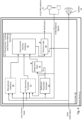
- Fig. 3 is a flowchart of one aspect of a process 30 for determining characteristics of a user's ear.
- the process 30 may be performed by (e.g., the controller 20 of) the output device (e.g., headset) 3. Specifically, at least some of the operations described herein may be performed by at least some of the operational blocks described in Fig. 2 .
- the process 30 may be performed while the output device plays back audio content (e.g., by using the input audio signal to drive the speaker 22).
- the process 30 begins by the controller 20 performing a calibration of the headset to obtain a baseline measurement (at block 31). Specifically, the controller may determine one or more impedance calibration parameters for an impedance model. For example, the controller may receive one or more impedance calibration parameters 28, which may have been previously determined by an off-line impedance calibration (e.g., in a controlled environment), as described herein. In another aspect, the obtained parameters may be based on an on-line impedance calibration, wherein the impedance calibrator 25 may perform an impedance measurement in a holding case of the output device, and may determine the parameters based on the measurement.
- the impedance calibrator 25 may perform an impedance measurement in a holding case of the output device, and may determine the parameters based on the measurement.
- the controller 20 uses, while the output device is being worn by a user, an audio signal to drive a speaker that is arranged to project sound into the user's ear canal (at block 32).
- the controller captures as a microphone signal, from the in-ear microphone 21 of the output device, sound from within the user's ear canal (at block 33).
- the controller determines a parameter associated with the user's ear based at least on the captured microphone signal and the baseline measurement (at block 34).
- the parameter may be a parameter of an equivalent acousto-mechanical model that is equivalent to the user's physical ear.
- the controller may use the microphone signal to determine a (e.g., S-path) transfer function that represents a response between the speaker and the in-ear microphone, where the determined parameter is based on the S-path transfer function.
- the controller may estimate (or measure), using the S-path transfer function, the acoustic input impedance of the user's ear canal with respect to the baseline measurement (e.g., the impedance calibration parameters 28).
- the acoustic input impedance may be estimated by applying the determined one or more impedance calibration parameters and the S-path transfer function to the impedance model (as described herein).
- the estimated impedance may be used to determine the (one or more) parameters that are associated with the user's ear.
- the controller 20 determines one or more characteristics of hearing elements of the user's ear based on the determined parameter (at block 35). Specifically, as described herein, the system 27 may compare the determined parameter with predefined parameters, and based on differences (or changes) between the parameters may identify one or more characteristics with hearing elements (e.g., the middle ear, the inner ear, etc.) of the user's ear. In one aspect, the controller transmits a notification related to the one or more characteristics of the one or more hearing elements of the user's ear based on the parameter. In particular, the controller determines the one or more characteristics based on the parameter, as described herein, and transmits the notification, which may include an indication of the characteristic. As described herein, the notification may be an audible notification and/or a visual notification. In some aspects, the notification may be transmitted upon a determination of the one or more characteristics, as described herein.
- the controller may perform the calibration before a remainder of the operations of the process 30 are performed.
- the output device may perform the calibration before performing the operations in blocks 32-35.
- the calibration may be performed while the device is in a controlled environment, as described herein.
- the controller may use a signal (e.g., separate from the input signal used to drive the speaker in block 32) to drive the speaker and capture a microphone signal from the in-ear microphone that includes sound produced by the speaker.
- the controller may use the signals to estimate a response at the in-ear microphone as the baseline measurement, which may be used to determine the parameter, as described herein.
- the controller 20 may determine one or more parameters based on one or more estimated impedances. As described herein, the controller may use an audio signal to drive the speaker to project sound into the user's ear canal. In one aspect, the sound may be output at a loudness level. For example, the loudness level may be user defined and/or may be a predefined level. In one aspect, the controller may determine multiple impedances, where each impedance is determined while the audio output device is (e.g., driving the speaker with a same or different audio signal) at a different loudness level.
- the controller may determine a first impedance based on a first audio signal that is output at a first loudness level and may determine a second impedance based on a second audio signal that is output at a second (e.g., different) loudness level.
- the controller may observe changes in the estimated impedance at different loudness levels and may determine one or more parameters based on impedance change.
- the controller is configured to measure the acoustic impedance at two or more different sound levels to detect a non-linear response of the user's ear (e.g., the middle and/or inner ear).
- the controller may optionally perform additional DSP operations. For example, the controller may apply one or more scalar gains to the input audio signal and/or may spectrally shape the signal by applying one or more filters (e.g., a low-pass filter, a band-pass filter, a high-pass filter, etc.). In another aspect, the controller may perform spatially rendering operations upon one or more of the signals (and/or the mix), by applying spatial filters, such as head-related transfer functions (HRTFs) to produce binaural audio signals for driving one or more speakers (e.g., a left speaker and a right speaker), as described herein.
- HRTFs head-related transfer functions
Landscapes
- Health & Medical Sciences (AREA)
- Engineering & Computer Science (AREA)
- Physics & Mathematics (AREA)
- Acoustics & Sound (AREA)
- General Health & Medical Sciences (AREA)
- Otolaryngology (AREA)
- Signal Processing (AREA)
- Life Sciences & Earth Sciences (AREA)
- Multimedia (AREA)
- Neurosurgery (AREA)
- Audiology, Speech & Language Pathology (AREA)
- Pathology (AREA)
- Animal Behavior & Ethology (AREA)
- Biomedical Technology (AREA)
- Heart & Thoracic Surgery (AREA)
- Medical Informatics (AREA)
- Molecular Biology (AREA)
- Surgery (AREA)
- Biophysics (AREA)
- Public Health (AREA)
- Veterinary Medicine (AREA)
- Headphones And Earphones (AREA)
- Artificial Intelligence (AREA)
- Computer Vision & Pattern Recognition (AREA)
- Physiology (AREA)
- Psychiatry (AREA)
- Soundproofing, Sound Blocking, And Sound Damping (AREA)
Priority Applications (1)
| Application Number | Priority Date | Filing Date | Title |
|---|---|---|---|
| EP25179008.5A EP4586649A1 (en) | 2021-09-24 | 2022-09-20 | Method and system for measuring and tracking ear characteristics |
Applications Claiming Priority (2)
| Application Number | Priority Date | Filing Date | Title |
|---|---|---|---|
| US202163248353P | 2021-09-24 | 2021-09-24 | |
| US17/822,064 US20230096953A1 (en) | 2021-09-24 | 2022-08-24 | Method and system for measuring and tracking ear characteristics |
Related Child Applications (2)
| Application Number | Title | Priority Date | Filing Date |
|---|---|---|---|
| EP25179008.5A Division-Into EP4586649A1 (en) | 2021-09-24 | 2022-09-20 | Method and system for measuring and tracking ear characteristics |
| EP25179008.5A Division EP4586649A1 (en) | 2021-09-24 | 2022-09-20 | Method and system for measuring and tracking ear characteristics |
Publications (2)
| Publication Number | Publication Date |
|---|---|
| EP4156720A1 EP4156720A1 (en) | 2023-03-29 |
| EP4156720B1 true EP4156720B1 (en) | 2025-07-09 |
Family
ID=83398348
Family Applications (2)
| Application Number | Title | Priority Date | Filing Date |
|---|---|---|---|
| EP22196545.2A Active EP4156720B1 (en) | 2021-09-24 | 2022-09-20 | Method and system for measuring and tracking ear characteristics |
| EP25179008.5A Pending EP4586649A1 (en) | 2021-09-24 | 2022-09-20 | Method and system for measuring and tracking ear characteristics |
Family Applications After (1)
| Application Number | Title | Priority Date | Filing Date |
|---|---|---|---|
| EP25179008.5A Pending EP4586649A1 (en) | 2021-09-24 | 2022-09-20 | Method and system for measuring and tracking ear characteristics |
Country Status (5)
| Country | Link |
|---|---|
| US (1) | US20230096953A1 (da) |
| EP (2) | EP4156720B1 (da) |
| KR (1) | KR102957086B1 (da) |
| CN (1) | CN115866470A (da) |
| DK (1) | DK4156720T3 (da) |
Families Citing this family (5)
| Publication number | Priority date | Publication date | Assignee | Title |
|---|---|---|---|---|
| JP7843376B2 (ja) | 2022-06-10 | 2026-04-09 | グーグル エルエルシー | オーディオプレチスモグラフィ較正 |
| WO2024191456A1 (en) * | 2023-03-13 | 2024-09-19 | Google Llc | Detecting heart rate variability using a hearable |
| CN116367068A (zh) * | 2023-04-21 | 2023-06-30 | 湖南可孚听力技术有限公司 | 一种基于麦克风阵列的真耳测量系统与方法 |
| CN117809612B (zh) * | 2023-12-29 | 2025-08-15 | 太原理工大学 | 反馈有源降噪耳机控制器的确定方法、装置、设备和介质 |
| WO2025243522A1 (ja) * | 2024-05-24 | 2025-11-27 | 国立大学法人金沢大学 | 聴覚器官のための測定装置 |
Family Cites Families (21)
| Publication number | Priority date | Publication date | Assignee | Title |
|---|---|---|---|---|
| CN1260104A (zh) * | 1995-12-20 | 2000-07-12 | 戴西伯仪器有限公司 | 用于非辅助、模拟辅助和辅助听觉评价的虚拟电声听力测试法 |
| JP2000508217A (ja) * | 1996-08-14 | 2000-07-04 | デシベル インストルメンツ インコーポレイテッド | 聴力評価のための耳道内の人工装具 |
| KR20000029582A (ko) * | 1999-01-26 | 2000-05-25 | 애드난 쉰니브;리차드 와일드 | 청력평가를위한이도내부인공보철물 |
| CN1926921B (zh) | 2004-03-18 | 2011-02-02 | 唯听助听器公司 | 用于真耳测试的方法和设备 |
| US20070219458A1 (en) * | 2006-01-17 | 2007-09-20 | Mimosa Acoustics, Inc. | Method and system for determining hearing status |
| US7976474B2 (en) | 2009-01-23 | 2011-07-12 | Path Medical Gmbh | Ear canal obstruction detecting acoustical stimulation ear probe |
| US9271666B2 (en) * | 2011-11-22 | 2016-03-01 | Sonova Ag | Method of processing a signal in a hearing instrument, and hearing instrument |
| US9516407B2 (en) * | 2012-08-13 | 2016-12-06 | Apple Inc. | Active noise control with compensation for error sensing at the eardrum |
| US20140288441A1 (en) | 2013-03-14 | 2014-09-25 | Aliphcom | Sensing physiological characteristics in association with ear-related devices or implements |
| CN107996028A (zh) * | 2015-03-10 | 2018-05-04 | Ossic公司 | 校准听音装置 |
| US10708680B2 (en) * | 2015-08-31 | 2020-07-07 | Nura Holdings Pty Ltd | Personalization of auditory stimulus |
| US9497530B1 (en) * | 2015-08-31 | 2016-11-15 | Nura Holdings Pty Ltd | Personalization of auditory stimulus |
| US9838775B2 (en) | 2015-09-16 | 2017-12-05 | Apple Inc. | Earbuds with biometric sensing |
| EP3035710A3 (en) * | 2016-03-30 | 2016-11-02 | Oticon A/s | Monitoring system for a hearing device |
| US10586521B2 (en) * | 2016-10-31 | 2020-03-10 | Cirrus Logic, Inc. | Ear interface detection |
| US10567863B2 (en) * | 2017-12-19 | 2020-02-18 | Revx Technologies, Inc. | System and method for configuring audio signals to compensate for acoustic changes of the ear |
| WO2019169440A1 (en) * | 2018-03-06 | 2019-09-12 | Newsouth Innovations Pty Limited | Noise-induced hearing loss susceptibility test method and test apparatus |
| US11986374B2 (en) * | 2018-05-09 | 2024-05-21 | Ecole De Technologie Superieure | Method and system for measuring in-ear effective sound exposure under an earplug or without an earplug and for determining a wearer induced disturbance |
| US11864886B2 (en) * | 2019-04-30 | 2024-01-09 | Analog Devices, Inc. | Hearing diagnostic system |
| WO2021089981A1 (en) * | 2019-11-04 | 2021-05-14 | Cirrus Logic International Semiconductor Limited | Methods, apparatus and systems for biometric processes |
| US11575999B2 (en) * | 2020-01-16 | 2023-02-07 | Meta Platforms Technologies, Llc | Systems and methods for hearing assessment and audio adjustment |
-
2022
- 2022-08-24 US US17/822,064 patent/US20230096953A1/en active Pending
- 2022-09-19 KR KR1020220117983A patent/KR102957086B1/ko active Active
- 2022-09-20 DK DK22196545.2T patent/DK4156720T3/da active
- 2022-09-20 EP EP22196545.2A patent/EP4156720B1/en active Active
- 2022-09-20 EP EP25179008.5A patent/EP4586649A1/en active Pending
- 2022-09-23 CN CN202211163354.9A patent/CN115866470A/zh active Pending
Also Published As
| Publication number | Publication date |
|---|---|
| KR102957086B1 (ko) | 2026-04-27 |
| EP4586649A1 (en) | 2025-07-16 |
| US20230096953A1 (en) | 2023-03-30 |
| CN115866470A (zh) | 2023-03-28 |
| KR20230043729A (ko) | 2023-03-31 |
| EP4156720A1 (en) | 2023-03-29 |
| DK4156720T3 (da) | 2025-09-29 |
Similar Documents
| Publication | Publication Date | Title |
|---|---|---|
| EP4586649A1 (en) | Method and system for measuring and tracking ear characteristics | |
| US11470413B2 (en) | Acoustic detection of in-ear headphone fit | |
| CN111328009B (zh) | 用于可听设备的声学入耳检测方法以及可听设备 | |
| US12219315B2 (en) | Acoustic detection of in-ear headphone fit | |
| US8170228B2 (en) | Methods and devices for hearing damage notification and intervention II | |
| US7817803B2 (en) | Methods and devices for hearing damage notification and intervention | |
| TWI575964B (zh) | 用於智慧音量曝露且整合揚聲器之聲壓感測器 | |
| EP3745736A1 (en) | Ambient sound enhancement and acoustic noise cancellation based on context | |
| EP3310075B1 (en) | Audio system with concealed space detection or calibration | |
| US12526567B2 (en) | Setup management for ear tip selection fitting process | |
| EP3873105B1 (en) | System and methods for audio signal evaluation and adjustment | |
| US11405723B2 (en) | Method and apparatus for processing an audio signal based on equalization filter | |
| US11853642B2 (en) | Method and system for adaptive volume control | |
| US11456006B2 (en) | System and method for determining audio output device type | |
| US12483822B2 (en) | Method and system for estimating environmental noise attenuation | |
| EP3840402B1 (en) | Wearable electronic device with low frequency noise reduction | |
| WO2023160286A1 (zh) | 降噪参数适配方法和装置 | |
| CN110740413A (zh) | 一种环境音监测参数校准系统及方法 | |
| EP3991452B1 (en) | Personalized headphone equalization | |
| CN119743718A (zh) | 用于听力测试的环境噪声监测 | |
| WO2025054810A1 (en) | Method and system for optimizing speaker outputs of psap and hearing aid | |
| DK202470191A1 (en) | Own voice audio processing for hearing loss | |
| DE102021204665A1 (de) | System und verfahren zur bestimmung des typs einer audioausgabevorrichtung | |
| CN116709085A (zh) | 降噪参数适配方法和装置 |
Legal Events
| Date | Code | Title | Description |
|---|---|---|---|
| PUAI | Public reference made under article 153(3) epc to a published international application that has entered the european phase |
Free format text: ORIGINAL CODE: 0009012 |
|
| STAA | Information on the status of an ep patent application or granted ep patent |
Free format text: STATUS: THE APPLICATION HAS BEEN PUBLISHED |
|
| AK | Designated contracting states |
Kind code of ref document: A1 Designated state(s): AL AT BE BG CH CY CZ DE DK EE ES FI FR GB GR HR HU IE IS IT LI LT LU LV MC MK MT NL NO PL PT RO RS SE SI SK SM TR |
|
| STAA | Information on the status of an ep patent application or granted ep patent |
Free format text: STATUS: REQUEST FOR EXAMINATION WAS MADE |
|
| 17P | Request for examination filed |
Effective date: 20230926 |
|
| RBV | Designated contracting states (corrected) |
Designated state(s): AL AT BE BG CH CY CZ DE DK EE ES FI FR GB GR HR HU IE IS IT LI LT LU LV MC MK MT NL NO PL PT RO RS SE SI SK SM TR |
|
| GRAP | Despatch of communication of intention to grant a patent |
Free format text: ORIGINAL CODE: EPIDOSNIGR1 |
|
| STAA | Information on the status of an ep patent application or granted ep patent |
Free format text: STATUS: GRANT OF PATENT IS INTENDED |
|
| INTG | Intention to grant announced |
Effective date: 20250204 |
|
| RIC1 | Information provided on ipc code assigned before grant |
Ipc: H04R 1/10 20060101ALI20250127BHEP Ipc: H04R 25/00 20060101ALI20250127BHEP Ipc: H04S 7/00 20060101AFI20250127BHEP |
|
| GRAS | Grant fee paid |
Free format text: ORIGINAL CODE: EPIDOSNIGR3 |
|
| GRAA | (expected) grant |
Free format text: ORIGINAL CODE: 0009210 |
|
| STAA | Information on the status of an ep patent application or granted ep patent |
Free format text: STATUS: THE PATENT HAS BEEN GRANTED |
|
| AK | Designated contracting states |
Kind code of ref document: B1 Designated state(s): AL AT BE BG CH CY CZ DE DK EE ES FI FR GB GR HR HU IE IS IT LI LT LU LV MC MK MT NL NO PL PT RO RS SE SI SK SM TR |
|
| REG | Reference to a national code |
Ref country code: GB Ref legal event code: FG4D |
|
| REG | Reference to a national code |
Ref country code: CH Ref legal event code: EP |
|
| P01 | Opt-out of the competence of the unified patent court (upc) registered |
Free format text: CASE NUMBER: APP_28043/2025 Effective date: 20250611 |
|
| REG | Reference to a national code |
Ref country code: IE Ref legal event code: FG4D |
|
| REG | Reference to a national code |
Ref country code: DE Ref legal event code: R096 Ref document number: 602022017233 Country of ref document: DE |
|
| REG | Reference to a national code |
Ref country code: NL Ref legal event code: FP |
|
| REG | Reference to a national code |
Ref country code: DK Ref legal event code: T3 Effective date: 20250925 |
|
| PGFP | Annual fee paid to national office [announced via postgrant information from national office to epo] |
Ref country code: DE Payment date: 20250929 Year of fee payment: 4 Ref country code: DK Payment date: 20250924 Year of fee payment: 4 |
|
| PGFP | Annual fee paid to national office [announced via postgrant information from national office to epo] |
Ref country code: NL Payment date: 20250926 Year of fee payment: 4 |
|
| PGFP | Annual fee paid to national office [announced via postgrant information from national office to epo] |
Ref country code: AT Payment date: 20251020 Year of fee payment: 4 |
|
| PG25 | Lapsed in a contracting state [announced via postgrant information from national office to epo] |
Ref country code: PT Free format text: LAPSE BECAUSE OF FAILURE TO SUBMIT A TRANSLATION OF THE DESCRIPTION OR TO PAY THE FEE WITHIN THE PRESCRIBED TIME-LIMIT Effective date: 20251110 |
|
| REG | Reference to a national code |
Ref country code: AT Ref legal event code: MK05 Ref document number: 1813002 Country of ref document: AT Kind code of ref document: T Effective date: 20250709 |
|
| PG25 | Lapsed in a contracting state [announced via postgrant information from national office to epo] |
Ref country code: IS Free format text: LAPSE BECAUSE OF FAILURE TO SUBMIT A TRANSLATION OF THE DESCRIPTION OR TO PAY THE FEE WITHIN THE PRESCRIBED TIME-LIMIT Effective date: 20251109 |
|
| PG25 | Lapsed in a contracting state [announced via postgrant information from national office to epo] |
Ref country code: NO Free format text: LAPSE BECAUSE OF FAILURE TO SUBMIT A TRANSLATION OF THE DESCRIPTION OR TO PAY THE FEE WITHIN THE PRESCRIBED TIME-LIMIT Effective date: 20251009 |
|
| REG | Reference to a national code |
Ref country code: LT Ref legal event code: MG9D |
|
| PG25 | Lapsed in a contracting state [announced via postgrant information from national office to epo] |
Ref country code: AT Free format text: LAPSE BECAUSE OF FAILURE TO SUBMIT A TRANSLATION OF THE DESCRIPTION OR TO PAY THE FEE WITHIN THE PRESCRIBED TIME-LIMIT Effective date: 20250709 |
|
| PG25 | Lapsed in a contracting state [announced via postgrant information from national office to epo] |
Ref country code: FI Free format text: LAPSE BECAUSE OF FAILURE TO SUBMIT A TRANSLATION OF THE DESCRIPTION OR TO PAY THE FEE WITHIN THE PRESCRIBED TIME-LIMIT Effective date: 20250709 |
|
| PG25 | Lapsed in a contracting state [announced via postgrant information from national office to epo] |
Ref country code: HR Free format text: LAPSE BECAUSE OF FAILURE TO SUBMIT A TRANSLATION OF THE DESCRIPTION OR TO PAY THE FEE WITHIN THE PRESCRIBED TIME-LIMIT Effective date: 20250709 |
|
| PG25 | Lapsed in a contracting state [announced via postgrant information from national office to epo] |
Ref country code: GR Free format text: LAPSE BECAUSE OF FAILURE TO SUBMIT A TRANSLATION OF THE DESCRIPTION OR TO PAY THE FEE WITHIN THE PRESCRIBED TIME-LIMIT Effective date: 20251010 |
|
| PG25 | Lapsed in a contracting state [announced via postgrant information from national office to epo] |
Ref country code: SE Free format text: LAPSE BECAUSE OF FAILURE TO SUBMIT A TRANSLATION OF THE DESCRIPTION OR TO PAY THE FEE WITHIN THE PRESCRIBED TIME-LIMIT Effective date: 20250709 |
|
| PG25 | Lapsed in a contracting state [announced via postgrant information from national office to epo] |
Ref country code: LV Free format text: LAPSE BECAUSE OF FAILURE TO SUBMIT A TRANSLATION OF THE DESCRIPTION OR TO PAY THE FEE WITHIN THE PRESCRIBED TIME-LIMIT Effective date: 20250709 |
|
| PG25 | Lapsed in a contracting state [announced via postgrant information from national office to epo] |
Ref country code: BG Free format text: LAPSE BECAUSE OF FAILURE TO SUBMIT A TRANSLATION OF THE DESCRIPTION OR TO PAY THE FEE WITHIN THE PRESCRIBED TIME-LIMIT Effective date: 20250709 Ref country code: PL Free format text: LAPSE BECAUSE OF FAILURE TO SUBMIT A TRANSLATION OF THE DESCRIPTION OR TO PAY THE FEE WITHIN THE PRESCRIBED TIME-LIMIT Effective date: 20250709 |
|
| PG25 | Lapsed in a contracting state [announced via postgrant information from national office to epo] |
Ref country code: RS Free format text: LAPSE BECAUSE OF FAILURE TO SUBMIT A TRANSLATION OF THE DESCRIPTION OR TO PAY THE FEE WITHIN THE PRESCRIBED TIME-LIMIT Effective date: 20251009 |
|
| PG25 | Lapsed in a contracting state [announced via postgrant information from national office to epo] |
Ref country code: ES Free format text: LAPSE BECAUSE OF FAILURE TO SUBMIT A TRANSLATION OF THE DESCRIPTION OR TO PAY THE FEE WITHIN THE PRESCRIBED TIME-LIMIT Effective date: 20250709 |
|
| PG25 | Lapsed in a contracting state [announced via postgrant information from national office to epo] |
Ref country code: RO Free format text: LAPSE BECAUSE OF FAILURE TO SUBMIT A TRANSLATION OF THE DESCRIPTION OR TO PAY THE FEE WITHIN THE PRESCRIBED TIME-LIMIT Effective date: 20250709 |
|
| PG25 | Lapsed in a contracting state [announced via postgrant information from national office to epo] |
Ref country code: SM Free format text: LAPSE BECAUSE OF FAILURE TO SUBMIT A TRANSLATION OF THE DESCRIPTION OR TO PAY THE FEE WITHIN THE PRESCRIBED TIME-LIMIT Effective date: 20250709 |
|
| REG | Reference to a national code |
Ref country code: DE Ref legal event code: R097 Ref document number: 602022017233 Country of ref document: DE |
|
| PG25 | Lapsed in a contracting state [announced via postgrant information from national office to epo] |
Ref country code: IT Free format text: LAPSE BECAUSE OF FAILURE TO SUBMIT A TRANSLATION OF THE DESCRIPTION OR TO PAY THE FEE WITHIN THE PRESCRIBED TIME-LIMIT Effective date: 20250709 |
|
| PG25 | Lapsed in a contracting state [announced via postgrant information from national office to epo] |
Ref country code: CZ Free format text: LAPSE BECAUSE OF FAILURE TO SUBMIT A TRANSLATION OF THE DESCRIPTION OR TO PAY THE FEE WITHIN THE PRESCRIBED TIME-LIMIT Effective date: 20250709 |
|
| PG25 | Lapsed in a contracting state [announced via postgrant information from national office to epo] |
Ref country code: SK Free format text: LAPSE BECAUSE OF FAILURE TO SUBMIT A TRANSLATION OF THE DESCRIPTION OR TO PAY THE FEE WITHIN THE PRESCRIBED TIME-LIMIT Effective date: 20250709 Ref country code: EE Free format text: LAPSE BECAUSE OF FAILURE TO SUBMIT A TRANSLATION OF THE DESCRIPTION OR TO PAY THE FEE WITHIN THE PRESCRIBED TIME-LIMIT Effective date: 20250709 |
|
| REG | Reference to a national code |
Ref country code: CH Ref legal event code: H13 Free format text: ST27 STATUS EVENT CODE: U-0-0-H10-H13 (AS PROVIDED BY THE NATIONAL OFFICE) Effective date: 20260504 |
|
| PLBE | No opposition filed within time limit |
Free format text: ORIGINAL CODE: 0009261 |
|
| STAA | Information on the status of an ep patent application or granted ep patent |
Free format text: STATUS: NO OPPOSITION FILED WITHIN TIME LIMIT |
|
| PG25 | Lapsed in a contracting state [announced via postgrant information from national office to epo] |
Ref country code: LU Free format text: LAPSE BECAUSE OF NON-PAYMENT OF DUE FEES Effective date: 20250920 |
|
| REG | Reference to a national code |
Ref country code: CH Ref legal event code: L10 Free format text: ST27 STATUS EVENT CODE: U-0-0-L10-L00 (AS PROVIDED BY THE NATIONAL OFFICE) Effective date: 20260521 |
|
| REG | Reference to a national code |
Ref country code: BE Ref legal event code: MM Effective date: 20250930 |
|
| 26N | No opposition filed |
Effective date: 20260410 |
|
| PG25 | Lapsed in a contracting state [announced via postgrant information from national office to epo] |
Ref country code: MC Free format text: LAPSE BECAUSE OF FAILURE TO SUBMIT A TRANSLATION OF THE DESCRIPTION OR TO PAY THE FEE WITHIN THE PRESCRIBED TIME-LIMIT Effective date: 20250709 Ref country code: LT Free format text: LAPSE BECAUSE OF FAILURE TO SUBMIT A TRANSLATION OF THE DESCRIPTION OR TO PAY THE FEE WITHIN THE PRESCRIBED TIME-LIMIT Effective date: 20250709 |
|
| PG25 | Lapsed in a contracting state [announced via postgrant information from national office to epo] |
Ref country code: CH Free format text: LAPSE BECAUSE OF NON-PAYMENT OF DUE FEES Effective date: 20250930 Ref country code: BE Free format text: LAPSE BECAUSE OF NON-PAYMENT OF DUE FEES Effective date: 20250930 Ref country code: IE Free format text: LAPSE BECAUSE OF NON-PAYMENT OF DUE FEES Effective date: 20250920 |
|
| PG25 | Lapsed in a contracting state [announced via postgrant information from national office to epo] |
Ref country code: FR Free format text: LAPSE BECAUSE OF NON-PAYMENT OF DUE FEES Effective date: 20250930 |