EP4156440B1 - Power conversion apparatus - Google Patents
Power conversion apparatus Download PDFInfo
- Publication number
- EP4156440B1 EP4156440B1 EP22196586.6A EP22196586A EP4156440B1 EP 4156440 B1 EP4156440 B1 EP 4156440B1 EP 22196586 A EP22196586 A EP 22196586A EP 4156440 B1 EP4156440 B1 EP 4156440B1
- Authority
- EP
- European Patent Office
- Prior art keywords
- rms
- irm
- itm
- ism
- currents
- Prior art date
- Legal status (The legal status is an assumption and is not a legal conclusion. Google has not performed a legal analysis and makes no representation as to the accuracy of the status listed.)
- Active
Links
Images


Classifications
-
- H—ELECTRICITY
- H02—GENERATION; CONVERSION OR DISTRIBUTION OF ELECTRIC POWER
- H02J—ELECTRIC POWER NETWORKS; CIRCUIT ARRANGEMENTS OR SYSTEMS FOR SUPPLYING OR DISTRIBUTING ELECTRIC POWER; SYSTEMS FOR STORING ELECTRIC ENERGY
- H02J3/00—Circuit arrangements for AC mains or AC distribution networks
- H02J3/18—Arrangements for adjusting, eliminating or compensating reactive power in networks
- H02J3/1821—Arrangements for adjusting, eliminating or compensating reactive power in networks using shunt compensators
- H02J3/1835—Arrangements for adjusting, eliminating or compensating reactive power in networks using shunt compensators with stepless control
- H02J3/1842—Arrangements for adjusting, eliminating or compensating reactive power in networks using shunt compensators with stepless control having reactive elements actively controlled by bridge converters, e.g. active filters or static compensators [STATCOM]
- H02J3/1857—Arrangements for adjusting, eliminating or compensating reactive power in networks using shunt compensators with stepless control having reactive elements actively controlled by bridge converters, e.g. active filters or static compensators [STATCOM] the bridge converters being multilevel bridge converters or modular multilevel converters
-
- H—ELECTRICITY
- H02—GENERATION; CONVERSION OR DISTRIBUTION OF ELECTRIC POWER
- H02J—ELECTRIC POWER NETWORKS; CIRCUIT ARRANGEMENTS OR SYSTEMS FOR SUPPLYING OR DISTRIBUTING ELECTRIC POWER; SYSTEMS FOR STORING ELECTRIC ENERGY
- H02J3/00—Circuit arrangements for AC mains or AC distribution networks
- H02J3/01—Arrangements for reducing harmonics or ripples
-
- H—ELECTRICITY
- H02—GENERATION; CONVERSION OR DISTRIBUTION OF ELECTRIC POWER
- H02M—APPARATUS FOR CONVERSION BETWEEN AC AND AC, BETWEEN AC AND DC, OR BETWEEN DC AND DC, AND FOR USE WITH MAINS OR SIMILAR POWER SUPPLY SYSTEMS; CONVERSION OF DC OR AC INPUT POWER INTO SURGE OUTPUT POWER; CONTROL OR REGULATION THEREOF
- H02M7/00—Conversion of AC power input into DC power output; Conversion of DC power input into AC power output
- H02M7/42—Conversion of DC power input into AC power output without possibility of reversal
- H02M7/44—Conversion of DC power input into AC power output without possibility of reversal by static converters
- H02M7/48—Conversion of DC power input into AC power output without possibility of reversal by static converters using discharge tubes with control electrode or semiconductor devices with control electrode
- H02M7/483—Converters with outputs that each can have more than two voltages levels
- H02M7/4835—Converters with outputs that each can have more than two voltages levels comprising two or more cells, each including a switchable capacitor, the capacitors having a nominal charge voltage which corresponds to a given fraction of the input voltage, and the capacitors being selectively connected in series to determine the instantaneous output voltage
Definitions
- Embodiments described herein relate generally to a power conversion apparatus that is connected to each of power supply lines of a three-phase AC power supply to which a load is connected, in parallel with the load.
- a power conversion apparatus such as an active filter, connected to each power supply line of a three-phase AC power supply to which a load of an electric apparatus or the like is connected, in parallel with the load, to suppress harmonic components included in a current flowing in the load, is known (for example, JP 5871832 B ).
- WO 2021/186524 A1 discloses a power conversion apparatus configured to connect to power supply lines of a three-phase AC power supply to which a load is connected, in parallel with the load, includes a multi-level converter and a controller.
- the multi-level converter includes clusters configured to connect to each of the power supply lines.
- the controller is configured to detect harmonic components of load currents flowing to the load, obtain compensation currents made to flow to each of the power supply lines to suppress the harmonic components of the load currents flowing to the load, and control output voltages of the clusters of the multi-level converter to obtain the compensation currents.
- CN 111 384 716 A discloses a seven-level static synchronous compensator based on an unbalanced power grid.
- Minyuan Guan et al "Modeling and Control of a Modular Multilevel Converter-Based HVDC System Under Unbalanced Grid Conditions", IEEE Transactions on Power Electronics, vol. 27, no. 12, pages 4858-4867 , shows a zero-sequence current controller for modular multilevel converters in HVDC applications under unbalanced grid conditions.
- a power conversion apparatus configured to connect to power supply lines of a three-phase AC power supply to which a load is connected, in parallel with the load, includes a multi-level converter and a controller.
- the multi-level converter includes clusters configured to connect to each of the power supply lines.
- the controller is configured to detect harmonic components of load currents flowing to the load, obtain compensation currents made to flow to each of the power supply lines to suppress the harmonic components of the load currents flowing to the load, and control output voltages of the clusters of the multi-level converter to obtain the compensation currents.
- the controller is configured to compare each of effective values of currents between the power supply lines and the clusters of the multi-level converter with a threshold value, and control values of the compensation currents such that the effective values of the currents fall within the threshold value.
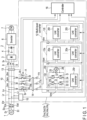
- an air conditioning apparatus 2 which is a load is connected to R-, S-, and T-phase power supply lines (first, second, and third power supply lines) Lr, Ls, and Lt of a three-phase AC power supply 1.
- the air conditioning apparatus 2 includes a rectifier circuit 3 that rectifies power supply voltages Er, Es, and Et of the power supply lines Lr, Ls, and Lt by a plurality of diodes in bridge connection, a DC capacitor 5 to which an output voltage of the rectifier circuit 3 is applied via a DC reactor 4, an inverter 6 to which a voltage of the DC capacitor 5 is converted into an AC voltage of a predetermined frequency and is output, a compressor motor 7 that is operated by the output of the inverter 6, and the like.
- a power conversion apparatus 10 is connected to the power supply lines Lr, Ls, and Lt to which the air conditioning apparatus 2 is connected, in parallel with the air conditioning apparatus 2.
- the power conversion apparatus 10 includes an initial charging circuit A, buffer reactors 11r, 11s, and 11t, clusters (first, second, and third clusters) 12r, 12s, and 12t having one-side ends connected to the power supply lines Lr, Ls, and Lt via the initial charging circuit A and the buffer reactors 11r, 11s, and 11t and having the other ends interconnected (star connection), a detection section (first detection section) 13 which is located on the air conditioning apparatus 2 side with respect to the connection position of the initial charging circuit A in the power supply lines Lr, Ls, and Lt to detect currents (load currents) Ir, Is, and It flowing to the power supply voltages Er, Es, and Et and the air conditioning apparatus 2, a detection section (second detection section) 14 which is arranged in current paths between the initial charging circuit A and the buffer reactors 11r, 11s, and 11t to detect currents Irm, Ism, and Itm flowing between the power supply lines Lr, Ls, and Lt and the clusters 12r, 12
- the above initial charging circuit A includes resistors Rr, Rs, and Rt inserted into current paths between the power lines Lr, Ls, and Lt and the buffer reactors 11r, 11s, and 11t, and switchgear Sr, Ss, and St connected in parallel to the resistors Rr, Rs, and Rt. and St.
- the switchgear Sr, Ss, and St is relay contacts or semiconductor switches whose opening and closing are controlled by the controller 16, forms current paths for charging the capacitor via the resistors Rr, Rs, and Rt by continuing the off state which has been made at the power-on of the three-phase AC power supply 1, and forms bypass current paths for the resistors Rr, Rs, and Rt by turning on after a predetermined time has elapsed after the power-on.
- the predetermined time is the time required for the capacitor 25 in each of unit converters 20r to 20t in the clusters 12r, 12s, and 12t to be sufficiently charged.
- the resistors Rr, Rs, and Rt may be replaced with a plurality of positive characteristic thermistors.
- the above cluster 12r connected to the power supply line Lr is a so-called multi-series converter cluster in which a plurality of unit converters (cells) 20r each selectively generating and outputting a plurality of levels of (multi-level) DC voltages are connected in series (cascade connection), and generates and outputs an AC voltage Vrm with a waveform similar to a sine wave to reduce harmonics by summing output voltages (cell output voltages) of the respective unit converters 20r.
- Each unit converter 20r includes a pair of output terminals, switch elements 21, 22, 23, and 24 each including a parasitic diode D, a capacitor (DC capacitor) 25 connected to the pair of output terminals via the switch elements 21 to 24, a voltage detection section 26 which detects a voltage (capacitor voltage) Vc of the capacitor 25 and notifies the controller 16 of the voltage, and the like, and generates and outputs DC voltages of a plurality of levels (positive, zero, and negative levels) by selective formation of a plurality of current paths caused by turning on and off (opening and closing) the switch elements 21 to 24.
- the switch elements 21 to 24 are semiconductor switch elements and, for example, MOSFETs or IGBTs are used as the switch elements.
- the above cluster 12s connected to the power supply line Ls is a so-called multi-series converter cluster in which a plurality of unit converters 20s each selectively generating and outputting a plurality of levels of DC voltages are connected in series, and generates and outputs an AC voltage Vsm with a waveform similar to a sine wave to reduce harmonics by summing output voltages (cell output voltages) of the respective unit converters 20s.
- a configuration of each unit converter 20s is the same as that of each unit converter 20r.
- the above cluster 12t connected to the power supply line Lt is a so-called multi-series converter cluster in which a plurality of unit converters 20t each selectively generating and outputting a plurality of levels of DC voltages are connected in series, and generates and outputs an AC voltage Vtm with a waveform similar to a sine wave to reduce harmonics by summing output voltages (cell output voltages) of the respective unit converters 20t.
- a configuration of each unit converter 20t is the same as that of each unit converter 20r.
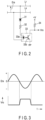
- the above detection section 15 detects the zero crossing points of the line voltages Ers, Est, and Etr and includes zero crossing point detection circuits of the configuration shown in FIG. 2 for three phases. Configurations of these zero crossing point detection circuits are the same as each other.
- the configuration of the zero crossing point detection circuit for the line voltage Ers is shown in FIG. 2 as a representative example.
- the zero crossing point detection circuit for the line voltage Ers adds the line voltage Ers of the power supply lines Lr and Ls to a photodiode 33a of a photocoupler 33 via a diode 31 and a resistor 32, adds a constant DC voltage V between a collector and an emitter of a phototransistor 33b of the photocoupler 33 via a resistor 34, and outputs a voltage Vro generated between the collector and emitter of the phototransistor 33b as a zero crossing point detection signal.
- the photodiode 33a repeatedly emitting and quenching light in response to changes in the line voltage Ers, and outputs the zero crossing point detection signal Vro of the waveform whose voltage changes between high and low levels at each zero crossing point of the line voltage Ers as shown in FIG. 3 by turning on and off the phototransistor 33b in accordance with the light emission and quenching.
- the point at which the zero crossing point detection signal Vro changes from a high level to a low level and changes from a low level to a high level is the zero crossing point.
- the zero crossing point detection circuit for the line voltage Est outputs a zero crossing point detection signal Vso
- the zero crossing point detection circuit for the line voltage Etr outputs a zero crossing point detection signal Vto.
- the controller 16 detects harmonic components of the load currents Ir, Is, and It detected in detection section 13 to make currents flowing to the power supply, i.e., currents (Ir+Irm), (Is+Ism), and (It+Itm) to be described below as close as possible to sine waves synchronized with the power supply voltages Er, Es, and Et, calculates compensation currents (compensation currents to be added to the load currents Ir, Is, and It) which need to flow to power supply lines Lr, Ls, and Lt to suppress the harmonic components, calculates the output voltages (AC voltages) Vrm, Vsm, and Vtm of the multi-level converter necessary to obtain the compensation currents, and controls switching of each of the unit converters 20r to 20t in the multi-level converter 12 to obtain the output voltages Vrm, Vsm, and Vtm.
- compensation currents compensation currents to be added to the load currents Ir, Is, and It
- the harmonic components included in the load currents Ir, Is, and It can be suppressed by supplying the AC voltages Vrm, Vsm, and Vtm from the multi-level converter 12 to the power supply lines Lr, Ls, and Lt.
- the power conversion apparatus 10 operates as a so-called active filter.
- the controller 16 controls (feedback control) the values of the above compensation currents such that the effective values of the currents Irm, Ism, and Itm flowing between the power supply lines Lr, Ls, and Lt and the multi-level converter 12 fall within a threshold value (predetermined upper limit).
- the currents Irm, Ism, and Itm are hereinafter referred to as the input currents to the multi-level converter 12.
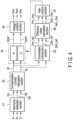
- the controller 16 includes as specific means for performing these controls, a harmonic detection section 41, a compensation current calculation section 42, a gain multiplication section 43, a voltage control section 44, a coordinate conversion section 45, an effective value calculation section 46, and a gain control section 47 as shown in FIG. 4 .
- the harmonic detection section 41 detects harmonic components Irh, Ish, and Ith of the load currents Ir, Is, and It detected by the detection section 13.
- the compensation current calculation section 42 calculates command values (referred to as compensation current command values) Id and Iq on rotary coordinate axes of compensation current (compensation to be added to the load currents Ir, Is, and It) which are to flow to the power supply lines Lr, Ls, and Lt to suppress the harmonic components Irh, Ish, and Ith detected by the harmonic detection section 41.
- the gain multiplication section 43 multiplies the compensation current command values Id and Iq calculated in the compensation current calculation section 42 by gain K, and outputs results of the multiplication as compensation current command values Idref and Iqref.
- the voltage control section 44 calculates the output voltages (AC voltages) Vrm, Vsm, and Vtm of the multi-level converter 12 required to generate the input currents Irm, Ism, and Itm following the compensation current command values Idref and Iqref output from the gain multiplication section 43.
- the controller 16 controls the output voltages of the unit converters 20r to 20t in the multilevel converter 12 such that the output voltages Vrm, Vsm, and Vtm calculated in the voltage control section 44 can be obtained by the multi-level converter 12.
- the coordinate conversion section 45 converts the compensation current command values Id and Iq calculated in the compensation current calculation section 42 into input current command values Irm_ref, Ism_ref, and Itm_ref on the stationary coordinate axes by coordinate conversion.
- the effective value calculation section 46 calculates effective values Irm_rms, Ism_rms, and Itm_rms of the current input currents Irm, Ism, and Itm to the multi-level converter 12, based on the input current command values Irm_ref, Ism_ref, and Itm_ref obtained in the coordinate conversion section 45.
- Examples of the line voltages Ers, Est, and Etr and the load currents Ir, Is, and It in a case where the power supply voltages Er, Es, and Et are in an unbalanced state are shown in FIG. 5 , and examples of accompanying changes in the effective values Irm_rms, Ism_rms, and Itm_rms of the input currents Irm, Ism, and Itm are shown in FIG. 6 .
- the load currents Ir, Is, and It become unbalanced. Since the multi-level converter 12 outputs the currents Irm, Ism, and Itm that compensate for the unbalanced load currents Ir, Is, and Itm, the currents may be concentrated in clusters of specific phases, and the effective value Ir_rms of the input current Irm may rise significantly and exceed the threshold value Im as shown in, for example, FIG. 6 , which may lead to the destruction of the switch elements 21 to 24 of the respective unit converters 20r in the cluster 12r and the decrease in life of the capacitor 25.
- the gain K to the compensation current command values Id and Iq for harmonic suppression is set to a value less than the usual "1" such that the effective value Irm_rms of the input current Irm can be suppressed below the threshold value Im.
- the ratio of the threshold value Im to the maximum value among the effective values Irm_rms, Ism_rms, and Itm_rms is set as the gain K. This setting allows the current indicating the maximum value among the effective values Irm_rms, Ism_rms, and Itm_rms to fall within the threshold value Im.
- the currents of the effective values that are not the maximum are controlled to lower values in accordance with the decrease of the gain K.
- Each of the effective values Irm_rms, Ism_rms, and Itm_rms is reduced by a uniform ratio (gain K).
- the compensation currents for harmonic suppression are reduced by the same ratio. The destruction of the switch elements 21 to 24 of the respective unit converters 20r in the cluster 12r and the decrease in life of the capacitor 25 can be thereby prevented.
- Vcr is an average value of the capacitor voltages Vc in the multi-level converter 12r
- Vcs is an average value of the capacitor voltage Vc in the multi-level converter 12s
- Vet is an average value of the capacitor voltages Vc in the multi-level converter 12t.
- the average capacitor voltage values Vcr and Vcs remain substantially the same, while the average capacitor voltage value Vct is lower than the average capacitor voltage values Vcr and Vcs. In other words, the average capacitor voltage values Vcr, Vcs, and Vet become unbalanced.
- the controller 16 obtains the line voltages Ers, Est, and Etr by the following computation using the zero crossing point signals Vro, Vso, and Vto obtained in the detection section 15, the average value Vcr of the capacitor voltages Vc detected in the voltage detection sections 26 of the respective unit converters 20r in the cluster 12r, the average value Vcs of the capacitor voltages Vc detected in the voltage detection sections 26 of the respective unit converters 20s in the cluster 12s, the average value Vcs of the capacitor voltages Vc detected in the voltage detection sections 26 of the respective unit converters 20t in the cluster 12t, number N of the unit converters 20r in the cluster 12r, number N of the unit converters 20s in the cluster 12s, and number N of the unit converters 20t in the cluster 12t.
- controller 16 calculates the unbalance rate by the following equation using the obtained line voltages Ers, Est, and Etr.
- Unbalance rate (Maximum value of differences between line voltages Ers, Est, and Etr and average voltage Eave)/(Average voltage Eave) ⁇ 100%
- the average voltage Eave is an average value of the line voltages Ers, Est, and Etr and is obtained as (Ers + Est + Etr) / 3.
- Eave-Ers, Eave-Est, and Eave-Est are expressed as a percentage, the value is the unbalance ratio.
- the controller 16 calculates the unbalance rate of the power supply voltages Er, Es, and Et (S1) and determines whether the calculated unbalance rate is less than a set value, for example, less than 10% (S2).
- the controller 16 continues the operation of the multi-level converter 12 to reduce harmonics by determining that the effective values Irm_rms, Ism_rms, and Itm_rms of the input currents Irm, Ism, and Itm can be suppressed below the threshold value Im by controlling the gain K (S3).
- the controller 16 stops the multi-level converter 12 to protect the multi-level converter 12 by determining that it is difficult to suppress the effective values Irm_rms, Ism_rms, and Itm_rms of the input currents Irm, Ism, and Itm below the threshold value Im.
Landscapes
- Engineering & Computer Science (AREA)
- Power Engineering (AREA)
- Inverter Devices (AREA)
- Rectifiers (AREA)
- Supply And Distribution Of Alternating Current (AREA)
- Power Conversion In General (AREA)
Description
- Embodiments described herein relate generally to a power conversion apparatus that is connected to each of power supply lines of a three-phase AC power supply to which a load is connected, in parallel with the load.
- A power conversion apparatus such as an active filter, connected to each power supply line of a three-phase AC power supply to which a load of an electric apparatus or the like is connected, in parallel with the load, to suppress harmonic components included in a current flowing in the load, is known (for example,
JP 5871832 B -
WO 2021/186524 A1 discloses a power conversion apparatus configured to connect to power supply lines of a three-phase AC power supply to which a load is connected, in parallel with the load, includes a multi-level converter and a controller. The multi-level converter includes clusters configured to connect to each of the power supply lines. The controller is configured to detect harmonic components of load currents flowing to the load, obtain compensation currents made to flow to each of the power supply lines to suppress the harmonic components of the load currents flowing to the load, and control output voltages of the clusters of the multi-level converter to obtain the compensation currents. -
CN 111 384 716 A discloses a seven-level static synchronous compensator based on an unbalanced power grid. - Minyuan Guan et al: "Modeling and Control of a Modular Multilevel Converter-Based HVDC System Under Unbalanced Grid Conditions", IEEE Transactions on Power Electronics, vol. 27, no. 12, pages 4858-4867, shows a zero-sequence current controller for modular multilevel converters in HVDC applications under unbalanced grid conditions.
- Huang H et al: "Active harmonic current elimination and reactive power compensation using modular multilevel cascaded converter", 2017 19th European Conference on Power Electronics and Applications (EPE'17 ECCE Europe), shows an application of modular multilevel cascaded converters for combined active harmonic current elimination and reactive power compensation in a power distribution line.
- When unbalance occurs in the voltage of the three-phase AC power supply, unbalance occurs in each phase current flowing between each power supply line and the power conversion apparatus. When unbalance occurs in each phase current flowing between each power supply line and the power conversion apparatus, the currents concentrate in the switch elements and capacitors of a specific phase in the power conversion apparatus, which may lead to the destruction of the switch elements and a decrease in the life of the capacitors.
-
-
FIG. 1 is a block diagram showing a power topology that could implement an embodiment of the present invention. -
FIG. 2 is a diagram showing a configuration of a zero crossing point detection circuit of a power supply voltage in the topology ofFIG. 1 . -
FIG. 3 is a chart showing a zero crossing point detection signal inFIG. 2 . -
FIG. 4 is a block diagram showing a configuration of main parts of a control unit to be used in the topology ofFIG. 1 . -
FIG. 5 is a chart showing waveforms of a line voltage and a load current in the topology ofFIG. 1 . -
FIG. 6 is a graph showing an example of the change in effective value of an input current in the topology oFIG. 1 . -
FIG. 7 is a graph showing an example of the change in each capacitor voltage during initial charging in the topology ofFIG. 1 . -
FIG. 8 is a flowchart illustrating control of a control unit in the topology ofFIG. 1 . - In general, a power conversion apparatus configured to connect to power supply lines of a three-phase AC power supply to which a load is connected, in parallel with the load, includes a multi-level converter and a controller. The multi-level converter includes clusters configured to connect to each of the power supply lines. The controller is configured to detect harmonic components of load currents flowing to the load, obtain compensation currents made to flow to each of the power supply lines to suppress the harmonic components of the load currents flowing to the load, and control output voltages of the clusters of the multi-level converter to obtain the compensation currents. The controller is configured to compare each of effective values of currents between the power supply lines and the clusters of the multi-level converter with a threshold value, and control values of the compensation currents such that the effective values of the currents fall within the threshold value.
- A detail description of the teachings of the present disclosure is made hereinafter with reference to the accompanying drawings.
- As shown in
FIG. 1 , for example, an air conditioning apparatus 2 which is a load is connected to R-, S-, and T-phase power supply lines (first, second, and third power supply lines) Lr, Ls, and Lt of a three-phaseAC power supply 1. The air conditioning apparatus 2 includes arectifier circuit 3 that rectifies power supply voltages Er, Es, and Et of the power supply lines Lr, Ls, and Lt by a plurality of diodes in bridge connection, a DC capacitor 5 to which an output voltage of therectifier circuit 3 is applied via aDC reactor 4, aninverter 6 to which a voltage of the DC capacitor 5 is converted into an AC voltage of a predetermined frequency and is output, acompressor motor 7 that is operated by the output of theinverter 6, and the like. - A
power conversion apparatus 10 is connected to the power supply lines Lr, Ls, and Lt to which the air conditioning apparatus 2 is connected, in parallel with the air conditioning apparatus 2. - The
power conversion apparatus 10 includes an initial charging circuit A,buffer reactors buffer reactors buffer reactors clusters detection section 15 which is connected to the power supply lines Lr, Ls, and Lt to detect the zero crossing point of line voltages Ers, Est, and Etr, and acontroller 16 which controls theclusters detection sections multi-level converter 12 is composed ofclusters controller 16 controls themulti-level converter 12. - The above initial charging circuit A includes resistors Rr, Rs, and Rt inserted into current paths between the power lines Lr, Ls, and Lt and the
buffer reactors controller 16, forms current paths for charging the capacitor via the resistors Rr, Rs, and Rt by continuing the off state which has been made at the power-on of the three-phaseAC power supply 1, and forms bypass current paths for the resistors Rr, Rs, and Rt by turning on after a predetermined time has elapsed after the power-on. The predetermined time is the time required for thecapacitor 25 in each ofunit converters 20r to 20t in theclusters - The
above cluster 12r connected to the power supply line Lr is a so-called multi-series converter cluster in which a plurality of unit converters (cells) 20r each selectively generating and outputting a plurality of levels of (multi-level) DC voltages are connected in series (cascade connection), and generates and outputs an AC voltage Vrm with a waveform similar to a sine wave to reduce harmonics by summing output voltages (cell output voltages) of therespective unit converters 20r. - Each
unit converter 20r includes a pair of output terminals,switch elements switch elements 21 to 24, avoltage detection section 26 which detects a voltage (capacitor voltage) Vc of thecapacitor 25 and notifies thecontroller 16 of the voltage, and the like, and generates and outputs DC voltages of a plurality of levels (positive, zero, and negative levels) by selective formation of a plurality of current paths caused by turning on and off (opening and closing) theswitch elements 21 to 24. Theswitch elements 21 to 24 are semiconductor switch elements and, for example, MOSFETs or IGBTs are used as the switch elements. - The
above cluster 12s connected to the power supply line Ls is a so-called multi-series converter cluster in which a plurality ofunit converters 20s each selectively generating and outputting a plurality of levels of DC voltages are connected in series, and generates and outputs an AC voltage Vsm with a waveform similar to a sine wave to reduce harmonics by summing output voltages (cell output voltages) of therespective unit converters 20s. A configuration of eachunit converter 20s is the same as that of eachunit converter 20r. - The
above cluster 12t connected to the power supply line Lt is a so-called multi-series converter cluster in which a plurality ofunit converters 20t each selectively generating and outputting a plurality of levels of DC voltages are connected in series, and generates and outputs an AC voltage Vtm with a waveform similar to a sine wave to reduce harmonics by summing output voltages (cell output voltages) of therespective unit converters 20t. A configuration of eachunit converter 20t is the same as that of eachunit converter 20r. - The
above detection section 15 detects the zero crossing points of the line voltages Ers, Est, and Etr and includes zero crossing point detection circuits of the configuration shown inFIG. 2 for three phases. Configurations of these zero crossing point detection circuits are the same as each other. The configuration of the zero crossing point detection circuit for the line voltage Ers is shown inFIG. 2 as a representative example. - The zero crossing point detection circuit for the line voltage Ers adds the line voltage Ers of the power supply lines Lr and Ls to a
photodiode 33a of a photocoupler 33 via adiode 31 and aresistor 32, adds a constant DC voltage V between a collector and an emitter of a phototransistor 33b of the photocoupler 33 via aresistor 34, and outputs a voltage Vro generated between the collector and emitter of the phototransistor 33b as a zero crossing point detection signal. In other words, thephotodiode 33a repeatedly emitting and quenching light in response to changes in the line voltage Ers, and outputs the zero crossing point detection signal Vro of the waveform whose voltage changes between high and low levels at each zero crossing point of the line voltage Ers as shown inFIG. 3 by turning on and off the phototransistor 33b in accordance with the light emission and quenching. - The point at which the zero crossing point detection signal Vro changes from a high level to a low level and changes from a low level to a high level is the zero crossing point. Similarly, the zero crossing point detection circuit for the line voltage Est outputs a zero crossing point detection signal Vso, and the zero crossing point detection circuit for the line voltage Etr outputs a zero crossing point detection signal Vto.
- The
controller 16 detects harmonic components of the load currents Ir, Is, and It detected indetection section 13 to make currents flowing to the power supply, i.e., currents (Ir+Irm), (Is+Ism), and (It+Itm) to be described below as close as possible to sine waves synchronized with the power supply voltages Er, Es, and Et, calculates compensation currents (compensation currents to be added to the load currents Ir, Is, and It) which need to flow to power supply lines Lr, Ls, and Lt to suppress the harmonic components, calculates the output voltages (AC voltages) Vrm, Vsm, and Vtm of the multi-level converter necessary to obtain the compensation currents, and controls switching of each of theunit converters 20r to 20t in themulti-level converter 12 to obtain the output voltages Vrm, Vsm, and Vtm. - The harmonic components included in the load currents Ir, Is, and It can be suppressed by supplying the AC voltages Vrm, Vsm, and Vtm from the
multi-level converter 12 to the power supply lines Lr, Ls, and Lt. In other words, thepower conversion apparatus 10 operates as a so-called active filter. - In particular, the
controller 16 controls (feedback control) the values of the above compensation currents such that the effective values of the currents Irm, Ism, and Itm flowing between the power supply lines Lr, Ls, and Lt and themulti-level converter 12 fall within a threshold value (predetermined upper limit). The currents Irm, Ism, and Itm are hereinafter referred to as the input currents to themulti-level converter 12. - The
controller 16 includes as specific means for performing these controls, aharmonic detection section 41, a compensationcurrent calculation section 42, again multiplication section 43, avoltage control section 44, acoordinate conversion section 45, an effectivevalue calculation section 46, and again control section 47 as shown inFIG. 4 . - The
harmonic detection section 41 detects harmonic components Irh, Ish, and Ith of the load currents Ir, Is, and It detected by thedetection section 13. The compensationcurrent calculation section 42 calculates command values (referred to as compensation current command values) Id and Iq on rotary coordinate axes of compensation current (compensation to be added to the load currents Ir, Is, and It) which are to flow to the power supply lines Lr, Ls, and Lt to suppress the harmonic components Irh, Ish, and Ith detected by theharmonic detection section 41. Thegain multiplication section 43 multiplies the compensation current command values Id and Iq calculated in the compensationcurrent calculation section 42 by gain K, and outputs results of the multiplication as compensation current command values Idref and Iqref. Thevoltage control section 44 calculates the output voltages (AC voltages) Vrm, Vsm, and Vtm of themulti-level converter 12 required to generate the input currents Irm, Ism, and Itm following the compensation current command values Idref and Iqref output from thegain multiplication section 43. - The
controller 16 controls the output voltages of theunit converters 20r to 20t in themultilevel converter 12 such that the output voltages Vrm, Vsm, and Vtm calculated in thevoltage control section 44 can be obtained by themulti-level converter 12. - The
coordinate conversion section 45 converts the compensation current command values Id and Iq calculated in the compensationcurrent calculation section 42 into input current command values Irm_ref, Ism_ref, and Itm_ref on the stationary coordinate axes by coordinate conversion. The effectivevalue calculation section 46 calculates effective values Irm_rms, Ism_rms, and Itm_rms of the current input currents Irm, Ism, and Itm to themulti-level converter 12, based on the input current command values Irm_ref, Ism_ref, and Itm_ref obtained in thecoordinate conversion section 45. - The
gain control section 47 compares the effective values Irm_rms, Ism_rms, and Itm_rms calculated in the effectivevalue calculation section 46 with a predetermined threshold value Im, and controls the gain K of themultiplication section 43 in accordance with results of the comparison. More specifically, thegain control section 47 sets the gain K to "1" when the effective values Irm_rms, Ism_rms, and Itm_rms are less than or equal to the threshold value Im (K = "1"). More specifically, if any of the effective values Irm_rms, Ism_rms, and Itm_rms is greater than the threshold value Im, thegain control section 47 sets a ratio of the threshold value Im to the maximum value among the effective values Irm_rms, Ism_rms, and Itm_rms (Im / maximum effective value) as the gain K (= less than "1"). - Examples of the line voltages Ers, Est, and Etr and the load currents Ir, Is, and It in a case where the power supply voltages Er, Es, and Et are in an unbalanced state are shown in
FIG. 5 , and examples of accompanying changes in the effective values Irm_rms, Ism_rms, and Itm_rms of the input currents Irm, Ism, and Itm are shown inFIG. 6 . - In other words, when the power supply voltages Er, Es, and Et are in an unbalanced state, the load currents Ir, Is, and It become unbalanced. Since the
multi-level converter 12 outputs the currents Irm, Ism, and Itm that compensate for the unbalanced load currents Ir, Is, and Itm, the currents may be concentrated in clusters of specific phases, and the effective value Ir_rms of the input current Irm may rise significantly and exceed the threshold value Im as shown in, for example,FIG. 6 , which may lead to the destruction of theswitch elements 21 to 24 of therespective unit converters 20r in thecluster 12r and the decrease in life of thecapacitor 25. - Therefore, when the effective value Irm_rms of the input current Irm reaches the threshold value Im, the gain K to the compensation current command values Id and Iq for harmonic suppression is set to a value less than the usual "1" such that the effective value Irm_rms of the input current Irm can be suppressed below the threshold value Im. The ratio of the threshold value Im to the maximum value among the effective values Irm_rms, Ism_rms, and Itm_rms (Im / maximum effective value) is set as the gain K. This setting allows the current indicating the maximum value among the effective values Irm_rms, Ism_rms, and Itm_rms to fall within the threshold value Im.
- The currents of the effective values that are not the maximum are controlled to lower values in accordance with the decrease of the gain K. Each of the effective values Irm_rms, Ism_rms, and Itm_rms is reduced by a uniform ratio (gain K). The compensation currents for harmonic suppression are reduced by the same ratio. The destruction of the
switch elements 21 to 24 of therespective unit converters 20r in thecluster 12r and the decrease in life of thecapacitor 25 can be thereby prevented. - Changes in the capacitor voltages Vc at initial charging of each of the
capacitors 25 in theclusters FIG. 7 . Vcr is an average value of the capacitor voltages Vc in themulti-level converter 12r, Vcs is an average value of the capacitor voltage Vc in themulti-level converter 12s, and Vet is an average value of the capacitor voltages Vc in themulti-level converter 12t. In this example, the average capacitor voltage values Vcr and Vcs remain substantially the same, while the average capacitor voltage value Vct is lower than the average capacitor voltage values Vcr and Vcs. In other words, the average capacitor voltage values Vcr, Vcs, and Vet become unbalanced. - The
controller 16 obtains the line voltages Ers, Est, and Etr by the following computation using the zero crossing point signals Vro, Vso, and Vto obtained in thedetection section 15, the average value Vcr of the capacitor voltages Vc detected in thevoltage detection sections 26 of therespective unit converters 20r in thecluster 12r, the average value Vcs of the capacitor voltages Vc detected in thevoltage detection sections 26 of therespective unit converters 20s in thecluster 12s, the average value Vcs of the capacitor voltages Vc detected in thevoltage detection sections 26 of therespective unit converters 20t in thecluster 12t, number N of theunit converters 20r in thecluster 12r, number N of theunit converters 20s in thecluster 12s, and number N of theunit converters 20t in the cluster 12t. √2 is a square root of "2".


- Then,
controller 16 calculates the unbalance rate by the following equation using the obtained line voltages Ers, Est, and Etr.Unbalance rate = (Maximum value of differences between line voltages Ers, Est, and Etr and average voltage Eave)/(Average voltage Eave)×100% - The average voltage Eave is an average value of the line voltages Ers, Est, and Etr and is obtained as (Ers + Est + Etr) / 3. When a value obtained by dividing the largest value among differences (absolute values) between this average voltage Eave and the line voltages Ers, Est, Etr, i.e., Eave-Ers, Eave-Est, and Eave-Est by the average voltage Eave is expressed as a percentage, the value is the unbalance ratio.
- As shown in the flowchart of
FIG. 8 , thecontroller 16 calculates the unbalance rate of the power supply voltages Er, Es, and Et (S1) and determines whether the calculated unbalance rate is less than a set value, for example, less than 10% (S2). - If the unbalance rate is less than 10% (YES in S2), the
controller 16 continues the operation of themulti-level converter 12 to reduce harmonics by determining that the effective values Irm_rms, Ism_rms, and Itm_rms of the input currents Irm, Ism, and Itm can be suppressed below the threshold value Im by controlling the gain K (S3). - If the unbalance rate is 10% or more (NO in S2), the
controller 16 stops themulti-level converter 12 to protect themulti-level converter 12 by determining that it is difficult to suppress the effective values Irm_rms, Ism_rms, and Itm_rms of the input currents Irm, Ism, and Itm below the threshold value Im. - In the foregoing, a power conversion apparatus in which the other ends of the
clusters clusters - While certain embodiments have been described, these embodiments have been presented by way of example only, and are not intended to limit the scope of the inventions. Indeed, various omissions, substitutions and changes may be made, the resulting arrangements being part of the present invention as long as they do not contradict the appended claims (i.e. they comprise at least all features of at least one of the appended claims).
Claims (6)
- A power conversion apparatus configured to connect to power supply lines (Lr, Ls, and Lt) of a three-phase AC power supply (1) to which a load (2) is connected, in parallel with the load (2), the power conversion apparatus comprising:a multi-level converter (12) including clusters (12r, 12s, and 12t) configured to connect to each of the power supply lines (Lr, Ls, and Lt); anda controller (16) configured to detect harmonic components (Irh, Ish, and Ith) of load currents (Ir, Is, and It) flowing to the load (2), obtain compensation currents made to flow to each of the power supply lines (Lr, Ls, and Lt) to suppress the harmonic components (Irh, Ish, and Ith) of the load currents (Ir, Is, and It) flowing to the load (2), and control output voltages (Vrm, Vsm, and Vtm) of the clusters (12r, 12s, 12t) of the multi-level converter (12) to obtain the compensation currents,characterized in thatthe controller (16) is configured to compare each of effective values (Irm_rms, Ism_rms, and Itm_rms) of currents (Irm, Ism, and Itm) between the power supply lines (Lr, Ls, and Lt) and the clusters (12r, 12s, and 12t) of the multi-level converter (12) with a threshold value (Im), and control values of the compensation currents such that the effective values (Irm_rms, Ism_rms, and Itm_rms) of the currents (Irm, Ism, and Itm) fall within the threshold value (Im).
- The apparatus according to claim 1, further comprising:a first detection section (13) configured to detect the load currents (Ir, Is, and It) flowing to the load (2); anda second detection section (14) configured to detect the currents (Irm, Ism, and Itm) between the power supply lines (Lr, Ls, and Lt) and the clusters (12r, 12s, and 12t) of the multi-level converter (12),and whereinthe controller (16) includes:a harmonic detection section (41) configured to detect the harmonic components (Irh, Ish, and Ith) of the load current (Ir, Is, and It) detected by the first detection section (13);a compensation current calculation section (42) configured to calculate command values (Id and Iq) of the compensation currents made to flow to each of the power supply lines (Lr, Ls, and Lt) to suppress the harmonic components (Irh, Ish, and Ith) detected in the harmonic detection section (41);a gain multiplication section (43) configured to multiply the command values (Id and Iq) of the compensation currents calculated by the compensation current calculation section (42) by a gain (K), and output results of the multiplication as compensation current command values (Idref and Iqref);a voltage control section (44) configured to control the output voltages (Vrm, Vsm, and Vtm) of the clusters (12r, 12s, and 12t) of the multi-level converter (12) necessary to obtain the compensation currents following the compensation current command values (Idref and Iqref) output from the gain multiplication section (43);an effective value calculation section (46) configured to calculate the effective values (Irm_rms, Ism_rms, and Itm_rms) of the currents (Irm, Ism, and Itm) between the power supply lines (Lr, Ls, and Lt) and the clusters (12r, 12s, and 12t) of the multi-level converter (12); anda gain control section (47) configured to compare each of the effective values (Irm_rms, Ism_rms, and Itm_rms) calculated by the effective value calculation section (46) with the threshold value (Im) and control the gain (K) of the gain multiplication section (43) in accordance with a result of the comparison.
- The apparatus according to claim 2, wherein
when the effective values (Irm_rms, Ism_rms, and Itm_rms) calculated by the effective value calculation section (46) is less than or equal to the threshold value (Im), the gain control section (47) sets the gain (K) to "1", and when any of the effective values (Irm_rms, Ism_rms, and Itm_rms) calculated by the effective value calculation section (46) is larger than the threshold value (Im), the gain control section (47) sets a ratio of the threshold value (Im) to a maximum value of the effective values(Irm_rms, Ism_rms, and Itm_rms) as the gain (K). - The apparatus according to claim 1, wherein
each of the clusters (12r, 12s, and 12t) is a multi-series converter cluster configured by connecting a plurality of unit converters (20r to 20t) in series. - The apparatus according to any one of claims 1 to 4, wherein
the controller (16) configured to calculate an unbalance rate of voltages (Er, Es, and Et) of the three-phase AC power supply (1), operate the multi-level converter (12) when the calculated unbalance rate is less than the set value, and stop the multi-level converter (12) when the calculated unbalance rate is larger than or equal to the set value. - The apparatus according to claim 2, further comprising:a coordinate conversion section (45) configured to convert the command values (Id and Iq) of compensation currents calculated in the compensation current calculation section (42) into current command values (Irm_ref, Ism_ref, and Itm_ref) on the stationary coordinate axes by coordinate conversion;
whereinthe effective value calculation section (46) calculates the effective values (Irm_rms, Ism_rms, and Itm_rms) of the currents (Irm, Ism, and Itm) between the power supply lines (Lr, Ls, and Lt) and the clusters (12r, 12s, and 12t) of the multi-level converter (12), based on the current command values (Irm_ref, Ism_ref, and Itm_ref) obtained in the coordinate conversion section (45).
Applications Claiming Priority (1)
| Application Number | Priority Date | Filing Date | Title |
|---|---|---|---|
| JP2021155818A JP7693489B2 (en) | 2021-09-24 | 2021-09-24 | Power Conversion Equipment |
Publications (2)
| Publication Number | Publication Date |
|---|---|
| EP4156440A1 EP4156440A1 (en) | 2023-03-29 |
| EP4156440B1 true EP4156440B1 (en) | 2024-09-04 |
Family
ID=83398368
Family Applications (1)
| Application Number | Title | Priority Date | Filing Date |
|---|---|---|---|
| EP22196586.6A Active EP4156440B1 (en) | 2021-09-24 | 2022-09-20 | Power conversion apparatus |
Country Status (3)
| Country | Link |
|---|---|
| EP (1) | EP4156440B1 (en) |
| JP (1) | JP7693489B2 (en) |
| CN (1) | CN115864797A (en) |
Family Cites Families (6)
| Publication number | Priority date | Publication date | Assignee | Title |
|---|---|---|---|---|
| JPH10145973A (en) * | 1996-11-08 | 1998-05-29 | Toyo Electric Mfg Co Ltd | Control method of active power filter |
| US6075350A (en) * | 1998-04-24 | 2000-06-13 | Lockheed Martin Energy Research Corporation | Power line conditioner using cascade multilevel inverters for voltage regulation, reactive power correction, and harmonic filtering |
| JP5871832B2 (en) | 2013-01-29 | 2016-03-01 | 株式会社指月電機製作所 | Active filter |
| JP6453108B2 (en) | 2015-02-25 | 2019-01-16 | 日立ジョンソンコントロールズ空調株式会社 | Power conversion device, active filter, and motor drive device |
| WO2021186524A1 (en) * | 2020-03-17 | 2021-09-23 | 三菱電機株式会社 | Power conversion device |
| CN111384716B (en) * | 2020-03-31 | 2023-04-11 | 国网黑龙江省电力有限公司哈尔滨供电公司 | Seven-level static synchronous compensator based on unbalanced power grid |
-
2021
- 2021-09-24 JP JP2021155818A patent/JP7693489B2/en active Active
-
2022
- 2022-09-20 EP EP22196586.6A patent/EP4156440B1/en active Active
- 2022-09-21 CN CN202211150662.8A patent/CN115864797A/en active Pending
Also Published As
| Publication number | Publication date |
|---|---|
| JP2023046956A (en) | 2023-04-05 |
| CN115864797A (en) | 2023-03-28 |
| EP4156440A1 (en) | 2023-03-29 |
| JP7693489B2 (en) | 2025-06-17 |
Similar Documents
| Publication | Publication Date | Title |
|---|---|---|
| EP3148067B1 (en) | Direct-current power transmission power conversion device and direct-current power transmission power conversion method | |
| US10326355B2 (en) | Power conversion device | |
| US9379632B2 (en) | Power converter and method for controlling same | |
| JP6147363B2 (en) | Power converter | |
| US11601064B2 (en) | Power conversion device having a frequency of a first control signal higher than a frequency of a second control signal | |
| US12562653B2 (en) | Power conversion device | |
| US10840813B2 (en) | Power conversion system | |
| JP6526924B1 (en) | Power converter | |
| US12273045B2 (en) | Power conversion device with individual cell and arm balancing | |
| US20230163694A1 (en) | Power conversion device | |
| US20260018991A1 (en) | Power conversion device and offshore wind power generation system | |
| EP0607011B1 (en) | Control device for system interconnection inverter | |
| JP2001047894A (en) | AC feeding device and control method of AC feeding device | |
| Lee et al. | Open-switch fault diagnosis and tolerant control methods for a Vienna rectifier using bi-directional switches | |
| WO2007108427A1 (en) | Voltage regulator | |
| US20240022183A1 (en) | Power Conversion Device | |
| EP4156440A1 (en) | Power conversion apparatus | |
| US20220263430A1 (en) | Power conversion device | |
| US20240171072A1 (en) | Dc/dc converter device for a wind turbine, an electric drive system, or an industrial dc supply network and operating method | |
| Machado et al. | Fault-tolerant Utility Interface power converter for low-voltage microgrids | |
| Srinivas et al. | Finite control-set model predictive control for leakage current suppression in grid interfaced solar PV system | |
| US20250274054A1 (en) | Power conversion device | |
| JP7631174B2 (en) | POWER CONVERSION DEVICE, CONTROL METHOD FOR POWER CONVERSION DEVICE, AND PROGRAM | |
| Mangunkusumo et al. | Power Quality Control Strategy of MMC Inverter as Solid State Transformer on Distribution Network | |
| Hao et al. | Multi Busbar Sub-module Modular Multilevel STATCOM with Partially Rated Energy Storage Configured in Sub-stacks |
Legal Events
| Date | Code | Title | Description |
|---|---|---|---|
| PUAI | Public reference made under article 153(3) epc to a published international application that has entered the european phase |
Free format text: ORIGINAL CODE: 0009012 |
|
| STAA | Information on the status of an ep patent application or granted ep patent |
Free format text: STATUS: REQUEST FOR EXAMINATION WAS MADE |
|
| 17P | Request for examination filed |
Effective date: 20220920 |
|
| AK | Designated contracting states |
Kind code of ref document: A1 Designated state(s): AL AT BE BG CH CY CZ DE DK EE ES FI FR GB GR HR HU IE IS IT LI LT LU LV MC MK MT NL NO PL PT RO RS SE SI SK SM TR |
|
| RBV | Designated contracting states (corrected) |
Designated state(s): AL AT BE BG CH CY CZ DE DK EE ES FI FR GB GR HR HU IE IS IT LI LT LU LV MC MK MT NL NO PL PT RO RS SE SI SK SM TR |
|
| GRAP | Despatch of communication of intention to grant a patent |
Free format text: ORIGINAL CODE: EPIDOSNIGR1 |
|
| STAA | Information on the status of an ep patent application or granted ep patent |
Free format text: STATUS: GRANT OF PATENT IS INTENDED |
|
| RIC1 | Information provided on ipc code assigned before grant |
Ipc: H02M 1/12 20060101ALI20240228BHEP Ipc: H02M 7/483 20070101ALI20240228BHEP Ipc: H02J 3/01 20060101ALI20240228BHEP Ipc: H02J 3/18 20060101AFI20240228BHEP |
|
| INTG | Intention to grant announced |
Effective date: 20240402 |
|
| GRAS | Grant fee paid |
Free format text: ORIGINAL CODE: EPIDOSNIGR3 |
|
| GRAA | (expected) grant |
Free format text: ORIGINAL CODE: 0009210 |
|
| STAA | Information on the status of an ep patent application or granted ep patent |
Free format text: STATUS: THE PATENT HAS BEEN GRANTED |
|
| AK | Designated contracting states |
Kind code of ref document: B1 Designated state(s): AL AT BE BG CH CY CZ DE DK EE ES FI FR GB GR HR HU IE IS IT LI LT LU LV MC MK MT NL NO PL PT RO RS SE SI SK SM TR |
|
| RAP3 | Party data changed (applicant data changed or rights of an application transferred) |
Owner name: CARRIER JAPAN CORPORATION |
|
| REG | Reference to a national code |
Ref country code: GB Ref legal event code: FG4D |
|
| REG | Reference to a national code |
Ref country code: CH Ref legal event code: EP |
|
| REG | Reference to a national code |
Ref country code: IE Ref legal event code: FG4D |
|
| REG | Reference to a national code |
Ref country code: DE Ref legal event code: R096 Ref document number: 602022005848 Country of ref document: DE |
|
| REG | Reference to a national code |
Ref country code: LT Ref legal event code: MG9D |
|
| REG | Reference to a national code |
Ref country code: NL Ref legal event code: MP Effective date: 20240904 |
|
| PG25 | Lapsed in a contracting state [announced via postgrant information from national office to epo] |
Ref country code: NO Free format text: LAPSE BECAUSE OF FAILURE TO SUBMIT A TRANSLATION OF THE DESCRIPTION OR TO PAY THE FEE WITHIN THE PRESCRIBED TIME-LIMIT Effective date: 20241204 |
|
| PG25 | Lapsed in a contracting state [announced via postgrant information from national office to epo] |
Ref country code: GR Free format text: LAPSE BECAUSE OF FAILURE TO SUBMIT A TRANSLATION OF THE DESCRIPTION OR TO PAY THE FEE WITHIN THE PRESCRIBED TIME-LIMIT Effective date: 20241205 Ref country code: FI Free format text: LAPSE BECAUSE OF FAILURE TO SUBMIT A TRANSLATION OF THE DESCRIPTION OR TO PAY THE FEE WITHIN THE PRESCRIBED TIME-LIMIT Effective date: 20240904 |
|
| PG25 | Lapsed in a contracting state [announced via postgrant information from national office to epo] |
Ref country code: BG Free format text: LAPSE BECAUSE OF FAILURE TO SUBMIT A TRANSLATION OF THE DESCRIPTION OR TO PAY THE FEE WITHIN THE PRESCRIBED TIME-LIMIT Effective date: 20240904 |
|
| PG25 | Lapsed in a contracting state [announced via postgrant information from national office to epo] |
Ref country code: LV Free format text: LAPSE BECAUSE OF FAILURE TO SUBMIT A TRANSLATION OF THE DESCRIPTION OR TO PAY THE FEE WITHIN THE PRESCRIBED TIME-LIMIT Effective date: 20240904 |
|
| PG25 | Lapsed in a contracting state [announced via postgrant information from national office to epo] |
Ref country code: HR Free format text: LAPSE BECAUSE OF FAILURE TO SUBMIT A TRANSLATION OF THE DESCRIPTION OR TO PAY THE FEE WITHIN THE PRESCRIBED TIME-LIMIT Effective date: 20240904 |
|
| PG25 | Lapsed in a contracting state [announced via postgrant information from national office to epo] |
Ref country code: ES Free format text: LAPSE BECAUSE OF FAILURE TO SUBMIT A TRANSLATION OF THE DESCRIPTION OR TO PAY THE FEE WITHIN THE PRESCRIBED TIME-LIMIT Effective date: 20240904 Ref country code: RS Free format text: LAPSE BECAUSE OF FAILURE TO SUBMIT A TRANSLATION OF THE DESCRIPTION OR TO PAY THE FEE WITHIN THE PRESCRIBED TIME-LIMIT Effective date: 20241204 |
|
| PG25 | Lapsed in a contracting state [announced via postgrant information from national office to epo] |
Ref country code: RS Free format text: LAPSE BECAUSE OF FAILURE TO SUBMIT A TRANSLATION OF THE DESCRIPTION OR TO PAY THE FEE WITHIN THE PRESCRIBED TIME-LIMIT Effective date: 20241204 Ref country code: NO Free format text: LAPSE BECAUSE OF FAILURE TO SUBMIT A TRANSLATION OF THE DESCRIPTION OR TO PAY THE FEE WITHIN THE PRESCRIBED TIME-LIMIT Effective date: 20241204 Ref country code: LV Free format text: LAPSE BECAUSE OF FAILURE TO SUBMIT A TRANSLATION OF THE DESCRIPTION OR TO PAY THE FEE WITHIN THE PRESCRIBED TIME-LIMIT Effective date: 20240904 Ref country code: HR Free format text: LAPSE BECAUSE OF FAILURE TO SUBMIT A TRANSLATION OF THE DESCRIPTION OR TO PAY THE FEE WITHIN THE PRESCRIBED TIME-LIMIT Effective date: 20240904 Ref country code: GR Free format text: LAPSE BECAUSE OF FAILURE TO SUBMIT A TRANSLATION OF THE DESCRIPTION OR TO PAY THE FEE WITHIN THE PRESCRIBED TIME-LIMIT Effective date: 20241205 Ref country code: FI Free format text: LAPSE BECAUSE OF FAILURE TO SUBMIT A TRANSLATION OF THE DESCRIPTION OR TO PAY THE FEE WITHIN THE PRESCRIBED TIME-LIMIT Effective date: 20240904 Ref country code: ES Free format text: LAPSE BECAUSE OF FAILURE TO SUBMIT A TRANSLATION OF THE DESCRIPTION OR TO PAY THE FEE WITHIN THE PRESCRIBED TIME-LIMIT Effective date: 20240904 Ref country code: BG Free format text: LAPSE BECAUSE OF FAILURE TO SUBMIT A TRANSLATION OF THE DESCRIPTION OR TO PAY THE FEE WITHIN THE PRESCRIBED TIME-LIMIT Effective date: 20240904 |
|
| REG | Reference to a national code |
Ref country code: AT Ref legal event code: MK05 Ref document number: 1721426 Country of ref document: AT Kind code of ref document: T Effective date: 20240904 |
|
| PG25 | Lapsed in a contracting state [announced via postgrant information from national office to epo] |
Ref country code: NL Free format text: LAPSE BECAUSE OF FAILURE TO SUBMIT A TRANSLATION OF THE DESCRIPTION OR TO PAY THE FEE WITHIN THE PRESCRIBED TIME-LIMIT Effective date: 20240904 |
|
| PG25 | Lapsed in a contracting state [announced via postgrant information from national office to epo] |
Ref country code: IS Free format text: LAPSE BECAUSE OF FAILURE TO SUBMIT A TRANSLATION OF THE DESCRIPTION OR TO PAY THE FEE WITHIN THE PRESCRIBED TIME-LIMIT Effective date: 20250104 Ref country code: PT Free format text: LAPSE BECAUSE OF FAILURE TO SUBMIT A TRANSLATION OF THE DESCRIPTION OR TO PAY THE FEE WITHIN THE PRESCRIBED TIME-LIMIT Effective date: 20250106 |
|
| PG25 | Lapsed in a contracting state [announced via postgrant information from national office to epo] |
Ref country code: SM Free format text: LAPSE BECAUSE OF FAILURE TO SUBMIT A TRANSLATION OF THE DESCRIPTION OR TO PAY THE FEE WITHIN THE PRESCRIBED TIME-LIMIT Effective date: 20240904 Ref country code: RO Free format text: LAPSE BECAUSE OF FAILURE TO SUBMIT A TRANSLATION OF THE DESCRIPTION OR TO PAY THE FEE WITHIN THE PRESCRIBED TIME-LIMIT Effective date: 20240904 |
|
| PG25 | Lapsed in a contracting state [announced via postgrant information from national office to epo] |
Ref country code: EE Free format text: LAPSE BECAUSE OF FAILURE TO SUBMIT A TRANSLATION OF THE DESCRIPTION OR TO PAY THE FEE WITHIN THE PRESCRIBED TIME-LIMIT Effective date: 20240904 Ref country code: AT Free format text: LAPSE BECAUSE OF FAILURE TO SUBMIT A TRANSLATION OF THE DESCRIPTION OR TO PAY THE FEE WITHIN THE PRESCRIBED TIME-LIMIT Effective date: 20240904 |
|
| PG25 | Lapsed in a contracting state [announced via postgrant information from national office to epo] |
Ref country code: PL Free format text: LAPSE BECAUSE OF FAILURE TO SUBMIT A TRANSLATION OF THE DESCRIPTION OR TO PAY THE FEE WITHIN THE PRESCRIBED TIME-LIMIT Effective date: 20240904 Ref country code: CZ Free format text: LAPSE BECAUSE OF FAILURE TO SUBMIT A TRANSLATION OF THE DESCRIPTION OR TO PAY THE FEE WITHIN THE PRESCRIBED TIME-LIMIT Effective date: 20240904 |
|
| PG25 | Lapsed in a contracting state [announced via postgrant information from national office to epo] |
Ref country code: SK Free format text: LAPSE BECAUSE OF FAILURE TO SUBMIT A TRANSLATION OF THE DESCRIPTION OR TO PAY THE FEE WITHIN THE PRESCRIBED TIME-LIMIT Effective date: 20240904 Ref country code: IT Free format text: LAPSE BECAUSE OF FAILURE TO SUBMIT A TRANSLATION OF THE DESCRIPTION OR TO PAY THE FEE WITHIN THE PRESCRIBED TIME-LIMIT Effective date: 20240904 |
|
| PG25 | Lapsed in a contracting state [announced via postgrant information from national office to epo] |
Ref country code: LU Free format text: LAPSE BECAUSE OF NON-PAYMENT OF DUE FEES Effective date: 20240920 |
|
| REG | Reference to a national code |
Ref country code: DE Ref legal event code: R097 Ref document number: 602022005848 Country of ref document: DE |
|
| PG25 | Lapsed in a contracting state [announced via postgrant information from national office to epo] |
Ref country code: MC Free format text: LAPSE BECAUSE OF FAILURE TO SUBMIT A TRANSLATION OF THE DESCRIPTION OR TO PAY THE FEE WITHIN THE PRESCRIBED TIME-LIMIT Effective date: 20240904 |
|
| PG25 | Lapsed in a contracting state [announced via postgrant information from national office to epo] |
Ref country code: DK Free format text: LAPSE BECAUSE OF FAILURE TO SUBMIT A TRANSLATION OF THE DESCRIPTION OR TO PAY THE FEE WITHIN THE PRESCRIBED TIME-LIMIT Effective date: 20240904 |
|
| REG | Reference to a national code |
Ref country code: BE Ref legal event code: MM Effective date: 20240930 |
|
| PLBE | No opposition filed within time limit |
Free format text: ORIGINAL CODE: 0009261 |
|
| STAA | Information on the status of an ep patent application or granted ep patent |
Free format text: STATUS: NO OPPOSITION FILED WITHIN TIME LIMIT |
|
| PG25 | Lapsed in a contracting state [announced via postgrant information from national office to epo] |
Ref country code: BE Free format text: LAPSE BECAUSE OF NON-PAYMENT OF DUE FEES Effective date: 20240930 |
|
| PG25 | Lapsed in a contracting state [announced via postgrant information from national office to epo] |
Ref country code: IE Free format text: LAPSE BECAUSE OF NON-PAYMENT OF DUE FEES Effective date: 20240920 |
|
| 26N | No opposition filed |
Effective date: 20250605 |
|
| PG25 | Lapsed in a contracting state [announced via postgrant information from national office to epo] |
Ref country code: SE Free format text: LAPSE BECAUSE OF FAILURE TO SUBMIT A TRANSLATION OF THE DESCRIPTION OR TO PAY THE FEE WITHIN THE PRESCRIBED TIME-LIMIT Effective date: 20240904 |
|
| PGFP | Annual fee paid to national office [announced via postgrant information from national office to epo] |
Ref country code: DE Payment date: 20250820 Year of fee payment: 4 |
|
| PGFP | Annual fee paid to national office [announced via postgrant information from national office to epo] |
Ref country code: FR Payment date: 20250820 Year of fee payment: 4 |
|
| PG25 | Lapsed in a contracting state [announced via postgrant information from national office to epo] |
Ref country code: CY Free format text: LAPSE BECAUSE OF FAILURE TO SUBMIT A TRANSLATION OF THE DESCRIPTION OR TO PAY THE FEE WITHIN THE PRESCRIBED TIME-LIMIT; INVALID AB INITIO Effective date: 20220920 |
|
| PG25 | Lapsed in a contracting state [announced via postgrant information from national office to epo] |
Ref country code: HU Free format text: LAPSE BECAUSE OF FAILURE TO SUBMIT A TRANSLATION OF THE DESCRIPTION OR TO PAY THE FEE WITHIN THE PRESCRIBED TIME-LIMIT; INVALID AB INITIO Effective date: 20220920 |
|
| REG | Reference to a national code |
Ref country code: CH Ref legal event code: H13 Free format text: ST27 STATUS EVENT CODE: U-0-0-H10-H13 (AS PROVIDED BY THE NATIONAL OFFICE) Effective date: 20260504 |