EP4156377A1 - Anaerobic cracking method for power battery - Google Patents
Anaerobic cracking method for power battery Download PDFInfo
- Publication number
- EP4156377A1 EP4156377A1 EP21821476.5A EP21821476A EP4156377A1 EP 4156377 A1 EP4156377 A1 EP 4156377A1 EP 21821476 A EP21821476 A EP 21821476A EP 4156377 A1 EP4156377 A1 EP 4156377A1
- Authority
- EP
- European Patent Office
- Prior art keywords
- solution
- hours
- cracking method
- separator
- cobalt
- Prior art date
- Legal status (The legal status is an assumption and is not a legal conclusion. Google has not performed a legal analysis and makes no representation as to the accuracy of the status listed.)
- Granted
Links
Images
Classifications
-
- C—CHEMISTRY; METALLURGY
- C10—PETROLEUM, GAS OR COKE INDUSTRIES; TECHNICAL GASES CONTAINING CARBON MONOXIDE; FUELS; LUBRICANTS; PEAT
- C10G—CRACKING HYDROCARBON OILS; PRODUCTION OF LIQUID HYDROCARBON MIXTURES, e.g. BY DESTRUCTIVE HYDROGENATION, OLIGOMERISATION, POLYMERISATION; RECOVERY OF HYDROCARBON OILS FROM OIL-SHALE, OIL-SAND, OR GASES; REFINING MIXTURES MAINLY CONSISTING OF HYDROCARBONS; REFORMING OF NAPHTHA; MINERAL WAXES
- C10G1/00—Production of liquid hydrocarbon mixtures from oil-shale, oil-sand, or non-melting solid carbonaceous or similar materials, e.g. wood, coal
-
- C—CHEMISTRY; METALLURGY
- C22—METALLURGY; FERROUS OR NON-FERROUS ALLOYS; TREATMENT OF ALLOYS OR NON-FERROUS METALS
- C22B—PRODUCTION AND REFINING OF METALS; PRETREATMENT OF RAW MATERIALS
- C22B7/00—Working up raw materials other than ores, e.g. scrap, to produce non-ferrous metals and compounds thereof; Methods of a general interest or applied to the winning of more than two metals
- C22B7/005—Separation by a physical processing technique only, e.g. by mechanical breaking
-
- B—PERFORMING OPERATIONS; TRANSPORTING
- B01—PHYSICAL OR CHEMICAL PROCESSES OR APPARATUS IN GENERAL
- B01J—CHEMICAL OR PHYSICAL PROCESSES, e.g. CATALYSIS OR COLLOID CHEMISTRY; THEIR RELEVANT APPARATUS
- B01J23/00—Catalysts comprising metals or metal oxides or hydroxides, not provided for in group B01J21/00
- B01J23/70—Catalysts comprising metals or metal oxides or hydroxides, not provided for in group B01J21/00 of the iron group metals or copper
- B01J23/76—Catalysts comprising metals or metal oxides or hydroxides, not provided for in group B01J21/00 of the iron group metals or copper combined with metals, oxides or hydroxides provided for in groups B01J23/02 - B01J23/36
- B01J23/84—Catalysts comprising metals or metal oxides or hydroxides, not provided for in group B01J21/00 of the iron group metals or copper combined with metals, oxides or hydroxides provided for in groups B01J23/02 - B01J23/36 with arsenic, antimony, bismuth, vanadium, niobium, tantalum, polonium, chromium, molybdenum, tungsten, manganese, technetium or rhenium
- B01J23/889—Manganese, technetium or rhenium
- B01J23/8892—Manganese
-
- B—PERFORMING OPERATIONS; TRANSPORTING
- B01—PHYSICAL OR CHEMICAL PROCESSES OR APPARATUS IN GENERAL
- B01J—CHEMICAL OR PHYSICAL PROCESSES, e.g. CATALYSIS OR COLLOID CHEMISTRY; THEIR RELEVANT APPARATUS
- B01J37/00—Processes, in general, for preparing catalysts; Processes, in general, for activation of catalysts
- B01J37/009—Preparation by separation, e.g. by filtration, decantation, screening
-
- B—PERFORMING OPERATIONS; TRANSPORTING
- B01—PHYSICAL OR CHEMICAL PROCESSES OR APPARATUS IN GENERAL
- B01J—CHEMICAL OR PHYSICAL PROCESSES, e.g. CATALYSIS OR COLLOID CHEMISTRY; THEIR RELEVANT APPARATUS
- B01J37/00—Processes, in general, for preparing catalysts; Processes, in general, for activation of catalysts
- B01J37/02—Impregnation, coating or precipitation
- B01J37/03—Precipitation; Co-precipitation
- B01J37/031—Precipitation
- B01J37/033—Using Hydrolysis
-
- B—PERFORMING OPERATIONS; TRANSPORTING
- B01—PHYSICAL OR CHEMICAL PROCESSES OR APPARATUS IN GENERAL
- B01J—CHEMICAL OR PHYSICAL PROCESSES, e.g. CATALYSIS OR COLLOID CHEMISTRY; THEIR RELEVANT APPARATUS
- B01J37/00—Processes, in general, for preparing catalysts; Processes, in general, for activation of catalysts
- B01J37/04—Mixing
-
- B—PERFORMING OPERATIONS; TRANSPORTING
- B01—PHYSICAL OR CHEMICAL PROCESSES OR APPARATUS IN GENERAL
- B01J—CHEMICAL OR PHYSICAL PROCESSES, e.g. CATALYSIS OR COLLOID CHEMISTRY; THEIR RELEVANT APPARATUS
- B01J37/00—Processes, in general, for preparing catalysts; Processes, in general, for activation of catalysts
- B01J37/08—Heat treatment
- B01J37/082—Decomposition and pyrolysis
- B01J37/084—Decomposition of carbon-containing compounds into carbon
-
- B—PERFORMING OPERATIONS; TRANSPORTING
- B01—PHYSICAL OR CHEMICAL PROCESSES OR APPARATUS IN GENERAL
- B01J—CHEMICAL OR PHYSICAL PROCESSES, e.g. CATALYSIS OR COLLOID CHEMISTRY; THEIR RELEVANT APPARATUS
- B01J37/00—Processes, in general, for preparing catalysts; Processes, in general, for activation of catalysts
- B01J37/08—Heat treatment
- B01J37/082—Decomposition and pyrolysis
- B01J37/088—Decomposition of a metal salt
-
- B—PERFORMING OPERATIONS; TRANSPORTING
- B01—PHYSICAL OR CHEMICAL PROCESSES OR APPARATUS IN GENERAL
- B01J—CHEMICAL OR PHYSICAL PROCESSES, e.g. CATALYSIS OR COLLOID CHEMISTRY; THEIR RELEVANT APPARATUS
- B01J37/00—Processes, in general, for preparing catalysts; Processes, in general, for activation of catalysts
- B01J37/08—Heat treatment
- B01J37/10—Heat treatment in the presence of water, e.g. steam
-
- B—PERFORMING OPERATIONS; TRANSPORTING
- B29—WORKING OF PLASTICS; WORKING OF SUBSTANCES IN A PLASTIC STATE IN GENERAL
- B29B—PREPARATION OR PRETREATMENT OF THE MATERIAL TO BE SHAPED; MAKING GRANULES OR PREFORMS; RECOVERY OF PLASTICS OR OTHER CONSTITUENTS OF WASTE MATERIAL CONTAINING PLASTICS
- B29B17/00—Recovery of plastics or other constituents of waste material containing plastics
- B29B17/02—Separating plastics from other materials
-
- B—PERFORMING OPERATIONS; TRANSPORTING
- B29—WORKING OF PLASTICS; WORKING OF SUBSTANCES IN A PLASTIC STATE IN GENERAL
- B29B—PREPARATION OR PRETREATMENT OF THE MATERIAL TO BE SHAPED; MAKING GRANULES OR PREFORMS; RECOVERY OF PLASTICS OR OTHER CONSTITUENTS OF WASTE MATERIAL CONTAINING PLASTICS
- B29B17/00—Recovery of plastics or other constituents of waste material containing plastics
- B29B17/04—Disintegrating plastics, e.g. by milling
- B29B17/0404—Disintegrating plastics, e.g. by milling to powder
-
- C—CHEMISTRY; METALLURGY
- C10—PETROLEUM, GAS OR COKE INDUSTRIES; TECHNICAL GASES CONTAINING CARBON MONOXIDE; FUELS; LUBRICANTS; PEAT
- C10B—DESTRUCTIVE DISTILLATION OF CARBONACEOUS MATERIALS FOR PRODUCTION OF GAS, COKE, TAR, OR SIMILAR MATERIALS
- C10B53/00—Destructive distillation, specially adapted for particular solid raw materials or solid raw materials in special form
-
- C—CHEMISTRY; METALLURGY
- C22—METALLURGY; FERROUS OR NON-FERROUS ALLOYS; TREATMENT OF ALLOYS OR NON-FERROUS METALS
- C22B—PRODUCTION AND REFINING OF METALS; PRETREATMENT OF RAW MATERIALS
- C22B23/00—Obtaining nickel or cobalt
- C22B23/04—Obtaining nickel or cobalt by wet processes
-
- C—CHEMISTRY; METALLURGY
- C22—METALLURGY; FERROUS OR NON-FERROUS ALLOYS; TREATMENT OF ALLOYS OR NON-FERROUS METALS
- C22B—PRODUCTION AND REFINING OF METALS; PRETREATMENT OF RAW MATERIALS
- C22B23/00—Obtaining nickel or cobalt
- C22B23/04—Obtaining nickel or cobalt by wet processes
- C22B23/0407—Leaching processes
- C22B23/0415—Leaching processes with acids or salt solutions except ammonium salts solutions
- C22B23/0423—Halogenated acids or salts thereof
-
- C—CHEMISTRY; METALLURGY
- C22—METALLURGY; FERROUS OR NON-FERROUS ALLOYS; TREATMENT OF ALLOYS OR NON-FERROUS METALS
- C22B—PRODUCTION AND REFINING OF METALS; PRETREATMENT OF RAW MATERIALS
- C22B23/00—Obtaining nickel or cobalt
- C22B23/04—Obtaining nickel or cobalt by wet processes
- C22B23/0407—Leaching processes
- C22B23/0415—Leaching processes with acids or salt solutions except ammonium salts solutions
- C22B23/0438—Nitric acids or salts thereof
-
- C—CHEMISTRY; METALLURGY
- C22—METALLURGY; FERROUS OR NON-FERROUS ALLOYS; TREATMENT OF ALLOYS OR NON-FERROUS METALS
- C22B—PRODUCTION AND REFINING OF METALS; PRETREATMENT OF RAW MATERIALS
- C22B23/00—Obtaining nickel or cobalt
- C22B23/04—Obtaining nickel or cobalt by wet processes
- C22B23/0453—Treatment or purification of solutions, e.g. obtained by leaching
- C22B23/0461—Treatment or purification of solutions, e.g. obtained by leaching by chemical methods
-
- C—CHEMISTRY; METALLURGY
- C22—METALLURGY; FERROUS OR NON-FERROUS ALLOYS; TREATMENT OF ALLOYS OR NON-FERROUS METALS
- C22B—PRODUCTION AND REFINING OF METALS; PRETREATMENT OF RAW MATERIALS
- C22B47/00—Obtaining manganese
-
- C—CHEMISTRY; METALLURGY
- C22—METALLURGY; FERROUS OR NON-FERROUS ALLOYS; TREATMENT OF ALLOYS OR NON-FERROUS METALS
- C22B—PRODUCTION AND REFINING OF METALS; PRETREATMENT OF RAW MATERIALS
- C22B47/00—Obtaining manganese
- C22B47/0018—Treating ocean floor nodules
- C22B47/0045—Treating ocean floor nodules by wet processes
- C22B47/0054—Treating ocean floor nodules by wet processes leaching processes
- C22B47/0063—Treating ocean floor nodules by wet processes leaching processes with acids or salt solutions
-
- C—CHEMISTRY; METALLURGY
- C22—METALLURGY; FERROUS OR NON-FERROUS ALLOYS; TREATMENT OF ALLOYS OR NON-FERROUS METALS
- C22B—PRODUCTION AND REFINING OF METALS; PRETREATMENT OF RAW MATERIALS
- C22B47/00—Obtaining manganese
- C22B47/0018—Treating ocean floor nodules
- C22B47/0045—Treating ocean floor nodules by wet processes
- C22B47/0081—Treatment or purification of solutions, e.g. obtained by leaching
-
- C—CHEMISTRY; METALLURGY
- C22—METALLURGY; FERROUS OR NON-FERROUS ALLOYS; TREATMENT OF ALLOYS OR NON-FERROUS METALS
- C22B—PRODUCTION AND REFINING OF METALS; PRETREATMENT OF RAW MATERIALS
- C22B7/00—Working up raw materials other than ores, e.g. scrap, to produce non-ferrous metals and compounds thereof; Methods of a general interest or applied to the winning of more than two metals
- C22B7/006—Wet processes
-
- C—CHEMISTRY; METALLURGY
- C22—METALLURGY; FERROUS OR NON-FERROUS ALLOYS; TREATMENT OF ALLOYS OR NON-FERROUS METALS
- C22B—PRODUCTION AND REFINING OF METALS; PRETREATMENT OF RAW MATERIALS
- C22B7/00—Working up raw materials other than ores, e.g. scrap, to produce non-ferrous metals and compounds thereof; Methods of a general interest or applied to the winning of more than two metals
- C22B7/006—Wet processes
- C22B7/007—Wet processes by acid leaching
-
- C—CHEMISTRY; METALLURGY
- C22—METALLURGY; FERROUS OR NON-FERROUS ALLOYS; TREATMENT OF ALLOYS OR NON-FERROUS METALS
- C22B—PRODUCTION AND REFINING OF METALS; PRETREATMENT OF RAW MATERIALS
- C22B7/00—Working up raw materials other than ores, e.g. scrap, to produce non-ferrous metals and compounds thereof; Methods of a general interest or applied to the winning of more than two metals
- C22B7/006—Wet processes
- C22B7/008—Wet processes by an alkaline or ammoniacal leaching
-
- H—ELECTRICITY
- H01—ELECTRIC ELEMENTS
- H01M—PROCESSES OR MEANS, e.g. BATTERIES, FOR THE DIRECT CONVERSION OF CHEMICAL ENERGY INTO ELECTRICAL ENERGY
- H01M10/00—Secondary cells; Manufacture thereof
- H01M10/05—Accumulators with non-aqueous electrolyte
- H01M10/052—Li-accumulators
-
- H—ELECTRICITY
- H01—ELECTRIC ELEMENTS
- H01M—PROCESSES OR MEANS, e.g. BATTERIES, FOR THE DIRECT CONVERSION OF CHEMICAL ENERGY INTO ELECTRICAL ENERGY
- H01M10/00—Secondary cells; Manufacture thereof
- H01M10/54—Reclaiming serviceable parts of waste accumulators
-
- H—ELECTRICITY
- H01—ELECTRIC ELEMENTS
- H01M—PROCESSES OR MEANS, e.g. BATTERIES, FOR THE DIRECT CONVERSION OF CHEMICAL ENERGY INTO ELECTRICAL ENERGY
- H01M6/00—Primary cells; Manufacture thereof
- H01M6/52—Reclaiming serviceable parts of waste cells or batteries, e.g. recycling
-
- B—PERFORMING OPERATIONS; TRANSPORTING
- B29—WORKING OF PLASTICS; WORKING OF SUBSTANCES IN A PLASTIC STATE IN GENERAL
- B29B—PREPARATION OR PRETREATMENT OF THE MATERIAL TO BE SHAPED; MAKING GRANULES OR PREFORMS; RECOVERY OF PLASTICS OR OTHER CONSTITUENTS OF WASTE MATERIAL CONTAINING PLASTICS
- B29B17/00—Recovery of plastics or other constituents of waste material containing plastics
- B29B17/04—Disintegrating plastics, e.g. by milling
- B29B2017/0424—Specific disintegrating techniques; devices therefor
- B29B2017/0468—Crushing, i.e. disintegrating into small particles
-
- B—PERFORMING OPERATIONS; TRANSPORTING
- B29—WORKING OF PLASTICS; WORKING OF SUBSTANCES IN A PLASTIC STATE IN GENERAL
- B29B—PREPARATION OR PRETREATMENT OF THE MATERIAL TO BE SHAPED; MAKING GRANULES OR PREFORMS; RECOVERY OF PLASTICS OR OTHER CONSTITUENTS OF WASTE MATERIAL CONTAINING PLASTICS
- B29B17/00—Recovery of plastics or other constituents of waste material containing plastics
- B29B17/04—Disintegrating plastics, e.g. by milling
- B29B2017/0424—Specific disintegrating techniques; devices therefor
- B29B2017/0484—Grinding tools, roller mills or disc mills
-
- C—CHEMISTRY; METALLURGY
- C10—PETROLEUM, GAS OR COKE INDUSTRIES; TECHNICAL GASES CONTAINING CARBON MONOXIDE; FUELS; LUBRICANTS; PEAT
- C10G—CRACKING HYDROCARBON OILS; PRODUCTION OF LIQUID HYDROCARBON MIXTURES, e.g. BY DESTRUCTIVE HYDROGENATION, OLIGOMERISATION, POLYMERISATION; RECOVERY OF HYDROCARBON OILS FROM OIL-SHALE, OIL-SAND, OR GASES; REFINING MIXTURES MAINLY CONSISTING OF HYDROCARBONS; REFORMING OF NAPHTHA; MINERAL WAXES
- C10G2300/00—Aspects relating to hydrocarbon processing covered by groups C10G1/00 - C10G99/00
- C10G2300/10—Feedstock materials
- C10G2300/1003—Waste materials
-
- H—ELECTRICITY
- H01—ELECTRIC ELEMENTS
- H01M—PROCESSES OR MEANS, e.g. BATTERIES, FOR THE DIRECT CONVERSION OF CHEMICAL ENERGY INTO ELECTRICAL ENERGY
- H01M2220/00—Batteries for particular applications
- H01M2220/20—Batteries in motive systems, e.g. vehicle, ship, plane
-
- Y—GENERAL TAGGING OF NEW TECHNOLOGICAL DEVELOPMENTS; GENERAL TAGGING OF CROSS-SECTIONAL TECHNOLOGIES SPANNING OVER SEVERAL SECTIONS OF THE IPC; TECHNICAL SUBJECTS COVERED BY FORMER USPC CROSS-REFERENCE ART COLLECTIONS [XRACs] AND DIGESTS
- Y02—TECHNOLOGIES OR APPLICATIONS FOR MITIGATION OR ADAPTATION AGAINST CLIMATE CHANGE
- Y02E—REDUCTION OF GREENHOUSE GAS [GHG] EMISSIONS, RELATED TO ENERGY GENERATION, TRANSMISSION OR DISTRIBUTION
- Y02E60/00—Enabling technologies; Technologies with a potential or indirect contribution to GHG emissions mitigation
- Y02E60/10—Energy storage using batteries
-
- Y—GENERAL TAGGING OF NEW TECHNOLOGICAL DEVELOPMENTS; GENERAL TAGGING OF CROSS-SECTIONAL TECHNOLOGIES SPANNING OVER SEVERAL SECTIONS OF THE IPC; TECHNICAL SUBJECTS COVERED BY FORMER USPC CROSS-REFERENCE ART COLLECTIONS [XRACs] AND DIGESTS
- Y02—TECHNOLOGIES OR APPLICATIONS FOR MITIGATION OR ADAPTATION AGAINST CLIMATE CHANGE
- Y02P—CLIMATE CHANGE MITIGATION TECHNOLOGIES IN THE PRODUCTION OR PROCESSING OF GOODS
- Y02P10/00—Technologies related to metal processing
- Y02P10/20—Recycling
-
- Y—GENERAL TAGGING OF NEW TECHNOLOGICAL DEVELOPMENTS; GENERAL TAGGING OF CROSS-SECTIONAL TECHNOLOGIES SPANNING OVER SEVERAL SECTIONS OF THE IPC; TECHNICAL SUBJECTS COVERED BY FORMER USPC CROSS-REFERENCE ART COLLECTIONS [XRACs] AND DIGESTS
- Y02—TECHNOLOGIES OR APPLICATIONS FOR MITIGATION OR ADAPTATION AGAINST CLIMATE CHANGE
- Y02W—CLIMATE CHANGE MITIGATION TECHNOLOGIES RELATED TO WASTEWATER TREATMENT OR WASTE MANAGEMENT
- Y02W30/00—Technologies for solid waste management
- Y02W30/50—Reuse, recycling or recovery technologies
- Y02W30/84—Recycling of batteries or fuel cells
Definitions
- the present invention relates to the technical field of lithium ion batteries, and more particularly, to an anaerobic cracking method for a power battery.
- the traditional cracking of organic polymer materials is to preheat waste plastics to a molten state, and remove HCl generated during the preheating process with lime, such as "Waste Plastics Cracking Refining Process and Equipment” ( CN201610156147.9 ).
- this traditional recycling method cannot effectively recycle a plastic separator in the lithium ion battery, and the other parts of the battery are not fully recycled, resulting in waste of resources, and this technology is relatively backward.
- the object of the present invention is to provide an anaerobic cracking method for a power battery.
- a waste separator in the lithium battery is degraded by anaerobic catalytic cracking, which realizes efficient degradation, and the products are C1-C4 and C5-C10 small molecule organic matters with industrial utilization values.
- the present invention employs the following technical solutions.
- An anaerobic cracking method for a power battery includes the following steps of:
- the pyrolyzing in step (2) is carried out at a temperature of 400°C to 600°Cin a vacuum environment, and lasts for 2 hours to 8 hours.
- the extracting solution in step (3) is one of a mixed solution of nitric acid and oxidant or hydrochloric acid.
- the oxidant is at least one of hydrogen peroxide, potassium peroxide, sodium hypochlorite or potassium hypochlorite.
- a mass ratio of the mixed solution to the hydrochloric acid and the water in the extracting solution is (1 to 3): (1 to 3): 1.
- a mass ratio of the electrode powder to the extracting solution in step (3) is 1: 1 to 3.
- contents of the nickel, the cobalt and the manganese are measured before the filtrate adjusting process in step (3).
- one of a dimethylglyoxime gravimetric method, a potentiometric titration method or an EDTA titration method is used as a titration method for determining the contents of the nickel, the cobalt and the manganese.
- the nickel solution, the cobalt solution and the manganese solution in step (3) are at least one of nitrates, hydrochlorides or sulfates of nickel, cobalt and manganese.
- a molar ratio of the nickel to the cobalt and the manganese in the solution A in step (3) is 1: (0.5 to 3): (0.5 to 3).
- a total concentration of the three elements including nickel, cobalt and manganese in the solution A in step (3) ranges from 2 mol/L to 6 mol/L.
- a volume ratio of the solution A to the ammonia water in step (3) is 1: (3 to 7).
- a concentration of the ammonia water is ranges from 0.2 mol/L to 0.8 mol/L.
- the alkali liquor in step (3) is NaOH; and a concentration of the NaOH ranges from 2 mol/L to 6 mol/L.
- the hydrothermal reaction in step (4) is carried out at a temperature of 100°C to 150°C, and lasts for 2 hours to 6 hours.
- the drying in step (4) is carried out at a temperature of 60°C to 80°C, and lasts for 4 hours to 24 hours.
- the roasting in step (4) is carried out at a temperature of 450°C to 500°Cin a nitrogen atmosphere, and lasts for 1 hour to 2 hours.
- a mass ratio of the separator to the solvent in step (5) is 1: (0.4 to 0.8).
- the solvent in step (5) is amyl acetate.
- the infiltrating in step (5) is carried out at a temperature of 70°C to 80°C, and lasts for 12 hours to 24 hours.
- the vacuum treatment in step (5) is carried out at a temperature of 80°C to 120°C, and lasts for 30 minutes to 120 minutes.
- a mass ratio of the powder to the catalyst in step (6) is 1: (200 to 240).
- the reaction in step (6) is carried out at a temperature of 400°C to 700°C, and lasts for 4 hours to 8 hours.
- the C1-C4 and C5-C10 small molecule organic matters in step (6) are saturated or unsaturated hydrocarbons with a carbon chain of 1 carbon to 10 carbons.
- the C1-C4 and C5-C10 small molecule organic matters are gaseous hydrocarbons such as methane, ethane, ethylene, propylene and butene or liquid hydrocarbons such as pentane, pentene, ethane and hexene.
- the catalyst after the reaction is pyrolyzed, extracted with an extracting solution, and recycled.
- the extracting solution is one of a mixed solution of nitric acid and oxidant or hydrochloric acid.
- the oxidant is at least one of hydrogen peroxide, potassium peroxide, sodium hypochlorite or potassium hypochlorite.
- a mass ratio of the mixed solution to the hydrochloric acid and the water in the extracting solution is (1 to 3): (1 to 3): 1.
- the raw materials, reagents or devices used in the following embodiments can be obtained from conventional commercial sources or by existing known methods.
- An anaerobic cracking recovery and sorting process for a lithium battery included the following steps of:
- the products obtained by carrying out anaerobic cracking according to Embodiment 2 and Comparative Example 1 were detected by gas chromatography respectively.
- the yield results are shown in FIG. 2 . It can be seen from FIG. 2 that the yield of C1-C10 micromolecule products in Comparative Example 1 is lower, while the yield of macromolecule products above C11 is higher. On the contrary, in Example 2, the yield of C1-C4 and C5-C10 micromolecule products is higher, while the yield of macromolecular products is lower.
- the gas chromatography detection results are shown in FIG. 3 . Thus it is indicated that the anaerobic cracking effect of Embodiment 2 is better than that of Comparative Example 1, and the products are small molecule organic matters and have industrial utilization values.
- the simply recovered separator in Comparative Example 1 is a mixture of various high-molecular polymers, which may be damaged and has low recovery value.
- the separator of the present invention after degradation may be used as combustible gas to serve as an energy source on one hand, and may serve as an industrial raw material on the other hand.
Landscapes
- Chemical & Material Sciences (AREA)
- Engineering & Computer Science (AREA)
- Organic Chemistry (AREA)
- Materials Engineering (AREA)
- Chemical Kinetics & Catalysis (AREA)
- Manufacturing & Machinery (AREA)
- Mechanical Engineering (AREA)
- Metallurgy (AREA)
- General Chemical & Material Sciences (AREA)
- Life Sciences & Earth Sciences (AREA)
- Electrochemistry (AREA)
- Environmental & Geological Engineering (AREA)
- General Life Sciences & Earth Sciences (AREA)
- Oil, Petroleum & Natural Gas (AREA)
- Geology (AREA)
- Physics & Mathematics (AREA)
- Thermal Sciences (AREA)
- Wood Science & Technology (AREA)
- Ocean & Marine Engineering (AREA)
- Oceanography (AREA)
- Sustainable Development (AREA)
- Processing Of Solid Wastes (AREA)
- Secondary Cells (AREA)
- Manufacture And Refinement Of Metals (AREA)
Abstract
Description
- The present invention relates to the technical field of lithium ion batteries, and more particularly, to an anaerobic cracking method for a power battery.
- Nowadays, with the huge growth of decommissioned power batteries, large-scale full-component recycling of the decommissioned power batteries is extremely urgent. However, the harmless treatment of three typical organic matters in the decommissioned power batteries has always affected the efficiency of full-component metal recycling. Currently, the cleaner production and secondary environmental protection in the recycling industry are seriously affected all over the world, especially the traditional incineration and pyrolysis methods are difficult to meet the environmental standards of cleaner production and ultra-low emission, which is a common key problem in the battery recycling industry.
- In recent years, China's new energy vehicles have developed rapidly. The annual output of the new energy vehicles will exceed two million by 2020, and the cumulative production and sales volume will exceed five million. With the increase of daily use times and service life periods of the vehicles, various properties of the power batteries of the new energy vehicles are declining day by day. According to the internationally general battery specifications, in order to ensure the daily driving safety of the vehicles, when the properties of a power battery pack decay to 80% of that of the original power battery, the power battery pack has to be decommissioned and replaced. However, the decommissioned batteries should be recycled to realize their values better.
- There are many organic matters in the decommissioned power batteries. With the increase of the number of the decommissioned power batteries, the organic matters in the decommissioned power batteries are not properly disposed and utilized to the maximum value, resulting in irreversible environmental pollution. As for the traditional incineration and pyrolysis, waste heat of incineration may be utilized in traditional incineration technologies to generate electricity, but improper treatment of tail gas after incineration will cause great pollution to air and soil. Both the tail gas and soot after incineration contain toxic substances, which need special treatment before being discharged, resulting in high treatment cost and high investment cost. Ordinary pyrolysis does not carry out gradient control on temperature, and valuable substances produced in the pyrolysis process of organic matters cannot be classified and recovered. Meanwhile, because temperature control cannot be carried out according to the temperature properties of the organic matters, pyrolysis time is increased and energy consumption is increased, which is not conducive to cost saving.
- The traditional cracking of organic polymer materials is to preheat waste plastics to a molten state, and remove HCl generated during the preheating process with lime, such as "Waste Plastics Cracking Refining Process and Equipment" (
CN201610156147.9 - The object of the present invention is to provide an anaerobic cracking method for a power battery. According to the method, a waste separator in the lithium battery is degraded by anaerobic catalytic cracking, which realizes efficient degradation, and the products are C1-C4 and C5-C10 small molecule organic matters with industrial utilization values.
- To implement the foregoing object, the present invention employs the following technical solutions.
- An anaerobic cracking method for a power battery includes the following steps of:
- (1) disassembling a waste power battery to obtain a battery cell and a metal housing respectively;
- (2) taking out a separator in the battery cell and washing for later use, and pyrolyzing the remaining battery cell to obtain electrode powder;
- (3) extracting nickel, cobalt and manganese elements in the electrode powder by using an extracting solution, filtering, taking out the filtrate, adjusting the filtrate by using a nickel solution, a cobalt solution and a manganese solution to obtain a solution A, dropwise adding the solution A into ammonia water for stirring, adding alkali liquor, and stirring to obtain a solution B;
- (4) enabling the solution B to be subjected to a hydrothermal reaction, filtering, baking and roasting the solution B to obtain a catalyst Ni2+ 1-x-yCo2+ xMn2+ yO;
- (5) infiltrating the separator in step (2) with a solvent, carrying out vacuum treatment on the separator, and then crushing and grinding the separator to obtain powder; and
- (6) mixing the powder with the catalyst in step (4) for reaction to obtain C1-C4 and C5-C10 small molecule organic matters; the catalyst in step (4) having a chemical formula of Ni2+ 1-x-yCo2+ xMn2+ yO, wherein 0.25≤x<0.45, and 0.25≤y<0.45.
- Preferably, the pyrolyzing in step (2) is carried out at a temperature of 400°C to 600°Cin a vacuum environment, and lasts for 2 hours to 8 hours.
- Preferably, the extracting solution in step (3) is one of a mixed solution of nitric acid and oxidant or hydrochloric acid.
- More preferably, the oxidant is at least one of hydrogen peroxide, potassium peroxide, sodium hypochlorite or potassium hypochlorite.
- More preferably, a mass ratio of the mixed solution to the hydrochloric acid and the water in the extracting solution is (1 to 3): (1 to 3): 1.
- Preferably, a mass ratio of the electrode powder to the extracting solution in step (3) is 1: 1 to 3.
- Preferably, contents of the nickel, the cobalt and the manganese are measured before the filtrate adjusting process in step (3).
- More preferably, one of a dimethylglyoxime gravimetric method, a potentiometric titration method or an EDTA titration method is used as a titration method for determining the contents of the nickel, the cobalt and the manganese.
- Preferably, the nickel solution, the cobalt solution and the manganese solution in step (3) are at least one of nitrates, hydrochlorides or sulfates of nickel, cobalt and manganese.
- Preferably, a molar ratio of the nickel to the cobalt and the manganese in the solution A in step (3) is 1: (0.5 to 3): (0.5 to 3).
- Preferably, a total concentration of the three elements including nickel, cobalt and manganese in the solution A in step (3) ranges from 2 mol/L to 6 mol/L.
- Preferably, a volume ratio of the solution A to the ammonia water in step (3) is 1: (3 to 7).
- Preferably, a concentration of the ammonia water is ranges from 0.2 mol/L to 0.8 mol/L.
- Preferably, the alkali liquor in step (3) is NaOH; and a concentration of the NaOH ranges from 2 mol/L to 6 mol/L.
- Preferably, the hydrothermal reaction in step (4) is carried out at a temperature of 100°C to 150°C, and lasts for 2 hours to 6 hours.
- Preferably, the drying in step (4) is carried out at a temperature of 60°C to 80°C, and lasts for 4 hours to 24 hours.
- Preferably, the roasting in step (4) is carried out at a temperature of 450°C to 500°Cin a nitrogen atmosphere, and lasts for 1 hour to 2 hours.
- Preferably, a mass ratio of the separator to the solvent in step (5) is 1: (0.4 to 0.8).
- Preferably, the solvent in step (5) is amyl acetate.
- Preferably, the infiltrating in step (5) is carried out at a temperature of 70°C to 80°C, and lasts for 12 hours to 24 hours.
- Preferably, the vacuum treatment in step (5) is carried out at a temperature of 80°C to 120°C, and lasts for 30 minutes to 120 minutes.
- Preferably, a mass ratio of the powder to the catalyst in step (6) is 1: (200 to 240).
- Preferably, the reaction in step (6) is carried out at a temperature of 400°C to 700°C, and lasts for 4 hours to 8 hours.
- Preferably, the C1-C4 and C5-C10 small molecule organic matters in step (6) are saturated or unsaturated hydrocarbons with a carbon chain of 1 carbon to 10 carbons.
- More preferably, the C1-C4 and C5-C10 small molecule organic matters are gaseous hydrocarbons such as methane, ethane, ethylene, propylene and butene or liquid hydrocarbons such as pentane, pentene, ethane and hexene.
- Preferably, after the reaction in step (3), the catalyst after the reaction is pyrolyzed, extracted with an extracting solution, and recycled.
- More preferably, the extracting solution is one of a mixed solution of nitric acid and oxidant or hydrochloric acid.
- More preferably, the oxidant is at least one of hydrogen peroxide, potassium peroxide, sodium hypochlorite or potassium hypochlorite.
- More preferably, a mass ratio of the mixed solution to the hydrochloric acid and the water in the extracting solution is (1 to 3): (1 to 3): 1.
-
- 1. According to the method, the waste separator in the lithium battery is degraded by anaerobic catalytic cracking, which realizes efficient degradation, and the products were small molecule organic matters and have industrial utilization values. In addition, the environmental pollution caused by the separator of the waste lithium battery were effectively avoided, and only nitrogen was consumed in the catalytic degradation process, which does not cause environmental pollution. A simply recovered separator may be a mixture of various high-molecular polymers, which may be damaged and has low recovery value. However, the separator of the present invention after degradation may be used as combustible gas to serve as an energy source on one hand, and may serve as an industrial raw material on the other hand.
- 2. Amyl acetate is used as the solvent in the method of the present invention, which destroys the mechanical strength of a linear polymer and increases the brittleness of the polymer by swelling, so that the polymer can be easily crushed and ground into a powder state with smaller granularity. This makes the reactants better contact with the catalyst, so that the catalytic effect is better. Moreover, the binding force between molecules can be destroyed by swelling, so that the molecules are easier to be activated by catalyst adsorption.
- 3. In the present invention, the catalyst is prepared by using the cathode materials of the waste battery as the raw material, and then the catalyst is used to catalyze the degradation of the separator, and the catalyst can still be recycled for catalysis again.
-
-
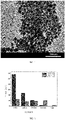
FIG. 1 is an SEM graph of a catalyst prepared inEmbodiment 2; -
FIG. 2 is a comparative graph of yields of small molecule organic matters prepared inEmbodiment 2 and Comparative Example 1; and -
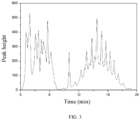
FIG. 3 is a gas chromatographic detection graph of the small molecule organic matters prepared inEmbodiment 2. - In order to make the technical solutions of the present invention clearer to those skilled in the art, the following embodiments are listed for explanation. It should be noted that the following embodiments do not limit the scope of protection claimed by the present invention.
- Unless otherwise specified, the raw materials, reagents or devices used in the following embodiments can be obtained from conventional commercial sources or by existing known methods.
- An anaerobic cracking method for a power battery according to this embodiment included the following steps of:
- (1) discharging and disassembling a waste power battery in turn to obtain a battery cell and a metal housing respectively;
- (2) taking out a separator in the battery cell and washing with deionized water until no attachments are visible to naked eyes, and pyrolyzing the remaining electric cell for 4 hours at 500°C under a vacuum atmosphere to obtain electrode powder;
- (3) extracting nickel, cobalt and manganese elements in the electrode powder by using an extracting solution, (a molar ratio of water to hydrochloric acid and hydrogen peroxide was 1: 1: 1) according to a solid-liquid ratio of 1: 3, directly recovering a current collector, filtering and removing filter residues, and respectively measuring contents of the nickel, the cobalt and the manganese in the filtrate by a dimethylglyoxime gravimetric method, a potentiometric titration method and an EDTA titration method, adjusting a molar ratio of the nickel to the cobalt and the manganese in 10 mL of filtrate to 1: 0.5: 0.5 with a nickel solution, a cobalt solution and a manganese solution (all with a concentration of 4 mol/L) respectively to obtain a solution A (a total concentration of the nickel, the cobalt and the manganese was 2 mol/L), and dropping the solution A into ammonia water with a concentration of 0.2 mol/L at a volume ratio of 1: 3 and stirring for 5 minutes simultaneously with a speed of revolution of 50 r/min, then adding 0.1 mL of NaOH solution with a concentration of 2 mol/L, and maintaining the original speed and stirring for 5 minutes to obtain a solution B;
- (4) placing the solution B in a polytetrafluoroethylene reaction kettle for hydrothermal reaction at 100°C for 2 hours, filtering precipitates, washing filter residues with deionized water for 3 times, drying for 4 hours at 60°C, and roasting for 1 hour at 450 °C under a nitrogen atmosphere to obtain a catalyst Ni2+ 0.5Co2+ 0.25Mn2+ 0.25O;
- (5) infiltrating the separator in step (2) with amyl acetate (a solid-liquid ratio of 1: 0.4, soaking at 70°C for 12 hours), after infiltrating, carrying out vacuum treatment on the separator at 80°C for 30 minutes, and then crushing and grinding the separator into powder; and
- (6) mixing the powder with the catalyst Ni2+ 0.5Co2+ 0.25Mn2+ 0.25O obtained in step (4) in a mass ratio of 200: 1, placing the mixture in a high-pressure reactor, vacuumizing the reactor, introducing nitrogen, reacting for 4 hours at 400°C under a nitrogen atmosphere to obtain small molecule organic matters, and then pyrolyzing the reacted catalyst, extracting the catalyst with an extracting solution, and recycling.
- An anaerobic cracking method for a power battery according to this embodiment included the following steps of:
- (1) discharging and disassembling a waste power battery in turn to obtain a battery cell and a metal housing respectively, wherein the metal housing was directly recycled;
- (2) taking out a separator in the battery cell and washing with deionized water until no attachments are visible to naked eyes, and pyrolyzing the remaining electric cell for 4 hours at 500°C under a vacuum atmosphere to obtain electrode powder;
- (3) extracting nickel, cobalt and manganese elements in the electrode powder by using an extracting solution, (a molar ratio of water to hydrochloric acid and hydrogen peroxide was 1: 2: 2) according to a solid-liquid ratio of 1: 3, directly recovering a current collector, filtering and removing filter residues, and respectively measuring contents of the nickel, the cobalt and the manganese in the filtrate by a dimethylglyoxime gravimetric method, a potentiometric titration method and an EDTA titration method, adjusting a molar ratio of the nickel to the cobalt and the manganese in 250 mL of filtrate to 1: 2: 2 with a nickel solution, a cobalt solution and a manganese solution (all with a concentration of 6 mol/L) respectively to obtain a solution A (a total concentration of the nickel, the cobalt and the manganese was 4 mol/L), and dropping the solution A into ammonia water with a concentration of 0.5 mL/L at a volume ratio of 1: 5 and stirring for 30 minutes with a speed of revolution of 500 r/min, then adding 20 mL of NaOH solution with a concentration of 4 mol/L, and stirring for 5 minutes with a speed of revolution of 500 r/min to obtain a solution B;
- (4) placing the solution B in a polytetrafluoroethylene reaction kettle for hydrothermal reaction at 120°C for 4 hours, filtering precipitates, washing filter residues with deionized water for 5 times, drying for 14 hours at 70°C, and roasting for 1.5 hours at 480 °C under a nitrogen atmosphere to obtain a catalyst Ni2+ 0.2Co2+ 0.4Mn2+ 0.4O;
- (5) infiltrating the separator with amyl acetate for 12 hours at 70°C with a solid-liquid ratio of 1: 0.6, carrying out vacuum treatment on the separator at 100°C for 80 minutes, and then crushing and grinding the separator into powder; and
- (6) mixing the powder with the catalyst Ni2+ 0.2Co2+ 0.4Mn2+ 0.4O obtained in step (4) in a mass ratio of 200: 1, placing the mixture in a high-pressure reactor, vacuumizing the reactor, introducing nitrogen, reacting for 6 hours at 550°C under a nitrogen atmosphere to obtain small molecule organic matters, and then pyrolyzing the reacted catalyst, extracting the catalyst with an extracting solution, and recycling.
- An anaerobic cracking method for a power battery according to this embodiment included the following steps of:
- (1) discharging and disassembling a waste power battery in turn to obtain a battery cell and a metal housing respectively, wherein the metal housing was directly recycled;
- (2) taking out a separator in the battery cell and washing with deionized water until no attachments are visible to naked eyes, and pyrolyzing the remaining electric cell for 4 hours at 500°C under a vacuum atmosphere to obtain electrode powder;
- (3) extracting nickel, cobalt and manganese elements in the electrode powder by using an extracting solution, (a molar ratio of water to hydrochloric acid and hydrogen peroxide was 1: 3: 3) according to a solid-liquid ratio of 1: 3, directly recovering a current collector, filtering and removing filter residues, and respectively measuring contents of the nickel, the cobalt and the manganese in the filtrate by a dimethylglyoxime gravimetric method, a potentiometric titration method and an EDTA titration method, adjusting a molar ratio of the nickel to the cobalt and the manganese in 500 mL of filtrate to 1: 3: 3 with a nickel solution, a cobalt solution and a manganese solution (all with a concentration of 6 mol/L) respectively to obtain a solution A (a total concentration of the nickel, the cobalt and the manganese was 6 mol/L), and dropping the solution A into ammonia water with a concentration of 0.8 mol/L at a volume ratio of 1: 7 and stirring for 60 minutes with a speed of revolution of 1,000 r/min, then adding 45 mL of NaOH solution with a concentration of 6 mol/L, and stirring for 30 minutes with a speed of revolution of 1,000 r/min to obtain a solution B;
- (4) placing the solution B in a polytetrafluoroethylene reaction kettle for hydrothermal reaction at 150°C for 6 hours, filtering precipitates, washing filter residues with deionized water for 7 times, drying for 24 hours at 80°C, and roasting for 2 hours at 500 °C under a nitrogen atmosphere to obtain a catalyst Ni2+ 0.142Co2+ 0.429Mn2+ 0.429O;
- (5) infiltrating the separator with amyl acetate for 24 hours at 80°C with a solid-liquid ratio of 1: 0.8, carrying out vacuum treatment on the separator at 120°C for 120 minutes, and then crushing and grinding the separator into powder; and
- (6) mixing the powder with the catalyst Ni2+ 0.142Co2+ 0.429Mn2+ 0.429O obtained in step (4) in a mass ratio of 200: 1, placing the mixture in a high-pressure reactor, vacuumizing the reactor, introducing nitrogen, reacting for 8 hours at 700°C under a nitrogen atmosphere to obtain small molecule organic matters, and then pyrolyzing the reacted catalyst, extracting the catalyst with an extracting solution, and recycling.
- An anaerobic cracking recovery and sorting process for a lithium battery included the following steps of:
- step 1: feeding a lithium battery into a crusher for crushing;
- step 2: crushing, by the crusher, the lithium battery, and conveying, by a conveying plant, the lithium battery to a winnowing machine;
- step 3: separating, by the winnowing machine, metal blocks and plastic housings with larger specific gravity, and delivering mixed materials of cathode and anode plates, separators and plastics with smaller specific gravity to a high-temperature anaerobic cracking furnace through the conveying plant after vacuumizing, wherein a temperature of the high-temperature anaerobic cracking furnace was over 300°C, the high-temperature anaerobic cracking furnace was vacuumized and kept closed before added with the mixed materials, the conveying plant kept a vacuum state during the conveying process, and the plastics and the separators doped in the mixed materials were cracked to generate combustible gas, which was discharged and collected, and only the cathode and anode plates and a small amount of metal were left in the mixed material after cracking;
- step 4: feeding the cathode and anode plates into a high-speed decomposer, crushing, by the high-speed decomposer, the cathode and anode plates into powder again for decomposition and separation, and decomposing, by the decomposer, the materials into metal granules with larger granularity and cathode and anode powder with smaller granularity;
- step 5: feeding the decomposed and separated materials into a cyclone collector through negative pressure, aggregating, by the cyclone collector, the collected cathode and anode powder through a dust collection system equipped with a fan, and collecting, by the dust collection system, the cathode and anode powder;
- step 6: screening, by a screening plant, the materials with coarser granules left after being collected by the cyclone collector, and screening out the cathode and anode powder with increasing granularity, copper-aluminum mixture and large metal granules respectively;
- step 7: separating copper and aluminum with different specific gravities after screening, grading and multiple specific gravity sorting of the screened metal mixture; and
- step 8: classifying the obtained cathode and anode powder, metal and plastic.
- The products obtained by carrying out anaerobic cracking according to
Embodiment 2 and Comparative Example 1 were detected by gas chromatography respectively. The yield results are shown inFIG. 2 . It can be seen fromFIG. 2 that the yield of C1-C10 micromolecule products in Comparative Example 1 is lower, while the yield of macromolecule products above C11 is higher. On the contrary, in Example 2, the yield of C1-C4 and C5-C10 micromolecule products is higher, while the yield of macromolecular products is lower. The gas chromatography detection results are shown inFIG. 3 . Thus it is indicated that the anaerobic cracking effect ofEmbodiment 2 is better than that of Comparative Example 1, and the products are small molecule organic matters and have industrial utilization values. The simply recovered separator in Comparative Example 1 is a mixture of various high-molecular polymers, which may be damaged and has low recovery value. However, the separator of the present invention after degradation may be used as combustible gas to serve as an energy source on one hand, and may serve as an industrial raw material on the other hand. - The anaerobic cracking method of the power battery provided by the present invention has been introduced in detail above, and the principle and implementation of the present invention have been illustrated with specific embodiments. The explanation of the above embodiments is only used to help understand the method and the core idea of the present invention, including the best mode, and also enables any person skilled in the art to practice the present invention, including manufacturing and using any device or system, and implementing any combined method. It should be pointed out that for those of ordinary skills in the art, several improvements and modifications can be made to the present invention without departing from the principle of the present invention, and these improvements and modifications also fall within the protection scope of the claims of the present invention. The protection scope of the present invention is defined by the claims, and may include other embodiments that can be thought of by those skilled in the art. If these other embodiments have structural elements that are not different from the literal expression of the claims, or if they include equivalent structural elements that are not materially different from the literal expression of the claims, these other embodiments should also be included in the scope of the claims.
Claims (10)
- An anaerobic cracking method for a power battery, comprising:(1) disassembling a waste power battery to obtain a battery cell and a metal housing respectively;(2) taking out a separator in the battery cell and washing for later use, and pyrolyzing the battery cell to obtain electrode powder;(3) extracting nickel, cobalt and manganese elements in the electrode powder by using an extracting solution, filtering, taking out the filtrate, adjusting the filtrate by using a nickel solution, a cobalt solution and a manganese solution to obtain a solution A, dropwise adding the solution A into ammonia water for stirring, adding alkali liquor, and stirring to obtain a solution B;(4) enabling the solution B to be subjected to a hydrothermal reaction, filtering, baking and roasting the solution B to obtain a catalyst;(5) infiltrating the separator in step (2) with a solvent, carrying out a vacuum treatment on the separator, and then crushing and grinding the separator to obtain powder; and(6) mixing the powder with the catalyst in step (4) for reaction to obtain C1-C4 and C5-C10 small molecule organic matters;
the catalyst in step (4) having a chemical formula of Ni2+ 1-x-yCo2+ xMn2+ yO, where 0.25≤x<0.45, and 0.25≤y<0.45. - The anaerobic cracking method of claim 1, wherein the pyrolyzing in step (2) is carried out at a temperature of 400°C to 600°C in a vacuum environment, and lasts for 2 hours to 8 hours.
- The anaerobic cracking method of claim 1, wherein the extracting solution in step (3) is one of a mixed solution of nitric acid and oxidant or hydrochloric acid; and the oxidant is at least one of hydrogen peroxide, potassium peroxide, sodium hypochlorite or potassium hypochlorite.
- The anaerobic cracking method of claim 1, wherein the nickel solution, the cobalt solution and the manganese solution in step (3) are at least one of nitrates, hydrochlorides or sulfates of nickel, cobalt and manganese.
- The anaerobic cracking method of claim 1, wherein a molar ratio of the nickel to the cobalt and the manganese in the solution A in step (3) is 1: (0.5 to 3): (0.5 to 3).
- The anaerobic cracking method of claim 1, wherein the hydrothermal reaction in step (4) is carried out at a temperature of 100°C to 150°C, and lasts for 2 hours to 6 hours.
- The anaerobic cracking method of claim 1, wherein the roasting in step (4) is carried out at a temperature of 450°C to 500°Cin a nitrogen atmosphere, and lasts for 1 hour to 2 hours.
- The anaerobic cracking method of claim 1, wherein the solvent in step (5) is amyl acetate.
- The anaerobic cracking method of claim 1, wherein the vacuum treatment in step (5) is carried out at a temperature of 80°C to 120°C, and lasts for 30 minutes to 120 minutes.
- The anaerobic cracking method of claim 1, wherein the reaction in step (6) is carried out at a temperature of 400°C to 700°C, and lasts for 4 hours to 8 hours.
Priority Applications (1)
| Application Number | Priority Date | Filing Date | Title |
|---|---|---|---|
| MA59639A MA59639B1 (en) | 2020-06-09 | 2021-04-27 | ANAEROBIC CRACKING PROCESS FOR POWER BATTERY |
Applications Claiming Priority (2)
| Application Number | Priority Date | Filing Date | Title |
|---|---|---|---|
| CN202010518461.3A CN111682276B (en) | 2020-06-09 | 2020-06-09 | Anaerobic cracking method of power battery |
| PCT/CN2021/090327 WO2021249051A1 (en) | 2020-06-09 | 2021-04-27 | Anaerobic cracking method for power battery |
Publications (3)
| Publication Number | Publication Date |
|---|---|
| EP4156377A1 true EP4156377A1 (en) | 2023-03-29 |
| EP4156377A4 EP4156377A4 (en) | 2023-11-29 |
| EP4156377B1 EP4156377B1 (en) | 2024-07-03 |
Family
ID=72454202
Family Applications (1)
| Application Number | Title | Priority Date | Filing Date |
|---|---|---|---|
| EP21821476.5A Active EP4156377B1 (en) | 2020-06-09 | 2021-04-27 | Anaerobic cracking method for power battery |
Country Status (8)
| Country | Link |
|---|---|
| US (1) | US11591525B2 (en) |
| EP (1) | EP4156377B1 (en) |
| CN (1) | CN111682276B (en) |
| CL (1) | CL2022003442A1 (en) |
| ES (1) | ES2993090T3 (en) |
| HU (1) | HU231549B1 (en) |
| MA (1) | MA59639B1 (en) |
| WO (1) | WO2021249051A1 (en) |
Families Citing this family (2)
| Publication number | Priority date | Publication date | Assignee | Title |
|---|---|---|---|---|
| CN111682276B (en) * | 2020-06-09 | 2022-06-14 | 广东邦普循环科技有限公司 | Anaerobic cracking method of power battery |
| CN112510281B (en) * | 2020-11-26 | 2022-04-01 | 中国科学院过程工程研究所 | Method for recovering all components of waste lithium ion battery |
Family Cites Families (12)
| Publication number | Priority date | Publication date | Assignee | Title |
|---|---|---|---|---|
| KR101220149B1 (en) * | 2011-02-17 | 2013-01-11 | 한국지질자원연구원 | Method for making sulfate solution of valuable metal from used battery and for making cathode active material |
| CN105742743A (en) * | 2016-01-18 | 2016-07-06 | 江南石墨烯研究院 | Method for recycling separator material from waste lithium ion battery |
| CN106966539A (en) * | 2017-04-27 | 2017-07-21 | 江南大学 | A kind of method of efficient degradation polyvinyl alcohol material |
| CN107774698B (en) * | 2017-10-31 | 2023-05-26 | 广州维港环保科技有限公司 | Anaerobic catalytic hot cracking system and method for waste batteries |
| CN108927401B (en) * | 2018-06-14 | 2022-08-19 | 河南巨峰环保科技有限公司 | Crushing and recycling process after anaerobic cracking of lithium battery |
| CN109148995B (en) * | 2018-07-26 | 2020-10-30 | 江苏理工学院 | Common treatment method for low-cobalt high-manganese waste and waste lithium battery cathode material |
| KR102096341B1 (en) * | 2018-08-09 | 2020-04-02 | 기주현 | Method for recovering base materials from waste battery |
| CN109273791B (en) * | 2018-10-31 | 2020-10-27 | 株洲鼎端装备股份有限公司 | Method for removing diaphragm in waste lithium ion power battery |
| CN110180573B (en) * | 2019-05-20 | 2022-03-29 | 河南师范大学 | Heterogeneous magnetic catalyst CoFeO prepared by using anode material of waste battery2Method of @ CN and use thereof |
| CN110444830B (en) * | 2019-07-02 | 2022-04-15 | 中南大学 | Combined treatment method for negative electrode and diaphragm of waste lithium ion battery |
| CN110783658B (en) * | 2019-11-13 | 2021-01-29 | 郑州中科新兴产业技术研究院 | A demonstration process method for recycling decommissioned power ternary lithium batteries |
| CN111682276B (en) * | 2020-06-09 | 2022-06-14 | 广东邦普循环科技有限公司 | Anaerobic cracking method of power battery |
-
2020
- 2020-06-09 CN CN202010518461.3A patent/CN111682276B/en active Active
- 2020-07-07 US US16/922,176 patent/US11591525B2/en active Active
-
2021
- 2021-04-27 MA MA59639A patent/MA59639B1/en unknown
- 2021-04-27 WO PCT/CN2021/090327 patent/WO2021249051A1/en not_active Ceased
- 2021-04-27 ES ES21821476T patent/ES2993090T3/en active Active
- 2021-04-27 EP EP21821476.5A patent/EP4156377B1/en active Active
- 2021-04-27 HU HUP2200230A patent/HU231549B1/en unknown
-
2022
- 2022-12-05 CL CL2022003442A patent/CL2022003442A1/en unknown
Also Published As
| Publication number | Publication date |
|---|---|
| MA59639B1 (en) | 2024-09-30 |
| HU231549B1 (en) | 2024-10-28 |
| WO2021249051A1 (en) | 2021-12-16 |
| ES2993090T3 (en) | 2024-12-20 |
| CN111682276B (en) | 2022-06-14 |
| US20210380886A1 (en) | 2021-12-09 |
| CN111682276A (en) | 2020-09-18 |
| CL2022003442A1 (en) | 2023-05-26 |
| HUP2200230A1 (en) | 2022-08-28 |
| EP4156377A4 (en) | 2023-11-29 |
| EP4156377B1 (en) | 2024-07-03 |
| US11591525B2 (en) | 2023-02-28 |
Similar Documents
| Publication | Publication Date | Title |
|---|---|---|
| CN111495925B (en) | Method for pyrolyzing and defluorinating chlorine of waste lithium battery | |
| CN109326843B (en) | A kind of recycling process of waste battery cathode material | |
| CN108711651B (en) | Recycling recycling process and system for waste batteries | |
| US20240194961A1 (en) | A method for recycling of used scrap lithium battery | |
| CN1204650C (en) | Comprehensive recovering treatment technology for waste and old mobile-telephone cell | |
| CN105428745B (en) | A kind of innoxious comprehensive reutilization method of applying waste lithium ionic power battery | |
| AU2021103810A4 (en) | Device and method for integrated recycling and regeneration of full components of graphite anode of waste lithium battery | |
| CN110783658A (en) | A demonstration process method for recycling decommissioned power ternary lithium batteries | |
| EP4156377B1 (en) | Anaerobic cracking method for power battery | |
| CN114381603B (en) | Method for fully recycling valuable metal components of waste lithium batteries by hydrodynamic separation wet stripping polar powder | |
| CN112320794A (en) | Deep impurity removal method for waste battery cathode recycling decommissioned graphite | |
| CN113078382B (en) | Lithium battery recovery processing method | |
| CN113549765A (en) | Method for efficiently recycling waste lithium batteries by using pyrolytic coke through dry method | |
| CN114665178B (en) | Method and system for recycling waste lithium battery electrode materials | |
| CN112510281A (en) | Method for recovering all components of waste lithium ion battery | |
| CN114614074B (en) | Method and device for recycling waste lithium ion batteries | |
| CN113528824A (en) | Method for recovering elemental copper from waste lithium ion battery powder and application | |
| CN108736091A (en) | A kind of dismantling recovery process of lithium battery | |
| CN118086694A (en) | Method for directly extracting lithium from waste lithium ion battery monomer preferentially | |
| CN113555615A (en) | Method and application of preparation of high-efficiency PMS activator from waste lithium-ion battery | |
| CN112620314A (en) | Method for disassembling and sorting waste lithium ion battery monomer | |
| CN113981226B (en) | Method for preprocessing ternary positive plate to be recycled | |
| CN101792862B (en) | Method for recovering metal through purified flue gas of scrap nickel-hydrogen battery | |
| CN108923094A (en) | A kind of regeneration method of LiMn2O4 refuse battery positive plate | |
| CN221258851U (en) | Waste lithium ion battery treatment system |
Legal Events
| Date | Code | Title | Description |
|---|---|---|---|
| STAA | Information on the status of an ep patent application or granted ep patent |
Free format text: STATUS: THE INTERNATIONAL PUBLICATION HAS BEEN MADE |
|
| PUAI | Public reference made under article 153(3) epc to a published international application that has entered the european phase |
Free format text: ORIGINAL CODE: 0009012 |
|
| STAA | Information on the status of an ep patent application or granted ep patent |
Free format text: STATUS: REQUEST FOR EXAMINATION WAS MADE |
|
| 17P | Request for examination filed |
Effective date: 20221222 |
|
| AK | Designated contracting states |
Kind code of ref document: A1 Designated state(s): AL AT BE BG CH CY CZ DE DK EE ES FI FR GB GR HR HU IE IS IT LI LT LU LV MC MK MT NL NO PL PT RO RS SE SI SK SM TR |
|
| DAX | Request for extension of the european patent (deleted) | ||
| RAV | Requested validation state of the european patent: fee paid |
Extension state: MA Effective date: 20221222 |
|
| A4 | Supplementary search report drawn up and despatched |
Effective date: 20231027 |
|
| RIC1 | Information provided on ipc code assigned before grant |
Ipc: C10B 53/00 20060101ALI20231023BHEP Ipc: H01M 10/54 20060101AFI20231023BHEP |
|
| GRAP | Despatch of communication of intention to grant a patent |
Free format text: ORIGINAL CODE: EPIDOSNIGR1 |
|
| STAA | Information on the status of an ep patent application or granted ep patent |
Free format text: STATUS: GRANT OF PATENT IS INTENDED |
|
| INTG | Intention to grant announced |
Effective date: 20240214 |
|
| GRAS | Grant fee paid |
Free format text: ORIGINAL CODE: EPIDOSNIGR3 |
|
| GRAA | (expected) grant |
Free format text: ORIGINAL CODE: 0009210 |
|
| STAA | Information on the status of an ep patent application or granted ep patent |
Free format text: STATUS: THE PATENT HAS BEEN GRANTED |
|
| AK | Designated contracting states |
Kind code of ref document: B1 Designated state(s): AL AT BE BG CH CY CZ DE DK EE ES FI FR GB GR HR HU IE IS IT LI LT LU LV MC MK MT NL NO PL PT RO RS SE SI SK SM TR |
|
| REG | Reference to a national code |
Ref country code: CH Ref legal event code: EP |
|
| REG | Reference to a national code |
Ref country code: DE Ref legal event code: R096 Ref document number: 602021015292 Country of ref document: DE |
|
| RAP4 | Party data changed (patent owner data changed or rights of a patent transferred) |
Owner name: HUNAN BRUNP EV RECYCLING CO., LTD. Owner name: HUNAN BRUNP RECYCLING TECHNOLOGY CO., LTD. Owner name: GUANGDONG BRUNP RECYCLING TECHNOLOGY CO., LTD |
|
| REG | Reference to a national code |
Ref country code: MA Ref legal event code: VAGR Ref document number: 59639 Country of ref document: MA Kind code of ref document: B1 |
|
| REG | Reference to a national code |
Ref country code: LT Ref legal event code: MG9D |
|
| REG | Reference to a national code |
Ref country code: NL Ref legal event code: MP Effective date: 20240703 |
|
| PG25 | Lapsed in a contracting state [announced via postgrant information from national office to epo] |
Ref country code: PT Free format text: LAPSE BECAUSE OF FAILURE TO SUBMIT A TRANSLATION OF THE DESCRIPTION OR TO PAY THE FEE WITHIN THE PRESCRIBED TIME-LIMIT Effective date: 20241104 |
|
| REG | Reference to a national code |
Ref country code: AT Ref legal event code: MK05 Ref document number: 1700788 Country of ref document: AT Kind code of ref document: T Effective date: 20240703 |
|
| PG25 | Lapsed in a contracting state [announced via postgrant information from national office to epo] |
Ref country code: NL Free format text: LAPSE BECAUSE OF FAILURE TO SUBMIT A TRANSLATION OF THE DESCRIPTION OR TO PAY THE FEE WITHIN THE PRESCRIBED TIME-LIMIT Effective date: 20240703 |
|
| REG | Reference to a national code |
Ref country code: ES Ref legal event code: FG2A Ref document number: 2993090 Country of ref document: ES Kind code of ref document: T3 Effective date: 20241220 |
|
| PG25 | Lapsed in a contracting state [announced via postgrant information from national office to epo] |
Ref country code: PT Free format text: LAPSE BECAUSE OF FAILURE TO SUBMIT A TRANSLATION OF THE DESCRIPTION OR TO PAY THE FEE WITHIN THE PRESCRIBED TIME-LIMIT Effective date: 20241104 Ref country code: NL Free format text: LAPSE BECAUSE OF FAILURE TO SUBMIT A TRANSLATION OF THE DESCRIPTION OR TO PAY THE FEE WITHIN THE PRESCRIBED TIME-LIMIT Effective date: 20240703 |
|
| PG25 | Lapsed in a contracting state [announced via postgrant information from national office to epo] |
Ref country code: NO Free format text: LAPSE BECAUSE OF FAILURE TO SUBMIT A TRANSLATION OF THE DESCRIPTION OR TO PAY THE FEE WITHIN THE PRESCRIBED TIME-LIMIT Effective date: 20241003 |
|
| PG25 | Lapsed in a contracting state [announced via postgrant information from national office to epo] |
Ref country code: FI Free format text: LAPSE BECAUSE OF FAILURE TO SUBMIT A TRANSLATION OF THE DESCRIPTION OR TO PAY THE FEE WITHIN THE PRESCRIBED TIME-LIMIT Effective date: 20240703 Ref country code: GR Free format text: LAPSE BECAUSE OF FAILURE TO SUBMIT A TRANSLATION OF THE DESCRIPTION OR TO PAY THE FEE WITHIN THE PRESCRIBED TIME-LIMIT Effective date: 20241004 Ref country code: PL Free format text: LAPSE BECAUSE OF FAILURE TO SUBMIT A TRANSLATION OF THE DESCRIPTION OR TO PAY THE FEE WITHIN THE PRESCRIBED TIME-LIMIT Effective date: 20240703 |
|
| PG25 | Lapsed in a contracting state [announced via postgrant information from national office to epo] |
Ref country code: BG Free format text: LAPSE BECAUSE OF FAILURE TO SUBMIT A TRANSLATION OF THE DESCRIPTION OR TO PAY THE FEE WITHIN THE PRESCRIBED TIME-LIMIT Effective date: 20240703 |
|
| PG25 | Lapsed in a contracting state [announced via postgrant information from national office to epo] |
Ref country code: LV Free format text: LAPSE BECAUSE OF FAILURE TO SUBMIT A TRANSLATION OF THE DESCRIPTION OR TO PAY THE FEE WITHIN THE PRESCRIBED TIME-LIMIT Effective date: 20240703 |
|
| PG25 | Lapsed in a contracting state [announced via postgrant information from national office to epo] |
Ref country code: AT Free format text: LAPSE BECAUSE OF FAILURE TO SUBMIT A TRANSLATION OF THE DESCRIPTION OR TO PAY THE FEE WITHIN THE PRESCRIBED TIME-LIMIT Effective date: 20240703 Ref country code: IS Free format text: LAPSE BECAUSE OF FAILURE TO SUBMIT A TRANSLATION OF THE DESCRIPTION OR TO PAY THE FEE WITHIN THE PRESCRIBED TIME-LIMIT Effective date: 20241103 |
|
| PG25 | Lapsed in a contracting state [announced via postgrant information from national office to epo] |
Ref country code: CZ Free format text: LAPSE BECAUSE OF FAILURE TO SUBMIT A TRANSLATION OF THE DESCRIPTION OR TO PAY THE FEE WITHIN THE PRESCRIBED TIME-LIMIT Effective date: 20240703 Ref country code: HR Free format text: LAPSE BECAUSE OF FAILURE TO SUBMIT A TRANSLATION OF THE DESCRIPTION OR TO PAY THE FEE WITHIN THE PRESCRIBED TIME-LIMIT Effective date: 20240703 |
|
| PG25 | Lapsed in a contracting state [announced via postgrant information from national office to epo] |
Ref country code: RS Free format text: LAPSE BECAUSE OF FAILURE TO SUBMIT A TRANSLATION OF THE DESCRIPTION OR TO PAY THE FEE WITHIN THE PRESCRIBED TIME-LIMIT Effective date: 20241003 |
|
| PG25 | Lapsed in a contracting state [announced via postgrant information from national office to epo] |
Ref country code: RS Free format text: LAPSE BECAUSE OF FAILURE TO SUBMIT A TRANSLATION OF THE DESCRIPTION OR TO PAY THE FEE WITHIN THE PRESCRIBED TIME-LIMIT Effective date: 20241003 Ref country code: PL Free format text: LAPSE BECAUSE OF FAILURE TO SUBMIT A TRANSLATION OF THE DESCRIPTION OR TO PAY THE FEE WITHIN THE PRESCRIBED TIME-LIMIT Effective date: 20240703 Ref country code: NO Free format text: LAPSE BECAUSE OF FAILURE TO SUBMIT A TRANSLATION OF THE DESCRIPTION OR TO PAY THE FEE WITHIN THE PRESCRIBED TIME-LIMIT Effective date: 20241003 Ref country code: LV Free format text: LAPSE BECAUSE OF FAILURE TO SUBMIT A TRANSLATION OF THE DESCRIPTION OR TO PAY THE FEE WITHIN THE PRESCRIBED TIME-LIMIT Effective date: 20240703 Ref country code: IS Free format text: LAPSE BECAUSE OF FAILURE TO SUBMIT A TRANSLATION OF THE DESCRIPTION OR TO PAY THE FEE WITHIN THE PRESCRIBED TIME-LIMIT Effective date: 20241103 Ref country code: HR Free format text: LAPSE BECAUSE OF FAILURE TO SUBMIT A TRANSLATION OF THE DESCRIPTION OR TO PAY THE FEE WITHIN THE PRESCRIBED TIME-LIMIT Effective date: 20240703 Ref country code: GR Free format text: LAPSE BECAUSE OF FAILURE TO SUBMIT A TRANSLATION OF THE DESCRIPTION OR TO PAY THE FEE WITHIN THE PRESCRIBED TIME-LIMIT Effective date: 20241004 Ref country code: FI Free format text: LAPSE BECAUSE OF FAILURE TO SUBMIT A TRANSLATION OF THE DESCRIPTION OR TO PAY THE FEE WITHIN THE PRESCRIBED TIME-LIMIT Effective date: 20240703 Ref country code: CZ Free format text: LAPSE BECAUSE OF FAILURE TO SUBMIT A TRANSLATION OF THE DESCRIPTION OR TO PAY THE FEE WITHIN THE PRESCRIBED TIME-LIMIT Effective date: 20240703 Ref country code: BG Free format text: LAPSE BECAUSE OF FAILURE TO SUBMIT A TRANSLATION OF THE DESCRIPTION OR TO PAY THE FEE WITHIN THE PRESCRIBED TIME-LIMIT Effective date: 20240703 Ref country code: AT Free format text: LAPSE BECAUSE OF FAILURE TO SUBMIT A TRANSLATION OF THE DESCRIPTION OR TO PAY THE FEE WITHIN THE PRESCRIBED TIME-LIMIT Effective date: 20240703 |
|
| REG | Reference to a national code |
Ref country code: DE Ref legal event code: R097 Ref document number: 602021015292 Country of ref document: DE |
|
| PG25 | Lapsed in a contracting state [announced via postgrant information from national office to epo] |
Ref country code: DK Free format text: LAPSE BECAUSE OF FAILURE TO SUBMIT A TRANSLATION OF THE DESCRIPTION OR TO PAY THE FEE WITHIN THE PRESCRIBED TIME-LIMIT Effective date: 20240703 Ref country code: RO Free format text: LAPSE BECAUSE OF FAILURE TO SUBMIT A TRANSLATION OF THE DESCRIPTION OR TO PAY THE FEE WITHIN THE PRESCRIBED TIME-LIMIT Effective date: 20240703 Ref country code: SM Free format text: LAPSE BECAUSE OF FAILURE TO SUBMIT A TRANSLATION OF THE DESCRIPTION OR TO PAY THE FEE WITHIN THE PRESCRIBED TIME-LIMIT Effective date: 20240703 |
|
| PG25 | Lapsed in a contracting state [announced via postgrant information from national office to epo] |
Ref country code: EE Free format text: LAPSE BECAUSE OF FAILURE TO SUBMIT A TRANSLATION OF THE DESCRIPTION OR TO PAY THE FEE WITHIN THE PRESCRIBED TIME-LIMIT Effective date: 20240703 |
|
| PG25 | Lapsed in a contracting state [announced via postgrant information from national office to epo] |
Ref country code: IT Free format text: LAPSE BECAUSE OF FAILURE TO SUBMIT A TRANSLATION OF THE DESCRIPTION OR TO PAY THE FEE WITHIN THE PRESCRIBED TIME-LIMIT Effective date: 20240703 Ref country code: SK Free format text: LAPSE BECAUSE OF FAILURE TO SUBMIT A TRANSLATION OF THE DESCRIPTION OR TO PAY THE FEE WITHIN THE PRESCRIBED TIME-LIMIT Effective date: 20240703 |
|
| PLBE | No opposition filed within time limit |
Free format text: ORIGINAL CODE: 0009261 |
|
| STAA | Information on the status of an ep patent application or granted ep patent |
Free format text: STATUS: NO OPPOSITION FILED WITHIN TIME LIMIT |
|
| 26N | No opposition filed |
Effective date: 20250404 |
|
| PGFP | Annual fee paid to national office [announced via postgrant information from national office to epo] |
Ref country code: DE Payment date: 20250514 Year of fee payment: 5 |
|
| PGFP | Annual fee paid to national office [announced via postgrant information from national office to epo] |
Ref country code: GB Payment date: 20250515 Year of fee payment: 5 Ref country code: ES Payment date: 20250528 Year of fee payment: 5 |
|
| PGFP | Annual fee paid to national office [announced via postgrant information from national office to epo] |
Ref country code: FR Payment date: 20250530 Year of fee payment: 5 |
|
| PG25 | Lapsed in a contracting state [announced via postgrant information from national office to epo] |
Ref country code: SE Free format text: LAPSE BECAUSE OF FAILURE TO SUBMIT A TRANSLATION OF THE DESCRIPTION OR TO PAY THE FEE WITHIN THE PRESCRIBED TIME-LIMIT Effective date: 20240703 |
|
| VSFP | Annual fee paid to validation state [announced via postgrant information from national office to epo] |
Ref country code: MA Payment date: 20250521 Year of fee payment: 5 |
|
| REG | Reference to a national code |
Ref country code: CH Ref legal event code: H13 Free format text: ST27 STATUS EVENT CODE: U-0-0-H10-H13 (AS PROVIDED BY THE NATIONAL OFFICE) Effective date: 20251125 |
|
| PG25 | Lapsed in a contracting state [announced via postgrant information from national office to epo] |
Ref country code: LU Free format text: LAPSE BECAUSE OF NON-PAYMENT OF DUE FEES Effective date: 20250427 |
|
| PG25 | Lapsed in a contracting state [announced via postgrant information from national office to epo] |
Ref country code: MC Free format text: LAPSE BECAUSE OF FAILURE TO SUBMIT A TRANSLATION OF THE DESCRIPTION OR TO PAY THE FEE WITHIN THE PRESCRIBED TIME-LIMIT Effective date: 20240703 |
|
| REG | Reference to a national code |
Ref country code: BE Ref legal event code: MM Effective date: 20250430 |
|
| PG25 | Lapsed in a contracting state [announced via postgrant information from national office to epo] |
Ref country code: BE Free format text: LAPSE BECAUSE OF NON-PAYMENT OF DUE FEES Effective date: 20250430 |
|
| PG25 | Lapsed in a contracting state [announced via postgrant information from national office to epo] |
Ref country code: CH Free format text: LAPSE BECAUSE OF NON-PAYMENT OF DUE FEES Effective date: 20250430 |
|
| PG25 | Lapsed in a contracting state [announced via postgrant information from national office to epo] |
Ref country code: IE Free format text: LAPSE BECAUSE OF NON-PAYMENT OF DUE FEES Effective date: 20250427 |
|
| VSFP | Annual fee paid to validation state [announced via postgrant information from national office to epo] |
Ref country code: MA Payment date: 20260413 Year of fee payment: 6 |