EP4156003A1 - Gewährung von zugriff auf eine komponente eines technischen systems - Google Patents
Gewährung von zugriff auf eine komponente eines technischen systems Download PDFInfo
- Publication number
- EP4156003A1 EP4156003A1 EP21199153.4A EP21199153A EP4156003A1 EP 4156003 A1 EP4156003 A1 EP 4156003A1 EP 21199153 A EP21199153 A EP 21199153A EP 4156003 A1 EP4156003 A1 EP 4156003A1
- Authority
- EP
- European Patent Office
- Prior art keywords
- component
- components
- data structure
- user
- dependency
- Prior art date
- Legal status (The legal status is an assumption and is not a legal conclusion. Google has not performed a legal analysis and makes no representation as to the accuracy of the status listed.)
- Granted
Links
Images

Classifications
-
- G—PHYSICS
- G06—COMPUTING OR CALCULATING; COUNTING
- G06F—ELECTRIC DIGITAL DATA PROCESSING
- G06F21/00—Security arrangements for protecting computers, components thereof, programs or data against unauthorised activity
- G06F21/60—Protecting data
- G06F21/604—Tools and structures for managing or administering access control systems
-
- G—PHYSICS
- G06—COMPUTING OR CALCULATING; COUNTING
- G06F—ELECTRIC DIGITAL DATA PROCESSING
- G06F21/00—Security arrangements for protecting computers, components thereof, programs or data against unauthorised activity
- G06F21/60—Protecting data
- G06F21/62—Protecting access to data via a platform, e.g. using keys or access control rules
- G06F21/6218—Protecting access to data via a platform, e.g. using keys or access control rules to a system of files or objects, e.g. local or distributed file system or database
-
- H—ELECTRICITY
- H04—ELECTRIC COMMUNICATION TECHNIQUE
- H04L—TRANSMISSION OF DIGITAL INFORMATION, e.g. TELEGRAPHIC COMMUNICATION
- H04L63/00—Network architectures or network communication protocols for network security
- H04L63/10—Network architectures or network communication protocols for network security for controlling access to devices or network resources
- H04L63/101—Access control lists [ACL]
-
- H—ELECTRICITY
- H04—ELECTRIC COMMUNICATION TECHNIQUE
- H04L—TRANSMISSION OF DIGITAL INFORMATION, e.g. TELEGRAPHIC COMMUNICATION
- H04L63/00—Network architectures or network communication protocols for network security
- H04L63/10—Network architectures or network communication protocols for network security for controlling access to devices or network resources
- H04L63/102—Entity profiles
-
- H—ELECTRICITY
- H04—ELECTRIC COMMUNICATION TECHNIQUE
- H04L—TRANSMISSION OF DIGITAL INFORMATION, e.g. TELEGRAPHIC COMMUNICATION
- H04L63/00—Network architectures or network communication protocols for network security
- H04L63/10—Network architectures or network communication protocols for network security for controlling access to devices or network resources
- H04L63/105—Multiple levels of security
-
- G—PHYSICS
- G06—COMPUTING OR CALCULATING; COUNTING
- G06F—ELECTRIC DIGITAL DATA PROCESSING
- G06F2221/00—Indexing scheme relating to security arrangements for protecting computers, components thereof, programs or data against unauthorised activity
- G06F2221/21—Indexing scheme relating to G06F21/00 and subgroups addressing additional information or applications relating to security arrangements for protecting computers, components thereof, programs or data against unauthorised activity
- G06F2221/2141—Access rights, e.g. capability lists, access control lists, access tables, access matrices
-
- G—PHYSICS
- G06—COMPUTING OR CALCULATING; COUNTING
- G06F—ELECTRIC DIGITAL DATA PROCESSING
- G06F2221/00—Indexing scheme relating to security arrangements for protecting computers, components thereof, programs or data against unauthorised activity
- G06F2221/21—Indexing scheme relating to G06F21/00 and subgroups addressing additional information or applications relating to security arrangements for protecting computers, components thereof, programs or data against unauthorised activity
- G06F2221/2145—Inheriting rights or properties, e.g., propagation of permissions or restrictions within a hierarchy
Definitions
- the present invention relates to a computer-implemented method and an apparatus for granting access for a user or an application to a component of a technical system.
- SCSP software components sharing platforms
- access rights can also have different levels of permission (e.g., read-only, read-write, owner).
- Building a software component depending on several other components can require access permission to all those components.
- implementing the required access permissions and/or resolving conflicts can become a tedious process.
- general access rights are then granted, i.e., not adhering to the principle of least privileges, providing more access rights to a specific user account, or set of accounts than required.
- a usage, application, or provision of a physical or hardware component may depend on access to other software and/or hardware components. If the dependencies are hierarchically structured, granting the right access may not be straight forward if the principle of least privileges should be fulfilled. For example, physical access to hardware may require for example access to a security door for accessing a component/device, e.g., physical access areas or laboratories of buildings. However, this might result in granting access also to other components/devices that is not needed for application or provisioning of the component of interest.
- the invention provides according to the first aspect computer-implemented method for granting access for a user or an application to a component of a technical system, wherein the technical system comprises a plurality of components, the method comprising the steps:
- the terms “perform”, “calculate”, “computer-aided”, “compute”, “discover”, “generate”, “configure”, “reconstruct” and the like preferably relate to actions and/or processes and/or processing steps that alter and/or produce data and/or that convert data into other data, the data being able to be presented or available as physical variables, in particular, for example, as electrical impulses.
- the expression “computer” should be interpreted as broadly as possible in order to cover in particular all electronic devices having data processing properties.
- Computers can therefore be for example personal computers, servers, programmable logic controllers (PLCs), handheld computer systems, Pocket PC devices, mobile radios and other communication devices that can process data in computer-aided fashion, processors, and other electronic devices for data processing.
- PLCs programmable logic controllers
- Pocket PC devices Pocket PC devices
- mobile radios and other communication devices that can process data in computer-aided fashion, processors, and other electronic devices for data processing.
- a processor can be understood to mean for example a machine or an electronic circuit.
- a processor can be in particular a central processing unit (CPU), a microprocessor or a microcontroller, for example an application-specific integrated circuit or a digital signal processor, possibly in combination with a memory unit for storing program instructions, etc.
- a processor can, by way of example, also be an IC (integrated circuit), in particular an FPGA (field programmable gate array) or an ASIC (application-specific integrated circuit), or a DSP (digital signal processor) or a graphics processor GPU (graphics processing unit).
- a processor can also be understood to mean a virtualized processor, a virtual machine or a soft CPU.
- a programmable processor that is equipped with configuration steps for carrying out the method according to embodiments of the invention or that is configured by means of configuration steps such that the programmable processor realizes the features according to embodiments of the invention for the method, the component, the modules or other aspects and/or sub-aspects of embodiments of the invention.
- a “module” can be understood to mean for example a processor and/or a memory unit for storing program instructions.
- the processor is configured specifically to execute the program instructions such that the processor performs functions to implement or perform the method according to embodiments of the invention or a step of the method according to embodiments of the invention.
- assign in particular in regard to data and/or information, can be understood to mean for example computer-aided assignment of data and/or information.
- provision in particular in regard to data and/or information, can be understood to mean for example computer-aided provision.
- Provision is effected for example via an interface (e.g. a database interface, a network interface, an interface to a memory unit).
- This interface can be used for example to convey and/or send and/or retrieve and/or receive applicable data and/or information during the provision.
- a "technical system” can be understood to mean for example a device, a machine, an industrial plant, or similar, comprising software and/or hardware components.
- a technical system can also be understood to mean a software repository, a software program, or an application.
- a technical system can also be understood to mean for example a physical structure, like a building comprising components like doors, security sectors, etc.
- the components of a technical system can be functionally dependent on each other, e.g., showing a hierarchical functional dependency. If a user or an application requests for example access to one of the components of the technical system, also access to other components may be required according to the functional dependency.
- a "first data structure” can be referred to as an organizational model comprising information about access rights having different levels of permissions, e.g., "read-only”, “read-write”, “owner”, etc., assigned to a component of the technical system. These access permission levels are preferably independent of an access permission level of a user or an application.
- an "access to a component” can be understood to mean for example providing access to the component to use, apply, modify, or process the component.
- software components it can for example be understood to mean to build a software component.
- hardware components it can for example be understood to enter or physically access the component.
- a "functional dependency” can be understood to mean for example a dependency of one component on another component.
- the functional dependency may be a software dependency, e.g., when a software is built.
- the functional dependency can also be understood as an access dependency, i.e., access to a component depends on access to another component.
- the access dependency can relate for example to access to the building itself.
- a "predefining a component by the user or the application” and the like can be understood to mean for example using, storing, applying, requesting access to said component by the user or the application. For example, if a user wants to build a software component, the user may require access to other components, depending on the functional dependency.
- a "modifying the respective access permission level of the user or the application” and the like can be understood to mean for example adapting, changing, updating, extending, and/or upgrading the access permission level of the user or the application to gain access to a component. For example, if a user has only "read-only” access, but a component requires “read-write” access, the access permission level of the user can be extended accordingly. In another example, if a user requires physical access to a component for example using a security token or smartcard, modifying the access permission level may involve updating cryptographic keys stored on the security token or smartcard. In another example, components like keys, tools or weapons might be bound to a specific role, such that modifying the access permission level may involve changing an assigned role.
- the automatic process prevents blocking access for a user or an application. If an access permission level of a user or an application for accessing a component is insufficient, this is automatically determined.
- permissions can be automatically removed ensuring the least permission principle.
- the second data structure may be configured as a directed acyclic graph.
- the functional dependency may be an access dependency.
- the access permission levels assigned to each of the components in the first data structure may be hierarchically structured.
- the access permission levels of a software component can be "owner”, “read-write”, and “read-only”, with the latter having the least access rights.
- the step of checking the second data structure against the first data structure depending on the functional dependency may comprise the following steps:
- all dependency paths are checked that way. This ensures for example that the least permission principle/ the principle of least privileges is adhered to.
- the dependency paths may be determined by means of a depth-first search.
- a depth-first search can be for example performed using a Depth-First-Search traversal algorithm.
- the components may be software components
- the functional dependency may be a functional software dependency
- the technical system may be a repository, and the components are stored therein.
- the repository can for example comprise a plurality of software components which may be dependent on each other, i.e., when building one of the software components access to another software component of the repository may be required.
- the functional software dependency of the given component on other components of the repository may be determined based on a program code comprising the given component.
- the functional dependency may be identified using static code analysis.
- a static code analysis technique allows to identify software dependencies among the relevant software components of a program code.
- At least one of the components may be a physical element of the technical system.
- a physical element can be for example hardware of the technical system.
- the physical element can be or can comprise a lock, an interface (e.g., a card reader), etc.
- the invention provides according to a second aspect an apparatus for granting access for a user or an application to a component of a technical system, wherein the technical system comprises a plurality of components, the apparatus comprising:
- the apparatus can preferably comprise at least one processor.
- the apparatus can for example be connected to the technical system to provide access permission management.
- a computer program product non-transitory computer readable storage medium having instructions, which when executed by a processor, perform actions
- a combination according to embodiments of the invention of hardware (components) and software (components) can occur in particular if one portion of the effects according to embodiments of the invention is brought about preferably exclusively by special hardware (e.g. a processor in the form of an ASIC or FPGA) and/or another portion by the (processor-and/or memory-aided) software.
- special hardware e.g. a processor in the form of an ASIC or FPGA
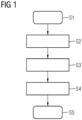
- Fig. 1 shows a first exemplary embodiment of the invention. It shows a flow chart of the computer-implemented method for granting access for a user or an application to a component of a technical system.
- the technical system can for example comprise a plurality of software and/or hardware components which may be dependent on each other.
- a component may have a functional dependency on another component, wherein the functional dependency can for example be a software dependency and/or an access dependency.
- the functional dependency can for example be a software dependency and/or an access dependency.
- the functional dependency can for example be a software dependency and/or an access dependency.
- access to a component may require first access to another software or hardware component, e.g., requiring first a smartcard and second a password to open a door or to enter a security sector.
- the method comprises the following steps:
- a first data structure is read in, wherein the first data structure comprises access permission levels assigned to each of the components of the technical system.
- the first data structure comprises access permission levels assigned to each of the components of the technical system.
- an access permission level is defined.
- a component can have an assigned access permission level of "read-only”.
- the access permission levels assigned to each of the components in the first data structure can be for example hierarchically structured.
- access permission levels assigned to the user or to the application for accessing components of the technical system is read in.
- the user or the application can have only access rights "read-only" for all components.
- the access rights can be different for individual components.
- the access permission levels assigned to the user or the application can also be provided in a data format or structure.
- a functional dependency of a given component on other components of the technical system is identified. Then, information about these identified components and the according functional dependency are stored in a second data structure.
- the said component is preferably predefined by the user or the application. For example, said component is used, applied, modified, built, etc. by the user or the application, and therefore, access to said component is required.
- the functional software dependency of the given component on other components of the repository can be determined based on the program code comprising the given component.
- the functional dependency can for example be identified using static code analysis.
- the second data structure is checked against the first data structure depending on the functional dependency, wherein a component of the second data structure is selected for which the user or the application has an insufficient access permission level.
- a component related to the given component is selected and the access permission level of this selected component is compared to the access permission level of the user or the application.
- the component selection is performed according to the functional dependency, i.e., the functional dependency can prescribe a checking/review sequence. For example, if a component A depends on B, while B depends on C , first the access permission level of component B is checked and subsequently the access permission level C.
- This step S4 can preferably comprise the following sub-steps: At least one dependency path of the functional dependency stored in the second data structure is output.
- the dependency paths are determined by means of a depth-first search performed on the second data structure.
- the at least one dependency path comprises the components assigned to said dependency path.
- the access permission level of each assigned component is checked against the access permission level of the user or the application and a check result is returned.
- a respective check result e.g., "sufficient"/"insufficient” or "yes/no" is returned.
- the assigned component is selected.
- Preferably, only components for which the access permission level of the user or the application is insufficient are selected.
- the respective access permission level of the user or the application is modified to match with the access permission level of the selected component for granting access to the selected component.
- the access permission levels of the user or the application to all selected components are modified after all relevant components have been selected.
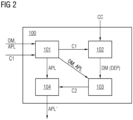
- Figure 2 shows a first exemplary embodiment of the apparatus 100 for granting access for a user or an application to a component of a technical system.
- the technical system can comprise a plurality of hardware and/or software components. Access to a component of the technical system may dependent on for example access to another component.
- the apparatus 100 comprises an interface 101, an analysis module 102, a comparison module 103, and an access module 104.
- the apparatus 100 can be implemented in software and/or hardware.
- the interface 101 is configured to read in a first data structure OM, wherein the first data structure OM comprises access permission levels assigned to each of the components of the technical system. Furthermore, the interface 101 is configured to read in access permission levels APL assigned to the user or to the application for accessing components of the technical system.
- the analysis module 102 is configured to identify a functional dependency DEP of a first component C1 on other components CC of the technical system, wherein the first component is for example selected by the user or the application as the component of interest, and to store information about these identified components and the according functional dependency in a second data structure DM. To this end, the analysis module 102 may read in information about the other components CC of the technical system in order to identify functional components between these components CC, C1.
- the second data structure DM is transmitted to the comparison module 103.
- the comparison module 103 is configured to compare the second data structure DM with the first data structure OM depending on the functional dependency DEP, and to select based on said comparison a component C2 of the second data structure for which the user or the application has an insufficient access permission level APL.
- the selected component C2 and/or information about this selected component C2 is output by the comparison module 103.
- the access module 104 is configured to modify the respective access permission level APL of the user or of the application to match with the access permission level of the selected component for granting access to the selected component.
- the access module 104 can for example output the modified access permission level APL'.
- the apparatus can for example be connected to the technical system to enforce the modified access permission.
- Figure 3 shows another exemplary embodiment of the computer-implemented method for granting access to a component of a technical system.
- the technical system can be for example a repository comprising a plurality of software components.
- the method can be executed by an apparatus as shown in Figure 2 .
- the apparatus can for example be integrated in the repository structure.
- the dependencies DEP and the relevant components can be stored in a data structure, also referred to as a dependency model DM.
- the dependency model DM is preferably a directed acyclic graph. For example, a component a can depend on component b and c or e. Also, the component a can depend on component d.
- the access permission levels e.g., "read-only”, “read-write”, etc.
- the access permission levels are hierarchically structured, e.g., access to a component b also comprises access to component a, while access to component f would comprise access to all other components as well.
- the dependency model DM and the organizational model OM can be compared to determine whether a certain user account/set of user accounts is/are part of the respective organizational model OM and thus has/have all required permissions to build a respective software component. Such comparison can comprise the following steps:
- a user wants to be able to build software component a, but this requires also access to components b , c, d, e.
- the user already has access to component c.
- Permission to group f must not be granted since it would also grant permissions to component g, h, i which would violate the least permission principle. With the above-mentioned method, it is assured that only the required permissions are granted to the user.
Landscapes
- Engineering & Computer Science (AREA)
- Computer Security & Cryptography (AREA)
- General Engineering & Computer Science (AREA)
- Computer Hardware Design (AREA)
- Theoretical Computer Science (AREA)
- Signal Processing (AREA)
- Computer Networks & Wireless Communication (AREA)
- Computing Systems (AREA)
- General Health & Medical Sciences (AREA)
- Physics & Mathematics (AREA)
- General Physics & Mathematics (AREA)
- Software Systems (AREA)
- Bioethics (AREA)
- Health & Medical Sciences (AREA)
- Databases & Information Systems (AREA)
- Automation & Control Theory (AREA)
- Storage Device Security (AREA)
Priority Applications (1)
| Application Number | Priority Date | Filing Date | Title |
|---|---|---|---|
| EP21199153.4A EP4156003B1 (de) | 2021-09-27 | 2021-09-27 | Gewährung von zugriff auf eine komponente eines technischen systems |
Applications Claiming Priority (1)
| Application Number | Priority Date | Filing Date | Title |
|---|---|---|---|
| EP21199153.4A EP4156003B1 (de) | 2021-09-27 | 2021-09-27 | Gewährung von zugriff auf eine komponente eines technischen systems |
Publications (3)
| Publication Number | Publication Date |
|---|---|
| EP4156003A1 true EP4156003A1 (de) | 2023-03-29 |
| EP4156003B1 EP4156003B1 (de) | 2024-08-07 |
| EP4156003C0 EP4156003C0 (de) | 2024-08-07 |
Family
ID=77998737
Family Applications (1)
| Application Number | Title | Priority Date | Filing Date |
|---|---|---|---|
| EP21199153.4A Active EP4156003B1 (de) | 2021-09-27 | 2021-09-27 | Gewährung von zugriff auf eine komponente eines technischen systems |
Country Status (1)
| Country | Link |
|---|---|
| EP (1) | EP4156003B1 (de) |
Citations (3)
| Publication number | Priority date | Publication date | Assignee | Title |
|---|---|---|---|---|
| US20080256458A1 (en) * | 2007-04-02 | 2008-10-16 | Siemens Medical Solutions Usa, Inc. | Data Access Control System for Shared Directories and Other Resources |
| US20130117860A1 (en) * | 2009-12-14 | 2013-05-09 | International Business Machines Corporation | Controlling Access Within a Protected Data Environment |
| US10154039B1 (en) * | 2014-08-06 | 2018-12-11 | Amazon Technologies, Inc. | Hierarchical policy-based shared resource access control |
-
2021
- 2021-09-27 EP EP21199153.4A patent/EP4156003B1/de active Active
Patent Citations (3)
| Publication number | Priority date | Publication date | Assignee | Title |
|---|---|---|---|---|
| US20080256458A1 (en) * | 2007-04-02 | 2008-10-16 | Siemens Medical Solutions Usa, Inc. | Data Access Control System for Shared Directories and Other Resources |
| US20130117860A1 (en) * | 2009-12-14 | 2013-05-09 | International Business Machines Corporation | Controlling Access Within a Protected Data Environment |
| US10154039B1 (en) * | 2014-08-06 | 2018-12-11 | Amazon Technologies, Inc. | Hierarchical policy-based shared resource access control |
Also Published As
| Publication number | Publication date |
|---|---|
| EP4156003B1 (de) | 2024-08-07 |
| EP4156003C0 (de) | 2024-08-07 |
Similar Documents
| Publication | Publication Date | Title |
|---|---|---|
| US11704431B2 (en) | Data security classification sampling and labeling | |
| CN111800450A (zh) | 用于云资源管理的多维标签命名空间 | |
| CN109062965B (zh) | 大数据分析系统、服务器、数据处理方法和存储介质 | |
| US12373519B2 (en) | Programmable model-driven license management and enforcement in a multi-tenant system | |
| US20210226956A1 (en) | Constrained roles for access management | |
| Moreno et al. | Secure development of big data ecosystems | |
| US12500891B2 (en) | Systems and methods for protecting against token-based malicious scripts | |
| Seifermann et al. | A Unified Model to Detect Information Flow and Access Control Violations in Software Architectures. | |
| CN112115117B (zh) | 一种覆盖数据全生命周期的大数据区块链权限管理方法和系统 | |
| KR102866653B1 (ko) | 탈중앙 아이디와 검증가능 자격증명을 이용한 분산 워크플로우 시스템 및 방법 | |
| CN109271789A (zh) | 恶意进程检测方法、装置、电子设备及存储介质 | |
| CN111435348A (zh) | 创建用于数据分析功能的运行时可执行程序的方法 | |
| EP4156003B1 (de) | Gewährung von zugriff auf eine komponente eines technischen systems | |
| CN114444118B (zh) | 一种基于arinc653标准的文件系统分区访问控制方法 | |
| Saeki et al. | Enhancing goal-oriented security requirements analysis using common criteria-based knowledge | |
| CN115048631A (zh) | 数据访问的控制方法及装置 | |
| CN109947403B (zh) | 一种安全目标的分解与建模方法及相关设备 | |
| CN111708610A (zh) | 数据库客户端构建方法和数据库操作方法 | |
| CN113568681B (zh) | 代码执行方法及装置 | |
| Chen et al. | Model-based partition scheduling of integrated modular avionics systems using genetic algorithm | |
| US10747871B2 (en) | System and method for producing secure data management software | |
| Erdogan et al. | Risk-driven Security Testing versus Test-driven Security Risk Analysis. | |
| Chang et al. | The development of security system for sharing CAD drawings in U-environment | |
| Holderer | OLive-M: A SecANet Use Case for Model-Based Obstruction Solving | |
| Simidchieva et al. | Generation, composition, and verification of families of human-intensive systems |
Legal Events
| Date | Code | Title | Description |
|---|---|---|---|
| PUAI | Public reference made under article 153(3) epc to a published international application that has entered the european phase |
Free format text: ORIGINAL CODE: 0009012 |
|
| STAA | Information on the status of an ep patent application or granted ep patent |
Free format text: STATUS: THE APPLICATION HAS BEEN PUBLISHED |
|
| AK | Designated contracting states |
Kind code of ref document: A1 Designated state(s): AL AT BE BG CH CY CZ DE DK EE ES FI FR GB GR HR HU IE IS IT LI LT LU LV MC MK MT NL NO PL PT RO RS SE SI SK SM TR |
|
| STAA | Information on the status of an ep patent application or granted ep patent |
Free format text: STATUS: REQUEST FOR EXAMINATION WAS MADE |
|
| 17P | Request for examination filed |
Effective date: 20230926 |
|
| RBV | Designated contracting states (corrected) |
Designated state(s): AL AT BE BG CH CY CZ DE DK EE ES FI FR GB GR HR HU IE IS IT LI LT LU LV MC MK MT NL NO PL PT RO RS SE SI SK SM TR |
|
| GRAP | Despatch of communication of intention to grant a patent |
Free format text: ORIGINAL CODE: EPIDOSNIGR1 |
|
| STAA | Information on the status of an ep patent application or granted ep patent |
Free format text: STATUS: GRANT OF PATENT IS INTENDED |
|
| GRAJ | Information related to disapproval of communication of intention to grant by the applicant or resumption of examination proceedings by the epo deleted |
Free format text: ORIGINAL CODE: EPIDOSDIGR1 |
|
| STAA | Information on the status of an ep patent application or granted ep patent |
Free format text: STATUS: REQUEST FOR EXAMINATION WAS MADE |
|
| INTG | Intention to grant announced |
Effective date: 20240301 |
|
| RIC1 | Information provided on ipc code assigned before grant |
Ipc: H04L 9/40 20220101ALI20240216BHEP Ipc: G06F 21/62 20130101ALI20240216BHEP Ipc: G06F 21/60 20130101AFI20240216BHEP |
|
| INTC | Intention to grant announced (deleted) | ||
| GRAP | Despatch of communication of intention to grant a patent |
Free format text: ORIGINAL CODE: EPIDOSNIGR1 |
|
| STAA | Information on the status of an ep patent application or granted ep patent |
Free format text: STATUS: GRANT OF PATENT IS INTENDED |
|
| INTG | Intention to grant announced |
Effective date: 20240416 |
|
| GRAS | Grant fee paid |
Free format text: ORIGINAL CODE: EPIDOSNIGR3 |
|
| GRAA | (expected) grant |
Free format text: ORIGINAL CODE: 0009210 |
|
| STAA | Information on the status of an ep patent application or granted ep patent |
Free format text: STATUS: THE PATENT HAS BEEN GRANTED |
|
| AK | Designated contracting states |
Kind code of ref document: B1 Designated state(s): AL AT BE BG CH CY CZ DE DK EE ES FI FR GB GR HR HU IE IS IT LI LT LU LV MC MK MT NL NO PL PT RO RS SE SI SK SM TR |
|
| REG | Reference to a national code |
Ref country code: GB Ref legal event code: FG4D |
|
| REG | Reference to a national code |
Ref country code: CH Ref legal event code: EP |
|
| REG | Reference to a national code |
Ref country code: IE Ref legal event code: FG4D |
|
| REG | Reference to a national code |
Ref country code: DE Ref legal event code: R096 Ref document number: 602021016731 Country of ref document: DE |
|
| U01 | Request for unitary effect filed |
Effective date: 20240819 |
|
| U07 | Unitary effect registered |
Designated state(s): AT BE BG DE DK EE FI FR IT LT LU LV MT NL PT RO SE SI Effective date: 20240902 |
|
| U20 | Renewal fee for the european patent with unitary effect paid |
Year of fee payment: 4 Effective date: 20240919 |
|
| PG25 | Lapsed in a contracting state [announced via postgrant information from national office to epo] |
Ref country code: NO Free format text: LAPSE BECAUSE OF FAILURE TO SUBMIT A TRANSLATION OF THE DESCRIPTION OR TO PAY THE FEE WITHIN THE PRESCRIBED TIME-LIMIT Effective date: 20241107 |
|
| PG25 | Lapsed in a contracting state [announced via postgrant information from national office to epo] |
Ref country code: GR Free format text: LAPSE BECAUSE OF FAILURE TO SUBMIT A TRANSLATION OF THE DESCRIPTION OR TO PAY THE FEE WITHIN THE PRESCRIBED TIME-LIMIT Effective date: 20241108 Ref country code: PL Free format text: LAPSE BECAUSE OF FAILURE TO SUBMIT A TRANSLATION OF THE DESCRIPTION OR TO PAY THE FEE WITHIN THE PRESCRIBED TIME-LIMIT Effective date: 20240807 |
|
| PG25 | Lapsed in a contracting state [announced via postgrant information from national office to epo] |
Ref country code: IS Free format text: LAPSE BECAUSE OF FAILURE TO SUBMIT A TRANSLATION OF THE DESCRIPTION OR TO PAY THE FEE WITHIN THE PRESCRIBED TIME-LIMIT Effective date: 20241207 |
|
| PG25 | Lapsed in a contracting state [announced via postgrant information from national office to epo] |
Ref country code: HR Free format text: LAPSE BECAUSE OF FAILURE TO SUBMIT A TRANSLATION OF THE DESCRIPTION OR TO PAY THE FEE WITHIN THE PRESCRIBED TIME-LIMIT Effective date: 20240807 |
|
| PG25 | Lapsed in a contracting state [announced via postgrant information from national office to epo] |
Ref country code: RS Free format text: LAPSE BECAUSE OF FAILURE TO SUBMIT A TRANSLATION OF THE DESCRIPTION OR TO PAY THE FEE WITHIN THE PRESCRIBED TIME-LIMIT Effective date: 20241107 Ref country code: ES Free format text: LAPSE BECAUSE OF FAILURE TO SUBMIT A TRANSLATION OF THE DESCRIPTION OR TO PAY THE FEE WITHIN THE PRESCRIBED TIME-LIMIT Effective date: 20240807 |
|
| PG25 | Lapsed in a contracting state [announced via postgrant information from national office to epo] |
Ref country code: RS Free format text: LAPSE BECAUSE OF FAILURE TO SUBMIT A TRANSLATION OF THE DESCRIPTION OR TO PAY THE FEE WITHIN THE PRESCRIBED TIME-LIMIT Effective date: 20241107 Ref country code: PL Free format text: LAPSE BECAUSE OF FAILURE TO SUBMIT A TRANSLATION OF THE DESCRIPTION OR TO PAY THE FEE WITHIN THE PRESCRIBED TIME-LIMIT Effective date: 20240807 Ref country code: NO Free format text: LAPSE BECAUSE OF FAILURE TO SUBMIT A TRANSLATION OF THE DESCRIPTION OR TO PAY THE FEE WITHIN THE PRESCRIBED TIME-LIMIT Effective date: 20241107 Ref country code: IS Free format text: LAPSE BECAUSE OF FAILURE TO SUBMIT A TRANSLATION OF THE DESCRIPTION OR TO PAY THE FEE WITHIN THE PRESCRIBED TIME-LIMIT Effective date: 20241207 Ref country code: HR Free format text: LAPSE BECAUSE OF FAILURE TO SUBMIT A TRANSLATION OF THE DESCRIPTION OR TO PAY THE FEE WITHIN THE PRESCRIBED TIME-LIMIT Effective date: 20240807 Ref country code: GR Free format text: LAPSE BECAUSE OF FAILURE TO SUBMIT A TRANSLATION OF THE DESCRIPTION OR TO PAY THE FEE WITHIN THE PRESCRIBED TIME-LIMIT Effective date: 20241108 Ref country code: ES Free format text: LAPSE BECAUSE OF FAILURE TO SUBMIT A TRANSLATION OF THE DESCRIPTION OR TO PAY THE FEE WITHIN THE PRESCRIBED TIME-LIMIT Effective date: 20240807 |
|
| PG25 | Lapsed in a contracting state [announced via postgrant information from national office to epo] |
Ref country code: SM Free format text: LAPSE BECAUSE OF FAILURE TO SUBMIT A TRANSLATION OF THE DESCRIPTION OR TO PAY THE FEE WITHIN THE PRESCRIBED TIME-LIMIT Effective date: 20240807 |
|
| PG25 | Lapsed in a contracting state [announced via postgrant information from national office to epo] |
Ref country code: CZ Free format text: LAPSE BECAUSE OF FAILURE TO SUBMIT A TRANSLATION OF THE DESCRIPTION OR TO PAY THE FEE WITHIN THE PRESCRIBED TIME-LIMIT Effective date: 20240807 |
|
| PG25 | Lapsed in a contracting state [announced via postgrant information from national office to epo] |
Ref country code: SK Free format text: LAPSE BECAUSE OF FAILURE TO SUBMIT A TRANSLATION OF THE DESCRIPTION OR TO PAY THE FEE WITHIN THE PRESCRIBED TIME-LIMIT Effective date: 20240807 |
|
| PLBE | No opposition filed within time limit |
Free format text: ORIGINAL CODE: 0009261 |
|
| STAA | Information on the status of an ep patent application or granted ep patent |
Free format text: STATUS: NO OPPOSITION FILED WITHIN TIME LIMIT |
|
| PG25 | Lapsed in a contracting state [announced via postgrant information from national office to epo] |
Ref country code: MC Free format text: LAPSE BECAUSE OF FAILURE TO SUBMIT A TRANSLATION OF THE DESCRIPTION OR TO PAY THE FEE WITHIN THE PRESCRIBED TIME-LIMIT Effective date: 20240807 |
|
| 26N | No opposition filed |
Effective date: 20250508 |
|
| PG25 | Lapsed in a contracting state [announced via postgrant information from national office to epo] |
Ref country code: IE Free format text: LAPSE BECAUSE OF NON-PAYMENT OF DUE FEES Effective date: 20240927 |
|
| U20 | Renewal fee for the european patent with unitary effect paid |
Year of fee payment: 5 Effective date: 20250919 |
|
| REG | Reference to a national code |
Ref country code: CH Ref legal event code: U11 Free format text: ST27 STATUS EVENT CODE: U-0-0-U10-U11 (AS PROVIDED BY THE NATIONAL OFFICE) Effective date: 20251210 |
|
| PGFP | Annual fee paid to national office [announced via postgrant information from national office to epo] |
Ref country code: CH Payment date: 20251210 Year of fee payment: 5 |
|
| PG25 | Lapsed in a contracting state [announced via postgrant information from national office to epo] |
Ref country code: CY Free format text: LAPSE BECAUSE OF FAILURE TO SUBMIT A TRANSLATION OF THE DESCRIPTION OR TO PAY THE FEE WITHIN THE PRESCRIBED TIME-LIMIT; INVALID AB INITIO Effective date: 20210927 |
|
| PG25 | Lapsed in a contracting state [announced via postgrant information from national office to epo] |
Ref country code: HU Free format text: LAPSE BECAUSE OF FAILURE TO SUBMIT A TRANSLATION OF THE DESCRIPTION OR TO PAY THE FEE WITHIN THE PRESCRIBED TIME-LIMIT; INVALID AB INITIO Effective date: 20210927 |