EP4155946A1 - Verfahren und vorrichtung zur zuweisung von speicheradressen für daten in einem speicher - Google Patents
Verfahren und vorrichtung zur zuweisung von speicheradressen für daten in einem speicher Download PDFInfo
- Publication number
- EP4155946A1 EP4155946A1 EP21808996.9A EP21808996A EP4155946A1 EP 4155946 A1 EP4155946 A1 EP 4155946A1 EP 21808996 A EP21808996 A EP 21808996A EP 4155946 A1 EP4155946 A1 EP 4155946A1
- Authority
- EP
- European Patent Office
- Prior art keywords
- node
- storage size
- data
- space
- size
- Prior art date
- Legal status (The legal status is an assumption and is not a legal conclusion. Google has not performed a legal analysis and makes no representation as to the accuracy of the status listed.)
- Granted
Links
Images







Classifications
-
- G—PHYSICS
- G06—COMPUTING OR CALCULATING; COUNTING
- G06F—ELECTRIC DIGITAL DATA PROCESSING
- G06F12/00—Accessing, addressing or allocating within memory systems or architectures
- G06F12/02—Addressing or allocation; Relocation
- G06F12/06—Addressing a physical block of locations, e.g. base addressing, module addressing, memory dedication
-
- G—PHYSICS
- G06—COMPUTING OR CALCULATING; COUNTING
- G06F—ELECTRIC DIGITAL DATA PROCESSING
- G06F12/00—Accessing, addressing or allocating within memory systems or architectures
- G06F12/02—Addressing or allocation; Relocation
-
- G—PHYSICS
- G06—COMPUTING OR CALCULATING; COUNTING
- G06F—ELECTRIC DIGITAL DATA PROCESSING
- G06F12/00—Accessing, addressing or allocating within memory systems or architectures
- G06F12/02—Addressing or allocation; Relocation
- G06F12/0223—User address space allocation, e.g. contiguous or non contiguous base addressing
- G06F12/023—Free address space management
-
- G—PHYSICS
- G06—COMPUTING OR CALCULATING; COUNTING
- G06N—COMPUTING ARRANGEMENTS BASED ON SPECIFIC COMPUTATIONAL MODELS
- G06N3/00—Computing arrangements based on biological models
- G06N3/02—Neural networks
- G06N3/04—Architecture, e.g. interconnection topology
- G06N3/0464—Convolutional networks [CNN, ConvNet]
-
- G—PHYSICS
- G06—COMPUTING OR CALCULATING; COUNTING
- G06N—COMPUTING ARRANGEMENTS BASED ON SPECIFIC COMPUTATIONAL MODELS
- G06N3/00—Computing arrangements based on biological models
- G06N3/02—Neural networks
- G06N3/06—Physical realisation, i.e. hardware implementation of neural networks, neurons or parts of neurons
- G06N3/063—Physical realisation, i.e. hardware implementation of neural networks, neurons or parts of neurons using electronic means
-
- G—PHYSICS
- G06—COMPUTING OR CALCULATING; COUNTING
- G06F—ELECTRIC DIGITAL DATA PROCESSING
- G06F2212/00—Indexing scheme relating to accessing, addressing or allocation within memory systems or architectures
- G06F2212/10—Providing a specific technical effect
- G06F2212/1016—Performance improvement
-
- G—PHYSICS
- G06—COMPUTING OR CALCULATING; COUNTING
- G06F—ELECTRIC DIGITAL DATA PROCESSING
- G06F2212/00—Indexing scheme relating to accessing, addressing or allocation within memory systems or architectures
- G06F2212/10—Providing a specific technical effect
- G06F2212/1041—Resource optimization
- G06F2212/1044—Space efficiency improvement
Definitions
- the present disclosure relates to a computer field, specifically to management of storage space.
- Deep neural network is widely applied to various scenarios, such as computer vision, speech recognition, machine translation and robot technology.
- An accuracy of the DNN is greatly improved compared with a traditional method of machine learning.
- a performance advantage of the DNN is at a cost of relatively high complexity of computation and memory, which is a challenge to an underlying hardware architecture.
- all kinds of dedicated accelerators are proposed to provide better performance and efficiency than a general architecture (such as a CPU (central processing unit) and a GPU (graphics processing unit)).
- a dedicated neural network accelerator generally requires various novel architecture components, including a control logic (for example, DianNao adopts a control processor with a dedicated control instruction, and Eyeriss adopts a two-level control hierarchy), a computation unit (for example, DianNao adopts 16 fixed functional units to utilize a fault-tolerance character of an intelligence application), an application and a memory hierarchy (for example, DianNao advices to use a separate on-chip memory for both a neuron and weight).
- a control logic for example, DianNao adopts a control processor with a dedicated control instruction, and Eyeriss adopts a two-level control hierarchy
- a computation unit for example, DianNao adopts 16 fixed functional units to utilize a fault-tolerance character of an intelligence application
- an application and a memory hierarchy for example, DianNao advices to use a separate on-chip memory for both a neuron and weight.
- An SPM (scratchpad memory) in the prior art is vital for flexibly control of costly data movement.
- management of the SPM is not only aimed at neural network acceleration.
- a key idea of the prior art is to express the management of the SPM to an allocation problem of a register; and all kinds of technologies such as memory coloring, graph coloring, ILP (integer linear programming) and ILP extension are used for register allocation.
- BF best fit
- GC graph coloring
- One of the purpose of the present disclosure is to solve problems of low space utilization and storage space fragmentation in the prior art.
- a first aspect of the present disclosure provides a method for allocating a space address to data in a memory, including: receiving a space assigning request for storage space in the memory, where the space assigning request comprises a size of the data; assigning target storage space to the data according to the received space assigning request; and allocating the space address to the data based on the assigned target storage space.
- a second aspect of the present disclosure provides a method for managing storage space, including: forming a plurality of memory blocks, where each memory block has a total storage size identifier and an available storage size identifier, where the total storage size identifier is used to indicate total storage size of the memory block, and the available storage size identifier is used to indicate available storage size of the memory block; and taking the plurality of memory blocks as nodes to form a tree structure, which comprises a plurality of nodes of multi-stage, where total storage size of a parent node is a sum of total storage size of children nodes.
- a third aspect of the present disclosure provides a method for assigning storage space to data in a memory, including: receiving a space assigning request aiming at storage space in the memory, where the space assigning request comprises a size of the data; and forming a plurality of memory blocks, where each memory block has a total storage size identifier and an available storage size identifier, where the total storage size identifier is configured to indicate total storage size of the memory block, and the available storage size identifier is configured to indicate available storage size of the memory block.
- a forth aspect of the present disclosure provides an electronic device, including: one or more processors; and a memory, where the memory stores a computer executable instruction, and when the computer executable instruction is executed by the one or more processors, the electronic device may perform the above mentioned method.
- a fifth aspect of the present disclosure provides a computer-readable storage medium, on which a computer executable instruction is stored.
- the above mentioned method may be implemented when the computer executable instruction is executed by one or more processors.
- One of technical effects implemented by the technical solutions of the present disclosure is greatly improving utilization of storage space of the memory, thereby decreasing power consumption of the memory.
- Another purpose of the present disclosure is to allocate suitable storage space to data with an unknown size and represented by a function.
- a sixth aspect of the present disclosure provides a method for allocating a space address to data in a memory, including: receiving a space assigning request aiming at storage space in the memory, and the space assigning request comprises a size of the data represented by a first function; assigning target storage space for the data according to the received space assigning request; and allocating the space address to the data based on the assigned target storage space.
- a seventh aspect of the present disclosure provides a method for managing storage space, including: forming a plurality of memory blocks, where each memory block has a total storage size identifier and an available storage size identifier, where the total storage size identifier is configured to use a total space function to indicate total storage size of the memory block, and the available storage size identifier is configured to use a second function to indicate available storage size of the memory block; and taking the plurality of memory blocks as nodes to form a tree structure, which comprises a plurality of nodes of multi-stage, where total storage size of a parent node is a sum of total storage size of children nodes.
- An eighth aspect of the present disclosure provides a method for assigning storage space to data in a memory, including: receiving a space assigning request aiming at the storage space in the memory, where the assigning request comprises a size of the data represented by a first function; forming a plurality of memory blocks, where each memory block has a total storage size identifier and an available storage size identifier, where the total storage size identifier is configured to use a total space function to indicate total storage size of the memory block, and the available storage size identifier is configured to use a second function to indicate available storage size of the memory block; taking the plurality of memory blocks as nodes to form a tree structure, which comprises a plurality of nodes of multi-stage, where total storage size of a parent node is a sum of total storage size of children nodes; and assigning target storage space to the data according to the received space assigning request and the tree structure.
- a ninth aspect of the present disclosure provides an electronic device, including: one or more processors; and a memory, where the memory stores a computer executable instruction, and when the computer executable instruction is operated by the one or more processors, the electronic device may perform the above mentioned method.
- a tenth aspect of the present disclosure provides a computer-readable storage medium, on which a computer executable instruction is stored, where the above mentioned method is implemented when the computer executable instruction is executed by one or more processors.
- the term “if” may be interpreted as “when”, or “once” or “in response to a determination” or “in response to a case where something is detected” depending on the context.
- the clause “if it is determined that” or “if [a described condition or event] is detected” may be interpreted as "once it is determined that", or “in response to a determination”, or “once [a described condition or event] is detected”, or “in response to a case where [a described condition or event] is detected”.
- FIG.1a to FIG.1d are schematic diagrams of different methods of assigning storage space, where FIG.1a shows a schematic diagram of a general neural network computation.
- D1 is 16 bits
- D2 is 8 bits
- D3 is 24 bits
- D4 is 32 bits.
- storage space is required to be assigned for data involved in the computation, and space occupied by historical data is required to be released.
- FIG. 1b is a kind of example of assigning the storage space according to a computation process in FIG.1a , and this example is called as a best fit (BF).
- BF best fit
- addresses are first assigned to data D1 and D2; when a second convolution computation is performed, space occupied by the data D1 may be released, and storage space is assigned to data D3; similarly, when a third convolution computation is performed, space occupied by the data D2 may be released, and storage space is assigned to data D4.
- addresses are first assigned to data D1 and D2; when a second convolution computation is performed, space occupied by the data D1 may be released, and storage space is assigned to data D3; similarly, when a third convolution computation is performed, space occupied by the data D2 may be released, and storage space is assigned to data D4.
- lots of space debris may be generated, thereby decreasing utilization of the storage space.
- FIG. 1c is another example of assigning the storage space according to the computation process of FIG. 1a , and this example is called as graph coloring (GC).
- GC graph coloring
- the storage space is divided into a plurality of types: Regclass32 represents space with a capacity of 32 bits, Regclass24 represents space with a capacity of 24 bits, Regclass16 represents space with a capacity of 16 bits, and Regclass8 represents space with a capacity of 8 bits.
- the data D1 to D4 may be divided into different types according to different sizes.
- the data D1 is stored in a space R16, 0 in the Regclassl6, the data D2 is stored in a space R8, 4 in the Regclass8, the data D3 is stored in a space R24, 0 in the Regclass24, and data D4 is stored in a space R32, 1 in the Regclass32.
- FIG. 1d is an ideal method for assigning the storage space, and this ideal assigning method is a limit of space assigning.
- the storage space is assigned to the data D1 and data D2 first, and the two storage space is adjacent, just like other methods.
- the space occupied by the data D1 is released, and the data D3 is required to be stored.
- the storage space of the data D3 should be as shown in FIG.1d , reserving corresponding space for the data D4; when the data D4 is required to be stored, the space reserved for the data D4 is adjacent with the space of data D3, which may reduce the occurrence of fragmentation and reduce hopping of data addressing.
- the ideal condition is hard to be implemented, because it requires prediction to a size of future data.
- an SPM management is seen as a traditional memory allocation.
- space and an address are determined simultaneously and assigned to data, which leads to limitations of the prior art in space utilization.
- FIG. 2a is a flowchart of a method of allocating a space address to data in a memory according to an embodiment of the present disclosure.
- FIG. 2b is an exemplary instruction set of assigning the storage space to the data and releasing the storage space according to an embodiment of the present disclosure.
- the methods of the present disclosure include: at step S210, receiving a space assigning request aiming at the storage space in the memory, and the space assigning request comprises the size of the data; at step S220, assigning target storage space to the data according to the received space assigning request; and at step S230, allocating a space address to the data based on the assigned target storage space.
- the space assigning request may carry other information, such as life circle of resources, including application time, releasing time of resources represented by the life circle, and orders of the application and the releasing. Different orders may lead to different results.
- a plurality of instructions are shown according to a chronological order, where an instruction “alloc” represents assigning the storage space, and an instruction “dealloc” represents releasing the storage space.
- operations “alloc D1 400", “alloc D2 100” and “alloc D3 400” respectively represent assigning storage space with a capacity of 400 bits to the data D1, assigning storage space with a capacity of 100 bits to the data D2, and assigning storage space with a capacity of 400 bits to the data D3.
- operations “dealloc D3”, “delaaoc D1", “dealloc D4" and “dealloc” D5 respectively represent releasing space occupied by D3, D1, D4 and D5, and then the released space may become available storage size. The available storage size may be assigned to other data again.
- target storage space refers to actual space assigned to the data.
- current available storage size is 400 bits
- a storage assigning request asks to allocate 300-bit storage space to data Dx, and then space assigned to the data Dx may be called as the target storage space.
- available storage size and target storage space are virtual storage space.
- the virtual storage space may correspond to corresponding data, and then, the virtual storage space is mapped to actual physical space and address. However, in the context, in order to distinguish meanings, the virtual storage space is called as different names.
- the space address may include a starting address and an offset, where the offset may be determined according to a size of the data.
- the current available storage size may be looked up, and then the suitable part of storage space may be assigned to the data.
- a specific space address may not be assigned temporarily. This separation of space allocation and address allocation is apparently different from the prior art, in which the storage space and the space address are assigned to data at one time.
- a tree structure that comprises a plurality of nodes may be created, where each node represents one storage space, and a suitable node for storing data may be found by traversing the storage space.
- the "suitable node” here may be one node or a combination of a plurality of nodes.
- forming the tree structure between memory blocks may be implemented before the above mentioned step S210.
- the to-be-described tree structure later in detail may be formed in advance.
- the tree structure may be formed after the step S210 and before the step S220, which means forming the tree structure in real time through the space assigning request and the space releasing operation.
- FIG. 3 is a flowchart of a method of forming the tree structure.
- methods of the present disclosure further include: at step S310, forming a plurality of memory blocks, where each memory block has a total storage size identifier and an available storage size identifier, where the total storage size identifier is configured to indicate total storage size of the memory block, and the available storage size identifier is configured to a indicate available storage size of the memory block; and at step S320, taking the plurality of memory blocks as nodes to form a tree structure, which comprises a plurality of nodes of multi-stage, where total storage size of a parent node is a sum of total storage size of children nodes.
- initialization may be performed first with assigning node 0 as an initialized node, where each node represents one memory block, the total storage size is 0, and the available storage size is 0; and for the convenience of description, a storage attribute may be represented as 0 (0).
- a node 1 is created under the node 0 for storing the data D1. Therefore, total storage size of the node 1 is 400 bits, an available storage size of the node 1 is 0, and a storage attribute of the node 1 may be represented as 400 (0).
- a node 2 under the node 0 for storing the data D2 is created. Therefore, total storage size of the node 2 is 100 bits, an available storage size of the node 1 is 0, and a storage attribute of the node 1 may be represented as 100 (0).
- a node 3 under the node 0 for storing the data D3 is created. Therefore, total storage size of the node 3 is 400 bits, an available storage size of the node 1 is 0, and a storage attribute of the node 1 may be represented as 400 (0).
- the total storage size of the node 0 is 900 bits
- the available storage size of the node 0 is 0,
- the storage attribute of the node 0 may be represented as 900 (0).
- the storage space may be released.
- corresponding nodes may be released, and identifiers of the available storage size of the released nodes may be updated.
- FIG. 4b The following may take FIG. 4b as an example for description.
- the space of the node 3 When receiving the instruction dealloc D3 of the operation 4, the space of the node 3 may be released. Therefore, the available storage size of the node 3 is 400, and the storage attribute may be represented as 400 (400) as shown in FIG. 4b .
- the total storage size of the initialized node 0 is 900 bits
- the available storage size identifier of the node 0 is 0, and the storage attribute of the node 0 may be represented as 900 (0).
- assigning the target storage space to the data according to the received space assigning request includes: traversing the available storage size in the nodes of the tree structure; traversing the available storage size that is not less than a size of the data in the nodes of the tree structure; and assigning the target storage space to the data according to the received space assigning request.
- receiving the instruction alloc D4 300 of the operation 5 means to request to allocate storage space with 300 bits to the data D4. At this time, only the node 3 has enough available storage size with 400 bits that is not less than a size of the storage space required to be assigned.
- the data D4 may be directly stored in the storage space of the node 3, which does not need to create new nodes.
- the storage space originally assigned to data D3 in the node 3 is assigned to data D4,, correspondence between the node 3 and the data D3 may be eradicated, which is not benefit for the storage of subsequent storage relation.
- traversing the available storage size in the nodes of the tree structure that is not less than the size of the data, and assigning the target storage space to the data according to the received space assigning request may include: creating a new node of the node whose available storage size is not less than the size of the data so that a total storage size of the new node is equal to the size of the data.
- a new node 4 may be created in a next level of the node 3, and a storage attribute of the node 4 may be represented as 300 (0).
- the available storage size of the node 3 is 100 bits, and the storage attribute of the node 3 may be represented as 400 (100) as shown in FIG. 4c .
- one node may only be assigned once to make sure that one node corresponds to one piece of data. Therefore, the whole assigning process may be recorded completely, which is convenient for further splitting of children nodes.
- the node 3 is assigned to the data D3 before, even though the space occupied by the data D3 is released, when new data (such as the data D4) requires to occupy the space originally occupied by the data D3, a new node (such as the node 4) is still required to be created.
- the new created node 4 is still in the range of the physical space of the node 3.
- FIG. 4c shows a specific condition that available storage size of one node is bigger than required assigned space.
- FIG. 4d is a schematic diagram of assigning the space to the data according to another embodiment of the present disclosure.
- the node 1 has the total storage size of 600 bits and the available storage size of 500 bits; the node 2 has the total storage size of 700 bits and the available storage size of 600 bits; the node 3 has the total storage size of 800 bits and the available storage size of 0 bits; and the node 4 has the total storage size of 1000 bits and the available storage size of 1000 bits.
- a request to allocate storage space of 700 bits to the data is received. In this case, many schemes may be used to store the data.
- the node 4 is used to allocate storage space of 700 bits to the data, so that after the allocation, the node 4 may have available storage size of 300 bits.
- total 700-bit storage space is assigned from the node 1, node 2 and node 4; for example, 200-bit storage space may be assigned from the node 1, 300-bit storage space may be assigned from the node 2, and 200-bit storage space may be assigned from the node 4.
- Adopting the first scheme is benefit to make it easier for the newly assigned space to keep continuity in address, thereby decreasing hopping of addresses in the process of data access, and then increasing efficiency of data access.
- Adopting the second and the third scheme is benefit to decrease fragmentation of the space as much as possible.
- the method of assigning the storage space to the data by using the node 1 and the node 2 is also benefit to the data to be stored in continuous space, thereby decreasing hopping of addresses in the process of data access.
- the third scheme is better than the second scheme, for that more data is stored in the node 2, which is benefit to decrease hopping of addresses in the process of data access.
- a single node with available storage size that is not less than the size of the data is not found in the nodes of the tree structure, so that a new node is created to make sum of available storage size of the single node and the new node is not less than the size of the data.
- FIG. 4d The following may still take FIG. 4d as an example.
- available storage size of 500 bits in the node 1 is occupied, and then a new node with available storage size of 200 bits is applied; and a sum of the available storage size of the node 1 and the available storage size of the new node is 700 bits, which may hold the data.
- available storage size of 600 bits in the node 2 is occupied, and then a new node with available storage size of 100 bits is applied; and a sum of the available storage size of the node 2 and the available storage size of the new node is 700 bits, which may hold the data.
- the new node may form continuous space with the above mentioned single node.
- advantages of the fifth and the sixth schemes lie in that if the space in the node 1 and the node 2 is not continuous, space hopping in the data access process may easily lead to low efficiency, but by adopting the fifth and sixth schemes, new nodes before or after the node may be created to form continuous space.
- a single node with largest available storage size is selected to make the available storage size of the newly created node as small as possible.
- the storage space of the newly created node of the sixth scheme is relatively small, which is benefit to decrease fragmentation of the space.
- the space of the node 2 may be released. Therefore, the available storage size of the node 2 is 100 bits, and the storage attribute of the node 2 may be represented as 100 (100) c.
- a node once is created, may not be deleted in a certain period even though an instruction to release storage space is received, but may adjust an identifier of available storage size to indicate current available storage size.
- FIG. 5 is a schematic diagram of assigning target storage space to the data according to an embodiment in the preferred embodiments of the present disclosure.
- the node 0 has four children nodes, which are node 1 (600 (500)), node 2 (700 (600)), node 3 (800 (0)) and node 4 (1000 (1000)).
- the operation instruction alloc D5 1000 is received.
- a sum of the available storage size of the node 1 and the node 2 is 1100 bits, which is enough to hold the data D5; the available storage size of the node 3 is 0, which is not enough to hold the data D5; and the available storage size of the node 4 is 1000 bits, which is just enough to hold the data D5.
- the node 4 in a case that the node 4, a combination of the node 1 and the node 2 may hold the data D5, the node 4 may be chosen preferentially to hold the data D5, because the difference between the available storage size of the node 4 and the size of data D5 is the smallest.
- the above mentioned preferred embodiments are benefit to decrease fragmentation and increase utilization of the storage space.
- the available storage size has a smallest difference with a size of the data D5" is not only suitable for the above mentioned situation that the available storage size of the single node is not less than the size of the data, but also suitable for a situation that the available storage size of the single node is larger than the size of the data.
- the available storage size of the node 1 is 500 bits
- the available storage size of the node 2 is 600 bits
- the available storage size of the node 4 is 1000 bits; and at this time, a data assigning request is received, asking for assigning 400-bit storage space to the data D5.
- the corresponding 400-bit storage space assigned to the data D5 may be assigned from the node 1, the node 2 or the node 4.
- the corresponding 400-bit storage space assigned to the data D5 may be assigned from the node 1, for the available storage size in the node 1 has a smallest difference with the size of data D5. This is helpful to decrease the fragmentation of the space, thus the space may be fully utilized.
- assigning the target storage space to the data according to the received space assigning request further including: available storage size that is not less than the size of the data is not found in the nodes of the tree structure, so that a new node is created so that the available storage size of the new node holds the data.
- the storage space of the new node should be as small as possible, for the purpose to decrease fragmentation of the space.
- FIG. 6a is a flowchart of a method of creating the new nodes according to an embodiment of the present disclosure
- FIG. 6b is a schematic diagram of creating the new nodes according to the flowchart shown in FIG. 6a .
- creating the new nodes may include: at step S610, adjusting nodes with an available storage size to children nodes of the new nodes; and at step S620, creating new children nodes of the new nodes so that the available storage size of the children nodes of the new nodes holds the data.
- the available storage size of the node 1 is 0, the available storage size of the node 2 is 100 bits, the available storage size of the node 3 is 100 bits, and the available storage size of the node 4 is 0, so that current total available storage size is 200 bits.
- a node 8 at the same level as the node 1 is created, and the original node 2 and node 3 are moved to a next level of the new node 8 and set as children nodes of the new node 8.
- a new children node 6 may be created, and the children node 6 has an identifier 100 of total storage size; therefore, the children node 2, the new children node 6 and the children node 3 have total available storage size of 300 bits, which may hold the data D5.
- the data D3 is stored in the children node 3 before, so that the children node 3 is required to be divided into a grand-children node 7 and a grand-children node 4, where the grandchild 4 is a children node of the children node 3 before, and the grand children node 7 is a newly created grand-children node.
- the same node may only be assigned to the same data. Therefore, the node 2 has available storage size of 100 bits, but the node 2 is assigned to the data D2 before, so that a new node 5 may be created under the node 2 to be set as a children node of the node 2. It needs to be understood that the node 2 and the node 5 are the same node in the physical space of the memory, but are different nodes in the tree structure.
- the node 5 may provide storage space of 100 bits
- the node 6 may provide storage space of 100 bits
- the node 7 may provide storage space of 100 bits, so that the data D5 with the size of 300 bits may be hold.
- the same data may occupy different nodes; for example, the data D5 may occupy the node 5, the node 6 and the node 7.
- the same node may only correspond to one piece of data; for example, the node 3 is assigned to the Data D3, even though the space occupied by the data D3 is released (the operation 4), when the new data such as the data D4 and the data D5 are required to occupy the space originally occupied by the data D3, the node 3 still needs to be further divided into the node 4 and the node 7.
- the above mentioned scheme is benefit to keep the whole correspondence between the nodes and the data.
- the storage space assigned to the data D1, D4 and D5 may be released, as shown in FIG. 6c .
- the available storage size of the node 1 becomes 400 bits
- the available storage size of the node 6, node 5 and node 7 becomes 100 bits
- the available storage size of the node 4 becomes 300 bits.
- creating new nodes so that the available storage size holds the data may include: since an available storage size of all the nodes in the tree structure is 0, creating new nodes so that the available storage size of the new nodes holds the data.
- creating new nodes so that the available storage size holds the data may include: since current available storage size that is not less than the size of the data is found in the nodes of the tree structure, and a size of data included in a next space assigning request is no larger than the current available storage size, creating new nodes so that the available storage size of the new nodes holds the data.
- timing of the space assigning request may be considered. For example, if existed available storage size is 300 bits, and then a received first space assigning request asks to allocate storage space of 400 bits, then it should be considered whether the second space assigning request after this space assigning request is less than or equal to 300 bits; and if the required space is less than or equal to 300 bits, a new node may be created first assigning to the first space assigning request, and the existed available storage size may be reserved to the second space assigning request. This embodiment is benefit to a periodical or a predictable space assigning request.
- the tree structure After the tree structure is formed and a new space assigning request is received, the tree structure may be traversed to find expected available storage size.
- a depth first scheme when traversing the tree structure, a depth first scheme may be adopted; and the depth first scheme means that after traversing a parent node and all children nodes of this parent node, traversing another node at the same level as the above mentioned parent node.
- the node 1 when receiving a space assigning request, the node 1 is required to be searched first; and when there is no enough available storage size searched in the node 1, the node 8 needs to be searched, and then the node 2, the node 5, the node 6, the node 3, the node 7 and the node 4 need to be searched.
- the depth first scheme is benefit to store the same data in continuous space, thereby decreasing hopping of data addressing of space in a computation process.
- Another embodiment of the present disclosure further includes adjusting position of the nodes to make space of the plurality of memory blocks be continuous.
- the nodes correspond to virtual storage space, so that making the same data be stored in the continuous space may decrease the hopping of data addressing of space in the computation process, and then improving computation efficiency.
- the node 6 used to store the data D5 is inserted between the node 2 and the node 3, and the node 7 is closed created by the node 6; therefore, the data D5 may be continuously stored in continuous space closely to the node 5, the node 6 and the node 7.
- the node 6 may also be set after the node 3, and the node 7 may be set after the node 4, but such a method may be easy to cause space hopping.
- an embodiment of the present disclosure further includes fixing order of the nodes in the tree structure.
- the method of fixing the order of the nodes may be marking the parent node of the nodes. For example, as shown in FIG. 6b , a mark "ordered" may be made on the node 8, and then the order of all children nodes under the node 8 may be fixed. For another example, the mark "ordered” may be made on the node 3, and then the order of the node 7 and the node 4 under the node 3 may be fixed.
- Fixing the order of the nodes is benefit to store the same data in the continuous space, thereby decreasing the hopping of space addressing.
- allocating the space address to the data may include: after allocating the space address to one node, assigning addresses to other nodes at the same level, where the address of each node includes addresses of all children nodes of the node.
- the fifth and the sixth schemes described combined with the FIG. 4d are also applicable.
- new nodes must be created. Similar to the fifth and the sixth schemes, a node may be chosen to hold a part of the data, and then new nodes may be created to hold a left part of the data. The new created nodes may form continuous space with the nodes that hold a part of the data, thereby decreasing the space hopping in the process of data access.
- FIG. 7 is a schematic diagram of assigning the address to the storage space according to an embodiment of the present disclosure.
- the tree structure shown in FIG. 7 includes a node 0, a node 1, a node 2, a node 3, a node 4 and a node 5.
- the node 0 is a root node with total storage size of 31 bits and available storage size of 0 bits, and a storage attribute of the node 0 is represented as 31 (0);
- the node 1, the node 2, the node 3 and the node 4 are children nodes of the node 0, and their storage attributes are respectively represented as 5 (5), 6 (6), 10 (0) and 11 (0);
- the node 5 is a children node of the node 3, and the storage attribute is represented as 10 (0).
- a width-first scheme is adopted when assigning addresses to these nodes, which means assigning addresses to the nodes at the same level, and then specifically assigning addresses to children nodes of each node.
- a starting address of the node 0 is 0x0000 with an offset of 31; and as a first children node of the node 0, a starting address of the node 1 may also be 0x0000 with an offset of 5, so that an ending address of the node 1 is 0x0004.
- a starting address of the node 2 may be 0x0005 with an offset of 6; a starting address of the node 3 may be 0x000B with an offset of 10; a starting address of the node 4 may be 0x0015 with an offset of 11; and as a children node of the node 3, a starting address of the node 5 may be 0x000B with an offset of 10.
- the space of the same data may be kept continuous, so that continuous addresses may also be assigned, thereby greatly improving space utilization in the memory, and decreasing fragmentation, which has significant meaning to the memory with a relatively small storage space.
- continuity of data storage may be kept, thus avoiding hopping of addressing and improving speed of data throughput; and another benefit is that since all node information is kept, all records of data storage in the process of space assigning and releasing are kept, which is convenient for reserving of records of subsequent data tracking and storing.
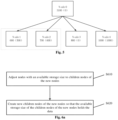
- FIG. 8 shows a method of managing the storage space according to an embodiment of the present disclosure, including: at step S810, forming a plurality of memory blocks, where each memory block has a total storage size identifier and an available storage size identifier, where the total storage size identifier is used to indicate total storage size of the memory block, and the available storage size identifier is used to indicate available storage size of the memory block; and at step S820, taking the plurality of memory blocks as nodes to form a tree structure, which comprises a plurality of nodes of multi-stage, where total storage size of the parent node is a sum of total storage size of the children nodes.
- FIG. 9 is a method of assigning the storage space to the data in the memory according to an embodiment of the present disclosure, including: at step S910, receiving a space assigning request aiming at storage space in the memory, where the space assigning request comprises the size of the data; at step S920, forming a plurality of memory blocks, where each memory block has a total storage size identifier and an available storage size identifier, where the total storage size identifier is configured to indicate the total storage size of the memory block, and the available storage size identifier is configured to indicate the available storage size of the memory block; at step S930, taking the plurality of memory blocks as nodes to form a tree structure, which comprises a plurality of nodes of multi-stage, where the total storage size of the parent node is the sum of the total storage size of the children nodes; and at step S940, according to the received space assigning request and the tree structure, assigning target storage space to the data.
- FIG. 8 and FIG.9 Specific implementation of each operation in the above mentioned FIG. 8 and FIG.9 is explained in detail according to FIG. 2 to FIG. 7 , and may not be repeated here.
- FIG. 10 is a comparison diagram of space using numbers in different application scenarios of the technical solutions of the present disclosure and three other kinds of schemes (a BF (best fit) scheme, a GC (graph coloring) scheme and an ideal scheme), where in each group of comparison, data in the left represents the BF scheme, data in a second column represents the GC scheme, data in a third column represents the technical solutions of the present disclosure, and data in a last column represents the ideal scheme.
- a BF best fit
- GC graph coloring
- FIG. 10 selects 8 common application scenarios, which are represented by abscissas ResNet-18, ResNet-50, MobileNet-V2, SE-ResNet-50, GoogleNet, Inception21k, DPN131 and DenseNet-201; and ordinates represent usage of an SPM space, which is a key measure to evaluate the method of memory management.
- usage of the SPM space in all schemes is dealt with normalization according to the ideal scheme.
- the technical solutions of the present disclosure decrease the usage of the SPM space by 31.6% and 13.3%, respectively.
- the technical solutions of the present disclosure decrease the usage of the SPM space by up to 47.9% (such as in the SE-ResNet-50 scenario), and by at least 10% (such as in the Inception21k scenario).
- the technical solutions of the present disclosure decrease the usage of the SPM space by about 1% (ResNet-50) to 30.1% (DenseNet-201).
- FIG.1a to FIG.1c are schematic diagrams of different methods of assigning storage space, where FIG.1a is a schematic diagram of a general neural network computation, which is described above and may not be repeated here.
- FIG. 11 is a method of allocating a space address to the data in the memory according to an embodiment of the present disclosure, including: at step 51110, receiving a space assigning request for the storage space in the memory, and the space assigning request comprises a size of the data represented by a first function; at step S1120, assigning the target storage space to the data according to the received space assigning request; and at step S1130, allocating the space address to the data based on the assigned target storage space.
- the space assigning request may carry other information, such as life circle of resources, including application time, releasing time of resources represented by the life circle, and orders of the application and the releasing. Different orders may lead to different results.
- the data is not an immediate value, but is represented as a function, which includes unknown variables. These unknown variables are certain only in runtime, but are uncertain values when assigning the storage space to the data.
- a size of input of an original network is supposed as 1 ⁇ H ⁇ W ⁇ 3, where H and W are unknown parameters
- the size of the input in an X layer becomes 1 ⁇ f1(H) ⁇ f2(W) ⁇ 3; and at this time, f is determined according to parameters of operators from a first layer to the X layer, and f1(H) >0, f2(W)>0. Since in the neural network, f1 and f2 are all polynomials of the highest degree, conditions of the minimum size of the parameter H and the parameter W may be obtained according to the inequality, for example, H> x1, and W >x2.
- the network structure is required to guarantee that the size of the last layer of the computation may not be 0, so that for the whole network computation, constraints on H and W are required. Therefore, the size of the data, for example, may be represented as P1hw+P2h+P3w+P4, where P1, P2, P3 and P4 are all nonnegative integers.
- the instruction “alloc” represents assigning the storage space
- the instruction “dealloc” represents releasing the storage space.
- the operation 1 "Alloc A 10hw+5h+5w +20" represents assigning space with a size of 10hw+5h+5w+20 to data A
- the operation 5 "alloc B 8hw+10h+10w+100” represents assigning space with a size of 8hw+10h+10Ww+100 to data B
- the operation 4 "Dealloc A” represents releasing the space occupied by the data A
- the operation 7 "dealloc B” represents releasing the space occupied by the data B.
- target storage space refers to actual space assigned to the data.
- available storage size and target storage space
- target storage space is virtual storage space.
- the virtual storage space may corresponds to corresponding data, and then, the virtual storage space is mapped to actual physical space and address.
- the virtual storage space is called as different names.
- corresponding space addresses may be assigned to the data.
- the space address may include the starting address and the offset, and the offset may be determined according to the size of the data, where the process of assigning corresponding space addresses to the data may be the process of mapping the virtual storage space to the space address of the actual physical space.
- the process of assigning corresponding space addresses to the data may be the process of mapping the virtual storage space to the space address of the actual physical space.
- a tree structure that comprises a plurality of nodes may be created, where each node represents one storage space, and a suitable node for storing data may be found by traversing the storage space.
- the "suitable node” here may be one node or a combination of the plurality of nodes.
- forming the tree structure between memory blocks may be realized before the above mentioned step S210.
- the tree structure to be described later in detail may be formed in advance.
- the tree structure may be formed after the step S210 and before the step S220, which means forming the tree structure in real time through the space assigning request and the space releasing operation.
- FIG. 12 is a flowchart of a method of forming the tree structure.
- methods of the present disclosure further include: at step S1210, forming a plurality of memory blocks, where each memory block has a total storage size identifier and an available storage size identifier, where the total storage size identifier is used to use a total space function to indicate total storage size of the memory block, and the available storage size identifier is used to use a second function to indicate available storage size of the memory block; and at step S1220, taking the plurality of memory blocks as nodes to form a tree structure, which comprises a plurality of nodes of multi-stage, where total storage size of a parent node is a sum of total storage size of children nodes.
- a process of forming the tree structure is described with combination of the above mentioned operation 1 to operation 8 and FIG. 13a to 13c .
- initialization may be performed first with assigning node 0 as an initialized node, where each node represents one memory block, the total storage size of the node 0 is 0, and the available storage size of the node 0 is 0; and for the convenience of description, a storage attribute of the node 0 may be represented as 0 (0).
- a node 1 is created under the node 0 for storing the data A. Therefore, total storage size of the node 1 is 10hw+5h+5w+20, available storage size of the node 1 is 0, and a storage attribute of the node 1 may be represented as 10hw+5h+5w+20 (0).
- a node 2 When receiving the instruction alloc A1 9hw+4h+6w+5 of the operation 2, a node 2 is created under the node 0 for storing the data A1. Therefore, total storage size of the node 2 is 9hw+4h+6w+5, available storage size of the node 2 is 0, and a storage attribute of the node 2 may be represented as 9hw+4h+6w+5 (0).
- a node 3 under the node 0 is created for storing the data A2. Therefore, total storage size of the node 3 is hw+h+10w+8, available storage size of the node 3 is 0, and a storage attribute of the node 3 may be represented as hw+h+10w+8 (0).
- the total storage size of the initialized node 0 is 20hw+10h+21w+33
- the available storage size of the node 0 is 0, and a storage attribute of the node 0 may be represented as 20hw+10h+21w+33 (0).
- the storage space may be released.
- corresponding nodes may be released, and identifiers of the available storage size of the released nodes may be updated.
- FIG. 13b The following may take FIG. 13b as an example for description.
- the available storage size of the node 1 is 10hw+5h+5w+20
- the storage attribute of the node 1 may be represented as 10hw+5h+5w+20 (10hw+5h+5w+20) as shown in FIG. 13b .
- the total storage size of the initialized node 0 is 20hw+10h+21w+33
- the available storage size of the node 0 is 0, and the storage attribute of the node 0 may be represented as 20hw+10h+21w+33 (0).
- assigning the target storage space to the data according to the received space assigning request includes: traversing the available storage size in the nodes of the tree structure; and since the second function and the first function have a common function with available storage size, which is searched in the nodes of the tree structure, assigning the storage space indicated by the common function as the target storage space.
- the second function searched in the nodes of the tree structure may be the second function corresponds to a single node, or may be the "second function" formed by combination of more than one continuous nodes.
- the first function and the second function have overlaps and cross sections, but the first function and the second function may not completely cover each other; in a second case, the first function completely covers the second function and is greater than the second function, which means the size of the data included in the space assigning request is completely greater than a size of the searched available storage size; in a third case, the second function completely covers the first function and is greater than the first function, which means the size of the data included in the space assigning request is completely greater than the size of the searched available storage size; and in a forth case, the first function is equal to the second function.
- receiving the instruction alloc B 8hw+ 10h+ 10w+ 100 of the operation 5 represents asking for assigning storage space of 8hw+10h+10w+100 to the data B.
- the node 1 has available storage size of 10hw+5h+5w+20; a function 10hw+5h+5w+20 of the available storage size has a common function 8hw+Sh+Sw+20 with a function 8hw+10h+10w+100 of the space to be assigned; and after the space of 8hw+5h+5w+20 is assigned to a common part of the data B, the available storage size of the node 1 is 2hw, and the data B still needs storage space of Sh+Sw+80.
- the common part may be stored according to the method of 5h+5w+80, and another part, which is a non-common part in the space assigning request may be stored in a new created node (such as a node 5 shown in the FIG. 13c ) by the 5h+5w+80.
- the common part of the data B may be directly stored in the storage space of 8hw+5h+5w+20 in the node 1, and such a method does not need to form new nodes.
- the storage space that is assigned to the data A before is assigned to the common part of the data B currently, so that correspondence between the node 1 and the data A may be eradicated, which is not benefit to the storage of subsequent storage relations.
- a new node 4 may be created in a next level of the node 1 to make total storage size of the new node equal to the above mentioned common function.
- a storage attribute of the new node 4 may be represented as 8hw+Sh+Sw+20 (0).
- the available storage size of the node 1 is 2hw
- the storage attribute of the node 1 may be represented as 10hw+5h+5w+20 (2hw).
- a total storage size identifier of the node 0 is changed to 20hw+15h+26W+113.
- the available storage size 2hw of the node 1 may be assigned to other data again.
- one node may only be assigned once to make sure that a same node corresponds to one piece of data. Therefore, the whole assigning process may be recorded completely, which is convenient for further splitting of children nodes.
- the node 1 is assigned to the data A before, even though the space occupied by the data A is released, when new data (such as the data B) is required to occupy the space originally occupied by the data A, a new node (such as the node 4) is still required to be divided.
- the newly created node 4 is still in the range of the physical space of the node 1.
- the newly created node 5 is adjacent to the node 4 to make the data B be stored in continuous space.
- the node 5 may in the left of the node 1, so that the node 5 is close to the node 4 and has continuous space.
- FIG. 13c is only an example, and a position of a newly created node may be adjusted according to real demands to make sure that a same piece of data may be stored in continuous space. This will be described in detail later.
- storing the same piece of data in the continuous space is only a preferable condition but not a mandatory requirement, which means the same data may be stored in discontinuous space.
- the available storage size 2hw in the node 1 may be reused first, and then new space of 2hw+20h+20w+50 may be applied. Similarly, a new node may be created, and this new node has total storage size of 2hw+20h+20w+50.
- the space 8hw+5h+5w+10 may be reused, and another 4hw space is needed to be applied additionally.
- FIG. 13d is a schematic diagram of assigning the space to the data according to another embodiment of the present disclosure.
- the total storage size of the node 0 is 14hw+14h+22w+260, and the node 0 has four children nodes, which are the node 1 (2hw+3h+2w+80 (2hw+3h+2w+80)), the node 2 (3hw+h+5w (3hw+h+5w)), the node 3 (4hw+4h+7w+80 (0)), and the node 4 (5hw+6h+8W+100 (5hw+6h+8W+100)).
- the operation instruction alloc B1 4hw+4h+7w+80 is received.
- a sum of the available storage size of the node 1 and the node 2 is 5hw+4h+7w+80, which is bigger than the size of the data B1 and is enough to hold the data B 1, and has a difference of hw with a function of the size of the data B 1; the available storage size of the node 3 is 0, which is not enough to hold the data B1; and the available storage size of the node 4 is 5hw+6h+8W+100, which is bigger than the size of the data B1 and is enough to hold the data B1.
- many schemes may be used to store the data B1.
- the node 4 is used to allocate storage space of 4hw+4h+7w+80 to the data B1, so that after the allocation, the node 4 may have available storage size of hw+h+w+20.
- total storage size of 4hw+4h+7w+80 is assigned from the node 1, node 2 and node 4; for example, storage space of 2hw+2h+2w+40 may be assigned from the node 1, storage space of 2hw+h+5w may be assigned from the node 2, and storage space of h+40 may be assigned from the node 4.
- Adopting the first scheme is benefit to make it easier for the newly assigned space to keep continuity in address, thereby decreasing hopping of addresses in the process of data access, and then increasing efficiency of the data access.
- Adopting the second and the third scheme is benefit to decrease fragmentation of the space as much as possible.
- the method of assigning the storage space to the data by using the node 1 and the node 2 is also benefit to the data to be stored in continuous space, thereby decreasing hopping of addresses in the process of data access.
- a new node is created to make sum of available storage size of the single node and the new node is not less than the size of the data.
- FIG. 13d The following may still take FIG. 13d as an example.
- the available storage size of the node 1 may not completely cover the data B1
- the available storage size of 2hw+3h+2w+80 in the node 1 may be assigned first, and then new storage space of 2hw+h+5w may be applied; therefore, total storage size is 4hw+4h+7w+80, which is enough to hold the data B1.
- the available storage size of the node 2 may not completely cover the data B1
- the available storage size of 3hw+h+w in the node 2 may be assigned first, and then new storage space of hw+3h+2w+80 may be applied; therefore, total storage size is 4hw+4h+7w+80, which is enough to hold the data B1.
- the new node may form continuous space with the above mentioned single node.
- advantages of the fifth and the sixth schemes lie in that if the space in the node 1 and the node 2 is not continuous, space hopping in the data access process may easily lead to low efficiency, but the fifth and the sixth schemes may directly create new nodes to form continue space.
- FIG. 14 is a schematic diagram of assigning the target storage space to the data according to an embodiment in the preferred embodiments of the present disclosure.
- the second function and the first function since the second function and the first function have a common function with a largest available storage size, which is searched in the nodes of the tree structure, the storage space indicated by the common function is set as the target storage space.
- the node 0 has six children nodes, which are the node 1 (2hw+3h+2w+80 (2hw+3h+2w+80)), the node 2 (3hw+h+5w (3hw+h+5w)), the node 3 (4hw+4h+7w+80 (4hw+4h+7w+80)), the node 4 (4hw+5h+7W+80 (4hw+5h+7W+80)), the node 5 (4hw+4h+8w+80 (4hw+4h+8w+80)) and the node 6 (4hw+4h+7w+90 (4hw+4h+7w+90)).
- a sum of the available storage size of the node 1 and the node 2 is 5hw+4h+7w+80, which is bigger than the size of the data B 1 and is enough to hold the data B 1, and has a difference of hw with a function of the size of the data B1;
- the available storage size of the node 3 is 4hw+4h+7w+80, which is just enough to hold the data B1;
- the available storage size of the node 4 is 4hw+5h+7W+80, which is bigger than the size of the data B1 and is enough to hold the data B1, and has a difference of h with the function of the size of the data B1;
- the available storage size of the node 5 is 4hw+4h+8W+80, which is bigger than the size of the data B1 and is enough to hold the data B1, and has a difference of w with the function
- the node 3 in a case that the node 3, the node 4, the node 5, the node 6 and a combination of the node 1 and the node 2 are all enough to hold the data B1, the node 3 may be chosen preferentially to hold the data B1, for the available storage size of the node 3 has a smallest difference with the size of the data B1.
- the above mentioned preferred embodiments are benefit to decrease fragmentation and increase utilization of the storage space.
- difference between a size of the available storage size and a size of to-be-assigned space is called as a cost function.
- the differences between the size of the data B1 and the combination of the node 1 and the node 2, the node 4, the node 5 and the node 6 are hw, h,w and 10, respectively.
- the following methods may be used to judge whether the first function and the second function have a maximum common function: first, choosing one node (such as the combination of the node 1 and the node 2, the node 4, the node 5 or the node 6) randomly to be the node assigned to the data; second, assigning a smallest node of the item of the difference between the second function and the first function as a node assigned to the data, for example, in the above mentioned four items, it is supposed that the second functions of the smallest h term and w term in the difference are nodes assigned to the data, the node 6 may be chosen to be assigned to the data.
- the assigning methods are flexible, so that those of ordinary skill in the art may set according to real demands.
- available storage size in the nodes of the tree structure is searched repeatedly until available storage size may not be found.
- assigning the target storage space to the data according to the received space assigning request includes: since available storage size that is not less than the size of the data is not found in the nodes of the tree structure, creating a new node so that the available storage size of the new node holds the data.
- FIG. 15a is a flowchart of a method of creating the new node according to an embodiment of the present disclosure
- FIG. 15b and FIG. 15c are schematic diagrams of creating the new node according to the flowchart of the method shown in FIG. 15a .
- creating the new node so that the available storage size of the new node holds the data includes: at step S1510, adjusting nodes with available storage size to children nodes of the new node; and at step S1520, creating a new children node of the new node so that an available storage size of the children node of the new node holds the data, where the nodes with the suable storage space are not enough to hold the data.
- the current tree structure is as shown in FIG. 15b , where the total storage size of the node 0 is 20hw+15h+26w+113, and the node 1, the node 2 and the node 3 are children nodes of the node 0, where the total storage size of the node 1 is 10hw+10h+10w+100, and the available storage size of the node 1 is 0; the total storage size of the node 2 is 9hw+4h+6w+5, and the available storage size of the node 2 is 9hw+4h+6w+5; and the total storage size of the node 3 is hw+h+10w+8, and the available storage size of the node 3 is h+2w+5.
- the node 4 is the children node of the node 3, and the total storage size of the node 4 is hw+8w+3, and the available storage size of the node 4 is 0. Therefore, the total available storage size is 9hw+5h+8w+10, which is a sum of the available storage size of the node 2 and the available storage size of the node 3.
- a node 8 at the same level as node 1 is created, and the original node 2 and node 3 are moved to a next level of the new node 8 and set as children nodes of the new node 8.
- a new children node 6 may be created, and the children node 6 has a total storage size identifier 6hw+Sh+2w+30; therefore, the children node 2, the new children node 6 and the children node 3 have total available storage size of 15hw+9h+10w+40, so that the new node 8 may hold the data D5.
- the data D3 is stored in the children node 3 before, so that the children node 3 is required to be divided into a grand-children node 7 and a grand-children node 4, where the grand-children node 4 is a children node of the children node 3 before, and the grand-children node 7 is a newly created grand-children node.
- the same node may only be assigned to the same data. Therefore, the node 2 has available storage size of 9hw+ 4h+6w+5, but the node 2 is assigned to the data D2 before, so that a new node 5 may be created under the node 2 to be set as a children node of the node 2. It needs to be understood that the node 2 and the node 5 are the same node in the physical space of the memory, but are different nodes in the tree structure.
- the node 5 may provide storage space of 9hw+4h+6w+5
- the node 6 may provide storage space of 6hw+4h+2w+30
- the node 7 may provide storage space of h+2w+5, so that the data D5 with the size of 15hw+9h+10w+40 may be holdd.
- the same data may occupy different nodes; for example, the data D5 may occupy the node 5, the node 6 and the node 7.
- the same node may only correspond to one piece of data; for example, the node 3 is assigned to the data D3 before, even though the space occupied by the data D3 is released, if the new data such as the data D4 and the data D5 need to occupy the space originally occupied by the data D3, the node 3 is still required to be further divided into the node 4 and the node 7.
- the above mentioned scheme is benefit to keep the whole correspondence between the nodes and the data.
- creating new nodes so that the available storage size holds the data may include: since an available storage size of all the nodes in the tree structure is 0, creating new nodes so that the available storage size of the new nodes holds the data.
- creating new nodes so that the available storage size holds the data may include: since there is no current available storage size that is not less than the size of the data searched in the nodes of the tree structure, and a size of data included in a next space assigning request is no larger than the current available storage size, creating new nodes so that the available storage size of the new nodes holds the data.
- timing of the space assigning request may be considered. For example, if existed available storage size is 6hw+4h+2w+30, and then a first space assigning request asks to allocate storage space of 15hw+9h+10w+40, then it should be considered whether required space of a second space assigning request after the first space assigning request is less than or equal to 6hw+4h+2w+30. If the required space is less than or equal to 6hw+4h+2w+30, a new node may be created first to be assigned to the first space assigning request, and the existing available storage size may be reserved to the second space assigning request. This embodiment is benefit to a periodical or a predictable space assigning request.
- nodes in the FIG. 13c may also be created according to the method of FIG. 15c .
- FIG. 16a is a flowchart of creating new nodes according to an embodiment of the present disclosure
- FIG. 16b is a schematic diagram of creating new nodes according to another embodiment of the present disclosure
- FIG. 13c is another implementation.
- creating the new nodes includes: at step S1610, when the first function and the second function have non-common parts, creating the new nodes; at step S1620, adjusting a node of the common function possessed by the first function and the second function to a children node of the new node; and at step S1630, creating children nodes of the new nodes so that the available storage size of the children nodes of the new nodes holds the data.
- the first function and the second function have non-common parts means that the first function and the second function have part overlaps and cross sections, but the first function and the second function may not completely cover each other, which has been introduced in the above.
- Total storage size of the new nodes is total area covered by the two functions. Specifically, total storage size of the new node is a sum of large items that make up the first function and the second function Taking a node 13b as an example, the second function represents the total storage size of the node 1 is 10hw+5h+5w+20, which has four items: 10hw, Sh, 5w and 20.
- the first function representing the size of the data is 8hw+10h+10w+100, which has four items: 8hw, 10h, 10w and 100; therefore, total storage size of a new node to be applied is 10hw+ 10h+ 10w+ 100; the total storage size of the new node subtracts the first function is the left available storage size (such as 2hw) of the node 1; and the total storage size of the new node subtracts the second function is a size of space (such as 5h+5w+80) of a new children node that needs to be re-applied for the data.
- a new node 6 may be created, which has total storage size of 10hw+10h+10w+100, and the node 6 is at the same level of the tree structure as the node 2 and the node 3; the node 1 is moved to be the children node of the node 6, where the total storage size of the node 1 is 10hw+5h+5w+20, and the available storage size of the node 1 is 2hw; a new node 5 is created to be the children node of the node 6, where the total storage size of the node 5 is 5h+5w+80, and the available storage size of the node 5 is 0; and the node 4 is still the children node of the node 1.
- the node 1 is moved to be the children node of the node 6, where the total storage size of the node 1 is 10hw+5h+5w+20, and the available storage size of the node 1 is 2hw
- a new node 5 is created to be the children node of the node 6, where
- both the node 5 and the node 4 are configured to store the data B, so that in a preferable scheme, these two nodes are adjacent; therefore, the same data may be stored in continuous space, thereby decreasing frequent hopping in space addressing.
- the nodes with available storage size in the tree structure are not enough to store data and new nodes are required to be created, storage space of children nodes of the new created nodes should be as smaller as possible, which may reuse the available storage size of the tree to a greatest degree, benefiting to decrease fragmentation of the space.
- the fifth and the sixth schemes described in combination with FIG. 13d are also applicable.
- new children nodes must be created. Similar to the fifth and the sixth schemes, a new created node may be chosen to hold a part of the data, and then children nodes of the new created nodes may be created to hold a left part of the data.
- the children nodes of the new created nodes may form continuous space with the nodes that have available storage size, thereby decreasing the space hopping in the process of data access.
- the tree structure After the tree structure is formed and a new space assigning request is received, the tree structure may be traversed to find expected available storage size.
- a depth first scheme when traversing the tree structure, a depth first scheme may be adopted; and the depth first scheme means that after traversing a parent node and all children nodes of this parent node, traversing another node that lies at the same level with the above mentioned parent node.
- the node 1 when receiving a space assigning request, the node 1 is required to be searched first; and when there is no enough available storage size searched in the node 1, the node 8 needs to be searched, and then the node 2, the node 5, the node 6, the node 3, the node 7 and the node 4 need to be searched.
- the depth first scheme is benefit to store the same data in continuous space, thereby decreasing hopping of space addressing in a computation process.
- Another embodiment of the present disclosure further includes adjusting positions of the nodes to make space of the plurality of memory blocks be continuous.
- the nodes correspond to virtual storage space, so that making the same data be stored in the continuous space may decrease the hopping of space addressing in the computation process, and then improving computation efficiency.
- the node 6 used to store the data D5 is inserted between the node 2 and the node 3, and the node 7 is closed created by the node 6; therefore, the data D5 may be continuously stored in continuous space closely to the node 5, the node 6 and the node 7.
- the node 6 may also be set after the node 3, and the node 7 may be set after the node 4, but such a method tends to cause space hopping easily.
- an embodiment of the present disclosure further includes fixing order of the nodes in the tree structure.
- the method of fixing the order of the nodes may be realized by marking the parent node of the nodes. For example, as shown in FIG. 15c , a mark "ordered" may be made on the node 8, and then the order of all children nodes under the node 8 may be fixed. For another example, the mark "ordered” may be made on the node 3, and then the order of the node 7 and the node 4 under the node 3 may be fixed.
- Fixing the order of the nodes is benefit to store the same piece of data in the continuous space, thereby decreasing the hopping of space addressing.
- FIG. 17 is a schematic diagram of assigning the address to the storage space according to an embodiment of the present disclosure. For easier understanding, a size of total storage size of each node in the FIG. 17 is represented by a specific number.
- the tree structure shown in FIG. 17 includes a node 0, a node 1, a node 2, a node 3, a node 4 and a node 5.
- the node 0 is the root node with total storage size of 31 bits and available storage size of 0 bits, and a storage attribute of the node 0 is represented as 31 (0);
- the node 1, the node 2, the node 3 and the node 4 are children nodes of the node 0, and their storage attributes are respectively represented as 5 (5), 6 (6), 10 (0) and 11 (0);
- the node 5 is a children node of the node 3, and the storage attribute is represented as 10 (0).
- a width-first scheme is adopted when assigning addresses to these nodes, which means assigning addresses to the nodes at the same level, and then specifically assigning addresses to children nodes of each node.
- a starting address of the node 0 is 0x0000 with an offset of 31; and as a first children node of the node 0, a starting address of the node 1 may also be 0x0000 with an offset of 5, so that an ending address of the node 1 is 0x0004.
- a starting address of the node 2 may be 0x0005 with an offset of 6; a starting address of the node 3 may be 0x000B with an offset of 10; a starting address of the node 4 may be 0x0015 with an offset of 11; and as a children node of the node 3, a starting address of the node 5 may be 0x000B with an offset of 10.
- an address range of the node 0 is 0x0000+(20hw+15h+26w+113)-1.
- the space of the same data may be kept continuous, so that continuous addresses may also be assigned, thereby greatly improving space utilization in the memory, and decreasing fragmentation.
- continuity of data storage may be kept, thus avoiding hopping of addressing and improving speed of data throughput; and another benefit is that since all node information is kept, all records of data storage in the process of space assigning and releasing are kept, which is convenient for reserving of records of subsequent data tracking and storing.
- the technical solutions of the present disclosure is especially suitable for a memory with a relatively large storage capacity, such as an off-chip memory and a hard disk.
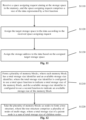
- FIG. 18 shows a method of managing the storage space according to an embodiment of the present disclosure, including: at step S1810, forming a plurality of memory blocks, where each memory block has a total storage size identifier and an available storage size identifier, where the total storage size identifier is used to indicate total storage size of the memory block, and the available storage size identifier is used to indicate available storage size of the memory block; and at step S1820, taking the plurality of memory blocks as nodes to form a tree structure, which comprises a plurality of nodes of multi-stage, where total storage size of the parent node is a sum of total storage size of the children nodes.
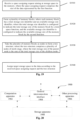
- FIG. 19 is a method of assigning the storage space to the data in the memory according to an embodiment of the present disclosure, including: at step S1910, receiving a space assigning request aiming at storage space in the memory, where the space assigning request comprises the size of the data represented by the first function; at step S1920, forming a plurality of memory blocks, where each memory block has a total storage size identifier and an available storage size identifier, where the total storage size identifier is used to indicate the total storage size of the memory block by a total space function, and the available storage size identifier is used to indicate the available storage size of the memory block by the second function; at step S1930, taking the plurality of memory blocks as nodes to form a tree structure, which comprises a plurality of nodes of multi-stage, where the total storage size of the parent node is the sum of the total storage size of the children nodes; and at step S1940, according to the received space assigning request and the tree structure, assigning target storage space to the data.
- the present disclosure also provides an electronic device, including: one or a plurality of processors; and a memory, where the memory stores a computer executable instruction, and when the computer executable instruction is executed by the one or the plurality of processors, the electronic may perform the above mentioned method.
- the present disclosure also provides a computer-readable storage medium, on which the computer executable instruction is stored.
- the above mentioned method may be implemented when the computer executable instruction is executed by the one or the plurality of processors.
- FIG. 20 shows a combined processing apparatus 1900, which includes the above-mentioned computation apparatus 1902, a general interconnection interface 1904, and other processing apparatus 1906. According to the present disclosure, the computation apparatus interacts with other processing apparatuses to jointly complete an operation specified by the user.
- FIG. 20 is a schematic diagram of the combined processing apparatus.
- processing apparatuses include one or more types of general-purpose/special-purpose processors such as a central processing unit (CPU), a graphics processing unit (GPU), a neural network processor, and the like.
- CPU central processing unit
- GPU graphics processing unit
- a count of processors included in other processing apparatuses is not limited.
- Other processing apparatuses may serve as interfaces that connect a machine learning computation apparatus to external data and control including data moving, and may perform basic controls such as starting and stopping the machine learning computation apparatus; and other processing apparatuses may also cooperate with the machine learning computation apparatus to complete computation tasks.
- a general interconnection interface is configured to transfer data and a control instruction between the computation apparatus (such as a machine learning computation apparatus) and other processing apparatuses.
- the computation apparatus obtains required input data from other processing apparatuses and write the data in an on-chip storage apparatus of the computation apparatus; the computation apparatus may obtain a control instruction from other processing apparatuses, and write the control instruction in an on-chip control cache of the computation apparatus; and the computation apparatus may further read data stored in a storage unit of the computation apparatus and transfer the data to other processing apparatuses.
- the structure may also include a storage apparatus 1908.
- the storage apparatus 1908 is connected to the computation apparatus and other processing apparatuses respectively.
- the storage apparatus is configured to store data of the computation apparatus and other processing apparatuses, and is especially suitable for storing data that may not be fully stored in the internal memory of the computation apparatus or other processing apparatuses.
- the combined processing apparatus may be used as an SOC (system on chip) of a device including a mobile phone, a robot, a drone, a video surveillance device, and the like, thereby effectively reducing the core area of a control section, increasing the processing speed, and decreasing the total power consumption.
- the general interconnection interface of the combined processing apparatus may be connected to some components of the device.
- the components include, for example, a webcam, a monitor, a mouse, a keyboard, a network card, and a WIFI interface.
- the present disclosure also discloses a board card, which includes the above chip package structure.
- FIG. 21 provides an exemplary board card, which not only includes the above mentioned chip 2002, but also includes other supporting components.
- Other supporting components include but are not limited to a storage component 2004, an interface apparatus 2006, and a control component 2008.
- the storage component is connected to the chip in the chip package structure through a bus, and the storage component is configured to store data.
- the storage component may include a plurality of groups of storage units 2010. Each group of the storage units is connected to the chip through a bus. It may be understood that each group of the storage unit may be a DDR SDRAM (double data rate synchronous dynamic random-access memory).
- the DDR may double the speed of the SDRAM without increasing the clock frequency.
- the DDR allows data to be read on a rising and a falling edge of the clock pulse.
- the speed of the DDR is twice the speed of a standard SDRAM.
- the storage apparatus may include 4 groups of storage units.
- Each group of the storage unit may include a plurality of DDR4 particles (chips).
- four 72-bit DDR4 controllers may be arranged inside the chip, where 64 bits of each 72-bit DDR4 controller are for data transfer and 8 bits are for ECC (error checking and correcting) parity.
- each group of the storage units includes a plurality of DDR SDRAMs arranged in parallel. DDR may transfer data twice in one clock cycle.
- a controller for controlling the DDR is arranged in the chip to control data transfer and data storage of each storage unit.
- the interface apparatus may be electrically connected to the chip inside the chip package structure.
- the interface apparatus is configured to implement data transfer between the chip and an external device 2012 (such as a server or a computer).
- the interface apparatus may be a standard PCIe (peripheral component interconnect express) interface.
- data to be processed may be transferred by a server through the standard PCIe interface to the chip to realize data transfer.
- the interface apparatus may also be other interfaces.
- the present disclosure does not limit a specific form of expression of other interfaces as long as the interface unit may realize a transferring function.
- a computation result of the chip is still sent back to the external device (such as a server) by the interface apparatus.
- the control component is electrically connected to the chip.
- the control component is configured to monitor a state of the chip.
- the chip and the control component may be electrically connected through an SPI (serial peripheral interface).
- the control component may include an MCU (micro controller unit).
- the chip may include a plurality of processing chips, a plurality of processing cores, or a plurality of processing circuits, and may drive a plurality of loads. Therefore, the chip may in different working states such as multi-load working states and light-load working states.
- the control apparatus may realize regulation of working states of a plurality of processing chips, a plurality of processing cores and/or a plurality of processing circuits in the chip.
- the present disclosure discloses an electronic device or apparatus, which includes the above mentioned board card.
- the electronic device or apparatus includes a data processing device, a robot, a computer, a printer, a scanner, a tablet, a smart terminal, a mobile phone, a traffic recorder, a navigator, a sensor, a webcam, a server, a cloud-based server, a camera, a video camera, a projector, a watch, a headphone, a mobile storage, a wearable device, a vehicle, a household appliance, and/or a medical device.
- a data processing device a robot, a computer, a printer, a scanner, a tablet, a smart terminal, a mobile phone, a traffic recorder, a navigator, a sensor, a webcam, a server, a cloud-based server, a camera, a video camera, a projector, a watch, a headphone, a mobile storage, a wearable device, a vehicle, a household appliance, and/or a medical device.
- the vehicle includes an airplane, a ship, and/or a car.
- the household electrical appliance may include a television, an air conditioner, a microwave oven, a refrigerator, an electric rice cooker, a humidifier, a washing machine, an electric lamp, a gas cooker, and a range hood.
- the medical device may include a nuclear magnetic resonance spectrometer, a B-ultrasonic scanner, and/or an electrocardiograph.
- the disclosed apparatus may be implemented through other manners.
- the apparatus embodiments described above are merely illustrative, for example, the division of the unit is only a division of a logical function. In a real implementation, there may be other manners for division. For example, a plurality of units or components may be combined or may be integrated into another system, or some features may be ignored or not performed.
- coupling or direct coupling or communication connection between each illustrated or discussed component may be indirect coupling or communication connection through some interfaces, apparatuses or units, and may be in the form of electrical, optical, acoustic, magnetic, and the like.
- the units described as separate components may or may not be physically separated.
- the components shown as units may or may not be physical units. In other words, the components may be located in one place, or may be distributed into a plurality of network units. According to certain needs, some or all of the units may be selected for implementing the purposes of the schemes of the embodiments.
- each functional unit in every embodiment of the present disclosure may be integrated into one processing unit, or each unit may be physically stand alone, or two or more units may be integrated into one unit.
- the integrated unit above may be implemented in the form of hardware or in the form of software program unit.
- the integrated unit When the integrated unit is implemented in the form of a software program unit and sold or used as an independent product, the integrated unit may be stored in a computer-readable memory. Based on such understanding, the technical solutions of the present disclosure may be embodied in the form of a software product that is stored in a memory.
- the computer software product includes several instructions to enable a computer device (which may be a personal computer, a server, or a network device, and the like) to perform all or part of the steps of the methods described in each embodiment of the present disclosure.
- the foregoing memory includes: a USB flash drive, a ROM (read-only memory), a RAM (random-access memory), a mobile hard disk, a magnetic disk, or an optical disc, and other media that may store program codes.
- Article A1 A method of allocating a space address to data in a memory, comprising:
- Article A2 the method of article A1, further comprising:
- Article A3 The method of article A2, wherein assigning the target storage space to the data according to the received space assigning request comprises:
- Article A4 The method of article A3, further comprising: assigning the target storage space to the data according to the received space assigning request when the available storage size of the nodes with a smallest difference with the size of the data is found in the nodes of the tree structure.
- Article A5. The method of article A3, wherein assigning the target storage space to the data according to the received space assigning request comprises: creating a new node when the available storage size of nodes that is greater than or equal to the size of the data is not found in the tree structure, so that the available storage size of the new node holds the data.
- Article A6 The method of article A5, wherein creating the new node so that the available storage size of the new node holds the data comprises:
- Article A7 The method of any one of article A3 to article A6, wherein traversing available storage size of the nodes in the tree structure comprises: traversing another node at the same level as a parent node after traversing the parent node and all children nodes of the parent node.
- Article A8 The method of any one of the article A2 to A7 further comprises: adjusting a position of the node to make space of the plurality of memory blocks be continuous.
- Article A9 The method of any one of articles A2 to A8 further comprises: fixing an order of the nodes in the tree structure.
- Article A10 the method of articles A2 to A9, further comprising:
- Article A11 The method of any one of the articles A2 to A10, wherein allocating the space address to the data based on the assigned target storage space comprises: assigning addresses to other nodes at the same level orderly after allocating the space address to one node, wherein the address of each node covers addresses of all children nodes of the node.
- Article A12 A method of managing storage space comprises:
- Article A13 A method of assigning storage space to data in a memory, comprising:
- Article A14 the method of article A12 to A13, further comprising:
- Article A15 The method of article A14, further comprising: assigning the target storage space to the data according to the received space assigning request when the available storage size of the nodes with a smallest difference with the size of the data is found in the tree structure.
- Article A16 The method of article A14, further comprising: creating a new node when the available storage size of nodes that is greater than or equal to the size of the data is not found in the tree structure, so that the available storage size of the new node holds the data.
- Article A17 The method of article A16, wherein creating the new node so that the available storage size of the new node holds the data comprises:
- Article A18 The method of any one of article A14 to article A17, wherein traversing the available storage size in the nodes of the tree structure comprises: traversing another node at the same level as a parent node after traversing the parent node and all children nodes of the parent node.
- Article A19 The method of any one of the articles A12 to A18 further comprises: adjusting a position of the node to make space of the plurality of memory blocks be continuous.
- Article A20 The method of any one of articles A12 to A19 further comprises: fixing an order of the nodes in the tree structure.
- Article A21 An electronic device, comprising:
- Article A22 A computer-readable storage medium, comprising a computer executable instruction, wherein the method of any one of articles A1 to A20 is implemented when the computer executable instruction is operated by one or a plurality of processors.
- Article B A method of allocating a space address to data in a memory, comprising:
- Article B2 the method of article B1, further comprising:
- Article B3 The method of article B2, wherein assigning the target storage space to the data according to the received space assigning request comprises:
- Article B4 The method of article B3, further comprising: assigning the storage space indicated by a maximum common function as the target storage space when the available storage size of nodes represented by the second function is found in the tree structure, wherein the second function and the first function have the maximum common function.
- Article B5 The method of article B3, further comprising: traversing the available storage size of the nodes in the tree structure repeatedly until no available storage size is found.
- Article B6 The method of article B3, wherein assigning the target storage space to the data according to the received space assigning request comprises: creating a new node so that the available storage size of the new node holds the data when the available storage size of the nodes that is greater than or equal to the size of the data is not found in the tree structure.
- Article B7 The method of article B6, wherein creating the new node so that the available storage size of the new node holds the data comprises:
- Article B8 The method of article B6, wherein creating the new node so that the available storage size of the new node holds the data comprises:
- Article B9 The method of any one of article B3 to article B8, wherein traversing the available storage size in the nodes of the tree structure comprises: traversing another node at the same level as the parent node after traversing the parent node and all children nodes of the parent node.
- Article B10 The method of any one of the articles B2 to B9 further comprises: adjusting a position of the node to make space of the plurality of memory blocks be continuous.
- Article B11 The method of any one of articles B2 to B10 further comprises: fixing an order of the nodes in the tree structure.
- Article B12 the method of any one of articles B2 to B11, further comprising:
- Article B13 The method of any one of the articles B2 to B12, wherein allocating the space address to the data based on the assigned target storage space comprises: assigning addresses to other nodes at the same level orderly after allocating the space address to one node, wherein the address of each node covers addresses of all children nodes of the node.
- Article B14 A method of managing storage space comprises:
- Article B15 A method of assigning storage space to data in a memory, comprising:
- Article B16 the method of article B14 to B15, further comprising:
- Article B17 The method of article B16, further comprising: assigning the storage space indicated by a maximum common function as the target storage space when the available storage size of nodes represented by the second function is found in the tree structure, wherein the second function and the first function have the maximum common function.
- Article B18 The method of article B16, further comprising: traversing the available storage size of the nodes in the tree structure repeatedly until no available storage size is found.
- Article B19 The method of article B16, further comprising: creating a new node so that the available storage size of the new node holds the data when the available storage size of the nodes that is greater than or equal to the size of the data is not found in the tree structure.
- Article B20 The method of article B19, wherein creating the new node so that the available storage size of the new node holds the data comprises:
- Article B21 The method of any one of article B16 to article B20, wherein traversing the available storage size in the nodes of the tree structure comprises: traversing another node at the same level as a parent node after traversing the parent node and all children nodes of the parent node.
- Article B22 The method of any one of the articles B14 to B21 further comprises: adjusting a position of the node to make space of the plurality of memory blocks be continuous.
- Article B23 The method of any one of articles B14 to B22 further comprises: fixing an order of the nodes in the tree structure.
- Article B24 An electronic device, comprising:
- Article B25 A computer-readable storage medium, comprising a computer executable instruction, wherein the method of any one of articles B1 to B23 is implemented when the computer executable instruction is operated by one or a plurality of processors.
Landscapes
- Engineering & Computer Science (AREA)
- Theoretical Computer Science (AREA)
- Physics & Mathematics (AREA)
- General Engineering & Computer Science (AREA)
- General Physics & Mathematics (AREA)
- Health & Medical Sciences (AREA)
- Life Sciences & Earth Sciences (AREA)
- Biomedical Technology (AREA)
- Biophysics (AREA)
- Artificial Intelligence (AREA)
- Computational Linguistics (AREA)
- Data Mining & Analysis (AREA)
- Evolutionary Computation (AREA)
- General Health & Medical Sciences (AREA)
- Molecular Biology (AREA)
- Computing Systems (AREA)
- Mathematical Physics (AREA)
- Software Systems (AREA)
- Neurology (AREA)
- Information Retrieval, Db Structures And Fs Structures Therefor (AREA)
Applications Claiming Priority (3)
| Application Number | Priority Date | Filing Date | Title |
|---|---|---|---|
| CN202010421447.1A CN113688064B (zh) | 2020-05-18 | 2020-05-18 | 一种在存储器中为数据分配存储地址的方法和设备 |
| CN202010421439.7A CN113688063B (zh) | 2020-05-18 | 2020-05-18 | 一种在存储器中为数据分配存储地址的方法和设备 |
| PCT/CN2021/093466 WO2021233187A1 (zh) | 2020-05-18 | 2021-05-12 | 一种在存储器中为数据分配存储地址的方法和设备 |
Publications (3)
| Publication Number | Publication Date |
|---|---|
| EP4155946A1 true EP4155946A1 (de) | 2023-03-29 |
| EP4155946A4 EP4155946A4 (de) | 2024-01-10 |
| EP4155946B1 EP4155946B1 (de) | 2026-02-25 |
Family
ID=78718203
Family Applications (1)
| Application Number | Title | Priority Date | Filing Date |
|---|---|---|---|
| EP21808996.9A Active EP4155946B1 (de) | 2020-05-18 | 2021-05-12 | Verfahren und vorrichtung zur zuweisung von speicheradressen für daten in einem speicher |
Country Status (3)
| Country | Link |
|---|---|
| US (1) | US12292829B2 (de) |
| EP (1) | EP4155946B1 (de) |
| WO (1) | WO2021233187A1 (de) |
Families Citing this family (1)
| Publication number | Priority date | Publication date | Assignee | Title |
|---|---|---|---|---|
| US12164543B2 (en) * | 2022-10-14 | 2024-12-10 | Oracle International Corporation | Efficient space usage cache on a database cluster |
Family Cites Families (17)
| Publication number | Priority date | Publication date | Assignee | Title |
|---|---|---|---|---|
| DE59410112D1 (de) | 1994-09-19 | 2002-06-06 | Siemens Ag | Speicherverwaltungssystem eines Rechnersystems |
| US5659704A (en) | 1994-12-02 | 1997-08-19 | Hewlett-Packard Company | Methods and system for reserving storage space for data migration in a redundant hierarchic data storage system by dynamically computing maximum storage space for mirror redundancy |
| US7234039B1 (en) | 2004-11-15 | 2007-06-19 | American Megatrends, Inc. | Method, system, and apparatus for determining the physical memory address of an allocated and locked memory buffer |
| US8504792B2 (en) | 2009-12-22 | 2013-08-06 | Apple Inc. | Methods and apparatuses to allocate file storage via tree representations of a bitmap |
| CN102012870B (zh) * | 2010-11-18 | 2012-05-23 | 清华大学 | 内存分配方法 |
| US9563555B2 (en) * | 2011-03-18 | 2017-02-07 | Sandisk Technologies Llc | Systems and methods for storage allocation |
| US20120303927A1 (en) * | 2011-05-24 | 2012-11-29 | Richard Goldberg | Memory allocation using power-of-two block sizes |
| CN102981966B (zh) | 2012-11-09 | 2016-04-06 | 青岛海信宽带多媒体技术有限公司 | 一种均衡分配Flash存储块的数据存储方法 |
| WO2016106757A1 (zh) | 2014-12-31 | 2016-07-07 | 华为技术有限公司 | 一种存储数据的管理方法、存储管理器及存储系统 |
| WO2016191964A1 (zh) | 2015-05-29 | 2016-12-08 | 华为技术有限公司 | 一种文件系统的管理方法及装置 |
| WO2017107015A1 (zh) * | 2015-12-21 | 2017-06-29 | 华为技术有限公司 | 存储空间的分配方法及存储设备 |
| CN107133182A (zh) | 2016-02-29 | 2017-09-05 | 北大方正集团有限公司 | 一种内存管理方法及装置 |
| US11907760B2 (en) * | 2016-09-23 | 2024-02-20 | Apple Inc. | Systems and methods of memory allocation for neural networks |
| CN108874532B (zh) | 2017-06-01 | 2020-11-06 | 北京旷视科技有限公司 | 内存分配方法及设备 |
| CN109783220B (zh) | 2017-11-10 | 2020-12-11 | 安徽寒武纪信息科技有限公司 | 内存分配方法、装置、计算机系统及存储介质 |
| WO2020010503A1 (zh) * | 2018-07-10 | 2020-01-16 | 深圳花儿数据技术有限公司 | 基于多层一致性哈希的分布式数据存储方法与系统 |
| CN110704214B (zh) | 2019-10-14 | 2021-05-25 | 北京京东乾石科技有限公司 | 进程间通信方法和装置 |
-
2021
- 2021-05-12 EP EP21808996.9A patent/EP4155946B1/de active Active
- 2021-05-12 WO PCT/CN2021/093466 patent/WO2021233187A1/zh not_active Ceased
- 2021-05-12 US US17/998,892 patent/US12292829B2/en active Active
Also Published As
| Publication number | Publication date |
|---|---|
| EP4155946A4 (de) | 2024-01-10 |
| WO2021233187A1 (zh) | 2021-11-25 |
| EP4155946B1 (de) | 2026-02-25 |
| US20230214322A1 (en) | 2023-07-06 |
| US12292829B2 (en) | 2025-05-06 |
Similar Documents
| Publication | Publication Date | Title |
|---|---|---|
| CN110096309B (zh) | 运算方法、装置、计算机设备和存储介质 | |
| JP7121102B2 (ja) | データ処理方法、装置、及び関連製品 | |
| US11886880B2 (en) | Data processing apparatus and related products with descriptor management | |
| US20210150325A1 (en) | Data processing method and apparatus, and related product | |
| US20230229493A1 (en) | Electronic system, operating method thereof, and operating method of memory device | |
| US12292829B2 (en) | Method and device for allocating storage addresses for data in memory | |
| CN110458286B (zh) | 数据处理方法、装置、计算机设备和存储介质 | |
| CN112052040B (zh) | 处理方法、装置、计算机设备和存储介质 | |
| CN113688064B (zh) | 一种在存储器中为数据分配存储地址的方法和设备 | |
| CN112230931A (zh) | 计算机可读取存储介质、适应于图形处理器的二次卸载的编译装置和方法 | |
| CN111026440B (zh) | 运算方法、装置、计算机设备和存储介质 | |
| CN112395009A (zh) | 运算方法、装置、计算机设备和存储介质 | |
| CN113688063B (zh) | 一种在存储器中为数据分配存储地址的方法和设备 | |
| CN112395008A (zh) | 运算方法、装置、计算机设备和存储介质 | |
| US20260079709A1 (en) | Efficient utilization of synchronization primitives in a multiprocessor computing system | |
| CN113867686B (zh) | 运算方法、装置及相关产品 | |
| US12106109B2 (en) | Data processing apparatus and related product | |
| CN104166608A (zh) | 存取芯片内建只读存储器的方法及计算机系统 | |
| CN113806246B (zh) | 数据处理装置及方法以及相关产品 | |
| CN112395002B (zh) | 运算方法、装置、计算机设备和存储介质 | |
| US20250181503A1 (en) | Software sharing across multiple cores | |
| CN112396170B (zh) | 运算方法、装置、计算机设备和存储介质 | |
| CN111857829B (zh) | 处理器操作方法及装置以及相关产品 | |
| CN117472560A (zh) | 跨多个内核的软件共享 | |
| WO2024182059A1 (en) | Metadata updating in computer graphics |
Legal Events
| Date | Code | Title | Description |
|---|---|---|---|
| STAA | Information on the status of an ep patent application or granted ep patent |
Free format text: STATUS: THE INTERNATIONAL PUBLICATION HAS BEEN MADE |
|
| PUAI | Public reference made under article 153(3) epc to a published international application that has entered the european phase |
Free format text: ORIGINAL CODE: 0009012 |
|
| STAA | Information on the status of an ep patent application or granted ep patent |
Free format text: STATUS: REQUEST FOR EXAMINATION WAS MADE |
|
| 17P | Request for examination filed |
Effective date: 20221215 |
|
| AK | Designated contracting states |
Kind code of ref document: A1 Designated state(s): AL AT BE BG CH CY CZ DE DK EE ES FI FR GB GR HR HU IE IS IT LI LT LU LV MC MK MT NL NO PL PT RO RS SE SI SK SM TR |
|
| DAV | Request for validation of the european patent (deleted) | ||
| DAX | Request for extension of the european patent (deleted) | ||
| A4 | Supplementary search report drawn up and despatched |
Effective date: 20231212 |
|
| RIC1 | Information provided on ipc code assigned before grant |
Ipc: G06N 3/063 20230101ALI20231206BHEP Ipc: G06F 12/02 20060101AFI20231206BHEP |
|
| GRAP | Despatch of communication of intention to grant a patent |
Free format text: ORIGINAL CODE: EPIDOSNIGR1 |
|
| STAA | Information on the status of an ep patent application or granted ep patent |
Free format text: STATUS: GRANT OF PATENT IS INTENDED |
|
| INTG | Intention to grant announced |
Effective date: 20250922 |
|
| GRAJ | Information related to disapproval of communication of intention to grant by the applicant or resumption of examination proceedings by the epo deleted |
Free format text: ORIGINAL CODE: EPIDOSDIGR1 |
|
| STAA | Information on the status of an ep patent application or granted ep patent |
Free format text: STATUS: REQUEST FOR EXAMINATION WAS MADE |
|
| GRAP | Despatch of communication of intention to grant a patent |
Free format text: ORIGINAL CODE: EPIDOSNIGR1 |
|
| STAA | Information on the status of an ep patent application or granted ep patent |
Free format text: STATUS: GRANT OF PATENT IS INTENDED |
|
| INTC | Intention to grant announced (deleted) | ||
| INTG | Intention to grant announced |
Effective date: 20251107 |
|
| GRAS | Grant fee paid |
Free format text: ORIGINAL CODE: EPIDOSNIGR3 |
|
| GRAA | (expected) grant |
Free format text: ORIGINAL CODE: 0009210 |
|
| STAA | Information on the status of an ep patent application or granted ep patent |
Free format text: STATUS: THE PATENT HAS BEEN GRANTED |
|
| AK | Designated contracting states |
Kind code of ref document: B1 Designated state(s): AL AT BE BG CH CY CZ DE DK EE ES FI FR GB GR HR HU IE IS IT LI LT LU LV MC MK MT NL NO PL PT RO RS SE SI SK SM TR |
|
| REG | Reference to a national code |
Ref country code: CH Ref legal event code: F10 Free format text: ST27 STATUS EVENT CODE: U-0-0-F10-F00 (AS PROVIDED BY THE NATIONAL OFFICE) Effective date: 20260225 Ref country code: GB Ref legal event code: FG4D |
|
| REG | Reference to a national code |
Ref country code: DE Ref legal event code: R096 Ref document number: 602021048791 Country of ref document: DE |
|
| REG | Reference to a national code |
Ref country code: IE Ref legal event code: FG4D |
|
| PGFP | Annual fee paid to national office [announced via postgrant information from national office to epo] |
Ref country code: GB Payment date: 20260313 Year of fee payment: 6 |