EP4155518B1 - Multi-core heat recovery charge cooler - Google Patents
Multi-core heat recovery charge cooler Download PDFInfo
- Publication number
- EP4155518B1 EP4155518B1 EP22202514.0A EP22202514A EP4155518B1 EP 4155518 B1 EP4155518 B1 EP 4155518B1 EP 22202514 A EP22202514 A EP 22202514A EP 4155518 B1 EP4155518 B1 EP 4155518B1
- Authority
- EP
- European Patent Office
- Prior art keywords
- air
- working fluid
- fluid
- inlet
- conduit
- Prior art date
- Legal status (The legal status is an assumption and is not a legal conclusion. Google has not performed a legal analysis and makes no representation as to the accuracy of the status listed.)
- Active
Links
Images



Classifications
-
- F—MECHANICAL ENGINEERING; LIGHTING; HEATING; WEAPONS; BLASTING
- F02—COMBUSTION ENGINES; HOT-GAS OR COMBUSTION-PRODUCT ENGINE PLANTS
- F02B—INTERNAL-COMBUSTION PISTON ENGINES; COMBUSTION ENGINES IN GENERAL
- F02B29/00—Engines characterised by provision for charging or scavenging not provided for in groups F02B25/00, F02B27/00 or F02B33/00 - F02B39/00; Details thereof
- F02B29/04—Cooling of air intake supply
- F02B29/045—Constructional details of the heat exchangers, e.g. pipes, plates, ribs, insulation, materials, or manufacturing and assembly
- F02B29/0462—Liquid cooled heat exchangers
-
- F—MECHANICAL ENGINEERING; LIGHTING; HEATING; WEAPONS; BLASTING
- F02—COMBUSTION ENGINES; HOT-GAS OR COMBUSTION-PRODUCT ENGINE PLANTS
- F02G—HOT GAS OR COMBUSTION-PRODUCT POSITIVE-DISPLACEMENT ENGINE PLANTS; USE OF WASTE HEAT OF COMBUSTION ENGINES; NOT OTHERWISE PROVIDED FOR
- F02G5/00—Profiting from waste heat of combustion engines, not otherwise provided for
- F02G5/02—Profiting from waste heat of exhaust gases
-
- F—MECHANICAL ENGINEERING; LIGHTING; HEATING; WEAPONS; BLASTING
- F01—MACHINES OR ENGINES IN GENERAL; ENGINE PLANTS IN GENERAL; STEAM ENGINES
- F01K—STEAM ENGINE PLANTS; STEAM ACCUMULATORS; ENGINE PLANTS NOT OTHERWISE PROVIDED FOR; ENGINES USING SPECIAL WORKING FLUIDS OR CYCLES
- F01K23/00—Plants characterised by more than one engine delivering power external to the plant, the engines being driven by different fluids
- F01K23/02—Plants characterised by more than one engine delivering power external to the plant, the engines being driven by different fluids the engine cycles being thermally coupled
- F01K23/06—Plants characterised by more than one engine delivering power external to the plant, the engines being driven by different fluids the engine cycles being thermally coupled combustion heat from one cycle heating the fluid in another cycle
-
- F—MECHANICAL ENGINEERING; LIGHTING; HEATING; WEAPONS; BLASTING
- F01—MACHINES OR ENGINES IN GENERAL; ENGINE PLANTS IN GENERAL; STEAM ENGINES
- F01K—STEAM ENGINE PLANTS; STEAM ACCUMULATORS; ENGINE PLANTS NOT OTHERWISE PROVIDED FOR; ENGINES USING SPECIAL WORKING FLUIDS OR CYCLES
- F01K23/00—Plants characterised by more than one engine delivering power external to the plant, the engines being driven by different fluids
- F01K23/02—Plants characterised by more than one engine delivering power external to the plant, the engines being driven by different fluids the engine cycles being thermally coupled
- F01K23/06—Plants characterised by more than one engine delivering power external to the plant, the engines being driven by different fluids the engine cycles being thermally coupled combustion heat from one cycle heating the fluid in another cycle
- F01K23/065—Plants characterised by more than one engine delivering power external to the plant, the engines being driven by different fluids the engine cycles being thermally coupled combustion heat from one cycle heating the fluid in another cycle the combustion taking place in an internal combustion piston engine, e.g. a diesel engine
-
- F—MECHANICAL ENGINEERING; LIGHTING; HEATING; WEAPONS; BLASTING
- F01—MACHINES OR ENGINES IN GENERAL; ENGINE PLANTS IN GENERAL; STEAM ENGINES
- F01K—STEAM ENGINE PLANTS; STEAM ACCUMULATORS; ENGINE PLANTS NOT OTHERWISE PROVIDED FOR; ENGINES USING SPECIAL WORKING FLUIDS OR CYCLES
- F01K23/00—Plants characterised by more than one engine delivering power external to the plant, the engines being driven by different fluids
- F01K23/02—Plants characterised by more than one engine delivering power external to the plant, the engines being driven by different fluids the engine cycles being thermally coupled
- F01K23/06—Plants characterised by more than one engine delivering power external to the plant, the engines being driven by different fluids the engine cycles being thermally coupled combustion heat from one cycle heating the fluid in another cycle
- F01K23/10—Plants characterised by more than one engine delivering power external to the plant, the engines being driven by different fluids the engine cycles being thermally coupled combustion heat from one cycle heating the fluid in another cycle with exhaust fluid of one cycle heating the fluid in another cycle
-
- F—MECHANICAL ENGINEERING; LIGHTING; HEATING; WEAPONS; BLASTING
- F01—MACHINES OR ENGINES IN GENERAL; ENGINE PLANTS IN GENERAL; STEAM ENGINES
- F01P—COOLING OF MACHINES OR ENGINES IN GENERAL; COOLING OF INTERNAL-COMBUSTION ENGINES
- F01P7/00—Controlling of coolant flow
- F01P7/14—Controlling of coolant flow the coolant being liquid
-
- F—MECHANICAL ENGINEERING; LIGHTING; HEATING; WEAPONS; BLASTING
- F02—COMBUSTION ENGINES; HOT-GAS OR COMBUSTION-PRODUCT ENGINE PLANTS
- F02B—INTERNAL-COMBUSTION PISTON ENGINES; COMBUSTION ENGINES IN GENERAL
- F02B29/00—Engines characterised by provision for charging or scavenging not provided for in groups F02B25/00, F02B27/00 or F02B33/00 - F02B39/00; Details thereof
- F02B29/04—Cooling of air intake supply
- F02B29/0406—Layout of the intake air cooling or coolant circuit
- F02B29/0412—Multiple heat exchangers arranged in parallel or in series
-
- F—MECHANICAL ENGINEERING; LIGHTING; HEATING; WEAPONS; BLASTING
- F02—COMBUSTION ENGINES; HOT-GAS OR COMBUSTION-PRODUCT ENGINE PLANTS
- F02B—INTERNAL-COMBUSTION PISTON ENGINES; COMBUSTION ENGINES IN GENERAL
- F02B29/00—Engines characterised by provision for charging or scavenging not provided for in groups F02B25/00, F02B27/00 or F02B33/00 - F02B39/00; Details thereof
- F02B29/04—Cooling of air intake supply
- F02B29/0406—Layout of the intake air cooling or coolant circuit
- F02B29/0437—Liquid cooled heat exchangers
-
- F—MECHANICAL ENGINEERING; LIGHTING; HEATING; WEAPONS; BLASTING
- F02—COMBUSTION ENGINES; HOT-GAS OR COMBUSTION-PRODUCT ENGINE PLANTS
- F02B—INTERNAL-COMBUSTION PISTON ENGINES; COMBUSTION ENGINES IN GENERAL
- F02B29/00—Engines characterised by provision for charging or scavenging not provided for in groups F02B25/00, F02B27/00 or F02B33/00 - F02B39/00; Details thereof
- F02B29/04—Cooling of air intake supply
- F02B29/0406—Layout of the intake air cooling or coolant circuit
- F02B29/0437—Liquid cooled heat exchangers
- F02B29/0443—Layout of the coolant or refrigerant circuit
-
- F—MECHANICAL ENGINEERING; LIGHTING; HEATING; WEAPONS; BLASTING
- F01—MACHINES OR ENGINES IN GENERAL; ENGINE PLANTS IN GENERAL; STEAM ENGINES
- F01N—GAS-FLOW SILENCERS OR EXHAUST APPARATUS FOR MACHINES OR ENGINES IN GENERAL; GAS-FLOW SILENCERS OR EXHAUST APPARATUS FOR INTERNAL-COMBUSTION ENGINES
- F01N2900/00—Details of electrical control or of the monitoring of the exhaust gas treating apparatus
- F01N2900/06—Parameters used for exhaust control or diagnosing
- F01N2900/08—Parameters used for exhaust control or diagnosing said parameters being related to the engine
-
- F—MECHANICAL ENGINEERING; LIGHTING; HEATING; WEAPONS; BLASTING
- F01—MACHINES OR ENGINES IN GENERAL; ENGINE PLANTS IN GENERAL; STEAM ENGINES
- F01P—COOLING OF MACHINES OR ENGINES IN GENERAL; COOLING OF INTERNAL-COMBUSTION ENGINES
- F01P7/00—Controlling of coolant flow
- F01P7/14—Controlling of coolant flow the coolant being liquid
- F01P2007/146—Controlling of coolant flow the coolant being liquid using valves
-
- Y—GENERAL TAGGING OF NEW TECHNOLOGICAL DEVELOPMENTS; GENERAL TAGGING OF CROSS-SECTIONAL TECHNOLOGIES SPANNING OVER SEVERAL SECTIONS OF THE IPC; TECHNICAL SUBJECTS COVERED BY FORMER USPC CROSS-REFERENCE ART COLLECTIONS [XRACs] AND DIGESTS
- Y02—TECHNOLOGIES OR APPLICATIONS FOR MITIGATION OR ADAPTATION AGAINST CLIMATE CHANGE
- Y02T—CLIMATE CHANGE MITIGATION TECHNOLOGIES RELATED TO TRANSPORTATION
- Y02T10/00—Road transport of goods or passengers
- Y02T10/10—Internal combustion engine [ICE] based vehicles
- Y02T10/12—Improving ICE efficiencies
Definitions
- the present disclosure relates generally to the field of waste heat recovery (“WHR”) systems for engine systems, and more particularly to a waste heat recovery system for an engine system.
- WHR waste heat recovery
- WHR systems capture a portion of the waste heat to perform useful work.
- Some WHR systems utilize a Rankine cycle.
- the Rankine cycle is a thermodynamic process in which heat is transferred to a working fluid in a Rankine cycle circuit.
- the working fluid is pumped to a heat exchanger where it is vaporized.
- the vapor is passed through an expander and then through a condenser, where the vapor is condensed back to a fluid.
- the expanding working fluid vapor causes the expander to rotate, thereby converting the waste heat energy to mechanical energy.
- the mechanical energy may be transmitted to engine system components, such as a pump, a compressor, a generator, etc.
- the waste heat can be in the form of hot charge gases exiting a compressor on a turbocharger.
- a charge air cooler (“CAC”) can be used.
- a charge cooler provides for heat to be exchanged between the charge gases and a working fluid (e.g., a coolant, a refrigerant, etc.) such that heat is transferred from the charge gases to the working fluid.
- a working fluid e.g., a coolant, a refrigerant, etc.
- the charge gases may be routed back to an intake manifold of the engine, cooling the charge gases to a temperature at which the engine operates efficiently is desirable.
- a charge cooler with a single core does not provide sufficient cooling to reduce the temperature of the charge gases to a desirable temperature.
- US2019/0234343 discloses an Organic Rankine Cycle waste heat recovery system which has an LT and an HT working fluid loop.
- the working fluid loops may each have a pump, one or more heat exchangers, an expander and a condenser.
- One of the heat exchanger boilers in the LT loop maybe a charge air cooler heat exchanger and may receive charge air mixed with recirculating exhaust gas.
- US2018/0372023 discloses a vehicle waste heat recovery system with an engine.
- the system has a working fluid circuit with a pump, a power turbine, and a condenser.
- An engine coolant circuit circulates coolant between the engine and an engine coolant heat exchanger/working fluid boiler in the waste heat recovery working fluid circuit.
- a working fluid cooled charge air cooler in the waste heat recovery working fluid circuit receives waste heat from compressed charge air in a charge air intake circuit.
- US2010/0139626 discloses a cooling circuit and an independent heart recovery circuit for an internal combustion engine. The coolant is circulated in a first and second cooling sub-circuit. A pump is used to increase pressure in a work medium in a heat recovery circuit. The work medium is changed between liquid and vaporous states using heat exchangers. The work medium is used in two parallel partial flows in an EGR heat exchanger and in an exhaust gas heat exchanger respectively.
- a waste heat recovery system for an engine system includes a first charge air cooler in fluid communication with a working fluid path of the waste heat recovery system.
- the first charge air cooler includes a first waste heat recovery core and a first cooling fluid core.
- the first waste heat recovery core includes a first working fluid inlet configured to receive a working fluid from the working fluid path.
- the first working fluid conduit is fluidly coupled to the first working fluid inlet and a first working fluid outlet, and the first working fluid conduit is configured to direct the working fluid from the first working fluid inlet to the first working fluid outlet.
- a first air conduit is adjacent to the first working fluid conduit and is in fluid communication with a first air inlet and a first air outlet.
- the first air conduit is configured to direct air from the first air inlet to the first air outlet, and the first air inlet is in fluid communication with an air source.
- the first cooling fluid core includes a first cooling fluid inlet in fluid communication with a cooling fluid source and a first cooling fluid conduit fluidly coupled to the first cooling fluid inlet and a first cooling fluid outlet.
- the first cooling fluid conduit is configured to direct cooling fluid from the first cooling fluid inlet to the first cooling fluid outlet.
- a second air conduit is adjacent to the first cooling fluid conduit and is in fluid communication with a second air inlet and a second air outlet.
- the second air conduit is configured to direct air from the second air inlet to the second air outlet.
- the second air inlet is in fluid communication with the first air outlet, and the second air outlet is in fluid communication with an intake of an engine or a compressor inlet of the engine.
- an engine system comprising a waste heat recovery system.
- the waste heat recovery system comprises a first charge air cooler in fluid communication with a first working fluid path, a first cooling fluid path, and an air source.
- the waste heat recovery system further comprises a second charge air cooler is in fluid communication with a second working fluid path, a second cooling fluid path, and the air source.
- the waste heat recovery system further comprises a first flow control valve selectively directs a portion of a working fluid through the first working fluid path and the remainder of the working fluid through the second working fluid path.
- a waste heat recovery system for an engine system includes a first charge air cooler in fluid communication with a working fluid path and a source of compressed air.
- the first charge air cooler is configured to direct the compressed air from a first air inlet to a first air outlet and to direct a working fluid from a first working fluid inlet to a first working fluid outlet.
- a second charge air cooler is in fluid communication with the working fluid path and the source of compressed air and is configured to direct the compressed air from a second air inlet to a second air outlet and to direct the working fluid from a second working fluid inlet to a second working fluid outlet.
- the second air inlet is in fluid communication with the first air outlet and the second working fluid inlet is in fluid communication with the first working fluid outlet.
- a third charge air cooler is in fluid communication with a cooling fluid path and the source of compressed air and is configured to direct the compressed air from a third air inlet to a third air outlet and to direct a cooling fluid from a first cooling fluid inlet to a first cooling fluid outlet.
- the third air inlet is in fluid communication with the second air outlet, and the third air outlet is in communication with an intake of the engine system.
- a WHR system recovers heat energy that would otherwise be lost from a vehicle component or system, such as from an internal combustion engine of the vehicle.
- the more waste heat energy that is extracted from the component or system by a WHR system the greater the potential efficiency of the engine.
- the extracted heat energy may be repurposed to, e.g., supplement the power output from the internal combustion engine, thereby increasing the efficiency of the system.
- Implementations herein relate to various WHR systems that incorporate CACs with multiple cores as part of the WHR system.
- a CAC receives charge air from a compressor of a turbocharger (or other air-handling component, such as a supercharger, e-compressor, etc.), cools the charge air, and provides the charge air to an intake manifold of the engine. The heat that is removed from the charge air is used as part of the WHR system and converted to mechanical energy to provide useful work.
- a CAC that includes multiple cores is capable of cooling the charge air to a lower temperature than a CAC with a single core. Providing the charge air to the intake manifold at a lower temperature can increase the efficiency of the engine. Additionally, a multi-core CAC may better utilize the available thermal energy of the charge gas to increase the power output or efficiency of the WHR system.
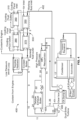
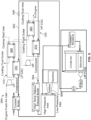
- FIGS. 1-2 are illustrations of a multi-core CAC 100 and a WHR system 200 incorporating the multi-core CAC 100, respectively.
- the multi-core CAC 100 includes a WHR core 110 in fluid communication with a cooling fluid core 120.
- the WHR core 110 includes a first air inlet 112, a first air outlet 114, a working fluid inlet 116, and a working fluid outlet 118.
- the WHR core 110 is structured similarly to a heat exchanger.
- charge air enters the WHR core 110 from a compressor of a turbocharger via the first air inlet 112 and is directed to the first air outlet 114 via a first air conduit (not shown) that couples the first air inlet 112 to the first air outlet 114.
- the charge air enters the first air inlet 112 at an elevated temperature (e.g., approximately 150-200 degrees Fahrenheit, 65.56C to 93.33C).
- Working fluid enters the WHR core 110 via the working fluid inlet 116 and is directed to the working fluid outlet 118 via a working fluid conduit (not shown) that couples the working fluid inlet 116 to the working fluid outlet 118.
- the working fluid can be any type of fluid capable of absorbing heat. Examples of the working fluid include, but are not limited to, coolants, refrigerants, high molecular mass fluids, etc.
- the first air conduit and the working fluid conduit are adjacent to each other such that at least some heat from the charge air is absorbed by the working fluid, thereby decreasing the temperature of the charge air and increasing the temperature of the working fluid.
- the working fluid is directed around a working fluid path 202, which includes the working fluid conduit of the WHR core 110. After exiting the working fluid outlet 118, the working fluid enters a turbine 208, where the heat of working fluid is converted to mechanical energy by the turbine 208. The working fluid continues to a condenser 206 that lowers the temperature of the working fluid, and the working fluid is pumped back through the WHR core 110 by a pump 204.
- the temperature of the charge air exiting the WHR core 110 may be above a target intake temperature for the engine.
- the temperature of the charge air exiting the WHR core 110 may be approximately 37.78C (one hundred degrees Fahrenheit), while the target intake temperature may be between approximately 10C and 21.11C (fifty degrees and seventy degrees Fahrenheit). Accordingly, the charge air is directed through the cooling fluid core 120 to further reduce the temperature of the charge air.
- the cooling fluid core 120 includes a second air inlet 122, a second air outlet 124, a cooling fluid inlet 126, and a cooling fluid outlet 128.
- the cooling fluid core 120 is structured similarly to a heat exchanger.
- the charge air enters the cooling fluid core 120 from the first air outlet 114 via the second air inlet 122 and is directed to the second air outlet 124 via a second air conduit (not shown) that couples the second air inlet 122 to the second air outlet 124.
- Cooling fluid enters the cooling fluid core 120 via the cooling fluid inlet 126 and is directed to the cooling fluid outlet 128 via a cooling fluid conduit (not shown) that couples the cooling fluid inlet 126 to the cooling fluid outlet 128.
- the cooling fluid flowing through the cooling fluid core 120 can be any type of cooling fluid including, but not limited to, coolant, refrigerant, water, etc.
- the temperature of the water at the cooling fluid inlet 126 is approximately 1.67C to 7.22C (thirty-five to forty-five degrees Fahrenheit).
- the second air conduit and the cooling fluid conduit are adjacent to each other such that at least some heat from the charge air is absorbed by the water, thereby decreasing the temperature of the charge air and increasing the temperature of the water.
- the temperature of the water at the cooling fluid outlet 128 may be approximately 10C to 15.56C (fifty to sixty degrees Fahrenheit) and the temperature of the charge air at the second air outlet 124 may be approximately 12.78C to 18.33C (fifty-five to sixty-five degrees Fahrenheit).
- the temperature of the charge air at the second air outlet 124 may be approximately equal to the ambient temperature around the vehicle (e.g., the temperature of the charge air may be within approximately plus or minus 12C but more accurately, as in the original US text, defined as plus or minus ten degrees Fahrenheit, of the ambient temperature).
- the multi-core CAC 100 is configured to reduce the temperature of the charge air exiting the multi-core CAC 100 to a target intake temperature (in some embodiments, the target intake temperature is a temperature approximately equal to the ambient temperature) for the intake of the engine.
- a target intake temperature in some embodiments, the target intake temperature is a temperature approximately equal to the ambient temperature.
- Providing air to the engine at the target intake temperature reduces the amount of work the engine must do to combat the effects of higher temperatures (e.g., less available oxygen for combustion, engine knocking, etc.), thereby increasing the efficiency or otherwise improving the performance or operation of the engine.
- the sizes of the WHR core 110 and the cooling fluid core 120 can be optimized based on various target characteristics. These characteristics can include power output from the WHR system 200, the target intake temperature, and other characteristics associated with a WHR system.
- the WHR core 110 may be sized to extract more heat from the charge air than a conventional WHR system such that the temperature of the working fluid entering the turbine is higher than that of a conventional WHR system. This arrangement allows the turbine to convert the higher temperature working fluid to more mechanical work than in a conventional WHR system.
- the WHR core 110 and/or the cooling fluid core 120 may be sized to optimize the temperature of the air at the second air outlet 124 such that the air enters the intake manifold at a temperature ideal for engine performance.
- the charge air entering the WHR core 110 may be compressed by a single compressor or by multiple compressors such that the charge air is compressed in stages.
- an intermediate fluid may be used to transfer heat from the air to the working fluid.
- additional inputs and/or outputs may be included in the WHR core 110 and/or the cooling fluid core 120 such that heat is transferred from the air to the intermediate fluid, and from the intermediate fluid to the working fluid.
- the WHR core 110 and the cooling fluid core 120 are independently operable such that each core can remain functional in the event that the other core experiences a failure.
- operation of the WHR core 110 can be modified so as to absorb additional heat from the charge air to cool the charge air to an acceptable level and avoid a system failure.
- a controller in communication with the WHR system 200 may cause the pump 204 to increase or decrease the flowrate of working fluid such that the working fluid absorbs additional heat from the charge air.
- the controller may also cause the condenser 206 to lower the temperature of the working fluid entering the pump 204 such that the working fluid can absorb additional heat from the charge air.
- operation of the cooling fluid core 120 can be modified to absorb additional heat from the charge air to cool the charge air to an acceptable level and avoid a system failure.
- the controller may cause the flow of cooling fluid to increase or decrease such that the cooling fluid absorbs additional heat from the charge air.
- the controller may also cause the temperature of the cooling fluid entering the cooling fluid core 120 to decrease such that the cooling fluid can absorb additional heat from the charge air.
- the multi-core CAC 100 includes various flow control devices (e.g., bypass valves, flow control valves, pumps, etc.) to manage the flow of one or more of the charge air, working fluid, or cooling fluid.
- a first valve may control the flow of the working fluid such that a flowrate of the working fluid can be set to a desired rate.
- a second valve may control the flow of the cooling fluid such that a flowrate of the cooling fluid can be set to a desired rate.
- a third valve may control the flow of charge air such that a flowrate of the charge air can be set to a desired rate.
- the flowrates of each of the working fluid, cooling fluid, and charge air can be adjusted using the valves to optimize operation of the WHR system 200. Accordingly, using one or more valves, alone or in combination, can isolate one or more cores from other cores.
- the charge air is in counterflow with both the working fluid and the cooling fluid (e.g., the charge air flows in one direction and the working fluid and cooling fluid flow in the opposite direction).
- any of the fluids described may be in various flow arrangements with the other fluids. Examples of flow arrangements include counterflow, co-flow (e.g., fluids flow in the same direction), cross-flow (e.g., fluids flow in a non-parallel arrangement), or any combination thereof.
- FIG. 3 is an illustration of a two stage dual core CAC system 300, according to a particular embodiment.
- the two stage dual core CAC system 300 includes a low pressure dual core CAC 310 in fluid communication with a high pressure dual core CAC 330.
- the low pressure dual core CAC 310 includes a first WHR core 350 and a first cooling fluid core 360 and is structured similarly to the multi-core CAC 100.
- the first WHR core 350 includes a first air inlet 312 and a first air outlet (not shown) coupled by a first air conduit (not shown).
- a first working fluid inlet 316 and a first working fluid outlet 318 are coupled by a first working fluid conduit (not shown).
- the first cooling fluid core 360 includes a second air inlet (not shown) and a second air outlet 314 coupled by a second air conduit (not shown), and a first cooling fluid inlet 320 coupled to a first cooling fluid outlet 322 by a first cooling fluid conduit (not shown).
- the air can enter the first air inlet 312 directly (e.g., without first being compressed the by low pressure compressor 302).
- the low pressure dual core CAC 310 is structured similarly to, and operates similarly to, the multi-core CAC 100 in that the charge air enters the first air inlet 312 at an elevated temperature and is cooled via interactions with both the working fluid of the first WHR core 350 and the first cooling fluid core 360 such that the temperature of the charge air is lower at the second air outlet 314 than at the first air inlet 312.
- the high pressure dual core CAC 330 includes a second WHR core 370 and a second cooling fluid core 380.
- the second WHR core 370 includes a third air inlet 332 and a third air outlet (not shown) coupled by a third air conduit (not shown).
- a second working fluid inlet 336 and a second working fluid outlet 338 are coupled by a second working fluid conduit (not shown).
- the second working fluid inlet 336 is coupled to the first working fluid outlet 318 such that the working fluid exiting the first WHR core 350 is directed to the second WHR core 370.
- the second cooling fluid core 380 includes a fourth air inlet (not shown) and a fourth air outlet 334 coupled by a fourth air conduit (not shown), and a second cooling fluid inlet 340 coupled to a second cooling fluid outlet 342 by a second cooling fluid conduit (not shown).
- the high pressure dual core CAC 330 is structured similarly to, and operates similarly to, the multi-core CAC 100 in that the charge air enters the third air inlet 332 at an elevated temperature and is cooled via interactions with both the working fluid of the second WHR core 370 and the second cooling fluid core 380 such that the temperature of the charge air is lower at the fourth air outlet 334 than at the third air inlet 332 and is at the target intake temperature.
- a cooling fluid supply provides a cooling fluid (e.g., water, coolant, refrigerant, etc.) to the first cooling fluid inlet 320 and the second cooling fluid inlet 340 such that the temperature of the fluid in the first cooling fluid core 360 is substantially the same as the temperature in the second cooling fluid core 380.
- a first valve may be in fluid communication with the first cooling fluid inlet 320, and a second valve may be in fluid communication with the second cooling fluid inlet 340.
- the first valve and the second valve may be operated independently of each other such that the flow of cooling fluid from the cooling fluid supply can be directed to both of the first cooling fluid core 360 and the second cooling fluid core 380, only one of the first cooling fluid core 360 and the second cooling fluid core 380, or neither of the first cooling fluid core 360 and the second cooling fluid core 380, as desired. Operation of the first valve and the second valve may be based on the temperature of the charge air at the fourth air outlet 334. For example, if the temperature of the charge air at the fourth air outlet 334 is lower than the target intake temperature, one or both of the first valve and the second valve may be used to stop the flow of cooling fluid to increase the temperature of the charge air to the target intake temperature.
- the second air outlet 314 is fluidly coupled to a third air inlet 332 such that the charge air is directed from the second air outlet 314 to the third air inlet 332.
- the charge air is directed through a high pressure compressor 324 to compress the charge air, thereby increasing the temperature of the charge air.
- the charge air is directed to the third air inlet 332 without being compressed by the high pressure compressor 324.
- FIG. 4 is an illustration of a WHR system 400 that incorporates the two stage dual core CAC system 300 in series, according to a particular embodiment.
- the WHR system 400 includes a low pressure working fluid path 402 and a high pressure working fluid path 404.
- the low pressure working fluid path 402 is configured to receive heat from sources that are typically at a relatively low temperature (e.g., fifty to one hundred fifty degrees Celsius) compared to the sources used on the high pressure working fluid path 404, and is in fluid communication with the two stage dual core CAC system 300, which is arranged in series.
- a series arrangement refers to the flow of the working fluid in the low pressure working fluid path 402, in that the working fluid passes through the first WHR core 350 and then the second WHR core 370 before being directed to a dual inlet turbine 406.
- the working fluid from the low pressure working fluid path 402 and the working fluid from the high pressure working fluid path 404 are both directed to the dual inlet turbine 406, which includes a first inlet in fluid communication with the low pressure working fluid path 402 and a second inlet in fluid communication with the high pressure working fluid path 404.
- the dual inlet turbine 406 is configured to receive both low pressure working fluid and high pressure working fluid and covert the thermal energy of those working fluids to mechanical work.
- FIG. 5 is an illustration of a WHR system 500 that incorporates the two stage dual core CAC system 300 in parallel, according to a particular embodiment.
- the WHR system 500 includes a low pressure working fluid path 502 and a high pressure working fluid path 504.
- the low pressure working fluid path 502 is configured to receive heat from sources that are typically at a relatively lower temperature (e.g., fifty to one hundred fifty degrees Celsius) compared to the sources used on the high pressure working fluid path 504, and is in fluid communication with the two stage dual core CAC system 300, which is arranged in parallel.
- a parallel arrangement refers to the way in which the working fluid can be directed through the two stage dual core CAC system 300 (e.g., the working fluid can be directed independently through either or both of the low pressure dual core CAC 310 and the high pressure dual core CAC 330).
- the low pressure dual core CAC 310 is in fluid communication with the low pressure working fluid path 502, and the high pressure dual core CAC 330 is in fluid communication with the high pressure working fluid path 504.
- a first valve 508 is in fluid communication with the low pressure working fluid path 502 and is operable to direct the working fluid through the low pressure working fluid path 502 or prevent the working fluid from flowing through the low pressure working fluid path 502.
- a second valve (not shown) may be positioned in or on the high pressure working fluid path 504 and is operable to direct the working fluid through the high pressure working fluid path 504 or prevent the working fluid from flowing through the high pressure working fluid path 504.
- the working fluid can be directed through one or both of the first WHR core 350 and the second WHR core 370, or the working fluid can be prevented from flowing through both of the first WHR core 350 and the second WHR core 370.
- the decision as to how much working fluid is allowed through either, neither, or both of the first WHR core 350 and the second WHR core 370 may be based on the temperature of the charge air as it exits the high pressure dual core CAC 330.
- the working fluid may be flowing through both the first WHR core 350 and the second WHR core 370.
- the temperature of the charge air as it exits the high pressure dual core CAC 330 may be lower than the target intake temperature.
- one or both of the first valve 508 and the second valve may be operated to prevent the working fluid from flowing through one or both of the first WHR core 350 and the second WHR core 370 to increase the temperature of the charge air as it exits the high pressure dual core CAC 330.
- the working fluid may be flowing through only the second WHR core 370 (e.g., the first valve 508 is closed to prevent the working fluid from flowing through the first WHR core 350).
- the temperature of the charge air as it exits the high pressure dual core CAC 330 may be higher than the target intake temperature.
- the first valve 508 may be opened to allow the working fluid to flow through the first WHR core 350 to decrease the temperature of the charge air exiting the high pressure dual core CAC 330 to the target intake temperature.
- the working fluid from the low pressure working fluid path 502 and the working fluid from the high pressure working fluid path 504 are both directed to a dual inlet turbine 506.
- the dual inlet turbine includes a first inlet in fluid communication with the low pressure working fluid path 502 and a second inlet in fluid communication with the high pressure working fluid path 504.
- the dual inlet turbine 506 is configured to receive both low pressure working fluid and high pressure working fluid and covert the thermal energy of those working fluids to mechanical work.
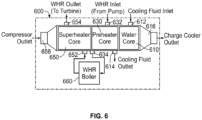
- FIGS. 6-7 are illustrations of a triple core CAC system 600 and a WHR system 700 incorporating the triple core CAC system 600, respectively, according to a particular embodiment.
- the triple core CAC system 600 includes a cooling fluid core 610, a preheater core 630, a superheater core 650, and a WHR boiler 660.
- the cooling fluid core 610 includes a cooling fluid inlet 612 coupled to a cooling fluid outlet 614 via a cooling fluid conduit (not shown).
- the cooling fluid inlet 612 is in fluid communication with a cooling fluid source that provides cooling fluid (e.g., water, coolant, refrigerant, etc.) to the cooling fluid inlet 612.
- the cooling fluid core 610 also includes a third air inlet (not shown) coupled to a third air outlet 616 by a third air conduit, where the third air outlet 616 is in fluid communication with an intake of the engine (or, in some embodiments, to the intake via further compression stages).
- the cooling fluid conduit and the third air conduit are adjacent to each other such that at least some heat from the charge air is absorbed by the cooling fluid, thereby decreasing the temperature of the charge air and increasing the temperature of the cooling fluid.
- the preheater core 630 includes a first working fluid inlet 632 coupled to a first working fluid outlet 634 via a first working fluid conduit (not shown).
- the first working fluid inlet 632 is in fluid communication with a low pressure working fluid path 702 such that the working fluid in the low pressure working fluid path 702 is directed to the first working fluid inlet 632.
- the preheater core 630 also includes a second air inlet (not shown) coupled to a second air outlet (not shown) by a second air conduit, where the second air outlet is in fluid communication with the third air inlet.
- the first working fluid conduit and the second air conduit are adjacent to each other such that at least some heat from the charge air is absorbed by the working fluid, thereby decreasing the temperature of the charge air and increasing the temperature of the working fluid.
- the superheater core 650 includes a second working fluid inlet 652 coupled to a second working fluid outlet 654 via a second working fluid conduit (not shown), where the second working fluid inlet 652 is in fluid communication with the first working fluid outlet 634.
- the superheater core 650 also includes a first air inlet 656 and a first air outlet (not shown) coupled to the first air inlet 656 via a first air conduit, where the first air outlet is in fluid communication with the second air inlet.
- the first air inlet 656 is configured to receive charge air from a compressor of a turbocharger.
- the second working fluid conduit and the first air conduit are adjacent to each other such that at least some heat from the charge air is absorbed by the working fluid, thereby decreasing the temperature of the charge air and increasing the temperature of the working fluid.
- the WHR boiler 660 is positioned between the first working fluid outlet 634 and the second working fluid inlet 652 and is configured to heat the working fluid, partially or completely boiling the working fluid.
- the triple core CAC system 600 is configured to receive charge air from a turbocharger at the first air inlet 656, where the charge air is at an elevated temperature (e.g., approximately 148.89C to 176.667C, or 300-350 degrees Fahrenheit).
- the triple core CAC system 600 is also configured to receive a working fluid from the low pressure working fluid path 702 at a low temperature (e.g., approximately 4.44C to 15.56C or 40-60 degrees Fahrenheit) at the first working fluid inlet 632 and cooling fluid at a low temperature (e.g., approximately 4.44C to 15.56C or 40-60 degrees Fahrenheit) at the cooling fluid inlet 612.
- the temperature of the charge air decreases as the temperature of the cooling fluid in the cooling fluid conduit and the working fluid in the first working fluid conduit and the second working fluid conduit increases.
- the temperature of the air reaches approximately the target intake temperature and is provided to the intake manifold (or, in some embodiments, to the intake manifold via further compression stages, or a compressor inlet).
- the WHR boiler 660 is used to heat the working fluid before the working fluid enters the superheater core 650. Heating the working fluid as described allows the charge air to cool as it flows through the superheater core 650, and increases the thermal energy of the working fluid as heat from the charge air is transferred from the working fluid. Increasing the thermal energy of the working fluid as described provides for efficient waste heat recovery and provides for more mechanical power from the WHR system 700 than if the WHR boiler 660 was not used.
- the WHR system 700 includes the low pressure working fluid path 702 and a high pressure working fluid path 704, where the triple core CAC system 600 is positioned along the low pressure working fluid path 702.
- the working fluid from the low pressure working fluid path 702 is directed from the triple core CAC system 600 to a dual inlet turbine 706.
- the dual inlet turbine 706 is configured to receive both low pressure working fluid and high pressure working fluid and convert the thermal energy of those working fluids to mechanical work.
Landscapes
- Engineering & Computer Science (AREA)
- Chemical & Material Sciences (AREA)
- Combustion & Propulsion (AREA)
- Mechanical Engineering (AREA)
- General Engineering & Computer Science (AREA)
- Physics & Mathematics (AREA)
- Thermal Sciences (AREA)
- Heat-Exchange Devices With Radiators And Conduit Assemblies (AREA)
- Turbine Rotor Nozzle Sealing (AREA)
- Supercharger (AREA)
- Engine Equipment That Uses Special Cycles (AREA)
Description
- The present disclosure relates generally to the field of waste heat recovery ("WHR") systems for engine systems, and more particularly to a waste heat recovery system for an engine system.
- During operation, internal combustion engines discharge heat energy into the external environment through exhaust gas, engine cooling systems, charge air cooling systems, etc. The discharged heat energy that is not used to perform useful work may be referred to as "waste heat." WHR systems capture a portion of the waste heat to perform useful work. Some WHR systems utilize a Rankine cycle. The Rankine cycle is a thermodynamic process in which heat is transferred to a working fluid in a Rankine cycle circuit. The working fluid is pumped to a heat exchanger where it is vaporized. The vapor is passed through an expander and then through a condenser, where the vapor is condensed back to a fluid. The expanding working fluid vapor causes the expander to rotate, thereby converting the waste heat energy to mechanical energy. The mechanical energy may be transmitted to engine system components, such as a pump, a compressor, a generator, etc.
- The waste heat can be in the form of hot charge gases exiting a compressor on a turbocharger. To extract heat from the charge gases, a charge air cooler ("CAC") can be used. A charge cooler provides for heat to be exchanged between the charge gases and a working fluid (e.g., a coolant, a refrigerant, etc.) such that heat is transferred from the charge gases to the working fluid. Because the charge gases may be routed back to an intake manifold of the engine, cooling the charge gases to a temperature at which the engine operates efficiently is desirable. However, in some instances a charge cooler with a single core does not provide sufficient cooling to reduce the temperature of the charge gases to a desirable temperature.
US2019/0234343 discloses an Organic Rankine Cycle waste heat recovery system which has an LT and an HT working fluid loop. The working fluid loops may each have a pump, one or more heat exchangers, an expander and a condenser. One of the heat exchanger boilers in the LT loop maybe a charge air cooler heat exchanger and may receive charge air mixed with recirculating exhaust gas.
US2018/0372023 discloses a vehicle waste heat recovery system with an engine. The system has a working fluid circuit with a pump, a power turbine, and a condenser. An engine coolant circuit circulates coolant between the engine and an engine coolant heat exchanger/working fluid boiler in the waste heat recovery working fluid circuit. A working fluid cooled charge air cooler in the waste heat recovery working fluid circuit receives waste heat from compressed charge air in a charge air intake circuit.
US2010/0139626 discloses a cooling circuit and an independent heart recovery circuit for an internal combustion engine. The coolant is circulated in a first and second cooling sub-circuit. A pump is used to increase pressure in a work medium in a heat recovery circuit. The work medium is changed between liquid and vaporous states using heat exchangers. The work medium is used in two parallel partial flows in an EGR heat exchanger and in an exhaust gas heat exchanger respectively. - In one set of embodiments, a waste heat recovery system for an engine system includes a first charge air cooler in fluid communication with a working fluid path of the waste heat recovery system. The first charge air cooler includes a first waste heat recovery core and a first cooling fluid core. The first waste heat recovery core includes a first working fluid inlet configured to receive a working fluid from the working fluid path. The first working fluid conduit is fluidly coupled to the first working fluid inlet and a first working fluid outlet, and the first working fluid conduit is configured to direct the working fluid from the first working fluid inlet to the first working fluid outlet. A first air conduit is adjacent to the first working fluid conduit and is in fluid communication with a first air inlet and a first air outlet. The first air conduit is configured to direct air from the first air inlet to the first air outlet, and the first air inlet is in fluid communication with an air source. The first cooling fluid core includes a first cooling fluid inlet in fluid communication with a cooling fluid source and a first cooling fluid conduit fluidly coupled to the first cooling fluid inlet and a first cooling fluid outlet. The first cooling fluid conduit is configured to direct cooling fluid from the first cooling fluid inlet to the first cooling fluid outlet. A second air conduit is adjacent to the first cooling fluid conduit and is in fluid communication with a second air inlet and a second air outlet. The second air conduit is configured to direct air from the second air inlet to the second air outlet. The second air inlet is in fluid communication with the first air outlet, and the second air outlet is in fluid communication with an intake of an engine or a compressor inlet of the engine.
- In another set of embodiments, an engine system is provided. The engine system comprises a waste heat recovery system. The waste heat recovery system comprises a first charge air cooler in fluid communication with a first working fluid path, a first cooling fluid path, and an air source. The waste heat recovery system further comprises a second charge air cooler is in fluid communication with a second working fluid path, a second cooling fluid path, and the air source. The waste heat recovery system further comprises a first flow control valve selectively directs a portion of a working fluid through the first working fluid path and the remainder of the working fluid through the second working fluid path.
- In yet another set of embodiments, a waste heat recovery system for an engine system includes a first charge air cooler in fluid communication with a working fluid path and a source of compressed air. The first charge air cooler is configured to direct the compressed air from a first air inlet to a first air outlet and to direct a working fluid from a first working fluid inlet to a first working fluid outlet. A second charge air cooler is in fluid communication with the working fluid path and the source of compressed air and is configured to direct the compressed air from a second air inlet to a second air outlet and to direct the working fluid from a second working fluid inlet to a second working fluid outlet. The second air inlet is in fluid communication with the first air outlet and the second working fluid inlet is in fluid communication with the first working fluid outlet. A third charge air cooler is in fluid communication with a cooling fluid path and the source of compressed air and is configured to direct the compressed air from a third air inlet to a third air outlet and to direct a cooling fluid from a first cooling fluid inlet to a first cooling fluid outlet. The third air inlet is in fluid communication with the second air outlet, and the third air outlet is in communication with an intake of the engine system.
- In accordance with the invention, there is provided a waste heat recovery system for an engine system, as set out in
claim 1 appended hereto. - The details of one or more implementations are set forth in the accompanying drawings and the description below. Other features, aspects, and advantages of the disclosure will become apparent from the description, the drawings, and the claims, in which:
-
FIGS. 1-2 are illustrations of a dual-core CAC and a WHR system incorporating the dual-core CAC, according to a particular embodiment. -
FIG. 3 is an illustration of a two stage dual core CAC system, according to a particular embodiment. -
FIG. 4 is an illustration of aWHR system 400 that incorporates the two stage dualcore CAC system 300 in series, according to a particular embodiment. -
FIG. 5 is an illustration of aWHR system 500 that incorporates the two stage dualcore CAC system 300 in parallel, according to a particular embodiment. -
FIGS. 6-7 are illustrations of a triple-core CAC and a WHR system incorporating the triple-core CAC, according to a particular embodiment. - Following below are more detailed descriptions of various concepts related to, and implementations of, methods, apparatuses, and systems for cooling charge air using a charge air cooler with multiple cores. The various concepts introduced above and discussed in greater detail below may be implemented in any of numerous ways, as the described concepts are not limited to any particular manner of implementation. Examples of specific implementations and applications are provided primarily for illustrative purposes.
- A WHR system recovers heat energy that would otherwise be lost from a vehicle component or system, such as from an internal combustion engine of the vehicle. The more waste heat energy that is extracted from the component or system by a WHR system, the greater the potential efficiency of the engine. In other words, rather than the extracted heat being lost, the extracted heat energy may be repurposed to, e.g., supplement the power output from the internal combustion engine, thereby increasing the efficiency of the system.
- Implementations herein relate to various WHR systems that incorporate CACs with multiple cores as part of the WHR system. A CAC receives charge air from a compressor of a turbocharger (or other air-handling component, such as a supercharger, e-compressor, etc.), cools the charge air, and provides the charge air to an intake manifold of the engine. The heat that is removed from the charge air is used as part of the WHR system and converted to mechanical energy to provide useful work. A CAC that includes multiple cores is capable of cooling the charge air to a lower temperature than a CAC with a single core. Providing the charge air to the intake manifold at a lower temperature can increase the efficiency of the engine. Additionally, a multi-core CAC may better utilize the available thermal energy of the charge gas to increase the power output or efficiency of the WHR system.
-
FIGS. 1-2 are illustrations of amulti-core CAC 100 and aWHR system 200 incorporating themulti-core CAC 100, respectively. Themulti-core CAC 100 includes aWHR core 110 in fluid communication with a coolingfluid core 120. - The
WHR core 110 includes afirst air inlet 112, afirst air outlet 114, a workingfluid inlet 116, and a workingfluid outlet 118. In some embodiments, theWHR core 110 is structured similarly to a heat exchanger. In such embodiments, charge air enters theWHR core 110 from a compressor of a turbocharger via thefirst air inlet 112 and is directed to thefirst air outlet 114 via a first air conduit (not shown) that couples thefirst air inlet 112 to thefirst air outlet 114. The charge air enters thefirst air inlet 112 at an elevated temperature (e.g., approximately 150-200 degrees Fahrenheit, 65.56C to 93.33C). Working fluid enters theWHR core 110 via the workingfluid inlet 116 and is directed to the workingfluid outlet 118 via a working fluid conduit (not shown) that couples the workingfluid inlet 116 to the workingfluid outlet 118. The working fluid can be any type of fluid capable of absorbing heat. Examples of the working fluid include, but are not limited to, coolants, refrigerants, high molecular mass fluids, etc. In some arrangements, the first air conduit and the working fluid conduit are adjacent to each other such that at least some heat from the charge air is absorbed by the working fluid, thereby decreasing the temperature of the charge air and increasing the temperature of the working fluid. - The working fluid is directed around a working
fluid path 202, which includes the working fluid conduit of theWHR core 110. After exiting the workingfluid outlet 118, the working fluid enters aturbine 208, where the heat of working fluid is converted to mechanical energy by theturbine 208. The working fluid continues to acondenser 206 that lowers the temperature of the working fluid, and the working fluid is pumped back through theWHR core 110 by apump 204. - In some implementations, the temperature of the charge air exiting the
WHR core 110 may be above a target intake temperature for the engine. For example, the temperature of the charge air exiting theWHR core 110 may be approximately 37.78C (one hundred degrees Fahrenheit), while the target intake temperature may be between approximately 10C and 21.11C (fifty degrees and seventy degrees Fahrenheit). Accordingly, the charge air is directed through the coolingfluid core 120 to further reduce the temperature of the charge air. - The cooling
fluid core 120 includes asecond air inlet 122, asecond air outlet 124, a coolingfluid inlet 126, and a coolingfluid outlet 128. In some embodiments, the coolingfluid core 120 is structured similarly to a heat exchanger. In such embodiments, the charge air enters the coolingfluid core 120 from thefirst air outlet 114 via thesecond air inlet 122 and is directed to thesecond air outlet 124 via a second air conduit (not shown) that couples thesecond air inlet 122 to thesecond air outlet 124. Cooling fluid enters the coolingfluid core 120 via the coolingfluid inlet 126 and is directed to the coolingfluid outlet 128 via a cooling fluid conduit (not shown) that couples the coolingfluid inlet 126 to the coolingfluid outlet 128. The cooling fluid flowing through the coolingfluid core 120 can be any type of cooling fluid including, but not limited to, coolant, refrigerant, water, etc. - In some arrangements where the cooling fluid is water, the temperature of the water at the cooling
fluid inlet 126 is approximately 1.67C to 7.22C (thirty-five to forty-five degrees Fahrenheit). In some arrangements, the second air conduit and the cooling fluid conduit are adjacent to each other such that at least some heat from the charge air is absorbed by the water, thereby decreasing the temperature of the charge air and increasing the temperature of the water. For example, the temperature of the water at the coolingfluid outlet 128 may be approximately 10C to 15.56C (fifty to sixty degrees Fahrenheit) and the temperature of the charge air at thesecond air outlet 124 may be approximately 12.78C to 18.33C (fifty-five to sixty-five degrees Fahrenheit). In some embodiments, the temperature of the charge air at thesecond air outlet 124 may be approximately equal to the ambient temperature around the vehicle (e.g., the temperature of the charge air may be within approximately plus or minus 12C but more accurately, as in the original US text, defined as plus or minus ten degrees Fahrenheit, of the ambient temperature). - Arranged in the manner described, the
multi-core CAC 100 is configured to reduce the temperature of the charge air exiting themulti-core CAC 100 to a target intake temperature (in some embodiments, the target intake temperature is a temperature approximately equal to the ambient temperature) for the intake of the engine. Providing air to the engine at the target intake temperature reduces the amount of work the engine must do to combat the effects of higher temperatures (e.g., less available oxygen for combustion, engine knocking, etc.), thereby increasing the efficiency or otherwise improving the performance or operation of the engine. - The sizes of the
WHR core 110 and the coolingfluid core 120 can be optimized based on various target characteristics. These characteristics can include power output from theWHR system 200, the target intake temperature, and other characteristics associated with a WHR system. In some embodiments, theWHR core 110 may be sized to extract more heat from the charge air than a conventional WHR system such that the temperature of the working fluid entering the turbine is higher than that of a conventional WHR system. This arrangement allows the turbine to convert the higher temperature working fluid to more mechanical work than in a conventional WHR system. In various arrangements, theWHR core 110 and/or the coolingfluid core 120 may be sized to optimize the temperature of the air at thesecond air outlet 124 such that the air enters the intake manifold at a temperature ideal for engine performance. - In various embodiments, the charge air entering the
WHR core 110 may be compressed by a single compressor or by multiple compressors such that the charge air is compressed in stages. - In some arrangements, an intermediate fluid may be used to transfer heat from the air to the working fluid. In such arrangements, additional inputs and/or outputs may be included in the
WHR core 110 and/or the coolingfluid core 120 such that heat is transferred from the air to the intermediate fluid, and from the intermediate fluid to the working fluid. - In some instances, the
WHR core 110 and the coolingfluid core 120 are independently operable such that each core can remain functional in the event that the other core experiences a failure. For example, if the coolingfluid core 120 fails (e.g., the cooling fluid stops flowing through the coolingfluid core 120 or the cooling fluid flowing through the coolingfluid core 120 is not at the appropriate temperature), operation of theWHR core 110 can be modified so as to absorb additional heat from the charge air to cool the charge air to an acceptable level and avoid a system failure. In one embodiment, a controller in communication with theWHR system 200 may cause thepump 204 to increase or decrease the flowrate of working fluid such that the working fluid absorbs additional heat from the charge air. The controller may also cause thecondenser 206 to lower the temperature of the working fluid entering thepump 204 such that the working fluid can absorb additional heat from the charge air. - Conversely, if the
WHR core 110 fails (e.g., the working fluid stops flowing through theWHR core 110 or the working fluid flowing through theWHR core 110 is not at the appropriate temperature), operation of the coolingfluid core 120 can be modified to absorb additional heat from the charge air to cool the charge air to an acceptable level and avoid a system failure. In such instances, the controller may cause the flow of cooling fluid to increase or decrease such that the cooling fluid absorbs additional heat from the charge air. The controller may also cause the temperature of the cooling fluid entering the coolingfluid core 120 to decrease such that the cooling fluid can absorb additional heat from the charge air. - In some embodiments, the
multi-core CAC 100 includes various flow control devices (e.g., bypass valves, flow control valves, pumps, etc.) to manage the flow of one or more of the charge air, working fluid, or cooling fluid. For example, a first valve may control the flow of the working fluid such that a flowrate of the working fluid can be set to a desired rate. A second valve may control the flow of the cooling fluid such that a flowrate of the cooling fluid can be set to a desired rate. A third valve may control the flow of charge air such that a flowrate of the charge air can be set to a desired rate. The flowrates of each of the working fluid, cooling fluid, and charge air can be adjusted using the valves to optimize operation of theWHR system 200. Accordingly, using one or more valves, alone or in combination, can isolate one or more cores from other cores. - As shown in
FIG. 2 , the charge air is in counterflow with both the working fluid and the cooling fluid (e.g., the charge air flows in one direction and the working fluid and cooling fluid flow in the opposite direction). However, in various embodiments any of the fluids described may be in various flow arrangements with the other fluids. Examples of flow arrangements include counterflow, co-flow (e.g., fluids flow in the same direction), cross-flow (e.g., fluids flow in a non-parallel arrangement), or any combination thereof. - Various embodiments described in the present disclosure above should not be construed as limited to a particular arrangement. For instance, the various embodiments and alternatives described above may apply to any of the embodiments subsequently described below.
-
FIG. 3 is an illustration of a two stage dualcore CAC system 300, according to a particular embodiment. The two stage dualcore CAC system 300 includes a low pressuredual core CAC 310 in fluid communication with a high pressuredual core CAC 330. - The low pressure
dual core CAC 310 includes afirst WHR core 350 and a firstcooling fluid core 360 and is structured similarly to themulti-core CAC 100. Thefirst WHR core 350 includes afirst air inlet 312 and a first air outlet (not shown) coupled by a first air conduit (not shown). A first workingfluid inlet 316 and a first workingfluid outlet 318 are coupled by a first working fluid conduit (not shown). The firstcooling fluid core 360 includes a second air inlet (not shown) and asecond air outlet 314 coupled by a second air conduit (not shown), and a firstcooling fluid inlet 320 coupled to a firstcooling fluid outlet 322 by a first cooling fluid conduit (not shown). In some embodiments, air enters thefirst air inlet 312 after being compressed by alow pressure compressor 302. However, the air can enter thefirst air inlet 312 directly (e.g., without first being compressed the by low pressure compressor 302). The low pressuredual core CAC 310 is structured similarly to, and operates similarly to, themulti-core CAC 100 in that the charge air enters thefirst air inlet 312 at an elevated temperature and is cooled via interactions with both the working fluid of thefirst WHR core 350 and the firstcooling fluid core 360 such that the temperature of the charge air is lower at thesecond air outlet 314 than at thefirst air inlet 312. - After exiting the low pressure
dual core CAC 310 via thesecond air outlet 314, the charge air is directed to the high pressuredual core CAC 330 via thehigh pressure compressor 324. The high pressuredual core CAC 330 includes asecond WHR core 370 and a secondcooling fluid core 380. Thesecond WHR core 370 includes athird air inlet 332 and a third air outlet (not shown) coupled by a third air conduit (not shown). A second workingfluid inlet 336 and a second workingfluid outlet 338 are coupled by a second working fluid conduit (not shown). The second workingfluid inlet 336 is coupled to the first workingfluid outlet 318 such that the working fluid exiting thefirst WHR core 350 is directed to thesecond WHR core 370. The secondcooling fluid core 380 includes a fourth air inlet (not shown) and afourth air outlet 334 coupled by a fourth air conduit (not shown), and a secondcooling fluid inlet 340 coupled to a secondcooling fluid outlet 342 by a second cooling fluid conduit (not shown). The high pressuredual core CAC 330 is structured similarly to, and operates similarly to, themulti-core CAC 100 in that the charge air enters thethird air inlet 332 at an elevated temperature and is cooled via interactions with both the working fluid of thesecond WHR core 370 and the secondcooling fluid core 380 such that the temperature of the charge air is lower at thefourth air outlet 334 than at thethird air inlet 332 and is at the target intake temperature. - In some embodiments, a cooling fluid supply provides a cooling fluid (e.g., water, coolant, refrigerant, etc.) to the first cooling
fluid inlet 320 and the secondcooling fluid inlet 340 such that the temperature of the fluid in the firstcooling fluid core 360 is substantially the same as the temperature in the secondcooling fluid core 380. In various arrangements a first valve may be in fluid communication with the first coolingfluid inlet 320, and a second valve may be in fluid communication with the secondcooling fluid inlet 340. The first valve and the second valve may be operated independently of each other such that the flow of cooling fluid from the cooling fluid supply can be directed to both of the firstcooling fluid core 360 and the secondcooling fluid core 380, only one of the firstcooling fluid core 360 and the secondcooling fluid core 380, or neither of the firstcooling fluid core 360 and the secondcooling fluid core 380, as desired. Operation of the first valve and the second valve may be based on the temperature of the charge air at thefourth air outlet 334. For example, if the temperature of the charge air at thefourth air outlet 334 is lower than the target intake temperature, one or both of the first valve and the second valve may be used to stop the flow of cooling fluid to increase the temperature of the charge air to the target intake temperature. - The
second air outlet 314 is fluidly coupled to athird air inlet 332 such that the charge air is directed from thesecond air outlet 314 to thethird air inlet 332. In some embodiments, the charge air is directed through ahigh pressure compressor 324 to compress the charge air, thereby increasing the temperature of the charge air. In some arrangements, the charge air is directed to thethird air inlet 332 without being compressed by thehigh pressure compressor 324. -
FIG. 4 is an illustration of aWHR system 400 that incorporates the two stage dualcore CAC system 300 in series, according to a particular embodiment. As shown, theWHR system 400 includes a low pressure workingfluid path 402 and a high pressure workingfluid path 404. The low pressure workingfluid path 402 is configured to receive heat from sources that are typically at a relatively low temperature (e.g., fifty to one hundred fifty degrees Celsius) compared to the sources used on the high pressure workingfluid path 404, and is in fluid communication with the two stage dualcore CAC system 300, which is arranged in series. A series arrangement refers to the flow of the working fluid in the low pressure workingfluid path 402, in that the working fluid passes through thefirst WHR core 350 and then thesecond WHR core 370 before being directed to adual inlet turbine 406. - The high pressure working
fluid path 404 is configured to receive heat from exhaust gas or other type of fluid or gas at a pressure that is higher than that of the heat sources used in the low pressure workingfluid path 402. - The working fluid from the low pressure working
fluid path 402 and the working fluid from the high pressure workingfluid path 404 are both directed to thedual inlet turbine 406, which includes a first inlet in fluid communication with the low pressure workingfluid path 402 and a second inlet in fluid communication with the high pressure workingfluid path 404. Thedual inlet turbine 406 is configured to receive both low pressure working fluid and high pressure working fluid and covert the thermal energy of those working fluids to mechanical work. -
FIG. 5 is an illustration of aWHR system 500 that incorporates the two stage dualcore CAC system 300 in parallel, according to a particular embodiment. As shown, theWHR system 500 includes a low pressure workingfluid path 502 and a high pressure workingfluid path 504. The low pressure workingfluid path 502 is configured to receive heat from sources that are typically at a relatively lower temperature (e.g., fifty to one hundred fifty degrees Celsius) compared to the sources used on the high pressure workingfluid path 504, and is in fluid communication with the two stage dualcore CAC system 300, which is arranged in parallel. A parallel arrangement refers to the way in which the working fluid can be directed through the two stage dual core CAC system 300 (e.g., the working fluid can be directed independently through either or both of the low pressuredual core CAC 310 and the high pressure dual core CAC 330). - The low pressure
dual core CAC 310 is in fluid communication with the low pressure workingfluid path 502, and the high pressuredual core CAC 330 is in fluid communication with the high pressure workingfluid path 504. Afirst valve 508 is in fluid communication with the low pressure workingfluid path 502 and is operable to direct the working fluid through the low pressure workingfluid path 502 or prevent the working fluid from flowing through the low pressure workingfluid path 502. A second valve (not shown) may be positioned in or on the high pressure workingfluid path 504 and is operable to direct the working fluid through the high pressure workingfluid path 504 or prevent the working fluid from flowing through the high pressure workingfluid path 504. Accordingly, based on the arrangement of thefirst valve 508 and the second valve, the working fluid can be directed through one or both of thefirst WHR core 350 and thesecond WHR core 370, or the working fluid can be prevented from flowing through both of thefirst WHR core 350 and thesecond WHR core 370. - The decision as to how much working fluid is allowed through either, neither, or both of the
first WHR core 350 and thesecond WHR core 370 may be based on the temperature of the charge air as it exits the high pressuredual core CAC 330. For example, in some embodiments the working fluid may be flowing through both thefirst WHR core 350 and thesecond WHR core 370. The temperature of the charge air as it exits the high pressuredual core CAC 330 may be lower than the target intake temperature. In such instances, one or both of thefirst valve 508 and the second valve may be operated to prevent the working fluid from flowing through one or both of thefirst WHR core 350 and thesecond WHR core 370 to increase the temperature of the charge air as it exits the high pressuredual core CAC 330. As another example, in some embodiments the working fluid may be flowing through only the second WHR core 370 (e.g., thefirst valve 508 is closed to prevent the working fluid from flowing through the first WHR core 350). The temperature of the charge air as it exits the high pressuredual core CAC 330 may be higher than the target intake temperature. In this example embodiment, thefirst valve 508 may be opened to allow the working fluid to flow through thefirst WHR core 350 to decrease the temperature of the charge air exiting the high pressuredual core CAC 330 to the target intake temperature. - The working fluid from the low pressure working
fluid path 502 and the working fluid from the high pressure workingfluid path 504 are both directed to adual inlet turbine 506. The dual inlet turbine includes a first inlet in fluid communication with the low pressure workingfluid path 502 and a second inlet in fluid communication with the high pressure workingfluid path 504. Thedual inlet turbine 506 is configured to receive both low pressure working fluid and high pressure working fluid and covert the thermal energy of those working fluids to mechanical work. -
FIGS. 6-7 are illustrations of a triplecore CAC system 600 and aWHR system 700 incorporating the triplecore CAC system 600, respectively, according to a particular embodiment. As shown, the triplecore CAC system 600 includes a coolingfluid core 610, apreheater core 630, asuperheater core 650, and aWHR boiler 660. - The cooling
fluid core 610 includes a cooling fluid inlet 612 coupled to a coolingfluid outlet 614 via a cooling fluid conduit (not shown). The cooling fluid inlet 612 is in fluid communication with a cooling fluid source that provides cooling fluid (e.g., water, coolant, refrigerant, etc.) to the cooling fluid inlet 612. The coolingfluid core 610 also includes a third air inlet (not shown) coupled to a third air outlet 616 by a third air conduit, where the third air outlet 616 is in fluid communication with an intake of the engine (or, in some embodiments, to the intake via further compression stages). In some embodiments, the cooling fluid conduit and the third air conduit are adjacent to each other such that at least some heat from the charge air is absorbed by the cooling fluid, thereby decreasing the temperature of the charge air and increasing the temperature of the cooling fluid. - The
preheater core 630 includes a first workingfluid inlet 632 coupled to a first workingfluid outlet 634 via a first working fluid conduit (not shown). The first workingfluid inlet 632 is in fluid communication with a low pressure workingfluid path 702 such that the working fluid in the low pressure workingfluid path 702 is directed to the first workingfluid inlet 632. Thepreheater core 630 also includes a second air inlet (not shown) coupled to a second air outlet (not shown) by a second air conduit, where the second air outlet is in fluid communication with the third air inlet. In some embodiments, the first working fluid conduit and the second air conduit are adjacent to each other such that at least some heat from the charge air is absorbed by the working fluid, thereby decreasing the temperature of the charge air and increasing the temperature of the working fluid. - The
superheater core 650 includes a second workingfluid inlet 652 coupled to a second workingfluid outlet 654 via a second working fluid conduit (not shown), where the second workingfluid inlet 652 is in fluid communication with the first workingfluid outlet 634. Thesuperheater core 650 also includes afirst air inlet 656 and a first air outlet (not shown) coupled to thefirst air inlet 656 via a first air conduit, where the first air outlet is in fluid communication with the second air inlet. Thefirst air inlet 656 is configured to receive charge air from a compressor of a turbocharger. In some arrangements, the second working fluid conduit and the first air conduit are adjacent to each other such that at least some heat from the charge air is absorbed by the working fluid, thereby decreasing the temperature of the charge air and increasing the temperature of the working fluid. - The
WHR boiler 660 is positioned between the first workingfluid outlet 634 and the second workingfluid inlet 652 and is configured to heat the working fluid, partially or completely boiling the working fluid. - In operation, the triple
core CAC system 600 is configured to receive charge air from a turbocharger at thefirst air inlet 656, where the charge air is at an elevated temperature (e.g., approximately 148.89C to 176.667C, or 300-350 degrees Fahrenheit). The triplecore CAC system 600 is also configured to receive a working fluid from the low pressure workingfluid path 702 at a low temperature (e.g., approximately 4.44C to 15.56C or 40-60 degrees Fahrenheit) at the first workingfluid inlet 632 and cooling fluid at a low temperature (e.g., approximately 4.44C to 15.56C or 40-60 degrees Fahrenheit) at the cooling fluid inlet 612. - As the charge air flows through the first air conduit, the second air conduit, and the third air conduit, the temperature of the charge air decreases as the temperature of the cooling fluid in the cooling fluid conduit and the working fluid in the first working fluid conduit and the second working fluid conduit increases. At the third air outlet 616, the temperature of the air reaches approximately the target intake temperature and is provided to the intake manifold (or, in some embodiments, to the intake manifold via further compression stages, or a compressor inlet).
- In this example embodiment, the
WHR boiler 660 is used to heat the working fluid before the working fluid enters thesuperheater core 650. Heating the working fluid as described allows the charge air to cool as it flows through thesuperheater core 650, and increases the thermal energy of the working fluid as heat from the charge air is transferred from the working fluid. Increasing the thermal energy of the working fluid as described provides for efficient waste heat recovery and provides for more mechanical power from theWHR system 700 than if theWHR boiler 660 was not used. - The
WHR system 700 includes the low pressure workingfluid path 702 and a high pressure workingfluid path 704, where the triplecore CAC system 600 is positioned along the low pressure workingfluid path 702. The working fluid from the low pressure workingfluid path 702 is directed from the triplecore CAC system 600 to adual inlet turbine 706. Thedual inlet turbine 706 is configured to receive both low pressure working fluid and high pressure working fluid and convert the thermal energy of those working fluids to mechanical work.
Claims (15)
- A waste heat recovery system for an engine system, comprising:
a first charge air cooler in fluid communication with a working fluid path (202) of the waste heat recovery system, the first charge air cooler comprising:
a first cooling fluid core (120) comprising:a first cooling fluid inlet (126) in fluid communication with a cooling fluid source;a first cooling fluid conduit fluidly coupled to the first cooling fluid inlet and a first cooling fluid outlet (128), the first cooling fluid conduit configured to direct cooling fluid from the first cooling fluid inlet to the first cooling fluid outlet; anda first air conduit adjacent to the first cooling fluid conduit, the first air conduit in fluid communication with a first air inlet (312) and a first air outlet (114) and configured to direct air supplied by an air source from the first air inlet to the first air outlet, the first air outlet in fluid communication with an intake of an engine or a compressor inlet of the engine. - The waste heat recovery system of claim 1, wherein the first air conduit is configured to transfer heat from the air to a first working fluid conduit, thereby decreasing a temperature of the air from a first temperature to a second temperature.
- The waste heat recovery system of claim 2, wherein the first air conduit is configured to transfer the heat from the air to the first cooling fluid conduit, thereby decreasing the temperature of the air from the second temperature to a third temperature.
- The waste heat recovery system of claim 1, further comprising:
a second charge air cooler in fluid communication with the working fluid path, the second charge air cooler comprising:
a second cooling fluid core (380) comprising:a second cooling fluid inlet (340) in fluid communication with the first cooling fluid outlet;a second cooling fluid conduit fluidly coupled to the second cooling fluid inlet and a second cooling fluid outlet (342), the second cooling fluid conduit configured to direct the cooling fluid from the second cooling fluid inlet to the second cooling fluid outlet; anda second air conduit adjacent to the second cooling fluid conduit and in fluid communication with the first air conduit and with the intake of the engine. - The waste heat recovery system of claim 4, further comprising:a low pressure working fluid path (702), the second charge air cooler positioned within the low pressure working fluid path;a high pressure working fluid path (704); anda dual input turbine configured to receive a working fluid from the low pressure working fluid path and the high pressure working fluid path.
- The waste heat recovery system of claim 1, wherein the first charge air cooler is in fluid communication with a low pressure working fluid path (702), the waste heat recovery system further comprising:a second charge air cooler in fluid communication with a high pressure working fluid path (704), the second charge air cooler comprising:a first waste heat recovery core comprising:a first working fluid inlet (316) configured to receive a working fluid from the high pressure working fluid path;a first working fluid conduit; anda second air conduit adjacent to the first working fluid conduit and in fluidcommunication with the first air outlet; anda second cooling fluid core (380) comprising:a second cooling fluid inlet (340) in fluid communication with the cooling fluid source; anda second cooling fluid conduit fluidly coupled to the second cooling fluid inlet; anda third air conduit adjacent to the second cooling fluid conduit and in fluid communication with the second air conduit and with the intake of the engine.
- The waste heat recovery system of claim 6, further comprising a dual input turbine configured to receive the working fluid from the low pressure working fluid path and the high pressure working fluid path.
- The waste heat recovery system of claim 1, wherein the first charge air cooler further comprises:
a second waste heat recovery core comprising:a first working fluid inlet (632) configured to receive a working fluid from the working fluid path;a first working fluid conduit fluidly coupled to the first working fluid inlet and a first working fluid outlet (634), the first working fluid conduit configured to direct the working fluid from the first working fluid inlet to the first working fluid outlet; andan additional air conduit adjacent to the first working fluid conduit, the additional air conduit in fluid communication with an additional air inlet and an additional air outlet and configured to direct air from the additional air inlet to the additional air outlet, the additional air inlet in fluid communication with the air source, the additional air outlet in fluid communication with the first air inlet. - The waste heat recovery system of claim 4, wherein a second working fluid conduit is fluidly coupled with a second working fluid outlet, the second working fluid conduit configured to direct a working fluid from a second working fluid inlet (652) to the second working fluid outlet.
- The waste heat recovery system of claim 4, wherein the second air conduit is in fluid communication with a second air inlet (122) and a second air outlet (314) and configured to direct the air from the second air inlet to the second air outlet, the second air inlet in fluid communication with the first air outlet.
- The waste heat recovery system of claim 10, wherein the second air conduit is in fluid communication with a third air inlet (332) and a third air outlet (616) and configured to direct the air from the third air inlet to the third air outlet, the third air inlet in fluid communication with the second air outlet, the third air outlet in fluid communication with the intake of the engine.
- The waste heat recovery system of claim 6, wherein the first working fluid conduit is fluidly coupled to the first working fluid inlet and a first working fluid outlet (634), the first working fluid conduit configured to direct the working fluid from the first working fluid inlet to the first working fluid outlet.
- The waste heat recovery system of claim 6, wherein the second air conduit is in fluid communication with a second air inlet (122) and a second air outlet (124) and is configured to direct the air from the second air inlet to the second air outlet, the second air inlet in fluid communication with the first air outlet.
- The waste heat recovery system of claim 13, wherein the third air conduit is in fluid communication with a third air inlet (332) and a third air outlet (616) and configured to direct the air from the third air inlet to the third air outlet, the third air inlet in fluid communication with the second air outlet, the third air outlet in fluid communication with the intake of the engine.
- The waste heat recovery system of claim 6, wherein the second cooling fluid conduit is fluidly coupled to the second cooling fluid inlet and a second cooling fluid outlet (342), the second cooling fluid conduit configured to direct the cooling fluid from the second cooling fluid inlet to the second cooling fluid outlet.
Applications Claiming Priority (3)
| Application Number | Priority Date | Filing Date | Title |
|---|---|---|---|
| US202062993253P | 2020-03-23 | 2020-03-23 | |
| EP21777021.3A EP4127420B1 (en) | 2020-03-23 | 2021-03-15 | Multi-core heat recovery charge cooler |
| PCT/US2021/022301 WO2021194777A1 (en) | 2020-03-23 | 2021-03-15 | Multi-core heat recovery charge cooler |
Related Parent Applications (2)
| Application Number | Title | Priority Date | Filing Date |
|---|---|---|---|
| EP21777021.3A Division EP4127420B1 (en) | 2020-03-23 | 2021-03-15 | Multi-core heat recovery charge cooler |
| EP21777021.3A Division-Into EP4127420B1 (en) | 2020-03-23 | 2021-03-15 | Multi-core heat recovery charge cooler |
Publications (2)
| Publication Number | Publication Date |
|---|---|
| EP4155518A1 EP4155518A1 (en) | 2023-03-29 |
| EP4155518B1 true EP4155518B1 (en) | 2024-05-01 |
Family
ID=77892594
Family Applications (2)
| Application Number | Title | Priority Date | Filing Date |
|---|---|---|---|
| EP22202514.0A Active EP4155518B1 (en) | 2020-03-23 | 2021-03-15 | Multi-core heat recovery charge cooler |
| EP21777021.3A Active EP4127420B1 (en) | 2020-03-23 | 2021-03-15 | Multi-core heat recovery charge cooler |
Family Applications After (1)
| Application Number | Title | Priority Date | Filing Date |
|---|---|---|---|
| EP21777021.3A Active EP4127420B1 (en) | 2020-03-23 | 2021-03-15 | Multi-core heat recovery charge cooler |
Country Status (4)
| Country | Link |
|---|---|
| US (1) | US12421888B2 (en) |
| EP (2) | EP4155518B1 (en) |
| CN (1) | CN115298417B (en) |
| WO (1) | WO2021194777A1 (en) |
Family Cites Families (34)
| Publication number | Priority date | Publication date | Assignee | Title |
|---|---|---|---|---|
| US4317439A (en) * | 1979-08-24 | 1982-03-02 | The Garrett Corporation | Cooling system |
| GB2338056B (en) * | 1998-04-14 | 2002-08-28 | Gec Alsthom Diesels Ltd | Fluid circuit arrangement |
| JP2002147973A (en) * | 2000-08-30 | 2002-05-22 | Denso Corp | Double heat exchanger |
| GB2375388A (en) | 2001-05-10 | 2002-11-13 | Llanelli Radiators Ltd | Heat exchanger arrangement for charge air |
| US20030075307A1 (en) * | 2001-10-22 | 2003-04-24 | Heatcraft, Inc. | Exchanger of thermal energy with multiple cores and a thermal barrier |
| US7013644B2 (en) | 2003-11-18 | 2006-03-21 | Utc Power, Llc | Organic rankine cycle system with shared heat exchanger for use with a reciprocating engine |
| US7380544B2 (en) * | 2006-05-19 | 2008-06-03 | Modine Manufacturing Company | EGR cooler with dual coolant loop |
| US7721543B2 (en) | 2006-10-23 | 2010-05-25 | Southwest Research Institute | System and method for cooling a combustion gas charge |
| DE102008014169A1 (en) * | 2007-04-26 | 2009-01-08 | Behr Gmbh & Co. Kg | Heat exchanger, in particular for exhaust gas cooling, system with a heat exchanger for exhaust gas cooling, method for operating a heat exchanger |
| US8561405B2 (en) | 2007-06-29 | 2013-10-22 | General Electric Company | System and method for recovering waste heat |
| SE533942C2 (en) * | 2008-06-09 | 2011-03-08 | Scania Cv Ab | Arrangement of a supercharged internal combustion engine |
| AT507096B1 (en) * | 2008-12-10 | 2010-02-15 | Man Nutzfahrzeuge Oesterreich | DRIVE UNIT WITH COOLING CIRCUIT AND SEPARATE HEAT RECOVERY CIRCUIT |
| DE102009006959B4 (en) * | 2009-01-31 | 2020-03-12 | Modine Manufacturing Co. | Energy recovery system |
| SE533508C2 (en) * | 2009-03-13 | 2010-10-12 | Scania Cv Ab | Arrangement for cooling of recirculating exhaust gases of an internal combustion engine |
| SE535877C2 (en) * | 2010-05-25 | 2013-01-29 | Scania Cv Ab | Cooling arrangement of a vehicle driven by a supercharged internal combustion engine |
| US8650879B2 (en) | 2011-04-20 | 2014-02-18 | General Electric Company | Integration of waste heat from charge air cooling into a cascaded organic rankine cycle system |
| US8302399B1 (en) | 2011-05-13 | 2012-11-06 | General Electric Company | Organic rankine cycle systems using waste heat from charge air cooling |
| US8893495B2 (en) * | 2012-07-16 | 2014-11-25 | Cummins Intellectual Property, Inc. | Reversible waste heat recovery system and method |
| JP5962534B2 (en) * | 2013-02-15 | 2016-08-03 | トヨタ自動車株式会社 | Intercooler temperature controller |
| JP6281322B2 (en) | 2014-03-03 | 2018-02-21 | 岩崎電気株式会社 | Explosion-proof lighting equipment |
| CN107250493B (en) * | 2014-10-27 | 2020-06-05 | 康明斯公司 | Waste heat recovery integrated cooling module |
| EP3250791A4 (en) * | 2015-01-30 | 2018-11-21 | Claudio Filippone | Waste heat recovery and conversion |
| DE102016006127B4 (en) * | 2015-06-08 | 2022-12-29 | Modine Manufacturing Company | Intercooler and method |
| KR101755808B1 (en) * | 2015-07-13 | 2017-07-07 | 현대자동차주식회사 | Waste heat recovery system |
| US10914201B2 (en) * | 2015-12-18 | 2021-02-09 | Cummins Inc. | Integrated cooling system for engine and waste heat recovery |
| DE112015007098T5 (en) * | 2015-12-21 | 2018-08-02 | Cummins Inc. | INTEGRATED CONTROL SYSTEM FOR ENGINE HEAT RECOVERY USING AN ORGANIC RANKINE CYCLE |
| SE541691C2 (en) * | 2016-05-19 | 2019-11-26 | Scania Cv Ab | A cooling system for a combustion engine and a further object |
| US11125139B2 (en) | 2016-10-24 | 2021-09-21 | Cummins Inc. | Waste heat recovery vehicle cooling optimization |
| CN110249122B (en) * | 2017-02-10 | 2022-04-15 | 康明斯公司 | System and method for expanding a stream in a waste heat recovery system |
| WO2018213080A1 (en) | 2017-05-17 | 2018-11-22 | Cummins Inc. | Waste heat recovery systems with heat exchangers |
| US10495026B2 (en) | 2017-06-23 | 2019-12-03 | International Engine Intellectual Property Company, Llc. | Engine cooling configurations with waste heat recovery system |
| US20190234343A1 (en) | 2018-01-30 | 2019-08-01 | International Engine Intellectual Property Company, Llc. | Organic rankine cycle waste heat recovery system having two loops |
| US11878566B2 (en) * | 2019-09-02 | 2024-01-23 | Nissan Motor Co., Ltd. | Heat exchange device for vehicles |
| US11591992B2 (en) * | 2021-05-05 | 2023-02-28 | Deere & Company | Engine system with air pump for enhanced turbocharger air exchange |
-
2021
- 2021-03-15 EP EP22202514.0A patent/EP4155518B1/en active Active
- 2021-03-15 CN CN202180022983.7A patent/CN115298417B/en active Active
- 2021-03-15 US US17/910,278 patent/US12421888B2/en active Active
- 2021-03-15 EP EP21777021.3A patent/EP4127420B1/en active Active
- 2021-03-15 WO PCT/US2021/022301 patent/WO2021194777A1/en not_active Ceased
Also Published As
| Publication number | Publication date |
|---|---|
| EP4155518A1 (en) | 2023-03-29 |
| EP4127420A4 (en) | 2024-01-24 |
| US20230117810A1 (en) | 2023-04-20 |
| CN115298417B (en) | 2025-10-17 |
| EP4127420B1 (en) | 2025-01-01 |
| CN115298417A (en) | 2022-11-04 |
| WO2021194777A1 (en) | 2021-09-30 |
| US12421888B2 (en) | 2025-09-23 |
| EP4127420A1 (en) | 2023-02-08 |
Similar Documents
| Publication | Publication Date | Title |
|---|---|---|
| US7013644B2 (en) | Organic rankine cycle system with shared heat exchanger for use with a reciprocating engine | |
| EP2522828B1 (en) | Organic rankine cycle systems using waste heat from charge air cooling | |
| US6986251B2 (en) | Organic rankine cycle system for use with a reciprocating engine | |
| US9074492B2 (en) | Energy recovery arrangement having multiple heat sources | |
| CN107289670B (en) | Cascade utilization type air conditioning device and working method of ship waste heat | |
| EP2959145B1 (en) | System for recuperating heat from the exhaust gases in an internal combustion engine, with two heat exchangers on a gas recirculation circuit | |
| CN108431376B (en) | Functional synergy of thermodynamic cycle and heat source | |
| CN107542508A (en) | A kind of light four combined production device of Ship Waste Heat cascade utilization formula cool and thermal power and method of work | |
| US20140352317A1 (en) | Intercooled gas turbine with closed combined power cycle | |
| CN101603466A (en) | System for recovering waste heat from turbine auxiliary systems | |
| JP5325254B2 (en) | Intake air cooling system for stationary internal combustion engine | |
| CN101749096A (en) | Drive unit with cooling circuit and separate heat recovery circuit | |
| CN110439666B (en) | Engine cooling system with two thermostats including closed loop in Rankine cycle | |
| WO2013046853A1 (en) | Waste heat regeneration system | |
| JP2014190170A (en) | Waste heat regeneration system | |
| WO2013151079A1 (en) | Rankine cycle device | |
| EP4127420B1 (en) | Multi-core heat recovery charge cooler | |
| WO2014103977A1 (en) | Waste heat utilization device for internal combustion engine | |
| CN111527297B (en) | A device for converting thermal energy from heat lost by an internal combustion engine | |
| WO2014181824A1 (en) | Engine cooling system | |
| JP7241794B2 (en) | Composite system of intermediate cooling recuperation gas turbine and refrigerant composite bottoming cycle | |
| JP2013160076A (en) | Rankine cycle device | |
| GB2463641A (en) | Making use of the waste heat from an internal combustion engine | |
| CN115450751B (en) | System working method for improving variable working condition performance and waste heat recovery efficiency of internal combustion engine | |
| CN117989019A (en) | A waste heat recovery system |
Legal Events
| Date | Code | Title | Description |
|---|---|---|---|
| PUAI | Public reference made under article 153(3) epc to a published international application that has entered the european phase |
Free format text: ORIGINAL CODE: 0009012 |
|
| STAA | Information on the status of an ep patent application or granted ep patent |
Free format text: STATUS: THE APPLICATION HAS BEEN PUBLISHED |
|
| AC | Divisional application: reference to earlier application |
Ref document number: 4127420 Country of ref document: EP Kind code of ref document: P |
|
| AK | Designated contracting states |
Kind code of ref document: A1 Designated state(s): AL AT BE BG CH CY CZ DE DK EE ES FI FR GB GR HR HU IE IS IT LI LT LU LV MC MK MT NL NO PL PT RO RS SE SI SK SM TR |
|
| P01 | Opt-out of the competence of the unified patent court (upc) registered |
Effective date: 20230510 |
|
| STAA | Information on the status of an ep patent application or granted ep patent |
Free format text: STATUS: REQUEST FOR EXAMINATION WAS MADE |
|
| 17P | Request for examination filed |
Effective date: 20230904 |
|
| RBV | Designated contracting states (corrected) |
Designated state(s): AL AT BE BG CH CY CZ DE DK EE ES FI FR GB GR HR HU IE IS IT LI LT LU LV MC MK MT NL NO PL PT RO RS SE SI SK SM TR |
|
| RIC1 | Information provided on ipc code assigned before grant |
Ipc: F02B 29/04 20060101AFI20230920BHEP |
|
| GRAP | Despatch of communication of intention to grant a patent |
Free format text: ORIGINAL CODE: EPIDOSNIGR1 |
|
| STAA | Information on the status of an ep patent application or granted ep patent |
Free format text: STATUS: GRANT OF PATENT IS INTENDED |
|
| INTG | Intention to grant announced |
Effective date: 20231117 |
|
| RIN1 | Information on inventor provided before grant (corrected) |
Inventor name: PAUDEL, ACHYUT Inventor name: ERNST, TIMOTHY C. Inventor name: DELAHANTY, JARED CARPENTER |
|
| GRAS | Grant fee paid |
Free format text: ORIGINAL CODE: EPIDOSNIGR3 |
|
| GRAA | (expected) grant |
Free format text: ORIGINAL CODE: 0009210 |
|
| STAA | Information on the status of an ep patent application or granted ep patent |
Free format text: STATUS: THE PATENT HAS BEEN GRANTED |
|
| AC | Divisional application: reference to earlier application |
Ref document number: 4127420 Country of ref document: EP Kind code of ref document: P |
|
| AK | Designated contracting states |
Kind code of ref document: B1 Designated state(s): AL AT BE BG CH CY CZ DE DK EE ES FI FR GB GR HR HU IE IS IT LI LT LU LV MC MK MT NL NO PL PT RO RS SE SI SK SM TR |
|
| REG | Reference to a national code |
Ref country code: GB Ref legal event code: FG4D |
|
| REG | Reference to a national code |
Ref country code: CH Ref legal event code: EP |
|
| REG | Reference to a national code |
Ref country code: IE Ref legal event code: FG4D |
|
| REG | Reference to a national code |
Ref country code: DE Ref legal event code: R096 Ref document number: 602021012888 Country of ref document: DE |
|
| REG | Reference to a national code |
Ref country code: LT Ref legal event code: MG9D |
|
| REG | Reference to a national code |
Ref country code: NL Ref legal event code: MP Effective date: 20240501 |
|
| PG25 | Lapsed in a contracting state [announced via postgrant information from national office to epo] |
Ref country code: IS Free format text: LAPSE BECAUSE OF FAILURE TO SUBMIT A TRANSLATION OF THE DESCRIPTION OR TO PAY THE FEE WITHIN THE PRESCRIBED TIME-LIMIT Effective date: 20240901 |
|
| PG25 | Lapsed in a contracting state [announced via postgrant information from national office to epo] |
Ref country code: BG Free format text: LAPSE BECAUSE OF FAILURE TO SUBMIT A TRANSLATION OF THE DESCRIPTION OR TO PAY THE FEE WITHIN THE PRESCRIBED TIME-LIMIT Effective date: 20240501 |
|
| PG25 | Lapsed in a contracting state [announced via postgrant information from national office to epo] |
Ref country code: FI Free format text: LAPSE BECAUSE OF FAILURE TO SUBMIT A TRANSLATION OF THE DESCRIPTION OR TO PAY THE FEE WITHIN THE PRESCRIBED TIME-LIMIT Effective date: 20240501 Ref country code: HR Free format text: LAPSE BECAUSE OF FAILURE TO SUBMIT A TRANSLATION OF THE DESCRIPTION OR TO PAY THE FEE WITHIN THE PRESCRIBED TIME-LIMIT Effective date: 20240501 |
|
| PG25 | Lapsed in a contracting state [announced via postgrant information from national office to epo] |
Ref country code: GR Free format text: LAPSE BECAUSE OF FAILURE TO SUBMIT A TRANSLATION OF THE DESCRIPTION OR TO PAY THE FEE WITHIN THE PRESCRIBED TIME-LIMIT Effective date: 20240802 |
|
| PG25 | Lapsed in a contracting state [announced via postgrant information from national office to epo] |
Ref country code: PT Free format text: LAPSE BECAUSE OF FAILURE TO SUBMIT A TRANSLATION OF THE DESCRIPTION OR TO PAY THE FEE WITHIN THE PRESCRIBED TIME-LIMIT Effective date: 20240902 |
|
| REG | Reference to a national code |
Ref country code: AT Ref legal event code: MK05 Ref document number: 1682609 Country of ref document: AT Kind code of ref document: T Effective date: 20240501 |
|
| PG25 | Lapsed in a contracting state [announced via postgrant information from national office to epo] |
Ref country code: NL Free format text: LAPSE BECAUSE OF FAILURE TO SUBMIT A TRANSLATION OF THE DESCRIPTION OR TO PAY THE FEE WITHIN THE PRESCRIBED TIME-LIMIT Effective date: 20240501 |
|
| PG25 | Lapsed in a contracting state [announced via postgrant information from national office to epo] |
Ref country code: ES Free format text: LAPSE BECAUSE OF FAILURE TO SUBMIT A TRANSLATION OF THE DESCRIPTION OR TO PAY THE FEE WITHIN THE PRESCRIBED TIME-LIMIT Effective date: 20240501 |
|
| PG25 | Lapsed in a contracting state [announced via postgrant information from national office to epo] |
Ref country code: AT Free format text: LAPSE BECAUSE OF FAILURE TO SUBMIT A TRANSLATION OF THE DESCRIPTION OR TO PAY THE FEE WITHIN THE PRESCRIBED TIME-LIMIT Effective date: 20240501 |
|
| PG25 | Lapsed in a contracting state [announced via postgrant information from national office to epo] |
Ref country code: PL Free format text: LAPSE BECAUSE OF FAILURE TO SUBMIT A TRANSLATION OF THE DESCRIPTION OR TO PAY THE FEE WITHIN THE PRESCRIBED TIME-LIMIT Effective date: 20240501 |
|
| PG25 | Lapsed in a contracting state [announced via postgrant information from national office to epo] |
Ref country code: LV Free format text: LAPSE BECAUSE OF FAILURE TO SUBMIT A TRANSLATION OF THE DESCRIPTION OR TO PAY THE FEE WITHIN THE PRESCRIBED TIME-LIMIT Effective date: 20240501 |
|
| PG25 | Lapsed in a contracting state [announced via postgrant information from national office to epo] |
Ref country code: PT Free format text: LAPSE BECAUSE OF FAILURE TO SUBMIT A TRANSLATION OF THE DESCRIPTION OR TO PAY THE FEE WITHIN THE PRESCRIBED TIME-LIMIT Effective date: 20240902 Ref country code: PL Free format text: LAPSE BECAUSE OF FAILURE TO SUBMIT A TRANSLATION OF THE DESCRIPTION OR TO PAY THE FEE WITHIN THE PRESCRIBED TIME-LIMIT Effective date: 20240501 Ref country code: NO Free format text: LAPSE BECAUSE OF FAILURE TO SUBMIT A TRANSLATION OF THE DESCRIPTION OR TO PAY THE FEE WITHIN THE PRESCRIBED TIME-LIMIT Effective date: 20240801 Ref country code: NL Free format text: LAPSE BECAUSE OF FAILURE TO SUBMIT A TRANSLATION OF THE DESCRIPTION OR TO PAY THE FEE WITHIN THE PRESCRIBED TIME-LIMIT Effective date: 20240501 Ref country code: LV Free format text: LAPSE BECAUSE OF FAILURE TO SUBMIT A TRANSLATION OF THE DESCRIPTION OR TO PAY THE FEE WITHIN THE PRESCRIBED TIME-LIMIT Effective date: 20240501 Ref country code: IS Free format text: LAPSE BECAUSE OF FAILURE TO SUBMIT A TRANSLATION OF THE DESCRIPTION OR TO PAY THE FEE WITHIN THE PRESCRIBED TIME-LIMIT Effective date: 20240901 Ref country code: HR Free format text: LAPSE BECAUSE OF FAILURE TO SUBMIT A TRANSLATION OF THE DESCRIPTION OR TO PAY THE FEE WITHIN THE PRESCRIBED TIME-LIMIT Effective date: 20240501 Ref country code: GR Free format text: LAPSE BECAUSE OF FAILURE TO SUBMIT A TRANSLATION OF THE DESCRIPTION OR TO PAY THE FEE WITHIN THE PRESCRIBED TIME-LIMIT Effective date: 20240802 Ref country code: FI Free format text: LAPSE BECAUSE OF FAILURE TO SUBMIT A TRANSLATION OF THE DESCRIPTION OR TO PAY THE FEE WITHIN THE PRESCRIBED TIME-LIMIT Effective date: 20240501 Ref country code: ES Free format text: LAPSE BECAUSE OF FAILURE TO SUBMIT A TRANSLATION OF THE DESCRIPTION OR TO PAY THE FEE WITHIN THE PRESCRIBED TIME-LIMIT Effective date: 20240501 Ref country code: BG Free format text: LAPSE BECAUSE OF FAILURE TO SUBMIT A TRANSLATION OF THE DESCRIPTION OR TO PAY THE FEE WITHIN THE PRESCRIBED TIME-LIMIT Effective date: 20240501 Ref country code: AT Free format text: LAPSE BECAUSE OF FAILURE TO SUBMIT A TRANSLATION OF THE DESCRIPTION OR TO PAY THE FEE WITHIN THE PRESCRIBED TIME-LIMIT Effective date: 20240501 Ref country code: RS Free format text: LAPSE BECAUSE OF FAILURE TO SUBMIT A TRANSLATION OF THE DESCRIPTION OR TO PAY THE FEE WITHIN THE PRESCRIBED TIME-LIMIT Effective date: 20240801 |
|
| PG25 | Lapsed in a contracting state [announced via postgrant information from national office to epo] |
Ref country code: DK Free format text: LAPSE BECAUSE OF FAILURE TO SUBMIT A TRANSLATION OF THE DESCRIPTION OR TO PAY THE FEE WITHIN THE PRESCRIBED TIME-LIMIT Effective date: 20240501 |
|
| PG25 | Lapsed in a contracting state [announced via postgrant information from national office to epo] |
Ref country code: EE Free format text: LAPSE BECAUSE OF FAILURE TO SUBMIT A TRANSLATION OF THE DESCRIPTION OR TO PAY THE FEE WITHIN THE PRESCRIBED TIME-LIMIT Effective date: 20240501 |
|
| PG25 | Lapsed in a contracting state [announced via postgrant information from national office to epo] |
Ref country code: CZ Free format text: LAPSE BECAUSE OF FAILURE TO SUBMIT A TRANSLATION OF THE DESCRIPTION OR TO PAY THE FEE WITHIN THE PRESCRIBED TIME-LIMIT Effective date: 20240501 |
|
| PG25 | Lapsed in a contracting state [announced via postgrant information from national office to epo] |
Ref country code: SK Free format text: LAPSE BECAUSE OF FAILURE TO SUBMIT A TRANSLATION OF THE DESCRIPTION OR TO PAY THE FEE WITHIN THE PRESCRIBED TIME-LIMIT Effective date: 20240501 Ref country code: RO Free format text: LAPSE BECAUSE OF FAILURE TO SUBMIT A TRANSLATION OF THE DESCRIPTION OR TO PAY THE FEE WITHIN THE PRESCRIBED TIME-LIMIT Effective date: 20240501 |
|
| PG25 | Lapsed in a contracting state [announced via postgrant information from national office to epo] |
Ref country code: SM Free format text: LAPSE BECAUSE OF FAILURE TO SUBMIT A TRANSLATION OF THE DESCRIPTION OR TO PAY THE FEE WITHIN THE PRESCRIBED TIME-LIMIT Effective date: 20240501 |
|
| PG25 | Lapsed in a contracting state [announced via postgrant information from national office to epo] |
Ref country code: SM Free format text: LAPSE BECAUSE OF FAILURE TO SUBMIT A TRANSLATION OF THE DESCRIPTION OR TO PAY THE FEE WITHIN THE PRESCRIBED TIME-LIMIT Effective date: 20240501 Ref country code: SK Free format text: LAPSE BECAUSE OF FAILURE TO SUBMIT A TRANSLATION OF THE DESCRIPTION OR TO PAY THE FEE WITHIN THE PRESCRIBED TIME-LIMIT Effective date: 20240501 Ref country code: RO Free format text: LAPSE BECAUSE OF FAILURE TO SUBMIT A TRANSLATION OF THE DESCRIPTION OR TO PAY THE FEE WITHIN THE PRESCRIBED TIME-LIMIT Effective date: 20240501 Ref country code: EE Free format text: LAPSE BECAUSE OF FAILURE TO SUBMIT A TRANSLATION OF THE DESCRIPTION OR TO PAY THE FEE WITHIN THE PRESCRIBED TIME-LIMIT Effective date: 20240501 Ref country code: DK Free format text: LAPSE BECAUSE OF FAILURE TO SUBMIT A TRANSLATION OF THE DESCRIPTION OR TO PAY THE FEE WITHIN THE PRESCRIBED TIME-LIMIT Effective date: 20240501 Ref country code: CZ Free format text: LAPSE BECAUSE OF FAILURE TO SUBMIT A TRANSLATION OF THE DESCRIPTION OR TO PAY THE FEE WITHIN THE PRESCRIBED TIME-LIMIT Effective date: 20240501 |
|
| REG | Reference to a national code |
Ref country code: DE Ref legal event code: R097 Ref document number: 602021012888 Country of ref document: DE |
|
| PG25 | Lapsed in a contracting state [announced via postgrant information from national office to epo] |
Ref country code: IT Free format text: LAPSE BECAUSE OF FAILURE TO SUBMIT A TRANSLATION OF THE DESCRIPTION OR TO PAY THE FEE WITHIN THE PRESCRIBED TIME-LIMIT Effective date: 20240501 |
|
| PLBE | No opposition filed within time limit |
Free format text: ORIGINAL CODE: 0009261 |
|
| STAA | Information on the status of an ep patent application or granted ep patent |
Free format text: STATUS: NO OPPOSITION FILED WITHIN TIME LIMIT |
|
| 26N | No opposition filed |
Effective date: 20250204 |
|
| PG25 | Lapsed in a contracting state [announced via postgrant information from national office to epo] |
Ref country code: SI Free format text: LAPSE BECAUSE OF FAILURE TO SUBMIT A TRANSLATION OF THE DESCRIPTION OR TO PAY THE FEE WITHIN THE PRESCRIBED TIME-LIMIT Effective date: 20240501 |
|
| PG25 | Lapsed in a contracting state [announced via postgrant information from national office to epo] |
Ref country code: SE Free format text: LAPSE BECAUSE OF FAILURE TO SUBMIT A TRANSLATION OF THE DESCRIPTION OR TO PAY THE FEE WITHIN THE PRESCRIBED TIME-LIMIT Effective date: 20240501 |
|
| PG25 | Lapsed in a contracting state [announced via postgrant information from national office to epo] |
Ref country code: MC Free format text: LAPSE BECAUSE OF FAILURE TO SUBMIT A TRANSLATION OF THE DESCRIPTION OR TO PAY THE FEE WITHIN THE PRESCRIBED TIME-LIMIT Effective date: 20240501 |
|
| REG | Reference to a national code |
Ref country code: CH Ref legal event code: H13 Free format text: ST27 STATUS EVENT CODE: U-0-0-H10-H13 (AS PROVIDED BY THE NATIONAL OFFICE) Effective date: 20251023 |
|
| PG25 | Lapsed in a contracting state [announced via postgrant information from national office to epo] |
Ref country code: LU Free format text: LAPSE BECAUSE OF NON-PAYMENT OF DUE FEES Effective date: 20250315 |
|
| GBPC | Gb: european patent ceased through non-payment of renewal fee |
Effective date: 20250315 |
|
| REG | Reference to a national code |
Ref country code: BE Ref legal event code: MM Effective date: 20250331 |
|
| PG25 | Lapsed in a contracting state [announced via postgrant information from national office to epo] |
Ref country code: GB Free format text: LAPSE BECAUSE OF NON-PAYMENT OF DUE FEES Effective date: 20250315 |
|
| PG25 | Lapsed in a contracting state [announced via postgrant information from national office to epo] |
Ref country code: FR Free format text: LAPSE BECAUSE OF NON-PAYMENT OF DUE FEES Effective date: 20250331 |
|
| PG25 | Lapsed in a contracting state [announced via postgrant information from national office to epo] |
Ref country code: BE Free format text: LAPSE BECAUSE OF NON-PAYMENT OF DUE FEES Effective date: 20250331 |
|
| PG25 | Lapsed in a contracting state [announced via postgrant information from national office to epo] |
Ref country code: CH Free format text: LAPSE BECAUSE OF NON-PAYMENT OF DUE FEES Effective date: 20250331 |
|
| PG25 | Lapsed in a contracting state [announced via postgrant information from national office to epo] |
Ref country code: IE Free format text: LAPSE BECAUSE OF NON-PAYMENT OF DUE FEES Effective date: 20250315 |
|
| PGFP | Annual fee paid to national office [announced via postgrant information from national office to epo] |
Ref country code: DE Payment date: 20260327 Year of fee payment: 6 |