EP4155180B1 - Electric motorcycle - Google Patents
Electric motorcycle Download PDFInfo
- Publication number
- EP4155180B1 EP4155180B1 EP20961462.7A EP20961462A EP4155180B1 EP 4155180 B1 EP4155180 B1 EP 4155180B1 EP 20961462 A EP20961462 A EP 20961462A EP 4155180 B1 EP4155180 B1 EP 4155180B1
- Authority
- EP
- European Patent Office
- Prior art keywords
- frame
- electric motorcycle
- battery case
- controller
- cooling
- Prior art date
- Legal status (The legal status is an assumption and is not a legal conclusion. Google has not performed a legal analysis and makes no representation as to the accuracy of the status listed.)
- Active
Links
Images












Classifications
-
- B—PERFORMING OPERATIONS; TRANSPORTING
- B62—LAND VEHICLES FOR TRAVELLING OTHERWISE THAN ON RAILS
- B62K—CYCLES; CYCLE FRAMES; CYCLE STEERING DEVICES; RIDER-OPERATED TERMINAL CONTROLS SPECIALLY ADAPTED FOR CYCLES; CYCLE AXLE SUSPENSIONS; CYCLE SIDECARS, FORECARS, OR THE LIKE
- B62K25/00—Axle suspensions
- B62K25/04—Axle suspensions for mounting axles resiliently on cycle frame or fork
- B62K25/28—Axle suspensions for mounting axles resiliently on cycle frame or fork with pivoted chain-stay
- B62K25/283—Axle suspensions for mounting axles resiliently on cycle frame or fork with pivoted chain-stay for cycles without a pedal crank, e.g. motorcycles
-
- B—PERFORMING OPERATIONS; TRANSPORTING
- B60—VEHICLES IN GENERAL
- B60K—ARRANGEMENT OR MOUNTING OF PROPULSION UNITS OR OF TRANSMISSIONS IN VEHICLES; ARRANGEMENT OR MOUNTING OF PLURAL DIVERSE PRIME-MOVERS IN VEHICLES; AUXILIARY DRIVES FOR VEHICLES; INSTRUMENTATION OR DASHBOARDS FOR VEHICLES; ARRANGEMENTS IN CONNECTION WITH COOLING, AIR INTAKE, GAS EXHAUST OR FUEL SUPPLY OF PROPULSION UNITS IN VEHICLES
- B60K11/00—Arrangement in connection with cooling of propulsion units
- B60K11/02—Arrangement in connection with cooling of propulsion units with liquid cooling
-
- B—PERFORMING OPERATIONS; TRANSPORTING
- B60—VEHICLES IN GENERAL
- B60K—ARRANGEMENT OR MOUNTING OF PROPULSION UNITS OR OF TRANSMISSIONS IN VEHICLES; ARRANGEMENT OR MOUNTING OF PLURAL DIVERSE PRIME-MOVERS IN VEHICLES; AUXILIARY DRIVES FOR VEHICLES; INSTRUMENTATION OR DASHBOARDS FOR VEHICLES; ARRANGEMENTS IN CONNECTION WITH COOLING, AIR INTAKE, GAS EXHAUST OR FUEL SUPPLY OF PROPULSION UNITS IN VEHICLES
- B60K11/00—Arrangement in connection with cooling of propulsion units
- B60K11/02—Arrangement in connection with cooling of propulsion units with liquid cooling
- B60K11/04—Arrangement or mounting of radiators, radiator shutters, or radiator blinds
-
- B—PERFORMING OPERATIONS; TRANSPORTING
- B60—VEHICLES IN GENERAL
- B60L—PROPULSION OF ELECTRICALLY-PROPELLED VEHICLES; SUPPLYING ELECTRIC POWER FOR AUXILIARY EQUIPMENT OF ELECTRICALLY-PROPELLED VEHICLES; ELECTRODYNAMIC BRAKE SYSTEMS FOR VEHICLES IN GENERAL; MAGNETIC SUSPENSION OR LEVITATION FOR VEHICLES; MONITORING OPERATING VARIABLES OF ELECTRICALLY-PROPELLED VEHICLES; ELECTRIC SAFETY DEVICES FOR ELECTRICALLY-PROPELLED VEHICLES
- B60L50/00—Electric propulsion with power supplied within the vehicle
- B60L50/50—Electric propulsion with power supplied within the vehicle using propulsion power supplied by batteries or fuel cells
- B60L50/60—Electric propulsion with power supplied within the vehicle using propulsion power supplied by batteries or fuel cells using power supplied by batteries
-
- B—PERFORMING OPERATIONS; TRANSPORTING
- B60—VEHICLES IN GENERAL
- B60L—PROPULSION OF ELECTRICALLY-PROPELLED VEHICLES; SUPPLYING ELECTRIC POWER FOR AUXILIARY EQUIPMENT OF ELECTRICALLY-PROPELLED VEHICLES; ELECTRODYNAMIC BRAKE SYSTEMS FOR VEHICLES IN GENERAL; MAGNETIC SUSPENSION OR LEVITATION FOR VEHICLES; MONITORING OPERATING VARIABLES OF ELECTRICALLY-PROPELLED VEHICLES; ELECTRIC SAFETY DEVICES FOR ELECTRICALLY-PROPELLED VEHICLES
- B60L53/00—Methods of charging batteries, specially adapted for electric vehicles; Charging stations or on-board charging equipment therefor; Exchange of energy storage elements in electric vehicles
- B60L53/10—Methods of charging batteries, specially adapted for electric vehicles; Charging stations or on-board charging equipment therefor; Exchange of energy storage elements in electric vehicles characterised by the energy transfer between the charging station and the vehicle
- B60L53/14—Conductive energy transfer
- B60L53/16—Connectors, e.g. plugs or sockets, specially adapted for charging electric vehicles
-
- B—PERFORMING OPERATIONS; TRANSPORTING
- B62—LAND VEHICLES FOR TRAVELLING OTHERWISE THAN ON RAILS
- B62J—CYCLE SADDLES OR SEATS; AUXILIARY DEVICES OR ACCESSORIES SPECIALLY ADAPTED TO CYCLES AND NOT OTHERWISE PROVIDED FOR, e.g. ARTICLE CARRIERS OR CYCLE PROTECTORS
- B62J15/00—Mud-guards for wheels
- B62J15/02—Fastening means; Stays
-
- B—PERFORMING OPERATIONS; TRANSPORTING
- B62—LAND VEHICLES FOR TRAVELLING OTHERWISE THAN ON RAILS
- B62J—CYCLE SADDLES OR SEATS; AUXILIARY DEVICES OR ACCESSORIES SPECIALLY ADAPTED TO CYCLES AND NOT OTHERWISE PROVIDED FOR, e.g. ARTICLE CARRIERS OR CYCLE PROTECTORS
- B62J17/00—Weather guards for riders; Fairings or stream-lining parts not otherwise provided for
-
- B—PERFORMING OPERATIONS; TRANSPORTING
- B62—LAND VEHICLES FOR TRAVELLING OTHERWISE THAN ON RAILS
- B62J—CYCLE SADDLES OR SEATS; AUXILIARY DEVICES OR ACCESSORIES SPECIALLY ADAPTED TO CYCLES AND NOT OTHERWISE PROVIDED FOR, e.g. ARTICLE CARRIERS OR CYCLE PROTECTORS
- B62J17/00—Weather guards for riders; Fairings or stream-lining parts not otherwise provided for
- B62J17/02—Weather guards for riders; Fairings or stream-lining parts not otherwise provided for shielding only the rider's front
- B62J17/04—Windscreens
-
- B—PERFORMING OPERATIONS; TRANSPORTING
- B62—LAND VEHICLES FOR TRAVELLING OTHERWISE THAN ON RAILS
- B62J—CYCLE SADDLES OR SEATS; AUXILIARY DEVICES OR ACCESSORIES SPECIALLY ADAPTED TO CYCLES AND NOT OTHERWISE PROVIDED FOR, e.g. ARTICLE CARRIERS OR CYCLE PROTECTORS
- B62J23/00—Other protectors specially adapted for cycles
-
- B—PERFORMING OPERATIONS; TRANSPORTING
- B62—LAND VEHICLES FOR TRAVELLING OTHERWISE THAN ON RAILS
- B62J—CYCLE SADDLES OR SEATS; AUXILIARY DEVICES OR ACCESSORIES SPECIALLY ADAPTED TO CYCLES AND NOT OTHERWISE PROVIDED FOR, e.g. ARTICLE CARRIERS OR CYCLE PROTECTORS
- B62J27/00—Safety equipment
- B62J27/30—Crash bars; Crash bungs
-
- B—PERFORMING OPERATIONS; TRANSPORTING
- B62—LAND VEHICLES FOR TRAVELLING OTHERWISE THAN ON RAILS
- B62J—CYCLE SADDLES OR SEATS; AUXILIARY DEVICES OR ACCESSORIES SPECIALLY ADAPTED TO CYCLES AND NOT OTHERWISE PROVIDED FOR, e.g. ARTICLE CARRIERS OR CYCLE PROTECTORS
- B62J41/00—Arrangements of radiators, coolant hoses or pipes on cycles
-
- B—PERFORMING OPERATIONS; TRANSPORTING
- B62—LAND VEHICLES FOR TRAVELLING OTHERWISE THAN ON RAILS
- B62J—CYCLE SADDLES OR SEATS; AUXILIARY DEVICES OR ACCESSORIES SPECIALLY ADAPTED TO CYCLES AND NOT OTHERWISE PROVIDED FOR, e.g. ARTICLE CARRIERS OR CYCLE PROTECTORS
- B62J43/00—Arrangements of batteries
- B62J43/10—Arrangements of batteries for propulsion
- B62J43/16—Arrangements of batteries for propulsion on motorcycles or the like
-
- B—PERFORMING OPERATIONS; TRANSPORTING
- B62—LAND VEHICLES FOR TRAVELLING OTHERWISE THAN ON RAILS
- B62J—CYCLE SADDLES OR SEATS; AUXILIARY DEVICES OR ACCESSORIES SPECIALLY ADAPTED TO CYCLES AND NOT OTHERWISE PROVIDED FOR, e.g. ARTICLE CARRIERS OR CYCLE PROTECTORS
- B62J43/00—Arrangements of batteries
- B62J43/20—Arrangements of batteries characterised by the mounting
-
- B—PERFORMING OPERATIONS; TRANSPORTING
- B62—LAND VEHICLES FOR TRAVELLING OTHERWISE THAN ON RAILS
- B62J—CYCLE SADDLES OR SEATS; AUXILIARY DEVICES OR ACCESSORIES SPECIALLY ADAPTED TO CYCLES AND NOT OTHERWISE PROVIDED FOR, e.g. ARTICLE CARRIERS OR CYCLE PROTECTORS
- B62J43/00—Arrangements of batteries
- B62J43/20—Arrangements of batteries characterised by the mounting
- B62J43/28—Arrangements of batteries characterised by the mounting hidden within the cycle frame
-
- B—PERFORMING OPERATIONS; TRANSPORTING
- B62—LAND VEHICLES FOR TRAVELLING OTHERWISE THAN ON RAILS
- B62J—CYCLE SADDLES OR SEATS; AUXILIARY DEVICES OR ACCESSORIES SPECIALLY ADAPTED TO CYCLES AND NOT OTHERWISE PROVIDED FOR, e.g. ARTICLE CARRIERS OR CYCLE PROTECTORS
- B62J45/00—Electrical equipment arrangements specially adapted for use as accessories on cycles, not otherwise provided for
-
- B—PERFORMING OPERATIONS; TRANSPORTING
- B62—LAND VEHICLES FOR TRAVELLING OTHERWISE THAN ON RAILS
- B62J—CYCLE SADDLES OR SEATS; AUXILIARY DEVICES OR ACCESSORIES SPECIALLY ADAPTED TO CYCLES AND NOT OTHERWISE PROVIDED FOR, e.g. ARTICLE CARRIERS OR CYCLE PROTECTORS
- B62J45/00—Electrical equipment arrangements specially adapted for use as accessories on cycles, not otherwise provided for
- B62J45/20—Cycle computers as cycle accessories
-
- B—PERFORMING OPERATIONS; TRANSPORTING
- B62—LAND VEHICLES FOR TRAVELLING OTHERWISE THAN ON RAILS
- B62J—CYCLE SADDLES OR SEATS; AUXILIARY DEVICES OR ACCESSORIES SPECIALLY ADAPTED TO CYCLES AND NOT OTHERWISE PROVIDED FOR, e.g. ARTICLE CARRIERS OR CYCLE PROTECTORS
- B62J50/00—Arrangements specially adapted for use on cycles not provided for in main groups B62J1/00 - B62J45/00
- B62J50/30—Means for ventilation within devices provided on the cycle, e.g. ventilation means in a battery container
-
- B—PERFORMING OPERATIONS; TRANSPORTING
- B62—LAND VEHICLES FOR TRAVELLING OTHERWISE THAN ON RAILS
- B62J—CYCLE SADDLES OR SEATS; AUXILIARY DEVICES OR ACCESSORIES SPECIALLY ADAPTED TO CYCLES AND NOT OTHERWISE PROVIDED FOR, e.g. ARTICLE CARRIERS OR CYCLE PROTECTORS
- B62J6/00—Arrangement of optical signalling or lighting devices on cycles; Mounting or supporting thereof; Circuits therefor
- B62J6/02—Headlights
- B62J6/022—Headlights specially adapted for motorcycles or the like
- B62J6/027—Supporting means therefor, e.g. mounting brackets
-
- B—PERFORMING OPERATIONS; TRANSPORTING
- B62—LAND VEHICLES FOR TRAVELLING OTHERWISE THAN ON RAILS
- B62J—CYCLE SADDLES OR SEATS; AUXILIARY DEVICES OR ACCESSORIES SPECIALLY ADAPTED TO CYCLES AND NOT OTHERWISE PROVIDED FOR, e.g. ARTICLE CARRIERS OR CYCLE PROTECTORS
- B62J6/00—Arrangement of optical signalling or lighting devices on cycles; Mounting or supporting thereof; Circuits therefor
- B62J6/16—Arrangement of switches
-
- B—PERFORMING OPERATIONS; TRANSPORTING
- B62—LAND VEHICLES FOR TRAVELLING OTHERWISE THAN ON RAILS
- B62J—CYCLE SADDLES OR SEATS; AUXILIARY DEVICES OR ACCESSORIES SPECIALLY ADAPTED TO CYCLES AND NOT OTHERWISE PROVIDED FOR, e.g. ARTICLE CARRIERS OR CYCLE PROTECTORS
- B62J9/00—Containers specially adapted for cycles, e.g. panniers or saddle bags
- B62J9/10—Containers specially adapted for cycles, e.g. panniers or saddle bags integrated with the cycle
- B62J9/12—Containers specially adapted for cycles, e.g. panniers or saddle bags integrated with the cycle in the fairing
-
- B—PERFORMING OPERATIONS; TRANSPORTING
- B62—LAND VEHICLES FOR TRAVELLING OTHERWISE THAN ON RAILS
- B62J—CYCLE SADDLES OR SEATS; AUXILIARY DEVICES OR ACCESSORIES SPECIALLY ADAPTED TO CYCLES AND NOT OTHERWISE PROVIDED FOR, e.g. ARTICLE CARRIERS OR CYCLE PROTECTORS
- B62J9/00—Containers specially adapted for cycles, e.g. panniers or saddle bags
- B62J9/30—Containers specially adapted for cycles, e.g. panniers or saddle bags characterised by locking arrangements, e.g. top case locks integrated in a vehicle central locking system
-
- B—PERFORMING OPERATIONS; TRANSPORTING
- B62—LAND VEHICLES FOR TRAVELLING OTHERWISE THAN ON RAILS
- B62K—CYCLES; CYCLE FRAMES; CYCLE STEERING DEVICES; RIDER-OPERATED TERMINAL CONTROLS SPECIALLY ADAPTED FOR CYCLES; CYCLE AXLE SUSPENSIONS; CYCLE SIDECARS, FORECARS, OR THE LIKE
- B62K11/00—Motorcycles, engine-assisted cycles or motor scooters with one or two wheels
-
- B—PERFORMING OPERATIONS; TRANSPORTING
- B62—LAND VEHICLES FOR TRAVELLING OTHERWISE THAN ON RAILS
- B62K—CYCLES; CYCLE FRAMES; CYCLE STEERING DEVICES; RIDER-OPERATED TERMINAL CONTROLS SPECIALLY ADAPTED FOR CYCLES; CYCLE AXLE SUSPENSIONS; CYCLE SIDECARS, FORECARS, OR THE LIKE
- B62K11/00—Motorcycles, engine-assisted cycles or motor scooters with one or two wheels
- B62K11/02—Frames
- B62K11/04—Frames characterised by the engine being between front and rear wheels
-
- B—PERFORMING OPERATIONS; TRANSPORTING
- B62—LAND VEHICLES FOR TRAVELLING OTHERWISE THAN ON RAILS
- B62K—CYCLES; CYCLE FRAMES; CYCLE STEERING DEVICES; RIDER-OPERATED TERMINAL CONTROLS SPECIALLY ADAPTED FOR CYCLES; CYCLE AXLE SUSPENSIONS; CYCLE SIDECARS, FORECARS, OR THE LIKE
- B62K11/00—Motorcycles, engine-assisted cycles or motor scooters with one or two wheels
- B62K11/14—Handlebar constructions, or arrangements of controls thereon, specially adapted thereto
-
- B—PERFORMING OPERATIONS; TRANSPORTING
- B62—LAND VEHICLES FOR TRAVELLING OTHERWISE THAN ON RAILS
- B62K—CYCLES; CYCLE FRAMES; CYCLE STEERING DEVICES; RIDER-OPERATED TERMINAL CONTROLS SPECIALLY ADAPTED FOR CYCLES; CYCLE AXLE SUSPENSIONS; CYCLE SIDECARS, FORECARS, OR THE LIKE
- B62K19/00—Cycle frames
- B62K19/18—Joints between frame members
- B62K19/28—Means for strengthening joints
-
- B—PERFORMING OPERATIONS; TRANSPORTING
- B62—LAND VEHICLES FOR TRAVELLING OTHERWISE THAN ON RAILS
- B62K—CYCLES; CYCLE FRAMES; CYCLE STEERING DEVICES; RIDER-OPERATED TERMINAL CONTROLS SPECIALLY ADAPTED FOR CYCLES; CYCLE AXLE SUSPENSIONS; CYCLE SIDECARS, FORECARS, OR THE LIKE
- B62K19/00—Cycle frames
- B62K19/30—Frame parts shaped to receive other cycle parts or accessories
-
- B—PERFORMING OPERATIONS; TRANSPORTING
- B62—LAND VEHICLES FOR TRAVELLING OTHERWISE THAN ON RAILS
- B62K—CYCLES; CYCLE FRAMES; CYCLE STEERING DEVICES; RIDER-OPERATED TERMINAL CONTROLS SPECIALLY ADAPTED FOR CYCLES; CYCLE AXLE SUSPENSIONS; CYCLE SIDECARS, FORECARS, OR THE LIKE
- B62K23/00—Rider-operated controls specially adapted for cycles, i.e. means for initiating control operations, e.g. levers, grips
- B62K23/02—Rider-operated controls specially adapted for cycles, i.e. means for initiating control operations, e.g. levers, grips hand actuated
-
- B—PERFORMING OPERATIONS; TRANSPORTING
- B62—LAND VEHICLES FOR TRAVELLING OTHERWISE THAN ON RAILS
- B62M—RIDER PROPULSION OF WHEELED VEHICLES OR SLEDGES; POWERED PROPULSION OF SLEDGES OR SINGLE-TRACK CYCLES; TRANSMISSIONS SPECIALLY ADAPTED FOR SUCH VEHICLES
- B62M7/00—Motorcycles characterised by position of motor or engine
- B62M7/02—Motorcycles characterised by position of motor or engine with engine between front and rear wheels
- B62M7/04—Motorcycles characterised by position of motor or engine with engine between front and rear wheels below the frame
-
- B—PERFORMING OPERATIONS; TRANSPORTING
- B62—LAND VEHICLES FOR TRAVELLING OTHERWISE THAN ON RAILS
- B62M—RIDER PROPULSION OF WHEELED VEHICLES OR SLEDGES; POWERED PROPULSION OF SLEDGES OR SINGLE-TRACK CYCLES; TRANSMISSIONS SPECIALLY ADAPTED FOR SUCH VEHICLES
- B62M9/00—Transmissions characterised by use of an endless chain, belt, or the like
- B62M9/02—Transmissions characterised by use of an endless chain, belt, or the like of unchangeable ratio
-
- H—ELECTRICITY
- H01—ELECTRIC ELEMENTS
- H01M—PROCESSES OR MEANS, e.g. BATTERIES, FOR THE DIRECT CONVERSION OF CHEMICAL ENERGY INTO ELECTRICAL ENERGY
- H01M10/00—Secondary cells; Manufacture thereof
- H01M10/60—Heating or cooling; Temperature control
- H01M10/61—Types of temperature control
- H01M10/613—Cooling or keeping cold
-
- H—ELECTRICITY
- H01—ELECTRIC ELEMENTS
- H01M—PROCESSES OR MEANS, e.g. BATTERIES, FOR THE DIRECT CONVERSION OF CHEMICAL ENERGY INTO ELECTRICAL ENERGY
- H01M10/00—Secondary cells; Manufacture thereof
- H01M10/60—Heating or cooling; Temperature control
- H01M10/62—Heating or cooling; Temperature control specially adapted for specific applications
- H01M10/625—Vehicles
-
- H—ELECTRICITY
- H01—ELECTRIC ELEMENTS
- H01M—PROCESSES OR MEANS, e.g. BATTERIES, FOR THE DIRECT CONVERSION OF CHEMICAL ENERGY INTO ELECTRICAL ENERGY
- H01M10/00—Secondary cells; Manufacture thereof
- H01M10/60—Heating or cooling; Temperature control
- H01M10/65—Means for temperature control structurally associated with the cells
- H01M10/655—Solid structures for heat exchange or heat conduction
- H01M10/6551—Surfaces specially adapted for heat dissipation or radiation, e.g. fins or coatings
-
- H—ELECTRICITY
- H01—ELECTRIC ELEMENTS
- H01M—PROCESSES OR MEANS, e.g. BATTERIES, FOR THE DIRECT CONVERSION OF CHEMICAL ENERGY INTO ELECTRICAL ENERGY
- H01M10/00—Secondary cells; Manufacture thereof
- H01M10/60—Heating or cooling; Temperature control
- H01M10/65—Means for temperature control structurally associated with the cells
- H01M10/656—Means for temperature control structurally associated with the cells characterised by the type of heat-exchange fluid
- H01M10/6561—Gases
- H01M10/6563—Gases with forced flow, e.g. by blowers
-
- H—ELECTRICITY
- H01—ELECTRIC ELEMENTS
- H01M—PROCESSES OR MEANS, e.g. BATTERIES, FOR THE DIRECT CONVERSION OF CHEMICAL ENERGY INTO ELECTRICAL ENERGY
- H01M10/00—Secondary cells; Manufacture thereof
- H01M10/60—Heating or cooling; Temperature control
- H01M10/65—Means for temperature control structurally associated with the cells
- H01M10/656—Means for temperature control structurally associated with the cells characterised by the type of heat-exchange fluid
- H01M10/6567—Liquids
- H01M10/6568—Liquids characterised by flow circuits, e.g. loops, located externally to the cells or cell casings
-
- H—ELECTRICITY
- H02—GENERATION; CONVERSION OR DISTRIBUTION OF ELECTRIC POWER
- H02K—DYNAMO-ELECTRIC MACHINES
- H02K9/00—Arrangements for cooling or ventilating
- H02K9/19—Arrangements for cooling or ventilating for machines with closed casing and closed-circuit cooling using a liquid cooling medium, e.g. oil
- H02K9/193—Arrangements for cooling or ventilating for machines with closed casing and closed-circuit cooling using a liquid cooling medium, e.g. oil with provision for replenishing the cooling medium; with means for preventing leakage of the cooling medium
-
- B—PERFORMING OPERATIONS; TRANSPORTING
- B62—LAND VEHICLES FOR TRAVELLING OTHERWISE THAN ON RAILS
- B62H—CYCLE STANDS; SUPPORTS OR HOLDERS FOR PARKING OR STORING CYCLES; APPLIANCES PREVENTING OR INDICATING UNAUTHORIZED USE OR THEFT OF CYCLES; LOCKS INTEGRAL WITH CYCLES; DEVICES FOR LEARNING TO RIDE CYCLES
- B62H1/00—Supports or stands forming part of or attached to cycles
- B62H1/02—Articulated stands, e.g. in the shape of hinged arms
- B62H1/04—Substantially U-shaped stands for embracing the rear wheel
-
- B—PERFORMING OPERATIONS; TRANSPORTING
- B62—LAND VEHICLES FOR TRAVELLING OTHERWISE THAN ON RAILS
- B62J—CYCLE SADDLES OR SEATS; AUXILIARY DEVICES OR ACCESSORIES SPECIALLY ADAPTED TO CYCLES AND NOT OTHERWISE PROVIDED FOR, e.g. ARTICLE CARRIERS OR CYCLE PROTECTORS
- B62J1/00—Saddles or other seats for cycles; Arrangement thereof; Component parts
- B62J1/28—Other additional equipment, e.g. back-rests for children
-
- B—PERFORMING OPERATIONS; TRANSPORTING
- B62—LAND VEHICLES FOR TRAVELLING OTHERWISE THAN ON RAILS
- B62J—CYCLE SADDLES OR SEATS; AUXILIARY DEVICES OR ACCESSORIES SPECIALLY ADAPTED TO CYCLES AND NOT OTHERWISE PROVIDED FOR, e.g. ARTICLE CARRIERS OR CYCLE PROTECTORS
- B62J25/00—Foot-rests; Knee grips; Passenger hand-grips
- B62J25/06—Bar-type foot rests
-
- B—PERFORMING OPERATIONS; TRANSPORTING
- B62—LAND VEHICLES FOR TRAVELLING OTHERWISE THAN ON RAILS
- B62J—CYCLE SADDLES OR SEATS; AUXILIARY DEVICES OR ACCESSORIES SPECIALLY ADAPTED TO CYCLES AND NOT OTHERWISE PROVIDED FOR, e.g. ARTICLE CARRIERS OR CYCLE PROTECTORS
- B62J9/00—Containers specially adapted for cycles, e.g. panniers or saddle bags
- B62J9/20—Containers specially adapted for cycles, e.g. panniers or saddle bags attached to the cycle as accessories
- B62J9/23—Containers specially adapted for cycles, e.g. panniers or saddle bags attached to the cycle as accessories above or alongside the rear wheel
-
- B—PERFORMING OPERATIONS; TRANSPORTING
- B62—LAND VEHICLES FOR TRAVELLING OTHERWISE THAN ON RAILS
- B62K—CYCLES; CYCLE FRAMES; CYCLE STEERING DEVICES; RIDER-OPERATED TERMINAL CONTROLS SPECIALLY ADAPTED FOR CYCLES; CYCLE AXLE SUSPENSIONS; CYCLE SIDECARS, FORECARS, OR THE LIKE
- B62K2204/00—Adaptations for driving cycles by electric motor
-
- F—MECHANICAL ENGINEERING; LIGHTING; HEATING; WEAPONS; BLASTING
- F16—ENGINEERING ELEMENTS AND UNITS; GENERAL MEASURES FOR PRODUCING AND MAINTAINING EFFECTIVE FUNCTIONING OF MACHINES OR INSTALLATIONS; THERMAL INSULATION IN GENERAL
- F16H—GEARING
- F16H55/00—Elements with teeth or friction surfaces for conveying motion; Worms, pulleys or sheaves for gearing mechanisms
- F16H55/32—Friction members
- F16H55/36—Pulleys
-
- H—ELECTRICITY
- H01—ELECTRIC ELEMENTS
- H01M—PROCESSES OR MEANS, e.g. BATTERIES, FOR THE DIRECT CONVERSION OF CHEMICAL ENERGY INTO ELECTRICAL ENERGY
- H01M2220/00—Batteries for particular applications
- H01M2220/20—Batteries in motive systems, e.g. vehicle, ship, plane
-
- Y—GENERAL TAGGING OF NEW TECHNOLOGICAL DEVELOPMENTS; GENERAL TAGGING OF CROSS-SECTIONAL TECHNOLOGIES SPANNING OVER SEVERAL SECTIONS OF THE IPC; TECHNICAL SUBJECTS COVERED BY FORMER USPC CROSS-REFERENCE ART COLLECTIONS [XRACs] AND DIGESTS
- Y02—TECHNOLOGIES OR APPLICATIONS FOR MITIGATION OR ADAPTATION AGAINST CLIMATE CHANGE
- Y02E—REDUCTION OF GREENHOUSE GAS [GHG] EMISSIONS, RELATED TO ENERGY GENERATION, TRANSMISSION OR DISTRIBUTION
- Y02E60/00—Enabling technologies; Technologies with a potential or indirect contribution to GHG emissions mitigation
- Y02E60/10—Energy storage using batteries
-
- Y—GENERAL TAGGING OF NEW TECHNOLOGICAL DEVELOPMENTS; GENERAL TAGGING OF CROSS-SECTIONAL TECHNOLOGIES SPANNING OVER SEVERAL SECTIONS OF THE IPC; TECHNICAL SUBJECTS COVERED BY FORMER USPC CROSS-REFERENCE ART COLLECTIONS [XRACs] AND DIGESTS
- Y02—TECHNOLOGIES OR APPLICATIONS FOR MITIGATION OR ADAPTATION AGAINST CLIMATE CHANGE
- Y02T—CLIMATE CHANGE MITIGATION TECHNOLOGIES RELATED TO TRANSPORTATION
- Y02T10/00—Road transport of goods or passengers
- Y02T10/60—Other road transportation technologies with climate change mitigation effect
- Y02T10/64—Electric machine technologies in electromobility
-
- Y—GENERAL TAGGING OF NEW TECHNOLOGICAL DEVELOPMENTS; GENERAL TAGGING OF CROSS-SECTIONAL TECHNOLOGIES SPANNING OVER SEVERAL SECTIONS OF THE IPC; TECHNICAL SUBJECTS COVERED BY FORMER USPC CROSS-REFERENCE ART COLLECTIONS [XRACs] AND DIGESTS
- Y02—TECHNOLOGIES OR APPLICATIONS FOR MITIGATION OR ADAPTATION AGAINST CLIMATE CHANGE
- Y02T—CLIMATE CHANGE MITIGATION TECHNOLOGIES RELATED TO TRANSPORTATION
- Y02T10/00—Road transport of goods or passengers
- Y02T10/60—Other road transportation technologies with climate change mitigation effect
- Y02T10/70—Energy storage systems for electromobility, e.g. batteries
-
- Y—GENERAL TAGGING OF NEW TECHNOLOGICAL DEVELOPMENTS; GENERAL TAGGING OF CROSS-SECTIONAL TECHNOLOGIES SPANNING OVER SEVERAL SECTIONS OF THE IPC; TECHNICAL SUBJECTS COVERED BY FORMER USPC CROSS-REFERENCE ART COLLECTIONS [XRACs] AND DIGESTS
- Y02—TECHNOLOGIES OR APPLICATIONS FOR MITIGATION OR ADAPTATION AGAINST CLIMATE CHANGE
- Y02T—CLIMATE CHANGE MITIGATION TECHNOLOGIES RELATED TO TRANSPORTATION
- Y02T10/00—Road transport of goods or passengers
- Y02T10/60—Other road transportation technologies with climate change mitigation effect
- Y02T10/7072—Electromobility specific charging systems or methods for batteries, ultracapacitors, supercapacitors or double-layer capacitors
-
- Y—GENERAL TAGGING OF NEW TECHNOLOGICAL DEVELOPMENTS; GENERAL TAGGING OF CROSS-SECTIONAL TECHNOLOGIES SPANNING OVER SEVERAL SECTIONS OF THE IPC; TECHNICAL SUBJECTS COVERED BY FORMER USPC CROSS-REFERENCE ART COLLECTIONS [XRACs] AND DIGESTS
- Y02—TECHNOLOGIES OR APPLICATIONS FOR MITIGATION OR ADAPTATION AGAINST CLIMATE CHANGE
- Y02T—CLIMATE CHANGE MITIGATION TECHNOLOGIES RELATED TO TRANSPORTATION
- Y02T10/00—Road transport of goods or passengers
- Y02T10/60—Other road transportation technologies with climate change mitigation effect
- Y02T10/72—Electric energy management in electromobility
-
- Y—GENERAL TAGGING OF NEW TECHNOLOGICAL DEVELOPMENTS; GENERAL TAGGING OF CROSS-SECTIONAL TECHNOLOGIES SPANNING OVER SEVERAL SECTIONS OF THE IPC; TECHNICAL SUBJECTS COVERED BY FORMER USPC CROSS-REFERENCE ART COLLECTIONS [XRACs] AND DIGESTS
- Y02—TECHNOLOGIES OR APPLICATIONS FOR MITIGATION OR ADAPTATION AGAINST CLIMATE CHANGE
- Y02T—CLIMATE CHANGE MITIGATION TECHNOLOGIES RELATED TO TRANSPORTATION
- Y02T90/00—Enabling technologies or technologies with a potential or indirect contribution to GHG emissions mitigation
- Y02T90/10—Technologies relating to charging of electric vehicles
- Y02T90/14—Plug-in electric vehicles
Definitions
- the disclosure relates to the field of electric motorcycle.
- the electric motorcycle is one of the electric vehicles, which provides electric power to the electric motor by a battery pack with electricity stored, and then the electric motor drives the rear wheel of the electric motorcycle to rotate, so that the electric motorcycle can run on the ground.
- WO2020188706 discloses the preamble of claim 1.
- the national standard General Technical Conditions for Electric motorcycles and Electric Mopeds (hereinafter referred to as the "electric motorcycle standard") was issued on June 25, 2009 and implemented on January 1, 2010. According to this standard, two or three wheeled vehicles with a maximum design speed of greater than 20 km/h and less than 50 km/h and driven by electricity are called mopeds or electric motorcycles, and electric motorcycles or mopeds are included in the category of motor vehicles.
- the maximum speed of the electric motorcycle is below 50 km/h. At this speed, the vibration frequency of the electric motorcycle is small, and the requirements for the vehicle body strength and battery endurance are small. However, when the speed of the electric motorcycle is increased to greater than 50 km/h, the vibration frequency of the electric motorcycle increases, and the requirements for the vehicle body strength and the power storage capacity of the battery are high.
- the object of the disclosure is to provide an electric motorcycle with improved safety when running at a speed of greater than 50 km/h.
- An electric motorcycle includes a frame, a front wheel, a rear wheel, a front suspension, a rear suspension, a steering system, an electric motor, a battery pack, a charging device, a controller, a plurality of seats, a dashboard panel, a front cowling, a plurality of lights, a side box, and a vehicle cover.
- the battery pack, the controller and the charging device are all disposed on the frame.
- the battery pack provides electric power for the electric equipment on the electric motorcycle, and the charging device converts the electric energy of the public grid into DC to charge the battery pack.
- the controller is connected to the electric motor by wires, and the controller controls the electric motor.
- the battery pack, the controller and the charging device are arranged in sequence along the height direction of the frame.
- the battery pack and the charging device are positioned on the frame adjacent to the front wheel.
- the controller is arranged on the battery pack.
- the battery bank comprises a battery and a battery case, the battery is arranged within the battery case.
- the battery case is connected to the frame.
- the battery case is connected to the frame to enhance the strength of the frame.
- the structure of the battery bank on the frame is compact, improving the stability of the electric motorcycle.
- the frame comprises a front frame adjacent to the front wheel and a rear frame adjacent to the rear wheel, the side of the battery case adjacent to the front wheel is connected to the front frame, and the side of the battery case adjacent to the rear wheel is connected to the rear frame.
- the side of the battery case adjacent to the front wheel is provided with a first connection seat, a second connection seat and a third connection seat.
- the side of the battery case adjacent to the rear frame is provided with a fourth connection seat and a fifth connection seat.
- the front frame is connected to the first connection seat, the second connection seat and the third connection seat by shafts.
- the rear frame is connected to the fourth connection seat and the fifth connection seat by shafts.
- the battery case comprises a body case and a plurality of side plates which are fixed on the body case by bolts.
- the side plates are provided with a plurality of ribs.
- the ribs increase the surface area of the battery case and improve the heat dissipation of the battery bank. At the same time, the strength of the battery case is enhanced, thereby improving the safety of the electric motorcycle.
- the bottom of the battery case is provided with a plurality of indentations, a cushion block is arranged between two adjacent indentations, the upper end surface of the cushion block is flat with the upper end surface of the indentation.
- each cushion block is arranged on each cushion block.
- the electric motorcycle is provided with a cooling air passage for cooling the battery bank.
- the heat can be quickly dissipated from the battery bank, which can make the working temperature of the battery bank within the preset range and reduce the electricity loss of battery bank when the electric motorcycle is running at high speed, thereby ensuring the safety and endurance of the electric motorcycle.
- the cooling air passage is a passage formed around the battery bank and the space between the vehicle cover and the battery bank.
- the frame is provided with a water-cooling device, which includes a water tank, a water pump connected to the water tank by a pipe and a cooling pipe connected to the water pump.
- the cooling pipe is arranged on the battery bank, and the cooling pipe is connected to a return pipe, the return pipe is connected to the water tank.
- the battery bank can keep running at low temperature to improve the safety of the electric motorcycle when the electric motorcycle is running at high speed.
- a plurality of radiating fins is arranged on the side wall of the water tank.
- the water-cooling device also includes a radiator fan, the radiating fan corresponds to the water tank.
- the controller is placed at one end of the battery case adjacent to the dashboard panel.
- the controller can keep running at low temperature to improve the safety of the electric motorcycle when the electric motorcycle is running at high speed.
- an installation site is arranged on the battery case and a groove is arranged on the installation site, the controller is installed on the installation site and fixed on the battery case by screws.
- the frame is provided with a water-cooling device
- the water-cooling device includes a water tank, a cooling pipe connected to the water tank and a water pump connected to the cooling pipe, and the cooling pipe is at least partially arranged on the controller.
- the controller is provided with a coolant channel, the coolant channel is provided with an inlet and an outlet; a coolant pipe comprises a second branch pipe connected to the inlet of the coolant channel and a third branch pipe connected to the outlet of the coolant channel, and the second branch pipe is connected to a water pump, and the third branch pipe is connected to a water tank.
- a plurality of radiating fins is arranged on the side wall of the water tank.
- the water-cooling device further comprises a plurality of radiating fans arranged on the frame or the water tank, and the radiating fans corresponds to the water tank.
- the water-cooling device further comprises an auxiliary water tank arranged on the frame, the auxiliary water tank is connected to the water tank by a pipeline, and the coolant is pumped from the auxiliary water tank into the water tank through negative pressure.
- the coolant in the auxiliary water tank is automatically replenished to the water tank to maintain the flow of coolant through the controller and maintain the constant heat dissipation performance of the controller.
- the frame or controller is provided with a cooling fan for cooling the controller.
- the air inlet of the cooling fan faces toward the rear wheel, and the air outlet of the cooling fan faces toward the controller.
- the controller is provided with a wire connector.
- the wire connector is connected to the electric motor by cables.
- the charging device is arranged on the frame, and the controller is positioned between the charging device and the battery bank.
- the charging device is provided with a charging connector, and the charging connector faces the seats.
- the axis along the length direction of the charging connector is defined as a straight line L1
- the line connecting the center point of the front wheel and the center point of the rear wheel is defined as a straight line L2
- an angle is defined by a straight line L1 and the straight line L2, and the angle is in the range from 30° to 60°.
- the charging connector is detachably connected to a sealing plug.
- the sealing plug is waterproof and dust-proof, protecting the charging connector from leakage, and ensuring the safety of electric motorcycle.
- the sealing plug includes a sealing plug and a plug cap, on which a connecting rope is arranged, and one end of the connecting rope is connected to the charging connector.
- a charging port corresponding to the charging connector is arranged on the vehicle cover, and a charging port cover for closing the charging port is connected to the vehicle cover.
- the charging port cover protects the charging connector, improving the safety of electric motorcycle.
- the surface of the charging port cover is smoothly incorporated into the surface of the vehicle cover.
- the charging port cover is connected to the vehicle cover by a locking structure, and the charging port cover is turned and opened towards the dashboard panel.
- the locking structure includes a connecting rod connected to one side of the charging port cover, a rotating shaft connected to the connecting rod, a torsional spring arranged on the rotating shaft, and a button arranged on the charging port cover.
- the rotating shaft is rotatably arranged on the vehicle cover, an elastic member is arranged between the button and a bottom plate.
- a rotating shaft mounting part is arranged on the vehicle cover, and two ends of the rotating shaft is rotatably arranged on the rotating shaft mounting part.
- a damping member is disposed on the connection between the rotating shaft and the vehicle cover.
- the charging port cover comprises a cover plate and a bottom plate, a cavity is defined by the cover plate and the bottom plate, a first recess is defined at the end of the cover plate facing the dashboard panel, a second recess is defined at the end of the cover plate facing the seats, the connecting rod is connected to the first recess, and a button is arranged in the second recess.
- the sealing plug is a part of the charging port cover.
- the sealing plug is a part of the charging port cover, which can be opened during charging, improving the overall strength of the vehicle.
- the charging device is provided with a cooling fan, the air inlet of the cooling fan faces the seats, and the air outlet of the cooling fan faces the interior of the charging device.
- the charging device includes at least two cooling fans, and the two cooling fans are symmetrically arranged on two sides of the charging connector, respectively.
- the two cooling fans are symmetrically arranged to evenly dissipate the heat from the charging device.
- the charging device is provided with a plurality of air outlets, which face toward the dashboard panel.
- the frame is provided with a water-cooling device for cooling the charging device.
- the water-cooling device includes a water tank, a cooling pipe connected to the water tank and a water pump connected to the cooling pipe.
- the cooling pipe is partially arranged on the charging device.
- a plurality of radiating fins are arranged on the side wall of the water tank.
- the water-cooling device further includes a radiating fan for cooling the water tank arranged on the frame or the water tank.
- the water-cooling device further comprises an auxiliary water tank arranged on the frame, the auxiliary water tank is connected to the water tank by a pipeline, and the coolant is pumped from the auxiliary water tank into the water tank through negative pressure.
- the coolant in the auxiliary water tank is automatically replenished to the water tank to maintain the heat dissipation performance of the water-cooling device for the controller.
- the rear suspension includes a rear fork and a shock absorber connected to the frame by a shaft, the rear fork is connected to the rear wheel, and the electric motor is arranged on the rear fork.
- the electric motor then moves synchronously with the rear fork, and the tightness of the timing belt remains unchanged.
- the electric motor is arranged on the end of the rear fork away from the rear wheel.
- the rear fork includes two symmetrical support plates, and the electric motor is positioned between the two support plates.
- one end of the rear fork is movably connected to a connecting lugs on the battery case by shafts.
- the shock absorber includes a telescopic rod and a shock absorption spring sleeved on the telescopic rod.
- One end of the telescopic rod is connected to the connecting lugs by shafts, and the other end is connected to the rear fork by shafts.
- the telescopic rod includes a sleeve, a rod body and a joint connected to the rod body.
- the joint is connected to the connecting lugs by shafts, and the rod body is inserted into the sleeve.
- the sleeve body is provided with a first stopper
- the rod body is provided with a second stopper.
- One end of the damping spring is connected to the first stopper, and the other end is connected to the second stopper.
- the telescopic rod body is provided with an elastic shock pad.
- the rear fork is fixed with a rear fender by screws, and the rear fender corresponds to the rear wheel.
- one end of the rear fender is connected to the rear fork, and the other end is suspended in midair; the rear fender portion is folded to form a connection part, and the connection part is connected to the rear fork by screws.
- the electric motorcycle further includes a steering system
- the steering system comprises a steering handle, an electronic-controlled throttle and a switch assembly are arranged on the steering handle, wherein the switch assembly is provided with a first operation area, a second operation area and a third operation area that are able to be operated easily by the thumb, the switch assembly is also provided with a fourth operation area that is able to be operated by the index finger.
- a cutting plane is made along the thickness direction of the switch assembly, an origin point is defined as the center point of the cavity of the switch assembly on the steering handle, a x-axis is defined as the length direction of the electric motorcycle, and a y-axis is defined as the height direction of the electric motorcycle, and the projection of the first operation area on the cutting plane coordinate system xoy is in the scanning area of -45- 0°.
- a cutting plane is made along the thickness direction of the switch assembly, an origin point is defined as the center point of the cavity of the switch assembly on the steering handle, an x-axis is defined as the length direction of the electric motorcycle, and a y-axis is defined as the height direction of the electric motorcycle, and the projection of the second operation area on the cutting plane coordinate system xoy is in the scanning area of 0- 45°.
- a cutting plane is made along the thickness direction of the switch assembly, an origin point is defined as the center point of the cavity of the switch assembly on the steering handle, an x-axis is defined as the length direction of the electric motorcycle, and a y-axis is defined as the height direction of the electric motorcycle, and the projection of the third operation area on the cutting plane coordinate system xoy is in the scanning area of 45- 90°.
- a cutting plane is made along the thickness direction of the switch assembly, an origin point is defined as the center point of the cavity of the switch assembly on the steering handle, an x-axis is defined as the length direction of the electric motorcycle, and a y-axis is defined as the height direction of the electric motorcycle, and the projection of the fourth operation area on the cutting plane coordinate system xoy is in the scanning area of 90- 135°.
- the first operation area is provided with a horn button and a turn signal light button.
- the first operation area is also provided with a photographing button.
- the second operation area is provided with a power assisted pushing button and a shift button.
- the third operation area is provided with a multifunction button and a loudspeaker on/off button.
- the multifunction button includes a lifting button and a switching button.
- the lifting button is provided with a concave portion, and the switching button is partially inserted into the concave portion after the switching button moves toward the steering handle.
- the fourth operation area is provided with a high beam light on/off button.
- a front cowling is arranged on the frame, and a windshield is arranged on the front cowling.
- the windshield is fitted with the front cowling, and the lifting button controls the lifting of the windshield.
- the middle of the windshield protrudes along the direction of the rear wheel towards the shroud, forming an arched section.
- the front cowling is provided with a windshield, which is fitted with the windshield, thereby forming a middle projection, and two sides is arranged to the side opposite to the middle projection.
- the windshield is liftable and arranged on the front cowling.
- the side box includes a box body and a box cap.
- the frame is provided with a rear shroud and/or a center guard plate, and the box body is a part of the rear tail shroud or the center guard.
- the box body and rear tail shroud is integrated to improve the strength of the whole vehicle and reduce the wind resistance.
- an accommodating cavity is formed on the box body, an annular bulge is arranged along the circumferential wall of the accommodating cavity, and a locking structure is arranged on the annular bulge.
- the locking member is provided with a side box locating opening
- the locking member is also provided with a locating member opening in communication with the side box locating opening, and a semicircular notch is defined by the side box locating opening and the locating member opening jointly;
- a drive member drives the locating member to enter the side box locating opening from the side box locating member opening, or enter the side box locating member opening from the side box locating opening.
- a rear bumper corresponding to the side box is arranged on the side of the frame adjacent to the rear wheel.
- the rear bumper is provided with a buffer structure.
- the buffer structure is a rubber pad arranged on the frame.
- the length of the rear bumper along the width of the motorcycle is greater than the width of the side box.
- the rear bumper is provided with a buffer structure.
- the frame is provided with a rear trunk, which includes a trunk and a trunk cap movably connected to the rear trunk.
- the rear trunk is provided with a cushion.
- the frame is provided with a rear seat and a backrest assembly associated with the rear seat.
- the backrest assembly includes a backrest cushion and a backrest cushion bracket connected to the backrest cushion.
- the backrest cushion is connected to the backrest cushion bracket, and the backrest cushion bracket is connected to the frame.
- the backrest cushion bracket may at least include two cushion armrests and a backrest cushion connecting frame arranged on two sides of the backrest cushion bracket.
- the cushion armrests may be symmetrically arranged on both sides of the backrest cushion, and one end of the cushion armrests is connected to the backrest cushion connecting frame, and the other end is connected to the frame.
- the backrest cushion may at least include a backrest cushion body and a backrest cushion connecting plate arranged on the backrest cushion body, and the backrest cushion connecting plate is connected to the backrest cushion frame.
- the front frame is provided with a front bumper adjacent to the front wheels, and the front bumper is a straight bar.
- the front bumper is provided with a buffer member, which is an elastic structure.
- the front bumper includes a tube body and a rod body connected to the front frame, a cavity is arranged on the tube body, a second reinforce rod body is inserted into the cavity, and a buffer spring is arranged in the cavity, and one end of the buffer spring is connected to the rod body.
- the front frame is provided with a battery bumper for protecting the battery case.
- the battery bumper includes a first bumper body, a first connector connected to the first bumper body, a second bumper body and a second connector connected to the second bumper body, wherein the first connector and the second connector is connected by screws; the first bumper body is connected to one side of the front frame, and the second bumper body is connected to the other side of the frame.
- a front bumper is arranged on the front frame, and the front bumper is a bar.
- the front bumper is provided with a buffer member, which is an elastic structure.
- the front frame is provided with a connecting block
- the front bumper is connected to one side of the connecting block by screws
- the battery bumper is connected to the other side of the connecting block by screws.
- the front frame is connected to the rear frame by a reinforce bracket, and the charging device is arranged on the reinforce bracket.
- the controller is arranged between the battery case and the reinforce bracket.
- the reinforce bracket comprises two reinforce rods symmetrically arranged and a brace rod connecting the two reinforce rods.
- each reinforce rod comprises a first reinforce rod body along the length direction of the electric motorcycle, a second reinforce rod body along the height direction of the frame, a bent rod part connecting the first reinforce rod body and the second reinforce rod body, and a connecting rod part connecting the second reinforce rod body, the connecting rod part is connected to the rear frame, and the first reinforce rod body is connected to the front frame.
- a support scaffold is arranged on the front frame, and a plurality of lights are arranged on the support scaffold.
- the rear wheel comprises a wheel hub and a pulley arranged on the wheel hub, and the pulley is provided with a hard layer, and the hard layer is a part of the pulley.
- the thickness of the hard layer is 30 ⁇ m-60 ⁇ m.
- the thickness of the hard layer is 40 ⁇ m-50 ⁇ m.
- the disclosure has the following advantages.
- the battery pack, the controller and the charging device are arranged on the frame adjacent to the front wheel.
- the electric motorcycle has a compact structure and high structural strength.
- the wind resistance is smaller and the electric motorcycle is more safely when the electric motorcycle runs at the maximum speed of 120km/h.
- the battery pack, the controller and the charging device are arranged on the frame adjacent to the front wheel.
- the center of gravity of the electric motorcycle is adjacent to the front, and the electric motorcycle can run stably even at a maximum speed of 120 km/h.
- the electric motor is positioned on the rear fork, and the electric motor and the rear fork move up and down synchronously, so that there is no speed difference when the timing belt drives, so that the rear wheel and the front wheel can be kept on the same plane, so that the electric motorcycle can reach a speed of 120 km/h or even more.
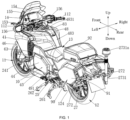
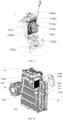
- FIG. 1 is a perspective view of the electric motorcycle from the back to the front.
- FIG. 2 is another perspective view of the electric motorcycle.
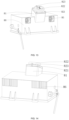
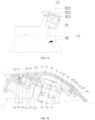
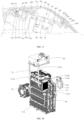
- an electric motorcycle 10 includes a frame 20, a front wheel 11, a rear wheel 12, a plurality of seats 13, a dashboard panel 14, a front suspension 31, a rear suspension 32, a vehicle cover 40, an electric motor 50, a battery pack 60, a controller 70, a charging device 80, a rear side-box assembly 90, a braking system 100, a front cowling 43, and a steering system 110.
- the battery pack 60 and the controller 70 are respectively arranged on the frame 20.
- the battery pack 60 supplies electric power for the controller 70 and the motor 50.
- the controller 70 controls the electric motor 50 to drive the rear wheel 12 to rotate.
- the charging device 80 is arranged on the frame 20.
- the charging device 80 is connected to the public supply system by wires, so as to convert the AC from the public supply system into DC to charge the battery pack 60.
- the battery pack 60, the controller 70 and the charging device 80 are arranged in sequence along the height direction of the frame 20, and the vertical dimension from the charging device 80 to the dashboard panel 14 is less than the vertical dimension from the battery pack 60 to the dashboard panel 14.
- the battery pack 60, the controller 70 and the charging device 80 are arranged on the frame 20 adjacent to the front wheel 11.
- the position for placing the battery pack 60, controller 70 and charging device 80 on the frame corresponds to the position of the fuel tank on the fuel motorcycle.
- the electric motorcycle 10 is more compact.
- the center of gravity of electric motorcycle 10 is concentrated on the half adjacent to the front wheel 11, and the center of gravity is lower.
- the electric motorcycle can run stably and safely even at a maximum speed of 120 km/h.
- the volume of electric motorcycle 10 can be smaller and the wind resistance can be reduced, thereby improve the controllability of electric motorcycle while achieving high endurance.
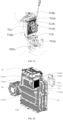
- the battery pack 60 includes a battery 61 and a battery case 62.
- the battery 61 is arranged in the battery case 62.
- the battery case 62 is connected to the frame 20.
- the battery case 62 enhances the strength of the frame 20 and improves the firmness of the electric motorcycle 10.
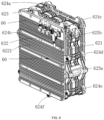
- the battery case 62 includes a body case 621 and a plurality of side plates 622, which are fixed to the body case 621 by screws.
- the side plates are provided with a plurality of ribs 6221.
- the ribs 6221 increase the surface area of the battery case 62 and improve the heat dissipation of the battery pack 60. At the same time, the strength of the battery case 62 is enhanced, thereby improving the safety of the electric motorcycle 10.
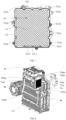
- the bottom of the body case 621 is provided with a plurality of indentations 6211.
- the number of indentations 6211 is three.
- a cushion block 6212 having a plurality of holes is arranged between two adjacent indentations 6211.
- the upper end surface of the cushion block 6212 is flat with the upper end surface of the indentation 6211.
- the battery 61 is arranged in the body case 621 and is supported by the indentations 6211 and the cushion blocks 6212.
- the electric motorcycle is provided with a cooling air passage 63 for cooling the battery pack 60.
- a cooling air passage 63 is a passage formed around the battery pack 60 and a space between the vehicle cover 40 and the battery pack 60. The heat can be quickly dissipated from the battery pack 60 via the cooling air passage 63, which can make the working temperature of the battery pack within the preset range and reduce the electricity loss of battery pack when the electric motorcycle is running at high speed, thereby ensuring the safety and endurance of the electric motorcycle.
- the battery pack 60 is also be cooled down by a radiator 71a.
- Water-cooling can make the battery pack 60 rapidly cooled down at high temperatures, and the battery pack 60 can work normally and efficiently.
- the radiator 71a includes a water tank 711a, a radiating pipe 712a connected to the water tank 711a, and a water pump 713a in fluid communication with the radiating pipe 712a.
- the radiating pipe 712a is partially arranged on the battery pack 60.
- the radiating pipe 712a includes a first branch pipe 7121a, a second branch pipe 7122a and a third branch pipe 7123a.
- One end of the first branch pipe 7121a is in fluid communication with the outlet of the water tank 711a, and the other end is in fluid communication with the inlet of the water pump 713a.
- One end of the second branch pipe 7122a is in fluid communication with the outlet of the water pump 713a, and the other end is in fluid communication with the inlet of the battery pack 60.
- the third branch pipe 7123a is in fluid communication with the outlet of the battery pack 60, and the other end is in fluid communication with the return end of the water tank 711a, and the third branch 7123a is partially fixed on the battery pack 60.
- a plurality of radiating fins 7112a are arranged on the side wall of water tank 711a.
- the radiating fins 7112a increases the contact area between battery case and air to improve heat dissipation effect.
- the radiator 71a also includes a radiating fan 7113a, which is arranged on one side of the water tank 711a.
- the fan bracket 7114a is fixed on the water tank 711a by screws, and the radiating fan 7113a is arranged on the fan bracket 7114a.
- the air inlet of the radiating fan 7113a faces toward the seats 13, and the air outlet of the radiating fan 7113a faces toward the dashboard panel 14.
- the air flow generated by the radiating fan 7113a flows towards the water tank 711a, which improves heat dissipation efficiency of the water tank 711a and keeps the coolant in the water tank 711a at a low temperature, thereby improving the cooling efficiency of the coolant for the battery pack 60 and further improving the safety of the electric motorcycle 10 at high speed.
- the radiator 71a also includes an auxiliary water tank 714a arranged on the frame 20.
- the auxiliary water tank 714a is in fluid communication with a liquid delivery pipe 7144a, and the liquid delivery pipe 7144a is in fluid communication with the water tank 711a.
- a negative pressure is formed in the water tank 711a when the volume of the coolant in the water tank 711a decreases.
- the coolant in the auxiliary water tank 714a can be delivered to the water tank 711a by the liquid delivery pipe via the negative pressure.
- the auxiliary water tank 714a can keep the coolant content in the water tank 711a unchanged, maintains the cooling performance of the coolant to the battery pack 60, and ensures the safety of the electric motorcycle 10 when driving.
- the controller 70 is positioned between the charging device 80 and the battery pack 60.
- the controller is provided with a wire connector, which is connected to the electric motor through cables.
- the controller 70 is arranged on the battery case 62, and the controller 70 is positioned at one end of the battery case 62 adjacent to the dashboard panel 14.
- An installation portion 623 having a groove is arranged on the battery case 62. The controller is installed in the groove and fixed on the battery case 62 by screws.
- the frame 20 is provided with a cooling device 71b for cooling the controller 70.
- the cooling device 71b includes a cooling box 711b, a coolant pipe 712b in fluid communication with the cooling box 711b, and a pump body 713b in fluid communication with the coolant pipe 712b.
- the coolant in the coolant pipe 712b is also flows through the controller 70.
- the coolant pipe 712b includes a first branch pipe 7121b, a second branch pipe 7122b and a third branch pipe 7123b. One end of the first branch pipe 7121b is in fluid communication with the outlet of the cooling box 711b, and the other end is in fluid communication with the inlet of the pump body 713b.
- One end of the second branch pipe 7122b is in fluid communication with the outlet of the pump body 713b, and the other end is in fluid communication with the inlet of the controller 70.
- the third branch pipe 7123b is in fluid communication with the outlet of the controller 70, and the other end is in fluid communication with the return end of the cooling box 711b, and the third branch pipe 7123b is partially fixed on the battery pack 60.
- the side wall of the cooling box 711b also includes a plurality of radiating fins 7112b and a radiating fan 7113b.
- the radiating fan 7113b is used to cooling the cooling box 711b.
- the radiating fan 7113b and the radiating fins 7112b is arranged on the same side.
- the radiating fan 7113b is installed on the cooling box 711b by a fan bracket 7114b to cool the cooling box 711b, which improves the heat dissipation efficiency of the radiating fins 7112b.
- the air inlet of the radiating fan 7113b faces toward the seats 13, and the air outlet of the radiating fan 7113a faces toward the dashboard panel 14. After the radiating fan 7113b is started, the airflow generated flows from the side adjacent to the seats 13 to the side far away from the seats 13, so as to avoid hot air blowing directly to the driver.
- the cooling device 71b may further include an auxiliary water tank 714b arranged on the frame 20.
- the auxiliary water tank 714b is in fluid communication with a liquid delivery pipe 7144b, and the liquid delivery pipe 7144b is in fluid communication with the cooling box 711b.
- a negative pressure is formed in the cooling box 711b when the amount of coolant in the cooling box 711b decreases.
- the coolant in the auxiliary water tank 714b is delivered to the cooling box 711b by the liquid delivery pipe under the negative pressure of the cooling box 711b.
- the auxiliary water tank 714b can keep the coolant content in the cooling box 711b unchanged, maintains the cooling performance of the coolant to the battery pack 60, and ensures the safety of the electric motorcycle 10 when driving.
- the coolant in the coolant pipe 712b also flows through the battery pack 60.
- a plurality of cooling fans 72 are arranged on the frame 20.
- the air inlets of the cooling fans 72 face toward the rear wheel 12, and the air outlets of the cooling fans 72 face toward the front wheel 11.
- the air from the air outlets blows to the controller 70.
- the cooling fans 72 conduct air-cooling for the controller 70.
- the air inlet faces toward the rear wheel 12, which makes the air flow towards the front wheel 11 to avoid hot air blowing directly to the driver.
- the charging device 80 is arranged on the frame 20, and the charging device 80 is positioned on the frame 20 adjacent to the seats 13.
- the charging device 80 is provided with a charging connector 81, which faces toward the opposite direction of the front cowling 141.
- the charging connector 81 is positioned on the side of the charging unit 80 away from the controller 70, and is positioned on the side of the seats 13 toward the dashboard panel 14.
- the charging device 80 is provided with a charging connector 81, the charging connector 81 is provided with a charging interface 811, and the opening of the charging interface 811 faces toward the seats 13.
- the axis along the length direction of the charging connector 81 is defined as a straight line L1
- the line connecting the center point of the front wheel and the center point of the rear wheel is defined as a straight line L2
- an angle is defined by a straight line L1 and the straight line L2, and the angle is in the range from 30° to 60°.
- the charging connector 81 is detachably connected to a sealing plug 82.
- the sealing plug 82 includes a plug body 821 and a plug cap 822.
- the plug cap 822 is provided with a connecting rope 823, and one end of the connecting rope is connected to the charging connector 81 or the plug body 821.
- the plug body 821 is detachably connected to the charging connector 81.
- the plug cap 822 is partially inserted into the plug body 821.
- the plug cap 822 is provided with a ring groove on the side facing the charging connector 81. After the plug cap 822 is inserted into the plug body 821, the ring groove covers the side wall of the plug body 821, and the ring groove and the plug body 821 extrude each other to form a seal.
- the vehicle cover 40 is provided with a charging port 481 corresponding to the charging connector 81.
- One end of the charging port 481 extends toward the charging connector 81, and a shutter 482 is arranged on the end of the charging port 481.
- the middle of the shutter 482 is provided with a shutter opening 4821, and the position of the shutter opening 4821 corresponds to the charging connector 81.
- the shutter 482 is provided with at least one water leakage hole 4822, and the water leakage hole 4822 is opened at the lowest point of the shutter 482 along the motorcycle height direction.
- the end face of the charging connector 81 facing toward the charging port 481 is provided with a plug body 821, and the end face of the plug body 821 away from the charging connector 81 is at least partially passes through the shutter opening 4821 along the axis direction of the charging connector 81.
- connection surface between the charging connector 81 and the external connector at least partially passes through the shutter opening 4821 along the axis direction of the charging connector 81.
- the vehicle cover 40 is equipped with a charging port cover mounting part 483 corresponding to the charging connector 81.
- the charging port cover mounting part 483 is positioned at the side of the seats 13 facing toward the front wheel 11, and the charging port cover mounting part 483 is provided with two shaft mounting parts 4831 extending toward the front.
- the vehicle cover 40 is connected to a charging port cover 83 that closes the charging port 481.
- the end face of the charging port cover 83 is smoothly incorporated into the end face of the vehicle cover 40.
- the locking structure 84 is connected to the vehicle cover 40.
- the charging port cover 83 is turned and opened toward the dashboard panel 14.
- the charging port cover 83 is arranged on the charging port cover mounting part 483.
- the locking structure 84 includes a connecting rod 841, a rotating shaft 842, a button 843 and a torsion spring 844.
- the connecting rod 841 is connected to one side of the charging port cover 83.
- the rotating shaft 842 is connected to the connecting rod 841 and is rotatably arranged on the vehicle cover 40.
- the torsion spring 844 is arranged on the rotating shaft 842, and one end of the torsion spring is connected to the connecting rod 841, and the other end is connected to the vehicle cover 40. The lock of the charging port cover 83 is released after the button 843 is pressed.
- the connecting rod 841 rotates around the rotating shaft 842 under the action of the restoring force of the torsion spring 844, and the charging port cover 83 opens automatically.
- the button 843 is arranged on the charging port cover 83, and an elastic element 844 is arranged between the button 843 and the charging port cover 83.
- the elastic element 844 is a compression spring.
- the connecting rod 841 bents toward the charging connector 81.
- the connecting rod 841 includes a first segment 8411 connected to the rotating shaft 842 and a second segment 8412 connected to the charging port cover 83.
- the length of the first segment 8411 is greater than or equal to the distance between the edge of the shutter opening 4821 adjacent to the front wheel 11 and the rotation center of the rotating shaft 842.
- the second segment 8412 passes through the shutter opening 4821 and is connected to the charging port cover 83.
- two ends of the rotating shaft 842 are rotatably arranged on the rotating shaft mounting part 4831.
- a damping member is disposed on the connection between the rotating shaft 842 and the vehicle cover 40.
- the charging port cover 83 includes a cover plate 831 and a bottom plate 832.
- a cavity is defined by the cover plate 831 and the bottom plate 832.
- a first recess 8321 is defined at one end of the bottom plate 832 facing toward the dashboard panel 14.
- a second recess 8322 is defined at one end of the bottom plate 832 facing toward the seats 13.
- the connecting rod 841 is connected to the first recess 8321, and the button 843 is arranged within the second recess 8322.
- the cover plate 831 defines a pressing hole 8211 for the button 843 to pass through.
- the pressing surface of the button 843 is flush with the surface of the cover plate 831, or is sunken from the surface of the cover plate 831 to the bottom plate 832.
- the outer edge of the button 843 is provided with a limiting convex ring 8431, which is abutted against with the cover plate 831 under the thrust of the elastic element 844 to prevent dust and impurities from entering into the second concave part 8322 through the gap between the pressing surface of the button 843 and the cover plate 831.
- the sealing plug 82b is a part of the charging port cover 83b.
- the sealing plug 82b is separated from the charging connector 81b to facilitate charging when the charging port cover 83b is opened.
- a plurality of cooling fans 85 is arranged on the charging device 80.
- the air inlet of the cooling fans 85 faces toward the seats 13, and the air outlet of the cooling fans 85 faces toward the interior of the charging device 80.
- the charging device 80 includes at least two cooling fans 85, and the two cooling fans 85 is symmetrically arranged on the charging device 85 respective to the line connecting the center point of the front wheel 11 and the center point of the rear wheel 12.
- the charging device 80 is provided with a plurality of air outlets 86 oriented toward the dashboard panel 14.
- the cooling fans 85 cool down the charging device 80 by air to improve the safety of the motorcycle during charging.
- the air outlet 86 faces toward the dashboard panel 14 to avoid hot air blowing directly to the driver.
- the charging device 80 is also be cooled down by a water-cooling device 71c.
- the water-cooling device 71c includes a water tank 711c, a cooling pipe 712c connected to the water tank 711c, and a water pump 713c connected to the cooling pipe 712c.
- the coolant in the cooling pipe 712c flows through the charging device 80, and the cooling pipe 712c is partially arranged on the charging device 80.
- the cooling pipe 712c includes a first pipeline 7121c, a second pipe line 7122c and a third pipeline 7123c. One end of the first pipeline 7121c is connected to the outlet of the water tank 711c, and the other end is connected to the inlet of the water pump 713c.
- One end of the second pipeline 7122c is in fluid communication with the outlet of the water pump 713c, and the other end is in fluid communication with the inlet of the charging device 80.
- the third pipeline 7123c is in fluid communication with the outlet of the charging device 80, and the other end is in fluid communication with the return end of the water tank 711c, and the third pipeline 7123c is partially fixed on the battery pack 60.
- the side wall of water tank 711c is also provided with a plurality of radiating fins 7112c and a radiating fan 7113c.
- the radiating fan 7113c is used to cooling the water tank 711c.
- the radiating fan 7113c and the radiating fins 7112c is arranged on the same side.
- the radiating fan 7113c is installed on the water tank 711c by a fan bracket 7114c to cool down the water tank 711c, which improves the heat dissipation efficiency of the radiating fins 7112c.
- the air inlet of the radiating fan 7113c faces toward the seats 13, and the air outlet of the radiating fan 7113a faces toward the dashboard panel 14. After the radiating fan 7113c is started, the airflow generated flows from the side adjacent to the seats 13 to the side far away from the seats 13, so as to avoid hot air blowing directly to the driver.
- the water-cooling device 71c also includes an auxiliary water tank 714c arranged on the frame.
- the auxiliary water tank 714c is fixed on the frame 20 or the battery case 62, and is in fluid communication with the water tank 711c through pipelines.
- the water tank 711c draws coolant from the auxiliary water tank 714c via negative pressure.
- the coolant in the auxiliary water tank 714c is automatically replenished to the water tank 711c to maintain the heat dissipation performance of the water cooling device 71c to the charging device 80.
- a cooling device 71d for cooling the electric motor 50 and the controller 70 is arranged on the electric motorcycle.
- the cooling device 71d includes a cooling box 711d, a coolant pipe 712d in fluid communication with the cooling box 711d and a water pump 713d in fluid communication with the coolant pipe 712d.
- the coolant pipe 712d is partially disposed on the battery pack 60.
- the coolant pipe 712d includes a first branch pipe 7121d, a second branch pipe 7122d, a third branch pipe 7123d and a fourth branch pipe 7124d.
- One end of the first branch pipe 7121d is in fluid communication with the outlet of the cooling box 711d, and the other end is in fluid communication with the inlet of the water pump 713d.
- One end of the second branch pipe 7122d is in fluid communication with the outlet of the water pump 713, and the other end is in fluid communication with the inlet of the controller 70.
- the third branch pipe 7123d is in fluid communication with the outlet of the controller 70, and the other end is in fluid communication with the inlet of the motor 50.
- One end of the fourth branch pipe 7124d is in fluid communication with the outlet of the electric motor 50, and the other end is in fluid communication with the return end of the cooling box 711d.
- the fourth branch pipe 7124d is partially fixed on the battery pack 60.
- the coolant in the coolant pipe 712d may first flow through the electric motor 50, then flow through the controller 70, and then return to the cooling box 711d.
- the side wall of water tank 711d is also provided with a plurality of radiating fins 7112d and a radiating fan 7113d.
- the radiating fan 7113d is used to cooling the water tank 711d.
- the radiating fan 7113d and the radiating fins 7112d are arranged on the same side.
- the radiating fan 7113b is installed on the cooling box 711d by a fan bracket 7114d to cool the cooling box 711d, which improves the heat dissipation efficiency of the radiating fins 7112d.
- the air inlet of the radiating fan 7113d faces toward the seats 13, and the air outlet of the radiating fan 7113a faces toward the dashboard panel 14. After the radiating fan 7113d is started, the airflow generated flows from the side adjacent to the seats 13 to the side far away from the seats 13, so as to avoid hot air blowing directly to the driver.
- the cooling device 71d also includes an auxiliary water tank 714d arranged on the frame.
- the auxiliary water tank 714d is fixed on the frame 20 or the battery case 62, and is in fluid communication with the cooling box 711d through pipelines.
- the cooling box 711d draws coolant from the auxiliary water tank 714 through negative pressure.
- the coolant in the auxiliary water tank 714d is automatically replenished to the cooling tank 711d to maintain the heat dissipation performance of the water-cooling device 71 to the electric motor 50.
- the auxiliary water tank 714d includes an auxiliary water tank body 7141d, water-adding channel7142d, and an auxiliary water tank cap 7143d.
- the auxiliary water tank body 7141 is mounted on the frame 20 by bolts.
- the water-adding channel 7142d is in fluid communication with the auxiliary water tank body 7141d.
- the water-adding channel 7142d is a curved structure, which is convenient for adding water.
- the auxiliary water tank cap 7143d is detachably connected to the end of the water-adding channel 7142 far away from the auxiliary water tank body 7141d to close the auxiliary water tank body 7141d.
- the auxiliary water tank cap 7143d and the auxiliary water tank body 7141d is connected by threads.
- the auxiliary water tank 714d is fixed to the frame 20. In other embodiments, the auxiliary water tank 714d is fixed to the battery case 62. The auxiliary water tank 714d is positioned on one side of the battery case 62, and the cooling box 711d is positioned on the other side of the battery case 62. In other embodiments, the auxiliary water tank 714d and the cooling box 711d is positioned on the same side of the battery case 62. The auxiliary water tank 714d is in fluid communication with the cooling box 711d through a water-replenishing pipe 7144d fixed on the battery case 62.
- the water-replenishing pipe 7144d is fixed on the frame 20.
- the cooling box 711d is provided with a water-replenishing port in fluid communication with the water-replenishing pipe 7144d.
- the water in the auxiliary water tank 714d will flow into the water tank 711 through the water-replenishing pipe 7144d when the water level in the cooling box 711d is below the preset value.
- the electric motor 50 is also be cooled down by a water-cooling device 71e.
- the water-cooling device 71e includes a water tank 711, a cooling pipe 712e in fluid communication with the water tank 711e, and a water pump 713e in fluid communication with the cooling pipe 712e.
- the coolant in the cooling pipe 712e flows through the electric motor 50.
- the cooling pipe 712e includes a first branch pipe 7121e, a second branch pipe 7122e and a third branch pipe 7123e. One end of the first branch pipe 7121e is in fluid communication with the outlet of the water tank 711e, and the other end is in fluid communication with the inlet of the water pump 713e.
- One end of the second branch pipe 7122e is in fluid communication with the outlet of the water pump 713e, and the other end is in fluid communication with the inlet of the electric motor 50.
- the third branch pipe 7123e is in fluid communication with the outlet of the electric motor 50, and the other end is in fluid communication with the return end of the cooling box 711d, and the third branch pipe 7123e is partially fixed on the battery pack 60.
- the side wall of water tank 711e is also be provided with a plurality of radiating fins 7112e and a radiating fan 7113e.
- the radiating fan 7113e is used to cool the water tank 711e.
- the radiating fan 7113e and the radiating fins 7112e are arranged on the same side.
- the radiating fan 7113c is installed on the water tank 711e by a fan bracket 7114e to cool down the water tank 711e, which improves the heat dissipation efficiency of the radiating fins 7112e.
- the air inlet of the radiating fan 7113e faces toward the seats 13, and the air outlet of the radiating fan 7113a faces toward the dashboard panel 14. After the radiating fan 7113e is started, the airflow generated flows from the side adjacent to the seats 13 to the side far away from the seats 13, so as to avoid hot air blowing directly to the driver.
- the water-cooling device 71e also includes an auxiliary water tank 714e fixed on the frame 20 or the battery case 62.
- the auxiliary water tank 714e is in fluid communication with the water tank 711e by a pipeline.
- the coolant is pumped from the auxiliary water tank 714e into the water tank 711e through negative pressure.
- the coolant in the auxiliary water tank 714e is automatically replenished to the water tank 711e to maintain the heat dissipation performance of the water-cooling device 71e to the electric motor 50.
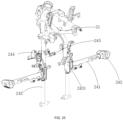
- the frame 20 includes a front frame 21 adjacent to front wheel 11 and rear frame 22 adjacent to rear wheel 12.
- a plurality of front bumpers 241a is mounted on the front frame 21.
- the number of the front bumpers 241a is greater than or equal to two.
- Two front bumpers 241a are symmetrically arranged on two sides of the battery housing 62.
- the front bumpers 241a are straight bar, which reduces the wind resistance of the electric motorcycle at high speed, and improves the controllability and safety of the electric motorcycle.
- the front bumpers 241a are provided with a buffer member with an elastic structure. In other embodiments, the front bumpers 241a are provided with a hydraulic telescopic rod buffer structure or a pneumatic telescopic rod buffer structure.
- each front bumper 241b includes a tube body 2411b and a rod body 2412b connected to the frame 20.
- a cavity is defined inside the tube body 2411b, and the rod body 2412b is partially inserted into the cavity.
- a buffer spring 2413b is also inserted into the cavity.
- One end of the buffer spring 2413b is connected to the rod body 2412b.
- the buffer member 242b is coupled to the other end of the rod body 2412b.
- At least two fixing rods 243 is mounted on the front frame 21.
- One end of the fixing rod 243 is mounted on the front frame 21 by a connector 244, and the other end is connected to the battery case 62.
- the front bumper 241a is connected to the fixing rod 243 by connecting blocks 2431, which is a part of the fixing rod 243 and symmetrically arranged on two sides of the battery pack 60. Therefore, the pressure from the front bumpers 241a to the battery pack 60 can be transferred to the whole frame 20 when the front bumpers 241a are impacted.
- a battery bumper 245 for protecting the battery case 62 from impacting is mounted on the front frame 21.
- the battery bumper 245 includes a first bumper body 2451a, a first connector 2451b connected to the first bumper body 2451a, a second bumper body 2451c and a second connector 2451d connected to the second bumper body 2451c.
- the first connector 2451b and the second connector 2451d are staggered and connected by screws.
- the first bumper body 2451a is connected to one side of the frame, and the second bumper body 2451c is connected to the other side of the frame 20.
- the front bumper 241a is connected to one side of the connection block 2431 by screws, and the battery bumper 245 is connected to the other side of the connection block 2431 by screws.
- the battery bumper 245 is arranged between the two connecting blocks 2431.
- the axis of the battery bumper 245 is staggered with the axis of the front bumper 241a, which improves the strength between the fixing rods 243 and prevents the deformation of the fixing rods 243 due to the impact force on the front bumpers 241a.
- the outer wall of the body case 621 is provided with a plurality of connecting lugs 625 with a shaft hole 6251.
- the battery case 62 is connected to the frame 20 by the connecting lugs 625.
- the side of the battery case 62 adjacent to the front wheel 11 is connected to the front frame 21, and the side of the battery housing 62 adjacent to the rear wheel 12 is connected to the rear frame 22.
- a plurality of connection seats with a shaft hole is arranged on the outer wall of the battery case 62. Further, the connection seats are an arc-shaped bulges formed on the edge of the body case 621, and the shaft hole penetrates the bulge.
- the body case 621 is provided with a first connection seat 624a, a second connection seat 624b, a third connection seat 624c, a fourth connection seat 624d, a fifth connection seat 624e, a sixth connection seat 624f and a seventh connection seat 624g.
- the first connection seat 624a is positioned at the top of the battery case 62.
- the second connection seat 624b is positioned at the side of the battery case 62 facing toward the front wheel 11.
- the third connection seat 624c is positioned at the side of the battery case 62 facing toward the rear wheel 12 and at the edge of the battery case 62.
- the fourth connection seat 624d and the fifth connection seat 624e are both positioned at the side of the battery housing 62 toward the rear wheel 12.
- Two first connection seats 624a, two second connection seats 624b, two third connection seats 624c, two fourth connection seats 624d, two fifth connection seats 624e, two sixth connection seats 624d and two seventh connection seats 624e are symmetrically positioned on the battery case 62.
- the first connection seats 624a and the second connection seats 624b are connected to the front frame 21 with shaft and hole fit.
- the third connection seats 624c and the fourth connection seats 624d are connected to the rear frame 22 with shaft and hole fit.
- the seventh connection seats 624g are connected to the fixing rods 243 with shaft and hole fit.
- the battery case 62 is connected to a kickstand 25.
- the kickstand 25 is connected to a middle brace 261 and a diagonal brace 262.
- the kickstand 25 includes a bracket 251 and a mounting racks 252.
- the bracket 251 is fitted with the bottom surface of the battery case 62.
- a bending portion connected to the battery case 62 was defined by bending the two ends of the bracket 251.
- the bending portion 2511 is fitted with the battery case 62.
- One end of the bracket 251 facing toward the rear wheel 12 is hinged with the middle brace 261.
- Two mounting racks 252 is respectively mounted on the two sides of battery case 62.
- the mounting racks 252 is extended follow the edge contour of the bending portion 2511.
- Each mounting rack 252 is provided with a diagonal brace fixing part 2521, which is arranged obliquely against the side surface of the battery case 62, and the diagonal brace fixing part 2521 is hinged with the diagonal brace 262.
- the middle brace 261 is connected to the fifth connection seats 624e.
- the middle brace 261 includes two symmetrically arranged support rods 2611, one middle deflector rod 2612 and a first tension spring 2613.
- the support rods 2611 is arranged below the bracket 251.
- a reinforcing shaft 2614 is connected between the support rods 2611.
- the middle deflector rod 2612 is connected to one of the two support rods 2611.
- a connection rib 2616 is connected between the support rod 2611 and the deflector rod 2612.
- One end of the first tension spring 2613 is connected to the support rod 2611, and the other end is connected to the bracket 251.
- the diagonal brace 262 includes a diagonal brace hinge 2621, a diagonal brace 2622, and a second tension spring 2623.
- the diagonal brace hinge 2621 is a part of the diagonal brace 2622, one end of which is hinged with the diagonal brace fixing part 2521.
- the diagonal brace fixing part 2521 is inclined outwards, and the diagonal brace hinge 2621 and the diagonal brace 2622 is also inclined outwards.
- One end of the second tension spring 2623 is connected to the diagonal brace 2622, and the other end is connected to the bracket 251.
- the frame 20 is also provided with an alarm light mounting seat 273.
- the alarm lamp mounting base 273 is provided with an alarm lamp telescopic rod 2731.
- the alarm lamp 2731a is arranged on the alarm lamp telescopic rod 2731.
- the rear suspension 32 includes a rear fork 320.
- the motor is arranged on the rear fork 320.
- One end of the rear fork 320 is connected to the rear wheel 12, and the other end is connected to the electric motor 50.
- the electric motor 50 is arranged at the end away from the rear wheel 12.
- the electric motor 50 is associated with the rear wheel 12 through a timing belt 41.
- the electric motor 50 can move synchronously with the rear fork 320, and the tightness of the timing belt 51 remains unchanged.
- the rear fork 320 includes two symmetrically arranged support plates 321, and the electric motor 50 is arranged between the two support plates 321.
- the rear fork 320 is provided with an electric motor connecting shaft 323.
- the seventh connection seats 624g is arranged on the battery case 62.
- the rear fork 320 is moveably connected to the seventh connection seats 624g by the electric motor connecting shaft 323.
- each support plate 321 is provided with a connection chute 3212a at the same position.
- a rear wheel connecting shaft 121 is arranged on the rear wheel 12 through a bearing.
- One end of the rear wheel connecting shaft 121 is connected to the connecting chute 3212a on the one support plate 321, and the other end is connected to the connecting chute 3212a on the other support plate 321.
- One end of the two support plates 321 with a connecting chute 3212a is connected by a rear wheel connecting shaft 121, and the other end is connected by a electric motor connecting shaft 323, and the electric motor 50 is arranged between two support plates 321.
- Each support plate 321 includes an electric motor connecting part 3211 connected to the electric motor connecting shaft 323 and a rear wheel connecting part 3212 connected to the connecting chute 3212a.
- the electric motor 50 is connected to the electric motor connecting part 3211.
- the electric motor 50 is positioned between two symmetrically arranged electric motor connecting parts 3211.
- the electric motor connecting shaft 323 may also connected to the battery case 62.
- a plurality of connecting lugs are arranged on the battery case 62.
- the connecting lugs with a shaft hole are projections formed on the edge of the battery case 62, and symmetrically arranged on both sides of the battery case 62.
- the connecting lugs includes a first connecting lug 625a and a second connecting lug 625b.
- the electric motor connecting shaft 323 is inserted into the shaft hole of the first connecting lug 625a.
- the rear fork 320 is movably connected to the battery case 61 with a shaft and hole fit, which improves damping performance.
- the rear suspension 32 also includes a shock absorber 322, which includes a telescopic rod 3220 and a damping spring 3221 sleeved on the telescopic rod 3220.
- a shock absorber 322 which includes a telescopic rod 3220 and a damping spring 3221 sleeved on the telescopic rod 3220.
- One end of the telescopic rod 3220 is connected to the battery case 62, and the other end is connected to the rear fork 320.
- Two cross beam connecting parts 3211a connected to each other is symmetrically arranged on the two support plates 321.
- the two cross beam connecting parts 3211a are both connected to the telescopic rod 3220.
- the shock absorber 322 includes a telescopic rod 3220 and a damping spring 3221.
- One end of the telescopic rod 3220 is connected to the battery case 62, and the other end is connected to the rear fork 320, which can reduce the vibration generated during the movement of the rear fork 320 relative to the battery case 62 and reduce the vibration generated during the driving of the motorcycle.
- the telescopic rod 3220 includes a sleeve 3222 and a telescopic rod body 3223.
- a cavity 3222a is defined in the sleeve 3222.
- the sleeve 3222 is connected to the battery case 62.
- One end of the damping spring 3221 is connected to the sleeve 3222, and the other end of the damping spring 3221 is connected to the telescopic rod body 3223.
- the telescopic rod body 3223 is capable of sliding within the cavity 3222a.
- the telescopic rod body 3223 is provided with a shock pad 3223a positioned between the telescopic rod body 3223 and the sleeve 3222.
- the shock pad 3223a can further reduce the speed of the telescopic rod body moving back and forth relative to the sleeve 3222.
- a cavity 3222a is defined at one end of the sleeve 3222, and the other end of the sleeve 3222 is provided with a first spring stopper 3222b.
- One end of the telescopic rod body 3223 is moved in the cavity 3222a, and the other end is provided with a second spring stopper 3223b.
- One end of the damping spring 3221 is abutted against the first spring stopper 3222b, and the other end is abutted against the second spring stopper 3223b.
- the shock pad 3223a is connected to the second spring stopper 3223b.
- the shock pad 3223a and the telescopic rod body 3223 are positioned on the same side of the second spring stopper 3223b.
- the second spring stopper 3223b and the shock pad 3223a are both provided with concentrically arranged screw holes.
- One end of the telescopic rod body 3223 is capable of sliding back and forth in the cavity 3222a, and the other end is connected to the rear fork 320 by the screw hole.
- the telescopic rod 3220 is be provided with a flange gasket 3224.
- the flange gasket 3224 is clamped into the screw hole on the second spring stopper 3223b and the screw hole on the telescopic rod body 3223.
- One end of the telescopic rod body 3223 is capable of sliding in the cavity 3222a, and the other end is connected to a spring adjusting nut 3223c.
- the second spring stopper 3223b is provided with a damping limit groove, which is a groove formed on the second spring stopper 3223b.
- the spring adjusting nut 3223c is clamped into the damping limit groove.
- one end of the telescopic rod 3220 is connected to the battery case 62, and the other end is connected to the rear fork 320.
- the sleeve 3222 is connected to the battery case 62.
- the telescopic rod body 3223 is connected to the rear fork 320.
- a cavity 3222a is defined at one end of the sleeve 3222.
- the other end of the sleeve 3222 is provided with a first damping connecting shaft 3222c.
- the first damping connecting shaft 3222c is sleeved with a first connector 3222d, which is connected to the provided with 3222.
- the first damping connecting shaft 3222c is capable of rotating within the first connector 3222d, and the first damping connecting shaft 3222c is connected to the battery case 62.
- the first damping connecting shaft 3222c is connected to the second connecting lug 625b.
- the telescopic rod body 3223 is connected to the rear fork 320.
- One end of the telescopic rod body 3223 is capable of sliding within the cavity 3222a, and the other end of the telescopic rod body 3223 is provided with a second damping connecting shaft 3223e.
- the second damping connecting shaft 3223e is rotatably connected to a second joint 3223d.
- Each of the two support plates 321 is provided with a cross beam connecting parts 3211a having a damping rod connecting screw hole.
- the two cross beam connecting parts 3211a are connected to each other. Two ends of the second damping connecting shaft 3223e are respectively inserted into the two damping rod connecting screw hole of the cross beam connecting part 3211a.
- the telescopic rod body is rotatably connected to the rear flat by a shaft, thereby increasing the mobility of telescopic rod body.
- a rear fender 324 is arranged on the rear fork 320, the cross section of the rear fender 324 is arc-shaped towards the middle, and the rear fender 324 covers the rear wheel 12.
- One end of the rear fender 324 is connected to the rear fork 320, and the other end is suspended in midair and covers a part of the rear wheel 12.
- the middle of the rear fender 324 covers the rear wheel 12, and both sides extend towards two sides of the rear wheel 12.
- a driven wheel housing 3241 that covers a driven wheel 122 positioned on the rear wheel 12 is arranged on the rear fender 324.
- One end of the rear fender 324 is connected to the rear fork 320, and the other end extends along the edge of the rear wheel 12 and is arc-shaped.
- One end of the rear fender 324 is arc-shaped and suspended in midair. The other end is folded to form a fender connecting part 3242.
- the cross beam connecting part 3211a on the two symmetrically arranged support plates 52 is connected to the fender connecting part 3242 by screws.
- the rear fender 324 can prevent the mud and water rolled up by the rear wheel 12 from splashing onto the driver.
- the front cowling 43 can be detachably arranged on the front strut 211.
- the middle of the front cowling 43 protrudes in the direction of vehicle travel, and both sides bend towards the side opposite to the direction of vehicle travel, thus forming an arc-shaped surface on the front cowling 43.
- a headlight 152, at least two turn signal lights 153, a windscreen plate 154 and an on-board camera 159 are mounted on the front strut 211.
- the headlight 152 are arranged on the front cowling 43.
- Two of the turn signal lights 153 are symmetrically arranged on both sides of the headlight 152.
- the on-board camera 159 is arranged below the headlight 152, facing toward the direction of from the rear wheel 12 to the front wheel 11.
- the windscreen plate 154 is arranged on the front cowling 43.
- the contour of the windscreen plate 154 is fitted with the contour of the front cowling 43, so that the windscreen plate 154 forms an arc-shape similar to the front cowling 43.
- the contour of the windshield 155 is fitted with the contour of the windshield 154, so that the windshield 155 protrudes in the direction of vehicle travel, and both sides bend towards the side opposite to the direction of vehicle travel. That is to say, the middle of the windshield 155 protrudes along the direction of the rear wheel 12 toward the front cowling 43, forming an arched shape.
- the windshield 155 is arranged on the windshield plate 154, and the windshield plate 154 is connected to the windshield 155 by a lifting structure 1540.
- the windshield 155 can slide up and down on the windshield plate 154 driven by the lifting structure 1540.
- the windshield plate 154 for mixing the windshield 155 increase the strength of the windshield.
- the lifting structure 1540 includes a lifting motor 1541, a worm gear 1542, a worm 1543 and two connecting frames 1544.
- the output shaft of the lifting motor 1541 is connected to the worm 1543.
- the worm gear 1542 is provided with a worm gear drive rod 1542a connected to the connecting frame 1544.
- Two ends of worm gear drive rod 1542a are connected to the connecting frames 1544, and the lifting motor 1541 is arranged between the two connecting frames 1544.
- the power can be transmitted to the worm gear transmission rod 1542a when the output shaft of the lifting motor 1541 is perpendicular to the worm gear drive rod 1542.
- the cross section of the worm gear drive rod 1542 is square, and the worm gear drive rod 1542 is a metal straight rod.
- the connecting frame 1544 is provided with a windshield connecting rod 1544a, a rotating rod 1544b and a windshield hinge rod 1544c.
- One end of the rotating rod 1544b is connected to the worm gear drive rod 1542, and the other end is connected to the windshield connecting rod 1544a.
- the rotating rod 1544b can be driven by the worm gear drive rod 1542 to rotate.
- One end of the windshield hinge rod 1544c is rotatably connected to the vehicle head 15, and the other end is rotatably connected to the windshield hinge rod 1544.
- the worm gear drive rod 1542 can drive the windshield 155 to rotate.
- the steering system 110 are associated with the rear suspension 31 to control the rotation of the front wheel 11.
- the steering system includes a steering handle 111 and a pair of a grip assemblies 112 symmetrically arranged on both sides of the steering handle 111. The driver holds one of the grip assemblies 112 in each hand while driving.
- the grip assembly 112 includes a grip switch assembly 1121 and an electronic-controlled throttle 1122.
- the electronic-controlled throttle 1122 is a hollow rod body.
- the electronic-controlled throttle 1122 is sleeved on the steering handle 111.
- the output power of the electric motor 50T can be increased by turning electronic-controlled throttle 1122.
- Each grip assembly 112 also includes two grip counterbalance blocks 1123 and a thread insert 1124.
- the electronic-controlled throttle1122 is sleeved on the steering handle 111.
- the two grip counterbalance block 1123 are respectively arranged on two ends of the steering handle 111.
- the grip counterbalance block 1123 is abutted against the electronic-controlled throttle 1122.
- a through hole is defined at the axial position of the grip counterbalance block 1123.
- the thread insert 1124 is inserted into the through hole.
- the thread insert 1124 is abutted against the grip counterbalance block 1123, which is abutted against the electronic-controlled throttle 1122, so as to fix the electronic-controlled throttle 1122 on the steering handle 111.
- One end of the electronic-controlled throttle 1122 is connected to the grip counterbalance block 1123, and the other end is connected to the switch assembly 1121.
- the electronic-controlled throttle 1122 is equipped with a grip sleeve 11221, which is abutted against the switch assembly 1121.
- the steering handle 111 is also provided with a hand-operated brake 351, which is associated with the brake system 100.
- An x-axis is defined as the length direction of the electric motorcycle, and a y-axis is defined as the height direction of the electric motorcycle.
- the projection of the first operation area on a cutting plane coordinate system xoy is in the scanning area of - 45-0°.
- the girp assembly 112 is provided with a switch assembly 1121, and a plurality of buttons are arranged in different areas of the switch assembly 1121.
- the switch assembly 1121 is provided with a first operation area, a second operation area, a third operation area and a fourth operation area.
- An x-axis is defined as the length direction of the electric motorcycle, and a y-axis is defined as the height direction of the electric motorcycle.
- the projection of the first operation area on a cutting plane coordinate system xoy is in the scanning area of -45-0°.
- the projection of the second operation area on a cutting plane coordinate system xoy is in the scanning area of 0- 45°.
- the projection of the third operation area on a cutting plane coordinate system xoy is in the scanning area of 45- 90°.
- the projection of the fourth operation area on a cutting plane coordinate system xoy is in the scanning area of 90-135°.
- the first operation area is provided with a horn button 1121a and turn signal light button 1121b.
- the second operation area is provided with a power assisted pushing button 1121c and a shift button 1121d.
- the power assisted pushing button 1121c can realize the switching of forward gear and backward gear mainly by controlling the switching of forward and reverse rotation of electric motor 50.
- the third operation area is provided with a multi-function button, a loudspeaker button 1121g, and a loudspeaker circular broadcast button 1121j.
- the fourth operation area is provided with a high and low beam light on/off button 1121h.
- the multi-function button includes a lifting button 1121e and a switching button 1121f.
- the lifting button 1121e is provided with a concave portion.
- the switching button 1121f is partially inserted into the concave portion after the switching button moves toward the steering handle.
- the lifting button 1121e is capable of controlling the lifting of the windshield 154 when the switching button 1121f is inserted into the concave portion.
- the lifting button 1121e is capable of controlling the lifting of the alarm light when the switching button 1121f is detached from the concave portion.
- the lifting button 1121e is capable of controlling the lifting of the alarm lights when the switching button 1121f is inserted into the concave portion.
- the buttons with different frequency of use are arranged in different areas, which can increase the convenience of operation and facilitate the driver to remember the positions of buttons with different functions. Windshield can be raised and lowered according to different driving scenarios.
- the first operation area is also provided with a photographing button 1121i for controlling the on-board camera 159.
- the on-board camera is configured to capture photos during cruise.
- the vehicle cover 40 covers the most of the electric motorcycle 100. Gaps are defined between various components on the vehicle cover 40 to provide air flow to the inner wall of the vehicle cover, thereby cooling various components covered by the vehicle cover 40.
- the vehicle cover 40 includes a side cover 41, a upper cowling 42, a front cowling 43, a battery cover 44, a lower cowling 45, a front fender 46, a front shield 47, a charging device cover 48 and a rear fork cover 49. Gaps are defined between various components on the vehicle cover 40 to provide air flow to the interior of the vehicle cover, thereby cooling various components covered by the vehicle cover 40.
- the charging device cover 48 covers the charging device 80.
- the battery cover 44 is wrapped on the outside of the battery case 62, and the upper cowling 42 is positioned between the charging device cover 48 and the battery cover 44. One end of the battery cover 44 fits the upper cowling 43, and the other end fits the lower cowling 45.
- the front shield 47 is arranged between the front wheel 11 and the power battery 60. The front shield 47 is provided with a vent for air.
- the rear fork cover 49 covers the area of the rear suspension 32.
- the rear fork cover 49 is provided with one or more foot pedals 491, and the foot pedals 491 are provided with anti-skid grooves.
- the foot pedals 491 include an upper foot pedal 4911 and a lower foot pedal 4912.
- the upper foot pedal 4911 is covered with the lower foot pedal 4912.
- the anti-skid groove is arranged on the upper foot pedal 4911, and the lower foot pedal 4912 is connected to the rear fork cover 49.
- the rear fork cover 49 is at least provided with one or more foot pedals 491.
- the one or more foot pedals 491 include a inclined foot pedal 491 inclined to the rear fork cover 49.
- the foot pedal 491 is provided with a foot pedal connecting block 4913, which is connected to the rear fork cover 49.
- the rear fork cover 49 is provided with a plurality of pedal connecting slots 4914, and at least one pedal connecting slot 4914 has an inclined inner wall.
- the pedal connecting block 4913 is closely fitted with the side wall of the pedal connecting slot 4914.
- the foot pedal connecting block 4913 and the foot pedal connecting slot 4914 are both provided with a concentrically arranged foot pedal connecting through hole.
- the foot pedal connecting shaft 4915 is inserted into the foot pedal connecting through hole.
- the foot pedal connecting shaft 4915 is sleeved with a foot pedal reset member 4916.
- the foot pedal reset part 4916 is a torsion spring.
- two rear side-boxes 91 arranged on the frame include a box body 911 and a box cap 912.
- the two rear side-boxes 91 are respectively arranged at two sides of the electric motorcycle 100.
- the box body 911 and the vehicle cover 40 are integrated ⁇
- the frame 20 is provided with a rear tail cover/center guard plate, which is a part of the vehicle cover 40.
- the box body 911 is a part of the rear tail cover/center guard plate, and the box body 911 and the rear tail cover are integrated.
- the rear side-box and the vehicle cover are integrated, which can increase the aesthetics and the connection strength of the vehicle cover.
- the box body 911 includes a side-box cap 911a and a side-box liner 911b.
- the side-box inner 911b is placed inside the side-box cap 911a, and the contour of the he side box inner 911b is fitted with the contour of the side-box cap 911a.
- the side-box cover 912 comprises a side-box top cover 912c, a side-box cover inner plate 912b and a side-box cover cap 912a fitted with each other.
- the side-box cover inner plate 912b is positioned between the side-box top cover 912c and the side-box cover cap 912a.
- the box body 911 and the box cover 912 are movably connected to each other.
- One end of the box body 911 and one end of the box cap 912 are hinged by a rear side-box hinge 913, and the other ends are connected by a locking structure 914.
- the distance from the central point of the rear wheel 12 to the rear side -box hinge 913 is less than the distance from the central point of the rear wheel 12 to the locking structure 914.
- the box body 911 is provided with a box cover puller 915.
- One end of the box cover puller 915 is hinged with the box body 911, and the other end is hinged with the box cover 912.
- the box cover puller 915 will pull the box cover 912.
- a rear side-box containing cavity is defined on the box 911.
- An annular bulge 916 is formed along the circumferential wall of the rear side box containing cavity.
- the side-box cover 912 covers the annular bulge 916.
- the rear side-box hinges 913 and the side-box cover puller 915 are all arranged on the annular bulge 916.
- the locking member 914 is arranged on the annular bulge 916.
- the locking member 914 includes a drive member 9141, a plurality of locking members 9142, and a locating member 9143.
- the locating member 9143 is provided with a side-box locating opening 9143a, and the locking member 9142 moves back and forth in the side-box locating opening 9143a.
- the locking members 9142 are connected to the drive member 9141 by a locating member connecting piece 9144, and the locating member connecting piece 9144 is arranged around the annular bulge 256.
- the locating member 9143 is provided with an opening 9143b connected to the side-box locating opening 9143a.
- the drive member 9141 drives the locating member connecting piece 9144 to move back and forth.
- a drive member drives the locating member to enter the locating opening 9143a from the locating member opening 9143b, or enter the locating member opening 9143b from the locating opening 9143a.
- the side-box can be released and opened by the locking members.
- At least two rear bumpers 27 connected to the frame are arranged at two sides of the electric motorcycle 100.
- Two of the rear bumpers 27 are symmetrically arranged at two sides of the electric motorcycle 100.
- the two rear bumpers 27 are connected to each other by a rear bumper connection rod 28.
- Two ends of the connection rod 28 are respectively connected to the two rear bumpers 27.
- the rear bumpers 27 are provided with a rear bumper folding part 271, which is formed by bending the rear bumper 27.
- the distance of the rear bumper 27 along the width of the motorcycle is greater than the distance of the side box assembly 91 along the width of the motorcycle.
- the shortest distance between the end faces of the two rear bumpers 27 is greater than the shortest distance between the end faces of the two side-box assemblies 91.
- the rear bumper 27 is provided with a rear bumper buffer structure.
- the rear bumper buffer structure is a rear bumper buffer pad 272 at the end of the rear bumper 27.
- the rear bumper buffer pad 272 is a rubber pad.
- the buffer structure arranged on the rear bumper can protect the rear bumper body in case of emergency.
- the distance between the rear bumpers in a width direction is greater than the distance between the side-boxes, so that the rear bumpers can protect the side boxes.
- the alarm lamp mounting seat 273 is arranged on the rear bumpers 27, and the alarm lamp mounting seat 273 is connected to the rear bumper folding part 271 on the rear bumper.
- a trunk assembly 92 includes a trunk body 921 and a trunk cover 922 hinged by a trunk cover hinge 923.
- a trunk storage chamber for containing articles is defined in the trunk body 921.
- a trunk boss 924 is formed by extending the circumferential wall of the trunk storage chamber toward the axis of the trunk storage chamber.
- the trunk cover hinge 923 is arranged on the trunk boss 924.
- the trunk cover hinge 923 includes an articulated ring sleeve 9231.
- the trunk body 921 is provided with a trunk articulated shaft 9211 on which the articulated ring sleeve 9231 is sleeved.
- the trunk cover hinge 923 is also connected to the trunk cover 922.
- the trunk 92 is also provided with a trunk clearance lamp 926, which can reflect light.
- the trunk clearance lamp 926 is arranged on the side of the trunk body 921.
- the trunk 92 is also provided with a trunk backrest 927 connected to the side of the trunk body 921.
- the trunk backrest 927 is arranged on the side of the trunk 92 facing the back of the rider. That is to say, the trunk backrest 927 is concave toward the side of the trunk body 921.
- the side of the trunk 92 that contacts the trunk backrest 927 is curved. That is to say, the side of the trunk 92 that contacts the trunk backrest 927 is concave toward the center of the trunk 92.
- the trunk assembly 92 may also be removable to dispose a rear seat 93 and a rear seat backrest assembly 931.
- the rear seat backrest assembly 931 includes a backrest cushion 9311 and a backrest cushion bracket 9111 connected to the backrest cushion 9311.
- the backrest cushion bracket 9111 is connected to the frame 20.
- the backrest cushion bracket 9111 is connected to the cushion armrest 9313 and the backrest connecting frame 9314, wherein the number of the cushion armrest 9313 is equal to or greater than two.
- One end of each cushion armrest 9313 is connected to the backrest connecting frame 9314, and the other end is connected to the rear frame 22.
- the backrest cushion 9311 includes the backrest cushion body and the backrest cushion connecting plate 9311a, which is connected to the backrest cushion bracket 9111. That is to say, the backrest cushion connecting plate 9311a is connected to the backrest connecting frame 9314.
- One end of the backrest connecting frame 9314 is connected to the backrest connecting plate 9311a, and the other end is connected to the rear armrest trim cover 9314a.
- the rear wheel 12 includes a rear wheel connecting shaft 121, a hub 122, a pulley 123 and the timing belt 124.
- the rear wheel connecting shaft 121 passes through the rear wheel 12, so that the rear wheel 12 can rotate about the rear wheel connecting shaft 121.
- the pulley 123 is arranged on the hub 122.
- One end of the timing belt 124 is sleeved on the pulley 123, and the other end is sleeved on the output shaft of the electric motor 50.
- the surface of the pulley 123 is provided with a hard layer 1231, which is a part of the pulley 123.
- the thickness of the hard layer 1231 is 30 ⁇ m-60 ⁇ m or 40 ⁇ m-50 ⁇ m.
- the lightweight of the pulley improves the strength of the pulley and reduces the weight.
Landscapes
- Engineering & Computer Science (AREA)
- Mechanical Engineering (AREA)
- Chemical & Material Sciences (AREA)
- Manufacturing & Machinery (AREA)
- Chemical Kinetics & Catalysis (AREA)
- Electrochemistry (AREA)
- General Chemical & Material Sciences (AREA)
- Transportation (AREA)
- Power Engineering (AREA)
- Combustion & Propulsion (AREA)
- Life Sciences & Earth Sciences (AREA)
- Sustainable Development (AREA)
- Sustainable Energy (AREA)
- Electric Propulsion And Braking For Vehicles (AREA)
- Automatic Cycles, And Cycles In General (AREA)
- Axle Suspensions And Sidecars For Cycles (AREA)
Description
- The disclosure relates to the field of electric motorcycle.
- The electric motorcycle is one of the electric vehicles, which provides electric power to the electric motor by a battery pack with electricity stored, and then the electric motor drives the rear wheel of the electric motorcycle to rotate, so that the electric motorcycle can run on the ground.
-
WO2020188706 discloses the preamble of claim 1. - The national standard General Technical Conditions for Electric Motorcycles and Electric Mopeds (hereinafter referred to as the "electric motorcycle standard") was issued on June 25, 2009 and implemented on January 1, 2010. According to this standard, two or three wheeled vehicles with a maximum design speed of greater than 20 km/h and less than 50 km/h and driven by electricity are called mopeds or electric motorcycles, and electric motorcycles or mopeds are included in the category of motor vehicles.
- The maximum speed of the electric motorcycle is below 50 km/h. At this speed, the vibration frequency of the electric motorcycle is small, and the requirements for the vehicle body strength and battery endurance are small. However, when the speed of the electric motorcycle is increased to greater than 50 km/h, the vibration frequency of the electric motorcycle increases, and the requirements for the vehicle body strength and the power storage capacity of the battery are high.
- In order to meet the requirements that the speed of the electric motorcycle is greater than 50 km/h, it is necessary to improve the vehicle body strength of the electric motorcycle and the safety and controllability of the electric motorcycle when it runs at the highest speed.
- The object of the disclosure is to provide an electric motorcycle with improved safety when running at a speed of greater than 50 km/h.
- An electric motorcycle includes a frame, a front wheel, a rear wheel, a front suspension, a rear suspension, a steering system, an electric motor, a battery pack, a charging device, a controller, a plurality of seats, a dashboard panel, a front cowling, a plurality of lights, a side box, and a vehicle cover. The battery pack, the controller and the charging device are all disposed on the frame. The battery pack provides electric power for the electric equipment on the electric motorcycle, and the charging device converts the electric energy of the public grid into DC to charge the battery pack. The controller is connected to the electric motor by wires, and the controller controls the electric motor.
- According to the invention, the battery pack, the controller and the charging device are arranged in sequence along the height direction of the frame. The battery pack and the charging device are positioned on the frame adjacent to the front wheel. The controller is arranged on the battery pack. The electric motorcycle is more compact and the center of gravity of the electric motorcycle is lower. Therefore, the electric motorcycle can run stably even at a maximum speed of 120 km/h.
- According to the invention, the battery bank comprises a battery and a battery case, the battery is arranged within the battery case. The battery case is connected to the frame. The battery case is connected to the frame to enhance the strength of the frame. The structure of the battery bank on the frame is compact, improving the stability of the electric motorcycle.
- Optionally, the frame comprises a front frame adjacent to the front wheel and a rear frame adjacent to the rear wheel, the side of the battery case adjacent to the front wheel is connected to the front frame, and the side of the battery case adjacent to the rear wheel is connected to the rear frame.
- Optionally, the side of the battery case adjacent to the front wheel is provided with a first connection seat, a second connection seat and a third connection seat. The side of the battery case adjacent to the rear frame is provided with a fourth connection seat and a fifth connection seat. The front frame is connected to the first connection seat, the second connection seat and the third connection seat by shafts. The rear frame is connected to the fourth connection seat and the fifth connection seat by shafts.
- Optionally, the battery case comprises a body case and a plurality of side plates which are fixed on the body case by bolts.
- Optionally, the side plates are provided with a plurality of ribs. The ribs increase the surface area of the battery case and improve the heat dissipation of the battery bank. At the same time, the strength of the battery case is enhanced, thereby improving the safety of the electric motorcycle.
- Optionally, the bottom of the battery case is provided with a plurality of indentations, a cushion block is arranged between two adjacent indentations, the upper end surface of the cushion block is flat with the upper end surface of the indentation.
- Optionally, a plurality of holes is arranged on each cushion block.
- Optionally, the electric motorcycle is provided with a cooling air passage for cooling the battery bank. The heat can be quickly dissipated from the battery bank, which can make the working temperature of the battery bank within the preset range and reduce the electricity loss of battery bank when the electric motorcycle is running at high speed, thereby ensuring the safety and endurance of the electric motorcycle.
- Optionally, the cooling air passage is a passage formed around the battery bank and the space between the vehicle cover and the battery bank.
- Optionally, the frame is provided with a water-cooling device, which includes a water tank, a water pump connected to the water tank by a pipe and a cooling pipe connected to the water pump. The cooling pipe is arranged on the battery bank, and the cooling pipe is connected to a return pipe, the return pipe is connected to the water tank. The battery bank can keep running at low temperature to improve the safety of the electric motorcycle when the electric motorcycle is running at high speed.
- Optionally, a plurality of radiating fins is arranged on the side wall of the water tank.
- Optionally, the water-cooling device also includes a radiator fan, the radiating fan corresponds to the water tank.
- Optionally, the controller is placed at one end of the battery case adjacent to the dashboard panel. The controller can keep running at low temperature to improve the safety of the electric motorcycle when the electric motorcycle is running at high speed.
- Optionally, an installation site is arranged on the battery case and a groove is arranged on the installation site, the controller is installed on the installation site and fixed on the battery case by screws.
- Optionally, the frame is provided with a water-cooling device, the water-cooling device includes a water tank, a cooling pipe connected to the water tank and a water pump connected to the cooling pipe, and the cooling pipe is at least partially arranged on the controller.
- Optionally, the controller is provided with a coolant channel, the coolant channel is provided with an inlet and an outlet; a coolant pipe comprises a second branch pipe connected to the inlet of the coolant channel and a third branch pipe connected to the outlet of the coolant channel, and the second branch pipe is connected to a water pump, and the third branch pipe is connected to a water tank.
- Optionally, a plurality of radiating fins is arranged on the side wall of the water tank.
- Optionally, the water-cooling device further comprises a plurality of radiating fans arranged on the frame or the water tank, and the radiating fans corresponds to the water tank.
- Optionally, the water-cooling device further comprises an auxiliary water tank arranged on the frame, the auxiliary water tank is connected to the water tank by a pipeline, and the coolant is pumped from the auxiliary water tank into the water tank through negative pressure. The coolant in the auxiliary water tank is automatically replenished to the water tank to maintain the flow of coolant through the controller and maintain the constant heat dissipation performance of the controller.
- Optionally, the frame or controller is provided with a cooling fan for cooling the controller. The air inlet of the cooling fan faces toward the rear wheel, and the air outlet of the cooling fan faces toward the controller.
- Optionally, the controller is provided with a wire connector. The wire connector is connected to the electric motor by cables.
- Optionally, the charging device is arranged on the frame, and the controller is positioned between the charging device and the battery bank.
- Optionally, the charging device is provided with a charging connector, and the charging connector faces the seats.
- Alternatively, the axis along the length direction of the charging connector is defined as a straight line L1, the line connecting the center point of the front wheel and the center point of the rear wheel is defined as a straight line L2, an angle is defined by a straight line L1 and the straight line L2, and the angle is in the range from 30° to 60°.
- Optionally, the charging connector is detachably connected to a sealing plug. The sealing plug is waterproof and dust-proof, protecting the charging connector from leakage, and ensuring the safety of electric motorcycle.
- Optionally, the sealing plug includes a sealing plug and a plug cap, on which a connecting rope is arranged, and one end of the connecting rope is connected to the charging connector.
- Optionally, a charging port corresponding to the charging connector is arranged on the vehicle cover, and a charging port cover for closing the charging port is connected to the vehicle cover. The charging port cover protects the charging connector, improving the safety of electric motorcycle.
- Optionally, the surface of the charging port cover is smoothly incorporated into the surface of the vehicle cover.
- Optionally, the charging port cover is connected to the vehicle cover by a locking structure, and the charging port cover is turned and opened towards the dashboard panel. The locking structure includes a connecting rod connected to one side of the charging port cover, a rotating shaft connected to the connecting rod, a torsional spring arranged on the rotating shaft, and a button arranged on the charging port cover. The rotating shaft is rotatably arranged on the vehicle cover, an elastic member is arranged between the button and a bottom plate.
- Optionally, a rotating shaft mounting part is arranged on the vehicle cover, and two ends of the rotating shaft is rotatably arranged on the rotating shaft mounting part.
- Optionally, a damping member is disposed on the connection between the rotating shaft and the vehicle cover.
- Optionally, the charging port cover comprises a cover plate and a bottom plate, a cavity is defined by the cover plate and the bottom plate, a first recess is defined at the end of the cover plate facing the dashboard panel, a second recess is defined at the end of the cover plate facing the seats, the connecting rod is connected to the first recess, and a button is arranged in the second recess.
- Optionally, the sealing plug is a part of the charging port cover. The sealing plug is a part of the charging port cover, which can be opened during charging, improving the overall strength of the vehicle.
- Optionally, the charging device is provided with a cooling fan, the air inlet of the cooling fan faces the seats, and the air outlet of the cooling fan faces the interior of the charging device.
- Optionally, the charging device includes at least two cooling fans, and the two cooling fans are symmetrically arranged on two sides of the charging connector, respectively. The two cooling fans are symmetrically arranged to evenly dissipate the heat from the charging device.
- Optionally, the charging device is provided with a plurality of air outlets, which face toward the dashboard panel.
- Optionally, the frame is provided with a water-cooling device for cooling the charging device. The water-cooling device includes a water tank, a cooling pipe connected to the water tank and a water pump connected to the cooling pipe. The cooling pipe is partially arranged on the charging device.
- Optionally, a plurality of radiating fins are arranged on the side wall of the water tank.
- Optionally, the water-cooling device further includes a radiating fan for cooling the water tank arranged on the frame or the water tank.
- Optionally, the water-cooling device further comprises an auxiliary water tank arranged on the frame, the auxiliary water tank is connected to the water tank by a pipeline, and the coolant is pumped from the auxiliary water tank into the water tank through negative pressure. The coolant in the auxiliary water tank is automatically replenished to the water tank to maintain the heat dissipation performance of the water-cooling device for the controller.
- According to the invention, the rear suspension includes a rear fork and a shock absorber connected to the frame by a shaft, the rear fork is connected to the rear wheel, and the electric motor is arranged on the rear fork. The electric motor then moves synchronously with the rear fork, and the tightness of the timing belt remains unchanged. When the electric motorcycle runs at a speed of 120 km/h, the safety of the electric motorcycle can be guaranteed.
- Optionally, the electric motor is arranged on the end of the rear fork away from the rear wheel.
- Optionally, the rear fork includes two symmetrical support plates, and the electric motor is positioned between the two support plates.
- Optionally, one end of the rear fork is movably connected to a connecting lugs on the battery case by shafts.
- Optionally, the shock absorber includes a telescopic rod and a shock absorption spring sleeved on the telescopic rod. One end of the telescopic rod is connected to the connecting lugs by shafts, and the other end is connected to the rear fork by shafts.
- Optionally, the telescopic rod includes a sleeve, a rod body and a joint connected to the rod body. The joint is connected to the connecting lugs by shafts, and the rod body is inserted into the sleeve.
- Optionally, the sleeve body is provided with a first stopper, and the rod body is provided with a second stopper. One end of the damping spring is connected to the first stopper, and the other end is connected to the second stopper.
- Optionally, the telescopic rod body is provided with an elastic shock pad.
- Optionally, the rear fork is fixed with a rear fender by screws, and the rear fender corresponds to the rear wheel.
- Optionally, one end of the rear fender is connected to the rear fork, and the other end is suspended in midair; the rear fender portion is folded to form a connection part, and the connection part is connected to the rear fork by screws.
- Optionally, the electric motorcycle further includes a steering system, the steering system comprises a steering handle, an electronic-controlled throttle and a switch assembly are arranged on the steering handle, wherein the switch assembly is provided with a first operation area, a second operation area and a third operation area that are able to be operated easily by the thumb, the switch assembly is also provided with a fourth operation area that is able to be operated by the index finger.
- Optionally, a cutting plane is made along the thickness direction of the switch assembly, an origin point is defined as the center point of the cavity of the switch assembly on the steering handle, a x-axis is defined as the length direction of the electric motorcycle, and a y-axis is defined as the height direction of the electric motorcycle, and the projection of the first operation area on the cutting plane coordinate system xoy is in the scanning area of -45- 0°.
- Optionally, a cutting plane is made along the thickness direction of the switch assembly, an origin point is defined as the center point of the cavity of the switch assembly on the steering handle, an x-axis is defined as the length direction of the electric motorcycle, and a y-axis is defined as the height direction of the electric motorcycle, and the projection of the second operation area on the cutting plane coordinate system xoy is in the scanning area of 0- 45°.
- Optionally, a cutting plane is made along the thickness direction of the switch assembly, an origin point is defined as the center point of the cavity of the switch assembly on the steering handle, an x-axis is defined as the length direction of the electric motorcycle, and a y-axis is defined as the height direction of the electric motorcycle, and the projection of the third operation area on the cutting plane coordinate system xoy is in the scanning area of 45- 90°.
- Optionally, a cutting plane is made along the thickness direction of the switch assembly, an origin point is defined as the center point of the cavity of the switch assembly on the steering handle, an x-axis is defined as the length direction of the electric motorcycle, and a y-axis is defined as the height direction of the electric motorcycle, and the projection of the fourth operation area on the cutting plane coordinate system xoy is in the scanning area of 90- 135°.
- Optionally, the first operation area is provided with a horn button and a turn signal light button.
- Optionally, the first operation area is also provided with a photographing button.
- Optionally, the second operation area is provided with a power assisted pushing button and a shift button.
- Optionally, the third operation area is provided with a multifunction button and a loudspeaker on/off button.
- The multifunction button includes a lifting button and a switching button. The lifting button is provided with a concave portion, and the switching button is partially inserted into the concave portion after the switching button moves toward the steering handle.
- Optionally, the fourth operation area is provided with a high beam light on/off button.
- A front cowling is arranged on the frame, and a windshield is arranged on the front cowling. The windshield is fitted with the front cowling, and the lifting button controls the lifting of the windshield.
- Optionally, the middle of the windshield protrudes along the direction of the rear wheel towards the shroud, forming an arched section.
- Optionally, the front cowling is provided with a windshield, which is fitted with the windshield, thereby forming a middle projection, and two sides is arranged to the side opposite to the middle projection.
- Optionally, the windshield is liftable and arranged on the front cowling.
- The side box includes a box body and a box cap. The frame is provided with a rear shroud and/or a center guard plate, and the box body is a part of the rear tail shroud or the center guard. The box body and rear tail shroud is integrated to improve the strength of the whole vehicle and reduce the wind resistance.
- Optionally, an accommodating cavity is formed on the box body, an annular bulge is arranged along the circumferential wall of the accommodating cavity, and a locking structure is arranged on the annular bulge.
- Optionally, the locking member is provided with a side box locating opening, the locking member is also provided with a locating member opening in communication with the side box locating opening, and a semicircular notch is defined by the side box locating opening and the locating member opening jointly; a drive member drives the locating member to enter the side box locating opening from the side box locating member opening, or enter the side box locating member opening from the side box locating opening.
- Optionally, a rear bumper corresponding to the side box is arranged on the side of the frame adjacent to the rear wheel.
- Optionally, the rear bumper is provided with a buffer structure.
- Optionally, the buffer structure is a rubber pad arranged on the frame.
- Optionally, the length of the rear bumper along the width of the motorcycle is greater than the width of the side box.
- Optionally, the rear bumper is provided with a buffer structure.
- Optionally, the frame is provided with a rear trunk, which includes a trunk and a trunk cap movably connected to the rear trunk.
- Optionally, the rear trunk is provided with a cushion.
- Optionally, the frame is provided with a rear seat and a backrest assembly associated with the rear seat.
- Optionally, the backrest assembly includes a backrest cushion and a backrest cushion bracket connected to the backrest cushion. The backrest cushion is connected to the backrest cushion bracket, and the backrest cushion bracket is connected to the frame.
- Optionally, the backrest cushion bracket may at least include two cushion armrests and a backrest cushion connecting frame arranged on two sides of the backrest cushion bracket. The cushion armrests may be symmetrically arranged on both sides of the backrest cushion, and one end of the cushion armrests is connected to the backrest cushion connecting frame, and the other end is connected to the frame.
- Optionally, the backrest cushion may at least include a backrest cushion body and a backrest cushion connecting plate arranged on the backrest cushion body, and the backrest cushion connecting plate is connected to the backrest cushion frame.
- Optionally, the front frame is provided with a front bumper adjacent to the front wheels, and the front bumper is a straight bar.
- Optionally, the front bumper is provided with a buffer member, which is an elastic structure.
- Optionally, the front bumper includes a tube body and a rod body connected to the front frame, a cavity is arranged on the tube body, a second reinforce rod body is inserted into the cavity, and a buffer spring is arranged in the cavity, and one end of the buffer spring is connected to the rod body.
- The front frame is provided with a battery bumper for protecting the battery case.
- Optionally, the battery bumper includes a first bumper body, a first connector connected to the first bumper body, a second bumper body and a second connector connected to the second bumper body, wherein the first connector and the second connector is connected by screws; the first bumper body is connected to one side of the front frame, and the second bumper body is connected to the other side of the frame.
- Optionally, a front bumper is arranged on the front frame, and the front bumper is a bar.
- Optionally, the front bumper is provided with a buffer member, which is an elastic structure.
- Optionally, the front frame is provided with a connecting block, the front bumper is connected to one side of the connecting block by screws, and the battery bumper is connected to the other side of the connecting block by screws.
- Optionally, the front frame is connected to the rear frame by a reinforce bracket, and the charging device is arranged on the reinforce bracket.
- Optionally, the controller is arranged between the battery case and the reinforce bracket.
- The reinforce bracket comprises two reinforce rods symmetrically arranged and a brace rod connecting the two reinforce rods. each reinforce rod comprises a first reinforce rod body along the length direction of the electric motorcycle, a second reinforce rod body along the height direction of the frame, a bent rod part connecting the first reinforce rod body and the second reinforce rod body, and a connecting rod part connecting the second reinforce rod body, the connecting rod part is connected to the rear frame, and the first reinforce rod body is connected to the front frame.
- Optionally, a support scaffold is arranged on the front frame, and a plurality of lights are arranged on the support scaffold.
- Optionally, the rear wheel comprises a wheel hub and a pulley arranged on the wheel hub, and the pulley is provided with a hard layer, and the hard layer is a part of the pulley.
- Optionally, the thickness of the hard layer is 30 µ m-60 µ m.
- Optionally, the thickness of the hard layer is 40 µ m-50 µ m.
- The disclosure has the following advantages. The battery pack, the controller and the charging device are arranged on the frame adjacent to the front wheel. The electric motorcycle has a compact structure and high structural strength. The wind resistance is smaller and the electric motorcycle is more safely when the electric motorcycle runs at the maximum speed of 120km/h.
- The battery pack, the controller and the charging device are arranged on the frame adjacent to the front wheel. The center of gravity of the electric motorcycle is adjacent to the front, and the electric motorcycle can run stably even at a maximum speed of 120 km/h.
- The electric motor is positioned on the rear fork, and the electric motor and the rear fork move up and down synchronously, so that there is no speed difference when the timing belt drives, so that the rear wheel and the front wheel can be kept on the same plane, so that the electric motorcycle can reach a speed of 120 km/h or even more.
-
-
FIG. 1 is a perspective view of the electric motorcycle of the present disclosure. -
FIG. 2 is another perspective view of the electric motorcycle of the present disclosure. -
FIG. 3 is a perspective view of the electric motorcycle ofFIG. 1 without a vehicle cover. -
FIG. 4 is a perspective view of the frame of the electric motorcycle. -
FIG. 5 is another perspective view of the frame of the electric motorcycle. -
FIG. 6 is a perspective view of the battery pack. -
FIG. 7 is a cross-sectional view of a battery. -
FIG. 8 is a perspective view of a water-cooling radiator for a battery pack. -
FIG. 9 is a perspective view of a part of the structure inFIG. 8 . -
FIG. 10 is a perspective view of a water-cooling radiator for a controller. -
FIG. 11 is a perspective view of a part of the structure inFIG. 10 . -
FIG. 12 is a perspective view of an air-cooling radiator for a battery pack. -
FIG. 13 is a perspective view of a charging device of the electric motorcycle. -
FIG. 14 is another perspective view of the charging device of the electric motorcycle. -
FIG. 15 is a cross-sectional view of the charging device. -
FIG. 16 is a cross-sectional view of a charging connector and a charging port cover of the electric motorcycle. -
FIG. 17 is a perspective view of a charging device, a plug cap, and a charging port cover of the electric motorcycle. -
FIG. 18 is a perspective view of a water-cooling radiator for a charging device. -
FIG. 19 is a partially perspective view of the structure inFIG. 18 . -
FIG. 20 is a perspective view of a water-cooling radiator for a controller and the electric motor. -
FIG. 21 is a perspective view of a water-cooling device of the electric motorcycle. -
FIG. 22 is a perspective view of a part of the structure inFIG. 21 . -
FIG. 23 is a perspective view of a water-cooling radiator for an electric motor. -
FIG. 24 is a perspective view of a part of the structure inFIG. 23 . -
FIG. 25 is a perspective view of a front bumper and a battery bumper. -
FIG. 26 is an exploded view ofFIG. 25 . -
FIG. 27 is a cross-sectional view of the front bumper. -
FIG. 28 is a perspective view of a kickstand of the electric motorcycle. -
FIG. 29 is a perspective view of a rear suspension of the electric motorcycle. -
FIG. 30 is another perspective view of the rear suspension of the electric motorcycle. -
FIG. 31 is a cross-sectional view of a shock absorber of the electric motorcycle. -
FIG. 32 is a perspective view of a lifting structure, a windshield plate and a windshield. -
FIG. 33 is a perspective view of the lifting structure. -
FIG. 34 is an exploded view of a steering handle of the electric motorcycle. -
FIG. 35 is a top view of a switch assembly of the electric motorcycle. -
FIG. 36 is a perspective view of the switch assembly of the electric motorcycle. -
FIG. 37 is another perspective view of the switch assembly of the electric motorcycle. -
FIG. 38 is an exploded view of rear fork covering plate. -
FIG. 39 is a perspective view of a side box of the electric motorcycle. -
FIG. 40 is an exploded view of the side box of the electric motorcycle. -
FIG. 40 is another exploded view of the side box of the electric motorcycle. -
FIG. 42 is an exploded view of a part of the structure inFIG. 41 . -
FIG. 43 is a view of the structure of a side box body inFIG. 1 . -
FIG. 44 is a perspective view of a rear trunk of the electric motorcycle inFIG. 1 . -
FIG. 45 is a perspective view of a hinge assembly for the rear trunk inFIG. 1 . -
FIG. 46 is a perspective view of a backrest assembly of the electric motorcycle inFIG. 1 . -
FIG. 47 is an exploded view of the backrest assembly of the electric motorcycle inFIG. 1 . -
FIG. 48 is a perspective view of a timing belt, an electric motor and a rear wheel inFIG. 1 . -
FIG. 49 is an exploded view of a pulley of the electric motorcycle inFIG.48 . - For a better understanding of the purpose, technical solutions and advantages of the present disclosure, preferred embodiments of the present disclosure are described and illustrated below. In the following description, the directions of front, rear, left, right, up and down are based on the driver on the electric motorcycle and shown in
FIG. 1 . -
FIG. 1 is a perspective view of the electric motorcycle from the back to the front.FIG. 2 is another perspective view of the electric motorcycle. - In
FIG. 1 andFIG. 2 , in some embodiments, anelectric motorcycle 10 includes a frame 20, afront wheel 11, arear wheel 12, a plurality ofseats 13, adashboard panel 14, a front suspension 31, a rear suspension 32, a vehicle cover 40, anelectric motor 50, abattery pack 60, acontroller 70, a chargingdevice 80, a rear side-box assembly 90, a braking system 100, afront cowling 43, and a steering system 110. Thebattery pack 60 and thecontroller 70 are respectively arranged on the frame 20. Thebattery pack 60 supplies electric power for thecontroller 70 and themotor 50. Thecontroller 70 controls theelectric motor 50 to drive therear wheel 12 to rotate. The chargingdevice 80 is arranged on the frame 20. The chargingdevice 80 is connected to the public supply system by wires, so as to convert the AC from the public supply system into DC to charge thebattery pack 60. - In
FIGS. 1-3 , thebattery pack 60, thecontroller 70 and the chargingdevice 80 are arranged in sequence along the height direction of the frame 20, and the vertical dimension from the chargingdevice 80 to thedashboard panel 14 is less than the vertical dimension from thebattery pack 60 to thedashboard panel 14. Thebattery pack 60, thecontroller 70 and the chargingdevice 80 are arranged on the frame 20 adjacent to thefront wheel 11. The position for placing thebattery pack 60,controller 70 and chargingdevice 80 on the frame corresponds to the position of the fuel tank on the fuel motorcycle. Thus, theelectric motorcycle 10 is more compact. The center of gravity ofelectric motorcycle 10 is concentrated on the half adjacent to thefront wheel 11, and the center of gravity is lower. The electric motorcycle can run stably and safely even at a maximum speed of 120 km/h. The volume ofelectric motorcycle 10 can be smaller and the wind resistance can be reduced, thereby improve the controllability of electric motorcycle while achieving high endurance. - In
FIGs. 3-7 , thebattery pack 60 includes abattery 61 and abattery case 62. Thebattery 61 is arranged in thebattery case 62. Thebattery case 62 is connected to the frame 20. Thebattery case 62 enhances the strength of the frame 20 and improves the firmness of theelectric motorcycle 10. - In
FIGs. 6-7 , in some embodiments, thebattery case 62 includes abody case 621 and a plurality ofside plates 622, which are fixed to thebody case 621 by screws. The side plates are provided with a plurality ofribs 6221. Theribs 6221 increase the surface area of thebattery case 62 and improve the heat dissipation of thebattery pack 60. At the same time, the strength of thebattery case 62 is enhanced, thereby improving the safety of theelectric motorcycle 10. - In
FIGs.6-7 , in some embodiments, the bottom of thebody case 621 is provided with a plurality ofindentations 6211. In this embodiment, the number ofindentations 6211 is three. Acushion block 6212 having a plurality of holes is arranged between twoadjacent indentations 6211. The upper end surface of thecushion block 6212 is flat with the upper end surface of theindentation 6211. Thebattery 61 is arranged in thebody case 621 and is supported by theindentations 6211 and the cushion blocks 6212. - In
FIG. 1 andFIG. 2 , the electric motorcycle is provided with a coolingair passage 63 for cooling thebattery pack 60. A coolingair passage 63 is a passage formed around thebattery pack 60 and a space between the vehicle cover 40 and thebattery pack 60. The heat can be quickly dissipated from thebattery pack 60 via the coolingair passage 63, which can make the working temperature of the battery pack within the preset range and reduce the electricity loss of battery pack when the electric motorcycle is running at high speed, thereby ensuring the safety and endurance of the electric motorcycle. - In
FIGs. 8-9 , in other embodiments, thebattery pack 60 is also be cooled down by aradiator 71a. Water-cooling can make thebattery pack 60 rapidly cooled down at high temperatures, and thebattery pack 60 can work normally and efficiently. Theradiator 71a includes awater tank 711a, a radiatingpipe 712a connected to thewater tank 711a, and awater pump 713a in fluid communication with the radiatingpipe 712a. The radiatingpipe 712a is partially arranged on thebattery pack 60. The radiatingpipe 712a includes afirst branch pipe 7121a, asecond branch pipe 7122a and athird branch pipe 7123a. One end of thefirst branch pipe 7121a is in fluid communication with the outlet of thewater tank 711a, and the other end is in fluid communication with the inlet of thewater pump 713a. One end of thesecond branch pipe 7122a is in fluid communication with the outlet of thewater pump 713a, and the other end is in fluid communication with the inlet of thebattery pack 60. Thethird branch pipe 7123a is in fluid communication with the outlet of thebattery pack 60, and the other end is in fluid communication with the return end of thewater tank 711a, and thethird branch 7123a is partially fixed on thebattery pack 60. - In
FIGs. 8-9 , a plurality of radiatingfins 7112a are arranged on the side wall ofwater tank 711a. The radiatingfins 7112a increases the contact area between battery case and air to improve heat dissipation effect. - In
FIGs. 8-9 , theradiator 71a also includes a radiatingfan 7113a, which is arranged on one side of thewater tank 711a. Thefan bracket 7114a is fixed on thewater tank 711a by screws, and the radiatingfan 7113a is arranged on thefan bracket 7114a. The air inlet of the radiatingfan 7113a faces toward theseats 13, and the air outlet of the radiatingfan 7113a faces toward thedashboard panel 14. When the radiatingfan 7113a works, the air flow generated by the radiatingfan 7113a flows towards thewater tank 711a, which improves heat dissipation efficiency of thewater tank 711a and keeps the coolant in thewater tank 711a at a low temperature, thereby improving the cooling efficiency of the coolant for thebattery pack 60 and further improving the safety of theelectric motorcycle 10 at high speed. - In
FIGs. 8-9 , theradiator 71a also includes anauxiliary water tank 714a arranged on the frame 20. Theauxiliary water tank 714a is in fluid communication with aliquid delivery pipe 7144a, and theliquid delivery pipe 7144a is in fluid communication with thewater tank 711a. A negative pressure is formed in thewater tank 711a when the volume of the coolant in thewater tank 711a decreases. The coolant in theauxiliary water tank 714a can be delivered to thewater tank 711a by the liquid delivery pipe via the negative pressure. Theauxiliary water tank 714a can keep the coolant content in thewater tank 711a unchanged, maintains the cooling performance of the coolant to thebattery pack 60, and ensures the safety of theelectric motorcycle 10 when driving. - In
FIGs. 6 , in some embodiments, thecontroller 70 is positioned between the chargingdevice 80 and thebattery pack 60. The controller is provided with a wire connector, which is connected to the electric motor through cables. Thecontroller 70 is arranged on thebattery case 62, and thecontroller 70 is positioned at one end of thebattery case 62 adjacent to thedashboard panel 14. Aninstallation portion 623 having a groove is arranged on thebattery case 62. The controller is installed in the groove and fixed on thebattery case 62 by screws. - In
FIGs. 10-11 , in some embodiments, the frame 20 is provided with acooling device 71b for cooling thecontroller 70. Thecooling device 71b includes acooling box 711b, a coolant pipe 712b in fluid communication with thecooling box 711b, and apump body 713b in fluid communication with the coolant pipe 712b. The coolant in the coolant pipe 712b is also flows through thecontroller 70. The coolant pipe 712b includes afirst branch pipe 7121b, asecond branch pipe 7122b and athird branch pipe 7123b. One end of thefirst branch pipe 7121b is in fluid communication with the outlet of thecooling box 711b, and the other end is in fluid communication with the inlet of thepump body 713b. One end of thesecond branch pipe 7122b is in fluid communication with the outlet of thepump body 713b, and the other end is in fluid communication with the inlet of thecontroller 70. Thethird branch pipe 7123b is in fluid communication with the outlet of thecontroller 70, and the other end is in fluid communication with the return end of thecooling box 711b, and thethird branch pipe 7123b is partially fixed on thebattery pack 60. - In
FIGs. 10-11 , the side wall of thecooling box 711b also includes a plurality of radiatingfins 7112b and a radiatingfan 7113b. The radiatingfan 7113b is used to cooling thecooling box 711b. The radiatingfan 7113b and the radiatingfins 7112b is arranged on the same side. The radiatingfan 7113b is installed on thecooling box 711b by afan bracket 7114b to cool thecooling box 711b, which improves the heat dissipation efficiency of the radiatingfins 7112b. The air inlet of the radiatingfan 7113b faces toward theseats 13, and the air outlet of the radiatingfan 7113a faces toward thedashboard panel 14. After the radiatingfan 7113b is started, the airflow generated flows from the side adjacent to theseats 13 to the side far away from theseats 13, so as to avoid hot air blowing directly to the driver. - In
FIGs. 10-11 , thecooling device 71b may further include anauxiliary water tank 714b arranged on the frame 20. Theauxiliary water tank 714b is in fluid communication with aliquid delivery pipe 7144b, and theliquid delivery pipe 7144b is in fluid communication with thecooling box 711b. A negative pressure is formed in thecooling box 711b when the amount of coolant in thecooling box 711b decreases. The coolant in theauxiliary water tank 714b is delivered to thecooling box 711b by the liquid delivery pipe under the negative pressure of thecooling box 711b. Theauxiliary water tank 714b can keep the coolant content in thecooling box 711b unchanged, maintains the cooling performance of the coolant to thebattery pack 60, and ensures the safety of theelectric motorcycle 10 when driving. - Please continue to refer to
FIGs. 10-11 , in other embodiments, the coolant in the coolant pipe 712b also flows through thebattery pack 60. - In
FIG. 12 , in other embodiments, a plurality of coolingfans 72 are arranged on the frame 20. The air inlets of the coolingfans 72 face toward therear wheel 12, and the air outlets of the coolingfans 72 face toward thefront wheel 11. The air from the air outlets blows to thecontroller 70. The coolingfans 72 conduct air-cooling for thecontroller 70. The air inlet faces toward therear wheel 12, which makes the air flow towards thefront wheel 11 to avoid hot air blowing directly to the driver. - In
FIGs. 13-15 , in some embodiments, the chargingdevice 80 is arranged on the frame 20, and the chargingdevice 80 is positioned on the frame 20 adjacent to theseats 13. The chargingdevice 80 is provided with a chargingconnector 81, which faces toward the opposite direction of the front cowling 141. The chargingconnector 81 is positioned on the side of the chargingunit 80 away from thecontroller 70, and is positioned on the side of theseats 13 toward thedashboard panel 14. - In
FIG. 16 , in some embodiments, the chargingdevice 80 is provided with a chargingconnector 81, the chargingconnector 81 is provided with a charginginterface 811, and the opening of the charginginterface 811 faces toward theseats 13. - In
FIG. 15 , in some embodiments, the axis along the length direction of the chargingconnector 81 is defined as a straight line L1, the line connecting the center point of the front wheel and the center point of the rear wheel is defined as a straight line L2, an angle is defined by a straight line L1 and the straight line L2, and the angle is in the range from 30° to 60°. - In
FIGs. 13-15 , in some embodiments, the chargingconnector 81 is detachably connected to a sealingplug 82. The sealingplug 82 includes aplug body 821 and aplug cap 822. Theplug cap 822 is provided with a connectingrope 823, and one end of the connecting rope is connected to the chargingconnector 81 or theplug body 821. Theplug body 821 is detachably connected to the chargingconnector 81. Theplug cap 822 is partially inserted into theplug body 821. Theplug cap 822 is provided with a ring groove on the side facing the chargingconnector 81. After theplug cap 822 is inserted into theplug body 821, the ring groove covers the side wall of theplug body 821, and the ring groove and theplug body 821 extrude each other to form a seal. - In
FIG. 16 , in some embodiments, the vehicle cover 40 is provided with a chargingport 481 corresponding to the chargingconnector 81. One end of the chargingport 481 extends toward the chargingconnector 81, and ashutter 482 is arranged on the end of the chargingport 481. The middle of theshutter 482 is provided with ashutter opening 4821, and the position of theshutter opening 4821 corresponds to the chargingconnector 81. Theshutter 482 is provided with at least onewater leakage hole 4822, and thewater leakage hole 4822 is opened at the lowest point of theshutter 482 along the motorcycle height direction. - In
FIG. 16 , in some embodiments, the end face of the chargingconnector 81 facing toward the chargingport 481 is provided with aplug body 821, and the end face of theplug body 821 away from the chargingconnector 81 is at least partially passes through theshutter opening 4821 along the axis direction of the chargingconnector 81. - In addition, In
FIG. 16 , in other embodiments, the connection surface between the chargingconnector 81 and the external connector at least partially passes through theshutter opening 4821 along the axis direction of the chargingconnector 81. - In
FIG. 16 , in some embodiments, the vehicle cover 40 is equipped with a charging portcover mounting part 483 corresponding to the chargingconnector 81. The charging portcover mounting part 483 is positioned at the side of theseats 13 facing toward thefront wheel 11, and the charging portcover mounting part 483 is provided with twoshaft mounting parts 4831 extending toward the front. - In
FIG. 16 , in some embodiments, the vehicle cover 40 is connected to a chargingport cover 83 that closes the chargingport 481. The end face of the chargingport cover 83 is smoothly incorporated into the end face of the vehicle cover 40. The lockingstructure 84 is connected to the vehicle cover 40. The chargingport cover 83 is turned and opened toward thedashboard panel 14. The chargingport cover 83 is arranged on the charging portcover mounting part 483. - In
FIG. 16 , the lockingstructure 84 includes a connectingrod 841, arotating shaft 842, abutton 843 and atorsion spring 844. The connectingrod 841 is connected to one side of the chargingport cover 83. Therotating shaft 842 is connected to the connectingrod 841 and is rotatably arranged on the vehicle cover 40. Thetorsion spring 844 is arranged on therotating shaft 842, and one end of the torsion spring is connected to the connectingrod 841, and the other end is connected to the vehicle cover 40. The lock of the chargingport cover 83 is released after thebutton 843 is pressed. The connectingrod 841 rotates around therotating shaft 842 under the action of the restoring force of thetorsion spring 844, and the chargingport cover 83 opens automatically. Thebutton 843 is arranged on the chargingport cover 83, and anelastic element 844 is arranged between thebutton 843 and the chargingport cover 83. In this embodiment, theelastic element 844 is a compression spring. - In
FIG. 16 , in some embodiments, the connectingrod 841 bents toward the chargingconnector 81. The connectingrod 841 includes afirst segment 8411 connected to therotating shaft 842 and asecond segment 8412 connected to the chargingport cover 83. In the rotation plane of the connectingrod 841, the length of thefirst segment 8411 is greater than or equal to the distance between the edge of theshutter opening 4821 adjacent to thefront wheel 11 and the rotation center of therotating shaft 842. Thesecond segment 8412 passes through theshutter opening 4821 and is connected to the chargingport cover 83. - In
FIG. 16 , in some embodiments, two ends of therotating shaft 842 are rotatably arranged on the rotatingshaft mounting part 4831. A damping member is disposed on the connection between therotating shaft 842 and the vehicle cover 40. - In
FIG. 16 , in some embodiments, the chargingport cover 83 includes acover plate 831 and abottom plate 832. A cavity is defined by thecover plate 831 and thebottom plate 832. Afirst recess 8321 is defined at one end of thebottom plate 832 facing toward thedashboard panel 14. Asecond recess 8322 is defined at one end of thebottom plate 832 facing toward theseats 13. The connectingrod 841 is connected to thefirst recess 8321, and thebutton 843 is arranged within thesecond recess 8322. - In
FIG. 16 , in some embodiments, thecover plate 831 defines apressing hole 8211 for thebutton 843 to pass through. The pressing surface of thebutton 843 is flush with the surface of thecover plate 831, or is sunken from the surface of thecover plate 831 to thebottom plate 832. The outer edge of thebutton 843 is provided with a limitingconvex ring 8431, which is abutted against with thecover plate 831 under the thrust of theelastic element 844 to prevent dust and impurities from entering into the secondconcave part 8322 through the gap between the pressing surface of thebutton 843 and thecover plate 831. - In
FIG. 17 , in some embodiments, the sealingplug 82b is a part of the chargingport cover 83b. The sealingplug 82b is separated from the charging connector 81b to facilitate charging when the chargingport cover 83b is opened. - In
FIGs. 13-14 , in some embodiments, a plurality of coolingfans 85 is arranged on the chargingdevice 80. The air inlet of the coolingfans 85 faces toward theseats 13, and the air outlet of the coolingfans 85 faces toward the interior of the chargingdevice 80. The chargingdevice 80 includes at least two coolingfans 85, and the two coolingfans 85 is symmetrically arranged on the chargingdevice 85 respective to the line connecting the center point of thefront wheel 11 and the center point of therear wheel 12. The chargingdevice 80 is provided with a plurality ofair outlets 86 oriented toward thedashboard panel 14. The coolingfans 85 cool down the chargingdevice 80 by air to improve the safety of the motorcycle during charging. Theair outlet 86 faces toward thedashboard panel 14 to avoid hot air blowing directly to the driver. - In
FIGs.18-19 , in other embodiments, the chargingdevice 80 is also be cooled down by a water-coolingdevice 71c. The water-coolingdevice 71c includes awater tank 711c, acooling pipe 712c connected to thewater tank 711c, and awater pump 713c connected to thecooling pipe 712c. The coolant in thecooling pipe 712c flows through the chargingdevice 80, and thecooling pipe 712c is partially arranged on the chargingdevice 80. Thecooling pipe 712c includes afirst pipeline 7121c, asecond pipe line 7122c and athird pipeline 7123c. One end of thefirst pipeline 7121c is connected to the outlet of thewater tank 711c, and the other end is connected to the inlet of thewater pump 713c. One end of thesecond pipeline 7122c is in fluid communication with the outlet of thewater pump 713c, and the other end is in fluid communication with the inlet of the chargingdevice 80. Thethird pipeline 7123c is in fluid communication with the outlet of the chargingdevice 80, and the other end is in fluid communication with the return end of thewater tank 711c, and thethird pipeline 7123c is partially fixed on thebattery pack 60. - In
FIGs. 18-19 , the side wall ofwater tank 711c is also provided with a plurality of radiatingfins 7112c and a radiatingfan 7113c. The radiatingfan 7113c is used to cooling thewater tank 711c. The radiatingfan 7113c and the radiatingfins 7112c is arranged on the same side. The radiatingfan 7113c is installed on thewater tank 711c by afan bracket 7114c to cool down thewater tank 711c, which improves the heat dissipation efficiency of the radiatingfins 7112c. The air inlet of the radiatingfan 7113c faces toward theseats 13, and the air outlet of the radiatingfan 7113a faces toward thedashboard panel 14. After the radiatingfan 7113c is started, the airflow generated flows from the side adjacent to theseats 13 to the side far away from theseats 13, so as to avoid hot air blowing directly to the driver. - In
FIGs.18-19 , the water-coolingdevice 71c also includes anauxiliary water tank 714c arranged on the frame. Theauxiliary water tank 714c is fixed on the frame 20 or thebattery case 62, and is in fluid communication with thewater tank 711c through pipelines. Thewater tank 711c draws coolant from theauxiliary water tank 714c via negative pressure. The coolant in theauxiliary water tank 714c is automatically replenished to thewater tank 711c to maintain the heat dissipation performance of thewater cooling device 71c to the chargingdevice 80. - In
FIGs. 20-21 , in some embodiments, acooling device 71d for cooling theelectric motor 50 and thecontroller 70 is arranged on the electric motorcycle. Thecooling device 71d includes acooling box 711d, acoolant pipe 712d in fluid communication with thecooling box 711d and awater pump 713d in fluid communication with thecoolant pipe 712d. Thecoolant pipe 712d is partially disposed on thebattery pack 60. Thecoolant pipe 712d includes afirst branch pipe 7121d, asecond branch pipe 7122d, athird branch pipe 7123d and afourth branch pipe 7124d. One end of thefirst branch pipe 7121d is in fluid communication with the outlet of thecooling box 711d, and the other end is in fluid communication with the inlet of thewater pump 713d. One end of thesecond branch pipe 7122d is in fluid communication with the outlet of the water pump 713, and the other end is in fluid communication with the inlet of thecontroller 70. Thethird branch pipe 7123d is in fluid communication with the outlet of thecontroller 70, and the other end is in fluid communication with the inlet of themotor 50. One end of thefourth branch pipe 7124d is in fluid communication with the outlet of theelectric motor 50, and the other end is in fluid communication with the return end of thecooling box 711d. Thefourth branch pipe 7124d is partially fixed on thebattery pack 60. In other embodiments, the coolant in thecoolant pipe 712d may first flow through theelectric motor 50, then flow through thecontroller 70, and then return to thecooling box 711d. - In
FIGs. 20-21 , the side wall ofwater tank 711d is also provided with a plurality of radiatingfins 7112d and a radiatingfan 7113d. The radiatingfan 7113d is used to cooling thewater tank 711d. The radiatingfan 7113d and the radiatingfins 7112d are arranged on the same side. The radiatingfan 7113b is installed on thecooling box 711d by afan bracket 7114d to cool thecooling box 711d, which improves the heat dissipation efficiency of the radiatingfins 7112d. The air inlet of the radiatingfan 7113d faces toward theseats 13, and the air outlet of the radiatingfan 7113a faces toward thedashboard panel 14. After the radiatingfan 7113d is started, the airflow generated flows from the side adjacent to theseats 13 to the side far away from theseats 13, so as to avoid hot air blowing directly to the driver. - In
FIGs. 20-21 , thecooling device 71d also includes anauxiliary water tank 714d arranged on the frame. Theauxiliary water tank 714d is fixed on the frame 20 or thebattery case 62, and is in fluid communication with thecooling box 711d through pipelines. Thecooling box 711d draws coolant from the auxiliary water tank 714 through negative pressure. The coolant in theauxiliary water tank 714d is automatically replenished to thecooling tank 711d to maintain the heat dissipation performance of the water-cooling device 71 to theelectric motor 50. - In
FIGs. 17-19 , theauxiliary water tank 714d includes an auxiliary water tank body 7141d, water-adding channel7142d, and an auxiliarywater tank cap 7143d. The auxiliary water tank body 7141 is mounted on the frame 20 by bolts. The water-addingchannel 7142d is in fluid communication with the auxiliary water tank body 7141d. The water-addingchannel 7142d is a curved structure, which is convenient for adding water. The auxiliarywater tank cap 7143d is detachably connected to the end of the water-adding channel 7142 far away from the auxiliary water tank body 7141d to close the auxiliary water tank body 7141d. In this embodiment, the auxiliarywater tank cap 7143d and the auxiliary water tank body 7141d is connected by threads. In other embodiments, they are connected to each other with an interference fit or other connection methods. Theauxiliary water tank 714d is fixed to the frame 20. In other embodiments, theauxiliary water tank 714d is fixed to thebattery case 62. Theauxiliary water tank 714d is positioned on one side of thebattery case 62, and thecooling box 711d is positioned on the other side of thebattery case 62. In other embodiments, theauxiliary water tank 714d and thecooling box 711d is positioned on the same side of thebattery case 62. Theauxiliary water tank 714d is in fluid communication with thecooling box 711d through a water-replenishingpipe 7144d fixed on thebattery case 62. In other embodiments, the water-replenishingpipe 7144d is fixed on the frame 20. Thecooling box 711d is provided with a water-replenishing port in fluid communication with the water-replenishingpipe 7144d. The water in theauxiliary water tank 714d will flow into the water tank 711 through the water-replenishingpipe 7144d when the water level in thecooling box 711d is below the preset value. - In addition, In
FIGs. 23-24 , in other embodiments, theelectric motor 50 is also be cooled down by a water-coolingdevice 71e. The water-coolingdevice 71e includes a water tank 711, acooling pipe 712e in fluid communication with thewater tank 711e, and awater pump 713e in fluid communication with thecooling pipe 712e. The coolant in thecooling pipe 712e flows through theelectric motor 50. Thecooling pipe 712e includes afirst branch pipe 7121e, asecond branch pipe 7122e and athird branch pipe 7123e. One end of thefirst branch pipe 7121e is in fluid communication with the outlet of thewater tank 711e, and the other end is in fluid communication with the inlet of thewater pump 713e. One end of thesecond branch pipe 7122e is in fluid communication with the outlet of thewater pump 713e, and the other end is in fluid communication with the inlet of theelectric motor 50. Thethird branch pipe 7123e is in fluid communication with the outlet of theelectric motor 50, and the other end is in fluid communication with the return end of thecooling box 711d, and thethird branch pipe 7123e is partially fixed on thebattery pack 60. - In
FIGs. 23-24 , the side wall ofwater tank 711e is also be provided with a plurality of radiatingfins 7112e and a radiatingfan 7113e. The radiatingfan 7113e is used to cool thewater tank 711e. The radiatingfan 7113e and the radiatingfins 7112e are arranged on the same side. The radiatingfan 7113c is installed on thewater tank 711e by afan bracket 7114e to cool down thewater tank 711e, which improves the heat dissipation efficiency of the radiatingfins 7112e. The air inlet of the radiatingfan 7113e faces toward theseats 13, and the air outlet of the radiatingfan 7113a faces toward thedashboard panel 14. After the radiatingfan 7113e is started, the airflow generated flows from the side adjacent to theseats 13 to the side far away from theseats 13, so as to avoid hot air blowing directly to the driver. - In
FIGs. 23-24 , the water-coolingdevice 71e also includes anauxiliary water tank 714e fixed on the frame 20 or thebattery case 62. Theauxiliary water tank 714e is in fluid communication with thewater tank 711e by a pipeline. The coolant is pumped from theauxiliary water tank 714e into thewater tank 711e through negative pressure. The coolant in theauxiliary water tank 714e is automatically replenished to thewater tank 711e to maintain the heat dissipation performance of the water-coolingdevice 71e to theelectric motor 50. - In
FIGs. 3-5 , in some embodiments, the frame 20 includes afront frame 21 adjacent tofront wheel 11 andrear frame 22 adjacent torear wheel 12. - In
FIGs. 25-26 , in some embodiments, a plurality of front bumpers 241a is mounted on thefront frame 21. The number of the front bumpers 241a is greater than or equal to two. Two front bumpers 241a are symmetrically arranged on two sides of thebattery housing 62. The front bumpers 241a are straight bar, which reduces the wind resistance of the electric motorcycle at high speed, and improves the controllability and safety of the electric motorcycle. The front bumpers 241a are provided with a buffer member with an elastic structure. In other embodiments, the front bumpers 241a are provided with a hydraulic telescopic rod buffer structure or a pneumatic telescopic rod buffer structure. - In addition, In
FIGs. 27 , in other embodiments, eachfront bumper 241b includes atube body 2411b and arod body 2412b connected to the frame 20. A cavity is defined inside thetube body 2411b, and therod body 2412b is partially inserted into the cavity. Abuffer spring 2413b is also inserted into the cavity. One end of thebuffer spring 2413b is connected to therod body 2412b. The buffer member 242b is coupled to the other end of therod body 2412b. - In
FIGs. 4-5 and25-26 , in some embodiments, at least two fixingrods 243 is mounted on thefront frame 21. One end of the fixingrod 243 is mounted on thefront frame 21 by aconnector 244, and the other end is connected to thebattery case 62. The front bumper 241a is connected to the fixingrod 243 by connectingblocks 2431, which is a part of the fixingrod 243 and symmetrically arranged on two sides of thebattery pack 60. Therefore, the pressure from the front bumpers 241a to thebattery pack 60 can be transferred to the whole frame 20 when the front bumpers 241a are impacted. - In
FIGs. 25-26 , in some embodiments, abattery bumper 245 for protecting thebattery case 62 from impacting is mounted on thefront frame 21. Thebattery bumper 245 includes afirst bumper body 2451a, afirst connector 2451b connected to thefirst bumper body 2451a, asecond bumper body 2451c and asecond connector 2451d connected to thesecond bumper body 2451c. Thefirst connector 2451b and thesecond connector 2451d are staggered and connected by screws. Thefirst bumper body 2451a is connected to one side of the frame, and thesecond bumper body 2451c is connected to the other side of the frame 20. - In
FIGs. 25-26 , in some embodiments, the front bumper 241a is connected to one side of theconnection block 2431 by screws, and thebattery bumper 245 is connected to the other side of theconnection block 2431 by screws. Thebattery bumper 245 is arranged between the two connectingblocks 2431. The axis of thebattery bumper 245 is staggered with the axis of the front bumper 241a, which improves the strength between the fixingrods 243 and prevents the deformation of the fixingrods 243 due to the impact force on the front bumpers 241a. - In
FIGs. 6-7 , in some embodiments, the outer wall of thebody case 621 is provided with a plurality of connecting lugs 625 with a shaft hole 6251. Thebattery case 62 is connected to the frame 20 by the connecting lugs 625. - In
FIGs. 6-7 , in some embodiments, the side of thebattery case 62 adjacent to thefront wheel 11 is connected to thefront frame 21, and the side of thebattery housing 62 adjacent to therear wheel 12 is connected to therear frame 22. A plurality of connection seats with a shaft hole is arranged on the outer wall of thebattery case 62. Further, the connection seats are an arc-shaped bulges formed on the edge of thebody case 621, and the shaft hole penetrates the bulge. Thebody case 621 is provided with afirst connection seat 624a, asecond connection seat 624b, athird connection seat 624c, afourth connection seat 624d, afifth connection seat 624e, asixth connection seat 624f and aseventh connection seat 624g. Thefirst connection seat 624a is positioned at the top of thebattery case 62. Thesecond connection seat 624b is positioned at the side of thebattery case 62 facing toward thefront wheel 11. Thethird connection seat 624c is positioned at the side of thebattery case 62 facing toward therear wheel 12 and at the edge of thebattery case 62. Thefourth connection seat 624d and thefifth connection seat 624e are both positioned at the side of thebattery housing 62 toward therear wheel 12. Twofirst connection seats 624a, twosecond connection seats 624b, twothird connection seats 624c, twofourth connection seats 624d, twofifth connection seats 624e, twosixth connection seats 624d and twoseventh connection seats 624e are symmetrically positioned on thebattery case 62. Thefirst connection seats 624a and thesecond connection seats 624b are connected to thefront frame 21 with shaft and hole fit. The third connection seats 624c and thefourth connection seats 624d are connected to therear frame 22 with shaft and hole fit. The seventh connection seats 624g are connected to the fixingrods 243 with shaft and hole fit. - In
FIGs. 4-5 and28 , in some embodiments, thebattery case 62 is connected to akickstand 25. Thekickstand 25 is connected to amiddle brace 261 and adiagonal brace 262. Thekickstand 25 includes abracket 251 and a mounting racks 252. Thebracket 251 is fitted with the bottom surface of thebattery case 62. A bending portion connected to thebattery case 62 was defined by bending the two ends of thebracket 251. The bending portion 2511 is fitted with thebattery case 62. One end of thebracket 251 facing toward therear wheel 12 is hinged with themiddle brace 261. Two mountingracks 252 is respectively mounted on the two sides ofbattery case 62. The mountingracks 252 is extended follow the edge contour of the bending portion 2511. One end of the mounting rack is connected to the sixth connection seats 624f of thebattery case 62, and the other end is connected to one side surface of thebattery case 62. Each mountingrack 252 is provided with a diagonalbrace fixing part 2521, which is arranged obliquely against the side surface of thebattery case 62, and the diagonalbrace fixing part 2521 is hinged with thediagonal brace 262. - In
FIGs. 4-5 and28 , in some embodiments, themiddle brace 261 is connected to thefifth connection seats 624e. Themiddle brace 261 includes two symmetrically arranged support rods 2611, onemiddle deflector rod 2612 and afirst tension spring 2613. The support rods 2611 is arranged below thebracket 251. A reinforcingshaft 2614 is connected between the support rods 2611. Themiddle deflector rod 2612 is connected to one of the two support rods 2611. Aconnection rib 2616 is connected between the support rod 2611 and thedeflector rod 2612. One end of thefirst tension spring 2613 is connected to the support rod 2611, and the other end is connected to thebracket 251. - In
FIGs. 28 , in some embodiments, thediagonal brace 262 includes adiagonal brace hinge 2621, adiagonal brace 2622, and asecond tension spring 2623. Thediagonal brace hinge 2621 is a part of thediagonal brace 2622, one end of which is hinged with the diagonalbrace fixing part 2521. The diagonalbrace fixing part 2521 is inclined outwards, and thediagonal brace hinge 2621 and thediagonal brace 2622 is also inclined outwards. One end of thesecond tension spring 2623 is connected to thediagonal brace 2622, and the other end is connected to thebracket 251. - In
FIGs. 4-5 , the frame 20 is also provided with an alarmlight mounting seat 273. The alarmlamp mounting base 273 is provided with an alarm lamptelescopic rod 2731. Thealarm lamp 2731a is arranged on the alarm lamptelescopic rod 2731. - In
FIGs.29-31 and43 , the rear suspension 32 includes arear fork 320. The motor is arranged on therear fork 320. One end of therear fork 320 is connected to therear wheel 12, and the other end is connected to theelectric motor 50. Theelectric motor 50 is arranged at the end away from therear wheel 12. Theelectric motor 50 is associated with therear wheel 12 through atiming belt 41. Theelectric motor 50 can move synchronously with therear fork 320, and the tightness of the timing belt 51 remains unchanged. - In
FIGs. 29-31 , in some embodiments, therear fork 320 includes two symmetrically arrangedsupport plates 321, and theelectric motor 50 is arranged between the twosupport plates 321. - In
FIGs. 29-31 and7 , in some embodiments, therear fork 320 is provided with an electricmotor connecting shaft 323. Theseventh connection seats 624g is arranged on thebattery case 62. Therear fork 320 is moveably connected to the seventh connection seats 624g by the electricmotor connecting shaft 323. - In
FIGs. 29-31 and43 , in some embodiments, eachsupport plate 321 is provided with aconnection chute 3212a at the same position. A rearwheel connecting shaft 121 is arranged on therear wheel 12 through a bearing. One end of the rearwheel connecting shaft 121 is connected to the connectingchute 3212a on the onesupport plate 321, and the other end is connected to the connectingchute 3212a on theother support plate 321. One end of the twosupport plates 321 with a connectingchute 3212a is connected by a rearwheel connecting shaft 121, and the other end is connected by a electricmotor connecting shaft 323, and theelectric motor 50 is arranged between twosupport plates 321. - Each
support plate 321 includes an electricmotor connecting part 3211 connected to the electricmotor connecting shaft 323 and a rearwheel connecting part 3212 connected to the connectingchute 3212a. Theelectric motor 50 is connected to the electricmotor connecting part 3211. Theelectric motor 50 is positioned between two symmetrically arranged electricmotor connecting parts 3211. Moreover, the electricmotor connecting shaft 323 may also connected to thebattery case 62. A plurality of connecting lugs are arranged on thebattery case 62. The connecting lugs with a shaft hole are projections formed on the edge of thebattery case 62, and symmetrically arranged on both sides of thebattery case 62. The connecting lugs includes a first connectinglug 625a and a second connectinglug 625b. The electricmotor connecting shaft 323 is inserted into the shaft hole of the first connectinglug 625a. Therear fork 320 is movably connected to thebattery case 61 with a shaft and hole fit, which improves damping performance. - In
FIGs. 29-31 , in some embodiments, the rear suspension 32 also includes ashock absorber 322, which includes atelescopic rod 3220 and a dampingspring 3221 sleeved on thetelescopic rod 3220. One end of thetelescopic rod 3220 is connected to thebattery case 62, and the other end is connected to therear fork 320. Two crossbeam connecting parts 3211a connected to each other is symmetrically arranged on the twosupport plates 321. The two crossbeam connecting parts 3211a are both connected to thetelescopic rod 3220. Theshock absorber 322 includes atelescopic rod 3220 and a dampingspring 3221. One end of thetelescopic rod 3220 is connected to thebattery case 62, and the other end is connected to therear fork 320, which can reduce the vibration generated during the movement of therear fork 320 relative to thebattery case 62 and reduce the vibration generated during the driving of the motorcycle. - In
FIGs. 29-31 , in some embodiments, thetelescopic rod 3220 includes asleeve 3222 and atelescopic rod body 3223. Acavity 3222a is defined in thesleeve 3222. Thesleeve 3222 is connected to thebattery case 62. One end of the dampingspring 3221 is connected to thesleeve 3222, and the other end of the dampingspring 3221 is connected to thetelescopic rod body 3223. Thetelescopic rod body 3223 is capable of sliding within thecavity 3222a. - In
FIGs. 26-28 , in some embodiments, thetelescopic rod body 3223 is provided with ashock pad 3223a positioned between thetelescopic rod body 3223 and thesleeve 3222. Theshock pad 3223a can further reduce the speed of the telescopic rod body moving back and forth relative to thesleeve 3222. - In
FIGs.29-31 , in some embodiments, acavity 3222a is defined at one end of thesleeve 3222, and the other end of thesleeve 3222 is provided with afirst spring stopper 3222b. One end of thetelescopic rod body 3223 is moved in thecavity 3222a, and the other end is provided with asecond spring stopper 3223b. One end of the dampingspring 3221 is abutted against thefirst spring stopper 3222b, and the other end is abutted against thesecond spring stopper 3223b. - In
FIGs. 29-31 , in some embodiments, theshock pad 3223a is connected to thesecond spring stopper 3223b. Theshock pad 3223a and thetelescopic rod body 3223 are positioned on the same side of thesecond spring stopper 3223b. Thesecond spring stopper 3223b and theshock pad 3223a are both provided with concentrically arranged screw holes. One end of thetelescopic rod body 3223 is capable of sliding back and forth in thecavity 3222a, and the other end is connected to therear fork 320 by the screw hole. Thetelescopic rod 3220 is be provided with aflange gasket 3224. Theflange gasket 3224 is clamped into the screw hole on thesecond spring stopper 3223b and the screw hole on thetelescopic rod body 3223. One end of thetelescopic rod body 3223 is capable of sliding in thecavity 3222a, and the other end is connected to aspring adjusting nut 3223c. Thesecond spring stopper 3223b is provided with a damping limit groove, which is a groove formed on thesecond spring stopper 3223b. Thespring adjusting nut 3223c is clamped into the damping limit groove. - In
FIGs. 29-31 andFIG. 7 , in some embodiments, one end of thetelescopic rod 3220 is connected to thebattery case 62, and the other end is connected to therear fork 320. Thesleeve 3222 is connected to thebattery case 62. Thetelescopic rod body 3223 is connected to therear fork 320. Acavity 3222a is defined at one end of thesleeve 3222. The other end of thesleeve 3222 is provided with a first damping connectingshaft 3222c. The first damping connectingshaft 3222c is sleeved with afirst connector 3222d, which is connected to the provided with 3222. The first damping connectingshaft 3222c is capable of rotating within thefirst connector 3222d, and the first damping connectingshaft 3222c is connected to thebattery case 62. The first damping connectingshaft 3222c is connected to the second connectinglug 625b. - In
FIGs. 29-31 , in some embodiments, thetelescopic rod body 3223 is connected to therear fork 320. One end of thetelescopic rod body 3223 is capable of sliding within thecavity 3222a, and the other end of thetelescopic rod body 3223 is provided with a second damping connectingshaft 3223e. The second damping connectingshaft 3223e is rotatably connected to a second joint 3223d. Each of the twosupport plates 321 is provided with a crossbeam connecting parts 3211a having a damping rod connecting screw hole. The two crossbeam connecting parts 3211a are connected to each other. Two ends of the second damping connectingshaft 3223e are respectively inserted into the two damping rod connecting screw hole of the crossbeam connecting part 3211a. The telescopic rod body is rotatably connected to the rear flat by a shaft, thereby increasing the mobility of telescopic rod body. - In
FIGs.29-31 , in some embodiments, arear fender 324 is arranged on therear fork 320, the cross section of therear fender 324 is arc-shaped towards the middle, and therear fender 324 covers therear wheel 12. One end of therear fender 324 is connected to therear fork 320, and the other end is suspended in midair and covers a part of therear wheel 12. The middle of therear fender 324 covers therear wheel 12, and both sides extend towards two sides of therear wheel 12. - A driven
wheel housing 3241 that covers a drivenwheel 122 positioned on therear wheel 12 is arranged on therear fender 324. One end of therear fender 324 is connected to therear fork 320, and the other end extends along the edge of therear wheel 12 and is arc-shaped. One end of therear fender 324 is arc-shaped and suspended in midair. The other end is folded to form a fender connecting part 3242. The crossbeam connecting part 3211a on the two symmetrically arranged support plates 52 is connected to the fender connecting part 3242 by screws. Therear fender 324 can prevent the mud and water rolled up by therear wheel 12 from splashing onto the driver. - In
FIGs.1 and4 , in some embodiments, thefront cowling 43 can be detachably arranged on thefront strut 211. The middle of thefront cowling 43 protrudes in the direction of vehicle travel, and both sides bend towards the side opposite to the direction of vehicle travel, thus forming an arc-shaped surface on thefront cowling 43. Aheadlight 152, at least twoturn signal lights 153, awindscreen plate 154 and an on-board camera 159 are mounted on thefront strut 211. Theheadlight 152 are arranged on thefront cowling 43. Two of theturn signal lights 153 are symmetrically arranged on both sides of theheadlight 152. The on-board camera 159 is arranged below theheadlight 152, facing toward the direction of from therear wheel 12 to thefront wheel 11. Thewindscreen plate 154 is arranged on thefront cowling 43. The contour of thewindscreen plate 154 is fitted with the contour of thefront cowling 43, so that thewindscreen plate 154 forms an arc-shape similar to thefront cowling 43. - In
FIGs.1 ,2 and32 , in some embodiments, the contour of thewindshield 155 is fitted with the contour of thewindshield 154, so that thewindshield 155 protrudes in the direction of vehicle travel, and both sides bend towards the side opposite to the direction of vehicle travel. That is to say, the middle of thewindshield 155 protrudes along the direction of therear wheel 12 toward thefront cowling 43, forming an arched shape. - The
windshield 155 is arranged on thewindshield plate 154, and thewindshield plate 154 is connected to thewindshield 155 by alifting structure 1540. Thewindshield 155 can slide up and down on thewindshield plate 154 driven by thelifting structure 1540. Thewindshield plate 154 for mixing thewindshield 155 increase the strength of the windshield. - In
FIGs.32-33 , in some embodiments, thelifting structure 1540 includes a liftingmotor 1541, aworm gear 1542, aworm 1543 and two connectingframes 1544. The output shaft of the liftingmotor 1541 is connected to theworm 1543. Theworm gear 1542 is provided with a wormgear drive rod 1542a connected to the connectingframe 1544. Two ends of wormgear drive rod 1542a are connected to the connectingframes 1544, and the liftingmotor 1541 is arranged between the two connectingframes 1544. The power can be transmitted to the wormgear transmission rod 1542a when the output shaft of the liftingmotor 1541 is perpendicular to the wormgear drive rod 1542. The cross section of the wormgear drive rod 1542 is square, and the wormgear drive rod 1542 is a metal straight rod. The connectingframe 1544 is provided with awindshield connecting rod 1544a, arotating rod 1544b and awindshield hinge rod 1544c. One end of therotating rod 1544b is connected to the wormgear drive rod 1542, and the other end is connected to thewindshield connecting rod 1544a. Therotating rod 1544b can be driven by the wormgear drive rod 1542 to rotate. One end of thewindshield hinge rod 1544c is rotatably connected to the vehicle head 15, and the other end is rotatably connected to thewindshield hinge rod 1544. The wormgear drive rod 1542 can drive thewindshield 155 to rotate. - In
FIGs.3 and34-37 , in some embodiments, the steering system 110 are associated with the rear suspension 31 to control the rotation of thefront wheel 11. The steering system includes asteering handle 111 and a pair of agrip assemblies 112 symmetrically arranged on both sides of thesteering handle 111. The driver holds one of thegrip assemblies 112 in each hand while driving. - In
FIGs. 3 and34-37 , in some embodiments, thegrip assembly 112 includes agrip switch assembly 1121 and an electronic-controlledthrottle 1122. The electronic-controlledthrottle 1122 is a hollow rod body. The electronic-controlledthrottle 1122 is sleeved on thesteering handle 111. The output power of the electric motor 50T can be increased by turning electronic-controlledthrottle 1122. Eachgrip assembly 112 also includes two grip counterbalance blocks 1123 and athread insert 1124. The electronic-controlled throttle1122 is sleeved on thesteering handle 111. The twogrip counterbalance block 1123 are respectively arranged on two ends of thesteering handle 111. Thegrip counterbalance block 1123 is abutted against the electronic-controlledthrottle 1122. A through hole is defined at the axial position of thegrip counterbalance block 1123. Thethread insert 1124 is inserted into the through hole. Thethread insert 1124 is abutted against thegrip counterbalance block 1123, which is abutted against the electronic-controlledthrottle 1122, so as to fix the electronic-controlledthrottle 1122 on thesteering handle 111. One end of the electronic-controlledthrottle 1122 is connected to thegrip counterbalance block 1123, and the other end is connected to theswitch assembly 1121. The electronic-controlledthrottle 1122 is equipped with a grip sleeve 11221, which is abutted against theswitch assembly 1121. The steering handle 111 is also provided with a hand-operated brake 351, which is associated with the brake system 100. - An x-axis is defined as the length direction of the electric motorcycle, and a y-axis is defined as the height direction of the electric motorcycle. The projection of the first operation area on a cutting plane coordinate system xoy is in the scanning area of - 45-0°.
- In
FIGs. 34-37 , in some embodiments, thegirp assembly 112 is provided with aswitch assembly 1121, and a plurality of buttons are arranged in different areas of theswitch assembly 1121. Theswitch assembly 1121 is provided with a first operation area, a second operation area, a third operation area and a fourth operation area. An x-axis is defined as the length direction of the electric motorcycle, and a y-axis is defined as the height direction of the electric motorcycle. The projection of the first operation area on a cutting plane coordinate system xoy is in the scanning area of -45-0°. The projection of the second operation area on a cutting plane coordinate system xoy is in the scanning area of 0- 45°. The projection of the third operation area on a cutting plane coordinate system xoy is in the scanning area of 45- 90°. The projection of the fourth operation area on a cutting plane coordinate system xoy is in the scanning area of 90-135°. - The first operation area is provided with a
horn button 1121a and turnsignal light button 1121b. The second operation area is provided with a power assisted pushingbutton 1121c and ashift button 1121d. The power assisted pushingbutton 1121c can realize the switching of forward gear and backward gear mainly by controlling the switching of forward and reverse rotation ofelectric motor 50. The third operation area is provided with a multi-function button, aloudspeaker button 1121g, and a loudspeaker circular broadcast button 1121j. The fourth operation area is provided with a high and low beam light on/offbutton 1121h. - In
FIGs. 3 and34-37 , in some embodiments, the multi-function button includes alifting button 1121e and aswitching button 1121f. Thelifting button 1121e is provided with a concave portion. Theswitching button 1121f is partially inserted into the concave portion after the switching button moves toward the steering handle. Thelifting button 1121e is capable of controlling the lifting of thewindshield 154 when theswitching button 1121f is inserted into the concave portion. Thelifting button 1121e is capable of controlling the lifting of the alarm light when theswitching button 1121f is detached from the concave portion. Alternatively, in other embodiments, thelifting button 1121e is capable of controlling the lifting of the alarm lights when theswitching button 1121f is inserted into the concave portion. The buttons with different frequency of use are arranged in different areas, which can increase the convenience of operation and facilitate the driver to remember the positions of buttons with different functions. Windshield can be raised and lowered according to different driving scenarios. - In
FIGs. 3 and34-37 , in some embodiments, the first operation area is also provided with a photographingbutton 1121i for controlling the on-board camera 159. The on-board camera is configured to capture photos during cruise. - In
FIGs. 1 and2 , in some embodiments, the vehicle cover 40 covers the most of the electric motorcycle 100. Gaps are defined between various components on the vehicle cover 40 to provide air flow to the inner wall of the vehicle cover, thereby cooling various components covered by the vehicle cover 40. The vehicle cover 40 includes aside cover 41, aupper cowling 42, afront cowling 43, abattery cover 44, alower cowling 45, afront fender 46, afront shield 47, a chargingdevice cover 48 and arear fork cover 49. Gaps are defined between various components on the vehicle cover 40 to provide air flow to the interior of the vehicle cover, thereby cooling various components covered by the vehicle cover 40. The chargingdevice cover 48 covers the chargingdevice 80. Thebattery cover 44 is wrapped on the outside of thebattery case 62, and theupper cowling 42 is positioned between the chargingdevice cover 48 and thebattery cover 44. One end of thebattery cover 44 fits theupper cowling 43, and the other end fits thelower cowling 45. Thefront shield 47 is arranged between thefront wheel 11 and thepower battery 60. Thefront shield 47 is provided with a vent for air. The rear fork cover 49 covers the area of the rear suspension 32. - In
FIGs. 1 ,2 and38 , in some embodiments, therear fork cover 49 is provided with one ormore foot pedals 491, and thefoot pedals 491 are provided with anti-skid grooves. Thefoot pedals 491 include anupper foot pedal 4911 and alower foot pedal 4912. Theupper foot pedal 4911 is covered with thelower foot pedal 4912. The anti-skid groove is arranged on theupper foot pedal 4911, and thelower foot pedal 4912 is connected to therear fork cover 49. - In
FIGs. 1 ,2 and38 , in some embodiments, therear fork cover 49 is at least provided with one ormore foot pedals 491. The one ormore foot pedals 491 include ainclined foot pedal 491 inclined to therear fork cover 49. Thefoot pedal 491 is provided with a footpedal connecting block 4913, which is connected to therear fork cover 49. Therear fork cover 49 is provided with a plurality ofpedal connecting slots 4914, and at least onepedal connecting slot 4914 has an inclined inner wall. Thepedal connecting block 4913 is closely fitted with the side wall of thepedal connecting slot 4914. - The foot
pedal connecting block 4913 and the footpedal connecting slot 4914 are both provided with a concentrically arranged foot pedal connecting through hole. The footpedal connecting shaft 4915 is inserted into the foot pedal connecting through hole. The footpedal connecting shaft 4915 is sleeved with a footpedal reset member 4916. The foot pedal resetpart 4916 is a torsion spring. - In
FIGs. 35-38 , in some embodiments, two rear side-boxes 91 arranged on the frame include abox body 911 and abox cap 912. The two rear side-boxes 91 are respectively arranged at two sides of the electric motorcycle 100. Thebox body 911 and the vehicle cover 40 are integrated∘ The frame 20 is provided with a rear tail cover/center guard plate, which is a part of the vehicle cover 40. Thebox body 911 is a part of the rear tail cover/center guard plate, and thebox body 911 and the rear tail cover are integrated. The rear side-box and the vehicle cover are integrated, which can increase the aesthetics and the connection strength of the vehicle cover. Thebox body 911 includes a side-box cap 911a and a side-box liner 911b. The side-box inner 911b is placed inside the side-box cap 911a, and the contour of the he side box inner 911b is fitted with the contour of the side-box cap 911a. The side-box cover 912 comprises a side-box top cover 912c, a side-box coverinner plate 912b and a side-box cover cap 912a fitted with each other. The side-box coverinner plate 912b is positioned between the side-box top cover 912c and the side-box cover cap 912a. - In
FIGs. 39-43 , in some embodiments, thebox body 911 and thebox cover 912 are movably connected to each other. One end of thebox body 911 and one end of thebox cap 912 are hinged by a rear side-box hinge 913, and the other ends are connected by a lockingstructure 914. The distance from the central point of therear wheel 12 to the rear side -box hinge 913 is less than the distance from the central point of therear wheel 12 to the lockingstructure 914. - In
FIGs.35-38 , in some embodiments, thebox body 911 is provided with abox cover puller 915. One end of thebox cover puller 915 is hinged with thebox body 911, and the other end is hinged with thebox cover 912. When thebox cover 912 is opened and turned toward the ground, thebox cover puller 915 will pull thebox cover 912. A rear side-box containing cavity is defined on thebox 911. Anannular bulge 916 is formed along the circumferential wall of the rear side box containing cavity. The side-box cover 912 covers theannular bulge 916. The rear side-box hinges 913 and the side-box cover puller 915 are all arranged on theannular bulge 916. The lockingmember 914 is arranged on theannular bulge 916. The lockingmember 914 includes adrive member 9141, a plurality of lockingmembers 9142, and a locatingmember 9143. - In
FIGs. 39-43 , in some embodiments, the locatingmember 9143 is provided with a side-box locating opening 9143a, and the lockingmember 9142 moves back and forth in the side-box locating opening 9143a. The lockingmembers 9142 are connected to thedrive member 9141 by a locatingmember connecting piece 9144, and the locatingmember connecting piece 9144 is arranged around the annular bulge 256. The locatingmember 9143 is provided with anopening 9143b connected to the side-box locating opening 9143a. Thedrive member 9141 drives the locatingmember connecting piece 9144 to move back and forth. A drive member drives the locating member to enter thelocating opening 9143a from the locatingmember opening 9143b, or enter the locatingmember opening 9143b from the locatingopening 9143a. The side-box can be released and opened by the locking members. - In
FIGs. 2-5 , in some embodiments, at least tworear bumpers 27 connected to the frame are arranged at two sides of the electric motorcycle 100. Two of therear bumpers 27 are symmetrically arranged at two sides of the electric motorcycle 100. The tworear bumpers 27 are connected to each other by a rearbumper connection rod 28. Two ends of theconnection rod 28 are respectively connected to the tworear bumpers 27. Therear bumpers 27 are provided with a rearbumper folding part 271, which is formed by bending therear bumper 27. - The distance of the
rear bumper 27 along the width of the motorcycle is greater than the distance of theside box assembly 91 along the width of the motorcycle. The shortest distance between the end faces of the tworear bumpers 27 is greater than the shortest distance between the end faces of the two side-box assemblies 91. Therear bumper 27 is provided with a rear bumper buffer structure. The rear bumper buffer structure is a rearbumper buffer pad 272 at the end of therear bumper 27. The rearbumper buffer pad 272 is a rubber pad. The buffer structure arranged on the rear bumper can protect the rear bumper body in case of emergency. The distance between the rear bumpers in a width direction is greater than the distance between the side-boxes, so that the rear bumpers can protect the side boxes. - In
FIGs. 2-5 , in some embodiments, the alarmlamp mounting seat 273 is arranged on therear bumpers 27, and the alarmlamp mounting seat 273 is connected to the rearbumper folding part 271 on the rear bumper. - In
FIGs.1 and43-44 , in some embodiments, atrunk assembly 92 includes atrunk body 921 and a trunk cover 922 hinged by atrunk cover hinge 923. A trunk storage chamber for containing articles is defined in thetrunk body 921. A trunk boss 924 is formed by extending the circumferential wall of the trunk storage chamber toward the axis of the trunk storage chamber. Thetrunk cover hinge 923 is arranged on the trunk boss 924. - In
FIGs. 43-44 , in some embodiments, thetrunk cover hinge 923 includes an articulatedring sleeve 9231. Thetrunk body 921 is provided with a trunk articulatedshaft 9211 on which the articulatedring sleeve 9231 is sleeved. Thetrunk cover hinge 923 is also connected to the trunk cover 922. - In
FIGs. 43-40 and1 , in some embodiments, thetrunk 92 is also provided with atrunk clearance lamp 926, which can reflect light. Thetrunk clearance lamp 926 is arranged on the side of thetrunk body 921. Thetrunk 92 is also provided with a trunk backrest 927 connected to the side of thetrunk body 921. The trunk backrest 927 is arranged on the side of thetrunk 92 facing the back of the rider. That is to say, the trunk backrest 927 is concave toward the side of thetrunk body 921. The side of thetrunk 92 that contacts the trunk backrest 927 is curved. That is to say, the side of thetrunk 92 that contacts the trunk backrest 927 is concave toward the center of thetrunk 92. - In
FIGs. 46-47 , in some embodiments, thetrunk assembly 92 may also be removable to dispose a rear seat 93 and a rear seat backrest assembly 931. The rear seat backrest assembly 931 includes abackrest cushion 9311 and a backrest cushion bracket 9111 connected to thebackrest cushion 9311. The backrest cushion bracket 9111 is connected to the frame 20. - In
FIGs. 46-47 , in some embodiments, the backrest cushion bracket 9111 is connected to thecushion armrest 9313 and thebackrest connecting frame 9314, wherein the number of thecushion armrest 9313 is equal to or greater than two. One end of eachcushion armrest 9313 is connected to thebackrest connecting frame 9314, and the other end is connected to therear frame 22. Thebackrest cushion 9311 includes the backrest cushion body and the backrestcushion connecting plate 9311a, which is connected to the backrest cushion bracket 9111. That is to say, the backrestcushion connecting plate 9311a is connected to thebackrest connecting frame 9314. One end of thebackrest connecting frame 9314 is connected to thebackrest connecting plate 9311a, and the other end is connected to the rear armresttrim cover 9314a. - In
FIGs. 48-49 , therear wheel 12 includes a rearwheel connecting shaft 121, ahub 122, apulley 123 and thetiming belt 124. The rearwheel connecting shaft 121 passes through therear wheel 12, so that therear wheel 12 can rotate about the rearwheel connecting shaft 121. Thepulley 123 is arranged on thehub 122. One end of thetiming belt 124 is sleeved on thepulley 123, and the other end is sleeved on the output shaft of theelectric motor 50. The surface of thepulley 123 is provided with ahard layer 1231, which is a part of thepulley 123. The thickness of thehard layer 1231 is 30 µm-60 µm or 40 µm-50 µm. The lightweight of the pulley improves the strength of the pulley and reduces the weight.
Claims (14)
- An electric motorcycle (10) comprising:a frame (20);a front wheel (11);a rear wheel (12);a seat (13) arranged on the frame (20);a vehicle cover (40) arranged on the frame (20);a dashboard panel (14) arranged on the frame (20);a controller (70);a suspension system comprising a front suspension (31) and a rear suspension (32), the front wheel (11) being connected to the frame (20) by the front suspension (31), and the rear wheel (12) being connected to the frame (20) by the rear suspension (32);an electric motor (50), the rear wheel (12) being connected to the electric motor (50);a battery pack (60) arranged on the frame (20), the battery pack (60) being electrically connected to the electric motor (50); anda charging device (80) arranged on the frame (20) and electrically connected to the battery pack (60), the charging device (80) including a charging connector (81);wherein the battery pack (60), the controller (70) and the charging device (80) are arranged in sequence along the height direction of the frame (20), the battery pack (60) and the charging device (80) are positioned on the frame (20) adjacent to the front wheel (11), and the controller (70) is arranged on the battery pack (60);wherein the rear suspension (32) comprises a rear fork (320) and a shock absorber (322) connected to the frame (20) by a shaft, the rear fork (320) is connected to the rear wheel (12); and the battery pack (60) comprises a battery (61) and a battery case (62), the battery is arranged within the battery case (62), and the battery case is connected to the frame (20); characterized in thatthe electric motor (50) is arranged on the rear fork (320);the battery case (62) is configured for enhancing a strength of the frame (20) and improving a firmness of the electric motorcycle (10).
- The electric motorcycle (10) of claim 1, wherein the frame (20) comprises a front frame (21) adjacent to the front wheel (11) and a rear frame (22) adjacent to the rear wheel (12), the side of the battery case (62) adjacent to the front wheel (11) is connected to the front frame (21), and the side of the battery case (62) adjacent to the rear wheel (12) is connected to the rear frame (22).
- The electric motorcycle (10) of claim 1, wherein the battery case (62) comprises a body case (621) and a plurality of side plates (622) fixed on the body case (621) by bolts.
- The electric motorcycle (10) of claim 1, wherein the bottom of the battery case (62) is provided with a plurality of indentations (6211), a cushion block (6212) is arranged between two adjacent indentations (6211), the upper end surface of the cushion block (6212) is flat with the upper end surface of the indentation (6211), and a plurality of holes are defined on each cushion block (6212).
- The electric motorcycle (10) of claim 2, wherein the side of the battery case (62) adjacent to the front wheel (11) is provided with a first connection seat (624a) and a second connection seat (624b), and the side of the battery case (62) adjacent to the rear frame (22) is provided with a third connection seat (624c) and a fourth connection seat (624d), wherein the first connection seat (624a) and the second connection seat (624b) are connected to the front frame (21) by shafts, and the third connection seat (624c) and the fourth connection seat (624d) are connected to the rear frame (22) by shafts.
- The electric motorcycle (10) of claim 1, wherein the electric motorcycle (10) defines a cooling air passage (63) for cooling the battery pack (60).
- The electric motorcycle (10) of claim 6, wherein the cooling air passage (63) is a passage formed around the battery pack (60) and a space between the vehicle cover (40) and the battery pack (60).
- The electric motorcycle (10) of claim 1, wherein the controller (70) is positioned at one end of the battery case (62) adjacent to the dashboard panel (14).
- The electric motorcycle (10) of claim 8, wherein the battery case (62) comprising an installation portion (623) defining a groove therein, the controller (70) is installed, and the controller (70) is fixed on the battery case (62) by screws.
- The electric motorcycle (10) of claim 1, wherein a cooling device (71b) for cooling the controller (70) is arranged on the frame (20), the cooling device (71b) comprises a cooling box (711b), a coolant pipe (712b) in fluid communication with the cooling box (711b) and a pump body (713b) in fluid communication with the coolant pipe (712b), and the coolant pipe (712b) is at least partially arranged on the controller (70).
- The electric motorcycle (10) of claim 10, wherein the controller (70) is provided with a controller-coolant channel having an inlet and an outlet; the coolant pipe comprises a first branch pipe (7121b) in fluid communication with the outlet of a water tank (714b) and the inlet of the pump body (713b), a second branch pipe (7122b) in fluid communication with the inlet of the controller-coolant channel and a third branch pipe (7123b) in fluid communication with the outlet of the controller-coolant channel, and the second branch pipe (7122b) is in fluid communication with the pump body (713b).
- The electric motorcycle (10) of claim 11, wherein the electric motor (50) is provided with an electric motor-coolant channel having an inlet and an outlet; the coolant pipe further comprises a fourth branch pipe in fluid communication with the outlet of the electric motor-coolant channel, the third branch pipe is in fluid communication with the inlet of the electric motor-coolant channel, and the fourth branch pipe is in fluid communication with a water tank.
- The electric motorcycle (10) of claim 1, wherein the frame (20) further comprises a reinforce bracket, one end of the reinforce bracket is connected to the front frame (21) and the other end of the reinforce bracket is connected to the rear frame (22), and the charging device (80) is arranged on the reinforce bracket.
- The electric motorcycle (10) of claim 13, wherein a line connecting a center point of the front wheel (11) and the center point of the rear wheel (12) is defined as a straight line L1, an axis along a length direction of the charging connector (81) is defined as a straight line L2, an angle is defined by the straight line L1 and the straight line L2, and the angle is in the range from 30° to 60°.
Applications Claiming Priority (2)
| Application Number | Priority Date | Filing Date | Title |
|---|---|---|---|
| CN202022590643 | 2020-11-10 | ||
| PCT/CN2020/142586 WO2022099910A1 (en) | 2020-11-10 | 2020-12-31 | Electric motorcycle |
Publications (3)
| Publication Number | Publication Date |
|---|---|
| EP4155180A1 EP4155180A1 (en) | 2023-03-29 |
| EP4155180A4 EP4155180A4 (en) | 2024-01-17 |
| EP4155180B1 true EP4155180B1 (en) | 2025-05-28 |
Family
ID=75291614
Family Applications (1)
| Application Number | Title | Priority Date | Filing Date |
|---|---|---|---|
| EP20961462.7A Active EP4155180B1 (en) | 2020-11-10 | 2020-12-31 | Electric motorcycle |
Country Status (4)
| Country | Link |
|---|---|
| US (1) | US12589821B2 (en) |
| EP (1) | EP4155180B1 (en) |
| CN (16) | CN112829867A (en) |
| WO (1) | WO2022099910A1 (en) |
Families Citing this family (31)
| Publication number | Priority date | Publication date | Assignee | Title |
|---|---|---|---|---|
| US11220307B2 (en) * | 2018-07-27 | 2022-01-11 | Harley-Davidson Motor Company Group, LLC | Drive assembly for an electric vehicle |
| ES2798026B2 (en) * | 2019-06-04 | 2021-07-29 | Blasco Javier Guelbenzu | STORAGE CONTAINER AND TRANSPORTATION OF OBJECTS FOR VEHICLES |
| WO2022075206A1 (en) * | 2020-10-05 | 2022-04-14 | 株式会社クボタ | Electric tractor |
| CN112829867A (en) * | 2020-11-10 | 2021-05-25 | 浙江春风动力股份有限公司 | High-strength electric motorcycle |
| US12485981B2 (en) | 2021-03-24 | 2025-12-02 | Polaris Industries Inc. | Electric recreational vehicle |
| CN113415183A (en) * | 2021-07-07 | 2021-09-21 | 南京西普尔科技实业有限公司 | Method and equipment for fully automatically debugging charger parameters of electric bicycle |
| JP7680309B2 (en) * | 2021-09-01 | 2025-05-20 | カワサキモータース株式会社 | Hybrid saddle riding vehicle |
| CN221068361U (en) * | 2021-09-29 | 2024-06-04 | 浙江春风动力股份有限公司 | Saddle-riding type electric motorcycle |
| CA3236381A1 (en) * | 2021-10-29 | 2023-05-04 | Yannick BOURQUE | Electric vehicle with an electric powerpack arrangement |
| TWI804134B (en) * | 2021-12-27 | 2023-06-01 | 三陽工業股份有限公司 | Mobile charging structure for motorcycle |
| CN116409417B (en) * | 2021-12-30 | 2026-04-10 | 浙江春风动力股份有限公司 | electric motorcycles |
| CN116409416B (en) * | 2021-12-30 | 2025-12-19 | 浙江春风动力股份有限公司 | Electric motor cycle |
| WO2023124827A1 (en) * | 2021-12-30 | 2023-07-06 | 浙江春风动力股份有限公司 | Electric motorcycle |
| CN116409418A (en) * | 2021-12-30 | 2023-07-11 | 浙江春风动力股份有限公司 | Electric motor cycle |
| US20230286607A1 (en) * | 2022-03-14 | 2023-09-14 | Super73, Inc. | Electric motorcycle with swing arm mounted motor |
| CN117262085A (en) * | 2022-06-14 | 2023-12-22 | 浙江春风动力股份有限公司 | Motorcycle |
| DE102022115543A1 (en) * | 2022-06-22 | 2023-12-28 | Bayerische Motoren Werke Aktiengesellschaft | Electrically powered tilting vehicle |
| CN115320773B (en) * | 2022-07-27 | 2024-08-20 | 浙江乐骑机车有限公司 | An integrated powertrain |
| TW202420845A (en) * | 2022-11-03 | 2024-05-16 | 光陽工業股份有限公司 | Structure of electrical motorcycle including a vehicle frame unit, a seat cushion, a battery box, a power unit, and a vehicle body cover unit |
| CN115848116B (en) * | 2023-01-05 | 2025-10-24 | 雅迪科技集团有限公司 | electric vehicles |
| CN116215629B (en) * | 2023-02-07 | 2024-07-05 | 东风柳州汽车有限公司 | Frock car is transported in normal braking |
| US12534151B2 (en) | 2023-03-08 | 2026-01-27 | Livewire Ev, Llc | Electric motorcycle |
| US20240300608A1 (en) * | 2023-03-08 | 2024-09-12 | Livewire Ev, Llc | Electric motorcycle |
| CN116443151B (en) * | 2023-05-30 | 2025-04-22 | 浙江都尔特轮车业有限公司 | Water-cooled electric scooter |
| CN119551111B (en) * | 2023-09-04 | 2025-12-12 | 浙江春风动力股份有限公司 | All-terrain vehicle |
| CN117163207A (en) * | 2023-09-15 | 2023-12-05 | 常州浩万新能源科技有限公司 | Powertrains for electric motorcycles and electric motorcycles |
| CN117302396A (en) * | 2023-09-15 | 2023-12-29 | 常州浩万新能源科技有限公司 | Frame assembly for electric motorcycle and electric motorcycle |
| WO2025102142A1 (en) * | 2023-11-14 | 2025-05-22 | Damon Motors Inc. | Monocoque shear wall as cooling plate |
| WO2025196821A1 (en) * | 2024-03-22 | 2025-09-25 | Hero MotoCorp Limited | A two-wheeled vehicle |
| DE102024131974A1 (en) * | 2024-11-04 | 2026-05-07 | Bayerische Motoren Werke Aktiengesellschaft | SINGLE-TRACK MOTOR VEHICLE |
| CN119957350B (en) * | 2025-02-27 | 2026-01-27 | 隆鑫通用动力股份有限公司 | Efficient heat dissipation assembly and motorcycle |
Family Cites Families (91)
| Publication number | Priority date | Publication date | Assignee | Title |
|---|---|---|---|---|
| JPS584787Y2 (en) * | 1977-12-28 | 1983-01-27 | ヤマハ発動機株式会社 | Motorcycle drive unit suspension system |
| JP2678603B2 (en) * | 1987-10-03 | 1997-11-17 | 本田技研工業株式会社 | Motorcycle with a trunk |
| JP3172952B2 (en) * | 1991-10-18 | 2001-06-04 | ヤマハ発動機株式会社 | Electric motorcycle |
| JP3412701B2 (en) * | 1993-10-19 | 2003-06-03 | 本田技研工業株式会社 | Cover structure and battery storage case structure for electric vehicles |
| JPH09286381A (en) * | 1996-04-20 | 1997-11-04 | Suzuki Motor Corp | Bicycle battery fuel gauge |
| JP3918977B2 (en) | 2000-03-10 | 2007-05-23 | 本田技研工業株式会社 | Vehicle reverse device |
| JP4401719B2 (en) * | 2003-07-07 | 2010-01-20 | ヤマハ発動機株式会社 | Wind guide structure for motorcycles |
| JP4523362B2 (en) | 2004-08-20 | 2010-08-11 | 本田技研工業株式会社 | Fuel cell vehicle |
| JP4454574B2 (en) * | 2005-11-30 | 2010-04-21 | 本田技研工業株式会社 | Cooling device for fuel cell vehicle |
| JP5030492B2 (en) | 2006-07-12 | 2012-09-19 | ヤマハ発動機株式会社 | Belt type continuously variable transmission and saddle type vehicle |
| CN100589685C (en) | 2006-11-27 | 2010-02-10 | 比亚迪股份有限公司 | A cooling device and method for an electric vehicle on-board charger |
| ITTO20080245A1 (en) * | 2007-03-30 | 2008-09-30 | Honda Motor Co Ltd | MOTORCYCLE. |
| JP5001092B2 (en) * | 2007-08-27 | 2012-08-15 | 本田技研工業株式会社 | Motorcycle |
| US8376075B2 (en) * | 2008-09-30 | 2013-02-19 | Honda Motor Co., Ltd. | Saddle-ride electric vehicle |
| CN201419640Y (en) * | 2009-06-09 | 2010-03-10 | 重庆市龙康摩托车有限公司 | Three-wheeled motorcycle water-cooling radiating system |
| CN201694295U (en) * | 2009-12-23 | 2011-01-05 | 毛立荣 | Multipurpose motorcycle part |
| JP5197563B2 (en) * | 2009-12-28 | 2013-05-15 | 本田技研工業株式会社 | Straddle-type electric vehicle |
| CN201756152U (en) * | 2010-08-12 | 2011-03-09 | 王金志 | Motorcycle bumper |
| US8973690B2 (en) * | 2010-10-04 | 2015-03-10 | W. Morrision Consulting Group, Inc. | Front wheel energy recovery system |
| JP2012086689A (en) * | 2010-10-20 | 2012-05-10 | Honda Motor Co Ltd | Saddle riding type electric vehicle |
| JP5595227B2 (en) * | 2010-10-29 | 2014-09-24 | 本田技研工業株式会社 | Electric motorcycle |
| US9010476B2 (en) * | 2010-11-05 | 2015-04-21 | Kawasaki Jukogyo Kabushiki Kaisha | Saddle-type electric vehicle |
| WO2012063291A1 (en) * | 2010-11-12 | 2012-05-18 | 川崎重工業株式会社 | Cooling structure for electric vehicle |
| KR101506410B1 (en) * | 2010-11-19 | 2015-03-26 | 혼다 기켄 고교 가부시키가이샤 | Electric saddled vehicle, and drive device for electric vehicle |
| WO2012085976A1 (en) * | 2010-12-24 | 2012-06-28 | 川崎重工業株式会社 | Saddle-type electric vehicle |
| WO2012090244A1 (en) * | 2010-12-27 | 2012-07-05 | 川崎重工業株式会社 | Two-wheeled electric vehicle |
| GB201101879D0 (en) | 2011-02-03 | 2011-03-23 | Agility Global Ltd | Electric motorcycle |
| DE102011078265B3 (en) * | 2011-06-29 | 2012-06-21 | Bayerische Motoren Werke Aktiengesellschaft | Vehicle having a housing designed as a structural component structural component of an electrical energy storage |
| WO2013061386A1 (en) * | 2011-10-28 | 2013-05-02 | 川崎重工業株式会社 | Straddle-type electric vehicle |
| CN103889833B (en) * | 2011-10-28 | 2016-11-23 | 川崎重工业株式会社 | straddle electric vehicle |
| JP5946845B2 (en) * | 2011-12-22 | 2016-07-06 | ヤマハ発動機株式会社 | Straddle-type electric vehicle |
| EP2799321B1 (en) * | 2011-12-28 | 2016-11-23 | Kawasaki Jukogyo Kabushiki Kaisha | Saddle-type electric vehicle |
| CN202444036U (en) * | 2012-03-05 | 2012-09-19 | 苏州奥杰汽车工业有限公司 | Semiconductor water-cooling battery cooling device |
| JP5912740B2 (en) * | 2012-03-27 | 2016-04-27 | 本田技研工業株式会社 | Charging device for electric vehicle |
| JP2013245718A (en) | 2012-05-24 | 2013-12-09 | Calsonic Kansei Corp | Electromagnetic clutch |
| JP5964192B2 (en) * | 2012-09-28 | 2016-08-03 | 本田技研工業株式会社 | Battery mounting structure for saddle riding type electric vehicles |
| JP5889422B2 (en) * | 2012-10-03 | 2016-03-22 | 川崎重工業株式会社 | Straddle-type electric vehicle |
| JP6002233B2 (en) * | 2012-10-03 | 2016-10-05 | 川崎重工業株式会社 | Electric vehicle and battery pack |
| JP5970562B2 (en) * | 2012-12-25 | 2016-08-17 | 川崎重工業株式会社 | Electric vehicle |
| JP5961283B2 (en) * | 2012-12-25 | 2016-08-02 | 川崎重工業株式会社 | Electric vehicle |
| JP6071665B2 (en) * | 2013-03-13 | 2017-02-01 | 本田技研工業株式会社 | Rear structure of the vehicle |
| JP6106482B2 (en) * | 2013-03-22 | 2017-03-29 | 本田技研工業株式会社 | Saddle riding vehicle |
| EP2978659B1 (en) * | 2013-03-28 | 2018-10-03 | Hartmobile B.V. | Motor scooter |
| US20140305729A1 (en) * | 2013-04-12 | 2014-10-16 | CRP SERVICE S.r.I. | Electric motorcycle |
| JP6183089B2 (en) * | 2013-09-17 | 2017-08-23 | スズキ株式会社 | Electric vehicle |
| ITMO20130281A1 (en) * | 2013-10-07 | 2015-04-08 | Crp Service S R L | POWER SUPPLY GROUP |
| CN203769918U (en) * | 2014-01-27 | 2014-08-13 | 江苏宗申三轮摩托车制造有限公司 | Double-effect cooling system and right three-wheeled motorcycle |
| WO2015151262A1 (en) * | 2014-04-03 | 2015-10-08 | ヤマハモーターエンジニアリング株式会社 | Electric system and transport device provided therewith |
| CN203844887U (en) | 2014-04-15 | 2014-09-24 | 李春婵 | Bicycle taillight fixing device and bicycle saddle |
| GB2530621B (en) * | 2014-08-01 | 2020-12-02 | Ford Global Tech Llc | Electric bicycle |
| EP2988345B1 (en) * | 2014-08-21 | 2018-12-26 | Modern Times Ltd. | Battery assembly for fitting a battery pack to a frame of a cycle |
| DE102014018911A1 (en) * | 2014-12-17 | 2016-07-07 | Audi Ag | Smartphone charger for a two-wheeler |
| CN204956757U (en) * | 2015-09-08 | 2016-01-13 | 力帆实业(集团)股份有限公司 | Rear fender installing condition's motorcycle with newly |
| CN204978991U (en) | 2015-09-24 | 2016-01-20 | 金世威 | Motorcycle or electric motor car are with back tail lamp |
| DE102016206842A1 (en) * | 2016-04-22 | 2017-10-26 | Bayerische Motoren Werke Aktiengesellschaft | Body paneling for a motor vehicle and motor vehicle with body paneling |
| CN205837073U (en) * | 2016-06-29 | 2016-12-28 | 广州雷利诺车业有限公司 | A kind of large power long continuation of the journey battery-operated motor cycle |
| CN106184591A (en) * | 2016-07-05 | 2016-12-07 | 台州市全顺电机有限公司 | A kind of electrical vehicular power assembly |
| JP6404308B2 (en) | 2016-12-27 | 2018-10-10 | 本田技研工業株式会社 | Saddle riding vehicle |
| CN108331654A (en) * | 2017-01-19 | 2018-07-27 | 重庆赫皇科技咨询有限公司 | Motorcycle water-cooled control system and motorcycle with the system |
| CN206563242U (en) | 2017-03-06 | 2017-10-17 | 江西省绿野汽车照明有限公司 | A kind of LED back lights and two wheeler |
| CN207000730U (en) * | 2017-07-04 | 2018-02-13 | 浙江长兴德纳克斯动力科技有限公司 | A kind of electrical vehicular power assembly |
| CN207078251U (en) * | 2017-08-01 | 2018-03-09 | 温州市宏浩塑钢有限公司 | A kind of side box of motorbike |
| CN207145502U (en) | 2017-09-01 | 2018-03-27 | 上海广磊弹簧有限公司 | Torsion-spring structure |
| US11305840B2 (en) | 2017-11-02 | 2022-04-19 | Piaggio & C. S.P.A. | Electric drive motorcycle |
| GB2568868B (en) * | 2017-11-17 | 2021-02-24 | Jaguar Land Rover Ltd | Battery module housing and vehicle |
| CN111867925B (en) * | 2018-03-28 | 2021-12-28 | 本田技研工业株式会社 | straddle-type electric vehicle |
| CN111836757B (en) * | 2018-03-29 | 2022-03-08 | 本田技研工业株式会社 | straddle-type electric vehicle |
| JP6971381B2 (en) * | 2018-03-29 | 2021-11-24 | 本田技研工業株式会社 | Saddle-type electric vehicle |
| WO2019210242A1 (en) * | 2018-04-27 | 2019-10-31 | FUELL Inc. | Electric saddle type vehicle chassis |
| CN208233260U (en) * | 2018-05-08 | 2018-12-14 | 阮群超 | A kind of electric motor mounting structure of two wheels electric vehicle |
| US11220307B2 (en) * | 2018-07-27 | 2022-01-11 | Harley-Davidson Motor Company Group, LLC | Drive assembly for an electric vehicle |
| CN109050319B (en) * | 2018-08-26 | 2020-07-28 | 深圳市领航致远科技有限公司 | Charging interface protection device of electric vehicle and electric vehicle |
| CN209225315U (en) * | 2018-11-08 | 2019-08-09 | 重庆昌明机车制造有限公司 | A kind of camber beam battery-operated motor cycle |
| CN209159893U (en) * | 2018-11-10 | 2019-07-26 | 格罗贝尔机电(上海)有限公司 | A kind of detachable electric bicycle |
| CN111422291B (en) * | 2018-12-21 | 2021-11-09 | 本田技研工业株式会社 | Saddle-ride type vehicle |
| WO2020176858A2 (en) * | 2019-02-28 | 2020-09-03 | FUELL Inc. | Electric saddle type vehicle |
| CN113423638B (en) * | 2019-03-18 | 2022-05-13 | 本田技研工业株式会社 | Saddle-ride type electric vehicle |
| CN209938825U (en) * | 2019-05-22 | 2020-01-14 | 重庆炙焱动力制造有限公司 | Motorcycle crash-proof bar structure |
| CN211055286U (en) * | 2019-05-29 | 2020-07-21 | 陈君武 | Economic and efficient motorcycle bumper |
| CN210822569U (en) * | 2019-05-30 | 2020-06-23 | 陈君武 | Buffer type motorcycle bumper |
| CN110228552A (en) * | 2019-06-17 | 2019-09-13 | 苏州蓝石新动力有限公司 | A kind of battery-operated motor cycle |
| CN110606156A (en) * | 2019-10-23 | 2019-12-24 | 浙江春风动力股份有限公司 | Electric motorcycle |
| CN111232111A (en) * | 2020-03-20 | 2020-06-05 | 纳恩博(北京)科技有限公司 | Electric motorcycle |
| CN211869569U (en) * | 2020-03-31 | 2020-11-06 | 重庆安第斯摩托车制造有限公司 | Portable electric motorcycle |
| CN211869586U (en) * | 2020-03-31 | 2020-11-06 | 重庆安第斯摩托车制造有限公司 | Electric motorcycle car chain stay |
| US10800270B1 (en) * | 2020-05-11 | 2020-10-13 | Ming Chuan Kuo | Enclosed electric motorcycle |
| CN112829867A (en) * | 2020-11-10 | 2021-05-25 | 浙江春风动力股份有限公司 | High-strength electric motorcycle |
| WO2023050580A1 (en) * | 2021-09-29 | 2023-04-06 | 浙江春风动力股份有限公司 | Electric scooter motorcycle |
| US12520461B2 (en) * | 2023-03-24 | 2026-01-06 | Livewire Ev, Llc | Power electronics module for electric vehicle |
| CN119218342A (en) * | 2023-06-30 | 2024-12-31 | 格力博(江苏)股份有限公司 | Electric motorcycle |
| CN220430382U (en) * | 2023-08-14 | 2024-02-02 | 格力博(江苏)股份有限公司 | Electric motor cycle |
-
2020
- 2020-12-31 CN CN202011636220.5A patent/CN112829867A/en active Pending
- 2020-12-31 CN CN202023341687.5U patent/CN215752771U/en active Active
- 2020-12-31 WO PCT/CN2020/142586 patent/WO2022099910A1/en not_active Ceased
- 2020-12-31 CN CN202011630082.XA patent/CN112849315B/en active Active
- 2020-12-31 CN CN202023341489.9U patent/CN215474519U/en active Active
- 2020-12-31 CN CN202011629962.5A patent/CN112977694B/en active Active
- 2020-12-31 CN CN202011636073.1A patent/CN112623087B/en active Active
- 2020-12-31 CN CN202023312409.7U patent/CN215475535U/en active Active
- 2020-12-31 CN CN202011636123.6A patent/CN112810740B/en active Active
- 2020-12-31 CN CN202023321042.5U patent/CN216805720U/en active Active
- 2020-12-31 CN CN202023321120.1U patent/CN214524218U/en active Active
- 2020-12-31 CN CN202011630081.5A patent/CN112874678B/en active Active
- 2020-12-31 EP EP20961462.7A patent/EP4155180B1/en active Active
- 2020-12-31 CN CN202023348277.3U patent/CN215475520U/en active Active
- 2020-12-31 CN CN202023320995.XU patent/CN216805693U/en active Active
- 2020-12-31 CN CN202011645451.2A patent/CN112810741B/en active Active
- 2020-12-31 CN CN202023321107.6U patent/CN215475536U/en active Active
- 2020-12-31 CN CN202023350835.XU patent/CN214524219U/en active Active
-
2022
- 2022-12-19 US US18/083,789 patent/US12589821B2/en active Active
Also Published As
| Publication number | Publication date |
|---|---|
| CN112977694B (en) | 2022-10-04 |
| US12589821B2 (en) | 2026-03-31 |
| CN112849315A (en) | 2021-05-28 |
| CN215474519U (en) | 2022-01-11 |
| CN215752771U (en) | 2022-02-08 |
| CN215475536U (en) | 2022-01-11 |
| CN112977694A (en) | 2021-06-18 |
| CN216805693U (en) | 2022-06-24 |
| CN214524219U (en) | 2021-10-29 |
| EP4155180A4 (en) | 2024-01-17 |
| WO2022099910A1 (en) | 2022-05-19 |
| EP4155180A1 (en) | 2023-03-29 |
| CN112623087A (en) | 2021-04-09 |
| CN112810741A (en) | 2021-05-18 |
| CN112623087B (en) | 2025-03-25 |
| CN112849315B (en) | 2022-08-16 |
| CN112810741B (en) | 2022-06-24 |
| CN214524218U (en) | 2021-10-29 |
| CN112810740A (en) | 2021-05-18 |
| CN112874678B (en) | 2022-08-16 |
| CN112810740B (en) | 2022-06-24 |
| CN112874678A (en) | 2021-06-01 |
| CN112829867A (en) | 2021-05-25 |
| US20230166805A1 (en) | 2023-06-01 |
| CN216805720U (en) | 2022-06-24 |
| CN215475535U (en) | 2022-01-11 |
| CN215475520U (en) | 2022-01-11 |
Similar Documents
| Publication | Publication Date | Title |
|---|---|---|
| EP4155180A1 (en) | Electric motorcycle | |
| CA2924271C (en) | Radiator assembly for a vehicle | |
| CN1104158A (en) | Battery unit cooling system for an electric vehicle | |
| JP2004520214A (en) | Fluid pump for vehicles controllable by handlebar | |
| JP5202219B2 (en) | Front structure of saddle-ride type vehicle | |
| CN1152795C (en) | scooter | |
| EP3636523B1 (en) | Straddle-type vehicle | |
| JP7646036B2 (en) | Saddle type vehicle | |
| CN1393365A (en) | Electric vehicle | |
| JP4086220B2 (en) | Electric vehicle | |
| CN220518484U (en) | Motorcycle | |
| CN220298654U (en) | Motorcycle | |
| CN215513248U (en) | Power supply protection device for low-speed electric vehicle | |
| WO2022003713A1 (en) | A charger unit for a vehicle | |
| CN1280086A (en) | Vehicle seat structure | |
| CN220518467U (en) | Motorcycle | |
| CN222080841U (en) | USB (universal serial bus) equipped rechargeable motorcycle | |
| JPH11266508A (en) | Electric vehicle | |
| KR20250175631A (en) | Device for heat exchange and vehicle including the same | |
| KR20250175630A (en) | Device for heat exchange and vehicle including the same | |
| WO2023127136A1 (en) | Saddle-riding vehicle |
Legal Events
| Date | Code | Title | Description |
|---|---|---|---|
| STAA | Information on the status of an ep patent application or granted ep patent |
Free format text: STATUS: THE INTERNATIONAL PUBLICATION HAS BEEN MADE |
|
| PUAI | Public reference made under article 153(3) epc to a published international application that has entered the european phase |
Free format text: ORIGINAL CODE: 0009012 |
|
| STAA | Information on the status of an ep patent application or granted ep patent |
Free format text: STATUS: REQUEST FOR EXAMINATION WAS MADE |
|
| 17P | Request for examination filed |
Effective date: 20221223 |
|
| AK | Designated contracting states |
Kind code of ref document: A1 Designated state(s): AL AT BE BG CH CY CZ DE DK EE ES FI FR GB GR HR HU IE IS IT LI LT LU LV MC MK MT NL NO PL PT RO RS SE SI SK SM TR |
|
| A4 | Supplementary search report drawn up and despatched |
Effective date: 20231220 |
|
| RIC1 | Information provided on ipc code assigned before grant |
Ipc: B60L 15/20 20060101ALI20231214BHEP Ipc: B62J 43/28 20200101ALI20231214BHEP Ipc: B62J 43/16 20200101ALI20231214BHEP Ipc: B62K 25/00 20060101ALI20231214BHEP Ipc: B62K 11/00 20060101AFI20231214BHEP |
|
| DAV | Request for validation of the european patent (deleted) | ||
| DAX | Request for extension of the european patent (deleted) | ||
| STAA | Information on the status of an ep patent application or granted ep patent |
Free format text: STATUS: EXAMINATION IS IN PROGRESS |
|
| 17Q | First examination report despatched |
Effective date: 20241008 |
|
| RIC1 | Information provided on ipc code assigned before grant |
Ipc: B60L 15/20 20060101ALI20250212BHEP Ipc: B62J 43/28 20200101ALI20250212BHEP Ipc: B62J 43/16 20200101ALI20250212BHEP Ipc: B62K 25/00 20060101ALI20250212BHEP Ipc: B62K 11/00 20060101AFI20250212BHEP |
|
| GRAP | Despatch of communication of intention to grant a patent |
Free format text: ORIGINAL CODE: EPIDOSNIGR1 |
|
| STAA | Information on the status of an ep patent application or granted ep patent |
Free format text: STATUS: GRANT OF PATENT IS INTENDED |
|
| GRAS | Grant fee paid |
Free format text: ORIGINAL CODE: EPIDOSNIGR3 |
|
| GRAA | (expected) grant |
Free format text: ORIGINAL CODE: 0009210 |
|
| STAA | Information on the status of an ep patent application or granted ep patent |
Free format text: STATUS: THE PATENT HAS BEEN GRANTED |
|
| INTG | Intention to grant announced |
Effective date: 20250403 |
|
| AK | Designated contracting states |
Kind code of ref document: B1 Designated state(s): AL AT BE BG CH CY CZ DE DK EE ES FI FR GB GR HR HU IE IS IT LI LT LU LV MC MK MT NL NO PL PT RO RS SE SI SK SM TR |
|
| REG | Reference to a national code |
Ref country code: GB Ref legal event code: FG4D |
|
| REG | Reference to a national code |
Ref country code: CH Ref legal event code: EP |
|
| REG | Reference to a national code |
Ref country code: IE Ref legal event code: FG4D Ref country code: DE Ref legal event code: R096 Ref document number: 602020052142 Country of ref document: DE |
|
| REG | Reference to a national code |
Ref country code: NL Ref legal event code: MP Effective date: 20250528 |
|
| PG25 | Lapsed in a contracting state [announced via postgrant information from national office to epo] |
Ref country code: ES Free format text: LAPSE BECAUSE OF FAILURE TO SUBMIT A TRANSLATION OF THE DESCRIPTION OR TO PAY THE FEE WITHIN THE PRESCRIBED TIME-LIMIT Effective date: 20250528 Ref country code: FI Free format text: LAPSE BECAUSE OF FAILURE TO SUBMIT A TRANSLATION OF THE DESCRIPTION OR TO PAY THE FEE WITHIN THE PRESCRIBED TIME-LIMIT Effective date: 20250528 |
|
| REG | Reference to a national code |
Ref country code: LT Ref legal event code: MG9D |
|
| PG25 | Lapsed in a contracting state [announced via postgrant information from national office to epo] |
Ref country code: NO Free format text: LAPSE BECAUSE OF FAILURE TO SUBMIT A TRANSLATION OF THE DESCRIPTION OR TO PAY THE FEE WITHIN THE PRESCRIBED TIME-LIMIT Effective date: 20250828 Ref country code: GR Free format text: LAPSE BECAUSE OF FAILURE TO SUBMIT A TRANSLATION OF THE DESCRIPTION OR TO PAY THE FEE WITHIN THE PRESCRIBED TIME-LIMIT Effective date: 20250829 |
|
| PG25 | Lapsed in a contracting state [announced via postgrant information from national office to epo] |
Ref country code: NL Free format text: LAPSE BECAUSE OF FAILURE TO SUBMIT A TRANSLATION OF THE DESCRIPTION OR TO PAY THE FEE WITHIN THE PRESCRIBED TIME-LIMIT Effective date: 20250528 Ref country code: PL Free format text: LAPSE BECAUSE OF FAILURE TO SUBMIT A TRANSLATION OF THE DESCRIPTION OR TO PAY THE FEE WITHIN THE PRESCRIBED TIME-LIMIT Effective date: 20250528 |
|
| PG25 | Lapsed in a contracting state [announced via postgrant information from national office to epo] |
Ref country code: BG Free format text: LAPSE BECAUSE OF FAILURE TO SUBMIT A TRANSLATION OF THE DESCRIPTION OR TO PAY THE FEE WITHIN THE PRESCRIBED TIME-LIMIT Effective date: 20250528 |
|
| PG25 | Lapsed in a contracting state [announced via postgrant information from national office to epo] |
Ref country code: HR Free format text: LAPSE BECAUSE OF FAILURE TO SUBMIT A TRANSLATION OF THE DESCRIPTION OR TO PAY THE FEE WITHIN THE PRESCRIBED TIME-LIMIT Effective date: 20250528 |
|
| PG25 | Lapsed in a contracting state [announced via postgrant information from national office to epo] |
Ref country code: RS Free format text: LAPSE BECAUSE OF FAILURE TO SUBMIT A TRANSLATION OF THE DESCRIPTION OR TO PAY THE FEE WITHIN THE PRESCRIBED TIME-LIMIT Effective date: 20250828 |
|
| PG25 | Lapsed in a contracting state [announced via postgrant information from national office to epo] |
Ref country code: IS Free format text: LAPSE BECAUSE OF FAILURE TO SUBMIT A TRANSLATION OF THE DESCRIPTION OR TO PAY THE FEE WITHIN THE PRESCRIBED TIME-LIMIT Effective date: 20250928 |
|
| PG25 | Lapsed in a contracting state [announced via postgrant information from national office to epo] |
Ref country code: LV Free format text: LAPSE BECAUSE OF FAILURE TO SUBMIT A TRANSLATION OF THE DESCRIPTION OR TO PAY THE FEE WITHIN THE PRESCRIBED TIME-LIMIT Effective date: 20250528 |
|
| REG | Reference to a national code |
Ref country code: AT Ref legal event code: MK05 Ref document number: 1798505 Country of ref document: AT Kind code of ref document: T Effective date: 20250528 |
|
| PGFP | Annual fee paid to national office [announced via postgrant information from national office to epo] |
Ref country code: DE Payment date: 20250926 Year of fee payment: 6 |
|
| PGFP | Annual fee paid to national office [announced via postgrant information from national office to epo] |
Ref country code: GB Payment date: 20251218 Year of fee payment: 6 |
|
| PG25 | Lapsed in a contracting state [announced via postgrant information from national office to epo] |
Ref country code: SM Free format text: LAPSE BECAUSE OF FAILURE TO SUBMIT A TRANSLATION OF THE DESCRIPTION OR TO PAY THE FEE WITHIN THE PRESCRIBED TIME-LIMIT Effective date: 20250528 Ref country code: AT Free format text: LAPSE BECAUSE OF FAILURE TO SUBMIT A TRANSLATION OF THE DESCRIPTION OR TO PAY THE FEE WITHIN THE PRESCRIBED TIME-LIMIT Effective date: 20250528 Ref country code: DK Free format text: LAPSE BECAUSE OF FAILURE TO SUBMIT A TRANSLATION OF THE DESCRIPTION OR TO PAY THE FEE WITHIN THE PRESCRIBED TIME-LIMIT Effective date: 20250528 |
|
| PG25 | Lapsed in a contracting state [announced via postgrant information from national office to epo] |
Ref country code: CZ Free format text: LAPSE BECAUSE OF FAILURE TO SUBMIT A TRANSLATION OF THE DESCRIPTION OR TO PAY THE FEE WITHIN THE PRESCRIBED TIME-LIMIT Effective date: 20250528 |
|
| PG25 | Lapsed in a contracting state [announced via postgrant information from national office to epo] |
Ref country code: EE Free format text: LAPSE BECAUSE OF FAILURE TO SUBMIT A TRANSLATION OF THE DESCRIPTION OR TO PAY THE FEE WITHIN THE PRESCRIBED TIME-LIMIT Effective date: 20250528 |
|
| PG25 | Lapsed in a contracting state [announced via postgrant information from national office to epo] |
Ref country code: SK Free format text: LAPSE BECAUSE OF FAILURE TO SUBMIT A TRANSLATION OF THE DESCRIPTION OR TO PAY THE FEE WITHIN THE PRESCRIBED TIME-LIMIT Effective date: 20250528 |
|
| PG25 | Lapsed in a contracting state [announced via postgrant information from national office to epo] |
Ref country code: IT Free format text: LAPSE BECAUSE OF FAILURE TO SUBMIT A TRANSLATION OF THE DESCRIPTION OR TO PAY THE FEE WITHIN THE PRESCRIBED TIME-LIMIT Effective date: 20250528 |
|
| REG | Reference to a national code |
Ref country code: DE Ref legal event code: R097 Ref document number: 602020052142 Country of ref document: DE |
|
| PG25 | Lapsed in a contracting state [announced via postgrant information from national office to epo] |
Ref country code: RO Free format text: LAPSE BECAUSE OF FAILURE TO SUBMIT A TRANSLATION OF THE DESCRIPTION OR TO PAY THE FEE WITHIN THE PRESCRIBED TIME-LIMIT Effective date: 20250528 |
|
| PLBE | No opposition filed within time limit |
Free format text: ORIGINAL CODE: 0009261 |
|
| STAA | Information on the status of an ep patent application or granted ep patent |
Free format text: STATUS: NO OPPOSITION FILED WITHIN TIME LIMIT |
|
| REG | Reference to a national code |
Ref country code: CH Ref legal event code: L10 Free format text: ST27 STATUS EVENT CODE: U-0-0-L10-L00 (AS PROVIDED BY THE NATIONAL OFFICE) Effective date: 20260409 |
|
| 26N | No opposition filed |
Effective date: 20260303 |