EP4155144B1 - Battery energy management method and device for hybrid vehicle, and machine-readable storage medium - Google Patents
Battery energy management method and device for hybrid vehicle, and machine-readable storage medium Download PDFInfo
- Publication number
- EP4155144B1 EP4155144B1 EP21857724.5A EP21857724A EP4155144B1 EP 4155144 B1 EP4155144 B1 EP 4155144B1 EP 21857724 A EP21857724 A EP 21857724A EP 4155144 B1 EP4155144 B1 EP 4155144B1
- Authority
- EP
- European Patent Office
- Prior art keywords
- remaining state
- value
- charge
- power
- cutoff
- Prior art date
- Legal status (The legal status is an assumption and is not a legal conclusion. Google has not performed a legal analysis and makes no representation as to the accuracy of the status listed.)
- Active
Links
Images

Classifications
-
- B—PERFORMING OPERATIONS; TRANSPORTING
- B60—VEHICLES IN GENERAL
- B60W—CONJOINT CONTROL OF VEHICLE SUB-UNITS OF DIFFERENT TYPE OR DIFFERENT FUNCTION; CONTROL SYSTEMS SPECIALLY ADAPTED FOR HYBRID VEHICLES; ROAD VEHICLE DRIVE CONTROL SYSTEMS FOR PURPOSES NOT RELATED TO THE CONTROL OF A PARTICULAR SUB-UNIT
- B60W20/00—Control systems specially adapted for hybrid vehicles
- B60W20/10—Controlling the power contribution of each of the prime movers to meet required power demand
-
- B—PERFORMING OPERATIONS; TRANSPORTING
- B60—VEHICLES IN GENERAL
- B60W—CONJOINT CONTROL OF VEHICLE SUB-UNITS OF DIFFERENT TYPE OR DIFFERENT FUNCTION; CONTROL SYSTEMS SPECIALLY ADAPTED FOR HYBRID VEHICLES; ROAD VEHICLE DRIVE CONTROL SYSTEMS FOR PURPOSES NOT RELATED TO THE CONTROL OF A PARTICULAR SUB-UNIT
- B60W20/00—Control systems specially adapted for hybrid vehicles
- B60W20/10—Controlling the power contribution of each of the prime movers to meet required power demand
- B60W20/13—Controlling the power contribution of each of the prime movers to meet required power demand in order to stay within battery power input or output limits; in order to prevent overcharging or battery depletion
-
- B—PERFORMING OPERATIONS; TRANSPORTING
- B60—VEHICLES IN GENERAL
- B60W—CONJOINT CONTROL OF VEHICLE SUB-UNITS OF DIFFERENT TYPE OR DIFFERENT FUNCTION; CONTROL SYSTEMS SPECIALLY ADAPTED FOR HYBRID VEHICLES; ROAD VEHICLE DRIVE CONTROL SYSTEMS FOR PURPOSES NOT RELATED TO THE CONTROL OF A PARTICULAR SUB-UNIT
- B60W20/00—Control systems specially adapted for hybrid vehicles
-
- B—PERFORMING OPERATIONS; TRANSPORTING
- B60—VEHICLES IN GENERAL
- B60L—PROPULSION OF ELECTRICALLY-PROPELLED VEHICLES; SUPPLYING ELECTRIC POWER FOR AUXILIARY EQUIPMENT OF ELECTRICALLY-PROPELLED VEHICLES; ELECTRODYNAMIC BRAKE SYSTEMS FOR VEHICLES IN GENERAL; MAGNETIC SUSPENSION OR LEVITATION FOR VEHICLES; MONITORING OPERATING VARIABLES OF ELECTRICALLY-PROPELLED VEHICLES; ELECTRIC SAFETY DEVICES FOR ELECTRICALLY-PROPELLED VEHICLES
- B60L50/00—Electric propulsion with power supplied within the vehicle
- B60L50/50—Electric propulsion with power supplied within the vehicle using propulsion power supplied by batteries or fuel cells
- B60L50/60—Electric propulsion with power supplied within the vehicle using propulsion power supplied by batteries or fuel cells using power supplied by batteries
- B60L50/61—Electric propulsion with power supplied within the vehicle using propulsion power supplied by batteries or fuel cells using power supplied by batteries by batteries charged by engine-driven generators, e.g. series hybrid electric vehicles
-
- B—PERFORMING OPERATIONS; TRANSPORTING
- B60—VEHICLES IN GENERAL
- B60L—PROPULSION OF ELECTRICALLY-PROPELLED VEHICLES; SUPPLYING ELECTRIC POWER FOR AUXILIARY EQUIPMENT OF ELECTRICALLY-PROPELLED VEHICLES; ELECTRODYNAMIC BRAKE SYSTEMS FOR VEHICLES IN GENERAL; MAGNETIC SUSPENSION OR LEVITATION FOR VEHICLES; MONITORING OPERATING VARIABLES OF ELECTRICALLY-PROPELLED VEHICLES; ELECTRIC SAFETY DEVICES FOR ELECTRICALLY-PROPELLED VEHICLES
- B60L58/00—Methods or circuit arrangements for monitoring or controlling batteries or fuel cells, specially adapted for electric vehicles
- B60L58/10—Methods or circuit arrangements for monitoring or controlling batteries or fuel cells, specially adapted for electric vehicles for monitoring or controlling batteries
- B60L58/12—Methods or circuit arrangements for monitoring or controlling batteries or fuel cells, specially adapted for electric vehicles for monitoring or controlling batteries responding to state of charge [SoC]
-
- B—PERFORMING OPERATIONS; TRANSPORTING
- B60—VEHICLES IN GENERAL
- B60L—PROPULSION OF ELECTRICALLY-PROPELLED VEHICLES; SUPPLYING ELECTRIC POWER FOR AUXILIARY EQUIPMENT OF ELECTRICALLY-PROPELLED VEHICLES; ELECTRODYNAMIC BRAKE SYSTEMS FOR VEHICLES IN GENERAL; MAGNETIC SUSPENSION OR LEVITATION FOR VEHICLES; MONITORING OPERATING VARIABLES OF ELECTRICALLY-PROPELLED VEHICLES; ELECTRIC SAFETY DEVICES FOR ELECTRICALLY-PROPELLED VEHICLES
- B60L58/00—Methods or circuit arrangements for monitoring or controlling batteries or fuel cells, specially adapted for electric vehicles
- B60L58/10—Methods or circuit arrangements for monitoring or controlling batteries or fuel cells, specially adapted for electric vehicles for monitoring or controlling batteries
- B60L58/12—Methods or circuit arrangements for monitoring or controlling batteries or fuel cells, specially adapted for electric vehicles for monitoring or controlling batteries responding to state of charge [SoC]
- B60L58/13—Maintaining the SoC within a determined range
-
- B—PERFORMING OPERATIONS; TRANSPORTING
- B60—VEHICLES IN GENERAL
- B60L—PROPULSION OF ELECTRICALLY-PROPELLED VEHICLES; SUPPLYING ELECTRIC POWER FOR AUXILIARY EQUIPMENT OF ELECTRICALLY-PROPELLED VEHICLES; ELECTRODYNAMIC BRAKE SYSTEMS FOR VEHICLES IN GENERAL; MAGNETIC SUSPENSION OR LEVITATION FOR VEHICLES; MONITORING OPERATING VARIABLES OF ELECTRICALLY-PROPELLED VEHICLES; ELECTRIC SAFETY DEVICES FOR ELECTRICALLY-PROPELLED VEHICLES
- B60L58/00—Methods or circuit arrangements for monitoring or controlling batteries or fuel cells, specially adapted for electric vehicles
- B60L58/10—Methods or circuit arrangements for monitoring or controlling batteries or fuel cells, specially adapted for electric vehicles for monitoring or controlling batteries
- B60L58/12—Methods or circuit arrangements for monitoring or controlling batteries or fuel cells, specially adapted for electric vehicles for monitoring or controlling batteries responding to state of charge [SoC]
- B60L58/14—Preventing excessive discharging
-
- B—PERFORMING OPERATIONS; TRANSPORTING
- B60—VEHICLES IN GENERAL
- B60W—CONJOINT CONTROL OF VEHICLE SUB-UNITS OF DIFFERENT TYPE OR DIFFERENT FUNCTION; CONTROL SYSTEMS SPECIALLY ADAPTED FOR HYBRID VEHICLES; ROAD VEHICLE DRIVE CONTROL SYSTEMS FOR PURPOSES NOT RELATED TO THE CONTROL OF A PARTICULAR SUB-UNIT
- B60W10/00—Conjoint control of vehicle sub-units of different type or different function
- B60W10/24—Conjoint control of vehicle sub-units of different type or different function including control of energy storage means
- B60W10/26—Conjoint control of vehicle sub-units of different type or different function including control of energy storage means for electrical energy, e.g. batteries or capacitors
-
- B—PERFORMING OPERATIONS; TRANSPORTING
- B60—VEHICLES IN GENERAL
- B60W—CONJOINT CONTROL OF VEHICLE SUB-UNITS OF DIFFERENT TYPE OR DIFFERENT FUNCTION; CONTROL SYSTEMS SPECIALLY ADAPTED FOR HYBRID VEHICLES; ROAD VEHICLE DRIVE CONTROL SYSTEMS FOR PURPOSES NOT RELATED TO THE CONTROL OF A PARTICULAR SUB-UNIT
- B60W20/00—Control systems specially adapted for hybrid vehicles
- B60W20/40—Controlling the engagement or disengagement of prime movers, e.g. for transition between prime movers
-
- B—PERFORMING OPERATIONS; TRANSPORTING
- B60—VEHICLES IN GENERAL
- B60W—CONJOINT CONTROL OF VEHICLE SUB-UNITS OF DIFFERENT TYPE OR DIFFERENT FUNCTION; CONTROL SYSTEMS SPECIALLY ADAPTED FOR HYBRID VEHICLES; ROAD VEHICLE DRIVE CONTROL SYSTEMS FOR PURPOSES NOT RELATED TO THE CONTROL OF A PARTICULAR SUB-UNIT
- B60W50/00—Details of control systems for road vehicle drive control not related to the control of a particular sub-unit, e.g. process diagnostic or vehicle driver interfaces
- B60W50/0097—Predicting future conditions
-
- B—PERFORMING OPERATIONS; TRANSPORTING
- B60—VEHICLES IN GENERAL
- B60L—PROPULSION OF ELECTRICALLY-PROPELLED VEHICLES; SUPPLYING ELECTRIC POWER FOR AUXILIARY EQUIPMENT OF ELECTRICALLY-PROPELLED VEHICLES; ELECTRODYNAMIC BRAKE SYSTEMS FOR VEHICLES IN GENERAL; MAGNETIC SUSPENSION OR LEVITATION FOR VEHICLES; MONITORING OPERATING VARIABLES OF ELECTRICALLY-PROPELLED VEHICLES; ELECTRIC SAFETY DEVICES FOR ELECTRICALLY-PROPELLED VEHICLES
- B60L2260/00—Operating Modes
- B60L2260/20—Drive modes; Transition between modes
- B60L2260/26—Transition between different drive modes
-
- B—PERFORMING OPERATIONS; TRANSPORTING
- B60—VEHICLES IN GENERAL
- B60L—PROPULSION OF ELECTRICALLY-PROPELLED VEHICLES; SUPPLYING ELECTRIC POWER FOR AUXILIARY EQUIPMENT OF ELECTRICALLY-PROPELLED VEHICLES; ELECTRODYNAMIC BRAKE SYSTEMS FOR VEHICLES IN GENERAL; MAGNETIC SUSPENSION OR LEVITATION FOR VEHICLES; MONITORING OPERATING VARIABLES OF ELECTRICALLY-PROPELLED VEHICLES; ELECTRIC SAFETY DEVICES FOR ELECTRICALLY-PROPELLED VEHICLES
- B60L2260/00—Operating Modes
- B60L2260/40—Control modes
- B60L2260/50—Control modes by future state prediction
- B60L2260/54—Energy consumption estimation
-
- B—PERFORMING OPERATIONS; TRANSPORTING
- B60—VEHICLES IN GENERAL
- B60W—CONJOINT CONTROL OF VEHICLE SUB-UNITS OF DIFFERENT TYPE OR DIFFERENT FUNCTION; CONTROL SYSTEMS SPECIALLY ADAPTED FOR HYBRID VEHICLES; ROAD VEHICLE DRIVE CONTROL SYSTEMS FOR PURPOSES NOT RELATED TO THE CONTROL OF A PARTICULAR SUB-UNIT
- B60W2510/00—Input parameters relating to a particular sub-units
- B60W2510/24—Energy storage means
- B60W2510/242—Energy storage means for electrical energy
- B60W2510/244—Charge state
-
- B—PERFORMING OPERATIONS; TRANSPORTING
- B60—VEHICLES IN GENERAL
- B60W—CONJOINT CONTROL OF VEHICLE SUB-UNITS OF DIFFERENT TYPE OR DIFFERENT FUNCTION; CONTROL SYSTEMS SPECIALLY ADAPTED FOR HYBRID VEHICLES; ROAD VEHICLE DRIVE CONTROL SYSTEMS FOR PURPOSES NOT RELATED TO THE CONTROL OF A PARTICULAR SUB-UNIT
- B60W2556/00—Input parameters relating to data
- B60W2556/10—Historical data
-
- B—PERFORMING OPERATIONS; TRANSPORTING
- B60—VEHICLES IN GENERAL
- B60W—CONJOINT CONTROL OF VEHICLE SUB-UNITS OF DIFFERENT TYPE OR DIFFERENT FUNCTION; CONTROL SYSTEMS SPECIALLY ADAPTED FOR HYBRID VEHICLES; ROAD VEHICLE DRIVE CONTROL SYSTEMS FOR PURPOSES NOT RELATED TO THE CONTROL OF A PARTICULAR SUB-UNIT
- B60W2710/00—Output or target parameters relating to a particular sub-units
- B60W2710/24—Energy storage means
- B60W2710/242—Energy storage means for electrical energy
- B60W2710/244—Charge state
-
- Y—GENERAL TAGGING OF NEW TECHNOLOGICAL DEVELOPMENTS; GENERAL TAGGING OF CROSS-SECTIONAL TECHNOLOGIES SPANNING OVER SEVERAL SECTIONS OF THE IPC; TECHNICAL SUBJECTS COVERED BY FORMER USPC CROSS-REFERENCE ART COLLECTIONS [XRACs] AND DIGESTS
- Y02—TECHNOLOGIES OR APPLICATIONS FOR MITIGATION OR ADAPTATION AGAINST CLIMATE CHANGE
- Y02T—CLIMATE CHANGE MITIGATION TECHNOLOGIES RELATED TO TRANSPORTATION
- Y02T10/00—Road transport of goods or passengers
- Y02T10/60—Other road transportation technologies with climate change mitigation effect
- Y02T10/70—Energy storage systems for electromobility, e.g. batteries
Definitions
- the present application relates to the technical field of vehicles, and in particular to a battery energy management method and device for a hybrid vehicle.
- Multiple power sources can be used in a hybrid vehicle, so how to well coordinate the working states of the multiple power sources is a problem.
- a power consumption mode is used when the remaining state of charge of the battery is high, and the electric energy of the battery in the power consumption mode is consumed as much as possible to reduce the vehicle emissions and improve fuel economy.
- the vehicle starts to execute the power holding mode, so as to control the remaining state of charge of the battery to remain within a certain range.
- the remaining state of charge threshold of the battery in the battery energy management strategy is an empirical value, which is a constant value for same type of vehicles.
- the constant threshold cannot accurately meet the needs of each user.
- US 2012/256588 A1 discloses: The usage pattern of an electric vehicle including the amount of power consumption of a battery on each day of the week is extracted from usage histories of the vehicle in a predetermined period.
- a charge determination unit predicts a usage pattern of the vehicle on the next day and determines whether the vehicle can operate on the next day with the remaining amount of power of a battery in the vehicle.
- the battery is charged until it reaches the target remaining amount of power.
- the target remaining amount of power is determined on the basis of the amount of power consumption in the predicted usage pattern so that the full charge is prevented and the number of charges is reduced.
- a battery energy management method and device thereof are provided according to the present application, which are configured to solve the technical problem that the battery energy management cannot accurately meet the needs of each driver in a case that a remaining state of charge threshold for switching from a power consumption mode to a power holding mode is a constant value.
- a battery energy management method for a hybrid vehicle includes: acquiring, for a vehicle usage circulation, a historical cutoff remaining state of charge value and a historical maximum power demand, in which one vehicle usage circulation is defined as a circulation from a last charging completion to a next charging starting; predicting a next cutoff remaining state of charge value according to the historical cutoff remaining state of charge value; predicting, according to the historical maximum power demand, a lower limit value of a next remaining state of charge threshold for switching from a power consumption mode to a power holding mode; determining a lager one of the predicted next cutoff remaining state of charge value and the lower limit of the remaining state of charge threshold as a next remaining state of charge threshold for switching from the power consumption mode to the power holding mode; and sending, to the hybrid vehicle, the determined next remaining state of charge threshold for switching from the power consumption mode to the power holding mode.
- the acquiring, for a vehicle usage circulation, a historical cutoff remaining state of charge value includes: performing the following steps for each vehicle usage circulation: acquiring a remaining state of charge value when the next charging is started; determining whether the remaining state of charge value when the next charging is started is less than a first preset value, in which the first preset value is a sum of the remaining state of charge threshold for switching from the power consumption mode to the power holding mode in the current vehicle usage circulation and a maximum floating amount of the remaining state of charge value in the power holding mode; determining the remaining state of charge value when the next charging is started as the cutoff remaining state of charge value in a case that the remaining state of charge value when the next charging is started is not less than the first preset value; and calculating, according to a power value of an external work done by a power system after an engine is started in the current vehicle usage circulation, the cutoff remaining state of charge value in a case that the remaining state of charge value when the next charging is started is less than the first preset value.
- the calculating, according to a power value of an external work done by a power system after an engine is started in the current vehicle usage circulation, the cutoff remaining state of charge value includes:
- the cutoff remaining state of charge value further includes: determining a larger one between the calculated cutoff remaining state of charge value and a second preset value as a final cutoff remaining state of charge value.
- the predicting, according to the historical maximum power demand, a lower limit value of a next remaining state of charge threshold for switching from a power consumption mode to a power holding mode includes: predicting a next maximum power demand by using the historical maximum power demand; and determining the lower limit value of the remaining state of charge threshold according to the next maximum power demand, and a corresponding relationship between the lower limit value of the remaining state of charge threshold and the power demand.
- the corresponding relationship between the lower limit value of the remaining state of charge threshold and the power demand includes: a corresponding curve between the lower limit value of the remaining state of charge threshold and the power demand, a corresponding table between the lower limit value of the remaining state of charge threshold and the power demand, or a functional relationship between the lower limit value of the remaining state of charge threshold and the power demand, in which the corresponding curve, the corresponding table or the functional relationship is pre-stored in a server.
- the historical maximum power demand for the vehicle usage circulation is acquired by:
- a battery energy management method for a hybrid vehicle includes: receiving the next remaining state of charge threshold for switching from the power consumption mode to the power holding mode determined by a server according to the battery energy management method for the hybrid vehicle as described above; and controlling the switching from the power consumption mode to the power holding mode based on the remaining state of charge threshold.
- a battery energy management device for a hybrid vehicle which includes: an acquisition module, configured to acquire, for a vehicle usage circulation, a historical cutoff remaining state of charge value and a historical maximum power demand, in which one vehicle usage circulation is from a last charging completion to a next charging starting; a first prediction module, configured to predict a next cutoff remaining state of charge value according to the historical cutoff remaining state of charge value; a second prediction module, configured to predict, according to the historical maximum power demand, a lower limit value of a next remaining state of charge threshold for switching from a power consumption mode to a power holding mode; a determination module, configured to determine a lager one of the predicted next cutoff remaining state of charge value and the lower limit of the remaining state of charge threshold as a next remaining state of charge threshold for switching from the power consumption mode to the power holding mode; and a sending module, configured to send, to the hybrid vehicle, the determined next remaining state of charge threshold for switching from the power consumption mode to the power holding mode.
- a battery energy management device for a hybrid vehicle which includes: a receiving module, configured to receive the next remaining state of charge threshold for switching from the power consumption mode to the power holding mode determined by a server according to the above battery energy management method for the hybrid vehicle; and a control module, configured to control the switching from the power consumption mode to the power holding mode based on the remaining state of charge threshold.
- the battery energy management method and device for the hybrid vehicle have the following advantages.
- the historical cutoff remaining state of charge value and the historical maximum power demand for the vehicle usage circulation of the user are acquired, and the next remaining state of charge threshold for switching from the power consumption mode to the power holding mode is determined based on the historical cutoff remaining state of charge value and the historical maximum power demand.
- the remaining state of charge threshold can be dynamically changed according to different historical usage data of the user, so that the battery energy management for the hybrid vehicle is more suitable for needs of the user.
- the receiving module includes a vehicle networking module which is arranged inside the hybrid vehicle, and the server is in communication with the hybrid vehicle through the vehicle networking module.
- the vehicle networking module includes a data routing function and a data storage function
- the data routing function is configured to convert between an in-vehicle communication protocol and a remote communication protocol
- the data storage function is configured to store an operation data of the vehicle when the communication between the vehicle and the server is unavailable.
- a machine-readable storage medium stores instructions for performing: the battery energy management method for the hybrid vehicle according to any one of the above.
- the machine-readable storage medium according to the present application includes the battery energy management method for the hybrid vehicle, so that the machine-readable storage medium has the above technical effects of the battery energy management method for the hybrid vehicle.
- a remaining state of charge threshold of a battery for switching from a power consumption mode to a power holding mode in the vehicle is an important parameter for mode switching. If a high remaining state of charge threshold is set, the vehicle cannot make full use of the battery power to drive the vehicle, since the power holding mode lasts for a long time, the engine works for a long time, and the fuel consumption increases and the emissions become worse in this case. If a low remaining state of charge threshold of the battery is set, the power performance in power holding mode becomes worse. Therefore, the engine and the motor need to be output together when the user needs more power. The lower the battery power is, the lower its discharge power is, and the motor power may become weaker, so the power performance of the vehicle may become worse.
- the remaining state of charge threshold of the battery for switching from the power consumption mode to the power holding mode is an empirical value, which is a constant value for same type of vehicles.
- the constant threshold cannot accurately meet the needs of each user.
- the constant threshold cannot accurately meet the needs of each user. For example, if the pure electric endurance of the hybrid vehicle is 50 km and the commute distance of the user is 40 km, 80% of the electricity can meet the commute needs of the user after the vehicle is fully charged every day.
- the remaining state of charge threshold of the battery for switching from the power consumption mode to the power holding mode in the electric energy management strategy is defined to be 25%, the engine is started when the user is on the way to work.
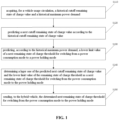
- FIG. 1 is a schematic flowchart showing a battery energy management method for a hybrid vehicle according to an embodiment of the present application.
- a battery energy management method for a hybrid vehicle is provided according to the present application, and the method is executed by a server.
- the server can communicate with a vehicle networking module of the hybrid vehicle, and acquire the data of the hybrid vehicle through the vehicle networking module, or send data to the hybrid vehicle through the vehicle networking module.
- the method includes step S110 to step S140.
- step S110 acquiring, for a vehicle usage circulation, a historical cutoff remaining state of charge value and a historical maximum power demand.
- one vehicle usage circulation is a circulation from a last charging completion to a next charging starting.
- the cutoff remaining state of charge value is a theoretical remaining state of charge value of the battery without considering the case that the engine charges the battery after the vehicle usage circulation ends.
- the server can obtain the remaining state of charge value SOC C when recharging at the end of the current vehicle usage circulation from the data transmitted by the vehicle networking module.
- the battery energy has been used in the vehicle usage circulation as the power and the engine is not started if the remaining state of charge value when the next charging is started is not less than the first preset value.
- the remaining state of charge value when the next charging is started is determined as the cutoff remaining state of charge value SOC C .
- the cutoff remaining state of charge value SOC C needs to be calculated according to the operation data of the vehicle, specifically according to a power value of an external work done by a power system after the engine is started.
- P ICE and P motor are calculated based on the following equation.
- P ICE nT 9550
- SOC T is the remaining state of charge threshold for switching from the power consumption mode to the power holding mode in the current vehicle usage circulation
- E battery is a total energy stored by a battery pack.
- the value calculated by formula (4) can be used as the final cutoff remaining state of charge value if the remaining state of charge value when the next charging is started is less than the first preset value.
- the value of SOC C calculated according to formula (4) may be very small, even less than 0.
- the battery pack is not less than a second preset value, so as not to affect the normal use of the vehicle.
- the second preset value can be acquired through calibration, for example, the second preset value can be set to be 15%, but it can be understood that 15% is only used for example, not for limitation. Therefore, in this embodiment, a larger one of the cutoff remaining state of charge value calculated according to the formula (4) and the second preset value may be used as the final cutoff remaining state of charge value.
- the acquisition of the historical maximum power demand for the vehicle usage circulation is described below.
- the power demand is related to an accelerator pedal opening.
- a corresponding relationship between the power demand and the accelerator pedal opening can be acquired by pre-testing.
- the server may pre-store the corresponding relationship between the power demand and the accelerator pedal opening.
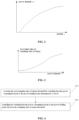
- the corresponding relationship for example, may be a corresponding curve between the power demand and the accelerator pedal opening, as shown in FIG. 2 , or a corresponding table between the power demand and the accelerator pedal opening, or a functional relationship between the power demand and the accelerator pedal opening.
- the vehicle can transmit the accelerator pedal opening to the server in real time.
- the server acquires the corresponding power demand according to the accelerator pedal opening, and determines the maximum power demand for the vehicle usage circulation.
- step S120 predicting a next cutoff remaining state of charge value according to the historical cutoff remaining state of charge value.
- the value of k i can selected as any value that satisfies the conditions.
- the selected historical cutoff remaining state of charge value may be values for the latest m vehicle usage circulations.
- the value of k 1 to k 6 can be selected as any value that satisfies the above two conditions.
- m 6 is only used as an example, not as a limitation. m can be set to any suitable value as required.
- step S130 predicting, according to the historical maximum power demand, a lower limit value of a next remaining state of charge threshold for switching from a power consumption mode to a power holding mode.
- first a next maximum power demand is predicted by using the historical maximum power demand.
- the selected historical maximum power demand may be values for the latest q vehicle usage circulations.
- the value of w 1 to w 6 can be selected as any value that satisfies the above two conditions.
- the lower limit value SOC Tmin of the next remaining state of charge threshold for switching from the power consumption mode to the power holding mode is determined according to the next maximum power demand, and, a corresponding relationship between the lower limit value of the remaining state of charge threshold and the power demand.
- the corresponding relationship between the lower limit value of the remaining state of charge threshold and the power demand can be acquired by pre-testing.
- the server may pre-store the corresponding relationship between the lower limit value of the remaining state of charge threshold and the power demand.
- the corresponding relationship for example, may be a corresponding curve between the lower limit value of the remaining state of charge threshold and the power demand, as shown in FIG. 3 , or a corresponding table between the lower limit value of the remaining state of charge threshold and the power demand, or a functional relationship between the lower limit value of the remaining state of charge threshold and the power demand.
- step S140 determining a lager one of the predicted next cutoff remaining state of charge value and the lower limit of the remaining state of charge threshold as a next remaining state of charge threshold for switching from the power consumption mode to the power holding mode.
- SOC T max (SOC C-new , SOC Tmin ) , in which SOC T is the next remaining state of charge threshold for switching from the power consumption mode to the power holding mode.
- step S150 sending, to the hybrid vehicle, the determined next remaining state of charge threshold for switching from the power consumption mode to the power holding mode.
- the switching from the power consumption mode to the power holding mode can be controlled according to the threshold.
- the remaining state of charge threshold can be dynamically changed according to different historical usage data of the user, so that the battery energy management for the hybrid vehicle is more suitable for needs of the user.
- FIG. 4 is a schematic flowchart showing the battery energy management method for the hybrid vehicle according to another embodiment of the present application.
- a power distribution management method for a hybrid vehicle is further provided according to the present application, the method can be executed by a vehicle controller of the hybrid vehicle, and the hybrid vehicle can communicate with the server through the vehicle networking module.
- the method includes step S410 to step S420.
- step S410 receiving the next remaining state of charge threshold for switching from the power consumption mode to the power holding mode.
- the server can send the next remaining state of charge threshold to the vehicle networking module of the hybrid vehicle.
- the vehicle networking module can send the next remaining state of charge threshold to the vehicle controller.
- step S420 controlling the switching from the power consumption mode to the power holding mode based on the remaining state of charge threshold.
- the vehicle controller can monitor the remaining state of charge of the battery in real time, and control the hybrid vehicle to switch from the power consumption mode to the power holding mode in a case that the remaining state of charge reaches the remaining state of charge threshold.
- the remaining state of charge threshold can be dynamically changed according to different historical usage data of the user, so that the battery energy management for the hybrid vehicle is more suitable for needs of the user.
- FIG. 5 is a structural block diagram showing a battery energy management device for a hybrid vehicle according to an embodiment of the present application. As shown in FIG. 5 , a power distribution management device for a hybrid vehicle is provided according to the present application, and the device is applicable to the server.
- the device includes: an acquisition module 510, configured to acquire, for a vehicle usage circulation, a historical cutoff remaining state of charge value and a historical maximum power demand, in which one vehicle usage circulation is from a last charging completion to a next charging starting; a first prediction module 520, configured to predict a next cutoff remaining state of charge value according to the historical cutoff remaining state of charge value; a second prediction module 530, configured to predict, according to the historical maximum power demand, a lower limit value of a next remaining state of charge threshold for switching from a power consumption mode to a power holding mode; a determination module 540, configured to determine a lager one of the predicted next cutoff remaining state of charge value and the lower limit of the remaining state of charge threshold as a next remaining state of charge threshold for switching from the power consumption mode to the power holding mode; and a sending module 550, configured to send, to the hybrid vehicle, the determined next remaining state of charge threshold for switching from the power consumption mode to the power holding mode.
- an acquisition module 510 configured to acquire, for a vehicle usage
- the historical cutoff remaining state of charge value and the historical maximum power demand for the vehicle usage circulation of the user are acquired, and the next remaining state of charge threshold for switching from the power consumption mode to the power holding mode is determined based on the historical cutoff remaining state of charge value and the historical maximum power demand.
- the remaining state of charge threshold can be dynamically changed according to different historical usage data of the user, so that the battery energy management for the hybrid vehicle is more suitable for needs of the user.
- FIG. 6 is a structural block diagram showing a battery energy management device for a hybrid vehicle according to another embodiment of the present application.
- a battery energy management device for a hybrid vehicle is further provided according to an embodiment of the present application, and the device can be used for the hybrid vehicle.
- the device includes: a receiving module 610, configured to receive the next remaining state of charge threshold for switching from the power consumption mode to the power holding mode; and a control module 620, configured to control the switching from the power consumption mode to the power holding mode based on the remaining state of charge threshold.
- the historical cutoff remaining state of charge value and the historical maximum power demand for the vehicle usage circulation of the user are acquired, and the next remaining state of charge threshold for switching from the power consumption mode to the power holding mode is determined based on the historical cutoff remaining state of charge value and the historical maximum power demand.
- the remaining state of charge threshold can be dynamically changed according to different historical usage data of the user, so that the battery energy management for the hybrid vehicle is more suitable for needs of the user.
- the server according to the present application can communicate with the hybrid vehicle through the vehicle networking module arranged on the hybrid vehicle.
- the server can specifically perform data analysis, data cleaning, data storage, data operation, and data conversion.
- the data uploaded from the hybrid vehicle to a cloud platform needs to be converted into a form that can be used for calculation, and this process is data analysis.
- the hybrid vehicle continues to upload data to the server when it wakes up.
- actions for non-driving and charging such as opening and closing vehicle door, remote inquiring the vehicle conditions, may also wake up the vehicle. Therefore, the hybrid vehicle uploads many invalid data. Therefore, it is necessary to clean the data to remove invalid data, for example, when the method described according to the present application is executed, only the data related to the analysis of the driving habits and charging habits of the user can be kept.
- the server can uniformly store the sorted data to the database which is arranged according to time for calling the data in each time period.
- the method according to the present application can be a specific process of performing data operation.
- the calculation results are converted into CAN messages and sent to the hybrid vehicle before the calculation results are sent to the hybrid vehicle.
- the vehicle networking module is arranged inside the vehicle, and is wirelessly connected with the server through the network connection protocol.
- the vehicle networking module can perform two functions: data routing and data storage. When the data routing is performed, the vehicle networking module can convert between an in-vehicle communication protocol to a remote communication protocol. The communication between the vehicle and the server may be interrupted because the vehicle is often parked in the underground parking garage and other places with poor signals.
- a storage module is added to the vehicle networking module to store the operation data of the vehicle when it cannot communicate with the server, and the operation data is packaged and uploaded as a whole after reconnection.
- a charger of the vehicle can send whether the vehicle is currently in a charging state to the server through the vehicle networking module, and the battery management system can send the actual remaining state of charge value to the server through the vehicle networking module.
- a transmitter can send whether the vehicle is currently in operation state and a speed torque to the server through the vehicle networking module.
- the motor can send a voltage value and a current value to the server through the vehicle networking module.
- the vehicle controller can receive the next remaining state of charge threshold, sent by the server through the vehicle networking module, for switching from the power consumption mode to the power holding mode, and control the switching from the power consumption mode to the power holding mode based on the remaining state of charge threshold.
- a machine-readable storage medium which stores instructions for causing a machine to perform the power distribution management method for the hybrid vehicle according to any embodiment of the present application.
- the machine-readable control medium includes, but is not limited to, various mediums that are capable of storing a program code, such as a phase change memory (PRAM), a static random access memory (SRAM), a dynamic random access memory (DRAM), other random access memory (RAM), a read-only memory (ROM), an electrically erasable programmable read only memory (EEPROM), a flash memory or other memory, a CD-ROM read-only memory (CD-ROM), a digital versatile disc (DVD) or other optical storage, a magnetic cassette tape, a magnetic tape disk storage or other magnetic storage devices.
- PRAM phase change memory
- SRAM static random access memory
- DRAM dynamic random access memory
- RAM random access memory
- ROM read-only memory
- EEPROM electrically erasable programmable read only memory
- flash memory or other memory
- CD-ROM read-only memory
Landscapes
- Engineering & Computer Science (AREA)
- Transportation (AREA)
- Mechanical Engineering (AREA)
- Automation & Control Theory (AREA)
- Life Sciences & Earth Sciences (AREA)
- Sustainable Development (AREA)
- Sustainable Energy (AREA)
- Power Engineering (AREA)
- Human Computer Interaction (AREA)
- Chemical & Material Sciences (AREA)
- Combustion & Propulsion (AREA)
- Electric Propulsion And Braking For Vehicles (AREA)
Description
- The present application relates to the technical field of vehicles, and in particular to a battery energy management method and device for a hybrid vehicle.
- Multiple power sources can be used in a hybrid vehicle, so how to well coordinate the working states of the multiple power sources is a problem.
- At present, two management modes for battery energy are used in a battery energy management strategy for a hybrid vehicle, namely: a power consumption mode and a power holding mode. The power consumption mode is used when the remaining state of charge of the battery is high, and the electric energy of the battery in the power consumption mode is consumed as much as possible to reduce the vehicle emissions and improve fuel economy. When the remaining state of charge of the battery drops to a threshold, the vehicle starts to execute the power holding mode, so as to control the remaining state of charge of the battery to remain within a certain range.
- In related technology, the remaining state of charge threshold of the battery in the battery energy management strategy is an empirical value, which is a constant value for same type of vehicles. However, due to the differences of usage habits of users, the constant threshold cannot accurately meet the needs of each user.
-
US 2012/256588 A1 discloses: The usage pattern of an electric vehicle including the amount of power consumption of a battery on each day of the week is extracted from usage histories of the vehicle in a predetermined period. When the vehicle goes home after one day's operation and is connected to a charging apparatus, a charge determination unit predicts a usage pattern of the vehicle on the next day and determines whether the vehicle can operate on the next day with the remaining amount of power of a battery in the vehicle. When it is determined that the charging of the battery is necessary, the battery is charged until it reaches the target remaining amount of power. The target remaining amount of power is determined on the basis of the amount of power consumption in the predicted usage pattern so that the full charge is prevented and the number of charges is reduced. - In view of this, a battery energy management method and device thereof are provided according to the present application, which are configured to solve the technical problem that the battery energy management cannot accurately meet the needs of each driver in a case that a remaining state of charge threshold for switching from a power consumption mode to a power holding mode is a constant value.
- In order to achieve the above object, a technical solution according to the present application is proposed as follows.
- A battery energy management method for a hybrid vehicle includes: acquiring, for a vehicle usage circulation, a historical cutoff remaining state of charge value and a historical maximum power demand, in which one vehicle usage circulation is defined as a circulation from a last charging completion to a next charging starting; predicting a next cutoff remaining state of charge value according to the historical cutoff remaining state of charge value; predicting, according to the historical maximum power demand, a lower limit value of a next remaining state of charge threshold for switching from a power consumption mode to a power holding mode; determining a lager one of the predicted next cutoff remaining state of charge value and the lower limit of the remaining state of charge threshold as a next remaining state of charge threshold for switching from the power consumption mode to the power holding mode; and sending, to the hybrid vehicle, the determined next remaining state of charge threshold for switching from the power consumption mode to the power holding mode.
- In an embodiment, the acquiring, for a vehicle usage circulation, a historical cutoff remaining state of charge value includes: performing the following steps for each vehicle usage circulation: acquiring a remaining state of charge value when the next charging is started; determining whether the remaining state of charge value when the next charging is started is less than a first preset value, in which the first preset value is a sum of the remaining state of charge threshold for switching from the power consumption mode to the power holding mode in the current vehicle usage circulation and a maximum floating amount of the remaining state of charge value in the power holding mode; determining the remaining state of charge value when the next charging is started as the cutoff remaining state of charge value in a case that the remaining state of charge value when the next charging is started is not less than the first preset value; and calculating, according to a power value of an external work done by a power system after an engine is started in the current vehicle usage circulation, the cutoff remaining state of charge value in a case that the remaining state of charge value when the next charging is started is less than the first preset value.
- In an embodiment, the calculating, according to a power value of an external work done by a power system after an engine is started in the current vehicle usage circulation, the cutoff remaining state of charge value includes:
- calculating the power value of the external work done by the power system after the engine is started in the current vehicle usage circulation according to the following formula:


- calculating the cutoff remaining state of charge value:

- in which P1 is the power value of the external work done by the power system after the engine is started in the current vehicle usage circulation, t is time, P is the power value of the external work done by the power system at time t, PICE is the power value consumed by the engine at time t, n is a rotational speed of the engine at time t, T is a torque output by the engine at time t, Pmotor is a power value consumed by a motor at time t, U is a voltage at two ends of the motor at time t, I is a current of the motor at time t, SOCC is the cutoff remaining state of charge value, SOCT is the remaining state of charge threshold for switching from the power consumption mode to the power holding mode in the current vehicle usage circulation, and Ebattery is a total energy stored by a battery pack.
- In an embodiment, that the calculating, according to a power value of an external work done by a power system after an engine is started in the current vehicle usage circulation, the cutoff remaining state of charge value further includes: determining a larger one between the calculated cutoff remaining state of charge value and a second preset value as a final cutoff remaining state of charge value.
- In an embodiment, the predicting a next cutoff remaining state of charge value according to the historical cutoff remaining state of charge value includes: predicting the next cutoff remaining state of charge value according to the following formula:

- in which,

- in which, SOCC-new is the next cutoff remaining state of charge value, m is the selected number of the historical cutoff remaining state of charge value, i is a serial number, SOCCi is the historical cutoff remaining state of charge value for the latest i-th vehicle usage circulation, ki represents a weighting coefficient corresponding to SOCCi, in which a value of ki decrease sequentially from i=1 to i=m.
- In an embodiment, the predicting, according to the historical maximum power demand, a lower limit value of a next remaining state of charge threshold for switching from a power consumption mode to a power holding mode includes: predicting a next maximum power demand by using the historical maximum power demand; and determining the lower limit value of the remaining state of charge threshold according to the next maximum power demand, and a corresponding relationship between the lower limit value of the remaining state of charge threshold and the power demand.
- In an embodiment, the predicting a next maximum power demand by using the historical maximum power demand includes:
calculating the next maximum power demand according to the following formula:
- In an embodiment, the corresponding relationship between the lower limit value of the remaining state of charge threshold and the power demand includes: a corresponding curve between the lower limit value of the remaining state of charge threshold and the power demand, a corresponding table between the lower limit value of the remaining state of charge threshold and the power demand, or a functional relationship between the lower limit value of the remaining state of charge threshold and the power demand, in which the corresponding curve, the corresponding table or the functional relationship is pre-stored in a server.
- In an embodiment, the historical maximum power demand for the vehicle usage circulation is acquired by:
- pre-storing a corresponding relationship between the power demand and an accelerator pedal opening;
- in each vehicle usage circulation, acquiring a corresponding power demand according to a current accelerator pedal opening and the pre-stored corresponding relationship between the power demand and the accelerator pedal opening, and determining a maximum power demand in the current vehicle usage circulation.
- Correspondingly, a battery energy management method for a hybrid vehicle is further provided according to the present application, which includes: receiving the next remaining state of charge threshold for switching from the power consumption mode to the power holding mode determined by a server according to the battery energy management method for the hybrid vehicle as described above; and controlling the switching from the power consumption mode to the power holding mode based on the remaining state of charge threshold.
- Correspondingly, a battery energy management device for a hybrid vehicle is further provided according to the present application, which includes: an acquisition module, configured to acquire, for a vehicle usage circulation, a historical cutoff remaining state of charge value and a historical maximum power demand, in which one vehicle usage circulation is from a last charging completion to a next charging starting; a first prediction module, configured to predict a next cutoff remaining state of charge value according to the historical cutoff remaining state of charge value; a second prediction module, configured to predict, according to the historical maximum power demand, a lower limit value of a next remaining state of charge threshold for switching from a power consumption mode to a power holding mode; a determination module, configured to determine a lager one of the predicted next cutoff remaining state of charge value and the lower limit of the remaining state of charge threshold as a next remaining state of charge threshold for switching from the power consumption mode to the power holding mode; and a sending module, configured to send, to the hybrid vehicle, the determined next remaining state of charge threshold for switching from the power consumption mode to the power holding mode.
- Correspondingly, a battery energy management device for a hybrid vehicle is further provided according to the present application, which includes: a receiving module, configured to receive the next remaining state of charge threshold for switching from the power consumption mode to the power holding mode determined by a server according to the above battery energy management method for the hybrid vehicle; and a control module, configured to control the switching from the power consumption mode to the power holding mode based on the remaining state of charge threshold.
- Compared with the conventional technology, the battery energy management method and device for the hybrid vehicle have the following advantages.
- The historical cutoff remaining state of charge value and the historical maximum power demand for the vehicle usage circulation of the user are acquired, and the next remaining state of charge threshold for switching from the power consumption mode to the power holding mode is determined based on the historical cutoff remaining state of charge value and the historical maximum power demand. In view of this, the remaining state of charge threshold can be dynamically changed according to different historical usage data of the user, so that the battery energy management for the hybrid vehicle is more suitable for needs of the user.
- In an embodiment, the receiving module includes a vehicle networking module which is arranged inside the hybrid vehicle, and the server is in communication with the hybrid vehicle through the vehicle networking module.
- In an embodiment, the vehicle networking module includes a data routing function and a data storage function, the data routing function is configured to convert between an in-vehicle communication protocol and a remote communication protocol; and the data storage function is configured to store an operation data of the vehicle when the communication between the vehicle and the server is unavailable.
- In addition, a machine-readable storage medium is further provided according to the present application, the machine-readable storage medium stores instructions for performing: the battery energy management method for the hybrid vehicle according to any one of the above.
- The machine-readable storage medium according to the present application includes the battery energy management method for the hybrid vehicle, so that the machine-readable storage medium has the above technical effects of the battery energy management method for the hybrid vehicle.
- Other features and advantages of the present invention are described in detail in the following specific embodiments.
- The accompanying drawings forming a part of the present application are used to provide a further understanding of the present application. Exemplary embodiments of the present application and descriptions thereof are used to explain the present application rather than constitute an undue limitation on the present application. In the drawings:
-
FIG. 1 is a schematic flowchart showing a battery energy management method for a hybrid vehicle according to an embodiment of the present application; -
FIG. 2 is a schematic view showing a corresponding curve between a power demand and an accelerator pedal opening; -
FIG. 3 is a schematic view showing a corresponding curve between a lower limit value of a remaining state of charge threshold and the power demand; -
FIG. 4 is a schematic flowchart showing the battery energy management method for the hybrid vehicle according to another embodiment of the present application; -
FIG. 5 is a structural block diagram showing a battery energy management device for a hybrid vehicle according to an embodiment of the present application; and -
FIG. 6 is a structural block diagram showing a battery energy management device for a hybrid vehicle according to another embodiment of the present application. - It should be noted that embodiments of the present application and features in the embodiments may be in combination with each other as long as there is no conflict.
- The present application is described in detail below with reference to the drawings and in conjunction with the embodiments.
- A remaining state of charge threshold of a battery for switching from a power consumption mode to a power holding mode in the vehicle is an important parameter for mode switching. If a high remaining state of charge threshold is set, the vehicle cannot make full use of the battery power to drive the vehicle, since the power holding mode lasts for a long time, the engine works for a long time, and the fuel consumption increases and the emissions become worse in this case. If a low remaining state of charge threshold of the battery is set, the power performance in power holding mode becomes worse. Therefore, the engine and the motor need to be output together when the user needs more power. The lower the battery power is, the lower its discharge power is, and the motor power may become weaker, so the power performance of the vehicle may become worse.
- In related technology, the remaining state of charge threshold of the battery for switching from the power consumption mode to the power holding mode is an empirical value, which is a constant value for same type of vehicles. However, due to the differences of usage habits of users, the constant threshold cannot accurately meet the needs of each user. However, due to the differences of usage habits of users, the constant threshold cannot accurately meet the needs of each user. For example, if the pure electric endurance of the hybrid vehicle is 50 km and the commute distance of the user is 40 km, 80% of the electricity can meet the commute needs of the user after the vehicle is fully charged every day. However, if the remaining state of charge threshold of the battery for switching from the power consumption mode to the power holding mode in the electric energy management strategy is defined to be 25%, the engine is started when the user is on the way to work. Apparently, this increases the car costs of the user, because the cost of oil is much higher than the cost of electricity. Based on this, a battery energy management method and device for a hybrid vehicle is provided according to the present application, so that the remaining state of charge threshold of the battery can be dynamically changed according to different user historical usage data.
-
FIG. 1 is a schematic flowchart showing a battery energy management method for a hybrid vehicle according to an embodiment of the present application. As shown inFIG. 1 , a battery energy management method for a hybrid vehicle is provided according to the present application, and the method is executed by a server. The server can communicate with a vehicle networking module of the hybrid vehicle, and acquire the data of the hybrid vehicle through the vehicle networking module, or send data to the hybrid vehicle through the vehicle networking module. The method includes step S110 to step S140. - In step S110, acquiring, for a vehicle usage circulation, a historical cutoff remaining state of charge value and a historical maximum power demand.
- In the present application, one vehicle usage circulation is a circulation from a last charging completion to a next charging starting.
- First, how to acquire the historical cutoff remaining state of charge value SOCC is described. In the present application, the cutoff remaining state of charge value is a theoretical remaining state of charge value of the battery without considering the case that the engine charges the battery after the vehicle usage circulation ends.
- For any vehicle usage circulation, the server can obtain the remaining state of charge value SOCC when recharging at the end of the current vehicle usage circulation from the data transmitted by the vehicle networking module.
- Whether the remaining state of charge value when the next charging is started is less than a first preset value is determined. The first preset value is a sum of the remaining state of charge threshold SOCT for switching from the power consumption mode to the power holding mode in the current vehicle usage circulation and a maximum floating amount SOCS of the remaining state of charge value in the power holding mode, that is, the first preset value=SOCT +SOC S .
- It means that the battery energy has been used in the vehicle usage circulation as the power and the engine is not started if the remaining state of charge value when the next charging is started is not less than the first preset value. In this case, the remaining state of charge value when the next charging is started is determined as the cutoff remaining state of charge value SOCC.
- It means that the engine has been started during the vehicle usage circulation if the remaining state of charge value when the next charging is started is less than the first preset value. In this case, the cutoff remaining state of charge value SOCC needs to be calculated according to the operation data of the vehicle, specifically according to a power value of an external work done by a power system after the engine is started.
- At any time t, that the power value P1 of the external work done by the power system after the engine is started includes the power value PICE consumed by the engine at time t and the power value Pmotor consumed by the motor at time t.
- Specifically, PICE and Pmotor are calculated based on the following equation.


- Then, the cutoff remaining state of charge value SOCC is calculated according to the power value P1 of the external work done by the power system after the engine is started at any time t, specifically according to the following formula:

- SOCT is the remaining state of charge threshold for switching from the power consumption mode to the power holding mode in the current vehicle usage circulation, and Ebattery is a total energy stored by a battery pack.
- In an embodiment, the value calculated by formula (4) can be used as the final cutoff remaining state of charge value if the remaining state of charge value when the next charging is started is less than the first preset value.
- In another embodiment, when the vehicle is in the power holding mode for a long time, the value of SOCC calculated according to formula (4) may be very small, even less than 0. In actual use, it is ensured that the battery pack is not less than a second preset value, so as not to affect the normal use of the vehicle. The second preset value can be acquired through calibration, for example, the second preset value can be set to be 15%, but it can be understood that 15% is only used for example, not for limitation. Therefore, in this embodiment, a larger one of the cutoff remaining state of charge value calculated according to the formula (4) and the second preset value may be used as the final cutoff remaining state of charge value.
- The acquisition of the historical maximum power demand for the vehicle usage circulation is described below. The power demand is related to an accelerator pedal opening. For each vehicle, a corresponding relationship between the power demand and the accelerator pedal opening can be acquired by pre-testing. The server may pre-store the corresponding relationship between the power demand and the accelerator pedal opening. The corresponding relationship, for example, may be a corresponding curve between the power demand and the accelerator pedal opening, as shown in
FIG. 2 , or a corresponding table between the power demand and the accelerator pedal opening, or a functional relationship between the power demand and the accelerator pedal opening. - The vehicle can transmit the accelerator pedal opening to the server in real time. In each vehicle usage circulation, the server acquires the corresponding power demand according to the accelerator pedal opening, and determines the maximum power demand for the vehicle usage circulation.
- In step S120, predicting a next cutoff remaining state of charge value according to the historical cutoff remaining state of charge value.
- Specifically, the next cutoff remaining state of charge value is predicted by using the weighted average method according to the following formula:


- The selected number of the historical cutoff remaining state of charge value can be set to any suitable value according to actual needs. Taking m=6 as an example, the next cutoff remaining state of charge value can be predicted as:

- In the present application, m=6 is only used as an example, not as a limitation. m can be set to any suitable value as required.
- In step S130, predicting, according to the historical maximum power demand, a lower limit value of a next remaining state of charge threshold for switching from a power consumption mode to a power holding mode.
- Specifically, first a next maximum power demand is predicted by using the historical maximum power demand.
- The next maximum power demand can be predicted by using the weighted average method according to the following formula:

- The selected number of the historical maximum power demand can be set to any suitable value according to actual needs. Taking q=6 as an example, the next historical maximum power demand can be predicted as:

- After the next maximum power demand is predicted, the lower limit value SOCTmin of the next remaining state of charge threshold for switching from the power consumption mode to the power holding mode is determined according to the next maximum power demand, and, a corresponding relationship between the lower limit value of the remaining state of charge threshold and the power demand.
- For each vehicle, the corresponding relationship between the lower limit value of the remaining state of charge threshold and the power demand can be acquired by pre-testing. The server may pre-store the corresponding relationship between the lower limit value of the remaining state of charge threshold and the power demand. The corresponding relationship, for example, may be a corresponding curve between the lower limit value of the remaining state of charge threshold and the power demand, as shown in
FIG. 3 , or a corresponding table between the lower limit value of the remaining state of charge threshold and the power demand, or a functional relationship between the lower limit value of the remaining state of charge threshold and the power demand. - In step S140, determining a lager one of the predicted next cutoff remaining state of charge value and the lower limit of the remaining state of charge threshold as a next remaining state of charge threshold for switching from the power consumption mode to the power holding mode.
- That is, SOCT= max(SOC C-new , SOC Tmin ) , in which SOCT is the next remaining state of charge threshold for switching from the power consumption mode to the power holding mode.
- In step S150, sending, to the hybrid vehicle, the determined next remaining state of charge threshold for switching from the power consumption mode to the power holding mode.
- After the vehicle receives the remaining state of charge threshold, the switching from the power consumption mode to the power holding mode can be controlled according to the threshold. Through the battery energy management method for the hybrid vehicle according to the present application, the remaining state of charge threshold can be dynamically changed according to different historical usage data of the user, so that the battery energy management for the hybrid vehicle is more suitable for needs of the user.
-
FIG. 4 is a schematic flowchart showing the battery energy management method for the hybrid vehicle according to another embodiment of the present application. As shown inFIG. 4 , a power distribution management method for a hybrid vehicle is further provided according to the present application, the method can be executed by a vehicle controller of the hybrid vehicle, and the hybrid vehicle can communicate with the server through the vehicle networking module. The method includes step S410 to step S420. - In step S410, receiving the next remaining state of charge threshold for switching from the power consumption mode to the power holding mode.
- After the server determines the next remaining state of charge threshold for switching from the power consumption mode to the power holding mode, the server can send the next remaining state of charge threshold to the vehicle networking module of the hybrid vehicle. The vehicle networking module can send the next remaining state of charge threshold to the vehicle controller.
- In step S420, controlling the switching from the power consumption mode to the power holding mode based on the remaining state of charge threshold.
- The vehicle controller can monitor the remaining state of charge of the battery in real time, and control the hybrid vehicle to switch from the power consumption mode to the power holding mode in a case that the remaining state of charge reaches the remaining state of charge threshold. Through the battery energy management method for the hybrid vehicle according to the present application, the remaining state of charge threshold can be dynamically changed according to different historical usage data of the user, so that the battery energy management for the hybrid vehicle is more suitable for needs of the user.
-
FIG. 5 is a structural block diagram showing a battery energy management device for a hybrid vehicle according to an embodiment of the present application. As shown inFIG. 5 , a power distribution management device for a hybrid vehicle is provided according to the present application, and the device is applicable to the server. The device includes: anacquisition module 510, configured to acquire, for a vehicle usage circulation, a historical cutoff remaining state of charge value and a historical maximum power demand, in which one vehicle usage circulation is from a last charging completion to a next charging starting; afirst prediction module 520, configured to predict a next cutoff remaining state of charge value according to the historical cutoff remaining state of charge value; asecond prediction module 530, configured to predict, according to the historical maximum power demand, a lower limit value of a next remaining state of charge threshold for switching from a power consumption mode to a power holding mode; adetermination module 540, configured to determine a lager one of the predicted next cutoff remaining state of charge value and the lower limit of the remaining state of charge threshold as a next remaining state of charge threshold for switching from the power consumption mode to the power holding mode; and a sendingmodule 550, configured to send, to the hybrid vehicle, the determined next remaining state of charge threshold for switching from the power consumption mode to the power holding mode. - The historical cutoff remaining state of charge value and the historical maximum power demand for the vehicle usage circulation of the user are acquired, and the next remaining state of charge threshold for switching from the power consumption mode to the power holding mode is determined based on the historical cutoff remaining state of charge value and the historical maximum power demand. In view of this, the remaining state of charge threshold can be dynamically changed according to different historical usage data of the user, so that the battery energy management for the hybrid vehicle is more suitable for needs of the user.
- The specific working principles and benefits of the power distribution management device for the hybrid vehicle according to the present application are the same as those of the power distribution management method for the hybrid vehicle executed by the server provided in the present application, and are not described here.
-
FIG. 6 is a structural block diagram showing a battery energy management device for a hybrid vehicle according to another embodiment of the present application. As shower inFIG. 6 , a battery energy management device for a hybrid vehicle is further provided according to an embodiment of the present application, and the device can be used for the hybrid vehicle. The device includes: a receivingmodule 610, configured to receive the next remaining state of charge threshold for switching from the power consumption mode to the power holding mode; and acontrol module 620, configured to control the switching from the power consumption mode to the power holding mode based on the remaining state of charge threshold. - The historical cutoff remaining state of charge value and the historical maximum power demand for the vehicle usage circulation of the user are acquired, and the next remaining state of charge threshold for switching from the power consumption mode to the power holding mode is determined based on the historical cutoff remaining state of charge value and the historical maximum power demand. In view of this, the remaining state of charge threshold can be dynamically changed according to different historical usage data of the user, so that the battery energy management for the hybrid vehicle is more suitable for needs of the user.
- The specific working principles and benefits of the battery energy management device for the hybrid vehicle according to the present application are the same as those of the battery energy management method for the hybrid vehicle executed by the hybrid vehicle according to the present application, which are not described here.
- The server according to the present application can communicate with the hybrid vehicle through the vehicle networking module arranged on the hybrid vehicle.
- The server can specifically perform data analysis, data cleaning, data storage, data operation, and data conversion. The data uploaded from the hybrid vehicle to a cloud platform needs to be converted into a form that can be used for calculation, and this process is data analysis. The hybrid vehicle continues to upload data to the server when it wakes up. When the vehicle is in normal use, actions for non-driving and charging, such as opening and closing vehicle door, remote inquiring the vehicle conditions, may also wake up the vehicle. Therefore, the hybrid vehicle uploads many invalid data. Therefore, it is necessary to clean the data to remove invalid data, for example, when the method described according to the present application is executed, only the data related to the analysis of the driving habits and charging habits of the user can be kept. The server can uniformly store the sorted data to the database which is arranged according to time for calling the data in each time period. The method according to the present application can be a specific process of performing data operation. The calculation results are converted into CAN messages and sent to the hybrid vehicle before the calculation results are sent to the hybrid vehicle.
- The vehicle networking module is arranged inside the vehicle, and is wirelessly connected with the server through the network connection protocol. The vehicle networking module can perform two functions: data routing and data storage. When the data routing is performed, the vehicle networking module can convert between an in-vehicle communication protocol to a remote communication protocol. The communication between the vehicle and the server may be interrupted because the vehicle is often parked in the underground parking garage and other places with poor signals. A storage module is added to the vehicle networking module to store the operation data of the vehicle when it cannot communicate with the server, and the operation data is packaged and uploaded as a whole after reconnection.
- A charger of the vehicle can send whether the vehicle is currently in a charging state to the server through the vehicle networking module, and the battery management system can send the actual remaining state of charge value to the server through the vehicle networking module. A transmitter can send whether the vehicle is currently in operation state and a speed torque to the server through the vehicle networking module. The motor can send a voltage value and a current value to the server through the vehicle networking module. The vehicle controller can receive the next remaining state of charge threshold, sent by the server through the vehicle networking module, for switching from the power consumption mode to the power holding mode, and control the switching from the power consumption mode to the power holding mode based on the remaining state of charge threshold.
- Correspondingly, a machine-readable storage medium is provided according to the present application, which stores instructions for causing a machine to perform the power distribution management method for the hybrid vehicle according to any embodiment of the present application. The machine-readable control medium includes, but is not limited to, various mediums that are capable of storing a program code, such as a phase change memory (PRAM), a static random access memory (SRAM), a dynamic random access memory (DRAM), other random access memory (RAM), a read-only memory (ROM), an electrically erasable programmable read only memory (EEPROM), a flash memory or other memory, a CD-ROM read-only memory (CD-ROM), a digital versatile disc (DVD) or other optical storage, a magnetic cassette tape, a magnetic tape disk storage or other magnetic storage devices.
Claims (15)
- A battery energy management method for a hybrid vehicle, characterized in that:acquiring, for a vehicle usage circulation, a historical cutoff remaining state of charge value and a historical maximum power demand, wherein one vehicle usage circulation is a circulation from a last charging completion to a next charging starting;predicting a next cutoff remaining state of charge value according to the historical cutoff remaining state of charge value;predicting, according to the historical maximum power demand, a lower limit value of a next remaining state of charge threshold for switching from a power consumption mode to a power holding mode;determining a lager one of the predicted next cutoff remaining state of charge value and the lower limit value of the remaining state of charge threshold as a next remaining state of charge threshold for switching from the power consumption mode to the power holding mode; andsending, to the hybrid vehicle, the determined next remaining state of charge threshold for switching from the power consumption mode to the power holding mode.
- The battery energy management method for the hybrid vehicle according to claim 1, wherein the acquiring, for a vehicle usage circulation, a historical cutoff remaining state of charge value comprises: performing the following steps for each vehicle usage circulation:acquiring a remaining state of charge value when the next charging is started;determining whether the remaining state of charge value when the next charging is started is less than a first preset value, wherein the first preset value is a sum of the remaining state of charge threshold for switching from the power consumption mode to the power holding mode in the current vehicle usage circulation and a maximum floating amount of the remaining state of charge value in the power holding mode;determining the remaining state of charge value when the next charging is started as the cutoff remaining state of charge value in a case that the remaining state of charge value when the next charging is started is not less than the first preset value; andcalculating, according to a power value of an external work done by a power system after an engine is started in the current vehicle usage circulation, the cutoff remaining state of charge value in a case that the remaining state of charge value when the next charging is started is less than the first preset value.
- The battery energy management method for the hybrid vehicle according to claim 2, wherein that the calculating, according to a power value of an external work done by a power system after an engine is started in the current vehicle usage circulation, the cutoff remaining state of charge value comprises:calculating the power value of the external work done by the power system after the engine is started in the current vehicle usage circulation according to the following formula:
 wherein,
 calculating the cutoff remaining state of charge value:
 wherein P1 is the power value of the external work done by the power system after the engine is started in the current vehicle usage circulation, t is time, P is the power value of the external work done by the power system at time t, PICE is the power value consumed by the engine at time t, n is a rotational speed of the engine at time t, T is a torque output by the engine at time t, Pmotor is a power value consumed by a motor at time t, U is a voltage at two ends of the motor at time t, I is a current of the motor at time t, SOCC is the cutoff remaining state of charge value, SOCT is the remaining state of charge threshold for switching from the power consumption mode to the power holding mode in the current vehicle usage circulation, and Ebattery is a total energy stored by a battery pack.
 - The battery energy management method for the hybrid vehicle according to claim 3, wherein the calculating, according to a power value of an external work done by a power system after an engine is started in the current vehicle usage circulation, the cutoff remaining state of charge value further comprises:
determining a larger one between the calculated cutoff remaining state of charge value and a second preset value as a final cutoff remaining state of charge value. - The battery energy management method according to any one of claims 1 to 4, wherein the predicting a next cutoff remaining state of charge value according to the historical cutoff remaining state of charge value comprises:predicting the next cutoff remaining state of charge value according to the following formula:
 wherein,
 wherein, SOCC-new is the next cutoff remaining state of charge value, m is the selected number of the historical cutoff remaining state of charge value, i is a serial number, SOCCi is the historical cutoff remaining state of charge value for the latest i-th vehicle usage circulation, ki represents a weighting coefficient corresponding to SOCCi, wherein a value of ki decrease sequentially from i=1 to i=m.
 - The battery energy management method for the hybrid vehicle according to claim 1, wherein the predicting, according to the historical maximum power demand, a lower limit value of a next remaining state of charge threshold for switching from a power consumption mode to a power holding mode comprises:predicting a next maximum power demand by using the historical maximum power demand; anddetermining the lower limit value of the remaining state of charge threshold according to the next maximum power demand, and a corresponding relationship between the lower limit value of the remaining state of charge threshold and the power demand.
- The battery energy management method according to claim 6, wherein the predicting a next maximum power demand by using the historical maximum power demand comprises:calculating the next maximum power demand according to the following formula:
 wherein,
 wherein, PAvg is the next maximum power demand, q is the selected number of the historical maximum power demand, j is a serial number, Preqj the historical maximum power demand for the latest j-th vehicle usage circulation, wj represents a weighting coefficient corresponding to Preqj, wherein a value of wj decreases sequentially from j=1 to j=q.
 - The battery energy management method according to claim 6 or 7, wherein the corresponding relationship between the lower limit value of the remaining state of charge threshold and the power demand comprises: a corresponding curve between the lower limit value of the remaining state of charge threshold and the power demand, a corresponding table between the lower limit value of the remaining state of charge threshold and the power demand, or a functional relationship between the lower limit value of the remaining state of charge threshold and the power demand, wherein the corresponding curve, the corresponding table or the functional relationship is pre-stored in a server.
- The battery energy management method according to any one of claims 1 to 4, claim 6 and claim 7, wherein the historical maximum power demand for the vehicle usage circulation is acquired by:pre-storing a corresponding relationship between the power demand and an accelerator pedal opening;in each vehicle usage circulation, acquiring a corresponding power demand according to a current accelerator pedal opening and the pre-stored corresponding relationship between the power demand and the accelerator pedal opening, and determining a maximum power demand in the current vehicle usage circulation.
- A battery energy management method for a hybrid vehicle, comprising:receiving the next remaining state of charge threshold for switching from the power consumption mode to the power holding mode determined by a server according to the battery energy management method for the hybrid vehicle according to any one of claims 1 to 9; andcontrolling the switching from the power consumption mode to the power holding mode based on the remaining state of charge threshold.
- A battery energy management device for a hybrid vehicle, characterized in that:an acquisition module (510), configured to acquire, for a vehicle usage circulation, a historical cutoff remaining state of charge value and a historical maximum power demand, wherein one vehicle usage circulation is from a last charging completion to a next charging starting;a first prediction module (520), configured to predict a next cutoff remaining state of charge value according to the historical cutoff remaining state of charge value;a second prediction module (530), configured to predict, according to the historical maximum power demand, a lower limit value of a next remaining state of charge threshold for switching from a power consumption mode to a power holding mode;a determination module (540), configured to determine a lager one of the predicted next cutoff remaining state of charge value and the lower limit value of the remaining state of charge threshold as a next remaining state of charge threshold for switching from the power consumption mode to the power holding mode; anda sending module (550), configured to send, to the hybrid vehicle, the determined next remaining state of charge threshold for switching from the power consumption mode to the power holding mode.
- A battery energy management device for a hybrid vehicle, comprising:a receiving module (610), configured to receive the next remaining state of charge threshold for switching from the power consumption mode to the power holding mode determined by the determination module (540) according to claim 11; anda control module (620), configured to control the switching from the power consumption mode to the power holding mode based on the remaining state of charge threshold.
- The battery energy management device for the hybrid vehicle according to claim 12, wherein the receiving module (610) comprises a vehicle networking module which is arranged inside the hybrid vehicle, and the server is in communication with the hybrid vehicle through the vehicle networking module.
- The battery energy management device for the hybrid vehicle according to claim 13, wherein the vehicle networking module comprises a data routing function and a data storage function, the data routing function is configured to convert between an in-vehicle communication protocol and a remote communication protocol; and the data storage function is configured to store an operation data of the vehicle when the communication between the vehicle and the server is unavailable.
- A machine-readable storage medium, wherein the machine-readable storage medium stores instructions for performing: the battery energy management method for the hybrid vehicle according to any one of claims 1 to 9.
Applications Claiming Priority (2)
| Application Number | Priority Date | Filing Date | Title |
|---|---|---|---|
| CN202010837547.2A CN113173152B (en) | 2020-08-19 | 2020-08-19 | Battery energy management method and device for hybrid vehicle |
| PCT/CN2021/113461 WO2022037632A1 (en) | 2020-08-19 | 2021-08-19 | Battery energy management method and device for hybrid vehicle, and machine-readable storage medium |
Publications (3)
| Publication Number | Publication Date |
|---|---|
| EP4155144A1 EP4155144A1 (en) | 2023-03-29 |
| EP4155144A4 EP4155144A4 (en) | 2023-11-22 |
| EP4155144B1 true EP4155144B1 (en) | 2025-05-28 |
Family
ID=76921431
Family Applications (1)
| Application Number | Title | Priority Date | Filing Date |
|---|---|---|---|
| EP21857724.5A Active EP4155144B1 (en) | 2020-08-19 | 2021-08-19 | Battery energy management method and device for hybrid vehicle, and machine-readable storage medium |
Country Status (4)
| Country | Link |
|---|---|
| US (1) | US12330621B2 (en) |
| EP (1) | EP4155144B1 (en) |
| CN (1) | CN113173152B (en) |
| WO (1) | WO2022037632A1 (en) |
Families Citing this family (8)
| Publication number | Priority date | Publication date | Assignee | Title |
|---|---|---|---|---|
| CN113173152B (en) * | 2020-08-19 | 2022-04-12 | 长城汽车股份有限公司 | Battery energy management method and device for hybrid vehicle |
| JP7198851B2 (en) * | 2021-03-11 | 2023-01-04 | 本田技研工業株式会社 | Electric vehicle charge control method and electric vehicle |
| CN114312327B (en) * | 2021-12-31 | 2024-08-27 | 上海洛轲智能科技有限公司 | Method for setting SOC balance point of power battery, vehicle, medium and program product |
| CN114597992A (en) * | 2022-02-23 | 2022-06-07 | 深圳市道通合创新能源有限公司 | A method for obtaining and setting a charge cut-off amount of electricity, and a charging management system |
| CN115027313B (en) * | 2022-06-30 | 2026-03-24 | 章鱼博士智能技术(上海)有限公司 | Intelligent charging control methods for electric vehicles, storage media, and electric vehicles |
| CN118405117B (en) * | 2024-04-23 | 2025-10-03 | 江苏大学 | Neural network energy management method for plug-in hybrid electric harvester based on quasi-periodic process |
| CN119298316B (en) * | 2024-12-13 | 2025-04-15 | 南昌济铃新能源科技有限责任公司 | Energy storage system control method, device, storage medium and system |
| CN119448502B (en) * | 2024-12-24 | 2025-07-01 | 深圳市博坦智能有限公司 | Charging control method, charging device, and storage medium |
Family Cites Families (13)
| Publication number | Priority date | Publication date | Assignee | Title |
|---|---|---|---|---|
| JP2010023739A (en) | 2008-07-23 | 2010-02-04 | Toyota Motor Corp | Hybrid vehicle and control method of hybrid vehicle |
| JP5418785B2 (en) * | 2010-06-03 | 2014-02-19 | 三菱自動車工業株式会社 | Storage control device for hybrid vehicle |
| DE102011086903A1 (en) * | 2010-11-25 | 2012-05-31 | Denso Corporation | Electricity demand estimation device for estimating consumption of electrical power during movement of electric car, has estimation portion provided in vehicle to estimate electricity demand for drive of vehicle |
| JP2012228165A (en) * | 2011-04-07 | 2012-11-15 | Honda Motor Co Ltd | Electric vehicle charge control system |
| JP6361299B2 (en) * | 2014-06-09 | 2018-07-25 | トヨタ自動車株式会社 | Hybrid vehicle |
| KR101601222B1 (en) | 2014-09-05 | 2016-03-21 | 현대자동차주식회사 | Apparatus and method for calculating distance to entry of plug-in hybrid electric vehicle |
| JP6135698B2 (en) * | 2015-03-04 | 2017-05-31 | トヨタ自動車株式会社 | Information processing apparatus for vehicle |
| JP6156419B2 (en) * | 2015-03-19 | 2017-07-05 | トヨタ自動車株式会社 | vehicle |
| CN108556839B (en) | 2018-03-30 | 2019-12-31 | 吉利汽车研究院(宁波)有限公司 | Energy management method and system for a hybrid electric vehicle |
| US10829106B2 (en) * | 2018-10-02 | 2020-11-10 | Ford Global Technologies, Llc | Method and system for improving drivability of PHEV having low traction battery discharge limits |
| CN110550018B (en) * | 2019-09-05 | 2021-06-08 | 武汉理工大学 | Energy management method of extended range hybrid electric vehicle |
| CN111123110A (en) | 2019-12-20 | 2020-05-08 | 北京经纬恒润科技有限公司 | Method and device for calculating residual discharge energy of battery |
| CN113173152B (en) | 2020-08-19 | 2022-04-12 | 长城汽车股份有限公司 | Battery energy management method and device for hybrid vehicle |
-
2020
- 2020-08-19 CN CN202010837547.2A patent/CN113173152B/en active Active
-
2021
- 2021-08-19 EP EP21857724.5A patent/EP4155144B1/en active Active
- 2021-08-19 WO PCT/CN2021/113461 patent/WO2022037632A1/en not_active Ceased
- 2021-08-19 US US18/013,362 patent/US12330621B2/en active Active
Also Published As
| Publication number | Publication date |
|---|---|
| CN113173152B (en) | 2022-04-12 |
| WO2022037632A1 (en) | 2022-02-24 |
| CN113173152A (en) | 2021-07-27 |
| US12330621B2 (en) | 2025-06-17 |
| EP4155144A4 (en) | 2023-11-22 |
| US20230303056A1 (en) | 2023-09-28 |
| EP4155144A1 (en) | 2023-03-29 |
Similar Documents
| Publication | Publication Date | Title |
|---|---|---|
| EP4155144B1 (en) | Battery energy management method and device for hybrid vehicle, and machine-readable storage medium | |
| RU2403663C2 (en) | Method and device for charge and discharge control of energy accumulation device | |
| CN113997805B (en) | Charging control method and system for new energy automobile, vehicle-mounted terminal and medium | |
| US12576737B2 (en) | Method for operating a motor vehicle for a charging process of a traction battery and motor vehicle | |
| EP3358703B1 (en) | Charge rate optimization | |
| CN112776620A (en) | Vehicle charging control system and method | |
| CN105083042A (en) | Electric vehicle operation to manage battery capacity | |
| US11505079B2 (en) | Hybrid vehicle and method for controlling hybrid vehicle | |
| JP7329555B2 (en) | Charging control device, moving object, charging control system, and charging control method | |
| EP4166373B1 (en) | Electrically powered vehicle, method of controlling electrically powered vehicle, and controller that controls electrically powered vehicle | |
| JP7447833B2 (en) | Power management device and power management method | |
| CN110696676A (en) | Charging control method, device, terminal and vehicle | |
| CN113829962A (en) | Vehicle control method and device | |
| CN115384353A (en) | Vehicle charging control method and device, readable storage medium and electronic equipment | |
| JP7544084B2 (en) | vehicle | |
| JP2013502687A5 (en) | ||
| JP2013502687A (en) | Calculation and use of reserve energy in energy storage systems | |
| EP4159562B1 (en) | Power distribution management method and device for hybrid vehicle | |
| US11827208B2 (en) | Driving guide setting system of electric operating vehicle and method of setting the driving guide | |
| US20250249780A1 (en) | Charging control for an electric vehicle | |
| US11180051B2 (en) | Display apparatus and vehicle including the same | |
| EP4393043B1 (en) | Method for managing a charging session of an electrified vehicle to determine a target state of charge at the end of charging | |
| KR20200015988A (en) | Method for managing battery of vehicle | |
| KR102030239B1 (en) | Vehicle battery management method using estimation of solar cell power generation amount | |
| JP2020092512A (en) | Electric vehicle |
Legal Events
| Date | Code | Title | Description |
|---|---|---|---|
| STAA | Information on the status of an ep patent application or granted ep patent |
Free format text: STATUS: THE INTERNATIONAL PUBLICATION HAS BEEN MADE |
|
| PUAI | Public reference made under article 153(3) epc to a published international application that has entered the european phase |
Free format text: ORIGINAL CODE: 0009012 |
|
| STAA | Information on the status of an ep patent application or granted ep patent |
Free format text: STATUS: REQUEST FOR EXAMINATION WAS MADE |
|
| 17P | Request for examination filed |
Effective date: 20221223 |
|
| AK | Designated contracting states |
Kind code of ref document: A1 Designated state(s): AL AT BE BG CH CY CZ DE DK EE ES FI FR GB GR HR HU IE IS IT LI LT LU LV MC MK MT NL NO PL PT RO RS SE SI SK SM TR |
|
| P01 | Opt-out of the competence of the unified patent court (upc) registered |
Effective date: 20230530 |
|
| A4 | Supplementary search report drawn up and despatched |
Effective date: 20231025 |
|
| DAV | Request for validation of the european patent (deleted) | ||
| DAX | Request for extension of the european patent (deleted) | ||
| RIC1 | Information provided on ipc code assigned before grant |
Ipc: B60L 58/12 20190101ALI20231019BHEP Ipc: B60W 10/26 20060101ALI20231019BHEP Ipc: B60W 20/00 20160101AFI20231019BHEP |
|
| STAA | Information on the status of an ep patent application or granted ep patent |
Free format text: STATUS: EXAMINATION IS IN PROGRESS |
|
| 17Q | First examination report despatched |
Effective date: 20240611 |
|
| GRAP | Despatch of communication of intention to grant a patent |
Free format text: ORIGINAL CODE: EPIDOSNIGR1 |
|
| STAA | Information on the status of an ep patent application or granted ep patent |
Free format text: STATUS: GRANT OF PATENT IS INTENDED |
|
| INTG | Intention to grant announced |
Effective date: 20241220 |
|
| GRAS | Grant fee paid |
Free format text: ORIGINAL CODE: EPIDOSNIGR3 |
|
| GRAA | (expected) grant |
Free format text: ORIGINAL CODE: 0009210 |
|
| STAA | Information on the status of an ep patent application or granted ep patent |
Free format text: STATUS: THE PATENT HAS BEEN GRANTED |
|
| AK | Designated contracting states |
Kind code of ref document: B1 Designated state(s): AL AT BE BG CH CY CZ DE DK EE ES FI FR GB GR HR HU IE IS IT LI LT LU LV MC MK MT NL NO PL PT RO RS SE SI SK SM TR |
|
| REG | Reference to a national code |
Ref country code: GB Ref legal event code: FG4D |
|
| REG | Reference to a national code |
Ref country code: CH Ref legal event code: EP |
|
| REG | Reference to a national code |
Ref country code: DE Ref legal event code: R096 Ref document number: 602021031517 Country of ref document: DE |
|
| REG | Reference to a national code |
Ref country code: IE Ref legal event code: FG4D |
|
| REG | Reference to a national code |
Ref country code: NL Ref legal event code: MP Effective date: 20250528 |
|
| PG25 | Lapsed in a contracting state [announced via postgrant information from national office to epo] |
Ref country code: ES Free format text: LAPSE BECAUSE OF FAILURE TO SUBMIT A TRANSLATION OF THE DESCRIPTION OR TO PAY THE FEE WITHIN THE PRESCRIBED TIME-LIMIT Effective date: 20250528 Ref country code: FI Free format text: LAPSE BECAUSE OF FAILURE TO SUBMIT A TRANSLATION OF THE DESCRIPTION OR TO PAY THE FEE WITHIN THE PRESCRIBED TIME-LIMIT Effective date: 20250528 |
|
| PGFP | Annual fee paid to national office [announced via postgrant information from national office to epo] |
Ref country code: DE Payment date: 20250812 Year of fee payment: 5 |
|
| REG | Reference to a national code |
Ref country code: LT Ref legal event code: MG9D |
|
| PG25 | Lapsed in a contracting state [announced via postgrant information from national office to epo] |
Ref country code: NO Free format text: LAPSE BECAUSE OF FAILURE TO SUBMIT A TRANSLATION OF THE DESCRIPTION OR TO PAY THE FEE WITHIN THE PRESCRIBED TIME-LIMIT Effective date: 20250828 Ref country code: GR Free format text: LAPSE BECAUSE OF FAILURE TO SUBMIT A TRANSLATION OF THE DESCRIPTION OR TO PAY THE FEE WITHIN THE PRESCRIBED TIME-LIMIT Effective date: 20250829 |
|
| PG25 | Lapsed in a contracting state [announced via postgrant information from national office to epo] |
Ref country code: NL Free format text: LAPSE BECAUSE OF FAILURE TO SUBMIT A TRANSLATION OF THE DESCRIPTION OR TO PAY THE FEE WITHIN THE PRESCRIBED TIME-LIMIT Effective date: 20250528 Ref country code: PL Free format text: LAPSE BECAUSE OF FAILURE TO SUBMIT A TRANSLATION OF THE DESCRIPTION OR TO PAY THE FEE WITHIN THE PRESCRIBED TIME-LIMIT Effective date: 20250528 |
|
| PG25 | Lapsed in a contracting state [announced via postgrant information from national office to epo] |
Ref country code: BG Free format text: LAPSE BECAUSE OF FAILURE TO SUBMIT A TRANSLATION OF THE DESCRIPTION OR TO PAY THE FEE WITHIN THE PRESCRIBED TIME-LIMIT Effective date: 20250528 |
|
| PGFP | Annual fee paid to national office [announced via postgrant information from national office to epo] |
Ref country code: GB Payment date: 20250826 Year of fee payment: 5 |
|
| PG25 | Lapsed in a contracting state [announced via postgrant information from national office to epo] |
Ref country code: HR Free format text: LAPSE BECAUSE OF FAILURE TO SUBMIT A TRANSLATION OF THE DESCRIPTION OR TO PAY THE FEE WITHIN THE PRESCRIBED TIME-LIMIT Effective date: 20250528 |
|
| PGFP | Annual fee paid to national office [announced via postgrant information from national office to epo] |
Ref country code: AT Payment date: 20251020 Year of fee payment: 5 Ref country code: FR Payment date: 20250828 Year of fee payment: 5 |
|
| PG25 | Lapsed in a contracting state [announced via postgrant information from national office to epo] |
Ref country code: RS Free format text: LAPSE BECAUSE OF FAILURE TO SUBMIT A TRANSLATION OF THE DESCRIPTION OR TO PAY THE FEE WITHIN THE PRESCRIBED TIME-LIMIT Effective date: 20250828 |
|
| PG25 | Lapsed in a contracting state [announced via postgrant information from national office to epo] |
Ref country code: IS Free format text: LAPSE BECAUSE OF FAILURE TO SUBMIT A TRANSLATION OF THE DESCRIPTION OR TO PAY THE FEE WITHIN THE PRESCRIBED TIME-LIMIT Effective date: 20250928 |
|
| PG25 | Lapsed in a contracting state [announced via postgrant information from national office to epo] |
Ref country code: LV Free format text: LAPSE BECAUSE OF FAILURE TO SUBMIT A TRANSLATION OF THE DESCRIPTION OR TO PAY THE FEE WITHIN THE PRESCRIBED TIME-LIMIT Effective date: 20250528 |
|
| REG | Reference to a national code |
Ref country code: AT Ref legal event code: MK05 Ref document number: 1798482 Country of ref document: AT Kind code of ref document: T Effective date: 20250528 |
|
| PG25 | Lapsed in a contracting state [announced via postgrant information from national office to epo] |
Ref country code: AT Free format text: LAPSE BECAUSE OF FAILURE TO SUBMIT A TRANSLATION OF THE DESCRIPTION OR TO PAY THE FEE WITHIN THE PRESCRIBED TIME-LIMIT Effective date: 20250528 Ref country code: DK Free format text: LAPSE BECAUSE OF FAILURE TO SUBMIT A TRANSLATION OF THE DESCRIPTION OR TO PAY THE FEE WITHIN THE PRESCRIBED TIME-LIMIT Effective date: 20250528 Ref country code: SM Free format text: LAPSE BECAUSE OF FAILURE TO SUBMIT A TRANSLATION OF THE DESCRIPTION OR TO PAY THE FEE WITHIN THE PRESCRIBED TIME-LIMIT Effective date: 20250528 |
|
| PG25 | Lapsed in a contracting state [announced via postgrant information from national office to epo] |
Ref country code: CZ Free format text: LAPSE BECAUSE OF FAILURE TO SUBMIT A TRANSLATION OF THE DESCRIPTION OR TO PAY THE FEE WITHIN THE PRESCRIBED TIME-LIMIT Effective date: 20250528 |
|
| PG25 | Lapsed in a contracting state [announced via postgrant information from national office to epo] |
Ref country code: EE Free format text: LAPSE BECAUSE OF FAILURE TO SUBMIT A TRANSLATION OF THE DESCRIPTION OR TO PAY THE FEE WITHIN THE PRESCRIBED TIME-LIMIT Effective date: 20250528 |
|
| PG25 | Lapsed in a contracting state [announced via postgrant information from national office to epo] |
Ref country code: SK Free format text: LAPSE BECAUSE OF FAILURE TO SUBMIT A TRANSLATION OF THE DESCRIPTION OR TO PAY THE FEE WITHIN THE PRESCRIBED TIME-LIMIT Effective date: 20250528 |
|
| PG25 | Lapsed in a contracting state [announced via postgrant information from national office to epo] |
Ref country code: IT Free format text: LAPSE BECAUSE OF FAILURE TO SUBMIT A TRANSLATION OF THE DESCRIPTION OR TO PAY THE FEE WITHIN THE PRESCRIBED TIME-LIMIT Effective date: 20250528 |
|
| REG | Reference to a national code |
Ref country code: DE Ref legal event code: R097 Ref document number: 602021031517 Country of ref document: DE |
|
| PG25 | Lapsed in a contracting state [announced via postgrant information from national office to epo] |
Ref country code: RO Free format text: LAPSE BECAUSE OF FAILURE TO SUBMIT A TRANSLATION OF THE DESCRIPTION OR TO PAY THE FEE WITHIN THE PRESCRIBED TIME-LIMIT Effective date: 20250528 |
|
| REG | Reference to a national code |
Ref country code: CH Ref legal event code: H13 Free format text: ST27 STATUS EVENT CODE: U-0-0-H10-H13 (AS PROVIDED BY THE NATIONAL OFFICE) Effective date: 20260324 |
|
| PG25 | Lapsed in a contracting state [announced via postgrant information from national office to epo] |
Ref country code: MC Free format text: LAPSE BECAUSE OF FAILURE TO SUBMIT A TRANSLATION OF THE DESCRIPTION OR TO PAY THE FEE WITHIN THE PRESCRIBED TIME-LIMIT Effective date: 20250528 |
|
| PLBE | No opposition filed within time limit |
Free format text: ORIGINAL CODE: 0009261 |
|
| STAA | Information on the status of an ep patent application or granted ep patent |
Free format text: STATUS: NO OPPOSITION FILED WITHIN TIME LIMIT |
|
| REG | Reference to a national code |
Ref country code: CH Ref legal event code: L10 Free format text: ST27 STATUS EVENT CODE: U-0-0-L10-L00 (AS PROVIDED BY THE NATIONAL OFFICE) Effective date: 20260409 |
|
| PG25 | Lapsed in a contracting state [announced via postgrant information from national office to epo] |
Ref country code: LU Free format text: LAPSE BECAUSE OF NON-PAYMENT OF DUE FEES Effective date: 20250819 |
|
| PG25 | Lapsed in a contracting state [announced via postgrant information from national office to epo] |
Ref country code: CH Free format text: LAPSE BECAUSE OF NON-PAYMENT OF DUE FEES Effective date: 20250831 |