EP4154811B1 - Gangbeurteilungssystem - Google Patents
Gangbeurteilungssystem Download PDFInfo
- Publication number
- EP4154811B1 EP4154811B1 EP21198152.7A EP21198152A EP4154811B1 EP 4154811 B1 EP4154811 B1 EP 4154811B1 EP 21198152 A EP21198152 A EP 21198152A EP 4154811 B1 EP4154811 B1 EP 4154811B1
- Authority
- EP
- European Patent Office
- Prior art keywords
- gait
- user
- values
- feature values
- walking
- Prior art date
- Legal status (The legal status is an assumption and is not a legal conclusion. Google has not performed a legal analysis and makes no representation as to the accuracy of the status listed.)
- Active
Links
Images




Classifications
-
- A—HUMAN NECESSITIES
- A61—MEDICAL OR VETERINARY SCIENCE; HYGIENE
- A61B—DIAGNOSIS; SURGERY; IDENTIFICATION
- A61B5/00—Measuring for diagnostic purposes; Identification of persons
- A61B5/103—Measuring devices for testing the shape, pattern, colour, size or movement of the body or parts thereof, for diagnostic purposes
- A61B5/11—Measuring movement of the entire body or parts thereof, e.g. head or hand tremor or mobility of a limb
- A61B5/112—Gait analysis
-
- A—HUMAN NECESSITIES
- A61—MEDICAL OR VETERINARY SCIENCE; HYGIENE
- A61B—DIAGNOSIS; SURGERY; IDENTIFICATION
- A61B5/00—Measuring for diagnostic purposes; Identification of persons
- A61B5/103—Measuring devices for testing the shape, pattern, colour, size or movement of the body or parts thereof, for diagnostic purposes
- A61B5/1036—Measuring load distribution, e.g. podologic studies
- A61B5/1038—Measuring plantar pressure during gait
-
- A—HUMAN NECESSITIES
- A61—MEDICAL OR VETERINARY SCIENCE; HYGIENE
- A61B—DIAGNOSIS; SURGERY; IDENTIFICATION
- A61B5/00—Measuring for diagnostic purposes; Identification of persons
- A61B5/103—Measuring devices for testing the shape, pattern, colour, size or movement of the body or parts thereof, for diagnostic purposes
- A61B5/11—Measuring movement of the entire body or parts thereof, e.g. head or hand tremor or mobility of a limb
- A61B5/1126—Measuring movement of the entire body or parts thereof, e.g. head or hand tremor or mobility of a limb using a particular sensing technique
- A61B5/1128—Measuring movement of the entire body or parts thereof, e.g. head or hand tremor or mobility of a limb using a particular sensing technique using image analysis
-
- A—HUMAN NECESSITIES
- A61—MEDICAL OR VETERINARY SCIENCE; HYGIENE
- A61B—DIAGNOSIS; SURGERY; IDENTIFICATION
- A61B5/00—Measuring for diagnostic purposes; Identification of persons
- A61B5/40—Detecting, measuring or recording for evaluating the nervous system
- A61B5/4076—Diagnosing or monitoring particular conditions of the nervous system
- A61B5/4082—Diagnosing or monitoring movement diseases, e.g. Parkinson, Huntington or Tourette
-
- A—HUMAN NECESSITIES
- A61—MEDICAL OR VETERINARY SCIENCE; HYGIENE
- A61B—DIAGNOSIS; SURGERY; IDENTIFICATION
- A61B5/00—Measuring for diagnostic purposes; Identification of persons
- A61B5/68—Arrangements of detecting, measuring or recording means, e.g. sensors, in relation to patient
- A61B5/6801—Arrangements of detecting, measuring or recording means, e.g. sensors, in relation to patient specially adapted to be attached to or worn on the body surface
- A61B5/6802—Sensor mounted on worn items
- A61B5/6804—Garments; Clothes
- A61B5/6807—Footwear
Definitions
- the invention relates to a human body evaluating technology, and in particularly to a gait evaluating system.
- gait-related parameters in people's walk may be used to predict future falls. For example, a normalized stride length of certain person may be used to predict the occurrence of repeated fall of the person in the next 6 or 12 months. Besides, people who walk relatively slowly also have a higher mortality rate. In addition, as people age, a forward inclination angle of the torso may also gradually increase. Moreover, for those suffering neurological diseases (e.g., Parkinson's disease, Alzheimer's disease, etc.), the angle of the torso may also be inclined forward or sideways.
- neurological diseases e.g., Parkinson's disease, Alzheimer's disease, etc.
- US 2021/204836 A1 discloses a wearable gait detection device, a walking ability improvement system and a wearable gait detection system.
- a load measurement part measures a load of a sole of the wearer's feet
- a foot movement detection part at the shoes detects acceleration or angular velocity during feet movement
- a centroid position calculation part calculates a centroid position of the feet based on changes in measured load
- a movement locus calculation part calculates a movement locus of the feet based on acceleration or angular velocity detected by the foot movement detection part
- a manifestation recognition part recognizes manifestation in the brain according to a specificity of centroid fluctuation of the feet based on the calculated centroid position and movement locus of the feet
- a sensory output part feeds back a sensation to the wearer based on a recognition result.
- US 2021/161430 A1 discloses methods and systems for diagnosing, monitoring and treating persons at risk for falling. People are diagnosed before they actually start falling. The diagnosis includes trying out and identifying one or more fall triggers using virtual reality tools. Treatment includes training the persons using situations or triggers which are determined to be relevant for that person.
- WO 2019/175899 A1 discloses a wearable device for gait analysis for screening gait and analysis of lower limb joint kinematics and kinetics including ankle, calf, knee, thigh, hip, pelvic, foot plantar pressure, clearance parameters and all spatial temporal parameters.
- US 2020/000373 A1 discloses a quantitative gait training or analysis system employing instrumented footwear and an independent processing module.
- US 2015/260514 A1 discloses a method for determining physical properties of ground stepped upon by a user wearing a footwear incorporating an accelerometer, and includes receiving a raw signal from the accelerometer; identifying, in the received raw signal, at least one characteristic signature; associating the at least one characteristic signature to physical properties of the ground; and generating a signal indicating the physical properties based on said association.
- US 2017/087416 A1 discloses systems and methods for rehabilitation of limb motion including a thermal imaging device for imaging a subject or a plurality of sensors for sensing force or pressure exerted by a portion of the subject's body; a processor and a memory operably coupled to the processor.
- the processor is configured to receive force or pressure data measured by the sensors or image data captured by the thermal imaging device.
- US 2012/253234 A1 discloses a system for analyzing gait using textile sensors including a sock sensing system, which comprises a sock and at least one switch, tension sensor, or pressure sensor for sensing a posture or movement; and a processor configured to receive signals from the sock sensing system and to analyze a gait parameter.
- US 2014/114214 A1 discloses a system for measuring variation in the gait of a subject including a sensor arranged to measure variations in vertical position of the subject, a processor, and a display.
- the processor is arranged to identify a plurality of points in a first one of multiple steps and a plurality of points in a second one of the steps, to identify a plurality of pairs of the points, each pair comprising one point in each of the steps, to determine a value of height for each of the points in each of the pairs, and to control the display to produce a display plotting the heights of the two points in each pair against each other.
- the invention provides a gait evaluating system, which may be used to solve the above technical problems.
- the gait evaluating system includes a gait evaluating device configured to: obtain, from a pressure detection device, a plurality of pressure values of a user walking on the pressure detection device, where the pressure values correspond to a plurality of steps of the user; obtain a plurality of step feature values of the user based on the pressure values; obtain a plurality of walking limb feature values when the user walks on the pressure detection device based on a sensing data provided by a limb sensing device; and evaluate a gait of the user based on the step feature values and the walking limb feature values.
- a gait evaluating system 100 may include a gait evaluating device 110, a pressure detection device 120, and limb sensing devices 131 to 13Z (where Z is a positive integer).
- the gait evaluating device 110 is, for example but not limited to, various computer devices and/or smart devices.
- the gait evaluating device 110 may include a storage circuit 112 and a processor 114.
- the storage circuit 112 is, for example, any form of fixed or mobile random access memory (RAM), read-only memory (ROM), flash memory, hard drives, or other similar devices or a combination of these devices, and may be used to record a plurality of programming codes or modules.
- the processor 114 is coupled to the storage circuit 112, and may be a general purpose processor, a special purpose processor, a conventional processor, a digital signal processor, a plurality of microprocessors, one or more microprocessors combined with a digital signal processor core, a controller, a microcontroller, an application specific integrated circuit (ASIC), a field programmable gate array (FPGA), any other type of integrated circuits, state machines, processors based on the Advanced RISC Machine (ARM), and the like.
- ASIC application specific integrated circuit
- FPGA field programmable gate array
- the pressure detection device 120 may be embodied as a pressure detection mat including a plurality of pressure detectors, and may also be used for a user (e.g., a person to be performed with gait evaluation) to walk on, to detect a distribution/value of pressure applied to the pressure detection device 120 at each step of the user.
- a user e.g., a person to be performed with gait evaluation
- the limb sensing devices 131 to 13Z may each be embodied as a video camera to capture a walking image of the user walking on the pressure detection device 120.
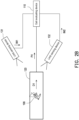
- FIG. 2A is a schematic diagram illustrating a gait evaluating system according to a first embodiment of the invention.
- the pressure detection device 120 may be embodied as a pressure detection mat, and a user 199 may walk on the pressure detection device 120 in a walking direction D1 upon request.
- the pressure detection device 120 may include a plurality of pressure detectors 120a exhibiting a one-dimensional distribution. In another embodiment, the pressure detection device 120 may also include a plurality of pressure detectors 120b exhibiting a two-dimensional distribution. Nonetheless, the disclosure is not limited thereto.
- the length of the pressure detection mat may be greater than or equal to 3 meters, and the width may be greater than or equal to 0.4 meters.
- the pressure detection mat may be provided with one pressure detector 120a (or one pressure detector 120b) per 50 cm 2 (or less). In some embodiments, the pressure detection mat may also be provided with one pressure detector 120a (or one pressure detector 120b) per 6.25 cm 2 , but it is not limited thereto.
- the pressure detectors distributed on the pressure detection device 120 may detect a plurality of pressure values PV corresponding to steps of the user 199.
- the pressure detection device 120 may provide the pressure values PV to the gait evaluating device 110 for further analysis by the gait evaluating device 110.
- the limb sensing devices 131 and 132 may be respectively embodied as a first video camera and a second video camera.
- the first video camera may be used to capture a first walking image IM1 when the user 199 walks on the pressure detection device 120
- the second video camera may be used to capture a second walking image IM2 when the user 199 walks on the pressure detection device 120.
- the imaging direction of the limb sensing device 131 may be opposite to the walking direction D1 of the user 199, to thereby capture a front image of the user 199 when walking.
- the imaging direction of the limb sensing device 132 i.e., the second video camera
- the imaging direction of the limb sensing device 132 may be perpendicular to the walking direction D1 of the user 199, to thereby capture a side image (e.g., from the right side) of the user 199 when walking.
- the gait evaluating device 110 may obtain a first skeleton diagram 210 and a second skeleton diagram 220 respectively in the first walking image IM1 and the second walking image IM2.
- the gait evaluating device 110 may obtain the first skeleton diagram 210 and the second skeleton diagram 220 respectively in the first walking image IM1 and the second walking image IM2 based on any known image processing algorithms, for example but not limited to, the literature document " Z. Cao, G. Hidalgo, T. Simon, S. -E.
- the first skeleton diagram 210 and the second skeleton diagram 220 may, for example, correspond to the human body posture of the user 199 at the t-th time point, and may each include a plurality of reference points corresponding to a plurality of joints of the user 199 (e.g., corresponds to a reference point 210a at a wrist of the user 199).
- the gait evaluating device 110 projects the first skeleton diagram 210 and the second skeleton diagram 220 into a first integrated skeleton diagram based on the relative position between the first video camera and the second video camera.
- the gait evaluating device 110 projects the first skeleton diagram 210 and the second skeleton diagram 220 into a first integrated skeleton diagram based on the relative position between the first video camera and the second video camera.
- the first integrated skeleton diagram may include a plurality of joint angles (e.g., neck angle, shoulder angle, elbow angle, wrist angle, hip angle, knee angle, ankle angle, etc.) at the t-th time point.
- the joint angles correspond to the joints (e.g., neck, shoulders, elbows, wrists, hips, knees, ankles, etc.) of the user 199.
- the gait evaluating device 110 may obtain a plurality of angle values of the joint angles, and take the angle values as a plurality of walking limb feature values of the user 199 at the t-th time point.
- the gait evaluating device 110 may, for example, remove outliers from the skeleton diagrams based on the median filter or other similar noise reduction technology, and then remove high-frequency fluctuations from the skeleton diagrams through a fast Fourier transform (FFT). After that, the gait evaluating device 110 may also smooth the movement between the skeleton diagrams at different time points through polyfitting. Nonetheless, the disclosure is not limited thereto.
- FFT fast Fourier transform
- FIG. 2B is a schematic diagram illustrating another gait evaluating system according to FIG. 2A .
- FIG. 2B except that the imaging directions of the limb sensing devices 131 and 132 are different from those of FIG. 2A , the rest of the configuration is generally the same as that of FIG. 2A .
- the limb sensing device 131 i.e., the first video camera
- the limb sensing device 132 i.e., the second video camera
- the gait evaluating device 110 may also obtain the first skeleton diagram 210 and the second skeleton diagram 220 respectively from the first walking image IM1 and the second walking image IM2, and project the first skeleton diagram 210 and the second skeleton diagram 220 into the first integrated skeleton diagram based on the aforementioned teaching.
- the gait evaluating device 110 may thus be unable to correctly obtain the integrated skeleton diagram corresponding to the user 199. Therefore, in the embodiments of the invention, human bodies other than that of the user 199 may be excluded through a specific mechanism, thereby increasing the gait evaluation accuracy.
- the gait evaluating device 110 further determines whether the first integrated skeleton diagram satisfies a specified condition. If so, the gait evaluating device 110 then obtains the angle values of the joint angles, and take the angle values as the walking limb feature values of the user 199 at the t-th time point.
- the gait evaluating device 110 may determine whether the first walking image IM1 and the second walking image IM2 do not include skeleton diagrams corresponding to other human bodies. If so, this means that the first skeleton diagram 210 and the second skeleton diagram 220 correspond to the human body (i.e., the user 199) to be performed with gait evaluation at present. Therefore, the gait evaluating device 110 may correspondingly determine that the first integrated skeleton diagram satisfies the specified condition. If not, this means that skeleton diagrams corresponding to other human bodies are present in the first walking image IM1 and the second walking image IM2. Therefore, the gait evaluating device 110 may perform further screening to find the integrated skeleton diagram actually corresponding to the user 199. The related details accompanied with FIG. 3 will be further described.
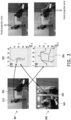
- FIG. 3 is a schematic diagram illustrating screening of an integrated skeleton diagram according to the first embodiment of the invention.
- first walking image IM1 and the second walking image IM2 obtained at the t-th time point are as shown in FIG. 3 .
- the first walking image IM1 includes a first skeleton diagram 310 and a third skeleton diagram 330
- the second walking image IM2 includes a second skeleton diagram 320 and a fourth skeleton diagram 340.
- the first skeleton diagram 310 and the second skeleton diagram 320 correspond to the user to be performed with gait evaluation at present
- the third skeleton diagram 330 and the fourth skeleton diagram 340 correspond to another human body.
- the gait evaluating device 110 may project the first skeleton diagram 310 and the second skeleton diagram 320 into a first integrated skeleton diagram 352, and project the third skeleton diagram 330 and the fourth skeleton diagram 340 into a second integrated skeleton diagram 354.
- the gait evaluating device 110 may obtain a first projection error of the first integrated skeleton diagram 352 and a second projection error of the second integrated skeleton diagram 354, and determine whether the first projection error is less than the second projection error.
- the gait evaluating device 110 may determine that the first integrated skeleton diagram 352 satisfies the specified condition, and may obtain the angle values of the joint angles in the first integrated skeleton diagram 352. After that, the gait evaluating device 110 may then take the angle values as the walking limb feature values of the user 199 at the t-th time point.
- the gait evaluating device 110 may determine that the first integrated skeleton diagram 352 does not satisfy the specified condition. After that, the gait evaluating device 110 may obtain the walking limb feature values of the user 199 at the t-th time point based on the second integrated skeleton diagram 354.
- the target to be performed with gait evaluation may still be evaluated after other irrelevant human bodies are excluded. Accordingly, an effect that the target may be evaluated without noticing that the target is being evaluated can be achieved.
- the gait evaluating system 100 in FIG. 2A and FIG. 2B may also include more video cameras to capture images of the user 199 from different angles.
- the gait evaluating device 110 may correspondingly obtain a more accurate integrated skeleton diagram, but it is not limited thereto.
- the pressure detection device 120 may be embodied as a pressure detection insole including a plurality of pressure detectors.
- the pressure detection device 120 may be disposed in the shoes of the user 199 for the user 199 to wear and walk in.
- the pressure detection insole may detect the pressure value PV of each step of the user 199 when the user 199 walks, and may provide the pressure value PV corresponding to each step to the gait evaluating device 110.
- the limb sensing devices 131 to 13Z may also be embodied as a plurality of dynamic capturing elements (e.g., inertial measurement units) that may be worn on the user 199.
- the dynamic capturing elements may be distributed at the joints (e.g., neck, shoulders, elbows, wrists, hips, knees, ankles, etc.) of the user 199 to capture movements of the joints.
- the gait evaluating device 110 may obtain, at the t-th time point, a plurality of three-dimensional spatial positions of the dynamic capturing elements, and accordingly establish a spatial distribution diagram of the dynamic capturing elements at the t-th time point.
- the spatial distribution diagram at the t-th time point may include a plurality of reference points corresponding to the dynamic capturing elements.
- the gait evaluating device 110 may connect the reference points in the spatial distribution diagram into the skeleton diagram (which may have an aspect similar to that of the first integrated skeleton diagram 352 of FIG. 3 ) of the user 199 at the t-th time point.
- the skeleton diagram may include the joint angles of the joints at the t-th time point.
- the gait evaluating device 110 may obtain the angle values of the joint angles, and take the angle values as the walking limb feature values of the user 199 at the t-th time point.
- each joint of the user 199 may be predetermined with a corresponding angle range of motion.
- the gait evaluating device 110 may determine whether the angle value of any joint angle in the skeleton diagram does not fall within the corresponding angle range of motion. If so, this means that the current skeleton diagram may contain a detection error, so the gait evaluating device 110 may correspondingly discard the skeleton diagram at the t-th time point.
- the gait evaluating device 110 determines that the joint angle of the elbow in the skeleton diagram at the t-th time point is less than 30 degrees or greater than 180 degrees, the gait evaluating device 110 may correspondingly discard the skeleton diagram at the t-th time point, but it is not limited thereto.
- the processor 114 may access the modules and programming codes recorded in the storage circuit 112 to realize the gait evaluating method provided by the invention, which will be described in detail as follows.
- FIG. 5 is a flowchart illustrating a gait evaluating method according to an embodiment of the invention.
- the method of the embodiment may be performed by the gait evaluating system 100 of FIG. 1 .
- Each of steps of FIG. 5 accompanied with the elements shown in FIG. 1 will be described in detail below.
- the processor 114 may obtain, from the pressure detection device 120, a plurality of pressure values PV of the user 199 walking on the pressure detection device 120.
- the processor 114 may obtain the pressure values PV with reference to the description in the above embodiments, which will not be repeated herein.
- the processor 114 may obtain a plurality of step feature values of the user 199 based on the pressure values PV. In different embodiments, based on the pressure values PV, the processor 114 may obtain at least one of a gait speed, a step length, a stride length, a cadence, a step width, a gait cycle, a stance time, a swing time, a center of pressure, a moving trajectory, a double support time, and a foot pressure distribution of the user 199 as the step feature values.
- the processor 114 may also obtain a stride-to-stride variation of the user 199 based on the pressure values PV.
- the stride-to-stride variation may include, but is not limited to, at least one of a swing time variation, a double support time variation, a step length time variation, and a stride length time variation.
- the user 199 may perform a timed up and go test (TUG) on the pressure detection device 120 upon request.
- TMG timed up and go test
- the processor 114 may also obtain at least one of a get-up time, a turn time, a sit-down time, a walk speed, a walk time, and a total performance time of the user 199 in the timed up and go test as part of the step feature values. Nonetheless, the disclosure is not limited thereto.
- FIG. 6 is a schematic diagram illustrating a plurality of step feature values according to an embodiment of the invention.
- FIG. 6 illustrates the difference between the terms such as step length, stride length, step width, and the like.
- the step feature values reference may be made to the literature documents " Pirker W, Katzenschlager R. Gait disorders in adults and the elderly: A clinical guide. Wien Klin Klischr. 2017;129 (3-4):81-95. doi: 10.1007/s00508-016-1096-4 " and " Bohannon RW, Williams Andrews A. Normal walking speed: a descriptive meta-analysis. Physiotherapy. 2011 ", which will not be repeatedly described herein.
- the processor 114 may obtain a plurality of walking limb feature values when the user 199 walks on the pressure detection device.
- the processor 114 may obtain the walking limb feature values (e.g., a plurality of angle values of a plurality of joint angles of the user 199) based on the sensing data (e.g., the first walking image IM1 and the second walking image IM2) provided by the limb sensing devices 131 to 13Z with reference to the description in the above embodiments, which will not be repeated herein.
- step S540 the processor 114 may evaluate a gait of the user 199 based on the step feature values and the walking limb feature values.
- the processor 114 may evaluate the gait of the user 199 based on different ways, which will be further described below.
- the processor 114 may determine whether the step feature values and the walking limb feature values of the user 199 do not satisfy a corresponding first statistical standard. In response to determining that Y of the step feature values and the walking limb feature values of the user 199 (where Y is a specified number) does not satisfy the corresponding first statistical standard, the processor 114 may determine that the gait of the user 199 belongs to an abnormal gait, and in the opposite case, the processor 114 may determine that the gait of the user 199 belongs to a normal gait.
- the first statistical standard corresponding to the step feature values and the walking limb feature values may be determined in different ways.
- an average gait speed of males in the sixties is statistically 1.34m/s. Accordingly, when the user 199 is a male between 60 and 69 years old, the first statistical standard corresponding to the gait speed may be set to 1.34m/s. Besides, since an average gait speed of healthy elder people is statistically 1.1m/s to 1.5m/s, when the user 199 is an elder person, the first statistical standard corresponding to the gait speed may be set to 1.1m/s. Nonetheless, the disclosure is not limited thereto.
- the normal stride length of ordinary people is about 76 to 92cm on average, so the first statistical standard corresponding to the stride length of the user 199 may be set to 76cm. Nonetheless, the disclosure is not limited thereto.
- the processor 114 may also correspondingly determine the first statistical standard corresponding to the step feature values and the walking limb feature values, for example, the cadence, a TUG time, a torso inclination angle, the stride-to-stride variation, a heel strike angle, and a toe-off angle based on the relevant literature documents/statistical data (e.g., the content of " Gong H, Sun L, Yang R, Pang J, Chen B, Qi R, Gu X, Zhang Y, Zhang TM. Changes of upright body posture in the sagittal plane of men and women occurring with aging - a cross sectional study. BMC Geriatr.
- the relevant literature documents/statistical data e.g., the content of " Gong H, Sun L, Yang R, Pang J, Chen B, Qi R, Gu X, Zhang Y, Zhang TM. Changes of upright body posture in the sagittal plane of men and women occurring with aging - a cross sectional study.
- the first statistical standard corresponding to the cadence may be 1.2 times/s, and the first statistical standard corresponding to the TUG time may be less than 20 seconds.
- the first statistical standard of the torso inclination angle is, for example, that a square root of the sum of squares of the total inclination angles toward the front and back/the left and right must be less than 10 degrees.
- the first statistical standard of the stride-to-stride variation is, for example, that the step length time variation must be less than 4%, the swing time variation must be less than 5%, the double support time variation must be less than 8%, the stride length time variation must be less than 4%, and the like. Nonetheless, the disclosure is not limited thereto.
- the first statistical standard of the heel strike angle for example, must be greater than 20 degrees
- the first statistical standard of the toe-off angle for example, must be greater than 55 degrees. Nonetheless, the disclosure is not limited thereto.
- the processor 114 may also determine the first statistical standard corresponding to each step feature value and each walking limb feature value based on the properties of the specific group.
- the processor 114 may obtain a plurality of reference step feature values and a plurality of reference walking limb feature values of the group members of the specific group, and accordingly estimate the first statistical standard of each of the step feature values and each of the walking limb feature values.
- the reference step feature values and the reference walking limb feature values of each group member may correspond to the step feature values and the walking limb feature values of the user A.
- the processor 114 may obtain the stride length of each group member, and then take the first 90% of the stride lengths of the group members as the first statistical standard of the stride length. In this case, when the stride length of the user 199 falls within the last 10% of the specific group, the processor 114 may then determine that the stride length of the user 199 does not satisfy the corresponding first statistical standard. For other step feature values and other walking limb feature values, the processor 114 may determine the corresponding first statistical standard based on a similar principle, the details of which will not be repeatedly described herein.
- the processor 114 may also determine the first statistical standard corresponding to each step feature value and each walking limb feature value based on previously measured historical step feature values and historical walking limb feature values of the user 199.
- the processor 114 may obtain the step feature values and the walking limb feature values of the user 199 measured in the previous test as the historical step feature values and the historical walking limb feature values of the user 199. After that, the processor 114 may determine the first statistical standard of each of the step feature values and each of the walking limb feature values of the user 199 based on a specific ratio of each of the historical step feature values and each of the historical walking limb feature values.
- the processor 114 may obtain the previously measured stride length (hereinafter referred to as historical stride length) of the user 199, and take a specific ratio (e.g., 90%) of historical stride length as the first statistical standard of the stride length of the user 199.
- historical stride length previously measured stride length
- a specific ratio e.g. 90%
- the processor 114 determines that the stride length of the user 199 does not satisfy the corresponding first statistical standard (e.g., the stride length of the user 199 is less than 90% of the historical stride length), this means that the stride length of the user 199 has shown a certain extent of regression (e.g., regression by more than 10%), which may thus be used as a basis for determining that the gait of the user 199 is abnormal.
- the processor 114 may determine the corresponding first statistical standard based on a similar principle, the details of which will not be repeatedly described herein.
- the value of Y may be set by the designer depending on the needs. For example, in a case where Y is set to 1, the processor 114 may determine that the gait of the user 199 belongs to an abnormal gait when any one of the step feature values and the walking limb feature values of the user 199 does not satisfy the corresponding first statistical standard. Moreover, in a case where Y is set to 2, the processor 114 may determine that the gait of the user 199 belongs to an abnormal gait when any two of the step feature values and the walking limb feature values of the user 199 do not satisfy the corresponding first statistical standard. Nonetheless, the disclosure is not limited thereto.
- the processor 114 may select an N number of specific values from the step feature values and the walking limb feature values of the user 199, and may map the specific values into a plurality of map values according to a K number of reference bases corresponding to each specific value, where N and K are positive integers, and each map value falls within a predetermined range.
- the processor 114 may perform a weighting operation on the map values to obtain a weighting operation result. Then, in response to determining that the weighting operation result does not satisfy a second statistical standard, the processor 114 may determine that the gait of the user 199 belongs to an abnormal gait, and in the opposite case, the processor 114 may determine that the gait of the user 199 belongs to a normal gait. Nonetheless, the disclosure is not limited thereto.
- the processor 114 may obtain a reference mean and a reference difference factor corresponding to the first specific value, accordingly estimate the reference bases corresponding to the first specific value.
- the reference mean may be represented as M, and the reference difference factor may be represented as S.
- the reference bases corresponding to the first specific value may be represented as M+iS, where i is an integer, i ⁇ [- a , ... , + a ], and a is a positive integer.
- FIG. 7 is a schematic diagram illustrating a plurality of reference bases for determining a first specific value according to an embodiment of the invention.
- the reference bases may respectively be M-2S, M-S, M, M+S, and M+2S, but are not limited thereto.
- the processor 114 may map the first specific value into a first map value in the map values.
- the processor 114 may determine that the first map value is j+1+b, where 1 ⁇ j ⁇ K - 1, and b is a constant.
- the processor 114 may determine that the first map value is 1+b.
- the processor 114 may determine that the first map value is K + 1 +b.
- the processor 114 may map the first specific value into 1.
- the processor 114 may map the first specific value into 2.
- the processor 114 may map the first specific value into 3.
- the processor 114 may map the first specific value into 4.
- the processor 114 may map the first specific value into 5.
- the processor 114 may map the first specific value into 6.
- the disclosure is not limited thereto.
- the predetermined range of the first map value is, for example, 1+b, 2+b, 3+b, 4+b, 5+b, and 6+b.
- the processor 114 may map each of the specific values into the corresponding map values based on the above teaching, and the map values may have the same predetermined range as that of the first map value. Nonetheless, the disclosure is not limited thereto.
- the processor 114 may determine the reference mean (i.e., M) and the reference difference factor (i.e., S) of the first specific value based on different principles.
- the processor 114 may obtain a mean of the general normal gait speed as the reference mean of the first specific value, and then take the specific ratio of the mean as the reference difference factor based on the relevant literature documents (e.g., " Bohannon RW, Williams Andrews A. Normal walking speed: a descriptive meta-analysis. Physiotherapy.
- the reference bases corresponding to the gait speed may be, for example but not limited to, 80%, 90%, 100%, 110%, and 120% of M.
- the processor 114 may obtain a mean of the general normal forward torso inclination angle as the reference mean of the first specific value, and then take the specific ratio of the mean as the reference difference factor based on the relevant literature documents (e.g., " Gong H, Sun L, Yang R, Pang J, Chen B, Qi R, Gu X, Zhang Y, Zhang TM. Changes of upright body posture in the sagittal plane of men and women occurring with aging - a cross sectional study. BMC Geriatr. 2019 Mar 5 ").
- the reference bases corresponding to the forward torso inclination angle may be, for example but not limited to, 80%, 90%, 100%, 110%, and 120% of M.
- the processor 114 may determine the corresponding reference bases based on the above teaching, the details of which will not be repeatedly described herein.
- the processor 114 may also find a first reference value corresponding to the first specific value from the reference step feature values and the reference walking limb feature values of each group member in the specific group. After that, the processor 114 may then obtain a mean and a standard deviation of the first reference value of each group member, and define the mean and the standard deviation respectively as the reference mean (i.e., M) and the reference difference factor (i.e., S) of the first specific value.
- M reference mean
- S reference difference factor
- the processor 114 may find the stride length of each group member as the first reference value of each group member, and accordingly estimate a mean and a standard deviation of the stride length of each group member. After that, the processor 114 may take the mean and the standard deviation as the reference mean (i.e., M) and the reference difference factor (i.e., S) of the first specific value, and accordingly determine the reference bases corresponding to the stride length.
- M the reference mean
- S reference difference factor
- the processor 114 may find the gait speed of each group member as the first reference value of each group member, and accordingly estimate a mean and a standard deviation of the gait speed of each group member. After that, the processor 114 may take the mean and the standard deviation as the reference mean (i.e., M) and the reference difference factor (i.e., S) of the first specific value, and accordingly determine the reference bases corresponding to the gait speed.
- M the reference mean
- S reference difference factor
- the processor 114 may perform the weighting operation on the map values to generate the weighting operation result.
- the respective weights of the N number of map values may be determined by the designer depending on the needs.
- the processor 114 may obtain the corresponding weighting operation result based on formula " P 1 ⁇ W 1 + P 2 ⁇ W 2 ", where P 1 and P 2 are the map values respectively corresponding to the gait speed and the torso inclination angle, and W 1 and W 2 are weights (both of which may be 50%, for example) respectively corresponding to P 1 and P 2 . Nonetheless, the disclosure is not limited thereto.
- the processor 114 may determine whether the weighting operation result satisfies the second statistical standard. In some embodiments, the processor 114 may determine the second statistical standard based on a mechanism below.
- the processor 114 may obtain an N number of reference values corresponding to the N number of specific values from the reference step feature values and the reference walking feature values of each group member of the specific group. Following the above example, assuming that the gait speed and the torso inclination angle of the user 199 are the N number of specific values under consideration, then the processor 114 may obtain the gait speed and the torso inclination angle of each group member as the N number of reference values of each group member.
- the processor 114 may map the N number of reference values of each group member into a plurality of reference map values according to the reference bases corresponding to each specific value, where each reference map value falls within the predetermined range. In an embodiment, the processor 114 may map the N number of reference values of each group member into the corresponding reference map values with reference to mapping the first specific value of the user 199 into the corresponding first map value. Therefore, the details will not be repeatedly described herein.
- the processor 114 may perform a weighting operation on the N number of reference map values of each group member to generate a reference weighting operation result of each group member.
- the processor 114 may obtain the corresponding reference weighting operation result based on formula " P' 1 ⁇ W 1 + P' 2 ⁇ W 2 ", where P' 1 and P' 2 are the reference map values respectively corresponding to the gait speed and the torso inclination angle of the certain group member.
- the processor 114 may determine the second statistical standard based on the reference weighting operation result of each group member.
- the processor 114 may, for example, take the last 90% of the reference weighting operation results of the group members as the second statistical standard.
- the processor 114 may determine that the weighting operation result of the user 199 satisfies the second statistical standard.
- the processor 114 may determine that the weighting operation result of the user 199 does not satisfy the second statistical standard. Nonetheless, the disclosure is not limited thereto.
- the processor 114 may further determine whether the gait of the user 199 belongs to a non-neuropathic gait or a neuropathic gait.
- the processor 114 may determine whether the stride-to-stride variation of the user 199 satisfies a third statistical standard. If so, the processor 114 may determine that the gait of the user 199 belongs to a neuropathic gait, and in the opposite case, the processor 114 may determine that the gait of user belongs to a non-neuropathic gait.
- the processor 114 may determine the third statistical standard based on the stride-to-stride variation of each group member in the specific group. For example, the processor 114 may take the first 70% of the stride-to-stride variations of the group members as the third statistical standard. In this case, in response to determining that the stride-to-stride variation of the user 199 falls within the top 70% of the stride-to-stride variations of the group members, the processor 114 may determine that the stride-to-stride variation of the user 199 satisfies the third statistical standard.
- the processor 114 may determine that the stride-to-stride variation of the user 199 does not satisfy the third statistical standard. Nonetheless, the disclosure is not limited thereto.
- the processor 114 may also provide a corresponding enablement suggestion.
- the processor 114 may provide a strength training suggestion corresponding to the non-neuropathic gait as the enablement suggestion.
- the strength training suggestion may base its content on the relevant literature documents of physical therapy (e.g., literature documents of strength training for treatment of bow legs or knock knees). Nonetheless, the disclosure is not limited thereto.
- the processor 114 may provide a rhythmic gait training suggestion corresponding to the neuropathic gait as the enablement suggestion.
- a rhythmic gait training suggestion corresponding to the neuropathic gait as the enablement suggestion.
- literature documents for example but not limited to, " Pacchetti C., Mancini F., Aglieri R., Fundaro C., Martignoni E., Nappi G., Active musictherapy in Parkinson's disease: An integrative method for motor and emotionalrehabilitation.
- the step feature values and the walking limb feature values when the user walks are obtained through the pressure detection device and the limb sensing device, these feature values may be integrated for evaluating the gait of the user. Accordingly, in the invention, after the user takes a small amount of walk, the health condition of the user can be grasped accordingly, allowing relevant caregivers to take corresponding measures based on the health condition of the user, thereby achieving the effect of preventing the user from falls.
Landscapes
- Health & Medical Sciences (AREA)
- Life Sciences & Earth Sciences (AREA)
- Engineering & Computer Science (AREA)
- Medical Informatics (AREA)
- Physics & Mathematics (AREA)
- Dentistry (AREA)
- Biophysics (AREA)
- Pathology (AREA)
- Physiology (AREA)
- Biomedical Technology (AREA)
- Heart & Thoracic Surgery (AREA)
- Oral & Maxillofacial Surgery (AREA)
- Molecular Biology (AREA)
- Surgery (AREA)
- Animal Behavior & Ethology (AREA)
- General Health & Medical Sciences (AREA)
- Public Health (AREA)
- Veterinary Medicine (AREA)
- Measurement Of The Respiration, Hearing Ability, Form, And Blood Characteristics Of Living Organisms (AREA)
Claims (17)
- Gangbewertungsvorrichtung (110), umfassend:eine Speicherschaltung, die einen Programmiercode speichert;einen Prozessor, der mit der Speicherschaltung verbunden ist und auf den Programmiercode zugreift, um durchzuführen:Erhalten (S510) einer Vielzahl von Druckwerten (PV) eines Benutzers (199), der auf der Druckerfassungsvorrichtung (120) geht, von einer Druckerfassungsvorrichtung (120), wobei die Druckwerte (PV) einer Vielzahl von Schritten des Benutzers (199) entsprechen;Erhalten (S520) einer Vielzahl von Schrittmerkmalswerten des Benutzers (199) basierend auf den Druckwerten (PV);Erhalten (S530) einer Vielzahl von Geh-Gliedmaßen-Merkmalswerten, wenn der Benutzer (199) auf der Druckerfassungsvorrichtung (120) geht, basierend auf Erfassungsdaten, die von mindestens einer Gliedmaßen-Erfassungsvorrichtung (131-13Z) bereitgestellt werden, wobei die mindestens eine Gliedmaßen-Erfassungsvorrichtung mindestens eine erste Videokamera und eine zweite Videokamera mit unterschiedlichen Bildbereichen umfasst, und wobei der Prozessor angepasst ist, auszuführen:Erhalten, zu einem t-ten Zeitpunkt, eines ersten Gehbildes, das von der ersten Videokamera aufgenommen wird, wenn der Benutzer auf der Druckerkennungsvorrichtung geht, und Erhalten eines ersten Skelettdiagramms in dem ersten Gehbild,Erhalten, zu einem t-ten Zeitpunkt ein zweites Gehbild, das von der zweiten Videokamera aufgenommen wurde, wenn der Benutzer auf der Druckerfassungsvorrichtung geht, undErhalten eines zweiten Skelettdiagramms in dem zweiten Gehbild, wobei das erste Skelettdiagramm und das zweite Skelettdiagramm einem ersten menschlichen Körper entsprechen;Projizieren, basierend auf einer relativen Position zwischen der ersten Videokamera und der zweiten Videokamera, des ersten Skelettdiagramms und des zweiten Skelettdiagramms in ein erstes integriertes Skelettdiagramm, wobei das erste integrierte Skelettdiagramm eine Vielzahl von Gelenkwinkeln zu dem t-ten Zeitpunkt umfasst, wobei die Gelenkwinkel einer Vielzahl von Gelenken des ersten menschlichen Körpers entsprechen; undals Reaktion auf Bestimmen, dass das erste integrierte Skelettdiagramm eine spezifizierte Bedingung erfüllt, Erhalten einer Vielzahl von Winkelwerten der Gelenkwinkel und Verwenden der Winkelwerte als die Geh-Gliedmaßen-Merkmalswerte des Benutzers zu dem t-ten Zeitpunkt; undAuswerten (S540) eines Gangs des Benutzers (199) basierend auf den Schrittmerkmalwerten und der Geh-Gliedmaßen-Merkmalswerte.
- Gangbewertungsvorrichtung (110) gemäß Anspruch 1, wobei c:
als Reaktion auf Bestimmen, dass Y der Schrittmerkmalswerte und der Geh-Gliedmaßen-Merkmalswerte des Benutzers (199) einen entsprechenden ersten statistischen Standard nicht erfüllen, Bestimmen, dass der Gang des Benutzers (199) zu einem abnormalen Gang gehört, wobei Y eine bestimmte Zahl ist. - Gangbewertungsvorrichtung (110) gemäß Anspruch 2, wobei der Benutzer (199) zu einer spezifischen Gruppe gehört, und das Verfahren umfasst:
Erhalten einer Vielzahl von Referenz-Schritt-Merkmalswerten und einer Vielzahl von Referenz-Geh-Gliedmaßen-Merkmalswerten einer Vielzahl von Gruppenmitgliedern der spezifischen Gruppe, und dementsprechend Schätzen des ersten statistischen Standards von jedem der Schritt-Merkmalswerte und jedem der Geh-Gliedmaßen-Merkmalswerte. - Gangbewertungsvorrichtung (110) gemäß Anspruch 2, wobei der Prozessor weiterhin durchführt:Erhalten einer Vielzahl von historischen Schrittmerkmalswerten und einer Vielzahl von historischen Geh-Gliedmaßen-Merkmalswerte des Benutzers (199), wobei die historischen Schrittmerkmalswerte und die historischen Geh-Gliedmaßen-Merkmalswerte den Schrittmerkmalswerten und den Geh-Gliedmaßen-Merkmalswerte des Benutzers (199) entsprechen; undBestimmen, basierend auf einem spezifischen Verhältnis jedes der historischen Schrittmerkmalwerte und jedes der historischen Geh-Gliedmaßen-Merkmalswerte, des ersten statistischen Standards jedes der Schrittmerkmalwerte und jedes der Geh-Gliedmaßen-Merkmalswerte.
- Gangbewertungsvorrichtung (110) gemäß Anspruch 1, wobei der Prozessor durchführt:Auswählen einer Anzahl N spezifischer Werte aus den Schrittmerkmalswerten und den Geh-Gliedmaßen-Merkmalswerte und Abbilden der spezifischen Werte in eine Vielzahl von Abbildungswerten gemäß einer Anzahl K von Referenzbasen, die den spezifischen Werten entsprechen, wobei N und K positive ganze Zahlen sind und jeder der Abbildungswerte in einen vorgegebenen Bereich fällt;Durchführen einer Gewichtungsoperation an den Abbildungswerten, um ein Gewichtungsoperationsergebnis zu erhalten; undals Reaktion auf Bestimmen, dass das Ergebnis der Gewichtungsoperation einen zweiten statistischen Standard nicht erfüllt, die Bestimmen, dass der Gang des Benutzers (199) zu einem abnormalen Gang gehört.
- Gangbewertungsvorrichtung (110) gemäß Anspruch 5, wobei die spezifischen Werte einen ersten spezifischen Wert umfassen und der Prozessor
durchführt:
Erhalten eines Referenzmittelwerts und eines Referenzdifferenzfaktors, die dem ersten spezifischen Wert entsprechen, und entsprechendes Schätzen der Referenzbasen, die dem ersten spezifischen Wert entsprechen. - Gangbewertungsvorrichtung (110) gemäß Anspruch 6, wobei der Benutzer (199) zu einer spezifischen Gruppe gehört, die spezifische Gruppe eine Vielzahl von Gruppenmitgliedern umfasst und jedes der Gruppenmitglieder eine Vielzahl von Referenzschritt-Merkmalswerten und eine Vielzahl von Referenzschritt-Merkmalswerten aufweist, und der Prozessor durchführt:Ermitteln eines ersten Referenzwertes, der dem ersten spezifischen Wert entspricht, aus den Referenzschritt-Merkmalswerten und den Referenz-Gehgliedmaßen-Merkmalswerten jedes der Gruppenmitglieder; undErhalten eines Mittelwerts und einer Standardabweichung des ersten Referenzwerts für jedes der Gruppenmitglieder und Definieren des Mittelwerts und der Standardabweichung als Referenzmittelwert bzw. Referenzdifferenzfaktor des ersten spezifischen Werts.
- Gangbewertungsvorrichtung (110) gemäß Anspruch 6, wobei die Abbildungswerte einen ersten Abbildungswert umfassen, der dem ersten spezifischen Wert entspricht, der Referenzmittelwert als M dargestellt wird, der Referenzdifferenzfaktor als S dargestellt wird und die Referenzbasen, die dem ersten spezifischen Wert entsprechen, als M+iS dargestellt werden, wobei i eine ganze Zahl ist, i ∈ [-a, ..., +a] und a eine positive ganze Zahl ist, und der Prozessor durchführt:als Reaktion auf Bestimmen, dass der erste spezifische Wert zwischen einer j-ten Referenzbasis und einer j+1-ten Referenzbasis in den Referenzbasen liegt, Bestimmen, dass der erste Abbildungswert j+ 1 +b ist, wobei 1 ≤ j ≤ K - 1, und b eine Konstante ist;als Reaktion auf Bestimmen, dass der erste spezifische Wert kleiner als eine erste Referenzbasis in den Referenzbasen ist, Bestimmen, dass der erste Abbildungswert 1+b ist; undals Reaktion auf Bestimmen, dass der erste spezifische Wert größer ist als eine K-te Referenzbasis in den Referenzbasen, Bestimmen, dass der erste Abbildungswert K + 1 +b ist.
- Gangbewertungsvorrichtung (110) gemäß Anspruch 5, wobei der Benutzer (199) zu einer spezifischen Gruppe gehört, die spezifische Gruppe eine Vielzahl von Gruppenmitgliedern umfasst und jedes der Gruppenmitglieder eine Vielzahl von Referenzschritt-Merkmalswerten und eine Vielzahl von Referenzschritt-Merkmalswerten aufweist, und der Prozessor durchführt:Erhalten einer Anzahl N von Referenzwerten, die den spezifischen Werten entsprechen, aus den Referenzschritt-Merkmalswerten und den Referenz- Geh-Gliedmaßen-Merkmalswerte jedes der Gruppenmitglieder;Abbilden der Referenzwerte jedes der Gruppenmitglieder gemäß den Referenzbasen, die jedem der spezifischen Werte entsprechen, in eine Vielzahl von Referenzabbildungswerten, wobei jeder der Referenzabbildungswerte in den vorbestimmten Bereich fällt,Durchführen der Gewichtungsoperation an den Referenzabbildungswerten jedes der Gruppenmitglieder, um ein Referenzgewichtungs-Operationsergebnis für jedes der Gruppenmitglieder zu erzeugen; undBestimmen des zweiten statistischen Standards basierend auf dem Ergebnis der Referenzgewichtungsoperation für jedes der Gruppenmitglieder.
- Gangbewertungsvorrichtung (110) gemäß Anspruch 2 oder 5, wobei die Schrittmerkmalswerte und die Geh-Gliedmaßen-Merkmalswerte eine Schritt-zu-Schritt-Variation umfassen, und der Prozessor durchführt:als Reaktion auf Bestimmen, dass der Gang des Benutzers (199) zu dem abnormalen Gang gehört und die Schritt-zu-Schritt-Variation einen dritten statistischen Standard erfüllt, Bestimmen, dass der Gang des Benutzers (199) zu einem neuropathischen Gang gehört; undals Reaktion auf Bestimmen, dass der Gang des Benutzers (199) nicht zu dem abnormalen Gang gehört oder die Schritt-zu-Schritt-Abweichung nicht dem dritten statistischen Standard entspricht, Bestimmen, dass der Gang des Benutzers (199) zu einem nicht-neuropathischen Gang gehört.
- Gangbewertungsvorrichtung (110) gemäß Anspruch 10, wobei der Benutzer (199) zu einer spezifischen Gruppe gehört, die spezifische Gruppe eine Vielzahl von Gruppenmitgliedern umfasst und jedes der Gruppenmitglieder die entsprechende Schritt-zu-Schritt-Variation aufweist, und der Prozessor durchführt:
Bestimmen, basierend auf der Schritt-zu-Schritt-Variation jedes der Gruppenmitglieder, des dritten statistischen Standards. - Gangbewertungsvorrichtung (110) gemäß Anspruch 10, wobei als Reaktion auf Bestimmen, dass der Gang des Benutzers (199) zu dem nicht-neuropathischen Gang oder dem neuropathischen Gang gehört, ein Freigabevorschlag bereitgestellt wird.
- Gangbewertungsvorrichtung (110) gemäß Anspruch 12, wobei als Reaktion auf Bestimmen, dass der Gang des Benutzers (199) zu dem nicht-neuropathischen Gang gehört, ein Krafttrainingsvorschlag, der dem nicht-neuropathischen Gang entspricht, als der Freigabevorschlag bereitgestellt wird.
- Gangbewertungsvorrichtung (110) gemäß Anspruch 12, wobei als Reaktion auf Bestimmen, dass der Gang des Benutzers (199) zu dem neuropathischen Gang gehört, ein rhythmischer Gangtrainingsvorschlag, der dem neuropathischen Gang entspricht, als der Freigabevorschlag bereitgestellt wird.
- Gangbewertungssystem (100), das umfasst:eine Druckerfassungsvorrichtung (120);mindestens eine Gliedmaßen-Erfassungsvorrichtung (131-13Z); undeine Gangbewertungsvorrichtung (110), die konfiguriert ist, um:
von der Druckerfassungsvorrichtung (120) eine Vielzahl von Druckwerten (PV) eines Benutzers (199) zu erhalten, der auf der Druckerfassungsvorrichtung (120) geht, wobei die Druckwerte (PV) einer Vielzahl von Schritten des Benutzers (199) entsprechen;eine Vielzahl von Schrittmerkmalswerten des Benutzers (199) basierend auf den Druckwerten (PV) zu erhalten;eine Vielzahl von Geh-Gliedmaßen-Merkmalswerten zu erhalten, wenn der Benutzer (199) auf der Druck-Erfassungsvorrichtung (120) geht, basierend auf Erfassungsdaten, die von der mindestens einen Gliedmaßen-Erfassungsvorrichtung (131-13Z) bereitgestellt werden, wobei die mindestens eine Gliedmaßen-Erfassungsvorrichtung mindestens eine erste Videokamera und eine zweite Videokamera mit unterschiedlichen Bildbereichen umfasst, und wobei die Gangbewertungsvorrichtung (110) angepasst ist, durchzuführen:Erhalten, zu einem t-ten Zeitpunkt, eines ersten Gehbildes, das von der ersten Videokamera aufgenommen wird, wenn der Benutzer auf der Druckerkennungsvorrichtung geht, und Erhalten eines ersten Skelettdiagramms in dem ersten Gehbild,Erhalten zu einem t-ten Zeitpunkt eines zweiten Gehbildes, das von der zweiten Videokamera aufgenommen wurde, wenn der Benutzer auf der Druckerfassungsvorrichtung geht, und Erhalten eines zweiten Skelettdiagramms in dem zweiten Gehbild, wobei das erste Skelettdiagramm und das zweite Skelettdiagramm einem ersten menschlichen Körper entsprechen;Projizieren, basierend auf einer relativen Position zwischen der ersten Videokamera und der zweiten Videokamera, des ersten Skelettdiagramms und des zweiten Skelettdiagramms in ein erstes integriertes Skelettdiagramm, wobei das erste integrierte Skelettdiagramm eine Vielzahl von Gelenkwinkeln zu dem t-ten Zeitpunkt umfasst, wobei die Gelenkwinkel einer Vielzahl von Gelenken des ersten menschlichen Körpers entsprechen; undals Reaktion auf Bestimmen, dass das erste integrierte Skelettdiagramm eine spezifizierte Bedingung erfüllt, Erhalten einer Vielzahl von Winkelwerten der Gelenkwinkel und Verwenden der Winkelwerte als die Geh-Gliedmaßen-Merkmalswerte des Benutzers zu dem t-ten Zeitpunkt; undBewerten eines Gangs des Benutzers (199) basierend auf den Schrittmerkmalswerten und der Geh-Gliedmaßen-Merkmalswerte. - System gemäß Anspruch 15, wobei die Druckerkennungsvorrichtung (120) eine Druckerkennungseinlage umfasst, die an einem Fuß des Benutzers (199) getragen wird, wobei die Druckerkennungseinlage die Druckwerte (PV) der Schritte des Benutzers (199) erkennt; oder
die Druckerkennungsvorrichtung (120) eine Druckerkennungsmatte umfasst, die mit einer Vielzahl von Druckdetektoren (120a, 120b) verteilt ist, wobei die Druckerkennungsmatte die Druckwerte (PV) der Schritte des Benutzers (199) durch die Druckdetektoren erkennt. - System gemäß Anspruch 15, wobei die mindestens eine Gliedmaßen-Erfassungsvorrichtung (131-13Z) eine Vielzahl von dynamischen Erfassungselementen umfasst, die an dem Benutzer getragen werden.
Priority Applications (1)
| Application Number | Priority Date | Filing Date | Title |
|---|---|---|---|
| EP21198152.7A EP4154811B1 (de) | 2021-09-22 | 2021-09-22 | Gangbeurteilungssystem |
Applications Claiming Priority (1)
| Application Number | Priority Date | Filing Date | Title |
|---|---|---|---|
| EP21198152.7A EP4154811B1 (de) | 2021-09-22 | 2021-09-22 | Gangbeurteilungssystem |
Publications (2)
| Publication Number | Publication Date |
|---|---|
| EP4154811A1 EP4154811A1 (de) | 2023-03-29 |
| EP4154811B1 true EP4154811B1 (de) | 2024-10-23 |
Family
ID=77897526
Family Applications (1)
| Application Number | Title | Priority Date | Filing Date |
|---|---|---|---|
| EP21198152.7A Active EP4154811B1 (de) | 2021-09-22 | 2021-09-22 | Gangbeurteilungssystem |
Country Status (1)
| Country | Link |
|---|---|
| EP (1) | EP4154811B1 (de) |
Families Citing this family (1)
| Publication number | Priority date | Publication date | Assignee | Title |
|---|---|---|---|---|
| CN120167950B (zh) * | 2025-05-21 | 2025-08-01 | 江苏大广医疗科技有限公司 | 阵列式气动触头下肢运动功能鉴定评估装置 |
Family Cites Families (8)
| Publication number | Priority date | Publication date | Assignee | Title |
|---|---|---|---|---|
| WO2011026257A1 (zh) * | 2009-09-03 | 2011-03-10 | Yang Changming | 利用织品感测器的步态分析系统及方法 |
| GB201108952D0 (en) * | 2011-05-27 | 2011-07-13 | Univ Oxford Brookes | Gait asymmetry measurement |
| EP2763588B1 (de) * | 2011-10-09 | 2022-07-06 | The Medical Research, Infrastructure, And Health Services Fund Of The Tel Aviv Medical Center | Virtuelle realität für die diagnose von bewegungsstörungen |
| CA2882453C (en) * | 2012-08-27 | 2021-07-20 | Universite Du Quebec A Chicoutimi | Method to determine physical properties of the ground, foot-worn sensor therefore, and method to advise a user of a risk of falling based thereon |
| US20200000373A1 (en) * | 2014-04-22 | 2020-01-02 | The Trustees Of Columbia University In The City Of New York | Gait Analysis Devices, Methods, and Systems |
| US10244990B2 (en) * | 2015-09-30 | 2019-04-02 | The Board Of Trustees Of The University Of Alabama | Systems and methods for rehabilitation of limb motion |
| US11344229B2 (en) * | 2016-02-19 | 2022-05-31 | Cyberdyne Inc. | Wearable gait detection device, walking ability improvement system and wearable gait detection system |
| WO2019175899A1 (en) * | 2018-03-15 | 2019-09-19 | On My Own Technology Pvt Ltd | Wearable device for gait analysis |
-
2021
- 2021-09-22 EP EP21198152.7A patent/EP4154811B1/de active Active
Also Published As
| Publication number | Publication date |
|---|---|
| EP4154811A1 (de) | 2023-03-29 |
Similar Documents
| Publication | Publication Date | Title |
|---|---|---|
| US20220031195A1 (en) | Gait evaluating system and gait evaluating method | |
| Zhang et al. | Accurate ambulatory gait analysis in walking and running using machine learning models | |
| Soaz et al. | Step detection and parameterization for gait assessment using a single waist-worn accelerometer | |
| US8961439B2 (en) | System and method for analyzing gait using fabric sensors | |
| US20130023798A1 (en) | Method for body-worn sensor based prospective evaluation of falls risk in community-dwelling elderly adults | |
| KR102879470B1 (ko) | 2차원 영상을 이용한 3차원 인체 관절 각도 예측 방법 및 시스템 | |
| JP7473354B2 (ja) | サルコペニア評価方法、サルコペニア評価装置及びサルコペニア評価プログラム | |
| Duong et al. | Accurate cop trajectory estimation in healthy and pathological gait using multimodal instrumented insoles and deep learning models | |
| Suriani et al. | Optimal accelerometer placement for fall detection of rehabilitation patients | |
| US20240207134A1 (en) | Devices, Methods, and Systems for Gait Modification | |
| Kim et al. | Flat-feet prediction based on a designed wearable sensing shoe and a pca-based deep neural network model | |
| Sama et al. | Analyzing human gait and posture by combining feature selection and kernel methods | |
| EP4154811A1 (de) | Gangbeurteilungssystem und gangbeurteilungsverfahren | |
| JP7179136B1 (ja) | 歩行評価システムおよび歩行評価方法 | |
| Darwich et al. | Recognizing different foot deformities using FSR sensors by static classification of neural networks | |
| Huang et al. | Assessment method of balance ability of older adults using an in-shoe motion sensor | |
| Raghuvanshi et al. | Gait wear: an augmented wearable system for gait quantification | |
| US12605090B2 (en) | Gait evaluating system | |
| Zhang et al. | Edge computing assisted internet of things in sports management system | |
| Chhoeum et al. | Joint Angles Estimation Based on Center of Force With Artificial Neural Network and Convolutional Neural Network | |
| Niemelä et al. | Prediction of active peak force using a multilayer perceptron | |
| Lin et al. | Validation of energy expenditure prediction models using real-time shoe-based motion detectors | |
| Ihara et al. | Estimation of knee flexion features using foot motion data from in-shoe motion sensors | |
| US20250069755A1 (en) | Method of estimating health score and method of estimating changes in positions of parts of upper body | |
| Wang et al. | Estimating range of pelvic motion during gait by using in-shoe motion sensors |
Legal Events
| Date | Code | Title | Description |
|---|---|---|---|
| PUAI | Public reference made under article 153(3) epc to a published international application that has entered the european phase |
Free format text: ORIGINAL CODE: 0009012 |
|
| STAA | Information on the status of an ep patent application or granted ep patent |
Free format text: STATUS: REQUEST FOR EXAMINATION WAS MADE |
|
| 17P | Request for examination filed |
Effective date: 20210922 |
|
| AK | Designated contracting states |
Kind code of ref document: A1 Designated state(s): AL AT BE BG CH CY CZ DE DK EE ES FI FR GB GR HR HU IE IS IT LI LT LU LV MC MK MT NL NO PL PT RO RS SE SI SK SM TR |
|
| GRAP | Despatch of communication of intention to grant a patent |
Free format text: ORIGINAL CODE: EPIDOSNIGR1 |
|
| STAA | Information on the status of an ep patent application or granted ep patent |
Free format text: STATUS: GRANT OF PATENT IS INTENDED |
|
| RIC1 | Information provided on ipc code assigned before grant |
Ipc: A61B 5/103 20060101ALN20240429BHEP Ipc: A61B 5/11 20060101AFI20240429BHEP |
|
| INTG | Intention to grant announced |
Effective date: 20240515 |
|
| GRAS | Grant fee paid |
Free format text: ORIGINAL CODE: EPIDOSNIGR3 |
|
| GRAA | (expected) grant |
Free format text: ORIGINAL CODE: 0009210 |
|
| STAA | Information on the status of an ep patent application or granted ep patent |
Free format text: STATUS: THE PATENT HAS BEEN GRANTED |
|
| AK | Designated contracting states |
Kind code of ref document: B1 Designated state(s): AL AT BE BG CH CY CZ DE DK EE ES FI FR GB GR HR HU IE IS IT LI LT LU LV MC MK MT NL NO PL PT RO RS SE SI SK SM TR |
|
| P01 | Opt-out of the competence of the unified patent court (upc) registered |
Free format text: CASE NUMBER: APP_52371/2024 Effective date: 20240918 |
|
| REG | Reference to a national code |
Ref country code: GB Ref legal event code: FG4D |
|
| REG | Reference to a national code |
Ref country code: CH Ref legal event code: EP |
|
| REG | Reference to a national code |
Ref country code: DE Ref legal event code: R096 Ref document number: 602021020579 Country of ref document: DE |
|
| REG | Reference to a national code |
Ref country code: IE Ref legal event code: FG4D |
|
| REG | Reference to a national code |
Ref country code: LT Ref legal event code: MG9D |
|
| REG | Reference to a national code |
Ref country code: AT Ref legal event code: MK05 Ref document number: 1734138 Country of ref document: AT Kind code of ref document: T Effective date: 20241023 |
|
| PG25 | Lapsed in a contracting state [announced via postgrant information from national office to epo] |
Ref country code: NL Free format text: LAPSE BECAUSE OF FAILURE TO SUBMIT A TRANSLATION OF THE DESCRIPTION OR TO PAY THE FEE WITHIN THE PRESCRIBED TIME-LIMIT Effective date: 20241023 |
|
| PG25 | Lapsed in a contracting state [announced via postgrant information from national office to epo] |
Ref country code: NL Free format text: LAPSE BECAUSE OF FAILURE TO SUBMIT A TRANSLATION OF THE DESCRIPTION OR TO PAY THE FEE WITHIN THE PRESCRIBED TIME-LIMIT Effective date: 20241023 |
|
| PG25 | Lapsed in a contracting state [announced via postgrant information from national office to epo] |
Ref country code: HR Free format text: LAPSE BECAUSE OF FAILURE TO SUBMIT A TRANSLATION OF THE DESCRIPTION OR TO PAY THE FEE WITHIN THE PRESCRIBED TIME-LIMIT Effective date: 20241023 Ref country code: PT Free format text: LAPSE BECAUSE OF FAILURE TO SUBMIT A TRANSLATION OF THE DESCRIPTION OR TO PAY THE FEE WITHIN THE PRESCRIBED TIME-LIMIT Effective date: 20250224 Ref country code: IS Free format text: LAPSE BECAUSE OF FAILURE TO SUBMIT A TRANSLATION OF THE DESCRIPTION OR TO PAY THE FEE WITHIN THE PRESCRIBED TIME-LIMIT Effective date: 20250223 |
|
| PG25 | Lapsed in a contracting state [announced via postgrant information from national office to epo] |
Ref country code: FI Free format text: LAPSE BECAUSE OF FAILURE TO SUBMIT A TRANSLATION OF THE DESCRIPTION OR TO PAY THE FEE WITHIN THE PRESCRIBED TIME-LIMIT Effective date: 20241023 |
|
| PG25 | Lapsed in a contracting state [announced via postgrant information from national office to epo] |
Ref country code: BG Free format text: LAPSE BECAUSE OF FAILURE TO SUBMIT A TRANSLATION OF THE DESCRIPTION OR TO PAY THE FEE WITHIN THE PRESCRIBED TIME-LIMIT Effective date: 20241023 |
|
| PG25 | Lapsed in a contracting state [announced via postgrant information from national office to epo] |
Ref country code: ES Free format text: LAPSE BECAUSE OF FAILURE TO SUBMIT A TRANSLATION OF THE DESCRIPTION OR TO PAY THE FEE WITHIN THE PRESCRIBED TIME-LIMIT Effective date: 20241023 |
|
| PG25 | Lapsed in a contracting state [announced via postgrant information from national office to epo] |
Ref country code: NO Free format text: LAPSE BECAUSE OF FAILURE TO SUBMIT A TRANSLATION OF THE DESCRIPTION OR TO PAY THE FEE WITHIN THE PRESCRIBED TIME-LIMIT Effective date: 20250123 |
|
| PG25 | Lapsed in a contracting state [announced via postgrant information from national office to epo] |
Ref country code: GR Free format text: LAPSE BECAUSE OF FAILURE TO SUBMIT A TRANSLATION OF THE DESCRIPTION OR TO PAY THE FEE WITHIN THE PRESCRIBED TIME-LIMIT Effective date: 20250124 Ref country code: LV Free format text: LAPSE BECAUSE OF FAILURE TO SUBMIT A TRANSLATION OF THE DESCRIPTION OR TO PAY THE FEE WITHIN THE PRESCRIBED TIME-LIMIT Effective date: 20241023 Ref country code: AT Free format text: LAPSE BECAUSE OF FAILURE TO SUBMIT A TRANSLATION OF THE DESCRIPTION OR TO PAY THE FEE WITHIN THE PRESCRIBED TIME-LIMIT Effective date: 20241023 |
|
| PG25 | Lapsed in a contracting state [announced via postgrant information from national office to epo] |
Ref country code: PL Free format text: LAPSE BECAUSE OF FAILURE TO SUBMIT A TRANSLATION OF THE DESCRIPTION OR TO PAY THE FEE WITHIN THE PRESCRIBED TIME-LIMIT Effective date: 20241023 |
|
| PG25 | Lapsed in a contracting state [announced via postgrant information from national office to epo] |
Ref country code: RS Free format text: LAPSE BECAUSE OF FAILURE TO SUBMIT A TRANSLATION OF THE DESCRIPTION OR TO PAY THE FEE WITHIN THE PRESCRIBED TIME-LIMIT Effective date: 20250123 |
|
| PG25 | Lapsed in a contracting state [announced via postgrant information from national office to epo] |
Ref country code: SM Free format text: LAPSE BECAUSE OF FAILURE TO SUBMIT A TRANSLATION OF THE DESCRIPTION OR TO PAY THE FEE WITHIN THE PRESCRIBED TIME-LIMIT Effective date: 20241023 |
|
| PG25 | Lapsed in a contracting state [announced via postgrant information from national office to epo] |
Ref country code: DK Free format text: LAPSE BECAUSE OF FAILURE TO SUBMIT A TRANSLATION OF THE DESCRIPTION OR TO PAY THE FEE WITHIN THE PRESCRIBED TIME-LIMIT Effective date: 20241023 |
|
| PG25 | Lapsed in a contracting state [announced via postgrant information from national office to epo] |
Ref country code: EE Free format text: LAPSE BECAUSE OF FAILURE TO SUBMIT A TRANSLATION OF THE DESCRIPTION OR TO PAY THE FEE WITHIN THE PRESCRIBED TIME-LIMIT Effective date: 20241023 |
|
| PG25 | Lapsed in a contracting state [announced via postgrant information from national office to epo] |
Ref country code: RO Free format text: LAPSE BECAUSE OF FAILURE TO SUBMIT A TRANSLATION OF THE DESCRIPTION OR TO PAY THE FEE WITHIN THE PRESCRIBED TIME-LIMIT Effective date: 20241023 |
|
| REG | Reference to a national code |
Ref country code: DE Ref legal event code: R097 Ref document number: 602021020579 Country of ref document: DE |
|
| PG25 | Lapsed in a contracting state [announced via postgrant information from national office to epo] |
Ref country code: SK Free format text: LAPSE BECAUSE OF FAILURE TO SUBMIT A TRANSLATION OF THE DESCRIPTION OR TO PAY THE FEE WITHIN THE PRESCRIBED TIME-LIMIT Effective date: 20241023 |
|
| PG25 | Lapsed in a contracting state [announced via postgrant information from national office to epo] |
Ref country code: CZ Free format text: LAPSE BECAUSE OF FAILURE TO SUBMIT A TRANSLATION OF THE DESCRIPTION OR TO PAY THE FEE WITHIN THE PRESCRIBED TIME-LIMIT Effective date: 20241023 |
|
| PG25 | Lapsed in a contracting state [announced via postgrant information from national office to epo] |
Ref country code: IT Free format text: LAPSE BECAUSE OF FAILURE TO SUBMIT A TRANSLATION OF THE DESCRIPTION OR TO PAY THE FEE WITHIN THE PRESCRIBED TIME-LIMIT Effective date: 20241023 |
|
| PLBE | No opposition filed within time limit |
Free format text: ORIGINAL CODE: 0009261 |
|
| STAA | Information on the status of an ep patent application or granted ep patent |
Free format text: STATUS: NO OPPOSITION FILED WITHIN TIME LIMIT |
|
| PG25 | Lapsed in a contracting state [announced via postgrant information from national office to epo] |
Ref country code: SE Free format text: LAPSE BECAUSE OF FAILURE TO SUBMIT A TRANSLATION OF THE DESCRIPTION OR TO PAY THE FEE WITHIN THE PRESCRIBED TIME-LIMIT Effective date: 20241023 |
|
| 26N | No opposition filed |
Effective date: 20250724 |
|
| PGFP | Annual fee paid to national office [announced via postgrant information from national office to epo] |
Ref country code: DE Payment date: 20250929 Year of fee payment: 5 |
|
| PGFP | Annual fee paid to national office [announced via postgrant information from national office to epo] |
Ref country code: GB Payment date: 20250929 Year of fee payment: 5 |
|
| PGFP | Annual fee paid to national office [announced via postgrant information from national office to epo] |
Ref country code: FR Payment date: 20250925 Year of fee payment: 5 |
|
| REG | Reference to a national code |
Ref country code: CH Ref legal event code: H13 Free format text: ST27 STATUS EVENT CODE: U-0-0-H10-H13 (AS PROVIDED BY THE NATIONAL OFFICE) Effective date: 20260504 |