EP4154670B1 - Verfahren und vorrichtung zur handhabung von überlastung einer sidelink-kommunikation - Google Patents
Verfahren und vorrichtung zur handhabung von überlastung einer sidelink-kommunikation Download PDFInfo
- Publication number
- EP4154670B1 EP4154670B1 EP21735443.0A EP21735443A EP4154670B1 EP 4154670 B1 EP4154670 B1 EP 4154670B1 EP 21735443 A EP21735443 A EP 21735443A EP 4154670 B1 EP4154670 B1 EP 4154670B1
- Authority
- EP
- European Patent Office
- Prior art keywords
- wtru
- relay
- message
- remote
- timer
- Prior art date
- Legal status (The legal status is an assumption and is not a legal conclusion. Google has not performed a legal analysis and makes no representation as to the accuracy of the status listed.)
- Active
Links
Images








Classifications
-
- H—ELECTRICITY
- H04—ELECTRIC COMMUNICATION TECHNIQUE
- H04W—WIRELESS COMMUNICATION NETWORKS
- H04W28/00—Network traffic management; Network resource management
- H04W28/02—Traffic management, e.g. flow control or congestion control
- H04W28/0289—Congestion control
-
- H—ELECTRICITY
- H04—ELECTRIC COMMUNICATION TECHNIQUE
- H04W—WIRELESS COMMUNICATION NETWORKS
- H04W40/00—Communication routing or communication path finding
- H04W40/02—Communication route or path selection, e.g. power-based or shortest path routing
- H04W40/22—Communication route or path selection, e.g. power-based or shortest path routing using selective relaying for reaching a BTS [Base Transceiver Station] or an access point
-
- H—ELECTRICITY
- H04—ELECTRIC COMMUNICATION TECHNIQUE
- H04W—WIRELESS COMMUNICATION NETWORKS
- H04W76/00—Connection management
- H04W76/20—Manipulation of established connections
- H04W76/23—Manipulation of direct-mode connections
-
- H—ELECTRICITY
- H04—ELECTRIC COMMUNICATION TECHNIQUE
- H04W—WIRELESS COMMUNICATION NETWORKS
- H04W76/00—Connection management
- H04W76/30—Connection release
-
- H—ELECTRICITY
- H04—ELECTRIC COMMUNICATION TECHNIQUE
- H04W—WIRELESS COMMUNICATION NETWORKS
- H04W88/00—Devices specially adapted for wireless communication networks, e.g. terminals, base stations or access point devices
- H04W88/02—Terminal devices
Definitions
- This application is related to wireless communications, in particular to methods and an apparatus for sidelink communications between wireless transmit/receive units, WTRUs.
- the document EP 3 370 473 A1 discloses a method implemented in a first wireless transmit/receive unit, WTRU, for performing a reselection to a third WTRU, in response to receiving, from a second WTRU, a first sidelink transmission comprising a first information indicating an amount of time for the first WTRU to refrain from transmitting, to the second WTRU.
- the document WO 2016/073984 A2 (INTERDIGITAL PATENT HOLDINGS [US])12 May 2016 (2016-05-12) discloses that a relay WTRU notifies remote WTRUs about a congestion notification received by the relay WTRU from a network.
- Wired networks are well-known. An overview of various types of wireless devices and infrastructure is provided with respect to Figures 1A-1D , where various elements of the network may utilize, perform, be arranged in accordance with and/or be adapted and/or configured for the methods, apparatuses and systems provided herein.
- FIG. 1A is a diagram of an example communications system 100 in which one or more disclosed embodiments may be implemented.
- Example communications system 100 is provided for the purpose of illustration only and is not limiting of the disclosed embodiments.
- the communications system 100 may be a multiple access system that provides content, such as voice, data, video, messaging, broadcast, etc., to multiple wireless users.
- the communications system 100 may enable multiple wireless users to access such content through the sharing of system resources, including wireless bandwidth.
- the communications systems 100 may employ one or more channel access methods, such as code division multiple access (CDMA), time division multiple access (TDMA), frequency division multiple access (FDMA), orthogonal FDMA (OFDMA), single-carrier FDMA (SC-FDMA), zero-tail (ZT) unique-word (UW) discreet Fourier transform (DFT) spread OFDM (ZT UW DTS-s OFDM), unique word OFDM (UW-OFDM), resource block-filtered OFDM, filter bank multicarrier (FBMC), and the like.
- CDMA code division multiple access
- TDMA time division multiple access
- FDMA frequency division multiple access
- OFDMA orthogonal FDMA
- SC-FDMA single-carrier FDMA
- ZT zero-tail
- ZT UW unique-word
- DFT discreet Fourier transform
- OFDM unique word OFDM
- UW-OFDM resource block-filtered OFDM
- FBMC filter bank multicarrier
- the communications system 100 may include wireless transmit/receive units (WTRUs) 102a, 102b, 102c, 102d, a radio access network (RAN) 104/113, a core network (CN) 106/115, a public switched telephone network (PSTN) 108, the Internet 110, and other networks 112, though it will be appreciated that the disclosed embodiments contemplate any number of WTRUs, base stations, networks, and/or network elements.
- Each of the WTRUs 102a, 102b, 102c, 102d may be any type of device configured to operate and/or communicate in a wireless environment.
- the WTRUs 102a, 102b, 102c, 102d may be configured to transmit and/or receive wireless signals and may include (or be) a user equipment (UE), a mobile station, a fixed or mobile subscriber unit, a subscription-based unit, a pager, a cellular telephone, a personal digital assistant (PDA), a smartphone, a laptop, a netbook, a personal computer, a wireless sensor, a hotspot or Mi-Fi device, an Internet of Things (IoT) device, a watch or other wearable, a head-mounted display (HMD), a vehicle, a drone, a medical device and applications (e.g., remote surgery), an industrial device and applications (e.g., a robot and/or other wireless devices operating in an industrial and/or an automated processing chain contexts), a consumer electronic device, a device operating on commercial and/or industrial wireless networks, and
- UE user equipment
- PDA personal digital assistant
- smartphone a laptop
- a netbook a personal
- the communications systems 100 may also include a base station 114a and/or a base station 114b.
- Each of the base stations 114a, 114b may be any type of device configured to wirelessly interface with at least one of the WTRUs 102a, 102b, 102c, 102d, e.g., to facilitate access to one or more communication networks, such as the CN 106/115, the Internet 110, and/or the networks 112.
- the base stations 114a, 114b may be any of a base transceiver station (BTS), a Node-B (NB), an eNode-B (eNB), a Home Node-B (HNB), a Home eNode-B (HeNB), a gNode-B (gNB), a NR Node-B (NR NB), a site controller, an access point (AP), a wireless router, and the like. While the base stations 114a, 114b are each depicted as a single element, it will be appreciated that the base stations 114a, 114b may include any number of interconnected base stations and/or network elements.
- the base station 114a may be part of the RAN 104/113, which may also include other base stations and/or network elements (not shown), such as a base station controller (BSC), a radio network controller (RNC), relay nodes, etc.
- BSC base station controller
- RNC radio network controller
- the base station 114a and/or the base station 114b may be configured to transmit and/or receive wireless signals on one or more carrier frequencies, which may be referred to as a cell (not shown). These frequencies may be in licensed spectrum, unlicensed spectrum, or a combination of licensed and unlicensed spectrum.
- a cell may provide coverage for a wireless service to a specific geographical area that may be relatively fixed or that may change over time.
- the cell may further be divided into cell sectors. For example, the cell associated with the base station 114a may be divided into three sectors.
- the base station 114a may include three transceivers, i.e., one for each sector of the cell.
- the base station 114a may employ multiple-input multiple output (MIMO) technology and may utilize multiple transceivers for each or any sector of the cell.
- MIMO multiple-input multiple output
- beamforming may be used to transmit and/or receive signals in desired spatial directions.
- the base stations 114a, 114b may communicate with one or more of the WTRUs 102a, 102b, 102c, 102d over an air interface 116, which may be any suitable wireless communication link (e.g., radio frequency (RF), microwave, centimeter wave, micrometer wave, infrared (IR), ultraviolet (UV), visible light, etc.).
- the air interface 116 may be established using any suitable radio access technology (RAT).
- RAT radio access technology
- the communications system 100 may be a multiple access system and may employ one or more channel access schemes, such as CDMA, TDMA, FDMA, OFDMA, SC-FDMA, and the like.
- the base station 114a in the RAN 104/113 and the WTRUs 102a, 102b, 102c may implement a radio technology such as Universal Mobile Telecommunications System (UMTS) Terrestrial Radio Access (UTRA), which may establish the air interface 115/116/117 using wideband CDMA (WCDMA).
- WCDMA may include communication protocols such as High-Speed Packet Access (HSPA) and/or Evolved HSPA (HSPA+).
- HSPA may include High-Speed Downlink Packet Access (HSDPA) and/or High-Speed Uplink Packet Access (HSUPA).
- the base station 114a and the WTRUs 102a, 102b, 102c may implement a radio technology such as Evolved UMTS Terrestrial Radio Access (E-UTRA), which may establish the air interface 116 using Long Term Evolution (LTE) and/or LTE-Advanced (LTE-A) and/or LTE-Advanced Pro (LTE-A Pro).
- E-UTRA Evolved UMTS Terrestrial Radio Access
- LTE Long Term Evolution
- LTE-A LTE-Advanced
- LTE-A Pro LTE-Advanced Pro
- the base station 114a and the WTRUs 102a, 102b, 102c may implement radio technologies such as IEEE 802.16 (i.e., Worldwide Interoperability for Microwave Access (WiMAX)), CDMA2000, CDMA2000 1X, CDMA2000 EV-DO, Interim Standard 2000 (IS-2000), Interim Standard 95 (IS-95), Interim Standard 856 (IS-856), Global System for Mobile communications (GSM), Enhanced Data rates for GSM Evolution (EDGE), GSM EDGE (GERAN), and the like.
- IEEE 802.16 i.e., Worldwide Interoperability for Microwave Access (WiMAX)
- CDMA2000, CDMA2000 1X, CDMA2000 EV-DO Code Division Multiple Access 2000
- IS-95 Interim Standard 95
- IS-856 Interim Standard 856
- GSM Global System for Mobile communications
- GSM Global System for Mobile communications
- EDGE Enhanced Data rates for GSM Evolution
- GERAN GSM EDGERAN
- the base station 114a and the WTRUs 102a, 102b, 102c may implement a radio technology such as NR Radio Access, which may establish the air interface 116 using New Radio (NR).
- a radio technology such as NR Radio Access, which may establish the air interface 116 using New Radio (NR).
- the base station 114a and the WTRUs 102a, 102b, 102c may implement multiple radio access technologies.
- the base station 114a and the WTRUs 102a, 102b, 102c may implement LTE radio access and NR radio access together, for instance using dual connectivity (DC) principles.
- DC dual connectivity
- the air interface utilized by WTRUs 102a, 102b, 102c may be characterized by multiple types of radio access technologies and/or transmissions sent to/from multiple types of base stations (e.g., an eNB and a gNB).
- the base station 114a and the WTRUs 102a, 102b, 102c may implement radio technologies such as IEEE 802.11 (i.e., Wireless Fidelity (Wi-Fi), IEEE 802.16 (i.e., Worldwide Interoperability for Microwave Access (WiMAX)), CDMA2000, CDMA2000 1X, CDMA2000 EV-DO, Interim Standard 2000 (IS-2000), Interim Standard 95 (IS-95), Interim Standard 856 (IS-856), Global System for Mobile communications (GSM), Enhanced Data rates for GSM Evolution (EDGE), GSM EDGE (GERAN), and the like.
- IEEE 802.11 i.e., Wireless Fidelity (Wi-Fi)
- IEEE 802.16 i.e., Worldwide Interoperability for Microwave Access (WiMAX)
- CDMA2000, CDMA2000 1X, CDMA2000 EV-DO Code Division Multiple Access 2000
- IS-95 Interim Standard 95
- IS-856 Interim Standard 856
- GSM Global
- the base station 114b in Figure 1A may be a wireless router, Home Node-B, Home eNode-B, or access point, for example, and may utilize any suitable RAT for facilitating wireless connectivity in a localized area, such as a place of business, a home, a vehicle, a campus, an industrial facility, an air corridor (e.g., for use by drones), a roadway, and the like.
- the base station 114b and the WTRUs 102c, 102d may implement a radio technology such as IEEE 802.11 to establish a wireless local area network (WLAN).
- WLAN wireless local area network
- the base station 114b and the WTRUs 102c, 102d may implement a radio technology such as IEEE 802.15 to establish a wireless personal area network (WPAN).
- the base station 114b and the WTRUs 102c, 102d may utilize a cellular-based RAT (e.g., WCDMA, CDMA2000, GSM, LTE, LTE-A, LTE-A Pro, NR, etc.) to establish any of a small cell, picocell or femtocell.
- a cellular-based RAT e.g., WCDMA, CDMA2000, GSM, LTE, LTE-A, LTE-A Pro, NR, etc.
- the base station 114b may have a direct connection to the Internet 110.
- the base station 114b may not be required to access the Internet 110 via the CN 106/115.
- the RAN 104/113 may be in communication with the CN 106/115, which may be any type of network configured to provide voice, data, applications, and/or voice over internet protocol (VoIP) services to one or more of the WTRUs 102a, 102b, 102c, 102d.
- the data may have varying quality of service (QoS) requirements, such as differing throughput requirements, latency requirements, error tolerance requirements, reliability requirements, data throughput requirements, mobility requirements, and the like.
- QoS quality of service
- the CN 106/115 may provide call control, billing services, mobile location-based services, pre-paid calling, Internet connectivity, video distribution, etc., and/or perform high-level security functions, such as user authentication.
- the RAN 104/113 and/or the CN 106/115 may be in direct or indirect communication with other RANs that employ the same RAT as the RAN 104/113 or a different RAT.
- the CN 106/115 may also be in communication with another RAN (not shown) employing any of a GSM, UMTS, CDMA 2000, WiMAX, E-UTRA, or Wi-Fi radio technology.
- the CN 106/115 may also serve as a gateway for the WTRUs 102a, 102b, 102c, 102d to access the PSTN 108, the Internet 110, and/or other networks 112.
- the PSTN 108 may include circuit-switched telephone networks that provide plain old telephone service (POTS).
- POTS plain old telephone service
- the Internet 110 may include a global system of interconnected computer networks and devices that use common communication protocols, such as the transmission control protocol (TCP), user datagram protocol (UDP) and the internet protocol (IP) in the TCP/IP internet protocol suite.
- the networks 112 may include wired or wireless communications networks owned and/or operated by other service providers.
- the networks 112 may include another CN connected to one or more RANs, which may employ the same RAT as the RAN 104/114 or a different RAT.
- the WTRUs 102a, 102b, 102c, 102d in the communications system 100 may include multi-mode capabilities (e.g., the WTRUs 102a, 102b, 102c, 102d may include multiple transceivers for communicating with different wireless networks over different wireless links).
- the WTRU 102c shown in Figure 1A may be configured to communicate with the base station 114a, which may employ a cellular-based radio technology, and with the base station 114b, which may employ an IEEE 802 radio technology.
- FIG. 1B is a system diagram of an example WTRU 102.
- Example WTRU 102 is provided for the purpose of illustration only and is not limiting of the disclosed embodiments.
- the WTRU 102 may include a processor 118, a transceiver 120, a transmit/receive element 122, a speaker/microphone 124, a keypad 126, a display/touchpad 128, non-removable memory 130, removable memory 132, a power source 134, a global positioning system (GPS) chipset 136, and other peripherals 138, among others.
- GPS global positioning system
- the processor 118 may be a general purpose processor, a special purpose processor, a conventional processor, a digital signal processor (DSP), a plurality of microprocessors, one or more microprocessors in association with a DSP core, a controller, a microcontroller, Application Specific Integrated Circuits (ASICs), Field Programmable Gate Array (FPGAs) circuits, any other type of integrated circuit (IC), a state machine, and the like.
- the processor 118 may perform signal coding, data processing, power control, input/output processing, and/or any other functionality that enables the WTRU 102 to operate in a wireless environment.
- the processor 118 may be coupled to the transceiver 120, which may be coupled to the transmit/receive element 122. While Figure 1B depicts the processor 118 and the transceiver 120 as separate components, it will be appreciated that the processor 118 and the transceiver 120 may be integrated together, e.g., in an electronic package or chip.
- the transmit/receive element 122 may be configured to transmit signals to, or receive signals from, a base station (e.g., the base station 114a) over the air interface 116.
- a base station e.g., the base station 114a
- the transmit/receive element 122 may be an antenna configured to transmit and/or receive RF signals.
- the transmit/receive element 122 may be an emitter/detector configured to transmit and/or receive IR, UV, or visible light signals, for example.
- the transmit/receive element 122 may be configured to transmit and receive both RF and light signals. It will be appreciated that the transmit/receive element 122 may be configured to transmit and/or receive any combination of wireless signals.
- the WTRU 102 may include any number of transmit/receive elements 122.
- the WTRU 102 may employ MIMO technology.
- the WTRU 102 may include two or more transmit/receive elements 122 (e.g., multiple antennas) for transmitting and receiving wireless signals over the air interface 116.
- the transceiver 120 may be configured to modulate the signals that are to be transmitted by the transmit/receive element 122 and to demodulate the signals that are received by the transmit/receive element 122.
- the WTRU 102 may have multi-mode capabilities.
- the transceiver 120 may include multiple transceivers for enabling the WTRU 102 to communicate via multiple RATs, such as NR and IEEE 802.11, for example.
- the processor 118 of the WTRU 102 may be coupled to, and may receive user input data from, the speaker/microphone 124, the keypad 126, and/or the display/touchpad 128 (e.g., a liquid crystal display (LCD) display unit or organic light-emitting diode (OLED) display unit).
- the processor 118 may also output user data to the speaker/microphone 124, the keypad 126, and/or the display/touchpad 128.
- the processor 118 may access information from, and store data in, any type of suitable memory, such as the non-removable memory 130 and/or the removable memory 132.
- the non-removable memory 130 may include random-access memory (RAM), read-only memory (ROM), a hard disk, or any other type of memory storage device.
- the removable memory 132 may include a subscriber identity module (SIM) card, a memory stick, a secure digital (SD) memory card, and the like.
- SIM subscriber identity module
- SD secure digital
- the processor 118 may access information from, and store data in, memory that is not physically located on the WTRU 102, such as on a server or a home computer (not shown).
- the processor 118 may receive power from the power source 134, and may be configured to distribute and/or control the power to the other components in the WTRU 102.
- the power source 134 may be any suitable device for powering the WTRU 102.
- the power source 134 may include one or more dry cell batteries (e.g., nickel-cadmium (NiCd), nickel-zinc (NiZn), nickel metal hydride (NiMH), lithium-ion (Li-ion), etc.), solar cells, fuel cells, and the like.
- the processor 118 may also be coupled to the GPS chipset 136, which may be configured to provide location information (e.g., longitude and latitude) regarding the current location of the WTRU 102.
- location information e.g., longitude and latitude
- the WTRU 102 may receive location information over the air interface 116 from a base station (e.g., base stations 114a, 114b) and/or determine its location based on the timing of the signals being received from two or more nearby base stations. It will be appreciated that the WTRU 102 may acquire location information by way of any suitable location-determination method while remaining consistent with an embodiment.
- the processor 118 may further be coupled to other peripherals 138, which may include one or more software and/or hardware modules/units that provide additional features, functionality and/or wired or wireless connectivity.
- the peripherals 138 may include an accelerometer, an e-compass, a satellite transceiver, a digital camera (e.g., for photographs or video), a universal serial bus (USB) port, a vibration device, a television transceiver, a hands free headset, a Bluetooth ® module, a frequency modulated (FM) radio unit, a digital music player, a media player, a video game player module, an Internet browser, a virtual reality and/or augmented reality (VR/AR) device, an activity tracker, and the like.
- the peripherals 138 may include one or more sensors, the sensors may be one or more of a gyroscope, an accelerometer, a hall effect sensor, a magnetometer, an orientation sensor, a proximity sensor, a temperature sensor, a time sensor; a geolocation sensor; an altimeter, a light sensor, a touch sensor, a magnetometer, a barometer, a gesture sensor, a biometric sensor, and/or a humidity sensor.
- a gyroscope an accelerometer, a hall effect sensor, a magnetometer, an orientation sensor, a proximity sensor, a temperature sensor, a time sensor; a geolocation sensor; an altimeter, a light sensor, a touch sensor, a magnetometer, a barometer, a gesture sensor, a biometric sensor, and/or a humidity sensor.
- the WTRU 102 may include a full duplex radio for which transmission and reception of some or all of the signals (e.g., associated with particular subframes for both the UL (e.g., for transmission) and downlink (e.g., for reception) may be concurrent and/or simultaneous.
- the full duplex radio may include an interference management unit to reduce and or substantially eliminate self-interference via either hardware (e.g., a choke) or signal processing via a processor (e.g., a separate processor (not shown) or via processor 118).
- the WTRU 102 may include a half-duplex radio for which transmission and reception of some or all of the signals (e.g., associated with particular subframes for either the UL (e.g., for transmission) or the downlink (e.g., for reception)).
- a half-duplex radio for which transmission and reception of some or all of the signals (e.g., associated with particular subframes for either the UL (e.g., for transmission) or the downlink (e.g., for reception)).
- Figure 1C is a system diagram of the RAN 104 and the CN 106 according to another embodiment.
- the RAN 104 may employ an E-UTRA radio technology to communicate with the WTRUs 102a, 102b, and 102c over the air interface 116.
- the RAN 104 may also be in communication with the CN 106.
- the RAN 104 may include eNode-Bs 160a, 160b, 160c, though it will be appreciated that the RAN 104 may include any number of eNode-Bs while remaining consistent with an embodiment.
- the eNode-Bs 160a, 160b, 160c may each include one or more transceivers for communicating with the WTRUs 102a, 102b, 102c over the air interface 116.
- the eNode-Bs 160a, 160b, 160c may implement MIMO technology.
- the eNode-B 160a for example, may use multiple antennas to transmit wireless signals to, and receive wireless signals from, the WTRU 102a.
- Each of the eNode-Bs 160a, 160b, and 160c may be associated with a particular cell (not shown) and may be configured to handle radio resource management decisions, handover decisions, scheduling of users in the uplink (UL) and/or downlink (DL), and the like. As shown in Figure 1C , the eNode-Bs 160a, 160b, 160c may communicate with one another over an X2 interface.
- the core network 106 shown in Figure 1C may include a mobility management gateway (MME) 162, a serving gateway (SGW) 164, and a packet data network (PDN) gateway 166. While each of the foregoing elements are depicted as part of the CN 106, it will be appreciated that any one of these elements may be owned and/or operated by an entity other than the CN operator.
- MME mobility management gateway
- SGW serving gateway
- PDN gateway 166 packet data network gateway
- the MME 162 may be connected to each of the eNode-Bs 160a, 160b, and 160c in the RAN 104 via an S1 interface and may serve as a control node.
- the MME 162 may be responsible for authenticating users of the WTRUs 102a, 102b, 102c, bearer activation/deactivation, selecting a particular serving gateway during an initial attach of the WTRUs 102a, 102b, 102c, and the like.
- the MME 162 may also provide a control plane function for switching between the RAN 104 and other RANs (not shown) that employ other radio technologies, such as GSM or WCDMA.
- the SGW 164 may be connected to each of the eNode-Bs 160a, 160b, 160c in the RAN 104 via the S1 interface.
- the SGW 164 may generally route and forward user data packets to/from the WTRUs 102a, 102b, 102c.
- the SGW 164 may also perform other functions, such as anchoring user planes during inter-eNode-B handovers, triggering paging and/or mobile termination when DL data is available for the WTRUs 102a, 102b, 102c, managing and storing contexts of the WTRUs 102a, 102b, 102c, and the like.
- the SGW 164 may also be connected to the PDN gateway 166, which may provide the WTRUs 102a, 102b, 102c with access to packet-switched networks, such as the Internet 110, to facilitate communications between the WTRUs 102a, 102b, 102c and IP-enabled devices.
- the PDN gateway 166 may provide the WTRUs 102a, 102b, 102c with access to packet-switched networks, such as the Internet 110, to facilitate communications between the WTRUs 102a, 102b, 102c and IP-enabled devices.
- the CN 106 may facilitate communications with other networks.
- the CN 106 may provide the WTRUs 102a, 102b, 102c with access to circuit-switched networks, such as the PSTN 108, to facilitate communications between the WTRUs 102a, 102b, 102c and traditional land-line communications devices.
- the CN 106 may include, or may communicate with, an IP gateway (e.g., an IP multimedia subsystem (IMS) server) that serves as an interface between the CN 106 and the PSTN 108.
- IMS IP multimedia subsystem
- the CN 106 may provide the WTRUs 102a, 102b, 102c with access to the other networks 112, which may include other wired or wireless networks that are owned and/or operated by other service providers.
- the WTRU is described in Figures 1A-1D as a wireless terminal, it is contemplated that in certain representative embodiments that such a terminal may use (e.g., temporarily or permanently) wired communication interfaces with the communication network.
- the other network 112 may be a WLAN.
- a WLAN in Infrastructure Basic Service Set (BSS) mode may have an Access Point (AP) for the BSS and one or more stations (STAs) associated with the AP.
- the AP may have an access or an interface to a Distribution System (DS) or another type of wired/wireless network that carries traffic in to and/or out of the BSS.
- Traffic to STAs that originates from outside the BSS may arrive through the AP and may be delivered to the STAs.
- Traffic originating from STAs to destinations outside the BSS may be sent to the AP to be delivered to respective destinations.
- Traffic between STAs within the BSS may be sent through the AP, for example, where the source STA may send traffic to the AP and the AP may deliver the traffic to the destination STA.
- the traffic between STAs within a BSS may be considered and/or referred to as peer-to-peer traffic.
- the peer-to-peer traffic may be sent between (e.g., directly between) the source and destination STAs with a direct link setup (DLS).
- the DLS may use an 802.11e DLS or an 802.1 1z tunneled DLS (TDLS).
- a WLAN using an Independent BSS (IBSS) mode may not have an AP, and the STAs (e.g., all of the STAs) within or using the IBSS may communicate directly with each other.
- the IBSS mode of communication may sometimes be referred to herein as an "ad-hoc" mode of communication.
- the AP may transmit a beacon on a fixed channel, such as a primary channel.
- the primary channel may be a fixed width (e.g., 20 MHz wide bandwidth) or a dynamically set width via signaling.
- the primary channel may be the operating channel of the BSS and may be used by the STAs to establish a connection with the AP.
- Carrier Sense Multiple Access with Collision Avoidance (CSMA/CA) may be implemented, for example in in 802.11 systems.
- the STAs e.g., every STA, including the AP, may sense the primary channel. If the primary channel is sensed/detected and/or determined to be busy by a particular STA, the particular STA may back off.
- One STA (e.g., only one station) may transmit at any given time in a given BSS.
- HT STAs may use a 40 MHz wide channel for communication, for example, via a combination of the primary 20 MHz channel with an adjacent or nonadjacent 20 MHz channel to form a 40 MHz wide channel.
- VHT STAs may support 20 MHz, 40 MHz, 80 MHz, and/or 160 MHz wide channels.
- the 40 MHz, and/or 80 MHz, channels may be formed by combining contiguous 20 MHz channels.
- a 160 MHz channel may be formed by combining 8 contiguous 20 MHz channels, or by combining two non-contiguous 80 MHz channels, which may be referred to as an 80+80 configuration.
- the data, after channel encoding may be passed through a segment parser that may divide the data into two streams.
- Inverse Fast Fourier Transform (IFFT) processing, and time domain processing may be done on each stream separately.
- IFFT Inverse Fast Fourier Transform
- the streams may be mapped on to the two 80 MHz channels, and the data may be transmitted by a transmitting STA.
- the above described operation for the 80+80 configuration may be reversed, and the combined data may be sent to a Medium Access Control (MAC).
- MAC Medium Access Control
- Sub 1 GHz modes of operation are supported by 802.11af and 802.11ah.
- the channel operating bandwidths, and carriers, are reduced in 802.11af and 802.11ah relative to those used in 802.11n, and 802.1lac.
- 802.11af supports 5 MHz, 10 MHz and 20 MHz bandwidths in the TV White Space (TVWS) spectrum
- 802.11 ah supports 1 MHz, 2 MHz, 4 MHz, 8 MHz, and 16 MHz bandwidths using non-TVWS spectrum.
- 802.11ah may support Meter Type Control/Machine-Type Communications (MTC), such as MTC devices in a macro coverage area.
- MTC Meter Type Control/Machine-Type Communications
- MTC devices may have certain capabilities, for example, limited capabilities including support for (e.g., only support for) certain and/or limited bandwidths.
- the MTC devices may include a battery with a battery life above a threshold (e.g., to maintain a very long battery life).
- WLAN systems which may support multiple channels, and channel bandwidths, such as 802.11n, 802.11ac, 802.11af, and 802.11ah, include a channel which may be designated as the primary channel.
- the primary channel may have a bandwidth equal to the largest common operating bandwidth supported by all STAs in the BSS.
- the bandwidth of the primary channel may be set and/or limited by a STA, from among all STAs in operating in a BSS, which supports the smallest bandwidth operating mode.
- the primary channel may be 1 MHz wide for STAs (e.g., MTC type devices) that support (e.g., only support) a 1 MHz mode, even if the AP, and other STAs in the BSS support 2 MHz, 4 MHz, 8 MHz, 16 MHz, and/or other channel bandwidth operating modes.
- Carrier sensing and/or Network Allocation Vector (NAV) settings may depend on the status of the primary channel. If the primary channel is busy, for example, due to a STA (which supports only a 1 MHz operating mode), transmitting to the AP, the entire available frequency bands may be considered busy even though a majority of the frequency bands remains idle and may be available.
- STAs e.g., MTC type devices
- NAV Network Allocation Vector
- the available frequency bands which may be used by 802.11ah, are from 902 MHz to 928 MHz. In Korea, the available frequency bands are from 917.5 MHz to 923.5 MHz. In Japan, the available frequency bands are from 916.5 MHz to 927.5 MHz. The total bandwidth available for 802.11ah is 6 MHz to 26 MHz depending on the country code.
- Figure 1D is a system diagram illustrating the RAN 113 and the CN 115 according to an embodiment.
- the RAN 113 may employ an NR radio technology to communicate with the WTRUs 102a, 102b, 102c over the air interface 116.
- the RAN 113 may also be in communication with the CN 115.
- the RAN 113 may include gNBs 180a, 180b, 180c, though it will be appreciated that the RAN 113 may include any number of gNBs while remaining consistent with an embodiment.
- the gNBs 180a, 180b, 180c may each include one or more transceivers for communicating with the WTRUs 102a, 102b, 102c over the air interface 116.
- the gNBs 180a, 180b, 180c may implement MIMO technology.
- gNBs 180a, 180b may utilize beamforming to transmit signals to and/or receive signals from the gNBs 180a, 180b, 180c.
- the gNB 180a may use multiple antennas to transmit wireless signals to, and/or receive wireless signals from, the WTRU 102a.
- the gNBs 180a, 180b, 180c may implement carrier aggregation technology.
- the gNB 180a may transmit multiple component carriers to the WTRU 102a (not shown). A subset of these component carriers may be on unlicensed spectrum while the remaining component carriers may be on licensed spectrum.
- the gNBs 180a, 180b, 180c may implement Coordinated Multi-Point (CoMP) technology.
- WTRU 102a may receive coordinated transmissions from gNB 180a and gNB 180b (and/or gNB 180c).
- CoMP Coordinated Multi-Point
- the WTRUs 102a, 102b, 102c may communicate with gNBs 180a, 180b, 180c using transmissions associated with a scalable numerology. For example, OFDM symbol spacing and/or OFDM subcarrier spacing may vary for different transmissions, different cells, and/or different portions of the wireless transmission spectrum.
- the WTRUs 102a, 102b, 102c may communicate with gNBs 180a, 180b, 180c using subframe or transmission time intervals (TTIs) of various or scalable lengths (e.g., containing a varying number of OFDM symbols and/or lasting varying lengths of absolute time).
- TTIs subframe or transmission time intervals
- the gNBs 180a, 180b, 180c may be configured to communicate with the WTRUs 102a, 102b, 102c in a standalone configuration and/or a non-standalone configuration.
- WTRUs 102a, 102b, 102c may communicate with gNBs 180a, 180b, 180c without also accessing other RANs (e.g., such as eNode-Bs 160a, 160b, 160c).
- WTRUs 102a, 102b, 102c may utilize one or more of gNBs 180a, 180b, 180c as a mobility anchor point.
- WTRUs 102a, 102b, 102c may communicate with gNBs 180a, 180b, 180c using signals in an unlicensed band.
- WTRUs 102a, 102b, 102c may communicate with/connect to gNBs 180a, 180b, 180c while also communicating with/connecting to another RAN such as eNode-Bs 160a, 160b, 160c.
- WTRUs 102a, 102b, 102c may implement DC principles to communicate with one or more gNBs 180a, 180b, 180c and one or more eNode-Bs 160a, 160b, 160c substantially simultaneously.
- eNode-Bs 160a, 160b, 160c may serve as a mobility anchor for WTRUs 102a, 102b, 102c and gNBs 180a, 180b, 180c may provide additional coverage and/or throughput for servicing WTRUs 102a, 102b, 102c.
- Each of the gNBs 180a, 180b, 180c may be associated with a particular cell (not shown) and may be configured to handle radio resource management decisions, handover decisions, scheduling of users in the UL and/or DL, support of network slicing, dual connectivity, interworking between NR and E-UTRA, routing of user plane data towards User Plane Function (UPF) 184a, 184b, routing of control plane information towards Access and Mobility Management Function (AMF) 182a, 182b, and the like. As shown in Figure 1D , the gNBs 180a, 180b, 180c may communicate with one another over an Xn interface.
- UPF User Plane Function
- AMF Access and Mobility Management Function
- the CN 115 shown in Figure 1D may include at least one AMF 182a, 182b, at least one UPF 184a, 184b, at least one Session Management Function (SMF) 183a, 183b, and possibly at least one Data Network (DN) 185a, 185b. While each of the foregoing elements are depicted as part of the CN 115, it will be appreciated that any of these elements may be owned and/or operated by an entity other than the CN operator.
- SMF Session Management Function
- the AMF 182a, 182b may be connected to one or more of the gNBs 180a, 180b, 180c in the RAN 113 via an N2 interface and may serve as a control node.
- the AMF 182a, 182b may be responsible for authenticating users of the WTRUs 102a, 102b, 102c, support for network slicing (e.g., handling of different packet data unit (PDU) sessions with different requirements), selecting a particular SMF 183a, 183b, management of the registration area, termination of NAS signaling, mobility management, and the like.
- PDU packet data unit
- Network slicing may be used by the AMF 182a, 182b, e.g., to customize CN support for WTRUs 102a, 102b, 102c based on the types of services being utilized WTRUs 102a, 102b, 102c.
- different network slices may be established for different use cases such as services relying on ultra-reliable low latency (URLLC) access, services relying on enhanced massive mobile broadband (eMBB) access, services for MTC access, and/or the like.
- URLLC ultra-reliable low latency
- eMBB enhanced massive mobile broadband
- the AMF 182a, 182b may provide a control plane function for switching between the RAN 113 and other RANs (not shown) that employ other radio technologies, such as LTE, LTE-A, LTE-A Pro, and/or non-3GPP access technologies such as Wi-Fi.
- radio technologies such as LTE, LTE-A, LTE-A Pro, and/or non-3GPP access technologies such as Wi-Fi.
- the SMF 183a, 183b may be connected to an AMF 182a, 182b in the CN 115 via an N11 interface.
- the SMF 183a, 183b may also be connected to a UPF 184a, 184b in the CN 115 via an N4 interface.
- the SMF 183a, 183b may select and control the UPF 184a, 184b and configure the routing of traffic through the UPF 184a, 184b.
- the SMF 183a, 183b may perform other functions, such as managing and allocating UE IP address, managing PDU sessions, controlling policy enforcement and QoS, providing downlink data notifications, and the like.
- a PDU session type may be IP-based, non-IP based, Ethernet-based, and the like.
- the UPF 184a, 184b may be connected to one or more of the gNBs 180a, 180b, 180c in the RAN 113 via an N3 interface, which may provide the WTRUs 102a, 102b, 102c with access to packet-switched networks, such as the Internet 110, e.g., to facilitate communications between the WTRUs 102a, 102b, 102c and IP-enabled devices.
- the UPF 184, 184b may perform other functions, such as routing and forwarding packets, enforcing user plane policies, supporting multi-homed PDU sessions, handling user plane QoS, buffering downlink packets, providing mobility anchoring, and the like.
- the CN 115 may facilitate communications with other networks.
- the CN 115 may include, or may communicate with, an IP gateway (e.g., an IP multimedia subsystem (IMS) server) that serves as an interface between the CN 115 and the PSTN 108.
- IP gateway e.g., an IP multimedia subsystem (IMS) server
- IMS IP multimedia subsystem
- the CN 115 may provide the WTRUs 102a, 102b, 102c with access to the other networks 112, which may include other wired and/or wireless networks that are owned and/or operated by other service providers.
- the WTRUs 102a, 102b, 102c may be connected to a local Data Network (DN) 185a, 185b through the UPF 184a, 184b via the N3 interface to the UPF 184a, 184b and an N6 interface between the UPF 184a, 184b and the DN 185a, 185b.
- DN local Data Network
- one or more, or all, of the functions described herein with regard to any of: WTRUs 102a-d, base stations 114a-b, eNode-Bs 160a-c, MME 162, SGW 164, PGW 166, gNBs 180a-c, AMFs 182a-b, UPFs 184a-b, SMFs 183a-b, DNs 185a-b, and/or any other element(s)/device(s) described herein, may be performed by one or more emulation elements/devices (not shown).
- the emulation devices may be one or more devices configured to emulate one or more, or all, of the functions described herein. For example, the emulation devices may be used to test other devices and/or to simulate network and/or WTRU functions.
- the emulation devices may be designed to implement one or more tests of other devices in a lab environment and/or in an operator network environment.
- the one or more emulation devices may perform the one or more, or all, functions while being fully or partially implemented and/or deployed as part of a wired and/or wireless communication network in order to test other devices within the communication network.
- the one or more emulation devices may perform the one or more, or all, functions while being temporarily implemented/deployed as part of a wired and/or wireless communication network.
- the emulation device may be directly coupled to another device for purposes of testing and/or may performing testing using over-the-air wireless communications.
- the one or more emulation devices may perform the one or more, including all, functions while not being implemented/deployed as part of a wired and/or wireless communication network.
- the emulation devices may be utilized in a testing scenario in a testing laboratory and/or a non-deployed (e.g., testing) wired and/or wireless communication network in order to implement testing of one or more components.
- the one or more emulation devices may be test equipment. Direct RF coupling and/or wireless communications via RF circuitry (e.g., which may include one or more antennas) may be used by the emulation devices to transmit and/or receive data.
- RF circuitry e.g., which may include one or more antennas
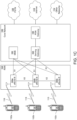
- FIG. 2 is a block diagram illustrating an example of the communications system 100 including a relay WTRU 201.
- the relay WTRU 201 may be configured with, and may implement, relaying functionality to support connectivity and/or traffic relaying between the network and a WTRU 203.
- the WTRU 203 may be, for example, a WTRU 102 ( FIG.1 ) that may be out coverage of the RAN 113 and cannot communicate with the core network 115 directly or within coverage and uses a device-to-device (D2D) link (e.g., a sidelink) for communication.
- D2D device-to-device
- remote WTRU may be used herein to refer to a WTRU (e.g., WTRU 203) that may be indirectly coupled to the network via a relay WTRU (e.g., relay WTRU 201).
- the relay WTRU 201 may be a WTRU 102 ( FIG.1 ) in which the relaying functionality to support connectivity and/or traffic relaying is active (and assuming the WTRU 102 ( FIG.1 ) is configured with such functionality). Although not shown, the relay WTRU 201 may provide connectivity and/or traffic relaying between the network and more than one remote WTRU.
- the relay WTRU 201 and the remote WTRU 203 are assumed to be configured in accordance with one or more protocols of proximity services (ProSe).
- ProSe are services that can be provided by the communications system based on a plurality of WTRUs being in proximity to each other.
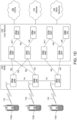
- FIG. 3 illustrates an example relaying establishment procedure.
- the example relaying establishment procedure is described using the communications system 100 of FIG. 2 (and in turn FIG. 1 ).
- the example relaying establishment procedure may be carried out in other communications systems, as well.
- a relay WTRU 201 may register with an AMF 182a.
- the relay WTRU 201 may send a registration request message to the AMF 182a (1) to request registration, and the AMF 182a may accept the registration and send a registration accept to the relay WTRU 201 (2) to indicate acceptance of the requested registration.
- a remote WTRU 203 may perform discovery and select the relay WTRU 201 (3).
- the remote WTRU 203 may decide to perform discovery and/or select the relay WTRU 201, for example, if it is out of coverage of a RAN 113 and cannot communicate with the core network 115 directly and/or if it within coverage but decides to use a D2D link (e.g., PC5 link/sidelink) for communication.
- the remote WTRU 203 may establish a PC5 session with the relay WTRU 201 (4).
- the relay WTRU 201 may establish a PDU session (or PDN connection in EPC) for the remote WTRU 203 (5,6). After IP address/prefix allocation (7), traffic between the remote WTRU 203 and the network may be relayed by the relay WTRU 201.
- the remote WTRU 203 may access the network via the relay WTRU 201.
- the terms "relay WTRU”, “WTRU-to/from-network relay”, “ProSe L2 WTRU-to/from-network relay”, “ProSe L2 relay”, and “WTRU-based relay” may be used interchangeably herein.
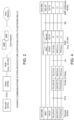
- FIG. 4 illustrates example protocol stacks and interconnecting reference points of a remote WTRU 203, a relay WTRU 201 (shown as "ProSe L2 Relay"), a RAN 113 (e.g., 5G-AN) and a AMF of the remote WTRU 203 ("remote-WTRU AMF 182a-1 ").
- the remote WTRU 203 may be visible to the network with the relay WTRU 201 there between.
- the RAN 113 e.g., 5G-AN
- the RAN 113 may terminate radio resource control (RRC) signalling and NG-AP signalling.
- RRC radio resource control
- the behaviour of the remote WTRU 203 with respect to functionality provided by, and/or protocols of, the remote-WTRU AMF 182a-1 may be the same to that of a WTRU directly coupled to the RAN 113 (e.g., 5G-AN).
- the remote WTRU 203 may access it via the relay WTRU 201 and the RRC layer behaviour may be the same to that of a WTRU directly coupled to the RAN 113 (e.g., 5G-AN).
- the relay WTRU 201 may select, be assigned and/or couple to the same AMF 182a-1 as the remote WTRU 203 or, alternatively, select, be assigned and/or couple to an AMF other than the AMF 182a-1.
- the terms "relay AMF” may be used herein to refer to an AMF that may be selected by, assigned to and/or coupled with a relay WTRU (e.g., relay WTRU 201).
- NAS level congestion control may be initiated at any of a mobility management (MM) level and a session management (SM) level.
- the NAS level congestion control involves, among other things, (i) the network providing to a WTRU a value for a (e.g., configured) back-off timer and (ii) the WTRU backing off from or otherwise not initiating any NAS signalling until the back-off timer (“NAS back-off timer”) expires or until the WTRU receives a mobile terminated (MT) request from the network.
- a value for a (e.g., configured) back-off timer e.g., configured) the WTRU backing off from or otherwise not initiating any NAS signalling until the back-off timer (“NAS back-off timer") expires or until the WTRU receives a mobile terminated (MT) request from the network.
- MT mobile terminated
- the value of the NAS back-off timer provided at the MM level is generally sent by an associated AMF in a NAS reject message.
- a NAS request e.g. Registration or Service Request
- the AMF may reject the request and may send a NAS reject message that includes a value for the NAS back off timer.
- the WTRU may receive the NAS back off timer value, initialize the NAS back off timer with the received value, start the NAS back-off timer, and refrain from initiating any NAS signalling (e.g., any NAS request), except possibly for initiating a deregistration procedure, until expiration of the NAS back-off timer or until the WTRU receives a MT request from the network and the like.
- any NAS signalling e.g., any NAS request
- an AMF may disallow and/or deactivate mobile initiated connection only (MICO) mode for a WTRU if communication pattern parameters indicate uncertainty of downlink (DL) communications, or that DL communication is happening soon, e.g. within a preconfigured time window.
- MICO mobile initiated connection only
- the AMF may allow and/or activate the MICO mode in the other power saving cases.
- the AMF may allocate a large periodic registration timer value so that, the WTRU can enter deep sleep between periodic registration updates to save power. If the communication pattern parameters indicate scheduled DL communication, then the AMF should allocate a periodic registration timer value such that the WTRU may perform periodic registration update to renegotiate MICO mode before or at the scheduled DL communication time based on the expected WTRU behavior from the application server.
- the AMF may provide a "do not reset the timer for Periodic Registration" indication to the WTRU together with the periodic registration timer value. If the "do not reset the timer for Periodic Registration" indication is provided by the AMF, then the WTRU may keep its periodic registration timer running while in CM-CONNECTED state. The WTRU may re-negotiate MICO mode and its parameters the periodic registration timer (e.g., by performing a periodic registration update) at or after expiration of the periodic registration timer. The periodic registration timer is only restarted on expiry. If the periodic registration timer value is renegotiated during a Registration procedure the periodic registration timer is stopped and restarted using the renegotiated value even when the "do not reset the timer for Periodic Registration" indication was provided by the AMF.
- a core network may maintain a context for a remote WTRU connected via an relay WTRU in the same way as it would if the WTRU is connected directly to the network and has N1 interface with the AMF.
- the remote-WTRU AMF while interacting with the remote WTRU need not change its procedures and behavior since the remote WTRU may transmit messages via the relay WTRU.
- a common scenario may be that a remote WTRU and the relay WTRU are attached/registered to different AMFs. Even if they are connected to the same AMF, the AMF may keep separate contexts for remote WTRU and the relay WTRU. The behavior of AMF for one the WTRUs may not consider that both signaling and traffic from one WTRU is being relayed by another WTRU. The AMF may apply the same behavior and procedure, e.g., NAS signaling to each of the WTRUs.
- the network may have visibility and control over the remote WTRU because of transparent relaying of NAS signaling.
- the AMF behavior for a relay WTRU in certain scenarios may not take into consideration that there are remote WTRUs connected to relay WTRUs via PC5 (since they may be connected to different AMFs).
- NAS level congestion and subsequently application of back off timers is one such scenario. It may be possible that relay-WTRU AMF is congested causing the AMF to send NAS back off timer (e.g. mobility management) to relay WTRU. Upon receiving the back off timer, the relay WTRU would not be able to initiate mobility management signaling until the expiry of the timer.
- NAS back off timer e.g. mobility management
- the remote WTRU may not be cognizant of such congestion situation at the relay WTRU. As part of the normal operation, the remote WTRU may send request to the relay WTRU (e.g. PC5 request). The relay WTRU may not be able to transition to connected mode (because of the mobility management back off timer) and may not be able to connect the remote WTRU to the network.
- the relay WTRU e.g. PC5 request.
- the relay WTRU may not be able to transition to connected mode (because of the mobility management back off timer) and may not be able to connect the remote WTRU to the network.
- the relay WTRU AMF congestion may cause service interruptions and connectivity issues for the remote WTRU.
- Various embodiments disclosures herein address the L2 relay WTRU behavior with respect to experiencing network congestion (e.g., receiving a value for a back off timer from its AMF and having a pending request to relay data from the remote WTRU.
- the RAN may be experiencing an overload or congestion scenario.
- the CN e.g., the AMF
- the CN may inform RAN to start a overload control mechanism by sending a message with the overload indication.
- the RAN i.e. a gNB in the case of 5G NW
- the RAN may apply it toward the WTRUs that want to access the network.
- the RAN may reject it and also provide an extended wait time (EWT) to the WTRU.
- EWT extended wait time
- the reception of the EWT may trigger the RRC layer of the WTRU to indicate it to the NAS layer and the NAS layer may apply the back-off mechanism (e.g., by means of starting a MM-level back-off timer with the same value as the received EWT.
- the Relay WTRU that receives the EWT form RAN and not the remote WTRU, may need to contact the NW.
- Various embodiments disclosures herein address the behavior of the relay WTRU in connection with receiving the EWT from RAN, how the relay WTRU may communicate with the remote WTRU and what action(s) should the remote WTRU take.
- the network may keep track of intervals when the WTRU exits sleep mode, e.g., idle mode/eDRX MICO or PSM. Such tracking may enable the network to schedule delivery of MT data at these time intervals.
- the network may inform (e.g., also inform) the application server that the WTRU may be available at these times for the application server to be able schedule data if it has any at those times.
- the remote WTRU (e.g., an IoT type remote WTRU) in some scenario might want to use the 'Scheduled Delivery of MT Data' feature. Enabling this feature in L2 relaying may increase complexity since idle mode behavior of the relay WTRU may need to be taken into consideration to determine the MT data delivery time schedules.
- the idle mode intervals or periodic timer of the relay WTRU may not be in synch with the times when the remote WTRU performs period registration.
- Additional behavior may be needed at both the remote WTRU and the relay WTRU to enable (e.g., seamlessly enable) the 'Scheduled Delivery of MT Data' feature at the remote WTRU.
- Various embodiments disclosures herein address how to enable receiving schedule MT data when the remote WTRU has a long period of inactivity (e.g. in eDRX, MICO, PSM, etc.).
- Mobility restrictions may restrict mobility handling or service access of a WTRU.
- Mobility restrictions may include RAT restriction, Forbidden Area, Service Area Restrictions, Core Network type restriction and Closed Access Group information. Mobility restrictions are decided by the Core Network.
- the WTRU may be restricted from initiating any communication with the network for this PLMN (in Forbidden Area), or initiating a service request or SM signalling (in Non-Allowed Area), etc.
- L2 relay WTRU behavior when it moves to an area with mobility restrictions, e.g. Forbidden Area or Non-allowed area, and it receives a pending request to relay data/signaling from a remote WTRU.
- mobility restrictions e.g. Forbidden Area or Non-allowed area
- a relay WTRU that is experiencing, expected to experience and/or informed of upstream congestion (e.g. NAS level congestion) may inform a remote WTRU of such congestion in various ways and may take various actions and/or cause various actions to be taken to bar or otherwise limit UL and/or DL relaying operation and/or override congestion control mechanisms to allow any of UL and DL relaying operation.
- the relay WTRU may take various actions to inhibit the remote WTRU, and/or to cause the remote WTRU to refrain, from communicating with the relay WTRU for a time period.
- That time period may be for all, some or more than the time during which the relay WTRU is experiencing and/or expected to experience congestion.
- the time period may be based on one or more signaled values, set initially to one value (e.g., a fixed value, infinity, etc.) and then adjusted up or down with another value, etc.
- the relay WTRU may use a procedure for disconnecting an ongoing PC5 link between peer WTRUs to inform the remote WTRU of the congestion and/or to inhibit the remote WTRU, and/or cause the remote WTRU to refrain, from communicating with the relay WTRU indefinitely or for some other time period.
- the relay WTRU may proceed by releasing its ongoing unicast PC5 connections with the remote WTRU (and/or some or all of any other ongoing unicast PC5 connections).
- the relay WTRU may, as part of the link release procedure, inform the remote WTRUs whose connections are being released of the cause for the release, for example, using a specific cause code that indicates the cause for link release is that the relay WTRU experiencing, expected to experience and/or has been informed of upstream congestion (e.g. NAS level congestion).
- the relay WTRU may, as part of the link release procedure, inform the remote WTRUs that it may not be able to accept new PC5 connections for a time period.
- the remote WTRUs may use this information to refrain from initiating a PC5 connection (or otherwise communicating via the PC5 with) the relay WTRU for the duration of such period.
- the remote WTRUs may be configured with a PC5 back-off timer and configured to refrain from initiating a PC5 connection (or otherwise communicating via the PC5 with) the relay WTRU until expiration of the PC back-off timer.
- the relay WTRU may provide to the remote WTRUs values for their respective PC5 back off timers. After receipt of such values, the remote WTRUs may refrain (and/or be inhibited) from communicating with the relay WTRU until expiration of their respective timers.
- the PC5 back off timer values may be based on the NAS back off timer value. For example, the PC5 back off timer values provided during the link release procedure may be set as an offset of the NAS back off timer values received by the relay WTRU.
- the relay WTRU may otherwise derive the PC5 back off timer values from the received NAS back off time value.
- the relay WTRU may decide to initiate the release procedure with a remote WTRU if (e.g., only if) the remote WTRU has data to be sent and no DL data is expected to be received and/or the remote WTRU is not in an idle state. For example, the relay WTRU may refrain from using the link release procedure for remote WTRUs (e.g., remote WTRUs in MICO mode) that only send data at specific intervals, and such interval does not occur during the time corresponding to the NAS back-off timer and/or the time during which the relay WTRU is experiencing, expected to experience and/or informed of upstream congestion.
- remote WTRUs e.g., remote WTRUs in MICO mode
- the relay WTRU may select the ongoing PC5 connections to be released based on various criteria, e.g. level of activity (sending/receiving data), QoS, service type, etc.).
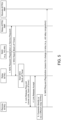
- FIG. 5 is a message flow diagram illustrating an example link release procedure in accordance with various embodiments.
- the example link release procedure is described using the communications system 100 of FIG. 2 (and in turn FIG. 1 ).
- the example link release procedure may be carried out in other communications systems, as well.
- the relay WTRU may send, to the relay-WTRU AMF, a NAS request (e.g., a registration request or service request) message to transition from idle mode to connected mode (1).
- a NAS request e.g., a registration request or service request
- the relay-WTRU AMF may receive the NAS request at a time in which the it is congested and may decide to reject the NAS request.
- the relay-WTRU AMF may send a NAS reject message to the relay WTRU.
- the NAS reject message may include a value for a NAS back off timer (2).
- the relay WTRU may start its NAS back-off timer using (or based on) the received value and may initiates the link release procedure with the remote WTRU.
- the relay WTRU may send a link release request PC5 message (3) as part of the link release procedure.
- the link release request PC5 message may include (i) a specific cause code for indicating the cause for link release is that the relay WTRU experiencing, expected to experience and/or has been informed of upstream congestion, and (ii) a value for a PC5 back off timer.
- the remote WTRU may receive the link release request PC5 message, and a consequence, the remote WTRU becomes aware of the congestion situation at the relay WTRU.
- the cause code indicates the AMF/NAS congestion experienced by the relay WTRU, and the value for PC5 back off timer informs the remote WTRU of a duration of time for which the relay WTRU may not be able to accept new PC5 requests.
- the remote WTRU may respond to the link release request PC5 message by sending to the relay WTRU a link release accept message (4).
- the remote WTRU may perform one or more of the following actions after receiving link release request PC5 message:
- the relay WTRU may inform the remote WTRU of the congestion and the remote WTRU may refrain from initiating a PC5 connection (or otherwise communicating via the PC5 with) the relay WTRU based on such information.
- the relay WTRU may provide an indication of (or otherwise indicate) the congestion in a next keep alive (or other type) PC5 message and/or one or more subsequent keep alive (or other type) PC5 messages.
- An explicit congestion indication may be included with a signaled value of the PC5 back off timer (which value may possibly be based on (e.g., derived from) a signaled value NAS back off timer).
- the relay WTRU may implicitly indicate the relay WTRU congestion to the remote WTRU by excluding a value for the PC5 back off timer in the keep alive message(s).
- the relay WTRU may indicate the that the relay WTRU is no longer experiencing congestion by excluding the indication and/or a value for the PC5 back off timer in the keep alive message(s) after having sent the indication and/or value in one or more previous keep alive (or other type) PC5 messages.
- the relay WTRU may send the back off indication and/or value for the PC5 back off timer when it receives (e.g., responsive to receiving) a mobile originated (MO) request from the remote WTRU to relay data or signaling message.
- a mobile originated (MO) request from the remote WTRU to relay data or signaling message.
- the relay WTRU may initiate a link modification procedure (e.g., with an indication) to pause the link or temporarily move to the dormant state.
- the link modification PC5 message may include a value for a timer for the duration of the dormant period.
- the relay WTRU may initiate another link modification procedure when the congestion has abated (e.g., prior to expiration of a PC back-off timer) to indicate to the remote WTRU that it may resume the service and come out of the dormant state.
- the relay WTRU may cause the remote WTRU to cancel the PC5 back off timer.
- the relay WTRU may cause the cancelation of the PC5 back off timer based on (e.g., responsive to) receiving a paging message or a mobile terminated (MT) request from the relay-WTRU AMF.
- the relay WTRU may initiate the cancelation procedure by sending a "cancel back off' indication to the remote WTRU, e.g., in the keep alive message and/or another PC5-S message, such as a link modification request.
- the remote WTRU may receive the "cancel back off' indication, and may reset the PC5 back off timer (e.g., set the value to zero) and, in turn, allow the remote WTRU to resume service and/or come out of dormant state.
- the PC5 back off timer e.g., set the value to zero
- the remote WTRU may refrain from sending to the relay WTRU any messages (NAS signaling and/or data) to be relayed.
- the remote WTRU may transmit PC5 signaling messages to the relay WTRU if the back off timer is running or not.
- the remote WTRU may perform one or more of the following actions (e.g., in addition to any of the remote WTRU behaviors disclosed above in connection with the link release procedure):
- the congestion associated with relay-WTRU AMF may allow the relay WTRU to transmit signaling messages and data for the remote WTRU (e.g., when served by an AMF other than the relay-WTRU AMF).
- additional (new) information associated to the back off timer may be sent to the relay WTRU in the NAS reject message (e.g. service reject or registration reject).
- the corresponding information may indicate to the relay WTRU whether the NAS back off timer is applicable to remote WTRU connections (e.g., some or all remote WTRU connections. Examples of the additional information associated with the NAS back off timer may include any of:
- the relay WTRU need not inform the remote WTRU about relay-WTRU AMF congestion.
- the relay WTRU may inform the relay WTRU AMF by including a new indication ('"relaying indication") in the NAS message specifying that the current registration request or service request has been initiated based on MO request from the remote WTRU.
- the relaying indication may be included as part of new establishment cause at the RRC or NAS level.
- FIG. 6 is a message flow diagram illustrating an example congestion control override procedure in accordance with various embodiments.
- the congestion control override procedure is described using the communications system 100 of FIG. 2 (and in turn FIG. 1 ).
- the example congestion control override procedure may be carried out in other communications systems, as well.
- the relay WTRU may send to the relay-WTRU AMF a NAS request (e.g., a registration request or a service request) to transition out of idle state (1).
- the relay-WTRU AMF may receive and reject the NAS request due to relay-WTRU network congestion.
- the relay-WTRU AMF may send a NAS reject message to the relay WTRU (2).
- the NAS reject message may include a value for the NAS back off timer and information indicating the applicability of the back off timer (e.g. information indicating that NAS back off is only applicable to relay WTRU requests).
- the relay WTRU may receive the NAS reject message, initialize the NAS back off timer using the received value, and start the NAS back off timer.
- the relay WTRU may receive a MO request (e.g. a service request) from the remote WTRU (3). This may occur, for example, if the remote WTRU tries to transition to connected mode.
- a MO request e.g. a service request
- the relay WTRU may decides to relay the MO request from the remote WTRU (4). For example, if the remote WTRU and relay WTRU are served by different AMFs, then the relay WTRU may determine to relay the remote WTRU request if the back-off timer additional information indicates that remote WTRU requests are allowed (if served by a different AMF). The relay WTRU may determine the remote WTRU AMF identity based on a remote WTRU temporary identity (e.g., a GUTI).
- a remote WTRU temporary identity e.g., a GUTI
- the relay WTRU may send the service request message to the relay-WTRU AMF (5).
- the service request message may include a new indication informing the relay-WTRU AMF that the request to establish NAS signaling is due (e.g., responsive) to an MO request from the remote WTRU.
- the relay WTRU AMF may accept the request and send a service accept message (6).
- the MO request (e.g. service request) may be relayed to the remote-WTRU AMF by the relay WTRU (7).
- the relay WTRU may make itself unavailable for direct discovery for the duration of the back off timer (e.g. stop transmission of broadcast discovery messages or stop monitoring/replying to direct discovery request messages).
- the relay WTRU may resume normal discovery operations (e.g. resume transmission of broadcast discovery messages or resume monitoring/replying to direct discovery request messages) when the NAS congestion condition is abated (e.g. when back off timer expires and a following NAS request is accepted).
- the relay WTRU may also reject new direct connection requests received while the back off timer is still running.
- the reject message may include a specific cause code indicating that the link establishment request is rejected due to relay-WTRU being under NAS level congestion conditions.
- the reject message may include (e.g., also include) a value for the back off timer indicating to the remote WTRU that the relay WTRU may not be able to accept new PC5 connections for the duration of the timer.
- the relay WTRU may derive this PC5 back off timer value from the received NAS back off value, e.g., as an offset or multiplier of the NAS back off timer value or back off timer remaining running time.
- the remote WTRU may re-attempt connecting with the relay WTRU upon that timer expiry.
- the relay WTRU may discard new direct connection requests received while the back off timer is still running.
- the remote WTRU may retransmit new direct connection request(s) based on conventional retransmission timer.
- the discovery mechanism may still be run. and an unavailable indication and/or an expected available time (or back-off timer) may added to the advertisements to let the listening WTRUs know about the relay-WTRU current congestion situation and duration. Remote WTRUs may try to connect with the relay WTRU once available expected time is reached.
- a relay WTRU experiencing congestion and which has the capability of sending data to the network may decide to not advertise its congestion level or to advertise it with an added indication about which traffic is allowed to be relayed.
- the relay UE upon attempting to establish an RRC connection with the RAN and receiving value for an extended wait time (EWT) in a reject or release message, may inform the remote WTRU of the congestion/overload situation in RAN and also pass the value of the EWT to the remote WTRU. This may be carried out by e.g. sending a PC5 message to the remote WTRU, for instance.
- the choice of the PC5 message may depend on the condition of the PC5 link between the two UEs. As an example, where a PC5 link already exists and the link is supervised by the two UEs, keep alive messages can be used.
- the relay WTRU may broadcast an indication in a discovery message to inform interested remote-WTRU that that the relay WTRU is experiencing RAN level congestion.
- the relay WTRU may inform the remote WTRU about the status of the RAN while accepting a unicast communication establishment from the remote WTRU.
- the remote WTRU may apply the EWT as a NAS back-off timer.
- the remote WTRU may go back to PSM/MICO immediately or without further delay (e.g., to avoid waiting for the network to allocate an active time).
- the "do not reset the timer for Periodic Registration" timer feature may be enabled by the remote WTRU AMF if the remote WTRU requests enablement of power saving e.g. MICO in the registration message.
- the remote-WTRU AMF may send this indication to the remote WTRU in a registration accept message. Coordination between the remote WTRU and the relay WTRU may be needed so that idle mode operation of the relay WTRU does not disrupt a scheduled wake up time of the remote WTRU.
- the remote WTRU may inform the relay WTRU about the activation of "do not reset the timer for Periodic Registration" feature when the remote WTRU receives such indication in the registration accept message from the AMF.
- the remote WTRU may send (e.g., also send) its periodic update timer value to the relay WTRU.
- the remote WTRU may send this information to the relay WTRU via PC5 Signaling message, for example, direct communication request or link modification request.
- the information about activation of "do not reset the timer for Periodic Registration" feature may be sent by the remote WTRU, e.g., when the remote WTRU transitions to idle mode.
- the remote WTRU may inform the relay WTRU when it moves from connected mode to idle mode (e.g., a monitor request). Part of the messaging may be to inform this state change to the relay WTRU.
- the remote WTRU may add new information elements in the message to indicate that remote WTRU would not be resetting the periodic timer in the event of MO request, and may send the corresponding periodic timer to the relay WTRU.
- the relay WTRU may adapt certain behavior to facilitate the scheduled wake up times for the remote WTRU.
- the relay WTRU may take any of the following actions:
- FIG. 7 is a message flow diagram illustrating a procedure for enabling scheduled mobile terminated (MT) data delivery for a remote WTRU.
- MT mobile terminated
- a remote WTRU may request MICO from the network (e.g., the remote-WTRU AMF) (1).
- the network may send a registration accept message to the remote WTRU (2).
- the registration accept message may include the "do not reset the timer for Periodic Registration".
- the remote WTRU may receive the registration accept message (2).
- the remote WTRU may inform the relay WTRU that the schedule MT feature is enabled (3) .
- the remote WTRU may send a PC5 signaling message to the relay WTRU.
- the PC5 signaling message may include an indication that the schedule MT feature is enabled and/or a value of the periodic time.
- the request may be acknowledged by the relay WTRU (4).
- the relay WTRU for example, may sending a PC5 signaling response message.
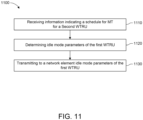
- Received parameters from the remote WTRU may be used by the relay WTRU to determine its idle mode behavior (e.g. enable/disable power saving) and corresponding parameters (e.g. requested active time, periodic timer etc.) (5).
- idle mode behavior e.g. enable/disable power saving
- corresponding parameters e.g. requested active time, periodic timer etc.
- the relay WTRU may send a registration message with a new indication of the remote WTRU enabling scheduled MT data delivery feature and possibly remote WTRU periodic timer in addition to the new idle mode parameters (6).
- the L2 relay WTRU when the L2 relay WTRU is in a mobility restrictions area, e.g., a forbidden area or non-allowed area, and the L2 relay WTRU receives a message from remote WTRU which triggers the L2 relay WTRU to send message to the network (e.g. service request), the L2 relay WTRU may include an indication that the message is exempted from restriction, e.g. due to triggered for remote WTRU.
- the AMF may accept the message (e.g. service request).
- the network may indicate whether the mobility restrictions area for the L2 relay WTRU may apply to message triggered by remote WTRU.
- the network may provide a set of non-allowed areas for the L2 relay WTRU itself (e.g., areas in which the L2 relay WTRU may be restricting from sending a service request to network for the L2 relay-WTRU data or signaling) and a set of non-allowed area for the remote WTRU (e.g., areas in which the L2 relay WTRU may be restricted from sending a service request to network even it's triggered for data or signaling of the remote-WTRU).
- Examples of the L2 relay-WTRU behaviors may include one or more of the following:
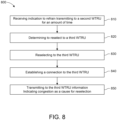
- Figure 8 is an example of a method 800 implemented in a first WTRU.
- the method may comprise the following steps.
- the first WTRU may receive, from a second WTRU, via a first sidelink, a first information indicating an amount of time (e.g., a time period) for the first WTRU to refrain from transmitting to the second WTRU.
- the first WTRU may be refrain from transmitting to the second WTRU a second information, for termination to a network element, that may have to be relayed by the second WTRU.
- the first sidelink may include a first sidelink transmission comprising the first information.
- the first WTRU may determine to reselect to a third WTRU responsive to receiving the first information and based on a second sidelink transmission from the third WTRU. Reselecting to the third WTRU may comprise autonomous reselecting to the third WTRU.
- the first WTRU may reselect to the third WTRU. The reselection may be processed on the second sidelink responsive to receiving the first information.
- the first WTRU may establish a connection with the third WTRU.
- the first WTRU may transmit to the third WTRU, a third sidelink transmission comprising a third information indicating congestion as a cause for the reselection.
- the third sidelink transmission may addressed to, destined for, or terminated to the third WTRU. More particularly, the third sidelink transmission may comprise a first message addressed to, destined for, or terminated to a network element.
- the first message may comprise the third information indicating congestion as a cause for the reselection.
- the amount of time for the first WTRU to refrain from transmitting to the second WTRU may comprise a value for a back off timer.
- the network element may be associated with the first WTRU and/or with the third WTRU.
- the method of Figure 8 may further comprise a step of transmitting, to a network element via the third WTRU, a fourth sidelink transmission comprising a fourth information indicating congestion as a cause for the reselection, wherein the fourth sidelink transmission is destined for/terminated to the network element.
- the network element may comprise an access and mobility management function, AMF.
- the third information may be included in a message to the third WTRU during discovery so that the third WTRU may use the third information to determine whether to allow the first WTRU to connect thereto.
- the method of Figure 8 may further comprise a step of determining whether an identifier of the third WTRU is listed on a first list of identifiers of WTRUs that are available for relaying and/or determining whether an identifier of the third WTRU is not listed on a second list of identifiers of WTRUs that are unavailable for relaying.
- the fourth sidelink transmission may comprise a second message comprising the third information, and wherein the second message is in a protocol according to a non-access stratum, NAS, protocol.
- NAS non-access stratum
- the first sidelink transmission may comprise a third message comprising the first information, and wherein the third message is in a protocol according to any of a NAS protocol and a radio resource control, RRC, protocol and a PC5 protocol.
- the third message may comprise any of a link release message and a PC5 message.
- Figure 9 is another example of a method 900 implemented in a first WTRU.
- the method may comprise the following steps.
- the first WTRU may receive, from a second WTRU, a first sidelink transmission comprising a first information indicating an amount of time for the first WTRU to refrain from transmitting to the second WTRU.
- the first WTRU may determine to reselect to a third WTRU responsive to receiving the first information and based on a second sidelink transmission from the third WTRU.
- the first WTRU may reselect to the third WTRU. Reselecting to the third WTRU may comprise autonomous reselecting to the third WTRU.
- the first WTRU may establish a connection with the third WTRU.
- the first WTRU may transmit to a network element via the third WTRU, a third sidelink transmission comprising a second information indicating congestion as a cause for the reselection, wherein the third sidelink transmission is addressed to, destined for or terminated to the network element.
- Figure 10 is another example of a method 1000 implemented in a first WTRU.
- the method may comprise the following steps.
- the first WTRU may receive from a second WTRU, a first sidelink transmission comprising a first information indicating an amount of time for the first WTRU to refrain from transmitting to the second WTRU.
- the first WTRU may reselect to a network element responsive to receiving the first information.
- the reselection to the network element may comprise autonomous reselection to the network element
- the first WTRU may establish or maintain a connection with the network element.
- the first WTRU may transmit, to the network element, a second information indicating congestion as a cause for establishing the connection.
- the network element may comprise an access and mobility management function, AMF.
- the AMF may be associated with the first WTRU.
- Figure 11 is another example of a method 1100 implemented in a first WTRU.
- the method may comprise the following steps.
- the first WTRU may receive, from a second WTRU, a first sidelink transmission comprising, a first information indicating a schedule for mobile terminated (MT) data for the second WTRU.
- the first WTRU may determining idle mode parameters of the first WTRU based on the first information.
- the first WTRU may transmit to a network element associated with the first WTRU, a second information indicating idle mode parameters of the first WTRU.
- a first message may comprise the first information, and the first information may indicate one or more parameters corresponding to scheduling MT data.
- the method of Figure 11 may further comprise a step of transmitting, to a network element associated with the first WTRU, a third information indicating the second WTRU is enabled to receive MT data.
- Figure 12 is another example of a method 1200 implemented in a first WTRU.
- the method may comprise the following steps.
- the first WTRU may receive, from a network element, a first information indicating an amount of time for the first WTRU to refrain from transmitting to the network element.
- the first WTRU may receive from a second WTRU, a first sidelink transmission comprising a second information indicating a service request for mobile originated (MO) data.
- the first WTRU may relay the second information to a first network element performing an AMF.
- the first network element may be associated with the first WTRU.
- the first WTRU may receive from the first network element, a third information indicating acceptance of the service request.
- the first WTRU may relay the second information to a second network element performing an AMF.
- the second network element may be associated with the second WTRU.
- a method implemented in a WTRU experiencing, expected to experience and/or informed of upstream congestion may comprise the following steps: informing a remote WTRU of such congestion; and causing various actions to be taken at the remote WTRU to bar or otherwise limit UL and/or DL relaying operation.
- a method implemented in a WTRU experiencing, expected to experience and/or informed of upstream congestion may comprise the following steps: informing a remote WTRU of such congestion; and override congestion control mechanisms applied to the relay WTRU to allow UL and/or DL relaying operation.
- the various actions may comprise causing the remote WTRU to refrain from communicating with the relay WTRU for a time period.
- the period may be based on a time during which the relay WTRU is experiencing and/or expected to experience congestion.
- the time period may be based on one or more signaled values.
- the time period may be set initially to one value and then adjusted up or down with another value, etc.
- infrared capable devices i.e., infrared emitters and receivers.
- the embodiments discussed are not limited to these systems but may be applied to other systems that use other forms of electromagnetic waves or non-electromagnetic waves such as acoustic waves.
- video or the term “imagery” may mean any of a snapshot, single image and/or multiple images displayed over a time basis.
- the terms “user equipment” and its abbreviation “UE”, the term “remote” and/or the terms “head mounted display” or its abbreviation “HMD” may mean or include (i) a wireless transmit and/or receive unit (WTRU); (ii) any of a number of embodiments of a WTRU; (iii) a wireless-capable and/or wired-capable (e.g., tetherable) device configured with, inter alia, some or all structures and functionality of a WTRU; (iii) a wireless-capable and/or wired-capable device configured with less than all structures and functionality of a WTRU; or (iv) the like.
- WTRU wireless transmit and/or receive unit
- any of a number of embodiments of a WTRU any of a number of embodiments of a WTRU
- a wireless-capable and/or wired-capable (e.g., tetherable) device configured with, inter alia, some
- FIG. 1A-1D Details of an example WTRU, which may be representative of any WTRU recited herein, are provided herein with respect to Figures. 1A-1D .
- various disclosed embodiments herein supra and infra are described as utilizing a head mounted display.
- a device other than the head mounted display may be utilized and some or all of the disclosure and various disclosed embodiments can be modified accordingly without undue experimentation. Examples of such other device may include a drone or other device configured to stream information for providing the adapted reality experience.
- the methods provided herein may be implemented in a computer program, software, or firmware incorporated in a computer-readable medium for execution by a computer or processor.
- Examples of computer-readable media include electronic signals (transmitted over wired or wireless connections) and computer-readable storage media.
- Examples of computer-readable storage media include, but are not limited to, a read only memory (ROM), a random access memory (RAM), a register, cache memory, semiconductor memory devices, magnetic media such as internal hard disks and removable disks, magneto-optical media, and optical media such as CD-ROM disks, and digital versatile disks (DVDs).
- a processor in association with software may be used to implement a radio frequency transceiver for use in a WTRU, UE, terminal, base station, RNC, or any host computer.
- processing platforms, computing systems, controllers, and other devices containing processors are noted. These devices may contain at least one Central Processing Unit (“CPU”) and memory.
- CPU Central Processing Unit
- FIG. 1 A block diagram illustrating an exemplary computing system
- FIG. 1 A block diagram illustrating an exemplary computing system
- FIG. 1 A block diagram illustrating an exemplary computing system
- FIG. 1 A block diagram illustrating an exemplary computing system
- FIG. 1 A block diagram illustrating an exemplary computing system
- memory may contain at least one Central Processing Unit (“CPU”) and memory.
- CPU Central Processing Unit
- Such acts and operations or instructions may be referred to as being "executed,” “computer executed” or "CPU executed.”
- an electrical system represents data bits that can cause a resulting transformation or reduction of the electrical signals and the maintenance of data bits at memory locations in a memory system to thereby reconfigure or otherwise alter the CPU's operation, as well as other processing of signals.
- the memory locations where data bits are maintained are physical locations that have particular electrical, magnetic, optical, or organic properties corresponding to or representative of the data bits. It should be understood that the embodiments are not limited to the above-mentioned platforms or CPUs and that other platforms and CPUs may support the provided methods.
- the data bits may also be maintained on a computer readable medium including magnetic disks, optical disks, and any other volatile (e.g., Random Access Memory (RAM)) or non-volatile (e.g., Read-Only Memory (ROM)) mass storage system readable by the CPU.
- the computer readable medium may include cooperating or interconnected computer readable medium, which exist exclusively on the processing system or are distributed among multiple interconnected processing systems that may be local or remote to the processing system. It should be understood that the embodiments are not limited to the above-mentioned memories and that other platforms and memories may support the provided methods.
- any of the operations, processes, etc. described herein may be implemented as computer-readable instructions stored on a computer-readable medium.
- the computer-readable instructions may be executed by a processor of a mobile unit, a network element, and/or any other computing device.
- a signal bearing medium examples include, but are not limited to, the following: a recordable type medium such as a floppy disk, a hard disk drive, a CD, a DVD, a digital tape, a computer memory, etc., and a transmission type medium such as a digital and/or an analog communication medium (e.g., a fiber optic cable, a waveguide, a wired communications link, a wireless communication link, etc.).
- a signal bearing medium include, but are not limited to, the following: a recordable type medium such as a floppy disk, a hard disk drive, a CD, a DVD, a digital tape, a computer memory, etc.
- a transmission type medium such as a digital and/or an analog communication medium (e.g., a fiber optic cable, a waveguide, a wired communications link, a wireless communication link, etc.).
- a typical data processing system may generally include one or more of a system unit housing, a video display device, a memory such as volatile and non-volatile memory, processors such as microprocessors and digital signal processors, computational entities such as operating systems, drivers, graphical user interfaces, and applications programs, one or more interaction devices, such as a touch pad or screen, and/or control systems including feedback loops and control motors (e.g., feedback for sensing position and/or velocity, control motors for moving and/or adjusting components and/or quantities).
- a typical data processing system may be implemented utilizing any suitable commercially available components, such as those typically found in data computing/communication and/or network computing/communication systems.
- any two components so associated may also be viewed as being “operably connected”, or “operably coupled”, to each other to achieve the desired functionality, and any two components capable of being so associated may also be viewed as being “operably couplable” to each other to achieve the desired functionality.
- operably couplable include but are not limited to physically mateable and/or physically interacting components and/or wirelessly interactable and/or wirelessly interacting components and/or logically interacting and/or logically interactable components.
- the phrase “A or B” will be understood to include the possibilities of “A” or “B” or “A and B.”
- the terms “any of” followed by a listing of a plurality of items and/or a plurality of categories of items, as used herein, are intended to include “any of,” “any combination of,” “any multiple of,” and/or “any combination of multiples of” the items and/or the categories of items, individually or in conjunction with other items and/or other categories of items.
- the term “set” is intended to include any number of items, including zero.
- the term “number” is intended to include any number, including zero.
- a range includes each individual member.
- a group having 1-3 cells refers to groups having 1, 2, or 3 cells.
- a group having 1-5 cells refers to groups having 1, 2, 3, 4, or 5 cells, and so forth.
Landscapes
- Engineering & Computer Science (AREA)
- Computer Networks & Wireless Communication (AREA)
- Signal Processing (AREA)
- Mobile Radio Communication Systems (AREA)
Claims (15)
- Verfahren, das in einer ersten drahtlosen Sende-/Empfangseinheit, WTRU, implementiert wird, wobei das Verfahren umfasst:Empfangen (810) einer ersten Sidelink-Sendung, die erste Informationen, die eine Zeitdauer für die erste WTRU, das Senden an die zweite WTRU zu unterlassen, angeben, umfasst, von einer zweiten WTRU;Bestimmen (820), für eine dritte WTRU neu auszuwählen, als Reaktion auf das Empfangen der ersten Informationen und auf der Grundlage einer zweiten Sidelink-Sendung von der dritten WTRU;Aufbauen (840) einer Verbindung mit der dritten WTRU; undgekennzeichnet durchSenden (850) einer dritten Sidelink-Sendung, die zweite Informationen, die eine Stauung als eine Ursache für die Neuauswahl angeben, umfasst, an die dritte WTRU.
- Verfahren nach Anspruch 1, wobei die dritte Sidelink-Sendung eine erste Nachricht, die für ein Netzelement bestimmt ist, umfasst und wobei die erste Nachricht die zweiten Informationen, die eine Stauung als eine Ursache für die Neuauswahl angeben, umfasst.
- Verfahren nach einem der vorhergehenden Ansprüche, wobei das Verfahren ferner umfasst:
Senden einer vierten Sidelink-Sendung, die dritte Informationen, die eine Stauung als eine Ursache für die Neuauswahl angeben, umfasst, an ein Netzelement über die dritte WTRU. - Verfahren nach Anspruch 1, das umfasst:
Senden der dritten Sidelink-Sendung, die die zweiten Informationen, die eine Stauung als die Ursache für die Neuauswahl angeben, umfasst, an ein Netzelement über die dritte WTRU. - Verfahren nach einem der vorhergehenden Ansprüche, wobei die erste Sidelink-Sendung eine dritte Nachricht, die die ersten Informationen umfasst, umfasst, und wobei die dritte Nachricht in Übereinstimmung mit einem NAS-Protokoll und mit einem Funkbetriebsmittel-Steuerprotokoll, RRC-Protokoll, und mit einem PC5-Protokoll gesendet wird.
- Verfahren nach einem der vorhergehenden Ansprüche, wobei die zweiten Informationen einen Ursachencode umfassen und wobei der Ursachencode eine Stauung als die Ursache für die Neuauswahl angibt.
- Verfahren nach einem der vorhergehenden Ansprüche, wobei die Zeitdauer für die erste WTRU, das Senden an die zweite WTRU zu unterlassen, einen Wert für einen Zeitverzögerungs-Zeitgeber umfasst.
- Verfahren, das in einer ersten drahtlosen Sende-/Empfangseinheit, WTRU, implementiert wird, wobei das Verfahren umfasst:
Empfangen (1010) einer ersten Sidelink-Sendung, die erste Informationen, die eine Zeitdauer für die erste WTRU, das Senden an die zweite WTRU zu unterlassen, angeben, umfasst, von einer zweiten WTRU:Neuauswählen (1020) für ein Netzelement als Reaktion auf das Empfangen der ersten Informationen;Aufbauen (1030) einer Verbindung mit dem Netzelement; undSenden (1040) zweiter Informationen, die eine Stauung als eine Ursache für das Aufbauen der Verbindung angeben, an das Netzelement. - Verfahren nach Anspruch 8, wobei das Senden der zweiten Informationen umfasst:
Senden einer ersten Nachricht, die die zweiten Informationen umfasst, wobei die erste Nachricht in Übereinstimmung mit einem Non-Access-Stratum-Protokoll, NAS-Protokoll, gesendet wird. - Verfahren nach einem der Ansprüche 8 und 9, wobei die erste Sidelink-Sendung eine zweite Nachricht, die die ersten Informationen umfasst, umfasst, und wobei die zweite Nachricht in Übereinstimmung mit einem NAS-Protokoll und mit einem Funkbetriebsmittel-Steuerprotokoll, RRC-Protokoll, und mit einem PC5-Protokoll gesendet wird.
- Erste WTRU, die eine Schaltungsanordnung umfasst, die einen Sender (120), einen Empfänger (120), einen Prozessor (118) und Speicher (130) enthält, wobei die WTRU konfiguriert ist zum:Empfangen einer ersten Sidelink-Sendung, die erste Informationen, die eine Zeitdauer für die erste WTRU, das Senden an die zweite WTRU zu unterlassen, angeben, umfasst, von einer zweiten WTRU;Bestimmen, für eine dritte WTRU neu auszuwählen, als Reaktion auf das Empfangen der ersten Informationen und auf der Grundlage einer zweiten Sidelink-Sendung von der dritten WTRU;Aufbauen einer Verbindung mit der dritten WTRU; und dadurch gekennzeichnet, dass die erste WTRU zum Senden einer dritten Sidelink-Sendung, die zweite Informationen, die eine Stauung als eine Ursache für die Neuauswahl angeben, umfasst, an die dritte WTRU konfiguriert ist.
- Erste WTRU nach Anspruch 11, wobei die dritte Sidelink-Sendung eine erste Nachricht, die für ein Netzelement bestimmt ist, umfasst und wobei die erste Nachricht die zweiten Informationen, die eine Stauung als die Ursache für die Neuauswahl angeben, umfasst.
- Erste WTRU nach einem der Ansprüche 11 und 12, die ferner zum Senden einer vierten Sidelink-Sendung, die dritte Informationen, die eine Stauung als die Ursache für die Neuauswahl angeben, umfasst, an ein Netzelement über die dritte WTRU konfiguriert ist.
- Erste WTRU einem der Ansprüche 11 und 12, die konfiguriert ist zum:
Senden der dritten Sidelink-Sendung, die die zweiten Informationen, die eine Stauung als die Ursache für die Neuauswahl angeben, umfasst, an ein Netzelement über die dritte WTRU. - Erste WTRU nach einem der Ansprüche 11 bis 14, wobei die erste Sidelink-Sendung eine dritte Nachricht, die die ersten Informationen umfasst, umfasst, und wobei die dritte Nachricht in Übereinstimmung mit einem NAS-Protokoll und mit einem Funkbetriebsmittel-Steuerprotokoll, RRC-Protokoll, und mit einem PC5-Protokoll gesendet wird.
Priority Applications (1)
| Application Number | Priority Date | Filing Date | Title |
|---|---|---|---|
| EP24211503.8A EP4482250A3 (de) | 2020-05-21 | 2021-05-21 | Verfahren und vorrichtungen für non-access-stratum-prozeduren in verbindung mit schicht-2-weiterleitung |
Applications Claiming Priority (2)
| Application Number | Priority Date | Filing Date | Title |
|---|---|---|---|
| US202063028554P | 2020-05-21 | 2020-05-21 | |
| PCT/US2021/033603 WO2021237058A1 (en) | 2020-05-21 | 2021-05-21 | Methods and apparatuses directed to non-access stratum procedures in connection with layer 2 relaying |
Related Child Applications (2)
| Application Number | Title | Priority Date | Filing Date |
|---|---|---|---|
| EP24211503.8A Division-Into EP4482250A3 (de) | 2020-05-21 | 2021-05-21 | Verfahren und vorrichtungen für non-access-stratum-prozeduren in verbindung mit schicht-2-weiterleitung |
| EP24211503.8A Division EP4482250A3 (de) | 2020-05-21 | 2021-05-21 | Verfahren und vorrichtungen für non-access-stratum-prozeduren in verbindung mit schicht-2-weiterleitung |
Publications (2)
| Publication Number | Publication Date |
|---|---|
| EP4154670A1 EP4154670A1 (de) | 2023-03-29 |
| EP4154670B1 true EP4154670B1 (de) | 2024-12-18 |
Family
ID=76641763
Family Applications (2)
| Application Number | Title | Priority Date | Filing Date |
|---|---|---|---|
| EP21735443.0A Active EP4154670B1 (de) | 2020-05-21 | 2021-05-21 | Verfahren und vorrichtung zur handhabung von überlastung einer sidelink-kommunikation |
| EP24211503.8A Pending EP4482250A3 (de) | 2020-05-21 | 2021-05-21 | Verfahren und vorrichtungen für non-access-stratum-prozeduren in verbindung mit schicht-2-weiterleitung |
Family Applications After (1)
| Application Number | Title | Priority Date | Filing Date |
|---|---|---|---|
| EP24211503.8A Pending EP4482250A3 (de) | 2020-05-21 | 2021-05-21 | Verfahren und vorrichtungen für non-access-stratum-prozeduren in verbindung mit schicht-2-weiterleitung |
Country Status (4)
| Country | Link |
|---|---|
| US (3) | US12408072B2 (de) |
| EP (2) | EP4154670B1 (de) |
| CN (2) | CN115918248A (de) |
| WO (1) | WO2021237058A1 (de) |
Families Citing this family (10)
| Publication number | Priority date | Publication date | Assignee | Title |
|---|---|---|---|---|
| US20240147547A1 (en) * | 2021-03-01 | 2024-05-02 | Kyocera Corporation | Rrc connection reject handling under l2 relaying |
| FI20215829A1 (en) * | 2021-08-02 | 2023-02-03 | Nokia Technologies Oy | Improved forwarding in cellular communication networks |
| EP4132199A1 (de) * | 2021-08-06 | 2023-02-08 | Nokia Technologies Oy | Vorrichtung, verfahren und computerprogramme |
| EP4210425B1 (de) * | 2022-01-10 | 2024-08-14 | Nokia Technologies Oy | Netzzugriff, wenn zugehöriges relais-benutzergerät nicht verfügbar ist |
| JP2025503937A (ja) * | 2022-01-28 | 2025-02-06 | 富士通株式会社 | アドミッション制限方法及び装置、通信システム |
| US20250184869A1 (en) * | 2022-03-29 | 2025-06-05 | Telefonaktiebolaget Lm Ericsson (Publ) | Route selection process for handling congestion with relay proximity-based services |
| WO2024211499A1 (en) * | 2023-04-06 | 2024-10-10 | Interdigital Patent Holdings, Inc. | Handling connection rejects via u2u relay using wait-retry responses |
| JP7793255B2 (ja) | 2023-04-06 | 2026-01-05 | インターデイジタル パテント ホールディングス インコーポレイテッド | ソースエンドwtruの代わりにバックオフ時間に関連付けられたu2uリレーを介した接続拒否の処理 |
| WO2024211497A1 (en) * | 2023-04-06 | 2024-10-10 | Interdigital Patent Holdings, Inc. | Handling connection rejects via u2u relay associated with multiple requests to a target wtru from multiple source wtrus |
| WO2025174668A1 (en) * | 2024-02-14 | 2025-08-21 | Interdigital Patent Holdings, Inc. | Methods, architectures, apparatuses and systems for low power registration management |
Family Cites Families (16)
| Publication number | Priority date | Publication date | Assignee | Title |
|---|---|---|---|---|
| EP2608567A1 (de) * | 2011-12-13 | 2013-06-26 | Panasonic Corporation | Vorrichtungsauslösungs- und -verstopfungssteuerung |
| CN105474688B (zh) * | 2013-09-17 | 2019-04-16 | 英特尔Ip公司 | 第三代合作伙伴项目(3gpp)系统中针对短消息服务的拥塞控制 |
| CN106233757B (zh) * | 2014-03-31 | 2021-11-02 | 康维达无线有限责任公司 | M2m服务层与3gpp网络之间的过载控制和协调 |
| US10531365B2 (en) * | 2014-11-07 | 2020-01-07 | Interdigital Patent Holdings, Inc. | Optimizations for relay communications |
| CN108353448B (zh) | 2015-10-26 | 2021-10-22 | Lg 电子株式会社 | 在无线通信系统的终端之间的直接通信的方法及其设备 |
| US10567986B2 (en) | 2016-09-06 | 2020-02-18 | Qualcomm Incorporated | Back-off mechanisms for fair joint access of unlicensed sidelink |
| WO2018063453A1 (en) | 2016-09-30 | 2018-04-05 | Intel IP Corporation | Core network overload control for control plane evolved packet system |
| US11076314B2 (en) * | 2016-12-28 | 2021-07-27 | Apple Inc. | Systems, methods and devices for congestion control for transport of user data via a control plane |
| WO2018155908A1 (ko) * | 2017-02-22 | 2018-08-30 | 엘지전자(주) | 무선 통신 시스템에서 릴레이를 통한 데이터 송수신 방법 및 이를 위한 장치 |
| WO2019031865A1 (ko) * | 2017-08-09 | 2019-02-14 | 엘지전자 주식회사 | 무선 통신 시스템에서 rrc 연결 절차 수행 방법 및 이를 위한 장치 |
| EP4694516A2 (de) * | 2018-09-25 | 2026-02-11 | InterDigital Patent Holdings, Inc. | L2-verfahren zur herstellung und wartung von unicast- und/oder multicast-verbindungen |
| US11895679B2 (en) * | 2018-11-13 | 2024-02-06 | Qualcomm Incorporated | Collision avoidance of half-duplex resource selection |
| CN119545522A (zh) * | 2018-12-21 | 2025-02-28 | 交互数字专利控股公司 | 无线发射/接收单元及其执行的方法 |
| US11343865B2 (en) * | 2019-02-12 | 2022-05-24 | Qualcomm Incorporated | Unicast link management via radio resource control signaling |
| EP4035448A4 (de) * | 2019-09-27 | 2023-06-07 | Qualcomm Incorporated | Back-off-mechanismen für die übertragung von daten über die kontrollebene |
| US12284622B2 (en) * | 2020-06-02 | 2025-04-22 | Qualcomm Incorporated | Non-access stratum congestion indications |
-
2021
- 2021-05-21 EP EP21735443.0A patent/EP4154670B1/de active Active
- 2021-05-21 WO PCT/US2021/033603 patent/WO2021237058A1/en not_active Ceased
- 2021-05-21 CN CN202180041979.5A patent/CN115918248A/zh active Pending
- 2021-05-21 US US17/925,501 patent/US12408072B2/en active Active
- 2021-05-21 CN CN202410698069.XA patent/CN118474918A/zh active Pending
- 2021-05-21 EP EP24211503.8A patent/EP4482250A3/de active Pending
-
2024
- 2024-06-06 US US18/736,392 patent/US12245074B2/en active Active
-
2025
- 2025-08-07 US US19/293,569 patent/US20250365611A1/en active Pending
Also Published As
| Publication number | Publication date |
|---|---|
| US12408072B2 (en) | 2025-09-02 |
| US20230189059A1 (en) | 2023-06-15 |
| US12245074B2 (en) | 2025-03-04 |
| US20240323754A1 (en) | 2024-09-26 |
| EP4482250A2 (de) | 2024-12-25 |
| WO2021237058A1 (en) | 2021-11-25 |
| CN118474918A (zh) | 2024-08-09 |
| EP4482250A3 (de) | 2025-03-12 |
| EP4154670A1 (de) | 2023-03-29 |
| US20250365611A1 (en) | 2025-11-27 |
| CN115918248A (zh) | 2023-04-04 |
Similar Documents
| Publication | Publication Date | Title |
|---|---|---|
| US12177882B2 (en) | Relay for wireless communication system | |
| EP4154670B1 (de) | Verfahren und vorrichtung zur handhabung von überlastung einer sidelink-kommunikation | |
| CA3087745C (en) | Methods for protocol enhancements in 5g nas | |
| EP3711447A1 (de) | Betrieb einer dualen konnektivität in einem inaktiven zustand | |
| US20220150754A1 (en) | Congestion control procedures for pc5 communications | |
| EP4566337A1 (de) | Verfahren, architekturen, vorrichtungen und systeme für messberichterstattung und bedingte übergabe | |
| EP4229997A1 (de) | Bestimmung, ob ein inaktives relais-wtru eine netzwerkinitiierte verbindung in einem entfernten, versorgten wtru physisch bedienen kann | |
| EP4316168B1 (de) | Übergänge in verbindung mit einer ausgeschalteten sekundären zellengruppe | |
| CN115777214A (zh) | 实现独立非公共网与公共陆地移动网之间的服务连续性 | |
| US20240389027A1 (en) | Method of power saving for wtru to network relay | |
| CN121264098A (zh) | 与拥塞相关联的不可用时段支持 | |
| US20240236718A9 (en) | Methods and apparatus for minimization of service interruption | |
| US20240107602A1 (en) | Methods, architectures, apparatuses and systems for service continuity for premises networks | |
| US20250261272A1 (en) | Methods and apparatus for transitioning between connectivity states in a wireless communication network | |
| EP4595407A1 (de) | Verfahren und vorrichtung zum verbindungsaufbau und/oder -wiederaufnahme in drahtlosen netzwerken | |
| WO2025030013A1 (en) | Systems and methods associated with dynamic mobile network selection | |
| WO2024233889A1 (en) | Paging for ambient internet of things devices | |
| KR20250129011A (ko) | UE-to-UE 릴레이로의 통합 디스커버리 지원을 위한 방법들, 아키텍처들, 장치들 및 시스템들 | |
| WO2025213005A1 (en) | Methods and apparatuses for dualsteer devices with a single ue using session and registration management | |
| WO2025213073A1 (en) | Methods for user identifier activation and authentication | |
| KR20250077549A (ko) | 다중 경로 사이드링크 동작에서 릴레이 wtru로부터의 흐름 제어를 활용하기 위한 방법, 아키텍처, 장치 및 시스템 |
Legal Events
| Date | Code | Title | Description |
|---|---|---|---|
| STAA | Information on the status of an ep patent application or granted ep patent |
Free format text: STATUS: UNKNOWN |
|
| STAA | Information on the status of an ep patent application or granted ep patent |
Free format text: STATUS: THE INTERNATIONAL PUBLICATION HAS BEEN MADE |
|
| PUAI | Public reference made under article 153(3) epc to a published international application that has entered the european phase |
Free format text: ORIGINAL CODE: 0009012 |
|
| STAA | Information on the status of an ep patent application or granted ep patent |
Free format text: STATUS: REQUEST FOR EXAMINATION WAS MADE |
|
| 17P | Request for examination filed |
Effective date: 20221121 |
|
| AK | Designated contracting states |
Kind code of ref document: A1 Designated state(s): AL AT BE BG CH CY CZ DE DK EE ES FI FR GB GR HR HU IE IS IT LI LT LU LV MC MK MT NL NO PL PT RO RS SE SI SK SM TR |
|
| RAP1 | Party data changed (applicant data changed or rights of an application transferred) |
Owner name: INTERDIGITAL PATENT HOLDINGS, INC. |
|
| DAV | Request for validation of the european patent (deleted) | ||
| DAX | Request for extension of the european patent (deleted) | ||
| GRAP | Despatch of communication of intention to grant a patent |
Free format text: ORIGINAL CODE: EPIDOSNIGR1 |
|
| STAA | Information on the status of an ep patent application or granted ep patent |
Free format text: STATUS: GRANT OF PATENT IS INTENDED |
|
| INTG | Intention to grant announced |
Effective date: 20240718 |
|
| GRAS | Grant fee paid |
Free format text: ORIGINAL CODE: EPIDOSNIGR3 |
|
| GRAA | (expected) grant |
Free format text: ORIGINAL CODE: 0009210 |
|
| STAA | Information on the status of an ep patent application or granted ep patent |
Free format text: STATUS: THE PATENT HAS BEEN GRANTED |
|
| P01 | Opt-out of the competence of the unified patent court (upc) registered |
Free format text: CASE NUMBER: APP_59116/2024 Effective date: 20241030 |
|
| AK | Designated contracting states |
Kind code of ref document: B1 Designated state(s): AL AT BE BG CH CY CZ DE DK EE ES FI FR GB GR HR HU IE IS IT LI LT LU LV MC MK MT NL NO PL PT RO RS SE SI SK SM TR |
|
| REG | Reference to a national code |
Ref country code: CH Ref legal event code: EP |
|
| REG | Reference to a national code |
Ref country code: DE Ref legal event code: R096 Ref document number: 602021023580 Country of ref document: DE |
|
| REG | Reference to a national code |
Ref country code: IE Ref legal event code: FG4D |
|
| REG | Reference to a national code |
Ref country code: LT Ref legal event code: MG9D |
|
| PG25 | Lapsed in a contracting state [announced via postgrant information from national office to epo] |
Ref country code: HR Free format text: LAPSE BECAUSE OF FAILURE TO SUBMIT A TRANSLATION OF THE DESCRIPTION OR TO PAY THE FEE WITHIN THE PRESCRIBED TIME-LIMIT Effective date: 20241218 |
|
| PG25 | Lapsed in a contracting state [announced via postgrant information from national office to epo] |
Ref country code: FI Free format text: LAPSE BECAUSE OF FAILURE TO SUBMIT A TRANSLATION OF THE DESCRIPTION OR TO PAY THE FEE WITHIN THE PRESCRIBED TIME-LIMIT Effective date: 20241218 |
|
| PG25 | Lapsed in a contracting state [announced via postgrant information from national office to epo] |
Ref country code: BG Free format text: LAPSE BECAUSE OF FAILURE TO SUBMIT A TRANSLATION OF THE DESCRIPTION OR TO PAY THE FEE WITHIN THE PRESCRIBED TIME-LIMIT Effective date: 20241218 |
|
| PG25 | Lapsed in a contracting state [announced via postgrant information from national office to epo] |
Ref country code: NO Free format text: LAPSE BECAUSE OF FAILURE TO SUBMIT A TRANSLATION OF THE DESCRIPTION OR TO PAY THE FEE WITHIN THE PRESCRIBED TIME-LIMIT Effective date: 20250318 |
|
| REG | Reference to a national code |
Ref country code: NL Ref legal event code: MP Effective date: 20241218 |
|
| PG25 | Lapsed in a contracting state [announced via postgrant information from national office to epo] |
Ref country code: LV Free format text: LAPSE BECAUSE OF FAILURE TO SUBMIT A TRANSLATION OF THE DESCRIPTION OR TO PAY THE FEE WITHIN THE PRESCRIBED TIME-LIMIT Effective date: 20241218 Ref country code: GR Free format text: LAPSE BECAUSE OF FAILURE TO SUBMIT A TRANSLATION OF THE DESCRIPTION OR TO PAY THE FEE WITHIN THE PRESCRIBED TIME-LIMIT Effective date: 20250319 |
|
| PG25 | Lapsed in a contracting state [announced via postgrant information from national office to epo] |
Ref country code: RS Free format text: LAPSE BECAUSE OF FAILURE TO SUBMIT A TRANSLATION OF THE DESCRIPTION OR TO PAY THE FEE WITHIN THE PRESCRIBED TIME-LIMIT Effective date: 20250318 |
|
| PG25 | Lapsed in a contracting state [announced via postgrant information from national office to epo] |
Ref country code: NL Free format text: LAPSE BECAUSE OF FAILURE TO SUBMIT A TRANSLATION OF THE DESCRIPTION OR TO PAY THE FEE WITHIN THE PRESCRIBED TIME-LIMIT Effective date: 20241218 |
|
| REG | Reference to a national code |
Ref country code: AT Ref legal event code: MK05 Ref document number: 1753308 Country of ref document: AT Kind code of ref document: T Effective date: 20241218 |
|
| PG25 | Lapsed in a contracting state [announced via postgrant information from national office to epo] |
Ref country code: SM Free format text: LAPSE BECAUSE OF FAILURE TO SUBMIT A TRANSLATION OF THE DESCRIPTION OR TO PAY THE FEE WITHIN THE PRESCRIBED TIME-LIMIT Effective date: 20241218 |
|
| PG25 | Lapsed in a contracting state [announced via postgrant information from national office to epo] |
Ref country code: PL Free format text: LAPSE BECAUSE OF FAILURE TO SUBMIT A TRANSLATION OF THE DESCRIPTION OR TO PAY THE FEE WITHIN THE PRESCRIBED TIME-LIMIT Effective date: 20241218 |
|
| PGFP | Annual fee paid to national office [announced via postgrant information from national office to epo] |
Ref country code: DE Payment date: 20250528 Year of fee payment: 5 |
|
| PG25 | Lapsed in a contracting state [announced via postgrant information from national office to epo] |
Ref country code: ES Free format text: LAPSE BECAUSE OF FAILURE TO SUBMIT A TRANSLATION OF THE DESCRIPTION OR TO PAY THE FEE WITHIN THE PRESCRIBED TIME-LIMIT Effective date: 20241218 |
|
| PGFP | Annual fee paid to national office [announced via postgrant information from national office to epo] |
Ref country code: GB Payment date: 20250520 Year of fee payment: 5 |
|
| PG25 | Lapsed in a contracting state [announced via postgrant information from national office to epo] |
Ref country code: IS Free format text: LAPSE BECAUSE OF FAILURE TO SUBMIT A TRANSLATION OF THE DESCRIPTION OR TO PAY THE FEE WITHIN THE PRESCRIBED TIME-LIMIT Effective date: 20250418 |
|
| PG25 | Lapsed in a contracting state [announced via postgrant information from national office to epo] |
Ref country code: PT Free format text: LAPSE BECAUSE OF FAILURE TO SUBMIT A TRANSLATION OF THE DESCRIPTION OR TO PAY THE FEE WITHIN THE PRESCRIBED TIME-LIMIT Effective date: 20250421 |
|
| PG25 | Lapsed in a contracting state [announced via postgrant information from national office to epo] |
Ref country code: EE Free format text: LAPSE BECAUSE OF FAILURE TO SUBMIT A TRANSLATION OF THE DESCRIPTION OR TO PAY THE FEE WITHIN THE PRESCRIBED TIME-LIMIT Effective date: 20241218 |
|
| PGFP | Annual fee paid to national office [announced via postgrant information from national office to epo] |
Ref country code: FR Payment date: 20250526 Year of fee payment: 5 |
|
| PG25 | Lapsed in a contracting state [announced via postgrant information from national office to epo] |
Ref country code: RO Free format text: LAPSE BECAUSE OF FAILURE TO SUBMIT A TRANSLATION OF THE DESCRIPTION OR TO PAY THE FEE WITHIN THE PRESCRIBED TIME-LIMIT Effective date: 20241218 Ref country code: AT Free format text: LAPSE BECAUSE OF FAILURE TO SUBMIT A TRANSLATION OF THE DESCRIPTION OR TO PAY THE FEE WITHIN THE PRESCRIBED TIME-LIMIT Effective date: 20241218 |
|
| PG25 | Lapsed in a contracting state [announced via postgrant information from national office to epo] |
Ref country code: SK Free format text: LAPSE BECAUSE OF FAILURE TO SUBMIT A TRANSLATION OF THE DESCRIPTION OR TO PAY THE FEE WITHIN THE PRESCRIBED TIME-LIMIT Effective date: 20241218 |
|
| PG25 | Lapsed in a contracting state [announced via postgrant information from national office to epo] |
Ref country code: CZ Free format text: LAPSE BECAUSE OF FAILURE TO SUBMIT A TRANSLATION OF THE DESCRIPTION OR TO PAY THE FEE WITHIN THE PRESCRIBED TIME-LIMIT Effective date: 20241218 |
|
| PG25 | Lapsed in a contracting state [announced via postgrant information from national office to epo] |
Ref country code: IT Free format text: LAPSE BECAUSE OF FAILURE TO SUBMIT A TRANSLATION OF THE DESCRIPTION OR TO PAY THE FEE WITHIN THE PRESCRIBED TIME-LIMIT Effective date: 20241218 |
|
| PG25 | Lapsed in a contracting state [announced via postgrant information from national office to epo] |
Ref country code: SE Free format text: LAPSE BECAUSE OF FAILURE TO SUBMIT A TRANSLATION OF THE DESCRIPTION OR TO PAY THE FEE WITHIN THE PRESCRIBED TIME-LIMIT Effective date: 20241218 |
|
| REG | Reference to a national code |
Ref country code: DE Ref legal event code: R097 Ref document number: 602021023580 Country of ref document: DE |
|
| PG25 | Lapsed in a contracting state [announced via postgrant information from national office to epo] |
Ref country code: DK Free format text: LAPSE BECAUSE OF FAILURE TO SUBMIT A TRANSLATION OF THE DESCRIPTION OR TO PAY THE FEE WITHIN THE PRESCRIBED TIME-LIMIT Effective date: 20241218 |
|
| PLBE | No opposition filed within time limit |
Free format text: ORIGINAL CODE: 0009261 |
|
| STAA | Information on the status of an ep patent application or granted ep patent |
Free format text: STATUS: NO OPPOSITION FILED WITHIN TIME LIMIT |
|
| REG | Reference to a national code |
Ref country code: CH Ref legal event code: L10 Free format text: ST27 STATUS EVENT CODE: U-0-0-L10-L00 (AS PROVIDED BY THE NATIONAL OFFICE) Effective date: 20251029 |
|
| 26N | No opposition filed |
Effective date: 20250919 |
|
| REG | Reference to a national code |
Ref country code: CH Ref legal event code: H13 Free format text: ST27 STATUS EVENT CODE: U-0-0-H10-H13 (AS PROVIDED BY THE NATIONAL OFFICE) Effective date: 20251223 |
|
| PG25 | Lapsed in a contracting state [announced via postgrant information from national office to epo] |
Ref country code: LU Free format text: LAPSE BECAUSE OF NON-PAYMENT OF DUE FEES Effective date: 20250521 |
|
| PG25 | Lapsed in a contracting state [announced via postgrant information from national office to epo] |
Ref country code: CH Free format text: LAPSE BECAUSE OF NON-PAYMENT OF DUE FEES Effective date: 20250531 |
|
| PG25 | Lapsed in a contracting state [announced via postgrant information from national office to epo] |
Ref country code: MC Free format text: LAPSE BECAUSE OF FAILURE TO SUBMIT A TRANSLATION OF THE DESCRIPTION OR TO PAY THE FEE WITHIN THE PRESCRIBED TIME-LIMIT Effective date: 20241218 |