EP4154498B1 - Handhabung von dienstanfragen - Google Patents
Handhabung von dienstanfragen Download PDFInfo
- Publication number
- EP4154498B1 EP4154498B1 EP21726410.0A EP21726410A EP4154498B1 EP 4154498 B1 EP4154498 B1 EP 4154498B1 EP 21726410 A EP21726410 A EP 21726410A EP 4154498 B1 EP4154498 B1 EP 4154498B1
- Authority
- EP
- European Patent Office
- Prior art keywords
- node
- scp
- request
- service
- scp node
- Prior art date
- Legal status (The legal status is an assumption and is not a legal conclusion. Google has not performed a legal analysis and makes no representation as to the accuracy of the status listed.)
- Active
Links
Images





Classifications
-
- H—ELECTRICITY
- H04—ELECTRIC COMMUNICATION TECHNIQUE
- H04L—TRANSMISSION OF DIGITAL INFORMATION, e.g. TELEGRAPHIC COMMUNICATION
- H04L67/00—Network arrangements or protocols for supporting network services or applications
- H04L67/01—Protocols
- H04L67/02—Protocols based on web technology, e.g. hypertext transfer protocol [HTTP]
-
- H—ELECTRICITY
- H04—ELECTRIC COMMUNICATION TECHNIQUE
- H04L—TRANSMISSION OF DIGITAL INFORMATION, e.g. TELEGRAPHIC COMMUNICATION
- H04L67/00—Network arrangements or protocols for supporting network services or applications
- H04L67/50—Network services
- H04L67/51—Discovery or management thereof, e.g. service location protocol [SLP] or web services
-
- H—ELECTRICITY
- H04—ELECTRIC COMMUNICATION TECHNIQUE
- H04L—TRANSMISSION OF DIGITAL INFORMATION, e.g. TELEGRAPHIC COMMUNICATION
- H04L67/00—Network arrangements or protocols for supporting network services or applications
- H04L67/50—Network services
- H04L67/56—Provisioning of proxy services
-
- H—ELECTRICITY
- H04—ELECTRIC COMMUNICATION TECHNIQUE
- H04L—TRANSMISSION OF DIGITAL INFORMATION, e.g. TELEGRAPHIC COMMUNICATION
- H04L67/00—Network arrangements or protocols for supporting network services or applications
- H04L67/50—Network services
- H04L67/60—Scheduling or organising the servicing of application requests, e.g. requests for application data transmissions using the analysis and optimisation of the required network resources
- H04L67/63—Routing a service request depending on the request content or context
Definitions
- the disclosure relates to methods for handling a service request in a network and nodes configured to operate in accordance with those methods.
- a service request is generally from a consumer of the service ("service consumer") to a producer of the service (“service producer”).
- a service request may be from a network function (NF) node of a service consumer to an NF node of a service producer.
- the NF node of the service consumer and the NF node of the service producer can communicate directly or indirectly. This is referred to as direct communication and indirect communication respectively.
- the NF node of the service consumer and the NF node of the service producer may communicate via a service communication proxy (SCP) node.
- SCP service communication proxy
- Figure 1A-D illustrates different existing systems for handling service requests, as set out in 3GPP TS 23.501 v16.4.0.
- Figure 1A and 1B illustrates a system that uses direct communication
- Figure 1C and 1D illustrates a system that uses indirect communication.
- a service request is sent directly from the NF node of the service consumer to the NF node of the service producer.
- a response to the service request is sent directly from the NF node of the service producer to the NF node of the service consumer.
- any subsequent service requests are sent directly from the NF node of the service consumer to the NF node of the service producer.
- the system illustrated in Figure 1B also comprises a network repository function (NRF).
- NRF network repository function
- the NF node of the consumer can receive an NF profile for one or more NF nodes of the service producer and, based on the received NF profile(s) can select an NF node of the service producer to which to send the service request.
- the NRF is not used and instead the NF node of the consumer may be configured with the NF profile(s) of the NF node(s) of the service producer.
- a service request is sent indirectly from the NF node of the service consumer to the NF node of the service producer via a service communication proxy (SCP) node.
- a response to the service request is sent indirectly from the NF node of the service producer to the NF node of the service consumer via the SCP.
- any subsequent service requests are sent indirectly from the NF node of the service consumer to the NF node of the service producer via the SCP.
- the systems illustrated in Figure 1C and D also comprise an NRF.
- the NF node of the consumer can query the NRF to discover suitable NF nodes of the service producer to which to send the service request.
- the NF node of the consumer can receive an NF profile for one or more NF nodes of the service producer and, based on the received NF profile(s) can select an NF node of the service producer to which to send the service request.
- the service request sent from the NF node of the service consumer to the SCP comprises the address of the selected NF node of the service producer.
- the NF node of the service consumer can forward the service request without performing any further discovery or selection.
- the SCP may communicate with the NRF to acquire selection parameters (e.g. location, capacity, etc.) and the SCP may select an NF node of the service producer to which to send the service request.
- the NF node of the consumer does not carry out the discovery or selection process. Instead, the NF node of the consumer adds any necessary discovery and selection parameters (required to find a suitable NF node of the service producer) to the service request that it sends via the SCP.
- the SCP uses the request address and the discovery and selection parameters in the service request to route the service request to a suitable NF node of the service producer.
- the SCP can perform discovery with the NRF.
- the SCP is included as a network element to allow indirect communication between an NF node of a service consumer and an NF node of a service producer.
- the indirect communication that is used can be either of the two indirect communications options described earlier with reference to Figure 1C and 1D .
- FIG. 2A-C is a signalling diagram illustrating an exchange of signals in an existing system, such as the system illustrated in Figure 1D but it will be understood the issue described can also apply to the system illustrated in Figure 1C .
- the system illustrated in Figure 2A-C comprises a first SCP node 10, a second SCP node 50, a first NF node 20 of a service consumer ("NFc"), a second NF node 30 of a service producer ("NFp1"), and a third NF node 70 of a service producer ("NFp2").
- the first SCP node 10 is configured to operate as an SCP between the first NF node 20 and the second NF node 30.
- the second SCP node 50 is configured to operate as an SCP between the first NF node 20 and the third NF node 70.
- the second SCP node 50 is an SCP node that is in the same SCP domain 400 as the first SCP node 10.
- the second SCP node 50 is a different SCP node to the first SCP node 10.
- the second NF node 30 can be configured to run a service 40 and the third NF node 70 can be configured to run a service 80.
- the second NF node 30 and the third NF node 70 can be configured to run the same service or a different service.
- the second NF node 30 and the third NF node 70 can be part of a set 402 of NF nodes of a service producer.
- the system illustrated in Figure 2A-C also comprises a network repository function 60.
- steps 600-626 relate to a first request for a user equipment (UE)/session context.
- the UE/session context may be stored.
- the first NF node 20 determines what discovery and selection parameters to use. The parameters can be associated with a certain service in a received request, which is not illustrated in Figure 2A-C .
- the first NF node 20 stores the UE/session context for the request received. This storage may be cached or externally stored.
- the first NF node 20 initiates transmission of a service request towards the first SCP node 10.
- the first NF node 20 may know via which SCP to route the service request by configuration or other means.
- the service request can comprise information identifying the selected second NF node 30, such as a hypertext transfer protocol (HTTP) header that identifies the parameters to be used for discovery and selection.
- HTTP hypertext transfer protocol
- the first SCP node 10 can store the received parameters.
- the first SCP node 10 initiates transmission of a discovery request to the NRF 60 to obtain NF profile(s) of one or more NF nodes of the service producer for the service that needs to be executed.
- the first SCP node 10 receives a response from the NRF 60 comprising the NF profile(s) of one or more NF nodes of the service producer.
- the first SCP node 10 can store the discovered NF profile(s) in the corresponding UE/session context.
- the first SCP node 10 selects one NF node of the service producer from the one(s) discovered using, for example, functional criteria (e.g. subscription permanent identifier (SUPI), network slice selection assistance information (NSSAI), data network name (DNN), etc.) or non-functional criteria (e.g. load, capacity, etc.).
- functional criteria e.g. subscription permanent identifier (SUPI), network slice selection assistance information (NSSAI), data network name (DNN), etc.
- non-functional criteria e.g. load, capacity, etc.
- the first SCP node 10 replaces its own address in the host part of the uniform resource identifier (URI) by the one included in service request (the target Application Programming Interface, API, root). As illustrated by block 618 of Figure 2A-C , the first SCP node 10 may perform any extra functionality, such as monitoring/tracing. As illustrated by arrow 620 of Figure 2A-C , the first SCP node 10 initiates transmission of the service request towards the selected second NF node 30. As illustrated by arrow 622 of Figure 2A-C , the first SCP node 10 receives a response comprising the result. The result may comprise some business logic (BL) information, e.g. as a result of the service execution.
- BL business logic
- the first SCP node 10 initiates transmission of the response comprising the result towards the first NF node 20.
- the first NF node 20 can store the result.
- steps 628-632 relate to subsequent service requests for an existing UE/Session context.
- another request (not illustrated) to execute a service is received by the first NF node 20 and this service request is identified to correspond to the same UE/session context in respect of which the earlier request was received.
- the first NF node 20 takes the discovery parameters stored in corresponding UE/session context.
- the first NF node 20 selects an NF node of the service producer based on discovery parameters from the cached information and repeats steps 616 of Figure 2A-C onwards are repeated. If the information is not cached, steps 604 of Figure 2A-C onwards are repeated.
- steps 634-660 relate to subsequent service requests for an existing UE/Session context where reselection is required, where steps 634-636 are the same as steps 628-630, step 638 is the same as step 604, and steps 640-646 are the same as steps 614-620.
- steps 634-636 are the same as steps 628-630
- step 638 is the same as step 604
- steps 640-646 are the same as steps 614-620.
- the first SCP node 10 determines that a reselection is needed based on the error. That is, the first SCP node 10 identifies that an alternative NF node of the service producer needs to be selected.
- the first SCP node 10 selects an alternative NF node of the service producer from the discovered results (e.g. based on parameters, such as set belonging, locality, etc.). For the purpose of the illustration, it is assumed that the first SCP node 10 selects the third NF node 70.
- the first SCP node 10 initiates transmission of the service request towards the selected third NF node 70.
- the third NF node 70 As illustrated by arrow 656 of Figure 2A-C , there is a lack of response from the third NF node 70. It may be that there are a limited number of NF nodes of the service producer available and/or the first SCP node 10 may be restricted to a maximum number of reselection attempts. The first SCP node 10 is unable to proceed with the service request.
- arrow 658 of Figure 2A-C if no response is received by the first SCP node 10, the first SCP node 10 initiates transmission of a response to the first NF node 20.
- the response comprises information (e.g. an existing HTTP error, such as a 504 error) indicative that there is an error situation.
- information e.g. an existing HTTP error, such as a 504 error
- the first NF node 20 delegated reselection to the first SCP node 10.
- the procedure fails.
- NF nodes e.g. the second NF node 30 and/or third NF node 70
- the procedure can still fail, for example, due to an SCP connectivity issue.
- a redundant SCP deployment will be common in most cases.
- a service request can also be referred to as a request for a service.
- a service is software intended to be managed for users.
- a service can be any type of service, such as a communication service (e.g. a notification service or a callback service), a context management (e.g. user equipment context management (UECM)) service, a data management (DM) service, or any other type of service.
- UECM user equipment context management
- DM data management
- the techniques described herein can be used in respect of any network, such as any communications or telecommunications network, e.g. cellular network.
- the network may be a fifth generation (5G) network or any other generation network.
- the network may be a core network or a radio access network (RAN).
- the techniques described herein are implemented by a first service communication proxy (SCP) node and a second SCP node.
- SCP service communication proxy
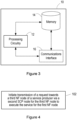
- FIG 3 illustrates a first SCP node 10 in accordance with an embodiment.
- the first SCP node 10 is for handling a service request in a network.
- the first SCP node 10 is configured to operate as an SCP between a first NF node of a service consumer and a second NF node of a service producer in the network.
- the first SCP node 10 can be, for example, be a physical machine (e.g. a server) or a virtual machine (VM).
- the first NF node can be, for example, be a physical machine (e.g. a server) or a virtual machine (VM).
- the first NF node can be, for example, a user equipment (UE).
- UE user equipment
- An NF is a third generation partnership project (3GPP) adopted or 3GPP defined processing function in a network, which has defined functional behaviour and 3GPP defined interfaces.
- An NF can be implemented either as a network element on a dedicated hardware, as a software instance running on a dedicated hardware, or as a virtualised function instantiated on an appropriate platform, e.g. on a cloud infrastructure.
- 3GPP third generation partnership project
- NF node in relation to an "NF node” will be understood to cover each of these scenarios.
- the first SCP node 10 comprises processing circuitry (or logic) 12.
- the processing circuitry 12 controls the operation of the first SCP node 10 and can implement the method described herein in respect of the first SCP node 10.
- the processing circuitry 12 can be configured or programmed to control the first SCP node 10 in the manner described herein.
- the processing circuitry 12 can comprise one or more hardware components, such as one or more processors, one or more processing units, one or more multi-core processors and/or one or more modules.
- each of the one or more hardware components can be configured to perform, or is for performing, individual or multiple steps of the method described herein in respect of the first SCP node 10.
- the processing circuitry 12 can be configured to run software to perform the method described herein in respect of the first SCP node 10.
- the software may be containerised according to some embodiments.
- the processing circuitry 12 may be configured to run a container to perform the method described herein in respect of the first SCP node 10.
- the processing circuitry 12 of the first SCP node 10 is configured to, if no positive response is received from a second NF node of a service producer to a first request, initiate transmission of the first request towards a third NF node of a service producer via a second SCP node.
- the first request is transmitted towards the second NF node via the first SCP node 10 and is for the second NF node to execute (or provide) a service requested by the first NF node.
- the first request is transmitted towards the third NF node for the third NF node to execute (or provide) the service.
- the second SCP node is configured to operate as an SCP between the first NF node and the third NF node in the network.
- the second SCP node is a different SCP node to the first SCP node.
- the first SCP node 10 may optionally comprise a memory 14.
- the memory 14 of the first SCP node 10 can comprise a volatile memory or a non-volatile memory.
- the memory 14 of the first SCP node 10 may comprise a non-transitory media. Examples of the memory 14 of the first SCP node 10 include, but are not limited to, a random access memory (RAM), a read only memory (ROM), a mass storage media such as a hard disk, a removable storage media such as a compact disk (CD) or a digital video disk (DVD), and/or any other memory.
- RAM random access memory
- ROM read only memory
- CD compact disk
- DVD digital video disk
- the processing circuitry 12 of the first SCP node 10 can be connected to the memory 14 of the first SCP node 10.
- the memory 14 of the first SCP node 10 may be for storing program code or instructions which, when executed by the processing circuitry 12 of the first SCP node 10, cause the first SCP node 10 to operate in the manner described herein in respect of the first SCP node 10.
- the memory 14 of the first SCP node 10 may be configured to store program code or instructions that can be executed by the processing circuitry 12 of the first SCP node 10 to cause the first SCP node 10 to operate in accordance with the method described herein in respect of the first SCP node 10.
- the memory 14 of the first SCP node 10 can be configured to store any information, data, messages, requests, responses, indications, notifications, signals, or similar, that are described herein.
- the processing circuitry 12 of the first SCP node 10 may be configured to control the memory 14 of the first SCP node 10 to store information, data, messages, requests, responses, indications, notifications, signals, or similar, that are described herein.
- the first SCP node 10 may optionally comprise a communications interface 16.
- the communications interface 16 of the first SCP node 10 can be connected to the processing circuitry 12 of the first SCP node 10 and/or the memory 14 of first SCP node 10.
- the communications interface 16 of the first SCP node 10 may be operable to allow the processing circuitry 12 of the first SCP node 10 to communicate with the memory 14 of the first SCP node 10 and/or vice versa.
- the communications interface 16 of the first SCP node 10 may be operable to allow the processing circuitry 12 of the first SCP node 10 to communicate with the second SCP node and/or any other node.
- the communications interface 16 of the first SCP node 10 can be configured to transmit and/or receive information, data, messages, requests, responses, indications, notifications, signals, or similar, that are described herein.
- the processing circuitry 12 of the first SCP node 10 may be configured to control the communications interface 16 of the first SCP node 10 to transmit and/or receive information, data, messages, requests, responses, indications, notifications, signals, or similar, that are described herein.
- first SCP node 10 is illustrated in Figure 3 as comprising a single memory 14, it will be appreciated that the first SCP node 10 may comprise at least one memory (i.e. a single memory or a plurality of memories) 14 that operate in the manner described herein.
- first SCP node 10 is illustrated in Figure 3 as comprising a single communications interface 16
- first SCP node 10 may comprise at least one communications interface (i.e. a single communications interface or a plurality of communications interface) 16 that operate in the manner described herein.
- Figure 3 only shows the components required to illustrate an embodiment of the first SCP node 10 and, in practical implementations, the first SCP node 10 may comprise additional or alternative components to those shown.
- Figure 4 is a flowchart illustrating a method performed by a first SCP node 10 in accordance with an embodiment.
- the first SCP node 10 is configured to operate as an SCP between a first NF node of a service consumer and a second NF node of a service producer in the network.
- the method of Figure 4 is for handling a service request in the network.
- the first SCP node 10 described earlier with referenced to Figure 3 is configured to operate in accordance with the method of Figure 4 .
- the method can be performed by or under the control of the processing circuitry 12 of the first SCP node 10.
- the method of Figure 4 is performed if no positive response is received from the second NF node to a first request transmitted towards the second NF node via the first SCP node.
- the first request is for the second NF node to execute (or provide) a service requested by the first NF node.
- transmission of the first request is initiated towards a third NF node of a service producer via a second SCP node for the third NF node to execute (or provide) the service.
- the second SCP node is configured to operate as an SCP between the first NF node and the third NF node in the network.
- the second SCP node is a different SCP node to the first SCP node.
- any references to "no positive response" being received can be understood to mean that no response is received at all (i.e. there is a lack of, or absence of, any response) or that an error (e.g. an error code) is received.
- the fact that no positive response is received can mean that the corresponding request to execute a service is not served, e.g. is not executed or not executed successfully. In this case, there may be a failure between the SCP node that initiated transmission of the request and the NF node of the service producer towards which the request is transmitted.
- a positive response may be received where the corresponding request to execute a service can be served, e.g. can be executed successfully. In this case, there may be no failure between the SCP node that initiated transmission of the request and the NF node of the service producer towards which the request is transmitted.
- the term "initiate” can mean, for example, cause or establish.
- the processing circuitry 12 of the first SCP node 10 can be configured to itself transmit the first request (e.g. via a communications interface 16 of the first SCP node 10) or can be configured to cause another node to transmit the first request.
- the first request can be a hypertext transfer protocol (HTTP) request.
- HTTP hypertext transfer protocol
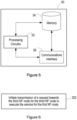
- FIG. 5 illustrates a second SCP node 50 in accordance with an embodiment.
- the second SCP node 50 is for handling a service request in a network.
- the second SCP node 50 is configured to operate as an SCP between a first NF node of a service consumer and a second NF node of a service producer in the network.
- the second SCP node 50 can be, for example, be a physical machine (e.g. a server) or a virtual machine (VM).
- the second SCP node 50 comprises processing circuitry (or logic) 52.
- the processing circuitry 52 controls the operation of the second SCP node 50 and can implement the method described herein in respect of the second SCP node 50.
- the processing circuitry 52 can be configured or programmed to control the second SCP node 50 in the manner described herein.
- the processing circuitry 52 can comprise one or more hardware components, such as one or more processors, one or more processing units, one or more multi-core processors and/or one or more modules.
- each of the one or more hardware components can be configured to perform, or is for performing, individual or multiple steps of the method described herein in respect of the second SCP node 50.
- the processing circuitry 52 can be configured to run software to perform the method described herein in respect of the second SCP node 50.
- the software may be containerised according to some embodiments.
- the processing circuitry 52 may be configured to run a container to perform the method described herein in respect of the second SCP node 50.
- the processing circuitry 52 of the second SCP node 50 is configured to, if no positive response is received from a second NF node of a service producer to a first request, initiate transmission of the first request towards a third NF node of a service producer via a second SCP node.
- the first request is transmitted towards the second NF node via the second SCP node 50 and is for the second NF node to execute (or provide) a service requested by the first NF node.
- the first request is transmitted towards the third NF node for the third NF node to execute (or provide) the service.
- the second SCP node is configured to operate as an SCP between the first NF node and the third NF node in the network.
- the second SCP node is a different SCP node to the first SCP node.
- the second SCP node 50 may optionally comprise a memory 54.
- the memory 54 of the second SCP node 50 can comprise a volatile memory or a non-volatile memory.
- the memory 54 of the second SCP node 50 may comprise a non-transitory media. Examples of the memory 54 of the second SCP node 50 include, but are not limited to, a random access memory (RAM), a read only memory (ROM), a mass storage media such as a hard disk, a removable storage media such as a compact disk (CD) or a digital video disk (DVD), and/or any other memory.
- RAM random access memory
- ROM read only memory
- CD compact disk
- DVD digital video disk
- the processing circuitry 52 of the second SCP node 50 can be connected to the memory 54 of the second SCP node 50.
- the memory 54 of the second SCP node 50 may be for storing program code or instructions which, when executed by the processing circuitry 52 of the second SCP node 50, cause the second SCP node 50 to operate in the manner described herein in respect of the second SCP node 50.
- the memory 54 of the second SCP node 50 may be configured to store program code or instructions that can be executed by the processing circuitry 52 of the second SCP node 50 to cause the second SCP node 50 to operate in accordance with the method described herein in respect of the second SCP node 50.
- the memory 54 of the second SCP node 50 can be configured to store any information, data, messages, requests, responses, indications, notifications, signals, or similar, that are described herein.
- the processing circuitry 52 of the second SCP node 50 may be configured to control the memory 54 of the second SCP node 50 to store information, data, messages, requests, responses, indications, notifications, signals, or similar, that are described herein.
- the second SCP node 50 may optionally comprise a communications interface 56.
- the communications interface 56 of the second SCP node 50 can be connected to the processing circuitry 52 of the second SCP node 50 and/or the memory 54 of second SCP node 50.
- the communications interface 56 of the second SCP node 50 may be operable to allow the processing circuitry 52 of the second SCP node 50 to communicate with the memory 54 of the second SCP node 50 and/or vice versa.
- the communications interface 56 of the second SCP node 50 may be operable to allow the processing circuitry 52 of the second SCP node 50 to communicate with the first SCP node 10 and/or any other node.
- the communications interface 56 of the second SCP node 50 can be configured to transmit and/or receive information, data, messages, requests, responses, indications, notifications, signals, or similar, that are described herein.
- the processing circuitry 52 of the second SCP node 50 may be configured to control the communications interface 56 of the second SCP node 50 to transmit and/or receive information, data, messages, requests, responses, indications, notifications, signals, or similar, that are described herein.
- the second SCP node 50 is illustrated in Figure 5 as comprising a single memory 54, it will be appreciated that the second SCP node 50 may comprise at least one memory (i.e. a single memory or a plurality of memories) 54 that operate in the manner described herein.
- the second SCP node 50 is illustrated in Figure 5 as comprising a single communications interface 56, it will be appreciated that the second SCP node 50 may comprise at least one communications interface (i.e. a single communications interface or a plurality of communications interface) 56 that operate in the manner described herein.
- Figure 5 only shows the components required to illustrate an embodiment of the second SCP node 50 and, in practical implementations, the second SCP node 50 may comprise additional or alternative components to those shown.
- Figure 6 is a flowchart illustrating a method performed by a second SCP node 50 in accordance with an embodiment.
- the second SCP node 50 is configured to operate as an SCP between a first NF node of a service consumer and a third NF node of a service producer in the network.
- the method of Figure 6 is for handling a service request in the network.
- the second SCP node 50 described earlier with referenced to Figure 5 is configured to operate in accordance with the method of Figure 6 .
- the method can be performed by or under the control of the processing circuitry 52 of the second SCP node 50.
- the method of Figure 6 is performed in response to receiving a first request for the third NF node to execute (or provide) a service requested by the first NF node.
- the transmission of the first request is initiated from a first SCP node 10 that is configured to operate as an SCP between the first NF node and a second NF node.
- transmission of the first request is initiated towards the third NF node for the third NF node to execute (or provide) the service.
- the second SCP node 50 is a different SCP node to the first SCP node 10.
- the system can comprise at least one first SCP node 10 as described herein and/or at least one second SCP node 50 as described herein.
- the system may also comprise any one or more of the other nodes mentioned herein.
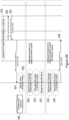
- Figure 7A-D is a signalling diagram illustrating an exchange of signals in a system according to an embodiment.
- the system illustrated in Figure 7A-D comprises a first SCP node 10 and a second SCP node 50.
- the second SCP node 50 is an SCP node that is in the same SCP domain 400 as the first SCP node 10.
- the second SCP node 50 is a different SCP node to the first SCP node 10.
- the first SCP node 10 can be as described earlier with reference to Figures 3 and 4 .
- the second SCP node 50 can be as described earlier with reference to Figures 5 and 6 .
- the system illustrated in Figure 7A-D comprises a first NF node 20 of a service consumer ("NFc"), a second NF node 30 of a service producer ("NFp1"), and a third NF node 70 of a service producer ("NFp2").
- the first SCP node 10 is configured to operate as an SCP between the first NF node 20 and the second NF node 30.
- the second SCP node 50 is configured to operate as an SCP between the first NF node 20 and a third NF node 30, 70 of a service producer, which may be the second NF node 30 or another NF node 70 of a service producer.
- the second NF node 30 and this third NF node 30 may thus be the same NF node, or the second NF node 30 and this third NF node 70 may be different NF nodes.
- the second NF node 30 can be configured to run (or provide) a service 40.
- the third NF node 70 can be configured to run (or provide) a service 80.
- the second NF node 30 and the third NF node 70 can be configured to run (or provide) the same service or a different service.
- the second NF node 30 and the third NF node 70 can be part of a set (or group) 402 of NF nodes of a service producer.
- the system illustrated in Figure 7A-D comprises a network repository function 60.
- an entity may comprise the NRF 60 and one or both of the first SCP node 10 and the second SCP node 50. That is, in some embodiments, the first SCP node 10 and/or the second SCP node 50 can be merged with the NRF 60 in a combined entity.
- the first SCP node 10 and the first NF node 20 may be deployed in independent deployment units, the first SCP node 10 and the second NF node 30 may be deployed in independent deployment units, and/or the first SCP node 10 and the third NF node may be deployed in independent deployment units.
- a first SCP node 10 based on independent deployment units is possible, as described in 3GPP TS 23.501 V16.4.0.
- the first SCP node 10 may be deployed as a distributed network element.
- part (e.g. a service agent) of the first SCP node 10 may be deployed in the same deployment unit as the first NF node 20, part (e.g.
- a service agent of the first SCP node 10 may be deployed in the same deployment unit as the second NF node 30, and/or part of the first SCP node 10 may be deployed in the same deployment unit as the third NF node.
- a first SCP node 10 based on service mesh is possible, as described in 3GPP TS 23.501 V16.4.0.
- the second SCP node 50 and the first NF node 20 may be deployed in independent deployment units
- the second SCP node 50 and the second NF node 30 may be deployed in independent deployment units
- the second SCP node 50 and the third NF node may be deployed in independent deployment units.
- a second SCP node 50 based on independent deployment units is possible, as described in 3GPP TS 23.501 V16.4.0.
- the second SCP node 50 may be deployed as a distributed network element.
- part (e.g. a service agent) of the second SCP node 50 may be deployed in the same deployment unit as the first NF node 20, part (e.g.
- a service agent of the second SCP node 50 may be deployed in the same deployment unit as the second NF node 30, and/or part of the second SCP node 50 may be deployed in the same deployment unit as the third NF node.
- a second SCP node 50 based on service mesh is possible, as described in 3GPP TS 23.501 V16.4.0.
- At least one third SCP node may be configured to operate as an SCP between the first SCP node 10 and the second NF node 30 and/or at least one fourth SCP node may be configured to operate as an SCP between the first NF node 20 and the first SCP node 10.
- the at least one third SCP node is a different SCP node to the second SCP node 50.
- the at least one fourth SCP node is a different SCP node to the second SCP node 50.
- the at least one third SCP node and/or the at least one fourth SCP node may be deployed in independent deployment units.
- the at least one third SCP node and/or the at least one fourth SCP node may be deployed as distributed network elements.
- Steps 500-508 and 600-656 of are as described earlier with reference to Figure 2A-C .
- the first SCP node 10 can identify that reselection of an SCP node is required. That is, the first SCP node 10 can identify that the first request is to be transmitted via a different SCP node.
- the method may be performed if no positive response is received from the second NF node 30 to a first request transmitted towards at least two second NF nodes 30) via the first SCP node 10.
- the first SCP node 10 may identify that reselection of an SCP node is required after a lack of positive response (e.g. no response at all or an error response) from one or a plurality of NF nodes of a service provider.
- the first SCP node 10 selects an alternative SCP node. That is, the first SCP node 10 is able to select an alternative SCP node instead of continually trying to reach another NF node of the service producer via the same first SCP node 10, which may cause a request failure or even multiple requests failures, depending on the available NF nodes of the service producer. Having the ability to select an alternative SCP node prevents the first SCP node 10 from continually selecting (in a loop) NF nodes of the service producer all with same wrong results and also prevents the first SCP node 10 from having to abort the procedure. Thus, providing the first SCP node 10 with the ability to select an alternative SCP node provides advantageous results in that service requests are more likely to be executed successfully.
- the first SCP node 10 is assumed to select the second SCP node 50 as the alternative.
- the second SCP node 50 is an SCP node that is in the same SCP domain 400 as the first SCP node 10. This means that the second SCP node 50 is able to reach (or capable of reaching) the same NF nodes (e.g. the second NF node 30) as the first SCP node 10.
- an SCP domain is a group of one or more SCPs that can reach certain NF nodes (or NF node instances) or SCPs directly, i.e. without passing through an intermediate SCP.
- the first SCP node 10 initiates transmission of the first request towards a third NF node of a service producer via the second SCP node 50 for the third NF node to execute (or provide) the service 40.
- the first SCP node 10 initiated transmission of this first request towards the third NF node via the second SCP node 50. That is, the first request is forwarded via the second SCP node 50.
- the second NF node 30 and the third NF node may be the same NF node (i.e.
- the third NF node may be the same as the last NF node), or the second NF node 30 and the third NF node may be different NF nodes.
- the third NF node may be a preferred NF node.
- the second NF node 30 and the third NF node are the same NF node. That is, the first SCP node 10 initiates transmission of the first request towards the same second NF node 30 via the second SCP node 50.
- initiating transmission of the first request towards the third NF node via the second SCP node 50 may comprise initiating transmission of the first request towards the third NF node via the second SCP node 50 with information identifying the third NF node.
- the second SCP node 50 is able to identify the final destination for the first request in order to send it there.
- the information identifying the third NF node can be included in a header of the first request, e.g. an existing header 3gpp-sbi-target-apiroot may be used.
- the first SCP node 10 may use the address of the second SCP node 50 in an Application Programming Interface (API) root of the first request.
- API Application Programming Interface
- the first SCP node 10 may initiate transmission of the first request towards the third NF node (which in this illustration is the same second NF node 30) via the second SCP node 50 (e.g. only) if no positive response is received from the second NF node 30 to the first request due to the first SCP node 10 failing to connect to the second NF node 30.
- the first SCP node 10 may check whether the first SCP node 10 failed to connect to the second NF node 30.
- the first SCP node 10 failing to connect to the second NF node 30 can be the first SCP node 10 itself failing to connect to the second NF node 30 or at least one third SCP node failing to connect to the second NF node 30, where the at least one third SCP node is configured to operate as an SCP between the first SCP node 10 and the second NF node 30.
- checking whether the at least one third SCP node failed to connect to the second NF node 30 may comprise checking a status of the at least one third SCP node to identify whether the at least one third SCP node failed to connect to the second NF node 30.
- the status may be checked with the at least one third SCP node or the NRF 60.
- checking the status with the at least one third SCP node may comprise initiating transmission of a second request towards the third SCP node, where the second request is a request for the status of the third SCP node. In these embodiments, if no positive response to the second request is received from the third SCP node, the third SCP node failed to connect to the second NF node 30.
- the second request may, for example, be a HTTP request, such as a HTTP ping request or a HTTP head request.
- the first SCP node 10 may initiate transmission of the first request towards the third NF node (which in this illustration is the same second NF node 30) via the second SCP node 50 (e.g. only) if the second NF node 30 is operative.
- the first SCP node 10 may check whether the second NF node 30 is operative.
- checking whether the second NF node 30 is operative may comprise checking a status of the second NF node 30 to identify whether the second NF node 30 is operative. For example, the status may be checked with the second NF node 30 or the NRF 60.
- checking the status with the second NF node 30 may comprise initiating transmission of a third request towards the second NF node 30, where the third request is a request for the status of the second NF node 30. In these embodiments, if a positive response to the third request is received from the second NF node 30, the second NF node 30 is operative. On the other hand, if no positive response to the third request is received from the second NF node 30, the second NF node 30 is inoperative.
- the third request may, for example, be a HTTP, request, such as a HTTP ping request or a HTTP head request.
- the second SCP node 50 receives the first request for the third NF node (which in this illustration is the same second NF node 30) to execute (or provide) a service 40 requested by the first NF node 20. That is, the second SCP node 50 receives the first request forwarded from the first SCP node 10.
- the second SCP node 50 in response to receiving the first request for the third NF node (which in this illustration is the same second NF node 30) to execute (or provide) a service 40 requested by the first NF node 20, the second SCP node 50 initiates transmission of the first request towards the third NF node (which in this illustration is the same second NF node 30) for the third NF node to execute (or provide) the service 40.
- the third NF node (which in this illustration is the same second NF node 30) may initiate transmission of a response towards the second SCP node 50 indicative that the first request is executed successfully.
- the response may comprise some business logic (BL) information, e.g. as a result of the service execution.
- the second SCP node 50 may initiate transmission of the response indicative that the first request is executed successfully to the first SCP node 10.
- the first SCP node 10 can receive a response to the first request from the third NF node (which in this illustration is the same second NF node 30) via the second SCP node 50.
- the first request may be executed successfully, for example, where the first SCP node 10 suffers a connectivity issue (e.g. outside the SCP domain) that the second SCP node 50 does not.
- the first SCP node 10 may initiate transmission of the response indicative that the first request is executed successfully to the first NF node 20.
- the response may comprise information indicative that the first SCP node 10 initiated transmission of the first request towards the third NF node via another SCP node (e.g. an indication of the forwarding performed), or information indicative that the first SCP node 10 initiated transmission of the first request towards the third NF node via the second SCP node 50 (e.g. an indication that the destination is reached due to a redirection via the second SCP node 50).
- the first NF node 20 may store the response. As illustrated by block 716 of Figure 7A-D , in some embodiments, the first NF node 20 may mark the second SCP node 50 as the preferred SCP node for subsequent service requests. In other embodiments, another SCP node may be chosen as the preferred SCP node for subsequent service requests, such as another SCP node in the same domain.
- the first SCP node 10 may initiate transmission of one or more subsequent first requests for the execution of a service 40, where the transmission of the one or more subsequent first requests is initiated towards the third NF node via the second SCP node 50 or via a fifth SCP node for the third NF node to execute (or provide) the service 40.
- the fifth SCP node is a different SCP node to the second SCP node 50.
- the fifth SCP node may be in the same SCP domain as the second SCP node 50.
- the transmission of the one or more subsequent first requests may be initiated towards the third NF node via the second SCP node 50 if the second SCP node 50 is marked at the first NF node 20 as a preferred SCP node for subsequent first requests or as having a highest priority for subsequent first requests.
- the transmission of the one or more subsequent first requests may be initiated towards the third NF node via the fifth SCP node if the fifth SCP node is marked at the first NF node 20 as a preferred SCP node for subsequent first requests or as having a highest priority for subsequent first requests.
- the second SCP node 50 may receive one or more subsequent first requests for the execution of a service 40.
- the second SCP node 50 may initiate transmission of the one or more subsequent first requests towards the third NF node for the third NF node to execute (or provide) the service 40.
- the first SCP node 10 may avoid initiating transmission of the one or more subsequent first requests towards the third NF node via the first SCP node 10 if the first SCP node is marked at the first NF node 20 as not preferred for subsequent first requests or as not having a highest priority for subsequent first requests.
- the first SCP node 10 may be only temporarily marked at the first NF node 20 as not preferred for subsequent first requests or as not having a highest priority for subsequent first requests.
- FIG. 8 is a block diagram illustrating a first SCP node 800 in accordance with an embodiment.
- the first SCP node 800 can handle a service request in a network.
- the first SCP node 800 can operate as an SCP between a first NF node of a service consumer and a second NF node of a service producer in the network.
- the first SCP node 800 comprises a transmission initiating module 802 configured to, if no positive response is received from the second NF node to a first request transmitted towards the second NF node via the first SCP node 800 (where the first request is for the second NF node to execute a service requested by the first NF node), initiate transmission of the first request towards a third NF node of a service producer via a second SCP node for the third NF node to execute the service.
- the second SCP node can operate as an SCP between the first NF node and the third NF node in the network.
- the second SCP node is a different SCP node to the first SCP node8700.
- the first SCP node 800 may operate in the manner described herein in respect of the first SCP node.
- FIG. 9 is a block diagram illustrating a second SCP node 900 in accordance with an embodiment.
- the second SCP node 900 can handle a service request in a network.
- the second SCP node 900 can operate as an SCP between a first NF node of a service consumer and a third NF node of a service producer in the network.
- the second SCP node 900 comprises a first transmission initiating module 902 configured to, in response to receiving a first request for the third NF node to execute a service requested by the first NF node (where transmission of the first request is initiated from a first SCP node 800 that is configured to operate as an SCP between the first NF node and a second NF node), initiate transmission of the first request towards the third NF node for the third NF node to execute the service.
- the second SCP node 900 is a different SCP node to the first SCP node 800.
- the second SCP node 900 may operate in the manner described herein in respect of the second SCP node.
- a computer program comprising instructions which, when executed by processing circuitry (such as the processing circuitry 12 of the first SCP node 10 described earlier and/or the processing circuitry 52 of the second SCP node 50 described earlier), cause the processing circuitry to perform at least part of the method described herein.
- a computer program product embodied on a non-transitory machine-readable medium, comprising instructions which are executable by processing circuitry (such as the processing circuitry 12 of the first SCP node 10 described earlier and/or the processing circuitry 52 of the second SCP node 50 described earlier) to cause the processing circuitry to perform at least part of the method described herein.
- a computer program product comprising a carrier containing instructions for causing processing circuitry (such as the processing circuitry 12 of the first SCP node 10 described earlier and/or the processing circuitry 52 of the second SCP node 50 described earlier) to perform at least part of the method described herein.
- the carrier can be any one of an electronic signal, an optical signal, an electromagnetic signal, an electrical signal, a radio signal, a microwave signal, or a computer-readable storage medium.
- the first SCP node functionality and/or the second SCP node functionality described herein can be performed by hardware.
- any one or more of the first SCP node 10 and the second SCP node 50 described herein can be a hardware node.
- optionally at least part or all of the first SCP node functionality and/or the second SCP node functionality described herein can be virtualized.
- the functions performed by any one or more of the first SCP node 10 and the second SCP node 50 described herein can be implemented in software running on generic hardware that is configured to orchestrate the node functionality.
- any one or more of the first SCP node 10 and the second SCP node 50 described herein can be a virtual node.
- at least part or all of the first SCP node functionality and/or the second SCP node functionality described herein may be performed in a network enabled cloud.
- the first SCP node functionality and/or the second SCP node functionality described herein may all be at the same location or at least some of the node functionality may be distributed.
- a first SCP node 10 having a connectivity issue can forward a service request to a second SCP node (e.g. in the same SCP domain) to overcome the connectivity issue.
- the first NF node 20 of the service consumer that made the request may be updated of the need to reselect an alternative SCP node.
- the forwarding of the service request to another SCP node for it to be transmitted again but this time by a different SCP node avoids the need for the original SCP node to unsuccessfully keep trying to transmit the service request and also avoids the method simply failing.
Landscapes
- Engineering & Computer Science (AREA)
- Computer Networks & Wireless Communication (AREA)
- Signal Processing (AREA)
- Mobile Radio Communication Systems (AREA)
- Computer And Data Communications (AREA)
Claims (21)
- Verfahren zum Handhaben einer Dienstanforderung in einem Netzwerk, wobei das Verfahren durch einen ersten Dienstkommunikations-Proxy-, SCP-, Knoten (10) durchgeführt wird, der dazu konfiguriert ist, als ein SCP zwischen einem ersten Netzwerkfunktions-, NF-, Knoten (20) eines Dienstkonsumenten und einem zweiten NF-Knoten (30) eines Dienstherstellers in dem Netzwerk betrieben zu werden, wobei das Verfahren Folgendes umfasst:Initiieren (102, 704, 706) einer Übertragung einer ersten Anforderung an einen dritten NF-Knoten eines Dienstherstellers über einen zweiten SCP-Knoten (50), wenn von dem zweiten NF-Knoten (30) keine positive Antwort auf die erste Anforderung (638, 654) empfangen wird, die über den ersten SCP-Knoten (10) an den zweiten NF-Knoten (30) übertragen wurde,wobei die erste Anforderung (638, 654) an den zweiten NF-Knoten (30) übertragen wird, damit der zweite NF-Knoten (30) einen durch den ersten NF-Knoten (20) angeforderten Dienst (40) ausführt, und die Übertragung der ersten Anforderung an den dritten NF-Knoten initiiert wird, damit der dritte NF-Knoten den Dienst (40) ausführt, wobei der zweite SCP-Knoten (50) dazu konfiguriert ist, als ein SCP zwischen dem ersten NF-Knoten (20) und dem dritten NF-Knoten in dem Netzwerk betrieben zu werden, und wobei der zweite SCP-Knoten (50) ein anderer SCP-Knoten als der erste SCP-Knoten (10) ist.
- Verfahren nach Anspruch 1, wobei das Verfahren Folgendes umfasst:Identifizieren (700), dass die erste Anforderung über einen anderen SCP-Knoten zu übertragen ist; und/oderAuswählen (702) des zweiten SCP-Knotens (50).
- Verfahren nach Anspruch 1 oder 2, wobei:der zweite SCP-Knoten (50) ein SCP-Knoten ist, der sich in der gleichen SCP-Domäne befindet wie der erste SCP-Knoten (10);die Übertragung der ersten Anforderung an den dritten NF-Knoten über den zweiten SCP-Knoten (50) initiiert wird, wenn von dem zweiten NF-Knoten (30) keine positive Antwort auf die erste Anforderung empfangen wird, da eine Verbindung des ersten SCP-Knotens (10) mit dem zweiten NF-Knoten (30)fehlschlägt; und/oderdas Verfahren Überprüfen, ob die Verbindung des ersten SCP-Knotens (10) mit dem zweiten NF-Knoten (30) fehlgeschlagen ist, und/oder Überprüfen, ob der zweite NF-Knoten (30) betriebsbereit ist, umfasst.
- Verfahren nach Anspruch 3, wobei:
der erste SCP-Knoten (10), dessen Verbindung mit dem zweiten NF-Knoten (30) fehlschlägt, Folgendes ist:der erste SCP-Knoten (10) selbst, dessen Verbindung mit dem zweiten NF-Knoten (30) fehlschlägt; odermindestens ein dritter SCP-Knoten, dessen Verbindung mit dem zweiten NF-Knoten (30) fehlschlägt, wobei der mindestens eine dritte SCP-Knoten dazu konfiguriert ist, als ein SCP zwischen dem ersten SCP-Knoten (10) und dem zweiten NF-Knoten (30) betrieben zu werden. - Verfahren nach Anspruch 4, wobei das Verfahren Folgendes umfasst:
Überprüfen eines Status des mindestens einen dritten SCP-Knotens, um zu identifizieren, ob die Verbindung des mindestens einen dritten SCP-Knotens mit dem zweiten NF-Knoten (30) fehlgeschlagen ist. - Verfahren nach Anspruch 5, wobei:
der Status mit dem mindestens einen dritten SCP-Knoten oder einer Netzwerk-Repository-Funktion, NRF (60), überprüft wird. - Verfahren nach Anspruch 6, wobei:
das Überprüfen des Status mit dem mindestens einen dritten SCP-Knoten Folgendes umfasst:Initiieren der Übertragung einer zweiten Anforderung an den dritten SCP-Knoten, wobei die zweite Anforderung eine Anforderung für den Status des dritten SCP-Knotens ist,wobei:die zweite Anforderung eine Hypertext-Transfer-Protokoll-, HTTP-, Ping-Anforderung oder eine HTTP-Head-Anforderung ist; und/oderwenn von dem dritten SCP-Knoten keine positive Antwort auf die zweite Anforderung empfangen wird, die Verbindung des dritten SCP-Knotens mit dem zweiten NF-Knoten (30) fehlgeschlagen ist; oderwenn eine positive Antwort auf die zweite Anforderung von dem dritten SCP-Knoten empfangen wird, die Verbindung des dritten SCP-Knotens mit dem zweiten NF-Knoten (30) erfolgreich ist. - Verfahren nach einem der Ansprüche 3 bis 7, wobei:
das Überprüfen, ob der zweite NF-Knoten (30) betriebsbereit ist, Folgendes umfasst:
Überprüfen eines Status des zweiten NF-Knotens (30), um zu identifizieren, ob der zweite NF-Knoten (30) betriebsbereit ist. - Verfahren nach Anspruch 8, wobei:
der Status mit dem zweiten NF-Knoten (30) oder einer Netzwerk-Repository-Funktion, NRF (60), überprüft wird. - Verfahren nach Anspruch 9, wobei:
das Überprüfen des Status mit dem zweiten NF-Knoten (30) Folgendes umfasst:Initiieren der Übertragung einer dritten Anforderung an den zweiten NF-Knoten (30), wobei die dritte Anforderung eine Anforderung für den Status des zweiten NF-Knotens (30) ist,wobei:die dritte Anforderung eine Hypertext-Transfer-Protokoll-, HTTP-, Ping-Anforderung oder eine HTTP-Head-Anforderung ist; und/oderwenn eine positive Antwort auf die dritte Anforderung von dem zweiten NF-Knoten (30) empfangen wird, der zweite NF-Knoten (30) betriebsbereit ist; oderwenn von dem zweiten NF-Knoten (30) keine positive Antwort auf die dritte Anforderung empfangen wird, der zweite NF-Knoten (30) nicht betriebsbereit ist. - Verfahren nach einem der vorhergehenden Ansprüche, wobei:das Initiieren (102, 704, 706) der Übertragung der ersten Anforderung an den dritten NF-Knoten über den zweiten SCP-Knoten (50) Initiieren (102, 704, 706) der Übertragung der ersten Anforderung an den dritten NF-Knoten über den zweiten SCP-Knoten (50) mit Informationen, die den dritten NF-Knoten identifizieren, umfasst; und/oderdas Verfahren Empfangen (708, 710) einer Antwort auf die erste Anforderung von dem dritten NF-Knoten über den zweiten SCP-Knoten (50) umfasst.
- Verfahren nach Anspruch 11, wobei:
die Antwort Folgendes umfasst:Informationen, die angeben, dass der erste SCP-Knoten (10) die Übertragung der ersten Anforderung an den dritten NF-Knoten über einen anderen SCP-Knoten initiiert hat; oderInformationen, die angeben, dass der erste SCP-Knoten (10) die Übertragung der ersten Anforderung an den dritten NF-Knoten über den zweiten SCP-Knoten initiiert hat. - Verfahren nach einem der vorhergehenden Ansprüche, wobei das Verfahren Folgendes umfasst:Initiieren (712) der Übertragung der Antwort an den ersten NF-Knoten (20); und/oderInitiieren der Übertragung einer oder mehrerer nachfolgender erster Anforderungen zur Ausführung eines Dienstes (40),wobei die Übertragung der einen oder der mehreren nachfolgenden ersten Anforderungen an den dritten NF-Knoten über den zweiten SCP-Knoten (50) oder über einen vierten SCP-Knoten initiiert wird, damit der dritte NF-Knoten den Dienst (40) ausführt, undwobei der vierte SCP-Knoten ein anderer SCP-Knoten ist als der zweite SCP-Knoten (50).
- Verfahren nach Anspruch 13, wobei:der vierte SCP-Knoten in der gleichen SCP-Domäne liegt wie der zweite SCP-Knoten (50); und/oderdie Übertragung der einen oder der mehreren nachfolgenden ersten Anforderungen an den dritten NF-Knoten über den zweiten SCP-Knoten (50) initiiert wird, wenn der zweite SCP-Knoten (50) an dem ersten NF-Knoten (20) als ein bevorzugter SCP-Knoten für nachfolgende erste Anforderungen oder als eine höchste Priorität für nachfolgende erste Anforderungen aufweisend gekennzeichnet ist; oderdie Übertragung der einen oder der mehreren nachfolgenden ersten Anforderungen an den dritten NF-Knoten über den vierten SCP-Knoten initiiert wird, wenn der vierte SCP-Knoten an dem ersten NF-Knoten (20) als ein bevorzugter SCP-Knoten für nachfolgende erste Anforderungen oder als eine höchste Priorität für nachfolgende erste Anforderungen aufweisend gekennzeichnet ist.
- Verfahren nach Anspruch 13 oder 14, wobei:
das Initiieren der Übertragung der einen oder der mehreren nachfolgenden ersten Anforderungen an den dritten NF-Knoten über den ersten SCP-Knoten (10) vermieden wird, wenn der erste SCP-Knoten an dem ersten NF-Knoten (20) als nicht bevorzugt für nachfolgende erste Anforderungen oder als nicht eine höchste Priorität für nachfolgende erste Anforderungen aufweisend gekennzeichnet ist. - Verfahren nach Anspruch 15, wobei:
der erste SCP-Knoten nur temporär an dem ersten NF-Knoten (20) als nicht bevorzugt für nachfolgende erste Anforderungen oder als nicht eine höchste Priorität für nachfolgende erste Anforderungen aufweisend gekennzeichnet ist. - Verfahren nach einem der vorhergehenden Ansprüche, wobei:
das Verfahren durchgeführt wird, wenn von dem zweiten NF-Knoten (30) keine positive Antwort auf eine erste Anforderung empfangen wird, die über den ersten SCP-Knoten (10) an mindestens zwei zweite NF-Knoten (30) übertragen wurde. - Verfahren, das durch ein System durchgeführt wird, wobei das Verfahren Folgendes umfasst:ein erstes Verfahren nach einem der Ansprüche 1 bis 17; undein zweites Verfahren, das durch den zweiten SCP-Knoten (50) durchgeführt wird, wobei das zweite Verfahren Folgendes umfasst:Initiieren (202, 706) einer Übertragung einer ersten Anforderung an den dritten NF-Knoten als Reaktion auf Empfangen der ersten Anforderung (704) von dem ersten SCP-Knoten (10),wobei die erste Anforderung (704) von dem ersten SCP-Knoten (10) empfangen wird, wenn von dem zweiten NF-Knoten (30) keine positive Antwort auf die erste Anforderung (638, 654) empfangen wird, die über den ersten SCP-Knoten (10) an den zweiten NF-Knoten (30) übertragen wurde.
- Erster SCP-Knoten (10), umfassend:
eine Verarbeitungsschaltung (12), die dazu konfiguriert ist, nach einem der Ansprüche 1 bis 17 betrieben zu werden. - System, umfassend:mindestens einen ersten SCP-Knoten (10) nach Anspruch 19; undmindestens einen zweiten SCP-Knoten (50), umfassend eine Verarbeitungsschaltung (52), die dazu konfiguriert ist, gemäß dem zweiten Verfahren nach Anspruch 18 betrieben zu werden.
- Computerprogramm, umfassend Anweisungen, die, wenn sie durch eine Verarbeitungsschaltung ausgeführt werden, die Verarbeitungsschaltung veranlassen, das Verfahren nach einem der Ansprüche 1 bis 18 durchzuführen.
Applications Claiming Priority (2)
| Application Number | Priority Date | Filing Date | Title |
|---|---|---|---|
| EP20382429 | 2020-05-20 | ||
| PCT/EP2021/063345 WO2021234029A1 (en) | 2020-05-20 | 2021-05-19 | Service request handling |
Publications (2)
| Publication Number | Publication Date |
|---|---|
| EP4154498A1 EP4154498A1 (de) | 2023-03-29 |
| EP4154498B1 true EP4154498B1 (de) | 2024-10-09 |
Family
ID=70921959
Family Applications (1)
| Application Number | Title | Priority Date | Filing Date |
|---|---|---|---|
| EP21726410.0A Active EP4154498B1 (de) | 2020-05-20 | 2021-05-19 | Handhabung von dienstanfragen |
Country Status (5)
| Country | Link |
|---|---|
| US (1) | US20230188625A1 (de) |
| EP (1) | EP4154498B1 (de) |
| JP (1) | JP7518201B2 (de) |
| BR (1) | BR112022022239A2 (de) |
| WO (1) | WO2021234029A1 (de) |
Families Citing this family (3)
| Publication number | Priority date | Publication date | Assignee | Title |
|---|---|---|---|---|
| US12349050B2 (en) * | 2022-01-18 | 2025-07-01 | Oracle International Corporation | Methods, systems, and computer readable media for prioritizing among alternate network function (NF) instances |
| US12323316B2 (en) * | 2022-03-31 | 2025-06-03 | Oracle International Corporation | Methods, systems, and computer readable media for service communication proxy (SCP) routing |
| US12562986B2 (en) | 2022-05-25 | 2026-02-24 | Oracle International Corporation | Methods, systems, and computer readable media for optimized multi-domain service communication proxy (SCP) routing |
Family Cites Families (7)
| Publication number | Priority date | Publication date | Assignee | Title |
|---|---|---|---|---|
| US7987266B2 (en) * | 2008-07-29 | 2011-07-26 | International Business Machines Corporation | Failover in proxy server networks |
| US8631134B2 (en) * | 2008-07-30 | 2014-01-14 | Visa U.S.A. Inc. | Network architecture for secure data communications |
| EP2789138B1 (de) * | 2011-12-06 | 2016-09-14 | Seven Networks, LLC | Mobile vorrichtung und verfahren zum verwenden von failover-mechanismen zur fehlertoleranz für mobilverkehrsverwaltung und zur erhaltung von netzwerk-/vorrichtungs-ressourcen |
| EP4236586A3 (de) * | 2017-01-09 | 2023-10-04 | Telefonaktiebolaget LM Ericsson (publ) | Handhabung von dienstanfragen |
| US11576031B2 (en) * | 2017-10-17 | 2023-02-07 | Telefonaktiebolaget Lm Ericsson (Publ) | Service registration in a communications network |
| US10778527B2 (en) * | 2018-10-31 | 2020-09-15 | Oracle International Corporation | Methods, systems, and computer readable media for providing a service proxy function in a telecommunications network core using a service-based architecture |
| US11018971B2 (en) * | 2019-10-14 | 2021-05-25 | Oracle International Corporation | Methods, systems, and computer readable media for distributing network function (NF) topology information among proxy nodes and for using the NF topology information for inter-proxy node message routing |
-
2021
- 2021-05-19 BR BR112022022239A patent/BR112022022239A2/pt unknown
- 2021-05-19 JP JP2022569506A patent/JP7518201B2/ja active Active
- 2021-05-19 EP EP21726410.0A patent/EP4154498B1/de active Active
- 2021-05-19 US US17/926,581 patent/US20230188625A1/en active Pending
- 2021-05-19 WO PCT/EP2021/063345 patent/WO2021234029A1/en not_active Ceased
Also Published As
| Publication number | Publication date |
|---|---|
| EP4154498A1 (de) | 2023-03-29 |
| BR112022022239A2 (pt) | 2022-12-13 |
| JP7518201B2 (ja) | 2024-07-17 |
| JP2023531145A (ja) | 2023-07-21 |
| WO2021234029A1 (en) | 2021-11-25 |
| US20230188625A1 (en) | 2023-06-15 |
Similar Documents
| Publication | Publication Date | Title |
|---|---|---|
| EP4189865B1 (de) | Handhabung von dienstanforderungen durch einen auswahlknoten eines 3gpp-systems | |
| CN112868206A (zh) | 在使用基于服务的体系架构的电信网络核心中提供服务代理功能的方法、系统和计算机可读介质 | |
| EP4154501B1 (de) | Handhabung von dienstanfragen | |
| US11924294B2 (en) | Service request handling | |
| US20230188625A1 (en) | Service request handling | |
| KR102796634B1 (ko) | 서비스 요청 처리 | |
| EP4189944B1 (de) | Bearbeitung gebundener dienstanfragen | |
| EP4189864B1 (de) | Netzfunktionalitätsbewusste dienstbereitstellung auf der grundlage eines service communication proxy (scp) | |
| JP2024150454A (ja) | 複数のネットワーク機能間におけるプロキシ介在のサービス要求処理 | |
| WO2022022842A1 (en) | Service request handling | |
| WO2024235663A1 (en) | Managing information exchange |
Legal Events
| Date | Code | Title | Description |
|---|---|---|---|
| STAA | Information on the status of an ep patent application or granted ep patent |
Free format text: STATUS: UNKNOWN |
|
| STAA | Information on the status of an ep patent application or granted ep patent |
Free format text: STATUS: THE INTERNATIONAL PUBLICATION HAS BEEN MADE |
|
| PUAI | Public reference made under article 153(3) epc to a published international application that has entered the european phase |
Free format text: ORIGINAL CODE: 0009012 |
|
| STAA | Information on the status of an ep patent application or granted ep patent |
Free format text: STATUS: REQUEST FOR EXAMINATION WAS MADE |
|
| 17P | Request for examination filed |
Effective date: 20221219 |
|
| AK | Designated contracting states |
Kind code of ref document: A1 Designated state(s): AL AT BE BG CH CY CZ DE DK EE ES FI FR GB GR HR HU IE IS IT LI LT LU LV MC MK MT NL NO PL PT RO RS SE SI SK SM TR |
|
| DAV | Request for validation of the european patent (deleted) | ||
| DAX | Request for extension of the european patent (deleted) | ||
| REG | Reference to a national code |
Ref country code: DE Ref legal event code: R079 Free format text: PREVIOUS MAIN CLASS: H04L0029080000 Ipc: H04L0067020000 Ref country code: DE Ref legal event code: R079 Ref document number: 602021019958 Country of ref document: DE Free format text: PREVIOUS MAIN CLASS: H04L0029080000 Ipc: H04L0067020000 |
|
| GRAP | Despatch of communication of intention to grant a patent |
Free format text: ORIGINAL CODE: EPIDOSNIGR1 |
|
| STAA | Information on the status of an ep patent application or granted ep patent |
Free format text: STATUS: GRANT OF PATENT IS INTENDED |
|
| RIC1 | Information provided on ipc code assigned before grant |
Ipc: H04L 67/63 20220101ALI20240712BHEP Ipc: H04L 67/56 20220101ALI20240712BHEP Ipc: H04L 67/51 20220101ALI20240712BHEP Ipc: H04L 67/02 20220101AFI20240712BHEP |
|
| INTG | Intention to grant announced |
Effective date: 20240725 |
|
| GRAS | Grant fee paid |
Free format text: ORIGINAL CODE: EPIDOSNIGR3 |
|
| GRAA | (expected) grant |
Free format text: ORIGINAL CODE: 0009210 |
|
| STAA | Information on the status of an ep patent application or granted ep patent |
Free format text: STATUS: THE PATENT HAS BEEN GRANTED |
|
| AK | Designated contracting states |
Kind code of ref document: B1 Designated state(s): AL AT BE BG CH CY CZ DE DK EE ES FI FR GB GR HR HU IE IS IT LI LT LU LV MC MK MT NL NO PL PT RO RS SE SI SK SM TR |
|
| REG | Reference to a national code |
Ref country code: CH Ref legal event code: EP |
|
| REG | Reference to a national code |
Ref country code: DE Ref legal event code: R096 Ref document number: 602021019958 Country of ref document: DE |
|
| REG | Reference to a national code |
Ref country code: IE Ref legal event code: FG4D |
|
| REG | Reference to a national code |
Ref country code: LT Ref legal event code: MG9D |
|
| REG | Reference to a national code |
Ref country code: NL Ref legal event code: MP Effective date: 20241009 |
|
| REG | Reference to a national code |
Ref country code: AT Ref legal event code: MK05 Ref document number: 1731846 Country of ref document: AT Kind code of ref document: T Effective date: 20241009 |
|
| PG25 | Lapsed in a contracting state [announced via postgrant information from national office to epo] |
Ref country code: NL Free format text: LAPSE BECAUSE OF FAILURE TO SUBMIT A TRANSLATION OF THE DESCRIPTION OR TO PAY THE FEE WITHIN THE PRESCRIBED TIME-LIMIT Effective date: 20241009 |
|
| PG25 | Lapsed in a contracting state [announced via postgrant information from national office to epo] |
Ref country code: NL Free format text: LAPSE BECAUSE OF FAILURE TO SUBMIT A TRANSLATION OF THE DESCRIPTION OR TO PAY THE FEE WITHIN THE PRESCRIBED TIME-LIMIT Effective date: 20241009 |
|
| PG25 | Lapsed in a contracting state [announced via postgrant information from national office to epo] |
Ref country code: HR Free format text: LAPSE BECAUSE OF FAILURE TO SUBMIT A TRANSLATION OF THE DESCRIPTION OR TO PAY THE FEE WITHIN THE PRESCRIBED TIME-LIMIT Effective date: 20241009 Ref country code: PT Free format text: LAPSE BECAUSE OF FAILURE TO SUBMIT A TRANSLATION OF THE DESCRIPTION OR TO PAY THE FEE WITHIN THE PRESCRIBED TIME-LIMIT Effective date: 20250210 Ref country code: IS Free format text: LAPSE BECAUSE OF FAILURE TO SUBMIT A TRANSLATION OF THE DESCRIPTION OR TO PAY THE FEE WITHIN THE PRESCRIBED TIME-LIMIT Effective date: 20250209 |
|
| PG25 | Lapsed in a contracting state [announced via postgrant information from national office to epo] |
Ref country code: FI Free format text: LAPSE BECAUSE OF FAILURE TO SUBMIT A TRANSLATION OF THE DESCRIPTION OR TO PAY THE FEE WITHIN THE PRESCRIBED TIME-LIMIT Effective date: 20241009 |
|
| PG25 | Lapsed in a contracting state [announced via postgrant information from national office to epo] |
Ref country code: BG Free format text: LAPSE BECAUSE OF FAILURE TO SUBMIT A TRANSLATION OF THE DESCRIPTION OR TO PAY THE FEE WITHIN THE PRESCRIBED TIME-LIMIT Effective date: 20241009 |
|
| PG25 | Lapsed in a contracting state [announced via postgrant information from national office to epo] |
Ref country code: ES Free format text: LAPSE BECAUSE OF FAILURE TO SUBMIT A TRANSLATION OF THE DESCRIPTION OR TO PAY THE FEE WITHIN THE PRESCRIBED TIME-LIMIT Effective date: 20241009 |
|
| PG25 | Lapsed in a contracting state [announced via postgrant information from national office to epo] |
Ref country code: NO Free format text: LAPSE BECAUSE OF FAILURE TO SUBMIT A TRANSLATION OF THE DESCRIPTION OR TO PAY THE FEE WITHIN THE PRESCRIBED TIME-LIMIT Effective date: 20250109 |
|
| PG25 | Lapsed in a contracting state [announced via postgrant information from national office to epo] |
Ref country code: AT Free format text: LAPSE BECAUSE OF FAILURE TO SUBMIT A TRANSLATION OF THE DESCRIPTION OR TO PAY THE FEE WITHIN THE PRESCRIBED TIME-LIMIT Effective date: 20241009 Ref country code: LV Free format text: LAPSE BECAUSE OF FAILURE TO SUBMIT A TRANSLATION OF THE DESCRIPTION OR TO PAY THE FEE WITHIN THE PRESCRIBED TIME-LIMIT Effective date: 20241009 Ref country code: GR Free format text: LAPSE BECAUSE OF FAILURE TO SUBMIT A TRANSLATION OF THE DESCRIPTION OR TO PAY THE FEE WITHIN THE PRESCRIBED TIME-LIMIT Effective date: 20250110 |
|
| PG25 | Lapsed in a contracting state [announced via postgrant information from national office to epo] |
Ref country code: PL Free format text: LAPSE BECAUSE OF FAILURE TO SUBMIT A TRANSLATION OF THE DESCRIPTION OR TO PAY THE FEE WITHIN THE PRESCRIBED TIME-LIMIT Effective date: 20241009 |
|
| PG25 | Lapsed in a contracting state [announced via postgrant information from national office to epo] |
Ref country code: RS Free format text: LAPSE BECAUSE OF FAILURE TO SUBMIT A TRANSLATION OF THE DESCRIPTION OR TO PAY THE FEE WITHIN THE PRESCRIBED TIME-LIMIT Effective date: 20250109 |
|
| PG25 | Lapsed in a contracting state [announced via postgrant information from national office to epo] |
Ref country code: SM Free format text: LAPSE BECAUSE OF FAILURE TO SUBMIT A TRANSLATION OF THE DESCRIPTION OR TO PAY THE FEE WITHIN THE PRESCRIBED TIME-LIMIT Effective date: 20241009 |
|
| PGFP | Annual fee paid to national office [announced via postgrant information from national office to epo] |
Ref country code: DE Payment date: 20250529 Year of fee payment: 5 |
|
| PG25 | Lapsed in a contracting state [announced via postgrant information from national office to epo] |
Ref country code: DK Free format text: LAPSE BECAUSE OF FAILURE TO SUBMIT A TRANSLATION OF THE DESCRIPTION OR TO PAY THE FEE WITHIN THE PRESCRIBED TIME-LIMIT Effective date: 20241009 |
|
| PGFP | Annual fee paid to national office [announced via postgrant information from national office to epo] |
Ref country code: GB Payment date: 20250527 Year of fee payment: 5 |
|
| REG | Reference to a national code |
Ref country code: DE Ref legal event code: R097 Ref document number: 602021019958 Country of ref document: DE |
|
| PG25 | Lapsed in a contracting state [announced via postgrant information from national office to epo] |
Ref country code: EE Free format text: LAPSE BECAUSE OF FAILURE TO SUBMIT A TRANSLATION OF THE DESCRIPTION OR TO PAY THE FEE WITHIN THE PRESCRIBED TIME-LIMIT Effective date: 20241009 |
|
| PG25 | Lapsed in a contracting state [announced via postgrant information from national office to epo] |
Ref country code: RO Free format text: LAPSE BECAUSE OF FAILURE TO SUBMIT A TRANSLATION OF THE DESCRIPTION OR TO PAY THE FEE WITHIN THE PRESCRIBED TIME-LIMIT Effective date: 20241009 |
|
| PG25 | Lapsed in a contracting state [announced via postgrant information from national office to epo] |
Ref country code: SK Free format text: LAPSE BECAUSE OF FAILURE TO SUBMIT A TRANSLATION OF THE DESCRIPTION OR TO PAY THE FEE WITHIN THE PRESCRIBED TIME-LIMIT Effective date: 20241009 |
|
| PG25 | Lapsed in a contracting state [announced via postgrant information from national office to epo] |
Ref country code: CZ Free format text: LAPSE BECAUSE OF FAILURE TO SUBMIT A TRANSLATION OF THE DESCRIPTION OR TO PAY THE FEE WITHIN THE PRESCRIBED TIME-LIMIT Effective date: 20241009 |
|
| PG25 | Lapsed in a contracting state [announced via postgrant information from national office to epo] |
Ref country code: IT Free format text: LAPSE BECAUSE OF FAILURE TO SUBMIT A TRANSLATION OF THE DESCRIPTION OR TO PAY THE FEE WITHIN THE PRESCRIBED TIME-LIMIT Effective date: 20241009 |
|
| PLBE | No opposition filed within time limit |
Free format text: ORIGINAL CODE: 0009261 |
|
| STAA | Information on the status of an ep patent application or granted ep patent |
Free format text: STATUS: NO OPPOSITION FILED WITHIN TIME LIMIT |
|
| PG25 | Lapsed in a contracting state [announced via postgrant information from national office to epo] |
Ref country code: SE Free format text: LAPSE BECAUSE OF FAILURE TO SUBMIT A TRANSLATION OF THE DESCRIPTION OR TO PAY THE FEE WITHIN THE PRESCRIBED TIME-LIMIT Effective date: 20241009 |
|
| 26N | No opposition filed |
Effective date: 20250710 |
|
| REG | Reference to a national code |
Ref country code: CH Ref legal event code: H13 Free format text: ST27 STATUS EVENT CODE: U-0-0-H10-H13 (AS PROVIDED BY THE NATIONAL OFFICE) Effective date: 20251223 |
|
| PG25 | Lapsed in a contracting state [announced via postgrant information from national office to epo] |
Ref country code: LU Free format text: LAPSE BECAUSE OF NON-PAYMENT OF DUE FEES Effective date: 20250519 |
|
| PG25 | Lapsed in a contracting state [announced via postgrant information from national office to epo] |
Ref country code: CH Free format text: LAPSE BECAUSE OF NON-PAYMENT OF DUE FEES Effective date: 20250531 |
|
| REG | Reference to a national code |
Ref country code: BE Ref legal event code: MM Effective date: 20250531 |
|
| PG25 | Lapsed in a contracting state [announced via postgrant information from national office to epo] |
Ref country code: MC Free format text: LAPSE BECAUSE OF FAILURE TO SUBMIT A TRANSLATION OF THE DESCRIPTION OR TO PAY THE FEE WITHIN THE PRESCRIBED TIME-LIMIT Effective date: 20241009 |
|
| PG25 | Lapsed in a contracting state [announced via postgrant information from national office to epo] |
Ref country code: IE Free format text: LAPSE BECAUSE OF NON-PAYMENT OF DUE FEES Effective date: 20250519 |
|
| PG25 | Lapsed in a contracting state [announced via postgrant information from national office to epo] |
Ref country code: BE Free format text: LAPSE BECAUSE OF NON-PAYMENT OF DUE FEES Effective date: 20250531 |
|
| PG25 | Lapsed in a contracting state [announced via postgrant information from national office to epo] |
Ref country code: FR Free format text: LAPSE BECAUSE OF NON-PAYMENT OF DUE FEES Effective date: 20250531 |