EP4154105B1 - System und verfahren zur entwicklung und anwendung von selbstorganisierenden cyberphysikalischen systemen für fertigungsindustrien - Google Patents
System und verfahren zur entwicklung und anwendung von selbstorganisierenden cyberphysikalischen systemen für fertigungsindustrien Download PDFInfo
- Publication number
- EP4154105B1 EP4154105B1 EP21807894.7A EP21807894A EP4154105B1 EP 4154105 B1 EP4154105 B1 EP 4154105B1 EP 21807894 A EP21807894 A EP 21807894A EP 4154105 B1 EP4154105 B1 EP 4154105B1
- Authority
- EP
- European Patent Office
- Prior art keywords
- data
- industrial plant
- self
- module
- plant
- Prior art date
- Legal status (The legal status is an assumption and is not a legal conclusion. Google has not performed a legal analysis and makes no representation as to the accuracy of the status listed.)
- Active
Links
Images


Classifications
-
- G—PHYSICS
- G06—COMPUTING OR CALCULATING; COUNTING
- G06F—ELECTRIC DIGITAL DATA PROCESSING
- G06F11/00—Error detection; Error correction; Monitoring
- G06F11/07—Responding to the occurrence of a fault, e.g. fault tolerance
- G06F11/0703—Error or fault processing not based on redundancy, i.e. by taking additional measures to deal with the error or fault not making use of redundancy in operation, in hardware, or in data representation
- G06F11/0706—Error or fault processing not based on redundancy, i.e. by taking additional measures to deal with the error or fault not making use of redundancy in operation, in hardware, or in data representation the processing taking place on a specific hardware platform or in a specific software environment
- G06F11/0736—Error or fault processing not based on redundancy, i.e. by taking additional measures to deal with the error or fault not making use of redundancy in operation, in hardware, or in data representation the processing taking place on a specific hardware platform or in a specific software environment in functional embedded systems, i.e. in a data processing system designed as a combination of hardware and software dedicated to performing a certain function
-
- G—PHYSICS
- G05—CONTROLLING; REGULATING
- G05B—CONTROL OR REGULATING SYSTEMS IN GENERAL; FUNCTIONAL ELEMENTS OF SUCH SYSTEMS; MONITORING OR TESTING ARRANGEMENTS FOR SUCH SYSTEMS OR ELEMENTS
- G05B23/00—Testing or monitoring of control systems or parts thereof
- G05B23/02—Electric testing or monitoring
- G05B23/0205—Electric testing or monitoring by means of a monitoring system capable of detecting and responding to faults
- G05B23/0218—Electric testing or monitoring by means of a monitoring system capable of detecting and responding to faults characterised by the fault detection method dealing with either existing or incipient faults
- G05B23/0221—Preprocessing measurements, e.g. data collection rate adjustment; Standardization of measurements; Time series or signal analysis, e.g. frequency analysis or wavelets; Trustworthiness of measurements; Indexes therefor; Measurements using easily measured parameters to estimate parameters difficult to measure; Virtual sensor creation; De-noising; Sensor fusion; Unconventional preprocessing inherently present in specific fault detection methods like PCA-based methods
-
- G—PHYSICS
- G05—CONTROLLING; REGULATING
- G05B—CONTROL OR REGULATING SYSTEMS IN GENERAL; FUNCTIONAL ELEMENTS OF SUCH SYSTEMS; MONITORING OR TESTING ARRANGEMENTS FOR SUCH SYSTEMS OR ELEMENTS
- G05B23/00—Testing or monitoring of control systems or parts thereof
- G05B23/02—Electric testing or monitoring
- G05B23/0205—Electric testing or monitoring by means of a monitoring system capable of detecting and responding to faults
- G05B23/0218—Electric testing or monitoring by means of a monitoring system capable of detecting and responding to faults characterised by the fault detection method dealing with either existing or incipient faults
- G05B23/0224—Process history based detection method, e.g. whereby history implies the availability of large amounts of data
- G05B23/024—Quantitative history assessment, e.g. mathematical relationships between available data; Functions therefor; Principal component analysis [PCA]; Partial least square [PLS]; Statistical classifiers, e.g. Bayesian networks, linear regression or correlation analysis; Neural networks
-
- G—PHYSICS
- G05—CONTROLLING; REGULATING
- G05B—CONTROL OR REGULATING SYSTEMS IN GENERAL; FUNCTIONAL ELEMENTS OF SUCH SYSTEMS; MONITORING OR TESTING ARRANGEMENTS FOR SUCH SYSTEMS OR ELEMENTS
- G05B23/00—Testing or monitoring of control systems or parts thereof
- G05B23/02—Electric testing or monitoring
- G05B23/0205—Electric testing or monitoring by means of a monitoring system capable of detecting and responding to faults
- G05B23/0218—Electric testing or monitoring by means of a monitoring system capable of detecting and responding to faults characterised by the fault detection method dealing with either existing or incipient faults
- G05B23/0243—Electric testing or monitoring by means of a monitoring system capable of detecting and responding to faults characterised by the fault detection method dealing with either existing or incipient faults model based detection method, e.g. first-principles knowledge model
-
- G—PHYSICS
- G05—CONTROLLING; REGULATING
- G05B—CONTROL OR REGULATING SYSTEMS IN GENERAL; FUNCTIONAL ELEMENTS OF SUCH SYSTEMS; MONITORING OR TESTING ARRANGEMENTS FOR SUCH SYSTEMS OR ELEMENTS
- G05B23/00—Testing or monitoring of control systems or parts thereof
- G05B23/02—Electric testing or monitoring
- G05B23/0205—Electric testing or monitoring by means of a monitoring system capable of detecting and responding to faults
- G05B23/0259—Electric testing or monitoring by means of a monitoring system capable of detecting and responding to faults characterized by the response to fault detection
- G05B23/0283—Predictive maintenance, e.g. involving the monitoring of a system and, based on the monitoring results, taking decisions on the maintenance schedule of the monitored system; Estimating remaining useful life [RUL]
-
- G—PHYSICS
- G06—COMPUTING OR CALCULATING; COUNTING
- G06F—ELECTRIC DIGITAL DATA PROCESSING
- G06F11/00—Error detection; Error correction; Monitoring
- G06F11/07—Responding to the occurrence of a fault, e.g. fault tolerance
- G06F11/0703—Error or fault processing not based on redundancy, i.e. by taking additional measures to deal with the error or fault not making use of redundancy in operation, in hardware, or in data representation
- G06F11/0751—Error or fault detection not based on redundancy
-
- G—PHYSICS
- G06—COMPUTING OR CALCULATING; COUNTING
- G06F—ELECTRIC DIGITAL DATA PROCESSING
- G06F11/00—Error detection; Error correction; Monitoring
- G06F11/07—Responding to the occurrence of a fault, e.g. fault tolerance
- G06F11/0703—Error or fault processing not based on redundancy, i.e. by taking additional measures to deal with the error or fault not making use of redundancy in operation, in hardware, or in data representation
- G06F11/0793—Remedial or corrective actions
-
- G—PHYSICS
- G06—COMPUTING OR CALCULATING; COUNTING
- G06F—ELECTRIC DIGITAL DATA PROCESSING
- G06F11/00—Error detection; Error correction; Monitoring
- G06F11/30—Monitoring
- G06F11/3003—Monitoring arrangements specially adapted to the computing system or computing system component being monitored
- G06F11/3013—Monitoring arrangements specially adapted to the computing system or computing system component being monitored where the computing system is an embedded system, i.e. a combination of hardware and software dedicated to perform a certain function in mobile devices, printers, automotive or aircraft systems
-
- G—PHYSICS
- G06—COMPUTING OR CALCULATING; COUNTING
- G06F—ELECTRIC DIGITAL DATA PROCESSING
- G06F11/00—Error detection; Error correction; Monitoring
- G06F11/30—Monitoring
- G06F11/3058—Monitoring arrangements for monitoring environmental properties or parameters of the computing system or of the computing system component, e.g. monitoring of power, currents, temperature, humidity, position, vibrations
-
- G—PHYSICS
- G06—COMPUTING OR CALCULATING; COUNTING
- G06F—ELECTRIC DIGITAL DATA PROCESSING
- G06F11/00—Error detection; Error correction; Monitoring
- G06F11/30—Monitoring
- G06F11/34—Recording or statistical evaluation of computer activity, e.g. of down time, of input/output operation ; Recording or statistical evaluation of user activity, e.g. usability assessment
- G06F11/3466—Performance evaluation by tracing or monitoring
-
- G—PHYSICS
- G06—COMPUTING OR CALCULATING; COUNTING
- G06N—COMPUTING ARRANGEMENTS BASED ON SPECIFIC COMPUTATIONAL MODELS
- G06N20/00—Machine learning
Definitions
- the disclosure herein generally relates to industrial plant monitoring, and, more particularly, to a system and method for development and deployment of self-organizing cyber-physical systems for manufacturing and process industries.
- Manufacturing and process industries such as minerals and metals, power, chemicals and fertilizers, refineries and petrochemicals, drugs and pharmaceuticals, pulp and paper, cement, automotive, semiconductors, and food processing face a multitude of challenges in terms of uncertainties or changes in: availability and quality of raw materials, production targets, market demand for products, condition and health of the equipment or assets that are used for transforming raw materials into products, environmental conditions, regulations with respect to emissions and personal safety, etc.
- challenges are to be addressed, and this is where continuous monitoring of the industrial plant as a whole, and various processes and components associated with the industrial plant, comes into the picture.
- a digital twin built using design/performance data of the system is expected to describe the current state of the corresponding industrial process and/or equipment and predict or forecast values of one or more process or asset health parameters in the (near) future and recommend necessary actions for its improvements.
- ZHANG YINGFENG ET AL "Agent and Cyber-Physical System Based Self-Organizing and Self-Adaptive Intelligent Shopfloor", DOI: 10.1109/ TII.2016.2618892 , discloses the increasing demand of customized production results in huge challenges to the traditional manufacturing systems.
- the framework consists of three primary models, namely the model of smart machine agent, the self-organizing model, and the self-adaptive model.
- a cyber-physical system for manufacturing shopfloor based on the multiagent technology is developed to realize the above-mentioned function models.
- 'Industrial plant (alternately referred to as 'plant')' is a broad term that is intended to cover plants of different types like a continuous process plant or a discrete manufacturing plant or a semi discrete-continuous plant.
- the plant may be a steel plant, a petroleum refinery, an automobile manufacturing plant, a power plant, a drug and pharmaceutical plant, a medical devices plant, etc.
- the plant comprises of multiple plant components or equipment and many industrial processes are being carried out in the plant, by one or more of these plant components, at any instance when the plant is operational. For the plant to perform at expected efficiency levels and to deliver intended results, the components that constitute the plant and the different processes are to perform as desired.
- Monitoring the plant using an appropriate monitoring system allows early and automatic detection of conditions that may lead to the dip in performance of the plant.
- Monitoring the plants involves collection of information/data/values on various parameters associated with the components and processes and processing the collected data to determine any performance related issue.
- One challenge that the existing systems face is that due to complexity of the plants, it is difficult to monitor certain parameters.
- the performance dip of the plant may have been caused by different reasons. Existing systems fail to diagnose reason for the dip in performance.
- the method and system disclosed herein provides a mechanism of monitoring plants, determining whether performance of the plant as a whole or of any of the plant components, including sensors, actuators, and controllers and plant automation systems, is not meeting a desired performance level, and accordingly determines and triggers a corrective action.
- the system also provides a means to temporarily or otherwise substitute the lack of quality data through soft sensors in case the physical sensors are found to be faulty or non-functional.
- the soft sensors are also monitored continuously to ascertain their performance and their behavioral models are updated, if found necessary, through self-update algorithms, to be explained subsequently.
- the soft sensors are the digital twins of the physical sensors or instruments as well as sensors for parameters that are not measured.
- the key elements of an industrial plant are raw materials, products, by-products, wastes or effluents or emissions, main and auxiliary equipment, sensors or instruments, plant automation systems, the environment in which the industrial plant is operating, and the people operating the plant.
- the self-organizing cyber-physical system (SOCPS) described here is expected to monitor the current condition and performance of the above elements of the industrial plant, diagnose the reasons for any deviations in their behavior or performance, predict key performance indicators for real-time validation of the predicted behavior, forecast the future behavior and performance of the elements as well as the industrial plant as a whole, and provide recommendations to bring the behavior and the performance of the industrial plant through various components of the SOCPS to be described later.
- the key component of such a SOCPS is the behavioral model of the industrial plant.
- the behavioral model represents a prediction model, a classification model, an optimization model or any similar model that is used to represent the behavior of an industrial plant.
- the models themselves may be physics- or first principles-based models, data-driven models derived through statistical or machine learning or deep learning techniques, hybrid physics-based plus data-driven models, or qualitative models that may utilize techniques such as fuzzy logic for circumstances or situations that cannot be described using physics-based or data-driven models.
- FIG. 1 illustrates an exemplary architecture of a self-organizing system, according to some embodiments of the present disclosure.
- the self-organizing system 100 includes a data sources management module 101, a data ingestion/interface module 102, a self-update module 103, a data synchronization and integration module 104, a self-monitoring module 105, a decision-making module 106, and a management module 107.
- the management module 107 further includes a sensor management module 107.a, a model management module 107.b, a workflow management module 107.c, and an algorithm management module 107.d.
- the plurality of management modules 107.a through 107. d are collectively referred to as management modules 107.
- the self-organizing system 100 may be implemented as an independent module that may be interfaced with other components in a monitoring framework (as depicted in FIG. 4 ), to perform monitoring of the industrial plant.
- the data ingestion module 102 receives real-time and non-real-time data from a plurality of plant data servers.
- the plant data server of any plant may store information on the various parameters specific to working of the plant, for example, physical and chemical characteristics of materials (raw materials, final products, intermediate products, by-products, solid wastes, liquid effluents, gaseous emissions, etc.), plant operating conditions (flow rates of materials, temperatures and pressures in a particular equipment or at different locations in the plant), condition of the equipment (power consumed, current drawn, scaling, fouling, vibration, etc.), environmental conditions (temperature, pressure, humidity, wind velocity, etc.), uptime of automation systems, heartbeat of an instrument signal, etc.
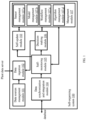
- the self-monitoring module 105 makes the whole system integrated, in the sense that it works at the sensor and materials level as well as at the global industrial plant level, and links all the other self-organization features, that is, self-diagnosis, self-learning and self-optimization.
- the self-monitoring module 105 also uses the plant data as well as predictions of the behavioral models to monitor the many soft-sensors for any degradation in their predictive capabilities which may be caused due to a multitude of factors, for example, physical failure of the sensor, inappropriate or infrequent calibration of the sensor, degradation of the predictive capabilities of the behavioral model of a sensor, etc.
- the self-monitoring module 105 receives plant data from data synchronization and integration module 104. Further, the sensors and actuators monitoring module 204 processes the received data to check if characteristics of the data are within pre-defined acceptable ranges.
- the sensors and actuators monitoring module 404 may use any suitable data processing means. If advanced processing of the data is required to verify the data quality, the sensors and actuators monitoring module 204 invokes data quality verification module 202 which performs advanced quality verification involving multivariate analysis or any other similar data processing means. Further, the sensors and actuators monitoring module 204 may invoke soft-sensors module 206 to get information on key internal process variables that may not be measured, measured in non-real time, difficult to measure or when a physical sensor is malfunctioning.
- the soft-sensors module 206 makes predictions of values of such variables with the help of a behavioral model and available data from the industrial plant.
- the data pre-processing module 208 further processes the data to determine if there are gaps, spikes (outliers), anomalies, etc. and imputes the missing data, or performs outlier removal.
- the self-diagnosis module 210 monitors the process and equipment conditions based on data received from the industrial plant and the historical data, and invokes different modules to perform appropriate actions (for example, involving the decision-making module 106 and/or the self-update module 103).
- the components/blocks of the self-diagnosis module 210 may change depending on types of trigger conditions defined.
- the regime shift analysis module 314 is to be included in the self-diagnosis module 210 only if any trigger in terms of the regime shift is to be detected.
- the self-diagnosis module 210 carries out several activities that may comprise identification of the current state of the plant in terms of steady or unsteady state, determination of time lags that provide an estimate of the effect of a particular independent process variable or a set of variables on a dependent variable or a set of dependent variables (this is of immense help especially when the dynamics of a manufacturing operation are slow, for example, how long does it take to see the effect of physical or chemical characteristics of a particular raw material on productivity of a process or quality of a product is one of the one key inputs required by plant operators for optimization and control of a plant), identification of the regime of operation of a plant (using the method described in Indian patent application IN201921039286 ) so as to understand whether to trigger the decision making module or the self-update module, detection of anomalies in the health or condition of an equipment so as to provide appropriate advice to the operators when to carry out maintenance activities of that equipment, identification of key factors that are causing degradation of the plant performance
- the self-diagnosis module 210 uses the components such as those listed in Figure 3 to not only to take decision on whether to trigger either the decision making module 103 or the self-update module 106 but also to provide important data and information to the decision making module 103 and the self-update module 106 that helps in making the industrial plant operate in an autonomous manner.
- FIG. 4 is an example implementation depicting interaction of the self-organizing system 100 with a plurality of other components of a monitoring framework, to facilitate monitoring of an industrial plant, in accordance with some embodiments of the present disclosure.
- the monitoring framework includes a user applications module 402, an applications configuration module 404, the self-organizing system 100, a workflow engine 406, an analytics engine 408, a database 412, a model repository, a model integration interface module, third party software/codes, a workflow repository, an algorithms repository, an algorithm integration interface module, and third party machine learning/ deep learning/ numerical algorithms.
- the self-organizing system 100 ingests data from various real-time and non-real-time data sources of the industrial plant as well as archived historical data and provide real-time decisions to plant operators and engineers for optimization of Key Performance Indicators (KPIs) related to the physical system or process under consideration by working in tandem with a physical entity, namely, an asset, a unit operation or a complete industrial plant.
- KPIs Key Performance Indicators
- the monitoring framework is employed for creating the self-organizing system 100 that digitally mimics the behavior of a physical system or process in a manufacturing industry to provide near real-time decisions for improving the plant operating conditions.
- a physical system or process of an industrial plant that has to be observed or monitored is configured with the monitoring framework through the applications configuration module 404 wherein the configuration is done in terms of assets like sensors, equipment, data sources, models, workflows and so on.
- the self-organizing system 100 monitors the configured system or process in the real industrial plant to invoke appropriate workflows from the workflow repository.
- the workflow engine 406 reads workflow definitions of the invoked workflows and executes the workflow steps wherein each workflow step involves one or more algorithms stored in the algorithms repository.
- the workflow engine 406 invokes the analytics engine 408 for executing analytics algorithms involved in workflow steps. Further, the results of workflow execution are displayed to a user through the user applications module 402.
- the database 412 stores structured data like numerical values and unstructured data like text, images, sound and videos. Further, the database contains information including but not limited to data used by a plurality of services running in the monitoring framework, logs generated by plurality of services running in system 100, prebuilt domain knowledge, raw data from a plurality of plant data sources and the corresponding processed data, knowledge extracted from the plant data, knowledge acquired from publicly available sources, etc.
- the plant data sources may include but not limited to Distributed Control Systems (DCS), Historians, Supervisory Control and Data Acquisition Systems (SCADA), Laboratory Information Management Systems (LIMS), Manufacturing Execution Systems (MES), Enterprise Resource Planning (ERP) systems, Manufacturing Operations Management (MOM) Systems, etc.
- the model repository stores a plurality of models that are invoked by the self-organizing system 100. These models capture the behaviors of a component, which may include one or more of models for soft sensors, optimization models, classification models, anomaly detection models, causal or sensitivity models, and correlation models, etc.
- the model repository may also contain third party software/codes (Physics-based/Machine learning (ML)/ Deep Learning (DL) / Hybrid physics-based plus data-driven Models).
- the model integration interface module 116 enables external Machine Learning (ML) model/ physics model / Hybrid physics-based plus data-driven model to work with system 100.
- the third party software / codes (physics-based/ Machine Learning (ML)/ Deep Learning (DL) / Hybrid physics-based plus data-driven Models) comply to specific guidelines and are received as user input.
- the workflow repository stores data related to workflows for execution by the workflow engine 406.
- the algorithms repository stores a plurality of machine learning or deep learning or numerical algorithms including third party Machine Learning (ML) / Deep Learning (DL) / numerical algorithms.
- the algorithm integration interface module enables external Machine Learning (ML)/ Deep Learning (DL)/ numerical algorithms to work with system 100.
- the third party Machine Learning (ML)/ Deep Learning (DL)/ numerical algorithms comply to specific guidelines and are received as user input.
- the numerical algorithms may include algorithms for solving a set of algebraic equations, ordinary differential equations, partial differential equations, differential-algebraic equations that are commonly employed for solving physics-based models of the manufacturing operations.
- ML Machine Learning
- DL Deep Learning
- T Transfer Learning
- RL Reinforcement Learning
- PBM Physics Based Models
- ML Machine Learning
- DL Deep Learning
- TL Transfer Learning
- RL Reinforcement Learning
- PBM Physics Based Models
- these models may be individually used or in combination, to capture behavior and performance of the industrial plant.
- certain other algorithms such as numerical optimization algorithms are used to solve an optimization problem where the user seeks to improve the productivity of the plant keeping several business constraints expressed by these behavioral models.
- Optimization algorithms may be derivative based, non-derivative based, stochastic, Reinforcement Learning based and so on.
- the PBMs may be linear or nonlinear algebraic or differential equations and they may be solved using appropriate numerical algorithms such the Newton-Raphson method, Runge-Kutta method, finite difference method or finite volume method, etc. All these numerical or symbolic algorithms are collectively referred here as algorithms, and may be used to form the behavioral model(s).
- the self-organizing system 100 may generate the behavioral models in real-time, by executing the following steps.
- the self-organizing system 100 collects real-time data representing characteristics of working of the industrial plant, by monitoring the industrial plant.
- the self-organizing system 100 also collects and stores data representing working of the industrial plant in past instances, as historical data.
- the self-organizing system 100 generates pre-processed data by pre-processing the real-time data and the historical data.
- the self-organizing system 100 then simulates values of non-measurable parameters of the industrial plant, by using physics based or data based models.
- the term 'non-measurable' may represent certain data that cannot be measured in real-time due to complexities of the industrial plant.
- the term 'non-measurable' may represent certain data that could not be measured at an instance due to any temporary technical glitch.
- an integrated data is generated by combining the pre-processed data and the simulated data. The integrated data is then used to generate each of the one or more data models. It is to be noted that the aforementioned different types of algorithms are for example purpose only, and do not intent to restrict the scope of the embodiments disclosed herein. Based on requirements, any appropriate model may be picked and used.
- FIG. 5 is a block diagram depicting components of an application configuration module of the monitoring framework of FIG. 4 , according to some embodiments of the present disclosure.
- the applications configuration module 404 configures a physical system or process that has to be observed or monitored through one or more Application Program Interfaces (APIs).
- the Application Configuration Module 404 provides two sets of RESTful Application Program Interfaces (APIs), (i) Configuration Application Program Interfaces (APIs) 502, and (ii) Execution Services APIs 504.
- Some of the configuration APIs 502 are, but not limited to, sensor management APIs 502.a, asset management APIs 502.b, and model management APIs 502.c.
- the execution services APIs 504 further comprise of, but not limited to, monitoring APIs 504.a, diagnosis APIs 504.b, prediction APIs 504.c, and so on. Based on requirements, appropriate APIs may be used.
- FIG. 6 is a block diagram depicting components of a workflow engine 406 of the monitoring framework of FIG. 4 , according to some embodiments of the present disclosure.
- the workflow engine 406 allows new workflows to be generated for new applications to support the monitoring framework.
- the monitoring framework in FIG. 4 is created with a basic set of workflows, however, there will be a need to continuously create new workflows to meet the requirements of new applications.
- the workflow engine 406 can also be used to create new workflows that are not already available in the monitoring framework or that cannot be configured or customized easily.
- the workflow engine 406 includes a workflow designer module 602, a workflow traverser module 604, a node execution module 606, an algorithm execution module 608, and a dashboard creation module 610.
- the workflow engine 406 reads workflow definitions and executes the workflow steps. Initially, a workflow is created, configured and saved in the form of a graph using the workflow designer 602. Further, the workflow is executed, wherein execution of the workflow involves execution of each node of the workflow graph.
- the workflow traverser module 604 traverses the workflow graph, starting from the first node of a plurality of nodes. It invokes the node execution module 606 with node's configuration, data frame to be worked on and the algorithm to be executed. Further, the node execution module 606 invokes the algorithm execution module 608 for executing the algorithm.
- FIG. 7 is a block diagram of a model integration interface module of the monitoring framework of FIG. 4 , according to some embodiments of the present disclosure.
- the model integration interface enables integration of external machine / deep learning or physics-based models (executable) / Hybrid physics-based plus data-driven models so that the external models can be executed along with the existing models in the self-organizing system 100.
- the external models are collected as input by the model integration interface using a model upload module 702. Further, the model management module 107.b validates model definitions that are provided and if found valid the model definitions are added to model repository.
- FIG. 9 is a flow diagram depicting steps involved in the process of performing monitoring of the industrial plant, using the self-monitoring module of FIG. 2 , in accordance with some embodiments of the present disclosure.
- the various modules/components of the monitoring framework, and that of the components including the self-organizing system 100 and in turn that of the self-monitoring module 105 are implementations of one or more hardware processors, though not explicitly depicted in any of the figures.
- a plurality of instructions which when executed using the one or more hardware processors (represented in terms of specific modules at each step), cause the monitoring of the industrial plant and the associated actions described herein.
- the self-monitoring module 105 collects the plant data from each of the plurality of components of the industrial plant, which is being monitored.
- the self-monitoring module 105 conditions the collected input data by using appropriate data processing means, such that the input data is fine-tuned to meet pre-defined data standards as required for further processing.
- the self-monitoring module 105 then performs analysis of the plant data, using the Sensor and Actuator Monitoring Module 204.
- the analysis of the plant data includes the following steps.
- the self-monitoring module 105 determines whether a determined quality of the industrial plant data meets a defined threshold of quality of industrial plant data.
- the determined quality of the industrial plant data not meeting the defined threshold of quality of industrial plant data is interpreted as a data instance of bad quality of data by the self-monitoring module 105.
- the term 'instance of bad quality of data' refers to at least a portion of the plant data, having quality below the defined threshold of quality of industrial plant data.
- the self-monitoring module 105 generates at step 908 additional data to compensate for any determined instance of bad quality of data, using the plurality of soft-sensors which are part of the soft-sensors module 206.
- the self-monitoring module 105 After improving the quality of the data as required, the self-monitoring module 105 then triggers the self-diagnosis module to perform, at step 910, self-diagnosis, to determine the action(s) to be executed in response to any detected deviation in performance levels of the plant components, and the self-diagnosis module in turn invokes appropriate module(s) that is to perform the determined action(s).
- the self-monitoring module 105 determines performance of each of the plant components separately, and performance of the plant as a whole.
- the self-monitoring module 105 checks for and determines whether the plant and the plant components are operating outside a 'normal range' of operation, and if yes, at step 910.b, identifies triggers for one or more actions to be executed. Further, appropriate modules are invoked to execute the determined one or more actions till the performance of the components, the processes, and the plant are at the expected levels.
- the steps in method 900 may be executed in the same order as depicted or in any alternate order that is technically feasible. In another embodiment, one or more steps in method 900 may be omitted.
- FIG. 10 depicts an example use-case scenario of use of the monitoring framework of FIG. 4 , in accordance with some embodiments of the present disclosure.
- the real-life working mechanism of the self-organizing system 100 with its physical twin is presented in FIG. 10 .
- Real time data flows from databases in the industrial plant to the monitoring framework/cyber-physical system.
- the cyber-physical system processes the real-time data as well as the historical data and reverts with real-time actionable recommendations to improve the working of the asset or a unit operation or the complete industrial plant, depending on the scope and purpose for which the self-organizing system 100 has been created.
- the self-organizing system 100 at the time of deployment may have certain capabilities to address the needs at the time of deployment. However, it can be updated to enhance the decision making capabilities in order to address any future requirements., accessing the real-time as well as historical data, through off-line analyses and simulations.
- the process of scaling the self-organizing system 100 as per requirements may be manually triggered as and when needed or may be automatic process (like a periodic maintenance). For example, simulations using physics-based models that take relatively long time for execution may be invoked at pre-defined intervals so as to provide simulated or forecasted data from the physics-based models, and this data from the physics based models are used along with the real-time data from the plant, to generate the behavioral model(s), which are then used for determining/estimating the plant performance.
- the simulated data may also be archived along with the corresponding real-time data in the knowledge-base for that plant for future use.
- iron ore fines in the size range 0.15 to 10 mm along with fluxes, solid fuel and various steel plant reverts are sintered (or fused) to form iron ore sinter in the size range 5 to 40 mm that can be charged into the blast furnace for production of pig iron.
- Various raw materials used in sintering namely iron ore fines, fluxes, solid fuel and steel plant reverts are blended in a specific proportion as per the desired chemical composition of sinter and stockpiled in an open yard. Stockpiling is done to ensure chemical and physical homogeneity of the mixture.
- the mixture of raw materials typically known as 'base mix', is reclaimed from the stockpile and sent to the sinter plant.
- solid fuel and flux are further added to the base mix to achieve to the desired chemical composition of sinter.
- Sinter return fines that are undersized sinter not suitable for the blast furnace and a binder that aids in granulation are also added to the base mix.
- This mixture of raw materials is fed to a continuously rotating drum where water is sprinkled to aid mixing and granulation.
- fine particles in the solids are attached to the coarse particles in presence of water and binder, and the resultant mixture with narrower size distribution and larger mean size is known as 'green mix'.
- the green mix is fed to a continuously moving sintering strand in the form of a bed of a certain height and width.
- the top surface of the bed is ignited at high temperatures of 1100-1200°C using an ignition hood to initiate combustion of solid fuel present in the green mix.
- the ignition is sustained using continuous suction from the top of the bed towards the bottom of the bed using multiple wind boxes.
- the flame front formed by combustion of solid fuel reaches the bottom of the green mix near the discharge end of the furnace.
- the location of flame front decides the temperature of off-gas flowing through the wind boxes.
- the maximum off-gas temperature known as burn-through point (BTP) is a crucial indicator of the sintering process on the strand. It is closely monitored and controlled by manipulating variables such as strand speed, ignition hood temperature and suction. It is also dependent on the porous bed characteristics such as mean size, porosity and moisture content all of which are dictated by the granulation process.
- the green mix undergoes various physio-chemical processes such as drying of moisture, combustion of fuel, calcination of fluxes, and melting and solidification.
- the green mix is transformed into a sinter cake and is discharged from the sinter strand onto a crusher and subsequently a forced draft annular cooler.
- the crushed sinter cake cools down in the cooler, it is further crushed and screened to remove undersized particles ( ⁇ 5 mm) known as return fines.
- the product sinter typically in the size range 5-40 mm, is transported to the blast furnace via conveyor belts.
- a machine learning model can be developed for Tumbler Index of sinter using operating data of the plant, for example feed solids flow rates, binder percentage, moisture content, bed height, strand speed, ignition conditions, suction, cooler bed height, cooler pressure, etc., as well as laboratory data, for example feed solids size distribution, feed solids chemical composition, green mix size distribution, etc., and can be used to get predicted values of Tumbler Index in real time without waiting for 2-4 hours for laboratory analysis. Once the measurements of samples collected become available, they can be compared to the corresponding predicted values.
- Tumbler Index predictive models such as the one developed for Tumbler Index are strongly dependent on the input variables used in the model and may give out incorrect predictions when the values of the input variables are not within certain prescribed ranges.
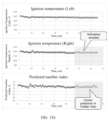
- the model is strongly dependent on ignition temperature which is the temperature of the ignition hood and is typically measured at 4-6 locations in the ignition hood.
- the temperature in the ignition hood is typically in the range of 1100-1250oC. Due to such high temperatures, the thermocouples placed in the ignition hood burn out occasionally and record erroneous values (lower temperatures such as 1000oC or very low values such as 5oC). These erroneous values can then lead to incorrect predictions of Tumbler Index.
Landscapes
- Engineering & Computer Science (AREA)
- Physics & Mathematics (AREA)
- General Physics & Mathematics (AREA)
- Theoretical Computer Science (AREA)
- General Engineering & Computer Science (AREA)
- Automation & Control Theory (AREA)
- Quality & Reliability (AREA)
- Computing Systems (AREA)
- Mathematical Physics (AREA)
- Computer Hardware Design (AREA)
- Artificial Intelligence (AREA)
- Evolutionary Computation (AREA)
- Testing And Monitoring For Control Systems (AREA)
- Management, Administration, Business Operations System, And Electronic Commerce (AREA)
- Electrical Discharge Machining, Electrochemical Machining, And Combined Machining (AREA)
- Transition And Organic Metals Composition Catalysts For Addition Polymerization (AREA)
Claims (14)
- Selbstorganisierendes System (100), umfassend:ein Datenquellenverwaltungsmodul (101);ein Datenaufnahmemodul (102);ein Datensynchronisierungs- und Integrationsmodul (104);ein Selbstüberwachungsmodul (105);ein Selbstaktualisierungsmodul (103);ein Entscheidungsmodul (106); undeine Mehrzahl von Verwaltungsmodulen (107),wobei das selbstorganisierende System (100) eine Überwachung einer Industrieanlage durchführt durch:Herstellen einer Verbindung mit einer oder mehreren Anlagendatenquellen der Industrieanlage unter Verwendung des Datenquellenverwaltungsmoduls (101);Abrufen von Industrieanlagendaten aus der Industrieanlage unter Verwendung des Datenaufnahmemoduls (102), wobei das Datenaufnahmemodul Echtzeit- und Nicht-Echtzeitdaten von einer Mehrzahl von Anlagendatenservern empfängt;Vorverarbeiten der Industrieanlagendaten unter Verwendung des Datensynchronisierungs- und Integrationsmoduls (104), umfassend ein Zusammenführen der abgerufenen Industrieanlagendaten mit Daten von einer oder mehreren Nicht-Echtzeitdatenquellen und ein Konditionieren der Industrieanlagendaten, um vordefinierte Datenstandards zu erfüllen, wobei das Datensynchronisierungs- und Integrationsmodul (104) die Echtzeit- und Nicht-Echtzeitdaten von allen Prozesseinheiten in der Industrieanlage unter Berücksichtigung von Zeitverzögerungen synchronisiert und zusammenführt;Bestimmen eines Betriebs einer beliebigen einer Mehrzahl von Industrieanlagenkomponenten außerhalb eines vordefinierten Betriebsbereichs in einer mehrschichtigen interagierenden Struktur als eine Abweichung von einem vordefinierten normalen Betriebsbereich jeder der Mehrzahl von Industrieanlagenkomponenten unter Verwendung des Selbstüberwachungsmoduls (105), wobei die Mehrzahl von Industrieanlagenkomponenten Sensoren, Aktoren und Steuerungen beinhaltet; undEmpfehlen mindestens einer Aktion als Reaktion auf die bestimmte Abweichung von dem vordefinierten normalen Betriebsbereich, wobei die Aktion eine oder mehrere von a) prädiktiver Wartung mindestens einer der Mehrzahl von Industrieanlagenkomponenten und b) Erzeugen einer Warnung für einen oder mehrere Benutzer und Selbstaktualisierung eines oder mehrerer Verhaltensmodelle, die die Leistung der Industrieanlage beeinflussen, unter Verwendung des Selbstüberwachungsmoduls (105) ist, wobei die empfohlene mindestens eine Aktion durch eines von dem Selbstaktualisierungsmodul (103) und dem Entscheidungsfindungsmodul (106) ausgelöst wird und durch mindestens eines der Mehrzahl von Verwaltungsmodulen (107) ausgeführt wird, wobei das eine oder die mehreren Verhaltensmodelle ein Vorhersagemodell, ein Klassifizierungsmodell, ein Optimierungsmodell, das verwendet wird, um das Verhalten der Industrieanlage darzustellen, darstellen,
wobei das Bestimmen der Abweichung und das Empfehlen der mindestens einen Aktion durch das Selbstüberwachungsmodul (105) Folgendes umfasst:
Durchführen einer Analyse der Industrieanlagendaten unter Verwendung eines Sensor- und Aktorüberwachungsmoduls (204), umfassend:Bestimmen, ob eine bestimmte Qualität der Industrieanlagendaten einen definierten Schwellenwert der Qualität von Anlagendaten erreicht, unter Verwendung eines Datenqualitätsverifikationsmoduls (202), wobei die bestimmte Qualität der Industrieanlagendaten, die den definierten Schwellenwert der Qualität von Anlagendaten nicht erreicht, als eine Instanz schlechter Datenqualität betrachtet wird;Erzeugen zusätzlicher Daten, um jede bestimmte Instanz schlechter Datenqualität zu kompensieren, unter Verwendung eines Soft-Sensor-Moduls (206). - System nach Anspruch 1, wobei das Selbstüberwachungsmodul (105) Folgendes umfasst:das Datenqualitätsverifikationsmodul (202);das Sensor- und Aktorüberwachungsmodul (204);das Soft-Sensor-Modul (206);ein Datenvorverarbeitungsmodul (208); undein Selbstdiagnosemodul (210),wobei das Bestimmen der Abweichung und das Empfehlen der mindestens einen Aktion durch das Selbstüberwachungsmodul ferner Folgendes umfasst:
Durchführen einer Selbstdiagnose durch das Selbstdiagnosemodul (210), umfassend:Identifizieren einer bestimmten Leistung eines oder mehrerer der Verhaltensmodelle als unter einem Leistungsschwellenwert liegend, als einen Auslöser zum Ausführen der Selbstaktualisierung des einen oder der mehreren Verhaltensmodelle;Identifizieren einer bestimmten Abweichung einer oder mehrerer der Mehrzahl von Industrieanlagenkomponenten von einem definierten Benchmark der Leistung von Industrieanlagenkomponenten als einen Auslöser zum Ausführen der prädiktiven Wartung der einen oder mehreren der Industrieanlagenkomponenten; undIdentifizieren, dass der Benutzer zu warnen ist, wenn mindestens eine Auslösebedingung detektiert wird. - System nach Anspruch 2, wobei das Selbstüberwachungsmodul (105) die Selbstaktualisierung eines oder mehrerer Verhaltensmodelle durch Folgendes empfiehlt:Bestimmen der Qualität einer oder mehrerer Modellvorhersagen, die durch das eine oder die mehreren Verhaltensmodelle erzeugt werden; undAufrufen eines Selbstlernmechanismus, wenn die bestimmte Qualität mindestens eines des einen oder der mehreren Verhaltensmodelle unter einem Schwellenwert der Qualität des Verhaltensmodells liegt, wobei der Selbstlernmechanismus mindestens eines des einen oder der mehreren Verhaltensmodelle aktualisiert.
- System nach Anspruch 1, wobei das System jedes des einen oder der mehreren Verhaltensmodelle durch Folgendes erzeugt:Sammeln von Echtzeitdaten, die Eigenschaften der Arbeit der Industrieanlage darstellen, durch Überwachen der Industrieanlage;Sammeln und Speichern von Daten, die die Arbeit der Industrieanlage in vergangenen Instanzen darstellen, als historische Daten;Erzeugen vorverarbeiteter Daten durch Vorverarbeiten der Echtzeitdaten und der historischen Daten;Simulieren von Werten nicht messbarer Parameter der Industrieanlage durch Verwenden von physikbasierten oder datenbasierten Modellen;Erzeugen integrierter Daten durch Kombinieren der vorverarbeiteten Daten und der simulierten Daten; undErzeugen jedes des einen oder der mehreren Datenmodelle unter Verwendung der integrierten Daten.
- System nach Anspruch 1, wobei die Mehrzahl von Verwaltungsmodulen eines oder mehrere von einem Sensorverwaltungsmodul, Modellverwaltungsmodul, Arbeitsablaufverwaltungsmodul und Algorithmusverwaltungsmodul umfasst, wobei die Mehrzahl von Verwaltungsmodulen konfiguriert ist, um Sensoren, Datenmodelle, Arbeitsabläufe und Algorithmen zu verwalten, die zum Überwachen der Industrieanlage basierend auf Anweisungen von dem Selbstüberwachungsmodul verwendet werden.
- System nach Anspruch 5, wobei das Arbeitsablaufverwaltungsmodul Folgendes umfasst:ein Arbeitsablaufgestaltermodul (602);ein Arbeitsablauftraversermodul (604);ein Knotenausführungsmodul (606);ein Algorithmusausführungsmodul (608); undein Armaturenbretterzeugungsmodul (610),wobei das Arbeitsablaufverwaltungsmodul einen oder mehrere Arbeitsabläufe für eine Anwendung erzeugt durch:Erzeugen mindestens eines Arbeitsablaufs für die Anwendung unter Verwendung des Arbeitsablaufgestaltermoduls (602), wobei der Arbeitsablauf in Form eines Arbeitsablaufgraphen gespeichert wird; undAusführen des Arbeitsablaufs, umfassend das Ausführen für jeden einer Mehrzahl von Knoten in dem Arbeitsablaufgraphen:Durchqueren des Arbeitsablaufgraphen durch das Knotenausführungsmodul (606);Ausführen eines Algorithmus durch das Algorithmusausführungsmodul (608); undAnzeigen von Werten einer Mehrzahl von Algorithmusparametern als Ergebnis der Ausführung des Algorithmus durch das Armaturenbretterzeugungsmodul (610).
- Selbstorganisierendes System (100) nach Anspruch 1, wobeidas selbstorganisierende System mit der Industrieanlage unter Verwendung eines Anwendungskonfigurationsmoduls (404) in Kommunikation mit dem selbstorganisierenden System verbunden ist, das selbstorganisierende System die Industrieanlage unter Verwendung des Selbstüberwachungsmoduls (105) überwacht,das selbstorganisierende System eine Mehrzahl von Arbeitsabläufen der Industrieanlage unter Verwendung einer Arbeitsablaufmaschine (406) in Kommunikation mit dem selbstorganisierenden System aufruft, das selbstorganisierende System einen oder mehrere Analysealgorithmen in den Arbeitsablaufschritten unter Verwendung einer Analysemaschine (408) in Kommunikation mit dem selbstorganisierenden System ausführt,das selbstorganisierende System Ergebnisse der Arbeitsablaufausführung unter Verwendung eines Benutzeranwendungsmoduls (402) in Kommunikation mit dem selbstorganisierenden System anzeigt,das selbstorganisierende System Daten, die der Überwachung der Industrieanlage zugeordnet sind, in einer Mehrzahl von Datenbanken speichert, die ein Modellarchiv, ein Arbeitsablaufarchiv, ein Algorithmenarchiv und ein gemeinsames Archiv umfassen, die in einem Speichermodul in Kommunikation mit dem selbstorganisierenden System gespeichert sind,das selbstorganisierende System mit einem oder mehreren externen Verhaltensmodellen unter Verwendung eines Modellintegrationsschnittstellenmoduls in Kommunikation mit dem selbstorganisierenden System verbunden ist,das selbstorganisierende System mit einem oder mehreren Drittparteienmodulen unter Verwendung einer Drittparteiensoftwareschnittstelle in Kommunikation mit dem selbstorganisierenden System verbunden ist, unddas selbstorganisierende System mit einem oder mehreren externen Algorithmen unter Verwendung eines Algorithmusintegrationsschnittstellenmoduls in Kommunikation mit dem selbstorganisierenden System verbunden ist.
- Prozessorimplementiertes Verfahren zum Überwachen einer Industrieanlage, umfassend:Herstellen einer Verbindung mit einer oder mehreren Anlagendatenquellen der Industrieanlage unter Verwendung eines Datenquellenverwaltungsmoduls (101);Abrufen von Industrieanlagendaten aus der Industrieanlage unter Verwendung eines Datenaufnahmemoduls (102), wobei das Datenaufnahmemodul Echtzeit- und Nicht-Echtzeitdaten von einer Mehrzahl von Anlagendatenservern empfängt;Vorverarbeiten der Industrieanlagendaten unter Verwendung eines Datensynchronisierungs- und Integrationsmoduls (104), umfassend ein Zusammenführen der abgerufenen Industrieanlagendaten mit Daten von einer oder mehreren Nicht-Echtzeitdatenquellen und ein Konditionieren der Industrieanlagendaten, um vordefinierte Datenstandards zu erfüllen, wobei das Datensynchronisierungs- und Integrationsmodul (104) die Echtzeit- und Nicht-Echtzeitdaten von allen Prozesseinheiten in der Industrieanlage unter Berücksichtigung von Zeitverzögerungen synchronisiert und zusammenführt;Bestimmen (910.a) eines Betriebs einer beliebigen einer Mehrzahl von Industrieanlagenkomponenten außerhalb eines vordefinierten Betriebsbereichs in einer mehrschichtigen interagierenden Struktur als eine Abweichung von einem vordefinierten normalen Betriebsbereich jeder der Mehrzahl von Industrieanlagenkomponenten unter Verwendung des einen oder der mehreren Hardwareprozessoren, wobei die Mehrzahl von Industrieanlagenkomponenten Sensoren, Aktoren und Steuerungen beinhaltet; undEmpfehlen (910.b) mindestens einer Aktion als Reaktion auf die bestimmte Abweichung von dem vordefinierten normalen Betriebsbereich über den einen oder die mehreren Hardwareprozessoren, wobei die Aktion eine oder mehrere von a) prädiktiver Wartung mindestens einer der Mehrzahl von Industrieanlagenkomponenten und b) Erzeugen einer Warnung für einen oder mehrere Benutzer und Selbstaktualisierung eines oder mehrerer Verhaltensmodelle, die die Leistung der Industrieanlage beeinflussen, ist, wobei die empfohlene mindestens eine Aktion durch eines von einem Selbstaktualisierungsmodul (103) und einem Entscheidungsfindungsmodul (106) ausgelöst wird und durch mindestens eines einer Mehrzahl von Verwaltungsmodulen (107) ausgeführt wird, wobei das eine oder die mehreren Verhaltensmodelle ein Vorhersagemodell, ein Klassifizierungsmodell, ein Optimierungsmodell, das verwendet wird, um das Verhalten der Industrieanlage darzustellen, darstellen,wobei das Bestimmen der Abweichung und das Empfehlen der mindestens einen Aktion Folgendes umfasst:
Durchführen einer Analyse der Industrieanlagendaten, umfassend:Bestimmen (906), ob eine bestimmte Qualität der Industrieanlagendaten einen definierten Schwellenwert der Qualität von Anlagendaten erreicht, wobei die bestimmte Qualität der Industrieanlagendaten, die den definierten Schwellenwert der Qualität von Anlagendaten nicht erreicht, als eine Instanz schlechter Datenqualität betrachtet wird;Erzeugen (908) zusätzlicher Daten, um jede bestimmte Instanz schlechter Datenqualität zu kompensieren, unter Verwendung eines Soft-Sensor-Moduls (206). - Verfahren nach Anspruch 8, wobei das Bestimmen der Abweichung und das Empfehlen der mindestens einen Aktion durch Durchführen der Selbstüberwachung ferner Folgendes umfasst:Sammeln (902) von Industrieanlagendaten von jeder der Mehrzahl von Industrieanlagenkomponenten der Industrieanlage;Vorverarbeiten (904) der Industrieanlagendaten, wobei das Vorverarbeiten der Industrieanlagendaten ein Konditionieren der Industrieanlagendaten umfasst, um vordefinierte Datenstandards zu erfüllen; und
Durchführen der Selbstdiagnose (910), umfassend:Identifizieren einer bestimmten Leistung eines oder mehrerer der Verhaltensmodelle als unter einem Leistungsschwellenwert liegend, als einen Auslöser zum Ausführen der Selbstaktualisierung des einen oder der mehreren Verhaltensmodelle;Identifizieren einer bestimmten Abweichung einer oder mehrerer der Mehrzahl von Industrieanlagenkomponenten von einem definierten Benchmark der Leistung von Industrieanlagenkomponenten als einen Auslöser zum Ausführen der prädiktiven Wartung einer oder mehrerer der Mehrzahl von Industrieanlagenkomponenten; undIdentifizieren, dass der Benutzer zu warnen ist, wenn mindestens eine Auslösebedingung detektiert wird. - Verfahren nach Anspruch 9, wobei das Empfehlen der Selbstaktualisierung eines oder mehrerer Verhaltensmodelle Folgendes umfasst:Bestimmen der Qualität einer oder mehrerer Modellvorhersagen, die durch das eine oder die mehreren Verhaltensmodelle erzeugt werden; undAufrufen eines Selbstlernmechanismus, wenn die bestimmte Qualität mindestens eines des einen oder der mehreren Verhaltensmodelle unter einem Schwellenwert der Qualität des Verhaltensmodells liegt, wobei der Selbstlernmechanismus mindestens eines des einen oder der mehreren Verhaltensmodelle aktualisiert.
- Verfahren nach Anspruch 8, wobei das Erzeugen jedes des einen oder der mehreren Verhaltensmodelle Folgendes umfasst:Sammeln von Echtzeitdaten, die Eigenschaften der Arbeit der Industrieanlage darstellen;Sammeln und Speichern von Daten, die die Arbeit der Industrieanlage in vergangenen Instanzen darstellen, als historische Daten;Erzeugen vorverarbeiteter Daten durch Vorverarbeiten der Echtzeitdaten und der historischen Daten;Simulieren von Werten nicht messbarer Parameter der Industrieanlage durch Verwenden von physikbasierten oder datenbasierten Modellen;Erzeugen integrierter Daten durch Kombinieren der vorverarbeiteten Daten und der simulierten Daten; undErzeugen jedes des einen oder der mehreren Datenmodelle unter Verwendung der integrierten Daten.
- Verfahren nach Anspruch 8, wobei ein oder mehrere Arbeitsabläufe für eine Anwendung basierend auf der Selbstüberwachung erzeugt werden, umfassend:Erzeugen mindestens eines Arbeitsablaufs für die Anwendung, wobei der Arbeitsablauf in Form eines Arbeitsablaufgraphen gespeichert wird; undAusführen des Arbeitsablaufs, umfassend das Ausführen für jeden einer Mehrzahl von Knoten in dem Arbeitsablaufgraphen:
Durchqueren des Arbeitsablaufgraphen;Ausführen eines Algorithmus; undAnzeigen von Werten einer Mehrzahl von Algorithmusparametern als Ergebnis der Ausführung des Algorithmus. - Computerprogrammprodukt, umfassend ein nichtflüchtiges computerlesbares Medium mit einem darin verkörperten computerlesbaren Programm, wobei das computerlesbare Programm, wenn es auf einer Rechenvorrichtung ausgeführt wird, die Rechenvorrichtung veranlasst, Folgendes durchzuführen:
Überwachen einer Industrieanlage über einen oder mehrere Hardwareprozessoren, umfassend die folgenden Schritte:Herstellen einer Verbindung mit einer oder mehreren Anlagendatenquellen der Industrieanlage unter Verwendung eines Datenquellenverwaltungsmoduls (101);Abrufen von Industrieanlagendaten aus der Industrieanlage unter Verwendung eines Datenaufnahmemoduls (102), wobei das Datenaufnahmemodul Echtzeit- und Nicht-Echtzeitdaten von einer Mehrzahl von Anlagendatenservern empfängt;Vorverarbeiten der Industrieanlagendaten unter Verwendung eines Datensynchronisierungs- und Integrationsmoduls (104), umfassend ein Zusammenführen der abgerufenen Industrieanlagendaten mit Daten von einer oder mehreren Nicht-Echtzeitdatenquellen und ein Konditionieren der Industrieanlagendaten, um vordefinierte Datenstandards zu erfüllen, wobei das Datensynchronisierungs- und Integrationsmodul (104) die Echtzeit- und Nicht-Echtzeitdaten von allen Prozesseinheiten in der Industrieanlage unter Berücksichtigung von Zeitverzögerungen synchronisiert und zusammenführt;Bestimmen eines Betriebs einer beliebigen einer Mehrzahl von Industrieanlagenkomponenten außerhalb eines vordefinierten Betriebsbereichs in einer mehrschichtigen interagierenden Struktur als eine Abweichung von einem vordefinierten normalen Betriebsbereich jeder der Mehrzahl von Industrieanlagenkomponenten unter Verwendung des einen oder der mehreren Hardwareprozessoren, wobei die Mehrzahl von Industrieanlagenkomponenten Sensoren, Aktoren und Steuerungen beinhaltet; undEmpfehlen mindestens einer Aktion als Reaktion auf die bestimmte Abweichung von dem vordefinierten normalen Betriebsbereich über den einen oder die mehreren Hardwareprozessoren, wobei die Aktion eine oder mehrere von a) prädiktiver Wartung mindestens einer der Mehrzahl von Industrieanlagenkomponenten und b) Erzeugen einer Warnung für einen oder mehrere Benutzer und Selbstaktualisierung eines oder mehrerer Verhaltensmodelle, die die Leistung der Industrieanlage beeinflussen, ist, wobei die empfohlene mindestens eine Aktion durch eines von einem Selbstaktualisierungsmodul (103) und einem Entscheidungsfindungsmodul (106) ausgelöst wird und durch mindestens eines einer Mehrzahl von Verwaltungsmodulen (107) ausgeführt wird, wobei das eine oder die mehreren Verhaltensmodelle ein Vorhersagemodell, ein Klassifizierungsmodell, ein Optimierungsmodell, das verwendet wird, um das Verhalten der Industrieanlage darzustellen, darstellen,wobei das Bestimmen der Abweichung und das Empfehlen der mindestens einen Aktion Folgendes umfasst:
Durchführen einer Analyse der Industrieanlagendaten, umfassend:Bestimmen, ob eine bestimmte Qualität der Industrieanlagendaten einen definierten Schwellenwert der Qualität von Anlagendaten erreicht, wobei die bestimmte Qualität der Industrieanlagendaten, die den definierten Schwellenwert der Qualität von Anlagendaten nicht erreicht, als eine Instanz schlechter Datenqualität betrachtet wird;Erzeugen zusätzlicher Daten, um jede bestimmte Instanz schlechter Datenqualität zu kompensieren, unter Verwendung eines Soft-Sensor-Moduls (206). - Computerprogrammprodukt nach Anspruch 13, wobei die Ausführung des computerlesbaren Programms das Bestimmen der Abweichung und das Empfehlen der mindestens einen Aktion durch Durchführen der Selbstüberwachung durch Folgendes veranlasst:Sammeln von Industrieanlagendaten von jeder der Mehrzahl von Industrieanlagenkomponenten der Industrieanlage;Vorverarbeiten der Industrieanlagendaten, wobei das Vorverarbeiten der Industrieanlagendaten ein Konditionieren der Industrieanlagendaten umfasst, um vordefinierte Datenstandards zu erfüllen; und
Durchführen der Selbstdiagnose, umfassend:Identifizieren einer bestimmten Leistung eines oder mehrerer der Verhaltensmodelle als unter einem Leistungsschwellenwert liegend, als einen Auslöser zum Ausführen der Selbstaktualisierung des einen oder der mehreren Verhaltensmodelle;Identifizieren einer bestimmten Abweichung einer oder mehrerer der Mehrzahl von Industrieanlagenkomponenten von einem definierten Benchmark der Leistung von Industrieanlagenkomponenten als einen Auslöser zum Ausführen der prädiktiven Wartung einer oder mehrerer der Mehrzahl von Industrieanlagenkomponenten; undIdentifizieren, dass der Benutzer zu warnen ist, wenn mindestens eine Auslösebedingung detektiert wird.
Applications Claiming Priority (2)
| Application Number | Priority Date | Filing Date | Title |
|---|---|---|---|
| IN202021021089 | 2020-05-19 | ||
| PCT/IN2021/050484 WO2021234732A1 (en) | 2020-05-19 | 2021-05-19 | System and method for development and deployment of self-organizing cyber-physical systems for manufacturing industries |
Publications (4)
| Publication Number | Publication Date |
|---|---|
| EP4154105A1 EP4154105A1 (de) | 2023-03-29 |
| EP4154105A4 EP4154105A4 (de) | 2024-06-12 |
| EP4154105B1 true EP4154105B1 (de) | 2025-07-02 |
| EP4154105C0 EP4154105C0 (de) | 2025-07-02 |
Family
ID=78708199
Family Applications (1)
| Application Number | Title | Priority Date | Filing Date |
|---|---|---|---|
| EP21807894.7A Active EP4154105B1 (de) | 2020-05-19 | 2021-05-19 | System und verfahren zur entwicklung und anwendung von selbstorganisierenden cyberphysikalischen systemen für fertigungsindustrien |
Country Status (7)
| Country | Link |
|---|---|
| US (1) | US12602039B2 (de) |
| EP (1) | EP4154105B1 (de) |
| JP (1) | JP7544863B2 (de) |
| AU (1) | AU2021275732B2 (de) |
| BR (1) | BR112022023623A2 (de) |
| CA (1) | CA3184445A1 (de) |
| WO (1) | WO2021234732A1 (de) |
Families Citing this family (6)
| Publication number | Priority date | Publication date | Assignee | Title |
|---|---|---|---|---|
| US12399466B2 (en) * | 2021-09-24 | 2025-08-26 | Rockwell Automation Technologies, Inc. | Variable relationship discovery and recommendations for industrial automation environments |
| US12411468B2 (en) | 2021-09-24 | 2025-09-09 | Rockwell Automation Technologies, Inc. | Data assessment and selection for industrial automation environments |
| CN114626955A (zh) * | 2022-03-24 | 2022-06-14 | 合肥金人科技有限公司 | 一种基于增强现实技术的智慧工厂管理系统 |
| EP4432025A1 (de) * | 2023-03-17 | 2024-09-18 | Tata Consultancy Services Limited | Verfahren und system zur wissensbasierten herstellung eines digitalen zwillings zur anlagenüberwachung und -optimierung |
| EP4592781A1 (de) * | 2024-01-23 | 2025-07-30 | Datapred SA | Erkennung von geschwindigkeitsänderungen an verbundenen industriellen anlagen oder prozessen |
| CN118331088A (zh) * | 2024-04-10 | 2024-07-12 | 天津水泥工业设计研究院有限公司 | 一种基于在线仿真及直观可视化工业窑炉控制系统及方法 |
Family Cites Families (21)
| Publication number | Priority date | Publication date | Assignee | Title |
|---|---|---|---|---|
| EP1573613A4 (de) * | 2002-03-01 | 2009-11-18 | Fisher Rosemount Systems Inc | INTEGRIERTE Alarmerzeugung iN EINER PROZESSANLAGE |
| US6904335B2 (en) * | 2002-08-21 | 2005-06-07 | Neal Solomon | System, method and apparatus for organizing groups of self-configurable mobile robotic agents in a multi-robotic system |
| CA2756679C (en) * | 2009-03-31 | 2016-07-05 | Commvault Systems, Inc. | Information management systems and methods for heterogeneous data sources |
| TWI630493B (zh) | 2011-09-19 | 2018-07-21 | 塔塔顧問服務有限公司 | 用於提供促進感測器驅動式應用的開發及部署之運算平台的系統及方法 |
| US9558220B2 (en) * | 2013-03-04 | 2017-01-31 | Fisher-Rosemount Systems, Inc. | Big data in process control systems |
| US10678225B2 (en) * | 2013-03-04 | 2020-06-09 | Fisher-Rosemount Systems, Inc. | Data analytic services for distributed industrial performance monitoring |
| US10649449B2 (en) * | 2013-03-04 | 2020-05-12 | Fisher-Rosemount Systems, Inc. | Distributed industrial performance monitoring and analytics |
| CN105579922B (zh) * | 2013-09-26 | 2019-06-07 | 日本电气株式会社 | 信息处理装置以及分析方法 |
| US10108168B2 (en) | 2014-06-01 | 2018-10-23 | Si-Ga Data Security (2014) Ltd. | Industrial control system smart hardware monitoring |
| US9652213B2 (en) | 2014-10-23 | 2017-05-16 | National Instruments Corporation | Global optimization and verification of cyber-physical systems using floating point math functionality on a system with heterogeneous hardware components |
| US10776706B2 (en) * | 2016-02-25 | 2020-09-15 | Honeywell International Inc. | Cost-driven system and method for predictive equipment failure detection |
| WO2018229802A1 (en) * | 2017-06-16 | 2018-12-20 | Ge Healthcare Bio-Sciences Ab | Method for predicting outcome of and modelling of a process in a bioreactor |
| US20190155271A1 (en) | 2017-11-22 | 2019-05-23 | General Electric Company | Determining a change in asset performance using a digital twin |
| WO2020041020A1 (en) * | 2018-08-20 | 2020-02-27 | Presenso, Ltd. | Providing corrective solution recommendations for an industrial machine failure |
| EP3620983B1 (de) * | 2018-09-05 | 2023-10-25 | Sartorius Stedim Data Analytics AB | Computerimplementiertes verfahren, computerprogrammprodukt und system zur datenanalyse |
| WO2020109987A1 (en) * | 2018-11-26 | 2020-06-04 | Abb Schweiz Ag | System and a method for asset monitoring in an industrial plant |
| US20220171891A1 (en) * | 2019-03-25 | 2022-06-02 | Schneider Electric Systems Usa, Inc. | Automatic extraction of assets data from engineering data sources |
| KR102355178B1 (ko) * | 2019-06-20 | 2022-02-10 | 주식회사 한국디지털트윈연구소 | 디지털 트윈을 이용하여 가상센서를 구현하는 컴퓨팅 시스템 및 이를 이용한 실시간 데이터 수집 방법 |
| WO2021019551A1 (en) * | 2019-07-26 | 2021-02-04 | Tata Consultancy Services Limited | System and method for real-time self-optimization of manufacturing operations |
| US11513504B2 (en) * | 2019-10-18 | 2022-11-29 | Applied Materials, Inc. | Characterizing and monitoring electrical components of manufacturing equipment |
| US11796983B2 (en) * | 2020-09-25 | 2023-10-24 | Rockwell Automation Technologies, Inc. | Data modeling and asset management using an industrial information hub |
-
2021
- 2021-05-19 JP JP2022571339A patent/JP7544863B2/ja active Active
- 2021-05-19 AU AU2021275732A patent/AU2021275732B2/en not_active Ceased
- 2021-05-19 US US17/926,244 patent/US12602039B2/en active Active
- 2021-05-19 EP EP21807894.7A patent/EP4154105B1/de active Active
- 2021-05-19 BR BR112022023623A patent/BR112022023623A2/pt unknown
- 2021-05-19 CA CA3184445A patent/CA3184445A1/en active Pending
- 2021-05-19 WO PCT/IN2021/050484 patent/WO2021234732A1/en not_active Ceased
Also Published As
| Publication number | Publication date |
|---|---|
| JP7544863B2 (ja) | 2024-09-03 |
| BR112022023623A2 (pt) | 2023-02-07 |
| EP4154105A4 (de) | 2024-06-12 |
| CA3184445A1 (en) | 2021-11-25 |
| JP2023527187A (ja) | 2023-06-27 |
| EP4154105A1 (de) | 2023-03-29 |
| AU2021275732B2 (en) | 2023-08-24 |
| WO2021234732A1 (en) | 2021-11-25 |
| US12602039B2 (en) | 2026-04-14 |
| US20230195100A1 (en) | 2023-06-22 |
| AU2021275732A1 (en) | 2023-01-05 |
| EP4154105C0 (de) | 2025-07-02 |
Similar Documents
| Publication | Publication Date | Title |
|---|---|---|
| EP4154105B1 (de) | System und verfahren zur entwicklung und anwendung von selbstorganisierenden cyberphysikalischen systemen für fertigungsindustrien | |
| RU2724075C1 (ru) | Система и способ определения источника аномалии в кибер-физической системе, обладающей определенными характеристиками | |
| US11295993B2 (en) | Maintenance scheduling for semiconductor manufacturing equipment | |
| RU2724716C1 (ru) | Система и способ формирования данных для мониторинга кибер-физической системы с целью раннего определения аномалий в системе графического интерфейса пользователя | |
| EP4033321B1 (de) | System und verfahren zur leistungs- und gesundheitsüberwachung zur optimierung des betriebs einer pulverisiermühle | |
| US10809704B2 (en) | Process performance issues and alarm notification using data analytics | |
| Wang | Towards zero-defect manufacturing (ZDM)—a data mining approach | |
| JP7682168B2 (ja) | 製造プロセスリスクを予測するためのシステムおよび方法 | |
| Myklebust | Zero defect manufacturing: a product and plant oriented lifecycle approach | |
| Pillai et al. | A hybrid approach for fusing physics and data for failure prediction | |
| US10776706B2 (en) | Cost-driven system and method for predictive equipment failure detection | |
| HK1251689A1 (zh) | 预测模型的动态执行 | |
| US20200160227A1 (en) | Model update based on change in edge data | |
| EP3674946B1 (de) | System und verfahren zur erkennung von anomalien in einem cyber-physikalischen system mit bestimmten eigenschaften | |
| CN109791401A (zh) | 生成用于嵌入式分析和诊断/预测推理的故障模型 | |
| Jansen van Rensburg | Usage of artificial intelligence to reduce operational disruptions of ESPs by implementing predictive maintenance | |
| Urbani et al. | Maintenance-management in light of manufacturing 4.0 | |
| Giannoulidis et al. | Engineering and evaluating an unsupervised predictive maintenance solution: a cold-forming press case-study | |
| US20180357465A1 (en) | System and method for automatic logging of events in industrial process control and automation system using change point analysis | |
| HK1251701A1 (zh) | 资产处的本地分析 | |
| Lee et al. | Intelligent factory agents with predictive analytics for asset management | |
| EP4372507B1 (de) | Verfahren und system zur hybriden datenerweiterung zur schätzung der leistungsverschlechterung in einer industrieanlage | |
| Fathi et al. | Advanced condition monitoring services in product lifecycle management | |
| EP3674828B1 (de) | System und verfahren zur erzeugung von daten zur überwachung eines cyber-physikalischen systems zur frühbestimmung von anomalien | |
| CN116360384A (zh) | 用于诊断和监控信息物理系统中的异常的系统和方法 |
Legal Events
| Date | Code | Title | Description |
|---|---|---|---|
| STAA | Information on the status of an ep patent application or granted ep patent |
Free format text: STATUS: THE INTERNATIONAL PUBLICATION HAS BEEN MADE |
|
| PUAI | Public reference made under article 153(3) epc to a published international application that has entered the european phase |
Free format text: ORIGINAL CODE: 0009012 |
|
| STAA | Information on the status of an ep patent application or granted ep patent |
Free format text: STATUS: REQUEST FOR EXAMINATION WAS MADE |
|
| 17P | Request for examination filed |
Effective date: 20221118 |
|
| AK | Designated contracting states |
Kind code of ref document: A1 Designated state(s): AL AT BE BG CH CY CZ DE DK EE ES FI FR GB GR HR HU IE IS IT LI LT LU LV MC MK MT NL NO PL PT RO RS SE SI SK SM TR |
|
| DAV | Request for validation of the european patent (deleted) | ||
| DAX | Request for extension of the european patent (deleted) | ||
| REG | Reference to a national code |
Ref country code: DE Ref legal event code: R079 Free format text: PREVIOUS MAIN CLASS: G06F0009440000 Ipc: G05B0023020000 Ref document number: 602021033488 Country of ref document: DE |
|
| A4 | Supplementary search report drawn up and despatched |
Effective date: 20240514 |
|
| RIC1 | Information provided on ipc code assigned before grant |
Ipc: G06F 11/34 20060101ALI20240507BHEP Ipc: G06F 11/30 20060101ALI20240507BHEP Ipc: G06F 11/07 20060101ALI20240507BHEP Ipc: G05B 23/02 20060101AFI20240507BHEP |
|
| GRAP | Despatch of communication of intention to grant a patent |
Free format text: ORIGINAL CODE: EPIDOSNIGR1 |
|
| STAA | Information on the status of an ep patent application or granted ep patent |
Free format text: STATUS: GRANT OF PATENT IS INTENDED |
|
| INTG | Intention to grant announced |
Effective date: 20250226 |
|
| GRAS | Grant fee paid |
Free format text: ORIGINAL CODE: EPIDOSNIGR3 |
|
| GRAA | (expected) grant |
Free format text: ORIGINAL CODE: 0009210 |
|
| STAA | Information on the status of an ep patent application or granted ep patent |
Free format text: STATUS: THE PATENT HAS BEEN GRANTED |
|
| AK | Designated contracting states |
Kind code of ref document: B1 Designated state(s): AL AT BE BG CH CY CZ DE DK EE ES FI FR GB GR HR HU IE IS IT LI LT LU LV MC MK MT NL NO PL PT RO RS SE SI SK SM TR |
|
| REG | Reference to a national code |
Ref country code: GB Ref legal event code: FG4D |
|
| REG | Reference to a national code |
Ref country code: CH Ref legal event code: EP |
|
| REG | Reference to a national code |
Ref country code: DE Ref legal event code: R096 Ref document number: 602021033488 Country of ref document: DE |
|
| REG | Reference to a national code |
Ref country code: IE Ref legal event code: FG4D |
|
| U01 | Request for unitary effect filed |
Effective date: 20250702 |
|
| U07 | Unitary effect registered |
Designated state(s): AT BE BG DE DK EE FI FR IT LT LU LV MT NL PT RO SE SI Effective date: 20250710 |
|
| PG25 | Lapsed in a contracting state [announced via postgrant information from national office to epo] |
Ref country code: IS Free format text: LAPSE BECAUSE OF FAILURE TO SUBMIT A TRANSLATION OF THE DESCRIPTION OR TO PAY THE FEE WITHIN THE PRESCRIBED TIME-LIMIT Effective date: 20251102 |
|
| PG25 | Lapsed in a contracting state [announced via postgrant information from national office to epo] |
Ref country code: NO Free format text: LAPSE BECAUSE OF FAILURE TO SUBMIT A TRANSLATION OF THE DESCRIPTION OR TO PAY THE FEE WITHIN THE PRESCRIBED TIME-LIMIT Effective date: 20251002 |
|
| PG25 | Lapsed in a contracting state [announced via postgrant information from national office to epo] |
Ref country code: HR Free format text: LAPSE BECAUSE OF FAILURE TO SUBMIT A TRANSLATION OF THE DESCRIPTION OR TO PAY THE FEE WITHIN THE PRESCRIBED TIME-LIMIT Effective date: 20250702 |
|
| PG25 | Lapsed in a contracting state [announced via postgrant information from national office to epo] |
Ref country code: GR Free format text: LAPSE BECAUSE OF FAILURE TO SUBMIT A TRANSLATION OF THE DESCRIPTION OR TO PAY THE FEE WITHIN THE PRESCRIBED TIME-LIMIT Effective date: 20251003 |
|
| PG25 | Lapsed in a contracting state [announced via postgrant information from national office to epo] |
Ref country code: CZ Free format text: LAPSE BECAUSE OF FAILURE TO SUBMIT A TRANSLATION OF THE DESCRIPTION OR TO PAY THE FEE WITHIN THE PRESCRIBED TIME-LIMIT Effective date: 20250702 |
|
| PG25 | Lapsed in a contracting state [announced via postgrant information from national office to epo] |
Ref country code: PL Free format text: LAPSE BECAUSE OF FAILURE TO SUBMIT A TRANSLATION OF THE DESCRIPTION OR TO PAY THE FEE WITHIN THE PRESCRIBED TIME-LIMIT Effective date: 20250702 |
|
| PG25 | Lapsed in a contracting state [announced via postgrant information from national office to epo] |
Ref country code: RS Free format text: LAPSE BECAUSE OF FAILURE TO SUBMIT A TRANSLATION OF THE DESCRIPTION OR TO PAY THE FEE WITHIN THE PRESCRIBED TIME-LIMIT Effective date: 20251002 |
|
| PG25 | Lapsed in a contracting state [announced via postgrant information from national office to epo] |
Ref country code: ES Free format text: LAPSE BECAUSE OF FAILURE TO SUBMIT A TRANSLATION OF THE DESCRIPTION OR TO PAY THE FEE WITHIN THE PRESCRIBED TIME-LIMIT Effective date: 20250702 |
|
| PG25 | Lapsed in a contracting state [announced via postgrant information from national office to epo] |
Ref country code: SM Free format text: LAPSE BECAUSE OF FAILURE TO SUBMIT A TRANSLATION OF THE DESCRIPTION OR TO PAY THE FEE WITHIN THE PRESCRIBED TIME-LIMIT Effective date: 20250702 |
|
| PGFP | Annual fee paid to national office [announced via postgrant information from national office to epo] |
Ref country code: GB Payment date: 20260309 Year of fee payment: 6 |