EP4154067B1 - Verfahren und system zur bestimmung einer kompressionsrate für ein ki-modell einer industriellen aufgabe - Google Patents
Verfahren und system zur bestimmung einer kompressionsrate für ein ki-modell einer industriellen aufgabe Download PDFInfo
- Publication number
- EP4154067B1 EP4154067B1 EP21746349.6A EP21746349A EP4154067B1 EP 4154067 B1 EP4154067 B1 EP 4154067B1 EP 21746349 A EP21746349 A EP 21746349A EP 4154067 B1 EP4154067 B1 EP 4154067B1
- Authority
- EP
- European Patent Office
- Prior art keywords
- model
- task
- compression rate
- industrial
- stage
- Prior art date
- Legal status (The legal status is an assumption and is not a legal conclusion. Google has not performed a legal analysis and makes no representation as to the accuracy of the status listed.)
- Active
Links
Images


Classifications
-
- G—PHYSICS
- G05—CONTROLLING; REGULATING
- G05B—CONTROL OR REGULATING SYSTEMS IN GENERAL; FUNCTIONAL ELEMENTS OF SUCH SYSTEMS; MONITORING OR TESTING ARRANGEMENTS FOR SUCH SYSTEMS OR ELEMENTS
- G05B19/00—Programme-control systems
- G05B19/02—Programme-control systems electric
- G05B19/418—Total factory control, i.e. centrally controlling a plurality of machines, e.g. direct or distributed numerical control [DNC], flexible manufacturing systems [FMS], integrated manufacturing systems [IMS] or computer integrated manufacturing [CIM]
- G05B19/4183—Total factory control, i.e. centrally controlling a plurality of machines, e.g. direct or distributed numerical control [DNC], flexible manufacturing systems [FMS], integrated manufacturing systems [IMS] or computer integrated manufacturing [CIM] characterised by data acquisition, e.g. workpiece identification
-
- G—PHYSICS
- G05—CONTROLLING; REGULATING
- G05B—CONTROL OR REGULATING SYSTEMS IN GENERAL; FUNCTIONAL ELEMENTS OF SUCH SYSTEMS; MONITORING OR TESTING ARRANGEMENTS FOR SUCH SYSTEMS OR ELEMENTS
- G05B13/00—Adaptive control systems, i.e. systems automatically adjusting themselves to have a performance which is optimum according to some preassigned criterion
- G05B13/02—Adaptive control systems, i.e. systems automatically adjusting themselves to have a performance which is optimum according to some preassigned criterion electric
- G05B13/0265—Adaptive control systems, i.e. systems automatically adjusting themselves to have a performance which is optimum according to some preassigned criterion electric the criterion being a learning criterion
-
- G—PHYSICS
- G06—COMPUTING OR CALCULATING; COUNTING
- G06N—COMPUTING ARRANGEMENTS BASED ON SPECIFIC COMPUTATIONAL MODELS
- G06N3/00—Computing arrangements based on biological models
- G06N3/02—Neural networks
- G06N3/04—Architecture, e.g. interconnection topology
-
- G—PHYSICS
- G06—COMPUTING OR CALCULATING; COUNTING
- G06N—COMPUTING ARRANGEMENTS BASED ON SPECIFIC COMPUTATIONAL MODELS
- G06N3/00—Computing arrangements based on biological models
- G06N3/02—Neural networks
- G06N3/04—Architecture, e.g. interconnection topology
- G06N3/0495—Quantised networks; Sparse networks; Compressed networks
-
- G—PHYSICS
- G06—COMPUTING OR CALCULATING; COUNTING
- G06N—COMPUTING ARRANGEMENTS BASED ON SPECIFIC COMPUTATIONAL MODELS
- G06N3/00—Computing arrangements based on biological models
- G06N3/02—Neural networks
- G06N3/08—Learning methods
-
- G—PHYSICS
- G06—COMPUTING OR CALCULATING; COUNTING
- G06N—COMPUTING ARRANGEMENTS BASED ON SPECIFIC COMPUTATIONAL MODELS
- G06N3/00—Computing arrangements based on biological models
- G06N3/02—Neural networks
- G06N3/08—Learning methods
- G06N3/082—Learning methods modifying the architecture, e.g. adding, deleting or silencing nodes or connections
-
- G—PHYSICS
- G05—CONTROLLING; REGULATING
- G05B—CONTROL OR REGULATING SYSTEMS IN GENERAL; FUNCTIONAL ELEMENTS OF SUCH SYSTEMS; MONITORING OR TESTING ARRANGEMENTS FOR SUCH SYSTEMS OR ELEMENTS
- G05B2219/00—Program-control systems
- G05B2219/30—Nc systems
- G05B2219/35—Nc in input of data, input till input file format
- G05B2219/35588—Pack, compress data efficiently in memory
-
- G—PHYSICS
- G06—COMPUTING OR CALCULATING; COUNTING
- G06N—COMPUTING ARRANGEMENTS BASED ON SPECIFIC COMPUTATIONAL MODELS
- G06N3/00—Computing arrangements based on biological models
- G06N3/02—Neural networks
- G06N3/06—Physical realisation, i.e. hardware implementation of neural networks, neurons or parts of neurons
- G06N3/063—Physical realisation, i.e. hardware implementation of neural networks, neurons or parts of neurons using electronic means
Definitions
- the invention regards a computerized method determining a compression rate for an AI model of an industrial task according to claim 1, a system according to claim 10, and a computer program product according to claim 11.
- AI models are executed on industrial edge devices, industrial controllers (e.g. PLC - programmable logic controllers) or even on cloud-based computing entities - so called “web services” or “cloud hosting”.
- industrial controllers e.g. PLC - programmable logic controllers
- cloud-based computing entities e.g. web services” or “cloud hosting”.
- AI models can be compressed, e.g. in reducing their parameters, for speeding up and reducing memory allocation or other resource consumption. However, this compression reduces the accuracy of AI models' predictions.
- the document CN 110 163 341 A "Neural network model optimization processing method and device” discloses a compression method for a deep neural network.
- One approach how to perform optimizations as indicated above is, together with a proper AI model, find a way how to optimize this AI model in order to deploy it on the edge device or another execution environment like an industrial controller, so that it will be ran as accurate and efficient as possible, aiming to decrease a computational effort and to decrease an overall power consumption.
- the solution of this task considers the industrial environment requirements, hardware resources of the edge device (or other execution environment) itself and the requirements specified to AI model in the analytical project ("industrial task") description.
- the problem is solved with a computerized method for determining a compression rate for an AI model of an industrial task according to a set of requirements for the runtime properties of the AI model, wherein, for the AI model, the original number of parameters is reduced to a reduced number of parameters.
- a first stage of the method for a number of different AI models for a number of industrial tasks for each of the industrial tasks a number of different compression rates for the assigned AI model is determined. After that, in a first step each AI model is compressed multiple times with that number of different compression rates.
- each of the compressed AI models is executed in an execution environment, whereby as first results during the execution of each of the AI models the runtime properties are recorded, and wherein in a third step an optimal compression rate for each of the AI models is calculated by an analysis of the first results, whereby the optimal compression rate for each industrial task together with a description of the industrial task is stored in a database or similar storage technology.
- the data from the database is used to train an additional machine learning model, the additional machine learning model having feature information about each of the industrial tasks as input and the calculated optimal compression rate as output, the feature information at least comprising information of memory allocation limit, inference time limit for the compressed model, an original AI model size of the uncompressed AI model, and used compression algorithm, and in a third stage for a new AI model of a new industrial task a new set of desired runtime properties is defined and the additional machine learning model is executed and employed for determining the optimal compression rate for that new AI model in respect to the desired runtime properties.
- the new AI model is then compressed according to that optimal compression rate and executed for fulfilling the new industrial task.
- the AI model runs with the best possible accuracy while meeting the requirements of inference time and not exceeding allowed or given computing resources and requirements.
- the problem is also solved by a system for determining a compression rate for an AI model of an industrial task according to a set of requirements for the runtime properties of the AI model, wherein, for the AI model, the original number of parameters is reduced to a reduced number of parameters.
- the system comprises a first computer system set up for conducting the steps of the first stage of the method described before and for controlling the execution environment while execution of the compressed AI models.
- the system further comprises a second computer system set up for performing the method steps of the second and third stage of the method as described before, and a communication channel connecting the first and the second computer system.
- a compressed AI model is created and executed.
- the various compression rates might cover a wide range of compression but being distinct in small steps for having an accurate basis for the analysis in the third step.
- the optimal compression rate is the compression rate with the best inference accuracy which still fits the requirements for the runtime properties. That leads to a system in which given computing capacities are employed to a maximum.
- linear or non-linear functions are fitted through the recorded runtime properties.
- the linear or non-linear functions might comprise interpolation, e.g. linear interpolation or spline interpolation, but not limited by these.
- the feature information for each of the industrial tasks at least comprises: information of memory allocation limit, inference time limit for the compressed model, an original AI model size of the uncompressed AI model, and type of the compression algorithm used for that specific task.
- edge devices provide computational power to industrial shop floors and thus unburdens the controllers (PLC - programmable logic controllers) from time consuming computations, i.e. running the AI model.
- PLC - programmable logic controllers controllers
- it can be a different device at hand, in particular a neural processing unit (a so-called technology module for neural processing) which might be part of an industrial controller.
- the executions of the AI task in stage one can be done at different platforms (execution environments), returning the optimal compression rate for each of these environments.
- empiric resource employment factors For reducing the number of "test"-executions in stage one, it is possible to use empiric resource employment factors. That means, that once the runtime properties on a first type of platform have been determined, the runtime properties of the same AI task with the same compression rate but on a different platform (execution environment) can be estimated by use of an empiric factor.
- Another advantageous embodiment uses an emulation device for conduction the test series of stage one. That means, for example, that a PLC or a neural processing unit or another type of execution environment can be simulated ("emulated") with a standard hardware, e.g. a personal computer or a virtual machine.
- the "target" in stage one is a cloud computing service (CCS).
- CCS cloud computing service
- Cloud computing services can deliver virtual unlimited computing resources, particularly in cases in which a limited number of parameters need to be exchanged between a local entity (like a PLC) and the cloud computing service, the latter executing the AI model.
- FIG. 1 shows a schematic view on the proposed method.
- the method consists of three stages.
- Stage 1 aims to run an algorithm shown on the left-hand side of Figure 1 and obtaining an optimal compression rate r* for every AI task (Task 1, 2, ... k).
- stage 2 shown in the middle - having information on AI tasks and their optimal compression rate r* we train a machine learning model in order to generalize over tasks and their corresponding optimal compression rates r* (upper box in the picture).
- the third stage shown on the right-hand side
- for every new AI task (Task k+1, k+2, ... k+n) we can output an optimal compression rate r* without running an algorithm of stage 1 for the new AI tasks (Task k+1, k+2, ... k+n) .
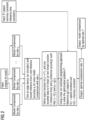
- Figure 2 shows a schematic view on an algorithm used at stage 1 of our method. Having as input an original AI model and AI task runtime requirements R ("constraints"), we formulate an optimization problem aiming to maximize an accuracy of compressed AI model with respect to AI task constraints and output an optimal compression rate r* of the AI model.
- constraints AI task runtime requirements
- Figure 3 shows a database (table) generated during the execution of stage 1 of the method. Having information on AI tasks and their compression rates r* as output from stage 1, we formulate a machine learning problem where every AI task with its constraints we associate its compression rate r* in order to train any suitable machine learning model.
- the columns with the headline "Features" show some of the requirements R which have been met in the execution of the AI model for the various AI tasks.
- Such requirements can be, together with the description of a new AI task, serve as an input when asking the trained machine learning model about the optimal compression rate r* for an AI model of that new AI task.
- the table of Figure 3 is limited to a small number of parameters (features, requirements); real systems might employ more different requirements, parameters, AI tasks etc.
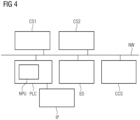
- FIG. 4 shows a schematic of a system for executing the method.
- the system comprises various execution environments like a cloud computing service CCS, an industrial edge device ED, or a Neural Processing Unit NPU of a programmable logic controller PLC.
- the various execution environments are connected - via a communication channel (the network NW) - to computer systems CS1, CS2 which run stage 1 and stages 2 and 3, respectively, of the method.
- NW the network
- all stages can be realized by the same computer system CS1 or CS2, but might be realized with different software modules.
- the programmable logic controller PLC is connected - e.g. by means of a fieldbus system - to an industrial process IP which comprises an industrial task.
- the programmable logic controller PLC controls the industrial task and thereby frequently employs the AI model which is executed on the Neural Processing Unit NPU or on another execution environment.
- the PLC might supervise the "health status" of an electrical machine and periodically feeds status information (vibration data, temperature data, electrical parameters) to the AI model which returns with a health status information (o.k.; critical; defective).
- stage 1 when we do not have much empirical data, we apply operation research technique to find the optimal rate.
- stage 2 for which we have collected large amount of data in different tasks, we train a machine learning model and later (stage three) we use this machine learning model to get the optimal compression rate r*.
- stage 1 The algorithm and method steps of stage 1 are shown schematically in Figure 2 .
- the algorithm of stage 1 is a method to choose for an optimal compression rate r* of AI model with respect to analytical project requirements, maximizing AI model accuracy and can be described as follows:
- stage 1 of our method consists of 4 major steps: First: compression of an AI model with a set of different compression rates. At first, we make the compression several time by different value of compression rate ⁇ r1, r2, ... ⁇ and save those models.
- the different values might be determined (chosen) by dividing an overall range of compression range (e.g. 1.5 to 10) in a number (e.g. 10) of equidistant steps.
- a system engineer might input or change these parameters.
- the system itself may decide on the range and number of the compression rates for this step, e.g. having a lookup-table for these parameters in which for each kind (type) of an industrial task these parameters are proposed.
- stage 2 After being applied to N AI tasks we can train (stage 2) an additional machine learning model with a usage of information from the table shown in Figure 3 . Having such a model we can later avoid running every time expensive algorithm described in Algorithm 1 and can recommend an optimal compression rate r* for every new, but similar AI task with a usage of this machine learning model (stage 3).
- the information of the table is fed into a machine learning model, e.g. neural network or the like.
- a machine learning model e.g. neural network or the like.
- the machine learning model can be employed for choosing an optimal compression rate r* for a new industrial task. This is done in a third stage (employment of the trained machine learning model), shown in the right-hand side box of Figure 1 .
- a description (type of the problem, type or name of the customer, power class of a machine, material type of a part etc.) of the new task, a chosen compression algorithm, memory allocation of the uncompressed AI model and Requirements (inference time limit, memory space constraints) for the execution might be suitable inputs for the machine learning system.
- the machine learning system responds by a value for a suitable, optimal compression rate r*.
- the new AI model is compressed according to that compression rate r* and used for fulfilling the new AI task, e.g. control of an industrial device or process or prediction / scheduling of maintenance tasks.
- the best fitting compression algorithm (Weight quantization, Tensor decomposition, Knowledge Distillation, ...) can be proposed automatically for a new industrial task ("new AI task”) and its new AI model.
- the description of the AI task can be defined using a markup language. Such is ideal for automatic evaluation in training and, later, using the machine learning model.
- this invention has better performance and efficiency. That is achieved since we perform the optimization with respect to maximum inference time required, memory allocation limit required, and maximizing inference accuracy.
- After the generalization of the proposed workflow one can directly choose an optimal compression rate r* and reduce the computational effort which is necessary in traditional methods when running an expensive iterative algorithm on edge devices ED or comparable hardware setup.
- stage 1 of our proposed method only few numbers of trials on edge or comparable hardware setup (execution environments) are required to fit functions f and g, and apply linear/non-linear programming afterward, which avoids the large number of iterative steps performed in prior work.
- stages 2 and 3 after generalization of results from stage 1 we do not need these computations anymore and can propose an optimal compression rate r* with a usage of computational inexpensive machine learning algorithm.
Landscapes
- Engineering & Computer Science (AREA)
- Physics & Mathematics (AREA)
- Theoretical Computer Science (AREA)
- General Physics & Mathematics (AREA)
- Artificial Intelligence (AREA)
- General Engineering & Computer Science (AREA)
- Evolutionary Computation (AREA)
- Health & Medical Sciences (AREA)
- Software Systems (AREA)
- Computing Systems (AREA)
- Molecular Biology (AREA)
- Data Mining & Analysis (AREA)
- Computational Linguistics (AREA)
- Biophysics (AREA)
- Mathematical Physics (AREA)
- Biomedical Technology (AREA)
- Life Sciences & Earth Sciences (AREA)
- General Health & Medical Sciences (AREA)
- Automation & Control Theory (AREA)
- Quality & Reliability (AREA)
- Manufacturing & Machinery (AREA)
- Medical Informatics (AREA)
- Computer Vision & Pattern Recognition (AREA)
- Feedback Control In General (AREA)
- Debugging And Monitoring (AREA)
- Management, Administration, Business Operations System, And Electronic Commerce (AREA)
Claims (11)
- Computergestütztes Verfahren zum Bestimmen einer Komprimierungsrate (r*) für einKI-Modell einer industriellen Aufgabe (Aufgabe 1, ..., k; Aufgabe k+1, k+n) gemäß einem Satz von Anforderungen an die Laufzeiteigenschaften des KI-Modell,wobei für das KI-Modell die ursprüngliche Anzahl von Parametern (n) auf eine reduzierte Anzahl von Parametern (n*) verringert wird, wobei in einem ersten Schritt für eine Anzahl von unterschiedlichen KI-Modellen für eine Anzahl von industriellen Aufgaben (Aufgabe 1, ..., k) für jede der industriellen Aufgaben (Aufgabe 1, ..., k) eine Anzahl von unterschiedlichen Komprimierungsraten (ri) für das zugewiesene KI-Modell bestimmt wird,wobei in einem ersten Schritt jedes KI-Modell mit dieser Anzahl von unterschiedlichen Komprimierungsraten (ri) komprimiert wird, wobei in einem zweiten Schritt jedes der komprimierten KI-Modelle in einer Ausführungsumgebung ausgeführt wird, wodurch als erste Ergebnisse während der Ausführung jedes der KI-Modelle die Laufzeiteigenschaften aufgezeichnet werden, und wobei in einem dritten Schritt eine optimale Komprimierungsrate r* für jedes der KI-Modelle durch eine Analyse der ersten Ergebnisse berechnet wird, wodurch die optimale Komprimierungsrate (r*) für jede industrielle Aufgabe (Aufgabe 1, ...., k) zusammen mit einer Beschreibung der industriellen Aufgabe in einer Datenbank gespeichert wird,dadurch gekennzeichnet,dass in einer zweiten Stufe die Daten aus der Datenbank verwendet werden, um ein zusätzliches maschinelles Lernmodell zu trainieren, wobei das zusätzliche maschinelle Lernmodell Merkmalsinformationen über jede der industriellen Aufgaben (Aufgabe 1, ..., k) als Eingabe und die berechnete optimale Komprimierungsrate (r*) als Ausgabe hat, wobei die Merkmalsinformationen wenigstens Informationen über eine Speicherzuteilungsgrenze, eine Inferenzzeitgrenze für das komprimierte Modell, eine ursprüngliche KI-Modellgröße des unkomprimierten KI-Modells und einen verwendeten Komprimierungsalgorithmus umfassen, unddass in einer dritten Stufe für ein neues KI-Modell einer neuen Aufgabe (Aufgabe k+1, ..., k+n) ein neuer Satz erwünschter Laufzeiteigenschaften definiert wird und das zusätzliche maschinelle Lernmodell zum Bestimmen der optimalen Komprimierungsrate (r*) für dieses neue KI-Modell im Hinblick auf die erwünschten Laufzeiteigenschaften eingesetzt wird.
- Computergestütztes Verfahren nach Anspruch 1, wobei im ersten Schritt für jede Komprimierungsrate (r*) ein komprimiertes KI-Modell erstellt wird.
- Computergestütztes Verfahren nach einem der vorstehenden Ansprüche,
wobei als Laufzeiteigenschaften wenigstens der Speicherverbrauch und die Inferenzzeit des ausgeführten KI-Modells verwendet werden. - Computergestütztes Verfahren nach Anspruch 3,
wobei im dritten Schritt die optimale Komprimierungsrate (r*) die Komprimierungsrate (r*) mit der besten Inferenzgenauigkeit (a) ist, die noch den Anforderungen an die Laufzeiteigenschaften genügt. - Computergestütztes Verfahren nach einem der vorstehenden Ansprüche,
wobei im dritten Schritt für jede industrielle Aufgabe lineare oder nichtlineare Funktionen durch die aufgezeichneten Laufzeiteigenschaften angepasst werden. - Computergestütztes Verfahren nach Anspruch 5,
wobei die Funktion eine Interpolation ist. - Computergestütztes Verfahren nach einem der vorstehenden Ansprüche,
wobei als Ausführungsumgebung eine industrielle Edge-Vorrichtung (Edge Device, ED) verwendet wird. - Computergestütztes Verfahren nach einem der vorstehenden Ansprüche,
wobei im dritten Schritt die Laufzeiteigenschaften des unkomprimierten KI-Modells und die Anforderungen zusammen mit der optimalen Komprimierungsrate (r*) gespeichert werden. - Computergestütztes Verfahren nach einem der vorstehenden Ansprüche,
wobei im zweiten Schritt die Ausführungsumgebung entweder ein Personal-Computer, eine reale speicherprogrammierbare Steuerung (Programmable Logic Controller, PLC), eine emulierte speicherprogrammierbare Steuerung, ein Cloud-Computing-Dienst (Cloud Computing Service, CCS) oder eine industrielle Edge-Vorrichtung (ED) ist. - System zum Bestimmen einer Komprimierungsrate (r*) für ein KI-Modell einer industriellen Aufgabe (Aufgabe 1, ..., k; Aufgabe k+1, ..., k+n) gemäß einem Satz von Anforderungen an die Laufzeiteigenschaften des KI-Modell,wobei für das KI-Modell die ursprüngliche Anzahl von Parametern (n) auf eine reduzierte Anzahl von Parametern (n*) reduziert wird,ein erstes Computersystem (CS1), das zum Durchführen der Schritte der ersten Stufe des Verfahrens gemäß Anspruch 1 und zum Steuern der Ausführungsumgebung während der Ausführung des komprimierten KI-Modells ausgelegt ist,gekennzeichnet durchein zweites Computersystem (CS2), das zum Durchführen der Verfahrensschritte der zweiten und dritten Stufe des Verfahrens gemäß Anspruch 1 ausgelegt ist, undeinen Kommunikationskanal, der das erste und das zweite Computersystem (CS1, CS2) verbindet.
- Computerprogrammprodukt, das computerlesbaren Code umfasst, der, wenn er auf einem Prozessor ausgeführt wird, einen beliebigen der Verfahrensschritte eines oder mehrerer der Verfahrensansprüche 1 bis 9 durchführt.
Applications Claiming Priority (2)
| Application Number | Priority Date | Filing Date | Title |
|---|---|---|---|
| EP20186916.1A EP3944029A1 (de) | 2020-07-21 | 2020-07-21 | Verfahren und system zur bestimmung einer kompressionsrate für ein ki-modell einer industriellen aufgabe |
| PCT/EP2021/068651 WO2022017782A1 (en) | 2020-07-21 | 2021-07-06 | Method and system for determining a compression rate for an ai model of an industrial task |
Publications (3)
| Publication Number | Publication Date |
|---|---|
| EP4154067A1 EP4154067A1 (de) | 2023-03-29 |
| EP4154067B1 true EP4154067B1 (de) | 2024-03-27 |
| EP4154067C0 EP4154067C0 (de) | 2024-03-27 |
Family
ID=71738058
Family Applications (2)
| Application Number | Title | Priority Date | Filing Date |
|---|---|---|---|
| EP20186916.1A Withdrawn EP3944029A1 (de) | 2020-07-21 | 2020-07-21 | Verfahren und system zur bestimmung einer kompressionsrate für ein ki-modell einer industriellen aufgabe |
| EP21746349.6A Active EP4154067B1 (de) | 2020-07-21 | 2021-07-06 | Verfahren und system zur bestimmung einer kompressionsrate für ein ki-modell einer industriellen aufgabe |
Family Applications Before (1)
| Application Number | Title | Priority Date | Filing Date |
|---|---|---|---|
| EP20186916.1A Withdrawn EP3944029A1 (de) | 2020-07-21 | 2020-07-21 | Verfahren und system zur bestimmung einer kompressionsrate für ein ki-modell einer industriellen aufgabe |
Country Status (4)
| Country | Link |
|---|---|
| US (1) | US20230213918A1 (de) |
| EP (2) | EP3944029A1 (de) |
| CN (1) | CN116134387B (de) |
| WO (1) | WO2022017782A1 (de) |
Families Citing this family (3)
| Publication number | Priority date | Publication date | Assignee | Title |
|---|---|---|---|---|
| JP7551577B2 (ja) * | 2021-08-18 | 2024-09-17 | 株式会社東芝 | 学習装置、方法及びプログラム |
| CN115034391B (zh) * | 2022-05-12 | 2024-11-08 | 东方电气集团科学技术研究院有限公司 | 面向焊接缺陷智能检测的一站式模型压缩系统 |
| CN117692892A (zh) * | 2022-08-29 | 2024-03-12 | 华为技术有限公司 | 一种无线通信方法及通信装置 |
Family Cites Families (13)
| Publication number | Priority date | Publication date | Assignee | Title |
|---|---|---|---|---|
| CN107895190A (zh) * | 2017-11-08 | 2018-04-10 | 清华大学 | 神经网络模型的权值量化方法及装置 |
| CN110390345B (zh) * | 2018-04-20 | 2023-08-22 | 复旦大学 | 一种基于云平台的大数据集群自适应资源调度方法 |
| US11481616B2 (en) * | 2018-06-29 | 2022-10-25 | Microsoft Technology Licensing, Llc | Framework for providing recommendations for migration of a database to a cloud computing system |
| WO2020102887A1 (en) * | 2018-11-19 | 2020-05-28 | Tandemlaunch Inc. | System and method for automated design space determination for deep neural networks |
| KR102796861B1 (ko) * | 2018-12-10 | 2025-04-17 | 삼성전자주식회사 | 인공 신경망을 압축하기 위한 장치 및 방법 |
| CN113383346A (zh) * | 2018-12-18 | 2021-09-10 | 莫维迪厄斯有限公司 | 神经网络压缩 |
| US20200272905A1 (en) * | 2019-02-26 | 2020-08-27 | GE Precision Healthcare LLC | Artificial neural network compression via iterative hybrid reinforcement learning approach |
| CN111738401A (zh) * | 2019-03-25 | 2020-10-02 | 北京三星通信技术研究有限公司 | 模型优化方法、分组压缩方法、相应的装置、设备 |
| CN110163341B (zh) * | 2019-04-08 | 2025-03-18 | 创新先进技术有限公司 | 神经网络模型的优化处理方法及装置 |
| WO2020231049A1 (en) * | 2019-05-16 | 2020-11-19 | Samsung Electronics Co., Ltd. | Neural network model apparatus and compressing method of neural network model |
| US11126168B2 (en) * | 2019-07-03 | 2021-09-21 | Rockwell Automation Technologies, Inc. | Automatic discovery and persistence of data for industrial automation equipment |
| CN112840358B (zh) * | 2019-09-24 | 2023-05-23 | 百度时代网络技术(北京)有限公司 | 用于深度神经网络的基于光标的自适应量化 |
| CN110769000B (zh) * | 2019-10-31 | 2020-09-25 | 重庆大学 | 连续型监测数据在非稳定网络传输中的动态压缩预测控制方法 |
-
2020
- 2020-07-21 EP EP20186916.1A patent/EP3944029A1/de not_active Withdrawn
-
2021
- 2021-07-06 EP EP21746349.6A patent/EP4154067B1/de active Active
- 2021-07-06 CN CN202180059888.4A patent/CN116134387B/zh active Active
- 2021-07-06 US US18/016,881 patent/US20230213918A1/en not_active Abandoned
- 2021-07-06 WO PCT/EP2021/068651 patent/WO2022017782A1/en not_active Ceased
Also Published As
| Publication number | Publication date |
|---|---|
| WO2022017782A1 (en) | 2022-01-27 |
| EP3944029A1 (de) | 2022-01-26 |
| CN116134387B (zh) | 2024-04-19 |
| US20230213918A1 (en) | 2023-07-06 |
| EP4154067A1 (de) | 2023-03-29 |
| CN116134387A (zh) | 2023-05-16 |
| EP4154067C0 (de) | 2024-03-27 |
Similar Documents
| Publication | Publication Date | Title |
|---|---|---|
| EP4154067B1 (de) | Verfahren und system zur bestimmung einer kompressionsrate für ein ki-modell einer industriellen aufgabe | |
| Singh et al. | TASM: technocrat ARIMA and SVR model for workload prediction of web applications in cloud | |
| US20200218243A1 (en) | Parallel control method and system for intelligent workshop | |
| US20160179993A1 (en) | Predictive analysis having data source integration for industrial automation | |
| US20170308052A1 (en) | Cell controller for optimizing motion of production system including industrial machines | |
| EP2871585B1 (de) | Steuersystemdatenbanksysteme und Verfahren | |
| CN104636421A (zh) | 使用云计算的工业监视 | |
| US10698387B2 (en) | System and method for control and/or analytics of an industrial process | |
| Li et al. | Throughput bottleneck prediction of manufacturing systems using time series analysis | |
| EP4141679A1 (de) | Verwalten einer app, insbesondere testen der einsatzfähigkeit einer app mit einer trainierten funktion unter verwendung einer virtuellen testumgebung, verfahren und system | |
| Parto et al. | Cyber-physical system implementation for manufacturing with analytics in the cloud layer | |
| Pires et al. | Decision support based on digital twin simulation: a case study | |
| Huang et al. | Modeling and dynamic assignment of the adaptive buffer spaces in serial production lines | |
| Listl et al. | Decision Support on the Shop Floor Using Digital Twins: Architecture and Functional Components for Simulation-Based Assistance | |
| CN115016928B (zh) | 基于算子作用域动态感知的弹性资源分配方法及装置 | |
| Voinov et al. | An approach to net-centric control automation of technological processes within industrial IoT systems | |
| CN113657844B (zh) | 任务处理流程的确定方法及装置 | |
| WO2019055329A1 (en) | METHOD FOR DRIVING ROBUST REGRESSION MODELS FROM LIMITED TRAINING DATA | |
| Tuli et al. | Optimizing the performance of fog computing environments using ai and co-simulation | |
| EP3945471A1 (de) | Verfahren zur automatisierten bestimmung einer modellkompressionstechnik zur kompression eines auf künstlicher intelligenz basierenden modells | |
| Lin et al. | A metamodel-based decision support system for shop floor production control | |
| CN116500896B (zh) | 智能网联汽车域控制器多虚拟cpu任务智能实时调度模型和方法 | |
| CN112149826B (zh) | 深度神经网络推理计算中一种基于Profile图的优化方法 | |
| CN117081942A (zh) | 一种网络流量预测方法、装置、设备及介质 | |
| Jankovič et al. | The concept of automatic generation of hydraulic press cycle |
Legal Events
| Date | Code | Title | Description |
|---|---|---|---|
| STAA | Information on the status of an ep patent application or granted ep patent |
Free format text: STATUS: UNKNOWN |
|
| STAA | Information on the status of an ep patent application or granted ep patent |
Free format text: STATUS: THE INTERNATIONAL PUBLICATION HAS BEEN MADE |
|
| PUAI | Public reference made under article 153(3) epc to a published international application that has entered the european phase |
Free format text: ORIGINAL CODE: 0009012 |
|
| STAA | Information on the status of an ep patent application or granted ep patent |
Free format text: STATUS: REQUEST FOR EXAMINATION WAS MADE |
|
| 17P | Request for examination filed |
Effective date: 20221221 |
|
| AK | Designated contracting states |
Kind code of ref document: A1 Designated state(s): AL AT BE BG CH CY CZ DE DK EE ES FI FR GB GR HR HU IE IS IT LI LT LU LV MC MK MT NL NO PL PT RO RS SE SI SK SM TR |
|
| DAV | Request for validation of the european patent (deleted) | ||
| DAX | Request for extension of the european patent (deleted) | ||
| GRAP | Despatch of communication of intention to grant a patent |
Free format text: ORIGINAL CODE: EPIDOSNIGR1 |
|
| STAA | Information on the status of an ep patent application or granted ep patent |
Free format text: STATUS: GRANT OF PATENT IS INTENDED |
|
| RIC1 | Information provided on ipc code assigned before grant |
Ipc: G06N 3/063 20230101ALI20231109BHEP Ipc: G06N 3/082 20230101ALI20231109BHEP Ipc: G06N 3/04 20230101ALI20231109BHEP Ipc: G05B 13/02 20060101AFI20231109BHEP |
|
| INTG | Intention to grant announced |
Effective date: 20231128 |
|
| GRAS | Grant fee paid |
Free format text: ORIGINAL CODE: EPIDOSNIGR3 |
|
| GRAA | (expected) grant |
Free format text: ORIGINAL CODE: 0009210 |
|
| STAA | Information on the status of an ep patent application or granted ep patent |
Free format text: STATUS: THE PATENT HAS BEEN GRANTED |
|
| AK | Designated contracting states |
Kind code of ref document: B1 Designated state(s): AL AT BE BG CH CY CZ DE DK EE ES FI FR GB GR HR HU IE IS IT LI LT LU LV MC MK MT NL NO PL PT RO RS SE SI SK SM TR |
|
| REG | Reference to a national code |
Ref country code: GB Ref legal event code: FG4D |
|
| REG | Reference to a national code |
Ref country code: CH Ref legal event code: EP |
|
| REG | Reference to a national code |
Ref country code: DE Ref legal event code: R096 Ref document number: 602021011030 Country of ref document: DE |
|
| REG | Reference to a national code |
Ref country code: IE Ref legal event code: FG4D |
|
| U01 | Request for unitary effect filed |
Effective date: 20240404 |
|
| U07 | Unitary effect registered |
Designated state(s): AT BE BG DE DK EE FI FR IT LT LU LV MT NL PT SE SI Effective date: 20240415 |
|
| PG25 | Lapsed in a contracting state [announced via postgrant information from national office to epo] |
Ref country code: GR Free format text: LAPSE BECAUSE OF FAILURE TO SUBMIT A TRANSLATION OF THE DESCRIPTION OR TO PAY THE FEE WITHIN THE PRESCRIBED TIME-LIMIT Effective date: 20240628 |
|
| PG25 | Lapsed in a contracting state [announced via postgrant information from national office to epo] |
Ref country code: HR Free format text: LAPSE BECAUSE OF FAILURE TO SUBMIT A TRANSLATION OF THE DESCRIPTION OR TO PAY THE FEE WITHIN THE PRESCRIBED TIME-LIMIT Effective date: 20240327 Ref country code: RS Free format text: LAPSE BECAUSE OF FAILURE TO SUBMIT A TRANSLATION OF THE DESCRIPTION OR TO PAY THE FEE WITHIN THE PRESCRIBED TIME-LIMIT Effective date: 20240627 |
|
| PG25 | Lapsed in a contracting state [announced via postgrant information from national office to epo] |
Ref country code: RS Free format text: LAPSE BECAUSE OF FAILURE TO SUBMIT A TRANSLATION OF THE DESCRIPTION OR TO PAY THE FEE WITHIN THE PRESCRIBED TIME-LIMIT Effective date: 20240627 Ref country code: NO Free format text: LAPSE BECAUSE OF FAILURE TO SUBMIT A TRANSLATION OF THE DESCRIPTION OR TO PAY THE FEE WITHIN THE PRESCRIBED TIME-LIMIT Effective date: 20240627 Ref country code: HR Free format text: LAPSE BECAUSE OF FAILURE TO SUBMIT A TRANSLATION OF THE DESCRIPTION OR TO PAY THE FEE WITHIN THE PRESCRIBED TIME-LIMIT Effective date: 20240327 Ref country code: GR Free format text: LAPSE BECAUSE OF FAILURE TO SUBMIT A TRANSLATION OF THE DESCRIPTION OR TO PAY THE FEE WITHIN THE PRESCRIBED TIME-LIMIT Effective date: 20240628 |
|
| U20 | Renewal fee for the european patent with unitary effect paid |
Year of fee payment: 4 Effective date: 20240719 |
|
| PG25 | Lapsed in a contracting state [announced via postgrant information from national office to epo] |
Ref country code: IS Free format text: LAPSE BECAUSE OF FAILURE TO SUBMIT A TRANSLATION OF THE DESCRIPTION OR TO PAY THE FEE WITHIN THE PRESCRIBED TIME-LIMIT Effective date: 20240727 |
|
| PG25 | Lapsed in a contracting state [announced via postgrant information from national office to epo] |
Ref country code: SM Free format text: LAPSE BECAUSE OF FAILURE TO SUBMIT A TRANSLATION OF THE DESCRIPTION OR TO PAY THE FEE WITHIN THE PRESCRIBED TIME-LIMIT Effective date: 20240327 |
|
| PG25 | Lapsed in a contracting state [announced via postgrant information from national office to epo] |
Ref country code: ES Free format text: LAPSE BECAUSE OF FAILURE TO SUBMIT A TRANSLATION OF THE DESCRIPTION OR TO PAY THE FEE WITHIN THE PRESCRIBED TIME-LIMIT Effective date: 20240327 |
|
| PG25 | Lapsed in a contracting state [announced via postgrant information from national office to epo] |
Ref country code: CZ Free format text: LAPSE BECAUSE OF FAILURE TO SUBMIT A TRANSLATION OF THE DESCRIPTION OR TO PAY THE FEE WITHIN THE PRESCRIBED TIME-LIMIT Effective date: 20240327 |
|
| PG25 | Lapsed in a contracting state [announced via postgrant information from national office to epo] |
Ref country code: PL Free format text: LAPSE BECAUSE OF FAILURE TO SUBMIT A TRANSLATION OF THE DESCRIPTION OR TO PAY THE FEE WITHIN THE PRESCRIBED TIME-LIMIT Effective date: 20240327 |
|
| PG25 | Lapsed in a contracting state [announced via postgrant information from national office to epo] |
Ref country code: SK Free format text: LAPSE BECAUSE OF FAILURE TO SUBMIT A TRANSLATION OF THE DESCRIPTION OR TO PAY THE FEE WITHIN THE PRESCRIBED TIME-LIMIT Effective date: 20240327 |
|
| PG25 | Lapsed in a contracting state [announced via postgrant information from national office to epo] |
Ref country code: SM Free format text: LAPSE BECAUSE OF FAILURE TO SUBMIT A TRANSLATION OF THE DESCRIPTION OR TO PAY THE FEE WITHIN THE PRESCRIBED TIME-LIMIT Effective date: 20240327 Ref country code: SK Free format text: LAPSE BECAUSE OF FAILURE TO SUBMIT A TRANSLATION OF THE DESCRIPTION OR TO PAY THE FEE WITHIN THE PRESCRIBED TIME-LIMIT Effective date: 20240327 Ref country code: RO Free format text: LAPSE BECAUSE OF FAILURE TO SUBMIT A TRANSLATION OF THE DESCRIPTION OR TO PAY THE FEE WITHIN THE PRESCRIBED TIME-LIMIT Effective date: 20240327 Ref country code: PL Free format text: LAPSE BECAUSE OF FAILURE TO SUBMIT A TRANSLATION OF THE DESCRIPTION OR TO PAY THE FEE WITHIN THE PRESCRIBED TIME-LIMIT Effective date: 20240327 Ref country code: IS Free format text: LAPSE BECAUSE OF FAILURE TO SUBMIT A TRANSLATION OF THE DESCRIPTION OR TO PAY THE FEE WITHIN THE PRESCRIBED TIME-LIMIT Effective date: 20240727 Ref country code: ES Free format text: LAPSE BECAUSE OF FAILURE TO SUBMIT A TRANSLATION OF THE DESCRIPTION OR TO PAY THE FEE WITHIN THE PRESCRIBED TIME-LIMIT Effective date: 20240327 Ref country code: CZ Free format text: LAPSE BECAUSE OF FAILURE TO SUBMIT A TRANSLATION OF THE DESCRIPTION OR TO PAY THE FEE WITHIN THE PRESCRIBED TIME-LIMIT Effective date: 20240327 |
|
| REG | Reference to a national code |
Ref country code: DE Ref legal event code: R097 Ref document number: 602021011030 Country of ref document: DE |
|
| PG25 | Lapsed in a contracting state [announced via postgrant information from national office to epo] |
Ref country code: MC Free format text: LAPSE BECAUSE OF FAILURE TO SUBMIT A TRANSLATION OF THE DESCRIPTION OR TO PAY THE FEE WITHIN THE PRESCRIBED TIME-LIMIT Effective date: 20240327 |
|
| PLBE | No opposition filed within time limit |
Free format text: ORIGINAL CODE: 0009261 |
|
| STAA | Information on the status of an ep patent application or granted ep patent |
Free format text: STATUS: NO OPPOSITION FILED WITHIN TIME LIMIT |
|
| REG | Reference to a national code |
Ref country code: CH Ref legal event code: PL |
|
| 26N | No opposition filed |
Effective date: 20250103 |
|
| PG25 | Lapsed in a contracting state [announced via postgrant information from national office to epo] |
Ref country code: CH Free format text: LAPSE BECAUSE OF NON-PAYMENT OF DUE FEES Effective date: 20240731 |
|
| PG25 | Lapsed in a contracting state [announced via postgrant information from national office to epo] |
Ref country code: IE Free format text: LAPSE BECAUSE OF NON-PAYMENT OF DUE FEES Effective date: 20240706 |
|
| U20 | Renewal fee for the european patent with unitary effect paid |
Year of fee payment: 5 Effective date: 20250718 |
|
| PG25 | Lapsed in a contracting state [announced via postgrant information from national office to epo] |
Ref country code: CY Free format text: LAPSE BECAUSE OF FAILURE TO SUBMIT A TRANSLATION OF THE DESCRIPTION OR TO PAY THE FEE WITHIN THE PRESCRIBED TIME-LIMIT; INVALID AB INITIO Effective date: 20210706 |