EP4153474B1 - Schätzung einer tankschwappreaktion unter verwendung eines durch maschinenlernen trainierten statistischen modells - Google Patents
Schätzung einer tankschwappreaktion unter verwendung eines durch maschinenlernen trainierten statistischen modells Download PDFInfo
- Publication number
- EP4153474B1 EP4153474B1 EP21725495.2A EP21725495A EP4153474B1 EP 4153474 B1 EP4153474 B1 EP 4153474B1 EP 21725495 A EP21725495 A EP 21725495A EP 4153474 B1 EP4153474 B1 EP 4153474B1
- Authority
- EP
- European Patent Office
- Prior art keywords
- tank
- ship
- filling
- sloshing
- input data
- Prior art date
- Legal status (The legal status is an assumption and is not a legal conclusion. Google has not performed a legal analysis and makes no representation as to the accuracy of the status listed.)
- Active
Links
Images
Classifications
-
- B—PERFORMING OPERATIONS; TRANSPORTING
- B63—SHIPS OR OTHER WATERBORNE VESSELS; RELATED EQUIPMENT
- B63B—SHIPS OR OTHER WATERBORNE VESSELS; EQUIPMENT FOR SHIPPING
- B63B71/00—Designing vessels; Predicting their performance
-
- B—PERFORMING OPERATIONS; TRANSPORTING
- B63—SHIPS OR OTHER WATERBORNE VESSELS; RELATED EQUIPMENT
- B63B—SHIPS OR OTHER WATERBORNE VESSELS; EQUIPMENT FOR SHIPPING
- B63B79/00—Monitoring properties or operating parameters of vessels in operation
- B63B79/20—Monitoring properties or operating parameters of vessels in operation using models or simulation, e.g. statistical models or stochastic models
-
- B—PERFORMING OPERATIONS; TRANSPORTING
- B63—SHIPS OR OTHER WATERBORNE VESSELS; RELATED EQUIPMENT
- B63B—SHIPS OR OTHER WATERBORNE VESSELS; EQUIPMENT FOR SHIPPING
- B63B43/00—Improving safety of vessels, e.g. damage control, not otherwise provided for
- B63B43/02—Improving safety of vessels, e.g. damage control, not otherwise provided for reducing risk of capsizing or sinking
- B63B43/04—Improving safety of vessels, e.g. damage control, not otherwise provided for reducing risk of capsizing or sinking by improving stability
-
- B—PERFORMING OPERATIONS; TRANSPORTING
- B63—SHIPS OR OTHER WATERBORNE VESSELS; RELATED EQUIPMENT
- B63B—SHIPS OR OTHER WATERBORNE VESSELS; EQUIPMENT FOR SHIPPING
- B63B79/00—Monitoring properties or operating parameters of vessels in operation
- B63B79/10—Monitoring properties or operating parameters of vessels in operation using sensors, e.g. pressure sensors, strain gauges or accelerometers
- B63B79/15—Monitoring properties or operating parameters of vessels in operation using sensors, e.g. pressure sensors, strain gauges or accelerometers for monitoring environmental variables, e.g. wave height or weather data
-
- B—PERFORMING OPERATIONS; TRANSPORTING
- B63—SHIPS OR OTHER WATERBORNE VESSELS; RELATED EQUIPMENT
- B63B—SHIPS OR OTHER WATERBORNE VESSELS; EQUIPMENT FOR SHIPPING
- B63B79/00—Monitoring properties or operating parameters of vessels in operation
- B63B79/30—Monitoring properties or operating parameters of vessels in operation for diagnosing, testing or predicting the integrity or performance of vessels
-
- F—MECHANICAL ENGINEERING; LIGHTING; HEATING; WEAPONS; BLASTING
- F17—STORING OR DISTRIBUTING GASES OR LIQUIDS
- F17C—VESSELS FOR CONTAINING OR STORING COMPRESSED, LIQUEFIED OR SOLIDIFIED GASES; FIXED-CAPACITY GAS-HOLDERS; FILLING VESSELS WITH, OR DISCHARGING FROM VESSELS, COMPRESSED, LIQUEFIED, OR SOLIDIFIED GASES
- F17C3/00—Vessels not under pressure
- F17C3/02—Vessels not under pressure with provision for thermal insulation
- F17C3/025—Bulk storage in barges or on ships
-
- G—PHYSICS
- G06—COMPUTING OR CALCULATING; COUNTING
- G06N—COMPUTING ARRANGEMENTS BASED ON SPECIFIC COMPUTATIONAL MODELS
- G06N20/00—Machine learning
-
- B—PERFORMING OPERATIONS; TRANSPORTING
- B63—SHIPS OR OTHER WATERBORNE VESSELS; RELATED EQUIPMENT
- B63B—SHIPS OR OTHER WATERBORNE VESSELS; EQUIPMENT FOR SHIPPING
- B63B25/00—Load-accommodating arrangements, e.g. stowing, trimming; Vessels characterised thereby
- B63B25/02—Load-accommodating arrangements, e.g. stowing, trimming; Vessels characterised thereby for bulk goods
- B63B25/08—Load-accommodating arrangements, e.g. stowing, trimming; Vessels characterised thereby for bulk goods fluid
- B63B2025/087—Load-accommodating arrangements, e.g. stowing, trimming; Vessels characterised thereby for bulk goods fluid comprising self-contained tanks installed in the ship structure as separate units
-
- B—PERFORMING OPERATIONS; TRANSPORTING
- B63—SHIPS OR OTHER WATERBORNE VESSELS; RELATED EQUIPMENT
- B63B—SHIPS OR OTHER WATERBORNE VESSELS; EQUIPMENT FOR SHIPPING
- B63B25/00—Load-accommodating arrangements, e.g. stowing, trimming; Vessels characterised thereby
- B63B25/02—Load-accommodating arrangements, e.g. stowing, trimming; Vessels characterised thereby for bulk goods
- B63B25/08—Load-accommodating arrangements, e.g. stowing, trimming; Vessels characterised thereby for bulk goods fluid
- B63B25/12—Load-accommodating arrangements, e.g. stowing, trimming; Vessels characterised thereby for bulk goods fluid closed
- B63B25/16—Load-accommodating arrangements, e.g. stowing, trimming; Vessels characterised thereby for bulk goods fluid closed heat-insulated
-
- B—PERFORMING OPERATIONS; TRANSPORTING
- B63—SHIPS OR OTHER WATERBORNE VESSELS; RELATED EQUIPMENT
- B63B—SHIPS OR OTHER WATERBORNE VESSELS; EQUIPMENT FOR SHIPPING
- B63B79/00—Monitoring properties or operating parameters of vessels in operation
- B63B79/40—Monitoring properties or operating parameters of vessels in operation for controlling the operation of vessels, e.g. monitoring their speed, routing or maintenance schedules
-
- F—MECHANICAL ENGINEERING; LIGHTING; HEATING; WEAPONS; BLASTING
- F17—STORING OR DISTRIBUTING GASES OR LIQUIDS
- F17C—VESSELS FOR CONTAINING OR STORING COMPRESSED, LIQUEFIED OR SOLIDIFIED GASES; FIXED-CAPACITY GAS-HOLDERS; FILLING VESSELS WITH, OR DISCHARGING FROM VESSELS, COMPRESSED, LIQUEFIED, OR SOLIDIFIED GASES
- F17C2201/00—Vessel construction, in particular geometry, arrangement or size
- F17C2201/01—Shape
- F17C2201/0147—Shape complex
- F17C2201/0157—Polygonal
-
- F—MECHANICAL ENGINEERING; LIGHTING; HEATING; WEAPONS; BLASTING
- F17—STORING OR DISTRIBUTING GASES OR LIQUIDS
- F17C—VESSELS FOR CONTAINING OR STORING COMPRESSED, LIQUEFIED OR SOLIDIFIED GASES; FIXED-CAPACITY GAS-HOLDERS; FILLING VESSELS WITH, OR DISCHARGING FROM VESSELS, COMPRESSED, LIQUEFIED, OR SOLIDIFIED GASES
- F17C2201/00—Vessel construction, in particular geometry, arrangement or size
- F17C2201/05—Size
- F17C2201/052—Size large (>1000 m3)
-
- F—MECHANICAL ENGINEERING; LIGHTING; HEATING; WEAPONS; BLASTING
- F17—STORING OR DISTRIBUTING GASES OR LIQUIDS
- F17C—VESSELS FOR CONTAINING OR STORING COMPRESSED, LIQUEFIED OR SOLIDIFIED GASES; FIXED-CAPACITY GAS-HOLDERS; FILLING VESSELS WITH, OR DISCHARGING FROM VESSELS, COMPRESSED, LIQUEFIED, OR SOLIDIFIED GASES
- F17C2221/00—Handled fluid, in particular type of fluid
- F17C2221/03—Mixtures
- F17C2221/032—Hydrocarbons
- F17C2221/033—Methane, e.g. natural gas, CNG, LNG, GNL, GNC, PLNG
-
- F—MECHANICAL ENGINEERING; LIGHTING; HEATING; WEAPONS; BLASTING
- F17—STORING OR DISTRIBUTING GASES OR LIQUIDS
- F17C—VESSELS FOR CONTAINING OR STORING COMPRESSED, LIQUEFIED OR SOLIDIFIED GASES; FIXED-CAPACITY GAS-HOLDERS; FILLING VESSELS WITH, OR DISCHARGING FROM VESSELS, COMPRESSED, LIQUEFIED, OR SOLIDIFIED GASES
- F17C2250/00—Accessories; Control means; Indicating, measuring or monitoring of parameters
- F17C2250/04—Indicating or measuring of parameters as input values
- F17C2250/0404—Parameters indicated or measured
- F17C2250/0408—Level of content in the vessel
- F17C2250/0417—Level of content in the vessel with electrical means
-
- F—MECHANICAL ENGINEERING; LIGHTING; HEATING; WEAPONS; BLASTING
- F17—STORING OR DISTRIBUTING GASES OR LIQUIDS
- F17C—VESSELS FOR CONTAINING OR STORING COMPRESSED, LIQUEFIED OR SOLIDIFIED GASES; FIXED-CAPACITY GAS-HOLDERS; FILLING VESSELS WITH, OR DISCHARGING FROM VESSELS, COMPRESSED, LIQUEFIED, OR SOLIDIFIED GASES
- F17C2250/00—Accessories; Control means; Indicating, measuring or monitoring of parameters
- F17C2250/06—Controlling or regulating of parameters as output values
- F17C2250/0689—Methods for controlling or regulating
- F17C2250/0694—Methods for controlling or regulating with calculations
-
- F—MECHANICAL ENGINEERING; LIGHTING; HEATING; WEAPONS; BLASTING
- F17—STORING OR DISTRIBUTING GASES OR LIQUIDS
- F17C—VESSELS FOR CONTAINING OR STORING COMPRESSED, LIQUEFIED OR SOLIDIFIED GASES; FIXED-CAPACITY GAS-HOLDERS; FILLING VESSELS WITH, OR DISCHARGING FROM VESSELS, COMPRESSED, LIQUEFIED, OR SOLIDIFIED GASES
- F17C2260/00—Purposes of gas storage and gas handling
- F17C2260/01—Improving mechanical properties or manufacturing
- F17C2260/016—Preventing slosh
-
- F—MECHANICAL ENGINEERING; LIGHTING; HEATING; WEAPONS; BLASTING
- F17—STORING OR DISTRIBUTING GASES OR LIQUIDS
- F17C—VESSELS FOR CONTAINING OR STORING COMPRESSED, LIQUEFIED OR SOLIDIFIED GASES; FIXED-CAPACITY GAS-HOLDERS; FILLING VESSELS WITH, OR DISCHARGING FROM VESSELS, COMPRESSED, LIQUEFIED, OR SOLIDIFIED GASES
- F17C2270/00—Applications
- F17C2270/01—Applications for fluid transport or storage
- F17C2270/0102—Applications for fluid transport or storage on or in the water
- F17C2270/0105—Ships
Definitions
- the invention relates to the estimation of a sloshing response of a sealed and thermally insulating tank for the transport of liquefied gas. More particularly, the invention relates to methods for obtaining a statistical model capable of estimating a sloshing response of such a tank, to methods for obtaining a database usable for estimating a sloshing response of such a tank, and to management systems for a ship comprising at least one such tank.
- the term "ship” designates a means of transporting and/or using, for its own propulsion, liquefied gas between two points on the globe or a floating unit for processing and/or storing one or more liquefied gases.
- LNG-powered ships container ships, cruise ships or bulk carriers.
- Sealed and thermally insulated tanks are commonly used for the storage and/or transport of low-temperature liquefied gas, such as tanks for the transport of Liquefied Petroleum Gas (also called LPG) with a temperature of between -50°C and 0°C, for example, or for the transport of Liquefied Natural Gas (LNG) at around -162°C at atmospheric pressure.
- LPG Liquefied Petroleum Gas
- LNG Liquefied Natural Gas
- These tanks may be intended for the transport of liquefied gas and/or to receive liquefied gas used as fuel for the propulsion of the floating structure.
- Many liquefied gases may also be considered, including methane, ethane, propane, butane, ammonia, dihydrogen or ethylene.
- Ship tanks can be single or double membrane seal tanks that allow transport at atmospheric pressure.
- the membrane seals are usually made of thin stainless steel sheet or Invar.
- One membrane is usually in direct contact with the liquefied gas.
- the liquid contained in a tank is subjected to various movements.
- the movements of a ship at sea for example due to climatic conditions such as the sea state or the wind, cause agitation of the liquid in the tank.
- the agitation of the liquid generally referred to as “sloshing" or tossing, causes stresses on the walls of the tank. tank which may harm the integrity of the tank.
- LNG Land Natural Gas
- FPSO Floating Production Storage & Offloading
- FLNG Natural Gas extraction platform and liquefaction plant
- FSRU floating storage and regasification unit
- Sloshing phenomena occur both in rough sea conditions and in almost calm sea conditions, as soon as the cargo of liquefied gas resonates with the excitation created by a swell, even a small one, to which the vessel is subjected. In these cases of resonance, the buffeting can become extremely violent, particularly when breaking on vertical walls or in corners, thus risking damaging the liquefied gas containment system, or the insulation system present just behind said containment system.
- the integrity of the tank is particularly important in the case of a liquefied gas tank, such as LNG, due to the flammable or explosive nature of the liquid transported and the risk of a cold spot on the steel hull of the floating unit in the event of a leak.
- the patent US 8,643,509 discloses a method for reducing the risk associated with the sloshing of a liquefied gas cargo.
- a resonance frequency of the liquid in a tank is estimated based on the tank and its filling level.
- a ship motion frequency is estimated based on the weather and sea conditions and the ship speed.
- Predicted motion frequencies are also estimated on the ship's route to be followed. When one of the motion frequencies gets too close to the resonance frequency of the liquid in a tank, an alarm is signaled to change course and/or change the ship's speed in order to avoid ending up in a risky situation.
- the sloshing of liquids in the tanks can lead to occasional risks of deformation of the primary waterproofing membrane, damage to the underlying structures present in the primary and/or secondary spaces on which the primary waterproofing membrane rests, falling objects, in particular from static equipment, likely to damage the primary waterproofing membrane in the short or medium term, or more generally deformations of the primary waterproofing membrane beyond its structural tolerances.
- An idea underlying the invention is to train, by a supervised machine learning method, a statistical model capable of estimating a sloshing response of the tank as a function of a filling level of the tank and a current sea state and optionally of at least one of a draft of the vessel, a speed of the vessel and a heading of the vessel.
- the statistical model is trained on a set of test data obtained from results of a plurality of tests each consisting of subjecting a test tank having a given filling level to movements and measuring a pressure on at least one point of a wall of the test tank and/or a number of impacts on at least one wall of the test tank.
- the statistical model can then be used to estimate a sloshing response of a tank as part of a management system for a vessel, for example by building a database that can be used for real-time consultation.
- a "supervised machine learning method” is a machine learning method (also referred to in French as artificial learning or statistical learning) consisting of learning a prediction function from annotated examples.
- a supervised machine learning method makes it possible to build a model capable of prediction from a plurality of examples for which the response to be predicted is known.
- a supervised machine learning method is typically implemented by computer; the step of training the statistical model is thus typically implemented by computer.
- the statistical model to be trained in the context of the present invention is capable of estimating a sloshing response, which comprises one or more quantitative variables, at least as a function of a filling level of the tank and a current sea state or a current state of movement of the ship.
- the statistical model to be trained is therefore capable of responding to a regression problem.
- the statistical model is capable of estimating by calculation a sloshing response of a tank at least as a function of a tank filling level and a current sea state or a current ship motion state, including for values of the tank filling level and for current sea states or ship motion states for which no test has been carried out.
- the statistical model can therefore be used to estimate a sloshing response of a tank in real conditions of use on a ship.
- the test tank may be of reduced dimensions compared to the tank whose sloshing response is to be estimated by the statistical model. It may have a geometry representative of the tank whose sloshing response is to be estimated by the statistical model. It is also understood that in the phrase or characteristic "train a statistical model by a supervised method on a test data set”, the “test data set” may also include or consist of data from so-called “real” campaigns, i.e. obtained or recorded on ships operating as carriers and/or users of liquefied gas.
- the methods described above may include one or more of the following characteristics.
- Sloshing response means any qualitative and/or quantitative parameter and set of parameters likely to represent mechanical stresses to which the tank is exposed during a cargo sloshing phenomenon.
- the sloshing response includes at least one of a rate of fluid impacts on the walls of the tank, a maximum pressure on the walls of the tank, and a probability of damage to the tank.
- the statistical model is able to estimate a probability of damage to the tank and/or a parameter allowing such a probability of damage to be estimated.
- the supervised machine learning method is a Gaussian process regression method.
- a Gaussian process regression method is well suited to training the statistical model because it allows producing a statistical model capable of answering a regression problem, for any input data set, by training from a relatively limited number of data.
- it is possible to retain other supervised machine learning methods without departing from the scope of the present invention.
- At least one constraint is imposed on the statistical model during its training by the supervised machine learning method.
- the training of the statistical model can be guided on the basis of elementary physical considerations, such as the absence of sloshing in the case of zero tank filling level, and/or on the basis of considerations obtained from practical experience, such as the fact that larger movements or larger tank dimensions can potentially lead to a larger sloshing response.
- the accuracy of the estimation of the sloshing response by the statistical model is increased.
- the method further comprises a step of excluding from the test data set test results having a sloshing response below a threshold before the step of training the statistical model.
- the statistical model is trained only from test data having revealed a significant sloshing, more particularly in terms of the number of impacts. Indeed, according to one aspect of the invention, the number of occurrences encountered is a more important factor, for statistical convergence, than the intensity of the impacts. As a result, the precision of the estimation of the sloshing response by the statistical model is further increased.
- the statistical model considers a plurality of tanks, the statistical model being able to estimate a sloshing response of each tank as a function of its position within the vessel.
- the statistical model is capable of computationally estimating a sloshing response of a tank for values of the tank filling level and for common sea or ship motion states for which no tests have been performed, the computation required to do so may be too long and/or require too much computational resources to be implemented on board a ship, for which it is important to obtain an estimate of the sloshing response as quickly as possible and with the least costly on-board system possible.
- An idea underlying these methods is therefore to perform the majority of these calculations in advance on the basis of a plurality of input data vectors, which may be suitably chosen to cover the entire operational operating domain of the ship, and to store in a database the estimated sloshing response of the tank for each of these input data vectors in association with the input data vector.
- the estimated tank sloshing response can then be obtained either by simply reading the database when the input data vector is present in the database, or by interpolation from the database otherwise. This requires much less computational time and computational resources than the estimation from the statistical model itself. As a result, the statistical model itself is no longer even necessary to perform the estimation of the statistical model on board the ship, the only database being sufficient.
- the estimation from the database can then be carried out by a system on board the ship, or even by a ground station which communicates with the ship, for example by radio or satellite.
- this estimation requires much less computational time and computing resources than the estimation from the statistical model itself, and can be performed by a system on board the ship or by a ground station that communicates with the ship.
- a plurality of tanks are considered and the method includes a preliminary step of defining the position of each of the tanks within the vessel.
- the method further comprises a step of providing an alarm to a user if the estimated sloshing response of the tank exceeds an alert threshold, and preferably a decision-making assistance step intended to reduce the sloshing.
- This decision-making assistance step may consist of a proposal for a change in the direction or trajectory of the ship, a change of course particularly suited to stationary floating structures, a change in the speed of the ship or a change in the filling rate of the tank(s) (between the tanks or between a tank and a reservoir external to the ship for the case of a stationary floating structure).
- the alarm may consist of signalling a problem to be corrected immediately or in the short term, if possible an alarm designating the tank(s) among a plurality of tanks of a ship which require a control and maintenance operation with a view to possible repair.
- a user such as a crew member can take any necessary action to limit the sloshing in the tank if necessary, such as slowing down or stopping the vessel or changing the vessel's course, and thus reduce the risk of damage to the tank.
- the processing means is further configured to provide an alarm to a user if the estimated sloshing response of the tank exceeds an alert threshold and is preferably configured to provide the user with decision support intended to reduce the sloshing.
- this method it is possible to estimate a future sloshing response of the tank from meteorological information and a ship's course, thanks to the statistical model previously trained on the basis of test data, through the database.
- this estimation requires much less computational time and computing resources than the estimation from the statistical model itself, and can be performed by a system on board the ship or by a ground station that communicates with the ship.
- the method further comprises a step consisting in determining a route of the ship and/or a modification of the filling level of the tank making it possible to reduce the future sloshing response of the tank.
- route of the ship means a heading of this ship, the speed of the latter or a simple avoidance of a geographical area.
- the change of heading results in a change of angle between the North direction and the longitudinal axis of the structure so as to orient or bring the floating structure to conventionally reduce the negative consequences of swell and waves on the floating structure.
- a user such as a crew member can make the decision to have the vessel follow a route that reduces the upcoming sloshing response of the tank, and therefore reduces the risk of damage to the tank.
- the processing means is further configured to determine a route of the vessel making it possible to reduce the upcoming sloshing response of the tank.
- the embodiments below are described in relation to a ship comprising a double hull forming a load-bearing structure in which a plurality of sealed and thermally insulating tanks are arranged.
- the tanks have, for example, a polyhedral geometry, for example a prismatic shape.
- Such sealed and thermally insulating tanks are intended for example for the transport of liquefied gas.
- the liquefied gas is stored and transported in such tanks at a low temperature, which requires thermally insulating tank walls in order to maintain the liquefied gas at this temperature. It is therefore particularly important to maintain the integrity of the tank walls, including the insulation spaces, intact.
- thermal insulation located under the sealing membrane on the one hand to maintain the sealing of the tank and prevent leaks of liquefied gas from the tanks and, on the other hand, to prevent deterioration of the insulating characteristics of the tank in order to maintain the gas in its liquefied form.
- Such sealed and thermally insulating tanks also comprise an insulating barrier anchored to the double hull of the ship and carrying at least one waterproof membrane.
- such tanks may be produced using the technologies marketed under the Mark III ® or NO96 ® trademarks of the applicant, or others.
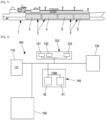
- FIG.1 illustrates a ship 1 comprising four sealed and thermally insulating tanks 2.
- the four tanks 2 may have identical or different filling states.
- the ship 1 When at sea, the ship 1 is subject to numerous movements linked to navigation conditions. These movements of the ship 1 are reflected on the liquid contained in the tanks 3, 4, 5, 6 which, consequently, is subject to movements in the tanks 3, 4, 5, 6.
- These movements of the liquid in the tanks 3, 4, 5, 6 generate impacts on the walls of the tanks 3, 4, 5, 6 which can damage the tanks immediately if they are too violent.
- repeated hammering of the walls of the tanks 3, 4, 5, 6 at high and non-destructive levels can lead to wear degradation by fatigue of said walls. It is important to maintain the integrity of the walls of tanks 3, 4, 5, 6 in order to maintain the sealing and insulation characteristics of tanks 3, 4, 5, 6.
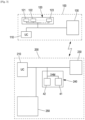
- FIG.2 illustrates an example of a management system 100 on board the ship 1.
- This management system 100 comprises a central unit 110 connected to a plurality of on-board sensors 120 making it possible to obtain different parameter measurements.
- the sensors 120 comprise, for example and in a non-exhaustive manner, at least one filling level sensor 121, for each tank, different movement sensors 122 of the ship and maritime condition sensors 123.
- the management system 100 also comprises a communication interface 130 allowing the central unit 110 to communicate with remote devices for example to obtain meteorological data, position data of the ship or other.
- the ship's motion sensors 122 determine measured motions of the ship, for example by measuring the accelerations undergone by the ship along three perpendicular axes in translation and rotation.
- IMU Inertial Measurement Unit
- MRU from the English Motion Reference Unit
- the sea condition sensors 123 obtain a current sea condition in the environment of the vessel, such as a wave height and frequency in the environment of the vessel.
- a current sea condition in the environment of the vessel such as a wave height and frequency in the environment of the vessel.
- the wave height and/or frequency is provided from a visual observation by the crew.
- the management system 100 further comprises a human-machine interface 140.
- This human-machine interface 140 comprises a display means 41.
- This display means 41 allows the operator to obtain the various management information calculated by the system or the measurements obtained by the sensors 120 or even a current tossing state, which can be estimated as will be detailed later.
- the human-machine interface 140 further comprises an acquisition means 42 allowing the operator to manually provide quantities to the central unit 110, typically to provide the central unit 110 with data that cannot be obtained by sensors because the vessel does not have the necessary sensor or the latter is damaged.
- the acquisition means allows the operator to enter information on the height and/or frequency of the waves from a visual observation and/or to manually enter a heading and/or a speed of the vessel.
- the management system 100 further comprises a database 150.
- This database can be used to estimate a sloshing response of a tank as will be detailed later.
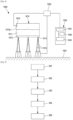
- FIG.3 illustrates an example of a management system 200 located on land and communicating with the ship 1.
- the ship comprises the central unit 110, the sensors 120 and a communication interface 130.
- the management system 200 comprises a central unit 210, a communication interface 230, a human-machine interface 240 and a database 250.
- the operation of the management system 200 is similar to the operation of the management system 100 and is only differentiated by the sending of the information measured by the sensors 120 of the ship 1 to the management system 200 located on land via the communication interfaces 130 and 230.
- the communication interfaces can use data transmission by terrestrial or satellite radio frequency.
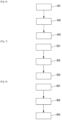
- FIG.4 schematically represents an example of a test device 1000 for carrying out tests on a test tank 1010.
- the tests consist of subjecting the test tank 1010 to movements, the test tank 1010 having a given filling level of fluid 1011, and measuring a pressure on at least one point of a wall 1010a of the test tank 1010 using a pressure sensor 1012 and/or a number of impacts on at least one wall of the test tank 1010.
- the test tank 1010 may be of reduced dimensions compared to a tank whose sloshing response is to be estimated, and/or have a geometry representative of the tank whose sloshing response is to be estimated.
- the fluid 1011 is preferably of the same nature, and ideally at the same temperature, density, viscosity, as that transported by the tank whose sloshing response is to be estimated; it may in particular be Liquefied Petroleum Gas (also called LPG) having for example a temperature between - 50°C and 0°C, or Liquefied Natural Gas (LNG) at approximately -162°C at atmospheric pressure.
- LPG Liquefied Petroleum Gas
- LNG Liquefied Natural Gas
- Many liquefied gases can also be considered, in particular methane, ethane, propane, butane, ammonia, dihydrogen or ethylene.
- the test tank 1010 is subjected to movements during the tests.
- the device 1000 thus comprises a platform 1013 to which the test tank 1010 is secured.
- the platform 1013 is driven into motion by the action of six hydraulic cylinders 1015 connected at one of their ends to the platform at three fixing points 1014 and at the other end to a frame or to a floor 1001.
- This makes it possible to drive the test tank 1010 into motion according to six degrees of freedom, in translation and in rotation.
- the test tank 1010 can be driven into motion by different means.
- the device 1000 further comprises a test control unit 1020.
- the test control unit 1020 is configured to control the hydraulic cylinders 1015 in order to subject the test tank 1010 to predetermined movements. in a test program.
- these movements are movements representative of a given movement of the ship, which preferably take into account the position of the tank on the ship and/or the geometry of the tank.
- these movements are movements representative of a given sea state, which are converted into corresponding movements of the ship, preferably taking into account the position of the tank on the ship and/or the geometry of the tank.
- the evaluation of the corresponding movements of the ship from a given sea state is a common task in the evaluation of the seakeeping of a ship.
- the test control unit 1020 records the values measured during the test by the at least one pressure sensor 1012.
- the test data processing unit 1030 is configured to train, on the central unit 1032 communicating with the memory 1033, a statistical model by a machine learning method.
- the statistical model is capable of estimating a sloshing response of the tank as a function of a filling level of the tank and a current sea state and optionally at least one of a draft of the ship, a speed of the ship and a heading of the ship.
- the sloshing response comprises at least one of a rate of fluid impacts on the walls of the tank, a maximum pressure on the walls of the tank, and a probability of damage to the tank.
- the statistical model considers a plurality of tanks, the statistical model being capable of estimating a sloshing response of each tank as a function of its position within the ship.
- the training of the statistical model is performed by a supervised machine learning method.
- the supervised machine learning method can be a Gaussian process regression method.
- Gaussian process regression methods are well known as such; they are well suited to the training of the statistical model because they make it possible to produce a statistical model capable of responding to a regression problem, for any input data set, by training from a relatively limited number of data.
- the training of the statistical model is carried out from the results of the tests performed on the test vessel 1010. More particularly, in a preferred example, the training of the statistical model is performed from the sloshing response of the test vessel 1010 during each test, this sloshing response being calculated beforehand from the values recorded during the test by the at least one pressure sensor 1012.
- the sloshing response of the test vessel 1010 may comprise at least one of a rate of fluid impacts on one or some of the walls 1010a of the test vessel 1010 and a maximum pressure on the walls 1010a of the test vessel 1010 over a given period.
- the training of the statistical model is carried out both from the results of the tests carried out on the test tank 1010 and from test data obtained or recorded on ships operating as a carrier and/or user of liquefied gas, one or more tanks of these ships playing the role of the test tank 1010.
- the training of the statistical model can be carried out solely from test data obtained or recorded on ships operating as a carrier and/or user of liquefied gas, one or more tanks of these ships playing the role of the test tank 1010.
- Steps 301 to 305 can be performed by the central unit 1032 communicating with the memory 1033.
- the method 300 may comprise a step 301 of excluding from the test data set used for training the statistical model test results having a sloshing response of the test tank 1010 below a certain threshold.
- the statistical model is trained only from the test data having revealed a significant sloshing of the test tank 1010, which improves the accuracy of the estimation of the sloshing response by the statistical model.
- the method 300 comprises, after the optional step 301, a step 302 consisting of training the statistical model as already described above.
- At least one constraint is imposed on the statistical model during its training by the supervised machine learning method during step 302.
- These constraints can be defined on the basis of elementary physical considerations, such as for example the absence of sloshing in the case where the filling level of the tank is zero, and/or on the basis of considerations obtained by practical experience, such as for example the fact that larger movements or larger dimensions of the tank can potentially result in a larger sloshing response. As a result, the accuracy of the estimation of the sloshing response by the statistical model is increased.
- step 302 we have a statistical model which is capable of estimating a tank sloshing response as a function of a tank filling level and a current sea state and optionally at least one of a vessel draft, a vessel speed and a vessel heading, and this for any values of these quantities, including for which no test has been carried out on the test tank 1010.
- the calculation necessary to do this may be too long and/or require too many computing resources to be able to be implemented on board a vessel, for which it is important to obtain an estimate of the sloshing response as quickly as possible and with the least expensive on-board system possible.
- a step 303 is implemented consisting of generating a plurality of input data vectors each comprising a filling level of the tank and a current sea state, followed by a step 304 consisting of, for each input data vector generated in step 303: obtaining an estimated sloshing response of the tank using the statistical model in step 302; and storing in a database the estimated sloshing response of the tank in association with the input data vector.
- the database obtained in step 304 is transmitted to the management system 100, or stored on a computer-readable recording medium.
- the database 150 is also obtained, the use of which will be described later.
- the statistical model is able to estimate a tank sloshing response as a function of at least a tank filling level and a current sea state.
- the statistical model is able to estimate a tank sloshing response as a function of a tank filling level, a current ship motion state and optionally at least one of a ship draft, a ship speed and a ship heading. Steps 302, 303, 304 are then modified accordingly.
- the method 400 may consider a plurality of tanks instead of a single tank. In this case, before implementing the method 400, a preliminary step of defining the position of each of the tanks within the ship may be carried out.
- the organization chart of the [ Fig.6 ] is implemented entirely on the central unit 110 forming a single processing means.
- the flowchart of the [ Fig.6 ] is partially carried out on the shore management system 200 which communicates with the ship.
- the ship 1 transmits to the shore station all the information coming from the sensors 120, and the central unit 110 and the central unit 210 together form a shared processing means.
- a draft of the vessel and/or a heading of the vessel are also determined, typically from indications provided by the shipboard systems.
- the draft of the vessel is typically provided to the shipboard systems by one or more float and/or hydrostatic pressure sensors.
- the heading of the vessel is typically provided to the shipboard systems by one or more navigation compasses.
- the method 400 further comprises a second step 402 consisting of generating an input data vector comprising the data determined in step 401.
- the method 400 further comprises a third step 403 consisting in estimating a sloshing response of the tank from the input data vector generated in step 402 and from the database 150. More concretely, if it turns out that the input data vector is present in the database 150, the sloshing response is obtained by simply reading the database 150. However, more typically, the database 150 will not contain the input data vector, but input data neighboring those contained in the input data vector. In this case, the sloshing response will be obtained by interpolation of the sloshing response associated with two or more neighboring input data vectors present in the database 150.
- the sloshing response obtained can be compared to an alert threshold, and an alarm can be displayed to a user, for example on the display means 41, if the sloshing response exceeds the alert threshold.
- a decision-making assistance step intended to reduce the sloshing can be carried out.
- This decision-making assistance step can consist of a proposal for a change in the direction or trajectory of the ship, a change of course particularly suited to stationary floating structures, a modification of the speed of the ship or a change in the filling rate of the tank(s) (between the tanks or between a tank and a tank external to the ship for the case of a stationary floating structure).
- the alarm can consist of signaling a problem to be corrected immediately or in the short term, if possible an alarm designating the tank(s) that require a control and maintenance operation with a view to possible repair.
- the database 150 is obtained from a statistical model which is capable of estimating a sloshing response of the tank as a function of a filling level of the tank, a current state of movement of the vessel and optionally at least one of a draft of the vessel, a speed of the vessel and a heading of the vessel as described above in relation to the [ Fig.4 ].
- the method 500 may consider a plurality of tanks instead of a single tank. In this case, before implementing the method 500, a preliminary step of defining the position of each of the tanks within the ship may be carried out.
- the method 500 comprises a first step 501 of determining a current tank fill level and a current vessel motion state.
- the current tank fill level is typically determined from a fill indication provided by the tank fill level sensor 121.
- the current vessel motion state may be determined from indications provided by the vessel motion sensors 122.
- a draft of the vessel and/or a heading of the vessel are also determined, typically from indications provided by the shipboard systems.
- the draft of the vessel is typically provided to the shipboard systems by one or more float and/or hydrostatic pressure sensors.
- the heading of the vessel is typically provided to the shipboard systems by one or more navigation compasses.
- the motion sensors of the vessel 122 typically having an acquisition frequency much higher than the typical duration of the sloshing of the tank, the indications provided by the motion sensors of the vessel 122 can be averaged over an acquisition period, the other data determined in step 501 then being averaged over this same acquisition period.
- the method 500 further comprises a second step 502, analogous to step 402, consisting of generating an input data vector comprising the data determined in step 501.
- the method 500 further comprises a third step 503 of estimating a sloshing response of the tank from the input data vector generated in step 502 and the database 150.
- Step 503 is analogous to step 403 and is therefore not explained in detail again.
- the obtained toss response can be compared to an alert threshold, and an alarm can be displayed to a user, for example on the display means 41, if the toss response exceeds the alert threshold.
- a decision support step can be carried out. intended to reduce sloshing.
- This decision-making step may consist of a proposal to change the direction or trajectory of the vessel, a change of course particularly suited to stationary floating structures, a change in the speed of the vessel or a change in the filling rate of the tank(s) (between the tanks or between a tank and a tank external to the vessel in the case of a stationary floating structure).
- the alarm may consist of signalling a problem to be corrected immediately or in the short term, if possible an alarm designating the tank(s) requiring a check and maintenance operation with a view to possible repair.
- the database 150 is obtained from a statistical model which is capable of estimating a sloshing response of the tank as a function of a filling level of the tank, a current sea state and optionally at least one of a draft of the vessel, a speed of the vessel and a heading of the vessel.
- the method 600 comprises a first step 601 of determining a current tank fill level and estimating future sea states.
- the current tank fill level is typically determined from a fill indication provided by the tank fill level sensor 121.
- the future sea states are estimated from meteorological information and a ship's course.
- the ship's course is typically obtained from indications provided by the ship's onboard systems, such as the ship's speed and the ship's heading.
- the meteorological information may be provided by the sea condition sensors 123 and/or by communication, by terrestrial radio frequency or by satellite, with a network of weather stations.
- the method 600 further comprises a second step 602 of generating a plurality of input data vectors each comprising a current tank filling level and an estimated future sea state.
- a draft of the vessel, a heading of the vessel and a speed of the vessel are also determined, typically from indications provided by the shipboard systems.
- the draft of the vessel is typically provided to the shipboard systems by one or more float and/or hydrostatic pressure sensors.
- the heading of the vessel is typically provided to the shipboard systems by one or more navigation compasses.
- the speed of the vessel is typically provided to the shipboard systems by an IMU and/or by a GPS-type satellite navigation receiver.
- the method 600 further comprises a third step 603 consisting of estimating a future sloshing response of the tank from each of the data vectors. input generated in step 602 and from database 150.
- Step 603 is analogous to step 403 and is therefore not explained in detail again.
- a ship's route can be determined to reduce the upcoming sloshing response of the tank compared to the sloshing response of the tank that would be expected if the ship maintained its current route.
- the expression "ship's route” means a heading of this ship, the speed of the latter or a simple avoidance of a geographical area.
- the change of course results in a change of angle between the North direction and the longitudinal axis of the structure so as to orient or bring the floating structure to conventionally reduce the negative consequences of swell and waves on the floating structure.
- a modification of the filling level of the tank can be determined to reduce the upcoming sloshing response of the tank.
- the database 150 is obtained from a statistical model which is capable of estimating a sloshing response of the tank as a function of a filling level of the tank, a current state of movement of the ship and optionally at least one of a draft of the ship, a speed of the ship and a heading of the ship.
- step 601 consists of determining a current tank filling level and estimating future ship motion states.
- the current tank filling level is typically determined from a filling indication provided by the tank filling level sensor 121.
- Future ship motion states are estimated from meteorological information and a ship course.
- the ship course is typically obtained from indications provided by the ship's onboard systems, such as the ship's speed and the ship's heading.
- the meteorological information may be provided by the sea condition sensors 123 and/or by communication, by terrestrial radio frequency or by satellite, with a network of weather stations.
- the future ship motion states may be estimated by first estimating future sea states estimated from meteorological information and a ship's course, and then by secondly estimating future ship motion states from the future sea states thus estimated. It is recalled that, as already mentioned above, the assessment of the corresponding ship motions from a given sea state is a common task in assessing the seakeeping of a ship.
- Step 602 then consists of generating a plurality of input data vectors each comprising a current filling level of the tank and a state of Estimated upcoming ship movement.
- step 601 a draft of the vessel, a heading of the vessel and a speed of the vessel are also determined, as already mentioned previously.
- Step 603 involves estimating a future sloshing response of the tank from each of the input data vectors generated in step 602 and the database 150. Step 603 is analogous to step 403 and is therefore not explained in detail again.
- a ship's course may be determined that reduces the upcoming tank sloshing response relative to the upcoming tank sloshing response that would occur if the ship maintained its current course, as previously mentioned.
Landscapes
- Engineering & Computer Science (AREA)
- Mechanical Engineering (AREA)
- Combustion & Propulsion (AREA)
- Ocean & Marine Engineering (AREA)
- Chemical & Material Sciences (AREA)
- Physics & Mathematics (AREA)
- Theoretical Computer Science (AREA)
- General Engineering & Computer Science (AREA)
- Software Systems (AREA)
- General Physics & Mathematics (AREA)
- Mathematical Physics (AREA)
- Artificial Intelligence (AREA)
- Computer Vision & Pattern Recognition (AREA)
- Data Mining & Analysis (AREA)
- Evolutionary Computation (AREA)
- Medical Informatics (AREA)
- Probability & Statistics with Applications (AREA)
- Computing Systems (AREA)
- Thermal Sciences (AREA)
- Environmental & Geological Engineering (AREA)
- Life Sciences & Earth Sciences (AREA)
- Atmospheric Sciences (AREA)
- Filling Or Discharging Of Gas Storage Vessels (AREA)
- Feedback Control In General (AREA)
- Monitoring And Testing Of Nuclear Reactors (AREA)
Claims (20)
- Verfahren (300) zum Erhalten einer Datenbank (150), die zum Schätzen einer Schwankungsreaktion von mindestens einem dichten und wärmeisolierenden Gefäß für den Transport von Flüssiggas verwendbar ist, wobei das Verfahren die folgenden Schritte umfasst:- Trainieren eines statistischen Modells durch eine Methode des maschinellen Lernens, die auf einem Testdatensatz überwacht wird, wobei das statistische Modell in der Lage ist, eine Schwankungsreaktion des Gefäßes in Abhängigkeit von einem Füllstand des Gefäßes und einem aktuellem Seegang und optional zwischen einem Tiefgang des Schiffes, einer Geschwindigkeit des Schiffes und einem Kurs des Schiffes, zu schätzen, und wobei der Testdatensatz aus den Ergebnissen einer Vielzahl von Tests erhalten wird, die jeweils darin bestehen, ein Testgefäß (1010) mit einem gegebenen Füllstand Bewegungen auszusetzen und einen Druck an mindestens einem Punkt einer Wand (1010a) des Testgefäßes(1010) und/oder eine Anzahl von Stößen auf mindestens eine Wand des Testgefäßes (1010) zu messen;- Erzeugen (303) einer Vielzahl von Eingabedatenvektoren, die jeweils einen Füllstand des Gefäßes und einen aktuellen Seegang umfassen; und- für jeden so erzeugten Eingabedatenvektor: Erhalten (303) einer geschätzten Schwankungsreaktion des Gefäßes unter Verwendung des statistischen Modells; und Speichern (303) der geschätzten Schwankungsreaktion des Gefäßes in Verbindung mit dem Eingabedatenvektor in einer Datenbank.
- Verfahren gemäß Anspruch 1, wobei das Schwankungsverhalten mindestens eines ausgewählt zwischen einer Flüssigkeitsaufprallrate auf die Wände des Gefäßes, einen maximalen Druck auf die Wände des Gefäßes und eine Wahrscheinlichkeit einer Beschädigung des Gefäßes umfasst.
- Verfahren nach einem der Ansprüche 1 bis 2, wobei dem statistischen Modell während des Trainierens durch die Methode des maschinellen Lernens mindestens eine Einschränkung auferlegt wird.
- Verfahren nach einem der Ansprüche1 bis 3, weiterhin umfassend einen Schritt (301) des Ausschließens von Testergebnissen aus dem Testdatensatz, die eine Schwankungsreaktion unterhalb eines Schwellenwerts aufweisen, vor dem Schritt des Trainierens (302) des statistischen Modells.
- Verfahren (300) zum Erhalten einer Datenbank (150), die zum Schätzen einer Schwankungsreaktion von mindestens einem dichten und wärmeisolierenden Gefäß für den Transport von Flüssiggas verwendbar ist, wobei das Verfahren die folgenden Schritte umfasst:- Trainieren eines statistischen Modells durch eine Methode des maschinellen Lernens, die auf einem Testdatensatz überwacht wird, wobei das statistische Modell in der Lage ist, eine Schwankungsreaktion des Gefäßes in Abhängigkeit von einem Füllstand des Gefäßes, einem aktuellen Zustandes der Schiffsbewegung und optional zwischen einem Tiefgang des Schiffes, einer Geschwindigkeit des Schiffes und einem Kurs des Schiffes, zu schätzen, und wobei der Testdatensatz aus den Ergebnissen einer Vielzahl von Tests erhalten wird, die jeweils darin bestehen, ein Testgefäß (1010) mit einem gegebenen Füllstand Bewegungen auszusetzen und einen Druck an mindestens einem Punkt einer Wand (1010a) des Testgefäßes(1010) und/oder eine Anzahl von Stößen auf mindestens eine Wand des Testgefäßes (1010) zu messen;- Erzeugen (303) einer Vielzahl von Eingabedatenvektoren, die jeweils einen Füllstand des Gefäßes und einen Strömungszustandes der Schiffsbewegung umfassen; und- für jeden so erzeugten Eingabedatenvektor: Erhalten (303) einer geschätzten Schwankungsreaktion des Gefäßes unter Verwendung des statistischen Modells; und Speichern (303) der geschätzten Schwankungsreaktion des Gefäßes in Verbindung mit dem Eingabedatenvektor in einer Datenbank.
- Verfahren gemäß Anspruch 5, wobei das Schwankungsverhalten mindestens eines ausgewählt zwischen einer Flüssigkeitsaufprallrate auf die Wände des Gefäßes, einen maximalen Druck auf die Wände des Gefäßes und eine Wahrscheinlichkeit einer Beschädigung des Gefäßes umfasst.
- Verfahren nach einem der Ansprüche 5 bis 6, wobei dem statistischen Modell während des Trainierens durch die Methode des maschinellen Lernens mindestens eine Einschränkung auferlegt wird.
- Verfahren nach einem der Ansprüche 5 bis 7, weiterhin umfassend einen Schritt (301) des Ausschließens von Testergebnissen aus dem Testdatensatz, die eine Schwankungsreaktion unterhalb eines Schwellenwerts aufweisen, vor dem Schritt des Trainierens (302) des statistischen Modells.
- Verfahren (400) zum Schätzen einer Schwankungsreaktion von mindestens einem dichten und wärmeisolierenden Gefäß für den Transport von Flüssiggas an Bord eines Schiffes, wobei das Verfahren die folgenden Schritte umfasst:- Ermitteln (401) eines aktuellen Füllstands des Gefäßes;- Ermitteln (401) eines aktuellen Seegangs;- Erzeugen (402) eines Eingabedatenvektors, der den ermittelten aktuellen Füllstand des Gefäßes und den ermittelten aktuellen Seegang umfasst; und- Schätzen (403) einer Schwankungsreaktion des Gefäßes aus dem so erzeugten Eingabedatenvektor und der Datenbank (150), die durch das Verfahren nach einem der Ansprüche 1 bis 4 erzeugt wurde.
- Verfahren (500) zum Schätzen einer Schwankungsreaktion von einem dichten und wärmeisolierenden Gefäß für den Transport von Flüssiggas an Bord eines Schiffes, wobei das Verfahren die folgenden Schritte umfasst:- Ermitteln (501) eines aktuellen Füllstands des Gefäßes;- Ermitteln (501) eines aktuellen Seeganges;- Erzeugen (502) eines Eingabedatenvektors, der den ermittelten aktuellen Füllstand des Gefäßes und den ermittelten aktuellen Seegang umfasst; und- Schätzen (503) einer Schwankungsreaktion des Gefäßes aus dem so erzeugten Eingabedatenvektor und der Datenbank (150), die durch das Verfahren nach einem der Ansprüche 5 bis 8 erzeugt wurde.
- Verfahren gemäß Anspruch 9 oder 10, wobei eine Vielzahl von Gefäßen in Betracht gezogen wird und das Verfahren einen vorherigen Schritt des Definierens der Position jedes der Gefäße innerhalb des Schiffes umfasst.
- Verfahren (400, 500) gemäß einem der Ansprüche 9 bis 11, weiterhin umfassend einen Schritt des Bereitstellens eines Alarmes für einen Benutzer, wenn die geschätzte Schwankungsreaktion des Gefäßes eine Warnschwelle überschreitet, und vorzugsweise einen Schritt der Entscheidungshilfe zum Reduzieren der Pendelreaktion.
- Verwaltungssystem (100) für ein Schiff (1) mit mindestens einem dichten und wärmeisolierenden Gefäß (2) zum Transport von Flüssiggas, wobei das System Folgendes umfasst:- mindestens einen Füllstandsensor (121) zum Messen eines aktuellen Füllstands des einen Gefäßes (2);- eine Vorrichtung zur Bewertung des Seegangs (123), die einen aktuellen Seegang bewerten kann; und- eine Verarbeitungsvorrichtung (110), die ausgebildet ist, um einen Eingabedatenvektor zu erzeugen, der einen aktuellen Füllstand des Gefäßes und einen aktuellen, von der Vorrichtung zur Bewertung des Seeganges( 123) ermittelten Seegang umfasst, und um eine Schwankungsreaktion des Gefäßes (2) aus dem so erzeugten Eingabedatenvektor und der Datenbank (150), die durch das Verfahren (300) gemäß einem der Ansprüche 1 bis 4 erhalten wurde, zu ermitteln.
- Verwaltungssystem (100) für ein Schiff (1) mit mindestens einem dichten und wärmeisolierenden Gefäß (2) zum Transport von Flüssiggas, wobei das System Folgendes umfasst:- mindestens einen Füllstandsensor (121) zum Messen eines aktuellen Füllstands des einen Gefäßes (2);- eine Bewertungsvorrichtung (122) für den aktuellen Bewegungszustand des Schiffes, die einen aktuellen Bewegungszustand des Schiffes bewerten kann; und- eine Verarbeitungsvorrichtung (110), die ausgebildet ist, um einen Eingabedatenvektor zu erzeugen, der einen aktuellen Füllstand des Gefäßes und einen aktuellen Bewegungszustand des Schiffes umfasst, und um eine Schwankungsreaktion des Gefäßes (2) aus dem so erzeugten Eingabedatenvektor und der Datenbank (150), die durch das Verfahren (300) gemäß einem der Ansprüche 5 bis 8 erhalten wurde, zu ermitteln.
- Verfahren (600) zum Schätzen einer Schwankungsreaktion eines dichten und wärmeisolierenden Gefäßes (2) für den Transport von Flüssiggas an Bord eines Schiffes (1), wobei das Verfahren die folgenden Schritte umfasst:- Ermitteln (601) eines aktuellen Füllstands des Gefäßes;- Schätzen (601) von zukünftigem Seegang auf Grundlage von Wetterinformationen und einer Route des Schiffs;- Erzeugen (602) einer Vielzahl von Eingabedatenvektoren, die jeweils einen aktuellen Füllstand des Gefäßes und einem geschätzten zukünftigen Seegang umfassen; und- Schätzen (503) einer Schwankungsreaktion des Gefäßes aus dem so erzeugten Eingabedatenvektor und der Datenbank (150), die durch das Verfahren nach einem der Ansprüche 1 bis 4 erzeugt wurde.
- Verfahren (600) zum Schätzen einer Schwankungsreaktion eines dichten und wärmeisolierenden Gefäßes (2) für den Transport von Flüssiggas an Bord eines Schiffes (1), wobei das Verfahren die folgenden Schritte umfasst:- Ermitteln (601) eines aktuellen Füllstands des Gefäßes;- Schätzen (601) von zukünftigen Bewegungen des Schiffes auf Grundlage von Wetterinformationen und einer Route des Schiffs;- Erzeugen (602) einer Vielzahl von Eingabedatenvektoren, die jeweils einen aktuellen Füllstand des Gefäßes und eine geschätzte zukünftige Bewegung des Schiffes umfassen; und- -Schätzen (503) einer Schwankungsreaktion des Gefäßes aus dem so erzeugten Eingabedatenvektor und der Datenbank (150), die durch das Verfahren nach einem der Ansprüche 5 bis 8 erzeugt wurde.
- Verfahren gemäß Anspruch 15 oder 16, weiterhin umfassend einen Schritt des Bestimmens einer Schiffsroute und/oder einer Änderung des Füllstands des Gefäßes, wodurch die zukünftige Schwankungsreaktion des Gefäßes verringert werden kann.
- Verwaltungssystem (100) für ein Schiff (1) mit mindestens einem dichten und wärmeisolierenden Gefäß (2) zum Transport von Flüssiggas, wobei das System Folgendes umfasst:- mindestens einen Füllstandsensor (121) zum Messen eines aktuellen Füllstands des einen Gefäßes (2);- eine Vorrichtung zur Bewertung von Seegang (123), die bevorstehenden Seegang auf Grundlage von Wetterinformationen und einer Route des Schiffs bewerten kann; und- eine Verarbeitungsvorrichtung (110), die ausgebildet ist, um eine Vielzahl von Eingabedatenvektor zu erzeugen, wobei jeder einen aktuellen Füllstand des Gefäßes und eine, von der Vorrichtung zur Bewertung des Seeganges (123) ermittelten bevorstehenden Seegang umfasst, und um eine Schwankungsreaktion des Gefäßes (2) aus den so erzeugten Eingabedatenvektoren und der Datenbank (150), die durch das Verfahren gemäß einem der Ansprüche 1 bis 4 erhalten wurde, zu ermitteln.
- Verwaltungssystem (100) für ein Schiff (1) mit mindestens einem dichten und wärmeisolierenden Gefäß (2) zum Transport von Flüssiggas, wobei das System Folgendes umfasst:- mindestens einen Füllstandsensor (121) zum Messen eines aktuellen Füllstands des einen Gefäßes (2);- eine Vorrichtung zur Bewertung von Bewegungen, die eine bevorstehenden bevorstehende Bewegung des Schiffes auf Grundlage von Wetterinformationen und einer Route des Schiffs bewerten kann; und- eine Verarbeitungsvorrichtung (110), die ausgebildet ist, um eine Vielzahl von Eingabedatenvektor zu erzeugen, wobei jeder einen aktuellen Füllstand des Gefäßes und eine, von der Vorrichtung zur Bewertung von Bewegungen ermittelte bevorstehende Bewegung des Schiffes umfasst, und um eine Schwankungsreaktion des Gefäßes (2) aus den so erzeugten Eingabedatenvektoren und der Datenbank (150), die durch das Verfahren gemäß einem der Ansprüche 5 bis 8 erhalten wurde, zu ermitteln.
- System nach Anspruch 18 oder 19, wobei die Verarbeitungsvorrichtung (110) weiterhin so konfiguriert ist, dass sie einen Kurs des Schiffes bestimmt, der die zukünftige Schwankungsreaktion des Gefäßes verringert.
Applications Claiming Priority (2)
| Application Number | Priority Date | Filing Date | Title |
|---|---|---|---|
| FR2005227A FR3110691B1 (fr) | 2020-05-20 | 2020-05-20 | Estimation d’une réponse en ballottement d’une cuve par un modèle statistique entraîné par apprentissage automatique |
| PCT/EP2021/062532 WO2021233742A1 (fr) | 2020-05-20 | 2021-05-11 | Estimation d'une reponse en ballottement d'une cuve par un modele statistique entraine par apprentissage automatique |
Publications (3)
| Publication Number | Publication Date |
|---|---|
| EP4153474A1 EP4153474A1 (de) | 2023-03-29 |
| EP4153474B1 true EP4153474B1 (de) | 2025-03-05 |
| EP4153474C0 EP4153474C0 (de) | 2025-03-05 |
Family
ID=73013496
Family Applications (1)
| Application Number | Title | Priority Date | Filing Date |
|---|---|---|---|
| EP21725495.2A Active EP4153474B1 (de) | 2020-05-20 | 2021-05-11 | Schätzung einer tankschwappreaktion unter verwendung eines durch maschinenlernen trainierten statistischen modells |
Country Status (10)
| Country | Link |
|---|---|
| US (1) | US20230186157A1 (de) |
| EP (1) | EP4153474B1 (de) |
| JP (1) | JP7764397B2 (de) |
| KR (1) | KR102565923B1 (de) |
| CN (1) | CN115551775B (de) |
| AU (1) | AU2021276051A1 (de) |
| CA (1) | CA3176945A1 (de) |
| ES (1) | ES3021817T3 (de) |
| FR (1) | FR3110691B1 (de) |
| WO (1) | WO2021233742A1 (de) |
Families Citing this family (3)
| Publication number | Priority date | Publication date | Assignee | Title |
|---|---|---|---|---|
| CN117516659B (zh) * | 2023-10-18 | 2024-05-17 | 广州市航易信息科技有限公司 | 一种大型船舶用稳定性好的液位测量修正装置及方法 |
| CN118130005B (zh) * | 2024-05-06 | 2024-07-09 | 浙江众鑫环保科技集团股份有限公司 | 一种植物纤维包装制品密封性检测方法及其应用 |
| CN118485022B (zh) * | 2024-06-03 | 2024-11-15 | 中国人民解放军总医院第六医学中心 | 一种舱体水下冲击模拟预测方法及装置 |
Family Cites Families (10)
| Publication number | Priority date | Publication date | Assignee | Title |
|---|---|---|---|---|
| US7680617B2 (en) * | 2006-10-10 | 2010-03-16 | Halliburton Energy Services, Inc. | Process control architecture with hydrodynamic correction |
| AU2009317982B2 (en) * | 2008-11-21 | 2014-04-24 | Exxonmobil Upstream Research Company | Liquid impact pressure control methods and systems |
| FR2945511B1 (fr) * | 2009-05-14 | 2011-07-22 | Saipem Sa | Navire ou support flottant equipe d'un dispositif de detection des mouvements de carenes liquides |
| US8643509B1 (en) | 2011-01-31 | 2014-02-04 | The Boeing Company | Methods and systems for providing sloshing alerts and advisories |
| WO2012144641A1 (ja) * | 2011-04-22 | 2012-10-26 | 国立大学法人横浜国立大学 | スロッシング防止装置及びスロッシング防止方法 |
| CN110422272A (zh) * | 2012-05-30 | 2019-11-08 | 赛创尼克株式会社 | 通过对海洋结构物的实时测量监视的控制方法 |
| KR20150044546A (ko) * | 2013-10-17 | 2015-04-27 | 현대중공업 주식회사 | 선박의 액체화물의 슬로싱 모니터링 시스템 및 방법 |
| WO2018184222A1 (en) * | 2017-04-07 | 2018-10-11 | Intel Corporation | Methods and systems using improved training and learning for deep neural networks |
| JP6959801B2 (ja) * | 2017-08-31 | 2021-11-05 | 川崎重工業株式会社 | スプレー気化率予測方法及び装置、並びに、液化ガス運搬船の運航支援方法及びシステム |
| US12313025B2 (en) * | 2018-03-12 | 2025-05-27 | Blue Origin Manufacturing, LLC | Rocket tank liquid level determination, and associated systems and methods |
-
2020
- 2020-05-20 FR FR2005227A patent/FR3110691B1/fr active Active
-
2021
- 2021-05-11 US US17/924,587 patent/US20230186157A1/en active Pending
- 2021-05-11 WO PCT/EP2021/062532 patent/WO2021233742A1/fr not_active Ceased
- 2021-05-11 CA CA3176945A patent/CA3176945A1/en active Pending
- 2021-05-11 JP JP2022570451A patent/JP7764397B2/ja active Active
- 2021-05-11 ES ES21725495T patent/ES3021817T3/es active Active
- 2021-05-11 AU AU2021276051A patent/AU2021276051A1/en not_active Abandoned
- 2021-05-11 KR KR1020217033276A patent/KR102565923B1/ko active Active
- 2021-05-11 EP EP21725495.2A patent/EP4153474B1/de active Active
- 2021-05-11 CN CN202180034836.1A patent/CN115551775B/zh active Active
Also Published As
| Publication number | Publication date |
|---|---|
| ES3021817T3 (en) | 2025-05-27 |
| KR102565923B1 (ko) | 2023-08-10 |
| JP2023525901A (ja) | 2023-06-19 |
| US20230186157A1 (en) | 2023-06-15 |
| CN115551775B (zh) | 2025-06-20 |
| AU2021276051A1 (en) | 2022-11-17 |
| FR3110691B1 (fr) | 2022-05-20 |
| EP4153474A1 (de) | 2023-03-29 |
| JP7764397B2 (ja) | 2025-11-05 |
| EP4153474C0 (de) | 2025-03-05 |
| FR3110691A1 (fr) | 2021-11-26 |
| WO2021233742A1 (fr) | 2021-11-25 |
| CN115551775A (zh) | 2022-12-30 |
| CA3176945A1 (en) | 2021-11-25 |
| KR20210144766A (ko) | 2021-11-30 |
Similar Documents
| Publication | Publication Date | Title |
|---|---|---|
| EP4153474B1 (de) | Schätzung einer tankschwappreaktion unter verwendung eines durch maschinenlernen trainierten statistischen modells | |
| EP3803190B1 (de) | Verfahren zur steuerung der füllstände von behältern | |
| EP3966101B1 (de) | Verfahren und vorrichtung zur bestimmung von sloshing | |
| EP3881149B1 (de) | Wartungsverwaltungsverfahren für ein schiff | |
| WO2022180109A1 (fr) | Surveillance et prévision du fonctionnement d'une pompe disposée dans une cuve pour le transport d'un produit liquide à bord d'un navire | |
| EP4355647B1 (de) | Verfahren und vorrichtung zur abschätzung der wahrscheinlichkeit von schäden durch schwappen einer flüssigkeitslast während des transfers dieser flüssigkeit zwischen zwei schwimmenden strukturen | |
| RU2851289C2 (ru) | Способ и устройство для оценки вероятности повреждения, вызываемого плесканием жидкого груза во время операции передачи упомянутого жидкого груза между двумя плавучими конструкциями | |
| RU2791213C2 (ru) | Способ управления уровнями заполнения резервуаров |
Legal Events
| Date | Code | Title | Description |
|---|---|---|---|
| STAA | Information on the status of an ep patent application or granted ep patent |
Free format text: STATUS: UNKNOWN |
|
| STAA | Information on the status of an ep patent application or granted ep patent |
Free format text: STATUS: THE INTERNATIONAL PUBLICATION HAS BEEN MADE |
|
| PUAI | Public reference made under article 153(3) epc to a published international application that has entered the european phase |
Free format text: ORIGINAL CODE: 0009012 |
|
| STAA | Information on the status of an ep patent application or granted ep patent |
Free format text: STATUS: REQUEST FOR EXAMINATION WAS MADE |
|
| 17P | Request for examination filed |
Effective date: 20221114 |
|
| AK | Designated contracting states |
Kind code of ref document: A1 Designated state(s): AL AT BE BG CH CY CZ DE DK EE ES FI FR GB GR HR HU IE IS IT LI LT LU LV MC MK MT NL NO PL PT RO RS SE SI SK SM TR |
|
| DAV | Request for validation of the european patent (deleted) | ||
| DAX | Request for extension of the european patent (deleted) | ||
| GRAP | Despatch of communication of intention to grant a patent |
Free format text: ORIGINAL CODE: EPIDOSNIGR1 |
|
| STAA | Information on the status of an ep patent application or granted ep patent |
Free format text: STATUS: GRANT OF PATENT IS INTENDED |
|
| INTG | Intention to grant announced |
Effective date: 20241024 |
|
| GRAS | Grant fee paid |
Free format text: ORIGINAL CODE: EPIDOSNIGR3 |
|
| GRAA | (expected) grant |
Free format text: ORIGINAL CODE: 0009210 |
|
| STAA | Information on the status of an ep patent application or granted ep patent |
Free format text: STATUS: THE PATENT HAS BEEN GRANTED |
|
| AK | Designated contracting states |
Kind code of ref document: B1 Designated state(s): AL AT BE BG CH CY CZ DE DK EE ES FI FR GB GR HR HU IE IS IT LI LT LU LV MC MK MT NL NO PL PT RO RS SE SI SK SM TR |
|
| REG | Reference to a national code |
Ref country code: GB Ref legal event code: FG4D Free format text: NOT ENGLISH |
|
| REG | Reference to a national code |
Ref country code: CH Ref legal event code: EP |
|
| REG | Reference to a national code |
Ref country code: IE Ref legal event code: FG4D Free format text: LANGUAGE OF EP DOCUMENT: FRENCH |
|
| REG | Reference to a national code |
Ref country code: DE Ref legal event code: R096 Ref document number: 602021027148 Country of ref document: DE |
|
| U01 | Request for unitary effect filed |
Effective date: 20250306 |
|
| U07 | Unitary effect registered |
Designated state(s): AT BE BG DE DK EE FI FR IT LT LU LV MT NL PT RO SE SI Effective date: 20250313 |
|
| REG | Reference to a national code |
Ref country code: ES Ref legal event code: FG2A Ref document number: 3021817 Country of ref document: ES Kind code of ref document: T3 Effective date: 20250527 |
|
| U20 | Renewal fee for the european patent with unitary effect paid |
Year of fee payment: 5 Effective date: 20250425 |
|
| PG25 | Lapsed in a contracting state [announced via postgrant information from national office to epo] |
Ref country code: RS Free format text: LAPSE BECAUSE OF FAILURE TO SUBMIT A TRANSLATION OF THE DESCRIPTION OR TO PAY THE FEE WITHIN THE PRESCRIBED TIME-LIMIT Effective date: 20250605 |
|
| PGFP | Annual fee paid to national office [announced via postgrant information from national office to epo] |
Ref country code: ES Payment date: 20250610 Year of fee payment: 5 |
|
| PGFP | Annual fee paid to national office [announced via postgrant information from national office to epo] |
Ref country code: NO Payment date: 20250425 Year of fee payment: 5 |
|
| PG25 | Lapsed in a contracting state [announced via postgrant information from national office to epo] |
Ref country code: HR Free format text: LAPSE BECAUSE OF FAILURE TO SUBMIT A TRANSLATION OF THE DESCRIPTION OR TO PAY THE FEE WITHIN THE PRESCRIBED TIME-LIMIT Effective date: 20250305 |
|
| PGFP | Annual fee paid to national office [announced via postgrant information from national office to epo] |
Ref country code: GR Payment date: 20250516 Year of fee payment: 5 |
|
| REG | Reference to a national code |
Ref country code: GR Ref legal event code: EP Ref document number: 20250400833 Country of ref document: GR Effective date: 20250613 |
|
| PG25 | Lapsed in a contracting state [announced via postgrant information from national office to epo] |
Ref country code: SM Free format text: LAPSE BECAUSE OF FAILURE TO SUBMIT A TRANSLATION OF THE DESCRIPTION OR TO PAY THE FEE WITHIN THE PRESCRIBED TIME-LIMIT Effective date: 20250305 |
|
| PG25 | Lapsed in a contracting state [announced via postgrant information from national office to epo] |
Ref country code: PL Free format text: LAPSE BECAUSE OF FAILURE TO SUBMIT A TRANSLATION OF THE DESCRIPTION OR TO PAY THE FEE WITHIN THE PRESCRIBED TIME-LIMIT Effective date: 20250305 |
|
| PG25 | Lapsed in a contracting state [announced via postgrant information from national office to epo] |
Ref country code: CZ Free format text: LAPSE BECAUSE OF FAILURE TO SUBMIT A TRANSLATION OF THE DESCRIPTION OR TO PAY THE FEE WITHIN THE PRESCRIBED TIME-LIMIT Effective date: 20250305 |
|
| PG25 | Lapsed in a contracting state [announced via postgrant information from national office to epo] |
Ref country code: SK Free format text: LAPSE BECAUSE OF FAILURE TO SUBMIT A TRANSLATION OF THE DESCRIPTION OR TO PAY THE FEE WITHIN THE PRESCRIBED TIME-LIMIT Effective date: 20250305 |
|
| PG25 | Lapsed in a contracting state [announced via postgrant information from national office to epo] |
Ref country code: IS Free format text: LAPSE BECAUSE OF FAILURE TO SUBMIT A TRANSLATION OF THE DESCRIPTION OR TO PAY THE FEE WITHIN THE PRESCRIBED TIME-LIMIT Effective date: 20250705 |
|
| REG | Reference to a national code |
Ref country code: CH Ref legal event code: H13 Free format text: ST27 STATUS EVENT CODE: U-0-0-H10-H13 (AS PROVIDED BY THE NATIONAL OFFICE) Effective date: 20251223 |
|
| PLBE | No opposition filed within time limit |
Free format text: ORIGINAL CODE: 0009261 |
|
| STAA | Information on the status of an ep patent application or granted ep patent |
Free format text: STATUS: NO OPPOSITION FILED WITHIN TIME LIMIT |
|
| REG | Reference to a national code |
Ref country code: CH Ref legal event code: L10 Free format text: ST27 STATUS EVENT CODE: U-0-0-L10-L00 (AS PROVIDED BY THE NATIONAL OFFICE) Effective date: 20260114 |
|
| PG25 | Lapsed in a contracting state [announced via postgrant information from national office to epo] |
Ref country code: CH Free format text: LAPSE BECAUSE OF NON-PAYMENT OF DUE FEES Effective date: 20250531 |
|
| PG25 | Lapsed in a contracting state [announced via postgrant information from national office to epo] |
Ref country code: MC Free format text: LAPSE BECAUSE OF FAILURE TO SUBMIT A TRANSLATION OF THE DESCRIPTION OR TO PAY THE FEE WITHIN THE PRESCRIBED TIME-LIMIT Effective date: 20250305 |