EP4152640A2 - Handhabung von sende- und empfangsaustastung für drahtlose vorrichtungen mit multi-rat- und dsda-fähigkeit - Google Patents
Handhabung von sende- und empfangsaustastung für drahtlose vorrichtungen mit multi-rat- und dsda-fähigkeit Download PDFInfo
- Publication number
- EP4152640A2 EP4152640A2 EP22196584.1A EP22196584A EP4152640A2 EP 4152640 A2 EP4152640 A2 EP 4152640A2 EP 22196584 A EP22196584 A EP 22196584A EP 4152640 A2 EP4152640 A2 EP 4152640A2
- Authority
- EP
- European Patent Office
- Prior art keywords
- rat
- wireless link
- wireless
- srs
- wireless device
- Prior art date
- Legal status (The legal status is an assumption and is not a legal conclusion. Google has not performed a legal analysis and makes no representation as to the accuracy of the status listed.)
- Granted
Links
Images


Classifications
-
- H—ELECTRICITY
- H04—ELECTRIC COMMUNICATION TECHNIQUE
- H04B—TRANSMISSION
- H04B7/00—Radio transmission systems, i.e. using radiation field
- H04B7/02—Diversity systems; Multi-antenna system, i.e. transmission or reception using multiple antennas
- H04B7/04—Diversity systems; Multi-antenna system, i.e. transmission or reception using multiple antennas using two or more spaced independent antennas
- H04B7/06—Diversity systems; Multi-antenna system, i.e. transmission or reception using multiple antennas using two or more spaced independent antennas at the transmitting station
- H04B7/0602—Diversity systems; Multi-antenna system, i.e. transmission or reception using multiple antennas using two or more spaced independent antennas at the transmitting station using antenna switching
-
- H—ELECTRICITY
- H04—ELECTRIC COMMUNICATION TECHNIQUE
- H04B—TRANSMISSION
- H04B7/00—Radio transmission systems, i.e. using radiation field
- H04B7/02—Diversity systems; Multi-antenna system, i.e. transmission or reception using multiple antennas
- H04B7/04—Diversity systems; Multi-antenna system, i.e. transmission or reception using multiple antennas using two or more spaced independent antennas
- H04B7/06—Diversity systems; Multi-antenna system, i.e. transmission or reception using multiple antennas using two or more spaced independent antennas at the transmitting station
- H04B7/0613—Diversity systems; Multi-antenna system, i.e. transmission or reception using multiple antennas using two or more spaced independent antennas at the transmitting station using simultaneous transmission
- H04B7/0615—Diversity systems; Multi-antenna system, i.e. transmission or reception using multiple antennas using two or more spaced independent antennas at the transmitting station using simultaneous transmission of weighted versions of same signal
- H04B7/0619—Diversity systems; Multi-antenna system, i.e. transmission or reception using multiple antennas using two or more spaced independent antennas at the transmitting station using simultaneous transmission of weighted versions of same signal using feedback from receiving side
- H04B7/0621—Feedback content
- H04B7/063—Parameters other than those covered in groups H04B7/0623 - H04B7/0634, e.g. channel matrix rank or transmit mode selection
-
- H—ELECTRICITY
- H04—ELECTRIC COMMUNICATION TECHNIQUE
- H04B—TRANSMISSION
- H04B7/00—Radio transmission systems, i.e. using radiation field
- H04B7/02—Diversity systems; Multi-antenna system, i.e. transmission or reception using multiple antennas
- H04B7/04—Diversity systems; Multi-antenna system, i.e. transmission or reception using multiple antennas using two or more spaced independent antennas
- H04B7/08—Diversity systems; Multi-antenna system, i.e. transmission or reception using multiple antennas using two or more spaced independent antennas at the receiving station
- H04B7/0802—Diversity systems; Multi-antenna system, i.e. transmission or reception using multiple antennas using two or more spaced independent antennas at the receiving station using antenna selection
-
- H—ELECTRICITY
- H04—ELECTRIC COMMUNICATION TECHNIQUE
- H04L—TRANSMISSION OF DIGITAL INFORMATION, e.g. TELEGRAPHIC COMMUNICATION
- H04L5/00—Arrangements affording multiple use of the transmission path
- H04L5/0001—Arrangements for dividing the transmission path
- H04L5/0014—Three-dimensional division
- H04L5/0023—Time-frequency-space
-
- H—ELECTRICITY
- H04—ELECTRIC COMMUNICATION TECHNIQUE
- H04L—TRANSMISSION OF DIGITAL INFORMATION, e.g. TELEGRAPHIC COMMUNICATION
- H04L5/00—Arrangements affording multiple use of the transmission path
- H04L5/003—Arrangements for allocating sub-channels of the transmission path
- H04L5/0048—Allocation of pilot signals, i.e. of signals known to the receiver
- H04L5/0051—Allocation of pilot signals, i.e. of signals known to the receiver of dedicated pilots, i.e. pilots destined for a single user or terminal
-
- H—ELECTRICITY
- H04—ELECTRIC COMMUNICATION TECHNIQUE
- H04L—TRANSMISSION OF DIGITAL INFORMATION, e.g. TELEGRAPHIC COMMUNICATION
- H04L5/00—Arrangements affording multiple use of the transmission path
- H04L5/003—Arrangements for allocating sub-channels of the transmission path
- H04L5/0053—Allocation of signalling, i.e. of overhead other than pilot signals
- H04L5/0057—Physical resource allocation for CQI
-
- H—ELECTRICITY
- H04—ELECTRIC COMMUNICATION TECHNIQUE
- H04W—WIRELESS COMMUNICATION NETWORKS
- H04W48/00—Access restriction; Network selection; Access point selection
- H04W48/08—Access restriction or access information delivery, e.g. discovery data delivery
- H04W48/14—Access restriction or access information delivery, e.g. discovery data delivery using user query or user detection
-
- H—ELECTRICITY
- H04—ELECTRIC COMMUNICATION TECHNIQUE
- H04W—WIRELESS COMMUNICATION NETWORKS
- H04W76/00—Connection management
- H04W76/10—Connection setup
- H04W76/15—Setup of multiple wireless link connections
-
- H—ELECTRICITY
- H04—ELECTRIC COMMUNICATION TECHNIQUE
- H04W—WIRELESS COMMUNICATION NETWORKS
- H04W48/00—Access restriction; Network selection; Access point selection
- H04W48/18—Selecting a network or a communication service
-
- H—ELECTRICITY
- H04—ELECTRIC COMMUNICATION TECHNIQUE
- H04W—WIRELESS COMMUNICATION NETWORKS
- H04W88/00—Devices specially adapted for wireless communication networks, e.g. terminals, base stations or access point devices
- H04W88/02—Terminal devices
- H04W88/06—Terminal devices adapted for operation in multiple networks or having at least two operational modes, e.g. multi-mode terminals
-
- H—ELECTRICITY
- H04—ELECTRIC COMMUNICATION TECHNIQUE
- H04W—WIRELESS COMMUNICATION NETWORKS
- H04W88/00—Devices specially adapted for wireless communication networks, e.g. terminals, base stations or access point devices
- H04W88/08—Access point devices
- H04W88/10—Access point devices adapted for operation in multiple networks, e.g. multi-mode access points
Definitions
- Techniques are also described for avoiding rank and/or modulation and coding scheme reduction due to blanking by transmitting an acknowledgement instead of a negative acknowledgement when receive blanking causes failed reception rather than poor channel conditions. Additionally, techniques for performing antenna selection for a wireless link in a manner that includes the possibility of blanking caused by operations according to another wireless link as a consideration for the antenna selection are described herein.
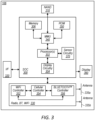
- the UE 106 may include one or more antennas for communicating using one or more wireless communication protocols according to one or more RAT standards. In some embodiments, the UE 106 may share one or more parts of a receive chain and/or transmit chain between multiple wireless communication standards.
- the shared radio may include a single antenna, or may include multiple antennas (e.g., for MIMO) for performing wireless communications.
- a radio may include any combination of a baseband processor, analog RF signal processing circuitry (e.g., including filters, mixers, oscillators, amplifiers, etc.), or digital processing circuitry (e.g., for digital modulation as well as other digital processing). Similarly, the radio may implement one or more receive and transmit chains using the aforementioned hardware.
- base station 102 may be designed as an access point (AP), in which case network port 470 may be implemented to provide access to a wide area network and/or local area network (s), e.g., it may include at least one Ethernet port, and radio 430 may be designed to communicate according to the Wi-Fi standard.
- AP access point
- network port 470 may be implemented to provide access to a wide area network and/or local area network (s), e.g., it may include at least one Ethernet port
- radio 430 may be designed to communicate according to the Wi-Fi standard.
- a wireless device such as a user equipment, may be configured to measure the quality of the downlink channel and report information related to this quality measurement to the base station.
- the UE may periodically send channel state information (CSI) to a BS.
- the base station can then receive and use this channel state information to determine an adjustment of various parameters during communication with the wireless device.
- the BS may use the received channel state information to adjust the coding of its downlink transmissions to improve downlink channel quality.
- the rank indicator information may indicate a number of transmission layers that the UE determines can be supported by the channel, e.g., when the base station and the UE have multiple antennas, which may enable multi-layer transmission through spatial multiplexing.
- the RI and the PMI may collectively allow the base station to know which precoding needs to be applied to which layer, e.g., depending on the number of transmission layers.
- the channel state information may include an allocated rank (e.g., a rank indicator or RI).
- a MIMO-capable UE communicating with a BS may include four receiver chains, e.g., may include four antennas.
- the BS may also include four or more antennas to enable MIMO communication (e.g., 4 ⁇ 4 MIMO).
- the UE may be capable of receiving up to four (or more) signals (e.g., layers) from the BS concurrently.
- Layer to antenna mapping may be applied, e.g., each layer may be mapped to any number of antenna ports (e.g., antennas). Each antenna port may send and/or receive information associated with one or more layers.
- the wireless links may include a wireless link established using a first SIM and a wireless link established using to a second SIM.
- the wireless links could, for example, include one wireless link established according to LTE and one wireless link established according to NR, two wireless links established according to LTE, two wireless links established according to NR, and/or wireless links established according to any of various other possible RATs.
- the wireless links may be the case that the wireless links provide connections to networks operated by different carriers / network operators.
- the RRC connection(s) may also be released (e.g., after a certain period of inactivity with respect to data communication), in which case the wireless device may operate in a RRC idle state or a RRC inactive state.
- the wireless device may perform handover (e.g., while in RRC connected mode) or cell re-selection (e.g., while in RRC idle or RRC inactive mode) to a new serving cell, e.g., due to wireless device mobility, changing wireless medium conditions, and/or for any of various other possible reasons.
- the multiple wireless links may be established with multiple TRPs of the cellular network, according to a multi-TRP configuration.
- the wireless device may be configured (e.g., via RRC signaling) with one or more transmission control indicators (TCIs), e.g., which may correspond to various beams that can be used to communicate with the TRPs.
- TCIs transmission control indicators
- TCI states may be activated by media access control (MAC) control element (CE) for the wireless device at a particular time.
- MAC media access control
- CE control element
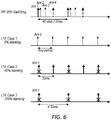
- the wireless device may determine a rank indicator to report for the first wireless link based at least in part on a SRS period for the second wireless link. This could include modifying a rank indicator selected based on a channel state of the first wireless link to indicate a lower rank, for example if the SRS period for the second wireless link is short enough that antenna unavailability due to SRS triggered receive blanking is expected to affect the ability of the wireless device to maintain the highest rank that could be supported by the channel state of the first wireless link.
- Another possible modification to CSF reporting for the first wireless link could include a modification selected to attempt to avoid a conflict between SRS transmission and CSF reporting that could cause the wireless device to be unable to perform CSF reporting.
- periodic CSF reporting for the first wireless link and periodic SRS transmissions for the second wireless link may be scheduled in an overlapping manner using a same transmit antenna.
- the antenna used for the periodic SRS transmissions at the same time that the periodic CSF reporting is configured (or at least an overlapping time) may be blanked for the CSF reporting.
- the wireless device may detect when such a scenario is occurring, e.g., either when signaling received by the wireless device configuring the periodic CSF reporting for the first wireless link results in such a conflict or when signaling received by the wireless device configuring the periodic SRS transmissions for the second wireless link results in such a conflict.
- the wireless device may perform one or more operations to prevent the periodic CSF reporting for the first wireless link and the periodic SRS transmissions for the second wireless link from being scheduled in an overlapping manner using the same transmit antenna.
- antenna combinations that are subject to less blanking according to the receive blanking pattern for the first wireless link may be prioritized over antenna combinations that are subject to more blanking according to the receive blanking pattern for the first wireless link.
- the method of Figure 5 may be used to mitigate the potential negative impacts of transmit and/or receive blanking for one wireless link that is caused by the operations of another wireless link. This may result in better performance, potentially including greater throughput, increased spectrum efficiency, reduced latency, and/or other benefits, and improved overall user experience for wireless devices implementing the method of Figure 5 , at least in some instances.
- Another related technique to potentially improve wireless device performance may include removing an antenna from the ATD candidate list based at least in part on the potential impact of its combination with an NR SRS antenna. For example, if a certain LTE Tx antenna in conjunction with NR SRS operation causes more LTE Rx blanking than other LTE Tx antennas in a given configuration (e.g., as may be the case at least for certain LTE/NR band combinations, possibly depending on hardware configuration for the wireless device), it may be possible that the wireless device removes that antenna from the ATD candidate list, which may result in better downlink performance, at least in some embodiments.
- n1/n41 band combination is used in these examples for illustrative purposes and should not be considered limiting to the disclosure as a whole; the transmit/receive blanking handling techniques for DSDA configurations described herein may also or alternatively be used in conjunction with any of various other possible band combinations.
- One set of embodiments may include an apparatus, comprising: a processor configured to cause a wireless device to: establish wireless links according to a first radio access technology (RAT) and a second RAT; determine to perform transmit and receive blanking for one or more antennas of the wireless device for the first RAT to perform sounding reference signal (SRS) transmissions for the second RAT based at least in part on a band combination for the wireless links established according to the first RAT and the second RAT; determine a modification to channel state feedback (CSF) reporting for the first RAT based at least in part on the transmit and receive blanking for one or more antennas of the wireless device for the first RAT to perform SRS transmissions for the second RAT; and perform CSF reporting using the determined modification.
- RAT radio access technology
- CSF channel state feedback
- the processor is further configured to cause the wireless device to: determine that periodic CSF reporting for the first RAT and periodic SRS transmissions for the second RAT are scheduled in an overlapping manner using a same transmit antenna; and perform transmit antenna reselection for the first RAT based at least in part on periodic CSF reporting for the first RAT and periodic SRS transmissions for the second RAT being scheduled in an overlapping manner using the same transmit antenna, wherein a transmit antenna used for the periodic SRS transmissions for the second RAT is excluded from consideration for the transmit antenna reselection for the first RAT.
- the wireless device is further configured to: perform transmit antenna reselection for the first RAT, wherein the transmit antenna used for the periodic SRS transmissions for the second RAT is excluded from consideration for the transmit antenna reselection for the first RAT.
- the wireless device includes at least 4 antennas, wherein 4 antenna reception is prioritized over 2 antenna reception for the antenna selection for the first RAT based at least in part on the band combination for the wireless links established according to the first RAT and the second RAT.
- the first RAT is LTE
- the second RAT is NR
- the wireless device is further configured to: wherein selecting the rank indicator to report for the first wireless link includes modifying a rank indicator selected based on a channel state of the first wireless link to indicate a lower rank.
- Another exemplary embodiment may include a device, comprising: an antenna; a radio coupled to the antenna; and a processing element operably coupled to the radio, wherein the device is configured to implement any or all parts of the preceding examples.
Landscapes
- Engineering & Computer Science (AREA)
- Signal Processing (AREA)
- Computer Networks & Wireless Communication (AREA)
- Computer Security & Cryptography (AREA)
- Physics & Mathematics (AREA)
- Mathematical Physics (AREA)
- Mobile Radio Communication Systems (AREA)
- Quality & Reliability (AREA)
- Electromagnetism (AREA)
- Radio Transmission System (AREA)
Priority Applications (1)
| Application Number | Priority Date | Filing Date | Title |
|---|---|---|---|
| EP25202199.3A EP4646021A3 (de) | 2021-09-21 | 2022-09-20 | Handhabung von sende- und empfangsaustastung für drahtlose vorrichtungen mit multi-rat- und dsda-fähigkeit |
Applications Claiming Priority (1)
| Application Number | Priority Date | Filing Date | Title |
|---|---|---|---|
| US17/481,262 US11917532B2 (en) | 2021-09-21 | 2021-09-21 | Handling transmit and receive blanking for multi-RAT and DSDA capable wireless devices |
Related Child Applications (1)
| Application Number | Title | Priority Date | Filing Date |
|---|---|---|---|
| EP25202199.3A Division EP4646021A3 (de) | 2021-09-21 | 2022-09-20 | Handhabung von sende- und empfangsaustastung für drahtlose vorrichtungen mit multi-rat- und dsda-fähigkeit |
Publications (3)
| Publication Number | Publication Date |
|---|---|
| EP4152640A2 true EP4152640A2 (de) | 2023-03-22 |
| EP4152640A3 EP4152640A3 (de) | 2023-05-24 |
| EP4152640B1 EP4152640B1 (de) | 2025-09-17 |
Family
ID=83398382
Family Applications (2)
| Application Number | Title | Priority Date | Filing Date |
|---|---|---|---|
| EP22196584.1A Active EP4152640B1 (de) | 2021-09-21 | 2022-09-20 | Handhabung von sende- und empfangsaustastung für drahtlose vorrichtungen mit multi-rat- und dsda-fähigkeit |
| EP25202199.3A Pending EP4646021A3 (de) | 2021-09-21 | 2022-09-20 | Handhabung von sende- und empfangsaustastung für drahtlose vorrichtungen mit multi-rat- und dsda-fähigkeit |
Family Applications After (1)
| Application Number | Title | Priority Date | Filing Date |
|---|---|---|---|
| EP25202199.3A Pending EP4646021A3 (de) | 2021-09-21 | 2022-09-20 | Handhabung von sende- und empfangsaustastung für drahtlose vorrichtungen mit multi-rat- und dsda-fähigkeit |
Country Status (3)
| Country | Link |
|---|---|
| US (2) | US11917532B2 (de) |
| EP (2) | EP4152640B1 (de) |
| CN (1) | CN115842575A (de) |
Families Citing this family (5)
| Publication number | Priority date | Publication date | Assignee | Title |
|---|---|---|---|---|
| US11950215B2 (en) * | 2021-07-13 | 2024-04-02 | Qualcomm Incorporated | Artificial intelligence-based user equipment (UE) capability band combination prioritization |
| US11968686B2 (en) * | 2021-11-24 | 2024-04-23 | Qualcomm Incorporated | Enhanced user equipment channel state feedback capability with frequent reporting |
| US12219540B2 (en) * | 2022-04-28 | 2025-02-04 | Qualcomm Incorporated | Systems and methods to include demodulation reference signal bundling in multi-subscriber identity module devices |
| US12574076B2 (en) * | 2023-03-31 | 2026-03-10 | Qualcomm Incorporated | Antenna sharing between radio access technologies |
| KR20250109429A (ko) * | 2024-01-10 | 2025-07-17 | 삼성전자주식회사 | 통신 시스템을 위한 안테나 설정 방법 및 장치 |
Family Cites Families (12)
| Publication number | Priority date | Publication date | Assignee | Title |
|---|---|---|---|---|
| CN101848541B (zh) * | 2009-03-27 | 2013-03-13 | 电信科学技术研究院 | 一种探测参考信号发送的方法及设备 |
| CN102934382B (zh) * | 2010-06-04 | 2016-08-10 | Lg电子株式会社 | 控制探测参考信号发送的上行发送功率的方法和用户设备 |
| US20150139015A1 (en) | 2010-09-22 | 2015-05-21 | Qualcomm Incorporated | LTE Band Avoidance for RF Coexistence Interference |
| US9215725B2 (en) * | 2012-08-22 | 2015-12-15 | Qualcomm Incorporated | Adjusting channel state information reports to improve multi-radio coexistence |
| EP3154306B1 (de) * | 2014-06-25 | 2020-02-26 | Huawei Technologies Co., Ltd. | Errichtung einer netzwerkverbindung |
| US20160119942A1 (en) | 2014-10-24 | 2016-04-28 | Qualcomm Incorporated | Systems and methods for aligning multiple radio access technologies |
| US9648634B2 (en) | 2015-01-29 | 2017-05-09 | Qualcomm Incorporated | System and methods for providing a transmission skipping policy to improve performance in a multi-subscriber identity module (SIM) wireless communication device |
| US9848354B2 (en) | 2015-09-23 | 2017-12-19 | Qualcomm Incorporated | Systems and methods for uplink activity management |
| US10333670B2 (en) * | 2016-05-06 | 2019-06-25 | Qualcomm Incorporated | Sounding reference signals with collisions in asymmetric carrier aggregation |
| WO2021173760A1 (en) * | 2020-02-25 | 2021-09-02 | Qualcomm Incorporated | Mitigating rf chain conflict between radio access technologies in wireless communication |
| US11596015B2 (en) * | 2020-09-02 | 2023-02-28 | Qualcomm Incorporated | Techniques for user equipment antenna prioritization |
| US11588600B2 (en) * | 2021-01-25 | 2023-02-21 | Qualcomm Incorporated | Antenna selection for sounding reference signal antenna switching |
-
2021
- 2021-09-21 US US17/481,262 patent/US11917532B2/en active Active
-
2022
- 2022-06-17 CN CN202210690135.XA patent/CN115842575A/zh active Pending
- 2022-09-20 EP EP22196584.1A patent/EP4152640B1/de active Active
- 2022-09-20 EP EP25202199.3A patent/EP4646021A3/de active Pending
-
2024
- 2024-01-24 US US18/421,584 patent/US12213067B2/en active Active
Also Published As
| Publication number | Publication date |
|---|---|
| US11917532B2 (en) | 2024-02-27 |
| EP4646021A2 (de) | 2025-11-05 |
| US20240172104A1 (en) | 2024-05-23 |
| EP4152640A3 (de) | 2023-05-24 |
| EP4152640B1 (de) | 2025-09-17 |
| US20230088766A1 (en) | 2023-03-23 |
| EP4646021A3 (de) | 2025-12-10 |
| CN115842575A (zh) | 2023-03-24 |
| US12213067B2 (en) | 2025-01-28 |
Similar Documents
| Publication | Publication Date | Title |
|---|---|---|
| US12513547B2 (en) | Wireless device scheduling availability during neighbor cell measurements | |
| EP4152640B1 (de) | Handhabung von sende- und empfangsaustastung für drahtlose vorrichtungen mit multi-rat- und dsda-fähigkeit | |
| US12457072B2 (en) | Quasi-co-located assumption for aperiodic CSI-RS for multi-TRP operation | |
| US12289267B2 (en) | Periodic reference signal activation and deactivation | |
| WO2023130307A1 (en) | Inter radio access technology measurement without measurement gap | |
| US20240155573A1 (en) | Time Domain Resource Selection | |
| US12506531B2 (en) | Reliability for beam failure recovery and search space and control resource set index 0 | |
| WO2024092754A1 (en) | L1 measurement configuration for inter-cell mobility | |
| US20250132875A1 (en) | Channel State Information Reference Signal Transmission and Measurement for Reduced Capability Wireless Device Operation | |
| US20250096964A1 (en) | Selecting Unified Transmission States for Multipoint Operation Using Identified Lists | |
| US12302312B2 (en) | Selecting unified transmission states for multipoint operation using enhanced control information | |
| US12245246B2 (en) | Selecting unified transmission states for multipoint operation using paired lists | |
| US20250358605A1 (en) | Measurement Gaps with Multi-Subscriber Identity Module Operation | |
| US20240049229A1 (en) | Selecting Unified Transmission States for Multipoint Operation Using Lists of Groups of States | |
| WO2023206193A1 (en) | Neural network processing management | |
| US12425892B2 (en) | Dynamically mapping unified transmission states for multipoint control channel reception | |
| US12439418B2 (en) | Mapping unified transmission states for multipoint control channel reception using rules | |
| WO2024026599A1 (en) | Semi-statically mapping unified transmission states for multipoint control channel reception | |
| US20240080743A1 (en) | Conditional Handover Candidate Cell Selection | |
| US20260074845A1 (en) | Unified Transmission Configuration Indication States for Multipoint Downlink Operation Using Single Control Information | |
| WO2024035585A1 (en) | Selecting unified transmission states for multipoint operation using paired lists |
Legal Events
| Date | Code | Title | Description |
|---|---|---|---|
| PUAI | Public reference made under article 153(3) epc to a published international application that has entered the european phase |
Free format text: ORIGINAL CODE: 0009012 |
|
| STAA | Information on the status of an ep patent application or granted ep patent |
Free format text: STATUS: REQUEST FOR EXAMINATION WAS MADE |
|
| 17P | Request for examination filed |
Effective date: 20220920 |
|
| AK | Designated contracting states |
Kind code of ref document: A2 Designated state(s): AL AT BE BG CH CY CZ DE DK EE ES FI FR GB GR HR HU IE IS IT LI LT LU LV MC MK MT NL NO PL PT RO RS SE SI SK SM TR |
|
| PUAL | Search report despatched |
Free format text: ORIGINAL CODE: 0009013 |
|
| AK | Designated contracting states |
Kind code of ref document: A3 Designated state(s): AL AT BE BG CH CY CZ DE DK EE ES FI FR GB GR HR HU IE IS IT LI LT LU LV MC MK MT NL NO PL PT RO RS SE SI SK SM TR |
|
| RIC1 | Information provided on ipc code assigned before grant |
Ipc: H04W 76/16 20180101ALI20230419BHEP Ipc: H04B 7/08 20060101ALI20230419BHEP Ipc: H04B 7/06 20060101AFI20230419BHEP |
|
| GRAP | Despatch of communication of intention to grant a patent |
Free format text: ORIGINAL CODE: EPIDOSNIGR1 |
|
| STAA | Information on the status of an ep patent application or granted ep patent |
Free format text: STATUS: GRANT OF PATENT IS INTENDED |
|
| INTG | Intention to grant announced |
Effective date: 20250424 |
|
| RIC1 | Information provided on ipc code assigned before grant |
Ipc: H04W 88/06 20090101ALI20250411BHEP Ipc: H04W 76/15 20180101ALI20250411BHEP Ipc: H04W 48/18 20090101ALI20250411BHEP Ipc: H04L 5/00 20060101ALI20250411BHEP Ipc: H04W 76/16 20180101ALI20250411BHEP Ipc: H04B 7/08 20060101ALI20250411BHEP Ipc: H04B 7/06 20060101AFI20250411BHEP |
|
| GRAS | Grant fee paid |
Free format text: ORIGINAL CODE: EPIDOSNIGR3 |
|
| GRAA | (expected) grant |
Free format text: ORIGINAL CODE: 0009210 |
|
| STAA | Information on the status of an ep patent application or granted ep patent |
Free format text: STATUS: THE PATENT HAS BEEN GRANTED |
|
| AK | Designated contracting states |
Kind code of ref document: B1 Designated state(s): AL AT BE BG CH CY CZ DE DK EE ES FI FR GB GR HR HU IE IS IT LI LT LU LV MC MK MT NL NO PL PT RO RS SE SI SK SM TR |
|
| REG | Reference to a national code |
Ref country code: GB Ref legal event code: FG4D |
|
| REG | Reference to a national code |
Ref country code: CH Ref legal event code: EP |
|
| REG | Reference to a national code |
Ref country code: DE Ref legal event code: R096 Ref document number: 602022021493 Country of ref document: DE |
|
| REG | Reference to a national code |
Ref country code: IE Ref legal event code: FG4D |
|
| PGFP | Annual fee paid to national office [announced via postgrant information from national office to epo] |
Ref country code: AT Payment date: 20251020 Year of fee payment: 4 |
|
| P01 | Opt-out of the competence of the unified patent court (upc) registered |
Free format text: CASE NUMBER: UPC_APP_6596_4152640/2025 Effective date: 20250910 |
|
| PG25 | Lapsed in a contracting state [announced via postgrant information from national office to epo] |
Ref country code: NO Free format text: LAPSE BECAUSE OF FAILURE TO SUBMIT A TRANSLATION OF THE DESCRIPTION OR TO PAY THE FEE WITHIN THE PRESCRIBED TIME-LIMIT Effective date: 20251217 |
|
| REG | Reference to a national code |
Ref country code: LT Ref legal event code: MG9D |
|
| PG25 | Lapsed in a contracting state [announced via postgrant information from national office to epo] |
Ref country code: FI Free format text: LAPSE BECAUSE OF FAILURE TO SUBMIT A TRANSLATION OF THE DESCRIPTION OR TO PAY THE FEE WITHIN THE PRESCRIBED TIME-LIMIT Effective date: 20250917 |
|
| PG25 | Lapsed in a contracting state [announced via postgrant information from national office to epo] |
Ref country code: HR Free format text: LAPSE BECAUSE OF FAILURE TO SUBMIT A TRANSLATION OF THE DESCRIPTION OR TO PAY THE FEE WITHIN THE PRESCRIBED TIME-LIMIT Effective date: 20250917 |
|
| PG25 | Lapsed in a contracting state [announced via postgrant information from national office to epo] |
Ref country code: GR Free format text: LAPSE BECAUSE OF FAILURE TO SUBMIT A TRANSLATION OF THE DESCRIPTION OR TO PAY THE FEE WITHIN THE PRESCRIBED TIME-LIMIT Effective date: 20251218 |
|
| PG25 | Lapsed in a contracting state [announced via postgrant information from national office to epo] |
Ref country code: SE Free format text: LAPSE BECAUSE OF FAILURE TO SUBMIT A TRANSLATION OF THE DESCRIPTION OR TO PAY THE FEE WITHIN THE PRESCRIBED TIME-LIMIT Effective date: 20250917 |
|
| REG | Reference to a national code |
Ref country code: NL Ref legal event code: MP Effective date: 20250917 |
|
| PG25 | Lapsed in a contracting state [announced via postgrant information from national office to epo] |
Ref country code: LV Free format text: LAPSE BECAUSE OF FAILURE TO SUBMIT A TRANSLATION OF THE DESCRIPTION OR TO PAY THE FEE WITHIN THE PRESCRIBED TIME-LIMIT Effective date: 20250917 |
|
| PG25 | Lapsed in a contracting state [announced via postgrant information from national office to epo] |
Ref country code: BG Free format text: LAPSE BECAUSE OF FAILURE TO SUBMIT A TRANSLATION OF THE DESCRIPTION OR TO PAY THE FEE WITHIN THE PRESCRIBED TIME-LIMIT Effective date: 20250917 |
|
| PG25 | Lapsed in a contracting state [announced via postgrant information from national office to epo] |
Ref country code: RS Free format text: LAPSE BECAUSE OF FAILURE TO SUBMIT A TRANSLATION OF THE DESCRIPTION OR TO PAY THE FEE WITHIN THE PRESCRIBED TIME-LIMIT Effective date: 20251217 |
|
| PG25 | Lapsed in a contracting state [announced via postgrant information from national office to epo] |
Ref country code: NL Free format text: LAPSE BECAUSE OF FAILURE TO SUBMIT A TRANSLATION OF THE DESCRIPTION OR TO PAY THE FEE WITHIN THE PRESCRIBED TIME-LIMIT Effective date: 20250917 |
|
| REG | Reference to a national code |
Ref country code: AT Ref legal event code: MK05 Ref document number: 1839272 Country of ref document: AT Kind code of ref document: T Effective date: 20250917 |
|
| PG25 | Lapsed in a contracting state [announced via postgrant information from national office to epo] |
Ref country code: SM Free format text: LAPSE BECAUSE OF FAILURE TO SUBMIT A TRANSLATION OF THE DESCRIPTION OR TO PAY THE FEE WITHIN THE PRESCRIBED TIME-LIMIT Effective date: 20250917 |
|
| PG25 | Lapsed in a contracting state [announced via postgrant information from national office to epo] |
Ref country code: ES Free format text: LAPSE BECAUSE OF FAILURE TO SUBMIT A TRANSLATION OF THE DESCRIPTION OR TO PAY THE FEE WITHIN THE PRESCRIBED TIME-LIMIT Effective date: 20250917 |
|
| PGFP | Annual fee paid to national office [announced via postgrant information from national office to epo] |
Ref country code: DE Payment date: 20251217 Year of fee payment: 4 |
|
| PG25 | Lapsed in a contracting state [announced via postgrant information from national office to epo] |
Ref country code: AT Free format text: LAPSE BECAUSE OF FAILURE TO SUBMIT A TRANSLATION OF THE DESCRIPTION OR TO PAY THE FEE WITHIN THE PRESCRIBED TIME-LIMIT Effective date: 20250917 |
|
| PG25 | Lapsed in a contracting state [announced via postgrant information from national office to epo] |
Ref country code: RO Free format text: LAPSE BECAUSE OF FAILURE TO SUBMIT A TRANSLATION OF THE DESCRIPTION OR TO PAY THE FEE WITHIN THE PRESCRIBED TIME-LIMIT Effective date: 20250917 Ref country code: IT Free format text: LAPSE BECAUSE OF FAILURE TO SUBMIT A TRANSLATION OF THE DESCRIPTION OR TO PAY THE FEE WITHIN THE PRESCRIBED TIME-LIMIT Effective date: 20250917 |
|
| PG25 | Lapsed in a contracting state [announced via postgrant information from national office to epo] |
Ref country code: IS Free format text: LAPSE BECAUSE OF FAILURE TO SUBMIT A TRANSLATION OF THE DESCRIPTION OR TO PAY THE FEE WITHIN THE PRESCRIBED TIME-LIMIT Effective date: 20260117 |
|
| PG25 | Lapsed in a contracting state [announced via postgrant information from national office to epo] |
Ref country code: PT Free format text: LAPSE BECAUSE OF FAILURE TO SUBMIT A TRANSLATION OF THE DESCRIPTION OR TO PAY THE FEE WITHIN THE PRESCRIBED TIME-LIMIT Effective date: 20260119 Ref country code: CZ Free format text: LAPSE BECAUSE OF FAILURE TO SUBMIT A TRANSLATION OF THE DESCRIPTION OR TO PAY THE FEE WITHIN THE PRESCRIBED TIME-LIMIT Effective date: 20250917 |
|
| PG25 | Lapsed in a contracting state [announced via postgrant information from national office to epo] |
Ref country code: PL Free format text: LAPSE BECAUSE OF FAILURE TO SUBMIT A TRANSLATION OF THE DESCRIPTION OR TO PAY THE FEE WITHIN THE PRESCRIBED TIME-LIMIT Effective date: 20250917 |
|
| PG25 | Lapsed in a contracting state [announced via postgrant information from national office to epo] |
Ref country code: EE Free format text: LAPSE BECAUSE OF FAILURE TO SUBMIT A TRANSLATION OF THE DESCRIPTION OR TO PAY THE FEE WITHIN THE PRESCRIBED TIME-LIMIT Effective date: 20250917 Ref country code: SK Free format text: LAPSE BECAUSE OF FAILURE TO SUBMIT A TRANSLATION OF THE DESCRIPTION OR TO PAY THE FEE WITHIN THE PRESCRIBED TIME-LIMIT Effective date: 20250917 |