EP4152631A1 - Informationsübertragungsverfahren und knotenvorrichtung - Google Patents
Informationsübertragungsverfahren und knotenvorrichtung Download PDFInfo
- Publication number
- EP4152631A1 EP4152631A1 EP21803703.4A EP21803703A EP4152631A1 EP 4152631 A1 EP4152631 A1 EP 4152631A1 EP 21803703 A EP21803703 A EP 21803703A EP 4152631 A1 EP4152631 A1 EP 4152631A1
- Authority
- EP
- European Patent Office
- Prior art keywords
- information
- node device
- working
- feedback
- sent
- Prior art date
- Legal status (The legal status is an assumption and is not a legal conclusion. Google has not performed a legal analysis and makes no representation as to the accuracy of the status listed.)
- Pending
Links
Images




Classifications
-
- H—ELECTRICITY
- H04—ELECTRIC COMMUNICATION TECHNIQUE
- H04B—TRANSMISSION
- H04B7/00—Radio transmission systems, i.e. using radiation field
- H04B7/02—Diversity systems; Multi-antenna system, i.e. transmission or reception using multiple antennas
- H04B7/04—Diversity systems; Multi-antenna system, i.e. transmission or reception using multiple antennas using two or more spaced independent antennas
- H04B7/0413—MIMO systems
-
- H—ELECTRICITY
- H04—ELECTRIC COMMUNICATION TECHNIQUE
- H04B—TRANSMISSION
- H04B7/00—Radio transmission systems, i.e. using radiation field
- H04B7/14—Relay systems
- H04B7/15—Active relay systems
- H04B7/155—Ground-based stations
- H04B7/15528—Control of operation parameters of a relay station to exploit the physical medium
-
- H—ELECTRICITY
- H01—ELECTRIC ELEMENTS
- H01Q—ANTENNAS, i.e. RADIO AERIALS
- H01Q15/00—Devices for reflection, refraction, diffraction or polarisation of waves radiated from an antenna, e.g. quasi-optical devices
- H01Q15/0006—Devices acting selectively as reflecting surface, as diffracting or as refracting device, e.g. frequency filtering or angular spatial filtering devices
-
- H—ELECTRICITY
- H01—ELECTRIC ELEMENTS
- H01Q—ANTENNAS, i.e. RADIO AERIALS
- H01Q15/00—Devices for reflection, refraction, diffraction or polarisation of waves radiated from an antenna, e.g. quasi-optical devices
- H01Q15/02—Refracting or diffracting devices, e.g. lens, prism
-
- H—ELECTRICITY
- H04—ELECTRIC COMMUNICATION TECHNIQUE
- H04B—TRANSMISSION
- H04B7/00—Radio transmission systems, i.e. using radiation field
- H04B7/02—Diversity systems; Multi-antenna system, i.e. transmission or reception using multiple antennas
- H04B7/04—Diversity systems; Multi-antenna system, i.e. transmission or reception using multiple antennas using two or more spaced independent antennas
- H04B7/04013—Intelligent reflective surfaces
-
- H—ELECTRICITY
- H04—ELECTRIC COMMUNICATION TECHNIQUE
- H04B—TRANSMISSION
- H04B7/00—Radio transmission systems, i.e. using radiation field
- H04B7/02—Diversity systems; Multi-antenna system, i.e. transmission or reception using multiple antennas
- H04B7/04—Diversity systems; Multi-antenna system, i.e. transmission or reception using multiple antennas using two or more spaced independent antennas
- H04B7/06—Diversity systems; Multi-antenna system, i.e. transmission or reception using multiple antennas using two or more spaced independent antennas at the transmitting station
- H04B7/0613—Diversity systems; Multi-antenna system, i.e. transmission or reception using multiple antennas using two or more spaced independent antennas at the transmitting station using simultaneous transmission
- H04B7/0615—Diversity systems; Multi-antenna system, i.e. transmission or reception using multiple antennas using two or more spaced independent antennas at the transmitting station using simultaneous transmission of weighted versions of same signal
- H04B7/0617—Diversity systems; Multi-antenna system, i.e. transmission or reception using multiple antennas using two or more spaced independent antennas at the transmitting station using simultaneous transmission of weighted versions of same signal for beam forming
-
- H—ELECTRICITY
- H04—ELECTRIC COMMUNICATION TECHNIQUE
- H04B—TRANSMISSION
- H04B7/00—Radio transmission systems, i.e. using radiation field
- H04B7/14—Relay systems
- H04B7/145—Passive relay systems
-
- H—ELECTRICITY
- H04—ELECTRIC COMMUNICATION TECHNIQUE
- H04B—TRANSMISSION
- H04B7/00—Radio transmission systems, i.e. using radiation field
- H04B7/14—Relay systems
- H04B7/15—Active relay systems
- H04B7/155—Ground-based stations
- H04B7/15557—Selecting relay station operation mode, e.g. between amplify and forward mode, decode and forward mode or FDD - and TDD mode
-
- H—ELECTRICITY
- H04—ELECTRIC COMMUNICATION TECHNIQUE
- H04L—TRANSMISSION OF DIGITAL INFORMATION, e.g. TELEGRAPHIC COMMUNICATION
- H04L1/00—Arrangements for detecting or preventing errors in the information received
- H04L1/12—Arrangements for detecting or preventing errors in the information received by using return channel
- H04L1/16—Arrangements for detecting or preventing errors in the information received by using return channel in which the return channel carries supervisory signals, e.g. repetition request signals
- H04L1/1607—Details of the supervisory signal
-
- H—ELECTRICITY
- H04—ELECTRIC COMMUNICATION TECHNIQUE
- H04L—TRANSMISSION OF DIGITAL INFORMATION, e.g. TELEGRAPHIC COMMUNICATION
- H04L1/00—Arrangements for detecting or preventing errors in the information received
- H04L1/12—Arrangements for detecting or preventing errors in the information received by using return channel
- H04L1/16—Arrangements for detecting or preventing errors in the information received by using return channel in which the return channel carries supervisory signals, e.g. repetition request signals
- H04L1/18—Automatic repetition systems, e.g. Van Duuren systems
- H04L1/1812—Hybrid protocols; Hybrid automatic repeat request [HARQ]
-
- H—ELECTRICITY
- H04—ELECTRIC COMMUNICATION TECHNIQUE
- H04L—TRANSMISSION OF DIGITAL INFORMATION, e.g. TELEGRAPHIC COMMUNICATION
- H04L5/00—Arrangements affording multiple use of the transmission path
- H04L5/003—Arrangements for allocating sub-channels of the transmission path
- H04L5/0053—Allocation of signalling, i.e. of overhead other than pilot signals
- H04L5/0055—Physical resource allocation for ACK/NACK
-
- H—ELECTRICITY
- H04—ELECTRIC COMMUNICATION TECHNIQUE
- H04L—TRANSMISSION OF DIGITAL INFORMATION, e.g. TELEGRAPHIC COMMUNICATION
- H04L5/00—Arrangements affording multiple use of the transmission path
- H04L5/14—Two-way operation using the same type of signal, i.e. duplex
- H04L5/1469—Two-way operation using the same type of signal, i.e. duplex using time-sharing
-
- H—ELECTRICITY
- H04—ELECTRIC COMMUNICATION TECHNIQUE
- H04W—WIRELESS COMMUNICATION NETWORKS
- H04W92/00—Interfaces specially adapted for wireless communication networks
- H04W92/16—Interfaces between hierarchically similar devices
- H04W92/20—Interfaces between hierarchically similar devices between access points
Definitions
- the present invention relates to the field of communications technologies, and in particular, to an information transmission method and a node device.
- intelligent surfaces operate on relatively large bandwidth, for example, from several GHz to tens of GHz, while bandwidth for each generation of system (for example, the fourth generation (4 th Generation, 4G) and the fifth generation (5 th Generation, 5G)) of operators is relatively small, from tens of MHz to hundreds of MHz.
- a control circuit of the intelligent surface may be used to control direction of reflected signals or direction of refracted signals, so as to achieve coverage enhancement, blind compensation, or other purposes.
- the operating bandwidth of the intelligent surface is significantly larger than the system bandwidth of a single operator, or because the operating bandwidth of the intelligent surface spans the bandwidth of multiple operators, the following conflict events may occur: For example, a base station of operator A expects the intelligent surface to make signals of the base station cover direction 1, and a base station of operator B expects the intelligent surface to make signals of the base station cover direction 2.
- the intelligent surface can control main reflected waves to be in only one direction at one moment.
- Embodiments of the present invention provide an information transmission method and a node device, to resolve a problem that an intelligent surface cannot simultaneously execute different working commands for the intelligent surface from two base stations.
- an embodiment of the present invention provides an information transmission method, applied to a first node device and including:
- an embodiment of the present invention provides an information transmission method, applied to a third node device and including:
- an embodiment of the present invention provides a node device, where the node device is a first node device and includes:
- an embodiment of the present invention further provides a node device, including a memory, a processor, and a program stored in the memory and capable of running on the processor.
- a program stored in the memory and capable of running on the processor.
- an embodiment of the present invention provides a node device, where the node device is a third node device and includes:
- an embodiment of the present invention further provides a node device, including a memory, a processor, and a program stored in the memory and capable of running on the processor.
- a node device including a memory, a processor, and a program stored in the memory and capable of running on the processor.
- an embodiment of the present invention further provides a readable storage medium, where the readable storage medium stores a program, and when the program is executed by a processor, the steps of the foregoing information transmission method applied to the first node device or the steps of the foregoing information transmission method applied to the third node device are implemented.
- an embodiment of the present invention provides a chip, where the chip includes a processor and a communications interface, the communications interface is coupled to the processor, the processor is configured to run a program or instructions to implement the steps of the foregoing information transmission method applied to the first node device or the steps of the foregoing information transmission method applied to the third node device.
- Beneficial effects of the present invention are as follows: In the foregoing solutions, after coordinating the target information, the first node device and the second node device determine the working information of the third node device, so that the third node device works according to uniform working information, which resolves the problem that the intelligent surface cannot simultaneously execute different working commands for the intelligent surface from two nodes.
- Intelligent surface is an emerging technology and is involved with many related terms as follows that all refer to similar technologies or entities. These terms include: large intelligent surface (Large Intelligent Surface, LIS), smart reflect array (Smart Reflect Array, SRA), reconfigurable reflect array (Reconfigurable Reflect Array, RRA), and intelligent reflecting surface (Intelligent Reflecting Surface, IRS).
- large intelligent surface Large Intelligent Surface, LIS
- smart reflect array Smart Reflect Array, SRA
- reconfigurable reflect array Reconfigurable Reflect Array
- IRS Intelligent reflecting surface
- IRS is composed of a large quantity of low-cost passive reflecting elements. IRS is an electromagnetic matamaterial (Electromagnetic Metamaterial) or a metasurface (Metasurface). Each reflecting element can independently induce changes in amplitude, phase and/or polarization of an incident signal, that is, reconfiguring a wireless propagation environment by controlling reflections. IRS does not use a transmitting radio frequency (Radio Frequency, RF) chain, and therefore has characteristics of low cost and low energy consumption.
- RF radio frequency
- IRS does not use an active transmitting module, but only reflects a received signal. Active relay communication typically operates in half-duplex mode, which is less spectrally efficient than IRS operating in full-duplex mode.
- IRS as a passive reflecting device, does not transmit its own information, but is only used to facilitate existing communication links, and compared with a massive multiple input multiple output (Multi Input Multi Output, MIMO) technology in the prior art, IRS has a very different operating principle. IRS is a passive array, while the large-scale MIMO is an active array.
- IRS is generally used as a reflect array, while the large-scale MIMO is generally used as a transmission array. Compared with massive MIMO technologies, IRS has advantages of low hardware cost and low transmission loss, and is more suitable for microwave and millimeter wave (mmWave) frequency bands.
- mmWave millimeter wave
- IRS reflecting units are as follows:
- Reflect arrays/intelligent surfaces are classified into two categories from a perspective of whether reflect arrays/intelligent surfaces can be dynamically controlled:
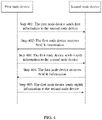
- an embodiment of the present invention provides an information transmission method, applied to a first node device, where the first node device may specifically be a base station, and the method includes the following steps.
- Step 101 Coordinate target information with a second node device.
- the second node device may be a node device belonging to a same operator as the first node device, or the second node device may alternatively be a node device belonging to a different operator than the first node device.
- the second node device is specifically a base station.
- the second node device has a same site address and a same antenna direction as the first node device;
- the first node device and the second node device coordinate target information through an interface between 5G base stations (gNB), an interface between long term evolution (LTE) base stations (eNB), an interface between gNB and eNB, or other interfaces.
- gNB 5G base stations
- LTE long term evolution
- Step 102 Determine, based on the target information, working information of a third node device.
- the third node device is a node device associated with the first node device and the second node device, and the third node device is specifically an intelligent surface.
- the target information includes at least one of first information, second information, feedback information for the first information, and feedback information for the second information.
- the first information is working information of the third node device expected by the first node device.
- the second information is working information of the third node device expected by the second node device.
- the feedback information includes positive acknowledgment (Acknowledgement, ACK) information or negative acknowledgment (Negative Acknowledgement, NACK) information.
- the determined working information of the third node device includes identification information of the third node device.
- the determined working information of the third node device further includes at least one of the following:
- the identification information of the third node device may be an ID, an index (index), or the like of the third node device, where the third node device may be a LIS, SRA, RRA, or IRS.
- the third node device associated with the target information is determined through the identification information.
- the on/off information of switch elements of reflecting or refracting units in the third node device may be a pattern of the switch elements.
- the switch elements enable the reflecting or refracting units to have a plurality of different states, and a switchover between the different states is implemented by controlling on/off of the switch elements.
- Different states correspond to different directions, phases, amplitudes, and/or polarizations of the reflected waves or refracted waves. For example, if 1 stands for an on state of the switch element and 0 stands for an off state of the switch element, a pattern of switch elements of a 100 ⁇ 100 emitting unit is a 100 ⁇ 100 matrix of bits 0 and 1.
- a finite quantity of patterns of switch elements of emitting units or refracting units of an intelligent surface can be specified, as shown in Table 1, where each pattern is a 100 ⁇ 100 matrix of bits 0 and 1. In this way, amount of information exchanged can be reduced. A shape or direction of reflected or refracted waves of the intelligent surface corresponding to each pattern may be different. Table 1 Pattern number of switch element 1 2 3 4 Bit representation 00 01 10 11
- a finite quantity of working modes of the third node device can be specified to reduce amount of information exchanged.
- a shape or direction of reflected or refracted waves corresponding to each pattern may be different.
- the working information of the third node device includes at least one of the following:
- the covering one direction at one moment may refer to shape a main direction at one moment.
- the covering two directions at one moment may refer to shape two main directions at one moment.
- the covering two directions at one moment refers to shape two directions by the third node device at one moment, or means that one part of the third node device works in a mode of direction 1 and another part of the third node device works in a mode of direction 2 at the same time.
- the phase related information may be phase information of each reflecting unit or refracting unit in the third node device.
- the amplitude related information may be amplitude information of each reflecting unit or refracting unit in the third node device.
- the polarization related information may be polarization information of each reflecting unit or refracting unit in the third node device.
- the frequency related information may be information about a frequency at which the third node device works.
- the third node device simultaneously supports two frequency bands, and the frequency related information indicates information about one of the frequency bands.
- the first node device and the second node device determine the working information of the third node device, so that the third node device works according to uniform working information, which resolves the problem that the intelligent surface cannot simultaneously execute different working commands for the intelligent surface from two nodes.
- the method further includes: sending the determined working information of the third node device to the third node device.
- the working information is periodic working information or the working information is aperiodic working information.
- the working information when the working information is aperiodic working information, the working information further includes at least one of the following:
- the time information includes at least one of a start time, an end time, and a duration, and a time granularity of the time information may be slot (slot) or millisecond (ms).
- the working information when the working information is periodic working information, the working information further includes N groups of bits; N is a quantity of time units included within one cycle of the working information, and the N groups of bits are in one-to-one correspondence with the N time units; where each group of bits is used to indicate at least one of the following information in a corresponding time unit:
- the working mode of the third node device includes two working modes: working mode 1 represented by 0, and working mode 2 represented by 1.
- the working information is in form of a bitmap (Bitmap). For example, if the first information is 11011, with a position of each bit representing a moment, 11011 represents that in the first, second, fourth, and fifth time units of 5 time units, the third node device works in working mode 1, and in the third time unit, the third node device works in working mode 2.
- the working mode includes a first working mode on at least one downlink time resource and a second working mode on an uplink time resource corresponding to the at least one downlink time resource; where the second working mode is one of the first working mode.
- the time resource may be a slot (slot), a subframe, an ms, or the like.
- TDD Time Division Duplex
- at least one of the foregoing working modes can be as shown in Table 3: Table 3 Slot DL DL DL DL UL DL DL DL UL Working mode 0 0 1 2 1 0 0 1 2 2 Bit representation 00 00 01 10 01 00 00 01 10 10
- working modes in downlink slots and uplink slots in one cycle can be matched correspondingly. For example, in a cycle, if there are working modes 1 and 2 in downlink slots, there are also working modes 1 and 2 in the uplink slots.
- the coordinating target information with a second node device includes:
- the determining, based on the target information, working information of a third node device includes: in a case that the third information includes the feedback information for the first information and that the feedback information for the first information is ACK information, determining that the working information of the third node device is the first information.
- the ACK information indicates that the first node device and the second node device successfully coordinate consistent working information.
- the method further includes:
- the determining, based on the target information, working information of a third node device includes: in a case that the feedback information for the fourth information is ACK information, determining that the working information of the third node device is the fourth information.
- the first node device and the second node device continues to coordinate (exchange information) until the first node device and the second node device reach an agreement on consistent working information.
- the method further includes: sending the feedback information for the second information to the second node device.
- the determining, based on the target information, working information of a third node device includes: in a case that the feedback information for the second information is an ACK, determining that the working information of the third node device is the second information.
- the feedback information for the second information being an ACK indicates that the first node device agrees to determine the second information as the working information of the third node device, that is, the first node device and the second node device reach an agreement on that the second information is the working information of the third node device.
- the first node device and the second node device continues to coordinate (exchange information) until the first node device and the second node device reach an agreement on consistent working information.
- the coordinating target information with a second node device includes:
- the feedback information for the second information is an ACK
- the method further includes:
- the NACK information indicates that the first node device and the second node device do not reach an agreement on consistent working information.
- the feedback information for the second information being NACK indicates that the first node device does not agree to determine the second information as the working information of the third node device, and the first node device and the second node device need to continue coordination. Then the second node device sends the sixth information to the first node device.
- the second node device agrees to determine the fourth information as the working information of the third node device.
- the second node device does not agree to determine the fourth information as the working information of the third node device, and the first node device and the second node device need to continue coordination.
- an information transmission method includes:
- the first information may alternatively be sent by both the first node device and the second node device to the third node device.
- the first node device and the second node device reach an agreement on that the first information is the working information of the third node device.
- an information transmission method includes:
- the first node device and the second node device reach an agreement on that the fourth information is the working information of the third node device, and the first node device and/or the second node device sends the fourth information to the third node device.
- an information transmission method includes:
- the eighth information is working information of the third node device expected by the first node device, and the eighth information is different from the first information and the fourth information.
- the working information of the third node device is to be determined according to feedback information for the eighth information, that is, the first node device and the second node device continue to coordinate until the first node device and the second node device reach an agreement on consistent working information, and the agreed working information of the third node device is sent to the third node device.
- an information transmission method includes:
- the second information may alternatively be sent by both the first node device and the second node device to the third node device.
- the first node device and the second node device reach an agreement on that the second information is the working information of the third node device.
- an information transmission method includes:
- the first node device sends feedback information for the seventh information to the second node device, that is, the first node device and the second node device continue to coordinate until the first node device and the second node device reach an agreement on consistent working information, and the agreed consistent working information of the third node device is sent to the third node device.
- an information transmission method includes:
- the first node device and the second node device determine the second information as the working information of the third node device, and the first node device and/or the second node device sends the second information to the third node device.
- an information transmission method includes:
- the first node device and the second node device continue to coordinate until the first node device and the second node device reach an agreement on consistent working information, that is, a node device sends ACK information, and the agreed consistent working information of the third node device is sent to the third node device.
- an information transmission method includes:
- the first node device and the second node device continue to coordinate until the first node device and the second node device reach an agreement on consistent working information, that is, a node device sends ACK information, and the agreed consistent working information of the third node device is sent to the third node device.
- the first node device and the second node device determine the working information of the third node device, so that the third node device works according to uniform working information, which resolves the problem that the intelligent surface cannot simultaneously execute different working commands for the intelligent surface from two nodes.
- an embodiment of the present invention further provides an information transmission method, applied to a third node device, and the method includes the following steps.
- Step 1001 Obtain working information of a third node device sent by a first node device and/or a second node device, where the working information is determined through coordination between the first node device and the second node device.
- the working information includes identification information of the third node device.
- the working information further includes at least one of the following:
- the working mode includes at least one of the following:
- the covering one direction at one moment may refer to shape a main direction at one moment.
- the covering two directions at one moment may refer to shape two main directions at one moment.
- the covering two directions at one moment refers to shape two directions by the third node device at one moment, or means that one part of the third node device works in a mode of direction 1 and another part of the third node device works in a mode of direction 2 at the same time.
- an intelligent surface unit shapes two directions at one moment, or one part of the intelligent surface unit works in a mode of direction 1 and simultaneously another part of the surface unit works in a mode of direction 2.
- Step 1002 Perform a target operation based on the working information of the third node device.
- an operation corresponding to the working information of the third node device sent by the first node device is performed;
- the working information of the third node device sent by the first node device is different from the working information of the third node device sent by the second node device
- the working information sent by the first node device is performed, or the working information sent by the second node device is performed, or the working information sent by the first node device or the working information sent by the second node device is arbitrarily selected, or neither is performed.
- the working information of the third node device is determined after the first node device and the second node device coordinate target information.
- the target information includes at least one of first information, second information, feedback information for the first information, and feedback information for the second information.
- the first information is working information of the third node device expected by the first node device.
- the second information is working information of the third node device expected by the second node device.
- the working information of the third node device sent by the first node device and/or the second node device is obtained, and the target operation is performed according to the working information of the third node device, which resolves the problem that the intelligent surface cannot simultaneously execute different working commands for the intelligent surface from two nodes.
- an embodiment of the present invention further provides a node device 1100, where the node device is a first node device, and the first node device may specifically be a base station, and the node device 1100 includes:
- the target information includes at least one of first information, second information, feedback information for the first information, and feedback information for the second information.
- the first information is working information of the third node device expected by the first node device.
- the second information is working information of the third node device expected by the second node device.
- the determined working information of the third node device includes identification information of the third node device.
- the determined working information of the third node device further includes at least one of the following:
- the node device in this embodiment of the present invention further includes: a sending module, configured to send the determined working information of the third node device to the third node device after the determination module determines the working information of the third node device.
- the working information is periodic working information or the working information is aperiodic working information.
- the working information when the working information is aperiodic working information, the working information further includes at least one of the following:
- the working information when the working information is periodic working information, the working information further includes N groups of bits; N is a quantity of time units included within one cycle of the working information, and the N groups of bits are in one-to-one correspondence with the N time units; where each group of bits is used to indicate at least one of the following information in a corresponding time unit:
- the working mode includes a first working mode on at least one downlink time resource and a second working mode on an uplink time resource corresponding to the at least one downlink time resource; where the second working mode is one of the first working mode.
- the coordination module includes:
- the determination module is configured to: in a case that the third information includes the feedback information for the first information and that the feedback information for the first information is ACK information, determine that the working information of the third node device is the first information.
- the coordination module further includes:
- the determination module is configured to: in a case that the feedback information for the fourth information is ACK information, determine that the working information of the third node device is the fourth information.
- the coordination module further includes: a third sending submodule, configured to: in a case that the third information includes the second information and the feedback information for the first information and that the feedback information for the first information is NACK information, or in a case that the third information includes only the second information, send the feedback information for the second information to the second node device after the first receiving submodule receives the third information sent by the second node device.
- a third sending submodule configured to: in a case that the third information includes the second information and the feedback information for the first information and that the feedback information for the first information is NACK information, or in a case that the third information includes only the second information, send the feedback information for the second information to the second node device after the first receiving submodule receives the third information sent by the second node device.
- the determination module is configured to: in a case that the feedback information for the second information is an ACK, determine that the working information of the third node device is the second information.
- the coordination module further includes:
- the coordination module further includes:
- the second node device is a node device belonging to a same operator as the first node device, or the second node device is a node device belonging to a different operator than the first node device; and the third node device is a node device associated with the first node device and the second node device.
- the second node device has a same site address and a same antenna direction as the first node device;
- the node device in this embodiment of the present invention determines the working information of the third node device, so that the third node device works according to the determined working information, which resolves the problem that the intelligent surface cannot simultaneously execute different working commands for the intelligent surface from two nodes.
- this node device embodiment is a node device corresponding to the foregoing information transmission method applied to the first node device. All implementations in the foregoing embodiments are applicable to this node device embodiment, with the same technical effects achieved.
- FIG. 12 is a structural diagram of a node device according to an embodiment of the present invention.
- the node device is capable of implementing details of the foregoing information transmission method, with the same effects achieved.
- a node device 1200 includes a processor 1201, a transceiver 1202, a memory 1203, and a bus interface, where the processor 1201 is configured to: coordinate target information with a second node device through the transceiver 1202; and determine, based on the target information, working information of a third node device.
- the target information includes at least one of first information, second information, feedback information for the first information, and feedback information for the second information.
- the first information is working information of the third node device expected by the first node device.
- the second information is working information of the third node device expected by the second node device.
- the determined working information of the third node device includes identification information of the third node device.
- the determined working information of the third node device further includes at least one of the following:
- a bus architecture may include any quantity of interconnected buses and bridges, and specifically links various circuits of one or more processors specifically represented by the processor 1201 and a memory represented by the memory 1203.
- the bus architecture may further interconnect various other circuits such as a peripheral device, a voltage regulator, and a power management circuit. These are all well known in the art, and therefore are not further described in this specification.
- the bus interface provides interfaces.
- the transceiver 1202 may be a plurality of components, including a transmitter and a receiver, and provides units for communicating with various other apparatuses on a transmission medium.
- a bus architecture may include any quantity of interconnected buses and bridges, and specifically links various circuits of one or more processors specifically represented by the processor 1201 and a memory represented by the memory 1203.
- the bus architecture may further interconnect various other circuits such as a peripheral device, a voltage regulator, and a power management circuit. These are all well known in the art, and therefore are not further described in this specification.
- the bus interface provides interfaces.
- the transceiver 1202 may be a plurality of components, including a transmitter and a receiver, and provides units for communicating with various other apparatuses on a transmission medium.
- the node device in this embodiment of the present invention is capable of implementing the processes of the embodiments of the information transmission method applied to the first node device, with the same technical effects achieved. To avoid repetition, details are not described herein again.
- an embodiment of the present invention further provides a node device, including a processor, a memory, and a program stored in the memory and capable of running on the processor.
- a node device including a processor, a memory, and a program stored in the memory and capable of running on the processor.
- the program is executed by the processor, the processes of the embodiments of the information transmission method applied to the first node device are implemented, with the same technical effects achieved. To avoid repetition, details are not described herein again.
- An embodiment of the present invention further provides a readable storage medium, where the readable storage medium stores a program, and when the program is executed by a processor, the processes of the embodiments of the information transmission method applied to the first node device are implemented, with the same technical effects achieved. To avoid repetition, details are not described herein again.
- the computer-readable storage medium is, for example, a read-only memory (Read-Only Memory, ROM), a random access memory (Random Access Memory, RAM), a magnetic disk, or an optical disc.
- an embodiment of the present invention further provides a node device 1300, where the node device is the foregoing third node device and includes:
- the working information further includes at least one of the following:
- the working information of the third node device is determined after the first node device and the second node device coordinate target information.
- the target information includes at least one of first information, second information, feedback information for the first information, and feedback information for the second information.
- the first information is working information of the third node device expected by the first node device.
- the second information is working information of the third node device expected by the second node device.
- the execution module is configured to: in a case that the working information of the third node device sent by the first node device is different from the working information of the third node device sent by the second node device, perform an operation corresponding to the working information of the third node device sent by the first node device; or
- the working mode includes at least one of the following:
- the working information of the third node device sent by the first node device and/or the second node device is obtained, and the target operation is performed according to the working information of the third node device, which resolves the problem that the intelligent surface cannot simultaneously execute different working commands for the intelligent surface from two nodes.
- this node device embodiment is a node device corresponding to the foregoing information transmission method applied to the third node device. All implementations in the foregoing embodiments are applicable to this node device embodiment, with the same technical effects achieved.
- an embodiment of the present invention further provides a node device, including a processor, a memory, and a program stored in the memory and capable of running on the processor.
- a node device including a processor, a memory, and a program stored in the memory and capable of running on the processor.
- the program is executed by the processor, the processes of the embodiments of the information transmission method applied to the third node device are implemented, with the same technical effects achieved. To avoid repetition, details are not described herein again.
- An embodiment of the present invention further provides a readable storage medium, where the readable storage medium stores a program, and when the program is executed by a processor, the processes of the embodiments of the information transmission method applied to the third node device are implemented, with the same technical effects achieved. To avoid repetition, details are not described herein again.
- the computer-readable storage medium is, for example, a read-only memory (Read-Only Memory, ROM), a random access memory (Random Access Memory, RAM), a magnetic disk, or an optical disc.
- An embodiment of the present invention further provides a chip, where the chip includes a processor and a communications interface, the communications interface is coupled to the processor, and the processor is configured to run a program or instructions to implement the processes of the foregoing embodiments of the information transmission method, with the same technical effects achieved. To avoid repetition, details are not described herein again.
- chip mentioned in this embodiment of this application may also be referred to as a system-on-chip, a system chip, a chip system, or the like.
- the network device may be a base transceiver station (Base Transceiver Station, BTS) in global system for mobile communications (Global System of Mobile communications, GSM) or code division multiple access (Code Division Multiple Access, CDMA), or may be a NodeB (NodeB, NB) in wideband code division multiple access (Wideband Code Division Multiple Access, WCDMA), or may be an evolved NodeB (Evolved Node B, eNB or eNodeB), a relay station, or an access point in LTE, or may be a base station in a future 5G network, or the like, which is not limited herein.
- BTS Base Transceiver Station
- GSM Global System of Mobile communications
- CDMA Code Division Multiple Access
- NodeB NodeB
- WCDMA Wideband Code Division Multiple Access
- Evolved Node B, eNB or eNodeB evolved NodeB
- a relay station or an access point in LTE, or may be a base station in a future 5G network
- the disclosed apparatus and method may be implemented in other manners.
- the described apparatus embodiment is merely an example.
- the unit division is merely logical function division and may be other division in actual implementation.
- a plurality of units or components may be combined or integrated into another system, or some features may be ignored or may not be performed.
- the displayed or discussed mutual couplings or direct couplings or communication connections may be implemented through some interfaces.
- the indirect couplings or communication connections between the apparatuses or units may be implemented in electrical, mechanical, or other forms.
- the units described as separate parts may or may not be physically separate, and parts displayed as units may or may not be physical units, may be located in one position, or may be distributed on a plurality of network units. Some or all of the units may be selected depending on actual requirements to achieve the objectives of the solutions in the embodiments.
- the software product is stored in a storage medium (for example, ROM/RAM, a magnetic disk, or an optical disc), and includes several instructions for instructing a terminal (which may be a mobile phone, a computer, a server, an air conditioner, a network device, or the like) to perform the method described in the embodiments of the present invention.
- a storage medium for example, ROM/RAM, a magnetic disk, or an optical disc
- a terminal which may be a mobile phone, a computer, a server, an air conditioner, a network device, or the like
- the program may be stored in a computer-readable storage medium.
- the foregoing storage medium may be a magnetic disk, an optical disc, a read-only memory (Read-Only Memory, ROM), a random access memory (Random Access Memory, RAM), or the like.
- modules, units, and subunits may be implemented in one or more application-specific integrated circuits (Application Specific Integrated Circuits, ASIC), digital signal processors (Digital Signal Processor, DSP), digital signal processing devices (DSP Device, DSPD), programmable logic devices (Programmable Logic Device, PLD), field-programmable gate arrays (Field-Programmable Gate Array, FPGA), general-purpose processors, controllers, microcontrollers, microprocessors, and other electronic units for performing the functions described in this disclosure, or a combination thereof.
- ASIC Application Specific Integrated Circuits
- DSP Digital Signal Processor
- DSP Device digital signal processing devices
- PLD programmable logic devices
- FPGA field-programmable gate array
- general-purpose processors controllers, microcontrollers, microprocessors, and other electronic units for performing the functions described in this disclosure, or a combination thereof.
- the technologies described in the embodiments of this disclosure may be implemented by modules (for example, procedures or functions) that perform the functions described in the embodiments of this disclosure.
- Software code may be stored in the memory and executed by the processor.
- the memory may be implemented in the processor or external to the processor.
Landscapes
- Engineering & Computer Science (AREA)
- Signal Processing (AREA)
- Computer Networks & Wireless Communication (AREA)
- Mobile Radio Communication Systems (AREA)
- Radio Relay Systems (AREA)
- Optical Communication System (AREA)
Applications Claiming Priority (2)
| Application Number | Priority Date | Filing Date | Title |
|---|---|---|---|
| CN202010415262.XA CN113676227B (zh) | 2020-05-15 | 2020-05-15 | 信息传输方法、节点设备及可读存储介质 |
| PCT/CN2021/093014 WO2021228076A1 (zh) | 2020-05-15 | 2021-05-11 | 信息传输方法及节点设备 |
Publications (2)
| Publication Number | Publication Date |
|---|---|
| EP4152631A1 true EP4152631A1 (de) | 2023-03-22 |
| EP4152631A4 EP4152631A4 (de) | 2023-10-25 |
Family
ID=78525305
Family Applications (1)
| Application Number | Title | Priority Date | Filing Date |
|---|---|---|---|
| EP21803703.4A Pending EP4152631A4 (de) | 2020-05-15 | 2021-05-11 | Informationsübertragungsverfahren und knotenvorrichtung |
Country Status (8)
| Country | Link |
|---|---|
| US (1) | US20230077666A1 (de) |
| EP (1) | EP4152631A4 (de) |
| JP (1) | JP7464755B2 (de) |
| KR (1) | KR102894335B1 (de) |
| CN (1) | CN113676227B (de) |
| AU (1) | AU2021273296B2 (de) |
| CA (1) | CA3183422A1 (de) |
| WO (1) | WO2021228076A1 (de) |
Families Citing this family (3)
| Publication number | Priority date | Publication date | Assignee | Title |
|---|---|---|---|---|
| CN116156415A (zh) * | 2021-11-23 | 2023-05-23 | 华为技术有限公司 | 一种通信方法、装置及计算机可读存储介质 |
| WO2023141865A1 (en) | 2022-01-27 | 2023-08-03 | Zte Corporation | Systems and methods using reflection-based communication elements |
| KR20240087774A (ko) * | 2022-06-24 | 2024-06-19 | 지티이 코포레이션 | Ue 제어 스마트 노드를 위한 시스템들 및 방법들 |
Family Cites Families (13)
| Publication number | Priority date | Publication date | Assignee | Title |
|---|---|---|---|---|
| KR100535800B1 (ko) * | 2003-03-20 | 2005-12-09 | 이광욱 | 가용채널을 활용한 단말기에 중계기 정보 제공방법 및 장치 |
| KR101004316B1 (ko) * | 2008-12-03 | 2010-12-28 | 고려대학교 산학협력단 | 중계기를 이용한 핸드오버 방법 |
| US9166677B2 (en) * | 2010-01-19 | 2015-10-20 | Qualcomm Incorporated | Method and apparatus for associating a relay in wireless communications |
| US9480106B2 (en) * | 2012-11-28 | 2016-10-25 | T-Mobile Usa, Inc. | Inter-base station logical interface communication using relay devices |
| WO2015015234A1 (en) * | 2013-07-30 | 2015-02-05 | Sony Corporation | Method of requesting activation of a repeater function and user equipment |
| US10841805B2 (en) * | 2017-10-10 | 2020-11-17 | Qualcomm Incorporated | Inter-operator coordination for channel access in shared spectrum |
| CN110266352B (zh) * | 2019-05-27 | 2021-05-04 | 东南大学 | 一种大规模mimo系统中智能反射面相移矩阵自适应设计方法 |
| WO2021095181A1 (ja) * | 2019-11-13 | 2021-05-20 | 株式会社Nttドコモ | 端末及び無線通信方法 |
| CN111010219B (zh) * | 2019-11-28 | 2020-11-20 | 东南大学 | 可重构智能表面辅助的多用户mimo上行链路传输方法 |
| CN110839204B (zh) * | 2019-12-23 | 2020-10-16 | 华中科技大学 | 一种irs辅助通信系统的通信优化方法及装置 |
| CN111901014B (zh) * | 2020-01-07 | 2022-05-10 | 中兴通讯股份有限公司 | 一种电磁单元的调控方法、装置、设备和存储介质 |
| US12196845B2 (en) * | 2020-03-31 | 2025-01-14 | Huawei Technologies Co., Ltd. | Systems and methods for locating user equipment in a wireless network |
| US11832328B2 (en) * | 2020-04-22 | 2023-11-28 | Qualcomm Incorporated | Control link for low-power and simplified transceiver |
-
2020
- 2020-05-15 CN CN202010415262.XA patent/CN113676227B/zh active Active
-
2021
- 2021-05-11 JP JP2022569158A patent/JP7464755B2/ja active Active
- 2021-05-11 CA CA3183422A patent/CA3183422A1/en active Pending
- 2021-05-11 AU AU2021273296A patent/AU2021273296B2/en active Active
- 2021-05-11 EP EP21803703.4A patent/EP4152631A4/de active Pending
- 2021-05-11 WO PCT/CN2021/093014 patent/WO2021228076A1/zh not_active Ceased
- 2021-05-11 KR KR1020227043471A patent/KR102894335B1/ko active Active
-
2022
- 2022-11-13 US US17/985,875 patent/US20230077666A1/en active Pending
Also Published As
| Publication number | Publication date |
|---|---|
| US20230077666A1 (en) | 2023-03-16 |
| CN113676227B (zh) | 2022-09-09 |
| KR102894335B1 (ko) | 2025-12-01 |
| JP7464755B2 (ja) | 2024-04-09 |
| JP2023524899A (ja) | 2023-06-13 |
| EP4152631A4 (de) | 2023-10-25 |
| AU2021273296A1 (en) | 2022-12-22 |
| WO2021228076A1 (zh) | 2021-11-18 |
| KR20230009497A (ko) | 2023-01-17 |
| CA3183422A1 (en) | 2021-11-18 |
| CN113676227A (zh) | 2021-11-19 |
| AU2021273296B2 (en) | 2024-02-01 |
Similar Documents
| Publication | Publication Date | Title |
|---|---|---|
| US20230077666A1 (en) | Information transmission method and node device | |
| US12470948B2 (en) | Terminal information obtaining method, terminal, and network side device | |
| EP4228097A1 (de) | Betriebsmodusanzeigeverfahren, -vorrichtung und -vorrichtung | |
| CN102714805B (zh) | 天线系统 | |
| JP7596554B2 (ja) | 伝送方法、装置、機器、及び読み取り可能な記憶媒体 | |
| US20230239814A1 (en) | Electronic device for controlling switching timing for transmission and reception in communication system and operating method thereof | |
| CN114158113B (zh) | 工作状态的切换方法及装置、终端及可读存储介质 | |
| EP3771111B1 (de) | Vorrichtung zum senden und/oder empfangen von hochfrequenzsignalen und verfahren zum betrieb solch einer vorrichtung | |
| KR20240087281A (ko) | 복수의 단위 셀을 포함하는 ris | |
| US12537620B2 (en) | Signal transmission method, information sending method, and communication node | |
| US12368496B2 (en) | Polarization dependent operation of a re-configurable relaying device | |
| KR20230031033A (ko) | 복수의 안테나를 포함하는 안테나 어레이 및 이의 배치 방법 | |
| CN112787080B (zh) | 天线模组及电子设备 | |
| CN114513806B (zh) | 用于被增强的mimo吞吐量的极化分裂 | |
| CA3074337C (en) | Method and apparatus for determining frequency hopping of channel, and computer storage medium | |
| HK40081785A (en) | Information transmission method and node device | |
| KR20240052672A (ko) | 능동형 메타 표면 및 장치 | |
| US20240089937A1 (en) | Efficient usage of time resource blocks for transmitting reference signals | |
| CN119277408A (zh) | 通信方法及装置、计算机可读存储介质 | |
| CN119182428A (zh) | 一种ris设备、基于该设备的通信系统及通信协议 | |
| CN121548950A (zh) | 用于低成本高增益双极化天线阵列的设备及方法 | |
| CN121264132A (zh) | Ris的通信方法、装置、设备以及存储介质 | |
| WO2023231751A1 (zh) | 天线阵列、天线和网络设备 | |
| CN121312086A (zh) | 较低层测量中的用户设备天线分集报告 | |
| WO2022198518A1 (zh) | 配置发射功率的方法和终端设备 |
Legal Events
| Date | Code | Title | Description |
|---|---|---|---|
| STAA | Information on the status of an ep patent application or granted ep patent |
Free format text: STATUS: THE INTERNATIONAL PUBLICATION HAS BEEN MADE |
|
| PUAI | Public reference made under article 153(3) epc to a published international application that has entered the european phase |
Free format text: ORIGINAL CODE: 0009012 |
|
| STAA | Information on the status of an ep patent application or granted ep patent |
Free format text: STATUS: REQUEST FOR EXAMINATION WAS MADE |
|
| 17P | Request for examination filed |
Effective date: 20221213 |
|
| AK | Designated contracting states |
Kind code of ref document: A1 Designated state(s): AL AT BE BG CH CY CZ DE DK EE ES FI FR GB GR HR HU IE IS IT LI LT LU LV MC MK MT NL NO PL PT RO RS SE SI SK SM TR |
|
| REG | Reference to a national code |
Ref country code: HK Ref legal event code: DE Ref document number: 40081785 Country of ref document: HK |
|
| DAV | Request for validation of the european patent (deleted) | ||
| DAX | Request for extension of the european patent (deleted) | ||
| REG | Reference to a national code |
Ref country code: DE Ref legal event code: R079 Free format text: PREVIOUS MAIN CLASS: H04B0007041300 Ipc: H04B0007040000 |
|
| A4 | Supplementary search report drawn up and despatched |
Effective date: 20230927 |
|
| RIC1 | Information provided on ipc code assigned before grant |
Ipc: H04L 5/14 20060101ALI20230921BHEP Ipc: H04B 7/155 20060101ALI20230921BHEP Ipc: H04B 7/04 20170101AFI20230921BHEP |
|
| STAA | Information on the status of an ep patent application or granted ep patent |
Free format text: STATUS: EXAMINATION IS IN PROGRESS |
|
| 17Q | First examination report despatched |
Effective date: 20250331 |