EP4151593A1 - Method for graphite purification and lattice reconstruction in power battery - Google Patents
Method for graphite purification and lattice reconstruction in power battery Download PDFInfo
- Publication number
- EP4151593A1 EP4151593A1 EP21818444.8A EP21818444A EP4151593A1 EP 4151593 A1 EP4151593 A1 EP 4151593A1 EP 21818444 A EP21818444 A EP 21818444A EP 4151593 A1 EP4151593 A1 EP 4151593A1
- Authority
- EP
- European Patent Office
- Prior art keywords
- graphite
- power battery
- purification
- lattice
- reconstruction
- Prior art date
- Legal status (The legal status is an assumption and is not a legal conclusion. Google has not performed a legal analysis and makes no representation as to the accuracy of the status listed.)
- Granted
Links
Images

Classifications
-
- H—ELECTRICITY
- H01—ELECTRIC ELEMENTS
- H01M—PROCESSES OR MEANS, e.g. BATTERIES, FOR THE DIRECT CONVERSION OF CHEMICAL ENERGY INTO ELECTRICAL ENERGY
- H01M4/00—Electrodes
- H01M4/02—Electrodes composed of, or comprising, active material
- H01M4/04—Processes of manufacture in general
- H01M4/0471—Processes of manufacture in general involving thermal treatment, e.g. firing, sintering, backing particulate active material, thermal decomposition, pyrolysis
-
- H—ELECTRICITY
- H01—ELECTRIC ELEMENTS
- H01M—PROCESSES OR MEANS, e.g. BATTERIES, FOR THE DIRECT CONVERSION OF CHEMICAL ENERGY INTO ELECTRICAL ENERGY
- H01M10/00—Secondary cells; Manufacture thereof
- H01M10/54—Reclaiming serviceable parts of waste accumulators
-
- C—CHEMISTRY; METALLURGY
- C01—INORGANIC CHEMISTRY
- C01B—NON-METALLIC ELEMENTS; COMPOUNDS THEREOF; METALLOIDS OR COMPOUNDS THEREOF NOT COVERED BY SUBCLASS C01C
- C01B32/00—Carbon; Compounds thereof
- C01B32/20—Graphite
- C01B32/21—After-treatment
- C01B32/215—Purification; Recovery or purification of graphite formed in iron making, e.g. kish graphite
-
- C—CHEMISTRY; METALLURGY
- C01—INORGANIC CHEMISTRY
- C01B—NON-METALLIC ELEMENTS; COMPOUNDS THEREOF; METALLOIDS OR COMPOUNDS THEREOF NOT COVERED BY SUBCLASS C01C
- C01B32/00—Carbon; Compounds thereof
- C01B32/20—Graphite
-
- H—ELECTRICITY
- H01—ELECTRIC ELEMENTS
- H01M—PROCESSES OR MEANS, e.g. BATTERIES, FOR THE DIRECT CONVERSION OF CHEMICAL ENERGY INTO ELECTRICAL ENERGY
- H01M4/00—Electrodes
- H01M4/02—Electrodes composed of, or comprising, active material
- H01M4/13—Electrodes for accumulators with non-aqueous electrolyte, e.g. for lithium-accumulators; Processes of manufacture thereof
- H01M4/139—Processes of manufacture
- H01M4/1393—Processes of manufacture of electrodes based on carbonaceous material, e.g. graphite-intercalation compounds or CFx
-
- H—ELECTRICITY
- H01—ELECTRIC ELEMENTS
- H01M—PROCESSES OR MEANS, e.g. BATTERIES, FOR THE DIRECT CONVERSION OF CHEMICAL ENERGY INTO ELECTRICAL ENERGY
- H01M4/00—Electrodes
- H01M4/02—Electrodes composed of, or comprising, active material
- H01M4/13—Electrodes for accumulators with non-aqueous electrolyte, e.g. for lithium-accumulators; Processes of manufacture thereof
- H01M4/139—Processes of manufacture
- H01M4/1395—Processes of manufacture of electrodes based on metals, Si or alloys
-
- H—ELECTRICITY
- H01—ELECTRIC ELEMENTS
- H01M—PROCESSES OR MEANS, e.g. BATTERIES, FOR THE DIRECT CONVERSION OF CHEMICAL ENERGY INTO ELECTRICAL ENERGY
- H01M4/00—Electrodes
- H01M4/02—Electrodes composed of, or comprising, active material
- H01M4/36—Selection of substances as active materials, active masses, active liquids
- H01M4/58—Selection of substances as active materials, active masses, active liquids of inorganic compounds other than oxides or hydroxides, e.g. sulfides, selenides, tellurides, halogenides or LiCoFy; of polyanionic structures, e.g. phosphates, silicates or borates
- H01M4/583—Carbonaceous material, e.g. graphite-intercalation compounds or CFx
-
- H—ELECTRICITY
- H01—ELECTRIC ELEMENTS
- H01M—PROCESSES OR MEANS, e.g. BATTERIES, FOR THE DIRECT CONVERSION OF CHEMICAL ENERGY INTO ELECTRICAL ENERGY
- H01M4/00—Electrodes
- H01M4/02—Electrodes composed of, or comprising, active material
- H01M4/36—Selection of substances as active materials, active masses, active liquids
- H01M4/58—Selection of substances as active materials, active masses, active liquids of inorganic compounds other than oxides or hydroxides, e.g. sulfides, selenides, tellurides, halogenides or LiCoFy; of polyanionic structures, e.g. phosphates, silicates or borates
- H01M4/583—Carbonaceous material, e.g. graphite-intercalation compounds or CFx
- H01M4/587—Carbonaceous material, e.g. graphite-intercalation compounds or CFx for inserting or intercalating light metals
-
- Y—GENERAL TAGGING OF NEW TECHNOLOGICAL DEVELOPMENTS; GENERAL TAGGING OF CROSS-SECTIONAL TECHNOLOGIES SPANNING OVER SEVERAL SECTIONS OF THE IPC; TECHNICAL SUBJECTS COVERED BY FORMER USPC CROSS-REFERENCE ART COLLECTIONS [XRACs] AND DIGESTS
- Y02—TECHNOLOGIES OR APPLICATIONS FOR MITIGATION OR ADAPTATION AGAINST CLIMATE CHANGE
- Y02E—REDUCTION OF GREENHOUSE GAS [GHG] EMISSIONS, RELATED TO ENERGY GENERATION, TRANSMISSION OR DISTRIBUTION
- Y02E60/00—Enabling technologies; Technologies with a potential or indirect contribution to GHG emissions mitigation
- Y02E60/10—Energy storage using batteries
-
- Y—GENERAL TAGGING OF NEW TECHNOLOGICAL DEVELOPMENTS; GENERAL TAGGING OF CROSS-SECTIONAL TECHNOLOGIES SPANNING OVER SEVERAL SECTIONS OF THE IPC; TECHNICAL SUBJECTS COVERED BY FORMER USPC CROSS-REFERENCE ART COLLECTIONS [XRACs] AND DIGESTS
- Y02—TECHNOLOGIES OR APPLICATIONS FOR MITIGATION OR ADAPTATION AGAINST CLIMATE CHANGE
- Y02W—CLIMATE CHANGE MITIGATION TECHNOLOGIES RELATED TO WASTEWATER TREATMENT OR WASTE MANAGEMENT
- Y02W30/00—Technologies for solid waste management
- Y02W30/50—Reuse, recycling or recovery technologies
- Y02W30/84—Recycling of batteries or fuel cells
Definitions
- the disclosure relates to the field of battery graphite, and in particular relates to a method for purification and lattice reconstruction of graphite in a power battery.
- the traditional method for recovering and regenerating graphite uses cellulose acetate as a surface modifier for coating, and performs the surface modification under a nitrogen atmosphere at 300-900°C, such as the method disclosed in "Method for Recovering and Restoring Anode Material Graphite of Waste Lithium Ion Battery” ( CN101710632A ).
- Such traditional recovering method cannot effectively remove the metal impurities and organic impurities in the graphite anode material, and the recovered graphite has a low degree of graphitization, poor electrical performance and instability, and the technology is backward.
- the existing one-time leaching treatment for purification of metals can effectively recover the metals, it is difficult to ensure the purity of graphite.
- impurities will be introduced into the graphite lattice and it is difficult to ensure the purity thereof.
- An objective of the disclosure is to provide a method for purification and lattice reconstruction of graphite in a power battery, which is low in raw material cost and high in efficiency, and the batteries assembled by the obtained graphite anode material still have good electrochemical performance after 1600 cycles, which is superior to similar products on the market.
- a method for purification and lattice reconstruction of graphite in a power battery including the following steps:
- the pyrolysis in step (1) is carried out in an oxygen-free environment at a temperature of 350°C-800°C for 1-20 h.
- the metal extractant in step (2) is one of a mixed solution of aqua regia and an oxidant, and aqua regia.
- the oxidant is at least one of hydrogen peroxide, sodium peroxide, potassium peroxide, sodium hypochlorite or potassium hypochlorite.
- the oxidant has a concentration of 0.05-1 mol/L.
- the aqua regia has a concentration of 10%-50%.
- the mass ratio of hydrochloric acid, ethanol and acetone is 1: (1-5): (1-5).
- the mass ratio of deionized water, ethanol and acetone is 1: (1-5): (1-5).
- the de-organic treatment in step (3) includes placing the crude graphite in a vacuum furnace at a heating rate of 1-5°C/min to be heated to 200°C-250°C for de-organic treatment for 2-4 h.
- step (3) the graphite is rotated at a speed of 100-3000 r/min for 20-60 min.
- the replacement in step (3) includes introducing a replacement gas at a flow rate of 5-30 mL/min, and then heating to 250°C-450°C at a heating rate of 1-5°C/min for replacement, and the replacement time is 20-40 min.
- the replacement gas is a gas mixture of H 2 and N 2 .
- the rare gas in step (4) is He with a volumetric purity of 99.999%.
- the specific process of repairing graphite lattice in step (4) includes introducing the rare gas at a flow rate of 5-30 mL/min within 40-80 min, closing an inlet valve and an outlet valve, and heating to a temperature of 2400°C-2600°C at a heating rate of 10-20°C/min, keeping the temperature for 10-30 min, then heating to 2600°C-3200°C at a heating rate of 3-10°C/min, and repairing the graphite having damaged lattices within 6-10 h to obtain a battery-grade graphite.
- the raw materials, reagents or devices used in the following embodiments can all be obtained from conventional commercial sources, or can be obtained by existing known methods.
- a method for preparing artificial graphite anode material includes the following steps:
- a method for preparing graphite includes the following steps:
- the graphite obtained respectively in the above Embodiments 1-3 and Comparative Embodiment 1 was used as the anode, and a lithium sheet was used as the cathode.
- the graphite and the lithium sheet were assembled into a button battery, and the initial discharge test was carried out at a rate of 1C.
- the results are shown in Table 2 and Table 3. It can be seen from Table 1 that the regenerated graphite in Embodiment 2 has low impurity content, and the degree of graphitization reaches 96%, while the degree of graphitization in Comparative Embodiment 1 is only 92%.
- Table 4 shows the concentration and ash content of the impurity elements obtained in Embodiment 2 and Comparative Embodiment 2 after extracting the metal elements by the acid solution. It can be seen from Table 4 that after two acid extractions in Embodiment 2, the content of metal impurities in graphite is significantly lower than that of metal impurities in Comparative Embodiment 2 after one acid extraction.
- Table 1 Composition Analysis and Physical Properties of Graphite Item Embodiment 1 Embodiment 2 Embodiment 3 Comparative Embodiment 1 Ash content % 0.046 0.043 0.041 0.088 Moisture % 0.0331 0.0335 0.0329 0.0656 Volatile % 0.0193 0.0198 0.0211 0.0466 D50 ⁇ m 18.59 18.61 18.56 18.63 Degree of graphitization % 95 96 94 92 Fixed carbon content % 99.96 99.98 99.95 99.70 Table 2 Performance of button battery of graphite Item Embodiment 1 Embodiment 2 Embodiment 3 Comparative Embodiment 1 Initial discharge specific capacity mAh/g 361.9 362.3 362.1 333.1 Initial charge-discharge efficiency % 93.8 93.9 93.9 91.2 Table 3 Full battery cycle performance of graphite Item Embodiment 1 Embodiment 2 Embodiment 3 Comparative Embodiment 1 Discharge capacity retention rate % after 1600 cycles at 1C 95.
Landscapes
- Chemical & Material Sciences (AREA)
- Engineering & Computer Science (AREA)
- General Chemical & Material Sciences (AREA)
- Electrochemistry (AREA)
- Chemical Kinetics & Catalysis (AREA)
- Organic Chemistry (AREA)
- Manufacturing & Machinery (AREA)
- Inorganic Chemistry (AREA)
- Life Sciences & Earth Sciences (AREA)
- Geology (AREA)
- General Life Sciences & Earth Sciences (AREA)
- Materials Engineering (AREA)
- Environmental & Geological Engineering (AREA)
- Battery Electrode And Active Subsutance (AREA)
- Secondary Cells (AREA)
- Carbon And Carbon Compounds (AREA)
Abstract
Description
- The disclosure relates to the field of battery graphite, and in particular relates to a method for purification and lattice reconstruction of graphite in a power battery.
- Driven by policies, the new energy industry is booming. At the same time, the number of retired power batteries has increased year by year. The previously installed power batteries have entered or will enter the retirement period from 2018 to 2025. According to the fact that a service life of battery is estimated to be 8 years for a passenger electric vehicle and 5 years for a commercial power electric vehicle, it is estimated that the retired power batteries will reach 32.94 GWh in 2022, and the market scale is expected to reach 11 billion Yuan in 2020 and 38 billion Yuan by 2025. Therefore, recycling the retired power batteries has extremely high economic benefits and social value.
- In recent years, the scrap peak of lithium batteries has brought a large number of waste batteries. In the face of such huge amount of graphite in the waste batteries, if landfill or high-temperature incineration is adopted blindly, although the immediate dilemma can be solved preliminarily, in the long run, such approaches not only exacerbate the dust pollution in the atmosphere and the greenhouse effect, but also affect the sustainable development of the graphite industry. The recycling and harmless treatment technologies of waste batteries have become the focus of attention.
- The traditional method for recovering and regenerating graphite uses cellulose acetate as a surface modifier for coating, and performs the surface modification under a nitrogen atmosphere at 300-900°C, such as the method disclosed in "Method for Recovering and Restoring Anode Material Graphite of Waste Lithium Ion Battery" (
CN101710632A ). However, such traditional recovering method cannot effectively remove the metal impurities and organic impurities in the graphite anode material, and the recovered graphite has a low degree of graphitization, poor electrical performance and instability, and the technology is backward. In addition, although the existing one-time leaching treatment for purification of metals can effectively recover the metals, it is difficult to ensure the purity of graphite. Especially, when performing lattice repair on waste graphite materials, impurities will be introduced into the graphite lattice and it is difficult to ensure the purity thereof. - Therefore, there is an urgent need to develop a method for purification and lattice reconstruction of graphite in a power battery with low cost of raw materials and high efficiency.
- An objective of the disclosure is to provide a method for purification and lattice reconstruction of graphite in a power battery, which is low in raw material cost and high in efficiency, and the batteries assembled by the obtained graphite anode material still have good electrochemical performance after 1600 cycles, which is superior to similar products on the market.
- In order to achieve the above object, the disclosure adopts the following technical solutions.
- In one aspect of the disclosure, there is provided a method for purification and lattice reconstruction of graphite in a power battery including the following steps:
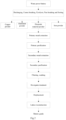
- (1) subjecting a waste power battery to discharging, coarse breaking, pyrolysis, fine breaking and sorting sequentially to obtain electrode material powder, copper powder, aluminum powder and iron powder, respectively;
- (2) mixing the electrode material powder with a metal extractant, standing still, then washing with a purifying agent A, filtering to obtain a filter residue A, mixing the filter residue A with the metal extractant, standing still, then washing with a purifying agent B, and filtering to obtain a crude graphite;
- (3) subjecting the crude graphite to the de-organic treatment, cooling, ball milling, and ventilation replacement to obtain a primary purified graphite; and
- (4) introducing a rare gas into the primary purified graphite to repair the graphite lattice; wherein in step (2), the purifying agent A is a mixed solution of hydrochloric acid, ethanol and acetone, and the purifying agent B is a mixed solution of deionized water, ethanol and acetone.
- Preferably, the pyrolysis in step (1) is carried out in an oxygen-free environment at a temperature of 350°C-800°C for 1-20 h.
- Preferably, the metal extractant in step (2) is one of a mixed solution of aqua regia and an oxidant, and aqua regia.
- Further preferably, the oxidant is at least one of hydrogen peroxide, sodium peroxide, potassium peroxide, sodium hypochlorite or potassium hypochlorite.
- More preferably, the oxidant has a concentration of 0.05-1 mol/L.
- More preferably, the aqua regia has a concentration of 10%-50%.
- Preferably, the mass ratio of hydrochloric acid, ethanol and acetone is 1: (1-5): (1-5).
- Preferably, the mass ratio of deionized water, ethanol and acetone is 1: (1-5): (1-5).
- Preferably, the de-organic treatment in step (3) includes placing the crude graphite in a vacuum furnace at a heating rate of 1-5°C/min to be heated to 200°C-250°C for de-organic treatment for 2-4 h.
- Preferably, in step (3), the graphite is rotated at a speed of 100-3000 r/min for 20-60 min.
- Preferably, the replacement in step (3) includes introducing a replacement gas at a flow rate of 5-30 mL/min, and then heating to 250°C-450°C at a heating rate of 1-5°C/min for replacement, and the replacement time is 20-40 min.
- More preferably, the replacement gas is a gas mixture of H2 and N2.
- Preferably, the rare gas in step (4) is He with a volumetric purity of 99.999%.
- Preferably, the specific process of repairing graphite lattice in step (4) includes introducing the rare gas at a flow rate of 5-30 mL/min within 40-80 min, closing an inlet valve and an outlet valve, and heating to a temperature of 2400°C-2600°C at a heating rate of 10-20°C/min, keeping the temperature for 10-30 min, then heating to 2600°C-3200°C at a heating rate of 3-10°C/min, and repairing the graphite having damaged lattices within 6-10 h to obtain a battery-grade graphite.
- In another aspect of the disclosure, there is provided a graphite produced by the method described above.
-
- 1. The disclosure adopts a method similar to vacuum evaporation to remove the organic components in the graphite. According to the disclosure, the organic impurities are evaporated or sublimated into gaseous particles under high temperature and vacuum conditions, and the gaseous particles are completely separated from the graphite under negative pressure, thus the organic impurities can be removed. After the de-organic treatment, secondary bonding will not occur between the graphite and the organic impurities again, thereby obtaining the high-purity graphite.
- 2. The disclosure uses replacement gas to deeply clean the graphite, so that the species adsorbed on the surface of graphite are completely desorbed before graphitization treatment, ensuring that no impurity atoms are arranged into the graphite lattice before graphitization, and the impurity removal at the atomic level is achieved, so that the impurity removal is effectively achieved, and the surface activity of the graphite is prevented from changing by the active functional groups on the surface of graphite, thereby forming graphite with intact crystal form.
- 3. The disclosure adopts a carbon source-free repairing, the atoms on the grid rearranges under He atmosphere and high temperature conditions, thereby realizing the self-repairing of the graphite anode material, forming a relatively intact graphite crystal form, and achieving the effect of self-healing the graphite defects. Therefore, the batteries assembled by the obtained graphite anode material have good electrochemical performance after 1600 cycles, which is superior to similar products on the market.
-
-
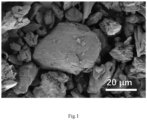
Figure 1 is an SEM image of graphite prepared inEmbodiment 1; -
Figure 2 is a flow chart of a method for purification and lattice reconstruction of graphite in a power battery according to Embodiments 1-3 of the disclosure; -
Figure 3 is an XRD pattern of graphite prepared inEmbodiment 1; and -
Figure 4 is a graph showing the cycle performance of graphite prepared inEmbodiment 1 andComparative Embodiment 1. - In order to make those skilled in the art more clearly understand the technical solutions of the disclosure, the following embodiments are set forth for description. It should be noted that the following embodiments do not constitute a limitation on the protection scope of the disclosure.
- Unless particularly stated, the raw materials, reagents or devices used in the following embodiments can all be obtained from conventional commercial sources, or can be obtained by existing known methods.
- A method for purification and lattice reconstruction of graphite in a power battery of this embodiment includes the following specific steps:
- (1) subjecting a waste power battery to discharging, coarse breaking, pyrolysis, fine breaking and sorting sequentially to obtain electrode material powder, copper foil, aluminum foil and iron powder, respectively;
- (2) mixing the electrode material powder with aqua regia having a concentration of 20% and hydrogen peroxide having a concentration of 0.1 mol/L at a solid-liquid ratio of 1:1 in a metal extraction tank and standing still for 4 hours to extract metal elements in the graphite anode, then washing with hydrochloric acid having a concentration of 2%, ethanol, and acetone at a ratio of 1:1:1, filtering to obtain a filter residue A and mixing the filter residue A with aqua regia having a concentration of 10% and hydrogen peroxide having a concentration of 0.05 mol/L at a solid-liquid ratio of 1:1 in a metal extraction tank, and standing still for 4 hours, extracting the metal elements in the graphite anode again, washing the same with deionized water, ethanol and acetone at a ratio of 1:1:1, and filtering to obtain a crude graphite;
- (3) subjecting the crude graphite to de-organic treatment in a vacuum furnace at 200°C (with a heating rate of 1°C/min) for 2 h, ball-milling the same at 100 r/min for 20 min after natural cooling, and then placing the de-organized crude graphite in a high-temperature furnace, and introducing a replacement gas (H2 with a concentration of 2%) at a flow rate of 5 mL/min, then performing replacement at a temperature of 250°C (with a heating rate of 1°C/min) for 20 min to remove surface adsorbed species; and
- (4) after the replacement is completed, introducing He with a volumetric purity of 99.999% at a flow rate of 5 mL/min at 250°C within 40 min, closing an inlet valve and an outlet valve, and heating to a temperature of 2400°C at a heating rate of 10°C/min, keeping the temperature for 10 min, then heating to 2600°C at a heating rate of 3°C/min, and repairing the graphite having damaged lattices within 6 h to obtain a battery-grade graphite.
- A method for purification and lattice reconstruction of graphite in a power battery of this embodiment includes the following specific steps:
- (1) subjecting a waste power battery to discharging, coarse breaking, pyrolysis, fine breaking and sorting sequentially to obtain electrode material powder, copper foil, aluminum foil and iron powder, respectively;
- (2) mixing the electrode material powder with aqua regia having a concentration of 35% and sodium hypochlorite having a concentration of 0.5mol/L at a solid-liquid ratio of 1:3 in a metal extraction tank and standing still for 8 hours at 25°C to extract metal elements in the graphite anode, then washing with hydrochloric acid having a concentration of 15%, ethanol, and acetone at a ratio of 1:3:3, filtering to obtain a filter residue A and mixing the filter residue A with aqua regia having a concentration of 20% and sodium hypochlorite having a concentration of 0.15 mol/L at a solid-liquid ratio of 1:3 in the metal extraction tank, and standing still for 8 hours, extracting the metal elements in the graphite anode again, washing the same with deionized water, ethanol and acetone at a ratio of 1:3:3, and filtering to obtain a crude graphite;
- (3) subjecting the crude graphite to de-organic treatment in a vacuum furnace at 230°C (with a heating rate of 3°C/min) for 3h, ball-milling the same at 2000 r/min for 40 min after natural cooling, and then placing the de-organized crude graphite in a high-temperature furnace, and introducing a replacement gas (H2 with a concentration of 15%) at a flow rate of 5 mL/min, then performing replacement at a temperature of 300°C (with a heating rate of 3°C/min) for 30 min to remove surface adsorbed species; and
- (4) after the replacement is completed, introducing He with a purity of 99.999% at a flow rate of 20 mL/min at 300°C within 60 min, closing an inlet valve and an outlet valve, and heating to a temperature of 2500°C at a heating rate of 15°C/min, keeping the temperature for 20 min, then heating to 3000°C at a heating rate of 7°C/min, and repairing the graphite having damaged lattices within 8 h to obtain a battery-grade graphite.
- A method for purification and lattice reconstruction of graphite in a power battery of this embodiment includes the following specific steps:
- (1) subjecting a waste power battery to discharging, coarse breaking, pyrolysis, fine breaking and sorting sequentially to obtain electrode material powder, copper foil, aluminum foil and iron powder, respectively;
- (2) mixing the electrode material powder with aqua regia having a concentration of 50% and postassium hypochlorite having a concentration of 1 mol/L at a solid-liquid ratio of 1:5 in a metal extraction tank and standing still for 12 hours to extract metal elements in the graphite anode, then washing with hydrochloric acid having a concentration of 30%, ethanol, and acetone at a mass ratio of 1:5:5, filtering to obtain a filter residue A and mixing the filter residue A with aqua regia having a concentration of 30% and postassium hypochlorite having a concentration of 0.3 mol/L at a solid-liquid ratio of 1:5 in the metal extraction tank, and standing still for 12 hours, extracting the metal elements in the graphite anode again, washing the same with deionized water, ethanol and acetone at a mass ratio of 1:5:5, and filtering to obtain a crude graphite;
- (3) subjecting the crude graphite to de-organic treatment in a vacuum furnace at 250°C (with a heating rate of 5°C/min) for 4h, ball-milling the same at 3000 r/min for 60 min after natural cooling, and then placing the de-organized crude graphite in a high-temperature furnace, and introducing a replacement gas (H2 with a concentration of 30%) at a flow rate of 30 mL/min, then performing replacement at a temperature of 450°C (with a heating rate of 5°C/min) for 40 min to remove surface adsorbed species; and
- (4) after the replacement is completed, introducing He with a volumetric purity of 99.999% at a flow rate of 20 mL/min at 450°C within 40 min, closing an inlet valve and an outlet valve, and heating to a temperature of2600°C at a heating rate of 15°C/min, keeping the temperature for 30 min, then heating to 3200°C at a heating rate of 10°C/min, and repairing the graphite having damaged lattices within 10 h to obtain a battery-grade graphite.
- A method for preparing artificial graphite anode material includes the following steps:
- (1) taking and subjecting a waste battery to discharging, disassembling and breaking, subjecting a copper foil coated with the graphite anode to hydrothermal treatment and centrifugation for solid-liquid separation, oven-drying to obtain the mixed material of graphite and conductive agent powder; and
- (2) adding petroleum asphalt and silicon carbide to be mixed and compression molded, treating the same under the protection of N2 and at 800°C for 8 h to obtain a repaired and regenerated artificial graphite anode material.
- A method for preparing graphite includes the following steps:
- (1) subjecting a waste power battery to discharging, coarse breaking, pyrolysis, fine breaking and sorting sequentially, taking and leaching an electrode material powder and 0.1 mol/L of sulfuric acid at a solid-liquid volume ratio of 1:5 for 6 hours, then washing with 2% of hydrochloric acid, and filtering to obtain graphite.
- The graphite obtained respectively in the above Embodiments 1-3 and
Comparative Embodiment 1 was used as the anode, and a lithium sheet was used as the cathode. The graphite and the lithium sheet were assembled into a button battery, and the initial discharge test was carried out at a rate of 1C. The results are shown in Table 2 and Table 3. It can be seen from Table 1 that the regenerated graphite in Embodiment 2 has low impurity content, and the degree of graphitization reaches 96%, while the degree of graphitization inComparative Embodiment 1 is only 92%. It can be seen according to Table 2 that, at a rate of 1C, the initial discharge specific capacity of the regenerated graphite anode material of the disclosure is higher than that of graphite recovered by an ordinary method, and the initial discharge specific capacity of Embodiment 2 is 362.3 mAh/g, while the initial discharge specific capacity of Comparative Embodiment is only 333.1 mAh/g. It can be seen according to Table 3 that, at a rate of 1C, the cycle life of the regenerated graphite anode material of the disclosure is higher than that of graphite recovered by an ordinary method, and the capacity retention rate of Embodiment 2 after 1600 cycles at 1C is 96.6%, while the capacity retention rate ofComparative Embodiment 1 is only 92.8 %. Table 4 shows the concentration and ash content of the impurity elements obtained in Embodiment 2 and Comparative Embodiment 2 after extracting the metal elements by the acid solution. It can be seen from Table 4 that after two acid extractions in Embodiment 2, the content of metal impurities in graphite is significantly lower than that of metal impurities in Comparative Embodiment 2 after one acid extraction. - The results are as shown in Table 1:
Table 1 Composition Analysis and Physical Properties of Graphite Item Embodiment 1 Embodiment 2 Embodiment 3 Comparative Embodiment 1Ash content % 0.046 0.043 0.041 0.088 Moisture % 0.0331 0.0335 0.0329 0.0656 Volatile % 0.0193 0.0198 0.0211 0.0466 D50 µm 18.59 18.61 18.56 18.63 Degree of graphitization % 95 96 94 92 Fixed carbon content % 99.96 99.98 99.95 99.70 Table 2 Performance of button battery of graphite Item Embodiment 1 Embodiment 2 Embodiment 3 Comparative Embodiment 1Initial discharge specific capacity mAh/g 361.9 362.3 362.1 333.1 Initial charge-discharge efficiency % 93.8 93.9 93.9 91.2 Table 3 Full battery cycle performance of graphite Item Embodiment 1 Embodiment 2 Embodiment 3 Comparative Embodiment 1Discharge capacity retention rate % after 1600 cycles at 1C 95.9 96.6 96.3 92.8 Table 4 Impurity content of graphite after metal extraction Impurities Ni (%) Co (%) Mn (%) Li (%) Fe (%) Al (%) Cu (%) Total (%) Ash (%) Embodiment 2 0.001 0.003 0.001 0.001 0.002 0.001 0.001 0.01 0.019 Comparative 0.01 0.008 0.005 0.02 0.05 0.01 0.004 0.107 0.183 Embodiment 2 - From the XRD pattern of the graphite prepared in Embodiment 1 (
Figure 3 ), it is found that in comparison with PDF#65-6212, the peak at around 26.5° corresponds to the crystal plane (002) of the regenerated graphite inEmbodiment 1, which shows that the crystal form of the regenerated graphite sample ofEmbodiment 1 is better. From the graphs of the cycle performance of the graphite prepared inEmbodiment 1 and Comparative Embodiment 1 (Figure 4 ), it is found that the capacity and cycle stability of the regenerated graphite ofEmbodiment 1 are better than those ofComparative Embodiment 1. - A detailed introduction to a method for purification and lattice reconstruction of graphite in a power battery according to the disclosure is provided above. The principles and implementations of the disclosure are explained by way of specific embodiments herein. The above embodiments are only provided to facilitate the understanding of the method of the disclosure and core concepts thereof, including the best mode, and also enables any person skilled in the art to practice the disclosure, including manufacturing and using any device or system, and implementing any combined method. It should be noted that several improvements and modifications may be made by an ordinary person skilled in the art without departing from the principles of the present disclosure, and that such improvements and modifications also fall within the protection scope of the appended claims of the present disclosure. The scope of patent protection of the disclosure is defined by the claims, and other embodiments conceivable by those skilled in the art may be included. If these other embodiments have structural elements that are not different from the literal expressions of the claims, or if they include equivalent structural elements that are not substantially different from the literal expressions of the claims, these other embodiments should also be included within the scope of the claims.
Claims (10)
- A method for purification and lattice reconstruction of graphite in a power battery, comprising the following steps:(1) subjecting a waste power battery to discharging, coarse breaking, pyrolysis, fine breaking and sorting sequentially to obtain electrode material powder, copper powder, aluminum powder and iron powder, respectively;(2) mixing the electrode material powder with a metal extractant, standing still, then washing with a purifying agent A, filtering to obtain a filter residue A, mixing the filter residue A with the metal extractant, standing still, then washing with a purifying agent B, and filtering to obtain a crude graphite;(3) subjecting the crude graphite to the de-organic treatment, cooling, ball milling, and ventilation replacement to obtain a primary purified graphite; and(4) introducing a rare gas into the primary purified graphite to repair graphite lattice; wherein in step (2), the purifying agent A is a mixed solution of hydrochloric acid, ethanol and acetone, and the purifying agent B is a mixed solution of deionized water, ethanol and acetone.
- The method for purification and lattice reconstruction of graphite in a power battery of claim 1, wherein the pyrolysis in step (1) is carried out in an oxygen-free environment at a temperature of 350°C-800°C for 1-20 h.
- The method for purification and lattice reconstruction of graphite in a power battery of claim 1, wherein the metal extractant in step (2) is one of a mixed solution of aqua regia and an oxidant, and aqua regia.
- The method for purification and lattice reconstruction of graphite in a power battery of claim 3, wherein the oxidant is at least one of hydrogen peroxide, sodium peroxide, potassium peroxide, sodium hypochlorite or potassium hypochlorite.
- The method for purification and lattice reconstruction of graphite in a power battery of claim 1, wherein the de-organic treatment in step (3) comprises placing the crude graphite in a vacuum furnace at a heating rate of 1-5°C/min to be heated to 200°C-250°C for the de-organic treatment for 2-4 h.
- The method for purification and lattice reconstruction of graphite in a power battery of claim 1, wherein the replacement in step (3) comprises introducing a replacement gas at a flow rate of 5-30 mL/min, and then heating to 250°C-450°C at a heating rate of 1-5°C/min for replacement for 20-40 min.
- The method for purification and lattice reconstruction of graphite in a power battery of claim 6, wherein the replacement gas is a gas mixture of H2 and N2.
- The method for purification and lattice reconstruction of graphite in a power battery of claim 1, wherein the rare gas in step (4) is He with a volumetric purity of 99.999%.
- The method for purification and lattice reconstruction of graphite in a power battery of claim 1, wherein the repairing graphite lattice in step (4) comprises:
introducing a rare gas at a flow rate of 5-30 mL/min within 40-80 min, closing an inlet valve and an outlet valve, and heating to a temperature of 2400°C-2600°C at a heating rate of 10-20°C/min, keeping the temperature for 10-30 min, then heating to 2600°C-3200°C at a heating rate of 3-10°C/min, and repairing the graphite having damaged lattices within 6-10 h. - A graphite produced by the method of any one of claims 1-9.
Priority Applications (1)
| Application Number | Priority Date | Filing Date | Title |
|---|---|---|---|
| MA69125A MA69125B1 (en) | 2020-06-01 | 2021-04-27 | METHOD FOR GRAPHITE PURIFICATION AND NETWORK RECONSTRUCTION IN A POWER BATTERY |
Applications Claiming Priority (2)
| Application Number | Priority Date | Filing Date | Title |
|---|---|---|---|
| CN202010485582.2A CN111807359B (en) | 2020-06-01 | 2020-06-01 | Graphite purification and lattice reconstruction method in power battery |
| PCT/CN2021/090331 WO2021244189A1 (en) | 2020-06-01 | 2021-04-27 | Method for graphite purification and lattice reconstruction in power battery |
Publications (3)
| Publication Number | Publication Date |
|---|---|
| EP4151593A1 true EP4151593A1 (en) | 2023-03-22 |
| EP4151593A4 EP4151593A4 (en) | 2023-11-15 |
| EP4151593B1 EP4151593B1 (en) | 2025-03-19 |
Family
ID=72848257
Family Applications (1)
| Application Number | Title | Priority Date | Filing Date |
|---|---|---|---|
| EP21818444.8A Active EP4151593B1 (en) | 2020-06-01 | 2021-04-27 | Method for graphite purification and lattice reconstruction in power battery |
Country Status (8)
| Country | Link |
|---|---|
| US (1) | US20210376305A1 (en) |
| EP (1) | EP4151593B1 (en) |
| CN (1) | CN111807359B (en) |
| CL (1) | CL2022003392A1 (en) |
| ES (1) | ES3021932T3 (en) |
| HU (1) | HUE071299T2 (en) |
| MA (1) | MA69125B1 (en) |
| WO (1) | WO2021244189A1 (en) |
Families Citing this family (6)
| Publication number | Priority date | Publication date | Assignee | Title |
|---|---|---|---|---|
| CN111807359B (en) * | 2020-06-01 | 2022-03-15 | 广东邦普循环科技有限公司 | Graphite purification and lattice reconstruction method in power battery |
| CN114221057A (en) * | 2021-12-09 | 2022-03-22 | 贵州安达科技能源股份有限公司 | Modification method for lithium ion battery recycled graphite, modified graphite, negative electrode material and lithium ion battery |
| CN114614132A (en) * | 2022-03-08 | 2022-06-10 | 宜宾光原锂电材料有限公司 | Waste lithium battery discharging method |
| WO2025003975A1 (en) * | 2023-06-29 | 2025-01-02 | Talga Technologies Limited | Graphite material purification process |
| CN117367133B (en) * | 2023-12-06 | 2024-03-01 | 山西晋阳碳素有限公司 | Graphitized power transmission pushing device |
| CN118851167A (en) * | 2024-06-28 | 2024-10-29 | 赣南师范大学 | A method for regenerating and repairing graphite after wet lithium extraction from waste lithium batteries |
Family Cites Families (17)
| Publication number | Priority date | Publication date | Assignee | Title |
|---|---|---|---|---|
| FR580570A (en) * | 1924-04-23 | 1924-11-10 | Graphite enrichment process | |
| JP5151072B2 (en) * | 2006-05-31 | 2013-02-27 | トヨタ自動車株式会社 | Method for recovering metal constituting electrode from lithium battery |
| WO2009146175A2 (en) * | 2008-04-14 | 2009-12-03 | Akridge James R | Sustainable recovery of metal compounds |
| CN101710632B (en) | 2009-12-18 | 2012-05-02 | 湖南邦普循环科技有限公司 | Method for recovering and restoring anode material graphite of waste lithium ion battery |
| CN102544629B (en) * | 2012-01-17 | 2015-05-13 | 广东邦普循环科技有限公司 | Method for regenerating waste and old graphite anode materials |
| CN103346365B (en) * | 2013-07-22 | 2015-06-24 | 田东 | Method for recycling negative material from waste lithium ion battery |
| CN103618120B (en) * | 2013-12-06 | 2016-04-27 | 广东邦普循环科技有限公司 | In a kind of negative electrode material of waste lithium ion battery, graphite and copper sheet is separated and recovery method |
| CN104241723B (en) * | 2014-07-11 | 2017-11-17 | 广东邦普循环科技有限公司 | Negative material regeneration method in the unqualified lithium ion battery of graphite system |
| CN107887666B (en) * | 2016-09-29 | 2018-09-25 | 中国科学院过程工程研究所 | A kind of recovery method of negative electrode material of waste lithium ion battery |
| CN107731566B (en) * | 2017-10-21 | 2019-09-13 | 福州大学 | Preparation method and application of a three-dimensional petal-shaped nickel-cobalt sulfide electrode material |
| KR102035908B1 (en) * | 2017-12-19 | 2019-10-24 | 주식회사 티씨케이 | Method of recycling wasted graphite materials, wasted graphite materials, and articles having the same |
| CN109837392A (en) * | 2019-01-25 | 2019-06-04 | 宁波行殊新能源科技有限公司 | The recycling and regeneration method of lithium ion battery anode material waste material |
| CN110690519B (en) * | 2019-09-30 | 2023-03-14 | 中南大学 | Method for recycling lithium ion battery negative electrode material |
| CN111072023B (en) * | 2019-12-27 | 2022-02-08 | 北京蒙京石墨新材料科技研究院有限公司 | Method for recycling graphite from scrapped lithium ion battery |
| CN111204757B (en) * | 2020-01-15 | 2022-01-07 | 广东邦普循环科技有限公司 | Method for purifying, repairing and regenerating graphite in retired power battery |
| IL273457A (en) * | 2020-03-19 | 2021-09-30 | Yeda Res & Dev | Method for recovery of valuable metals from spent lithium ion batteries |
| CN111807359B (en) * | 2020-06-01 | 2022-03-15 | 广东邦普循环科技有限公司 | Graphite purification and lattice reconstruction method in power battery |
-
2020
- 2020-06-01 CN CN202010485582.2A patent/CN111807359B/en active Active
- 2020-07-09 US US16/925,310 patent/US20210376305A1/en not_active Abandoned
-
2021
- 2021-04-27 EP EP21818444.8A patent/EP4151593B1/en active Active
- 2021-04-27 WO PCT/CN2021/090331 patent/WO2021244189A1/en not_active Ceased
- 2021-04-27 ES ES21818444T patent/ES3021932T3/en active Active
- 2021-04-27 MA MA69125A patent/MA69125B1/en unknown
- 2021-04-27 HU HUE21818444A patent/HUE071299T2/en unknown
-
2022
- 2022-11-30 CL CL2022003392A patent/CL2022003392A1/en unknown
Also Published As
| Publication number | Publication date |
|---|---|
| ES3021932T3 (en) | 2025-05-27 |
| HUE071299T2 (en) | 2025-08-28 |
| CN111807359A (en) | 2020-10-23 |
| WO2021244189A1 (en) | 2021-12-09 |
| EP4151593A4 (en) | 2023-11-15 |
| EP4151593B1 (en) | 2025-03-19 |
| US20210376305A1 (en) | 2021-12-02 |
| CN111807359B (en) | 2022-03-15 |
| CL2022003392A1 (en) | 2023-06-30 |
| MA69125B1 (en) | 2025-04-30 |
Similar Documents
| Publication | Publication Date | Title |
|---|---|---|
| EP4151593A1 (en) | Method for graphite purification and lattice reconstruction in power battery | |
| CN111285366A (en) | Regeneration method of lithium ion battery negative electrode graphite | |
| CN102208706A (en) | A method for recycling and regenerating positive electrode materials of waste lithium iron phosphate batteries | |
| CN110842006A (en) | Dry purification separation and regeneration method of lithium battery anode recycled material and obtained lithium battery anode recycled material | |
| CN111430831A (en) | A kind of recycling method of waste lithium ion battery negative electrode material | |
| JP2025516972A (en) | A method for producing battery-grade graphite using mixed waste of cathode and anode materials from damaged lithium-ion batteries as raw material | |
| CN113206227B (en) | Method for preparing carbon-based metal sulfide negative electrode material by simultaneously recycling positive and negative electrode materials of waste nickel-cobalt-manganese lithium ion battery | |
| CN116282000B (en) | Method for recycling waste battery graphite carbon slag and co-producing regenerated graphite active material | |
| CN115818618A (en) | Method for regenerating waste lithium ion battery negative electrode graphite | |
| CN117477082A (en) | A method for reusing scrapped lithium-ion battery negative electrode materials | |
| CN118183729B (en) | Waste battery failure graphite-based regenerated graphite material and preparation method and application thereof | |
| CN115832497B (en) | Method for recycling graphite anode material | |
| CN113782759A (en) | Method for recovering graphite from waste batteries | |
| CN113948786B (en) | Method for recovering and regenerating lithium cobalt oxide in lithium ion battery, application and positive electrode material | |
| CN115472945A (en) | Method for repairing and regenerating waste lithium iron phosphate positive electrode material | |
| GB2621300A (en) | Method for regenerating lithium battery positive electrode material | |
| CN119976831A (en) | A method for separating, purifying and regenerating waste lithium iron phosphate electrode materials | |
| CN115149139B (en) | A method for coupling regeneration and repair of positive and negative active materials of waste lithium iron phosphate batteries | |
| CN114804049B (en) | Method for recovering high-purity ferric phosphate from lithium iron phosphate waste batteries | |
| CN117735522A (en) | Hard carbon material, preparation method and application thereof, and battery | |
| CN117410587A (en) | Treatment method of waste lithium iron phosphate material | |
| CN119218988B (en) | A method for normalizing the performance of negative electrode graphite in multi-source retired lithium-ion batteries | |
| CN116093325B (en) | Method for converting lithium cobalt oxide into lithium-supplementing material, lithium-supplementing material, and modified lithium-ion battery positive electrode material | |
| CN120728068A (en) | A method for recycling ternary positive electrode materials for lithium batteries | |
| CN121565972A (en) | Method for directly regenerating waste lithium iron phosphate positive electrode material by plasma treatment |
Legal Events
| Date | Code | Title | Description |
|---|---|---|---|
| STAA | Information on the status of an ep patent application or granted ep patent |
Free format text: STATUS: THE INTERNATIONAL PUBLICATION HAS BEEN MADE |
|
| PUAI | Public reference made under article 153(3) epc to a published international application that has entered the european phase |
Free format text: ORIGINAL CODE: 0009012 |
|
| STAA | Information on the status of an ep patent application or granted ep patent |
Free format text: STATUS: REQUEST FOR EXAMINATION WAS MADE |
|
| 17P | Request for examination filed |
Effective date: 20221206 |
|
| AK | Designated contracting states |
Kind code of ref document: A1 Designated state(s): AL AT BE BG CH CY CZ DE DK EE ES FI FR GB GR HR HU IE IS IT LI LT LU LV MC MK MT NL NO PL PT RO RS SE SI SK SM TR |
|
| DAX | Request for extension of the european patent (deleted) | ||
| RAV | Requested validation state of the european patent: fee paid |
Extension state: MA Effective date: 20221222 |
|
| A4 | Supplementary search report drawn up and despatched |
Effective date: 20231013 |
|
| RIC1 | Information provided on ipc code assigned before grant |
Ipc: H01M 4/587 20100101ALI20231006BHEP Ipc: H01M 10/54 20060101ALI20231006BHEP Ipc: C01B 32/20 20170101AFI20231006BHEP |
|
| STAA | Information on the status of an ep patent application or granted ep patent |
Free format text: STATUS: EXAMINATION IS IN PROGRESS |
|
| 17Q | First examination report despatched |
Effective date: 20240522 |
|
| GRAP | Despatch of communication of intention to grant a patent |
Free format text: ORIGINAL CODE: EPIDOSNIGR1 |
|
| STAA | Information on the status of an ep patent application or granted ep patent |
Free format text: STATUS: GRANT OF PATENT IS INTENDED |
|
| INTG | Intention to grant announced |
Effective date: 20250107 |
|
| GRAS | Grant fee paid |
Free format text: ORIGINAL CODE: EPIDOSNIGR3 |
|
| GRAA | (expected) grant |
Free format text: ORIGINAL CODE: 0009210 |
|
| STAA | Information on the status of an ep patent application or granted ep patent |
Free format text: STATUS: THE PATENT HAS BEEN GRANTED |
|
| AK | Designated contracting states |
Kind code of ref document: B1 Designated state(s): AL AT BE BG CH CY CZ DE DK EE ES FI FR GB GR HR HU IE IS IT LI LT LU LV MC MK MT NL NO PL PT RO RS SE SI SK SM TR |
|
| RAP3 | Party data changed (applicant data changed or rights of an application transferred) |
Owner name: HUNAN BRUNP EV RECYCLING CO., LTD. Owner name: HUNAN BRUNP RECYCLING TECHNOLOGY CO., LTD. Owner name: GUANGDONG BRUNP RECYCLING TECHNOLOGY CO., LTD. |
|
| REG | Reference to a national code |
Ref country code: GB Ref legal event code: FG4D |
|
| REG | Reference to a national code |
Ref country code: CH Ref legal event code: EP |
|
| REG | Reference to a national code |
Ref country code: IE Ref legal event code: FG4D |
|
| REG | Reference to a national code |
Ref country code: DE Ref legal event code: R096 Ref document number: 602021027894 Country of ref document: DE |
|
| REG | Reference to a national code |
Ref country code: MA Ref legal event code: VAGR Ref document number: 69125 Country of ref document: MA Kind code of ref document: B1 |
|
| REG | Reference to a national code |
Ref country code: ES Ref legal event code: FG2A Ref document number: 3021932 Country of ref document: ES Kind code of ref document: T3 Effective date: 20250527 |
|
| PG25 | Lapsed in a contracting state [announced via postgrant information from national office to epo] |
Ref country code: RS Free format text: LAPSE BECAUSE OF FAILURE TO SUBMIT A TRANSLATION OF THE DESCRIPTION OR TO PAY THE FEE WITHIN THE PRESCRIBED TIME-LIMIT Effective date: 20250619 |
|
| PG25 | Lapsed in a contracting state [announced via postgrant information from national office to epo] |
Ref country code: FI Free format text: LAPSE BECAUSE OF FAILURE TO SUBMIT A TRANSLATION OF THE DESCRIPTION OR TO PAY THE FEE WITHIN THE PRESCRIBED TIME-LIMIT Effective date: 20250319 |
|
| PGFP | Annual fee paid to national office [announced via postgrant information from national office to epo] |
Ref country code: DE Payment date: 20250514 Year of fee payment: 5 |
|
| PGFP | Annual fee paid to national office [announced via postgrant information from national office to epo] |
Ref country code: GB Payment date: 20250515 Year of fee payment: 5 Ref country code: ES Payment date: 20250528 Year of fee payment: 5 |
|
| REG | Reference to a national code |
Ref country code: LT Ref legal event code: MG9D |
|
| PG25 | Lapsed in a contracting state [announced via postgrant information from national office to epo] |
Ref country code: NO Free format text: LAPSE BECAUSE OF FAILURE TO SUBMIT A TRANSLATION OF THE DESCRIPTION OR TO PAY THE FEE WITHIN THE PRESCRIBED TIME-LIMIT Effective date: 20250619 |
|
| PG25 | Lapsed in a contracting state [announced via postgrant information from national office to epo] |
Ref country code: HR Free format text: LAPSE BECAUSE OF FAILURE TO SUBMIT A TRANSLATION OF THE DESCRIPTION OR TO PAY THE FEE WITHIN THE PRESCRIBED TIME-LIMIT Effective date: 20250319 |
|
| PG25 | Lapsed in a contracting state [announced via postgrant information from national office to epo] |
Ref country code: LV Free format text: LAPSE BECAUSE OF FAILURE TO SUBMIT A TRANSLATION OF THE DESCRIPTION OR TO PAY THE FEE WITHIN THE PRESCRIBED TIME-LIMIT Effective date: 20250319 |
|
| PGFP | Annual fee paid to national office [announced via postgrant information from national office to epo] |
Ref country code: FR Payment date: 20250509 Year of fee payment: 5 |
|
| PG25 | Lapsed in a contracting state [announced via postgrant information from national office to epo] |
Ref country code: GR Free format text: LAPSE BECAUSE OF FAILURE TO SUBMIT A TRANSLATION OF THE DESCRIPTION OR TO PAY THE FEE WITHIN THE PRESCRIBED TIME-LIMIT Effective date: 20250620 Ref country code: BG Free format text: LAPSE BECAUSE OF FAILURE TO SUBMIT A TRANSLATION OF THE DESCRIPTION OR TO PAY THE FEE WITHIN THE PRESCRIBED TIME-LIMIT Effective date: 20250319 |
|
| REG | Reference to a national code |
Ref country code: NL Ref legal event code: MP Effective date: 20250319 |
|
| REG | Reference to a national code |
Ref country code: AT Ref legal event code: MK05 Ref document number: 1776855 Country of ref document: AT Kind code of ref document: T Effective date: 20250319 |
|
| PG25 | Lapsed in a contracting state [announced via postgrant information from national office to epo] |
Ref country code: NL Free format text: LAPSE BECAUSE OF FAILURE TO SUBMIT A TRANSLATION OF THE DESCRIPTION OR TO PAY THE FEE WITHIN THE PRESCRIBED TIME-LIMIT Effective date: 20250319 |
|
| REG | Reference to a national code |
Ref country code: HU Ref legal event code: AG4A Ref document number: E071299 Country of ref document: HU |
|
| PG25 | Lapsed in a contracting state [announced via postgrant information from national office to epo] |
Ref country code: SE Free format text: LAPSE BECAUSE OF FAILURE TO SUBMIT A TRANSLATION OF THE DESCRIPTION OR TO PAY THE FEE WITHIN THE PRESCRIBED TIME-LIMIT Effective date: 20250319 |
|
| PG25 | Lapsed in a contracting state [announced via postgrant information from national office to epo] |
Ref country code: SM Free format text: LAPSE BECAUSE OF FAILURE TO SUBMIT A TRANSLATION OF THE DESCRIPTION OR TO PAY THE FEE WITHIN THE PRESCRIBED TIME-LIMIT Effective date: 20250319 |
|
| PG25 | Lapsed in a contracting state [announced via postgrant information from national office to epo] |
Ref country code: PT Free format text: LAPSE BECAUSE OF FAILURE TO SUBMIT A TRANSLATION OF THE DESCRIPTION OR TO PAY THE FEE WITHIN THE PRESCRIBED TIME-LIMIT Effective date: 20250721 |
|
| PG25 | Lapsed in a contracting state [announced via postgrant information from national office to epo] |
Ref country code: IT Free format text: LAPSE BECAUSE OF FAILURE TO SUBMIT A TRANSLATION OF THE DESCRIPTION OR TO PAY THE FEE WITHIN THE PRESCRIBED TIME-LIMIT Effective date: 20250319 Ref country code: PL Free format text: LAPSE BECAUSE OF FAILURE TO SUBMIT A TRANSLATION OF THE DESCRIPTION OR TO PAY THE FEE WITHIN THE PRESCRIBED TIME-LIMIT Effective date: 20250319 |
|
| PGFP | Annual fee paid to national office [announced via postgrant information from national office to epo] |
Ref country code: HU Payment date: 20250610 Year of fee payment: 5 |
|
| PG25 | Lapsed in a contracting state [announced via postgrant information from national office to epo] |
Ref country code: AT Free format text: LAPSE BECAUSE OF FAILURE TO SUBMIT A TRANSLATION OF THE DESCRIPTION OR TO PAY THE FEE WITHIN THE PRESCRIBED TIME-LIMIT Effective date: 20250319 |
|
| PG25 | Lapsed in a contracting state [announced via postgrant information from national office to epo] |
Ref country code: CZ Free format text: LAPSE BECAUSE OF FAILURE TO SUBMIT A TRANSLATION OF THE DESCRIPTION OR TO PAY THE FEE WITHIN THE PRESCRIBED TIME-LIMIT Effective date: 20250319 Ref country code: EE Free format text: LAPSE BECAUSE OF FAILURE TO SUBMIT A TRANSLATION OF THE DESCRIPTION OR TO PAY THE FEE WITHIN THE PRESCRIBED TIME-LIMIT Effective date: 20250319 |
|
| PG25 | Lapsed in a contracting state [announced via postgrant information from national office to epo] |
Ref country code: RO Free format text: LAPSE BECAUSE OF FAILURE TO SUBMIT A TRANSLATION OF THE DESCRIPTION OR TO PAY THE FEE WITHIN THE PRESCRIBED TIME-LIMIT Effective date: 20250319 |
|
| PG25 | Lapsed in a contracting state [announced via postgrant information from national office to epo] |
Ref country code: SK Free format text: LAPSE BECAUSE OF FAILURE TO SUBMIT A TRANSLATION OF THE DESCRIPTION OR TO PAY THE FEE WITHIN THE PRESCRIBED TIME-LIMIT Effective date: 20250319 |
|
| PG25 | Lapsed in a contracting state [announced via postgrant information from national office to epo] |
Ref country code: IS Free format text: LAPSE BECAUSE OF FAILURE TO SUBMIT A TRANSLATION OF THE DESCRIPTION OR TO PAY THE FEE WITHIN THE PRESCRIBED TIME-LIMIT Effective date: 20250719 |
|
| VSFP | Annual fee paid to validation state [announced via postgrant information from national office to epo] |
Ref country code: MA Payment date: 20250521 Year of fee payment: 5 |
|
| REG | Reference to a national code |
Ref country code: CH Ref legal event code: H13 Free format text: ST27 STATUS EVENT CODE: U-0-0-H10-H13 (AS PROVIDED BY THE NATIONAL OFFICE) Effective date: 20251125 |
|
| PG25 | Lapsed in a contracting state [announced via postgrant information from national office to epo] |
Ref country code: LU Free format text: LAPSE BECAUSE OF NON-PAYMENT OF DUE FEES Effective date: 20250427 |
|
| PG25 | Lapsed in a contracting state [announced via postgrant information from national office to epo] |
Ref country code: MC Free format text: LAPSE BECAUSE OF FAILURE TO SUBMIT A TRANSLATION OF THE DESCRIPTION OR TO PAY THE FEE WITHIN THE PRESCRIBED TIME-LIMIT Effective date: 20250319 |
|
| REG | Reference to a national code |
Ref country code: DE Ref legal event code: R097 Ref document number: 602021027894 Country of ref document: DE |
|
| REG | Reference to a national code |
Ref country code: BE Ref legal event code: MM Effective date: 20250430 |
|
| PG25 | Lapsed in a contracting state [announced via postgrant information from national office to epo] |
Ref country code: DK Free format text: LAPSE BECAUSE OF FAILURE TO SUBMIT A TRANSLATION OF THE DESCRIPTION OR TO PAY THE FEE WITHIN THE PRESCRIBED TIME-LIMIT Effective date: 20250319 |
|
| PG25 | Lapsed in a contracting state [announced via postgrant information from national office to epo] |
Ref country code: BE Free format text: LAPSE BECAUSE OF NON-PAYMENT OF DUE FEES Effective date: 20250430 |
|
| PG25 | Lapsed in a contracting state [announced via postgrant information from national office to epo] |
Ref country code: CH Free format text: LAPSE BECAUSE OF NON-PAYMENT OF DUE FEES Effective date: 20250430 |
|
| PLBE | No opposition filed within time limit |
Free format text: ORIGINAL CODE: 0009261 |
|
| STAA | Information on the status of an ep patent application or granted ep patent |
Free format text: STATUS: NO OPPOSITION FILED WITHIN TIME LIMIT |
|
| REG | Reference to a national code |
Ref country code: CH Ref legal event code: L10 Free format text: ST27 STATUS EVENT CODE: U-0-0-L10-L00 (AS PROVIDED BY THE NATIONAL OFFICE) Effective date: 20260128 |
|
| 26N | No opposition filed |
Effective date: 20251222 |
|
| PG25 | Lapsed in a contracting state [announced via postgrant information from national office to epo] |
Ref country code: IE Free format text: LAPSE BECAUSE OF NON-PAYMENT OF DUE FEES Effective date: 20250427 |
|
| VSFP | Annual fee paid to validation state [announced via postgrant information from national office to epo] |
Ref country code: MA Payment date: 20260413 Year of fee payment: 6 |