EP4151212A1 - Therapeutic agent for breast cancer - Google Patents
Therapeutic agent for breast cancer Download PDFInfo
- Publication number
- EP4151212A1 EP4151212A1 EP21850938.8A EP21850938A EP4151212A1 EP 4151212 A1 EP4151212 A1 EP 4151212A1 EP 21850938 A EP21850938 A EP 21850938A EP 4151212 A1 EP4151212 A1 EP 4151212A1
- Authority
- EP
- European Patent Office
- Prior art keywords
- breast cancer
- therapeutic agent
- estrogen receptor
- acceptable salt
- pharmacologically acceptable
- Prior art date
- Legal status (The legal status is an assumption and is not a legal conclusion. Google has not performed a legal analysis and makes no representation as to the accuracy of the status listed.)
- Pending
Links
Images

Classifications
-
- A—HUMAN NECESSITIES
- A61—MEDICAL OR VETERINARY SCIENCE; HYGIENE
- A61P—SPECIFIC THERAPEUTIC ACTIVITY OF CHEMICAL COMPOUNDS OR MEDICINAL PREPARATIONS
- A61P15/00—Drugs for genital or sexual disorders; Contraceptives
-
- A—HUMAN NECESSITIES
- A61—MEDICAL OR VETERINARY SCIENCE; HYGIENE
- A61K—PREPARATIONS FOR MEDICAL, DENTAL OR TOILETRY PURPOSES
- A61K31/00—Medicinal preparations containing organic active ingredients
- A61K31/33—Heterocyclic compounds
- A61K31/395—Heterocyclic compounds having nitrogen as a ring hetero atom, e.g. guanethidine or rifamycins
- A61K31/435—Heterocyclic compounds having nitrogen as a ring hetero atom, e.g. guanethidine or rifamycins having six-membered rings with one nitrogen as the only ring hetero atom
- A61K31/44—Non condensed pyridines; Hydrogenated derivatives thereof
- A61K31/445—Non condensed piperidines, e.g. piperocaine
- A61K31/4523—Non condensed piperidines, e.g. piperocaine containing further heterocyclic ring systems
- A61K31/4545—Non condensed piperidines, e.g. piperocaine containing further heterocyclic ring systems containing a six-membered ring with nitrogen as a ring hetero atom, e.g. pipamperone, anabasine
-
- A—HUMAN NECESSITIES
- A61—MEDICAL OR VETERINARY SCIENCE; HYGIENE
- A61K—PREPARATIONS FOR MEDICAL, DENTAL OR TOILETRY PURPOSES
- A61K31/00—Medicinal preparations containing organic active ingredients
- A61K31/33—Heterocyclic compounds
- A61K31/395—Heterocyclic compounds having nitrogen as a ring hetero atom, e.g. guanethidine or rifamycins
- A61K31/41—Heterocyclic compounds having nitrogen as a ring hetero atom, e.g. guanethidine or rifamycins having five-membered rings with two or more ring hetero atoms, at least one of which being nitrogen, e.g. tetrazole
- A61K31/4196—1,2,4-Triazoles
-
- A—HUMAN NECESSITIES
- A61—MEDICAL OR VETERINARY SCIENCE; HYGIENE
- A61K—PREPARATIONS FOR MEDICAL, DENTAL OR TOILETRY PURPOSES
- A61K31/00—Medicinal preparations containing organic active ingredients
- A61K31/56—Compounds containing cyclopenta[a]hydrophenanthrene ring systems; Derivatives thereof, e.g. steroids
- A61K31/565—Compounds containing cyclopenta[a]hydrophenanthrene ring systems; Derivatives thereof, e.g. steroids not substituted in position 17 beta by a carbon atom, e.g. estrane, estradiol
-
- A—HUMAN NECESSITIES
- A61—MEDICAL OR VETERINARY SCIENCE; HYGIENE
- A61K—PREPARATIONS FOR MEDICAL, DENTAL OR TOILETRY PURPOSES
- A61K31/00—Medicinal preparations containing organic active ingredients
- A61K31/56—Compounds containing cyclopenta[a]hydrophenanthrene ring systems; Derivatives thereof, e.g. steroids
- A61K31/565—Compounds containing cyclopenta[a]hydrophenanthrene ring systems; Derivatives thereof, e.g. steroids not substituted in position 17 beta by a carbon atom, e.g. estrane, estradiol
- A61K31/566—Compounds containing cyclopenta[a]hydrophenanthrene ring systems; Derivatives thereof, e.g. steroids not substituted in position 17 beta by a carbon atom, e.g. estrane, estradiol having an oxo group in position 17, e.g. estrone
-
- A—HUMAN NECESSITIES
- A61—MEDICAL OR VETERINARY SCIENCE; HYGIENE
- A61K—PREPARATIONS FOR MEDICAL, DENTAL OR TOILETRY PURPOSES
- A61K31/00—Medicinal preparations containing organic active ingredients
- A61K31/56—Compounds containing cyclopenta[a]hydrophenanthrene ring systems; Derivatives thereof, e.g. steroids
- A61K31/565—Compounds containing cyclopenta[a]hydrophenanthrene ring systems; Derivatives thereof, e.g. steroids not substituted in position 17 beta by a carbon atom, e.g. estrane, estradiol
- A61K31/568—Compounds containing cyclopenta[a]hydrophenanthrene ring systems; Derivatives thereof, e.g. steroids not substituted in position 17 beta by a carbon atom, e.g. estrane, estradiol substituted in positions 10 and 13 by a chain having at least one carbon atom, e.g. androstanes, e.g. testosterone
- A61K31/5685—Compounds containing cyclopenta[a]hydrophenanthrene ring systems; Derivatives thereof, e.g. steroids not substituted in position 17 beta by a carbon atom, e.g. estrane, estradiol substituted in positions 10 and 13 by a chain having at least one carbon atom, e.g. androstanes, e.g. testosterone having an oxo group in position 17, e.g. androsterone
-
- A—HUMAN NECESSITIES
- A61—MEDICAL OR VETERINARY SCIENCE; HYGIENE
- A61K—PREPARATIONS FOR MEDICAL, DENTAL OR TOILETRY PURPOSES
- A61K45/00—Medicinal preparations containing active ingredients not provided for in groups A61K31/00 - A61K41/00
- A61K45/06—Mixtures of active ingredients without chemical characterisation, e.g. antiphlogistics and cardiaca
-
- A—HUMAN NECESSITIES
- A61—MEDICAL OR VETERINARY SCIENCE; HYGIENE
- A61P—SPECIFIC THERAPEUTIC ACTIVITY OF CHEMICAL COMPOUNDS OR MEDICINAL PREPARATIONS
- A61P35/00—Antineoplastic agents
-
- A—HUMAN NECESSITIES
- A61—MEDICAL OR VETERINARY SCIENCE; HYGIENE
- A61P—SPECIFIC THERAPEUTIC ACTIVITY OF CHEMICAL COMPOUNDS OR MEDICINAL PREPARATIONS
- A61P35/00—Antineoplastic agents
- A61P35/04—Antineoplastic agents specific for metastasis
-
- A—HUMAN NECESSITIES
- A61—MEDICAL OR VETERINARY SCIENCE; HYGIENE
- A61P—SPECIFIC THERAPEUTIC ACTIVITY OF CHEMICAL COMPOUNDS OR MEDICINAL PREPARATIONS
- A61P43/00—Drugs for specific purposes, not provided for in groups A61P1/00-A61P41/00
-
- A—HUMAN NECESSITIES
- A61—MEDICAL OR VETERINARY SCIENCE; HYGIENE
- A61K—PREPARATIONS FOR MEDICAL, DENTAL OR TOILETRY PURPOSES
- A61K2300/00—Mixtures or combinations of active ingredients, wherein at least one active ingredient is fully defined in groups A61K31/00 - A61K41/00
Definitions
- the present invention relates to a therapeutic agent for breast cancer in which a monocyclic pyridine derivative having fibroblast growth factor receptor (FGFR) inhibitory action or a pharmacologically acceptable salt thereof; and an estrogen receptor antagonist or an aromatase inhibitor are used in combination. More specifically, the present invention relates to a therapeutic agent for breast cancer administered in combination with an estrogen receptor antagonist or an aromatase inhibitor, wherein the therapeutic agent for breast cancer comprises 5-((2-(4-(1-(2-hydroxyethyl)piperidin-4-yl)benzamide)pyridin-4-yl)oxy)-6-(2-methoxyethoxy)-N-methyl-1H-indole-1-carboxamide or a pharmacologically acceptable salt thereof.
- FGFR fibroblast growth factor receptor
- Estrogen receptor antagonists such as tamoxifen and fulvestrant are used for treating estrogen receptor-positive breast cancer (Non Patent Literature 1).
- Aromatase inhibitors such as exemestane and anastrozole inhibit aromatase which converts androgen secreted from the adrenal cortex into estrogen (Non Patent Literature 2). For this reason, they are used for treating estrogen receptor-positive breast cancer similarly to the estrogen receptor antagonists. In general, aromatase inhibitors are used in postmenopausal breast cancer patients, whereas estrogen receptor antagonists are used in premenopausal breast cancer patients.
- Breast cancer is classified based on the presence or absence of expression of estrogen receptor, progesterone receptor, and human epidermal growth factor receptor type 2 (HER2), and, together with surgical removal of a lesion part, drug therapy is performed depending on the classification.
- estrogen receptor progesterone receptor
- HER2 human epidermal growth factor receptor type 2
- An object of the present invention is to provide a therapeutic agent for breast cancer which involves combinational administration of a plurality of medicines.
- the present invention provides [1] to [18] below.
- a compound represented by Formula (I) or a pharmacologically acceptable salt thereof according to the present invention can be produced through a method disclosed in Patent Literature 1.
- examples of pharmacologically acceptable salts include a salt with an inorganic acid, a salt with an organic acid, and a salt with an acidic amino acid.
- salts with inorganic acids include salts with hydrochloric acid, hydrobromic acid, sulfuric acid, nitric acid, and phosphoric acid.
- salts with organic acids include salts with acetic acid, succinic acid, fumaric acid, maleic acid, tartaric acid, citric acid, lactic acid, stearic acid, benzoic acid, methanesulfonic acid, ethanesulfonic acid, and p-toluenesulfonic acid.
- salts with acid amino acids include salts with aspartic acid and glutamic acid.
- a preferred pharmacologically acceptable salt is succinate or maleate, and a more preferred salt is succinate.
- 1.5 Succinate is particularly preferable (hereinafter, 1.5 succinate of the compound represented by Formula (I) is denoted as a compound A).
- the therapeutic agent for breast cancer according to the present invention can be administered orally in a form of a solid preparation such as a tablet, granules, fine granules, powders, or a capsule, a liquid, a jelly, a syrup, or the like.
- the therapeutic agent for breast cancer according to the present invention may be administered parenterally in a form of an injection, a suppository, an ointment, a poultice, or the like.
- the therapeutic agent for breast cancer according to the present invention can be formulated by the methods described in the Japanese Pharmacopoeia (JP), the European Pharmacopoeia (EP), or the United States Pharmacopeia (USP).
- JP Japanese Pharmacopoeia
- EP European Pharmacopoeia
- USP United States Pharmacopeia
- the dose of the compound represented by Formula (I) or a pharmacologically acceptable salt thereof can be appropriately selected depending on the severity of symptoms, the age, sex, body weight, and differential sensitivity of a patient, the administration method, the administration period, the administration intervals, the dosage form, and the like.
- the dose is 0.5 mg to 5 g, preferably 1 mg to 1 g, and furthermore preferably 1 mg to 500 mg per day. This dose can be administered in 1 to 3 divided portions per day.
- the estrogen receptor antagonist means a medicine that binds to an estrogen receptor expressed in breast cancer cells.
- the estrogen receptor antagonist can inhibit the binding of estrogen receptors to estrogen and suppress the proliferation of breast cancer cells.
- Suitable examples of estrogen receptor antagonists include fulvestrant, tamoxifen or a pharmacologically acceptable salt thereof (such as citrate), and mepitiostane. Fulvestrant is preferable.
- the estrogen receptor antagonist can be elacestrant, H3B-6545, toremifene citrate, SAR439859, AZD9833, rintodestrant, ZN-c5, LSZ102, D-0502, LY3484356, SHR9549, brilanestrant, and giredestrant.
- the estrogen receptor antagonist in a case where, for example, the estrogen receptor antagonist is fulvestrant, 500 mg thereof is administered intramuscularly per dose at an initial dose, 2 weeks later, 4 weeks later, and every 4 weeks thereafter.
- the estrogen receptor antagonist is tamoxifen or a pharmacologically acceptable salt thereof
- 20 to 40 mg (as tamoxifen) per day is administered orally in 1 to 2 divided doses.
- estrogen receptor antagonist is mepitiostane
- 20 mg per day is administered orally in 2 divided doses.
- aromatase inhibitor that inhibits synthesis of estrogen may be used instead of the estrogen receptor antagonist.
- suitable examples of aromatase inhibitors include exemestane, anastrozole, and letrozole. Exemestane is preferable.
- the aromatase inhibitor in a case where, for example, the aromatase inhibitor is exemestane, 25 mg thereof is administered orally once a day after meals.
- the aromatase inhibitor is anastrozole
- 1 mg thereof is administered orally once a day.
- the aromatase inhibitor is letrozole
- 2.5 mg thereof is administered orally once a day.
- administrating in combination means that a preparation comprising the compound represented by Formula (I) or a pharmacologically acceptable salt thereof; and a preparation comprising an estrogen receptor antagonist or an aromatase inhibitor are administered to a patient simultaneously or separately.
- a composition comprising the compound represented by Formula (I) or a pharmacologically acceptable salt thereof; and an estrogen receptor antagonist or an aromatase inhibitor in one preparation may be administered.
- breast cancer means a benign or malignant tumor developed in mammary glands (milk ducts and lobules).
- the breast cancer includes locally advanced breast cancer, metastatic breast cancer, recurrent breast cancer, or unresectable breast cancer.
- Example 1 Proliferation inhibitory action against human breast cancer patient-derived tumor (OD-BRE-0438) due to combined use of compound A and fulvestrant (trade name: Faslodex intramuscular injection 250 mg, AstraZeneca PLC)
- NOD-SCID mice Five NOD-SCID mice (NOD. CB17-Prkdcscid/J, female, Charles River Laboratories Japan, Inc.) were used in each group to evaluate antitumor effect in a case where the compound A and the fulvestrant were administered.
- OD-BRE-0438 is a hormone receptor-positive breast cancer patient-derived tumor established by Oncodesign SA. Subculture was performed by subcutaneously transplanting tumor pieces into the NOD-SCID mice. Each of the above-described tumors excised from the mice was chopped into about 5 mm squares, transplanted into the subcutaneous right side of each mouse using a trocar ( ⁇ 3.5 mm), and provided for evaluating the antitumor effect.
- ⁇ -Estradiol (FUJIFILM Wako Pure Chemical Corporation) was made into a solution with 99.5% ethanol (FUJIFILM Wako Pure Chemical Corporation) at a concentration of 1 mg/mL, and then, the solution was prepared to a final concentration of 2.5 ⁇ g/mL using sterile water for water supply. This solution was administered to the mice in their drinking water from the day of tumor transplantation to the test end date.
- Tumor volume mm 3 longest diameter mm ⁇ short axis mm ⁇ short axis mm / 2
- the compound A was dissolved in purified water to a concentration of 2.5 mg/mL.
- fulvestrant a commercially available preparation (50 mg/mL) was used as it is.
- mice were assigned to each group so that the average tumor volume was the same.
- the start day of administration was set to day 0, and the drug was administered under the following conditions.
- the compound A was administered orally to the mice in each group at a dose of 25 mg/kg (10 mL/kg) once a day for 14 consecutive days.
- the fulvestrant was injected subcutaneously at a dose of 250 mg/kg (5 mL/kg) on days 0 and 7.
- a control group was left untreated.
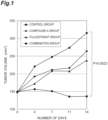
- mice The tumor volume of each of the mice was measured on days 0, 4, 7, 11, and 14. The results (average values) are shown in Table 1 and Fig. 1 . Dunnett's multiple test was performed on the tumor volume of the control group and each of the administration groups on day 14. [Table 1] Changes in average tumor volume after starting drug administration (mm 3 ) Day 0 Day 4 Day 7 Day 11 Day 14 Control group (mm 3 ) 147.9 220.7 247.6 273.7 315.5 Compound A 25 mg/kg group (mm 3 ) 148.6 192.6 211.2 216.5 264.3 Fulvestrant 250 mg/kg group (mm 3 ) 148.7 172.2 208.2 207.4 237.6 Combination group (mm 3 ) 149.6 156.4 151.0 135.8 136.4
- a PB-CMV-MCS-EF1 ⁇ -Puro vector (System Bioscience, LLC) was cleaved with Xba I and Not I, and a multiple cloning site was inserted thereinto to prepare a PB510B2 vector.
- the PB510B2 vector was cleaved with Xba I and Cla I, and ORF of human CYP19A1 (NM_001347249.2) was inserted thereinto to obtain a PB510B2_hCYP19A1 vector.
- a pC3-vector which was a vector obtained by removing a neomycin expression module (SV40 promoter-Neomycin ORF-SV40 poly A) of a pcDNA3 1(-) mammalian expression vector (Thermo Fisher Scientific Inc.) was constructed. Next, ORF of Super PiggyBac Transposase of Super PiggyBac Transposase Expression Vector (System Bioscience, LLC) was inserted into the downstream of CMV promoter of pC3-vector to obtain pC3-PBase vector.
- SV40 promoter-Neomycin ORF-SV40 poly A a pcDNA3 1(-) mammalian expression vector
- a human-derived breast cancer cell line ZR-75-1 (ECACC) was seeded in a 6-well microplate (FALCON).
- FALCON 6-well microplate
- RPMI-1640 medium containing 4,500 mg/L glucose, L-glutamine, phenol red, HEPES, and sodium pyruvate, FUJIFILM Wako Pure Chemical Corporation
- FBS FBS
- FUJIFILM Wako Pure Chemical Corporation penicillin/streptomycin
- the above prepared PB510B2_hCYP19A1 vector (2 ⁇ g), pC3-PBase (0.5 ⁇ g), P3000 reagent (Thermo Fisher Scientific Inc.) (5 ⁇ L), and Opti-MEM TM (125 ⁇ L) were mixed with each other to prepare a liquid B.
- a human-derived breast cancer cell line MCF-7 (ECACC) was seeded in a 6-well microplate (FALCON). 10% FBS (SIGMA), penicillin/streptomycin (FUJIFILM Wako Pure Chemical Corporation), andE-MEM medium (containing L-glutamine, phenol red, sodium pyruvate, non-essential amino acids, and 1500 mg/L sodium hydrogen carbonate, FUJIFILM Wako Pure Chemical Corporation) were used as a medium. The seeded cells were cultured overnight under the conditions of 5% CO2 and 37°C using an incubator.
- a liquid A obtained by mixing Lipofectamine TM 3000 reagent (3.75 ⁇ L) with Opti-MEM TM (125 ⁇ L) was prepared.
- the above prepared PB510B2_hCYP19A1 vector (2 ⁇ g), pC3-PBase (0.5 ⁇ g), P3000 reagent (5 ⁇ L), and Opti-MEM TM (125 ⁇ L) were mixed with each other to prepare a liquid B.
- These liquids A and B were mixed with each other, allowed to stand at room temperature for 5 minutes, and then added to the above-described MCF-7 cells obtained by culture and the cells were cultured for 3 days under the conditions of 5% CO 2 and 37°C. Thereafter, the cells were cultured in a medium to which 1 ⁇ g/mL puromycin was added for 7 days, and then cultured in a medium to which 1.5 ⁇ g/mL puromycin was added.
- Example 2 Proliferation inhibitory action against subcutaneously transplanted tumor of human-derived breast cancer cell line ZR-75-1-hCYP19A1 due to combined use of compound A and exemestane
- mice Five BALB/c nude mice (CAnN.Cg-Foxn1/CrlCrlj, female, Charles River Laboratories Japan, Inc.) were used in each group to evaluate an antitumor effect in a case where the compound A and exemestane were administered.
- mice were subcutaneously injected with a mixed anesthetic solution of 0.3 mg/kg medetomidine hydrochloride, 4 mg/kg midazolam, and 5 mg/kg butorphanol tartrate.
- a mixed anesthetic solution of 0.3 mg/kg medetomidine hydrochloride, 4 mg/kg midazolam, and 5 mg/kg butorphanol tartrate.
- the skin and peritoneum on the back of each of the mice were incised, the left and right ovaries were resected, and the incision was sutured.
- mice One day after the start of administration of androstenedione, 1 ⁇ 10 7 cells/mouse of a human-derived breast cancer cell line ZR-75-1-hCYP19A1 was transplanted subcutaneously into the right sides of the mice. 20 days after the transplantation of the breast cancer cell line, the mice were assigned to each group so that the average tumor volume was the same.
- the compound A was dissolved in purified water to a concentration of 2.5 mg/mL.
- Tween (registered trademark) 80 was mixed with a 0.5% methyl cellulose solution to a concentration of 0.4%.
- Exemestane was dissolved in this mixed solution to a concentration of 5 mg/mL.
- the start day of administration was set to day 0, and the drug was administered under the following conditions.
- the tumor volume of each of the mice was measured on days 0, 4, 7, and 11. The results (average values) are shown in Table 2.
- the major axis and minor axis of each tumor was measured with an electronic digital caliper (Digimatic TM Caliper, Mitutoyo Corporation). The volume of each tumor was calculated according to the following equation.
- Tumor volume mm 3 longest diameter mm ⁇ short axis mm ⁇ short axis mm / 2 [Table 2] Changes in average tumor volume after starting drug administration (mm 3 ) Day 0 Day 4 Day 7 Day 11 Control group (mm 3 ) 145.4 206.8 261.8 362.9 Compound A 50 mg/kg group (mm 3 ) 147.3 187.7 232.8 319.9 Exemestane 1 mg/mouse group (mm 3 ) 146.0 184.5 235.0 329.0 Combination group (mm 3 ) 145.3 184.5 218.5 277.4
- Example 3 Effect of combining compound A and letrozole, anastrozole, or exemestane on human-derived breast cancer cell line MCF-7-hCYP19A1 in which human aromatase was expressed
- the human breast cancer cell line MCF-7-hCYP19A1 prepared in Reference Example 4 was cultured and maintained in a 5% CO 2 incubator using E-MEM medium (containing L-glutamine, phenol red, sodium pyruvate, non-essential amino acids, and 1500 mg/L sodium hydrogen carbonate, FUJIFILM Wako Pure Chemical Corporation) containing 10% FBS (SIGMA), penicillin/streptomycin (FUJIFILM Wako Pure Chemical Corporation), and 1.5 ⁇ g/mL puromycin (hereinafter referred to as a culture medium).
- E-MEM medium containing L-glutamine, phenol red, sodium pyruvate, non-essential amino acids, and 1500 mg/L sodium hydrogen carbonate
- FUJIFILM Wako Pure Chemical Corporation containing 10% FBS (SIGMA), penicillin/streptomycin (FUJIFILM Wako Pure Chemical Corporation), and 1.5 ⁇ g/mL puromycin (hereinafter referred to as a culture medium
- phenol red-free RPMI-1640 medium (FUJIFILM Wako Pure Chemical Corporation) containing 10% FBS (charcoal-stripped FBS, GIBCO), penicillin/streptomycin, and 1.5 ⁇ g/mL puromycin (hereinafter referred to as an assay medium) was added thereto, and culture was performed in the incubator.
- the medium was removed, 100 ⁇ L of an assay medium was added thereto to replace the medium, and the cells were cultured in the incubator for 2 days. Thereafter, the medium was removed, 25 ⁇ L of androstenedione prepared to a final concentration of 10 nmol/L in the assay medium and 25 ⁇ L of each of FGF2 (GIBCO) and FGF10 (R&D systems) respectively prepared to final concentrations of 25 ng/mL and 100 ng/mL in the assay medium were added thereto, and then, 25 ⁇ L of each solution described below was added thereto, and culture was performed in the incubator for 7 days. The medium was removed 3 days and 5 days after addition of the drugs, and 25 ⁇ L of each of the androstenedione, FGF2, and FGF10 solutions and each solution described below was added thereto to replace the medium.
- Example 4 Proliferation inhibitory action against subcutaneously transplanted tumor of human-derived breast cancer cell line MCF-7-hCYP19A1 due to combined use of compound A and letrozole
- mice Five BALB/c nude mice (CAnN.Cg-Foxn1/CrlCrlj, female, Charles River Laboratories Japan, Inc.) were used in each group to evaluate an antitumor effect in a case where the compound A and the letrozole were administered.
- mice were subcutaneously injected with a mixed anesthetic solution of 0.3 mg/kg medetomidine hydrochloride, 4 mg/kg midazolam, and 5 mg/kg butorphanol tartrate.
- a mixed anesthetic solution of 0.3 mg/kg medetomidine hydrochloride, 4 mg/kg midazolam, and 5 mg/kg butorphanol tartrate.
- the skin and peritoneum on the back of each of the mice were incised, the left and right ovaries were resected, and the incision was sutured.
- Baytril 2.5% injection (Bayer) diluted with physiological saline (Otsuka Pharmaceutical Factory, Inc.) to a final concentration of 1 mg/mL as enrofloxacin; and antisedan (Nippon Zenyaku Kogyo Co., Ltd.) diluted with physiological saline (Otsuka Pharmaceutical Factory, Inc.) to a final concentration of 0.2 mg/mL as atipamezole hydrochloride were administered subcutaneously at respective amounts equivalent to 5 mg/kg (100 ⁇ L/mouse) and 1 mg/kg (100 ⁇ L/mouse).
- mice One day after the start of administration of testosterone enanthate, 1 ⁇ 10 7 cells/mouse of the human-derived breast cancer cell line MCF-7-hCYP19A1 was transplanted subcutaneously into the right sides of the mice. 9 days after transplantation of the breast cancer cell line, the mice were assigned to each group so that the average tumor volume was the same.
- the compound A was dissolved in purified water to a concentration of 2.5 mg/mL.
- letrozole was dissolved in sterilized 0.3% hydroxypropyl cellulose water to a concentration of 0.05 mg/mL.
- the start day of administration was set to day 0, and the drug was administered under the following conditions.
- the tumor volume of each of the mice was measured on days 0, 4, 7, 11, and 14. The results (average values) are shown in Table 8 and Fig. 2 .
- the major axis and minor axis of each tumor was measured with an electronic digital caliper (Digimatic TM Caliper, Mitutoyo Corporation).
- the volume of each tumor was calculated according to the following equation.
- Tumor volume mm 3 longest diameter mm ⁇ short axis mm ⁇ short axis mm / 2
Landscapes
- Health & Medical Sciences (AREA)
- Public Health (AREA)
- Animal Behavior & Ethology (AREA)
- Veterinary Medicine (AREA)
- Chemical & Material Sciences (AREA)
- General Health & Medical Sciences (AREA)
- Pharmacology & Pharmacy (AREA)
- Medicinal Chemistry (AREA)
- Life Sciences & Earth Sciences (AREA)
- Epidemiology (AREA)
- Chemical Kinetics & Catalysis (AREA)
- Organic Chemistry (AREA)
- General Chemical & Material Sciences (AREA)
- Nuclear Medicine, Radiotherapy & Molecular Imaging (AREA)
- Bioinformatics & Cheminformatics (AREA)
- Engineering & Computer Science (AREA)
- Reproductive Health (AREA)
- Endocrinology (AREA)
- Oncology (AREA)
- Pharmaceuticals Containing Other Organic And Inorganic Compounds (AREA)
- Steroid Compounds (AREA)
Abstract
Description
- The present invention relates to a therapeutic agent for breast cancer in which a monocyclic pyridine derivative having fibroblast growth factor receptor (FGFR) inhibitory action or a pharmacologically acceptable salt thereof; and an estrogen receptor antagonist or an aromatase inhibitor are used in combination. More specifically, the present invention relates to a therapeutic agent for breast cancer administered in combination with an estrogen receptor antagonist or an aromatase inhibitor, wherein the therapeutic agent for breast cancer comprises 5-((2-(4-(1-(2-hydroxyethyl)piperidin-4-yl)benzamide)pyridin-4-yl)oxy)-6-(2-methoxyethoxy)-N-methyl-1H-indole-1-carboxamide or a pharmacologically acceptable salt thereof.
-

- 5-((2-(4-(1-(2-Hydroxyethyl)piperidin-4-yl)benzamide)pyridin-4-yl)oxy)-6-(2-methoxyethoxy)-N-methyl-1H-indole-1-carboxamide represented by Formula (I) is known as an inhibitor against FGFR1, FGFR2, and FGFR3, and it is reported that the above compound has inhibitory action on cell proliferation of stomach cancer, lung cancer, bladder cancer, and endometrial cancer (Patent Literature 1). It is reported that the above compound exerts a high therapeutic effect against bile duct cancer (Patent Literature 2), breast cancer (Patent Literature 3), and hepatocellular carcinoma (Patent Literature 4). As a pharmacologically acceptable salt of the above compound, succinate and maleate are known (Patent Literature 5).
- Estrogen receptor antagonists such as tamoxifen and fulvestrant are used for treating estrogen receptor-positive breast cancer (Non Patent Literature 1).
- Aromatase inhibitors such as exemestane and anastrozole inhibit aromatase which converts androgen secreted from the adrenal cortex into estrogen (Non Patent Literature 2). For this reason, they are used for treating estrogen receptor-positive breast cancer similarly to the estrogen receptor antagonists. In general, aromatase inhibitors are used in postmenopausal breast cancer patients, whereas estrogen receptor antagonists are used in premenopausal breast cancer patients.
- Breast cancer is classified based on the presence or absence of expression of estrogen receptor, progesterone receptor, and human epidermal growth factor receptor type 2 (HER2), and, together with surgical removal of a lesion part, drug therapy is performed depending on the classification.
-
- [Patent Literature 1]
US Patent Publication No. 2014-0235614 - [Patent Literature 2]
US Patent Publication No. 2018-0015079 - [Patent Literature 3]
US Patent Publication No. 2018-0303817 - [Patent Literature 4]
WO 2019/189241 - [Patent Literature 5]
US Patent Publication No. 2017-0217935 -
- [Non Patent Literature 1] Howell et al., "Comparison of Fulvestrant Versus Tamoxifen for the Treatment of Advanced Breast Cancer in Postmenopausal Women Previously Untreated With Endocrine Therapy: A Multinational, Double-Blind, Randomized Trial", Journal of Clinical Oncology, 2004, 22(9), 1605-1613.
- [Non Patent Literature 2] Deeks et al., "Exemestane A Review of its Use in Postmenopausal Women with Breast Cancer" Drugs, 2009, 69(7), 889-918
- An object of the present invention is to provide a therapeutic agent for breast cancer which involves combinational administration of a plurality of medicines.
- In view of such circumstances, the present inventors have conducted extensive studies, and, as a result, they have found that administration of a combination of the above-described compound represented by Formula (I) and an estrogen antagonist or an aromatase inhibitor exerts a high therapeutic effect against breast cancer, thus leading to realization of the present invention.
- That is, the present invention provides [1] to [18] below.
- [1] A therapeutic agent for breast cancer, comprising: 5-((2-(4-(1-(2-hydroxyethyl)pipendin-4-yl)benzamide)pyridin-4-yl)oxy)-6-(2-methoxyethoxy)-N-methyl-1H-indole-1-carboxamide represented by Formula (I):

- [2] A pharmaceutical composition for treating breast cancer, comprising: 5-((2-(4-(1-(2-hydroxyethyl)piperidin-4-yl)benzamide)pyridin-4-yl)oxy)-6-(2-methoxyethoxy)-N-methyl-1H-indole-1-carboxamide represented by Formula (I) or a pharmacologically acceptable salt thereof which is administered in combination with an estrogen receptor antagonist or an aromatase inhibitor.
- [3] A pharmaceutical composition for treating breast cancer, comprising: 5-((2-(4-(1-(2-hydroxyethyl)piperidin-4-yl)benzamide)pyridin-4-yl)oxy)-6-(2-methoxyethoxy)-N-methyl-1H-indole-1-carboxamide represented by Formula (I) or a pharmacologically acceptable salt thereof; and an estrogen receptor antagonist or an aromatase inhibitor.
- [4] A kit for treating breast cancer, comprising: a preparation comprising 5-((2-(4-(1-(2-hydroxyethyl)piperidin-4-yl)benzamide)pyridin-4-yl)oxy)-6-(2-methoxyethoxy)-N-methyl-1H-indole-1-carboxamide represented by Formula (I) or a pharmacologically acceptable salt thereof; and a preparation comprising an estrogen receptor antagonist or an aromatase inhibitor.
- [5] A method for treating breast cancer, comprising: administering 5-((2-(4-(1-(2-hydroxyethyl)piperidin-4-yl)benzamide)pyridin-4-yl)oxy)-6-(2-methoxyethoxy)-N-methyl-1H-indole-1-carboxamide represented by Formula (I) or a pharmacologically acceptable salt thereof; and an estrogen receptor antagonist or an aromatase inhibitor to a patient in need thereof.
- [6] 5-((2-(4-(1-(2-Hydroxyethyl)piperidin-4-yl)benzamide)pyridin-4-yl)oxy)-6-(2-methoxyethoxy)-N-methyl-1H-indole-1-carboxamide represented by Formula (I) or a pharmacologically acceptable salt thereof for use in treatment of breast cancer, which is administered in combination with an estrogen receptor antagonist or an aromatase inhibitor.
- [7] A combination for treating breast cancer, comprising: 5-((2-(4-(1-(2-hydroxyethyl)piperidin-4-yl)benzamide)pyridin-4-yl)oxy)-6-(2-methoxyethoxy)-N-methyl-1H-indole-1-carboxamide represented by Formula (I) or a pharmacologically acceptable salt thereof; and an estrogen receptor antagonist or an aromatase inhibitor.
- [8] Use of 5-((2-(4-(1-(2-hydroxyethyl)piperidin-4-yl)benzamide)pyridin-4-yl)oxy)-6-(2-methoxyethoxy)-N-methyl-1H-indole-1-carboxamide represented by Formula (I) or a pharmacologically acceptable salt thereof, which is administered in combination with an estrogen receptor antagonist or an aromatase inhibitor, for the manufacture of a therapeutic agent for breast cancer.
- [9] The therapeutic agent, composition, kit, method, compound, combination, or use, wherein 5-((2-(4-(1-(2-hydroxyethyl)piperidin-4-yl)benzamide)pyridin-4-yl)oxy)-6-(2-methoxyethoxy)-N-methyl-1H-indole-1-carboxamide represented by Formula (I) or a pharmacologically acceptable salt thereof; and the estrogen receptor antagonist or the aromatase inhibitor are administered simultaneously or separately.
- [10] The therapeutic agent, composition, kit, method, compound, combination, or use, wherein the pharmacologically acceptable salt is 1.5 succinate.
- [11] The therapeutic agent, composition, kit, method, compound, combination, or use, wherein the estrogen receptor antagonist is fulvestrant, tamoxifen or a pharmacologically acceptable salt thereof, or mepitiostane.
- [12] The therapeutic agent, composition, kit, method, compound, combination, or use, wherein the estrogen receptor antagonist is fulvestrant.
- [13] The therapeutic agent, composition, kit, method, compound, combination, or use, wherein the aromatase inhibitor is exemestane, anastrozole, or letrozole.
- [14] The therapeutic agent, composition, kit, method, compound, combination, or use, wherein the aromatase inhibitor is exemestane.
- [14a] The therapeutic agent, composition, kit, method, compound, combination, or use, wherein the aromatase inhibitor is letrozole.
- [15] The therapeutic agent, composition, kit, method, compound, combination, or use, wherein the breast cancer is estrogen receptor-positive.
- [16] The therapeutic agent, composition, kit, method, compound, combination, or use, wherein the breast cancer is locally advanced breast cancer, metastatic breast cancer, recurrent breast cancer, or unresectable breast cancer.
- [17] The therapeutic agent, composition, kit, method, compound, combination, or use, which is for use in treatment of breast cancer fibroblast growth factor receptor (FGFR).
- [18] The therapeutic agent, composition, kit, method, compound, combination, or use, wherein FGFR is FGFR1, FGFR2, or FGFR3.
- By administering a combination of the compound represented by Formula (I) and an estrogen antagonist or an aromatase inhibitor, there is a probability that an effect of reducing a tumor volume against breast cancer may be exhibited.
-
-
Fig. 1 is a graph showing changes in average tumor volume in each group after starting drug administration in Example 1. -
Fig. 2 is a graph showing changes in average tumor volume in each group after starting drug administration in Example 4. - A compound represented by Formula (I) or a pharmacologically acceptable salt thereof according to the present invention can be produced through a method disclosed in Patent Literature 1.
- In the present specification, examples of pharmacologically acceptable salts include a salt with an inorganic acid, a salt with an organic acid, and a salt with an acidic amino acid.
- Examples of suitable examples of salts with inorganic acids include salts with hydrochloric acid, hydrobromic acid, sulfuric acid, nitric acid, and phosphoric acid.
- Suitable examples of salts with organic acids include salts with acetic acid, succinic acid, fumaric acid, maleic acid, tartaric acid, citric acid, lactic acid, stearic acid, benzoic acid, methanesulfonic acid, ethanesulfonic acid, and p-toluenesulfonic acid.
- Examples of suitable examples of salts with acid amino acids include salts with aspartic acid and glutamic acid.
- A preferred pharmacologically acceptable salt is succinate or maleate, and a more preferred salt is succinate. 1.5 Succinate is particularly preferable (hereinafter, 1.5 succinate of the compound represented by Formula (I) is denoted as a compound A).
- The therapeutic agent for breast cancer according to the present invention can be administered orally in a form of a solid preparation such as a tablet, granules, fine granules, powders, or a capsule, a liquid, a jelly, a syrup, or the like. In addition, the therapeutic agent for breast cancer according to the present invention may be administered parenterally in a form of an injection, a suppository, an ointment, a poultice, or the like.
- The therapeutic agent for breast cancer according to the present invention can be formulated by the methods described in the Japanese Pharmacopoeia (JP), the European Pharmacopoeia (EP), or the United States Pharmacopeia (USP).
- The dose of the compound represented by Formula (I) or a pharmacologically acceptable salt thereof can be appropriately selected depending on the severity of symptoms, the age, sex, body weight, and differential sensitivity of a patient, the administration method, the administration period, the administration intervals, the dosage form, and the like. In a case of oral administration to an adult (body weight of 60 kg), the dose is 0.5 mg to 5 g, preferably 1 mg to 1 g, and furthermore preferably 1 mg to 500 mg per day. This dose can be administered in 1 to 3 divided portions per day.
- In the present specification, the estrogen receptor antagonist means a medicine that binds to an estrogen receptor expressed in breast cancer cells. By the mechanism, the estrogen receptor antagonist can inhibit the binding of estrogen receptors to estrogen and suppress the proliferation of breast cancer cells.
- Suitable examples of estrogen receptor antagonists include fulvestrant, tamoxifen or a pharmacologically acceptable salt thereof (such as citrate), and mepitiostane. Fulvestrant is preferable.

- Fulvestrant

- Tamoxifen

- Mepitiostane
- In addition, the estrogen receptor antagonist can be elacestrant, H3B-6545, toremifene citrate, SAR439859, AZD9833, rintodestrant, ZN-c5, LSZ102, D-0502, LY3484356, SHR9549, brilanestrant, and giredestrant.
- Regarding the dose and administration method of the estrogen receptor antagonist, in a case where, for example, the estrogen receptor antagonist is fulvestrant, 500 mg thereof is administered intramuscularly per dose at an initial dose, 2 weeks later, 4 weeks later, and every 4 weeks thereafter.
- In a case where the estrogen receptor antagonist is tamoxifen or a pharmacologically acceptable salt thereof, 20 to 40 mg (as tamoxifen) per day is administered orally in 1 to 2 divided doses.
- In a case where the estrogen receptor antagonist is mepitiostane, 20 mg per day is administered orally in 2 divided doses.
- In addition, an aromatase inhibitor that inhibits synthesis of estrogen may be used instead of the estrogen receptor antagonist. Suitable examples of aromatase inhibitors include exemestane, anastrozole, and letrozole. Exemestane is preferable.
-

-

-

- Regarding the dose and administration route of the aromatase inhibitor, in a case where, for example, the aromatase inhibitor is exemestane, 25 mg thereof is administered orally once a day after meals.
- In a case where the aromatase inhibitor is anastrozole, 1 mg thereof is administered orally once a day.
- In a case where the aromatase inhibitor is letrozole, 2.5 mg thereof is administered orally once a day.
- In the present specification, administrating in combination means that a preparation comprising the compound represented by Formula (I) or a pharmacologically acceptable salt thereof; and a preparation comprising an estrogen receptor antagonist or an aromatase inhibitor are administered to a patient simultaneously or separately. In addition, a composition comprising the compound represented by Formula (I) or a pharmacologically acceptable salt thereof; and an estrogen receptor antagonist or an aromatase inhibitor in one preparation may be administered.
- In the present specification, breast cancer means a benign or malignant tumor developed in mammary glands (milk ducts and lobules). The breast cancer includes locally advanced breast cancer, metastatic breast cancer, recurrent breast cancer, or unresectable breast cancer.
- The present invention will be described in more detail with reference to the following examples.
- Example 1 Proliferation inhibitory action against human breast cancer patient-derived tumor (OD-BRE-0438) due to combined use of compound A and fulvestrant (trade name: Faslodex
intramuscular injection 250 mg, AstraZeneca PLC) - Five NOD-SCID mice (NOD. CB17-Prkdcscid/J, female, Charles River Laboratories Japan, Inc.) were used in each group to evaluate antitumor effect in a case where the compound A and the fulvestrant were administered.
- OD-BRE-0438 is a hormone receptor-positive breast cancer patient-derived tumor established by Oncodesign SA. Subculture was performed by subcutaneously transplanting tumor pieces into the NOD-SCID mice. Each of the above-described tumors excised from the mice was chopped into about 5 mm squares, transplanted into the subcutaneous right side of each mouse using a trocar (Φ3.5 mm), and provided for evaluating the antitumor effect.
- β-Estradiol (FUJIFILM Wako Pure Chemical Corporation) was made into a solution with 99.5% ethanol (FUJIFILM Wako Pure Chemical Corporation) at a concentration of 1 mg/mL, and then, the solution was prepared to a final concentration of 2.5 µg/mL using sterile water for water supply. This solution was administered to the mice in their drinking water from the day of tumor transplantation to the test end date.
- The major axis and minor axis of each tumor was measured with an electronic digital caliper (Digimatic™ Caliper, Mitutoyo Corporation). The volume of each tumor was calculated according to the following equation.

- The compound A was dissolved in purified water to a concentration of 2.5 mg/mL. As fulvestrant, a commercially available preparation (50 mg/mL) was used as it is.
- 30 days after tumor transplantation, the mice were assigned to each group so that the average tumor volume was the same.
- The start day of administration was set to
day 0, and the drug was administered under the following conditions. - The compound A was administered orally to the mice in each group at a dose of 25 mg/kg (10 mL/kg) once a day for 14 consecutive days. In addition, the fulvestrant was injected subcutaneously at a dose of 250 mg/kg (5 mL/kg) on
days - The tumor volume of each of the mice was measured on
days Fig. 1 . Dunnett's multiple test was performed on the tumor volume of the control group and each of the administration groups onday 14.[Table 1] Changes in average tumor volume after starting drug administration (mm3) Day 0Day 4Day 7Day 11Day 14Control group (mm3) 147.9 220.7 247.6 273.7 315.5 Compound A 25 mg/kg group (mm3) 148.6 192.6 211.2 216.5 264.3 Fulvestrant 250 mg/kg group (mm3) 148.7 172.2 208.2 207.4 237.6 Combination group (mm3) 149.6 156.4 151.0 135.8 136.4 - A PB-CMV-MCS-EF1α-Puro vector (System Bioscience, LLC) was cleaved with Xba I and Not I, and a multiple cloning site was inserted thereinto to prepare a PB510B2 vector. Next, the PB510B2 vector was cleaved with Xba I and Cla I, and ORF of human CYP19A1 (NM_001347249.2) was inserted thereinto to obtain a PB510B2_hCYP19A1 vector.
- A pC3-vector which was a vector obtained by removing a neomycin expression module (SV40 promoter-Neomycin ORF-SV40 poly A) of a pcDNA3 1(-) mammalian expression vector (Thermo Fisher Scientific Inc.) was constructed. Next, ORF of Super PiggyBac Transposase of Super PiggyBac Transposase Expression Vector (System Bioscience, LLC) was inserted into the downstream of CMV promoter of pC3-vector to obtain pC3-PBase vector.
- A human-derived breast cancer cell line ZR-75-1 (ECACC) was seeded in a 6-well microplate (FALCON). RPMI-1640 medium (containing 4,500 mg/L glucose, L-glutamine, phenol red, HEPES, and sodium pyruvate, FUJIFILM Wako Pure Chemical Corporation) containing 10% FBS (SIGMA) and penicillin/streptomycin (FUJIFILM Wako Pure Chemical Corporation) was used as a medium. The seeded cells were cultured for 15 days under the conditions of 5% CO2 and 37°C using an incubator.
- A liquid A which was obtained by mixing Lipofectamine™ 3000 reagent (Thermo Fisher Scientific Inc.) (3.75 µL) with Opti-MEM™ (Thermo Fisher Scientific Inc.) (125 µL) was prepared. In addition, the above prepared PB510B2_hCYP19A1 vector (2 µg), pC3-PBase (0.5 µg), P3000 reagent (Thermo Fisher Scientific Inc.) (5 µL), and Opti-MEM™ (125 µL) were mixed with each other to prepare a liquid B. These liquids A and B were mixed with each other, allowed to stand at room temperature for 5 minutes, and then added to the above-described ZR-75-1 cells obtained by culture, and the cells were cultured overnight under the conditions of 5% CO2 and 37°C. Thereafter, culture was performed in a medium to which 1 µg/mL puromycin was added.
- A human-derived breast cancer cell line MCF-7 (ECACC) was seeded in a 6-well microplate (FALCON). 10% FBS (SIGMA), penicillin/streptomycin (FUJIFILM Wako Pure Chemical Corporation), andE-MEM medium (containing L-glutamine, phenol red, sodium pyruvate, non-essential amino acids, and 1500 mg/L sodium hydrogen carbonate, FUJIFILM Wako Pure Chemical Corporation) were used as a medium. The seeded cells were cultured overnight under the conditions of 5% CO2 and 37°C using an incubator.
- A liquid A obtained by mixing Lipofectamine™ 3000 reagent (3.75 µL) with Opti-MEM™ (125 µL) was prepared. In addition, the above prepared PB510B2_hCYP19A1 vector (2 µg), pC3-PBase (0.5 µg), P3000 reagent (5 µL), and Opti-MEM™ (125 µL) were mixed with each other to prepare a liquid B. These liquids A and B were mixed with each other, allowed to stand at room temperature for 5 minutes, and then added to the above-described MCF-7 cells obtained by culture and the cells were cultured for 3 days under the conditions of 5% CO2 and 37°C. Thereafter, the cells were cultured in a medium to which 1 µg/mL puromycin was added for 7 days, and then cultured in a medium to which 1.5 µg/mL puromycin was added.
- Example 2 Proliferation inhibitory action against subcutaneously transplanted tumor of human-derived breast cancer cell line ZR-75-1-hCYP19A1 due to combined use of compound A and exemestane
- Five BALB/c nude mice (CAnN.Cg-Foxn1/CrlCrlj, female, Charles River Laboratories Japan, Inc.) were used in each group to evaluate an antitumor effect in a case where the compound A and exemestane were administered.
- The mice were subcutaneously injected with a mixed anesthetic solution of 0.3 mg/kg medetomidine hydrochloride, 4 mg/kg midazolam, and 5 mg/kg butorphanol tartrate. The skin and peritoneum on the back of each of the mice were incised, the left and right ovaries were resected, and the incision was sutured. Thereafter, 65 mg/kg (13.0 mg/mL, 100 µL/mouse) ampicillin sodium injection (Meiji Seika Pharma Co., Ltd.), 1 mg/kg (0.2 mg/mL, 100 µL/mouse) Antisedan (Nippon Zenyaku Kogyo Co., Ltd.), and 5 mg/kg (1.0 mg/mL, 100 µL/animal) carprofen injection (Zoetis Japan) were administered subcutaneously.
- 7 days later, androstenedione (Sigma-Aldrich) was administered orally to the mice at a dose of 0.1 mg/mouse (200 µL/mouse) until the test end date.
- One day after the start of administration of androstenedione, 1×10⁷ cells/mouse of a human-derived breast cancer cell line ZR-75-1-hCYP19A1 was transplanted subcutaneously into the right sides of the mice. 20 days after the transplantation of the breast cancer cell line, the mice were assigned to each group so that the average tumor volume was the same.
- The compound A was dissolved in purified water to a concentration of 2.5 mg/mL. In addition, Tween (registered trademark) 80 was mixed with a 0.5% methyl cellulose solution to a concentration of 0.4%. Exemestane was dissolved in this mixed solution to a concentration of 5 mg/mL.
- The start day of administration was set to
day 0, and the drug was administered under the following conditions. The compound A at a dose of 50 mg/kg (20 mL/kg), exemestane at a dose of 1 mg/mouse (200 µL/mouse), or the two agents of the compound A and exemestane (each at the same dose as described above), were administered orally to the mice in each group once a day for 11 consecutive days. A control group was left untreated. - The tumor volume of each of the mice was measured on
days 
[Table 2] Changes in average tumor volume after starting drug administration (mm3) Day 0Day 4Day 7Day 11Control group (mm3) 145.4 206.8 261.8 362.9 Compound A 50 mg/kg group (mm3) 147.3 187.7 232.8 319.9 Exemestane 1 mg/mouse group (mm3) 146.0 184.5 235.0 329.0 Combination group (mm3) 145.3 184.5 218.5 277.4 - Example 3 Effect of combining compound A and letrozole, anastrozole, or exemestane on human-derived breast cancer cell line MCF-7-hCYP19A1 in which human aromatase was expressed
- The human breast cancer cell line MCF-7-hCYP19A1 prepared in Reference Example 4 was cultured and maintained in a 5% CO2 incubator using E-MEM medium (containing L-glutamine, phenol red, sodium pyruvate, non-essential amino acids, and 1500 mg/L sodium hydrogen carbonate, FUJIFILM Wako Pure Chemical Corporation) containing 10% FBS (SIGMA), penicillin/streptomycin (FUJIFILM Wako Pure Chemical Corporation), and 1.5 µg/mL puromycin (hereinafter referred to as a culture medium).
- 200 µL of each cell suspension prepared to 0.25×10⁴ cells/mL in the culture medium containing 10% FBS was added to each well of a cell culture plate and cultured overnight in the incubator.
- On the next day, the medium was removed, and 100 µL of phenol red-free RPMI-1640 medium (FUJIFILM Wako Pure Chemical Corporation) containing 10% FBS (charcoal-stripped FBS, GIBCO), penicillin/streptomycin, and 1.5 µg/mL puromycin (hereinafter referred to as an assay medium) was added thereto, and culture was performed in the incubator.
- On the next day, the medium was removed, 100 µL of an assay medium was added thereto to replace the medium, and the cells were cultured in the incubator for 2 days. Thereafter, the medium was removed, 25 µL of androstenedione prepared to a final concentration of 10 nmol/L in the assay medium and 25 µL of each of FGF2 (GIBCO) and FGF10 (R&D systems) respectively prepared to final concentrations of 25 ng/mL and 100 ng/mL in the assay medium were added thereto, and then, 25 µL of each solution described below was added thereto, and culture was performed in the incubator for 7 days. The medium was removed 3 days and 5 days after addition of the drugs, and 25 µL of each of the androstenedione, FGF2, and FGF10 solutions and each solution described below was added thereto to replace the medium.
- (1) Assay medium containing letrozole (SIGMA), anastrozole (SIGMA), exemestane (SIGMA), or DMSO respectively prepared to final concentrations of 2,000 nmol/L, 10,000 or 2,000 nmol/L, 2,000 nmol/L or 400 nmol/L, and 0.05% in assay medium (used for control group or single agent of Compound A)
- (2) Assay medium containing Compound A and DMSO respectively prepared to final concentrations of 1,000 nmol/L and 0.005% in assay medium (used for control group or single drug described in (1))
- Using CellTiter Glo™ 2.0 (Promega), the number of cells in each of the wells after culture was calculated based on the amount of ATP contained in the cells obtained by measuring the emission intensity.
- After removing the medium from the plate, 50 µL of a solution obtained by mixing the measurement reagent with the culture medium at 1:1 was added to each well. After mixing the plate in a plate mixer for 5 minutes, the emission was measured using a plate reader (EnVision™, PerkinElmer, Inc.). Average values (n=3) of each group for values obtained by subtracting emission values in cell-free wells from emission values of the wells are shown in Tables 3 to 7.
[Table 3] Emission value (count per second) Control group 1,481,915 Compound A 1,000 nmol/L 1,242,509 Letrozole 2,000 nmol/L 1,410,920 Combined use of Compound A and letrozole 1,159,491 [Table 4] Emission value (count per second) Control group 1,334,640 Compound A 1,000 nmol/L 1,157,051 Anastrozole 10,000 nmol/L 1,443,072 Combined use of Compound A and anastrozole 924,395 [Table 5] Emission value (count per second) Control group 1,334,640 Compound A 1,000 nmol/L 1,157,051 Anastrozole 2,000 nmol/L 1,357,941 Combined use of Compound A and anastrozole 1,018,781 [Table 6] Emission value (count per second) Control group 1,243,964 Compound A 1,000 nmol/L 1,164,308 Exemestane 2,000 nmol/L 1,244,423 Combined use of Compound A and exemestane 949,300 [Table 7] Emission value (count per second) Control group 1,243,964 Compound A 1,000 nmol/L 1,164,308 Exemestane 400 nmol/L 1,324,919 Combined use of Compound A and exemestane 1,003,903 - Example 4 Proliferation inhibitory action against subcutaneously transplanted tumor of human-derived breast cancer cell line MCF-7-hCYP19A1 due to combined use of compound A and letrozole
- Five BALB/c nude mice (CAnN.Cg-Foxn1/CrlCrlj, female, Charles River Laboratories Japan, Inc.) were used in each group to evaluate an antitumor effect in a case where the compound A and the letrozole were administered.
- The mice were subcutaneously injected with a mixed anesthetic solution of 0.3 mg/kg medetomidine hydrochloride, 4 mg/kg midazolam, and 5 mg/kg butorphanol tartrate. The skin and peritoneum on the back of each of the mice were incised, the left and right ovaries were resected, and the incision was sutured. Thereafter, Baytril 2.5% injection (Bayer) diluted with physiological saline (Otsuka Pharmaceutical Factory, Inc.) to a final concentration of 1 mg/mL as enrofloxacin; and antisedan (Nippon Zenyaku Kogyo Co., Ltd.) diluted with physiological saline (Otsuka Pharmaceutical Factory, Inc.) to a final concentration of 0.2 mg/mL as atipamezole hydrochloride were administered subcutaneously at respective amounts equivalent to 5 mg/kg (100 µL/mouse) and 1 mg/kg (100 µL/mouse).
- 7 days later, a solution obtained by diluting testosterone enanthate intramuscular injection (Fuji Pharma Co., Ltd.) with sesame oil to a concentration of 15.6 mg/mL was administered intramuscularly at a concentration of 0.1 mL/mouse (1.56 mg/mouse). Thereafter, the solution was administered intramuscularly to the mice once a week until the test end date.
- One day after the start of administration of testosterone enanthate, 1×10⁷ cells/mouse of the human-derived breast cancer cell line MCF-7-hCYP19A1 was transplanted subcutaneously into the right sides of the mice. 9 days after transplantation of the breast cancer cell line, the mice were assigned to each group so that the average tumor volume was the same.
- The compound A was dissolved in purified water to a concentration of 2.5 mg/mL. In addition, letrozole was dissolved in sterilized 0.3% hydroxypropyl cellulose water to a concentration of 0.05 mg/mL.
- The start day of administration was set to
day 0, and the drug was administered under the following conditions. The compound A at a dose of 25 mg/kg (10 mL/kg), letrozole at a dose of 0.01 mg/mouse (200 µL/mouse), or the two agents of the compound A and the letrozole (each at the same dose as described above), were administered orally to the mice in each group once a day for 14 consecutive days. A control group was left untreated. - The tumor volume of each of the mice was measured on
days Fig. 2 . The major axis and minor axis of each tumor was measured with an electronic digital caliper (Digimatic™ Caliper, Mitutoyo Corporation). The volume of each tumor was calculated according to the following equation.
- Dunnett's multiple test was performed on the tumor volume of the control group and each of the administration groups on
day 14.[Table 8] Changes in average tumor volume after starting drug administration (mm3) Day 0Day 4Day 7Day 11Day 14Control group (mm3) 131.7 193.9 227.8 235.9 265.2 Compound A 25mg/kg group (mm3) 130.7 155.5 182.4 224.4 267.5 Letrozole 0.01mg/mouse group (mm3) 132.4 147.3 140.6 159.6 162.0 Combination group (mm3) 132.0 117.9 118.6 132.9 137.3
Claims (19)
- A therapeutic agent for breast cancer, comprising:
5-((2-(4-(1-(2-hydroxyethyl)piperidin-4-yl)benzamide)pyridin-4-yl)oxy)-6-(2-methoxyethoxy)-N-methyl-1H-indole-1-carboxamide represented by Formula (I):
- The therapeutic agent according to claim 1,
wherein 5-((2-(4-(1-(2-hydroxyethyl)piperidin-4-yl)benzamide)pyridin-4-yl)oxy)-6-(2-methoxyethoxy)-N-methyl-1H-indole-1-carboxamide represented by Formula (I) or a pharmacologically acceptable salt thereof; and the estrogen receptor antagonist or the aromatase inhibitor are administered simultaneously or separately. - The therapeutic agent according to claim 1 or 2,
wherein the pharmacologically acceptable salt is 1.5 succinate. - The therapeutic agent according to any one of claims 1 to 3,
wherein the estrogen receptor antagonist is fulvestrant, tamoxifen or a pharmacologically acceptable salt thereof, or mepitiostane. - The therapeutic agent according to any one of claims 1 to 3,
wherein the estrogen receptor antagonist is fulvestrant. - The therapeutic agent according to any one of claims 1 to 3,
wherein the aromatase inhibitor is exemestane, anastrozole, or letrozole. - The therapeutic agent according to any one of claims 1 to 3,
wherein the aromatase inhibitor is exemestane. - The therapeutic agent according to any one of claims 1 to 3,
wherein the aromatase inhibitor is letrozole. - The therapeutic agent according to any one of claims 1 to 8,
wherein the breast cancer is estrogen receptor-positive. - The therapeutic agent according to any one of claims 1 to 9,
wherein the breast cancer is locally advanced breast cancer, metastatic breast cancer, recurrent breast cancer, or unresectable breast cancer. - The therapeutic agent according to any one of claims 1 to 10, which is for use in treatment of breast cancer fibroblast growth factor receptor (FGFR).
- The therapeutic agent according to claim 11,
wherein FGFR is FGFR1, FGFR2, or FGFR3. - A pharmaceutical composition for treating breast cancer, comprising:
5-((2-(4-(1-(2-hydroxyethyl)piperidin-4-yl)benzamide)pyridin-4-yl)oxy)-6-(2-methoxyethoxy)-N-methyl-1H-indole-1-carboxamide or a pharmacologically acceptable salt thereof which is administered in combination with an estrogen receptor antagonist or an aromatase inhibitor. - A pharmaceutical composition for treating breast cancer, comprising:5-((2-(4-(1-(2-hydroxyethyl)piperidin-4-yl)benzamide)pyridin-4-yl)oxy)-6-(2-methoxyethoxy)-N-methyl-1H-indole-1-carboxamide or a pharmacologically acceptable salt thereof; andan estrogen receptor antagonist or an aromatase inhibitor.
- A kit for treating breast cancer, comprising:a preparation comprising 5-((2-(4-(1-(2-hydroxyethyl)piperidin-4-yl)benzamide)pyridin-4-yl)oxy)-6-(2-methoxyethoxy)-N-methyl-1H-indole-1-carboxamide or a pharmacologically acceptable salt thereof; anda preparation comprising an estrogen receptor antagonist or an aromatase inhibitor.
- A method for treating breast cancer, comprising:
administering 5-((2-(4-(1-(2-hydroxyethyl)piperidin-4-yl)benzamide)pyridin-4-yl)oxy)-6-(2-methoxyethoxy)-N-methyl-1H-indole-1-carboxamide or a pharmacologically acceptable salt thereof; and an estrogen receptor antagonist or an aromatase inhibitor to a patient in need thereof. - 5-((2-(4-(1-(2-Hydroxyethyl)piperidin-4-yl)benzamide)pyridin-4-yl)oxy)-6-(2-methoxyethoxy)-N-methyl-1H-indole-1-carboxamideor a pharmacologically acceptable salt thereof for use in treatment of breast cancer, which is administered in combination with an estrogen receptor antagonist or an aromatase inhibitor.
- A combination for treating breast cancer, comprising:5-((2-(4-(1-(2-hydroxyethyl)piperidin-4-yl)benzamide)pyridin-4-yl)oxy)-6-(2-methoxyethoxy)-N-methyl-1H-indole-1-carboxamideor a pharmacologically acceptable salt thereof; andan estrogen receptor antagonist or an aromatase inhibitor.
- Use of 5-((2-(4-(1-(2-hydroxyethyl)piperidin-4-yl)benzamide)pyridin-4-yl)oxy)-6-(2-methoxyethoxy)-N-methyl-1H-indole-1-carboxamide or a pharmacologically acceptable salt thereof, which is administered in combination with an estrogen receptor antagonist or an aromatase inhibitor, for the manufacture of a therapeutic agent for breast cancer.
Applications Claiming Priority (3)
| Application Number | Priority Date | Filing Date | Title |
|---|---|---|---|
| JP2020130935 | 2020-07-31 | ||
| JP2020163258 | 2020-09-29 | ||
| PCT/JP2021/028008 WO2022025150A1 (en) | 2020-07-31 | 2021-07-29 | Therapeutic agent for breast cancer |
Publications (2)
| Publication Number | Publication Date |
|---|---|
| EP4151212A1 true EP4151212A1 (en) | 2023-03-22 |
| EP4151212A4 EP4151212A4 (en) | 2024-04-10 |
Family
ID=80035757
Family Applications (1)
| Application Number | Title | Priority Date | Filing Date |
|---|---|---|---|
| EP21850938.8A Pending EP4151212A4 (en) | 2020-07-31 | 2021-07-29 | THERAPEUTIC AGAINST BREAST CANCER |
Country Status (11)
| Country | Link |
|---|---|
| US (1) | US20230172924A1 (en) |
| EP (1) | EP4151212A4 (en) |
| JP (1) | JP7792336B2 (en) |
| KR (1) | KR20230047056A (en) |
| CN (1) | CN115996722A (en) |
| AU (1) | AU2021315234A1 (en) |
| BR (1) | BR112022027069A2 (en) |
| CA (1) | CA3185174A1 (en) |
| MX (1) | MX2023000060A (en) |
| TW (1) | TW202220652A (en) |
| WO (1) | WO2022025150A1 (en) |
Family Cites Families (10)
| Publication number | Priority date | Publication date | Assignee | Title |
|---|---|---|---|---|
| KR20140117457A (en) * | 2012-01-31 | 2014-10-07 | 노파르티스 아게 | Combination of a rtk inhibitor with an anti - estrogen and use thereof for the treatment of cancer |
| AR094812A1 (en) | 2013-02-20 | 2015-08-26 | Eisai R&D Man Co Ltd | DERIVED FROM MONOCYCLIC PYRIDINE AS AN FGFR INHIBITOR |
| JP2014235614A (en) | 2013-06-03 | 2014-12-15 | 株式会社ゼネット | Comprehensive learning support network system and comprehensive learning support method |
| MX369646B (en) | 2014-08-18 | 2019-11-15 | Eisai R&D Man Co Ltd | Salt of monocyclic pyridine derivative and crystal thereof. |
| AU2016237222B2 (en) | 2015-03-25 | 2021-04-29 | Eisai R&D Management Co., Ltd. | Therapeutic agent for bile duct cancer |
| CA3001969C (en) * | 2015-12-17 | 2023-10-03 | Eisai R&D Management Co., Ltd. | Therapeutic agent for breast cancer |
| JP2017217935A (en) | 2016-06-03 | 2017-12-14 | 株式会社東海理化電機製作所 | Steering switch device |
| JP2018022750A (en) | 2016-08-02 | 2018-02-08 | 太陽誘電株式会社 | Multilayer ceramic capacitor |
| JPWO2019189241A1 (en) * | 2018-03-28 | 2021-03-18 | エーザイ・アール・アンド・ディー・マネジメント株式会社 | Hepatocellular carcinoma therapeutic agent |
| WO2021210636A1 (en) * | 2020-04-17 | 2021-10-21 | エーザイ・アール・アンド・ディー・マネジメント株式会社 | Breast cancer therapeutic agent |
-
2021
- 2021-07-29 CA CA3185174A patent/CA3185174A1/en active Pending
- 2021-07-29 MX MX2023000060A patent/MX2023000060A/en unknown
- 2021-07-29 BR BR112022027069A patent/BR112022027069A2/en unknown
- 2021-07-29 EP EP21850938.8A patent/EP4151212A4/en active Pending
- 2021-07-29 JP JP2022539547A patent/JP7792336B2/en active Active
- 2021-07-29 KR KR1020227045161A patent/KR20230047056A/en active Pending
- 2021-07-29 AU AU2021315234A patent/AU2021315234A1/en active Pending
- 2021-07-29 WO PCT/JP2021/028008 patent/WO2022025150A1/en not_active Ceased
- 2021-07-29 CN CN202180045666.7A patent/CN115996722A/en active Pending
- 2021-07-29 US US18/008,304 patent/US20230172924A1/en active Pending
- 2021-07-29 TW TW110127880A patent/TW202220652A/en unknown
Also Published As
| Publication number | Publication date |
|---|---|
| JPWO2022025150A1 (en) | 2022-02-03 |
| AU2021315234A1 (en) | 2023-01-19 |
| WO2022025150A1 (en) | 2022-02-03 |
| CN115996722A (en) | 2023-04-21 |
| US20230172924A1 (en) | 2023-06-08 |
| TW202220652A (en) | 2022-06-01 |
| CA3185174A1 (en) | 2022-02-03 |
| MX2023000060A (en) | 2023-02-01 |
| BR112022027069A2 (en) | 2023-02-07 |
| JP7792336B2 (en) | 2025-12-25 |
| EP4151212A4 (en) | 2024-04-10 |
| KR20230047056A (en) | 2023-04-06 |
Similar Documents
| Publication | Publication Date | Title |
|---|---|---|
| EP2783686B1 (en) | Combination of a rapamycin derivative and letrozole for treating breast cancer | |
| EP3581183A1 (en) | Tumor-treating pharmaceutical composition | |
| KR20160124909A (en) | Therapeutic combinations with estrogen receptor modulators | |
| KR20220134522A (en) | Combination therapy involving diaryl macrocyclic compounds | |
| EP4119557A1 (en) | Pharmaceutical combination comprising pyridino[1,2-a]pyrimidinone compound | |
| US20130273178A1 (en) | Methods and compositions for promoting activity of anti-cancer therapies | |
| WO2020211860A1 (en) | Quinoline compound or pharmaceutically acceptable salt thereof for treating ewing's sarcoma | |
| EP4003332A1 (en) | Pharmaceutical composition of mdm2 inhibitor and use thereof for preventing and/or treating disease | |
| EP4122465A1 (en) | Breast cancer therapeutic agent | |
| US9795601B2 (en) | Compositions and methods for cancer treatment | |
| EP3012248B1 (en) | Substance having tyrosine kinase inhibitory activity and preparation method and use thereof | |
| EP2301546A1 (en) | Treatment of metastasized tumors | |
| US20230172924A1 (en) | Therapeutic agent for breast cancer | |
| JP6748704B2 (en) | Anti-cancer therapeutic agent | |
| RU2847580C1 (en) | Therapeutic agent for breast cancer | |
| EP4385510A1 (en) | Use of ensartinib or salt thereof in treatment of disease carrying met 14 exon skipping mutation | |
| US20260014194A1 (en) | Combinations comprising metap2 inhibitors for the treatment of cancer | |
| WO2016012982A1 (en) | Combination therapy for the treatment of resistant breast cancer | |
| JP2023046235A (en) | Pharmaceutical composition and stat3 phosphorylation inhibitor | |
| CN120035437A (en) | N-(1-((R)-1-acryloylazepan-3-yl)-7-chloro-6-(((R)-tetrahydrofuran-3-yl)oxy)-1H-benzo[d]imidazol-2-yl)-2-methylisonicotinamide (NX-019) for the treatment of EGFR-mutated cancers | |
| EP4729061A1 (en) | Use of akt inhibitor in preparation of drug for preventing or treating breast cancer | |
| EP4719405A1 (en) | Methods and modified dosing regimens comprising a cdk4 inhibitor for the treatment of cancer | |
| CN104684896B (en) | N [4 (quinoline 4 base epoxide) cyclohexyl (methyl)] (miscellaneous) aryl carboxamides, its preparation method and the purposes as medicine thereof as androgen receptor antagonists | |
| HK40007092A (en) | Methods of treating prostate cancer | |
| HK1198946B (en) | Combination of a rapamycin derivative and letrozole for treating breast cancer |
Legal Events
| Date | Code | Title | Description |
|---|---|---|---|
| STAA | Information on the status of an ep patent application or granted ep patent |
Free format text: STATUS: THE INTERNATIONAL PUBLICATION HAS BEEN MADE |
|
| PUAI | Public reference made under article 153(3) epc to a published international application that has entered the european phase |
Free format text: ORIGINAL CODE: 0009012 |
|
| STAA | Information on the status of an ep patent application or granted ep patent |
Free format text: STATUS: REQUEST FOR EXAMINATION WAS MADE |
|
| 17P | Request for examination filed |
Effective date: 20221215 |
|
| AK | Designated contracting states |
Kind code of ref document: A1 Designated state(s): AL AT BE BG CH CY CZ DE DK EE ES FI FR GB GR HR HU IE IS IT LI LT LU LV MC MK MT NL NO PL PT RO RS SE SI SK SM TR |
|
| RAP3 | Party data changed (applicant data changed or rights of an application transferred) |
Owner name: EISAI R&D MANAGEMENT CO., LTD. |
|
| DAV | Request for validation of the european patent (deleted) | ||
| DAX | Request for extension of the european patent (deleted) | ||
| A4 | Supplementary search report drawn up and despatched |
Effective date: 20240306 |
|
| RIC1 | Information provided on ipc code assigned before grant |
Ipc: A61P 43/00 20060101ALI20240301BHEP Ipc: A61P 35/04 20060101ALI20240301BHEP Ipc: A61P 35/00 20060101ALI20240301BHEP Ipc: A61P 15/00 20060101ALI20240301BHEP Ipc: A61K 45/00 20060101ALI20240301BHEP Ipc: A61K 31/58 20060101ALI20240301BHEP Ipc: A61K 31/5685 20060101ALI20240301BHEP Ipc: A61K 31/565 20060101ALI20240301BHEP Ipc: A61K 31/4196 20060101ALI20240301BHEP Ipc: A61K 31/138 20060101ALI20240301BHEP Ipc: A61K 31/4545 20060101AFI20240301BHEP |
|
| STAA | Information on the status of an ep patent application or granted ep patent |
Free format text: STATUS: EXAMINATION IS IN PROGRESS |
|
| 17Q | First examination report despatched |
Effective date: 20251119 |