EP4149809B1 - Fahrzeugfahrhilfe bei niedrigen wettersichtbedingungen, insbesondere mit nebel - Google Patents
Fahrzeugfahrhilfe bei niedrigen wettersichtbedingungen, insbesondere mit nebel Download PDFInfo
- Publication number
- EP4149809B1 EP4149809B1 EP21732509.1A EP21732509A EP4149809B1 EP 4149809 B1 EP4149809 B1 EP 4149809B1 EP 21732509 A EP21732509 A EP 21732509A EP 4149809 B1 EP4149809 B1 EP 4149809B1
- Authority
- EP
- European Patent Office
- Prior art keywords
- motor
- vehicle
- automotive
- driver
- meteorological visibility
- Prior art date
- Legal status (The legal status is an assumption and is not a legal conclusion. Google has not performed a legal analysis and makes no representation as to the accuracy of the status listed.)
- Active
Links
Images


Classifications
-
- B—PERFORMING OPERATIONS; TRANSPORTING
- B60—VEHICLES IN GENERAL
- B60W—CONJOINT CONTROL OF VEHICLE SUB-UNITS OF DIFFERENT TYPE OR DIFFERENT FUNCTION; CONTROL SYSTEMS SPECIALLY ADAPTED FOR HYBRID VEHICLES; ROAD VEHICLE DRIVE CONTROL SYSTEMS FOR PURPOSES NOT RELATED TO THE CONTROL OF A PARTICULAR SUB-UNIT
- B60W50/00—Details of control systems for road vehicle drive control not related to the control of a particular sub-unit, e.g. process diagnostic or vehicle driver interfaces
- B60W50/08—Interaction between the driver and the control system
- B60W50/14—Means for informing the driver, warning the driver or prompting a driver intervention
-
- B—PERFORMING OPERATIONS; TRANSPORTING
- B60—VEHICLES IN GENERAL
- B60W—CONJOINT CONTROL OF VEHICLE SUB-UNITS OF DIFFERENT TYPE OR DIFFERENT FUNCTION; CONTROL SYSTEMS SPECIALLY ADAPTED FOR HYBRID VEHICLES; ROAD VEHICLE DRIVE CONTROL SYSTEMS FOR PURPOSES NOT RELATED TO THE CONTROL OF A PARTICULAR SUB-UNIT
- B60W30/00—Purposes of road vehicle drive control systems not related to the control of a particular sub-unit, e.g. of systems using conjoint control of vehicle sub-units
- B60W30/14—Adaptive cruise control
- B60W30/143—Speed control
- B60W30/146—Speed limiting
-
- B—PERFORMING OPERATIONS; TRANSPORTING
- B60—VEHICLES IN GENERAL
- B60K—ARRANGEMENT OR MOUNTING OF PROPULSION UNITS OR OF TRANSMISSIONS IN VEHICLES; ARRANGEMENT OR MOUNTING OF PLURAL DIVERSE PRIME-MOVERS IN VEHICLES; AUXILIARY DRIVES FOR VEHICLES; INSTRUMENTATION OR DASHBOARDS FOR VEHICLES; ARRANGEMENTS IN CONNECTION WITH COOLING, AIR INTAKE, GAS EXHAUST OR FUEL SUPPLY OF PROPULSION UNITS IN VEHICLES
- B60K35/00—Instruments specially adapted for vehicles; Arrangement of instruments in or on vehicles
- B60K35/10—Input arrangements, i.e. from user to vehicle, associated with vehicle functions or specially adapted therefor
-
- B—PERFORMING OPERATIONS; TRANSPORTING
- B60—VEHICLES IN GENERAL
- B60K—ARRANGEMENT OR MOUNTING OF PROPULSION UNITS OR OF TRANSMISSIONS IN VEHICLES; ARRANGEMENT OR MOUNTING OF PLURAL DIVERSE PRIME-MOVERS IN VEHICLES; AUXILIARY DRIVES FOR VEHICLES; INSTRUMENTATION OR DASHBOARDS FOR VEHICLES; ARRANGEMENTS IN CONNECTION WITH COOLING, AIR INTAKE, GAS EXHAUST OR FUEL SUPPLY OF PROPULSION UNITS IN VEHICLES
- B60K35/00—Instruments specially adapted for vehicles; Arrangement of instruments in or on vehicles
- B60K35/20—Output arrangements, i.e. from vehicle to user, associated with vehicle functions or specially adapted therefor
- B60K35/21—Output arrangements, i.e. from vehicle to user, associated with vehicle functions or specially adapted therefor using visual output, e.g. blinking lights or matrix displays
- B60K35/23—Head-up displays [HUD]
-
- B—PERFORMING OPERATIONS; TRANSPORTING
- B60—VEHICLES IN GENERAL
- B60K—ARRANGEMENT OR MOUNTING OF PROPULSION UNITS OR OF TRANSMISSIONS IN VEHICLES; ARRANGEMENT OR MOUNTING OF PLURAL DIVERSE PRIME-MOVERS IN VEHICLES; AUXILIARY DRIVES FOR VEHICLES; INSTRUMENTATION OR DASHBOARDS FOR VEHICLES; ARRANGEMENTS IN CONNECTION WITH COOLING, AIR INTAKE, GAS EXHAUST OR FUEL SUPPLY OF PROPULSION UNITS IN VEHICLES
- B60K35/00—Instruments specially adapted for vehicles; Arrangement of instruments in or on vehicles
- B60K35/20—Output arrangements, i.e. from vehicle to user, associated with vehicle functions or specially adapted therefor
- B60K35/28—Output arrangements, i.e. from vehicle to user, associated with vehicle functions or specially adapted therefor characterised by the type of the output information, e.g. video entertainment or vehicle dynamics information; characterised by the purpose of the output information, e.g. for attracting the attention of the driver
-
- B—PERFORMING OPERATIONS; TRANSPORTING
- B60—VEHICLES IN GENERAL
- B60K—ARRANGEMENT OR MOUNTING OF PROPULSION UNITS OR OF TRANSMISSIONS IN VEHICLES; ARRANGEMENT OR MOUNTING OF PLURAL DIVERSE PRIME-MOVERS IN VEHICLES; AUXILIARY DRIVES FOR VEHICLES; INSTRUMENTATION OR DASHBOARDS FOR VEHICLES; ARRANGEMENTS IN CONNECTION WITH COOLING, AIR INTAKE, GAS EXHAUST OR FUEL SUPPLY OF PROPULSION UNITS IN VEHICLES
- B60K35/00—Instruments specially adapted for vehicles; Arrangement of instruments in or on vehicles
- B60K35/20—Output arrangements, i.e. from vehicle to user, associated with vehicle functions or specially adapted therefor
- B60K35/29—Instruments characterised by the way in which information is handled, e.g. showing information on plural displays or prioritising information according to driving conditions
-
- B—PERFORMING OPERATIONS; TRANSPORTING
- B60—VEHICLES IN GENERAL
- B60Q—ARRANGEMENT OF SIGNALLING OR LIGHTING DEVICES, THE MOUNTING OR SUPPORTING THEREOF OR CIRCUITS THEREFOR, FOR VEHICLES IN GENERAL
- B60Q1/00—Arrangement of optical signalling or lighting devices, the mounting or supporting thereof or circuits therefor
- B60Q1/02—Arrangement of optical signalling or lighting devices, the mounting or supporting thereof or circuits therefor the devices being primarily intended to illuminate the way ahead or to illuminate other areas of way or environments
- B60Q1/04—Arrangement of optical signalling or lighting devices, the mounting or supporting thereof or circuits therefor the devices being primarily intended to illuminate the way ahead or to illuminate other areas of way or environments the devices being headlights
- B60Q1/14—Arrangement of optical signalling or lighting devices, the mounting or supporting thereof or circuits therefor the devices being primarily intended to illuminate the way ahead or to illuminate other areas of way or environments the devices being headlights having dimming means
- B60Q1/1415—Dimming circuits
- B60Q1/1423—Automatic dimming circuits, i.e. switching between high beam and low beam due to change of ambient light or light level in road traffic
- B60Q1/143—Automatic dimming circuits, i.e. switching between high beam and low beam due to change of ambient light or light level in road traffic combined with another condition, e.g. using vehicle recognition from camera images or activation of wipers
-
- B—PERFORMING OPERATIONS; TRANSPORTING
- B60—VEHICLES IN GENERAL
- B60W—CONJOINT CONTROL OF VEHICLE SUB-UNITS OF DIFFERENT TYPE OR DIFFERENT FUNCTION; CONTROL SYSTEMS SPECIALLY ADAPTED FOR HYBRID VEHICLES; ROAD VEHICLE DRIVE CONTROL SYSTEMS FOR PURPOSES NOT RELATED TO THE CONTROL OF A PARTICULAR SUB-UNIT
- B60W30/00—Purposes of road vehicle drive control systems not related to the control of a particular sub-unit, e.g. of systems using conjoint control of vehicle sub-units
- B60W30/18—Propelling the vehicle
- B60W30/182—Selecting between different operative modes, e.g. comfort and performance modes
-
- G—PHYSICS
- G06—COMPUTING OR CALCULATING; COUNTING
- G06T—IMAGE DATA PROCESSING OR GENERATION, IN GENERAL
- G06T11/00—2D [Two Dimensional] image generation
-
- G—PHYSICS
- G06—COMPUTING OR CALCULATING; COUNTING
- G06V—IMAGE OR VIDEO RECOGNITION OR UNDERSTANDING
- G06V20/00—Scenes; Scene-specific elements
- G06V20/50—Context or environment of the image
- G06V20/56—Context or environment of the image exterior to a vehicle by using sensors mounted on the vehicle
-
- H—ELECTRICITY
- H04—ELECTRIC COMMUNICATION TECHNIQUE
- H04N—PICTORIAL COMMUNICATION, e.g. TELEVISION
- H04N7/00—Television systems
- H04N7/18—Closed-circuit television [CCTV] systems, i.e. systems in which the video signal is not broadcast
- H04N7/181—Closed-circuit television [CCTV] systems, i.e. systems in which the video signal is not broadcast for receiving images from a plurality of remote sources
-
- B—PERFORMING OPERATIONS; TRANSPORTING
- B60—VEHICLES IN GENERAL
- B60K—ARRANGEMENT OR MOUNTING OF PROPULSION UNITS OR OF TRANSMISSIONS IN VEHICLES; ARRANGEMENT OR MOUNTING OF PLURAL DIVERSE PRIME-MOVERS IN VEHICLES; AUXILIARY DRIVES FOR VEHICLES; INSTRUMENTATION OR DASHBOARDS FOR VEHICLES; ARRANGEMENTS IN CONNECTION WITH COOLING, AIR INTAKE, GAS EXHAUST OR FUEL SUPPLY OF PROPULSION UNITS IN VEHICLES
- B60K2360/00—Indexing scheme associated with groups B60K35/00 or B60K37/00 relating to details of instruments or dashboards
- B60K2360/16—Type of output information
- B60K2360/176—Camera images
-
- B—PERFORMING OPERATIONS; TRANSPORTING
- B60—VEHICLES IN GENERAL
- B60K—ARRANGEMENT OR MOUNTING OF PROPULSION UNITS OR OF TRANSMISSIONS IN VEHICLES; ARRANGEMENT OR MOUNTING OF PLURAL DIVERSE PRIME-MOVERS IN VEHICLES; AUXILIARY DRIVES FOR VEHICLES; INSTRUMENTATION OR DASHBOARDS FOR VEHICLES; ARRANGEMENTS IN CONNECTION WITH COOLING, AIR INTAKE, GAS EXHAUST OR FUEL SUPPLY OF PROPULSION UNITS IN VEHICLES
- B60K2360/00—Indexing scheme associated with groups B60K35/00 or B60K37/00 relating to details of instruments or dashboards
- B60K2360/16—Type of output information
- B60K2360/177—Augmented reality
-
- B—PERFORMING OPERATIONS; TRANSPORTING
- B60—VEHICLES IN GENERAL
- B60K—ARRANGEMENT OR MOUNTING OF PROPULSION UNITS OR OF TRANSMISSIONS IN VEHICLES; ARRANGEMENT OR MOUNTING OF PLURAL DIVERSE PRIME-MOVERS IN VEHICLES; AUXILIARY DRIVES FOR VEHICLES; INSTRUMENTATION OR DASHBOARDS FOR VEHICLES; ARRANGEMENTS IN CONNECTION WITH COOLING, AIR INTAKE, GAS EXHAUST OR FUEL SUPPLY OF PROPULSION UNITS IN VEHICLES
- B60K2360/00—Indexing scheme associated with groups B60K35/00 or B60K37/00 relating to details of instruments or dashboards
- B60K2360/18—Information management
- B60K2360/186—Displaying information according to relevancy
- B60K2360/1868—Displaying information according to relevancy according to driving situations
-
- B—PERFORMING OPERATIONS; TRANSPORTING
- B60—VEHICLES IN GENERAL
- B60K—ARRANGEMENT OR MOUNTING OF PROPULSION UNITS OR OF TRANSMISSIONS IN VEHICLES; ARRANGEMENT OR MOUNTING OF PLURAL DIVERSE PRIME-MOVERS IN VEHICLES; AUXILIARY DRIVES FOR VEHICLES; INSTRUMENTATION OR DASHBOARDS FOR VEHICLES; ARRANGEMENTS IN CONNECTION WITH COOLING, AIR INTAKE, GAS EXHAUST OR FUEL SUPPLY OF PROPULSION UNITS IN VEHICLES
- B60K2360/00—Indexing scheme associated with groups B60K35/00 or B60K37/00 relating to details of instruments or dashboards
- B60K2360/18—Information management
- B60K2360/191—Highlight information
-
- B—PERFORMING OPERATIONS; TRANSPORTING
- B60—VEHICLES IN GENERAL
- B60K—ARRANGEMENT OR MOUNTING OF PROPULSION UNITS OR OF TRANSMISSIONS IN VEHICLES; ARRANGEMENT OR MOUNTING OF PLURAL DIVERSE PRIME-MOVERS IN VEHICLES; AUXILIARY DRIVES FOR VEHICLES; INSTRUMENTATION OR DASHBOARDS FOR VEHICLES; ARRANGEMENTS IN CONNECTION WITH COOLING, AIR INTAKE, GAS EXHAUST OR FUEL SUPPLY OF PROPULSION UNITS IN VEHICLES
- B60K2360/00—Indexing scheme associated with groups B60K35/00 or B60K37/00 relating to details of instruments or dashboards
- B60K2360/40—Hardware adaptations for dashboards or instruments
- B60K2360/48—Sensors
-
- B—PERFORMING OPERATIONS; TRANSPORTING
- B60—VEHICLES IN GENERAL
- B60Q—ARRANGEMENT OF SIGNALLING OR LIGHTING DEVICES, THE MOUNTING OR SUPPORTING THEREOF OR CIRCUITS THEREFOR, FOR VEHICLES IN GENERAL
- B60Q1/00—Arrangement of optical signalling or lighting devices, the mounting or supporting thereof or circuits therefor
- B60Q1/02—Arrangement of optical signalling or lighting devices, the mounting or supporting thereof or circuits therefor the devices being primarily intended to illuminate the way ahead or to illuminate other areas of way or environments
- B60Q1/04—Arrangement of optical signalling or lighting devices, the mounting or supporting thereof or circuits therefor the devices being primarily intended to illuminate the way ahead or to illuminate other areas of way or environments the devices being headlights
- B60Q1/18—Arrangement of optical signalling or lighting devices, the mounting or supporting thereof or circuits therefor the devices being primarily intended to illuminate the way ahead or to illuminate other areas of way or environments the devices being headlights being additional front lights
- B60Q1/20—Fog lights
-
- B—PERFORMING OPERATIONS; TRANSPORTING
- B60—VEHICLES IN GENERAL
- B60W—CONJOINT CONTROL OF VEHICLE SUB-UNITS OF DIFFERENT TYPE OR DIFFERENT FUNCTION; CONTROL SYSTEMS SPECIALLY ADAPTED FOR HYBRID VEHICLES; ROAD VEHICLE DRIVE CONTROL SYSTEMS FOR PURPOSES NOT RELATED TO THE CONTROL OF A PARTICULAR SUB-UNIT
- B60W50/00—Details of control systems for road vehicle drive control not related to the control of a particular sub-unit, e.g. process diagnostic or vehicle driver interfaces
- B60W50/08—Interaction between the driver and the control system
- B60W50/14—Means for informing the driver, warning the driver or prompting a driver intervention
- B60W2050/146—Display means
-
- B—PERFORMING OPERATIONS; TRANSPORTING
- B60—VEHICLES IN GENERAL
- B60W—CONJOINT CONTROL OF VEHICLE SUB-UNITS OF DIFFERENT TYPE OR DIFFERENT FUNCTION; CONTROL SYSTEMS SPECIALLY ADAPTED FOR HYBRID VEHICLES; ROAD VEHICLE DRIVE CONTROL SYSTEMS FOR PURPOSES NOT RELATED TO THE CONTROL OF A PARTICULAR SUB-UNIT
- B60W2420/00—Indexing codes relating to the type of sensors based on the principle of their operation
- B60W2420/40—Photo, light or radio wave sensitive means, e.g. infrared sensors
-
- B—PERFORMING OPERATIONS; TRANSPORTING
- B60—VEHICLES IN GENERAL
- B60W—CONJOINT CONTROL OF VEHICLE SUB-UNITS OF DIFFERENT TYPE OR DIFFERENT FUNCTION; CONTROL SYSTEMS SPECIALLY ADAPTED FOR HYBRID VEHICLES; ROAD VEHICLE DRIVE CONTROL SYSTEMS FOR PURPOSES NOT RELATED TO THE CONTROL OF A PARTICULAR SUB-UNIT
- B60W2420/00—Indexing codes relating to the type of sensors based on the principle of their operation
- B60W2420/40—Photo, light or radio wave sensitive means, e.g. infrared sensors
- B60W2420/403—Image sensing, e.g. optical camera
-
- B—PERFORMING OPERATIONS; TRANSPORTING
- B60—VEHICLES IN GENERAL
- B60W—CONJOINT CONTROL OF VEHICLE SUB-UNITS OF DIFFERENT TYPE OR DIFFERENT FUNCTION; CONTROL SYSTEMS SPECIALLY ADAPTED FOR HYBRID VEHICLES; ROAD VEHICLE DRIVE CONTROL SYSTEMS FOR PURPOSES NOT RELATED TO THE CONTROL OF A PARTICULAR SUB-UNIT
- B60W2552/00—Input parameters relating to infrastructure
- B60W2552/50—Barriers
-
- B—PERFORMING OPERATIONS; TRANSPORTING
- B60—VEHICLES IN GENERAL
- B60W—CONJOINT CONTROL OF VEHICLE SUB-UNITS OF DIFFERENT TYPE OR DIFFERENT FUNCTION; CONTROL SYSTEMS SPECIALLY ADAPTED FOR HYBRID VEHICLES; ROAD VEHICLE DRIVE CONTROL SYSTEMS FOR PURPOSES NOT RELATED TO THE CONTROL OF A PARTICULAR SUB-UNIT
- B60W2552/00—Input parameters relating to infrastructure
- B60W2552/53—Road markings, e.g. lane marker or crosswalk
-
- B—PERFORMING OPERATIONS; TRANSPORTING
- B60—VEHICLES IN GENERAL
- B60W—CONJOINT CONTROL OF VEHICLE SUB-UNITS OF DIFFERENT TYPE OR DIFFERENT FUNCTION; CONTROL SYSTEMS SPECIALLY ADAPTED FOR HYBRID VEHICLES; ROAD VEHICLE DRIVE CONTROL SYSTEMS FOR PURPOSES NOT RELATED TO THE CONTROL OF A PARTICULAR SUB-UNIT
- B60W2555/00—Input parameters relating to exterior conditions, not covered by groups B60W2552/00, B60W2554/00
- B60W2555/20—Ambient conditions, e.g. wind or rain
-
- H—ELECTRICITY
- H04—ELECTRIC COMMUNICATION TECHNIQUE
- H04N—PICTORIAL COMMUNICATION, e.g. TELEVISION
- H04N23/00—Cameras or camera modules comprising electronic image sensors; Control thereof
- H04N23/20—Cameras or camera modules comprising electronic image sensors; Control thereof for generating image signals from infrared radiation only
Definitions
- the present invention relates to motor-vehicle driving assistance in low meteorological visibility conditions, in particular with fog.
- the present invention is applicable to any type of road vehicle, whether for the transport of persons or goods.
- ADAS advanced driver assistance systems
- ADAS are one of the fastest growing segments in the automotive sector and are set to become increasingly popular in the coming years.
- Adaptive features can automate lighting, provide adaptive cruise speed control, automate braking, incorporate GPS/traffic alerts, connect smartphones, alert drivers of other motor-vehicles to dangers, keep drivers in the correct lane, or show what is in the blind spots.
- ADAS technology is based on vision/camera systems, sensory systems, automotive data networks, Vehicle-to-Vehicle (V2V) or Vehicle-to-Infrastructure (V2I) communication systems.
- V2V Vehicle-to-Vehicle
- V2I Vehicle-to-Infrastructure
- Next-generation ADAS systems will increasingly take advantage of wireless connectivity to add value to V2V or V2I communication.
- Camera-based ADAS are a key component for further improvements in safety and driving comfort. While image sensors work well in good meteorological conditions, their efficiency suffers from adverse environmental influences such as heavy rain, fog or snow.
- DE 10 2016 014 549 A1 discloses a method for determining the visual radius from a vehicle by means of a lidar sensor, based on which motor-vehicle functions are then controlled.
- the method includes activating at least one display function for displaying the detected visual range and/or a maximum sensible speed determined according to the detected visual range.
- the activation of a lighting function may be provided which adapts the wavelength at least of the front lighting and/or the light distribution based on the determined field of view.
- US 2019/161010 A1 discloses a display arrangement for a motor-vehicle comprising a camera for capturing images of a scene in front of the motor-vehicle.
- the camera transmits first video signals indicative of the captured images.
- a video processor is communicatively coupled to the camera and receives the first video signals.
- the video processor processes the first video signals to make the objects in the first video signals easier to see, thus producing second video signals.
- the video processor transmits the second video signals.
- a head-up display system is communicatively coupled to the video processor to receive the second video signals.
- the head-up display system lights up an illuminable area of the motor-vehicle windscreen so that the lighting is visible to the driver of the motor-vehicle in the form of a virtual image.
- the illuminable area of the windscreen depends on the second video signals.
- US 2020/226393 A1 discloses a motor-vehicle comprising a camera; a memory in which a plurality of reference images and position information corresponding to the respective plurality of reference images are stored; and a processor which acquires via the camera an image of the environment surrounding the motor-vehicle, acquires a reference image corresponding to the current position of the motor-vehicle among the plurality of reference images if the visibility of the image of the environment surrounding the motor-vehicle satisfies a predetermined condition, acquires an image in which the image of the environment surrounding the motor-vehicle and the reference image are combined, and controls the operation of the motor-vehicle based on the combined image.
- WO 2018/211354 A1 discloses focal plane arrays (FPAs) of plasmonically enhanced silicon pyramid Schottky photodetectors operating in the short-wave infrared (SWIR) range and imaging systems that combine such FPAs with active lighting sources and a readout integrated circuit.
- FPAs focal plane arrays
- SWIR short-wave infrared
- imaging systems enable imaging in the SWIR range using inexpensive silicon detector arrays, particularly in vehicular environments where such an imaging system can be mounted on a motor-vehicle and display various moving and fixed targets.
- ADASes currently on the market, although satisfactory in many respects, still have significant room for improvement, in particular in terms of the assistance they are able to provide to motor-vehicle drivers in low meteorological visibility conditions, in particular with fog.
- Aim of the present invention is therefore to provide an ADAS capable of assisting motor-vehicle drivers in low meteorological visibility conditions, in particular with fog.
- an advanced driver assistance system to assist motor-vehicle drivers in low meteorological visibility conditions, in particular with fog, is provided, as claimed in the appended claims.
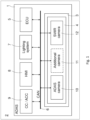
- Figure 1 shows a block diagram of a basic embodiment of an ADAS 1 capable of assisting a driver of a motor-vehicle 2 in low meteorological visibility conditions, in particular with fog, to which the following description will refer without losing its generality.
- the ADAS 1 comprises:
- the ECU 5 is configured to communicate and cooperate with automotive systems comprising an automotive external lighting system 7, which comprises, as is known, front-lights such as position, low beam, high beam and fog lights, and tail-lights such as position and rear fog lights; an automotive user interface 8 comprising, but not limited to, one or different displays, for example, a head unit display of an infotainment system, a head-up display, etc.; and a cruise control system 9, which, depending on the equipment of the motor-vehicle 2, may be in the form of a non-adaptive Cruise Control (CC), also known as Tempomat, or an Adaptive Cruise Control (ACC).
- CC non-adaptive Cruise Control
- ACC Adaptive Cruise Control
- the automotive front vision system 3 comprises a normal production ADAS camera 10 , i.e., of the type traditionally used in ADASes currently on the market, which, depending on the normal production equipment of the motor-vehicle 2, may be in the form of a low-resolution, black and white camera to allow implementation of both camera-based ADAS functions and a motor-vehicle driver assistance function in low meteorological visibility conditions according to an embodiment of the invention that will be described herein below, or a high-resolution colour camera to allow implementation of both camera-based ADAS functions and a motor-vehicle driver assistance function in low meteorological visibility conditions according to a different embodiment of the invention that will be described hereinbelow.
- a normal production ADAS camera 10 i.e., of the type traditionally used in ADASes currently on the market, which, depending on the normal production equipment of the motor-vehicle 2, may be in the form of a low-resolution, black and white camera to allow implementation of both camera-based ADAS
- the automotive front vision system 4 further comprises an additional camera 11 of the type designed to operate in the electromagnetic spectrum visible to the human eye to output a video streaming, for example of the high-resolution colour type, to allow implementation of the motor-vehicle driver assistance function in low meteorological visibility conditions according to a different embodiment of the invention that will be described hereinbelow.
- the ADAS camera 10 incorporates a dedicated electronic digital image processor capable of performing several simultaneous processing operations on the captured digital images to implement different applications, such as lane recognition, moving and approaching motor-vehicle detection, motor-vehicle external lighting distribution control, preceding or leading motor-vehicle detection, pedestrian detection, traffic sign recognition, etc.
- the electronic digital image processor of the ADAS camera 10 in case it is designed to output a video streaming, or that of the additional camera 11, in case the ADAS camera 10 is not designed to output a video streaming, is first designed to output a video streaming formed by a sequence of digital images captured in the visible spectrum.
- the electronic digital image processor of the ADAS camera 10 is also designed to process the captured digital images to estimate the day and night meteorological visibilities in front of the motor-vehicle 2, which, as is known, represent the maximum horizontal distances at which a non-luminous and, respectively, luminous object is visible and recognizable against the background, to classify the visibilities into one of several classes or categories of meteorological visibilities based on a classification criterion, and to output, in addition to the video streaming formed by the sequence of captured digital images, also meteorological visibility data indicative of the level of meteorological visibility in front of the motor-vehicle 2.
- the electronic digital image processor of the ADAS camera 10, whether it is a low-resolution black and white camera or a high-resolution colour camera, and/or the electronic digital image processor of the additional camera 11 is further designed to process the captured digital images to recognize features such as lane markers, guardrails, obstacles, motor-vehicles and vulnerable road users and to output augmented reality data representative of the recognised elements.
- the processing of digital images captured by the ADAS camera 10 and/or the additional camera 11 for the purposes of recognising road elements such as lane markers, guardrails, obstacles, motor-vehicles and vulnerable road users, and of providing augmented reality data representative of the recognised road elements is delegated to electronic processing resources external to the ADAS camera 10 and the additional camera 11, for example to a central processing node of the motor-vehicle 2 dedicated to processing the digital images captured by all the on-board cameras of the motor-vehicle 2.
- the automotive front vision system 4 further comprises an additional front camera 12 designed to operate in the electromagnetic spectrum invisible to the human eye, in particular in the infrared spectrum, to capture digital images of the environment in front of the motor-vehicle 2 and to output a video streaming formed by a sequence of digital images captured in the infrared spectrum in which it is designed to operate.
- an additional front camera 12 designed to operate in the electromagnetic spectrum invisible to the human eye, in particular in the infrared spectrum, to capture digital images of the environment in front of the motor-vehicle 2 and to output a video streaming formed by a sequence of digital images captured in the infrared spectrum in which it is designed to operate.
- this additional front camera 12 may be in the form of a Near-InfraRed (NIR) camera, hereinafter briefly referred to as NIR camera 12.
- NIR camera 12 may be in the form of a Near-InfraRed (NIR) camera, hereinafter briefly referred to as NIR camera 12.
- this additional front camera 12 may conveniently be in the form of a Short-Wavelength InfraRed (SWIR) camera, hereinafter briefly referred to as SWIR camera 12.
- SWIR camera 12 Short-Wavelength InfraRed
- both NIR and SWIR cameras 12 may be provided for use in different operational contexts, particularly in the presence of different meteorological visibility ranges in front of the motor-vehicle 2, as clarified later on.
- the NIR and SWIR cameras 12 are digital image sensors designed to operate in the relevant infrared spectra and integrating respective dedicated electronic digital image processors designed to perform several simultaneous processing operations on the captured digital images to implement different applications, including, but not limited to, lane recognition, obstacle recognition, and other recognitions even in low meteorological visibility conditions and in particular with light fog or thick fog.
- the automotive front vision system 4 further comprises one and/or different optical illuminators (not shown) operable to light the environment in the electromagnetic spectra in which the NIR and/or SWIR cameras 12 are designed to operate.
- the automotive front vision system 4 comprises a NIR illuminator for the NIR camera and a SWFR illuminator for the SWIR camera.
- the optical illuminators may be integrated in the corresponding NIR and SWIR cameras or in the front lights of the motor-vehicle 2.
- the electronic digital image processors of the NIR/SWIR cameras 12 are further designed to process the captured digital images to recognise road elements such as lane markers, guardrails, obstacles, motor-vehicles and vulnerable road users and to output, in addition to the video streaming formed by the sequence of captured digital images, augmented reality data representative of the recognised elements.
- recognition of road elements such as lane markers, guardrails, obstacles, motor-vehicles and vulnerable road users may be delegated to electronic processing resources external to the NIR and SWIR cameras 12 of the automotive front vision system 4, for example to a central processing node of the motor-vehicle 2 dedicated to processing the digital images captured by all the on-board cameras of the motor-vehicle 2, which may be programmed to recognise these road elements based on the output of one or different other sensors of the automotive sensory system 3 that are unaffected or are only slightly affected by fog, mainly a radar, and which may hence allow road elements that are undetectable based on the digital images provided by the automotive front vision system 4 to be instead recognised, and output augmented reality data representative of the recognised road elements.
- SWIR camera 12 As far as the SWIR camera 12 is concerned, it is conveniently, but not necessarily, of the type described in WO 2018/211354 A1 , WO 2019/138301 A1 , and WO 2019/155435 A1, to TRIEYE LTD .
- the electronic digital image processor of the ADAS camera 10 is designed to process the captured digital images to classify the meteorological visibility in the processed digital images into the following two meteorological visibility ranges and to output meteorological visibility data indicative of the meteorological visibility range in front of the motor-vehicle 2:
- the two above-indicated meteorological visibility ranges correspond to absence of fog and presence of fog, respectively.
- the electronic digital image processor of the ADAS camera 10 is conveniently designed to pass from one meteorological visibility range to another only after the meteorological visibility conditions of the new meteorological visibility range are occurring for a certain period of time or hysteresis, for example 5 seconds.
- classification of the meteorological visibility may be delegated to electronic processing resources external to the front cameras 10, 11, 12 of the automotive front vision system 4, for example to a central processing node of the motor-vehicle 2 dedicated to processing the digital images captured by all the on-board cameras of the motor-vehicle 2, which may be programmed to classify the meteorological visibility into the above-indicated two meteorological visibility ranges based on the digital images captured by one of the front cameras 10, 11, 12 of the automotive front vision system 4 or based on the comparison of the digital images captured by two or more of the front cameras 10, 11, 12 of the automotive front vision system 4.
- the ECU 5 is further programmed to assist the driver of the motor-vehicle 2 by implementing the operations described hereinbelow with reference to the flowchart shown in Figure 2 .
- the ECU 5 is programmed to:
- the ECU 5 is programmed to:
- the ECU 5 is programmed to:
- the ECU 5 is further programmed to cause a display of the motor-vehicle 2, such as the head unit display of the infotainment system or the head-up display, if the motor-vehicle 2 is so equipped, to display one of the video streamings of one of the front cameras 10, 11, 12 of the automotive front vision system 4, in particular the video streaming of the ADAS camera 10, if it is of the high-resolution colour type, or the video streaming of the additional camera 11, if the ADAS camera 10 is of the low-resolution black and white type, or even the video streaming of the NIR camera or of the SWIR camera 12, if the motor-vehicle 2 is so equipped, according to a proprietary criterion, e.g., based on information from the automotive sensory system 3.
- a proprietary criterion e.g., based on information from the automotive sensory system 3.
- the ECU 5 is further conveniently programmed to enrich the displayed video streaming based on the received augmented reality data to enhance the driver's perception of the scene by depicting the elements recognised in the processed digital images, and in particular road sides, lane markers, guardrails, obstacles, other motor-vehicles, and vulnerable road users.
- the ECU 5 may be conveniently further programmed to further enrich the displayed video streaming based on data from one or different other sensors of the automotive sensory system 3 that are unaffected or are only slightly affected by fog, mainly a radar, and which may hence allow obstacles that are undetectable based on the digital images from the front cameras 10, 11, 12 of the automotive front vision system 4 to be instead recognised.
- fog mainly a radar
- the ECU 5 may also be conveniently further programmed to further enrich the displayed video streaming based on data contained in stored high-definition digital road maps, which may, for example, enable curves or lane markers to be more precisely identified.
- the ECU 5 is further conveniently programmed to further enhance the displayed video streaming of the ADAS camera 10, if it is of the high-resolution colour type, or the displayed video streaming of the additional camera 11, if the ADAS camera 10 is of the low-resolution black and white type, by implementing so-called de-hazing digital image processing techniques (e.g., to restore contrast, namely to reduce the so-called "fog effect" in digital images).
- de-hazing digital image processing techniques e.g., to restore contrast, namely to reduce the so-called "fog effect" in digital images.
- the ECU 5 may be further programmed to cause a display of the motor-vehicle 2 to display, instead of one of the video streamings of one of the front cameras 10, 11, 12 of the automotive front vision system 4, a virtual depiction of the environment in front of or surrounding the motor-vehicle 2 (road, guardrail, obstacles, etc.) computed based on information from the automotive sensory system 3, and in particular from those sensors that are unaffected by fog, mainly a radar.
- the ECU 5 is further conveniently programmed to guarantee the safety of the passengers of the motor-vehicle 2 by implementing interventions to cause the driving speed of the motor-vehicle 2 not to exceed a safe driving speed, which can be computed by the ECU 5 based on the meteorological visibility detected in the digital images processed or be stored in a calibration phase of the ADAS 1 and equal to a maximum driving speed provided for by the in-force road regulations for the type of road travelled by the motor-vehicle 2 and in foggy conditions and specified in the Highway Code, for example 50 km/h on an Italian motorway.
- a safe driving speed which can be computed by the ECU 5 based on the meteorological visibility detected in the digital images processed or be stored in a calibration phase of the ADAS 1 and equal to a maximum driving speed provided for by the in-force road regulations for the type of road travelled by the motor-vehicle 2 and in foggy conditions and specified in the Highway Code, for example 50 km/h on an Italian motorway.
- the ECU 5 may conveniently be programmed to implement one or both of the following actions:
- the ECU 5 is further conveniently programmed to guarantee safety of the passengers of the motor-vehicle 2 by selectively and appropriately disabling other ADAS functions based on the ADAS camera 10 and including, but not limited to, lane keeping, lane centering, lane departure warning, ACC, etc., based on proprietary logics that may differ for different automotive manufacturers and that also takes into account recommendations of the manufacturers of the ADAS camera 10.
- the automotive front vision system 4 comprises both either an ADAS camera 10 or an additional high-resolution colour camera 11 outputting a video streaming formed by the digital images captured in the visible spectrum, and an NIR camera and/or a SWIR camera 12 outputting respective video streamings formed by the sequence of digital images captured in the relevant infrared spectra
- the electronic digital image processor of the ADAS camera 10 may be designed to process the captured digital images to classify the meteorological visibility in the processed digital images into the following three meteorological visibility ranges and to output meteorological visibility data indicative of the meteorological visibility range in front of the motor-vehicle 2 :
- classification of the meteorological visibility based on the digital images may be delegated to electronic processing resources external to the front cameras 10, 11, 12 of the automotive front vision system 4, for example to a central processing node of the motor-vehicle 2 dedicated to processing the digital images captured by all the on-board cameras of the motor-vehicle 2, which may be programmed to classify the meteorological visibility into the above-indicated three meteorological visibility ranges based on the digital images captured by one of the front cameras 10, 11, 12 of the automotive front vision system 4 or based on the comparison of the digital images captured by two or more of the front cameras 10, 11, 12 of the automotive front vision system 4.
- the ECU 5 is further programmed to assist the driver of the motor-vehicle 2 by implementing the operations described below with reference to the flowchart shown in Figure 3 .
- the ECU 5 is programmed to:
- the ECU 5 is programmed to:
- the ECU 5 is programmed to:
- the ECU 5 is programmed to:
- the ECU 5 is also programmed to cause to be displayed on a display of the motor-vehicle, for example the info entertainment system (head unit display) or the head-up display, if equipped, the video streaming of the ADAS camera 10, if it is of the high resolution colour type, or of the additional camera 11 , if the ADAS camera 10 is of the low resolution black and white type.
- a display of the motor-vehicle for example the info entertainment system (head unit display) or the head-up display, if equipped, the video streaming of the ADAS camera 10, if it is of the high resolution colour type, or of the additional camera 11 , if the ADAS camera 10 is of the low resolution black and white type.
- the ECU 5 is further conveniently programmed to further improve the displayed video streaming by implementing so-called de-hazing digital image processing techniques (e.g., to restore contrast, namely to reduce the so-called 'fog effect' in the digital images).
- de-hazing digital image processing techniques e.g., to restore contrast, namely to reduce the so-called 'fog effect' in the digital images.
- the highlighted elements may be identified using other sensors of the motor-vehicle 2.
- the ECU 5 is further programmed to cause the video streaming of the NIR camera or the SWIR camera 12 to be displayed on a display of the motor-vehicle 2, for example the head unit display of the infotainment system or the head-up display, if the motor-vehicle 2 is so equipped.
- the ECU 5 is further conveniently programmed to enrich the displayed video streamings based on the received augmented reality data to enhance the driver's perception of the scene by depicting the elements recognised in the processed digital images, and in particular road sides, lane markers, guardrails, obstacles, other motor-vehicles, and vulnerable road users.
- the ECU 5 may be conveniently further programmed to further enrich the displayed video streaming based on data from one or different other sensors of the automotive sensory system 3 that are unaffected or are only slightly affected by fog, mainly a radar, and which may hence allow obstacles that are undetectable based on the digital images from the automotive front vision system 4 to be recognised.
- fog mainly a radar
- the ECU 5 may be conveniently further programmed to further enrich the displayed video streaming based on data contained in stored high-definition digital road maps, which may, for example, enable curves or lane markers to be more precisely identified.
- both the NIR camera and the SWIR camera may be used, the video streamings of which are displayed in the advanced driver assistance mode depending on the meteorological visibility range in front of the motor-vehicle 2.
- the video streaming of the SWIR camera could be displayed in low to medium meteorological visibility conditions, e.g., between 30 metres and 50 metres, while video streaming of the NIR camera could be displayed in medium to high meteorological visibility conditions, e.g., between 50 metres and 80 metres.
- the ECU 5 may be further programmed to cause a display of the motor-vehicle 2 to display, instead of the video streamings of the automotive front vision system 4, a virtual depiction of the environment in front of or surrounding the motor-vehicle 2 (road, guardrails, obstacles, etc.) computed based on information from the automotive sensory system 3, and in particular from those sensors that are unaffected by fog, mainly a radar.
- the ECU 5 is conveniently further programmed to guarantee safety of the passengers of the motor-vehicle 2 by implementing interventions to cause the driving speed of the motor-vehicle 2 not to exceed a safe driving speed, which may be conveniently equal to the safe cruise speed to which the user-settable cruise speed of the CC or ACC is limited.
- the ECU 5 may be conveniently further programmed to implement one or both of the following actions:
- the ECU 5 is conveniently further programmed to guarantee safety of the passengers of the motor-vehicle 2 by selectively and appropriately disabling other ADAS functions based on the ADAS camera 10 and comprising, but not limited to, lane keeping, lane centering, lane departure warning, ACC, etc., based on proprietary logic that may differ for different automotive manufacturers and that also takes into account recommendations of the manufacturers of the ADAS camera 10.
- the automotive front vision system 4 may further comprise a Far InfraRed camera, hereinafter briefly referred to as FIR camera.
- FIR camera Far InfraRed camera
- the video streamings of the NIR and/or SWIR cameras and of the FIR camera are displayed in the advanced assistance mode depending on the meteorological visibility range in front of the motor-vehicle 2.
- the video streaming of the FIR camera could be displayed in low meteorological visibility conditions, e.g., below 30 metres
- the video streaming of the SWIR camera could be displayed in medium to low meteorological visibility conditions, e.g., between 30 metres and 50 metres
- the video streaming of the NIR camera could be displayed in medium to high meteorological visibility conditions, e.g., between 80 metres and 50 metres.
- the ECU 5 may be conveniently further programmed to enrich the displayed video streamings based on the received augmented reality data to enhance the driver's perception of the scene by depicting the elements recognised in the processed digital images, and in particular road sides, lane markers, guardrails, obstacles, other motor-vehicles, and vulnerable road users.
- the ECU 5 may conveniently be further programmed to further enrich the displayed video streaming based on data from one or different other sensors of the automotive sensory system 3 that are unaffected or only slightly affected by fog, mainly a radar, and which may hence allow obstacles that are undetectable based on the digital images from the automotive front vision system 4 to be recognised, as well as based on data contained in stored high-definition digital road maps, which may for example allow curves or lane markers to be more precisely detected.
- the ECU 5 may be further programmed to cause a display of the motor-vehicle 2 to display, instead of the video streamings of the automotive front vision system 4, a virtual depiction of the environment in front of or surrounding the motor-vehicle 2 (road, guardrails, obstacles, etc.) computed based on information from the automotive sensory system 3, and in particular from those sensors that are unaffected by fog, mainly a radar.
- the meteorological visibility ranges based on which the video streamings of the different cameras of the automotive vision system 4 are displayed may be manually user-settable via the automotive user interface 8.
- the video streamings to be displayed from time to time on an automotive display of the automotive user interface 8 based on the meteorological visibility range in front of the motor-vehicle 2 may be selected by the ECU 5 or by different electronic processing resources either by keeping all the front cameras 10, 11, 12 of the automotive front vision system 4 always operational and thus selecting from time to time the video streamings to be displayed based on the meteorological visibility range in front of the motor-vehicle 2, or by selectively operating only the front cameras 10, 11, 12 of the automotive front vision system 4 that are to output the video streaming to be displayed based on the meteorological visibility range in front of the motor-vehicle 2.
- the present invention provides an ADAS capable of timely assisting drivers of motor-vehicles in low meteorological visibility conditions, thus contributing significantly to improving the driving safety conditions of the motor-vehicles and their passengers.
Landscapes
- Engineering & Computer Science (AREA)
- Mechanical Engineering (AREA)
- Transportation (AREA)
- Automation & Control Theory (AREA)
- Chemical & Material Sciences (AREA)
- Combustion & Propulsion (AREA)
- Multimedia (AREA)
- Physics & Mathematics (AREA)
- General Physics & Mathematics (AREA)
- Theoretical Computer Science (AREA)
- Human Computer Interaction (AREA)
- Signal Processing (AREA)
- Traffic Control Systems (AREA)
Claims (9)
- ADAS (Advanced Driver Assistance System, Fahrerassistenzsystem) (1), welches dazu ausgelegt ist, einen Fahrer eines Kraftfahrzeugs (2) unter den Bedingungen geringer meteorologischer Sichtweite, insbesondere bei Nebel, zu unterstützen;wobei das ADAS (1) umfasst:- ein Kraftfahrzeug-Sensoriksystem (3), das ein Kraftfahrzeug-Frontsichtsystem (4) umfasst, das am Kraftfahrzeug (2) angeordnet ist, um die Umgebung vor dem Kraftfahrzeug (2) zu überwachen, und eine oder verschiedene erste Kraftfahrzeug-Frontkameras (10, 11), die dazu ausgelegt sind, im für das menschliche Auge sichtbaren elektromagnetischen Spektrum zu arbeiten, und eine oder verschiedene zweite Kraftfahrzeug-Frontkameras (12), die dazu ausgelegt sind, im für das menschliche Auge unsichtbaren elektromagnetischen Spektrum zu arbeiten, umfasst; und- Kraftfahrzeugressourcen zur elektronischen Verarbeitung (5), die mit dem Kraftfahrzeug-Sensoriksystem (3) kommunikativ gekoppelt sind, um Ausgangssignale einer oder mehrerer der Kraftfahrzeug-Frontkameras (10, 11, 12) zu empfangen und zu verarbeiten, um die meteorologische Sichtweite vor dem Kraftfahrzeug (2) zu bestimmen und den Fahrer des Kraftfahrzeugs (2) basierend auf der meteorologischen Sichtweite vor dem Kraftfahrzeug (2) zu unterstützen;wobei das Unterstützen des Fahrers des Kraftfahrzeugs (2) das differenzierte Steuern des Betriebs eines oder verschiedener Kraftfahrzeugsysteme, die eine Kraftfahrzeug-Außenbeleuchtungsanlage (7), eine Kraftfahrzeug-Benutzeroberfläche (8) und eine Kraftfahrzeug-Geschwindigkeitsregelanlage (9) umfassen, basierend auf der meteorologischen Sichtweite vor dem Kraftfahrzeug (2) umfasst;wobei das Unterstützen des Fahrers des Kraftfahrzeugs (2) ferner das visuelle Unterstützen des Fahrers des Kraftfahrzeugs (2) über die Kraftfahrzeug-Benutzeroberfläche (8) durch Anzeigen, auf mindestens einem Kraftfahrzeug-Display derselben, entweder eines Videostreamings einer Kraftfahrzeug-Frontkamera (10, 11, 12) oder einer virtuellen Abbildung einer Umgebung vor dem Kraftfahrzeug (2) oder um es herum, die basierend auf Informationen von dem Kraftfahrzeug-Sensoriksystem (3) berechnet wurde, umfasst;wobei die Kraftfahrzeugressourcen zur elektronischen Verarbeitung (5) ferner dafür programmiert sind:- basierend auf der meteorologischen Sichtweite vor dem Kraftfahrzeug (2) entweder ein Videostreaming einer der Kraftfahrzeug-Frontkameras (10, 11, 12) oder eine der Kraftfahrzeug-Frontkameras (10, 11, 12), welche eine Videostreaming auszugeben hat, das auf dem Kraftfahrzeug-Display der Kraftfahrzeug-Benutzeroberfläche (8) anzuzeigen ist, auszuwählen; und- zu bewirken, dass das ausgewählte Videostreaming oder das Videostreaming der ausgewählten Kraftfahrzeug-Frontkamera (10, 11, 12) auf dem Kraftfahrzeug-Display der Kraftfahrzeug-Benutzeroberfläche (8) angezeigt wird.
- ADAS (1) nach Anspruch 1, wobei die eine oder die verschiedenen ersten Kraftfahrzeug-Frontkameras (10, 11) umfassen:- eine ADAS-Kamera (10), die dazu ausgelegt ist zu ermöglichen, dass kamerabasierte ADAS-Funktionen implementiert werden, und ein Videostreaming auszugeben; oder- eine ADAS-Kamera (10), die dazu ausgelegt ist, nur zu ermöglichen, dass kamerabasierte ADAS-Funktionen implementiert werden, jedoch nicht dazu, ein Videostreaming auszugeben, und eine zusätzliche Kamera (11), die dazu ausgelegt ist, im für das menschliche Auge sichtbaren elektromagnetischen Spektrum zu arbeiten und ein Videostreaming auszugeben;wobei die eine oder die verschiedenen zweiten Kraftfahrzeug-Frontkameras (12) eine oder mehrere umfassen von:- einer Nahinfrarot-(NIR-)Kamera;- einer Kurzwellen-Infrarot (Short-Wavelength InfraRed, SWIR)-Kamera; und- einer Ferninfrarot-(FIR-)Kamera.
- ADAS (1) nach Anspruch 2, wobei die Kraftfahrzeugressourcen zur elektronischen Verarbeitung (5) ferner dazu ausgelegt sind, ein Ausgangssignal einer oder mehrerer der Kraftfahrzeug-Frontkameras (10, 11, 12) und/oder Ausgangssignale anderer Sensoren des Kraftfahrzeug-Sensoriksystems (3) zu verarbeiten, um Elemente wie etwa Fahrbahnmarkierungen, Leitplanken, Hindernisse, Kraftfahrzeuge und ungeschützte Verkehrsteilnehmer zu erkennen und Augmented-Reality-Daten auszugeben, die für die erkannten Elemente repräsentativ sind;
wobei die Kraftfahrzeugressourcen zur elektronischen Verarbeitung (5) ferner dafür programmiert sind, das angezeigte Videostreaming basierend auf den Augmented-Reality-Daten durch Anzeigen der erkannten Elemente zu ergänzen. - ADAS (1) nach einem der vorhergehenden Ansprüche, wobei die Kraftfahrzeugressourcen zur elektronischen Verarbeitung (5) ferner dafür programmiert sind, den Fahrer des Kraftfahrzeugs (2) gemäß mindestens zweier verschiedener Fahrerassistenzmodi zu unterstützen, welche umfassen:- einen ersten Fahrerassistenzmodus, falls die meteorologische Sichtweite vor dem Kraftfahrzeug (2) innerhalb eines ersten Bereichs meteorologischer Sichtweiten liegt; und- einen zweiten Fahrerassistenzmodus, falls die meteorologische Sichtweite vor dem Kraftfahrzeug (2) innerhalb eines zweiten Bereichs meteorologischer Sichtweiten liegt, die geringer als die des ersten Bereichs meteorologischer Sichtweiten sind;wobei im zweiten Fahrerassistenzmodus die Kraftfahrzeugressourcen zur elektronischen Verarbeitung (5) ferner dafür programmiert sind, den Fahrer des Kraftfahrzeugs (2) visuell über mindestens ein Kraftfahrzeug-Display der Kraftfahrzeug-Benutzeroberfläche (8) zu unterstützen, auf welchem entweder ein Videostreaming einer der zweiten Kraftfahrzeug-Frontkameras (10, 11, 12) oder eine virtuelle Abbildung einer Umgebung vor dem Kraftfahrzeug (2) oder um es herum, die basierend auf Informationen von dem Kraftfahrzeug-Sensoriksystem (3) berechnet wurde, angezeigt wird.
- ADAS (1) nach Anspruch 4, wobei die Kraftfahrzeugressourcen zur elektronischen Verarbeitung (5) ferner dafür programmiert sind:- im ersten Fahrerassistenzmodus:o die vorderen und hinteren Nebelleuchten des Kraftfahrzeugs (2) auszuschalten,o ein manuelles oder automatisches Einschalten der Fernscheinwerfer des Kraftfahrzeugs (2) zu ermöglichen,o ein automatisches Einschalten der Abblendscheinwerfer des Kraftfahrzeugs (2) zu ermöglichen,o eine eventuelle frühere visuelle/akustische/haptische Warnung des Fahrers vor geringer meteorologischer Sichtweite zu unterbrechen, undo eine eventuelle Begrenzung einer vom Benutzer einstellbaren Reisegeschwindigkeit der Kraftfahrzeug-Geschwindigkeitsregelanlage (9) des Kraftfahrzeugs (2) aufzuheben; und- im zweiten Fahrerassistenzmodus:o die vorderen und hinteren Nebelleuchten des Kraftfahrzeugs (2) einzuschalten,o die Fernscheinwerfer des Kraftfahrzeugs (2) auszuschalten und das automatische Einschalten derselben zu deaktivieren,o die Abblendscheinwerfer des Kraftfahrzeugs (2) einzuschalten und das automatische Ausschalten derselben zu deaktivieren,o eine visuelle/akustische/haptische Warnung des Fahrers vor geringer meteorologischer Sichtweite zu geben, undo die maximale vom Benutzer einstellbare Reisegeschwindigkeit der Kraftfahrzeug-Geschwindigkeitsregelanlage (9) des Kraftfahrzeugs (2) zu begrenzen, so dass eine Sicherheits-Reisegeschwindigkeit nicht überschritten werden kann.
- ADAS (1) nach Anspruch 4 oder 5, wobei im zweiten Fahrerassistenzmodus die Kraftfahrzeugressourcen zur elektronischen Verarbeitung (5) ferner dafür programmiert sind zu verhindern, dass die Fahrgeschwindigkeit des Kraftfahrzeugs (2) eine Sicherheits-Fahrgeschwindigkeit überschreitet, indem sie eine oder mehrere der folgenden Maßnahmen implementieren:- Übermitteln einer Empfehlung an den Fahrer, eine Sicherheits-Fahrgeschwindigkeit zu wählen, über die Kraftfahrzeug-Benutzeroberfläche (8) des Kraftfahrzeugs (2),- visuelles/akustisches/haptisches Auffordern des Fahrers über die Kraftfahrzeug-Benutzeroberfläche (8) des Kraftfahrzeugs (2), in geeigneter Weise auf Bedienelemente des Kraftfahrzeugs (2) einzuwirken, und- Einwirken auf Kraftfahrzeugsysteme (7) des Kraftfahrzeugs (2).
- ADAS (1) nach einem der Ansprüche 1 bis 3, wobei die Kraftfahrzeugressourcen zur elektronischen Verarbeitung (5) ferner dafür programmiert sind, den Fahrer des Kraftfahrzeugs (2) gemäß dreier verschiedener Fahrerassistenzmodi zu unterstützen, welche umfassen:- einen ersten Fahrerassistenzmodus, falls die meteorologische Sichtweite vor dem Kraftfahrzeug (2) innerhalb eines ersten Bereichs meteorologischer Sichtweiten liegt;- einen zweiten Fahrerassistenzmodus, falls die meteorologische Sichtweite vor dem Kraftfahrzeug (2) innerhalb eines zweiten Bereichs meteorologischer Sichtweiten liegt, die geringer als die des ersten Bereichs meteorologischer Sichtweiten sind; und- einen dritten Fahrerassistenzmodus, falls die meteorologische Sichtweite vor dem Kraftfahrzeug (2) innerhalb eines dritten Bereichs meteorologischer Sichtweiten liegt, die geringer als die des zweiten Bereichs meteorologischer Sichtweiten sind;wobei im zweiten Fahrerassistenzmodus die Kraftfahrzeugressourcen zur elektronischen Verarbeitung (5) ferner dafür programmiert sind, den Fahrer des Kraftfahrzeugs (2) visuell über mindestens ein Kraftfahrzeug-Display der Kraftfahrzeug-Benutzeroberfläche (8) zu unterstützen, auf welchem entweder ein Videostreaming einer der ersten Kraftfahrzeug-Frontkameras (10, 11) oder eine virtuelle Abbildung einer Umgebung vor dem Kraftfahrzeug (2) oder um es herum, die basierend auf Informationen von dem Kraftfahrzeug-Sensoriksystem (3) berechnet wurde, angezeigt wird.wobei im dritten Fahrerassistenzmodus die Kraftfahrzeugressourcen zur elektronischen Verarbeitung (5) ferner dafür programmiert sind, den Fahrer des Kraftfahrzeugs (2) visuell über mindestens ein Kraftfahrzeug-Display (8) zu unterstützen, auf welchem entweder ein Videostreaming von einer der zweiten Kraftfahrzeug-Frontkameras (12) oder eine virtuelle Abbildung einer Umgebung vor dem Kraftfahrzeug (2) oder um es herum, die basierend auf Informationen von dem Kraftfahrzeug-Sensoriksystem (3) berechnet wurde, angezeigt wird.
- ADAS (1) nach Anspruch 7, wobei die Kraftfahrzeugressourcen zur elektronischen Verarbeitung (5) ferner dafür programmiert sind:- im ersten Fahrerassistenzmodus:o die vorderen und hinteren Nebelleuchten des Kraftfahrzeugs (2) auszuschalten,o ein manuelles oder automatisches Einschalten der Fernscheinwerfer des Kraftfahrzeugs (2) zu ermöglichen,o ein automatisches Einschalten der Abblendscheinwerfer des Kraftfahrzeugs (2) zu ermöglichen,o eine eventuelle frühere visuelle/akustische/haptische Warnung des Fahrers vor geringer meteorologischer Sichtweite zu unterbrechen, undo eine eventuelle Begrenzung einer vom Benutzer einstellbaren Reisegeschwindigkeit der Kraftfahrzeug-Geschwindigkeitsregelanlage (9) des Kraftfahrzeugs (2) aufzuheben;- im zweiten Fahrerassistenzmodus:o die vorderen und hinteren Nebelleuchten des Kraftfahrzeugs (2) auszuschalten,o die Fernscheinwerfer des Kraftfahrzeugs (2) auszuschalten und das automatische Einschalten derselben zu deaktivieren,o die Abblendscheinwerfer des Kraftfahrzeugs (2) einzuschalten und das automatische Ausschalten derselben zu deaktivieren,o eine visuelle/akustische/haptische Warnung des Fahrers vor geringer meteorologischer Sichtweite zu geben, undo eine eventuelle Begrenzung der vom Benutzer einstellbaren Reisegeschwindigkeit der Kraftfahrzeug-Geschwindigkeitsregelanlage (9) des Kraftfahrzeugs (2) aufzuheben; und- im dritten Fahrerassistenzmodus:o die vorderen und hinteren Nebelleuchten des Kraftfahrzeugs (2) einzuschalten,o die Fernscheinwerfer des Kraftfahrzeugs (2) auszuschalten und das automatische Einschalten derselben zu deaktivieren,o die Abblendscheinwerfer des Kraftfahrzeugs (2) einzuschalten und das automatische Ausschalten derselben zu deaktivieren,o eine visuelle/akustische/haptische Warnung des Fahrers vor geringer meteorologischer Sichtweite zu geben, undo die maximale vom Benutzer einstellbare Reisegeschwindigkeit der Kraftfahrzeug-Geschwindigkeitsregelanlage (9) des Kraftfahrzeugs (2) zu begrenzen, so dass eine Sicherheits-Reisegeschwindigkeit nicht überschritten werden kann.
- ADAS (1) nach Anspruch 7 oder 8, wobei im zweiten und dritten Fahrerassistenzmodus die Kraftfahrzeugressourcen zur elektronischen Verarbeitung (5) ferner dafür programmiert sind zu verhindern, dass die Fahrgeschwindigkeit des Kraftfahrzeugs (2) eine Sicherheits-Fahrgeschwindigkeit überschreitet, indem sie eine oder mehrere der folgenden Maßnahmen implementieren:- Übermitteln einer Empfehlung an den Fahrer, eine Sicherheits-Fahrgeschwindigkeit zu wählen, über die Kraftfahrzeug-Benutzeroberfläche des Kraftfahrzeugs (2),- visuelles/akustisches/haptisches Auffordern des Fahrers über die Kraftfahrzeug-Benutzeroberfläche des Kraftfahrzeugs (2), in geeigneter Weise auf die Bedienelemente des Kraftfahrzeugs (2) einzuwirken, und- Einwirken auf die Kraftfahrzeugsysteme (7) des Kraftfahrzeugs (2).
Applications Claiming Priority (2)
| Application Number | Priority Date | Filing Date | Title |
|---|---|---|---|
| IT202000010762 | 2020-05-12 | ||
| PCT/IB2021/054035 WO2021229458A1 (en) | 2020-05-12 | 2021-05-12 | Motor-vehicle driving assistance in low meteorological visibility conditions, in particular with fog |
Publications (2)
| Publication Number | Publication Date |
|---|---|
| EP4149809A1 EP4149809A1 (de) | 2023-03-22 |
| EP4149809B1 true EP4149809B1 (de) | 2023-10-11 |
Family
ID=71994766
Family Applications (1)
| Application Number | Title | Priority Date | Filing Date |
|---|---|---|---|
| EP21732509.1A Active EP4149809B1 (de) | 2020-05-12 | 2021-05-12 | Fahrzeugfahrhilfe bei niedrigen wettersichtbedingungen, insbesondere mit nebel |
Country Status (3)
| Country | Link |
|---|---|
| US (1) | US12233895B2 (de) |
| EP (1) | EP4149809B1 (de) |
| WO (1) | WO2021229458A1 (de) |
Families Citing this family (8)
| Publication number | Priority date | Publication date | Assignee | Title |
|---|---|---|---|---|
| JP2023115753A (ja) * | 2022-02-08 | 2023-08-21 | ウーブン・バイ・トヨタ株式会社 | 遠隔操作システム、遠隔操作制御方法、及び遠隔オペレータ端末 |
| CN114399924B (zh) * | 2022-02-15 | 2023-07-11 | 青岛海信网络科技股份有限公司 | 一种车辆、边缘计算设备、服务器及信息传输方法 |
| CN114626472B (zh) * | 2022-03-18 | 2025-03-18 | 合众新能源汽车股份有限公司 | 基于机器学习的辅助驾驶方法、装置和计算机可读介质 |
| JP2023140212A (ja) * | 2022-03-22 | 2023-10-04 | 株式会社Subaru | 車両用表示装置 |
| CN115489526A (zh) * | 2022-09-28 | 2022-12-20 | 上汽通用五菱汽车股份有限公司 | 辅助驾驶方法及系统、计算机可读存储介质 |
| CN116594180A (zh) * | 2023-05-18 | 2023-08-15 | 长春工程学院 | 一种基于增强现实的透雾平视显示系统 |
| KR20240177868A (ko) * | 2023-06-20 | 2024-12-30 | 현대자동차주식회사 | 자율 주행 제어 장치 및 그 방법 |
| CN116572980A (zh) * | 2023-06-28 | 2023-08-11 | 深蓝汽车南京研究院有限公司 | 辅助驾驶系统、车辆及方法 |
Family Cites Families (18)
| Publication number | Priority date | Publication date | Assignee | Title |
|---|---|---|---|---|
| US7834905B2 (en) * | 2002-06-18 | 2010-11-16 | Bayerische Motoren Werke Aktiengesellschaft | Method and system for visualizing the environment of a vehicle with a distance-dependent merging of an infrared and a visual image |
| WO2004047421A2 (en) | 2002-11-14 | 2004-06-03 | Donnelly Corporation | Imaging system for vehicle |
| GB2401270A (en) * | 2003-04-29 | 2004-11-03 | Motorola Inc | Fog detection system |
| DE102004033625B4 (de) * | 2004-07-12 | 2008-12-24 | Continental Automotive Gmbh | Verfahren zur Darstellung des insbesonderen vorderen Sichtfeldes aus einem Kraftfahrzeug |
| US7881496B2 (en) * | 2004-09-30 | 2011-02-01 | Donnelly Corporation | Vision system for vehicle |
| ITMN20050049A1 (it) * | 2005-07-18 | 2007-01-19 | Balzanelli Sonia | Dispositivo visivo per veicoli in condizioni climatico-ambientali difficili |
| DE102010015214A1 (de) * | 2010-04-16 | 2011-10-20 | Conti Temic Microelectronic Gmbh | Verfahren und Vorrichtung zur Fahrerunterstützung beim Fahren eines Fahrzeugs durch Detektion von wetterbedingten Sichteinschränkungen |
| WO2012067028A1 (ja) * | 2010-11-16 | 2012-05-24 | コニカミノルタオプト株式会社 | 画像入力装置および画像処理装置 |
| US20140093131A1 (en) * | 2012-10-01 | 2014-04-03 | Xerox Corporation | Visibility improvement in bad weather using enchanced reality |
| US9802486B2 (en) * | 2013-11-18 | 2017-10-31 | Robert Bosch Gmbh | Interior display systems and methods |
| CN106952310A (zh) * | 2016-01-29 | 2017-07-14 | 法拉第未来公司 | 用于确定能见度状态的系统及方法 |
| DE102016014549A1 (de) | 2016-12-07 | 2017-07-06 | Daimler Ag | Verfahren zur Bestimmung der Sichtweite aus einem Fahrzeug |
| WO2018211354A1 (en) * | 2017-05-14 | 2018-11-22 | Trieye Ltd. | System and method for short-wave-infra-red (swir) sensing and imaging |
| US20190161010A1 (en) * | 2017-11-30 | 2019-05-30 | Panasonic Automotive Systems Company Of America, Division Of Panasonic Corporation Of North America | High visibility head up display (hud) |
| KR102333033B1 (ko) * | 2017-12-07 | 2021-12-01 | 삼성전자주식회사 | 차량 및 그 제어 방법 |
| WO2019138301A1 (en) | 2018-01-09 | 2019-07-18 | Trieye Ltd. | Germanium based focal plane array for the short infrared spectral regime |
| WO2019155435A2 (en) | 2018-02-12 | 2019-08-15 | Trieye Ltd. | Germanium on insulator for cmos imagers in the short wave infrared |
| DE102018209192B3 (de) * | 2018-05-17 | 2019-05-09 | Continental Automotive Gmbh | Verfahren und Vorrichtung zum Betreiben eines Kamera-Monitor-Systems für ein Kraftfahrzeug |
-
2021
- 2021-05-12 WO PCT/IB2021/054035 patent/WO2021229458A1/en not_active Ceased
- 2021-05-12 US US17/924,378 patent/US12233895B2/en active Active
- 2021-05-12 EP EP21732509.1A patent/EP4149809B1/de active Active
Also Published As
| Publication number | Publication date |
|---|---|
| EP4149809A1 (de) | 2023-03-22 |
| WO2021229458A1 (en) | 2021-11-18 |
| US12233895B2 (en) | 2025-02-25 |
| US20230174091A1 (en) | 2023-06-08 |
Similar Documents
| Publication | Publication Date | Title |
|---|---|---|
| EP4149809B1 (de) | Fahrzeugfahrhilfe bei niedrigen wettersichtbedingungen, insbesondere mit nebel | |
| US12214717B2 (en) | Vehicular multi-sensor system using a camera and lidar sensor to detect objects | |
| US11972615B2 (en) | Vehicular control system | |
| JP7530830B2 (ja) | 情報処理装置及び情報処理方法、撮像装置、コンピュータプログラム、情報処理システム、並びに移動体装置 | |
| US11012666B2 (en) | Surround camera system for autonomous driving | |
| EP3569447B1 (de) | Fahrerassistenzvorrichtung | |
| US20220048504A1 (en) | Vehicular control system with autonomous braking | |
| US10896338B2 (en) | Control system | |
| US20060164219A1 (en) | Method and device for warning the driver of a motor vehicle | |
| JP7606894B2 (ja) | 画像処理装置、画像処理方法およびプログラム | |
| CN115699105B (zh) | 用于机动车辆的视觉系统和方法 | |
| JP7548847B2 (ja) | 運転支援装置 | |
| US20240391483A1 (en) | Driving information display apparatus and method | |
| US20250340203A1 (en) | Vehicle sunroof occupant detection and mitigation system | |
| KR102559534B1 (ko) | 악천후에서의 차량의 주행차선 지원 방법 및 장치 | |
| US20250005936A1 (en) | Vehicular driving assist system with traffic light recognition | |
| JP2024138676A (ja) | 表示制御装置、表示制御方法およびプログラム |
Legal Events
| Date | Code | Title | Description |
|---|---|---|---|
| STAA | Information on the status of an ep patent application or granted ep patent |
Free format text: STATUS: UNKNOWN |
|
| STAA | Information on the status of an ep patent application or granted ep patent |
Free format text: STATUS: THE INTERNATIONAL PUBLICATION HAS BEEN MADE |
|
| PUAI | Public reference made under article 153(3) epc to a published international application that has entered the european phase |
Free format text: ORIGINAL CODE: 0009012 |
|
| STAA | Information on the status of an ep patent application or granted ep patent |
Free format text: STATUS: REQUEST FOR EXAMINATION WAS MADE |
|
| 17P | Request for examination filed |
Effective date: 20221118 |
|
| AK | Designated contracting states |
Kind code of ref document: A1 Designated state(s): AL AT BE BG CH CY CZ DE DK EE ES FI FR GB GR HR HU IE IS IT LI LT LU LV MC MK MT NL NO PL PT RO RS SE SI SK SM TR |
|
| GRAP | Despatch of communication of intention to grant a patent |
Free format text: ORIGINAL CODE: EPIDOSNIGR1 |
|
| STAA | Information on the status of an ep patent application or granted ep patent |
Free format text: STATUS: GRANT OF PATENT IS INTENDED |
|
| DAV | Request for validation of the european patent (deleted) | ||
| DAX | Request for extension of the european patent (deleted) | ||
| INTG | Intention to grant announced |
Effective date: 20230503 |
|
| GRAS | Grant fee paid |
Free format text: ORIGINAL CODE: EPIDOSNIGR3 |
|
| GRAA | (expected) grant |
Free format text: ORIGINAL CODE: 0009210 |
|
| STAA | Information on the status of an ep patent application or granted ep patent |
Free format text: STATUS: THE PATENT HAS BEEN GRANTED |
|
| AK | Designated contracting states |
Kind code of ref document: B1 Designated state(s): AL AT BE BG CH CY CZ DE DK EE ES FI FR GB GR HR HU IE IS IT LI LT LU LV MC MK MT NL NO PL PT RO RS SE SI SK SM TR |
|
| REG | Reference to a national code |
Ref country code: GB Ref legal event code: FG4D |
|
| REG | Reference to a national code |
Ref country code: CH Ref legal event code: EP |
|
| REG | Reference to a national code |
Ref country code: DE Ref legal event code: R096 Ref document number: 602021005849 Country of ref document: DE |
|
| REG | Reference to a national code |
Ref country code: IE Ref legal event code: FG4D |
|
| REG | Reference to a national code |
Ref country code: LT Ref legal event code: MG9D |
|
| REG | Reference to a national code |
Ref country code: NL Ref legal event code: MP Effective date: 20231011 |
|
| REG | Reference to a national code |
Ref country code: AT Ref legal event code: MK05 Ref document number: 1619942 Country of ref document: AT Kind code of ref document: T Effective date: 20231011 |
|
| PG25 | Lapsed in a contracting state [announced via postgrant information from national office to epo] |
Ref country code: NL Free format text: LAPSE BECAUSE OF FAILURE TO SUBMIT A TRANSLATION OF THE DESCRIPTION OR TO PAY THE FEE WITHIN THE PRESCRIBED TIME-LIMIT Effective date: 20231011 |
|
| PG25 | Lapsed in a contracting state [announced via postgrant information from national office to epo] |
Ref country code: GR Free format text: LAPSE BECAUSE OF FAILURE TO SUBMIT A TRANSLATION OF THE DESCRIPTION OR TO PAY THE FEE WITHIN THE PRESCRIBED TIME-LIMIT Effective date: 20240112 |
|
| PG25 | Lapsed in a contracting state [announced via postgrant information from national office to epo] |
Ref country code: IS Free format text: LAPSE BECAUSE OF FAILURE TO SUBMIT A TRANSLATION OF THE DESCRIPTION OR TO PAY THE FEE WITHIN THE PRESCRIBED TIME-LIMIT Effective date: 20240211 |
|
| PG25 | Lapsed in a contracting state [announced via postgrant information from national office to epo] |
Ref country code: LT Free format text: LAPSE BECAUSE OF FAILURE TO SUBMIT A TRANSLATION OF THE DESCRIPTION OR TO PAY THE FEE WITHIN THE PRESCRIBED TIME-LIMIT Effective date: 20231011 |
|
| PG25 | Lapsed in a contracting state [announced via postgrant information from national office to epo] |
Ref country code: AT Free format text: LAPSE BECAUSE OF FAILURE TO SUBMIT A TRANSLATION OF THE DESCRIPTION OR TO PAY THE FEE WITHIN THE PRESCRIBED TIME-LIMIT Effective date: 20231011 |
|
| PG25 | Lapsed in a contracting state [announced via postgrant information from national office to epo] |
Ref country code: ES Free format text: LAPSE BECAUSE OF FAILURE TO SUBMIT A TRANSLATION OF THE DESCRIPTION OR TO PAY THE FEE WITHIN THE PRESCRIBED TIME-LIMIT Effective date: 20231011 |
|
| PG25 | Lapsed in a contracting state [announced via postgrant information from national office to epo] |
Ref country code: LT Free format text: LAPSE BECAUSE OF FAILURE TO SUBMIT A TRANSLATION OF THE DESCRIPTION OR TO PAY THE FEE WITHIN THE PRESCRIBED TIME-LIMIT Effective date: 20231011 Ref country code: IS Free format text: LAPSE BECAUSE OF FAILURE TO SUBMIT A TRANSLATION OF THE DESCRIPTION OR TO PAY THE FEE WITHIN THE PRESCRIBED TIME-LIMIT Effective date: 20240211 Ref country code: GR Free format text: LAPSE BECAUSE OF FAILURE TO SUBMIT A TRANSLATION OF THE DESCRIPTION OR TO PAY THE FEE WITHIN THE PRESCRIBED TIME-LIMIT Effective date: 20240112 Ref country code: ES Free format text: LAPSE BECAUSE OF FAILURE TO SUBMIT A TRANSLATION OF THE DESCRIPTION OR TO PAY THE FEE WITHIN THE PRESCRIBED TIME-LIMIT Effective date: 20231011 Ref country code: BG Free format text: LAPSE BECAUSE OF FAILURE TO SUBMIT A TRANSLATION OF THE DESCRIPTION OR TO PAY THE FEE WITHIN THE PRESCRIBED TIME-LIMIT Effective date: 20240111 Ref country code: AT Free format text: LAPSE BECAUSE OF FAILURE TO SUBMIT A TRANSLATION OF THE DESCRIPTION OR TO PAY THE FEE WITHIN THE PRESCRIBED TIME-LIMIT Effective date: 20231011 Ref country code: PT Free format text: LAPSE BECAUSE OF FAILURE TO SUBMIT A TRANSLATION OF THE DESCRIPTION OR TO PAY THE FEE WITHIN THE PRESCRIBED TIME-LIMIT Effective date: 20240212 |
|
| PG25 | Lapsed in a contracting state [announced via postgrant information from national office to epo] |
Ref country code: SE Free format text: LAPSE BECAUSE OF FAILURE TO SUBMIT A TRANSLATION OF THE DESCRIPTION OR TO PAY THE FEE WITHIN THE PRESCRIBED TIME-LIMIT Effective date: 20231011 Ref country code: RS Free format text: LAPSE BECAUSE OF FAILURE TO SUBMIT A TRANSLATION OF THE DESCRIPTION OR TO PAY THE FEE WITHIN THE PRESCRIBED TIME-LIMIT Effective date: 20231011 Ref country code: PL Free format text: LAPSE BECAUSE OF FAILURE TO SUBMIT A TRANSLATION OF THE DESCRIPTION OR TO PAY THE FEE WITHIN THE PRESCRIBED TIME-LIMIT Effective date: 20231011 Ref country code: NO Free format text: LAPSE BECAUSE OF FAILURE TO SUBMIT A TRANSLATION OF THE DESCRIPTION OR TO PAY THE FEE WITHIN THE PRESCRIBED TIME-LIMIT Effective date: 20240111 Ref country code: LV Free format text: LAPSE BECAUSE OF FAILURE TO SUBMIT A TRANSLATION OF THE DESCRIPTION OR TO PAY THE FEE WITHIN THE PRESCRIBED TIME-LIMIT Effective date: 20231011 Ref country code: HR Free format text: LAPSE BECAUSE OF FAILURE TO SUBMIT A TRANSLATION OF THE DESCRIPTION OR TO PAY THE FEE WITHIN THE PRESCRIBED TIME-LIMIT Effective date: 20231011 |
|
| PG25 | Lapsed in a contracting state [announced via postgrant information from national office to epo] |
Ref country code: DK Free format text: LAPSE BECAUSE OF FAILURE TO SUBMIT A TRANSLATION OF THE DESCRIPTION OR TO PAY THE FEE WITHIN THE PRESCRIBED TIME-LIMIT Effective date: 20231011 |
|
| REG | Reference to a national code |
Ref country code: DE Ref legal event code: R097 Ref document number: 602021005849 Country of ref document: DE |
|
| PG25 | Lapsed in a contracting state [announced via postgrant information from national office to epo] |
Ref country code: CZ Free format text: LAPSE BECAUSE OF FAILURE TO SUBMIT A TRANSLATION OF THE DESCRIPTION OR TO PAY THE FEE WITHIN THE PRESCRIBED TIME-LIMIT Effective date: 20231011 |
|
| PG25 | Lapsed in a contracting state [announced via postgrant information from national office to epo] |
Ref country code: SK Free format text: LAPSE BECAUSE OF FAILURE TO SUBMIT A TRANSLATION OF THE DESCRIPTION OR TO PAY THE FEE WITHIN THE PRESCRIBED TIME-LIMIT Effective date: 20231011 |
|
| PG25 | Lapsed in a contracting state [announced via postgrant information from national office to epo] |
Ref country code: SM Free format text: LAPSE BECAUSE OF FAILURE TO SUBMIT A TRANSLATION OF THE DESCRIPTION OR TO PAY THE FEE WITHIN THE PRESCRIBED TIME-LIMIT Effective date: 20231011 Ref country code: SK Free format text: LAPSE BECAUSE OF FAILURE TO SUBMIT A TRANSLATION OF THE DESCRIPTION OR TO PAY THE FEE WITHIN THE PRESCRIBED TIME-LIMIT Effective date: 20231011 Ref country code: RO Free format text: LAPSE BECAUSE OF FAILURE TO SUBMIT A TRANSLATION OF THE DESCRIPTION OR TO PAY THE FEE WITHIN THE PRESCRIBED TIME-LIMIT Effective date: 20231011 Ref country code: EE Free format text: LAPSE BECAUSE OF FAILURE TO SUBMIT A TRANSLATION OF THE DESCRIPTION OR TO PAY THE FEE WITHIN THE PRESCRIBED TIME-LIMIT Effective date: 20231011 Ref country code: DK Free format text: LAPSE BECAUSE OF FAILURE TO SUBMIT A TRANSLATION OF THE DESCRIPTION OR TO PAY THE FEE WITHIN THE PRESCRIBED TIME-LIMIT Effective date: 20231011 Ref country code: CZ Free format text: LAPSE BECAUSE OF FAILURE TO SUBMIT A TRANSLATION OF THE DESCRIPTION OR TO PAY THE FEE WITHIN THE PRESCRIBED TIME-LIMIT Effective date: 20231011 |
|
| PLBE | No opposition filed within time limit |
Free format text: ORIGINAL CODE: 0009261 |
|
| STAA | Information on the status of an ep patent application or granted ep patent |
Free format text: STATUS: NO OPPOSITION FILED WITHIN TIME LIMIT |
|
| 26N | No opposition filed |
Effective date: 20240712 |
|
| PG25 | Lapsed in a contracting state [announced via postgrant information from national office to epo] |
Ref country code: SI Free format text: LAPSE BECAUSE OF FAILURE TO SUBMIT A TRANSLATION OF THE DESCRIPTION OR TO PAY THE FEE WITHIN THE PRESCRIBED TIME-LIMIT Effective date: 20231011 |
|
| PG25 | Lapsed in a contracting state [announced via postgrant information from national office to epo] |
Ref country code: SI Free format text: LAPSE BECAUSE OF FAILURE TO SUBMIT A TRANSLATION OF THE DESCRIPTION OR TO PAY THE FEE WITHIN THE PRESCRIBED TIME-LIMIT Effective date: 20231011 |
|
| REG | Reference to a national code |
Ref country code: CH Ref legal event code: PL |
|
| PG25 | Lapsed in a contracting state [announced via postgrant information from national office to epo] |
Ref country code: MC Free format text: LAPSE BECAUSE OF FAILURE TO SUBMIT A TRANSLATION OF THE DESCRIPTION OR TO PAY THE FEE WITHIN THE PRESCRIBED TIME-LIMIT Effective date: 20231011 |
|
| PG25 | Lapsed in a contracting state [announced via postgrant information from national office to epo] |
Ref country code: LU Free format text: LAPSE BECAUSE OF NON-PAYMENT OF DUE FEES Effective date: 20240512 |
|
| PG25 | Lapsed in a contracting state [announced via postgrant information from national office to epo] |
Ref country code: MC Free format text: LAPSE BECAUSE OF FAILURE TO SUBMIT A TRANSLATION OF THE DESCRIPTION OR TO PAY THE FEE WITHIN THE PRESCRIBED TIME-LIMIT Effective date: 20231011 Ref country code: LU Free format text: LAPSE BECAUSE OF NON-PAYMENT OF DUE FEES Effective date: 20240512 Ref country code: CH Free format text: LAPSE BECAUSE OF NON-PAYMENT OF DUE FEES Effective date: 20240531 |
|
| REG | Reference to a national code |
Ref country code: BE Ref legal event code: MM Effective date: 20240531 |
|
| PG25 | Lapsed in a contracting state [announced via postgrant information from national office to epo] |
Ref country code: IE Free format text: LAPSE BECAUSE OF NON-PAYMENT OF DUE FEES Effective date: 20240512 |
|
| PG25 | Lapsed in a contracting state [announced via postgrant information from national office to epo] |
Ref country code: BE Free format text: LAPSE BECAUSE OF NON-PAYMENT OF DUE FEES Effective date: 20240531 |
|
| PGFP | Annual fee paid to national office [announced via postgrant information from national office to epo] |
Ref country code: DE Payment date: 20250428 Year of fee payment: 5 |
|
| PGFP | Annual fee paid to national office [announced via postgrant information from national office to epo] |
Ref country code: IT Payment date: 20250430 Year of fee payment: 5 |
|
| PGFP | Annual fee paid to national office [announced via postgrant information from national office to epo] |
Ref country code: FR Payment date: 20250425 Year of fee payment: 5 |
|
| PG25 | Lapsed in a contracting state [announced via postgrant information from national office to epo] |
Ref country code: CY Free format text: LAPSE BECAUSE OF FAILURE TO SUBMIT A TRANSLATION OF THE DESCRIPTION OR TO PAY THE FEE WITHIN THE PRESCRIBED TIME-LIMIT; INVALID AB INITIO Effective date: 20210512 |
|
| PG25 | Lapsed in a contracting state [announced via postgrant information from national office to epo] |
Ref country code: HU Free format text: LAPSE BECAUSE OF FAILURE TO SUBMIT A TRANSLATION OF THE DESCRIPTION OR TO PAY THE FEE WITHIN THE PRESCRIBED TIME-LIMIT; INVALID AB INITIO Effective date: 20210512 |
|
| PG25 | Lapsed in a contracting state [announced via postgrant information from national office to epo] |
Ref country code: FI Free format text: LAPSE BECAUSE OF FAILURE TO SUBMIT A TRANSLATION OF THE DESCRIPTION OR TO PAY THE FEE WITHIN THE PRESCRIBED TIME-LIMIT Effective date: 20231011 |
|
| GBPC | Gb: european patent ceased through non-payment of renewal fee |
Effective date: 20250512 |