EP4145588B1 - Battery management system, battery management method, battery pack, and electric vehicle - Google Patents
Battery management system, battery management method, battery pack, and electric vehicle Download PDFInfo
- Publication number
- EP4145588B1 EP4145588B1 EP21856299.9A EP21856299A EP4145588B1 EP 4145588 B1 EP4145588 B1 EP 4145588B1 EP 21856299 A EP21856299 A EP 21856299A EP 4145588 B1 EP4145588 B1 EP 4145588B1
- Authority
- EP
- European Patent Office
- Prior art keywords
- value
- voltage
- peak value
- battery
- main peak
- Prior art date
- Legal status (The legal status is an assumption and is not a legal conclusion. Google has not performed a legal analysis and makes no representation as to the accuracy of the status listed.)
- Active
Links
Images




Classifications
-
- H—ELECTRICITY
- H02—GENERATION; CONVERSION OR DISTRIBUTION OF ELECTRIC POWER
- H02J—ELECTRIC POWER NETWORKS; CIRCUIT ARRANGEMENTS OR SYSTEMS FOR SUPPLYING OR DISTRIBUTING ELECTRIC POWER; SYSTEMS FOR STORING ELECTRIC ENERGY
- H02J7/00—Circuit arrangements for charging or discharging batteries or for supplying loads from batteries
- H02J7/80—Circuit arrangements for charging or discharging batteries or for supplying loads from batteries including monitoring or indicating arrangements
-
- B—PERFORMING OPERATIONS; TRANSPORTING
- B60—VEHICLES IN GENERAL
- B60L—PROPULSION OF ELECTRICALLY-PROPELLED VEHICLES; SUPPLYING ELECTRIC POWER FOR AUXILIARY EQUIPMENT OF ELECTRICALLY-PROPELLED VEHICLES; ELECTRODYNAMIC BRAKE SYSTEMS FOR VEHICLES IN GENERAL; MAGNETIC SUSPENSION OR LEVITATION FOR VEHICLES; MONITORING OPERATING VARIABLES OF ELECTRICALLY-PROPELLED VEHICLES; ELECTRIC SAFETY DEVICES FOR ELECTRICALLY-PROPELLED VEHICLES
- B60L58/00—Methods or circuit arrangements for monitoring or controlling batteries or fuel cells, specially adapted for electric vehicles
- B60L58/10—Methods or circuit arrangements for monitoring or controlling batteries or fuel cells, specially adapted for electric vehicles for monitoring or controlling batteries
- B60L58/12—Methods or circuit arrangements for monitoring or controlling batteries or fuel cells, specially adapted for electric vehicles for monitoring or controlling batteries responding to state of charge [SoC]
-
- B—PERFORMING OPERATIONS; TRANSPORTING
- B60—VEHICLES IN GENERAL
- B60L—PROPULSION OF ELECTRICALLY-PROPELLED VEHICLES; SUPPLYING ELECTRIC POWER FOR AUXILIARY EQUIPMENT OF ELECTRICALLY-PROPELLED VEHICLES; ELECTRODYNAMIC BRAKE SYSTEMS FOR VEHICLES IN GENERAL; MAGNETIC SUSPENSION OR LEVITATION FOR VEHICLES; MONITORING OPERATING VARIABLES OF ELECTRICALLY-PROPELLED VEHICLES; ELECTRIC SAFETY DEVICES FOR ELECTRICALLY-PROPELLED VEHICLES
- B60L53/00—Methods of charging batteries, specially adapted for electric vehicles; Charging stations or on-board charging equipment therefor; Exchange of energy storage elements in electric vehicles
- B60L53/60—Monitoring or controlling charging stations
- B60L53/62—Monitoring or controlling charging stations in response to charging parameters, e.g. current, voltage or electrical charge
-
- B—PERFORMING OPERATIONS; TRANSPORTING
- B60—VEHICLES IN GENERAL
- B60L—PROPULSION OF ELECTRICALLY-PROPELLED VEHICLES; SUPPLYING ELECTRIC POWER FOR AUXILIARY EQUIPMENT OF ELECTRICALLY-PROPELLED VEHICLES; ELECTRODYNAMIC BRAKE SYSTEMS FOR VEHICLES IN GENERAL; MAGNETIC SUSPENSION OR LEVITATION FOR VEHICLES; MONITORING OPERATING VARIABLES OF ELECTRICALLY-PROPELLED VEHICLES; ELECTRIC SAFETY DEVICES FOR ELECTRICALLY-PROPELLED VEHICLES
- B60L58/00—Methods or circuit arrangements for monitoring or controlling batteries or fuel cells, specially adapted for electric vehicles
- B60L58/10—Methods or circuit arrangements for monitoring or controlling batteries or fuel cells, specially adapted for electric vehicles for monitoring or controlling batteries
- B60L58/12—Methods or circuit arrangements for monitoring or controlling batteries or fuel cells, specially adapted for electric vehicles for monitoring or controlling batteries responding to state of charge [SoC]
- B60L58/15—Preventing overcharging
-
- B—PERFORMING OPERATIONS; TRANSPORTING
- B60—VEHICLES IN GENERAL
- B60L—PROPULSION OF ELECTRICALLY-PROPELLED VEHICLES; SUPPLYING ELECTRIC POWER FOR AUXILIARY EQUIPMENT OF ELECTRICALLY-PROPELLED VEHICLES; ELECTRODYNAMIC BRAKE SYSTEMS FOR VEHICLES IN GENERAL; MAGNETIC SUSPENSION OR LEVITATION FOR VEHICLES; MONITORING OPERATING VARIABLES OF ELECTRICALLY-PROPELLED VEHICLES; ELECTRIC SAFETY DEVICES FOR ELECTRICALLY-PROPELLED VEHICLES
- B60L58/00—Methods or circuit arrangements for monitoring or controlling batteries or fuel cells, specially adapted for electric vehicles
- B60L58/10—Methods or circuit arrangements for monitoring or controlling batteries or fuel cells, specially adapted for electric vehicles for monitoring or controlling batteries
- B60L58/16—Methods or circuit arrangements for monitoring or controlling batteries or fuel cells, specially adapted for electric vehicles for monitoring or controlling batteries responding to battery ageing, e.g. to the number of charging cycles or the state of health [SoH]
-
- G—PHYSICS
- G01—MEASURING; TESTING
- G01R—MEASURING ELECTRIC VARIABLES; MEASURING MAGNETIC VARIABLES
- G01R31/00—Arrangements for testing electric properties; Arrangements for locating electric faults; Arrangements for electrical testing characterised by what is being tested not provided for elsewhere
- G01R31/36—Arrangements for testing, measuring or monitoring the electrical condition of accumulators or electric batteries, e.g. capacity or state of charge [SoC]
- G01R31/382—Arrangements for monitoring battery or accumulator variables, e.g. SoC
- G01R31/3842—Arrangements for monitoring battery or accumulator variables, e.g. SoC combining voltage and current measurements
-
- H—ELECTRICITY
- H01—ELECTRIC ELEMENTS
- H01M—PROCESSES OR MEANS, e.g. BATTERIES, FOR THE DIRECT CONVERSION OF CHEMICAL ENERGY INTO ELECTRICAL ENERGY
- H01M10/00—Secondary cells; Manufacture thereof
- H01M10/05—Accumulators with non-aqueous electrolyte
- H01M10/052—Li-accumulators
-
- H—ELECTRICITY
- H01—ELECTRIC ELEMENTS
- H01M—PROCESSES OR MEANS, e.g. BATTERIES, FOR THE DIRECT CONVERSION OF CHEMICAL ENERGY INTO ELECTRICAL ENERGY
- H01M10/00—Secondary cells; Manufacture thereof
- H01M10/42—Methods or arrangements for servicing or maintenance of secondary cells or secondary half-cells
- H01M10/425—Structural combination with electronic components, e.g. electronic circuits integrated to the outside of the casing
-
- H—ELECTRICITY
- H01—ELECTRIC ELEMENTS
- H01M—PROCESSES OR MEANS, e.g. BATTERIES, FOR THE DIRECT CONVERSION OF CHEMICAL ENERGY INTO ELECTRICAL ENERGY
- H01M10/00—Secondary cells; Manufacture thereof
- H01M10/42—Methods or arrangements for servicing or maintenance of secondary cells or secondary half-cells
- H01M10/44—Methods for charging or discharging
-
- H—ELECTRICITY
- H01—ELECTRIC ELEMENTS
- H01M—PROCESSES OR MEANS, e.g. BATTERIES, FOR THE DIRECT CONVERSION OF CHEMICAL ENERGY INTO ELECTRICAL ENERGY
- H01M10/00—Secondary cells; Manufacture thereof
- H01M10/60—Heating or cooling; Temperature control
- H01M10/63—Control systems
- H01M10/633—Control systems characterised by algorithms, flow charts, software details or the like
-
- H—ELECTRICITY
- H01—ELECTRIC ELEMENTS
- H01M—PROCESSES OR MEANS, e.g. BATTERIES, FOR THE DIRECT CONVERSION OF CHEMICAL ENERGY INTO ELECTRICAL ENERGY
- H01M50/00—Constructional details or processes of manufacture of the non-active parts of electrochemical cells other than fuel cells, e.g. hybrid cells
- H01M50/20—Mountings; Secondary casings or frames; Racks, modules or packs; Suspension devices; Shock absorbers; Transport or carrying devices; Holders
- H01M50/204—Racks, modules or packs for multiple batteries or multiple cells
-
- H—ELECTRICITY
- H02—GENERATION; CONVERSION OR DISTRIBUTION OF ELECTRIC POWER
- H02J—ELECTRIC POWER NETWORKS; CIRCUIT ARRANGEMENTS OR SYSTEMS FOR SUPPLYING OR DISTRIBUTING ELECTRIC POWER; SYSTEMS FOR STORING ELECTRIC ENERGY
- H02J7/00—Circuit arrangements for charging or discharging batteries or for supplying loads from batteries
- H02J7/60—Circuit arrangements for charging or discharging batteries or for supplying loads from batteries including safety or protection arrangements
- H02J7/64—Circuit arrangements for charging or discharging batteries or for supplying loads from batteries including safety or protection arrangements against overvoltage
-
- H—ELECTRICITY
- H02—GENERATION; CONVERSION OR DISTRIBUTION OF ELECTRIC POWER
- H02J—ELECTRIC POWER NETWORKS; CIRCUIT ARRANGEMENTS OR SYSTEMS FOR SUPPLYING OR DISTRIBUTING ELECTRIC POWER; SYSTEMS FOR STORING ELECTRIC ENERGY
- H02J7/00—Circuit arrangements for charging or discharging batteries or for supplying loads from batteries
- H02J7/90—Regulation of charging or discharging current or voltage
- H02J7/96—Regulation of charging or discharging current or voltage in response to battery voltage
-
- B—PERFORMING OPERATIONS; TRANSPORTING
- B60—VEHICLES IN GENERAL
- B60L—PROPULSION OF ELECTRICALLY-PROPELLED VEHICLES; SUPPLYING ELECTRIC POWER FOR AUXILIARY EQUIPMENT OF ELECTRICALLY-PROPELLED VEHICLES; ELECTRODYNAMIC BRAKE SYSTEMS FOR VEHICLES IN GENERAL; MAGNETIC SUSPENSION OR LEVITATION FOR VEHICLES; MONITORING OPERATING VARIABLES OF ELECTRICALLY-PROPELLED VEHICLES; ELECTRIC SAFETY DEVICES FOR ELECTRICALLY-PROPELLED VEHICLES
- B60L2240/00—Control parameters of input or output; Target parameters
- B60L2240/40—Drive Train control parameters
- B60L2240/54—Drive Train control parameters related to batteries
- B60L2240/547—Voltage
-
- B—PERFORMING OPERATIONS; TRANSPORTING
- B60—VEHICLES IN GENERAL
- B60L—PROPULSION OF ELECTRICALLY-PROPELLED VEHICLES; SUPPLYING ELECTRIC POWER FOR AUXILIARY EQUIPMENT OF ELECTRICALLY-PROPELLED VEHICLES; ELECTRODYNAMIC BRAKE SYSTEMS FOR VEHICLES IN GENERAL; MAGNETIC SUSPENSION OR LEVITATION FOR VEHICLES; MONITORING OPERATING VARIABLES OF ELECTRICALLY-PROPELLED VEHICLES; ELECTRIC SAFETY DEVICES FOR ELECTRICALLY-PROPELLED VEHICLES
- B60L2240/00—Control parameters of input or output; Target parameters
- B60L2240/40—Drive Train control parameters
- B60L2240/54—Drive Train control parameters related to batteries
- B60L2240/549—Current
-
- H—ELECTRICITY
- H01—ELECTRIC ELEMENTS
- H01M—PROCESSES OR MEANS, e.g. BATTERIES, FOR THE DIRECT CONVERSION OF CHEMICAL ENERGY INTO ELECTRICAL ENERGY
- H01M10/00—Secondary cells; Manufacture thereof
- H01M10/42—Methods or arrangements for servicing or maintenance of secondary cells or secondary half-cells
- H01M10/425—Structural combination with electronic components, e.g. electronic circuits integrated to the outside of the casing
- H01M2010/4271—Battery management systems including electronic circuits, e.g. control of current or voltage to keep battery in healthy state, cell balancing
-
- H—ELECTRICITY
- H01—ELECTRIC ELEMENTS
- H01M—PROCESSES OR MEANS, e.g. BATTERIES, FOR THE DIRECT CONVERSION OF CHEMICAL ENERGY INTO ELECTRICAL ENERGY
- H01M4/00—Electrodes
- H01M4/02—Electrodes composed of, or comprising, active material
- H01M4/36—Selection of substances as active materials, active masses, active liquids
- H01M4/48—Selection of substances as active materials, active masses, active liquids of inorganic oxides or hydroxides
- H01M4/50—Selection of substances as active materials, active masses, active liquids of inorganic oxides or hydroxides of manganese
- H01M4/505—Selection of substances as active materials, active masses, active liquids of inorganic oxides or hydroxides of manganese of mixed oxides or hydroxides containing manganese for inserting or intercalating light metals, e.g. LiMn2O4 or LiMn2OxFy
-
- H—ELECTRICITY
- H01—ELECTRIC ELEMENTS
- H01M—PROCESSES OR MEANS, e.g. BATTERIES, FOR THE DIRECT CONVERSION OF CHEMICAL ENERGY INTO ELECTRICAL ENERGY
- H01M4/00—Electrodes
- H01M4/02—Electrodes composed of, or comprising, active material
- H01M4/36—Selection of substances as active materials, active masses, active liquids
- H01M4/48—Selection of substances as active materials, active masses, active liquids of inorganic oxides or hydroxides
- H01M4/52—Selection of substances as active materials, active masses, active liquids of inorganic oxides or hydroxides of nickel, cobalt or iron
- H01M4/525—Selection of substances as active materials, active masses, active liquids of inorganic oxides or hydroxides of nickel, cobalt or iron of mixed oxides or hydroxides containing iron, cobalt or nickel for inserting or intercalating light metals, e.g. LiNiO2, LiCoO2 or LiCoOxFy
-
- Y—GENERAL TAGGING OF NEW TECHNOLOGICAL DEVELOPMENTS; GENERAL TAGGING OF CROSS-SECTIONAL TECHNOLOGIES SPANNING OVER SEVERAL SECTIONS OF THE IPC; TECHNICAL SUBJECTS COVERED BY FORMER USPC CROSS-REFERENCE ART COLLECTIONS [XRACs] AND DIGESTS
- Y02—TECHNOLOGIES OR APPLICATIONS FOR MITIGATION OR ADAPTATION AGAINST CLIMATE CHANGE
- Y02E—REDUCTION OF GREENHOUSE GAS [GHG] EMISSIONS, RELATED TO ENERGY GENERATION, TRANSMISSION OR DISTRIBUTION
- Y02E60/00—Enabling technologies; Technologies with a potential or indirect contribution to GHG emissions mitigation
- Y02E60/10—Energy storage using batteries
-
- Y—GENERAL TAGGING OF NEW TECHNOLOGICAL DEVELOPMENTS; GENERAL TAGGING OF CROSS-SECTIONAL TECHNOLOGIES SPANNING OVER SEVERAL SECTIONS OF THE IPC; TECHNICAL SUBJECTS COVERED BY FORMER USPC CROSS-REFERENCE ART COLLECTIONS [XRACs] AND DIGESTS
- Y02—TECHNOLOGIES OR APPLICATIONS FOR MITIGATION OR ADAPTATION AGAINST CLIMATE CHANGE
- Y02T—CLIMATE CHANGE MITIGATION TECHNOLOGIES RELATED TO TRANSPORTATION
- Y02T10/00—Road transport of goods or passengers
- Y02T10/60—Other road transportation technologies with climate change mitigation effect
- Y02T10/70—Energy storage systems for electromobility, e.g. batteries
Definitions
- the present disclosure relates to battery protection from over-potential during charging.
- the polarization tends to become severer. Accordingly, even in the same charge condition (for example, charging current, temperature), the magnitude of over-potential may increase with the increasing degree of degradation of the battery.
- the present disclosure is directed to providing a battery management system, a battery management method, a battery pack and an electric vehicle, in which a charge condition for suppressing over-potential is set based on over-potential management information updated through the previous cycle constant-current charging event prior to starting the present cycle constant-current charging.
- the present disclosure is further directed to providing a battery management system, a battery management method, a battery pack and an electric vehicle, in which the over-potential management information for the next cycle constant-current charging is updated based on position information of at least one peak appearing in the differential capacity curve for the threshold voltage range obtained through the present cycle constant-current charging event.
- a battery management system includes a sensing unit configured to generate a sensing signal indicating a voltage and a current of a battery, a memory unit configured to store over-potential management information including a reference peak value and a reference peak voltage value, and a control unit configured to command first constant-current charging using a maximum allowable C-rate to a charging circuit configured to be connected to the battery, when the reference peak value is equal to or larger than a threshold peak value, in response to a charge request.
- the control unit is configured to determine a first differential capacity curve indicating a correlation between the voltage and differential capacity of the battery in a threshold voltage range based on the sensing signal collected during the first constant-current charging.
- the control unit is configured to determine a first main peak value and a first main peak voltage value indicating a differential capacity and a voltage of a first peak of the first differential capacity curve, respectively.
- the control unit is configured to update the reference peak value and the reference peak voltage value to be equal to the first main peak value and the first main peak voltage value, when the first main peak value is less than the threshold peak value.
- the over-potential management information may further include a first reference ratio.
- the control unit may be configured to determine a first reference C-rate by multiplying the maximum allowable C-rate by the first reference ratio, when the reference peak value is less than the threshold peak value.
- the control unit may be configured to command second constant-current charging using the first reference C-rate to the charging circuit, when the first reference C-rate is equal to or larger than a minimum allowable C-rate.
- the over-potential management information may further include a second reference ratio.
- the control unit may be configured to command third constant-current charging using the second reference C-rate equal to multiplication of the maximum allowable C-rate by the second reference ratio to the charging circuit, when the voltage of the battery reaches a turnover voltage value smaller than the reference peak voltage value by a scaling voltage value during the second constant-current charging.
- the control unit may be configured to determine a second differential capacity curve indicating a correlation between the voltage and the differential capacity of the battery in the threshold voltage range based on the sensing signal collected during the second constant-current charging and the third constant-current charging.
- the control unit may be configured to determine a third main peak value and a third main peak voltage value indicating a differential capacity and a voltage of a first peak of the second differential capacity curve, respectively.
- the control unit may be configured to update the reference peak value and the reference peak voltage value to be equal to the third main peak value and the third main peak voltage value, respectively, when the third main peak value is less than the threshold peak value.
- the control unit may be configured to output a charge disable message when the first reference C-rate is less than the minimum allowable C-rate.
- the over-potential management information may further include a second reference ratio.
- the control unit may be configured to determine a second main peak value and a second main peak voltage value indicating a differential capacity and a voltage of a second peak of the first differential capacity curve, when the first main peak value is less than the threshold peak value.
- the control unit may be configured to update the second reference ratio to be equal to multiplication of the second reference ratio by a first offset value, when the first main peak value is larger than the second main peak value.
- the first offset value is a positive number of less than 1.
- the control unit may be configured to update the second reference ratio to be equal to multiplication of the second reference ratio by a second offset value, when the first main peak value is equal to or less than the second main peak value.
- the second offset value is a positive number of less than 1 and is smaller than the first offset value.
- the control unit may be configured to update the first reference ratio to be equal to multiplication of the first reference ratio by a third offset value, when the updated second reference ratio is equal to or less than a predetermined minimum ratio.
- the third offset value is a positive number of less than 1.
- the control unit may be configured to determine a fourth main peak value and a fourth main peak voltage value indicating a differential capacity and a voltage of a second peak of the second differential capacity curve, when the third main peak value is less than the threshold peak value.
- the control unit may be configured to update the second reference ratio to be equal to multiplication of the second reference ratio by the first offset value, when the third main peak value is larger than the fourth main peak value.
- the first offset value is a positive number of less than 1.
- the control unit may be configured to update the second reference ratio to be equal to multiplication of the second reference ratio by a second offset value, when the third main peak value is equal to or less than the fourth main peak value.
- the second offset value is a positive number of less than 1 and is smaller than the first offset value.
- a battery pack according to another aspect of the present disclosure includes the battery management system.
- An electric vehicle includes the battery pack.
- a battery management method includes commanding first constant-current charging using a maximum allowable C-rate to a charging circuit connected to a battery, when a reference peak value included in over-potential management information of the battery is equal to or larger than a threshold peak value, in response to a charge request, determining a first differential capacity curve indicating a correlation between a voltage and a differential capacity of the battery in a threshold voltage range based on a sensing signal indicating the voltage and current of the battery collected during the first constant-current charging, determining a first main peak value and a first main peak voltage value indicating a differential capacity and a voltage of a first peak of the first differential capacity curve, respectively, and updating the reference peak value and the reference peak voltage value to be equal to the first main peak value and the first main peak voltage value, respectively, when the first main peak value is less than the threshold peak value.
- the over-potential management information for the next cycle constant-current charging based on position information of at least one peak indicated in the differential capacity curve for the threshold voltage range obtained through the present cycle constant-current charging event.
- control unit refers to a processing unit of at least one function or operation, and this may be implemented by hardware and software either alone or in combination.
- FIG. 1 illustrates exemplarily a diagram of an exemplary configuration of an electric vehicle according to the present disclosure.
- a battery pack 10 is provided to be mounted in an electric power system such as the electric vehicle 1.
- the battery pack 10 includes a battery B, a switch SW, a charging circuit 20 and a battery management system 100.
- the battery B is a lithium ion battery, and includes a positive electrode, a negative electrode and a separator.
- the separator is interposed between the positive electrode and the negative electrode, to isolate the positive electrode from the negative electrode.
- a positive electrode active material may include lithium metal composite oxide, for example, LiNi 8/10 Co 1/10 Mn 1/10 O 2 .
- a negative electrode active material may include, for example, a carbon-based material (for example, graphite).
- the capacity of the battery B greatly increases on the basis of the voltage at which the phase change reaction occurs in the negative electrode.
- the threshold voltage range may be preset through a charge test for a sample battery manufactured with the same electrochemical performance as the battery B.
- the phase change reaction in the threshold voltage range may become weaker.
- the differential capacity curve for the threshold voltage range may be obtained during charging of the battery B, and then the degree of polarization may be identified based on position information of each peak (for example, a maximum point, a minimum point) appearing in the differential capacity curve.
- the position information may include the peak value (or peak intensity) which is the differential capacity of the peak and/or the peak voltage which is the voltage of the peak.
- the switch SW is installed on an electric current path connected in series to the battery B for the charge/discharge of the battery B. While the switch SW is turned on, the battery B can be charged/discharged.
- the switch SW may be a mechanical relay that is turned on/off by the electromagnetic force of a coil or a semiconductor switch such as a Metal Oxide Semiconductor Field Effect transistor (MOSFET). While the switch SW is turned off, the charge/discharge of the battery B is stopped.
- the switch SW may be turned on in response to a first switching signal (for example, high level voltage).
- the switch SW may be turned off in response to a second switching signal (for example, low level voltage).
- the charging circuit 20 is electrically connected to the electric current path for the charge/discharge of the battery B.
- the charging circuit 20 is configured to convert alternating current (AC) power from an external device (for example, a commercial power source) to direct current (DC) power.
- the charging circuit 20 may include a constant-current circuit to regulate a current rate (referred to as 'C-rate') for constant-current charging in response to a command from the battery management system 100.
- the battery management system 100 is provided to protect the battery B from over-potential formed by excessively high polarization.
- the battery management system 100 includes a sensing unit 110, a control unit 120 and a memory unit 130.
- the battery management system 100 may further include an interface unit 140.
- the battery management system 100 may further include a switch driver 150. At least one of the sensing unit 110, the memory unit 130, the interface unit 140 or the switch driver 150 may be packaged with the control unit 120 into a single chip.
- the sensing unit 110 includes a voltage sensor 111 and a current sensor 112.
- the voltage sensor 111 is connected in parallel to the battery B and configured to detect a voltage across the battery B and generate a voltage signal indicating the detected voltage.
- the current sensor 112 is connected in series to the battery B through the electric current path.
- the current sensor 112 is configured to detect an electric current flowing through the battery B, and generate a current signal indicating the detected electric current.
- the control unit 120 may collect a sensing signal including the voltage signal and the current signal in synchronization from the sensing unit 110.
- the control unit 120 may be implemented in hardware using at least one of application specific integrated circuits (ASICs), digital signal processors (DSPs), digital signal processing devices (DSPDs), programmable logic devices (PLDs), field programmable gate arrays (FPGAs), microprocessors or electrical units for performing the other functions.
- ASICs application specific integrated circuits
- DSPs digital signal processors
- DSPDs digital signal processing devices
- PLDs programmable logic devices
- FPGAs field programmable gate arrays
- microprocessors or electrical units for performing the other functions.
- the control unit 120 is operably coupled to at least one of the charging circuit 20, the sensing unit 110 or the memory unit 130. Operably coupled refers to directly/indirectly connected to transmit and receive a signal in one or two directions.
- the control unit 120 is configured to perform an operation for protecting the battery B as described below.
- control unit 120 may transmit a constant-current charging command to the charging circuit 20 in response to a charge request upon receiving the charge request from a high-level controller 2.
- the control unit 120 is configured to determine the voltage, electric current, capacity and State-Of-Charge (SOC) of the battery B at a predetermined time interval based on the voltage signal and the electric current signal included in the sensing signal at the predetermined time interval during constant-current charging of the battery B.
- SOC State-Of-Charge
- the capacity of the battery B indicates an amount of charges stored in the battery B and may be referred to as 'remaining capacity'.
- the control unit 120 may determine the capacity of the battery B by accumulating the detected electric current value of the battery B at the predetermined time interval.
- the SOC of the battery B indicates a ratio of the capacity of the battery B to the maximum capacity (referred to as 'full charge capacity ') of the battery B, and in general, it is represented as 0 ⁇ 1 or 0 ⁇ 100%.
- the maximum capacity of the battery B gradually decreases as the battery B degrades.
- a voltage history, a current history and a capacity history respectively corresponding to the voltage, the current and the capacity obtained at the predetermined time interval during constant-current charging may be recorded in the memory unit 130 by the control unit 120.
- the capacity history is based on the current history.
- the history of a parameter refers to a time-dependent change, i.e., a time-series of the corresponding parameter over a period of time.
- the memory unit 130 is operably coupled to the control unit 120.
- the memory unit 130 may be also operably coupled to the sensing unit 110.
- the memory unit 130 may include, for example, at least one type of storage medium of flash memory type, hard disk type, Solid State Disk (SSD) type, Silicon Disk Drive (SDD) type, multimedia card micro type, random access memory (RAM), static random access memory (SRAM), read-only memory (ROM), electrically erasable programmable read-only memory (EEPROM) or programmable read-only memory (PROM).
- the switch driver 150 is electrically coupled to the control unit 120 and the switch SW.
- the switch driver 150 is configured to selectively output the first switching signal or the second switching signal to the switch SW in response to the command from the control unit 120.
- the control unit 120 may command the switch driver 150 to turn on the switch SW during constant-current charging of the battery B.
- FIG. 2 illustrates exemplarily a diagram of a plurality of voltage curves respectively corresponding to a plurality of C-rates
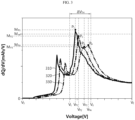
- FIG. 3 illustrates exemplarily a diagram of a plurality of differential capacity curves respectively corresponding to the plurality of voltage curves of FIG. 2 .
- each of the voltage curves 210, 220, 230 is the result obtained through a constant-current charging test for a plurality of sample batteries of the same specification as the battery B at beginning of life (BOL).
- the control unit 120 updates the second reference ratio to be equal to the multiplication of the second reference ratio by a second offset value.
- the second offset value may be a positive number of less than 1 (for example, 0.8) that is smaller than the first offset value.
- step S490 the control unit 120 determines whether the updated second reference ratio is equal to or less than a minimum ratio.
- the minimum ratio may be a value that is preset to be less than the second offset value.
- the updated second reference ratio equal to or less than the minimum ratio indicates that it is necessary to reduce the C-rate from the start time of the next constant-current charging to suppress the over-potential of the battery B.
- step S600 the control unit 120 determines a first reference C-rate by multiplying the maximum allowable C-rate by the first reference ratio.
- the first reference ratio is less than 1, the first reference C-rate will be smaller than the maximum allowable C-rate.
- step S610 the control unit 120 determines whether the first reference C-rate is less than the minimum allowable C-rate. When a value of the step S610 is "YES”, step S612 is performed. When the value of the step S610 is "NO”, step S620 is performed.
- the control unit 120 outputs a charge disable message.
- the charge disable message indicates that it is necessary to replace the battery B due to the severe over-potential feature caused by the degradation of the battery B.
- the charge disable message may be transmitted to the high-level controller 2 through the interface unit 140.
- the control unit 120 determines a turnover voltage value and a second reference C-rate.
- the turnover voltage value may be the larger one of a voltage value that is smaller than the reference peak voltage value by a predetermined scaling voltage value (for example, 0.05 V) and (ii) the lower limit V L of the threshold voltage range ⁇ V TH .
- the second reference C-rate may be equal to multiplication of the maximum allowable C-rate by the second reference ratio. The reason of determining the turnover voltage value is to reduce the C-rate of the charge current before the voltage of the battery B reaches the voltage at which the first over-potential state occurred in the previous cycle constant-current charging event during the current cycle constant-current charging event.
- step S622 the control unit 120 commands second constant-current charging using the first reference C-rate to the charging circuit 20. Accordingly, the charging circuit 20 starts the second constant-current charging.
- the control unit 120 may collect the sensing signal from the sensing unit 110 at the preset time interval during the second constant-current charging, and record the voltage value and the electric current value indicated by the collected sensing signal in the memory unit 130.
- step S624 the control unit 120 determines whether the voltage of the battery B reaches the turnover voltage value. When a value of the step S624 is "YES”, step S626 is performed. When the value of the step S624 is "NO”, the step S624 is repeated.
- control unit 120 commands third constant-current charging using the second reference C-rate to the charging circuit 20. Accordingly, the charging circuit 20 changes the second constant-current charging to the third constant-current charging.
- the control unit 120 may collect the sensing signal from the sensing unit 110 at the preset time interval during the third constant-current charging, and record the voltage value and the electric current value indicated by the collected sensing signal in the memory unit 130.
- step S630 the control unit 120 determines whether the voltage of the battery B reaches the upper limit V U of the threshold voltage range ⁇ V TH .
- step S640 is performed.
- step S430 is "NO”
- the step S630 is repeated.
- the control unit 120 determines a second differential capacity curve for the threshold voltage range ⁇ V TH based on the sensing signal collected for a second charging period.
- the second charging period is a period of time from the time when the voltage of the battery B reaches the lower limit V L of the threshold voltage range ⁇ V TH to the time when the voltage of the battery B reaches the upper limit V U of the threshold voltage range ⁇ V TH by the second constant-current charging and the third constant-current charging.
- the second differential capacity curve indicates the correlation between the voltage and the differential capacity of the battery in the threshold voltage range ⁇ V TH .
- step S650 the control unit 120 determines whether at least one peak appears in the second differential capacity curve. When a value of the step S650 is "NO”, the method according to the second embodiment may end. When the value of the step S650 is "YES”, step S652 is performed.
- control unit 120 determines a third main peak value and a third main peak voltage value indicating the differential capacity and the voltage of the first peak of the second differential capacity curve, respectively.
- step S660 the control unit 120 determines whether the third main peak value is less than the threshold peak value M ref .
- the third main peak value less than the threshold peak value M ref indicates that the battery B has the first over-potential state by the second constant-current charging and the third constant-current charging.
- step S662 is performed.
- the value of the step S660 is "NO"
- the method according to the second embodiment may end.
- control unit 120 updates the reference peak value and the reference peak voltage value of the over-potential management information to be equal to the third main peak value and the third main peak voltage value, respectively.
- step S664 the control unit 120 determines whether the second peak appears in the second differential capacity curve. When a value of the step S664 is "NO”, the method according to the second embodiment may end or move to step S682. When the value of the step S664 is "YES”, step S670 is performed.
- control unit 120 determines a fourth main peak value and a fourth main peak voltage value indicating the differential capacity and the voltage of the second peak of the second differential capacity curve, respectively.
- step S680 the control unit 120 determines whether the third main peak value is equal to or less than the fourth main peak value. When a value of the step S680 is "NO”, step S682 is performed. The value of the step S680 being "YES" indicates that the battery B has the second over-potential state by the second constant-current charging and the third constant-current charging. When the value of the step S680 is "YES”, step S684 is performed.
- the control unit 120 updates the second reference ratio to be equal to the multiplication of the second reference ratio by a second offset value.
- the second offset value may be a positive number of less than 1 (for example, 0.8) that is smaller than the first offset value.
- step S690 the control unit 120 determines whether the updated second reference ratio is equal to or less than a minimum ratio.
- the minimum ratio may be a value that is preset to be less than the second offset value.
- the updated second reference ratio equal to or less than the minimum ratio indicates that it is necessary to reduce the C-rate from the start time of the next constant-current charging to suppress the over-potential of the battery B.
- the control unit 120 updates the first reference ratio to be equal to the multiplication of the first reference ratio by a third offset value.
- the third offset value may be a positive number of less than 1.
Landscapes
- Engineering & Computer Science (AREA)
- Power Engineering (AREA)
- General Chemical & Material Sciences (AREA)
- Electrochemistry (AREA)
- Chemical Kinetics & Catalysis (AREA)
- Chemical & Material Sciences (AREA)
- Manufacturing & Machinery (AREA)
- Transportation (AREA)
- Mechanical Engineering (AREA)
- Sustainable Energy (AREA)
- Sustainable Development (AREA)
- Life Sciences & Earth Sciences (AREA)
- Microelectronics & Electronic Packaging (AREA)
- Physics & Mathematics (AREA)
- General Physics & Mathematics (AREA)
- Automation & Control Theory (AREA)
- Charge And Discharge Circuits For Batteries Or The Like (AREA)
- Secondary Cells (AREA)
- Protection Of Static Devices (AREA)
- Electric Propulsion And Braking For Vehicles (AREA)
Description
- The present disclosure relates to battery protection from over-potential during charging.
- Recently, there has been a rapid increase in the demand for portable electronic products such as laptop computers, video cameras and mobile phones, and with the extensive development of electric vehicles, accumulators for energy storage, robots and satellites, many studies are being made on high performance batteries that can be recharged repeatedly.
- Currently, commercially available batteries include nickel-cadmium batteries, nickel-hydrogen batteries, nickel-zinc batteries, lithium batteries and the like, and among them, lithium batteries have little or no memory effect, and thus they are gaining more attention than nickel-based batteries for their advantages that recharging can be done whenever it is convenient, the self-discharge rate is very low and the energy density is high.
- While a battery is being charged, polarization occurs in the battery. The polarization depends on a plurality of resistance components (for example, Ohm resistance, electric charge transfer, diffusion resistance) of the battery. The battery voltage during charging higher than an open circuit voltage (OCV) is because of over-potential formed by polarization.
- As the battery degrades, the polarization tends to become severer. Accordingly, even in the same charge condition (for example, charging current, temperature), the magnitude of over-potential may increase with the increasing degree of degradation of the battery.
- However, when over-potential is too large, the degradation of the battery is accelerated. For example, during charging, the negative electrode potential of the battery gradually drops, and when the voltage of the negative electrode of the battery drops below 0 V due to the over-potential, lithium metal deposition rapidly occurs on the negative electrode surface, and as a result, losses of lithium ions that can participate in the charge/discharge reactions may increase and internal short circuits may occur.
-
US 2019/168617 A1 andUS 2020/119562 A1 disclose relevant prior art. - According to at least one of the embodiments of the present disclosure, the present disclosure is directed to providing a battery management system, a battery management method, a battery pack and an electric vehicle, in which a charge condition for suppressing over-potential is set based on over-potential management information updated through the previous cycle constant-current charging event prior to starting the present cycle constant-current charging.
- Additionally, the present disclosure is further directed to providing a battery management system, a battery management method, a battery pack and an electric vehicle, in which the over-potential management information for the next cycle constant-current charging is updated based on position information of at least one peak appearing in the differential capacity curve for the threshold voltage range obtained through the present cycle constant-current charging event.
- These and other objects and advantages of the present disclosure may be understood by the following description and will be apparent from the embodiments of the present disclosure. In addition, it will be readily understood that the objects and advantages of the present disclosure may be realized by the means set forth in the appended claims and a combination thereof.
- A battery management system according to an aspect of the present disclosure includes a sensing unit configured to generate a sensing signal indicating a voltage and a current of a battery, a memory unit configured to store over-potential management information including a reference peak value and a reference peak voltage value, and a control unit configured to command first constant-current charging using a maximum allowable C-rate to a charging circuit configured to be connected to the battery, when the reference peak value is equal to or larger than a threshold peak value, in response to a charge request. The control unit is configured to determine a first differential capacity curve indicating a correlation between the voltage and differential capacity of the battery in a threshold voltage range based on the sensing signal collected during the first constant-current charging. The control unit is configured to determine a first main peak value and a first main peak voltage value indicating a differential capacity and a voltage of a first peak of the first differential capacity curve, respectively. The control unit is configured to update the reference peak value and the reference peak voltage value to be equal to the first main peak value and the first main peak voltage value, when the first main peak value is less than the threshold peak value.
- The over-potential management information may further include a first reference ratio. The control unit may be configured to determine a first reference C-rate by multiplying the maximum allowable C-rate by the first reference ratio, when the reference peak value is less than the threshold peak value. The control unit may be configured to command second constant-current charging using the first reference C-rate to the charging circuit, when the first reference C-rate is equal to or larger than a minimum allowable C-rate.
- The over-potential management information may further include a second reference ratio. The control unit may be configured to command third constant-current charging using the second reference C-rate equal to multiplication of the maximum allowable C-rate by the second reference ratio to the charging circuit, when the voltage of the battery reaches a turnover voltage value smaller than the reference peak voltage value by a scaling voltage value during the second constant-current charging. The control unit may be configured to determine a second differential capacity curve indicating a correlation between the voltage and the differential capacity of the battery in the threshold voltage range based on the sensing signal collected during the second constant-current charging and the third constant-current charging. The control unit may be configured to determine a third main peak value and a third main peak voltage value indicating a differential capacity and a voltage of a first peak of the second differential capacity curve, respectively. The control unit may be configured to update the reference peak value and the reference peak voltage value to be equal to the third main peak value and the third main peak voltage value, respectively, when the third main peak value is less than the threshold peak value.
- The control unit may be configured to output a charge disable message when the first reference C-rate is less than the minimum allowable C-rate.
- The over-potential management information may further include a second reference ratio. The control unit may be configured to determine a second main peak value and a second main peak voltage value indicating a differential capacity and a voltage of a second peak of the first differential capacity curve, when the first main peak value is less than the threshold peak value. The control unit may be configured to update the second reference ratio to be equal to multiplication of the second reference ratio by a first offset value, when the first main peak value is larger than the second main peak value. The first offset value is a positive number of less than 1. The control unit may be configured to update the second reference ratio to be equal to multiplication of the second reference ratio by a second offset value, when the first main peak value is equal to or less than the second main peak value. The second offset value is a positive number of less than 1 and is smaller than the first offset value.
- The control unit may be configured to update the first reference ratio to be equal to multiplication of the first reference ratio by a third offset value, when the updated second reference ratio is equal to or less than a predetermined minimum ratio. The third offset value is a positive number of less than 1.
- The control unit may be configured to determine a fourth main peak value and a fourth main peak voltage value indicating a differential capacity and a voltage of a second peak of the second differential capacity curve, when the third main peak value is less than the threshold peak value. The control unit may be configured to update the second reference ratio to be equal to multiplication of the second reference ratio by the first offset value, when the third main peak value is larger than the fourth main peak value. The first offset value is a positive number of less than 1.
- The control unit may be configured to update the second reference ratio to be equal to multiplication of the second reference ratio by a second offset value, when the third main peak value is equal to or less than the fourth main peak value. The second offset value is a positive number of less than 1 and is smaller than the first offset value.
- A battery pack according to another aspect of the present disclosure includes the battery management system.
- An electric vehicle according to still another aspect of the present disclosure includes the battery pack.
- A battery management method according to yet another aspect of the present disclosure includes commanding first constant-current charging using a maximum allowable C-rate to a charging circuit connected to a battery, when a reference peak value included in over-potential management information of the battery is equal to or larger than a threshold peak value, in response to a charge request, determining a first differential capacity curve indicating a correlation between a voltage and a differential capacity of the battery in a threshold voltage range based on a sensing signal indicating the voltage and current of the battery collected during the first constant-current charging, determining a first main peak value and a first main peak voltage value indicating a differential capacity and a voltage of a first peak of the first differential capacity curve, respectively, and updating the reference peak value and the reference peak voltage value to be equal to the first main peak value and the first main peak voltage value, respectively, when the first main peak value is less than the threshold peak value.
- According to at least one of the embodiments of the present disclosure, it is possible to set a charge condition for suppressing over-potential based on the over-potential management information updated through the previous cycle constant-current charging event, prior to starting the present cycle constant-current charging.
- Additionally, according to at least one of the embodiments of the present disclosure, it is possible update the over-potential management information for the next cycle constant-current charging based on position information of at least one peak indicated in the differential capacity curve for the threshold voltage range obtained through the present cycle constant-current charging event.
- Accordingly, it is possible to prevent lithium deposition that occurs when the negative electrode potential of the battery during constant-current charging drops too much.
- The effects of the present disclosure are not limited to the effects mentioned above, and these and other effects will be clearly understood by those skilled in the art from the appended claims.
- The accompanying drawings illustrate a preferred embodiment of the present disclosure, and together with the detailed description of the present disclosure described below, serve to provide a further understanding of the technical aspects of the present disclosure, and thus the present disclosure should not be construed as being limited to the drawings.
-
FIG. 1 illustrates exemplarily a diagram of an exemplary configuration of an electric vehicle according to the present disclosure. -
FIG. 2 illustrates exemplarily a diagram of a plurality of voltage curves respectively corresponding to a plurality of C-rates. -
FIG. 3 illustrates exemplarily a diagram of a plurality of differential capacity curves respectively corresponding to the plurality of voltage curves ofFIG. 2 . -
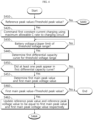
FIGS. 4 and5 illustrate exemplarily flowcharts of a battery management method according to a first embodiment of the present disclosure. -
FIGS. 6 and7 illustrate exemplarily flowcharts of a battery management method according to a second embodiment of the present disclosure. - Hereinafter, the preferred embodiments of the present disclosure will be described in detail with reference to the accompanying drawings. Prior to the description, it should be understood that the terms or words used in the specification and the appended claims should not be construed as being limited to general and dictionary meanings, but rather interpreted based on the meanings and concepts corresponding to the technical aspects of the present disclosure on the basis of the principle that the inventor is allowed to define the terms appropriately for the best explanation.
- Therefore, the embodiments described herein and illustrations shown in the drawings are just a most preferred embodiment of the present disclosure, but not intended to fully describe the technical aspects of the present disclosure, so it should be understood that a variety of other equivalents and modifications could have been made thereto at the time that the application was filed.
- The terms including the ordinal number such as "first", "second" and the like, are used to distinguish one element from another among various elements, but not intended to limit the elements by the terms.
- Unless the context clearly indicates otherwise, it will be understood that the term "comprises" when used in this specification, specifies the presence of stated elements, but does not preclude the presence or addition of one or more other elements. Additionally, the term "control unit" refers to a processing unit of at least one function or operation, and this may be implemented by hardware and software either alone or in combination.
- In addition, throughout the specification, it will be further understood that when an element is referred to as being "connected to" another element, it can be directly connected to the other element or intervening elements may be present.
-
FIG. 1 illustrates exemplarily a diagram of an exemplary configuration of an electric vehicle according to the present disclosure. - Referring to
FIG. 1 , abattery pack 10 is provided to be mounted in an electric power system such as theelectric vehicle 1. Thebattery pack 10 includes a battery B, a switch SW, a chargingcircuit 20 and abattery management system 100. - Positive and negative electrode terminals of the battery B are electrically connected to the
battery management system 100. The battery B is a lithium ion battery, and includes a positive electrode, a negative electrode and a separator. The separator is interposed between the positive electrode and the negative electrode, to isolate the positive electrode from the negative electrode. A positive electrode active material may include lithium metal composite oxide, for example, LiNi8/10Co1/10Mn1/10O2. A negative electrode active material may include, for example, a carbon-based material (for example, graphite). - When the polarization of the battery B is less than a predetermined level during charging, a single phase change reaction occurs in the negative electrode active material in a threshold voltage range (for example, 3.65-3.80 V). Accordingly, the capacity of the battery B greatly increases on the basis of the voltage at which the phase change reaction occurs in the negative electrode. The threshold voltage range may be preset through a charge test for a sample battery manufactured with the same electrochemical performance as the battery B. In contrast, as the polarization of the battery B becomes severer, the phase change reaction in the threshold voltage range may become weaker.
- Accordingly, the differential capacity curve for the threshold voltage range may be obtained during charging of the battery B, and then the degree of polarization may be identified based on position information of each peak (for example, a maximum point, a minimum point) appearing in the differential capacity curve. The position information may include the peak value (or peak intensity) which is the differential capacity of the peak and/or the peak voltage which is the voltage of the peak.
- The switch SW is installed on an electric current path connected in series to the battery B for the charge/discharge of the battery B. While the switch SW is turned on, the battery B can be charged/discharged. The switch SW may be a mechanical relay that is turned on/off by the electromagnetic force of a coil or a semiconductor switch such as a Metal Oxide Semiconductor Field Effect transistor (MOSFET). While the switch SW is turned off, the charge/discharge of the battery B is stopped. The switch SW may be turned on in response to a first switching signal (for example, high level voltage). The switch SW may be turned off in response to a second switching signal (for example, low level voltage).
- The charging
circuit 20 is electrically connected to the electric current path for the charge/discharge of the battery B. The chargingcircuit 20 is configured to convert alternating current (AC) power from an external device (for example, a commercial power source) to direct current (DC) power. The chargingcircuit 20 may include a constant-current circuit to regulate a current rate (referred to as 'C-rate') for constant-current charging in response to a command from thebattery management system 100. - The
battery management system 100 is provided to protect the battery B from over-potential formed by excessively high polarization. Thebattery management system 100 includes asensing unit 110, acontrol unit 120 and amemory unit 130. Thebattery management system 100 may further include aninterface unit 140. Thebattery management system 100 may further include aswitch driver 150. At least one of thesensing unit 110, thememory unit 130, theinterface unit 140 or theswitch driver 150 may be packaged with thecontrol unit 120 into a single chip. - The
sensing unit 110 includes avoltage sensor 111 and acurrent sensor 112. - The
voltage sensor 111 is connected in parallel to the battery B and configured to detect a voltage across the battery B and generate a voltage signal indicating the detected voltage. - The
current sensor 112 is connected in series to the battery B through the electric current path. Thecurrent sensor 112 is configured to detect an electric current flowing through the battery B, and generate a current signal indicating the detected electric current. Thecontrol unit 120 may collect a sensing signal including the voltage signal and the current signal in synchronization from thesensing unit 110. - The
control unit 120 may be implemented in hardware using at least one of application specific integrated circuits (ASICs), digital signal processors (DSPs), digital signal processing devices (DSPDs), programmable logic devices (PLDs), field programmable gate arrays (FPGAs), microprocessors or electrical units for performing the other functions. - The
control unit 120 is operably coupled to at least one of the chargingcircuit 20, thesensing unit 110 or thememory unit 130. Operably coupled refers to directly/indirectly connected to transmit and receive a signal in one or two directions. Thecontrol unit 120 is configured to perform an operation for protecting the battery B as described below. - When the voltage of the battery B is equal to or less than a predetermined start voltage, the
control unit 120 may transmit a constant-current charging command to the chargingcircuit 20 in response to a charge request upon receiving the charge request from a high-level controller 2. - The
control unit 120 is configured to determine the voltage, electric current, capacity and State-Of-Charge (SOC) of the battery B at a predetermined time interval based on the voltage signal and the electric current signal included in the sensing signal at the predetermined time interval during constant-current charging of the battery B. - The capacity of the battery B indicates an amount of charges stored in the battery B and may be referred to as 'remaining capacity'. The
control unit 120 may determine the capacity of the battery B by accumulating the detected electric current value of the battery B at the predetermined time interval. The SOC of the battery B indicates a ratio of the capacity of the battery B to the maximum capacity (referred to as 'full charge capacity ') of the battery B, and in general, it is represented as 0~1 or 0~100%. The maximum capacity of the battery B gradually decreases as the battery B degrades. - A voltage history, a current history and a capacity history respectively corresponding to the voltage, the current and the capacity obtained at the predetermined time interval during constant-current charging may be recorded in the
memory unit 130 by thecontrol unit 120. The capacity history is based on the current history. The history of a parameter refers to a time-dependent change, i.e., a time-series of the corresponding parameter over a period of time. - The
memory unit 130 is operably coupled to thecontrol unit 120. Thememory unit 130 may be also operably coupled to thesensing unit 110. Thememory unit 130 may include, for example, at least one type of storage medium of flash memory type, hard disk type, Solid State Disk (SSD) type, Silicon Disk Drive (SDD) type, multimedia card micro type, random access memory (RAM), static random access memory (SRAM), read-only memory (ROM), electrically erasable programmable read-only memory (EEPROM) or programmable read-only memory (PROM). - The
memory unit 130 may store data and programs required for the computation operation by thecontrol unit 120. Thememory unit 130 may store data indicating the result of the computation operation by thecontrol unit 120. - The
interface unit 140 is configured to support wired or wireless communication between thecontrol unit 120 and the high-level controller 2 (for example, Electronic Control Unit (ECU)) of theelectric vehicle 1. The wired communication may be, for example, controller area network (CAN) communication, and the wireless communication may be, for example, Zigbee or Bluetooth communication. The communication protocol is not limited to a particular type, and may include any communication protocol that supports the wired/wireless communication between thecontrol unit 120 and the high-level controller 2. Theinterface unit 140 may include an output device (for example, a display, a speaker) to provide information received from thecontrol unit 120 and/or the high-level controller 2 in a recognizable format. - The
switch driver 150 is electrically coupled to thecontrol unit 120 and the switch SW. Theswitch driver 150 is configured to selectively output the first switching signal or the second switching signal to the switch SW in response to the command from thecontrol unit 120. Thecontrol unit 120 may command theswitch driver 150 to turn on the switch SW during constant-current charging of the battery B. -
FIG. 2 illustrates exemplarily a diagram of a plurality of voltage curves respectively corresponding to a plurality of C-rates, andFIG. 3 illustrates exemplarily a diagram of a plurality of differential capacity curves respectively corresponding to the plurality of voltage curves ofFIG. 2 . - Referring to
FIG. 2 , each of the voltage curves 210, 220, 230 is the result obtained through a constant-current charging test for a plurality of sample batteries of the same specification as the battery B at beginning of life (BOL). - Specifically, the
voltage curve 210 indicates the correlation between the voltage history and the capacity history of a sample battery during constant-current charging of the corresponding sample battery from a predetermined start voltage Vs (for example, 3.3V) to a predetermined end voltage VE (for example, 4.1V) using the C-rate of 0.5C. - The
voltage curve 220 indicates the correlation between the voltage history and the capacity history of another sample battery during constant-current charging of the corresponding sample battery from the start voltage Vs or less till the end voltage VE using the C-rate of 0.7C. - The
voltage curve 230 indicates the correlation between the voltage history and the capacity history of the other sample battery during constant-current charging of the corresponding sample battery from the start voltage Vs to the end voltage VE using the C-rate of 1.0C. - When comparing the voltage curves 210, 220, 230, on the basis of the horizontal axis indicating capacity, it can be seen that the
voltage curve 230 is disposed above thevoltage curve 220, and thevoltage curve 220 is disposed above thevoltage curve 210. That is, at the same capacity, thevoltage curve 230 has higher voltage than thevoltage curve 220, and thevoltage curve 220 has higher voltage than thevoltage curve 210. This result is because the over-potential accumulated in the sample battery during charging increases with the increasing C-rate. - Referring to
FIG. 3 , the differential capacity curves 310, 320, 330 are determined by differentiating the capacity of the voltage curves 210, 220, 230 ofFIG. 2 with respect to the voltage, respectively. The differential capacity curves 310, 320, 330 indicate the correlation between the voltage V and the differential capacity dQ/dV of the corresponding voltage curves 210, 220, 230, respectively. The differential capacity dQ/dV refers to a ratio of a capacity change dQ to a voltage change dV of the battery. The differential capacity curves 310, 320, 330 may be derivatives of the corresponding voltage curves 210, 220, 230, respectively. - The following over-potential related features can be seen from the differential capacity curves 310, 320, 330.
- The first feature is a gradual decrease in differential capacity (hereinafter, referred to as 'peak value') of a peak that appears for the first time in the threshold voltage range ΔVTH as the C-rate used in constant-current charging increases. For example, peaks P1, P2, P3 are the first peaks in the threshold voltage range ΔVTH of the differential capacity curves 310, 320, 330, respectively, and the peak value MP1 of the peak P1 is larger than the peak value MP2 of the peak P2, and the peak value MP2 of the peak P2 is larger than the peak value MP3 of the peak P3. The peak value MP2 and the peak value MP3 are less than the threshold peak value Mref, and this indicates the first over-potential state. In the specification, the first peak in the threshold voltage range ΔVTH of the differential capacity curve refers to a single peak when only the corresponding peak exists in the threshold voltage range ΔVTH, and a specific peak of the lowest peak voltage when at least two peaks exist in the threshold voltage range ΔVTH.
- The second feature is that when the magnitude of over-potential accumulated in the negative electrode during constant-current charging rises above a predetermined level, the second peak having a larger peak value than the peak value of the first peak in the threshold voltage range ΔVTH may appear in the differential capacity curve. For example, in
FIG. 3 , within the threshold voltage range ΔVTH, only the peak P1 appears in thedifferential capacity curve 310, and only the peak P2 appears in thedifferential capacity curve 320. In contrast, it can be seen that the second the peak PA having a higher peak voltage VPA than the peak voltage VP3 of the peak P3 appears in thedifferential capacity curve 330. InFIG. 3 , the peak value MPA of the peak PA is larger than the peak value MP3 of the peak P3, and this indicates the second over-potential state that may additionally occur after the first over-potential state already occurred. - The above-described over-potential state is because when the magnitude of over-potential rises above the predetermined level, the voltage equilibrium between the positive electrode and the negative electrode during charging gradually changes as well.
- When considering the over-potential features described above with reference to
FIGS. 2 and3 , it can be seen that it is possible to protect the battery B from excessively high over-potential by changing the charging condition of the present cycle constant-current charging event based on over-potential management information for the threshold voltage range ΔVTH updated through the previous cycle constant-current charging event. - To this end, the
control unit 120 may update the over-potential management information stored in thememory unit 130 each time the constant-current charging event is performed once. The over-potential management information includes a reference peak value and a reference peak voltage value. The over-potential management information may further include at least one of a first reference ratio or a second reference ratio. When the constant-current charging event for the battery B occurs for the first time, the reference peak value may be equal to the threshold peak value Mref, the reference peak voltage value may be equal to the threshold peak voltage value, and each of the first reference ratio and the second reference ratio may be 1. - The threshold peak value Mref and the threshold peak voltage value may be respectively preset to be equal to or less than the differential capacity and the voltage value of the first peak appearing within the threshold voltage range ΔVTH of the differential capacity curve corresponding to the voltage curve obtained by pulse charging of the sample battery at a predetermined threshold C-rate (for example, 0.1 C) from the start voltage VS to the upper limit VU of the threshold voltage range ΔVTH. For example, the threshold peak value Mref may be set in the range between the peak value MP1 and the peak value MP3, and the threshold peak voltage value may be set in the range between the peak voltage value VP1 and the peak voltage value VP3. For reference, the pulse charging refers to charging that repeats constant-current charging for a first period of time and resting for a second period of time. The over-potential formed by the constant-current charging for the first period of time is eliminated by the resting for the second period of time.
- The lower limit VL and the upper limit VU of the threshold voltage range ΔVTH may be appropriately set based on the result of the constant-current charging test individually using at least two different C-rates for the plurality of sample batteries.
- Hereinafter, assume that the first peak appearing in the differential capacity curve for the threshold voltage range ΔVTH is referred to as 'first main peak', the peak value of the first main peak as 'first main peak value', and the peak voltage value of the first main peak as 'first main peak voltage value'.
- The reference peak value of the over-potential management information stored in the
memory unit 130 equal to or larger than the threshold peak value Mref indicates that the first main peak value in the previous cycle constant-current charging event is equal to or larger than the threshold peak value Mref, i.e., the first over-potential state and the second over-potential state are not detected. In this case, the present cycle constant-current charging event executed by thecontrol unit 120 in response to the charge request does not need to change the charge condition for suppressing over-potential. - In contrast, the reference peak value of the over-potential management information stored in the
memory unit 130 less than the threshold peak value Mref when thecontrol unit 120 receives the charge request indicates that the first main peak value in the previous cycle constant-current charging event is less than the threshold peak value Mref, i.e., the first over-potential state is detected. In this case, when thecontrol unit 120 executes the present cycle constant-current charging event in response to the charge request, thecontrol unit 120 may change the charge condition based on the reference peak voltage value, the first reference ratio and/or the second reference ratio of the over-potential management information. The first reference ratio is a control factor that may be optionally used to determine the C-rate at the start of the constant-current charging event. The second reference ratio is a control factor that may be used to change the C-rate of the charge current during constant-current charging of the battery B. -
FIGS. 4 and5 illustrate exemplarily flowcharts of a battery management method according to a first embodiment of the present disclosure, andFIGS. 6 and7 illustrate exemplarily flowcharts of a battery management method according to a second embodiment of the present disclosure. The battery management method may be performed in response to the charge request from the high-level controller 2. In an example, thecontrol unit 120 may start the battery management method described below when the voltage of the battery B upon receiving the charge request is equal to or less than the start voltage Vs. - Referring to
FIGS. 1 to 5 , in step S410, thecontrol unit 120 determines whether the reference peak value of the over-potential management information is equal to or larger than the threshold peak value Mref. A value of the step S410 being "YES" indicates that the constant-current charging event of the battery B occurred for the first time, or the first over-potential state and the second over-potential state were not detected in the previous cycle constant-current charging event. When the value of the step S410 is "YES", step S420 is performed. The value of the step S410 being "NO" indicates that the first over-potential state or the second over-potential state has been detected in the previous cycle constant-current charging event. When the value of the step S410 is "NO", step S610 ofFIG. 6 is performed. - In the step S420, the
control unit 120 commands first constant-current charging using the maximum allowable C-rate to the chargingcircuit 20. Accordingly, the chargingcircuit 20 starts the first constant-current charging. Thecontrol unit 120 may collect the sensing signal from thesensing unit 110 at the preset time interval during the first constant-current charging, and record the voltage value and the electric current value indicated by the collected sensing signal in thememory unit 130. - In step S430, the
control unit 120 determines whether the voltage of the battery B reached the upper limit VU of the threshold voltage range ΔVTH. When a value of the step S430 is "YES", step S440 is performed. When the value of the step S430 is "NO", the step S430 is repeated. - In the step S440, the
control unit 120 determines a first differential capacity curve for the threshold voltage range ΔVTH based on the sensing signal collected for a first charging period. The first charging period is a period of time from the time when the voltage of the battery B reaches the lower limit VL of the threshold voltage range ΔVTH to the time when the voltage of the battery B reaches the upper limit VU of the threshold voltage range ΔVTH by the first constant-current charging. The first differential capacity curve indicates the correlation between the voltage and the differential capacity of the battery B in the threshold voltage range ΔVTH. - In step S450, the
control unit 120 determines whether at least one peak appears in the first differential capacity curve. When a value of the step S450 is "NO", the method according to the first embodiment may end. When the value of the step S450 is "YES", step S452 is performed. - In the step S452, the
control unit 120 determines the first main peak value and the first main peak voltage value indicating the differential capacity and the voltage of the first peak of the first differential capacity curve, respectively. - In step S460, the
control unit 120 determines whether the first main peak value is less than the threshold peak value Mref. The first main peak value less than the threshold peak value Mref indicates that the battery B has the first over-potential state by the first constant-current charging. When a value of the step S460 is "YES", step S462 is performed. When the value of the step S460 is "NO", the method according to the first embodiment may end. - In the
step 462, thecontrol unit 120 updates the reference peak value and the reference peak voltage value of the over-potential management information to be equal to the first main peak value and the first main peak voltage value, respectively. - In step S464, the
control unit 120 determines whether the second peak appears in the first differential capacity curve. When a value of the step S464 is "NO", the method according to the first embodiment may end, or move to step S482. When the value of the step S464 is "YES", step S470 is performed. - In the step S470, the
control unit 120 determines the second main peak value and the second main peak voltage value indicating the differential capacity and the voltage of the second peak of the first differential capacity curve, respectively. - In step S480, the
control unit 120 determines whether the first main peak value is equal to or less than the second main peak value. When a value of the step S480 is "NO", S482 is performed. The value of the step S480 being "YES" indicates that the battery B has the second over-potential state by the first constant-current charging. When the value of the step S480 is "YES", step S484 is performed. - In the step S482, the
control unit 120 updates the second reference ratio to be equal to multiplication of the second reference ratio by a first offset value. The first offset value may be a positive number of less than 1 (for example, 0.9). - In the step S484, the
control unit 120 updates the second reference ratio to be equal to the multiplication of the second reference ratio by a second offset value. The second offset value may be a positive number of less than 1 (for example, 0.8) that is smaller than the first offset value. - In step S490, the
control unit 120 determines whether the updated second reference ratio is equal to or less than a minimum ratio. The minimum ratio may be a value that is preset to be less than the second offset value. The updated second reference ratio equal to or less than the minimum ratio indicates that it is necessary to reduce the C-rate from the start time of the next constant-current charging to suppress the over-potential of the battery B. When a value of the step S490 is "NO", the method according to the first embodiment may end. When the value of the step S490 is "YES", step S492 is performed. - In the step S492, the
control unit 120 updates the first reference ratio to be equal to the multiplication of the first reference ratio by a third offset value. The third offset value may be a positive number of less than 1. - Referring to
FIG. 6 , in step S600, thecontrol unit 120 determines a first reference C-rate by multiplying the maximum allowable C-rate by the first reference ratio. When the first reference ratio is less than 1, the first reference C-rate will be smaller than the maximum allowable C-rate. - In step S610, the
control unit 120 determines whether the first reference C-rate is less than the minimum allowable C-rate. When a value of the step S610 is "YES", step S612 is performed. When the value of the step S610 is "NO", step S620 is performed. - In the step S612, the
control unit 120 outputs a charge disable message. The charge disable message indicates that it is necessary to replace the battery B due to the severe over-potential feature caused by the degradation of the battery B. The charge disable message may be transmitted to the high-level controller 2 through theinterface unit 140. - In the step S620, the
control unit 120 determines a turnover voltage value and a second reference C-rate. The turnover voltage value may be the larger one of a voltage value that is smaller than the reference peak voltage value by a predetermined scaling voltage value (for example, 0.05 V) and (ii) the lower limit VL of the threshold voltage range ΔVTH. The second reference C-rate may be equal to multiplication of the maximum allowable C-rate by the second reference ratio. The reason of determining the turnover voltage value is to reduce the C-rate of the charge current before the voltage of the battery B reaches the voltage at which the first over-potential state occurred in the previous cycle constant-current charging event during the current cycle constant-current charging event. - In step S622, the
control unit 120 commands second constant-current charging using the first reference C-rate to the chargingcircuit 20. Accordingly, the chargingcircuit 20 starts the second constant-current charging. Thecontrol unit 120 may collect the sensing signal from thesensing unit 110 at the preset time interval during the second constant-current charging, and record the voltage value and the electric current value indicated by the collected sensing signal in thememory unit 130. - In step S624, the
control unit 120 determines whether the voltage of the battery B reaches the turnover voltage value. When a value of the step S624 is "YES", step S626 is performed. When the value of the step S624 is "NO", the step S624 is repeated. - In the step S626, the
control unit 120 commands third constant-current charging using the second reference C-rate to the chargingcircuit 20. Accordingly, the chargingcircuit 20 changes the second constant-current charging to the third constant-current charging. Thecontrol unit 120 may collect the sensing signal from thesensing unit 110 at the preset time interval during the third constant-current charging, and record the voltage value and the electric current value indicated by the collected sensing signal in thememory unit 130. - In step S630, the
control unit 120 determines whether the voltage of the battery B reaches the upper limit VU of the threshold voltage range ΔVTH. When a value of the step S630 is "YES", step S640 is performed. When the value of the step S430 is "NO", the step S630 is repeated. - In the step S640, the
control unit 120 determines a second differential capacity curve for the threshold voltage range ΔVTH based on the sensing signal collected for a second charging period. The second charging period is a period of time from the time when the voltage of the battery B reaches the lower limit VL of the threshold voltage range ΔVTH to the time when the voltage of the battery B reaches the upper limit VU of the threshold voltage range ΔVTH by the second constant-current charging and the third constant-current charging. The second differential capacity curve indicates the correlation between the voltage and the differential capacity of the battery in the threshold voltage range ΔVTH. - In step S650, the
control unit 120 determines whether at least one peak appears in the second differential capacity curve. When a value of the step S650 is "NO", the method according to the second embodiment may end. When the value of the step S650 is "YES", step S652 is performed. - In the step S652, the
control unit 120 determines a third main peak value and a third main peak voltage value indicating the differential capacity and the voltage of the first peak of the second differential capacity curve, respectively. - In step S660, the
control unit 120 determines whether the third main peak value is less than the threshold peak value Mref. The third main peak value less than the threshold peak value Mref indicates that the battery B has the first over-potential state by the second constant-current charging and the third constant-current charging. When a value of the step S660 is "YES", step S662 is performed. When the value of the step S660 is "NO", the method according to the second embodiment may end. - In the step S662, the
control unit 120 updates the reference peak value and the reference peak voltage value of the over-potential management information to be equal to the third main peak value and the third main peak voltage value, respectively. - In step S664, the
control unit 120 determines whether the second peak appears in the second differential capacity curve. When a value of the step S664 is "NO", the method according to the second embodiment may end or move to step S682. When the value of the step S664 is "YES", step S670 is performed. - In the step S670, the
control unit 120 determines a fourth main peak value and a fourth main peak voltage value indicating the differential capacity and the voltage of the second peak of the second differential capacity curve, respectively. - In step S680, the
control unit 120 determines whether the third main peak value is equal to or less than the fourth main peak value. When a value of the step S680 is "NO", step S682 is performed. The value of the step S680 being "YES" indicates that the battery B has the second over-potential state by the second constant-current charging and the third constant-current charging. When the value of the step S680 is "YES", step S684 is performed. - In the step S682, the
control unit 120 updates the second reference ratio to be equal to the multiplication of the second reference ratio by a first offset value. The first offset value may be a positive number of less than 1 (for example, 0.9). - In the step S684, the
control unit 120 updates the second reference ratio to be equal to the multiplication of the second reference ratio by a second offset value. The second offset value may be a positive number of less than 1 (for example, 0.8) that is smaller than the first offset value. - In step S690, the
control unit 120 determines whether the updated second reference ratio is equal to or less than a minimum ratio. The minimum ratio may be a value that is preset to be less than the second offset value. The updated second reference ratio equal to or less than the minimum ratio indicates that it is necessary to reduce the C-rate from the start time of the next constant-current charging to suppress the over-potential of the battery B. When a value of the step S690 is "NO", the method according to the second embodiment may end. When the value of the step S690 is "YES", step S692 is performed. - In the step S692, the
control unit 120 updates the first reference ratio to be equal to the multiplication of the first reference ratio by a third offset value. The third offset value may be a positive number of less than 1. - The embodiments of the present disclosure described hereinabove are not implemented only through the apparatus and method, and may be implemented through programs that perform functions corresponding to the configurations of the embodiments of the present disclosure or recording media having the programs recorded thereon, and such implementation may be easily achieved by those skilled in the art from the disclosure of the embodiments previously described.
- While the present disclosure has been hereinabove described with regard to a limited number of embodiments and drawings, the present disclosure is not limited thereto and it is obvious to those skilled in the art that various modifications and changes may be made thereto within the technical aspects of the present disclosure and the scope of the appended claims.
Claims (12)
- A battery management system (100), comprising:a sensing unit (110) configured to generate a sensing signal indicating a voltage and a current of a battery (B);a memory unit (130) configured to store over-potential management information including a reference peak value and a reference peak voltage value; anda control unit (120) configured to command first constant-current charging using a maximum allowable C-rate to a charging circuit (20) configured to be connected to the battery (B), when the reference peak value is equal to or larger than a threshold peak value, in response to a charge request,wherein the control unit (120) is configured to:determine a first differential capacity curve indicating a correlation between the voltage and differential capacity of the battery (B) in a threshold voltage range based on the sensing signal collected during the first constant-current charging,determine a first main peak value and a first main peak voltage value indicating a differential capacity and a voltage of a first peak of the first differential capacity curve, respectively, andupdate the reference peak value and the reference peak voltage value to be equal to the first main peak value and the first main peak voltage value, when the first main peak value is less than the threshold peak value.
- The battery management system (100) according to claim 1, wherein the over-potential management information further includes a first reference ratio, and
wherein the control unit (120) is configured to:determine a first reference C-rate by multiplying the maximum allowable C-rate by the first reference ratio when the reference peak value is less than the threshold peak value, andcommand second constant-current charging using the first reference C-rate to the charging circuit (20) when the first reference C-rate is equal to or larger than a minimum allowable C-rate. - The battery management system (100) according to claim 2, wherein the over-potential management information further includes a second reference ratio, and
wherein the control unit (120) is configured to:command third constant-current charging using the second reference C-rate equal to multiplication of the maximum allowable C-rate by the second reference ratio to the charging circuit (20), when the voltage of the battery (B) reaches a turnover voltage value smaller than the reference peak voltage value by a scaling voltage value during the second constant-current charging,determine a second differential capacity curve indicating a correlation between the voltage and the differential capacity of the battery (B) in the threshold voltage range based on the sensing signal collected during the second constant-current charging and the third constant-current charging,determine a third main peak value and a third main peak voltage value indicating a differential capacity and a voltage of a first peak of the second differential capacity curve, respectively, andupdate the reference peak value and the reference peak voltage value to be equal to the third main peak value and the third main peak voltage value, respectively, when the third main peak value is less than the threshold peak value. - The battery management system (100) according to claim 2, wherein the control unit (120) is configured to output a charge disable message when the first reference C-rate is less than the minimum allowable C-rate.
- The battery management system (100) according to claim 2, wherein the over-potential management information further includes a second reference ratio, and
wherein the control unit (120) is configured to:determine a second main peak value and a second main peak voltage value indicating a differential capacity and a voltage of a second peak of the first differential capacity curve, when the first main peak value is less than the threshold peak value, andupdate the second reference ratio to be equal to multiplication of the second reference ratio by a first offset value, when the first main peak value is larger than the second main peak value,wherein the first offset value is a positive number of less than 1. - The battery management system (100) according to claim 5, wherein the control unit (120) is configured to update the second reference ratio to be equal to multiplication of the second reference ratio by a second offset value, when the first main peak value is equal to or less than the second main peak value, and
wherein the second offset value is a positive number of less than 1 and is smaller than the first offset value. - The battery management system (100) according to claim 6, wherein the control unit (120) is configured to update the first reference ratio to be equal to multiplication of the first reference ratio by a third offset value, when the updated second reference ratio is equal to or less than a predetermined minimum ratio,
wherein the third offset value is a positive number of less than 1. - The battery management system (100) according to claim 3, wherein the control unit (120) is configured to:determine a fourth main peak value and a fourth main peak voltage value indicating a differential capacity and a voltage of a second peak of the second differential capacity curve, when the third main peak value is less than the threshold peak value, andupdate the second reference ratio to be equal to multiplication of the second reference ratio by the first offset value, when the third main peak value is larger than the fourth main peak value,wherein the first offset value is a positive number of less than 1.
- The battery management system (100) according to claim 8, wherein the control unit (120) is configured to update the second reference ratio to be equal to multiplication of the second reference ratio by a second offset value when the third main peak value is equal to or less than the fourth main peak value,
wherein the second offset value is a positive number of less than 1 and is smaller than the first offset value. - A battery pack (10) comprising the battery management system (100) according to any one of claims 1 to 9.
- An electric vehicle (1) comprising the battery pack (10) according to claim 10.
- A battery management method, comprising:commanding (S420) first constant-current charging using a maximum allowable C-rate to a charging circuit connected to a battery (B), when a reference peak value included in over-potential management information of the battery is equal to or larger than a threshold peak value, in response to a charge request;determining (S440) a first differential capacity curve indicating a correlation between a voltage and a differential capacity of the battery (B) in a threshold voltage range based on a sensing signal indicating the voltage and current of the battery (B) collected during the first constant-current charging;determining (S452) a first main peak value and a first main peak voltage value indicating a differential capacity and a voltage of a first peak of the first differential capacity curve, respectively; andupdating (S462) the reference peak value and a reference peak voltage value to be equal to the first main peak value and the first main peak voltage value, respectively, when the first main peak value is less than the threshold peak value.
Applications Claiming Priority (3)
| Application Number | Priority Date | Filing Date | Title |
|---|---|---|---|
| KR20200101932 | 2020-08-13 | ||
| KR1020210106953A KR102913999B1 (en) | 2020-08-13 | 2021-08-12 | Battery management system, battery management method, battery pack, and electric vehicle |
| PCT/KR2021/010835 WO2022035293A1 (en) | 2020-08-13 | 2021-08-13 | Battery management system, battery management method, battery pack, and electric vehicle |
Publications (3)
| Publication Number | Publication Date |
|---|---|
| EP4145588A1 EP4145588A1 (en) | 2023-03-08 |
| EP4145588A4 EP4145588A4 (en) | 2023-12-20 |
| EP4145588B1 true EP4145588B1 (en) | 2025-03-05 |
Family
ID=80247169
Family Applications (1)
| Application Number | Title | Priority Date | Filing Date |
|---|---|---|---|
| EP21856299.9A Active EP4145588B1 (en) | 2020-08-13 | 2021-08-13 | Battery management system, battery management method, battery pack, and electric vehicle |
Country Status (8)
| Country | Link |
|---|---|
| US (1) | US12344120B2 (en) |
| EP (1) | EP4145588B1 (en) |
| JP (1) | JP7384330B2 (en) |
| CN (1) | CN115552692B (en) |
| ES (1) | ES3016957T3 (en) |
| HU (1) | HUE070571T2 (en) |
| PL (1) | PL4145588T3 (en) |
| WO (1) | WO2022035293A1 (en) |
Families Citing this family (2)
| Publication number | Priority date | Publication date | Assignee | Title |
|---|---|---|---|---|
| KR20210156618A (en) * | 2020-06-18 | 2021-12-27 | 주식회사 엘지에너지솔루션 | Battery management system, battery management method, battery pakc, and electric vehicle |
| TWI820552B (en) * | 2021-12-28 | 2023-11-01 | 國家中山科學研究院 | Contract capacity user power control method |
Family Cites Families (18)
| Publication number | Priority date | Publication date | Assignee | Title |
|---|---|---|---|---|
| JP2009195036A (en) * | 2008-02-14 | 2009-08-27 | Sanyo Electric Co Ltd | Control method of pack battery |
| JP2013019709A (en) | 2011-07-08 | 2013-01-31 | Toyota Motor Corp | Secondary battery system and vehicle |
| KR101227951B1 (en) * | 2012-04-30 | 2013-01-30 | 서훈 | Battery status diagnosis device |
| JP6292388B2 (en) | 2014-03-24 | 2018-03-14 | Jsr株式会社 | Radiation sensitive resin composition |
| JP6123844B2 (en) | 2014-09-01 | 2017-05-10 | 横河電機株式会社 | Secondary battery capacity measuring system and secondary battery capacity measuring method |
| EP2990818B1 (en) | 2014-09-01 | 2019-11-27 | Yokogawa Electric Corporation | Secondary battery capacity measurement system and secondary battery capacity measurement method |
| JP2016054082A (en) | 2014-09-04 | 2016-04-14 | 株式会社デンソー | Method for controlling charge of lithium ion battery, charge controller of lithium ion battery, and lithium ion battery system |
| CN105703024B (en) * | 2014-11-27 | 2018-03-20 | 中信国安盟固利动力科技有限公司 | A kind of lithium-ion-power cell charging method |
| JP6461684B2 (en) | 2015-04-03 | 2019-01-30 | プライムアースEvエナジー株式会社 | Battery control device, battery control method, and determination method of lower limit voltage |
| KR102137698B1 (en) * | 2015-07-10 | 2020-08-13 | 주식회사 엘지화학 | Protection circuit device for battery |
| KR102502450B1 (en) * | 2015-11-02 | 2023-02-22 | 삼성전자주식회사 | Method and apparatus of charging battery |
| TWI657639B (en) * | 2017-12-04 | 2019-04-21 | Industrial Technology Research Institute | Battery discharge process determination method and system |
| BR112020012572B1 (en) | 2017-12-19 | 2024-01-16 | Sika Technology Ag | METHOD OF ADHESIVE BONDING OF HEAT-STABLE SUBSTRATES |
| JP7141012B2 (en) * | 2018-03-13 | 2022-09-22 | 三菱自動車工業株式会社 | Secondary battery system |
| CN109659641B (en) | 2019-01-22 | 2020-07-28 | 北京交通大学 | An improved safe charging method for power lithium battery |
| KR102816638B1 (en) * | 2020-05-27 | 2025-06-02 | 주식회사 엘지에너지솔루션 | Battery management system, battery pack, electric vehicle and battery management method |
| KR20210156618A (en) * | 2020-06-18 | 2021-12-27 | 주식회사 엘지에너지솔루션 | Battery management system, battery management method, battery pakc, and electric vehicle |
| KR102737635B1 (en) * | 2020-07-20 | 2024-12-02 | 주식회사 엘지에너지솔루션 | Battery management system, battery management method, battery pack, and electric vehicle |
-
2021
- 2021-08-13 EP EP21856299.9A patent/EP4145588B1/en active Active
- 2021-08-13 PL PL21856299.9T patent/PL4145588T3/en unknown
- 2021-08-13 JP JP2022548613A patent/JP7384330B2/en active Active
- 2021-08-13 CN CN202180035134.5A patent/CN115552692B/en active Active
- 2021-08-13 US US17/921,397 patent/US12344120B2/en active Active
- 2021-08-13 ES ES21856299T patent/ES3016957T3/en active Active
- 2021-08-13 WO PCT/KR2021/010835 patent/WO2022035293A1/en not_active Ceased
- 2021-08-13 HU HUE21856299A patent/HUE070571T2/en unknown
Also Published As
| Publication number | Publication date |
|---|---|
| EP4145588A1 (en) | 2023-03-08 |
| JP7384330B2 (en) | 2023-11-21 |
| JP2023519102A (en) | 2023-05-10 |
| WO2022035293A1 (en) | 2022-02-17 |
| CN115552692A (en) | 2022-12-30 |
| US12344120B2 (en) | 2025-07-01 |
| HUE070571T2 (en) | 2025-06-28 |
| PL4145588T3 (en) | 2025-06-09 |
| CN115552692B (en) | 2025-09-26 |
| ES3016957T3 (en) | 2025-05-12 |
| EP4145588A4 (en) | 2023-12-20 |
| US20230191942A1 (en) | 2023-06-22 |
Similar Documents
| Publication | Publication Date | Title |
|---|---|---|
| EP4053573B1 (en) | Battery management system, battery pack, electric vehicle and battery management method | |
| EP3982141B1 (en) | Battery management apparatus, battery management method, battery pack and electric vehicle | |
| EP3913385B1 (en) | Apparatus and method for determining degradation degree of battery and battery pack comprising the apparatus | |
| US11460506B2 (en) | Apparatus and method for determining differential voltage curve of battery and battery pack comprising the apparatus | |
| KR102892912B1 (en) | Battery management system, battery management method, battery pakc, and electric vehicle | |
| CN115461958B (en) | Battery management system, battery pack, energy storage system, and battery management method | |
| EP4156376B1 (en) | Battery management system, battery management method, battery pack and electric vehicle | |
| US12322766B2 (en) | Battery management system, battery pack, electric vehicle and battery management method | |
| KR102913999B1 (en) | Battery management system, battery management method, battery pack, and electric vehicle | |
| EP4145588B1 (en) | Battery management system, battery management method, battery pack, and electric vehicle | |
| US20260048680A1 (en) | Battery Management System, Battery Management Method, Battery Pack, and Electric Vehicle |
Legal Events
| Date | Code | Title | Description |
|---|---|---|---|
| STAA | Information on the status of an ep patent application or granted ep patent |
Free format text: STATUS: THE INTERNATIONAL PUBLICATION HAS BEEN MADE |
|
| PUAI | Public reference made under article 153(3) epc to a published international application that has entered the european phase |
Free format text: ORIGINAL CODE: 0009012 |
|
| STAA | Information on the status of an ep patent application or granted ep patent |
Free format text: STATUS: REQUEST FOR EXAMINATION WAS MADE |
|
| 17P | Request for examination filed |
Effective date: 20221129 |
|
| AK | Designated contracting states |
Kind code of ref document: A1 Designated state(s): AL AT BE BG CH CY CZ DE DK EE ES FI FR GB GR HR HU IE IS IT LI LT LU LV MC MK MT NL NO PL PT RO RS SE SI SK SM TR |
|
| DAV | Request for validation of the european patent (deleted) | ||
| DAX | Request for extension of the european patent (deleted) | ||
| A4 | Supplementary search report drawn up and despatched |
Effective date: 20231116 |
|
| RIC1 | Information provided on ipc code assigned before grant |
Ipc: H01M 4/525 20100101ALN20231110BHEP Ipc: H01M 4/505 20100101ALN20231110BHEP Ipc: H01M 10/633 20140101ALI20231110BHEP Ipc: H01M 10/052 20100101ALI20231110BHEP Ipc: B60L 58/16 20190101ALI20231110BHEP Ipc: B60L 58/15 20190101ALI20231110BHEP Ipc: B60L 53/62 20190101ALI20231110BHEP Ipc: G01R 31/36 20200101ALI20231110BHEP Ipc: H02J 7/00 20060101ALI20231110BHEP Ipc: G01R 31/396 20190101ALI20231110BHEP Ipc: G01R 31/3842 20190101ALI20231110BHEP Ipc: H01M 10/44 20060101ALI20231110BHEP Ipc: H01M 10/42 20060101ALI20231110BHEP Ipc: H01M 10/48 20060101AFI20231110BHEP |
|
| GRAP | Despatch of communication of intention to grant a patent |
Free format text: ORIGINAL CODE: EPIDOSNIGR1 |
|
| STAA | Information on the status of an ep patent application or granted ep patent |
Free format text: STATUS: GRANT OF PATENT IS INTENDED |
|
| RIC1 | Information provided on ipc code assigned before grant |
Ipc: H01M 4/525 20100101ALN20240924BHEP Ipc: H01M 4/505 20100101ALN20240924BHEP Ipc: H01M 10/633 20140101ALI20240924BHEP Ipc: H01M 10/052 20100101ALI20240924BHEP Ipc: B60L 58/16 20190101ALI20240924BHEP Ipc: B60L 58/15 20190101ALI20240924BHEP Ipc: B60L 53/62 20190101ALI20240924BHEP Ipc: G01R 31/36 20200101ALI20240924BHEP Ipc: H02J 7/00 20060101ALI20240924BHEP Ipc: G01R 31/396 20190101ALI20240924BHEP Ipc: G01R 31/3842 20190101ALI20240924BHEP Ipc: H01M 10/44 20060101ALI20240924BHEP Ipc: H01M 10/42 20060101ALI20240924BHEP Ipc: H01M 10/48 20060101AFI20240924BHEP |
|
| INTG | Intention to grant announced |
Effective date: 20241022 |
|
| P01 | Opt-out of the competence of the unified patent court (upc) registered |
Free format text: CASE NUMBER: APP_59671/2024 Effective date: 20241104 |
|
| GRAS | Grant fee paid |
Free format text: ORIGINAL CODE: EPIDOSNIGR3 |
|
| GRAA | (expected) grant |
Free format text: ORIGINAL CODE: 0009210 |
|
| STAA | Information on the status of an ep patent application or granted ep patent |
Free format text: STATUS: THE PATENT HAS BEEN GRANTED |
|
| AK | Designated contracting states |
Kind code of ref document: B1 Designated state(s): AL AT BE BG CH CY CZ DE DK EE ES FI FR GB GR HR HU IE IS IT LI LT LU LV MC MK MT NL NO PL PT RO RS SE SI SK SM TR |
|
| REG | Reference to a national code |
Ref country code: GB Ref legal event code: FG4D |
|
| REG | Reference to a national code |
Ref country code: CH Ref legal event code: EP |
|
| REG | Reference to a national code |
Ref country code: IE Ref legal event code: FG4D |
|
| REG | Reference to a national code |
Ref country code: DE Ref legal event code: R096 Ref document number: 602021027308 Country of ref document: DE |
|
| REG | Reference to a national code |
Ref country code: SE Ref legal event code: TRGR |
|
| REG | Reference to a national code |
Ref country code: ES Ref legal event code: FG2A Ref document number: 3016957 Country of ref document: ES Kind code of ref document: T3 Effective date: 20250512 |
|
| REG | Reference to a national code |
Ref country code: HU Ref legal event code: AG4A Ref document number: E070571 Country of ref document: HU |
|
| PG25 | Lapsed in a contracting state [announced via postgrant information from national office to epo] |
Ref country code: RS Free format text: LAPSE BECAUSE OF FAILURE TO SUBMIT A TRANSLATION OF THE DESCRIPTION OR TO PAY THE FEE WITHIN THE PRESCRIBED TIME-LIMIT Effective date: 20250605 |
|
| PG25 | Lapsed in a contracting state [announced via postgrant information from national office to epo] |
Ref country code: FI Free format text: LAPSE BECAUSE OF FAILURE TO SUBMIT A TRANSLATION OF THE DESCRIPTION OR TO PAY THE FEE WITHIN THE PRESCRIBED TIME-LIMIT Effective date: 20250305 |
|
| REG | Reference to a national code |
Ref country code: NL Ref legal event code: MP Effective date: 20250305 |
|
| REG | Reference to a national code |
Ref country code: LT Ref legal event code: MG9D |
|
| PG25 | Lapsed in a contracting state [announced via postgrant information from national office to epo] |
Ref country code: NO Free format text: LAPSE BECAUSE OF FAILURE TO SUBMIT A TRANSLATION OF THE DESCRIPTION OR TO PAY THE FEE WITHIN THE PRESCRIBED TIME-LIMIT Effective date: 20250605 |
|
| PGFP | Annual fee paid to national office [announced via postgrant information from national office to epo] |
Ref country code: BE Payment date: 20250425 Year of fee payment: 5 |
|
| PG25 | Lapsed in a contracting state [announced via postgrant information from national office to epo] |
Ref country code: HR Free format text: LAPSE BECAUSE OF FAILURE TO SUBMIT A TRANSLATION OF THE DESCRIPTION OR TO PAY THE FEE WITHIN THE PRESCRIBED TIME-LIMIT Effective date: 20250305 |
|
| PG25 | Lapsed in a contracting state [announced via postgrant information from national office to epo] |
Ref country code: LV Free format text: LAPSE BECAUSE OF FAILURE TO SUBMIT A TRANSLATION OF THE DESCRIPTION OR TO PAY THE FEE WITHIN THE PRESCRIBED TIME-LIMIT Effective date: 20250305 |
|
| PG25 | Lapsed in a contracting state [announced via postgrant information from national office to epo] |
Ref country code: BG Free format text: LAPSE BECAUSE OF FAILURE TO SUBMIT A TRANSLATION OF THE DESCRIPTION OR TO PAY THE FEE WITHIN THE PRESCRIBED TIME-LIMIT Effective date: 20250305 Ref country code: GR Free format text: LAPSE BECAUSE OF FAILURE TO SUBMIT A TRANSLATION OF THE DESCRIPTION OR TO PAY THE FEE WITHIN THE PRESCRIBED TIME-LIMIT Effective date: 20250606 |
|
| REG | Reference to a national code |
Ref country code: AT Ref legal event code: MK05 Ref document number: 1773804 Country of ref document: AT Kind code of ref document: T Effective date: 20250305 |
|
| PG25 | Lapsed in a contracting state [announced via postgrant information from national office to epo] |
Ref country code: NL Free format text: LAPSE BECAUSE OF FAILURE TO SUBMIT A TRANSLATION OF THE DESCRIPTION OR TO PAY THE FEE WITHIN THE PRESCRIBED TIME-LIMIT Effective date: 20250305 |
|
| PGFP | Annual fee paid to national office [announced via postgrant information from national office to epo] |
Ref country code: HU Payment date: 20250827 Year of fee payment: 5 |
|
| PG25 | Lapsed in a contracting state [announced via postgrant information from national office to epo] |
Ref country code: SM Free format text: LAPSE BECAUSE OF FAILURE TO SUBMIT A TRANSLATION OF THE DESCRIPTION OR TO PAY THE FEE WITHIN THE PRESCRIBED TIME-LIMIT Effective date: 20250305 |
|
| PG25 | Lapsed in a contracting state [announced via postgrant information from national office to epo] |
Ref country code: PT Free format text: LAPSE BECAUSE OF FAILURE TO SUBMIT A TRANSLATION OF THE DESCRIPTION OR TO PAY THE FEE WITHIN THE PRESCRIBED TIME-LIMIT Effective date: 20250707 |
|
| PGFP | Annual fee paid to national office [announced via postgrant information from national office to epo] |
Ref country code: ES Payment date: 20250911 Year of fee payment: 5 |
|
| PGFP | Annual fee paid to national office [announced via postgrant information from national office to epo] |
Ref country code: DE Payment date: 20250721 Year of fee payment: 5 |
|
| PG25 | Lapsed in a contracting state [announced via postgrant information from national office to epo] |
Ref country code: IT Free format text: LAPSE BECAUSE OF FAILURE TO SUBMIT A TRANSLATION OF THE DESCRIPTION OR TO PAY THE FEE WITHIN THE PRESCRIBED TIME-LIMIT Effective date: 20250305 |
|
| PGFP | Annual fee paid to national office [announced via postgrant information from national office to epo] |
Ref country code: PL Payment date: 20250725 Year of fee payment: 5 |
|
| PGFP | Annual fee paid to national office [announced via postgrant information from national office to epo] |
Ref country code: GB Payment date: 20250722 Year of fee payment: 5 |
|
| PG25 | Lapsed in a contracting state [announced via postgrant information from national office to epo] |
Ref country code: AT Free format text: LAPSE BECAUSE OF FAILURE TO SUBMIT A TRANSLATION OF THE DESCRIPTION OR TO PAY THE FEE WITHIN THE PRESCRIBED TIME-LIMIT Effective date: 20250305 |
|
| PGFP | Annual fee paid to national office [announced via postgrant information from national office to epo] |
Ref country code: FR Payment date: 20250725 Year of fee payment: 5 |
|
| PGFP | Annual fee paid to national office [announced via postgrant information from national office to epo] |
Ref country code: SE Payment date: 20250722 Year of fee payment: 5 |
|
| PG25 | Lapsed in a contracting state [announced via postgrant information from national office to epo] |
Ref country code: CZ Free format text: LAPSE BECAUSE OF FAILURE TO SUBMIT A TRANSLATION OF THE DESCRIPTION OR TO PAY THE FEE WITHIN THE PRESCRIBED TIME-LIMIT Effective date: 20250305 Ref country code: EE Free format text: LAPSE BECAUSE OF FAILURE TO SUBMIT A TRANSLATION OF THE DESCRIPTION OR TO PAY THE FEE WITHIN THE PRESCRIBED TIME-LIMIT Effective date: 20250305 |
|
| PG25 | Lapsed in a contracting state [announced via postgrant information from national office to epo] |
Ref country code: RO Free format text: LAPSE BECAUSE OF FAILURE TO SUBMIT A TRANSLATION OF THE DESCRIPTION OR TO PAY THE FEE WITHIN THE PRESCRIBED TIME-LIMIT Effective date: 20250305 |
|
| PG25 | Lapsed in a contracting state [announced via postgrant information from national office to epo] |
Ref country code: SK Free format text: LAPSE BECAUSE OF FAILURE TO SUBMIT A TRANSLATION OF THE DESCRIPTION OR TO PAY THE FEE WITHIN THE PRESCRIBED TIME-LIMIT Effective date: 20250305 |
|
| PG25 | Lapsed in a contracting state [announced via postgrant information from national office to epo] |
Ref country code: IS Free format text: LAPSE BECAUSE OF FAILURE TO SUBMIT A TRANSLATION OF THE DESCRIPTION OR TO PAY THE FEE WITHIN THE PRESCRIBED TIME-LIMIT Effective date: 20250705 |
|
| REG | Reference to a national code |
Ref country code: DE Ref legal event code: R097 Ref document number: 602021027308 Country of ref document: DE |
|
| PLBE | No opposition filed within time limit |
Free format text: ORIGINAL CODE: 0009261 |
|
| STAA | Information on the status of an ep patent application or granted ep patent |
Free format text: STATUS: NO OPPOSITION FILED WITHIN TIME LIMIT |
|
| PG25 | Lapsed in a contracting state [announced via postgrant information from national office to epo] |
Ref country code: DK Free format text: LAPSE BECAUSE OF FAILURE TO SUBMIT A TRANSLATION OF THE DESCRIPTION OR TO PAY THE FEE WITHIN THE PRESCRIBED TIME-LIMIT Effective date: 20250305 |
|
| REG | Reference to a national code |
Ref country code: CH Ref legal event code: L10 Free format text: ST27 STATUS EVENT CODE: U-0-0-L10-L00 (AS PROVIDED BY THE NATIONAL OFFICE) Effective date: 20260114 |
|
| 26N | No opposition filed |
Effective date: 20251208 |
|
| REG | Reference to a national code |
Ref country code: CH Ref legal event code: H13 Free format text: ST27 STATUS EVENT CODE: U-0-0-H10-H13 (AS PROVIDED BY THE NATIONAL OFFICE) Effective date: 20260324 |
|
| PG25 | Lapsed in a contracting state [announced via postgrant information from national office to epo] |
Ref country code: MC Free format text: LAPSE BECAUSE OF FAILURE TO SUBMIT A TRANSLATION OF THE DESCRIPTION OR TO PAY THE FEE WITHIN THE PRESCRIBED TIME-LIMIT Effective date: 20250305 |
|
| PG25 | Lapsed in a contracting state [announced via postgrant information from national office to epo] |
Ref country code: LU Free format text: LAPSE BECAUSE OF NON-PAYMENT OF DUE FEES Effective date: 20250813 |
|
| PG25 | Lapsed in a contracting state [announced via postgrant information from national office to epo] |
Ref country code: CH Free format text: LAPSE BECAUSE OF NON-PAYMENT OF DUE FEES Effective date: 20250831 |