EP4145293A1 - Information processing device, information processing method, and program - Google Patents
Information processing device, information processing method, and program Download PDFInfo
- Publication number
- EP4145293A1 EP4145293A1 EP21795703.4A EP21795703A EP4145293A1 EP 4145293 A1 EP4145293 A1 EP 4145293A1 EP 21795703 A EP21795703 A EP 21795703A EP 4145293 A1 EP4145293 A1 EP 4145293A1
- Authority
- EP
- European Patent Office
- Prior art keywords
- variable
- command
- memory
- task
- value
- Prior art date
- Legal status (The legal status is an assumption and is not a legal conclusion. Google has not performed a legal analysis and makes no representation as to the accuracy of the status listed.)
- Pending
Links
Images





Classifications
-
- G—PHYSICS
- G06—COMPUTING OR CALCULATING; COUNTING
- G06F—ELECTRIC DIGITAL DATA PROCESSING
- G06F11/00—Error detection; Error correction; Monitoring
- G06F11/36—Prevention of errors by analysis, debugging or testing of software
- G06F11/3604—Analysis of software for verifying properties of programs
-
- G—PHYSICS
- G06—COMPUTING OR CALCULATING; COUNTING
- G06F—ELECTRIC DIGITAL DATA PROCESSING
- G06F3/00—Input arrangements for transferring data to be processed into a form capable of being handled by the computer; Output arrangements for transferring data from processing unit to output unit, e.g. interface arrangements
- G06F3/06—Digital input from, or digital output to, record carriers, e.g. RAID, emulated record carriers or networked record carriers
- G06F3/0601—Interfaces specially adapted for storage systems
- G06F3/0602—Interfaces specially adapted for storage systems specifically adapted to achieve a particular effect
- G06F3/0614—Improving the reliability of storage systems
- G06F3/0617—Improving the reliability of storage systems in relation to availability
-
- G—PHYSICS
- G06—COMPUTING OR CALCULATING; COUNTING
- G06F—ELECTRIC DIGITAL DATA PROCESSING
- G06F11/00—Error detection; Error correction; Monitoring
- G06F11/36—Prevention of errors by analysis, debugging or testing of software
- G06F11/3604—Analysis of software for verifying properties of programs
- G06F11/3616—Analysis of software for verifying properties of programs using software metrics
-
- G—PHYSICS
- G06—COMPUTING OR CALCULATING; COUNTING
- G06F—ELECTRIC DIGITAL DATA PROCESSING
- G06F3/00—Input arrangements for transferring data to be processed into a form capable of being handled by the computer; Output arrangements for transferring data from processing unit to output unit, e.g. interface arrangements
- G06F3/06—Digital input from, or digital output to, record carriers, e.g. RAID, emulated record carriers or networked record carriers
- G06F3/0601—Interfaces specially adapted for storage systems
- G06F3/0628—Interfaces specially adapted for storage systems making use of a particular technique
- G06F3/0653—Monitoring storage devices or systems
-
- G—PHYSICS
- G06—COMPUTING OR CALCULATING; COUNTING
- G06F—ELECTRIC DIGITAL DATA PROCESSING
- G06F3/00—Input arrangements for transferring data to be processed into a form capable of being handled by the computer; Output arrangements for transferring data from processing unit to output unit, e.g. interface arrangements
- G06F3/06—Digital input from, or digital output to, record carriers, e.g. RAID, emulated record carriers or networked record carriers
- G06F3/0601—Interfaces specially adapted for storage systems
- G06F3/0668—Interfaces specially adapted for storage systems adopting a particular infrastructure
- G06F3/0671—In-line storage system
- G06F3/0673—Single storage device
Definitions
- the present disclosure relates to an information processing device, an information processing method, and a program.
- Transient bit errors (soft errors) in memories have been rapidly increasing with high integration and miniaturization of semiconductor devices.
- the soft error is generated, for example, by collision of ⁇ particles or cosmic ray neutrons.
- a temporary shutdown of the system due to the soft error may occur.
- Japanese Patent Laying-Open No. 2007-18414 discloses a control device that writes the same data to each of three or more different addresses in a random access memory (RAM) when rewriting variable data of the RAM.
- a soft error measure recommendation that defines design, evaluation, and quality criteria regarding soft error measures has been approved by ITU-T (International Telecommunication Union-Telecommunication Standardization Sector) (see NPL 1).
- NPL 1 International Telecommunication Union, "K.131: Design methodologies for telecommunication systems applying soft error measures", [online], January 13, 2018, [searched on April 13, 2020], Internet ⁇ URL:https://www.itu.int/rec/T-REC-K.131-201801-I/en >
- the soft error measure described in PTL 1 When the soft error measure described in PTL 1 is applied to all variables, a memory having a large capacity is required, which leads to an increase in cost. Therefore, it is preferable to apply, for example, the soft error measure described in PTL 1 only to a variable having high necessity for the soft error measure.
- NPL 1 suggests extracting a portion in the memory where soft error measures are necessary, but does not describe a specific method thereof.
- the present disclosure has been accomplished in view of the above problems, and an object of the present disclosure is to provide an information processing device, an information processing method, and a program with which it is possible to identify a variable that requires a soft error measure.
- an information processing device includes: an analysis unit configured to parse a program assigned to a task that is periodically executed by a task execution device; and an output unit configured to output an analysis result by the analysis unit.
- the analysis unit includes an extraction unit, a classification unit, and a determination unit.
- the extraction unit is configured to extract at least one variable used to execute the task.
- the classification unit is configured to classify each of the at least one variable into a first group in which a process of reading a value from a memory is performed first during execution of the task and a second group in which a process of writing a value to the memory is performed first during execution of the task.
- the determination unit is configured to determine that necessity for a soft error measure for a variable belonging to the first group is greater than necessity for the soft error measure for a variable belonging to the second group.
- the output unit outputs a determination result by the determination unit.
- each of the at least one variable is classified into either the first group or the second group.
- the value of a variable classified into the second group is first written into the memory during the execution of the task. Therefore, even if a soft error occurs in the memory between the end of the task and the start of the task in the next cycle, there is no influence of the soft error, because the value is written in the next cycle.
- the value of a variable classified into the first group is first read from the memory during the execution of the task. Therefore, in a case where a soft error occurs in the memory between the end of the task and the start of the task in the next cycle, a corrupted value is read and the calculation is executed using the corrupted value. As a result, an abnormality may occur in a control system.
- the determination result is output.
- a user can identify the variable belonging to the first group as a variable that needs the soft error measure.
- the at least one variable includes a first variable and a second variable that belong to the second group.
- the determination unit determines that necessity for the soft error measure for the first variable is greater than necessity for the soft error measure for the second variable according to the program including a first command to first write a value of the first variable into the memory, a second command to wait for a first prescribed time after the first command, a third command to read the value of the first variable from the memory after the second command, a fourth command to first write a value of the second variable into the memory, a fifth command to wait for a second prescribed time shorter than the first prescribed time after the fourth command, and a sixth command to read the value of the second variable from the memory after the fifth command.
- the necessity for the soft error measure is determined to be greater for a variable having a longer prescribed time of the command to wait between the command to first write the value in the memory and the command to read the value from the memory.
- the at least one variable includes a first variable and a second variable that belong to the second group.
- the determination unit determines that necessity for the soft error measure for the first variable is greater than necessity for the soft error measure for the second variable according to the program including a first command to first write a value of the first variable into the memory, a second command to wait for a first prescribed time after the first command, a third command to read the value of the first variable from the memory after the second command, a fourth command to first write a value of the second variable into the memory, and a fifth command to read the value of the second variable from the memory after the fourth command, and not including a command to wait for a prescribed time between the fourth command and the fifth command.
- the necessity for the soft error measure can be determined minutely for the variable belonging to the first group.
- the necessity for the soft error measure for the variable for which the command to wait for a prescribed time is executed between the command to write the value to the memory and the command to read the value from the memory among the variables belonging to the first group is determined to be greater than that for the other variables.
- the necessity for the soft error measure can be determined minutely for the variable belonging to the first group.
- an information processing method performed by the information processing device includes: parsing a program assigned to a task that is periodically executed by a task execution device; and outputting a parsing result.
- the parsing includes: (i) extracting at least one variable used to execute the task; (ii) classifying each of the at least one variable into a first group in which a process of reading a value from a memory is performed first during execution of the task and a second group in which a process of writing a value to the memory is performed first during execution of the task, and (iii) determining that necessity for a soft error measure for a variable belonging to the first group is greater than necessity for the soft error measure for a variable belonging to the second group.
- the outputting includes outputting a determination result by the determining.
- a program causes a computer to execute the above information processing method.
- a variable that requires a soft error measure can also be identified.
- control system incorporated in a factory automation (FA) field will be described as an application example of the present disclosure, but the application example of the present disclosure is not limited to the control system.
- FA factory automation
- a control system used in the FA field includes, for example, a programmable logic controller (PLC).
- PLC programmable logic controller
- the PLC executes each of one or more tasks at a predetermined cycle.
- the PLC includes a processor, a storage, and a memory.
- the processor executes one or more tasks according to a control target by executing various programs stored in the storage.
- a program is assigned to each task in advance.
- the processor executes the program assigned to each task at a predetermined cycle.
- Values of one or more variables used to execute each task are held in the memory.
- the processor reads the value of the variable from the memory or writes the value of the variable into the memory according to a command included in the program assigned to the task.
- the control system includes an information processing device that determines the necessity for a soft error measure.
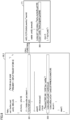
- Fig. 1 is a schematic diagram illustrating an application example of the information processing device according to the present embodiment.
- Fig. 1 illustrates a flow of an information processing method performed by the information processing device.
- the information processing method includes step S1 for parsing the program assigned to each task executed in the PLC, and step S2 for outputting an analysis result.
- Step S1 includes steps S11 to S13.
- Step S11 is a step for extracting one or more variables used to execute the task.
- variables a to c are extracted.
- Step S12 is a step for classifying each of the extracted one or more variables into a first group in which a read process of reading a value from the memory is performed first during the execution of the task and a second group in which a write process of writing the value to the memory is performed first during the execution of the task.
- Step S13 is a step for determining that the necessity for the soft error measure for variables a and c belonging to the first group is greater than the necessity for the soft error measure for variable b belonging to the second group.
- Step S2 includes step S21.
- Step S21 is a step for outputting the determination result of step S13. For example, the determination result is displayed on a display.
- each of one or more variables is classified into either the first group or the second group.
- the value of a variable classified into the second group is first written into the memory during the execution of the task. Therefore, even if a soft error occurs in the memory between the end of the task and the start of the task in the next cycle, there is no influence of the soft error, because the value is written in the next cycle.
- the value of a variable classified into the first group is first read from the memory during the execution of the task. Therefore, in a case where a soft error occurs in the memory between the end of the task and the start of the task in the next cycle, a corrupted value is read and the calculation is executed using the corrupted value. As a result, an abnormality may occur in a control system.
- the determination result is output.
- a user can identify the variable belonging to the first group as a variable that needs the soft error measure.
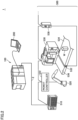
- FIG. 2 is a schematic diagram illustrating an example of the overall configuration of control system 1 according to the present embodiment.
- control system 1 includes a control device 100, information processing device 200, and a field device 500.
- Control device 100 corresponds to an industrial controller that controls a control target such as various facilities and devices.
- Control device 100 is a kind of computer that executes control calculation as described later, and may be typically embodied as a programmable logic controller (PLC).
- PLC programmable logic controller
- Control device 100 is a task execution device that periodically executes one or more tasks for controlling the control target.
- Control device 100 may be connected to various field devices 500 via a field network 2.
- Control device 100 exchanges data with one or a plurality of field devices 500 via field network 2 or the like.
- the "field network” is also referred to as a "field bus”, but for simplification of description, it is collectively referred to as a “field network” in the following description. That is, the "field network” in the present specification is a concept that may include a “field bus” in addition to a “field network” in a narrow sense.
- Field network 2 preferably employs a bus or a network capable of periodic communication.
- EtherCAT registered trademark
- EtherNet/IP registered trademark
- DeviceNet registered trademark
- CompoNet registered trademark
- Field device 500 can be connected to field network 2.
- Field device 500 includes an actuator that gives some physical action to a manufacturing device, a production line, and the like (hereinafter, they are also collectively referred to as a "field"), an input/output device that exchanges information with the field, and the like.
- Data is exchanged between control device 100 and field device 500 via field network 2, and the exchanged data is updated in a very short cycle on the order of several hundreds of ⁇ sec to several tens of msec.
- Such data exchange includes a process of transmitting data (also referred to as “input data” below) collected or generated in field device 500 to control device 100 and a process of transmitting data (also referred to as “output data” below) such as a control command from control device 100 to field device 500.
- the update processing of the data exchanged in this manner is also referred to as input/output refresh processing.
- field device 500 includes a remote input/output (I/O) device 510, a robot 520, a robot controller 522, a CNC machine tool 530, a servo driver 538, and a servomotor 532.
- I/O remote input/output
- Servomotor 532 drives a conveyor 534 to convey a workpiece W to a workpiece table 536 disposed in front of CNC machine tool 530.
- Robot 520 places workpiece W before being processed on workpiece table 536 into CNC machine tool 530, and removes and places workpiece W which has been processed in CNC machine tool 530 onto workpiece table 536.
- Field device 500 is not limited thereto, and may be any device (for example, a visual sensor or the like) that collects input data, any device (for example, an inverter device or the like) that provides some action according to output data, and the like.
- Remote I/O device 510 typically includes a communication coupler that performs communication via field network 2, and an input/output unit (also referred to as an "I/O unit” below) for acquiring input data and outputting output data.
- I/O unit also referred to as an "I/O unit” below
- Remote I/O device 510 is connected with a device that collects input data such as an input relay and various sensors (for example, an analog sensor, a temperature sensor, a vibration sensor, or the like), and a device that gives some action to the field such as an output relay, a contactor, a servo driver, and any other actuators.
- a device that collects input data such as an input relay and various sensors (for example, an analog sensor, a temperature sensor, a vibration sensor, or the like), and a device that gives some action to the field such as an output relay, a contactor, a servo driver, and any other actuators.
- Robot controller 522 performs trajectory calculation, angle calculation of each axis, and the like in accordance with a control command (position command, speed command, or the like) from control device 100, and drives the servomotor or the like constituting robot 520 in accordance with the calculation result.
- a control command position command, speed command, or the like
- CNC machine tool 530 machines any object by controlling a machining center or the like according to a program for specifying a position, a speed, and the like.
- CNC machine tool 530 typically includes a machining device such as a lathe machine, a milling machine, or an electrical discharge machine.
- Servo driver 538 drives servomotor 532 in accordance with a control command (for example, a position command, a speed command, or the like) from control device 100.
- a control command for example, a position command, a speed command, or the like
- Control device 100 may be connected to another device via a higher order network.
- Ethernet registered trademark
- EtherNet/IP registered trademark
- control device 100 may be connected to one or more server devices and one or more display devices via the higher order network.
- Information processing device 200 is connectable to control device 100.
- Information processing device 200 provides a function of parsing a program assigned to a task periodically executed by control device 100 and outputting an analysis result.
- information processing device 200 may provide a development environment (program creating/editing tool, parser, compiler, and the like) of a program executed by control device 100, a setting environment for setting parameters (configurations) of control device 100 and various devices connected to control device 100, a function of outputting the generated program to control device 100, a function of correcting and changing the program executed on control device 100 online, and the like.
- FIG. 3 is a block diagram illustrating a hardware configuration example of control device 100 according to the present embodiment.
- control device 100 is an arithmetic processing unit called a CPU unit, and includes a processor 102, a chipset 104, a main memory 106, a storage 108, a higher order network controller 110, a universal serial bus (USB) controller 112, a memory card interface 114, an internal bus controller 120, and a field network controller 130.
- Processor 102 includes a central processing unit (CPU), a micro processing unit (MPU), a graphics processing unit (GPU), and the like.
- processor 102 a configuration including a plurality of cores may be used, or a plurality of processors 102 may be disposed. That is, control device 100 includes one or more processors 102 and/or processor 102 having one or more cores.
- Chipset 104 controls processor 102 and peripheral elements to implement processing of control device 100 as a whole.
- Main memory 106 includes a volatile storage device such as a dynamic random access memory (DRAM) or a static random access memory (SRAM).
- DRAM dynamic random access memory
- SRAM static random access memory
- the SRAM uses a flip-flop as a structure of a storage unit, and has an advantage of being operated at a higher speed than the DRAM without requiring a refresh operation. Therefore, the SRAM is preferably used as main memory 106.
- a DRAM having a stacked structure has high soft error resistance.
- a SRAM having a flip-flop structure has reduced soft error resistance due to miniaturization. Therefore, when main memory 106 constituted by SRAM is used, a soft error may occur in main memory 106. In the following, it is assumed that the SRAM is used for main memory 106.
- Storage 108 includes, for example, a non-volatile storage device such as a hard disk drive (HDD) or a solid state drive (SSD).
- HDD hard disk drive
- SSD solid state drive
- Processor 102 reads various programs 30 stored in storage 108, expands the programs in main memory 106, and executes the programs, thereby implementing control according to the control target and various kinds of processing as described later.
- Storage 108 further stores a system program 34 for achieving basic functions and task information 36.
- Task information 36 includes information regarding each of one or more tasks to be executed in control device 100.
- Higher order network controller 110 controls data exchange with other devices via the higher order network.
- USB controller 112 controls data exchange with information processing device 200 via USB connection.
- Memory card interface 114 is configured such that memory card 116 is attachable thereto and detachable therefrom, so that memory card interface 114 can write data to memory card 116 and read various kinds of data (user program, trace data, etc.) from memory card 116.
- Internal bus controller 120 controls data exchange with I/O unit 122 mounted on control device 100.
- Field network controller 130 controls data exchange with field devices via field network 2.
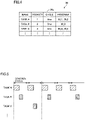
- Fig. 4 is a diagram illustrating an example of task information 36.
- task information 36 indicates, for each of one or more tasks to be executed in control device 100, a task name, priority, a cycle at which the task is executed, and a program assigned to the task.
- the smaller the value of the priority the higher the priority.
- Processor 102 preferentially executes a task having higher priority.
- processor 102 adopts a control cycle of a preset time interval (for example, 1 ms) as a common cycle of the entire processing.
- processor 102 executes programs 30_1 and 30_2 assigned to task A at a cycle of 1 ms (the same cycle as the control cycle). In a case where task A and tasks B and C overlap, processor 102 executes task A in preference to tasks B and C.
- Processor 102 executes a program 30_3 assigned to task B at a cycle of 2 ms (cycle twice the control cycle). When task B and task C overlap, processor 102 executes task B in preference to task C.
- Processor 102 executes programs 30_4 and 30_5 assigned to task C at a cycle of 4 ms (cycle four times the control cycle). In a case where task C and another task having a priority value larger than that of task C overlap with each other, processor 102 executes task C in preference to the other task.
- Fig. 5 is a diagram illustrating an execution status of tasks in accordance with task information 36 illustrated in Fig. 4 .
- task A is executed in the same cycle as the control cycle. Since the priority of task A is the highest, the execution of task A is started in synchronization with the start timing of the control cycle.
- Task B is executed in a cycle twice the control cycle. However, at the start timing of the control cycle, task A having higher priority than task B is started to be executed. Therefore, the execution of task B is started after the end of task A.
- Task C is executed in a cycle four times the control cycle. However, at the start timing of the control cycle, task A having higher priority than task C is started to be executed. In addition, task B having higher priority than task C may be started after task A. Therefore, the execution of task C is started after the end of the task having priority higher than that of task C.
- FIG. 6 is a block diagram illustrating a hardware configuration example of information processing device 200 according to the present embodiment.
- information processing device 200 is typically achieved by an analysis program 32 being executed on a personal computer having a general-purpose architecture. More specifically, referring to Fig. 6 , information processing device 200 includes a processor 202, a display 204, a main memory 206, a storage 208, a USB controller 212, and an input device 214. These components are connected via an internal bus 210.
- Processor 202 is constituted by a CPU, an MPU, a GPU, or the like, and reads various programs including an OS 216 and analysis program 32 stored in storage 208, expands the programs in main memory 206, and executes the programs, thereby implementing various functions to be described later.
- Main memory 206 includes a volatile storage device such as a DRAM or an SRAM.
- Storage 208 includes, for example, a non-volatile storage device such as an HDD or an SSD.
- storage 208 of information processing device 200 may store a support program 218 for providing a development environment of a program executed in control device 100.
- Display 204 is a device that displays a calculation result by processor 202 or the like, and includes, for example, a liquid crystal display (LCD) or the like.
- LCD liquid crystal display
- USB controller 212 controls data exchange with control device 100 via USB connection.
- Input device 214 is a device that receives a user's operation, and includes, for example, a keyboard, a memory, and the like.
- Fig. 7 is a block diagram illustrating an example of functional configuration of information processing device 200 according to the present embodiment. Each module illustrated in Fig. 7 is typically implemented by processor 202 of information processing device 200 executing analysis program 32.
- information processing device 200 includes an analysis unit 20 that parses the program assigned to each task and an output unit 25 that outputs the analysis result by analysis unit 20.
- Analysis unit 20 includes an extraction unit 21, a classification unit 22, and a determination unit 23.
- Extraction unit 21 parses the program assigned to each task to extract one or more variables used to execute the task. Specifically, extraction unit 21 specifies, from the program, a command for writing values of variables into the memory and a command for reading values of variables from the memory. Extraction unit 21 extracts a variable to be a target of the specified command.
- Classification unit 22 classifies each of one or more variables extracted by extraction unit 21 into a first group in which a read process of reading the value from the memory is performed first during the execution of the task and a second group in which a write process of writing the value to the memory is performed first during the execution of the task. Specifically, classification unit 22 parses the program assigned to each task to thereby specify the execution order of the plurality of commands included in the program. Classification unit 22 classifies each of the extracted one or more variables into the first group and the second group depending on whether the command to be executed first is a read command or a write command among one or more commands including the variable. That is, classification unit 22 classifies variables to be targets of the command to first read values from the memory into the first group, and classifies variables to be the targets of the command to first write values into the memory into the second group.
- Determination unit 23 determines that the necessity for the soft error measure for the variables belonging to the first group is greater than the necessity for the soft error measure for the variables belonging to the second group.
- Output unit 25 outputs the determination result of determination unit 23. For example, output unit 25 displays the determination result on display 204.
- Fig. 8 is a diagram illustrating an example of a program assigned to a task.
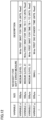
- Fig. 9 is a diagram illustrating an example of a classification result of variables.
- Fig. 10 is a diagram illustrating an example of a determination result displayed on the display.
- Fig. 8 illustrates program 30_2 assigned to task A illustrated in Fig. 4 .
- Processor 202 analyzes a plurality of commands included in program 30_2.
- the plurality of commands may include a command to read a function.
- processor 202 also analyzes a command included in the function to be read.
- Program 30_2 illustrated in Fig. 8 includes an expression 301 for calling a function F1.
- Processor 202 specifies, from program 30_2, a command to write values of variables into the memory and a command to read values of variables from the memory.
- processor 202 specifies, for a variable "tx_buf", an expression 302 for writing the value to the memory and an expression 303 for reading the value from the memory.
- Processor 202 specifies the execution order of the plurality of commands by parsing of program 30_2. As a result, processor 202 recognizes that the execution order of expression 303 is later than the execution order of expression 302. That is, processor 202 recognizes that, for variable "tx_buf", expression 302 for writing the value into the memory is executed first. As a result, processor 202 classifies variable "tx_buf" into the second group.
- processor 202 classifies each of one or more variables used to execute task A into either the first group or the second group as illustrated in Fig. 9 . That is, processor 202 classifies the variables, such as variable "tx_buf", for which the expression for writing values into the memory is executed first into the second group.
- the second group includes i) a variable for which both an expression for writing a value into the memory and an expression for reading the value from the memory are executed and the expression for writing the value into the memory is first executed, and ii) a variable for which only the expression for writing the value into the memory is executed.
- processor 202 classifies the variables for which the expression for reading the value from the memory is executed first into the first group.
- the first group includes i) a variable for which both an expression for writing a value into the memory and an expression for reading the value from the memory are executed and the expression for reading the value from the memory is first executed, and ii) a variable for which only the expression for reading the value from the memory is executed.
- Processor 202 determines the necessity for the soft error measure for the variable according to the classification result, and displays the determination result on display 204. As illustrated in Fig. 10 , processor 202 displays the necessity for the soft error measure for the variable belonging to the first group as "great”, and displays the necessity for the soft error measure for the variable belonging to the second group as "small”. As a result, the user is only required to preferentially execute the soft error measure for the variable with the necessity displayed as "great”.
- processor 202 may include the data capacity indicating the value of each variable in the determination result. For example, when the soft error measure disclosed in PTL 1 is performed on the variable, the user can determine the specification of main memory 206 with reference to the data capacity included in the determination result.
- a time from execution of the command to write a value of a certain variable in a memory to execution of the command to read the value of the variable from the memory is generally short. Therefore, the probability that the value of the variable corrupts due to a soft error during this period is low. Therefore, in the above-described embodiment, the necessity for the soft error measure for the variables belonging to the second group is uniformly determined to be "small".
- processor 202 may vary the necessity for the soft error measure for the variables belonging to the second group according to the length of the prescribed time of the standby command.
- Fig. 11 is a diagram illustrating another example of the program assigned to a task.
- Program 30_2 illustrated in Fig. 11 includes commands (referred to as “write commands” below) 304 to 307 to first write the values of variables d to g in the memory and commands (referred to as “read commands” below) 308 to 311 to first read the values of variables d to g from the memory.
- program 30_2 includes standby commands 312, 313, and 314 to wait for prescribed times TA, TB, and TC, respectively. Prescribed time TA is shorter than prescribed time TB, and prescribed time TB is shorter than prescribed time TC.
- write command 304, standby command 312, read command 308, write command 305, write command 306, standby command 313, read command 309, standby command 314, read command 310, write command 307, and read command 311 are executed in this order.
- Program 30_2 includes write command 305 for the value of variable e, read command 309 for the value of variable e, and standby command 313 to wait for prescribed time TB, standby command 313 being executed between write command 305 and read command 309.
- program 30_2 includes write command 304 for the value of variable d, read command 308 for the value of variable d, and standby command 312 to wait for prescribed time TA ( ⁇ TB), standby command 312 being executed between write command 304 and read command 308.
- Processor 202 determines that, according to these commands, the necessity for the soft error measure for variable e is greater than the necessity for the soft error measure for variable d.
- Program 30_2 includes write command 306 for the value of variable f, read command 310 for the value of variable f, and standby commands 313 and 314 to wait for prescribed times TB and TC, respectively, standby commands 313 and 314 being executed between write command 306 and read command 310.
- program 30_2 includes write command 304 for the value of variable d, read command 308 for the value of variable d, and standby command 312 to wait for prescribed time TA ( ⁇ TB + TC), standby command 312 being executed between write command 304 and read command 308.
- Processor 202 determines that, according to these commands, the necessity for the soft error measure for variable f is greater than the necessity for the soft error measure for variable d.
- Program 30_2 includes write command 306 for the value of variable f, read command 310 for the value of variable f, and standby commands 313 and 314 to wait for prescribed times TB and TC, respectively, standby commands 313 and 314 being executed between write command 306 and read command 310.
- program 30_2 includes write command 305 for the value of variable e, read command 309 for the value of variable e, and standby command 313 to wait for prescribed time TB ( ⁇ TB + TC), standby command 313 being executed between write command 305 and read command 309.
- Processor 202 determines that, according to these commands, the necessity for the soft error measure for variable f is greater than the necessity for the soft error measure for variable e.
- program 30_2 includes write command 304 for the value of variable d, read command 308 for the value of variable d, and standby command 312 to wait for prescribed time TA ( ⁇ TB), standby command 312 being executed between write command 304 and read command 308.
- Program 30_2 further includes write command 307 for the value of variable g and read command 311 for the value of variable g, and does not include a standby command between write command 307 and read command 311.
- Processor 202 determines that, according to these commands, the necessity for the soft error measure for variable d is greater than the necessity for the soft error measure for variable g.
- processor 202 determines that the necessity for the soft error measure for variables e and f is greater than the necessity for the soft error measure for variable g.
- Fig. 12 is a diagram illustrating an example of a determination result in the modification.
- processor 202 determines that the necessity for the soft error measure for the variable for which the standby command is not executed between the write command and the read command among the variables belonging to the first group is "small”.
- processor 202 determines that the necessity for the soft error measure for the variable for which the standby command is executed between the write command and the read command among the variables belonging to the first group is "medium”.
- processor 202 adds, to the necessity "medium", a level value that is greater as the total of prescribed times of the standby commands executed between the write command and the read command is longer. As the level value is greater, the necessity of the soft error measure is greater. As a result, the user can confirm the necessity for the soft error measure by checking the level value.
- the present embodiment includes the following disclosures.
- An information processing device (200) including:
Landscapes
- Engineering & Computer Science (AREA)
- Theoretical Computer Science (AREA)
- Physics & Mathematics (AREA)
- General Engineering & Computer Science (AREA)
- General Physics & Mathematics (AREA)
- Human Computer Interaction (AREA)
- Software Systems (AREA)
- Computer Hardware Design (AREA)
- Quality & Reliability (AREA)
- Debugging And Monitoring (AREA)
Abstract
Description
- The present disclosure relates to an information processing device, an information processing method, and a program.
- Transient bit errors (soft errors) in memories have been rapidly increasing with high integration and miniaturization of semiconductor devices. The soft error is generated, for example, by collision of α particles or cosmic ray neutrons. When a memory in which a soft error may occur is applied to a system, a temporary shutdown of the system due to the soft error may occur.
- From such a background,
Japanese Patent Laying-Open No. 2007-18414 - PTL 1:
Japanese Patent Laying-Open No. 2007-18414 - NPL 1: International Telecommunication Union, "K.131: Design methodologies for telecommunication systems applying soft error measures", [online], January 13, 2018, [searched on April 13, 2020], Internet <URL:https://www.itu.int/rec/T-REC-K.131-201801-I/en>
- When the soft error measure described in
PTL 1 is applied to all variables, a memory having a large capacity is required, which leads to an increase in cost. Therefore, it is preferable to apply, for example, the soft error measure described inPTL 1 only to a variable having high necessity for the soft error measure. However,NPL 1 suggests extracting a portion in the memory where soft error measures are necessary, but does not describe a specific method thereof. - The present disclosure has been accomplished in view of the above problems, and an object of the present disclosure is to provide an information processing device, an information processing method, and a program with which it is possible to identify a variable that requires a soft error measure.
- According to an example of the present disclosure, an information processing device includes: an analysis unit configured to parse a program assigned to a task that is periodically executed by a task execution device; and an output unit configured to output an analysis result by the analysis unit. The analysis unit includes an extraction unit, a classification unit, and a determination unit. The extraction unit is configured to extract at least one variable used to execute the task. The classification unit is configured to classify each of the at least one variable into a first group in which a process of reading a value from a memory is performed first during execution of the task and a second group in which a process of writing a value to the memory is performed first during execution of the task. The determination unit is configured to determine that necessity for a soft error measure for a variable belonging to the first group is greater than necessity for the soft error measure for a variable belonging to the second group. The output unit outputs a determination result by the determination unit.
- According to this disclosure, each of the at least one variable is classified into either the first group or the second group. The value of a variable classified into the second group is first written into the memory during the execution of the task. Therefore, even if a soft error occurs in the memory between the end of the task and the start of the task in the next cycle, there is no influence of the soft error, because the value is written in the next cycle.
- On the other hand, the value of a variable classified into the first group is first read from the memory during the execution of the task. Therefore, in a case where a soft error occurs in the memory between the end of the task and the start of the task in the next cycle, a corrupted value is read and the calculation is executed using the corrupted value. As a result, an abnormality may occur in a control system.
- In view of this, it is determined that the necessity for the soft error measure for the variable belonging to the first group is greater than the necessity for the soft error measure for the variable belonging to the second group, and the determination result is output. Thus, a user can identify the variable belonging to the first group as a variable that needs the soft error measure.
- In the above disclosure, the at least one variable includes a first variable and a second variable that belong to the second group. The determination unit determines that necessity for the soft error measure for the first variable is greater than necessity for the soft error measure for the second variable according to the program including a first command to first write a value of the first variable into the memory, a second command to wait for a first prescribed time after the first command, a third command to read the value of the first variable from the memory after the second command, a fourth command to first write a value of the second variable into the memory, a fifth command to wait for a second prescribed time shorter than the first prescribed time after the fourth command, and a sixth command to read the value of the second variable from the memory after the fifth command.
- According to this disclosure, the necessity for the soft error measure is determined to be greater for a variable having a longer prescribed time of the command to wait between the command to first write the value in the memory and the command to read the value from the memory.
- In the above disclosure, the at least one variable includes a first variable and a second variable that belong to the second group. The determination unit determines that necessity for the soft error measure for the first variable is greater than necessity for the soft error measure for the second variable according to the program including a first command to first write a value of the first variable into the memory, a second command to wait for a first prescribed time after the first command, a third command to read the value of the first variable from the memory after the second command, a fourth command to first write a value of the second variable into the memory, and a fifth command to read the value of the second variable from the memory after the fourth command, and not including a command to wait for a prescribed time between the fourth command and the fifth command. With this configuration, the necessity for the soft error measure can be determined minutely for the variable belonging to the first group.
- According to this disclosure, the necessity for the soft error measure for the variable for which the command to wait for a prescribed time is executed between the command to write the value to the memory and the command to read the value from the memory among the variables belonging to the first group is determined to be greater than that for the other variables. With this configuration, the necessity for the soft error measure can be determined minutely for the variable belonging to the first group.
- According to an example of the present disclosure, an information processing method performed by the information processing device includes: parsing a program assigned to a task that is periodically executed by a task execution device; and outputting a parsing result. The parsing includes: (i) extracting at least one variable used to execute the task; (ii) classifying each of the at least one variable into a first group in which a process of reading a value from a memory is performed first during execution of the task and a second group in which a process of writing a value to the memory is performed first during execution of the task, and (iii) determining that necessity for a soft error measure for a variable belonging to the first group is greater than necessity for the soft error measure for a variable belonging to the second group. The outputting includes outputting a determination result by the determining.
- According to an example of the present disclosure, a program causes a computer to execute the above information processing method. According to these disclosures, a variable that requires a soft error measure can also be identified.
- According to the present disclosure, it is possible to identify a variable that requires a soft error measure.
-
-
Fig. 1 is a schematic diagram illustrating an application example of an information processing device according to an embodiment of the present disclosure. -
Fig. 2 is a schematic diagram illustrating an example of the overall configuration of a control system according to the embodiment. -
Fig. 3 is a block diagram illustrating a hardware configuration example of a control device according to the embodiment. -
Fig. 4 is a diagram illustrating an example of task information. -
Fig. 5 is a diagram illustrating an execution status of tasks in accordance with the task information illustrated inFig. 4 . -
Fig. 6 is a block diagram illustrating a hardware configuration example of the information processing device according to the embodiment. -
Fig. 7 is a block diagram illustrating an example of functional configuration of the information processing device according to the embodiment. -
Fig. 8 is a diagram illustrating an example of a program assigned to a task. -
Fig. 9 is a diagram illustrating an example of a classification result of variables. -
Fig. 10 is a diagram illustrating an example of a determination result displayed on a display. -
Fig. 11 is a diagram illustrating another example of the program assigned to a task. -
Fig. 12 is a diagram illustrating an example of a determination result in a modification. - An embodiment of the present disclosure will now be described in detail with reference to the drawings. The same or corresponding parts in the drawings are denoted by the same reference signs, and the description thereof will not be repeated.
- In various fields such as aerospace systems, automobiles, medical equipment, communication equipment, and industrial equipment, it is desirable to suppress a temporary shutdown of a system due to a soft error of a memory. The present disclosure can be applied to systems in such various fields. In the following, a control system incorporated in a factory automation (FA) field will be described as an application example of the present disclosure, but the application example of the present disclosure is not limited to the control system.
- A control system used in the FA field includes, for example, a programmable logic controller (PLC). The PLC executes each of one or more tasks at a predetermined cycle.
- The PLC includes a processor, a storage, and a memory. The processor executes one or more tasks according to a control target by executing various programs stored in the storage. A program is assigned to each task in advance. The processor executes the program assigned to each task at a predetermined cycle.
- Values of one or more variables used to execute each task are held in the memory. The processor reads the value of the variable from the memory or writes the value of the variable into the memory according to a command included in the program assigned to the task.
- When a soft error occurs in the memory included in the PLC, data corruption occurs in the value of the variable. Such data corruption may cause an abnormality in the control system. To address this problem, it is considered to apply a measure for writing the same data indicating the value of the variable to each of three or more different addresses in the memory as described in
PTL 1, for example. However, if the same data is written to each of three or more different addresses in the memory for all the variables, a memory having a large capacity is required, which leads to an increase in cost. Therefore, it is preferable to apply, for example, the measure described inPTL 1 only to a variable having high necessity for a soft error measure. In view of this, the control system according to the present embodiment includes an information processing device that determines the necessity for a soft error measure. -
Fig. 1 is a schematic diagram illustrating an application example of the information processing device according to the present embodiment.Fig. 1 illustrates a flow of an information processing method performed by the information processing device. - As illustrated in
Fig. 1 , the information processing method includes step S1 for parsing the program assigned to each task executed in the PLC, and step S2 for outputting an analysis result. - Step S1 includes steps S11 to S13. Step S11 is a step for extracting one or more variables used to execute the task. In
Fig. 1 , variables a to c are extracted. - Step S12 is a step for classifying each of the extracted one or more variables into a first group in which a read process of reading a value from the memory is performed first during the execution of the task and a second group in which a write process of writing the value to the memory is performed first during the execution of the task.
- In
Fig. 1 , "R" indicates the read process, and "W" indicates the write process. As illustrated inFig. 1 , for variables a and c, the read process of reading values from the memory is executed first during the execution of the task. For variable b, the write process of writing the value to the memory is first executed during the execution of the task. Therefore, variables a and c are classified into the first group, and variable b is classified into the second group. - Step S13 is a step for determining that the necessity for the soft error measure for variables a and c belonging to the first group is greater than the necessity for the soft error measure for variable b belonging to the second group.
- Step S2 includes step S21. Step S21 is a step for outputting the determination result of step S13. For example, the determination result is displayed on a display.
- According to the above information processing method, each of one or more variables is classified into either the first group or the second group. The value of a variable classified into the second group is first written into the memory during the execution of the task. Therefore, even if a soft error occurs in the memory between the end of the task and the start of the task in the next cycle, there is no influence of the soft error, because the value is written in the next cycle.
- On the other hand, the value of a variable classified into the first group is first read from the memory during the execution of the task. Therefore, in a case where a soft error occurs in the memory between the end of the task and the start of the task in the next cycle, a corrupted value is read and the calculation is executed using the corrupted value. As a result, an abnormality may occur in a control system.
- In view of this, it is determined that the necessity for the soft error measure for the variable belonging to the first group is greater than the necessity for the soft error measure for the variable belonging to the second group, and the determination result is output. Thus, a user can identify the variable belonging to the first group as a variable that needs the soft error measure.
- First, an example of the overall configuration of a
control system 1 including aninformation processing device 200 according to the present embodiment will be described.Fig. 2 is a schematic diagram illustrating an example of the overall configuration ofcontrol system 1 according to the present embodiment. - Referring to
Fig. 2 ,control system 1 includes acontrol device 100,information processing device 200, and afield device 500. -
Control device 100 corresponds to an industrial controller that controls a control target such as various facilities and devices.Control device 100 is a kind of computer that executes control calculation as described later, and may be typically embodied as a programmable logic controller (PLC).Control device 100 is a task execution device that periodically executes one or more tasks for controlling the control target. -
Control device 100 may be connected tovarious field devices 500 via afield network 2.Control device 100 exchanges data with one or a plurality offield devices 500 viafield network 2 or the like. In general, the "field network" is also referred to as a "field bus", but for simplification of description, it is collectively referred to as a "field network" in the following description. That is, the "field network" in the present specification is a concept that may include a "field bus" in addition to a "field network" in a narrow sense. -
Field network 2 preferably employs a bus or a network capable of periodic communication. EtherCAT (registered trademark), EtherNet/IP (registered trademark), DeviceNet (registered trademark), CompoNet (registered trademark), and the like are known as a bus or a network that performs such periodic communication. - Any
field device 500 can be connected tofield network 2.Field device 500 includes an actuator that gives some physical action to a manufacturing device, a production line, and the like (hereinafter, they are also collectively referred to as a "field"), an input/output device that exchanges information with the field, and the like. - Data is exchanged between
control device 100 andfield device 500 viafield network 2, and the exchanged data is updated in a very short cycle on the order of several hundreds of µsec to several tens of msec. Such data exchange includes a process of transmitting data (also referred to as "input data" below) collected or generated infield device 500 to controldevice 100 and a process of transmitting data (also referred to as "output data" below) such as a control command fromcontrol device 100 tofield device 500. The update processing of the data exchanged in this manner is also referred to as input/output refresh processing. - In the configuration example illustrated in
Fig. 2 ,field device 500 includes a remote input/output (I/O)device 510, arobot 520, arobot controller 522, aCNC machine tool 530, aservo driver 538, and aservomotor 532. -
Servomotor 532 drives aconveyor 534 to convey a workpiece W to a workpiece table 536 disposed in front ofCNC machine tool 530.Robot 520 places workpiece W before being processed on workpiece table 536 intoCNC machine tool 530, and removes and places workpiece W which has been processed inCNC machine tool 530 onto workpiece table 536. -
Field device 500 is not limited thereto, and may be any device (for example, a visual sensor or the like) that collects input data, any device (for example, an inverter device or the like) that provides some action according to output data, and the like. - Remote I/
O device 510 typically includes a communication coupler that performs communication viafield network 2, and an input/output unit (also referred to as an "I/O unit" below) for acquiring input data and outputting output data. - Remote I/
O device 510 is connected with a device that collects input data such as an input relay and various sensors (for example, an analog sensor, a temperature sensor, a vibration sensor, or the like), and a device that gives some action to the field such as an output relay, a contactor, a servo driver, and any other actuators. -
Robot controller 522 performs trajectory calculation, angle calculation of each axis, and the like in accordance with a control command (position command, speed command, or the like) fromcontrol device 100, and drives the servomotor or thelike constituting robot 520 in accordance with the calculation result. -
CNC machine tool 530 machines any object by controlling a machining center or the like according to a program for specifying a position, a speed, and the like.CNC machine tool 530 typically includes a machining device such as a lathe machine, a milling machine, or an electrical discharge machine. -
Servo driver 538 drivesservomotor 532 in accordance with a control command (for example, a position command, a speed command, or the like) fromcontrol device 100. -
Control device 100 may be connected to another device via a higher order network. Ethernet (registered trademark) or EtherNet/IP (registered trademark), which is a general network protocol, may be employed as the higher order network. More specifically,control device 100 may be connected to one or more server devices and one or more display devices via the higher order network. -
Information processing device 200 is connectable to controldevice 100.Information processing device 200 provides a function of parsing a program assigned to a task periodically executed bycontrol device 100 and outputting an analysis result. Furthermore,information processing device 200 may provide a development environment (program creating/editing tool, parser, compiler, and the like) of a program executed bycontrol device 100, a setting environment for setting parameters (configurations) ofcontrol device 100 and various devices connected to controldevice 100, a function of outputting the generated program to controldevice 100, a function of correcting and changing the program executed oncontrol device 100 online, and the like. - Next, a hardware configuration example of
control device 100 according to the present embodiment will be described.Fig. 3 is a block diagram illustrating a hardware configuration example ofcontrol device 100 according to the present embodiment. - Referring to
Fig. 3 ,control device 100 is an arithmetic processing unit called a CPU unit, and includes aprocessor 102, achipset 104, amain memory 106, astorage 108, a higherorder network controller 110, a universal serial bus (USB)controller 112, amemory card interface 114, aninternal bus controller 120, and afield network controller 130. -
Processor 102 includes a central processing unit (CPU), a micro processing unit (MPU), a graphics processing unit (GPU), and the like. Asprocessor 102, a configuration including a plurality of cores may be used, or a plurality ofprocessors 102 may be disposed. That is,control device 100 includes one ormore processors 102 and/orprocessor 102 having one or more cores.Chipset 104controls processor 102 and peripheral elements to implement processing ofcontrol device 100 as a whole. -
Main memory 106 includes a volatile storage device such as a dynamic random access memory (DRAM) or a static random access memory (SRAM). The SRAM uses a flip-flop as a structure of a storage unit, and has an advantage of being operated at a higher speed than the DRAM without requiring a refresh operation. Therefore, the SRAM is preferably used asmain memory 106. - A DRAM having a stacked structure has high soft error resistance. On the other hand, a SRAM having a flip-flop structure has reduced soft error resistance due to miniaturization. Therefore, when
main memory 106 constituted by SRAM is used, a soft error may occur inmain memory 106. In the following, it is assumed that the SRAM is used formain memory 106. -
Storage 108 includes, for example, a non-volatile storage device such as a hard disk drive (HDD) or a solid state drive (SSD). -
Processor 102 readsvarious programs 30 stored instorage 108, expands the programs inmain memory 106, and executes the programs, thereby implementing control according to the control target and various kinds of processing as described later.Storage 108 further stores asystem program 34 for achieving basic functions andtask information 36.Task information 36 includes information regarding each of one or more tasks to be executed incontrol device 100. - Higher
order network controller 110 controls data exchange with other devices via the higher order network.USB controller 112 controls data exchange withinformation processing device 200 via USB connection. -
Memory card interface 114 is configured such thatmemory card 116 is attachable thereto and detachable therefrom, so thatmemory card interface 114 can write data tomemory card 116 and read various kinds of data (user program, trace data, etc.) frommemory card 116. -
Internal bus controller 120 controls data exchange with I/O unit 122 mounted oncontrol device 100.Field network controller 130 controls data exchange with field devices viafield network 2. -
Fig. 4 is a diagram illustrating an example oftask information 36. As illustrated inFig. 4 ,task information 36 indicates, for each of one or more tasks to be executed incontrol device 100, a task name, priority, a cycle at which the task is executed, and a program assigned to the task. In the example illustrated inFig. 4 , the smaller the value of the priority, the higher the priority. -
Processor 102 preferentially executes a task having higher priority. In addition,processor 102 adopts a control cycle of a preset time interval (for example, 1 ms) as a common cycle of the entire processing. - In the example illustrated in
Fig. 4 ,processor 102 executes programs 30_1 and 30_2 assigned to task A at a cycle of 1 ms (the same cycle as the control cycle). In a case where task A and tasks B and C overlap,processor 102 executes task A in preference to tasks B and C. -
Processor 102 executes a program 30_3 assigned to task B at a cycle of 2 ms (cycle twice the control cycle). When task B and task C overlap,processor 102 executes task B in preference to task C. -
Processor 102 executes programs 30_4 and 30_5 assigned to task C at a cycle of 4 ms (cycle four times the control cycle). In a case where task C and another task having a priority value larger than that of task C overlap with each other,processor 102 executes task C in preference to the other task. -
Fig. 5 is a diagram illustrating an execution status of tasks in accordance withtask information 36 illustrated inFig. 4 . As illustrated inFig. 5 , task A is executed in the same cycle as the control cycle. Since the priority of task A is the highest, the execution of task A is started in synchronization with the start timing of the control cycle. - Task B is executed in a cycle twice the control cycle. However, at the start timing of the control cycle, task A having higher priority than task B is started to be executed. Therefore, the execution of task B is started after the end of task A.
- Task C is executed in a cycle four times the control cycle. However, at the start timing of the control cycle, task A having higher priority than task C is started to be executed. In addition, task B having higher priority than task C may be started after task A. Therefore, the execution of task C is started after the end of the task having priority higher than that of task C.
- Next, a hardware configuration example of
information processing device 200 according to the present embodiment will be described.Fig. 6 is a block diagram illustrating a hardware configuration example ofinformation processing device 200 according to the present embodiment. - Referring to
Fig. 6 ,information processing device 200 is typically achieved by ananalysis program 32 being executed on a personal computer having a general-purpose architecture. More specifically, referring toFig. 6 ,information processing device 200 includes aprocessor 202, adisplay 204, amain memory 206, astorage 208, aUSB controller 212, and aninput device 214. These components are connected via aninternal bus 210. -
Processor 202 is constituted by a CPU, an MPU, a GPU, or the like, and reads various programs including anOS 216 andanalysis program 32 stored instorage 208, expands the programs inmain memory 206, and executes the programs, thereby implementing various functions to be described later.Main memory 206 includes a volatile storage device such as a DRAM or an SRAM.Storage 208 includes, for example, a non-volatile storage device such as an HDD or an SSD. - As illustrated in
Fig. 6 ,storage 208 ofinformation processing device 200 may store asupport program 218 for providing a development environment of a program executed incontrol device 100. -
Display 204 is a device that displays a calculation result byprocessor 202 or the like, and includes, for example, a liquid crystal display (LCD) or the like. -
USB controller 212 controls data exchange withcontrol device 100 via USB connection. -
Input device 214 is a device that receives a user's operation, and includes, for example, a keyboard, a memory, and the like. - Next, a functional configuration example of
information processing device 200 according to the present embodiment will be described.Fig. 7 is a block diagram illustrating an example of functional configuration ofinformation processing device 200 according to the present embodiment. Each module illustrated inFig. 7 is typically implemented byprocessor 202 ofinformation processing device 200 executinganalysis program 32. - As illustrated in
Fig. 7 ,information processing device 200 includes ananalysis unit 20 that parses the program assigned to each task and anoutput unit 25 that outputs the analysis result byanalysis unit 20.Analysis unit 20 includes anextraction unit 21, aclassification unit 22, and adetermination unit 23. -
Extraction unit 21 parses the program assigned to each task to extract one or more variables used to execute the task. Specifically,extraction unit 21 specifies, from the program, a command for writing values of variables into the memory and a command for reading values of variables from the memory.Extraction unit 21 extracts a variable to be a target of the specified command. -
Classification unit 22 classifies each of one or more variables extracted byextraction unit 21 into a first group in which a read process of reading the value from the memory is performed first during the execution of the task and a second group in which a write process of writing the value to the memory is performed first during the execution of the task. Specifically,classification unit 22 parses the program assigned to each task to thereby specify the execution order of the plurality of commands included in the program.Classification unit 22 classifies each of the extracted one or more variables into the first group and the second group depending on whether the command to be executed first is a read command or a write command among one or more commands including the variable. That is,classification unit 22 classifies variables to be targets of the command to first read values from the memory into the first group, and classifies variables to be the targets of the command to first write values into the memory into the second group. -
Determination unit 23 determines that the necessity for the soft error measure for the variables belonging to the first group is greater than the necessity for the soft error measure for the variables belonging to the second group. -
Output unit 25 outputs the determination result ofdetermination unit 23. For example,output unit 25 displays the determination result ondisplay 204. - Referring to
Figs. 8 to 10 , an operation example ofinformation processing device 200 will be described.Fig. 8 is a diagram illustrating an example of a program assigned to a task.Fig. 9 is a diagram illustrating an example of a classification result of variables.Fig. 10 is a diagram illustrating an example of a determination result displayed on the display. -
Fig. 8 illustrates program 30_2 assigned to task A illustrated inFig. 4 .Processor 202 analyzes a plurality of commands included in program 30_2. The plurality of commands may include a command to read a function. In this case,processor 202 also analyzes a command included in the function to be read. Program 30_2 illustrated inFig. 8 includes anexpression 301 for calling a function F1. -
Processor 202 specifies, from program 30_2, a command to write values of variables into the memory and a command to read values of variables from the memory. In the example illustrated inFig. 8 ,processor 202 specifies, for a variable "tx_buf", an expression 302 for writing the value to the memory and anexpression 303 for reading the value from the memory. -
Processor 202 specifies the execution order of the plurality of commands by parsing of program 30_2. As a result,processor 202 recognizes that the execution order ofexpression 303 is later than the execution order of expression 302. That is,processor 202 recognizes that, for variable "tx_buf", expression 302 for writing the value into the memory is executed first. As a result,processor 202 classifies variable "tx_buf" into the second group. - In this way,
processor 202 classifies each of one or more variables used to execute task A into either the first group or the second group as illustrated inFig. 9 . That is,processor 202 classifies the variables, such as variable "tx_buf", for which the expression for writing values into the memory is executed first into the second group. Note that the second group includes i) a variable for which both an expression for writing a value into the memory and an expression for reading the value from the memory are executed and the expression for writing the value into the memory is first executed, and ii) a variable for which only the expression for writing the value into the memory is executed. On the other hand,processor 202 classifies the variables for which the expression for reading the value from the memory is executed first into the first group. Note that the first group includes i) a variable for which both an expression for writing a value into the memory and an expression for reading the value from the memory are executed and the expression for reading the value from the memory is first executed, and ii) a variable for which only the expression for reading the value from the memory is executed. -
Processor 202 determines the necessity for the soft error measure for the variable according to the classification result, and displays the determination result ondisplay 204. As illustrated inFig. 10 ,processor 202 displays the necessity for the soft error measure for the variable belonging to the first group as "great", and displays the necessity for the soft error measure for the variable belonging to the second group as "small". As a result, the user is only required to preferentially execute the soft error measure for the variable with the necessity displayed as "great". - In addition,
processor 202 may include the data capacity indicating the value of each variable in the determination result. For example, when the soft error measure disclosed inPTL 1 is performed on the variable, the user can determine the specification ofmain memory 206 with reference to the data capacity included in the determination result. - In a task, a time from execution of the command to write a value of a certain variable in a memory to execution of the command to read the value of the variable from the memory is generally short. Therefore, the probability that the value of the variable corrupts due to a soft error during this period is low. Therefore, in the above-described embodiment, the necessity for the soft error measure for the variables belonging to the second group is uniformly determined to be "small".
- However, there may be a program including a command (also referred to as a "standby command" below) to wait for a prescribed time between the command to write a value of a certain variable in the memory and the command to read the value of the variable from the memory. In the task to which such a program is assigned, the probability that the value of the variable corrupts due to a soft error during the execution of the standby command increases. In view of this,
processor 202 may vary the necessity for the soft error measure for the variables belonging to the second group according to the length of the prescribed time of the standby command. -
Fig. 11 is a diagram illustrating another example of the program assigned to a task. Program 30_2 illustrated inFig. 11 includes commands (referred to as "write commands" below) 304 to 307 to first write the values of variables d to g in the memory and commands (referred to as "read commands" below) 308 to 311 to first read the values of variables d to g from the memory. Further, program 30_2 includes standby commands 312, 313, and 314 to wait for prescribed times TA, TB, and TC, respectively. Prescribed time TA is shorter than prescribed time TB, and prescribed time TB is shorter than prescribed time TC. As illustrated inFig. 11 , writecommand 304,standby command 312, readcommand 308, writecommand 305, writecommand 306,standby command 313, readcommand 309,standby command 314, readcommand 310, writecommand 307, and readcommand 311 are executed in this order. - Program 30_2 includes
write command 305 for the value of variable e, readcommand 309 for the value of variable e, andstandby command 313 to wait for prescribed time TB,standby command 313 being executed betweenwrite command 305 and readcommand 309. In addition, program 30_2 includeswrite command 304 for the value of variable d, readcommand 308 for the value of variable d, andstandby command 312 to wait for prescribed time TA (< TB),standby command 312 being executed betweenwrite command 304 and readcommand 308.Processor 202 determines that, according to these commands, the necessity for the soft error measure for variable e is greater than the necessity for the soft error measure for variable d. - Program 30_2 includes
write command 306 for the value of variable f, readcommand 310 for the value of variable f, and standby commands 313 and 314 to wait for prescribed times TB and TC, respectively, standby commands 313 and 314 being executed betweenwrite command 306 and readcommand 310. In addition, program 30_2 includeswrite command 304 for the value of variable d, readcommand 308 for the value of variable d, andstandby command 312 to wait for prescribed time TA (< TB + TC),standby command 312 being executed betweenwrite command 304 and readcommand 308.Processor 202 determines that, according to these commands, the necessity for the soft error measure for variable f is greater than the necessity for the soft error measure for variable d. - Program 30_2 includes
write command 306 for the value of variable f, readcommand 310 for the value of variable f, and standby commands 313 and 314 to wait for prescribed times TB and TC, respectively, standby commands 313 and 314 being executed betweenwrite command 306 and readcommand 310. In addition, program 30_2 includeswrite command 305 for the value of variable e, readcommand 309 for the value of variable e, andstandby command 313 to wait for prescribed time TB (< TB + TC),standby command 313 being executed betweenwrite command 305 and readcommand 309.Processor 202 determines that, according to these commands, the necessity for the soft error measure for variable f is greater than the necessity for the soft error measure for variable e. - In addition, program 30_2 includes
write command 304 for the value of variable d, readcommand 308 for the value of variable d, andstandby command 312 to wait for prescribed time TA (< TB),standby command 312 being executed betweenwrite command 304 and readcommand 308. Program 30_2 further includeswrite command 307 for the value of variable g and readcommand 311 for the value of variable g, and does not include a standby command betweenwrite command 307 and readcommand 311.Processor 202 determines that, according to these commands, the necessity for the soft error measure for variable d is greater than the necessity for the soft error measure for variable g. - Similarly,
processor 202 determines that the necessity for the soft error measure for variables e and f is greater than the necessity for the soft error measure for variable g. -
Fig. 12 is a diagram illustrating an example of a determination result in the modification. As illustrated inFig. 12 ,processor 202 determines that the necessity for the soft error measure for the variable for which the standby command is not executed between the write command and the read command among the variables belonging to the first group is "small". On the other hand,processor 202 determines that the necessity for the soft error measure for the variable for which the standby command is executed between the write command and the read command among the variables belonging to the first group is "medium". - Further,
processor 202 adds, to the necessity "medium", a level value that is greater as the total of prescribed times of the standby commands executed between the write command and the read command is longer. As the level value is greater, the necessity of the soft error measure is greater. As a result, the user can confirm the necessity for the soft error measure by checking the level value. - As described above, the present embodiment includes the following disclosures.
- An information processing device (200) including:
- an analysis unit (20, 202) configured to parse a program assigned to a task that is periodically executed by a task execution device (100); and
- an output unit (25, 202) configured to output an analysis result by the analysis unit (20, 202),
- wherein the analysis unit (20, 202) includes
- an extraction unit (21, 202) configured to extract at least one variable used to execute the task,
- a classification unit (22, 202) configured to classify each of the at least one variable into a first group in which a process of reading a value from a memory is performed first during execution of the task and a second group in which a process of writing a value to the memory is performed first during execution of the task, and
- a determination unit (23, 202) configured to determine that necessity for a soft error measure for a variable belonging to the first group is greater than necessity for a soft error measure for a variable belonging to the second group, and
- the output unit (25, 202) outputs a determination result by the determination unit.
- The information processing device (200) according to
configuration 1, wherein - the at least one variable includes a first variable and a second variable that belong to the second group, and
- the determination unit (23, 202) determines that necessity for the soft error measure for the first variable is greater than necessity for the soft error measure for the second variable according to the program including a first command to first write a value of the first variable into the memory, a second command to wait for a first prescribed time after the first command, a third command to read the value of the first variable from the memory after the second command, a fourth command to first write a value of the second variable into the memory, a fifth command to wait for a second prescribed time shorter than the first prescribed time after the fourth command, and a sixth command to read the value of the second variable from the memory after the fifth command.
- The information processing device (200) according to
configuration 1, wherein - the at least one variable includes a first variable and a second variable that belong to the second group, and
- the determination unit (23, 202) determines that necessity for the soft error measure for the first variable is greater than necessity for the soft error measure for the second variable according to the program including a first command to first write a value of the first variable into the memory, a second command to wait for a first prescribed time after the first command, a third command to read the value of the first variable from the memory after the second command, a fourth command to first write a value of the second variable into the memory, and a fifth command to read the value of the second variable from the memory after the fourth command, and not including a command to wait for a prescribed time between the fourth command and the fifth command.
- An information processing method performed by an information processing device (200), the method including:
- parsing a program assigned to a task that is periodically executed by a task execution device (100); and
- outputting a parsing result,
- wherein the parsing includes
- extracting at least one variable used to execute the task,
- classifying each of the at least one variable into a first group in which a process of reading a value from a memory is performed first during execution of the task and a second group in which a process of writing a value to the memory is performed first during execution of the task, and
- determining that necessity for a soft error measure for a variable belonging to the first group is greater than necessity for a soft error measure for a variable belonging to the second group, and
- the outputting includes outputting a determination result by the determining.
- A program for causing a computer to execute the information processing method according to claim 4.
- While the embodiment of the present invention has been described, it should be understood that the embodiment disclosed herein is illustrative in all respects and not restrictive. The scope of the present invention is defined by the claims, and is intended to include meanings equivalent to the claims and all modifications within the scope.
- 1: control system, 2: field network, 20: analysis unit, 21: extraction unit, 22: classification unit, 23: determination unit, 25: output unit, 30: program, 32: analysis program, 34: system program, 36: task information, 100: control device, 102, 202: processor, 104: chipset, 106, 206: main memory, 108, 208: storage, 110: higher order network controller, 112, 212: USB controller, 114: memory card interface, 116: memory card, 120: internal bus controller, 122: I/O unit, 130: field network controller, 200: information processing device, 204: display, 210: internal bus, 214: input device, 218: support program, 301, 302, 303: expression, 304 to 307: write command, 308 to 311: read command, 312 to 314: standby command, 500: field device, 510: remote I/O device, 520: robot, 522: robot controller, 530: machine tool, 532: servomotor, 534: conveyor, 536: workpiece table, 538: servo driver
Claims (5)
- An information processing device comprising:an analysis unit configured to parse a program assigned to a task that is periodically executed by a task execution device; andan output unit configured to output an analysis result by the analysis unit,wherein the analysis unit includesan extraction unit configured to extract at least one variable used to execute the task,a classification unit configured to classify each of the at least one variable into a first group in which a process of reading a value from a memory is performed first during execution of the task and a second group in which a process of writing a value to the memory is performed first during execution of the task, anda determination unit configured to determine that necessity for a soft error measure for a variable belonging to the first group is greater than necessity for a soft error measure for a variable belonging to the second group, andthe output unit outputs a determination result by the determination unit.
- The information processing device according to claim 1, whereinthe at least one variable includes a first variable and a second variable that belong to the second group, andthe determination unit determines that necessity for the soft error measure for the first variable is greater than necessity for the soft error measure for the second variable according to the program including a first command to first write a value of the first variable into the memory, a second command to wait for a first prescribed time after the first command, a third command to read the value of the first variable from the memory after the second command, a fourth command to first write a value of the second variable into the memory, a fifth command to wait for a second prescribed time shorter than the first prescribed time after the fourth command, and a sixth command to read the value of the second variable from the memory after the fifth command.
- The information processing device according to claim 1, whereinthe at least one variable includes a first variable and a second variable that belong to the second group, andthe determination unit determines that necessity for the soft error measure for the first variable is greater than necessity for the soft error measure for the second variable according to the program including a first command to first write a value of the first variable into the memory, a second command to wait for a first prescribed time after the first command, a third command to read the value of the first variable from the memory after the second command, a fourth command to first write a value of the second variable into the memory, and a fifth command to read the value of the second variable from the memory after the fourth command, and not including a command to wait for a prescribed time between the fourth command and the fifth command.
- An information processing method performed by an information processing device, the method comprising:parsing a program assigned to a task that is periodically executed by a task execution device; andoutputting a parsing result,wherein the parsing includesextracting at least one variable used to execute the task,classifying each of the at least one variable into a first group in which a process of reading a value from a memory is performed first during execution of the task and a second group in which a process of writing a value to the memory is performed first during execution of the task, anddetermining that necessity for a soft error measure for a variable belonging to the first group is greater than necessity for a soft error measure for a variable belonging to the second group, andthe outputting includes outputting a determination result by the determining.
- A program for causing a computer to execute the information processing method according to claim 4.
Applications Claiming Priority (2)
| Application Number | Priority Date | Filing Date | Title |
|---|---|---|---|
| JP2020079371A JP7419956B2 (en) | 2020-04-28 | 2020-04-28 | Information processing device, information processing method and program |
| PCT/JP2021/008908 WO2021220618A1 (en) | 2020-04-28 | 2021-03-08 | Information processing device, information processing method, and program |
Publications (2)
| Publication Number | Publication Date |
|---|---|
| EP4145293A1 true EP4145293A1 (en) | 2023-03-08 |
| EP4145293A4 EP4145293A4 (en) | 2024-05-15 |
Family
ID=78280156
Family Applications (1)
| Application Number | Title | Priority Date | Filing Date |
|---|---|---|---|
| EP21795703.4A Pending EP4145293A4 (en) | 2020-04-28 | 2021-03-08 | Information processing device, information processing method, and program |
Country Status (5)
| Country | Link |
|---|---|
| US (1) | US12026375B2 (en) |
| EP (1) | EP4145293A4 (en) |
| JP (1) | JP7419956B2 (en) |
| CN (1) | CN115335812A (en) |
| WO (1) | WO2021220618A1 (en) |
Families Citing this family (1)
| Publication number | Priority date | Publication date | Assignee | Title |
|---|---|---|---|---|
| JP7419956B2 (en) * | 2020-04-28 | 2024-01-23 | オムロン株式会社 | Information processing device, information processing method and program |
Family Cites Families (20)
| Publication number | Priority date | Publication date | Assignee | Title |
|---|---|---|---|---|
| US7165074B2 (en) * | 2002-05-08 | 2007-01-16 | Sun Microsystems, Inc. | Software development test case analyzer and optimizer |
| US7676795B2 (en) * | 2005-01-13 | 2010-03-09 | International Business Machines Corporation | Error detection in a data processing system |
| US7756839B2 (en) * | 2005-03-31 | 2010-07-13 | Microsoft Corporation | Version tolerant serialization |
| JP2007018414A (en) | 2005-07-11 | 2007-01-25 | Hitachi Ltd | Control device having memory bit error correction function |
| US8666960B2 (en) * | 2008-06-26 | 2014-03-04 | Microsoft Corporation | Schema-based data transfer between a data-based application and a document application |
| JP2012208537A (en) | 2011-03-29 | 2012-10-25 | Nec Saitama Ltd | Memory control device and memory control method |
| US9430114B1 (en) * | 2011-11-03 | 2016-08-30 | Pervasive Software | Data transformation system, graphical mapping tool, and method for creating a schema map |
| JP2014203165A (en) | 2013-04-02 | 2014-10-27 | トヨタ自動車株式会社 | Debugging device |
| US9639589B1 (en) * | 2013-12-20 | 2017-05-02 | Amazon Technologies, Inc. | Chained replication techniques for large-scale data streams |
| CN104063289B (en) * | 2014-06-17 | 2018-10-23 | 上海新储集成电路有限公司 | The method for reducing system soft mistake |
| WO2016051512A1 (en) * | 2014-09-30 | 2016-04-07 | 株式会社日立製作所 | Distributed storage system |
| US10339179B2 (en) * | 2016-04-11 | 2019-07-02 | Oracle International Corporation | Graph processing system that can define a graph view from multiple relational database tables |
| JP6791834B2 (en) * | 2017-11-30 | 2020-11-25 | 株式会社日立製作所 | Storage system and control software placement method |
| JP6814764B2 (en) * | 2018-04-06 | 2021-01-20 | 株式会社日立製作所 | Information processing system and path management method |
| JP7003976B2 (en) * | 2018-08-10 | 2022-01-21 | 株式会社デンソー | Vehicle master device, update data verification method and update data verification program |
| US10922203B1 (en) * | 2018-09-21 | 2021-02-16 | Nvidia Corporation | Fault injection architecture for resilient GPU computing |
| US10892024B2 (en) * | 2018-12-26 | 2021-01-12 | Micron Technology, Inc. | Scan optimization from stacking multiple reliability specifications |
| JP6947717B2 (en) * | 2018-12-27 | 2021-10-13 | 株式会社日立製作所 | Storage system |
| JP7419956B2 (en) * | 2020-04-28 | 2024-01-23 | オムロン株式会社 | Information processing device, information processing method and program |
| JP7266060B2 (en) * | 2021-04-30 | 2023-04-27 | 株式会社日立製作所 | Storage system configuration change method and storage system |
-
2020
- 2020-04-28 JP JP2020079371A patent/JP7419956B2/en active Active
-
2021
- 2021-03-08 CN CN202180023795.6A patent/CN115335812A/en active Pending
- 2021-03-08 US US17/915,147 patent/US12026375B2/en active Active
- 2021-03-08 WO PCT/JP2021/008908 patent/WO2021220618A1/en not_active Ceased
- 2021-03-08 EP EP21795703.4A patent/EP4145293A4/en active Pending
Also Published As
| Publication number | Publication date |
|---|---|
| EP4145293A4 (en) | 2024-05-15 |
| US12026375B2 (en) | 2024-07-02 |
| JP7419956B2 (en) | 2024-01-23 |
| JP2021174377A (en) | 2021-11-01 |
| US20230113409A1 (en) | 2023-04-13 |
| WO2021220618A1 (en) | 2021-11-04 |
| CN115335812A (en) | 2022-11-11 |
Similar Documents
| Publication | Publication Date | Title |
|---|---|---|
| CN109388107B (en) | Control device | |
| EP3336637A1 (en) | Control system, control program, and control method | |
| US10496079B2 (en) | Control device and control method | |
| EP3477405A2 (en) | Control device | |
| US10606246B2 (en) | Control device and control method with various command values in a shared memory providing access to various program execution and command value operation parts in each control cycle | |
| US20190095246A1 (en) | Support device and non-transitory storage medium | |
| EP3764175B1 (en) | Control device and control system | |
| EP3936951B1 (en) | Control device and software deployment method | |
| US12026375B2 (en) | Information processing device, information processing method, and non-transitory computer-readable storage medium | |
| EP3457239B1 (en) | Control device and control method | |
| KR101283026B1 (en) | System for real time control of total control system and method thereof | |
| US12117788B2 (en) | Control device with second processing unit that accesses variable via first processing unit | |
| US20250085834A1 (en) | Method for building a menu page on a host with a display | |
| JP7589645B2 (en) | CONTROL SYSTEM, SYSTEM PROGRAM, AND DEBUG METHOD | |
| JP7677097B2 (en) | Control device | |
| JPH07120163B2 (en) | PMC signal trace control system | |
| JP2005084820A (en) | Control device with input / output device simulation function | |
| JPH03181290A (en) | Central controller |
Legal Events
| Date | Code | Title | Description |
|---|---|---|---|
| STAA | Information on the status of an ep patent application or granted ep patent |
Free format text: STATUS: THE INTERNATIONAL PUBLICATION HAS BEEN MADE |
|
| PUAI | Public reference made under article 153(3) epc to a published international application that has entered the european phase |
Free format text: ORIGINAL CODE: 0009012 |
|
| STAA | Information on the status of an ep patent application or granted ep patent |
Free format text: STATUS: REQUEST FOR EXAMINATION WAS MADE |
|
| 17P | Request for examination filed |
Effective date: 20220928 |
|
| AK | Designated contracting states |
Kind code of ref document: A1 Designated state(s): AL AT BE BG CH CY CZ DE DK EE ES FI FR GB GR HR HU IE IS IT LI LT LU LV MC MK MT NL NO PL PT RO RS SE SI SK SM TR |
|
| DAV | Request for validation of the european patent (deleted) | ||
| DAX | Request for extension of the european patent (deleted) | ||
| A4 | Supplementary search report drawn up and despatched |
Effective date: 20240416 |
|
| RIC1 | Information provided on ipc code assigned before grant |
Ipc: G06F 11/36 20060101AFI20240410BHEP |