EP4144413A1 - Composition for ameliorating or preventing decreases in bone strength - Google Patents
Composition for ameliorating or preventing decreases in bone strength Download PDFInfo
- Publication number
- EP4144413A1 EP4144413A1 EP21779174.8A EP21779174A EP4144413A1 EP 4144413 A1 EP4144413 A1 EP 4144413A1 EP 21779174 A EP21779174 A EP 21779174A EP 4144413 A1 EP4144413 A1 EP 4144413A1
- Authority
- EP
- European Patent Office
- Prior art keywords
- composition
- ornithine
- bone
- decrease
- subject
- Prior art date
- Legal status (The legal status is an assumption and is not a legal conclusion. Google has not performed a legal analysis and makes no representation as to the accuracy of the status listed.)
- Pending
Links
- 239000000203 mixture Substances 0.000 title claims abstract description 166
- 230000007423 decrease Effects 0.000 title claims abstract description 137
- 230000037118 bone strength Effects 0.000 title claims abstract description 85
- AHLPHDHHMVZTML-BYPYZUCNSA-N L-Ornithine Chemical compound NCCC[C@H](N)C(O)=O AHLPHDHHMVZTML-BYPYZUCNSA-N 0.000 claims abstract description 218
- AHLPHDHHMVZTML-UHFFFAOYSA-N Orn-delta-NH2 Natural products NCCCC(N)C(O)=O AHLPHDHHMVZTML-UHFFFAOYSA-N 0.000 claims abstract description 218
- UTJLXEIPEHZYQJ-UHFFFAOYSA-N Ornithine Natural products OC(=O)C(C)CCCN UTJLXEIPEHZYQJ-UHFFFAOYSA-N 0.000 claims abstract description 218
- 229960003104 ornithine Drugs 0.000 claims abstract description 218
- 210000000988 bone and bone Anatomy 0.000 claims abstract description 38
- 230000037182 bone density Effects 0.000 claims abstract description 25
- 239000004480 active ingredient Substances 0.000 claims abstract description 21
- 230000004097 bone metabolism Effects 0.000 claims abstract description 13
- 230000014509 gene expression Effects 0.000 claims description 72
- 208000001132 Osteoporosis Diseases 0.000 claims description 51
- 238000000034 method Methods 0.000 claims description 49
- 230000002265 prevention Effects 0.000 claims description 40
- 230000003247 decreasing effect Effects 0.000 claims description 37
- 108010049931 Bone Morphogenetic Protein 2 Proteins 0.000 claims description 35
- 230000006872 improvement Effects 0.000 claims description 35
- 102000004067 Osteocalcin Human genes 0.000 claims description 32
- 108090000573 Osteocalcin Proteins 0.000 claims description 32
- 235000013305 food Nutrition 0.000 claims description 28
- 101150090916 ATG3 gene Proteins 0.000 claims description 25
- 230000004069 differentiation Effects 0.000 claims description 25
- 102000000536 PPAR gamma Human genes 0.000 claims description 24
- 108010016731 PPAR gamma Proteins 0.000 claims description 24
- 210000002997 osteoclast Anatomy 0.000 claims description 24
- 230000037406 food intake Effects 0.000 claims description 23
- 210000004185 liver Anatomy 0.000 claims description 22
- 230000004072 osteoblast differentiation Effects 0.000 claims description 21
- 230000004092 musculoskeletal function Effects 0.000 claims description 20
- 101710164910 E3 ubiquitin-protein ligase TRIM63 Proteins 0.000 claims description 19
- 230000001629 suppression Effects 0.000 claims description 19
- 102100025014 E3 ubiquitin-protein ligase TRIM63 Human genes 0.000 claims description 18
- 238000004519 manufacturing process Methods 0.000 claims description 15
- 239000005556 hormone Substances 0.000 claims description 14
- 229940088597 hormone Drugs 0.000 claims description 14
- 208000010392 Bone Fractures Diseases 0.000 claims description 13
- 230000032683 aging Effects 0.000 claims description 12
- 230000009245 menopause Effects 0.000 claims description 12
- 230000001939 inductive effect Effects 0.000 claims description 11
- 230000008859 change Effects 0.000 claims description 8
- 230000006698 induction Effects 0.000 claims description 8
- 238000011084 recovery Methods 0.000 claims description 6
- 230000001133 acceleration Effects 0.000 claims description 5
- 230000037176 bone building Effects 0.000 claims description 5
- 239000003112 inhibitor Substances 0.000 claims description 5
- 230000008929 regeneration Effects 0.000 claims description 5
- 238000011069 regeneration method Methods 0.000 claims description 5
- 238000005728 strengthening Methods 0.000 claims description 5
- 102100024506 Bone morphogenetic protein 2 Human genes 0.000 claims 8
- 238000012360 testing method Methods 0.000 description 32
- 210000004027 cell Anatomy 0.000 description 29
- 230000000694 effects Effects 0.000 description 28
- 102000008143 Bone Morphogenetic Protein 2 Human genes 0.000 description 27
- 230000006870 function Effects 0.000 description 26
- 102000002260 Alkaline Phosphatase Human genes 0.000 description 18
- 108020004774 Alkaline Phosphatase Proteins 0.000 description 18
- 238000005259 measurement Methods 0.000 description 17
- 206010028289 Muscle atrophy Diseases 0.000 description 13
- 238000002474 experimental method Methods 0.000 description 13
- 230000009471 action Effects 0.000 description 11
- 238000011888 autopsy Methods 0.000 description 11
- 239000003814 drug Substances 0.000 description 11
- 210000000963 osteoblast Anatomy 0.000 description 9
- 230000001737 promoting effect Effects 0.000 description 8
- 210000000689 upper leg Anatomy 0.000 description 8
- 241000699670 Mus sp. Species 0.000 description 7
- 239000003153 chemical reaction reagent Substances 0.000 description 7
- 239000000463 material Substances 0.000 description 7
- 230000020763 muscle atrophy Effects 0.000 description 7
- 201000000585 muscular atrophy Diseases 0.000 description 7
- 210000002027 skeletal muscle Anatomy 0.000 description 7
- HZAXFHJVJLSVMW-UHFFFAOYSA-N 2-Aminoethan-1-ol Chemical compound NCCO HZAXFHJVJLSVMW-UHFFFAOYSA-N 0.000 description 6
- 241001465754 Metazoa Species 0.000 description 6
- 230000037396 body weight Effects 0.000 description 6
- 239000003550 marker Substances 0.000 description 6
- 238000009806 oophorectomy Methods 0.000 description 6
- 150000003839 salts Chemical class 0.000 description 6
- 208000004930 Fatty Liver Diseases 0.000 description 5
- 206010019708 Hepatic steatosis Diseases 0.000 description 5
- 241000699666 Mus <mouse, genus> Species 0.000 description 5
- 238000000692 Student's t-test Methods 0.000 description 5
- 208000010706 fatty liver disease Diseases 0.000 description 5
- 210000004663 osteoprogenitor cell Anatomy 0.000 description 5
- 108090000623 proteins and genes Proteins 0.000 description 5
- 231100000240 steatosis hepatitis Toxicity 0.000 description 5
- 238000001356 surgical procedure Methods 0.000 description 5
- IJGRMHOSHXDMSA-UHFFFAOYSA-N Atomic nitrogen Chemical compound N#N IJGRMHOSHXDMSA-UHFFFAOYSA-N 0.000 description 4
- 208000006386 Bone Resorption Diseases 0.000 description 4
- 102000014128 RANK Ligand Human genes 0.000 description 4
- 108010025832 RANK Ligand Proteins 0.000 description 4
- 230000024279 bone resorption Effects 0.000 description 4
- 238000009395 breeding Methods 0.000 description 4
- 230000001488 breeding effect Effects 0.000 description 4
- 239000007788 liquid Substances 0.000 description 4
- 230000011164 ossification Effects 0.000 description 4
- 235000018102 proteins Nutrition 0.000 description 4
- 102000004169 proteins and genes Human genes 0.000 description 4
- GGTYBZJRPHEQDG-WCCKRBBISA-N (2s)-2,5-diaminopentanoic acid hydrochloride Chemical compound Cl.NCCC[C@H](N)C(O)=O GGTYBZJRPHEQDG-WCCKRBBISA-N 0.000 description 3
- QTBSBXVTEAMEQO-UHFFFAOYSA-N Acetic acid Chemical compound CC(O)=O QTBSBXVTEAMEQO-UHFFFAOYSA-N 0.000 description 3
- 238000000035 BCA protein assay Methods 0.000 description 3
- 108010072220 Cyclophilin A Proteins 0.000 description 3
- 108700039887 Essential Genes Proteins 0.000 description 3
- MUBZPKHOEPUJKR-UHFFFAOYSA-N Oxalic acid Chemical compound OC(=O)C(O)=O MUBZPKHOEPUJKR-UHFFFAOYSA-N 0.000 description 3
- 102100034539 Peptidyl-prolyl cis-trans isomerase A Human genes 0.000 description 3
- 208000035896 Twin-reversed arterial perfusion sequence Diseases 0.000 description 3
- -1 alkali metal salts Chemical class 0.000 description 3
- 230000003115 biocidal effect Effects 0.000 description 3
- KRKNYBCHXYNGOX-UHFFFAOYSA-N citric acid Chemical compound OC(=O)CC(O)(C(O)=O)CC(O)=O KRKNYBCHXYNGOX-UHFFFAOYSA-N 0.000 description 3
- 239000012228 culture supernatant Substances 0.000 description 3
- 238000012258 culturing Methods 0.000 description 3
- 230000006866 deterioration Effects 0.000 description 3
- 201000010099 disease Diseases 0.000 description 3
- 208000037265 diseases, disorders, signs and symptoms Diseases 0.000 description 3
- 238000001727 in vivo Methods 0.000 description 3
- 238000010172 mouse model Methods 0.000 description 3
- 210000001672 ovary Anatomy 0.000 description 3
- 239000000843 powder Substances 0.000 description 3
- 238000012795 verification Methods 0.000 description 3
- XLYOFNOQVPJJNP-UHFFFAOYSA-N water Substances O XLYOFNOQVPJJNP-UHFFFAOYSA-N 0.000 description 3
- BTJIUGUIPKRLHP-UHFFFAOYSA-N 4-nitrophenol Chemical compound OC1=CC=C([N+]([O-])=O)C=C1 BTJIUGUIPKRLHP-UHFFFAOYSA-N 0.000 description 2
- 206010002091 Anaesthesia Diseases 0.000 description 2
- 229920002261 Corn starch Polymers 0.000 description 2
- 238000011891 EIA kit Methods 0.000 description 2
- VZCYOOQTPOCHFL-OWOJBTEDSA-N Fumaric acid Chemical compound OC(=O)\C=C\C(O)=O VZCYOOQTPOCHFL-OWOJBTEDSA-N 0.000 description 2
- HTTJABKRGRZYRN-UHFFFAOYSA-N Heparin Chemical compound OC1C(NC(=O)C)C(O)OC(COS(O)(=O)=O)C1OC1C(OS(O)(=O)=O)C(O)C(OC2C(C(OS(O)(=O)=O)C(OC3C(C(O)C(O)C(O3)C(O)=O)OS(O)(=O)=O)C(CO)O2)NS(O)(=O)=O)C(C(O)=O)O1 HTTJABKRGRZYRN-UHFFFAOYSA-N 0.000 description 2
- VEXZGXHMUGYJMC-UHFFFAOYSA-N Hydrochloric acid Chemical compound Cl VEXZGXHMUGYJMC-UHFFFAOYSA-N 0.000 description 2
- 208000031226 Hyperlipidaemia Diseases 0.000 description 2
- 206010021033 Hypomenorrhoea Diseases 0.000 description 2
- PIWKPBJCKXDKJR-UHFFFAOYSA-N Isoflurane Chemical compound FC(F)OC(Cl)C(F)(F)F PIWKPBJCKXDKJR-UHFFFAOYSA-N 0.000 description 2
- 208000002720 Malnutrition Diseases 0.000 description 2
- AFVFQIVMOAPDHO-UHFFFAOYSA-N Methanesulfonic acid Chemical compound CS(O)(=O)=O AFVFQIVMOAPDHO-UHFFFAOYSA-N 0.000 description 2
- 101001098398 Mus musculus Osteocalcin Proteins 0.000 description 2
- BELBBZDIHDAJOR-UHFFFAOYSA-N Phenolsulfonephthalein Chemical compound C1=CC(O)=CC=C1C1(C=2C=CC(O)=CC=2)C2=CC=CC=C2S(=O)(=O)O1 BELBBZDIHDAJOR-UHFFFAOYSA-N 0.000 description 2
- NBIIXXVUZAFLBC-UHFFFAOYSA-N Phosphoric acid Chemical compound OP(O)(O)=O NBIIXXVUZAFLBC-UHFFFAOYSA-N 0.000 description 2
- QAOWNCQODCNURD-UHFFFAOYSA-N Sulfuric acid Chemical compound OS(O)(=O)=O QAOWNCQODCNURD-UHFFFAOYSA-N 0.000 description 2
- DTQVDTLACAAQTR-UHFFFAOYSA-N Trifluoroacetic acid Chemical compound OC(=O)C(F)(F)F DTQVDTLACAAQTR-UHFFFAOYSA-N 0.000 description 2
- 230000037005 anaesthesia Effects 0.000 description 2
- 239000013592 cell lysate Substances 0.000 description 2
- 230000000052 comparative effect Effects 0.000 description 2
- 239000002299 complementary DNA Substances 0.000 description 2
- 239000008120 corn starch Substances 0.000 description 2
- 210000004748 cultured cell Anatomy 0.000 description 2
- 230000037213 diet Effects 0.000 description 2
- 235000005911 diet Nutrition 0.000 description 2
- 230000035622 drinking Effects 0.000 description 2
- 238000010195 expression analysis Methods 0.000 description 2
- 239000008187 granular material Substances 0.000 description 2
- 230000036541 health Effects 0.000 description 2
- 229960002897 heparin Drugs 0.000 description 2
- 229920000669 heparin Polymers 0.000 description 2
- 229910052500 inorganic mineral Inorganic materials 0.000 description 2
- 229960002725 isoflurane Drugs 0.000 description 2
- 210000003734 kidney Anatomy 0.000 description 2
- 230000001071 malnutrition Effects 0.000 description 2
- 235000000824 malnutrition Nutrition 0.000 description 2
- BDAGIHXWWSANSR-UHFFFAOYSA-N methanoic acid Natural products OC=O BDAGIHXWWSANSR-UHFFFAOYSA-N 0.000 description 2
- 239000011707 mineral Substances 0.000 description 2
- 229910052757 nitrogen Inorganic materials 0.000 description 2
- 235000016709 nutrition Nutrition 0.000 description 2
- 230000035764 nutrition Effects 0.000 description 2
- 208000015380 nutritional deficiency disease Diseases 0.000 description 2
- 210000004303 peritoneum Anatomy 0.000 description 2
- 239000000825 pharmaceutical preparation Substances 0.000 description 2
- 229960003531 phenolsulfonphthalein Drugs 0.000 description 2
- YBYRMVIVWMBXKQ-UHFFFAOYSA-N phenylmethanesulfonyl fluoride Chemical compound FS(=O)(=O)CC1=CC=CC=C1 YBYRMVIVWMBXKQ-UHFFFAOYSA-N 0.000 description 2
- XNGIFLGASWRNHJ-UHFFFAOYSA-N phthalic acid Chemical compound OC(=O)C1=CC=CC=C1C(O)=O XNGIFLGASWRNHJ-UHFFFAOYSA-N 0.000 description 2
- 238000002360 preparation method Methods 0.000 description 2
- UQDJGEHQDNVPGU-UHFFFAOYSA-N serine phosphoethanolamine Chemical compound [NH3+]CCOP([O-])(=O)OCC([NH3+])C([O-])=O UQDJGEHQDNVPGU-UHFFFAOYSA-N 0.000 description 2
- 238000010186 staining Methods 0.000 description 2
- 210000000130 stem cell Anatomy 0.000 description 2
- 239000006228 supernatant Substances 0.000 description 2
- 239000003826 tablet Substances 0.000 description 2
- 239000008399 tap water Substances 0.000 description 2
- 235000020679 tap water Nutrition 0.000 description 2
- JOXIMZWYDAKGHI-UHFFFAOYSA-N toluene-4-sulfonic acid Chemical compound CC1=CC=C(S(O)(=O)=O)C=C1 JOXIMZWYDAKGHI-UHFFFAOYSA-N 0.000 description 2
- VZCYOOQTPOCHFL-UHFFFAOYSA-N trans-butenedioic acid Natural products OC(=O)C=CC(O)=O VZCYOOQTPOCHFL-UHFFFAOYSA-N 0.000 description 2
- BJEPYKJPYRNKOW-REOHCLBHSA-N (S)-malic acid Chemical compound OC(=O)[C@@H](O)CC(O)=O BJEPYKJPYRNKOW-REOHCLBHSA-N 0.000 description 1
- QWJSAWXRUVVRLH-LREBCSMRSA-M 2-hydroxyethyl(trimethyl)azanium;(2r,3r)-2,3,4-trihydroxy-4-oxobutanoate Chemical compound C[N+](C)(C)CCO.OC(=O)[C@H](O)[C@@H](O)C([O-])=O QWJSAWXRUVVRLH-LREBCSMRSA-M 0.000 description 1
- BMYNFMYTOJXKLE-UHFFFAOYSA-N 3-azaniumyl-2-hydroxypropanoate Chemical compound NCC(O)C(O)=O BMYNFMYTOJXKLE-UHFFFAOYSA-N 0.000 description 1
- OSWFIVFLDKOXQC-UHFFFAOYSA-N 4-(3-methoxyphenyl)aniline Chemical compound COC1=CC=CC(C=2C=CC(N)=CC=2)=C1 OSWFIVFLDKOXQC-UHFFFAOYSA-N 0.000 description 1
- OYPRJOBELJOOCE-UHFFFAOYSA-N Calcium Chemical compound [Ca] OYPRJOBELJOOCE-UHFFFAOYSA-N 0.000 description 1
- FEWJPZIEWOKRBE-JCYAYHJZSA-N Dextrotartaric acid Chemical compound OC(=O)[C@H](O)[C@@H](O)C(O)=O FEWJPZIEWOKRBE-JCYAYHJZSA-N 0.000 description 1
- 238000001061 Dunnett's test Methods 0.000 description 1
- PIICEJLVQHRZGT-UHFFFAOYSA-N Ethylenediamine Chemical compound NCCN PIICEJLVQHRZGT-UHFFFAOYSA-N 0.000 description 1
- 244000068988 Glycine max Species 0.000 description 1
- 235000010469 Glycine max Nutrition 0.000 description 1
- LEVWYRKDKASIDU-IMJSIDKUSA-N L-cystine Chemical compound [O-]C(=O)[C@@H]([NH3+])CSSC[C@H]([NH3+])C([O-])=O LEVWYRKDKASIDU-IMJSIDKUSA-N 0.000 description 1
- 239000004158 L-cystine Substances 0.000 description 1
- 235000019393 L-cystine Nutrition 0.000 description 1
- 241000124008 Mammalia Species 0.000 description 1
- 229920000881 Modified starch Polymers 0.000 description 1
- GRYLNZFGIOXLOG-UHFFFAOYSA-N Nitric acid Chemical compound O[N+]([O-])=O GRYLNZFGIOXLOG-UHFFFAOYSA-N 0.000 description 1
- 206010030247 Oestrogen deficiency Diseases 0.000 description 1
- OFOBLEOULBTSOW-UHFFFAOYSA-N Propanedioic acid Natural products OC(=O)CC(O)=O OFOBLEOULBTSOW-UHFFFAOYSA-N 0.000 description 1
- 229920002472 Starch Polymers 0.000 description 1
- KDYFGRWQOYBRFD-UHFFFAOYSA-N Succinic acid Natural products OC(=O)CCC(O)=O KDYFGRWQOYBRFD-UHFFFAOYSA-N 0.000 description 1
- 229930006000 Sucrose Natural products 0.000 description 1
- CZMRCDWAGMRECN-UGDNZRGBSA-N Sucrose Chemical compound O[C@H]1[C@H](O)[C@@H](CO)O[C@@]1(CO)O[C@@H]1[C@H](O)[C@@H](O)[C@H](O)[C@@H](CO)O1 CZMRCDWAGMRECN-UGDNZRGBSA-N 0.000 description 1
- FEWJPZIEWOKRBE-UHFFFAOYSA-N Tartaric acid Natural products [H+].[H+].[O-]C(=O)C(O)C(O)C([O-])=O FEWJPZIEWOKRBE-UHFFFAOYSA-N 0.000 description 1
- BGNXCDMCOKJUMV-UHFFFAOYSA-N Tert-Butylhydroquinone Chemical compound CC(C)(C)C1=CC(O)=CC=C1O BGNXCDMCOKJUMV-UHFFFAOYSA-N 0.000 description 1
- GSEJCLTVZPLZKY-UHFFFAOYSA-N Triethanolamine Chemical compound OCCN(CCO)CCO GSEJCLTVZPLZKY-UHFFFAOYSA-N 0.000 description 1
- 206010046764 Uterine atrophy Diseases 0.000 description 1
- 239000002390 adhesive tape Substances 0.000 description 1
- 210000000577 adipose tissue Anatomy 0.000 description 1
- 229910052783 alkali metal Inorganic materials 0.000 description 1
- 229910052784 alkaline earth metal Inorganic materials 0.000 description 1
- BJEPYKJPYRNKOW-UHFFFAOYSA-N alpha-hydroxysuccinic acid Natural products OC(=O)C(O)CC(O)=O BJEPYKJPYRNKOW-UHFFFAOYSA-N 0.000 description 1
- AZDRQVAHHNSJOQ-UHFFFAOYSA-N alumane Chemical class [AlH3] AZDRQVAHHNSJOQ-UHFFFAOYSA-N 0.000 description 1
- 229910000147 aluminium phosphate Inorganic materials 0.000 description 1
- 150000001413 amino acids Chemical class 0.000 description 1
- 230000003698 anagen phase Effects 0.000 description 1
- 238000004458 analytical method Methods 0.000 description 1
- 238000003149 assay kit Methods 0.000 description 1
- 159000000009 barium salts Chemical class 0.000 description 1
- 239000002585 base Substances 0.000 description 1
- 239000011324 bead Substances 0.000 description 1
- SRSXLGNVWSONIS-UHFFFAOYSA-N benzenesulfonic acid Chemical compound OS(=O)(=O)C1=CC=CC=C1 SRSXLGNVWSONIS-UHFFFAOYSA-N 0.000 description 1
- 229940092714 benzenesulfonic acid Drugs 0.000 description 1
- 235000013361 beverage Nutrition 0.000 description 1
- 239000011230 binding agent Substances 0.000 description 1
- KDYFGRWQOYBRFD-NUQCWPJISA-N butanedioic acid Chemical compound O[14C](=O)CC[14C](O)=O KDYFGRWQOYBRFD-NUQCWPJISA-N 0.000 description 1
- 238000010805 cDNA synthesis kit Methods 0.000 description 1
- 229910052791 calcium Inorganic materials 0.000 description 1
- 239000011575 calcium Substances 0.000 description 1
- 159000000007 calcium salts Chemical class 0.000 description 1
- 239000002775 capsule Substances 0.000 description 1
- 239000000969 carrier Substances 0.000 description 1
- 239000005018 casein Substances 0.000 description 1
- BECPQYXYKAMYBN-UHFFFAOYSA-N casein, tech. Chemical compound NCCCCC(C(O)=O)N=C(O)C(CC(O)=O)N=C(O)C(CCC(O)=N)N=C(O)C(CC(C)C)N=C(O)C(CCC(O)=O)N=C(O)C(CC(O)=O)N=C(O)C(CCC(O)=O)N=C(O)C(C(C)O)N=C(O)C(CCC(O)=N)N=C(O)C(CCC(O)=N)N=C(O)C(CCC(O)=N)N=C(O)C(CCC(O)=O)N=C(O)C(CCC(O)=O)N=C(O)C(COP(O)(O)=O)N=C(O)C(CCC(O)=N)N=C(O)C(N)CC1=CC=CC=C1 BECPQYXYKAMYBN-UHFFFAOYSA-N 0.000 description 1
- 235000021240 caseins Nutrition 0.000 description 1
- 239000001913 cellulose Substances 0.000 description 1
- 229920002678 cellulose Polymers 0.000 description 1
- 239000003795 chemical substances by application Substances 0.000 description 1
- 235000015218 chewing gum Nutrition 0.000 description 1
- 229940112822 chewing gum Drugs 0.000 description 1
- 235000009508 confectionery Nutrition 0.000 description 1
- 238000007796 conventional method Methods 0.000 description 1
- 229960003067 cystine Drugs 0.000 description 1
- 230000001419 dependent effect Effects 0.000 description 1
- 235000015872 dietary supplement Nutrition 0.000 description 1
- ZBCBWPMODOFKDW-UHFFFAOYSA-N diethanolamine Chemical compound OCCNCCO ZBCBWPMODOFKDW-UHFFFAOYSA-N 0.000 description 1
- 239000007884 disintegrant Substances 0.000 description 1
- 229940079593 drug Drugs 0.000 description 1
- 239000000839 emulsion Substances 0.000 description 1
- 238000005516 engineering process Methods 0.000 description 1
- 210000003414 extremity Anatomy 0.000 description 1
- 239000004503 fine granule Substances 0.000 description 1
- 235000019253 formic acid Nutrition 0.000 description 1
- 239000001530 fumaric acid Substances 0.000 description 1
- 235000011087 fumaric acid Nutrition 0.000 description 1
- 210000004349 growth plate Anatomy 0.000 description 1
- 239000007902 hard capsule Substances 0.000 description 1
- 235000015110 jellies Nutrition 0.000 description 1
- 239000008274 jelly Substances 0.000 description 1
- 210000002414 leg Anatomy 0.000 description 1
- 230000003908 liver function Effects 0.000 description 1
- 239000000314 lubricant Substances 0.000 description 1
- 230000002934 lysing effect Effects 0.000 description 1
- 159000000003 magnesium salts Chemical class 0.000 description 1
- VZCYOOQTPOCHFL-UPHRSURJSA-N maleic acid Chemical compound OC(=O)\C=C/C(O)=O VZCYOOQTPOCHFL-UPHRSURJSA-N 0.000 description 1
- 239000011976 maleic acid Substances 0.000 description 1
- 239000001630 malic acid Substances 0.000 description 1
- 235000011090 malic acid Nutrition 0.000 description 1
- 230000003340 mental effect Effects 0.000 description 1
- 229940098779 methanesulfonic acid Drugs 0.000 description 1
- 150000007522 mineralic acids Chemical class 0.000 description 1
- 238000002156 mixing Methods 0.000 description 1
- 210000005088 multinucleated cell Anatomy 0.000 description 1
- 210000003205 muscle Anatomy 0.000 description 1
- 229910017604 nitric acid Inorganic materials 0.000 description 1
- 229920002113 octoxynol Polymers 0.000 description 1
- 150000007524 organic acids Chemical class 0.000 description 1
- 235000005985 organic acids Nutrition 0.000 description 1
- 150000007530 organic bases Chemical class 0.000 description 1
- 235000006408 oxalic acid Nutrition 0.000 description 1
- NRNCYVBFPDDJNE-UHFFFAOYSA-N pemoline Chemical compound O1C(N)=NC(=O)C1C1=CC=CC=C1 NRNCYVBFPDDJNE-UHFFFAOYSA-N 0.000 description 1
- 239000000546 pharmaceutical excipient Substances 0.000 description 1
- 229940127557 pharmaceutical product Drugs 0.000 description 1
- 239000013641 positive control Substances 0.000 description 1
- XAEFZNCEHLXOMS-UHFFFAOYSA-M potassium benzoate Chemical compound [K+].[O-]C(=O)C1=CC=CC=C1 XAEFZNCEHLXOMS-UHFFFAOYSA-M 0.000 description 1
- 244000144977 poultry Species 0.000 description 1
- 230000035755 proliferation Effects 0.000 description 1
- AOHJOMMDDJHIJH-UHFFFAOYSA-N propylenediamine Chemical compound CC(N)CN AOHJOMMDDJHIJH-UHFFFAOYSA-N 0.000 description 1
- 235000011962 puddings Nutrition 0.000 description 1
- 239000002994 raw material Substances 0.000 description 1
- 238000011160 research Methods 0.000 description 1
- 238000010839 reverse transcription Methods 0.000 description 1
- 159000000000 sodium salts Chemical class 0.000 description 1
- 239000007901 soft capsule Substances 0.000 description 1
- 235000014214 soft drink Nutrition 0.000 description 1
- 239000000243 solution Substances 0.000 description 1
- 239000002904 solvent Substances 0.000 description 1
- 239000008107 starch Substances 0.000 description 1
- 238000007619 statistical method Methods 0.000 description 1
- 238000003756 stirring Methods 0.000 description 1
- 230000035882 stress Effects 0.000 description 1
- 239000005720 sucrose Substances 0.000 description 1
- 239000013589 supplement Substances 0.000 description 1
- 239000000725 suspension Substances 0.000 description 1
- 235000002906 tartaric acid Nutrition 0.000 description 1
- 239000011975 tartaric acid Substances 0.000 description 1
- 210000004291 uterus Anatomy 0.000 description 1
- 239000011782 vitamin Substances 0.000 description 1
- 229940088594 vitamin Drugs 0.000 description 1
- 229930003231 vitamin Natural products 0.000 description 1
- 235000013343 vitamin Nutrition 0.000 description 1
- 150000003722 vitamin derivatives Chemical class 0.000 description 1
- 235000013618 yogurt Nutrition 0.000 description 1
Images






Classifications
-
- A—HUMAN NECESSITIES
- A61—MEDICAL OR VETERINARY SCIENCE; HYGIENE
- A61P—SPECIFIC THERAPEUTIC ACTIVITY OF CHEMICAL COMPOUNDS OR MEDICINAL PREPARATIONS
- A61P19/00—Drugs for skeletal disorders
-
- A—HUMAN NECESSITIES
- A61—MEDICAL OR VETERINARY SCIENCE; HYGIENE
- A61K—PREPARATIONS FOR MEDICAL, DENTAL OR TOILETRY PURPOSES
- A61K31/00—Medicinal preparations containing organic active ingredients
- A61K31/185—Acids; Anhydrides, halides or salts thereof, e.g. sulfur acids, imidic, hydrazonic or hydroximic acids
- A61K31/19—Carboxylic acids, e.g. valproic acid
- A61K31/195—Carboxylic acids, e.g. valproic acid having an amino group
- A61K31/197—Carboxylic acids, e.g. valproic acid having an amino group the amino and the carboxyl groups being attached to the same acyclic carbon chain, e.g. gamma-aminobutyric acid [GABA], beta-alanine, epsilon-aminocaproic acid or pantothenic acid
- A61K31/198—Alpha-amino acids, e.g. alanine or edetic acid [EDTA]
-
- A—HUMAN NECESSITIES
- A23—FOODS OR FOODSTUFFS; TREATMENT THEREOF, NOT COVERED BY OTHER CLASSES
- A23L—FOODS, FOODSTUFFS OR NON-ALCOHOLIC BEVERAGES, NOT OTHERWISE PROVIDED FOR; PREPARATION OR TREATMENT THEREOF
- A23L33/00—Modifying nutritive qualities of foods; Dietetic products; Preparation or treatment thereof
- A23L33/10—Modifying nutritive qualities of foods; Dietetic products; Preparation or treatment thereof using additives
- A23L33/17—Amino acids, peptides or proteins
- A23L33/175—Amino acids
-
- A—HUMAN NECESSITIES
- A61—MEDICAL OR VETERINARY SCIENCE; HYGIENE
- A61P—SPECIFIC THERAPEUTIC ACTIVITY OF CHEMICAL COMPOUNDS OR MEDICINAL PREPARATIONS
- A61P19/00—Drugs for skeletal disorders
- A61P19/08—Drugs for skeletal disorders for bone diseases, e.g. rachitism, Paget's disease
- A61P19/10—Drugs for skeletal disorders for bone diseases, e.g. rachitism, Paget's disease for osteoporosis
Definitions
- the present invention relates to a composition for preventing or improving bone strength decrease.
- Osteoporosis is defined as a disease characterized by decreased bone strength, in which a risk of bone fracture increases, and this definition is generally used.
- Bone strength is defined by two factors: bone density and bone quality. Bone density is determined by the amount of minerals such as calcium and the like constituting the bone (bone mass), and bone quality is defined by the material property which is the quality of the raw material of the bone, and the structural property (microstructure) built up from the material.
- osteoporosis In order to maintain the bone strength in a healthy state, a balance between bone formation by osteoblasts and bone resorption by osteoclasts (balance of bone metabolism) is important. It is known that one of the causes of osteoporosis is an imbalance in bone metabolism (bone resorption becomes stronger than bone formation) due to aging or menopause.
- BMP-2 (Bone morphogenetic protein-2) signal, which is a differentiation factor into osteoblasts, decreases in elderly people, osteoporosis patients, and postmenopausal women (Non Patent Literatures 7 to 9).
- Non Patent Literatures 1 and 2 It has been reported that ornithine is effective in improving liver function (Non Patent Literatures 1 and 2), reducing mental stress (Non Patent Literature 3), and recovering from fatigue (Non Patent Literatures 4 and 5).
- An object of the present invention is to provide a composition effective for preventing or improving bone strength decrease.
- ornithine has an osteoblast differentiation promoting action, that the osteoblast differentiation promoting action of ornithine is exhibited even under low BMP-2 concentrations, and further that ornithine has an osteoclast differentiation suppressive action.
- the present inventors have found from such new findings (osteoblast differentiation promoting action and osteoclast differentiation suppressive action of ornithine) that ornithine can balance bone metabolism by suppressing decrease in bone formation and promotion of bone resorption (see the above-mentioned Non Patent Literature 6), which are known factors that decrease bone strength, and can be effectively used to prevent or improve bone strength decrease.
- the present inventors have found from such new findings (the osteoblast differentiation promoting action of ornithine is exhibited even under low BMP-2 concentrations) that ornithine can be effectively used to prevent or improve bone strength decrease also in elderly people, osteoporosis patients, and postmenopausal women with reduced BMP-2 signals.
- ornithine has a bone density decrease suppressive effect in vivo, also promotes the expression of osteocalcin in vivo, suppresses muscle atrophy that occurs simultaneously with osteoporosis, suppresses the expression of muscle atrophy marker genes MuRF1 and Atg3, suppresses increase in liver weight, which is an indicator of fatty liver induced by OVX (ovariectomy), and suppresses the expression of SREBP1c, MTP, and PPAR ⁇ in the liver.
- the present invention provides the following.
- composition of the present invention containing ornithine can be effectively used for the prevention or improvement of bone strength decrease, based on the osteoblast differentiation promoting action, and/or osteoclast differentiation suppressive action of ornithine.
- the composition containing ornithine of the present invention is advantageous in that it can be used effectively for the prevention or improvement of bone strength decrease even in elderly people, osteoporosis patients, and postmenopausal women, showing decreased BMP-2 signal.
- composition containing ornithine of the present invention can be effectively used for the prevention or improvement of musculoskeletal function decrease such as disuse muscle atrophy and the like in subjects with decreased bone strength such as osteoporosis and the like.
- composition containing ornithine of the present invention can be effectively used for the prevention or improvement of changes in physical condition (poor physical condition) due to changes in postmenopausal hormone balance, particularly, changes in physical condition (poor physical condition) caused by bone strength decrease and/or liver weight increase.
- composition for preventing or improving bone strength decrease of the present invention contains ornithine as an active ingredient.
- the "bone strength decrease” includes bone density (bone mass) decrease and bone quality decrease (e.g., bone metabolism decrease).
- the "improvement of bone strength decrease” refers to bringing the decreased bone strength back to a healthy state or close to a healthy state
- the "prevention of bone strength decrease” refers to maintaining bone strength in a healthy state, or preventing further deterioration of the decreased bone strength
- the factors causing bone strength decrease are not particularly limited and include, for example, menopause, immobilization osteoporosis, disuse osteoporosis, aging, malnutrition (e.g., malnutrition in young women), young age (e.g., growth phase), bone strength decrease due to lack of exercise.
- composition of the present invention is particularly useful for bone strength decrease due to menopause, immobilization osteoporosis, disuse osteoporosis, and aging.
- composition of the present invention is useful in that it can also be used for subjects with low BMP-2 signal (e.g., postmenopausal women, osteoporosis patients, elderly people).
- subjects with low BMP-2 signal e.g., postmenopausal women, osteoporosis patients, elderly people.
- composition of the present invention can be used as an osteoblast differentiation promoter and/or an osteoclast differentiation inhibitor, since ornithine as the active ingredient shows an osteoblast differentiation promoting action, and an osteoclast differentiation suppressive action, as shown in the below-mentioned Experimental Examples.
- composition of the present invention can be formed as a composition with indication of a function.
- Examples of the indication of a function include "prevention of osteoporosis”, “strengthening bone”, “promotion of regeneration of bone”, “bone building capacity”, “suppression of bone fracture”, and “acceleration of recovery from bone fracture”.
- composition for preventing or improving bone strength decrease of the present invention can be further used for preventing or improving musculoskeletal function decrease.
- the "musculoskeletal function” includes a function of moving limbs and body and, for example, walking function can be mentioned.
- the "musculoskeletal function decrease” includes musculoskeletal function decrease due to disuse muscle atrophy.
- the "improvement of musculoskeletal function decrease” refers to bringing the decreased musculoskeletal function back to a healthy state or close to a healthy state
- the "prevention of musculoskeletal function decrease” refers to maintaining musculoskeletal function in a healthy state, or preventing further deterioration of the decreased musculoskeletal function.
- composition of the present invention is useful in that it can be expected to achieve both effects of prevention or improvement of bone strength decrease and prevention or improvement of musculoskeletal function decrease, by administration to subjects who have simultaneously developed bone strength decrease, such as osteoporosis and the like, and musculoskeletal function decrease, such as disuse muscle atrophy and the like.
- composition of the present invention can be formed as a composition with indication of a function.
- Examples of the indication of a function include “maintaining body in movable state for a long time”, “maintaining walking function”, “maintaining exercise function”, and “being able to walk for a long time”.
- ornithine as the active ingredient of the present invention may be in any of L-form, D-form, and DL-form, L-form is preferred.
- ornithine may be in the form of a salt.
- a salt acceptable as a food or medicament can be mentioned.
- examples thereof include alkali metal salts such as sodium salt, potassium salt, and the like; alkaline earth metal salts such as calcium salt, magnesium salt, barium salt, and the like; aluminum salt; salts with organic bases such as ethylenediamine, propylenediamine, ethanolamine, monoalkyl ethanolamine, dialkyl ethanolamine, diethanolamine, triethanolamine, and the like; salts with inorganic acids such as hydrochloric acid, hydrobromic acid, nitric acid, sulfuric acid, phosphoric acid, and the like; and salts with organic acids such as formic acid, acetic acid, trifluoroacetic acid, phthalic acid, fumaric acid, oxalic acid, tartaric acid, maleic acid, citric acid, succinic acid, malic acid, methanesulfonic acid, benzenesulf
- the content of ornithine contained in the composition of the present invention is, for example, 0.01 - 100 wt%, preferably 0.1 - 95 wt%, more preferably 1 - 90 wt%, further preferably 5 - 80 wt%.
- composition of the present invention can be used as a food, a medicament, and the like, food is preferred.
- food is a concept that broadly includes foods that can be ingested orally (excluding pharmaceutical products), and includes not only so-called “food” but also beverages, health supplement, food with health claims (e.g., food for specified health uses, food with functional claims), supplement, and the like.
- composition of the present invention is not particularly questioned and may be, for example, powder, granule (including fine granule), tablet, hard capsule, soft capsule, liquid (e.g., solution, suspension, emulsion), drink, jelly, pudding, yogurt, candy, chewing gum, or the like.
- carriers e.g., excipient, binder, disintegrant, lubricant, solvent
- powder, granule, tablet, capsule, liquid, and the like can be produced by a method known in the field of food preparation or pharmaceutical preparation.
- the composition of the present invention can also be produced by adding and mixing to and with food and drink (e.g., water, soft drink).
- the ingestion amount (dose) of ornithine in the composition of the present invention is, for example, 1 mg to 24 g, preferably 50 mg to 24 g, more preferably 100 mg to 12 g, further preferably 200 mg to 4.8 g, per day for an adult (body weight 60 kg).
- composition of the present invention can be safely ingested by (administered to), human, animals other than human (e.g., mammals and birds such as domestic animals, poultry, experiment animals).
- animals other than human e.g., mammals and birds such as domestic animals, poultry, experiment animals.
- the form of ingestion (administration) for animals other than human may be addition to a feed.
- the present invention relates to a composition for inducing osteocalcin expression, containing ornithine as an active ingredient.
- the definition of ornithine, the content of ornithine, availability for food, medicament, and the like, form, ingestion amount, subject of ingestion and administration, and the like are the same as the definition of ornithine, the content of ornithine, availability for food, medicament, and the like, form, ingestion amount, subject of ingestion and administration, and the like in the above-mentioned composition for preventing or improving bone strength decrease of the present invention.
- the osteocalcin expression induction can be confirmed, for example, by a method according to the below-mentioned Experimental Example 8.
- composition of the present invention can be expected to achieve effects such as "prevention of osteoporosis”, “strengthening bone”, “promotion of regeneration of bone”, “bone building capacity”, “suppression of bone fracture”, “acceleration of recovery from bone fracture”, and the like since ornithine as the active ingredient has an osteocalcin expression inducing action.
- composition for inducing osteocalcin expression of the present invention can be formed as a composition with indication of a function exhibited by induction of osteocalcin expression.
- Examples of the indication of a function include "prevention of osteoporosis”, “strengthening bone”, “promotion of regeneration of bone”, “bone building capacity”, “suppression of bone fracture”, and “acceleration of recovery from bone fracture”.
- the present invention relates to a composition for suppressing the expression of MuRF1 and/or Atg3, containing ornithine as an active ingredient.
- the definition of ornithine, the content of ornithine, availability for food, medicament, and the like, form, ingestion amount, subject of ingestion and administration, and the like are the same as the definition of ornithine, the content of ornithine, availability for food, medicament, and the like, form, ingestion amount, subject of ingestion and administration, and the like in the above-mentioned composition for preventing or improving bone strength decrease of the present invention.
- composition of the present invention can be expected to achieve effects such as “maintaining body in movable state for a long time”, “maintaining walking function”, “maintaining exercise function”, “being able to walk for a long time” and the like since ornithine as the active ingredient has a suppressive action on the expression of MuRF1 and Atg3.
- composition for suppressing the expression of MuRF1 and/or Atg3 of the present invention can be formed as a composition with indication of a function exhibited by suppressing the expression of MuRF1 and/or Atg3.
- Examples of the indication of a function include “maintaining body in movable state for a long time”, “maintaining walking function”, “maintaining exercise function”, and “being able to walk for a long time”.
- the present invention relates to a composition for suppressing the expression of SREBP1c and/or MTP and/or PPAR ⁇ , containing ornithine as an active ingredient.
- the definition of ornithine, the content of ornithine, availability for food, medicament, and the like, form, ingestion amount, subject of ingestion and administration, and the like are the same as the definition of ornithine, the content of ornithine, availability for food, medicament, and the like, form, ingestion amount, subject of ingestion and administration, and the like in the above-mentioned composition for preventing or improving bone strength decrease of the present invention.
- composition of the present invention can be expected to achieve effects such as improvement of fatty liver and hyperlipidemia, and the like since ornithine as the active ingredient has a suppressive action on the expression of SREBP1c, MTP, and PPAR ⁇ .
- composition for suppressing the expression of SREBP1c and/or MTP and/or PPAR ⁇ of the present invention can be formed as a composition with indication of a function exhibited by suppressing the expression of SREBP1c and/or MTP and/or PPAR ⁇ .
- the present invention relates to a composition for preventing or improving changes in physical condition due to changes in postmenopausal hormone balance, containing ornithine as an active ingredient.
- changes in physical condition due to changes in postmenopausal hormone balance changes in physical condition caused by decreased bone strength and/or increased liver weight can be mentioned.
- specific examples of the changes in physical condition include bone fracture, decreased exercise, muscle atrophy associated with decreased exercise and decreased bone density, fatty liver, and hyperlipidemia.
- the definition of ornithine, the content of ornithine, availability for food, medicament, and the like, form, ingestion amount, subject of ingestion and administration, and the like are the same as the definition of ornithine, the content of ornithine, availability for food, medicament, and the like, form, ingestion amount, subject of ingestion and administration, and the like in the above-mentioned composition for preventing or improving bone strength decrease of the present invention.
- composition of the present invention can be formed as a composition with indication of a function.
- Examples of the indication of a function include “supporting changes in women's physical condition” and “improving poor physical condition in postmenopausal women”.
- osteoprogenitor cells were cultured in ornithine-added or ornithine-free medium, the alkaline phosphatase activity in the cultured cells was measured, and the osteoblast differentiation-promoting action of ornithine was examined.
- the cells were placed in a T-75 flask using a medium and cultured in a CO 2 incubator (5% CO 2 , 37°C). The medium was changed every other day, and the cells were collected when they reached 80% confluence and used for the test.
- the cells were washed with PBS and lysed with 60 ⁇ L/well of cell lysing agent (Cell-LyEX1 containing 2 mM PMSF). After stirring the plate at room temperature for 30 min, the supernatant was diluted 5-fold and the obtained solution was used as a sample for measurement.
- ALP activity in the cells was measured by LabAssay ALP. With this kit, ALP activity was measured from the amount of p-nitrophenol per unit amount of protein produced within a given period of time. The amount of protein in the solution was measured using Micro BCA Protein Assay Reagent Kit.
- the test was a two-sided test with Student's t-test, and P ⁇ 0.05 (less than 5% of null hypothesis) or more was judged as significant difference.
- the data in the graph is shown in mean ⁇ standard error.
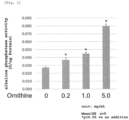
- alkaline phosphatase activity significantly increased by the addition of ornithine at 0.2 mg/mL, 1.0 mg/mL, and 5.0 mg/mL, as compared with no addition of ornithine.
- the supernatant was diluted 10-fold and the measurement was performed using Mouse Osteocalcin EIA kit.
- the test was a two-sided test with Student's t-test, and P ⁇ 0.05 (less than 5% of null hypothesis) or more was judged as significant difference.
- the data in the graph is shown in mean ⁇ standard error.
- osteocalcin production amount significantly increased by the addition of ornithine at 5.0 mg/mL, as compared with no addition of ornithine.
- osteoprogenitor cells were cultured in an ornithine-added or ornithine-free medium with varying BMP-2 (differentiation factor) concentrations and, the alkaline phosphatase activity in the cultured cells was measured, and the influence of BMP-2 (differentiation factor) concentration on the osteoblast differentiation-promoting action of ornithine was examined.
- BMP-2 differentiation factor
- the cells were placed in a 10 cm petri dish using a medium and cultured in a CO 2 incubator (5% CO 2 , 37°C). The medium was changed every other day, and the cells were collected when they reached 80% confluence and used for the test.
- ALP activity of the above-mentioned cell lysate was measured by LabAssay ALP. With this kit, ALP activity was measured from the amount of p-nitrophenol per unit amount of protein produced within a given period of time. The amount of protein in the solution was measured using Micro BCA Protein Assay Reagent Kit.
- the test was a two-sided test with Student's t-test, and P ⁇ 0.05 (less than 5% of null hypothesis) or more was judged as significant difference.
- the data in the graph is shown in mean ⁇ standard error.
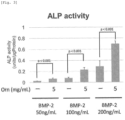
- alkaline phosphatase activity was significantly increased by BMP-2 concentrations of 50 ng/mL, 100 ng/mL, and 200 ng/mL, and ornithine 5 mg/mL addition, as compared with ornithine no addition, irrespective of the BMP-2 addition concentration.
- osteoclast progenitor cells were cultured in ornithine-added or ornithine-free medium. After culture, the number of differentiated osteoclasts was measured, and the osteoclast number differentiation suppressive action of ornithine was examined.
- the cells were placed in a T-75 flask using a medium and cultured in a CO 2 incubator (5% CO 2 , 37°C). The medium was changed every other day, and the cells were collected when they reached 80% confluence and used for the test.
- RANKL RANK ligand
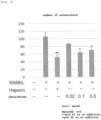
- TRAP staining was performed, and TRAP staining-positive and multinucleated cells were counted, based on which the ability to suppress differentiation into osteoclasts was examined by comparison.
- the test was a two-sided test with Student's t-test, and P ⁇ 0.05 (less than 5% of null hypothesis) or more was judged as significant difference.
- the data in the graph is shown in mean ⁇ standard error.
- mice Female, 8-week-old Balb/cA mice purchased from Charles River Laboratories Japan, Inc. were used. breeding conditions in breeding room:
- a ornithine blended feed was produced.
- the composition was based on AIN93G, and was designed such that the total calorie was the same for all compositions by adjusting the amount of corn starch.
- Each composition is shown in Table 1. The production was performed at room temperature, and all materials were sufficiently mixed with a stirrer and stored in a cool dark place until use.
- Table 1 Each numerical value in Table 1 indicates the blended amount (g) per 1000 g of ornithine blended feed.
- ornithine 0% ornithine 1% ornithine 3% vitamin-free casein (ORIENTAL YEAST CO., LTD.) 200 200 200 L-cystine (AJINOMOTO CO., INC.) 1.8 1.8 1.8 corn starch 405.7 395.7 375.7 ⁇ -starch (pregelatinized starch) (ORIENTAL YEAST CO., LTD.) 155 155 155 powdered sugar (sucrose) 100 100 100 100 cellulose (Toyo Roshi Kaisha, Ltd.) 50 50 50 50 soybean 40 40 40 t-butylhydroquinone (FUJIFILM) 0.008 0.008 0.008 mineral mix (ORIENTAL YEAST CO., LTD.) 35 35 35 35 AIN93 vitamin mix (ORIENTAL YEAST CO., LTD.) 10 10 10 10 choline hydrogen tartrate (FUJ
- mice that had undergone successful ovariectomy began to gain weight in about one week after the operation, and their body weight increased significantly by the time of autopsy one month later. Therefore, the body weight was monitored after the operation.
- the success or failure of OVX was determined by measuring the weight of the uterus at autopsy.
- OVX ovariectomy
- Sham group a group of mice subjected to only shaving, incision of skin and peritoneum, and suturing as sham surgery, without ovariectomy.
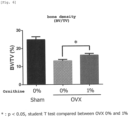
- Bone density was measured using femur removed at autopsy. The removed femur was stored at -20°C until measurement. A micro CT device (Bruker, SKYSCAN) was used to measure bone density. The lower part of the femur was photographed, image was reconstructed (Bruker/NRecon), the bone angle was adjusted, 50 images were cut off from the growth plate reference section, and then 101 images were analyzed (Bruker, DataViewer/CTAn). The area of sponge bone was set and BV/TV was calculated. The results are shown in Fig. 6 .
- mice Female, 8-week-old Balb/cA mice purchased from Charles River Laboratories Japan, Inc. were used. breeding conditions in breeding room:
- the diet was switched to 1% ornithine blended feed or 3% ornithine blended feed from 3 days before the OVX surgery, and ornithine was provided until immediately before autopsy.
- Cast fixation was applied for 9 days, after which a recovery period of about 24 hr was provided, and then autopsy was performed.
- the experiment was conducted in the same manner as in the OVX (ornithine 1% blended feed administration with cast fixation) group and the OVX (ornithine 3% blended feed administration with cast fixation) group, except that an ornithine 0% blended feed was ingested instead of the ornithine blended feed.
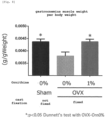
- liver weight per body weight increased as compared with the Sham (ornithine non-administration) group (first bar graph from the left).
- liver weight decreased as compared with the OVX (ornithine non-administration) group.
- osteocalcin osteoblast marker
- cyclophilin A housekeeping gene
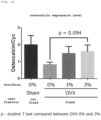
- osteocalcin expression level decreased as compared with the Sham (ornithine non-administration with no cast fixation) group (first bar graph from the left).
- the osteocalcin expression level increased as compared with the OVX (ornithine non-administration with cast fixation) group.
- the expression levels of MuRF1 and Atg3 increased as compared with the Sham (ornithine non-administration with no cast fixation) group (first bar graph from the left).
- the expression levels of MuRF1 and Atg3 decreased as compared with the OVX (ornithine non-administration with cast fixation) group.
- a composition effective for preventing or improving bone strength decrease and the like can be provided.
Landscapes
- Health & Medical Sciences (AREA)
- Life Sciences & Earth Sciences (AREA)
- Physical Education & Sports Medicine (AREA)
- Chemical & Material Sciences (AREA)
- Medicinal Chemistry (AREA)
- Veterinary Medicine (AREA)
- Public Health (AREA)
- General Health & Medical Sciences (AREA)
- Animal Behavior & Ethology (AREA)
- Pharmacology & Pharmacy (AREA)
- Orthopedic Medicine & Surgery (AREA)
- Rheumatology (AREA)
- Engineering & Computer Science (AREA)
- Chemical Kinetics & Catalysis (AREA)
- General Chemical & Material Sciences (AREA)
- Bioinformatics & Cheminformatics (AREA)
- Nuclear Medicine, Radiotherapy & Molecular Imaging (AREA)
- Organic Chemistry (AREA)
- Epidemiology (AREA)
- Food Science & Technology (AREA)
- Nutrition Science (AREA)
- Mycology (AREA)
- Proteomics, Peptides & Aminoacids (AREA)
- Polymers & Plastics (AREA)
- Acyclic And Carbocyclic Compounds In Medicinal Compositions (AREA)
- Coloring Foods And Improving Nutritive Qualities (AREA)
Abstract
Description
- The present invention relates to a composition for preventing or improving bone strength decrease.
- Osteoporosis is defined as a disease characterized by decreased bone strength, in which a risk of bone fracture increases, and this definition is generally used.
- Bone strength is defined by two factors: bone density and bone quality. Bone density is determined by the amount of minerals such as calcium and the like constituting the bone (bone mass), and bone quality is defined by the material property which is the quality of the raw material of the bone, and the structural property (microstructure) built up from the material.
- Since bone strength is defined by bone density and bone quality, if either of them decreases, the decrease in bone strengths and the risk of bone fracture increases. As one of the factors that decrease bone strength, it is known that accelerated bone resorption and decreased bone formation occur due to estrogen deficiency (menopause) and aging, which in turn leads to decreased bone density and deterioration of bone quality (Non Patent Literature 6).
- In order to maintain the bone strength in a healthy state, a balance between bone formation by osteoblasts and bone resorption by osteoclasts (balance of bone metabolism) is important. It is known that one of the causes of osteoporosis is an imbalance in bone metabolism (bone resorption becomes stronger than bone formation) due to aging or menopause.
- In addition, it is known that BMP-2 (Bone morphogenetic protein-2) signal, which is a differentiation factor into osteoblasts, decreases in elderly people, osteoporosis patients, and postmenopausal women (
Non Patent Literatures 7 to 9). - It has been reported that ornithine is effective in improving liver function (
Non Patent Literatures 1 and 2), reducing mental stress (Non Patent Literature 3), and recovering from fatigue (Non Patent Literatures 4 and 5). - However, the effect of ornithine on bone strength has not been reported to date.
-
- [NPL 1]
Hishida. Food Style 21 16(11) 87-9, 2012 - [NPL 2]
Tamai et al., Amino Acids, 45 (6), 1343-51, 2013 - [NPL 3]
Miyake et al., Nutrition Journal 13, 53, 2014 - [NPL 4]
Sugino et a1., Nutrition Research, 28 (11) 738-743, 2008 - [NPL 5]
Kokubo et al., BioPsychoSocial Medicine, 7, 6, 2013 - [NPL 6]
Guideline for prevention and treatment of osteoporosis 2015, Life Science Publishing Co., Ltd. - [NPL 7]
Mehrunnisa M. Raje et al., Molecular Biology Reports (2019) 46: 1667-1674 - [NPL 8]
Fleet et al., Endocrinology, 137 (11), 4605, 1996 - [NPL 9]
Zhang et al., Exp Ther Med. 18(5), 3659-3666, 2019 - An object of the present invention is to provide a composition effective for preventing or improving bone strength decrease.
- The present inventors have conducted intensive studies and found that, as shown in the below-mentioned Experimental Examples 1 to 4, ornithine has an osteoblast differentiation promoting action, that the osteoblast differentiation promoting action of ornithine is exhibited even under low BMP-2 concentrations, and further that ornithine has an osteoclast differentiation suppressive action.
- The present inventors have found from such new findings (osteoblast differentiation promoting action and osteoclast differentiation suppressive action of ornithine) that ornithine can balance bone metabolism by suppressing decrease in bone formation and promotion of bone resorption (see the above-mentioned Non Patent Literature 6), which are known factors that decrease bone strength, and can be effectively used to prevent or improve bone strength decrease.
- In addition, the present inventors have found from such new findings (the osteoblast differentiation promoting action of ornithine is exhibited even under low BMP-2 concentrations) that ornithine can be effectively used to prevent or improve bone strength decrease also in elderly people, osteoporosis patients, and postmenopausal women with reduced BMP-2 signals.
- The present inventors have further conducted intensive studies and found that, as shown in the below-mentioned Experimental Examples 5 to 8, ornithine has a bone density decrease suppressive effect in vivo, also promotes the expression of osteocalcin in vivo, suppresses muscle atrophy that occurs simultaneously with osteoporosis, suppresses the expression of muscle atrophy marker genes MuRF1 and Atg3, suppresses increase in liver weight, which is an indicator of fatty liver induced by OVX (ovariectomy), and suppresses the expression of SREBP1c, MTP, and PPARγ in the liver.
- The present inventors have further studied based on these new findings, and completed the present invention.
- Accordingly, the present invention provides the following.
- [1] A composition for preventing or improving bone strength decrease, comprising ornithine as an active ingredient.
- [2] The composition of the above-mentioned [1], wherein the bone strength decrease is caused by at least one selected from menopause, immobilization osteoporosis, disuse osteoporosis, and aging.
- [3] The composition of the above-mentioned [1], wherein the bone strength decrease is caused by bone density decrease or bone quality decrease.
- [4] The composition of the above-mentioned [3], wherein the bone quality decrease is caused by bone metabolism decrease.
- [5] The composition of any of the above-mentioned [1] to [4], wherein the composition is an osteoblast differentiation promoter and/or an osteoclast differentiation inhibitor.
- [6] The composition of any of the above-mentioned [1] to [5], wherein the composition is further for preventing or improving musculoskeletal function decrease.
- [7] The composition of the above-mentioned [1], wherein the composition is for ingestion by a subject with a decreased BMP-2 signal.
- [8] The composition of the above-mentioned [7], wherein the subject with a decreased BMP-2 signal is a postmenopausal woman, an osteoporosis patient, or an elderly person.
- [9] A composition for inducing osteocalcin expression, comprising ornithine as an active ingredient.
- [10] A composition for preventing or improving changes in physical condition due to changes in postmenopausal hormone balance, comprising ornithine as an active ingredient.
- [11] The composition of the above-mentioned [10], wherein the change in the physical condition is caused by a bone strength decrease and/or a liver weight increase.
- [12] The composition of any of the above-mentioned [1] to [11], wherein the composition is a food.
- [13] The composition of the above-mentioned [9], imparted with an indication of a function exhibited by osteocalcin expression induction.
- [14] The composition of the above-mentioned [13], wherein the indication of a function is selected from the group consisting of "prevention of osteoporosis", "strengthening bone", "promotion of regeneration of bone", "bone building capacity", "suppression of bone fracture", and "acceleration of recovery from bone fracture".
- [15] A composition for suppressing the expression of MuRF1 and/or Atg3, comprising ornithine as an active ingredient.
- [16] The composition of the above-mentioned [15], imparted with an indication of a function exhibited by suppressing the expression of MuRF1 and/or Atg3.
- [17] The composition of the above-mentioned [16], wherein the indication of a function is selected from the group consisting of "maintaining body in movable state for a long time", "maintaining walking function", "maintaining exercise function", and "being able to walk for a long time".
- [18] A composition for suppressing the expression of SREBPlc and/or MTP and/or PPARγ, comprising ornithine as an active ingredient.
- [19] The composition of the above-mentioned [18], wherein the composition is imparted with an indication of a function exhibited by suppressing the expression of SREBP1c and/or MTP and/or PPARγ.
- [20] A method for preventing or improving a bone strength decrease in a subject in need of the prevention or improvement of bone strength decrease, comprising administering a composition comprising an effective amount of ornithine to the subject.
- [21] The method of the above-mentioned [20], wherein the bone strength decrease is caused by at least one selected from menopause, immobilization osteoporosis, disuse osteoporosis, and aging.
- [22] The method of the above-mentioned [20], wherein the bone strength decrease is caused by bone density decrease or bone quality decrease.
- [23] The method of the above-mentioned [22], wherein the bone quality decrease is caused by bone metabolism decrease.
- [24] The method of any one of the above-mentioned [20] to [23], wherein the prevention or improvement of bone strength decrease is achieved by the promotion of osteoblast differentiation and/or suppression of osteoclast differentiation.
- [25] The method of any one of the above-mentioned [20] to [24], wherein the administration subject is in further need of the prevention or improvement of musculoskeletal function decrease.
- [26] The method of the above-mentioned [20], wherein the administration subject is a subject with a decreased BMP-2 signal.
- [27] The method of the above-mentioned [26], wherein the subject with a decreased BMP-2 signal is a postmenopausal woman, an osteoporosis patient, or an elderly person.
- [28] A method for inducing osteocalcin expression in a subject in need of the induction of osteocalcin expression, comprising administering a composition comprising an effective amount of ornithine to the subject.
- [29] A method for preventing or improving changes in physical condition due to changes in postmenopausal hormone balance in a subject in need of the prevention or improvement of changes in physical condition due to changes in postmenopausal hormone balance, comprising administering a composition comprising an effective amount of ornithine to the subject.
- [30] The method of the above-mentioned [29], wherein the change in the physical condition is caused by bone strength decrease and/or liver weight increase.
- [31] The method of any one of the above-mentioned [20] to [30], wherein the composition is orally administered.
- [32] A method for suppressing the expression of MuRFl and/or Atg3 in a subject in need of the suppression of the expression of MuRFl and/or Atg3, comprising administering a composition comprising an effective amount of ornithine to the subject.
- [33] A method for suppressing the expression of SREBPlc and/or MTP and/or PPARγ in a subject in need of the suppression of the expression of SREBP1c and/or MTP and/or PPARγ, comprising administering a composition comprising an effective amount of ornithine to the subject.
- [34] A composition comprising ornithine for use in the prevention or improvement of bone strength decrease.
- [35] The composition of the above-mentioned [34], wherein the bone strength decrease is caused by at least one selected from menopause, immobilization osteoporosis, disuse osteoporosis, and aging.
- [36] The composition of the above-mentioned [34], wherein the bone strength decrease is caused by bone density decrease or bone quality decrease.
- [37] The composition of the above-mentioned [36], wherein the bone quality decrease is caused by bone metabolism decrease.
- [38] The composition of any of the above-mentioned [34] to [37], wherein the prevention or improvement of bone strength decrease is caused by the promotion of osteoblast differentiation and/or the suppression of osteoclast differentiation.
- [39] The composition of any of the above-mentioned [34] to [38], wherein the composition is further for use in the prevention or improvement of musculoskeletal function decrease.
- [40] The composition of the above-mentioned [34], wherein the prevention or improvement of bone strength decrease is prevention or improvement of bone strength decrease in a subject with a decreased BMP-2 signal.
- [41] The composition of the above-mentioned [40], wherein the subject with a decreased BMP-2 signal is a postmenopausal woman, an osteoporosis patient, or an elderly person.
- [42] A composition comprising ornithine for use in the induction of osteocalcin expression.
- [43] A composition comprising ornithine for use in the prevention or improvement of changes in physical condition due to changes in postmenopausal hormone balance.
- [44] The composition of the above-mentioned [43], wherein the change in physical condition is caused by bone strength decrease and/or liver weight increase.
- [45] The composition of any of the above-mentioned [34] to [44], wherein the composition is a food.
- [46] A composition comprising ornithine for use in the suppression of the expression of MuRFl and/or Atg3.
- [47] A composition comprising ornithine for use in the suppression of the expression of SREBP1c and/or MTP and/or PPARγ.
- [48] Use of ornithine for the production of a composition for preventing or improving bone strength decrease.
- [49] The use of the above-mentioned [48], wherein the bone strength decrease is caused by at least one selected from menopause, immobilization osteoporosis, disuse osteoporosis, and aging.
- [50] The use of the above-mentioned [48], wherein the bone strength decrease is caused by bone density decrease or bone quality decrease.
- [51] The use of the above-mentioned [50], wherein the bone quality decrease is caused by bone metabolism decrease.
- [52] The use of any of the above-mentioned [48] to [5l], wherein the composition is an osteoblast differentiation promoter and/or an osteoclast differentiation inhibitor.
- [53] The use of any of the above-mentioned [48] to [52], wherein the composition is further for use in the prevention or improvement of musculoskeletal function decrease.
- [54] The use of the above-mentioned [48], wherein the prevention or improvement of bone strength decrease is prevention or improvement of bone strength decrease in a subject with a decreased BMP-2 signal.
- [55] The use of the above-mentioned [54], wherein the subject with a decreased BMP-2 signal is a postmenopausal woman, an osteoporosis patient, or an elderly person.
- [56] Use of ornithine for the production of a composition for inducing osteocalcin expression.
- [57] Use of ornithine for the production of a composition for preventing or improving changes in physical condition due to changes in postmenopausal hormone balance.
- [58] The use of the above-mentioned [57], wherein the change in physical condition is caused by bone strength decrease and/or liver weight increase.
- [59] The use of any of the above-mentioned [48] to [58], wherein the composition is a food.
- [60] Use of ornithine for the production of a composition for suppressing the expression of MuRFl and/or Atg3.
- [61] Use of ornithine for the production of a composition for suppressing the expression of SREBP1c and/or MTP and/or PPARγ.
- The composition of the present invention containing ornithine can be effectively used for the prevention or improvement of bone strength decrease, based on the osteoblast differentiation promoting action, and/or osteoclast differentiation suppressive action of ornithine. Particularly, since ornithine shows an osteoblast differentiation promoting action even at low BMP-2 concentrations, the composition containing ornithine of the present invention is advantageous in that it can be used effectively for the prevention or improvement of bone strength decrease even in elderly people, osteoporosis patients, and postmenopausal women, showing decreased BMP-2 signal.
- The composition containing ornithine of the present invention can be effectively used for the prevention or improvement of musculoskeletal function decrease such as disuse muscle atrophy and the like in subjects with decreased bone strength such as osteoporosis and the like.
- The composition containing ornithine of the present invention can be effectively used for the prevention or improvement of changes in physical condition (poor physical condition) due to changes in postmenopausal hormone balance, particularly, changes in physical condition (poor physical condition) caused by bone strength decrease and/or liver weight increase.
-
- [Fig. l]
Fig. 1 shows the results of Experimental Example 1. - [
Fig. 2 ]
Fig. 2 shows the results of Experimental Example 2. - [
Fig. 3 ]
Fig. 3 shows the results of Experimental Example 3. InFig. 3 , abbreviation Orn indicates ornithine. - [
Fig. 4 ]
Fig. 4 shows the results of Experimental Example 4. - [
Fig. 5 ]
Fig. 5 shows the experiment schedule for OVX (ornithine administration) group in Experimental Example 5. - [
Fig. 6 ]
Fig. 6 shows the results of Experimental Example 5. - [
Fig. 7 ]
Fig. 7 shows the experiment schedule for OVX (ornithine 1% blended feed administration with cast fixation) group and OVX (ornithine 3% blended feed administration with cast fixation) group in Experimental Example 6. - [
Fig. 8 ]
Fig. 8 shows the results of Experimental Example 6. - [
Fig. 9 ]
Fig. 9 shows the results of Experimental Example 7. - [
Fig. 10 ]
Fig. 11 shows the results (osteocalcin expression level) of Example 8. - [
Fig. 11 ]
Fig. 10 shows the results (MuRF1 and Atg3 expression level) of Example 8. - [
Fig. 12-1 ]
Fig. 12-1 shows the results (SREBP1c and MTP expression levels) of Example 8. - [Fig. 12-21
Fig. 12-2 shows the results (PPARγ expression level) of Example 8. - The present invention is explained in detail in the following.
- The composition for preventing or improving bone strength decrease of the present invention (hereinafter sometimes to be abbreviated as the composition of the present invention) contains ornithine as an active ingredient.
- In the present invention, the "bone strength decrease" includes bone density (bone mass) decrease and bone quality decrease (e.g., bone metabolism decrease).
- In the present invention, the "improvement of bone strength decrease" refers to bringing the decreased bone strength back to a healthy state or close to a healthy state, and the "prevention of bone strength decrease" refers to maintaining bone strength in a healthy state, or preventing further deterioration of the decreased bone strength.
- In the present invention, the factors causing bone strength decrease are not particularly limited and include, for example, menopause, immobilization osteoporosis, disuse osteoporosis, aging, malnutrition (e.g., malnutrition in young women), young age (e.g., growth phase), bone strength decrease due to lack of exercise.
- The composition of the present invention is particularly useful for bone strength decrease due to menopause, immobilization osteoporosis, disuse osteoporosis, and aging.
- Particularly, the composition of the present invention is useful in that it can also be used for subjects with low BMP-2 signal (e.g., postmenopausal women, osteoporosis patients, elderly people).
- The composition of the present invention can be used as an osteoblast differentiation promoter and/or an osteoclast differentiation inhibitor, since ornithine as the active ingredient shows an osteoblast differentiation promoting action, and an osteoclast differentiation suppressive action, as shown in the below-mentioned Experimental Examples.
- The composition of the present invention can be formed as a composition with indication of a function.
- Examples of the indication of a function include "prevention of osteoporosis", "strengthening bone", "promotion of regeneration of bone", "bone building capacity", "suppression of bone fracture", and "acceleration of recovery from bone fracture".
- The composition for preventing or improving bone strength decrease of the present invention can be further used for preventing or improving musculoskeletal function decrease.
- In the present invention, the "musculoskeletal function" includes a function of moving limbs and body and, for example, walking function can be mentioned.
- In the present invention, the "musculoskeletal function decrease" includes musculoskeletal function decrease due to disuse muscle atrophy.
- In the present invention, the "improvement of musculoskeletal function decrease" refers to bringing the decreased musculoskeletal function back to a healthy state or close to a healthy state, and the "prevention of musculoskeletal function decrease" refers to maintaining musculoskeletal function in a healthy state, or preventing further deterioration of the decreased musculoskeletal function.
- The composition of the present invention is useful in that it can be expected to achieve both effects of prevention or improvement of bone strength decrease and prevention or improvement of musculoskeletal function decrease, by administration to subjects who have simultaneously developed bone strength decrease, such as osteoporosis and the like, and musculoskeletal function decrease, such as disuse muscle atrophy and the like.
- The composition of the present invention can be formed as a composition with indication of a function.
- Examples of the indication of a function include "maintaining body in movable state for a long time", "maintaining walking function", "maintaining exercise function", and "being able to walk for a long time".
- While ornithine as the active ingredient of the present invention may be in any of L-form, D-form, and DL-form, L-form is preferred.
- In the present invention, ornithine may be in the form of a salt. As the salt, a salt acceptable as a food or medicament can be mentioned. Examples thereof include alkali metal salts such as sodium salt, potassium salt, and the like; alkaline earth metal salts such as calcium salt, magnesium salt, barium salt, and the like; aluminum salt; salts with organic bases such as ethylenediamine, propylenediamine, ethanolamine, monoalkyl ethanolamine, dialkyl ethanolamine, diethanolamine, triethanolamine, and the like; salts with inorganic acids such as hydrochloric acid, hydrobromic acid, nitric acid, sulfuric acid, phosphoric acid, and the like; and salts with organic acids such as formic acid, acetic acid, trifluoroacetic acid, phthalic acid, fumaric acid, oxalic acid, tartaric acid, maleic acid, citric acid, succinic acid, malic acid, methanesulfonic acid, benzenesulfonic acid, p-toluenesulfonic acid and the like.
- The content of ornithine contained in the composition of the present invention is, for example, 0.01 - 100 wt%, preferably 0.1 - 95 wt%, more preferably 1 - 90 wt%, further preferably 5 - 80 wt%.
- While the composition of the present invention can be used as a food, a medicament, and the like, food is preferred.
- In the present specification, food is a concept that broadly includes foods that can be ingested orally (excluding pharmaceutical products), and includes not only so-called "food" but also beverages, health supplement, food with health claims (e.g., food for specified health uses, food with functional claims), supplement, and the like.
- The form of the composition of the present invention is not particularly questioned and may be, for example, powder, granule (including fine granule), tablet, hard capsule, soft capsule, liquid (e.g., solution, suspension, emulsion), drink, jelly, pudding, yogurt, candy, chewing gum, or the like. These can be produced by a known method. For example, the composition of the present invention is mixed with carriers (e.g., excipient, binder, disintegrant, lubricant, solvent) and powder, granule, tablet, capsule, liquid, and the like can be produced by a method known in the field of food preparation or pharmaceutical preparation. In addition, the composition of the present invention can also be produced by adding and mixing to and with food and drink (e.g., water, soft drink).
- The ingestion amount (dose) of ornithine in the composition of the present invention is, for example, 1 mg to 24 g, preferably 50 mg to 24 g, more preferably 100 mg to 12 g, further preferably 200 mg to 4.8 g, per day for an adult (
body weight 60 kg). - The composition of the present invention can be safely ingested by (administered to), human, animals other than human (e.g., mammals and birds such as domestic animals, poultry, experiment animals). The form of ingestion (administration) for animals other than human may be addition to a feed.
- In one embodiment, the present invention relates to a composition for inducing osteocalcin expression, containing ornithine as an active ingredient.
- In the composition for inducing osteocalcin expression of the present invention, the definition of ornithine, the content of ornithine, availability for food, medicament, and the like, form, ingestion amount, subject of ingestion and administration, and the like are the same as the definition of ornithine, the content of ornithine, availability for food, medicament, and the like, form, ingestion amount, subject of ingestion and administration, and the like in the above-mentioned composition for preventing or improving bone strength decrease of the present invention.
- The osteocalcin expression induction can be confirmed, for example, by a method according to the below-mentioned Experimental Example 8.
- The composition of the present invention can be expected to achieve effects such as "prevention of osteoporosis", "strengthening bone", "promotion of regeneration of bone", "bone building capacity", "suppression of bone fracture", "acceleration of recovery from bone fracture", and the like since ornithine as the active ingredient has an osteocalcin expression inducing action.
- The composition for inducing osteocalcin expression of the present invention can be formed as a composition with indication of a function exhibited by induction of osteocalcin expression.
- Examples of the indication of a function include "prevention of osteoporosis", "strengthening bone", "promotion of regeneration of bone", "bone building capacity", "suppression of bone fracture", and "acceleration of recovery from bone fracture".
- In one embodiment, the present invention relates to a composition for suppressing the expression of MuRF1 and/or Atg3, containing ornithine as an active ingredient.
- In the composition for suppressing the expression of MuRF1 and/or Atg3 of the present invention, the definition of ornithine, the content of ornithine, availability for food, medicament, and the like, form, ingestion amount, subject of ingestion and administration, and the like are the same as the definition of ornithine, the content of ornithine, availability for food, medicament, and the like, form, ingestion amount, subject of ingestion and administration, and the like in the above-mentioned composition for preventing or improving bone strength decrease of the present invention.
- The suppression of the expression of MuRF1 and Atg3 can be confirmed, for example, by a method according to the below-mentioned Experimental Example 8.
- The composition of the present invention can be expected to achieve effects such as "maintaining body in movable state for a long time", "maintaining walking function", "maintaining exercise function", "being able to walk for a long time" and the like since ornithine as the active ingredient has a suppressive action on the expression of MuRF1 and Atg3.
- The composition for suppressing the expression of MuRF1 and/or Atg3 of the present invention can be formed as a composition with indication of a function exhibited by suppressing the expression of MuRF1 and/or Atg3.
- Examples of the indication of a function include "maintaining body in movable state for a long time", "maintaining walking function", "maintaining exercise function", and "being able to walk for a long time".
- In one embodiment, the present invention relates to a composition for suppressing the expression of SREBP1c and/or MTP and/or PPARγ, containing ornithine as an active ingredient.
- In the composition for suppressing the expression of SREBP1c and/or MTP and/or PPARγ of the present invention, the definition of ornithine, the content of ornithine, availability for food, medicament, and the like, form, ingestion amount, subject of ingestion and administration, and the like are the same as the definition of ornithine, the content of ornithine, availability for food, medicament, and the like, form, ingestion amount, subject of ingestion and administration, and the like in the above-mentioned composition for preventing or improving bone strength decrease of the present invention.
- The suppression of the expression of SREBP1c, MTP, and PPARγ can be confirmed, for example, by a method according to the below-mentioned Experimental Example 8.
- The composition of the present invention can be expected to achieve effects such as improvement of fatty liver and hyperlipidemia, and the like since ornithine as the active ingredient has a suppressive action on the expression of SREBP1c, MTP, and PPARγ.
- The composition for suppressing the expression of SREBP1c and/or MTP and/or PPARγ of the present invention can be formed as a composition with indication of a function exhibited by suppressing the expression of SREBP1c and/or MTP and/or PPARγ.
- In one embodiment, the present invention relates to a composition for preventing or improving changes in physical condition due to changes in postmenopausal hormone balance, containing ornithine as an active ingredient.
- As the changes in physical condition due to changes in postmenopausal hormone balance, changes in physical condition caused by decreased bone strength and/or increased liver weight can be mentioned. Specific examples of the changes in physical condition include bone fracture, decreased exercise, muscle atrophy associated with decreased exercise and decreased bone density, fatty liver, and hyperlipidemia.
- In the composition for preventing or improving changes in physical condition due to changes in postmenopausal hormone balance of the present invention, the definition of ornithine, the content of ornithine, availability for food, medicament, and the like, form, ingestion amount, subject of ingestion and administration, and the like are the same as the definition of ornithine, the content of ornithine, availability for food, medicament, and the like, form, ingestion amount, subject of ingestion and administration, and the like in the above-mentioned composition for preventing or improving bone strength decrease of the present invention.
- The composition of the present invention can be formed as a composition with indication of a function.
- Examples of the indication of a function include "supporting changes in women's physical condition" and "improving poor physical condition in postmenopausal women".
- The present invention is explained in more detail in the following by referring to Experimental Examples. The present invention is not limited to these.
- Using the following materials and methods, osteoprogenitor cells were cultured in ornithine-added or ornithine-free medium, the alkaline phosphatase activity in the cultured cells was measured, and the osteoblast differentiation-promoting action of ornithine was examined.
-
- (1) Cell
MC3T3-E1 (RIKEN Cell Bank, RCB1126) - (2) Medium
α-MEM medium, 10% FBS, antibiotic added - (3) Test reagent, etc.
- α-MEM medium (phenol red free) (Invitrogen, Cat. No. 41061-029) Penicillin-streptomycin solution (nacalai tesque, Cat. No. 26253-84)
- 0.25% trypsin-EDTA solution (nacalai tesque, Cat. No. 32777-44) Dulbecco's PBS (Nissui Pharmaceutical Co., Ltd., Code No. 05913)
- viable cell count measurement reagent SF (nacalai tesque, Cat. No. 07553-44)
- BMP-2, Human Recombinant (R&D Systems, Cat. No. 355-BEC-010) Micro BCA Protein Assay Reagent Kit (PIERCE, Cat. No. 23235) Cell-LyEX1 (Wako, Cat. No. 300-34761)
- LabAssay ALP (Wako, Cat. No. 291-58601)
- Mouse Osteocalcin EIA kit (Biomedical Technologies, Cat. No. BT-470)
- L-Ornithine Monohydrochloride (Nacalai, Cat. No. 25718-92)
- The cells were placed in a T-75 flask using a medium and cultured in a CO2 incubator (5% CO2, 37°C). The medium was changed every other day, and the cells were collected when they reached 80% confluence and used for the test.
- The cells were adjusted with medium to 1.2×10⁵ cells/0.2 mL/well and seeded in a 48-well plate. The next day, the medium was replaced with a medium supplemented with ornithine 0.2 mg/mL, 1.0 mg/mL or 5.0 mg/mL or additive-free medium, and the cells were cultured for 7 and 14 days. After culturing for 7 days, the cells were washed once with PBS for ALP activity measurement and then cryopreserved together with the plate. In addition, after culturing for 14 days, the culture supernatant was sampled for measurement of the amount of osteocalcin used in the below-mentioned Experimental Example 2, and cryopreserved. The test was performed with n=5 and the medium was changed every 3-4 days.
- The cells were washed with PBS and lysed with 60 µL/well of cell lysing agent (Cell-LyEX1 containing 2 mM PMSF). After stirring the plate at room temperature for 30 min, the supernatant was diluted 5-fold and the obtained solution was used as a sample for measurement. ALP activity in the cells was measured by LabAssay ALP. With this kit, ALP activity was measured from the amount of p-nitrophenol per unit amount of protein produced within a given period of time. The amount of protein in the solution was measured using Micro BCA Protein Assay Reagent Kit.
- The test was a two-sided test with Student's t-test, and P<0.05 (less than 5% of null hypothesis) or more was judged as significant difference. The data in the graph is shown in mean±standard error.
- As shown in
Fig. 1 , alkaline phosphatase activity significantly increased by the addition of ornithine at 0.2 mg/mL, 1.0 mg/mL, and 5.0 mg/mL, as compared with no addition of ornithine. - The results show that ornithine promotes differentiation of osteoblasts.
- Using the "culture supernatant for measurement of the amount of osteocalcin" sampled in "method (2) test" of the above-mentioned Experimental Example 1, the osteocalcin (osteoblast differentiation marker) production amount was measured by the following method, and the osteoblast differentiation promoting action of ornithine was investigated.
- For the measurement of the amount of osteocalcin in the culture supernatant, the supernatant was diluted 10-fold and the measurement was performed using Mouse Osteocalcin EIA kit.
- The test was a two-sided test with Student's t-test, and P<0.05 (less than 5% of null hypothesis) or more was judged as significant difference. The data in the graph is shown in mean±standard error.
- As shown in
Fig. 2 , osteocalcin production amount significantly increased by the addition of ornithine at 5.0 mg/mL, as compared with no addition of ornithine. - The results show that ornithine promotes differentiation of osteoblasts.
- Using the following methods, osteoprogenitor cells were cultured in an ornithine-added or ornithine-free medium with varying BMP-2 (differentiation factor) concentrations and, the alkaline phosphatase activity in the cultured cells was measured, and the influence of BMP-2 (differentiation factor) concentration on the osteoblast differentiation-promoting action of ornithine was examined.
- The cells were placed in a 10 cm petri dish using a medium and cultured in a CO2 incubator (5% CO2, 37°C). The medium was changed every other day, and the cells were collected when they reached 80% confluence and used for the test.
- The cells were adjusted with medium to 1.2×10⁵ cells/0.2 mL/well and seeded in a 48-well plate. The next day, the condition was changed to a medium containing BMP-2 at 50 ng/mL, 100 ng/mL, or 200 ng/mL and free of ornithine or containing 5 mg/mL ornithine, and the cells were cultured for 7 days. After 7 days, the cells were washed once with PBS, 50 µL of 0.1% Triton-X was added, and the mixture was further sonicated for 1 min to prepare a cell lysate. The test was performed with n=4 and the medium was changed every 3-4 days.
- ALP activity of the above-mentioned cell lysate was measured by LabAssay ALP. With this kit, ALP activity was measured from the amount of p-nitrophenol per unit amount of protein produced within a given period of time. The amount of protein in the solution was measured using Micro BCA Protein Assay Reagent Kit.
- The test was a two-sided test with Student's t-test, and P<0.05 (less than 5% of null hypothesis) or more was judged as significant difference. The data in the graph is shown in mean±standard error.
- As shown in
Fig. 3 , alkaline phosphatase activity was significantly increased by BMP-2 concentrations of 50 ng/mL, 100 ng/mL, and 200 ng/mL, andornithine 5 mg/mL addition, as compared with ornithine no addition, irrespective of the BMP-2 addition concentration. - The results show that, while MC3T3-E1 cells differentiate into osteoblasts in a BMP-2 (differentiation factor) concentration-dependent manner, ornithine promotes differentiation of osteoblasts to the same level as that by the addition of BMP-2 at higher concentrations, even under low BMP-2 concentration (e.g., BMP-2 concentration 50 ng/mL) conditions.
- Using the following materials and methods, osteoclast progenitor cells were cultured in ornithine-added or ornithine-free medium. After culture, the number of differentiated osteoclasts was measured, and the osteoclast number differentiation suppressive action of ornithine was examined.
-
- (1) Cell
RAW264 (Riken Cell Bank, RCB0535, lot40) - (2) Medium used
proliferation medium: α-MEM medium, 10% FBS, antibiotic added test medium: α--MEM medium, 5% FBS, antibiotic added - (3) Test reagent, etc.
- α-MEM medium (phenol red free) (Invitrogen, Cat. No. 41061-029) Penicillin-streptomycin solution (nacalai tesque, Cat. No. 26253-84)
- Dulbecco's PBS (Nissui Pharmaceutical Co., Ltd., Cat. No. 05913)
- Cell Count Reagent SF (nacalai tesque, Cat. No. 07553-44) heparin (SIGMA, Cat. No. H3149-25KU)
- RANK ligand, Mouse, Recombinant (SIGMA, Cat. No. R0525-10UG) TRAP Activity Assay Kit (Immunodaiagnostic Systems, Cat. No. TR103)
- L-Ornithine Monohydrochloride (Nacalai, Cat. No. 25718-92)
- The cells were placed in a T-75 flask using a medium and cultured in a CO2 incubator (5% CO2, 37°C). The medium was changed every other day, and the cells were collected when they reached 80% confluence and used for the test.
- Cells were prepared in a test medium at 3×10³ cells/0.1 mL/well and seeded in a 96 well plate. The next day, the medium was replaced with a 50 ng/mL RANK ligand (hereinafter to be abbreviated as RANKL) and ornithine 0.02 mg/mL, 0.1 mg/mL, or 0.5 mg/mL addition medium, a non-addition medium, a 100 µg/mL heparin addition medium as positive control, and a RANKL non-addition medium. After culturing for 7 days, TRAP staining was performed, and TRAP staining-positive and multinucleated cells were counted, based on which the ability to suppress differentiation into osteoclasts was examined by comparison. The medium was changed every 3-4 days. The test was performed with n=5.
- The test was a two-sided test with Student's t-test, and P<0.05 (less than 5% of null hypothesis) or more was judged as significant difference. The data in the graph is shown in mean±standard error.
- As shown in
Fig. 4 , as compared with ornithine non-addition (inFig. 4 , the fifth bar graph from the right), the number of osteoclasts significantly decreased by the addition of ornithine 0.1 mg/mL and 0.5 mg/mL, and the number of osteoclasts decreased by the addition of ornithine 0.02 mg/mL. - The results show that ornithine suppresses differentiation of osteoclasts.
- To investigate the influence of ornithine on osteoporosis, the bone density decrease suppressive effect of ornithine was evaluated using an osteoporosis model prepared by ovariectomy (OVX) in mice according to the experiment method shown in the following.
- As the mouse, female, 8-week-old Balb/cA mice purchased from Charles River Laboratories Japan, Inc. were used. breeding conditions in breeding room:
- temperature setting: 23°C±1°C
- humidity setting: 60%±5%
- Lighting time: 07:00-19:00 light period 19:00-07:00 dark period
- Feeding: free food ingestion of CRF-l (ORIENTAL YEAST CO., LTD.)
- Water supply: free drinking of tap water
- For ingestion of ornithine by mouse, a ornithine blended feed was produced. The composition was based on AIN93G, and was designed such that the total calorie was the same for all compositions by adjusting the amount of corn starch. Each composition is shown in Table 1. The production was performed at room temperature, and all materials were sufficiently mixed with a stirrer and stored in a cool dark place until use.
- Each numerical value in Table 1 indicates the blended amount (g) per 1000 g of ornithine blended feed.
[Table 1] ornithine 0% ornithine 1 % ornithine 3% vitamin-free casein (ORIENTAL YEAST CO., LTD.) 200 200 200 L-cystine (AJINOMOTO CO., INC.) 1.8 1.8 1.8 corn starch 405.7 395.7 375.7 α-starch (pregelatinized starch) (ORIENTAL YEAST CO., LTD.) 155 155 155 powdered sugar (sucrose) 100 100 100 cellulose (Toyo Roshi Kaisha, Ltd.) 50 50 50 soybean 40 40 40 t-butylhydroquinone (FUJIFILM) 0.008 0.008 0.008 mineral mix (ORIENTAL YEAST CO., LTD.) 35 35 35 AIN93 vitamin mix (ORIENTAL YEAST CO., LTD.) 10 10 10 choline hydrogen tartrate (FUJIFILM) 2.5 2.5 2.5 L(+)-ornithine monohydrochloride (NACALAI TESQUE, INC.) 0 10 30 Total 1000 1000 1000 amount blended per 1000 g of feed, unit: g -
- (i) The hair on the back was shaved under isoflurane anesthesia, and an incision of about 8 mm was made around just below the kidney.
- (ii) The peritoneum was also incised in the same manner, and the ovary was extracted from the body together with the adipose tissue exposed just below the kidney.
- (iii) The upper and lower portions of the ovary were ligated, the ovary was completely removed, and sutured. This was performed on both sides.
- The mice that had undergone successful ovariectomy began to gain weight in about one week after the operation, and their body weight increased significantly by the time of autopsy one month later. Therefore, the body weight was monitored after the operation. In addition, since the uterus atrophies significantly after ovariectomy, the success or failure of OVX was determined by measuring the weight of the uterus at autopsy.
- In the present specification, the group of mice that underwent ovariectomy (OVX) is referred to as the OVX group. For comparison (control), a group of mice subjected to only shaving, incision of skin and peritoneum, and suturing as sham surgery, without ovariectomy is referred to as Sham group.
- As shown in Table 2, a comparative test was performed for the Sham (ornithine non-administration) group, the OVX (ornithine non-administration) group, and the OVX (ornithine administration) group.
- In the OVX (ornithine administration) group, according to the experiment schedule shown in
Fig.5 , the diet was switched to l% ornithine blended feed from 3 days before the OVX surgery, ornithine was provided until immediately before autopsy, and autopsy was performed on the 34th day after OVX. - In the OVX (ornithine non-administration) group, the experiment was conducted in the same manner as in the OVX (ornithine administration) group, except that an
ornithine 0% blended feed was ingested instead of theornithine 1% blended feed. - In the Sham (ornithine non-administration) group, the experiment was conducted in the same manner as in the OVX (ornithine administration) group, except that the
ornithine 0% blended feed was ingested instead of theornithine 1% blended feed, and sham surgery was performed instead of OVX.[Table 2] group n ornithine blended in feed Sham (ornithine non-administration) group 8 ornithine 0%OVX (ornithine non-administration) group 8 ornithine 0%OVX (ornithine administration) group 8 ornithine 1% - Bone density was measured using femur removed at autopsy. The removed femur was stored at -20°C until measurement. A micro CT device (Bruker, SKYSCAN) was used to measure bone density. The lower part of the femur was photographed, image was reconstructed (Bruker/NRecon), the bone angle was adjusted, 50 images were cut off from the growth plate reference section, and then 101 images were analyzed (Bruker, DataViewer/CTAn). The area of sponge bone was set and BV/TV was calculated. The results are shown in
Fig. 6 . - As shown in
Fig. 6 , in the OVX (ornithine non-administration) group (second bar graph from the left), bone density decreased as compared with the Sham (ornithine non-administration) group (first bar graph from the left). In the OVX (ornithine administration) group (third bar graph from the left), bone density significantly increased as compared with the OVX (ornithine non-administration) group. - From the results, it was confirmed that ornithine significantly suppresses bone density decrease due to OVX. In addition, a bone density decrease suppressive effect in the body by ornithine was confirmed.
- To verify the effect of ornithine on disuse muscle atrophy that develops simultaneously with osteoporosis, osteoporosis due to OVX and disuse muscle atrophy due to fixation of the lower leg with cast were simultaneously developed in mice according to the experiment method shown below. Using the model, the muscle atrophy suppressive effect of ornithine was evaluated. Production of ornithine blended feed and OVX operation method were the same as those in Experimental Example 5.
- As the mouse, female, 8-week-old Balb/cA mice purchased from Charles River Laboratories Japan, Inc. were used. breeding conditions in breeding room:
- temperature setting: 23°C±l°C
- humidity setting: 60%±5%
- Lighting time: 07:00-l9:00 light period 19:00-07:00 dark period
- Feeding: free food ingestion of AIN93G (AJINOMOTO CO., INC., powder)
- Water supply: free drinking of tap water
-
- (i) The second joint of the lower right leg of the mouse was bent under isoflurane anesthesia and lightly fixed with a paper adhesive tape or the like.
- (ii) The thigh was wrapped around with a 1 cm wide binding tape (TRUSCO, Magic Band (R) Binding Tape (double-sided type)), and fixed by wrapping around the binding tape with another binding tape to completely cover the lower leg.
- (iii) Fixation was performed for 9 days, and the tape was removed thereafter.
- As shown in Table 3, a comparative test was performed for the Sham (ornithine non-administration and no cast fixation) group, the OVX (ornithine non-administration with cast fixation) group, the OVX (
ornithine 1% blended feed administration with cast fixation) group, and the OVX (ornithine 3% blended feed administration with cast fixation) group. - In the OVX (
ornithine 1% blended feed administration with cast fixation) group and the OVX (ornithine 3% blended feed administration with cast fixation) group, according to the experiment schedule shown inFig. 7 , the diet was switched to 1% ornithine blended feed or 3% ornithine blended feed from 3 days before the OVX surgery, and ornithine was provided until immediately before autopsy. Cast fixation was applied for 9 days, after which a recovery period of about 24 hr was provided, and then autopsy was performed. - In the OVX (ornithine non-administration with cast fixation) group, the experiment was conducted in the same manner as in the OVX (
ornithine 1% blended feed administration with cast fixation) group and the OVX (ornithine 3% blended feed administration with cast fixation) group, except that anornithine 0% blended feed was ingested instead of the ornithine blended feed. - In the Sham (ornithine non-administration and no cast fixation) group, the experiment was conducted in the same manner as in the OVX (
ornithine 1% blended feed administration with cast fixation) group and the OVX (ornithine 3% blended feed administration with cast fixation) group, except that theornithine 0% blended feed was ingested instead of the ornithine blended feed, sham surgery was performed instead of OVX, and cast fixation was not performed.[Table 3] group cast fixation n ornithine blended in feed Sham (ornithine non-administration with no cast fixation) group not fixed 8 ornithine 0%OVX (ornithine non-administration with cast fixation) group fixed 8 ornithine 0%OVX ( ornithine 1% blended feed administration with cast fixation) groupfixed 8 ornithine 1%OVX ( ornithine 3% blended feed administration with cast fixation) groupfixed 8 ornithine 3% - The weight of the gastrocnemius muscle of the Sham (ornithine non-administration with no cast fixation) group, the OVX (ornithine non-administration with cast fixation) group, and the OVX (
ornithine 1% blended feed administration with cast fixation) group, which was removed at autopsy, was measured, and the weight per body weight was calculated. The results are shown inFig. 8 . - As shown in
Fig. 8 , in the OVX (ornithine non-administration with cast fixation) group (second bar graph from the left), gastrocnemius muscle weight decreased as compared with the Sham (ornithine non-administration with no cast fixation) group (first bar graph from the left). In the OVX (ornithine 1% blended feed administration with cast fixation) group (third bar graph from the left), the gastrocnemius muscle weight increased as compared with the OVX (ornithine non-administration with cast fixation) group. - From the results, it was confirmed that ornithine suppresses muscle atrophy simultaneously developed with osteoporosis.
- To investigate the influence of ornithine on fatty liver and the like, the weight of the liver of the Sham (ornithine non-administration) group, the OVX (ornithine non-administration) group, and the OVX (ornithine administration) group in Experimental Example 5, which was removed at autopsy, was measured, and the liver weight per body weight was compared. The results are shown in
Fig. 9 . - As shown in
Fig. 9 , in the OVX (ornithine non-administration) group (second bar graph from the left), liver weight per body weight increased as compared with the Sham (ornithine non-administration) group (first bar graph from the left). In the OVX (ornithine administration) group (third bar graph from the left), liver weight decreased as compared with the OVX (ornithine non-administration) group. - The results show that ornithine suppresses liver weight increase which is an index of fatty liver induced by OVX.
- To investigate the influence of ornithine on lifestyle-related disease-related factors, the gene expression analysis of the femur and gastrocnemius muscle removed at autopsy in Experimental Example 6, and the liver removed at autopsy in Experimental Example 5 was performed.
- Muscle and the like were detached from the femur after removal, and the femur was immediately frozen in liquid nitrogen. The gastrocnemius muscle and the liver were also similarly frozen in liquid nitrogen immediately after removal. Using Multi-beads Shocker (YASUI KIKAI), the samples were pulverized, and RNA was extracted by a conventional method (NIPPON GENE CO., LTD./ISOGEN II). Using the extracted RNA, reverse transcription was performed, and cDNA was acquired (Takara Bio Inc./
PrimeScript 1ststrand cDNA Synthesis Kit). Using the cDNA, the expression levels of osteocalcin (osteoblast marker) and cyclophilin A (housekeeping gene) were analyzed for the femur (Thermo Fisher SCIENTIFIC/QuantStudio 3, TaqMan Fast Advanced Master Mix). As for the gastrocnemius muscle, muscle atrophy markers MuRF1 and Atg3, and 18S (housekeeping gene) were measured. For the liver, SREBP1c, MTP, and PPARγ, which are the indices of lifestyle-related diseases, and cyclophilin A (housekeeping gene) were measured. The list of primers is shown in Table 4.[Table 4] Real-time primer base sequence Gene Forward primer Reverse primer Osteocalcin ACGGTATCACTATTTAGGACCTGTG (SEQ ID NO:1) ACTTTATTTTGGAGCTGCTGTGAC (SEQ ID NO:2) Cyclophilin A TGGAGAGCACCAAGACAGACA (SEQ ID NO:3) TGCCGGAGTCGACAATGAT (SEQ ID NO:4) MuRF1 GCTGGTGGAAAACATCATTGACA (SEQ ID NO:5) CATCGGGGTGGCTGCCTTT (SEQ ID NO:6) Atg3 CTGGAGATCACTTAGTCCACCA (SEQ ID NO:7) GTCGGAAGATATGCCTTCACTTT (SEQ ID NO:8) 18S AACGCCACTTGTCCCTCTAA (SEQ ID NO:9) GTGGAGCGATTTGTCTGGTT (SEQ ID NO:10) SREBP1c GCCATGGATTGCACATTTG (SEQ ID NO:11) TCAGGAGAGTTGGCACCTG (SEQ ID NO:12) MTP CCAGCATGATCCTCTTGGCA (SEQ ID NO:13) TGAGAGGCCAGTTGTGTGAC (SEQ ID NO:14) PPARγ CGCTGATGCACTGCCTATGA (SEQ ID NO:15) CGAGTGGTCTTCcATCACGG (SEQ ID NO:16) - The data was shown graphically using mean and SE values, and Student's t test was used for comparison of two groups and Dunnett test was used for comparison of three or more groups. For the analysis, Prism6 for Windows (GraphPad) was used. The results are shown in
Fig. 10 ,Fig. 11 ,Fig. 12-1 , andFig. 12-2 . - As shown in
Fig. 10 , in the OVX (ornithine non-administration with cast fixation) group (second bar graph from the left), osteocalcin expression level decreased as compared with the Sham (ornithine non-administration with no cast fixation) group (first bar graph from the left). In the OVX (ornithine 1% blended feed administration with cast fixation) group (third bar graph from the left) and the OVX (ornithine 3% blended feed administration with cast fixation) group (fourth bar graph from the left), the osteocalcin expression level increased as compared with the OVX (ornithine non-administration with cast fixation) group. - The results show that ornithine has an osteocalcin expression inducing action in vivo as well.
- As shown in the left figure and the right figure in
Fig. 11 , in the OVX (ornithine non-administration with cast fixation) group (second bar graph from the left), the expression levels of MuRF1 and Atg3 increased as compared with the Sham (ornithine non-administration with no cast fixation) group (first bar graph from the left). However, in the OVX (ornithine 1% blended feed administration with cast fixation) group (third bar graph from the left) and the OVX (ornithine 3% blended feed administration with cast fixation) group (fourth bar graph from the left), the expression levels of MuRF1 and Atg3 decreased as compared with the OVX (ornithine non-administration with cast fixation) group. - The results show that ornithine has an action of suppressing the expression of MuRF1 and Atg3.
- As shown in the left figure and the right figure in
Fig. 12-1 , andFig. 12-2 , in the OVX (ornithine administration) group (third bar graph from the left), the expression levels of SREBP1c, MTP, and PPARγ decreased as compared with the OVX (ornithine non-administration) group (second bar graph from the left) . - The results show that ornithine has an action of suppressing the expression of SREBP1c, MTP, and PPARγ in the liver.
- According to the present invention, a composition effective for preventing or improving bone strength decrease and the like can be provided.
- This application is based on patent application No.
2020-060915
Claims (61)
- A composition for preventing or improving bone strength decrease, comprising ornithine as an active ingredient.
- The composition according to claim 1, wherein the bone strength decrease is caused by at least one selected from menopause, immobilization osteoporosis, disuse osteoporosis, and aging.
- The composition according to claim 1, wherein the bone strength decrease is caused by bone density decrease or bone quality decrease.
- The composition according to claim 3, wherein the bone quality decrease is caused by bone metabolism decrease.
- The composition according to any one of claims 1 to 4, wherein the composition is an osteoblast differentiation promoter and/or an osteoclast differentiation inhibitor.
- The composition according to any one of claims 1 to 5, wherein the composition is further for preventing or improving musculoskeletal function decrease.
- The composition according to claim 1, wherein the composition is for ingestion by a subject with a decreased BMP-2 signal.
- The composition according to claim 7, wherein the subject with a decreased BMP-2 signal is a postmenopausal woman, an osteoporosis patient, or an elderly person.
- A composition for inducing osteocalcin expression, comprising ornithine as an active ingredient.
- A composition for preventing or improving changes in physical condition due to changes in postmenopausal hormone balance, comprising ornithine as an active ingredient.
- The composition according to claim 10, wherein the change in the physical condition is caused by a bone strength decrease and/or a liver weight increase.
- The composition according to any one of claims 1 to 11, wherein the composition is a food.
- The composition according to claim 9, imparted with an indication of a function exhibited by osteocalcin expression induction.
- The composition according to claim 13, wherein the indication of a function is selected from the group consisting of "prevention of osteoporosis", "strengthening bone", "promotion of regeneration of bone", "bone building capacity", "suppression of bone fracture", and "acceleration of recovery from bone fracture".
- A composition for suppressing the expression of MuRFl and/or Atg3, comprising ornithine as an active ingredient.
- The composition according to claim 15, imparted with an indication of a function exhibited by suppressing the expression of MuRF1 and/or Atg3.
- The composition according to claim 16, wherein the indication of a function is selected from the group consisting of "maintaining body in movable state for a long time", "maintaining walking function", "maintaining exercise function", and "being able to walk for a long time".
- A composition for suppressing the expression of SREBP1c and/or MTP and/or PPARγ, comprising ornithine as an active ingredient.
- The composition according to claim 18, wherein the composition is imparted with an indication of a function exhibited by suppressing the expression of SREBP1c and/or MTP and/or PPARγ.
- A method for preventing or improving a bone strength decrease in a subject in need of the prevention or improvement of bone strength decrease, comprising administering a composition comprising an effective amount of ornithine to the subject.
- The method according to claim 20, wherein the bone strength decrease is caused by at least one selected from menopause, immobilization osteoporosis, disuse osteoporosis, and aging.
- The method according to claim 20, wherein the bone strength decrease is caused by bone density decrease or bone quality decrease.
- The method according to claim 22, wherein the bone quality decrease is caused by bone metabolism decrease.
- The method according to any one of claims 20 to 23, wherein the prevention or improvement of bone strength decrease is achieved by the promotion of osteoblast differentiation and/or suppression of osteoclast differentiation.
- The method according to any one of claims 20 to 24, wherein the administration subject is in further need of the prevention or improvement of musculoskeletal function decrease.
- The method according to claim 20, wherein the administration subject is a subject with a decreased BMP-2 signal.
- The method according to claim 26, wherein the subject with a decreased BMP-2 signal is a postmenopausal woman, an osteoporosis patient, or an elderly person.
- A method for inducing osteocalcin expression in a subject in need of the induction of osteocalcin expression, comprising administering a composition comprising an effective amount of ornithine to the subject.
- A method for preventing or improving changes in physical condition due to changes in postmenopausal hormone balance in a subject in need of the prevention or improvement of changes in physical condition due to changes in postmenopausal hormone balance, comprising administering a composition comprising an effective amount of ornithine to the subject.
- The method according to claim 29, wherein the change in the physical condition is caused by bone strength decrease and/or liver weight increase.
- The method according to any one of claims 20 to 30, wherein the composition is orally administered.
- A method for suppressing the expression of MuRF1 and/or Atg3 in a subject in need of the suppression of the expression of MuRF1 and/or Atg3, comprising administering a composition comprising an effective amount of ornithine to the subject.
- A method for suppressing the expression of SREBP1c and/or MTP and/or PPARγ in a subject in need of the suppression of the expression of SREBP1c and/or MTP and/or PPARγ, comprising administering a composition comprising an effective amount of ornithine to the subject.
- A composition comprising ornithine for use in the prevention or improvement of bone strength decrease.
- The composition according to claim 34, wherein the bone strength decrease is caused by at least one selected from menopause, immobilization osteoporosis, disuse osteoporosis, and aging.
- The composition according to claim 34, wherein the bone strength decrease is caused by bone density decrease or bone quality decrease.
- The composition according to claim 36, wherein the bone quality decrease is caused by bone metabolism decrease.
- The composition according to any one of claims 34 to 37, wherein the prevention or improvement of bone strength decrease is caused by the promotion of osteoblast differentiation and/or the suppression of osteoclast differentiation.
- The composition according to any one of claims 34 to 38, wherein the composition is further for use in the prevention or improvement of musculoskeletal function decrease.
- The composition according to claim 34, wherein the prevention or improvement of bone strength decrease is prevention or improvement of bone strength decrease in a subject with a decreased BMP-2 signal.
- The composition according to claim 40, wherein the subject with a decreased BMP-2 signal is a postmenopausal woman, an osteoporosis patient, or an elderly person.
- A composition comprising ornithine for use in the induction of osteocalcin expression.
- A composition comprising ornithine for use in the prevention or improvement of changes in physical condition due to changes in postmenopausal hormone balance.
- The composition according to claim 43, wherein the change in physical condition is caused by bone strength decrease and/or liver weight increase.
- The composition according to any one of claims 34 to 44, wherein the composition is a food.
- A composition comprising ornithine for use in the suppression of the expression of MuRFl and/or Atg3.
- A composition comprising ornithine for use in the suppression of the expression of SREBPlc and/or MTP and/or PPARγ.
- Use of ornithine for the production of a composition for preventing or improving bone strength decrease.
- The use according to claim 48, wherein the bone strength decrease is caused by at least one selected from menopause, immobilization osteoporosis, disuse osteoporosis, and aging.
- The use according to claim 48, wherein the bone strength decrease is caused by bone density decrease or bone quality decrease.
- The use according to claim 50, wherein the bone quality decrease is caused by bone metabolism decrease.
- The use according to any one of claims 48 to 51, wherein the composition is an osteoblast differentiation promoter and/or an osteoclast differentiation inhibitor.
- The use according to any one of claims 48 to 52, wherein the composition is further for use in the prevention or improvement of musculoskeletal function decrease.
- The use according to claim 48, wherein the prevention or improvement of bone strength decrease is prevention or improvement of bone strength decrease in a subject with a decreased BMP-2 signal.
- The use according to claim 54, wherein the subject with a decreased BMP-2 signal is a postmenopausal woman, an osteoporosis patient, or an elderly person.
- Use of ornithine for the production of a composition for inducing osteocalcin expression.
- Use of ornithine for the production of a composition for preventing or improving changes in physical condition due to changes in postmenopausal hormone balance.
- The use according to claim 57, wherein the change in physical condition is caused by bone strength decrease and/or liver weight increase.
- The use according to any one of claims 48 to 58, wherein the composition is a food.
- Use of ornithine for the production of a composition for suppressing the expression of MuRF1 and/or Atg3.
- Use of ornithine for the production of a composition for suppressing the expression of SREBP1c and/or MTP and/or PPARγ.
Applications Claiming Priority (2)
| Application Number | Priority Date | Filing Date | Title |
|---|---|---|---|
| JP2020060915 | 2020-03-30 | ||
| PCT/JP2021/013624 WO2021200996A1 (en) | 2020-03-30 | 2021-03-30 | Composition for ameliorating or preventing decreases in bone strength |
Publications (2)
| Publication Number | Publication Date |
|---|---|
| EP4144413A1 true EP4144413A1 (en) | 2023-03-08 |
| EP4144413A4 EP4144413A4 (en) | 2024-04-24 |
Family
ID=77928495
Family Applications (1)
| Application Number | Title | Priority Date | Filing Date |
|---|---|---|---|
| EP21779174.8A Pending EP4144413A4 (en) | 2020-03-30 | 2021-03-30 | Composition for ameliorating or preventing decreases in bone strength |
Country Status (4)
| Country | Link |
|---|---|
| US (1) | US20230140522A1 (en) |
| EP (1) | EP4144413A4 (en) |
| JP (1) | JPWO2021200996A1 (en) |
| WO (1) | WO2021200996A1 (en) |
Families Citing this family (1)
| Publication number | Priority date | Publication date | Assignee | Title |
|---|---|---|---|---|
| WO2022191184A1 (en) * | 2021-03-08 | 2022-09-15 | 国立大学法人九州大学 | Ghrelin receptor sensitivity-enhancing agent, ghrelin receptor sensitivity-enhancing composition, and ghrelin receptor activation method |
Family Cites Families (5)
| Publication number | Priority date | Publication date | Assignee | Title |
|---|---|---|---|---|
| EP1327443A1 (en) * | 2001-12-21 | 2003-07-16 | Kyowa Hakko Kogyo Co., Ltd. | Therapeutic or preventing agent for the diseases caused by a decrease in the expression level of the klotho protein |
| JP2003246728A (en) * | 2001-12-21 | 2003-09-02 | Kyowa Hakko Kogyo Co Ltd | Agent for treating or preventing diseases caused by decreased expression of closoprotein |
| JP4818177B2 (en) * | 2007-03-27 | 2011-11-16 | ユニテックフーズ株式会社 | Bone and muscle enhancement promoting composition for elderly |
| JP2018090504A (en) * | 2016-11-30 | 2018-06-14 | 株式会社東洋新薬 | Muscle enhancing composition |
| JP7206771B2 (en) | 2018-10-09 | 2023-01-18 | 株式会社リコー | Electronic display terminal and electronic writing system |
-
2021
- 2021-03-30 EP EP21779174.8A patent/EP4144413A4/en active Pending
- 2021-03-30 JP JP2022512569A patent/JPWO2021200996A1/ja active Pending
- 2021-03-30 WO PCT/JP2021/013624 patent/WO2021200996A1/en not_active Ceased
-
2022
- 2022-09-29 US US17/956,357 patent/US20230140522A1/en active Pending
Also Published As
| Publication number | Publication date |
|---|---|
| JPWO2021200996A1 (en) | 2021-10-07 |
| WO2021200996A1 (en) | 2021-10-07 |
| EP4144413A4 (en) | 2024-04-24 |
| US20230140522A1 (en) | 2023-05-04 |
Similar Documents
| Publication | Publication Date | Title |
|---|---|---|
| AU2015384339B2 (en) | Composition for preventing or treating valve calcification, containing DPP-4 inhibitor | |
| JP2021503483A (en) | Composition for prevention, amelioration or treatment of bone loss disease containing CHP (cyclo-hispro) | |
| Weng et al. | Study of insulin resistance in cybrid cells harboring diabetes-susceptible and diabetes-protective mitochondrial haplogroups | |
| US20230140522A1 (en) | Composition for ameliorating or preventing decreases in bone strength | |
| US20140128357A1 (en) | Methods of producing and using brassinosteroids to promote growth, repair and maintenance of skeletal muscle and skin | |
| JP6272646B2 (en) | A pharmaceutical composition for promoting bone formation containing a furofuran type lignan having an axial-equalary orientation, a pharmaceutical preparation containing the composition, a functional food and a health food containing the composition | |
| EP4082553A1 (en) | Composition for inducing browning, containing milk exosomes | |
| JP2020535222A (en) | Composition for weight control by regulating peptide levels involved in satiety and / or appetite | |
| KR20200000957A (en) | Compositions for Treatment or Prevention of Bone Diseases Comprising Propionibacterium freudenreichii, it culture broth or heat killed Propionibacterium freudenreichii as an active ingredient | |
| KR20200038411A (en) | Composition for Preventing or Treating Bone Diseases Comprising IF1 | |
| JP7704738B2 (en) | Biofunction regulator, epidermal metabolism promoter, fat accumulation inhibitor, fat decomposition promoter, adiponectin production promoter, functional food, cosmetic, and method for producing biofunction regulator | |
| JP2022533667A (en) | Use of a composition containing CHP (cyclo-hyspro) and parathyroid hormone for the prevention, amelioration or treatment of bone loss diseases | |
| KR102882369B1 (en) | Composition for preventing, improving or treating obesity comprising EPG | |
| EP3658175B1 (en) | Composition for the prevention and treatment of osteopenia | |
| KR101832082B1 (en) | Composition for Preventing or Treating Pulmonary Fibrosis Comprising Fucoxanthin | |
| CA2342834A1 (en) | Preventive and/or therapeutic for obesity | |
| KR102152977B1 (en) | Peptides for prevention and treatment for cancer and phamaceutical composition containing the same | |
| WO2019124608A1 (en) | Pharmaceutical composition for preventing or treating rheumatoid arthritis, containing 4'-(p-toluenesulfonylamido)-4-hydroxychalcone as active ingredient | |
| Xiao et al. | Characterization of Fyn signaling on the age-dependent immuno-modulation on traumatic rats | |
| KR20250023259A (en) | Mealworm protein hydrolyzed peptide composition having muscle loss inhibitory effect | |
| KR101844816B1 (en) | Composition For Improving Or Treating Anorexia Including Guanabenz And Method Using Thereof | |
| KR20220170522A (en) | Anti-inflammatory composition comprising loliolide as an active ingredient | |
| HK40060507A (en) | Use of composition for preventing, ameliorating, or treating bone loss disorders, comprising cyclo-hispro (chp) and parathyroid hormone | |
| JPWO2019208627A1 (en) | Composition for suppressing muscle loss, suppressing muscle weakness, increasing muscle mass or increasing muscle strength | |
| Yagasaki | POSSIBILITY OF COFFEE’S ANTI-CANCER ACTIVITY IN ANIMAL CELL EXPERIMENTS |
Legal Events
| Date | Code | Title | Description |
|---|---|---|---|
| STAA | Information on the status of an ep patent application or granted ep patent |
Free format text: STATUS: THE INTERNATIONAL PUBLICATION HAS BEEN MADE |
|
| PUAI | Public reference made under article 153(3) epc to a published international application that has entered the european phase |
Free format text: ORIGINAL CODE: 0009012 |
|
| STAA | Information on the status of an ep patent application or granted ep patent |
Free format text: STATUS: REQUEST FOR EXAMINATION WAS MADE |
|
| 17P | Request for examination filed |
Effective date: 20221028 |
|
| AK | Designated contracting states |
Kind code of ref document: A1 Designated state(s): AL AT BE BG CH CY CZ DE DK EE ES FI FR GB GR HR HU IE IS IT LI LT LU LV MC MK MT NL NO PL PT RO RS SE SI SK SM TR |
|
| DAV | Request for validation of the european patent (deleted) | ||
| DAX | Request for extension of the european patent (deleted) | ||
| REG | Reference to a national code |
Ref country code: DE Ref legal event code: R079 Free format text: PREVIOUS MAIN CLASS: A61P0019000000 Ipc: A23L0033175000 |
|
| A4 | Supplementary search report drawn up and despatched |
Effective date: 20240325 |
|
| RIC1 | Information provided on ipc code assigned before grant |
Ipc: A61P 19/10 20060101ALI20240319BHEP Ipc: A61P 19/00 20060101ALI20240319BHEP Ipc: A61K 31/198 20060101ALI20240319BHEP Ipc: A23L 33/175 20160101AFI20240319BHEP |