EP4140773A1 - Aircraft tire with zoned tread - Google Patents
Aircraft tire with zoned tread Download PDFInfo
- Publication number
- EP4140773A1 EP4140773A1 EP22192527.4A EP22192527A EP4140773A1 EP 4140773 A1 EP4140773 A1 EP 4140773A1 EP 22192527 A EP22192527 A EP 22192527A EP 4140773 A1 EP4140773 A1 EP 4140773A1
- Authority
- EP
- European Patent Office
- Prior art keywords
- tread
- tire
- rubber compound
- zone
- strain
- Prior art date
- Legal status (The legal status is an assumption and is not a legal conclusion. Google has not performed a legal analysis and makes no representation as to the accuracy of the status listed.)
- Granted
Links
Images

Classifications
-
- B—PERFORMING OPERATIONS; TRANSPORTING
- B60—VEHICLES IN GENERAL
- B60C—VEHICLE TYRES; TYRE INFLATION; TYRE CHANGING; CONNECTING VALVES TO INFLATABLE ELASTIC BODIES IN GENERAL; DEVICES OR ARRANGEMENTS RELATED TO TYRES
- B60C11/00—Tyre tread bands; Tread patterns; Anti-skid inserts
- B60C11/0041—Tyre tread bands; Tread patterns; Anti-skid inserts comprising different tread rubber layers
- B60C11/005—Tyre tread bands; Tread patterns; Anti-skid inserts comprising different tread rubber layers with cap and base layers
- B60C11/0058—Tyre tread bands; Tread patterns; Anti-skid inserts comprising different tread rubber layers with cap and base layers with different cap rubber layers in the axial direction
-
- B—PERFORMING OPERATIONS; TRANSPORTING
- B60—VEHICLES IN GENERAL
- B60C—VEHICLE TYRES; TYRE INFLATION; TYRE CHANGING; CONNECTING VALVES TO INFLATABLE ELASTIC BODIES IN GENERAL; DEVICES OR ARRANGEMENTS RELATED TO TYRES
- B60C11/00—Tyre tread bands; Tread patterns; Anti-skid inserts
- B60C11/0041—Tyre tread bands; Tread patterns; Anti-skid inserts comprising different tread rubber layers
-
- B—PERFORMING OPERATIONS; TRANSPORTING
- B60—VEHICLES IN GENERAL
- B60C—VEHICLE TYRES; TYRE INFLATION; TYRE CHANGING; CONNECTING VALVES TO INFLATABLE ELASTIC BODIES IN GENERAL; DEVICES OR ARRANGEMENTS RELATED TO TYRES
- B60C11/00—Tyre tread bands; Tread patterns; Anti-skid inserts
- B60C11/0008—Tyre tread bands; Tread patterns; Anti-skid inserts characterised by the tread rubber
-
- B—PERFORMING OPERATIONS; TRANSPORTING
- B60—VEHICLES IN GENERAL
- B60C—VEHICLE TYRES; TYRE INFLATION; TYRE CHANGING; CONNECTING VALVES TO INFLATABLE ELASTIC BODIES IN GENERAL; DEVICES OR ARRANGEMENTS RELATED TO TYRES
- B60C99/00—Subject matter not provided for in other groups of this subclass
- B60C99/006—Computer aided tyre design or simulation
-
- B—PERFORMING OPERATIONS; TRANSPORTING
- B64—AIRCRAFT; AVIATION; COSMONAUTICS
- B64C—AEROPLANES; HELICOPTERS
- B64C25/00—Alighting gear
- B64C25/32—Alighting gear characterised by elements which contact the ground or similar surface
- B64C25/34—Alighting gear characterised by elements which contact the ground or similar surface wheeled type, e.g. multi-wheeled bogies
- B64C25/36—Arrangements or adaptations of wheels, tyres or axles in general
-
- B—PERFORMING OPERATIONS; TRANSPORTING
- B60—VEHICLES IN GENERAL
- B60C—VEHICLE TYRES; TYRE INFLATION; TYRE CHANGING; CONNECTING VALVES TO INFLATABLE ELASTIC BODIES IN GENERAL; DEVICES OR ARRANGEMENTS RELATED TO TYRES
- B60C11/00—Tyre tread bands; Tread patterns; Anti-skid inserts
- B60C11/0008—Tyre tread bands; Tread patterns; Anti-skid inserts characterised by the tread rubber
- B60C2011/0016—Physical properties or dimensions
- B60C2011/0025—Modulus or tan delta
-
- B—PERFORMING OPERATIONS; TRANSPORTING
- B60—VEHICLES IN GENERAL
- B60C—VEHICLE TYRES; TYRE INFLATION; TYRE CHANGING; CONNECTING VALVES TO INFLATABLE ELASTIC BODIES IN GENERAL; DEVICES OR ARRANGEMENTS RELATED TO TYRES
- B60C2200/00—Tyres specially adapted for particular applications
- B60C2200/02—Tyres specially adapted for particular applications for aircrafts
Definitions
- This invention relates to pneumatic tires, and more particularly, to high-speed heavy load tires such as those used on aircraft.
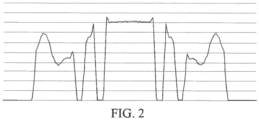
- FIG. 2 illustrates a computer simulation of a comprehensive wear model showing the amount from various aircraft activities such as touch down, taxing, turning.
- the central part of the tire tread has the greatest wear.
- the outer lateral ends of the tire tread near the shoulder also have high wear.
- the state of the art of high wear resistant tire treads is to select tread compounds that have high stiffness or high abrasion resistance for improved wear resistance.
- the present inventors have discovered an improved wear resistant tread that is contrary to the state of the art.
- the invention relates to a tire in accordance with claim 1.
- the invention provides in a first preferred aspect a pneumatic tire having a tread with a ground engaging outer surface, the tread having a first tread zone and a second tread zone, wherein the first tread zone includes a central portion of the tread and the second tread zone is located adjacent the first tread zone and on each lateral end of the tread, wherein the first tread zone is formed of a first rubber compound and the second tread zone is formed of a second rubber compound, wherein the first rubber compound has a G' (at 50% strain) in the range of 1.6 to 1.8 MPa.
- the invention provides in a second preferred aspect a pneumatic tire having a tread with a ground engaging outer surface, the tread having a first tread zone and a second tread zone, wherein the first tread zone includes a central portion of the tread and the second tread zone is located adjacent the first tread zone and on each lateral end of the tread, wherein the first tread zone is formed of a first rubber compound and the second tread zone is formed of a second rubber compound, wherein the second rubber compound has a G' (at 100% strain) in the range of 0.80 to 0.83 MPa.
- Carcass means the tire structure apart from the belt structure, tread, undertread, and sidewall rubber over the plies, but including the beads.
- “Circumferential” means lines or directions extending along the perimeter of the surface of the annular tread perpendicular to the axial direction.
- Core means one of the reinforcement strands of which the plies in the tire are comprised.
- Equatorial plane and EP mean the plane perpendicular to the tire's axis of rotation and passing through the center of its tread.
- Ply means a continuous layer of rubber-coated parallel cords.
- Ring and radially mean directions radially toward or away from the axis of rotation of the tire.
- Ring-ply tire means a belted or circumferentially restricted pneumatic tire in which the ply cords which extend from bead to bead are laid at cord angles between 65° and 90° with respect to the equatorial plane of the tire.
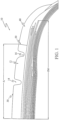
- FIG. 1 illustrates a cross-sectional view of one half of a pneumatic tire tread 10 of the present invention.
- the tire is symmetrical about the mid-circumferential plane so that only one half is illustrated.
- the tire tread 10 is for an aircraft tire, although the invention is also applicable to other uses such as truck or off the road tires.
- the tire tread 10 defines an outer running surface 12 that includes a plurality of grooves 14, 16 separated by tread blocks or ribs.
- the tire tread 10 is zoned and has a first or central tread zone 30 formed of a first rubber compound and is located on the central or crown portion of the tire tread 10.
- the tire tread 10 further comprises a second or shoulder tread zone 40 formed of a second rubber compound.
- the second tread zone 40 is located axially outward of the first or central tread zone 30 on each lateral end of the tire tread 10.
- the second tread zone 40 extends from a tire tread interface 50 to the shoulder region terminating at the sidewall.
- FIG. 2 illustrates a computer simulation of a comprehensive wear model illustrating the amount of wear caused by events such as takeoff, landing (touch down) taxing, turning, and braking.
- events such as takeoff, landing (touch down) taxing, turning, and braking.
- FIG. 2 in the shoulder tread zone 40 at the outer lateral ends of the tire tread 10, there is shown a large increase in wear.
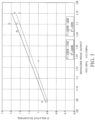
- FIG. 3 illustrates that shoulder wear for an aircraft tire correlates strongly with high strain G', or G' (measured at 50%-100% strain) with an R 2 >0.8.
- G' is the dynamic storage modulus and is a measurement of the viscoelastic properties of rubber compounds at various strain levels. G' is obtained using a Rubber Process Analyzer as RPA 2000 TM from the Alpha Technologies. These measurements are made on green rubber. Using the RPA 2000 TM , a strain sweep at 100°C at 1 Hz over a range of from 1% to 100% strain may be made.
- FIG. 3 illustrates the shoulder wear rate for various compounds having different stiffness levels.
- FIG. 3 illustrates that the shoulder wear rate is lowest for the softer compounds, i.e., lower G' values at high strain.
- G' of the second rubber compound for the shoulder or second tread zone 40 is selected to have a G' (at 100% strain) in the range of from 0.81 to 0.83 MPa, and more preferably 0.82 MPa.
- G' of the second rubber compound for the shoulder or second tread zone 40 is selected to have a G' (at 50% strain) in the range of 1.024 to 1.028 MPa, and more preferably 1.026 MPa.
- FIG. 4 illustrates the centerline wear rate for the tire tread 10 versus G' at various strain levels. From FIG. 4 , it has been determined that centerline wear correlates strongly with G' at 100% strain. Centerline wear is reduced for compounds higher in stiffness, i.e., higher values of G' (at 100% strain). Thus, for the first or central tread zone 30 it is preferred that the G' (100%) of the first rubber compound be in the range of 1.2 to 1.4 MPa, and more preferably 1.3 MPa. Additionally, for the first or central tread zone 30 it is preferred that the G' (at 50% strain) of the first rubber compound be in the range of 1.6 to 1.8 MPa, more preferably, 1.7 MPa.
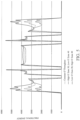
- FIG. 5 illustrates the overall wear rate of the tire tread 10 using first and second tread zones 30, 40 for different types of compounds.
- tread zoning improves the wear balance of the tire tread 10, while slightly improving centerline tread wear.
- a first or central tread zone 30 formed of a first rubber compound having a G' (50%) at least 150% greater than the G' (at 50% strain) of the second rubber compound, and more preferably, at least 170% greater than the G' (at 50% strain) of the second rubber compound.
- the first rubber compound is selected to have a greater stiffness than the second rubber compound so as to provide the tread with greater wear resistance along the first or central tread zone 30, and the second rubber compound provides the tread with a softer compound that reduces shoulder wear.
- the interface 50 or dividing line between the first and second tread zones 30, 40 is determined from modeling analysis such as shown in FIG. 2 .
- the tread wear is highest at the outer lateral ends of the tread, and lower in the central portion of the tread.
- the first or central tread zone 30 is preferably at least 50-70% of the total tread arc width, and the combined outer lateral ends are preferably at least 30-50% of the total tread arc width.
Landscapes
- Engineering & Computer Science (AREA)
- Mechanical Engineering (AREA)
- Aviation & Aerospace Engineering (AREA)
- Computer Hardware Design (AREA)
- General Engineering & Computer Science (AREA)
- Tires In General (AREA)
Abstract
Description
- This invention relates to pneumatic tires, and more particularly, to high-speed heavy load tires such as those used on aircraft.
- Current tire design drivers for an aircraft tire include designing the tire for high wear resistance.
FIG. 2 illustrates a computer simulation of a comprehensive wear model showing the amount from various aircraft activities such as touch down, taxing, turning. The central part of the tire tread has the greatest wear. The outer lateral ends of the tire tread near the shoulder also have high wear. The state of the art of high wear resistant tire treads is to select tread compounds that have high stiffness or high abrasion resistance for improved wear resistance. However, the present inventors have discovered an improved wear resistant tread that is contrary to the state of the art. - The invention relates to a tire in accordance with
claim 1. - Dependent claims refer to preferred embodiments of the invention.
- The invention provides in a first preferred aspect a pneumatic tire having a tread with a ground engaging outer surface, the tread having a first tread zone and a second tread zone, wherein the first tread zone includes a central portion of the tread and the second tread zone is located adjacent the first tread zone and on each lateral end of the tread, wherein the first tread zone is formed of a first rubber compound and the second tread zone is formed of a second rubber compound, wherein the first rubber compound has a G' (at 50% strain) in the range of 1.6 to 1.8 MPa.
- The invention provides in a second preferred aspect a pneumatic tire having a tread with a ground engaging outer surface, the tread having a first tread zone and a second tread zone, wherein the first tread zone includes a central portion of the tread and the second tread zone is located adjacent the first tread zone and on each lateral end of the tread, wherein the first tread zone is formed of a first rubber compound and the second tread zone is formed of a second rubber compound, wherein the second rubber compound has a G' (at 100% strain) in the range of 0.80 to 0.83 MPa.
- "Carcass" means the tire structure apart from the belt structure, tread, undertread, and sidewall rubber over the plies, but including the beads.
- "Circumferential" means lines or directions extending along the perimeter of the surface of the annular tread perpendicular to the axial direction.
- "Cord" means one of the reinforcement strands of which the plies in the tire are comprised.
- "Equatorial plane" and "EP" mean the plane perpendicular to the tire's axis of rotation and passing through the center of its tread.
- "Ply" means a continuous layer of rubber-coated parallel cords.
- "Radial" and "radially" mean directions radially toward or away from the axis of rotation of the tire.
- "Radial-ply tire" means a belted or circumferentially restricted pneumatic tire in which the ply cords which extend from bead to bead are laid at cord angles between 65° and 90° with respect to the equatorial plane of the tire.
- The invention will be described by way of example and with reference to the accompanying drawings in which:
-
FIG. 1 is a schematic cross-sectional view of a first embodiment of half of a zoned tire tread according to the invention; -
FIG. 2 is a computer model plot of tire tread wear indicator vs. y-coordinate; -
FIG. 3 is a computer model plot of relative G' vs. shoulder wear; -
FIG. 4 is a computer model plot of relative G' vs. centerline tread wear; and -
FIG. 5 is a computer model plot of overall wear of the tread having three different zoned tread compositions. -
FIG. 1 illustrates a cross-sectional view of one half of apneumatic tire tread 10 of the present invention. The tire is symmetrical about the mid-circumferential plane so that only one half is illustrated. As shown, thetire tread 10 is for an aircraft tire, although the invention is also applicable to other uses such as truck or off the road tires. - The
tire tread 10 defines an outer runningsurface 12 that includes a plurality ofgrooves tire tread 10 is zoned and has a first orcentral tread zone 30 formed of a first rubber compound and is located on the central or crown portion of thetire tread 10. Thetire tread 10 further comprises a second orshoulder tread zone 40 formed of a second rubber compound. Thesecond tread zone 40 is located axially outward of the first orcentral tread zone 30 on each lateral end of thetire tread 10. Thesecond tread zone 40 extends from atire tread interface 50 to the shoulder region terminating at the sidewall. -
FIG. 2 illustrates a computer simulation of a comprehensive wear model illustrating the amount of wear caused by events such as takeoff, landing (touch down) taxing, turning, and braking. As shown inFIG. 2 , in theshoulder tread zone 40 at the outer lateral ends of thetire tread 10, there is shown a large increase in wear. -
FIG. 3 illustrates that shoulder wear for an aircraft tire correlates strongly with high strain G', or G' (measured at 50%-100% strain) with an R2 >0.8. G' is the dynamic storage modulus and is a measurement of the viscoelastic properties of rubber compounds at various strain levels. G' is obtained using a Rubber Process Analyzer asRPA 2000™ from the Alpha Technologies. These measurements are made on green rubber. Using theRPA 2000™, a strain sweep at 100°C at 1 Hz over a range of from 1% to 100% strain may be made. - Additionally,
FIG. 3 illustrates the shoulder wear rate for various compounds having different stiffness levels.FIG. 3 illustrates that the shoulder wear rate is lowest for the softer compounds, i.e., lower G' values at high strain. In one embodiment, G' of the second rubber compound for the shoulder orsecond tread zone 40 is selected to have a G' (at 100% strain) in the range of from 0.81 to 0.83 MPa, and more preferably 0.82 MPa. In a second embodiment, G' of the second rubber compound for the shoulder orsecond tread zone 40 is selected to have a G' (at 50% strain) in the range of 1.024 to 1.028 MPa, and more preferably 1.026 MPa. -
FIG. 4 illustrates the centerline wear rate for thetire tread 10 versus G' at various strain levels. FromFIG. 4 , it has been determined that centerline wear correlates strongly with G' at 100% strain. Centerline wear is reduced for compounds higher in stiffness, i.e., higher values of G' (at 100% strain). Thus, for the first orcentral tread zone 30 it is preferred that the G' (100%) of the first rubber compound be in the range of 1.2 to 1.4 MPa, and more preferably 1.3 MPa. Additionally, for the first orcentral tread zone 30 it is preferred that the G' (at 50% strain) of the first rubber compound be in the range of 1.6 to 1.8 MPa, more preferably, 1.7 MPa. -
FIG. 5 illustrates the overall wear rate of thetire tread 10 using first andsecond tread zones tire tread 10, while slightly improving centerline tread wear. - Accordingly, and in order to improve the overall wear rate of the
tire tread 10, it is desired to have a first orcentral tread zone 30 formed of a first rubber compound having a G' (50%) at least 150% greater than the G' (at 50% strain) of the second rubber compound, and more preferably, at least 170% greater than the G' (at 50% strain) of the second rubber compound. - The first rubber compound is selected to have a greater stiffness than the second rubber compound so as to provide the tread with greater wear resistance along the first or
central tread zone 30, and the second rubber compound provides the tread with a softer compound that reduces shoulder wear. Theinterface 50 or dividing line between the first andsecond tread zones FIG. 2 . As shown inFIG. 5 , the tread wear is highest at the outer lateral ends of the tread, and lower in the central portion of the tread. For a typical tire tread, the first orcentral tread zone 30 is preferably at least 50-70% of the total tread arc width, and the combined outer lateral ends are preferably at least 30-50% of the total tread arc width.
Claims (9)
- A pneumatic tire having a tread with an outer surface defined for ground contact, the tread having a first tread zone (30) and a second tread zone (40), wherein the first tread zone (30) includes a central portion of the tread and wherein the second tread zone (40) is located laterally adjacent the first tread zone (40), preferably on both lateral sides of the first tread zone (30), wherein the first tread zone (30) is formed of a first rubber compound and the second tread zone (40) is formed of a second rubber compound different from the first rubber compound, characterized in that the first rubber compound has a G', measured at 100°C, 1 Hz and at 50% strain in the range of from 1.6 to 1.8 MPa and/or the second rubber compound has a G', measured at 100°C, 1 Hz and 100% strain in the range of from 0.75 to 0.90 MPa.
- The tire of claim 1 wherein the first rubber compound has a G', measured at 100°C, 1 Hz and at 100% strain in the range of from 1.2 to 1.4 MPa.
- The tire of claim 1 or 2 wherein the second rubber compound has a G', measured at 100°C, 1 Hz and at 50% strain in the range of from 1 to 1.05 MPa, preferably in the range of from 1.024 to 1.028 MPa.
- The tire of at least one of the previous claims wherein the second rubber compound has a G', measured at 100°C, 1 Hz and at 100% strain in the range of from 0.80 to 0.83 MPa.
- The tire of at least one of the previous claims wherein the first rubber compound has a G', measured at 100°C, 1 Hz and at 50% strain in the range of from 1.6 to 1.7 MPa.
- The tire of at least one of the previous claims wherein the first rubber compound has a G', measured at 100°C, 1 Hz and at 50% strain, at least 150% or at least 170% greater than the G', measured at 100°C, 1 Hz and at 50% strain, of the second rubber compound.
- The tire of at least one of the previous claims wherein the axial width of the first tread zone (30) is in the range of 50-70%, preferably 60% to 70%, of the axial width of the tread.
- The tire of at least one of the previous claims wherein the second tread zone (40) is located laterally adjacent the first tread zone (40) on both lateral sides of the first tread zone (30) and has a total axial width in the range of from 50% to 30%, preferably 40% to 30%, of the tread.
- The tire of at least one of the previous claims wherein the tire (10) is an aircraft tire.
Applications Claiming Priority (2)
| Application Number | Priority Date | Filing Date | Title |
|---|---|---|---|
| US202163260754P | 2021-08-31 | 2021-08-31 | |
| US17/810,017 US12583261B2 (en) | 2021-08-31 | 2022-06-30 | Aircraft tire with zoned tread |
Publications (2)
| Publication Number | Publication Date |
|---|---|
| EP4140773A1 true EP4140773A1 (en) | 2023-03-01 |
| EP4140773B1 EP4140773B1 (en) | 2025-02-19 |
Family
ID=83151647
Family Applications (1)
| Application Number | Title | Priority Date | Filing Date |
|---|---|---|---|
| EP22192527.4A Active EP4140773B1 (en) | 2021-08-31 | 2022-08-29 | Aircraft tire with zoned tread |
Country Status (5)
| Country | Link |
|---|---|
| US (1) | US12583261B2 (en) |
| EP (1) | EP4140773B1 (en) |
| JP (1) | JP2023035938A (en) |
| KR (2) | KR102910400B1 (en) |
| CN (2) | CN115723484B (en) |
Citations (3)
| Publication number | Priority date | Publication date | Assignee | Title |
|---|---|---|---|---|
| US6959744B2 (en) * | 2002-12-20 | 2005-11-01 | The Goodyear Tire & Rubber Company | Tire with rubber tread of diverse zoned rubber compositions |
| US9809058B2 (en) * | 2014-08-27 | 2017-11-07 | The Goodyear Tire & Rubber Company | Tire with rubber tread of intermedial and lateral zones with path of least electrical resistance |
| US20180326788A1 (en) * | 2015-11-19 | 2018-11-15 | Compagnie Generale Des Etablissements Michelin | Tread For An Aircraft Tire |
Family Cites Families (13)
| Publication number | Priority date | Publication date | Assignee | Title |
|---|---|---|---|---|
| JPS5850883B2 (en) * | 1979-12-31 | 1983-11-12 | 東洋ゴム工業株式会社 | A pneumatic tire with a tread made of at least two types of rubber |
| JPS61111804U (en) * | 1984-12-27 | 1986-07-15 | ||
| JPH09164810A (en) * | 1995-12-14 | 1997-06-24 | Sumitomo Rubber Ind Ltd | High load tire |
| WO2000026044A1 (en) * | 1998-11-02 | 2000-05-11 | The Goodyear Tire & Rubber Company | Pneumatic tire having specified bead structure |
| US7307121B2 (en) * | 2004-03-19 | 2007-12-11 | The Goodyear Tire & Rubber Company | Silica containing rubber composition |
| US20080066838A1 (en) * | 2006-09-08 | 2008-03-20 | Ping Zhang | Carbon black-rich rubber composition containing particulate hydrophylic water absorbing polymer and tire with tread thereof |
| US7750070B2 (en) * | 2006-12-19 | 2010-07-06 | The Goodyear Tire & Rubber Company | Process for production of clay nanocomposite |
| JP4383466B2 (en) * | 2007-06-13 | 2009-12-16 | 株式会社ブリヂストン | Pneumatic tires for motorcycles |
| US9186933B2 (en) * | 2012-10-12 | 2015-11-17 | The Goodyear Tire & Rubber Company | Functionalized polymer, rubber composition and pneumatic tire |
| FR3044008B1 (en) * | 2015-11-19 | 2017-12-08 | Michelin & Cie | TIRE TREAD FOR TIRE AIRCRAFT |
| EP3700760B1 (en) | 2017-10-26 | 2023-01-18 | Pirelli Tyre S.p.A. | Motorcycle tyre |
| SK932021A3 (en) * | 2019-06-05 | 2022-04-27 | BEYOND LOTUS LLC c/o Corporation Service Company | a process for preparing a composite containing an elastomer and a filler |
| JP7675514B2 (en) * | 2020-11-20 | 2025-05-13 | 株式会社ブリヂストン | tire |
-
2022
- 2022-06-30 US US17/810,017 patent/US12583261B2/en active Active
- 2022-08-25 JP JP2022133862A patent/JP2023035938A/en active Pending
- 2022-08-26 KR KR1020220107792A patent/KR102910400B1/en active Active
- 2022-08-29 EP EP22192527.4A patent/EP4140773B1/en active Active
- 2022-08-31 CN CN202211056426.XA patent/CN115723484B/en active Active
- 2022-08-31 CN CN202511486673.7A patent/CN120986100A/en active Pending
-
2026
- 2026-01-05 KR KR1020260000833A patent/KR20260018114A/en active Pending
Patent Citations (3)
| Publication number | Priority date | Publication date | Assignee | Title |
|---|---|---|---|---|
| US6959744B2 (en) * | 2002-12-20 | 2005-11-01 | The Goodyear Tire & Rubber Company | Tire with rubber tread of diverse zoned rubber compositions |
| US9809058B2 (en) * | 2014-08-27 | 2017-11-07 | The Goodyear Tire & Rubber Company | Tire with rubber tread of intermedial and lateral zones with path of least electrical resistance |
| US20180326788A1 (en) * | 2015-11-19 | 2018-11-15 | Compagnie Generale Des Etablissements Michelin | Tread For An Aircraft Tire |
Also Published As
| Publication number | Publication date |
|---|---|
| CN115723484B (en) | 2025-11-04 |
| CN115723484A (en) | 2023-03-03 |
| US20230060672A1 (en) | 2023-03-02 |
| JP2023035938A (en) | 2023-03-13 |
| KR20260018114A (en) | 2026-02-06 |
| CN120986100A (en) | 2025-11-21 |
| US12583261B2 (en) | 2026-03-24 |
| KR20230032958A (en) | 2023-03-07 |
| KR102910400B1 (en) | 2026-01-08 |
| EP4140773B1 (en) | 2025-02-19 |
Similar Documents
| Publication | Publication Date | Title |
|---|---|---|
| CN104853935B (en) | There is the tire of low-rolling-resistance | |
| EP0318128B1 (en) | Pneumatic radial tyre for heavy loads | |
| US7500501B2 (en) | Crown reinforcement for a radial tire | |
| CN104822542B (en) | Tire including the tyre surface being made up of multiple elastomer blend | |
| CN111655512B (en) | Tire with undertread comprising multiple materials | |
| US20090229719A1 (en) | Replacement tread for a truck racing tire | |
| JP6052227B2 (en) | Rehabilitation tire | |
| EP4371785A1 (en) | Aircraft radial tire | |
| US20200189322A1 (en) | Tire tread | |
| EP4140773B1 (en) | Aircraft tire with zoned tread | |
| US12434509B2 (en) | Aircraft tire with zoned tread | |
| JPH11348509A (en) | Heavy load resistant pneumatic radial tire | |
| US20040112493A1 (en) | Truck steer tire | |
| JP6287276B2 (en) | Rehabilitation tire | |
| EP0967093B1 (en) | Heavy-duty radial tyre | |
| JP5552906B2 (en) | Pneumatic tire | |
| JPH09202114A (en) | Pneumatic tire for heavy load | |
| CN116323254A (en) | Tires with treads made from various elastomeric compounds | |
| JP2003326913A (en) | Pneumatic radial tire for heavy load | |
| JP2001047813A (en) | Pneumatic radial tire for heavy load | |
| WO2012066724A1 (en) | Pneumatic radial tire for use on passenger vehicle | |
| JPH07125507A (en) | Radial tire for heavy load |
Legal Events
| Date | Code | Title | Description |
|---|---|---|---|
| PUAI | Public reference made under article 153(3) epc to a published international application that has entered the european phase |
Free format text: ORIGINAL CODE: 0009012 |
|
| STAA | Information on the status of an ep patent application or granted ep patent |
Free format text: STATUS: THE APPLICATION HAS BEEN PUBLISHED |
|
| AK | Designated contracting states |
Kind code of ref document: A1 Designated state(s): AL AT BE BG CH CY CZ DE DK EE ES FI FR GB GR HR HU IE IS IT LI LT LU LV MC MK MT NL NO PL PT RO RS SE SI SK SM TR |
|
| STAA | Information on the status of an ep patent application or granted ep patent |
Free format text: STATUS: REQUEST FOR EXAMINATION WAS MADE |
|
| 17P | Request for examination filed |
Effective date: 20230901 |
|
| RBV | Designated contracting states (corrected) |
Designated state(s): AL AT BE BG CH CY CZ DE DK EE ES FI FR GB GR HR HU IE IS IT LI LT LU LV MC MK MT NL NO PL PT RO RS SE SI SK SM TR |
|
| GRAP | Despatch of communication of intention to grant a patent |
Free format text: ORIGINAL CODE: EPIDOSNIGR1 |
|
| STAA | Information on the status of an ep patent application or granted ep patent |
Free format text: STATUS: GRANT OF PATENT IS INTENDED |
|
| INTG | Intention to grant announced |
Effective date: 20240912 |
|
| GRAS | Grant fee paid |
Free format text: ORIGINAL CODE: EPIDOSNIGR3 |
|
| GRAA | (expected) grant |
Free format text: ORIGINAL CODE: 0009210 |
|
| STAA | Information on the status of an ep patent application or granted ep patent |
Free format text: STATUS: THE PATENT HAS BEEN GRANTED |
|
| AK | Designated contracting states |
Kind code of ref document: B1 Designated state(s): AL AT BE BG CH CY CZ DE DK EE ES FI FR GB GR HR HU IE IS IT LI LT LU LV MC MK MT NL NO PL PT RO RS SE SI SK SM TR |
|
| REG | Reference to a national code |
Ref country code: GB Ref legal event code: FG4D |
|
| REG | Reference to a national code |
Ref country code: CH Ref legal event code: EP |
|
| REG | Reference to a national code |
Ref country code: IE Ref legal event code: FG4D |
|
| REG | Reference to a national code |
Ref country code: DE Ref legal event code: R096 Ref document number: 602022010739 Country of ref document: DE |
|
| REG | Reference to a national code |
Ref country code: NL Ref legal event code: MP Effective date: 20250219 |
|
| PG25 | Lapsed in a contracting state [announced via postgrant information from national office to epo] |
Ref country code: RS Free format text: LAPSE BECAUSE OF FAILURE TO SUBMIT A TRANSLATION OF THE DESCRIPTION OR TO PAY THE FEE WITHIN THE PRESCRIBED TIME-LIMIT Effective date: 20250519 |
|
| PG25 | Lapsed in a contracting state [announced via postgrant information from national office to epo] |
Ref country code: FI Free format text: LAPSE BECAUSE OF FAILURE TO SUBMIT A TRANSLATION OF THE DESCRIPTION OR TO PAY THE FEE WITHIN THE PRESCRIBED TIME-LIMIT Effective date: 20250219 |
|
| PG25 | Lapsed in a contracting state [announced via postgrant information from national office to epo] |
Ref country code: PL Free format text: LAPSE BECAUSE OF FAILURE TO SUBMIT A TRANSLATION OF THE DESCRIPTION OR TO PAY THE FEE WITHIN THE PRESCRIBED TIME-LIMIT Effective date: 20250219 |
|
| PG25 | Lapsed in a contracting state [announced via postgrant information from national office to epo] |
Ref country code: ES Free format text: LAPSE BECAUSE OF FAILURE TO SUBMIT A TRANSLATION OF THE DESCRIPTION OR TO PAY THE FEE WITHIN THE PRESCRIBED TIME-LIMIT Effective date: 20250219 |
|
| REG | Reference to a national code |
Ref country code: LT Ref legal event code: MG9D |
|
| PG25 | Lapsed in a contracting state [announced via postgrant information from national office to epo] |
Ref country code: NO Free format text: LAPSE BECAUSE OF FAILURE TO SUBMIT A TRANSLATION OF THE DESCRIPTION OR TO PAY THE FEE WITHIN THE PRESCRIBED TIME-LIMIT Effective date: 20250519 Ref country code: IS Free format text: LAPSE BECAUSE OF FAILURE TO SUBMIT A TRANSLATION OF THE DESCRIPTION OR TO PAY THE FEE WITHIN THE PRESCRIBED TIME-LIMIT Effective date: 20250619 |
|
| PG25 | Lapsed in a contracting state [announced via postgrant information from national office to epo] |
Ref country code: NL Free format text: LAPSE BECAUSE OF FAILURE TO SUBMIT A TRANSLATION OF THE DESCRIPTION OR TO PAY THE FEE WITHIN THE PRESCRIBED TIME-LIMIT Effective date: 20250219 |
|
| PG25 | Lapsed in a contracting state [announced via postgrant information from national office to epo] |
Ref country code: HR Free format text: LAPSE BECAUSE OF FAILURE TO SUBMIT A TRANSLATION OF THE DESCRIPTION OR TO PAY THE FEE WITHIN THE PRESCRIBED TIME-LIMIT Effective date: 20250219 |
|
| PG25 | Lapsed in a contracting state [announced via postgrant information from national office to epo] |
Ref country code: PT Free format text: LAPSE BECAUSE OF FAILURE TO SUBMIT A TRANSLATION OF THE DESCRIPTION OR TO PAY THE FEE WITHIN THE PRESCRIBED TIME-LIMIT Effective date: 20250620 Ref country code: LV Free format text: LAPSE BECAUSE OF FAILURE TO SUBMIT A TRANSLATION OF THE DESCRIPTION OR TO PAY THE FEE WITHIN THE PRESCRIBED TIME-LIMIT Effective date: 20250219 |
|
| PG25 | Lapsed in a contracting state [announced via postgrant information from national office to epo] |
Ref country code: BG Free format text: LAPSE BECAUSE OF FAILURE TO SUBMIT A TRANSLATION OF THE DESCRIPTION OR TO PAY THE FEE WITHIN THE PRESCRIBED TIME-LIMIT Effective date: 20250219 Ref country code: GR Free format text: LAPSE BECAUSE OF FAILURE TO SUBMIT A TRANSLATION OF THE DESCRIPTION OR TO PAY THE FEE WITHIN THE PRESCRIBED TIME-LIMIT Effective date: 20250520 |
|
| REG | Reference to a national code |
Ref country code: AT Ref legal event code: MK05 Ref document number: 1767974 Country of ref document: AT Kind code of ref document: T Effective date: 20250219 |
|
| PG25 | Lapsed in a contracting state [announced via postgrant information from national office to epo] |
Ref country code: SE Free format text: LAPSE BECAUSE OF FAILURE TO SUBMIT A TRANSLATION OF THE DESCRIPTION OR TO PAY THE FEE WITHIN THE PRESCRIBED TIME-LIMIT Effective date: 20250219 |
|
| PG25 | Lapsed in a contracting state [announced via postgrant information from national office to epo] |
Ref country code: SM Free format text: LAPSE BECAUSE OF FAILURE TO SUBMIT A TRANSLATION OF THE DESCRIPTION OR TO PAY THE FEE WITHIN THE PRESCRIBED TIME-LIMIT Effective date: 20250219 |
|
| PG25 | Lapsed in a contracting state [announced via postgrant information from national office to epo] |
Ref country code: DK Free format text: LAPSE BECAUSE OF FAILURE TO SUBMIT A TRANSLATION OF THE DESCRIPTION OR TO PAY THE FEE WITHIN THE PRESCRIBED TIME-LIMIT Effective date: 20250219 |
|
| PGFP | Annual fee paid to national office [announced via postgrant information from national office to epo] |
Ref country code: DE Payment date: 20250724 Year of fee payment: 4 |
|
| PGFP | Annual fee paid to national office [announced via postgrant information from national office to epo] |
Ref country code: IT Payment date: 20250901 Year of fee payment: 4 |
|
| PG25 | Lapsed in a contracting state [announced via postgrant information from national office to epo] |
Ref country code: AT Free format text: LAPSE BECAUSE OF FAILURE TO SUBMIT A TRANSLATION OF THE DESCRIPTION OR TO PAY THE FEE WITHIN THE PRESCRIBED TIME-LIMIT Effective date: 20250219 |
|
| PGFP | Annual fee paid to national office [announced via postgrant information from national office to epo] |
Ref country code: FR Payment date: 20250725 Year of fee payment: 4 |
|
| PG25 | Lapsed in a contracting state [announced via postgrant information from national office to epo] |
Ref country code: EE Free format text: LAPSE BECAUSE OF FAILURE TO SUBMIT A TRANSLATION OF THE DESCRIPTION OR TO PAY THE FEE WITHIN THE PRESCRIBED TIME-LIMIT Effective date: 20250219 Ref country code: CZ Free format text: LAPSE BECAUSE OF FAILURE TO SUBMIT A TRANSLATION OF THE DESCRIPTION OR TO PAY THE FEE WITHIN THE PRESCRIBED TIME-LIMIT Effective date: 20250219 |
|
| PG25 | Lapsed in a contracting state [announced via postgrant information from national office to epo] |
Ref country code: RO Free format text: LAPSE BECAUSE OF FAILURE TO SUBMIT A TRANSLATION OF THE DESCRIPTION OR TO PAY THE FEE WITHIN THE PRESCRIBED TIME-LIMIT Effective date: 20250219 |
|
| PG25 | Lapsed in a contracting state [announced via postgrant information from national office to epo] |
Ref country code: SK Free format text: LAPSE BECAUSE OF FAILURE TO SUBMIT A TRANSLATION OF THE DESCRIPTION OR TO PAY THE FEE WITHIN THE PRESCRIBED TIME-LIMIT Effective date: 20250219 |
|
| REG | Reference to a national code |
Ref country code: DE Ref legal event code: R097 Ref document number: 602022010739 Country of ref document: DE |
|
| PLBE | No opposition filed within time limit |
Free format text: ORIGINAL CODE: 0009261 |
|
| STAA | Information on the status of an ep patent application or granted ep patent |
Free format text: STATUS: NO OPPOSITION FILED WITHIN TIME LIMIT |
|
| REG | Reference to a national code |
Ref country code: CH Ref legal event code: L10 Free format text: ST27 STATUS EVENT CODE: U-0-0-L10-L00 (AS PROVIDED BY THE NATIONAL OFFICE) Effective date: 20251231 |
|
| 26N | No opposition filed |
Effective date: 20251120 |
|
| REG | Reference to a national code |
Ref country code: CH Ref legal event code: H13 Free format text: ST27 STATUS EVENT CODE: U-0-0-H10-H13 (AS PROVIDED BY THE NATIONAL OFFICE) Effective date: 20260324 |
|
| PG25 | Lapsed in a contracting state [announced via postgrant information from national office to epo] |
Ref country code: MC Free format text: LAPSE BECAUSE OF FAILURE TO SUBMIT A TRANSLATION OF THE DESCRIPTION OR TO PAY THE FEE WITHIN THE PRESCRIBED TIME-LIMIT Effective date: 20250219 |
|
| PG25 | Lapsed in a contracting state [announced via postgrant information from national office to epo] |
Ref country code: LU Free format text: LAPSE BECAUSE OF NON-PAYMENT OF DUE FEES Effective date: 20250829 |
|
| PG25 | Lapsed in a contracting state [announced via postgrant information from national office to epo] |
Ref country code: CH Free format text: LAPSE BECAUSE OF NON-PAYMENT OF DUE FEES Effective date: 20250831 |