EP4140320A1 - Bowel movement improving composition comprising allomyrina dichotoma larva extract - Google Patents
Bowel movement improving composition comprising allomyrina dichotoma larva extract Download PDFInfo
- Publication number
- EP4140320A1 EP4140320A1 EP21793021.3A EP21793021A EP4140320A1 EP 4140320 A1 EP4140320 A1 EP 4140320A1 EP 21793021 A EP21793021 A EP 21793021A EP 4140320 A1 EP4140320 A1 EP 4140320A1
- Authority
- EP
- European Patent Office
- Prior art keywords
- larva
- tenebrionidae
- extract
- constipation
- composition
- Prior art date
- Legal status (The legal status is an assumption and is not a legal conclusion. Google has not performed a legal analysis and makes no representation as to the accuracy of the status listed.)
- Pending
Links
Images

Classifications
-
- A—HUMAN NECESSITIES
- A23—FOODS OR FOODSTUFFS; TREATMENT THEREOF, NOT COVERED BY OTHER CLASSES
- A23L—FOODS, FOODSTUFFS OR NON-ALCOHOLIC BEVERAGES, NOT OTHERWISE PROVIDED FOR; PREPARATION OR TREATMENT THEREOF
- A23L35/00—Foods or foodstuffs not provided for in groups A23L5/00 - A23L33/00; Preparation or treatment thereof
-
- A—HUMAN NECESSITIES
- A61—MEDICAL OR VETERINARY SCIENCE; HYGIENE
- A61K—PREPARATIONS FOR MEDICAL, DENTAL OR TOILETRY PURPOSES
- A61K35/00—Medicinal preparations containing materials or reaction products thereof with undetermined constitution
- A61K35/56—Materials from animals other than mammals
- A61K35/63—Arthropods
- A61K35/64—Insects, e.g. bees, wasps or fleas
-
- A—HUMAN NECESSITIES
- A23—FOODS OR FOODSTUFFS; TREATMENT THEREOF, NOT COVERED BY OTHER CLASSES
- A23L—FOODS, FOODSTUFFS OR NON-ALCOHOLIC BEVERAGES, NOT OTHERWISE PROVIDED FOR; PREPARATION OR TREATMENT THEREOF
- A23L33/00—Modifying nutritive qualities of foods; Dietetic products; Preparation or treatment thereof
- A23L33/10—Modifying nutritive qualities of foods; Dietetic products; Preparation or treatment thereof using additives
-
- A—HUMAN NECESSITIES
- A23—FOODS OR FOODSTUFFS; TREATMENT THEREOF, NOT COVERED BY OTHER CLASSES
- A23L—FOODS, FOODSTUFFS OR NON-ALCOHOLIC BEVERAGES, NOT OTHERWISE PROVIDED FOR; PREPARATION OR TREATMENT THEREOF
- A23L33/00—Modifying nutritive qualities of foods; Dietetic products; Preparation or treatment thereof
- A23L33/10—Modifying nutritive qualities of foods; Dietetic products; Preparation or treatment thereof using additives
- A23L33/105—Plant extracts, their artificial duplicates or their derivatives
-
- A—HUMAN NECESSITIES
- A61—MEDICAL OR VETERINARY SCIENCE; HYGIENE
- A61P—SPECIFIC THERAPEUTIC ACTIVITY OF CHEMICAL COMPOUNDS OR MEDICINAL PREPARATIONS
- A61P1/00—Drugs for disorders of the alimentary tract or the digestive system
- A61P1/10—Laxatives
-
- A—HUMAN NECESSITIES
- A23—FOODS OR FOODSTUFFS; TREATMENT THEREOF, NOT COVERED BY OTHER CLASSES
- A23V—INDEXING SCHEME RELATING TO FOODS, FOODSTUFFS OR NON-ALCOHOLIC BEVERAGES AND LACTIC OR PROPIONIC ACID BACTERIA USED IN FOODSTUFFS OR FOOD PREPARATION
- A23V2002/00—Food compositions, function of food ingredients or processes for food or foodstuffs
-
- A—HUMAN NECESSITIES
- A23—FOODS OR FOODSTUFFS; TREATMENT THEREOF, NOT COVERED BY OTHER CLASSES
- A23V—INDEXING SCHEME RELATING TO FOODS, FOODSTUFFS OR NON-ALCOHOLIC BEVERAGES AND LACTIC OR PROPIONIC ACID BACTERIA USED IN FOODSTUFFS OR FOOD PREPARATION
- A23V2200/00—Function of food ingredients
- A23V2200/30—Foods, ingredients or supplements having a functional effect on health
- A23V2200/32—Foods, ingredients or supplements having a functional effect on health having an effect on the health of the digestive tract
-
- A—HUMAN NECESSITIES
- A23—FOODS OR FOODSTUFFS; TREATMENT THEREOF, NOT COVERED BY OTHER CLASSES
- A23V—INDEXING SCHEME RELATING TO FOODS, FOODSTUFFS OR NON-ALCOHOLIC BEVERAGES AND LACTIC OR PROPIONIC ACID BACTERIA USED IN FOODSTUFFS OR FOOD PREPARATION
- A23V2300/00—Processes
- A23V2300/14—Extraction
Definitions
- the present invention relates to a composition comprising a Tenebrionidae larva extract for improving a bowel movement function.
- Bowel movement occurs through the relaxation and contraction (bowel movement reflex) of the intestines and muscles reflexively while the stimulation of the rectal mucosa by the intestinal contents transferred into the rectum is transmitted to the center to go to the toilet.
- the bowel movement function is damaged according to autonomic dysfunction occurring in the lower digestive tract, excessive water absorption in the intestinal tract, decreased secretion of intestinal juice, movement disorders, gastrointestinal psychosomatic disease (e.g., irritable bowel syndrome), a decreased bowel movement reflex function, etc., large and small diseases or symptoms including constipation and abdominal obesity may be developed.
- various medicines and functional foods for activating the bowel movement function and improving constipation or obesity have been sold, but there is a problem that the effect is temporary and various side effects are caused depending on a type.
- Tenebrio molitor is also commonly referred to as a mealworm, known to contain high-quality nutrient ingredients and is an insect registered as a food ingredient in Korea. Accordingly, there was an attempt to use the Tenebrionidae larva as a use for ingestion or a functional material. In this regard, there is a study result of confirming antioxidant and hepatoprotective effects of a protein hydrolyzate of Tenebrio molitor larva ( Korean Patent Registration No. 1966503 ), but attempts to use Tenebrionidae larva in relation to improvement of the bowel movement function are insufficient. In particular, there is no result of directly studying the efficacy on how the Tenebrionidae larva can help in improving constipation or obesity.
- the present inventors experimentally confirmed the efficacy of a Tenebrionidae larva extract for improving a bowel movement function and activating intestinal motility, and newly confirmed that the Tenebrionidae larva can be used for preventing, improving or treating constipation or obesity.
- An object of the present invention is to provide a composition for improving a bowel movement function through an increase in fecal weight, an increase in water content in feces, an increase in gastrointestinal transport capacity, and an increase in length and area of a mucous membrane.
- Another object of the present invention is to provide a method for improving a bowel movement function comprising administering a solvent extract of Tenebrionidae larva to a subject.
- Yet another object of the present invention is to provide a solvent extract of Tenebrionidae larva used for improving a bowel movement function.
- Yet another object of the present invention is to provide the use of a solvent extract of Tenebrionidae larva to be used for preparing products, foods, or drugs for improving a bowel movement function.
- Yet another object of the present invention is to provide a composition for improving constipation.
- Yet another object of the present invention is to provide a method for improving constipation comprising administering a solvent extract of Tenebrionidae larva to a subject.
- Yet another object of the present invention is to provide a solvent extract of Tenebrionidae larva to be used for improving constipation.
- Yet another object of the present invention is to provide the use of a solvent extract of Tenebrionidae larva to be used for preparing products, foods, or drugs for improving constipation.
- Yet another object of the present invention is to provide a health functional food for improving constipation.
- Yet another object of the present invention is to provide a composition for weight loss and a health functional food for weight loss comprising the same.
- an aspect of the present invention provides a composition for improving a bowel movement function comprising a solvent extract of Tenebrionidae larva.
- Another aspect of the present invention provides a method for improving a bowel movement function comprising administering a solvent extract of Tenebrionidae larva to a subject.
- Yet another aspect of the present invention provides a solvent extract of Tenebrionidae larva to be used for improving a bowel movement function.
- Yet another aspect of the present invention provides the use of a solvent extract of Tenebrionidae larva to be used for preparing products, foods, or drugs for improving a bowel movement function.
- compositions for improving constipation comprising a solvent extract of Tenebrionidae larva.
- Yet another aspect of the present invention provides a method for improving constipation comprising administering a solvent extract of Tenebrionidae larva to a subject.
- Yet another aspect of the present invention provides a solvent extract of Tenebrionidae larva to be used for improving constipation.
- Yet another aspect of the present invention provides the use of a solvent extract of Tenebrionidae larva to be used for preparing products, foods, or drugs for improving constipation.
- Yet another aspect of the present invention provides a health functional food for improving constipation comprising a solvent extract of Tenebrionidae larva.
- Yet another aspect of the present invention provides a composition for weight loss and a health functional food weight loss comprising the same, comprising a Tenebrionidae larva extract.
- the present invention relates to a composition for improving a bowel movement function comprising a Tenebrionidae larva extract.
- the term 'improvement' refers to all actions including improvement, suppression, or delay of symptoms, and may be used interchangeably with prevention or treatment.
- the prevention may be all actions of suppressing the corresponding disease or delaying the onset thereof by administering the composition to the subject, and the treatment may be all actions of improving the symptoms of the corresponding pre-infected disease by administering the composition to the subject.
- the term ⁇ improvement of the bowel movement function' refers to all actions of maintaining a normal bowel movement condition or improving an abnormal bowel movement condition.
- the improvement of the bowel movement function may include induction of bowel movement, facilitation of bowel movement, regular bowel movement of irregular bowel movement, an increase in water content included in feces, an increase in bowel movement, increased bowel movement, improved symptoms related to constipation or diarrhea, or prevention or improvement of weight loss or abdominal obesity, and may be used in combination with improving defecation or improving bowel movement.
- the improvement of the bowel movement function may mean an increase in fecal weight, an increase in water content in feces, an increase in gastrointestinal transport capacity, or an increase in length and area of the intestinal mucosa.
- composition of the present invention includes Tenebrionidae larva extract, and specifically, the Tenebrionidae larva extract may be included as an active ingredient of the composition.
- ⁇ Tenebrionidae' belongs to the family Tenebrionidae, Coleoptera, and includes subspecies and variants thereof.
- the Tenebrionidae of the present invention includes insects of the family Tenebrionidae that are apparent in the art and can be used for the same or similar purposes as the prevention, improvement and treatment of the present invention.
- ⁇ Tenebrionidae larva' means a larva of the family Tenebrionidae, and specifically, it may be a larva of Tenebrio molitor recognized as a food raw material.
- the term ⁇ extract' means isolating an active ingredient or specific ingredient thereof by dissolving a certain substance in a solvent, or isolating the active ingredient or specific ingredient thereof by treating a certain substance with an enzyme.
- the extract includes an extract extracted by adding an extraction solvent to the Tenebrionidae larva, and a fraction fractionated by adding a fractional solvent to the extract.
- the extract includes an enzyme extract obtained by treating the Tenebrionidae larva with an enzyme.
- the solvent extract of the Tenebrionidae larva of the present invention may be an extract using water, an organic solvent, or a mixed solvent thereof. More specifically, the solvent extract of the Tenebrionidae larva may be an extract using an organic solvent or a mixed solvent of the organic solvent and water.
- the solvent may be at least one organic solvent selected from the group consisting of alcohols having 1 to 5 carbon atoms, acetone, acetonitrile, ethyl acetate, chloroform, dichloromethane, ethyl ether, xylene and hexane, water, or a mixture thereof.
- the alcohol having 1 to 5 carbon atoms may be alcohol having 1 to 4 carbon atoms, 1 to 3 carbon atoms, 2 to 5 carbon atoms, 2 to 4 carbon atoms, 2 to 3 carbon atoms, or 1 to 2 carbon atoms, for example, ethanol, but is not limited thereto.
- the ethanol may be edible ethanol, and when extraction is performed using the ethanol as a solvent, alcohol widely used commercially may be used.
- the term 'enzyme extract' may be used in the same meaning as an enzyme analyte', ⁇ enzyme hydrolysate' or ⁇ enzyme-treated product'.
- the enzyme extract may be Tenebrionidae larva treated with protrease.
- the content of amino acids or peptides may be increased by treating the protease in an aqueous supernatant obtained by centrifuging a crushed product of Tenebrionidae larva.
- the protease may be any one or more selected from the group consisting of pepsin, trypsin, Flavourzyme TM , Protamex TM , papain, alpha chymotrypsin, and pancrease.
- Tenebrionidae larva extract may be prepared by filtration, concentration and/or drying after extraction.
- the filtration is to remove solid particles suspended from the extract to obtain only a water-soluble supernatant excluding a precipitate, and may use filtering particles using a filter such as cotton or nylon, for example, a filter having pores of 0.2 ⁇ m to 5 ⁇ m in diameter, a cryofiltration method, a centrifugation method, or the like, but is not limited thereto.
- the concentration is to increase the concentration of the solid content of the extract, and a concentrate of the extract obtained through the concentration has a feature that is easier to be used as a food material.
- the concentration may be performed by vacuum concentration, plate-type concentration, thin film concentration, etc., but is not limited thereto, and for example, may be performed at a temperature of 40°C to 60°C using a known concentrator.
- the brix of the present invention expresses the amount of solids contained in 100 g of a solution (water) as the number of grams based on saccharides (sugar), and may be used in combination with brix%, bx, and the like.
- the brix may be measured by a known method, and may be measured at room temperature such as 15°C to 35°C.
- the drying includes freeze drying, vacuum drying, hot air drying, spray drying, reduced pressure drying, spray drying, foam drying, high frequency drying, infrared drying, and the like, but is not limited thereto.
- the Tenebrionidae larva may be included in the form of a crushed product or powder thereof.
- the Tenebrionidae larva crushed product may be crushed after fasting and drying the Tenebrionidae larva.
- the composition of the present invention may be administered to mammals such as rats, mice, livestock, and humans by various routes.
- the 'administration' includes a method of delivering the composition to a system of the subject or a particular area in or on the subject.
- the administration may be performed, for example, enterally, parenterally, intravenously, intramuscularly, subcutaneously, intradermally, intranasally, orally, transdermally, endometrially, intracerebroventricularly or mucously.
- the composition may also be administered locally or systemically.
- the composition may be administered together with one or more active ingredients exhibiting the same or similar function.
- one or more additional acceptable carriers may be included.
- the meaning of ⁇ acceptable' means that it does not inhibit the activity of the active ingredient and does not have more than adaptable toxicity of an application (prescription) target.
- the 'carrier' is defined as a compound that facilitates the addition of the compound into a cell or tissue.
- the composition may be formulated using a carrier and/or excipient to be prepared in a unit dose form or prepared by pouring into a multi-dose container, and may additionally include a dispersing agent or a stabilizing agent.
- the active ingredient included in the composition may be delivered in carriers, such as colloidal suspensions, powders, saline, lipids, liposomes, microspheres, or nano spherical particles.
- These active ingredients may form or be related to a complex with a vehicle and may be delivered in vivo by using delivery systems known in the art, such as lipids, liposomes, microparticles, gold, nanoparticles, polymers, condensation reagents, polysaccharides, polyamino acids, dendrimers, saponin, adsorption enhancing substances or fatty acids.
- the carrier may include lactose, dextrose, sucrose, sorbitol, mannitol, starch, acacia gum, calcium phosphate, alginate, gelatin, calcium silicate, microcrystalline cellulose, polyvinylpyrrolidone, cellulose, water, syrup, methylcellulose, methylhydroxybenzoate, propylhydroxybenzoate, talc, magnesium stearate, mineral oil, and the like, which are generally used in preparation, but is not limited thereto.
- the carrier may further include a lubricant, a wetting agent, a sweetening agent, a flavoring agent, an emulsifying agent, a suspending agent, a preservative, and the like in addition to the above ingredients.
- the carrier may be used by mixing saline, sterile water, a Ringer's solution, buffered saline, a dextrose solution, a maltodextrin solution, glycerol, ethanol, and one or more of these components, and if necessary, other conventional additives such as antioxidants, buffers, bacteriostats, etc. may be added.
- the active ingredient (Tenebrionidae larva extract) included in the composition may be added to food as it is or used with other foods or food ingredients, and may be appropriately used according to a conventional method.
- the composition may include other ingredients as essential ingredients without particular limitation, in addition to the active ingredients. For example, like general beverages, various flavoring agents or natural carbohydrates may be included as an additional ingredient.
- natural carbohydrates may include general sugars, such as monosaccharides, for example, glucose, fructose and the like; disaccharides, for example, maltose, sucrose and the like; and polysaccharides, for example, dextrin, cyclodextrin and the like, and sugar alcohols such as xylitol, sorbitol, erythritol, and the like.
- sugar alcohols such as xylitol, sorbitol, erythritol, and the like.
- natural flavoring agents such as monosaccharides, for example, glucose, fructose and the like
- disaccharides for example, maltose, sucrose and the like
- polysaccharides for example, dextrin, cyclodextrin and the like
- sugar alcohols such as xylitol, sorbitol, erythritol, and the like.
- the ratio of the natural carbohydrates may be appropriately determined by the selection of those skilled in the art.
- the composition may include various nutrients, vitamins, minerals (electrolytes), flavoring agents such as synthetic and natural flavoring agents, coloring agents, and enhancers (cheese, chocolate, etc.), pectic acid and salts thereof, alginic acid and salts thereof, organic acid, a protective colloidal thickener, a pH adjusting agent, a stabilizer, a preservative, glycerin, alcohol, a carbonic acid agent used in a carbonated drink, and the like.
- These ingredients may be used independently or in combination, and the ratio of these additives may also be appropriately selected by those skilled in the art.
- the composition may be administered in various oral and parenteral formulations during actual clinical administration, and for formulations, the composition is formulated by using commonly used diluents or excipients, such as a filler, an extender, a binder, a wetting agent, a disintegrant, and a surfactant.
- Solid formulations for oral administration include a tablet, a pill, a powder, a granule, a capsule, and the like, and these solid formulations may be prepared by mixing at least one excipient, for example, starch, calcium carbonate, sucrose, lactose, gelatin, or the like with herbal extracts or herbal fermented products.
- lubricants such as magnesium stearate talc may be used in addition to simple excipients.
- the powder may be prepared by simply mixing the active ingredient of the present invention with a suitable pharmaceutically acceptable carrier, such as lactose, starch, microcrystalline cellulose, and the like.
- the granules may be prepared by mixing the active ingredient of the present invention, a suitable pharmaceutically acceptable carrier, and a suitable pharmaceutically acceptable binder such as polyvinylpyrrolidone and hydroxypropylcellulose, and then using a wet granulation method using a solvent such as water, ethanol, and isopropanol or a dry granulation method using a compressive force.
- the tablets may be prepared by mixing the granules with a suitable pharmaceutically acceptable lubricant such as magnesium stearate, and then tableting the mixture using a tablet machine.
- a suitable pharmaceutically acceptable lubricant such as magnesium stearate
- Liquid formulations for oral administration may correspond to suspensions, oral liquids, emulsions, syrups, and the like, and may include various excipients, for example, a wetting agent, a sweetener, an aromatic agent, a preserving agent, and the like, in addition to water and liquid paraffin which are commonly used simple diluents.
- Formulations for parenteral administration include a sterile aqueous solution, a non-aqueous solution, a suspension, an emulsion, a lyophilizing agent, and a suppository.
- propylene glycol polyethylene glycol
- vegetable oil such as olive oil
- injectable ester such as ethyl oleate, and the like
- a base of the suppository witepsol, macrogol, Tween 61, cacao butter, laurinum, glycerol, gelatin, and the like may be used.
- the active ingredient may be administered with an oral agent, an injection (e.g., intramuscular injection, intraperitoneal injection, intravenous injection, infusion, subcutaneous injection, implant), an inhalant, a nasal injection, a vaginal agent, a rectal agent, a sublingual agent, a transdermal agent, a topical agent, or the like according to a disease to be prevented, improved or treated and a condition of a subject, but is not limited thereto.
- an injection e.g., intramuscular injection, intraperitoneal injection, intravenous injection, infusion, subcutaneous injection, implant
- an inhalant e.g., a nasal injection, a vaginal agent, a rectal agent, a sublingual agent, a transdermal agent, a topical agent, or the like according to a disease to be prevented, improved or treated and a condition of a subject, but is not limited thereto.
- the active ingredient may be prepared into a suitable dosage unit formulation including a pharmaceutically acceptable carrier,
- the amount range of the Tenebrionidae larva extract as the active ingredient varies depending on the weight, age, sex, and health condition of a patient, a diet, an administration time, an administration method, an excretion rate, a target site, and the severity of disease.
- the composition when used pharmaceutically, the composition may be administered in a pharmaceutically effective dose.
- the ⁇ pharmaceutically effective dose' refers to a sufficient amount to treat the diseases at a reasonable benefit/risk ratio applicable to medical treatment.
- An effective dose level may be determined according to factors including the type and severity of disease of a patient, activity of a drug, sensitivity to a drug, a time of administration, a route of administration, an emission rate, duration of treatment, and simultaneously used drugs, and other factors well-known in the medical field.
- the effective dose is generally 0.01 mg to 5000 mg per day per 1 kg of the body weight of an administered subject, and may be administered once or several times a day at regular time intervals according to the judgment of a doctor or pharmacist, but is not limited thereto.
- the composition may be administered as an individual therapeutic agent, or administered in combination with a therapeutic agent for diseases caused by other contaminants or a therapeutic agent for improving skin aging, and may be administered simultaneously, separately, or sequentially with existing therapeutic agents, and may be administered singly or multiply. It is important to administer an amount capable of obtaining a maximum effect with a minimal amount without side effects by considering all the factors, which may be easily determined by those skilled in the art.
- the effective dose of the composition may vary depending on the age, sex, condition, and weight of a patient, absorbance of an active ingredient in vivo, an inactivation rate, an excretion rate, a disease type, and drugs to be used in combination, and may be increased or decreased according to a route of administration, the severity of obesity, sex, weight, age, and the like and may vary depending on the severity of a treating condition.
- the total daily dose may be divided and administered several times during a day.
- the daily dose may be about 0.0001 mg/kg to about 10 g/kg per day, for example, the amount of about 0.001 mg/kg to about 1 g/kg may be administered once a day.
- the administration period may be 1 day to 2 months, but the composition may be administered without limitation until the prevention or treatment effect of the disease is exhibited.
- the composition may be administered several times a day at regular time intervals, for example, separately administered 2 to 3 times a day.
- the present invention provides a method for improving a bowel movement function comprising administering a Tenebrionidae larva extract to a subject.
- the term 'subject' may be a subject including a human, or may be a subject other than the human.
- the term 'subject' may be a subject in need of administration of Tenebrionidae larva of the present invention, an extract thereof, or a composition comprising the same.
- the subject in need of the administration may include a subject who has been diagnosed with a related disease, a subject who has developed a related symptom and a subject who wants to be administered for preventing the development of a disease or symptom or improving health.
- the subject in need of the administration is a subject who has constipation, a subject to prevent constipation, a subject to improve or prevent abdominal obesity due to constipation, a subject to improve an abnormal bowel movement condition, and a subject to maintain a normal bowel movement condition.
- the present invention provides a method for improving a bowel movement function comprising feeding the food composition or pharmaceutical composition for improving the bowel movement function to a subject or subject with reduced bowel movement.
- the Tenebrionidae larva extract, the food composition and the pharmaceutical composition for improving the bowel movement function, and administration are the same as those described above.
- the present invention provides a Tenebrionidae larva extract to be used for improving a Tenebrionidae larva extract.
- the present invention provides the use of a Tenebrionidae larva extract to be used for preparing products, foods, or drugs for improving a bowel movement function.
- the present invention provides a composition for improving constipation, comprising a Tenebrionidae larva extract.
- the contents related to the Tenebrionidae larva extract and the composition are the same as those described in relation to the ⁇ composition for improving the bowel movement function', and hereinafter, only specific configurations of the composition for improving constipation will be described.
- the Tenebrionidae larva extract may be used as a composition for improving constipation by increasing a fecal weight, increasing the water content in feces to soften the bowel movement, improving a gastrointestinal transport capacity, and increasing the length and area of the mucous membrane to improve intestinal motility.
- the ⁇ constipation' may include constipation caused by various causes.
- the constipation may be transient constipation, a major cause of overeating or stress, atonic constipation or colonic constipation caused by a decrease in abdominal muscle strength due to lack of exercise or overwork, habitual or rectal constipation caused by a decrease in motor function of the large intestine and the desire to defecate, and spastic constipation or organic constipation caused by interfering with the passage of feces due to too strong movement of the large intestine.
- constipation may include constipation caused by drugs.
- Drugs that may cause constipation may include a calcium channel blocker, an anticholinergic agent, an analgesic, an antidepressant, an antihistamine, an antispasmodic, an anticonvulsant, an aluminum-containing antacid, an iron preparation, and the like.
- the present invention provides a method for improving constipation, comprising administering a Tenebrionidae larva extract to a subject.
- the present invention provides a composition comprising a Tenebrionidae larva extract to be used for improving constipation.
- the Tenebrionidae larva extract and the composition according to the present invention may have the characteristics as described above.
- the administration is the same as described in relation to the ⁇ composition for improving the bowel movement function'.
- the subject may be a mammal, specifically a human.
- the present invention provides a health functional food for improving constipation, comprising a Tenebrionidae larva extract.
- the Tenebrionidae larva extract is the same as described in relation to the ⁇ composition for improving the bowel movement function', and the description of the constipation is the same as described above, and hereinafter, only specific configurations of the health functional food for improving constipation will be described.
- the health functional food is a food with high medical and health care effects processed to efficiently exhibit a bioregulatory function in addition to nutritional supply, and may obtain useful effects for health purposes, such as regulating nutrients or physiological effects on the structure and function of the human body.
- the health functional food may be prepared by a method commonly used in the technical field of the present invention, and may be prepared by adding raw materials and ingredients to be commonly added in the art.
- the formulations of the health functional food may be prepared in various forms without limitations as long as being formulations recognized as a health functional food. Unlike general medicines, there are advantages that there are no side effects that can occur during long-term use of drugs by using the food as a raw material and portability is excellent.
- the health functional food may be used simultaneously with or separately from drugs for treatment.
- the health functional food includes a health food having an active health maintenance or promotion effect compared to general foods, and a health supplement food for the purpose of health supplementation, and in some cases, the terms of health functional food, health food, and health supplement food may be used interchangeably.
- the active ingredient (Tenebrionidae larva extract) may be added to the food as it is or used with other foods or food ingredients, and may be appropriately used according to a general method.
- the mixing amount of the active ingredients may be suitably determined according to the purpose of use thereof (for prevention or improvement of constipation).
- the active ingredients may be included in various amounts in the health functional food as long as the active ingredients have an effect of preventing or improving constipation, and may be added in an amount of 15 parts by weight or less, 14 parts by weight or less, 13 parts by weight or less, 12 parts by weight or less, 11 parts by weight or less, or 10 parts by weight or less based on the total weight of the health functional food.
- the health functional food may include other ingredients as essential ingredients without particular limitation, in addition to the active ingredient.
- various flavoring agents or natural carbohydrates may be included as an additional ingredient.
- Examples of the above-mentioned natural carbohydrates may include general sugars, such as monosaccharides, for example, glucose, fructose and the like; disaccharides, for example, maltose, sucrose and the like; and polysaccharides, for example, dextrin, cyclodextrin and the like, and sugar alcohols such as xylitol, sorbitol, erythritol, and the like.
- natural flavoring agents such as monosaccharides, for example, glucose, fructose and the like
- disaccharides for example, maltose, sucrose and the like
- polysaccharides for example, dextrin, cyclodextrin and the like
- sugar alcohols such as xylitol, sorbitol, erythritol, and the like.
- sweetitol e.g., glycyrginine, etc.
- synthetic flavoring agents saccharin, aspart
- the health functional food may include various nutrients, vitamins, minerals (electrolytes), flavoring agents such as synthetic and natural flavoring agents, coloring agents and enhancers (cheese, chocolate, etc.), pectic acid and salts thereof, alginic acid and salts thereof, organic acid, a protective colloidal thickener, a pH adjusting agent, a stabilizer, a preservative, glycerin, alcohol, a carbonic acid agent used in a carbonated drink, and the like. These ingredients may be used independently or in combination, and the ratio of these additives may also be appropriately selected by those skilled in the art.
- the present invention provides a method for preventing or improving constipation, comprising administering a Tenebrionidae larva extract to a subject.
- the present invention provides a method for preventing or improving constipation, comprising administering the composition for improving the bowel movement function to a subject.
- the present invention provides a method for preventing or improving constipation, comprising administering the composition for improving the bowel movement function to a subject who is expected to develop constipation symptoms or has symptoms of constipation.
- the Tenebrionidae larva extract, the composition for improving the bowel movement function, the subject, and the administration are the same as those described above.
- the present invention provides a Tenebrionidae larva extract to be used for preventing or improving constipation.
- the present invention provides the use of a Tenebrionidae larva extract to be used for preparing products, foods, or drugs for preventing or improving constipation.
- the present invention provides a composition for weight loss comprising a Tenebrionidae larva extract.
- the Tenebrionidae larva extract and the composition are the same as those described in relation to the ⁇ composition for improving the bowel movement function', and hereinafter, only specific configurations of the composition for weight loss will be described.
- the composition may be usefully used for weight loss by increasing a fecal weight, increasing the water content in feces, and promoting intestinal motility to improve the bowel movement function and promote the intestinal motility.
- weight loss refers to all actions of maintaining a normal weight or improving an overweight condition, and may be used interchangeably with weight reduction or body fat reduction. Specifically, the weight loss may be weight loss according to the improvement of bowel movement or weight loss according to the improvement of constipation.
- composition for weight loss of the present invention has anti-obesity activity and may improve obesity.
- 'obesity' refers to a type of disease in which remaining energy after consumption of taken energy is converted into triglycerides and accumulated mainly in adipocytes of the abdomen and adipose tissue, and refers to a complex syndrome that is caused by various causes, such as genetic, nutritional, environmental, and social factors.
- the obesity may be obesity caused by a bowel movement function disorder or obesity caused by constipation, specifically, abdominal obesity.
- the present invention provides a method for weight loss comprising administering the Tenebrionidae larva extract; or the composition for weight loss to a subject or a subject having weight gain.
- the present invention provides a method for preventing or improving obesity comprising administering the Tenebrionidae larva or the extract thereof; or the composition for weight loss to a subject or a subject who has obesity.
- the Tenebrionidae larva extract, the composition for weight loss, the subject, and the administration are the same as those described above.
- the present invention provides a composition comprising a Tenebrionidae larva extract to be used for weight loss.
- the present invention provides the use of Tenebrionidae larva extract to be used for preparing products, foods, or drugs for weight loss.
- the present invention provides a composition for improving hyperlipidemia comprising a Tenebrio molitor larva extract.
- the Tenebrionidae larva extract and the composition are the same as those described in relation to the ⁇ composition for improving the bowel movement function', and hereinafter, only specific configurations of the composition for weight loss will be described.
- 'hyperlipidemia' refers to a disease caused by a large amount of fats in the blood because fat metabolisms such as triglycerides and cholesterol are not properly performed, and may be used interchangeably with terms such as improving or reducing cholesterol and/or triglyceride levels.
- the present invention provides a method for preventing or improving hyperlipidemia comprising administering the Tenebrionidae larva extract; and the composition for improving hyperlipidemia to a subject or a subject in need of improvement of hyperlipidemia.
- the present invention provides a method fro improving or reducing cholesterol and/or triglycerides comprising administering Tenebrionidae larva or an extract thereof; and the composition for weight loss to a subject or a subject in need of improvement of cholesterol and/or triglyceride levels.
- the Tenebrionidae larva extract, the composition for weight loss, the subject, and the administration are the same as those described above.
- the present invention provides a composition comprising a Tenebrionidae larva extract to be used for improving hyperlipidemia.
- the present invention provides the use of a Tenebrionidae larva extract to be used for preparing products, foods, or drugs for improving hyperlipidemia.
- the Tenebrionidae larva extract and the composition comprising the same according to the present invention may have the characteristics as described above.
- a group administered with the Tenebrionidae larva extract of the present invention may have no or low toxicity.
- the group administered with the Tenebrionidae larva extract of the present invention may have no or low possibility of side effects.
- the group administered with the Tenebrionidae larva extract of the present invention may exhibit a change in weight gain similar to that of a normal control group, or have an organ weight similar to that of the normal control group.
- the composition comprising the Tenebrionidae larva extract as the active ingredient has an excellent effect of improving a bowel movement function by increasing a fecal weight, increasing the water content in feces to soften bowel movement, and increasing the length and area of the mucous membrane to improve intestinal motility and thus may be usefully used for preventing, improving or treating constipation or obesity.
- mice 7 weeks old, male were placed in each group, and the experimental groups were classified into a total of 6 groups.
- the experimental groups were divided into a normal control group (N), a loperamide administered group (C), a Psyllium husk administered group (PC), a loperamide + low concentration enzyme extract group (120 mg/kg) (M120), a loperamide + high concentration enzyme extract group (500 mg/kg) (M500), and a loperamide + low concentration ethanol extract group (120 mg/kg) (M'120).
- the samples were orally administered for a total of 7 days according to the contents in Table 1, and on day 7 of administration, all the groups except for the normal control group were orally administered with 5 mg/kg of loperamide (in saline) to induce constipation.
- loperamide in saline
- Control group 1 (N) Administration of saline No administration of Loperamide Control group 2 (N) Saline Control group 3 (PC) Psyllium husk 120 mg/kg Example 1 (M120) Preparation Example 1 120 mg/kg Example 2 (M500) Preparation Example 1 500 mg/kg Example 3 (M'120) Preparation Example 2 120 mg/kg
- the measured experimental results were represented as means and standard errors, and the significance test of each group was statistically processed using an anova t-test in the Statview program.
- the feces of the experimental animals were collected after administration of loperamide (5 mg/kg, body weight) on day 6 of sample administration, and the weight and number of feces per subject were measured.
- a change amount was calculated by comparing a weight immediately after collection with a weight after drying at 105°C for 48 hours.
- Water content % weight before drying ⁇ weight after drying / weight before drying ⁇ 100
- N normal control
- C Control
- PC Psyllium husk 120 mg/kg
- M120 loperamide + Tenebrionidae larva enzyme extract 120 mg/kg
- M500 loperamide + Tenebrionidae larva enzyme extract 500 mg/kg
- M'120 loperamide + Tenebrionidae larva ethanol extract 120 mg/kg
- the fecal weight showed a significant decrease in group C causing constipation, compared to group N without causing constipation, but in all of groups M120, M500, and M'120 administered with the Tenebrionidae larva extract, the fecal weight was increased as compared to group C, and larger than that in group PC administered with Psyllium husk.
- the water content in feces showed a significant decrease in group C causing constipation, compared to group N without causing constipation, but in all of groups M120, M500, and M'120 administered with the Tenebrionidae larva extract, the water content in feces was significantly high as compared with group C, and higher than that of the normal control group.
- the Tenebrionidae larva extract prevented the decrease in fecal weight and improved the bowel movement function by increasing the water content in feces, so that it was confirmed that an effect of preventing or improving constipation was excellent.
- the digestive tract mobility rate was evaluated.
- the digestive tract mobility rate may be evaluated by measuring the length of movement of an administered indicator material out of the entire length of the small intestine at a certain time, and in this experiment, loperamide, which exhibited a gastrointestinal transport inhibition effect, was used as a drug for causing constipation, and phenol red was used as an indicator material.
- loperamide 5 mg/kg was orally administered after 1 hour of the administration of the Tenebrionidae larva extract. After 30 minutes of loperamide administration, 0.5 % phenol red (in 1.5 % methylcellulose) serving as an indicator was orally administered, and autopsy was performed after 20 minutes to measure the total intestinal length and a movement distance of phenol red. The measurement results were analyzed using the following equation, which was calculated as a percentage of the movement distance of phenol red with respect to the total intestinal length. The analysis results were shown in Table 3 and FIG. 2 .
- Digestive tract mobility rate % movement distance of Phenol red / total intestinal length ⁇ 100 [Table 3] Group The number of subjects Digestive tract mobility rate (%) Control group 1 (N) 5 49.0 # Control group 2 (N) 5 21.1 Control group 3 (PC) 5 28.8* Example 1 (M120) 5 28.6* Example 2 (M500) 5 34.5 # Example 3 (M'120) 5 35.8 # 1)Table 3 shows the experimental results as means and standard errors. Significance was represented for each group as follows: * compared with P ⁇ 0.05 C group, # compared with P ⁇ 0.001 C group.
- N normal control
- C Control
- PC Psyllium husk 120 mg/kg
- M120 loperamide + Tenebrionidae larva enzyme extract 120 mg/kg
- M500 loperamide + Tenebrionidae larva enzyme extract 500 mg/kg
- M'120 loperamide + Tenebrionidae larva ethanol extract 120 mg/kg
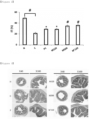
- the digestive tract mobility rate was significantly reduced in group C causing constipation, compared to group N, whereas it was confirmed that in the Tenebrionidae larva extract administered group, the digestive tract mobility rate was significantly increased compared to group C (p ⁇ 0.05, p ⁇ 0.001). Furthermore, it was shown that in the Tenebrionidae larva extract administered group, the digestive tract mobility rate was higher than that of group PC administered with the Psyllium husk extract, and the digestive tract mobility rate was particularly high in the M'120 group.
- H&E Hematoxylin & Eosin
- the colon tissue extracted from each experimental group was immobilized in 4 % paraformaldehyde immediately after extraction, washed with water, dehydrated, transparent, and penetrated, and then embedded with paraffin.
- the prepared paraffin block was micro-sectioned and sliced, and then stained with H&E staining. The stained slides were photographed after observation with an optical microscope (Nikon, E600, Japan), and the results were shown in FIG. 3 .
- the Tenebrionidae larva extract showed significant increases in fecal weight, water content in feces, digestive tract mobility rate, and length and area of the mucous membrane compared to a loperamide-administered control group, so that the very excellent effect of improving the bowel movement function and improving intestinal motility was exhibited.
Landscapes
- Life Sciences & Earth Sciences (AREA)
- Health & Medical Sciences (AREA)
- Chemical & Material Sciences (AREA)
- Engineering & Computer Science (AREA)
- Nutrition Science (AREA)
- Food Science & Technology (AREA)
- Polymers & Plastics (AREA)
- Mycology (AREA)
- Medicinal Chemistry (AREA)
- Public Health (AREA)
- Insects & Arthropods (AREA)
- Veterinary Medicine (AREA)
- General Health & Medical Sciences (AREA)
- Pharmacology & Pharmacy (AREA)
- Animal Behavior & Ethology (AREA)
- Botany (AREA)
- Epidemiology (AREA)
- Animal Husbandry (AREA)
- Zoology (AREA)
- Bioinformatics & Cheminformatics (AREA)
- Chemical Kinetics & Catalysis (AREA)
- General Chemical & Material Sciences (AREA)
- Nuclear Medicine, Radiotherapy & Molecular Imaging (AREA)
- Organic Chemistry (AREA)
- Medicines Containing Material From Animals Or Micro-Organisms (AREA)
- Coloring Foods And Improving Nutritive Qualities (AREA)
- Medicines Containing Plant Substances (AREA)
Abstract
Description
- The present invention relates to a composition comprising a Tenebrionidae larva extract for improving a bowel movement function.
- Bowel movement occurs through the relaxation and contraction (bowel movement reflex) of the intestines and muscles reflexively while the stimulation of the rectal mucosa by the intestinal contents transferred into the rectum is transmitted to the center to go to the toilet. However, when the bowel movement function is damaged according to autonomic dysfunction occurring in the lower digestive tract, excessive water absorption in the intestinal tract, decreased secretion of intestinal juice, movement disorders, gastrointestinal psychosomatic disease (e.g., irritable bowel syndrome), a decreased bowel movement reflex function, etc., large and small diseases or symptoms including constipation and abdominal obesity may be developed. To date, various medicines and functional foods for activating the bowel movement function and improving constipation or obesity have been sold, but there is a problem that the effect is temporary and various side effects are caused depending on a type.
- Meanwhile, among edible insects proposed as future food, Tenebrio molitor is also commonly referred to as a mealworm, known to contain high-quality nutrient ingredients and is an insect registered as a food ingredient in Korea. Accordingly, there was an attempt to use the Tenebrionidae larva as a use for ingestion or a functional material. In this regard, there is a study result of confirming antioxidant and hepatoprotective effects of a protein hydrolyzate of Tenebrio molitor larva (
Korean Patent Registration No. 1966503 - Under this background, the present inventors experimentally confirmed the efficacy of a Tenebrionidae larva extract for improving a bowel movement function and activating intestinal motility, and newly confirmed that the Tenebrionidae larva can be used for preventing, improving or treating constipation or obesity.
- An object of the present invention is to provide a composition for improving a bowel movement function through an increase in fecal weight, an increase in water content in feces, an increase in gastrointestinal transport capacity, and an increase in length and area of a mucous membrane.
- Another object of the present invention is to provide a method for improving a bowel movement function comprising administering a solvent extract of Tenebrionidae larva to a subject.
- Yet another object of the present invention is to provide a solvent extract of Tenebrionidae larva used for improving a bowel movement function.
- Yet another object of the present invention is to provide the use of a solvent extract of Tenebrionidae larva to be used for preparing products, foods, or drugs for improving a bowel movement function.
- Yet another object of the present invention is to provide a composition for improving constipation.
- Yet another object of the present invention is to provide a method for improving constipation comprising administering a solvent extract of Tenebrionidae larva to a subject.
- Yet another object of the present invention is to provide a solvent extract of Tenebrionidae larva to be used for improving constipation.
- Yet another object of the present invention is to provide the use of a solvent extract of Tenebrionidae larva to be used for preparing products, foods, or drugs for improving constipation.
- Yet another object of the present invention is to provide a health functional food for improving constipation.
- Yet another object of the present invention is to provide a composition for weight loss and a health functional food for weight loss comprising the same.
- To this end, an aspect of the present invention provides a composition for improving a bowel movement function comprising a solvent extract of Tenebrionidae larva.
- Another aspect of the present invention provides a method for improving a bowel movement function comprising administering a solvent extract of Tenebrionidae larva to a subject.
- Yet another aspect of the present invention provides a solvent extract of Tenebrionidae larva to be used for improving a bowel movement function.
- Yet another aspect of the present invention provides the use of a solvent extract of Tenebrionidae larva to be used for preparing products, foods, or drugs for improving a bowel movement function.
- Another aspect of the present invention provides a composition for improving constipation, comprising a solvent extract of Tenebrionidae larva.
- Yet another aspect of the present invention provides a method for improving constipation comprising administering a solvent extract of Tenebrionidae larva to a subject.
- Yet another aspect of the present invention provides a solvent extract of Tenebrionidae larva to be used for improving constipation.
- Yet another aspect of the present invention provides the use of a solvent extract of Tenebrionidae larva to be used for preparing products, foods, or drugs for improving constipation.
- Yet another aspect of the present invention provides a health functional food for improving constipation comprising a solvent extract of Tenebrionidae larva.
- Yet another aspect of the present invention provides a composition for weight loss and a health functional food weight loss comprising the same, comprising a Tenebrionidae larva extract.
- Hereinafter, the present invention will be described in detail.
- The present invention relates to a composition for improving a bowel movement function comprising a Tenebrionidae larva extract.
- As used herein, the term 'improvement' refers to all actions including improvement, suppression, or delay of symptoms, and may be used interchangeably with prevention or treatment.
- The prevention may be all actions of suppressing the corresponding disease or delaying the onset thereof by administering the composition to the subject, and the treatment may be all actions of improving the symptoms of the corresponding pre-infected disease by administering the composition to the subject.
- As used herein, the term `improvement of the bowel movement function' refers to all actions of maintaining a normal bowel movement condition or improving an abnormal bowel movement condition. For example, the improvement of the bowel movement function may include induction of bowel movement, facilitation of bowel movement, regular bowel movement of irregular bowel movement, an increase in water content included in feces, an increase in bowel movement, increased bowel movement, improved symptoms related to constipation or diarrhea, or prevention or improvement of weight loss or abdominal obesity, and may be used in combination with improving defecation or improving bowel movement. Specifically, the improvement of the bowel movement function may mean an increase in fecal weight, an increase in water content in feces, an increase in gastrointestinal transport capacity, or an increase in length and area of the intestinal mucosa.
- The composition of the present invention includes Tenebrionidae larva extract, and specifically, the Tenebrionidae larva extract may be included as an active ingredient of the composition.
- In the present specification, `Tenebrionidae' belongs to the family Tenebrionidae, Coleoptera, and includes subspecies and variants thereof. In addition, the Tenebrionidae of the present invention includes insects of the family Tenebrionidae that are apparent in the art and can be used for the same or similar purposes as the prevention, improvement and treatment of the present invention. In addition, in the present specification, `Tenebrionidae larva' means a larva of the family Tenebrionidae, and specifically, it may be a larva of Tenebrio molitor recognized as a food raw material.
- As used herein, the term `extract' means isolating an active ingredient or specific ingredient thereof by dissolving a certain substance in a solvent, or isolating the active ingredient or specific ingredient thereof by treating a certain substance with an enzyme. Specifically, the extract includes an extract extracted by adding an extraction solvent to the Tenebrionidae larva, and a fraction fractionated by adding a fractional solvent to the extract. In addition, the extract includes an enzyme extract obtained by treating the Tenebrionidae larva with an enzyme.
- Specifically, the solvent extract of the Tenebrionidae larva of the present invention may be an extract using water, an organic solvent, or a mixed solvent thereof. More specifically, the solvent extract of the Tenebrionidae larva may be an extract using an organic solvent or a mixed solvent of the organic solvent and water.
- The solvent may be at least one organic solvent selected from the group consisting of alcohols having 1 to 5 carbon atoms, acetone, acetonitrile, ethyl acetate, chloroform, dichloromethane, ethyl ether, xylene and hexane, water, or a mixture thereof. The alcohol having 1 to 5 carbon atoms may be alcohol having 1 to 4 carbon atoms, 1 to 3 carbon atoms, 2 to 5 carbon atoms, 2 to 4 carbon atoms, 2 to 3 carbon atoms, or 1 to 2 carbon atoms, for example, ethanol, but is not limited thereto. The ethanol may be edible ethanol, and when extraction is performed using the ethanol as a solvent, alcohol widely used commercially may be used.
- In the present specification, the term 'enzyme extract' may be used in the same meaning as an enzyme analyte', `enzyme hydrolysate' or `enzyme-treated product'. Specifically, the enzyme extract may be Tenebrionidae larva treated with protrease. For example, the content of amino acids or peptides may be increased by treating the protease in an aqueous supernatant obtained by centrifuging a crushed product of Tenebrionidae larva.
- The protease may be any one or more selected from the group consisting of pepsin, trypsin, Flavourzyme™, Protamex™, papain, alpha chymotrypsin, and pancrease.
- In addition, the Tenebrionidae larva extract may be prepared by filtration, concentration and/or drying after extraction.
- The filtration is to remove solid particles suspended from the extract to obtain only a water-soluble supernatant excluding a precipitate, and may use filtering particles using a filter such as cotton or nylon, for example, a filter having pores of 0.2 µm to 5 µm in diameter, a cryofiltration method, a centrifugation method, or the like, but is not limited thereto.
- The concentration is to increase the concentration of the solid content of the extract, and a concentrate of the extract obtained through the concentration has a feature that is easier to be used as a food material. The concentration may be performed by vacuum concentration, plate-type concentration, thin film concentration, etc., but is not limited thereto, and for example, may be performed at a temperature of 40°C to 60°C using a known concentrator.
- The brix of the present invention expresses the amount of solids contained in 100 g of a solution (water) as the number of grams based on saccharides (sugar), and may be used in combination with brix%, bx, and the like. The brix may be measured by a known method, and may be measured at room temperature such as 15°C to 35°C.
- The drying includes freeze drying, vacuum drying, hot air drying, spray drying, reduced pressure drying, spray drying, foam drying, high frequency drying, infrared drying, and the like, but is not limited thereto.
- In the case of using the Tenebrionidae larva itself in the composition of the present invention, the Tenebrionidae larva may be included in the form of a crushed product or powder thereof.
- The Tenebrionidae larva crushed product (powder) may be crushed after fasting and drying the Tenebrionidae larva.
- The composition of the present invention may be administered to mammals such as rats, mice, livestock, and humans by various routes. The 'administration' includes a method of delivering the composition to a system of the subject or a particular area in or on the subject. The administration may be performed, for example, enterally, parenterally, intravenously, intramuscularly, subcutaneously, intradermally, intranasally, orally, transdermally, endometrially, intracerebroventricularly or mucously. In addition, the composition may also be administered locally or systemically.
- The composition may be administered together with one or more active ingredients exhibiting the same or similar function. For administration, according to a method that can be easily performed by a person of ordinary skill in the art to which the present invention pertains, one or more additional acceptable carriers may be included. The meaning of `acceptable' means that it does not inhibit the activity of the active ingredient and does not have more than adaptable toxicity of an application (prescription) target. The 'carrier' is defined as a compound that facilitates the addition of the compound into a cell or tissue. The composition may be formulated using a carrier and/or excipient to be prepared in a unit dose form or prepared by pouring into a multi-dose container, and may additionally include a dispersing agent or a stabilizing agent. In addition, the active ingredient included in the composition may be delivered in carriers, such as colloidal suspensions, powders, saline, lipids, liposomes, microspheres, or nano spherical particles. These active ingredients may form or be related to a complex with a vehicle and may be delivered in vivo by using delivery systems known in the art, such as lipids, liposomes, microparticles, gold, nanoparticles, polymers, condensation reagents, polysaccharides, polyamino acids, dendrimers, saponin, adsorption enhancing substances or fatty acids. Besides, the carrier may include lactose, dextrose, sucrose, sorbitol, mannitol, starch, acacia gum, calcium phosphate, alginate, gelatin, calcium silicate, microcrystalline cellulose, polyvinylpyrrolidone, cellulose, water, syrup, methylcellulose, methylhydroxybenzoate, propylhydroxybenzoate, talc, magnesium stearate, mineral oil, and the like, which are generally used in preparation, but is not limited thereto. Further, the carrier may further include a lubricant, a wetting agent, a sweetening agent, a flavoring agent, an emulsifying agent, a suspending agent, a preservative, and the like in addition to the above ingredients. The carrier may be used by mixing saline, sterile water, a Ringer's solution, buffered saline, a dextrose solution, a maltodextrin solution, glycerol, ethanol, and one or more of these components, and if necessary, other conventional additives such as antioxidants, buffers, bacteriostats, etc. may be added.
- When the composition of the present invention is used for food, the active ingredient (Tenebrionidae larva extract) included in the composition may be added to food as it is or used with other foods or food ingredients, and may be appropriately used according to a conventional method. The composition may include other ingredients as essential ingredients without particular limitation, in addition to the active ingredients. For example, like general beverages, various flavoring agents or natural carbohydrates may be included as an additional ingredient. Examples of the above-mentioned natural carbohydrates may include general sugars, such as monosaccharides, for example, glucose, fructose and the like; disaccharides, for example, maltose, sucrose and the like; and polysaccharides, for example, dextrin, cyclodextrin and the like, and sugar alcohols such as xylitol, sorbitol, erythritol, and the like. As flavoring agents other than those described above, natural flavoring agents (tauumatin, stevia extract (e.g., Rebaudioside A, glycyrginine, etc.)) and synthetic flavoring agents (saccharin, aspartame, etc.) may be advantageously used. The ratio of the natural carbohydrates may be appropriately determined by the selection of those skilled in the art. The composition may include various nutrients, vitamins, minerals (electrolytes), flavoring agents such as synthetic and natural flavoring agents, coloring agents, and enhancers (cheese, chocolate, etc.), pectic acid and salts thereof, alginic acid and salts thereof, organic acid, a protective colloidal thickener, a pH adjusting agent, a stabilizer, a preservative, glycerin, alcohol, a carbonic acid agent used in a carbonated drink, and the like. These ingredients may be used independently or in combination, and the ratio of these additives may also be appropriately selected by those skilled in the art.
- When the composition of the present invention is used pharmaceutically, the composition may be administered in various oral and parenteral formulations during actual clinical administration, and for formulations, the composition is formulated by using commonly used diluents or excipients, such as a filler, an extender, a binder, a wetting agent, a disintegrant, and a surfactant. Solid formulations for oral administration include a tablet, a pill, a powder, a granule, a capsule, and the like, and these solid formulations may be prepared by mixing at least one excipient, for example, starch, calcium carbonate, sucrose, lactose, gelatin, or the like with herbal extracts or herbal fermented products. Further, lubricants such as magnesium stearate talc may be used in addition to simple excipients. The powder may be prepared by simply mixing the active ingredient of the present invention with a suitable pharmaceutically acceptable carrier, such as lactose, starch, microcrystalline cellulose, and the like. The granules may be prepared by mixing the active ingredient of the present invention, a suitable pharmaceutically acceptable carrier, and a suitable pharmaceutically acceptable binder such as polyvinylpyrrolidone and hydroxypropylcellulose, and then using a wet granulation method using a solvent such as water, ethanol, and isopropanol or a dry granulation method using a compressive force. Further, the tablets may be prepared by mixing the granules with a suitable pharmaceutically acceptable lubricant such as magnesium stearate, and then tableting the mixture using a tablet machine. Liquid formulations for oral administration may correspond to suspensions, oral liquids, emulsions, syrups, and the like, and may include various excipients, for example, a wetting agent, a sweetener, an aromatic agent, a preserving agent, and the like, in addition to water and liquid paraffin which are commonly used simple diluents. Formulations for parenteral administration include a sterile aqueous solution, a non-aqueous solution, a suspension, an emulsion, a lyophilizing agent, and a suppository. As the non-aqueous solution and the suspension, propylene glycol, polyethylene glycol, vegetable oil such as olive oil, injectable ester such as ethyl oleate, and the like may be used. As a base of the suppository, witepsol, macrogol, Tween 61, cacao butter, laurinum, glycerol, gelatin, and the like may be used.
- The active ingredient (Tenebrionidae larva extract) may be administered with an oral agent, an injection (e.g., intramuscular injection, intraperitoneal injection, intravenous injection, infusion, subcutaneous injection, implant), an inhalant, a nasal injection, a vaginal agent, a rectal agent, a sublingual agent, a transdermal agent, a topical agent, or the like according to a disease to be prevented, improved or treated and a condition of a subject, but is not limited thereto. Depending on a route of administration, the active ingredient may be prepared into a suitable dosage unit formulation including a pharmaceutically acceptable carrier, an additive, and a vehicle, which are commonly used and non-toxic. During the administration, the amount range of the Tenebrionidae larva extract as the active ingredient varies depending on the weight, age, sex, and health condition of a patient, a diet, an administration time, an administration method, an excretion rate, a target site, and the severity of disease.
- In addition, when the composition is used pharmaceutically, the composition may be administered in a pharmaceutically effective dose. In the present invention, the `pharmaceutically effective dose' refers to a sufficient amount to treat the diseases at a reasonable benefit/risk ratio applicable to medical treatment. An effective dose level may be determined according to factors including the type and severity of disease of a patient, activity of a drug, sensitivity to a drug, a time of administration, a route of administration, an emission rate, duration of treatment, and simultaneously used drugs, and other factors well-known in the medical field. The effective dose is generally 0.01 mg to 5000 mg per day per 1 kg of the body weight of an administered subject, and may be administered once or several times a day at regular time intervals according to the judgment of a doctor or pharmacist, but is not limited thereto. The composition may be administered as an individual therapeutic agent, or administered in combination with a therapeutic agent for diseases caused by other contaminants or a therapeutic agent for improving skin aging, and may be administered simultaneously, separately, or sequentially with existing therapeutic agents, and may be administered singly or multiply. It is important to administer an amount capable of obtaining a maximum effect with a minimal amount without side effects by considering all the factors, which may be easily determined by those skilled in the art. Specifically, the effective dose of the composition may vary depending on the age, sex, condition, and weight of a patient, absorbance of an active ingredient in vivo, an inactivation rate, an excretion rate, a disease type, and drugs to be used in combination, and may be increased or decreased according to a route of administration, the severity of obesity, sex, weight, age, and the like and may vary depending on the severity of a treating condition. If necessary, for convenience, the total daily dose may be divided and administered several times during a day. For example, the daily dose may be about 0.0001 mg/kg to about 10 g/kg per day, for example, the amount of about 0.001 mg/kg to about 1 g/kg may be administered once a day. In addition, the administration period may be 1 day to 2 months, but the composition may be administered without limitation until the prevention or treatment effect of the disease is exhibited. In addition, according to the judgment of the doctor or pharmacist, the composition may be administered several times a day at regular time intervals, for example, separately administered 2 to 3 times a day.
- As another aspect for achieving the object of the present invention, the present invention provides a method for improving a bowel movement function comprising administering a Tenebrionidae larva extract to a subject.
- As used herein, the term 'subject' may be a subject including a human, or may be a subject other than the human. In addition, the term 'subject' may be a subject in need of administration of Tenebrionidae larva of the present invention, an extract thereof, or a composition comprising the same. The subject in need of the administration may include a subject who has been diagnosed with a related disease, a subject who has developed a related symptom and a subject who wants to be administered for preventing the development of a disease or symptom or improving health. For example, in the present invention, the subject in need of the administration is a subject who has constipation, a subject to prevent constipation, a subject to improve or prevent abdominal obesity due to constipation, a subject to improve an abnormal bowel movement condition, and a subject to maintain a normal bowel movement condition.
- As an embodiment, the present invention provides a method for improving a bowel movement function comprising feeding the food composition or pharmaceutical composition for improving the bowel movement function to a subject or subject with reduced bowel movement.
- The Tenebrionidae larva extract, the food composition and the pharmaceutical composition for improving the bowel movement function, and administration are the same as those described above.
- As another aspect for achieving the object of the present invention, the present invention provides a Tenebrionidae larva extract to be used for improving a Tenebrionidae larva extract.
- As another aspect for achieving the object of the present invention, the present invention provides the use of a Tenebrionidae larva extract to be used for preparing products, foods, or drugs for improving a bowel movement function.
- In another aspect, the present invention provides a composition for improving constipation, comprising a Tenebrionidae larva extract.
- The contents related to the Tenebrionidae larva extract and the composition are the same as those described in relation to the `composition for improving the bowel movement function', and hereinafter, only specific configurations of the composition for improving constipation will be described.
- The Tenebrionidae larva extract may be used as a composition for improving constipation by increasing a fecal weight, increasing the water content in feces to soften the bowel movement, improving a gastrointestinal transport capacity, and increasing the length and area of the mucous membrane to improve intestinal motility.
- As used herein, the `constipation' may include constipation caused by various causes. Specifically, the constipation may be transient constipation, a major cause of overeating or stress, atonic constipation or colonic constipation caused by a decrease in abdominal muscle strength due to lack of exercise or overwork, habitual or rectal constipation caused by a decrease in motor function of the large intestine and the desire to defecate, and spastic constipation or organic constipation caused by interfering with the passage of feces due to too strong movement of the large intestine.
- In addition, the constipation may include constipation caused by drugs. Drugs that may cause constipation may include a calcium channel blocker, an anticholinergic agent, an analgesic, an antidepressant, an antihistamine, an antispasmodic, an anticonvulsant, an aluminum-containing antacid, an iron preparation, and the like.
- As an embodiment, the present invention provides a method for improving constipation, comprising administering a Tenebrionidae larva extract to a subject.
- As another embodiment, the present invention provides a composition comprising a Tenebrionidae larva extract to be used for improving constipation.
- The Tenebrionidae larva extract and the composition according to the present invention may have the characteristics as described above. The administration is the same as described in relation to the `composition for improving the bowel movement function'. The subject may be a mammal, specifically a human.
- In yet another aspect, the present invention provides a health functional food for improving constipation, comprising a Tenebrionidae larva extract.
- The Tenebrionidae larva extract is the same as described in relation to the `composition for improving the bowel movement function', and the description of the constipation is the same as described above, and hereinafter, only specific configurations of the health functional food for improving constipation will be described.
- The health functional food is a food with high medical and health care effects processed to efficiently exhibit a bioregulatory function in addition to nutritional supply, and may obtain useful effects for health purposes, such as regulating nutrients or physiological effects on the structure and function of the human body. The health functional food may be prepared by a method commonly used in the technical field of the present invention, and may be prepared by adding raw materials and ingredients to be commonly added in the art. In addition, the formulations of the health functional food may be prepared in various forms without limitations as long as being formulations recognized as a health functional food. Unlike general medicines, there are advantages that there are no side effects that can occur during long-term use of drugs by using the food as a raw material and portability is excellent. Accordingly, for the prevention or improvement of constipation, before or after the stage at which the symptoms appear, the health functional food may be used simultaneously with or separately from drugs for treatment. The health functional food includes a health food having an active health maintenance or promotion effect compared to general foods, and a health supplement food for the purpose of health supplementation, and in some cases, the terms of health functional food, health food, and health supplement food may be used interchangeably.
- In the health functional food, the active ingredient (Tenebrionidae larva extract) may be added to the food as it is or used with other foods or food ingredients, and may be appropriately used according to a general method. The mixing amount of the active ingredients may be suitably determined according to the purpose of use thereof (for prevention or improvement of constipation). The active ingredients may be included in various amounts in the health functional food as long as the active ingredients have an effect of preventing or improving constipation, and may be added in an amount of 15 parts by weight or less, 14 parts by weight or less, 13 parts by weight or less, 12 parts by weight or less, 11 parts by weight or less, or 10 parts by weight or less based on the total weight of the health functional food. However, in the case of long-term ingestion for the purpose of health and hygiene or health regulation, the amount may be equal to or lower than the above range. The health functional food may include other ingredients as essential ingredients without particular limitation, in addition to the active ingredient. For example, like general beverages, various flavoring agents or natural carbohydrates may be included as an additional ingredient. Examples of the above-mentioned natural carbohydrates may include general sugars, such as monosaccharides, for example, glucose, fructose and the like; disaccharides, for example, maltose, sucrose and the like; and polysaccharides, for example, dextrin, cyclodextrin and the like, and sugar alcohols such as xylitol, sorbitol, erythritol, and the like. As flavoring agents other than those described above, natural flavoring agents (tauumatin, stevia extract (e.g., Rebaudioside A, glycyrginine, etc.)) and synthetic flavoring agents (saccharin, aspartame, etc.) may be advantageously used. The ratio of the natural carbohydrates may be appropriately determined by the selection of those skilled in the art.
- The health functional food may include various nutrients, vitamins, minerals (electrolytes), flavoring agents such as synthetic and natural flavoring agents, coloring agents and enhancers (cheese, chocolate, etc.), pectic acid and salts thereof, alginic acid and salts thereof, organic acid, a protective colloidal thickener, a pH adjusting agent, a stabilizer, a preservative, glycerin, alcohol, a carbonic acid agent used in a carbonated drink, and the like. These ingredients may be used independently or in combination, and the ratio of these additives may also be appropriately selected by those skilled in the art.
- As another aspect for achieving the object of the present invention, the present invention provides a method for preventing or improving constipation, comprising administering a Tenebrionidae larva extract to a subject.
- In one embodiment, the present invention provides a method for preventing or improving constipation, comprising administering the composition for improving the bowel movement function to a subject.
- In another embodiment, the present invention provides a method for preventing or improving constipation, comprising administering the composition for improving the bowel movement function to a subject who is expected to develop constipation symptoms or has symptoms of constipation.
- The Tenebrionidae larva extract, the composition for improving the bowel movement function, the subject, and the administration are the same as those described above.
- As another aspect for achieving the object of the present invention, the present invention provides a Tenebrionidae larva extract to be used for preventing or improving constipation.
- As another aspect for achieving the object of the present invention, the present invention provides the use of a Tenebrionidae larva extract to be used for preparing products, foods, or drugs for preventing or improving constipation.
- In yet another aspect, the present invention provides a composition for weight loss comprising a Tenebrionidae larva extract.
- The Tenebrionidae larva extract and the composition are the same as those described in relation to the `composition for improving the bowel movement function', and hereinafter, only specific configurations of the composition for weight loss will be described.
- The composition may be usefully used for weight loss by increasing a fecal weight, increasing the water content in feces, and promoting intestinal motility to improve the bowel movement function and promote the intestinal motility.
- As used herein, the term `weight loss' refers to all actions of maintaining a normal weight or improving an overweight condition, and may be used interchangeably with weight reduction or body fat reduction. Specifically, the weight loss may be weight loss according to the improvement of bowel movement or weight loss according to the improvement of constipation.
- The composition for weight loss of the present invention has anti-obesity activity and may improve obesity.
- As used herein, the term 'obesity' refers to a type of disease in which remaining energy after consumption of taken energy is converted into triglycerides and accumulated mainly in adipocytes of the abdomen and adipose tissue, and refers to a complex syndrome that is caused by various causes, such as genetic, nutritional, environmental, and social factors.
- In the present invention, the obesity may be obesity caused by a bowel movement function disorder or obesity caused by constipation, specifically, abdominal obesity.
- As an aspect for achieving the object of the present invention, the present invention provides a method for weight loss comprising administering the Tenebrionidae larva extract; or the composition for weight loss to a subject or a subject having weight gain.
- As another aspect for achieving the object of the present invention, the present invention provides a method for preventing or improving obesity comprising administering the Tenebrionidae larva or the extract thereof; or the composition for weight loss to a subject or a subject who has obesity.
- The Tenebrionidae larva extract, the composition for weight loss, the subject, and the administration are the same as those described above.
- As another aspect for achieving the object of the present invention, the present invention provides a composition comprising a Tenebrionidae larva extract to be used for weight loss.
- As another aspect for achieving the object of the present invention, the present invention provides the use of Tenebrionidae larva extract to be used for preparing products, foods, or drugs for weight loss.
- In yet another aspect, the present invention provides a composition for improving hyperlipidemia comprising a Tenebrio molitor larva extract.
- The Tenebrionidae larva extract and the composition are the same as those described in relation to the `composition for improving the bowel movement function', and hereinafter, only specific configurations of the composition for weight loss will be described.
- As used herein, 'hyperlipidemia' refers to a disease caused by a large amount of fats in the blood because fat metabolisms such as triglycerides and cholesterol are not properly performed, and may be used interchangeably with terms such as improving or reducing cholesterol and/or triglyceride levels.
- As an aspect for achieving the object of the present invention, the present invention provides a method for preventing or improving hyperlipidemia comprising administering the Tenebrionidae larva extract; and the composition for improving hyperlipidemia to a subject or a subject in need of improvement of hyperlipidemia.
- As another aspect for achieving the object of the present invention, the present invention provides a method fro improving or reducing cholesterol and/or triglycerides comprising administering Tenebrionidae larva or an extract thereof; and the composition for weight loss to a subject or a subject in need of improvement of cholesterol and/or triglyceride levels.
- The Tenebrionidae larva extract, the composition for weight loss, the subject, and the administration are the same as those described above.
- As another aspect for achieving the object of the present invention, the present invention provides a composition comprising a Tenebrionidae larva extract to be used for improving hyperlipidemia.
- As another aspect for achieving the object of the present invention, the present invention provides the use of a Tenebrionidae larva extract to be used for preparing products, foods, or drugs for improving hyperlipidemia.
- The Tenebrionidae larva extract and the composition comprising the same according to the present invention may have the characteristics as described above. In addition, a group administered with the Tenebrionidae larva extract of the present invention may have no or low toxicity. Alternatively, the group administered with the Tenebrionidae larva extract of the present invention may have no or low possibility of side effects. Specifically, the group administered with the Tenebrionidae larva extract of the present invention may exhibit a change in weight gain similar to that of a normal control group, or have an organ weight similar to that of the normal control group.
- According to the present invention, the composition comprising the Tenebrionidae larva extract as the active ingredient has an excellent effect of improving a bowel movement function by increasing a fecal weight, increasing the water content in feces to soften bowel movement, and increasing the length and area of the mucous membrane to improve intestinal motility and thus may be usefully used for preventing, improving or treating constipation or obesity.
- The effects of the present invention are not limited to the effects mentioned above, and other effects not mentioned will be clearly understood by those skilled in the art from the following description.
-
-
FIG. 1 is a diagram illustrating results of measuring fecal weight and water content in feces to determine an effect of administration of a Tenebrionidae larva extract on a fecal index. [N (Normal): normal control; C (Control): loperamide alone adminstered group; PC (Positive control):Psyllium husk 120 mg/kg; M120: loperamide + Tenebrionidae larva enzyme extract 120 mg/kg; M500: loperamide + Tenebrionidae larva enzyme extract 500 mg/kg; M'120: loperamide + Tenebrionidaelarva ethanol extract 120 mg/kg, an error bar represents a standard error, and n = 5] -
FIG. 2 is a diagram illustrating results of measuring digestive tract mobility to determine an effect of administration of a Tenebrionidae larva extract on a gastrointestinal transport capacity. [N (Normal): normal control; C (Control): loperamide alone adminstered group; PC (Positive control):Psyllium husk 120 mg/kg; M120: loperamide + Tenebrionidae larva enzyme extract 120 mg/kg; M500: loperamide + Tenebrionidae larva enzyme extract 500 mg/kg; M'120: loperamide + Tenebrionidaelarva ethanol extract 120 mg/kg, an error bar represents a standard error, and n = 5] -
FIG. 3 is a diagram illustrating results of staining a colon tissue with hematoxylin-eosin to determine an effect of administration of a Tenebrionidae larva extract on intestinal digestive movement. - Hereinafter, the present invention will be described in detail by Examples and Experimental Examples. However, these Examples and Experimental Examples are only illustrative the present invention, and the scope of the present invention is not limited to these Examples and Experimental Examples.
- Preparation of Tenebrionidae larva enzyme extract
- (1) Step of controlling diet of Tenebrio molitor larva
3-month-old Tenebrio molitor larva dieted on wheat grains was subjected to a process of excreting an excrement while fasting before use. The Tenebrio molitor larva after 48-hour fasting was washed and frozen-stored. - (2) Step of hydrolyzing, sterilizing, and wet-crashing Tenebrio molitor larva
100 parts by weight of the pretreated raw material was added with 1900 parts by weight of water and then sterilized at 100°C for 30 minutes. Thereafter, the Tenebrio molitor larva was crushed with a homogenizer at 6000 rpm for 10 minutes to obtain a liquid form that was easily treated with enzymes. - (3) Step of treating Tenebrio molitor larva solution with protease to decompose protein
The crushed Tenebrio molitor larva solution was added with 0.1% of protease, Protamex, and treated at a temperature of 60°C for 1 hour and then the enzyme was inactivated at 100°C for 10 minutes. - (4) Step of filtering Tenebrio molitor larva extract
The protease-treated product was filtered under reduced pressure through 1 µm glass fiber filter paper, and then only a filtrate was taken. - (5) Step of concentrating Tenebrio molitor larva extract
The filtrate was concentrated with a vacuum concentrator to prepare a concentrate of 10 brix or more. - (6) Step of powdering Tenebrio molitor larva extract
The concentrate was lyophilized and powdered, and specifically, sequentially maintained at - 45°C for 6 hours, at - 20°C for 21 hours, at - 15°C for 11 hours, and at - 5°C for 11 hours and then thawed, and then powdered by removing moisture. - Preparation of Tenebrionidae larva ethanol extract
- (1) Step of controlling diet of Tenebrio molitor larva
3-month-old Tenebrio molitor larva dieted on wheat grains was subjected to a process of excreting an excrement while fasting before use. The Tenebrio molitor larva after 48-hour fasting was washed and frozen-stored. - (2) Step of drying and then crushing Tenebrio molitor larva
The frozen-stored Tenebrio molitor larva was washed and then dried at 90°C for 24 hours. The dried raw material was finely crushed with a crusher for easy extraction. - (3) Step of extracting Tenebrio molitor larva powder by adding ethanol
100 parts by weight of the pretreated raw material was added with 900 parts by weight of ethanol and then extracted at 25°C and 100 rpm for 24 hours. - (4) Step of filtering Tenebrio molitor larva extract
The extract was filtered under reduced pressure through 1 µm glass fiber filter paper, and then only a filtrate was taken. - (5) Step of concentrating Tenebrio molitor larva extract
The filtered extract was concentrated with a decompression concentrator to prepare a concentrate of 10 brix or more. - (6) Step of powdering Tenebrio molitor larva extract
The concentrate was lyophilized and powdered, and specifically, sequentially maintained at - 45°C for 6 hours, at - 20°C for 21 hours, at - 15°C for 11 hours, and at - 5°C for 11 hours and then thawed, and then powdered by removing moisture. - This study was conducted in accordance with the policies and regulations of the Institutional Animal Care and Use committee (SEMI-19-008) of Southeast Medi-Chem Institute. As experimental animals used in the experiment, a 7-week-old ICR mouse model (male) was received from Hana Bio (Seongnam, Gyeonggi-do, Korea) and quarantined, acclimatized and bred in an animal kennel (Animal Facility Registration Certificate: No. 412) and then experimented. During breeding, a lighting time was set to a 12-hour (07:00 to 19:00) cycle, and a diet and water were freely ingested.
- First, 5 ICR mice (7 weeks old, male) were placed in each group, and the experimental groups were classified into a total of 6 groups. The experimental groups were divided into a normal control group (N), a loperamide administered group (C), a Psyllium husk administered group (PC), a loperamide + low concentration enzyme extract group (120 mg/kg) (M120), a loperamide + high concentration enzyme extract group (500 mg/kg) (M500), and a loperamide + low concentration ethanol extract group (120 mg/kg) (M'120).
- The samples were orally administered for a total of 7 days according to the contents in Table 1, and on day 7 of administration, all the groups except for the normal control group were orally administered with 5 mg/kg of loperamide (in saline) to induce constipation. For a feed, solid feed for the experimental animals (Hana Bio, Seongnam, Gyeonggi-do, Korea) was provided, and changes in body weight was measured twice a week.
[Table 1] Group Experiment Note Control group 1 (N) Administration of saline No administration of Loperamide Control group 2 (N) Saline Control group 3 (PC) Psyllium husk 120 mg/kgExample 1 (M120) Preparation Example 1 120 mg/kg Example 2 (M500) Preparation Example 1 500 mg/kg Example 3 (M'120) Preparation Example 2 120 mg/kg - The measured experimental results were represented as means and standard errors, and the significance test of each group was statistically processed using an anova t-test in the Statview program.
- The feces of the experimental animals were collected after administration of loperamide (5 mg/kg, body weight) on day 6 of sample administration, and the weight and number of feces per subject were measured. In order to check the water content in feces, a change amount was calculated by comparing a weight immediately after collection with a weight after drying at 105°C for 48 hours.

- The results were shown in Table 2 and
FIG. 1 .[Table 2] Group The number of subjects After administration of loperamide Fecal weight (g) Water content (%) Control group 1 (N) 5 0.373# 37.99* Control group 2 (N) 5 0.093 25.01 Control group 3 (PC) 5 0.163 30.03 Example 1 (M120) 5 0.195* 48.72# Example 2 (M500) 5 0.200* 44.64* Example 3 (M'120) 5 0.163 49.33# 1) Table 2 shows the experimental results as means and standard errors. Significance was represented for each group as follows: * compared with P < 0.05 C group, # compared with P < 0.001 C group.
2) N (Normal): normal control; C (Control): loperamide alone administered group; PC (Positive control):Psyllium husk 120 mg/kg; M120: loperamide + Tenebrionidae larva enzyme extract 120 mg/kg; M500: loperamide + Tenebrionidae larva enzyme extract 500 mg/kg; M'120: loperamide + Tenebrionidaelarva ethanol extract 120 mg/kg - As shown in Table 2 and
FIG. 1 , the fecal weight showed a significant decrease in group C causing constipation, compared to group N without causing constipation, but in all of groups M120, M500, and M'120 administered with the Tenebrionidae larva extract, the fecal weight was increased as compared to group C, and larger than that in group PC administered with Psyllium husk. - In addition, the water content in feces showed a significant decrease in group C causing constipation, compared to group N without causing constipation, but in all of groups M120, M500, and M'120 administered with the Tenebrionidae larva extract, the water content in feces was significantly high as compared with group C, and higher than that of the normal control group.
- As a result, it was confirmed that the Tenebrionidae larva extract prevented the decrease in fecal weight and improved the bowel movement function by increasing the water content in feces, so that it was confirmed that an effect of preventing or improving constipation was excellent.
- In order to observe an effect of a Tenebrionidae larva extract on a gastrointestinal transport capacity, the digestive tract mobility rate was evaluated. The digestive tract mobility rate may be evaluated by measuring the length of movement of an administered indicator material out of the entire length of the small intestine at a certain time, and in this experiment, loperamide, which exhibited a gastrointestinal transport inhibition effect, was used as a drug for causing constipation, and phenol red was used as an indicator material.
- Specifically, 5 mg/kg of loperamide was orally administered after 1 hour of the administration of the Tenebrionidae larva extract. After 30 minutes of loperamide administration, 0.5% phenol red (in 1.5% methylcellulose) serving as an indicator was orally administered, and autopsy was performed after 20 minutes to measure the total intestinal length and a movement distance of phenol red. The measurement results were analyzed using the following equation, which was calculated as a percentage of the movement distance of phenol red with respect to the total intestinal length. The analysis results were shown in Table 3 and
FIG. 2 .
[Table 3] Group The number of subjects Digestive tract mobility rate (%) Control group 1 (N) 5 49.0# Control group 2 (N) 5 21.1 Control group 3 (PC) 5 28.8* Example 1 (M120) 5 28.6* Example 2 (M500) 5 34.5# Example 3 (M'120) 5 35.8# 1)Table 3 shows the experimental results as means and standard errors. Significance was represented for each group as follows: * compared with P < 0.05 C group, # compared with P < 0.001 C group.
N (Normal): normal control; C (Control): loperamide alone administered group; PC (Positive control):Psyllium husk 120 mg/kg; M120: loperamide + Tenebrionidae larva enzyme extract 120 mg/kg; M500: loperamide + Tenebrionidae larva enzyme extract 500 mg/kg; M'120: loperamide + Tenebrionidaelarva ethanol extract 120 mg/kg - As shown in Table 3 and
FIG. 2 , the digestive tract mobility rate was significantly reduced in group C causing constipation, compared to group N, whereas it was confirmed that in the Tenebrionidae larva extract administered group, the digestive tract mobility rate was significantly increased compared to group C (p < 0.05, p < 0.001). Furthermore, it was shown that in the Tenebrionidae larva extract administered group, the digestive tract mobility rate was higher than that of group PC administered with the Psyllium husk extract, and the digestive tract mobility rate was particularly high in the M'120 group. - From this, it was confirmed that the Tenebrionidae larva extract activated the digestive movement of the intestine, and as a result, it was confirmed that the Tenebrionidae larva extract can be effectively applied to the prevention or improvement of constipation.
- To determine an effect of the Tenebrionidae larva extract on the colon tissue, the colon tissue was stained with Hematoxylin & Eosin (H&E).
- Specifically, the colon tissue extracted from each experimental group was immobilized in 4% paraformaldehyde immediately after extraction, washed with water, dehydrated, transparent, and penetrated, and then embedded with paraffin. The prepared paraffin block was micro-sectioned and sliced, and then stained with H&E staining. The stained slides were photographed after observation with an optical microscope (Nikon, E600, Japan), and the results were shown in
FIG. 3 . - As illustrated in
FIG. 3 , it was observed that the length and area of the mucous membrane were significantly reduced in group C causing constipation, compared to non-treated group N, and it was confirmed that in the Tenebrionidae larva extract administered group, the length and area of the mucous membrane were increased compared to group C. - From this, it was confirmed that the Tenebrionidae larva extract could help the digestive movement of the intestine, and as a result, it was confirmed that the Tenebrionidae larva extract can be effectively applied to the prevention or improvement of constipation.
- In order to confirm an effect of the Tenebrionidae larva extract on lipid accumulation in the body, biochemical analysis in serum was performed.
- Specifically, the experimental animals were fasted for 12 hours at the time when sample feeding was completed, and then the fasting blood was collected from the tail, and total cholesterol in the serum was measured using a blood analysis device. The measurement results were shown in Table 4.
[Table 4] Group The number of subjects Total cholesterol (mg/dL) Control group 1 (N) 5 146.99 Control group 2 (N) 5 141.12 Control group 3 (PC) 5 136.72 Example 1 (M120) 5 184.44 Example 2 (M500) 5 179.14 Example 3 (M'120) 5 123.95 1) N (Normal): normal control; C (Control): loperamide alone administered group; PC (Positive control): Psyllium husk 120 mg/kg admistered group; M120: loperamide + Tenebrionidae larva enzyme extract 120 mg/kg; M500: loperamide + Tenebrionidae larva enzyme extract 500 mg/kg; M'120: loperamide + Tenebrionidaelarva ethanol extract 120 mg/kg - As shown in Table 4, it was confirmed that total cholesterol levels in the serum of the control group and Examples were 146.99 mg/dL and 141.12 mg/dL in non-treated group N and group C causing constipation, respectively, but the cholesterol level was reduced in the group M'120 administered with the Tenebrionidae larva ethanol extract after causing constipation.
- Considering the above results, the Tenebrionidae larva extract showed significant increases in fecal weight, water content in feces, digestive tract mobility rate, and length and area of the mucous membrane compared to a loperamide-administered control group, so that the very excellent effect of improving the bowel movement function and improving intestinal motility was exhibited.
Claims (7)
- A composition comprising a solvent extract of Tenebrionidae larva for improving a bowel movement function.
- The composition of claim 1, wherein the solvent is water, an organic solvent, or a mixed solvent thereof.
- The composition of claim 2, wherein the organic solvent is alcohol having 1 to 4 carbon atoms.
- The composition of claim 1, wherein the improvement of the bowel movement function is an increase in fecal weight, an increase in water content in feces, an increase in gastrointestinal transport capacity, or an increase in length and area of intestinal mucosa.
- A composition comprising a solvent extract of Tenebrionidae larva for improving constipation.
- The composition of claim 5, wherein the constipation is transient constipation, atonic constipation, spastic constipation, bowel movement impaired constipation, or organic constipation.
- A health functional food comprising a solvent extract of Tenebrionidae larva for improving constipation.
Applications Claiming Priority (2)
| Application Number | Priority Date | Filing Date | Title |
|---|---|---|---|
| KR1020200049496A KR102407945B1 (en) | 2020-04-23 | 2020-04-23 | Composition For Improving Bowel Movement Comprising Tenebrionidae Larvae Extract |
| PCT/KR2021/005187 WO2021215883A1 (en) | 2020-04-23 | 2021-04-23 | Bowel movement improving composition comprising allomyrina dichotoma larva extract |
Publications (2)
| Publication Number | Publication Date |
|---|---|
| EP4140320A1 true EP4140320A1 (en) | 2023-03-01 |
| EP4140320A4 EP4140320A4 (en) | 2024-05-22 |
Family
ID=78269847
Family Applications (1)
| Application Number | Title | Priority Date | Filing Date |
|---|---|---|---|
| EP21793021.3A Pending EP4140320A4 (en) | 2020-04-23 | 2021-04-23 | COMPOSITION TO IMPROVE INTESTINAL MOVEMENT WITH EXTRACT OF ALLOMYRINA DICHOTOMA LARVA |
Country Status (6)
| Country | Link |
|---|---|
| US (1) | US20230149476A1 (en) |
| EP (1) | EP4140320A4 (en) |
| JP (1) | JP7604520B2 (en) |
| KR (1) | KR102407945B1 (en) |
| CN (1) | CN115515436B (en) |
| WO (1) | WO2021215883A1 (en) |
Family Cites Families (17)
| Publication number | Priority date | Publication date | Assignee | Title |
|---|---|---|---|---|
| KR101424125B1 (en) * | 2012-11-09 | 2014-08-04 | 대한민국 | Composition for treating inflammatory disease comprising Tenebrio molitor larvae |
| CN103262940B (en) * | 2013-06-14 | 2014-10-08 | 北京宇宙龙养生科技有限公司 | Tenebrio molitor compound protein product and preparation method thereof |
| KR101533600B1 (en) * | 2013-06-20 | 2015-07-10 | 대한민국 | Manufacturing Method for Allomyrina dichotoma extract having anti-Obesity effect and Anti-Obesity Composition Containing the same |
| KR20150050712A (en) * | 2013-10-31 | 2015-05-11 | 대한민국(농촌진흥청장) | Composition for anticancer comprising extract of Tenebrio molitor or its fraction as effective component |
| KR101510260B1 (en) * | 2013-11-04 | 2015-04-14 | 대한민국 | Manufacturing Method of edible Tenebrio molitor mealworm powder and edible Tenebrio molitor mealworm powder using the same |
| KR101651907B1 (en) * | 2014-10-06 | 2016-09-12 | 대한민국 | Composition for Prevention or Treatment of Obesity Comprising Tenebrio molitor larva extract or Tenebrio molitor larva suspension |
| CN104397688B (en) * | 2014-11-13 | 2016-08-31 | 兰州茂祥蔬菜保鲜有限公司 | A kind of production method of tenebrio molitor Lentinus Edodes high protein compound nutritional electuary |
| CN104472552A (en) * | 2014-11-21 | 2015-04-01 | 沈阳化工研究院有限公司 | Tenebrio molitor extract as well as separation method and application thereof |
| KR101819118B1 (en) * | 2016-06-20 | 2018-01-16 | 가천대학교 산학협력단 | Composition for improving vasodilatation and blood circulation, or preventing or treating erectile dysfunction comprising the extract of Tenebrio molitor |
| KR101966503B1 (en) * | 2016-11-16 | 2019-04-05 | 계명대학교 산학협력단 | Protein Hydrolysate of larva of Tenebrio molitor, Method for Preparing the Same and Food Comprising the Same |
| KR20190001112A (en) * | 2017-06-26 | 2019-01-04 | 농업회사법인 주식회사 이루다21 | Anti-obesity composition comprising Protaetia brevitarsis seulensis larva extracts |
| KR101980323B1 (en) * | 2017-07-07 | 2019-05-20 | 문영실 | A method for producing high-protein foods using edible insects |
| KR20190018111A (en) * | 2017-08-11 | 2019-02-21 | 동의초석잠영농조합법인 | Healthy drink for enhancing immune system of kids comprising extracts of starchys sieboldii and mealworm as its effective ingredients |
| KR101836918B1 (en) * | 2017-09-01 | 2018-03-09 | (주)남도농산 | Feed Composition for Mealworm, Breeding Method for Mealworm Using the Same, And Food Composition Obtained Therefrom |
| KR102033721B1 (en) * | 2017-11-10 | 2019-10-24 | 시흥시 | Herbal tea manufacturing method using a yellow worm |
| KR20190065646A (en) * | 2017-12-04 | 2019-06-12 | 을지생명과학 주식회사 | A pharmaceutical composition and health functional food for preventing and treating kidney disease comprising mealworm extract |
| KR101852840B1 (en) * | 2018-01-02 | 2018-04-27 | 주식회사 한미양행 | Hepatoprotective composition comprising enzyme treated larva |
-
2020
- 2020-04-23 KR KR1020200049496A patent/KR102407945B1/en active Active
-
2021
- 2021-04-23 EP EP21793021.3A patent/EP4140320A4/en active Pending
- 2021-04-23 JP JP2022564451A patent/JP7604520B2/en active Active
- 2021-04-23 CN CN202180030546.XA patent/CN115515436B/en active Active
- 2021-04-23 US US17/920,699 patent/US20230149476A1/en active Pending
- 2021-04-23 WO PCT/KR2021/005187 patent/WO2021215883A1/en not_active Ceased
Also Published As
| Publication number | Publication date |
|---|---|
| CN115515436B (en) | 2025-03-07 |
| EP4140320A4 (en) | 2024-05-22 |
| KR102407945B1 (en) | 2022-06-13 |
| US20230149476A1 (en) | 2023-05-18 |
| CN115515436A (en) | 2022-12-23 |
| KR20210131107A (en) | 2021-11-02 |
| JP2023522459A (en) | 2023-05-30 |
| WO2021215883A1 (en) | 2021-10-28 |
| JP7604520B2 (en) | 2024-12-23 |
Similar Documents
| Publication | Publication Date | Title |
|---|---|---|
| KR101613693B1 (en) | Composition for Prevention or Treatment of Skin Disease Comprising an Extract of Sargassum Horneri and Method of Preparing The Same | |
| CN101678060B (en) | Medicinal herbal extract having anti-obesity effect | |
| US20150125558A1 (en) | Pleuropterus multiflorus extract and dipsacus asperoides extract for secreting insulin-like growth factor and promoting bone structure growth, and method for preparing same | |
| US10799547B2 (en) | Composition comprising suaeda japonica for preventing or alleviating diabetes | |
| KR20110105627A (en) | Anti-obesity composition containing silkworm body fluid | |
| KR102627108B1 (en) | Pharmaceutical composition for preventing, improving or treating nonalcoholic fatty liver comprising mixture of Acer tegmentosum Maxim extract and mushroom extract as effective material and manufacturing method for the same | |
| EP4140319A1 (en) | Composition comprising beetle larva or extract thereof as active ingredient for improving bowel movement function | |
| EP4140493A1 (en) | Composition comprising cricket or extract thereof for improving bowel movement function | |
| CN104666349A (en) | Insulin-sensitiizing Agents Containing Egg Shell Membrane Ingredient And Composition Using The Same | |
| US20230149476A1 (en) | Bowel movement improving composition comprising tenebrionidae larva extract | |
| JP2018070568A (en) | Nonalcoholic fatty liver disease treating or preventing agent and food for preventing nonalcoholic fatty liver disease | |
| ES2402643A1 (en) | Anticholesteremic fibre combination | |
| KR101793378B1 (en) | Composition comprising the extract of Spatholobus suberectus for anti-diabetes | |
| KR20210038099A (en) | Composition for preventing, improving or treating bone disease comprising cricket extracts | |
| KR102945825B1 (en) | Composition for prevention, improvement and treatment of acute pancreatitis containing dioscoreae rhizoma extract as active ingredient | |
| JP2008019198A (en) | Insulin resistance-improving composition obtained from plant belonging to genus silybum | |
| KR100656086B1 (en) | Phosphorus mugwort extract and composition for inhibiting postprandial hyperglycemia containing the same | |
| KR102291168B1 (en) | Compositions for the prevention or treatment of metabolic diseases containing extracts or fractions of Typha angustifolia | |
| JP5007995B2 (en) | Diabetes treatment using seaweed | |
| KR20250070935A (en) | A composition for preventing, improving or treating obesity and metabolic diseases comprising polysaccharide fraction isolated from Acorus gramineus | |
| US10548936B2 (en) | Method for reducing weight | |
| KR20220117584A (en) | A composition for preventing or improving diabetes containing a radish extract as an active ingredient and a method for producing the same | |
| JP2006206505A (en) | Diabetic nephropathy preventive composition | |
| AB et al. | Cytoprotective effect of Aloe vera gel on Cysteamine induced Duodenal ulcer in aged Mice | |
| JP2010195772A (en) | Inhibitor for serum insulin level elevation, lipolysis inhibitor, therapeutic agent for hyperinsulinemia, antidiabetic agent and functional food and drink using laver |
Legal Events
| Date | Code | Title | Description |
|---|---|---|---|
| STAA | Information on the status of an ep patent application or granted ep patent |
Free format text: STATUS: THE INTERNATIONAL PUBLICATION HAS BEEN MADE |
|
| PUAI | Public reference made under article 153(3) epc to a published international application that has entered the european phase |
Free format text: ORIGINAL CODE: 0009012 |
|
| STAA | Information on the status of an ep patent application or granted ep patent |
Free format text: STATUS: REQUEST FOR EXAMINATION WAS MADE |
|
| 17P | Request for examination filed |
Effective date: 20221117 |
|
| AK | Designated contracting states |
Kind code of ref document: A1 Designated state(s): AL AT BE BG CH CY CZ DE DK EE ES FI FR GB GR HR HU IE IS IT LI LT LU LV MC MK MT NL NO PL PT RO RS SE SI SK SM TR |
|
| P01 | Opt-out of the competence of the unified patent court (upc) registered |
Effective date: 20230606 |
|
| DAV | Request for validation of the european patent (deleted) | ||
| DAX | Request for extension of the european patent (deleted) | ||
| A4 | Supplementary search report drawn up and despatched |
Effective date: 20240423 |
|
| RIC1 | Information provided on ipc code assigned before grant |
Ipc: A23L 33/105 20160101ALI20240417BHEP Ipc: A23L 35/00 20160101AFI20240417BHEP |