EP4138724B1 - Verfahren zur beurteilung einer zahnmedizinischen präparationsoberfläche - Google Patents
Verfahren zur beurteilung einer zahnmedizinischen präparationsoberfläche Download PDFInfo
- Publication number
- EP4138724B1 EP4138724B1 EP21721478.2A EP21721478A EP4138724B1 EP 4138724 B1 EP4138724 B1 EP 4138724B1 EP 21721478 A EP21721478 A EP 21721478A EP 4138724 B1 EP4138724 B1 EP 4138724B1
- Authority
- EP
- European Patent Office
- Prior art keywords
- digital
- prosthesis
- preparation
- dental prosthesis
- preparation surface
- Prior art date
- Legal status (The legal status is an assumption and is not a legal conclusion. Google has not performed a legal analysis and makes no representation as to the accuracy of the status listed.)
- Active
Links
Images



Classifications
-
- A—HUMAN NECESSITIES
- A61—MEDICAL OR VETERINARY SCIENCE; HYGIENE
- A61C—DENTISTRY; APPARATUS OR METHODS FOR ORAL OR DENTAL HYGIENE
- A61C9/00—Impression cups, i.e. impression trays; Impression methods
- A61C9/004—Means or methods for taking digitized impressions
-
- G—PHYSICS
- G06—COMPUTING OR CALCULATING; COUNTING
- G06T—IMAGE DATA PROCESSING OR GENERATION, IN GENERAL
- G06T19/00—Manipulating 3D models or images for computer graphics
- G06T19/20—Editing of 3D images, e.g. changing shapes or colours, aligning objects or positioning parts
-
- A—HUMAN NECESSITIES
- A61—MEDICAL OR VETERINARY SCIENCE; HYGIENE
- A61C—DENTISTRY; APPARATUS OR METHODS FOR ORAL OR DENTAL HYGIENE
- A61C13/00—Dental prostheses; Making same
- A61C13/0003—Making bridge-work, inlays, implants or the like
- A61C13/0004—Computer-assisted sizing or machining of dental prostheses
-
- A—HUMAN NECESSITIES
- A61—MEDICAL OR VETERINARY SCIENCE; HYGIENE
- A61C—DENTISTRY; APPARATUS OR METHODS FOR ORAL OR DENTAL HYGIENE
- A61C13/00—Dental prostheses; Making same
- A61C13/34—Making or working of models, e.g. preliminary castings, trial dentures; Dowel pins [4]
-
- G—PHYSICS
- G06—COMPUTING OR CALCULATING; COUNTING
- G06T—IMAGE DATA PROCESSING OR GENERATION, IN GENERAL
- G06T17/00—Three dimensional [3D] modelling, e.g. data description of 3D objects
-
- G—PHYSICS
- G06—COMPUTING OR CALCULATING; COUNTING
- G06T—IMAGE DATA PROCESSING OR GENERATION, IN GENERAL
- G06T2219/00—Indexing scheme for manipulating 3D models or images for computer graphics
- G06T2219/004—Annotating, labelling
-
- G—PHYSICS
- G06—COMPUTING OR CALCULATING; COUNTING
- G06T—IMAGE DATA PROCESSING OR GENERATION, IN GENERAL
- G06T2219/00—Indexing scheme for manipulating 3D models or images for computer graphics
- G06T2219/20—Indexing scheme for editing of 3D models
- G06T2219/2004—Aligning objects, relative positioning of parts
-
- G—PHYSICS
- G06—COMPUTING OR CALCULATING; COUNTING
- G06T—IMAGE DATA PROCESSING OR GENERATION, IN GENERAL
- G06T2219/00—Indexing scheme for manipulating 3D models or images for computer graphics
- G06T2219/20—Indexing scheme for editing of 3D models
- G06T2219/2021—Shape modification
Definitions
- This disclosure generally relates to a system and method for evaluating a dental preparation surface; in particular, a method and system of preparing a dental preparation surface in a single appointment without requiring the design of a dental prosthesis.
- Prosthodontics is the dental specialty concerned with the design, manufacture and fitting of artificial replacements (prostheses) for teeth.
- a dental practitioner may grind down existing dentition to create a base for mounting the dental prosthesis. This is known as the preparation surface.
- a 3D model of the preparation surface and surroundings may be obtained, and a fitting prosthesis may then be designed and manufactured and placed into the patient's mouth.
- dental protheses comprise: crowns, inlays, onlays, bridges, and others.
- the prosthesis may be designed digitally based on a digital 3D representation of an oral situation of a patient.
- This digital 3D representation may be obtained, for example, by digitally scanning a physical impression, a cast model thereof, or by directly using an intraoral scanner.
- Manufacture may also be digital, for example, where a computer generates a milling path that may then be executed on a CNC milling machine.
- Dental prostheses may be milled from blocks or blanks of ceramic or glass-ceramic material.
- US2015056576A1 discloses a computer-implemented method of designing dental restorations by providing a virtual three dimensional representation of at least a portion of the patient's dentition that includes at least one preparation tooth, identifying a preparation margin on the virtual three dimensional representation, placing an arch form of a virtual tooth library in alignment with the virtual three dimensional representation, and proposing an initial restoration design based upon a tooth design obtained from the virtual tooth library.
- the disclosure comprises a computer-implemented method of evaluating a preparation surface comprising: A method for analyzing dental preparation sites comprising: intraorally scanning at least parts of a dentition including a dental preparation surface intended for mounting of a prosthesis, creating a 3D digital model of said dentition, and analyzing said 3D digital model, where said analysis considers the attainable thickness of the prothesis if said prothesis were to be manufactured with a milling machine, and where the results of said analysis are presented before the prosthesis is manufactured.
- any additional changes to the prosthesis site may be made in a single visit to the dentist. This prevents the expense of an additional visit to the dentist, while reducing the likelihood of the unnecessary removal of material.
- the preparation surface is detected.
- a dentist may manually annotate the preparation surface, for example, by examining the 3D digital model of the oral situation with 3D modeling software and outlining the preparation surface with relevant markers, such as is possible in 3Shape's dental desktop software.
- the preparation surface may be detected, for example, by segmenting the oral situation to identify teeth and then identifying which teeth are the right shape for a preparation surface, for example, through heuristics such as size and proportion, or more sophisticated algorithms such as neural networks.
- At least one attainable thickness is calculated between the preparation surface of the surroundings, i.e. parts of the digital oral situation that are not part of the preparation surface.
- An attainable thickness is the shortest distance between the preparation surface and the surroundings, and may take into account further limitations, as discussed below. Attainable thickness may be calculated by finding a point on the prosthesis surface, finding a point on the surrounding oral situation, and calculating the distance between the two. This may be the closest point on the non-preparation surface parts of the oral situation. An attainable thickness may be adjusted by particular distances as the situation warrants.
- an evaluation of attainable thickness may take into account space requirements resulting from drill compensation of the prothesis inner surface, and/or desired distance from the prosthesis to the opposing and/or neighboring dentition.
- a non-zero desired distance between a dental prosthesis and opposing dentition can be motivated by the need to leave room for glaze, i.e. a coating on the prosthesis.
- Another motivation for a non-zero distance to the opposing dentition can be to allow for natural tooth growth and movement. It may be affected, for example, by: cement gaps, milling limitations such as drill radii, external coatings on the dental prosthesis. These are discussed in further detail below.
- An outer surface for a digital dental prosthesis may be generated. This may be, for example, a 3D mesh selected from a library or generated by a computer-implemented method such as a neural network trained on tooth outer surfaces. The outer surface may be further adjusted, as discussed below.
- an outer surface for a digital dental prosthesis may be generated. If the outer surface meets the constraints of the negative space, e.g., does not overlap with neighboring teeth or opposing teeth, it may be used as the outer surface of the digital dental model.
- the outer surface may also be altered to meet the constraints of the negative space. For example, it may be made taller or shorter, wider or narrower, or changed by some other parameters to make it bulge more or less on a particular side. This may be done manually by the dental practitioner, or as part of a computer-implemented method.
- An embodiment further comprises generating the digital dental prosthesis based on the inner surface and the outer surface.
- the digital dental prosthesis may undergo further alterations, e.g. decimation and/or other forms of smoothing to make it easier to process or manufacture. For some forms of processing, for example, it may be faster to process where there are fewer points on the mesh. Hence, removing points on the mesh that are very close to each other through decimation may allow for more efficient processing. Smoothing may be used as well. If, for example, the line where the inner and our surfaces are stitched together is jagged, smoothing the line by removing points that are outliers may allow for easier manufacturing and a better fit.
- the digital dental prosthesis may be adjusted by preprogrammed changes or manually changed by the dental practitioner through e.g. a sculpting application.
- An embodiment further comprises deriving the digital oral situation from an intraoral scanning device.
- the digital oral situation may be derived from an intraoral scanning device.
- intraoral scanners that may be used to obtain a digital 3D representation are 3Shape Trios, Dentsply Sirona PrimeScan, and others.
- Using an intraoral scanning device is that subsequent scans allows subsequent scanning to be done, enabling further changes to the digital dental prosthesis and/or the oral situation, as described below.
- An embodiment further comprises adjusting the digital dental prosthesis and/or the preparation surface by:
- An embodiment further comprises iteratively adjusting the digital dental prosthesis and/or preparation surface and evaluating them for the at least one minimum thickness and the at least one attainable thickness. This may help reduce the amount of healthy tissue removed.
- a dental practitioner gets only one session to prepare the preparation site, and the prosthesis is designed afterwards.
- a dental practitioner often errs on the side of removing too much material, since it is expensive to book another appointment and/or create a prosthesis that does not fit.
- the dental practitioner often relies on their own visual judgment in creating a preparation sight. Removing more tissue that needed helps ensure that the prosthesis may be mounted, but may remove healthy tissue and/or weaken the prosthesis site. Further, in cases where the prosthesis site may not have enough tissue to support a crown, costly procedures such as core buildups may be required.
- a preparation surface may be represented by a digital 3D model, i.e. a digital preparation surface.
- a computer-implemented method may assist a dental technician in adjusting the digital preparation surface.
- the digital preparation surface, the digital oral situation, and/or the digital dental prosthesis may be displayed, for example, on a computer screen, with the problem areas highlighted.
- Highlighting means drawing special attention to an area. This may be done, for example, by showing the problem area in a different color, with a contour around it, in a different texture, and/or of a different transparency. This may allow the dental practitioner to further correct the preparation surface, the surroundings, and/or the digital dental prosthesis, as discussed below.
- the preparation surface may be unchanged, and instead, problem areas on the surroundings may be highlighted. Problem areas may be shown on both the preparation surface and the surroundings, allowing the dental practitioner to make a decision on which to adjust.
- the digital dental prosthesis may be displayed, for example, on a computer screen. This allows the dental practitioner to visually assess the potential dental prosthesis, and make adjustments accordingly. This may be further assisted by highlighting problem areas, as discussed below.
- the display may be particularly useful as part of an iterative process, as described above.
- An embodiment further comprises evaluating the aligned digital dental prosthesis and digital oral situation for problem areas and highlighting these problem areas on the display.
- Potential problem areas comprise: overlap, e.g. where the digital dental prosthesis and an object in the oral situation occupy the same space, areas where there is a risk of overlap, areas that cannot be manufactured due to milling limitations, and/or areas where the digital dental prosthesis fails to meet minimum thickness.
- These problems may be shown on renderings of the digital 3D representation, color maps, or other. They may be shown on a screen or in a virtual reality environment.
- the presentation may highlight problem areas on the digital oral situation and/or the digital dental prosthesis that are problematic in the sense that minimum material thickness and/or any additional desired space cannot be attained.
- Visualization may help differentiate said areas. Visualization may use, e.g., different colors to show the severity of problems, for example the degree of violations of minimum thickness.
- problem areas may be problematic volumes visualizable by volumetric rendering.
- Problematic volumes may be three-dimensional spaces in or on the preparation that would be occupied by the drill during milling, where the drill touches the inner surface of the crown only due to the need for drill compensation.
- a problematic volume that should be drilled away for the preparation to no longer be problematic could be highlighted.
- a problematic area may also be rendered as a surface of a problematic volume.
- Volumetric rendering may include slicing or employ various degrees of transparency.
- the evaluation may conclude by indicating that there are no problem areas.
- An embodiment further comprises generating a digital dental prosthesis in a single patient visit.
- Generating a digital dental prosthesis in a single patient visit by the method discussed above saves time and money for both dental practitioner and patient. Where creating the digital dental prosthesis requires only a few iterations, an initial model of a digital dental prosthesis may be generated that day.
- the method further comprises:
- An embodiment further comprises considering the effect of at least one drill characteristic in evaluating the preparation surface and/or generating the digital dental prosthesis.
- a drill characteristic may be, for example, drill radius, drill material, drill shape, drill cost, drill durability, drill direction, etc.
- An example of an effect of a drill characteristic is drill compensation, a measure taken to compensate for the radius of the drill. Drill compensation implies the need to drill more of the inside of the prosthesis in the manufacturing than would be required to just match the surface of the prosthesis site offset by the cement space. Drill compensation may be required when a prosthesis site's corner radius at least in some area is smaller than the drill radius of the milling machine to be used for manufacturing.
- the size of the drill head may impose limitations on the geometries that can be milled. Since a good fit is required, this may be of particular importance on the inner surface of the prosthesis, where the prosthesis is directly adjacent to the prosthesis site.
- a drill compensated inner surface of the prosthesis may be calculated based on the prosthesis site.
- a drill radius may indicate, for example, the radius of a fully spherical drill tip, or the edge radius of a drill tip that is round near the edge but flat at the center.
- the disclosure also applies to other shapes of drills analogously. While a milling machine often has a set of drills, mathematically, the limiting one with respect to achieving some small corner radius on the inner surface of a prosthesis is the smallest radius of all drills of the set.
- An effect of drill compensation may be the removal of prothesis material that could otherwise contribute to fulfilling minimum thickness requirements.
- the problem of preparation edge radius being smaller than milling machine drill radius is common, the need for drill compensation may also be common. It is therefore often insufficient to measure just the distance from a prosthesis site to the opposing dentition when ascertaining a potential prosthesis's ability to fulfill minimum thickness requirements.
- the method comprises:
- drills of different radii may be used to manufacture a dental prosthesis, and this may affect the attainable thickness, which in turn, affects the digital dental prosthesis. For example, a smaller drill radius may be able to manufacture a dental prosthesis that meets a minimum thickness, while a larger may not. On the other hand, the dental prosthesis may not require a smaller drill bit that is more expensive per use. By calculating the impact of a plurality of drill radii, the dental practitioner may be enabled to choose a more accurate or more cost-effective solution.
- a drill direction may be identified.
- the drill direction is the direction from which the milling drill approaches the inner surface of the prothesis during manufacture.
- the drill direction may be the opposite of the insertion direction, as described below.
- the preparation surface may be adjusted. Where there is an overhang large enough to create a problem, the preparation surface may be ground down such that the undercut area could be acceptably patched with cement or by other methods. The dental practitioner may use an intraoral scanner on the preparation surface to detect any such overhangs, then scan again to determine if the overhang was sufficiently ground down.
- Selecting an insertion direction for a prosthesis such that there are no undercuts close to the margin line may allow for a closer fit; a close fit in this area may be necessary to ensure that the inside of the prosthesis is sealed off.
- One simple approach is to select the insertion direction based on dot products between the negative of the insertion direction with the facet normal of each facet: The insertion direction is selected such that it maximizes the area-normalized sum of these dot products.
- a possible implementation of this approach is obtained by evaluating the area-normalized sum for each of a plurality of randomly selected candidate insertion directions and selecting the one yielding the largest value.
- Another embodiment is to select the insertion direction such that the undercut area along a band along the margin line is reduced, and, if a direction exists such that there are no undercuts in this band, to select it such that the total undercut area is reduced with the constraint that said band along the margin line has no undercuts.
- the method comprises:
- the adjusted digital dental prosthesis may also be re-evaluated for minimum and attainable thicknesses.
- the preparation surface may also be adjusted to accommodate an expected coating, e.g. ground down a bit further.
- the outer surface may be further adjusted, for example, for aesthetic and/or functional reasons. It may be useful to have it adjusted by a parameter, a defining quality of the shape of the outer surface. Parameters include characteristics like height and width, for example, making a crown taller to ensure that the crown meets the opposing tooth for proper occlusion. It may also include characteristics such as buccal bulginess or cusp height. An embodiment uses principal components from a principal component analysis of many outer surfaces as parameters, allowing the outer surface to be manipulated by these. The digital dental prosthesis may be re-evaluated for the at least one minimum thickness and the at least one attainable thickness as described above.
- An embodiment further comprises permitting a user to sculpt the outer surface with the sculpting application.
- a dental practitioner may wish to use their own judgment in altering the outer surface of a digital dental prosthesis.
- the outer surface may be processed into a format usable by a sculpting application, such as a mesh or a point net, if it is not already in such a format.
- a sculpting application may then allow the user to sculpt the surface.
- Sculpting applications include, for example, programs like Blender, Zbrush, or tools from programs such as the sculpting tool in 3Shape's Dental Desktop.
- An evaluation of attainable thickness may consider a cement gap between preparation and the inner surface of the prothesis.
- Dental cement is used to bind the prosthesis to the preparation surface.
- a typical value for a gap to hold cement may be, for example, in the range of 30 ⁇ m to 90 ⁇ m.
- the attainable thickness may be, for example, reduced by the cement gap distance for the cement gap, and the evaluation of the preparation surface adjusted accordingly.
- the inner surface and/or outer surface of the digital dental prosthesis may be offset by a cement gap distance in a direction normal to the inner surface and away from the prosthesis site.
- the preparation surface itself may be adjusted to accommodate the cement gap distance for the cement gap.
- An embodiment selects a prosthesis material by evaluating a plurality of prosthesis materials to see which one is a better fit for the situation.
- Potential prosthesis materials comprise: metal alloys, ceramic-based materials such as lithium disilicate and zirconia, resins, porcelains, and/or combinations of the above.
- minimum thickness can vary depending on where the material is to be used. Depending on the patient's individual oral situation, different materials might suit.
- a lithium disilicate posterior crown requires a minimum thickness of 1.5 mm at cusps at the occlusal surface and buccal and lingual areas as well; however, zirconium oxide requires 1.5 mm at the cusps of the occlusal surface, and only 1.2 mm at the buccal and lingual areas.
- zirconium oxide requires 1.5 mm at the cusps of the occlusal surface, and only 1.2 mm at the buccal and lingual areas.
- zirconium oxide requires 1.5 mm at the cusps of the occlusal surface, and only 1.2 mm at the buccal and lingual areas.
- zirconium oxide requires 1.5 mm at the cusps of the occlusal surface, and only 1.2 mm at the buccal and lingual areas.
- zirconium oxide requires 1.5 mm at the cusps of the occlusal
- An embodiment further comprises selecting the at least one prosthesis material by: estimating a cost of each of a plurality of prosthesis materials; and selecting at least one of the plurality of prosthesis materials based on the estimated costs.
- Dental prosthesis materials may differ significantly in price. Thus, it may be useful to compare the cost to allow the dental practitioner and/or patient to decide on which crown material to use.
- the software may, for example, automatically select the lowest cost material viable.
- the oral situation comprises at least one opposing tooth, the method further comprising:
- An interocclusal distance is a vertical distance between the occluding surfaces of the upper and lower teeth when the mandible is in the resting position; a tooth in this context may comprise a tooth with a dental prosthesis. If the prosthesis design leaves a little space to the opposing teeth, the natural reaction of the body is to move the prosthesis towards the opposing tooth until resistance is met in occlusion. On the other hand, if the prosthesis design is such that it already connects with the opposing teeth when in occlusion the body cannot naturally adjust the interocclusal distance. Such geometries may cause excessive stress on the prosthesis material. For this reason, it is better to allow for a small interocclusal distance in the prosthesis design.
- At least one opposing tooth surface to the preparation surface is found in the digital oral situation, for example, by manual annotation or segmentation by machine learning algorithm as discussed above.
- a desired interocclusal distance is identified. This may be based, for example, on patient characteristics, technical requirements, and/or clinical requirements. An older patient, for example, may have less expected tooth growth than a younger one. A dentate patient, on average, greater occlusal spaces than a partially edentulous one. (See Montero & Dib, 2019, Abstract). The interocclusal space may be, for example, as small as zero where the opposing teeth touch, and as large a 10 mm. An average interocclusal space for a dentate patient may be between 2 and 4 mm, but may further vary depending on where it is located on the tooth.
- a preparation surface may be made with digital assistance.
- one reason for less than optimal preparation surfaces is the inconvenience of scheduling a second appointment to fix a preparation surface.
- the preparation surface may be evaluated, and if needed, be corrected in a single appointment with a patient.
- the first digital oral situation then may be evaluated, for example, for various attributes suitable for a prosthesis, such as attainable thicknesses for a dental prosthesis, minimum height for the preparation surface itself, potential undercuts, etc.. As discussed above, this allows for potential problem areas to be quickly evaluated, or for a fast evaluated of the preparation surface.
- the preparation surface may be created, evaluated, and adjusted within a single patient session. As the dental practitioner is provided with more information during the scanning, they may adjust the preparation surface within a few minutes rather than waiting for laboratory results.
- An embodiment of the second aspect may further comprise evaluating the first digital oral situation according to the methods discussed in the first aspect.
- the methods discussed above in the first aspect of the disclosure describe several useful ways of evaluating a preparation surface and/or an oral situation; these may be used as part of evaluating the digital oral situation in the second aspect of the disclosure as well.
- returning a result may further comprise displaying the first digital oral situation according to the methods of display discussed in the first aspect.
- the second aspect may further comprise an embodiment where the results returned are based on the methods of display discussed in the first aspect.
- This information may be conveyed to the dental technician by a display, as discussed in the first aspect above. This allows the dental technician to make decisions on how to proceed, for example, by letting them know that the preparation surface will allow for a valid dental prosthesis, or that more work on the preparation surface is needed, as discussed above and below.
- An embodiment of the second aspect further comprises detecting a problem area and adjusting the preparation surface based on that problem area.
- the problem area may be detected through methods discussed above, and adjustments made to the preparation surface as discussed above.
- Intraoral scanning allows the dental technician to adjust the preparation surface based on the first digital oral situation. Where the initial preparation site is lacking in some way, dental technician can now make adjustments. For example, where an attainable thickness fails to meet a minimum thickness, the dentist may adjust the preparation surface such that the minimum thickness may be met. Alternately, as discussed above, the dental technician may decide to use another material with a smaller minimum thickness. The embodiment allows for the dental technician to make a decision based on these multiple sources of information; in a traditional crown procedure, these decisions would be made by the laboratory and adjustments would be limited to corrections in the prosthesis itself.
- the procedure described above may also be iterated, by scanning an oral situation with an adjusted preparation surface, evaluating, and adjusting, as described above. As discussed above, since the scanning and evaluation take at most a few minutes, the preparation surface may be adjusted again relatively quickly. This adjusted surface may be scanned and evaluated again, either for further adjustment, or validation, as described below. This procedure may be iterated several times, for example, until the preparation site is found valid or the dental practitioner feels that the preparation site is acceptable.
- An embodiment of the second aspect detects that there are no problem areas in the first or the second digital oral situation and returns a validation of the preparation surface, where validation is an evaluation finding no known problems. Where there are no problem areas detected by the methods described above, the validation may be almost immediately returned. This allows the dental practitioner to have the dental prosthesis manufactured with a degree of confidence that the manufactured prosthesis will fit the preparation surface.
- a system for verifying a preparation surface comprises an intraoral scanner, a processor, and a display.
- the system comprises an intraoral scanner, similar to that described above, is used to scan an oral situation or a portion thereof, similar to that described above in the first aspect.
- This oral situation or portion comprises a preparation surface, intended for a prosthesis, similar to those described above in the first aspect.
- the system further comprises a processor connected to the intraoral scanner.
- a processor connected to the intraoral scanner. This may be, for example, a computer embedded into the scanner itself, a separate computer, a computer located on a cloud and accessible to the intraoral scanner, etc.
- a method according to any one or more of the preceding items, further comprising manufacturing a dental prosthesis based on the digital dental prosthesis.
- a dental prosthesis may be manufactured using the methods and system described in the embodiments above.
- Methods of manufacture for dental prostheses comprise: milling and/or 3D printing
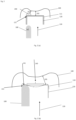
- Figure 1 shows an oral situation for which this disclosure is suitable.
- Figure 1 (a) shows a prosthesis site after a dentist has drilled away part of a tooth, leaving the preparation surface 120.
- Figure 1(a) also shows the opposing teeth 140 and a neighboring tooth 150. There could be two neighboring teeth in other situations.
- the intraoral situation is represented by a digital 3D representation.
- a 2D cross section thereof can look like Figure 1 (a) , too.
- Figure 1 (b) shows elements of an oral situation relevant for an evaluation of the digital 3D representation according to this disclosure.
- a first step at least part of the preparation surface 120 is identified.
- a detailed delineation of the boundary between the prepared and nonprepared area of the tooth, known as the margin line, is not required.
- a direction 130 from which the milling drill approaches the inside of the prothesis during manufacturing is also determined.
- the drill direction 130 may be selected as the opposite of the insertion direction 131.
- the insertion direction in this embodiment may be calculated as the direction for which the sum of the dot products of the direction and the normals of the facets of the mesh digital 3D representation that represent the preparation surface, weighted by facet area, is at a minimum.
- FIG. 1 (b) Also shown in Figure 1 (b) is a crown prosthesis that is suitable for the oral situation, with inner surface 110 and outer surface 100.
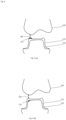
- Fig. 2 shows preparation surfaces with prostheses.
- Figure 2 (a) shows a preparation surface with a prosthesis, and illustrates the effects of drill compensation when evaluating the thickness of a digital dental prosthesis.
- a preparation surface 120 with zero corner radius at edge 121 is shown, where the edge shows as a 2D point in the 2D figure 2 (a) .
- the ideal inner surface 111 may be described as an ideal inner surface of the crown to be manufactured; the ideal inner surface 111 may be offset from the preparation surface 120 outwards by the cement gap. Note that also for illustrative purposes, the cement gap in figure 2 (a) is large relative to the drill radius.
- a simple evaluation of crown thickness may arrive at distance 192 as the value of attainable thickness at the location where it is smallest.
- a drill 180 Its spherical tip has a non-zero radius 181. It can be seen that 130 may be a suitable drill direction, because the drill then can access all parts of the ideal inner surface 111.
- the drill may not be part of a typical oral situation, as milling is performed in a machine outside the mouth, but the figure contains the drill for illustrating geometrical relationships to parts of the oral cavity.
- the crown material may be, for example, milled from a block such as a zirconia blank, i.e., the crown may be a sub-volume of that block.
- drill 180 If drill 180 is to remove all material from the inside of the block up to the ideal inner surface 111 of the crown to be milled, its head must move beyond the ideal surface 111 along direction 130. This means the drill may remove additional material 190 from the block. Accordingly, the value of attainable thickness of the milled crown at the location where it is smallest is distance 191, which is a smaller value than distance 192.
- area 141 may also be a problem area, on both faces of that corner of the preparation, even though the required surface 118 is not inside the preparation surface 120. It is thus appropriate to visualize both areas 140 and 141 as problem areas.
- the magnitude of the problem is the distance from surface 120 to the drill head 180 plus the requested thickness of the cement gap (for the sake of not further complicating the figure, no cement gap zone is shown in figure 2 (b) ). Said magnitude could be visualized using a color map.
- crown of figure 2 (b) were to be manufactured as is, drill compensation may be required, as in Figure 2 (a) , and hence the crown may not attain the required minimum thickness. Thanks to the evaluation of this disclosure and the visualization thereof, the dental practitioner could however discover the problem and solve it before the crown is manufactured, by further grinding the preparation in area 141, for example, to have an edge radius equal to the drill radius. The patient may then receive a crown that has the required thickness and that can be seated.
- Fig. 3 shows a preparation surface with undercut and the calculation of an inner surface in this case.
- Figure 3 (a) shows a preparation site 120 with a selected insertion direction 131 that gives rise to an undercut area 122.
- Figure 3 (b) illustrates the calculation of the inner surface 110 in this case.
- the undercuts may require additional crown material to be removed in the region 179 such that the crown can be seated. Also in this situation, the actual thickness of the crown differs by more than the cement gap value from the distance between prepared surface 120 and crown outer surface 100. Considering that the effects of undercuts may be important in the evaluation, a simple evaluation of crown thickness would give a false sense of safety.
- Figure 4 shows some relevant distances relative to the surrounding dentition that can be evaluated and considered in the sense of this disclosure.
- a minimum distance 160 of the distance from the inner surface 110 to the opposing parts 140 may be required to be equal to or greater than the sum of minimum thickness based on a material and any desired distance to the opposing surface.
- the minimum distance 160 may be calculated for the digital 3D representation and compared with the above requirement. The feasibility of a crown design may thus be established without a need to design the outer surface of a prothesis, which is hence not shown in figure 4 .
- An analogous reasoning would apply for distances to neighboring teeth.
- the dental practitioner can be notified that the preparation has insufficient clearance to the opposing.
- the minimum distance 160 is calculated as distance between the two closest points on the surfaces. It may also be approximated as the minimum distance between the two surfaces along the drill direction or insertion direction.
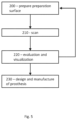
- Figure 5 illustrates a workflow in the sense of this disclosure.
- a dental practitioner may prepare the preparation surface in step 200 and then proceed to scan the preparation surface and surroundings with an intraoral scanner in step 210.
- the preparation surface may then be evaluated and visualized in step 220. If the preparation has problem areas, the dental practitioner may be notified and return to step 200to 220 to prepare the preparation surface further, then scan again. When a subsequent evaluation shows there are no more problem areas, the scan may be used for design and manufacturing of the prosthesis in step 230.
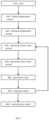
- a preparation surface is detected. This may be done by manual annotation of the dentist. It may also be done with the assistance of or entirely by software trained to do such annotation, for example, by detecting the edges between tooth and gingiva, segmenting the tooth scans, and detecting the preparation site.
- the preparation surface is evaluated by calculating distances between the detected preparation surface and the surroundings.
- the distances may be used as basis for the at least one attainable thickness and/or a negative space. This gives a set of physical limits for the generated crown to fit in. A dentist may manually set deviances for other teeth, for example, shaving a bit off the neighbors to allow a particularly close fit.
- the preparation surface may also be evaluated by calculating distances from one part of the preparation surface to another part of the preparation surface, e.g. to make sure the preparation surface meets at least a minimum diameter.
- an initial inner surface for the crown is generated. This is based on the scan of the prep site. It may be adjusted to allow for a cement gap, e.g. allowing an extra .1 mm all around the preparation surface. It may also be adjusted for undercuts, e.g. areas where the portion that is further down is under an overhang more than a portion further up, therefore making insertion of a crown difficult.
- the inner surface may be based on the preparation surface, but adjusted such that the undercut portions are straightened out for insertion.
- the margin line may be detected through edge detection, and the line drawn there. Both outer and inner surface may be attached at the margin line.
- either the surroundings or the preparation surface may be adjusted in the 3D digital model
- the dentist may make adjustments to the digital dental prosthesis. This may be done, for example, by a sculpting application, or by software trained to perform such an adjustment.
- the dentist may also choose to change the digital oral situation.
- This process may be iterated until an acceptable digital dental prosthesis is found, i.e. repeating steps 640 to 670. Once an acceptable digital dental prosthesis is generated, it may be manufactured in step 680.
- the system 100 is configured for allowing an operator to design a customized dental restoration using information obtained from the bone scan and/or the surface scan, with limits being set based on pre-determined design criteria. This can be realized for example by displaying the digital representation of the patient's jaw on the visual display unit 107, and the operator can then visualize his/her restoration design on the visual display unit, with respect to the surface of the patient's jaw.
- the system comprises a unit 108 for transmitting the digital designs, e.g. digital dental prostheses, as an output data to a fabrication machine for generating a dental appliance, such as a customized dental restoration to e.g. a computer aided manufacturing (CAM) device 109 for manufacturing the customized dental restorations or to another computer system e.g. located at a milling or printing center where the customized dental restorations are manufactured.
- a fabrication machine for generating a dental appliance, such as a customized dental restoration to e.g. a computer aided manufacturing (CAM) device 109 for manufacturing the customized dental restorations or to another computer system e.g. located at a milling or printing center where the customized dental restorations are manufactured.
- CAM computer aided manufacturing
- the unit for transmitting can be a wired or a wireless connection, and the transmission may be done for example using the internet or File Transfer Protocol (FTP).
- FTP File Transfer Protocol
- the 3D scanning of the patient's oral situation using the 3D scanning device 101a, and/or image acquisition device 101b can be performed at a dentist while the manufacture of the customized dental restoration may be performed at a dental laboratory.
- the digital oral situation acquired from the scanning device and/or the digital dental prosthesis can be provided via an internet connection between the dentist and the dental laboratory.
- the system 100 as shown is an illustrative example.
- the computer device 102 may comprise more than one processor 103 and/or more than one computer readable medium 104
- the visual display unit 107 may be integrated in the computer device 102 or be separate from the computer device 102, etc.
- a claim may refer to any of the preceding claims, and "any” is understood to mean “any one or more” of the preceding claims.
- obtaining may refer to physically acquiring for example medical images using a medical imaging device, but it may also refer for example to loading into a computer an image or a digital representation previously acquired.
Landscapes
- Health & Medical Sciences (AREA)
- Engineering & Computer Science (AREA)
- Physics & Mathematics (AREA)
- Veterinary Medicine (AREA)
- Animal Behavior & Ethology (AREA)
- Public Health (AREA)
- General Health & Medical Sciences (AREA)
- Life Sciences & Earth Sciences (AREA)
- Oral & Maxillofacial Surgery (AREA)
- Dentistry (AREA)
- Epidemiology (AREA)
- Software Systems (AREA)
- Theoretical Computer Science (AREA)
- General Physics & Mathematics (AREA)
- Computer Graphics (AREA)
- Geometry (AREA)
- Architecture (AREA)
- Computer Hardware Design (AREA)
- General Engineering & Computer Science (AREA)
- Dental Tools And Instruments Or Auxiliary Dental Instruments (AREA)
- Dental Prosthetics (AREA)
Claims (15)
- Computerimplementiertes Verfahren zum Bewerten der Oberfläche eines Dentalpräparats (120), umfassend:Erhalten (210, 610) einer digitalen Mundsituation und/oder eines Abschnitts davon, umfassend eine Präparatoberfläche (120), wobei die Präparatoberfläche (120) dazu konfiguriert ist, eine digitale Zahnprothese aufzunehmen;Bewerten (220, 630) zumindest einer erreichbaren Dicke, wobei die erreichbare Dicke als ein Abstand zwischen der Präparatoberfläche (120) und der/den Umgebung(en) konfiguriert ist, wobei die Umgebung(en) Teile der digitalen Mundsituation umfasst/umfassen, welche nicht Teil der Präparatoberfläche (120) sind; undVergleichen der zumindest einen erreichbaren Dicke mit zumindest einer Mindestdicke, wie sie für die digitale Zahnrestauration erforderlich ist, dadurch gekennzeichnet, dass das Verfahren Verwendung einer Software umfasst, welche darauf trainiert ist, die Präparatoberfläche (120) zu erkennen (620), indem sie die Mundsituation segmentiert, um Zähne zu identifizieren, und basierend auf der Form der Zähne die Präparatoberfläche (120) identifiziert.
- Verfahren nach dem vorstehenden Anspruch, weiter Erzeugen einer Innenfläche (110) für die digitale Zahnprothese basierend auf der Präparatoberfläche (120) umfassend.
- Verfahren nach einem oder mehreren der vorstehenden Ansprüche, weiter umfassend Erzeugen einer Außenfläche (100) für die digitale Zahnprothese.
- Verfahren nach Ansprüchen 2 und 3, weiter umfassend Erzeugen der digitalen Zahnprothese basierend auf der Innenfläche (110) und der Außenfläche (100).
- Verfahren nach einem oder mehreren der vorstehenden Ansprüche, weiter umfassend Anpassen der digitalen Zahnprothese und/oder der Präparatoberfläche (120) durch:Bewerten der digitalen Zahnprothese und/oder der Präparatoberfläche (120) für die zumindest eine Mindestdicke und die zumindest eine erreichbare Dicke;Vergleichen der zumindest einen Mindestdicke und der zumindest einen erreichbaren Dicke; und Anpassen der digitalen Zahnprothese und/oder der Präparatoberfläche (120), wobei zumindest eine der zumindest einen Mindestdicke und zumindest eine der zumindest einen erreichbaren Dicke im Konflikt stehen.
- Verfahren nach einem oder mehreren der vorstehenden Ansprüche, weiter umfassend Anzeigen einer digitalen Präparatoberfläche (120), der digitalen Mundsituation und/oder der digitalen Zahnprothese.
- Verfahren nach einem oder mehreren der vorstehenden Ansprüche, weiter umfassend:Bewerten der Präparatoberfläche (120) hinsichtlich Problembereichen basierend auf der zumindest einen erreichbaren Dicke;Anzeigen der digitalen Präparatoberfläche (120), der digitalen Mundsituation und/oder der digitalen Zahnprothese; undHervorheben der Problembereiche auf der digitalen Präparatoberfläche, der digitalen Mundsituation und/oder der digitalen Zahnprothese.
- Verfahren nach einem oder mehreren der vorstehenden Ansprüche, weiter umfassend:Angleichen der digitalen Zahnprothese an die digitale Mundsituation und/oder die digitale Präparatoberfläche (120); undAnzeigen der digitalen Zahnprothese und der digitalen Mundsituation.
- Verfahren nach einem oder mehreren der vorstehenden Ansprüche, weiter umfassend:Berechnen einer Auswirkung von zumindest einer Bohreigenschaft; undAnpassen zumindest einer der zumindest einen erreichbaren Dicke und/oder der Innenfläche (110) basierend auf der Auswirkung der zumindest einen Bohreigenschaft.
- Verfahren nach einem oder mehreren der vorstehenden Ansprüche, weiter umfassend:Berechnen einer Auswirkung einer Vielzahl von Bohrradien auf die zumindest eine erreichbare Dicke und/oder die Innenfläche (110); undAuswählen zumindest eines Bohrradius basierend auf der Berechnung der Auswirkungen der Vielzahl von Bohrradien.
- Verfahren nach einem oder mehreren der vorstehenden Ansprüche, weiter umfassend:Erkennen zumindest eines Hinterschneidungsbereichs (122) der Präparatoberfläche (120); undAnpassen zumindest einer der zumindest einen erreichbaren Dicke, der Innenfläche (110) und/oderder Präparatoberfläche (120) basierend auf dem zumindest einen Hinterschneidungsbereich (122).
- Verfahren nach einem oder mehreren der vorstehenden Ansprüche, weiter umfassend Auswählen zumindest eines Prothesenmaterials durch:Bewerten der zumindest einen Mindestdicke basierend auf jedem einer Vielzahl von Prothesenmaterialien; undAuswählen zumindest eines der Vielzahl von Prothesenmaterialien basierend auf der Bewertung der zumindest einen Mindestdicke.
- Verfahren nach einem oder mehreren der vorstehenden Ansprüche, weiter umfassend Auswählen zumindest eines Prothesenmaterials durch:Schätzen der Kosten für jedes einer Vielzahl von Prothesenmaterialien; undAuswählen zumindest eines der Vielzahl von Materialien basierend auf den geschätzten Kosten.
- Verfahren nach einem oder mehreren der vorstehenden Ansprüche, wobei die Mundsituation weiter zumindest einen gegenüberliegenden Zahn umfasst, wobei das Verfahren weiter umfasst:Identifizieren zumindest einer gegenüberliegenden Zahnoberfläche (140) in der digitalen Mundsituation;Identifizieren eines interokklusalen Abstands (160); undAnpassen zumindest einer der zumindest einen erreichbaren Dicke und/oder Außenfläche (100) basierend auf dem interokklusalen Abstand (160) und der zumindest einen gegenüberliegenden Zahnoberfläche (140).
- Verfahren nach einem oder mehreren der vorstehenden Ansprüche, wobei die Mundsituation weiter zumindest einen benachbarten Zahn (150) umfasst, wobei das Verfahren weiter umfasst:Identifizieren zumindest einer benachbarten Zahnoberfläche (150);Identifizieren eines gewünschten interproximalen Abstands; undAnpassen zumindest einer der zumindest einen erreichbaren Dicke und/oder Außenfläche (100) basierend auf dem gewünschten interproximalen Abstand und der zumindest einen benachbarten Zahnoberfläche (150).
Priority Applications (1)
| Application Number | Priority Date | Filing Date | Title |
|---|---|---|---|
| EP25186966.5A EP4620429A2 (de) | 2020-04-22 | 2021-04-22 | Verfahren und system zur beurteilung einer zahnmedizinischen zubereitungsoberfläche |
Applications Claiming Priority (3)
| Application Number | Priority Date | Filing Date | Title |
|---|---|---|---|
| DKPA202070247 | 2020-04-22 | ||
| DKPA202070583 | 2020-09-08 | ||
| PCT/EP2021/060521 WO2021214212A1 (en) | 2020-04-22 | 2021-04-22 | Method and system for evaluating a dental preparation surface |
Related Child Applications (1)
| Application Number | Title | Priority Date | Filing Date |
|---|---|---|---|
| EP25186966.5A Division EP4620429A2 (de) | 2020-04-22 | 2021-04-22 | Verfahren und system zur beurteilung einer zahnmedizinischen zubereitungsoberfläche |
Publications (2)
| Publication Number | Publication Date |
|---|---|
| EP4138724A1 EP4138724A1 (de) | 2023-03-01 |
| EP4138724B1 true EP4138724B1 (de) | 2025-07-09 |
Family
ID=75674826
Family Applications (2)
| Application Number | Title | Priority Date | Filing Date |
|---|---|---|---|
| EP25186966.5A Pending EP4620429A2 (de) | 2020-04-22 | 2021-04-22 | Verfahren und system zur beurteilung einer zahnmedizinischen zubereitungsoberfläche |
| EP21721478.2A Active EP4138724B1 (de) | 2020-04-22 | 2021-04-22 | Verfahren zur beurteilung einer zahnmedizinischen präparationsoberfläche |
Family Applications Before (1)
| Application Number | Title | Priority Date | Filing Date |
|---|---|---|---|
| EP25186966.5A Pending EP4620429A2 (de) | 2020-04-22 | 2021-04-22 | Verfahren und system zur beurteilung einer zahnmedizinischen zubereitungsoberfläche |
Country Status (4)
| Country | Link |
|---|---|
| US (2) | US12423932B2 (de) |
| EP (2) | EP4620429A2 (de) |
| CN (1) | CN115666441A (de) |
| WO (1) | WO2021214212A1 (de) |
Families Citing this family (8)
| Publication number | Priority date | Publication date | Assignee | Title |
|---|---|---|---|---|
| US20230298272A1 (en) * | 2018-10-30 | 2023-09-21 | Segmentron, LLC | System and Method for an Automated Surgical Guide Design (SGD) |
| US11842484B2 (en) | 2021-01-04 | 2023-12-12 | James R. Glidewell Dental Ceramics, Inc. | Teeth segmentation using neural networks |
| US12136208B2 (en) | 2021-03-31 | 2024-11-05 | James R. Glidewell Dental Ceramics, Inc. | Automatic clean up of jaw scans |
| US12210802B2 (en) | 2021-04-30 | 2025-01-28 | James R. Glidewell Dental Ceramics, Inc. | Neural network margin proposal |
| US12295806B2 (en) | 2022-01-10 | 2025-05-13 | James R. Glidewell Dental Ceramics, Inc. | Automatic determination of trim-line for aligners |
| US20240312165A1 (en) * | 2023-03-13 | 2024-09-19 | Exocad Gmbh | Determining a preparation surface |
| CN118154608B (zh) * | 2024-05-11 | 2024-09-24 | 深圳云甲科技有限公司 | 倒凹检测方法、电子设备及存储介质 |
| CN120374537B (zh) * | 2025-04-10 | 2025-11-25 | 西安市第三医院 | 基于图像识别的牙体预备质量评估方法及系统 |
Citations (1)
| Publication number | Priority date | Publication date | Assignee | Title |
|---|---|---|---|---|
| EP3197389B1 (de) * | 2014-09-24 | 2019-08-21 | 3Shape A/S | Erzeugung eines digitalen designs für zahnrestauration |
Family Cites Families (7)
| Publication number | Priority date | Publication date | Assignee | Title |
|---|---|---|---|---|
| DE10252298B3 (de) | 2002-11-11 | 2004-08-19 | Mehl, Albert, Prof. Dr. Dr. | Verfahren zur Herstellung von Zahnersatzteilen oder Zahnrestaurationen unter Verwendung elektronischer Zahndarstellungen |
| US7862336B2 (en) | 2004-11-26 | 2011-01-04 | Cadent Ltd. | Method and system for providing feedback data useful in prosthodontic procedures associated with the intra oral cavity |
| EP2785272B1 (de) | 2011-11-28 | 2019-01-09 | 3Shape A/S | Zahnärztliche führungshilfe |
| WO2015031367A2 (en) * | 2013-08-26 | 2015-03-05 | James R. Glidewell Dental Ceramics, Inc. | Computer-implemented dental restoration design |
| DE102015112800A1 (de) * | 2015-04-09 | 2016-10-13 | Fraunhofer-Gesellschaft zur Förderung der angewandten Forschung e.V. | Mehrteilig aufgebaute Dentalprothese sowie Verfahren und Vorrichtung zu ihrer Herstellung |
| EP3393396B1 (de) | 2015-12-21 | 2024-02-14 | 3Shape A/S | Verfahren zum entwurf einer restauration und einer reduktionskappe |
| WO2018022752A1 (en) | 2016-07-27 | 2018-02-01 | James R. Glidewell Dental Ceramics, Inc. | Dental cad automation using deep learning |
-
2021
- 2021-04-22 CN CN202180038209.5A patent/CN115666441A/zh active Pending
- 2021-04-22 EP EP25186966.5A patent/EP4620429A2/de active Pending
- 2021-04-22 US US17/920,187 patent/US12423932B2/en active Active
- 2021-04-22 EP EP21721478.2A patent/EP4138724B1/de active Active
- 2021-04-22 WO PCT/EP2021/060521 patent/WO2021214212A1/en not_active Ceased
-
2025
- 2025-08-21 US US19/306,058 patent/US20250371834A1/en active Pending
Patent Citations (1)
| Publication number | Priority date | Publication date | Assignee | Title |
|---|---|---|---|---|
| EP3197389B1 (de) * | 2014-09-24 | 2019-08-21 | 3Shape A/S | Erzeugung eines digitalen designs für zahnrestauration |
Also Published As
| Publication number | Publication date |
|---|---|
| EP4620429A2 (de) | 2025-09-24 |
| US12423932B2 (en) | 2025-09-23 |
| WO2021214212A1 (en) | 2021-10-28 |
| US20230162457A1 (en) | 2023-05-25 |
| EP4138724A1 (de) | 2023-03-01 |
| CN115666441A (zh) | 2023-01-31 |
| US20250371834A1 (en) | 2025-12-04 |
Similar Documents
| Publication | Publication Date | Title |
|---|---|---|
| EP4138724B1 (de) | Verfahren zur beurteilung einer zahnmedizinischen präparationsoberfläche | |
| US11903779B2 (en) | Dental preparation guide | |
| US11636943B2 (en) | Method for manipulating a dental virtual model, method for creating physical entities based on a dental virtual model thus manipulated, and dental models thus created | |
| EP2626036B1 (de) | Virtueller entwurf einer stift- und kernfüllung unter verwendung einer digitalen 3d-form | |
| EP2877118B1 (de) | Entwurf eines dentalen positioniergestells | |
| US8457772B2 (en) | Method for planning a dental component |
Legal Events
| Date | Code | Title | Description |
|---|---|---|---|
| STAA | Information on the status of an ep patent application or granted ep patent |
Free format text: STATUS: UNKNOWN |
|
| STAA | Information on the status of an ep patent application or granted ep patent |
Free format text: STATUS: THE INTERNATIONAL PUBLICATION HAS BEEN MADE |
|
| PUAI | Public reference made under article 153(3) epc to a published international application that has entered the european phase |
Free format text: ORIGINAL CODE: 0009012 |
|
| STAA | Information on the status of an ep patent application or granted ep patent |
Free format text: STATUS: REQUEST FOR EXAMINATION WAS MADE |
|
| 17P | Request for examination filed |
Effective date: 20221121 |
|
| AK | Designated contracting states |
Kind code of ref document: A1 Designated state(s): AL AT BE BG CH CY CZ DE DK EE ES FI FR GB GR HR HU IE IS IT LI LT LU LV MC MK MT NL NO PL PT RO RS SE SI SK SM TR |
|
| DAV | Request for validation of the european patent (deleted) | ||
| DAX | Request for extension of the european patent (deleted) | ||
| STAA | Information on the status of an ep patent application or granted ep patent |
Free format text: STATUS: EXAMINATION IS IN PROGRESS |
|
| 17Q | First examination report despatched |
Effective date: 20231130 |
|
| GRAP | Despatch of communication of intention to grant a patent |
Free format text: ORIGINAL CODE: EPIDOSNIGR1 |
|
| STAA | Information on the status of an ep patent application or granted ep patent |
Free format text: STATUS: GRANT OF PATENT IS INTENDED |
|
| INTG | Intention to grant announced |
Effective date: 20240918 |
|
| GRAJ | Information related to disapproval of communication of intention to grant by the applicant or resumption of examination proceedings by the epo deleted |
Free format text: ORIGINAL CODE: EPIDOSDIGR1 |
|
| STAA | Information on the status of an ep patent application or granted ep patent |
Free format text: STATUS: EXAMINATION IS IN PROGRESS |
|
| INTC | Intention to grant announced (deleted) | ||
| GRAP | Despatch of communication of intention to grant a patent |
Free format text: ORIGINAL CODE: EPIDOSNIGR1 |
|
| STAA | Information on the status of an ep patent application or granted ep patent |
Free format text: STATUS: GRANT OF PATENT IS INTENDED |
|
| INTG | Intention to grant announced |
Effective date: 20250217 |
|
| GRAS | Grant fee paid |
Free format text: ORIGINAL CODE: EPIDOSNIGR3 |
|
| GRAA | (expected) grant |
Free format text: ORIGINAL CODE: 0009210 |
|
| STAA | Information on the status of an ep patent application or granted ep patent |
Free format text: STATUS: THE PATENT HAS BEEN GRANTED |
|
| AK | Designated contracting states |
Kind code of ref document: B1 Designated state(s): AL AT BE BG CH CY CZ DE DK EE ES FI FR GB GR HR HU IE IS IT LI LT LU LV MC MK MT NL NO PL PT RO RS SE SI SK SM TR |
|
| REG | Reference to a national code |
Ref country code: GB Ref legal event code: FG4D |
|
| RIN1 | Information on inventor provided before grant (corrected) |
Inventor name: HOLLENBECK, KARL-JOSEF Inventor name: HANSEN, THOMAS LUNDGAARD |
|
| REG | Reference to a national code |
Ref country code: CH Ref legal event code: EP |
|
| REG | Reference to a national code |
Ref country code: IE Ref legal event code: FG4D |
|
| REG | Reference to a national code |
Ref country code: DE Ref legal event code: R096 Ref document number: 602021033762 Country of ref document: DE |
|
| P01 | Opt-out of the competence of the unified patent court (upc) registered |
Free format text: CASE NUMBER: UPC_APP_0026_4138724/2025 Effective date: 20250708 |
|
| REG | Reference to a national code |
Ref country code: NL Ref legal event code: MP Effective date: 20250709 |