EP4136340B1 - Windparkwecksteuerungsaktivierungsverfahren - Google Patents
Windparkwecksteuerungsaktivierungsverfahren Download PDFInfo
- Publication number
- EP4136340B1 EP4136340B1 EP21722379.1A EP21722379A EP4136340B1 EP 4136340 B1 EP4136340 B1 EP 4136340B1 EP 21722379 A EP21722379 A EP 21722379A EP 4136340 B1 EP4136340 B1 EP 4136340B1
- Authority
- EP
- European Patent Office
- Prior art keywords
- wind
- yaw offset
- yaw
- wind turbine
- variable
- Prior art date
- Legal status (The legal status is an assumption and is not a legal conclusion. Google has not performed a legal analysis and makes no representation as to the accuracy of the status listed.)
- Active
Links
Images

Classifications
-
- F—MECHANICAL ENGINEERING; LIGHTING; HEATING; WEAPONS; BLASTING
- F03—MACHINES OR ENGINES FOR LIQUIDS; WIND, SPRING, OR WEIGHT MOTORS; PRODUCING MECHANICAL POWER OR A REACTIVE PROPULSIVE THRUST, NOT OTHERWISE PROVIDED FOR
- F03D—WIND MOTORS
- F03D7/00—Controlling wind motors
- F03D7/02—Controlling wind motors the wind motors having rotation axis substantially parallel to the air flow entering the rotor
- F03D7/0204—Controlling wind motors the wind motors having rotation axis substantially parallel to the air flow entering the rotor for orientation in relation to wind direction
-
- F—MECHANICAL ENGINEERING; LIGHTING; HEATING; WEAPONS; BLASTING
- F03—MACHINES OR ENGINES FOR LIQUIDS; WIND, SPRING, OR WEIGHT MOTORS; PRODUCING MECHANICAL POWER OR A REACTIVE PROPULSIVE THRUST, NOT OTHERWISE PROVIDED FOR
- F03D—WIND MOTORS
- F03D7/00—Controlling wind motors
- F03D7/02—Controlling wind motors the wind motors having rotation axis substantially parallel to the air flow entering the rotor
- F03D7/04—Automatic control; Regulation
- F03D7/042—Automatic control; Regulation by means of an electrical or electronic controller
- F03D7/048—Automatic control; Regulation by means of an electrical or electronic controller controlling wind farms
-
- F—MECHANICAL ENGINEERING; LIGHTING; HEATING; WEAPONS; BLASTING
- F03—MACHINES OR ENGINES FOR LIQUIDS; WIND, SPRING, OR WEIGHT MOTORS; PRODUCING MECHANICAL POWER OR A REACTIVE PROPULSIVE THRUST, NOT OTHERWISE PROVIDED FOR
- F03D—WIND MOTORS
- F03D7/00—Controlling wind motors
- F03D7/02—Controlling wind motors the wind motors having rotation axis substantially parallel to the air flow entering the rotor
- F03D7/04—Automatic control; Regulation
- F03D7/042—Automatic control; Regulation by means of an electrical or electronic controller
- F03D7/048—Automatic control; Regulation by means of an electrical or electronic controller controlling wind farms
- F03D7/049—Automatic control; Regulation by means of an electrical or electronic controller controlling wind farms in relation to the wake effect
-
- F—MECHANICAL ENGINEERING; LIGHTING; HEATING; WEAPONS; BLASTING
- F05—INDEXING SCHEMES RELATING TO ENGINES OR PUMPS IN VARIOUS SUBCLASSES OF CLASSES F01-F04
- F05B—INDEXING SCHEME RELATING TO WIND, SPRING, WEIGHT, INERTIA OR LIKE MOTORS, TO MACHINES OR ENGINES FOR LIQUIDS COVERED BY SUBCLASSES F03B, F03D AND F03G
- F05B2270/00—Control
- F05B2270/10—Purpose of the control system
- F05B2270/20—Purpose of the control system to optimise the performance of a machine
- F05B2270/204—Purpose of the control system to optimise the performance of a machine taking into account the wake effect
-
- F—MECHANICAL ENGINEERING; LIGHTING; HEATING; WEAPONS; BLASTING
- F05—INDEXING SCHEMES RELATING TO ENGINES OR PUMPS IN VARIOUS SUBCLASSES OF CLASSES F01-F04
- F05B—INDEXING SCHEME RELATING TO WIND, SPRING, WEIGHT, INERTIA OR LIKE MOTORS, TO MACHINES OR ENGINES FOR LIQUIDS COVERED BY SUBCLASSES F03B, F03D AND F03G
- F05B2270/00—Control
- F05B2270/30—Control parameters, e.g. input parameters
- F05B2270/309—Rate of change of parameters
-
- F—MECHANICAL ENGINEERING; LIGHTING; HEATING; WEAPONS; BLASTING
- F05—INDEXING SCHEMES RELATING TO ENGINES OR PUMPS IN VARIOUS SUBCLASSES OF CLASSES F01-F04
- F05B—INDEXING SCHEME RELATING TO WIND, SPRING, WEIGHT, INERTIA OR LIKE MOTORS, TO MACHINES OR ENGINES FOR LIQUIDS COVERED BY SUBCLASSES F03B, F03D AND F03G
- F05B2270/00—Control
- F05B2270/30—Control parameters, e.g. input parameters
- F05B2270/321—Wind directions
-
- F—MECHANICAL ENGINEERING; LIGHTING; HEATING; WEAPONS; BLASTING
- F05—INDEXING SCHEMES RELATING TO ENGINES OR PUMPS IN VARIOUS SUBCLASSES OF CLASSES F01-F04
- F05B—INDEXING SCHEME RELATING TO WIND, SPRING, WEIGHT, INERTIA OR LIKE MOTORS, TO MACHINES OR ENGINES FOR LIQUIDS COVERED BY SUBCLASSES F03B, F03D AND F03G
- F05B2270/00—Control
- F05B2270/70—Type of control algorithm
- F05B2270/708—Type of control algorithm with comparison tables
-
- Y—GENERAL TAGGING OF NEW TECHNOLOGICAL DEVELOPMENTS; GENERAL TAGGING OF CROSS-SECTIONAL TECHNOLOGIES SPANNING OVER SEVERAL SECTIONS OF THE IPC; TECHNICAL SUBJECTS COVERED BY FORMER USPC CROSS-REFERENCE ART COLLECTIONS [XRACs] AND DIGESTS
- Y02—TECHNOLOGIES OR APPLICATIONS FOR MITIGATION OR ADAPTATION AGAINST CLIMATE CHANGE
- Y02E—REDUCTION OF GREENHOUSE GAS [GHG] EMISSIONS, RELATED TO ENERGY GENERATION, TRANSMISSION OR DISTRIBUTION
- Y02E10/00—Energy generation through renewable energy sources
- Y02E10/70—Wind energy
- Y02E10/72—Wind turbines with rotation axis in wind direction
Definitions
- the invention relates to control of wind farms comprising a plurality of wind turbines, particularly to methods for handling wake effects.
- Wake losses in a wind farm may cause power production losses.
- EP 2 063 108 A2 discloses a method for increasing the power production of a wind park during conditions when the wake created by an upstream turbine effects the power production of a downstream turbine. Minimizing the wake effects created by an upstream turbine on a downstream turbine increases the net power produced by both the upstream and downstream turbines. Also disclosed is an implementation of an algorithm to determine the controller settings of one or more upstream turbines to increase total energy capture of the turbines in the wind park. The algorithm also reduces the fatigue loads on the downstream turbines by reducing the turbulence created by the wake effects of the upstream turbine.
- EP 2 767 710 A2 discloses a wake steering control scheme where activating a wake steering control for the wind turbine is based on a wind direction impinging on a turbine.
- the decision function determines which of the wind turbines should have the yaw offset control enabled or disabled. Since the decision is based on the wind variation range, there is a higher likelihood that a given energy production is obtainable as long as the actual wind variations are within the wind variation range. That is, since there is a given likelihood that certain wind conditions such as wind directions will be within the wind variation range, there is a corresponding (high) likelihood that a given energy production is obtainable as long as the wind condition is within the wind variation range.
- the decision function provides information, e.g. via the activation parameter, that enables determination of whether the yaw offset control of the specific wind turbine should be enabled or disabled based on the variables of the function.
- the wind variation variable could define a range of the variable where the offset control is disabled, such as a range of wind directions where the offset control is disabled irrespective of the values of the other variables. Additionally, the wind variation variable defines ranges of the variable where the offset control will be disabled or enabled dependent on the other variables of the decision function.
- the wind variation variable may be determined as a standard deviation of the wind variable such as the standard deviation of the wind direction or the wind turbulence.
- the wind variation range can be defined as a level of the standard deviation.
- the yaw offset control provides an offset yaw angle to the default yaw setting, i.e. the yaw setting normally applied to maximize the wind intake of the rotor plane.
- the wind variation variable comprises one or both of: a wind direction variation variable indicative of a level of variation of a wind direction over time, and a wind turbulence variation variable indicative of a level of variation of a wind turbulence.
- the activation of the yaw offset control may only be invoked if the variation in the wind direction is sufficiently low to make it more likely that introduction of the yaw offset control improves the power production.
- the activation parameter provides information defining if the yaw offset control should be disabled and/or enabled.
- the decision function has been determined based on comparing a simulated energy production of the plurality of wind turbines when the yaw offset control is enabled, respectively disabled, for one or more of the plurality of wind turbines.
- the decision function has been determined and/or is updated based on a comparison of an actual energy production of the plurality of wind turbines obtained when the yaw offset control is enabled respectively disabled for one or more of the plurality of wind turbines.
- the decision function is updated based on actual data so that the decision to enable or disable yaw offset control is based on experience and therefore more accurate with respect to the obtained energy production.
- the yaw offset is scaled according to a weight provided by the decision function or by the activation parameter.
- the level of the yaw offset may be scaled dependent on the values of the variables of the decision function.
- the variables of the decision function further comprises: a wind shear variable, a nacelle direction variable for the specific wind turbine, a nacelle direction variable for a neighbor wind turbine to the specific wind turbine, and a wind turbulence variable for a neighbor wind turbine to the specific wind turbine.
- the method comprises providing a plurality of decision functions arranged for providing a plurality activation parameters for a plurality of specific wind turbines dependent on the two or more variables.
- a decision function is provided for each wind turbine.
- a second aspect of the invention relates to a wind turbine controller unit arranged for controlling a yaw offset of one or more wind turbines in accordance with claim 10, the wind turbine controller unit comprises
- a third aspect of the invention relates to a computer program product comprising software code adapted to control a wind turbine when executed on a data processing system, the computer program product being adapted to perform the method of the first aspect.
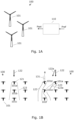
- Fig. 1A shows a wind farm 100 which comprises a plurality of wind turbines 101.
- the wind farm is connectable with an electrical power grid (not shown) for supplying power generated by the wind turbines 101 to the electrical power grid.
- the wind turbines of the wind farm 100 is controlled by a central wind farm controller 110.
- the wind farm controller 110 is arranged to control power generation from the wind turbines 101 according to a wind farm reference Pref which defines the desired power to be supplied to the grid from the wind farm 100.
- the central controller is arranged to dispatch power set-points Pset to the wind turbines, i.e. individual power set-points to each wind turbine 101 which set the desired power productions of individual wind turbines.
- the power set-points Pset may be determined by the wind farm controller 110 dependent on the wind farm reference Pref so that the sum of power set-points Pset corresponds to the wind farm reference Pref.
- the wind turbine 101 comprises a tower and a rotor with at least one rotor blade, such as three blades.
- the rotor is connected to a nacelle which is mounted on top of the tower and being adapted to drive a generator situated inside the nacelle.
- the rotor is rotatable by action of the wind.
- the wind induced rotational energy of the rotor blades is transferred via a shaft to the generator.
- the wind turbine is capable of converting kinetic energy of the wind into mechanical energy by means of the rotor blades and, subsequently, into electric power by means of the generator.
- the wind turbine may further include a power converter for converting the generator AC power into a DC power and a power inverter for converting the DC power into an AC power to be injected into the electrical power grid.
- the generator of the wind turbine 101 is controllable to produce power corresponding to the power set-point Pset provided by the wind farm controller 110.
- the output power may be adjusted according to the power set-point by adjusting the pitch of the rotor blades or by controlling the power converter to adjust the power production.
- Fig. 1B shows relative locations of wind turbines 101 in a principal sketch of a wind farm 100 seen from above.
- the rotor plane 121 of all wind turbines are perpendicular to the wind direction 122 in order to maximize the wind power intake.
- the rotor of the upstream wind turbine 101a generates a wake in the form of a wind field 123 with reduced wind speed which affects the downstream wind turbines 101b and 101c. This reduction of the wind speed in the shadow of the upstream wind turbine is known as the wake effect.
- the rotor plane 121 of the upstream wind turbine 101d has been rotated, i.e. yawed out of the wind, so that the rotor plane normal deviates from the wind direction 122 by a certain angle ⁇ which depends on or corresponds to the nacelle direction 131.
- the orientation of the nacelle or equivalently the rotor plane normal relative to a fixed direction such as the geographical north is referred to as the nacelle direction 131 which is indicative of the yaw angle of a specific wind turbine 101.
- the downstream wind field 123 downstream to the wind turbine is directed away from the wind direction.
- the downstream wind field 123 may be directed according to a yaw offset ⁇ up an upstream wind turbine so that the downstream wind turbines 101e, 101f are less affected by the wake effect.
- the angle of the direction of the downstream wind field 123 depends obviously on the wind direction 122, but also on the wind speed, wind shear (i.e. distribution of different wind speeds over the rotor plane), wind turbulence as well as other wind characteristics.
- the redirected wind field 123 of the upstream wind turbine 101a may pass through the rows of the downstream wind turbines 101. However, if the wind direction changes from direction 122 to wind direction 122a, the redirected wind field 123 may change into another redirected wind field 123a which may impact one of the downstream wind turbines 101e with reduced wind speed and possibly wind turbulence.
- the yaw offset control i.e. the wake control
- the yaw offset control may provide a power production optimized wake compensation, but in another likely wind condition, the yaw offset control may even worsen the power production as compared to a situation where no yaw offset control is performed.
- the yaw offset ⁇ may be defined as a deviation of the nacelle direction 131 due to the yaw offset compared to the normal, not wake compensated, nacelle direction 131, e.g. where the rotor plane 121 is perpendicular to the wind direction 122.
- Fig. 2A shows a wind turbine controller such as a yaw control system 290 arranged for controlling the yaw angle of a wind turbine 101.
- the yaw control system 290 comprises a yaw offset controller 291 arranged to provide the yaw offset control in terms of a yaw offset angle ⁇ , and a yaw controller 292 arranged to control a yaw mechanism 293 according to a desired nacelle direction 131, e.g. the optimal nacelle direction 131 which ensures that the rotor plane is perpendicular to the wind direction 122.
- the optimal nacelle direction 131 is obtained by the default yaw setting provided by the yaw controller 292.
- the yaw offset controller 291 is configured to be enabled to provide a yaw offset ⁇ or disabled, i.e. to not provide a yaw offset ⁇ or to provide a zero yaw offset ⁇ dependent on the activation parameter Px, e.g. a binary parameter Px provided by a binary activation signal.
- the activation parameter Px provides information defining if the yaw offset controller 291 should generate yaw offset control or not.
- the yaw offset controller 291 In case the yaw offset controller 291 is enabled, the yaw offset ⁇ is determined and added to the output of the yaw controller 292 so that the default yaw setting is modified by the yaw offset ⁇ .
- the yaw offset controller 291 may be combined with the yaw controller 292 so that the yaw offset ⁇ could be combined with other control signals of the yaw controller than the output control signal.
- Fig. 2A further shows a wind turbine controller unit 200 arranged for controlling a yaw offset ⁇ of one or more wind turbines 101.
- the wind turbine controller unit 200 comprises a decision function 201 arranged for providing an activation parameter Px for a specific wind turbine 101a of the plurality of wind turbines 101 dependent on two or more variables 210.
- the variables 210 includes a wind direction variable Wx indicative of the wind direction of the specific wind turbine.
- the wind direction variable may be based on the wind direction 122 obtained from a central wind sensor such as a met mast, from decentral wind sensors such as wind sensors of individual wind turbines 101, estimated wind directions, etc.
- the variables 210 further includes a wind variation variable ⁇ Wx which defines or relates to at least a wind variation range where the yaw offset control is disabled and/or a wind variation range where yaw offset control is enabled, either independent on other variables in some ranges or dependent on other variables in other ranges.
- the range where the yaw offset is disabled is the complement of the range where the yaw offset is enabled.
- the wind variation variable may comprise a wind direction variation ⁇ WDx variable indicative of a level of variation of a wind direction over time.
- the wind variation variable may comprise a wind turbulence variation variable ⁇ WTx indicative of the level of variation of a wind turbulence.
- the wind direction variation variable ⁇ WDx may be determined based on wind direction measurements of individual wind turbines or via central wind direction measurements.
- the measurements used for determining the wind direction variation variable ⁇ WDx may be the most recent measurements obtained in a period of time prior to the enabling or disabling the yaw offset control.
- the period of time may be a predetermined period of time, e.g. the past 100 minutes prior to the enabling or disabling the yaw offset control. In this manner, it can be ensured that the yaw offset control is only enabled if the wind direction is sufficiently stable, and has been sufficiently stable in the period prior to the invoking the yaw offset control.
- the wind direction variation variable ⁇ WDx may be determined as the standard deviation of the wind direction measurements, as a range covering the maximal and minimal wind directions obtained within a given period, as a range covering the wind directions occurring with a frequency above a given threshold, or by other methods which reflects the variations of the wind direction 122.
- the wind turbulence variation variable ⁇ WTx may be determined based on wind turbulence measurements of individual wind turbines or via central wind turbulence measurements.
- the measurements used for determining the wind turbulence variation variable ⁇ WTx may be the most recent measurements obtained in a period of time, in a similar manner as for the wind direction variation variable.
- the period of time used for the wind direction variation variable and the wind turbulence variation variable may be of the same length or of different length.
- the wind turbulence variation variable ⁇ WDx may be determined as the standard deviation of the wind turbulence measurements, as a range covering the maximal and minimal turbulence values or such values occurring with a frequency above a given threshold, or by other methods which reflects the variations of the wind turbulence.
- Other optional variables 210 that may be used for determining or providing the activation parameter includes a wind shear variable indicating a variation of wind speeds over the rotor plane 121, a nacelle direction variable for the specific wind turbine such as the nacelle direction 131, a nacelle direction variable for a neighbor wind turbine to the specific wind turbine such as nacelle directions 131 of wind turbines other than the specific wind turbine 101a, a wind turbulence variable indicative of the actual wind turbulence of the specific wind turbine 101a, a wind turbulence variable indicative of the actual wind turbulence of a neighbor wind turbine or one more other wind turbines 101 than the specific wind turbine 101a.
- the activation parameter Px is provided for enabling or disabling the yaw offset control of the specific wind turbine, i.e. for enabling or disabling the generation of a yaw offset ⁇ relative to the default yaw setting.
- the wind turbine controller unit 200 may comprise a control function 202 arranged to enable or disable the yaw offset control of the specific wind turbine 101a based on the activation parameter Px.
- the control function 202 may be comprised by the yaw offset controller 291 or provided otherwise to invoke the yaw offset ⁇ .
- the yaw offset ⁇ may be scaled according to a weight, e.g. a weight between 0 and 1, provided by the decision function 201 or by the activation parameter Px.
- the activation parameter Px may be a value between 0 and 1, where 0 disables the yaw offset control and where values above 0 and up to 1 scales the yaw offset ⁇ determined by the yaw offset controller 201.
- the weight or value of the activation parameter Px is determined dependent on the variables 210.
- Fig. 2B shows an example of the configuration of the yaw offset controller 291 where a look up table is used for determining the yaw offset ⁇ of a specific wind turbine 101a dependent on the wind direction Wx and the wind speed for the wind turbine.
- the yaw offset values ⁇ are 20°, 15°, 10° and 0°, respectively.
- each wind turbine 101 may have its own yaw offset controller 291 configured individually with look up tables which may have been determined for each wind turbine based on wake analyses as shown in Fig. 1B .
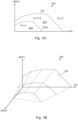
- Fig. 3A illustrates a possible configuration of the decision function 300 where the function, represented as a piecewise linear curve 301, is dependent on two variables 210: The wind direction variable Wx and the wind direction variation variable ⁇ WDx. That is, based on the two variables 210 (in general n variables) it can be determined if the coordinate point is inside or outside the envelope of the curve 301, where the curve or curves are generally defined in the n-dimensional space of the variables 210.
- Fig. 3B illustrates an example where the decision function 300 is dependent on three variables: The wind direction variable Wx, the wind direction variation variable ⁇ WDx and the wind turbulence variation variable ⁇ WTx.
- the function is represented by the 3D surface 301.
- the activation parameter Px is dependent on where the variables 210 are within the inside space of the function 301 or within the outside space of the function 301. Thus, if the variables 210 are within the outside space of the function 301, the activation parameter Px is determined, e.g. set to zero, so as to disable the yaw offset control.
- the decision function may be configured as a look-up table or a mathematical function or algorithm which provides the activation parameter Px.
- Fig. 3A shows how the yaw offset can be scaled by a weight provided by the decision function.
- the decision function 300 may define different regions 302, 303 within the function 301, or may define two or more functions 301,301a so that the value of the activation parameter Px depends on the magnitude of the variables 210.
- Px may be provided by a binary activation signal, and the yaw offset values ⁇ may then be scaled according to the value of the activation parameter Px or other weight values provided by the decision function 300.
- the decision function 300 of three or higher dimensions, as well as look-up table and other configurations may be configured similarly to provide weight values for scaling the yaw offset ⁇ .
- the decision function may be determined from simulations of the energy production from the wind turbine park. For different wind directions Wx and wind speeds, the yaw offset ⁇ is given by the yaw offset controller 291, e.g. according to look-up tables as in Fig. 2B . Based on the yaw offset ⁇ for each individual wind turbine, the wind farm energy productions, with the yaw offset control enabled, respectively disabled, for one or more of the plurality of wind turbines, are compared.
- the comparison is determined for different values of the variables 210, and permutations of enabled and disabled wind turbines, so as to define the boundaries of the decision function 300 with respect to enabling and disabling the yaw offset control and possibly with respect to different scaling weights of the enabled yaw offset ⁇ .
- the decision function may be determined based on an optimization function which determines which pattern of enabled and disabled yaw offset control settings that optimizes the energy production of the plurality of wind turbines dependent the variables 210 and the wind speed.
- the decision function may be determined and/or updated based on measurements of the energy production, e.g. based on comparing the actual energy production of the plurality of wind turbines when the yaw offset control is enabled respectively disabled for one or more of the plurality of wind turbines and in different ranges of the variables 210 and the wind speed.
- the pattern of enabled and disabled yaw offset control settings may be permuted in order to search for a possible more advantageous pattern of the enabled and disables yaw offset states of the plurality of wind turbines for the actual values of the variables 210 and the wind speed.
- the wind turbine controller unit 200 may be comprised by a wind turbine controller which is associated with each wind turbine 101 and arranged for controlling a specific wind turbine.
- the wind turbine controller includes the yaw control system 290 and the wind turbine controller unit 200.
- the wind turbine controller unit 200 may be comprised by the wind farm controller 110.
- the wind turbine controller unit 200 is arranged for controlling a plurality of wind turbines, i.e. arranged to provide the activation parameter Px to individual wind turbines or to individual yaw offset controllers 291.
- the yaw offset controllers 291 may be located de-centrally, e.g. in the wind farm controller.
- yaw offset controllers 291 are comprised by individual wind turbines 101.
- the wind farm controller 110 is configured with a communication function for sending the activation parameters Ps, e.g. as yaw-offset activation signal, to one or more of the plurality of wind turbines to enable or disable the yaw offset control, individually.
- the wind turbine controller unit 200 can be included the wind turbine controller, the wind farm controller 110, or a SCADA system.
Landscapes
- Engineering & Computer Science (AREA)
- Life Sciences & Earth Sciences (AREA)
- Sustainable Development (AREA)
- Sustainable Energy (AREA)
- Chemical & Material Sciences (AREA)
- Combustion & Propulsion (AREA)
- Mechanical Engineering (AREA)
- General Engineering & Computer Science (AREA)
- Wind Motors (AREA)
Claims (10)
- Verfahren zum Steuern eines Gierversatzes (θ) einer Vielzahl von Windkraftanlagen (101), wobei das Verfahren umfasst- Bereitstellen einer Entscheidungsfunktion (300), die eingerichtet ist, einen Aktivierungsparameter (Px) für eine bestimmte Windkraftanlage (101a) aus der Vielzahl von Windkraftanlagen abhängig von zwei oder mehr Variablen (210) bereitzustellen, wobei die zwei oder mehr Variablen (210) Folgendes umfassen:- eine Windrichtungsvariable (Wx), die die Windrichtung der spezifischen Windkraftanlage angibt, und- eine Windvariationsvariable (ΔWx), die mindestens einen Windvariationsbereich, in dem Gierversatzsteuerung deaktiviert ist, und einen Windvariationsbereich, in dem Gierversatzsteuerung aktiviert ist, definiert,- Aktivieren oder Deaktivieren der Gierversatzsteuerung der bestimmten Windkraftanlage basierend auf dem Aktivierungsparameter, wobei die aktivierte Gierversatzsteuerung einen Gierversatz (θ) relativ zu einer Standard-Giereinstellung bereitstellt und wobei die Windvariationsvariable aus den aktuellsten Messungen bestimmt wird, die in einem Zeitraum vor dem Aktivieren oder Deaktivieren der Gierversatzsteuerung erhalten wurden.
- Verfahren nach Anspruch 1, wobei die Windvariationsvariable (ΔWx) eines oder beide der folgenden Elemente umfasst:- eine Windrichtungsvariationsvariable (ΔWDx), die den Variationsgrad einer Windrichtung im Laufe der Zeit angibt, und- eine Windturbulenzvariationsvariable (ΔWTx), die den Variationsgrad einer Windturbulenz angibt.
- Verfahren nach einem der vorstehenden Ansprüche, wobei der Aktivierungsparameter Informationen bereitstellt, die definieren, ob die Gierversatzsteuerung deaktiviert und/oder aktiviert werden soll.
- Verfahren nach einem der vorstehenden Ansprüche, wobei die Entscheidungsfunktion (300) basierend auf einem Vergleich einer simulierten Energieproduktion der Vielzahl von Windkraftanlagen bestimmt wurde, wenn die Gierversatzsteuerung für eine oder mehrere der Vielzahl von Windkraftanlagen aktiviert bzw. deaktiviert ist.
- Verfahren nach einem der vorstehenden Ansprüche, wobei die Entscheidungsfunktion (300) basierend auf einem Vergleich einer tatsächlichen Energieproduktion der Vielzahl von Windkraftanlagen bestimmt und/oder aktualisiert wird, die erhalten wird, wenn die Gierversatzsteuerung für eine oder mehrere der Vielzahl von Windkraftanlagen aktiviert bzw. deaktiviert ist.
- Verfahren nach einem der vorstehenden Ansprüche, wobei der Gierversatz entsprechend einer Gewichtung skaliert wird, die durch die Entscheidungsfunktion (300) oder durch den Aktivierungsparameter (Px) bereitgestellt wird.
- Verfahren nach einem der vorstehenden Ansprüche, wobei die Variablen der Entscheidungsfunktion weiter Folgendes umfassen: eine Windscherungsvariable, eine Gondelrichtungsvariable für die bestimmte Windkraftanlage, eine Gondelrichtungsvariable für eine der bestimmten Windkraftanlage benachbarte Windkraftanlage und eine Windturbulenzvariable für eine der bestimmten Windkraftanlage benachbarte Windkraftanlage.
- Verfahren nach einem der vorstehenden Ansprüche, umfassend- Bereitstellen einer Vielzahl von Entscheidungsfunktionen, die dazu eingerichtet sind, abhängig von den zwei oder mehr Variablen eine Vielzahl von Aktivierungsparametern für eine Vielzahl spezifischer Windkraftanlagen bereitzustellen.
- Windkraftanlagensteuerung (200) zum Steuern eines Gierversatzes einer oder mehrerer Windkraftanlagen (101), die Windkraftanlagen-Steuereinheit umfassend- eine Entscheidungsfunktion (300), die dazu eingerichtet ist, einen Aktivierungsparameter (Px) für eine bestimmte Windkraftanlage aus der Vielzahl von Windkraftanlagen abhängig von zwei oder mehr Variablen (210) bereitzustellen, wobei die zwei oder mehr Variablen Folgendes umfassen:- eine Windrichtungsvariable (Wx), die die Windrichtung der spezifischen Windkraftanlage angibt, und- eine Windvariationsvariable (ΔWx), die mindestens einen Windvariationsbereich, in dem Gierversatzsteuerung deaktiviert ist, und/oder einen Windvariationsbereich, in dem Gierversatzsteuerung aktiviert ist, definiert,wobei der Aktivierungsparameter zum Aktivieren oder Deaktivieren der Gierversatzsteuerung der spezifischen Windkraftanlage bereitgestellt ist, wobei die aktivierte Gierversatzsteuerung einen Gierversatz relativ zu einer Standard-Giereinstellung bereitstellt, und wobei die Windvariationsvariable aus den aktuellsten Messungen ermittelt wird, die in einem Zeitraum vor dem Aktivieren oder Deaktivieren der Gierversatzsteuerung erhalten wurden.
- Computerprogrammprodukt, das Softwarecode umfasst, der geeignet ist, eine Windkraftanlage zu steuern, wenn er auf einem Datenverarbeitungssystem ausgeführt wird, wobei das Computerprogrammprodukt geeignet ist, das Verfahren nach einem der Ansprüche 1-8 durchzuführen.
Applications Claiming Priority (2)
| Application Number | Priority Date | Filing Date | Title |
|---|---|---|---|
| DKPA202070236 | 2020-04-16 | ||
| PCT/DK2021/050113 WO2021209112A1 (en) | 2020-04-16 | 2021-04-16 | Wind farm wake control activation method |
Publications (3)
| Publication Number | Publication Date |
|---|---|
| EP4136340A1 EP4136340A1 (de) | 2023-02-22 |
| EP4136340C0 EP4136340C0 (de) | 2025-06-04 |
| EP4136340B1 true EP4136340B1 (de) | 2025-06-04 |
Family
ID=75746103
Family Applications (1)
| Application Number | Title | Priority Date | Filing Date |
|---|---|---|---|
| EP21722379.1A Active EP4136340B1 (de) | 2020-04-16 | 2021-04-16 | Windparkwecksteuerungsaktivierungsverfahren |
Country Status (5)
| Country | Link |
|---|---|
| US (1) | US12535052B2 (de) |
| EP (1) | EP4136340B1 (de) |
| CN (1) | CN115917141A (de) |
| ES (1) | ES3032460T3 (de) |
| WO (1) | WO2021209112A1 (de) |
Families Citing this family (4)
| Publication number | Priority date | Publication date | Assignee | Title |
|---|---|---|---|---|
| US12331721B2 (en) * | 2018-07-31 | 2025-06-17 | Alliance For Sustainable Energy, Llc | Distributed reinforcement learning and consensus control of energy systems |
| CN115917141A (zh) | 2020-04-16 | 2023-04-04 | 维斯塔斯风力系统集团公司 | 风电场尾流控制激活方法 |
| CN115663879A (zh) * | 2022-07-25 | 2023-01-31 | 九江学院 | 一种海上风电场群的分散式协调控制方法及装置 |
| CN117421917B (zh) * | 2023-11-02 | 2024-05-28 | 杭州泰极豫才软件有限公司 | 基于多变量系统辨识的风电场发电量优化方法 |
Family Cites Families (12)
| Publication number | Priority date | Publication date | Assignee | Title |
|---|---|---|---|---|
| US20090099702A1 (en) | 2007-10-16 | 2009-04-16 | General Electric Company | System and method for optimizing wake interaction between wind turbines |
| US9201410B2 (en) * | 2011-12-23 | 2015-12-01 | General Electric Company | Methods and systems for optimizing farm-level metrics in a wind farm |
| US9617975B2 (en) * | 2012-08-06 | 2017-04-11 | General Electric Company | Wind turbine yaw control |
| US9512820B2 (en) * | 2013-02-19 | 2016-12-06 | Siemens Aktiengesellschaft | Method and system for improving wind farm power production efficiency |
| US10100813B2 (en) * | 2014-11-24 | 2018-10-16 | General Electric Company | Systems and methods for optimizing operation of a wind farm |
| EP3037657A1 (de) * | 2014-12-23 | 2016-06-29 | ABB Technology AG | Optimaler Windparkbetrieb |
| US10451039B2 (en) | 2017-06-09 | 2019-10-22 | General Electric Company | System and method for reducing wind turbine noise during high wind speed conditions |
| EP3517774A1 (de) | 2018-01-25 | 2019-07-31 | Siemens Gamesa Renewable Energy A/S | Verfahren und vorrichtung zur kooperativen steuerung von windturbinen eines windparks |
| CN108547736A (zh) * | 2018-03-27 | 2018-09-18 | 中南大学 | 风速风向预测方法及风力发电机组的偏航控制方法 |
| EP3620649A1 (de) | 2018-09-10 | 2020-03-11 | Siemens Gamesa Renewable Energy A/S | Steuerung von windturbinen in gegenwart von nachlaufimplikationen |
| CN110397553B (zh) * | 2019-07-26 | 2020-09-25 | 山东中车风电有限公司 | 一种不基于模型的风电场尾流管理方法及系统 |
| CN115917141A (zh) | 2020-04-16 | 2023-04-04 | 维斯塔斯风力系统集团公司 | 风电场尾流控制激活方法 |
-
2021
- 2021-04-16 CN CN202180042400.7A patent/CN115917141A/zh active Pending
- 2021-04-16 ES ES21722379T patent/ES3032460T3/es active Active
- 2021-04-16 US US17/919,479 patent/US12535052B2/en active Active
- 2021-04-16 WO PCT/DK2021/050113 patent/WO2021209112A1/en not_active Ceased
- 2021-04-16 EP EP21722379.1A patent/EP4136340B1/de active Active
Also Published As
| Publication number | Publication date |
|---|---|
| ES3032460T3 (en) | 2025-07-18 |
| US12535052B2 (en) | 2026-01-27 |
| US20230175481A1 (en) | 2023-06-08 |
| EP4136340C0 (de) | 2025-06-04 |
| WO2021209112A1 (en) | 2021-10-21 |
| CN115917141A (zh) | 2023-04-04 |
| EP4136340A1 (de) | 2023-02-22 |
Similar Documents
| Publication | Publication Date | Title |
|---|---|---|
| EP4136340B1 (de) | Windparkwecksteuerungsaktivierungsverfahren | |
| US8317471B2 (en) | Method for preventing rotor overspeed of a wind turbine | |
| US7586205B2 (en) | Method and system for regulation of the rotational speed of a rotor on a wind turbine | |
| EP2307715B2 (de) | Leistungsreduzierung von Windturbinen | |
| EP2306003B1 (de) | Vorrichtung und Verfahren für die Regelung einer Windenergieanlage | |
| EP2885534B1 (de) | Teillastdrosselung für windturbinensteuerung | |
| US8128362B2 (en) | Method of operating a wind turbine, a wind turbine and a cluster of wind turbines | |
| EP2859223B1 (de) | Windturbine mit einer laststeuerung | |
| EP2541053B1 (de) | Verfahren, Parksteuerung und Programmelement zur Steuerung eines Windparks | |
| EP2877742B1 (de) | Windkrachtanlagenickwinkel optimisierung und steuerung | |
| US10677220B2 (en) | Wind turbine power generating apparatus and method of operating the same | |
| JP2012154335A (ja) | ピッチ角オフセット信号を決定するための、および、速度回避制御のための風力タービンロータのロータ周波数を制御するための方法およびシステム | |
| US11248584B2 (en) | Relating to wind turbines having blades equipped with boundary layer control system | |
| EP3250820B1 (de) | Teil- oder volllaststeuergeräte einer windturbine | |
| US10294920B2 (en) | Wind turbine and method for operating a wind turbine | |
| EP4055793A1 (de) | Erhalt von anweisungen in einem privaten netzwerk einer windkraftanlage | |
| KR20130079185A (ko) | 풍력 터빈을 제어하기 위한 방법 | |
| EP3828408A1 (de) | Verfahren und vorrichtung zur computerimplementierten überwachung einer windturbine | |
| CN112292525A (zh) | 用于运行风力发电设备的方法和控制部 | |
| KR20130023524A (ko) | 풍력 발전기의 블레이드 피치 제어 시스템 | |
| EP4386200A1 (de) | System und verfahren zum betreiben einer schwimmenden windenergieanlage, schwimmende windenergieanlage, windpark, computerprogrammprodukt und computerlesbares speichermedium | |
| EP3931439B1 (de) | Steuergerät für eine windturbine | |
| JP6430221B2 (ja) | 風力発電装置 | |
| CN121666492A (zh) | 操作具有受损偏航环的风力涡轮机 | |
| CN121139269A (zh) | 基于动态独立变桨增益调节的风电机组控制方法及系统 |
Legal Events
| Date | Code | Title | Description |
|---|---|---|---|
| STAA | Information on the status of an ep patent application or granted ep patent |
Free format text: STATUS: UNKNOWN |
|
| STAA | Information on the status of an ep patent application or granted ep patent |
Free format text: STATUS: THE INTERNATIONAL PUBLICATION HAS BEEN MADE |
|
| PUAI | Public reference made under article 153(3) epc to a published international application that has entered the european phase |
Free format text: ORIGINAL CODE: 0009012 |
|
| STAA | Information on the status of an ep patent application or granted ep patent |
Free format text: STATUS: REQUEST FOR EXAMINATION WAS MADE |
|
| 17P | Request for examination filed |
Effective date: 20221013 |
|
| AK | Designated contracting states |
Kind code of ref document: A1 Designated state(s): AL AT BE BG CH CY CZ DE DK EE ES FI FR GB GR HR HU IE IS IT LI LT LU LV MC MK MT NL NO PL PT RO RS SE SI SK SM TR |
|
| DAV | Request for validation of the european patent (deleted) | ||
| DAX | Request for extension of the european patent (deleted) | ||
| RIC1 | Information provided on ipc code assigned before grant |
Ipc: F03D 7/04 20060101AFI20250116BHEP |
|
| GRAP | Despatch of communication of intention to grant a patent |
Free format text: ORIGINAL CODE: EPIDOSNIGR1 |
|
| STAA | Information on the status of an ep patent application or granted ep patent |
Free format text: STATUS: GRANT OF PATENT IS INTENDED |
|
| GRAS | Grant fee paid |
Free format text: ORIGINAL CODE: EPIDOSNIGR3 |
|
| INTG | Intention to grant announced |
Effective date: 20250305 |
|
| GRAA | (expected) grant |
Free format text: ORIGINAL CODE: 0009210 |
|
| STAA | Information on the status of an ep patent application or granted ep patent |
Free format text: STATUS: THE PATENT HAS BEEN GRANTED |
|
| AK | Designated contracting states |
Kind code of ref document: B1 Designated state(s): AL AT BE BG CH CY CZ DE DK EE ES FI FR GB GR HR HU IE IS IT LI LT LU LV MC MK MT NL NO PL PT RO RS SE SI SK SM TR |
|
| REG | Reference to a national code |
Ref country code: GB Ref legal event code: FG4D |
|
| REG | Reference to a national code |
Ref country code: CH Ref legal event code: EP |
|
| REG | Reference to a national code |
Ref country code: DE Ref legal event code: R096 Ref document number: 602021031765 Country of ref document: DE |
|
| REG | Reference to a national code |
Ref country code: IE Ref legal event code: FG4D |
|
| REG | Reference to a national code |
Ref country code: ES Ref legal event code: FG2A Ref document number: 3032460 Country of ref document: ES Kind code of ref document: T3 Effective date: 20250718 |
|
| U01 | Request for unitary effect filed |
Effective date: 20250613 |
|
| U07 | Unitary effect registered |
Designated state(s): AT BE BG DE DK EE FI FR IT LT LU LV MT NL PT RO SE SI Effective date: 20250627 |
|
| PG25 | Lapsed in a contracting state [announced via postgrant information from national office to epo] |
Ref country code: NO Free format text: LAPSE BECAUSE OF FAILURE TO SUBMIT A TRANSLATION OF THE DESCRIPTION OR TO PAY THE FEE WITHIN THE PRESCRIBED TIME-LIMIT Effective date: 20250904 Ref country code: GR Free format text: LAPSE BECAUSE OF FAILURE TO SUBMIT A TRANSLATION OF THE DESCRIPTION OR TO PAY THE FEE WITHIN THE PRESCRIBED TIME-LIMIT Effective date: 20250905 |
|
| PG25 | Lapsed in a contracting state [announced via postgrant information from national office to epo] |
Ref country code: PL Free format text: LAPSE BECAUSE OF FAILURE TO SUBMIT A TRANSLATION OF THE DESCRIPTION OR TO PAY THE FEE WITHIN THE PRESCRIBED TIME-LIMIT Effective date: 20250604 |
|
| PG25 | Lapsed in a contracting state [announced via postgrant information from national office to epo] |
Ref country code: HR Free format text: LAPSE BECAUSE OF FAILURE TO SUBMIT A TRANSLATION OF THE DESCRIPTION OR TO PAY THE FEE WITHIN THE PRESCRIBED TIME-LIMIT Effective date: 20250604 |
|
| PG25 | Lapsed in a contracting state [announced via postgrant information from national office to epo] |
Ref country code: RS Free format text: LAPSE BECAUSE OF FAILURE TO SUBMIT A TRANSLATION OF THE DESCRIPTION OR TO PAY THE FEE WITHIN THE PRESCRIBED TIME-LIMIT Effective date: 20250904 |
|
| PG25 | Lapsed in a contracting state [announced via postgrant information from national office to epo] |
Ref country code: IS Free format text: LAPSE BECAUSE OF FAILURE TO SUBMIT A TRANSLATION OF THE DESCRIPTION OR TO PAY THE FEE WITHIN THE PRESCRIBED TIME-LIMIT Effective date: 20251004 |
|
| PG25 | Lapsed in a contracting state [announced via postgrant information from national office to epo] |
Ref country code: SM Free format text: LAPSE BECAUSE OF FAILURE TO SUBMIT A TRANSLATION OF THE DESCRIPTION OR TO PAY THE FEE WITHIN THE PRESCRIBED TIME-LIMIT Effective date: 20250604 |
|
| PG25 | Lapsed in a contracting state [announced via postgrant information from national office to epo] |
Ref country code: CZ Free format text: LAPSE BECAUSE OF FAILURE TO SUBMIT A TRANSLATION OF THE DESCRIPTION OR TO PAY THE FEE WITHIN THE PRESCRIBED TIME-LIMIT Effective date: 20250604 |
|
| PG25 | Lapsed in a contracting state [announced via postgrant information from national office to epo] |
Ref country code: SK Free format text: LAPSE BECAUSE OF FAILURE TO SUBMIT A TRANSLATION OF THE DESCRIPTION OR TO PAY THE FEE WITHIN THE PRESCRIBED TIME-LIMIT Effective date: 20250604 |
|
| PGFP | Annual fee paid to national office [announced via postgrant information from national office to epo] |
Ref country code: GB Payment date: 20260225 Year of fee payment: 6 |
|
| PLBE | No opposition filed within time limit |
Free format text: ORIGINAL CODE: 0009261 |
|
| STAA | Information on the status of an ep patent application or granted ep patent |
Free format text: STATUS: NO OPPOSITION FILED WITHIN TIME LIMIT |
|
| REG | Reference to a national code |
Ref country code: CH Ref legal event code: L10 Free format text: ST27 STATUS EVENT CODE: U-0-0-L10-L00 (AS PROVIDED BY THE NATIONAL OFFICE) Effective date: 20260416 |