EP4134976A1 - System und verfahren zur vorhersage des risikos eines patienten zur entwicklung einer atherosklerotischen kardiovaskulären erkrankung - Google Patents
System und verfahren zur vorhersage des risikos eines patienten zur entwicklung einer atherosklerotischen kardiovaskulären erkrankung Download PDFInfo
- Publication number
- EP4134976A1 EP4134976A1 EP21191089.8A EP21191089A EP4134976A1 EP 4134976 A1 EP4134976 A1 EP 4134976A1 EP 21191089 A EP21191089 A EP 21191089A EP 4134976 A1 EP4134976 A1 EP 4134976A1
- Authority
- EP
- European Patent Office
- Prior art keywords
- risk
- patient
- risk factors
- training
- predictor
- Prior art date
- Legal status (The legal status is an assumption and is not a legal conclusion. Google has not performed a legal analysis and makes no representation as to the accuracy of the status listed.)
- Granted
Links
Images

Classifications
-
- G—PHYSICS
- G16—INFORMATION AND COMMUNICATION TECHNOLOGY [ICT] SPECIALLY ADAPTED FOR SPECIFIC APPLICATION FIELDS
- G16H—HEALTHCARE INFORMATICS, i.e. INFORMATION AND COMMUNICATION TECHNOLOGY [ICT] SPECIALLY ADAPTED FOR THE HANDLING OR PROCESSING OF MEDICAL OR HEALTHCARE DATA
- G16H50/00—ICT specially adapted for medical diagnosis, medical simulation or medical data mining; ICT specially adapted for detecting, monitoring or modelling epidemics or pandemics
- G16H50/20—ICT specially adapted for medical diagnosis, medical simulation or medical data mining; ICT specially adapted for detecting, monitoring or modelling epidemics or pandemics for computer-aided diagnosis, e.g. based on medical expert systems
-
- G—PHYSICS
- G16—INFORMATION AND COMMUNICATION TECHNOLOGY [ICT] SPECIALLY ADAPTED FOR SPECIFIC APPLICATION FIELDS
- G16H—HEALTHCARE INFORMATICS, i.e. INFORMATION AND COMMUNICATION TECHNOLOGY [ICT] SPECIALLY ADAPTED FOR THE HANDLING OR PROCESSING OF MEDICAL OR HEALTHCARE DATA
- G16H10/00—ICT specially adapted for the handling or processing of patient-related medical or healthcare data
- G16H10/60—ICT specially adapted for the handling or processing of patient-related medical or healthcare data for patient-specific data, e.g. for electronic patient records
-
- G—PHYSICS
- G16—INFORMATION AND COMMUNICATION TECHNOLOGY [ICT] SPECIALLY ADAPTED FOR SPECIFIC APPLICATION FIELDS
- G16H—HEALTHCARE INFORMATICS, i.e. INFORMATION AND COMMUNICATION TECHNOLOGY [ICT] SPECIALLY ADAPTED FOR THE HANDLING OR PROCESSING OF MEDICAL OR HEALTHCARE DATA
- G16H50/00—ICT specially adapted for medical diagnosis, medical simulation or medical data mining; ICT specially adapted for detecting, monitoring or modelling epidemics or pandemics
- G16H50/30—ICT specially adapted for medical diagnosis, medical simulation or medical data mining; ICT specially adapted for detecting, monitoring or modelling epidemics or pandemics for calculating health indices; for individual health risk assessment
-
- G—PHYSICS
- G16—INFORMATION AND COMMUNICATION TECHNOLOGY [ICT] SPECIALLY ADAPTED FOR SPECIFIC APPLICATION FIELDS
- G16H—HEALTHCARE INFORMATICS, i.e. INFORMATION AND COMMUNICATION TECHNOLOGY [ICT] SPECIALLY ADAPTED FOR THE HANDLING OR PROCESSING OF MEDICAL OR HEALTHCARE DATA
- G16H50/00—ICT specially adapted for medical diagnosis, medical simulation or medical data mining; ICT specially adapted for detecting, monitoring or modelling epidemics or pandemics
- G16H50/70—ICT specially adapted for medical diagnosis, medical simulation or medical data mining; ICT specially adapted for detecting, monitoring or modelling epidemics or pandemics for mining of medical data, e.g. analysing previous cases of other patients
-
- A—HUMAN NECESSITIES
- A61—MEDICAL OR VETERINARY SCIENCE; HYGIENE
- A61B—DIAGNOSIS; SURGERY; IDENTIFICATION
- A61B5/00—Measuring for diagnostic purposes; Identification of persons
- A61B5/74—Details of notification to user or communication with user or patient; User input means
- A61B5/7475—User input or interface means, e.g. keyboard, pointing device, joystick
Definitions
- the present invention generally relates to electronic data processing, and more particularly, relates to computer-implemented methods, computer program products and systems for predicting the risk of developing an atherosclerotic cardiovascular disease for a patient based on selected risk factors indicating the current medical state of said patient.
- CVD cardiovascular disease
- CVD cardiovascular disease
- the approach uses a limited CVD definition, neglecting certain entries indicating vascular/heart problems diagnosed by a doctor. It uses an unspecific CVD definition including strokes which are more likely due to a physical trauma (e.g., an accident trauma) instead of atherosclerotic plaque build-up.
- a physical trauma e.g., an accident trauma
- the risk prediction results provide room for improving the accuracy and reliability of said predictions and do not provide an actionable tool for assessing a current multi-year risk of a patient to develop any atherosclerotic CVD. Further, it is unlikely that the required 473 variables are available for a large number of patients.
- the current medical state of the patient is reflected by hundreds of known risk factors.
- the herein disclosed CVD risk prediction approach focuses on risk prediction with regard to atherosclerotic plaque build-up in arteries.
- the tendency to build atherosclerotic plaque is determined by multiple factors like genetics, lifestyle and environment.
- the minimal viable set is a selection from all the latest medically known atherosclerotic CVD risk factors still providing reasonable accuracy while requiring less risk factors.
- the herein disclosed approach aims at a holistic understanding of a patient's current health status and to quantify said risk of atherosclerotic CVDs by taking into account multiple biological levels (demographics, lifestyle, biomarkers etc.) and human curated knowledge instead of just a single biological level.
- Multiple biological levels means that a Precision Medicine based approach is applied utilizing multi-omics as well as clinical and lifestyle data to capture all potential interactions or correlations detected between molecules in different biological levels (cf. Collins et al. in "A New Initiative on Precision Medicine", N Engl J Med 2015; 372:793-795, DOI: 10.1056/NEJMp1500523 ).
- biological levels are also referred to as biological layers including but not limited to genomics, epigenomics, transcriptomics, proteomics, and metabolomics.
- multiple biological levels include, but are not limited to, multi-omics data such as blood samples (e.g., lipidome and proteome), family history (e.g., genome), as well as lifestyle, clinical and environmental data.
- multi-omics data such as blood samples (e.g., lipidome and proteome), family history (e.g., genome), as well as lifestyle, clinical and environmental data.
- Most diseases affect complex molecular pathways where different biological layers interact with each other as described by Picar et al. in "Integration strategies of multi-omics data for machine learning analysis", Computational and Structural Biotechnology Journal, Volume 19, 2021, Pages 3735-3746 available at: https://www.sciencedirect.com/science/article/pii/S2001037021002683#b0025 .
- Multi-omics data broadly cover the data generated from genome, proteome, transcriptome, metabolome, and epigenome.
- the spectrum of omics can be further extended to other biological data such as lipidome, phosphoproteome, and glycol-proteome.
- Multi-omics data generated for the same set of samples can provide useful insights into the flow of biological information at multiple levels and thus can help in unraveling the mechanisms underlying the biological condition of interest.
- Each type of omics data on its own, typically provides a list of differences associated with the disease. These data can be useful both as markers of the disease process and to give insight as to which biological pathways or processes are different between the disease and control groups.
- analysis of only one data type is limited to correlations, mostly reflecting reactive processes rather than causative ones.
- risk prediction refers to the absolute risk prediction which is defined as a certain chance of x% for an individual patient to get the disease within a certain time period, given certain findings reflecting the patient's current medical state.
- the minimum viable set includes at least demographic risk factors, biomarker risk factors, comorbidity risk factors, genetic risk factors, and lifestyle risk factors. Said risk factors have been proven as potential causes for developing atherosclerotic plaque build-up.
- a predictor using the minimal viable set with 25 risk factors shows an an AUROC of 74,15%.
- a predictor with 203 known risk factors as listed further down below only a marginal improvement of the AUROC (75,44%) was achieved.
- the herein disclosed model is interpretable and more compact and thus easier to answer the minimal viable set of 25 questions instead of e.g. 473 questions in a real-world setting.
- Using this model as part of the herein disclosed system can provide actionable health interventions.
- the minimal viable set of 25 CVD risk factors includes the following (by risk factor category):
- CVD risk factor Using the minimal viable set instead of all known CVD risk factors has some advantages. Using fewer risk factors simplifies the data collection process to calculate an accurate atherosclerotic CVD risk faster with still reasonable accuracy. Further, data preprocessing and CVD risk calculations require less computing power.
- a shorter list with suggested interventions is generated while still ensuring accurate risk predictions. For each CVD risk factor its healthy range is known, and therefore also if its value is elevated or lowered compared to the respective healthy range. Based on this information, the system automatically suggests a meaningful number of personalized interventions to the patient and/or the patient's doctor. The system may even track the patients' progress and continuously refine the suggested interventions based on the patient's current CVD risk and personal preferences and constraints.
- risk factors include a general term and a specifying term where the two terms are separated by a ":".
- CVD risk factors Hypertension; Age; ldl_cholesterol; High Cholesterol; high_bp; Gender; Other Heart Arrhythmias; total_cholesterol_hdl_ratio; total_cholesterol; Walking pace: Brisk pace; T2D; Sleep problems: Not at all; Weight; Walking pace: Steady average pace; Familial CVD; Smoking; Atrial Fibrillation; Social visits: 2-4 times a week; Alcohol with meals Yes; apolipoprotein b; Diabetes Unspecified; hdl_cholesterol; Social visits: About once a week; Dia bp; No.
- the above-described technical problem is solved by embodiments of the invention including a computer system for predicting the risk of a patient to develop an atherosclerotic cardiovascular disease within a predefined time interval, a computer-implemented method which can be executed by said computer system, and a computer program product which, when loaded and executed by the computer system, causes the system to perform said method.
- the predefined time interval specifies a minimum time period which it takes for the formation of said disease. Typically, it takes between 5 and 10 years for an atherosclerotic CVD disease to develop.
- the system is adapted to receive a current set of risk factors associated with the risk of atherosclerotic plaque build-up in the patient's arteries.
- the current set comprises a set of human-curated risk factors covering multiple biological levels including multi-omics data types of the patient to capture the potential interactions or correlations detected between molecules in different layers. It has been found that the human-curated selection of risk factors provides more actionable and interpretable atherosclerotic CVD risk predictions than the pure machine learning based prior art approaches. This is due to the fact that the human-curated set of risk factors takes into account proven causal relationships between the risk factors and the clinical outcomes whereas the pure machine learning based methods learn all kinds of correlations from training data.
- the human-curated risk factors include at least risk factors in the above-mentioned risk factor categories: demographic risk factors, biomarker risk factors, comorbidity risk factors, genetic risk factors, and lifestyle risk factors to ensure the holistic view on the patient's current medical state by using the current set of risk factors in said categories as test input for a risk prediction predictor when predicting the atherosclerotic CVD risk of a particular patient.
- the predictor has been trained with a training data set including a large number of training and testing patient records.
- the number of training patient records used as training input is orders of magnitude greater than the number of risk factors.
- the test input data is not contained in the training data sets.
- the structure of the training data i.e., the risk factors on which the predictor is trained
- the structure of the test input data corresponds to the structure of the test input data (i.e., the risk factors of the current set of said patient).
- training data and test input data include the same set of variables.
- the training data set includes atherosclerotic cardiovascular disease outcomes of the training patients serving as ground truth.
- a training data record includes the respective risk factor values of a particular patient at a particular point in time and the information whether this patient has developed any of the atherosclerotic CVD outcome during the predefined training data collection period (the period during which the training data set, i.e., risk factor values and clinical outcomes, was collected).
- atherosclerotic cardiovascular disease outcomes are: Coronary/lschaemic heart disease, Heart attack, Angina, Stroke, Cardiac Arrest, Congestive Heart Failure, Left ventricular failure, Myocardial Infarction, Aortic valve stenosis, Cerebral artery occlusions, Nontraumatic haemorrhages, etc.
- the training data collection period has at least the length of the predefined time interval for which the predictions are made. It is required that none of the training patients has previously shown an atherosclerotic cardiovascular disease outcome up to the beginning of the training data collection period. Data records associated with such patients are removed from the training data set before training the predictor.
- the training process for the predictor is disclosed in great detail in the detailed description. Implementations of the predictor using a LogisticRegression Predictor or a tree-based predictor, have shown the best prediction results. However, the detailed description provides more alternative implementation options for the predictor.
- the predictor after having been trained as described above, then provides in response to the test input (i.e., the current set of risk factor values of the patient), a predicted risk for developing an atherosclerotic cardiovascular disease for said patient within the predefined time interval.
- the test input i.e., the current set of risk factor values of the patient
- the current risk factors of the patient are continuously monitored by receiving updated risk factor values for said patient per predefined monitoring time interval, and then computing an updated risk prediction value using the predictor.
- a control module of the system ensures that the risk prediction update is triggered in each monitoring time interval.
- the monitoring time period may be adjusted. For example, if there are no disease indicators at all for said patient, the monitoring period may be set to three months which may be shortened to for example monthly or even weekly updates in case the system identifies an indication of an increased CVD risk.
- the system further includes a mapper module to map the obtained predicted risk value to a corresponding predefined risk level.
- the mapper may use a look-up table which provides a mapping of certain ranges of the risk factor values in the current set to a respective risk level. Detailed examples are given in the detailed description.
- the mapper sends a corresponding notification to the patient, or to a medically trained person taking care of said patient. If such a need for therapeutic intervention is recognized by the system, the monitoring time interval may be shortened. The shortening may depend on the risk level to which the current risk factor values have been mapped.
- the system had a risk checker module.
- the risk checker module receives a notification from the mapper in case the corresponding predefined risk level indicates a need for therapeutic intervention. This notification references the risk factor values of the current set of the patient.
- the risk checker checks for each risk factor of the current set if the respective risk factor exceeds a corresponding maximum value, or falls below a corresponding minimum value (i.e., whether the respective risk factor value is outside a predefined healthy range). If the respective risk factor exceeds the corresponding maximum value, or falls below the corresponding minimum value, the risk checker retrieves one or more suggestions for interventions which, when applied to the patient, are appropriate to reduce the predicted risk for said patient from an intervention database.
- the intervention database can be an integral component of the computer system or it can be stored at a remote storage location which is accessible by the computer system.
- the intervention database includes appropriate interventions for particular combinations of risk factor value ranges. Detailed examples are given in the detailed description.
- the risk checker Once the risk checker has retrieved all suggestions for interventions which apply to the patient's current medical state (i.e., the combination of the risk factor values of the current set), the risk checker provides the retrieved one or more suggestions to the patient, and/or to a medically trained person taking care of said patient.
- the minimum viable set of risk factors may be extended by further risk factors which leads to slightly improved accuracy values for the CVD risk prediction.
- the demographic risk factors may further comprise the patient's ethnicity; the biomarkers risk factors may further comprise any of the patient's further weight-related measurements, blood-sample related measurements, heart rate, and glucose; the comorbidity risk factors may further comprise any of the patient's atrial fibrillation, diabetes type 2, diabetes type 1, chronic kidney disease, migraines, rheumatoid arthritis, systemic lupus erythematosus, schizophrenia, bipolar, depression, psychosis, diagnosis or treatment of erectile dysfunction, and atypical antipsychotic medication, inflammation markers, steroids, or medication for any of said comorbidities; the genetic risk factors may further comprise any of the patient's family history of stroke, diabetes, high cholesterol, high blood pressure; and the lifestyle risk factors further comprise any of the patient's stress, overall health rating, physical activity, and sleep status.
- environmental risk factors may be used as a further risk category
- a computer-implemented method for predicting the risk of a patient to develop an atherosclerotic cardiovascular disease within a predefined time interval.
- the predefined time interval specifies a minimum time period which it takes for the formation of said disease.
- the method includes the following steps:
- FIG. 1 includes a block diagram of an example embodiment of a computer system 100 for predicting the risk of a patient 10 to develop an atherosclerotic cardiovascular disease within a predefined time interval.
- the predefined time interval specifies a minimum time period which it takes for the development of said disease.
- a typical time period for the development of atherosclerotic cardiovascular disease is in the order of 10 years. However, the minimum time period may also be shorter (for example, a 5 years period may still lead to high prediction accuracy).
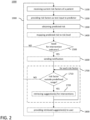
- the system 100 of FIG.1 is described in the context of the simplified flow chart of a computer-implemented method 1000 for predicting the risk of a patient 10 to develop an atherosclerotic cardiovascular disease within a predefined time interval as illustrated in FIG. 2 . Therefore, the following description of system 100 refers to reference numbers used in FIG. 1 and FIG. 2 .
- the system 100 is thereby configured to execute the method 1000 when loading a respective computer program into a memory of the system and executing said program with processing means of the system.
- the system 100 is communicatively coupled via an appropriate interface with a data source 200 providing current individual CVD risk factors of said patient 10 - also referred to as the current set of risk factors.
- the individual risk factors are associated with the risk of atherosclerotic plaque build-up in the patient's arteries and cover multiple biological levels of the patient to capture the potential interactions or correlations detected between molecules in different biological levels.
- the individual risk factors in the current set provide a holistic view on the patient's current medical state with regard to potential future development of CVD.
- the risk factors of the current set are human-curated in that they have been proven in medical studies as potential causes for developing atherosclerotic plaque build-up.
- risk factors There are hundreds of such risk factors - mostly behavioral risk factors - which can be categorized into the following categories: demographic risk 210 factors, biomarker risk factors 220, comorbidity risk factors 230, family history risk factors 240, and lifestyle risk factors 250.
- the current set may also include environmental risk factors 260.
- the current set of risk factors received 1100 by system 100 includes a selection of 25 risk factors (minimum viable set) out of a plurality of more than 200 potentially relevant risk factors. It is to be noted that the selection of the 25 risk factors is a human curated subset based on the compromise between accurate classifier performance and feasibility. But of course, the values of such risk factors which are used for making CVD risk predictions may be automatically generated by respective sensors or may be automatically retrieved from respective data sources.
- the demographic risk factors 210 comprise at least the patient's age and gender; the biomarker risk factors 220 comprise at least the patient's waist circumference, systolic blood pressure, total Cholesterol, LDL Cholesterol, and total Cholesterol HDL ratio; the comorbidity risk factors 230 comprise at least the patient's hypertension, Sleep problems: Not at all, Sleep problems: Several days, and other Heart Arrhythmias different from Atrial Fibrillation; the genetic risk factors 240 comprise at least the patient's familial CVD history; and the lifestyle risk factors 250 comprise at least the patient's smoking status, number of cigarettes smoked per day, indicator if alcohol is usually consumed with meals, indicator if alcohol is sometimes consumed with meals, social visits: 2-4 times a week, social visits: about once a week, social visits: about once/month, social visits: almost daily, social visits: once every few months, walking pace: brisk pace, and walking pace: steady average pace, indicator if a self-rated overall health rating is excellent
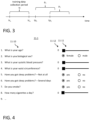
- the data source 200 can receive the risk factors of the patient's current set from different sources. For example, risk factors such as the patient's smoking or sleeping behavior may be collected via a questionnaire 11 provided to the patient (e.g., via a respective app on a computing device). An extract of an example questionnaire 11-1 is shown in FIG. 4 .
- the questionnaire 11-1 may be presented as an online questionnaire where the patient can answer questions 11-10 of the minimal viable set using interaction objects 11-11.
- the interaction objects for inputting number values 11-12 (questions 1, 3, 4, 8) may be implemented as slider bars.
- the interaction objects for inputting Boolean values (questions 2, 5, 6, 7) may be implemented as radio buttons.
- Some risk factors may be continuously monitored by the patient by wearing a corresponding wearable device 13 with appropriate sensors.
- wearables and smart devices at home with sensors such as smartwatch, smartphone, smart scale, blood pressure cuff, all-in-one home testing devices, user-facing radar sensor on bedside device or wearable fitness trackers can provide certain CVD risk factors of the patient in real-time (e.g., walking pace, sleep problems, atrial fibrillation or other heart arrhythmias, etc.).
- Intelligent algorithms for example in a companion app, can derive risk factor values from stored data, smartphone cameras, available sensors in smartphone and wearables, calendar, intelligent computer vision algorithm deducing blood pressure values from smartphone camera, smart smoking detection algorithm, social visits detection by evaluating calendar, sleep tracking algorithm, heart arrhythmia classifier algorithm, diabetes classifier algorithm.
- CVD risk factors e.g., Total cholesterol, Hdl cholesterol, Ldl cholesterol, Apolipoprotein b, Total cholesterol Hdl ratio, High Cholesterol, Type 2 Diabetes
- CVD risk factors may be provided to the individual risk factors data source 200 via lab tests 14 from laboratories for blood samples or using appropriate home test kits.
- EHR electronic health records
- family members e.g., ECG, blood pressure or other vital data, comorbidity data
- hospitals GPs, cardiologists, psychologists, or lifestyle physicians.
- the current set is provided 1200 to a predictor 110 of the system as a test input.
- the predictor 110 has been trained by using a training module 190 to provide, in response to the test input, a predicted risk value 111 for developing an atherosclerotic cardiovascular disease for said patient 10 within the predefined time interval.
- the training module 190 can be an integral part of the system 100, or it may be provided by another computer system which is communicatively coupled with system 100.
- the predictor 110 has been trained with a training data set including a large number of training patient records from training patients 90.
- the training data set is provided by a training database 300 which is accessible by the training module 190.
- An example of such a training database is the UK BioBank (accessible via https://www.ukbiobank.ac.uk/enable-your-research) which provides a training data set with more than 500.000 patient data records.
- Other training data sets may be used if they include a number of training patient records which is orders of magnitude greater than the number of risk factors.
- the training data set includes risk factor training values 310 to 350 in the same risk factor categories as the test input.
- training data and the current set of the patient have the same set of variables.
- the hexagons 310 to 360 and 210 to 260 represent the risk factor values in the respective categories for the training input data and the test input, respectively.
- the training data set 300 further includes atherosclerotic cardiovascular disease outcomes 390 of the training patients 90. These outcomes serve as the ground truth when training the predictor 110. All ICD-10 and ICD-9 atherosclerotic CVDs are taken into account, and not just a subset.
- CVDs which cannot be influenced by the patient's lifestyle habits were not taken into account (e.g., pregnancy, congenital and accident-related CVDs were excluded).
- the outcomes serving as ground truth are also human curated.
- All atherosclerotic CVDs are summarized into one category distinguishing whether a training patient did or did not develop a atherosclerotic CVD within the predefined time period.
- the training data is entirely based on objective data relying on real medical and GP records with medical-grade.
- the risk factor training values and the outcomes were obtained over a training data collection period tc of at least the length of the predefined time interval.
- the predictor can make risk predictions for individual patients at any point in time based on the respective current test inputs.
- predictions are made at time points tp 1 and tp 2 for time periods p 1 and p 2 which have the length of the predefined time interval and must not be longer than the training data collection period tc. It is important that none of the training patients 90 has shown an atherosclerotic cardiovascular disease outcome up to the beginning tc s of the training time data collection period tc.
- the number of training patient records with positive outcomes should be much larger than the unique number of outcomes (in the example implementation 193 total or 125 unique CVD outcomes) to provide a lot of training data records with positive and negative outcomes based on different risk factor constellations.
- the following absolute and relative number of entries with a positive and negative CVD occurrence in the 10 year assessment period were observed: 28,561 people did develop an atherosclerotic CVD (6.1%) and 435,986 people did not develop an atherosclerotic CVD (93,9%) in those 10 years with using all 203 risk factors.
- cardiovascular diseases usually develop over a longer period of time (decades) as it takes a while for arteries to block up with plaque. For this reason, they are more common for people aged 40 and up than for younger people. Generally, 10 years are preferable and currently, the most used prediction timeframe for CVD risk prediction.
- the remaining data were split into a training and testing set.
- the remaining data was split into a 70% training subset consisting of the binary tuple (X_train, y_train) and a 30% test subset with the binary tuple (X_test, y_test), where X denotes the risk factor input values and y the CVD outcomes.
- y the CVD outcomes, is a singular column consisting of zeros '0' and ones '1' only.
- a '1' indicates that at any time during the data collection period (e.g., during a 10 year assessment period), any one or more of the atherosclerotic CVDs occurred.
- mean normalization was performed, where the predictor learns the parameters on X_train and applies them to X_train and X_test. This step reduces the range of feature values and allows for better results.
- Features are standardized by removing the mean and scaling to unit variance.
- missing values were completed by using a mean value imputation strategy.
- the learned parameters were applied on X_train and X_test. Missing values were replaced using the mean along each feature column.
- a Logistic Regression Classifier When training the predictor 110, a Logistic Regression Classifier was found as a preferred embodiment. However, the skilled person may use other predictor types instead.
- the logistic regression classifier was trained on the training data by providing it the transformed X_train and y_train datasets and using an implementation of sklearn available at: https://scikit-learn.org/stable/modules/generated/sklearn.linear_model.LogisticRegression.html
- the predictor was trained on only the 70% training data set, which consists of risk factor inputs (X_train) and CVD outcomes outputs (y_train).
- the input to the predictor includes two items:
- the training data includes at least the CVD risk factor values of the minimum viable set and the CVD outcomes from the whole 10-year follow-up period.
- test data which consists of 30% of all patient data.
- class labels y_test were predicted for all test data samples X_test from the test data set.
- AUROC Receiver Operating Characteristic Curve
- the mathematical formulas in Box F1 are calculated by the predictor for every patient to predict the risk of someone developing a behavioral risk within the predefined timer interval (in the example implementation: within the next 10-years): •
- the logit f x 1 x 2 b 0 + b 1 x 1 + b 2 x 2 •
- the probabilities p x 1 x 2 1 / 1 + exp ⁇ f x 1 x 2
- Each input risk factor value is normalized with the same parameters as learned per each risk factor during training of the classifier (predictor) model.
- the resulting probability p is the CVD risk
- x i are the risk factor values
- b i the respective coefficients of the features learned from training.
- Each input risk factor value is converted to a numerical value, then the learned mean value u is subtracted and then the value is divided by the learned standard deviation s and then multiplied by its coefficient value b.
- b0 is the learned bias or intercept value.
- XG Boost which is a collection of decision trees
- Decision trees also explain their reasoning but can get quite complex and not humanly interpretable anymore.
- the Logistic Regression classifier can be advantageous.
- Neural networks are generally considered "black-boxes" as they don't provide reasoning as to how they come to conclusions. For this reason, they are less advantageous to be used as a predictor in the herein disclosed approach.
- Table 1 shows a comparison of the AUROC performance of different algorithms which were used for the implementation of the predictor.
- Table 1 - algorithm performance Algorithm Name & Best Parameter Settings
- Auroc Extreme Gradient Boosting subsample: 0.8, n_estimators: 1500, max_depth: 5, learning_rate: 0.01, gamma: 1, colsample_bytree: 0.6 0.7572576968
- Voting Classifier 1 LogRegL1 + Random Forest 1000 0.7559084444 Logistic Regression, L1 regularization Saga 0.7544434059
- Logistic Regression Elastic Net L1 Ratio 0.05 0.754439278 Logistic Regression, no regularization 0.7544384773
- Multi-layer Perceptron SGD hidden_layer_sizes: (200, 150), learning_rate_init: 0.1 0.7477926157
- Classifier 2 LogRegL1 + Random Forest 20 0.7313623472 Stochastic Gradient Descent Classifier 0.6909589378
- Performance metrics for picking an algorithm comprise: AUROC, FPR, TPR, FNR, TNR, absolute number of wrong & correct predictions, accuracy, f1 score, precision, recall, training time, how generalizable does it perform when trained purely on Caucasians and tested on only non-Caucasians. Implementations with an AUROC above 70% are preferable to prior art solutions.
- the system 100 further has a control module 140 to trigger the risk prediction by the predictor once per predefined monitoring time interval for a patient who is to be continuously monitored.
- the length of the monitoring time interval may be adjusted depending on the clinical state of said patient. For example, when the patient has a low CVD risk, the monitoring may be performed only once a year. In cases with high CVD risk values, the risk prediction may be repeated 1900 monthly or even weekly.
- the system 100 further has a mapper module 120 to map 1400 the predicted CVD risk value 111 to a corresponding predefined risk level.
- the mapper 120 supports three risk levels 1, 2 and 3. Risk level 1 may stand for low CVD risk, level 2 for medium CVD risk and level 3 for high CVD risk.
- the risk value 111 is mapped to risk level 3 (dotted background).
- the mapper 120 checks 1500 if the predefined risk level 3 indicates a need for therapeutic intervention (as it would be the case for a high-risk level).
- the system sends 1600 a corresponding notification 121 to the patient 10 and/or a medically trained person taking care of said patient. Such notification triggers the patient and/or the doctor to look into potential preventive actions which are appropriate to reduce the CVD risk for said patient in the long run.
- Corresponding therapeutic decisions are usually made by the medically trained person based on his/her personal experience.
- the system 100 supports the decision for appropriate interventions.
- the mapper module 120 configured maps the obtained predicted risk value 111 to a corresponding predefined risk level 1, 2, 3.
- the system has a risk checker module 130 to receive a notification from the mapper in case the corresponding predefined risk level indicates a need for therapeutic intervention, and to check 1710 for each risk factor of the current set 210, 220, etc. (cf. loop 1700) if the respective risk factor exceeds a corresponding maximum value, or falls below a corresponding minimum value.
- the risk checker retrieves 1720 one or more suggestions for interventions from an intervention database 400.
- the intervention database 400 can be an integral component of the computer system 100, or it can be a component on a remote computing device which is accessible by the risk checker.
- the retrieved suggestions for intervention are appropriate to reduce the predicted risk for the patient when being applied to said patient.
- the risk checker 130 finally provides 1800 the retrieved one or more suggestions 410 to the patient 10 and/or to said medically trained person.
- Table 2 illustrates an example of an intervention database with intervention suggestions for the behavioral risk factors of the minimum viable set in situations when the respective risk factor value is outside the healthy range (too high or too low).
- Table 2 - behavioral risk factors and associated interventions # Risk Factor Name Interventions when risk factor value is too high Interventions when risk factor value is too low 1
- Waist circumference Do at least 150 min/week of moderate-intensity, or 75 min/week of vigorous-i ntensity physical activity • Seek medical care at GP / lifestyle physician / psychologist • Try to do 3x20 min/week of HITT workout • Assess diet with nutritional expert • Start measuring nutrient intake and reduce calories, reduce saturated fats • Reduce alcohol and fast food and processed food intake 2 Systolic blood pressure, Hypertension • Assess and reduce stress • Seek medical care at GP/cardiologist/ lifestyle physician • Reduce salt intake • Reduce caffeine intake • Do at least 150 min/week of moderate-intensity, or 75 min/week of vigorous-i ntensity physical activity • Try to do 3x20
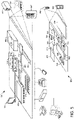
- FIG. 5 is a diagram that shows an example of a generic computer device 900 and a generic mobile computer device 950, which may be used with the techniques described here.
- Computing device 900 is intended to represent various forms of digital computers, such as laptops, desktops, workstations, personal digital assistants, servers, blade servers, mainframes, and other appropriate computers.
- Generic computer device 900 may correspond to the computer system 100 of FIG. 1 .
- Computing device 950 is intended to represent various forms of mobile devices, such as personal digital assistants, cellular telephones, smart phones, and other similar computing devices.
- computing device 950 may be used as a GUI frontend for a user to provide test input data and provide them to the computer device 900, and in turn, receive from the computer device, the predicted CVD risk value or notifications with regard to the need of therapeutic interventions.
- GUI frontend for a user to provide test input data and provide them to the computer device 900, and in turn, receive from the computer device, the predicted CVD risk value or notifications with regard to the need of therapeutic interventions.
- Computing device 900 includes a processor 902, memory 904, a storage device 906, a high-speed interface 908 connecting to memory 904 and high-speed expansion ports 910, and a low speed interface 912 connecting to low speed bus 914 and storage device 906.
- Each of the components 902, 904, 906, 908, 910, and 912 are interconnected using various busses, and may be mounted on a common motherboard or in other manners as appropriate.
- the processor 902 can process instructions for execution within the computing device 900, including instructions stored in the memory 904 or on the storage device 906 to display graphical information for a GUI on an external input/output device, such as display 916 coupled to high speed interface 908.
- multiple processing units and/or multiple buses may be used, as appropriate, along with multiple memories and types of memory.
- multiple computing devices 900 may be connected, with each device providing portions of the necessary operations (e.g., as a server bank, a group of blade servers, or a processing device).
- the memory 904 stores information within the computing device 900.
- the memory 904 is a volatile memory unit or units.
- the memory 904 is a non-volatile memory unit or units.
- the memory 904 may also be another form of computer-readable medium, such as a magnetic or optical disk.
- the storage device 906 is capable of providing mass storage for the computing device 900.
- the storage device 906 may be or contain a computer-readable medium, such as a floppy disk device, a hard disk device, an optical disk device, or a tape device, a flash memory or other similar solid state memory device, or an array of devices, including devices in a storage area network or other configurations.
- a computer program product can be tangibly embodied in an information carrier.
- the computer program product may also contain instructions that, when executed, perform one or more methods, such as those described above.
- the information carrier is a computer- or machine-readable medium, such as the memory 904, the storage device 906, or memory on processor 902.
- the high speed controller 908 manages bandwidth-intensive operations for the computing device 900, while the low speed controller 912 manages lower bandwidth-intensive operations.
- the high-speed controller 908 is coupled to memory 904, display 916 (e.g., through a graphics processor or accelerator), and to high-speed expansion ports 910, which may accept various expansion cards (not shown).
- low-speed controller 912 is coupled to storage device 906 and low-speed expansion port 914.
- the low-speed expansion port which may include various communication ports (e.g., USB, Bluetooth, Ethernet, wireless Ethernet) may be coupled to one or more input/output devices, such as a keyboard, a pointing device, a scanner, or a networking device such as a switch or router, e.g., through a network adapter.
- input/output devices such as a keyboard, a pointing device, a scanner, or a networking device such as a switch or router, e.g., through a network adapter.
- the computing device 900 may be implemented in a number of different forms, as shown in the figure. For example, it may be implemented as a standard server 920, or multiple times in a group of such servers. It may also be implemented as part of a rack server system 924. In addition, it may be implemented in a personal computer such as a laptop computer 922. Alternatively, components from computing device 900 may be combined with other components in a mobile device (not shown), such as device 950. Each of such devices may contain one or more of computing device 900, 950, and an entire system may be made up of multiple computing devices 900, 950 communicating with each other.
- Computing device 950 includes a processor 952, memory 964, an input/output device such as a display 954, a communication interface 966, and a transceiver 968, among other components.
- the device 950 may also be provided with a storage device, such as a microdrive or other device, to provide additional storage.
- a storage device such as a microdrive or other device, to provide additional storage.
- Each of the components 950, 952, 964, 954, 966, and 968 are interconnected using various buses, and several of the components may be mounted on a common motherboard or in other manners as appropriate.
- the processor 952 can execute instructions within the computing device 950, including instructions stored in the memory 964.
- the processor may be implemented as a chipset of chips that include separate and multiple analog and digital processing units.
- the processor may provide, for example, for coordination of the other components of the device 950, such as control of user interfaces, applications run by device 950, and wireless communication by device 950.
- Processor 952 may communicate with a user through control interface 958 and display interface 956 coupled to a display 954.
- the display 954 may be, for example, a TFT LCD (Thin-Film-Transistor Liquid Crystal Display) or an OLED (Organic Light Emitting Diode) display, or other appropriate display technology.
- the display interface 956 may comprise appropriate circuitry for driving the display 954 to present graphical and other information to a user.
- the control interface 958 may receive commands from a user and convert them for submission to the processor 952.
- an external interface 962 may be provided in communication with processor 952, so as to enable near area communication of device 950 with other devices.
- External interface 962 may provide, for example, for wired communication in some implementations, or for wireless communication in other implementations, and multiple interfaces may also be used.
- the memory 964 stores information within the computing device 950.
- the memory 964 can be implemented as one or more of a computer-readable medium or media, a volatile memory unit or units, or a non-volatile memory unit or units.
- Expansion memory 984 may also be provided and connected to device 950 through expansion interface 982, which may include, for example, a SIMM (Single In Line Memory Module) card interface.
- SIMM Single In Line Memory Module
- expansion memory 984 may provide extra storage space for device 950, or may also store applications or other information for device 950.
- expansion memory 984 may include instructions to carry out or supplement the processes described above, and may include secure information also.
- expansion memory 984 may act as a security module for device 950, and may be programmed with instructions that permit secure use of device 950.
- secure applications may be provided via the SIMM cards, along with additional information, such as placing the identifying information on the SIMM card in a non-hackable manner.
- the memory may include, for example, flash memory and/or NVRAM memory, as discussed below.
- a computer program product is tangibly embodied in an information carrier.
- the computer program product contains instructions that, when executed, perform one or more methods, such as those described above.
- the information carrier is a computer- or machine-readable medium, such as the memory 964, expansion memory 984, or memory on processor 952, that may be received, for example, over transceiver 968 or external interface 962.
- Device 950 may communicate wirelessly through communication interface 966, which may include digital signal processing circuitry where necessary. Communication interface 966 may provide for communications under various modes or protocols, such as GSM voice calls, SMS, EMS, or MMS messaging, CDMA, TDMA, PDC, WCDMA, CDMA2000, or GPRS, among others. Such communication may occur, for example, through radio-frequency transceiver 968. In addition, short-range communication may occur, such as using a Bluetooth, WiFi, or other such transceiver (not shown). In addition, GPS (Global Positioning System) receiver module 980 may provide additional navigation- and location-related wireless data to device 950, which may be used as appropriate by applications running on device 950.
- GPS Global Positioning System
- Device 950 may also communicate audibly using audio codec 960, which may receive spoken information from a user and convert it to usable digital information. Audio codec 960 may likewise generate audible sound for a user, such as through a speaker, e.g., in a handset of device 950. Such sound may include sound from voice telephone calls, may include recorded sound (e.g., voice messages, music files, etc.) and may also include sound generated by applications operating on device 950.
- Audio codec 960 may receive spoken information from a user and convert it to usable digital information. Audio codec 960 may likewise generate audible sound for a user, such as through a speaker, e.g., in a handset of device 950. Such sound may include sound from voice telephone calls, may include recorded sound (e.g., voice messages, music files, etc.) and may also include sound generated by applications operating on device 950.
- the computing device 950 may be implemented in a number of different forms, as shown in the figure. For example, it may be implemented as a cellular telephone 980. It may also be implemented as part of a smart phone 982, personal digital assistant, or other similar mobile device.
- implementations of the systems and techniques described here can be realized in digital electronic circuitry, integrated circuitry, specially designed ASICs (application specific integrated circuits), computer hardware, firmware, software, and/or combinations thereof.
- ASICs application specific integrated circuits
- These various implementations can include implementation in one or more computer programs that are executable and/or interpretable on a programmable system including at least one programmable processor, which may be special or general purpose, coupled to receive data and instructions from, and to transmit data and instructions to, a storage system, at least one input device, and at least one output device.
- the systems and techniques described here can be implemented on a computer having a display device (e.g., a CRT (cathode ray tube) or LCD (liquid crystal display) monitor) for displaying information to the user and a keyboard and a pointing device (e.g., a mouse or a trackball) by which the user can provide input to the computer.
- a display device e.g., a CRT (cathode ray tube) or LCD (liquid crystal display) monitor
- a keyboard and a pointing device e.g., a mouse or a trackball
- Other kinds of devices can be used to provide for interaction with a user as well; for example, feedback provided to the user can be any form of sensory feedback (e.g., visual feedback, auditory feedback, or tactile feedback); and input from the user can be received in any form, including acoustic, speech, or tactile input.
- the systems and techniques described here can be implemented in a computing device that includes a back end component (e.g., as a data server), or that includes a middleware component (e.g., an application server), or that includes a front end component (e.g., a client computer having a graphical user interface or a Web browser through which a user can interact with an implementation of the systems and techniques described here), or any combination of such back end, middleware, or front end components.
- the components of the system can be interconnected by any form or medium of digital data communication (e.g., a communication network). Examples of communication networks include a local area network ("LAN”), a wide area network (“WAN”), and the Internet.
- LAN local area network
- WAN wide area network
- the Internet the global information network
- the computing device can include clients and servers.
- a client and server are generally remote from each other and typically interact through a communication network.
- the relationship of client and server arises by virtue of computer programs running on the respective computers and having a client-server relationship to each other.
Landscapes
- Engineering & Computer Science (AREA)
- Health & Medical Sciences (AREA)
- Medical Informatics (AREA)
- Public Health (AREA)
- Epidemiology (AREA)
- General Health & Medical Sciences (AREA)
- Primary Health Care (AREA)
- Data Mining & Analysis (AREA)
- Biomedical Technology (AREA)
- Databases & Information Systems (AREA)
- Pathology (AREA)
- Measuring And Recording Apparatus For Diagnosis (AREA)
Priority Applications (4)
| Application Number | Priority Date | Filing Date | Title |
|---|---|---|---|
| EP21191089.8A EP4134976B1 (de) | 2021-08-12 | 2021-08-12 | System und verfahren zur vorhersage des risikos eines patienten zur entwicklung einer atherosklerotischen kardiovaskulären erkrankung |
| CA3227403A CA3227403A1 (en) | 2021-08-12 | 2022-08-04 | System and method for predicting the risk of a patient to develop an atherosclerotic cardiovascular disease |
| PCT/EP2022/071924 WO2023016907A1 (en) | 2021-08-12 | 2022-08-04 | System and method for predicting the risk of a patient to develop an atherosclerotic cardiovascular disease |
| US18/438,045 US20240186016A1 (en) | 2021-08-12 | 2024-02-09 | System and method for predicting the risk of a patient to develop an atherosclerotic cardiovascular disease |
Applications Claiming Priority (1)
| Application Number | Priority Date | Filing Date | Title |
|---|---|---|---|
| EP21191089.8A EP4134976B1 (de) | 2021-08-12 | 2021-08-12 | System und verfahren zur vorhersage des risikos eines patienten zur entwicklung einer atherosklerotischen kardiovaskulären erkrankung |
Publications (3)
| Publication Number | Publication Date |
|---|---|
| EP4134976A1 true EP4134976A1 (de) | 2023-02-15 |
| EP4134976C0 EP4134976C0 (de) | 2023-07-05 |
| EP4134976B1 EP4134976B1 (de) | 2023-07-05 |
Family
ID=77316924
Family Applications (1)
| Application Number | Title | Priority Date | Filing Date |
|---|---|---|---|
| EP21191089.8A Active EP4134976B1 (de) | 2021-08-12 | 2021-08-12 | System und verfahren zur vorhersage des risikos eines patienten zur entwicklung einer atherosklerotischen kardiovaskulären erkrankung |
Country Status (4)
| Country | Link |
|---|---|
| US (1) | US20240186016A1 (de) |
| EP (1) | EP4134976B1 (de) |
| CA (1) | CA3227403A1 (de) |
| WO (1) | WO2023016907A1 (de) |
Families Citing this family (2)
| Publication number | Priority date | Publication date | Assignee | Title |
|---|---|---|---|---|
| US12257060B2 (en) | 2021-03-29 | 2025-03-25 | Pacesetter, Inc. | Methods and systems for predicting arrhythmia risk utilizing machine learning models |
| US12193739B2 (en) * | 2023-05-24 | 2025-01-14 | Toku Eyes Limited | Systems and methods for processing of fundus images |
Citations (4)
| Publication number | Priority date | Publication date | Assignee | Title |
|---|---|---|---|---|
| EP2864793A1 (de) * | 2012-06-21 | 2015-04-29 | LURIC Datenbank GbR | Verfahren zur bestimmung des sterblichkeitsrisikos bei patienten mit einer kardiovaskulären erkrankung |
| RU2573499C1 (ru) * | 2014-10-27 | 2016-01-20 | Ирина Федоровна Сушкина | Способ прогнозирования риска неблагоприятного исхода у больных острым коронарным синдромом и сопутствующим сахарным диабетом 2 типа |
| RU2654290C1 (ru) * | 2017-03-07 | 2018-05-17 | Федеральное государственное бюджетное образовательное учреждение высшего образования "Тихоокеанский государственный медицинский университет" Министерства здравоохранения Российской Федерации | Способ оценки сердечно-сосудистого риска у пациентов с ХОБЛ на фоне курения |
| CN106372654B (zh) * | 2016-08-29 | 2020-02-14 | 南京景三医疗科技有限公司 | 一种头颈动脉粥样斑块图像的力学分析方法 |
Family Cites Families (4)
| Publication number | Priority date | Publication date | Assignee | Title |
|---|---|---|---|---|
| US20070118398A1 (en) * | 2005-11-18 | 2007-05-24 | Flicker Technologies, Llc | System and method for estimating life expectancy and providing customized advice for improving life expectancy |
| CA2659082A1 (en) * | 2006-06-07 | 2007-12-21 | Tethys Bioscience, Inc. | Markers associated with arteriovascular events and methods of use thereof |
| US20170277841A1 (en) * | 2016-03-23 | 2017-09-28 | HealthPals, Inc. | Self-learning clinical intelligence system based on biological information and medical data metrics |
| US20210391081A1 (en) * | 2020-06-03 | 2021-12-16 | Informed Data Systems Inc. D/B/A One Drop | Predictive guidance systems for personalized health and self-care, and associated methods |
-
2021
- 2021-08-12 EP EP21191089.8A patent/EP4134976B1/de active Active
-
2022
- 2022-08-04 CA CA3227403A patent/CA3227403A1/en active Pending
- 2022-08-04 WO PCT/EP2022/071924 patent/WO2023016907A1/en not_active Ceased
-
2024
- 2024-02-09 US US18/438,045 patent/US20240186016A1/en active Pending
Patent Citations (4)
| Publication number | Priority date | Publication date | Assignee | Title |
|---|---|---|---|---|
| EP2864793A1 (de) * | 2012-06-21 | 2015-04-29 | LURIC Datenbank GbR | Verfahren zur bestimmung des sterblichkeitsrisikos bei patienten mit einer kardiovaskulären erkrankung |
| RU2573499C1 (ru) * | 2014-10-27 | 2016-01-20 | Ирина Федоровна Сушкина | Способ прогнозирования риска неблагоприятного исхода у больных острым коронарным синдромом и сопутствующим сахарным диабетом 2 типа |
| CN106372654B (zh) * | 2016-08-29 | 2020-02-14 | 南京景三医疗科技有限公司 | 一种头颈动脉粥样斑块图像的力学分析方法 |
| RU2654290C1 (ru) * | 2017-03-07 | 2018-05-17 | Федеральное государственное бюджетное образовательное учреждение высшего образования "Тихоокеанский государственный медицинский университет" Министерства здравоохранения Российской Федерации | Способ оценки сердечно-сосудистого риска у пациентов с ХОБЛ на фоне курения |
Non-Patent Citations (5)
| Title |
|---|
| CIRCULATION, vol. 117, 2008, pages 743 - 753 |
| COLLINS ET AL.: "A New Initiative on Precision Medicine", N ENGL J MED, vol. 372, 2015, pages 793 - 795 |
| HASIN ET AL.: "Multi-omics approaches to disease", GENOME BIOLOGY, vol. 18, 2017, pages 1, XP055686938, DOI: 10.1186/s13059-017-1215-1 |
| PICAR ET AL.: "Integration strategies of multi-omics data for machine learning analysis", COMPUTATIONAL AND STRUCTURAL BIOTECHNOLOGY JOURNAL, vol. 19, 2021, pages 3735 - 3746 |
| RALPH B. D'AGOSTINOSR ET AL., THE FRAMINGHAM HEART STUDY, 22 January 2008 (2008-01-22) |
Also Published As
| Publication number | Publication date |
|---|---|
| US20240186016A1 (en) | 2024-06-06 |
| EP4134976C0 (de) | 2023-07-05 |
| EP4134976B1 (de) | 2023-07-05 |
| CA3227403A1 (en) | 2023-02-16 |
| WO2023016907A1 (en) | 2023-02-16 |
Similar Documents
| Publication | Publication Date | Title |
|---|---|---|
| Diller et al. | Lifespan perspective on congenital heart disease research: JACC state-of-the-art review | |
| US20230215552A1 (en) | Early detection of patients for coordinated application of healthcare resources based on bundled payment | |
| Wadhera et al. | Disparities in care and mortality among homeless adults hospitalized for cardiovascular conditions | |
| US10930398B2 (en) | Graded escalation based triage | |
| McNamara et al. | Predicting in-hospital mortality in patients with acute myocardial infarction | |
| JP6466422B2 (ja) | 医療支援システム及び方法 | |
| US9731166B2 (en) | Wellness management method and system by wellness mode based on context-awareness platform on smartphone | |
| Tanaka et al. | Cohort profile: the Japan diabetes complications study: a long-term follow-up of a randomised lifestyle intervention study of type 2 diabetes | |
| WO2021158796A1 (en) | Forecasting and explaining user health metrics | |
| JP6533243B2 (ja) | 提供装置、提供方法、及び提供プログラム | |
| US20240186016A1 (en) | System and method for predicting the risk of a patient to develop an atherosclerotic cardiovascular disease | |
| US20220192556A1 (en) | Predictive, diagnostic and therapeutic applications of wearables for mental health | |
| US11322250B1 (en) | Intelligent medical care path systems and methods | |
| Sequeira et al. | Limited health literacy and decline in executive function in older adults | |
| Medhi et al. | Artificial intelligence and its role in diagnosing heart failure: a narrative review | |
| Atehortúa et al. | Cardiometabolic risk estimation using exposome data and machine learning | |
| US12586684B2 (en) | Decision support tools for reducing readmissions of individuals with acute myocardial infarction | |
| Mahmood et al. | Enhancing coronary artery disease prognosis: a novel dual-class boosted decision trees strategy for robust optimization | |
| CN119694577B (zh) | 老年慢病共病智慧化管理系统 | |
| Desai et al. | Can prehospital data improve early identification of sepsis in emergency department? An integrative review of machine learning approaches | |
| Altikardes et al. | A novel method for dipper/non-dipper pattern classification in hypertensive and non-diabetic patients | |
| Zhang et al. | QTNet: Predicting Drug-Induced QT Prolongation With Artificial Intelligence–Enabled Electrocardiograms | |
| Huang et al. | Artificial intelligence prediction of In-Hospital mortality in patients with dementia: A multi-center study | |
| US20230068453A1 (en) | Methods and systems for determining and displaying dynamic patient readmission risk and intervention recommendation | |
| Pittoli et al. | An intelligent system for prognosis of noncommunicable diseases’ risk factors |
Legal Events
| Date | Code | Title | Description |
|---|---|---|---|
| STAA | Information on the status of an ep patent application or granted ep patent |
Free format text: STATUS: EXAMINATION IS IN PROGRESS |
|
| PUAI | Public reference made under article 153(3) epc to a published international application that has entered the european phase |
Free format text: ORIGINAL CODE: 0009012 |
|
| 17P | Request for examination filed |
Effective date: 20220309 |
|
| AK | Designated contracting states |
Kind code of ref document: A1 Designated state(s): AL AT BE BG CH CY CZ DE DK EE ES FI FR GB GR HR HU IE IS IT LI LT LU LV MC MK MT NL NO PL PT RO RS SE SI SK SM TR |
|
| GRAP | Despatch of communication of intention to grant a patent |
Free format text: ORIGINAL CODE: EPIDOSNIGR1 |
|
| STAA | Information on the status of an ep patent application or granted ep patent |
Free format text: STATUS: GRANT OF PATENT IS INTENDED |
|
| RBV | Designated contracting states (corrected) |
Designated state(s): AL AT BE BG CH CY CZ DE DK EE ES FI FR GB GR HR HU IE IS IT LI LT LU LV MC MK MT NL NO PL PT RO RS SE SI SK SM TR |
|
| INTG | Intention to grant announced |
Effective date: 20230313 |
|
| GRAS | Grant fee paid |
Free format text: ORIGINAL CODE: EPIDOSNIGR3 |
|
| GRAA | (expected) grant |
Free format text: ORIGINAL CODE: 0009210 |
|
| STAA | Information on the status of an ep patent application or granted ep patent |
Free format text: STATUS: THE PATENT HAS BEEN GRANTED |
|
| AK | Designated contracting states |
Kind code of ref document: B1 Designated state(s): AL AT BE BG CH CY CZ DE DK EE ES FI FR GB GR HR HU IE IS IT LI LT LU LV MC MK MT NL NO PL PT RO RS SE SI SK SM TR |
|
| REG | Reference to a national code |
Ref country code: CH Ref legal event code: EP |
|
| REG | Reference to a national code |
Ref country code: AT Ref legal event code: REF Ref document number: 1585597 Country of ref document: AT Kind code of ref document: T Effective date: 20230715 |
|
| REG | Reference to a national code |
Ref country code: DE Ref legal event code: R096 Ref document number: 602021003250 Country of ref document: DE |
|
| REG | Reference to a national code |
Ref country code: IE Ref legal event code: FG4D |
|
| U01 | Request for unitary effect filed |
Effective date: 20230710 |
|
| U07 | Unitary effect registered |
Designated state(s): AT BE BG DE DK EE FI FR IT LT LU LV MT NL PT SE SI Effective date: 20230720 |
|
| U20 | Renewal fee for the european patent with unitary effect paid |
Year of fee payment: 3 Effective date: 20230726 |
|
| REG | Reference to a national code |
Ref country code: LT Ref legal event code: MG9D |
|
| RAP4 | Party data changed (patent owner data changed or rights of a patent transferred) |
Owner name: ADA HEALTH GMBH |
|
| U1H | Name or address of the proprietor changed after the registration of the unitary effect |
Owner name: ADA HEALTH GMBH; DE |
|
| PG25 | Lapsed in a contracting state [announced via postgrant information from national office to epo] |
Ref country code: GR Free format text: LAPSE BECAUSE OF FAILURE TO SUBMIT A TRANSLATION OF THE DESCRIPTION OR TO PAY THE FEE WITHIN THE PRESCRIBED TIME-LIMIT Effective date: 20231006 |
|
| PG25 | Lapsed in a contracting state [announced via postgrant information from national office to epo] |
Ref country code: ES Free format text: LAPSE BECAUSE OF FAILURE TO SUBMIT A TRANSLATION OF THE DESCRIPTION OR TO PAY THE FEE WITHIN THE PRESCRIBED TIME-LIMIT Effective date: 20230705 |
|
| PG25 | Lapsed in a contracting state [announced via postgrant information from national office to epo] |
Ref country code: IS Free format text: LAPSE BECAUSE OF FAILURE TO SUBMIT A TRANSLATION OF THE DESCRIPTION OR TO PAY THE FEE WITHIN THE PRESCRIBED TIME-LIMIT Effective date: 20231105 |
|
| PG25 | Lapsed in a contracting state [announced via postgrant information from national office to epo] |
Ref country code: RS Free format text: LAPSE BECAUSE OF FAILURE TO SUBMIT A TRANSLATION OF THE DESCRIPTION OR TO PAY THE FEE WITHIN THE PRESCRIBED TIME-LIMIT Effective date: 20230705 Ref country code: NO Free format text: LAPSE BECAUSE OF FAILURE TO SUBMIT A TRANSLATION OF THE DESCRIPTION OR TO PAY THE FEE WITHIN THE PRESCRIBED TIME-LIMIT Effective date: 20231005 Ref country code: IS Free format text: LAPSE BECAUSE OF FAILURE TO SUBMIT A TRANSLATION OF THE DESCRIPTION OR TO PAY THE FEE WITHIN THE PRESCRIBED TIME-LIMIT Effective date: 20231105 Ref country code: HR Free format text: LAPSE BECAUSE OF FAILURE TO SUBMIT A TRANSLATION OF THE DESCRIPTION OR TO PAY THE FEE WITHIN THE PRESCRIBED TIME-LIMIT Effective date: 20230705 Ref country code: GR Free format text: LAPSE BECAUSE OF FAILURE TO SUBMIT A TRANSLATION OF THE DESCRIPTION OR TO PAY THE FEE WITHIN THE PRESCRIBED TIME-LIMIT Effective date: 20231006 Ref country code: ES Free format text: LAPSE BECAUSE OF FAILURE TO SUBMIT A TRANSLATION OF THE DESCRIPTION OR TO PAY THE FEE WITHIN THE PRESCRIBED TIME-LIMIT Effective date: 20230705 |
|
| PG25 | Lapsed in a contracting state [announced via postgrant information from national office to epo] |
Ref country code: PL Free format text: LAPSE BECAUSE OF FAILURE TO SUBMIT A TRANSLATION OF THE DESCRIPTION OR TO PAY THE FEE WITHIN THE PRESCRIBED TIME-LIMIT Effective date: 20230705 |
|
| REG | Reference to a national code |
Ref country code: DE Ref legal event code: R097 Ref document number: 602021003250 Country of ref document: DE |
|
| PG25 | Lapsed in a contracting state [announced via postgrant information from national office to epo] |
Ref country code: SM Free format text: LAPSE BECAUSE OF FAILURE TO SUBMIT A TRANSLATION OF THE DESCRIPTION OR TO PAY THE FEE WITHIN THE PRESCRIBED TIME-LIMIT Effective date: 20230705 Ref country code: RO Free format text: LAPSE BECAUSE OF FAILURE TO SUBMIT A TRANSLATION OF THE DESCRIPTION OR TO PAY THE FEE WITHIN THE PRESCRIBED TIME-LIMIT Effective date: 20230705 Ref country code: CZ Free format text: LAPSE BECAUSE OF FAILURE TO SUBMIT A TRANSLATION OF THE DESCRIPTION OR TO PAY THE FEE WITHIN THE PRESCRIBED TIME-LIMIT Effective date: 20230705 Ref country code: SK Free format text: LAPSE BECAUSE OF FAILURE TO SUBMIT A TRANSLATION OF THE DESCRIPTION OR TO PAY THE FEE WITHIN THE PRESCRIBED TIME-LIMIT Effective date: 20230705 Ref country code: MC Free format text: LAPSE BECAUSE OF FAILURE TO SUBMIT A TRANSLATION OF THE DESCRIPTION OR TO PAY THE FEE WITHIN THE PRESCRIBED TIME-LIMIT Effective date: 20230705 |
|
| PLBE | No opposition filed within time limit |
Free format text: ORIGINAL CODE: 0009261 |
|
| STAA | Information on the status of an ep patent application or granted ep patent |
Free format text: STATUS: NO OPPOSITION FILED WITHIN TIME LIMIT |
|
| REG | Reference to a national code |
Ref country code: IE Ref legal event code: MM4A |
|
| 26N | No opposition filed |
Effective date: 20240408 |
|
| PG25 | Lapsed in a contracting state [announced via postgrant information from national office to epo] |
Ref country code: IE Free format text: LAPSE BECAUSE OF NON-PAYMENT OF DUE FEES Effective date: 20230812 |
|
| PG25 | Lapsed in a contracting state [announced via postgrant information from national office to epo] |
Ref country code: IE Free format text: LAPSE BECAUSE OF NON-PAYMENT OF DUE FEES Effective date: 20230812 |
|
| U20 | Renewal fee for the european patent with unitary effect paid |
Year of fee payment: 4 Effective date: 20240730 |
|
| U20 | Renewal fee for the european patent with unitary effect paid |
Year of fee payment: 5 Effective date: 20250613 |
|
| PG25 | Lapsed in a contracting state [announced via postgrant information from national office to epo] |
Ref country code: CY Free format text: LAPSE BECAUSE OF FAILURE TO SUBMIT A TRANSLATION OF THE DESCRIPTION OR TO PAY THE FEE WITHIN THE PRESCRIBED TIME-LIMIT; INVALID AB INITIO Effective date: 20210812 |
|
| PG25 | Lapsed in a contracting state [announced via postgrant information from national office to epo] |
Ref country code: HU Free format text: LAPSE BECAUSE OF FAILURE TO SUBMIT A TRANSLATION OF THE DESCRIPTION OR TO PAY THE FEE WITHIN THE PRESCRIBED TIME-LIMIT; INVALID AB INITIO Effective date: 20210812 |
|
| PGFP | Annual fee paid to national office [announced via postgrant information from national office to epo] |
Ref country code: GB Payment date: 20250822 Year of fee payment: 5 |
|
| PGFP | Annual fee paid to national office [announced via postgrant information from national office to epo] |
Ref country code: CH Payment date: 20250901 Year of fee payment: 5 |
|
| PG25 | Lapsed in a contracting state [announced via postgrant information from national office to epo] |
Ref country code: TR Free format text: LAPSE BECAUSE OF FAILURE TO SUBMIT A TRANSLATION OF THE DESCRIPTION OR TO PAY THE FEE WITHIN THE PRESCRIBED TIME-LIMIT Effective date: 20230705 |
|
| U1N | Appointed representative for the unitary patent procedure changed after the registration of the unitary effect |
Representative=s name: FLEUCHAUS & GALLO PARTNERSCHAFT MBB; DE |