EP4134833A1 - Systeme und verfahren zur automatisch abgestuften datenspeicherung für datenintensive anwendungen - Google Patents
Systeme und verfahren zur automatisch abgestuften datenspeicherung für datenintensive anwendungen Download PDFInfo
- Publication number
- EP4134833A1 EP4134833A1 EP21306119.5A EP21306119A EP4134833A1 EP 4134833 A1 EP4134833 A1 EP 4134833A1 EP 21306119 A EP21306119 A EP 21306119A EP 4134833 A1 EP4134833 A1 EP 4134833A1
- Authority
- EP
- European Patent Office
- Prior art keywords
- training dataset
- server
- training
- storage device
- virtual object
- Prior art date
- Legal status (The legal status is an assumption and is not a legal conclusion. Google has not performed a legal analysis and makes no representation as to the accuracy of the status listed.)
- Ceased
Links
Images

Classifications
-
- G—PHYSICS
- G06—COMPUTING OR CALCULATING; COUNTING
- G06F—ELECTRIC DIGITAL DATA PROCESSING
- G06F16/00—Information retrieval; Database structures therefor; File system structures therefor
- G06F16/10—File systems; File servers
- G06F16/17—Details of further file system functions
- G06F16/172—Caching, prefetching or hoarding of files
-
- G—PHYSICS
- G06—COMPUTING OR CALCULATING; COUNTING
- G06F—ELECTRIC DIGITAL DATA PROCESSING
- G06F16/00—Information retrieval; Database structures therefor; File system structures therefor
- G06F16/10—File systems; File servers
- G06F16/17—Details of further file system functions
- G06F16/178—Techniques for file synchronisation in file systems
-
- G—PHYSICS
- G06—COMPUTING OR CALCULATING; COUNTING
- G06F—ELECTRIC DIGITAL DATA PROCESSING
- G06F16/00—Information retrieval; Database structures therefor; File system structures therefor
- G06F16/10—File systems; File servers
- G06F16/18—File system types
- G06F16/182—Distributed file systems
-
- G—PHYSICS
- G06—COMPUTING OR CALCULATING; COUNTING
- G06F—ELECTRIC DIGITAL DATA PROCESSING
- G06F3/00—Input arrangements for transferring data to be processed into a form capable of being handled by the computer; Output arrangements for transferring data from processing unit to output unit, e.g. interface arrangements
- G06F3/06—Digital input from, or digital output to, record carriers, e.g. RAID, emulated record carriers or networked record carriers
- G06F3/0601—Interfaces specially adapted for storage systems
- G06F3/0602—Interfaces specially adapted for storage systems specifically adapted to achieve a particular effect
- G06F3/0604—Improving or facilitating administration, e.g. storage management
-
- G—PHYSICS
- G06—COMPUTING OR CALCULATING; COUNTING
- G06F—ELECTRIC DIGITAL DATA PROCESSING
- G06F3/00—Input arrangements for transferring data to be processed into a form capable of being handled by the computer; Output arrangements for transferring data from processing unit to output unit, e.g. interface arrangements
- G06F3/06—Digital input from, or digital output to, record carriers, e.g. RAID, emulated record carriers or networked record carriers
- G06F3/0601—Interfaces specially adapted for storage systems
- G06F3/0602—Interfaces specially adapted for storage systems specifically adapted to achieve a particular effect
- G06F3/061—Improving I/O performance
- G06F3/0611—Improving I/O performance in relation to response time
-
- G—PHYSICS
- G06—COMPUTING OR CALCULATING; COUNTING
- G06F—ELECTRIC DIGITAL DATA PROCESSING
- G06F3/00—Input arrangements for transferring data to be processed into a form capable of being handled by the computer; Output arrangements for transferring data from processing unit to output unit, e.g. interface arrangements
- G06F3/06—Digital input from, or digital output to, record carriers, e.g. RAID, emulated record carriers or networked record carriers
- G06F3/0601—Interfaces specially adapted for storage systems
- G06F3/0628—Interfaces specially adapted for storage systems making use of a particular technique
- G06F3/0638—Organizing or formatting or addressing of data
- G06F3/0644—Management of space entities, e.g. partitions, extents, pools
-
- G—PHYSICS
- G06—COMPUTING OR CALCULATING; COUNTING
- G06F—ELECTRIC DIGITAL DATA PROCESSING
- G06F3/00—Input arrangements for transferring data to be processed into a form capable of being handled by the computer; Output arrangements for transferring data from processing unit to output unit, e.g. interface arrangements
- G06F3/06—Digital input from, or digital output to, record carriers, e.g. RAID, emulated record carriers or networked record carriers
- G06F3/0601—Interfaces specially adapted for storage systems
- G06F3/0628—Interfaces specially adapted for storage systems making use of a particular technique
- G06F3/0646—Horizontal data movement in storage systems, i.e. moving data in between storage devices or systems
- G06F3/0647—Migration mechanisms
-
- G—PHYSICS
- G06—COMPUTING OR CALCULATING; COUNTING
- G06F—ELECTRIC DIGITAL DATA PROCESSING
- G06F3/00—Input arrangements for transferring data to be processed into a form capable of being handled by the computer; Output arrangements for transferring data from processing unit to output unit, e.g. interface arrangements
- G06F3/06—Digital input from, or digital output to, record carriers, e.g. RAID, emulated record carriers or networked record carriers
- G06F3/0601—Interfaces specially adapted for storage systems
- G06F3/0668—Interfaces specially adapted for storage systems adopting a particular infrastructure
- G06F3/067—Distributed or networked storage systems, e.g. storage area networks [SAN], network attached storage [NAS]
-
- G—PHYSICS
- G06—COMPUTING OR CALCULATING; COUNTING
- G06F—ELECTRIC DIGITAL DATA PROCESSING
- G06F3/00—Input arrangements for transferring data to be processed into a form capable of being handled by the computer; Output arrangements for transferring data from processing unit to output unit, e.g. interface arrangements
- G06F3/06—Digital input from, or digital output to, record carriers, e.g. RAID, emulated record carriers or networked record carriers
- G06F3/0601—Interfaces specially adapted for storage systems
- G06F3/0668—Interfaces specially adapted for storage systems adopting a particular infrastructure
- G06F3/0671—In-line storage system
- G06F3/0673—Single storage device
-
- G—PHYSICS
- G06—COMPUTING OR CALCULATING; COUNTING
- G06N—COMPUTING ARRANGEMENTS BASED ON SPECIFIC COMPUTATIONAL MODELS
- G06N20/00—Machine learning
-
- G—PHYSICS
- G06—COMPUTING OR CALCULATING; COUNTING
- G06N—COMPUTING ARRANGEMENTS BASED ON SPECIFIC COMPUTATIONAL MODELS
- G06N3/00—Computing arrangements based on biological models
- G06N3/02—Neural networks
- G06N3/08—Learning methods
- G06N3/098—Distributed learning, e.g. federated learning
Definitions
- the present technology relates to systems and methods for automatic data storage.
- a system and methods for auto-tiered data storage for intensive applications are disclosed.
- Object storage provides applications basic storage unit as "data object", or simply "object”, which is a logic collection of bytes associated with metadata on an object storage device.
- object storage services are usually coupled with an Application Programming Interface (API) to provide efficient data object manageability.
- API Application Programming Interface
- a user may access an object storage via the API by transmitting a request comprising, for example, an identifier of the desired data object. Based on said request, the API selects the desired data object to be provided to the user by comparing the identifier to information comprised in the metadata of the data objects. The API may then provide the user with the desired data object.
- Embodiments of the present technology have been developed based on developers' appreciation of shortcomings associated with the prior art. It should be noted that solutions relying on filesystems storage device for intensive data applications disregard data manageability and multi-tenancy (i.e. access to data objects by multiple users) considerations when dealing with users' data.
- a data temperature model classifies data storage devices according to a frequency of accessing data hosted thereby. "Hot” and “cold” data storage devices respectively host data that are very frequently and rarely accessed by users. Therefore, hot data storage devices are usually the best performing devices and are relatively more expensive than low-performing cheaper cold local storage devices. Optimizing the data storage allocations based on the temperature model is know as “multi-tiered storage”. Automation of such allocations is also known as “auto-tiering”.
- the method comprises fetching, by a server, from the virtual object storage service, the training dataset and storing the fetched training dataset in a first local storage device.
- the fetched training dataset is stored in a first storage device that is in direct communication with the server.
- the method further comprises maintaining a list of modification made the training dataset distributed across the virtual object storage service that occurred since the fetched training dataset has been stored on the first local storage device.
- a synchronized training dataset is generated based on the fetched training dataset and the list of modifications, the synchronized training dataset mirroring the training dataset stored in the virtual object storage service.
- the synchronized training dataset is further stored in a second local storage device such that training data is fetched from the synchronized training dataset as the training of the machine learning model is executed.
- the training dataset is "synchronized" on the second local storage device.
- the second local storage device has the highest performances in terms of latency compared to the first local storage device.
- the first and second local storage devices will be referred to as the “hot” and “cold” local storage devices respectively herein after.
- the data objects may be accessed by the user device using high-performance storage capabilities of the hot local storage device for, for example, training models based on Machine Learning Algorithms using the data objects as training datasets.
- high-performance storage capabilities may be desirable to rapidly fill a memory such as a Video Random Access Memory (VRAM) of a Graphics Processing Unit (GPU) with training datasets, in particular when said training dataset comprises audio signals or any other time-sensitive information.
- VRAM Video Random Access Memory
- GPU Graphics Processing Unit
- the server, the hot and cold local storage devices and the object storage device may be referred to as a data management system.
- the data management system may be a "commercially-oriented" data management system.
- a given commercially-oriented data management system may be of use to users that desire to access a pool of data objects via a respective user device.
- the users may seek for training a model, accessing and/or modifying data objects of the training dataset.
- users of such a system may be provided with high-performance storage capabilities for storing the synchronized training dataset and synchronize it with a content of the obj ect storage device while being used by the user for training a model in this example.
- the data management system may further enable to rely on hot local storage devices only when the training dataset is to be accessed.
- a method for training a machine learning model based on a training dataset is formed by data objects distributed across a virtual object storage service.
- the method is executable by a server configured to access the virtual object storage service.
- the method comprises: fetching, by the server, from the virtual object storage service, the training dataset; storing the fetched training dataset in a first local storage device, the first local storage device being communicably connected to the server and maintaining, by the server, a list of modifications executed on the training dataset distributed across the virtual object storage service that occurred since the fetched training dataset has been stored on the first local storage device.
- Each entry of the list of modifications comprises at least of an identifier of a data object of the training dataset, a type of modification made to the data object and/or a temporal indication associated with a modification made to the data object.
- the method further comprises, upon receiving, by the server, a request to initiate training of the machine learning model, generating a synchronized training dataset based on the fetched training dataset and the list of modifications, the synchronized training dataset mirroring the training dataset stored in the virtual object storage service; storing the synchronized training dataset in a second local storage device; and fetching training data from the synchronized training dataset stored in the second local storage device as the training of the machine learning model is executed.
- generating the synchronized training dataset based on the fetched training dataset and the list of modifications comprises copying the fetched training dataset as a whole from the first local storage device to the second local storage device, and modify the generated copy in the second local storage device based on relevant entries of the list of modifications, the relevant entries being indicative of modifications executed after a storing the fetched training dataset in a first local storage device.
- generating the synchronized training dataset based on the fetched training dataset and the list of modifications comprises identifying, by the server, based on the list of modifications, a first set of data objects of the training dataset, the data objects of the first set of data objects having been subject to a modification since the storing of the fetched training dataset in the first local storage device; identifying, by the server, based on the list of modifications, a second set of data objects of the training dataset, the data objects of the second set of data objects having not been subject to a modification since the storing of the fetched training dataset in the first local storage device; fetching the first set of data objects from the virtual object storage service; fetching the second set of data objects from the first local storage device; and storing the fetched first and second set of data objects in the second local storage device.
- generating the synchronized training dataset based on the fetched training dataset and the list of modifications comprises identifying, by the server, based on the list of modifications, a first set of data objects of the training dataset, the data objects of the first set of data objects having been subject to a modification since the storing of the fetched training dataset in the first local storage device and executing, by the server, modifications of the list of modifications that correspond to relevant entries of the list of modifications on corresponding data objects of a copy of the fetched training dataset, the relevant entries being indicative of modifications executed after a storing the fetched training dataset in a first local storage device.
- the modifications are CREATE operations, indicative of a creation, by the server, of a new data object in the training dataset, WRITE operations, indicative of a modification, by the server, of one of the data objects of the training dataset, READ operations, indicative of an retrieval, by the server, of one of the data objects of the training dataset, DELETE operations, indicative of a deletion, by the server, of one of the data objects of the training dataset, or a combination thereof.
- the method further comprises, subsequent to executing the training of the machine learning model, discarding the synchronized training dataset from the second storage device.
- the machine learning model is a first machine learning model
- the training dataset is a first training dataset
- the synchronized training dataset is a first synchronized training dataset
- the list of modification is a first list of modifications
- the virtual object storage service comprises data object distributed thereacross forming a second training dataset.
- the method further comprises fetching, by the server, from the virtual object storage service, the second training dataset; storing the fetched second training dataset in the first local storage device, the first local storage device being communicably connected to the server; maintaining, by the server, a second list of modifications executed on the second training dataset distributed across the virtual object storage service that occurred since the fetched second training dataset has been stored on the first local storage device, each entry of the second list of modifications comprising at least one of an identifier of a data object of the second training dataset, a type of modification made to the data object and/or a temporal indication associated with a modification made to the data object and, upon receiving, by the server, a request to initiate training of the second machine learning model, generating a second synchronized training dataset based on the fetched second training dataset and the second list of modifications.
- the second synchronized training dataset mirrors the second training dataset stored in the virtual object storage service.
- the method further comprises, subsequently to discarding the first synchronized training dataset from the second storage device, storing the second synchronized training dataset in the second local storage device and fetching training data from the second synchronized training dataset stored in the second local storage device as the training of the second machine learning model is executed.
- the training of the first machine learning model is executed in response to receiving, by the server, a first request signal from a first user device associated with a first user
- the training of the second machine learning model is executed in response to receiving, by the server, a second request signal from a second user device associated with a second user.
- the server and the virtual object storage service are communicably connected to a user device associated with a user, the generation of the synchronized training dataset on the second storage device resulting from the reception, by the server, of the request signal for training the machine learning model emitted by the user device.
- the user device is a plurality of user devices, each user device being associated with a distinct user and a corresponding training dataset distributed across the virtual object storage service.
- each data object of the training dataset distributed across the virtual object storage service is associated with an identifier
- the method comprising, prior generating the synchronized training dataset, transmitting, from the server to the virtual object storage service, a WRITE signal comprising information indicative of a modification by the user device of a data object of the training dataset, the information comprising an identifier of the data object; storing, by the server, the identifier of the data object in a memory communicably connected to the server; transmitting, by the server, instructions causing the virtual object storage service to execute a modification of the data object based on the information of the WRITE signal and generating, by the server, a new entry in the list of modifications, the new entry being indicative of the identifier of the data object and the information of the WRITE signal. If determination is made, by the server, that the identifier stored in the memory and the identifier of the new entry are identical, the method comprises transmitting an acknowledge signal to the user device indicative of a successful modification of the data
- fetching, by the server, from the virtual object storage service, the training dataset comprises generating a snapshot of the virtual object storage service
- storing the fetched training dataset in the first local storage device comprises storing the snapshot in the first local storage device, the list of modification being indicative of modifications executed on the training dataset distributed across the virtual object storage service since the generation of the snapshot.
- the snapshot is updated at a predetermined frequency by generating a new snapshot of the training dataset.
- the snapshot is updated when a number of new entries in the list of modifications is above a first threshold.
- the training of the machine learning model is executed by a dedicated processing unit communicably connected to a memory configured for receiving the fetched synchronized training dataset, the memory being communicably connected to the second local storage device.
- the training of the machine learning model is executed by a Graphics Processing Unit (GPU), the GPU being communicably connected to a Video Random Access Memory (VRAM) configured for receiving the fetched synchronized training dataset, the VRAM being communicably connected to the second local storage device.
- GPU Graphics Processing Unit
- VRAM Video Random Access Memory
- a server for training a machine learning model based on a training dataset, the training dataset being formed by data objects distributed across a virtual object storage service, the server being configured to access the virtual object storage service, the server comprising a processor and a memory configured to store instructions which, upon being executed by the processor, cause the server to perform the method.
- a "server” is a computer program that is running on appropriate hardware and is capable of receiving requests (e.g., from client devices) over a network, and carrying out those requests, or causing those requests to be carried out.
- the hardware may be one physical computer or one physical computer system, but neither is required to be the case with respect to the present technology.
- a "server” is not intended to mean that every task (e.g., received instructions or requests) or any particular task will have been received, carried out, or caused to be carried out, by the same server (i.e., the same software and/or hardware); it is intended to mean that any number of software elements or hardware devices may be involved in receiving/sending, carrying out or causing to be carried out any task or request, or the consequences of any task or request; and all of this software and hardware may be one server or multiple servers, both of which are included within the expression "at least one server”.
- user device is any computer hardware that is capable of running software appropriate to the relevant task at hand.
- user devices include personal computers (desktops, laptops, netbooks, etc.), smartphones, and tablets, as well as network equipment such as routers, switches, and gateways.
- network equipment such as routers, switches, and gateways.
- a device acting as a user device in the present context is not precluded from acting as a server to other user devices.
- the use of the expression "a user device” does not preclude multiple user devices being used in receiving/sending, carrying out or causing to be carried out any task or request, or the consequences of any task or request, or steps of any method described herein.
- a “database” is any structured collection of data, irrespective of its particular structure, the database management software, or the computer hardware on which the data is stored, implemented or otherwise rendered available for use.
- a database may reside on the same hardware as the process that stores or makes use of the information stored in the database or it may reside on separate hardware, such as a dedicated server or plurality of servers.
- information includes information of any nature or kind whatsoever capable of being stored in a database.
- information includes, but is not limited to audiovisual works (images, movies, sound records, presentations etc.), data (location data, numerical data, etc.), text (opinions, comments, questions, messages, etc.), documents, spreadsheets, lists of words, etc.
- component is meant to include software (appropriate to a particular hardware context) that is both necessary and sufficient to achieve the specific function(s) being referenced.
- computer usable information storage medium is intended to include media of any nature and kind whatsoever, including RAM, ROM, disks (CD-ROMs, DVDs, floppy disks, hard drivers, etc.), USB keys, solid state-drives, tape drives, etc.
- an "indication" of an information element may be the information element itself or a pointer, reference, link, or other indirect mechanism enabling the recipient of the indication to locate a network, memory, database, or other computer-readable medium location from which the information element may be retrieved.
- an indication of a document could include the document itself (i.e. its contents), or it could be a unique document descriptor identifying a data object with respect to a particular object storage device, or some other means of directing the recipient of the indication to a network location, memory address, database table, or other location where the data object may be accessed.
- the degree of precision required in such an indication depends on the extent of any prior understanding about the interpretation to be given to information being exchanged as between the sender and the recipient of the indication. For example, if it is understood prior to a communication between a sender and a recipient that an indication of an information element will take the form of a database key for an entry in a particular table of a predetermined database containing the information element, then the sending of the database key is all that is required to effectively convey the information element to the recipient, even though the information element itself was not transmitted as between the sender and the recipient of the indication.
- first, second, third, etc. have been used as adjectives only for the purpose of allowing for distinction between the nouns that they modify from one another, and not for the purpose of describing any particular relationship between those nouns.
- first server and “third server” is not intended to imply any particular order, type, chronology, hierarchy or ranking (for example) of/between the server, nor is their use (by itself) intended imply that any “second server” must necessarily exist in any given situation.
- reference to a "first” element and a “second” element does not preclude the two elements from being the same actual real-world element.
- a "first” server and a “second” server may be the same software and/or hardware, in other cases they may be different software and/or hardware.
- Implementations of the present technology each have at least one of the above-mentioned objects and/or aspects, but do not necessarily have all of them. It should be understood that some aspects of the present technology that have resulted from attempting to attain the above-mentioned object may not satisfy this object and/or may satisfy other objects not specifically recited herein.
- processor any functional block labeled as a "processor” or “processing unit”
- the functions may be provided by a single dedicated processor, by a single shared processor, or by a plurality of individual processors, some of which may be shared.
- the processor may be a general-purpose processor, such as a central processing unit (CPU) or a processor dedicated to a specific purpose, such as a digital signal processor (DSP).
- CPU central processing unit
- DSP digital signal processor
- processor should not be construed to refer exclusively to hardware capable of executing software, and may implicitly include, without limitation, application specific integrated circuit (ASIC), field programmable gate array (FPGA), read-only memory (ROM) for storing software, random access memory (RAM), and non-volatile storage. Other hardware, conventional and/or custom, may also be included.
- ASIC application specific integrated circuit
- FPGA field programmable gate array
- ROM read-only memory
- RAM random access memory
- non-volatile storage Other hardware, conventional and/or custom, may also be included.
- modules may be represented herein as any combination of flowchart elements or other elements indicating performance of process steps and/or textual description. Such modules may be executed by hardware that is expressly or implicitly shown. Moreover, it should be understood that module may include for example, but without being limitative, computer program logic, computer program instructions, software, stack, firmware, hardware circuitry or a combination thereof which provides the required capabilities.
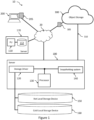
- FIG. 1 there is shown a schematic diagram of a system 10, the system 10 being suitable for implementing non-limiting embodiments of the present technology.
- the system 10 as depicted is merely an illustrative implementation of the present technology.
- the description thereof that follows is intended to be only a description of illustrative examples of the present technology. This description is not intended to define the scope or set forth the bounds of the present technology. In some cases, what are believed to be helpful examples of modifications to the system 10 may also be set forth below. This is done merely as an aid to understanding, and, again, not to define the scope or set forth the bounds of the present technology.
- the system 10 is configured to provide a device with a synchronized pool of data objects mirroring a pool of data objects distributed across a virtual object storage service, the synchronized pool of data objects being stored in a hot local storage device such that the device may access the synchronized pool of data objects using the high-performance storage capabilities of the hot local storage device.
- the pool of data objects may be, for example, a training dataset formed of data objects.
- an electronic device 200 may transmit a request to a server 100 for accessing the pool of data objects distributed across a virtual object storage service 300, the electronic device 200, the server 100 and the virtual object storage service 300 being communicably interconnected via a communication network 20.
- the server 100 may generate a synchronized pool of data objects on a hot local storage device 150 and update said synchronized pool such that it mirrors the current pool of data objects distributed across the virtual object storage service 300.
- any system variation configured to enable synchronization and/or provision of a pool of data obj ects on a hot local storage device or, more generally, enable multi-tiering and/or auto-tiering for managing data affectation can be adapted to execute embodiments of the present technology, once teachings presented herein are appreciated.
- the system 10 will be described using an example of the system 10 being a data management system (therefore, the system 10 can be referred to herein below as a "data management system 10") where the pool of data object is referred to as a "training dataset", the data object forming training data for training of a machine learning model.
- the data management system 10 comprises a resource server 170 communicably connected to the virtual object storage service 300, the electronic device 200, the server 100 and the virtual object storage service 300.
- the resource server 170 may comprise processing resources to train a machine learning algorithm based on the training dataset. It is contemplated that said processing resources may be hosted by the server 100, the electronic device 200, another device communicably connected to the communication network 20 suitable for training of a machine learning algorithm or distributed across a plurality of such devices.
- the system 10 comprises at least one electronic device 200, the electronic device 200 being associated with a respective user.
- the electronic device 200 can sometimes be referred to as a "client device", “user device” or “client electronic device”. It should be noted that the fact that the electronic device 200 is associated with a user does not need to suggest or imply any mode of operation - such as a need to log in, a need to be registered, or the like. It should be appreciated that in other embodiments, the environment 100 can include additional users and user devices.
- the implementation of the electronic device 200 is not particularly limited, but as an example, the electronic device 200 may be implemented as a personal computer (desktops, laptops, netbooks, etc.), a wireless communication device (such as a smartphone, a cell phone, a tablet and the like), as well as network equipment (such as routers, switches, and gateways).
- the electronic device 200 comprises hardware and/or software and/or firmware (or a combination thereof), as is known in the art, to execute a communication application 205.
- the purpose of the communication application 205 is to enable the user to communicate with the virtual object storage service 300 and the server 100 to transmit, for example, request for accessing the training dataset as will be described in greater detail herein below.
- the electronic device 200 of Figure 1 may include any type of computing device that enables users to transmit to and receive information from the server 100 and/or the virtual object storage service 300.
- the communication application 205 may be, for example and without limitations, an Application Programming Interface (API), a website, a web application or an application.
- API Application Programming Interface
- the user device 200 receives the communication application 205 from an entity that enables a user to download an application onto their devices, such as the server 100.
- the communication application may comprise information about an identification of the user device 200 such that the server 100 and/or the virtual object storage service 300 may distinguish between the different user device communicably connected thereto.
- a given user device 200 upon sending a request or any other form of signal to the server 100 and/or to the virtual object storage service 300, a given user device 200 is configured to indicate said identification in the transmitted signal such that the server 100 and/or to the virtual object storage service 300 transmit information in response back to the given user device 200.
- the communication application 205 and/or one or more functions thereof may be part of another application on the user device 200.
- the communication application 205 may be part of a data management application providing manageability of data to a respective user.
- a smartphone user device may receive an application configured to operate on a smartphone while a personal computer user device may receive an application configured to operate on a personal computer.
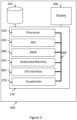
- FIG. 2 is a schematic representation of the user device 200 in accordance with an embodiment of the present technology.
- the user device 200 may be configured to execute the communication application 205.
- the user device 120 comprises a computing unit 210.
- the computing unit 210 may be implemented by any of a conventional personal computer, a controller, and/or an electronic device (e.g., a server, a controller unit, a control device, a monitoring device etc.) and/or any combination thereof appropriate to the relevant task at hand.
- the computing unit 210 comprises various hardware components including one or more single or multi-core processors collectively represented by a processor 220, a solid-state drive 230, a RAM 240, a dedicated memory 250 and an input/output interface 260.
- the computing unit 210 may be a generic computer system.
- the computing unit 210 may be an "off the shelf' generic computer system. In some embodiments, the computing unit 210 may also be distributed amongst multiple systems. The computing unit 210 may also be specifically dedicated to the implementation of the present technology. As a person in the art of the present technology may appreciate, multiple variations as to how the computing unit 210 is implemented may be envisioned without departing from the scope of the present technology.
- Communication between the various components of the computing unit 210 may be enabled by one or more internal and/or external buses 280 (e.g. a PCI bus, universal serial bus, IEEE 1394 "Firewire” bus, SCSI bus, Serial-ATA bus, ARINC bus, etc.), to which the various hardware components are electronically coupled.
- internal and/or external buses 280 e.g. a PCI bus, universal serial bus, IEEE 1394 "Firewire” bus, SCSI bus, Serial-ATA bus, ARINC bus, etc.
- the input/output interface 260 may provide networking capabilities such as wired or wireless access.
- the input/output interface 260 may comprise a networking interface such as, but not limited to, one or more network ports, one or more network sockets, one or more network interface controllers and the like. Multiple examples of how the networking interface may be implemented will become apparent to the person skilled in the art of the present technology.
- the networking interface may implement specific physical layer and data link layer standard such as Ethernet, Fibre Channel, Wi-Fi or Token Ring.
- the specific physical layer and the data link layer may provide a base for a full network protocol stack, allowing communication among small groups of computers on the same local area network (LAN) and large-scale network communications through routable protocols, such as Internet Protocol (IP).
- LAN local area network
- IP Internet Protocol
- the solid-state drive 230 stores program instructions suitable for being loaded into the RAM 240 and executed by the processor 220. Although illustrated as a solid-state drive 230, any type of memory may be used in place of the solid-state drive 230, such as a hard disk, optical disk, and/or removable storage media.
- the processor 220 may be a general-purpose processor, such as a central processing unit (CPU) or a processor dedicated to a specific purpose, such as a digital signal processor (DSP). In some embodiments, the processor 220 may also rely on an accelerator 270 dedicated to certain given tasks, such as executing the methods set forth in the paragraphs below. In some embodiments, the processor 220 or the accelerator 270 may be implemented as one or more field programmable gate arrays (FPGAs). Moreover, explicit use of the term "processor”, should not be construed to refer exclusively to hardware capable of executing software, and may implicitly include, without limitation, application specific integrated circuit (ASIC), read-only memory (ROM) for storing software, RAM, and non-volatile storage. Other hardware, conventional and/or custom, may also be included.
- ASIC application specific integrated circuit
- ROM read-only memory
- the user device 200 may include a screen or display 206 capable of rendering an interface of the communication application 205.
- display 206 may comprise and/or be housed with a touchscreen to permit users to input data via some combination of virtual keyboards, icons, menus, or other Graphical User Interfaces (GUIs).
- GUIs Graphical User Interfaces
- display 206 may be implemented using a Liquid Crystal Display (LCD) display or a Light Emitting Diode (LED) display, such as an Organic LED (OLED) display.
- LCD Liquid Crystal Display
- LED Light Emitting Diode
- OLED Organic LED
- the device may be, for example and without being limitative, a handheld computer, a personal digital assistant, a cellular phone, a network device, a smartphone, a navigation device, an e-mail device, a game console, or a combination of two or more of these data processing devices or other data processing devices.
- the user device 200 may comprise a memory 202 communicably connected to the computing unit 210 and configured to store data, settings of the communication application 205, or any other information relevant for running the communication application on the user device 200.
- the memory 202 may be embedded in the user device 200 as in the illustrated embodiment of Figure 2 or located in an external physical location.
- Information representative of the communication application 205 may be store in the memory 202.
- the computing unit 210 may be configured to access a content of the memory 202 via a network (not shown) such as a Local Area Network (LAN) and/or a wireless connection such as a Wireless Local Area Network (WLAN).
- LAN Local Area Network
- WLAN Wireless Local Area Network
- the user device 200 may also includes a power system (not depicted) for powering the various components.
- the power system may include a power management system, one or more power sources (e.g., battery, alternating current (AC)), a recharging system, a power failure detection circuit, a power converter or inverter and any other components associated with the generation, management and distribution of power in mobile or non-mobile devices.
- the user device 200 is communicably connected to the virtual object storage service 300, the virtual object storage service 300 being configured to host the training dataset.
- each data object of the training dataset may include respective data itself, metadata, and a globally unique identifier.
- the virtual object storage service 300 may be part of a cloud storage for providing user with storage capabilities such as OVHCLOUD PUBLIC CLOUD STORAGE, AMAZON S3, MICROSOFT AZURE BLOB STORAGE, OpenStack SWIFT, GOOGLE CLOUD STORAGE or any other cloud storage architecture.
- the virtual object storage service 300 may comprise, for instance, a plurality of object storage devices such as servers for storing data objects or fragments of data objects.
- functionalities of the virtual object storage service 300 as described herein may be distributed between more than one device.
- the training dataset distributed across the virtual object storage service 300 may be stored using known erasure coding technologies such that data objects are fractioned into fragments, the fragments being spread and stored across different object storage devices (e.g. different disks).
- the virtual object storage service 300 may store a plurality of training datasets.
- the virtual object storage service 300 is coupled with a gateway 305 for receiving, managing and emitting signals involving the virtual object storage service 300 and/or a content thereof.
- the gateway 305 may be an API gateway in collaboration of the communication application 205.
- the communication application 205 may be an API and the gateway may be a corresponding API gateway configured to configured for receiving request signals from the API 205, aggregating services (e.g. data objects or operations to be executed on data objects), and returning appropriated results.
- the API gateway 305 may cause such latency to increase due to processing time of request signals, providing appropriated response signals and managing said signals.
- the present technology may be used to provide lower latency for accessing data of the virtual object storage service 300.
- the user device 200, the server 100 and the virtual object storage service 300 are communicatively coupled one to another over a communication network 20 via any wired or wireless communication link including, for example, 4G, LTE, Wi-Fi, or any other suitable connection.
- the communication network 20 may be implemented as the Internet.
- the communication network 20 can be implemented differently, such as any wide-area communication network, local-area communication network, a private communication network and the like.
- the communication links between the user device 200, the server 100 and the virtual object storage service 300 are implemented will depend inter alia on how the user device 200, the server 100 and the virtual object storage service 300 are implemented.
- the communication link between the user device 200 and the server 100 can be implemented as a wireless communication link (such as but not limited to, a 3G communication network link, a 4G communication network link, Wireless Fidelity, or WiFi ® for short, Bluetooth ® and the like).
- the corresponding communication link can be either wireless (such as Wireless Fidelity, or WiFi ® for short, Bluetooth ® or the like) or wired (such as an Ethernet based connection).
- the communication network 20 is configured to transmit information and/or computer-readable instructions between the user device 200, the server 100 and the virtual object storage service 300.
- a request for accessing a data object stored in the virtual object storage service 300 may be generated by the user device 200 and further transmitted over the communication network 20 to the server 100.
- the user device 200 and/or the server 100 may generate a computer-readable instruction comprising information about a modification, or "operation", to be executed on one or more of the data objects of the virtual object storage service 300.
- Said instruction may comprise information for executing:
- the virtual object storage service 300 may generate acknowledge signals indicative of a confirmation that an operation has been executed on a data object stored therein. Said acknowledge signal may be transmitted by the virtual object storage service 300 to the server 100.
- the server 100 may generates and further transmits, over the communication network 20, signals indicative that contents of a hot local storage device 150 and a cold local storage device 160 have been update, as it will be described in greater details herein further below.
- the communication network may be configured to transmit data objects between the user device 200, the server 100 and the virtual object storage service 300.
- the servers 100 and 170 may be implemented as conventional computer servers.
- each of the servers 100 and 170 may be implemented as a Dell TM PowerEdge TM Server running the Microsoft TM Windows Server TM operating system.
- each of the servers 100 and 170 may be implemented in any other suitable hardware, software, and/or firmware, or a combination thereof.
- each of the servers 100 and 170 is a single server.
- the functionality of the server 100 and/or the functionality of the resource server 170 may be distributed and may be implemented via multiple servers.
- the functionalities of the server 100 and 170 are implemented in a single server.
- the server 100 is configured to (i) generate a first copy, or "snapshot", on the cold local storage device 160, of the training dataset stored in the virtual object storage service 300, (ii) execute and/or causing an execution of modifications to data objects of the training dataset, (iv) listing said operations along with identification information of data objects subjected to said modifications and (v) generating a synchronized training dataset that mirrors the training dataset of the virtual object storage service 300 in the hot local storage device 150 such that the server 100, the resource server 170 and/or the user device 200 may access the synchronized training dataset.
- the server 100 may comprise a processor 130 configured to manage access to the data objects by the user device 200.
- the server 100 may comprise more than one processor 130.
- the server 100 in conjunction with the processor 130, is configured to manage data storage allocation between the hot and cold local storage devices 150, 160.
- the processor 130 is further configured to receive signals from the user device 200.
- the server may be communicably connected to the virtual object storage service 300 via a dedicated communication link 310 such that, in use, information about modification of a content of the virtual object storage service 300 may be transmitted from the virtual object storage service 300 to the server 100.
- the communication link 310 is referred to a "event bus" 310.
- the server 100 may generate a list of modifications of the training dataset stored in the virtual object storage service 300.
- the list of modifications may thus comprise indications of data objects of the training dataset that have been subjected to a modification (e.g. a WRITE operation).
- a new entry of the list is generated each time a modification is applied to one of the data objects of the training dataset in the virtual object storage service 300.
- Entries of the list may comprise, for example and without limitation, indication of a modification, indication of a data object on which the modification has been executed, a time reference of an execution of the modification.
- Entries of the list may comprise additional indications of modification and operations executed on the data objects of the training dataset stored in the virtual object storage service 300.
- the list of modifications may be, for example and without limitations, stored in an internal memory (not shown) of the server 100.
- An illustrative example of an extract of a list of modifications is presented herein below: Identifier Operation Date #4845 WRITE 2021/01/03 15:06:57 #59345 READ 2021/01/27 08:19:30 #10059 READ 2021/01/27 08:19:30 #968 DELETE 2021/04/02 18:00:45
- indications of the data objects that were subjected to a modification are numeral identifier, each data object stored in the virtual object storage service 300 being attributed with a respective identifier.
- the identifier of a given data object may be comprised in the metadata of said data object.
- the list of modifications also comprises the type of modification and a date of execution of said modification.
- a WRITE operation has been executed on the data object identified as #4845 on January 3 rd , 2021 at 15:06:57.
- READ operations have been simultaneously executed on the data objects identified as #59345 and #10059 on January 27 th , 2021 at 08:19:30.
- a DELETE modification has been executed on the data object identified as #968 on April 2 nd , 2021 at 18:00:45.
- the server 100 is communicably connected to the hot and cold local storage devices 150, 160 and comprises a storage driver 120 for executing instructions provided by the processor 230.
- the storage driver may be configured to write a data object in the hot local storage device 150 and/or in the cold local storage device 160 in response to receiving an instruction from the processor 130.
- the hot and cold local storage devices 150, 160 are depicted as separate entities from the server 100. However, it is contemplated that one or both of the hot and cold local storage devices 150, 160 may be implemented integrally with the server 100, without departing from the scope of the present technology. Alternatively, functionalities of the hot and cold local storage devices 150, 160 as described below may be distributed between more than one physical devices.
- the hot and cold local storage devices 150, 160 are configured to store data generated, retrieved and/or processed by the server 100 for temporary and/or permanent storage thereof.
- the hot and cold local storage devices 150, 160 may be configured to store inter alia a copy of the training dataset.
- the hot and cold local storage devices 150, 160 may be implemented by any computer-readable medium, including magnetic or optical disks, optical memory, or other storage media suitable for receiving a copy of the training dataset.
- the hot local storage device 150 has higher storage performance than the cold local storage device 160 such that, in use, a retrieval latency for requesting and transferring, in response to the request, a data object from the hot local storage device 150 to the server 100 or to the user device 200 is lower than a retrieval latency for the same data object stored in the cold local storage device 160.
- the hot local storage device may be any Non-Volatile Memory express (NVMe)-based drive from drive constructors such as SAMSUNG, SEAGATE, HITACHI, INTEL or any other constructor.
- NVMe Non-Volatile Memory express
- the cold local storage device 160 may be any Hard Disk Drive (HDD) or Solid-State Drive (SSD)-based drive from drive constructors such as SAMSUNG, SEAGATE, HITACHI, INTEL or any other constructor.
- HDD Hard Disk Drive
- SSD Solid-State Drive
- the hot and cold local storage devices 150,160 may be used to store copies of the training dataset and/or synchronized copies of the training dataset stored by the virtual object storage service 300 such that the user device 200 and/or the server 100 may access and manage the training dataset with low latency.
- the server 100 may also comprise a snapshotting system 140 configured for generating snapshots of a content of the virtual object storage service 300.
- a snapshot of the virtual object storage service 300 is a picture of a content thereof such that information about an organization of data objects is comprised in the snapshot.
- a snapshot thus comprises information indicative of an organization of the training dataset and a content thereof.
- a snapshot of the virtual object storage service 300 comprises the logic collection of bytes of each of the data objects stored therein along with a description, or reference markers, indicative of a content of the virtual object storage service 300.
- a snapshot may thus be used to reconstruct a content of the virtual object storage service 300 on another storage device such as the hot and cold local storage device 150, 160.
- the snapshotting system 140 may generate a snapshot of the virtual object storage service 300 upon a generation of the training dataset distributed thereacross. For example, a user of the user device 200 may execute an upload of data, thereby generating a corresponding training dataset in the virtual object storage service 300. The server 100 may automatically, or upon receiving agreement from the user, cause the snapshotting system 140 to generate a snapshot of the training dataset. In other instances, the snapshotting system 140 may be configured to generate snapshots of the training dataset at a predetermined frequency or upon detection by the server 100, based on information received from the event bus 310, that a number of operations applied to data objects of the training dataset is above a predetermined threshold.
- the resource server 170 may be locally connected to the server 100 and/or to the hot and cold local storage device 150, 160 via a communication link (not shown) distinct from the communication network 20.
- the resource server 170 comprises a dedicated processing unit 110 and a corresponding memory 112.
- the dedicated processing unit 110 may be configured to process data comprise in the memory 112.
- the dedicated processing unit 110 may be used to train a machine learning model based on Machine Learning Algorithms (MLA).
- the dedicated processing unit 110 is a Graphics Processing Unit (GPU) 110 and the corresponding memory is a Video Random Access Memory (VRAM) 112.
- GPU Graphics Processing Unit
- VRAM Video Random Access Memory
- the memory 112 may be configured to receive, and store images of a training dataset for training the machine learning model.
- Other types of dedicated processing unit are contemplated in alternative embodiments such as Tensor Processing unit (TPU), Field-Programmable Gate Array (FPGA) circuitry, Central Processing Unit (CPU), or any other suitable processing unit.
- the training dataset may comprise the data objects stored in the virtual object storage service 300. Provision of said data objects to the memory 112 in accordance with some embodiments of the technology will be described in greater herein further below.
- the dedicated processing unit 110 and the memory 112 are depicted as remotely connected to the server 100 in Figure 1 , the dedicated processing unit 110 and the memory 112 may be part of the server 100. As another example, the dedicated processing unit 110 and the memory 112 may be part of the user device 200. In the illustrative example of Figure 1 , the dedicated processing unit 110 and the memory 112 are part of the resource server 170 such that the resource server 170 may be used a Virtual Machine (VM) by the user device 200. Therefore, in this example, the machine learning model may be trained on the resource server 170 instead of the user device 200 such that, in use, training data may not have to be transmitted to the user device 200.
- VM Virtual Machine
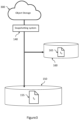
- Figure 3 is a schematic representation of a generation of a synchronized training dataset on the hot local storage device 150 based on the training dataset distributed across the virtual object storage service 300 in accordance with non-limiting embodiments of the present technology.
- the server 100 may fetch the data objects of the training dataset from the virtual object storage service 300 and cause the snapshotting system 140 to generate a snapshot 165 of the training dataset of virtual object storage service 300, the snapshot 165 being associated with a temporal indication corresponding to the generation of the snapshot 165.
- the snapshot 165 is further stored in the cold local storage device 160.
- the temporal indication is a time reference "to”.
- the organization of data objects of the training dataset in the virtual object storage service 300 at t 0 is identical to an organization of data objects of the snapshot 165 in the cold storage 160.
- the snapshot 165 may thus serve as a backup copy of the training dataset.
- a second copy 155, or "second snapshot" training dataset of virtual object storage service 300 may be generated and stored in the hot local storage device 160 at to.
- generation of the snapshot 165 may be performed upon generation of the training dataset across the virtual object storage device 300.
- the user device 200 may send a first signal to the server 100 and/or to the API gateway 305, the first signal being indicative of a request to access the training dataset for, for example, training a machine learning model based on the data objects using the dedicated processing unit 110.
- the server 100 may thus fetch the data object of the training dataset from the virtual object storage service 300 and cause the storage driver 120 to store the fetched data objects (i.e. the snapshot 165) in the cold local storage device 160 and generating another copy 155 of the training dataset in the hot local storage device 150 such that the server 100 may provide access of the copy 155 to the user device 200.
- the user may thus access the copy 155 mirroring the current training dataset using high performance low latency storage capabilities of the hot local storage device 150.
- the copy 155 can be said to be a "up-to-date" copy of the training dataset, or a "synchronized training dataset” 155.
- the user device 200 is not direct provided with the training dataset of the virtual object storage service 300 but rather with the synchronized training dataset 155 stored on the hot local storage device 150.
- the synchronized training dataset 155 may be deleted from the hot local storage device 150 upon receiving, by the server 100, of a signal indicative that the user device 200 does not require immediate access to the synchronized training dataset 155.
- a signal indicative that the user device 200 does not require immediate access to the synchronized training dataset 155 For example and without limitation, once a training of the machine learning model based on the data objects of the synchronized training dataset 155 is complete, or once the user device 200 emits a signal indicative that the training is interrupted, the synchronized training dataset 155 may be deleted from the hot local storage device 150. This may enable, for example, another user to use the high performance low latency storage capabilities of the hot local storage device 150 to access other data objects that may be stored therein once the synchronized training dataset 155 has been deleted.
- Generation of the synchronized training dataset 155 may be a time-consuming process for high amount of data objects comprised in the training dataset. To avoid such time-consuming process for other access to the training dataset, subsequent requests for accessing the content of the training dataset may cause the server 100 to synchronize the synchronized training dataset 155 with the training dataset on the hot local storage device 150 based on the snapshot 165, the list of modifications and data objects distributed across the virtual object storage service 300 as it will be described further below.
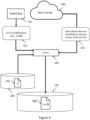
- Figure 4 is a schematic representation of a synchronization of the synchronized training dataset 155 on the hot local storage device 150 in accordance with non-limiting embodiments of the present technology.
- a synchronization of the synchronized training dataset 155 may correspond to a generation of a copy 155' of the training dataset in the hot local storage device 150 as it will be described herein further below.
- the synchronized training dataset 155 will be referred to as the synchronized training dataset 155' hereinafter.
- the generation of the copy 155' results from reception, by the server, of a second signal emitted by the user device 200 via the communication network 20.
- the server 100 may cause the storage driver 120 to synchronize the synchronized training dataset 155' in the hot local storage device 150 such that the synchronized training dataset 155' is an "up-to-date" copy of the training dataset.
- the user device 200 thus transmits a signal indicative of a desire of the user to access the training dataset to the server 100, which cause a synchronization of the synchronized training dataset 155' (i.e. a generation of the synchronized copy 155') to be accessed by the user device 200.
- the copy 155' is generated on the hot local storage device such that the user may access the synchronized copy 155' with the high performance low latency storage capabilities of the hot local storage device 150.
- the server 100 may be configured to access the latest snapshot 165 (identified as having been generated at to in the example of Figures 3 and 4 ) and the list of modifications 312.
- the server 100 may use an offset handler system (not shown) for identifying relevant entries of the list of modifications 312.
- the relevant entries are associated with time indicators indicating that a corresponding modification has been executed after the generation of the latest snapshot 165.
- the generation of the latest snapshot 165 defines a time offset (e.g. to)
- relevant entries of the list of modifications 132 are entries that have been generated by the event bus 310 after the time offset and until generation of the copy 155' (e.g. between to and t 0 + ⁇ t).
- the server 100 is configured to copy the latest snapshot 165 as a whole from the cold local storage device 150 to the hot local storage device 150.
- the server 100 is further configured to modify said copy of the latest snapshot 165 in the hot local storage device 150 based on the relevant entries of the list of modifications 312. As such, it can be said that the modifications corresponding to the relevant entries of the list of modifications 312 are "replayed" on the copy the latest snapshot 165 in the hot local storage device 150, thereby forming the synchronized training dataset 155'.
- the server 100 may delete the corresponding data object of the synchronized training dataset 155' having a same identifier on the hot local storage device 150.
- a relevant entry indicates that a given data object having a given identifier has been modified (e.g.
- the server 100 may retrieve and execute the executed commands onto the corresponding data object of the synchronized training dataset 155' having a same identifier on the hot local storage device 150, such that the synchronized training dataset 155' is an "up-to-date version of the training dataset.
- the server 100 may identify and fetch a first set of data objects 315 in the virtual object storage service 300 that have been recently subjected to a modification. More specifically, the first set of data objects 315 comprises data objects whose identifiers are identified in one or more of the relevant entries of the list of modifications 312.
- the server 100 may cause the storage driver 120 to replace one or more data objects of said copy with data objects retrieved from the virtual object storage service 300. More specifically, data objects stored in the hot local storage device 150 and that correspond to relevant entries of the list of modifications 312 may be replaced by respective data objects of the first set of data objects 315.
- the server 100 may fetch the first set of data objects by requesting access to the first set of data objects 315 to the API gateway 305.
- the server 100 may further store the first set of data objects 315 in the hot local storage device 150 by, for example, causing the storage driver 120 to generate a copy of each data objects of the first set of data objects 315 in the hot local storage device 150.
- data objects of the copy the latest snapshot 165 in the hot local storage device 150 and the have been modified since generation of the latest snapshot 165 are replaced by their corresponding "up-to-date" versions retrieved from the virtual object storage service 300.
- the synchronized training dataset 155' is thus generated.
- the server 100 may identify and fetch a second set of data objects in the cold local storage device 160 that are not identified in relevant entries of the list of modification 312 instead of copying the latest snapshot 165 as a whole from the cold local storage device 150 to the hot local storage device 150.
- the server 100 may store the fetched second set of data objects in the hot local storage device 150 so as to concatenate the first set of data objects 315 with the second set.
- the first and second sets of data objects form the synchronized training dataset 155' that mirrors the current training dataset distributed across the virtual object storage service 300.
- the synchronized training dataset 155' is an "up-to-date" copy of the training dataset and that it is synchronized, upon request of the user in this example, in the hot local storage device 150 such that the user may benefit from high performance low latency storage capabilities of the hot local storage device 150.
- fetching and storing the second set of data objects 168 from the cold local storage device 160 to the hot local storage device 150 may be executed faster than fetching and storing corresponding data objects (i.e. having a same identifier for example) from the virtual object storage service 300 to the hot local storage device 150 due to processing time of the communication network 20 and the API gateway 305. Fetching the first and second sets of data objects may be executed sequentially or in parallel.
- the server 100 may process a plurality of training datasets in parallel. More specifically, the server 100 may cause generation of copies of each training dataset in the cold local storage device 160 or another cold local storage device (not shown) communicably connected to the server 100. As such, the server 100 may maintain a list of modifications for each training dataset such that synchronized copies of the training datasets may be generated on the hot local storage device 150, as it will be described in greater details herein further below.
- Figure 5 is a flow diagram of a method 500 for training a machine learning model based on a training dataset, the training dataset being formed by data objects distributed across a virtual object storage service according to some embodiments of the present technology.
- the method 500 or one or more steps thereof may be performed by a processor or a computer system, such as the server 100.
- the method 500 or one or more steps thereof may be embodied in computer-executable instructions that are stored in a computer-readable medium, such as a non-transitory mass storage device, loaded into memory and executed by a CPU. Some steps or portions of steps in the flow diagram may be omitted or changed in order.
- the server 100 fetches the training dataset from the virtual object storage service 300. More specifically, the server 100 may transmit signal indicative of a request for retrieving each data object of the training dataset to the gateway 305. For example, the server may transmit N requests to the gateway, where N is the number of data objects comprised in the training dataset distributed across the virtual object storage service 300.
- the server 100 stores the fetched training dataset 165 (i.e. the N data objects in this example) in the cold local storage device 160 communicably connected to the server 100.
- the server 100 may cause the snapshotting system 140 to generate the snapshot 165 of the training dataset distributed across the virtual object storage service 300, the snapshot 165 being associated with a time reference indicative of the generation of the snapshot 165 such that the snapshot 165 may be used as a reference for the organisation of the training dataset in later steps.
- the snapshot 165 is further stored in the cold local storage device 160.
- the server maintains the list of modifications 312 such that the modifications executed on the data object of the training dataset are indicated by entries of the list of modifications 312.
- the event bus 310 may provide the server 100 with information indicative of modifications executed on the training dataset distributed across the virtual object storage service 300.
- the server 100 may transmit a corresponding WRITE signal comprising first information indicative of a modification of a given data object of the training dataset.
- Said first information may comprise a first identifier of the given data object and instructions for a modification of the data object.
- the server 100 may store the first identifier in a local memory (not shown) communicably connected to the server 100.
- the first information is further transmitted by the server 100 to the virtual object storage service 300 via, for example, the gateway 305, thereby causing an execution of the WRITE operation of the data object by the virtual object storage service 300.
- the server 100 may receive, via the event bus 310, second information about the modification executed by the virtual object storage service 300.
- a new entry of the list of modification 312 may thus be generated based on the second information.
- the second information may comprise a second identifier of the data objects on which the modification has been executed.
- the server 100 may further compare the first and second identifier to determine whether the modification has been successfully executed on the given data object. If determination is made by the server 100 that the first and second identifiers are identical, an acknowledge signal may be emitted by the server 100 to the user device 200 to indicate that the given data object has been modified. Similarly, if determination is made by the server 100 that the first and second identifiers are different, a signal may be emitted by the server 100 to the user device 200 to indicate that the WRITE operation of the given data object has failed.
- the server 100 may cause the snapshotting system 140 to update the snapshot 165 by, for example, generating a new snapshot 165 of the training dataset distributed across the virtual object storage device 300. Updating the snapshot 142 may be executed by the server 100 at a predetermined frequency and/or in result of a number of entries in the list of modifications 312 being above a predetermined threshold. For example and without limitation, the server 100 may cause the snapshotting system to update the snapshot 165 when determination is made that the list of modifications 312 comprises more than 10,000 entries. Upon updating the snapshot 142, the entries of the list of modifications 312 having been generated before the update of the snapshot 165 may be discarded. It can thus be said that the list of modifications 312 is reset.
- the server 100 may generate the synchronized training dataset 155' based on the snapshot 165 and the list of modifications 312.
- the server 100 is configured to copy the latest snapshot 165 as a whole from the cold local storage device 150 to the hot local storage device 150.
- the server 100 may further modify said copy of the latest snapshot 165 in the hot local storage device 150 based on the relevant entries of the list of modifications 312. As such, it can be said that the modifications corresponding to the relevant entries of the list of modifications 312 are "replayed" on the copy the latest snapshot 165 in the hot local storage device 150, thereby forming the synchronized training dataset 155'.
- the server 100 may identify and fetch the first set of data objects 315 from the virtual object storage service 300. More specifically, the first set of data objects 315 comprises data objects whose identifiers are identified in one or more of the relevant entries of the list of modifications 312, the relevant entries being entries generated after a latest update of the snapshot 142. The server 100 may use the snapshot 165 stored the cold local storage device 160 to the hot local storage device 150, and update data object of said copy that are identified in the relevant entries of the list of modification 312 by corresponding data objects from the first set of data objects 315, thereby generating the synchronized training dataset 155'.
- the server 100 may identify and fetch the second set of data objects in the cold local storage device 160 that are not identified in relevant entries of the list of modification 312.
- the server 100 may store the fetched first and second sets of data objects in the hot local storage device 150.
- the first and second sets of data objects form the synchronized training dataset 155' that mirrors the current training dataset distributed across the virtual object storage service 300.
- the server 100 may perform steps of the method 500 from step 505 to step 520 for a plurality of training datasets, a copy of each training dataset of the plurality of training datasets being generated on the cold local storage service 160.
- the server 100 may thus maintain a list of modification as described hereinbefore for each training dataset.
- a plurality of requests to initiate training of machine learning models may be received at step 520 by other user devices (not shown) different from the user device 200 and communicably connected to the server 100, thereby causing the server 100 to generate a plurality of corresponding synchronized training datasets.
- the server 100 may cause the storage driver 120 to store the synchronized training dataset 155' in the hot local storage device 150.
- the server 100 may receive a WRITE operation from the user device 200 after having caused the storage driver 120 to store the synchronized training dataset 155' in the hot local storage device 150.
- the server 100 may transmit a corresponding WRITE signal comprising information indicative of a modification of a given data object of the training dataset to the virtual object storage service 300.
- Said information may comprise an identifier of the given data object and instructions for a modification of the data object.
- the server 100 may store the identifier in a local memory (not shown) communicably connected to the server 100.
- the server 100 may execute instructions comprised therein thereby causing the storage driver 120 to modify a given data object having the first identifier in the hot local storage device 150.
- the server 100 may thus cause concurrent modifications of one data object in the virtual object storage service 300 and one data object in the hot local storage device 150, the two data objects having a same identifier.
- an acknowledge signal may be emitted by the server 100 to the user device 200 to indicate that a "live-update" has been executed on the synchronized training dataset 155'.
- the resource server 170 may fetch training data (i.e. data objects) of the synchronized training dataset 155' to execute a training of the machine learning model.
- the training data are transmitted to the memory 112 of the dedicated processing unit 110 such they may be processed by the dedicated processing unit 110 to train the machine learning model.
- the method 500 could further include, at step 535, generating and storing a second synchronized training dataset on the hot local storage device 150.
- the method 500 may comprise, at this step, discarding, by the server 100, the synchronized training dataset 155' from the hot local storage device 150, for example, once the training is complete or interrupted by reception by the server 100 of an signal indicative of an interruption of the training from the user device 200.
- the memory of the hot local storage device 150 may not be suitable for storing the synchronized training dataset 155' along the second synchronized training dataset.
- the server 100 may fetch and store another synchronized training dataset on the hot local storage device 150 for training of another machine learning model for example.
Landscapes
- Engineering & Computer Science (AREA)
- Theoretical Computer Science (AREA)
- Physics & Mathematics (AREA)
- General Physics & Mathematics (AREA)
- General Engineering & Computer Science (AREA)
- Human Computer Interaction (AREA)
- Data Mining & Analysis (AREA)
- Software Systems (AREA)
- Computing Systems (AREA)
- Evolutionary Computation (AREA)
- Mathematical Physics (AREA)
- Artificial Intelligence (AREA)
- Databases & Information Systems (AREA)
- Medical Informatics (AREA)
- Computer Vision & Pattern Recognition (AREA)
- Health & Medical Sciences (AREA)
- Life Sciences & Earth Sciences (AREA)
- Biomedical Technology (AREA)
- Biophysics (AREA)
- Computational Linguistics (AREA)
- General Health & Medical Sciences (AREA)
- Molecular Biology (AREA)
- Information Retrieval, Db Structures And Fs Structures Therefor (AREA)
Priority Applications (4)
| Application Number | Priority Date | Filing Date | Title |
|---|---|---|---|
| EP21306119.5A EP4134833A1 (de) | 2021-08-13 | 2021-08-13 | Systeme und verfahren zur automatisch abgestuften datenspeicherung für datenintensive anwendungen |
| US17/879,835 US20230047919A1 (en) | 2021-08-13 | 2022-08-03 | Systems and methods for auto-tiered data storage for data intensive applications |
| CA3169436A CA3169436A1 (en) | 2021-08-13 | 2022-08-03 | Systems and methods for auto-tiered data storage for data intensive applications |
| CN202210966679.4A CN115936137A (zh) | 2021-08-13 | 2022-08-12 | 用于数据密集型应用的自动分层数据存储的系统和方法 |
Applications Claiming Priority (1)
| Application Number | Priority Date | Filing Date | Title |
|---|---|---|---|
| EP21306119.5A EP4134833A1 (de) | 2021-08-13 | 2021-08-13 | Systeme und verfahren zur automatisch abgestuften datenspeicherung für datenintensive anwendungen |
Publications (1)
| Publication Number | Publication Date |
|---|---|
| EP4134833A1 true EP4134833A1 (de) | 2023-02-15 |
Family
ID=77666434
Family Applications (1)
| Application Number | Title | Priority Date | Filing Date |
|---|---|---|---|
| EP21306119.5A Ceased EP4134833A1 (de) | 2021-08-13 | 2021-08-13 | Systeme und verfahren zur automatisch abgestuften datenspeicherung für datenintensive anwendungen |
Country Status (4)
| Country | Link |
|---|---|
| US (1) | US20230047919A1 (de) |
| EP (1) | EP4134833A1 (de) |
| CN (1) | CN115936137A (de) |
| CA (1) | CA3169436A1 (de) |
Families Citing this family (1)
| Publication number | Priority date | Publication date | Assignee | Title |
|---|---|---|---|---|
| US12164542B1 (en) | 2023-07-05 | 2024-12-10 | The Toronto-Dominion Bank | Systems and methods for synchronization of data |
Citations (2)
| Publication number | Priority date | Publication date | Assignee | Title |
|---|---|---|---|---|
| US20140006354A1 (en) * | 2010-05-03 | 2014-01-02 | Panzura, Inc. | Executing a cloud command for a distributed filesystem |
| US20190121889A1 (en) * | 2017-10-19 | 2019-04-25 | Pure Storage, Inc. | Ensuring reproducibility in an artificial intelligence infrastructure |
Family Cites Families (9)
| Publication number | Priority date | Publication date | Assignee | Title |
|---|---|---|---|---|
| US8763082B2 (en) * | 2008-05-13 | 2014-06-24 | At&T Mobility Ii Llc | Interactive client management of an access control list |
| US11774944B2 (en) * | 2016-05-09 | 2023-10-03 | Strong Force Iot Portfolio 2016, Llc | Methods and systems for the industrial internet of things |
| US20210067735A1 (en) * | 2019-09-03 | 2021-03-04 | Nvidia Corporation | Video interpolation using one or more neural networks |
| US11856003B2 (en) * | 2020-06-04 | 2023-12-26 | Palo Alto Networks, Inc. | Innocent until proven guilty (IUPG): adversary resistant and false positive resistant deep learning models |
| JP2023536802A (ja) * | 2020-07-09 | 2023-08-30 | ワイズ ラブズ,インコーポレイテッド | 顔認識のデータセットアウェア及び不変学習 |
| US11716343B2 (en) * | 2020-08-11 | 2023-08-01 | Cisco Technology, Inc. | Secure neighborhoods assessment in enterprise networks |
| US12131044B2 (en) * | 2020-09-04 | 2024-10-29 | Pure Storage, Inc. | Intelligent application placement in a hybrid infrastructure |
| US12019748B2 (en) * | 2021-05-17 | 2024-06-25 | Rubrik, Inc. | Application migration for cloud data management and ransomware recovery |
| WO2023113889A1 (en) * | 2021-12-14 | 2023-06-22 | Microsoft Technology Licensing, Llc. | Method and system for intelligently managing facilities |
-
2021
- 2021-08-13 EP EP21306119.5A patent/EP4134833A1/de not_active Ceased
-
2022
- 2022-08-03 CA CA3169436A patent/CA3169436A1/en active Pending
- 2022-08-03 US US17/879,835 patent/US20230047919A1/en active Pending
- 2022-08-12 CN CN202210966679.4A patent/CN115936137A/zh active Pending
Patent Citations (2)
| Publication number | Priority date | Publication date | Assignee | Title |
|---|---|---|---|---|
| US20140006354A1 (en) * | 2010-05-03 | 2014-01-02 | Panzura, Inc. | Executing a cloud command for a distributed filesystem |
| US20190121889A1 (en) * | 2017-10-19 | 2019-04-25 | Pure Storage, Inc. | Ensuring reproducibility in an artificial intelligence infrastructure |
Non-Patent Citations (4)
| Title |
|---|
| ANONYMOUS: "Cache hierarchy - Wikipedia", 6 November 2020 (2020-11-06), XP093015622, Retrieved from the Internet <URL:https://web.archive.org/web/20201106232559/https://en.wikipedia.org/wiki/Cache_hierarchy> [retrieved on 20230119] * |
| ANONYMOUS: "Data Science Virtual Machines | Microsoft Azure", 6 October 2017 (2017-10-06), XP055880401, Retrieved from the Internet <URL:http://web.archive.org/web/20171006072159/https://azure.microsoft.com/en-us/services/virtual-machines/data-science-virtual-machines/> [retrieved on 20220118] * |
| LUTKEVICH BEN: "What is Cache Memory? Cache Memory in Computers, Explained", 28 February 2020 (2020-02-28), XP093015623, Retrieved from the Internet <URL:https://www.techtarget.com/searchstorage/definition/cache-memory> [retrieved on 20230119] * |
| UDDIN MISBAH: "Virtualization for Machine Learning | by Misbah Uddin | Towards Data Science", 28 July 2021 (2021-07-28), XP055880403, Retrieved from the Internet <URL:https://towardsdatascience.com/virtualization-for-machine-learning-da11b7a59070> [retrieved on 20220118] * |
Also Published As
| Publication number | Publication date |
|---|---|
| US20230047919A1 (en) | 2023-02-16 |
| CA3169436A1 (en) | 2023-02-13 |
| CN115936137A (zh) | 2023-04-07 |
Similar Documents
| Publication | Publication Date | Title |
|---|---|---|
| US9715347B2 (en) | Virtual disk migration | |
| US11221995B2 (en) | Data replication from a cloud-based storage resource | |
| CN114116684B (zh) | 基于Docker容器化的深度学习大模型与大数据集版本管理方法 | |
| US8966188B1 (en) | RAM utilization in a virtual environment | |
| JP5886447B2 (ja) | ロケーション非依存のファイル | |
| CN111309732A (zh) | 数据处理方法、装置、介质和计算设备 | |
| CN109416644B (zh) | 用于虚拟机实时迁移的系统和方法 | |
| AU2013388039A1 (en) | File management with placeholders | |
| US10380074B1 (en) | Systems and methods for efficient backup deduplication | |
| US11392545B1 (en) | Tracking access pattern of inodes and pre-fetching inodes | |
| US20200349122A1 (en) | Snapshot management in distributed file systems | |
| US11455114B1 (en) | Consolidation and migration of cloud data | |
| EP3317764B1 (de) | Datenzugriffsbeschleuniger | |
| US20210279330A1 (en) | Secure runtime for virtual machines | |
| WO2023070462A1 (zh) | 一种文件去重方法、装置和设备 | |
| US20230047919A1 (en) | Systems and methods for auto-tiered data storage for data intensive applications | |
| CN112424764A (zh) | 长上传时间检测和管理 | |
| US10235293B2 (en) | Tracking access pattern of inodes and pre-fetching inodes | |
| US20220382562A1 (en) | Systems and methods for generating a target dataset having a target data format on a user device | |
| EP3519993A1 (de) | Verfolgung des zugriffsmusters von inodes und des vorausladens von inodes | |
| US10776376B1 (en) | Systems and methods for displaying search results | |
| EP2813947B1 (de) | Elektronische Vorrichtung und Verfahren für ein Montagedateisystem mit virtuellen Blockvorrichtungen | |
| US20240385932A1 (en) | Snapshot indexing for hybrid two-level snapshot indirection | |
| US12222825B2 (en) | Systems and methods for disaster recovery for edge devices | |
| US8281096B1 (en) | Systems and methods for creating snapshots |
Legal Events
| Date | Code | Title | Description |
|---|---|---|---|
| PUAI | Public reference made under article 153(3) epc to a published international application that has entered the european phase |
Free format text: ORIGINAL CODE: 0009012 |
|
| STAA | Information on the status of an ep patent application or granted ep patent |
Free format text: STATUS: REQUEST FOR EXAMINATION WAS MADE |
|
| STAA | Information on the status of an ep patent application or granted ep patent |
Free format text: STATUS: EXAMINATION IS IN PROGRESS |
|
| 17P | Request for examination filed |
Effective date: 20220527 |
|
| AK | Designated contracting states |
Kind code of ref document: A1 Designated state(s): AL AT BE BG CH CY CZ DE DK EE ES FI FR GB GR HR HU IE IS IT LI LT LU LV MC MK MT NL NO PL PT RO RS SE SI SK SM TR |
|
| 17Q | First examination report despatched |
Effective date: 20230125 |
|
| STAA | Information on the status of an ep patent application or granted ep patent |
Free format text: STATUS: THE APPLICATION HAS BEEN REFUSED |
|
| 18R | Application refused |
Effective date: 20240507 |