EP4134391A1 - Method for producing polyether ketone ketone and polyether ketone ketone produced thereby - Google Patents
Method for producing polyether ketone ketone and polyether ketone ketone produced thereby Download PDFInfo
- Publication number
- EP4134391A1 EP4134391A1 EP20930464.1A EP20930464A EP4134391A1 EP 4134391 A1 EP4134391 A1 EP 4134391A1 EP 20930464 A EP20930464 A EP 20930464A EP 4134391 A1 EP4134391 A1 EP 4134391A1
- Authority
- EP
- European Patent Office
- Prior art keywords
- ketone
- polyether ketone
- catalyst
- present
- polyether
- Prior art date
- Legal status (The legal status is an assumption and is not a legal conclusion. Google has not performed a legal analysis and makes no representation as to the accuracy of the status listed.)
- Granted
Links
Images



Classifications
-
- C—CHEMISTRY; METALLURGY
- C08—ORGANIC MACROMOLECULAR COMPOUNDS; THEIR PREPARATION OR CHEMICAL WORKING-UP; COMPOSITIONS BASED THEREON
- C08G—MACROMOLECULAR COMPOUNDS OBTAINED OTHERWISE THAN BY REACTIONS ONLY INVOLVING UNSATURATED CARBON-TO-CARBON BONDS
- C08G65/00—Macromolecular compounds obtained by reactions forming an ether link in the main chain of the macromolecule
- C08G65/34—Macromolecular compounds obtained by reactions forming an ether link in the main chain of the macromolecule from hydroxy compounds or their metallic derivatives
- C08G65/38—Macromolecular compounds obtained by reactions forming an ether link in the main chain of the macromolecule from hydroxy compounds or their metallic derivatives derived from phenols
- C08G65/40—Macromolecular compounds obtained by reactions forming an ether link in the main chain of the macromolecule from hydroxy compounds or their metallic derivatives derived from phenols from phenols (I) and other compounds (II), e.g. OH-Ar-OH + X-Ar-X, where X is halogen atom, i.e. leaving group
-
- C—CHEMISTRY; METALLURGY
- C08—ORGANIC MACROMOLECULAR COMPOUNDS; THEIR PREPARATION OR CHEMICAL WORKING-UP; COMPOSITIONS BASED THEREON
- C08G—MACROMOLECULAR COMPOUNDS OBTAINED OTHERWISE THAN BY REACTIONS ONLY INVOLVING UNSATURATED CARBON-TO-CARBON BONDS
- C08G61/00—Macromolecular compounds obtained by reactions forming a carbon-to-carbon link in the main chain of the macromolecule
- C08G61/12—Macromolecular compounds containing atoms other than carbon in the main chain of the macromolecule
- C08G61/121—Macromolecular compounds containing atoms other than carbon in the main chain of the macromolecule derived from organic halides
-
- C—CHEMISTRY; METALLURGY
- C08—ORGANIC MACROMOLECULAR COMPOUNDS; THEIR PREPARATION OR CHEMICAL WORKING-UP; COMPOSITIONS BASED THEREON
- C08G—MACROMOLECULAR COMPOUNDS OBTAINED OTHERWISE THAN BY REACTIONS ONLY INVOLVING UNSATURATED CARBON-TO-CARBON BONDS
- C08G65/00—Macromolecular compounds obtained by reactions forming an ether link in the main chain of the macromolecule
- C08G65/34—Macromolecular compounds obtained by reactions forming an ether link in the main chain of the macromolecule from hydroxy compounds or their metallic derivatives
- C08G65/38—Macromolecular compounds obtained by reactions forming an ether link in the main chain of the macromolecule from hydroxy compounds or their metallic derivatives derived from phenols
- C08G65/40—Macromolecular compounds obtained by reactions forming an ether link in the main chain of the macromolecule from hydroxy compounds or their metallic derivatives derived from phenols from phenols (I) and other compounds (II), e.g. OH-Ar-OH + X-Ar-X, where X is halogen atom, i.e. leaving group
- C08G65/4012—Other compound (II) containing a ketone group, e.g. X-Ar-C(=O)-Ar-X for polyetherketones
- C08G65/4056—(I) or (II) containing sulfur
-
- C—CHEMISTRY; METALLURGY
- C08—ORGANIC MACROMOLECULAR COMPOUNDS; THEIR PREPARATION OR CHEMICAL WORKING-UP; COMPOSITIONS BASED THEREON
- C08L—COMPOSITIONS OF MACROMOLECULAR COMPOUNDS
- C08L71/00—Compositions of polyethers obtained by reactions forming an ether link in the main chain; Compositions of derivatives of such polymers
Definitions
- the present invention relates to a method for producing polyether ketone ketone, and more particularly, to a method for producing polyether ketone ketone and a polyether ketone ketone produced thereby, wherein a catalyst injection rate is controlled during production of the polyether ketone ketone to suppress scale formation, thereby improving the yield thereof.
- Polyether ketone ketone is a generic term for already known industrial resins, and includes polyether ketone, polyether ether ketone, polyether ketone ketone, and a copolymer in which polyether ketone and polyether ketone ketone are partially mixed.
- PEKK polyether ketone ketone
- Korean Patent Registration No. 0314176 discloses a catalyst injection device for olefin polymerization, which is similar in that a catalyst rate is controlled during polymerization of polymer, but the polymer is limited to polyolefin rather than PEKK.
- U.S. Patent Publication No. 4,841,013 discloses a method for obtaining a product after polymerization through an additional process of breaking aggregated particles through a pulverization process after polymerization of polyaryl ether ketone (PAEK).
- PAEK polyaryl ether ketone
- US Patent No. 9,803,050 discloses a technique for controlling a particle size using a dispersing agent.
- the present invention aims to solve the above-described problems.
- An object of the present invention is to provide a method for producing polyether ketone ketone, wherein a catalyst injection rate is controlled to improve the yield and increase the particle size.
- the characteristic configuration of the present invention is as follows.
- the method for producing polyether ketone ketone according to the present invention may include: (a) preparing a reaction solution by adding at least one selected from diphenyl oxide (DPO) and 1,4-bis(4-phenoxybenzoyl)benzene (EKKE) to terephthaloyl chloride (TPC), isophthaloyl chloride (IPC), and a liquid reaction medium in a reactor and simultaneously dissolving the same; (b) cooling the reaction solution and injecting a catalyst thereto; and (c), after the injecting of the catalyst, directly blowing an inert gas into the reaction solution and stirring the inert gas.
- DPO diphenyl oxide
- EKKE 1,4-bis(4-phenoxybenzoyl)benzene
- TPC terephthaloyl chloride
- IPC isophthaloyl chloride
- a liquid reaction medium in a reactor and simultaneously dissolving the same
- the catalyst may be at least one selected from aluminum chloride (AlCl 3 ), potassium carbonate (K 2 CO 3 ), and iron(III) chloride (FeCl 3 ).
- the catalyst is injected at a rate of 1 to 10 g/min.
- a cooling temperature in the step (b) is -10 to -5°C.
- an agitator (stirrer) having a plurality of agitating blades is rotated to disperse the injected inert gas.
- At least two agitators are provided in the reactor to rotate in at least two directions to generate a vortex phenomenon.
- a nozzle for directly blowing the inert gas into the reaction solution is formed in an upper or lower portion of the reactor, so that the inert gas is injected in multiple directions.
- the inert gas is at least one selected from nitrogen, helium, neon, argon, and krypton.
- the step (c) includes raising the temperature of the reactor to 80 to 100°C while stirring.
- the method includes washing after the step (c) and rinsing with deionized water (DI water).
- DI water deionized water
- the method includes performing vacuum drying at 170 to 190°C after the rinsing.
- the reaction solution includes at least one capping agent selected from benzoyl chloride, benzenesulfonyl chloride, 4-chlorobiphenyl, 4-phenoxybenzophenone, 4-(4-phenoxyphenoxy)benzophenone, and biphenyl 4-benzenesulfonylphenyl phenyl ether.
- capping agent selected from benzoyl chloride, benzenesulfonyl chloride, 4-chlorobiphenyl, 4-phenoxybenzophenone, 4-(4-phenoxyphenoxy)benzophenone, and biphenyl 4-benzenesulfonylphenyl phenyl ether.
- the liquid reaction medium is at least one solvent selected from o-dichlorobenzene (oDCB) and dichloromethane.
- oDCB o-dichlorobenzene
- dichloromethane o-dichlorobenzene
- the polyether ketone ketone has a yield of 90% or more.
- the polyether ketone ketone has a particle size of 250 to 2,000 ⁇ m.
- a method for producing polyether ketone ketone according to the present invention has an effect of increasing the yield of polyether ketone ketone by controlling a catalyst injection rate so as to suppress scale formation.
- the method for producing polyether ketone ketone according to the present invention has an effect of maintaining inherent viscosity (IV) and obtaining the yield above 90%.
- the method for producing polyether ketone ketone according to the present invention increases the particle size by controlling the catalyst injection rate so as to suppress scale formation, thereby obtaining an effect of reducing the possibility of dust scattering and facilitating operation.
- the method for producing polyether ketone ketone according to the present invention has an effect of obtaining particles having various sizes at high yield by drying and additionally pulverizing PEKK of large particles obtained at high yield.
- the present invention proposes a technique capable of increasing a particle size by controlling a catalyst injection rate and improving the yield by suppressing scale formation.
- the present invention provides a producing method according to a catalyst injection rate, which the catalyst injection rate is controlled to prevent aggregation of resin particles and prevent scale formation.
- the method for producing polyether ketone ketone, capable of obtaining high molecular weight polyether ketone ketone at high yield includes: (a) preparing a reaction solution by adding at least one selected from diphenyl oxide (DPO) and 1,4-bis(4-phenoxybenzoyl)benzene (EKKE) to terephthaloyl chloride (TPC), isophthaloyl chloride (IPC), and a liquid reaction medium in a reactor and simultaneously dissolving the same; (b) cooling the reaction solution and injecting a catalyst thereto; and (c), after the injecting of the catalyst, directly blowing an inert gas into the reaction solution and stirring the inert gas.
- DPO diphenyl oxide
- EKKE 1,4-bis(4-phenoxybenzoyl)benzene
- TPC terephthaloyl chloride
- IPC isophthaloyl chloride
- a liquid reaction medium in a reactor and simultaneously dissolving the same
- Polyether ketone ketone is a polymer produced by chain polymerization of terephthaloyl represented by chemical structure 1 and isophthaloyl represented by chemical structure 2, and characteristics of polyether ketone ketone are determined by the ratio of terephthaloyl to isophthaloyl.
- Terephthaloyl moiety is linear and rigid, and isophthaloyl moiety gives structural diversity due to its curved structure. Isophthaloyl affects flexibility, fluidity, and crystallization properties of polymer chains.
- the catalyst may be at least one selected from aluminum chloride (AlCl 3 ), potassium carbonate (K 2 CO 3 ), and iron(III) chloride (FeCl 3 ), but is not limited thereto, and may be any catalyst that is commonly used as a catalyst for Friedel-Crafts acylation polymerization.
- the catalyst may be injected at a rate of 1 to 10 g/min or more.
- the catalyst is injected at a rate of 1 to 3 g/min. More preferably, the catalyst is injected at a rate of 1 to 1.5 g/min.
- the particle size of the produced polyether ketone ketone may increase.
- the yield of polyether ketone ketone to be produced can be improved. In this case, the yield of polyether ketone ketone may be 90% or more.
- polyether ketone ketone may have a particle size of 250 to 2,000 ⁇ m.
- the increase in particle size reduces the possibility of dust scattering during a product injection process, thereby facilitating operations.
- a small particle size is requested according to product requirements, it is possible to reduce the particle size through additional pulverization after drying. This has an advantage that can control the particle size while maintaining the yield.
- the catalyst is injected after the reaction solution is cooled.
- the temperature may vary depending on the catalyst, but is preferably -10 to -5°C.
- the step (c) is characterized in that an agitator (stirrer) having a plurality of agitating blades is rotated to disperse the injected inert gas.
- At least two agitators may be provided in the reactor to rotate in at least two directions to cause a vortex phenomenon.
- the rotational shaft of the agitator may be provided to rotate by a predetermined angle alternately in the forward direction and the reverse direction.
- the agitating blade is provided to form a predetermined angle with the rotational shaft, thereby increasing the dispersion force of the composition in the reactor.
- FIGS. 4 and 5 are diagrams showing an apparatus capable of simultaneously flowing nitrogen gas into a reaction solution and stirring in a method for producing polyether ketone ketone according to the present invention.
- a nozzle for directly blowing the inert gas into the reaction solution is formed in the upper or lower portion of the reactor, so that the inert gas can be injected in multiple directions. Due to this, hydrochloric acid can be quickly and efficiently removed by the inert gas.
- the inert gas is at least one selected from nitrogen, helium, neon, argon, and krypton.
- the inert gas may be used alone or in combination during the polymerization reaction.
- the temperature of the reactor is raised to 80 to 100°C while stirring and PEKK is polymerized.
- the polymerization reaction according to the present invention may be carried out in various reactors.
- the polymerization reaction may be carried out in a continuous stirred tank reactor (CSTR) or a loop reactor.
- CSTR continuous stirred tank reactor
- the method for producing PEKK according to the present invention further includes washing the polymerized PEKK and rinsing the polymerized PEKK with deionized water (DI water).
- the washing may be carried out with a solution of methanol (CHsOH), hydrochloric acid, and sodium hydroxide (NaOH).
- CHsOH methanol
- hydrochloric acid methanol
- NaOH sodium hydroxide
- the washing may be carried out by methanol 3 times, hydrochloric acid once, and sodium hydroxide once.
- the washing with hydrochloric acid and sodium hydroxide may be omitted.
- deionized water may be provided in the rinsing step.
- the rinsing may be preferably carried out 3 times.
- the method may further include obtaining PEKK polymerized resin powder by vacuum drying at 170 to 190°C.
- a capping agent may be added and dissolved together.
- the capping agent is added to the polymerization medium to cap the polymer in at least one end of the polymer chain. This terminates the continuous extension of the chain and controls the molecular weight of the polymerized polymer.
- benzoyl chloride, benzenesulfonyl chloride, 4-chlorobiphenyl, 4-phenoxybenzophenone, 4-(4-phenoxyphenoxy)benzophenone, biphenyl 4-benzenesulfonylphenyl phenyl ether, and the like may be used.
- the liquid reaction medium may be at least one solvent selected from o-dichlorobenzene (oDCB) and dichloromethane, but is not limited thereto, and may be any solve that is commonly used as a solvent for Friedel-Crafts acylation polymerization.
- oDCB o-dichlorobenzene
- dichloromethane o-dichlorobenzene
- the liquid reaction medium may be at least one solvent selected from o-dichlorobenzene (oDCB) and dichloromethane, but is not limited thereto, and may be any solve that is commonly used as a solvent for Friedel-Crafts acylation polymerization.
- the polyether ketone ketone produced by the producing method described above exhibits improved physical properties, compared to polyether ketone ketone produced through the prior art.
- the catalyst is injected at a rate of 1 to 10 g/min to prevent aggregation between resin particles and suppress scale formation, thereby obtaining high molecular weight polyether ketone ketone at high yield.
- the yield of polyether ketone ketone may be 90% or more.
- polyether ketone ketone may have a particle size of 250 to 2,000 ⁇ m.
- the catalyst is injected at a rate of 1 to 10 g/min to prevent aggregation between resin particles and suppress scale formation, thereby obtaining an effect of large particle size, and the value of inherent viscosity (IV) remains unchanged, thereby obtaining an effect that can high molecular weight polyether ketone ketone at high yield, preferably 90% or more.
- EKKE diphenyl oxide
- EKKE 1,4-bis(4-phenoxybenzoyl)benzene
- TPC terephthaloyl chloride
- IPC isophthaloyl chloride
- benzoyl chloride as a capping agent
- a PEKK polymerized resin was obtained in the same manner as in Example 1, except that a catalyst was injected at a rate of 1.2 g/min.
- a PEKK polymerized resin was obtained in the same manner as in Example 1, except that a catalyst was injected at a rate of 1.3 g/min.
- a PEKK polymerized resin was obtained in the same manner as in Example 1, except that a catalyst was injected at a rate of 0.8 g/min.
- a PEKK polymerized resin was obtained in the same manner as in Example 1, except that a catalyst was injected at a rate of 0.7 g/min.
- a PEKK polymerized resin was obtained in the same manner as in Example 1, except that a catalyst was injected at a rate of 0.6 g/min.
- Example 1 The IV and the yield of Examples 1 to 3 produced according to the present invention and Comparative Examples 1 to 3 were measured. The results thereof are shown in Table 1 below. [Table 1] Classification Catalyst injection rate (g/min) IV (dl/g) Yield (%) Example 1 1.1 0.9 93 Example 2 1.2 0.9 96 Example 3 1.3 0.8 92 Comparative Example 1 0.8 0.9 66 Comparative Example 2 0.7 0.9 59 Comparative Example 3 0.6 1.0 62
- Example 2 which was produced by injecting the catalyst at a rate of 1.2 g/min, exhibited the highest yield. Therefore, it can be seen that a rate of 1.2 g/min is the most preferable rate.
- Examples 1 to 3 produced according to the present invention showed that the particle size of PEKK was increased. Therefore, it can be seen that the ideal catalyst injection rate range of the present invention is 1 to 10 g/min. Due to this, it was confirmed that, when the catalyst was injected at a rate of 1 to 10 g/min according to the present invention, there is an effect that the particle size was increased.
- the method for producing polyether ketone ketone and the polyether ketone ketone produced thereby according to the present invention have an effect of increasing the yield of polyether ketone ketone by controlling the catalyst injection rate so as to suppress scale formation.
- the particle size is increased by controlling the catalyst injection rate so as to suppress scale formation, thereby obtaining an effect of reducing the possibility of dust scattering and facilitating operations.
- the method for producing polyether ketone ketone according to the present invention has an effect of obtaining particles having various sizes at high yield by drying and additionally pulverizing PEKK of large particles obtained at high yield.
Landscapes
- Chemical & Material Sciences (AREA)
- Health & Medical Sciences (AREA)
- Chemical Kinetics & Catalysis (AREA)
- Medicinal Chemistry (AREA)
- Polymers & Plastics (AREA)
- Organic Chemistry (AREA)
- Polyethers (AREA)
- Polyoxymethylene Polymers And Polymers With Carbon-To-Carbon Bonds (AREA)
Abstract
Description
- The present invention relates to a method for producing polyether ketone ketone, and more particularly, to a method for producing polyether ketone ketone and a polyether ketone ketone produced thereby, wherein a catalyst injection rate is controlled during production of the polyether ketone ketone to suppress scale formation, thereby improving the yield thereof.
- Polyether ketone ketone is a generic term for already known industrial resins, and includes polyether ketone, polyether ether ketone, polyether ketone ketone, and a copolymer in which polyether ketone and polyether ketone ketone are partially mixed.
- Since polyether ketone ketone (PEKK) represented by the following chemical formula has high heat resistance and excellent strength, PEKK is widely used as engineering plastics. Engineering plastics are used in the fields of automobiles, aircraft, electrical and electronic equipment, machines, and the like, and their field of applications is gradually expanding.

- As the field of applications of engineering plastics is expanding, the usage environment thereof becomes more severe. Therefore, there is a need for polyether ketone ketone compounds that exhibit more improved physical properties. In addition, there is a need for a producing process with increased yield in order to reduce costs during polymerization reaction.
- That is, productivity is reduced due to an operational problem in which scale easily occurs during polymerization of PEKK. In this regard, the related art of controlling catalyst injection rates in order to actually increase the yield of polymer resin is known.
-
US Patent Publication No. 4,891,167 discloses that a catalyst is injected at a constant rate, but is limited to polyaryl ether ketone (PAEK), and does not explicitly disclose a relationship between the catalyst injection rate and the yield. -
Korean Patent Registration No. 0314176 -
U.S. Patent Publication No. 4,841,013 discloses a method for obtaining a product after polymerization through an additional process of breaking aggregated particles through a pulverization process after polymerization of polyaryl ether ketone (PAEK). However, there is a limitation in that it does not directly describe that the yield is improved through the suppression of scale formation. -
US Patent No. 9,803,050 - As non-patent publication, Chemical Engineering Science, (2011) Vol. 66, pp. 1189-1199 discloses that a polymer production rate also increases as a catalyst feed rate increases, but a polymer is disclosed as polypropylene rather than PEKK.
- Finally, as non-patent publication, High Perform. Polym. (2014) Vol. 27, pp. 705-713 only discloses that a catalyst is used to produce PEKK and a catalyst feed ratio affects intrinsic viscosity, but does not disclose a catalyst injection rate.
- Therefore, there is a need to develop a method for producing PEKK, which increases the yield by suppressing scale formation during polymerization of PEKK.
-
- (Patent Literature 1)
US 4891167 - (Patent Literature 2)
KR 0314176 - (Patent Literature 3)
US 4841013 - (Patent Literature 4)
US 9803050 - (Non-Patent Literature 1) Chemical Engineering Science, (2011) Vol. 66, pp. 1189-1199
- (Non-Patent Literature 2) High Perform. Polym. (2014) Vol. 27, pp. 705-713
- The present invention aims to solve the above-described problems.
- An object of the present invention is to provide a method for producing polyether ketone ketone, wherein a catalyst injection rate is controlled to improve the yield and increase the particle size.
- In order to achieve the above-described objects of the present invention and realize the characteristic effects of the present invention described below, the characteristic configuration of the present invention is as follows.
- The method for producing polyether ketone ketone according to the present invention may include: (a) preparing a reaction solution by adding at least one selected from diphenyl oxide (DPO) and 1,4-bis(4-phenoxybenzoyl)benzene (EKKE) to terephthaloyl chloride (TPC), isophthaloyl chloride (IPC), and a liquid reaction medium in a reactor and simultaneously dissolving the same; (b) cooling the reaction solution and injecting a catalyst thereto; and (c), after the injecting of the catalyst, directly blowing an inert gas into the reaction solution and stirring the inert gas.
- The catalyst may be at least one selected from aluminum chloride (AlCl3), potassium carbonate (K2CO3), and iron(III) chloride (FeCl3).
- The catalyst is injected at a rate of 1 to 10 g/min.
- A cooling temperature in the step (b) is -10 to -5°C.
- In the step (c), an agitator (stirrer) having a plurality of agitating blades is rotated to disperse the injected inert gas.
- At least two agitators are provided in the reactor to rotate in at least two directions to generate a vortex phenomenon.
- A nozzle for directly blowing the inert gas into the reaction solution is formed in an upper or lower portion of the reactor, so that the inert gas is injected in multiple directions.
- The inert gas is at least one selected from nitrogen, helium, neon, argon, and krypton.
- The step (c) includes raising the temperature of the reactor to 80 to 100°C while stirring.
- The method includes washing after the step (c) and rinsing with deionized water (DI water).
- The method includes performing vacuum drying at 170 to 190°C after the rinsing.
- The reaction solution includes at least one capping agent selected from benzoyl chloride, benzenesulfonyl chloride, 4-chlorobiphenyl, 4-phenoxybenzophenone, 4-(4-phenoxyphenoxy)benzophenone, and biphenyl 4-benzenesulfonylphenyl phenyl ether.
- The liquid reaction medium is at least one solvent selected from o-dichlorobenzene (oDCB) and dichloromethane.
- There is provided a polyether ketone ketone produced by the method described above.
- The polyether ketone ketone has a yield of 90% or more. In this case, the polyether ketone ketone has a particle size of 250 to 2,000 µm.
- A method for producing polyether ketone ketone according to the present invention has an effect of increasing the yield of polyether ketone ketone by controlling a catalyst injection rate so as to suppress scale formation.
- The method for producing polyether ketone ketone according to the present invention has an effect of maintaining inherent viscosity (IV) and obtaining the yield above 90%.
- The method for producing polyether ketone ketone according to the present invention increases the particle size by controlling the catalyst injection rate so as to suppress scale formation, thereby obtaining an effect of reducing the possibility of dust scattering and facilitating operation.
- The method for producing polyether ketone ketone according to the present invention has an effect of obtaining particles having various sizes at high yield by drying and additionally pulverizing PEKK of large particles obtained at high yield.
-
-
FIG. 1 is a photograph showing a particle shape (particle size of 250 to 500 µm) of Example produced according to the present invention. -
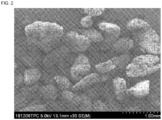
FIG. 2 is a photograph showing a particle shape (particle size of 500 to 1,000 µm) of Example produced according to the present invention. -
FIG. 3 is a photograph showing a particle shape (particle size of 20 to 100 µm) of Comparative Example. -
FIGS. 4 and5 are diagrams showing an apparatus capable of simultaneously flowing nitrogen gas into a reaction solution and stirring in a method for producing polyether ketone ketone according to the present invention. - Reference is made to the accompanying drawing which shows, by way of illustration, specific embodiments in which the present invention may be practiced. The embodiments will be described in detail in such a manner that the present invention can be carried out by those of ordinary skill in the art. It should be understood that various embodiments of the present invention are different from each other, but need not be mutually exclusive. For example, certain shapes, structures, and features described herein may be implemented in other embodiments without departing from the spirit and scope of the present invention in connection with one embodiment. In addition, it will be understood that the locations or arrangement of individual components in the disclosed embodiments can be changed without departing from the spirit and scope of the present invention. Therefore, the following detailed description is not to be taken in a limiting sense, and the scope of the present invention is to be limited only by the appended claims and the entire scope of equivalents thereof, if properly explained. Like reference numerals in the drawing refer to the same or similar functions throughout the various aspects.
- Hereinafter, preferred embodiments of the present invention will be described in detail with reference to the accompanying drawing, so that those of ordinary skill in the art can easily carry out the present invention.
- Scale formation during polymerization of poly ether ketone ketone (PEKK) causes an operational problem. Therefore, in order to solve the resulting decrease in productivity, the present invention proposes a technique capable of increasing a particle size by controlling a catalyst injection rate and improving the yield by suppressing scale formation.
- In the past, there was a problem in that a product had to be obtained through an additional process of controlling a particle size using a dispersing agent or breaking aggregated particles through a pulverization process after polymerization. However, the present invention provides a producing method according to a catalyst injection rate, which the catalyst injection rate is controlled to prevent aggregation of resin particles and prevent scale formation.
- The method for producing polyether ketone ketone, capable of obtaining high molecular weight polyether ketone ketone at high yield, according to the present invention includes: (a) preparing a reaction solution by adding at least one selected from diphenyl oxide (DPO) and 1,4-bis(4-phenoxybenzoyl)benzene (EKKE) to terephthaloyl chloride (TPC), isophthaloyl chloride (IPC), and a liquid reaction medium in a reactor and simultaneously dissolving the same; (b) cooling the reaction solution and injecting a catalyst thereto; and (c), after the injecting of the catalyst, directly blowing an inert gas into the reaction solution and stirring the inert gas.
- Polyether ketone ketone is a polymer produced by chain polymerization of terephthaloyl represented by chemical structure 1 and isophthaloyl represented by chemical structure 2, and characteristics of polyether ketone ketone are determined by the ratio of terephthaloyl to isophthaloyl. Terephthaloyl moiety is linear and rigid, and isophthaloyl moiety gives structural diversity due to its curved structure. Isophthaloyl affects flexibility, fluidity, and crystallization properties of polymer chains.


- The catalyst may be at least one selected from aluminum chloride (AlCl3), potassium carbonate (K2CO3), and iron(III) chloride (FeCl3), but is not limited thereto, and may be any catalyst that is commonly used as a catalyst for Friedel-Crafts acylation polymerization.
- Here, the catalyst may be injected at a rate of 1 to 10 g/min or more. Preferably, the catalyst is injected at a rate of 1 to 3 g/min. More preferably, the catalyst is injected at a rate of 1 to 1.5 g/min. When the catalyst is injected at a rate of 1 to 10 g/min, the particle size of the produced polyether ketone ketone may increase. In addition, the yield of polyether ketone ketone to be produced can be improved. In this case, the yield of polyether ketone ketone may be 90% or more.
- In addition, the polyether ketone ketone may have a particle size of 250 to 2,000 µm.
- The increase in particle size reduces the possibility of dust scattering during a product injection process, thereby facilitating operations. When a small particle size is requested according to product requirements, it is possible to reduce the particle size through additional pulverization after drying. This has an advantage that can control the particle size while maintaining the yield.
- In the producing method according to the present invention, the catalyst is injected after the reaction solution is cooled. At this time, the temperature may vary depending on the catalyst, but is preferably -10 to -5°C.
- The step (c) is characterized in that an agitator (stirrer) having a plurality of agitating blades is rotated to disperse the injected inert gas. At least two agitators may be provided in the reactor to rotate in at least two directions to cause a vortex phenomenon. The rotational shaft of the agitator may be provided to rotate by a predetermined angle alternately in the forward direction and the reverse direction. In addition, the agitating blade is provided to form a predetermined angle with the rotational shaft, thereby increasing the dispersion force of the composition in the reactor.
-
FIGS. 4 and5 are diagrams showing an apparatus capable of simultaneously flowing nitrogen gas into a reaction solution and stirring in a method for producing polyether ketone ketone according to the present invention. Referring toFIGS. 4 and5 , in the method for producing PEKK according to the present invention, a nozzle for directly blowing the inert gas into the reaction solution is formed in the upper or lower portion of the reactor, so that the inert gas can be injected in multiple directions. Due to this, hydrochloric acid can be quickly and efficiently removed by the inert gas. - At this time, the inert gas is at least one selected from nitrogen, helium, neon, argon, and krypton. The inert gas may be used alone or in combination during the polymerization reaction.
- After the inert gas is injected, the temperature of the reactor is raised to 80 to 100°C while stirring and PEKK is polymerized. The polymerization reaction according to the present invention may be carried out in various reactors. Preferably, the polymerization reaction may be carried out in a continuous stirred tank reactor (CSTR) or a loop reactor.
- The method for producing PEKK according to the present invention further includes washing the polymerized PEKK and rinsing the polymerized PEKK with deionized water (DI water). The washing may be carried out with a solution of methanol (CHsOH), hydrochloric acid, and sodium hydroxide (NaOH). Preferably, the washing may be carried out by methanol 3 times, hydrochloric acid once, and sodium hydroxide once. Here, the washing with hydrochloric acid and sodium hydroxide may be omitted.
- After the washing, deionized water may be provided in the rinsing step. In this case, the rinsing may be preferably carried out 3 times.
- After the rinsing, the method may further include obtaining PEKK polymerized resin powder by vacuum drying at 170 to 190°C.
- When the three monomers are added to the liquid reaction medium and dissolved, a capping agent may be added and dissolved together. The capping agent is added to the polymerization medium to cap the polymer in at least one end of the polymer chain. This terminates the continuous extension of the chain and controls the molecular weight of the polymerized polymer. As a preferred capping agent, benzoyl chloride, benzenesulfonyl chloride, 4-chlorobiphenyl, 4-phenoxybenzophenone, 4-(4-phenoxyphenoxy)benzophenone, biphenyl 4-benzenesulfonylphenyl phenyl ether, and the like may be used.
- In addition, the liquid reaction medium may be at least one solvent selected from o-dichlorobenzene (oDCB) and dichloromethane, but is not limited thereto, and may be any solve that is commonly used as a solvent for Friedel-Crafts acylation polymerization.
- The polyether ketone ketone produced by the producing method described above exhibits improved physical properties, compared to polyether ketone ketone produced through the prior art. In addition, according to the present invention, the catalyst is injected at a rate of 1 to 10 g/min to prevent aggregation between resin particles and suppress scale formation, thereby obtaining high molecular weight polyether ketone ketone at high yield. Preferably, the yield of polyether ketone ketone may be 90% or more.
- In addition, the polyether ketone ketone may have a particle size of 250 to 2,000 µm.
- In the method for producing polyether ketone ketone and the polyether ketone ketone produced thereby according to the present invention, the catalyst is injected at a rate of 1 to 10 g/min to prevent aggregation between resin particles and suppress scale formation, thereby obtaining an effect of large particle size, and the value of inherent viscosity (IV) remains unchanged, thereby obtaining an effect that can high molecular weight polyether ketone ketone at high yield, preferably 90% or more.
- Hereinafter, the structure and operation of the present invention will be described in more detail with reference to preferred examples of the present invention. However, these examples are shown by way of illustration and should not be construed as limiting the present invention in any sense.
- Since contents not described herein can be sufficiently technically inferred by those of ordinary skill in the art, descriptions thereof will be omitted.
- 26.6 g of EKKE, which was one selected from diphenyl oxide (DPO) and 1,4-bis(4-phenoxybenzoyl)benzene (EKKE) as monomers, 4.26 g of terephthaloyl chloride (TPC), 6.75 g of isophthaloyl chloride (IPC), and 0.48 g of benzoyl chloride as a capping agent were added to 750 g of o-dichlorobenzene (oDCB) as a reaction solvent in a reactor and were simultaneously dissolved, and the temperature of the reactor was lowered to -10 to -5°C. While maintaining the temperature of the solution constant at -10 to -5°C, 48 g of AlCl3 as a catalyst was injected a rate of 1.1 g/min. After the injection of the catalyst is completed, the temperature of the reactor was raised to 90°C while stirring the solution at the same time as blowing of N2 into the solution and was maintained for 30 minutes to polymerize PEKK. The polymerized resin was washed with methanol 3 times, 1M hydrochloric acid, and 0.5M NaOH solution, was rinsed with DI water 3 times, and was vacuum-dried at 180°C to obtain PEKK polymerized resin.
- A PEKK polymerized resin was obtained in the same manner as in Example 1, except that a catalyst was injected at a rate of 1.2 g/min.
- A PEKK polymerized resin was obtained in the same manner as in Example 1, except that a catalyst was injected at a rate of 1.3 g/min.
- A PEKK polymerized resin was obtained in the same manner as in Example 1, except that a catalyst was injected at a rate of 0.8 g/min.
- A PEKK polymerized resin was obtained in the same manner as in Example 1, except that a catalyst was injected at a rate of 0.7 g/min.
- A PEKK polymerized resin was obtained in the same manner as in Example 1, except that a catalyst was injected at a rate of 0.6 g/min.
- The IV and the yield of Examples 1 to 3 produced according to the present invention and Comparative Examples 1 to 3 were measured. The results thereof are shown in Table 1 below.
[Table 1] Classification Catalyst injection rate (g/min) IV (dℓ/g) Yield (%) Example 1 1.1 0.9 93 Example 2 1.2 0.9 96 Example 3 1.3 0.8 92 Comparative Example 1 0.8 0.9 66 Comparative Example 2 0.7 0.9 59 Comparative Example 3 0.6 1.0 62 - Referring to
FIGS. 1 to 3 , as shown in Table 1 above, it was confirmed that the PEKK of Examples 1 to 3 produced by injecting the catalyst at a rate of 1 to 10 g/min according to the present invention exhibited a high yield, compared to Comparative Examples 1 to 3. In particular, Example 2, which was produced by injecting the catalyst at a rate of 1.2 g/min, exhibited the highest yield. Therefore, it can be seen that a rate of 1.2 g/min is the most preferable rate. - As can be seen from the results of Comparative Examples 1 to 3, when the catalyst was injected at a rate of less than 1 g/min, the yield was remarkably low. Therefore, it can be seen that the ideal catalyst injection rate range of the present invention is 1 to 10 g/min. Due to this, it was confirmed that the yield was improved by suppressing scale formation when the catalyst was injected at a rate of 1 to 10 g/min according to the present invention.
- In addition, in the method for producing polyether ketone ketone and the polyether ketone ketone produced thereby according to the present invention, when the catalyst was injected at a rate of 1 to 10 g/min, the value of inherent viscosity (IV) remains unchanged, thereby obtaining an effect that can high molecular weight polyether ketone ketone at high yield, preferably 90% or more.
- In addition, comparing the particle shapes of
FIGS. 1 and2 with the particle shape ofFIG. 3 , Examples 1 to 3 produced according to the present invention showed that the particle size of PEKK was increased. Therefore, it can be seen that the ideal catalyst injection rate range of the present invention is 1 to 10 g/min. Due to this, it was confirmed that, when the catalyst was injected at a rate of 1 to 10 g/min according to the present invention, there is an effect that the particle size was increased. - Therefore, the method for producing polyether ketone ketone and the polyether ketone ketone produced thereby according to the present invention have an effect of increasing the yield of polyether ketone ketone by controlling the catalyst injection rate so as to suppress scale formation.
- In addition, in the method for producing polyether ketone ketone and the polyether ketone ketone produced thereby according to the present invention, when the catalyst was injected at a rate of 1 to 10 g/min, the value of inherent viscosity (IV) remains unchanged to prevent aggregation between resin particles and suppress scale formation, thereby obtaining an effect that can high molecular weight polyether ketone ketone at high yield, preferably 90% or more.
- In addition, in the method for producing polyether ketone ketone and the polyether ketone ketone produced thereby according to the present invention, the particle size is increased by controlling the catalyst injection rate so as to suppress scale formation, thereby obtaining an effect of reducing the possibility of dust scattering and facilitating operations.
- The method for producing polyether ketone ketone according to the present invention has an effect of obtaining particles having various sizes at high yield by drying and additionally pulverizing PEKK of large particles obtained at high yield.
- While the present invention has been described by particular matters such as specific components and limited embodiments and drawings, this is provided only for helping the comprehensive understanding of the present invention. The present invention is not limited to the above-described embodiments, and it will be understood by those of ordinary skill in the art that various modifications and variations can be made thereto without departing from the scope of the present invention.
- Therefore, it will be understood that the spirit of the present invention should not be limited to the above-described embodiments and the claims and all equivalent modifications fall within the scope of the present invention.
Claims (14)
- A method for producing polyether ketone ketone, which obtains high molecular weight polyether ketone ketone at high yield, the method comprising:(a) preparing a reaction solution by adding at least one selected from diphenyl oxide (DPO) and 1,4-bis(4-phenoxybenzoyl)benzene (EKKE) to terephthaloyl chloride (TPC), isophthaloyl chloride (IPC), and a liquid reaction medium in a reactor and simultaneously dissolving the same;(b) cooling the reaction solution and injecting a catalyst thereto; and(c) after the injecting of the catalyst, directly blowing an inert gas into the reaction solution and stirring the inert gas.
- The method of claim 1, wherein the catalyst is at least one selected from aluminum chloride (AlCl3), potassium carbonate (K2CO3), and iron(III) chloride (FeCls).
- The method of claim 1, wherein the catalyst is injected at a rate of 1 to 10 g/min.
- The method of claim 1, wherein a cooling temperature in the step (b) is -10 to -5°C.
- The method of claim 1, wherein a nozzle for directly blowing the inert gas into the reaction solution is formed in an upper or lower portion of the reactor, so that the inert gas is injected in multiple directions.
- The method of claim 1, wherein the inert gas is at least one selected from nitrogen, helium, neon, argon, and krypton.
- The method of claim 1, wherein the step (c) comprises raising the temperature of the reactor to 80 to 100°C while stirring.
- The method of claim 1, comprising washing after the step (c) and rinsing with deionized water (DI water).
- The method of claim 8, further comprising performing vacuum drying at 170 to 190°C after the rinsing.
- The method of claim 1, wherein the reaction solution comprises at least one capping agent selected from benzoyl chloride, benzenesulfonyl chloride, 4-chlorobiphenyl, 4-phenoxybenzophenone, 4-(4-phenoxyphenoxy)benzophenone, and biphenyl 4-benzenesulfonylphenyl phenyl ether.
- The method of claim 1, wherein the liquid reaction medium is at least one solvent selected from o-dichlorobenzene (oDCB) and dichloromethane.
- A polyether ketone ketone produced by the method according to any one of claims 1 to 11.
- The polyether ketone ketone of claim 12, wherein the polyether ketone ketone has a yield of 90% or more.
- The polyether ketone ketone of claim 12, wherein the polyether ketone ketone has a particle size of 250 to 2,000 µm
Applications Claiming Priority (1)
| Application Number | Priority Date | Filing Date | Title |
|---|---|---|---|
| PCT/KR2020/004810 WO2021206194A1 (en) | 2020-04-09 | 2020-04-09 | Method for producing polyether ketone ketone and polyether ketone ketone produced thereby |
Publications (3)
| Publication Number | Publication Date |
|---|---|
| EP4134391A1 true EP4134391A1 (en) | 2023-02-15 |
| EP4134391A4 EP4134391A4 (en) | 2023-12-06 |
| EP4134391B1 EP4134391B1 (en) | 2026-05-06 |
Family
ID=78023217
Family Applications (1)
| Application Number | Title | Priority Date | Filing Date |
|---|---|---|---|
| EP20930464.1A Active EP4134391B1 (en) | 2020-04-09 | 2020-04-09 | Method for producing polyether ketone ketone and polyether ketone ketone produced thereby |
Country Status (5)
| Country | Link |
|---|---|
| US (1) | US20230167241A1 (en) |
| EP (1) | EP4134391B1 (en) |
| JP (1) | JP7514942B2 (en) |
| CN (1) | CN115244104B (en) |
| WO (1) | WO2021206194A1 (en) |
Cited By (2)
| Publication number | Priority date | Publication date | Assignee | Title |
|---|---|---|---|---|
| RU2835695C1 (en) * | 2024-05-02 | 2025-03-03 | Публичное акционерное общество "СИБУР Холдинг" | Method of producing polyetherketoneketone |
| WO2025230439A1 (en) * | 2024-05-02 | 2025-11-06 | Публичное Акционерное Общество "Сибур Холдинг" (Пао "Сибур Холдинг") | Method for producing polyetherketoneketone |
Family Cites Families (13)
| Publication number | Priority date | Publication date | Assignee | Title |
|---|---|---|---|---|
| US4716211A (en) * | 1985-03-11 | 1987-12-29 | Amoco Corporation | Slurry process for producing high molecular weight crystalline polyaryletherketones |
| US4774296A (en) * | 1985-05-02 | 1988-09-27 | Amoco Corporation | Block polymers containing a poly(aryl ether ketone) and methods for their production |
| US4891167A (en) | 1985-05-02 | 1990-01-02 | Amoco Corporation | Block polymers containing a poly(aryl ether ketone) and methods for their production |
| US4841013A (en) | 1986-09-18 | 1989-06-20 | Raychem Limited | Preparation of poly(arylene ether ketones) |
| JPH0243220A (en) * | 1988-08-04 | 1990-02-13 | Toyobo Co Ltd | Preparation of polyketone |
| GB9403944D0 (en) * | 1994-03-02 | 1994-04-20 | Victrex Manufacturing Ltd | Aromatic polymers |
| KR100314176B1 (en) | 1999-04-19 | 2001-11-15 | 조 정 래 | Catalyst Injection Device for Liquid phase Polymerization |
| GB0911905D0 (en) * | 2009-07-09 | 2009-08-19 | Ketonex Ltd | Method |
| US9803050B2 (en) | 2014-10-08 | 2017-10-31 | Ticona Llc | Dispersant for use in synthesis of polyaryletherketones |
| US11851526B2 (en) * | 2017-06-30 | 2023-12-26 | Solvay Specialty Polymers Usa, Llc | Poly(ether ketone ketone) polymer powder having a low volatiles content |
| EP3438085A1 (en) | 2017-08-04 | 2019-02-06 | Arkema France | Process for producing polyether ketone ketone |
| KR102262524B1 (en) * | 2017-11-16 | 2021-06-07 | 한화솔루션 주식회사 | Method for preparing poly ether ketone ketone |
| KR20200091202A (en) * | 2019-01-22 | 2020-07-30 | 한화솔루션 주식회사 | Method for preparing poly ether ketone ketone and poly ether ketone ketone therefrom |
-
2020
- 2020-04-09 JP JP2022551323A patent/JP7514942B2/en active Active
- 2020-04-09 CN CN202080098293.5A patent/CN115244104B/en active Active
- 2020-04-09 WO PCT/KR2020/004810 patent/WO2021206194A1/en not_active Ceased
- 2020-04-09 EP EP20930464.1A patent/EP4134391B1/en active Active
- 2020-04-09 US US17/910,589 patent/US20230167241A1/en active Pending
Cited By (2)
| Publication number | Priority date | Publication date | Assignee | Title |
|---|---|---|---|---|
| RU2835695C1 (en) * | 2024-05-02 | 2025-03-03 | Публичное акционерное общество "СИБУР Холдинг" | Method of producing polyetherketoneketone |
| WO2025230439A1 (en) * | 2024-05-02 | 2025-11-06 | Публичное Акционерное Общество "Сибур Холдинг" (Пао "Сибур Холдинг") | Method for producing polyetherketoneketone |
Also Published As
| Publication number | Publication date |
|---|---|
| CN115244104B (en) | 2024-10-15 |
| JP7514942B2 (en) | 2024-07-11 |
| EP4134391B1 (en) | 2026-05-06 |
| US20230167241A1 (en) | 2023-06-01 |
| EP4134391A4 (en) | 2023-12-06 |
| JP2023516164A (en) | 2023-04-18 |
| CN115244104A (en) | 2022-10-25 |
| WO2021206194A1 (en) | 2021-10-14 |
Similar Documents
| Publication | Publication Date | Title |
|---|---|---|
| KR102262524B1 (en) | Method for preparing poly ether ketone ketone | |
| KR102488714B1 (en) | Method for preparing poly ether ketone ketone and poly ether ketone ketone therefrom | |
| EP3363849A1 (en) | Polyolefin resin powder for selective laser sintering and preparation method therefor | |
| CN108350164A (en) | A method of economically preparing the resin combination for including polyalkylene carbonate with improved thermal stability and processing performance | |
| EP4134391B1 (en) | Method for producing polyether ketone ketone and polyether ketone ketone produced thereby | |
| CN112679645A (en) | Preparation method of high-fluidity modified polychlorotrifluoroethylene resin | |
| KR102250301B1 (en) | A process for producing a polyetherketoneketone having an improved crystallization rate and polyether ketone ketone thereof | |
| US20070092714A1 (en) | Fluororesin composition, process for preparing the same and cable coated with the same | |
| KR102250302B1 (en) | A process for producing an improved polyether ketone ketone and polyether ketone ketone thereof | |
| EP3202824B1 (en) | Polymer powder and method for preparing same | |
| TW202014458A (en) | Composite particles and production method therefor | |
| KR102250299B1 (en) | A process for producing polyetherketoneketone mixed resin composition and polyetherketoneketone thereof | |
| KR20210035161A (en) | A process for producing polyetherketoneketone mixed resin composition and polyetherketoneketone thereof | |
| KR102250300B1 (en) | Process for polymerization of polyether ketone ketone and polyether ketone ketone thereof | |
| JP3853506B2 (en) | Method for producing polyacetal resin | |
| JP2006070099A (en) | Continuous production method of modified polyacetal resin | |
| KR101114489B1 (en) | Method for preparing nanocalcium carbonate-vinyl chloride composite resin composition | |
| CN116836413A (en) | A method for preparing nylon 6 composite microspheres with adjustable size under high filling amount | |
| JPH01223115A (en) | Production of norbornene polymer containing fine granular additive | |
| CN122037164A (en) | Polyaryletherketone sequence copolymer, preparation method thereof and application thereof in 3D printing | |
| CN101014666A (en) | Reinforced thermoplastic compositions with enhanced processability | |
| CN122071607A (en) | Fatty aromatic copolyester foaming composition, fatty aromatic copolyester foamed beads, preparation method thereof, and foamed bead molded body | |
| CN119931020A (en) | A modified polyetheramine and its preparation method and application, a nylon elastomer | |
| CN114901722A (en) | Polyether ketone and preparation method thereof | |
| Wang et al. | Formation of well-defined spherical particles during suspension polymerization of biodegradable poly (glycolide-co-p-dioxanone) in supercritical carbon dioxide |
Legal Events
| Date | Code | Title | Description |
|---|---|---|---|
| STAA | Information on the status of an ep patent application or granted ep patent |
Free format text: STATUS: THE INTERNATIONAL PUBLICATION HAS BEEN MADE |
|
| PUAI | Public reference made under article 153(3) epc to a published international application that has entered the european phase |
Free format text: ORIGINAL CODE: 0009012 |
|
| STAA | Information on the status of an ep patent application or granted ep patent |
Free format text: STATUS: REQUEST FOR EXAMINATION WAS MADE |
|
| 17P | Request for examination filed |
Effective date: 20221007 |
|
| AK | Designated contracting states |
Kind code of ref document: A1 Designated state(s): AL AT BE BG CH CY CZ DE DK EE ES FI FR GB GR HR HU IE IS IT LI LT LU LV MC MK MT NL NO PL PT RO RS SE SI SK SM TR |
|
| DAV | Request for validation of the european patent (deleted) | ||
| DAX | Request for extension of the european patent (deleted) | ||
| A4 | Supplementary search report drawn up and despatched |
Effective date: 20231103 |
|
| RIC1 | Information provided on ipc code assigned before grant |
Ipc: C08G 65/40 20060101AFI20231027BHEP |
|
| STAA | Information on the status of an ep patent application or granted ep patent |
Free format text: STATUS: EXAMINATION IS IN PROGRESS |
|
| 17Q | First examination report despatched |
Effective date: 20250616 |
|
| GRAP | Despatch of communication of intention to grant a patent |
Free format text: ORIGINAL CODE: EPIDOSNIGR1 |
|
| STAA | Information on the status of an ep patent application or granted ep patent |
Free format text: STATUS: GRANT OF PATENT IS INTENDED |
|
| INTG | Intention to grant announced |
Effective date: 20260210 |
|
| GRAS | Grant fee paid |
Free format text: ORIGINAL CODE: EPIDOSNIGR3 |
|
| GRAA | (expected) grant |
Free format text: ORIGINAL CODE: 0009210 |
|
| STAA | Information on the status of an ep patent application or granted ep patent |
Free format text: STATUS: THE PATENT HAS BEEN GRANTED |
|
| AK | Designated contracting states |
Kind code of ref document: B1 Designated state(s): AL AT BE BG CH CY CZ DE DK EE ES FI FR GB GR HR HU IE IS IT LI LT LU LV MC MK MT NL NO PL PT RO RS SE SI SK SM TR |
|
| REG | Reference to a national code |
Ref country code: CH Ref legal event code: F10 Free format text: ST27 STATUS EVENT CODE: U-0-0-F10-F00 (AS PROVIDED BY THE NATIONAL OFFICE) Effective date: 20260506 Ref country code: GB Ref legal event code: FG4D |