EP4134029A1 - Method and system for artificial intelligence-based radiofrequency ablation parameter optimization and information synthesis - Google Patents
Method and system for artificial intelligence-based radiofrequency ablation parameter optimization and information synthesis Download PDFInfo
- Publication number
- EP4134029A1 EP4134029A1 EP22184602.5A EP22184602A EP4134029A1 EP 4134029 A1 EP4134029 A1 EP 4134029A1 EP 22184602 A EP22184602 A EP 22184602A EP 4134029 A1 EP4134029 A1 EP 4134029A1
- Authority
- EP
- European Patent Office
- Prior art keywords
- radiofrequency ablation
- artificial intelligence
- sensor
- sample data
- decision
- Prior art date
- Legal status (The legal status is an assumption and is not a legal conclusion. Google has not performed a legal analysis and makes no representation as to the accuracy of the status listed.)
- Pending
Links
Images
Classifications
-
- A—HUMAN NECESSITIES
- A61—MEDICAL OR VETERINARY SCIENCE; HYGIENE
- A61B—DIAGNOSIS; SURGERY; IDENTIFICATION
- A61B18/00—Surgical instruments, devices or methods for transferring non-mechanical forms of energy to or from the body
- A61B18/04—Surgical instruments, devices or methods for transferring non-mechanical forms of energy to or from the body by heating
- A61B18/12—Surgical instruments, devices or methods for transferring non-mechanical forms of energy to or from the body by heating by passing a current through the tissue to be heated, e.g. high-frequency current
-
- A—HUMAN NECESSITIES
- A61—MEDICAL OR VETERINARY SCIENCE; HYGIENE
- A61B—DIAGNOSIS; SURGERY; IDENTIFICATION
- A61B18/00—Surgical instruments, devices or methods for transferring non-mechanical forms of energy to or from the body
- A61B18/04—Surgical instruments, devices or methods for transferring non-mechanical forms of energy to or from the body by heating
- A61B18/042—Surgical instruments, devices or methods for transferring non-mechanical forms of energy to or from the body by heating using additional gas becoming plasma
-
- A—HUMAN NECESSITIES
- A61—MEDICAL OR VETERINARY SCIENCE; HYGIENE
- A61B—DIAGNOSIS; SURGERY; IDENTIFICATION
- A61B18/00—Surgical instruments, devices or methods for transferring non-mechanical forms of energy to or from the body
- A61B18/04—Surgical instruments, devices or methods for transferring non-mechanical forms of energy to or from the body by heating
- A61B18/12—Surgical instruments, devices or methods for transferring non-mechanical forms of energy to or from the body by heating by passing a current through the tissue to be heated, e.g. high-frequency current
- A61B18/14—Probes or electrodes therefor
-
- A—HUMAN NECESSITIES
- A61—MEDICAL OR VETERINARY SCIENCE; HYGIENE
- A61B—DIAGNOSIS; SURGERY; IDENTIFICATION
- A61B5/00—Measuring for diagnostic purposes; Identification of persons
- A61B5/68—Arrangements of detecting, measuring or recording means, e.g. sensors, in relation to patient
- A61B5/6801—Arrangements of detecting, measuring or recording means, e.g. sensors, in relation to patient specially adapted to be attached to or worn on the body surface
- A61B5/6843—Monitoring or controlling sensor contact pressure
-
- A—HUMAN NECESSITIES
- A61—MEDICAL OR VETERINARY SCIENCE; HYGIENE
- A61B—DIAGNOSIS; SURGERY; IDENTIFICATION
- A61B5/00—Measuring for diagnostic purposes; Identification of persons
- A61B5/68—Arrangements of detecting, measuring or recording means, e.g. sensors, in relation to patient
- A61B5/6846—Arrangements of detecting, measuring or recording means, e.g. sensors, in relation to patient specially adapted to be brought in contact with an internal body part, i.e. invasive
- A61B5/6847—Arrangements of detecting, measuring or recording means, e.g. sensors, in relation to patient specially adapted to be brought in contact with an internal body part, i.e. invasive mounted on an invasive device
-
- A—HUMAN NECESSITIES
- A61—MEDICAL OR VETERINARY SCIENCE; HYGIENE
- A61B—DIAGNOSIS; SURGERY; IDENTIFICATION
- A61B5/00—Measuring for diagnostic purposes; Identification of persons
- A61B5/72—Signal processing specially adapted for physiological signals or for diagnostic purposes
- A61B5/7235—Details of waveform analysis
- A61B5/7264—Classification of physiological signals or data, e.g. using neural networks, statistical classifiers, expert systems or fuzzy systems
- A61B5/7267—Classification of physiological signals or data, e.g. using neural networks, statistical classifiers, expert systems or fuzzy systems involving training the classification device
-
- G—PHYSICS
- G16—INFORMATION AND COMMUNICATION TECHNOLOGY [ICT] SPECIALLY ADAPTED FOR SPECIFIC APPLICATION FIELDS
- G16H—HEALTHCARE INFORMATICS, i.e. INFORMATION AND COMMUNICATION TECHNOLOGY [ICT] SPECIALLY ADAPTED FOR THE HANDLING OR PROCESSING OF MEDICAL OR HEALTHCARE DATA
- G16H20/00—ICT specially adapted for therapies or health-improving plans, e.g. for handling prescriptions, for steering therapy or for monitoring patient compliance
- G16H20/40—ICT specially adapted for therapies or health-improving plans, e.g. for handling prescriptions, for steering therapy or for monitoring patient compliance relating to mechanical, radiation or invasive therapies, e.g. surgery, laser therapy, dialysis or acupuncture
-
- G—PHYSICS
- G16—INFORMATION AND COMMUNICATION TECHNOLOGY [ICT] SPECIALLY ADAPTED FOR SPECIFIC APPLICATION FIELDS
- G16H—HEALTHCARE INFORMATICS, i.e. INFORMATION AND COMMUNICATION TECHNOLOGY [ICT] SPECIALLY ADAPTED FOR THE HANDLING OR PROCESSING OF MEDICAL OR HEALTHCARE DATA
- G16H40/00—ICT specially adapted for the management or administration of healthcare resources or facilities; ICT specially adapted for the management or operation of medical equipment or devices
- G16H40/60—ICT specially adapted for the management or administration of healthcare resources or facilities; ICT specially adapted for the management or operation of medical equipment or devices for the operation of medical equipment or devices
- G16H40/63—ICT specially adapted for the management or administration of healthcare resources or facilities; ICT specially adapted for the management or operation of medical equipment or devices for the operation of medical equipment or devices for local operation
-
- A—HUMAN NECESSITIES
- A61—MEDICAL OR VETERINARY SCIENCE; HYGIENE
- A61B—DIAGNOSIS; SURGERY; IDENTIFICATION
- A61B17/00—Surgical instruments, devices or methods
- A61B2017/00973—Surgical instruments, devices or methods pedal-operated
-
- A—HUMAN NECESSITIES
- A61—MEDICAL OR VETERINARY SCIENCE; HYGIENE
- A61B—DIAGNOSIS; SURGERY; IDENTIFICATION
- A61B18/00—Surgical instruments, devices or methods for transferring non-mechanical forms of energy to or from the body
- A61B2018/00571—Surgical instruments, devices or methods for transferring non-mechanical forms of energy to or from the body for achieving a particular surgical effect
- A61B2018/00577—Ablation
-
- A—HUMAN NECESSITIES
- A61—MEDICAL OR VETERINARY SCIENCE; HYGIENE
- A61B—DIAGNOSIS; SURGERY; IDENTIFICATION
- A61B18/00—Surgical instruments, devices or methods for transferring non-mechanical forms of energy to or from the body
- A61B2018/00571—Surgical instruments, devices or methods for transferring non-mechanical forms of energy to or from the body for achieving a particular surgical effect
- A61B2018/00589—Coagulation
-
- A—HUMAN NECESSITIES
- A61—MEDICAL OR VETERINARY SCIENCE; HYGIENE
- A61B—DIAGNOSIS; SURGERY; IDENTIFICATION
- A61B18/00—Surgical instruments, devices or methods for transferring non-mechanical forms of energy to or from the body
- A61B2018/00571—Surgical instruments, devices or methods for transferring non-mechanical forms of energy to or from the body for achieving a particular surgical effect
- A61B2018/00601—Cutting
-
- A—HUMAN NECESSITIES
- A61—MEDICAL OR VETERINARY SCIENCE; HYGIENE
- A61B—DIAGNOSIS; SURGERY; IDENTIFICATION
- A61B18/00—Surgical instruments, devices or methods for transferring non-mechanical forms of energy to or from the body
- A61B2018/00636—Sensing and controlling the application of energy
- A61B2018/0069—Sensing and controlling the application of energy using fuzzy logic
-
- A—HUMAN NECESSITIES
- A61—MEDICAL OR VETERINARY SCIENCE; HYGIENE
- A61B—DIAGNOSIS; SURGERY; IDENTIFICATION
- A61B18/00—Surgical instruments, devices or methods for transferring non-mechanical forms of energy to or from the body
- A61B2018/00636—Sensing and controlling the application of energy
- A61B2018/00696—Controlled or regulated parameters
- A61B2018/00702—Power or energy
-
- A—HUMAN NECESSITIES
- A61—MEDICAL OR VETERINARY SCIENCE; HYGIENE
- A61B—DIAGNOSIS; SURGERY; IDENTIFICATION
- A61B18/00—Surgical instruments, devices or methods for transferring non-mechanical forms of energy to or from the body
- A61B2018/00636—Sensing and controlling the application of energy
- A61B2018/00696—Controlled or regulated parameters
- A61B2018/00714—Temperature
-
- A—HUMAN NECESSITIES
- A61—MEDICAL OR VETERINARY SCIENCE; HYGIENE
- A61B—DIAGNOSIS; SURGERY; IDENTIFICATION
- A61B18/00—Surgical instruments, devices or methods for transferring non-mechanical forms of energy to or from the body
- A61B2018/00636—Sensing and controlling the application of energy
- A61B2018/00696—Controlled or regulated parameters
- A61B2018/0072—Current
-
- A—HUMAN NECESSITIES
- A61—MEDICAL OR VETERINARY SCIENCE; HYGIENE
- A61B—DIAGNOSIS; SURGERY; IDENTIFICATION
- A61B18/00—Surgical instruments, devices or methods for transferring non-mechanical forms of energy to or from the body
- A61B2018/00636—Sensing and controlling the application of energy
- A61B2018/00696—Controlled or regulated parameters
- A61B2018/00732—Frequency
-
- A—HUMAN NECESSITIES
- A61—MEDICAL OR VETERINARY SCIENCE; HYGIENE
- A61B—DIAGNOSIS; SURGERY; IDENTIFICATION
- A61B18/00—Surgical instruments, devices or methods for transferring non-mechanical forms of energy to or from the body
- A61B2018/00636—Sensing and controlling the application of energy
- A61B2018/00696—Controlled or regulated parameters
- A61B2018/00755—Resistance or impedance
-
- A—HUMAN NECESSITIES
- A61—MEDICAL OR VETERINARY SCIENCE; HYGIENE
- A61B—DIAGNOSIS; SURGERY; IDENTIFICATION
- A61B18/00—Surgical instruments, devices or methods for transferring non-mechanical forms of energy to or from the body
- A61B2018/00636—Sensing and controlling the application of energy
- A61B2018/00696—Controlled or regulated parameters
- A61B2018/00761—Duration
-
- A—HUMAN NECESSITIES
- A61—MEDICAL OR VETERINARY SCIENCE; HYGIENE
- A61B—DIAGNOSIS; SURGERY; IDENTIFICATION
- A61B18/00—Surgical instruments, devices or methods for transferring non-mechanical forms of energy to or from the body
- A61B2018/00636—Sensing and controlling the application of energy
- A61B2018/00696—Controlled or regulated parameters
- A61B2018/00767—Voltage
-
- A—HUMAN NECESSITIES
- A61—MEDICAL OR VETERINARY SCIENCE; HYGIENE
- A61B—DIAGNOSIS; SURGERY; IDENTIFICATION
- A61B18/00—Surgical instruments, devices or methods for transferring non-mechanical forms of energy to or from the body
- A61B2018/00636—Sensing and controlling the application of energy
- A61B2018/00773—Sensed parameters
- A61B2018/00791—Temperature
-
- A—HUMAN NECESSITIES
- A61—MEDICAL OR VETERINARY SCIENCE; HYGIENE
- A61B—DIAGNOSIS; SURGERY; IDENTIFICATION
- A61B18/00—Surgical instruments, devices or methods for transferring non-mechanical forms of energy to or from the body
- A61B2018/00636—Sensing and controlling the application of energy
- A61B2018/00773—Sensed parameters
- A61B2018/00875—Resistance or impedance
-
- A—HUMAN NECESSITIES
- A61—MEDICAL OR VETERINARY SCIENCE; HYGIENE
- A61B—DIAGNOSIS; SURGERY; IDENTIFICATION
- A61B18/00—Surgical instruments, devices or methods for transferring non-mechanical forms of energy to or from the body
- A61B2018/00636—Sensing and controlling the application of energy
- A61B2018/00904—Automatic detection of target tissue
-
- A—HUMAN NECESSITIES
- A61—MEDICAL OR VETERINARY SCIENCE; HYGIENE
- A61B—DIAGNOSIS; SURGERY; IDENTIFICATION
- A61B2560/00—Constructional details of operational features of apparatus; Accessories for medical measuring apparatus
- A61B2560/02—Operational features
- A61B2560/0242—Operational features adapted to measure environmental factors, e.g. temperature, pollution
-
- A—HUMAN NECESSITIES
- A61—MEDICAL OR VETERINARY SCIENCE; HYGIENE
- A61B—DIAGNOSIS; SURGERY; IDENTIFICATION
- A61B5/00—Measuring for diagnostic purposes; Identification of persons
- A61B5/48—Other medical applications
- A61B5/4836—Diagnosis combined with treatment in closed-loop systems or methods
-
- G—PHYSICS
- G06—COMPUTING OR CALCULATING; COUNTING
- G06N—COMPUTING ARRANGEMENTS BASED ON SPECIFIC COMPUTATIONAL MODELS
- G06N3/00—Computing arrangements based on biological models
- G06N3/02—Neural networks
- G06N3/04—Architecture, e.g. interconnection topology
- G06N3/043—Architecture, e.g. interconnection topology based on fuzzy logic, fuzzy membership or fuzzy inference, e.g. adaptive neuro-fuzzy inference systems [ANFIS]
Definitions
- the present invention relates to the field of radiofrequency ablation technologies, and specifically, to a method and system for artificial intelligence-based radiofrequency ablation parameter optimization and information synthesis.
- threshold values of current and temperature are generally used to estimate and control energy transfer, to protect the patient and ensure the safe usage of medical instruments.
- measuring dynamic current and temperature cannot achieve real-time control, and is low in efficiency.
- current ablation devices cannot achieve automatic closed-loop ablation or blood coagulationpower and energy configuration.
- An objective of the present invention is to provide a method and system for artificial intelligence-based radiofrequency ablation parameter optimization and information synthesis, to cope with the problem that current ablation devices cannot perform automatic configuration of powerand energy.
- the technical scheme of the present invention is: the invention provide a method for artificial intelligence-based radiofrequency ablation parameter optimization and information synthesis, the method being applied to a radiofrequency ablation controller comprising a processor and an artificial intelligence module; and the method comprising
- the method being applied to the radiofrequency ablation controller, wherein a signal input end of the radiofrequency ablation controller is connected to a signal output end of each sensor on the plasma wand, and the radiofrequency ablation controller outputs a control parameter of the plasma wand.
- the sensors comprise voltage, current, impedance, temperature, humidity, contact force, and the like.
- the preprocessing further comprises:
- the fuzzy computing further comprises:
- r ij is an element in a single environment matrix
- r ij s i 1 1 + ⁇ s i ⁇ a ij ⁇
- ⁇ and ⁇ are empirical parameters
- s i is sensor signal data numbered i
- a ij is a threshold value of a decision output numbered j corresponding to a sensor numbered i in the single environment
- the threshold value a ij is set according to a resistivity of an environment in which the target substance is located.
- a system for artificial intelligence-based radiofrequency ablation parameter optimization and information synthesis comprising a radiofrequency ablation controller, a plasma wand, and a controlling foot switch, wherein a variety of sensors are arranged on a knife head of the plasma wand and are configured to continuously collect data of a target substance and a surrounding environment of the target substance in real time, and transfer the data to the radiofrequency ablation controller;
- Both wired and wirelessconnection ofthe controlling foot switch and the radiofrequency ablation controllercould be designed, and the controlling foot switch is used for a user to control an output of a radiofrequency signal; and the radiofrequency ablation controller outputs a control signal to the plasma wand, to adjust a control parameter.
- a multi-sensor adaptive plasma radiofrequency ablation operation system of the present invention senses and collects signals of a lesion tissue and a surrounding environment of the lesion tissue through an environmental sensor, and may provide information such as the position of the lesion tissue and the size of an ablation range with reference to an artificial neural network, which is helpful for doctors to determine the condition of the lesion tissue and control energy transfer during the ablation process, thereby helping to reduce secondary trauma.
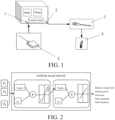
- FIG. 1 1 . Input interface; 2. Output interface; 3. Plasma wand; 4. Knife head; and 5. Foot Switch.
- a method for artificial intelligence-based radiofrequency ablation parameter optimization and information synthesis is provided.
- the method is applied to a radiofrequency ablation controller including a processor and an artificial intelligence module.
- the processor of the radiofrequency ablation controller preprocesses sample data, where the sample data is a sensor parameter of a target substance, and the processor sends the preprocessed sample data to the artificial intelligence module.
- the artificial intelligence module performs fuzzy computing on the preprocessed sample data and radiofrequency ablation control parameters for the sample data, and establishes an artificial neural network model, where the control parameters include ablation occurrence time, ablation trigger time, and energy frequency.
- the fuzzy computing further includes:
- r ij is an element in a single environment matrix
- r ij s i 1 1 + ⁇ s i ⁇ a ij ⁇
- ⁇ and ⁇ are empirical parameters
- s i is sensor signal data numbered i
- a ij is a threshold value of a decision output numbered j corresponding to a sensor numbered i in the single environment.
- the processor preprocesses signals collected by sensors on a plasma wand and sends the preprocessed signals to the artificial intelligence module.
- the artificial intelligence module imports preprocessed sensor data into the artificial neural network model established in the step S2 for analysis and fusion, to obtain results.
- a signal input end of the radiofrequency ablation controller is connected to a signal output end of each sensor on the plasma wand, and the radiofrequency ablation controller outputs a control signal to the plasma wand, to adjust the control parameters, so that auxiliary environmental analysis can be performed in clinical practice and simulation training, and matching operating parameters can be provided to doctors for reference.
- the sensors include, but are not limited to voltage, current, impedance, temperature, humidity, contact force, and the like.
- the preprocessing further includes:
- the threshold value a ij is set according to a human body resistance comparison table (Table 1) and a frequency comparison table (Table 2).
- Table 1 Direct-current resistivity of human tissues ( ⁇ m) Blood Nerve Liver Muscle Fat Membranous bone 1.85 25 80 90 1,080 2,000,000 Table 2 Relationship between resistivity and frequency of human muscle tissues Frequency 0 100 Hz 10 kHz 10 MHz 10 GHz Resistivity ( ⁇ m) 90 9.1 7.7 2.0 0.8
- output current, voltage, power, and other parameters can be adaptively adjusted at a specific temperature according to characteristics of different tissues of the human body, to achieve needs of optimal surgery and lesion tissue configuration parameters.
- voltage setting values and variation curves of power and temperature as shown in FIG. 4 , in a range of 100 V to 350 V of a plasma generator, an auxiliary prompt is given to recommend using 100 kHz square wave to adapt to power of 100 W to 400 W, and using 200 kHz, 300 kHz, 400 kHz high-frequency harmonics for blood coagulation at the power of 100 W.
- Cutting of a cartilage may be finely controlled at 100 microns to 120 microns.
- a multi-sensor adaptive plasma ablation system includes a radiofrequency ablation controller, a plasma wand, and a controlling foot switch.
- a variety of sensors are arranged on a knife head of the plasma wand and are configured to continuously collect data of a lesion tissue and a surrounding environment of the lesion tissue in real time, and transfer the data to the radiofrequency ablation controller.
- Both wired and wireless connection of the controlling foot switch and the radiofrequency ablation controller could be designed, and the controlling foot switch is used for a user to control an output of a radiofrequency signal.
- the radiofrequency ablation controller outputs a control signal to a display interface of the plasma wand for auxiliary reference of the user in control of the output current and voltage.
Landscapes
- Health & Medical Sciences (AREA)
- Engineering & Computer Science (AREA)
- Life Sciences & Earth Sciences (AREA)
- Surgery (AREA)
- General Health & Medical Sciences (AREA)
- Public Health (AREA)
- Biomedical Technology (AREA)
- Medical Informatics (AREA)
- Physics & Mathematics (AREA)
- Molecular Biology (AREA)
- Animal Behavior & Ethology (AREA)
- Veterinary Medicine (AREA)
- Heart & Thoracic Surgery (AREA)
- Nuclear Medicine, Radiotherapy & Molecular Imaging (AREA)
- Otolaryngology (AREA)
- Plasma & Fusion (AREA)
- Biophysics (AREA)
- Pathology (AREA)
- Artificial Intelligence (AREA)
- Epidemiology (AREA)
- Primary Health Care (AREA)
- Evolutionary Computation (AREA)
- Signal Processing (AREA)
- Business, Economics & Management (AREA)
- General Business, Economics & Management (AREA)
- Psychiatry (AREA)
- Physiology (AREA)
- Computer Vision & Pattern Recognition (AREA)
- Mathematical Physics (AREA)
- Fuzzy Systems (AREA)
- Urology & Nephrology (AREA)
- Surgical Instruments (AREA)
- Measurement And Recording Of Electrical Phenomena And Electrical Characteristics Of The Living Body (AREA)
Abstract
A method and system for artificial intelligence-based radiofrequency ablation parameter optimization and information synthesis are provided. The method is applied to a radiofrequency ablation controller including a processor and an artificial intelligence module. The processor of the radiofrequency ablation controller preprocesses sample data and sends the preprocessed sample data to the artificial intelligence module. The artificial intelligence module establishes an artificial neural network model according to the preprocessed sample data and a radiofrequency ablation control parameter for the sample data. The processor preprocesses signals collected by sensors on a plasma wand. The artificial intelligence module imports preprocessed sensor data into the artificial neural network model for analysis and fusion, to obtain the radiofrequency ablation control parameter. According to environmental parameters, the present invention can provide information such as the position of a lesion tissue and the size of an ablation range with reference to an artificial neural network, which is helpful for doctors to determine the condition of the lesion tissue and control energy transfer during the ablation process, thereby helping to reduce secondary trauma.
Description
- The present invention relates to the field of radiofrequency ablation technologies, and specifically, to a method and system for artificial intelligence-based radiofrequency ablation parameter optimization and information synthesis.
- Currently, existing radiofrequency ablation devices mainly focus on the generation of voltage and power, so that high-frequency electrical energy is successfully transferred to a target tissue of a patient. Moreover, the operation mainly relies on clinical experience of an attending doctor, and corresponding control parameters still lack an accurate thermal basis. The ablation process involves many disciplines such as biology, heat transfer, mechanics, and clinical medicine. Therefore, an ablation range needs to be controlled precisely, to reduce unnecessary damage as much as possible, and ensure that destruction of lesion cells is maximized without damaging normal tissue cells.
- During surgery, threshold values of current and temperature are generally used to estimate and control energy transfer, to protect the patient and ensure the safe usage of medical instruments. However, measuring dynamic current and temperature cannot achieve real-time control, and is low in efficiency. Moreover, current ablation devices cannot achieve automatic closed-loop ablation or blood coagulationpower and energy configuration.
- In addition, minimally invasive operation is high barriers medical techniqueand need a comparative long learning curve, meanwhile young doctors usually do not have sufficient knowledge and experience, furtherly training and guidance for those entry level operators at the beginning of surgical operation are particularly difficult. Existing training methods usually rely on knowledge explanations, video introductions, and the like, and long-term operating experience of doctors cannot be accurately expressed, which cannot well help beginners understand the operating steps and identify the operating environment. For the control of radiofrequency parameters, it needs to consider that decision outputs are aimed at different tissue types such as soft tissues, fat, and bones during treatment. The simple analysis of model and environment is insufficient to deal with complex real situations. Therefore, there is an urgent need for a method and system for information synthesis in clinical practice, so that an auxiliary environmental analysis can be performed in clinical practice and simulation training, and matching operating parameters can be provided to doctors for reference.
- An objective of the present invention is to provide a method and system for artificial intelligence-based radiofrequency ablation parameter optimization and information synthesis, to cope with the problem that current ablation devices cannot perform automatic configuration of powerand energy.
- The technical scheme of the present invention is: the invention provide a method for artificial intelligence-based radiofrequency ablation parameter optimization and information synthesis, the method being applied to a radiofrequency ablation controller comprising a processor and an artificial intelligence module; and the method comprising
- S1. preprocessing, by the processor of the radiofrequency ablation controller, sample data, wherein the sample data is sensor parameters of a target substance and a surrounding environment of the target substance, and sending, by the processor, the preprocessed sample data to the artificial intelligence module;
- S2. performing, by the artificial intelligence module, fuzzy computing on the preprocessed sample data and radiofrequency ablation control parameters for the sample data, and establishing an artificial neural network model, wherein the control parameters comprise ablation occurrence time, ablation trigger time, and energy frequency;
- S3. preprocessing, by the processor, signals collected by sensors on a plasma wand and sends the preprocessed signals to the artificial intelligence module; and
- S4. importing, by the artificial intelligence module, preprocessed sensor data into the artificial neural network model established in the step S2 for analysis and fusion, to obtain the radiofrequency ablation control parameters.
- Furthermore, the method being applied to the radiofrequency ablation controller, wherein a signal input end of the radiofrequency ablation controller is connected to a signal output end of each sensor on the plasma wand, and the radiofrequency ablation controller outputs a control parameter of the plasma wand.
- Furthermore,the sensors comprise voltage, current, impedance, temperature, humidity, contact force, and the like.
- Furthermore,in the steps S1 and S3, the preprocessing further comprises:
- S1-1. amplifying and filtering sensor signal data;and
- S1-2. performing signal adjustment comprising linear and nonlinear correction on the filtered signal data.
- Furthermore,in the step S2, the fuzzy computing further comprises:
- S2-1. constructing a sensor signal data set S for the sample data; constructing a decision set of the controller; and constructing a decision matrix V according to an effect of elements in the signal data set Son an output of the decision set D;
- S2-2. normalizing V, summing up each row, combining the summed data into a sensor coefficient matrix W, and normalizing W;
- S2-3. for a comprehensive environment in which the sample data is located, constructing a corresponding relationship matrix R for a single environment respectively according to Cauchy distribution, wherein the quantity of the relationship matrices is k;
- S2-4. fusing the sensor coefficient matrix W and the relationship matrices R of k single environments respectively, that is, F=WR, to obtain fusion results of k single collection environments, [F1, F2, ..., F k ]; and
- S2-5. inputting the fusion results [F1, F2, ..., F k ] of k single tissue environments of a plurality of groups of samples and the radiofrequency ablation control parameters corresponding to each sample into an artificial neural network according to the steps S2-1 to S2-4, and setting a quantity of layers of the network for self-learning, to obtain a single tissue environment factor corresponding to the sample data and the established artificial neural network model.
- Furthermore,in the step S2, the fuzzy computing further comprises:
S2-1. constructing the sensor signal data set S=[s 1, s 2, ..., sn ], wherein n is the quantity of sensors;
constructing the decision set D=[ d 1, d 2, ..., dm ] of the controller based on types andpropertyof the sensors, wherein m is the quantity of decision results, and elements of the decision set are control parameters, comprising ablation voltage level, ablation power, pulse time, pulse amplitude, and pulse frequency; and
constructing the decision matrix V according to the effect of the elements in the signal data set Son the output of the decision set D, as shown in Table 1:Table 1 S\D d 1 d 2 ··· dm s 1 v 11 v 12 ··· v 1m s 2 v 21 v 22 ··· v 2m ⋮ ⋮ ⋮ 
⋮ sn v n1 v n2 ··· vnm
S2-2. normalizing V, summing up each row, that is,

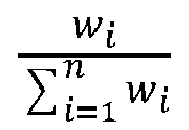
S2-3. for the comprehensive environment in which the sample data is located, constructing the corresponding relationship matrix R for the single environment respectively according to Cauchy distribution, wherein rij is an element in a single environment matrix,
wherein αand β are empirical parameters, si is sensor signal data numbered i, and aij is a threshold value of a decision output numbered j corresponding to a sensor numbered i in the single environment; and
S2-4. fusing the sensor coefficient matrix W obtained in the step S2-2 and the relationship matrices R of the k single environments obtained in the step S2-3 respectively, that is, F=WR, wherein F is the fusion results in the single environment, that is,
- Furthermore,α = 1, and β = 2.
- Furthermore, the threshold value aij is set according to a resistivity of an environment in which the target substance is located.
- A system for artificial intelligence-based radiofrequency ablation parameter optimization and information synthesis, the system comprising a radiofrequency ablation controller, a plasma wand, and a controlling foot switch, wherein
a variety of sensors are arranged on a knife head of the plasma wand and are configured to continuously collect data of a target substance and a surrounding environment of the target substance in real time, and transfer the data to the radiofrequency ablation controller; - Both wired and wirelessconnection ofthe controlling foot switch and the radiofrequency ablation controllercould be designed, and the controlling foot switch is used for a user to control an output of a radiofrequency signal; and
the radiofrequency ablation controller outputs a control signal to the plasma wand, to adjust a control parameter. - Beneficial effects of the present invention are as follows.
- A multi-sensor adaptive plasma radiofrequency ablation operation system of the present invention senses and collects signals of a lesion tissue and a surrounding environment of the lesion tissue through an environmental sensor, and may provide information such as the position of the lesion tissue and the size of an ablation range with reference to an artificial neural network, which is helpful for doctors to determine the condition of the lesion tissue and control energy transfer during the ablation process, thereby helping to reduce secondary trauma.
- Other features and advantages of the present invention will be described in detail in the detailed description which follows.
- Through a more detailed description of exemplary embodiments of the present invention in combination with the drawings, the above and other objectives, features, and advantages of the present invention are more obvious. In the exemplary embodiments of the present invention, the same reference numerals generally represent the same components.
-
FIG. 1 is a schematic structural diagram of the present invention. -
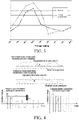
FIG. 2 is a schematic diagram of an algorithm of an artificial neural network according to the present invention. -
FIG. 3 shows variation curves of voltage, power, and temperature according to the present invention. -
FIG. 4 is a schematic diagram of a comparison between a voltage change in an adaptive ablation process and a voltage change in a conventional ablation process according to an embodiment of the present invention. - In
FIG. 1: 1 . Input interface; 2. Output interface; 3. Plasma wand; 4. Knife head; and 5. Foot Switch. - Exemplary embodiments of the present invention are described in more detail below with reference to the accompanying drawings. Although the accompanying drawings show the exemplary embodiments of the present invention, it should be understood that the present invention may be implemented in various manners and is not limited by the embodiments described herein.
- A method for artificial intelligence-based radiofrequency ablation parameter optimization and information synthesis is provided. The method is applied to a radiofrequency ablation controller including a processor and an artificial intelligence module.
- S1. The processor of the radiofrequency ablation controller preprocesses sample data, where the sample data is a sensor parameter of a target substance, and the processor sends the preprocessed sample data to the artificial intelligence module.
- S2. The artificial intelligence module performs fuzzy computing on the preprocessed sample data and radiofrequency ablation control parameters for the sample data, and establishes an artificial neural network model, where the control parameters include ablation occurrence time, ablation trigger time, and energy frequency. The fuzzy computing further includes:
- S2-1. Construct a sensor signal data set S for the sample data; construct a decision set of the controller; and construct a decision matrix V according to an effect of elements in the signal data set Son an output of the decision set D.
- S2-2. Normalize V, sum up each row, combine the summed data into a sensor coefficient matrix W, and normalize W.
- S2-3. For a comprehensive environment in which the sample data is located, construct a corresponding relationship matrix R for a single environment respectively according to Cauchy distribution, where the quantity of the relationship matrices is k.
- S2-4. Fuse the sensor coefficient matrix W and the relationship matrices R of k single environments respectively, that is, F=WR, to obtain fusion results of k single collection environments, [F1, F2, ..., F k ].
- S2-5. Input the fusion results [F1, F2, ..., F k ] of k single tissue environments of a plurality of groups of samples and the radiofrequency ablation control parameters corresponding to each sample into an artificial neural network according to the steps S2-1 to S2-4, as shown in
FIG. 2 , and set a quantity of layers of the network for self-learning, to obtain a single tissue environment factor corresponding to the sample data and the established artificial neural network model. - During specific implementation, the step S2 is:
S2-1. Construct the sensor signal data set S=[s 1, s 2, ..., sn ], where n is the quantity of sensors;
construct the decision set D=[d 1, d 2, ..., dm ] of the controller based on types andproperty of the sensors, where m is the quantity of decision results, and elements of the decision set are control parameters, including ablation voltage level, ablation power, pulse time, pulse amplitude, and pulse frequency; and
construct the decision matrix V according to the effect of the elements in the signal data set Son the output of the decision set D, as shown in Table 1:Table 1 S\D d 1 d 2 ··· dm s 1 v 11 v 12 ··· v 1m s 2 v 21 v 22 ··· v 2m ⋮ ⋮ ⋮ 
⋮ sn v n1 v n2 ··· vnm
S2-2. Normalize V, sum up each row, that is,

S2-3. For the comprehensive environment in which the sample data is located, construct the corresponding relationship matrix R for the single environment respectively according to Cauchy distribution, where rij is an element in a single environment matrix,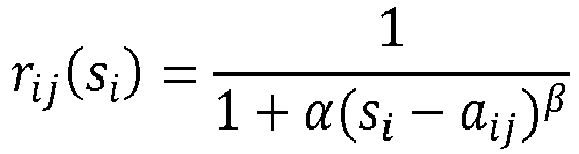
S2-4. Fuse the sensor coefficient matrix W obtained in the step S2-2 and the relationship matrices R of the k single environments obtained in the step S2-3 respectively, that is, F=WR, where F is the fusion results in the single environment, that is,
S3. The processor preprocesses signals collected by sensors on a plasma wand and sends the preprocessed signals to the artificial intelligence module.
S4. The artificial intelligence module imports preprocessed sensor data into the artificial neural network model established in the step S2 for analysis and fusion, to obtain results. - Further, the method is applied to the radiofrequency ablation controller. A signal input end of the radiofrequency ablation controller is connected to a signal output end of each sensor on the plasma wand, and the radiofrequency ablation controller outputs a control signal to the plasma wand, to adjust the control parameters, so that auxiliary environmental analysis can be performed in clinical practice and simulation training, and matching operating parameters can be provided to doctors for reference.
- Further, the sensors include, but are not limited to voltage, current, impedance, temperature, humidity, contact force, and the like.
- Further, in the steps S1 and S3, the preprocessing further includes:
- S1-1. Amplify and filter sensor signal data. The filtering includes high-pass, low-pass, and band-pass filtering; and the high-pass and low-pass filtering can effectively reduce noise, and the band-pass filtering can remove a non-physiological spurious signal.
- S1-2. Perform signal adjustment including linear and nonlinear correction on the filtered signal data. The common linear correction is to use an offset to correct a signal, such as an adjustment of an ambient temperature plus or minus 3°. For the nonlinear correction, linear and nonlinear correction can be performed on a signal in the form of piecewise fitting. Generally, polynomial and analytic functions

- Further, the threshold value aij is set according to a human body resistance comparison table (Table 1) and a frequency comparison table (Table 2).
Table 1 Direct-current resistivity of human tissues (Ω m) Blood Nerve Liver Muscle Fat Membranous bone 1.85 25 80 90 1,080 2,000,000 Table 2 Relationship between resistivity and frequency of human muscle tissues Frequency 0 100 Hz 10 kHz 10 MHz 10 GHz Resistivity (Ω m) 90 9.1 7.7 2.0 0.8 - According to the fusion results, output current, voltage, power, and other parameters can be adaptively adjusted at a specific temperature according to characteristics of different tissues of the human body, to achieve needs of optimal surgery and lesion tissue configuration parameters. According to voltage setting values and variation curves of power and temperature, as shown in
FIG. 4 , in a range of 100 V to 350 V of a plasma generator, an auxiliary prompt is given to recommend using 100 kHz square wave to adapt to power of 100 W to 400 W, and using 200 kHz, 300 kHz, 400 kHz high-frequency harmonics for blood coagulation at the power of 100 W. Cutting of a cartilage may be finely controlled at 100 microns to 120 microns. - A multi-sensor adaptive plasma ablation system is provided. The system includes a radiofrequency ablation controller, a plasma wand, and a controlling foot switch.
- A variety of sensors are arranged on a knife head of the plasma wand and are configured to continuously collect data of a lesion tissue and a surrounding environment of the lesion tissue in real time, and transfer the data to the radiofrequency ablation controller.
- Both wired and wireless connection of the controlling foot switch and the radiofrequency ablation controller could be designed, and the controlling foot switch is used for a user to control an output of a radiofrequency signal.
- The radiofrequency ablation controller outputs a control signal to a display interface of the plasma wand for auxiliary reference of the user in control of the output current and voltage.
- The embodiments of the present invention are described above, and the foregoing descriptions are exemplary but not exhaustive and are not limited to the disclosed embodiments. Without departing from the scope and spirit of the described embodiments, many modifications and variations are apparent to a person of ordinary skill in the technical field.
Claims (9)
- A method for artificial intelligence-based radiofrequency ablation parameter optimization and information synthesis, the method being applied to a radiofrequency ablation controller comprising a processor and an artificial intelligence module; and the method comprisingS1. preprocessing, by the processor of the radiofrequency ablation controller, sample data, wherein the sample data is sensor parameters of a target substance and a surrounding environment of the target substance, and sending, by the processor, the preprocessed sample data to the artificial intelligence module;S2. performing, by the artificial intelligence module, fuzzy computing on the preprocessed sample data and radiofrequency ablation control parameters for the sample data, and establishing an artificial neural network model, wherein the control parameters comprise ablation occurrence time, ablation trigger time, and energy frequency;S3. preprocessing, by the processor, signals collected by sensors on a plasma wand and sends the preprocessed signals to the artificial intelligence module; andS4. importing, by the artificial intelligence module, preprocessed sensor data into the artificial neural network model established in the step S2 for analysis and fusion, to obtain the radiofrequency ablation control parameters.
- The method for artificial intelligence-based radiofrequency ablation parameter optimization and information synthesis according to claim 1, the method being applied to the radiofrequency ablation controller, wherein a signal input end of the radiofrequency ablation controller is connected to a signal output end of each sensor on the plasma wand, and the radiofrequency ablation controller outputs a control parameter of the plasma wand.
- The method for artificial intelligence-based radiofrequency ablation parameter optimization and information synthesis according to claim 1, wherein the sensors comprise voltage, current, impedance, temperature, humidity, contact force, and the like.
- The method for artificial intelligence-based radiofrequency ablation parameter optimization and information synthesis according to claim 1, wherein in the steps S1 and S3, the preprocessing further comprises:S1-1. amplifying and filtering sensor signal data; andS1-2. performing signal adjustment comprising linear and nonlinear correction on the filtered signal data.
- The method for artificial intelligence-based radiofrequency ablation parameter optimization and information synthesis according to claim 1, wherein in the step S2, the fuzzy computing further comprises:S2-1. constructing a sensor signal data set S for the sample data; constructing a decision set of the controller; and constructing a decision matrix V according to an effect of elements in the signal data set Son an output of the decision set D;S2-2. normalizing V, summing up each row, combining the summed data into a sensor coefficient matrix W, and normalizing W;S2-3. for a comprehensive environment in which the sample data is located, constructing a corresponding relationship matrix R for a single environment respectively according to Cauchy distribution, wherein the quantity of the relationship matrices is k;S2-4. fusing the sensor coefficient matrix W and the relationship matrices R of k single environments respectively, that is, F=WR, to obtain fusion results of k single collection environments, [F1, F2, ..., F k ]; andS2-5. inputting the fusion results [F1, F2, ... , F k ] of k single tissue environments of a plurality of groups of samples and the radiofrequency ablation control parameters corresponding to each sample into an artificial neural network according to the steps S2-1 to S2-4, and setting a quantity of layers of the network for self-learning, to obtain a single tissue environment factor corresponding to the sample data and the established artificial neural network model.
- The method for artificial intelligence-based radiofrequency ablation parameter optimization and information synthesis according to claim 5, wherein in the step S2, the fuzzy computing further comprises:S2-1. constructing the sensor signal data set S=[s 1, s 2, ..., sn ], wherein n is the quantity of sensors;constructing the decision set D=[d 1, d 2, ..., dm ] of the controller based on types and natures of the sensors, wherein m is the quantity of decision results, and elements of the decision set are control parameters, comprising ablation voltage level, ablationpower, pulse time, pulse amplitude, and pulse frequency; andconstructing the decision matrix V according to the effect of the elements in the signal data set Son the output of the decision set D, as shown in Table 1:
Table 1 wherein, vij represents a decision matrix factor, i represents a number of a sensor, i E [1,2,3 ..., n], j represents a number of a decision output, and j ∈ [1,2,3 ..., m];S\D d 1 d 2 ··· dm s 1 v 11 v 12 ··· v 1m s 2 v 21 v 22 ··· v 2m ⋮ ⋮ ⋮ 
⋮ sn v n1 v n2 ··· vnm S2-2. normalizing V, summing up each row, that is,

 S2-3. for the comprehensive environment in which the sample data is located, constructing the corresponding relationship matrix R for the single environment respectively according to Cauchy distribution, wherein rij is an element in a single environment matrix,
 wherein αand β are empirical parameters, si is sensor signal data numbered i, and aij is a threshold value of a decision output numbered j corresponding to a sensor numbered i in the single environment; andS2-4. fusing the sensor coefficient matrix W obtained in the step S2-2 and the relationship matrices R of the k single environments obtained in the step S2-3 respectively, that is, F=WR, wherein F is the fusion results in the single environment, that is,
- The method for artificial intelligence-based radiofrequency ablation parameter optimization and information synthesis according to claim 6, wherein α = 1, and β = 2.
- The method for artificial intelligence-based radiofrequency ablation parameter optimization and information synthesis according to claim 6, wherein the threshold value aij is set according to a resistivity of an environment in which the target substance is located.
- A system for artificial intelligence-based radiofrequency ablation parameter optimization and information synthesis, the system comprising a radiofrequency ablation controller, a plasma wand, and a controlling foot switch, whereina variety of sensors are arranged on a knife head of the plasma wand and are configured to continuously collect data of a target substance and a surrounding environment of the target substance in real time, and transfer the data to the radiofrequency ablation controller;Both wired and wireless connection of the controlling foot switch and the radiofrequency ablation controller could be designed, and the controlling foot switch is used for a user to control an output of a radiofrequency signal; andthe radiofrequency ablation controller outputs a control signal to the plasma wand, to adjust a control parameter.
Applications Claiming Priority (1)
| Application Number | Priority Date | Filing Date | Title |
|---|---|---|---|
| CN202110932338.0A CN113456213B (en) | 2021-08-13 | 2021-08-13 | Artificial intelligence-based radio frequency ablation parameter optimization and information synthesis method and system |
Publications (1)
| Publication Number | Publication Date |
|---|---|
| EP4134029A1 true EP4134029A1 (en) | 2023-02-15 |
Family
ID=77866529
Family Applications (1)
| Application Number | Title | Priority Date | Filing Date |
|---|---|---|---|
| EP22184602.5A Pending EP4134029A1 (en) | 2021-08-13 | 2022-07-13 | Method and system for artificial intelligence-based radiofrequency ablation parameter optimization and information synthesis |
Country Status (4)
| Country | Link |
|---|---|
| US (1) | US20230071658A1 (en) |
| EP (1) | EP4134029A1 (en) |
| CN (1) | CN113456213B (en) |
| NL (1) | NL2032409B1 (en) |
Cited By (1)
| Publication number | Priority date | Publication date | Assignee | Title |
|---|---|---|---|---|
| EP4725431A1 (en) | 2024-10-08 | 2026-04-15 | Erbe Elektromedizin GmbH | Ai-based generator for a surgical instrument |
Families Citing this family (3)
| Publication number | Priority date | Publication date | Assignee | Title |
|---|---|---|---|---|
| CN113936520B (en) * | 2021-10-14 | 2022-06-21 | 中国人民解放军总医院第四医学中心 | Radio frequency ablation simulation training device |
| CN116627774B (en) * | 2023-07-24 | 2023-09-29 | 北京西汇环境科技有限公司 | Data information processing method in working process of hydrogen peroxide sterilizer |
| CN119055344A (en) * | 2024-09-14 | 2024-12-03 | 四川锦江电子医疗器械科技股份有限公司 | An intelligent pulse electric field ablation system |
Citations (3)
| Publication number | Priority date | Publication date | Assignee | Title |
|---|---|---|---|---|
| US20170007308A1 (en) * | 2015-07-08 | 2017-01-12 | Research & Business Foundation Sungkyunkwan University | Apparatus and method for discriminating biological tissue, surgical apparatus using the apparatus |
| WO2018217798A2 (en) * | 2017-05-23 | 2018-11-29 | Boston Scientific Scimed Inc. | Lesion maturation prediction using local impedance |
| US20200265309A1 (en) * | 2019-02-14 | 2020-08-20 | Covidien Lp | Systems and methods for estimating tissue parameters using surgical devices |
Family Cites Families (4)
| Publication number | Priority date | Publication date | Assignee | Title |
|---|---|---|---|---|
| US6409722B1 (en) * | 1998-07-07 | 2002-06-25 | Medtronic, Inc. | Apparatus and method for creating, maintaining, and controlling a virtual electrode used for the ablation of tissue |
| US20110060221A1 (en) * | 2009-09-04 | 2011-03-10 | Siemens Medical Solutions Usa, Inc. | Temperature prediction using medical diagnostic ultrasound |
| CH704177A2 (en) * | 2010-09-06 | 2012-05-31 | Myles Capstick | Array antenna structure for generating specific electromagnetic field distributions with integrated probes for implicit correction of mutual coupling and mismatch. |
| CN111429432B (en) * | 2020-03-24 | 2024-05-03 | 聚融医疗科技(杭州)有限公司 | Thermal ablation area monitoring method and system based on radio frequency processing and fuzzy clustering |
-
2021
- 2021-08-13 CN CN202110932338.0A patent/CN113456213B/en active Active
-
2022
- 2022-07-07 NL NL2032409A patent/NL2032409B1/en active
- 2022-07-13 EP EP22184602.5A patent/EP4134029A1/en active Pending
- 2022-07-13 US US17/812,180 patent/US20230071658A1/en active Pending
Patent Citations (3)
| Publication number | Priority date | Publication date | Assignee | Title |
|---|---|---|---|---|
| US20170007308A1 (en) * | 2015-07-08 | 2017-01-12 | Research & Business Foundation Sungkyunkwan University | Apparatus and method for discriminating biological tissue, surgical apparatus using the apparatus |
| WO2018217798A2 (en) * | 2017-05-23 | 2018-11-29 | Boston Scientific Scimed Inc. | Lesion maturation prediction using local impedance |
| US20200265309A1 (en) * | 2019-02-14 | 2020-08-20 | Covidien Lp | Systems and methods for estimating tissue parameters using surgical devices |
Cited By (2)
| Publication number | Priority date | Publication date | Assignee | Title |
|---|---|---|---|---|
| EP4725431A1 (en) | 2024-10-08 | 2026-04-15 | Erbe Elektromedizin GmbH | Ai-based generator for a surgical instrument |
| EP4725433A1 (en) | 2024-10-08 | 2026-04-15 | Erbe Elektromedizin GmbH | Ai-based generator for a surgical instrument |
Also Published As
| Publication number | Publication date |
|---|---|
| CN113456213B (en) | 2022-08-02 |
| NL2032409A (en) | 2023-02-24 |
| NL2032409B1 (en) | 2026-02-05 |
| US20230071658A1 (en) | 2023-03-09 |
| CN113456213A (en) | 2021-10-01 |
Similar Documents
| Publication | Publication Date | Title |
|---|---|---|
| EP4134029A1 (en) | Method and system for artificial intelligence-based radiofrequency ablation parameter optimization and information synthesis | |
| WO2021130542A1 (en) | Irreversible electroporation (ire) based on field, contact force and time | |
| CN206587032U (en) | Refurn electrode monitoring system | |
| EP2229903A2 (en) | System and method for return electrode monitoring | |
| CN113648051B (en) | Self-adaptive radio frequency signal data processing equipment based on EMC-EMI | |
| EP3991676A1 (en) | Ablation system and nerve detection device therefor | |
| WO2021114219A1 (en) | High-frequency bipolar unrecoverable electroporation system | |
| CN120346450B (en) | Physiotherapy equipment control system and method based on artificial intelligence | |
| Abbas et al. | HD-sEMG gestures recognition by SVM classifier for controlling prosthesis | |
| CN120132230B (en) | Auxiliary positioning surface-mounted electrode system and method for knee joint nerve treatment | |
| CN111939479A (en) | Phased array thermotherapy machine and control method thereof | |
| CN114847972B (en) | A transcranial brain stimulation multi-channel data acquisition system and method | |
| CN119970214B (en) | An endoscopic thyroid-specific nerve monitoring bipolar | |
| WO2025146187A1 (en) | Bioimpedance measurement method and system based on multi-channel radio frequency transmission | |
| CN118078411B (en) | A pulsed field ablation electrode catheter that can be used for mapping and stimulation and a method of using the same | |
| CN221470740U (en) | Transcranial electrical stimulation system | |
| CN113456449B (en) | Low-temperature low-frequency intelligent massage device and method thereof | |
| CN115089874B (en) | An adaptive microcurrent electrotherapy system based on brain wave feedback | |
| CN119055344A (en) | An intelligent pulse electric field ablation system | |
| CN105030334A (en) | Opening navigation detection system for spinal surgeries | |
| CN116439818A (en) | Wearable radio frequency heating equipment | |
| CN120093320B (en) | Method and device for detecting lower limb nerves in artificial total hip arthroplasty | |
| CN120617823B (en) | A radiofrequency tumor hyperthermia system with adjustable radiofrequency source | |
| Xing et al. | Magnetic Resonance based Soft Electronic Implant for Wireless Electrotherapy and Thermal Ablation | |
| CN224166725U (en) | Intelligent electrotherapy instrument |
Legal Events
| Date | Code | Title | Description |
|---|---|---|---|
| PUAI | Public reference made under article 153(3) epc to a published international application that has entered the european phase |
Free format text: ORIGINAL CODE: 0009012 |
|
| STAA | Information on the status of an ep patent application or granted ep patent |
Free format text: STATUS: REQUEST FOR EXAMINATION WAS MADE |
|
| 17P | Request for examination filed |
Effective date: 20220713 |
|
| AK | Designated contracting states |
Kind code of ref document: A1 Designated state(s): AL AT BE BG CH CY CZ DE DK EE ES FI FR GB GR HR HU IE IS IT LI LT LU LV MC MK MT NL NO PL PT RO RS SE SI SK SM TR |
|
| STAA | Information on the status of an ep patent application or granted ep patent |
Free format text: STATUS: EXAMINATION IS IN PROGRESS |
|
| 17Q | First examination report despatched |
Effective date: 20250707 |