EP4133392B1 - Verfahren und systeme zur erkennung eines ransomware-angriffs in inkrementeller sicherung - Google Patents
Verfahren und systeme zur erkennung eines ransomware-angriffs in inkrementeller sicherung Download PDFInfo
- Publication number
- EP4133392B1 EP4133392B1 EP21720617.6A EP21720617A EP4133392B1 EP 4133392 B1 EP4133392 B1 EP 4133392B1 EP 21720617 A EP21720617 A EP 21720617A EP 4133392 B1 EP4133392 B1 EP 4133392B1
- Authority
- EP
- European Patent Office
- Prior art keywords
- candidate
- files
- file
- rwa
- new
- Prior art date
- Legal status (The legal status is an assumption and is not a legal conclusion. Google has not performed a legal analysis and makes no representation as to the accuracy of the status listed.)
- Active
Links
Images




Classifications
-
- G—PHYSICS
- G06—COMPUTING OR CALCULATING; COUNTING
- G06F—ELECTRIC DIGITAL DATA PROCESSING
- G06F21/00—Security arrangements for protecting computers, components thereof, programs or data against unauthorised activity
- G06F21/50—Monitoring users, programs or devices to maintain the integrity of platforms, e.g. of processors, firmware or operating systems
- G06F21/55—Detecting local intrusion or implementing counter-measures
- G06F21/554—Detecting local intrusion or implementing counter-measures involving event detection and direct action
-
- G—PHYSICS
- G06—COMPUTING OR CALCULATING; COUNTING
- G06F—ELECTRIC DIGITAL DATA PROCESSING
- G06F21/00—Security arrangements for protecting computers, components thereof, programs or data against unauthorised activity
- G06F21/60—Protecting data
- G06F21/62—Protecting access to data via a platform, e.g. using keys or access control rules
- G06F21/6218—Protecting access to data via a platform, e.g. using keys or access control rules to a system of files or objects, e.g. local or distributed file system or database
-
- G—PHYSICS
- G06—COMPUTING OR CALCULATING; COUNTING
- G06F—ELECTRIC DIGITAL DATA PROCESSING
- G06F11/00—Error detection; Error correction; Monitoring
- G06F11/07—Responding to the occurrence of a fault, e.g. fault tolerance
- G06F11/14—Error detection or correction of the data by redundancy in operations
- G06F11/1446—Point-in-time backing up or restoration of persistent data
- G06F11/1448—Management of the data involved in backup or backup restore
- G06F11/1451—Management of the data involved in backup or backup restore by selection of backup contents
-
- G—PHYSICS
- G06—COMPUTING OR CALCULATING; COUNTING
- G06F—ELECTRIC DIGITAL DATA PROCESSING
- G06F11/00—Error detection; Error correction; Monitoring
- G06F11/07—Responding to the occurrence of a fault, e.g. fault tolerance
- G06F11/14—Error detection or correction of the data by redundancy in operations
- G06F11/1446—Point-in-time backing up or restoration of persistent data
- G06F11/1458—Management of the backup or restore process
- G06F11/1461—Backup scheduling policy
-
- G—PHYSICS
- G06—COMPUTING OR CALCULATING; COUNTING
- G06F—ELECTRIC DIGITAL DATA PROCESSING
- G06F11/00—Error detection; Error correction; Monitoring
- G06F11/07—Responding to the occurrence of a fault, e.g. fault tolerance
- G06F11/14—Error detection or correction of the data by redundancy in operations
- G06F11/1446—Point-in-time backing up or restoration of persistent data
- G06F11/1458—Management of the backup or restore process
- G06F11/1464—Management of the backup or restore process for networked environments
-
- G—PHYSICS
- G06—COMPUTING OR CALCULATING; COUNTING
- G06F—ELECTRIC DIGITAL DATA PROCESSING
- G06F16/00—Information retrieval; Database structures therefor; File system structures therefor
- G06F16/10—File systems; File servers
- G06F16/16—File or folder operations, e.g. details of user interfaces specifically adapted to file systems
- G06F16/162—Delete operations
-
- G—PHYSICS
- G06—COMPUTING OR CALCULATING; COUNTING
- G06F—ELECTRIC DIGITAL DATA PROCESSING
- G06F16/00—Information retrieval; Database structures therefor; File system structures therefor
- G06F16/20—Information retrieval; Database structures therefor; File system structures therefor of structured data, e.g. relational data
- G06F16/23—Updating
- G06F16/2308—Concurrency control
- G06F16/2315—Optimistic concurrency control
- G06F16/2322—Optimistic concurrency control using timestamps
-
- G—PHYSICS
- G06—COMPUTING OR CALCULATING; COUNTING
- G06F—ELECTRIC DIGITAL DATA PROCESSING
- G06F21/00—Security arrangements for protecting computers, components thereof, programs or data against unauthorised activity
- G06F21/50—Monitoring users, programs or devices to maintain the integrity of platforms, e.g. of processors, firmware or operating systems
- G06F21/55—Detecting local intrusion or implementing counter-measures
- G06F21/552—Detecting local intrusion or implementing counter-measures involving long-term monitoring or reporting
-
- G—PHYSICS
- G06—COMPUTING OR CALCULATING; COUNTING
- G06F—ELECTRIC DIGITAL DATA PROCESSING
- G06F21/00—Security arrangements for protecting computers, components thereof, programs or data against unauthorised activity
- G06F21/50—Monitoring users, programs or devices to maintain the integrity of platforms, e.g. of processors, firmware or operating systems
- G06F21/57—Certifying or maintaining trusted computer platforms, e.g. secure boots or power-downs, version controls, system software checks, secure updates or assessing vulnerabilities
- G06F21/577—Assessing vulnerabilities and evaluating computer system security
-
- G—PHYSICS
- G06—COMPUTING OR CALCULATING; COUNTING
- G06F—ELECTRIC DIGITAL DATA PROCESSING
- G06F21/00—Security arrangements for protecting computers, components thereof, programs or data against unauthorised activity
- G06F21/60—Protecting data
- G06F21/602—Providing cryptographic facilities or services
-
- G—PHYSICS
- G06—COMPUTING OR CALCULATING; COUNTING
- G06F—ELECTRIC DIGITAL DATA PROCESSING
- G06F2201/00—Indexing scheme relating to error detection, to error correction, and to monitoring
- G06F2201/84—Using snapshots, i.e. a logical point-in-time copy of the data
Definitions
- US2017364681 discloses a method of protecting user data from modification or loss due to malware.
- the method comprises monitoring a file system of a computer, the file system comprising a plurality of files, for the creation of a copy of a file in the file system; upon detection of a copy of at least one file, determining whether the copy is encrypted or modified by comparing the copy to the file; upon determining that the copy is encrypted or modified, suspending a process of the computer that would overwrite the file with the copy; warning a user of the computer that an encrypted or modified copy has been detected; and receiving authorization from the user to allow or deny the overwriting of the file with the encrypted or modified copy.
- the present invention provides a non-transitory storage medium stores instructions readable and executable by an electronic processor to perform a ransomware attack (RWA) detection method, as defined in claim 1.
- RWA ransomware attack
- the present invention provides a RWA detection method is performed by a backup system that includes an electronic processor, as defined in claim 10.
- a backup system that includes an electronic processor, as defined in claim 10.
- Optional features are specified in the dependent claims.
- the present invention provides a backup system as defined in claim 15.
- Optional features are specified in the dependent claims.
- Another advantage resides in the use of incremental or differential backup metadata according to an exemplary embodiment of this disclosure, not based on the file content of the incremental or differential backup, to identify likely encryption (for example, based on entropy of the file content) and identify a RWA if a sufficient number or fraction of encrypted files is identified (e.g., in a single folder or directory).
- the RWA detection uses only the incremental or differential backup metadata, and not the file content.
- the RWA detection is fast (as the incremental or differential backup metadata is much smaller than the file content in most cases) and can be performed as soon as the incremental or differential backup metadata is received at the backup system.
- the RWA detection can analyze the incremental or differential backup metadata concurrently with the file content of the incremental or differential backup.
- a given embodiment may provide none, one, two, more, or all of the foregoing advantages, and/or may provide other advantages as will become apparent to one of ordinary skill in the art upon reading and understanding the present disclosure.
- the incremental or differential backup system is implemented on an electronic processor, usually embodied as a server computer or plurality of server computers (e.g., a server cluster interconnected by an electronic network, or a cloud-based computing resource).
- the backup system provides backup services to a computer or network of computers via an electronic network, such as the Internet and/or one or more local area networks (LANs) and/or wide area networks (WANs).
- LANs local area networks
- WANs wide area networks
- a full backup of the computer or network of computers is initially performed.
- An incremental backup is a backup of all changes that have occurred since the last backup.
- the first incremental backup is identical with the first differential backup, i.e., it includes all file content that has changed since the initial full backup. Thereafter, however, each successive incremental backup only transfers file content that has changed since the last incremental backup.
- the amount of file content transferred in successive incremental backups is not cumulative and hence does not (in general) grow over time since the last full backup. This generally allows for longer intervals between successive full backups in the case of an incremental backup system (in the limiting case, only the initial full backup is performed).
- a file is overwritten, and not renamed, the update status would normally be 'modified'. If a file is renamed with a new filetype (i.e., a new fileextension) and modified (i.e., overwritten) it is represented by a 'deletefile' of the original file, and 'newfile' of the renamed file.
- a new filetype i.e., a new fileextension
- modified i.e., overwritten
- backups are performed on an hourly basis and it is desired to restore the computer or network of computers to the state they were in at a point in time three days ago then this can be done by restoring to the last full backup plus the differential backup made prior to the point in time three days ago; or, in the case of incremental backup, by restoring to the last full backup plus all successive incremental backups prior to the point in time three days ago.
- RWA ransomware attack
- malicious code is inserted into the computer or network of computers.
- the malicious code creates encrypted copies of files on the computer or network of computers and then deletes the original (i.e., unencrypted) files. Thereafter, the malicious code notifies the user or administrator of the computer or network of computers that the files are now encrypted, and demands payment of money (i.e., a "ransom"), usually in the form of a difficult-to-trace payment such as Bitcoin or another digital currency.
- the notification promises that upon receipt of the ransom payment, the user or administrator will receive a decryption key that will enable decryption and recovery of the encrypted files.
- Such a long time interval between RWA and discovery by the user can occur, for example, when the infected computer is an unattended network-based server, or a personal computer that is left on but unattended over a weekend or holiday break.
- restoring from a backup is complicated by factors such as identifying the backup point to use in the restoration and, for long discovery intervals, whether that backup point even still exists, as well as how to merge the content of the old backup with more recent data that has changed and that was not affected by the RWA.
- RWA detection typically involves restoring an infected computer to a previous backup from a time before the RWA started, in combination with antivirus scanning of the restored computer to detect and remove the malware that instigated the RWA before it reactivates (i.e., during its latency period).
- RWA detection provides an early warning of a potential RWA, so that the user or information technology (IT) administrator or managed service provider (MSP) can take remedial and precautionary actions to limit contamination of the most recent backup and spread of the malware.
- IT information technology
- MSP managed service provider
- a backup system 10 provides backup service to a computer or network of computers 12.
- the backup system 10 comprises an electronic processor 14, for example a server computer or an illustrative plurality of server computers 14, optionally implemented as a cloud computing platform.
- the electronic processor may include multiple electronic processors, e.g., illustrative multiple server computers 14.
- the backup system 10 includes or is operatively connected with a non-transitory storage medium (e.g., local or network-based RAID array, cloud-based server storage, one or more hard disk drives, an optical disk, solid state drive, or so forth) that stores instructions readable and executable by the electronic processor 14 to perform the disclosed backup operations or methods and associated disclosed ransomware attack (RWA) detection operations or methods.
- RWA ransomware attack
- the stored instructions may include backup instructions readable and executable by the electronic processor 14 to perform an incremental or differential backup of a (typically although not necessarily hierarchical) system of folders or directories (i.e., file system) 16 of the computer or network of computers 12 via an electronic network 18, and RWA detection instructions readable and executable by the electronic processor to perform RWA detection operations.
- backup instructions readable and executable by the electronic processor 14 to perform an incremental or differential backup of a (typically although not necessarily hierarchical) system of folders or directories (i.e., file system) 16 of the computer or network of computers 12 via an electronic network 18, and RWA detection instructions readable and executable by the electronic processor to perform RWA detection operations.
- the computer or network of computers 12 for which backup and RWA detection services is provided may be a single computer, e.g., a personal home computer in which the file system 16 is stored on an internal or external hard drive), or a network of computers, e.g., a corporate or other institutional computing network forming a corporate or institutional information technology (IT) system in which the file system 16 is maintained on one or more servers of the IT system and accessed by individual notebook or desktop computers or the like.
- IT information technology
- the illustrative example is a network of computers 12 that includes both server computers and desktop and/or notebook computers.
- FIGURE 1 illustrates a single network of computers 12 being serviced by the backup system 10, more typically the backup system 10 will provide backup service to a number of different "clients", that is, a number of different computers and/or networks of computers.
- the backup system 10 includes or is operatively connected with a high-volume data storage (i.e., volume storage) 20, for example a cloud-based data storage, which may be physically embodied as a RAID or other array or collection of magnetic and/or solid state drive (SSD) disks or the like.
- volume storage 20 preferably employs storage redundancy and/or other techniques to ensure security of the backup(s) stored on the volume storage 20.
- the electronic network 18 typically includes the Internet and local area networks (LANs) and/or wide area networks (WANs) or the like at the backup system 10 and at the serviced computer or network of computers 12.
- the LAN or WAN at the serviced computer or network of computers 12 may be a local Internet Service Provider (ISP) network in the case of an individual home computer, or a corporate or institutional LAN or WAN in the case of the network of computers 12 being a corporate or institutional IT infrastructure.
- ISP Internet Service Provider
- the backup system 10 will be provided as a commercial service or, for larger corporations or institutions, may be provided by the corporation or institution itself, in which cases the backup system 10 will be connected to a LAN or WAN of the commercial backup provider or corporation or other institution.
- the serviced computer or network of computers 12 runs an agent incremental an agent incremental or differential backup engine 22 including: a state processor 24 that maintains a backup state 26 indicating the files have been added, deleted or modified since the last incremental or last full backup; a scheduler 28 that schedules incremental or differential backups; and a transfer/cache/signatures module 30 that handles packaging and transferring the relevant information for an incremental or differential backup to the backup system 10.
- This relevant information includes incremental or differential backup metadata identifying files of the computer or network of computers 12 (that is, file of the file system 16 ) which are new, modified, or deleted since a last incremental or last full backup of the computer or network of computers, and the file content.
- the file content includes: (i) copies of the files identified in the incremental or differential backup metadata as new since the last incremental or last full backup of the computer or network of computers, and (ii) at least the changes for the files identified in the incremental or differential backup metadata as modified since the last incremental or last full backup of the computer or network of computers.
- the second component (ii) may comprise full copies of the modified files.
- the agent incremental or differential backup engine 22 is suitably implemented as software stored on a non-transitory storage medium of, or operatively connected with, the serviced computer or network of computers 12 and read and executed by the serviced computer or network of computers 12 to implement the state processor 24, scheduler 28, and transfer/cache/signatures module 30.
- An agent protocol 32 synchronized with the backup system 10 is used for the transfer of the relevant information for an incremental or differential backup.
- the backup information 40 is received and stored, including the incremental or differential backup metadata and the file content.
- the incremental or differential backup metadata is usually much smaller (in terms of file size or data quantity measured in bytes or other units) than the file content, and commonly the incremental or differential backup metadata is sent first followed by the file content. This allows the backup system 10 to begin performing some aspects of the incremental or differential backup concurrently as the file content is received over time.
- An executor thread pool 42 handles the incremental or differential backup process, preferably although not necessarily using parallel processing.
- the backup process performed by the executer thread pool 42 includes updating the file table of the backup stored at the volume storage 20 to reflect files indicated as deleted in the incremental or differential backup metadata, adding new files as they are received including indexing the new files in the file table of the backup in accordance with the incremental or differential backup metadata, and modifying or replacing files indicated as modified in the incremental or differential backup metadata with the modified files (or the changes to the modified files) as they are received.
- files are encrypted by ransomware, the encrypted files are typically renamed with a new extension.
- the new extension can be randomly generated, for a particular RWA, or a fixed extension may be used that is typical for the strain of RWA (e.g., .devos, .phobos).
- the backup processing 42 can employ commercial and/or proprietary incremental or differential backup algorithms. Coordination of the backup process with the agent incremental backup engine 22 is via an outgoing command queue 44 of commands or data sent from the backup system 10 to the agent incremental backup engine 22 to coordinate operations of the two systems 10, 22.
- the backup system further implements an incoming application programming interface (API) processor 50 that handles receipt of the incremental or differential backup metadata and the file content (as it comes in) and forwards this received backup information to the executer thread pool 42.
- API application programming interface
- the API processor 50 implements ransomware attack (RWA) detection 52, which analyzes the incremental or differential backup metadata to detect whether a RWA is ongoing at the serviced computer or network of computers 12.
- RWA ransomware attack
- the approach employed leverages features recognized herein as indicative of a RWA, which can be extracted from the incremental or differential backup metadata without analyzing the file content of the new or modified files.
- the disclosed approaches leverage the expectation that a RWA will likely result in pairs of new and deleted files in which, for each pair, the new file of the pair is an encrypted copy of the deleted file of the pair.
- folder and "directory” are used herein as these are common names for groupings of files in many existing file systems, but these terms as used herein are to be understood as encompassing otherwise-named groupings of files in a hierarchical or non-hierarchical file system.
- the RWA alert may immediately trigger RWA remediation 70 including at least disabling the computer or network of computers via the electronic network in response to the RWA verification satisfying a RWA alert verification criterion.
- the RWA remediation may include other measures such as notifying the owner or administrator of the serviced computer or network of computers 12 of the suspected RWA, initiating an automated analysis of the incremental or differential backup content in an effort to identify the specific RWA algorithm, and/or so forth.
- RWA remediation 70 immediately upon issuance of a RWA alert at decision 66 may produce too many false positives (that is, too many instances in which RWA remediation is performed when in fact there was no RWA underway).
- the RWA alert is used to trigger the RWA verification 54 (see FIGURE 1 ).
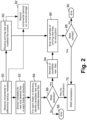
- FIGURE 2 further depicts an embodiment of an illustrative execution of the RWA verification 54.
- the incremental or differential backup metadata is usually much smaller in size than the file content of the incremental or differential backup metadata (where, again, the file content of the incremental or differential backup includes the new files and either the modified files, or the changes to the modified files).
- the incremental or differential backup metadata is usually received first at the operation 60, and thereafter the new or modified file content is received in an operation 80 which is ongoing due to the large amount of file content usually involved.
- the file content received at operation 80 is recorded on the volume storage 20 in accord with the incremental or differential backup metadata in backup operation 82 (indicated in FIGURE 2 by dashed lines to distinguish from the RWA detection and verification operations which are shown in solid lines in FIGURE 2 ).
- the RWA verification 54 leverages this file content to verify the RWA alert issued by the decision 66.
- an operation 84 a sample (or optionally all) of the candidate new files that triggered the RWA decision 66 to issue the alert are identified for verification.
- the sample of arriving candidate new files are scanned for evidence of being encrypted files generated by an ongoing RWA.
- an entropy of the candidate new files is computed, and if the computed entropy satisfies a criterion then the new files are identified as being generated by a RWA.
- entropy refers to any measure or indication of randomness or information density
- references to the "entropy" of one or more files refers to any measure or indication of the randomness or information density of all or part of the one or more files' contents.
- the RWA verification performed at operation 86 does not satisfy a RWA alert verification criterion then at an operation 90 the RWA verification ends and no remediation is performed.
- the operation 90 determines that the RWA verification performed at operation 86 does satisfy the RWA alert verification criterion, then the RWA remediation 70 is performed.
- the RWA alert verification criterion can, for example, be the fraction of sampled candidate new files being encrypted (as indicated by the entropy analysis) exceeding a verification threshold (where the verification threshold is a tunable parameter of the RWA verification 54 ).
- the RWA detection 52 (corresponding to operations 62, 64, 66 of FIGURE 2 ) use the incremental or differential backup metadata but do not use the file content received at operation 80. This allows the RWA detection 52 to be performed quickly and while the file content receipt operation 80 is ongoing.
- the RWA verification 54 (corresponding to operations 84, 86, 88 of FIGURE 2 ) does operate on the file content - but, in some embodiments, only on the file content of a sample or all of the candidate new files are processed by the RWA verification 54, again making this more efficient than an alternative approach in which the file content of every new file received at operation 80 is analyzed.
- operations 62a, 64a, 64b a more specific embodiment of operations 62, 64 of FIGURE 2 is described as operations 62a, 64a, 64b.
- the identification of candidate new and candidate deleted files is done on a per-folder basis.
- the incremental or differential backup metadata is received and metadata for the added, deleted, and modified files is extracted.
- the extracted metadata for new files is filename, file path (providing the parent folder), file size, and file creation timestamp.
- the extracted metadata for deleted files is filename, file path, and optionally file size, and optionally file deletion timestamp.
- the metadata generated at operation 62a is filtered to find folders.
- Files are grouped by their parent folder using the file path metadata. Folders are located that contain an equal (or near equal) number of deleted files and new files.
- the following criterion is used to identify a folder that may be affected by a RWA. The folder must have:
- an operation 64b the folders identified in operation 64a are analyzed to assess the similarity of the sum of file sizes of the candidate new files and the sum of file sizes of the candidate deleted files.
- the following algorithm is applied to each folder identified in operation 64a:
- the metadata for the new, modified, and deleted files is organized into a list. Folders are ignored (only files are processed to detect the RWA, albeit using the folder hierarchy to perform the file analysis on a per-folder basis in some embodiments). Content from folders that was created/deleted since the last backup is also ignored. A unique identifier is created for each parentfolder, that has files in the list (using the filepath metadata if available), in such a way that when list is ordered by this identifier metadata belonging to files from the same folder, are listed next to each other.
- the ordered list is scanned sequentially to identify each folder, and the file-operations (i.e., new, deleted, and modified files) that belong to that folder.
- the scanning looks for folders with certain characteristics, as described below.
- a RWA When a RWA executes on the computer or network of computers 12, it typically will find target files one at a time, it will create a new encrypted file first, then delete the original file (or overwrite the original file, then rename it, - but that will look like an insert and delete in Microsoft Windows and most other file systems, if the file extension is changed). In this RWA process, new files and deleted files are always paired in a folder or directory. If the computer or network of computers 12 is backed up once every hour for example, this pattern will be very consistent in the case of an actual RWA.
- the count of new files in a folder may be higher (e.g., by +1 or +2) compared to the count of deleted files in the folder. That is, the count of new files is expected to be in the range [ deleted-file_count, deleted_file_count +2], in such a RWA.
- This condition may not work well for folders with very few files.
- an optional minimum condition is applied as follows: deleted_file_count > 5. That is, if the number of deleted files in a folder or directory is less than or equal to 5, then that folder or directory is skipped. More generally, the value 5 used here can be a tunable parameter of the RWA detection 52.
- an incremental or differential backup includes both benign changes made by a user, and changes made by the RWA algorithm. But even in such cases, the changes made by the RWA algorithm will normally be vastly dominant, if it has executed for a little while. Optionally, this can be addressed by placing a limit on the number of permissible modified files in a folder or directory.
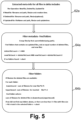
- the size of the resulting encrypted file tends to be almost the same as the original file, most commonly slightly larger than the original file due to some padding, and buffer boundaries or so forth. If the file sizes of the deleted files in a folder is available in the incremental or differential backup metadata (as, for example, in the XML metadata examples of FIGURES 3 and 4 ), they can be matched with the sizes of the new files, in the same folder. The file size information can thus be leveraged to further narrow down the possibility of a RWA. This also advantageously removes the case where a user uses a file-compression utility on individual files, because in that case the new files would be much smaller than the deleted files.
- the file sizes can be used (alone or in combination with other information) to identify candidate pairs of new and deleted files, in which the new file of the candidate pair is a candidate to be an encrypted copy of the deleted file of the candidate pair.
- the files in a folder or directory can be sorted by file size, with the expectation that paired new and deleted files will occur next to each other in the list sorted by file size.
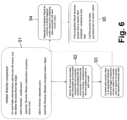
- the Watcher compares each counter value to an associated threshold value and triggers a respective counter output if the counter value is equal to or exceeds the respective threshold value.
- the Watcher generates an Evaluation Result as a function of all the triggered counter outputs and a weighting value associated with each counter output.
- Watcher generates a preliminary Ransom Alert if the Evaluation Result is greater than a ransom alert threshold value.
- the exemplary embodiment also relates to an apparatus for performing the operations discussed herein.
- This apparatus may be specially constructed for the required purposes, or it may comprise a general-purpose computer selectively activated or reconfigured by a computer program stored in the computer.
- a computer program may be stored in a computer readable storage medium, such as, but is not limited to, any type of disk including floppy disks, optical disks, CD-ROMs, and magnetic-optical disks, read-only memories (ROMs), random access memories (RAMs), EPROMs, EEPROMs, magnetic or optical cards, or any type of media suitable for storing electronic instructions, and each coupled to a computer system bus.
- a machine-readable medium includes any mechanism for storing or transmitting information in a form readable by a machine (e.g., a computer).
- a machine-readable medium includes read only memory ("ROM”); random access memory (“RAM”); magnetic disk storage media; optical storage media; flash memory devices; and electrical, optical, acoustical or other form of propagated signals (e.g., carrier waves, infrared signals, digital signals, etc.), just to mention a few examples.
- the methods illustrated throughout the specification may be implemented in a computer program product that may be executed on a computer.
- the computer program product may comprise a non-transitory computer-readable recording medium on which a control program is recorded, such as a disk, hard drive, or the like.
- a non-transitory computer-readable recording medium such as a disk, hard drive, or the like.
- Common forms of non-transitory computer-readable media include, for example, floppy disks, flexible disks, hard disks, magnetic tape, or any other magnetic storage medium, CD-ROM, DVD, or any other optical medium, a RAM, a PROM, an EPROM, a FLASH-EPROM, or other memory chip or cartridge, or any other tangible medium from which a computer can read and use.
- the method may be implemented in transitory media, such as a transmittable carrier wave in which the control program is embodied as a data signal using transmission media, such as acoustic or light waves, such as those generated during radio wave and infrared data communications, and the like.
- transitory media such as a transmittable carrier wave
- the control program is embodied as a data signal using transmission media, such as acoustic or light waves, such as those generated during radio wave and infrared data communications, and the like.
Landscapes
- Engineering & Computer Science (AREA)
- Theoretical Computer Science (AREA)
- General Engineering & Computer Science (AREA)
- General Physics & Mathematics (AREA)
- Physics & Mathematics (AREA)
- Computer Security & Cryptography (AREA)
- Software Systems (AREA)
- Computer Hardware Design (AREA)
- Quality & Reliability (AREA)
- Databases & Information Systems (AREA)
- Data Mining & Analysis (AREA)
- Health & Medical Sciences (AREA)
- Bioethics (AREA)
- General Health & Medical Sciences (AREA)
- Human Computer Interaction (AREA)
- Computing Systems (AREA)
- Information Retrieval, Db Structures And Fs Structures Therefor (AREA)
- Burglar Alarm Systems (AREA)
- Alarm Systems (AREA)
- Measurement Of The Respiration, Hearing Ability, Form, And Blood Characteristics Of Living Organisms (AREA)
- Financial Or Insurance-Related Operations Such As Payment And Settlement (AREA)
Claims (15)
- Nichttransitorisches Speichermedium, das Anweisungen speichert, die durch einen elektronischen Prozessor gelesen und ausgeführt werden können, um ein Ransomware-Angriff-Erkennungsverfahren (ransomware attack, RWA) durchzuführen, umfassend:Empfangen von inkrementellen oder differentiellen Sicherungsmetadaten für einen Computer oder ein Netzwerk von Computern über ein elektronisches Netzwerk, wobei die inkrementellen oder differentiellen Sicherungsmetadaten Dateien des Computers oder des Netzwerks von Computern identifizieren, die seit einer letzten inkrementellen oder vollständigen Sicherung des Computers oder des Netzwerks von Computern neu, modifiziert oder gelöscht sind;Extrahieren von Metadaten der Datei aus den empfangenen inkrementellen oder differentiellen Sicherungsmetadaten für die Dateien, die seit der letzten inkrementellen oder letzten vollständigen Sicherung des Computers oder des Netzwerks von Computern neu oder gelöscht sind;Identifizieren von neuen Kandidatendateien und gelöschten Kandidatendateien, wobei die neuen Kandidatendateien Kandidaten für verschlüsselte Kopien der gelöschten Kandidatendateien sind,wobei die neuen Kandidatendateien und die gelöschten Kandidatendateien unter Verwendung der extrahierten Dateimetadaten identifiziert werden;Erzeugen einer RWA-Warnmeldung, wenn die identifizierten neuen Kandidatendateien und die gelöschten Kandidatendateien ein RWA-Warnkriterium erfüllen, das unter Verwendung der extrahierten Dateimetadaten berechnet wird;Durchführen einer RWA-Warnmeldungsverifizierung als Reaktion auf die RWA-Warnmeldung, wobei die RWA-Verifizierung mindestens eine Probe der neuen Kandidatendateien verwendet; und Durchführen einer RWA-Sanierung, die mindestens das Deaktivieren des Computers oder des Netzwerks von Computern über das elektronische Netzwerk als Reaktion auf die RWA-Verifizierung, die ein Kriterium für die Verifizierung einer RWA-Warnmeldung erfüllt, beinhaltet.
- Nichttransitorisches Speichermedium nach Anspruch 1, wobei das nichttransitorische Speichermedium ferner Anweisungen speichert, die durch den elektronischen Prozessor gelesen und ausgeführt werden können, um ein inkrementelles oder differentielles Sicherungsverfahren durchzuführen, umfassend:über das elektronische Netzwerk, Empfangen von Dateiinhalten, die (i) Kopien der Dateien, die in den inkrementellen oder differentiellen Sicherungsmetadaten seit der letzten inkrementellen oder letzten vollständigen Sicherung des Computers oder Netzwerks von Computern als neu identifiziert werden, und (ii) mindestens Änderungen für die Dateien, die in den inkrementellen oder differentiellen Sicherungsmetadaten seit der letzten inkrementellen oder letzten vollständigen Sicherung des Computers oder Netzwerks von Computern als geändert identifiziert werden, beinhalten; undAktualisieren einer Sicherung des Computers oder des Netzwerks von Computern, die auf einem Datenspeicher gespeichert ist, mit den empfangenen Dateiinhalten.
- Nichttransitorisches Speichermedium nach Anspruch 2, wobei das Identifizieren der neuen Kandidatendateien und der gelöschten Kandidatendateien nicht die empfangenen Dateiinhalte verwendet.
- Nichttransitorisches Speichermedium nach Anspruch 1, 2 oder 3, wobei das Identifizieren von neuen Kandidatendateien und gelöschten Kandidatendateien Folgendes beinhaltet:Identifizieren von Kandidatenpaaren neuer und gelöschter Dateien basierend zumindest teilweise auf einem Löschzeitstempel der gelöschten Datei eines Kandidatenpaares, der zeitlich später ist als ein Erstellungszeitstempel der neuen Datei des Kandidatenpaares;Identifizieren von neuen und gelöschten Kandidatendateien basierend zumindest teilweise auf der Ähnlichkeit einer Summe der Dateigrößen der neuen Dateien und einer Summe der Dateigrößen der gelöschten Dateien;Identifizieren von Kandidatenpaaren neuer und gelöschter Dateien basierend zumindest teilweise auf der Ähnlichkeit einer Dateigröße der neuen Datei eines Kandidatenpaares und einer Dateigröße der gelöschten Datei des Kandidatenpaares;Identifizieren von Kandidatenpaaren neuer und gelöschter Dateien basierend zumindest teilweise darauf, dass die neue Datei eines Kandidatenpaares größer ist als die gelöschte Datei des Kandidatenpaares;Identifizieren von Kandidatenpaaren neuer und gelöschter Dateien basierend zumindest teilweise auf einem Vergleich eines Dateinamens der neuen Datei eines Kandidatenpaares und eines Dateinamens der gelöschten Datei des Kandidatenpaares; oderIdentifizieren von Kandidatenpaaren neuer und gelöschter Dateien basierend zumindest teilweise auf den neuen und gelöschten Dateien eines Kandidatenpaares, die sich in demselben Verzeichnis oder Ordner eines hierarchischen Systems von Ordnern oder Verzeichnissen des Computers oder Netzwerks von Computern befinden.
- Nichttransitorisches Speichermedium nach einem der Ansprüche 1 bis 4, wobei der Computer oder das Netzwerk von Computern ein hierarchisches System von Ordnern oder Verzeichnissen einsetzt und das Identifizieren von neuen und gelöschten Kandidatendateien auf einer pro-Ordner- oder pro-Verzeichnis-Basis durchgeführt wird.
- Nichttransitorisches Speichermedium nach Anspruch 5, wobei die RWA-Warnmeldung erzeugt wird, wenn die identifizierten Kandidaten für neue und zu löschende Dateien in mindestens einem Ordner oder Verzeichnis des hierarchischen Systems von Ordnern oder Verzeichnissen das RWA-Warnkriterium erfüllt.
- Nichttransitorisches Speichermedium nach Anspruch 6, wobei die RWA-Warnmeldung erzeugt wird, wenn die identifizierten neuen und gelöschten Kandidatendateien in einem Ordner oder Verzeichnis ein Ordner- oder Verzeichnis-RWA-Warnkriterium erfüllen, das unter Verwendung von Zählungen der neuen Kandidatendateien und der gelöschten Kandidatendateien in dem Ordner oder Verzeichnis berechnet wird.
- Nichttransitorisches Speichermedium nach Anspruch 7, wobei:das Extrahieren der Metadaten der Datei ferner das Extrahieren von Metadaten der Datei aus den empfangenen inkrementellen oder differentiellen Sicherungsmetadaten für die Dateien beinhaltet, die seit der letzten inkrementellen oder letzten vollständigen Sicherung des Computers oder des Netzwerks von Computern modifiziert sind; unddas RWA-Warnkriterium ferner auf einer Zählung der modifizierten Dateien in dem Ordner oder Verzeichnis basiert, die kleiner als oder gleich einem maximalen Schwellenwert für die Zählung modifizierter Dateien ist, wobei der maximale Schwellenwert für die Zählung modifizierter Dateien optional Null ist.
- Nichttransitorisches Speichermedium nach Anspruch 8, wobei das Ordner- oder Verzeichnis-RWA-Warnkriterium ferner mindestens Folgendes beinhaltet:
Ähnlichkeit einer Summe der Dateigrößen der neuen Kandidatendateien in dem Ordner oder Verzeichnis und einer Summe der Dateigrößen der gelöschten Kandidatendateien in dem Ordner oder Verzeichnis. - Verfahren zum Detektieren eines Ransomware-Angriffs-, RWA-, Erkennungsverfahren, das durch ein Sicherungssystem einschließlich eines elektronischen Prozessors durchgeführt wird, wobei das RWA-Erkennungsverfahren Folgendes umfasst:Empfangen von inkrementellen oder differentiellen Sicherungsmetadaten für einen Computer oder ein Netzwerk von Computern über ein elektronisches Netzwerk, wobei die inkrementellen oder differentiellen Sicherungsmetadaten Dateien des Computers oder des Netzwerks von Computern identifizieren, die seit einer letzten inkrementellen oder vollständigen Sicherung des Computers oder des Netzwerks von Computern neu, modifiziert oder gelöscht sind;über das elektronische Netzwerk, Empfangen von Dateiinhalten, die (i) Kopien der Dateien, die in den inkrementellen oder differentiellen Sicherungsmetadaten seit der letzten inkrementellen oder letzten vollständigen Sicherung des Computers oder Netzwerks von Computern als neu identifiziert werden, und (ii) mindestens Änderungen für die Dateien, die in den inkrementellen oder differentiellen Sicherungsmetadaten seit der letzten inkrementellen oder letzten vollständigen Sicherung des Computers oder Netzwerks von Computern als geändert identifiziert werden, beinhalten;Extrahieren von Metadaten der Datei aus den empfangenen inkrementellen oder differentiellen Sicherungsmetadaten für die Dateien, die seit der letzten inkrementellen oder letzten vollständigen Sicherung des Computers oder des Netzwerks von Computern neu oder gelöscht sind;Identifizieren von neuen Kandidatendateien und gelöschten Kandidatendateien, wobei die neuen Kandidatendateien Kandidaten für verschlüsselte Kopien der gelöschten Kandidatendateien sind, wobei die neuen Kandidaten und gelöschten Kandidatendateien unter Verwendung der extrahierten Dateimetadaten und nicht unter Verwendung der empfangenen Dateiinhalte identifiziert werden;Erzeugen einer RWA-Warnmeldung, wenn die identifizierten Kandidaten neuer und gelöschte Dateien ein RWA-Warnkriterium erfüllen;Durchführen einer RWA-Warnmeldungsverifizierung als Reaktion auf die RWA-Warnmeldung, wobei die RWA-Verifizierung mindestens eine Probe der neuen Kandidatendateien verwendet; undDurchführen einer RWA-Sanierung, die mindestens das Deaktivieren des Computers oder des Netzwerks von Computern über das elektronische Netzwerk als Reaktion auf die RWA-Verifizierung, die ein Kriterium für die Verifizierung einer RWA-Warnmeldung erfüllt, beinhaltet.
- RWA-Erkennungsverfahren nach Anspruch 10, wobei:der Computer oder das Computernetz ein hierarchisches System von Ordnern oder Verzeichnissen verwendet; unddas Identifizieren neuer und gelöschter Kandidatendateien pro Ordner oder pro Verzeichnis durchgeführt wird; unddas RWA-Warnkriterium pro Ordner oder pro Verzeichnis angewendet wird.
- RWA-Erkennungsverfahren nach Anspruch 11, wobei das RWA-Warnkriterium, das auf einen Ordner oder ein Verzeichnis angewendet wird, mindestens auf Folgendem basiert:Ähnlichkeit einer Zählung der neuen Kandidatendateien in dem Ordner oder Verzeichnis und einer Zählung der gelöschten Kandidatendateien in dem Ordner oder Verzeichnis; undÄhnlichkeit einer Summe der Dateigrößen der neuen Kandidatendateien in dem Ordner oder Verzeichnis und einer Summe der Dateigrößen der gelöschten Kandidatendateien in dem Ordner oder Verzeichnis.
- RWA-Erkennungsverfahren nach Anspruch 11 oder 12, wobei das Identifizieren von neuen Kandidaten und gelöschten Kandidatendateien in einem Ordner oder Verzeichnis das Identifizieren von Kandidatenpaaren neuer und gelöschter Dateien beinhaltet, wobei die neue Kandidatendatei jedes Paares ein Kandidat dafür ist, eine verschlüsselte Kopie der gelöschten Kandidatendatei des Paares zu sein.
- RWA-Erkennungsverfahren nach Anspruch 13, wobei das Identifizieren von Kandidatenpaaren neuer und gelöschter Dateien auf einem oder mehreren von Folgendem basiert:einem Löschzeitstempel der gelöschten Datei eines Kandidatenpaares, der zeitlich später ist als ein Erstellungszeitstempel der neuen Datei des Kandidatenpaares;Ähnlichkeit einer Dateigröße der neuen Datei eines Kandidatenpaares und einer Dateigröße der gelöschten Datei des Kandidatenpaares;einer Dateigröße der neuen Datei eines Kandidatenpaares, die größer ist als eine Dateigröße der gelöschten Datei des Kandidatenpaares; und/odereinem Vergleich eines Dateinamens der neuen Datei des Kandidatenpaares und eines Dateinamens der gelöschten Datei des Kandidatenpaares.
- Sicherungssystem, umfassend:
einen elektronischen Prozessor, der betriebsfähig mit einem Cloud-Datenspeicher verbunden ist; und ein nichttransitorisches Speichermedium, das Folgendes speichert:Sicherungsanweisungen, die durch den elektronischen Prozessor gelesen und aufgeführt werden können, um eine inkrementelle oder differentielle Sicherung eines Systems von Ordnern oder Verzeichnissen eines Computers oder eines Netzwerks von Computern über ein elektronisches Netzwerk durchzuführen; undRansomware-Angriffs-, RWA-, Erkennungsanweisungen, die durch den elektronischen Prozessor gelesen und ausgeführt werden können, um RWA-Erkennungsvorgänge durchzuführen, beinhaltend: Verarbeiten von inkrementellen oder differentiellen Sicherungsmetadaten, die während der inkrementellen oder differentiellen Sicherung erfasst werden, um zu bestimmen, ob eine RWA-Warnmeldung ausgegeben wird, wobei das Verarbeiten nicht die Dateiinhalte verwendet;das Verarbeiten der inkrementellen oder differentiellen Sicherungsmetadaten, einschließlich des Verarbeitens der inkrementellen oder differentiellen Sicherungsmetadaten, um einen oder mehrere Ordner oder Verzeichnisse zu identifizieren, die neue Kandidatendateien und gelöschte Kandidatendateien enthalten, wobei die neuen Kandidatendateien Kandidaten für verschlüsselte Kopien der gelöschten Kandidatendateien sind, und das Ausgeben der RWA-Warnmeldung basierend mindestens teilweise auf mindestens einem Ordner oder Verzeichnis, der/das neue Kandidatendateien und gelöschte Kandidatendateien enthält, die ein RWA-Warnkriterium erfüllen;als Reaktion auf die ausgegebene RWA-Warnmeldung, Durchführen einer RWA-Verifizierung, umfassend Erkennen einer Verschlüsselung, die an Dateiinhalten mindestens einer Probe der neuen Kandidatendateien durchgeführt wird, die während der inkrementellen oder differentiellen Sicherung empfangen werden; undDurchführen einer RWA-Sanierung, die mindestens das Deaktivieren des Computers oder des Netzwerks von Computern über das elektronische Netzwerk basierend zumindest teilweise auf der ausgegebenen RWA-Warnmeldung beinhaltet, wobei die RWA-Sanierung ferner basierend auf Erfüllen eines RWA-Verifizierungskriteriums durch die RWA-Verifizierung durchgeführt wird.
Applications Claiming Priority (2)
| Application Number | Priority Date | Filing Date | Title |
|---|---|---|---|
| US16/840,665 US11347881B2 (en) | 2020-04-06 | 2020-04-06 | Methods and systems for detecting ransomware attack in incremental backup |
| PCT/US2021/024861 WO2021206956A1 (en) | 2020-04-06 | 2021-03-30 | Methods and systems for detecting ransomware attack in incremental backup |
Publications (3)
| Publication Number | Publication Date |
|---|---|
| EP4133392A1 EP4133392A1 (de) | 2023-02-15 |
| EP4133392C0 EP4133392C0 (de) | 2025-07-09 |
| EP4133392B1 true EP4133392B1 (de) | 2025-07-09 |
Family
ID=75625648
Family Applications (1)
| Application Number | Title | Priority Date | Filing Date |
|---|---|---|---|
| EP21720617.6A Active EP4133392B1 (de) | 2020-04-06 | 2021-03-30 | Verfahren und systeme zur erkennung eines ransomware-angriffs in inkrementeller sicherung |
Country Status (5)
| Country | Link |
|---|---|
| US (2) | US11347881B2 (de) |
| EP (1) | EP4133392B1 (de) |
| AU (1) | AU2021251658B2 (de) |
| CA (1) | CA3174978C (de) |
| WO (1) | WO2021206956A1 (de) |
Families Citing this family (15)
| Publication number | Priority date | Publication date | Assignee | Title |
|---|---|---|---|---|
| US11537713B2 (en) * | 2017-08-02 | 2022-12-27 | Crashplan Group Llc | Ransomware attack onset detection |
| US10783043B2 (en) | 2018-03-16 | 2020-09-22 | EMC IP Holding Company LLC | Automation and optimization of data recovery after a ransomware attack |
| US11601443B2 (en) * | 2019-09-25 | 2023-03-07 | Acronis International Gmbh | System and method for generating and storing forensics-specific metadata |
| EP4264464A1 (de) | 2020-12-19 | 2023-10-25 | Datto, Inc. | Verfahren und systeme zur ransomware-detektion, -isolierung und -sanierung |
| US12487770B2 (en) * | 2021-11-19 | 2025-12-02 | Commvault Systems, Inc. | Application environment recovery using cloud-based immutable storage devices |
| EP4343551A3 (de) * | 2022-05-09 | 2024-07-17 | Palantir Technologies Inc. | Infrastruktursicherung und -wiederherstellung |
| CN119301593B (zh) * | 2022-06-01 | 2025-11-21 | 华为技术有限公司 | 用于在数据格式未知的备份数据中进行勒索软件检测的设备和方法 |
| CN118427817A (zh) * | 2023-01-31 | 2024-08-02 | 华为技术有限公司 | 一种检测备份文件的方法以及相关设备 |
| US20240273191A1 (en) * | 2023-02-14 | 2024-08-15 | Dell Products L.P. | Agent-based device protection using detection and mitigation of modifications to a protected storage region |
| US12566853B2 (en) * | 2023-07-21 | 2026-03-03 | Dell Products L.P. | Delta anomaly detection for backups of specialized directory service assets |
| CN121079684A (zh) * | 2023-07-25 | 2025-12-05 | 华为技术有限公司 | 用于从恶意软件攻击中恢复的方法和系统 |
| US20240202332A1 (en) * | 2023-11-15 | 2024-06-20 | Druva Inc. | System and Method for Ransomware Scan Using Incremental Data Blocks |
| CN117540176B (zh) * | 2024-01-09 | 2024-04-02 | 深圳市领德创科技有限公司 | 一种基于固态硬盘的数据恢复分析方法及系统 |
| US12530317B2 (en) * | 2024-01-25 | 2026-01-20 | Rubrik, Inc. | Storage and retrieval of filesystem metadata |
| US20260037629A1 (en) * | 2024-07-31 | 2026-02-05 | Palo Alto Networks (Israel Analytics) Ltd. | Detection of Dynamic Link Library (DLL) Side Loading Attacks |
Family Cites Families (41)
| Publication number | Priority date | Publication date | Assignee | Title |
|---|---|---|---|---|
| US7139808B2 (en) * | 2002-04-30 | 2006-11-21 | Intel Corporation | Method and apparatus for bandwidth-efficient and storage-efficient backups |
| US7257257B2 (en) * | 2003-08-19 | 2007-08-14 | Intel Corporation | Method and apparatus for differential, bandwidth-efficient and storage-efficient backups |
| US8799671B2 (en) | 2009-05-06 | 2014-08-05 | Empire Technology Development Llc | Techniques for detecting encrypted data |
| US8347048B2 (en) | 2009-10-30 | 2013-01-01 | Ca, Inc. | Self learning backup and recovery management system |
| US20120254333A1 (en) | 2010-01-07 | 2012-10-04 | Rajarathnam Chandramouli | Automated detection of deception in short and multilingual electronic messages |
| US9705730B1 (en) | 2013-05-07 | 2017-07-11 | Axcient, Inc. | Cloud storage using Merkle trees |
| WO2013042218A1 (ja) * | 2011-09-21 | 2013-03-28 | 株式会社日立製作所 | 計算機システム、ファイル管理方法及びメタデータサーバ |
| US9021589B2 (en) | 2012-06-05 | 2015-04-28 | Los Alamos National Security, Llc | Integrating multiple data sources for malware classification |
| US9053216B1 (en) | 2013-08-09 | 2015-06-09 | Datto, Inc. | CPU register assisted virtual machine screenshot capture timing apparatuses, methods and systems |
| EP3038003B1 (de) | 2014-12-22 | 2020-08-19 | Alcatel Lucent | Verfahren zum schutz gegen ransomware |
| KR101728319B1 (ko) | 2015-04-15 | 2017-04-19 | 주식회사 엠아이텍 | 스텐트 제조방법 |
| US10083299B2 (en) | 2015-12-16 | 2018-09-25 | Carbonite, Inc. | Systems and methods for automatic snapshotting of backups based on malicious modification detection |
| US9935973B2 (en) * | 2015-12-16 | 2018-04-03 | Carbonite, Inc. | Systems and methods for automatic detection of malicious activity via common files |
| US20170206353A1 (en) | 2016-01-19 | 2017-07-20 | Hope Bay Technologies, Inc. | Method and system for preventing malicious alteration of data in computer system |
| US10742665B2 (en) | 2016-02-01 | 2020-08-11 | NortonLifeLock Inc. | Systems and methods for modifying file backups in response to detecting potential ransomware |
| US10303877B2 (en) | 2016-06-21 | 2019-05-28 | Acronis International Gmbh | Methods of preserving and protecting user data from modification or loss due to malware |
| US10346258B2 (en) | 2016-07-25 | 2019-07-09 | Cisco Technology, Inc. | Intelligent backup system |
| US10262138B2 (en) | 2016-09-15 | 2019-04-16 | Paypal, Inc. | Techniques for ransomware detection and mitigation |
| US10671724B2 (en) | 2016-09-15 | 2020-06-02 | Paypal, Inc. | Techniques for detecting encryption |
| US10867040B2 (en) | 2016-10-17 | 2020-12-15 | Datto, Inc. | Systems and methods for detecting ransomware infection |
| US10791133B2 (en) | 2016-10-21 | 2020-09-29 | Tata Consultancy Services Limited | System and method for detecting and mitigating ransomware threats |
| US10423782B2 (en) * | 2016-12-19 | 2019-09-24 | Mcafee, Llc | Intelligent backup and versioning |
| US10121003B1 (en) | 2016-12-20 | 2018-11-06 | Amazon Technologies, Inc. | Detection of malware, such as ransomware |
| US9734337B1 (en) | 2017-01-24 | 2017-08-15 | Malwarebytes Inc. | Behavior-based ransomware detection |
| US10862916B2 (en) | 2017-04-03 | 2020-12-08 | Netskope, Inc. | Simulation and visualization of malware spread in a cloud-based collaboration environment |
| US10776213B2 (en) * | 2017-08-31 | 2020-09-15 | Cohesity, Inc. | Restoring a database using a fully hydrated backup |
| WO2019051507A1 (en) * | 2017-09-11 | 2019-03-14 | Carbon Black, Inc. | METHODS OF BEHAVIORAL DETECTION AND PREVENTION OF CYBERATTAICS, AS WELL AS APPARATUS AND RELATED TECHNIQUES |
| US20190108340A1 (en) | 2017-09-14 | 2019-04-11 | Commvault Systems, Inc. | Ransomware detection |
| US11120133B2 (en) * | 2017-11-07 | 2021-09-14 | Spinbackup Inc. | Ransomware protection for cloud storage systems |
| US20190158512A1 (en) | 2017-11-20 | 2019-05-23 | Fortinet, Inc. | Lightweight anti-ransomware system |
| US10229269B1 (en) | 2018-02-13 | 2019-03-12 | Malwarebytes Inc. | Detecting ransomware based on file comparisons |
| US11023327B2 (en) | 2018-03-20 | 2021-06-01 | Western Digital Technologies, Inc. | Encryption detection and backup management |
| US11775638B2 (en) | 2018-06-27 | 2023-10-03 | International Business Machines Corporation | Identification and extraction of key forensics indicators of compromise using subject-specific filesystem views |
| US11120131B2 (en) | 2018-07-30 | 2021-09-14 | Rubrik, Inc. | Ransomware infection detection in filesystems |
| US11768936B2 (en) * | 2018-07-31 | 2023-09-26 | EMC IP Holding Company LLC | Anomaly-based ransomware detection for encrypted files |
| US10795994B2 (en) * | 2018-09-26 | 2020-10-06 | Mcafee, Llc | Detecting ransomware |
| CN111045857B (zh) * | 2018-10-12 | 2023-11-28 | 伊姆西Ip控股有限责任公司 | 数据备份和恢复的方法、电子设备和计算机可读存储介质 |
| US10650146B1 (en) * | 2018-12-12 | 2020-05-12 | Cohesity, Inc. | Malicious software detection |
| AU2020267130B2 (en) * | 2019-04-30 | 2022-11-03 | Commvault Systems, Inc. | Cloud-based data protection service |
| US10878084B1 (en) * | 2019-05-29 | 2020-12-29 | EMC IP Holding Company LLC | Secure synchronization and management of recovery data for backup systems |
| US10990675B2 (en) * | 2019-06-04 | 2021-04-27 | Datto, Inc. | Methods and systems for detecting a ransomware attack using entropy analysis and file update patterns |
-
2020
- 2020-04-06 US US16/840,665 patent/US11347881B2/en active Active
-
2021
- 2021-03-30 EP EP21720617.6A patent/EP4133392B1/de active Active
- 2021-03-30 CA CA3174978A patent/CA3174978C/en active Active
- 2021-03-30 AU AU2021251658A patent/AU2021251658B2/en active Active
- 2021-03-30 WO PCT/US2021/024861 patent/WO2021206956A1/en not_active Ceased
-
2022
- 2022-05-26 US US17/825,496 patent/US11886606B2/en active Active
Also Published As
| Publication number | Publication date |
|---|---|
| US20210312066A1 (en) | 2021-10-07 |
| US20220284117A1 (en) | 2022-09-08 |
| EP4133392C0 (de) | 2025-07-09 |
| WO2021206956A1 (en) | 2021-10-14 |
| EP4133392A1 (de) | 2023-02-15 |
| AU2021251658B2 (en) | 2023-01-19 |
| US11886606B2 (en) | 2024-01-30 |
| US11347881B2 (en) | 2022-05-31 |
| CA3174978A1 (en) | 2021-10-14 |
| AU2021251658A1 (en) | 2022-11-24 |
| CA3174978C (en) | 2023-07-18 |
Similar Documents
| Publication | Publication Date | Title |
|---|---|---|
| EP4133392B1 (de) | Verfahren und systeme zur erkennung eines ransomware-angriffs in inkrementeller sicherung | |
| US11561931B2 (en) | Information source agent systems and methods for distributed data storage and management using content signatures | |
| Baek et al. | SSD-assisted ransomware detection and data recovery techniques | |
| Scaife et al. | Cryptolock (and drop it): stopping ransomware attacks on user data | |
| US9774615B1 (en) | Techniques for detecting anomalous network traffic | |
| US20120158760A1 (en) | Methods and computer program products for performing computer forensics | |
| US7356843B1 (en) | Security incident identification and prioritization | |
| US8655844B1 (en) | File version tracking via signature indices | |
| US8474038B1 (en) | Software inventory derivation | |
| CN119301593B (zh) | 用于在数据格式未知的备份数据中进行勒索软件检测的设备和方法 | |
| US9501251B1 (en) | Techniques for print monitoring | |
| US12164625B2 (en) | Context based authorized external device copy detection | |
| CN118246010A (zh) | 数据检测方法和电子设备 | |
| CN110795730A (zh) | 一种恶意文件彻底清除方法、系统及存储介质 | |
| US8701193B1 (en) | Malware detection via signature indices | |
| WO2024132184A1 (en) | Device and method for file recovery at a production site using a file level continuous data protection system | |
| CN120910853A (zh) | 勒索病毒防护方法、装置、电子设备及存储介质 |
Legal Events
| Date | Code | Title | Description |
|---|---|---|---|
| STAA | Information on the status of an ep patent application or granted ep patent |
Free format text: STATUS: UNKNOWN |
|
| STAA | Information on the status of an ep patent application or granted ep patent |
Free format text: STATUS: THE INTERNATIONAL PUBLICATION HAS BEEN MADE |
|
| PUAI | Public reference made under article 153(3) epc to a published international application that has entered the european phase |
Free format text: ORIGINAL CODE: 0009012 |
|
| STAA | Information on the status of an ep patent application or granted ep patent |
Free format text: STATUS: REQUEST FOR EXAMINATION WAS MADE |
|
| 17P | Request for examination filed |
Effective date: 20221104 |
|
| AK | Designated contracting states |
Kind code of ref document: A1 Designated state(s): AL AT BE BG CH CY CZ DE DK EE ES FI FR GB GR HR HU IE IS IT LI LT LU LV MC MK MT NL NO PL PT RO RS SE SI SK SM TR |
|
| RIN1 | Information on inventor provided before grant (corrected) |
Inventor name: HANSEN, KURT |
|
| RAP1 | Party data changed (applicant data changed or rights of an application transferred) |
Owner name: KASEYA LIMITED |
|
| DAV | Request for validation of the european patent (deleted) | ||
| DAX | Request for extension of the european patent (deleted) | ||
| GRAP | Despatch of communication of intention to grant a patent |
Free format text: ORIGINAL CODE: EPIDOSNIGR1 |
|
| STAA | Information on the status of an ep patent application or granted ep patent |
Free format text: STATUS: GRANT OF PATENT IS INTENDED |
|
| INTG | Intention to grant announced |
Effective date: 20250409 |
|
| GRAS | Grant fee paid |
Free format text: ORIGINAL CODE: EPIDOSNIGR3 |
|
| GRAA | (expected) grant |
Free format text: ORIGINAL CODE: 0009210 |
|
| STAA | Information on the status of an ep patent application or granted ep patent |
Free format text: STATUS: THE PATENT HAS BEEN GRANTED |
|
| AK | Designated contracting states |
Kind code of ref document: B1 Designated state(s): AL AT BE BG CH CY CZ DE DK EE ES FI FR GB GR HR HU IE IS IT LI LT LU LV MC MK MT NL NO PL PT RO RS SE SI SK SM TR |
|
| REG | Reference to a national code |
Ref country code: GB Ref legal event code: FG4D |
|
| REG | Reference to a national code |
Ref country code: CH Ref legal event code: EP |
|
| REG | Reference to a national code |
Ref country code: IE Ref legal event code: FG4D |
|
| REG | Reference to a national code |
Ref country code: DE Ref legal event code: R096 Ref document number: 602021033760 Country of ref document: DE |
|
| U01 | Request for unitary effect filed |
Effective date: 20250801 |
|
| U07 | Unitary effect registered |
Designated state(s): AT BE BG DE DK EE FI FR IT LT LU LV MT NL PT RO SE SI Effective date: 20250812 |
|
| PG25 | Lapsed in a contracting state [announced via postgrant information from national office to epo] |
Ref country code: IS Free format text: LAPSE BECAUSE OF FAILURE TO SUBMIT A TRANSLATION OF THE DESCRIPTION OR TO PAY THE FEE WITHIN THE PRESCRIBED TIME-LIMIT Effective date: 20251109 |
|
| PG25 | Lapsed in a contracting state [announced via postgrant information from national office to epo] |
Ref country code: NO Free format text: LAPSE BECAUSE OF FAILURE TO SUBMIT A TRANSLATION OF THE DESCRIPTION OR TO PAY THE FEE WITHIN THE PRESCRIBED TIME-LIMIT Effective date: 20251009 |
|
| PG25 | Lapsed in a contracting state [announced via postgrant information from national office to epo] |
Ref country code: HR Free format text: LAPSE BECAUSE OF FAILURE TO SUBMIT A TRANSLATION OF THE DESCRIPTION OR TO PAY THE FEE WITHIN THE PRESCRIBED TIME-LIMIT Effective date: 20250709 |
|
| PG25 | Lapsed in a contracting state [announced via postgrant information from national office to epo] |
Ref country code: GR Free format text: LAPSE BECAUSE OF FAILURE TO SUBMIT A TRANSLATION OF THE DESCRIPTION OR TO PAY THE FEE WITHIN THE PRESCRIBED TIME-LIMIT Effective date: 20251010 |
|
| PG25 | Lapsed in a contracting state [announced via postgrant information from national office to epo] |
Ref country code: PL Free format text: LAPSE BECAUSE OF FAILURE TO SUBMIT A TRANSLATION OF THE DESCRIPTION OR TO PAY THE FEE WITHIN THE PRESCRIBED TIME-LIMIT Effective date: 20250709 |
|
| PG25 | Lapsed in a contracting state [announced via postgrant information from national office to epo] |
Ref country code: RS Free format text: LAPSE BECAUSE OF FAILURE TO SUBMIT A TRANSLATION OF THE DESCRIPTION OR TO PAY THE FEE WITHIN THE PRESCRIBED TIME-LIMIT Effective date: 20251009 |
|
| PG25 | Lapsed in a contracting state [announced via postgrant information from national office to epo] |
Ref country code: ES Free format text: LAPSE BECAUSE OF FAILURE TO SUBMIT A TRANSLATION OF THE DESCRIPTION OR TO PAY THE FEE WITHIN THE PRESCRIBED TIME-LIMIT Effective date: 20250709 |
|
| U20 | Renewal fee for the european patent with unitary effect paid |
Year of fee payment: 6 Effective date: 20260219 |
|
| PG25 | Lapsed in a contracting state [announced via postgrant information from national office to epo] |
Ref country code: SM Free format text: LAPSE BECAUSE OF FAILURE TO SUBMIT A TRANSLATION OF THE DESCRIPTION OR TO PAY THE FEE WITHIN THE PRESCRIBED TIME-LIMIT Effective date: 20250709 |
|
| PGFP | Annual fee paid to national office [announced via postgrant information from national office to epo] |
Ref country code: GB Payment date: 20260220 Year of fee payment: 6 |