EP4132776B1 - Hauptlaminat, windturbinenschaufel umfassend ein solches hauptlaminat und herstellungsverfahren. - Google Patents
Hauptlaminat, windturbinenschaufel umfassend ein solches hauptlaminat und herstellungsverfahren. Download PDFInfo
- Publication number
- EP4132776B1 EP4132776B1 EP20722221.7A EP20722221A EP4132776B1 EP 4132776 B1 EP4132776 B1 EP 4132776B1 EP 20722221 A EP20722221 A EP 20722221A EP 4132776 B1 EP4132776 B1 EP 4132776B1
- Authority
- EP
- European Patent Office
- Prior art keywords
- pultrusion
- wind turbine
- fibre
- turbine blade
- main laminate
- Prior art date
- Legal status (The legal status is an assumption and is not a legal conclusion. Google has not performed a legal analysis and makes no representation as to the accuracy of the status listed.)
- Active
Links
Images




Classifications
-
- B—PERFORMING OPERATIONS; TRANSPORTING
- B29—WORKING OF PLASTICS; WORKING OF SUBSTANCES IN A PLASTIC STATE IN GENERAL
- B29C—SHAPING OR JOINING OF PLASTICS; SHAPING OF MATERIAL IN A PLASTIC STATE, NOT OTHERWISE PROVIDED FOR; AFTER-TREATMENT OF THE SHAPED PRODUCTS, e.g. REPAIRING
- B29C70/00—Shaping composites, i.e. plastics material comprising reinforcements, fillers or preformed parts, e.g. inserts
- B29C70/04—Shaping composites, i.e. plastics material comprising reinforcements, fillers or preformed parts, e.g. inserts comprising reinforcements only, e.g. self-reinforcing plastics
- B29C70/28—Shaping operations therefor
- B29C70/40—Shaping or impregnating by compression not applied
- B29C70/50—Shaping or impregnating by compression not applied for producing articles of indefinite length, e.g. prepregs, sheet moulding compounds [SMC] or cross moulding compounds [XMC]
- B29C70/52—Pultrusion, i.e. forming and compressing by continuously pulling through a die
-
- B—PERFORMING OPERATIONS; TRANSPORTING
- B29—WORKING OF PLASTICS; WORKING OF SUBSTANCES IN A PLASTIC STATE IN GENERAL
- B29C—SHAPING OR JOINING OF PLASTICS; SHAPING OF MATERIAL IN A PLASTIC STATE, NOT OTHERWISE PROVIDED FOR; AFTER-TREATMENT OF THE SHAPED PRODUCTS, e.g. REPAIRING
- B29C70/00—Shaping composites, i.e. plastics material comprising reinforcements, fillers or preformed parts, e.g. inserts
- B29C70/04—Shaping composites, i.e. plastics material comprising reinforcements, fillers or preformed parts, e.g. inserts comprising reinforcements only, e.g. self-reinforcing plastics
- B29C70/28—Shaping operations therefor
- B29C70/40—Shaping or impregnating by compression not applied
- B29C70/42—Shaping or impregnating by compression not applied for producing articles of definite length, i.e. discrete articles
-
- B—PERFORMING OPERATIONS; TRANSPORTING
- B29—WORKING OF PLASTICS; WORKING OF SUBSTANCES IN A PLASTIC STATE IN GENERAL
- B29D—PRODUCING PARTICULAR ARTICLES FROM PLASTICS OR FROM SUBSTANCES IN A PLASTIC STATE
- B29D99/00—Subject matter not provided for in other groups of this subclass
- B29D99/0025—Producing blades or the like, e.g. blades for turbines, propellers, or wings
- B29D99/0028—Producing blades or the like, e.g. blades for turbines, propellers, or wings hollow blades
-
- F—MECHANICAL ENGINEERING; LIGHTING; HEATING; WEAPONS; BLASTING
- F03—MACHINES OR ENGINES FOR LIQUIDS; WIND, SPRING, OR WEIGHT MOTORS; PRODUCING MECHANICAL POWER OR A REACTIVE PROPULSIVE THRUST, NOT OTHERWISE PROVIDED FOR
- F03D—WIND MOTORS
- F03D1/00—Wind motors with rotation axis substantially parallel to the air flow entering the rotor
- F03D1/06—Rotors
- F03D1/0608—Rotors characterised by their aerodynamic shape
- F03D1/0633—Rotors characterised by their aerodynamic shape of the blades
-
- F—MECHANICAL ENGINEERING; LIGHTING; HEATING; WEAPONS; BLASTING
- F03—MACHINES OR ENGINES FOR LIQUIDS; WIND, SPRING, OR WEIGHT MOTORS; PRODUCING MECHANICAL POWER OR A REACTIVE PROPULSIVE THRUST, NOT OTHERWISE PROVIDED FOR
- F03D—WIND MOTORS
- F03D1/00—Wind motors with rotation axis substantially parallel to the air flow entering the rotor
- F03D1/06—Rotors
- F03D1/065—Rotors characterised by their construction elements
- F03D1/0658—Arrangements for fixing wind-engaging parts to a hub
-
- F—MECHANICAL ENGINEERING; LIGHTING; HEATING; WEAPONS; BLASTING
- F03—MACHINES OR ENGINES FOR LIQUIDS; WIND, SPRING, OR WEIGHT MOTORS; PRODUCING MECHANICAL POWER OR A REACTIVE PROPULSIVE THRUST, NOT OTHERWISE PROVIDED FOR
- F03D—WIND MOTORS
- F03D1/00—Wind motors with rotation axis substantially parallel to the air flow entering the rotor
- F03D1/06—Rotors
- F03D1/065—Rotors characterised by their construction elements
- F03D1/0675—Rotors characterised by their construction elements of the blades
-
- F—MECHANICAL ENGINEERING; LIGHTING; HEATING; WEAPONS; BLASTING
- F03—MACHINES OR ENGINES FOR LIQUIDS; WIND, SPRING, OR WEIGHT MOTORS; PRODUCING MECHANICAL POWER OR A REACTIVE PROPULSIVE THRUST, NOT OTHERWISE PROVIDED FOR
- F03D—WIND MOTORS
- F03D1/00—Wind motors with rotation axis substantially parallel to the air flow entering the rotor
- F03D1/06—Rotors
- F03D1/065—Rotors characterised by their construction elements
- F03D1/0675—Rotors characterised by their construction elements of the blades
- F03D1/0679—Load carrying structures, e.g. beams
-
- B—PERFORMING OPERATIONS; TRANSPORTING
- B29—WORKING OF PLASTICS; WORKING OF SUBSTANCES IN A PLASTIC STATE IN GENERAL
- B29K—INDEXING SCHEME ASSOCIATED WITH SUBCLASSES B29B, B29C OR B29D, RELATING TO MOULDING MATERIALS OR TO MATERIALS FOR MOULDS, REINFORCEMENTS, FILLERS OR PREFORMED PARTS, e.g. INSERTS
- B29K2307/00—Use of elements other than metals as reinforcement
- B29K2307/04—Carbon
-
- B—PERFORMING OPERATIONS; TRANSPORTING
- B29—WORKING OF PLASTICS; WORKING OF SUBSTANCES IN A PLASTIC STATE IN GENERAL
- B29K—INDEXING SCHEME ASSOCIATED WITH SUBCLASSES B29B, B29C OR B29D, RELATING TO MOULDING MATERIALS OR TO MATERIALS FOR MOULDS, REINFORCEMENTS, FILLERS OR PREFORMED PARTS, e.g. INSERTS
- B29K2309/00—Use of inorganic materials not provided for in groups B29K2303/00 - B29K2307/00, as reinforcement
- B29K2309/08—Glass
-
- B—PERFORMING OPERATIONS; TRANSPORTING
- B29—WORKING OF PLASTICS; WORKING OF SUBSTANCES IN A PLASTIC STATE IN GENERAL
- B29L—INDEXING SCHEME ASSOCIATED WITH SUBCLASS B29C, RELATING TO PARTICULAR ARTICLES
- B29L2031/00—Other particular articles
- B29L2031/08—Blades for rotors, stators, fans, turbines or the like, e.g. screw propellers
- B29L2031/082—Blades, e.g. for helicopters
- B29L2031/085—Wind turbine blades
-
- F—MECHANICAL ENGINEERING; LIGHTING; HEATING; WEAPONS; BLASTING
- F05—INDEXING SCHEMES RELATING TO ENGINES OR PUMPS IN VARIOUS SUBCLASSES OF CLASSES F01-F04
- F05B—INDEXING SCHEME RELATING TO WIND, SPRING, WEIGHT, INERTIA OR LIKE MOTORS, TO MACHINES OR ENGINES FOR LIQUIDS COVERED BY SUBCLASSES F03B, F03D AND F03G
- F05B2280/00—Materials; Properties thereof
- F05B2280/60—Properties or characteristics given to material by treatment or manufacturing
- F05B2280/6003—Composites; e.g. fibre-reinforced
-
- Y—GENERAL TAGGING OF NEW TECHNOLOGICAL DEVELOPMENTS; GENERAL TAGGING OF CROSS-SECTIONAL TECHNOLOGIES SPANNING OVER SEVERAL SECTIONS OF THE IPC; TECHNICAL SUBJECTS COVERED BY FORMER USPC CROSS-REFERENCE ART COLLECTIONS [XRACs] AND DIGESTS
- Y02—TECHNOLOGIES OR APPLICATIONS FOR MITIGATION OR ADAPTATION AGAINST CLIMATE CHANGE
- Y02E—REDUCTION OF GREENHOUSE GAS [GHG] EMISSIONS, RELATED TO ENERGY GENERATION, TRANSMISSION OR DISTRIBUTION
- Y02E10/00—Energy generation through renewable energy sources
- Y02E10/70—Wind energy
- Y02E10/72—Wind turbines with rotation axis in wind direction
-
- Y—GENERAL TAGGING OF NEW TECHNOLOGICAL DEVELOPMENTS; GENERAL TAGGING OF CROSS-SECTIONAL TECHNOLOGIES SPANNING OVER SEVERAL SECTIONS OF THE IPC; TECHNICAL SUBJECTS COVERED BY FORMER USPC CROSS-REFERENCE ART COLLECTIONS [XRACs] AND DIGESTS
- Y02—TECHNOLOGIES OR APPLICATIONS FOR MITIGATION OR ADAPTATION AGAINST CLIMATE CHANGE
- Y02P—CLIMATE CHANGE MITIGATION TECHNOLOGIES IN THE PRODUCTION OR PROCESSING OF GOODS
- Y02P70/00—Climate change mitigation technologies in the production process for final industrial or consumer products
- Y02P70/50—Manufacturing or production processes characterised by the final manufactured product
Definitions
- the present disclosure relates to a main laminate for a wind turbine blade and a method of manufacturing such a main laminate.
- Wind turbine blades of fibre-reinforced polymer and in particular the aerodynamic shells of wind turbine blades are usually manufactured in moulds, where the pressure side and the suction side of the blade are manufactured separately by arranging glass fibre mats and/or other fibre-reinforcement material, such as carbon fibre, in each of the two moulds. Afterwards, one of the two halves is turned upside down and positioned on top of the other of the two halves, and the two halves are adhered together. The blade parts may be positioned on top of each other by turning and repositioning the complete half mould.
- a wind turbine blade and/or components of the wind turbine blade may be manufactured by infusing fibres, such as glass fibre mats and/or carbon fibre mats with a resin, such as polyester or epoxy. Infusion of the fibres may be provided by vacuum assisted resin transfer moulding (VARTM).
- VARTM vacuum assisted resin transfer moulding
- Components of the blade have different function, e.g. a main laminate or spar cap provides the load carrying capability of the blade and the shell or skin provides the outer aerodynamic shape of the blade.
- main laminates typically prefabricated, pultrusion elements which are reliable in strength and weight.
- blade loads i.e. strains, bending moments, peel loads etc.
- difficulty in manufacturing increase.
- blades are sometimes divided into two or more segments connected via a joint which requires space to adequately transfer loads between the segments.
- EP 2 778 393 A2 relates to a spar including an inboard portion made of first planks connected, via a butt joint, to an outboard portion made of second planks.
- a first aspect of this disclosure relates to a main laminate forming a load carrying structure for a wind turbine blade, the main laminate extending in a spanwise direction from a proximal end through a transition region to a distal end, wherein the main laminate comprises:
- Pultrusion elements have the advantages of being reliable in strength and weight and easy to mass produce.
- the pultrusion portion may be over dimensioned at certain locations along the spanwise direction to ensure a desired strength is achieved.
- the pultrusion elements are combined with fibre-reinforced elements, such as fibre sheets or preform elements, as the cross-section of the fibre-reinforced elements can be tailored to achieve the desired strength at a given location.
- a chordwise joint may increase the stress transfer to provide an overall stronger joint.
- a main laminate may also be known as a spar cap.
- the transition portion of the pultrusion portion and the transition portion of the plurality of fibre-reinforced elements are connected by a joint in the transition region of the main laminate. Additionally or alternatively, the bottom side may be configured for facing a shell or skin of the wind turbine blade.
- a preform element may have the advantage of allowing configuring the shape of the preform element prior to the connection with the pultrusion elements since and a preform element retains its shape prior to curing, in contrast to fibre sheets or plies.
- a fibre-reinforced sheet or ply may have the advantage of being cheaper and having more control over the fibre direction in the in resulting main laminate.
- the fibres of the fibre-reinforced elements may comprise carbon fibres and/or glass fibres.
- the fibres may be arranged unidirectional, woven, or braided.
- the bottom and/or top fibre-reinforced element may be in the form of a fibre-reinforced sheet or fibre-reinforced ply, and/or a fibre-reinforced preform element.
- the term "preform element” may be defined as a fibre-reinforced element comprising a binder, such as a wax, which turns soft when heated and stiffens at room temperature.
- the binder is different from a resin or matrix for curing the element as curing is typically irreversible.
- the binder increases shape stability of the uncured preform element compared to an uncured fibre-reinforced element without a binder.
- the preform element may be cured with a resin or matrix material along with the remaining elements of the main laminate. The binder of the preform element may thus typically be present in the cured preform element.
- the bottom pultrusion element and/or the plurality of pultrusion elements are cured pultrusion elements.
- the plurality of fibre-reinforced elements is a plurality of cured fibre-reinforced elements.
- This may provide the advantage of increasing the flexibility of the pultrusion portion as the strength at a given location along the spanwise direction may be configured by stacking more or less pultrusion elements at that location, e.g. more pultrusion elements may be stacked at the proximal end than adjacent to the transition region which is typically desired when the proximal end of the main laminate is configured for being located in a root region of a wind turbine blade.
- the pultrusion portion may include at least three, four, five, or more intermediate pultrusion elements arranged between the bottom pultrusion element and the top pultrusion element.
- the pultrusion portion may comprise at least one fibre sheet separating adjacent stacked pultrusion elements.
- one or more, optionally all, of the pultrusion elements may be a pultrusion beam or pultrusion beams.
- each individual pultrusion element, e.g. each pultrusion beam, of the pultrusion portion may be constant along a majority of the spanwise extent, optionally until the transition region.
- the bottom pultrusion element may be a first bottom pultrusion element, and wherein the pultrusion portion may comprise a second bottom pultrusion element arranged side-by-side chordwise with the first bottom pultrusion element.
- each pultrusion element may be reduced which is especially an advantage for main laminate configured for a long wind turbine blade, e.g. with a blade length of more than 50, 60, 70, 80, or 90 meters.
- the scarf joint may be a spanwise scarf joint, optionally a spanwise single scarf joint.
- the transition portion of the pultrusion portion may spanwise taper off from the bottom side to the top side of the pultrusion portion, i.e. so the bottom side of the pultrusion portion is longer than the top side of the pultrusion portion in the transition region, and wherein the transition portion of the plurality of fibre-reinforced elements may correspondingly spanwise taper off from the top side of the plurality of fibre-reinforced elements to the bottom side of the plurality of fibre-reinforced elements, i.e. so that the top side of the plurality of fibre reinforced elements are longer than the bottom side of the plurality of fibre-reinforced elements in the transition region, wherein the first and transition portions may thereby form a spanwise scarf joint.
- the pultrusion elements may have substantially the same, preferably chordwise, cross-section.
- chordwise cross-sectional area of the pultrusion portion adjacent to the transition region may be within ⁇ 20%, ⁇ 10%, ⁇ 5%, ⁇ 2%, or ⁇ 1% in relation to the chordwise cross-sectional area of the plurality of fibre-reinforced elements adjacent to the transition region, optionally at a fifth location of the main laminate.
- a wind turbine blade extending along a longitudinal axis from a root to a tip, the wind turbine blade comprising a root region and an airfoil region with the tip, the wind turbine blade comprising a pressure side, a suction side, and a chord line extending between a leading edge and a trailing edge, the wind turbine blade comprising a shell providing the aerodynamic shape of the wind turbine blade and a main laminate according to the first aspect, the main laminate forming a load carrying structure of the wind turbine blade and the bottom side of the main laminate is positioned on the shell.
- the proximal end of the main laminate may be located in the root region or at the root of the wind turbine blade and the distal end of the main laminate is located in the airfoil region or at the tip of the wind turbine blade, and wherein the transition region of the main laminate may be located in the airfoil region of the wind turbine blade.
- this disclosure also relates to a wind turbine blade segment for a wind turbine blade according to the second aspect, the wind turbine blade segment extending along a longitudinal axis from a root to a distal end configured for connection with another wind turbine blade segment, the wind turbine blade segment comprising a root region and an airfoil region with the distal end, the wind turbine blade comprising a pressure side, a suction side and a chord line extending between a leading edge and a trailing edge, the wind turbine blade segment comprising a shell defining the aerodynamic shape of the wind turbine blade segment and a main laminate according to the first aspect, the main laminate forming a load carrying structure of the wind turbine blade segment and the bottom side of the main laminate is positioned on the shell.
- the proximal end of the main laminate may be located in the root region or at the root of the wind turbine blade segment and the distal end of the main laminate may be located in airfoil region or at the distal end of the wind turbine blade segment, and wherein the transition region of the main laminate is located in the airfoil region of the wind turbine blade segment.
- the distal end may be configured for connection with another wind turbine segment, e.g. a tip segment including the tip of the wind turbine blade, optionally by a pin joint.
- another wind turbine segment e.g. a tip segment including the tip of the wind turbine blade
- a pin joint optionally by a pin joint.
- a wind turbine may comprise the wind turbine blade or the wind turbine blade segment.
- a second aspect of this disclosure relates to a method for manufacturing a main laminate for a wind turbine blade, the main laminate extending in a spanwise direction from a proximal end through a transition region to a distal end and comprising a bottom side configured for facing a shell of the wind turbine blade, a top side configured for facing the interior of the wind turbine blade, and a thickness direction extending between the bottom side and the top side, the method comprising the steps of:
- the second aspect of this disclosure also relates to a method for manufacturing a wind turbine blade extending along a longitudinal axis from a root to a tip, the wind turbine blade comprising a root region and an airfoil region with the tip, the wind turbine blade comprising a pressure side, a suction side and a chord line extending between a leading edge and a trailing edge, the wind turbine blade comprising a shell providing the aerodynamic shape of the wind turbine blade and a main laminate forming a load carrying structure of the wind turbine blade, the method comprising the steps of:
- Pultrusion elements have the advantages of being reliable in strength and weight and easy to mass produce.
- the pultrusion portion may be over dimensioned at certain locations along the spanwise direction to ensure a desired strength is achieved.
- the pultrusion elements are combined with fibre-reinforced elements, such as fibre sheets or preform elements, as the cross-section of the fibre-reinforced elements can be tailored to achieve the desired strength at a given location.
- the step of positioning the bottom pultrusion element and the bottom fibre-reinforced element in extension of each other on the shell of the wind turbine blade may thereby form a continuous bottom side of the pultrusion portion and the plurality of fibre-reinforced elements.
- the method according to the second aspect may further comprise one or more of the steps of:
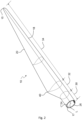
- Fig. 2 shows a schematic view of an exemplary wind turbine blade 10.
- the wind turbine blade 10 has the shape of a conventional wind turbine blade with a root end 17 and a tip end 15 and comprises a root region 30 closest to the hub, a profiled or an airfoil region 34 furthest away from the hub and a transition region 32 between the root region 30 and the airfoil region 34.
- the blade 10 comprises a leading edge 18 facing the direction of rotation of the blade 10, when the blade is mounted on the hub, and a trailing edge 20 facing the opposite direction of the leading edge 18.
- the root ends of the blade shell parts 24, 26 has a semi-circular or semi-oval outer cross-sectional shape.
- the blade shell parts 24, 26 define the aerodynamic shape of the wind turbine blade but require a main laminate to have the load carrying structure to support the weight of the wind turbine blade.
- Figure 3 shows a schematic view of a proximal and a distal mould 44, 46 for a first blade half shell part 24 of root and tip blade segments 11, 12, respectively, arranged end-to-end at a respective joint end 11a, 12a.
- a root blade shell part 24 is positioned on a mould surface of the proximal mould 11.
- a main laminate 50 is positioned on the blade shell part 24 and 50 is configured for forming the load carrying structure of the root blade segment 11 together with a corresponding second main laminate on a second blade shell part (not shown).
- the main laminates are intended to be connected via webs (not shown).
- the main laminate 50 extends in a spanwise direction L from a proximal end 51 through a transition region 52 to a distal end 53.
- the proximal end 51 of the main laminate 50 is located in the root region 30 of the root of the wind turbine blade and the distal end 53 of the main laminate 50 is located in the airfoil region 34 of the wind turbine blade 10.
- the transition region 52 of the main laminate 50 is located in the airfoil region 34 of the wind turbine blade 10.
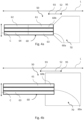
- transition portion 60b of the pultrusion portion 60 and the transition portion 70b of the plurality of fibre-reinforced elements 70 are connected by a joint 80, 81, 82 in the transition region 52 of the main laminate 50, see Figs. 5a-6b .
- the plurality of fibre-reinforced elements 70 is a combination of non-pultruded preform elements and non-pultruded unidirectional sheets reinforced with carbon and glass fibres.
- the transition region 52 of the main laminate 55 is bounded by second and fifth locations 92, 95 along the spanwise extend of the main laminate 5.
- the chordwise width of the plurality of fibre-reinforced elements 70 adjacent to the transition region 52 at the fifth location 95 of main laminate 50 is wider the chordwise width of the pultrusion portion 60 adjacent to the transition region 52 at the third location 93 of the main laminate 50 and a maximum width of the pultrusion portion 60 as can be seen in Figs. 4a-4b .
- the pultrusion portion 60 comprises first and second bottom pultrusion elements 61, 63 and further an intermediate bottom pultrusion element which are arranged in three rows, i.e. a first, an intermediate, and a second row, and a single column similarly to the arrangement in Fig. 4a but wherein the proximal and distal columns are combined in the single column.
- the plurality of fibre-reinforced elements 70 overlap with the pultrusion portion in the transition region 52 along the spanwise direction L.
- the plurality of fibre-reinforced elements has a constant width along the spanwise direction L.
- the joint between the transition end 60b of the pultrusion portion 60 and the transition end 70b of the plurality of fibre-reinforced elements 70 is a single spanwise scarf joint in which the transition end 60b of the pultrusion portion 60 tapers so that the bottom side 55 is longer than the top side 54 and the top side 54 of the top fibre-reinforced element 72 extends further than the bottom side 55 of the bottom fibre-reinforced element 71.
- the pultrusion portion 60 overlaps the plurality of fibre-reinforced elements 70 in the spanwise direction L.
- the main laminate 50 comprises first, second, third, fourth, fifth, and sixth locations 91, 92, 93, 94, 95, 96 located along the spanwise extent of the main laminate 50.
- the first location 91 is located at the proximal end of the main laminate 50 and the sixth location 96 is located at the distal end of the main laminate 50.
- the transition end 60a of the pultrusion portion 60 is located at the third location 93 and an opposite end, i.e. the proximal end, of the pultrusion portion 60 is located at the first location 91, and the second location 92 is located between the first and third locations 91, 93.
- the transition end 70a of the plurality of fibre-reinforced elements 70 is located at the fourth location 94, and an opposite end, i.e. the distal end, of the plurality of fibre-reinforced elements 70 is located at the sixth location 96, and the fifth location 95 is located between the fourth and sixth locations 94, 96.
- the second location 92 is located between the first and fourth locations 91, 94, and the fifth location 95 is located between the third and sixth locations 93, 96.
- the transition region 52 of the main laminate 55 is bounded by the second and the fifth locations 92, 95.
- the thickness of the pultrusion portion 60 in the thickness direction T adjacent to the transition region 52 at the third location 93 of the main laminate 50 is thicker than the thickness of the plurality of fibre-reinforced elements 70 in the thickness direction T adjacent to the transition region 52 at the fifth location 95 of the main laminate 50 and the maximum thickness of the plurality of fibre-reinforced elements 70 as seen in the Figs. 5a-5b .
- the joint between the transition end 60b of the pultrusion portion 60 and the transition end 70b of the plurality of fibre-reinforced elements 70 is a spanwise butt joint.
- the gap between transition ends 60b, 70b are shown for illustrative purposes, in practice the ends are arranged end-to-end without a gap.
- the third and fourth position 93, 94 would, if shown, coincide as the joint is a butt joint.
Landscapes
- Engineering & Computer Science (AREA)
- Mechanical Engineering (AREA)
- Chemical & Material Sciences (AREA)
- Life Sciences & Earth Sciences (AREA)
- Sustainable Development (AREA)
- Sustainable Energy (AREA)
- Combustion & Propulsion (AREA)
- General Engineering & Computer Science (AREA)
- Composite Materials (AREA)
- Physics & Mathematics (AREA)
- Fluid Mechanics (AREA)
- Wind Motors (AREA)
Claims (15)
- Hauptlaminat (50), das eine lasttragende Struktur für einen Windkraftanlagenflügel (10) bildet, wobei sich das Hauptlaminat in einer Spannenrichtung (L) von einem proximalen Ende (51) durch einen Übergangsbereich (52) zu einem distalen Ende (53) erstreckt, wobei das Hauptlaminat Folgendes umfasst:- eine Oberseite (54), die dazu konfiguriert ist, dem Inneren des Windkraftanlagenflügels zugewandt zu sein, eine Unterseite (55) gegenüber von der Oberseite und eine Dickenrichtung (T), die sich zwischen der Oberseite und der Unterseite erstreckt,- einen Pultrusionsabschnitt (60), umfassend ein unterstes Pultrusionselement (61, 62), das sich in der Spannenrichtung von dem proximalen Ende zu einem in dem Übergangsbereich des Hauptlaminats liegenden Übergangsende (60a) erstreckt, wobei der Pultrusionsabschnitt einen Übergangsabschnitt (60b) an dem Übergangsende aufweist, wobei das unterste Pultrusionselement einen ersten Teil der Unterseite des Hauptlaminats bildet,- eine Vielzahl von faserverstärkten Elementen (70), umfassend ein unterstes und ein oberstes faserverstärktes Element (71, 72), die sich in der Spannenrichtung von dem distalen Ende zu einem in dem Übergangsbereich des Hauptlaminats liegenden Übergangsende (70a) erstrecken, wobei die Vielzahl von faserverstärkten Elementen einen Übergansabschnitt (70b) an dem Übergangsende aufweist, wobei das unterste faserverstärkte Element einen zweiten Teil der Unterseite des Hauptlaminats bildet, wobei die Vielzahl von faserverstärkten Elementen von dem untersten faserverstärkten Element zu dem obersten faserverstärkten Element in der Dickenrichtung gestapelt ist;wobei der Übergangsabschnitt des Pultrusionsabschnitts und der Übergangsabschnitt der Vielzahl von faserverstärkten Elementen durch eine Verbindung (80) in dem Übergangsbereich des Hauptlaminats verbunden sind, dadurch gekennzeichnet, dass eine in Sehnenrichtung weisende Seite des Übergangsabschnitts des Pultrusionsabschnitts und eine in Sehnenrichtung weisende Seite des Übergangsabschnitts der Vielzahl von faserverstärkten Elementen durch eine Verbindung (81, 82) verbunden sind.
- Hauptlaminat nach einem der vorangehenden Ansprüche, wobei die Vielzahl von faserverstärkten Elementen in der Form mindestens einer faserverstärkten Bahn, mindestens einer faserverstärkten Lage und/oder mindestens einem faserverstärkten Vorformelement vorliegt.
- Hauptlaminat nach einem der vorangehenden Ansprüche, wobei der Pultrusionsabschnitt ein oberstes Pultrusionselement (65, 66) umfasst, das einen Teil der Oberseite des Hauptlaminats bildet, wobei die Pultrusionselemente von dem untersten Pultrusionselement zu dem obersten Pultrusionselement in der Dickenrichtung gestapelt sind.
- Hauptlaminat nach einem der vorangehenden Ansprüche, wobei das unterste Pultrusionselement ein erstes unterstes Pultrusionselement (61, 62) ist und wobei der Pultrusionsabschnitt ein zweites unterstes Pultrusionselement (63, 64) umfasst, das in Sehnenrichtung Seite-an-Seite mit dem ersten untersten Pultrusionselement angeordnet ist.
- Hauptlaminat nach einem der vorangehenden Ansprüche, wobei das unterste Pultrusionselement ein distales unterstes Pultrusionselement (61, 63) ist und wobei der Pultrusionsabschnitt ein proximales unterstes Pultrusionselement (62, 64) umfasst, das Endean-Ende und in Verlängerung des distalen untersten Pultrusionselements angeordnet ist.
- Hauptlaminat nach einem der vorangehenden Ansprüche, wobei die Verbindung eine Schrägstoßverbindung, vorzugsweise eine Schrägstoßverbindung mit einer Schräge ist.
- Hauptlaminat nach einem der vorangehenden Ansprüche, wobei die in Sehnenrichtung weisende Seite des Übergangsabschnitts des Pultrusionsabschnitts und die in Sehnenrichtung weisende Seite des Übergangsabschnitts der Vielzahl von faserverstärkten Elementen durch eine Schrägstoßverbindung (81, 82) verbunden sind.
- Hauptlaminat nach einem der vorangehenden Ansprüche, umfassend einen ersten, einen zweiten, einen dritten, einen vierten, einen fünften und einen sechsten Ort (91, 92, 93, 94, 95, 96), die entlang des Ausmaßes in Spannenrichtung des Hauptlaminats liegen, wobei der erste Ort (91) an dem proximalen Ende des Hauptlaminats liegt und der sechste Ort (96) an dem distalen Ende des Hauptlaminats liegt, wobei der Übergangsbereich des Hauptlaminats durch den zweiten Ort (92) und den fünften Ort (95) eingegrenzt ist,wobei das Übergangsende des Pultrusionsabschnitts an dem dritten Ort (93) liegt und ein gegenüberliegendes Ende des Pultrusionsabschnitts an dem ersten Ort liegt, wobei der zweite Ort (92) zwischen dem ersten und dem dritten Ort liegt undwobei das Übergangsende der Vielzahl von faserverstärkten Elementen an dem vierten Ort (94) liegen kann und ein gegenüberliegendes Ende der Vielzahl von faserverstärkten Elementen an dem sechsten Ort liegen kann, wobei der fünfte Ort zwischen dem vierten und dem sechsten Ort liegt.
- Windkraftanlagenflügel (10), der sich entlang einer Längsachse (L) von einer Wurzel (17) zu einer Spitze (15) erstreckt, wobei der Windkraftanlagenflügel einen Wurzelbereich (30) und einen Tragflächenbereich (34) mit der Spitze umfasst, wobei der Windkraftanlagenflügel eine Druckseite (24), eine Saugseite (26) und eine sich zwischen einer Eintrittskante (18) und einer Austrittskante (20) ersteckende Sehnenlinie (C) umfasst, wobei der Windkraftanlagenflügel eine die aerodynamische Form des Windkraftanlagenflügels bereitstellende Schale (13) und ein Hauptlaminat (50) nach einem der vorangehenden Ansprüche umfasst, wobei das Hauptlaminat eine lasttragende Struktur des Windkraftanlagenflügels bildet und die Unterseite des Hauptlaminats auf der Schale positioniert ist.
- Windkraftanlagenflügel nach dem vorangehenden Anspruch, wobei das proximale Ende des Hauptlaminats in dem Wurzelbereich oder an der Wurzel des Windkraftanlagenflügels liegt und das distale Ende des Hauptlaminats in dem Tragflächenbereich oder an der Spitze des Windkraftanlagenflügels liegt und wobei der Übergangsbereich des Hauptlaminats in dem Tragflächenbereich des Windkraftanlagenflügels liegt.
- Windkraftanlagenflügelsegment für einen Windkraftanlagenflügel nach einem der Ansprüche 9-10, wobei sich das Windkraftanlagenflügelsegment entlang einer Längsachse von einer Wurzel zu einem zum Verbinden, optional durch eine Zapfenstoßverbindung, mit einem anderen Windkraftanlagenflügelsegment konfigurierten distalen Ende erstreckt, wobei das Windkraftanlagenflügelsegment einen Wurzelbereich und einen Tragflächenbereich mit dem distalen Ende umfasst, wobei der Windkraftanlagenflügel eine Druckseite, eine Saugseite und eine sich zwischen einer Eintrittskante und einer Austrittskante erstreckende Sehnenlinie umfasst, wobei das Windkraftanlagenflügelsegment eine die aerodynamische Form des Windkraftanlagenflügelsegments definierende Schale und ein Hauptlaminat nach einem der Ansprüche 1-8 umfasst, wobei das Hauptlaminat eine lasttragende Struktur des Windkraftanlagenflügelsegments bildet und die Unterseite des Hauptlaminats auf der Schale positioniert ist.
- Windkraftanlagenflügelsegment nach Anspruch 11, wobei das proximale Ende des Hauptlaminats in dem Wurzelbereich oder an der Wurzel des Windkraftanlagenflügelsegments liegt und das distale Ende des Hauptlaminats in dem Tragflächenbereich oder an dem distalen Ende des Windkraftanlagenflügelsegments liegt und wobei der Übergangsbereich des Hauptlaminats in dem Tragflächenbereich des Windkraftanlagenflügelsegments liegt.
- Verfahren zum Herstellen eines Hauptlaminats für einen Windkraftanlagenflügel, wobei sich das Hauptlaminat in einer Spannenrichtung von einem proximalen Ende durch einen Übergangsbereich zu einem distalen Ende erstreckt und eine Unterseite, die dazu konfiguriert ist, einer Schale des Windkraftanlagenflügels zugewandt zu sein, eine Oberseite, die dazu konfiguriert ist, dem Inneren des Windkraftanlagenflügels zugewandt zu sein, und eine Dickenrichtung, die sich zwischen der Unterseite und der Oberseite erstreckt, umfasst, wobei das Verfahren die folgenden Schritte umfasst:- Bereitstellen:∘ eines Pultrusionsabschnitts, umfassend ein unterstes Pultrusionselement, das sich in der Spannenrichtung zu einem Übergangsende erstreckt, wobei der Pultrusionsabschnitt einen Übergangsabschnitt an dem Übergangsende aufweist, und∘ einer Vielzahl von faserverstärkten Elementen, umfassend ein unterstes und ein oberstes faserverstärktes Element, die sich in der Spannenrichtung zu einem Übergangsende erstrecken, wobei die Vielzahl von faserverstärkten Elementen einen Übergangsabschnitt an dem Übergangsende aufweist,- Positionieren des untersten Pultrusionselements und des untersten faserverstärkten Elements in Verlängerung voneinander, sodass das Übergangsende des untersten faserverstärkten Elements dem Übergangsende des untersten Pultrusionselements benachbart und zugewandt ist,- Stapeln der Vielzahl von faserverstärkten Elementen in der Dickenrichtung von dem untersten faserverstärkten Element zu dem obersten faserverstärkten Element,- Härten des Pultrusionsabschnitts und der Vielzahl von faserverstärkten Elementen, wodurch eine Verbindung zwischen dem Übergangsabschnitt des Pultrusionsabschnitts und dem Übergangsabschnitt der Vielzahl von faserverstärkten Elementen gebildet wird, und Verbinden einer in Sehnenrichtung weisenden Seite des Übergangsabschnitts des Pultrusionsabschnitts und einer in Sehnenrichtung weisenden Seite des Übergangsabschnitts der Vielzahl von faserverstärkten Elementen durch eine Verbindung, vorzugsweise eine Schrägstoßverbindung.
- Verfahren zum Herstellen eines Windkraftanlagenflügels, der sich entlang einer Längsachse von einer Wurzel zu einer Spitze erstreckt, wobei der Windkraftanlagenflügel einen Wurzelbereich und einen Tragflächenbereich mit der Spitze umfasst, wobei der Windkraftanlagenflügel eine Druckseite, eine Saugseite und eine sich zwischen einer Eintrittskante und einer Austrittskante erstreckende Sehnenlinie umfasst, wobei der Windkraftanlagenflügel eine die aerodynamische Form des Windkraftanlagenflügels bereitstellende Schale und ein eine lasttragende Struktur des Windkraftanlagenflügels bildendes Hauptlaminat umfasst, wobei das Verfahren die folgenden Schritte umfasst:- Bereitstellen einer Schale, die dazu konfiguriert ist, die aerodynamische Form des Windkraftanlagenflügels bereitzustellen,- Ausführen eines Verfahrens nach Anspruch 13, wobei das unterste Pultrusionselement und das unterste faserverstärkte Element in Verlängerung voneinander auf der Schale des Windkraftanlagenflügels positioniert werden.
- Verfahren nach einem der Ansprüche 13-14, wobei es sich bei dem Pultrusionsabschnitt um eine das unterste Pultrusionselement und ein oberstes Pultrusionselement umfassende Vielzahl von Pultrusionselementen handelt, wobei sich die Vielzahl von Pultrusionselementen in der Spannenrichtung zu dem Übergangsende des Pultrusionsabschnitts erstreckt und wobei der Schritt des Positionieren des Pultrusionsabschnitts Folgendes umfasst:- Stapeln der Vielzahl von Pultrusionselementen in der Dickenrichtung von dem untersten Pultrusionselement zu dem obersten Pultrusionselement, sodass das Übergangsende des Pultrusionsabschnitts dem Übergangsende der Vielzahl von faserverstärkten Elementen benachbart positioniert wird.
Priority Applications (1)
| Application Number | Priority Date | Filing Date | Title |
|---|---|---|---|
| PL20722221.7T PL4132776T3 (pl) | 2020-04-07 | 2020-04-07 | Laminat główny, łopata turbiny wiatrowej zawierająca taki laminat główny i sposoby wytwarzania |
Applications Claiming Priority (1)
| Application Number | Priority Date | Filing Date | Title |
|---|---|---|---|
| PCT/EP2020/059844 WO2021204357A1 (en) | 2020-04-07 | 2020-04-07 | Main laminate |
Publications (2)
| Publication Number | Publication Date |
|---|---|
| EP4132776A1 EP4132776A1 (de) | 2023-02-15 |
| EP4132776B1 true EP4132776B1 (de) | 2024-07-03 |
Family
ID=70470976
Family Applications (1)
| Application Number | Title | Priority Date | Filing Date |
|---|---|---|---|
| EP20722221.7A Active EP4132776B1 (de) | 2020-04-07 | 2020-04-07 | Hauptlaminat, windturbinenschaufel umfassend ein solches hauptlaminat und herstellungsverfahren. |
Country Status (7)
| Country | Link |
|---|---|
| US (1) | US12005655B2 (de) |
| EP (1) | EP4132776B1 (de) |
| CN (1) | CN114096400A (de) |
| DK (1) | DK4132776T3 (de) |
| ES (1) | ES2989668T3 (de) |
| PL (1) | PL4132776T3 (de) |
| WO (1) | WO2021204357A1 (de) |
Families Citing this family (1)
| Publication number | Priority date | Publication date | Assignee | Title |
|---|---|---|---|---|
| EP4453410A1 (de) * | 2021-12-21 | 2024-10-30 | Vestas Wind Systems A/S | Windturbinenschaufel |
Family Cites Families (7)
| Publication number | Priority date | Publication date | Assignee | Title |
|---|---|---|---|---|
| US20140271217A1 (en) | 2013-03-15 | 2014-09-18 | Modular Wind Energy, Inc. | Efficient wind turbine blade design and associated manufacturing methods using rectangular spars and segmented shear web |
| US20160160837A1 (en) * | 2014-12-04 | 2016-06-09 | General Electric Company | Pultruded rotor blade components having interlocking edges |
| US10465653B2 (en) * | 2017-06-21 | 2019-11-05 | General Electric Company | Wind turbine blade with hybrid spar cap and associated method for making |
| CN112512784B (zh) | 2018-06-11 | 2022-05-24 | 维斯塔斯风力系统有限公司 | 风力涡轮机叶片翼梁结构及其制造方法 |
| WO2020086080A1 (en) | 2018-10-25 | 2020-04-30 | General Electric Company | Spar cap configuration for a jointed wind turbine blade |
| DK3643912T3 (da) * | 2018-10-25 | 2026-01-19 | Lm Wind Power As | En vindmøllevinge med flere bjælkeflanger |
| EP3946909B1 (de) | 2019-03-29 | 2023-10-18 | LM Wind Power A/S | Herstellung eines verstärkten mantelteils einer windturbinenschaufel |
-
2020
- 2020-04-07 US US17/801,363 patent/US12005655B2/en active Active
- 2020-04-07 EP EP20722221.7A patent/EP4132776B1/de active Active
- 2020-04-07 WO PCT/EP2020/059844 patent/WO2021204357A1/en not_active Ceased
- 2020-04-07 DK DK20722221.7T patent/DK4132776T3/da active
- 2020-04-07 ES ES20722221T patent/ES2989668T3/es active Active
- 2020-04-07 PL PL20722221.7T patent/PL4132776T3/pl unknown
- 2020-04-07 CN CN202080001027.6A patent/CN114096400A/zh active Pending
Also Published As
| Publication number | Publication date |
|---|---|
| US20230071090A1 (en) | 2023-03-09 |
| PL4132776T3 (pl) | 2025-01-13 |
| ES2989668T3 (es) | 2024-11-27 |
| US12005655B2 (en) | 2024-06-11 |
| CN114096400A (zh) | 2022-02-25 |
| WO2021204357A1 (en) | 2021-10-14 |
| EP4132776A1 (de) | 2023-02-15 |
| DK4132776T3 (da) | 2024-09-23 |
Similar Documents
| Publication | Publication Date | Title |
|---|---|---|
| EP3488100B1 (de) | Windturbinenschaufel mit flachem rückseitenelement und zugehöriges verfahren | |
| CN107636303B (zh) | 具有后缘间隔部分的风力涡轮机叶片 | |
| EP3112668A1 (de) | Blattwurzelsektion für modulares rotorblatt und verfahren zur herstellung davon | |
| EP4135970B1 (de) | Verfahren zur herstellung einer windturbinenschaufel mit einer luftheizanordnung | |
| US12392317B2 (en) | Wind turbine blade and method for producing a wind turbine blade | |
| US12049865B2 (en) | Wind turbine blade with a plurality of shear webs | |
| US12546285B2 (en) | Wind turbine blade | |
| EP4150205B1 (de) | Schaufelhüllenabschnitt und windturbinenschaufel mit einem schaufelhüllenabschnitt | |
| EP4132776B1 (de) | Hauptlaminat, windturbinenschaufel umfassend ein solches hauptlaminat und herstellungsverfahren. | |
| US20240018938A1 (en) | Wind turbine blade having buckling-resistant spar caps | |
| EP4174310B1 (de) | Segmentiertes windturbinenrotorblatt | |
| EP4013959B1 (de) | Windturbinenschaufelbaugruppe und verfahren zur herstellung einer windturbinenschaufel | |
| CN117795190A (zh) | 用于带接头的风力涡轮叶片的带翼的翼梁帽构造 | |
| EP4707584A1 (de) | Windturbinenrotorblatt und verfahren zur herstellung eines windturbinenrotorblatts | |
| CA3031137C (en) | Wind turbine blade with flatback segment and related method | |
| WO2025185842A1 (en) | Methods for retrofitting or manufacturing a wind turbine blade or wind turbine blade part |
Legal Events
| Date | Code | Title | Description |
|---|---|---|---|
| STAA | Information on the status of an ep patent application or granted ep patent |
Free format text: STATUS: UNKNOWN |
|
| STAA | Information on the status of an ep patent application or granted ep patent |
Free format text: STATUS: THE INTERNATIONAL PUBLICATION HAS BEEN MADE |
|
| PUAI | Public reference made under article 153(3) epc to a published international application that has entered the european phase |
Free format text: ORIGINAL CODE: 0009012 |
|
| STAA | Information on the status of an ep patent application or granted ep patent |
Free format text: STATUS: REQUEST FOR EXAMINATION WAS MADE |
|
| 17P | Request for examination filed |
Effective date: 20221104 |
|
| AK | Designated contracting states |
Kind code of ref document: A1 Designated state(s): AL AT BE BG CH CY CZ DE DK EE ES FI FR GB GR HR HU IE IS IT LI LT LU LV MC MK MT NL NO PL PT RO RS SE SI SK SM TR |
|
| P01 | Opt-out of the competence of the unified patent court (upc) registered |
Effective date: 20230522 |
|
| DAX | Request for extension of the european patent (deleted) | ||
| RAV | Requested validation state of the european patent: fee paid |
Extension state: MA Effective date: 20221104 |
|
| GRAP | Despatch of communication of intention to grant a patent |
Free format text: ORIGINAL CODE: EPIDOSNIGR1 |
|
| STAA | Information on the status of an ep patent application or granted ep patent |
Free format text: STATUS: GRANT OF PATENT IS INTENDED |
|
| INTG | Intention to grant announced |
Effective date: 20231013 |
|
| GRAJ | Information related to disapproval of communication of intention to grant by the applicant or resumption of examination proceedings by the epo deleted |
Free format text: ORIGINAL CODE: EPIDOSDIGR1 |
|
| STAA | Information on the status of an ep patent application or granted ep patent |
Free format text: STATUS: REQUEST FOR EXAMINATION WAS MADE |
|
| INTC | Intention to grant announced (deleted) | ||
| GRAP | Despatch of communication of intention to grant a patent |
Free format text: ORIGINAL CODE: EPIDOSNIGR1 |
|
| STAA | Information on the status of an ep patent application or granted ep patent |
Free format text: STATUS: GRANT OF PATENT IS INTENDED |
|
| INTG | Intention to grant announced |
Effective date: 20240222 |
|
| GRAS | Grant fee paid |
Free format text: ORIGINAL CODE: EPIDOSNIGR3 |
|
| GRAA | (expected) grant |
Free format text: ORIGINAL CODE: 0009210 |
|
| STAA | Information on the status of an ep patent application or granted ep patent |
Free format text: STATUS: THE PATENT HAS BEEN GRANTED |
|
| AK | Designated contracting states |
Kind code of ref document: B1 Designated state(s): AL AT BE BG CH CY CZ DE DK EE ES FI FR GB GR HR HU IE IS IT LI LT LU LV MC MK MT NL NO PL PT RO RS SE SI SK SM TR |
|
| REG | Reference to a national code |
Ref country code: CH Ref legal event code: EP |
|
| REG | Reference to a national code |
Ref country code: DE Ref legal event code: R096 Ref document number: 602020033309 Country of ref document: DE |
|
| REG | Reference to a national code |
Ref country code: DK Ref legal event code: T3 Effective date: 20240918 |
|
| REG | Reference to a national code |
Ref country code: LT Ref legal event code: MG9D |
|
| REG | Reference to a national code |
Ref country code: NL Ref legal event code: MP Effective date: 20240703 |
|
| REG | Reference to a national code |
Ref country code: ES Ref legal event code: FG2A Ref document number: 2989668 Country of ref document: ES Kind code of ref document: T3 Effective date: 20241127 |
|
| PG25 | Lapsed in a contracting state [announced via postgrant information from national office to epo] |
Ref country code: PT Free format text: LAPSE BECAUSE OF FAILURE TO SUBMIT A TRANSLATION OF THE DESCRIPTION OR TO PAY THE FEE WITHIN THE PRESCRIBED TIME-LIMIT Effective date: 20241104 |
|
| REG | Reference to a national code |
Ref country code: AT Ref legal event code: MK05 Ref document number: 1699412 Country of ref document: AT Kind code of ref document: T Effective date: 20240703 |
|
| PG25 | Lapsed in a contracting state [announced via postgrant information from national office to epo] |
Ref country code: NL Free format text: LAPSE BECAUSE OF FAILURE TO SUBMIT A TRANSLATION OF THE DESCRIPTION OR TO PAY THE FEE WITHIN THE PRESCRIBED TIME-LIMIT Effective date: 20240703 |
|
| PG25 | Lapsed in a contracting state [announced via postgrant information from national office to epo] |
Ref country code: PT Free format text: LAPSE BECAUSE OF FAILURE TO SUBMIT A TRANSLATION OF THE DESCRIPTION OR TO PAY THE FEE WITHIN THE PRESCRIBED TIME-LIMIT Effective date: 20241104 Ref country code: NL Free format text: LAPSE BECAUSE OF FAILURE TO SUBMIT A TRANSLATION OF THE DESCRIPTION OR TO PAY THE FEE WITHIN THE PRESCRIBED TIME-LIMIT Effective date: 20240703 |
|
| PG25 | Lapsed in a contracting state [announced via postgrant information from national office to epo] |
Ref country code: NO Free format text: LAPSE BECAUSE OF FAILURE TO SUBMIT A TRANSLATION OF THE DESCRIPTION OR TO PAY THE FEE WITHIN THE PRESCRIBED TIME-LIMIT Effective date: 20241003 |
|
| PG25 | Lapsed in a contracting state [announced via postgrant information from national office to epo] |
Ref country code: FI Free format text: LAPSE BECAUSE OF FAILURE TO SUBMIT A TRANSLATION OF THE DESCRIPTION OR TO PAY THE FEE WITHIN THE PRESCRIBED TIME-LIMIT Effective date: 20240703 Ref country code: GR Free format text: LAPSE BECAUSE OF FAILURE TO SUBMIT A TRANSLATION OF THE DESCRIPTION OR TO PAY THE FEE WITHIN THE PRESCRIBED TIME-LIMIT Effective date: 20241004 |
|
| PG25 | Lapsed in a contracting state [announced via postgrant information from national office to epo] |
Ref country code: BG Free format text: LAPSE BECAUSE OF FAILURE TO SUBMIT A TRANSLATION OF THE DESCRIPTION OR TO PAY THE FEE WITHIN THE PRESCRIBED TIME-LIMIT Effective date: 20240703 |
|
| PG25 | Lapsed in a contracting state [announced via postgrant information from national office to epo] |
Ref country code: LV Free format text: LAPSE BECAUSE OF FAILURE TO SUBMIT A TRANSLATION OF THE DESCRIPTION OR TO PAY THE FEE WITHIN THE PRESCRIBED TIME-LIMIT Effective date: 20240703 |
|
| PG25 | Lapsed in a contracting state [announced via postgrant information from national office to epo] |
Ref country code: IS Free format text: LAPSE BECAUSE OF FAILURE TO SUBMIT A TRANSLATION OF THE DESCRIPTION OR TO PAY THE FEE WITHIN THE PRESCRIBED TIME-LIMIT Effective date: 20241103 Ref country code: AT Free format text: LAPSE BECAUSE OF FAILURE TO SUBMIT A TRANSLATION OF THE DESCRIPTION OR TO PAY THE FEE WITHIN THE PRESCRIBED TIME-LIMIT Effective date: 20240703 |
|
| PG25 | Lapsed in a contracting state [announced via postgrant information from national office to epo] |
Ref country code: HR Free format text: LAPSE BECAUSE OF FAILURE TO SUBMIT A TRANSLATION OF THE DESCRIPTION OR TO PAY THE FEE WITHIN THE PRESCRIBED TIME-LIMIT Effective date: 20240703 Ref country code: CZ Free format text: LAPSE BECAUSE OF FAILURE TO SUBMIT A TRANSLATION OF THE DESCRIPTION OR TO PAY THE FEE WITHIN THE PRESCRIBED TIME-LIMIT Effective date: 20240703 |
|
| PG25 | Lapsed in a contracting state [announced via postgrant information from national office to epo] |
Ref country code: RS Free format text: LAPSE BECAUSE OF FAILURE TO SUBMIT A TRANSLATION OF THE DESCRIPTION OR TO PAY THE FEE WITHIN THE PRESCRIBED TIME-LIMIT Effective date: 20241003 |
|
| PG25 | Lapsed in a contracting state [announced via postgrant information from national office to epo] |
Ref country code: RS Free format text: LAPSE BECAUSE OF FAILURE TO SUBMIT A TRANSLATION OF THE DESCRIPTION OR TO PAY THE FEE WITHIN THE PRESCRIBED TIME-LIMIT Effective date: 20241003 Ref country code: NO Free format text: LAPSE BECAUSE OF FAILURE TO SUBMIT A TRANSLATION OF THE DESCRIPTION OR TO PAY THE FEE WITHIN THE PRESCRIBED TIME-LIMIT Effective date: 20241003 Ref country code: LV Free format text: LAPSE BECAUSE OF FAILURE TO SUBMIT A TRANSLATION OF THE DESCRIPTION OR TO PAY THE FEE WITHIN THE PRESCRIBED TIME-LIMIT Effective date: 20240703 Ref country code: IS Free format text: LAPSE BECAUSE OF FAILURE TO SUBMIT A TRANSLATION OF THE DESCRIPTION OR TO PAY THE FEE WITHIN THE PRESCRIBED TIME-LIMIT Effective date: 20241103 Ref country code: HR Free format text: LAPSE BECAUSE OF FAILURE TO SUBMIT A TRANSLATION OF THE DESCRIPTION OR TO PAY THE FEE WITHIN THE PRESCRIBED TIME-LIMIT Effective date: 20240703 Ref country code: GR Free format text: LAPSE BECAUSE OF FAILURE TO SUBMIT A TRANSLATION OF THE DESCRIPTION OR TO PAY THE FEE WITHIN THE PRESCRIBED TIME-LIMIT Effective date: 20241004 Ref country code: FI Free format text: LAPSE BECAUSE OF FAILURE TO SUBMIT A TRANSLATION OF THE DESCRIPTION OR TO PAY THE FEE WITHIN THE PRESCRIBED TIME-LIMIT Effective date: 20240703 Ref country code: CZ Free format text: LAPSE BECAUSE OF FAILURE TO SUBMIT A TRANSLATION OF THE DESCRIPTION OR TO PAY THE FEE WITHIN THE PRESCRIBED TIME-LIMIT Effective date: 20240703 Ref country code: BG Free format text: LAPSE BECAUSE OF FAILURE TO SUBMIT A TRANSLATION OF THE DESCRIPTION OR TO PAY THE FEE WITHIN THE PRESCRIBED TIME-LIMIT Effective date: 20240703 Ref country code: AT Free format text: LAPSE BECAUSE OF FAILURE TO SUBMIT A TRANSLATION OF THE DESCRIPTION OR TO PAY THE FEE WITHIN THE PRESCRIBED TIME-LIMIT Effective date: 20240703 |
|
| REG | Reference to a national code |
Ref country code: DE Ref legal event code: R097 Ref document number: 602020033309 Country of ref document: DE |
|
| PG25 | Lapsed in a contracting state [announced via postgrant information from national office to epo] |
Ref country code: SM Free format text: LAPSE BECAUSE OF FAILURE TO SUBMIT A TRANSLATION OF THE DESCRIPTION OR TO PAY THE FEE WITHIN THE PRESCRIBED TIME-LIMIT Effective date: 20240703 Ref country code: RO Free format text: LAPSE BECAUSE OF FAILURE TO SUBMIT A TRANSLATION OF THE DESCRIPTION OR TO PAY THE FEE WITHIN THE PRESCRIBED TIME-LIMIT Effective date: 20240703 |
|
| PGFP | Annual fee paid to national office [announced via postgrant information from national office to epo] |
Ref country code: DK Payment date: 20250319 Year of fee payment: 6 |
|
| PG25 | Lapsed in a contracting state [announced via postgrant information from national office to epo] |
Ref country code: EE Free format text: LAPSE BECAUSE OF FAILURE TO SUBMIT A TRANSLATION OF THE DESCRIPTION OR TO PAY THE FEE WITHIN THE PRESCRIBED TIME-LIMIT Effective date: 20240703 |
|
| PGFP | Annual fee paid to national office [announced via postgrant information from national office to epo] |
Ref country code: FR Payment date: 20250319 Year of fee payment: 6 Ref country code: PL Payment date: 20250320 Year of fee payment: 6 |
|
| PG25 | Lapsed in a contracting state [announced via postgrant information from national office to epo] |
Ref country code: SK Free format text: LAPSE BECAUSE OF FAILURE TO SUBMIT A TRANSLATION OF THE DESCRIPTION OR TO PAY THE FEE WITHIN THE PRESCRIBED TIME-LIMIT Effective date: 20240703 Ref country code: IT Free format text: LAPSE BECAUSE OF FAILURE TO SUBMIT A TRANSLATION OF THE DESCRIPTION OR TO PAY THE FEE WITHIN THE PRESCRIBED TIME-LIMIT Effective date: 20240703 |
|
| PGFP | Annual fee paid to national office [announced via postgrant information from national office to epo] |
Ref country code: GB Payment date: 20250319 Year of fee payment: 6 |
|
| PLBE | No opposition filed within time limit |
Free format text: ORIGINAL CODE: 0009261 |
|
| STAA | Information on the status of an ep patent application or granted ep patent |
Free format text: STATUS: NO OPPOSITION FILED WITHIN TIME LIMIT |
|
| 26N | No opposition filed |
Effective date: 20250404 |
|
| PGFP | Annual fee paid to national office [announced via postgrant information from national office to epo] |
Ref country code: DE Payment date: 20250319 Year of fee payment: 6 |
|
| PGFP | Annual fee paid to national office [announced via postgrant information from national office to epo] |
Ref country code: ES Payment date: 20250502 Year of fee payment: 6 |
|
| PG25 | Lapsed in a contracting state [announced via postgrant information from national office to epo] |
Ref country code: SE Free format text: LAPSE BECAUSE OF FAILURE TO SUBMIT A TRANSLATION OF THE DESCRIPTION OR TO PAY THE FEE WITHIN THE PRESCRIBED TIME-LIMIT Effective date: 20240703 |
|
| REG | Reference to a national code |
Ref country code: CH Ref legal event code: H13 Free format text: ST27 STATUS EVENT CODE: U-0-0-H10-H13 (AS PROVIDED BY THE NATIONAL OFFICE) Effective date: 20251125 |
|
| PG25 | Lapsed in a contracting state [announced via postgrant information from national office to epo] |
Ref country code: LU Free format text: LAPSE BECAUSE OF NON-PAYMENT OF DUE FEES Effective date: 20250407 |
|
| PG25 | Lapsed in a contracting state [announced via postgrant information from national office to epo] |
Ref country code: MC Free format text: LAPSE BECAUSE OF FAILURE TO SUBMIT A TRANSLATION OF THE DESCRIPTION OR TO PAY THE FEE WITHIN THE PRESCRIBED TIME-LIMIT Effective date: 20240703 |
|
| REG | Reference to a national code |
Ref country code: BE Ref legal event code: MM Effective date: 20250430 |
|
| PG25 | Lapsed in a contracting state [announced via postgrant information from national office to epo] |
Ref country code: BE Free format text: LAPSE BECAUSE OF NON-PAYMENT OF DUE FEES Effective date: 20250430 |
|
| PG25 | Lapsed in a contracting state [announced via postgrant information from national office to epo] |
Ref country code: CH Free format text: LAPSE BECAUSE OF NON-PAYMENT OF DUE FEES Effective date: 20250430 |