EP4132104A1 - Communication method and related device - Google Patents
Communication method and related device Download PDFInfo
- Publication number
- EP4132104A1 EP4132104A1 EP20929258.0A EP20929258A EP4132104A1 EP 4132104 A1 EP4132104 A1 EP 4132104A1 EP 20929258 A EP20929258 A EP 20929258A EP 4132104 A1 EP4132104 A1 EP 4132104A1
- Authority
- EP
- European Patent Office
- Prior art keywords
- pscell
- terminal device
- information
- configuration
- change
- Prior art date
- Legal status (The legal status is an assumption and is not a legal conclusion. Google has not performed a legal analysis and makes no representation as to the accuracy of the status listed.)
- Granted
Links
Images






Classifications
-
- H—ELECTRICITY
- H04—ELECTRIC COMMUNICATION TECHNIQUE
- H04W—WIRELESS COMMUNICATION NETWORKS
- H04W36/00—Hand-off or reselection arrangements
- H04W36/0005—Control or signalling for completing the hand-off
- H04W36/0055—Transmission or use of information for re-establishing the radio link
- H04W36/0069—Transmission or use of information for re-establishing the radio link in case of dual connectivity, e.g. decoupled uplink/downlink
-
- H—ELECTRICITY
- H04—ELECTRIC COMMUNICATION TECHNIQUE
- H04W—WIRELESS COMMUNICATION NETWORKS
- H04W36/00—Hand-off or reselection arrangements
- H04W36/08—Reselecting an access point
-
- H—ELECTRICITY
- H04—ELECTRIC COMMUNICATION TECHNIQUE
- H04W—WIRELESS COMMUNICATION NETWORKS
- H04W36/00—Hand-off or reselection arrangements
- H04W36/24—Reselection being triggered by specific parameters
- H04W36/30—Reselection being triggered by specific parameters by measured or perceived connection quality data
- H04W36/305—Handover due to radio link failure
-
- H—ELECTRICITY
- H04—ELECTRIC COMMUNICATION TECHNIQUE
- H04W—WIRELESS COMMUNICATION NETWORKS
- H04W36/00—Hand-off or reselection arrangements
- H04W36/34—Reselection control
- H04W36/36—Reselection control by user or terminal equipment
- H04W36/362—Conditional handover
-
- H—ELECTRICITY
- H04—ELECTRIC COMMUNICATION TECHNIQUE
- H04W—WIRELESS COMMUNICATION NETWORKS
- H04W76/00—Connection management
- H04W76/10—Connection setup
- H04W76/15—Setup of multiple wireless link connections
-
- H—ELECTRICITY
- H04—ELECTRIC COMMUNICATION TECHNIQUE
- H04W—WIRELESS COMMUNICATION NETWORKS
- H04W76/00—Connection management
- H04W76/30—Connection release
- H04W76/34—Selective release of ongoing connections
Definitions
- the disclosure relates to the technical field of communication, and more particularly to methods for communication and related products.
- a dual-connectivity (DC) communication system In mobile communication, for improving data throughput of devices, a dual-connectivity (DC) communication system is introduced. According to the system, throughput of a terminal device that has been accessed to a primary cell (PCell) and is in a connected state can be increased, and also extra frequency spectrum resources can be allocated to the terminal device by using a cell in a secondary base station.
- DC communication system such as a DC-technology-based 5 th generation (5G) (or called new radio (NR)) system, primary secondary cell (PSCell) addition/change is often involved.
- 5G DC-technology-based 5 th generation
- NR new radio
- Methods for communication and related products are provided in implementations of the disclosure, which help to improve a reliability of adjustment on information for triggering primary secondary cell (PSCell) addition/change by a network side, thereby reducing occurrence of a failure of access to a PSCell or a radio link failure (RLF) after the PSCell is accessed.
- PSCell primary secondary cell
- RLF radio link failure
- a method for communication includes the following.
- a terminal device determines a failure of access to a target PSCell or an RLF after the target PSCell is accessed.
- the terminal device transmits a secondary cell group (SCG) failure report to a first network node, where the SCG failure report includes first indication information, and the first indication information indicates type information of PSCell addition/change.
- SCG secondary cell group
- a method for communication includes the following.
- a network node receives an SCG failure report transmitted by a terminal device, where the SCG failure report includes first indication information, and the first indication information indicates type information of PSCell addition/change.
- the network node modifies information for triggering PSCell addition/change according to the SCG failure report.
- a terminal device in implementations of the disclosure.
- the terminal device includes a processing unit and a transmitting unit.
- the processing unit is configured to determine a failure of access to a target PSCell or an RLF after the target PSCell is accessed.
- the transmitting unit is configured to transmit an SCG failure report to a first network node, where the SCG failure report includes first indication information, and the first indication information indicates type information of PSCell addition/change.
- a network device in implementations of the disclosure.
- the network device includes a receiving unit and a processing unit.
- the receiving unit is configured to receive an SCG failure report transmitted by a terminal device, where the SCG failure report includes first indication information, and the first indication information indicates type information of PSCell addition/change.
- the processing unit is configured to modify information for triggering PSCell addition/change according to the SCG failure report.
- a terminal device in implementations of the disclosure.
- the terminal device includes a processor, a memory, and one or more programs.
- the terminal device further includes a transceiver.
- the one or more programs are stored in the memory and configured to be performed by the processor, and the one or more programs include instructions used for performing the operations of any one of the methods in the first aspect of implementations of the disclosure.
- a network device in implementations of the disclosure.
- the network device includes a processor, a memory, and one or more programs.
- the network device further includes a transceiver.
- the one or more programs are stored in the memory and configured to be performed by the processor, and the one or more programs include instructions used for performing the operations of any one of the methods in the second aspect of implementations of the disclosure.
- a computer-readable storage medium in implementations of the disclosure.
- the computer-readable storage medium is configured to store computer programs, where the computer programs enable a computer to perform part of or all of the operations of the methods illustrated in the first aspect and/or the second aspect of implementations of the disclosure.
- a computer program product in implementations of the disclosure.
- the computer program product includes a non-transitory computer-readable storage medium that stores computer programs.
- the computer programs are operable with a computer to perform part of or all of the operations of the methods illustrated in the first aspect and/or the second aspect of the implementations of the disclosure.
- the computer program product may be a software installation package.
- the terminal device can transmit to the first network node the SCG failure report including the first indication information, to indicate the type information of PSCell addition/change according to the first indication information, such that the network side can correspondingly adjust the information for triggering PSCell addition/change according to the SCG failure report, thereby improving a reliability of adjustment and reducing occurrence of a failure of access to a PSCell or an RLF.
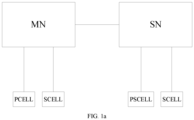
- FIG. 1a is a schematic diagram illustrating a DC architecture provided in implementations of the disclosure. As illustrated in FIG.
- the system includes a master node (MN), a secondary node (SN), a primary cell (PCell) in the MN, a secondary cell (SCell) in the MN, a PCell in the SN, i.e., a primary secondary cell (PSCell), and a SCell in the SN, and a terminal device can be simultaneously connected with a cell in the MN and a cell in the SN.
- MN master node
- SN secondary node
- PCell primary cell
- SCell secondary cell
- PSCell primary secondary cell
- SCell SCell in the SN
- PSCell addition/change for an SN which is also called SN addition/change
- the PSCell addition/change is further classified as conventional PSCell addition/change and conditional PSCell addition/change (CPAC).
- CPAC conditional PSCell addition/change
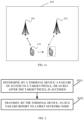
- FIG. 1b is a schematic diagram illustrating conventional PSCell addition provided in the disclosure.
- the conventional PSCell addition can include the following.
- an MN pre-communicates with one or more candidate target SNs and transmits reserved resources to a terminal device.
- a measurement result of a certain measurement object in multiple measurement objects (or measurement targets) measured by the terminal device meets a corresponding condition-trigger (cond-trigger) configuration (or called a condition, a triggering condition, etc.)
- the terminal device can add a PSCell corresponding to the measurement object that meets the condition.
- PSCell change includes two cases where one is that an MN triggers SN change and the other is that an SN triggers SN change, where a difference between the two cases lies in an executor that initiates change.
- an MN directly initiates an addition request to a target SN, and for the latter, a source SN transmits a change request to an MN first. That is to say, for the former, related configuration information for change is configured by an MN, and for the latter, related configuration information for change is configured by an SN.
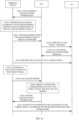
- FIG. 1c is a schematic diagram illustrating conventional PSCell change provided in the disclosure, where the procedure is that an SN triggers SN change.
- the procedure can include the following.
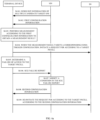
- FIG. 1d is another schematic diagram illustrating conventional PSCell change provided in the disclosure.
- a case that an MN triggers SN change can include the following.
- an MN pre-communicates with one or more candidate target SNs and transmits reserved resources to the terminal device.
- a measurement result of a measurement object measured by the terminal device meets a corresponding con-trigger configuration
- access to a PSCell corresponding to the measurement object that meets the condition can be initiated, and a source SN is changed to a target SN corresponding to the PSCell.
- an access failure or an RLF after the PSCell is accessed may occur.
- the terminal device can report failure information such as an SCG failure report to the network side such as an MN or an SN, and thus the network side can perform targeted modification on information for triggering PSCell addition/change, according to failure information such as a type of PSCell addition/change, thereby improving an access reliability and reducing occurrence of failures.
- FIG. 1e is an architectural diagram illustrating a communication system provided in implementations of the disclosure.
- the communication system 100 may include at least one network node, such as a first network node 101 and a second network node 102, and a terminal device, such as a terminal device 110.
- the network node may be a base station, such as a NodeB (NB), an evolved NodeB (eNB), and a next generation (NG) NodeB (gNB).
- NB NodeB
- eNB evolved NodeB
- gNB next generation NodeB
- the first network node is a master eNB (MeNB)
- the second network node is a secondary eNB (SeNB).
- the first network node is a master gNB (MgNB)
- the second network node is a secondary gNB (SgNB).
- the terminal device may also be called an access terminal, a subscriber unit, a subscriber station, a mobile station, a mobile platform, a remote station, a remote terminal, a mobile device, a user terminal, a terminal, a user equipment (UE), a wireless communication device, a user agent or a user apparatus, a cellular radio telephone, a cordless telephone, a session initiation protocol (SIP) telephone, a wireless local loop (WLL) station, a personal digital assistant (PDA), or a terminal device in a 5 th generation (5G) network or a future evolved network, which will not be limited herein.
- 5G 5 th generation
- the terminal device 110 is connected with the first network node 101.
- the terminal device 110 can perform DC with the first network node and the second network node, thereby realizing communication with the first network node and the second network node.
- the first network node 101 can be assigned as an MN
- the second network node can be assigned as an SN.
- the second network node connected may be an SN added or may also be a target SN changed from a source SN.
- the terminal device 110 accesses to a PSCell corresponding to a second network node 102 (an SN) newly added
- the terminal device 110 is connected with a PSCell corresponding to a source second network node (a source SN)
- a source SN source second network node
- network node access of the terminal device is changed from the second network node to a new target second network node (a target SN)
- the terminal device 110 accesses to a PSCell corresponding to the target SN, at this point, the source SN may release an original connection.
- an access failure may occur, for example, an access failure may occur because of radio link interruption, access timeout, etc.
- the terminal device 110 can report an SCG failure report to the first network node (an MN) or the second network node (e.g., a source SN), which is conducive for the network side to adjust information for triggering SCell addition/change for the terminal device, e.g., adjust a signal threshold triggering condition for PSCell addition/change, to improve a reliability of adjustment on the information for triggering PSCell addition/change by the network side, thereby improving an access reliability of the terminal device and reducing occurrence of a failure of access to a PSCell.
- an MN an MN
- the second network node e.g., a source SN
- the SCG failure report may also be called SCG failure information, failure indication information, indication information, or other names, which will not be limited herein.
- FIG. 2 is a flow chart illustrating a method for communication provided in implementations of the disclosure. The method is illustrated from a perspective of a terminal device side, and the procedure includes the following.
- the terminal device determines a failure of access to a target PSCell, or an RLF after the target PSCell is accessed.
- the target PSCell may be a PSCell in an SN corresponding to PSCell addition, e.g., a PSCell corresponding to conventional PSCell addition or a PSCell corresponding to conditional PSCell addition.
- the target PSCell may also be a PSCell in a target SN corresponding to PSCell change, e.g., a PSCell corresponding to conventional PSCell change or a PSCell corresponding to conditional PSCell change.
- PSCell addition/change when the terminal device accesses to the target PSCell corresponding to PSCell addition/change, there may exist an access failure or an RLF (the following can uniformly take the access failure as an example for illustration).
- the terminal device transmits an SCG failure report to a first network node.
- the terminal device can transmit the SCG failure report to the first network node.
- the SCG failure report includes first indication information, and the first indication information indicates type information of PSCell addition/change.
- the type information of PSCell addition/change may be a type of conventional PSCell addition/change, a type of non-conventional PSCell addition/change such as a type of CPAC, indication information indicating whether the type of PSCell addition/change is the type of non-conventional PSCell addition/change such as the type of CPAC, or indication information indicating whether the type of PSCell addition/change is the type of conventional PSCell addition/change. That is to say, in the disclosure, the type of PSCell addition/change can be explicitly or implicitly indicated according to the first indication information.
- the SCG failure report may further include second indication information, and the second indication information may indicate information for triggering PSCell addition/change, e.g., indicates a measurement object for triggering CPAC and a cond-trigger configuration corresponding to the measurement object, or a measurement object for triggering conventional PSCell addition/change and a report configuration corresponding to the measurement object.
- the second indication information can explicitly or implicitly indicate the information for triggering PSCell addition/change.
- the second indication information may include a measurement identity (ID), where the measurement ID may indicate a related measurement object and a related cond-trigger configuration, e.g., indicate a measurement object for triggering CPAC and a cond-trigger configuration corresponding to the measurement object, for example, the cond-trigger configuration corresponding to the measurement object is a cond-trigger configuration met by a measurement result obtained according to the measurement object.
- ID measurement identity
- the measurement ID may indicate a related measurement object and a related cond-trigger configuration, e.g., indicate a measurement object for triggering CPAC and a cond-trigger configuration corresponding to the measurement object, for example, the cond-trigger configuration corresponding to the measurement object is a cond-trigger configuration met by a measurement result obtained according to the measurement object.
- the second indication information may include a measurement object ID and a condition-trigger configuration ID (cond-trigger configID), where the measurement object ID may indicate a related measurement object, e.g., indicate the measurement object for triggering PSCell addition/change, and the cond-trigger configID may indicate a related cond-trigger configuration, e.g., indicate the cond-trigger configuration corresponding to the measurement object.
- the measurement object may include frequency information, time location information, a sub-carrier spacing, or the like that is measured, e.g., a frequency, a time location, or a sub-carrier spacing of a reference signal measured.
- the measurement object may be a frequency.
- the cond-trigger configuration corresponding to the measurement object may include an event configured, a signal threshold corresponding to the event, etc.
- the event may be event A3, event A4, or event A5.
- event A3 refers to that a quality of an intra-frequency/inter-frequency neighboring cell is higher than that of a serving cell
- event A4 refers to that a quality of an inter-frequency neighboring cell is higher than a certain threshold
- event A5 refers to that a quality of a serving cell is lower than a certain threshold and a quality of a neighboring cell is higher than a certain threshold.
- Those are several exemplary event types, and other event types may also be included, which will not be listed herein.
- the SCG failure report further includes second indication information, and the second indication information indicates information for triggering CPAC.
- the second indication information includes a measurement ID, where the measurement ID indicates a measurement object for triggering CPAC and a cond-trigger configuration corresponding to the measurement object.
- the second indication information includes a measurement object ID and a cond-trigger configID, where the measurement object ID indicates the measurement object for triggering CPAC, and the cond-trigger configID indicates the cond-trigger configuration corresponding to the measurement object.
- the first indication information and the second indication information can be carried in the SCG report, while for conventional PSCell addition/change, only the first indication information can be carried in the SCG report.
- the terminal device can also receive second configuration information transmitted by the network side such as the first network node or the second network node.
- the second configuration information may indicate modified information for triggering the PSCell addition/change, e.g., modified threshold information.
- the terminal device can re-access to the target PSCell according to the second configuration information.
- the SCG failure report further includes third indication information, where the third indication information may indicate a configuration source for configuring CPAC, and the configuration source is the first network node, a second network node, a PCell in an MN, or a current serving PSCell in an SN.
- the first network node is the MN
- the second network node is the SN.
- the SCG failure report may also include any one or more of: a cause of the failure of access to the target PSCell by the terminal device or a cause of the RLF after the terminal device accesses to the target PSCell, geographic location information or movement track information of the failure of access to the target PSCell by the terminal device, or measurement information of the terminal device.
- the cause may include a bad quality of radio link resulted in the RLF, timeout when the terminal device accesses to the target PSCell, a random access problem when the terminal device accesses to the target PSCell, etc.
- the geographic location information/movement track information of the failure of access to the target PSCell by the terminal device may include a track experienced by the terminal device before the terminal device fails to access to the target PSCell, i.e., which cells are involved in connection and disconnection with the terminal device.
- the geographic location information may include location information or area information where the terminal device is located when the terminal device fails to access the target PSCell.
- the measurement information may include frequency information such as frequencies of the target PSCell and neighboring cells.
- the terminal device can transmit to the first network node the SCG failure report including the first indication information, to indicate a type of PSCell addition/change according to the first indication information, such that the network side can correspondingly adjust the information for triggering PSCell addition/change according to the SCG failure report, thereby improving a reliability of adjustment, and thus improving an access reliability and reducing occurrence of an access failure.
- FIG. 3 is another flow chart illustrating a method for communication provided in implementations of the disclosure.
- the flow chart is illustrated from a perspective of a network side, and the method includes the following.
- a network node receives an SCG failure report transmitted by a terminal device.
- the SCG failure report may include first indication information, and the first indication information may indicate type information of PSCell addition/change.
- the type of PSCell addition/change includes a type of CPAC and a type of conventional PSCell addition/change.
- the first indication information can explicitly or implicitly indicate the type of PSCell addition/change.
- the SCG failure report may further include second indication information, and the second indication information may indicate information for triggering PSCell addition/change, e.g., indicates a related measurement object and a related cond-trigger configuration, or a measurement object for triggering CPAC and a cond-trigger configuration corresponding to the measurement object.
- the second indication information can explicitly or implicitly indicate the information for triggering PSCell addition/change.
- the SCG failure report further includes second indication information, and the second indication information indicates information for triggering CPAC. That is to say, for CPAC, the first indication information and the second indication information can be carried in the SCG report, while for conventional PSCell addition/change, only the first indication information can be carried in the SCG report.
- the SCG failure report may also include any one or more of: a cause of the failure of access to the target PSCell by the terminal device or a cause of the RLF after the terminal device accesses to the target PSCell, geographic location information or movement track information of the failure of access to the target PSCell by the terminal device, or measurement information of the terminal device.
- the network node modifies information for triggering PSCell addition/change according to the SCG failure report.
- threshold information of an event corresponding to the cond-trigger configuration may be modified, and for the conventional type, threshold information of an event corresponding to the report configuration may be modified.
- the network node can also transmit second configuration information to the terminal device, where the second configuration information indicates modified information for triggering CPAC.
- the second indication information may indicate a modified cond-trigger configuration or modified threshold information.
- the SCG failure report may further include third indication information, the third indication information may indicate a configuration source of configuration information. If the configuration source is indicated as a second network node, e.g., a source SN, after the first network node such as an MN receives the SCG failure report transmitted by the terminal device, the first network node can also forward the SCG failure report to the source SN, and the source SN receives the SCG failure report. Since the source SN has already disconnected from the terminal device and released resources to avoid resource waste due to occupation of the resources, the terminal device cannot directly transmit the SCG failure report to the source SN.
- a second network node e.g., a source SN
- the network node can receive the SCG failure report including the first indication information transmitted by the terminal device, where the first indication information indicates the type of PSCell addition/change, furthermore, the network node can correspondingly adjust the information for triggering PSCell addition/change according to the type indicated by the first indication information, thereby improving a reliability of adjustment, and thus improving an access reliability of the terminal device and reducing occurrence of an access failure or an RLF.
- FIG. 4 is yet another flow chart illustrating a method for communication provided in implementations of the disclosure. As illustrated in FIG. 4 , the method includes the following.
- a network node transmits to a terminal device information for triggering PSCell addition/change.
- the network node can configure for the terminal device the information for triggering PSCell addition/change, where the information for triggering PSCell addition/change includes information for triggering conventional PSCell addition/change and/or information for triggering CPAC.
- the network node can configure first configuration information, where the first configuration information may indicate information for triggering CPAC, e.g., indicate a measurement object for triggering CPAC and a cond-trigger configuration corresponding to the measurement object.
- the first configuration information may indicate information for triggering CPAC and information for triggering conventional PSCell addition/change.
- the network node can configure first configuration information and third configuration information, where the first configuration information indicates the information for triggering CPAC, and the third configuration information indicates the information for triggering conventional PSCell addition/change. Furthermore, the network node can transmit configured information to the terminal device.
- the network node can transmit the first configuration information to the terminal device, and the terminal device can receive the first configuration information transmitted by the network node.
- the first configuration information may indicate the information for triggering CPAC, e.g., indicate at least one (one or more) measurement object and at least one cond-trigger configuration.
- the first configuration information indicates the information for triggering CPAC and the information for triggering conventional PSCell addition/change, e.g., indicates a measurement object and a report configuration. That is to say, the network side can indicate to the terminal device the information for triggering conventional PSCell addition/change and the information for triggering CPAC according to one piece of configuration information.
- the network node can transmit the first configuration information and the third configuration information to the terminal device, and the terminal device can receive the first configuration information and the third configuration information transmitted by the network node.
- the first configuration information may indicate the measurement object for triggering CPAC and the cond-trigger configuration corresponding to the measurement object
- the third configuration information may indicate the measurement object for triggering conventional PSCell addition/change and the report configuration corresponding to the measurement object. That is to say, the network side can indicate to the terminal device the information for triggering conventional PSCell addition/change and the information for triggering CPAC according to different configuration information respectively.
- the above configuration information may include a measurement ID, or both a measurement object ID and a cond-trigger configID, or both a measurement ID and a report configuration ID (reportConfigID).
- a measurement ID or both a measurement object ID and a cond-trigger configID, or both a measurement ID and a report configuration ID (reportConfigID).
- different cond-trigger configurations corresponding to different measurement objects can be the same or different, and one measurement object can correspond to one or more cond-trigger configurations.
- the first configuration information may include at least one measurement ID, where the measurement ID may indicate a specified measurement object and a specified cond-trigger configuration.
- the first configuration information may include at least one measurement object ID and at least one cond-trigger configID, where the measurement object ID indicates a measurement object, and the cond-trigger configID indicates a cond-trigger configuration.
- the third configuration information may include at least one measurement ID, where the measurement ID may indicate a specified measurement object and a specified report configuration.
- the first configuration information may include at least one measurement object ID and at least one reportConfigID, where the measurement object ID indicates a measurement object, and the reportConfigID indicates a report configuration.
- the terminal device determines a failure of access to a target PSCell or an RLF after the target PSCell is accessed.
- the terminal device transmits an SCG failure report to the network node.
- the terminal device can obtain a measurement result by measuring a measurement object.
- the terminal device can determine a target PSCell to-be-accessed.
- the terminal device can report a measurement report to a network node that configures measurement configuration information.
- the network node selects a corresponding SN and a corresponding PSCell for addition or change according to the measurement result, and the SN allocates access resources to the terminal device, which is conducive for the terminal device to access to the target PSCell.
- the terminal device can transmit an SCG failure report to the network node.
- the terminal device can directly initiate an access request to a target PSCell related to the measurement object, and if the access fails, the terminal device can transmit an SCG failure report to the network node.
- the SCG failure report may include first indication information, and the first indication information indicates a type of PSCell addition/change.
- the SCG failure report may further include second indication information, and the second indication information indicates information for triggering SCell addition/change.
- the SCG failure report may further include the second indication information, to indicate information for triggering CPAC.
- the SCG failure report may further include third indication information, a failure cause, location information, or measurement information, and specific reference can be made to the related illustration in the foregoing implementations, which will not be repeated herein.
- the network node modifies the information for triggering PSCell addition/change according to the SCG failure report.
- the network node for information modification can be in consistent with a network node for configuring and transmitting information for triggering PSCell addition/change.
- the network node transmits second configuration information to the terminal device.
- the network node can also transmit the second configuration information to the terminal device.
- the second configuration information may indicate modified information for triggering PSCell addition/change, e.g., modified signal threshold information.
- the terminal device re-accesses to the target PSCell according to the second configuration information.
- the terminal device can receive the second configuration information, and further access to the target PSCell according to the second configuration information such as an indicated signal threshold.
- supposing that information for triggering CPAC that the network side pre-configures for the terminal device is: a measurement object being frequency 1, a cond-trigger configuration being event A3, and a signal threshold being -60 dbm, the above information is indicated by a measurement ID 1.
- Supposing that configured information for triggering conventional PSCell addition/change is: a measurement object being frequency 1, a report configuration being event A3, and a signal threshold being -65 dbm, the above information is indicated by a measurement ID 2.
- Supposing that a measure result of the terminal device at frequency 1 meets a cond-trigger configuration corresponding to the conditional type the terminal device tries to access to a target PSCell related to frequency 1.
- the terminal device transmits an SCG failure report including first indication information and second indication information.
- the first indication information indicates a type of CPAC
- the second indication information indicates the information for triggering CPAC, for example, the second indication information is the measurement ID 1.
- the network device can modify the signal threshold corresponding to the measurement ID 1 for the conditional type according to the first indication information and the measurement ID 1, and can also indicate to the terminal device the modified signal threshold. Therefore the terminal device can try to access to the target PSCell according to the modified signal threshold.
- the network node can flexibly configure for the terminal device the information for triggering PSCell addition/change, such that when the terminal device fails to access to a corresponding PSCell, the terminal device can transmit the SCG failure report to the network node.
- the network side can correspondingly adjust the information for triggering PSCell addition/change according to the SCG failure report, thereby improving a reliability of adjustment, and thus improving an access reliability and reducing occurrence of an access failure.
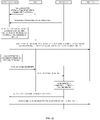
- FIG. 5a is a flow chart illustrating a method for communication based on conventional PSCell addition provided in implementations of the disclosure, where the method involves a terminal device, a first network node (an MN), and a second network node (an SN).
- the method is applied to conventional PSCell addition and includes the following.
- the MN transmits measurement configuration information to the terminal device.
- the measurement configuration information indicates a measurement object for triggering conventional PSCell addition and a report configuration corresponding to the measurement object.
- the measurement configuration information includes a measurement ID, where the measurement ID indicates a measurement object for triggering conventional PSCell addition and a report configuration corresponding to the measurement object.
- the measurement configuration information includes a measurement object ID and a reportConfigID, where the measurement object ID indicates the measurement object for triggering conventional PSCell addition, and the reportConfigID indicates the report configuration corresponding to the measurement object.
- the measurement configuration information may be the above first configuration information or the above third configuration information.
- the measurement configuration information may also indicate information for triggering conventional PSCell change (can be the same as or different from the information for triggering conventional PSCell addition) and/or information for triggering CPAC.
- the MN can also transmit to the terminal device other configuration information for indicating the information for triggering CPAC, which will not be repeated herein.
- the terminal device performs measurement according to the measurement configuration information to obtain a measurement result.
- information such as a measurement frequency measured by the terminal device is indicated in the measurement configuration information.
- the terminal device reports the measurement result.
- the terminal device When the measurement result meets the condition, e.g., a measurement result obtained according to a measurement object meets a corresponding report configuration, the terminal device reports a measurement report, to determine a target SN.
- the condition e.g., a measurement result obtained according to a measurement object meets a corresponding report configuration
- the MN requests SN and PSCell addition.
- the first network In a procedure that the first network requests the SN and PSCell addition, the first network simultaneously initiates a request for allocating resources for the terminal device, and the terminal device further receives a resource-allocation success message.
- the SN returns an SN and PSCell addition acknowledge message to the MN.
- the SN responds to the addition request and returns an addition success acknowledge message to the MN.
- the terminal device initiates a request for accessing to a target PSCell.
- the terminal device determines a failure of access to the target PSCell.
- the terminal device After addition or change of the target PSCell succeeds, the terminal device tries to access to the target PSCell, where a failure of access to a PSCell (or an RLF after the PSCell is accessed) is focused in the disclosure.
- the terminal device transmits an SCG failure report to the MN.
- the SCG failure report includes first indication information, and the first indication information indicates type information of PSCell addition, where the type indicated herein is conventional PSCell addition.
- the SCG failure report further includes second indication information, and the second indication information indicates information for triggering conventional PSCell addition.
- the SCG failure report can carry only the first indication information and no second indication information, which is conducive to reducing signaling overhead.
- the MN modifies a condition corresponding to the type indicated by the SCG failure report.
- the MN can determine the type of PSCell addition according to the first indication information, i.e., a type of conventional PSCell addition or a type of conventional PSCell addition/change. Furthermore, the MN can obtain triggering information corresponding to the type, i.e., obtain information for triggering conventional PSCell addition, and the MN can obtain second configuration information by adjusting the information. For example, the MN can obtain a report configuration corresponding to the measurement object and can further modify the report configuration such as a signal threshold in the report configuration.
- the network side since the network side configures for the terminal device only one type of measurement configuration for each time, the network side can know information such as a measurement object used by the terminal device side and a report configuration corresponding to the measurement object, and thus after the SCG failure report is received, the network side can obtain corresponding information for modification.
- the MN transmits the second configuration information to the terminal device.
- the second configuration information may indicate modified information for triggering conventional PSCell addition/change.
- the terminal device re-initiates the request for accessing to the target PSCell according to the second configuration information.
- the network node when the terminal device fails to access to the target PSCell, the network node can modify the information for triggering conventional PSCell addition according to the indication of the terminal device, thereby improving a reliability of adjustment on the information for triggering conventional PSCell addition by the network side, and thus reducing occurrence of a failure of access to a PSCell.
- FIG. 5b is a flow chart illustrating a method for communication based on conventional PSCell change provided in implementations of the disclosure, where the method exemplarily illustrates that a source second network node (i.e., a source SN) configures information.
- the method can be executed by a terminal device, a first network node (an MN), the source second network node (the source SN), and a target second network node (a target SN).
- the method is applied to conventional PSCell change. That is, the source SN is connected with the terminal device, and according to movement of the terminal device, the terminal device is required to be updated to be connected with a new SN, i.e., the target SN.
- the method may include the following.
- the source SN transmits measurement configuration information to the terminal device.
- the measurement configuration information indicates a measurement object for triggering conventional PSCell change and a report configuration corresponding to the measurement object.
- the measurement configuration information includes a measurement ID, where the measurement ID indicates a measurement object for triggering conventional PSCell change and a report configuration corresponding to the measurement object.
- the measurement configuration information includes a measurement object ID and a reportConfigID, where the measurement object ID indicates the measurement object for triggering PSCell change, and the reportConfigID indicates the report configuration corresponding to the measurement object.
- the terminal device performs measurement according to the measurement configuration information to obtain a measurement result.
- the terminal device reports the measurement result.
- the MN requests target SN and PSCell addition.
- the addition herein means to modify the source SN to the target SN and add the target SN.
- the target SN returns a target SN and PSCell acknowledge message to the MN.
- the MN transmits a resource release request to the source SN.
- the MN requests the source SN to release resources to save resources.
- the terminal device During movement of the terminal device, the terminal device has already moved out of an area of the source SN, and thus release of access resources of the terminal device is a protection for resources.
- the source SN returns a resource-release acknowledge message to the source SN.
- the terminal device initiates a request for accessing to a target PSCell.
- the terminal device determines a failure of access to the target PSCell.
- the terminal device transmits an SCG failure report to the MN.
- the MN transmits the SCG failure report to the source SN.
- the terminal device In a combination of the operations at S5210 and the operations at S5211, because the terminal device has already disconnected from the source SN before the terminal device accesses to the target PSCell corresponding to the target SN, the report cannot be directly transmitted from the terminal device to the source SN, and thus the terminal device transmits the SCG failure report to the MN first, and then the MN forwards the SCG failure report to the source SN.
- the SCG failure report includes first indication information, and the first indication information indicates type information of conventional PSCell change, where the type indicated is conventional PSCell change or conventional PSCell addition/change.
- the SCG failure report further includes second indication information, and the second indication information indicates information for triggering conventional PSCell change.
- the SCG failure report can carry only the first indication information and no second indication information, which is conducive to reducing signaling overhead.
- the source SN modifies a condition corresponding to the type indicated by the SCG failure report.
- the source SN can determine that a type of PSCell change is a conventional type according to the first indication information. Furthermore, the source SN can obtain information for triggering PSCell change corresponding to the conventional type, e.g., a corresponding report configuration, and then the source SN can modify the report configuration such as a signal threshold.
- the source SN transmits second configuration information to the terminal device.
- the source SN can transmit the second configuration information to the terminal device through the MN.
- the terminal device re-initiates the request for accessing to the target PSCell according to the second configuration information.
- the network node can modify the information for triggering conventional PSCell change according to the indication of the terminal device, thereby improving a reliability of adjustment on the information for triggering conventional PSCell change by the network side, and thus reducing occurrence of a failure of access to a PSCell.
- FIG. 6a is a flow chart illustrating a method for communication based on conditional PSCell addition provided in implementations of the disclosure, where the method involves a terminal device, a first network node (an MN), and a second network node (an SN).
- the method exemplarily illustrates conditional PSCell addition and includes the following.
- the MN transmits to the terminal device resource information of multiple candidate target SNs.
- the MN has already pre-communicated with multiple candidate target cells and successfully transmitted access resource information to the terminal device.
- the MN transmits first configuration information to the terminal device.
- the first configuration information indicates at least one measurement object for triggering conditional PSCell addition and at least one cond-trigger configuration.
- the first configuration information includes at least one measurement ID, where the measurement ID indicates a measurement object for triggering conditional PSCell addition and a cond-trigger configuration corresponding to the measurement object.
- the first configuration information includes at least one measurement object ID and at least one cond-trigger configID, where the measurement object ID indicates a measurement object, and the cond-trigger configID indicates a cond-trigger configuration.
- the cond-trigger configuration corresponding to the measurement object may include multiple corresponding threshold information.
- the terminal device performs measurement according to the first configuration information to obtain a measurement result.
- the terminal device can initiate a request for accessing to a target PSCell related to the measurement object.
- the MN can perform SN addition, and the SN can return an SN and PSCell addition acknowledge message to the MN.
- the terminal device determines a failure of access to the target PSCell.
- the terminal device transmits an SCG failure report to the MN.
- the SCG failure report includes first indication information, and the first indication information indicates type information of conditional PSCell addition, where the type of PSCell addition indicated is conditional.
- the SCG failure report further includes second indication information, and the second indication information indicates information for triggering conditional PSCell addition.
- the second indication information may include a measurement ID, where the measurement ID indicates a measurement object for triggering conditional PSCell addition and a cond-trigger configuration corresponding to the measurement object, e.g., a cond-trigger configuration met by a measurement result that is obtained according to the measurement object.
- the first configuration information may include a measurement object ID and a cond-trigger configID, where the measurement object ID indicates the measurement object for triggering PSCell addition, and the cond-trigger configID indicates the cond-trigger configuration corresponding to the measurement object.
- the MN modifies a condition in the SCG failure report.
- the MN can determine the type of PSCell addition according to the first indication information, i.e., a type of conditional PSCell addition or a type of conditional PSCell addition/change. Furthermore, the MN can obtain second configuration information through adjustment according to the second indication information. For example, the cond-trigger configuration such as a signal threshold in the cond-trigger configuration is modified, to obtain a modified signal threshold.
- the MN transmits the second configuration information to the terminal device.
- the second configuration information may indicate modified information for triggering conditional PSCell addition/change.
- the terminal device re-initiates the request for accessing to the target PSCell according to the second configuration information.
- the network node can modify the information for triggering conditional PSCell addition according to the first indication information and the second indication information of the terminal device, thereby improving a reliability of adjustment on the information for triggering conditional PSCell addition by the network side, and thus reducing occurrence of a failure of access to a PSCell.
- FIG. 6b is a flow chart illustrating a method for communication based on conditional PSCell change provided in implementations of the disclosure, where the method involves a terminal device, a first network node (an MN), a source second network node (a source SN), and a target second network node (a target SN).
- the conditional PSCell change is classified into two types, i.e., one type is that configuration information is configured by the MN, and the other type is that configuration information is configured by the source SN.
- a communication method for condition PSCell change where the configuration information is configured by the source SN is exemplarily illustrated, and the method may include the following.
- the MN transmits to the terminal device resource information of multiple candidate target SNs.
- a difference between conventional PSCell change and conditional PSCell change lies in that for the former, a target SN is determined from a measurement report, and for the latter, multiple candidate target SNs are determined through pre-communication, where these nodes pre-allocate access resources to the terminal device.
- the source SN transmits first configuration information to the terminal device.
- the first configuration information indicates at least one measurement object and at least one cond-trigger configuration for triggering conditional PSCell change.
- the first configuration information includes a measurement ID, where the measurement ID indicates at least one measurement object and at least one cond-trigger configuration.
- the first configuration information includes at least one measurement object ID and at least one cond-trigger configID, where the measurement object ID indicates a measurement object, and the cond-trigger configID indicates a cond-trigger configuration.
- the terminal device performs measurement according to the first configuration information to obtain a measurement result.
- the target SN can return a target SN and PSCell addition acknowledge message to the MN.
- the MN can transmit a resource release request to the source SN, thereby avoiding resource waste.
- the terminal device determines a failure of access to the target PSCell.
- the terminal device transmits an SCG failure report to the MN.
- the SCG failure report includes first indication information, and the first indication information indicates type information of PSCell change, where the type of PSCell change indicated is conditional or non-conventional PSCell change/addition.
- the SCG failure report further includes second indication information, and the second indication information indicates information for triggering conditional PSCell change.
- the second indication information includes a measurement ID, where the measurement ID indicates a measurement object for triggering conditional PSCell change and a cond-trigger configuration corresponding to the measurement object, e.g., a cond-trigger configuration met by a measurement result that is obtained according to the measurement object.
- the second indication information includes a measurement object ID and a cond-trigger configID, where the measurement object ID indicates a measurement object for triggering conditional PSCell change, and the cond-trigger configID indicates a cond-trigger configuration corresponding to the measurement object.
- the MN transmits the SCG failure report to the source SN.
- the source SN configures the first configuration information, therefore the source SN needs to receive the SCG failure report.
- the source SN releases resources connected with the terminal device, such that the source SN can receive the SCG failure report through forwarding of the MN.
- the MN modifies a condition in the SCG failure report.
- the source SN transmits second configuration information to the terminal device through the MN.
- the second configuration information mainly indicates a modified triggering condition for accessing to the target PSCell.
- the second configuration information can be transmitted to the MN first, and the MN then forwards the second configuration information to the terminal device.
- the terminal device re-initiates the request for accessing to the target PSCell.
- the network node can modify the information for triggering conditional PSCell change according to the first indication information and the second indication information of the terminal device, thereby improving a reliability of adjustment on the information for triggering conditional PSCell change by the network side, and thus reducing occurrence of a failure of access to a PSCell.
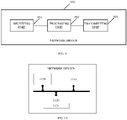
- FIG. 7 is a schematic structural diagram illustrating a terminal device involved in the foregoing implementations.
- a terminal device 700 may include a processing unit 701 and a transmitting unit 702. These units can execute the corresponding functions of the terminal device in the foregoing method implementations.
- the terminal device may further include a receiving unit 703 configured to receive related data.
- the processing unit 701 may be a processor or a controller, for example, a central processing unit (CPU), a general-purpose processor, a digital signal processor (DSP), an application specific integrated circuit (ASIC), a field programmable gate array (FPGA), other programmable logic devices, transistor logic devices, hardware components, or any combination thereof.
- CPU central processing unit
- DSP digital signal processor
- ASIC application specific integrated circuit
- FPGA field programmable gate array
- the processor also may be a combination realizing computing functions, for example, a combination of one or more microprocessors, a combination of a DSP and a microprocessor, or the like.
- the transmitting unit 702 may be a transmitter, a transmitting circuit, or a communication interface.
- the receiving unit 703 may be a receiver, a receiving circuit, or a communication interface.
- the processing unit 701 is configured to determine a failure of access to a target PSCell or an RLF after the target PSCell is accessed.
- the transmitting unit 702 is configured to transmit an SCG failure report to a first network node, where the SCG failure report includes first indication information, and the first indication information indicates type information of PSCell addition/change.
- the SCG failure report further includes second indication information, and the second indication information indicates information for triggering CPAC.
- the second indication information includes a measurement ID, where the measurement ID indicates a related measurement object and a related cond-trigger configuration.
- the second indication information includes a measurement object ID and a cond-trigger configID, where the measurement object ID indicates a related measurement object, and the cond-trigger configID indicates a related cond-trigger configuration.
- the receiving unit 703 is configured to receive first configuration information transmitted by the first network node or a second network node, where the first configuration information indicates at least one measurement object and at least one cond-trigger configuration. If a measurement result obtained according to one of the at least one measurement object meets one of the at least one cond-trigger configuration, the transmitting unit 702 is configured to initiate a request for accessing to a target PSCell related to the measurement object.
- the first configuration information includes at least one measurement ID, where the measurement ID indicates a related measurement object and a related cond-trigger configuration.
- the first configuration information includes at least one measurement object ID and at least one cond-trigger configID, where the measurement object ID indicates a measurement object, and the cond-trigger configID indicates a cond-trigger configuration.
- the receiving unit 703 is further configured to receive second configuration information transmitted by the first network node or a second network node, where the second configuration information indicates modified information for triggering the PSCell addition/change.
- the transmitting unit is configured to access to the target PSCell according to the second configuration information.
- the SCG failure report further includes third indication information, the third indication information indicates a configuration source for configuring CPAC, and the configuration source is the first network node, the second network node, a PCell, or a current serving PSCell.
- the type information of PSCell addition/change is a type of conventional PSCell addition/change, a type of CPAC, or indication information indicating whether the type of PSCell addition/change is the type of CPAC or the type of conventional PSCell addition/change.
- the SCG failure report further includes any one or more of: a cause of the failure of access to the target PSCell by the terminal device or a cause of the RLF after the terminal device accesses to the target PSCell, geographic location information or movement track information of the failure of access to the target PSCell by the terminal device, or measurement information of the terminal device.
- the terminal device can implement part of or all of the operations executed by the terminal device in the implementations illustrated in FIG. 2 to FIG. 6b through the foregoing units.
- the implementations of the disclosure are apparatus implementations corresponding to the method implementations, and description for the method implementations are also applied to the implementations of the disclosure, which will not be repeated herein.
- FIG. 8 is another schematic structural diagram illustrating a terminal device provided in implementations of the disclosure.
- the terminal device may include a processor 810, a memory 820, a communication interface 830, and one or more programs 821, where the one or more programs 821 are stored in the memory 820 and configured to be executed by the processor 810.
- the programs include instructions used for performing the following.
- the SCG failure report further includes second indication information, and the second indication information indicates information for triggering CPAC.
- the second indication information includes a measurement ID, where the measurement ID indicates a related measurement object and a related cond-trigger configuration.
- the second indication information includes a measurement object ID and a cond-trigger configID, where the measurement object ID indicates a measurement object, and the cond-trigger configID indicates a cond-trigger configuration.
- the processor 810 is further configured to receive first configuration information transmitted by the first network node or a second network node, where the first configuration information indicates at least one measurement object and at least one cond-trigger configuration. If a measurement result obtained according to one of the at least one measurement object meets one of the at least one cond-trigger configuration, the processor 810 is further configured to initiate a request for accessing to a target PSCell corresponding to the measurement object.
- the first configuration information includes at least one measurement ID, where the measurement ID indicates a measurement object and a cond-trigger configuration.
- the first configuration information includes a measurement object ID and a cond-trigger configID, where the measurement object ID indicates a measurement object, and the cond-trigger configID indicates a cond-trigger configuration.
- the processor 810 is further configured to receive second configuration information transmitted by the first network node or a second network node, where the second configuration information indicates modified information for triggering the PSCell addition/change.
- the processor 810 is further configured to access to the target PSCell according to the second configuration information.
- the SCG failure report further includes third indication information, the third indication information indicates a configuration source for configuring CPAC, and the configuration source is the first network node, the second network node, a PCell, or a current serving PSCell.
- the type information of PSCell addition/change is a type of conventional PSCell addition/change, a type of CPAC, or indication information indicating whether the type of PSCell addition/change is the type of CPAC or the type of conventional PSCell addition/change.
- the SCG failure report further includes any one or more of: a cause of the failure of access to the target PSCell by the terminal device or a cause of the RLF after the terminal device accesses to the target PSCell, geographic location information or movement track information of the failure of access to the target PSCell by the terminal device, or measurement information of the terminal device.
- the terminal device may further include an antenna, a filter, a power management chip, or other components or structures, which will not be listed herein.
- FIG. 9 is a schematic structural diagram illustrating a network device involved in the foregoing implementations.
- a network device 900 may include a receiving unit 901 and a processing unit 902. These units can execute the corresponding functions of the network node such as the first network node or the second network node in the foregoing method implementations.
- the network device may further include a transmitting unit 903 configured to transmit data.
- the receiving unit 901 is configured to receive an SCG failure report transmitted by a terminal device, where the SCG failure report includes first indication information, and the first indication information indicates type information of PSCell addition/change.
- the processing unit 902 is configured to modify information for triggering PSCell addition/change according to the SCG failure report.
- the SCG failure report further includes second indication information, and the second indication information indicates information for triggering CPAC.
- the second indication information includes a measurement ID, where the measurement ID indicates a related measurement object and a related cond-trigger configuration.
- the second indication information includes a measurement object ID and a cond-trigger configID, where the measurement object ID indicates a measurement object, and the cond-trigger configID indicates a cond-trigger configuration.
- the transmitting unit 903 is configured to transmit first configuration information, where the first configuration information indicates at least one measurement object and at least one cond-trigger configuration.
- the first configuration information includes at least one measurement ID, where the measurement ID indicates a measurement object and a cond-trigger configuration.
- the first configuration information includes at least one measurement object ID and at least one cond-trigger configID, where the measurement object ID indicates a measurement object, and the cond-trigger configID indicates a cond-trigger configuration.
- the transmitting unit 903 is further configured to transmit second configuration information, where the second configuration information indicates modified information for triggering PSCell addition/change.
- the receiving unit 901 is further configured to receive the SCG failure report forwarded by a first network node according to the third indication information.
- the type information of PSCell addition/change is a type of conventional PSCell addition/change, a type of CPAC, or indication information indicating whether the type of PSCell addition/change is the type of CPAC or the type of conventional PSCell addition/change.
- the SCG failure report further includes any one or more of: a cause of the failure of access to the target PSCell by the terminal device or a cause of the RLF after the terminal device accesses to the target PSCell, geographic location information or movement track information of the failure of access to the target PSCell by the terminal device, or measurement information of the terminal device.
- FIG. 10 is another schematic structural diagram illustrating a network device provided in implementations of the disclosure.
- the network device may include a processor 1110, a memory 1120, a communication interface 1130, and one or more programs 1121, where the one or more programs 1121 are stored in the memory 1120 and configured to be executed by the processor 1110.
- the programs include instructions used for performing the following.
- the communication interface 1130 to receive an SCG failure report transmitted by a terminal device, where the SCG failure report includes first indication information, and the first indication information indicates type information of PSCell addition/change. Modify information for triggering PSCell addition/change according to the SCG failure report.
- the SCG failure report further includes second indication information, and the second indication information indicates information for triggering CPAC.
- the second indication information includes a measurement ID, where the measurement ID indicates a related measurement object and a related cond-trigger configuration.
- the second indication information includes a measurement object ID and a cond-trigger configID, where the measurement object ID indicates a related measurement object, and the cond-trigger configID indicates a related cond-trigger configuration.
- the processor 1110 is further configured to invoke the communication interface 1130 to transmit first configuration information to the terminal device, where the first configuration information indicates at least one measurement object and at least one cond-trigger configuration.
- the first configuration information includes at least one measurement ID, where the measurement ID indicates a measurement object and a cond-trigger configuration.
- the first configuration information includes at least one measurement object ID and at least one cond-trigger configID, where the measurement object ID indicates a measurement object, and the cond-trigger configID indicates a cond-trigger configuration.
- the processor 1110 is further configured to invoke the communication interface 1130 to transmit second configuration information to the terminal device, where the second configuration information indicates modified information for triggering PSCell addition/change.
- the processor 1110 is further configured to invoke the communication interface 1130 to receive the SCG failure report forwarded by a first network node according to the third indication information, where the SCG failure report is transmitted from the terminal device to the first network node.
- the type information of PSCell addition/change is a type of conventional PSCell addition/change, a type of CPAC, or indication information indicating whether the type of PSCell addition/change is the type of CPAC or the type of conventional PSCell addition/change.
- the SCG failure report further includes any one or more of: a cause of the failure of access to the target PSCell by the terminal device or a cause of the RLF after the terminal device accesses to the target PSCell, geographic location information or movement track information of the failure of access to the target PSCell by the terminal device, or measurement information of the terminal device.
- division of functional units may be performed for the terminal device in accordance with the foregoing method examples.
- each functional unit may be divided according to each function, and two or more functions may be integrated in one processing unit.
- the above-mentioned integrated unit can be implemented in the form of hardware or software program modules. It should be noted that the division of units in the implementations of the disclosure is schematic, and is merely a logical function division, and there may be other division manners in actual implementations.
- a computer-readable storage medium is further provided in implementations of the disclosure.
- the computer-readable storage medium is configured to store computer programs used for electronic data interchange, where the computer programs enable a computer to execute part of or all of the operations performed by the terminal device or the network device (the network node) in the above-mentioned method implementations.
- a computer program product is further provided in implementations of the disclosure.
- the computer program product includes a non-transitory computer-readable storage medium that stores computer programs.
- the computer programs are operable with a computer to execute part of or all of the operations performed by the terminal device in the above-mentioned method implementations.
- the computer program product may be a software installation package.
- the algorithmic operations and the method illustrated in disclosed contents of the disclosure may be implemented as hardware, or may be implemented by a processor performing software instructions.
- the software instructions may be composed with corresponding software modules.
- the software module can be stored in a storage medium such as a random access memory (RAM), a flash memory, a read only memory (ROM), an erasable programmable ROM (EPROM), an electrically EPROM (EEPROM), a register, a hard disc, a mobile hard disc, or a compact disc read-only memory (CD-ROM), or in storage media with any other forms known in this field.
- An exemplary storage medium is coupled to the processor, so that the processor can read information from the storage medium and can write information to the storage medium.
- the storage medium can also be a part of the processor.
- the processor and the storage medium may be located in an ASIC.
- the ASIC may be located in a communication apparatus such as a terminal device.
- the processor and the storage medium may also be presented as discrete components in the communication apparatus.
- all or part of the above illustrated functions can be implemented through software, hardware, firmware, or any other combination thereof.
- all or part of the above functions can be implemented in the form of a computer program product.
- the computer program product includes one or more computer instructions. When the computer program instructions are loaded and executed on a computer, all or part of the processes or functions of the implementations of the disclosure are performed.
- the computer can be a general-purpose computer, a special-purpose computer, a computer network, or other programmable apparatuses.
- the computer instructions can be stored in a computer-readable storage medium, or transmitted from one computer-readable storage medium to another computer-readable storage medium.
- the computer instruction can be transmitted from one web site, computer, server, or data center to another web site, computer, server, or data center in a wired manner or in a wireless manner.
- the wired manner can be a coaxial cable, an optical fiber, a digital subscriber line (DSL), etc.
- the wireless manner can be, for example, infrared, wireless, microwave, etc.
- the computer-readable storage medium can be any computer-accessible usable-medium or a data storage device such as a server, a data center, or the like which is integrated with one or more usable media.
- the usable medium can be a magnetic medium (such as a soft disc, a hard disc, or a magnetic tape), an optical medium (such as a digital video disc (DVD)), or a semiconductor medium (such as a solid state disk (SSD)), etc.
- a magnetic medium such as a soft disc, a hard disc, or a magnetic tape
- an optical medium such as a digital video disc (DVD)
- a semiconductor medium such as a solid state disk (SSD)
Landscapes
- Engineering & Computer Science (AREA)
- Computer Networks & Wireless Communication (AREA)
- Signal Processing (AREA)
- Mobile Radio Communication Systems (AREA)
Abstract
Description
- The disclosure relates to the technical field of communication, and more particularly to methods for communication and related products.
- In mobile communication, for improving data throughput of devices, a dual-connectivity (DC) communication system is introduced. According to the system, throughput of a terminal device that has been accessed to a primary cell (PCell) and is in a connected state can be increased, and also extra frequency spectrum resources can be allocated to the terminal device by using a cell in a secondary base station. In the DC communication system such as a DC-technology-based 5th generation (5G) (or called new radio (NR)) system, primary secondary cell (PSCell) addition/change is often involved. However, when a terminal device accesses to an added or changed PSCell, an access failure or a radio link failure (RLF) after access may occur, however, for these failures, a network side is unable to perform reliable adjustment to reduce occurrence of these failures.
- Methods for communication and related products are provided in implementations of the disclosure, which help to improve a reliability of adjustment on information for triggering primary secondary cell (PSCell) addition/change by a network side, thereby reducing occurrence of a failure of access to a PSCell or a radio link failure (RLF) after the PSCell is accessed.
- In a first aspect, a method for communication is provided in implementations of the disclosure. The method includes the following. A terminal device determines a failure of access to a target PSCell or an RLF after the target PSCell is accessed. The terminal device transmits a secondary cell group (SCG) failure report to a first network node, where the SCG failure report includes first indication information, and the first indication information indicates type information of PSCell addition/change.
- In a second aspect, a method for communication is provided in implementations of the disclosure. The method includes the following. A network node receives an SCG failure report transmitted by a terminal device, where the SCG failure report includes first indication information, and the first indication information indicates type information of PSCell addition/change. The network node modifies information for triggering PSCell addition/change according to the SCG failure report.
- In a third aspect, a terminal device is provided in implementations of the disclosure. The terminal device includes a processing unit and a transmitting unit. The processing unit is configured to determine a failure of access to a target PSCell or an RLF after the target PSCell is accessed. The transmitting unit is configured to transmit an SCG failure report to a first network node, where the SCG failure report includes first indication information, and the first indication information indicates type information of PSCell addition/change.
- In a fourth aspect, a network device is provided in implementations of the disclosure. The network device includes a receiving unit and a processing unit. The receiving unit is configured to receive an SCG failure report transmitted by a terminal device, where the SCG failure report includes first indication information, and the first indication information indicates type information of PSCell addition/change. The processing unit is configured to modify information for triggering PSCell addition/change according to the SCG failure report.
- In a fifth aspect, a terminal device is provided in implementations of the disclosure. The terminal device includes a processor, a memory, and one or more programs. Optionally, the terminal device further includes a transceiver. The one or more programs are stored in the memory and configured to be performed by the processor, and the one or more programs include instructions used for performing the operations of any one of the methods in the first aspect of implementations of the disclosure.
- In a sixth aspect, a network device is provided in implementations of the disclosure. The network device includes a processor, a memory, and one or more programs. Optionally, the network device further includes a transceiver. The one or more programs are stored in the memory and configured to be performed by the processor, and the one or more programs include instructions used for performing the operations of any one of the methods in the second aspect of implementations of the disclosure.
- In a seventh aspect, a computer-readable storage medium is provided in implementations of the disclosure. The computer-readable storage medium is configured to store computer programs, where the computer programs enable a computer to perform part of or all of the operations of the methods illustrated in the first aspect and/or the second aspect of implementations of the disclosure.
- In an eighth aspect, a computer program product is provided in implementations of the disclosure. The computer program product includes a non-transitory computer-readable storage medium that stores computer programs. The computer programs are operable with a computer to perform part of or all of the operations of the methods illustrated in the first aspect and/or the second aspect of the implementations of the disclosure. The computer program product may be a software installation package.
- In the solutions provided in implementations of the disclosure, if the terminal device determines the failure of access to the target PSCell or the RLF after the target PSCell is accessed, the terminal device can transmit to the first network node the SCG failure report including the first indication information, to indicate the type information of PSCell addition/change according to the first indication information, such that the network side can correspondingly adjust the information for triggering PSCell addition/change according to the SCG failure report, thereby improving a reliability of adjustment and reducing occurrence of a failure of access to a PSCell or an RLF.
- The following will give an introduction to the accompanying drawings used for illustrating implementations or the related art.
-
FIG. 1a is a schematic diagram illustrating a dual-connectivity (DC) architecture provided in implementations of the disclosure. -
FIG. 1b is a schematic diagram illustrating conventional primary secondary cell (PSCell) addition provided in implementations of the disclosure. -
FIG. 1c is a schematic diagram illustrating conventional PSCell change provided in implementations of the disclosure. -
FIG. 1d is another schematic diagram illustrating conventional PSCell change provided in implementations of the disclosure. -
FIG. 1e is an architectural diagram illustrating a communication system provided in implementations of the disclosure. -
FIG. 2 is a flow chart illustrating a method for communication provided in implementations of the disclosure. -
FIG. 3 is another flow chart illustrating a method for communication provided in implementations of the disclosure. -
FIG. 4 is yet another flow chart illustrating a method for communication provided in implementations of the disclosure. -
FIG. 5a is a flow chart illustrating a method for communication based on conventional PSCell addition provided in implementations of the disclosure. -
FIG. 5b is a flow chart illustrating a method for communication based on conventional PSCell change provided in implementations of the disclosure. -
FIG. 6a is a flow chart illustrating a method for communication based on conditional PSCell addition provided in implementations of the disclosure. -
FIG. 6b is a flow chart illustrating a method for communication based on conditional PSCell change provided in implementations of the disclosure. -
FIG. 7 is a schematic structural diagram illustrating a terminal device provided in implementations of the disclosure. -
FIG. 8 is another schematic structural diagram illustrating a terminal device provided in implementations of the disclosure. -
FIG. 9 is a schematic structural diagram illustrating a network device provided in implementations of the disclosure. -
FIG. 10 is another schematic structural diagram illustrating a network device provided in implementations of the disclosure. - The following will illustrate technical solutions of implementations of the disclosure in conjunction with the accompanying drawings of implementations of the disclosure.
- Before introducing in detail methods for communication provided in implementations of the disclosure, first briefly introduce terms and a communication system involved in implementations of the disclosure.
- Dual-connectivity (DC) technology is an important technology introduced in the 3rd generation partnership project (3GPP). A terminal device supporting DC can be simultaneously connected with two base stations, thereby providing a higher rate for a user and increasing throughput of a single user, and thus realizing better coverage and improving a resource utilization rate. Referring to
FIG. 1a, FIG. 1a is a schematic diagram illustrating a DC architecture provided in implementations of the disclosure. As illustrated inFIG. 1a , the system includes a master node (MN), a secondary node (SN), a primary cell (PCell) in the MN, a secondary cell (SCell) in the MN, a PCell in the SN, i.e., a primary secondary cell (PSCell), and a SCell in the SN, and a terminal device can be simultaneously connected with a cell in the MN and a cell in the SN. - In the DC technology, PSCell addition/change for an SN, which is also called SN addition/change, is introduced. The PSCell addition/change is further classified as conventional PSCell addition/change and conditional PSCell addition/change (CPAC). The following will briefly illustrate solutions of the conventional PSCell addition/change and the CPAC.
- As an example, referring to
FIG. 1b, FIG. 1b is a schematic diagram illustrating conventional PSCell addition provided in the disclosure. As illustrated inFIG. 1b , the conventional PSCell addition can include the following. - 1. An MN transmits a measurement configuration (information) to a terminal device, where the measurement configuration may include an air-interface frequency, a measurement reporting event, etc.
- 2. The terminal device performs measurement according to the measurement configuration, and if a corresponding condition in the measurement reporting event is met, reports a corresponding measurement report.
- 3. The MN determines a target SN (i.e., an SN which a target PSCell belongs to) according to the measurement report of a PCell reported by the terminal device.
- 4. The MN transmits an SN addition request (e.g., a secondary gNodeB (SgNB) addition request) to the SN and requests related resource allocation.
- 5. After receiving the request, the SN transmits an addition request acknowledge message (e.g., SgNB addition request acknowledge) to the MN.
- 6-7.Upon receiving a radio resource control (RRC) reconfiguration message (e.g., an RRC connection reconfiguration) transmitted by the MN, the terminal device performs reconfiguration, and transmits a reconfiguration complete message (e.g., RRC connection reconfiguration complete) to the MN.
- 8. On the premise that the SN allocates resources successfully, the MN transmits an SN reconfiguration complete message (e.g., SgNB reconfiguration complete) to the SN.
- 9. The terminal device initiates an access procedure (e.g., a random access procedure) to the SN.
- 10-11. SN status updates (e.g., SN status transfer) and perform data forwarding.
- 12-15. Furthermore, the terminal device can initiate a path update procedure, and completes user plane path update according to corresponding indications.
- For conditional PSCell addition, an MN pre-communicates with one or more candidate target SNs and transmits reserved resources to a terminal device. When a measurement result of a certain measurement object in multiple measurement objects (or measurement targets) measured by the terminal device meets a corresponding condition-trigger (cond-trigger) configuration (or called a condition, a triggering condition, etc.), the terminal device can add a PSCell corresponding to the measurement object that meets the condition.
- PSCell change includes two cases where one is that an MN triggers SN change and the other is that an SN triggers SN change, where a difference between the two cases lies in an executor that initiates change. For the former, an MN directly initiates an addition request to a target SN, and for the latter, a source SN transmits a change request to an MN first. That is to say, for the former, related configuration information for change is configured by an MN, and for the latter, related configuration information for change is configured by an SN. As illustrated in
FIG. 1c, FIG. 1c is a schematic diagram illustrating conventional PSCell change provided in the disclosure, where the procedure is that an SN triggers SN change. Exemplarily, as illustrated inFIG. 1c , the procedure can include the following. - 1. A source SN transmits a measurement configuration to a terminal device, where the measurement configuration may include an air-interface frequency, a measurement reporting event, etc.
- 2. The terminal device performs measurement according to the measurement configuration, and if a corresponding condition in the measurement reporting event is met, reports a corresponding measurement report to the source SN.
- 3. The source SN sends SN change request signaling to an MN to trigger an SN change procedure, where the signaling may carry the measurement report, such that the MN can determine a target SN for the terminal device.
- 4-5. The MN transmits to a target SN a target SN addition request, to request the target SN to allocate resources to the terminal device, and the target SN receives the request and returns a corresponding acknowledge message.
- 6-7. Upon receiving an RRC reconfiguration message transmitted by the MN, the terminal device performs reconfiguration and transmits a reconfiguration complete message to the MN.
- 8. If the target SN allocates resources successfully, the MN determines release of resources for the source SN and transmits an SN change acknowledge message to the source SN.
- 9. If the RRC reconfiguration is completed, the MN determines that the reconfiguration is completed by transmitting an SN reconfiguration complete message to the target SN.
- 10. The terminal device initiates an access procedure to the target SN.
- 11-12. SN status updates and perform data forwarding.
- 13. The source SN reports a new radio (NR) flow to the MN.
- 14-18. User plane path update is completed according to corresponding indications.
- 19. When the source SN receives a terminal-device-context release message, the source SN releases terminal-device context.
- As illustrated in
FIG. 1d, FIG. 1d is another schematic diagram illustrating conventional PSCell change provided in the disclosure. Exemplarily, as illustrated inFIG. 1d , a case that an MN triggers SN change can include the following. - 1. An MN transmits a measurement configuration to a terminal device.
- 2. The terminal device performs measurement according to the measurement configuration, and if a corresponding condition in the measurement reporting event is met, reports a corresponding measurement report to the MN.
- 3-4. The MN transmits to a target SN a target SN addition request, to request the target SN to allocate resources to the terminal device, and the target SN receives the request and returns a corresponding acknowledge message.
- 5-6. The MN transmits a release request to a source SN, and the source SN returns a release request acknowledge message.
- 7-8. The MN transmits an RRC reconfiguration message to the terminal device, and the terminal device transmits a reconfiguration complete message to the MN.
- 9. If the RRC reconfiguration is completed, the MN determines that the reconfiguration is completed by transmitting an SN reconfiguration complete message to the target SN.
- 10. The terminal device initiates an access procedure to the target SN.
- 11-12. SN status updates and perform data forwarding.
- 13. The source SN reports an NR flow to the MN.
- 14-18. User plane path update is completed according to corresponding indications.
- 19. When the source SN receives a terminal-device-context release message, the source SN releases terminal-device context.
- Correspondingly, for conditional PSCell change, an MN pre-communicates with one or more candidate target SNs and transmits reserved resources to the terminal device. During change, if a measurement result of a measurement object measured by the terminal device meets a corresponding con-trigger configuration, access to a PSCell corresponding to the measurement object that meets the condition can be initiated, and a source SN is changed to a target SN corresponding to the PSCell.
- For conventional PSCell addition or conventional PSCell change, or conditional PSCell addition or conditional PSCell change, after successful PSCell addition or PSCell change, when the terminal device accesses to a PSCell, an access failure or an RLF after the PSCell is accessed may occur. In the disclosure, when an access failure or an RLF occurs, the terminal device can report failure information such as an SCG failure report to the network side such as an MN or an SN, and thus the network side can perform targeted modification on information for triggering PSCell addition/change, according to failure information such as a type of PSCell addition/change, thereby improving an access reliability and reducing occurrence of failures. The following will illustrate in detail in conjunction with a system architecture.
- Referring to
FIG. 1e, FIG. 1e is an architectural diagram illustrating a communication system provided in implementations of the disclosure. As illustrated inFIG. 1e , thecommunication system 100 may include at least one network node, such as afirst network node 101 and asecond network node 102, and a terminal device, such as aterminal device 110. - In the disclosure, the network node may be a base station, such as a NodeB (NB), an evolved NodeB (eNB), and a next generation (NG) NodeB (gNB). For example, the first network node is a master eNB (MeNB), and the second network node is a secondary eNB (SeNB). For another example, the first network node is a master gNB (MgNB), and the second network node is a secondary gNB (SgNB). The terminal device may also be called an access terminal, a subscriber unit, a subscriber station, a mobile station, a mobile platform, a remote station, a remote terminal, a mobile device, a user terminal, a terminal, a user equipment (UE), a wireless communication device, a user agent or a user apparatus, a cellular radio telephone, a cordless telephone, a session initiation protocol (SIP) telephone, a wireless local loop (WLL) station, a personal digital assistant (PDA), or a terminal device in a 5th generation (5G) network or a future evolved network, which will not be limited herein.
- As illustrated in
FIG. 1e , theterminal device 110 is connected with thefirst network node 101. With movement of theterminal device 110, when theterminal device 110 is moved into an area where theterminal device 110 can be simultaneously connected with thefirst network node 101 and thesecond network node 102, theterminal device 110 can perform DC with the first network node and the second network node, thereby realizing communication with the first network node and the second network node. Thefirst network node 101 can be assigned as an MN, and the second network node can be assigned as an SN. The second network node connected may be an SN added or may also be a target SN changed from a source SN. That is, one case is that during movement of theterminal device 110, theterminal device 110 accesses to a PSCell corresponding to a second network node 102 (an SN) newly added, and the other case is that theterminal device 110 is connected with a PSCell corresponding to a source second network node (a source SN), and with movement of the terminal device, network node access of the terminal device is changed from the second network node to a new target second network node (a target SN), and theterminal device 110 accesses to a PSCell corresponding to the target SN, at this point, the source SN may release an original connection. - In a procedure that the
terminal device 110 accesses to a PSCell corresponding to thesecond network node 102, an access failure may occur, for example, an access failure may occur because of radio link interruption, access timeout, etc. In this case, if theterminal device 110 determines a failure of access to the PSCell, theterminal device 110 can report an SCG failure report to the first network node (an MN) or the second network node (e.g., a source SN), which is conducive for the network side to adjust information for triggering SCell addition/change for the terminal device, e.g., adjust a signal threshold triggering condition for PSCell addition/change, to improve a reliability of adjustment on the information for triggering PSCell addition/change by the network side, thereby improving an access reliability of the terminal device and reducing occurrence of a failure of access to a PSCell. - In the disclosure, the SCG failure report may also be called SCG failure information, failure indication information, indication information, or other names, which will not be limited herein.
- Referring to
FIG. 2, FIG. 2 is a flow chart illustrating a method for communication provided in implementations of the disclosure. The method is illustrated from a perspective of a terminal device side, and the procedure includes the following. - At S201, the terminal device determines a failure of access to a target PSCell, or an RLF after the target PSCell is accessed.
- The target PSCell may be a PSCell in an SN corresponding to PSCell addition, e.g., a PSCell corresponding to conventional PSCell addition or a PSCell corresponding to conditional PSCell addition. The target PSCell may also be a PSCell in a target SN corresponding to PSCell change, e.g., a PSCell corresponding to conventional PSCell change or a PSCell corresponding to conditional PSCell change. For PSCell addition/change, when the terminal device accesses to the target PSCell corresponding to PSCell addition/change, there may exist an access failure or an RLF (the following can uniformly take the access failure as an example for illustration).
- At S202, the terminal device transmits an SCG failure report to a first network node.
- If the terminal device determines the failure of access to the target PSCell or the RLF, the terminal device can transmit the SCG failure report to the first network node. The SCG failure report includes first indication information, and the first indication information indicates type information of PSCell addition/change.
- Optionally, the type information of PSCell addition/change may be a type of conventional PSCell addition/change, a type of non-conventional PSCell addition/change such as a type of CPAC, indication information indicating whether the type of PSCell addition/change is the type of non-conventional PSCell addition/change such as the type of CPAC, or indication information indicating whether the type of PSCell addition/change is the type of conventional PSCell addition/change. That is to say, in the disclosure, the type of PSCell addition/change can be explicitly or implicitly indicated according to the first indication information.
- In a possible implementation, the SCG failure report may further include second indication information, and the second indication information may indicate information for triggering PSCell addition/change, e.g., indicates a measurement object for triggering CPAC and a cond-trigger configuration corresponding to the measurement object, or a measurement object for triggering conventional PSCell addition/change and a report configuration corresponding to the measurement object. The second indication information can explicitly or implicitly indicate the information for triggering PSCell addition/change.
- For example, the second indication information may include a measurement identity (ID), where the measurement ID may indicate a related measurement object and a related cond-trigger configuration, e.g., indicate a measurement object for triggering CPAC and a cond-trigger configuration corresponding to the measurement object, for example, the cond-trigger configuration corresponding to the measurement object is a cond-trigger configuration met by a measurement result obtained according to the measurement object. For another example, the second indication information may include a measurement object ID and a condition-trigger configuration ID (cond-trigger configID), where the measurement object ID may indicate a related measurement object, e.g., indicate the measurement object for triggering PSCell addition/change, and the cond-trigger configID may indicate a related cond-trigger configuration, e.g., indicate the cond-trigger configuration corresponding to the measurement object. The measurement object may include frequency information, time location information, a sub-carrier spacing, or the like that is measured, e.g., a frequency, a time location, or a sub-carrier spacing of a reference signal measured. For example, the measurement object may be a frequency. The cond-trigger configuration corresponding to the measurement object may include an event configured, a signal threshold corresponding to the event, etc. For example, the event may be event A3, event A4, or event A5. Exemplarily, event A3 refers to that a quality of an intra-frequency/inter-frequency neighboring cell is higher than that of a serving cell, event A4 refers to that a quality of an inter-frequency neighboring cell is higher than a certain threshold, and event A5 refers to that a quality of a serving cell is lower than a certain threshold and a quality of a neighboring cell is higher than a certain threshold. Those are several exemplary event types, and other event types may also be included, which will not be listed herein.
- In a possible implementation, if the first indication information indicates that the type of PSCell addition/change is the type of non-conventional PSCell addition/change such as the type of CPAC, the SCG failure report further includes second indication information, and the second indication information indicates information for triggering CPAC. Optionally, the second indication information includes a measurement ID, where the measurement ID indicates a measurement object for triggering CPAC and a cond-trigger configuration corresponding to the measurement object. Alternatively, the second indication information includes a measurement object ID and a cond-trigger configID, where the measurement object ID indicates the measurement object for triggering CPAC, and the cond-trigger configID indicates the cond-trigger configuration corresponding to the measurement object. That is to say, for non-conventional PSCell addition/change such as CPAC, the first indication information and the second indication information can be carried in the SCG report, while for conventional PSCell addition/change, only the first indication information can be carried in the SCG report.
- In a possible implementation, after the terminal device transmits the SCG failure report to the network side, the terminal device can also receive second configuration information transmitted by the network side such as the first network node or the second network node. The second configuration information may indicate modified information for triggering the PSCell addition/change, e.g., modified threshold information. After the terminal device receives the second configuration information, i.e., a new triggering condition, the terminal device can re-access to the target PSCell according to the second configuration information.
- In a possible implementation, the SCG failure report further includes third indication information, where the third indication information may indicate a configuration source for configuring CPAC, and the configuration source is the first network node, a second network node, a PCell in an MN, or a current serving PSCell in an SN. In the DC system, the first network node is the MN, and the second network node is the SN.
- In a possible implementation, the SCG failure report may also include any one or more of: a cause of the failure of access to the target PSCell by the terminal device or a cause of the RLF after the terminal device accesses to the target PSCell, geographic location information or movement track information of the failure of access to the target PSCell by the terminal device, or measurement information of the terminal device. The cause may include a bad quality of radio link resulted in the RLF, timeout when the terminal device accesses to the target PSCell, a random access problem when the terminal device accesses to the target PSCell, etc. The geographic location information/movement track information of the failure of access to the target PSCell by the terminal device may include a track experienced by the terminal device before the terminal device fails to access to the target PSCell, i.e., which cells are involved in connection and disconnection with the terminal device. The geographic location information may include location information or area information where the terminal device is located when the terminal device fails to access the target PSCell. The measurement information may include frequency information such as frequencies of the target PSCell and neighboring cells.
- According to the above implementations, if the terminal device determines the failure of access to the target PSCell or the RLF after the target PSCell is accessed, the terminal device can transmit to the first network node the SCG failure report including the first indication information, to indicate a type of PSCell addition/change according to the first indication information, such that the network side can correspondingly adjust the information for triggering PSCell addition/change according to the SCG failure report, thereby improving a reliability of adjustment, and thus improving an access reliability and reducing occurrence of an access failure.
- Referring to
FIG. 3, FIG. 3 is another flow chart illustrating a method for communication provided in implementations of the disclosure. The flow chart is illustrated from a perspective of a network side, and the method includes the following. - At S301, a network node receives an SCG failure report transmitted by a terminal device.
- The SCG failure report may include first indication information, and the first indication information may indicate type information of PSCell addition/change. The type of PSCell addition/change includes a type of CPAC and a type of conventional PSCell addition/change. The first indication information can explicitly or implicitly indicate the type of PSCell addition/change.
- In a possible implementation, the SCG failure report may further include second indication information, and the second indication information may indicate information for triggering PSCell addition/change, e.g., indicates a related measurement object and a related cond-trigger configuration, or a measurement object for triggering CPAC and a cond-trigger configuration corresponding to the measurement object. The second indication information can explicitly or implicitly indicate the information for triggering PSCell addition/change.
- In a possible implementation, if the first indication information indicates that the type of PSCell addition/change is a type of non-conventional PSCell addition/change such as the type of CPAC, the SCG failure report further includes second indication information, and the second indication information indicates information for triggering CPAC. That is to say, for CPAC, the first indication information and the second indication information can be carried in the SCG report, while for conventional PSCell addition/change, only the first indication information can be carried in the SCG report.
- In a possible implementation, the SCG failure report may also include any one or more of: a cause of the failure of access to the target PSCell by the terminal device or a cause of the RLF after the terminal device accesses to the target PSCell, geographic location information or movement track information of the failure of access to the target PSCell by the terminal device, or measurement information of the terminal device.
- It can be understood that for illustration of the type information, the first indication information, the second indication information, and the cause, reference can be made to the related illustration in the above implementations, which will not be repeated herein.
- At S302, the network node modifies information for triggering PSCell addition/change according to the SCG failure report.
- Optionally, when the network node modifies the information for triggering PSCell addition/change according to the SCG failure report, for the conditional type, threshold information of an event corresponding to the cond-trigger configuration may be modified, and for the conventional type, threshold information of an event corresponding to the report configuration may be modified.
- In a possible implementation, after the operations at S302, the network node can also transmit second configuration information to the terminal device, where the second configuration information indicates modified information for triggering CPAC. For example, the second indication information may indicate a modified cond-trigger configuration or modified threshold information.
- In a possible implementation, the SCG failure report may further include third indication information, the third indication information may indicate a configuration source of configuration information. If the configuration source is indicated as a second network node, e.g., a source SN, after the first network node such as an MN receives the SCG failure report transmitted by the terminal device, the first network node can also forward the SCG failure report to the source SN, and the source SN receives the SCG failure report. Since the source SN has already disconnected from the terminal device and released resources to avoid resource waste due to occupation of the resources, the terminal device cannot directly transmit the SCG failure report to the source SN.
- According to the above implementations, the network node can receive the SCG failure report including the first indication information transmitted by the terminal device, where the first indication information indicates the type of PSCell addition/change, furthermore, the network node can correspondingly adjust the information for triggering PSCell addition/change according to the type indicated by the first indication information, thereby improving a reliability of adjustment, and thus improving an access reliability of the terminal device and reducing occurrence of an access failure or an RLF.
- Referring to
FIG. 4, FIG. 4 is yet another flow chart illustrating a method for communication provided in implementations of the disclosure. As illustrated inFIG. 4 , the method includes the following. - At S401, a network node transmits to a terminal device information for triggering PSCell addition/change.
- The network node can configure for the terminal device the information for triggering PSCell addition/change, where the information for triggering PSCell addition/change includes information for triggering conventional PSCell addition/change and/or information for triggering CPAC. For example, the network node can configure first configuration information, where the first configuration information may indicate information for triggering CPAC, e.g., indicate a measurement object for triggering CPAC and a cond-trigger configuration corresponding to the measurement object. Alternatively, the first configuration information may indicate information for triggering CPAC and information for triggering conventional PSCell addition/change. Alternatively, the network node can configure first configuration information and third configuration information, where the first configuration information indicates the information for triggering CPAC, and the third configuration information indicates the information for triggering conventional PSCell addition/change. Furthermore, the network node can transmit configured information to the terminal device.
- In a possible implementation, the network node can transmit the first configuration information to the terminal device, and the terminal device can receive the first configuration information transmitted by the network node. The first configuration information may indicate the information for triggering CPAC, e.g., indicate at least one (one or more) measurement object and at least one cond-trigger configuration. Alternatively, the first configuration information indicates the information for triggering CPAC and the information for triggering conventional PSCell addition/change, e.g., indicates a measurement object and a report configuration. That is to say, the network side can indicate to the terminal device the information for triggering conventional PSCell addition/change and the information for triggering CPAC according to one piece of configuration information.
- In a possible implementation, the network node can transmit the first configuration information and the third configuration information to the terminal device, and the terminal device can receive the first configuration information and the third configuration information transmitted by the network node. The first configuration information may indicate the measurement object for triggering CPAC and the cond-trigger configuration corresponding to the measurement object, and the third configuration information may indicate the measurement object for triggering conventional PSCell addition/change and the report configuration corresponding to the measurement object. That is to say, the network side can indicate to the terminal device the information for triggering conventional PSCell addition/change and the information for triggering CPAC according to different configuration information respectively.
- Optionally, the above configuration information may include a measurement ID, or both a measurement object ID and a cond-trigger configID, or both a measurement ID and a report configuration ID (reportConfigID). Optionally, different cond-trigger configurations corresponding to different measurement objects can be the same or different, and one measurement object can correspond to one or more cond-trigger configurations.
- For example, the first configuration information may include at least one measurement ID, where the measurement ID may indicate a specified measurement object and a specified cond-trigger configuration. Alternatively, the first configuration information may include at least one measurement object ID and at least one cond-trigger configID, where the measurement object ID indicates a measurement object, and the cond-trigger configID indicates a cond-trigger configuration.
- For another example, the third configuration information may include at least one measurement ID, where the measurement ID may indicate a specified measurement object and a specified report configuration. Alternatively, the first configuration information may include at least one measurement object ID and at least one reportConfigID, where the measurement object ID indicates a measurement object, and the reportConfigID indicates a report configuration.
- At S402, the terminal device determines a failure of access to a target PSCell or an RLF after the target PSCell is accessed.
- At S403, the terminal device transmits an SCG failure report to the network node.
- After configuration information is obtained, the terminal device can obtain a measurement result by measuring a measurement object. When the measurement result meets a cond-trigger configuration corresponding to the measurement object or a report configuration corresponding to the measurement object, the terminal device can determine a target PSCell to-be-accessed. For example, for conventional PSCell addition/change, when the measurement result meets the corresponding report configuration, i.e., a reporting condition, the terminal device can report a measurement report to a network node that configures measurement configuration information. The network node selects a corresponding SN and a corresponding PSCell for addition or change according to the measurement result, and the SN allocates access resources to the terminal device, which is conducive for the terminal device to access to the target PSCell. If the access fails, the terminal device can transmit an SCG failure report to the network node. For another example, for CPAC, the PSCell has already pre-allocated corresponding access resources to the terminal device, the terminal device can directly initiate an access request to a target PSCell related to the measurement object, and if the access fails, the terminal device can transmit an SCG failure report to the network node.
- The SCG failure report may include first indication information, and the first indication information indicates a type of PSCell addition/change. Optionally, the SCG failure report may further include second indication information, and the second indication information indicates information for triggering SCell addition/change. For example, if the first indication information indicates that the type of PSCell addition/change is CPAC, the SCG failure report may further include the second indication information, to indicate information for triggering CPAC. Optionally, the SCG failure report may further include third indication information, a failure cause, location information, or measurement information, and specific reference can be made to the related illustration in the foregoing implementations, which will not be repeated herein.
- At S404, the network node modifies the information for triggering PSCell addition/change according to the SCG failure report.
- In the disclosure, the network node for information modification can be in consistent with a network node for configuring and transmitting information for triggering PSCell addition/change.
- At S405, the network node transmits second configuration information to the terminal device.
- Optionally, after the network node modifies/adjusts the information for triggering PSCell addition/change, the network node can also transmit the second configuration information to the terminal device. The second configuration information may indicate modified information for triggering PSCell addition/change, e.g., modified signal threshold information.
- At S406, the terminal device re-accesses to the target PSCell according to the second configuration information.
- Furthermore, optionally, the terminal device can receive the second configuration information, and further access to the target PSCell according to the second configuration information such as an indicated signal threshold.
- For example, supposing that information for triggering CPAC that the network side pre-configures for the terminal device is: a measurement
object being frequency 1, a cond-trigger configuration being event A3, and a signal threshold being -60 dbm, the above information is indicated by ameasurement ID 1. Supposing that configured information for triggering conventional PSCell addition/change is: a measurementobject being frequency 1, a report configuration being event A3, and a signal threshold being -65 dbm, the above information is indicated by ameasurement ID 2. Supposing that a measure result of the terminal device atfrequency 1 meets a cond-trigger configuration corresponding to the conditional type, the terminal device tries to access to a target PSCell related tofrequency 1. If the access fails, the terminal device transmits an SCG failure report including first indication information and second indication information. The first indication information indicates a type of CPAC, and the second indication information indicates the information for triggering CPAC, for example, the second indication information is themeasurement ID 1. Furthermore, the network device can modify the signal threshold corresponding to themeasurement ID 1 for the conditional type according to the first indication information and themeasurement ID 1, and can also indicate to the terminal device the modified signal threshold. Therefore the terminal device can try to access to the target PSCell according to the modified signal threshold. - In the implementation, the network node can flexibly configure for the terminal device the information for triggering PSCell addition/change, such that when the terminal device fails to access to a corresponding PSCell, the terminal device can transmit the SCG failure report to the network node. As such, the network side can correspondingly adjust the information for triggering PSCell addition/change according to the SCG failure report, thereby improving a reliability of adjustment, and thus improving an access reliability and reducing occurrence of an access failure.
- Referring to
FIG. 5a, FIG. 5a is a flow chart illustrating a method for communication based on conventional PSCell addition provided in implementations of the disclosure, where the method involves a terminal device, a first network node (an MN), and a second network node (an SN). In the implementation, the method is applied to conventional PSCell addition and includes the following. - At S5101, the MN transmits measurement configuration information to the terminal device.
- The measurement configuration information indicates a measurement object for triggering conventional PSCell addition and a report configuration corresponding to the measurement object. Optionally, the measurement configuration information includes a measurement ID, where the measurement ID indicates a measurement object for triggering conventional PSCell addition and a report configuration corresponding to the measurement object. Alternatively, the measurement configuration information includes a measurement object ID and a reportConfigID, where the measurement object ID indicates the measurement object for triggering conventional PSCell addition, and the reportConfigID indicates the report configuration corresponding to the measurement object. For example, the measurement configuration information may be the above first configuration information or the above third configuration information.
- Optionally, the measurement configuration information may also indicate information for triggering conventional PSCell change (can be the same as or different from the information for triggering conventional PSCell addition) and/or information for triggering CPAC. Alternatively, the MN can also transmit to the terminal device other configuration information for indicating the information for triggering CPAC, which will not be repeated herein.
- At S5102, the terminal device performs measurement according to the measurement configuration information to obtain a measurement result.
- Specifically, information such as a measurement frequency measured by the terminal device is indicated in the measurement configuration information.
- At S5103, when the measurement result meets a condition, the terminal device reports the measurement result.
- When the measurement result meets the condition, e.g., a measurement result obtained according to a measurement object meets a corresponding report configuration, the terminal device reports a measurement report, to determine a target SN.
- At S5104, the MN requests SN and PSCell addition.
- In a procedure that the first network requests the SN and PSCell addition, the first network simultaneously initiates a request for allocating resources for the terminal device, and the terminal device further receives a resource-allocation success message.
- At S5105, the SN returns an SN and PSCell addition acknowledge message to the MN.
- The SN responds to the addition request and returns an addition success acknowledge message to the MN.
- At S5106, the terminal device initiates a request for accessing to a target PSCell.
- At S5107, the terminal device determines a failure of access to the target PSCell.
- After addition or change of the target PSCell succeeds, the terminal device tries to access to the target PSCell, where a failure of access to a PSCell (or an RLF after the PSCell is accessed) is focused in the disclosure.
- At S5108, the terminal device transmits an SCG failure report to the MN.
- The SCG failure report includes first indication information, and the first indication information indicates type information of PSCell addition, where the type indicated herein is conventional PSCell addition. Optionally, the SCG failure report further includes second indication information, and the second indication information indicates information for triggering conventional PSCell addition. For example, in the implementation, the SCG failure report can carry only the first indication information and no second indication information, which is conducive to reducing signaling overhead.
- At S5109, the MN modifies a condition corresponding to the type indicated by the SCG failure report.
- After the MN receives the SCG failure report, the MN can determine the type of PSCell addition according to the first indication information, i.e., a type of conventional PSCell addition or a type of conventional PSCell addition/change. Furthermore, the MN can obtain triggering information corresponding to the type, i.e., obtain information for triggering conventional PSCell addition, and the MN can obtain second configuration information by adjusting the information. For example, the MN can obtain a report configuration corresponding to the measurement object and can further modify the report configuration such as a signal threshold in the report configuration. It can be understood that for the conventional type, since the network side configures for the terminal device only one type of measurement configuration for each time, the network side can know information such as a measurement object used by the terminal device side and a report configuration corresponding to the measurement object, and thus after the SCG failure report is received, the network side can obtain corresponding information for modification.
- At S5110, the MN transmits the second configuration information to the terminal device.
- The second configuration information may indicate modified information for triggering conventional PSCell addition/change.
- At S5111, the terminal device re-initiates the request for accessing to the target PSCell according to the second configuration information.
- According to the implementation, it specifically reflects that for conventional PSCell addition, when the terminal device fails to access to the target PSCell, the network node can modify the information for triggering conventional PSCell addition according to the indication of the terminal device, thereby improving a reliability of adjustment on the information for triggering conventional PSCell addition by the network side, and thus reducing occurrence of a failure of access to a PSCell.
- Referring to
FIG. 5b, FIG. 5b is a flow chart illustrating a method for communication based on conventional PSCell change provided in implementations of the disclosure, where the method exemplarily illustrates that a source second network node (i.e., a source SN) configures information. The method can be executed by a terminal device, a first network node (an MN), the source second network node (the source SN), and a target second network node (a target SN). The method is applied to conventional PSCell change. That is, the source SN is connected with the terminal device, and according to movement of the terminal device, the terminal device is required to be updated to be connected with a new SN, i.e., the target SN. The method may include the following. - At S5201, the source SN transmits measurement configuration information to the terminal device.
- The measurement configuration information indicates a measurement object for triggering conventional PSCell change and a report configuration corresponding to the measurement object. Optionally, the measurement configuration information includes a measurement ID, where the measurement ID indicates a measurement object for triggering conventional PSCell change and a report configuration corresponding to the measurement object. Alternatively, the measurement configuration information includes a measurement object ID and a reportConfigID, where the measurement object ID indicates the measurement object for triggering PSCell change, and the reportConfigID indicates the report configuration corresponding to the measurement object.
- At S5202, the terminal device performs measurement according to the measurement configuration information to obtain a measurement result.
- At S5203, when the measurement result meets a condition, the terminal device reports the measurement result.
- At S5204, the MN requests target SN and PSCell addition.
- The addition herein means to modify the source SN to the target SN and add the target SN.
- At S5205, the target SN returns a target SN and PSCell acknowledge message to the MN.
- At S5206, the MN transmits a resource release request to the source SN.
- The MN requests the source SN to release resources to save resources. During movement of the terminal device, the terminal device has already moved out of an area of the source SN, and thus release of access resources of the terminal device is a protection for resources.
- At S5207, the source SN returns a resource-release acknowledge message to the source SN.
- At S5208, the terminal device initiates a request for accessing to a target PSCell.
- At S5209, the terminal device determines a failure of access to the target PSCell.
- At S5210, the terminal device transmits an SCG failure report to the MN.
- At S5211, the MN transmits the SCG failure report to the source SN.
- In a combination of the operations at S5210 and the operations at S5211, because the terminal device has already disconnected from the source SN before the terminal device accesses to the target PSCell corresponding to the target SN, the report cannot be directly transmitted from the terminal device to the source SN, and thus the terminal device transmits the SCG failure report to the MN first, and then the MN forwards the SCG failure report to the source SN.
- The SCG failure report includes first indication information, and the first indication information indicates type information of conventional PSCell change, where the type indicated is conventional PSCell change or conventional PSCell addition/change. Optionally, the SCG failure report further includes second indication information, and the second indication information indicates information for triggering conventional PSCell change. For example, in the implementation, the SCG failure report can carry only the first indication information and no second indication information, which is conducive to reducing signaling overhead.
- At S5212, the source SN modifies a condition corresponding to the type indicated by the SCG failure report.
- Optionally, after the source SN obtains the SCG failure report, the source SN can determine that a type of PSCell change is a conventional type according to the first indication information. Furthermore, the source SN can obtain information for triggering PSCell change corresponding to the conventional type, e.g., a corresponding report configuration, and then the source SN can modify the report configuration such as a signal threshold.
- At S5213, the source SN transmits second configuration information to the terminal device.
- Optionally, the source SN can transmit the second configuration information to the terminal device through the MN.
- At S5214, the terminal device re-initiates the request for accessing to the target PSCell according to the second configuration information.
- According to the implementation, it specifically reflects that for conventional PSCell change, when the terminal device fails to access to the target PSCell, the network node can modify the information for triggering conventional PSCell change according to the indication of the terminal device, thereby improving a reliability of adjustment on the information for triggering conventional PSCell change by the network side, and thus reducing occurrence of a failure of access to a PSCell.
- Referring to
FIG. 6a, FIG. 6a is a flow chart illustrating a method for communication based on conditional PSCell addition provided in implementations of the disclosure, where the method involves a terminal device, a first network node (an MN), and a second network node (an SN). The method exemplarily illustrates conditional PSCell addition and includes the following. - At S6101, the MN transmits to the terminal device resource information of multiple candidate target SNs.
- According to the solution of conditional PSCell addition, the MN has already pre-communicated with multiple candidate target cells and successfully transmitted access resource information to the terminal device.
- At S6102, the MN transmits first configuration information to the terminal device.
- The first configuration information indicates at least one measurement object for triggering conditional PSCell addition and at least one cond-trigger configuration. Optionally, the first configuration information includes at least one measurement ID, where the measurement ID indicates a measurement object for triggering conditional PSCell addition and a cond-trigger configuration corresponding to the measurement object. Alternatively, the first configuration information includes at least one measurement object ID and at least one cond-trigger configID, where the measurement object ID indicates a measurement object, and the cond-trigger configID indicates a cond-trigger configuration. Optionally, the cond-trigger configuration corresponding to the measurement object may include multiple corresponding threshold information.
- At S6103, the terminal device performs measurement according to the first configuration information to obtain a measurement result.
- At S6104, when the measurement result meets a corresponding cond-trigger configuration, initiate a request for accessing to a target PSCell.
- If a measurement result obtained by the terminal device according to one of the at least one measurement object meets one of the at least one cond-trigger configuration, the terminal device can initiate a request for accessing to a target PSCell related to the measurement object.
- Optionally, when the measurement result meets the corresponding cond-trigger configuration, the MN can perform SN addition, and the SN can return an SN and PSCell addition acknowledge message to the MN.
- At S6105, the terminal device determines a failure of access to the target PSCell.
- At S6106, the terminal device transmits an SCG failure report to the MN.
- The SCG failure report includes first indication information, and the first indication information indicates type information of conditional PSCell addition, where the type of PSCell addition indicated is conditional. The SCG failure report further includes second indication information, and the second indication information indicates information for triggering conditional PSCell addition. Optionally, the second indication information may include a measurement ID, where the measurement ID indicates a measurement object for triggering conditional PSCell addition and a cond-trigger configuration corresponding to the measurement object, e.g., a cond-trigger configuration met by a measurement result that is obtained according to the measurement object. Alternatively, the first configuration information may include a measurement object ID and a cond-trigger configID, where the measurement object ID indicates the measurement object for triggering PSCell addition, and the cond-trigger configID indicates the cond-trigger configuration corresponding to the measurement object.
- At S6107, the MN modifies a condition in the SCG failure report.
- After the MN receives the SCG failure report, the MN can determine the type of PSCell addition according to the first indication information, i.e., a type of conditional PSCell addition or a type of conditional PSCell addition/change. Furthermore, the MN can obtain second configuration information through adjustment according to the second indication information. For example, the cond-trigger configuration such as a signal threshold in the cond-trigger configuration is modified, to obtain a modified signal threshold.
- At S6108, the MN transmits the second configuration information to the terminal device.
- The second configuration information may indicate modified information for triggering conditional PSCell addition/change.
- At S6109, the terminal device re-initiates the request for accessing to the target PSCell according to the second configuration information.
- According to the implementation, it specifically reflects that for conditional PSCell change, when the terminal device fails to access to the target PSCell, the network node can modify the information for triggering conditional PSCell addition according to the first indication information and the second indication information of the terminal device, thereby improving a reliability of adjustment on the information for triggering conditional PSCell addition by the network side, and thus reducing occurrence of a failure of access to a PSCell.
- Referring to
FIG. 6b, FIG. 6b is a flow chart illustrating a method for communication based on conditional PSCell change provided in implementations of the disclosure, where the method involves a terminal device, a first network node (an MN), a source second network node (a source SN), and a target second network node (a target SN). Similarly, the conditional PSCell change is classified into two types, i.e., one type is that configuration information is configured by the MN, and the other type is that configuration information is configured by the source SN. A communication method for condition PSCell change where the configuration information is configured by the source SN is exemplarily illustrated, and the method may include the following. - At S6201, the MN transmits to the terminal device resource information of multiple candidate target SNs.
- A difference between conventional PSCell change and conditional PSCell change lies in that for the former, a target SN is determined from a measurement report, and for the latter, multiple candidate target SNs are determined through pre-communication, where these nodes pre-allocate access resources to the terminal device.
- At S6202, the source SN transmits first configuration information to the terminal device.
- The first configuration information indicates at least one measurement object and at least one cond-trigger configuration for triggering conditional PSCell change. Optionally, the first configuration information includes a measurement ID, where the measurement ID indicates at least one measurement object and at least one cond-trigger configuration. Alternatively, the first configuration information includes at least one measurement object ID and at least one cond-trigger configID, where the measurement object ID indicates a measurement object, and the cond-trigger configID indicates a cond-trigger configuration.
- At S6203, the terminal device performs measurement according to the first configuration information to obtain a measurement result.
- At S6204, when the measurement result meets a corresponding cond-trigger configuration, initiate a request for accessing to a target PSCell.
- When the measurement result meets a configuration condition, SN addition is performed, and the target SN can return a target SN and PSCell addition acknowledge message to the MN.
- When the target SN and the PSCell is successfully added, the MN can transmit a resource release request to the source SN, thereby avoiding resource waste.
- At S6205, the terminal device determines a failure of access to the target PSCell.
- At S6206, the terminal device transmits an SCG failure report to the MN.
- The SCG failure report includes first indication information, and the first indication information indicates type information of PSCell change, where the type of PSCell change indicated is conditional or non-conventional PSCell change/addition. The SCG failure report further includes second indication information, and the second indication information indicates information for triggering conditional PSCell change. Optionally, the second indication information includes a measurement ID, where the measurement ID indicates a measurement object for triggering conditional PSCell change and a cond-trigger configuration corresponding to the measurement object, e.g., a cond-trigger configuration met by a measurement result that is obtained according to the measurement object. Alternatively, the second indication information includes a measurement object ID and a cond-trigger configID, where the measurement object ID indicates a measurement object for triggering conditional PSCell change, and the cond-trigger configID indicates a cond-trigger configuration corresponding to the measurement object.
- At S6207, the MN transmits the SCG failure report to the source SN.
- The source SN configures the first configuration information, therefore the source SN needs to receive the SCG failure report. The source SN releases resources connected with the terminal device, such that the source SN can receive the SCG failure report through forwarding of the MN.
- At S6208, the MN modifies a condition in the SCG failure report.
- At S6209, the source SN transmits second configuration information to the terminal device through the MN.
- The second configuration information mainly indicates a modified triggering condition for accessing to the target PSCell. Correspondingly, the second configuration information can be transmitted to the MN first, and the MN then forwards the second configuration information to the terminal device.
- At S6210, the terminal device re-initiates the request for accessing to the target PSCell.
- According to the implementation, it specifically reflects that for conditional PSCell change, when the terminal device fails to access to the target PSCell, the network node can modify the information for triggering conditional PSCell change according to the first indication information and the second indication information of the terminal device, thereby improving a reliability of adjustment on the information for triggering conditional PSCell change by the network side, and thus reducing occurrence of a failure of access to a PSCell.
- It can be understood that the foregoing implementations are exemplary illustration of the method for communication in the disclosure, and the description of each implementation has its own emphasis. For the parts not described in detail in a certain implementation, reference may be made to related descriptions in other implementations.
- Referring to
FIG. 7, FIG. 7 is a schematic structural diagram illustrating a terminal device involved in the foregoing implementations. As illustrated inFIG. 7 , aterminal device 700 may include aprocessing unit 701 and a transmittingunit 702. These units can execute the corresponding functions of the terminal device in the foregoing method implementations. Optionally, the terminal device may further include a receivingunit 703 configured to receive related data. - The
processing unit 701 may be a processor or a controller, for example, a central processing unit (CPU), a general-purpose processor, a digital signal processor (DSP), an application specific integrated circuit (ASIC), a field programmable gate array (FPGA), other programmable logic devices, transistor logic devices, hardware components, or any combination thereof. Various exemplary logical blocks, modules, and circuits described in conjunction with the disclosure may be achieved or implemented. The processor also may be a combination realizing computing functions, for example, a combination of one or more microprocessors, a combination of a DSP and a microprocessor, or the like. The transmittingunit 702 may be a transmitter, a transmitting circuit, or a communication interface. The receivingunit 703 may be a receiver, a receiving circuit, or a communication interface. - For example, the
processing unit 701 is configured to determine a failure of access to a target PSCell or an RLF after the target PSCell is accessed. The transmittingunit 702 is configured to transmit an SCG failure report to a first network node, where the SCG failure report includes first indication information, and the first indication information indicates type information of PSCell addition/change. - In a possible implementation, if the first indication information indicates a type of non-conventional PSCell addition/change such as a type of CPAC, the SCG failure report further includes second indication information, and the second indication information indicates information for triggering CPAC.
- In a possible implementation, the second indication information includes a measurement ID, where the measurement ID indicates a related measurement object and a related cond-trigger configuration. Alternatively, the second indication information includes a measurement object ID and a cond-trigger configID, where the measurement object ID indicates a related measurement object, and the cond-trigger configID indicates a related cond-trigger configuration.
- In a possible implementation, the receiving
unit 703 is configured to receive first configuration information transmitted by the first network node or a second network node, where the first configuration information indicates at least one measurement object and at least one cond-trigger configuration. If a measurement result obtained according to one of the at least one measurement object meets one of the at least one cond-trigger configuration, the transmittingunit 702 is configured to initiate a request for accessing to a target PSCell related to the measurement object. - In a possible implementation, the first configuration information includes at least one measurement ID, where the measurement ID indicates a related measurement object and a related cond-trigger configuration. Alternatively, the first configuration information includes at least one measurement object ID and at least one cond-trigger configID, where the measurement object ID indicates a measurement object, and the cond-trigger configID indicates a cond-trigger configuration.
- In a possible implementation, the receiving
unit 703 is further configured to receive second configuration information transmitted by the first network node or a second network node, where the second configuration information indicates modified information for triggering the PSCell addition/change. The transmitting unit is configured to access to the target PSCell according to the second configuration information. - In a possible implementation, the SCG failure report further includes third indication information, the third indication information indicates a configuration source for configuring CPAC, and the configuration source is the first network node, the second network node, a PCell, or a current serving PSCell.
- In a possible implementation, the type information of PSCell addition/change is a type of conventional PSCell addition/change, a type of CPAC, or indication information indicating whether the type of PSCell addition/change is the type of CPAC or the type of conventional PSCell addition/change.
- In a possible implementation, the SCG failure report further includes any one or more of: a cause of the failure of access to the target PSCell by the terminal device or a cause of the RLF after the terminal device accesses to the target PSCell, geographic location information or movement track information of the failure of access to the target PSCell by the terminal device, or measurement information of the terminal device.
- Optionally, the terminal device can implement part of or all of the operations executed by the terminal device in the implementations illustrated in
FIG. 2 to FIG. 6b through the foregoing units. It should be understood that, the implementations of the disclosure are apparatus implementations corresponding to the method implementations, and description for the method implementations are also applied to the implementations of the disclosure, which will not be repeated herein. - Referring to
FIG. 8, FIG. 8 is another schematic structural diagram illustrating a terminal device provided in implementations of the disclosure. As illustrated inFIG. 8 , the terminal device may include aprocessor 810, amemory 820, acommunication interface 830, and one ormore programs 821, where the one ormore programs 821 are stored in thememory 820 and configured to be executed by theprocessor 810. The programs include instructions used for performing the following. - Determine a failure of access to a target PSCell or an RLF after the target PSCell is accessed. Transmit an SCG failure report to a first network node, where the SCG failure report includes first indication information, and the first indication information indicates type information of PSCell addition/change.
- In a possible implementation, if the first indication information indicates a type of non-conventional PSCell addition/change such as a type of CPAC, the SCG failure report further includes second indication information, and the second indication information indicates information for triggering CPAC.
- In a possible implementation, the second indication information includes a measurement ID, where the measurement ID indicates a related measurement object and a related cond-trigger configuration. Alternatively, the second indication information includes a measurement object ID and a cond-trigger configID, where the measurement object ID indicates a measurement object, and the cond-trigger configID indicates a cond-trigger configuration.
- In a possible implementation, the
processor 810 is further configured to receive first configuration information transmitted by the first network node or a second network node, where the first configuration information indicates at least one measurement object and at least one cond-trigger configuration. If a measurement result obtained according to one of the at least one measurement object meets one of the at least one cond-trigger configuration, theprocessor 810 is further configured to initiate a request for accessing to a target PSCell corresponding to the measurement object. - In a possible implementation, the first configuration information includes at least one measurement ID, where the measurement ID indicates a measurement object and a cond-trigger configuration. Alternatively, the first configuration information includes a measurement object ID and a cond-trigger configID, where the measurement object ID indicates a measurement object, and the cond-trigger configID indicates a cond-trigger configuration.
- In a possible implementation, the
processor 810 is further configured to receive second configuration information transmitted by the first network node or a second network node, where the second configuration information indicates modified information for triggering the PSCell addition/change. Theprocessor 810 is further configured to access to the target PSCell according to the second configuration information. - In a possible implementation, the SCG failure report further includes third indication information, the third indication information indicates a configuration source for configuring CPAC, and the configuration source is the first network node, the second network node, a PCell, or a current serving PSCell.
- In a possible implementation, the type information of PSCell addition/change is a type of conventional PSCell addition/change, a type of CPAC, or indication information indicating whether the type of PSCell addition/change is the type of CPAC or the type of conventional PSCell addition/change.
- In a possible implementation, the SCG failure report further includes any one or more of: a cause of the failure of access to the target PSCell by the terminal device or a cause of the RLF after the terminal device accesses to the target PSCell, geographic location information or movement track information of the failure of access to the target PSCell by the terminal device, or measurement information of the terminal device.
- Optionally, the terminal device may further include an antenna, a filter, a power management chip, or other components or structures, which will not be listed herein.
- Referring to
FIG. 9, FIG. 9 is a schematic structural diagram illustrating a network device involved in the foregoing implementations. As illustrated inFIG. 9 , anetwork device 900 may include a receivingunit 901 and aprocessing unit 902. These units can execute the corresponding functions of the network node such as the first network node or the second network node in the foregoing method implementations. Optionally, the network device may further include a transmittingunit 903 configured to transmit data. - For example, the receiving
unit 901 is configured to receive an SCG failure report transmitted by a terminal device, where the SCG failure report includes first indication information, and the first indication information indicates type information of PSCell addition/change. Theprocessing unit 902 is configured to modify information for triggering PSCell addition/change according to the SCG failure report. - In a possible implementation, if the first indication information indicates a type of non-conventional PSCell addition/change such as a type of CPAC, the SCG failure report further includes second indication information, and the second indication information indicates information for triggering CPAC.
- In a possible implementation, the second indication information includes a measurement ID, where the measurement ID indicates a related measurement object and a related cond-trigger configuration. Alternatively, the second indication information includes a measurement object ID and a cond-trigger configID, where the measurement object ID indicates a measurement object, and the cond-trigger configID indicates a cond-trigger configuration.
- In a possible implementation, the transmitting
unit 903 is configured to transmit first configuration information, where the first configuration information indicates at least one measurement object and at least one cond-trigger configuration. - In a possible implementation, the first configuration information includes at least one measurement ID, where the measurement ID indicates a measurement object and a cond-trigger configuration. Alternatively, the first configuration information includes at least one measurement object ID and at least one cond-trigger configID, where the measurement object ID indicates a measurement object, and the cond-trigger configID indicates a cond-trigger configuration.
- In a possible implementation, the transmitting
unit 903 is further configured to transmit second configuration information, where the second configuration information indicates modified information for triggering PSCell addition/change. - In a possible implementation, the receiving
unit 901 is further configured to receive the SCG failure report forwarded by a first network node according to the third indication information. - In a possible implementation, the type information of PSCell addition/change is a type of conventional PSCell addition/change, a type of CPAC, or indication information indicating whether the type of PSCell addition/change is the type of CPAC or the type of conventional PSCell addition/change.
- In a possible implementation, the SCG failure report further includes any one or more of: a cause of the failure of access to the target PSCell by the terminal device or a cause of the RLF after the terminal device accesses to the target PSCell, geographic location information or movement track information of the failure of access to the target PSCell by the terminal device, or measurement information of the terminal device.
- Referring to
FIG. 10, FIG. 10 is another schematic structural diagram illustrating a network device provided in implementations of the disclosure. As illustrated inFIG. 10 , the network device may include aprocessor 1110, amemory 1120, acommunication interface 1130, and one ormore programs 1121, where the one ormore programs 1121 are stored in thememory 1120 and configured to be executed by theprocessor 1110. The programs include instructions used for performing the following. - Invoke the
communication interface 1130 to receive an SCG failure report transmitted by a terminal device, where the SCG failure report includes first indication information, and the first indication information indicates type information of PSCell addition/change. Modify information for triggering PSCell addition/change according to the SCG failure report. - In a possible implementation, if the first indication information indicates a type of non-conventional PSCell addition/change such as a type of CPAC, the SCG failure report further includes second indication information, and the second indication information indicates information for triggering CPAC.
- In a possible implementation, the second indication information includes a measurement ID, where the measurement ID indicates a related measurement object and a related cond-trigger configuration. Alternatively, the second indication information includes a measurement object ID and a cond-trigger configID, where the measurement object ID indicates a related measurement object, and the cond-trigger configID indicates a related cond-trigger configuration.
- In a possible implementation, the
processor 1110 is further configured to invoke thecommunication interface 1130 to transmit first configuration information to the terminal device, where the first configuration information indicates at least one measurement object and at least one cond-trigger configuration. - In a possible implementation, the first configuration information includes at least one measurement ID, where the measurement ID indicates a measurement object and a cond-trigger configuration. Alternatively, the first configuration information includes at least one measurement object ID and at least one cond-trigger configID, where the measurement object ID indicates a measurement object, and the cond-trigger configID indicates a cond-trigger configuration.
- In a possible implementation, the
processor 1110 is further configured to invoke thecommunication interface 1130 to transmit second configuration information to the terminal device, where the second configuration information indicates modified information for triggering PSCell addition/change. - In a possible implementation, the
processor 1110 is further configured to invoke thecommunication interface 1130 to receive the SCG failure report forwarded by a first network node according to the third indication information, where the SCG failure report is transmitted from the terminal device to the first network node. - In a possible implementation, the type information of PSCell addition/change is a type of conventional PSCell addition/change, a type of CPAC, or indication information indicating whether the type of PSCell addition/change is the type of CPAC or the type of conventional PSCell addition/change.
- In a possible implementation, the SCG failure report further includes any one or more of: a cause of the failure of access to the target PSCell by the terminal device or a cause of the RLF after the terminal device accesses to the target PSCell, geographic location information or movement track information of the failure of access to the target PSCell by the terminal device, or measurement information of the terminal device.
- According to the implementations of the disclosure, division of functional units may be performed for the terminal device in accordance with the foregoing method examples. For example, each functional unit may be divided according to each function, and two or more functions may be integrated in one processing unit. The above-mentioned integrated unit can be implemented in the form of hardware or software program modules. It should be noted that the division of units in the implementations of the disclosure is schematic, and is merely a logical function division, and there may be other division manners in actual implementations.
- It can be understood that the division of units in the implementations of the disclosure is schematic, and is merely a logical function division, and there may be other division manners in actual implementations. Various functional units described in various implementations of the disclosure may be integrated into one processing unit or may be presented as a number of physically separated units, and two or more units may be integrated into one unit. The integrated unit may be implemented by a form of hardware or a software functional unit.
- A computer-readable storage medium is further provided in implementations of the disclosure. The computer-readable storage medium is configured to store computer programs used for electronic data interchange, where the computer programs enable a computer to execute part of or all of the operations performed by the terminal device or the network device (the network node) in the above-mentioned method implementations.
- A computer program product is further provided in implementations of the disclosure. The computer program product includes a non-transitory computer-readable storage medium that stores computer programs. The computer programs are operable with a computer to execute part of or all of the operations performed by the terminal device in the above-mentioned method implementations. The computer program product may be a software installation package.
- The algorithmic operations and the method illustrated in disclosed contents of the disclosure may be implemented as hardware, or may be implemented by a processor performing software instructions. The software instructions may be composed with corresponding software modules. The software module can be stored in a storage medium such as a random access memory (RAM), a flash memory, a read only memory (ROM), an erasable programmable ROM (EPROM), an electrically EPROM (EEPROM), a register, a hard disc, a mobile hard disc, or a compact disc read-only memory (CD-ROM), or in storage media with any other forms known in this field. An exemplary storage medium is coupled to the processor, so that the processor can read information from the storage medium and can write information to the storage medium. Of course, the storage medium can also be a part of the processor. The processor and the storage medium may be located in an ASIC. In addition, the ASIC may be located in a communication apparatus such as a terminal device. Of course, the processor and the storage medium may also be presented as discrete components in the communication apparatus.
- It can be understood that the first, second, third, and various numerical numbers involved in the disclosure are only distinctions for convenience of description, and are not used to limit the scope of the implementations of the disclosure. It should be understood that, in various implementations of the disclosure, the magnitude of a sequence number of each process mentioned above does not mean an order of execution, and the order of execution of each process should be determined by its function and an internal logic and shall not constitute any limitation to an implementation process of implementations of the disclosure.
- Those skilled in the art can appreciate that in the above one or more implementations, all or part of the above illustrated functions can be implemented through software, hardware, firmware, or any other combination thereof. When implemented by software, all or part of the above functions can be implemented in the form of a computer program product. The computer program product includes one or more computer instructions. When the computer program instructions are loaded and executed on a computer, all or part of the processes or functions of the implementations of the disclosure are performed. The computer can be a general-purpose computer, a special-purpose computer, a computer network, or other programmable apparatuses. The computer instructions can be stored in a computer-readable storage medium, or transmitted from one computer-readable storage medium to another computer-readable storage medium. For example, the computer instruction can be transmitted from one web site, computer, server, or data center to another web site, computer, server, or data center in a wired manner or in a wireless manner. Examples of the wired manner can be a coaxial cable, an optical fiber, a digital subscriber line (DSL), etc. The wireless manner can be, for example, infrared, wireless, microwave, etc. The computer-readable storage medium can be any computer-accessible usable-medium or a data storage device such as a server, a data center, or the like which is integrated with one or more usable media. The usable medium can be a magnetic medium (such as a soft disc, a hard disc, or a magnetic tape), an optical medium (such as a digital video disc (DVD)), or a semiconductor medium (such as a solid state disk (SSD)), etc.
Claims (24)
- A method for communication, comprising:determining, by a terminal device, a failure of access to a target primary secondary cell (PSCell) or a radio link failure (RLF) after the target PSCell is accessed; andtransmitting, by the terminal device, a secondary cell group (SCG) failure report to a first network node, the SCG failure report comprising first indication information, and the first indication information indicating type information of PSCell addition/change.
- The method of claim 1, wherein if the first indication information indicates a type of conditional PSCell addition/change (CPAC), the SCG failure report further comprises second indication information, and the second indication information indicates information for triggering CPAC.
- The method of claim 2, whereinthe second indication information comprises a measurement identity (ID), wherein the measurement ID indicates a related measurement object and a related condition-trigger (cond-trigger) configuration; orthe second indication information comprises a measurement object ID and a condition-trigger configuration ID (cond-trigger configID), wherein the measurement object ID indicates a related measurement object, and the cond-trigger configID indicates a related cond-trigger configuration.
- The method of claim 1, further comprising:receiving, by the terminal device, first configuration information transmitted by the first network node or a second network node, wherein the first configuration information indicates at least one measurement object and at least one cond-trigger configuration; andif a measurement result obtained by the terminal device according to one of the at least one measurement object meets one of the at least one cond-trigger configuration, initiating, by the terminal device, a request for accessing to a target PSCell related to the measurement object.
- The method of claim 4, whereinthe first configuration information comprises at least one measurement ID, wherein the measurement ID indicates a related measurement object and a related cond-trigger configuration; orthe first configuration information comprises at least one measurement object ID and at least one cond-trigger configID, wherein the measurement object ID indicates a related measurement object, and the cond-trigger configID indicates a related cond-trigger configuration.
- The method of claim 1, wherein after transmitting, by the terminal device, the SCG failure report to the first network node, the method further comprises:receiving, by the terminal device, second configuration information transmitted by the first network node or a second network node, wherein the second configuration information indicates modified information for triggering PSCell addition/change; andaccessing, by the terminal device, to the target PSCell according to the second configuration information.
- The method of any of claims 1 to 6, wherein the SCG failure report further comprises third indication information, the third indication information indicates a configuration source for configuring CPAC, and the configuration source is the first network node, a second network node, a primary cell (PCell), or a current serving PSCell.
- The method of any of claims 1 to 6, wherein the type information of PSCell addition/change is a type of conventional PSCell addition/change or a type of CPAC, or indication information indicating whether the type of PSCell addition/change is the type of CPAC or the type of conventional PSCell addition/change.
- The method of any of claims 1 to 6, wherein the SCG failure report further comprises any one or more of: a cause of the failure of access to the target PSCell by the terminal device or a cause of the RLF after the terminal device accesses to the target PSCell, geographic location information or movement track information of the failure of access to the target PSCell by the terminal device, or measurement information of the terminal device.
- A method for communication, comprising:receiving, by a network node, a secondary cell group (SCG) failure report transmitted by a terminal device, the SCG failure report comprising first indication information, and the first indication information indicating type information of primary secondary cell (PSCell) addition/change; andmodifying, by the network node, information for triggering PSCell addition/change according to the SCG failure report.
- The method of claim 10, wherein if the first indication information indicates a type of conditional PSCell addition/change (CPAC), the SCG failure report further comprises second indication information, and the second indication information indicates information for triggering CPAC.
- The method of claim 11, whereinthe second indication information comprises a measurement identity (ID), wherein the measurement ID indicates a related measurement object and a related condition-trigger (cond-trigger) configuration; orthe second indication information comprises a measurement object ID and a condition-trigger configuration ID (cond-trigger configID), wherein the measurement object ID indicates a related measurement object, and the cond-trigger configID indicates a related cond-trigger configuration.
- The method of claim 10, further comprising:
transmitting, by the network node, first configuration information to the terminal device, wherein the first configuration information indicates at least one measurement object and at least one cond-trigger configuration. - The method of claim 13, whereinthe first configuration information comprises at least one measurement ID, wherein the measurement ID indicates a related measurement object and a related cond-trigger configuration; orthe first configuration information comprises at least one measurement object ID and at least one cond-trigger configID, wherein the measurement object ID indicates a measurement object, and the cond-trigger configID indicates a cond-trigger configuration.
- The method of claim 10, wherein after modifying, by the network node, the event information for triggering PSCell addition/change according to the SCG failure report, the method further comprises:
transmitting, by the network node, second configuration information to the terminal device, wherein the second configuration information indicates modified information for triggering PSCell addition/change. - The method of claim 10, wherein the method is applied to a second network node, the SCG failure report further comprises third indication information, the third indication information indicates a configuration source for a target event, and the configuration source is the second network node, wherein receiving, by the network node, the SCG failure report transmitted by the terminal device comprises:
receiving, by the second network node, the SCG failure report forwarded by a first network node according to the third indication information, wherein the SCG failure report is transmitted by the terminal device to the first network node. - The method of any one of claims 10 to 16, wherein the type information of PSCell addition/change is a type of conventional PSCell addition/change or a type of CPAC, or indication information indicating whether the type of PSCell addition/change is the type of CPAC or the type of conventional PSCell addition/change.
- The method of any one of claims 10 to 16, wherein the SCG failure report further comprises any one or more of: a cause of the failure of access to the target PSCell by the terminal device or a cause of the RLF after the terminal device accesses to the target PSCell, geographic location information or movement track information of the failure of access to the target PSCell by the terminal device, or measurement information of the terminal device.
- A terminal device, comprising:a processing unit configured to determine a failure of access to a target primary secondary cell (PSCell) or a radio link failure (RLF) after the target PSCell is accessed; anda transmitting unit configured to transmit a secondary cell group (SCG) failure report to a first network node, the SCG failure report comprising first indication information, and the first indication information indicates type information of PSCell addition/change.
- A network device, comprising:a receiving unit configured to receive a secondary cell group (SCG) failure report transmitted by a terminal device, the SCG failure report comprising first indication information, and the first indication information indicating type information of primary secondary cell (PSCell) addition/change; anda processing unit configured to modify information for triggering PSCell addition/change according to the SCG failure report.
- A terminal device, comprising:a processor;a memory;a communication interface; andone or more programs;the one or more programs being stored in the memory and configured to be performed by the processor, and the one or more programs comprising instructions used for performing the method of any one of claims 1 to 9.
- A network device, comprising:a processor;a memory;a communication interface; andone or more programs;the one or more programs being stored in the memory and configured to be performed by the processor, and the one or more programs comprising instructions used for performing the method of any one of claims 10 to 18.
- A computer-readable storage medium configured to store computer programs, wherein the computer programs enable a computer to perform the method of any one of claims 1 to 9.
- A computer-readable storage medium configured to store computer programs, wherein the computer programs enable a computer to perform the method of any one of claims 10 to 18.
Applications Claiming Priority (1)
| Application Number | Priority Date | Filing Date | Title |
|---|---|---|---|
| PCT/CN2020/082211 WO2021195892A1 (en) | 2020-03-30 | 2020-03-30 | Communication method and related device |
Publications (3)
| Publication Number | Publication Date |
|---|---|
| EP4132104A1 true EP4132104A1 (en) | 2023-02-08 |
| EP4132104A4 EP4132104A4 (en) | 2023-04-26 |
| EP4132104B1 EP4132104B1 (en) | 2025-07-02 |
Family
ID=77926998
Family Applications (1)
| Application Number | Title | Priority Date | Filing Date |
|---|---|---|---|
| EP20929258.0A Active EP4132104B1 (en) | 2020-03-30 | 2020-03-30 | Communication method and related device |
Country Status (4)
| Country | Link |
|---|---|
| US (1) | US12439316B2 (en) |
| EP (1) | EP4132104B1 (en) |
| CN (1) | CN115315986A (en) |
| WO (1) | WO2021195892A1 (en) |
Cited By (2)
| Publication number | Priority date | Publication date | Assignee | Title |
|---|---|---|---|---|
| EP4169293A4 (en) * | 2020-06-23 | 2023-08-16 | NEC Corporation | Method, device and computer storage medium of communication |
| WO2024037767A1 (en) * | 2022-08-16 | 2024-02-22 | Nokia Technologies Oy | Configuration for conditional cell operation |
Families Citing this family (10)
| Publication number | Priority date | Publication date | Assignee | Title |
|---|---|---|---|---|
| US20220053397A1 (en) * | 2020-08-12 | 2022-02-17 | Industrial Technology Research Institute | Method for handling secondary cell group failure and user equipment using the same |
| CN117397357A (en) * | 2021-03-31 | 2024-01-12 | 诺基亚技术有限公司 | Devices, methods and computer programs |
| CN117121551A (en) * | 2021-04-13 | 2023-11-24 | 联想(北京)有限公司 | Methods and apparatus for storing and reporting information related to PSCELL change procedures |
| WO2023201758A1 (en) * | 2022-04-22 | 2023-10-26 | 北京小米移动软件有限公司 | Information reporting method and apparatus |
| EP4513950A4 (en) * | 2022-04-22 | 2025-05-21 | Beijing Xiaomi Mobile Software Co., Ltd. | Reporting method and apparatus for successful pscell addition or replacement report |
| CN115004773B (en) * | 2022-04-22 | 2024-02-06 | 北京小米移动软件有限公司 | Information reporting method and device |
| WO2024020887A1 (en) * | 2022-07-27 | 2024-02-01 | 北京小米移动软件有限公司 | Detection processing method and apparatus, terminal behavior determining method and apparatus, and storage medium |
| CN117715071A (en) * | 2022-09-07 | 2024-03-15 | 华为技术有限公司 | A communication method and device |
| WO2024082744A1 (en) * | 2023-07-21 | 2024-04-25 | Lenovo (Beijing) Limited | Methods and apparatuses for mro for subsequent cpac procedure |
| WO2025156437A1 (en) * | 2024-04-03 | 2025-07-31 | Zte Corporation | Systems and methods for performing redundant sidelink communication |
Family Cites Families (5)
| Publication number | Priority date | Publication date | Assignee | Title |
|---|---|---|---|---|
| CN106332114A (en) * | 2015-06-19 | 2017-01-11 | 北京信威通信技术股份有限公司 | Method of optimizing network mobility |
| CN113271616B (en) * | 2017-12-27 | 2023-09-19 | 惠州Tcl移动通信有限公司 | Communication method for auxiliary cell communication failure scene |
| US10750562B2 (en) * | 2018-02-02 | 2020-08-18 | Ofinno, Llc | Connection failure report considering bandwidth |
| CN112313985B (en) * | 2018-08-09 | 2024-12-31 | 富士通株式会社 | Wireless link detection method, device and communication system |
| CN111641977B (en) * | 2019-03-01 | 2022-01-07 | 大唐移动通信设备有限公司 | Cell switching processing method, device and equipment |
-
2020
- 2020-03-30 EP EP20929258.0A patent/EP4132104B1/en active Active
- 2020-03-30 WO PCT/CN2020/082211 patent/WO2021195892A1/en not_active Ceased
- 2020-03-30 CN CN202080098740.7A patent/CN115315986A/en active Pending
-
2022
- 2022-09-24 US US17/935,087 patent/US12439316B2/en active Active
Cited By (2)
| Publication number | Priority date | Publication date | Assignee | Title |
|---|---|---|---|---|
| EP4169293A4 (en) * | 2020-06-23 | 2023-08-16 | NEC Corporation | Method, device and computer storage medium of communication |
| WO2024037767A1 (en) * | 2022-08-16 | 2024-02-22 | Nokia Technologies Oy | Configuration for conditional cell operation |
Also Published As
| Publication number | Publication date |
|---|---|
| WO2021195892A1 (en) | 2021-10-07 |
| US20230016688A1 (en) | 2023-01-19 |
| US12439316B2 (en) | 2025-10-07 |
| EP4132104B1 (en) | 2025-07-02 |
| CN115315986A (en) | 2022-11-08 |
| EP4132104A4 (en) | 2023-04-26 |
Similar Documents
| Publication | Publication Date | Title |
|---|---|---|
| EP4132104B1 (en) | Communication method and related device | |
| US12452757B2 (en) | Communication method and communications apparatus for handling detection of secondary cell group failure | |
| US12120559B2 (en) | SSB measurement method and apparatus | |
| US12526732B2 (en) | Method for providing network slice, and communication apparatus | |
| US8954079B2 (en) | Mobile communication system and base station identifier management method thereof | |
| JP2021185665A (en) | Method and device for accessing target cell | |
| CN111225453B (en) | Communication method and device | |
| US20160242224A1 (en) | Mobile terminal communication control methods, devices and related equipment | |
| WO2021204022A1 (en) | Measurement method and apparatus | |
| EP4099796A1 (en) | Inter-system handover method and communication apparatus | |
| US20090296653A1 (en) | Method of executing handover between heterogeneous networks and method of supporting the same | |
| CN117917125A (en) | Optimizing method, optimizing device, optimizing equipment and optimizing storage medium for adding conditional primary and secondary cells | |
| CN115211171B (en) | Communication method, device and system | |
| WO2020199060A1 (en) | Network access method and related device | |
| WO2024061165A1 (en) | Communication method and communication apparatus | |
| JP7737553B2 (en) | Communication method and communication device | |
| CN110650523A (en) | A power control method and device for random access | |
| US20240334381A1 (en) | Positioning method and apparatus | |
| US11323905B2 (en) | Wireless device, higher layer node and methods for handling measurement reporting in a wireless network | |
| KR101491719B1 (en) | Method And Apparatus for Detecting Handover Error | |
| WO2018171866A1 (en) | Neighbor relationship mechanism for lte-new radio interworking for wireless networks | |
| US20250203484A1 (en) | Configuration method and apparatus | |
| EP4608007A1 (en) | Communication method, communication apparatus, computer-readable storage medium, and computer program product | |
| CN112888035B (en) | Method and network equipment for prohibiting terminal equipment from switching to single downlink cell | |
| JP2025533429A (en) | Primary/secondary cell change optimization method, apparatus, device, medium, and program |
Legal Events
| Date | Code | Title | Description |
|---|---|---|---|
| STAA | Information on the status of an ep patent application or granted ep patent |
Free format text: STATUS: THE INTERNATIONAL PUBLICATION HAS BEEN MADE |
|
| PUAI | Public reference made under article 153(3) epc to a published international application that has entered the european phase |
Free format text: ORIGINAL CODE: 0009012 |
|
| STAA | Information on the status of an ep patent application or granted ep patent |
Free format text: STATUS: REQUEST FOR EXAMINATION WAS MADE |
|
| 17P | Request for examination filed |
Effective date: 20221025 |
|
| AK | Designated contracting states |
Kind code of ref document: A1 Designated state(s): AL AT BE BG CH CY CZ DE DK EE ES FI FR GB GR HR HU IE IS IT LI LT LU LV MC MK MT NL NO PL PT RO RS SE SI SK SM TR |
|
| A4 | Supplementary search report drawn up and despatched |
Effective date: 20230329 |
|
| RIC1 | Information provided on ipc code assigned before grant |
Ipc: H04W 36/36 20090101ALI20230323BHEP Ipc: H04W 36/28 20090101ALI20230323BHEP Ipc: H04W 36/08 20090101AFI20230323BHEP |
|
| DAV | Request for validation of the european patent (deleted) | ||
| DAX | Request for extension of the european patent (deleted) | ||
| GRAP | Despatch of communication of intention to grant a patent |
Free format text: ORIGINAL CODE: EPIDOSNIGR1 |
|
| STAA | Information on the status of an ep patent application or granted ep patent |
Free format text: STATUS: GRANT OF PATENT IS INTENDED |
|
| INTG | Intention to grant announced |
Effective date: 20250129 |
|
| GRAS | Grant fee paid |
Free format text: ORIGINAL CODE: EPIDOSNIGR3 |
|
| GRAA | (expected) grant |
Free format text: ORIGINAL CODE: 0009210 |
|
| STAA | Information on the status of an ep patent application or granted ep patent |
Free format text: STATUS: THE PATENT HAS BEEN GRANTED |
|
| AK | Designated contracting states |
Kind code of ref document: B1 Designated state(s): AL AT BE BG CH CY CZ DE DK EE ES FI FR GB GR HR HU IE IS IT LI LT LU LV MC MK MT NL NO PL PT RO RS SE SI SK SM TR |
|
| REG | Reference to a national code |
Ref country code: GB Ref legal event code: FG4D |
|
| REG | Reference to a national code |
Ref country code: CH Ref legal event code: EP |
|
| REG | Reference to a national code |
Ref country code: DE Ref legal event code: R096 Ref document number: 602020054029 Country of ref document: DE |
|
| REG | Reference to a national code |
Ref country code: IE Ref legal event code: FG4D |
|
| P01 | Opt-out of the competence of the unified patent court (upc) registered |
Free format text: CASE NUMBER: UPC_APP_5174_4132104/2025 Effective date: 20250829 |
|
| REG | Reference to a national code |
Ref country code: NL Ref legal event code: MP Effective date: 20250702 |
|
| PG25 | Lapsed in a contracting state [announced via postgrant information from national office to epo] |
Ref country code: PT Free format text: LAPSE BECAUSE OF FAILURE TO SUBMIT A TRANSLATION OF THE DESCRIPTION OR TO PAY THE FEE WITHIN THE PRESCRIBED TIME-LIMIT Effective date: 20251103 |
|
| PG25 | Lapsed in a contracting state [announced via postgrant information from national office to epo] |
Ref country code: NL Free format text: LAPSE BECAUSE OF FAILURE TO SUBMIT A TRANSLATION OF THE DESCRIPTION OR TO PAY THE FEE WITHIN THE PRESCRIBED TIME-LIMIT Effective date: 20250702 |
|
| REG | Reference to a national code |
Ref country code: AT Ref legal event code: MK05 Ref document number: 1810733 Country of ref document: AT Kind code of ref document: T Effective date: 20250702 |
|
| PG25 | Lapsed in a contracting state [announced via postgrant information from national office to epo] |
Ref country code: IS Free format text: LAPSE BECAUSE OF FAILURE TO SUBMIT A TRANSLATION OF THE DESCRIPTION OR TO PAY THE FEE WITHIN THE PRESCRIBED TIME-LIMIT Effective date: 20251102 |
|
| PG25 | Lapsed in a contracting state [announced via postgrant information from national office to epo] |
Ref country code: NO Free format text: LAPSE BECAUSE OF FAILURE TO SUBMIT A TRANSLATION OF THE DESCRIPTION OR TO PAY THE FEE WITHIN THE PRESCRIBED TIME-LIMIT Effective date: 20251002 |
|
| REG | Reference to a national code |
Ref country code: LT Ref legal event code: MG9D |
|
| PG25 | Lapsed in a contracting state [announced via postgrant information from national office to epo] |
Ref country code: AT Free format text: LAPSE BECAUSE OF FAILURE TO SUBMIT A TRANSLATION OF THE DESCRIPTION OR TO PAY THE FEE WITHIN THE PRESCRIBED TIME-LIMIT Effective date: 20250702 |
|
| PG25 | Lapsed in a contracting state [announced via postgrant information from national office to epo] |
Ref country code: FI Free format text: LAPSE BECAUSE OF FAILURE TO SUBMIT A TRANSLATION OF THE DESCRIPTION OR TO PAY THE FEE WITHIN THE PRESCRIBED TIME-LIMIT Effective date: 20250702 |
|
| PG25 | Lapsed in a contracting state [announced via postgrant information from national office to epo] |
Ref country code: HR Free format text: LAPSE BECAUSE OF FAILURE TO SUBMIT A TRANSLATION OF THE DESCRIPTION OR TO PAY THE FEE WITHIN THE PRESCRIBED TIME-LIMIT Effective date: 20250702 |
|
| PG25 | Lapsed in a contracting state [announced via postgrant information from national office to epo] |
Ref country code: GR Free format text: LAPSE BECAUSE OF FAILURE TO SUBMIT A TRANSLATION OF THE DESCRIPTION OR TO PAY THE FEE WITHIN THE PRESCRIBED TIME-LIMIT Effective date: 20251003 |
|
| PG25 | Lapsed in a contracting state [announced via postgrant information from national office to epo] |
Ref country code: SE Free format text: LAPSE BECAUSE OF FAILURE TO SUBMIT A TRANSLATION OF THE DESCRIPTION OR TO PAY THE FEE WITHIN THE PRESCRIBED TIME-LIMIT Effective date: 20250702 Ref country code: CZ Free format text: LAPSE BECAUSE OF FAILURE TO SUBMIT A TRANSLATION OF THE DESCRIPTION OR TO PAY THE FEE WITHIN THE PRESCRIBED TIME-LIMIT Effective date: 20250702 |
|
| PG25 | Lapsed in a contracting state [announced via postgrant information from national office to epo] |
Ref country code: LV Free format text: LAPSE BECAUSE OF FAILURE TO SUBMIT A TRANSLATION OF THE DESCRIPTION OR TO PAY THE FEE WITHIN THE PRESCRIBED TIME-LIMIT Effective date: 20250702 |
|
| PG25 | Lapsed in a contracting state [announced via postgrant information from national office to epo] |
Ref country code: BG Free format text: LAPSE BECAUSE OF FAILURE TO SUBMIT A TRANSLATION OF THE DESCRIPTION OR TO PAY THE FEE WITHIN THE PRESCRIBED TIME-LIMIT Effective date: 20250702 Ref country code: PL Free format text: LAPSE BECAUSE OF FAILURE TO SUBMIT A TRANSLATION OF THE DESCRIPTION OR TO PAY THE FEE WITHIN THE PRESCRIBED TIME-LIMIT Effective date: 20250702 |
|
| PG25 | Lapsed in a contracting state [announced via postgrant information from national office to epo] |
Ref country code: RS Free format text: LAPSE BECAUSE OF FAILURE TO SUBMIT A TRANSLATION OF THE DESCRIPTION OR TO PAY THE FEE WITHIN THE PRESCRIBED TIME-LIMIT Effective date: 20251002 |
|
| PG25 | Lapsed in a contracting state [announced via postgrant information from national office to epo] |
Ref country code: ES Free format text: LAPSE BECAUSE OF FAILURE TO SUBMIT A TRANSLATION OF THE DESCRIPTION OR TO PAY THE FEE WITHIN THE PRESCRIBED TIME-LIMIT Effective date: 20250702 |
|
| PG25 | Lapsed in a contracting state [announced via postgrant information from national office to epo] |
Ref country code: SM Free format text: LAPSE BECAUSE OF FAILURE TO SUBMIT A TRANSLATION OF THE DESCRIPTION OR TO PAY THE FEE WITHIN THE PRESCRIBED TIME-LIMIT Effective date: 20250702 |
|
| PG25 | Lapsed in a contracting state [announced via postgrant information from national office to epo] |
Ref country code: DK Free format text: LAPSE BECAUSE OF FAILURE TO SUBMIT A TRANSLATION OF THE DESCRIPTION OR TO PAY THE FEE WITHIN THE PRESCRIBED TIME-LIMIT Effective date: 20250702 |
|
| PGFP | Annual fee paid to national office [announced via postgrant information from national office to epo] |
Ref country code: DE Payment date: 20260204 Year of fee payment: 7 |
|
| PG25 | Lapsed in a contracting state [announced via postgrant information from national office to epo] |
Ref country code: IT Free format text: LAPSE BECAUSE OF FAILURE TO SUBMIT A TRANSLATION OF THE DESCRIPTION OR TO PAY THE FEE WITHIN THE PRESCRIBED TIME-LIMIT Effective date: 20250702 |
|
| PG25 | Lapsed in a contracting state [announced via postgrant information from national office to epo] |
Ref country code: EE Free format text: LAPSE BECAUSE OF FAILURE TO SUBMIT A TRANSLATION OF THE DESCRIPTION OR TO PAY THE FEE WITHIN THE PRESCRIBED TIME-LIMIT Effective date: 20250702 Ref country code: SK Free format text: LAPSE BECAUSE OF FAILURE TO SUBMIT A TRANSLATION OF THE DESCRIPTION OR TO PAY THE FEE WITHIN THE PRESCRIBED TIME-LIMIT Effective date: 20250702 |