EP4132016A1 - Verfahren und vorrichtung zur verwendung von näherungserkennungsidentifizierung und speichermedium - Google Patents
Verfahren und vorrichtung zur verwendung von näherungserkennungsidentifizierung und speichermedium Download PDFInfo
- Publication number
- EP4132016A1 EP4132016A1 EP21782102.4A EP21782102A EP4132016A1 EP 4132016 A1 EP4132016 A1 EP 4132016A1 EP 21782102 A EP21782102 A EP 21782102A EP 4132016 A1 EP4132016 A1 EP 4132016A1
- Authority
- EP
- European Patent Office
- Prior art keywords
- pduid
- discovery
- proximity
- request message
- proximity service
- Prior art date
- Legal status (The legal status is an assumption and is not a legal conclusion. Google has not performed a legal analysis and makes no representation as to the accuracy of the status listed.)
- Pending
Links
Images




Classifications
-
- H—ELECTRICITY
- H04—ELECTRIC COMMUNICATION TECHNIQUE
- H04W—WIRELESS COMMUNICATION NETWORKS
- H04W12/00—Security arrangements; Authentication; Protecting privacy or anonymity
- H04W12/06—Authentication
-
- H—ELECTRICITY
- H04—ELECTRIC COMMUNICATION TECHNIQUE
- H04W—WIRELESS COMMUNICATION NETWORKS
- H04W12/00—Security arrangements; Authentication; Protecting privacy or anonymity
- H04W12/60—Context-dependent security
- H04W12/63—Location-dependent; Proximity-dependent
-
- H—ELECTRICITY
- H04—ELECTRIC COMMUNICATION TECHNIQUE
- H04W—WIRELESS COMMUNICATION NETWORKS
- H04W4/00—Services specially adapted for wireless communication networks; Facilities therefor
- H04W4/02—Services making use of location information
-
- H—ELECTRICITY
- H04—ELECTRIC COMMUNICATION TECHNIQUE
- H04W—WIRELESS COMMUNICATION NETWORKS
- H04W4/00—Services specially adapted for wireless communication networks; Facilities therefor
- H04W4/06—Selective distribution of broadcast services, e.g. multimedia broadcast multicast service [MBMS]; Services to user groups; One-way selective calling services
-
- H—ELECTRICITY
- H04—ELECTRIC COMMUNICATION TECHNIQUE
- H04W—WIRELESS COMMUNICATION NETWORKS
- H04W4/00—Services specially adapted for wireless communication networks; Facilities therefor
- H04W4/50—Service provisioning or reconfiguring
-
- H—ELECTRICITY
- H04—ELECTRIC COMMUNICATION TECHNIQUE
- H04W—WIRELESS COMMUNICATION NETWORKS
- H04W48/00—Access restriction; Network selection; Access point selection
- H04W48/16—Discovering, processing access restriction or access information
-
- H—ELECTRICITY
- H04—ELECTRIC COMMUNICATION TECHNIQUE
- H04W—WIRELESS COMMUNICATION NETWORKS
- H04W8/00—Network data management
- H04W8/005—Discovery of network devices, e.g. terminals
-
- H—ELECTRICITY
- H04—ELECTRIC COMMUNICATION TECHNIQUE
- H04W—WIRELESS COMMUNICATION NETWORKS
- H04W8/00—Network data management
- H04W8/22—Processing or transfer of terminal data, e.g. status or physical capabilities
- H04W8/24—Transfer of terminal data
-
- H—ELECTRICITY
- H04—ELECTRIC COMMUNICATION TECHNIQUE
- H04W—WIRELESS COMMUNICATION NETWORKS
- H04W8/00—Network data management
- H04W8/26—Network addressing or numbering for mobility support
-
- H—ELECTRICITY
- H04—ELECTRIC COMMUNICATION TECHNIQUE
- H04W—WIRELESS COMMUNICATION NETWORKS
- H04W84/00—Network topologies
- H04W84/02—Hierarchically pre-organised networks, e.g. paging networks, cellular networks, WLAN [Wireless Local Area Network] or WLL [Wireless Local Loop]
- H04W84/04—Large scale networks; Deep hierarchical networks
- H04W84/042—Public Land Mobile systems, e.g. cellular systems
Definitions
- the present application relates to the field of communications, and in particular, to a method and apparatus for using a proximity service discovery UE identifier and a storage medium.
- the ProSe Function provides a User Equipment (UE) with a ProSe Discovery UE ID (PDUID), and the UE provides the PDUID to a ProSe Application Server.
- the ProSe application server uses the PDUID to authenticate a discovery request sent by the ProSe function.
- the network entity that provides policies/parameters to the UE is no longer the ProSe Function but a Policy Control Function (PCF).
- PCF provides the UE with discovery parameters, and the ProSe Function participates in the discovery process. That is, the parameter providing function and the discovery function are located in different network entities in the 5G ProSe, while the parameter providing function and the discovery function are located in the same network entity (i.e., ProSe Function) in the 4G ProSe, making it impossible to use the same method as that in the 4G ProSe for parameter provision and function discovery in the 5G ProSe.
- the present application provides a method and apparatus for using a PDUID and a storage medium, so as to solve the technical problem in the prior art of how to assign a PDUID to a UE and how to use the PDUID under the 5G network architecture.
- a method for using a PDUID according to an embodiment of the present application is performed by a PCF on the network side, and the technical solution of the method is as follows:
- receiving the proximity service policy provision request message from the UE further includes: receiving proximity discovery capability information from the UE; wherein the proximity discovery capability information is used to indicate that the UE supports the proximity service discovery.
- providing the proximity discovery parameter to the UE includes:
- obtaining the PDUID from the proximity service function includes:
- the method further includes:
- the PDUID includes a Public Land Mobile Network Identifier (PLMN ID) and a temporary identifier of the UE.
- PLMN ID Public Land Mobile Network Identifier
- a method for using a PDUID according to an embodiment of the present application is performed by a proximity service function on the network side, and the technical solution of the method is as follows:
- obtaining the PDUID of the UE includes:
- obtaining the PDUID from the PCF according to the UE identifier includes:
- a method for using a PDUID according to an embodiment of the present application is performed by a UE, and the technical solution of the method is as follows:
- the method before sending the discovery request message containing the UE identifier of the UE and the ProSe Restricted Code to the proximity service function, the method further includes:
- the method before providing the PDUID to the application server, the method further includes:
- the PDUID includes a Public Land Mobile Network Identifier (PLMN ID) and a temporary identifier of the UE.
- PLMN ID Public Land Mobile Network Identifier
- the discovery request message further includes the PDUID.
- embodiments of the present application provide an apparatus for using a PDUID, which is applied to a PCF on the network side, and the apparatus includes:
- the receiving unit is further configured to: receive proximity discovery capability information from the LTE; wherein the proximity discovery capability information is used to indicate that the UE supports the proximity service discovery.
- the providing unit is specifically configured to:
- the providing unit is further configured to:
- the providing unit is further configured to:
- the PDUID includes a Public Land Mobile Network Identifier (PLMN ID) and a temporary identifier of the UE.
- PLMN ID Public Land Mobile Network Identifier
- embodiments of the present application provide an apparatus for using a PDUID, which is applied to a proximity service function on the network side, and the apparatus includes:
- the obtaining unit is configured to:
- the obtaining unit is further configured to:
- embodiments of the present application provide an apparatus for using a PDUID, which is applied to a UE, and the apparatus includes:
- the sending unit is further configured to:
- the sending unit is further configured to:
- the PDUID includes a Public Land Mobile Network Identifier (PLMN ID) and a temporary identifier of the UE.
- PLMN ID Public Land Mobile Network Identifier
- the discovery request message further includes the PDUID.
- embodiments of the present application further provide an apparatus for using a PDUID, which is applied to a PCF on the network side, and the apparatus includes: a processor, a memory and a transceiver; wherein the processor is configured to read a program in the memory and perform a process of:
- the processor is further configured to: receive proximity discovery capability information from the LTE; wherein the proximity discovery capability information is used to indicate that the UE supports proximity service discovery.
- the processor is configured to:
- the processor is further configured to:
- the processor is further configured to:
- the PDUID includes a Public Land Mobile Network Identifier (PLMN ID) and a temporary identifier of the UE.
- PLMN ID Public Land Mobile Network Identifier
- embodiments of the present application further provide an apparatus for using a PDUID, which is applied to a proximity service function on the network side, and the apparatus includes: a processor, a memory and a transceiver; wherein the processor is configured to read a program in the memory and perform a process of:
- the processor is configured to:
- the processor is further configured to:
- embodiments of the present application further provide an apparatus for using a PDUID, which is applied to a UE on the network side, and the apparatus includes: a processor, a memory and a transceiver; wherein the processor is configured to read a program in the memory and perform a process of:
- the processor is further configured to:
- the processor is further configured to:
- the PDUID includes a Public Land Mobile Network Identifier (PLMN ID) and a temporary identifier of the UE.
- PLMN ID Public Land Mobile Network Identifier
- the discovery request message further includes the PDUID.
- embodiments of the present application further provide a readable storage medium, including: a memory configured to store instructions that, when executed by a processor, cause an apparatus including the readable storage medium to complete the method as described in the first aspect or the second aspect or the third aspect described above.
- the embodiments of the present application have at least the following technical effects.
- the PCF on the network side after receiving the proximity service policy provision request message sent by the UE, the PCF on the network side provides the UE with the parameter required for proximity service discovery according to the proximity service policy provision request message, and provides the UE with the proximity discovery parameter that includes the PDUID of the UE, so that the UE can use the PDUID under the 5G network architecture.
- Embodiments of the present application provide a method and apparatus for using a PDUID and a storage medium, so as to solve the technical problem in the prior art of how to assign a PDUID to a UE and how to use the PDUID under the 5G network architecture.
- the method includes: receiving a proximity service policy provision request message from a LTE; wherein the proximity service policy provision request message is used for requesting to provide the UE with a parameter required for proximity service discovery; and providing a proximity discovery parameter to the UE according to the proximity service policy provision request message; wherein the proximity discovery parameter includes a PDUID of the UE.
- the PCF on the network side after receiving the proximity service policy provision request message sent by the UE, the PCF on the network side provides the UE with the parameter required for proximity service discovery according to the proximity service policy provision request message, and provides the UE with the proximity discovery parameter that includes the PDUID of the UE, so that the UE can use the PDUID under the 5G network architecture.
- the application server needs to authenticate a discovery request sent by the proximity service function.
- the proximity service function assigns a PDUID to the UE.
- the proximity service function provides the PDUID to the UE through the PC3 interface.
- the UE provides the PDUID to the application server, and the application server uses the PDUID to authenticate the discovery request of the proximity service function.
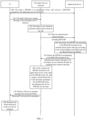
- the specific process refers to FIG. 1 , which is a flowchart of the restricted discovery process of the proximity service in the 4G.
- Step 100 a UE sends a PDUID to an application server, and receives a RPAUID assigned by the application server for the UE.
- the UE can provide the PDUID to the application server through the signaling layer.
- the application server assigns the RPAUID for the PDUID and saves the binding relationship between the PDUID and the RPAUID. After that, the application server returns the RPAUID to the UE.
- Step 101 the UE sends a discovery request message to the proximity service function.
- the discovery request message includes parameters such as RPAUID, Application ID, etc.
- Step 102 the proximity service function performs authorization check on the UE.
- This authorization check is used to determine whether the Application ID provided by the UE is allowed to be discovered firstly. If there is no UE context in the ProSe function, the proximity service function performs the authorization check through a Home Subscriber Server (HSS).
- HSS Home Subscriber Server
- Step 103 the proximity service function sends an authentication request message to the application server.
- the authentication request message includes the RPAUID.
- Step 104 the application server determines the PDUID corresponding to the RPAUID included in the authentication request message according to the stored binding relationship between the PRAUID and the PDUID.
- Step 105 the application server returns the PDUID corresponding to the RPAUID included in the authentication request message to the proximity service function through a authentication response message.
- Step 106 the proximity service function verifies whether the PDUID returned by the application server is the same as the PDUID of the UE, and assigns a user identifier of a proximity discovery application layer (ProSe Restricted Code) and other parameters for the RPAUID when determining that the two PDUIDs are the same.
- a proximity discovery application layer ProSe Restricted Code
- Step 107 the proximity service function returns a discovery response message to the UE, where the discovery response message carries the ProSe Restricted Code and other parameters.
- Step 108 the UE broadcasts the ProSe Restricted Code over the air interface.
- the UE can let other UEs discover it through the ProSe Restricted Code and perform proximity communication with it.
- the proximity service function (ProSe Function) not only provides the UE with a PDUID, but also participates in the discovery process to realize the authentication process between the proximity service function (ProSe Function) and the application server (ProSe App Server).
- the PCF provides the UE with the discovery parameter, and the discovery process is participated by the proximity service function. That is, the parameter providing function and the discovery function are located in different network entities in the 5G ProSe, while the parameter providing function and the discovery function are located in the same network entity (i.e., ProSe Function) in the 4G ProSe, making it impossible to use the same method as that in the 4G ProSe for parameter provision and function discovery in the 5G ProSe.
- ProSe Function ProSe Function
- the present application provides the following method to solve the problem that the PDUID cannot be used under the 5G network architecture.
- embodiments of the present application provide a method for using a PDUID, which is performed by a PCF on the network side.
- the processing procedure of the method is as follows.
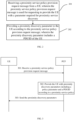
- Step 201 receiving a proximity service policy provision request message from a UE.
- the proximity service policy provision request message is used for requesting to provide the UE with a parameter required for proximity service discovery.
- the step of receiving the proximity service policy provision request message from the UE includes: receiving the proximity discovery capability information from the UE.
- the proximity discovery capability information is used to indicate that the UE supports proximity service discovery.
- the proximity service policy provision request message may carry the proximity service capability information.
- the proximity service capability information indicates that the UE supports the restricted discovery.
- the proximity service policy provision request message may be forwarded to the PCF through an Access control and Mobility management Function (AMF).
- AMF Access control and Mobility management Function
- the AMF can determine whether the UE can perform the restricted discovery according to the capability information and subscription information of the UE, and forward the proximity service policy provision request message to the PCF when determining that the UE can perform the restricted discovery.
- Step 202 may be executed after the PCF receives the proximity service policy provision request message.
- Step 202 providing a proximity discovery parameter to the UE according to the proximity service policy provision request message.
- the proximity discovery parameter includes a PDUID of the UE.
- the PDUID may be assigned to the UE in two ways as follows.
- the PCF obtains the PDUID from the proximity service function.
- the PCF may obtain the PDUID in the following way: the PCF requests the proximity service function to assign the PDUID, and contains a UE identifier of the UE in the request message; and the PCF receives the PDUID assigned by the proximity service function to the UE.
- the UE identifier may be UE ID, such as Subscription Permanent Identifier (SUPI).
- SUPI Subscription Permanent Identifier
- the PDUID includes a Public Land Mobile Network Identifier (PLMN ID) and a temporary identifier of the UE.
- PLMN ID Public Land Mobile Network Identifier
- the method further includes: the PCF receives an authentication request message from the proximity service function, where the authentication request message contains a UE identifier of the UE; and the PCF returns an authentication response message to the proximity service function, where the response message contains the PDUID of the UE.
- the PCF may also need to provide the proximity service function with the PDUID of the UE. For example, after the PCF receives the authentication request message containing the UE identifier sent by the proximity service function, the PCF finds out the corresponding PDUID according to the UE identifier, and sends the PDUID to the proximity service function through the authentication response message.
- FIG. 3 it is a flowchart in which the PCF assigns a PDUID to a UE according to an embodiment of the present application.
- Step 301 the PCF receives a proximity service policy provision request message.
- the proximity service policy provision request message is used for requesting to provide the UE with a parameter required for proximity service discovery.
- the proximity service policy provision request message includes proximity discovery capability information for indicating that the UE supports the proximity service discovery.
- Step 302 the PCF provides the UE with proximity discovery parameters including a policy parameter and a PDUID according to a proximity service policy.
- Step 303 the PCF sends the proximity discovery parameters to the UE.
- the PDUID is assigned by the PCF to the UE, the PDUID corresponding to the UE identifier is not stored in the proximity service function, and thus the proximity service function needs to send an authentication request message containing the UE identifier to the PCF, so that the PCF returns the PDUID corresponding to the UE identifier to the proximity service function through an authentication response message.
- FIG. 4 it is a flowchart in which the proximity service function assigns a PDUID according to an embodiment of the present application.
- Step 401 the PCF receives a proximity service policy provision request message.
- the proximity service policy provision request message is used for requesting to provide the UE with a parameter required for proximity service discovery.
- the proximity service policy provision request message includes proximity discovery capability information for indicating that the UE supports the proximity service discovery.
- Step 402 the PCF sends a request message including a UE identifier to the proximity service function.
- the request message is used to request the proximity service function to assign a PDUID to the UE corresponding to the UE identifier.
- Step 403 the proximity service function assigns a corresponding PDUID to the UE according to the request message.
- the correspondence between the UE identifier and the PDUID is stored.
- Step 404 the PCF receives the PDUID.
- Step 405 the PCF provides the UE with proximity discovery parameters according to a proximity service policy, and the policy parameter and the PDUID are taken as proximity discovery parameters.
- Step 406 the PCF sends the proximity discovery parameters to the UE.
- the PDUID is stored in the proximity service function, the PDUID corresponding to the UE identifier can be directly searched for in the proximity service function without requesting the PCF, when the proximity service function assigns the proximity discovery identification code to the UE in the subsequent discovery process.
- embodiments of the present application provide a method for using a PDUID, which is performed by a proximity service function on the network side, and the method includes the following steps.
- Step 501 receiving a discovery request message sent by a UE.
- the discovery request message contains a UE identifier and a ProSe Restricted Code of the UE.
- the ProSe Restricted Code is assigned by an application server according to a PDUID provided by a PCF for the UE.
- the UE After the UE receives the PDUID provided by the PCF, the UE provides the PDUID of the UE to the application server through application layer signaling, so that the application server assigns the ProSe Restricted Code to the UE. After obtaining the ProSe Restricted Code, the UE sends a discovery request message carrying the UE identifier and the ProSe Restricted Code to the proximity service function.
- Step 502 may be executed after the proximity service function receives the discovery request message sent by the UE.
- Step 502 obtaining the PDUID of the UE.
- the PDUID of the UE may be obtained in the following ways:
- the step in which the proximity service function obtains the PDUID from the PCF according to the UE identifier may be implemented in the following way: sending an authentication request message to the PCF, where the authentication request message contains the LTE identifier; and receiving an authentication response message returned by the PCF, where the response message contains the PDUID.
- Step 503 may be executed after the PDUID of the UE is obtained.
- Step 503 sending a discovery response message to the UE.
- the discovery response message contains a proximity discovery identification code corresponding to the ProSe Restricted Code.
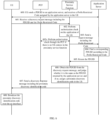
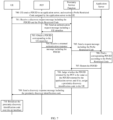
- FIG. 6 it is a first flowchart of the proximity service discovery process according to an embodiment of the present application. It is assumed that the UE provides a PDUID to the proximity service function, and the PDUID of the UE is assigned in the manner in FIG. 3 .
- Step 600 The UE sends a PDUID to an application server, and receives a ProSe Restricted Code assigned by the application server to the UE.
- the PDUID is assigned by the PCF, and the assignment process is shown in FIG. 3 .
- Step 601 The proximity service function receives a discovery request message including the PDUID and the ProSe Restricted Code.
- the discovery request message is used for the proximity service function to assign a proximity discovery identification code to the UE.
- Step 602 Perform authorization check on the application of the UE.
- the proximity service function After receiving the discovery request message, the proximity service function needs to check whether the application of the UE is run for restricted discovery (i.e., authorization check). If there is a UE context in the proximity service function, the authorization check is performed in the proximity service function. If there is no UE context in the proximity service function, step 602a is performed.
- restricted discovery i.e., authorization check
- Step 602a Perform authorization check through the PCF if there is no UE context in the proximity service function.
- step 603 may be executed.
- Step 603 The proximity service function sends a request message including the ProSe Restricted Code to the application server.
- Step 604 The application server finds a corresponding PDUID according to the ProSe Restricted Code.
- Step 605 The application server returns the PDUID.
- Step 606 The proximity service function obtains the PDUID from the discovery request message, and judges whether it is the same as the PDUID returned by the application server; and if so, assigns a proximity discovery identification code to the UE.
- Step 607 The proximity service function sends a discovery response message including the proximity discovery identification code to the UE.
- Step 608 The UE broadcasts the proximity discovery identification code over the air interface.
- FIG. 7 it is a second flowchart of the proximity service discovery process according to an embodiment of the present application. It is assumed that the UE provides no PDUID to the proximity service function, and the PDUID of the UE is assigned in the manner in FIG. 3 .
- Step 700 The UE sends a PDUID to an application server, and receives a ProSe Restricted Code assigned by the application server to the UE.
- the PDUID is assigned by the PCF, and the assignment process is shown in FIG. 3 .
- Step 701 The proximity service function receives a discovery request message including the PDUID and the ProSe Restricted Code.
- the discovery request message is used for the proximity service function to assign a proximity discovery identification code to the UE.
- Step 702 The proximity service function sends an authentication request message including a UE identifier.
- Step 703 The PCF obtains a PDUID corresponding to the UE identifier.
- the PCF can obtain the corresponding PDUID according to the UE identifier provided by the proximity service function.
- Step 704 The proximity service function receives an authentication response message including the PDUID returned from the PCF.
- Step 705 The proximity service function sends a request message including the ProSe Restricted Code to the application server.
- Step 706 The application server finds a corresponding PDUID according to the ProSe Restricted Code.
- Step 707 The application server returns the found PDUID.
- Step 708 The proximity service function judges whether the PDUID returned by the PCF is the same as the PDUID returned by the application server; and if so, assigns a proximity discovery identification code to the UE.
- Step 709 The proximity service function sends a discovery response message including the proximity discovery identification code to the UE.
- Step 710 The UE broadcasts the proximity discovery identification code over the air interface.
- FIG. 8 it is a third flowchart of the proximity service discovery process according to an embodiment of the present application. It is assumed that the UE provides no PDUID to the proximity service function, and the PDUID of the UE is assigned in the manner in FIG. 4 .
- Step 800 The UE sends a PDUID to an application server, and receives a ProSe Restricted Code assigned by the application server to the UE.
- the PDUID is assigned by the proximity service function, and the assignment process is shown in FIG. 4 .
- Step 801 The proximity service function receives a discovery request message including the PDUID and the ProSe Restricted Code.
- the discovery request message is used for the proximity service function to assign a proximity discovery identification code to the UE.
- Step 802 The proximity service function sends a request message including the ProSe Restricted Code to the application server.
- Step 803 The application server finds a corresponding PDUID according to the ProSe Restricted Code.
- Step 804 The application server returns the PDUID.
- Step 805 The proximity service function obtains a PDUID corresponding to the UE identifier locally, and judges whether the PDUID obtained locally is the same as the PDUID returned by the application server; and if so, assigns a proximity discovery identification code to the UE.
- the proximity service function may obtain the PDUID corresponding to the UE identifier locally.
- Step 806 The proximity service function sends a discovery response message including the proximity discovery identification code to the UE.
- Step 807 The UE broadcasts the proximity discovery identification code over the air interface.
- a method for using a PDUID according to an embodiment of the present application is performed by a UE, and the implementation process of the method is as follows.
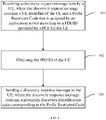
- Step 901 sending a discovery request message containing a UE identifier and a ProSe Restricted Code of the UE to a proximity service function.
- the ProSe Restricted Code is assigned by an application server according to a PDUID provided by a PCF for the UE.
- the discovery request message further includes the PDUID.
- the method further includes: providing the PDUID to the application server; and receiving the ProSe Restricted Code assigned by the application server to the UE.
- the method further includes:
- the PDUID includes a PLMN ID and a temporary identifier of the UE.
- Step 902 receiving a discovery response message returned by the proximity service function.
- the discovery response message contains a proximity discovery identification code corresponding to the ProSe Restricted Code.
- Step 903 broadcasting the proximity discovery identification code over an air interface.
- embodiments of the present application provide an apparatus for using a PDUID, which is applied to the PCF on the network side.
- the use apparatus includes:
- the receiving unit 1001 is further configured to: receive proximity discovery capability information from the LTE; wherein the proximity discovery capability information is used to indicate that the UE supports proximity service discovery.
- the providing unit 1002 is configured to:
- the providing unit 1002 is further configured to:
- the providing unit 1002 is further configured to:
- the PDUID includes a Public Land Mobile Network Identifier (PLMN ID) and a temporary identifier of the UE.
- PLMN ID Public Land Mobile Network Identifier
- embodiments of the present application provide an apparatus for using a PDUID, which is applied to the proximity service function on the network side.
- the use apparatus includes:
- the obtaining unit 1102 is configured to:
- the obtaining unit 1102 is further configured to:
- embodiments of the present application provide an apparatus for using a PDUID, which is applied to the UE.
- the use apparatus includes:
- the sending unit 1201 is further configured to:
- the sending unit 1201 is further configured to:
- the PDUID includes a Public Land Mobile Network Identifier (PLMN ID) and a temporary identifier of the UE.
- PLMN ID Public Land Mobile Network Identifier
- the discovery request message further includes the PDUID.
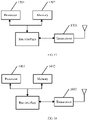
- an apparatus for using a PDUID is applied to a PCF on the network side, and the apparatus includes: a processor 1301, a memory 1302 and a transceiver 1303; wherein the processor 1301 is configured to read a program in the memory 1302 and perform the process of:
- the processor 1301 is further configured to: receive proximity discovery capability information from the LTE; wherein the proximity discovery capability information is used to indicate that the UE supports proximity service discovery.
- the processor 1301 is configured to:
- processor 1301 is further configured to:
- processor 1301 is further configured to:
- the PDUID includes a Public Land Mobile Network Identifier (PLMN ID) and a temporary identifier of the UE.
- PLMN ID Public Land Mobile Network Identifier
- the processor 1301 is responsible for managing the bus architecture and general processing, and the memory 1302 may store the data used by the processor 1301 when performing the operations.
- the transceiver 1303 is configured to receive and send the data under the control of the processor 1301.
- the bus architecture may include any numbers of interconnected buses and bridges, and link various circuits of one or more processors represented by the processor 1301 and the memory represented by the memory 1302.
- the bus architecture may further link various other circuits such as peripheral device, voltage regulator and power management circuit, which are all well known in the art and thus will not be further described again herein.
- the bus interface provides an interface.
- the processor 1301 is responsible for managing the bus architecture and general processing, and the memory 1302 may store the data used by the processor 1301 when performing the operations.
- the procedure disclosed by the embodiments of the present application may be applied in the processor 1301 or implemented by the processor 1301.
- each step of the signal processing flow may be completed by the integrated logic circuit of hardware or the instruction in the form of software in the processor 1301.
- the processor 1301 may be a general-purpose processor, a digital signal processor, an application specific integrated circuit, a field programmable gate array or other programmable logic device, a discrete gate or transistor logic device, or a discrete hardware component, and may implement or perform each method, step and logical block diagram disclosed in the embodiments of the present application.
- the general-purpose processor may be a microprocessor or any conventional processor or the like.
- the steps of the method disclosed in combination with the embodiments of the present application may be directly completed by a hardware processor, or completed by a combination of hardware and software modules in the processor 1301.
- the software modules may be located in the random access memory, flash memory, read only memory, programmable read only memory or electrically erasable programmable memory, register and other mature storage medium in the art.
- the storage medium is located in the memory 1302, and the processor 1301 reads the information in the memory 1302 and completes the steps of the signal processing flow in combination with its hardware.
- an apparatus for using a PDUID is applied to a proximity service function on the network side, and the apparatus includes: a processor 1401, a memory 1402 and a transceiver 1403; wherein the processor 1401 is configured to read a program in the memory 1402 and perform the process of:
- the processor 1401 is configured to:
- processor 1401 is further configured to:
- the processor 1401 is responsible for managing the bus architecture and general processing, and the memory 1402 may store the data used by the processor 1401 when performing the operations.
- the transceiver 1403 is configured to receive and send the data under the control of the processor 1401.
- the bus architecture may include any numbers of interconnected buses and bridges, and specifically link various circuits of one or more processors represented by the processor 1401 and the memory represented by the memory 1402.
- the bus architecture may further link various other circuits such as peripheral device, voltage regulator and power management circuit, which are all well known in the art and thus will not be further described again herein.
- the bus interface provides an interface.
- the processor 1401 is responsible for managing the bus architecture and general processing, and the memory 1402 may store the data used by the processor 1401 when performing the operations.
- the procedure disclosed by the embodiments of the present application may be applied in the processor 1401 or implemented by the processor 1401.
- each step of the signal processing flow may be completed by the integrated logic circuit of hardware in the processor or the instruction in the form of software.
- the processor 1401 may be a general-purpose processor, a digital signal processor, an application specific integrated circuit, a field programmable gate array or other programmable logic device, a discrete gate or transistor logic device, or a discrete hardware component, and may implement or perform each method, step and logical block diagram disclosed in the embodiments of the present application.
- the general-purpose processor may be a microprocessor or any conventional processor or the like.
- the steps of the method disclosed in combination with the embodiments of the present application may be directly completed by a hardware processor, or completed by a combination of hardware and software modules in the processor 1401.
- the software modules may be located in the random access memory, flash memory, read only memory, programmable read only memory or electrically erasable programmable memory, register and other mature storage medium in the art.
- the storage medium is located in the memory 1402, and the processor 1401 reads the information in the memory 1402 and completes the steps of the signal processing flow in combination with its hardware.
- an apparatus for using a PDUID is applied to a UE on the network side, and the apparatus includes: a processor 1501, a memory 1502 and a transceiver 1503; wherein the processor 1501 is configured to read a program in the memory 1502 and perform the process of:
- the processor 1501 is further configured to:
- the processor 1501 is further configured to:
- the PDUID includes a Public Land Mobile Network Identifier (PLMN ID) and a temporary identifier of the UE.
- PLMN ID Public Land Mobile Network Identifier
- the discovery request message further includes the PDUID.
- the processor 1501 is responsible for managing the bus architecture and general processing, and the memory 1502 may store the data used by the processor 1501 when performing the operations.
- the transceiver 1503 is configured to receive and send the data under the control of the processor 1501.
- the bus architecture may include any numbers of interconnected buses and bridges, and specifically link various circuits of one or more processors represented by the processor 1501 and the memory represented by the memory 1502.
- the bus architecture may further link various other circuits such as peripheral device, voltage regulator and power management circuit, which are all well known in the art and thus will not be further described again herein.
- the bus interface provides an interface.
- the processor 1501 is responsible for managing the bus architecture and general processing, and the memory 1502 may store the data used by the processor 1501 when performing the operations.
- the procedure disclosed by the embodiments of the present application may be applied in the processor 1501 or implemented by the processor 1501.
- each step of the signal processing flow may be completed by the integrated logic circuit of hardware in the processor or the instruction in the form of software.
- the processor 1501 may be a general-purpose processor, a digital signal processor, an application specific integrated circuit, a field programmable gate array or other programmable logic device, a discrete gate or transistor logic device, or a discrete hardware component, and may implement or perform each method, step and logical block diagram disclosed in the embodiments of the present application.
- the general-purpose processor may be a microprocessor or any conventional processor or the like.
- the steps of the method disclosed in combination with the embodiments of the present application may be directly completed by a hardware processor, or completed by a combination of hardware and software modules in the processor 1501.
- the software modules may be located in the random access memory, flash memory, read only memory, programmable read only memory or electrically erasable programmable memory, register and other mature storage medium in the art.
- the storage medium is located in the memory 1502, and the processor 1501 reads the information in the memory 1502 and completes the steps of the signal processing flow in combination with its hardware.
- embodiments of the present application further provide a readable storage medium, including: a memory configured to store instructions that, when executed by a processor, cause an apparatus including the readable storage medium to complete the method for using the PDUID on the PCF side or the proximity service function side or the UE side as described above.
- the embodiments of the present application can provide methods, systems and computer program products.
- the embodiments of the present application can take the form of hardware embodiments alone, software embodiments alone, or embodiments combining the software and hardware aspects.
- the embodiments of the present application can take the form of computer program products implemented on one or more computer usable storage mediums (including but not limited to magnetic disk memories, CD-ROMs, optical memories and the like) containing computer usable program codes therein.
- These computer program instructions can be provided to a general-purpose computer, a dedicated computer, an embedded processor, or a processor of another programmable data processing device to produce a machine, so that an apparatus for implementing the functions specified in one or more processes of the flow charts and/or one or more blocks of the block diagrams is produced by the instructions executed by the computer or the processor of another programmable data processing device.
- These computer program instructions can also be stored in a computer readable memory which is capable of guiding the computer or another programmable data processing device to operate in a particular way, so that the instructions stored in the computer readable memory produce a manufacture including the instruction apparatus which implements the functions specified in one or more processes of the flow charts and/or one or more blocks of the block diagrams.
- These computer program instructions can also be loaded onto the computer or another programmable data processing device, so that a series of operation steps are performed on the computer or another programmable device to produce the computer-implemented processing.
- the instructions executed on the computer or another programmable device provide steps for implementing the functions specified in one or more processes of the flow charts and/or one or more blocks of the block diagrams.
Landscapes
- Engineering & Computer Science (AREA)
- Computer Networks & Wireless Communication (AREA)
- Signal Processing (AREA)
- Computer Security & Cryptography (AREA)
- Databases & Information Systems (AREA)
- Multimedia (AREA)
- Mobile Radio Communication Systems (AREA)
Applications Claiming Priority (2)
| Application Number | Priority Date | Filing Date | Title |
|---|---|---|---|
| CN202010258452.5A CN113556708B (zh) | 2020-04-03 | 2020-04-03 | 一种邻近发现标识的使用方法、装置及存储介质 |
| PCT/CN2021/075346 WO2021196886A1 (zh) | 2020-04-03 | 2021-02-04 | 一种邻近发现标识的使用方法、装置及存储介质 |
Publications (2)
| Publication Number | Publication Date |
|---|---|
| EP4132016A1 true EP4132016A1 (de) | 2023-02-08 |
| EP4132016A4 EP4132016A4 (de) | 2023-08-30 |
Family
ID=77929294
Family Applications (1)
| Application Number | Title | Priority Date | Filing Date |
|---|---|---|---|
| EP21782102.4A Pending EP4132016A4 (de) | 2020-04-03 | 2021-02-04 | Verfahren und vorrichtung zur verwendung von näherungserkennungsidentifizierung und speichermedium |
Country Status (6)
| Country | Link |
|---|---|
| US (2) | US20230354166A1 (de) |
| EP (1) | EP4132016A4 (de) |
| JP (1) | JP7284353B2 (de) |
| KR (1) | KR102887691B1 (de) |
| CN (1) | CN113556708B (de) |
| WO (1) | WO2021196886A1 (de) |
Families Citing this family (1)
| Publication number | Priority date | Publication date | Assignee | Title |
|---|---|---|---|---|
| US12185206B2 (en) * | 2022-04-06 | 2024-12-31 | Qualcomm Incorporated | Service discovery and session establishment for machine-learning-based beam prediction in wireless communications |
Family Cites Families (13)
| Publication number | Priority date | Publication date | Assignee | Title |
|---|---|---|---|---|
| CN104105050B (zh) * | 2013-04-01 | 2017-11-28 | 电信科学技术研究院 | 一种邻近通信业务的实现方法及装置 |
| CN104113821A (zh) * | 2013-04-16 | 2014-10-22 | 中兴通讯股份有限公司 | 一种用户设备间的发现方法、系统及装置 |
| US20160381543A1 (en) * | 2013-06-28 | 2016-12-29 | Nec Corporation | Secure discovery for proximity based service communication |
| US20160100353A1 (en) * | 2014-10-01 | 2016-04-07 | Industrial Technology Research Institute | Method of dynamic admission control applicable to prose server and user equipment and related apparatuses using the same |
| WO2016054526A1 (en) * | 2014-10-02 | 2016-04-07 | Interdigital Patent Holdings, Inc. | Enabling exchange of location and other status information between prose users |
| CN105828413B (zh) * | 2015-01-09 | 2020-11-10 | 中兴通讯股份有限公司 | 一种d2d模式b发现的安全方法、终端和系统 |
| US9986431B2 (en) * | 2015-08-17 | 2018-05-29 | Telefonaktiebolaget Lm Ericsson (Publ) | Method and apparatus for direct communication key establishment |
| CN106612489A (zh) * | 2015-10-26 | 2017-05-03 | 中兴通讯股份有限公司 | 近距离通信的发现方法、系统及装置 |
| US9942838B2 (en) * | 2016-01-07 | 2018-04-10 | Lg Electronics Inc. | Method and device for discovery operation of UE in wireless communication system |
| US10477617B2 (en) * | 2016-10-01 | 2019-11-12 | Ofinno, Llc | Updating mission critical video communications |
| CN112087734B (zh) * | 2018-02-13 | 2022-01-14 | 华为技术有限公司 | 通信方法及装置 |
| CN110351683B (zh) * | 2018-04-04 | 2022-08-30 | 大唐移动通信设备有限公司 | 参数传输方法及装置 |
| EP4285620A1 (de) * | 2021-02-01 | 2023-12-06 | Telefonaktiebolaget LM Ericsson (publ) | Verfahren und system zur unterstützung der direkten entdeckung von eingeschränkten proximitätsbasierten diensten (prose) auf basis eines benutzergeräteidentifikators (ue-id) |
-
2020
- 2020-04-03 CN CN202010258452.5A patent/CN113556708B/zh active Active
-
2021
- 2021-02-04 WO PCT/CN2021/075346 patent/WO2021196886A1/zh not_active Ceased
- 2021-02-04 US US17/914,765 patent/US20230354166A1/en not_active Abandoned
- 2021-02-04 JP JP2022560370A patent/JP7284353B2/ja active Active
- 2021-02-04 KR KR1020227037258A patent/KR102887691B1/ko active Active
- 2021-02-04 EP EP21782102.4A patent/EP4132016A4/de active Pending
-
2025
- 2025-11-19 US US19/394,810 patent/US20260075508A1/en active Pending
Also Published As
| Publication number | Publication date |
|---|---|
| KR20220158068A (ko) | 2022-11-29 |
| JP7284353B2 (ja) | 2023-05-30 |
| JP2023510045A (ja) | 2023-03-10 |
| US20260075508A1 (en) | 2026-03-12 |
| US20230354166A1 (en) | 2023-11-02 |
| CN113556708A (zh) | 2021-10-26 |
| CN113556708B (zh) | 2022-08-12 |
| KR102887691B1 (ko) | 2025-11-17 |
| EP4132016A4 (de) | 2023-08-30 |
| WO2021196886A1 (zh) | 2021-10-07 |
Similar Documents
| Publication | Publication Date | Title |
|---|---|---|
| US12425305B2 (en) | Group creation method, apparatus, and system | |
| RU2767991C1 (ru) | Способ обработки информации, терминальное устройство и носитель данных | |
| CN110351194B (zh) | 一种组播组创建、组播组加入方法及装置 | |
| CN102118859A (zh) | 接入无线网络和发送寻呼消息的方法、装置和系统 | |
| US20260075508A1 (en) | Method and apparatus for using proximity service discovery ue id, and storage medium | |
| US20200275258A1 (en) | Communications method and apparatus | |
| EP3637863B1 (de) | Zugangssteuerungsverfahren und -vorrichtung sowie computerlesbares speichermedium | |
| CN117221868A (zh) | 网络注册方法、装置及可读存储介质 | |
| BR112019015067A2 (pt) | Método de acesso e terminal | |
| CN117295068A (zh) | 一种通信方法、装置、通信设备和计算机存储介质 | |
| CN112153678B (zh) | 会话管理方法、装置、相关设备及存储介质 | |
| CN114503649B (zh) | 通信方法和通信装置 | |
| EP3457772B1 (de) | Verfahren zur aktualisierung von systeminformationen, endgerätevorrichtung und netzwerkseitige vorrichtung | |
| CN114830760A (zh) | 无线通信系统中的寻呼方法和装置 | |
| CN112954669B (zh) | 共享终端业务控制方法、装置、网元及存储介质 | |
| US10785750B2 (en) | Methods for triggering user equipment to monitor paging message, user equipments, base stations and storage medium | |
| WO2023165407A1 (zh) | 认证方法、发送信息的方法、处理方法及通信装置 | |
| CN1758615A (zh) | 在共享接入网下终端选择核心网的方法 | |
| CN110351708B (zh) | 标识上报的方法、设备和介质 | |
| EP4694257A1 (de) | Kommunikationsverfahren und -vorrichtung | |
| EP4598078A1 (de) | Informationsübertragungsverfahren und -vorrichtung sowie vorrichtung und speichermedium | |
| CN113573336B (zh) | 通信管控方法及设备 | |
| CN113950013B (zh) | 一种消息发送、接收方法、设备及介质 | |
| CN114390603B (zh) | 网络切换方法、基站设备及计算机可读存储介质 | |
| CN113348713B (zh) | 无线通信方法和设备 |
Legal Events
| Date | Code | Title | Description |
|---|---|---|---|
| STAA | Information on the status of an ep patent application or granted ep patent |
Free format text: STATUS: THE INTERNATIONAL PUBLICATION HAS BEEN MADE |
|
| PUAI | Public reference made under article 153(3) epc to a published international application that has entered the european phase |
Free format text: ORIGINAL CODE: 0009012 |
|
| STAA | Information on the status of an ep patent application or granted ep patent |
Free format text: STATUS: REQUEST FOR EXAMINATION WAS MADE |
|
| 17P | Request for examination filed |
Effective date: 20221028 |
|
| AK | Designated contracting states |
Kind code of ref document: A1 Designated state(s): AL AT BE BG CH CY CZ DE DK EE ES FI FR GB GR HR HU IE IS IT LI LT LU LV MC MK MT NL NO PL PT RO RS SE SI SK SM TR |
|
| DAV | Request for validation of the european patent (deleted) | ||
| DAX | Request for extension of the european patent (deleted) | ||
| A4 | Supplementary search report drawn up and despatched |
Effective date: 20230728 |
|
| RIC1 | Information provided on ipc code assigned before grant |
Ipc: H04W 4/02 20180101AFI20230724BHEP |