EP4131882A1 - Registration method and electronic device - Google Patents
Registration method and electronic device Download PDFInfo
- Publication number
- EP4131882A1 EP4131882A1 EP21775702.0A EP21775702A EP4131882A1 EP 4131882 A1 EP4131882 A1 EP 4131882A1 EP 21775702 A EP21775702 A EP 21775702A EP 4131882 A1 EP4131882 A1 EP 4131882A1
- Authority
- EP
- European Patent Office
- Prior art keywords
- electronic device
- preset
- duration
- internet protocol
- multimedia subsystem
- Prior art date
- Legal status (The legal status is an assumption and is not a legal conclusion. Google has not performed a legal analysis and makes no representation as to the accuracy of the status listed.)
- Granted
Links
Images


Classifications
-
- H—ELECTRICITY
- H04—ELECTRIC COMMUNICATION TECHNIQUE
- H04L—TRANSMISSION OF DIGITAL INFORMATION, e.g. TELEGRAPHIC COMMUNICATION
- H04L65/00—Network arrangements, protocols or services for supporting real-time applications in data packet communication
- H04L65/1066—Session management
- H04L65/1073—Registration or de-registration
-
- H—ELECTRICITY
- H04—ELECTRIC COMMUNICATION TECHNIQUE
- H04L—TRANSMISSION OF DIGITAL INFORMATION, e.g. TELEGRAPHIC COMMUNICATION
- H04L65/00—Network arrangements, protocols or services for supporting real-time applications in data packet communication
- H04L65/10—Architectures or entities
- H04L65/1016—IP multimedia subsystem [IMS]
-
- H—ELECTRICITY
- H04—ELECTRIC COMMUNICATION TECHNIQUE
- H04L—TRANSMISSION OF DIGITAL INFORMATION, e.g. TELEGRAPHIC COMMUNICATION
- H04L65/00—Network arrangements, protocols or services for supporting real-time applications in data packet communication
- H04L65/1066—Session management
-
- H—ELECTRICITY
- H04—ELECTRIC COMMUNICATION TECHNIQUE
- H04W—WIRELESS COMMUNICATION NETWORKS
- H04W8/00—Network data management
- H04W8/18—Processing of user or subscriber data, e.g. subscribed services, user preferences or user profiles; Transfer of user or subscriber data
- H04W8/183—Processing at user equipment or user record carrier
Definitions
- Embodiments of the present invention relate to the field of communication technologies, and in particular, to a registration method and an electronic device.
- the Internet protocol multimedia subsystem (Internet Protocol Multimedia Subsystem, IMS) can meet the requirements of newer and more diversified multimedia services, resolve the integration of mobile and fixed networks, and introduce differentiated services such as triple integration of voice, data, and video, and therefore has been widely used.
- IMS Internet Protocol Multimedia Subsystem
- an electronic device needs to send a registration message through a communication radio frequency link for re-registration before the electronic device is disconnected from the IMS, so as to ensure that the electronic device can continuously use the IMS.
- the present invention provides a registration method and an electronic device, which can resolve the problem that, for electronic devices that share a communication radio frequency link, registration performed in an IMS in a process in which an application downloads data by using the communication radio frequency link affects the smooth running of the application.
- the present invention is implemented as follows:
- an embodiment of the present invention provides a registration method, applied to an electronic device.
- the electronic device includes: a communication radio frequency link, the electronic device is connected to an Internet protocol multimedia subsystem, and the method includes:
- an embodiment of the present invention further provides an electronic device.
- the electronic device includes: a communication radio frequency link, the electronic device is connected to an Internet protocol multimedia subsystem, and the electronic device includes:
- an embodiment of the present invention further provides an electronic device.
- the electronic device includes a processor, a memory, and a computer program stored in the memory and executable by the processor, the computer program, when executed by the processor, implementing steps of the registration method according to the present invention.
- an embodiment of the present invention further provides a computer-readable storage medium.
- the computer-readable storage medium stores a computer program, the computer program, when executed by a processor, implementing steps of the registration method according to the present invention.
- the electronic device includes a communication radio frequency link
- the electronic device is connected to an Internet protocol multimedia subsystem
- the method includes: obtaining, in a process in which a preset application downloads data through the communication radio frequency link, a remaining online duration of the electronic device registered in the Internet protocol multimedia subsystem; obtaining a data demand of the preset application in a case that the remaining online duration is greater than a first preset duration and less than a second preset duration, where the first preset duration is greater than or equal to a duration required for the electronic device to re-register in the Internet protocol multimedia subsystem; and performing, in a case that the data demand is less than a preset data demand, re-registration in the Internet protocol multimedia subsystem through the communication radio frequency link.
- the electronic device in the process in which the preset application downloads data through the communication radio frequency link, in a case that the remaining online duration of the electronic device registered in the IMS is still relatively long, the electronic device does not directly re-register in the IMS through the communication radio frequency link, but re-registers in the IMS when the preset application has a smaller data demand on a premise of ensuring that the electronic device is not disconnected from the IMS, which ensures that the electronic device is not disconnected from the IMS, and the preset application can run smoothly during re-registration.
- an embodiment or “one embodiment” mentioned throughout the specification means that specific characteristics, structures or properties relevant to the embodiments are included in at least one embodiment of the present invention. Therefore, “in an embodiment” or “in one embodiment” occurs in everywhere throughout the specification may not necessarily refer to the same embodiment. In addition, these specific features, structures, or properties may be merged in one or more embodiments in any proper manner.
- sequence numbers of the following processes do not mean execution sequences in various embodiments of the present invention.
- the execution sequences of the processes should be determined according to functions and internal logic of the processes, and should not be construed as any limitation on the implementation processes of the embodiments of the present invention.
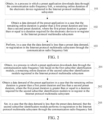
- FIG. 1 is a flowchart of a first registration method according to an embodiment of the present invention.
- the registration method is applied to an electronic device, and the electronic device may include: a mobile phone, a notebook computer, a tablet computer, or the like. This is not specifically limited in this embodiment of the present invention.
- the electronic device includes a communication radio frequency link, and an application runnable and installed on the electronic device.
- the electronic device is connected to an Internet protocol multimedia subsystem, that is, the electronic device is connected to the IMS.
- the registration method may specifically include the following actions:
- Action 101 Obtain, in a process in which a preset application downloads data through the communication radio frequency link, a remaining online duration of the electronic device registered in the Internet protocol multimedia subsystem.
- the preset application may be an application that needs to download data during running, or the like, and the preset application is not specifically limited.
- the preset application may be an application that has a higher requirement on the real-time performance, or the like.
- the quantity of preset applications is also not specifically limited.
- an IMS server After the electronic device has successfully registered in the IMS, an IMS server will assign an online duration to the electronic device.
- the electronic device is connected to the IMS before the online duration expires, and the electronic device will be disconnected from the IMS after the online duration expires.
- the electronic device needs to re-register in the IMS server before the online duration expires.
- the IMS server After the re-registration has succeeded, the IMS server will re-assign an online duration to the electronic device. This mode is repeated to ensure that the electronic device is not disconnected from the IMS.
- the online duration assigned by the IMS server to the electronic device is 20 minutes, that is, the electronic device is connected to the IMS within 20 minutes.
- the electronic device needs to re-register in the IMS server before the online duration 20 minutes expires.
- the electronic device will assign a timer to continuously detect a remaining online duration of the electronic device registered in the IMS, and remind the electronic device to re-register before the online duration expires.
- the remaining online duration of the electronic device registered in the IMS is a remaining online duration of the electronic device registered in the IMS at the current moment. For example, for the above example, after the electronic device has successfully registered in the IMS at 10:00:00 on January 29, 2020, an online duration assigned by the IMS server to the electronic device is 20 minutes. Therefore, at 10:04:00 on January 29, 2020, a remaining online duration of the electronic device registered in the IMS is 16 minutes.
- the electronic device may obtain the remaining online duration of the electronic device registered in the IMS by using the above timer. This is not specifically limited in this embodiment of the present invention.
- the quality of making calls is generally good, and the speed of sending text messages and multimedia messages is generally fast. This is not specifically limited in this embodiment of the present invention.
- Action 102 Obtain a data demand of the preset application in a case that the remaining online duration is greater than a first preset duration and less than a second preset duration, where the first preset duration is greater than or equal to a duration required for the electronic device to re-register in the Internet protocol multimedia subsystem.
- the first preset duration needs to be greater than or equal to the duration required for the electronic device to re-register in the IMS, to ensure that the electronic device is still not disconnected from the IMS when starting re-registration in a case that the remaining online duration is the above first preset duration.
- the first preset duration needs to be greater than or equal to 30 seconds. It should be noted that, to fully ensure that the electronic device is not disconnected from the IMS, the first preset duration may be generally much greater than the duration required for the electronic device to re-register in the IMS. For example, for the above example, the above first preset duration may be 3 minutes, and the first preset duration 3 minutes is six times of the duration 30 seconds required for the electronic device to re-register in the IMS.
- the above second preset duration may be set according to a total online duration assigned by the IMS server to the electronic device, and the second preset duration may be less than or equal to the total online duration assigned by the IMS server to the electronic device. It should be noted that, the above second preset duration may be generally much less than the total online duration assigned by the IMS server to the electronic device, and the effect thereof lies in that: if re-registration is performed in a case that the remaining online duration is relatively long, an unexpired online duration will be wasted, resulting in resource waste. However, the second preset duration is reasonably set in this application, so that the resource waste can be avoided.
- the online duration assigned by the IMS server to the electronic device is 20 minutes, and the second preset duration may be 15 minutes.
- the data demand of the preset application is obtained.
- the data demand of the preset application may be obtained through a modem module of the electronic device. This is not specifically limited in this embodiment of the present invention.
- Action 103 Perform, in a case that the data demand is less than a preset data demand, re-registration in the Internet protocol multimedia subsystem through the communication radio frequency link.
- the preset data demand may be set according to actual requirements, which is not specifically limited in this embodiment of the present invention.
- the remaining online duration of the electronic device registered in the IMS is greater than the above first preset duration and less than the above second preset duration and the data demand of the preset application is less than the preset data demand, it indicates that the electronic device can re-register in time, and even if the communication radio frequency link is occupied by re-registration, the preset application can also run relative smoothly, and does not get stuck or affect the usage experience of the user on the preset application. Therefore, re-registration may be performed in the IMS through the above communication radio frequency link, to maintain that the electronic device is not disconnected from the IMS.
- the electronic device in the process in which the preset application downloads data through the communication radio frequency link, in a case that the remaining online duration of the electronic device registered in the IMS is still relatively long, the electronic device does not directly re-register in the IMS through the communication radio frequency link, but re-registers in the IMS when the preset application has a smaller data demand on a premise of ensuring that the electronic device is not disconnected from the IMS, which ensures that the electronic device is not disconnected from the IMS, and the preset application can run smoothly during re-registration.
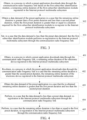
- FIG. 2 is a flowchart of a second registration method according to an embodiment of the present invention.
- the registration method is similarly applied to an electronic device, the electronic device includes a communication radio frequency link, and the electronic device is connected to an IMS.
- a first subscriber identification module Subscriber Identification Module, SIM
- a second subscriber identification module are installed on the electronic device, that is, the electronic device may be an electronic device with a dual-card and dual-standby, or an electronic device with a multi-card and multi-standby.
- the electronic device is connected to the IMS through the second SIM.
- the registration method may specifically include the following actions: Action 201. Obtain, in a process in which a preset application downloads data through the communication radio frequency link based on the first subscriber identification module, a remaining online duration of the second subscriber identification module registered in the Internet protocol multimedia subsystem.
- the first SIM may perform data exchange with a base station.
- the first SIM is a main card performing data exchange with the base station
- the second SIM is a secondary card.
- Action 202 Obtain a data demand of the preset application in a case that the remaining online duration is greater than a first preset duration and less than a second preset duration, where the first preset duration is greater than or equal to a duration required for the second subscriber identification module to re-register in the Internet protocol multimedia subsystem.
- the first preset duration herein is greater than or equal to the duration required for the second SIM to re-register in the IMS.
- the second preset duration herein may alternatively be set based on an online duration assigned by the IMS server to the second SIM. This is not specifically limited in this embodiment of the present invention.
- the data demand of the preset application through the communication radio frequency link based on the first SIM is obtained.
- Action 203 Set, in a case that the data demand is less than the preset data demand, that the second subscriber identification module performs re-registration in the Internet protocol multimedia subsystem through the communication radio frequency link.
- the second SIM may perform re-registration in the IMS through the above communication radio frequency link, to maintain that the second SIM is not disconnected from the IMS, and the electronic device is not disconnected from the IMS.
- the method may further include the following actions: obtaining signal data corresponding to the second subscriber identification module, where the signal data includes: at least one of a signal-to-noise ratio and a signal strength.
- the above action 203 may include: setting, in a case that the data demand is less than the preset data demand and the signal data is greater than preset signal data, that the second subscriber identification module performs re-registration in the Internet protocol multimedia subsystem through the communication radio frequency link.
- the signal data corresponding to the second SIM may be obtained, where the signal data is used for representing signal quality of the second SIM.
- the signal data may include: at least one of the signal-to-noise ratio and the signal strength.
- the preset signal data may be set according to actual requirements, which is not specifically limited.
- the preset application In a case that the data demand of the preset application through the communication radio frequency link based on the first SIM is less than the above preset data demand and the signal data of the second SIM is greater than the preset signal data, it indicates that even if the communication radio frequency link is occupied by re-registration in this case, the preset application can also run relative smoothly, and does not get stuck or affect the usage experience of the user on the preset application, and the signal quality of the second SIM is better at the same time. In a case that the signal quality of the second SIM is better, the speed at which the second SIM re-registers in the IMS through the above communication radio frequency link is faster, and an occupation time on the communication radio frequency link is shorter.
- the second SIM may re-register in the IMS through the above communication radio frequency link, to maintain that the second SIM is not disconnected from the IMS, the electronic device is not disconnected from the IMS, and a time for the second SIM to occupy the communication radio frequency link during re-registration can be shorter, thereby reducing the influence on the smooth running of the preset application.
- the second SIM in a process in which the electronic device is connected to the IMS though the second SIM and the preset application downloads data through the communication radio frequency link based on the first SIM, in a case that the remaining online duration of the second SIM registered in the IMS is still relatively long, the second SIM does not directly re-register in the IMS through the communication radio frequency link, but the second SIM re-registers in the IMS when the preset application has a smaller data demand on a premise of ensuring that the second SIM is not disconnected from the IMS, which ensures that the second SIM is not disconnected from the IMS, the electronic device is not disconnected from the IMS, and the preset application can run smoothly through a mobile network provided by the first SIM during re-registration.
- FIG. 3 is a flowchart of a third registration method according to an embodiment of the present invention.
- the registration method is similarly applied to an electronic device, the electronic device includes a communication radio frequency link, and the electronic device is connected to an IMS.
- a first SIM is installed on the electronic device, that is, the electronic device may be an electronic device with a single-card and single-standby, or an electronic device with a multi-card and multi-standby.
- the electronic device is connected to the IMS through the first SIM.
- the registration method may specifically include the following actions: Action 301. Obtain, in a process in which a preset application downloads data through the communication radio frequency link based on the first subscriber identification module, a remaining online duration of the first subscriber identification module registered in the Internet protocol multimedia subsystem.
- the first SIM may perform data exchange with a base station, and is also connected to the IMS.
- the IMS For the above action 301, reference may be made to the above action 101. It should be noted that, in a process in which the preset application downloads data through the communication radio frequency link based on a mobile network of the first SIM, the remaining online duration of the first SIM registered in the IMS is obtained.
- Action 302. Obtain a data demand of the preset application in a case that the remaining online duration is greater than a first preset duration and less than a second preset duration, where the first preset duration is greater than or equal to a duration required for the first subscriber identification module to re-register in the Internet protocol multimedia subsystem.
- the first preset duration herein is greater than or equal to the duration required for the first SIM to re-register in the IMS.
- the second preset duration herein may alternatively be set based on an online duration assigned by the IMS server to the first SIM. This is not specifically limited in this embodiment of the present invention.
- the data demand of the preset application through the communication radio frequency link based on the first SIM is obtained.
- Action 303 Set, in a case that the data demand is less than the preset data demand, that the first subscriber identification module performs re-registration in the Internet protocol multimedia subsystem through the communication radio frequency link.
- the action reference may be similarly made to relevant description in the above action 103. It should be noted that, in a case that the data demand of the preset application through the communication radio frequency link based on the first SIM is less than the above preset data demand, it indicates that even if the communication radio frequency link is occupied by re-registration in this case, the preset application can also run relative smoothly, and does not get stuck or affect the usage experience of the user on the preset application. Therefore, the first SIM may perform re-registration in the IMS through the above communication radio frequency link, to maintain that the first SIM is not disconnected from the IMS, and the electronic device is not disconnected from the IMS.
- the method may further include the following actions: obtaining signal data corresponding to the first subscriber identification module, where the signal data includes: at least one of a signal-to-noise ratio and a signal strength.
- the above action 303 may include: setting, in a case that the data demand is less than the preset data demand and the signal data is greater than preset signal data, that the first subscriber identification module performs re-registration in the Internet protocol multimedia subsystem through the communication radio frequency link.
- the signal data corresponding to the first SIM may be obtained, where the signal data is used for representing signal quality of the first SIM.
- the signal data may include: at least one of the signal-to-noise ratio and the signal strength.
- the preset signal data may be set according to actual requirements, which is not specifically limited.
- the preset application In a case that the data demand of the preset application through the communication radio frequency link based on the first SIM is less than the above preset data demand and the signal data of the first SIM is greater than the preset signal data, it indicates that even if the communication radio frequency link is occupied by re-registration in this case, the preset application can also run relative smoothly, and does not get stuck or affect the usage experience of the user on the preset application, and the signal quality of the first SIM is better at the same time. In a case that the signal quality of the first SIM is better, the speed at which the second SIM re-registers in the IMS through the above communication radio frequency link is faster, and an occupation time on the communication radio frequency link is shorter.
- the first SIM may re-register in the IMS through the above communication radio frequency link, to maintain that the first SIM is not disconnected from the IMS, the electronic device is not disconnected from the IMS, and a time for the first SIM to occupy the communication radio frequency link during re-registration can be shorter, thereby reducing the influence on the smooth running of the preset application.
- the first SIM does not directly re-register in the IMS through the communication radio frequency link, but the first SIM re-registers in the IMS when the preset application has a smaller data demand on a premise of ensuring that the first SIM is not disconnected from the IMS, which ensures that the first SIM is not disconnected from the IMS, the electronic device is not disconnected from the IMS, and the preset application can run smoothly through a mobile network provided by the first SIM during re-registration.
- FIG. 4 is a flowchart of a fourth registration method according to an embodiment of the present invention.
- the registration method is similarly applied to an electronic device, the electronic device includes a communication radio frequency link, and the electronic device is connected to an IMS.
- the electronic device For the electronic device, reference may be made to the above description. To avoid repetition, details are not described herein again.
- the registration method may specifically include the following actions:
- Action 401 Obtain, in a process in which a preset application downloads data through the communication radio frequency link, a remaining online duration of the electronic device registered in the Internet protocol multimedia subsystem.
- the preset application may optionally include: at least one of a game application and a video application. Both the game application and the video application have higher requirements on a network. For example, in a case that the game application runs unsmoothly, a game character corresponding to a user may lose a game. For example, in a case that the video application runs unsmoothly, stuck playback may be caused, so that the viewing experience of a user is affected.
- the process in which the above preset application downloads data through the communication radio frequency link may be a process in which the user downloads data through the communication link to play the game application.
- the process in which the above preset application downloads data through the communication radio frequency link may be a process in which the user downloads data through the communication link to view a video in the video application.
- Action 402. Re-obtain, in a process in which the preset application downloads data through the communication radio frequency link in a case that the remaining online duration is greater than the second preset duration, the remaining online duration of the electronic device registered in the Internet protocol multimedia subsystem.
- the remaining online duration of the electronic device registered in the IMS is greater than the above second preset duration, which indicates that the remaining online duration of the electronic device registered in the IMS is still very long.
- the remaining online duration of the electronic device registered in the IMS may be re-obtained.
- Action 403. Obtain the data demand of the preset application in a case that the re-obtained remaining online duration is greater than the first preset duration and less than the second preset duration.
- the remaining online duration of the electronic device registered in the IMS is greater than the above second preset duration, which indicates that the remaining online duration of the electronic device registered in the IMS is still very long.
- the data demand of the preset application is not obtained in time, so that re-registration is not performed, but the remaining online duration of the electronic device registered in the IMS is re-obtained in the process in which the preset application downloads data through the above communication radio frequency link, and the data demand of the preset application is re-obtained in a case that the re-obtained remaining online duration is greater than the above first preset duration and less than the above second preset duration.
- the achieved effect lies in that: in a case that the remaining online duration is still very long, re-registration is not performed, so that an unexpired online duration will not be wasted, thereby avoiding resource waste.
- an online duration assigned by an IMS server to the electronic device is 20 minutes
- the second preset duration may be 15 minutes
- the first preset duration may be 3 minutes. If an obtained remaining online duration of the electronic device registered in the IMS is 18 minutes and is greater than the above second preset duration, that is, the remaining online duration of the electronic device registered in the IMS is still very long, the data demand of the preset application is not obtained in time, so that re-registration is not performed.
- a re-obtained remaining online duration of the electronic device registered in the IMS is 14.9 minutes in a process in which the above preset application downloads data through the communication radio frequency link
- the re-obtained remaining online duration 14.9 minutes is greater than the first preset duration 3 minutes and less than the second preset duration 15 minutes, so that the data demand of the preset application is obtained.
- Action 404 Perform, in a case that the data demand is less than a preset data demand, re-registration in the Internet protocol multimedia subsystem through the communication radio frequency link.
- Action 405. Perform, in a case that the remaining online duration is less than or equal to the first preset duration, re-registration in the Internet protocol multimedia subsystem through the communication radio frequency link.
- the remaining online duration of the electronic device registered in the IMS is less than or equal to the above first preset duration, which indicates that the remaining online duration of the electronic device registered in the IMS is very short, and if re-registration is not performed in time, it may cause that the electronic device is disconnected from the IMS. Therefore, re-registration is directly performed in the IMS through the above communication radio frequency link, to maintain that the electronic device is not disconnected from the IMS.
- an online duration assigned by an IMS server to the electronic device is 20 minutes
- the second preset duration may be 15 minutes
- the first preset duration may be 3 minutes. If an obtained remaining online duration of the electronic device registered in the IMS is 3 minutes and is exactly equal to the above first preset duration, re-registration is directly performed in the IMS through the above communication radio frequency link.
- the above preset application is the game application
- the process in which the user downloads data through a communication link to play the game application in a case that the remaining online duration of the electronic device registered in the IMS is greater than the above first preset duration and less than the above second preset duration and the game application has a smaller data demand, re-registration is performed in the IMS through the above communication radio frequency link, and the user loses a game not due to stuck smoothness caused by the re-registration when the user plays a game, and the like, so that the game experience of the user can be improved, and the electronic device being disconnected from the IMS is not caused.
- the electronic device includes a communication radio frequency link
- the electronic device is connected to an Internet protocol multimedia subsystem
- the method includes: obtaining, in a process in which a preset application downloads data through the communication radio frequency link, a remaining online duration of the electronic device registered in the Internet protocol multimedia subsystem; obtaining a data demand of the preset application in a case that the remaining online duration is greater than a first preset duration and less than a second preset duration, where the first preset duration is greater than or equal to a duration required for the electronic device to re-register in the Internet protocol multimedia subsystem; and performing, in a case that the data demand is less than a preset data demand, re-registration in the Internet protocol multimedia subsystem through the communication radio frequency link.
- the electronic device in the process in which the preset application downloads data through the communication radio frequency link, in a case that the remaining online duration of the electronic device registered in the IMS is still relatively long, the electronic device does not directly re-register in the IMS through the communication radio frequency link, but re-registers in the IMS when the preset application has a smaller data demand on a premise of ensuring that the electronic device is not disconnected from the IMS, which ensures that the electronic device is not disconnected from the IMS, and the preset application can run smoothly during re-registration.
- an electronic device 500 is further provided.
- the electronic device includes: a communication radio frequency link, and the electronic device is connected to an Internet protocol multimedia subsystem.
- FIG. 5 is a schematic structural diagram of an electronic device according to an embodiment of the present invention.
- the electronic device 500 may include:
- a first subscriber identification module and a second subscriber identification module are installed on the electronic device, and the electronic device is connected to the Internet protocol multimedia subsystem through the second subscriber identification module; and Based on FIG. 5 , referring to FIG. 6 , the remaining online duration obtaining module 501 includes:
- the electronic device further includes: a signal data obtaining module, configured obtain signal data corresponding to the second subscriber identification module, where the signal data includes: at least one of a signal-to-noise ratio and a signal strength.
- a signal data obtaining module configured obtain signal data corresponding to the second subscriber identification module, where the signal data includes: at least one of a signal-to-noise ratio and a signal strength.
- the first registration unit 5031 includes: a first registration sub-unit, configured to set, in a case that the data demand is less than the preset data demand and the signal data is greater than preset signal data, that the second subscriber identification module performs re-registration in the Internet protocol multimedia subsystem through the communication radio frequency link.
- a first subscriber identification module is installed on the electronic device, and the electronic device is connected to the Internet protocol multimedia subsystem through the first subscriber identification module.
- the remaining online duration obtaining module 501 includes:
- the electronic device further includes: a re-obtaining module, configured to re-obtain, in a process in which the preset application downloads data through the communication radio frequency link in a case that the remaining online duration is greater than the second preset duration, the remaining online duration of the electronic device registered in the Internet protocol multimedia subsystem.
- a re-obtaining module configured to re-obtain, in a process in which the preset application downloads data through the communication radio frequency link in a case that the remaining online duration is greater than the second preset duration, the remaining online duration of the electronic device registered in the Internet protocol multimedia subsystem.
- the data demand obtaining module 502 includes: a data demand obtaining unit, configured to obtain the data demand of the preset application in a case that the re-obtained remaining online duration is greater than the first preset duration and less than the second preset duration.
- the electronic device further includes: a second registration module, configured to perform, in a case that the remaining online duration is less than or equal to the first preset duration, re-registration in the Internet protocol multimedia subsystem through the communication radio frequency link.
- a second registration module configured to perform, in a case that the remaining online duration is less than or equal to the first preset duration, re-registration in the Internet protocol multimedia subsystem through the communication radio frequency link.
- the preset application includes: at least one of a game application and a video application.
- the electronic device according to this embodiment of the present invention can implement all processes implemented by the electronic device described in the method embodiments shown in FIG. 1 to FIG. 4 , and can achieve the corresponding beneficial effects. To avoid repetition, details are not described herein again.
- FIG. 7 is a schematic diagram of a hardware structure of an electronic device that implements various embodiments of the present invention.
- the electronic device 800 includes, but is not limited to, components such as a radio frequency unit 801, a network module 802, an audio output unit 803, an input unit 804, a sensor 805, a display unit 806, a user input unit 807, an interface unit 808, a memory 809, a processor 810, and a power supply 811.
- a radio frequency unit 801 such as a radio frequency unit 801, a network module 802, an audio output unit 803, an input unit 804, a sensor 805, a display unit 806, a user input unit 807, an interface unit 808, a memory 809, a processor 810, and a power supply 811.
- a radio frequency unit 801 such as a radio frequency unit 801, a network module 802, an audio output unit 803, an input unit 804, a sensor 805, a display unit 806, a user input unit 807, an interface unit 808, a memory 809
- the electronic device includes, but is not limited to, a mobile phone, a tablet computer, a notebook computer, a palmtop computer, an in-vehicle terminal, a wearable device, a pedometer, and the like.
- the processor 810 is configured to obtain, in a process in which a preset application downloads data through a communication radio frequency link, a remaining online duration of the electronic device registered in an Internet protocol multimedia subsystem;
- the electronic device in the process in which the preset application downloads data through the communication radio frequency link, in a case that the remaining online duration of the electronic device registered in the IMS is still relatively long, the electronic device does not directly re-register in the IMS through the communication radio frequency link, but re-registers in the IMS when the preset application has a smaller data demand on a premise of ensuring that the electronic device is not disconnected from the IMS, which ensures that the electronic device is not disconnected from the IMS, and the preset application can run smoothly during re-registration.
- the radio frequency unit 801 may be configured to transmit and receive information or transmit and receive signals during a call. Specifically, the radio frequency unit is configured to receive downlink data from a base station and transmit downlink data to the processor 810 for processing. In addition, the radio frequency unit transmits uplink data to the base station. Generally, the radio frequency unit 801 includes, but is not limited to, an antenna, at least one amplifier, a transceiver, a coupler, a low noise amplifier, a duplexer, and the like. In addition, the radio frequency unit 801 may further communicate with another device through a wireless communication system and a network.
- the electronic device provides wireless broadband Internet access for a user by using the network module 802, for example, allowing the user to send and receive emails, browse webpages, access streaming media content, and the like.
- the audio output unit 803 may convert audio data received by the radio frequency unit 801 or the network module 802 or stored on the memory 809 into audio signals and output the audio signals as sounds. In addition, the audio output unit 803 may further provide audio output (for example, a call signal reception sound or a message reception sound) related to a specific function performed by the electronic device 800.
- the audio output unit 803 includes a speaker, a buzzer, a receiver, and the like.
- the input unit 804 is configured to receive an audio or video signal.
- the input unit 804 may include a graphics processing unit (Graphics Processing Unit, GPU) 8041 and a microphone 8042.
- the graphics processing unit 8041 performs processing on image data of a static picture or a video that is obtained by an image acquisition apparatus (for example, a camera) in a video acquisition mode or an image acquisition mode.
- the processed image frame may be displayed on the display unit 806.
- An image frame that has been processed by the graphics processing unit 8041 may be stored in the memory 809 (or another storage medium) or sent by using the radio frequency unit 801 or the network module 802.
- the microphone 8042 may receive a sound and can process such a sound into audio data.
- the processed audio data may be converted, in a phone call mode, into a format that may be sent by the radio frequency unit 801 to a mobile communication base station.
- the electronic device 800 further includes at least one sensor 805 such as an optical sensor, a motion sensor, or another sensor.
- the optical sensor includes an ambient light sensor and a proximity sensor.
- the ambient light sensor may adjust luminance of a display panel 8061 according to brightness of the ambient light.
- the proximity sensor may switch off the display panel 8061 and/or backlight when the electronic device 800 is moved to the ear.
- an acceleration sensor can detect magnitudes of accelerations in various directions (generally, on three axes), may detect a magnitude and a direction of the gravity in a static state, and may be applied to recognizing an altitude of the electronic device (for example, switching between a landscape state and a portrait state, a related game, and magnetometer attitude calibration), a function related to vibration recognition (such as a pedometer and a knock), and the like.
- the sensor 805 may further include a fingerprint sensor, a pressure sensor, an iris sensor, a molecular sensor, a gyroscope, a barometer, a hygrometer, a thermometer, an infrared sensor, and the like, which are not described herein in detail.
- the display unit 806 is configured to display information inputted by the user or information provided for the user.
- the display unit 806 may include a display panel 8061.
- the display panel 8061 may be configured in the form of a liquid crystal display (LCD), an organic light-emitting diode (OLED), or the like.
- the user input unit 807 may be configured to receive input digital or character information, and generate a keyboard signal input related to the user setting and function control of the electronic device.
- the user input unit 807 includes a touch panel 8071 and another input device 8072.
- the touch panel 8071 also referred to as a touchscreen, may collect a touch operation of a user on or near the touch panel (such as an operation of a user on or near the touch panel 8071 by using any suitable object or attachment, such as a finger or a touch pen).
- the touch panel 8071 may include two parts: a touch detection apparatus and a touch controller.
- the touch detection apparatus detects a touch position of the user, detects a signal generated by the touch operation, and transfers the signal to the touch controller.
- the touch controller receives the touch information from the touch detection apparatus, converts the touch information into touch point coordinates, and transmits the touch point coordinates to the processor 810. Moreover, the touch controller may receive and execute a command transmitted from the processor 810.
- the touch panel 8071 may be implemented by using various types, such as a resistive type, a capacitance type, an infrared type, and a surface acoustic wave type.
- the user input unit 807 may further include the another input device 8072.
- the another input device 8072 may include, but is not limited to, a physical keyboard, a functional key (for example, a volume control key or a switch key), a track ball, a mouse, and a joystick, and the details will not be described herein again.
- a functional key for example, a volume control key or a switch key
- a track ball for example, a mouse, and a joystick
- the touch panel 8071 may cover the display panel 8061. After detecting a touch operation on or near the touch panel, the touch panel 8071 transfers the touch operation to the processor 810, to determine a type of a touch event. Then, the processor 810 provides a corresponding visual output on the display panel 8061 according to the type of the touch event.
- the touch panel 8071 and the display panel 8061 implement, as two independent parts, input and output functions of the electronic device. However, in some embodiments, the touch panel 8071 and the display panel 8061 may be integrated to implement the input and output functions of the electronic device. The details are not limited herein.
- the interface unit 808 is an interface for connecting an external apparatus and the electronic device 800.
- the external apparatus may include a wired or wireless headset port, an external power supply (or a battery charger) port, a wired or wireless data port, a storage card port, a port used to connect an apparatus having an identification module, an audio input/output (I/O) port, a video I/O port, an earphone port, and the like.
- the interface unit 808 may be configured to receive an input (for example, data information or electricity) from an external device and transmit the received input to one or more elements in the electronic device 800, or may be configured to transmit data between the electronic device 800 and the external apparatus.
- the memory 809 may be configured to store a software program and various data.
- the memory 809 may mainly include a program storage region and a data storage region.
- the program storage region may store an operating system, an application program required by at least one function (for example, a sound playback function and an image playback function), or the like.
- the data storage region may store data (for example, audio data and a phone book) created according to use of the mobile phone.
- the memory 809 may include a high speed random access memory, and may also include a non-volatile memory, such as at least one magnetic disk storage device, a flash memory, or another volatile solid-state storage device.
- the processor 810 is a control center of the electronic device, and connects to various parts of the electronic device by using various interfaces and lines. By running or executing the software program and/or module stored in the memory 809, and invoking data stored in the memory 809, the processor performs various functions and data processing of the electronic device, thereby performing overall monitoring on the electronic device.
- the processor 810 may include one or more processing units.
- the processor 810 may integrate an application processor and a modem.
- the application processor mainly processes an operating system, a user interface, an application program, and the like.
- the modem mainly processes wireless communication. It may be understood that the foregoing modem may not be integrated into the processor 810.
- the electronic device 800 may further include the power supply 811 (for example, a battery) for supplying power to the components.
- the power supply 811 may be logically connected to the processor 810 by a power management system, thereby implementing functions such as charging, discharging, and power consumption management by using the power management system.
- the electronic device 800 includes some functional module that are not shown, which are not described herein in detail.
- an embodiment of the present invention further provides an electronic device, including a processor 810, a memory 809, and a computer program stored on the memory 809 and executable on the processor 810, the computer program, when executed by the processor 810, implementing all processes of the embodiments of the registration method described above, and can achieve the same technical effects. To avoid repetition, details are not described herein again.
- An embodiment of the present invention further provides a computer-readable storage medium, storing a computer program, the computer program, when executed by a processor, implementing all processes of the embodiments of the registration method described above, and can achieve the same technical effects. To avoid repetition, details are not described herein again.
- the computer-readable storage medium may include a flash drive, a read-only memory (Read-Only Memory, ROM), a random access memory (Random Access Memory, RAM), a magnetic disk, or an optical disc.
- the computer software product is stored in a storage medium (for example, a ROM/RAM, a magnetic disk, or an optical disc) including several instructions to enable a terminal (which may be a mobile phone, a computer, a server, an air conditioner, a network device, or the like) to perform the methods described in the embodiments of the present invention.
- a storage medium for example, a ROM/RAM, a magnetic disk, or an optical disc
- a terminal which may be a mobile phone, a computer, a server, an air conditioner, a network device, or the like
Landscapes
- Engineering & Computer Science (AREA)
- Multimedia (AREA)
- Computer Networks & Wireless Communication (AREA)
- Signal Processing (AREA)
- Business, Economics & Management (AREA)
- General Business, Economics & Management (AREA)
- Databases & Information Systems (AREA)
- Mobile Radio Communication Systems (AREA)
- Telephonic Communication Services (AREA)
Abstract
Description
- This application claims the priority of
Chinese Patent Application No. 202010210089.X filed in China on March 23, 2020 - Embodiments of the present invention relate to the field of communication technologies, and in particular, to a registration method and an electronic device.
- The Internet protocol multimedia subsystem (Internet Protocol Multimedia Subsystem, IMS) can meet the requirements of newer and more diversified multimedia services, resolve the integration of mobile and fixed networks, and introduce differentiated services such as triple integration of voice, data, and video, and therefore has been widely used.
- Currently, an electronic device needs to send a registration message through a communication radio frequency link for re-registration before the electronic device is disconnected from the IMS, so as to ensure that the electronic device can continuously use the IMS.
- However, for electronic devices that share a communication radio frequency link, registration performed in the IMS in a process in which an application downloads data by using the communication radio frequency link is likely to affect the smooth running of the application.
- The present invention provides a registration method and an electronic device, which can resolve the problem that, for electronic devices that share a communication radio frequency link, registration performed in an IMS in a process in which an application downloads data by using the communication radio frequency link affects the smooth running of the application.
- To resolve the above technical problem, the present invention is implemented as follows:
- According to a first aspect, an embodiment of the present invention provides a registration method, applied to an electronic device. The electronic device includes: a communication radio frequency link, the electronic device is connected to an Internet protocol multimedia subsystem, and the method includes:
- obtaining, in a process in which a preset application downloads data through the communication radio frequency link, a remaining online duration of the electronic device registered in the Internet protocol multimedia subsystem;
- obtaining a data demand of the preset application in a case that the remaining online duration is greater than a first preset duration and less than a second preset duration, where the first preset duration is greater than or equal to a duration required for the electronic device to re-register in the Internet protocol multimedia subsystem; and
- performing, in a case that the data demand is less than a preset data demand, re-registration in the Internet protocol multimedia subsystem through the communication radio frequency link.
- According to a second aspect, an embodiment of the present invention further provides an electronic device. The electronic device includes: a communication radio frequency link, the electronic device is connected to an Internet protocol multimedia subsystem, and the electronic device includes:
- a remaining online duration obtaining module, configured to obtain, in a process in which a preset application downloads data through the communication radio frequency link, a remaining online duration of the electronic device registered in the Internet protocol multimedia subsystem;
- a data demand obtaining module, configured to obtain a data demand of the preset application in a case that the remaining online duration is greater than a first preset duration and less than a second preset duration, where the first preset duration is greater than or equal to a duration required for the electronic device to re-register in the Internet protocol multimedia subsystem; and
- a first registration module, configured to perform, in a case that the data demand is less than a preset data demand, re-registration in the Internet protocol multimedia subsystem through the communication radio frequency link.
- According to a third aspect, an embodiment of the present invention further provides an electronic device. The electronic device includes a processor, a memory, and a computer program stored in the memory and executable by the processor, the computer program, when executed by the processor, implementing steps of the registration method according to the present invention.
- According to a fourth aspect, an embodiment of the present invention further provides a computer-readable storage medium. The computer-readable storage medium stores a computer program, the computer program, when executed by a processor, implementing steps of the registration method according to the present invention.
- In this embodiment of the present invention, the electronic device includes a communication radio frequency link, the electronic device is connected to an Internet protocol multimedia subsystem, and the method includes: obtaining, in a process in which a preset application downloads data through the communication radio frequency link, a remaining online duration of the electronic device registered in the Internet protocol multimedia subsystem; obtaining a data demand of the preset application in a case that the remaining online duration is greater than a first preset duration and less than a second preset duration, where the first preset duration is greater than or equal to a duration required for the electronic device to re-register in the Internet protocol multimedia subsystem; and performing, in a case that the data demand is less than a preset data demand, re-registration in the Internet protocol multimedia subsystem through the communication radio frequency link. That is, in the process in which the preset application downloads data through the communication radio frequency link, in a case that the remaining online duration of the electronic device registered in the IMS is still relatively long, the electronic device does not directly re-register in the IMS through the communication radio frequency link, but re-registers in the IMS when the preset application has a smaller data demand on a premise of ensuring that the electronic device is not disconnected from the IMS, which ensures that the electronic device is not disconnected from the IMS, and the preset application can run smoothly during re-registration.
-
-
FIG. 1 is a flowchart of a first registration method according to an embodiment of the present invention; -
FIG. 2 is a flowchart of a second registration method according to an embodiment of the present invention; -
FIG. 3 is a flowchart of a third registration method according to an embodiment of the present invention; -
FIG. 4 is a flowchart of a fourth registration method according to an embodiment of the present invention; -
FIG. 5 is a structural block diagram of an electronic device according to an embodiment of the present invention; -
FIG. 6 is a structural block diagram of another electronic device according to an embodiment of the present invention; and -
FIG. 7 is a schematic diagram of a hardware structure of an electronic device according to various embodiments of the present invention. - The technical solutions of embodiments of the present invention are clearly and completely described below with reference to the accompanying drawings in the embodiments of the present invention. Obviously, the described embodiments are a part rather than all of the embodiments of the present invention. All other embodiments obtained by a person of ordinary skill in the art based on the embodiments of the present invention without creative efforts shall fall within the protection scope of the present invention.
- It should be understood that "an embodiment" or "one embodiment" mentioned throughout the specification means that specific characteristics, structures or properties relevant to the embodiments are included in at least one embodiment of the present invention. Therefore, "in an embodiment" or "in one embodiment" occurs in everywhere throughout the specification may not necessarily refer to the same embodiment. In addition, these specific features, structures, or properties may be merged in one or more embodiments in any proper manner.
- It should be understood that sequence numbers of the following processes do not mean execution sequences in various embodiments of the present invention. The execution sequences of the processes should be determined according to functions and internal logic of the processes, and should not be construed as any limitation on the implementation processes of the embodiments of the present invention.
-
FIG. 1 is a flowchart of a first registration method according to an embodiment of the present invention. The registration method is applied to an electronic device, and the electronic device may include: a mobile phone, a notebook computer, a tablet computer, or the like. This is not specifically limited in this embodiment of the present invention. The electronic device includes a communication radio frequency link, and an application runnable and installed on the electronic device. The electronic device is connected to an Internet protocol multimedia subsystem, that is, the electronic device is connected to the IMS. The registration method may specifically include the following actions: - Action 101. Obtain, in a process in which a preset application downloads data through the communication radio frequency link, a remaining online duration of the electronic device registered in the Internet protocol multimedia subsystem.
- In this embodiment of the present invention, the preset application may be an application that needs to download data during running, or the like, and the preset application is not specifically limited. The preset application may be an application that has a higher requirement on the real-time performance, or the like. The quantity of preset applications is also not specifically limited.
- After the electronic device has successfully registered in the IMS, an IMS server will assign an online duration to the electronic device. The electronic device is connected to the IMS before the online duration expires, and the electronic device will be disconnected from the IMS after the online duration expires. To avoid being disconnected from the IMS, the electronic device needs to re-register in the IMS server before the online duration expires. After the re-registration has succeeded, the IMS server will re-assign an online duration to the electronic device. This mode is repeated to ensure that the electronic device is not disconnected from the IMS.
- For example, after the electronic device has successfully registered in the IMS, the online duration assigned by the IMS server to the electronic device is 20 minutes, that is, the electronic device is connected to the IMS within 20 minutes. To avoid being disconnected from the IMS, the electronic device needs to re-register in the IMS server before the online duration 20 minutes expires.
- Generally, after the online duration is obtained, the electronic device will assign a timer to continuously detect a remaining online duration of the electronic device registered in the IMS, and remind the electronic device to re-register before the online duration expires.
- The remaining online duration of the electronic device registered in the IMS is a remaining online duration of the electronic device registered in the IMS at the current moment. For example, for the above example, after the electronic device has successfully registered in the IMS at 10:00:00 on January 29, 2020, an online duration assigned by the IMS server to the electronic device is 20 minutes. Therefore, at 10:04:00 on January 29, 2020, a remaining online duration of the electronic device registered in the IMS is 16 minutes.
- In a process in which the preset application of the electronic device downloads data through the communication radio frequency link by using a mobile network, the electronic device may obtain the remaining online duration of the electronic device registered in the IMS by using the above timer. This is not specifically limited in this embodiment of the present invention.
- Optionally, during the online duration of the electronic device registered in the IMS, the quality of making calls is generally good, and the speed of sending text messages and multimedia messages is generally fast. This is not specifically limited in this embodiment of the present invention.
-
Action 102. Obtain a data demand of the preset application in a case that the remaining online duration is greater than a first preset duration and less than a second preset duration, where the first preset duration is greater than or equal to a duration required for the electronic device to re-register in the Internet protocol multimedia subsystem. - In this embodiment of the present invention, the first preset duration needs to be greater than or equal to the duration required for the electronic device to re-register in the IMS, to ensure that the electronic device is still not disconnected from the IMS when starting re-registration in a case that the remaining online duration is the above first preset duration.
- For example, if the duration required for the electronic device to re-register in the IMS is 30 seconds, the first preset duration needs to be greater than or equal to 30 seconds. It should be noted that, to fully ensure that the electronic device is not disconnected from the IMS, the first preset duration may be generally much greater than the duration required for the electronic device to re-register in the IMS. For example, for the above example, the above first preset duration may be 3 minutes, and the first preset duration 3 minutes is six times of the duration 30 seconds required for the electronic device to re-register in the IMS.
- The above second preset duration may be set according to a total online duration assigned by the IMS server to the electronic device, and the second preset duration may be less than or equal to the total online duration assigned by the IMS server to the electronic device. It should be noted that, the above second preset duration may be generally much less than the total online duration assigned by the IMS server to the electronic device, and the effect thereof lies in that: if re-registration is performed in a case that the remaining online duration is relatively long, an unexpired online duration will be wasted, resulting in resource waste. However, the second preset duration is reasonably set in this application, so that the resource waste can be avoided.
- For example, for the above example, after the electronic device has successfully registered in the IMS, the online duration assigned by the IMS server to the electronic device is 20 minutes, and the second preset duration may be 15 minutes.
- In a case that the remaining online duration of the electronic device registered in the IMS is greater than the above first preset duration and less than the above second preset duration, the data demand of the preset application is obtained. Specifically, the data demand of the preset application may be obtained through a modem module of the electronic device. This is not specifically limited in this embodiment of the present invention.
-
Action 103. Perform, in a case that the data demand is less than a preset data demand, re-registration in the Internet protocol multimedia subsystem through the communication radio frequency link. - In this embodiment of the present invention, the preset data demand may be set according to actual requirements, which is not specifically limited in this embodiment of the present invention.
- In a case that the remaining online duration of the electronic device registered in the IMS is greater than the above first preset duration and less than the above second preset duration and the data demand of the preset application is less than the preset data demand, it indicates that the electronic device can re-register in time, and even if the communication radio frequency link is occupied by re-registration, the preset application can also run relative smoothly, and does not get stuck or affect the usage experience of the user on the preset application. Therefore, re-registration may be performed in the IMS through the above communication radio frequency link, to maintain that the electronic device is not disconnected from the IMS.
- In this embodiment of the present invention, in the process in which the preset application downloads data through the communication radio frequency link, in a case that the remaining online duration of the electronic device registered in the IMS is still relatively long, the electronic device does not directly re-register in the IMS through the communication radio frequency link, but re-registers in the IMS when the preset application has a smaller data demand on a premise of ensuring that the electronic device is not disconnected from the IMS, which ensures that the electronic device is not disconnected from the IMS, and the preset application can run smoothly during re-registration.
-
FIG. 2 is a flowchart of a second registration method according to an embodiment of the present invention. The registration method is similarly applied to an electronic device, the electronic device includes a communication radio frequency link, and the electronic device is connected to an IMS. For the electronic device, reference may be made to the above description. To avoid repetition, details are not described herein again. It should be noted that, a first subscriber identification module (Subscriber Identification Module, SIM) and a second subscriber identification module are installed on the electronic device, that is, the electronic device may be an electronic device with a dual-card and dual-standby, or an electronic device with a multi-card and multi-standby. The electronic device is connected to the IMS through the second SIM. The registration method may specifically include the following actions:
Action 201. Obtain, in a process in which a preset application downloads data through the communication radio frequency link based on the first subscriber identification module, a remaining online duration of the second subscriber identification module registered in the Internet protocol multimedia subsystem. - Specifically, in the electronic device, the first SIM may perform data exchange with a base station. For example, the first SIM is a main card performing data exchange with the base station, and the second SIM is a secondary card.
- For the
above action 201, reference may be made to theabove action 101. It should be noted that, in a process in which the preset application downloads data through the communication radio frequency link based on a mobile network of the first SIM, the remaining online duration of the second SIM registered in the IMS is obtained. -
Action 202. Obtain a data demand of the preset application in a case that the remaining online duration is greater than a first preset duration and less than a second preset duration, where the first preset duration is greater than or equal to a duration required for the second subscriber identification module to re-register in the Internet protocol multimedia subsystem. - For the
above action 202, reference may be made to theabove action 102. It should be noted that, because the electronic device is connected to the IMS through the second SIM, the first preset duration herein is greater than or equal to the duration required for the second SIM to re-register in the IMS. Optionally, the second preset duration herein may alternatively be set based on an online duration assigned by the IMS server to the second SIM. This is not specifically limited in this embodiment of the present invention. - In a case that the remaining online duration of the second SIM registered in the IMS is greater than the above first preset duration and less than the above second preset duration, the data demand of the preset application through the communication radio frequency link based on the first SIM is obtained.
-
Action 203. Set, in a case that the data demand is less than the preset data demand, that the second subscriber identification module performs re-registration in the Internet protocol multimedia subsystem through the communication radio frequency link. - For the action, reference may be similarly made to relevant description in the
above action 103. It should be noted that, in a case that the data demand of the preset application through the communication radio frequency link based on the first SIM is less than the above preset data demand, it indicates that even if the communication radio frequency link is occupied by re-registration in this case, the preset application can also run relative smoothly, and does not get stuck or affect the usage experience of the user on the preset application. Therefore, the second SIM may perform re-registration in the IMS through the above communication radio frequency link, to maintain that the second SIM is not disconnected from the IMS, and the electronic device is not disconnected from the IMS. - Optionally, before the
above action 203, the method may further include the following actions: obtaining signal data corresponding to the second subscriber identification module, where the signal data includes: at least one of a signal-to-noise ratio and a signal strength. Theabove action 203 may include: setting, in a case that the data demand is less than the preset data demand and the signal data is greater than preset signal data, that the second subscriber identification module performs re-registration in the Internet protocol multimedia subsystem through the communication radio frequency link. - Specifically, before the
above action 203, the signal data corresponding to the second SIM may be obtained, where the signal data is used for representing signal quality of the second SIM. The signal data may include: at least one of the signal-to-noise ratio and the signal strength. The preset signal data may be set according to actual requirements, which is not specifically limited. In a case that the data demand of the preset application through the communication radio frequency link based on the first SIM is less than the above preset data demand and the signal data of the second SIM is greater than the preset signal data, it indicates that even if the communication radio frequency link is occupied by re-registration in this case, the preset application can also run relative smoothly, and does not get stuck or affect the usage experience of the user on the preset application, and the signal quality of the second SIM is better at the same time. In a case that the signal quality of the second SIM is better, the speed at which the second SIM re-registers in the IMS through the above communication radio frequency link is faster, and an occupation time on the communication radio frequency link is shorter. Therefore, the second SIM may re-register in the IMS through the above communication radio frequency link, to maintain that the second SIM is not disconnected from the IMS, the electronic device is not disconnected from the IMS, and a time for the second SIM to occupy the communication radio frequency link during re-registration can be shorter, thereby reducing the influence on the smooth running of the preset application. - In this embodiment of the present invention, in a process in which the electronic device is connected to the IMS though the second SIM and the preset application downloads data through the communication radio frequency link based on the first SIM, in a case that the remaining online duration of the second SIM registered in the IMS is still relatively long, the second SIM does not directly re-register in the IMS through the communication radio frequency link, but the second SIM re-registers in the IMS when the preset application has a smaller data demand on a premise of ensuring that the second SIM is not disconnected from the IMS, which ensures that the second SIM is not disconnected from the IMS, the electronic device is not disconnected from the IMS, and the preset application can run smoothly through a mobile network provided by the first SIM during re-registration.
-
FIG. 3 is a flowchart of a third registration method according to an embodiment of the present invention. The registration method is similarly applied to an electronic device, the electronic device includes a communication radio frequency link, and the electronic device is connected to an IMS. For the electronic device, reference may be made to the above description. To avoid repetition, details are not described herein again. It should be noted that, a first SIM is installed on the electronic device, that is, the electronic device may be an electronic device with a single-card and single-standby, or an electronic device with a multi-card and multi-standby. The electronic device is connected to the IMS through the first SIM. The registration method may specifically include the following actions:
Action 301. Obtain, in a process in which a preset application downloads data through the communication radio frequency link based on the first subscriber identification module, a remaining online duration of the first subscriber identification module registered in the Internet protocol multimedia subsystem. - Specifically, in the electronic device, the first SIM may perform data exchange with a base station, and is also connected to the IMS. For the
above action 301, reference may be made to theabove action 101. It should be noted that, in a process in which the preset application downloads data through the communication radio frequency link based on a mobile network of the first SIM, the remaining online duration of the first SIM registered in the IMS is obtained. -
Action 302. Obtain a data demand of the preset application in a case that the remaining online duration is greater than a first preset duration and less than a second preset duration, where the first preset duration is greater than or equal to a duration required for the first subscriber identification module to re-register in the Internet protocol multimedia subsystem. - For the
above action 302, reference may be made to theabove action 102. It should be noted that, because the electronic device is connected to the IMS through the first SIM, the first preset duration herein is greater than or equal to the duration required for the first SIM to re-register in the IMS. Optionally, the second preset duration herein may alternatively be set based on an online duration assigned by the IMS server to the first SIM. This is not specifically limited in this embodiment of the present invention. - In a case that the remaining online duration of the first SIM registered in the IMS is greater than the above first preset duration and less than the above second preset duration, the data demand of the preset application through the communication radio frequency link based on the first SIM is obtained.
-
Action 303. Set, in a case that the data demand is less than the preset data demand, that the first subscriber identification module performs re-registration in the Internet protocol multimedia subsystem through the communication radio frequency link. - For the action, reference may be similarly made to relevant description in the
above action 103. It should be noted that, in a case that the data demand of the preset application through the communication radio frequency link based on the first SIM is less than the above preset data demand, it indicates that even if the communication radio frequency link is occupied by re-registration in this case, the preset application can also run relative smoothly, and does not get stuck or affect the usage experience of the user on the preset application. Therefore, the first SIM may perform re-registration in the IMS through the above communication radio frequency link, to maintain that the first SIM is not disconnected from the IMS, and the electronic device is not disconnected from the IMS. - Optionally, before the
above action 303, the method may further include the following actions: obtaining signal data corresponding to the first subscriber identification module, where the signal data includes: at least one of a signal-to-noise ratio and a signal strength. Theabove action 303 may include: setting, in a case that the data demand is less than the preset data demand and the signal data is greater than preset signal data, that the first subscriber identification module performs re-registration in the Internet protocol multimedia subsystem through the communication radio frequency link. - Specifically, before the
above action 303, the signal data corresponding to the first SIM may be obtained, where the signal data is used for representing signal quality of the first SIM. The signal data may include: at least one of the signal-to-noise ratio and the signal strength. The preset signal data may be set according to actual requirements, which is not specifically limited. In a case that the data demand of the preset application through the communication radio frequency link based on the first SIM is less than the above preset data demand and the signal data of the first SIM is greater than the preset signal data, it indicates that even if the communication radio frequency link is occupied by re-registration in this case, the preset application can also run relative smoothly, and does not get stuck or affect the usage experience of the user on the preset application, and the signal quality of the first SIM is better at the same time. In a case that the signal quality of the first SIM is better, the speed at which the second SIM re-registers in the IMS through the above communication radio frequency link is faster, and an occupation time on the communication radio frequency link is shorter. Therefore, the first SIM may re-register in the IMS through the above communication radio frequency link, to maintain that the first SIM is not disconnected from the IMS, the electronic device is not disconnected from the IMS, and a time for the first SIM to occupy the communication radio frequency link during re-registration can be shorter, thereby reducing the influence on the smooth running of the preset application. - In this embodiment of the present invention, in a process in which the electronic device is connected to the IMS though the first SIM and the preset application downloads data through the communication radio frequency link based on the first SIM, in a case that the remaining online duration of the first SIM registered in the IMS is still relatively long, the first SIM does not directly re-register in the IMS through the communication radio frequency link, but the first SIM re-registers in the IMS when the preset application has a smaller data demand on a premise of ensuring that the first SIM is not disconnected from the IMS, which ensures that the first SIM is not disconnected from the IMS, the electronic device is not disconnected from the IMS, and the preset application can run smoothly through a mobile network provided by the first SIM during re-registration.
-
FIG. 4 is a flowchart of a fourth registration method according to an embodiment of the present invention. The registration method is similarly applied to an electronic device, the electronic device includes a communication radio frequency link, and the electronic device is connected to an IMS. For the electronic device, reference may be made to the above description. To avoid repetition, details are not described herein again. The registration method may specifically include the following actions: -
Action 401. Obtain, in a process in which a preset application downloads data through the communication radio frequency link, a remaining online duration of the electronic device registered in the Internet protocol multimedia subsystem. - For
action 401, reference may be made to relevant description of theabove action 101. It should be noted that, the preset application may optionally include: at least one of a game application and a video application. Both the game application and the video application have higher requirements on a network. For example, in a case that the game application runs unsmoothly, a game character corresponding to a user may lose a game. For example, in a case that the video application runs unsmoothly, stuck playback may be caused, so that the viewing experience of a user is affected. - In this embodiment of the present invention, if the above preset application is the game application and that the game application downloads data through a communication link generally means that a user downloads data through the communication link to play the game application, the process in which the above preset application downloads data through the communication radio frequency link may be a process in which the user downloads data through the communication link to play the game application. If the above preset application is the video application and that the video application downloads data through a communication link generally means that a user downloads data through the communication link to view a video in the video application, the process in which the above preset application downloads data through the communication radio frequency link may be a process in which the user downloads data through the communication link to view a video in the video application.
-
Action 402. Re-obtain, in a process in which the preset application downloads data through the communication radio frequency link in a case that the remaining online duration is greater than the second preset duration, the remaining online duration of the electronic device registered in the Internet protocol multimedia subsystem. - Specifically, the remaining online duration of the electronic device registered in the IMS is greater than the above second preset duration, which indicates that the remaining online duration of the electronic device registered in the IMS is still very long. In the process in which the preset application downloads data through the communication radio frequency link, the remaining online duration of the electronic device registered in the IMS may be re-obtained.
-
Action 403. Obtain the data demand of the preset application in a case that the re-obtained remaining online duration is greater than the first preset duration and less than the second preset duration. - Specifically, the remaining online duration of the electronic device registered in the IMS is greater than the above second preset duration, which indicates that the remaining online duration of the electronic device registered in the IMS is still very long. In a case that the remaining online duration of the electronic device registered in the IMS is still very long, the data demand of the preset application is not obtained in time, so that re-registration is not performed, but the remaining online duration of the electronic device registered in the IMS is re-obtained in the process in which the preset application downloads data through the above communication radio frequency link, and the data demand of the preset application is re-obtained in a case that the re-obtained remaining online duration is greater than the above first preset duration and less than the above second preset duration. The achieved effect lies in that: in a case that the remaining online duration is still very long, re-registration is not performed, so that an unexpired online duration will not be wasted, thereby avoiding resource waste.
- For example, for the above example, after the electronic device has successfully registered in the IMS, an online duration assigned by an IMS server to the electronic device is 20 minutes, the second preset duration may be 15 minutes, and the first preset duration may be 3 minutes. If an obtained remaining online duration of the electronic device registered in the IMS is 18 minutes and is greater than the above second preset duration, that is, the remaining online duration of the electronic device registered in the IMS is still very long, the data demand of the preset application is not obtained in time, so that re-registration is not performed. If a re-obtained remaining online duration of the electronic device registered in the IMS is 14.9 minutes in a process in which the above preset application downloads data through the communication radio frequency link, the re-obtained remaining online duration 14.9 minutes is greater than the first preset duration 3 minutes and less than the second preset duration 15 minutes, so that the data demand of the preset application is obtained.
-
Action 404. Perform, in a case that the data demand is less than a preset data demand, re-registration in the Internet protocol multimedia subsystem through the communication radio frequency link. - For the
above action 404, reference may be made to theabove action 103, and the same beneficial effects can be achieved. To avoid repetition, details are not described herein again. -
Action 405. Perform, in a case that the remaining online duration is less than or equal to the first preset duration, re-registration in the Internet protocol multimedia subsystem through the communication radio frequency link. - The remaining online duration of the electronic device registered in the IMS is less than or equal to the above first preset duration, which indicates that the remaining online duration of the electronic device registered in the IMS is very short, and if re-registration is not performed in time, it may cause that the electronic device is disconnected from the IMS. Therefore, re-registration is directly performed in the IMS through the above communication radio frequency link, to maintain that the electronic device is not disconnected from the IMS.
- For example, for the above example, after the electronic device has successfully registered in the IMS, an online duration assigned by an IMS server to the electronic device is 20 minutes, the second preset duration may be 15 minutes, and the first preset duration may be 3 minutes. If an obtained remaining online duration of the electronic device registered in the IMS is 3 minutes and is exactly equal to the above first preset duration, re-registration is directly performed in the IMS through the above communication radio frequency link.
- In this embodiment of the present invention, if the above preset application is the game application, in the process in which the user downloads data through a communication link to play the game application, in a case that the remaining online duration of the electronic device registered in the IMS is greater than the above first preset duration and less than the above second preset duration and the game application has a smaller data demand, re-registration is performed in the IMS through the above communication radio frequency link, and the user loses a game not due to stuck smoothness caused by the re-registration when the user plays a game, and the like, so that the game experience of the user can be improved, and the electronic device being disconnected from the IMS is not caused.
- In this embodiment of the present invention, the electronic device includes a communication radio frequency link, the electronic device is connected to an Internet protocol multimedia subsystem, and the method includes: obtaining, in a process in which a preset application downloads data through the communication radio frequency link, a remaining online duration of the electronic device registered in the Internet protocol multimedia subsystem; obtaining a data demand of the preset application in a case that the remaining online duration is greater than a first preset duration and less than a second preset duration, where the first preset duration is greater than or equal to a duration required for the electronic device to re-register in the Internet protocol multimedia subsystem; and performing, in a case that the data demand is less than a preset data demand, re-registration in the Internet protocol multimedia subsystem through the communication radio frequency link. That is, in the process in which the preset application downloads data through the communication radio frequency link, in a case that the remaining online duration of the electronic device registered in the IMS is still relatively long, the electronic device does not directly re-register in the IMS through the communication radio frequency link, but re-registers in the IMS when the preset application has a smaller data demand on a premise of ensuring that the electronic device is not disconnected from the IMS, which ensures that the electronic device is not disconnected from the IMS, and the preset application can run smoothly during re-registration.
- It should be noted that, for ease of description, the method embodiments are stated as a combination of a series of actions. However, a person skilled in the art is to know that the embodiments of this application is not limited to the described action sequence, because according to the embodiments of this application, some steps may be performed in another sequence or simultaneously. In addition, a person skilled in the art is also to learn that the embodiments described in this specification are all exemplary embodiments, and the actions involved are not necessarily required by the embodiments of this application.
- In an embodiment of the present invention, an
electronic device 500 is further provided. The electronic device includes: a communication radio frequency link, and the electronic device is connected to an Internet protocol multimedia subsystem. For the electronic device, reference may be made to the above description.FIG. 5 is a schematic structural diagram of an electronic device according to an embodiment of the present invention. Theelectronic device 500 may include: - a remaining online
duration obtaining module 501, configured to obtain, in a process in which a preset application downloads data through the communication radio frequency link, a remaining online duration of the electronic device registered in the Internet protocol multimedia subsystem; - a data
demand obtaining module 502, configured to obtain a data demand of the preset application in a case that the remaining online duration is greater than a first preset duration and less than a second preset duration, where the first preset duration is greater than or equal to a duration required for the electronic device to re-register in the Internet protocol multimedia subsystem; and - a
first registration module 503, configured to perform, in a case that the data demand is less than a preset data demand, re-registration in the Internet protocol multimedia subsystem through the communication radio frequency link. - Optionally, a first subscriber identification module and a second subscriber identification module are installed on the electronic device, and the electronic device is connected to the Internet protocol multimedia subsystem through the second subscriber identification module; and Based on
FIG. 5 , referring toFIG. 6 , the remaining onlineduration obtaining module 501 includes: - a first remaining online
duration obtaining unit 5011, configured to obtain, in a process in which the preset application downloads data through the communication radio frequency link based on the first subscriber identification module, a remaining online duration of the second subscriber identification module registered in the Internet protocol multimedia subsystem; and - the first preset duration is greater than or equal to a duration required for the second subscriber identification module to re-register in the Internet protocol multimedia subsystem, and the
first registration module 503 includes: - a
first registration unit 5031, configured to set, in a case that the data demand is less than the preset data demand, that the second subscriber identification module performs re-registration in the Internet protocol multimedia subsystem through the communication radio frequency link. - Optionally, the electronic device further includes:
a signal data obtaining module, configured obtain signal data corresponding to the second subscriber identification module, where the signal data includes: at least one of a signal-to-noise ratio and a signal strength. - The
first registration unit 5031 includes:
a first registration sub-unit, configured to set, in a case that the data demand is less than the preset data demand and the signal data is greater than preset signal data, that the second subscriber identification module performs re-registration in the Internet protocol multimedia subsystem through the communication radio frequency link. - Optionally, a first subscriber identification module is installed on the electronic device, and the electronic device is connected to the Internet protocol multimedia subsystem through the first subscriber identification module. The remaining online
duration obtaining module 501 includes: - a second remaining online duration obtaining unit, configured to obtain, in a process in which the preset application downloads data through the communication radio frequency link based on the first subscriber identification module, a remaining online duration of the first subscriber identification module registered in the Internet protocol multimedia subsystem; and
- the first preset duration is greater than or equal to a duration required for the first subscriber identification module to re-register in the Internet protocol multimedia subsystem, and the
first registration module 503 includes: - a second registration unit, configured to set, in a case that the data demand is less than the preset data demand, that the first subscriber identification module performs re-registration in the Internet protocol multimedia subsystem through the communication radio frequency link.
- Optionally, the electronic device further includes:
a re-obtaining module, configured to re-obtain, in a process in which the preset application downloads data through the communication radio frequency link in a case that the remaining online duration is greater than the second preset duration, the remaining online duration of the electronic device registered in the Internet protocol multimedia subsystem. - The data demand obtaining
module 502 includes:
a data demand obtaining unit, configured to obtain the data demand of the preset application in a case that the re-obtained remaining online duration is greater than the first preset duration and less than the second preset duration. - Optionally, the electronic device further includes:
a second registration module, configured to perform, in a case that the remaining online duration is less than or equal to the first preset duration, re-registration in the Internet protocol multimedia subsystem through the communication radio frequency link. - Optionally, the preset application includes: at least one of a game application and a video application.
- The electronic device according to this embodiment of the present invention can implement all processes implemented by the electronic device described in the method embodiments shown in
FIG. 1 to FIG. 4 , and can achieve the corresponding beneficial effects. To avoid repetition, details are not described herein again. -
FIG. 7 is a schematic diagram of a hardware structure of an electronic device that implements various embodiments of the present invention. Theelectronic device 800 includes, but is not limited to, components such as aradio frequency unit 801, anetwork module 802, anaudio output unit 803, aninput unit 804, asensor 805, adisplay unit 806, auser input unit 807, aninterface unit 808, amemory 809, aprocessor 810, and apower supply 811. A person skilled in the art may understand that the structure of the electronic device shown inFIG. 7 constitutes no limitation on the electronic device, and the electronic device may include more or fewer components than those shown in the figure, or some components may be combined, or a different component deployment may be used. In an embodiment of the present invention, the electronic device includes, but is not limited to, a mobile phone, a tablet computer, a notebook computer, a palmtop computer, an in-vehicle terminal, a wearable device, a pedometer, and the like. - The
processor 810 is configured to obtain, in a process in which a preset application downloads data through a communication radio frequency link, a remaining online duration of the electronic device registered in an Internet protocol multimedia subsystem; - obtain a data demand of the preset application in a case that the remaining online duration is greater than a first preset duration and less than a second preset duration, where the first preset duration is greater than or equal to a duration required for the electronic device to re-register in the Internet protocol multimedia subsystem; and
- perform, in a case that the data demand is less than a preset data demand, re-registration in the Internet protocol multimedia subsystem through the communication radio frequency link.
- In this embodiment of the present invention, in the process in which the preset application downloads data through the communication radio frequency link, in a case that the remaining online duration of the electronic device registered in the IMS is still relatively long, the electronic device does not directly re-register in the IMS through the communication radio frequency link, but re-registers in the IMS when the preset application has a smaller data demand on a premise of ensuring that the electronic device is not disconnected from the IMS, which ensures that the electronic device is not disconnected from the IMS, and the preset application can run smoothly during re-registration.
- It is to be understood that, in this embodiment of the present invention, the
radio frequency unit 801 may be configured to transmit and receive information or transmit and receive signals during a call. Specifically, the radio frequency unit is configured to receive downlink data from a base station and transmit downlink data to theprocessor 810 for processing. In addition, the radio frequency unit transmits uplink data to the base station. Generally, theradio frequency unit 801 includes, but is not limited to, an antenna, at least one amplifier, a transceiver, a coupler, a low noise amplifier, a duplexer, and the like. In addition, theradio frequency unit 801 may further communicate with another device through a wireless communication system and a network. - The electronic device provides wireless broadband Internet access for a user by using the
network module 802, for example, allowing the user to send and receive emails, browse webpages, access streaming media content, and the like. - The
audio output unit 803 may convert audio data received by theradio frequency unit 801 or thenetwork module 802 or stored on thememory 809 into audio signals and output the audio signals as sounds. In addition, theaudio output unit 803 may further provide audio output (for example, a call signal reception sound or a message reception sound) related to a specific function performed by theelectronic device 800. Theaudio output unit 803 includes a speaker, a buzzer, a receiver, and the like. - The
input unit 804 is configured to receive an audio or video signal. Theinput unit 804 may include a graphics processing unit (Graphics Processing Unit, GPU) 8041 and amicrophone 8042. Thegraphics processing unit 8041 performs processing on image data of a static picture or a video that is obtained by an image acquisition apparatus (for example, a camera) in a video acquisition mode or an image acquisition mode. The processed image frame may be displayed on thedisplay unit 806. An image frame that has been processed by thegraphics processing unit 8041 may be stored in the memory 809 (or another storage medium) or sent by using theradio frequency unit 801 or thenetwork module 802. Themicrophone 8042 may receive a sound and can process such a sound into audio data. The processed audio data may be converted, in a phone call mode, into a format that may be sent by theradio frequency unit 801 to a mobile communication base station. - The
electronic device 800 further includes at least onesensor 805 such as an optical sensor, a motion sensor, or another sensor. For example, the optical sensor includes an ambient light sensor and a proximity sensor. The ambient light sensor may adjust luminance of adisplay panel 8061 according to brightness of the ambient light. The proximity sensor may switch off thedisplay panel 8061 and/or backlight when theelectronic device 800 is moved to the ear. As a type of motion sensor, an acceleration sensor can detect magnitudes of accelerations in various directions (generally, on three axes), may detect a magnitude and a direction of the gravity in a static state, and may be applied to recognizing an altitude of the electronic device (for example, switching between a landscape state and a portrait state, a related game, and magnetometer attitude calibration), a function related to vibration recognition (such as a pedometer and a knock), and the like. Thesensor 805 may further include a fingerprint sensor, a pressure sensor, an iris sensor, a molecular sensor, a gyroscope, a barometer, a hygrometer, a thermometer, an infrared sensor, and the like, which are not described herein in detail. - The
display unit 806 is configured to display information inputted by the user or information provided for the user. Thedisplay unit 806 may include adisplay panel 8061. Thedisplay panel 8061 may be configured in the form of a liquid crystal display (LCD), an organic light-emitting diode (OLED), or the like. - The
user input unit 807 may be configured to receive input digital or character information, and generate a keyboard signal input related to the user setting and function control of the electronic device. Specifically, theuser input unit 807 includes atouch panel 8071 and anotherinput device 8072. Thetouch panel 8071, also referred to as a touchscreen, may collect a touch operation of a user on or near the touch panel (such as an operation of a user on or near thetouch panel 8071 by using any suitable object or attachment, such as a finger or a touch pen). Thetouch panel 8071 may include two parts: a touch detection apparatus and a touch controller. The touch detection apparatus detects a touch position of the user, detects a signal generated by the touch operation, and transfers the signal to the touch controller. The touch controller receives the touch information from the touch detection apparatus, converts the touch information into touch point coordinates, and transmits the touch point coordinates to theprocessor 810. Moreover, the touch controller may receive and execute a command transmitted from theprocessor 810. In addition, thetouch panel 8071 may be implemented by using various types, such as a resistive type, a capacitance type, an infrared type, and a surface acoustic wave type. In addition to thetouch panel 8071, theuser input unit 807 may further include the anotherinput device 8072. Specifically, the anotherinput device 8072 may include, but is not limited to, a physical keyboard, a functional key (for example, a volume control key or a switch key), a track ball, a mouse, and a joystick, and the details will not be described herein again. - Further, the
touch panel 8071 may cover thedisplay panel 8061. After detecting a touch operation on or near the touch panel, thetouch panel 8071 transfers the touch operation to theprocessor 810, to determine a type of a touch event. Then, theprocessor 810 provides a corresponding visual output on thedisplay panel 8061 according to the type of the touch event. InFIG. 7 , thetouch panel 8071 and thedisplay panel 8061 implement, as two independent parts, input and output functions of the electronic device. However, in some embodiments, thetouch panel 8071 and thedisplay panel 8061 may be integrated to implement the input and output functions of the electronic device. The details are not limited herein. - The
interface unit 808 is an interface for connecting an external apparatus and theelectronic device 800. For example, the external apparatus may include a wired or wireless headset port, an external power supply (or a battery charger) port, a wired or wireless data port, a storage card port, a port used to connect an apparatus having an identification module, an audio input/output (I/O) port, a video I/O port, an earphone port, and the like. Theinterface unit 808 may be configured to receive an input (for example, data information or electricity) from an external device and transmit the received input to one or more elements in theelectronic device 800, or may be configured to transmit data between theelectronic device 800 and the external apparatus. - The
memory 809 may be configured to store a software program and various data. Thememory 809 may mainly include a program storage region and a data storage region. The program storage region may store an operating system, an application program required by at least one function (for example, a sound playback function and an image playback function), or the like. The data storage region may store data (for example, audio data and a phone book) created according to use of the mobile phone. In addition, thememory 809 may include a high speed random access memory, and may also include a non-volatile memory, such as at least one magnetic disk storage device, a flash memory, or another volatile solid-state storage device. - The
processor 810 is a control center of the electronic device, and connects to various parts of the electronic device by using various interfaces and lines. By running or executing the software program and/or module stored in thememory 809, and invoking data stored in thememory 809, the processor performs various functions and data processing of the electronic device, thereby performing overall monitoring on the electronic device. Optionally, theprocessor 810 may include one or more processing units. Preferentially, theprocessor 810 may integrate an application processor and a modem. The application processor mainly processes an operating system, a user interface, an application program, and the like. The modem mainly processes wireless communication. It may be understood that the foregoing modem may not be integrated into theprocessor 810. - The
electronic device 800 may further include the power supply 811 (for example, a battery) for supplying power to the components. Preferably, thepower supply 811 may be logically connected to theprocessor 810 by a power management system, thereby implementing functions such as charging, discharging, and power consumption management by using the power management system. - In addition, the
electronic device 800 includes some functional module that are not shown, which are not described herein in detail. - Preferentially, an embodiment of the present invention further provides an electronic device, including a
processor 810, amemory 809, and a computer program stored on thememory 809 and executable on theprocessor 810, the computer program, when executed by theprocessor 810, implementing all processes of the embodiments of the registration method described above, and can achieve the same technical effects. To avoid repetition, details are not described herein again. - An embodiment of the present invention further provides a computer-readable storage medium, storing a computer program, the computer program, when executed by a processor, implementing all processes of the embodiments of the registration method described above, and can achieve the same technical effects. To avoid repetition, details are not described herein again. The computer-readable storage medium may include a flash drive, a read-only memory (Read-Only Memory, ROM), a random access memory (Random Access Memory, RAM), a magnetic disk, or an optical disc.
- It should be noted that, the term " include", "comprise" or any other variation thereof in this specification is intended to cover a non-exclusive inclusion, which specifies the presence of stated processes, methods, objects, or apparatuses, but does not preclude the presence or addition of one or more other processes, methods, objects, or apparatuses. Without more limitations, elements defined by the sentence "including one ..." does not exclude that there are still other same elements in the processes, methods, objects, or apparatuses.
- Through the descriptions of the foregoing implementations, a person skilled in the art may clearly understand that the method according to the foregoing embodiments may be implemented by means of software and a necessary general hardware platform, and certainly, may alternatively be implemented by hardware, but in many cases, the former manner is a better implementation. Based on such an understanding, the technical solutions of the present invention essentially, or the part contributing to the prior art, may be presented in the form of a software product. The computer software product is stored in a storage medium (for example, a ROM/RAM, a magnetic disk, or an optical disc) including several instructions to enable a terminal (which may be a mobile phone, a computer, a server, an air conditioner, a network device, or the like) to perform the methods described in the embodiments of the present invention.
- The embodiments of the present invention are described above with reference to the accompanying drawings. However, the present invention is not limited to the foregoing specific implementations. The foregoing specific implementations are illustrative instead of limitative. Enlightened by the present invention, a person of ordinary skill in the art can make many forms without departing from the idea of the present invention and the scope of protection of the claims. All of the forms fall within the protection of the present invention.
Claims (14)
- A registration method, applied to an electronic device, wherein the electronic device comprises: a communication radio frequency link, the electronic device is connected to an Internet protocol multimedia subsystem, and the method comprises:obtaining, in a process in which a preset application downloads data through the communication radio frequency link, a remaining online duration of the electronic device registered in the Internet protocol multimedia subsystem;obtaining a data demand of the preset application in a case that the remaining online duration is greater than a first preset duration and less than a second preset duration, wherein the first preset duration is greater than or equal to a duration required for the electronic device to re-register in the Internet protocol multimedia subsystem; andperforming, in a case that the data demand is less than a preset data demand, re-registration in the Internet protocol multimedia subsystem through the communication radio frequency link.
- The method according to claim 1, wherein a first subscriber identification module and a second subscriber identification module are installed on the electronic device, and the electronic device is connected to the Internet protocol multimedia subsystem through the second subscriber identification module; and the obtaining, in a process in which a preset application downloads data through the communication radio frequency link, a remaining online duration of the electronic device registered in the Internet protocol multimedia subsystem comprises:obtaining, in a process in which the preset application downloads data through the communication radio frequency link based on the first subscriber identification module, a remaining online duration of the second subscriber identification module registered in the Internet protocol multimedia subsystem; andthe first preset duration is greater than or equal to a duration required for the second subscriber identification module to re-register in the Internet protocol multimedia subsystem, and the performing, in a case that the data demand is less than a preset data demand, re-registration in the Internet protocol multimedia subsystem through the communication radio frequency link comprises:
setting, in a case that the data demand is less than the preset data demand, that the second subscriber identification module performs re-registration in the Internet protocol multimedia subsystem through the communication radio frequency link. - The method according to claim 2, wherein before the setting, in a case that the data demand is less than the preset data demand, that the second subscriber identification module performs re-registration in the Internet protocol multimedia subsystem through the communication radio frequency link, the method further comprises:obtaining signal data corresponding to the second subscriber identification module, wherein the signal data comprises: at least one of a signal-to-noise ratio and a signal strength; andthe setting, in a case that the data demand is less than the preset data demand, that the second subscriber identification module performs re-registration in the Internet protocol multimedia subsystem through the communication radio frequency link comprises:
setting, in a case that the data demand is less than the preset data demand and the signal data is greater than preset signal data, that the second subscriber identification module performs re-registration in the Internet protocol multimedia subsystem through the communication radio frequency link. - The method according to claim 1, wherein a first subscriber identification module is installed on the electronic device, and the electronic device is connected to the Internet protocol multimedia subsystem through the first subscriber identification module; and the obtaining, in a process in which a preset application downloads data through the communication radio frequency link, a remaining online duration of the electronic device registered in the Internet protocol multimedia subsystem comprises:obtaining, in a process in which the preset application downloads data through the communication radio frequency link based on the first subscriber identification module, a remaining online duration of the first subscriber identification module registered in the Internet protocol multimedia subsystem; andthe first preset duration is greater than or equal to a duration required for the first subscriber identification module to re-register in the Internet protocol multimedia subsystem, and the performing, in a case that the data demand is less than a preset data demand, re-registration in the Internet protocol multimedia subsystem through the communication radio frequency link comprises:
setting, in a case that the data demand is less than the preset data demand, that the first subscriber identification module performs re-registration in the Internet protocol multimedia subsystem through the communication radio frequency link. - The method according to claim 1, wherein before the obtaining a data demand of the preset application in a case that the remaining online duration is greater than a first preset duration and less than a second preset duration further comprising, the method further comprises:re-obtaining, in a process in which the preset application downloads data through the communication radio frequency link in a case that the remaining online duration is greater than the second preset duration, the remaining online duration of the electronic device registered in the Internet protocol multimedia subsystem; andthe obtaining a data demand of the preset application in a case that the remaining online duration is greater than a first preset duration and less than a second preset duration comprises:obtaining the data demand of the preset application in a case that the re-obtained remaining online duration is greater than the first preset duration and less than the second preset duration; andperforming, in a case that the remaining online duration is less than or equal to the first preset duration, re-registration in the Internet protocol multimedia subsystem through the communication radio frequency link.
- An electronic device, wherein the electronic device comprises: a communication radio frequency link, the electronic device is connected to an Internet protocol multimedia subsystem, and the electronic device comprises:a remaining online duration obtaining module, configured to obtain, in a process in which a preset application downloads data through the communication radio frequency link, a remaining online duration of the electronic device registered in the Internet protocol multimedia subsystem;a data demand obtaining module, configured to obtain a data demand of the preset application in a case that the remaining online duration is greater than a first preset duration and less than a second preset duration, wherein the first preset duration is greater than or equal to a duration required for the electronic device to re-register in the Internet protocol multimedia subsystem; anda first registration module, configured to perform, in a case that the data demand is less than a preset data demand, re-registration in the Internet protocol multimedia subsystem through the communication radio frequency link.
- The electronic device according to claim 6, wherein a first subscriber identification module and a second subscriber identification module are installed on the electronic device, and the electronic device is connected to the Internet protocol multimedia subsystem through the second subscriber identification module; and the remaining online duration obtaining module comprises:a first remaining online duration obtaining unit, configured to obtain, in a process in which the preset application downloads data through the communication radio frequency link based on the first subscriber identification module, a remaining online duration of the second subscriber identification module registered in the Internet protocol multimedia subsystem; andthe first preset duration is greater than or equal to a duration required for the second subscriber identification module to re-register in the Internet protocol multimedia subsystem, and the first registration module comprises:
a first registration unit, configured to set, in a case that the data demand is less than the preset data demand, that the second subscriber identification module performs re-registration in the Internet protocol multimedia subsystem through the communication radio frequency link. - The electronic device according to claim 7, wherein the electronic device further comprises:a signal data obtaining module, configured obtain signal data corresponding to the second subscriber identification module, wherein the signal data comprises: at least one of a signal-to-noise ratio and a signal strength; andthe first registration unit comprises:
a first registration sub-unit, configured to set, in a case that the data demand is less than the preset data demand and the signal data is greater than preset signal data, that the second subscriber identification module performs re-registration in the Internet protocol multimedia subsystem through the communication radio frequency link. - The electronic device according to claim 6, wherein a first subscriber identification module is installed on the electronic device, and the electronic device is connected to the Internet protocol multimedia subsystem through the first subscriber identification module; and the remaining online duration obtaining module comprises:a second remaining online duration obtaining unit, configured to obtain, in a process in which the preset application downloads data through the communication radio frequency link based on the first subscriber identification module, a remaining online duration of the first subscriber identification module registered in the Internet protocol multimedia subsystem; andthe first preset duration is greater than or equal to a duration required for the first subscriber identification module to re-register in the Internet protocol multimedia subsystem, and the first registration module comprises:
a second registration unit, configured to set, in a case that the data demand is less than the preset data demand, that the first subscriber identification module performs re-registration in the Internet protocol multimedia subsystem through the communication radio frequency link. - The electronic device according to claim 6, wherein the electronic device further comprises:a re-obtaining module, configured to re-obtain, in a process in which the preset application downloads data through the communication radio frequency link in a case that the remaining online duration is greater than the second preset duration, the remaining online duration of the electronic device registered in the Internet protocol multimedia subsystem; andthe data demand obtaining module comprises:a data demand obtaining unit, configured to obtain the data demand of the preset application in a case that the re-obtained remaining online duration is greater than the first preset duration and less than the second preset duration; anda second registration module, configured to perform, in a case that the remaining online duration is less than or equal to the first preset duration, re-registration in the Internet protocol multimedia subsystem through the communication radio frequency link.
- An electronic device, comprising a processor, a memory, and a program or instruction stored on the memory and executable on the processor, the program or instruction, when executed by the processor, implementing steps of the registration method according to any one of claims 1 to 5.
- A registration apparatus, comprising the apparatus/device configured to perform the registration method according to any one of claims 1 to 5.
- A computer program product, the computer program product, when executed by at least one processor, implementing the registration method according to any one of claims 1 to 5.
- A readable storage medium, storing a program or instruction, the program or instruction, when executed by a processor, implementing steps of the registration method according to any one of claims 1 to 5.
Applications Claiming Priority (2)
| Application Number | Priority Date | Filing Date | Title |
|---|---|---|---|
| CN202010210089.XA CN111447196B (en) | 2020-03-23 | 2020-03-23 | Registration method and electronic equipment |
| PCT/CN2021/081610 WO2021190397A1 (en) | 2020-03-23 | 2021-03-18 | Registration method and electronic device |
Publications (3)
| Publication Number | Publication Date |
|---|---|
| EP4131882A1 true EP4131882A1 (en) | 2023-02-08 |
| EP4131882A4 EP4131882A4 (en) | 2023-07-19 |
| EP4131882B1 EP4131882B1 (en) | 2024-09-04 |
Family
ID=71650719
Family Applications (1)
| Application Number | Title | Priority Date | Filing Date |
|---|---|---|---|
| EP21775702.0A Active EP4131882B1 (en) | 2020-03-23 | 2021-03-18 | Registration method and electronic device |
Country Status (7)
| Country | Link |
|---|---|
| US (1) | US20220417296A1 (en) |
| EP (1) | EP4131882B1 (en) |
| JP (1) | JP7505018B2 (en) |
| KR (1) | KR102749820B1 (en) |
| CN (1) | CN111447196B (en) |
| ES (1) | ES2991767T3 (en) |
| WO (1) | WO2021190397A1 (en) |
Families Citing this family (1)
| Publication number | Priority date | Publication date | Assignee | Title |
|---|---|---|---|---|
| CN111447196B (en) * | 2020-03-23 | 2023-09-12 | 维沃移动通信有限公司 | Registration method and electronic equipment |
Family Cites Families (19)
| Publication number | Priority date | Publication date | Assignee | Title |
|---|---|---|---|---|
| US6249810B1 (en) * | 1999-02-19 | 2001-06-19 | Chaincast, Inc. | Method and system for implementing an internet radio device for receiving and/or transmitting media information |
| JP2001034435A (en) * | 1999-07-21 | 2001-02-09 | Fuji Xerox Co Ltd | Image processing device |
| KR100849291B1 (en) * | 2004-07-28 | 2008-07-29 | 교세라 가부시키가이샤 | A wireless communication terminal, a computer readable storage medium storing a program used for the wireless communication terminal, and a communication method |
| US8743887B2 (en) * | 2007-10-09 | 2014-06-03 | Qualcomm Incorporated | Methods and apparatus for mobility support and IP multimedia subsystem (IMS) registration in a multimode network environment |
| GB2459841B (en) * | 2008-05-02 | 2012-09-12 | Samsung Electronics Co Ltd | Reducing occurrence of UE registration expiry during calls |
| CN104427484B (en) * | 2013-09-02 | 2019-03-29 | 阿尔卡特朗讯 | A kind of method and apparatus for application server transmission using data |
| CN104519537A (en) * | 2014-12-31 | 2015-04-15 | 华为技术有限公司 | Communication method, user equipment and communication device |
| CN105764124B (en) * | 2016-01-27 | 2021-06-15 | 努比亚技术有限公司 | Method for reducing power consumption of terminal and terminal |
| US9826570B1 (en) * | 2016-12-30 | 2017-11-21 | Qualcomm Incorporated | Radio frequency resource management by preponing scheduled activities |
| CN106851755B (en) * | 2017-01-19 | 2020-07-17 | Oppo广东移动通信有限公司 | Cell registration method and device |
| US20180220329A1 (en) * | 2017-01-28 | 2018-08-02 | Qualcomm Incorporated | System and Methods for Improving Performance in a Multi-SIM Wireless Communication Device Using Voice-Over-Wireless Local Area Network Service |
| CN106911713B (en) * | 2017-03-31 | 2021-01-15 | 宇龙计算机通信科技(深圳)有限公司 | IMS registration method, S-CSCF and terminal |
| CN107454585A (en) * | 2017-07-14 | 2017-12-08 | 上海斐讯数据通信技术有限公司 | The managing device and system, wireless aps of terminal device Portal certifications |
| CN107466033B (en) * | 2017-09-22 | 2018-09-07 | 广东欧珀移动通信有限公司 | IMS registration method, device, mobile terminal and storage medium |
| CN110351110B (en) * | 2018-04-04 | 2021-07-16 | 华为技术有限公司 | A method, device and system for configuring terminal parameters |
| CN110234109B (en) * | 2019-05-29 | 2022-02-22 | 维沃移动通信有限公司 | Task triggering method and mobile terminal |
| CN110300404B (en) * | 2019-06-27 | 2022-02-25 | 维沃移动通信有限公司 | A kind of network control method and mobile terminal |
| CN110536409B (en) * | 2019-08-30 | 2022-04-05 | 维沃移动通信有限公司 | IMS re-registration method and mobile terminal |
| CN111447196B (en) * | 2020-03-23 | 2023-09-12 | 维沃移动通信有限公司 | Registration method and electronic equipment |
-
2020
- 2020-03-23 CN CN202010210089.XA patent/CN111447196B/en active Active
-
2021
- 2021-03-18 JP JP2022555631A patent/JP7505018B2/en active Active
- 2021-03-18 WO PCT/CN2021/081610 patent/WO2021190397A1/en not_active Ceased
- 2021-03-18 KR KR1020227034541A patent/KR102749820B1/en active Active
- 2021-03-18 ES ES21775702T patent/ES2991767T3/en active Active
- 2021-03-18 EP EP21775702.0A patent/EP4131882B1/en active Active
-
2022
- 2022-08-31 US US17/899,708 patent/US20220417296A1/en active Pending
Also Published As
| Publication number | Publication date |
|---|---|
| US20220417296A1 (en) | 2022-12-29 |
| JP7505018B2 (en) | 2024-06-24 |
| JP2023517368A (en) | 2023-04-25 |
| WO2021190397A1 (en) | 2021-09-30 |
| CN111447196A (en) | 2020-07-24 |
| ES2991767T3 (en) | 2024-12-04 |
| KR20220148903A (en) | 2022-11-07 |
| EP4131882B1 (en) | 2024-09-04 |
| EP4131882A4 (en) | 2023-07-19 |
| CN111447196B (en) | 2023-09-12 |
| KR102749820B1 (en) | 2025-01-03 |
Similar Documents
| Publication | Publication Date | Title |
|---|---|---|
| US20220123857A1 (en) | Transmit antenna switching method and terminal device | |
| US12197816B2 (en) | Prompting method and mobile terminal | |
| CN109413726B (en) | Power consumption control method and mobile terminal | |
| CN107767839A (en) | Brightness adjusting method and related product | |
| CN110299936A (en) | A kind of switching method and terminal device of transmitting antenna | |
| CN110062104A (en) | Application program launching method, device and mobile terminal | |
| CN112712815A (en) | Software-based pop sound suppression method, terminal and computer readable medium | |
| CN115083330A (en) | Screen parameter adjustment method, mobile terminal and computer-readable storage medium | |
| CN111158815B (en) | Dynamic wallpaper blurring method, terminal and computer readable storage medium | |
| CN108270853B (en) | A message processing method and mobile terminal | |
| CN109151741B (en) | A kind of multimedia message receiving method and terminal | |
| CN109101151B (en) | Information display processing method and terminal equipment | |
| CN108008808B (en) | Operation parameter adjusting method and mobile terminal | |
| US11994931B2 (en) | Frame rate setting method, apparatus, storage medium and mobile terminal | |
| CN111818657A (en) | Upstream sending discarding method, uplink sending discarding configuration method and related equipment | |
| US20230037238A1 (en) | Audio output mode switching method and electronic device | |
| US12309857B2 (en) | Session information processing method, and electronic device | |
| CN110072295B (en) | Dual-channel communication method, device, first terminal and medium | |
| US20220417296A1 (en) | Registration Method and Electronic Device | |
| CN108307048B (en) | A message output method and device and mobile terminal | |
| CN108541003A (en) | A kind of control method and device of VoWiFi calls | |
| CN110366273B (en) | A communication method and related equipment | |
| CN108632468B (en) | Method for adjusting CABC level and mobile terminal | |
| CN107864294B (en) | Do not disturb mode starting method and mobile terminal | |
| WO2021057282A1 (en) | Application sharing method and terminal |
Legal Events
| Date | Code | Title | Description |
|---|---|---|---|
| STAA | Information on the status of an ep patent application or granted ep patent |
Free format text: STATUS: THE INTERNATIONAL PUBLICATION HAS BEEN MADE |
|
| PUAI | Public reference made under article 153(3) epc to a published international application that has entered the european phase |
Free format text: ORIGINAL CODE: 0009012 |
|
| STAA | Information on the status of an ep patent application or granted ep patent |
Free format text: STATUS: REQUEST FOR EXAMINATION WAS MADE |
|
| 17P | Request for examination filed |
Effective date: 20220928 |
|
| AK | Designated contracting states |
Kind code of ref document: A1 Designated state(s): AL AT BE BG CH CY CZ DE DK EE ES FI FR GB GR HR HU IE IS IT LI LT LU LV MC MK MT NL NO PL PT RO RS SE SI SK SM TR |
|
| REG | Reference to a national code |
Ref country code: DE Ref legal event code: R079 Free format text: PREVIOUS MAIN CLASS: H04L0029060000 Ipc: H04L0065101600 Ref country code: DE Ref legal event code: R079 Ref document number: 602021018415 Country of ref document: DE Free format text: PREVIOUS MAIN CLASS: H04L0029060000 Ipc: H04L0065101600 |
|
| DAV | Request for validation of the european patent (deleted) | ||
| DAX | Request for extension of the european patent (deleted) | ||
| A4 | Supplementary search report drawn up and despatched |
Effective date: 20230621 |
|
| RIC1 | Information provided on ipc code assigned before grant |
Ipc: H04W 8/18 20090101ALI20230615BHEP Ipc: H04L 65/1073 20220101ALI20230615BHEP Ipc: H04L 65/1016 20220101AFI20230615BHEP |
|
| GRAP | Despatch of communication of intention to grant a patent |
Free format text: ORIGINAL CODE: EPIDOSNIGR1 |
|
| STAA | Information on the status of an ep patent application or granted ep patent |
Free format text: STATUS: GRANT OF PATENT IS INTENDED |
|
| INTG | Intention to grant announced |
Effective date: 20240423 |
|
| GRAS | Grant fee paid |
Free format text: ORIGINAL CODE: EPIDOSNIGR3 |
|
| GRAA | (expected) grant |
Free format text: ORIGINAL CODE: 0009210 |
|
| STAA | Information on the status of an ep patent application or granted ep patent |
Free format text: STATUS: THE PATENT HAS BEEN GRANTED |
|
| AK | Designated contracting states |
Kind code of ref document: B1 Designated state(s): AL AT BE BG CH CY CZ DE DK EE ES FI FR GB GR HR HU IE IS IT LI LT LU LV MC MK MT NL NO PL PT RO RS SE SI SK SM TR |
|
| REG | Reference to a national code |
Ref country code: GB Ref legal event code: FG4D |
|
| REG | Reference to a national code |
Ref country code: CH Ref legal event code: EP |
|
| REG | Reference to a national code |
Ref country code: IE Ref legal event code: FG4D |
|
| REG | Reference to a national code |
Ref country code: DE Ref legal event code: R096 Ref document number: 602021018415 Country of ref document: DE |
|
| REG | Reference to a national code |
Ref country code: NL Ref legal event code: FP |
|
| REG | Reference to a national code |
Ref country code: ES Ref legal event code: FG2A Ref document number: 2991767 Country of ref document: ES Kind code of ref document: T3 Effective date: 20241204 |
|
| REG | Reference to a national code |
Ref country code: LT Ref legal event code: MG9D |
|
| PG25 | Lapsed in a contracting state [announced via postgrant information from national office to epo] |
Ref country code: NO Free format text: LAPSE BECAUSE OF FAILURE TO SUBMIT A TRANSLATION OF THE DESCRIPTION OR TO PAY THE FEE WITHIN THE PRESCRIBED TIME-LIMIT Effective date: 20241204 |
|
| PG25 | Lapsed in a contracting state [announced via postgrant information from national office to epo] |
Ref country code: PL Free format text: LAPSE BECAUSE OF FAILURE TO SUBMIT A TRANSLATION OF THE DESCRIPTION OR TO PAY THE FEE WITHIN THE PRESCRIBED TIME-LIMIT Effective date: 20240904 Ref country code: GR Free format text: LAPSE BECAUSE OF FAILURE TO SUBMIT A TRANSLATION OF THE DESCRIPTION OR TO PAY THE FEE WITHIN THE PRESCRIBED TIME-LIMIT Effective date: 20241205 Ref country code: FI Free format text: LAPSE BECAUSE OF FAILURE TO SUBMIT A TRANSLATION OF THE DESCRIPTION OR TO PAY THE FEE WITHIN THE PRESCRIBED TIME-LIMIT Effective date: 20240904 |
|
| PG25 | Lapsed in a contracting state [announced via postgrant information from national office to epo] |
Ref country code: BG Free format text: LAPSE BECAUSE OF FAILURE TO SUBMIT A TRANSLATION OF THE DESCRIPTION OR TO PAY THE FEE WITHIN THE PRESCRIBED TIME-LIMIT Effective date: 20240904 |
|
| PG25 | Lapsed in a contracting state [announced via postgrant information from national office to epo] |
Ref country code: LV Free format text: LAPSE BECAUSE OF FAILURE TO SUBMIT A TRANSLATION OF THE DESCRIPTION OR TO PAY THE FEE WITHIN THE PRESCRIBED TIME-LIMIT Effective date: 20240904 |
|
| PG25 | Lapsed in a contracting state [announced via postgrant information from national office to epo] |
Ref country code: HR Free format text: LAPSE BECAUSE OF FAILURE TO SUBMIT A TRANSLATION OF THE DESCRIPTION OR TO PAY THE FEE WITHIN THE PRESCRIBED TIME-LIMIT Effective date: 20240904 |
|
| PG25 | Lapsed in a contracting state [announced via postgrant information from national office to epo] |
Ref country code: RS Free format text: LAPSE BECAUSE OF FAILURE TO SUBMIT A TRANSLATION OF THE DESCRIPTION OR TO PAY THE FEE WITHIN THE PRESCRIBED TIME-LIMIT Effective date: 20241204 |
|
| PG25 | Lapsed in a contracting state [announced via postgrant information from national office to epo] |
Ref country code: RS Free format text: LAPSE BECAUSE OF FAILURE TO SUBMIT A TRANSLATION OF THE DESCRIPTION OR TO PAY THE FEE WITHIN THE PRESCRIBED TIME-LIMIT Effective date: 20241204 Ref country code: PL Free format text: LAPSE BECAUSE OF FAILURE TO SUBMIT A TRANSLATION OF THE DESCRIPTION OR TO PAY THE FEE WITHIN THE PRESCRIBED TIME-LIMIT Effective date: 20240904 Ref country code: NO Free format text: LAPSE BECAUSE OF FAILURE TO SUBMIT A TRANSLATION OF THE DESCRIPTION OR TO PAY THE FEE WITHIN THE PRESCRIBED TIME-LIMIT Effective date: 20241204 Ref country code: LV Free format text: LAPSE BECAUSE OF FAILURE TO SUBMIT A TRANSLATION OF THE DESCRIPTION OR TO PAY THE FEE WITHIN THE PRESCRIBED TIME-LIMIT Effective date: 20240904 Ref country code: HR Free format text: LAPSE BECAUSE OF FAILURE TO SUBMIT A TRANSLATION OF THE DESCRIPTION OR TO PAY THE FEE WITHIN THE PRESCRIBED TIME-LIMIT Effective date: 20240904 Ref country code: GR Free format text: LAPSE BECAUSE OF FAILURE TO SUBMIT A TRANSLATION OF THE DESCRIPTION OR TO PAY THE FEE WITHIN THE PRESCRIBED TIME-LIMIT Effective date: 20241205 Ref country code: FI Free format text: LAPSE BECAUSE OF FAILURE TO SUBMIT A TRANSLATION OF THE DESCRIPTION OR TO PAY THE FEE WITHIN THE PRESCRIBED TIME-LIMIT Effective date: 20240904 Ref country code: BG Free format text: LAPSE BECAUSE OF FAILURE TO SUBMIT A TRANSLATION OF THE DESCRIPTION OR TO PAY THE FEE WITHIN THE PRESCRIBED TIME-LIMIT Effective date: 20240904 |
|
| REG | Reference to a national code |
Ref country code: AT Ref legal event code: MK05 Ref document number: 1721583 Country of ref document: AT Kind code of ref document: T Effective date: 20240904 |
|
| PG25 | Lapsed in a contracting state [announced via postgrant information from national office to epo] |
Ref country code: IS Free format text: LAPSE BECAUSE OF FAILURE TO SUBMIT A TRANSLATION OF THE DESCRIPTION OR TO PAY THE FEE WITHIN THE PRESCRIBED TIME-LIMIT Effective date: 20250104 Ref country code: PT Free format text: LAPSE BECAUSE OF FAILURE TO SUBMIT A TRANSLATION OF THE DESCRIPTION OR TO PAY THE FEE WITHIN THE PRESCRIBED TIME-LIMIT Effective date: 20250106 |
|
| PG25 | Lapsed in a contracting state [announced via postgrant information from national office to epo] |
Ref country code: SM Free format text: LAPSE BECAUSE OF FAILURE TO SUBMIT A TRANSLATION OF THE DESCRIPTION OR TO PAY THE FEE WITHIN THE PRESCRIBED TIME-LIMIT Effective date: 20240904 Ref country code: RO Free format text: LAPSE BECAUSE OF FAILURE TO SUBMIT A TRANSLATION OF THE DESCRIPTION OR TO PAY THE FEE WITHIN THE PRESCRIBED TIME-LIMIT Effective date: 20240904 |
|
| PG25 | Lapsed in a contracting state [announced via postgrant information from national office to epo] |
Ref country code: AT Free format text: LAPSE BECAUSE OF FAILURE TO SUBMIT A TRANSLATION OF THE DESCRIPTION OR TO PAY THE FEE WITHIN THE PRESCRIBED TIME-LIMIT Effective date: 20240904 Ref country code: EE Free format text: LAPSE BECAUSE OF FAILURE TO SUBMIT A TRANSLATION OF THE DESCRIPTION OR TO PAY THE FEE WITHIN THE PRESCRIBED TIME-LIMIT Effective date: 20240904 |
|
| PG25 | Lapsed in a contracting state [announced via postgrant information from national office to epo] |
Ref country code: CZ Free format text: LAPSE BECAUSE OF FAILURE TO SUBMIT A TRANSLATION OF THE DESCRIPTION OR TO PAY THE FEE WITHIN THE PRESCRIBED TIME-LIMIT Effective date: 20240904 |
|
| PG25 | Lapsed in a contracting state [announced via postgrant information from national office to epo] |
Ref country code: SK Free format text: LAPSE BECAUSE OF FAILURE TO SUBMIT A TRANSLATION OF THE DESCRIPTION OR TO PAY THE FEE WITHIN THE PRESCRIBED TIME-LIMIT Effective date: 20240904 |
|
| REG | Reference to a national code |
Ref country code: DE Ref legal event code: R097 Ref document number: 602021018415 Country of ref document: DE |
|
| PG25 | Lapsed in a contracting state [announced via postgrant information from national office to epo] |
Ref country code: DK Free format text: LAPSE BECAUSE OF FAILURE TO SUBMIT A TRANSLATION OF THE DESCRIPTION OR TO PAY THE FEE WITHIN THE PRESCRIBED TIME-LIMIT Effective date: 20240904 |
|
| PGFP | Annual fee paid to national office [announced via postgrant information from national office to epo] |
Ref country code: ES Payment date: 20250414 Year of fee payment: 5 |
|
| PLBE | No opposition filed within time limit |
Free format text: ORIGINAL CODE: 0009261 |
|
| STAA | Information on the status of an ep patent application or granted ep patent |
Free format text: STATUS: NO OPPOSITION FILED WITHIN TIME LIMIT |
|
| 26N | No opposition filed |
Effective date: 20250605 |
|
| PG25 | Lapsed in a contracting state [announced via postgrant information from national office to epo] |
Ref country code: SE Free format text: LAPSE BECAUSE OF FAILURE TO SUBMIT A TRANSLATION OF THE DESCRIPTION OR TO PAY THE FEE WITHIN THE PRESCRIBED TIME-LIMIT Effective date: 20240904 |
|
| PG25 | Lapsed in a contracting state [announced via postgrant information from national office to epo] |
Ref country code: MC Free format text: LAPSE BECAUSE OF FAILURE TO SUBMIT A TRANSLATION OF THE DESCRIPTION OR TO PAY THE FEE WITHIN THE PRESCRIBED TIME-LIMIT Effective date: 20240904 |
|
| REG | Reference to a national code |
Ref country code: CH Ref legal event code: H13 Free format text: ST27 STATUS EVENT CODE: U-0-0-H10-H13 (AS PROVIDED BY THE NATIONAL OFFICE) Effective date: 20251024 |
|
| PG25 | Lapsed in a contracting state [announced via postgrant information from national office to epo] |
Ref country code: LU Free format text: LAPSE BECAUSE OF NON-PAYMENT OF DUE FEES Effective date: 20250318 |
|
| REG | Reference to a national code |
Ref country code: BE Ref legal event code: MM Effective date: 20250331 |
|
| PG25 | Lapsed in a contracting state [announced via postgrant information from national office to epo] |
Ref country code: BE Free format text: LAPSE BECAUSE OF NON-PAYMENT OF DUE FEES Effective date: 20250331 |
|
| PG25 | Lapsed in a contracting state [announced via postgrant information from national office to epo] |
Ref country code: CH Free format text: LAPSE BECAUSE OF NON-PAYMENT OF DUE FEES Effective date: 20250331 |
|
| PG25 | Lapsed in a contracting state [announced via postgrant information from national office to epo] |
Ref country code: IE Free format text: LAPSE BECAUSE OF NON-PAYMENT OF DUE FEES Effective date: 20250318 |
|
| PGFP | Annual fee paid to national office [announced via postgrant information from national office to epo] |
Ref country code: NL Payment date: 20260213 Year of fee payment: 6 |
|
| PGFP | Annual fee paid to national office [announced via postgrant information from national office to epo] |
Ref country code: SE Payment date: 20260211 Year of fee payment: 6 |
|
| PGFP | Annual fee paid to national office [announced via postgrant information from national office to epo] |
Ref country code: GB Payment date: 20260202 Year of fee payment: 6 |
|
| PGFP | Annual fee paid to national office [announced via postgrant information from national office to epo] |
Ref country code: DE Payment date: 20260204 Year of fee payment: 6 |
|
| PGFP | Annual fee paid to national office [announced via postgrant information from national office to epo] |
Ref country code: IT Payment date: 20260220 Year of fee payment: 6 |
|
| PGFP | Annual fee paid to national office [announced via postgrant information from national office to epo] |
Ref country code: FR Payment date: 20260209 Year of fee payment: 6 |
|
| REG | Reference to a national code |
Ref country code: GB Ref legal event code: 732E Free format text: REGISTERED BETWEEN 20260409 AND 20260415 |