EP4131850A1 - Dienstsendeverfahren, dienstsendemoduskonfigurationsverfahren und zugehörige vorrichtung - Google Patents
Dienstsendeverfahren, dienstsendemoduskonfigurationsverfahren und zugehörige vorrichtung Download PDFInfo
- Publication number
- EP4131850A1 EP4131850A1 EP21782408.5A EP21782408A EP4131850A1 EP 4131850 A1 EP4131850 A1 EP 4131850A1 EP 21782408 A EP21782408 A EP 21782408A EP 4131850 A1 EP4131850 A1 EP 4131850A1
- Authority
- EP
- European Patent Office
- Prior art keywords
- mode
- network
- multicast service
- transmission mode
- side device
- Prior art date
- Legal status (The legal status is an assumption and is not a legal conclusion. Google has not performed a legal analysis and makes no representation as to the accuracy of the status listed.)
- Granted
Links
Images



Classifications
-
- H—ELECTRICITY
- H04—ELECTRIC COMMUNICATION TECHNIQUE
- H04W—WIRELESS COMMUNICATION NETWORKS
- H04W48/00—Access restriction; Network selection; Access point selection
- H04W48/08—Access restriction or access information delivery, e.g. discovery data delivery
- H04W48/10—Access restriction or access information delivery, e.g. discovery data delivery using broadcasted information
-
- H—ELECTRICITY
- H04—ELECTRIC COMMUNICATION TECHNIQUE
- H04L—TRANSMISSION OF DIGITAL INFORMATION, e.g. TELEGRAPHIC COMMUNICATION
- H04L12/00—Data switching networks
- H04L12/02—Details
- H04L12/16—Arrangements for providing special services to substations
- H04L12/18—Arrangements for providing special services to substations for broadcast or conference, e.g. multicast
-
- H—ELECTRICITY
- H04—ELECTRIC COMMUNICATION TECHNIQUE
- H04L—TRANSMISSION OF DIGITAL INFORMATION, e.g. TELEGRAPHIC COMMUNICATION
- H04L12/00—Data switching networks
- H04L12/02—Details
- H04L12/16—Arrangements for providing special services to substations
- H04L12/18—Arrangements for providing special services to substations for broadcast or conference, e.g. multicast
- H04L12/189—Arrangements for providing special services to substations for broadcast or conference, e.g. multicast in combination with wireless systems
-
- H—ELECTRICITY
- H04—ELECTRIC COMMUNICATION TECHNIQUE
- H04W—WIRELESS COMMUNICATION NETWORKS
- H04W4/00—Services specially adapted for wireless communication networks; Facilities therefor
- H04W4/06—Selective distribution of broadcast services, e.g. multimedia broadcast multicast service [MBMS]; Services to user groups; One-way selective calling services
-
- H—ELECTRICITY
- H04—ELECTRIC COMMUNICATION TECHNIQUE
- H04W—WIRELESS COMMUNICATION NETWORKS
- H04W76/00—Connection management
- H04W76/10—Connection setup
- H04W76/11—Allocation or use of connection identifiers
-
- H—ELECTRICITY
- H04—ELECTRIC COMMUNICATION TECHNIQUE
- H04W—WIRELESS COMMUNICATION NETWORKS
- H04W76/00—Connection management
- H04W76/40—Connection management for selective distribution or broadcast
Definitions
- the present invention relates to the field of communications technologies, and in particular, to a service transmission method, a service transmission mode configuration method, and a related device.
- Multimedia broadcast and multicast services in long term evolution (Long Term Evolution, LTE) support broadcast or multicast transmission in both an MBMS single frequency network (Multimedia Broadcast multicast service Single Frequency Network, MBSFN) mode and a single-cell point-to-multipoint (Single Cell Point to Multipoint, SC-PTM) mode.
- MBSFN Multimedia Broadcast multicast service Single Frequency Network
- SC-PTM Single Cell Point to Multipoint
- control information related to multicast services is sent in a broadcast manner over an air interface and data information is sent in a broadcast or multicast manner over an air interface.
- a unicast connection has to be established from a core network to a radio access network (Radio Access Network, RAN), resulting in a long delay.
- Radio Access Network Radio Access Network
- a RAN side may send data of a multicast service to user equipment (User Equipment, UE) in a unicast manner or a multicast manner.
- user equipment User Equipment
- UE User Equipment
- a transmission mode of multicast services that is to be selected by the RAN side is usually determined only based on a statistical result of multicast service demands on the RAN side. This features a relatively insufficient decision-making basis, and it is also likely to make transmission of multicast services difficult to meet quality of service requirements, such as reliability.
- Embodiments of the present invention provide a service transmission method, a service transmission mode configuration method, and a related device, so as to resolve a problem in the related art that transmission of multicast services is difficult to meet quality of service requirements, such as reliability.
- the present invention is implemented as follows.
- an embodiment of the present invention further provides a service transmission method, applied to an access-network-side device.
- the method includes:
- an embodiment of the present invention further provides a service transmission mode configuration method, applied to a core-network-side device.
- the method includes: sending a first message to an access-network-side device, where the first message includes a multicast service identifier and mode policy information, and the mode policy information is used for determining or indicating a transmission mode of a multicast service corresponding to the multicast service identifier.
- an embodiment of the present invention provides an access-network-side device.
- the access-network-side device includes:
- an embodiment of the present invention further provides a core-network-side device.
- the core-network-side device includes: a fifth sending module, configured to send a first message to an access-network-side device, where the first message includes a multicast service identifier and mode policy information, and the mode policy information is used for determining or indicating a transmission mode of a multicast service corresponding to the multicast service identifier.
- an embodiment of the present invention further provides an access-network-side device, including a processor, a memory, and a computer program stored in the memory and capable of running on the processor, where when the computer program is executed by the processor, the steps of the service transmission method according to the first aspect are implemented.
- an embodiment of the present invention further provides a core-network-side device, including a processor, a memory, and a computer program stored in the memory and capable of running on the processor, where when the computer program is executed by the processor, the steps of the service transmission mode configuration method according to the second aspect are implemented.
- an embodiment of the present invention further provides a computer-readable storage medium, where the computer-readable storage medium stores a computer program, and when the computer program is executed by a processor, the steps of the service transmission method according to the first aspect are implemented, or the steps of the service transmission mode configuration method according to the second aspect are implemented.
- the first message is received from the core-network-side device, where the first message includes the multicast service identifier and the mode policy information; and the data of the multicast service corresponding to the multicast service identifier is sent in the first transmission mode, where the first transmission mode is a transmission mode determined based on the mode policy information, or the first transmission mode is a transmission mode indicated by the mode policy information.
- the data of the multicast service corresponding to the multicast service identifier is sent in the transmission mode determined based on or indicated by the mode policy information sent by the core-network-side device. This not only provides a decision-making basis different from that in the related art for determining the transmission mode of the multicast service, but also makes sending of the multicast service better satisfy the quality of service requirements.
- a and/or B and/or C represents the following seven cases: A alone, B alone, C alone, both A and B, both B and C, both A and C, and all of A, B, and C.
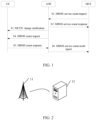
- statistics collection on the subscriber quantity of MBMS service subscribers may include the following steps, as shown in FIG. 1 :
- FIG. 2 is a structural diagram of a network system to which the embodiments of the present invention are applicable.
- the network system includes an access-network-side device 11 and a core-network-side device 12.
- the access-network-side device 11 may be a base station, such as a macro station, an LTE eNB, a 5G NR NB, or a gNB; or the access-network-side device 11 may be a small cell, such as a low power node (Low Power Node, LPN) pico or femto; or the access-network-side device 11 may be an access point (Access Point, AP).
- LPN Low Power Node
- AP access point
- a specific type of the access-network-side device 11 is not limited in the embodiments of the present invention.
- a service transmission method provided by the embodiments of the present invention may be executed by the access-network-side device 11, and a service transmission mode configuration method provided by the embodiments of the present invention may be executed by the core-network-side device 12.
- a service transmission mode configuration method provided by the embodiments of the present invention may be executed by the core-network-side device 12.
- FIG. 3 is a flowchart of a service transmission method according to an embodiment of the present prevention. As shown in FIG. 3 , the method includes the following steps.
- Step 301 Receive a first message from a core-network-side device, where the first message includes a multicast service identifier and mode policy information.
- the multicast service identifier may be any information capable of identifying a multicast service, for example, a temporary mobile group identity (Temporary Mobile Group Identity, TMGI).
- TMGI Temporal Mobile Group Identity
- a multicast service corresponding to the multicast service identifier may include but is not limited to an MBMS service or an MBS service.
- the mode policy information may be used to determine or indicate a transmission mode of the multicast service corresponding to the multicast service identifier, and the mode policy information may include but is not limited to one or more of a transmission mode type, quality of service requirement information, and the like.
- the mode policy information may be information determined by the core-network-side device based on a quality of service requirement of the multicast service corresponding to the multicast service identifier, a statistical result of joined UEs of the multicast service, and the like.
- Step 302 Send, in a first transmission mode, data of the multicast service corresponding to the multicast service identifier, where the first transmission mode is a transmission mode determined based on the mode policy information, or the first transmission mode is a transmission mode indicated by the mode policy information.
- the access-network-side device may determine, based on the mode policy information sent by the core-network-side device, a transmission mode for sending the data of the multicast service corresponding to the multicast service identifier.
- the transmission mode of the multicast service may include a unicast mode, a multicast mode, and the like.
- the unicast mode may include a point-to-point (Point to Point, PTP) mode
- the multicast mode may include a point-to-multipoint (Point to Multipoint, PTM) mode.
- the access-network-side device may determine, with reference to the mode policy information, the first transmission mode for sending the data of the multicast service corresponding to the multicast service identifier.
- the access-network-side device may directly use the first transmission mode indicated by the mode policy information to send the data of the multicast service corresponding to the multicast service identifier.
- the core-network-side device may indicate to the access-network-side device whether the mode policy information is used as reference information or mandatory indication information, so that the access-network-side device may determine, according to the indication of the core-network-side device, whether to determine, with reference to the mode policy information, a transmission mode for sending the data of the multicast service corresponding to the multicast service identifier, or to directly use a transmission mode indicated by the mode policy information to send the data of the multicast service corresponding to the multicast service identifier.
- the access-network-side device may determine, only based on the mode policy information, a transmission mode of the data of the multicast service. For example, in a case that the mode policy information includes quality of service requirement information, if a reliability requirement in the quality of service requirement information is relatively high, the data of the multicast service may be sent in the PTP mode; otherwise, the data of the multicast service may be sent in the PTM mode.
- the mode policy information includes quality of service requirement information
- the access-network-side device may determine the transmission mode of the data of the multicast service based on both the mode policy information and other mode parameters, for example, may determine, based on the mode policy information, a statistical result of joined UEs of the multicast service, a resource status of the access-network-side device, and the like, the transmission mode of the data of the multicast service.
- the first message is received from the core-network-side device, where the first message includes the multicast service identifier and the mode policy information; and the data of the multicast service corresponding to the multicast service identifier is sent in the first transmission mode, where the first transmission mode is a transmission mode determined based on the mode policy information, or the first transmission mode is a transmission mode indicated by the mode policy information.
- the data of the multicast service corresponding to the multicast service identifier is sent in the transmission mode determined based on or indicated by the mode policy information sent by the core-network-side device. This not only provides a decision-making basis different from that in the related art for determining the transmission mode of the multicast service, but also makes sending of the multicast service better satisfy the quality of service requirements.
- the mode policy information includes a transmission mode type or quality of service requirement information.
- the core-network-side device may explicitly indicate, to the access-network-side device, the transmission mode of the data of the multicast service, for example, the transmission mode type such as a PTP mode or a PTM mode may be directly carried in the first message.
- the transmission mode type such as a PTP mode or a PTM mode may be directly carried in the first message.
- the access-network-side device may directly use a transmission mode indicated by the transmission mode type to send the data of the multicast service, that is, the transmission mode type is used as the only basis for determining the transmission mode of the multicast service.
- the transmission mode type is a PTP mode
- the data of the multicast service is sent in the PTP mode
- the transmission mode type is a PTM mode
- the access-network-side device may determine, with reference to the transmission mode type, a transmission mode for sending the data of the multicast service, that is, the transmission mode type is used as a reference basis for determining the transmission mode of the multicast service.
- the transmission mode type is a PTM mode; however, the access-network-side device determines based on both the transmission mode type and the subscriber quantity of the multicast service to send the multicast service in the PTP mode.
- the core-network-side device may implicitly indicate, to the access-network-side device, the transmission mode of the data of the multicast service.
- the first message may carry quality of service requirement information, and a correspondence between different quality of service requirement information and different transmission modes may be pre-established. In this way, a transmission mode corresponding to the quality of service requirement information may be obtained based on the correspondence and the quality of service requirement information carried in the first message.
- the access-network-side device may directly use the transmission mode implicitly indicated by the quality of service requirement information to send the data of the multicast service, that is, the transmission mode type is used as the only basis for determining the transmission mode of the multicast service.
- the transmission mode implicitly indicated by the quality of service requirement information is a PTP mode
- the PTP mode is used for sending the data of the multicast service
- the transmission mode implicitly indicated by the quality of service requirement information is a PTM mode
- the PTM mode is used for sending the data of the multicast service.
- the access-network-side device may determine, with reference to the quality of service requirement information, a transmission mode for sending the data of the multicast service, that is, the quality of service requirement information is used as a reference basis for determining the transmission mode of the multicast service.
- a transmission mode implicitly indicated by the quality of service requirement information is a PTM mode; however, the access-network-side device determines based on both the quality of service requirement information and a radio resource status of the access-network-side device to send the multicast service in a PTP mode.
- the first message further includes a decision indication.
- the first transmission mode is a transmission mode determined based on the mode policy information; and/or in a case that the decision indication is a second indication, the first transmission mode is a transmission mode indicated by the mode policy information.
- the decision indication may be used to indicate whether the mode policy information is used as reference information for determining the transmission mode of the multicast service or used as mandatory indication information. Specifically, in a case that the decision indication is the first indication, the access-network-side device may determine, with reference to the mode policy information, a transmission mode for sending the data of the multicast service; and in a case that the decision indication is the second indication, the access-network-side device may directly use the transmission mode indicated by the mode policy information to send the data of the multicast service.
- the first transmission mode is a transmission mode determined based on the mode policy information; however, in a case that the first message carries no decision indication, the first transmission mode is a transmission mode indicated by the mode policy information.
- the decision indication is the second indication
- the first transmission mode is a transmission mode indicated by the mode policy information; however, in a case that the first message carries no decision indication, the first transmission mode is a transmission mode determined based on the mode policy information.
- first indication and second indication may be any two different pieces of indication information.
- first indication and the second indication may be different values of a same indicator bit or different indicator bits.
- the decision indication is used to indicate whether the mode policy information is used as reference information for determining the transmission mode of the multicast service or used as mandatory indication information, thereby improving flexibility and properness of transmission mode determining.
- the protocol may predefine that the access-network-side device may determine a transmission mode with reference to the mode policy information to send the data of the multicast service; therefore, in a case that the access-network-side device receives the mode policy information, a transmission mode may be determined with reference to the mode policy information, and the data of the multicast service may be sent in the transmission mode.
- the protocol predefines that the access-network-side device uses a transmission mode indicated by the mode policy information to send the data of the multicast service; therefore, in a case that the access-network-side device receives the mode policy information, the transmission mode indicated by the mode policy information may be directly used to send the data of the multicast service.
- the method may further include:
- the access-network-side device may send the statistical result of joined UEs of the multicast service to the core-network-side device, so that the core-network-side device may determine the mode policy information based on the statistical result of joined UEs of the multicast service.
- the access-network-side device may first collect statistics about the subscriber quantity of the multicast service to obtain a statistical result of joined UEs of the multicast service, and then report a currently obtained statistical result of joined UEs of the multicast service to the core-network-side device; or in a case that the second message used for instructing the access-network-side device to report the statistical result of joined UEs of the multicast service is received from the core-network-side device, the access-network-side device may directly report a historical statistical result of joined UEs of the multicast service.
- the access-network-side device may proactively report the statistical result of joined UEs of the multicast service to the core-network-side device. For example, each time statistics collection on the subscriber quantity of the multicast service is performed, the access-network-side device may proactively report the statistical result of joined UEs of the multicast service to the core-network-side device.
- the first transmission mode is a transmission mode determined based on the mode policy information and a first mode parameter.
- the first mode parameter includes at least one of the following: the statistical result of joined UEs of the multicast service and radio resource information of the access-network-side device.
- the radio resource information of the access-network-side device may be information that may reflect a radio resource status of the access-network-side device, for example, a quantity of radio resources of the access-network-side device, quality of radio resources, and a status of radio resources.
- the access-network-side device may determine the transmission mode of the multicast service based on both the mode policy information and the first mode parameter, thereby improving properness in determining the transmission mode of the multicast service, and further improving service quality of the multicast service.
- the method may further include:
- the statistical indication of the multicast service may be sent to a plurality of UEs through air interfaces, and then statistics collection about the subscriber quantity of the multicast service may be performed based on response information of the statistical indication of the multicast service from the UEs.
- the method may further include: sending a third message to the core-network-side device, where the third message carries the multicast service identifier and information about the first transmission mode.
- the access-network-side device may alternatively feed back to the core-network-side device a transmission mode used by the access-network-side device for sending the data of the multicast service corresponding to the multicast service identifier, so as to ensure consistent understanding on the transmission mode of the multicast service corresponding to the multicast service identifier between the access-network-side device and the core-network-side device.
- the transmission mode of the multicast service includes a point-to-point PTP mode and a point-to-multipoint PTM mode.
- FIG. 4 is a flowchart of a service transmission mode configuration method according to an embodiment of the present prevention. As shown in FIG. 4 , the method includes the following step.
- Step 401 Send a first message to an access-network-side device, where the first message includes a multicast service identifier and mode policy information, and the mode policy information is used for determining or indicating a transmission mode of a multicast service corresponding to the multicast service identifier.
- the multicast service identifier may be any information for identifying a multicast service, for example, a TMGI.
- a multicast service corresponding to the multicast service identifier may include but is not limited to an MBMS service or an MBS service.
- the mode policy information may be used for determining the transmission mode of the multicast service corresponding to the multicast service identifier, that is, the mode policy information may be used as reference information (also referred to as a reference basis) for determining the transmission mode of the multicast service; or the mode policy information may be used to indicate the transmission mode of the multicast service corresponding to the multicast service identifier, that is, the mode policy information may be used as mandatory indication information (also referred to as the only basis) for determining the transmission mode of the multicast service.
- the mode policy information may include but is not limited to one or more of a transmission mode type, quality of service requirement information, and the like.
- the mode policy information may be information determined by the core-network-side device based on a quality of service requirement of the multicast service corresponding to the multicast service identifier, a statistical result of joined UEs of the multicast service, and the like.
- the transmission mode of the multicast service may include a unicast mode, a multicast mode, and the like.
- the unicast mode may include a PTP mode
- the multicast mode may include a PTM mode.
- the core-network-side device sends the multicast service identifier and the mode policy information to the access-network-side device, so that the access-network-side device may determine, based on the mode policy information, a transmission mode to send data of the multicast service corresponding to the multicast service identifier, or send, based on a transmission mode indicated by the mode policy information, data of the multicast service corresponding to the multicast service identifier, thereby making sending of the multicast service better satisfy the quality of service requirement.
- the mode policy information includes a transmission mode type or quality of service requirement information.
- the core-network-side device may explicitly indicate, to the access-network-side device, the transmission mode of the data of the multicast service, for example, the transmission mode type such as a PTP mode or a PTM mode may be directly carried in the first message.
- the transmission mode type such as a PTP mode or a PTM mode may be directly carried in the first message.
- the core-network-side device may implicitly indicate, to the access-network-side device, the transmission mode of the data of the multicast service.
- the first message may carry quality of service requirement information, and a correspondence between different quality of service requirement information and different transmission modes may be pre-established. In this way, a transmission mode corresponding to the quality of service requirement information may be obtained based on the correspondence and the quality of service requirement information carried in the first message.
- the first message further includes a decision indication.
- a transmission mode used for sending the multicast service by the access-network-side device is a transmission mode determined based on the mode policy information; and/or in a case that the decision indication is a second indication, a transmission mode used for sending the multicast service by the access-network-side device is a transmission mode indicated by the mode policy information.
- the decision indication may be used to indicate whether the mode policy information is used as reference information for determining the transmission mode of the multicast service or used as mandatory indication information. Specifically, in a case that the decision indication is the first indication, the access-network-side device may determine, with reference to the mode policy information, a transmission mode for sending the data of the multicast service; and in a case that the decision indication is the second indication, the access-network-side device may directly use the transmission mode indicated by the mode policy information to send the data of the multicast service.
- the first transmission mode is a transmission mode determined based on the mode policy information; however, in a case that the first message carries no decision indication, the first transmission mode is a transmission mode indicated by the mode policy information.
- the decision indication is the second indication
- the first transmission mode is a transmission mode indicated by the mode policy information; however, in a case that the first message carries no decision indication, the first transmission mode is a transmission mode determined based on the mode policy information.
- first indication and second indication may be any two different pieces of indication information.
- first indication and the second indication may be different values of a same indicator bit or different indicator bits.
- the decision indication is used to indicate whether the mode policy information is used as reference information for determining the transmission mode of the multicast service or used as mandatory indication information, thereby improving flexibility and properness of transmission mode determining.
- the mode policy information is determined based on a second mode parameter.
- the second mode parameter includes at least one of the following: quality of service requirement information of the multicast service and a statistical result of joined UEs of the multicast service.
- the quality of service requirement information of the multicast service may include but is not limited to reliability requirement information, delay requirement information, and the like.
- the core-network-side device may determine the mode policy information based on at least one of the quality of service requirement information of the multicast service and the statistical result of joined UEs of the multicast service, and then the access-network-side device determines the transmission mode of the multicast service based on the mode policy information, thereby improving properness in determining the transmission mode of the multicast service, and making sending of the multicast service better satisfy the quality of service requirement.
- the method may further include:
- a statistical result of joined UEs of the multicast service may be received from the access-network-side device, thereby saving resources.
- the method may further include: receiving a third message from the access-network-side device, where the third message carries the multicast service identifier and information about a first transmission mode, and the first transmission mode is a transmission mode used for sending the multicast service by the access-network-side device.
- the core-network-side device may receive a transmission mode fed back by the access-network-side device and used by the access-network-side device to send the data of the multicast service corresponding to the multicast service identifier, so as to ensure consistent understanding on the transmission mode of the multicast service corresponding to the multicast service identifier between the access-network-side device and the core-network-side device.
- the transmission mode of the multicast service includes a point-to-point PTP mode and a point-to-multipoint PTM mode.
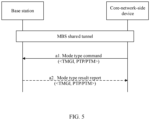
- an MBS shared tunnel (that is, a Shared Tunnel) is established between a base station (that is, a gNB) and a core network (Core Network, CN)-side device.
- the service transmission method in this embodiment of the present invention may include the following steps.
- Step a1 The core-network-side device sends a mode type command (Mode Type Command) to the base station.
- Mode Type Command Mode Type Command
- the mode type command may include a multicast service identifier (for example, a TMGI) and a transmission mode type, such as a PTP mode or a PTM mode.
- the core-network-side device may indicate to the base station whether a multicast service corresponding to the multicast service identifier is to be sent in a PTP mode or a PTM mode.
- the base station may use, based on the multicast service identifier, a transmission mode indicated by the transmission mode type to send data of the multicast service corresponding to the multicast service identifier on the RAN side.
- Step a2 The base station sends a mode type result report (Mode Type Result Report) message to the core-network-side device.
- the mode type result report message may include a multicast service identifier and a transmission mode of a multicast service corresponding to the multicast service identifier on the RAN side, for example, a PTP mode or a PTM mode.
- mode type result report message may be sent or not sent.
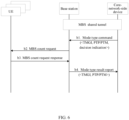
- an MBS shared tunnel is established between a base station and a core-network-side device.
- the service transmission method in this embodiment of the present invention may include the following steps.
- Step b 1 The core-network-side device sends a mode type command (Mode Type Command) to the base station.
- Mode Type Command Mode Type Command
- the mode type command may include a multicast service identifier (for example, a TMGI), a transmission mode type (for example, a PTP mode or a PTM mode), and a decision indication (Indication)
- a multicast service identifier for example, a TMGI
- a transmission mode type for example, a PTP mode or a PTM mode
- a decision indication Indication
- the decision indication is used to indicate that the PTP mode or PTM mode indicated by the mode type command is for reference only and is not mandatory.
- Step b2 The base station sends an MBS count request (MBS CountRequest) message to UEs.
- MBS CountRequest MBS count request
- the MBS count request message may include information such as a multicast service identifier. After receiving the MBS count request message, the UEs determine whether the UEs requires the multicast service.
- Step b3 The UEs send an MBS count request response (MBS CountRequest Response) message to the base station.
- MBS CountRequest Response MBS count request response
- the base station may learn how many UEs require the multicast service. Further, the base station may determine a final transmission mode of the multicast service based on information such as a demand status of the multicast service on the RAN side, the mode type command, and a radio resource status of the base station.
- Step b4 The base station sends a mode type result report (Mode Type Result Report) message to the core network.
- the mode type result report message may include a multicast service identifier and a transmission mode of a multicast service corresponding to a multicast service identifier on the RAN side.
- the core-network-side device may record the multicast service identifier and the transmission mode of the multicast service corresponding to the multicast service identifier on the RAN side.
- an MBS shared tunnel is established between a base station and a core-network-side device.
- the service transmission method in this embodiment of the present invention may include the following steps.
- Step c1 The core-network-side device sends an MBS count request (MBS countRequest) message to the base station.
- MBS countRequest MBS count request
- the MBS count request message may include information such as a multicast service identifier, and the MBS count request message may trigger the base station to perform statistics collection on multicast service demands on the RAN side, that is, statistics collection on a subscriber quantity of the multicast service.
- Step c2 The base station sends an MBS count request message to UEs.
- the MBS count request message includes information such as a multicast service identifier. After receiving the MBS count request message, the UEs determine whether the UEs require the multicast service.
- Step c3 The UEs send an MBS count request response (MBS CountRequest Response) message to the base station.
- MBS CountRequest Response MBS count request response
- the base station may learn how many UEs require the multicast service based on the MBS count request response message received by the base station.
- Step c4 The base station sends an MBS count result report (MBS countResult Report) message to the core-network-side device, so as to send a statistical result of multicast service demands on the RAN side to the core-network-side device.
- MBS countResult Report MBS countResult Report
- Step c5 After receiving the MBS count result report message, the core-network-side device may send a mode type command (Mode Type Command) to the base station based on the multicast service demands on the RAN side, a quality of service requirement of the multicast service, and the like.
- Mode Type Command Mode Type Command
- the mode type command may include a multicast service identifier (for example, a TMGI) and a transmission mode type, such as a PTP mode or a PTM mode.
- the core-network-side device may indicate to the base station whether the multicast service corresponding to the multicast service identifier is to be sent in a PTP mode or a PTM mode.
- the base station may use, based on the multicast service identifier, a transmission mode indicated by the transmission mode type to send data of the multicast service corresponding to the multicast service identifier on the RAN side.
- Step c6 The base station sends a mode type result report (Mode Type Result Report) message to the core-network-side device.
- the mode type result report message may include a multicast service identifier and a transmission mode of a multicast service corresponding to the multicast service identifier on the RAN side, for example, a PTP mode or a PTM mode.
- mode type result report message may be sent or not sent.
- influence and assistance of the core-network-side device in selection of the transmission mode on the RAN side are mainly considered.
- the core-network-side device performs evaluation on the quality of service requirement of the multicast service and then provides some mandatory or auxiliary indications to the base station. This can not only implement completeness of selection of the transmission mode of the multicast service on the RAN side, but also implement determining of the transmission mode the multicast service based on an indication of the core-network-side device, thereby ensuring that sending of the data of the multicast service satisfies some quality of service requirements, such as reliability.
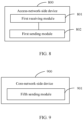
- FIG. 8 is a structural diagram of an access-network-side device according to an embodiment of the present invention. As shown in FIG. 8 , the access-network-side device 800 includes:
- the mode policy information includes a transmission mode type or quality of service requirement information.
- the first message further includes a decision indication.
- the first transmission mode is a transmission mode determined based on the mode policy information; and/or in a case that the decision indication is a second indication, the first transmission mode is a transmission mode indicated by the mode policy information.
- the access-network-side device further includes:
- the first transmission mode is a transmission mode determined based on the mode policy information and a first mode parameter.
- the first mode parameter includes at least one of the following: the statistical result of joined UEs of the multicast service and radio resource information of the access-network-side device.
- the access-network-side device further includes:
- the access-network-side device further includes: a fourth sending module, configured to send a third message to the core-network-side device, where the third message carries the multicast service identifier and information about the first transmission mode.
- a fourth sending module configured to send a third message to the core-network-side device, where the third message carries the multicast service identifier and information about the first transmission mode.
- the transmission mode of the multicast service includes a point-to-point PTP mode and a point-to-multipoint PTM mode.
- the access-network-side device 800 provided in this embodiment of the present invention is capable of implementing the processes that are implemented by the access-network-side device in the foregoing method embodiments. To avoid repetition, details are not described herein again.
- the first receiving module 801 is configured to receive the first message from the core-network-side device, where the first message includes the multicast service identifier and the mode policy information; and the first sending Module 802 is configured to send, in the first transmission mode, the data of the multicast service corresponding to the multicast service identifier, where the first transmission mode is a transmission mode determined based on the mode policy information, or the first transmission mode is a transmission mode indicated by the mode policy information.
- the data of the multicast service corresponding to the multicast service identifier is sent in the transmission mode determined based on or indicated by the mode policy information sent by the core-network-side device. This not only provides a decision-making basis different from that in the related art for determining the transmission mode of the multicast service, but also makes sending of the multicast service better satisfy the quality of service requirements.
- FIG. 9 is a structural diagram of a core-network-side device according to an embodiment of the present invention.
- the core-network-side device 900 includes: a fifth sending module 901, configured to send a first message to an access-network-side device, where the first message includes a multicast service identifier and mode policy information, and the mode policy information is used for determining or indicating a transmission mode of a multicast service corresponding to the multicast service identifier.
- the mode policy information includes a transmission mode type or quality of service requirement information.
- the first message further includes a decision indication.
- the mode policy information is determined based on a second mode parameter.
- the second mode parameter includes at least one of the following: quality of service requirement information of the multicast service and a statistical result of joined UEs of the multicast service.
- the core-network-side device further includes:
- the core-network-side device further includes: a fourth receiving module, configured to receive a third message from the access-network-side device, where the third message carries the multicast service identifier and information about a first transmission mode, and the first transmission mode is a transmission mode used for sending the multicast service by the access-network-side device.
- a fourth receiving module configured to receive a third message from the access-network-side device, where the third message carries the multicast service identifier and information about a first transmission mode, and the first transmission mode is a transmission mode used for sending the multicast service by the access-network-side device.
- the transmission mode of the multicast service includes a point-to-point PTP mode and a point-to-multipoint PTM mode.
- the core-network-side device 900 provided in this embodiment of the present invention is capable of implementing the processes that are implemented by the core-network-side device in the foregoing method embodiments. To avoid repetition, details are not described herein again.
- the fifth sending module 901 is configured to send the first message to the access-network-side device, where the first message includes a multicast service identifier and mode policy information, and the mode policy information is used for determining or indicating a transmission mode of a multicast service corresponding to the multicast service identifier.
- the access-network-side device may send the data of the multicast service based on the transmission mode determined based on or indicated by the mode policy information, thereby making sending of the multicast service better satisfy the quality of service requirement.
- FIG. 10 is a structural diagram of another access-network-side device according to an embodiment of the present invention.
- the access-network-side device 1000 includes a processor 1001, a memory 1002, a bus interface 1003, and a transceiver 1004, where the processor 1001, the memory 1002, and the transceiver 1004 are all connected to the bus interface 1003.
- the access-network-side device 1000 further includes: a computer program stored on the memory 1002 and capable of running on the processor 1001.
- the transceiver 1004 is configured to:
- the processor 1001 and the transceiver 1004 are capable of implementing the processes that are implemented by the access-network-side device in the foregoing method embodiments. To avoid repetition, details are not repeated herein.
- FIG. 11 is a structural diagram of another core-network-side device according to an embodiment of the present invention.
- the core-network-side device 1100 includes a processor 1101, a memory 1102, a bus interface 1103, and a transceiver 1104, where the processor 1101, the memory 1102, and the transceiver 1104 are all connected to the bus interface 1103.
- the core-network-side device 1100 further includes: a computer program stored on the memory 1102 and capable of running on the processor 1101.
- the transceiver 1104 is configured to: send a first message to an access-network-side device, where the first message includes a multicast service identifier and mode policy information, and the mode policy information is used for determining or indicating a transmission mode of a multicast service corresponding to the multicast service identifier.
- the processor 1101 and the transceiver 1104 are capable of implementing the processes that are implemented by the core-network-side device in the foregoing method embodiments. To avoid repetition, details are not repeated herein.
- An embodiment of the present invention further provides a computer-readable storage medium, where the computer-readable storage medium stores a computer program.
- the computer program is executed by a processor, the processes of the foregoing embodiment of the service transmission method are implemented, or the processes of the foregoing embodiment of the service transmission mode configuration method are implemented, with same technical effects achieved. To avoid repetition, details are not described again herein.
- the computer-readable storage medium is, for example, a read-only memory (Read-Only Memory, ROM), a random access memory (Random Access Memory, RAM), a magnetic disk, or an optical disc.
- the method in the foregoing embodiments may be implemented by software in addition to a necessary universal hardware platform or by hardware only. In most cases, the former is a more preferred implementation.
- the technical solutions of the present invention essentially, or the part contributing to the related art, may be implemented in a form of a software product.
- the software product is stored in a storage medium (such as a ROM/RAM, a magnetic disk, or an optical disc), and includes several instructions for instructing a terminal (which may be a mobile phone, a computer, a server, an air conditioner, a network device, or the like) to perform the methods described in the embodiments of the present invention.
Landscapes
- Engineering & Computer Science (AREA)
- Computer Networks & Wireless Communication (AREA)
- Signal Processing (AREA)
- Multimedia (AREA)
- Computer Security & Cryptography (AREA)
- Mobile Radio Communication Systems (AREA)
- Data Exchanges In Wide-Area Networks (AREA)
Applications Claiming Priority (2)
| Application Number | Priority Date | Filing Date | Title |
|---|---|---|---|
| CN202010261439.5A CN113498147B (zh) | 2020-04-03 | 2020-04-03 | 业务发送方法、业务发送模式配置方法及相关设备 |
| PCT/CN2021/085175 WO2021197455A1 (zh) | 2020-04-03 | 2021-04-02 | 业务发送方法、业务发送模式配置方法及相关设备 |
Publications (3)
| Publication Number | Publication Date |
|---|---|
| EP4131850A1 true EP4131850A1 (de) | 2023-02-08 |
| EP4131850A4 EP4131850A4 (de) | 2023-08-09 |
| EP4131850B1 EP4131850B1 (de) | 2026-01-28 |
Family
ID=77929645
Family Applications (1)
| Application Number | Title | Priority Date | Filing Date |
|---|---|---|---|
| EP21782408.5A Active EP4131850B1 (de) | 2020-04-03 | 2021-04-02 | Dienstsendeverfahren, dienstsendemoduskonfigurationsverfahren und zugehörige vorrichtung |
Country Status (10)
| Country | Link |
|---|---|
| US (1) | US20230007445A1 (de) |
| EP (1) | EP4131850B1 (de) |
| JP (1) | JP7385055B2 (de) |
| KR (1) | KR102888797B1 (de) |
| CN (1) | CN113498147B (de) |
| BR (1) | BR112022019119A2 (de) |
| CA (1) | CA3175162A1 (de) |
| MX (1) | MX2022011925A (de) |
| PT (1) | PT4131850T (de) |
| WO (1) | WO2021197455A1 (de) |
Families Citing this family (1)
| Publication number | Priority date | Publication date | Assignee | Title |
|---|---|---|---|---|
| WO2021109407A1 (en) * | 2020-04-13 | 2021-06-10 | Zte Corporation | Methods and devices for selecting radio bearer mode for multicast broadcast services |
Family Cites Families (20)
| Publication number | Priority date | Publication date | Assignee | Title |
|---|---|---|---|---|
| KR20040098394A (ko) * | 2003-05-14 | 2004-11-20 | 삼성전자주식회사 | 이동통신시스템에서 멀티미디어 브로드케스트/멀티케스드서비스에 따른 호출 정보 전송방법 |
| CN101174966A (zh) * | 2006-11-01 | 2008-05-07 | 中兴通讯股份有限公司 | Mbms的业务发送方式确定方法和装置 |
| CN101237599A (zh) * | 2007-02-02 | 2008-08-06 | 中兴通讯股份有限公司 | 用于ue获取用户标识的方法和mbms系统 |
| CN101242557A (zh) * | 2007-02-09 | 2008-08-13 | 中兴通讯股份有限公司 | 请求mbms的方法以及一种mbms系统 |
| US8320292B2 (en) * | 2009-11-18 | 2012-11-27 | Motorola Mobility Llc | Method to control a multimedia broadcast multicast service(MBMS) mode of a MBMS session in a communication system |
| CN102651846B (zh) * | 2011-02-24 | 2016-12-07 | 中兴通讯股份有限公司 | Mbms业务发送方式切换的方法和系统 |
| CN106162565B (zh) * | 2015-04-09 | 2021-06-01 | 北京三星通信技术研究有限公司 | 传输组通信业务数据的方法、系统及装置 |
| EP3270623A4 (de) * | 2015-04-10 | 2018-04-11 | Kyocera Corporation | Netzwerkvorrichtung, benutzerendgerät und basisstation |
| CN106993275A (zh) * | 2016-01-20 | 2017-07-28 | 中兴通讯股份有限公司 | 多媒体广播多播业务mbms的发送处理方法及装置 |
| WO2017160134A1 (ko) * | 2016-03-18 | 2017-09-21 | 엘지전자 주식회사 | 셀 그룹 정보를 기반으로 v2x 통신을 수행하는 방법 및 장치 |
| US11032673B2 (en) * | 2016-08-30 | 2021-06-08 | Kyocera Corporation | Radio terminal and base station |
| KR102539531B1 (ko) * | 2017-12-14 | 2023-06-05 | 소니그룹주식회사 | 통신 장치, 통신 방법, 및 프로그램 |
| AU2018384112A1 (en) * | 2017-12-14 | 2020-05-21 | Sony Corporation | Communication device, communication method, and program |
| CN110972078A (zh) * | 2018-09-30 | 2020-04-07 | 华为技术有限公司 | 多播/广播业务传输的方法、核心网网元和终端设备 |
| CN112788544B (zh) * | 2019-11-07 | 2022-08-26 | 华为技术有限公司 | 通信方法、装置及设备 |
| WO2021094843A1 (en) * | 2019-11-15 | 2021-05-20 | Lenovo (Singapore) Pte. Ltd. | Enabling on-demand system information requests |
| WO2021163260A1 (en) * | 2020-02-13 | 2021-08-19 | Convida Wireless, Llc | Methods of delivery mode switch for multicast and broadcast service in a 5g network |
| EP4099760B1 (de) * | 2020-03-01 | 2025-08-06 | Huawei Technologies Co., Ltd. | Handoververfahren und kommunikationsgerät |
| US11722855B2 (en) * | 2020-05-05 | 2023-08-08 | Qualcomm Incorporated | Handling of multicast service data transport for mobility between supporting and non-supporting access nodes |
| EP4090115B1 (de) * | 2021-05-07 | 2025-07-30 | Samsung Electronics Co., Ltd. | Benutzergerät zur kommunikation mit einer basisstation basierend auf einem 5g-mobilnetzwerk und betriebsverfahren dafür |
-
2020
- 2020-04-03 CN CN202010261439.5A patent/CN113498147B/zh active Active
-
2021
- 2021-04-02 CA CA3175162A patent/CA3175162A1/en active Pending
- 2021-04-02 KR KR1020227038332A patent/KR102888797B1/ko active Active
- 2021-04-02 MX MX2022011925A patent/MX2022011925A/es unknown
- 2021-04-02 JP JP2022560142A patent/JP7385055B2/ja active Active
- 2021-04-02 PT PT217824085T patent/PT4131850T/pt unknown
- 2021-04-02 WO PCT/CN2021/085175 patent/WO2021197455A1/zh not_active Ceased
- 2021-04-02 BR BR112022019119A patent/BR112022019119A2/pt unknown
- 2021-04-02 EP EP21782408.5A patent/EP4131850B1/de active Active
-
2022
- 2022-09-15 US US17/945,515 patent/US20230007445A1/en active Pending
Also Published As
| Publication number | Publication date |
|---|---|
| US20230007445A1 (en) | 2023-01-05 |
| CA3175162A1 (en) | 2021-10-07 |
| PT4131850T (pt) | 2026-02-27 |
| CN113498147B (zh) | 2022-09-20 |
| BR112022019119A2 (pt) | 2022-11-08 |
| JP7385055B2 (ja) | 2023-11-21 |
| WO2021197455A1 (zh) | 2021-10-07 |
| EP4131850B1 (de) | 2026-01-28 |
| KR102888797B1 (ko) | 2025-11-20 |
| CN113498147A (zh) | 2021-10-12 |
| JP2023519753A (ja) | 2023-05-12 |
| MX2022011925A (es) | 2022-10-20 |
| EP4131850A4 (de) | 2023-08-09 |
| KR20220161472A (ko) | 2022-12-06 |
Similar Documents
| Publication | Publication Date | Title |
|---|---|---|
| US8660052B2 (en) | Method, base station and user equipment for transmitting and acquiring control information in broadcast multicast system | |
| EP2690907B1 (de) | Umschaltung zwischen mbms-übertragungsmodi | |
| KR101455370B1 (ko) | Mbms 서비스 제어 방법 및 시스템 | |
| CN113225695B (zh) | 一种多媒体广播组播服务业务接收及指示方法、设备、介质 | |
| EP1650989A1 (de) | Verfahren zum Bereitstellen eines MBMS-Dienstes in einem drahtlosen Kommunikationssystem | |
| US20060059407A1 (en) | Network system, data transmission device, terminal device and multicasting method | |
| US9462572B2 (en) | Multimedia broadcast multicast service counting method and system | |
| CN102045646A (zh) | Mbms业务的同步计数方法和设备 | |
| US20230140463A1 (en) | Information control method and apparatus and base station | |
| CN104717614A (zh) | 一种mbms测量方法、系统及基站、用户设备 | |
| US20170303098A1 (en) | LTE Cluster Communication Method, User Equipment, and First Network Element Equipment | |
| CN113455028A (zh) | 基于mbms多级承载质量指示符的动态mbms/单播承载建立 | |
| CN105376717B (zh) | 建立lte集群通信承载的方法、用户设备及第一网元设备 | |
| US20230007445A1 (en) | Service transmission method, service transmission mode configuration method, and related device | |
| CN102065376B (zh) | 接纳判决方法和设备 | |
| CN102104836B (zh) | Mbms业务接收状态的上报方法和设备 | |
| CN105517046A (zh) | Mbms业务调度方法及装置 | |
| CN102857868B (zh) | 单播业务发送方法及装置 | |
| CN107005988A (zh) | 多播业务、专用业务发送、接收方法和装置 | |
| EP2903310A1 (de) | Multimediarundfunk/Multimediadienste | |
| CN112566045B (zh) | 多媒体广播组播业务mbms传输方法及设备 | |
| CN102264040A (zh) | 一种mbms业务状态上报的方法及装置 | |
| EP2144450A1 (de) | Verfahren zum erhalten der multimedia-broadcast-multicast-dienstunterstützungsfähigkeit einer zelle | |
| HK40087454A (en) | Service sending method, service sending mode configuring method, and related device | |
| CN113645668A (zh) | 一种多小区mbms业务传输的方法、装置及存储介质 |
Legal Events
| Date | Code | Title | Description |
|---|---|---|---|
| STAA | Information on the status of an ep patent application or granted ep patent |
Free format text: STATUS: THE INTERNATIONAL PUBLICATION HAS BEEN MADE |
|
| PUAI | Public reference made under article 153(3) epc to a published international application that has entered the european phase |
Free format text: ORIGINAL CODE: 0009012 |
|
| STAA | Information on the status of an ep patent application or granted ep patent |
Free format text: STATUS: REQUEST FOR EXAMINATION WAS MADE |
|
| 17P | Request for examination filed |
Effective date: 20221101 |
|
| AK | Designated contracting states |
Kind code of ref document: A1 Designated state(s): AL AT BE BG CH CY CZ DE DK EE ES FI FR GB GR HR HU IE IS IT LI LT LU LV MC MK MT NL NO PL PT RO RS SE SI SK SM TR |
|
| DAV | Request for validation of the european patent (deleted) | ||
| DAX | Request for extension of the european patent (deleted) | ||
| A4 | Supplementary search report drawn up and despatched |
Effective date: 20230710 |
|
| RIC1 | Information provided on ipc code assigned before grant |
Ipc: H04W 48/10 20090101ALI20230704BHEP Ipc: H04L 12/18 20060101AFI20230704BHEP |
|
| REG | Reference to a national code |
Ref country code: HK Ref legal event code: DE Ref document number: 40087454 Country of ref document: HK |
|
| GRAP | Despatch of communication of intention to grant a patent |
Free format text: ORIGINAL CODE: EPIDOSNIGR1 |
|
| STAA | Information on the status of an ep patent application or granted ep patent |
Free format text: STATUS: GRANT OF PATENT IS INTENDED |
|
| INTG | Intention to grant announced |
Effective date: 20250918 |
|
| GRAS | Grant fee paid |
Free format text: ORIGINAL CODE: EPIDOSNIGR3 |
|
| GRAA | (expected) grant |
Free format text: ORIGINAL CODE: 0009210 |
|
| STAA | Information on the status of an ep patent application or granted ep patent |
Free format text: STATUS: THE PATENT HAS BEEN GRANTED |
|
| AK | Designated contracting states |
Kind code of ref document: B1 Designated state(s): AL AT BE BG CH CY CZ DE DK EE ES FI FR GB GR HR HU IE IS IT LI LT LU LV MC MK MT NL NO PL PT RO RS SE SI SK SM TR |
|
| REG | Reference to a national code |
Ref country code: CH Ref legal event code: F10 Free format text: ST27 STATUS EVENT CODE: U-0-0-F10-F00 (AS PROVIDED BY THE NATIONAL OFFICE) Effective date: 20260128 Ref country code: GB Ref legal event code: FG4D |
|
| REG | Reference to a national code |
Ref country code: DE Ref legal event code: R096 Ref document number: 602021046993 Country of ref document: DE |
|
| REG | Reference to a national code |
Ref country code: IE Ref legal event code: FG4D |
|
| REG | Reference to a national code |
Ref country code: PT Ref legal event code: SC4A Ref document number: 4131850 Country of ref document: PT Date of ref document: 20260227 Kind code of ref document: T Free format text: AVAILABILITY OF NATIONAL TRANSLATION Effective date: 20260224 |
|
| REG | Reference to a national code |
Ref country code: NL Ref legal event code: FP |