EP4131122A1 - Verbessertes empfehlungssystem und verfahren unter verwendung gemeinsamer neuronaler element-darstellungen für kaltstartempfehlungen - Google Patents
Verbessertes empfehlungssystem und verfahren unter verwendung gemeinsamer neuronaler element-darstellungen für kaltstartempfehlungen Download PDFInfo
- Publication number
- EP4131122A1 EP4131122A1 EP22188265.7A EP22188265A EP4131122A1 EP 4131122 A1 EP4131122 A1 EP 4131122A1 EP 22188265 A EP22188265 A EP 22188265A EP 4131122 A1 EP4131122 A1 EP 4131122A1
- Authority
- EP
- European Patent Office
- Prior art keywords
- user
- item
- neural network
- interaction
- training
- Prior art date
- Legal status (The legal status is an assumption and is not a legal conclusion. Google has not performed a legal analysis and makes no representation as to the accuracy of the status listed.)
- Pending
Links
Images


Classifications
-
- G—PHYSICS
- G06—COMPUTING OR CALCULATING; COUNTING
- G06Q—INFORMATION AND COMMUNICATION TECHNOLOGY [ICT] SPECIALLY ADAPTED FOR ADMINISTRATIVE, COMMERCIAL, FINANCIAL, MANAGERIAL OR SUPERVISORY PURPOSES; SYSTEMS OR METHODS SPECIALLY ADAPTED FOR ADMINISTRATIVE, COMMERCIAL, FINANCIAL, MANAGERIAL OR SUPERVISORY PURPOSES, NOT OTHERWISE PROVIDED FOR
- G06Q30/00—Commerce
- G06Q30/02—Marketing; Price estimation or determination; Fundraising
- G06Q30/0241—Advertisements
- G06Q30/0251—Targeted advertisements
-
- G—PHYSICS
- G06—COMPUTING OR CALCULATING; COUNTING
- G06N—COMPUTING ARRANGEMENTS BASED ON SPECIFIC COMPUTATIONAL MODELS
- G06N3/00—Computing arrangements based on biological models
- G06N3/02—Neural networks
- G06N3/08—Learning methods
-
- G—PHYSICS
- G06—COMPUTING OR CALCULATING; COUNTING
- G06N—COMPUTING ARRANGEMENTS BASED ON SPECIFIC COMPUTATIONAL MODELS
- G06N3/00—Computing arrangements based on biological models
- G06N3/02—Neural networks
- G06N3/04—Architecture, e.g. interconnection topology
- G06N3/045—Combinations of networks
- G06N3/0455—Auto-encoder networks; Encoder-decoder networks
-
- G—PHYSICS
- G06—COMPUTING OR CALCULATING; COUNTING
- G06N—COMPUTING ARRANGEMENTS BASED ON SPECIFIC COMPUTATIONAL MODELS
- G06N3/00—Computing arrangements based on biological models
- G06N3/02—Neural networks
- G06N3/08—Learning methods
- G06N3/09—Supervised learning
-
- G—PHYSICS
- G06—COMPUTING OR CALCULATING; COUNTING
- G06Q—INFORMATION AND COMMUNICATION TECHNOLOGY [ICT] SPECIALLY ADAPTED FOR ADMINISTRATIVE, COMMERCIAL, FINANCIAL, MANAGERIAL OR SUPERVISORY PURPOSES; SYSTEMS OR METHODS SPECIALLY ADAPTED FOR ADMINISTRATIVE, COMMERCIAL, FINANCIAL, MANAGERIAL OR SUPERVISORY PURPOSES, NOT OTHERWISE PROVIDED FOR
- G06Q30/00—Commerce
- G06Q30/02—Marketing; Price estimation or determination; Fundraising
- G06Q30/0282—Rating or review of business operators or products
-
- G—PHYSICS
- G06—COMPUTING OR CALCULATING; COUNTING
- G06Q—INFORMATION AND COMMUNICATION TECHNOLOGY [ICT] SPECIALLY ADAPTED FOR ADMINISTRATIVE, COMMERCIAL, FINANCIAL, MANAGERIAL OR SUPERVISORY PURPOSES; SYSTEMS OR METHODS SPECIALLY ADAPTED FOR ADMINISTRATIVE, COMMERCIAL, FINANCIAL, MANAGERIAL OR SUPERVISORY PURPOSES, NOT OTHERWISE PROVIDED FOR
- G06Q30/00—Commerce
- G06Q30/06—Buying, selling or leasing transactions
- G06Q30/0601—Electronic shopping [e-shopping]
- G06Q30/0631—Recommending goods or services
Definitions
- This invention relates generally to machine learning-based recommender systems and, more specifically, to a recommender system that uses shared neural item representations for cold-start recommendations.
- Recommender systems are used on many shopping platforms.
- the goal of a recommender system is to take known user feedback and predict unknown user feedback on an item.
- the feedback often referred to as a user-item interaction, can be implicit (e . g ., purchased/likely to purchase) or explicit ( e . g ., a rating between 1 and 5).
- the predicted feedback can be used to either recommend items to users or to provided targeted advertising for items on a shopping platform.
- NCF neural collaborative filtering
- Recommender systems may use various input sources to fulfill their tasks.
- One important source of information is users' previous feedback on items.
- best prediction results are often achieved when both the inputs to the user and item neural network includes feedback data.
- this does not work for "cold-start items.”
- Cold-start items are items for which there is either no feedback history or insufficient history from which to make predictions related to the item.
- one known solution is to use user feedback for input to the user neural network encoder and to use item side information as input to the item neural network encoder.
- the parameters of the neural network encoders are learned such that the encoders generate similar user and item representations for user and item pairs with known positive interactions and dissimilar representations otherwise.
- Training neural networks is computationally intensive. The more training data, the better predictions. However, in the system described above, the number of encoder parameters that need to be learned during training increases almost linearly as the number of user and items increases. As entities rely more and more on recommender system, there is demand for continued performance improvement in such systems with fewer training iterations.
- the present disclosure relates to an improved machine learning-based recommender system and method for cold-start predictions on an ecommerce platform.
- the improved system predicts user-item interactions with respect to cold-start items in which only side information is available.
- the system predicts user-item interaction values based on user and item representations generated by user and item neural network encoders, respectively.
- the item representations generated by the item neural network encoder from item side information are shared with the user neural network encoder.
- the weight matrix is fixed with the item embeddings generated by the item neural network encoder and shared with the user neural network encoder.
- the user neural network is applied to an input user-item interaction vector.
- the input vector has a "1" value for each item with which a user has had a positive interaction and a "0" value for all other items.
- the combined effect of using the user-item interaction vector as input and using the shared item representations as weights in the first layer of the user neural network encoder is that the output of the first layer of the user neural network encoder is a function of the item representations of the items for which the user provided positive feedback. This is different from known systems in which the output of the first layer is a function of randomly-initialized weights that have to be learned during training. The improvements result in better performance with fewer training iterations.
- a method for predicting an interaction value for a user and an item comprises the following steps:
- the present disclosure relates to an improved machine learning-based recommender system and method for cold-start predictions on an ecommerce platform.
- the improved system predicts user-item interactions with respect to cold-start items in which only side information is available.
- item representations generated by an item neural network encoder from item side information are shared with a user neural network and used, along with user feedback history, to generate user representations.
- the result is a recommender system that achieves better performance (e.g., better recall) for cold-start items with fewer training iterations.
- the methods described herein are performed by a computer system ("the system” or the “recommender system”). Both a training phase and a prediction phase are described below for the recommender system.
- the training phase a machine-learning prediction model used by the recommender system is trained to predict user-item interactions.
- the model is used to predict user-item interactions with respect to cold-start items.
- R ⁇ R mxn denote a user-item interaction matrix, where m and n are the number of users and items, respectively.
- R jk is the interaction value for user j and item k.
- the s-dimensional side information of all the n items are denoted by X ⁇ R nxs .
- the i th row of matrix H is shown by H i ,:
- the j th column is shown by H , j :
- the item support set of a user is the set of items for which the user has a positive interaction value.
- I j denote the items in the item support set of user j, where N j is the size of the set.
- the item support set of user j is shown by: I 1 j , I 2 j , ... , I N j j .
- the recommender system uses a machine-learning model to predict user-item interaction values ("the model” or "the prediction model”).
- Figure 3 illustrates the model according to one embodiment.
- the model includes a user neural network encoder 340 that generates a user vector representation 360 from user input data 305 and an item neural network encoder 320 that generates an item vector representation 350 from input item data 315.
- the user representation 360 is also a function of the item representations 330a-330b generated by the item neural network encoder 320 for items 310 with which the user has a positive interaction value (e.g ., items the user has previously purchased).
- the predicted interaction value for the user and item is the dot product 370 of the user and item representations. Training the model comprises learning the parameters of the user and item neural network encoders that provide the most accurate prediction.
- Figure 1 illustrates a method for training the prediction model used by the recommender system to make user-item interaction predictions.
- the system obtains a training dataset with item data and user data (step 110 ).
- the item data is "side item data," which is data that describes characters of the item. Examples of side item data are product categories and subcategories.
- the user data includes a user-item interaction vector for each training user.
- the user-item interaction vector has a "1" value for each item with which a user has had a positive interaction and a "0" value for all other items.
- the user interaction vectors are obtained from a user-item interaction matrix with an interaction value for each user-item pair in the training dataset. For example, take the user-item interaction matrix below for m users and n items: Table 1 Item 1 Item 2 Item 3 ... Item n User 1 1 0 0 ... 0 User 2 0 1 0 ... 0 User 3 0 0 0 0 ... ... ... ... ... User m 0 1 0 ... 1
- a “1” means a positive interaction value and "0" means an unknown interaction value.
- a "1” means a user has purchased an item.
- a "1” means that a user has rated an item above a threshold (e.g., 3 or more stars on a 5-star scale).
- the input user-item interaction vector for user m would be row m in the matrix, which is as follows: Input user-item interaction vector for user m 0 1 0 ... 1
- the system uses the item neural network encoder ( 320 ) to compute an item vector representation for each item in the training dataset for which at least one training user has a positive interaction value (step 120 ).
- the item representations generated in step 120 are shared with the user neural network encoder, as described below.
- the system sets a weight matrix in a first layer of a user neural network encoder using the item vector representations generated in step 120 (step 130 ).
- Each weight vector in the weight matrix of the first layer of the user neural network encoder corresponds to an item in the training dataset.
- the weight vector corresponding to the items is the generated item representation.
- the output of the first layer of the user neural network encoder is a function of the item representations of the items with which the user has a positive interaction value.
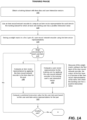
- the system computes a predicted interaction value for each user-item pair in the training dataset. This is illustrated in steps 140-160 in Figure 1 .
- the system computes an item vector representation by applying the item neural network encoder to the item data in the pair (step 140 ).
- the system computes a user vector representation for the training user in the pair by applying the user neural network encoder to the training user's user-item interaction vector (step 140 ). Because the weight matrix in the first layer of the user neural network encoder is made up the item vector representations in the training dataset, the output of the first layer of the user neural network is a function of the item vector representations of the items with which the training user has a positive interaction value.
- computing the output of the first layer of the user neural network encoder comprises applying a fusion function to the item vector representations of the items with which the user has a positive interaction value.
- the fusion function produces a single vector based on the input item vector representations.
- the single vector resulting from the fusion function is the output of the first layer of the user neural network encoder.
- the fusion function may be an average function that averages the item vector representations.
- the fusion function may be a weighted average function that computes a weighted average of the item vector representations based on the similarity of said item vector representations to the item vector representation of the item for which an interaction value is being predicted.
- the system computes a predicted interaction value for the user-item pair based on the user and item vector representations for the pair (step 160 ).
- the predicted interaction value is the dot product of the user and item representations.
- the system calculates a loss between predicted interaction values and actual interaction values for the user-item pairs in the training dataset (step 170 )
- the system adjusts the trainable parameters of the user and item neural network encoders to minimize the loss (step 180 ).
- each of the user and item neural network encoders has multiple layers, where a weight matrix is associated with each layer.
- the weight matrices are adjustable parameters, except for the weight matrix in the first layer of the user neural network encoder. This weight matrix is fixed and only changes in response to the item representations in the training data set changing in a subsequent iteration.
- the system repeats steps 120-180 for a number of iterations.
- the above objective (loss) function is minimized over the parameters of the item neural network encoder, g i , and the user neural network encoder, g u , where the parameters of g u are [ W 2 u ... , W L u ].
- W 1 u is not an adjustable parameter of the user neural network encoder, as this is set with the item representations generated in step 120.
- the user and item neural network encoders are trained using mini-batch gradient descent.
- the training data set is divided into a plurality of mini-batches.
- the weight matrix in the first layer of the user neural network encoder is set based on the items in the whole training dataset with which the mini-batch users have interacted. Steps 140-150 in Figure 1 are performed for each mini-batch.
- each user has a small number of items with which he/she has a positive interaction value. Therefore, dividing the training set into a plurality of mini-batches means that the number of items for which the system needs to compute a representation in the mini-batch is small compared to the total number of items in the training dataset. This results in a faster overall training of the model.
- the output of the first layer of the user neural network encoder is a function of the representations of the items for which the user has a positive interaction value.
- the set of items with which a user has a positive interaction is referred to herein as a user's "neighbor set of items" or “neighbor set.”
- the representations for each of a user's neighbor set of items is weighted equally in calculating the output of the first layer of the user neural network encoder.
- the output of the first layer is a weighted sum of the representations of the user j 's neighbor set, wherein the weights are computed based on the similarity of each of user j 's neighbor set to item k.
- the objective function may be expressed as follows: ⁇ j , k ⁇ S + ⁇ S ⁇ ⁇ z j u T z k i ⁇ R jk ⁇ 2 s . t .
- ⁇ pk gives weight to the p th item based on its similarity to the k th item.
- Cosine, dot product, or general attention mechanisms may be used learn the weights.
- the weight ⁇ pk may be computed using one of the following:
- the provisional applications incorporated by reference herein in the Related Applications section set forth results of experiments that compare the performance a recommender system that uses shared neural item representations (and trained according to the methods described herein) and a recommender system that does not use shared neural item representations.
- the recommender system that uses shared neural item representations as describe herein achieved better recall with fewer iterations with respect to cold start recommendations.
- the number of parameters that have to be learned during training of the non-shared model increases in a nearly linear fashion with the number of users and items.
- item representations are shared and used as weights in the user neural network encoder in the model described herein, the number of parameters that need to be learned during training is significantly smaller. This enables the shared model to have faster optimization and better generalization on bigger datasets.
- the trained model can be used either to recommend users to shops with cold-start items for targeted advertisements or to recommend cold-start items to users on the ecommerce platform.
- the system needs to predict interaction values between users of the ecommerce platform and cold-start items.
- Figure 2 illustrates a method for predicting an interaction value for a test user and a cold-start item.
- the system computes item vector representations for items on the ecommerce platform (step 210 ). In one embodiment, this is done for all or substantially all the items offered for sale on the ecommerce platform.
- the system sets the weight matrix in the first layer of the user neural network encoder using the item vector representations (step 220 ).
- the system obtains a user-item interaction vector for a test user (step 230 ).
- the system obtains side item data for a cold-start item k (step 240 ).
- the system computes a user vector representation for the test user by applying the user neural network encoder to the test user's user-item interaction vector (step 250 ).
- the output of the first layer of the user neural network encoder is a function of the item representations for the items with which the test user has had a positive interaction.
- the system computes an item vector representation for cold-start item k by applying the item neural network encoder to the side item data obtained in step 240 (step 260 ).
- the system computes a predicted interaction value for the test user and cold-start item k based on the user and item vector representations computed for the test user and item (step 270 ).
- the system computes a predicted interaction value for the item and each of a plurality of users. The system then recommends to the shop a certain number or certain percentage of users with the highest probability of having a positive interaction value for the item.
- the system computes a predicted interaction value for the user and each of a plurality of items for sale on the ecommerce platform. The system then recommends to the user a certain number of items with which the user has the highest probability of a positive interaction.
- FIG. 4 illustrates the architecture of the user neural network encoder according to one embodiment.
- the user neural network encoder includes L layers ( 410, 420, ..., 430 ), where L is an integer greater than 1.
- Each layer includes a weight matrix and a non-linear activation function.
- the weight matrix is an adjustable parameter.
- the weight matrix is set using item representation generated by the item neural network encoder.
- Figure 5 illustrates an example system architecture for the recommender system.
- the recommender system includes a prediction model 550 that predicts user-item interactions for user-item pairs.
- the input to the model is side item data 520 and user-interaction vectors 510.
- the model's predictions are outputted in the form of user-item interaction scores 560 ( e.g., similarity scores between user and item representations).
- the model includes item neural network encoder 530 and user neural network encoder 540.
- the user and item neural network encoders are multilayer perceptrons.
- the model also includes a dot product module 555 that calculates the dot product of the user and item representations
- a recommendation module for 540 receives user-item interaction scores from the prediction model 550 and uses the scores to either recommend users to shops or items to users, as described above in Section 3.0.
- a training module 580 trains the prediction model in accordance with the method of Figures 1A-B.
- FIG. 1-5 The methods described with respect to Figures 1-5 are embodied in software and performed by a computer system (comprising one or more computing devices) executing the software.
- a computer system has one or more physical memory units, disks, or other physical, computer-readable storage media for storing software instructions, as well as one or more processors for executing the software instructions.
- a computer system may be a stand-alone computer or a network of computers working together, such as in a client-server architecture.
Landscapes
- Engineering & Computer Science (AREA)
- Business, Economics & Management (AREA)
- Physics & Mathematics (AREA)
- Theoretical Computer Science (AREA)
- Accounting & Taxation (AREA)
- Finance (AREA)
- General Physics & Mathematics (AREA)
- Development Economics (AREA)
- Strategic Management (AREA)
- Economics (AREA)
- Marketing (AREA)
- General Business, Economics & Management (AREA)
- Artificial Intelligence (AREA)
- Molecular Biology (AREA)
- Health & Medical Sciences (AREA)
- Biomedical Technology (AREA)
- Biophysics (AREA)
- Computational Linguistics (AREA)
- Data Mining & Analysis (AREA)
- Evolutionary Computation (AREA)
- General Health & Medical Sciences (AREA)
- Life Sciences & Earth Sciences (AREA)
- Computing Systems (AREA)
- General Engineering & Computer Science (AREA)
- Mathematical Physics (AREA)
- Software Systems (AREA)
- Entrepreneurship & Innovation (AREA)
- Game Theory and Decision Science (AREA)
- Management, Administration, Business Operations System, And Electronic Commerce (AREA)
- Image Analysis (AREA)
- Information Retrieval, Db Structures And Fs Structures Therefor (AREA)
Applications Claiming Priority (3)
| Application Number | Priority Date | Filing Date | Title |
|---|---|---|---|
| US202163230676P | 2021-08-06 | 2021-08-06 | |
| US202163234651P | 2021-08-18 | 2021-08-18 | |
| US17/556,954 US20230055699A1 (en) | 2021-08-06 | 2021-12-20 | Recommender system and method using shared neural item representations for cold-start recommendations |
Publications (1)
| Publication Number | Publication Date |
|---|---|
| EP4131122A1 true EP4131122A1 (de) | 2023-02-08 |
Family
ID=82786898
Family Applications (1)
| Application Number | Title | Priority Date | Filing Date |
|---|---|---|---|
| EP22188265.7A Pending EP4131122A1 (de) | 2021-08-06 | 2022-08-02 | Verbessertes empfehlungssystem und verfahren unter verwendung gemeinsamer neuronaler element-darstellungen für kaltstartempfehlungen |
Country Status (4)
| Country | Link |
|---|---|
| US (1) | US20230055699A1 (de) |
| EP (1) | EP4131122A1 (de) |
| JP (1) | JP7460703B2 (de) |
| TW (1) | TWI883341B (de) |
Cited By (2)
| Publication number | Priority date | Publication date | Assignee | Title |
|---|---|---|---|---|
| CN116166890A (zh) * | 2023-04-25 | 2023-05-26 | 中国科学技术大学 | 基于浅层自动编码器模型的推荐方法、系统、设备及介质 |
| CN117422526A (zh) * | 2023-11-15 | 2024-01-19 | 哈尔滨工业大学 | 一种基于提示的用户跨域冷启动方法 |
Families Citing this family (10)
| Publication number | Priority date | Publication date | Assignee | Title |
|---|---|---|---|---|
| US11593861B2 (en) * | 2019-10-28 | 2023-02-28 | Fiserv, Inc. | Automated product recommendation |
| US12211073B2 (en) * | 2021-07-14 | 2025-01-28 | Rakuten Group, Inc. | Reducing sample selection bias in a machine learning-based recommender system |
| US12530435B2 (en) | 2022-07-27 | 2026-01-20 | Rakuten Group, Inc. | One-class recommender system with hinge pairwise distance loss and orthogonal representations |
| US20240152842A1 (en) * | 2022-10-27 | 2024-05-09 | 6Sense Insights, Inc. | Predictive model for mitigating cold-start problem with data quality and quantity |
| CN118411221A (zh) * | 2023-03-21 | 2024-07-30 | 滴图(北京)科技有限公司 | 一种数据处理方法和装置 |
| CN116662661B (zh) * | 2023-06-05 | 2025-10-17 | 杭州电子科技大学 | 一种基于轻量化图卷积自注意力模型的评分序列推荐方法 |
| CN116645174B (zh) * | 2023-07-27 | 2023-10-17 | 山东省人工智能研究院 | 基于解耦多行为表征学习的个性化推荐方法 |
| US20250078329A1 (en) * | 2023-09-01 | 2025-03-06 | Pinterest, Inc. | Generating content based on text and supplemental information |
| CN118427442B (zh) * | 2024-05-23 | 2025-11-07 | 福州大学 | 一种融合交叉网络和特征重要性选择的推荐方法 |
| CN118313446B (zh) * | 2024-06-07 | 2024-08-27 | 安徽大学 | 面向冷启动场景的因果元学习多视角图学习方法及设备 |
Family Cites Families (7)
| Publication number | Priority date | Publication date | Assignee | Title |
|---|---|---|---|---|
| US10650432B1 (en) * | 2016-11-28 | 2020-05-12 | Amazon Technologies, Inc. | Recommendation system using improved neural network |
| US11004135B1 (en) * | 2017-08-18 | 2021-05-11 | Amazon Technologies, Inc. | Artificial intelligence system for balancing relevance and diversity of network-accessible content |
| CN110288436A (zh) | 2019-06-19 | 2019-09-27 | 桂林电子科技大学 | 一种基于游客偏好建模的个性化景点推荐方法 |
| US11494644B2 (en) * | 2019-11-20 | 2022-11-08 | Rakuten Group, Inc. | System, method, and computer program for recommending items using a direct neural network structure |
| CN115081589B (zh) * | 2020-01-09 | 2024-11-26 | 支付宝(杭州)信息技术有限公司 | 利用lstm神经网络模型处理交互数据的方法及装置 |
| CN111815410B (zh) | 2020-07-07 | 2022-04-26 | 中国人民解放军军事科学院国防科技创新研究院 | 基于选择性邻域信息的商品推荐方法 |
| US11544340B2 (en) * | 2020-12-15 | 2023-01-03 | Docusign, Inc. | Content item selection in a digital transaction management platform |
-
2021
- 2021-12-20 US US17/556,954 patent/US20230055699A1/en active Pending
-
2022
- 2022-08-02 EP EP22188265.7A patent/EP4131122A1/de active Pending
- 2022-08-03 JP JP2022124085A patent/JP7460703B2/ja active Active
- 2022-08-05 TW TW111129533A patent/TWI883341B/zh active
Non-Patent Citations (2)
| Title |
|---|
| NAHTA RAVI ET AL: "Embedding metadata using deep collaborative filtering to address the cold start problem for the rating prediction task", MULTIMEDIA TOOLS AND APPLICATIONS., vol. 80, no. 12, 18 February 2021 (2021-02-18), US, pages 18553 - 18581, XP055941233, ISSN: 1380-7501, Retrieved from the Internet <URL:https://link.springer.com/content/pdf/10.1007/s11042-021-10529-4.pdf> DOI: 10.1007/s11042-021-10529-4 * |
| XIANGNAN HE ET AL: "Neural Collaborative Filtering", WORLD WIDE WEB, INTERNATIONAL WORLD WIDE WEB CONFERENCES STEERING COMMITTEE, REPUBLIC AND CANTON OF GENEVA SWITZERLAND, 3 April 2017 (2017-04-03), pages 173 - 182, XP058327166, ISBN: 978-1-4503-4913-0, DOI: 10.1145/3038912.3052569 * |
Cited By (3)
| Publication number | Priority date | Publication date | Assignee | Title |
|---|---|---|---|---|
| CN116166890A (zh) * | 2023-04-25 | 2023-05-26 | 中国科学技术大学 | 基于浅层自动编码器模型的推荐方法、系统、设备及介质 |
| CN116166890B (zh) * | 2023-04-25 | 2023-07-18 | 中国科学技术大学 | 基于浅层自动编码器模型的推荐方法、系统、设备及介质 |
| CN117422526A (zh) * | 2023-11-15 | 2024-01-19 | 哈尔滨工业大学 | 一种基于提示的用户跨域冷启动方法 |
Also Published As
| Publication number | Publication date |
|---|---|
| JP7460703B2 (ja) | 2024-04-02 |
| TWI883341B (zh) | 2025-05-11 |
| US20230055699A1 (en) | 2023-02-23 |
| TW202314558A (zh) | 2023-04-01 |
| JP2023024950A (ja) | 2023-02-21 |
Similar Documents
| Publication | Publication Date | Title |
|---|---|---|
| EP4131122A1 (de) | Verbessertes empfehlungssystem und verfahren unter verwendung gemeinsamer neuronaler element-darstellungen für kaltstartempfehlungen | |
| EP3982319A1 (de) | Gleichzeitiges lernen von eingaben und parametern in auf maschinellem lernen basierenden empfehlungssystemen | |
| EP4120175A1 (de) | Verringern der abtastvorspannung in einem auf einer maschine basierenden empfehlungssystem | |
| US11494644B2 (en) | System, method, and computer program for recommending items using a direct neural network structure | |
| EP4120144A1 (de) | Reduzieren der probenauswahlvorspannung in einem auf maschinellem lernen basierenden empfehlungssystem | |
| Pujahari et al. | Aggregation of preference relations to enhance the ranking quality of collaborative filtering based group recommender system | |
| US10932003B2 (en) | Method and system for making recommendations from binary data using neighbor-score matrix and latent factors | |
| WO2020047654A1 (en) | Noise contrastive estimation for collaborative filtering | |
| US20150356658A1 (en) | Systems And Methods For Serving Product Recommendations | |
| US20240029135A1 (en) | Personalized item recommendations using a hyper-convolutional model | |
| US20140058882A1 (en) | Method and Apparatus for Ordering Recommendations According to a Mean/Variance Tradeoff | |
| EP4120173A1 (de) | Verringerung der stichprobenverzerrung in einem auf maschinenlernen basierenden empfehlungssystem | |
| EP4120174A1 (de) | Verringerung der stichprobenverzerrung in einem auf maschinenlernen basierenden empfehlungssystem | |
| EP4322068A1 (de) | Klasse-empfehlungssystem mit paarweisem scharnierdistanzverlust und orthogonalen darstellungen | |
| Hu | Interval function and its linear least-squares approximation | |
| CN110059245B (zh) | 一种预测用户评分及展示对象的方法和装置 |
Legal Events
| Date | Code | Title | Description |
|---|---|---|---|
| PUAI | Public reference made under article 153(3) epc to a published international application that has entered the european phase |
Free format text: ORIGINAL CODE: 0009012 |
|
| STAA | Information on the status of an ep patent application or granted ep patent |
Free format text: STATUS: REQUEST FOR EXAMINATION WAS MADE |
|
| 17P | Request for examination filed |
Effective date: 20220802 |
|
| AK | Designated contracting states |
Kind code of ref document: A1 Designated state(s): AL AT BE BG CH CY CZ DE DK EE ES FI FR GB GR HR HU IE IS IT LI LT LU LV MC MK MT NL NO PL PT RO RS SE SI SK SM TR |