EP4129788B1 - Automated guided vehicle, and method and system for controlling automated guided vehicle - Google Patents
Automated guided vehicle, and method and system for controlling automated guided vehicle Download PDFInfo
- Publication number
- EP4129788B1 EP4129788B1 EP21808942.3A EP21808942A EP4129788B1 EP 4129788 B1 EP4129788 B1 EP 4129788B1 EP 21808942 A EP21808942 A EP 21808942A EP 4129788 B1 EP4129788 B1 EP 4129788B1
- Authority
- EP
- European Patent Office
- Prior art keywords
- automated guided
- guided vehicle
- signal
- receiver
- transmitter
- Prior art date
- Legal status (The legal status is an assumption and is not a legal conclusion. Google has not performed a legal analysis and makes no representation as to the accuracy of the status listed.)
- Active
Links
Images

Classifications
-
- G—PHYSICS
- G05—CONTROLLING; REGULATING
- G05D—SYSTEMS FOR CONTROLLING OR REGULATING NON-ELECTRIC VARIABLES
- G05D1/00—Control of position, course, altitude or attitude of land, water, air or space vehicles, e.g. using automatic pilots
- G05D1/02—Control of position or course in two dimensions
- G05D1/021—Control of position or course in two dimensions specially adapted to land vehicles
- G05D1/0276—Control of position or course in two dimensions specially adapted to land vehicles using signals provided by a source external to the vehicle
-
- G—PHYSICS
- G05—CONTROLLING; REGULATING
- G05D—SYSTEMS FOR CONTROLLING OR REGULATING NON-ELECTRIC VARIABLES
- G05D1/00—Control of position, course, altitude or attitude of land, water, air or space vehicles, e.g. using automatic pilots
- G05D1/02—Control of position or course in two dimensions
- G05D1/021—Control of position or course in two dimensions specially adapted to land vehicles
- G05D1/0276—Control of position or course in two dimensions specially adapted to land vehicles using signals provided by a source external to the vehicle
- G05D1/028—Control of position or course in two dimensions specially adapted to land vehicles using signals provided by a source external to the vehicle using a RF signal
-
- B—PERFORMING OPERATIONS; TRANSPORTING
- B60—VEHICLES IN GENERAL
- B60W—CONJOINT CONTROL OF VEHICLE SUB-UNITS OF DIFFERENT TYPE OR DIFFERENT FUNCTION; CONTROL SYSTEMS SPECIALLY ADAPTED FOR HYBRID VEHICLES; ROAD VEHICLE DRIVE CONTROL SYSTEMS FOR PURPOSES NOT RELATED TO THE CONTROL OF A PARTICULAR SUB-UNIT
- B60W30/00—Purposes of road vehicle drive control systems not related to the control of a particular sub-unit, e.g. of systems using conjoint control of vehicle sub-units
- B60W30/08—Active safety systems predicting or avoiding probable or impending collision or attempting to minimise its consequences
- B60W30/09—Taking automatic action to avoid collision, e.g. braking and steering
-
- B—PERFORMING OPERATIONS; TRANSPORTING
- B60—VEHICLES IN GENERAL
- B60W—CONJOINT CONTROL OF VEHICLE SUB-UNITS OF DIFFERENT TYPE OR DIFFERENT FUNCTION; CONTROL SYSTEMS SPECIALLY ADAPTED FOR HYBRID VEHICLES; ROAD VEHICLE DRIVE CONTROL SYSTEMS FOR PURPOSES NOT RELATED TO THE CONTROL OF A PARTICULAR SUB-UNIT
- B60W30/00—Purposes of road vehicle drive control systems not related to the control of a particular sub-unit, e.g. of systems using conjoint control of vehicle sub-units
- B60W30/18—Propelling the vehicle
- B60W30/18009—Propelling the vehicle related to particular drive situations
- B60W30/181—Preparing for stopping
-
- B—PERFORMING OPERATIONS; TRANSPORTING
- B60—VEHICLES IN GENERAL
- B60W—CONJOINT CONTROL OF VEHICLE SUB-UNITS OF DIFFERENT TYPE OR DIFFERENT FUNCTION; CONTROL SYSTEMS SPECIALLY ADAPTED FOR HYBRID VEHICLES; ROAD VEHICLE DRIVE CONTROL SYSTEMS FOR PURPOSES NOT RELATED TO THE CONTROL OF A PARTICULAR SUB-UNIT
- B60W40/00—Estimation or calculation of non-directly measurable driving parameters for road vehicle drive control systems not related to the control of a particular sub unit, e.g. by using mathematical models
- B60W40/10—Estimation or calculation of non-directly measurable driving parameters for road vehicle drive control systems not related to the control of a particular sub unit, e.g. by using mathematical models related to vehicle motion
- B60W40/105—Speed
-
- B—PERFORMING OPERATIONS; TRANSPORTING
- B60—VEHICLES IN GENERAL
- B60W—CONJOINT CONTROL OF VEHICLE SUB-UNITS OF DIFFERENT TYPE OR DIFFERENT FUNCTION; CONTROL SYSTEMS SPECIALLY ADAPTED FOR HYBRID VEHICLES; ROAD VEHICLE DRIVE CONTROL SYSTEMS FOR PURPOSES NOT RELATED TO THE CONTROL OF A PARTICULAR SUB-UNIT
- B60W40/00—Estimation or calculation of non-directly measurable driving parameters for road vehicle drive control systems not related to the control of a particular sub unit, e.g. by using mathematical models
- B60W40/10—Estimation or calculation of non-directly measurable driving parameters for road vehicle drive control systems not related to the control of a particular sub unit, e.g. by using mathematical models related to vehicle motion
- B60W40/107—Longitudinal acceleration
-
- B—PERFORMING OPERATIONS; TRANSPORTING
- B60—VEHICLES IN GENERAL
- B60W—CONJOINT CONTROL OF VEHICLE SUB-UNITS OF DIFFERENT TYPE OR DIFFERENT FUNCTION; CONTROL SYSTEMS SPECIALLY ADAPTED FOR HYBRID VEHICLES; ROAD VEHICLE DRIVE CONTROL SYSTEMS FOR PURPOSES NOT RELATED TO THE CONTROL OF A PARTICULAR SUB-UNIT
- B60W50/00—Details of control systems for road vehicle drive control not related to the control of a particular sub-unit, e.g. process diagnostic or vehicle driver interfaces
-
- B—PERFORMING OPERATIONS; TRANSPORTING
- B60—VEHICLES IN GENERAL
- B60W—CONJOINT CONTROL OF VEHICLE SUB-UNITS OF DIFFERENT TYPE OR DIFFERENT FUNCTION; CONTROL SYSTEMS SPECIALLY ADAPTED FOR HYBRID VEHICLES; ROAD VEHICLE DRIVE CONTROL SYSTEMS FOR PURPOSES NOT RELATED TO THE CONTROL OF A PARTICULAR SUB-UNIT
- B60W50/00—Details of control systems for road vehicle drive control not related to the control of a particular sub-unit, e.g. process diagnostic or vehicle driver interfaces
- B60W50/0098—Details of control systems ensuring comfort, safety or stability not otherwise provided for
-
- B—PERFORMING OPERATIONS; TRANSPORTING
- B60—VEHICLES IN GENERAL
- B60W—CONJOINT CONTROL OF VEHICLE SUB-UNITS OF DIFFERENT TYPE OR DIFFERENT FUNCTION; CONTROL SYSTEMS SPECIALLY ADAPTED FOR HYBRID VEHICLES; ROAD VEHICLE DRIVE CONTROL SYSTEMS FOR PURPOSES NOT RELATED TO THE CONTROL OF A PARTICULAR SUB-UNIT
- B60W60/00—Drive control systems specially adapted for autonomous road vehicles
- B60W60/001—Planning or execution of driving tasks
- B60W60/0015—Planning or execution of driving tasks specially adapted for safety
-
- G—PHYSICS
- G05—CONTROLLING; REGULATING
- G05D—SYSTEMS FOR CONTROLLING OR REGULATING NON-ELECTRIC VARIABLES
- G05D1/00—Control of position, course, altitude or attitude of land, water, air or space vehicles, e.g. using automatic pilots
- G05D1/02—Control of position or course in two dimensions
- G05D1/021—Control of position or course in two dimensions specially adapted to land vehicles
- G05D1/0212—Control of position or course in two dimensions specially adapted to land vehicles with means for defining a desired trajectory
- G05D1/0214—Control of position or course in two dimensions specially adapted to land vehicles with means for defining a desired trajectory in accordance with safety or protection criteria, e.g. avoiding hazardous areas
-
- G—PHYSICS
- G05—CONTROLLING; REGULATING
- G05D—SYSTEMS FOR CONTROLLING OR REGULATING NON-ELECTRIC VARIABLES
- G05D1/00—Control of position, course, altitude or attitude of land, water, air or space vehicles, e.g. using automatic pilots
- G05D1/02—Control of position or course in two dimensions
- G05D1/021—Control of position or course in two dimensions specially adapted to land vehicles
- G05D1/0287—Control of position or course in two dimensions specially adapted to land vehicles involving a plurality of land vehicles, e.g. fleet or convoy travelling
- G05D1/0289—Control of position or course in two dimensions specially adapted to land vehicles involving a plurality of land vehicles, e.g. fleet or convoy travelling with means for avoiding collisions between vehicles
-
- G—PHYSICS
- G05—CONTROLLING; REGULATING
- G05D—SYSTEMS FOR CONTROLLING OR REGULATING NON-ELECTRIC VARIABLES
- G05D1/00—Control of position, course, altitude or attitude of land, water, air or space vehicles, e.g. using automatic pilots
- G05D1/20—Control system inputs
- G05D1/24—Arrangements for determining position or orientation
- G05D1/247—Arrangements for determining position or orientation using signals provided by artificial sources external to the vehicle, e.g. navigation beacons
-
- G—PHYSICS
- G05—CONTROLLING; REGULATING
- G05D—SYSTEMS FOR CONTROLLING OR REGULATING NON-ELECTRIC VARIABLES
- G05D1/00—Control of position, course, altitude or attitude of land, water, air or space vehicles, e.g. using automatic pilots
- G05D1/60—Intended control result
- G05D1/617—Safety or protection, e.g. defining protection zones around obstacles or avoiding hazards
- G05D1/622—Obstacle avoidance
-
- G—PHYSICS
- G06—COMPUTING OR CALCULATING; COUNTING
- G06F—ELECTRIC DIGITAL DATA PROCESSING
- G06F9/00—Arrangements for program control, e.g. control units
- G06F9/06—Arrangements for program control, e.g. control units using stored programs, i.e. using an internal store of processing equipment to receive or retain programs
-
- B—PERFORMING OPERATIONS; TRANSPORTING
- B60—VEHICLES IN GENERAL
- B60W—CONJOINT CONTROL OF VEHICLE SUB-UNITS OF DIFFERENT TYPE OR DIFFERENT FUNCTION; CONTROL SYSTEMS SPECIALLY ADAPTED FOR HYBRID VEHICLES; ROAD VEHICLE DRIVE CONTROL SYSTEMS FOR PURPOSES NOT RELATED TO THE CONTROL OF A PARTICULAR SUB-UNIT
- B60W2520/00—Input parameters relating to overall vehicle dynamics
- B60W2520/04—Vehicle stop
-
- B—PERFORMING OPERATIONS; TRANSPORTING
- B60—VEHICLES IN GENERAL
- B60W—CONJOINT CONTROL OF VEHICLE SUB-UNITS OF DIFFERENT TYPE OR DIFFERENT FUNCTION; CONTROL SYSTEMS SPECIALLY ADAPTED FOR HYBRID VEHICLES; ROAD VEHICLE DRIVE CONTROL SYSTEMS FOR PURPOSES NOT RELATED TO THE CONTROL OF A PARTICULAR SUB-UNIT
- B60W2520/00—Input parameters relating to overall vehicle dynamics
- B60W2520/10—Longitudinal speed
- B60W2520/105—Longitudinal acceleration
-
- B—PERFORMING OPERATIONS; TRANSPORTING
- B60—VEHICLES IN GENERAL
- B60W—CONJOINT CONTROL OF VEHICLE SUB-UNITS OF DIFFERENT TYPE OR DIFFERENT FUNCTION; CONTROL SYSTEMS SPECIALLY ADAPTED FOR HYBRID VEHICLES; ROAD VEHICLE DRIVE CONTROL SYSTEMS FOR PURPOSES NOT RELATED TO THE CONTROL OF A PARTICULAR SUB-UNIT
- B60W2554/00—Input parameters relating to objects
- B60W2554/20—Static objects
-
- B—PERFORMING OPERATIONS; TRANSPORTING
- B60—VEHICLES IN GENERAL
- B60W—CONJOINT CONTROL OF VEHICLE SUB-UNITS OF DIFFERENT TYPE OR DIFFERENT FUNCTION; CONTROL SYSTEMS SPECIALLY ADAPTED FOR HYBRID VEHICLES; ROAD VEHICLE DRIVE CONTROL SYSTEMS FOR PURPOSES NOT RELATED TO THE CONTROL OF A PARTICULAR SUB-UNIT
- B60W2554/00—Input parameters relating to objects
- B60W2554/40—Dynamic objects, e.g. animals, windblown objects
- B60W2554/402—Type
- B60W2554/4029—Pedestrians
-
- B—PERFORMING OPERATIONS; TRANSPORTING
- B60—VEHICLES IN GENERAL
- B60W—CONJOINT CONTROL OF VEHICLE SUB-UNITS OF DIFFERENT TYPE OR DIFFERENT FUNCTION; CONTROL SYSTEMS SPECIALLY ADAPTED FOR HYBRID VEHICLES; ROAD VEHICLE DRIVE CONTROL SYSTEMS FOR PURPOSES NOT RELATED TO THE CONTROL OF A PARTICULAR SUB-UNIT
- B60W2556/00—Input parameters relating to data
- B60W2556/45—External transmission of data to or from the vehicle
-
- B—PERFORMING OPERATIONS; TRANSPORTING
- B60—VEHICLES IN GENERAL
- B60W—CONJOINT CONTROL OF VEHICLE SUB-UNITS OF DIFFERENT TYPE OR DIFFERENT FUNCTION; CONTROL SYSTEMS SPECIALLY ADAPTED FOR HYBRID VEHICLES; ROAD VEHICLE DRIVE CONTROL SYSTEMS FOR PURPOSES NOT RELATED TO THE CONTROL OF A PARTICULAR SUB-UNIT
- B60W2720/00—Output or target parameters relating to overall vehicle dynamics
- B60W2720/10—Longitudinal speed
Definitions
- This disclosure relates to the technical field of intelligent device, and particularly, to an automated guided vehicle and a method and system for controlling the automated guided vehicle.
- AGV automated guided vehicle
- a mobile robot including a communication unit configured to communicate with another mobile robot that emits a signal and a controller configured to recognize the location of the another mobile robot and control the another mobile robot to follow a moving path corresponding to a trajectory information stored in a memory of the mobile robot.
- US 2019/025839 A1 discloses a mining vehicle control system including a detection unit configured to determine a proximity of a monitored mining vehicle to a first mining vehicle and a controller configured to determine first protection lines that linearly project from the first mining vehicle and second protection lines that linearly project from the monitored mining vehicle.
- the controller is configured to direct the first mining vehicle to change movement of the first mining vehicle responsive to intersection of one or more of the first protection lines with one or more of the second protection lines.
- an automated guided vehicle comprising: a first receiver configured to receive a first signal of a first frequency that is sent by a first transmitter equipped on a movable object or a fixed object; and a controller configured to control operation of the automated guided vehicle according to whether the first receiver receives the first signal.
- the controller is configured to: control the automated guided vehicle to stop or decelerate in the condition that the first receiver receives the first signal; or control the automated guided vehicle to operate normally in the condition that the first receiver does not receive the first signal.
- the controller is configured to: determine a distance between the first transmitter sending the first signal and the automated guided vehicle according to strength of the received first signal in the condition that the first receiver receives the first signal; determine an acceleration for the automated guided vehicle to decelerate according to the distance between the first transmitter sending the first signal and the automated guided vehicle; and control the automated guided vehicle to decelerate according to the acceleration.
- the automated guided vehicle further comprises: a second receiver configured to receive a second signal of a second frequency that is sent by a second transmitter equipped on the movable object or the fixed object, wherein the first frequency is less than the second frequency, wherein the first frequency is less than the second frequency; wherein the controller is further configured to control the operation of the automated guided vehicle according to whether the second receiver receives the second signal in the condition that the first receiver does not receive the first signal.
- the controller is configured to: control the automated guided vehicle to operate normally if the second receiver receives the second signal in the condition that the first receiver does not receive the first signal.
- the controller is configured to: control the automated guided vehicle to operate normally if the second receiver receives the second signal sent by the second transmitter or forwarded by another automated guided vehicle in the condition that the first receiver does not receive the first signal.
- a method for controlling an automated guided vehicle comprising: turning on a first receiver equipped on the automated guided vehicle, the first receiver being configured to receive a first signal of a first frequency that is sent by a first transmitter equipped on a movable object or fixed object; and controlling operation of the automated guided vehicle according to whether the first receiver receives the first signal.
- controlling operation of the automated guided vehicle comprises: controlling the automated guided vehicle to stop or decelerate in the condition that the first receiver receives the first signal; or controlling the automated guided vehicle to operate normally in the condition that the first receiver does not receive the first signal.
- the controlling the automated guided vehicle to decelerate comprises: determining a distance between the first transmitter sending the first signal and the automated guided vehicle according to strength of the received first signal in the condition that the first receiver receives the first signal; determining an acceleration for the automated guided vehicle to decelerate according to the distance between the first transmitter sending the first signal and the automated guided vehicle; and controlling the automated guided vehicle to decelerate according to the acceleration.
- the method further comprises: turning on a second receiver equipped on the automated guided vehicle, the second receiver being configured to receive a second signal of a second frequency that is sent by a second transmitter equipped on the movable object or the fixed object, wherein the first frequency is less than the second frequency; wherein the controlling operation of the automated guided vehicle comprises: controlling the operation of the automated guided vehicle according to whether the second receiver receives the second signal in the condition that the first receiver does not receive the first signal.
- controlling the operation of the automated guided vehicle comprises: controlling the automated guided vehicle to operate normally if the second receiver receives the second signal in the condition that the first receiver does not receive the first signal.
- controlling the operation of the automated guided vehicle comprises: controlling the automated guided vehicle to operate normally if the second receiver receives the second signal sent by the second transmitter or forwarded by another automated guided vehicle in the condition that the first receiver does not receive the first signal.
- a non-transitory computer-readable storage medium stored a computer program which implements the method for controlling an automated guided vehicle according to any of the embodiments when executed by a processor.
- a system for controlling an automated guided vehicle comprising: a first transmitter equipped on a mobile object or a fixed object, configured to send a first signal of a first frequency; and one or more automated guided vehicles according to any of the embodiments.
- the system further comprises: a second transmitter equipped on the movable object or the fixed object, configured to send a second signal of a second frequency, wherein the first frequency is less than the second frequency.
- the embodiments of the present disclosure provide a solution of preventing an automated guided vehicle from colliding with objects such as people or devices during its operation.
- the automated guided vehicle is equipped with a signal receiver
- the movable object or fixed object to be protected is equipped with a signal transmitter
- the automated guided vehicle can judge whether the automated guided vehicle is in a safe operation range relative to the object to be protected according to whether the receiver receives a signal, so as to control the operation of the automated guided vehicle, thereby preventing the automated guided vehicle from colliding with the object to be protected, such as people or devices, during the operation.
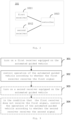
- Fig. 1 illustrates a schematic diagram of a system for controlling an automated guided vehicle according to some embodiments of the present disclosure.
- the system 100 for controlling an automated guided vehicle of this embodiment comprises one or more automated guided vehicles 101 equipped with a signal receiver, and a signal transmitter equipped on an object 102 to be protected, such as a movable object or a fixed object.
- the signal transmitter comprises, for example, a first transmitter 1021. If the automated guided vehicle enters signal coverage of the first transmitter 1021, this shows that the automated guided vehicle is close to the object to be protected that is equipped with the first transmitter 1021 and is within a dangerous operation range.
- the signal transmitter further comprises, for example, a second transmitter 1022.
- a signal receiver used in combination with the first transmitter 1021 is designated as a first receiver 1011.
- a signal receiver used in combination with the second transmitter 1022 is designated as a second receiver 1012.
- the first transmitter 1021 can be, for example, a signal transmitter equipped on the object to be protected, such as the movable object or the fixed object, and the first transmitter 1021 is configured to send a first signal of a first frequency.
- the first transmitter 1021 can be equipped on the movable object such as people or other movable devices, or can be equipped on the fixed object such as fixed facilities.
- the first signal is a periodic signal sent by the first transmitter 1021, and data content of the first signal is, for example, ID (Identity Document) identification information of the first transmitter.
- a sending antenna of the first transmitter can employ, for example, an omnidirectional antenna, to make 360 degree protection to the object equipped with the first transmitter.
- the first frequency is set such that a transmission distance of the first signal is greater than or equal to the safe braking distance of the automated guided vehicle.
- the first frequency is set such that the transmission distance of the first signal is slightly greater than the safety braking distance of the automated guided vehicle. Assuming that the safety braking distance of the automated guided vehicle is 5 meters, the first frequency for the transmission is set in such a way that the first signal can reach 5.2 meters, to reserve sufficient response time for the automated guided vehicle.
- the automated guided vehicle 101 is configured to receive the first signal sent by the first transmitter 1021 through the first receiver 1011 and control operation of the automated guided vehicle according to whether the first receiver 1011 receives the first signal.
- the automated guided vehicle 101 is configured to, in the condition that the first receiver 1011 receives the first signal, which shows that the automated guided vehicle 101 is close to the object to be protected that is equipped with the first transmitter 1021 and is in the dangerous operation range, control the automated guided vehicle 101 to stop or decelerate; and in the condition that the first receiver does not receive the first signal, which shows that the automated guided vehicle is far from the object to be protected that is equipped with the first transmitter 1021 and is currently in the safe operation range, control the automated guided vehicle 101 to operate normally.
- a method for controlling the automated guided vehicle 101 to decelerate comprises: in the condition that the first receiver receives the first signal, first, determining a distance between the first transmitter 1021 sending the first signal and the automated guided vehicle 101 according to strength of the received first signal; then, determining an acceleration for the automated guided vehicle 101 to decelerate according to the distance between the first transmitter 1021 sending the first signal and the automated guided vehicle 101; next, controlling the automated guided vehicle 101 to decelerate according to the determined acceleration.
- the determining a distance between the first transmitter 1021 sending the first signal and the automated guided vehicle 101 according to strength of the received first signal comprises, for example: calculating the distance between the first transmitter 1021 (i.e. the movable object or fixed object equipped the first transmitter) and the automated guided vehicle 101 using a RSSI (Received Signal Strength Indication) method, which is, for example, denoted as S.
- RSSI Received Signal Strength Indication
- the automated guided vehicle can decelerate at the acceleration, and until a certain distance is reached, the automated guided vehicle can be controlled to stop.
- a certain distance interval corresponds to one determined acceleration value
- the automated guided vehicle can decelerate at the acceleration, and until a certain distance is reached.
- the second transmitter 1022 can be, for example, a second transmitter equipped on the movable object or the fixed object, and the second transmitter 1022 is configured to send a second signal of a second frequency.
- the second signal is a periodic signal sent by the second transmitter 1022, and data content of the second signal is, for example, ID (Identity Document) identification information of the second transmitter.
- the second transmitter 1022 can be equipped on the movable object such as people or other movable devices, or can be equipped on the fixed object such as fixed facilities.
- the first frequency is less than the second frequency, that is, the second signal uses a higher frequency than the first signal, and thus a transmission distance of the second signal can be farther.
- the transmission distance of the first signal is related to a set danger distance, and if the automated guided vehicle receives the first signal, this shows that the distance between the object to be protected and the automated guided vehicle is dangerous, and the automated guided vehicle needs to be controlled to decelerate or stop.
- the transmission distance of the second signal is related to a set safety distance, if the automated guided vehicle receives the second signal, this shows that the distance between the object to be protected and the automated guided vehicle is safe, and the automated guided vehicle can be controlled to operate normally.
- the first signal (with short transmission distance) is used for detecting the danger distance for the operation of the automated guided vehicle
- the second signal (with long transmission distance) is used for detecting the safety distance for the operation of the automated guided vehicle
- the reliability of the whole system for safety control of the automated guided vehicle can be improved, to prevent the automated guided vehicle from colliding with the object to be protected, such as people or devices.
- the automated guided vehicle 101 receives the second signal of the second frequency that is sent by the second transmitter 1022 through the second receiver 1012.
- the operation of the automated guided vehicle 101 is controlled according to whether the second receiver 1012 receives the second signal. For example, in the condition that the first receiver 1011 does not receive the first signal, if the second receiver 1012 receives the second signal, this shows that the automated guided vehicle is far from the object to be protected that is equipped with the second transmitter 1022 and is currently in the safe operation range, and the automated guided vehicle 101 can be controlled to operate normally.
- That the second receiver 1012 receives the second signal comprises: the second receiver 1012 receiving the second signal directly sent by the second transmitter 1022.
- the second receiver 1012 of the automated guided vehicle 101 can also determine that the automated guided vehicle is in the safe operation range by receiving a second signal forwarded by another automated guided vehicle 101, and if the automated guided vehicle 101 can receive the second signal forwarded by another automated guided vehicle 101, this shows that the automated guided vehicle 101 is far from the object to be protected that is equipped with the second transmitter 1022 and is currently in the safe operation range, and the automated guided vehicle 101 can be controlled to operate normally.
- the automated guided vehicle can not only receive the second signal directly sent by the second transmitter, but also receive the second signal forwarded by other automated guided vehicles, so that the second signal can cover as many automated guided vehicles as possible. If the automated guided vehicle receives the second signal, this shows that the automated guided vehicle is far from the object to be protected that is equipped with the second transmitter and is currently in the safe operation range and the automated guided vehicle can be controlled to operate normally, thereby ensuring that the automated guided vehicle is prevented from colliding with the object to be protected, such as people or devices.
- each object to be protected can be equipped with a plurality of first transmitters, or, a plurality of second transmitters.
- any transmitter (the first transmitter or the second transmitter) on each movable object or fixed object can independently transmit a signal to any receiver (the first receiver or the second receiver) on any automated guided vehicle, and a receiver on each automated guided vehicle can receive a signal sent by any transmitter equipped on the movable object or fixed object, which improves the reliability of the whole system with respect to safety control of the automated guided vehicle.
- a detection circuit is added, an output port of which is connected to an enable port of the second transmitter. That is, if the first transmitter is unable to transmit the first signal, the second signal is also unable to be sent. This avoids a situation that the automated guided vehicle is controlled to operate normally due to misjudgment of the automated guided vehicle that is caused by a failure of the first transmitter, that is, this avoids the automated guided vehicle from colliding with other objects, and ensures the safe operation of the automated guided vehicle.
- Fig. 2 illustrates a schematic diagram of an automated guided vehicle according to some embodiments of the present disclosure.
- the automated guided vehicles 101 of some exemplary embodiments will be described below in conjunction with Fig. 2 .
- the automated guided vehicle 101 of this embodiment comprises a signal receiver.
- the signal receiver comprises, for example, a first receiver 1011, and a controller 1013, and can also comprise a second receiver 1012, wherein the two receivers can receive signals of different frequencies (or, different transmission distances).
- the first receiver 1011 can be set to be one or more, or the second receiver 1012 can be set to be one or more.
- any first receiver 1011 can receive a signal sent by a first transmitter
- any second receiver 1012 can receive a signal sent by a second transmitter, and providing more than one signal receivers improves the reliability of the whole system with respect to safety control of the automated guided vehicle.
- the first receiver 1011 is configured to receive a first signal of a first frequency that is sent by the first transmitter (for example, the first transmitter 1021 shown in Fig. 1 ) equipped on a movable object or a fixed object.
- the controller 1013 is configured to control operation of the automated guided vehicle 101 according to whether the first receiver 1011 receives the first signal.
- the controller 1013 is configured to: in the condition that the first receiver 1011 receives the first signal, control the automated guided vehicle 101 to stop or decelerate; and in the condition that the first receiver 1011 does not receive the first signal, control the automated guided vehicle 101 to operate normally.
- the controlling the automated guided vehicle 101 to decelerate comprises: in the condition that the first receiver 1011 receives the first signal, first, determining a distance between the first transmitter sending the first signal and the automated guided vehicle 101 according to strength of the received first signal, for example, referring to the aforementioned method for determining the distance between the first transmitter and the automated guided vehicle; then, determining an acceleration for the automated guided vehicle 101 to decelerate according to the distance between the first transmitter sending the first signal and the automated guided vehicle 101, for example, referring to the aforementioned method for determining the acceleration for the automated guided vehicle to decelerate; next, controlling the automated guided vehicle 101 to decelerate according to the acceleration.
- the second receiver 1012 is configured to receive a second signal of a second frequency that is sent by the second transmitter (for example, the second transmitter 1022 shown in Fig. 1 ) equipped on the mobile object or the fixed object, wherein the first frequency is less than the second frequency.
- the first signal (with short transmission distance) is used for detecting a danger distance for the operation of the automated guided vehicle
- the second signal (with long transmission distance) is used for detecting a safety distance for the operation of the automated guided vehicle
- the reliability of the whole system with respect to safety control of the automated guided vehicle can be improved, which ensures that the automated guided vehicle is prevented from colliding with the object to be protected, such as people or devices.
- the automated guided vehicle 101 can forward the second signal received by its own second receiver 1012 to other automated guided vehicles, for example, by means of broadcasting.
- the controller 1013 is configured to: in the condition that the first receiver 1011 does not receive the first signal, control the operation of the automated guided vehicle 101 according to whether the second receiver 1012 receives the second signal.
- the controller 1013 is configured to: in the condition that the first receiver 1011 does not receive the first signal, if the second receiver 1012 receives the second signal, control the automated guided vehicle 101 to operate normally. That the second receiver 1012 receives the second signal comprises: in the condition that the first receiver 1011 does not receive the first signal, the second receiver 1012 receiving the second signal sent by the second transmitter, or the second receiver 1012 receiving a second signal forwarded by another automated guided vehicle 101.
- Fig. 3 illustrates a flow diagram of a method for controlling an automated guided vehicle according to some embodiments of the present disclosure.
- the method for this embodiment comprises steps 301 to 304.
- a first receiver equipped on the automated guided vehicle is turned on, the first receiver being configured to receive a first signal of a first frequency that is sent by a first transmitter equipped on a movable object or a fixed object.
- a first receiver equipped on each automated guided vehicle can be turned on by controlling console commands of all automated guided vehicles by workers.
- the first receiver can be multiple, so that any first receiver on each automated guided vehicle can receive the first signal sent by the first transmitter, which improves the reliability of the whole system with respect to safety control of the automated guided vehicles and ensures the reliability of the whole system.
- step 302 operation of the automated guided vehicle is controlled according to whether the first receiver receives the first signal.
- the controlling operation of the automated guided vehicle comprises: in the condition that the first receiver receives the first signal, controlling the automated guided vehicle to stop or decelerate; and in the condition that the first receiver does not receive the first signal, controlling the automated guided vehicle to operate normally.
- the controlling the automated guided vehicle to decelerate comprises: in the condition that the first receiver receives the first signal, first, determining a distance between the first transmitter sending the first signal and the automated guided vehicle according to strength of the received first signal, for example, referring to the aforementioned method for determining the distance between the first transmitter and the automated guided vehicle; then, determining an acceleration for the automated guided vehicle to decelerate according to the distance between the first transmitter sending the first signal and the automated guided vehicle, for example, referring to the aforementioned method for determining the acceleration for the automated guided vehicle to decelerate; next, controlling the automated guided vehicle to decelerate according to the acceleration.
- the method further comprises steps 303 and 304.
- the second receiver can be multiple, so that any second receiver on each automated guided vehicle can receive the second signal sent by the second transmitter, which improves the reliability of the whole system with respect to safety control of the automated guided vehicle and ensures the reliability of the whole system.
- the second receiver equipped on the automated guided vehicle is turned on.
- the second receiver is configured to receive a second signal of a second frequency that is sent by a second transmitter equipped on the movable object or the fixed object, wherein the first frequency is less than the second frequency.
- step 304 in the condition that the first receiver does not receive the first signal, the operation of the automated guided vehicle is controlled according to whether the second receiver receives the second signal.
- the controlling the operation of the automated guided vehicle comprises: in the condition that the first receiver does not receive the first signal, if the second receiver receives the second signal, controlling the automated guided vehicle to operate normally. That the second receiver receives the second signal comprises: the second receiver receiving the second signal sent by the second transmitter, or the second receiver receiving a second signal forwarded by another automated guided vehicle.
- the automated guided vehicle comprises the first receiver, the operation of the automated guided vehicle can be controlled according to the first signal received by the first receiver, the transmission distance of the first signal is related to the set danger distance, if the automated guided vehicle receives the first signal, this shows that the distance between the object to be protected and the automated guided vehicle is dangerous and the automated guided vehicle needs to be controlled to decelerate or stop, so that the automated guided vehicle can travel safely, and by means of one group of signal receiver and signal transmitter, the safe travelling can be realized with a relatively low cost.
- the automated guided vehicle comprises the first receiver and the second receiver, the operation of the automated guided vehicle is controlled according to the first signal and the second signal respectively received by the first receiver and the second receiver, the first signal (with short transmission distance) is used for detecting the dangerous distance for the operation of the automated guided vehicle, the second signal (with long transmission distance) is used for detecting the safe distance of the operation of the automated guided vehicle, and by using the first signal and the second signal in combination, the reliability of the whole system with respect to safety control of the automated guided vehicle can be improved, which ensures that the automated guided vehicle is prevented from colliding with the object to be protected, such as people or devices.
- the first receiver equipped on the automated guided vehicle can be multiple, or the second receiver equipped on the automated guided vehicle can also be multiple, so that any first receiver or any second receiver on each automated guided vehicle can receive a signal sent by a corresponding first transmitter or second transmitter, which improves the reliability of the whole system with respect to safety control of the automated guided vehicle.
- the embodiments of the present disclosure can be provided as a method, system, or computer program product. Accordingly, the present disclosure can take a form of an entire hardware embodiment, an entire software embodiment or an embodiment combining software and hardware aspects. Furthermore, the present disclosure can take a form of a computer program product implemented on one or more computer-non-transitory readable storage media (including, but not limited to, disk memories, CD-ROMs, optical memories, etc.) having computer program code embodied therein.
- each flow and/or block of the flow diagrams and/or block diagrams, and a combination of flows and/or blocks in the flow diagrams and/or block diagrams can be implemented by computer program instructions.
- These computer program instructions can be provided to a processor of a general-purpose computer, special-purpose computer, embedded processor, or other programmable data processing devices to produce a machine, such that the instructions, which are executed by the processor of the computer or other programmable data processing devices, create means for implementing the function specified in one or more flows in the flow diagrams and/or in one or more blocks in the block diagrams.
- These computer program instructions can also be stored in a computer-readable memory that can guide the computer or other programmable data processing devices to work in a specific manner, such that the instructions stored in the computer-readable memory produce an article of manufacture including instruction means which implement the functions specified in one or more flows in the flow diagrams and/or in one or more blocks in the block diagrams.
- These computer program instructions can also be loaded onto the computer or other programmable data processing devices, such that a series of operation steps are performed on the computer or other programmable devices to produce a computer-implemented process, and thus the instructions executed on the computer or other programmable devices provide steps for implementing the functions specified in one or more flows in the flow diagrams and/or in one or more blocks in the block diagrams.
Landscapes
- Engineering & Computer Science (AREA)
- Automation & Control Theory (AREA)
- Physics & Mathematics (AREA)
- Mechanical Engineering (AREA)
- Transportation (AREA)
- General Physics & Mathematics (AREA)
- Remote Sensing (AREA)
- Radar, Positioning & Navigation (AREA)
- Aviation & Aerospace Engineering (AREA)
- Human Computer Interaction (AREA)
- Software Systems (AREA)
- Theoretical Computer Science (AREA)
- Mathematical Physics (AREA)
- General Engineering & Computer Science (AREA)
- Control Of Position, Course, Altitude, Or Attitude Of Moving Bodies (AREA)
- Traffic Control Systems (AREA)
Description
- This application is based on and claims the priority of the
Chinese patent application No.202010436900.6 filed on May 21, 2020 - This disclosure relates to the technical field of intelligent device, and particularly, to an automated guided vehicle and a method and system for controlling the automated guided vehicle.
- Since an automated guided vehicle (AGV) is highly automated and intelligent, it is widely applied to various application scenarios such as warehousing, manufacturing, logistics, and hazardous working environments.
- In a work area of the automated guided vehicle, there may be entry of workers or other devices. The automated guided vehicle may collide with these workers or other devices during its operation, resulting in casualties or device damage. Therefore, it becomes an urgent problem to prevent the automated guided vehicle from colliding with the people or other devices during its
US 2019/339711 A1 discloses a mobile robot including a communication unit configured to communicate with another mobile robot that emits a signal and a controller configured to recognize the location of the another mobile robot and control the another mobile robot to follow a moving path corresponding to a trajectory information stored in a memory of the mobile robot.
US 2019/025839 A1 discloses a mining vehicle control system including a detection unit configured to determine a proximity of a monitored mining vehicle to a first mining vehicle and a controller configured to determine first protection lines that linearly project from the first mining vehicle and second protection lines that linearly project from the monitored mining vehicle. The controller is configured to direct the first mining vehicle to change movement of the first mining vehicle responsive to intersection of one or more of the first protection lines with one or more of the second protection lines. - According to some embodiments of the present disclosure, there is provided an automated guided vehicle, comprising: a first receiver configured to receive a first signal of a first frequency that is sent by a first transmitter equipped on a movable object or a fixed object; and a controller configured to control operation of the automated guided vehicle according to whether the first receiver receives the first signal.
- In some embodiments, the controller is configured to: control the automated guided vehicle to stop or decelerate in the condition that the first receiver receives the first signal; or control the automated guided vehicle to operate normally in the condition that the first receiver does not receive the first signal.
- In some embodiments, the controller is configured to: determine a distance between the first transmitter sending the first signal and the automated guided vehicle according to strength of the received first signal in the condition that the first receiver receives the first signal; determine an acceleration for the automated guided vehicle to decelerate according to the distance between the first transmitter sending the first signal and the automated guided vehicle; and control the automated guided vehicle to decelerate according to the acceleration.
- In some embodiments, the automated guided vehicle further comprises: a second receiver configured to receive a second signal of a second frequency that is sent by a second transmitter equipped on the movable object or the fixed object, wherein the first frequency is less than the second frequency, wherein the first frequency is less than the second frequency; wherein the controller is further configured to control the operation of the automated guided vehicle according to whether the second receiver receives the second signal in the condition that the first receiver does not receive the first signal.
- In some embodiments, the controller is configured to: control the automated guided vehicle to operate normally if the second receiver receives the second signal in the condition that the first receiver does not receive the first signal.
- In some embodiments, the controller is configured to: control the automated guided vehicle to operate normally if the second receiver receives the second signal sent by the second transmitter or forwarded by another automated guided vehicle in the condition that the first receiver does not receive the first signal.
- According to still other embodiments of the present disclosure, there is provided a method for controlling an automated guided vehicle, comprising: turning on a first receiver equipped on the automated guided vehicle, the first receiver being configured to receive a first signal of a first frequency that is sent by a first transmitter equipped on a movable object or fixed object; and controlling operation of the automated guided vehicle according to whether the first receiver receives the first signal.
- In some embodiments, the controlling operation of the automated guided vehicle comprises: controlling the automated guided vehicle to stop or decelerate in the condition that the first receiver receives the first signal; or controlling the automated guided vehicle to operate normally in the condition that the first receiver does not receive the first signal.
- In some embodiments, the controlling the automated guided vehicle to decelerate comprises: determining a distance between the first transmitter sending the first signal and the automated guided vehicle according to strength of the received first signal in the condition that the first receiver receives the first signal; determining an acceleration for the automated guided vehicle to decelerate according to the distance between the first transmitter sending the first signal and the automated guided vehicle; and controlling the automated guided vehicle to decelerate according to the acceleration.
- In some embodiments, the method further comprises: turning on a second receiver equipped on the automated guided vehicle, the second receiver being configured to receive a second signal of a second frequency that is sent by a second transmitter equipped on the movable object or the fixed object, wherein the first frequency is less than the second frequency; wherein the controlling operation of the automated guided vehicle comprises: controlling the operation of the automated guided vehicle according to whether the second receiver receives the second signal in the condition that the first receiver does not receive the first signal.
- In some embodiments, the controlling the operation of the automated guided vehicle comprises: controlling the automated guided vehicle to operate normally if the second receiver receives the second signal in the condition that the first receiver does not receive the first signal.
- In some embodiments, the controlling the operation of the automated guided vehicle comprises: controlling the automated guided vehicle to operate normally if the second receiver receives the second signal sent by the second transmitter or forwarded by another automated guided vehicle in the condition that the first receiver does not receive the first signal.
- According to further embodiments of the present disclosure, there is provided a non-transitory computer-readable storage medium stored a computer program which implements the method for controlling an automated guided vehicle according to any of the embodiments when executed by a processor.
- According to still further embodiments of the present disclosure, there is provided a system for controlling an automated guided vehicle, comprising: a first transmitter equipped on a mobile object or a fixed object, configured to send a first signal of a first frequency; and one or more automated guided vehicles according to any of the embodiments.
- In some embodiments, the system further comprises: a second transmitter equipped on the movable object or the fixed object, configured to send a second signal of a second frequency, wherein the first frequency is less than the second frequency.
- The accompanying drawings that need to be used in the description of the embodiments or related art will be briefly described below. The present disclosure will be more clearly understood from the following detailed description, which proceeds with reference to the accompanying drawings.
- It is obvious that the drawings in the following description are merely some embodiments of this disclosure and that other drawings can also be derived by one of ordinary skill in the art without paying creative labor.
-
Fig. 1 illustrates a schematic diagram of a system for controlling an automated guided vehicle according to some embodiments of the present disclosure. -
Fig. 2 illustrates a schematic diagram of an automated guided vehicle according to some embodiments of the present disclosure. -
Fig. 3 illustrates a flow diagram of a method for controlling an automated guided vehicle according to some embodiments of the present disclosure. - Technical solutions in the embodiments of the present disclosure will be clearly and completely described below in conjunction with the drawings in the embodiments of the present disclosure.
- The embodiments of the present disclosure provide a solution of preventing an automated guided vehicle from colliding with objects such as people or devices during its operation.
- In the embodiments of the present disclosure, the automated guided vehicle is equipped with a signal receiver, the movable object or fixed object to be protected is equipped with a signal transmitter, and the automated guided vehicle can judge whether the automated guided vehicle is in a safe operation range relative to the object to be protected according to whether the receiver receives a signal, so as to control the operation of the automated guided vehicle, thereby preventing the automated guided vehicle from colliding with the object to be protected, such as people or devices, during the operation.
-
Fig. 1 illustrates a schematic diagram of a system for controlling an automated guided vehicle according to some embodiments of the present disclosure. - As shown in
Fig. 1 , thesystem 100 for controlling an automated guided vehicle of this embodiment comprises one or more automated guidedvehicles 101 equipped with a signal receiver, and a signal transmitter equipped on anobject 102 to be protected, such as a movable object or a fixed object. The signal transmitter comprises, for example, afirst transmitter 1021. If the automated guided vehicle enters signal coverage of thefirst transmitter 1021, this shows that the automated guided vehicle is close to the object to be protected that is equipped with thefirst transmitter 1021 and is within a dangerous operation range. The signal transmitter further comprises, for example, asecond transmitter 1022. If the automated guided vehicle has just entered signal coverage of thesecond transmitter 1022, this shows that the automated guided vehicle is far from the object to be protected that is equipped with thesecond transmitter 1022 and is currently within a safe operation range. A signal receiver used in combination with thefirst transmitter 1021 is designated as afirst receiver 1011. A signal receiver used in combination with thesecond transmitter 1022 is designated as asecond receiver 1012. - The
first transmitter 1021 can be, for example, a signal transmitter equipped on the object to be protected, such as the movable object or the fixed object, and thefirst transmitter 1021 is configured to send a first signal of a first frequency. For example, thefirst transmitter 1021 can be equipped on the movable object such as people or other movable devices, or can be equipped on the fixed object such as fixed facilities. The first signal is a periodic signal sent by thefirst transmitter 1021, and data content of the first signal is, for example, ID (Identity Document) identification information of the first transmitter. A sending antenna of the first transmitter can employ, for example, an omnidirectional antenna, to make 360 degree protection to the object equipped with the first transmitter. - When the first frequency is set, a safe braking distance of the automated guided vehicle is considered, so that a transmission distance of the first signal is greater than or equal to the safe braking distance of the automated guided vehicle. In some embodiments, the first frequency is set such that the transmission distance of the first signal is slightly greater than the safety braking distance of the automated guided vehicle. Assuming that the safety braking distance of the automated guided vehicle is 5 meters, the first frequency for the transmission is set in such a way that the first signal can reach 5.2 meters, to reserve sufficient response time for the automated guided vehicle.
- The automated guided
vehicle 101 is configured to receive the first signal sent by thefirst transmitter 1021 through thefirst receiver 1011 and control operation of the automated guided vehicle according to whether thefirst receiver 1011 receives the first signal. For example, the automated guidedvehicle 101 is configured to, in the condition that thefirst receiver 1011 receives the first signal, which shows that the automated guidedvehicle 101 is close to the object to be protected that is equipped with thefirst transmitter 1021 and is in the dangerous operation range, control the automated guidedvehicle 101 to stop or decelerate; and in the condition that the first receiver does not receive the first signal, which shows that the automated guided vehicle is far from the object to be protected that is equipped with thefirst transmitter 1021 and is currently in the safe operation range, control the automated guidedvehicle 101 to operate normally. - In some embodiments, a method for controlling the automated guided
vehicle 101 to decelerate comprises: in the condition that the first receiver receives the first signal, first, determining a distance between thefirst transmitter 1021 sending the first signal and the automated guidedvehicle 101 according to strength of the received first signal; then, determining an acceleration for the automated guidedvehicle 101 to decelerate according to the distance between thefirst transmitter 1021 sending the first signal and the automated guidedvehicle 101; next, controlling the automated guidedvehicle 101 to decelerate according to the determined acceleration. - The determining a distance between the
first transmitter 1021 sending the first signal and the automated guidedvehicle 101 according to strength of the received first signal comprises, for example: calculating the distance between the first transmitter 1021 (i.e. the movable object or fixed object equipped the first transmitter) and the automated guidedvehicle 101 using a RSSI (Received Signal Strength Indication) method, which is, for example, denoted as S. For example, the acceleration for the automated guided vehicle to decelerate can be determined using the following equation:
- In some embodiments, for example, by setting that a certain distance interval corresponds to one determined acceleration value, the automated guided vehicle can decelerate at the acceleration, and until a certain distance is reached, the automated guided vehicle can be controlled to stop. For example, when the distance between the automated guided vehicle and the object to be protected belongs to a distance interval [8,15), an acceleration value for the automated guided vehicle to decelerate corresponding to the distance interval is set as a = 5m/s 2; when the distance between the automated guided vehicle and the object to be protected is in a distance interval [2,8), an acceleration value for the automated guided vehicle to decelerate corresponding to the distance interval is set as a = 10m/s 2; and when the distance between the automated guided vehicle and the object to be protected is in a distance interval [0,2), the automated guided vehicle is controlled to stop. When the distance between the automated guided vehicle and the object to be protected is greater than or equal to 15, an acceleration value for the automated guided vehicle to decelerate corresponding to the distance interval is set as a = 0m/s 2, that is, the automated guided vehicle is controlled to operate normally at a constant speed.
- The
second transmitter 1022 can be, for example, a second transmitter equipped on the movable object or the fixed object, and thesecond transmitter 1022 is configured to send a second signal of a second frequency. The second signal is a periodic signal sent by thesecond transmitter 1022, and data content of the second signal is, for example, ID (Identity Document) identification information of the second transmitter. For example, thesecond transmitter 1022 can be equipped on the movable object such as people or other movable devices, or can be equipped on the fixed object such as fixed facilities. - The first frequency is less than the second frequency, that is, the second signal uses a higher frequency than the first signal, and thus a transmission distance of the second signal can be farther. In the system for controlling an automated guided vehicle, the transmission distance of the first signal is related to a set danger distance, and if the automated guided vehicle receives the first signal, this shows that the distance between the object to be protected and the automated guided vehicle is dangerous, and the automated guided vehicle needs to be controlled to decelerate or stop. The transmission distance of the second signal is related to a set safety distance, if the automated guided vehicle receives the second signal, this shows that the distance between the object to be protected and the automated guided vehicle is safe, and the automated guided vehicle can be controlled to operate normally. The first signal (with short transmission distance) is used for detecting the danger distance for the operation of the automated guided vehicle, the second signal (with long transmission distance) is used for detecting the safety distance for the operation of the automated guided vehicle, and by using the first signal and the second signal in combination, the reliability of the whole system for safety control of the automated guided vehicle can be improved, to prevent the automated guided vehicle from colliding with the object to be protected, such as people or devices.
- The automated guided
vehicle 101 receives the second signal of the second frequency that is sent by thesecond transmitter 1022 through thesecond receiver 1012. In the condition that thefirst receiver 1011 does not receive the first signal, the operation of the automated guidedvehicle 101 is controlled according to whether thesecond receiver 1012 receives the second signal. For example, in the condition that thefirst receiver 1011 does not receive the first signal, if thesecond receiver 1012 receives the second signal, this shows that the automated guided vehicle is far from the object to be protected that is equipped with thesecond transmitter 1022 and is currently in the safe operation range, and the automated guidedvehicle 101 can be controlled to operate normally. - That the
second receiver 1012 receives the second signal comprises: thesecond receiver 1012 receiving the second signal directly sent by thesecond transmitter 1022. When the distance between the automated guidedvehicle 101 and theobject 102 to be protected that is equipped with thesecond transmitter 1022 exceeds a maximum distance that can be sent by the second signal, thesecond receiver 1012 of the automated guidedvehicle 101 can also determine that the automated guided vehicle is in the safe operation range by receiving a second signal forwarded by another automated guidedvehicle 101, and if the automated guidedvehicle 101 can receive the second signal forwarded by another automated guidedvehicle 101, this shows that the automated guidedvehicle 101 is far from the object to be protected that is equipped with thesecond transmitter 1022 and is currently in the safe operation range, and the automated guidedvehicle 101 can be controlled to operate normally. The automated guided vehicle can not only receive the second signal directly sent by the second transmitter, but also receive the second signal forwarded by other automated guided vehicles, so that the second signal can cover as many automated guided vehicles as possible. If the automated guided vehicle receives the second signal, this shows that the automated guided vehicle is far from the object to be protected that is equipped with the second transmitter and is currently in the safe operation range and the automated guided vehicle can be controlled to operate normally, thereby ensuring that the automated guided vehicle is prevented from colliding with the object to be protected, such as people or devices. - In some embodiments, each object to be protected can be equipped with a plurality of first transmitters, or, a plurality of second transmitters. Within a certain distance range, any transmitter (the first transmitter or the second transmitter) on each movable object or fixed object can independently transmit a signal to any receiver (the first receiver or the second receiver) on any automated guided vehicle, and a receiver on each automated guided vehicle can receive a signal sent by any transmitter equipped on the movable object or fixed object, which improves the reliability of the whole system with respect to safety control of the automated guided vehicle.
- In some embodiments, on the first transmitter, a detection circuit is added, an output port of which is connected to an enable port of the second transmitter. That is, if the first transmitter is unable to transmit the first signal, the second signal is also unable to be sent. This avoids a situation that the automated guided vehicle is controlled to operate normally due to misjudgment of the automated guided vehicle that is caused by a failure of the first transmitter, that is, this avoids the automated guided vehicle from colliding with other objects, and ensures the safe operation of the automated guided vehicle.
-
Fig. 2 illustrates a schematic diagram of an automated guided vehicle according to some embodiments of the present disclosure. The automated guidedvehicles 101 of some exemplary embodiments will be described below in conjunction withFig. 2 . - As shown in
Fig. 2 , the automated guidedvehicle 101 of this embodiment comprises a signal receiver. The signal receiver comprises, for example, afirst receiver 1011, and acontroller 1013, and can also comprise asecond receiver 1012, wherein the two receivers can receive signals of different frequencies (or, different transmission distances). Thefirst receiver 1011 can be set to be one or more, or thesecond receiver 1012 can be set to be one or more. Within a certain distance range, anyfirst receiver 1011 can receive a signal sent by a first transmitter, anysecond receiver 1012 can receive a signal sent by a second transmitter, and providing more than one signal receivers improves the reliability of the whole system with respect to safety control of the automated guided vehicle. - The
first receiver 1011 is configured to receive a first signal of a first frequency that is sent by the first transmitter (for example, thefirst transmitter 1021 shown inFig. 1 ) equipped on a movable object or a fixed object. Thecontroller 1013 is configured to control operation of the automated guidedvehicle 101 according to whether thefirst receiver 1011 receives the first signal. - In some embodiments, the
controller 1013 is configured to: in the condition that thefirst receiver 1011 receives the first signal, control the automated guidedvehicle 101 to stop or decelerate; and in the condition that thefirst receiver 1011 does not receive the first signal, control the automated guidedvehicle 101 to operate normally. - The controlling the automated guided
vehicle 101 to decelerate comprises: in the condition that thefirst receiver 1011 receives the first signal, first, determining a distance between the first transmitter sending the first signal and the automated guidedvehicle 101 according to strength of the received first signal, for example, referring to the aforementioned method for determining the distance between the first transmitter and the automated guided vehicle; then, determining an acceleration for the automated guidedvehicle 101 to decelerate according to the distance between the first transmitter sending the first signal and the automated guidedvehicle 101, for example, referring to the aforementioned method for determining the acceleration for the automated guided vehicle to decelerate; next, controlling the automated guidedvehicle 101 to decelerate according to the acceleration. - In some embodiments, the
second receiver 1012 is configured to receive a second signal of a second frequency that is sent by the second transmitter (for example, thesecond transmitter 1022 shown inFig. 1 ) equipped on the mobile object or the fixed object, wherein the first frequency is less than the second frequency. The first signal (with short transmission distance) is used for detecting a danger distance for the operation of the automated guided vehicle, the second signal (with long transmission distance) is used for detecting a safety distance for the operation of the automated guided vehicle, and by using the first signal and the second signal in combination, the reliability of the whole system with respect to safety control of the automated guided vehicle can be improved, which ensures that the automated guided vehicle is prevented from colliding with the object to be protected, such as people or devices. - In some embodiments, after a
second receiver 1012 of any automated guidedvehicle 101 receives the second signal sent by thesecond transmitter 1022, the automated guidedvehicle 101 can forward the second signal received by its ownsecond receiver 1012 to other automated guided vehicles, for example, by means of broadcasting. - At this time, the
controller 1013 is configured to: in the condition that thefirst receiver 1011 does not receive the first signal, control the operation of the automated guidedvehicle 101 according to whether thesecond receiver 1012 receives the second signal. In some embodiments, thecontroller 1013 is configured to: in the condition that thefirst receiver 1011 does not receive the first signal, if thesecond receiver 1012 receives the second signal, control the automated guidedvehicle 101 to operate normally. That thesecond receiver 1012 receives the second signal comprises: in the condition that thefirst receiver 1011 does not receive the first signal, thesecond receiver 1012 receiving the second signal sent by the second transmitter, or thesecond receiver 1012 receiving a second signal forwarded by another automated guidedvehicle 101. -
Fig. 3 illustrates a flow diagram of a method for controlling an automated guided vehicle according to some embodiments of the present disclosure. - As shown in
Fig. 3 , the method for this embodiment comprisessteps 301 to 304. - In
step 301, a first receiver equipped on the automated guided vehicle is turned on, the first receiver being configured to receive a first signal of a first frequency that is sent by a first transmitter equipped on a movable object or a fixed object. - For example, a first receiver equipped on each automated guided vehicle can be turned on by controlling console commands of all automated guided vehicles by workers. The first receiver can be multiple, so that any first receiver on each automated guided vehicle can receive the first signal sent by the first transmitter, which improves the reliability of the whole system with respect to safety control of the automated guided vehicles and ensures the reliability of the whole system.
- In
step 302, operation of the automated guided vehicle is controlled according to whether the first receiver receives the first signal. - The controlling operation of the automated guided vehicle comprises: in the condition that the first receiver receives the first signal, controlling the automated guided vehicle to stop or decelerate; and in the condition that the first receiver does not receive the first signal, controlling the automated guided vehicle to operate normally.
- The controlling the automated guided vehicle to decelerate comprises: in the condition that the first receiver receives the first signal, first, determining a distance between the first transmitter sending the first signal and the automated guided vehicle according to strength of the received first signal, for example, referring to the aforementioned method for determining the distance between the first transmitter and the automated guided vehicle; then, determining an acceleration for the automated guided vehicle to decelerate according to the distance between the first transmitter sending the first signal and the automated guided vehicle, for example, referring to the aforementioned method for determining the acceleration for the automated guided vehicle to decelerate; next, controlling the automated guided vehicle to decelerate according to the acceleration.
- In some embodiments, if a second receiver is equipped on the automated guided vehicle, the method further comprises
steps - The second receiver can be multiple, so that any second receiver on each automated guided vehicle can receive the second signal sent by the second transmitter, which improves the reliability of the whole system with respect to safety control of the automated guided vehicle and ensures the reliability of the whole system.
- In
step 303, the second receiver equipped on the automated guided vehicle is turned on. The second receiver is configured to receive a second signal of a second frequency that is sent by a second transmitter equipped on the movable object or the fixed object, wherein the first frequency is less than the second frequency. - In
step 304, in the condition that the first receiver does not receive the first signal, the operation of the automated guided vehicle is controlled according to whether the second receiver receives the second signal. - The controlling the operation of the automated guided vehicle comprises: in the condition that the first receiver does not receive the first signal, if the second receiver receives the second signal, controlling the automated guided vehicle to operate normally. That the second receiver receives the second signal comprises: the second receiver receiving the second signal sent by the second transmitter, or the second receiver receiving a second signal forwarded by another automated guided vehicle.
- In the above embodiment, the automated guided vehicle comprises the first receiver, the operation of the automated guided vehicle can be controlled according to the first signal received by the first receiver, the transmission distance of the first signal is related to the set danger distance, if the automated guided vehicle receives the first signal, this shows that the distance between the object to be protected and the automated guided vehicle is dangerous and the automated guided vehicle needs to be controlled to decelerate or stop, so that the automated guided vehicle can travel safely, and by means of one group of signal receiver and signal transmitter, the safe travelling can be realized with a relatively low cost. Or the automated guided vehicle comprises the first receiver and the second receiver, the operation of the automated guided vehicle is controlled according to the first signal and the second signal respectively received by the first receiver and the second receiver, the first signal (with short transmission distance) is used for detecting the dangerous distance for the operation of the automated guided vehicle, the second signal (with long transmission distance) is used for detecting the safe distance of the operation of the automated guided vehicle, and by using the first signal and the second signal in combination, the reliability of the whole system with respect to safety control of the automated guided vehicle can be improved, which ensures that the automated guided vehicle is prevented from colliding with the object to be protected, such as people or devices. In addition, the first receiver equipped on the automated guided vehicle can be multiple, or the second receiver equipped on the automated guided vehicle can also be multiple, so that any first receiver or any second receiver on each automated guided vehicle can receive a signal sent by a corresponding first transmitter or second transmitter, which improves the reliability of the whole system with respect to safety control of the automated guided vehicle.
- It should be appreciated by those skilled in the art that, the embodiments of the present disclosure can be provided as a method, system, or computer program product. Accordingly, the present disclosure can take a form of an entire hardware embodiment, an entire software embodiment or an embodiment combining software and hardware aspects. Furthermore, the present disclosure can take a form of a computer program product implemented on one or more computer-non-transitory readable storage media (including, but not limited to, disk memories, CD-ROMs, optical memories, etc.) having computer program code embodied therein.
- The present disclosure is described with reference to flow diagrams and/or block diagrams of the method, device (system), and computer program product according to the embodiments of the present disclosure. It should be understood that each flow and/or block of the flow diagrams and/or block diagrams, and a combination of flows and/or blocks in the flow diagrams and/or block diagrams, can be implemented by computer program instructions. These computer program instructions can be provided to a processor of a general-purpose computer, special-purpose computer, embedded processor, or other programmable data processing devices to produce a machine, such that the instructions, which are executed by the processor of the computer or other programmable data processing devices, create means for implementing the function specified in one or more flows in the flow diagrams and/or in one or more blocks in the block diagrams.
- These computer program instructions can also be stored in a computer-readable memory that can guide the computer or other programmable data processing devices to work in a specific manner, such that the instructions stored in the computer-readable memory produce an article of manufacture including instruction means which implement the functions specified in one or more flows in the flow diagrams and/or in one or more blocks in the block diagrams.
- These computer program instructions can also be loaded onto the computer or other programmable data processing devices, such that a series of operation steps are performed on the computer or other programmable devices to produce a computer-implemented process, and thus the instructions executed on the computer or other programmable devices provide steps for implementing the functions specified in one or more flows in the flow diagrams and/or in one or more blocks in the block diagrams.
Claims (15)
- An automated guided vehicle(101), characterized by comprising:a first receiver(1011) configured to receive a first signal of a first frequency that is sent by a first transmitter (1021) equipped on a movable object or a fixed object, wherein a transmission distance of the first signal is related to a set danger distance;a second receiver(1012) configured to receive a second signal of a second frequency that is sent by a second transmitter(1022) equipped on the movable object or the fixed object, wherein a transmission distance of the second signal is related to a set safety distance, the transmission distance of the second signal is farther than the transmission distance of the first signal; anda controller(1013) configured to control operation of the automated guided vehicle according to whether the first receiver receives the first signal, to prevent the automated guided vehicle from colliding with the movable object or the fixed object equipped with the first transmitter; and control the operation of the automated guided vehicle according to whether the second receiver receives the second signal in the condition that the first receiver does not receive the first signal.
- The automated guided vehicle according to claim 1, characterized in that the controller(1013) is configured to:control the automated guided vehicle to stop or decelerate in the condition that the first receiver receives the first signal; orcontrol the automated guided vehicle to operate normally in the condition that the first receiver does not receive the first signal.
- The automated guided vehicle according to claim 2, characterized in that the controller(1013) is configured to:determine a distance between the first transmitter sending the first signal and the automated guided vehicle according to strength of the received first signal in the condition that the first receiver receives the first signal;determine an acceleration for the automated guided vehicle to decelerate according to the distance between the first transmitter sending the first signal and the automated guided vehicle; andcontrol the automated guided vehicle to decelerate according to the acceleration.
- The automated guided vehicle according to claim 1, characterized in that the first frequency is less than the second frequency.
- The automated guided vehicle according to claim 4, characterized in that the controller(1013) is configured to:
control the automated guided vehicle to operate normally if the second receiver receives the second signal in the condition that the first receiver does not receive the first signal. - The automated guided vehicle according to claim 5, characterized in that the controller(1013) is configured to:
control the automated guided vehicle to operate normally if the second receiver receives the second signal sent by the second transmitter or forwarded by another automated guided vehicle in the condition that the first receiver does not receive the first signal. - A method for controlling an automated guided vehicle, characterized by comprising:turning on a first receiver equipped on the automated guided vehicle, the first receiver being configured to receive a first signal of a first frequency that is sent by a first transmitter equipped on a movable object or fixed object(301), wherein a transmission distance of the first signal is related to a set danger distance;turning on a second receiver equipped on the automated guided vehicle, the second receiver being configured to receive a second signal of a second frequency that is sent by a second transmitter equipped on the movable object or the fixed object(303), wherein a transmission distance of the second signal is related to a set safety distance, the transmission distance of the second signal is farther than the transmission distance of the first signal; andcontrolling operation of the automated guided vehicle according to whether the first receiver receives the first signal, to prevent the automated guided vehicle from colliding with the movable object or the fixed object equipped with the first transmitter(302), and controlling the operation of the automated guided vehicle according to whether the second receiver receives the second signal in the condition that the first receiver does not receive the first signal(304).
- The method for controlling an automated guided vehicle according to claim 7, characterized in that the controlling operation of the automated guided vehicle comprises:controlling the automated guided vehicle to stop or decelerate in the condition that the first receiver receives the first signal; orcontrolling the automated guided vehicle to operate normally in the condition that the first receiver does not receive the first signal.
- The method for controlling an automated guided vehicle according to claim 8, characterized in that the controlling the automated guided vehicle to decelerate comprises:determining a distance between the first transmitter sending the first signal and the automated guided vehicle according to strength of the received first signal in the condition that the first receiver receives the first signal;determining an acceleration for the automated guided vehicle to decelerate according to the distance between the first transmitter sending the first signal and the automated guided vehicle; andcontrolling the automated guided vehicle to decelerate according to the acceleration.
- The method for controlling an automated guided vehicle according to claim 7, characterized in that the first frequency is less than the second frequency.
- The method for controlling an automated guided vehicle according to claim 10, characterized in that the controlling the operation of the automated guided vehicle comprises:
controlling the automated guided vehicle to operate normally if the second receiver receives the second signal in the condition that the first receiver does not receive the first signal. - The method for controlling an automated guided vehicle according to claim 11, characterized in that the controlling the operation of the automated guided vehicle comprises:
controlling the automated guided vehicle to operate normally if the second receiver receives the second signal sent by the second transmitter or forwarded by another automated guided vehicle in the condition that the first receiver does not receive the first signal. - A non-transitory computer-readable storage medium stored a computer program which implements the method for controlling an automated guided vehicle according to any of claims 7 to 12 when executed by a processor.
- A system for controlling an automated guided vehicle, characterized by comprising:a first transmitter(1021) equipped on a mobile object or a fixed object, configured to send a first signal of a first frequency; andone or more automated guided vehicles(101) according to any of claims 1 to 6.
- The system for controlling an automated guided vehicle according to claim 14, characterized by further comprising:
a second transmitter(1022) equipped on the movable object or the fixed object, configured to send a second signal of a second frequency, wherein the first frequency is less than the second frequency.
Applications Claiming Priority (2)
| Application Number | Priority Date | Filing Date | Title |
|---|---|---|---|
| CN202010436900.6A CN111762156B (en) | 2020-05-21 | 2020-05-21 | Automated guided vehicle and method and system for controlling automated guided vehicle |
| PCT/CN2021/094931 WO2021233386A1 (en) | 2020-05-21 | 2021-05-20 | Automated guided vehicle, and method and system for controlling automated guided vehicle |
Publications (4)
| Publication Number | Publication Date |
|---|---|
| EP4129788A1 EP4129788A1 (en) | 2023-02-08 |
| EP4129788A4 EP4129788A4 (en) | 2024-01-17 |
| EP4129788B1 true EP4129788B1 (en) | 2024-12-18 |
| EP4129788C0 EP4129788C0 (en) | 2024-12-18 |
Family
ID=72720650
Family Applications (1)
| Application Number | Title | Priority Date | Filing Date |
|---|---|---|---|
| EP21808942.3A Active EP4129788B1 (en) | 2020-05-21 | 2021-05-20 | Automated guided vehicle, and method and system for controlling automated guided vehicle |
Country Status (7)
| Country | Link |
|---|---|
| US (1) | US12393198B2 (en) |
| EP (1) | EP4129788B1 (en) |
| JP (1) | JP7761593B2 (en) |
| KR (1) | KR20230013240A (en) |
| CN (1) | CN111762156B (en) |
| PL (1) | PL4129788T3 (en) |
| WO (1) | WO2021233386A1 (en) |
Families Citing this family (4)
| Publication number | Priority date | Publication date | Assignee | Title |
|---|---|---|---|---|
| CN111762156B (en) * | 2020-05-21 | 2021-12-03 | 北京京东乾石科技有限公司 | Automated guided vehicle and method and system for controlling automated guided vehicle |
| CN114527467A (en) * | 2021-11-03 | 2022-05-24 | 宁波大榭招商国际码头有限公司 | Early warning method and system for preventing ghost probe of port area flow machine equipment based on sound waves |
| CN114779223A (en) * | 2021-11-03 | 2022-07-22 | 宁波大榭招商国际码头有限公司 | Early warning method and system for preventing ghost probe of port area flow machine equipment based on light waves |
| CN114563790A (en) * | 2021-11-03 | 2022-05-31 | 宁波大榭招商国际码头有限公司 | Early warning method and system for preventing ghost probes of port area flow machine equipment |
Family Cites Families (17)
| Publication number | Priority date | Publication date | Assignee | Title |
|---|---|---|---|---|
| US8965677B2 (en) * | 1998-10-22 | 2015-02-24 | Intelligent Technologies International, Inc. | Intra-vehicle information conveyance system and method |
| JP3888230B2 (en) | 2002-05-30 | 2007-02-28 | 村田機械株式会社 | Automated guided vehicle system |
| US10816986B2 (en) | 2016-08-02 | 2020-10-27 | Ge Global Sourcing Llc | Systems for vehicle collision avoidance |
| US20040117076A1 (en) * | 2002-12-02 | 2004-06-17 | Canac Inc. | Remote control system for locomotives using a TDMA communication protocol |
| CN104977929B (en) * | 2014-04-09 | 2019-04-12 | 燕成祥 | Guiding type cleaning device and guiding type cleaning set |
| CN105223951B (en) * | 2015-09-14 | 2018-01-26 | 苏州爱普电器有限公司 | Self-movement robot |
| US12038765B2 (en) * | 2016-08-02 | 2024-07-16 | Transportation Ip Holdings, Llc | Vehicle control system and method |
| JP6604317B2 (en) * | 2016-11-29 | 2019-11-13 | トヨタ自動車株式会社 | Parking assistance device |
| WO2019048296A1 (en) * | 2017-09-07 | 2019-03-14 | Signify Holding B.V. | Indoor positioning system for mobile objects |
| AU2019238800B2 (en) * | 2018-03-22 | 2022-02-03 | Sew-Eurodrive Gmbh & Co. Kg | System and method for operating a system having at least one first mobile part and one second mobile part |
| WO2019201412A1 (en) * | 2018-04-16 | 2019-10-24 | Volvo Truck Corporation | A method for a string of vehicles |
| WO2019212240A1 (en) | 2018-05-04 | 2019-11-07 | Lg Electronics Inc. | A plurality of robot cleaner and a controlling method for the same |
| CN110968090B (en) * | 2018-09-28 | 2024-08-20 | 物流及供应链多元技术研发中心有限公司 | Automated guided vehicle with anti-collision device |
| US10816635B1 (en) * | 2018-12-20 | 2020-10-27 | Autonomous Roadway Intelligence, Llc | Autonomous vehicle localization system |
| US11738746B2 (en) * | 2019-06-19 | 2023-08-29 | Ted JEWELL | Lifeform transmission system for collision avoidance |
| IT201900012414A1 (en) * | 2019-07-19 | 2021-01-19 | Ubiquicom S R L | Anti-collision system and method of land vehicles |
| CN111762156B (en) | 2020-05-21 | 2021-12-03 | 北京京东乾石科技有限公司 | Automated guided vehicle and method and system for controlling automated guided vehicle |
-
2020
- 2020-05-21 CN CN202010436900.6A patent/CN111762156B/en active Active
-
2021
- 2021-05-20 PL PL21808942.3T patent/PL4129788T3/en unknown
- 2021-05-20 WO PCT/CN2021/094931 patent/WO2021233386A1/en not_active Ceased
- 2021-05-20 US US17/997,291 patent/US12393198B2/en active Active
- 2021-05-20 KR KR1020227037988A patent/KR20230013240A/en active Pending
- 2021-05-20 EP EP21808942.3A patent/EP4129788B1/en active Active
- 2021-05-20 JP JP2022570682A patent/JP7761593B2/en active Active
Also Published As
| Publication number | Publication date |
|---|---|
| JP7761593B2 (en) | 2025-10-28 |
| PL4129788T3 (en) | 2025-03-03 |
| EP4129788A1 (en) | 2023-02-08 |
| CN111762156A (en) | 2020-10-13 |
| CN111762156B (en) | 2021-12-03 |
| JP2023526475A (en) | 2023-06-21 |
| US12393198B2 (en) | 2025-08-19 |
| WO2021233386A1 (en) | 2021-11-25 |
| US20230176586A1 (en) | 2023-06-08 |
| EP4129788C0 (en) | 2024-12-18 |
| KR20230013240A (en) | 2023-01-26 |
| EP4129788A4 (en) | 2024-01-17 |
Similar Documents
| Publication | Publication Date | Title |
|---|---|---|
| EP4129788B1 (en) | Automated guided vehicle, and method and system for controlling automated guided vehicle | |
| US20220163964A1 (en) | Operation-Security System for an Automated Vehicle | |
| US6313758B1 (en) | Automatic following travel system | |
| EP2620828B1 (en) | Vehicle fleet management system and inter vehicle distance control method | |
| EP2637149B1 (en) | Onboard device and control method | |
| US10741080B2 (en) | Method and device for operating a motor vehicle traveling driverlessly within a parking area | |
| US7522092B2 (en) | Radar apparatus and radar system for a vehicle | |
| US6321147B1 (en) | Unmanned vehicle running system | |
| KR102417904B1 (en) | Apparatus and method for controlling platooning | |
| CA2989067A1 (en) | On-board terminal device and vehicle collision prevention method | |
| EP3442841B1 (en) | Regional adjustment for driver assistance functions | |
| KR20200075917A (en) | Vehicle control method and system according to detection of load falling | |
| EP3258455B1 (en) | Warning system for an automated vehicle | |
| KR20220001021A (en) | Apparatus for controlling platooning, system having the same and method for controlling a braking thereof | |
| CN114179078A (en) | A robot control method, device, system and readable storage medium | |
| US20180259954A1 (en) | Communication system and machine arrangement | |
| JP3863012B2 (en) | Collision avoidance system | |
| CN108675145B (en) | Anti-collision method and device for crane, crane and storage medium | |
| JP2017199079A (en) | Collision determination device, computer program, and collision determination method | |
| US11340357B2 (en) | Method and apparatus for detecting a position of a vehicle having a high level of automation | |
| CN113734164B (en) | Control method and device for unmanned vehicle, storage medium and electronic equipment | |
| EP4368451A1 (en) | A supporting device for installing an anti-collision device to a towed element | |
| US20250368194A1 (en) | Method for monitoring a traffic area using a traffic monitoring system | |
| CN111489589B (en) | A vehicle anti-collision method, device, equipment and storage medium | |
| JP3146730B2 (en) | Autonomous intersection control method for automatic guided vehicles |
Legal Events
| Date | Code | Title | Description |
|---|---|---|---|
| STAA | Information on the status of an ep patent application or granted ep patent |
Free format text: STATUS: THE INTERNATIONAL PUBLICATION HAS BEEN MADE |
|
| PUAI | Public reference made under article 153(3) epc to a published international application that has entered the european phase |
Free format text: ORIGINAL CODE: 0009012 |
|
| STAA | Information on the status of an ep patent application or granted ep patent |
Free format text: STATUS: REQUEST FOR EXAMINATION WAS MADE |
|
| 17P | Request for examination filed |
Effective date: 20221027 |
|
| AK | Designated contracting states |
Kind code of ref document: A1 Designated state(s): AL AT BE BG CH CY CZ DE DK EE ES FI FR GB GR HR HU IE IS IT LI LT LU LV MC MK MT NL NO PL PT RO RS SE SI SK SM TR |
|
| DAV | Request for validation of the european patent (deleted) | ||
| DAX | Request for extension of the european patent (deleted) | ||
| A4 | Supplementary search report drawn up and despatched |
Effective date: 20231219 |
|
| RIC1 | Information provided on ipc code assigned before grant |
Ipc: G05D 1/02 20200101ALI20231213BHEP Ipc: B60W 60/00 20200101ALI20231213BHEP Ipc: B60W 50/00 20060101ALI20231213BHEP Ipc: B60W 30/09 20120101AFI20231213BHEP |
|
| GRAP | Despatch of communication of intention to grant a patent |
Free format text: ORIGINAL CODE: EPIDOSNIGR1 |
|
| STAA | Information on the status of an ep patent application or granted ep patent |
Free format text: STATUS: GRANT OF PATENT IS INTENDED |
|
| RIC1 | Information provided on ipc code assigned before grant |
Ipc: G05D 1/00 20060101ALI20240726BHEP Ipc: B60W 60/00 20200101ALI20240726BHEP Ipc: B60W 50/00 20060101ALI20240726BHEP Ipc: B60W 30/09 20120101AFI20240726BHEP |
|
| INTG | Intention to grant announced |
Effective date: 20240816 |
|
| GRAS | Grant fee paid |
Free format text: ORIGINAL CODE: EPIDOSNIGR3 |
|
| GRAA | (expected) grant |
Free format text: ORIGINAL CODE: 0009210 |
|
| STAA | Information on the status of an ep patent application or granted ep patent |
Free format text: STATUS: THE PATENT HAS BEEN GRANTED |
|
| AK | Designated contracting states |
Kind code of ref document: B1 Designated state(s): AL AT BE BG CH CY CZ DE DK EE ES FI FR GB GR HR HU IE IS IT LI LT LU LV MC MK MT NL NO PL PT RO RS SE SI SK SM TR |
|
| REG | Reference to a national code |
Ref country code: CH Ref legal event code: EP |
|
| REG | Reference to a national code |
Ref country code: DE Ref legal event code: R096 Ref document number: 602021023656 Country of ref document: DE |
|
| REG | Reference to a national code |
Ref country code: IE Ref legal event code: FG4D |
|
| U01 | Request for unitary effect filed |
Effective date: 20241218 |
|
| U07 | Unitary effect registered |
Designated state(s): AT BE BG DE DK EE FI FR IT LT LU LV MT NL PT RO SE SI Effective date: 20250102 |
|
| PG25 | Lapsed in a contracting state [announced via postgrant information from national office to epo] |
Ref country code: HR Free format text: LAPSE BECAUSE OF FAILURE TO SUBMIT A TRANSLATION OF THE DESCRIPTION OR TO PAY THE FEE WITHIN THE PRESCRIBED TIME-LIMIT Effective date: 20241218 |
|
| PG25 | Lapsed in a contracting state [announced via postgrant information from national office to epo] |
Ref country code: NO Free format text: LAPSE BECAUSE OF FAILURE TO SUBMIT A TRANSLATION OF THE DESCRIPTION OR TO PAY THE FEE WITHIN THE PRESCRIBED TIME-LIMIT Effective date: 20250318 |
|
| PG25 | Lapsed in a contracting state [announced via postgrant information from national office to epo] |
Ref country code: GR Free format text: LAPSE BECAUSE OF FAILURE TO SUBMIT A TRANSLATION OF THE DESCRIPTION OR TO PAY THE FEE WITHIN THE PRESCRIBED TIME-LIMIT Effective date: 20250319 |
|
| PG25 | Lapsed in a contracting state [announced via postgrant information from national office to epo] |
Ref country code: RS Free format text: LAPSE BECAUSE OF FAILURE TO SUBMIT A TRANSLATION OF THE DESCRIPTION OR TO PAY THE FEE WITHIN THE PRESCRIBED TIME-LIMIT Effective date: 20250318 |
|
| U20 | Renewal fee for the european patent with unitary effect paid |
Year of fee payment: 5 Effective date: 20250416 |
|
| PG25 | Lapsed in a contracting state [announced via postgrant information from national office to epo] |
Ref country code: SM Free format text: LAPSE BECAUSE OF FAILURE TO SUBMIT A TRANSLATION OF THE DESCRIPTION OR TO PAY THE FEE WITHIN THE PRESCRIBED TIME-LIMIT Effective date: 20241218 |
|
| PGFP | Annual fee paid to national office [announced via postgrant information from national office to epo] |
Ref country code: PL Payment date: 20250509 Year of fee payment: 5 |
|
| PG25 | Lapsed in a contracting state [announced via postgrant information from national office to epo] |
Ref country code: ES Free format text: LAPSE BECAUSE OF FAILURE TO SUBMIT A TRANSLATION OF THE DESCRIPTION OR TO PAY THE FEE WITHIN THE PRESCRIBED TIME-LIMIT Effective date: 20241218 |
|
| PG25 | Lapsed in a contracting state [announced via postgrant information from national office to epo] |
Ref country code: IS Free format text: LAPSE BECAUSE OF FAILURE TO SUBMIT A TRANSLATION OF THE DESCRIPTION OR TO PAY THE FEE WITHIN THE PRESCRIBED TIME-LIMIT Effective date: 20250418 |
|
| PG25 | Lapsed in a contracting state [announced via postgrant information from national office to epo] |
Ref country code: SK Free format text: LAPSE BECAUSE OF FAILURE TO SUBMIT A TRANSLATION OF THE DESCRIPTION OR TO PAY THE FEE WITHIN THE PRESCRIBED TIME-LIMIT Effective date: 20241218 |
|
| PG25 | Lapsed in a contracting state [announced via postgrant information from national office to epo] |
Ref country code: CZ Free format text: LAPSE BECAUSE OF FAILURE TO SUBMIT A TRANSLATION OF THE DESCRIPTION OR TO PAY THE FEE WITHIN THE PRESCRIBED TIME-LIMIT Effective date: 20241218 |
|
| PLBE | No opposition filed within time limit |
Free format text: ORIGINAL CODE: 0009261 |
|
| STAA | Information on the status of an ep patent application or granted ep patent |
Free format text: STATUS: NO OPPOSITION FILED WITHIN TIME LIMIT |
|
| REG | Reference to a national code |
Ref country code: CH Ref legal event code: L10 Free format text: ST27 STATUS EVENT CODE: U-0-0-L10-L00 (AS PROVIDED BY THE NATIONAL OFFICE) Effective date: 20251029 |
|
| 26N | No opposition filed |
Effective date: 20250919 |
|
| REG | Reference to a national code |
Ref country code: CH Ref legal event code: H13 Free format text: ST27 STATUS EVENT CODE: U-0-0-H10-H13 (AS PROVIDED BY THE NATIONAL OFFICE) Effective date: 20251223 |
|
| PG25 | Lapsed in a contracting state [announced via postgrant information from national office to epo] |
Ref country code: CH Free format text: LAPSE BECAUSE OF NON-PAYMENT OF DUE FEES Effective date: 20250531 |
|
| GBPC | Gb: european patent ceased through non-payment of renewal fee |
Effective date: 20250520 |
|
| PG25 | Lapsed in a contracting state [announced via postgrant information from national office to epo] |
Ref country code: MC Free format text: LAPSE BECAUSE OF FAILURE TO SUBMIT A TRANSLATION OF THE DESCRIPTION OR TO PAY THE FEE WITHIN THE PRESCRIBED TIME-LIMIT Effective date: 20241218 |
|
| PG25 | Lapsed in a contracting state [announced via postgrant information from national office to epo] |
Ref country code: GB Free format text: LAPSE BECAUSE OF NON-PAYMENT OF DUE FEES Effective date: 20250520 |
|
| PG25 | Lapsed in a contracting state [announced via postgrant information from national office to epo] |
Ref country code: IE Free format text: LAPSE BECAUSE OF NON-PAYMENT OF DUE FEES Effective date: 20250520 |